Planting Native Plants in the Front Yard

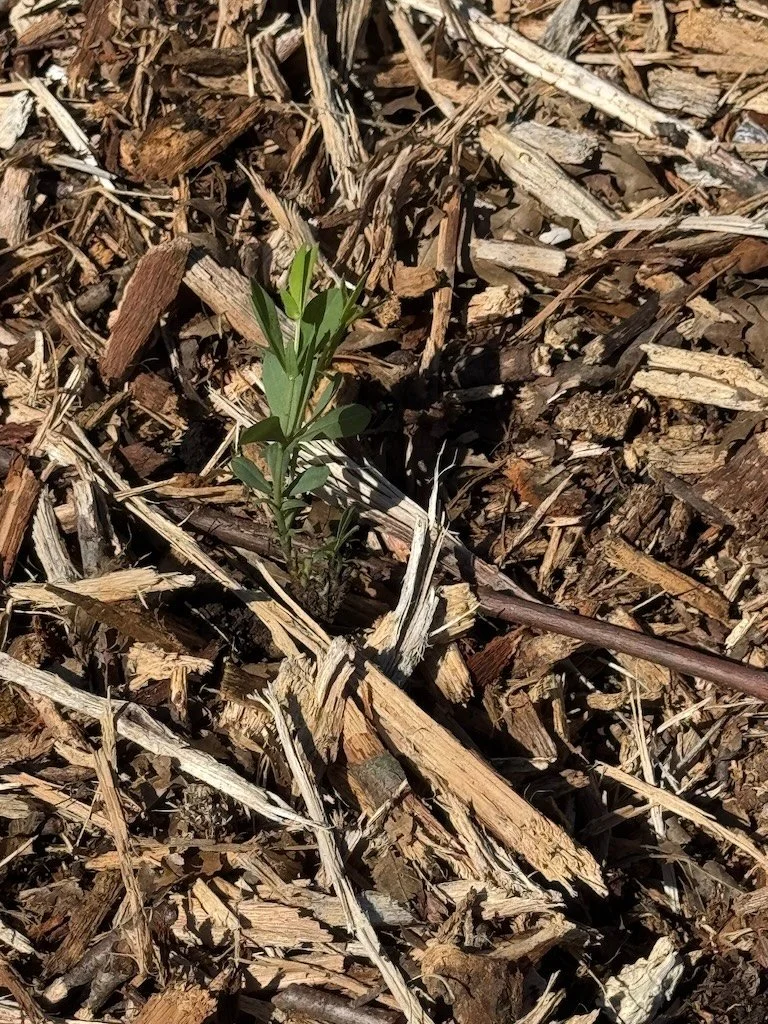
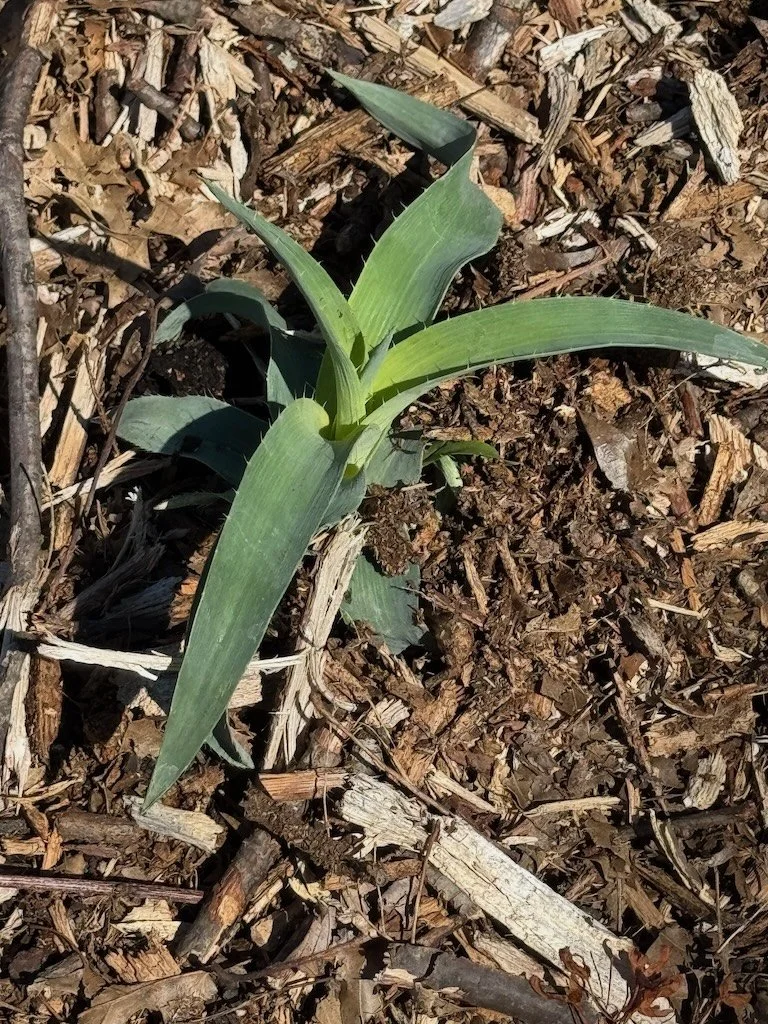
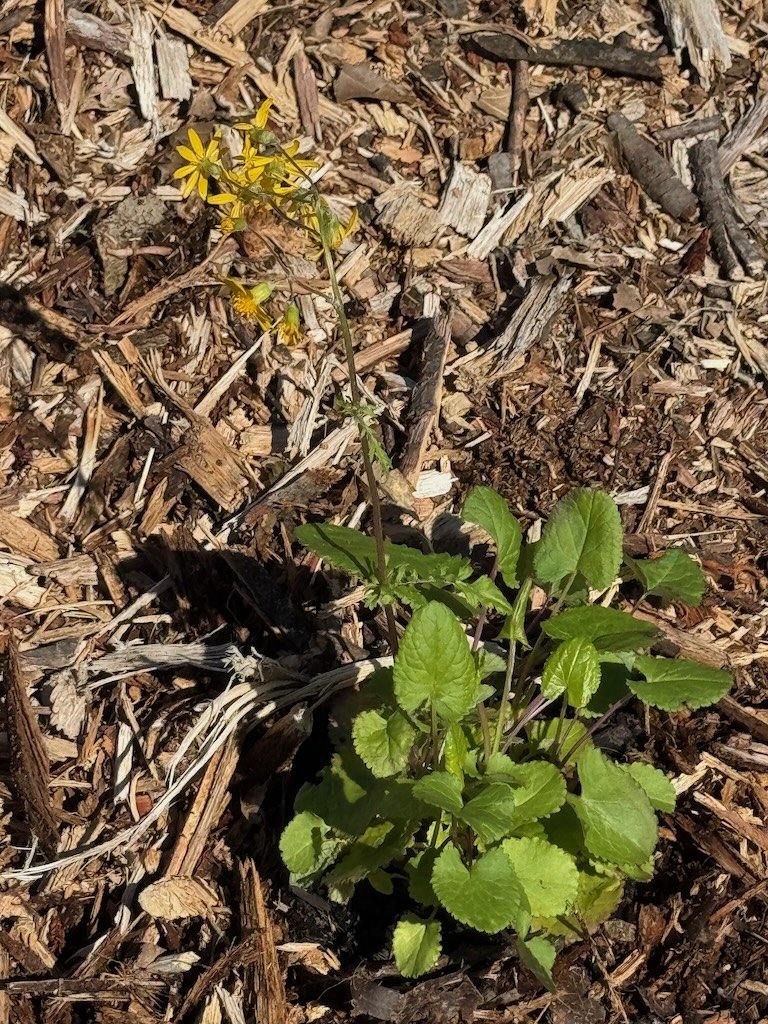
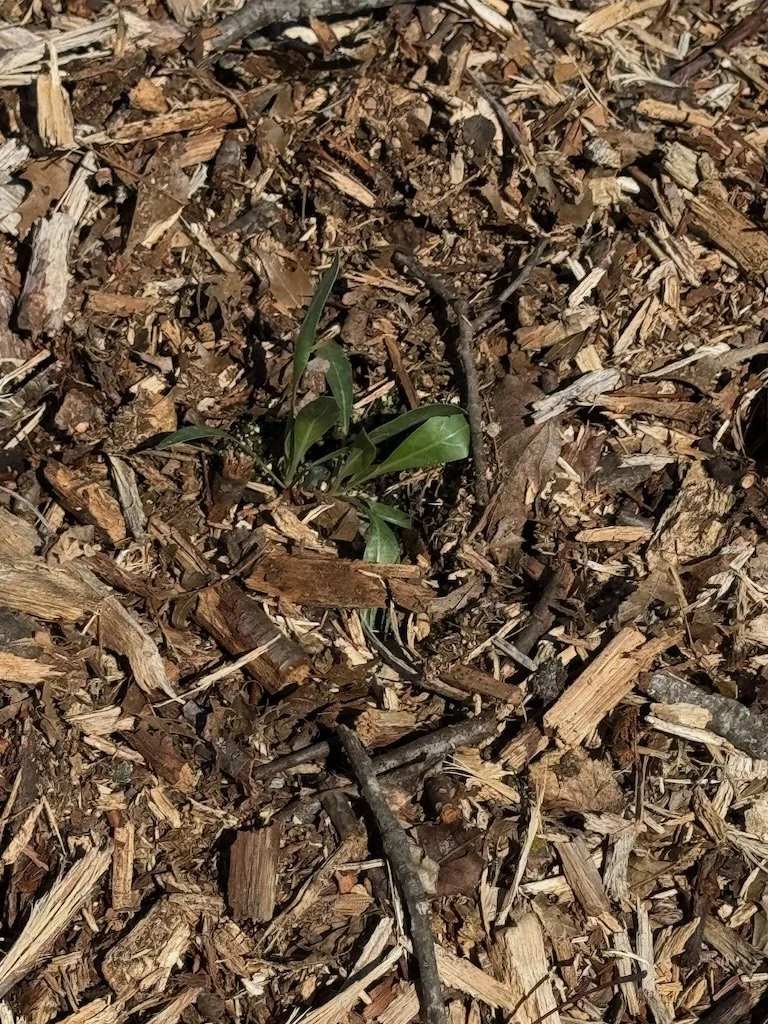
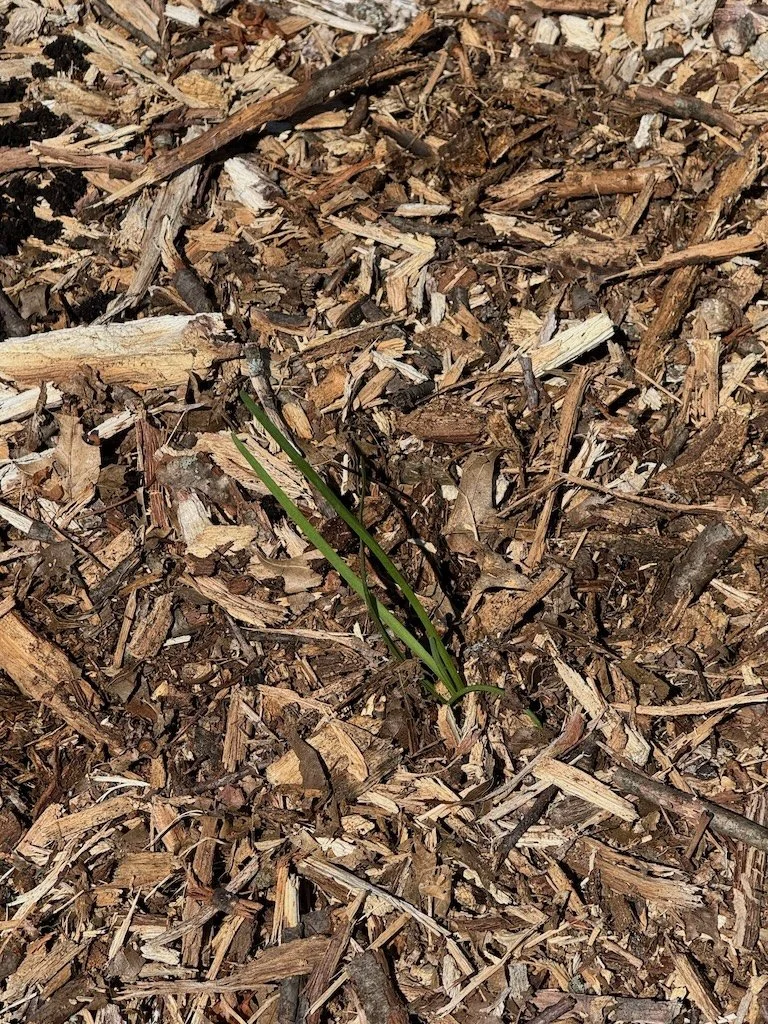
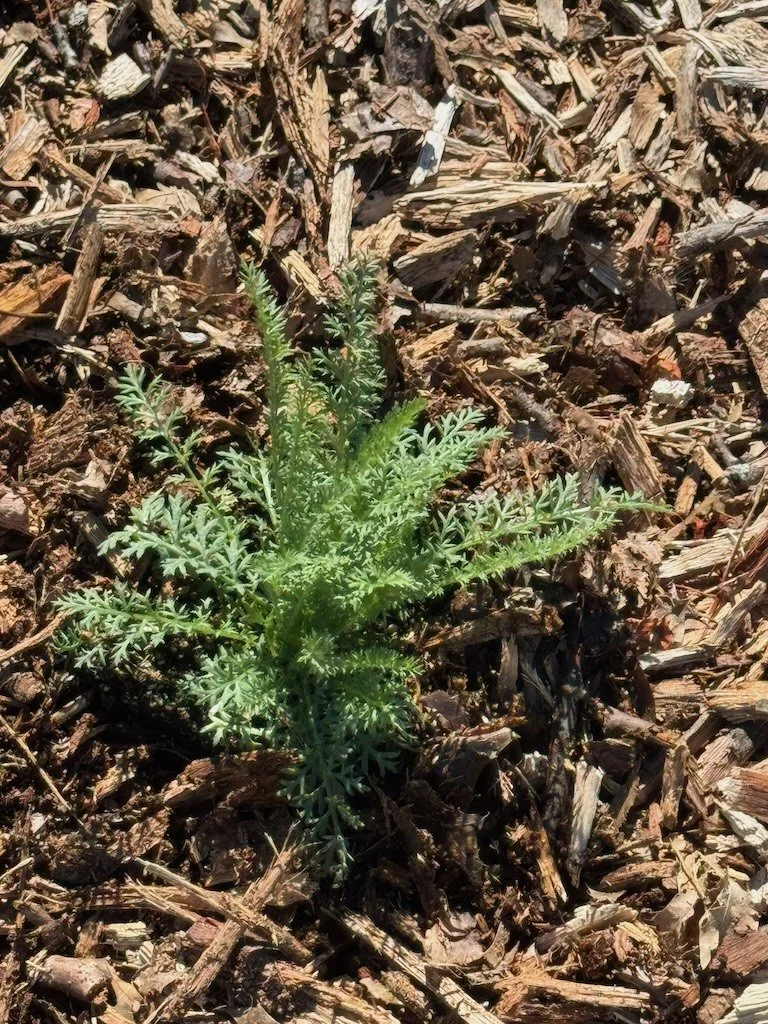
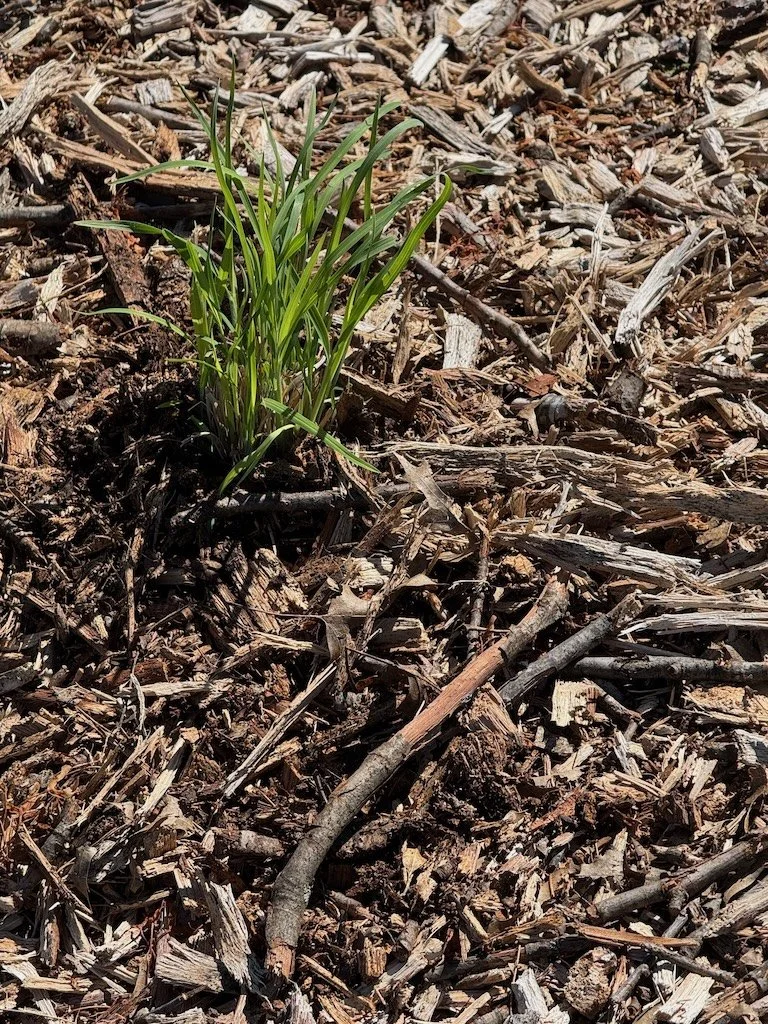
I waited a day or so to plant the young plants – when the nighttime temperatures would not be dipping into the 30s again. I planted into the oak mulch that I had put down last fall. As I made the hole for the first plant, I noticed that the surface was dry but underneath for very moist. There were worms and small grubs and white fungus hyphae. The new plants are going to love it. Of course, this also means that plants I don’t want there were going to love it too….I will need to recognize and pull as they appear!

I planted 8 plants on the first day:

Wild Blue Indigo Baptisia australis and Cream wild indigo Baptista bracteate

Rattlesnake master Eryngium yuccifolium and Golden ragwort Packera aurea

Missouri Evening Primrose Oenothera macrocarpa and Nodding Onion Allium cernuum

Yarrow Achillea millefolium and Little Bluestem Schizachyrium scoparium

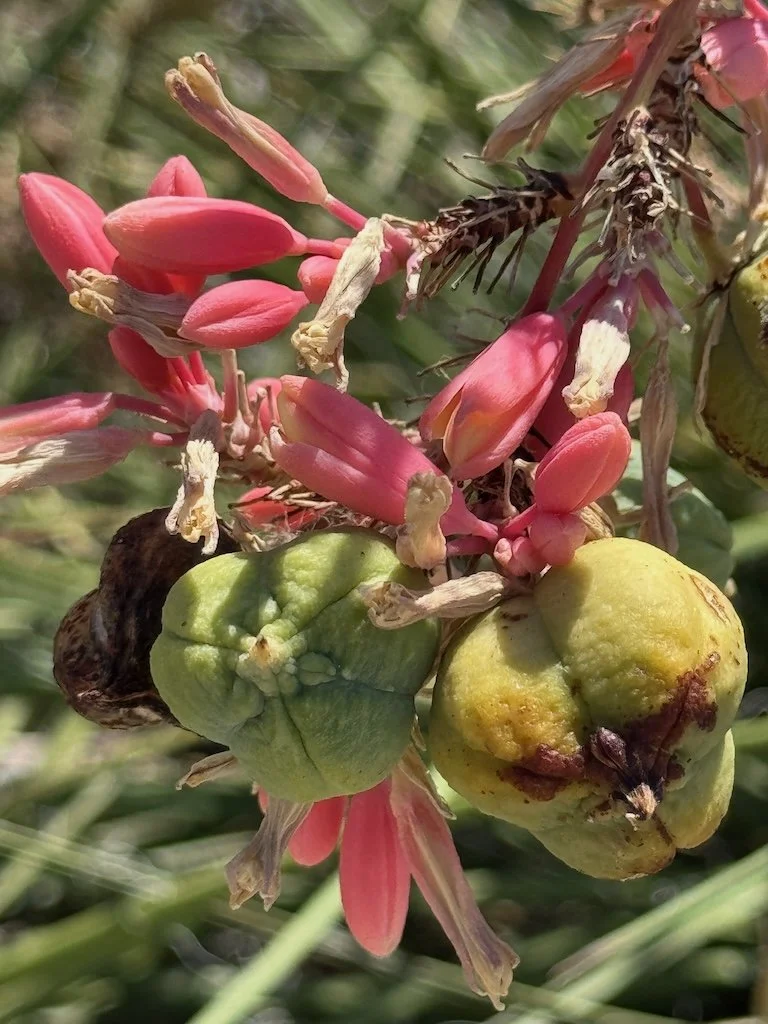
The Soapweed yucca Yucca glauca was planted the following day in a bed where I had to remove rocks and landscaping cloth. The bed is not covered by our sprinkler system and some of the plants previously there had not done well with the dry conditions.

Now that this first round of plants is in the ground, I am in monitoring mode….to water if it doesn’t rain enough and to pull weeds. I am expecting some elderberry seedlings that I will add to the front garden….and some pawpaw seedlings that will join one I planted last year in my back yard (completing the pawpaw patch).

Buying Native Plants for the Front Yard

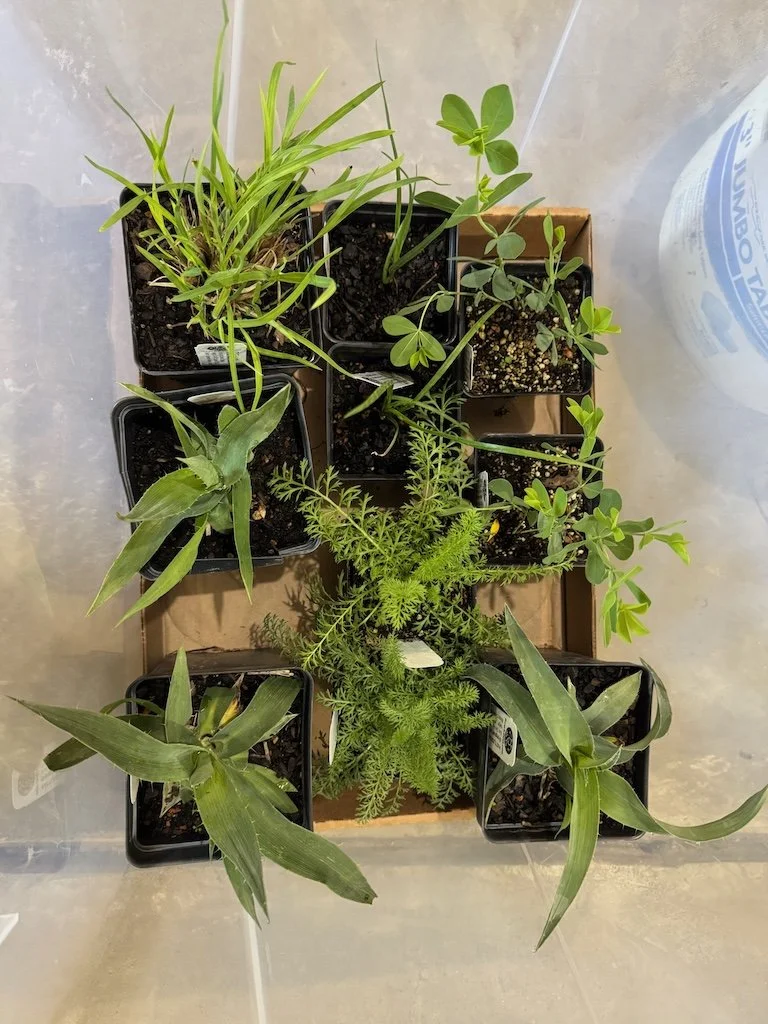
The local nature center hosted two native plant vendors (Ozark Soul and Missouri Wildflowers Nursery) on a recent Saturday, and I bought the initial plants for my new front yard native plant garden. The oak chips have been in place since last fall, and the temperatures are warm enough to begin plantings. It was a damp morning, but my daughter helped by volunteering her time and her car; we loaded up three bins of plants.

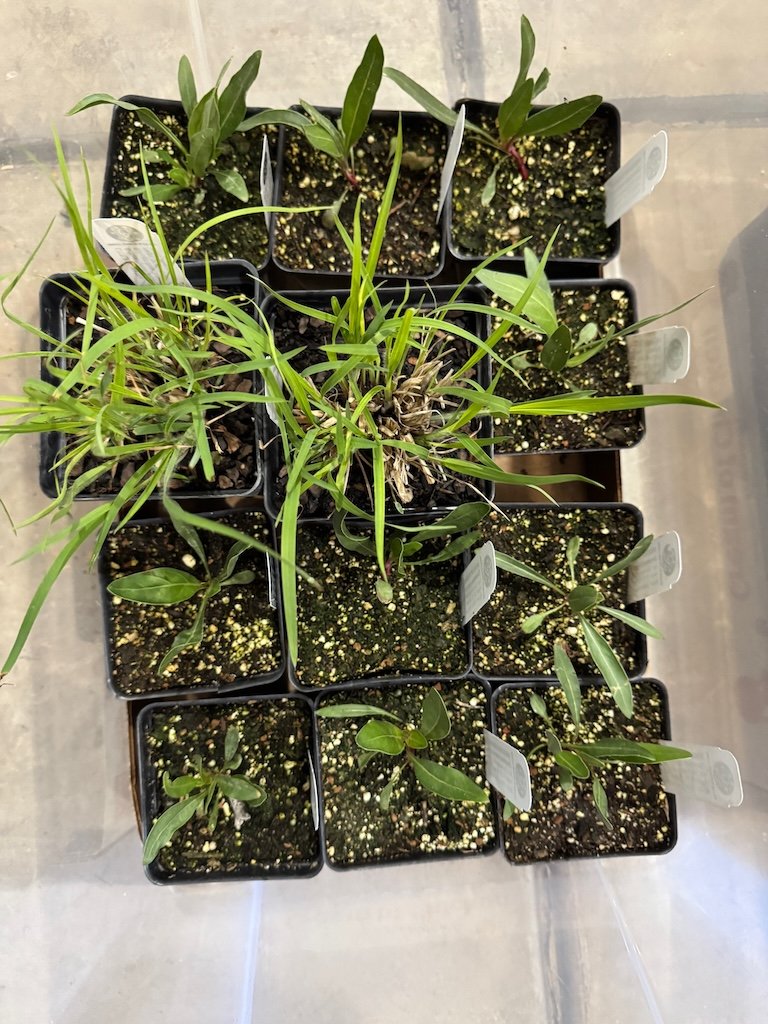
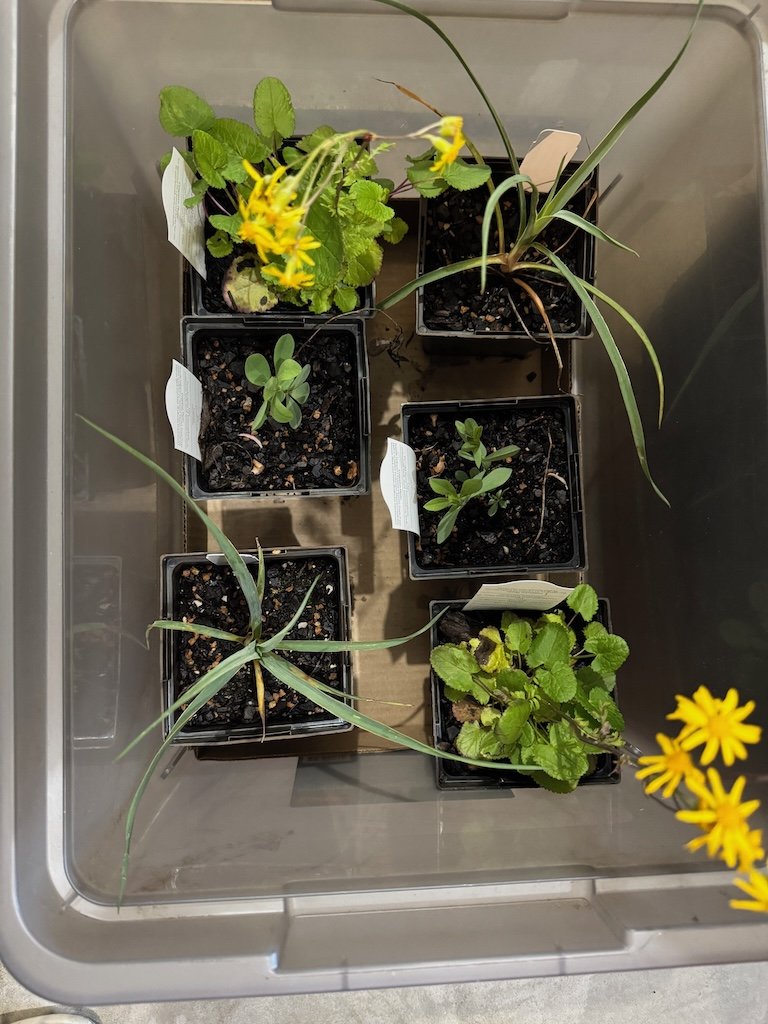
I took pictures of the bins when I got home and documented what I bought. I’m keeping a record of what I buy, plant…what survives.

In bin1 there are:

  • 10 Missouri Evening Primrose Oenothera macrocarpa The one near my mailbox is doing very well and these plants will become the ground cover level of my native plant garden.

  • 2 Little Bluestem Schizachyrium scoparium It will be the background for the lower part of the garden….and show up more after other vegetation has died back for the winter.

  • In bin 2 the rows from top to bottom are:

  • Little Bluestem Schizachyrium scoparium, Nodding Onion Allium cernuum, Wild Blue Indigo Baptisia australis

  • Rattlesnake master Eryngium yuccifolium, Nodding Onion Allium cernuum, Wild Blue Indigo Baptisia australis

  • Rattlesnake master Eryngium yuccifolium, Yarrow Achillea millefolium, Rattlesnake master Eryngium yuccifolium

In bin 3 the rows top to bottom are:

  • Golden ragwort Packera aurea, Soapweed yucca Yucca glauca

  • 2 Cream wild indigo Baptista bracteate

  • Soapweed yucca Yucca glauca, Golden ragwort Pakera aurea

My next post will be about planting these into the garden. There are 28 plants in all.

There is another native plant sale at the botanical garden in early May. Hopefully these plants will be thriving, and I can focus on filling in with the plants that will bloom into the fall…provide food for pollinators at the end of the season.

Luna Moths

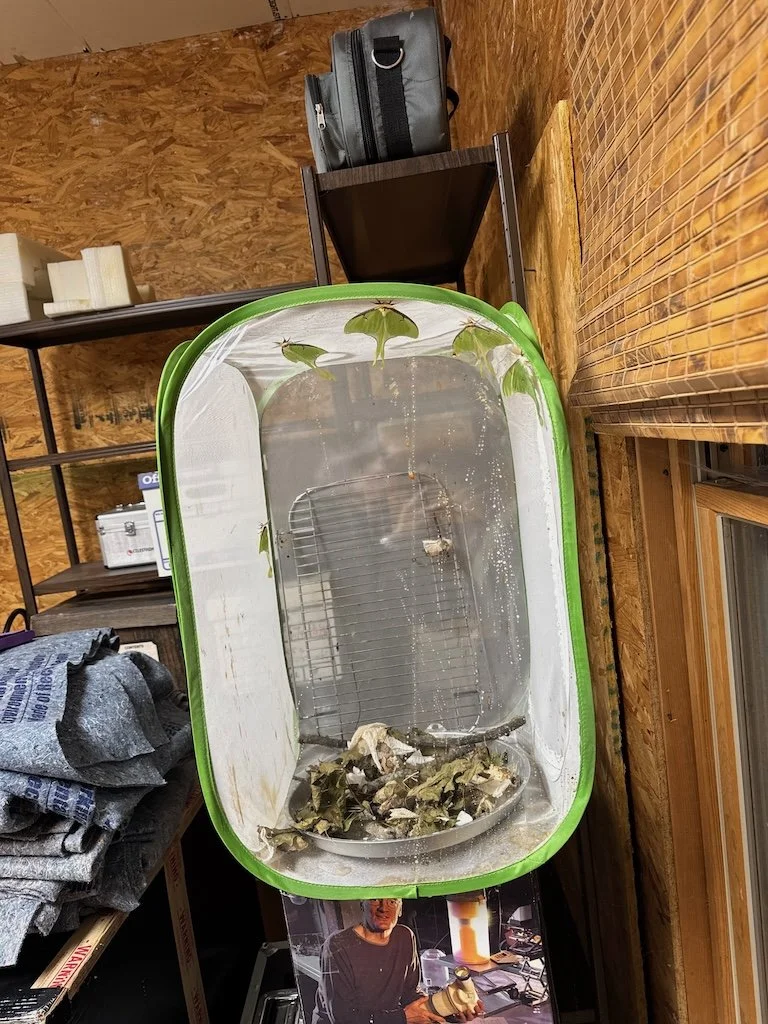
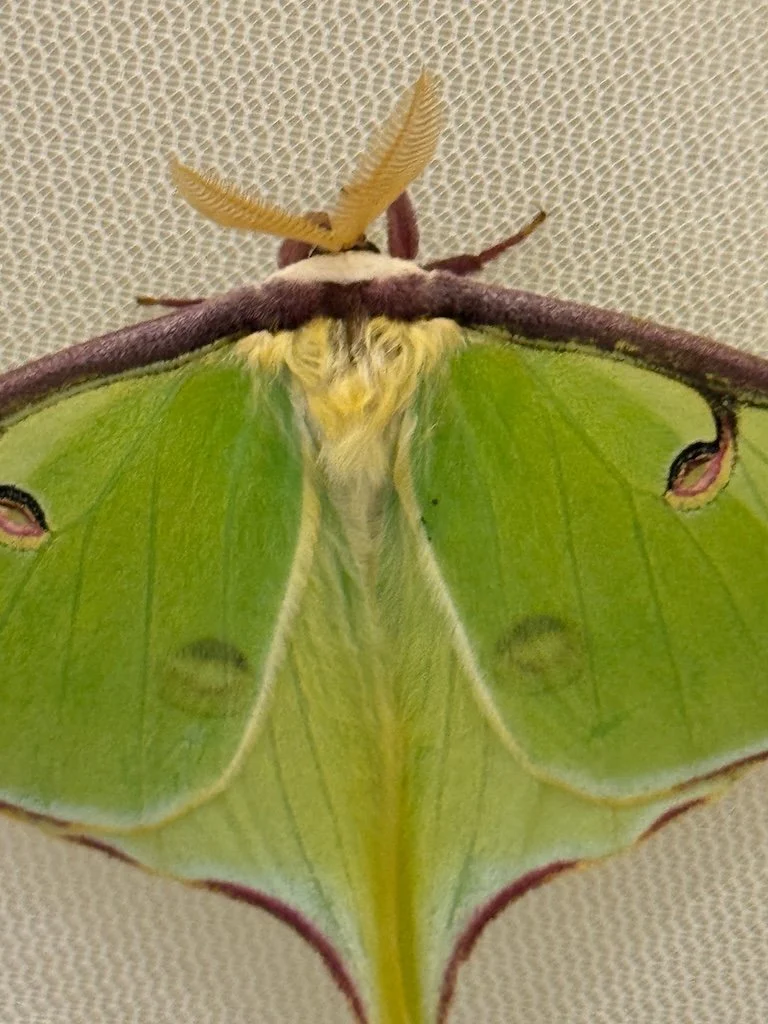
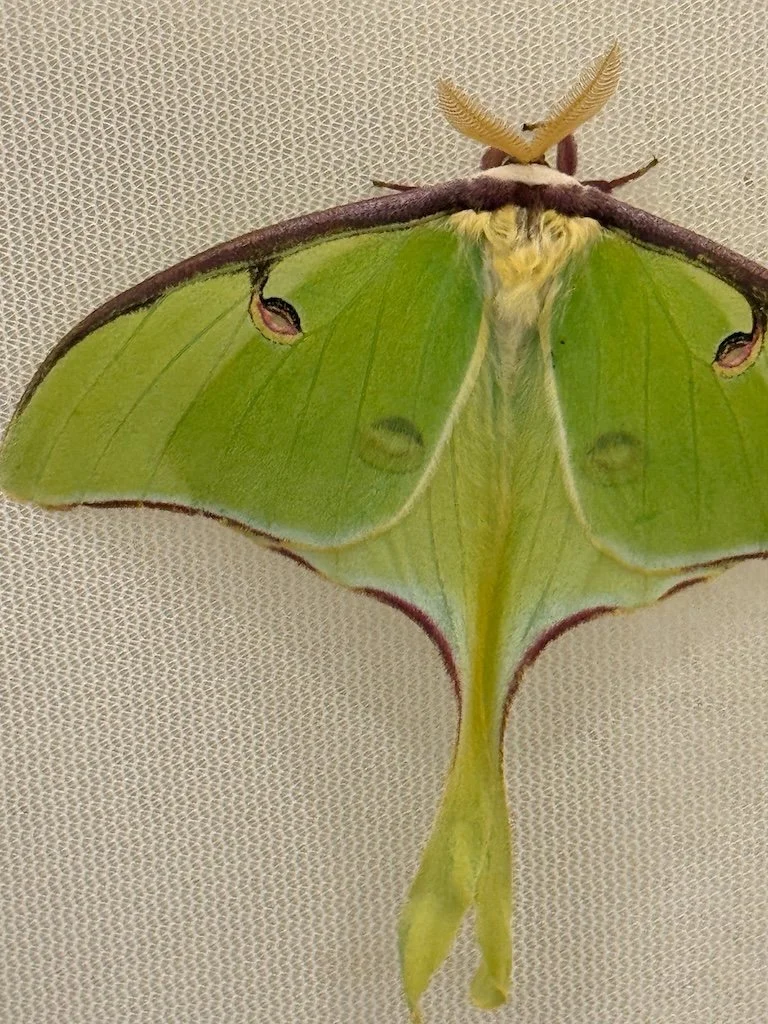
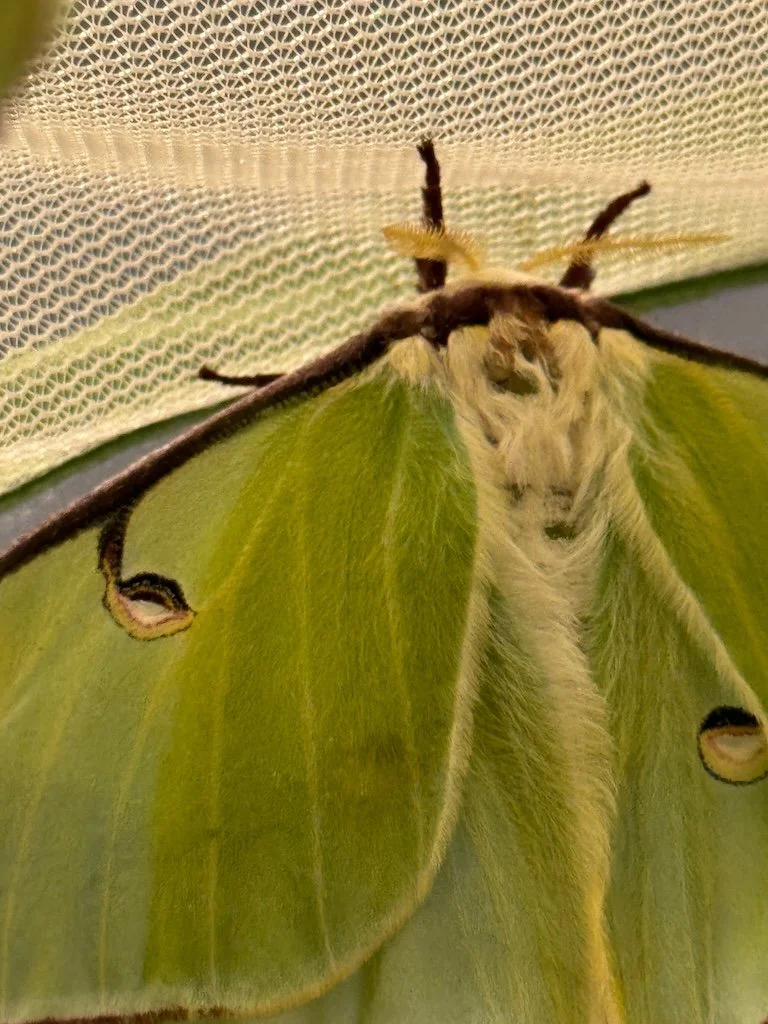
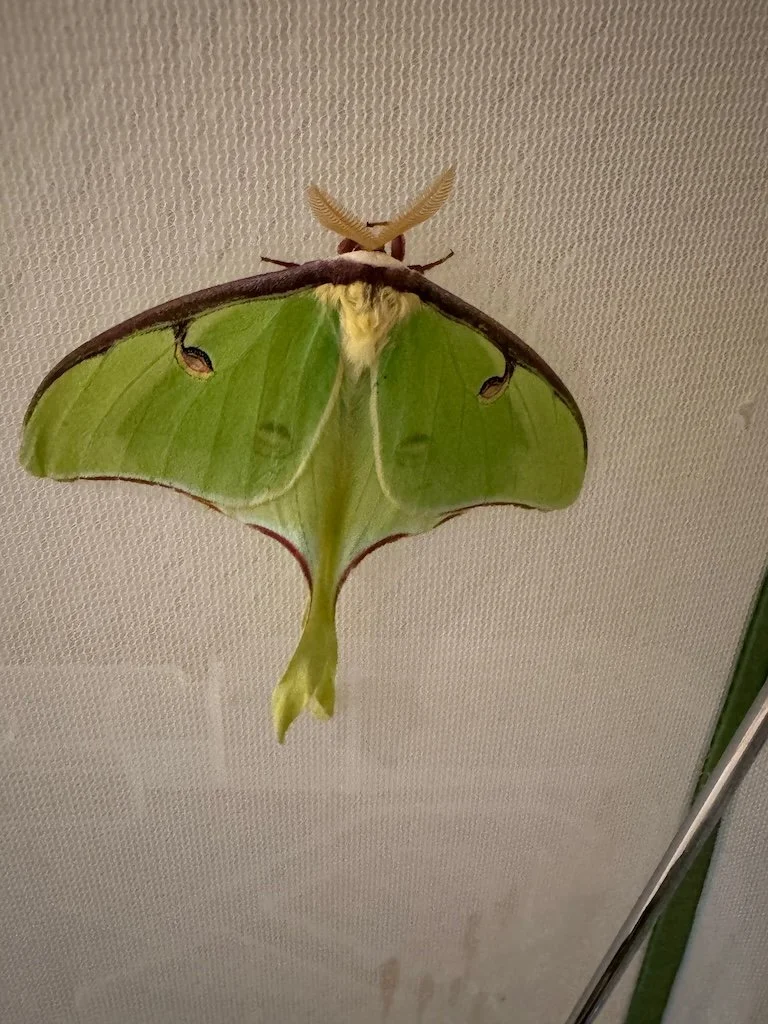
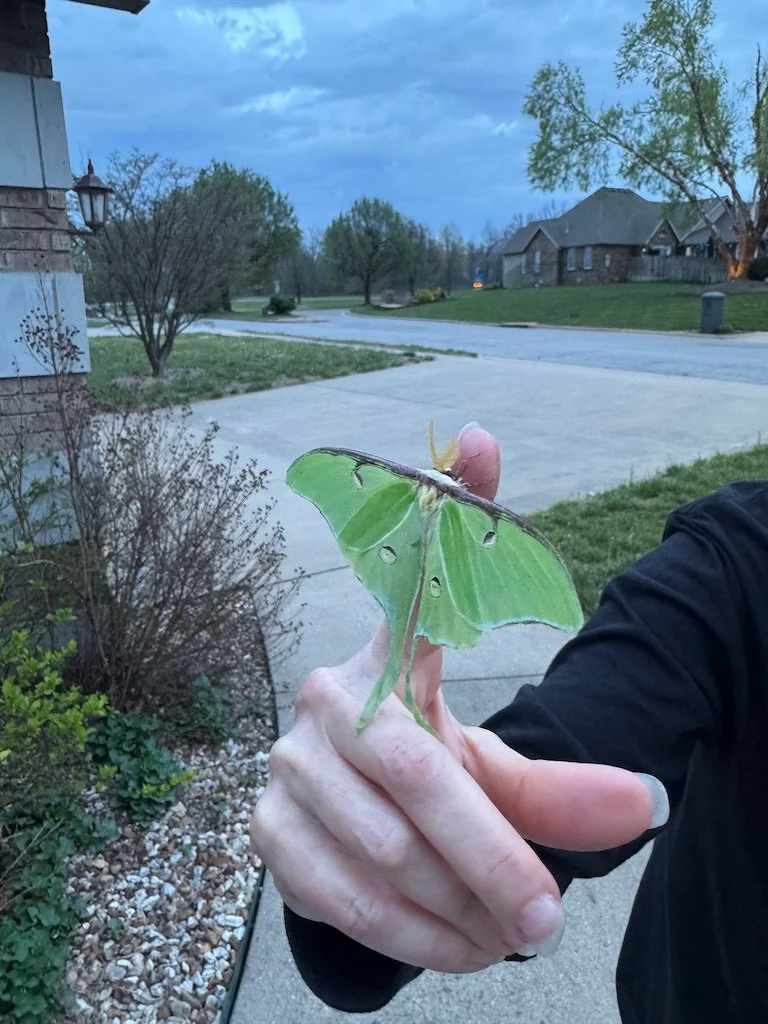
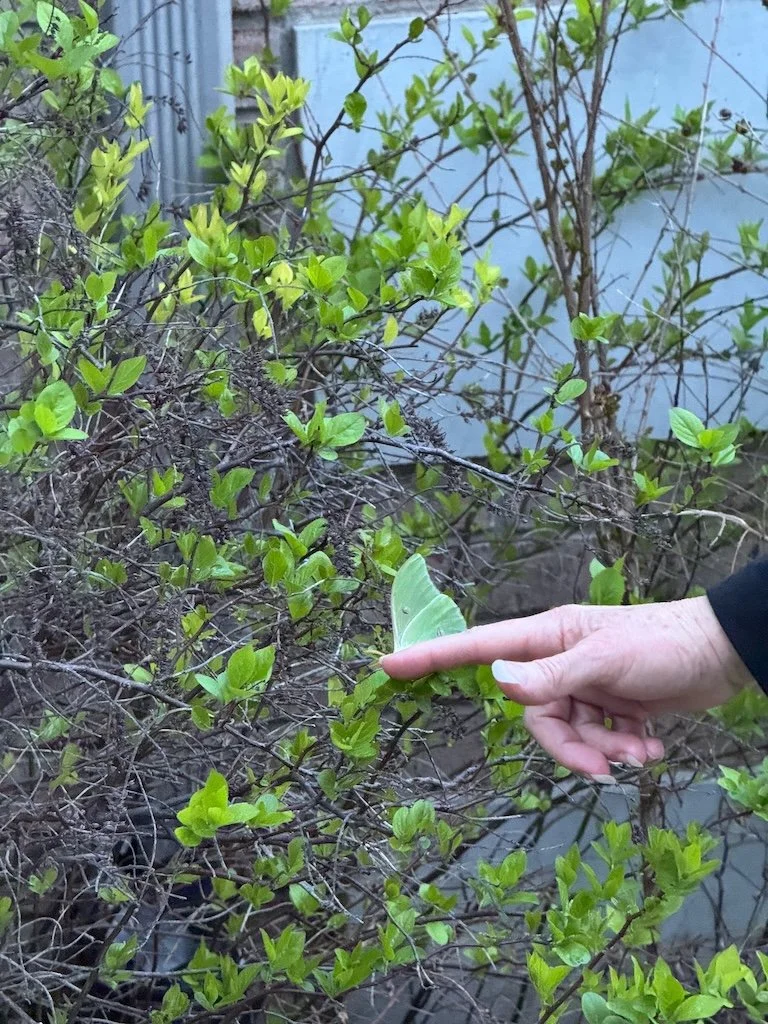
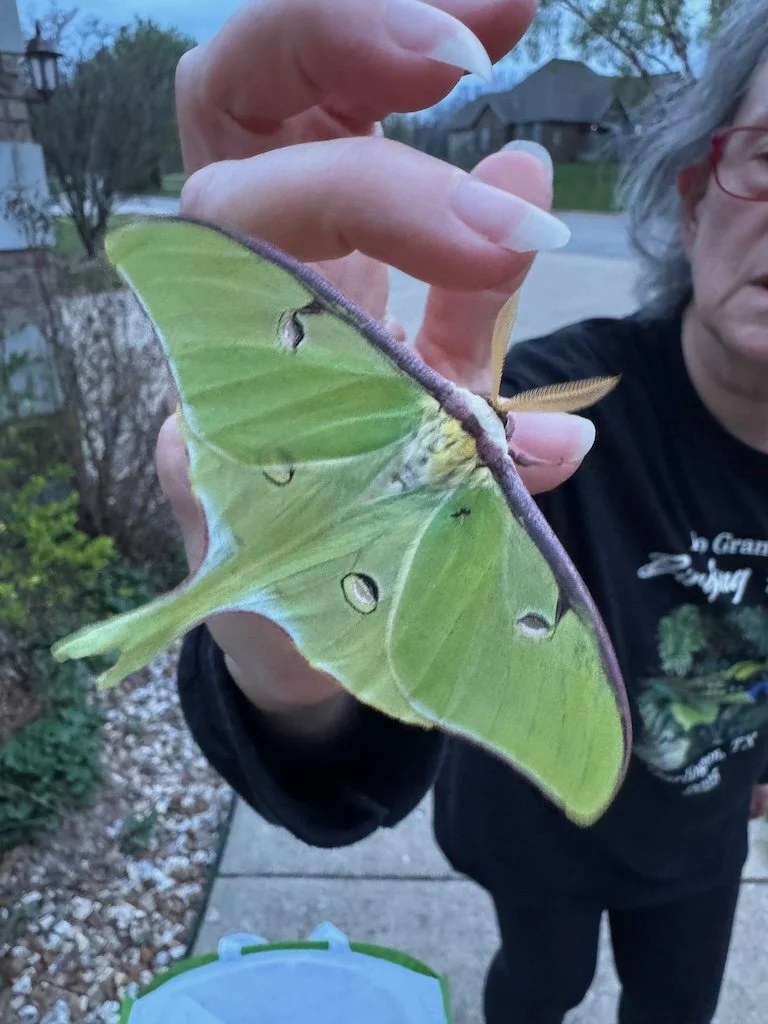
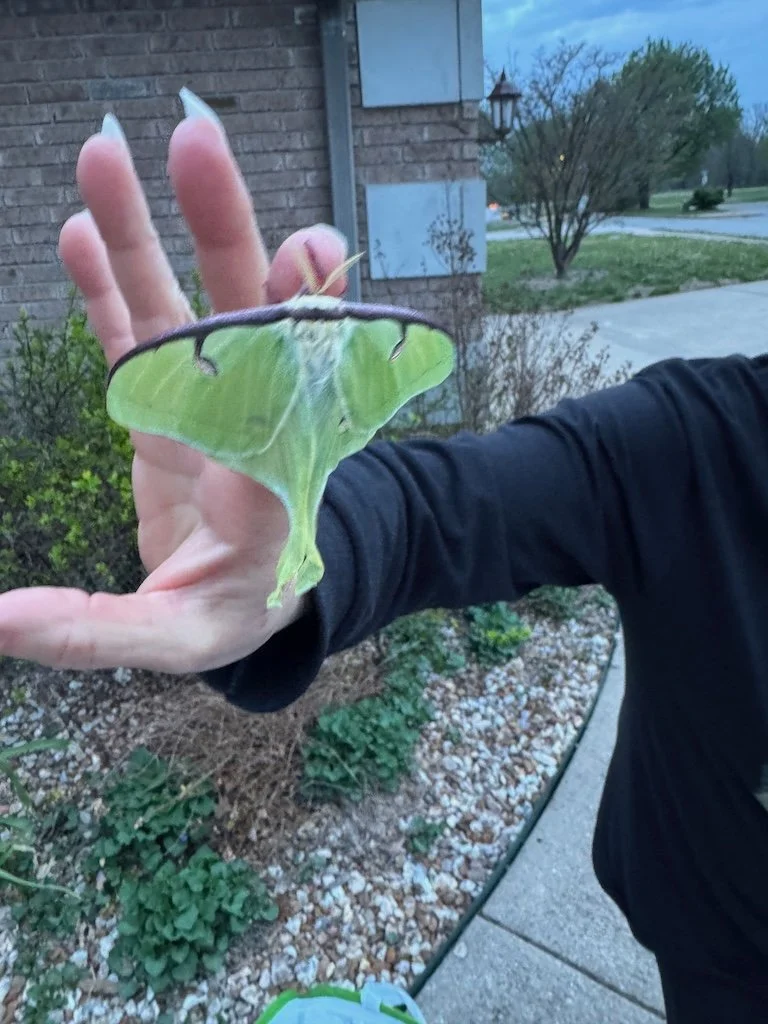
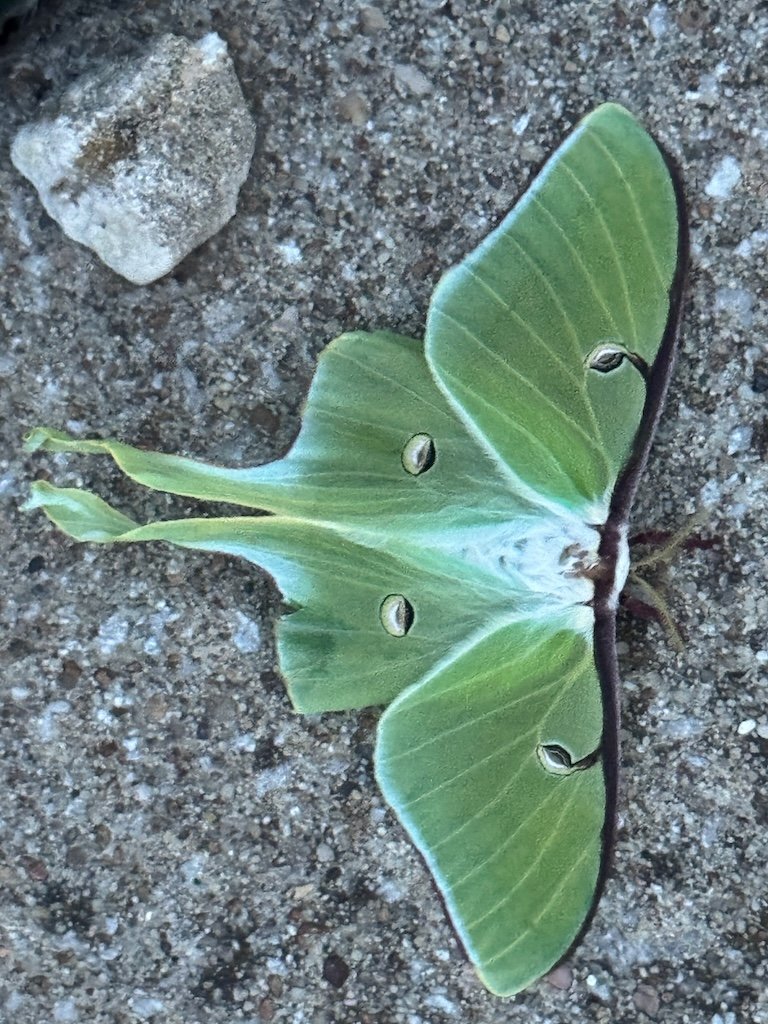
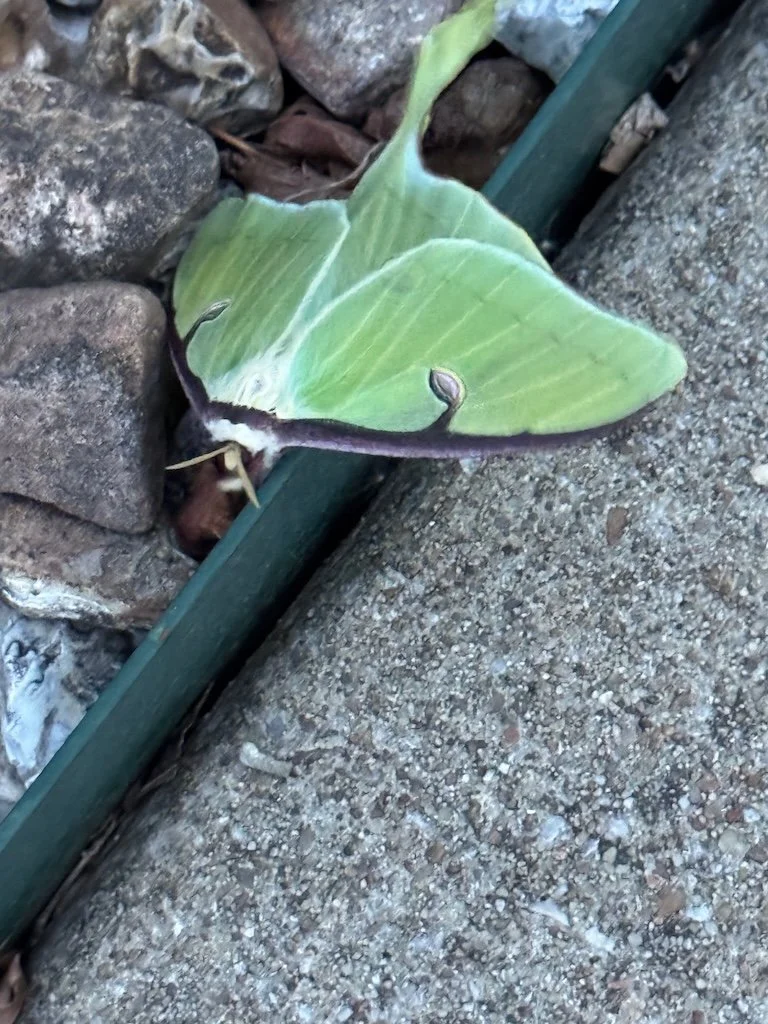
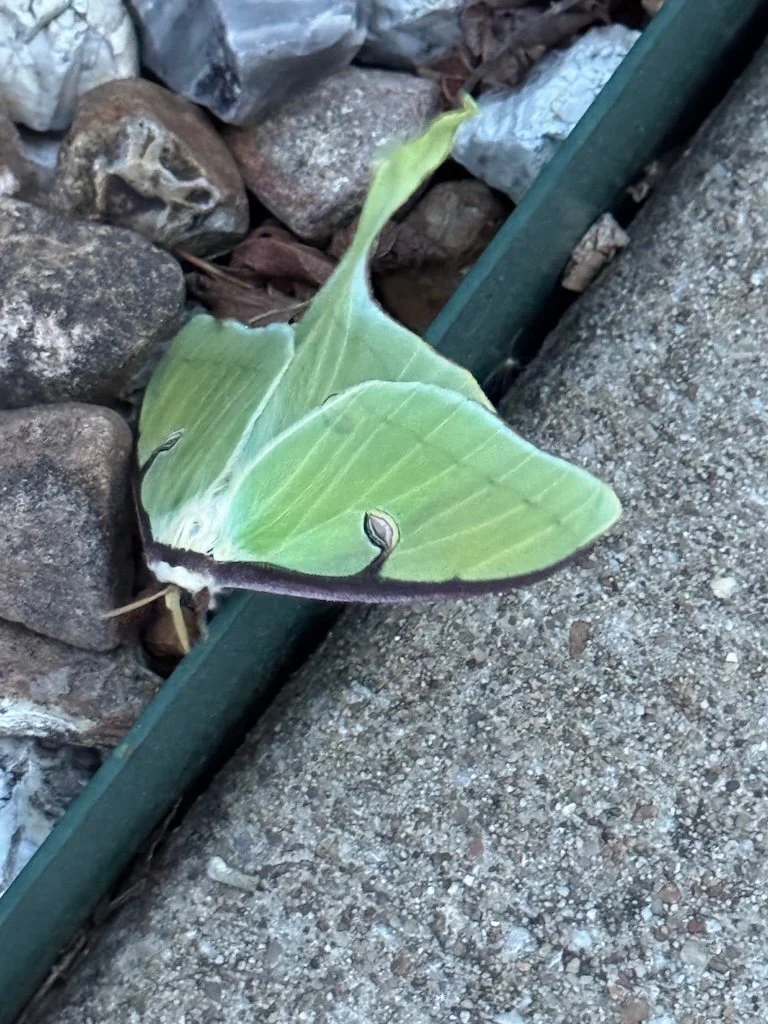
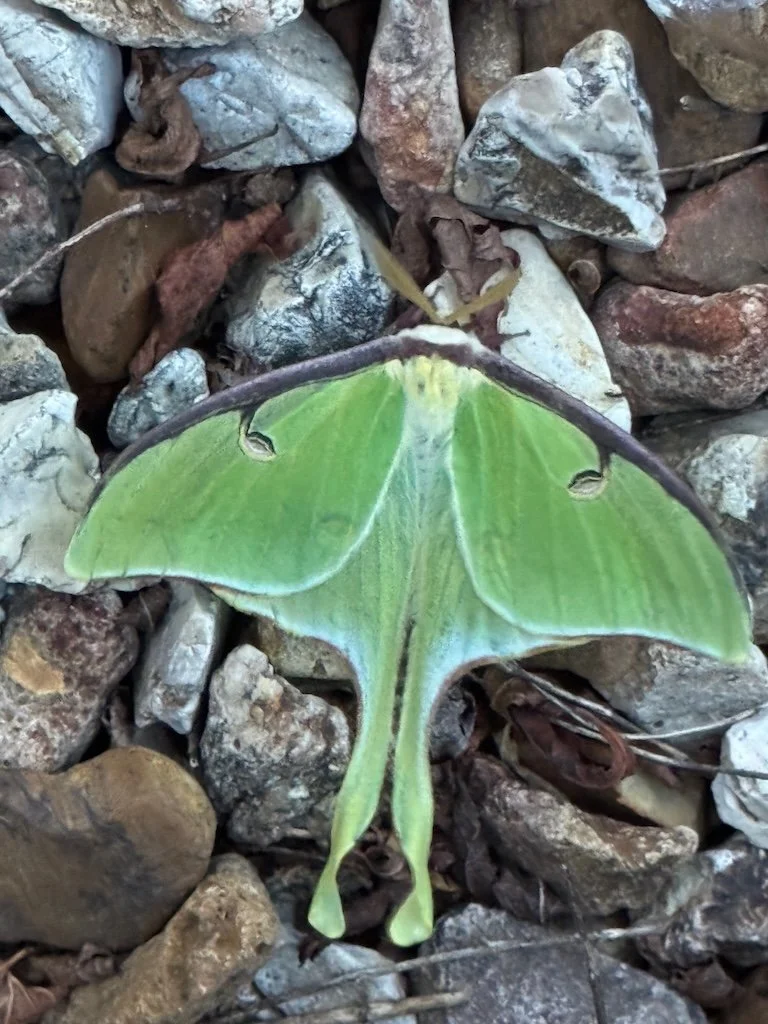
I’m not sure why I decided to check the luna moth cocoons I had put in my John Deere room last fall. I was surprised and excited to see 6 moths in the cage! They hadn’t been out long since there were males and females…none mating.

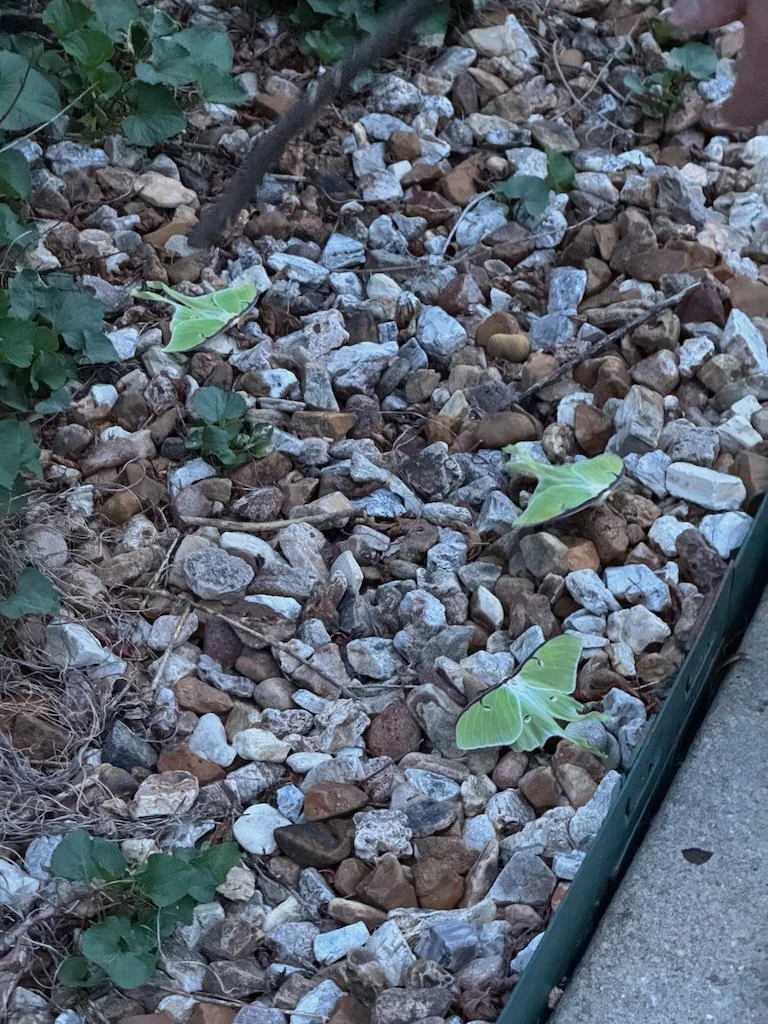
I knew that there were some moths that hadn’t emerged last fall, but I wasn’t sure how many would make it through the winter months. I released the first 6 at dusk on the evening they emerged last week. They seemed reluctant to leave my finger although when I tried to release them on my red maple they crawled onto the branches; red maple is a food plant for the caterpillars. Two more emerged the next day and I waited until the frost warning was over before releasing them.

The red maple is barely leafing out. I hope that if the moths lay eggs there we be sufficient leaves by the time the caterpillars emerge.

Gleanings of the Week Ending April 11, 2026

2/23/2026 I’m Plastic Free Watched The Plastic Detox? Your Guide to Reducing Microplastics Exposure - The Plastic Detox is a powerful documentary exposing the hidden health risks of plastics in our homes. As six couples commit to removing plastic from their homes, the experience transforms their families in lasting ways. The documentary uncovers what microplastics are, how their associated chemicals affect our bodies, and what practical steps individuals can take to regain control over their health.

3/30/2026 BBC Salmon sperm to bird droppings: The science behind bizarre skincare trends - While even the most bizarre of skincare routine fads may have some scientific backing, scientists think that options for the next generation of skincare therapies will involve, among other things, finding new ways to optimize collagen supplementation. Other new therapies are exploring novel ways of manipulating the skin microbiome, the populations of invisible microbes that live on our faces and contribute heavily to the inflammation present in our skin.

3/30/2026 Smithsonian Magazine Sharks in the Bahamas Test Positive for Drugs, Including Cocaine and Painkillers - Sharks in the Bahamas are ingesting drugs—including cocaine, caffeine and painkillers. Scientists identified blood contamination in about one-third of tested animals, findings that further highlight how humans are harming marine environments. While the detection of cocaine—an illicit substance—tends to draw immediate attention, the widespread presence of caffeine and pharmaceuticals in the blood of many analyzed sharks is equally alarming.

3/30/2026 ScienceDaily Simple therapies beat drugs for knee arthritis pain relief - Non-drug treatments like knee braces, hydrotherapy, and exercise can significantly ease knee osteoarthritis symptoms. These approaches not only reduce pain and improve mobility, but also avoid the risks tied to common medications.

3/27/2026 NWF Blog Building hope, organizing communities, and strategic planning on Florida’s Coast - To learn more about the Tampa Bay Coastal Master Plan and efforts to use nature-based solutions to adapt to sea level rise and climate change, with resilient strategies like living shorelines, habitat enhancements, and habitat preservation, please visit this site.

3/26/2026 The Conversation Mosquitoes carrying malaria are evolving more quickly than insecticides can kill them – researchers pinpoint how - The mosquito-borne disease malaria kills over 600,000 people annually. Mosquitoes are quickly evolving counterstrategies that make these insecticides ineffective, putting millions of people at greater risk of deadly infection. Mosquitoes today from Ghana to Malawi are often able to survive insecticide concentrations 10 times the previously lethal dose. Genome-scale sequencing remains important to detect new or unexpected evolutionary responses. The risk of adaptation is highest under a continuous, strong selection pressure, so minimizing, switching and staggering pesticides can help thwart resistance.

3/25/2026 CleanTechnica Why Nature-Based Investments Produce Results - Nature-based solutions have the potential to lift a billion people out of poverty, create 80 million jobs, add an additional $2.3 trillion of growth to the global economy, and prevent $3.7 trillion of climate change damages. Investing in biodiversity conservation and restoring ecosystems have a lot going for them.

3/23/2025 NASA A Fault Line in Bloom – Flowers had turned areas around Soda Lake a bright shade of yellow, and by mid-month, they had spread even farther. Yellow wildflower blooms are visible amid the dendritic network of streams flanking the alkaline lake, which dries out completely during drought years. Colors were particularly vibrant across the Carrizo Plain National Monument, even decorating meadows along the zipper-shaped San Andreas Fault with splashes of purple due to blooms of Phacelia ciliata.

3/30/2026 National Parks Traveler Three Florida Reef Corals "Functionally Extinct" Due To Marine Heat Waves - Extinction has claimed staghorn and elkhorn corals, whose distinctive antler-like arms once peppered the sea floor off Florida but now are all but impossible to find thanks to warming waters and disease throughout their coastal habitat. They are “functionally extinct,” meaning they lack numbers and health to survive threats facing them in the wild. It doesn’t mean they are entirely gone. Scientists are keeping the two species alive in coral nurseries, both onshore and offshore. Many facilities are working to preserve them and raise their offspring as just one aspect of efforts to save the Florida Reef, a 350-mile-long collection of reefs besieged by disease and marine heat waves since the 1970s that have robbed the reef of an estimated 98 percent of its live coral cover. Pillar coral was designated functionally extinct in 2020. On a positive note - elkhorn and staghorn corals typically are ready to move from onshore nurseries into the ocean in about 18 months.

3/30/2026 Yale Environment 360 Even a Few Scattered Trees on Farmland Can Be a Boon for Wildlife - ll told, 58 scientists took part in the effort, using on-the-ground surveys, sound monitoring, and satellite imagery to track close to 2,000 species of birds across more than 1,000 forest remnants. They found that a fragment of forest surrounded by farmland might host more than twice as many bird species as a reservoir island of the same size. 

Backyard Greens

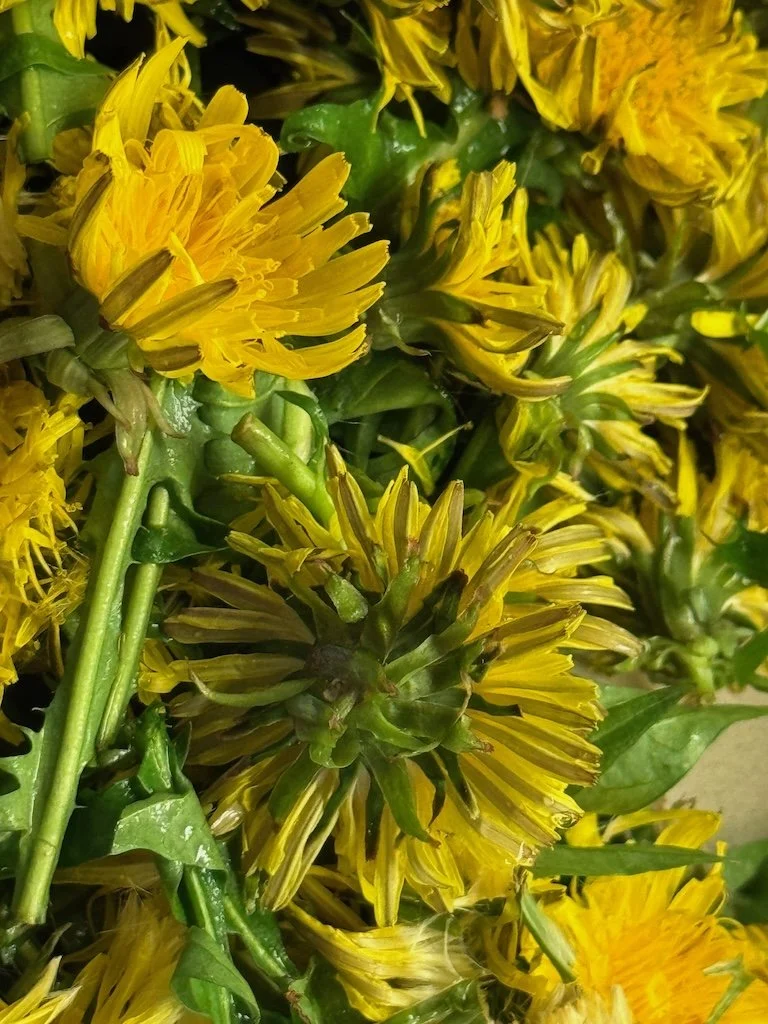
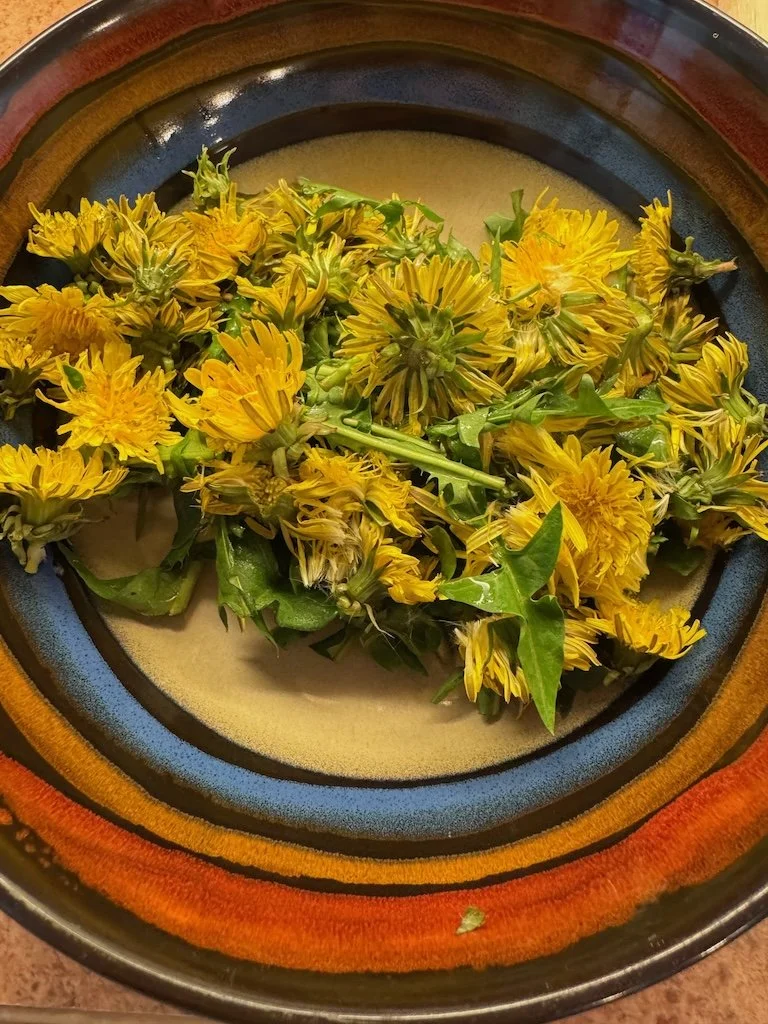
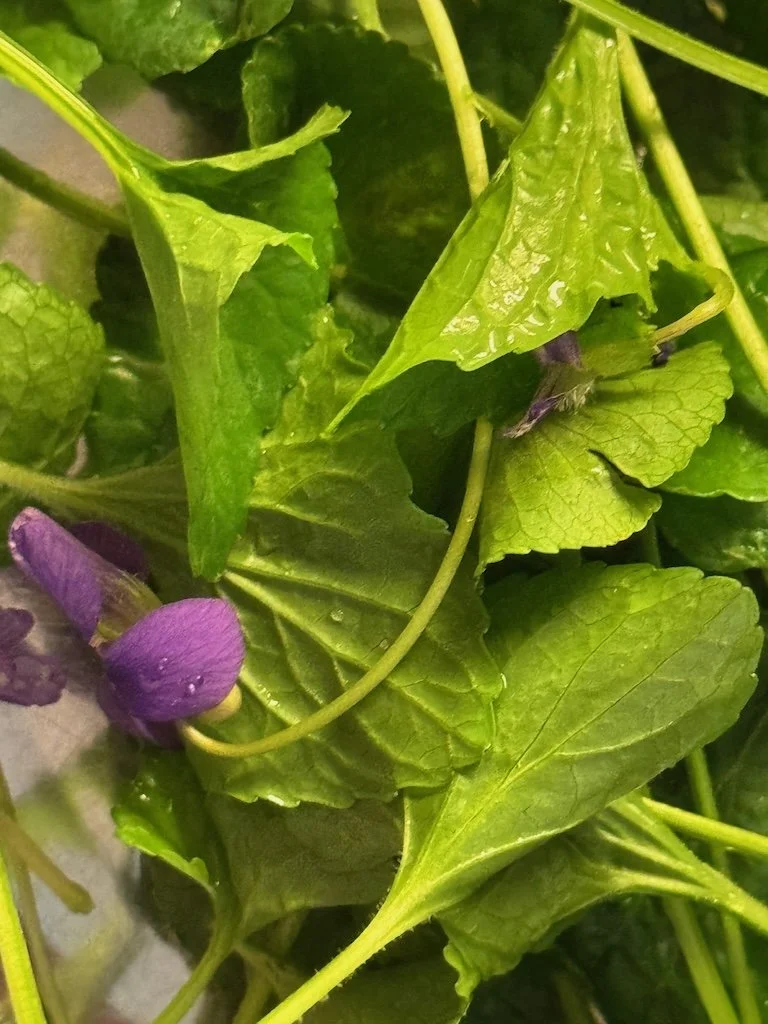
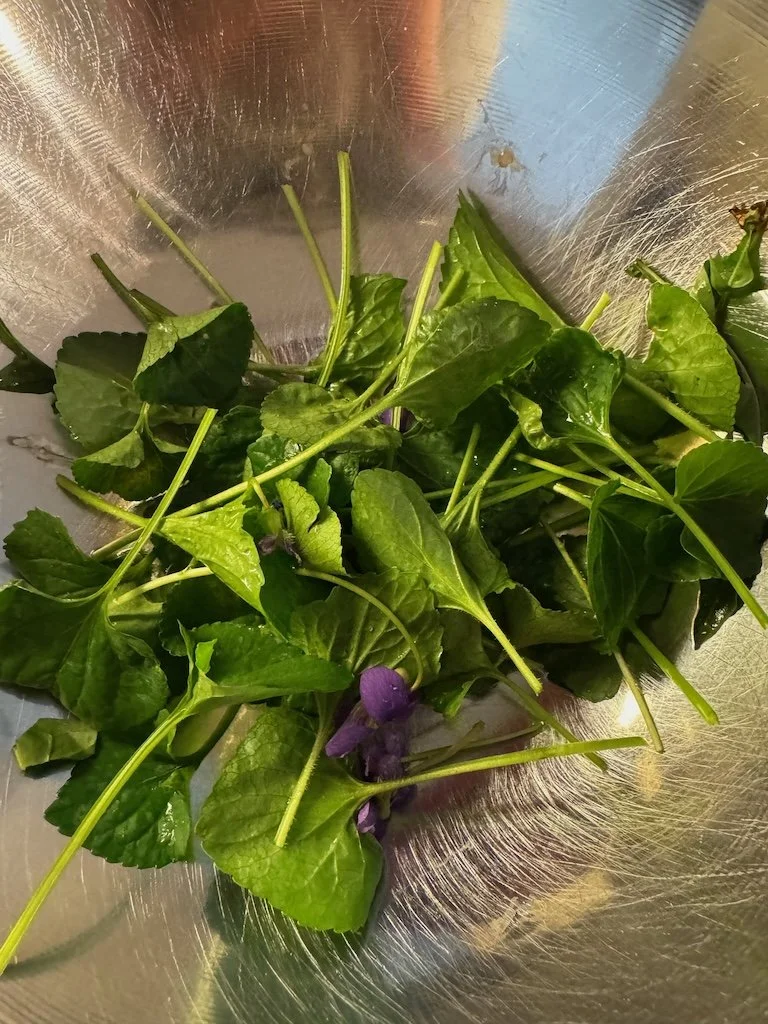
My backyard greens are ready to eat! I won’t be buying arugula or spinach again until the late fall. Since I don’t put any chemicals on my yard – they are safe to harvest/eat just before I need them.

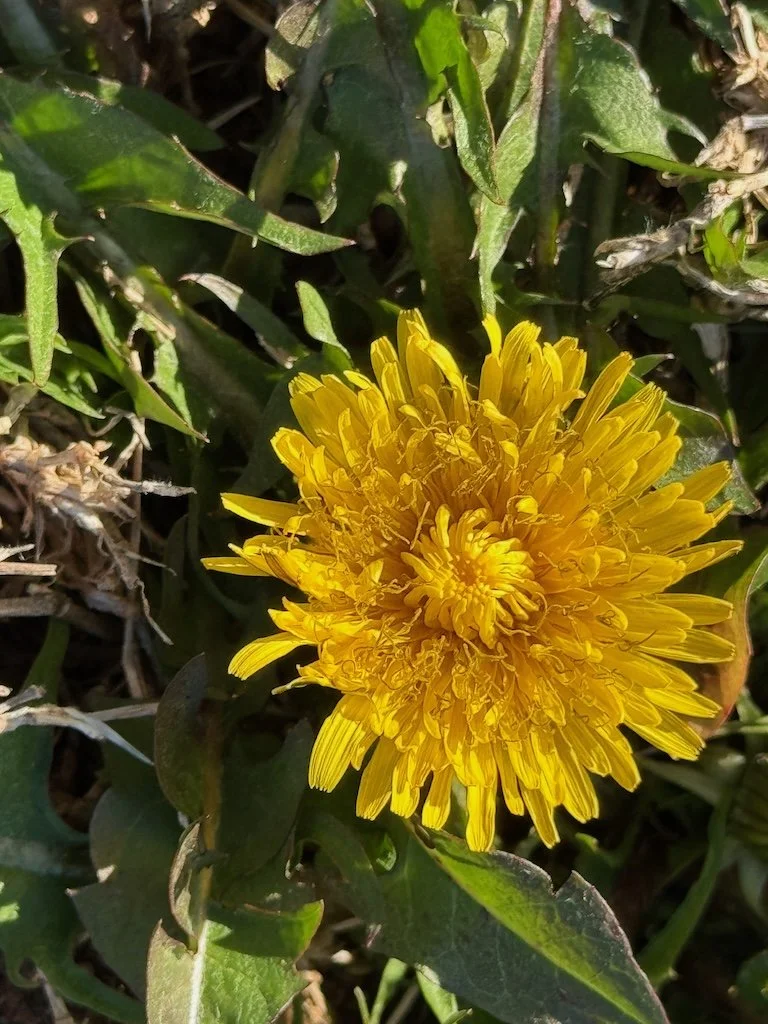
Right now, the dandelions are full of blooms and I pick mostly flowers – although there are a few leaves too. I generally use them in stir fry since cooking reduces the bitterness of the leaves. The flowers are tasty cooked or fresh!

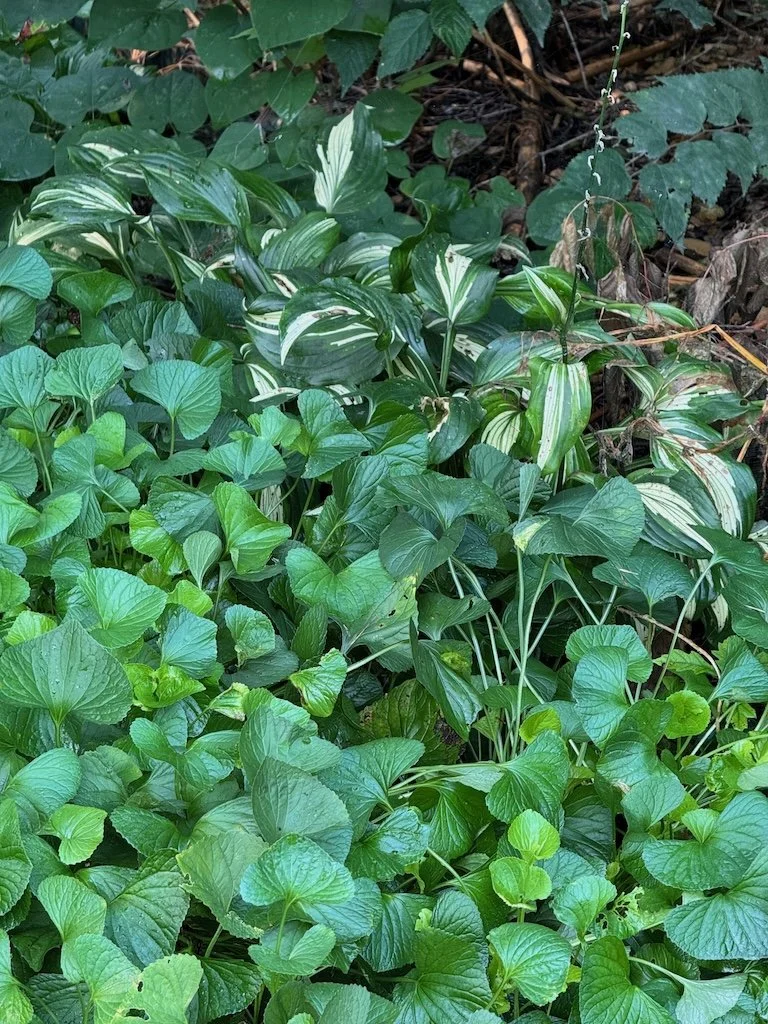
I use violet leaves like arugula. The flowers are edible – but only available in the spring. They are easy to harvest and seem to replenish themselves quickly. The violet patch has gotten bigger each year we have lived in our house – once I stopped mowing the area where they were spilling out of the flowerbed. They will be the ‘carpet’ under the American Spikenard and the small Red Buckeye and pawpaw and spicebush.

The dandelions are not native…but they are attractive to pollinators and their roots are deep – they hold the soil. So – I am OK with them in my yard. The violets are native and I am encouraging them to grow as far out into the yard as they want. They have taken over about a third of the yard area on the east side of the house; there they get morning sun but once the neighbor’s River Birch gets its leaves the area get less sun even in the morning; the violets thrive in that environment!

I am enjoying the green bounty of my backyard!

Powell Gardens – Part II

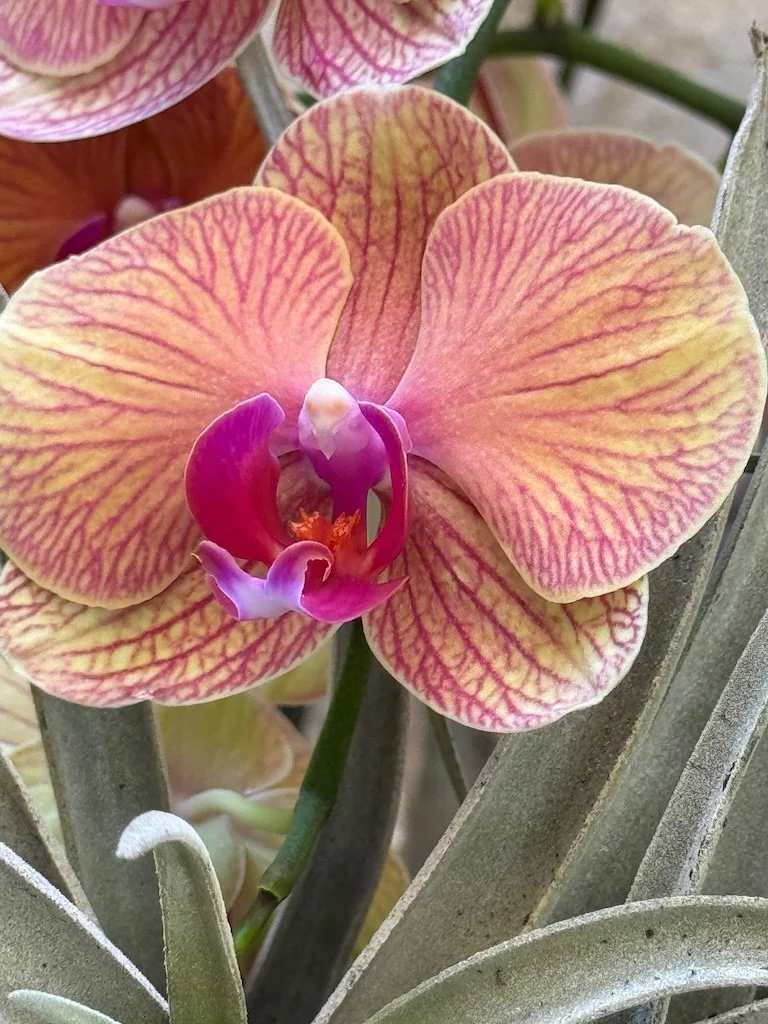
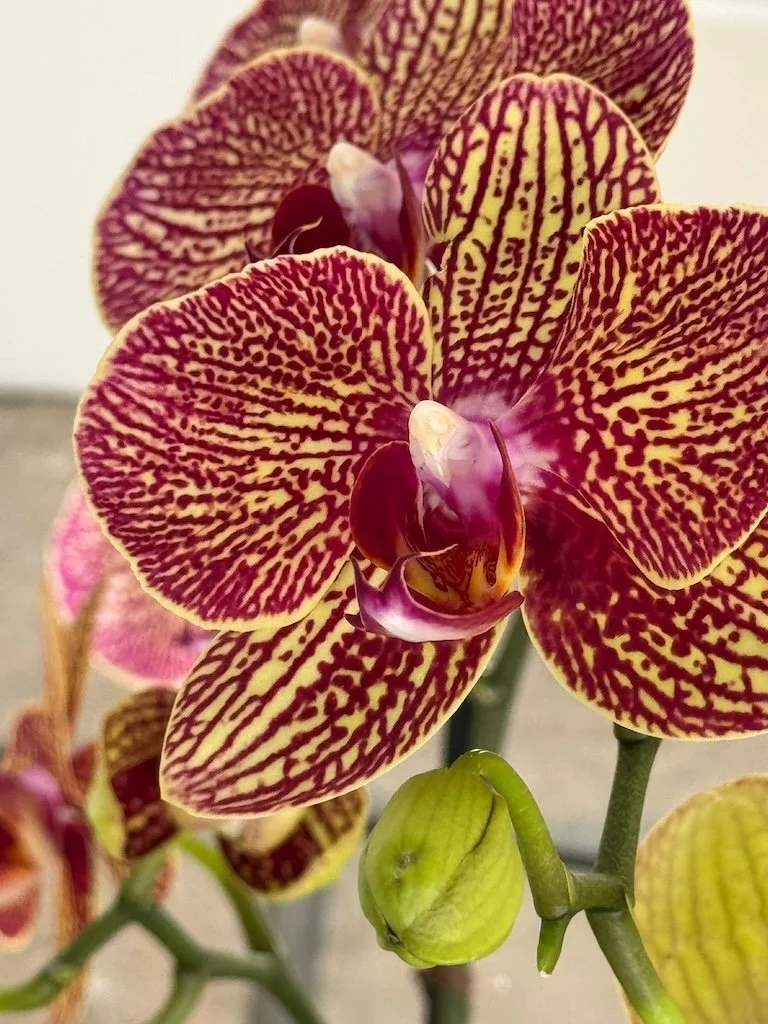
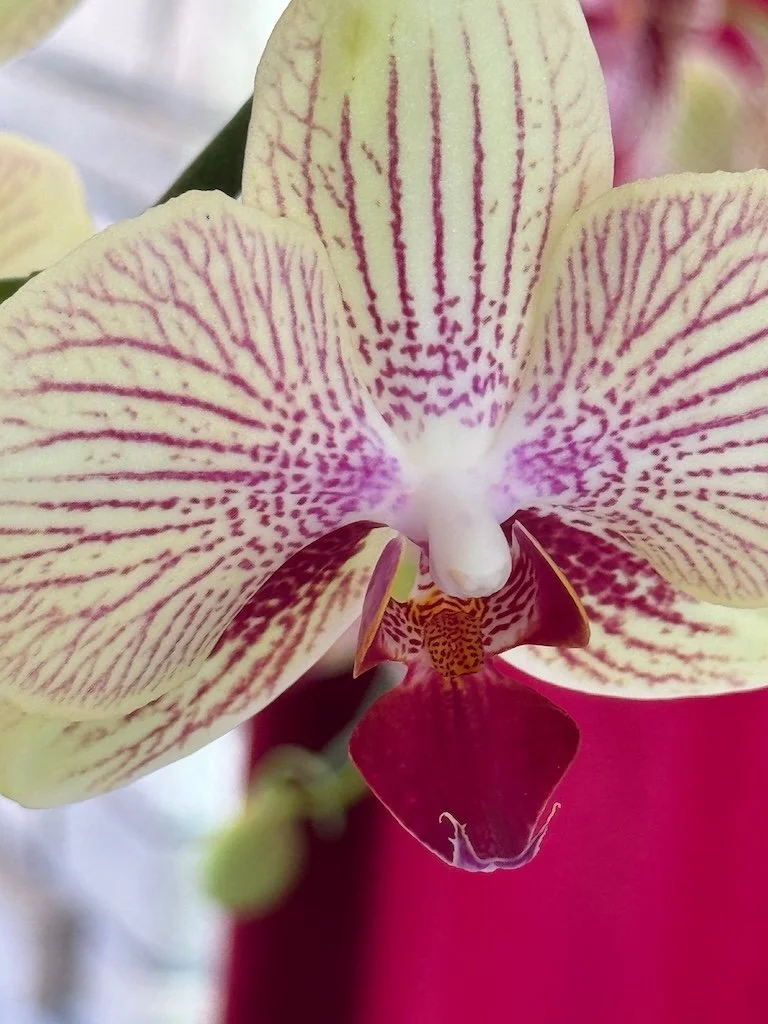
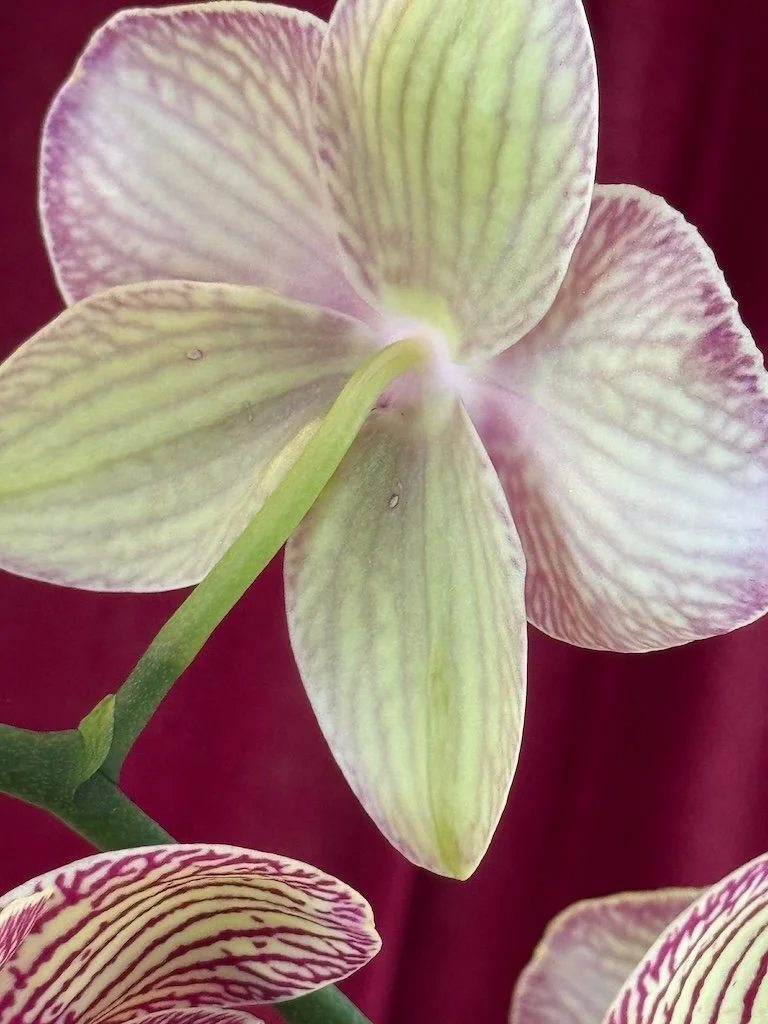
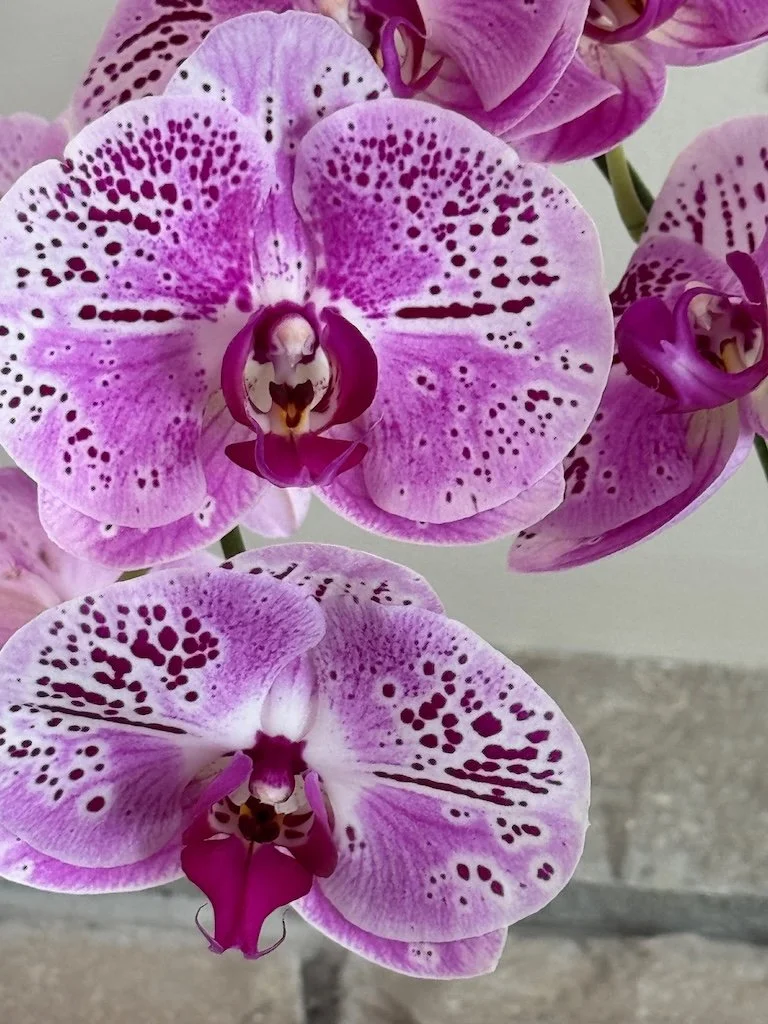
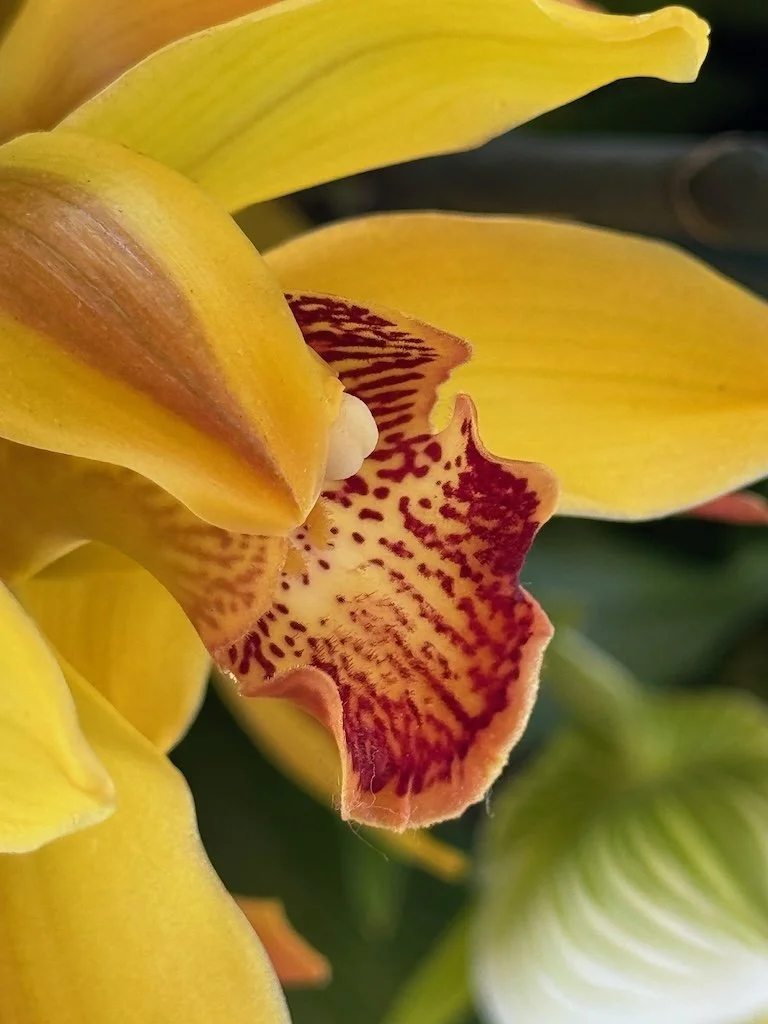
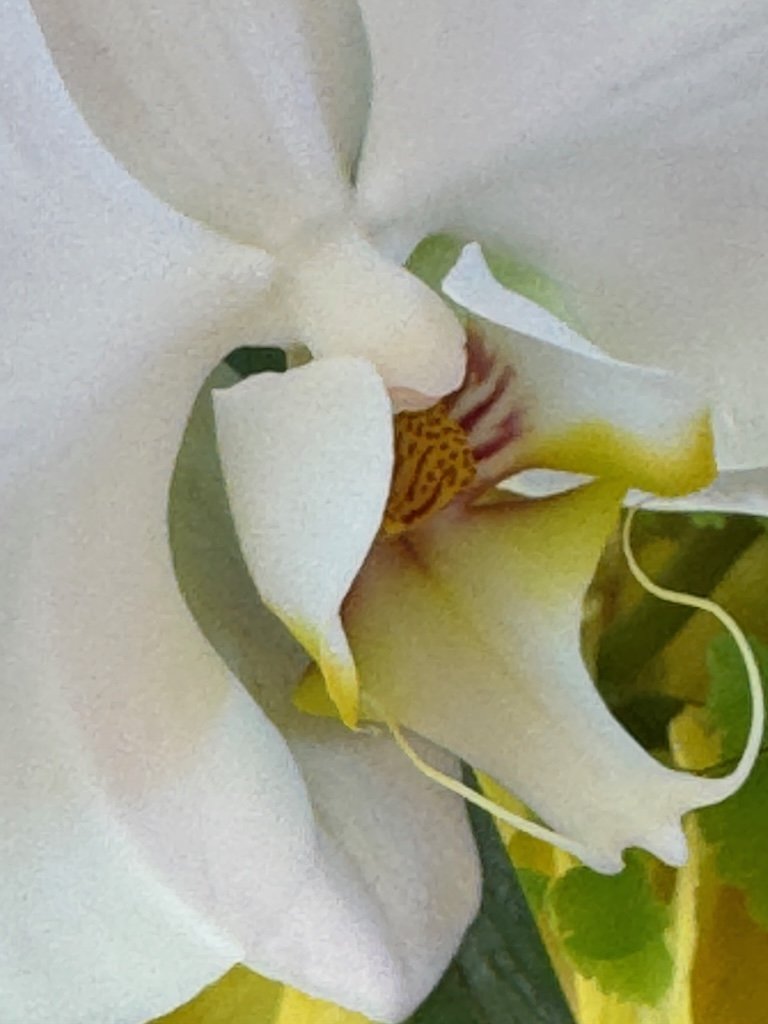
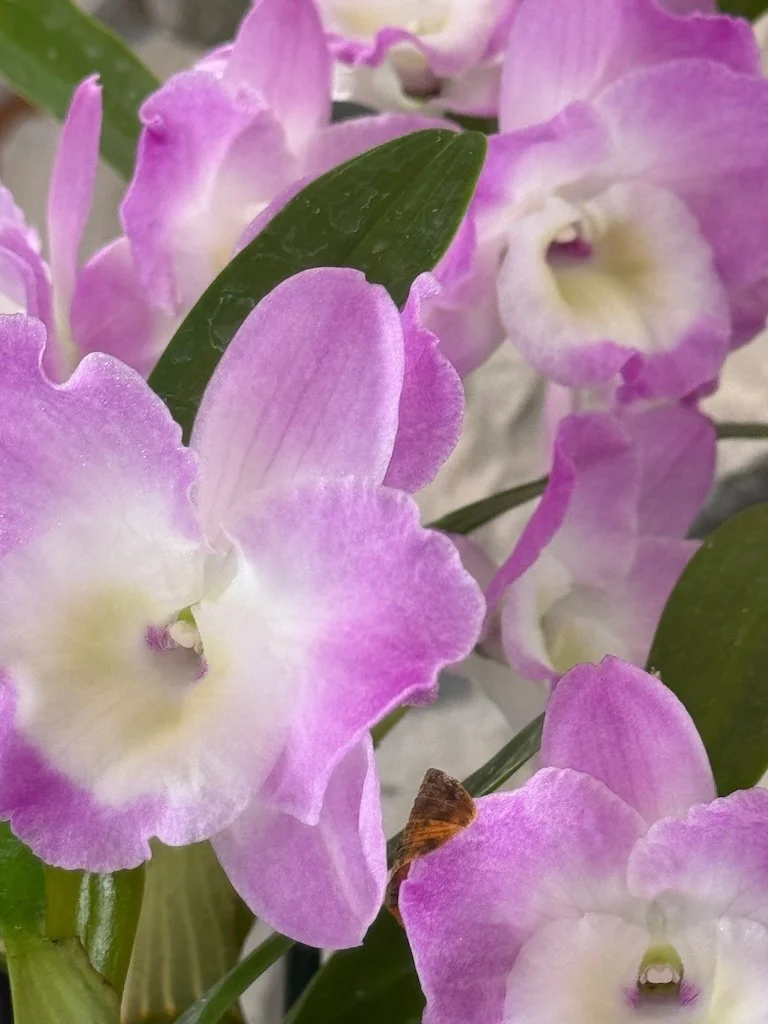
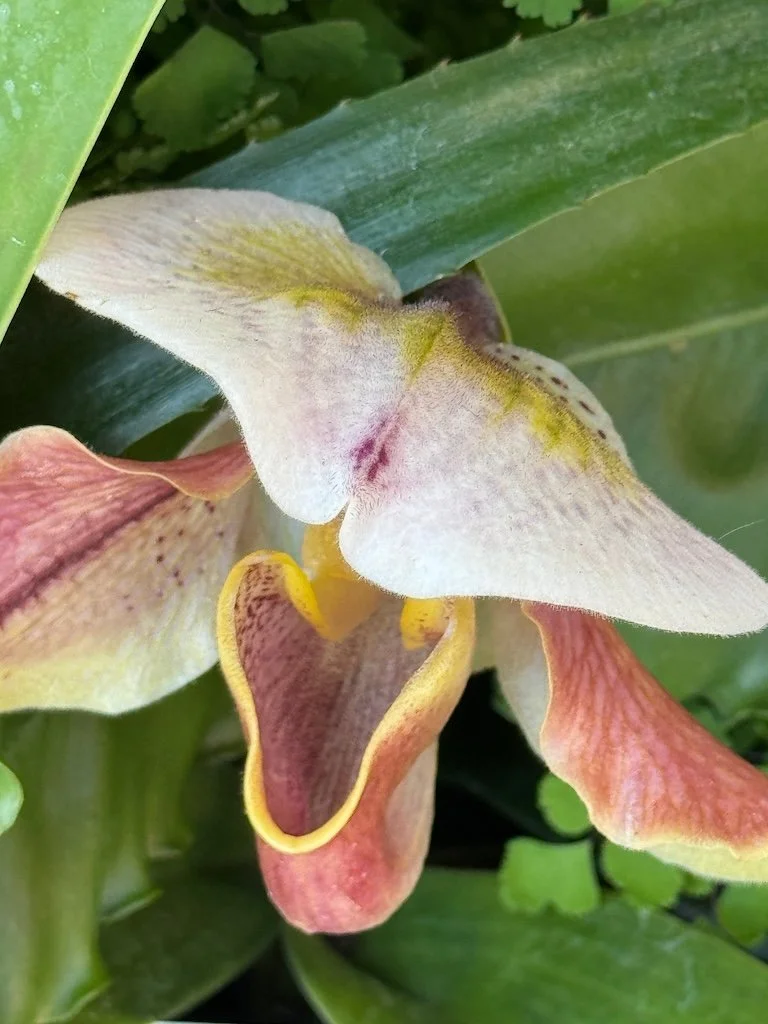
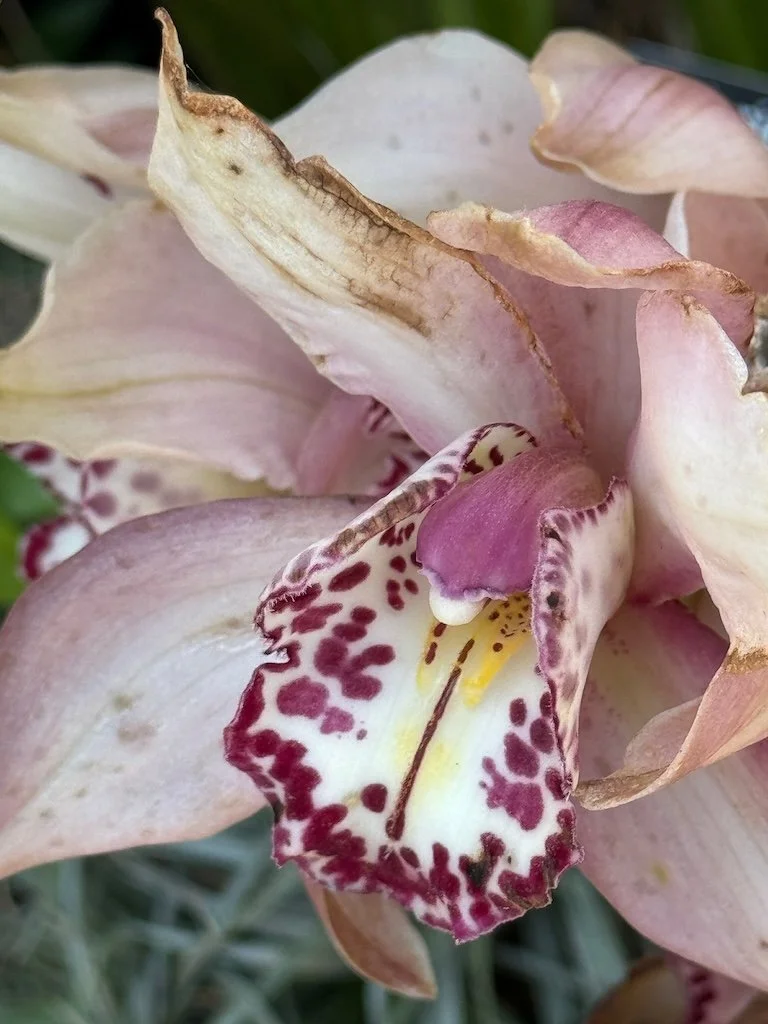
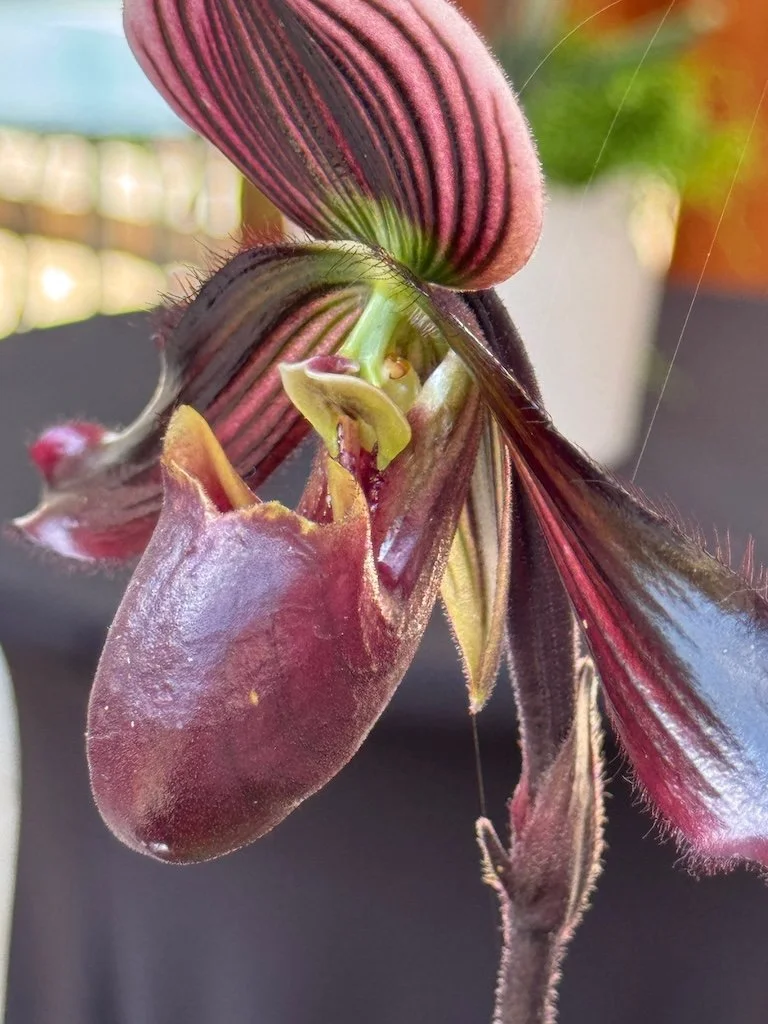
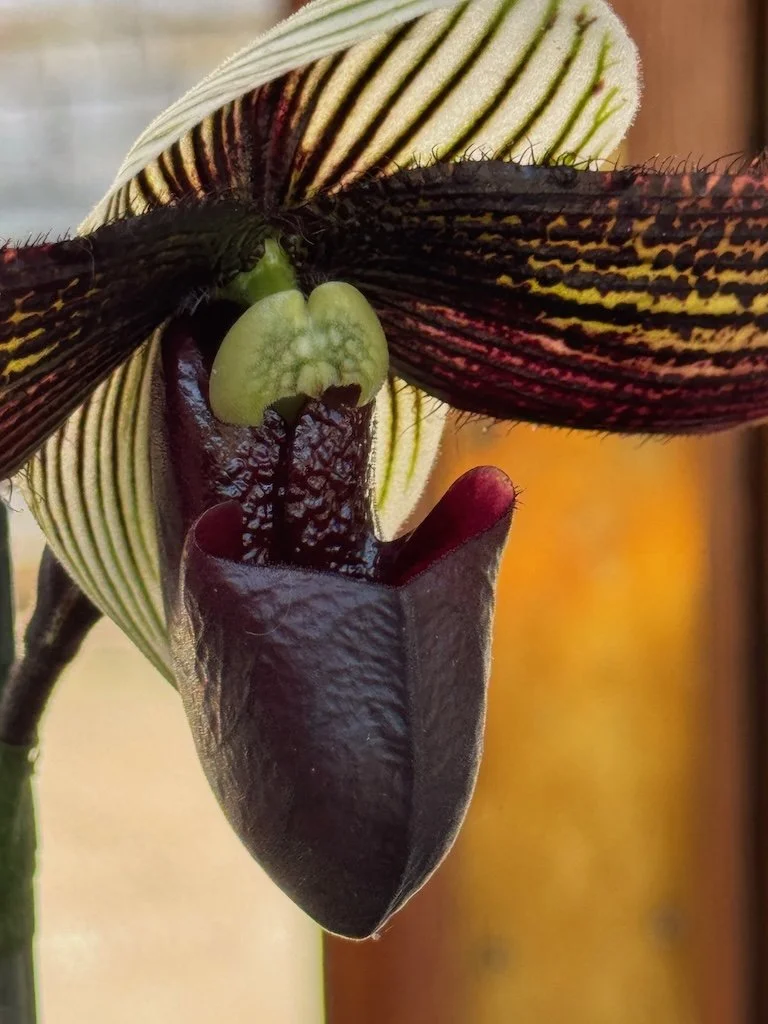
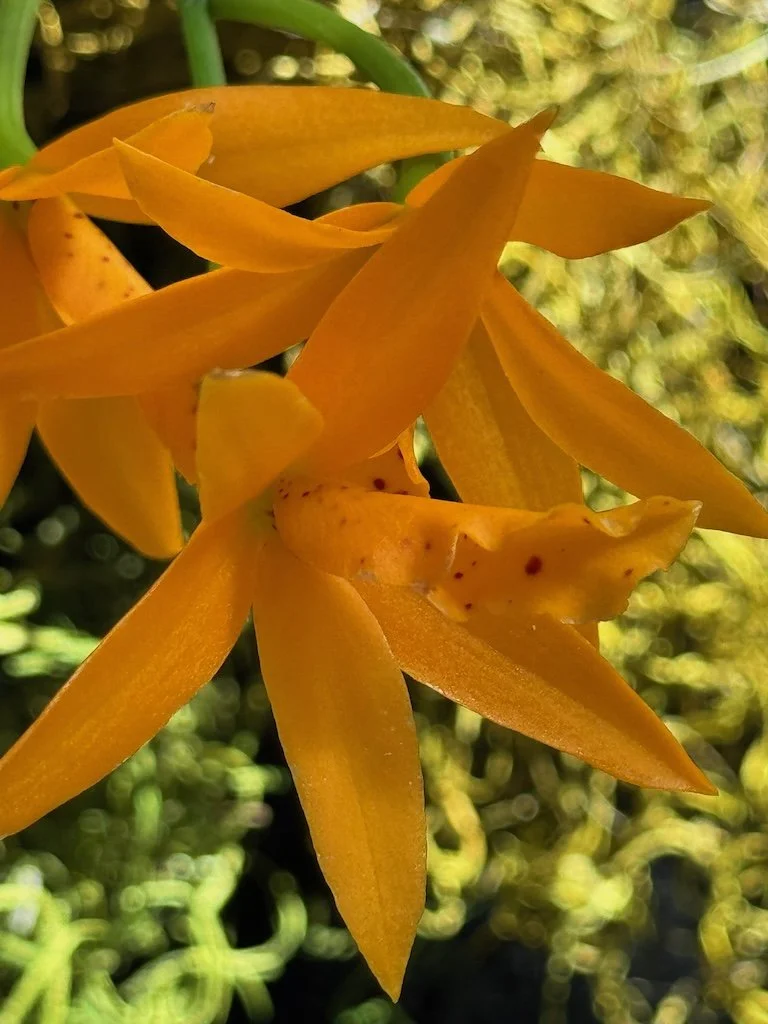
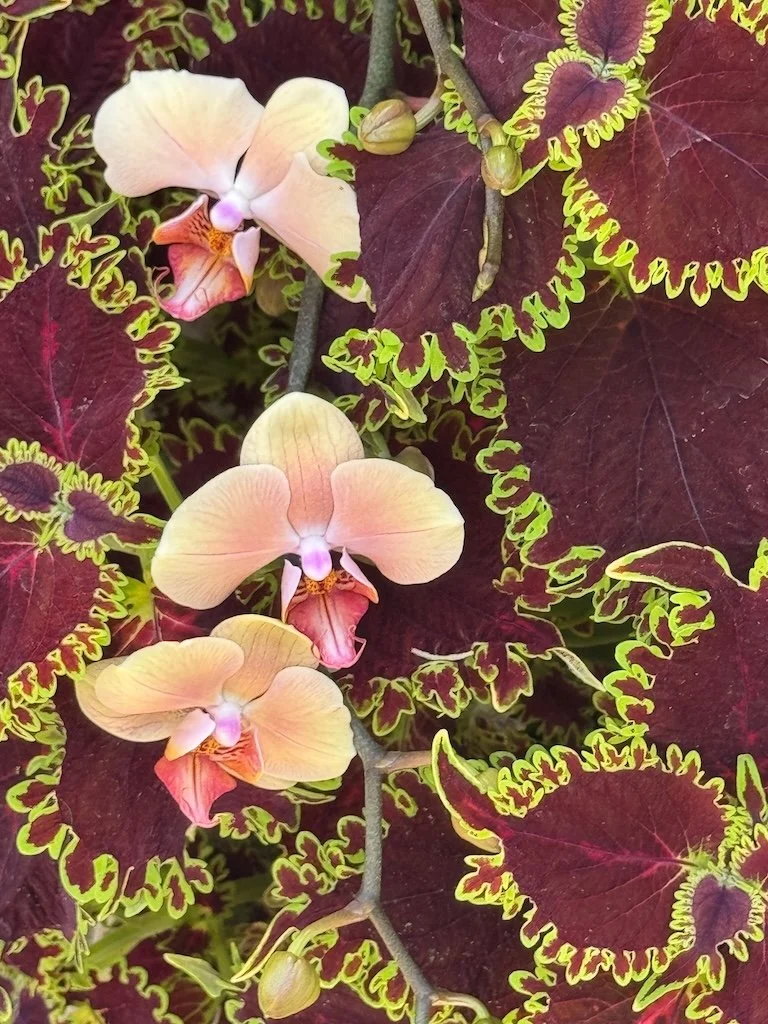
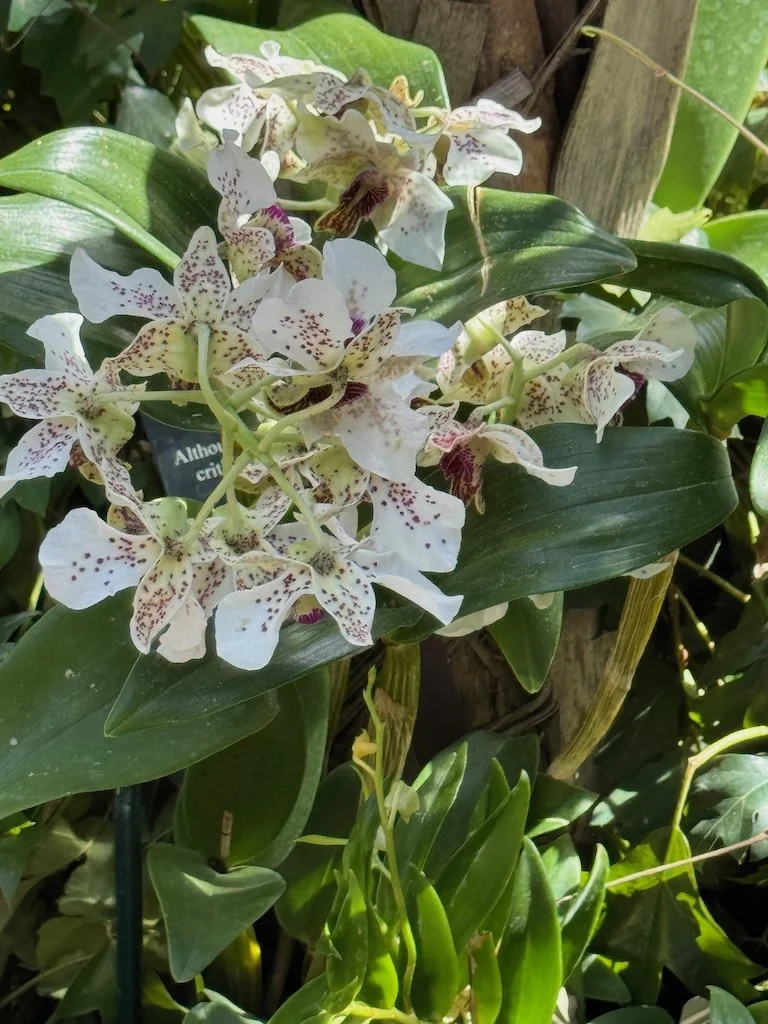
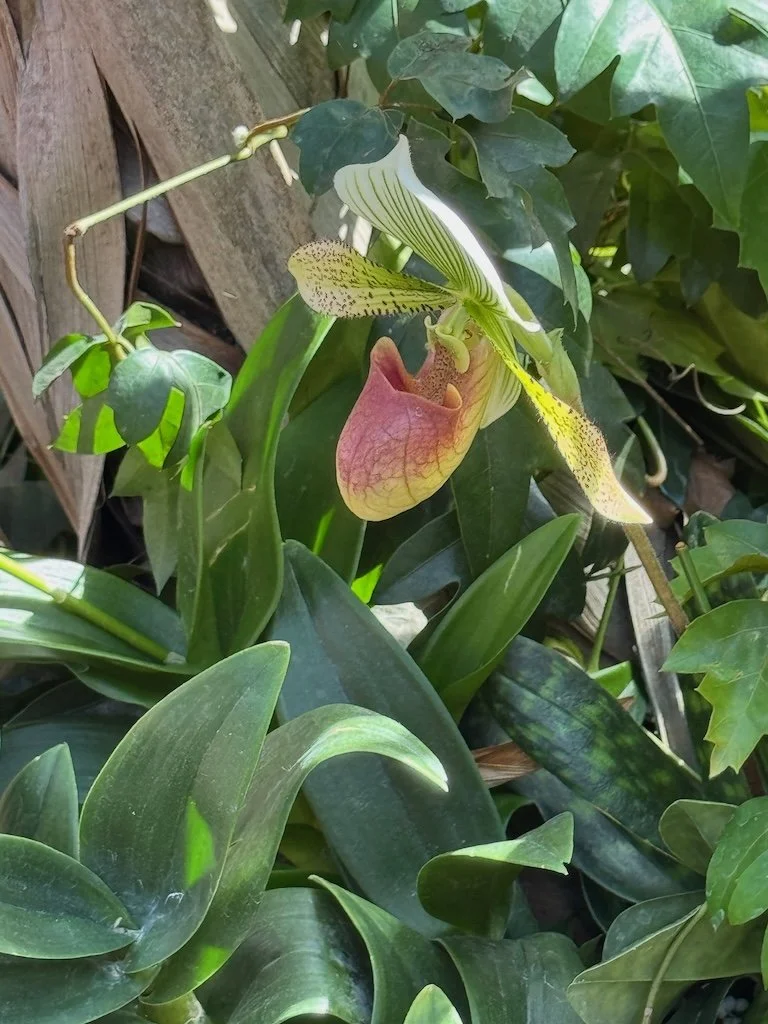
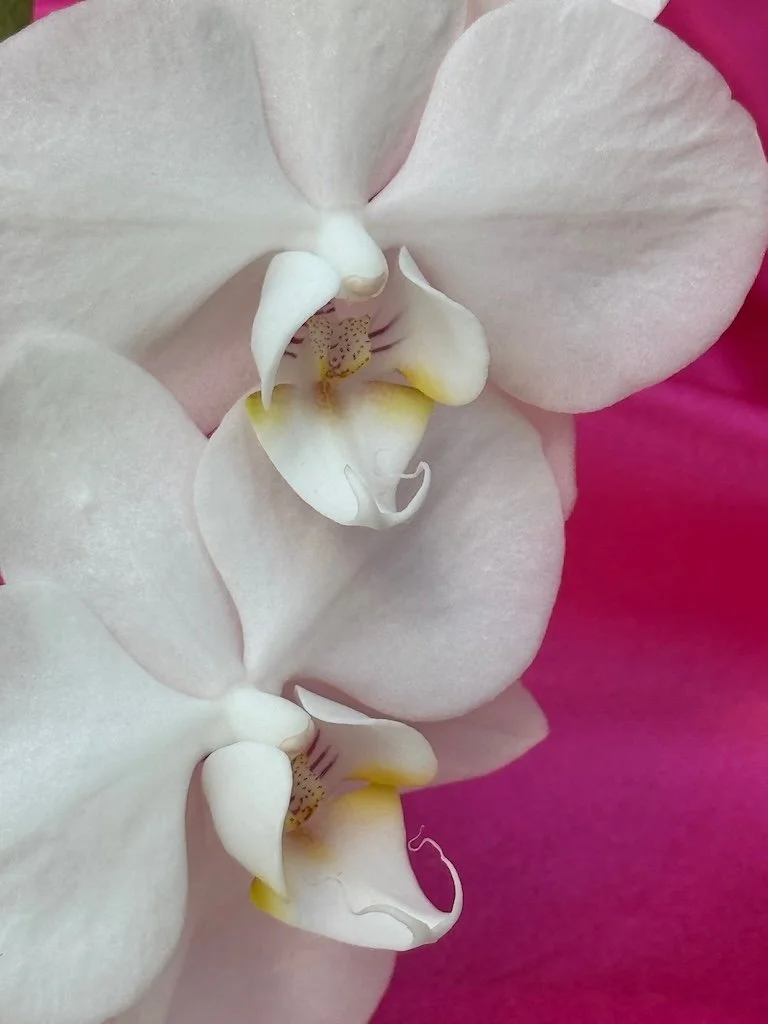
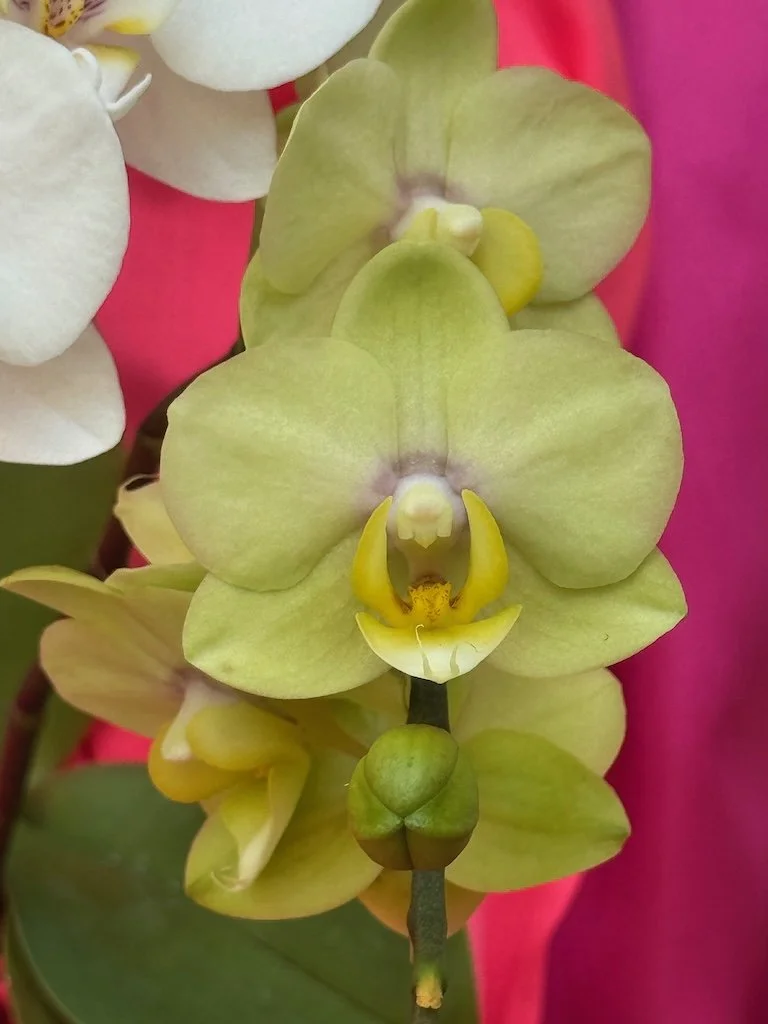
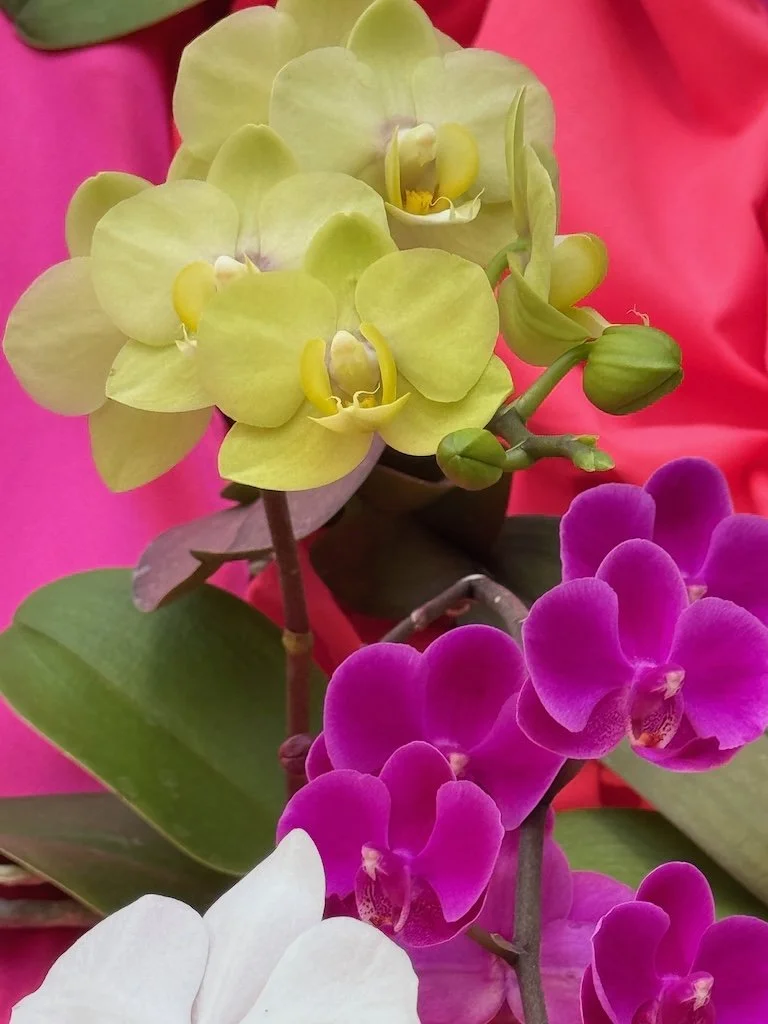
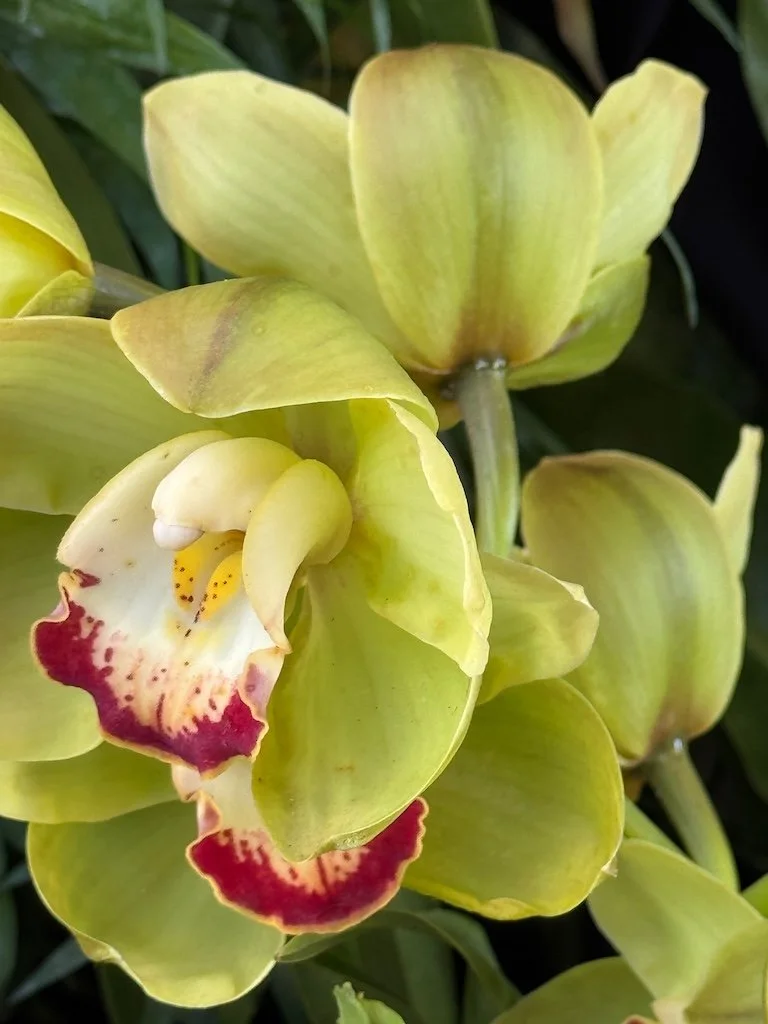
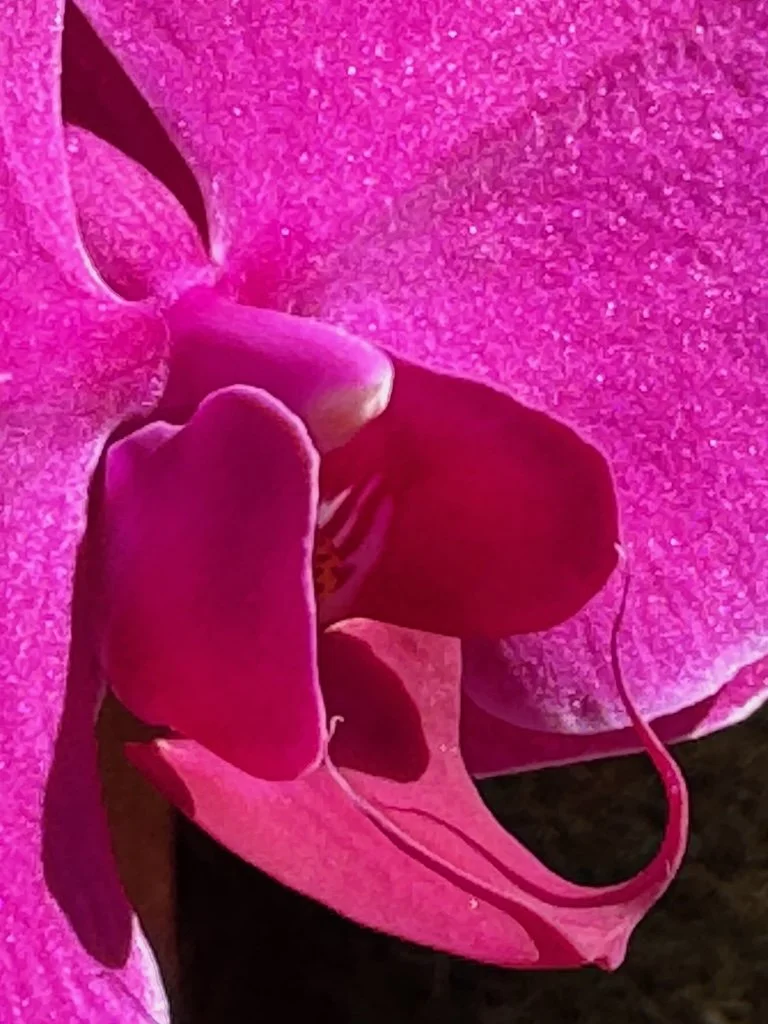
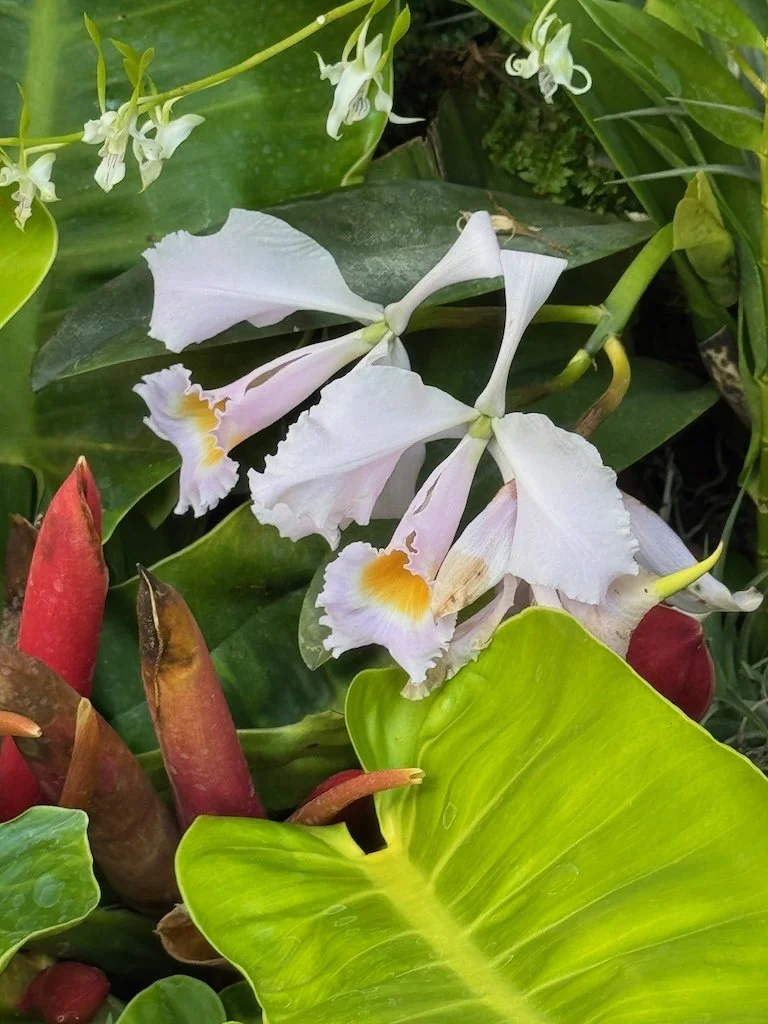
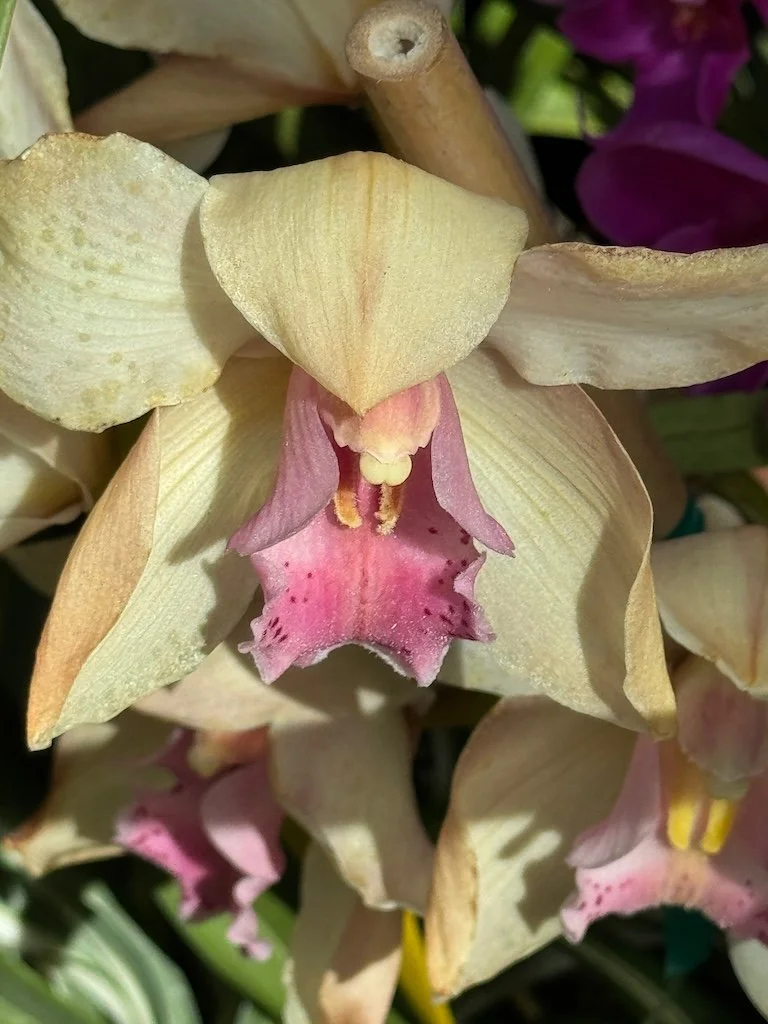
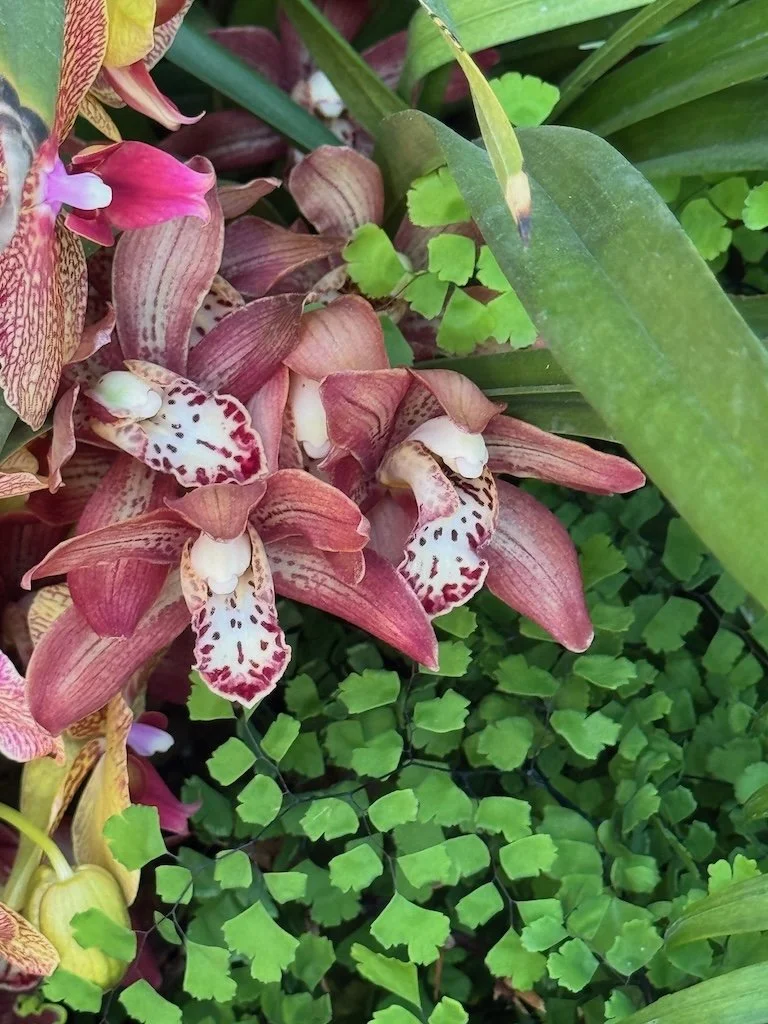
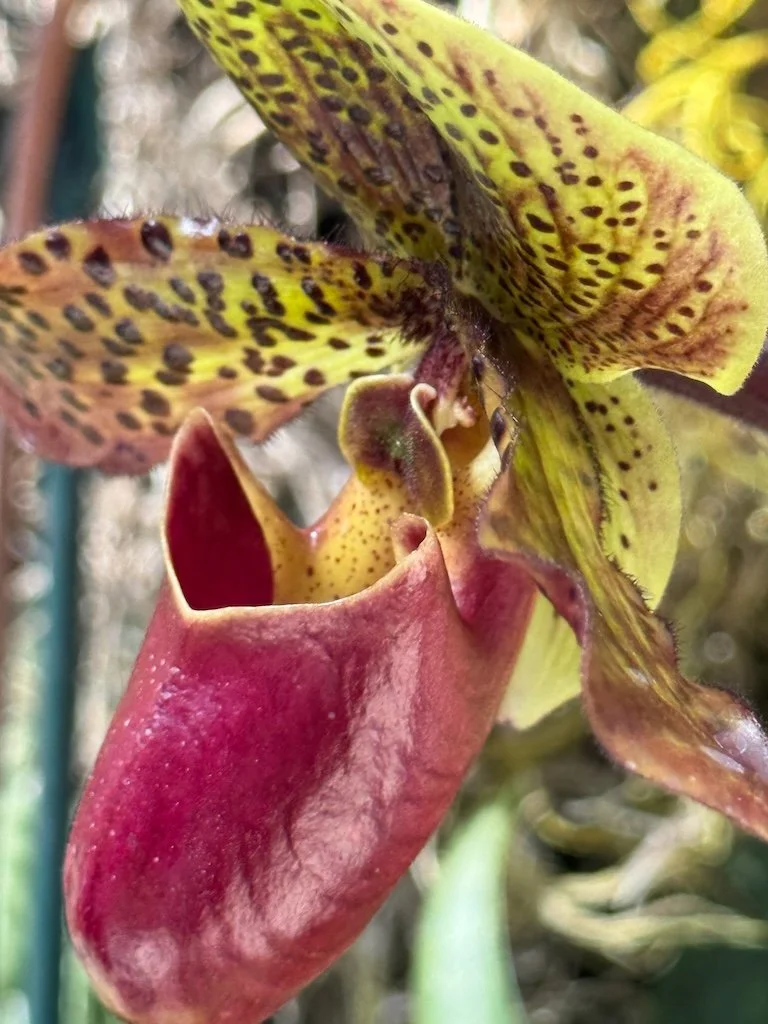
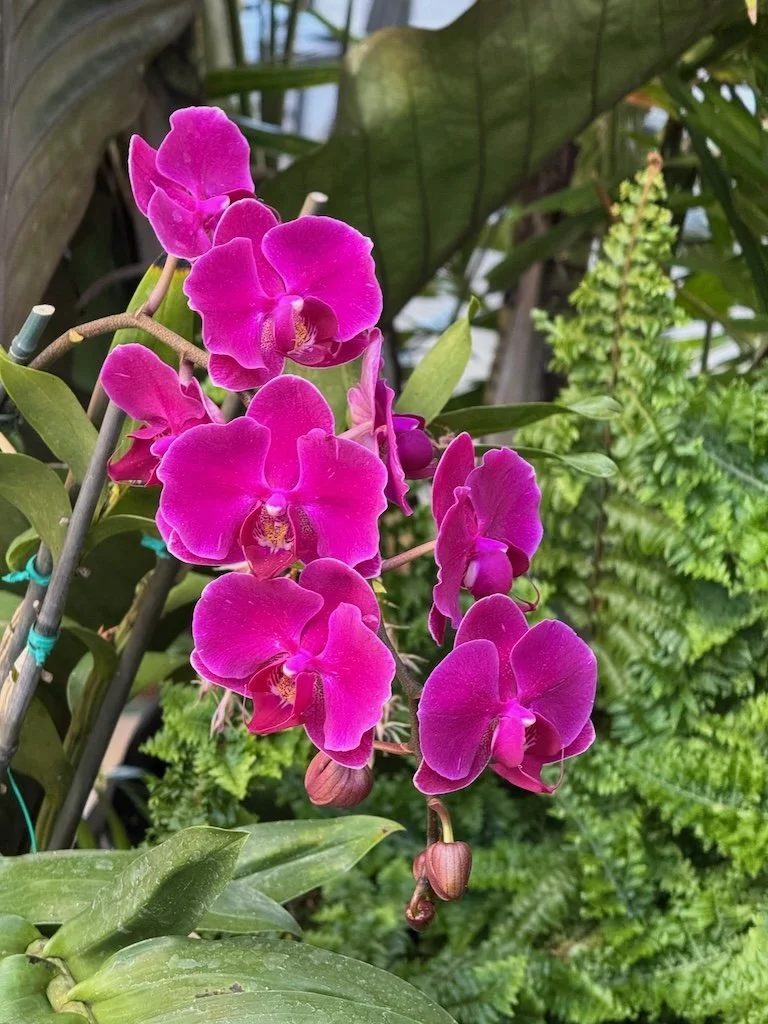
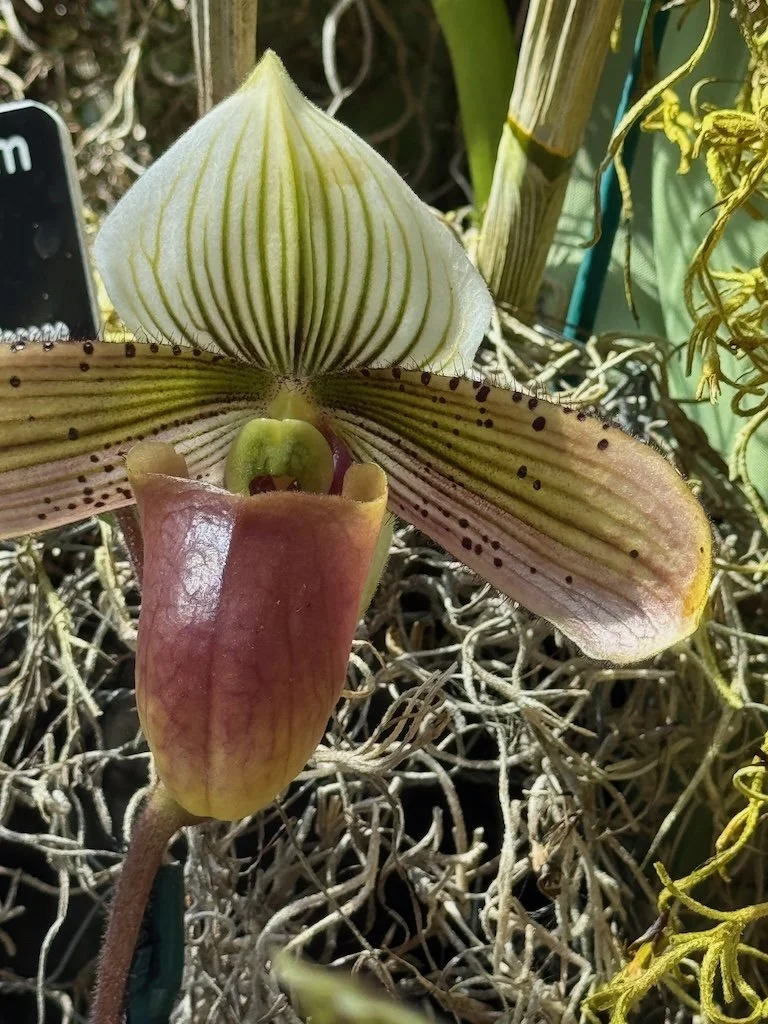
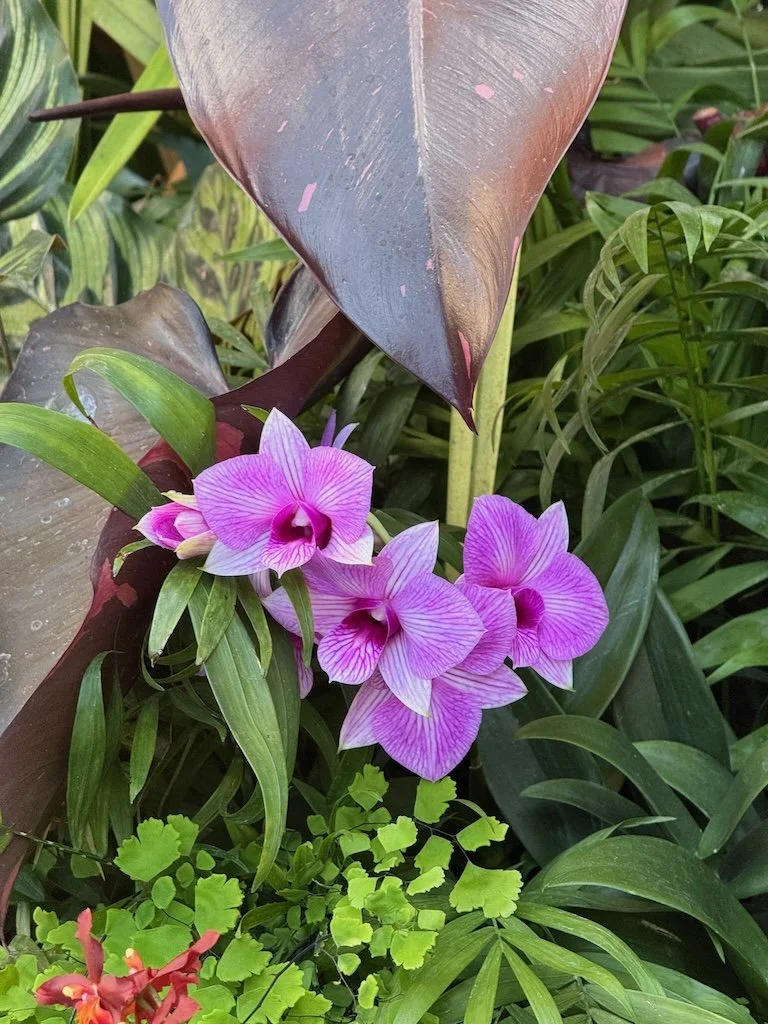
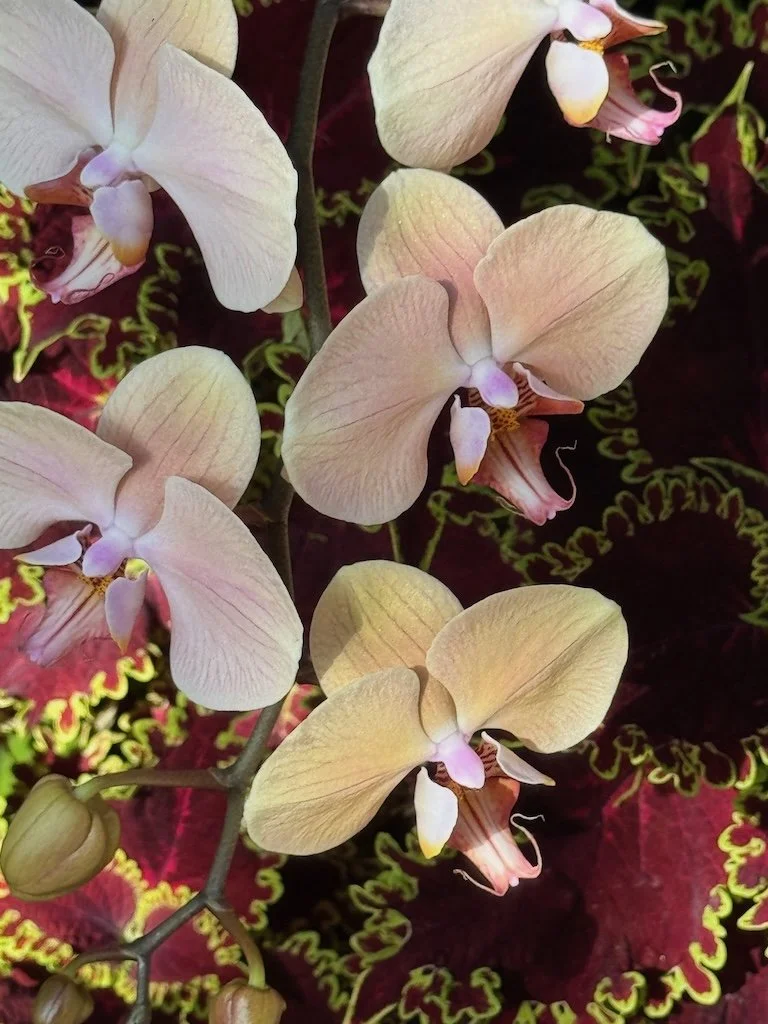
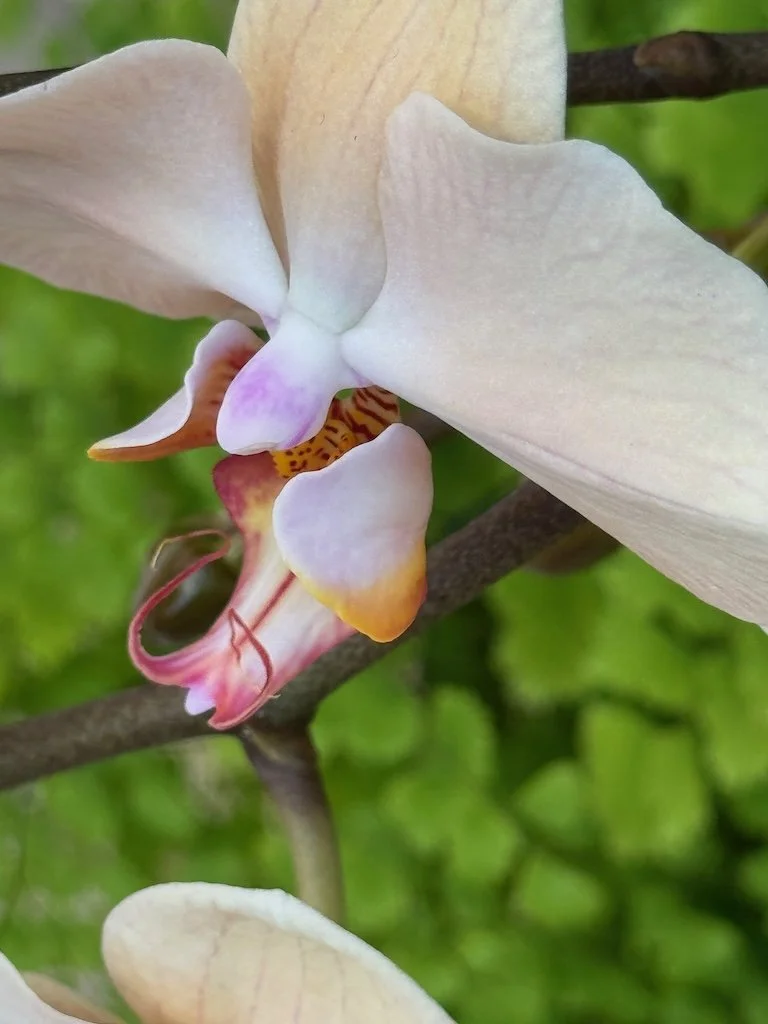
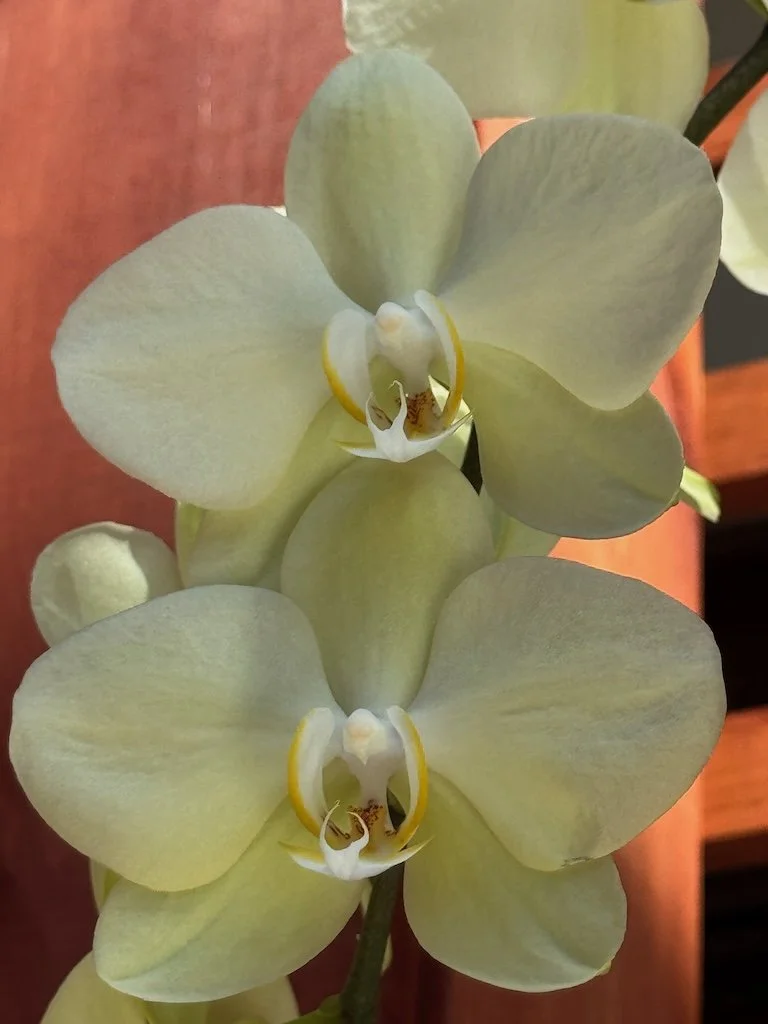
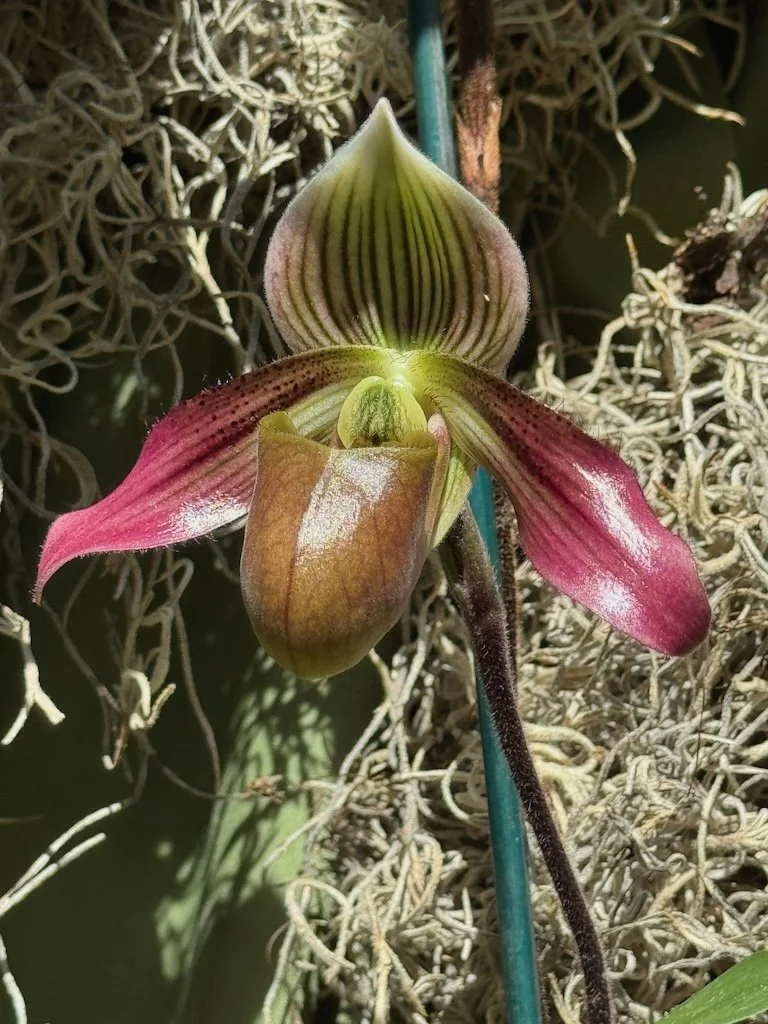
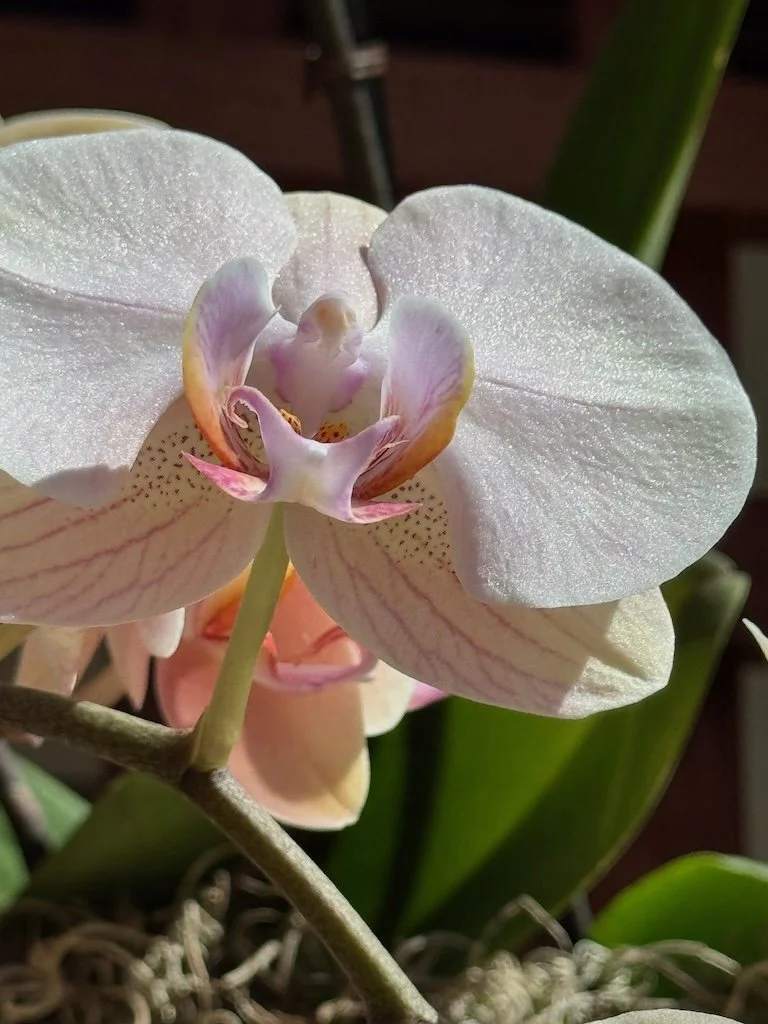
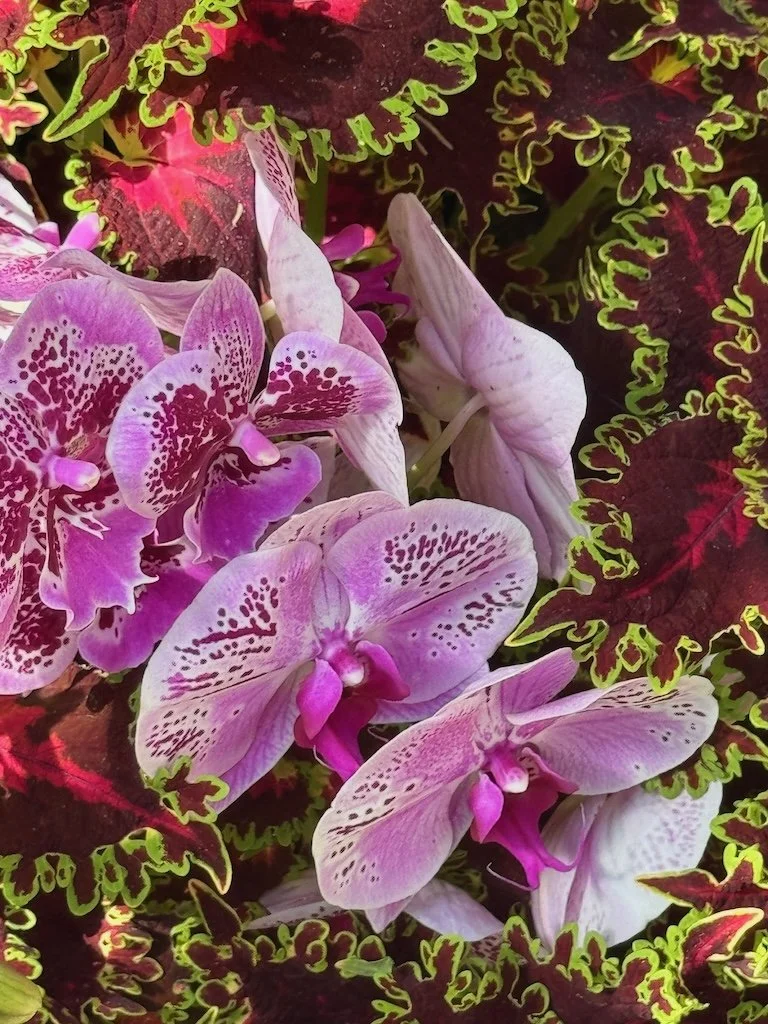
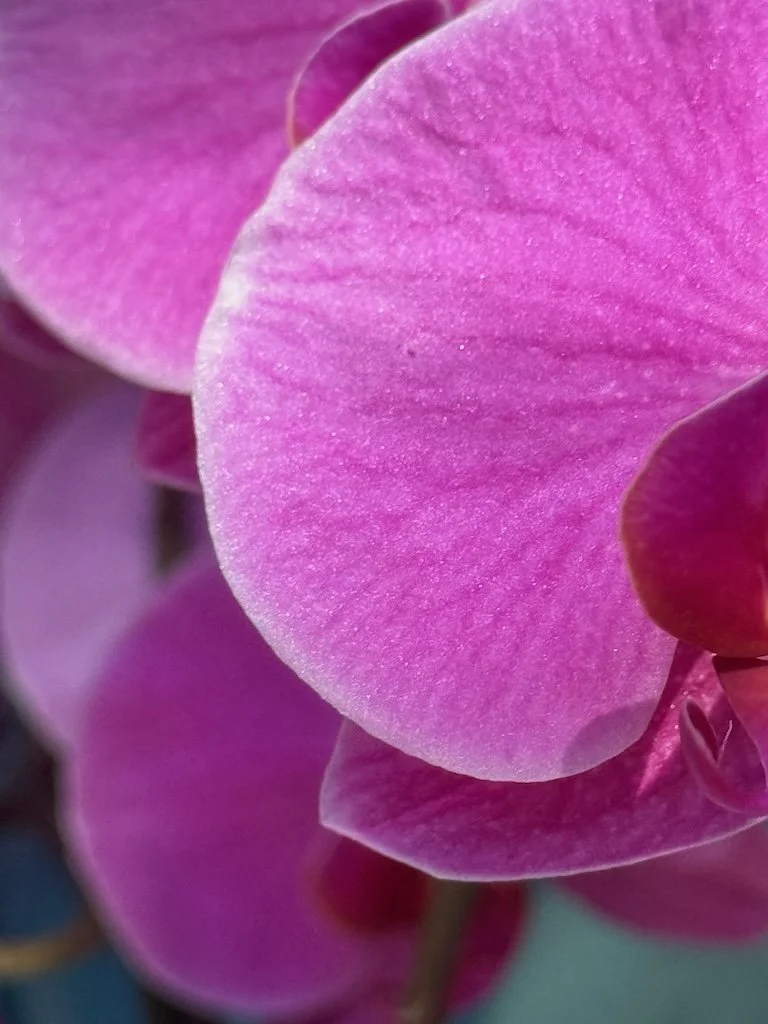
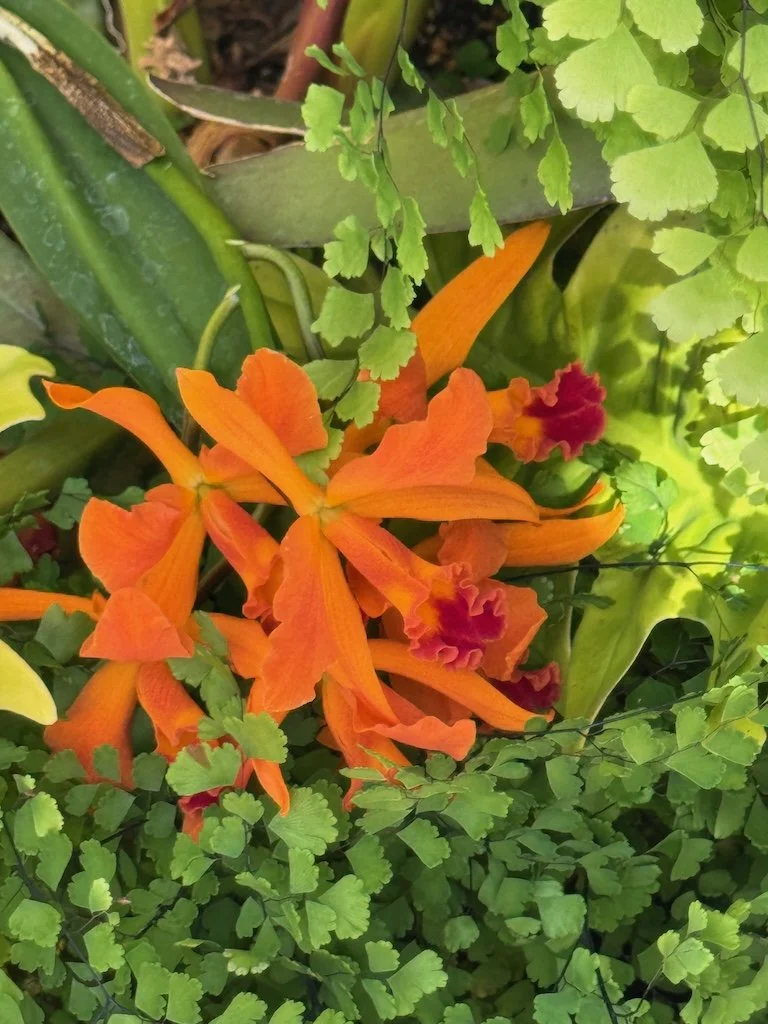
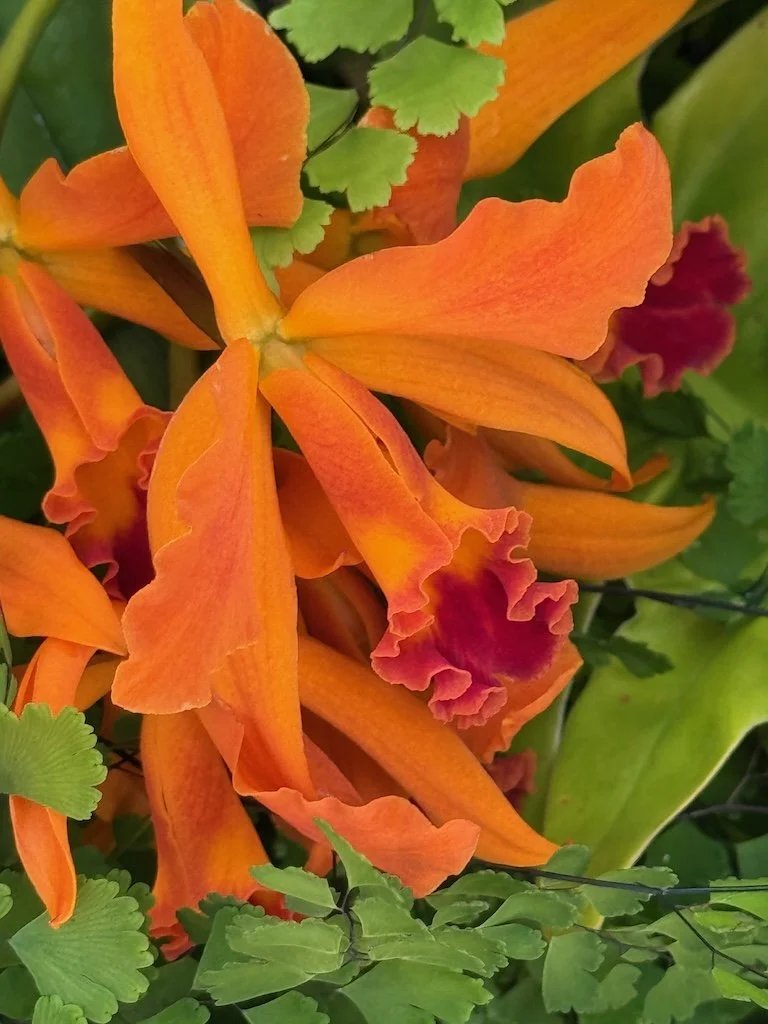
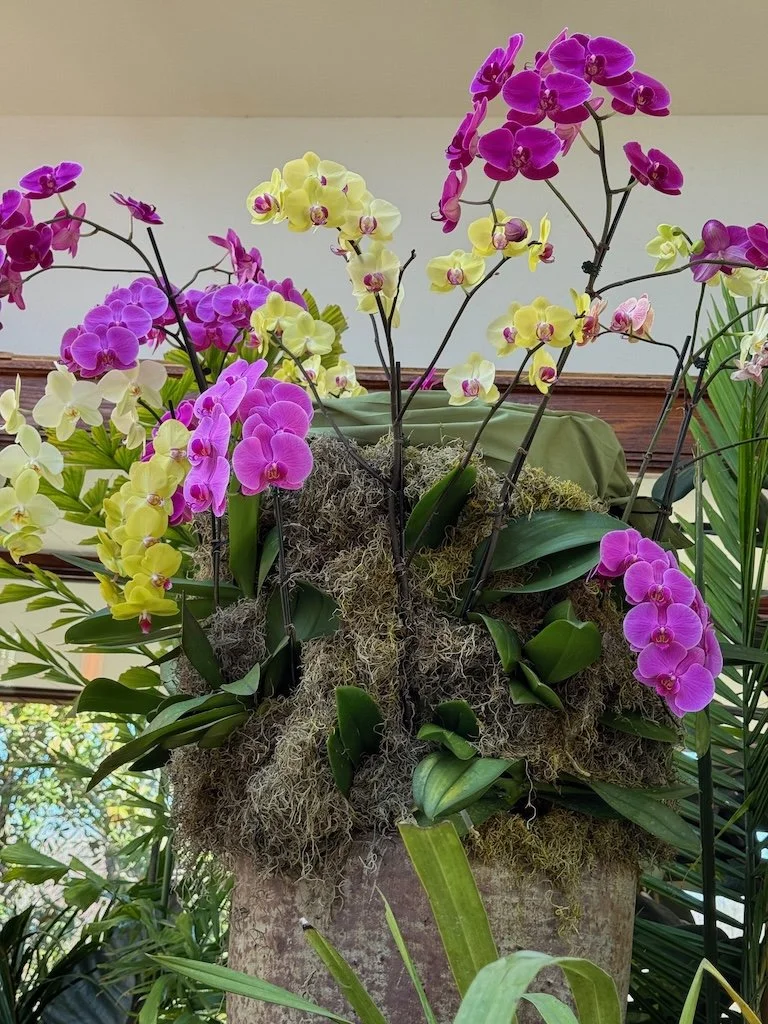
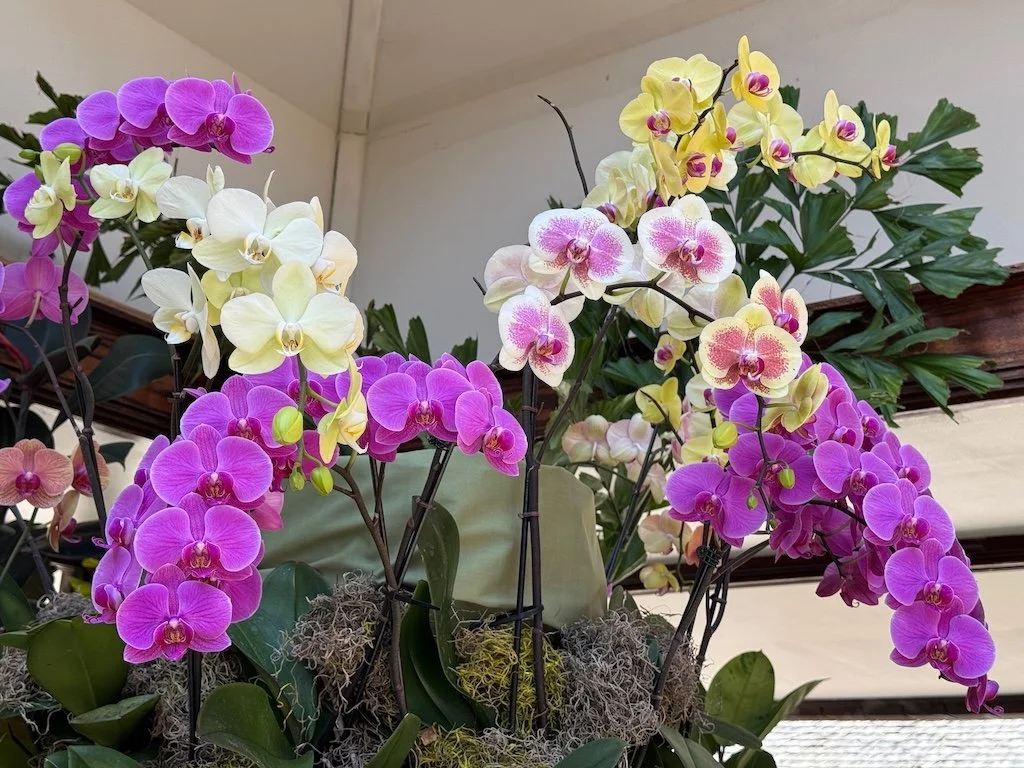
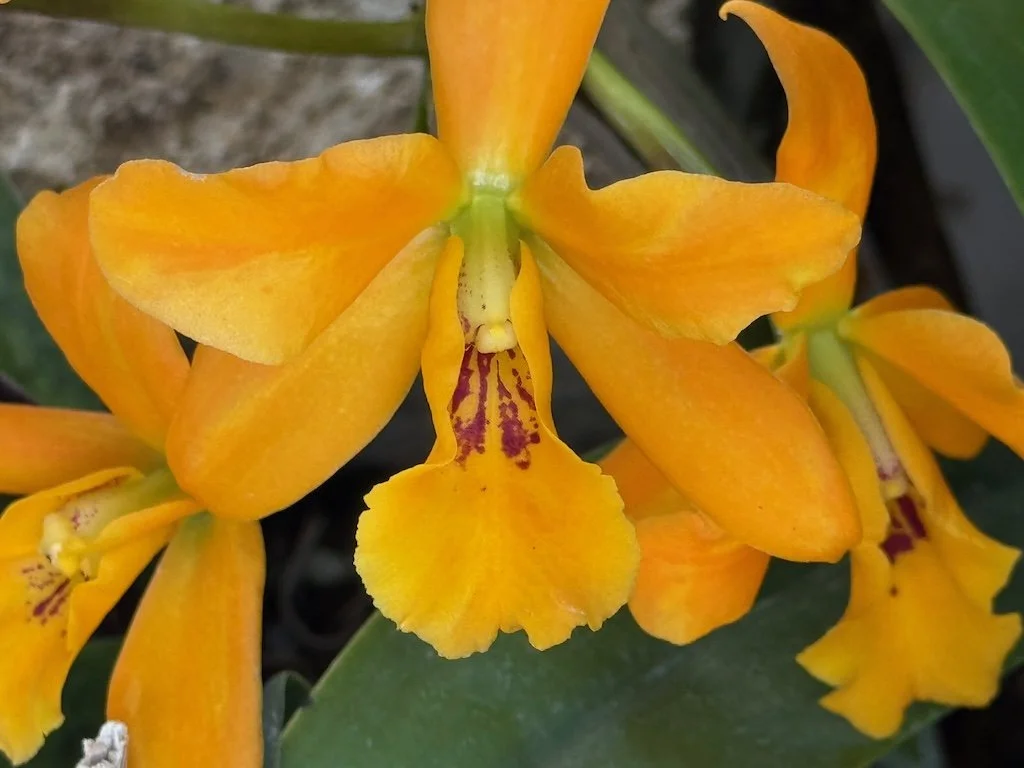
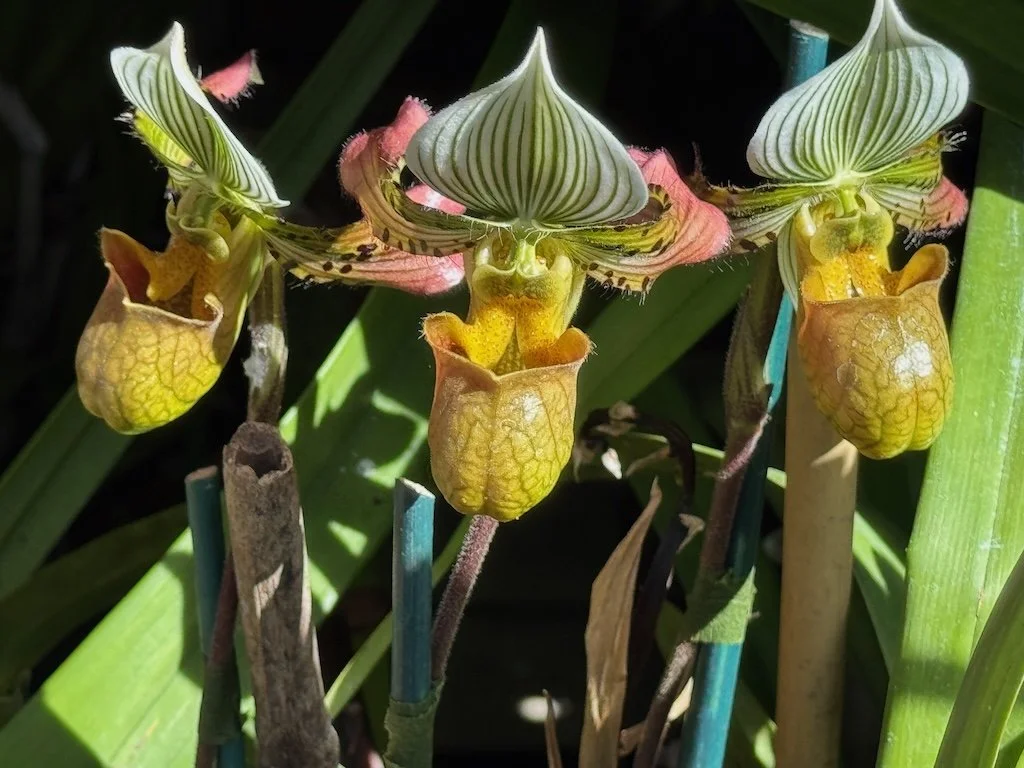
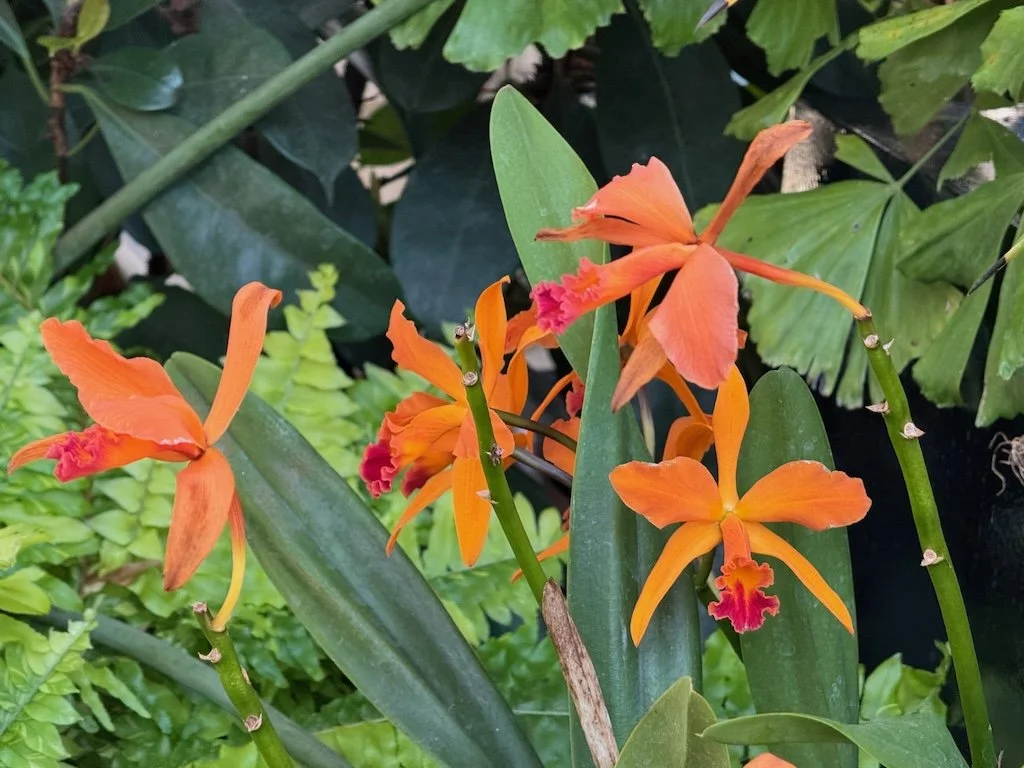
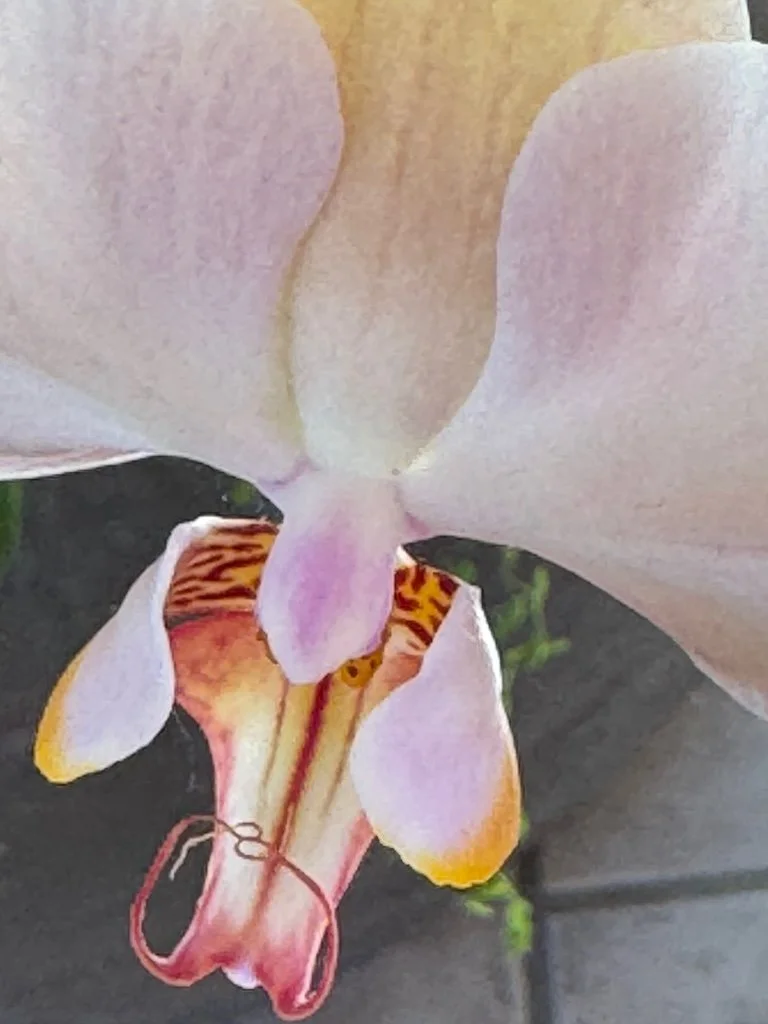
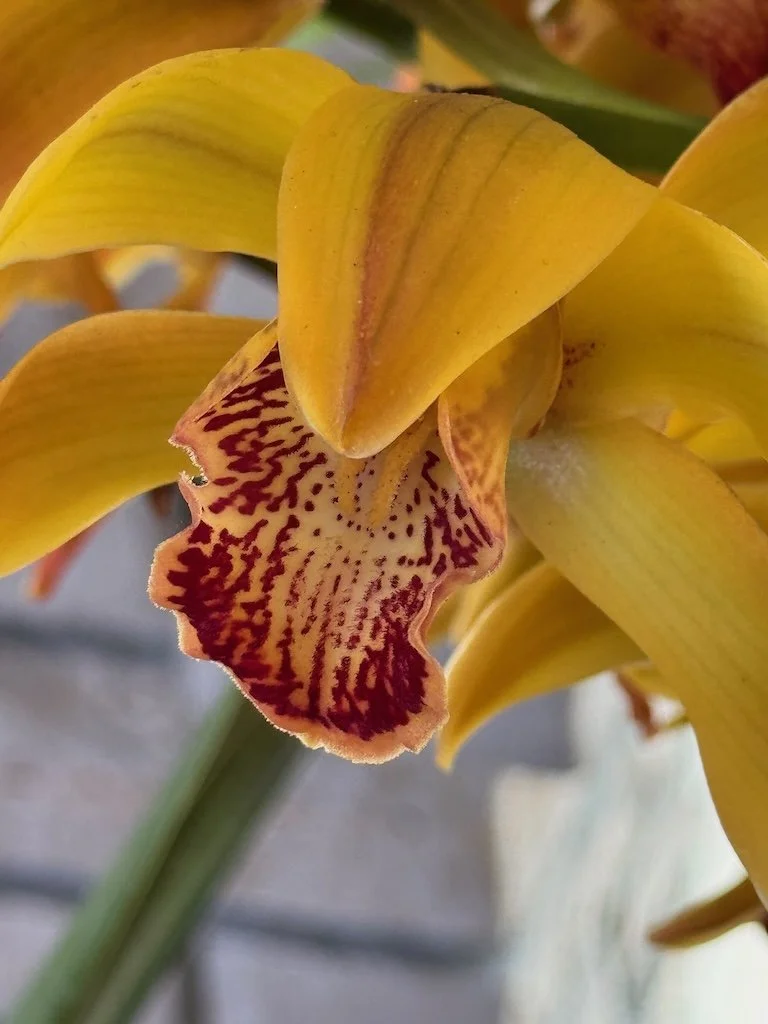
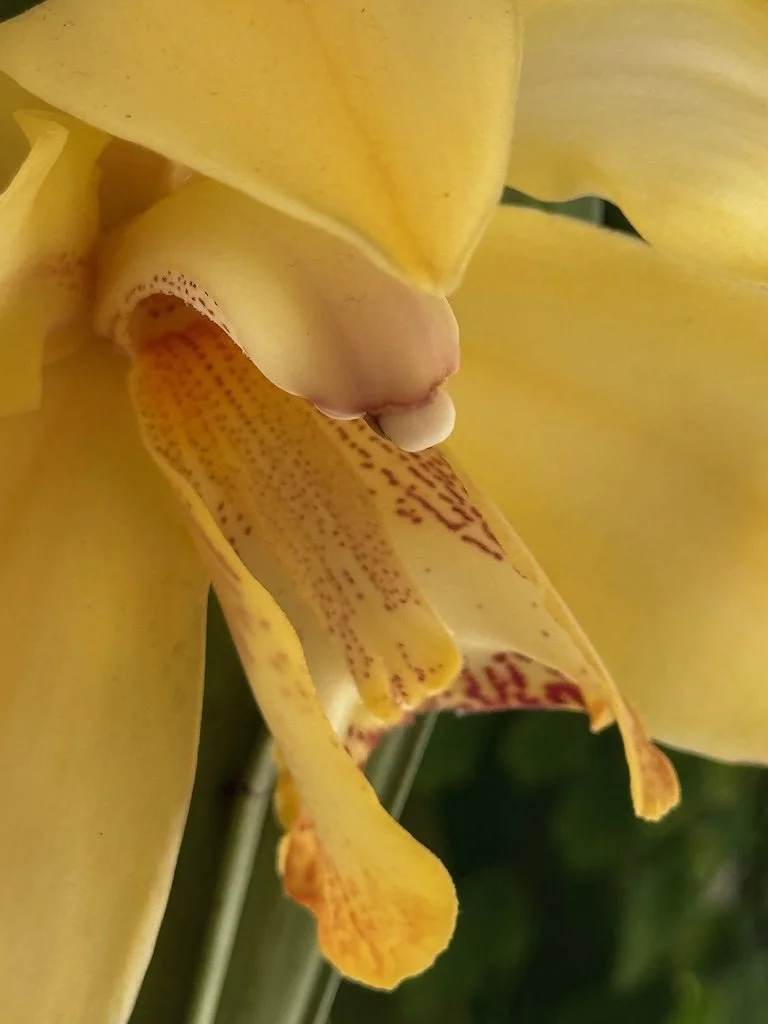
The Orchid Delirium exhibit was the motivation for our visit to Powell Gardens last week. I always enjoy taking macro pictures of orchids with my phone (iPhone 15 Pro Max); it is easier with a Bluetooth shutter remote which I had remembered to clip onto my purse handle. The pathways through the exhibit were wide and it was not crowded…everyone was taking their own time looking at the orchids. Usually, the slipper orchids are my favorites but I found myself drawn to the orange ones (orange was my mother’s favorite color and the color reminds me of her). I noticed the different textures and patterns of the flowers – lightly creased, curls, lines, dots, fizzy hairs, shiny/matte, veins. I realized that orchids sometimes remind me of carnivorous plants.

Enjoy the carousel of images!

Powell Gardens – Part I

Last week, I made my first trip to Powell Gardens to see their orchid display. It is a day trip from my home in Nixa MO so I will probably go again later this spring….and/or next fall. It was a cold day, and we weren’t planning on walking around outdoors, so we weren’t disappointed that the trees were mostly still bare. Our membership at Springfield Botanical Garden got us into Powell Gardens too!

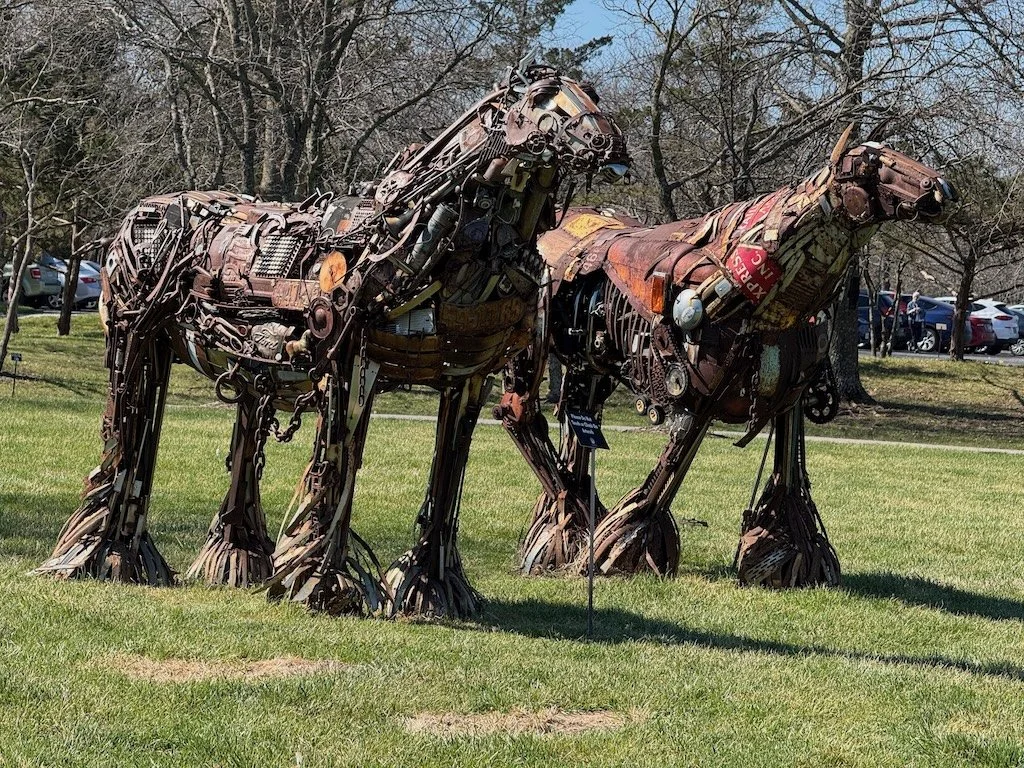
The horse sculptures on the way into the visitor center were a plus. I was surprised that they were not listed in the Wander Walk Art in the Gardens brochure.

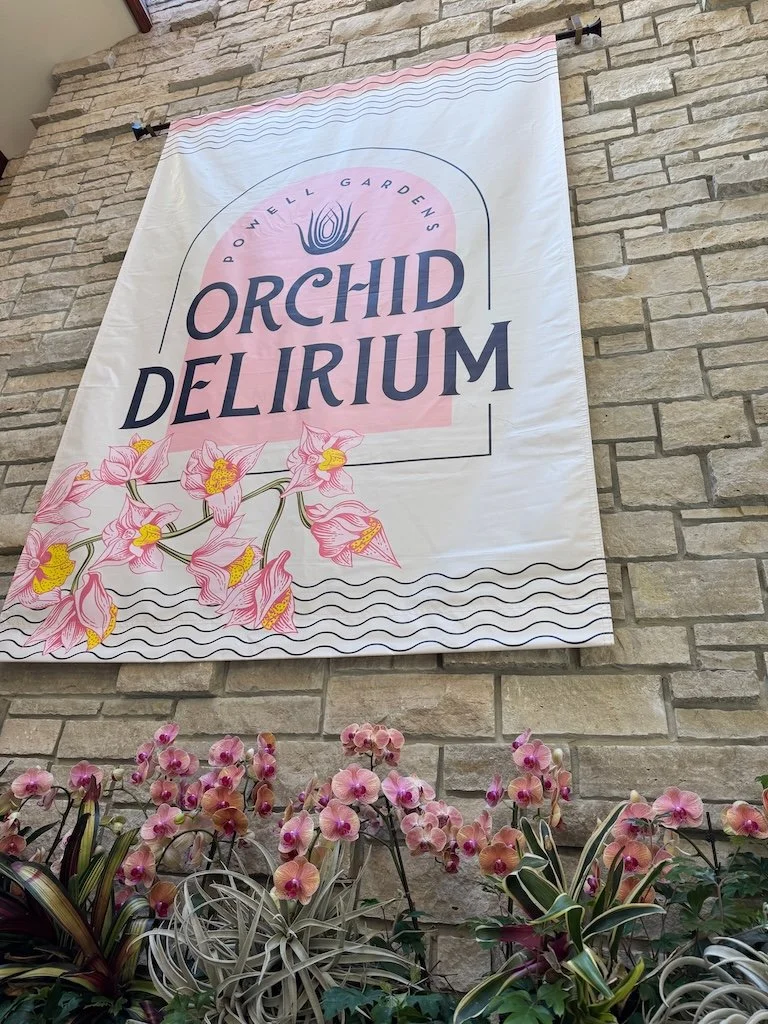
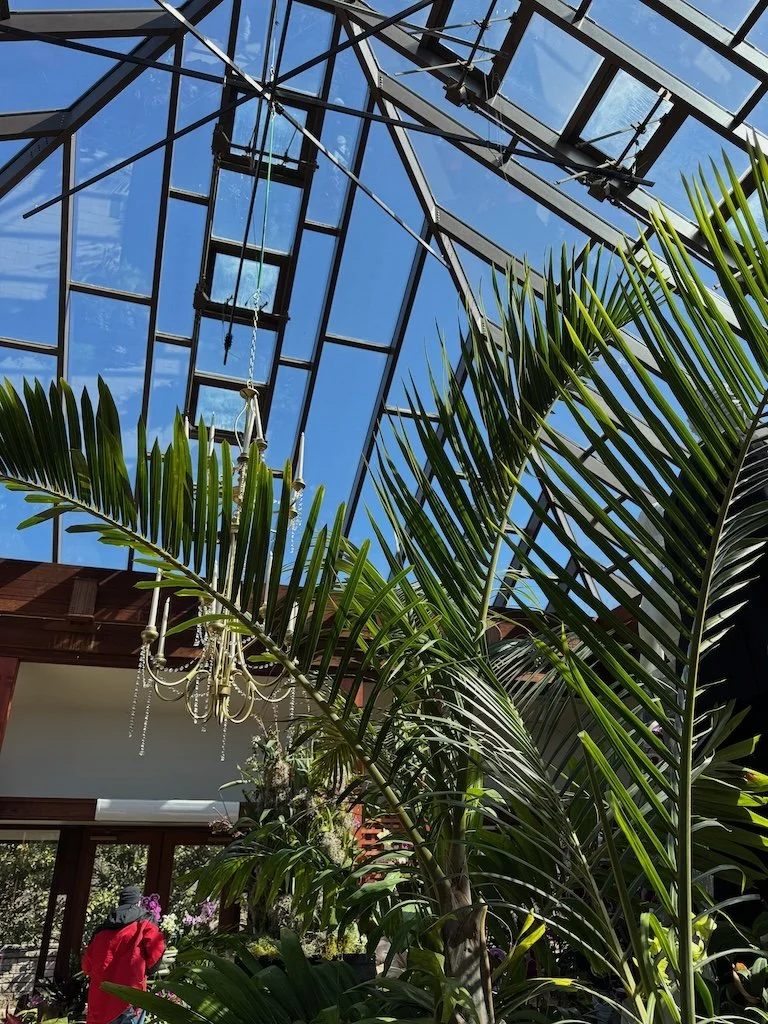
We knew in advance that the main reason for our trip was the Orchid Delirium event. It was in the visitor center….beginning as soon as we walked in. There is a large area of the building that has a glass roof – and lots of windows in the walls.

It was a great place to wander around and get close looks at orchids; more of my orchid pictures in the blog post for day after tomorrow.

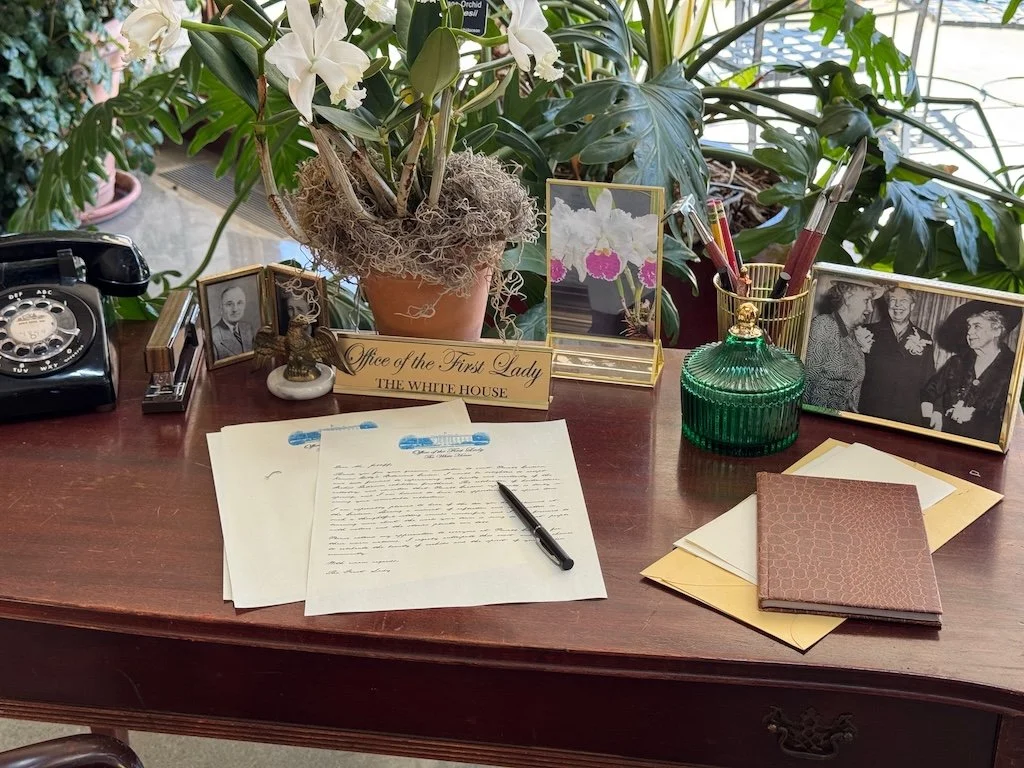
There was a side exhibit about First Ladies and Orchids that I enjoyed.

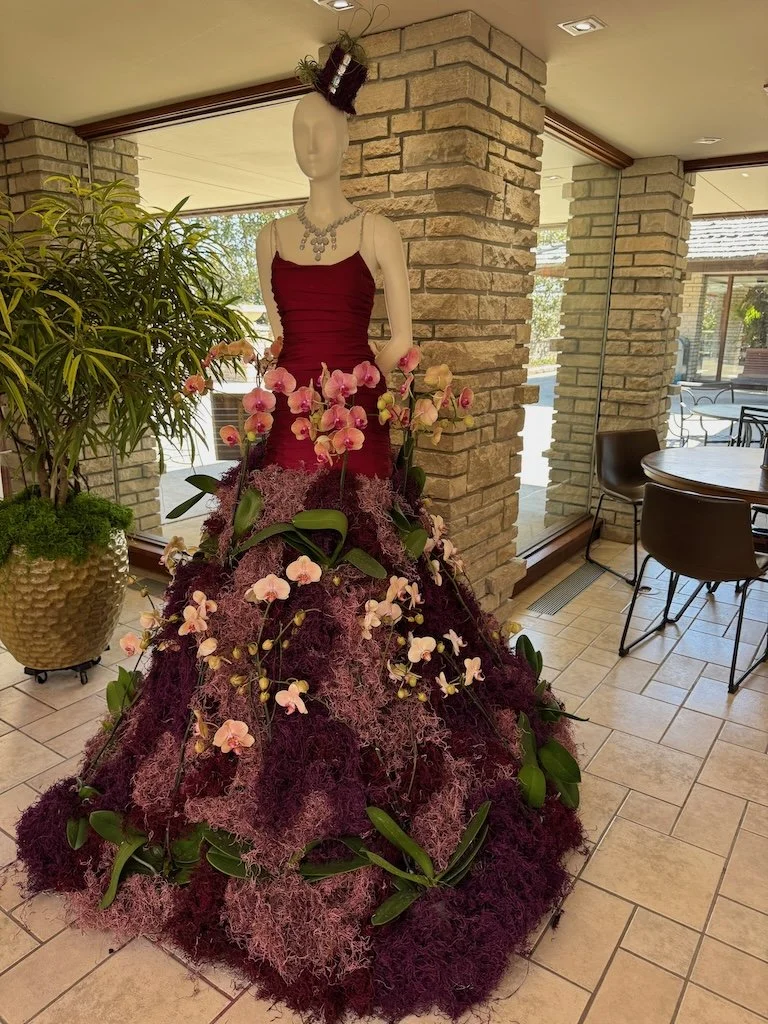
One aspect of the exhibit that was unique was manikins in formal wear among the orchids. My favorite was one where the skirt of the gown was plants!

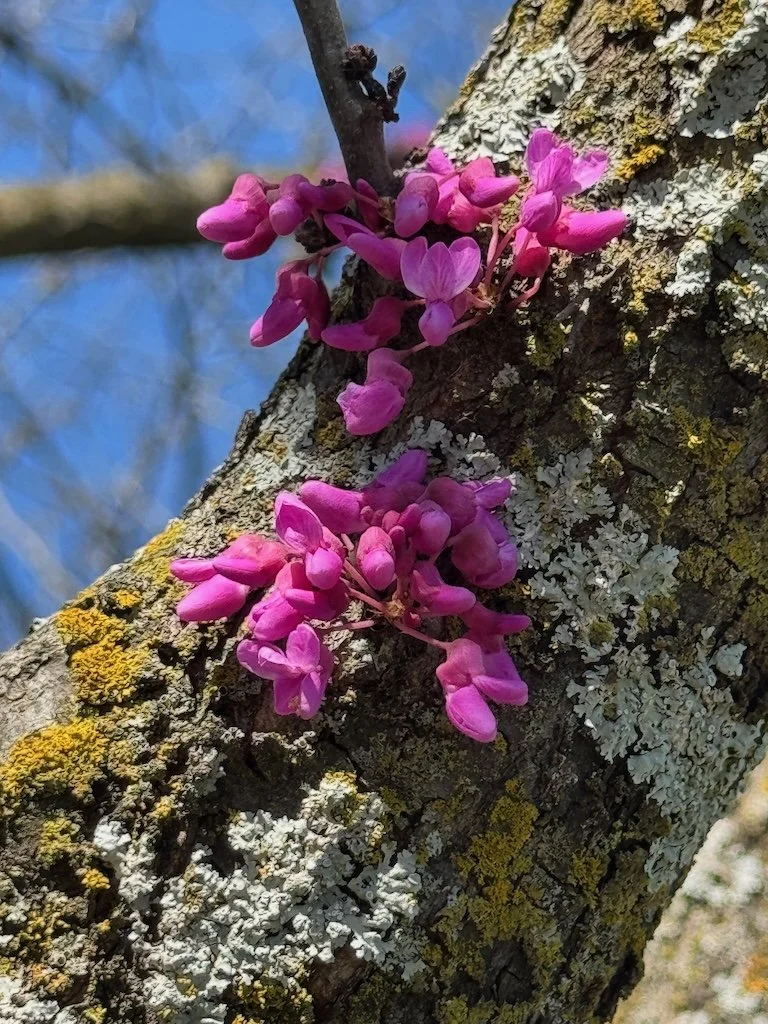
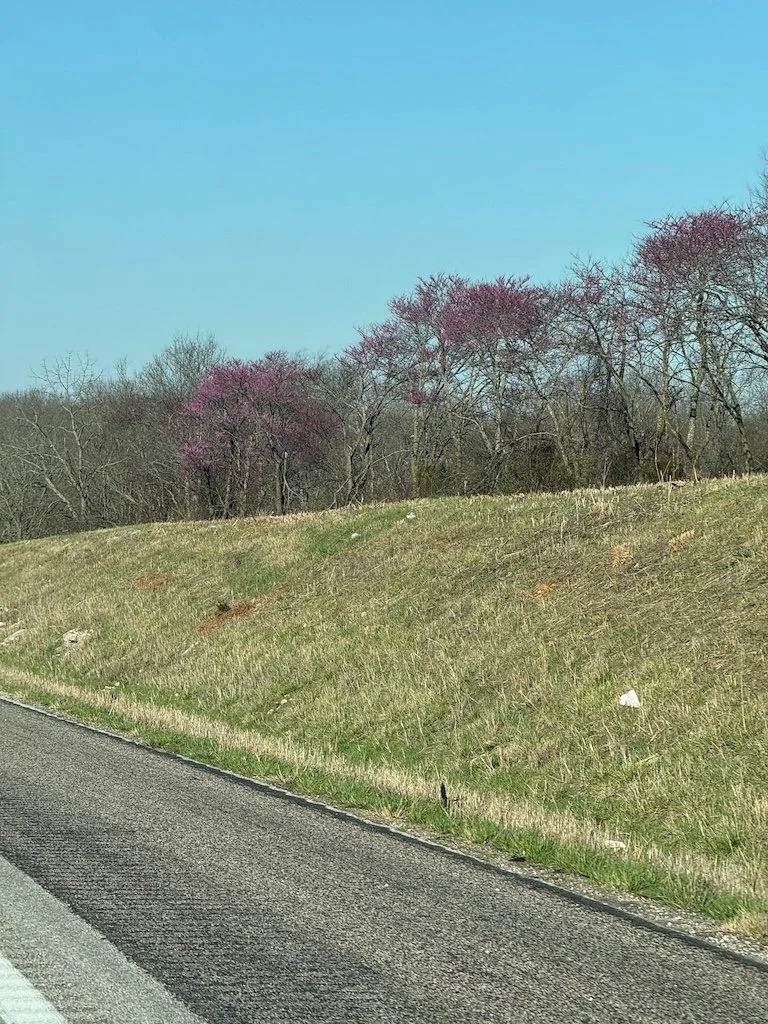
On the way back to the car, I saw a redbud in bloom. The flowers along the larger branches were OK but the ones on the small branches appeared to be damaged (killed?) by recent frosts.

More orchid photos day after tomorrow….

Gleanings of the Week Ending April 4, 2026

The items below were ‘the cream’ of the articles and websites I found this past week. Click on the light green text to look at the article.

3/23/2026 Smithsonian Magazine These Mesmerizing Waterfalls Flow Only Every Few Years. See the Rare Marvel Now in Southwest Utah - A rare red rock waterfall is flowing once again in southwest Utah, leaving visitors in awe of its cinematic beauty.

3/23/2026 Science Daily Scientists discover hormone that may stop chronic back pain at its source - A hormone-based treatment could help ease chronic back pain by reducing abnormal nerve growth within damaged spinal tissue. During spinal degeneration, pain-sensing nerves grow into regions where they normally do not exist. Our findings show that parathyroid hormone can reverse this process by activating natural signals that push these nerves away.

3/14/2026 NPR Reframing Georgia O'Keeffe's legacy and protecting the land she loved - A historic new conservation plan will protect that landscape, with its colorful cliffs and buttes, forevermore.

3/12/2026 Clean Technica Extreme Heat Limits Outdoor Activities for One Third of Human Population -Scientists from the Nature Conservancy have published a study in the journal Environmental Research — Health that finds nearly a third of people alive today are unable to work outdoors safely in the higher temperatures prevalent in much of the world. On average, people over 65 now experience about 900 hours each year when heat severely restricts safe outdoor activity, compared with 600 hours in 1950. The most severe challenges are found in southwest Asia — Bahrain, Qatar, Kuwait, the United Arab Emirates, Iraq, and Oman,; south Asia — Pakistan, Bangladesh, and India; and parts of west Africa — Mauritania, Mali, Burkina Faso, Senegal, Djibouti, and Niger.

3/16/2026 National Wildlife Federation Toxins of the Past and Present: Why We Need the EPA - Environmental protections are critical for the health of our ecosystems and communities, and the science and regulatory capacity of the EPA exists to prevent the dire adverse health outcomes caused by environmental pollution–for people and wildlife. Without efforts to protect us, we risk exposure to toxins of the past and present–a fight that has been going on in the United States for decades.

3/26/2026 Yale Environment 360 As It Boosts Renewables, China Still Can’t Break Its Coal Addiction - China is the biggest installer of renewable energy, the biggest emitter of greenhouse gases, and the biggest user of coal.

3/26/2026 BBC An unstoppable mushroom is tearing through North American forests. Fungi enthusiasts are doing damage control - A rogue mushroom native to Asia is ripping through North American forests, after escaping from cultivation. As it runs riot, mushroom enthusiasts are rescuing the native fungi in its path. Native to Asia, the fungus was brought over to the US to be cultivated for food sometime around the early 2000s. Because it fruits so heavily, it proved to be popular with both professional and home growers. It has a high yield, meaning more profit for growers. t's now been found in 25 US states and one Canadian province.

3/24/2026 ArtNet More Than 300 Yayoi Kusama Works Take Over a German Museum – The artist is now 97 years old….lots of polka dots and pumpkins!

3/24/2026 New York Times Wicked Stepmother No Longer, a Female Pharaoh Gets a Reputational Makeover - In the 1920s, while excavating for tombs at Deir el-Bahri in Luxor, archaeologists were confronted with a baffling crime scene: thousands of smashed statues and desecrated reliefs of Hatshepsut, one of ancient Egypt’s few, and most successful, female pharaohs. New scholarship shows that a good portion of the harm was incidental, caused by the physical removal of her statuary from her temples.

3/27/2026 The Conversation A flesh‑eating fly is advancing towards the US border – can it be stopped? - The New World screwworm (Cochliomyia hominivorax) lays its eggs in open wounds and in the orifices of live, warm-blooded animals – including, occasionally, humans. The maggots then devour the animal’s flesh, causing devastating lesions that can quickly kill the infested host. Before the 1950s, it was found in the southern states of the US, where cattle infestations caused heavy financial losses for beef producers. But, during the second half of the 20th century, eradication efforts pushed it out of North and Central America. In the past few years, however, screwworm control has unraveled, with cases spiking across Central America. The fly has now spread north through Mexico, reaching two Mexican states – Tamaulipas and Nuevo Leon – that share a border with Texas. International cooperation is required for management at a geographically relevant scale.

eBotanical Prints – March 2026

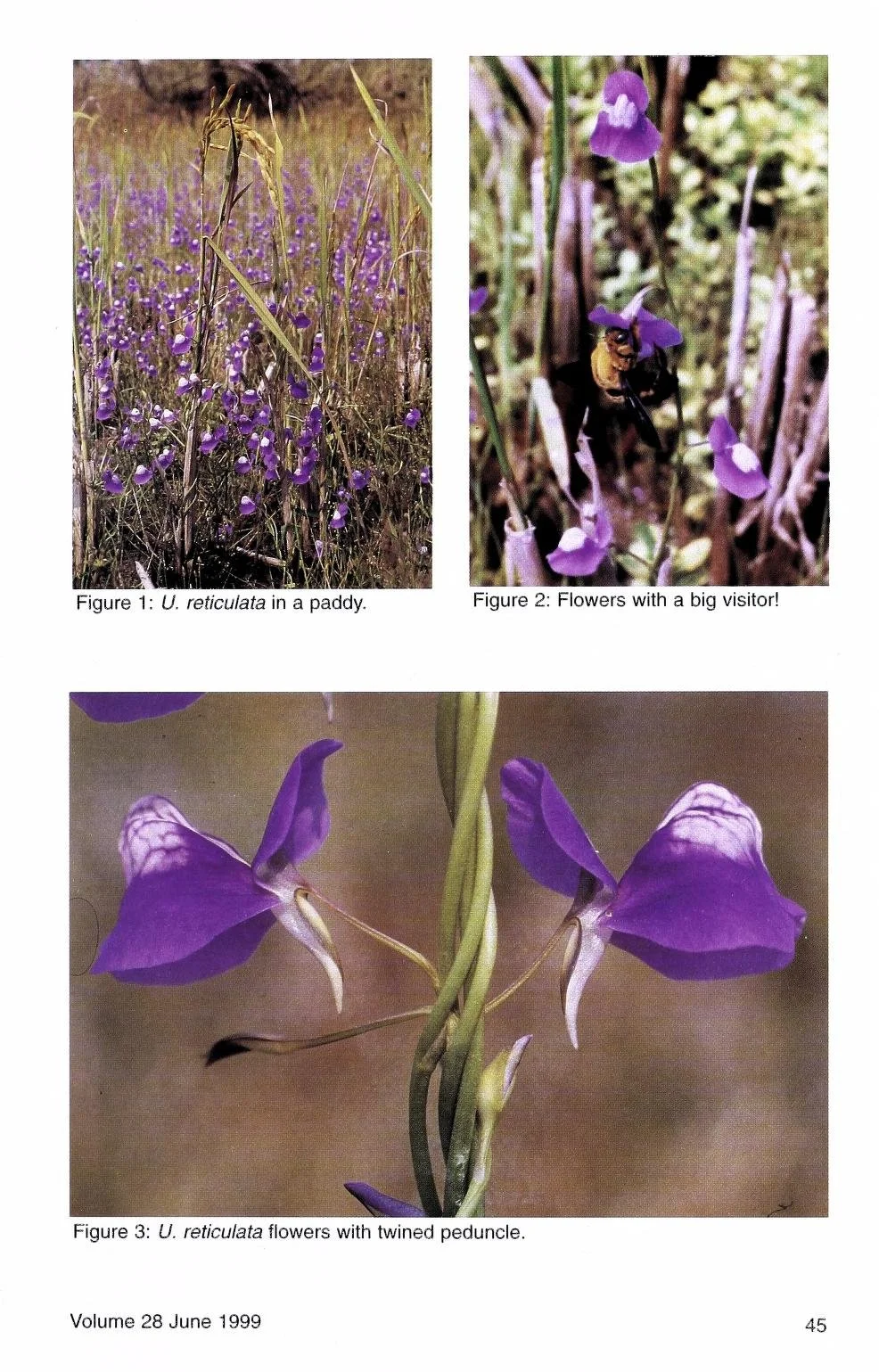
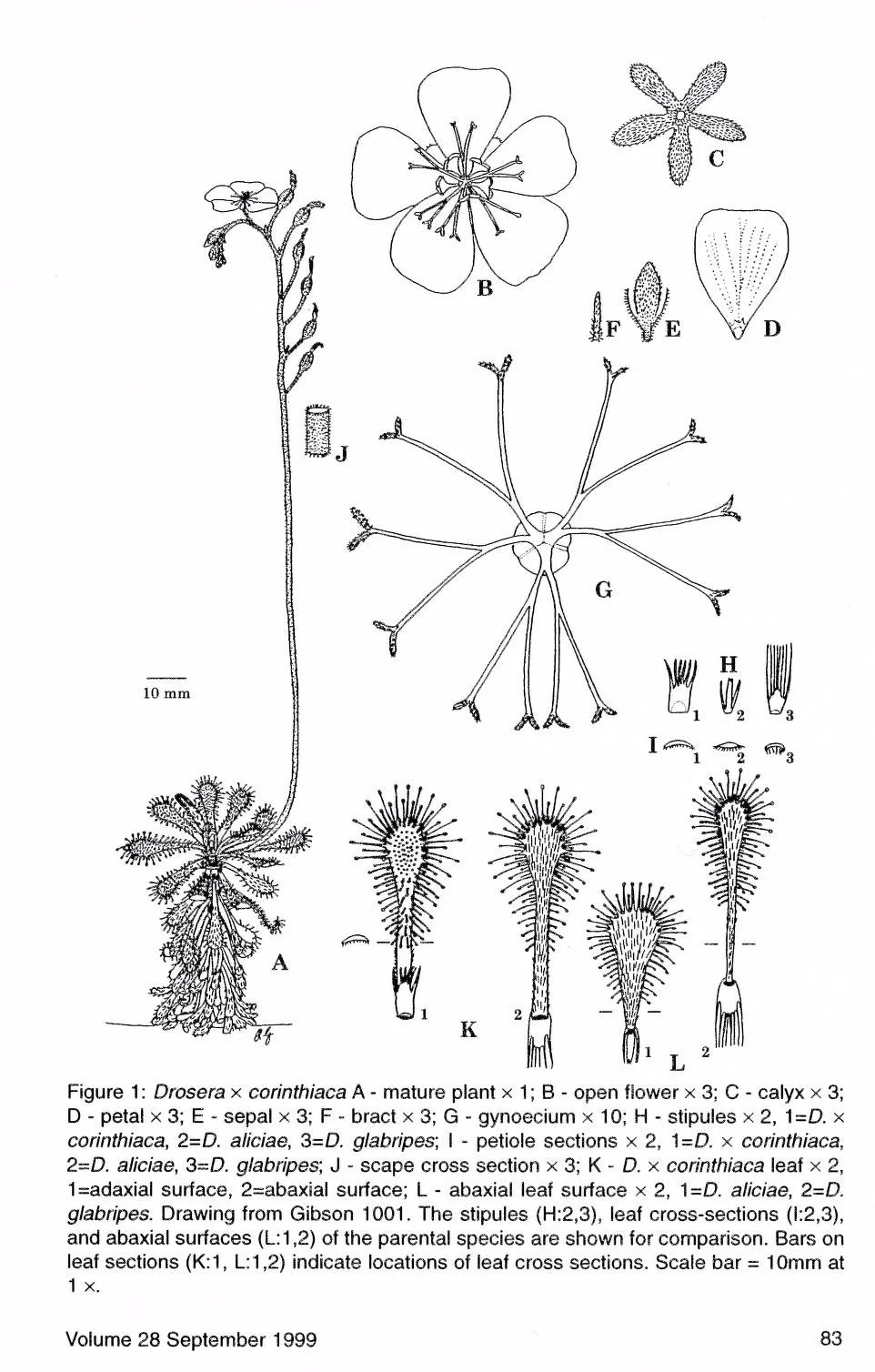
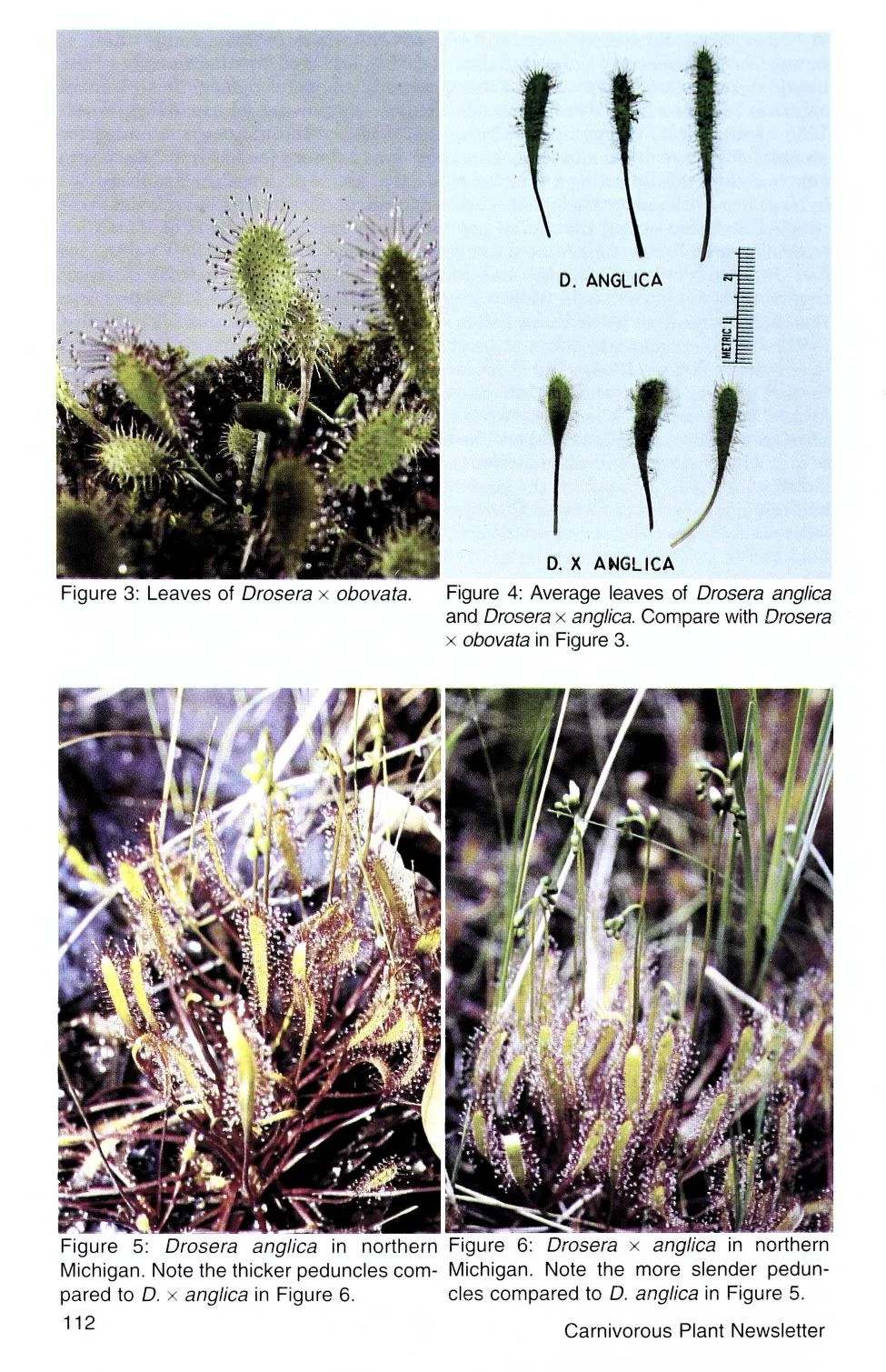
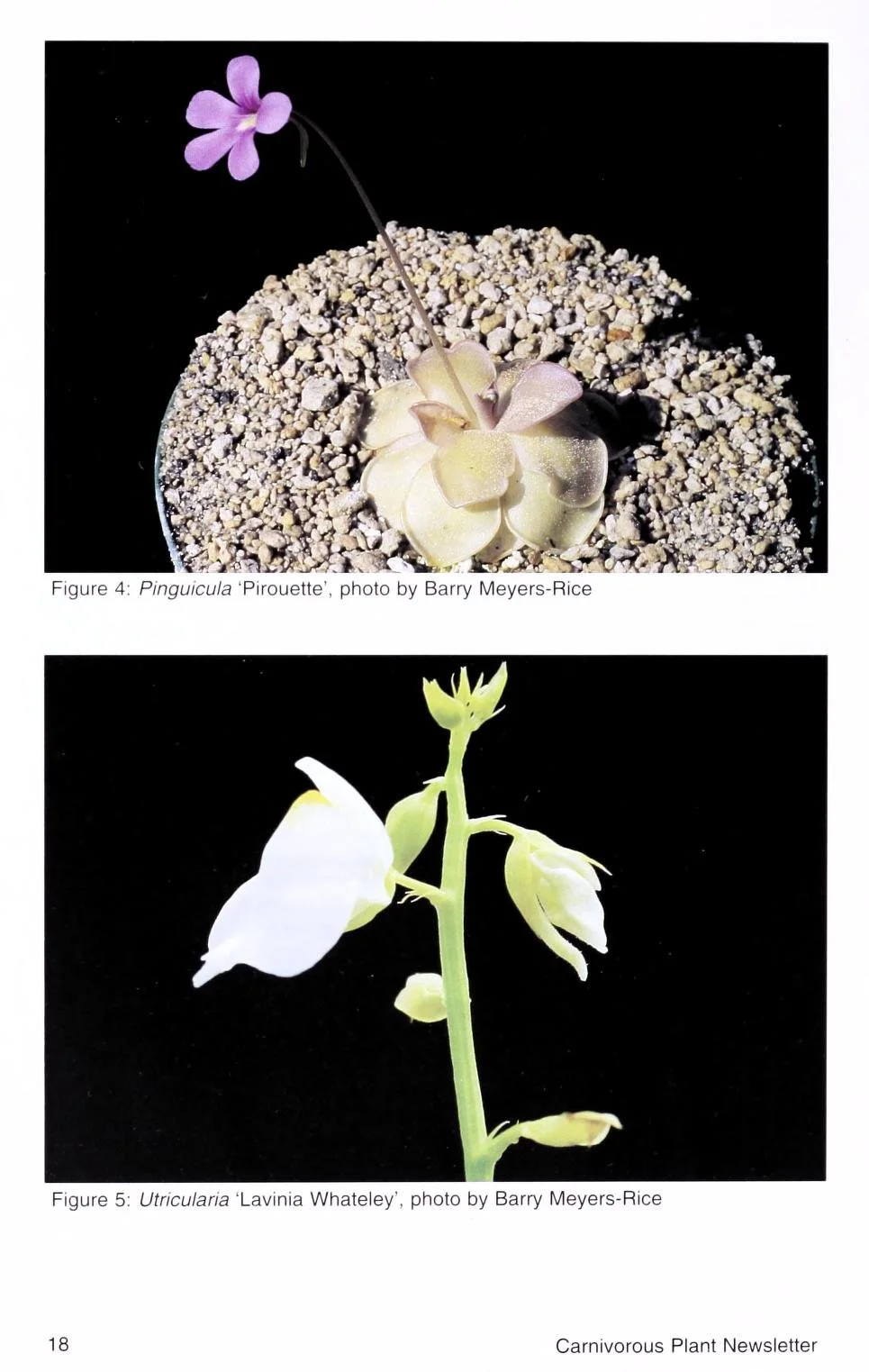
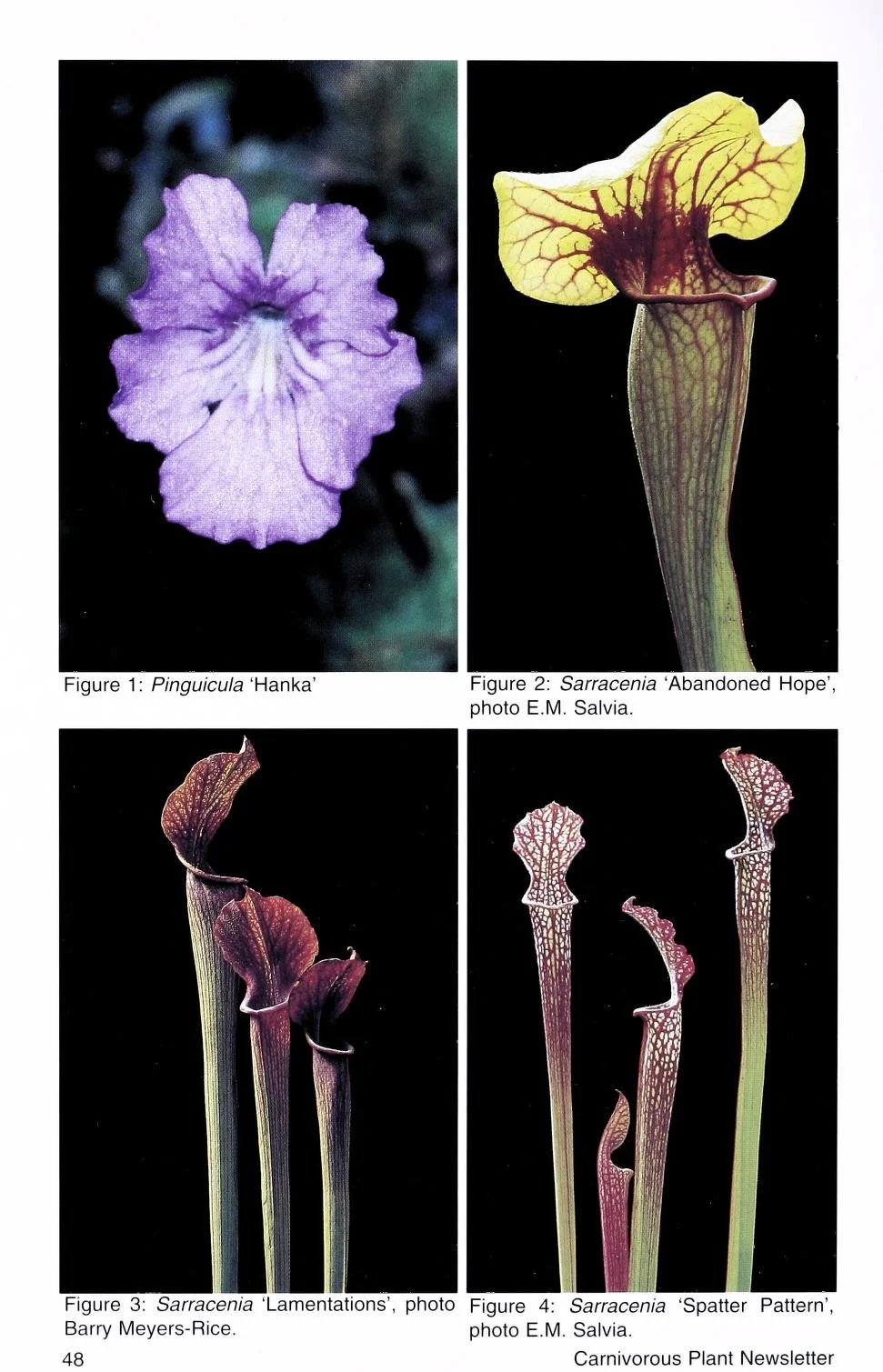
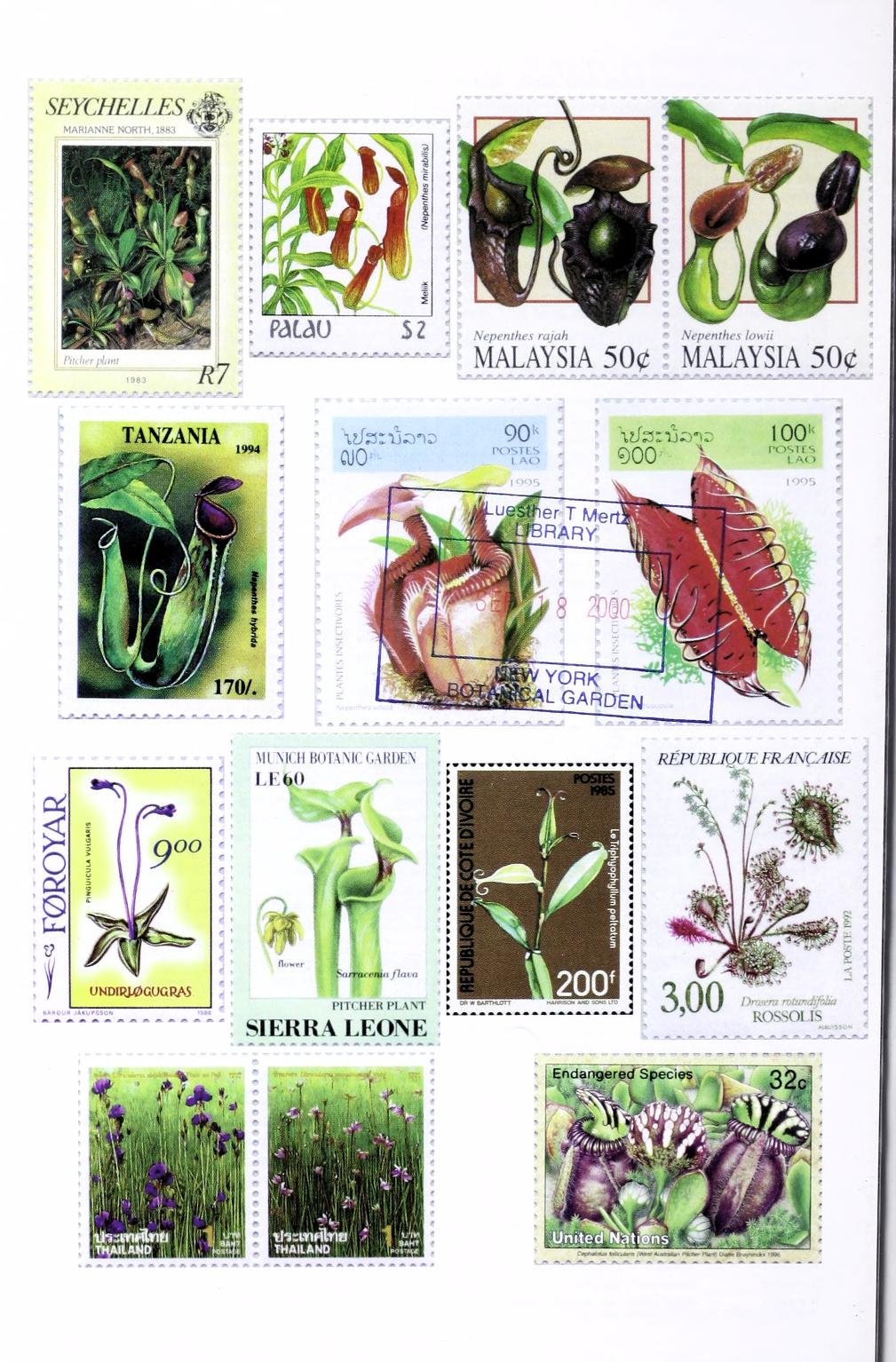
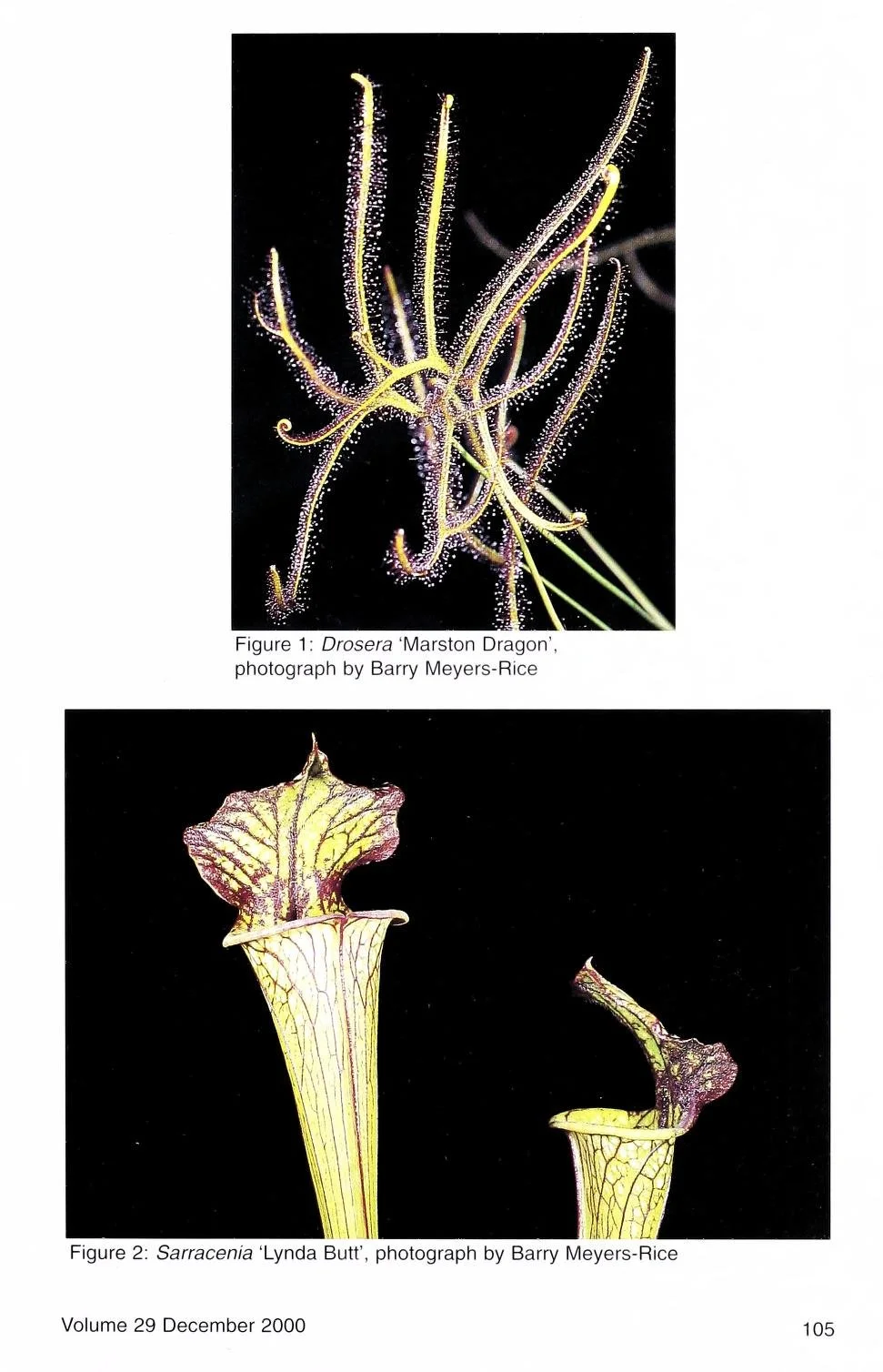
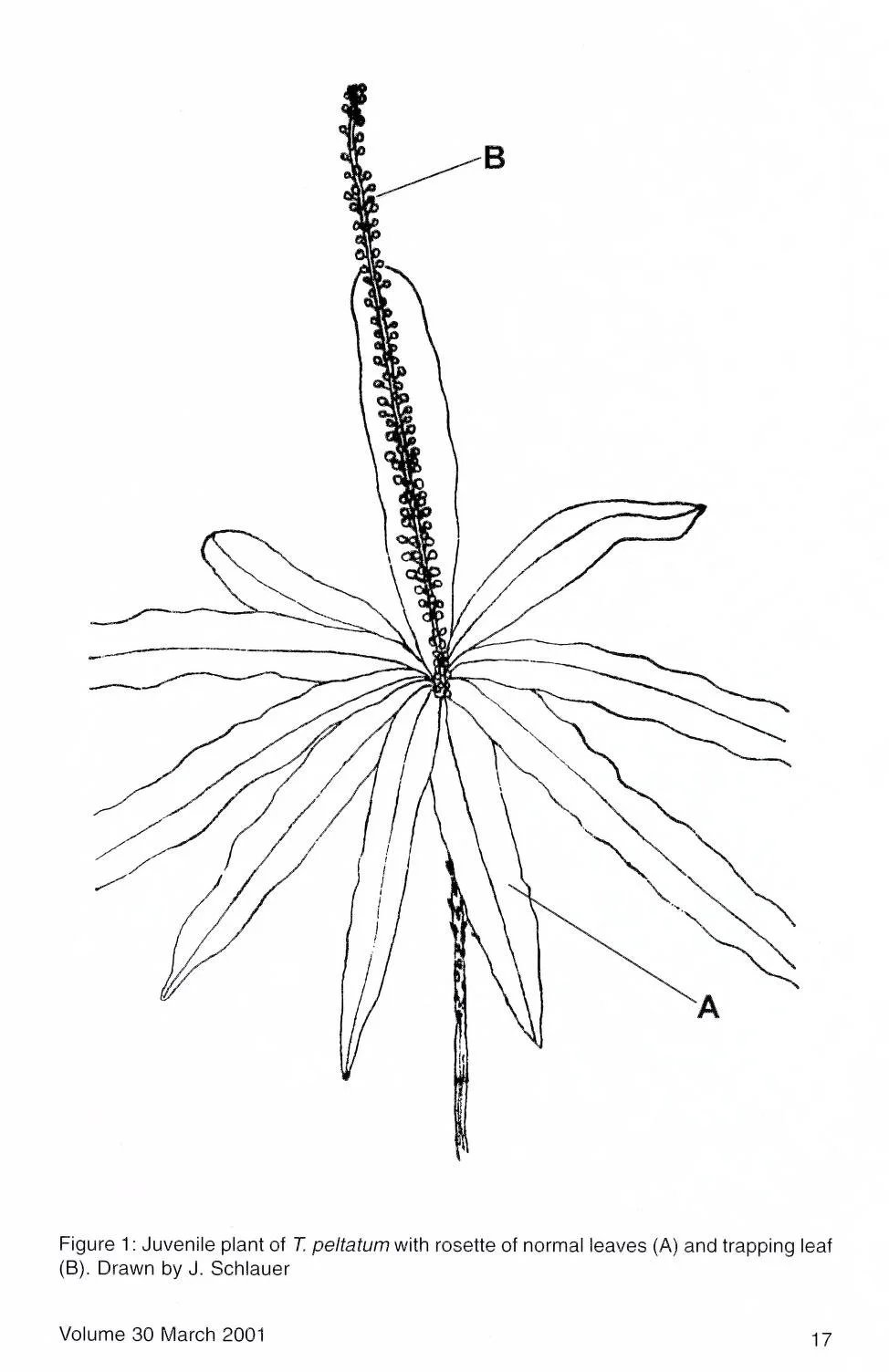
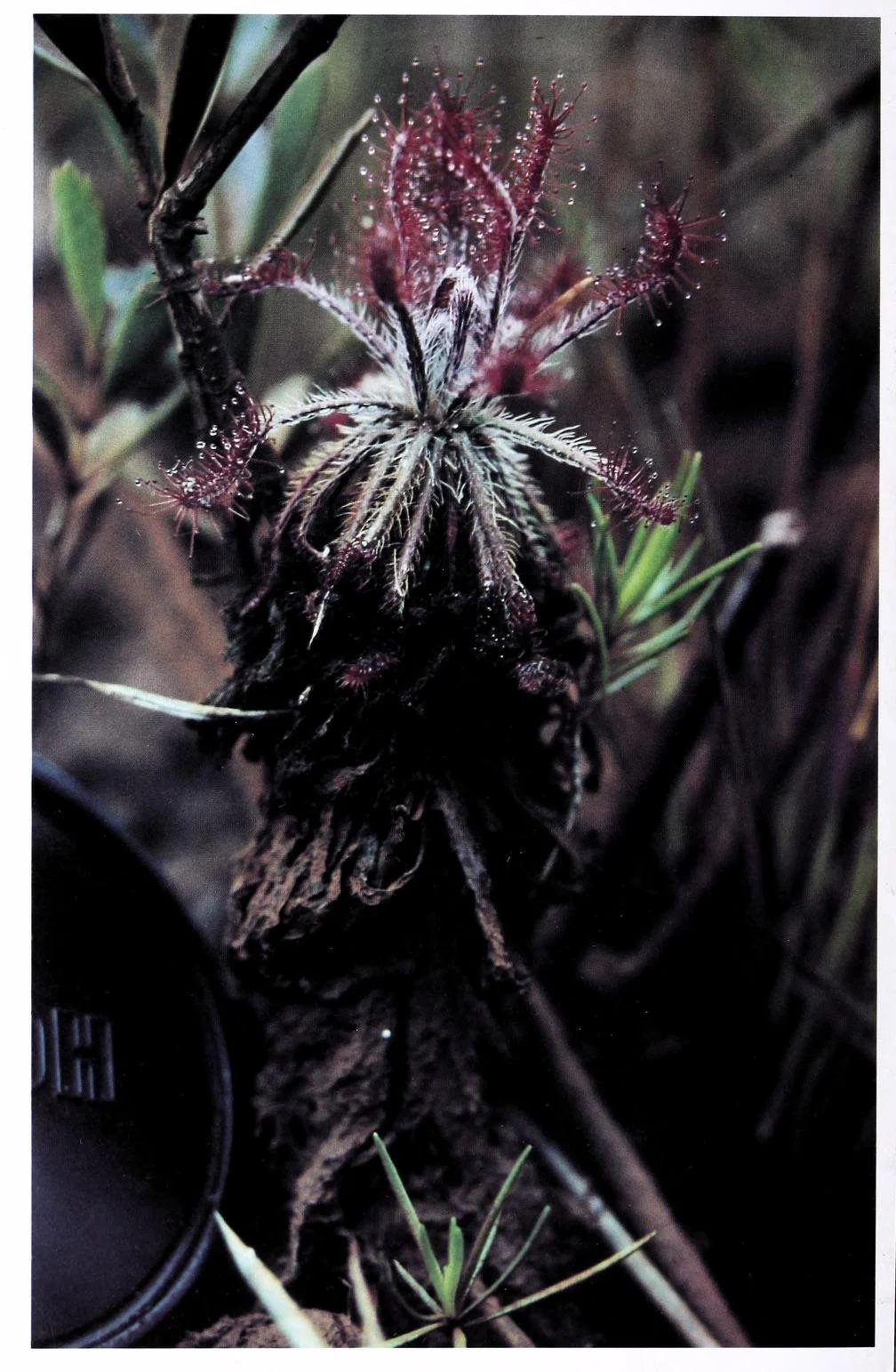
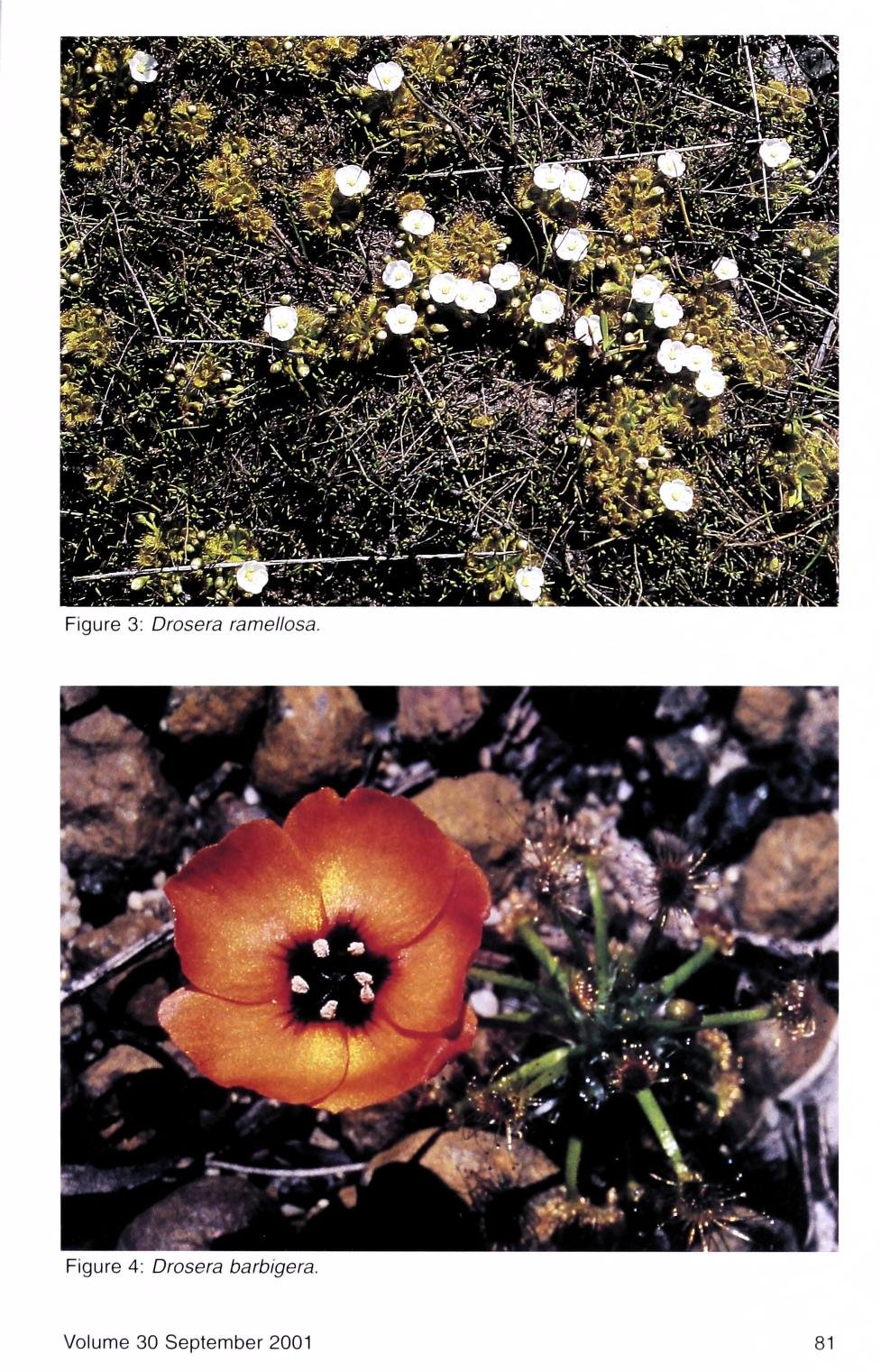
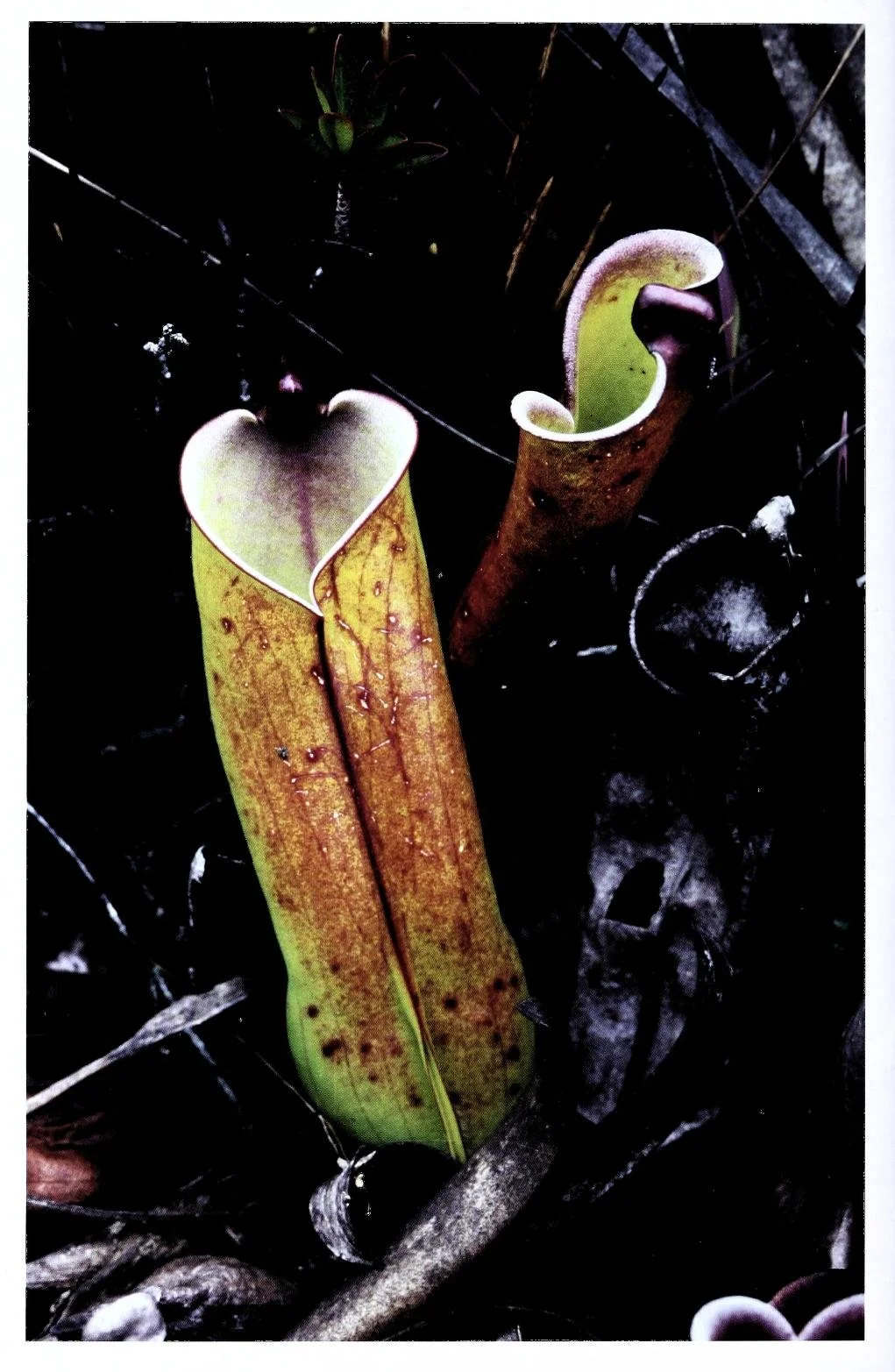
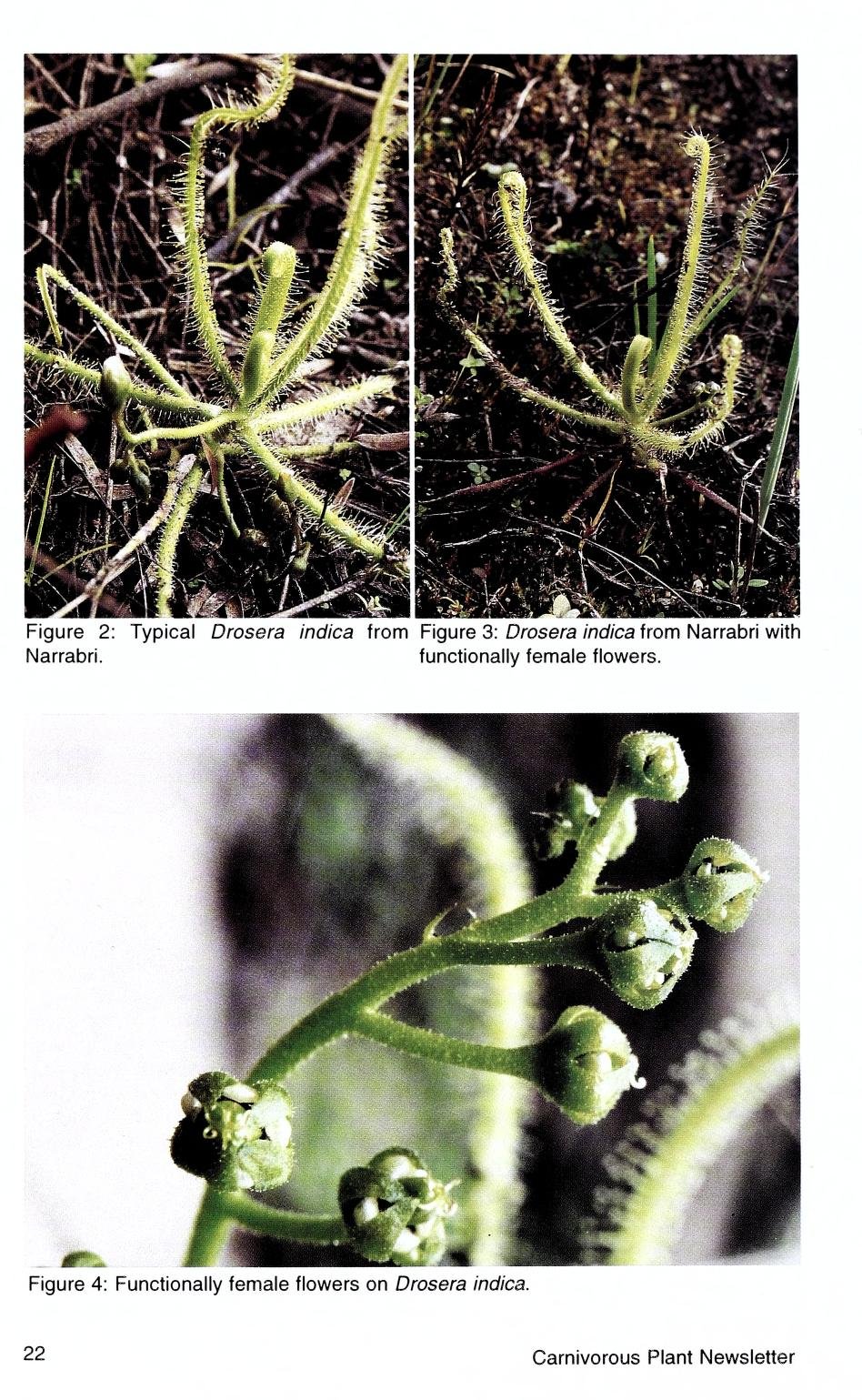
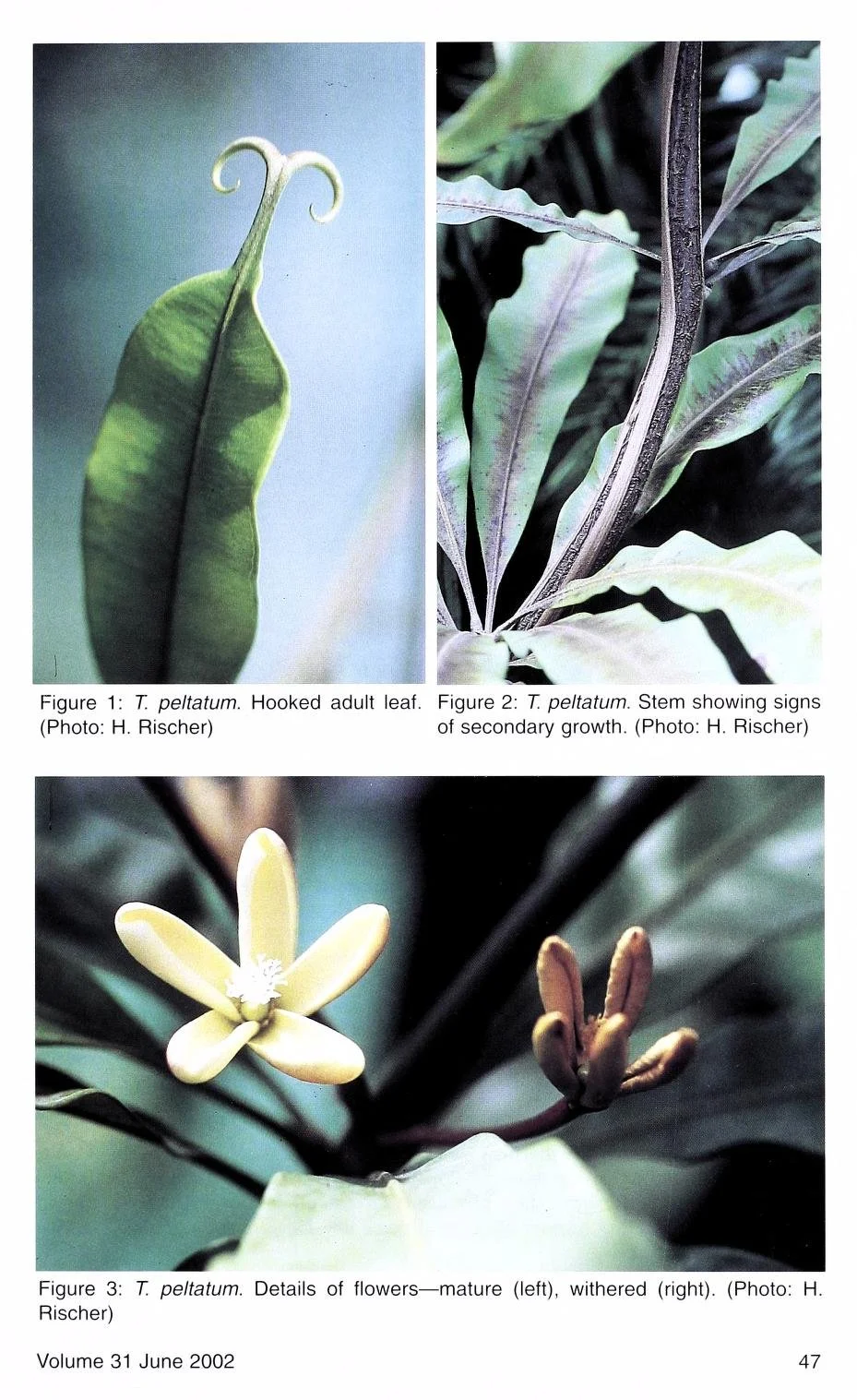
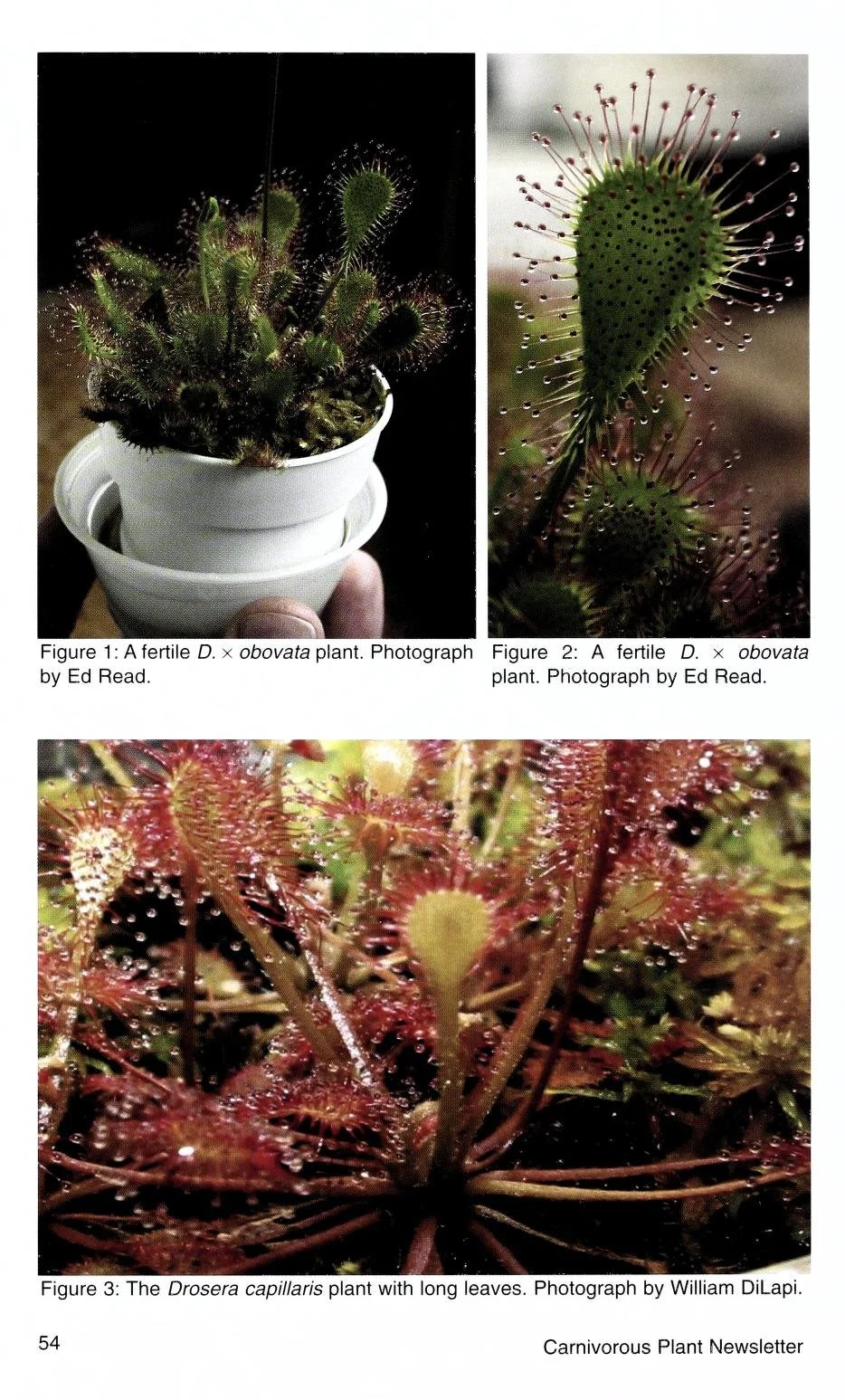
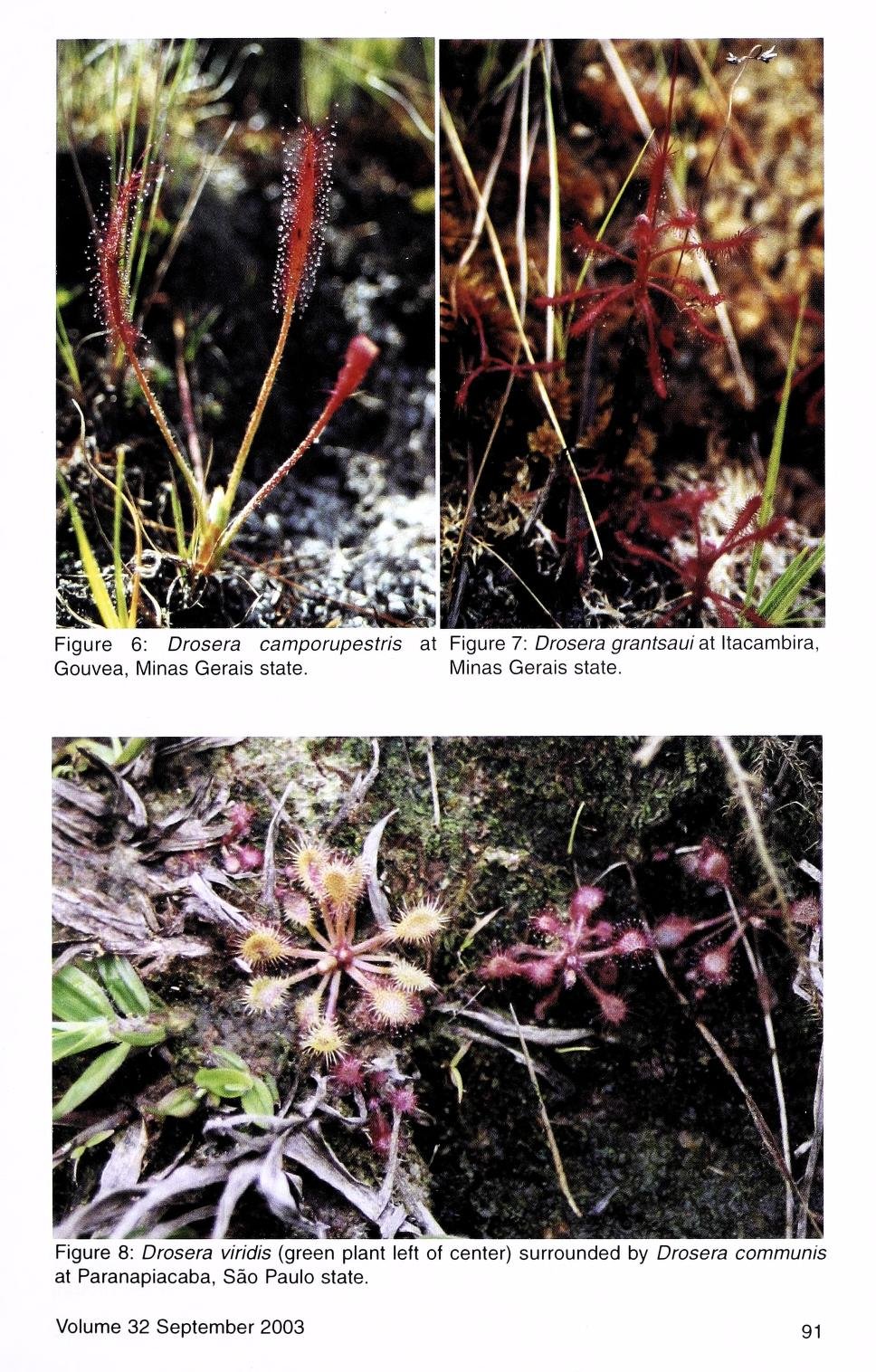
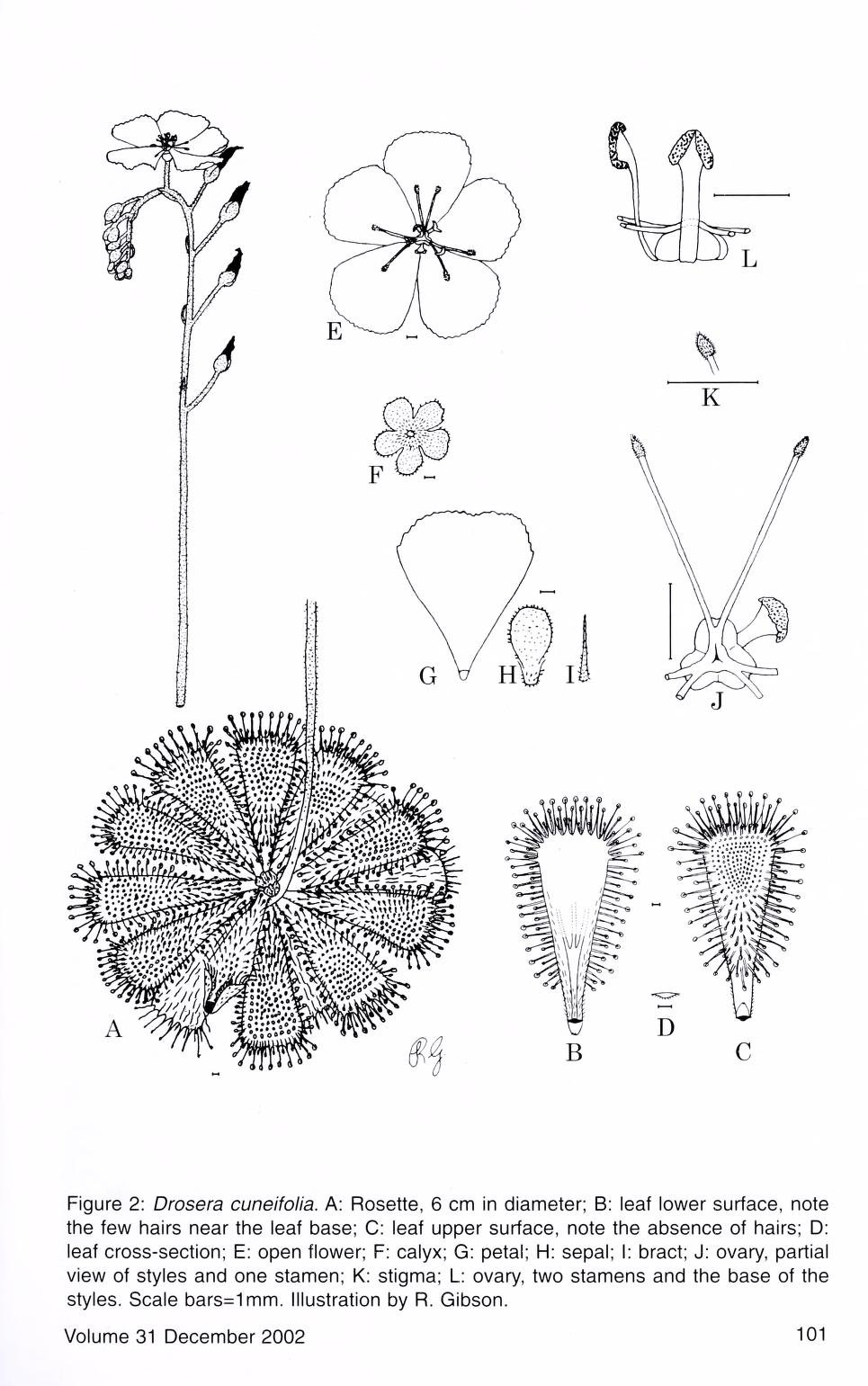
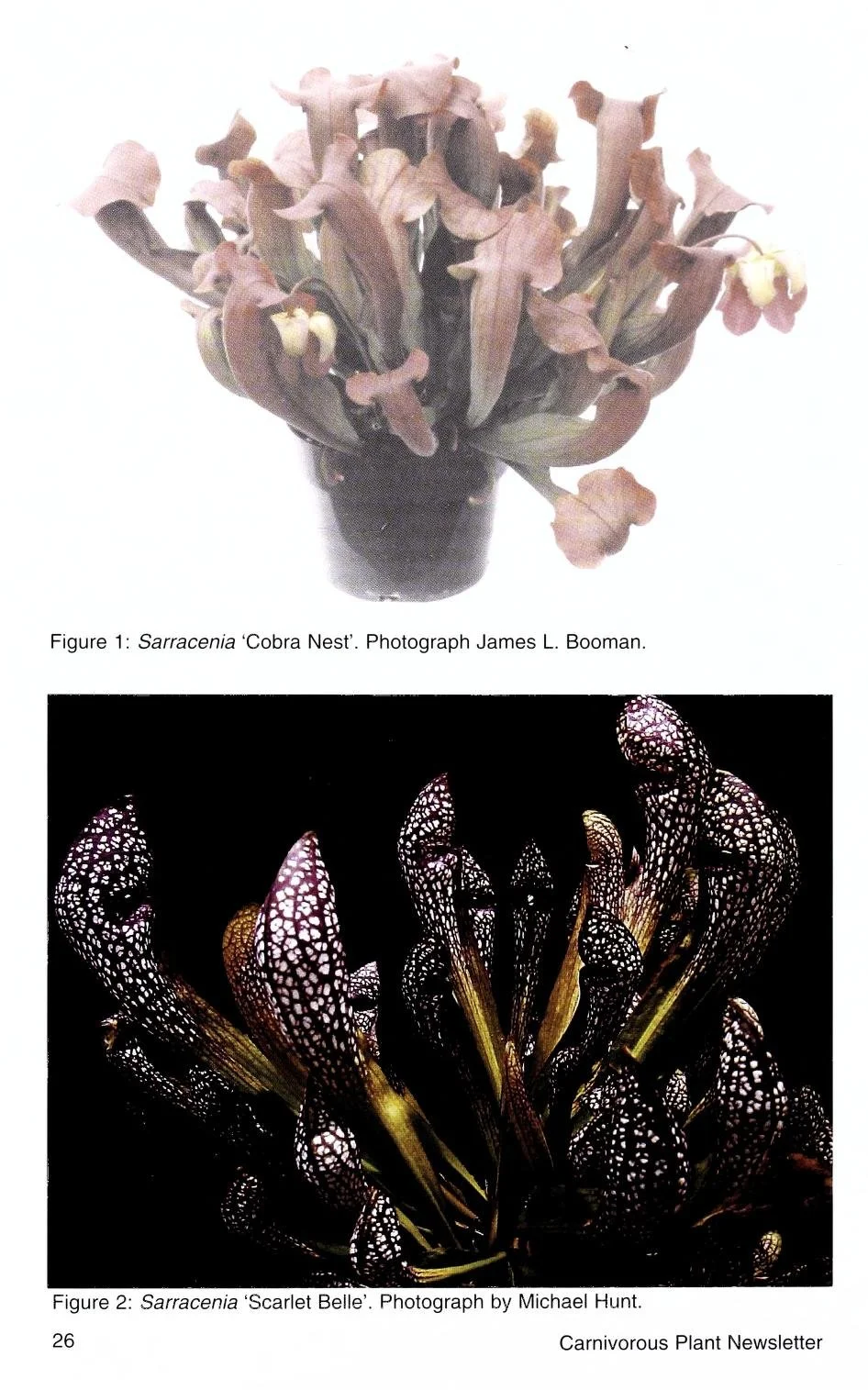
Twenty more books were added to my botanical print eBook collection in March – all are available for browsing on Internet Archive.   I continued working my way through the Carnivorous Plant Newsletters; there are 4 volumes per year so I only browsed late 1999 to 2004 in March; I’ll continue browsing this periodical in April.

My list of eBotanical Prints books now totals 3,323 eBooks I’ve browsed over the years. The whole list can be accessed here.

Click on any sample image from March’s 20 books below to get an enlarged version…and the title hyperlink in the list below the image mosaic to view the entire volume where there are a lot more botanical illustrations to browse.

Enjoy the March 2026 eBotanical Prints!

Carnivorous plant newsletter v.28:no.2 (1999)  * California State University, Fullerton. Arboretum * sample image * 1999

Carnivorous plant newsletter v.28:no.3 (1999)  * California State University, Fullerton. Arboretum * sample image * 1999

Carnivorous plant newsletter v.28:no.4 (1999)  * California State University, Fullerton. Arboretum * sample image * 1999

Carnivorous plant newsletter v.29:no.1 (2000)  * California State University, Fullerton. Arboretum * sample image * 2000

Carnivorous plant newsletter v.29:no.2 (2000)  * California State University, Fullerton. Arboretum * sample image * 2000

Carnivorous plant newsletter v.29:no.3 (2000)  * California State University, Fullerton. Arboretum * sample image * 2000

Carnivorous plant newsletter v.29:no.4 (2000)  * California State University, Fullerton. Arboretum * sample image * 2000

Carnivorous plant newsletter v.30:no.1 (2001)  * California State University, Fullerton. Arboretum * sample image * 2001

Carnivorous plant newsletter v.30:no.2 (2001)  * California State University, Fullerton. Arboretum * sample image * 2001

Carnivorous plant newsletter v.30:no.3 (2001)  * California State University, Fullerton. Arboretum * sample image * 2001

Carnivorous plant newsletter v.30:no.4 (2001)  * California State University, Fullerton. Arboretum * sample image * 2001

Carnivorous plant newsletter v.31:no.1 (2002)  * California State University, Fullerton. Arboretum * sample image * 2002

Carnivorous plant newsletter v.31:no.2 (2002)  * California State University, Fullerton. Arboretum * sample image * 2002

Carnivorous plant newsletter v.31:no.3 (2002)  * California State University, Fullerton. Arboretum * sample image * 2002

Carnivorous plant newsletter v.31:no.4 (2002)  * California State University, Fullerton. Arboretum * sample image * 2002

Carnivorous plant newsletter v.32:no.1 (2003)  * California State University, Fullerton. Arboretum * sample image * 2003

Carnivorous plant newsletter v.32:no.2 (2003)  * California State University, Fullerton. Arboretum * sample image * 2003

Carnivorous plant newsletter v.32:no.3 (2003)  * California State University, Fullerton. Arboretum * sample image * 2003

Carnivorous plant newsletter v.32:no.4 (2003)  * California State University, Fullerton. Arboretum * sample image * 2003

Carnivorous plant newsletter v.33:no.1 (2004)  * California State University, Fullerton. Arboretum * sample image * 2004

Battle with a Forsythia

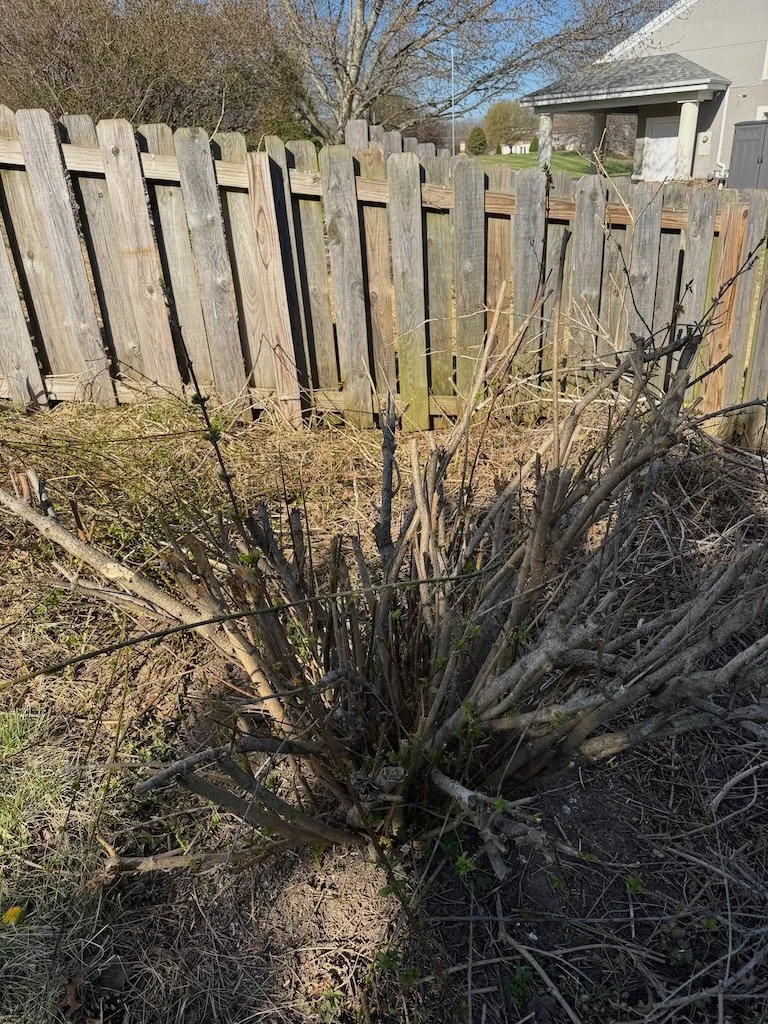
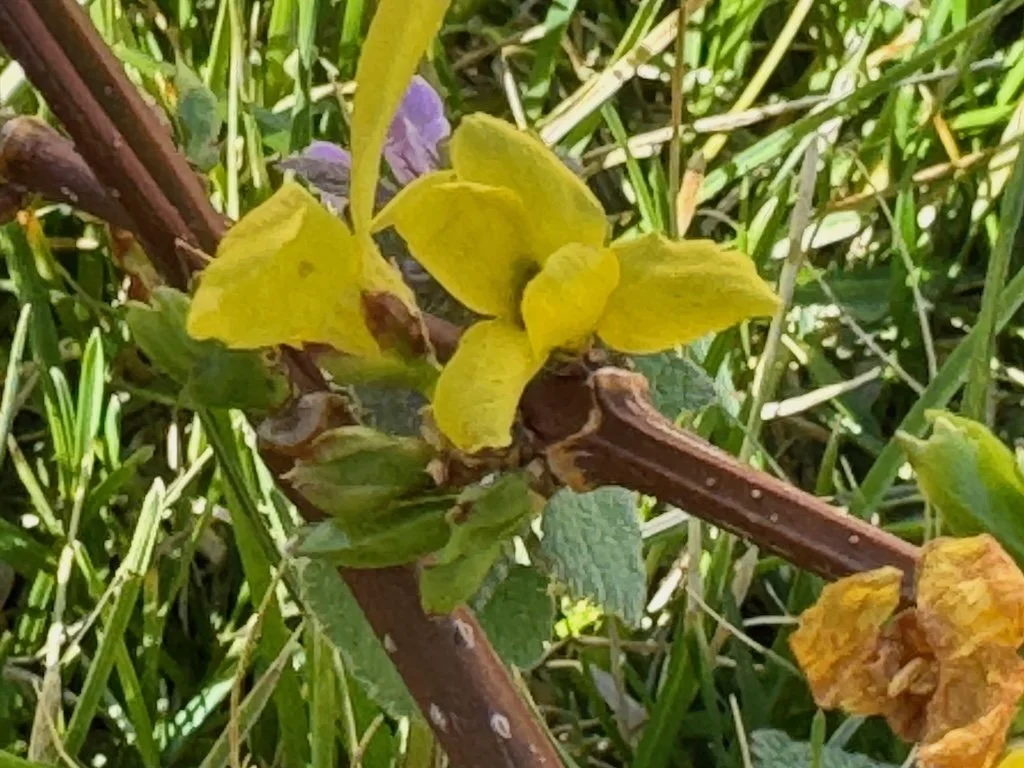
The forsythia was in the northwest corner of my backyard when we bought the house. It is non-native and does not do anything for my yard’s ecosystem – no pollinators visit its blooms; nothing eats its leaves. I have been trying to keep it controlled for the past few seasons, but it always seems to grow faster than I can prune it. I should have cut it and painted the stumps with poison last fall.

I did manage to cut it back more than ever before one morning last week and will go back to cut more soon. It was a lot of work, and I managed to clog my pruning chainsaw; that will take some effort to get it working again. I did most of work with my manual long handled pruners.  My gardening seat worked well….I slowly moved it around the plant cutting everything I could reach. My back only started hurting when I started carrying the trimmed branches up to the patio to dry (and then burn in a few weeks in the chiminea).

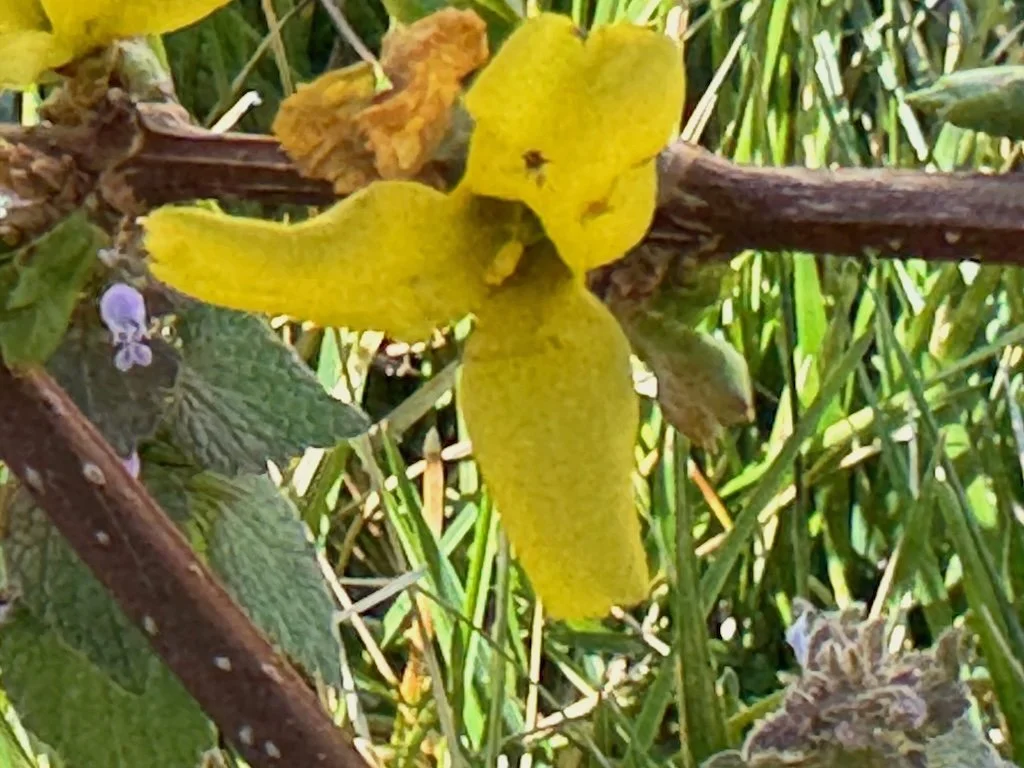
Last year I waited until after the plant had bloomed and it was a big mistake. This year there were a few flowers open….but I cut it all away from the plant! I am going to plant some native plant seeds in the soil left bare – it will be a bonus if any come up. I’ll keep cutting the forsythia back as severely as I can over this next season to give the other plants a chance to take over.

Ten Little Celebrations – March 2026

Some different types of celebrations in March…


Dad surviving a hospital admission. My sisters and I celebrated that my dad survived an awful hospital experience (bad reaction to drugs he received there, lack of attention to his response to medications and delaying administration of his regular medications). He is back in his memory care residence now and much happier. We have transitioned him to palliative care based on his experience.

Springfield Botanical Gardens. Many of the plants were still in winter form…but there were enough early spring flowers to celebrate the season.

Red-bellied woodpecker. We celebrated when one of the birds came to our feeders. It doesn’t happen often!

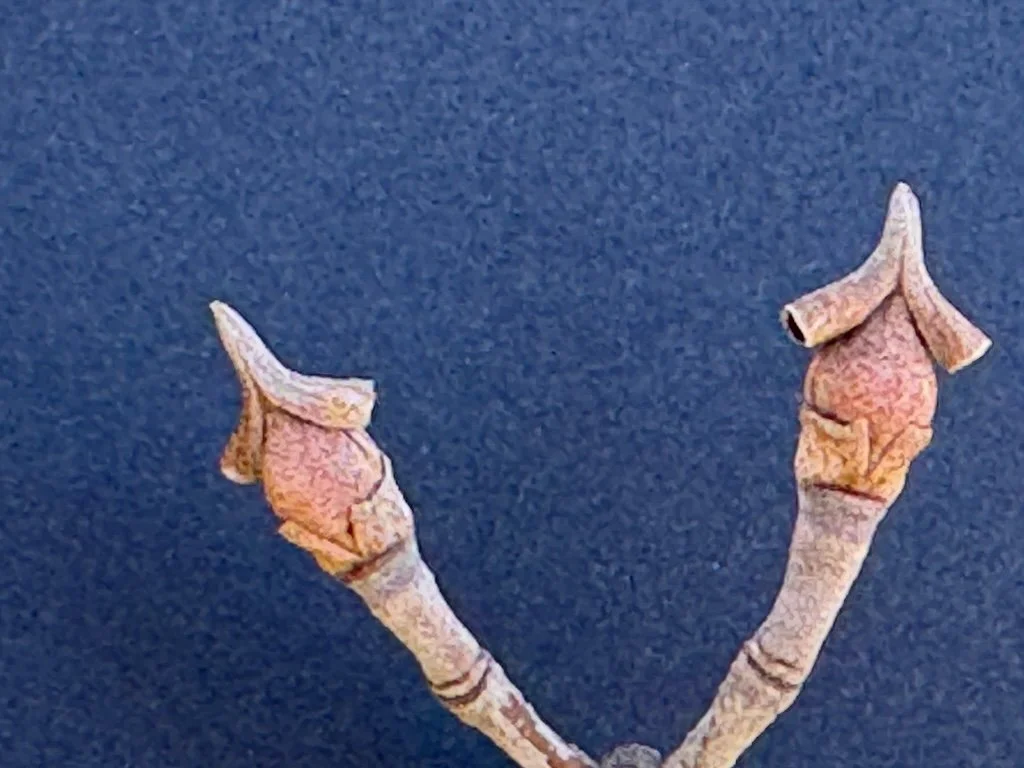
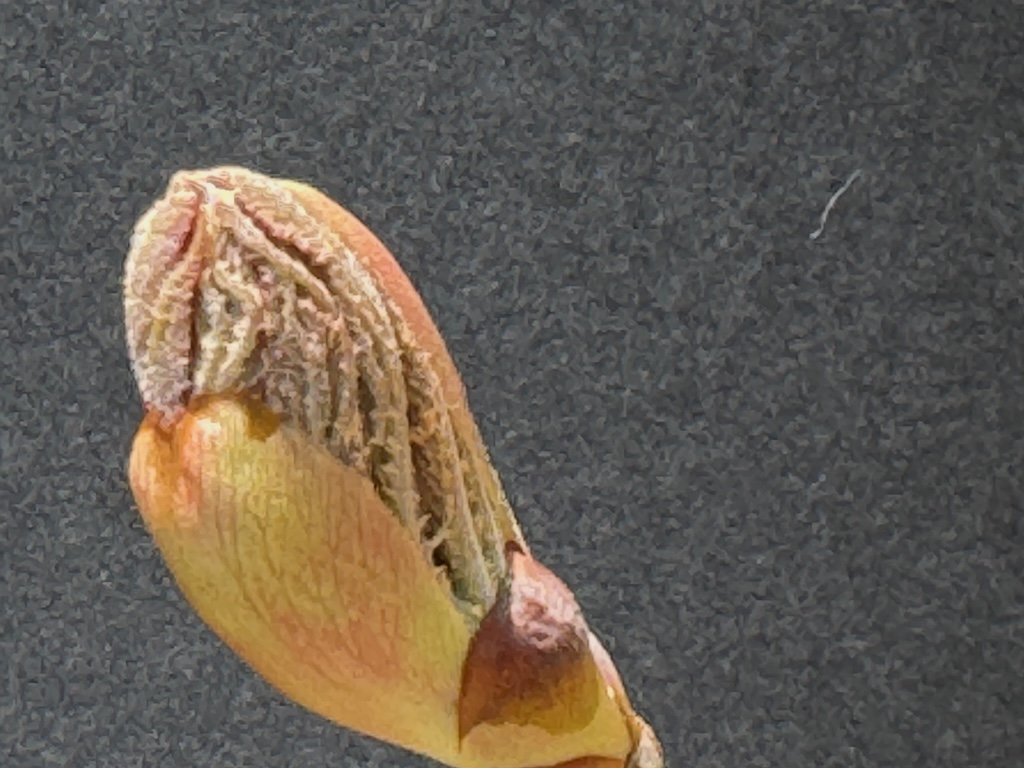
Big buds on the red buckeye. The buds on the red buckeye were an early celebration of spring. They were large and they were open with the leaves beginning to expand when there was a hard frost and the celebration turned to sorrow; I am monitoring the plant to see how it recovers.

Earthworm parade. I celebrated that it rained…and the earthworms made a parade across a sidewalk to find new homes.

George Washington Carver National Monument. My husband and I celebrated an early spring day with a day trip to the monument.

Garage door fix. The spring on my garage door opener broke and I was worried that I’d be parking in the driveway for a few days...but a company was able to make the repair the same day we called. I celebrated the quick response!

The Plastic Detox. I viewed the documentary available on Netflix…celebrated that there were indeed babies at the end!

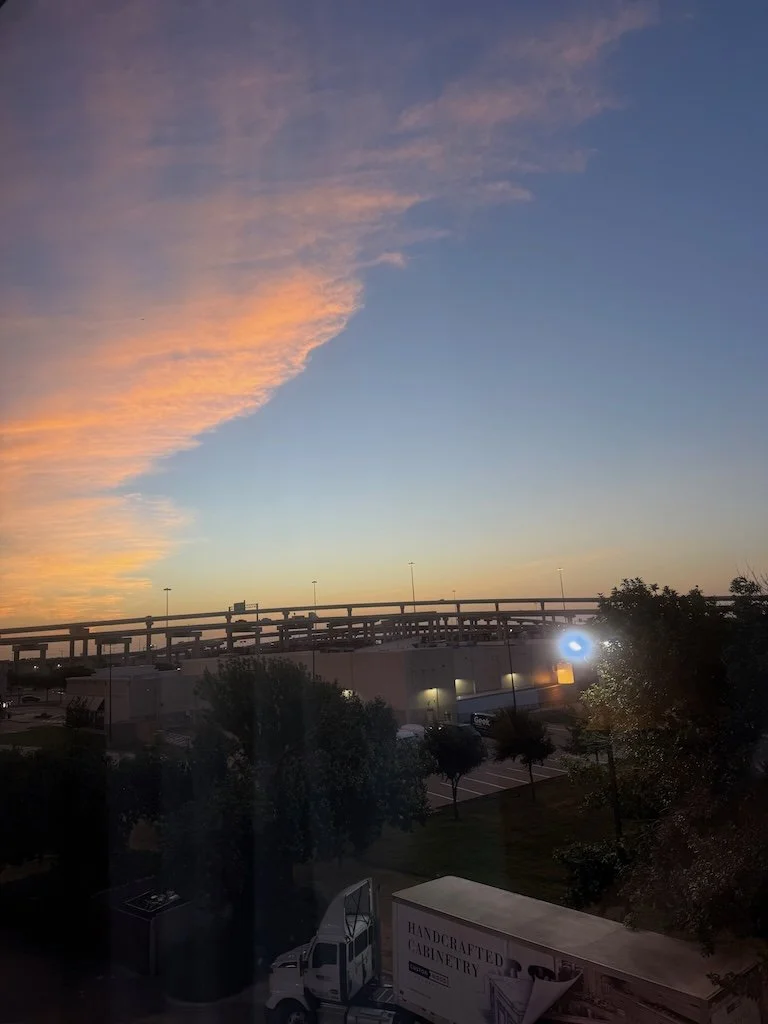
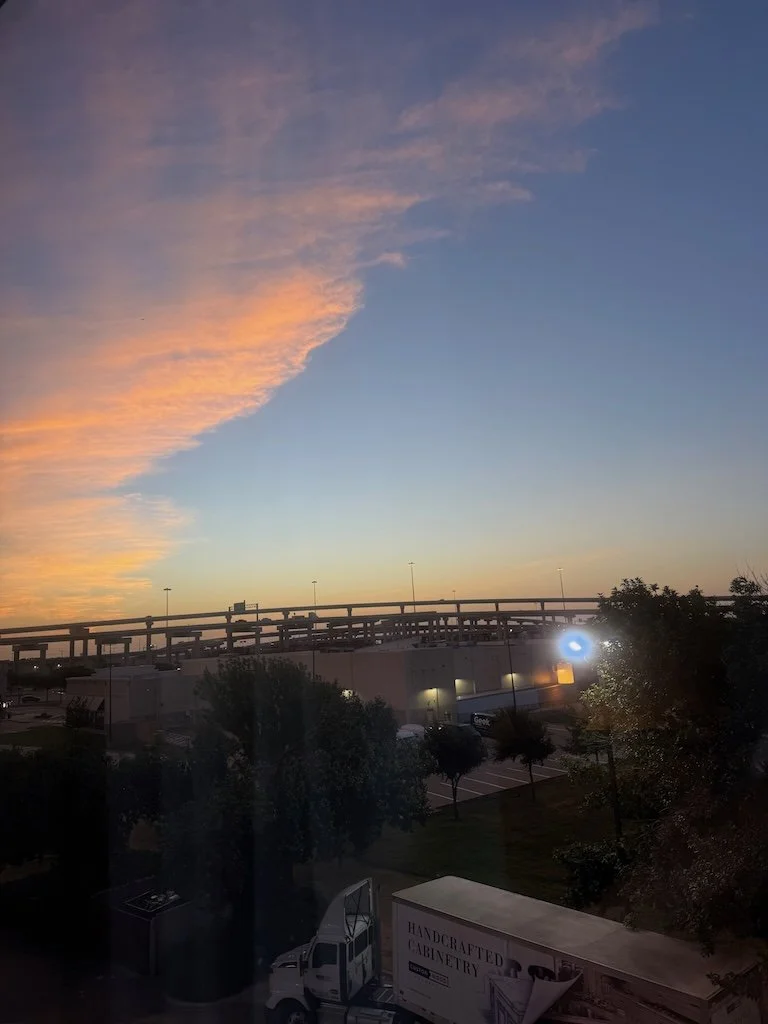
Sunrises. I was in Texas for 5 days….and 4 of those days had wonderful sunrises. I celebrated with my dad in the hospital on 3 days and the last one I was in a hotel! Noticing the beauty at the beginning of the day always lifts my mood.

Baked chicken salad. Days are getting warmer and I find myself wanting salads more than I do in the wintertime. I celebrated combining veggies from the crisper…an apple…diced slices of lemon (including the skin) and green salsa --- with chicken baked in balsamic vinaigrette. Yummy!

Zooming – March 2026

We had some warm days….and then some cold days. At the end of the month, I am hoping that my red buckeye is not permanently damaged; its leaves were beginning to enlarge when a hard frost came. It was an interesting month for travel (to Texas and a day trip to the George Washington Carver National Monument…and the yard was beginning to show signs of spring (bulbs and the boxwood bloomed). I enjoyed all my forays outdoors.

Bluebonnets

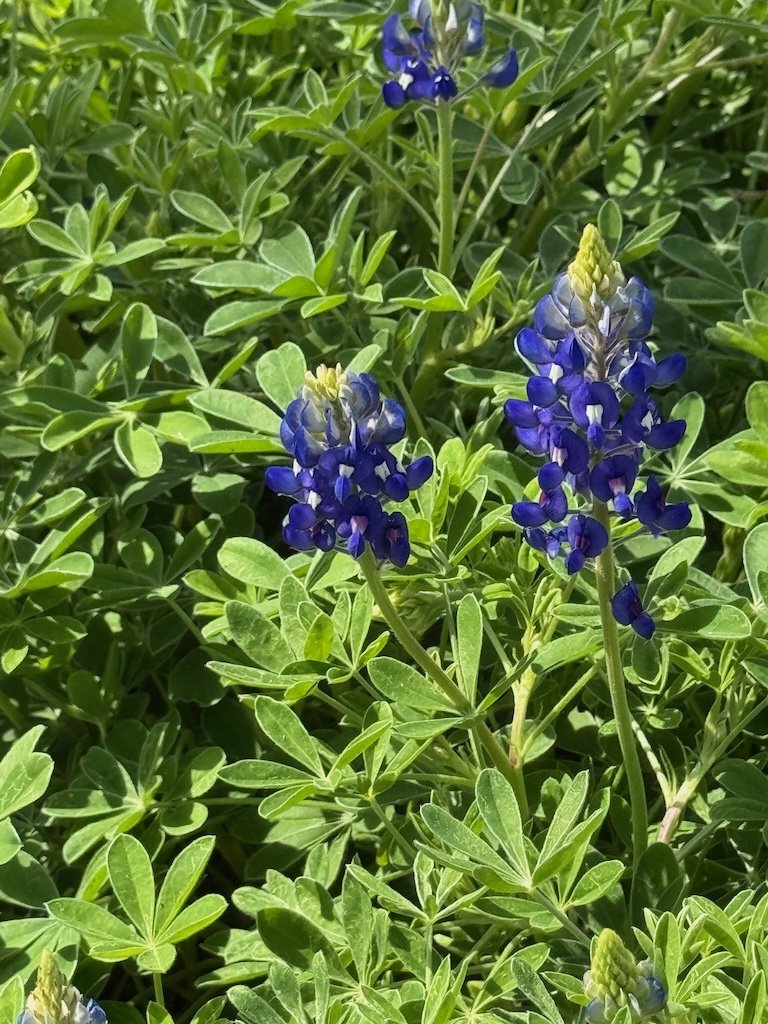
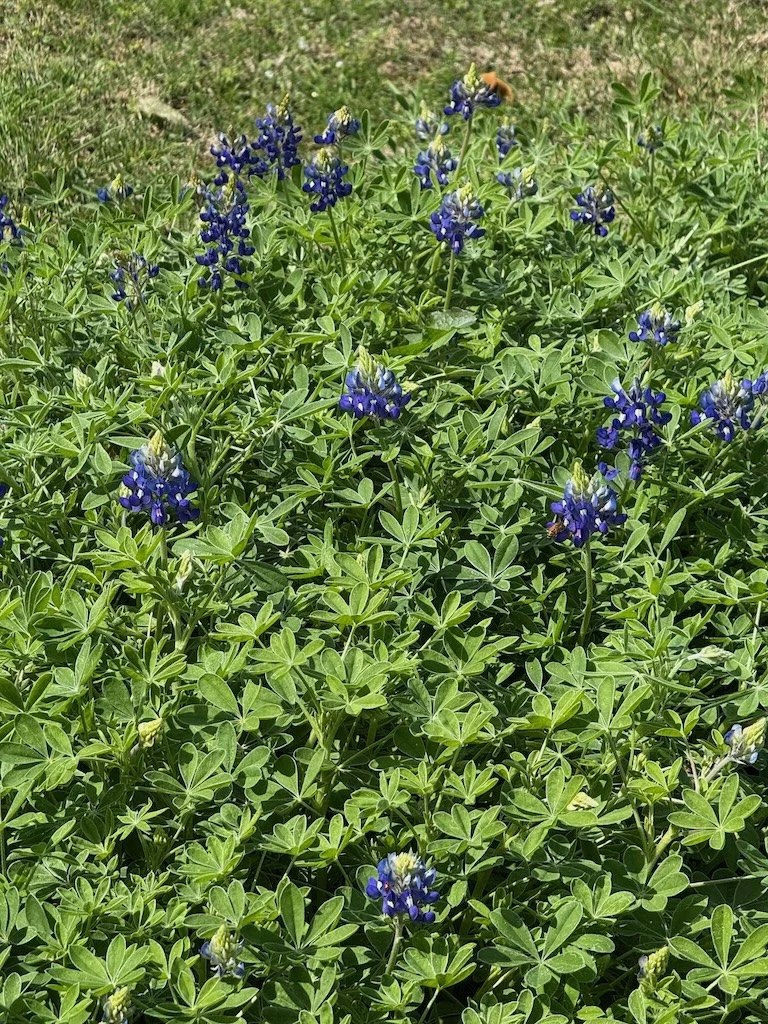
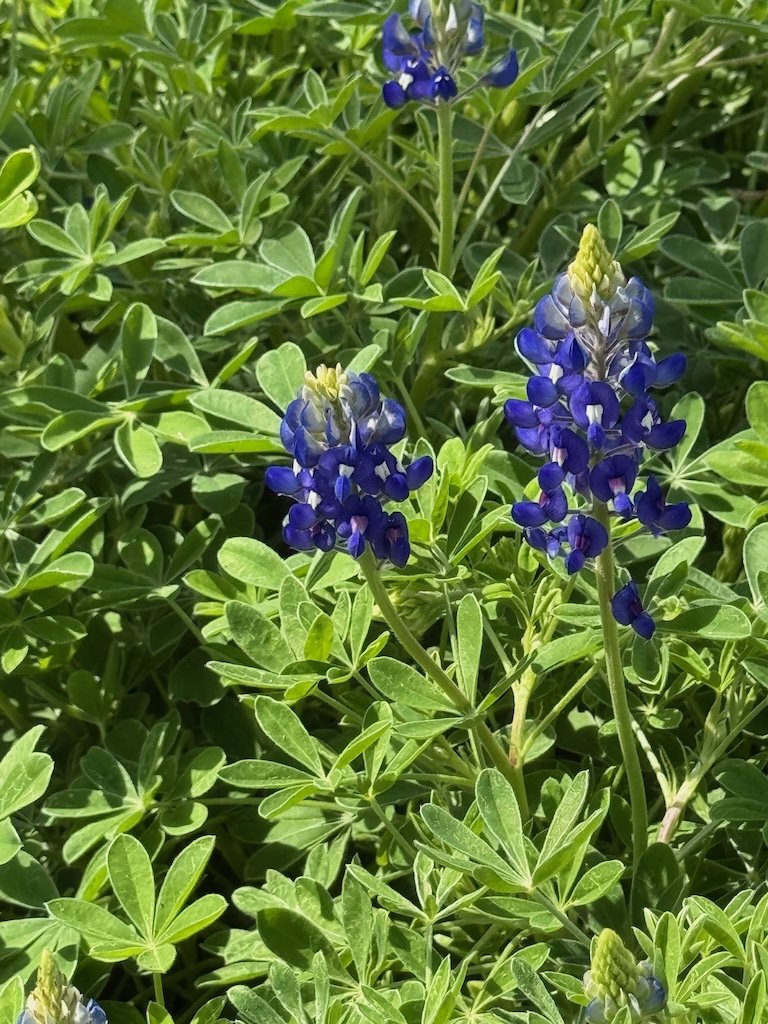
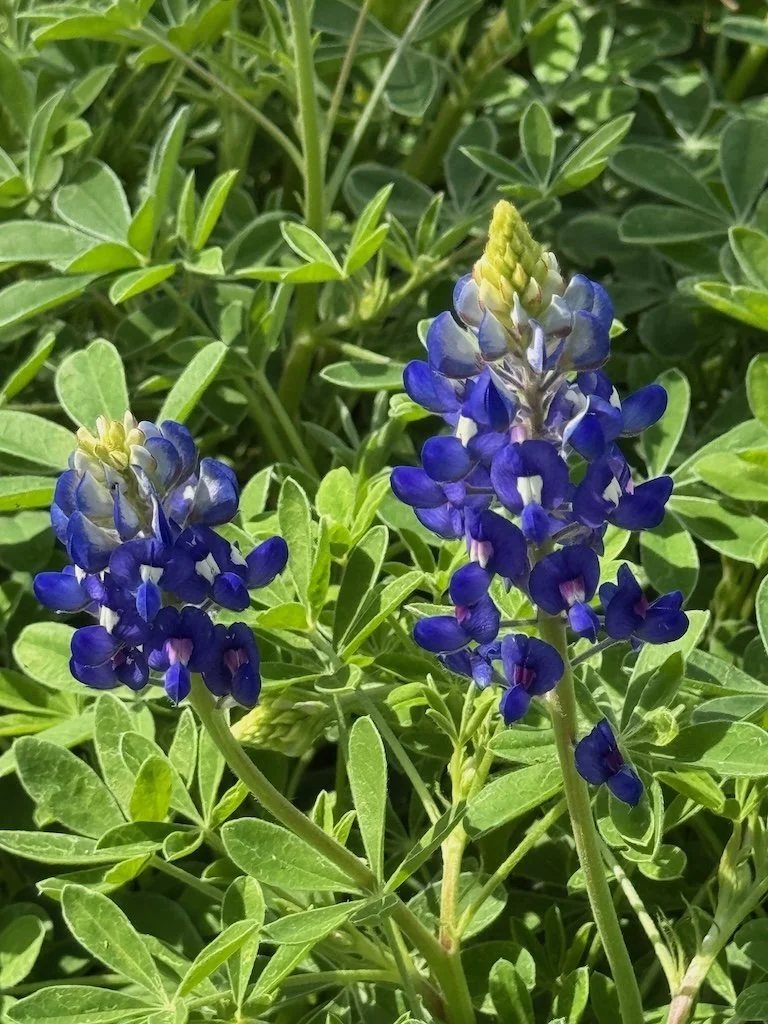
The bluebonnets were blooming when I was in Texas last week. I stopped in the Texas Welcome Center on US 75 to see them. They are not at their peak bloom…but enough are blooming to be noticeable.
As I left the welcome center headed south, I saw more along the sides of the highway, but construction (current and recent) had taken out a lot of the areas where bluebonnets and other wildflowers bloomed in previous years. The wind was fierce and it often sounded like sand was hitting my car; I turned my attention from noticing the flowers to keeping my car firmly in the lane!

Later in the day, I noticed that the city of Flower Mound has bluebonnets along some of their major streets. My sister told me that there used to be more before construction projects, but there are more every year since the projects have completed. Once bluebonnets are established, they do very well – natives thriving where they have been forever.

George Washington Carver National Monument

Last week my husband and I made our first visit to George Washington Carver National Monument. It is south of Carthage, MO and a bit over an hour from our house near Springfield….a good choice for a day trip.

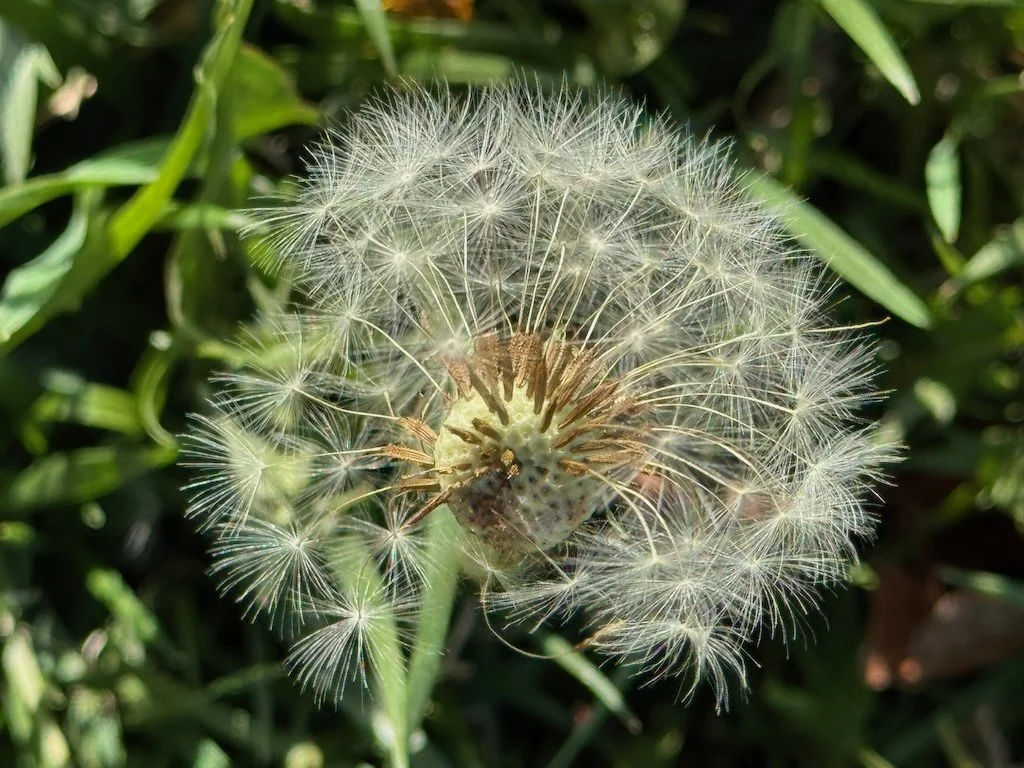
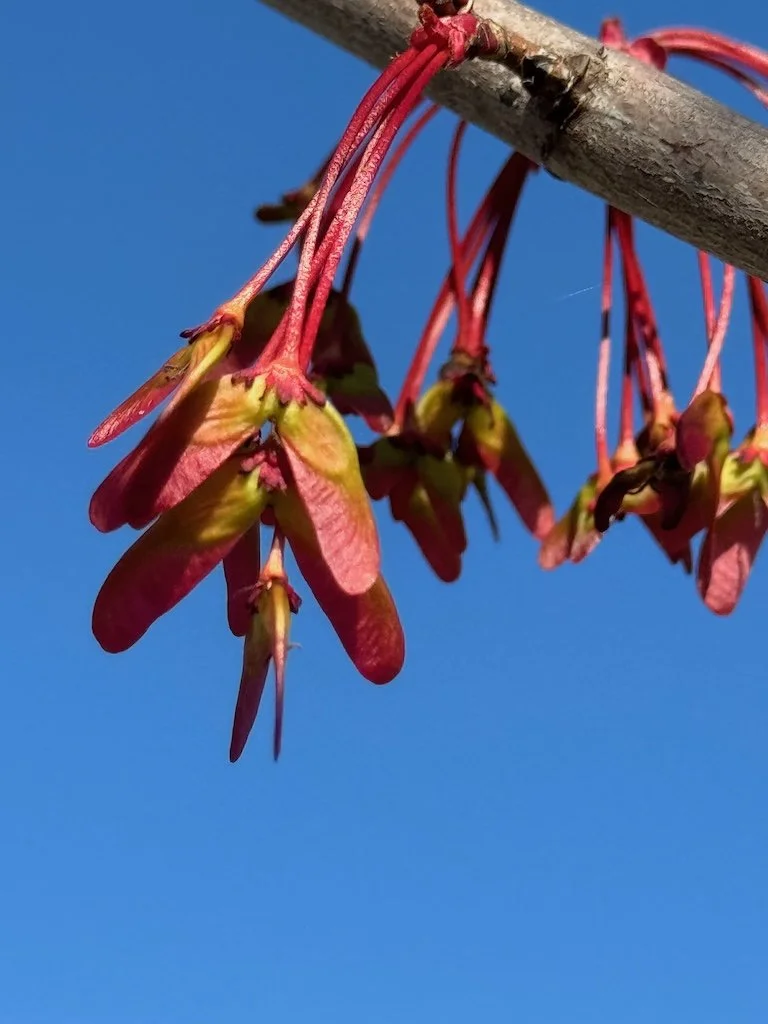
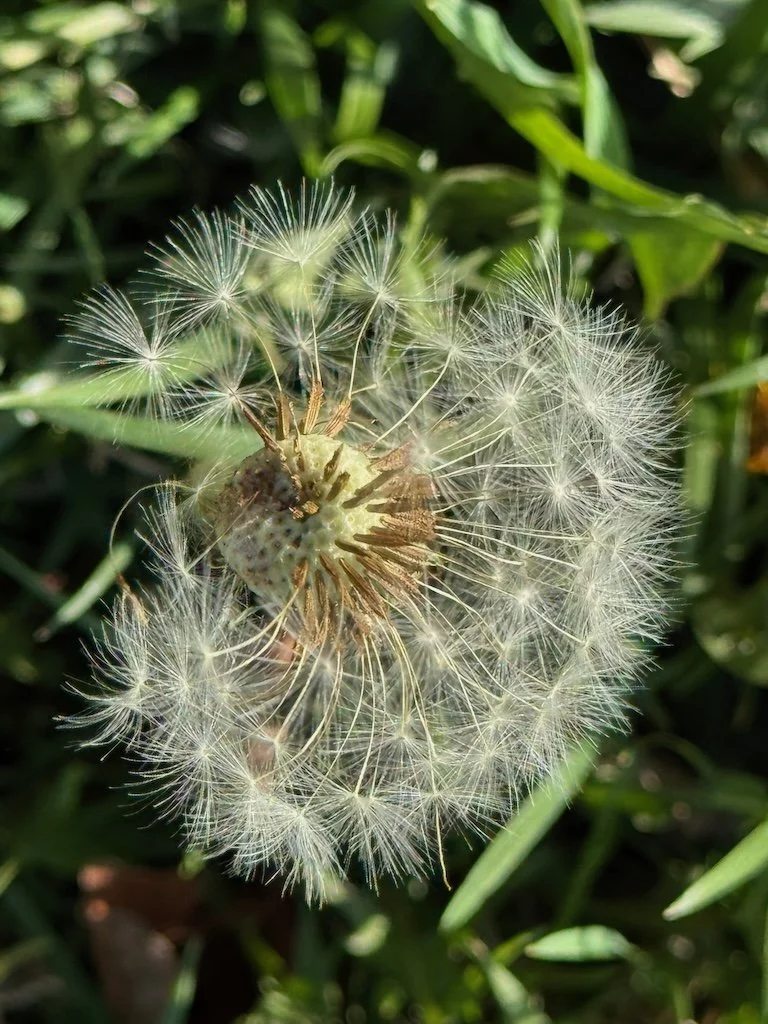
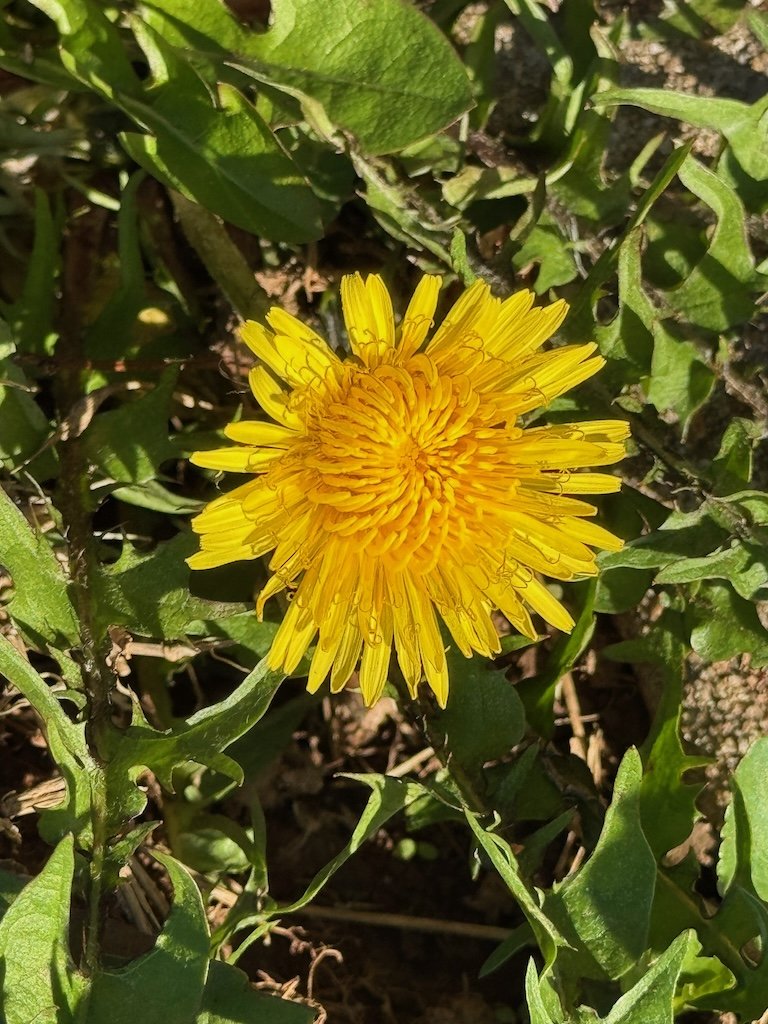
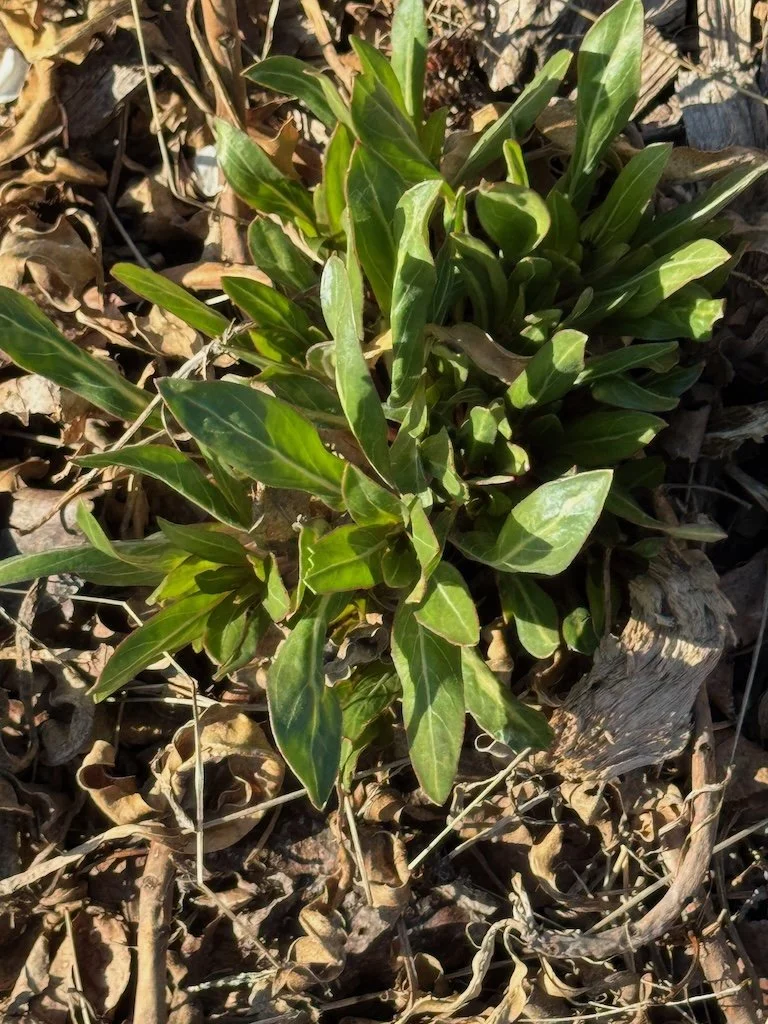
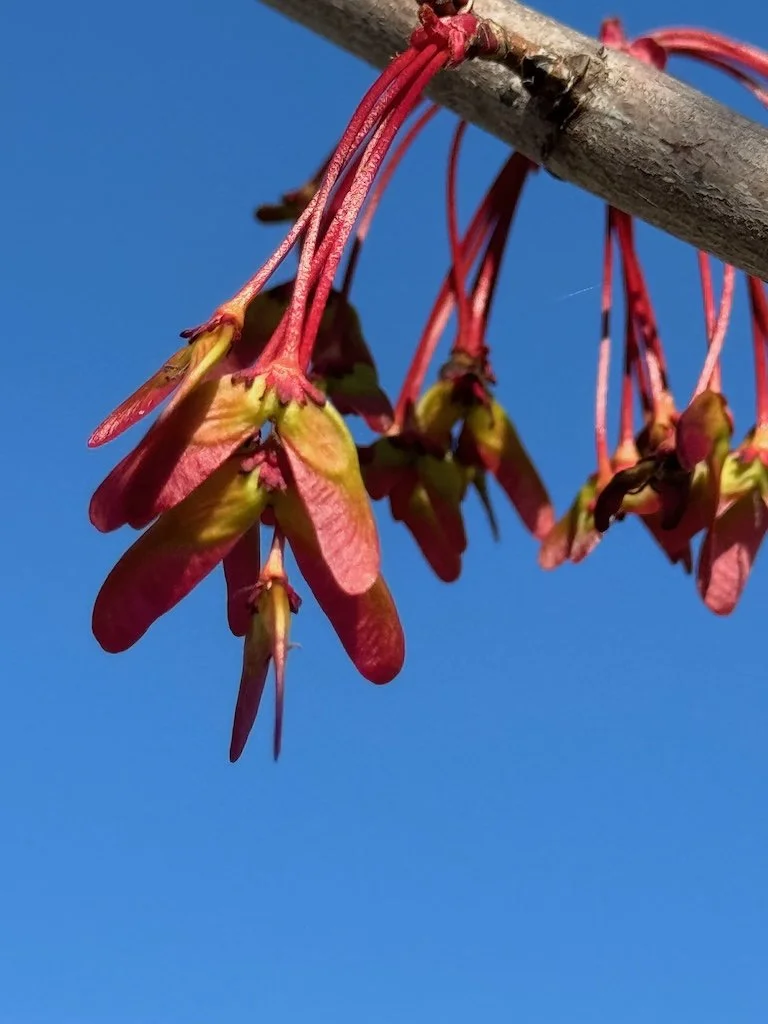
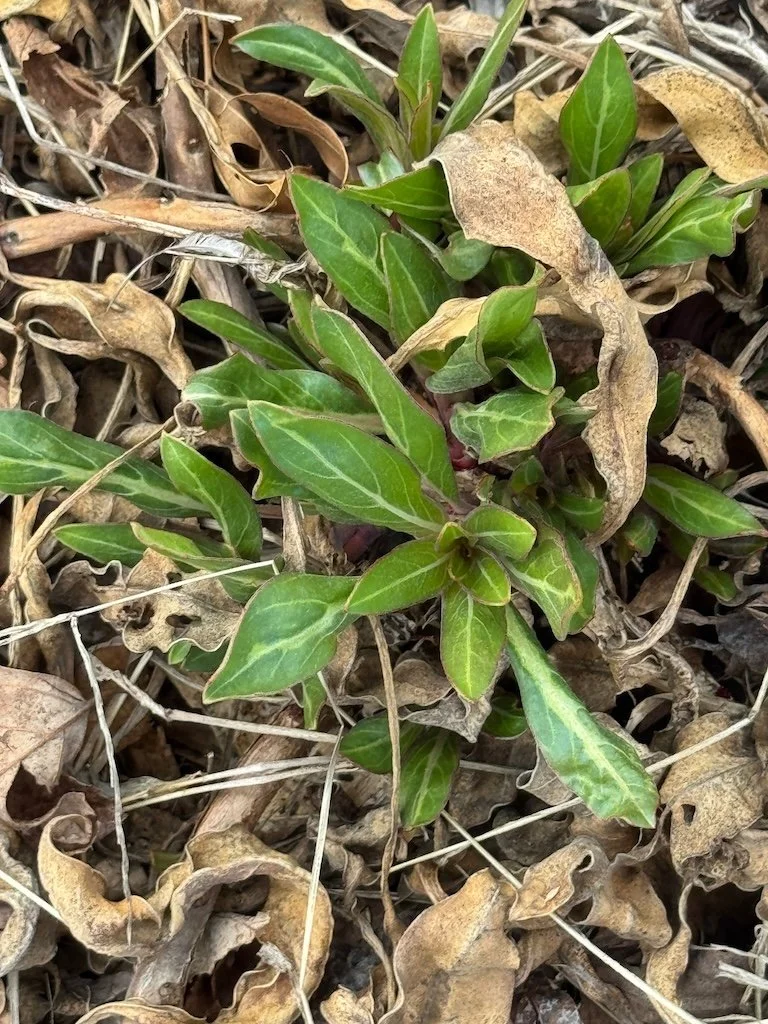
It was a sunny and cool spring day. I took a few pictures of plants in my yard while I was waiting for my husband to be ready to go. The dandelions are blooming and there was one seed puff already! My Missouri Evening Primrose is coming up from last year’s roots and the maple is already forming seeds.

On the way, I noticed that the redbuds along I-44 were beginning to bloom. The flowers were probably not fully open, but there was enough color to identify the trees as we drove. The redbuds at our house were not quite so far along.
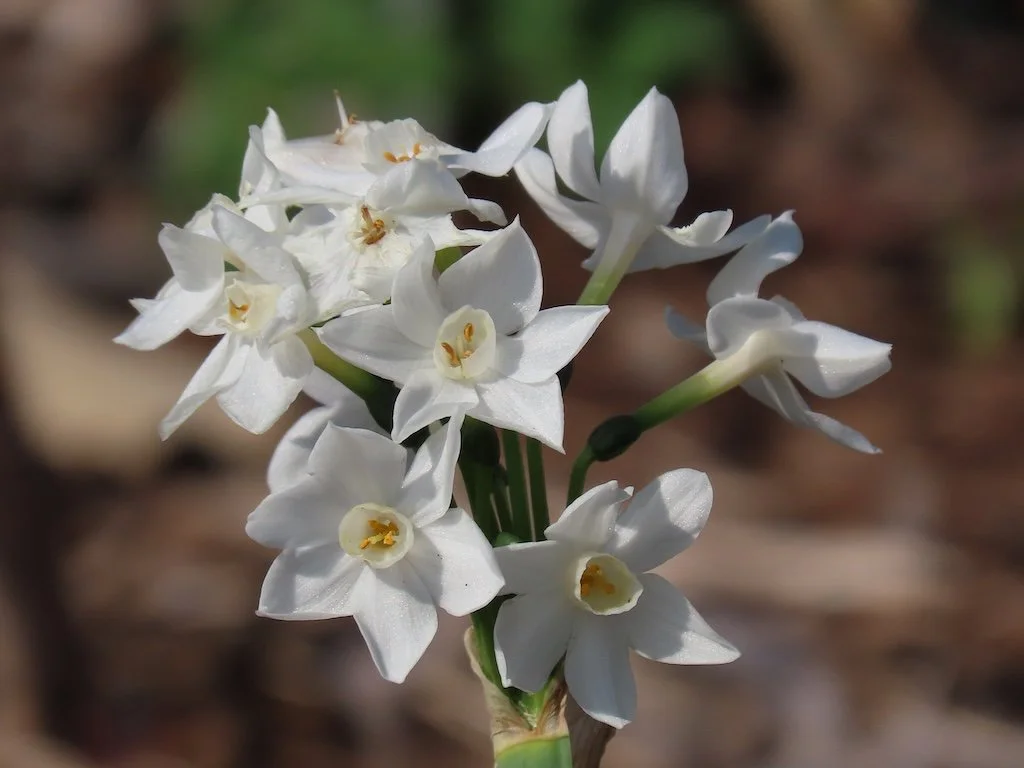
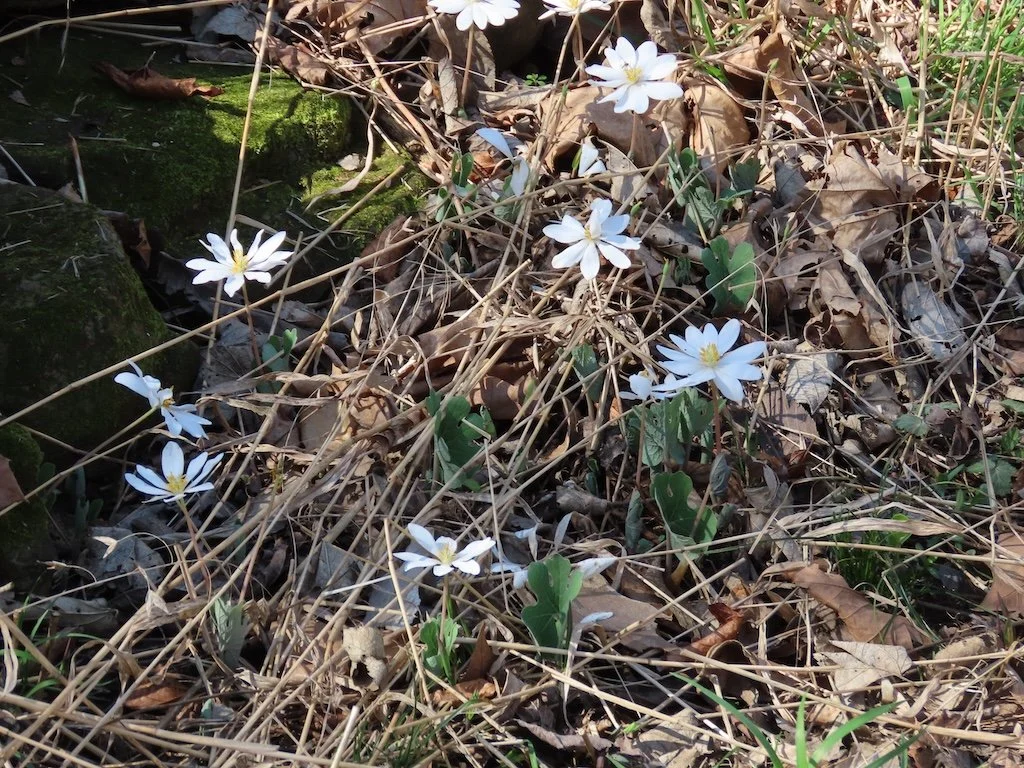
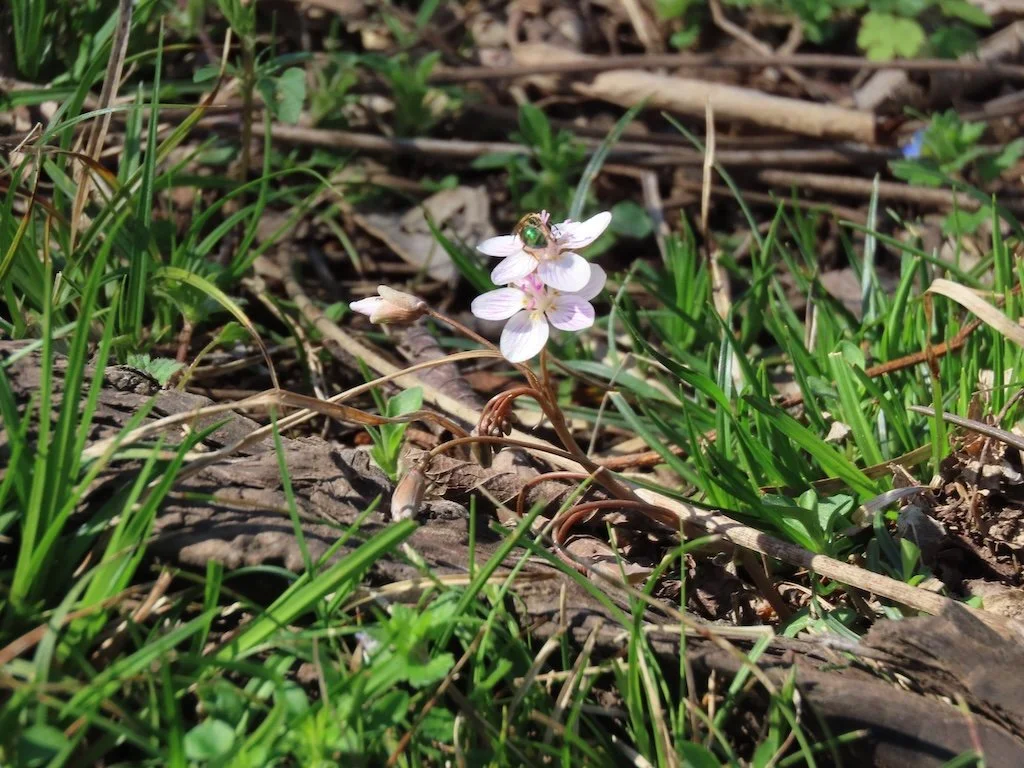
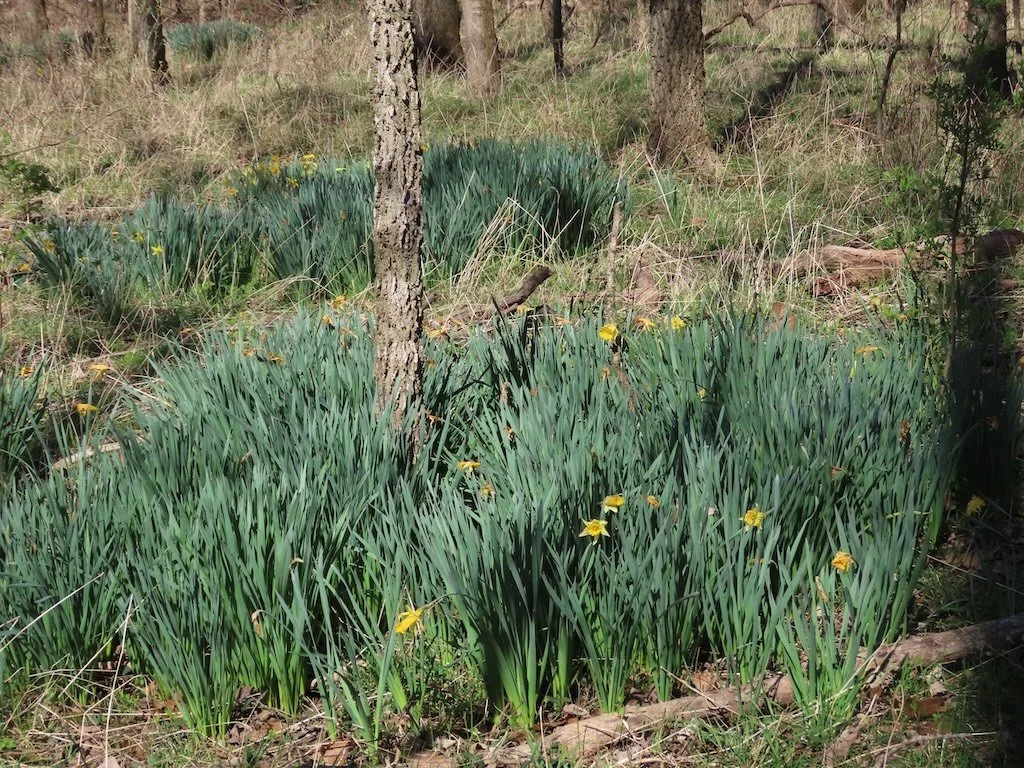
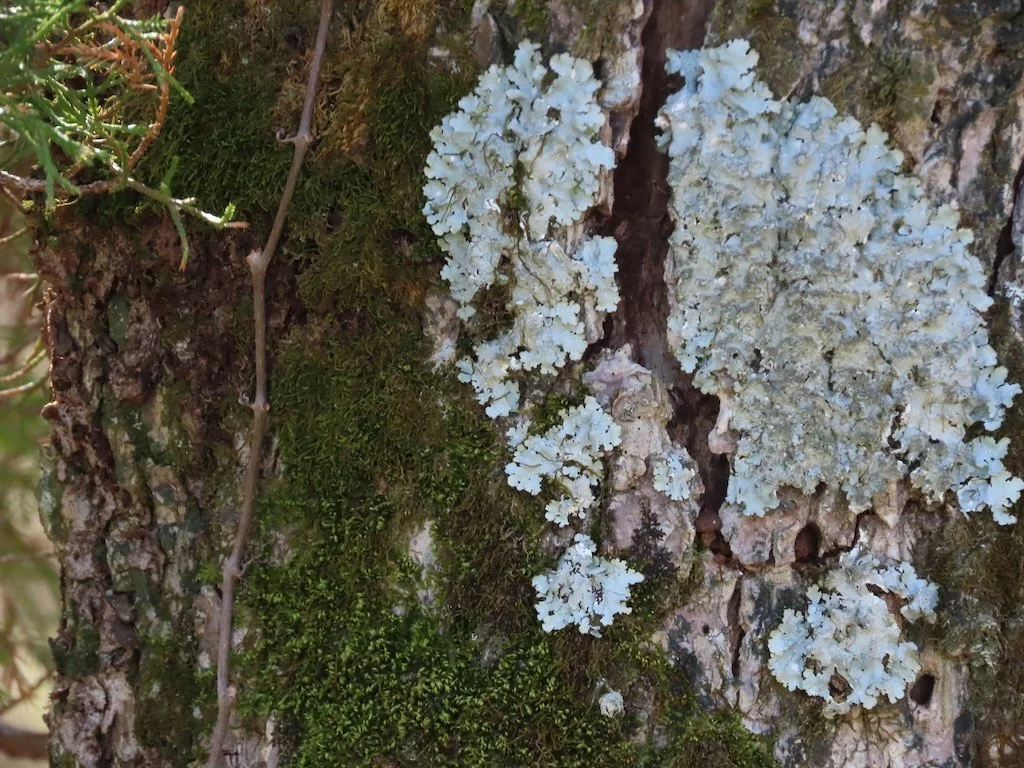
I enjoyed the walk through the woods at the monument. There were some wildflowers – and clumps of daffodils (not wild, obviously) in the woods.  A few insects were out as well so the flowers will be pollinated!

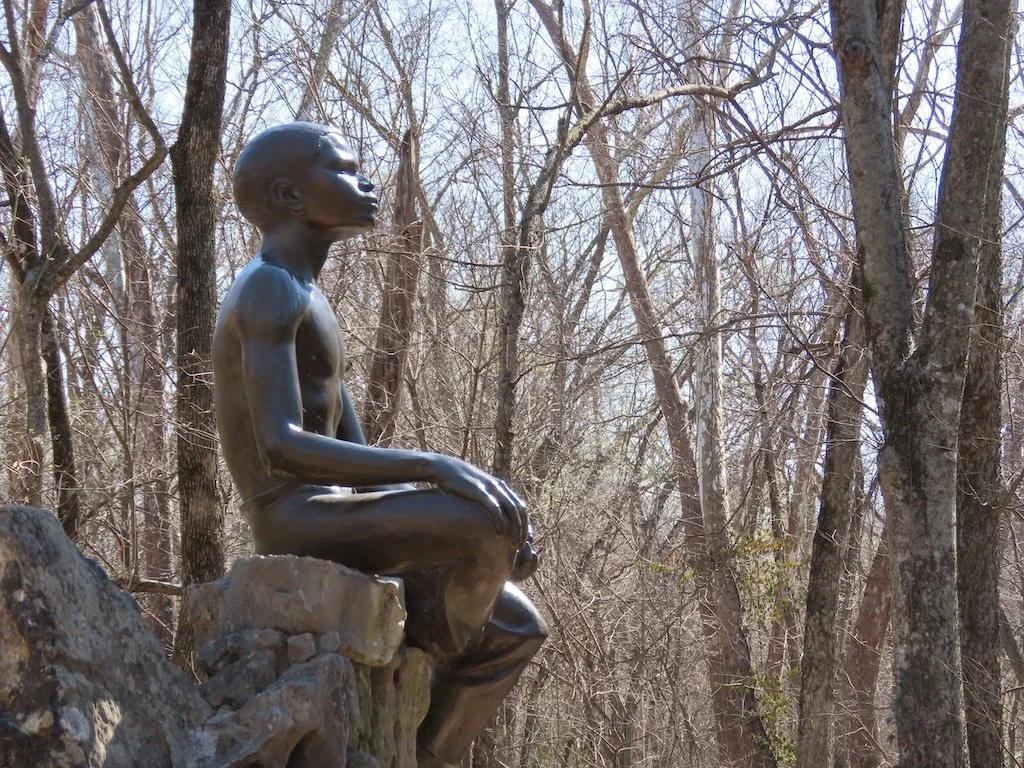
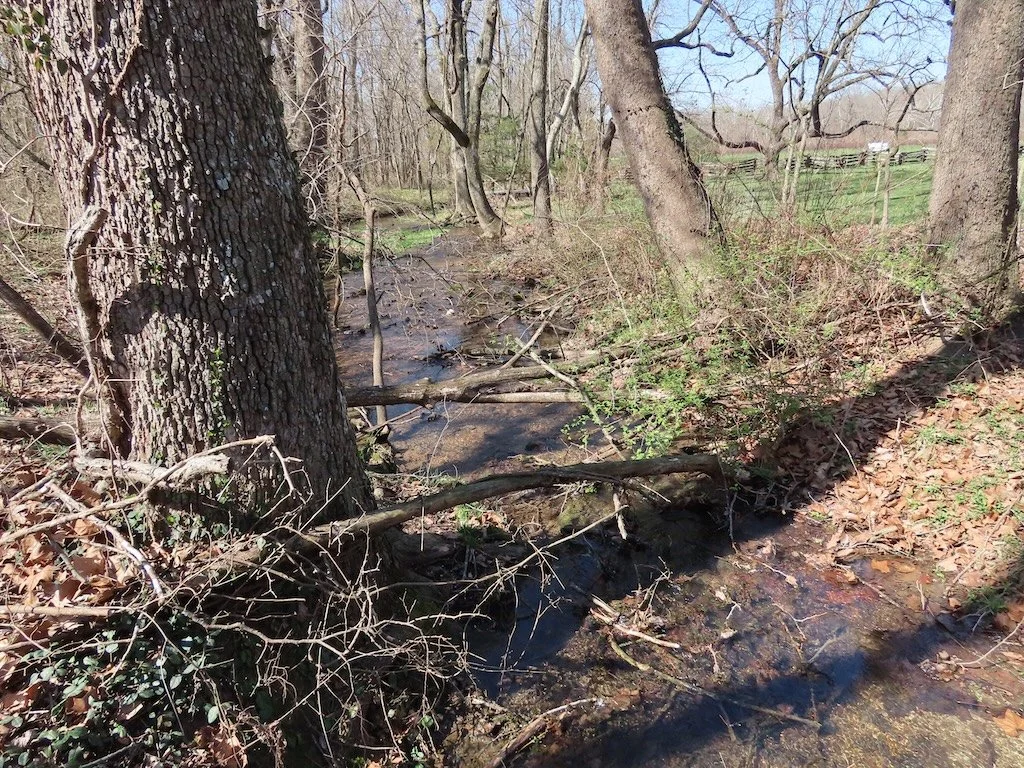
There is a statue of a young George Carver in an area of stream/forest. He was born to a slave family on the farm…almost died when he was young (illness and kidnapping)…managed to survive and was able to become educated…he became head of the Tuskegee Agriculture Department in 1896; he taught there until his death in 1943. He is buried at Tuskegee University.

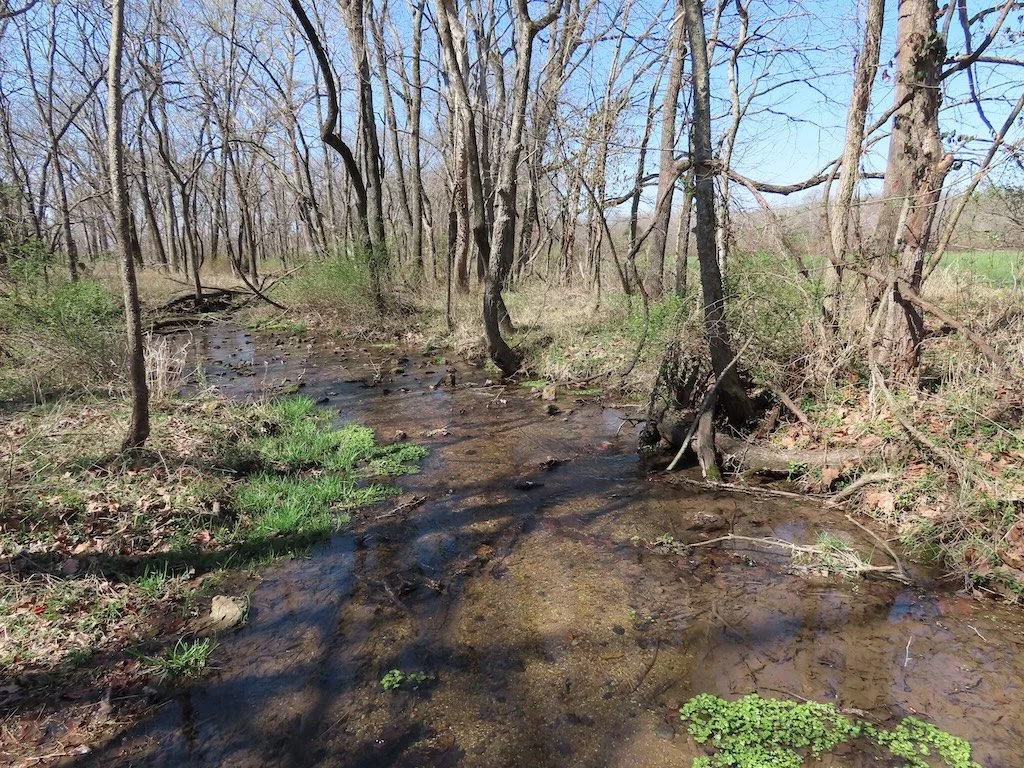
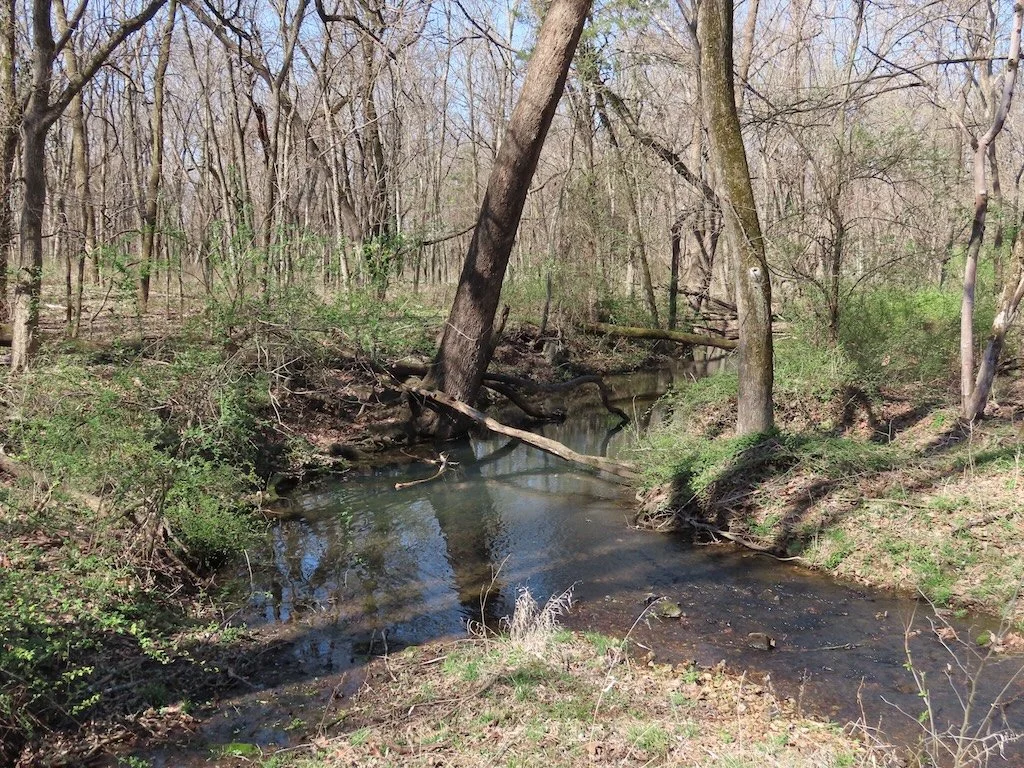
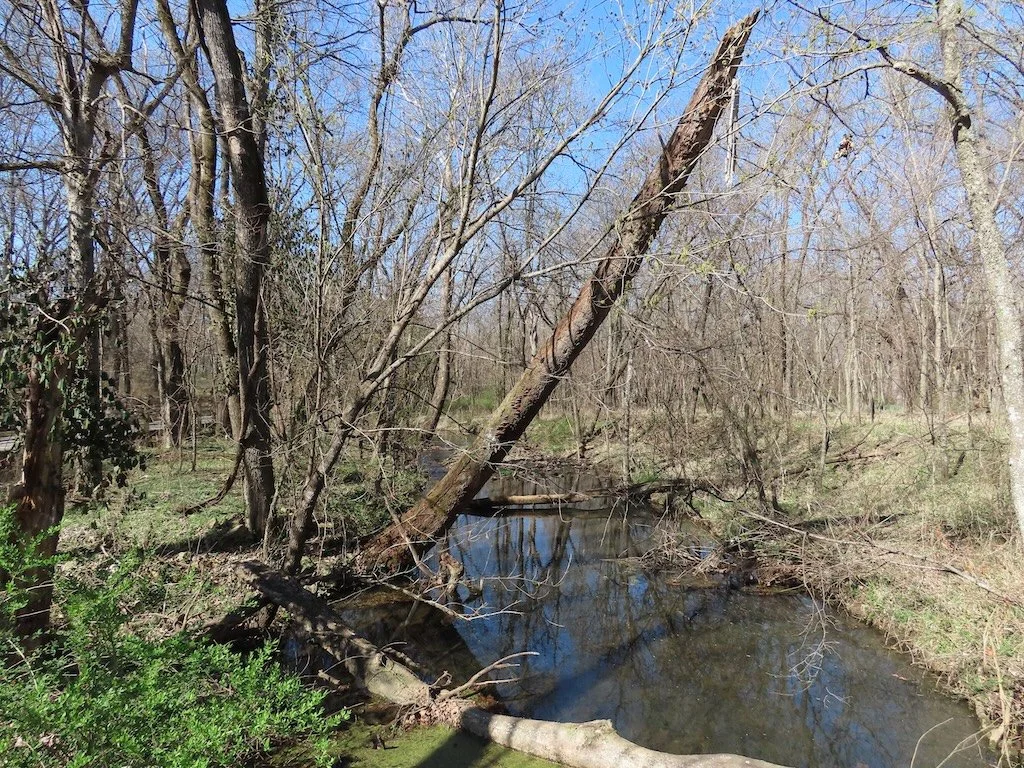
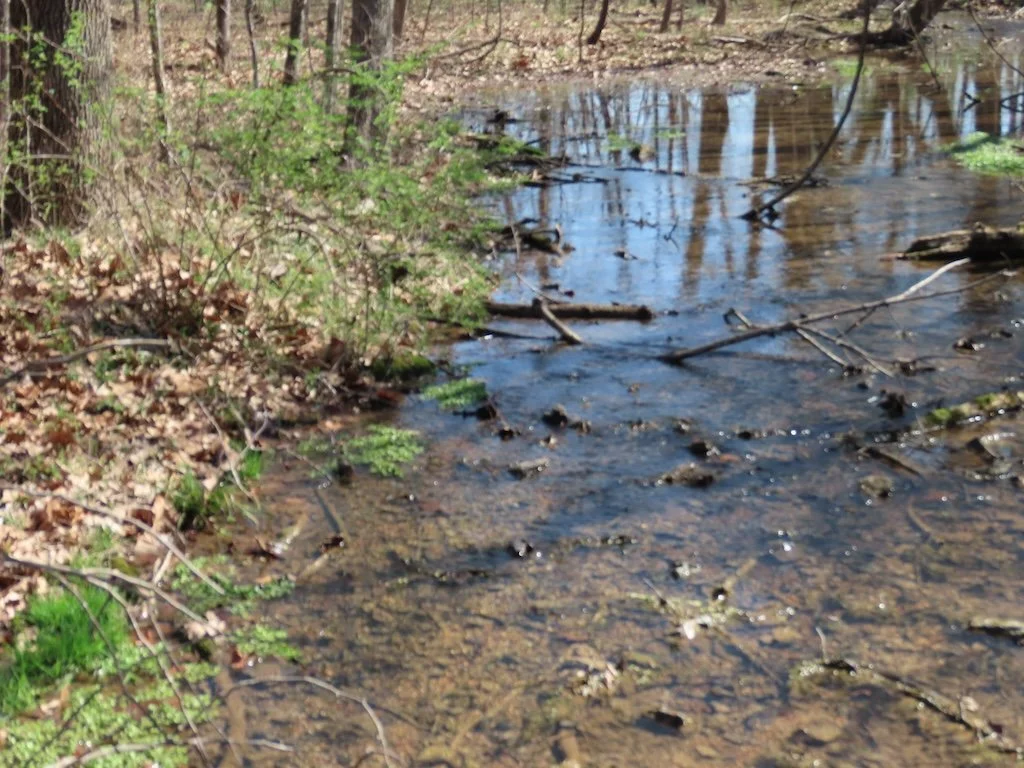
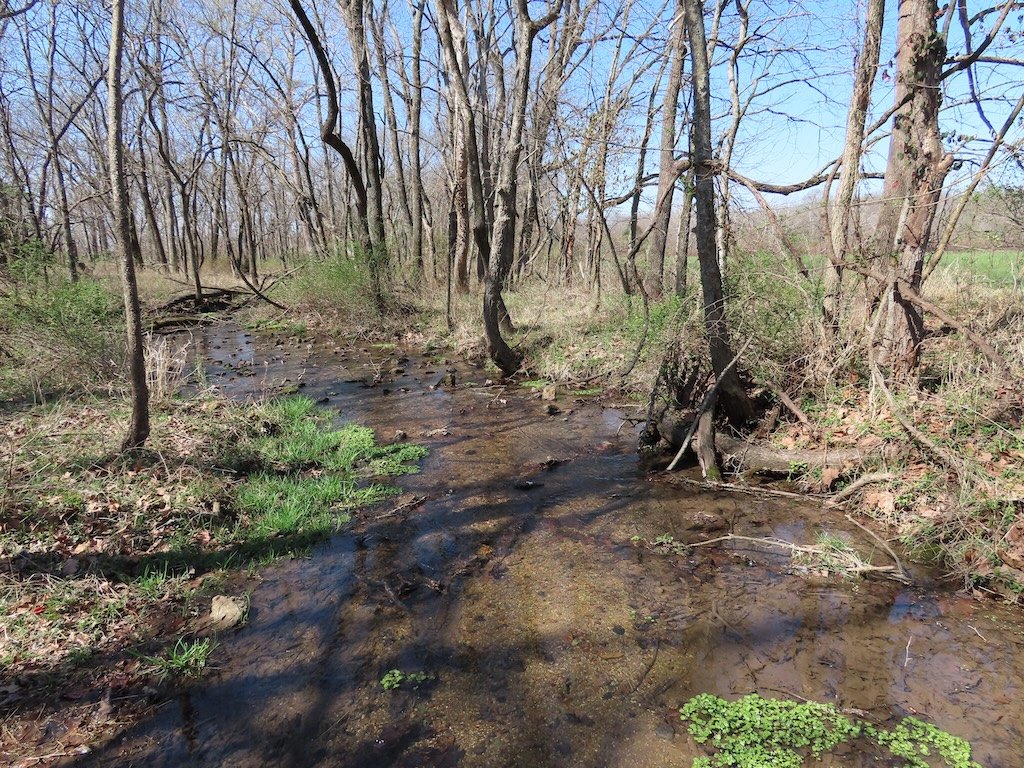
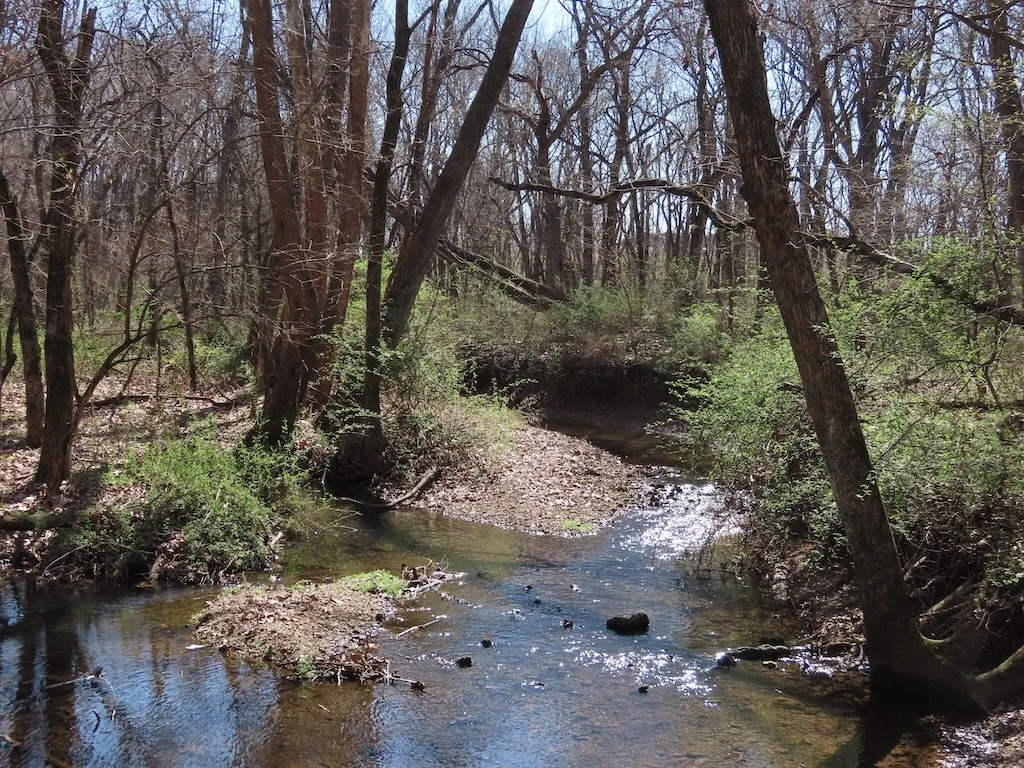
The woods were greening with the wildflowers, but the trees were mostly dormant. Some of them were probably ashes and would not be leafing out again. It is a common occurrence in Missouri right now; the emerald ash borer that killed the ashes in Maryland before we moved to Missouri is now killing the ash trees in Missouri. There is water in many places along the Carver Trail (loop) – Williams Pond/Branch and Carver Branch.

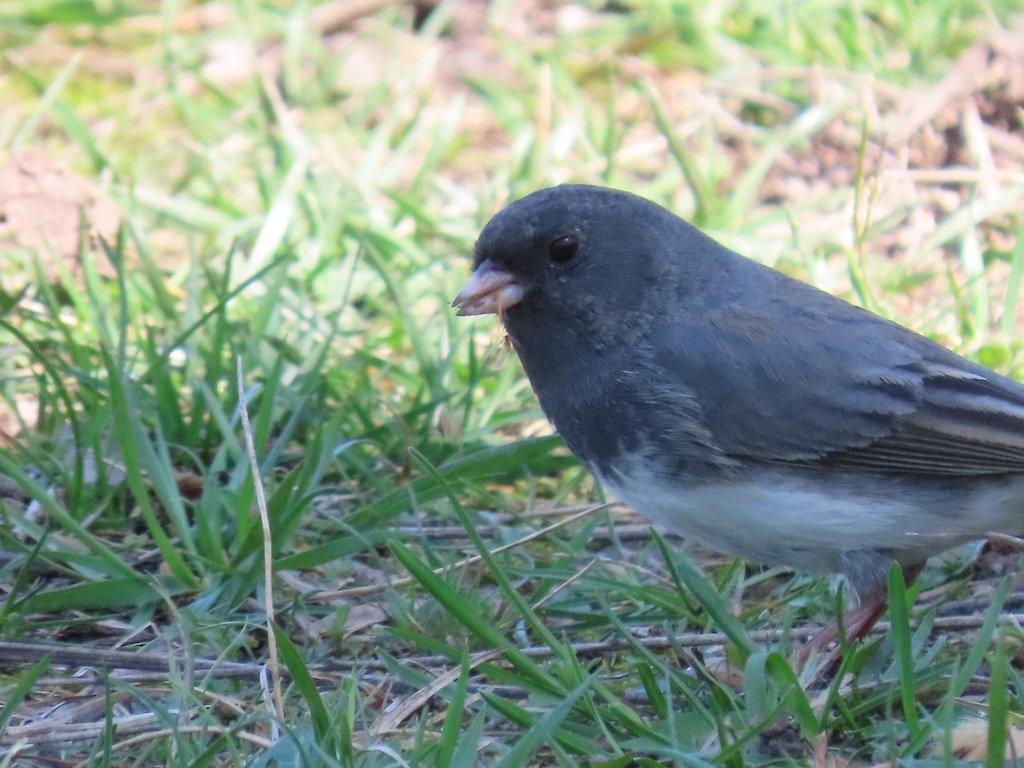
There were lots of birds, but I only managed to photograph a Dark-eyed Junco. We heard several woodpeckers.

We were at the monument on a Saturday, and I was pleased that there were other people that were there – many with children. The place is closer to Joplin so I assume the ‘regulars’ are mostly from Carthage or Joplin. It is a good place to visit in the spring….and maybe even better in the fall. In the summer, it would be very humid.

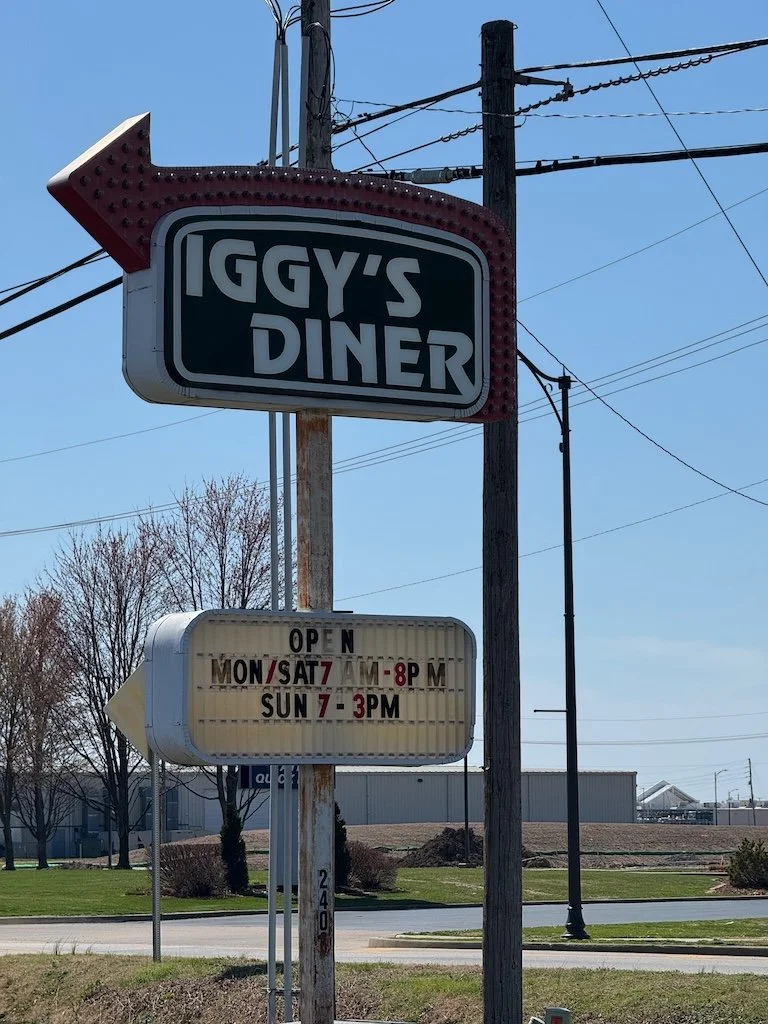
We opted to drive to Carthage for lunch at Iggy’s Diner. I am trying to find places other than fast food that my husband likes…and the diner seemed to be a hit with him. The quality of food is better than a fast food chain!

Yard Work – March 2023

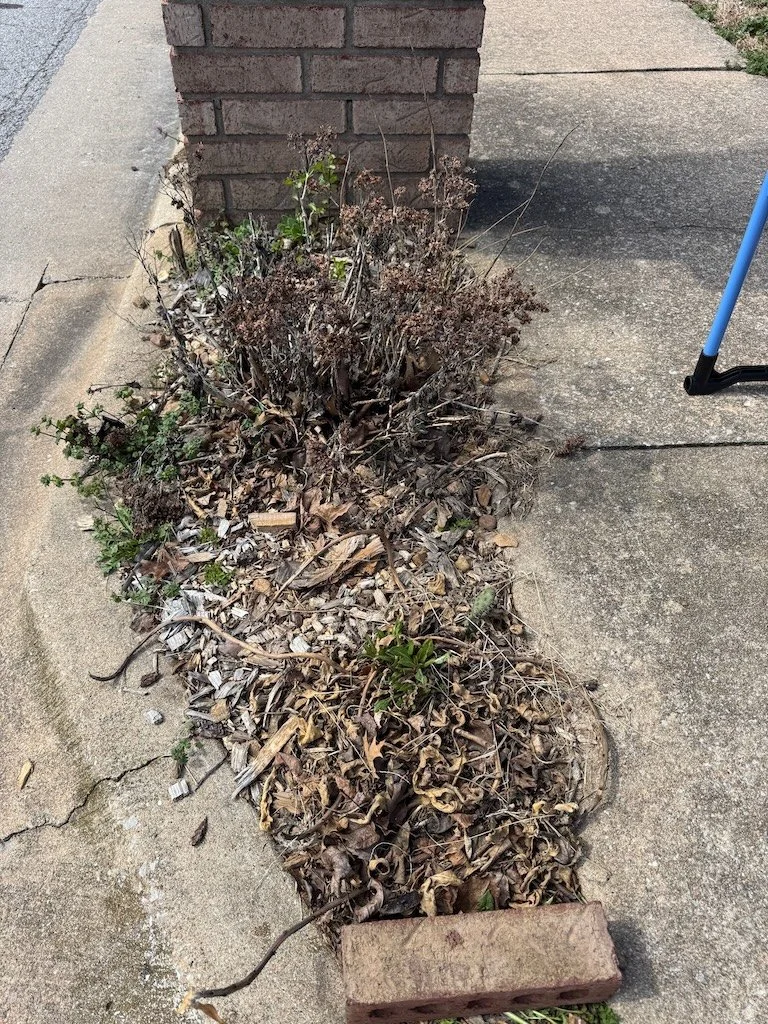
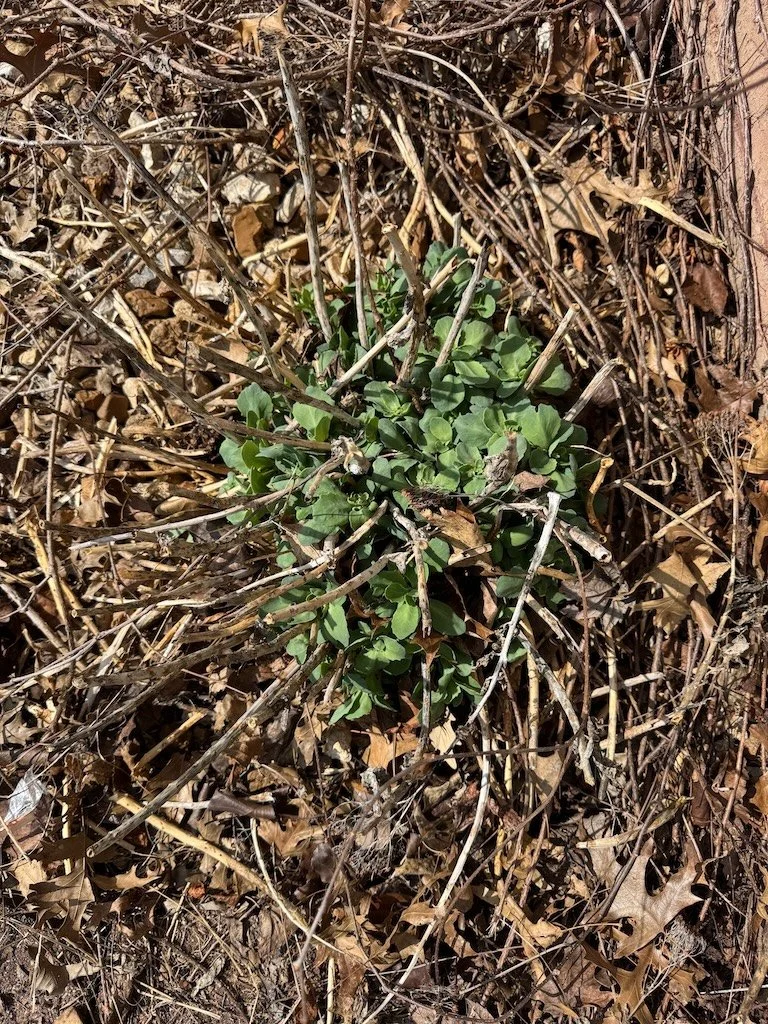
So much to do before it’s warm enough to plant into the new native plant garden in my front yard – that’s the April project. Now I am working on existing plantings. The Missouri evening primrose has come up in the small bed near the mailbox. There is a stone crop there too. I trimmed off the seed heads from last season so that the green at the base will show sooner. I try to leave the small twigs and leaves in the bed…reducing any bare  soil that might wash away during the spring rains.

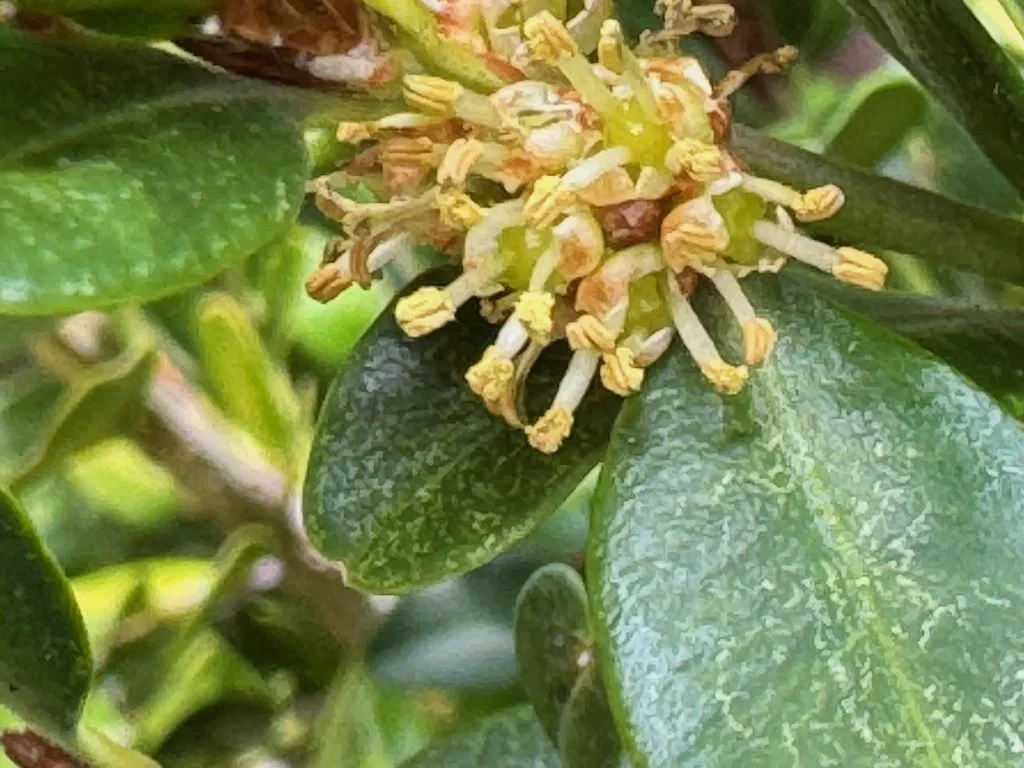
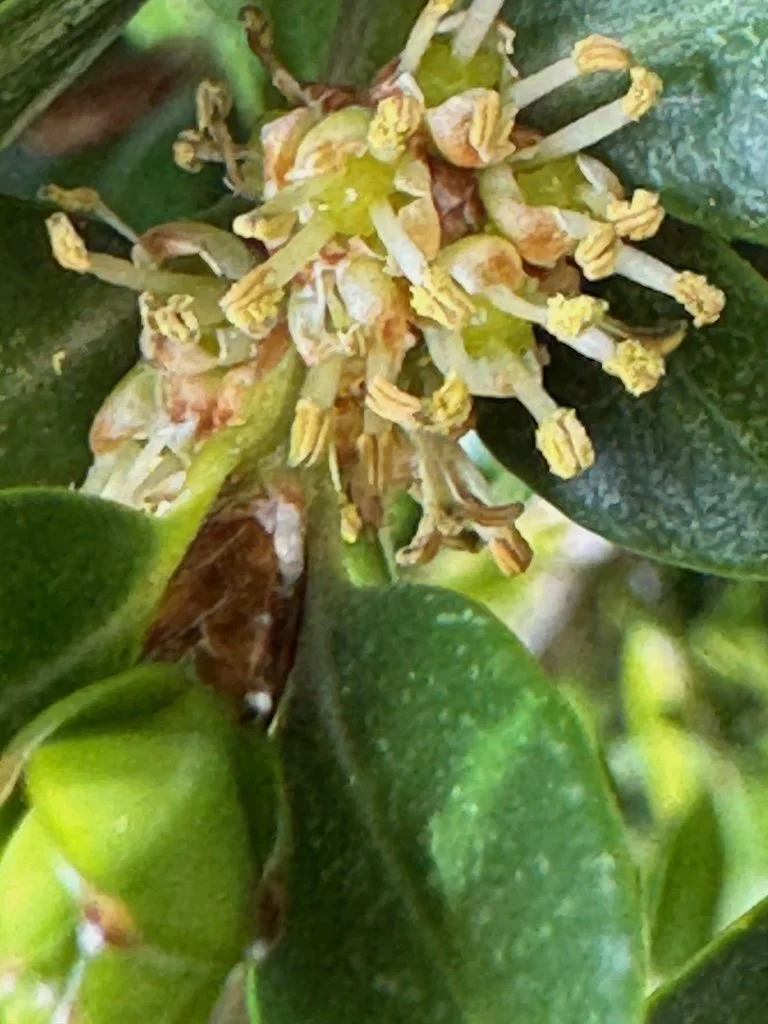
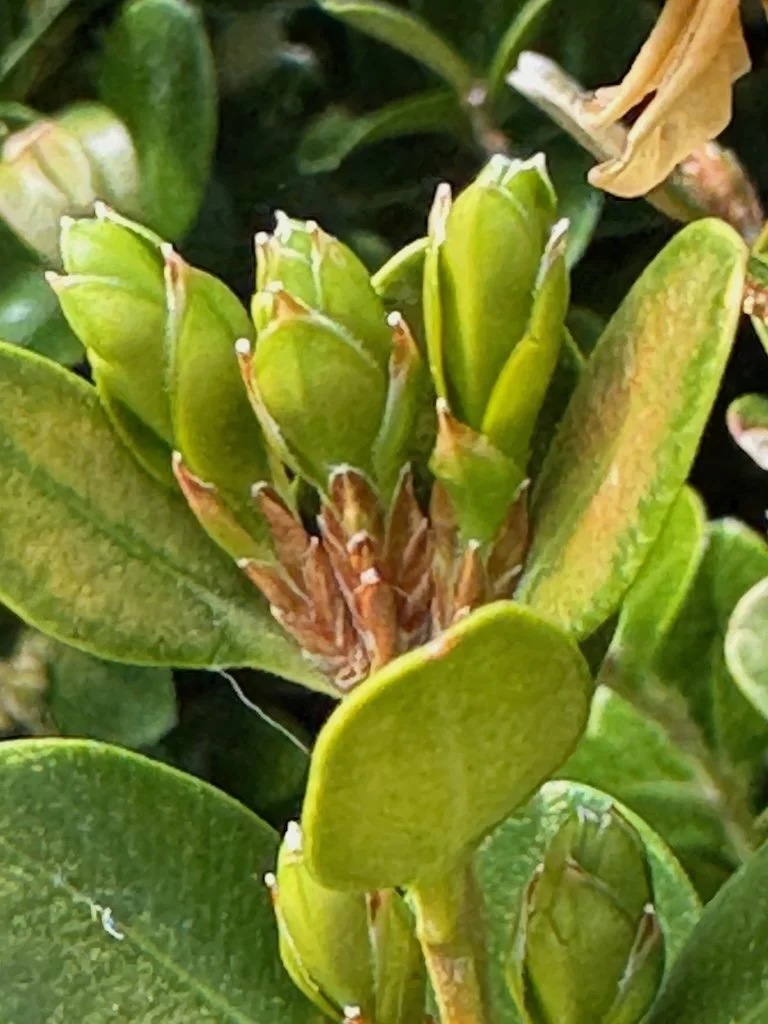
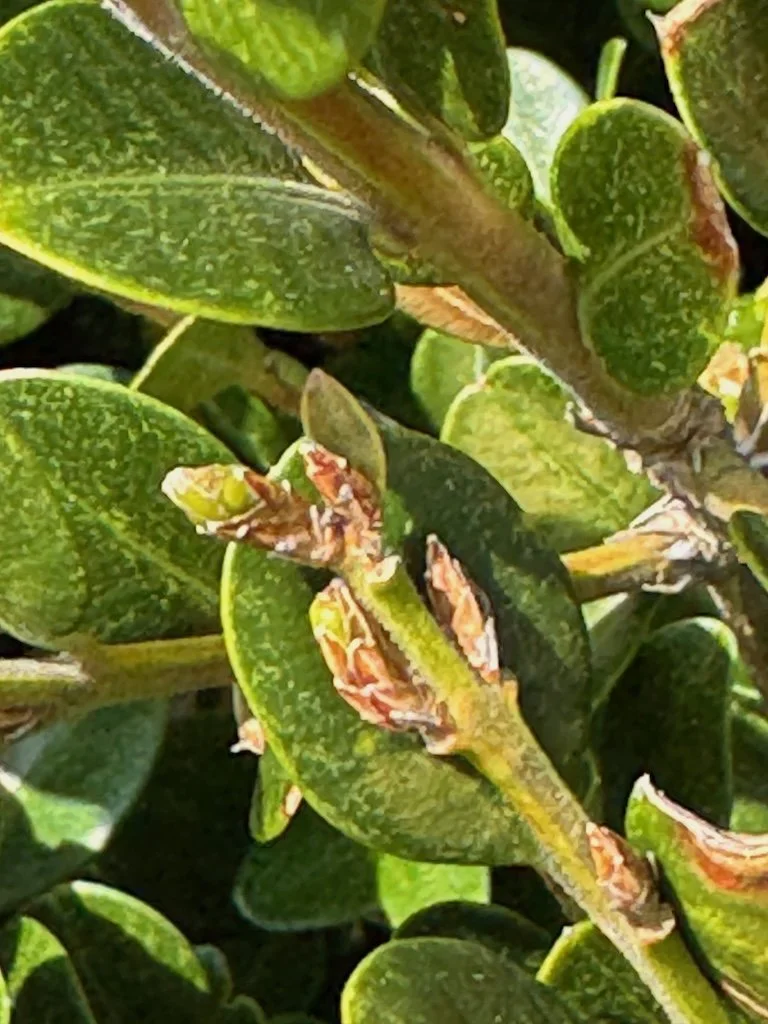
I need to trim the boxwood, but I’ll wait a bit on that. The electric hedge trimmer will make fast work of that job. I got a little sidetracked while I was looking at it when I realized it was blooming…and had a lot of new leaves; it was a good opportunity for some macro photography.

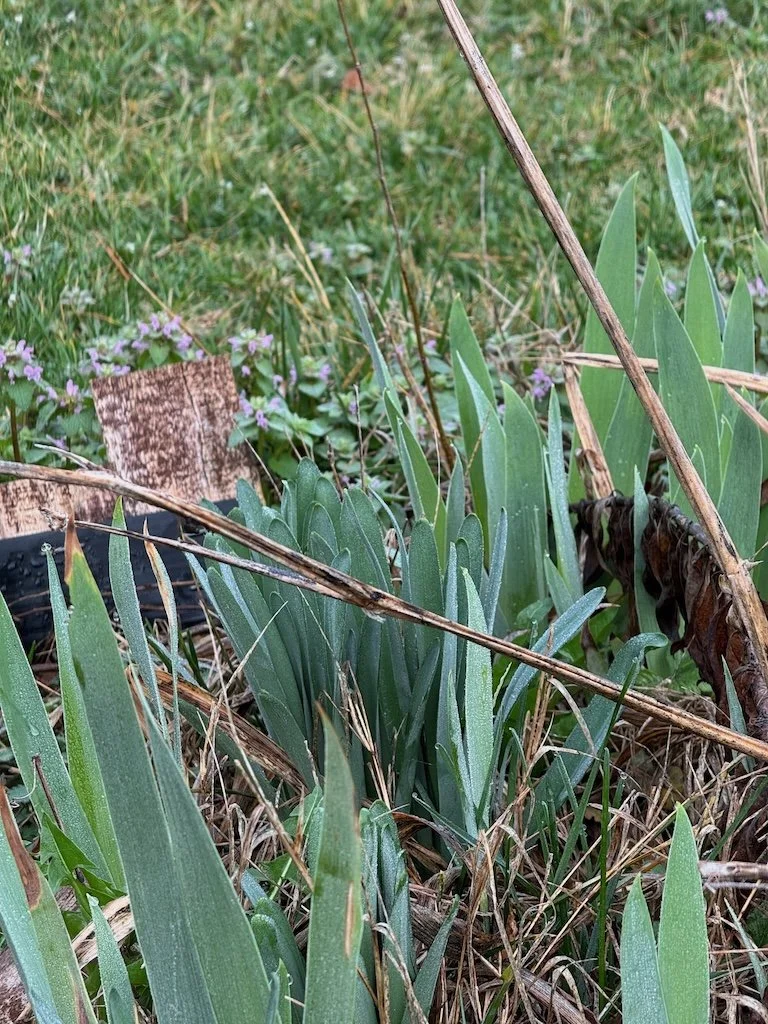
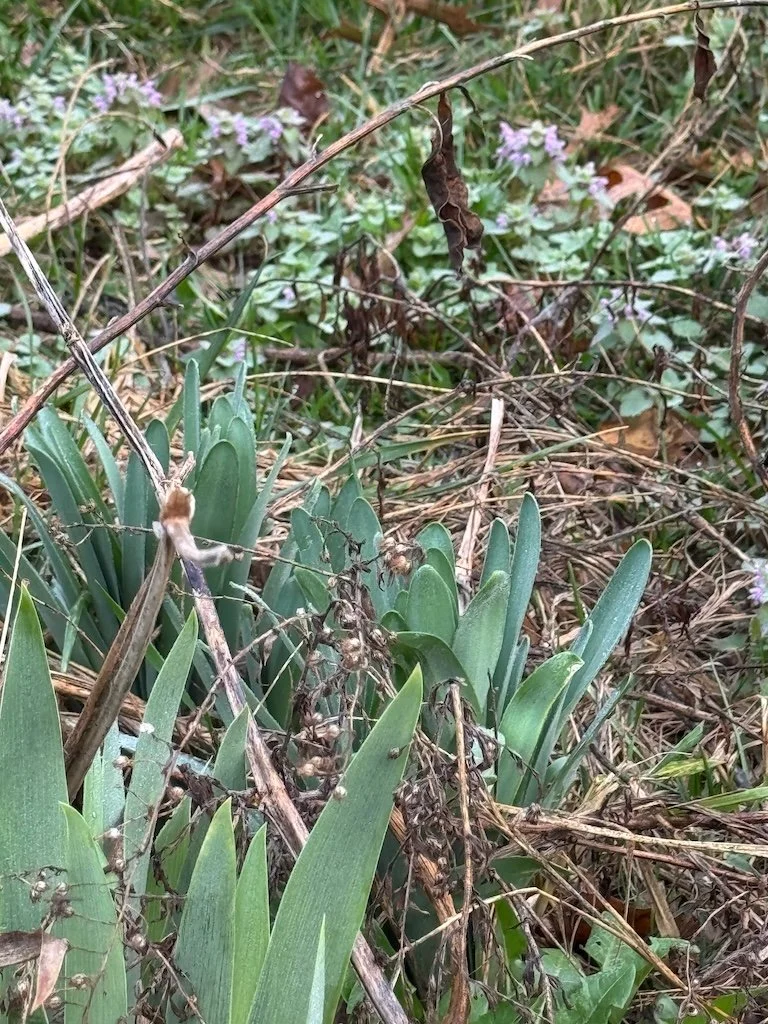
In the back yard – the iris bed where we cut down a pine several years ago was full of stalks from goldenrods. I cleared them away and realized that some of the leaves are rounded instead of pointy like the irises; those are naked lady lilies and there are more of them than last year. The bed is not formal, and I am letting it develop with the idea that the America beautyberry will eventually be the tall plant.

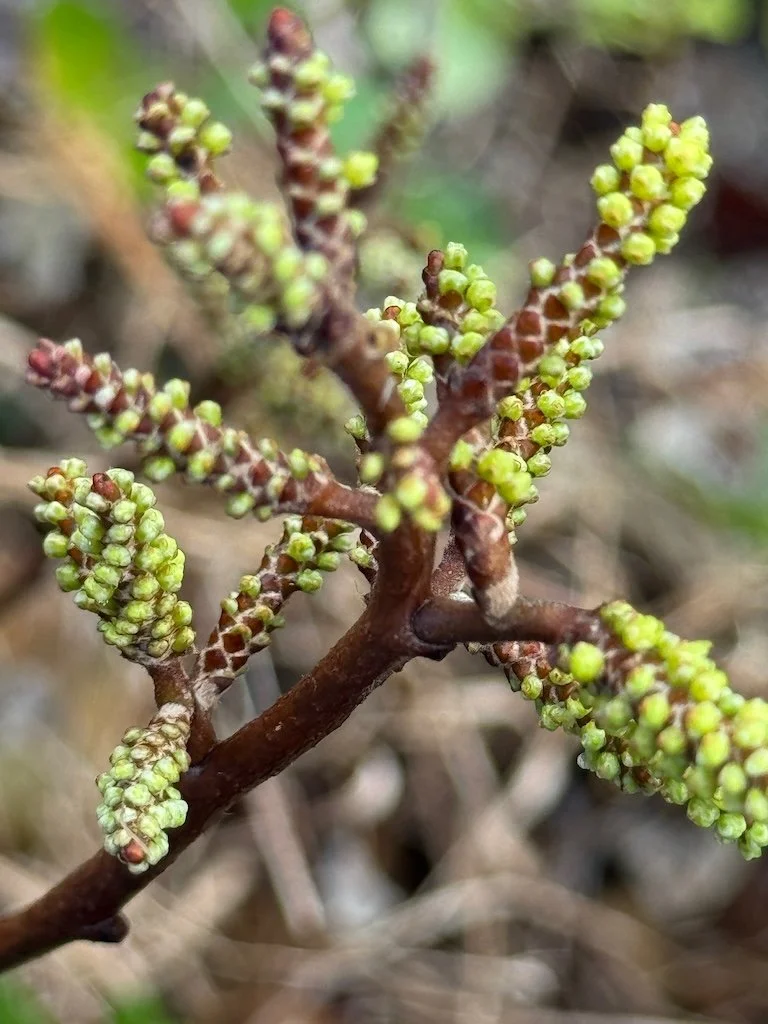
The fragrant sumac that I planted the first fall that we owned the house is blooming! I noticed that there is Japanese honeysuckle (an invasive) in the bed. I have spent several mornings working on it and am at the stage of digging out some of the hubs of the vines. I’ll work to keep the plant in check (or eliminated) this summer.

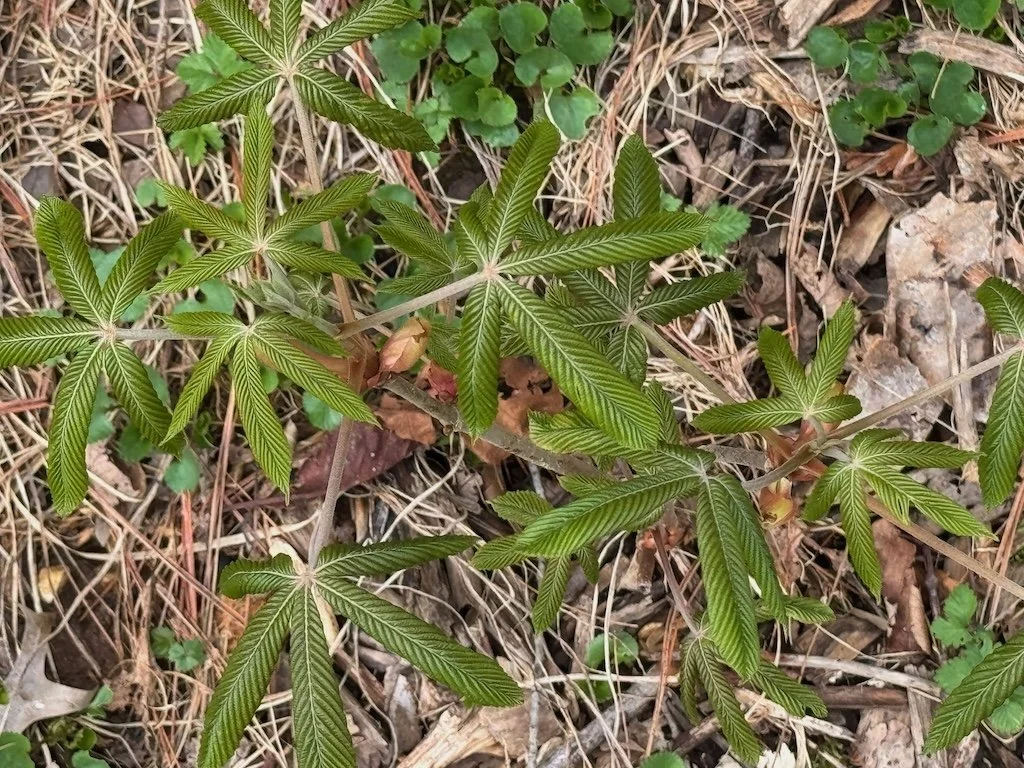
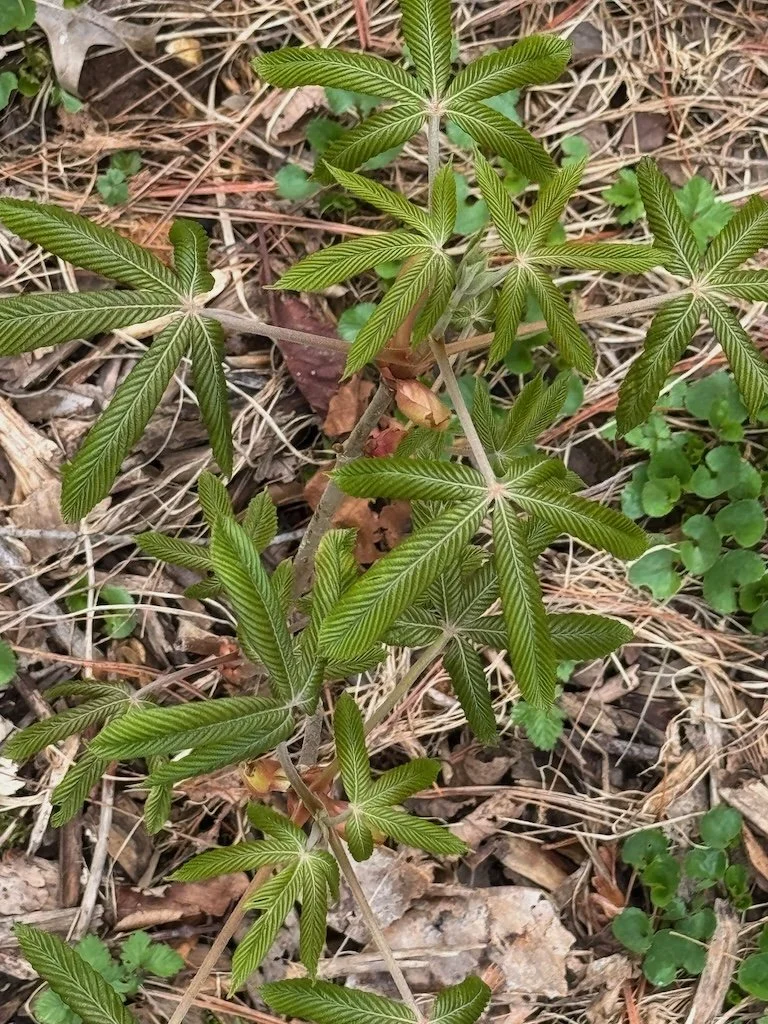
In the area where the small red buckeye is unfolding its leaves, the debris from last season’s violets and leaves provides good mulch that does not overwhelm the small plant. As it gets larger, I’ll decide if I’ll just leave it with that groundcover or put wood chips around it. There will never be a lawn mower near it….but no bare soil either! way you tell your story online can make all the difference.

Gleanings of the Week Ending March 21, 2026

The items below were ‘the cream’ of the articles and websites I found this past week. Click on the light green text to look at the article.
3/8/2026 Our World in Data What are the world’s deadliest animals, and can we protect ourselves against them? – Mosquitoes and snakes top the list! In many regions, deaths from mosquitoes have decreased dramatically. Malaria was once prevalent in countries that are now free of it. If we could achieve this in all parts of the world, the number of deaths caused by other animals would be almost six times smaller. If we were to also eliminate deaths from snakes with antivenoms and better diagnostics, the death toll would be again reduced by almost two-thirds.

3/8/2026 Science Daily Scientists stunned to find signs of ancient life in a place no one expected - Chemosynthetic microbes—organisms powered by chemical reactions—creating the mats in the dark depths of an ancient ocean.

2/24/2026 BBC 'It seemed to defy the laws of physics': The everlasting 'memory crystals' that could slash data center emissions -Silica and DNA are "very attractive from a sustainability perspective", acknowledges Tania Malik, assistant professor at the School of Informatics and Cybersecurity at Technological University Dublin in Ireland. "However, these technologies are unlikely to replace conventional storage for everyday computing or AI workloads anytime soon."

2/11/2026 The Scientist Oak Trees’ Drought Resilience is Rooted in Microbes - Oak trees maintained relatively stable microbial communities with subtle shifts in response to drought stress. They observed an increased abundance of Actinobacteriota, which are linked to drought tolerance, and other bacterial and fungal genera, suggesting that the oak trees can recruit beneficial organisms under stressful conditions. These changes could help researchers identify additional bacterial biomarkers as trees adapt to climate change.
3/9/2026 Compound Interest International Women’s Day: Twelve women from chemistry history – 12 women chemists from around the world.
3/8/2026 National Parks Traveler North Kaibab Trail at Grand Canyon National Park Seriously Damaged by Debris Flows - Debris flows in the wake of the Dragon Bravo fire at Grand Canyon National Park last year heavily damaged sections of the North Kaibab Trail, which will require some significant rebuilding in places this spring.

3/6/2026 Clean Technica It’s Time for an Authentic Golden Age of Agriculture - Contemporary industrial agriculture is less about producing food and more about generating animal feed, biofuels, and industrial ingredients for processed food products. Frank Carini of ecoRINews argues that producing more local food requires a series of changes. He offers a series of steps:

  • Stop taking farmland out of production;

  • Provide better financial support to local and regional farmers;

  • Increase funding for federal extension services;

  • Approve more bond money for farmland protection;

  • Attract young farmers to the profession;

  • Make farmland affordable; and,

  • Use the land we do have with our future in mind.

3/6/2026 Planetizen Hundreds of Vacant NYC Public Housing Units ‘Taken Over’ by Squatters –Vacancies often result from the need to make extensive renovations before units can be leased out when a prior tenant leaves. That frequently includes costly lead paint and asbestos abatement—required by local law and under NYCHA’s federal monitorship—work which takes an average of four to six months to complete, officials have said. In general, it takes the housing authority an average of 326 days to “turnaround” a vacant apartment for new occupancy, according to the most recent public data.

3/5/2026 Smithsonian Magazine See the New U.S. Postage Stamp Honoring the Bison, America’s National Mammal – A stamp within a stamp design.

3/4/2026 The Conversation Pollution, noise and climate stress all pose a serious threat to heart health - In an unprecedented collaboration, the European Society of Cardiology, the American College of Cardiology, the American Heart Association and the World Heart Federation have issued a joint statement calling for immediate action against environmental stressors – pollution, noise, climate stress – to reduce cardiovascular mortality. The question is no longer whether pollution causes cardiovascular disease, but how much additional harm we are willing to accept knowing that it is, to a large extent, preventable.

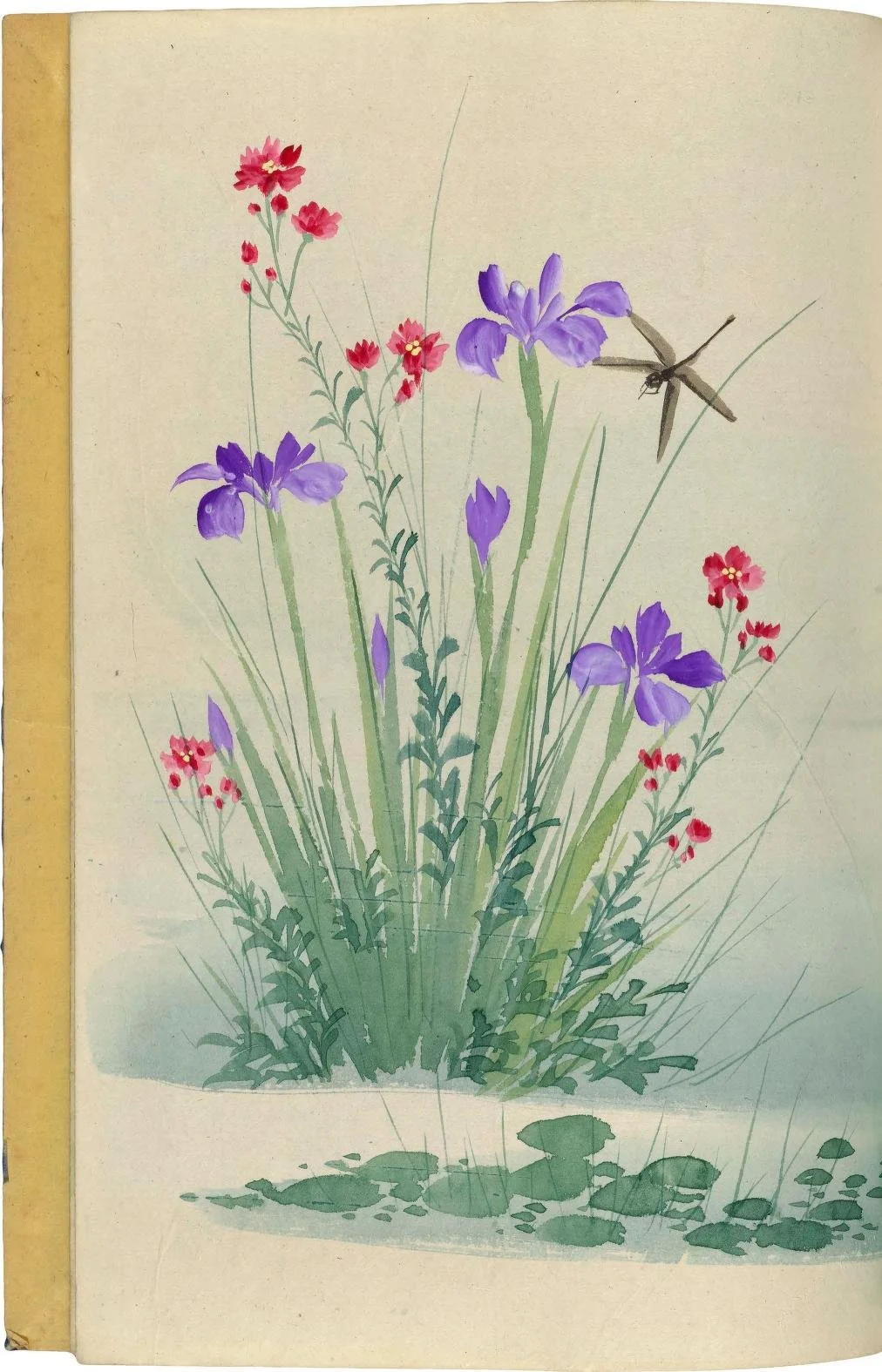
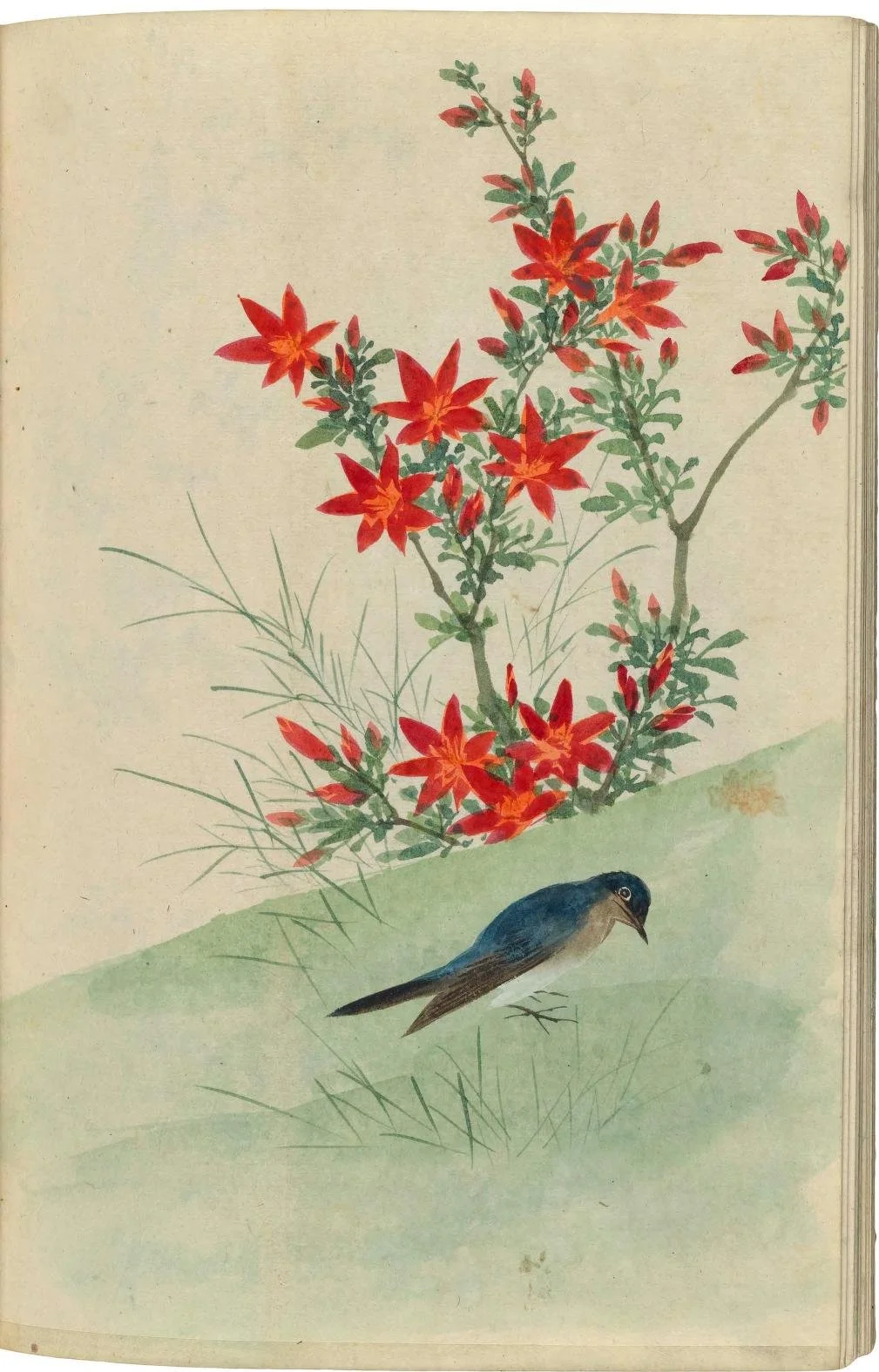
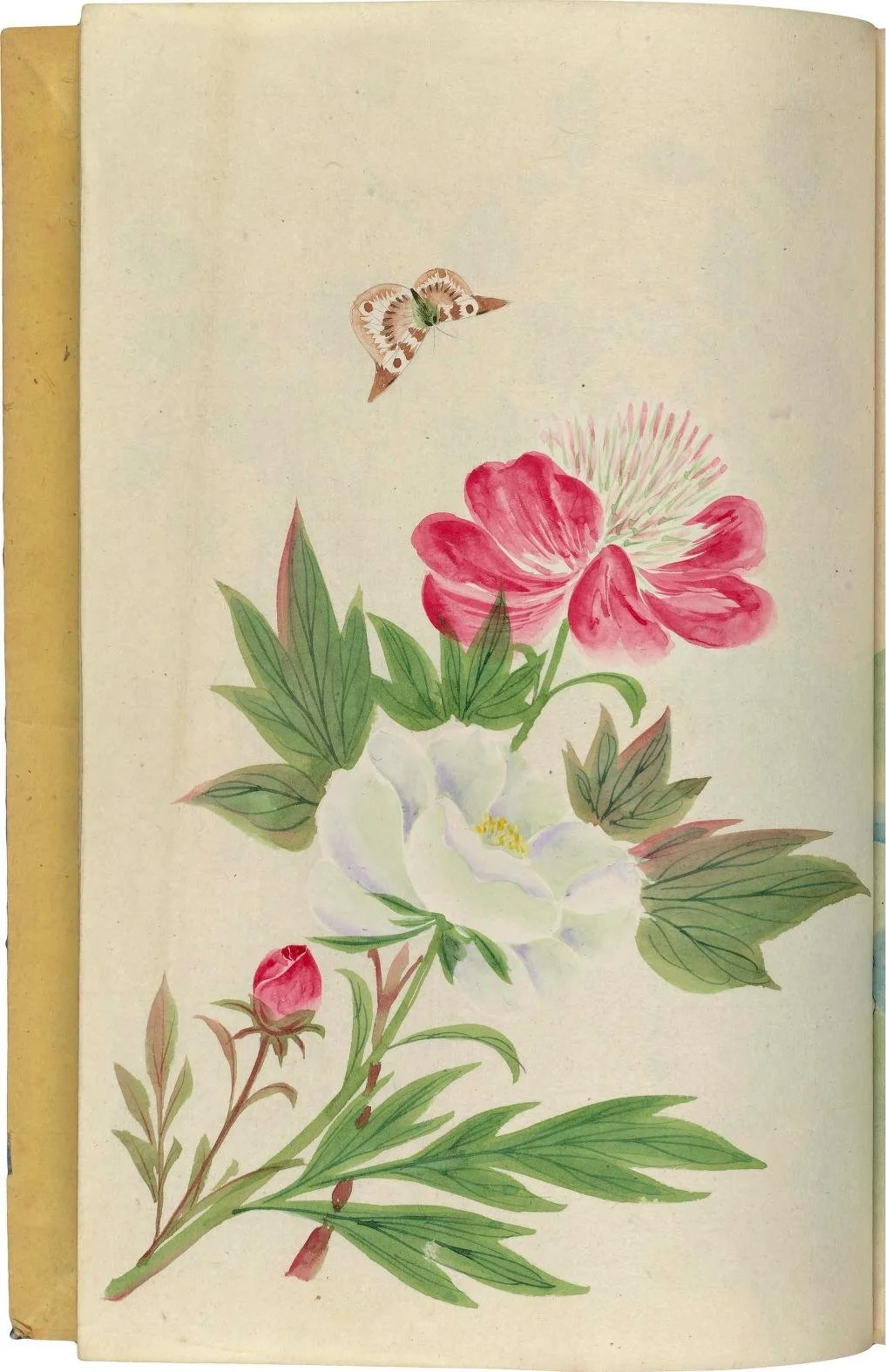
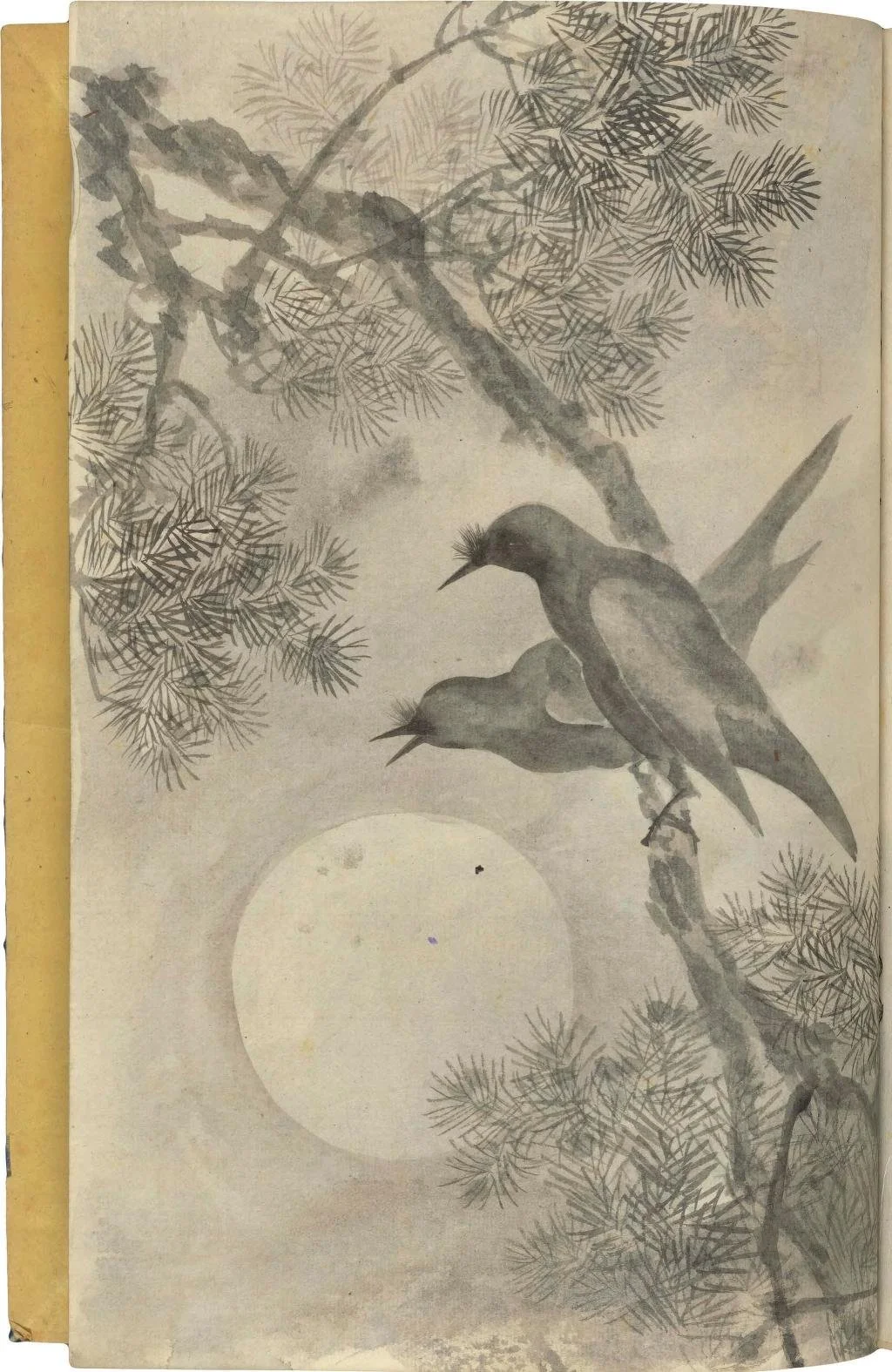
Album of flowers and birds

My ‘book of the week’ selection is a manuscript of 50 tempera, water- and bodycolor drawings. The original is held by the Oak Spring Garden Foundation, Upperville, Virginia and is available online at Internet Archive; the foundation is evidently working to digitize the collection accumulated by Rachel (“Bunny”) Lambert Mellon in the Oak Spring Garden Library.  This manuscript is not dated and the authors are unknown but it has Chinese circular red stamps on the first drawing and the back endpaper so is attributed generically to ‘Chinese School.’

 Images of plants and wildlife (insects, birds) always appeals to me. I like the artistic techniques of the collection as well. Enjoy browsing the book online!

 Album of flowers and birds

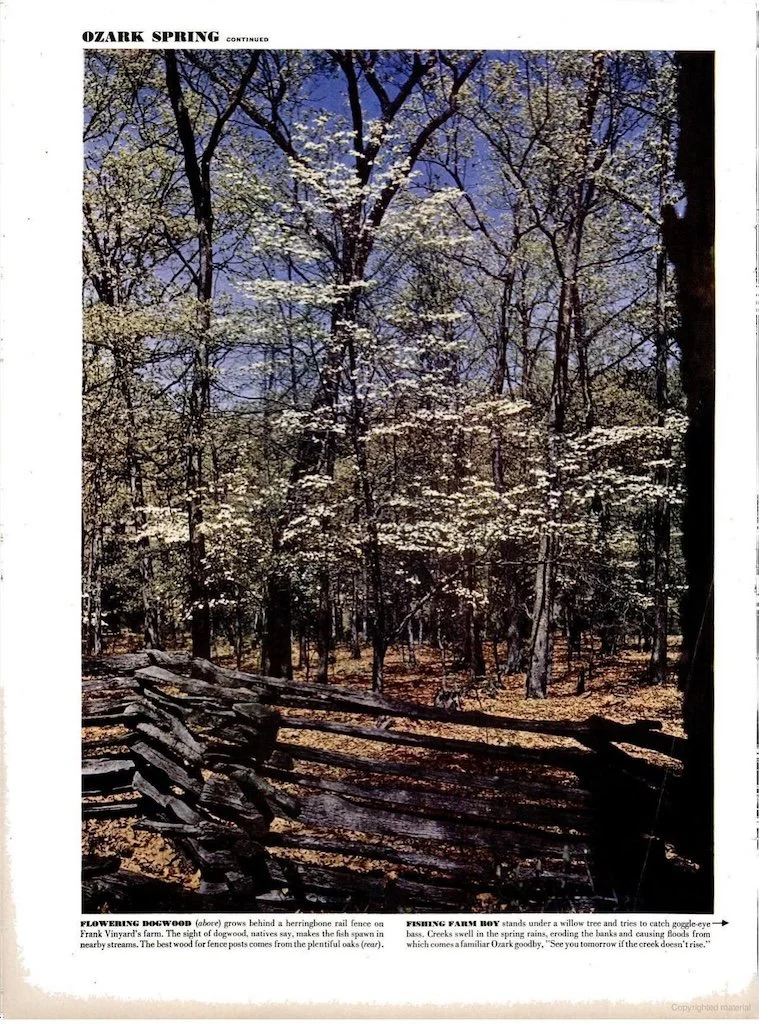
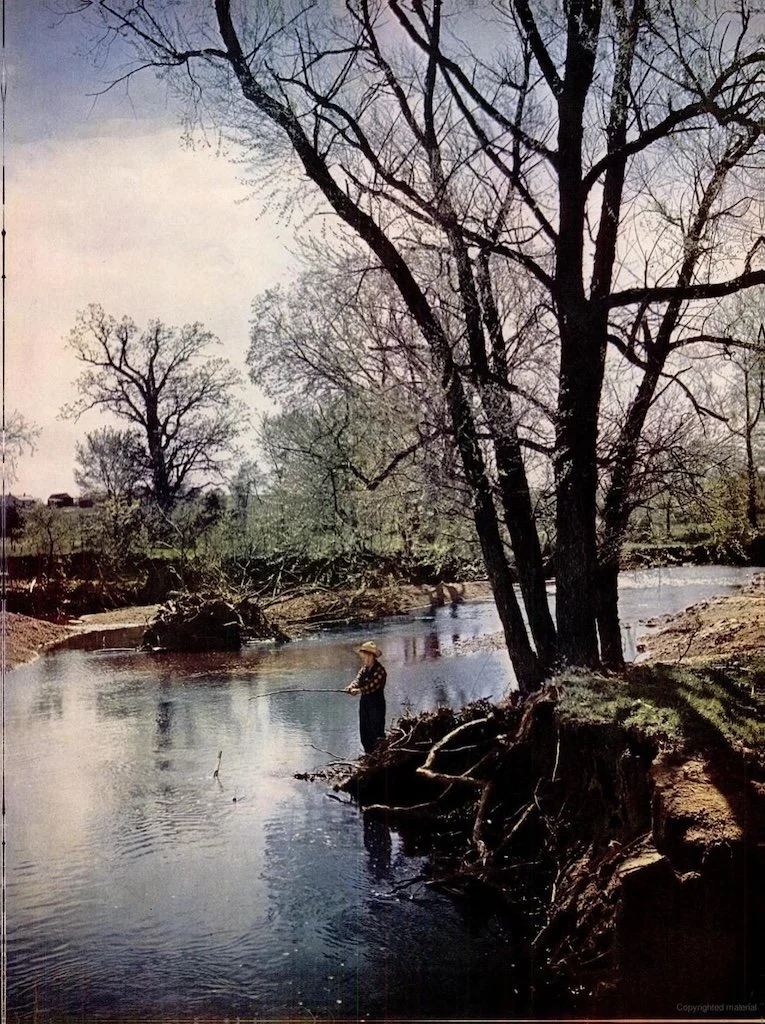
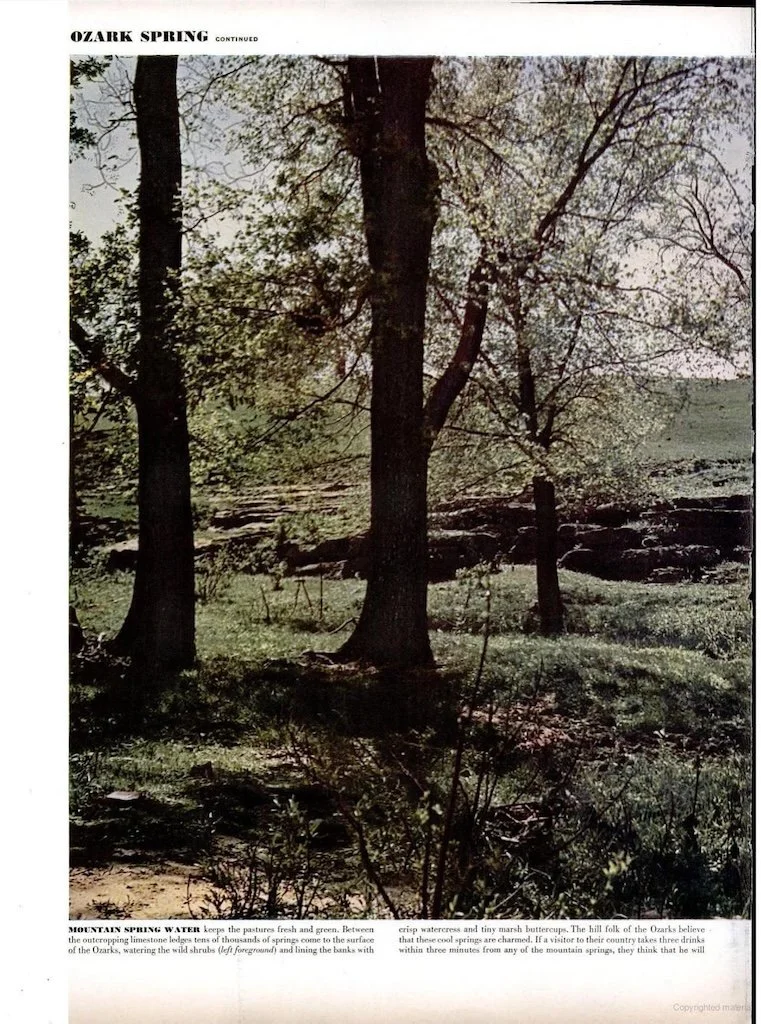
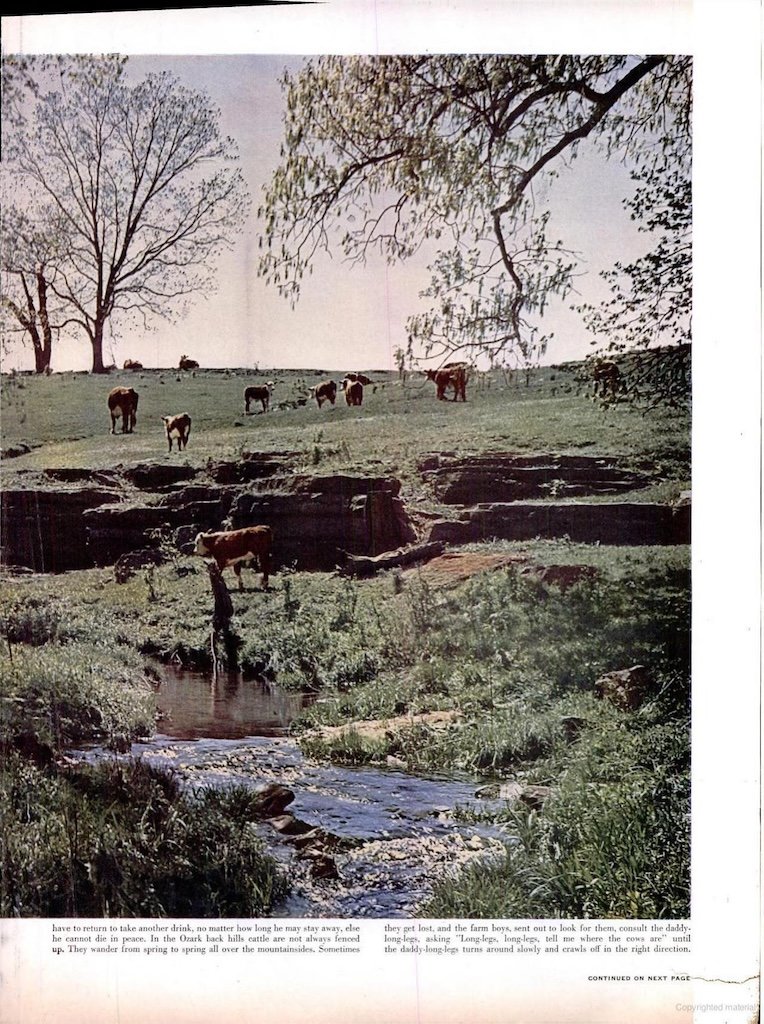
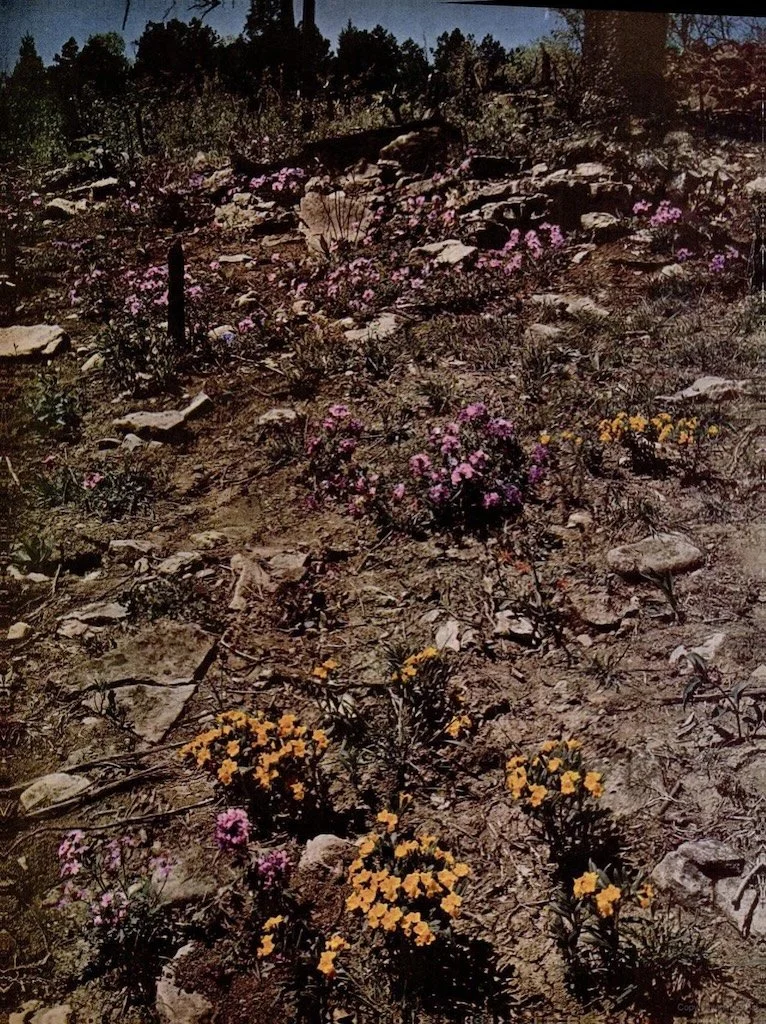
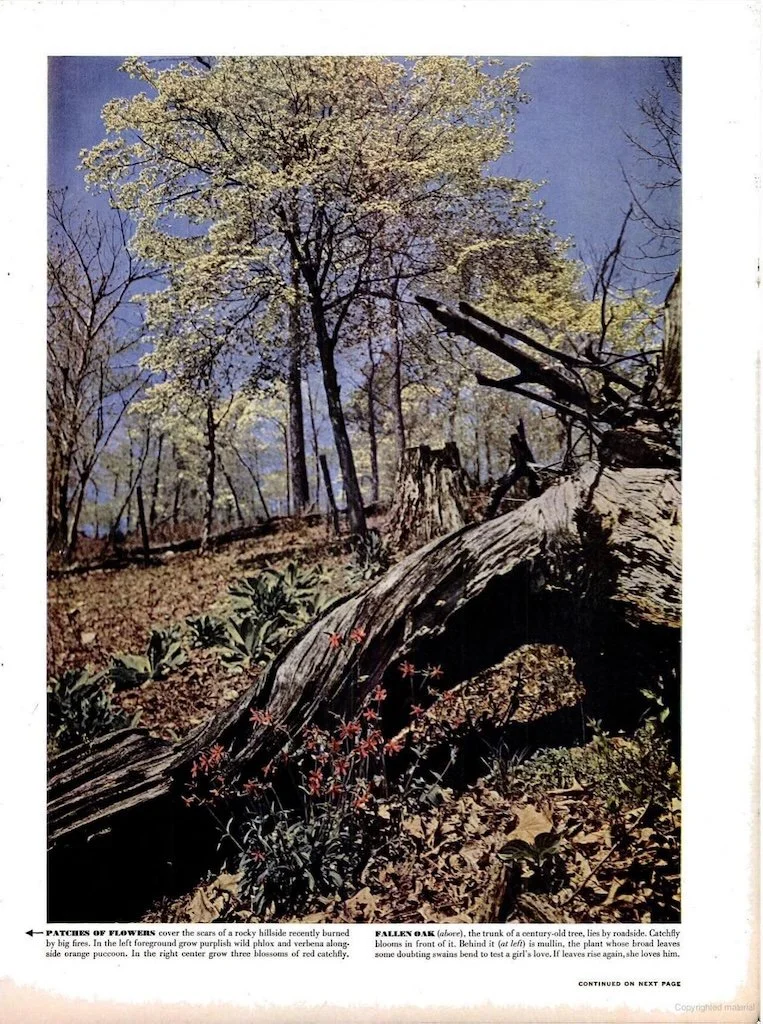
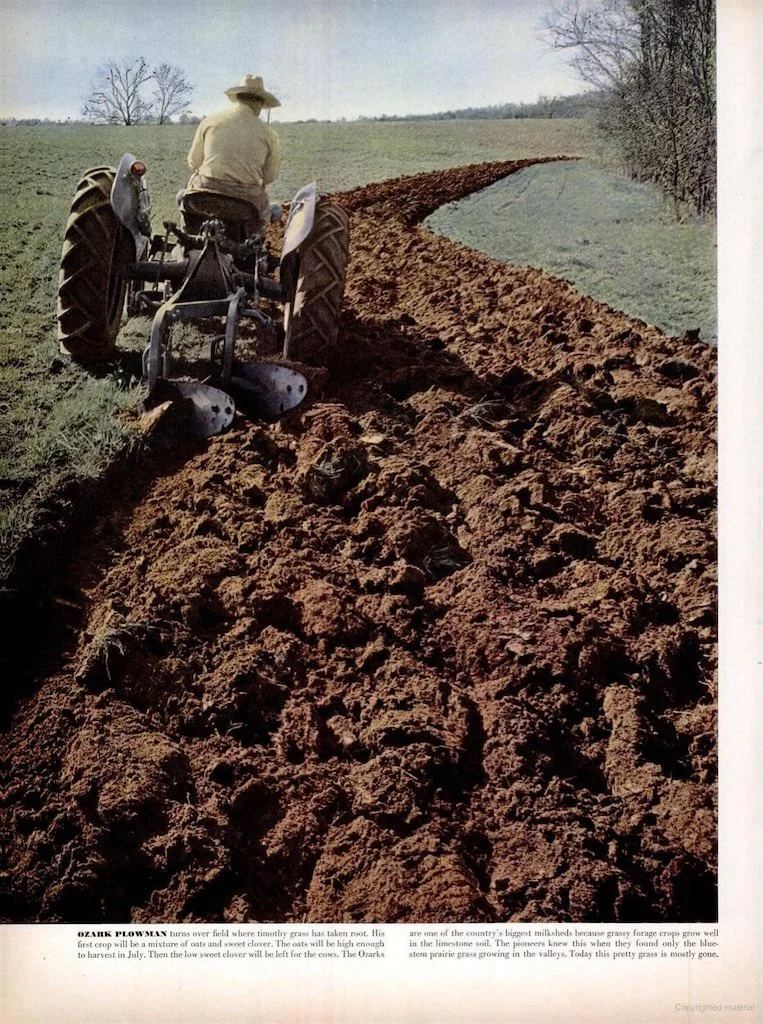
Ozark Spring in 1948

A story in Life Magazine for April 5, 1948 was an pictorial record of what it was like in spring during that time. The trees were leafing out or blooming and wildflowers were blooming in an area that had burned. There were already signs of loss – a farmer plowing before planting oats and sweet clover in an area that has once been bluestem prairie and cows making ruts down to the spring. The dogwoods are not as numerous today as in these pictures. Still – spring comes and we all appreciate the beauty that has survived in the Ozarks.

(Use the arrows on the left and right of the image to move through the slideshow.)

Springfield Botanical Gardens (2) – March 2026

Continuing the images from my walk around the Springfield Botanical Gardens recently….

This post is about the trees.

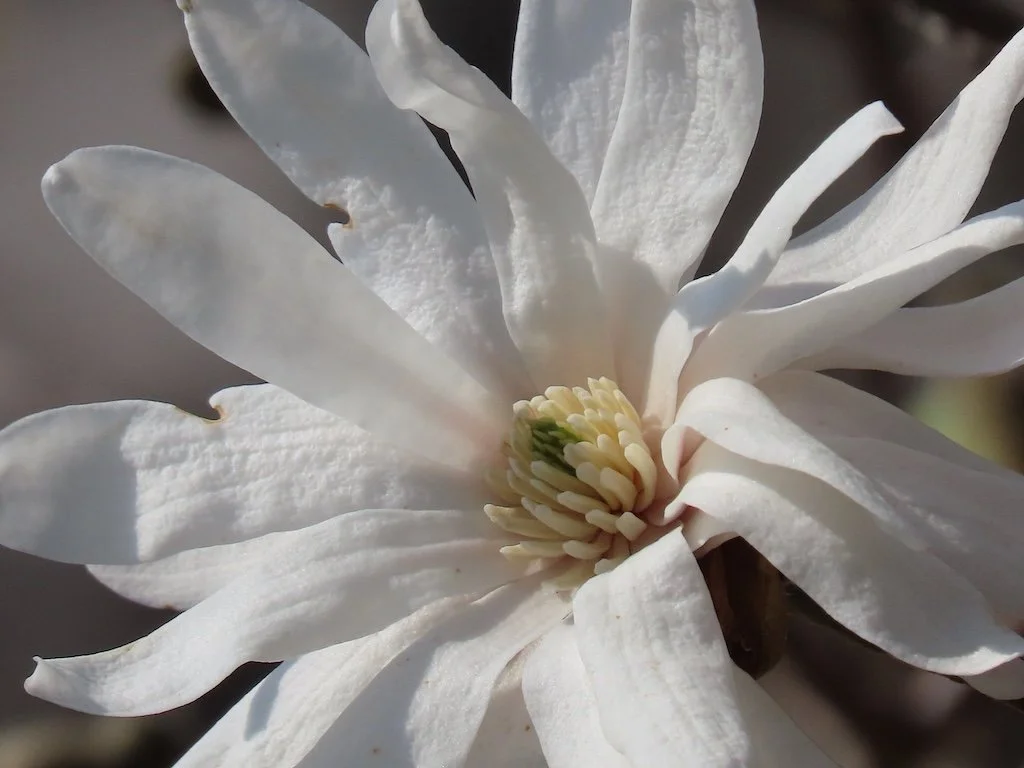
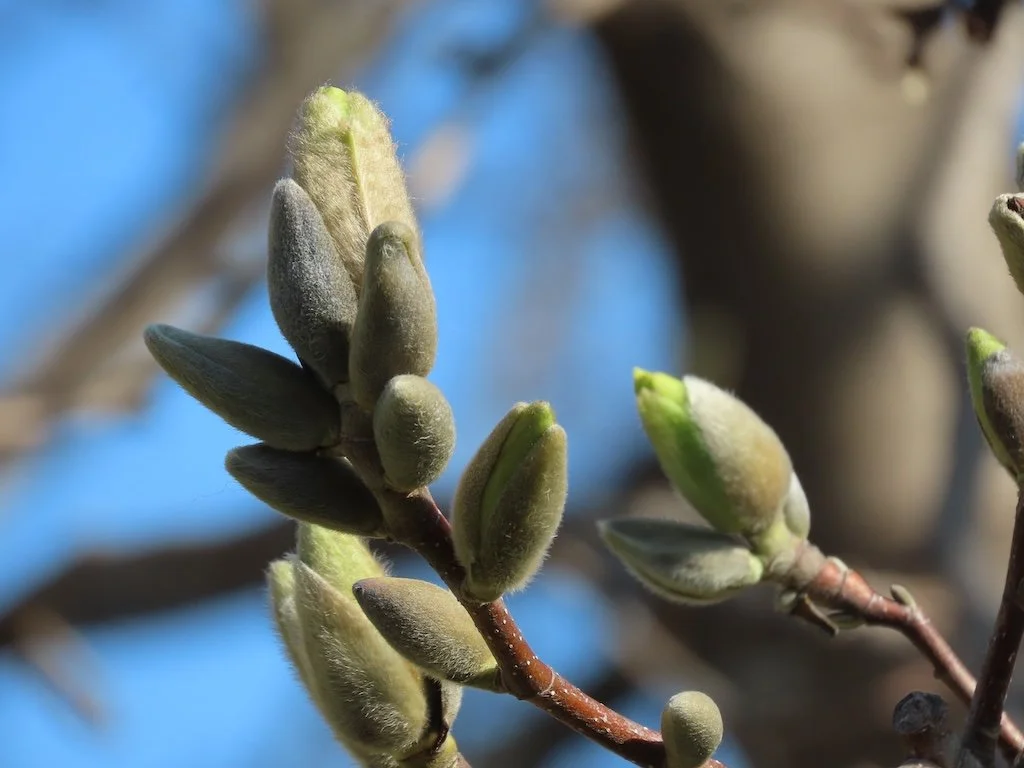
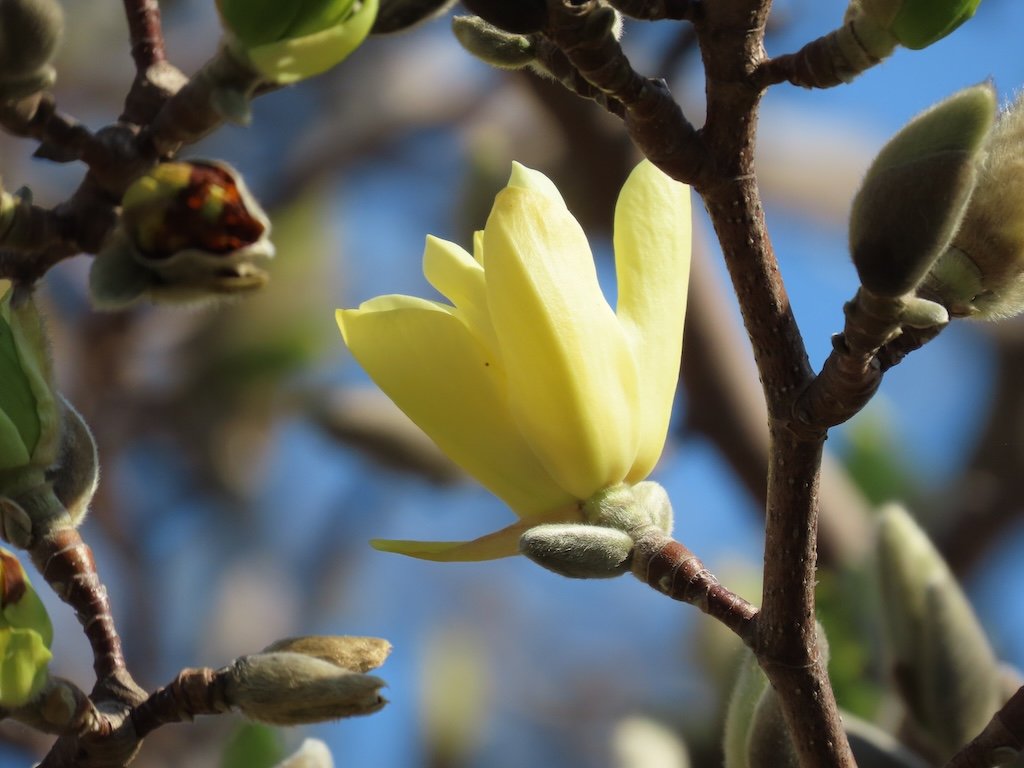
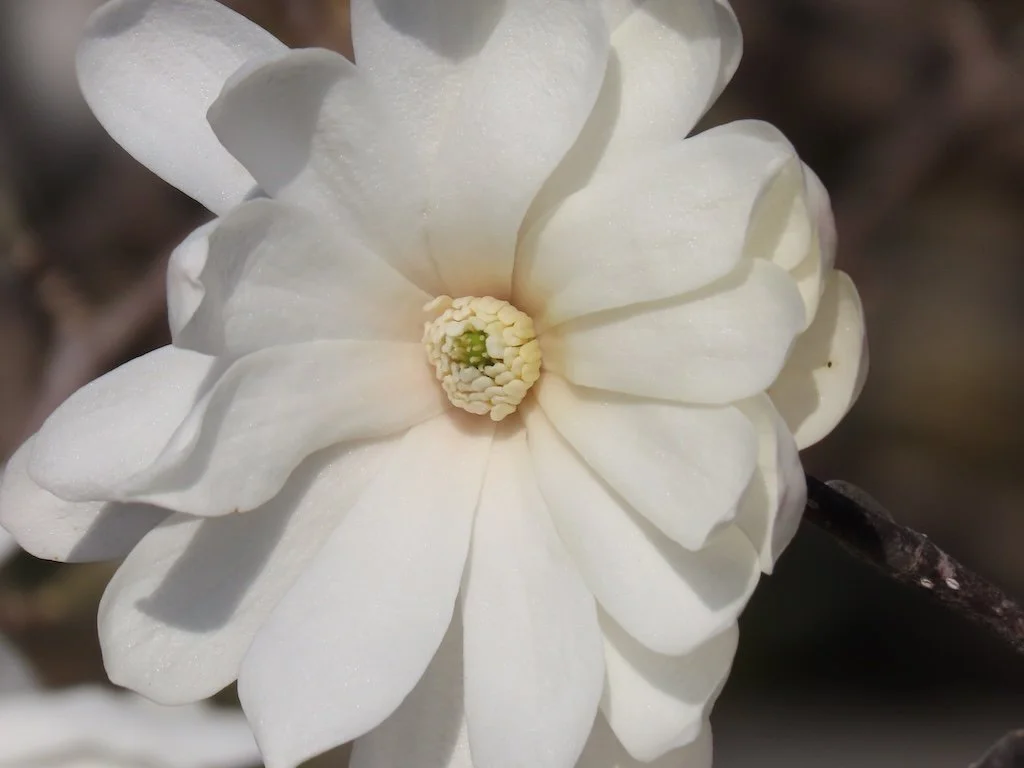
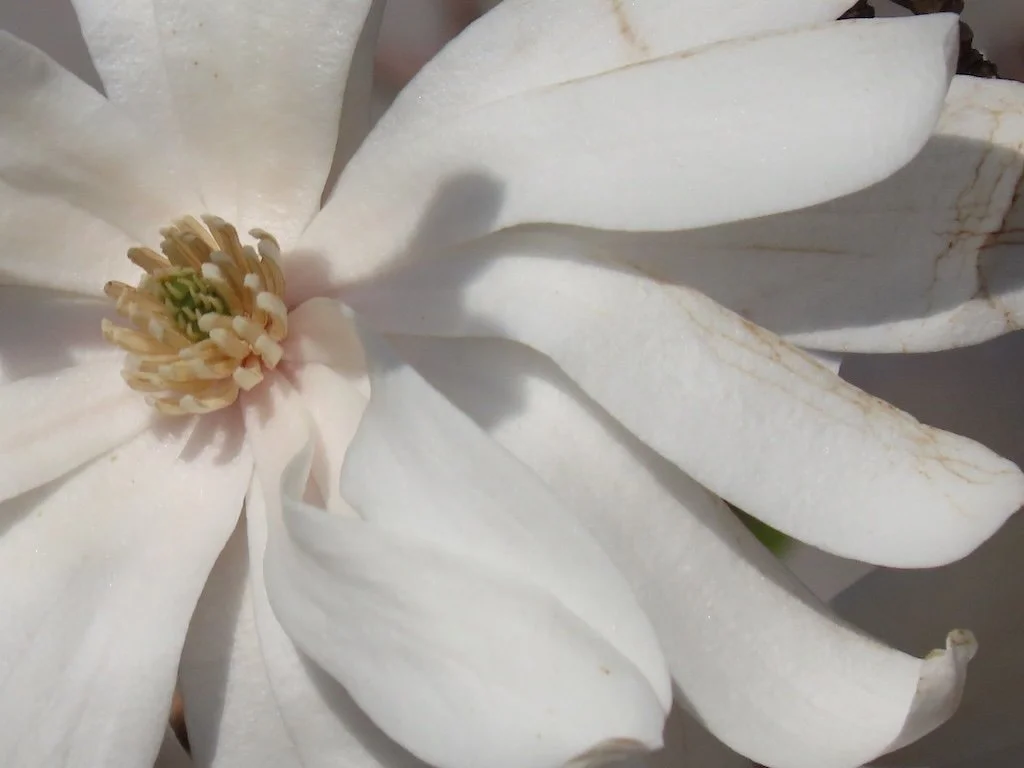
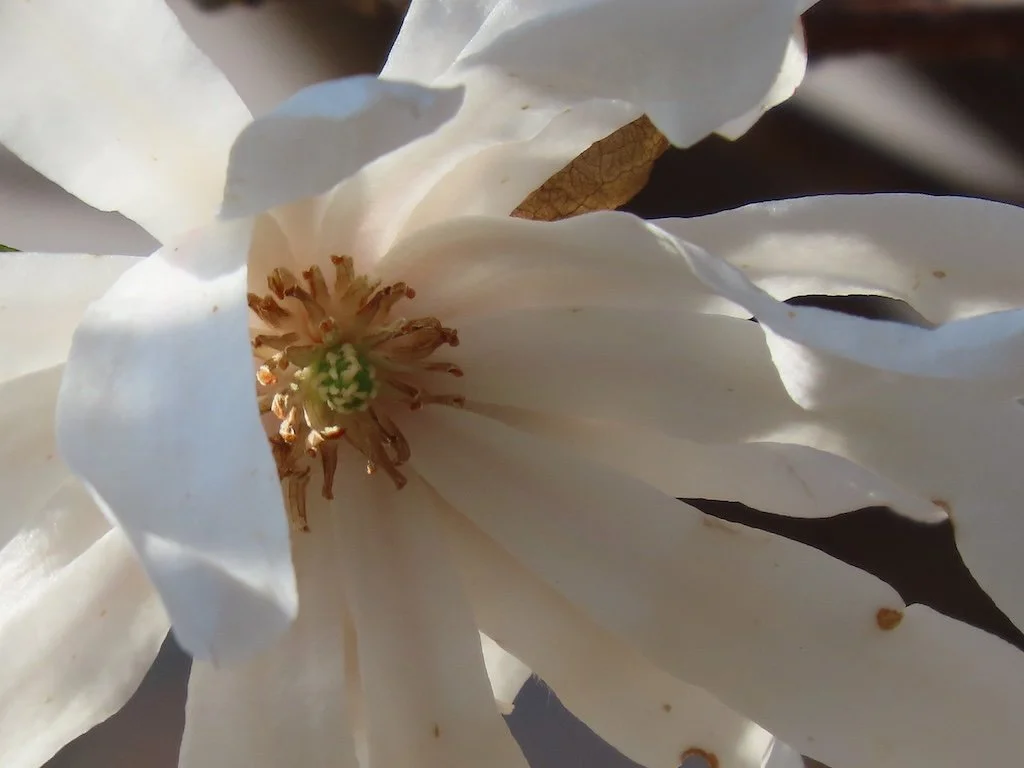
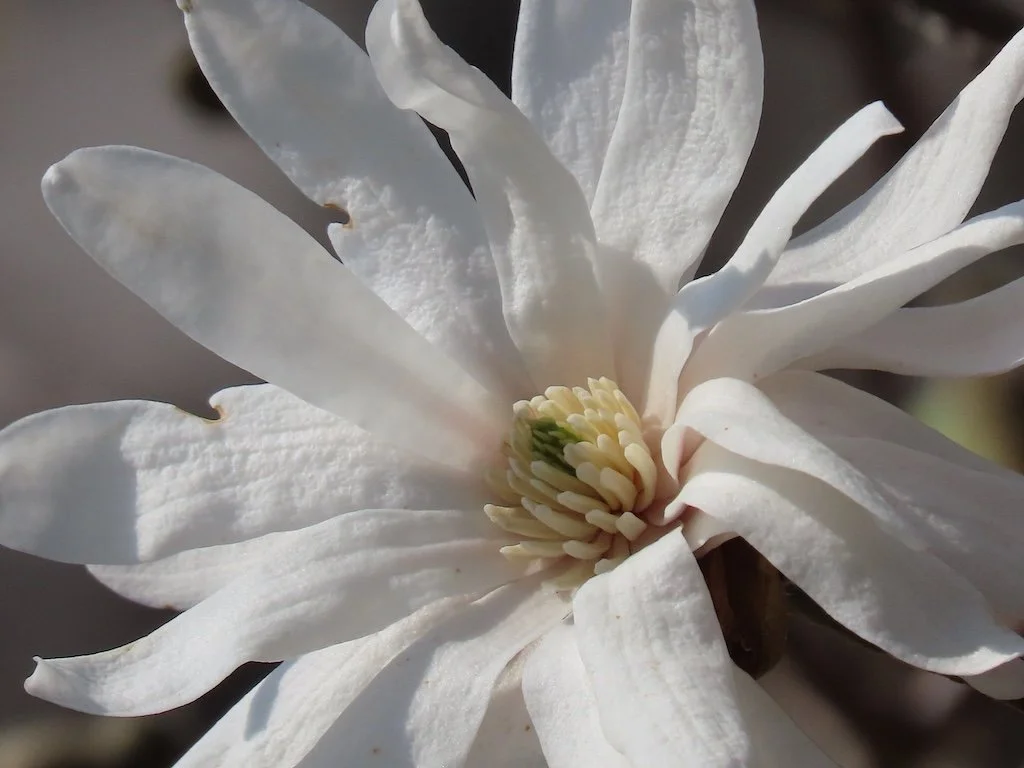
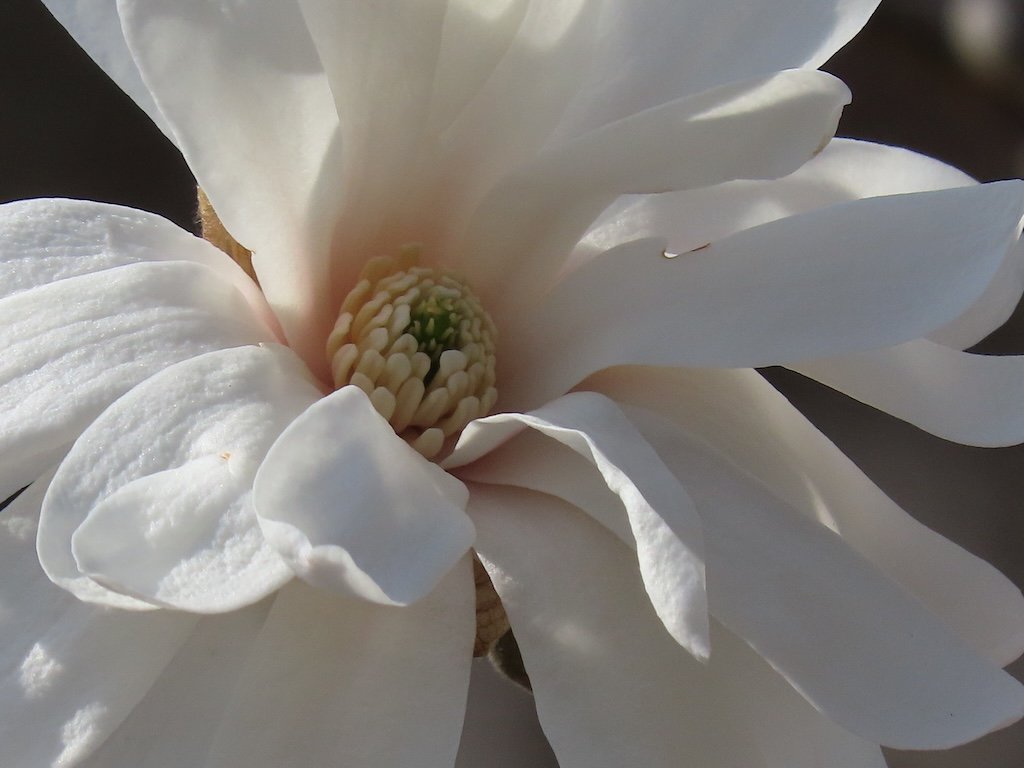
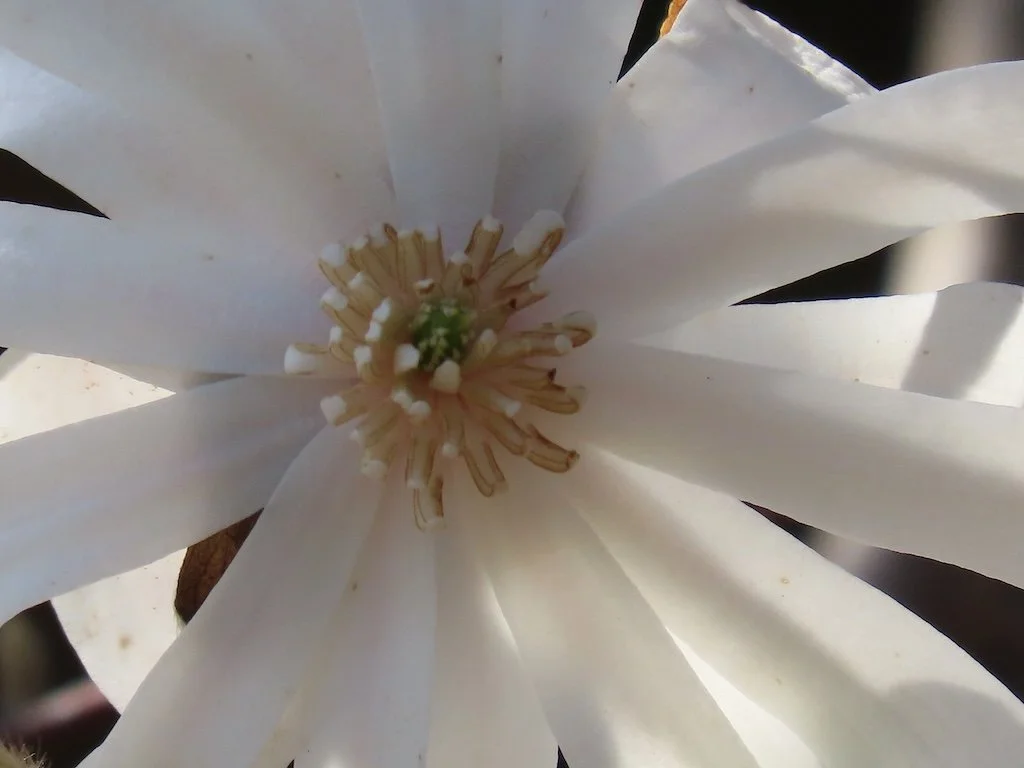
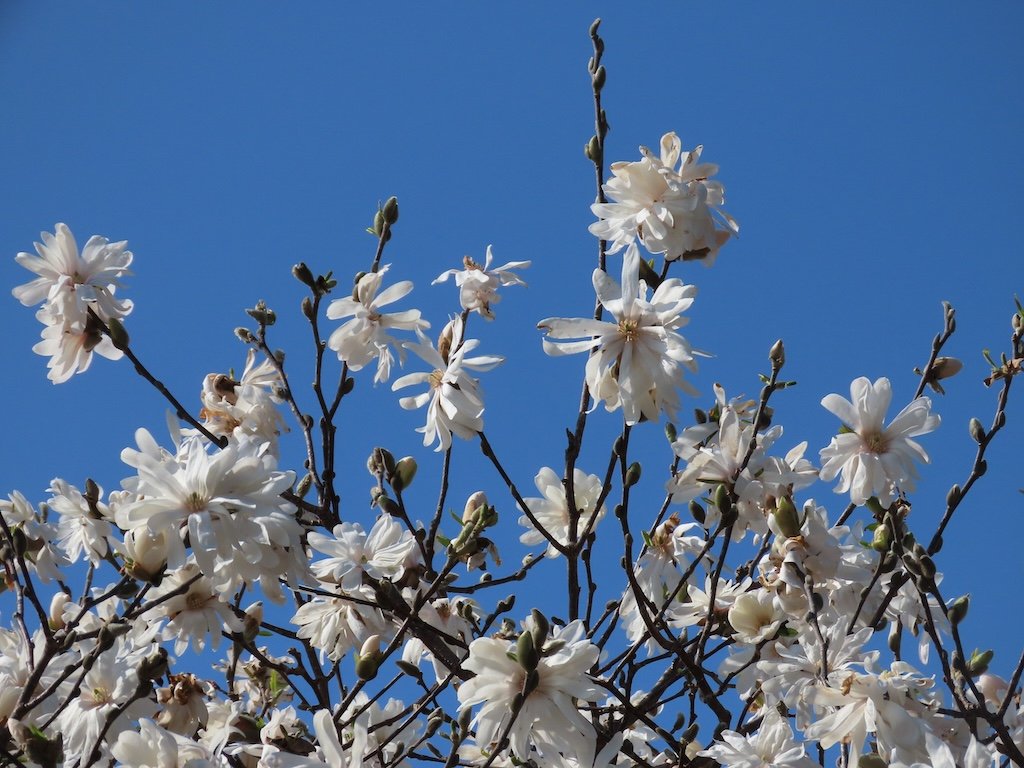
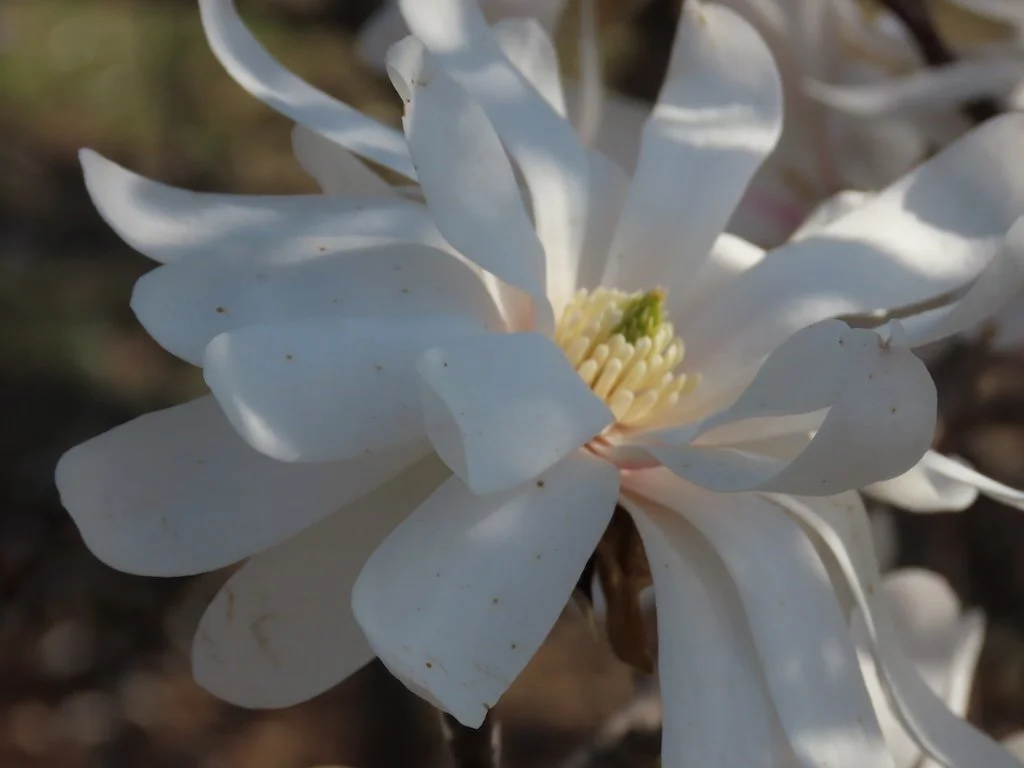
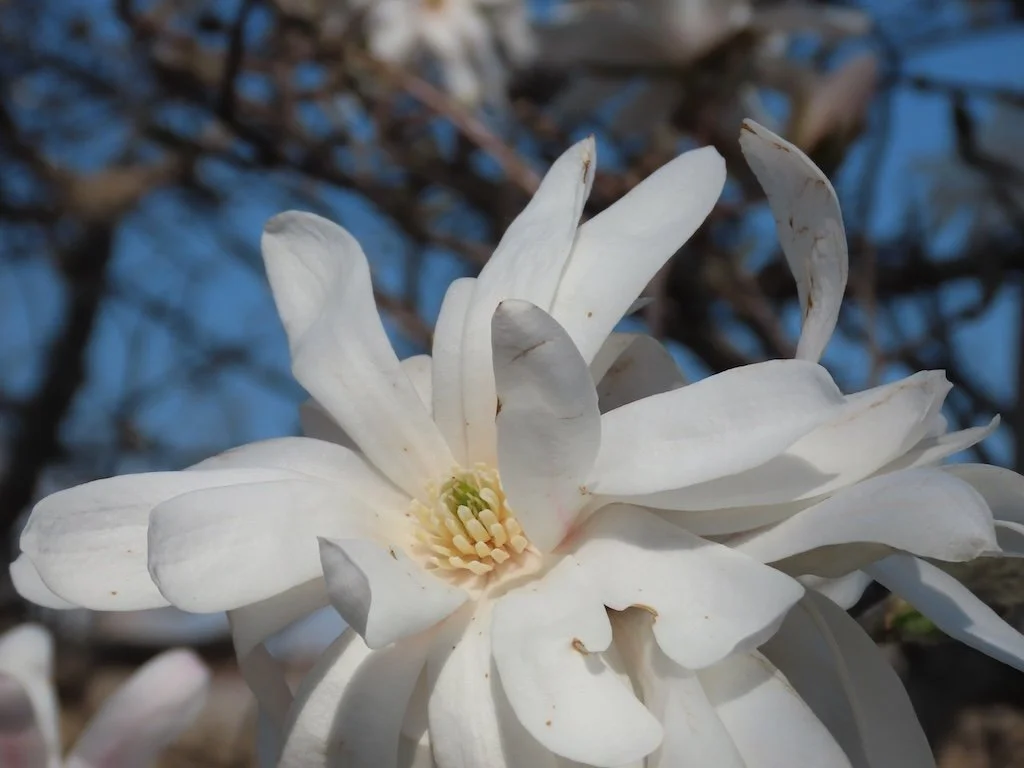
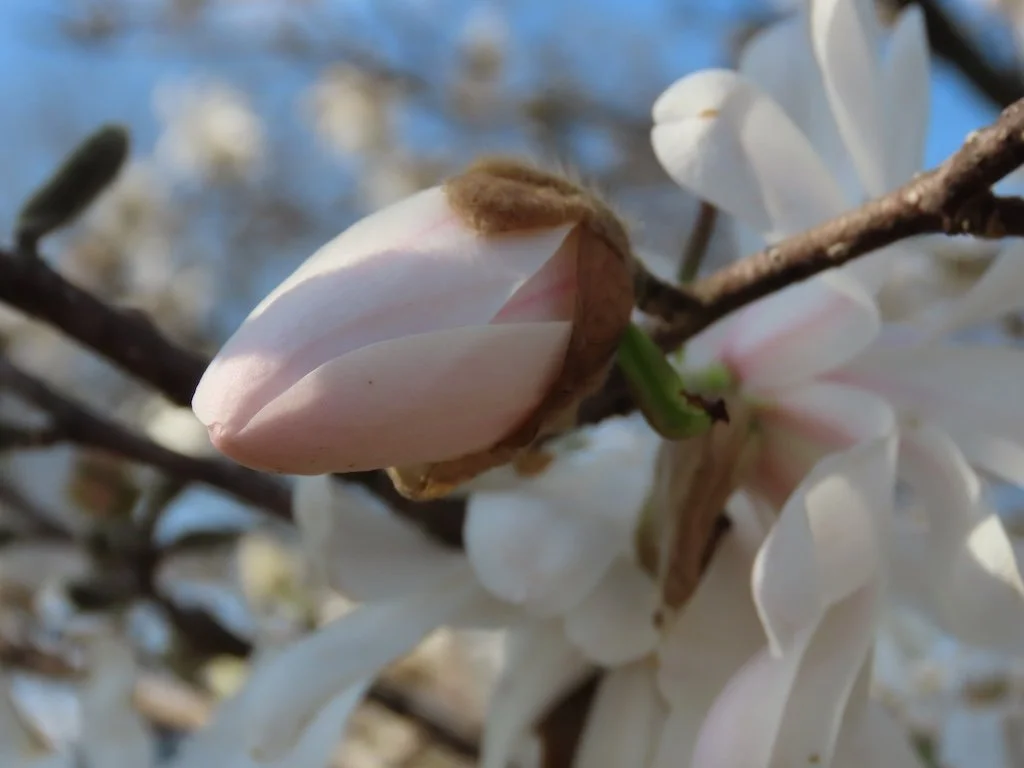
The deciduous magnolias were blooming. I enjoyed zooming in on the buds and flowers.  There was a little breeze, so the petals were in motion…and the shadows were changing too. Fortunately, it was sunny and the camera was fast enough to stop the motion.

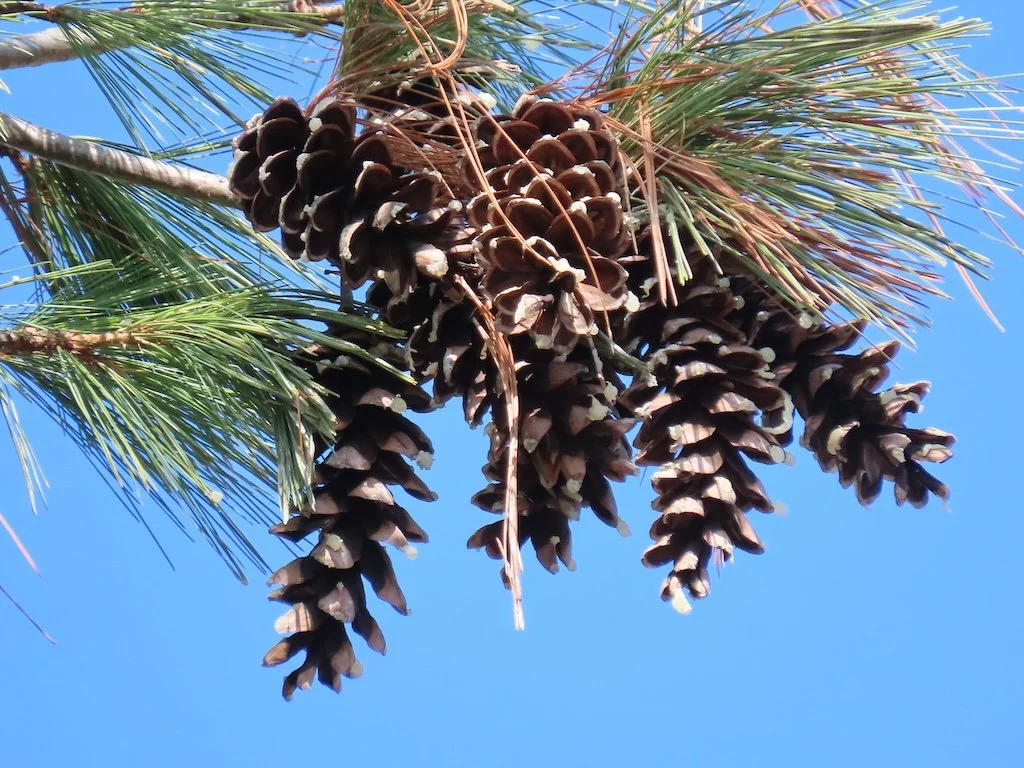
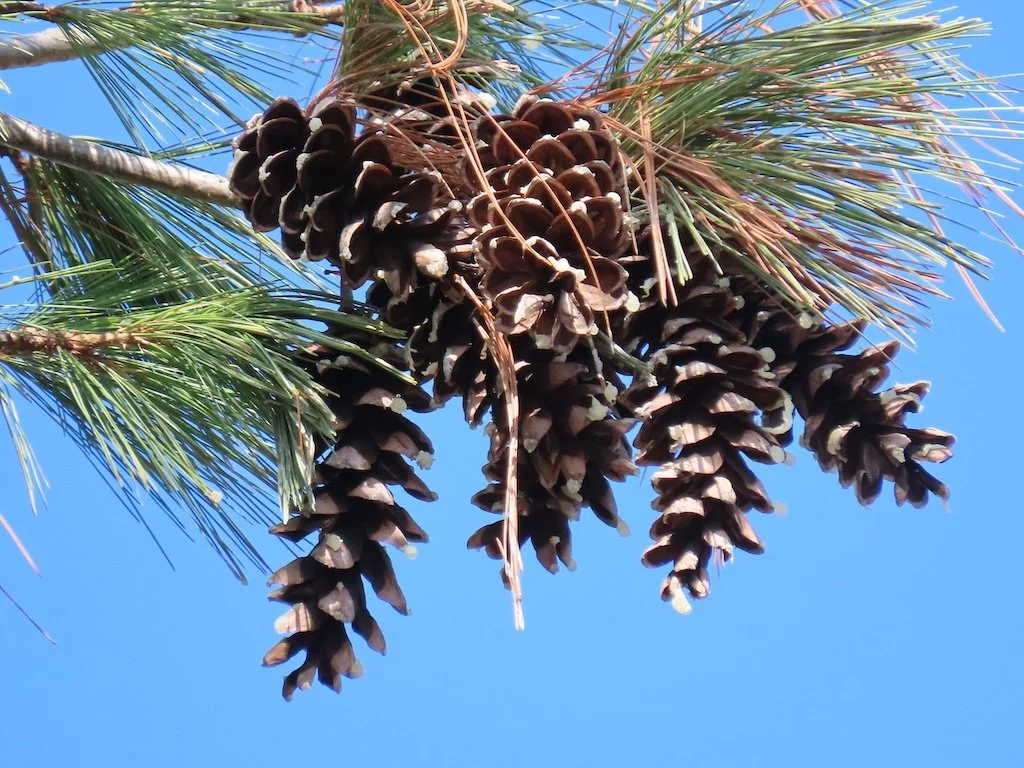
One pine had many cones. Perhaps I should have picked some up that were on the ground to add to my collection of materials to use for tree talks/tabling.

There were other trees too that I photographed – showing how different trees were at different stages of development.

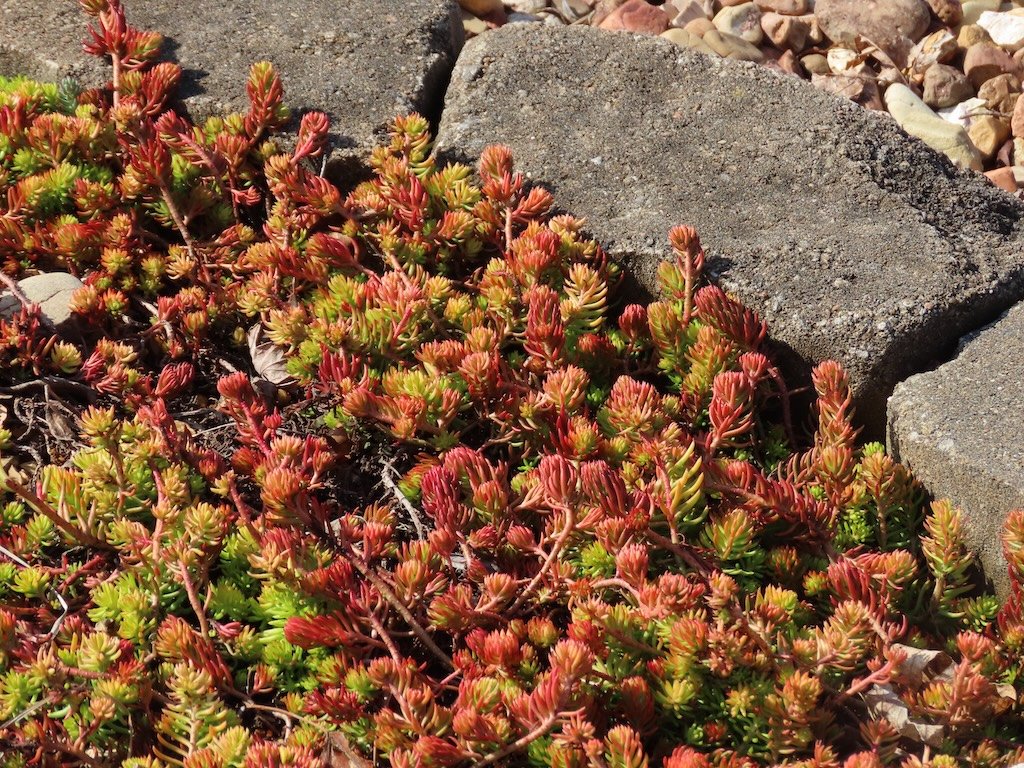
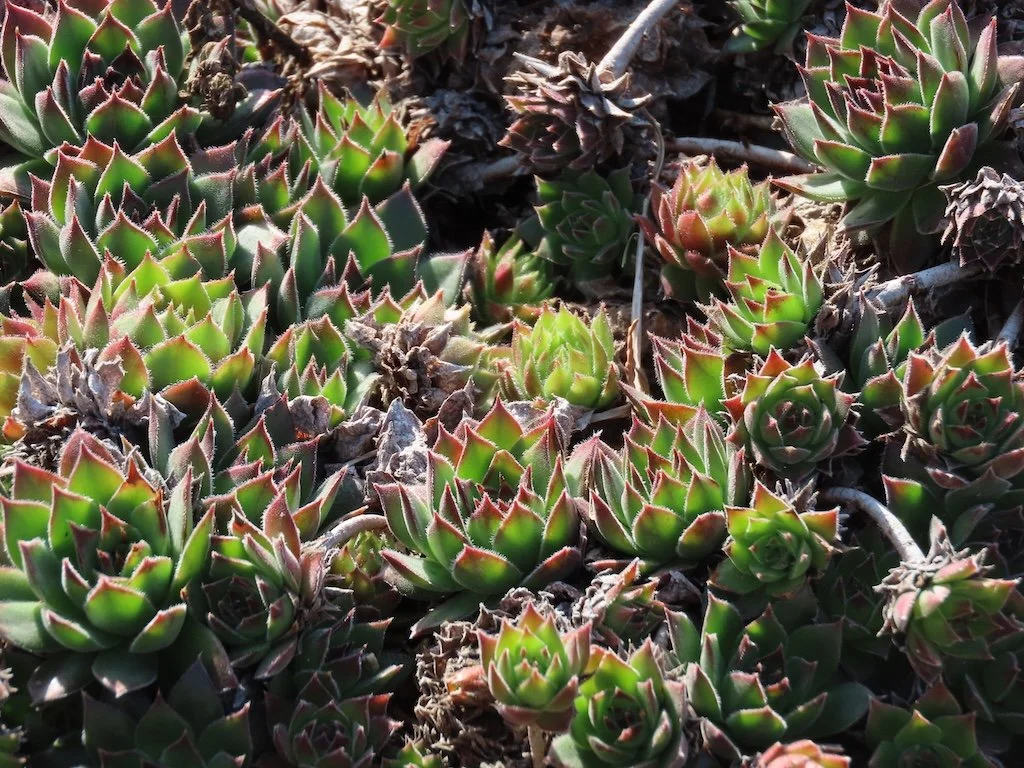
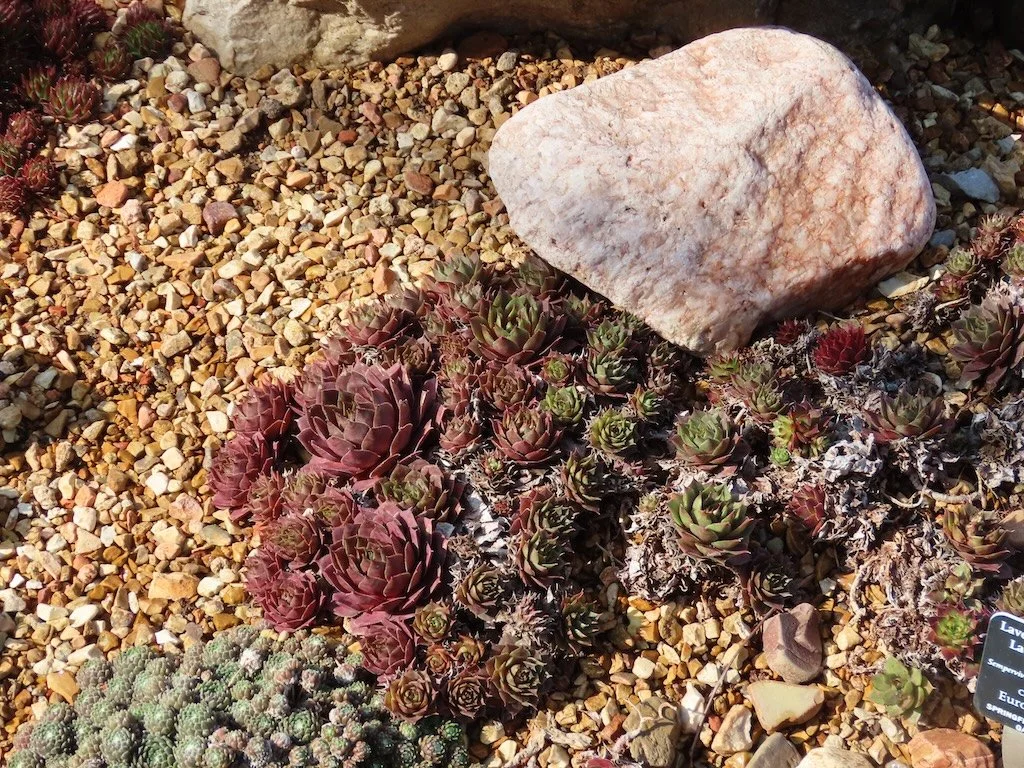
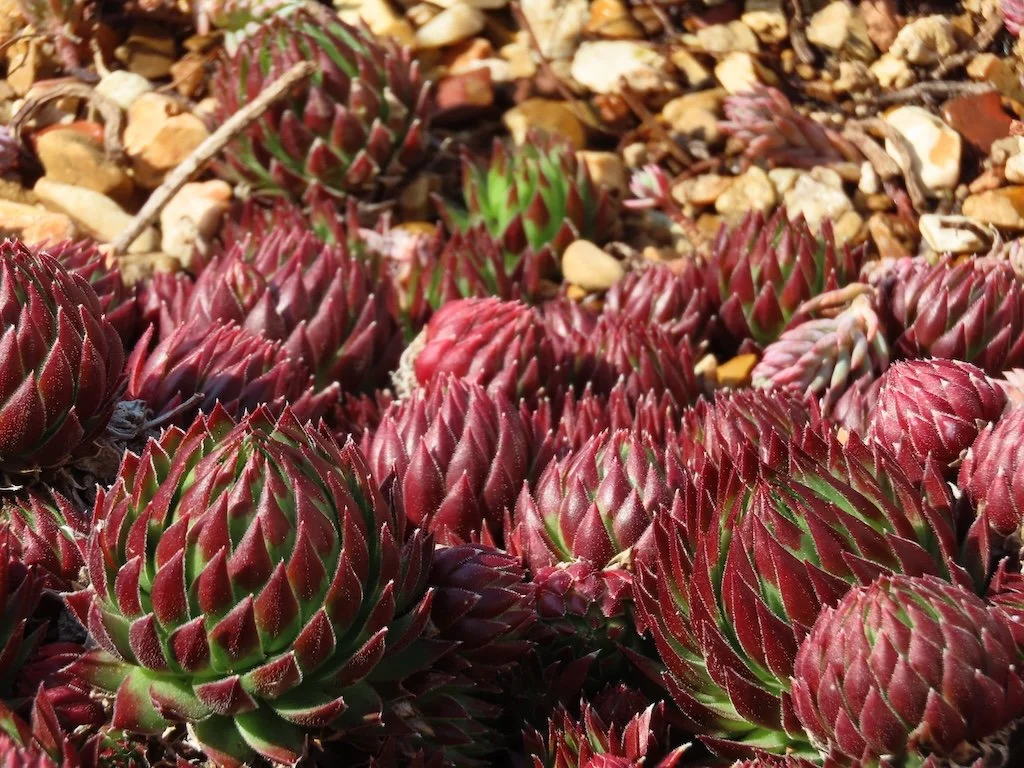
My final stop was near the Botanical Center Building – the deck area still under renovation evidently. I wanted to look at the succulents in the beds near the building. They do well through winter and, if anything, look more colorful having survived the cold!

It occurred to me that this is the time of year to visit the garden frequently to keep up with spring development.

Springfield Botanical Gardens (1) – March 2026

The Springfield Botanical Gardens are full of new beginnings in March. I took a walk around them on a sunny day – using by bridge camera (Canon Powershot SX70 HS) on a monopod. The monopod worked great as a hiking pole, so my back didn’t hurt; I did have to clean mud off the tip though!

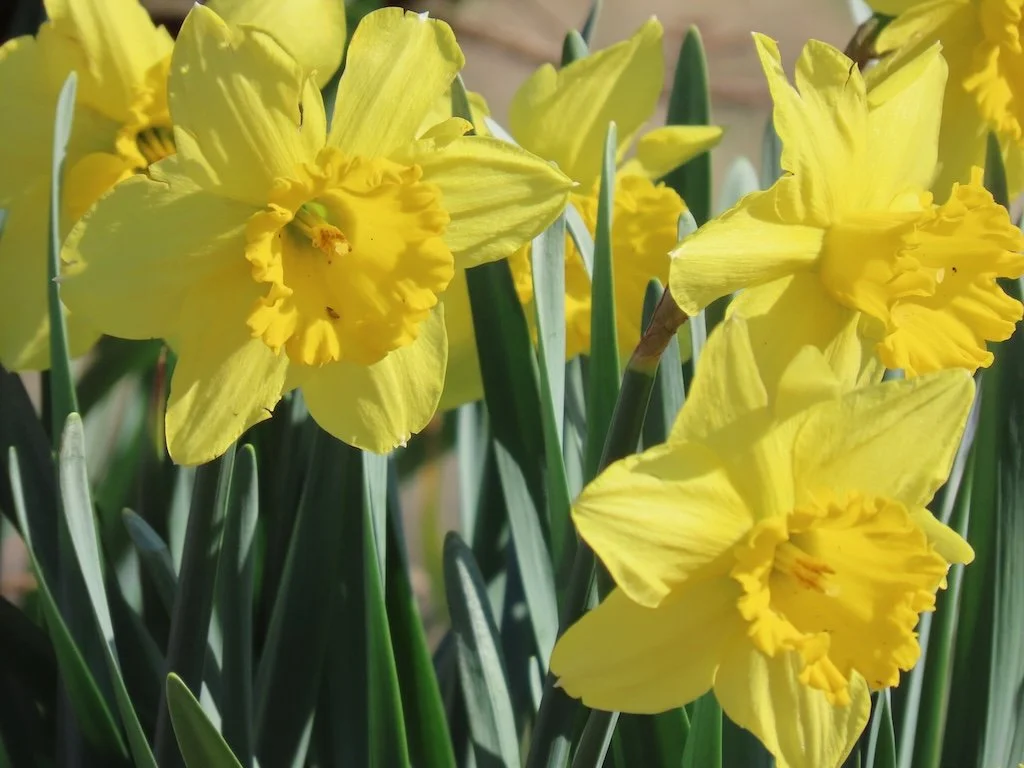
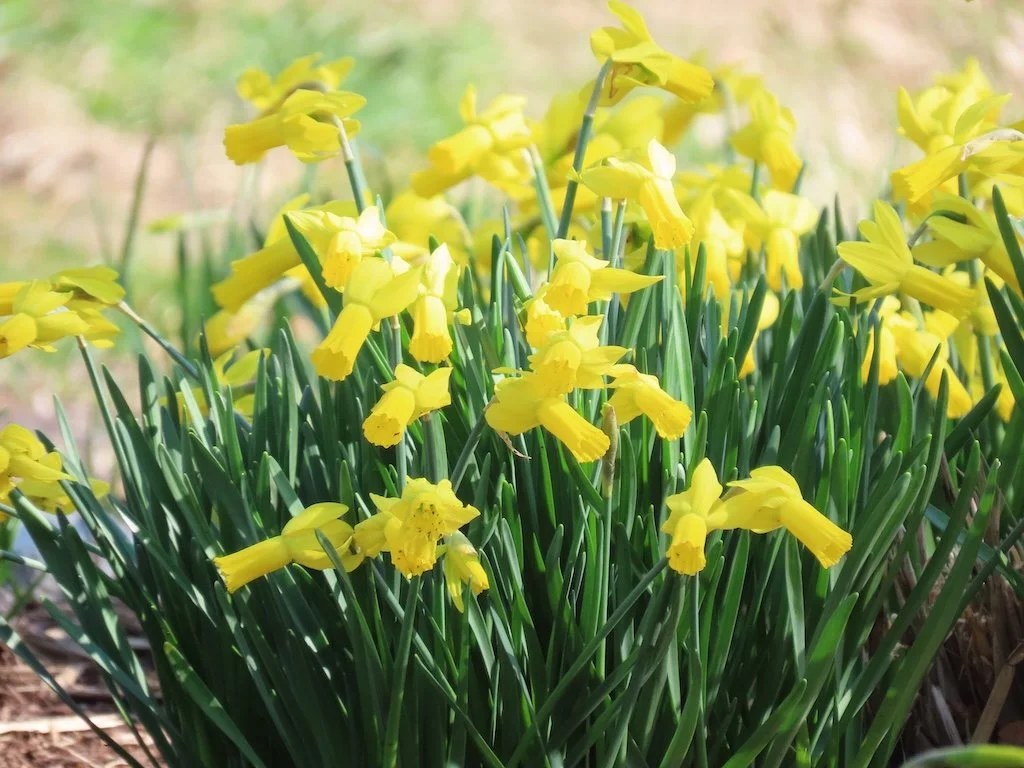
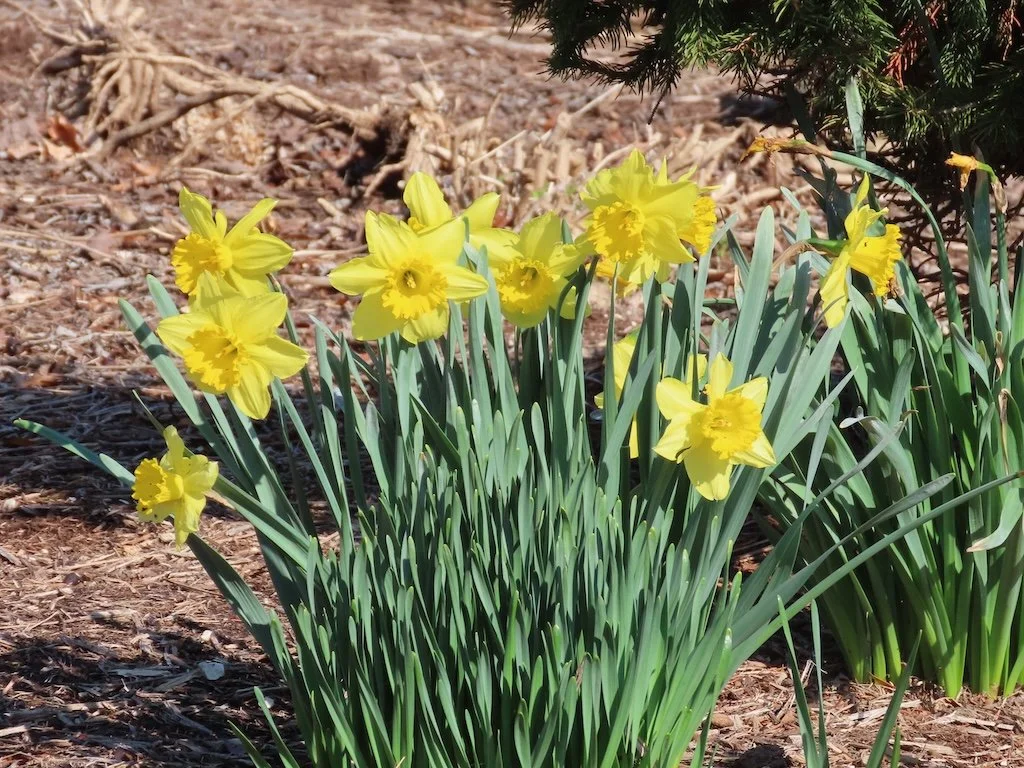
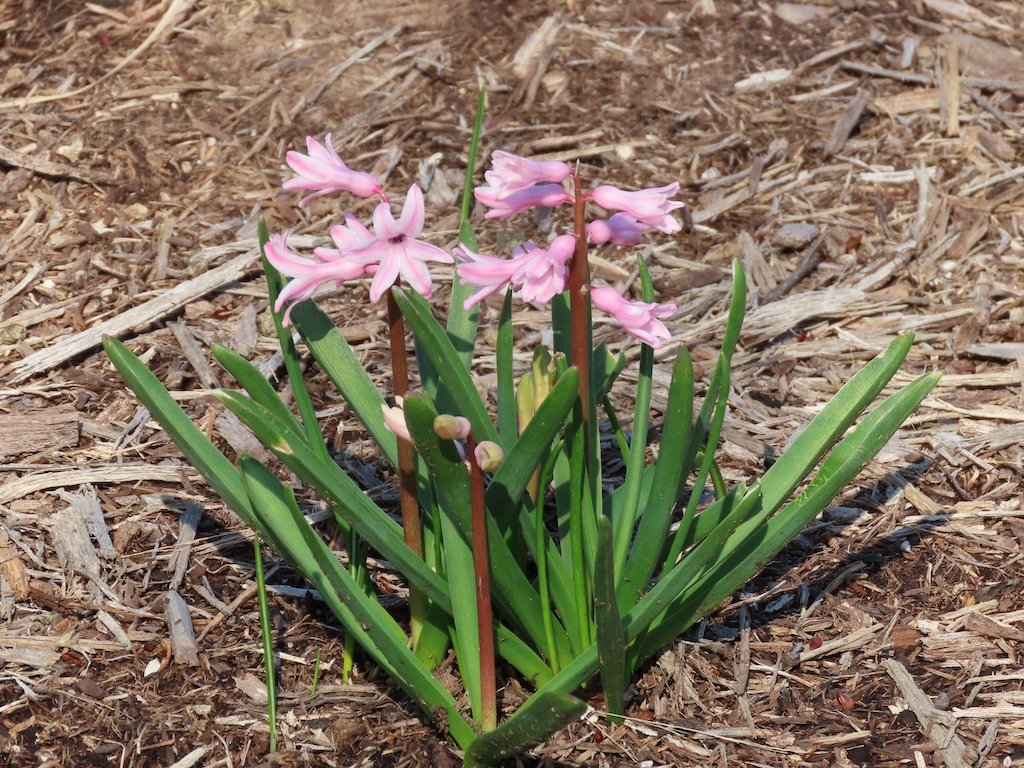
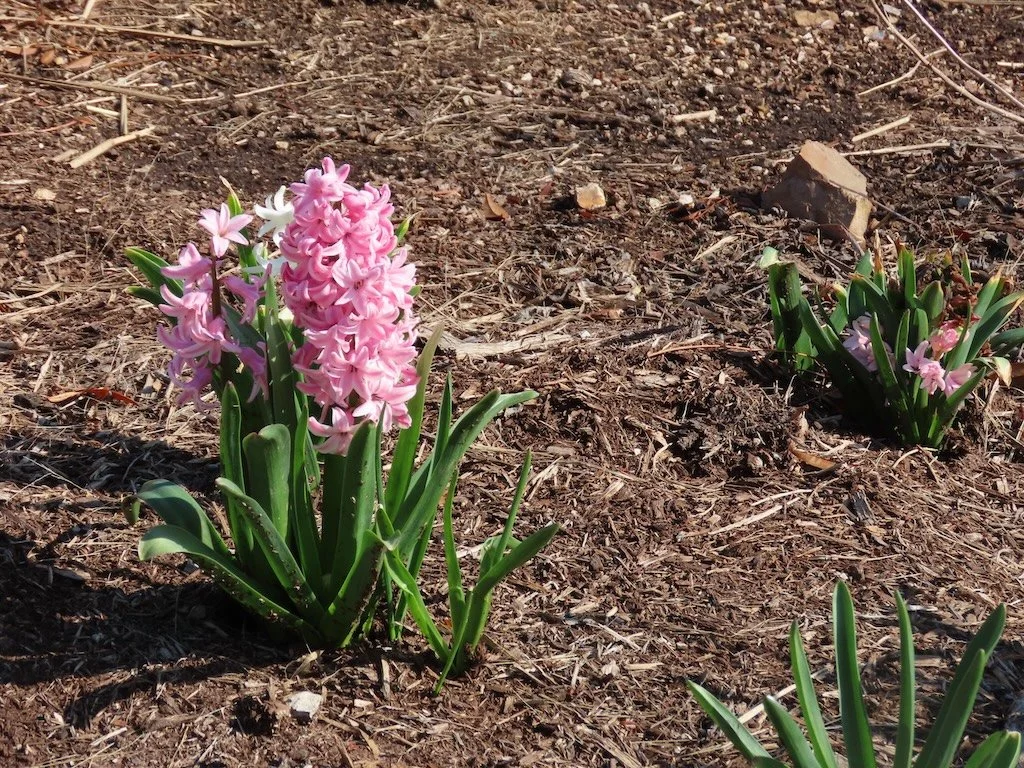
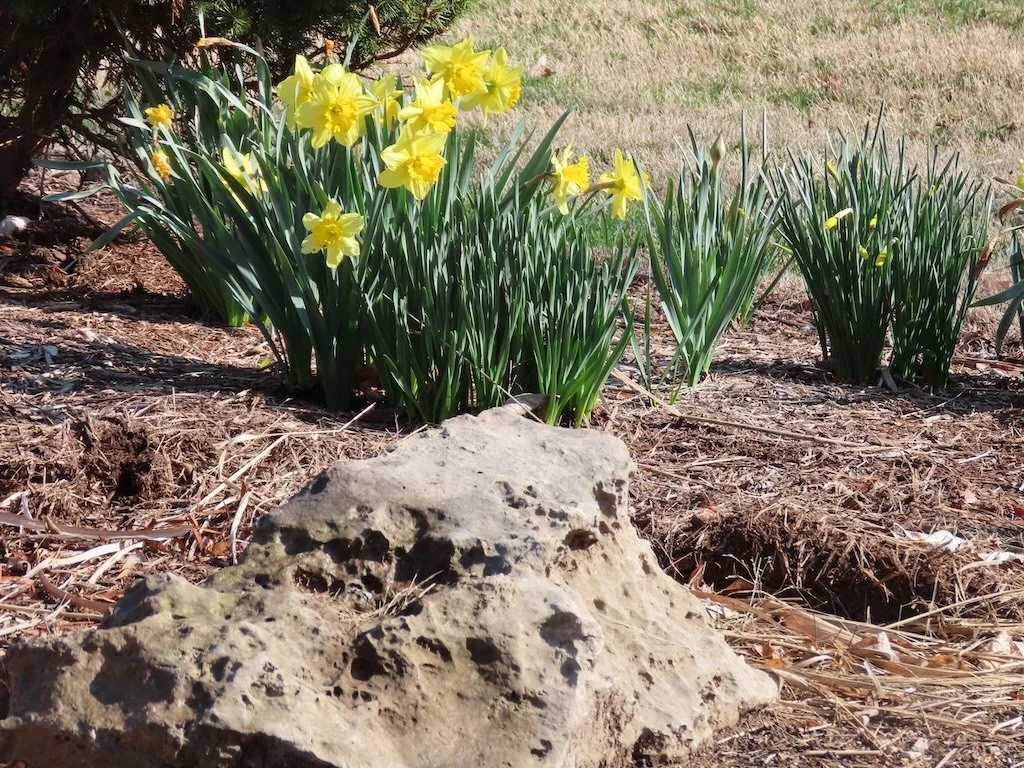
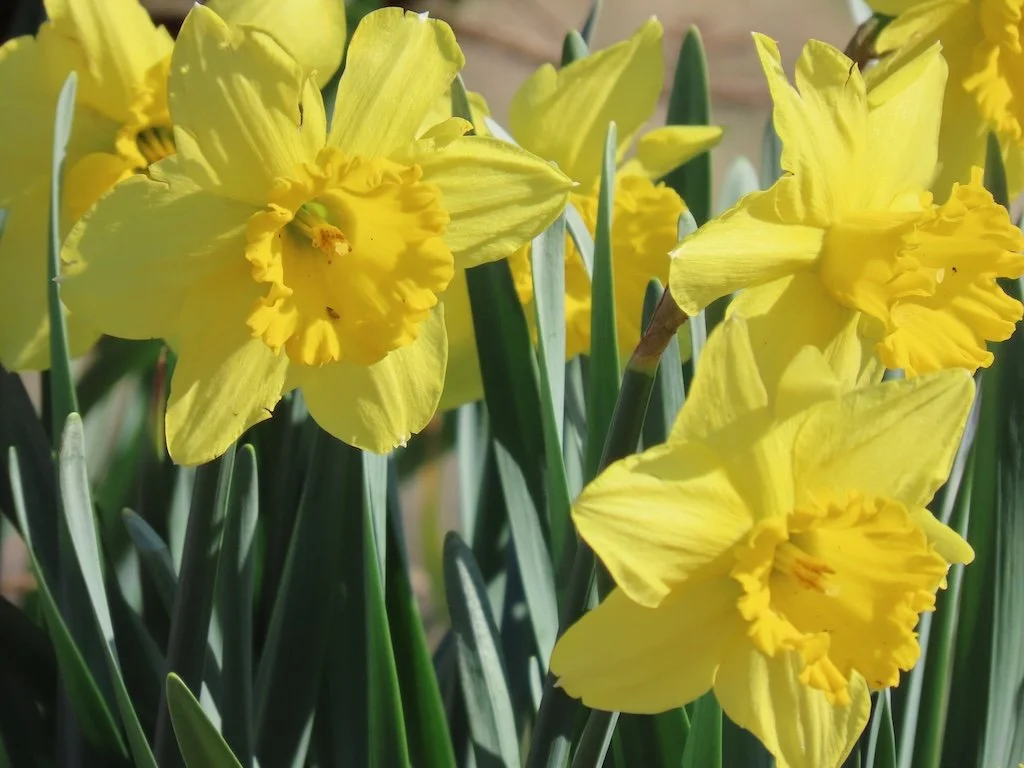
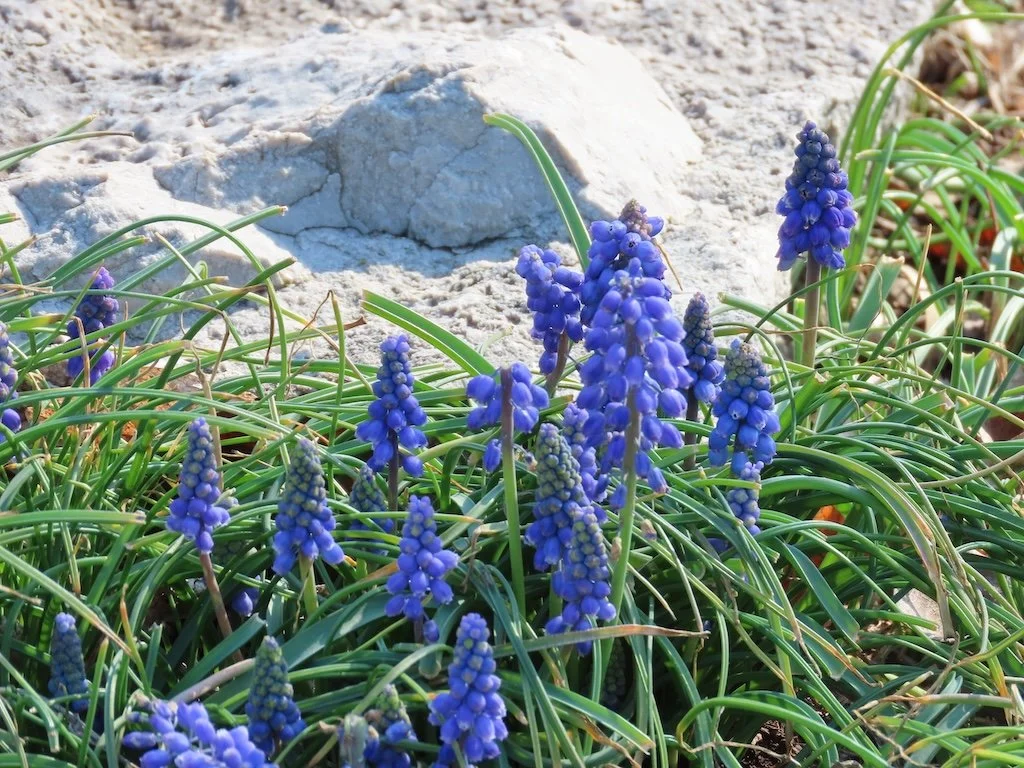
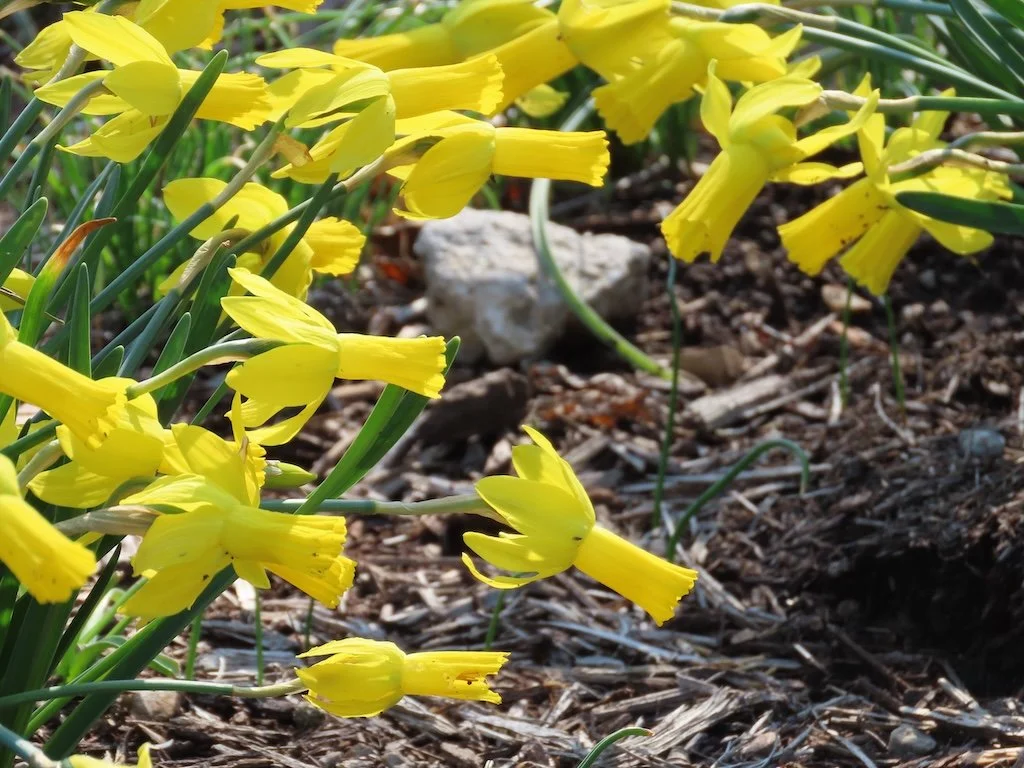
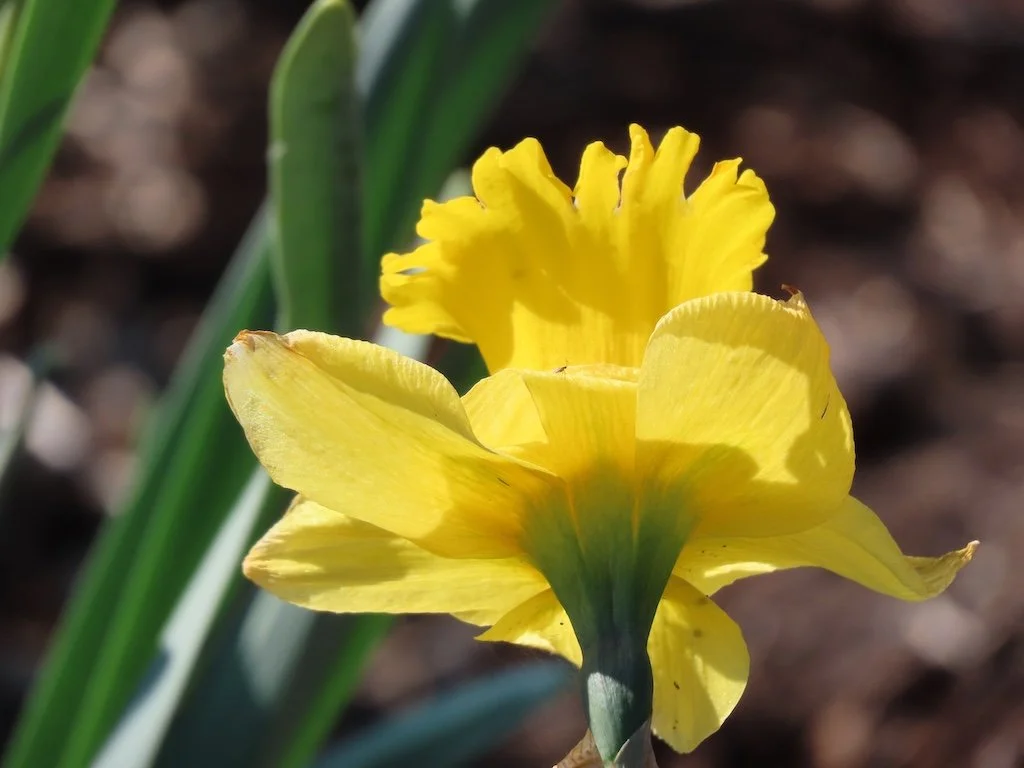
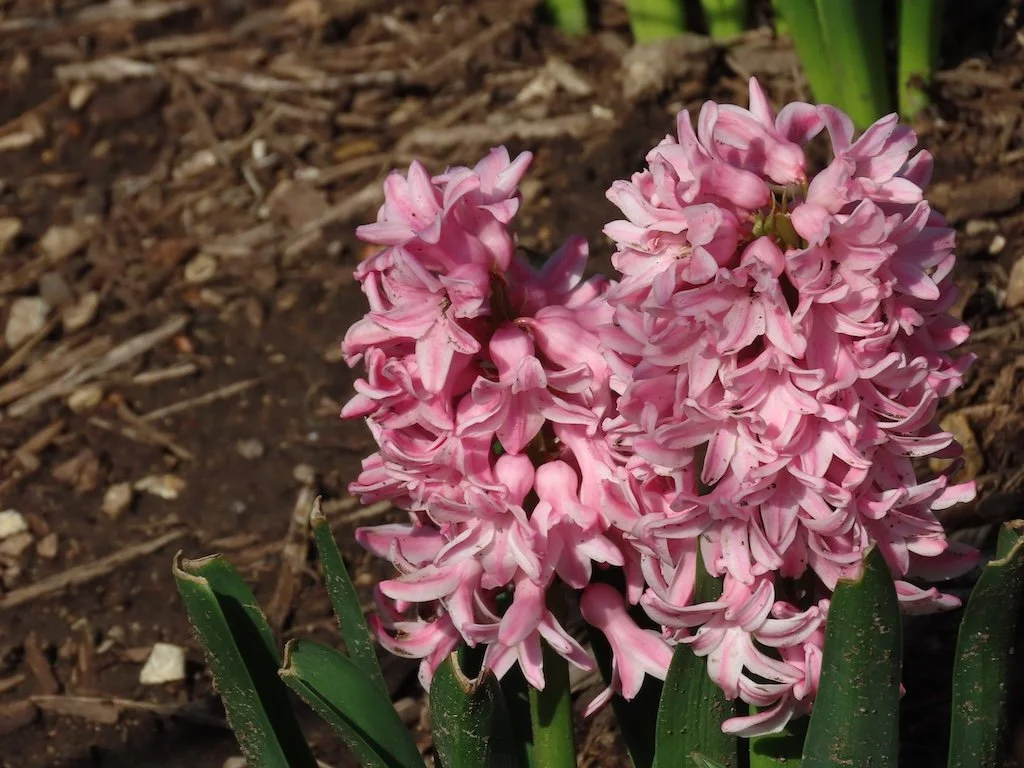
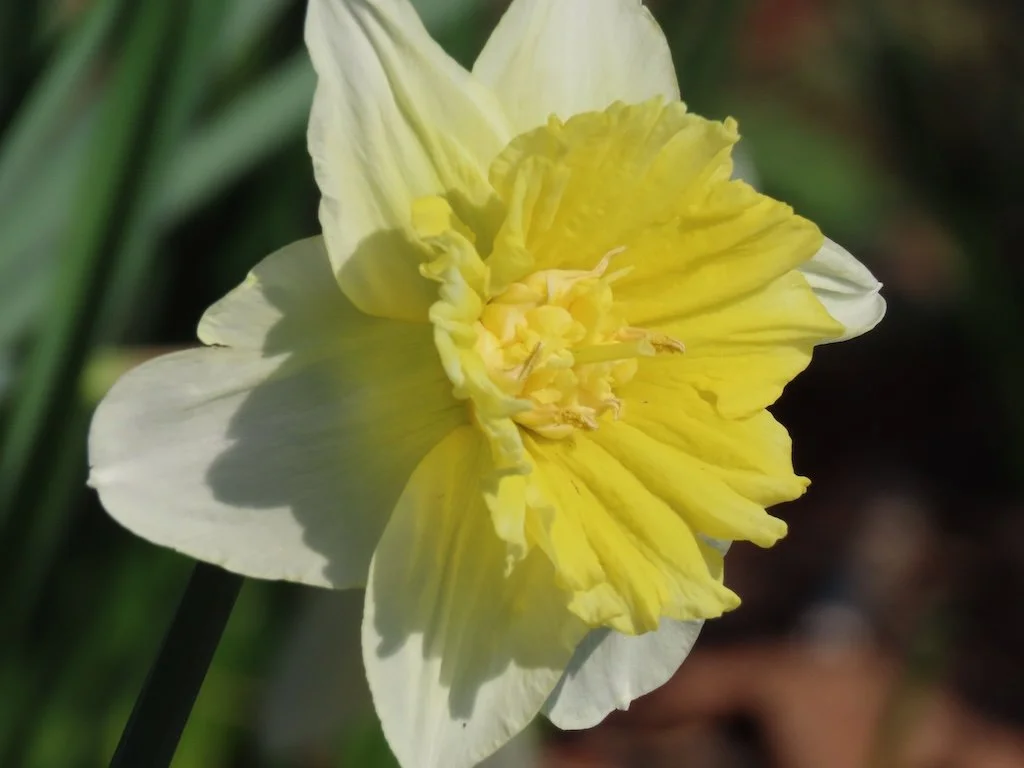
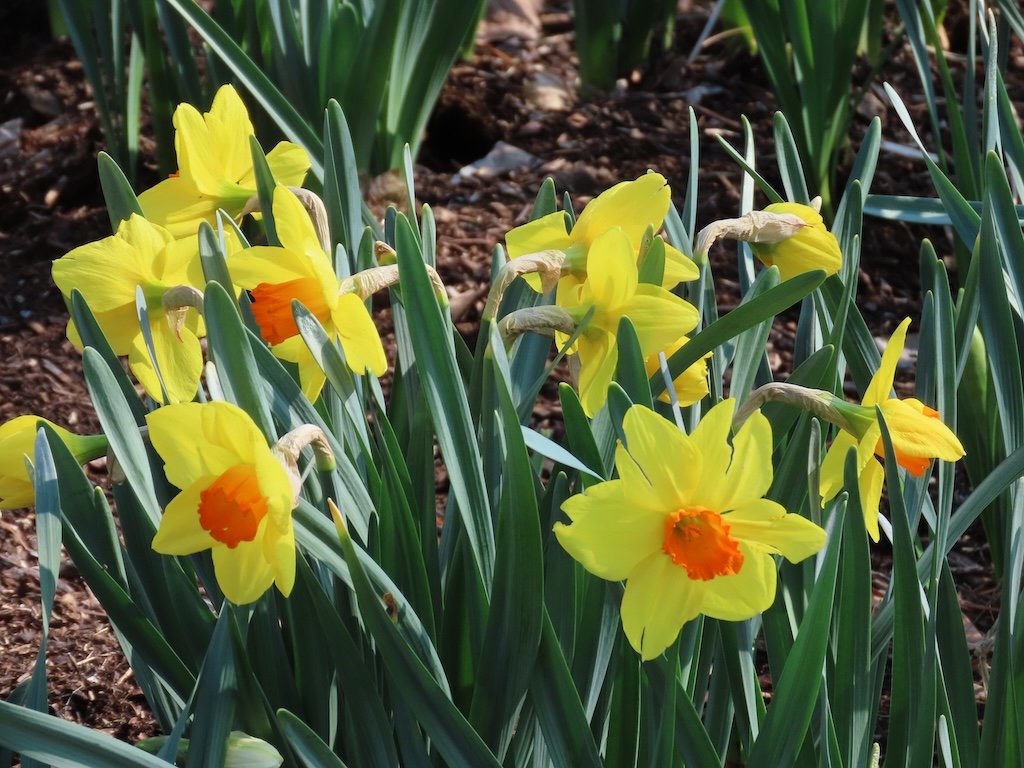
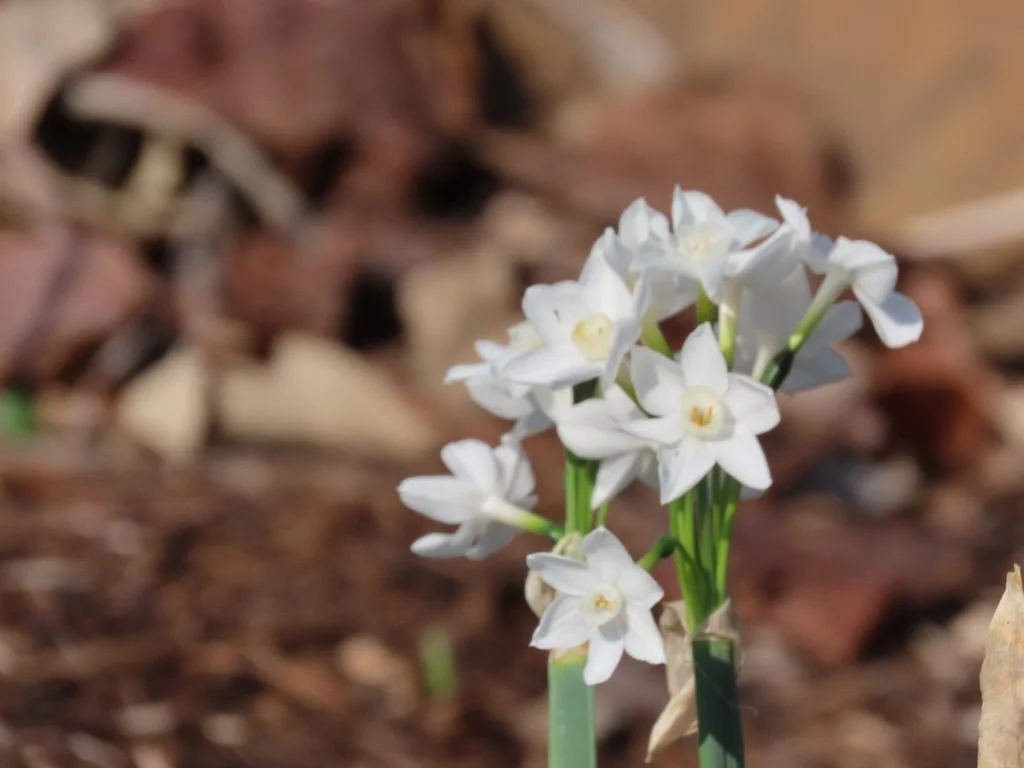
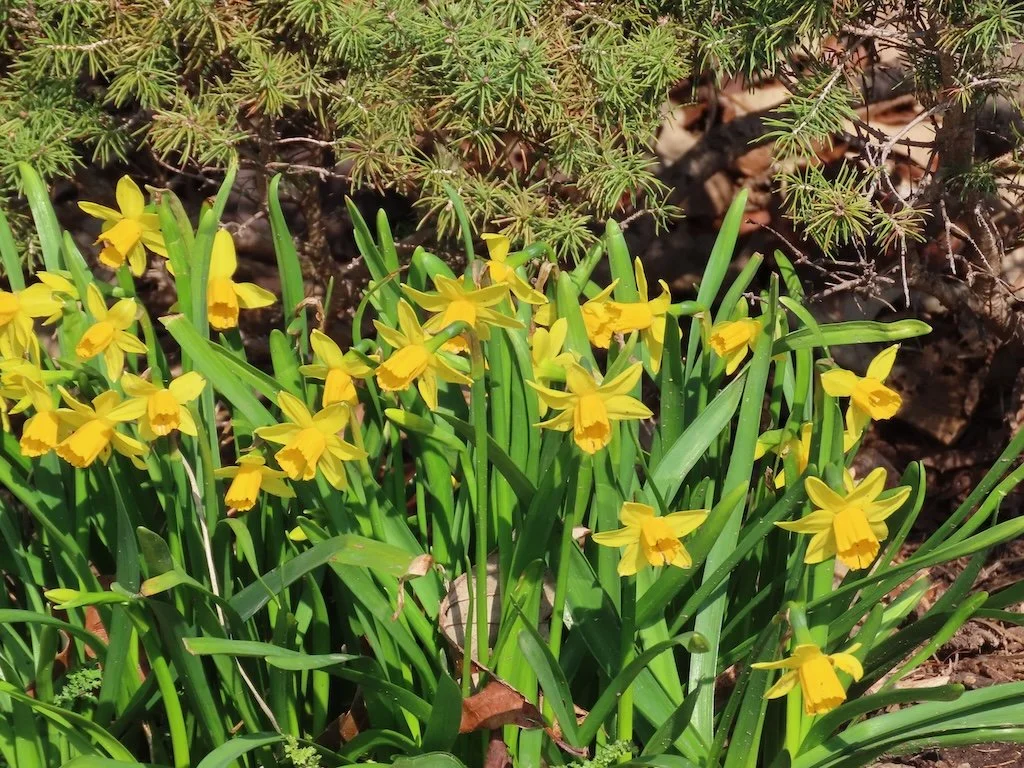
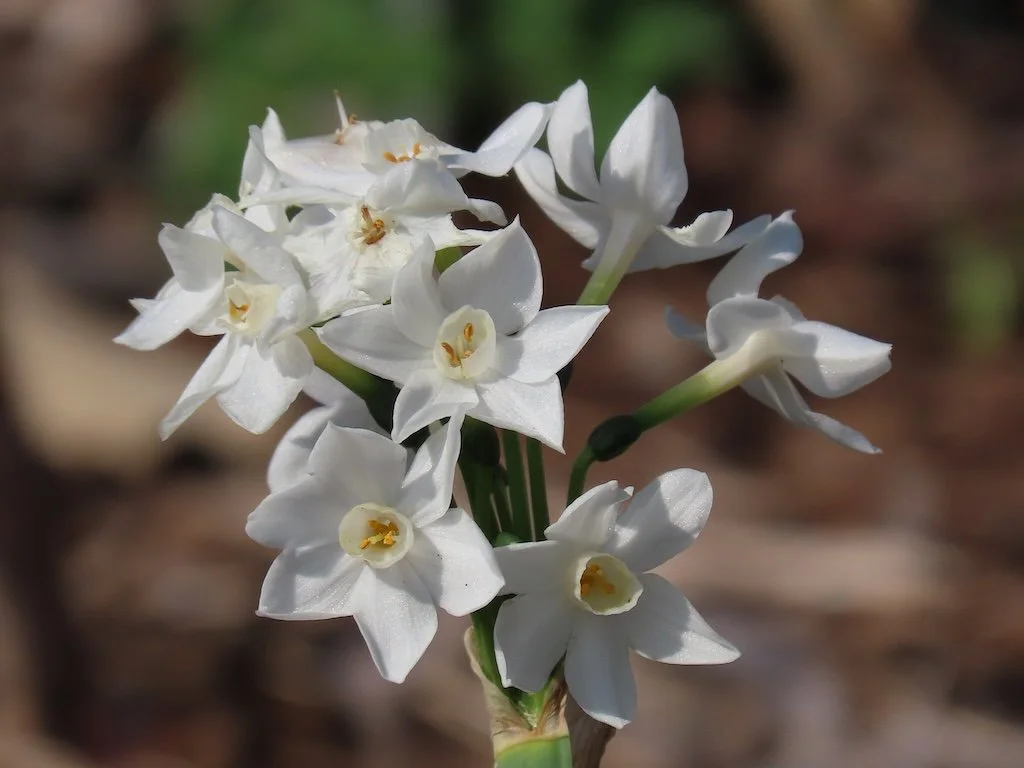
The daffodils and other bulbs are the biggest splashes of color. They are in clumps of mulched beds…sometimes with a rock to provide a backdrop (texture and color that is always there no matter the season). My favorites were the large pink hyacinths. They don’t grow as well now as I remember them from years ago evidently since there were some that looked scraggly; there weren’t enough to make give the garden their smell either.

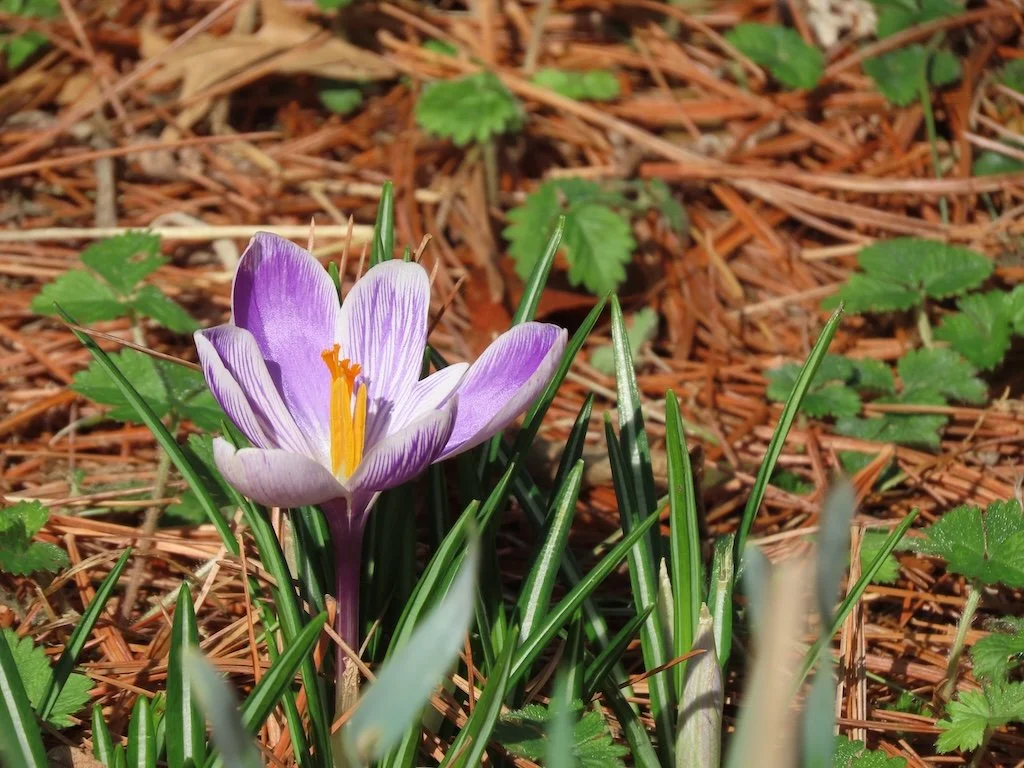
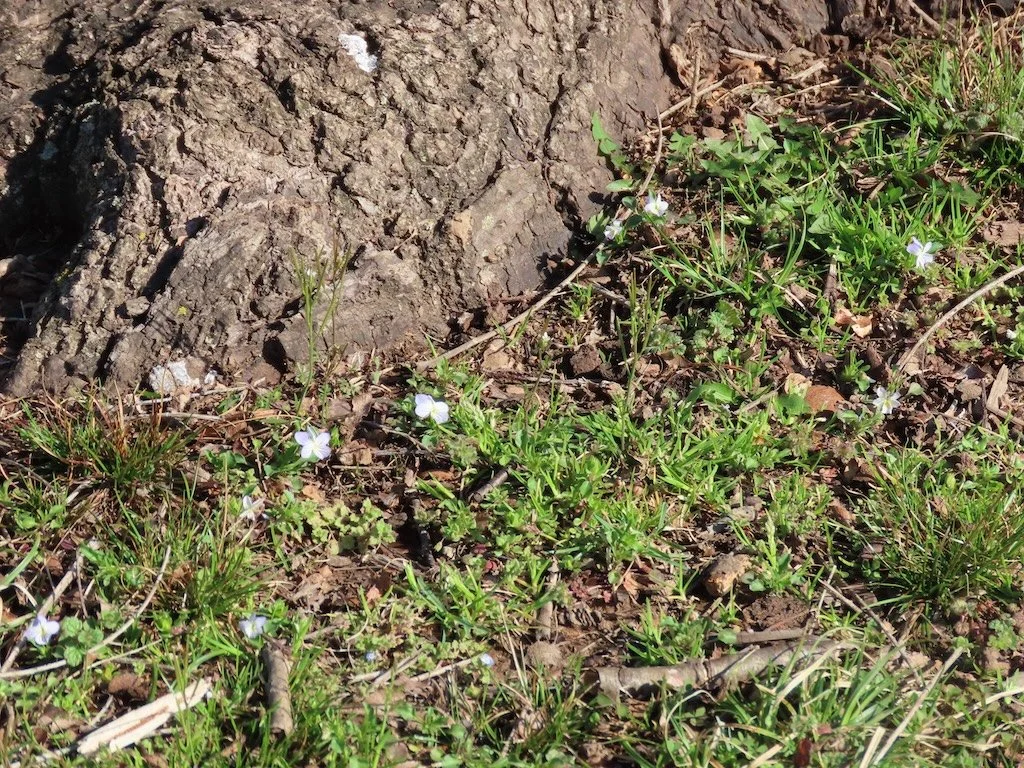
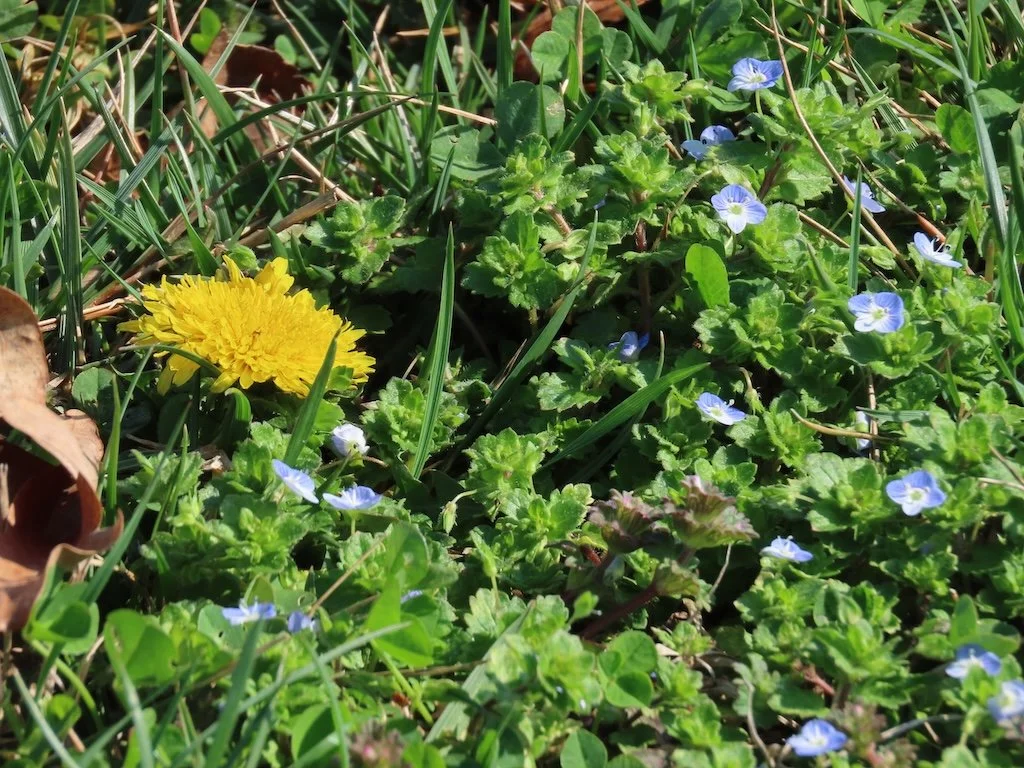
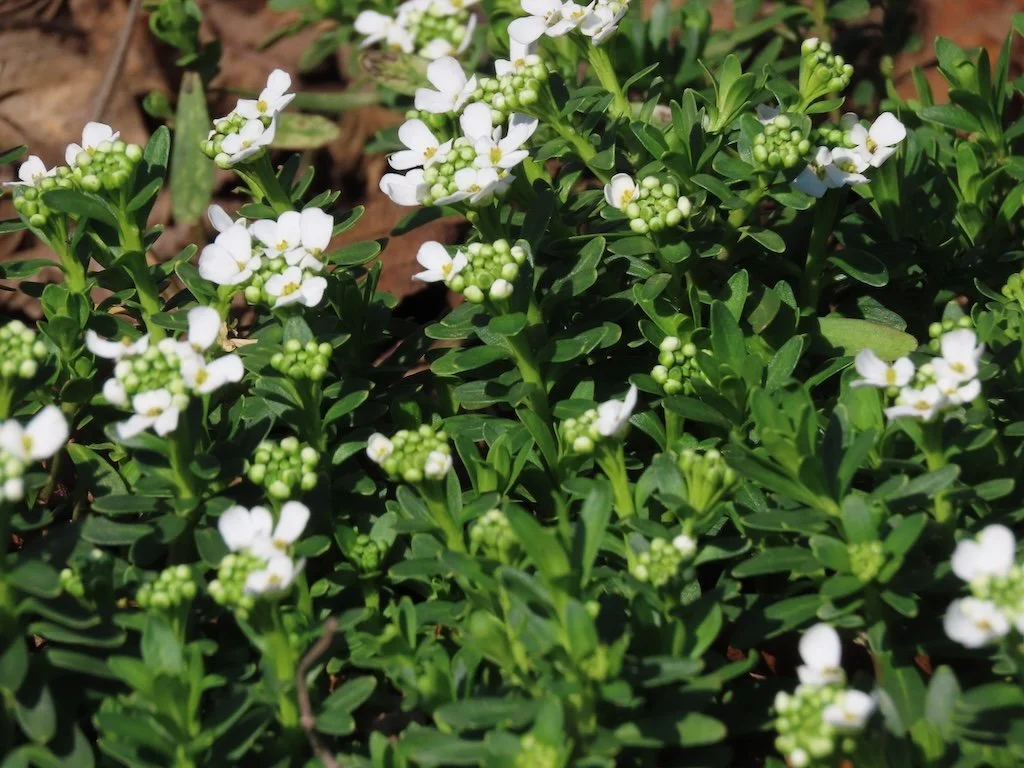
There were other flowers of the season in the grassy areas – small but worth noticing…and dandelions are blooming as well. I have declared a truce with dandelions – won’t cultivate them but I won’t poison them or dig them out either; I might even eat some leaves of the ones that grow in my yard where I know they haven’t been sprayed with anything.

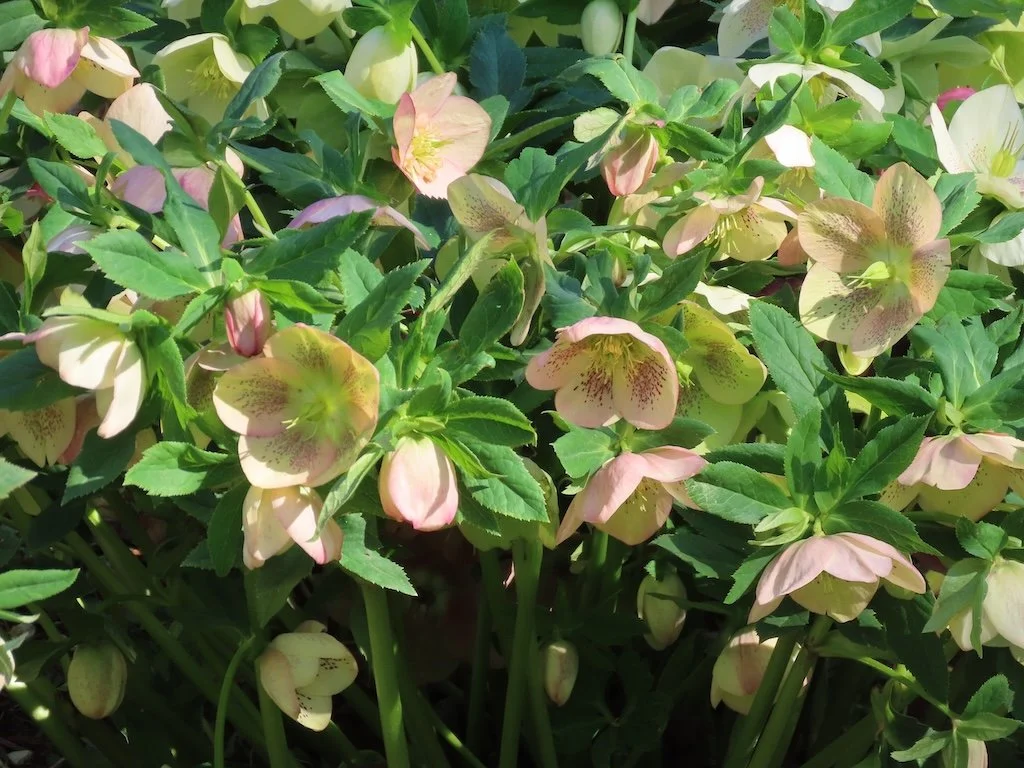
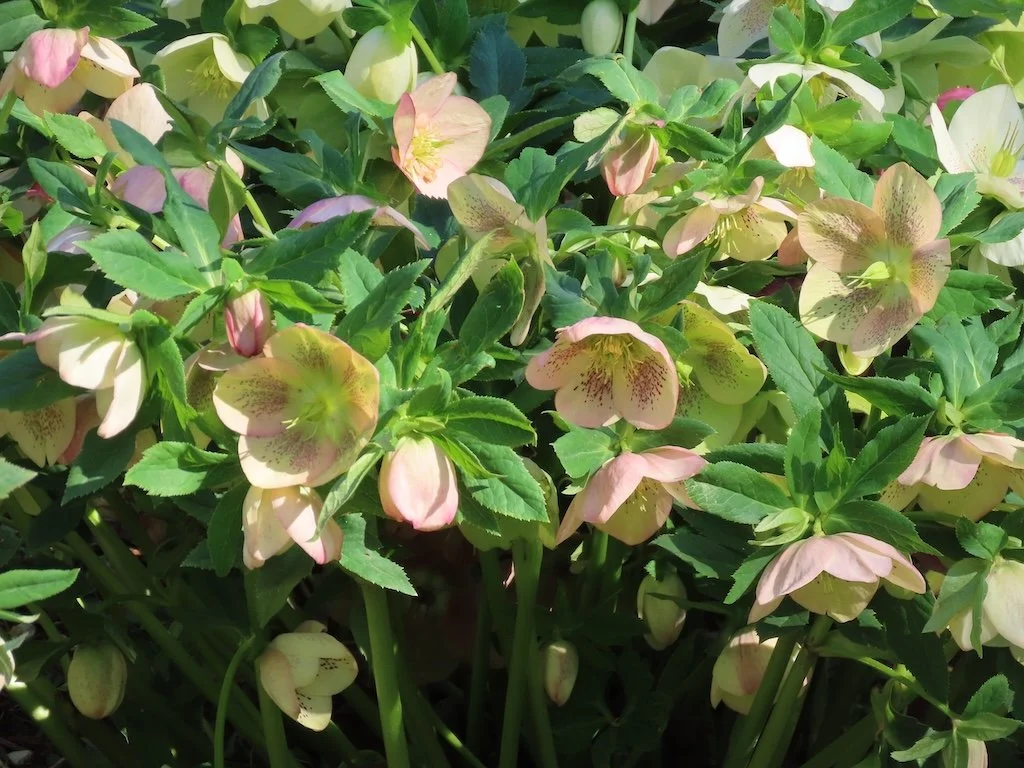
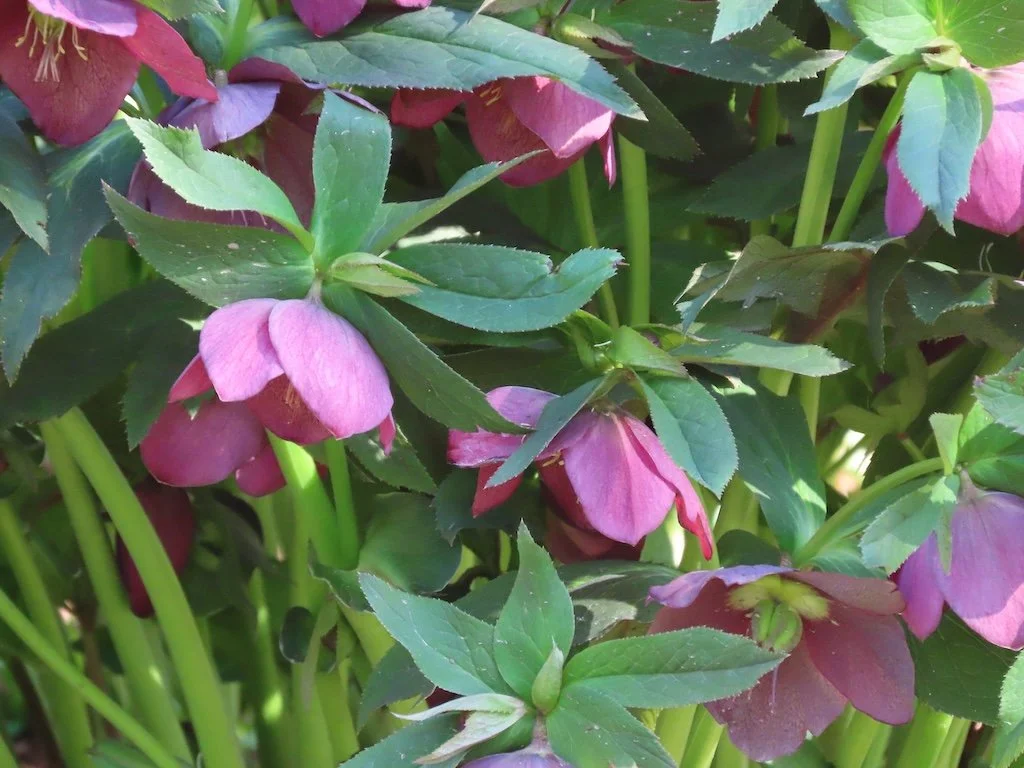
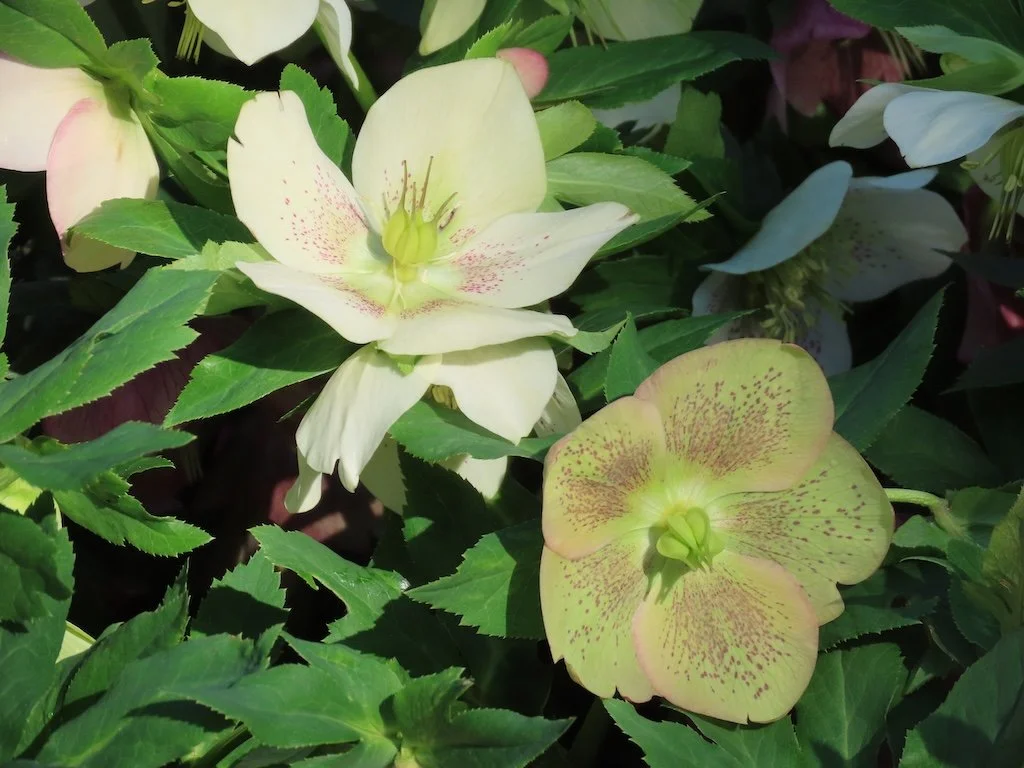
The Lenten roses/hellebores were blooming. They are always some the first blooms of the year.

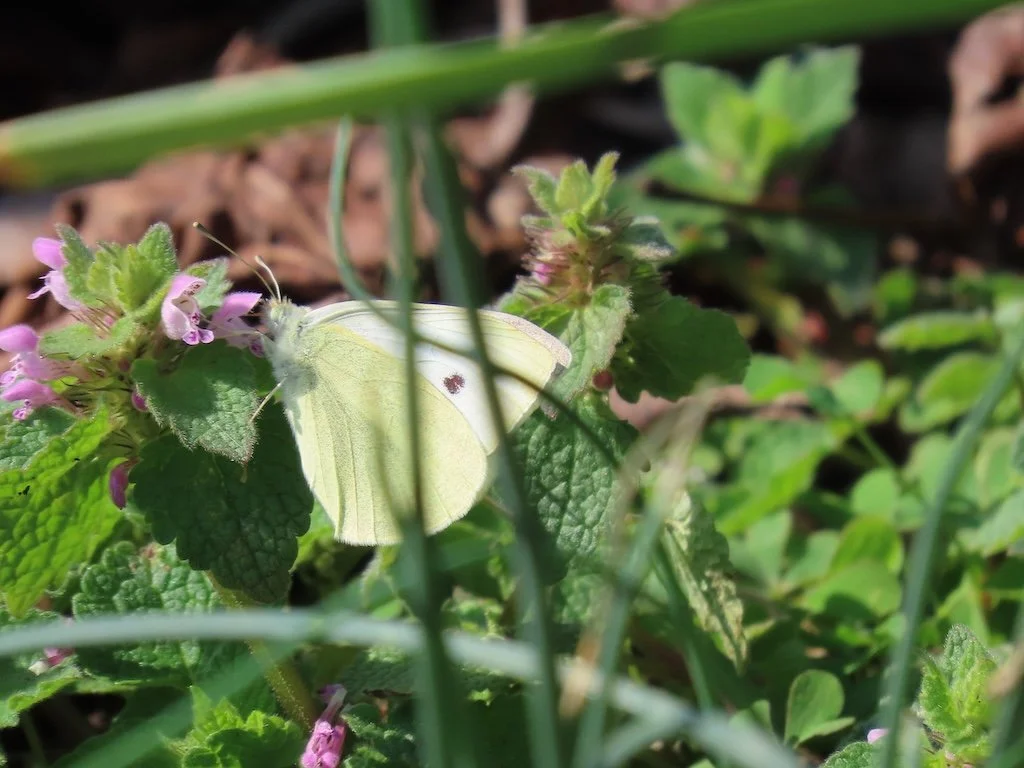
There weren’t many insects active….but I did see a cabbage white butterfly!

Stay tuned for the trees I noticed while I was walking around the gardens in tomorrow’s post.