Gleanings of the Week Ending September 12, 2026

The items below were ‘the cream’ of the articles and websites I found this past week. Click on the light green text to look at the article.

08/27/2026 Plastic Pollution Coalition The Plastic We Wear: Hidden Fibers, Chemical Dyes, and the Future of Clean Textiles - Washing synthetic clothing releases hundreds of thousands to millions of microplastic fibers per load, many of which are not captured by wastewater treatment and instead are often discharged directly into waterways. Synthetic dyes and chemical finishes used on many mass-produced textiles have been linked to skin irritation and allergic contact dermatitis.

0 9/3/2026 Smithsonian Magazine Leaf-Peeping Season Is Almost Here. These Interactive Maps Can Help You Figure Out When Fall Foliage Will Peak in Your Area – The article points to several site but Explore Fall is my favorite. I’ve always enjoyed fall foliage road trips!

9/2/2026 Science Daily Too much coffee may weaken bones - Following nearly 10,000 older women for 10 years, researchers found that tea drinking was associated with slightly higher hip bone density. Moderate coffee consumption did not appear harmful, but drinking more than five cups a day was linked to lower bone density. The findings suggest tea may offer a small bone-health boost, while excessive coffee could carry some drawbacks.

09/1/2026 Clean Technica Most EU Ships Are Being Scrapped in South Asia Despite Sufficient Domestic Recycling Capacity - The vast majority of EU-owned or EU-flagged ships are being scrapped under poor conditions in India, Pakistan and Bangladesh, while EU-located ship recycling facilities operate under capacitya new study from the NGO Shipbreaking Platform and T&E shows. This is both an environmental scandal and a loss of high-quality materials for the EU economy, say the NGOs, who issued a report concluding that the EU has enough domestic capacity to recycle all EU-flagged and EU-owned vessels.

08/31/2026 NWF Blog 5 Benefits of Using Fallen Leaves in Your Garden - One of the best things you can do for wildlife, the environment, and even your wallet is to intentionally use the fallen leaves and other organic matter in your garden.

08/31/2026 Our World in Data Beef production in Brazil has been the largest driver of global deforestation in recent decades - When we look at the largest drivers of this deforestation, beef production is the standout. The clearing of forests to make space for grazing pastures has driven 41% of global deforestation in recent decades. Almost two-thirds of it has taken place in Brazil. The expansion of cattle pastures has not just come at the expense of natural forests, but particularly of biodiverse regions in the Amazon rainforest and Cerrado savanna. Beef consumption has grown a lot in Brazil, with per-person demand doubling over the past 50 years. Average consumption is now three times the European average.

08/31/2026 NASA Pasterze Hangs on as Austria’s Largest Glacier - Austria’s largest glacier was holding on by one dwindling thread of ice. The last icefall connecting the upper and lower portions of the Pasterze Glacier in the Eastern Alps appeared poised to break, which would put an end to its reign as the country’s largest. Groups monitoring the glacier say the last conduit of ice may, depending on weather conditions, survive to see another year or two, or it may face its demise before the cold months arrive this year.

08/31/2926 NPR NPR spent 2 years tracking deaths from heat. We found a staggering hidden toll - As summer heat intensifies because of human-driven climate change, the United States' official tally of heat-related deaths does not come close to capturing the full human toll. The data feeding into nationwide death counts is collected inconsistently and rarely thoroughly. The result is a vast undercount of the number of people who die because of heat. And experts say failing to recognize and address this may cost more people their lives. The reasons for the undercount are complex. Heat can often be the trigger that pushes someone's health condition — like cardiovascular disease — from manageable to fatal. But often because heat leaves no obvious mark behind for doctors or coroners to examine, the cause of death gets marked down only as a heart attack. Heat isn't noted on the death certificate. There is better counting of heat-related deaths in some parts of the country. For example, Arizona's Maricopa County — home to Phoenix — has developed sophisticated protocols for sussing out the subtle influences of heat on people's deaths. Maricopa County trains "death investigators" to look for signs of heat stress, such as asking about the state of the deceased's air conditioning system, their ability to pay electric bills to run ACs, their use of medications that increase heat sensitivity, and more.

08/28/2026 Smithsonian Magazine Forests Didn’t Fare Well During an Ancient Global Warming Event, Offering a ‘Cautionary’ Tale About Today’s Climate Change - An intense global warming event 56 million years ago caused a forest in modern-day Wyoming to lose around 60 percent of its canopy cover, and it took more than 100,000 years to bounce back.

08/27/2026 Planetizen Feds want to stop notifying landowners about drilling under their land - Currently, if the BLM owns the mineral rights underneath private property, the bureau is required to notify the owners of proposed drilling and give the public 90 days to comment on any leasing of rights to outside companies. But a recent proposal would eliminate the landowner notification requirement and reduce public comment time to 10 days. A rancher in Wyoming said that ditches from developers trying to build pipelines stranded his cattle during a blizzard, and abandoned oil wells have caused bovine health issues. In a separate proposal, the BLM also proposed reducing the minimum bonds companies are required to pay if drilling is abandoned without environmental cleanup.

Phelps Grove Park Stumpery

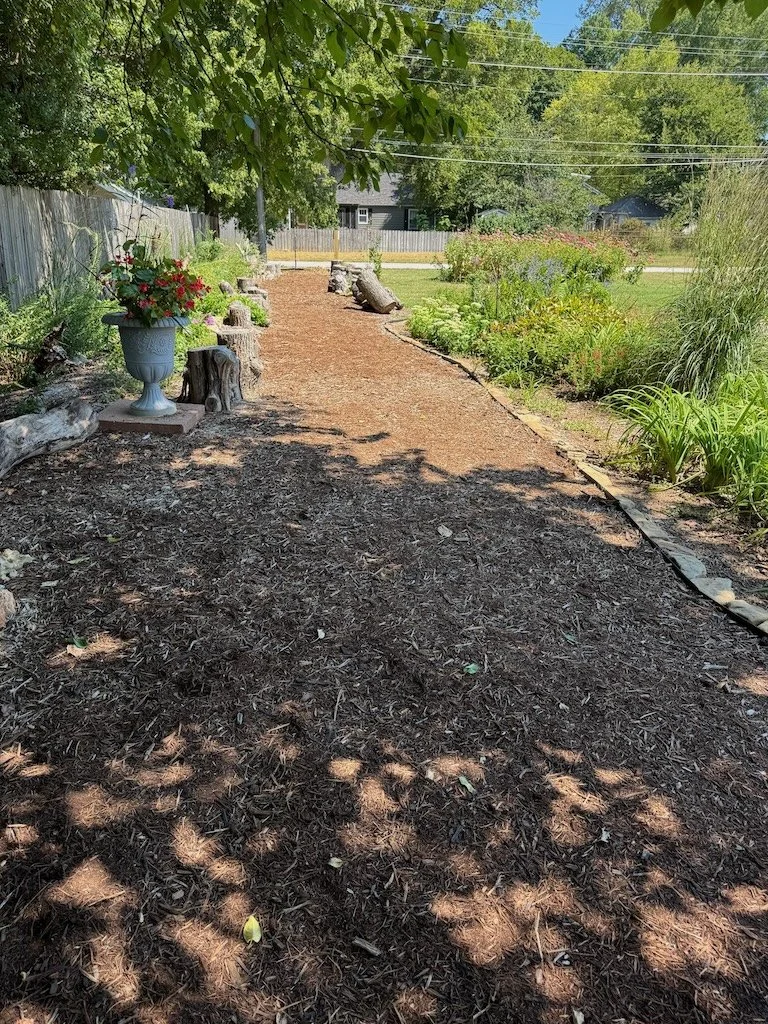
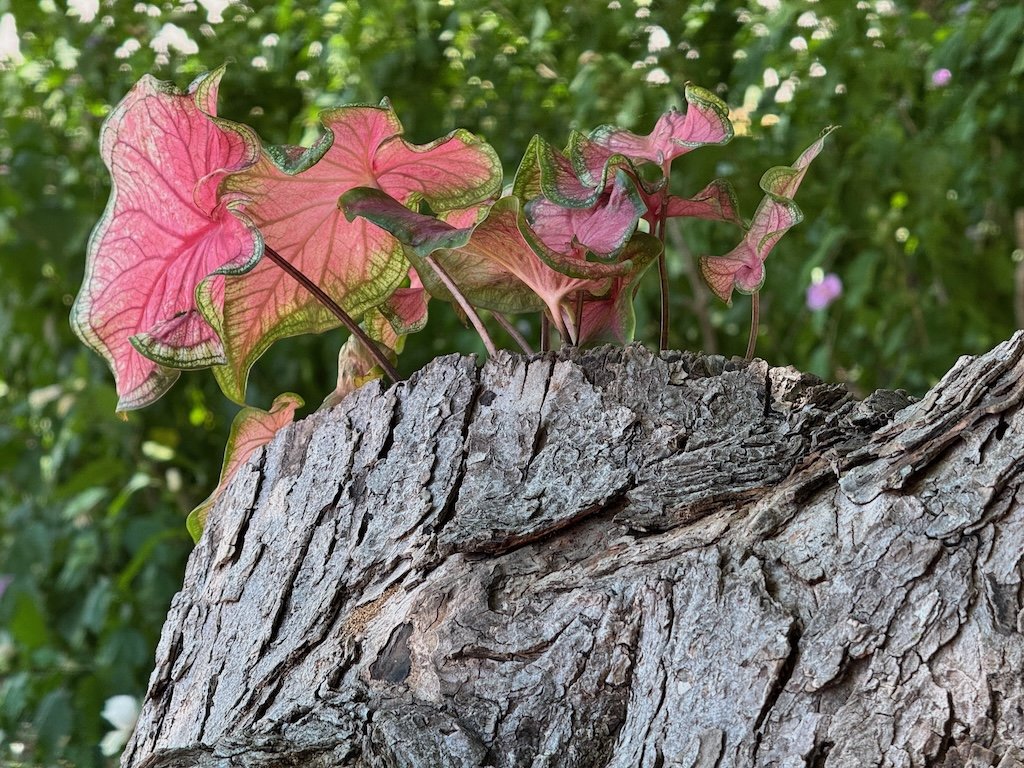
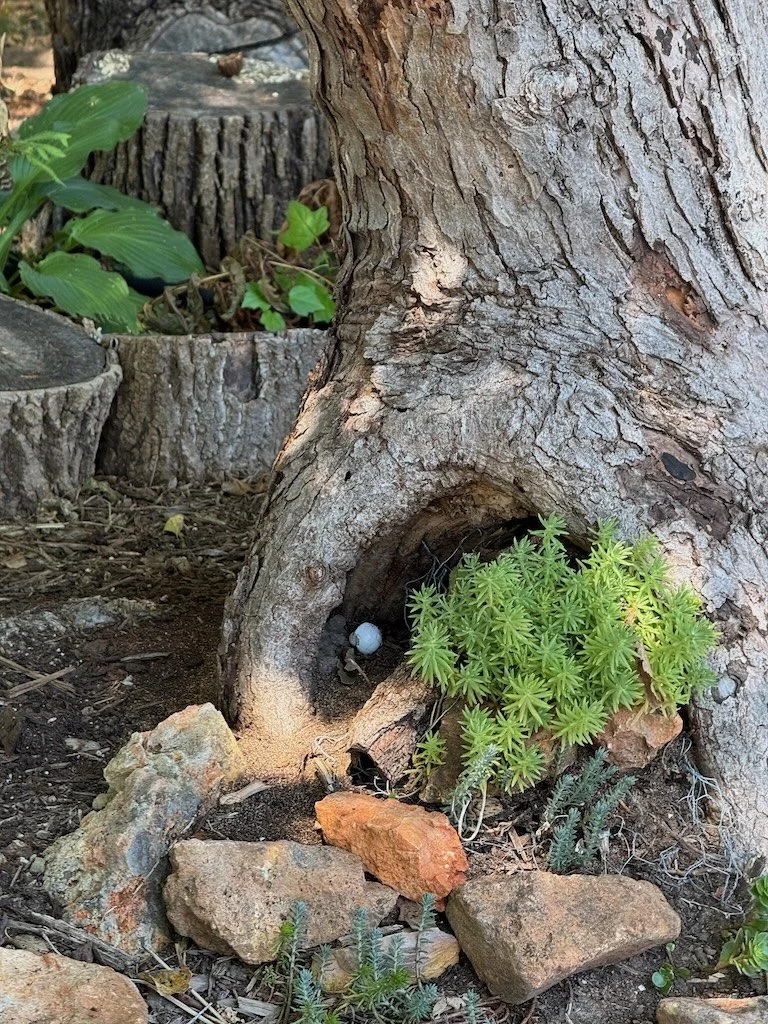
I visited the Phelps Grove Park Stumpery for the first time recently. It is a 2025 addition to the park and one that will become even more interesting over time as the plants become more established and the stumps decay further.

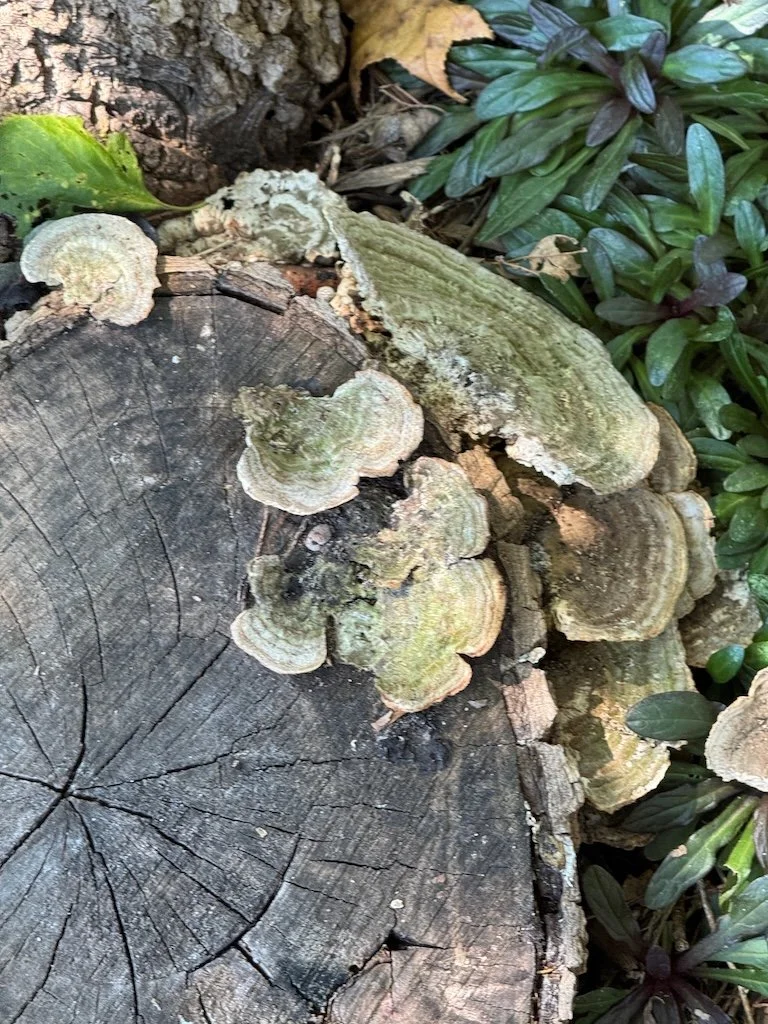
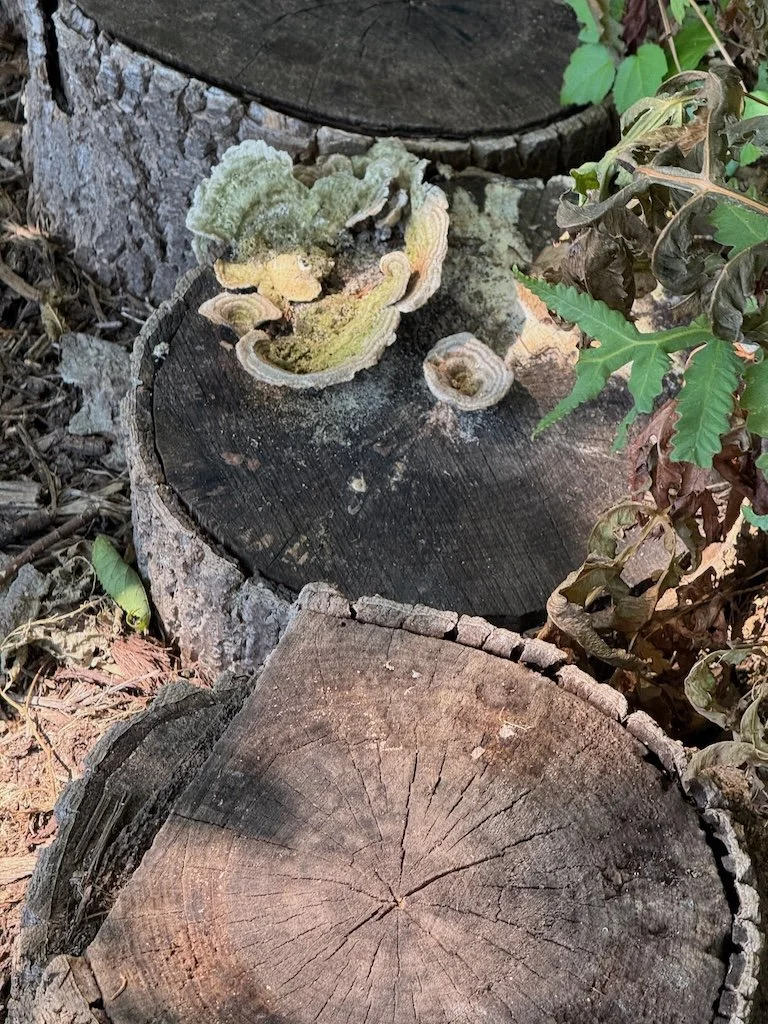
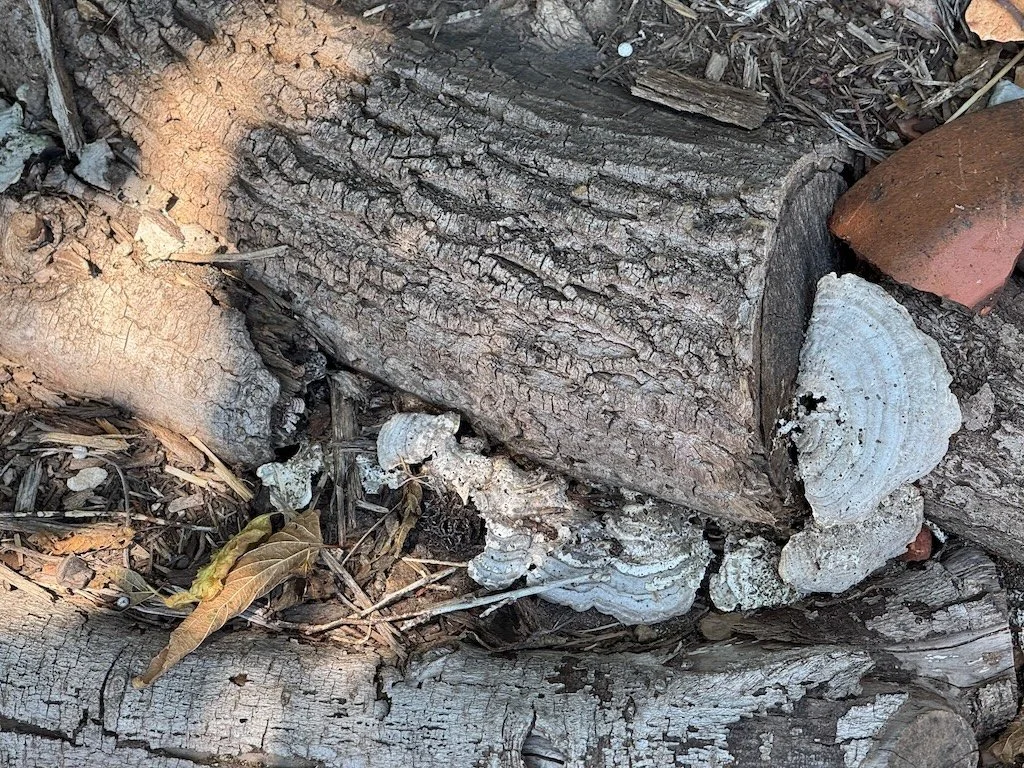
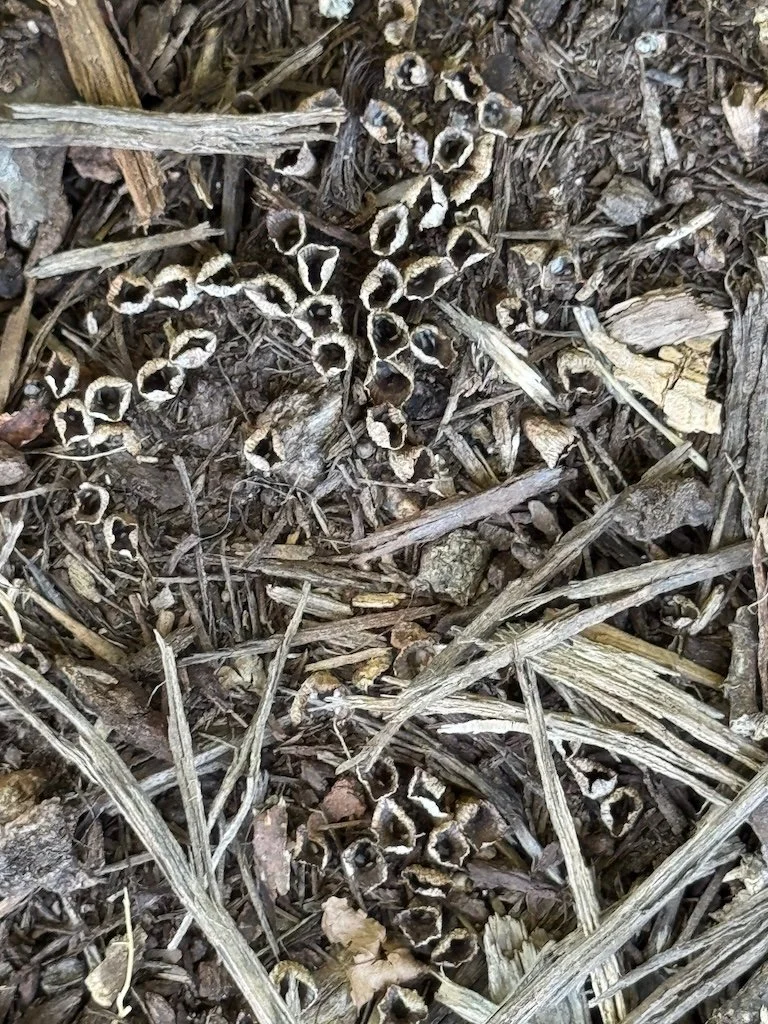
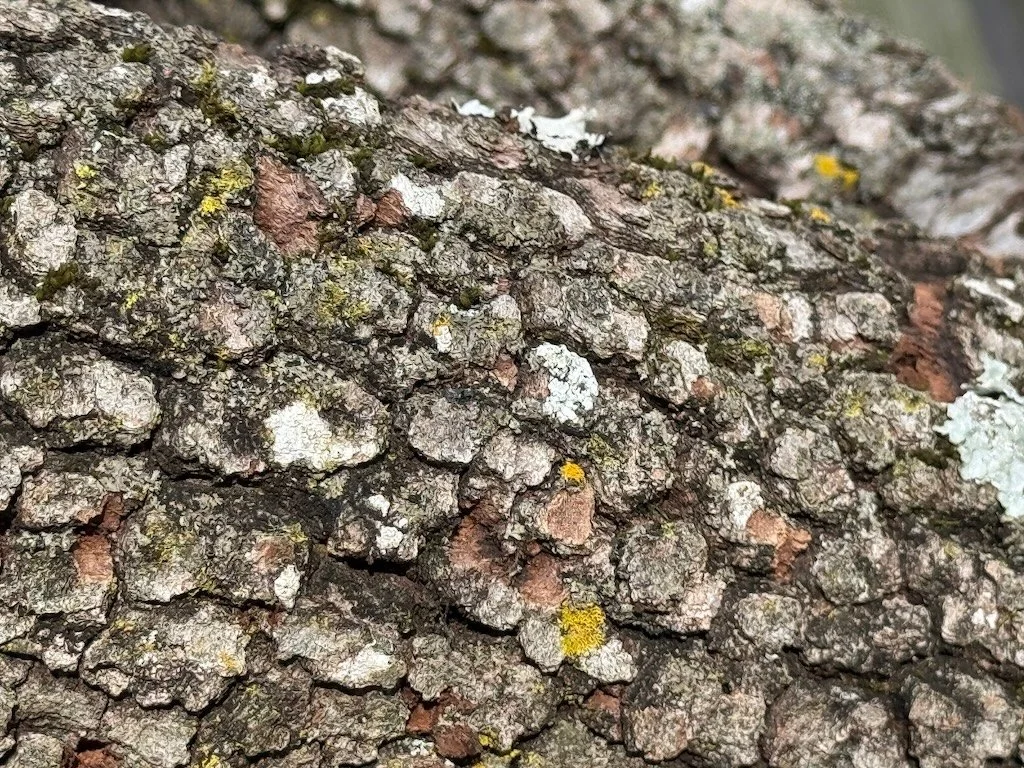
I enjoyed the fungus that is already growing on the decaying wood.

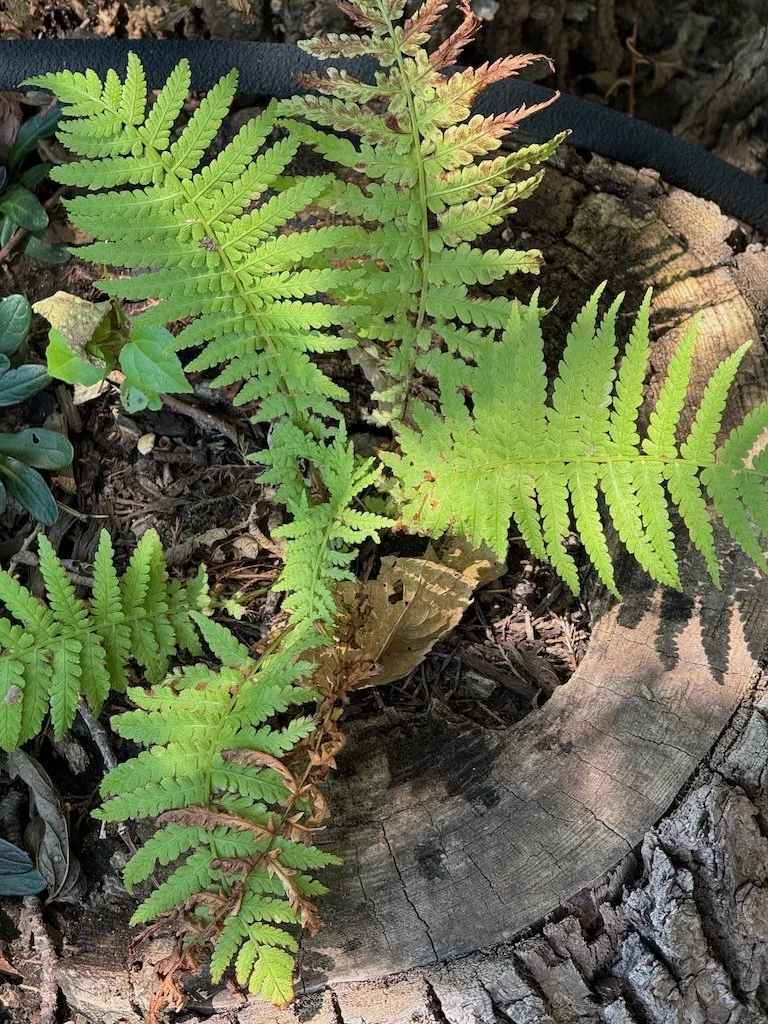
It was a hot day, and I welcomed the big trees along part of the stumpery path….and the plants growing there.

It is appealing to have a place to leave parts of trees that have fallen in storms. The stumpery was initiated with logs and wood pieces from the April 2025 storm….and will probably be replenished or enlarged in future storms. The neighborhoods surrounding the park have a lot of large trees.  

This has me thinking about some pieces of a rotting redbud trunk that my daughter had removed. Maybe I will put them in my native plant garden to form a mini-stumpery that will only be visible until the native plants fill the bed completely (probably will happen before they completely decompose).

An Edge around the Native Plant Garden

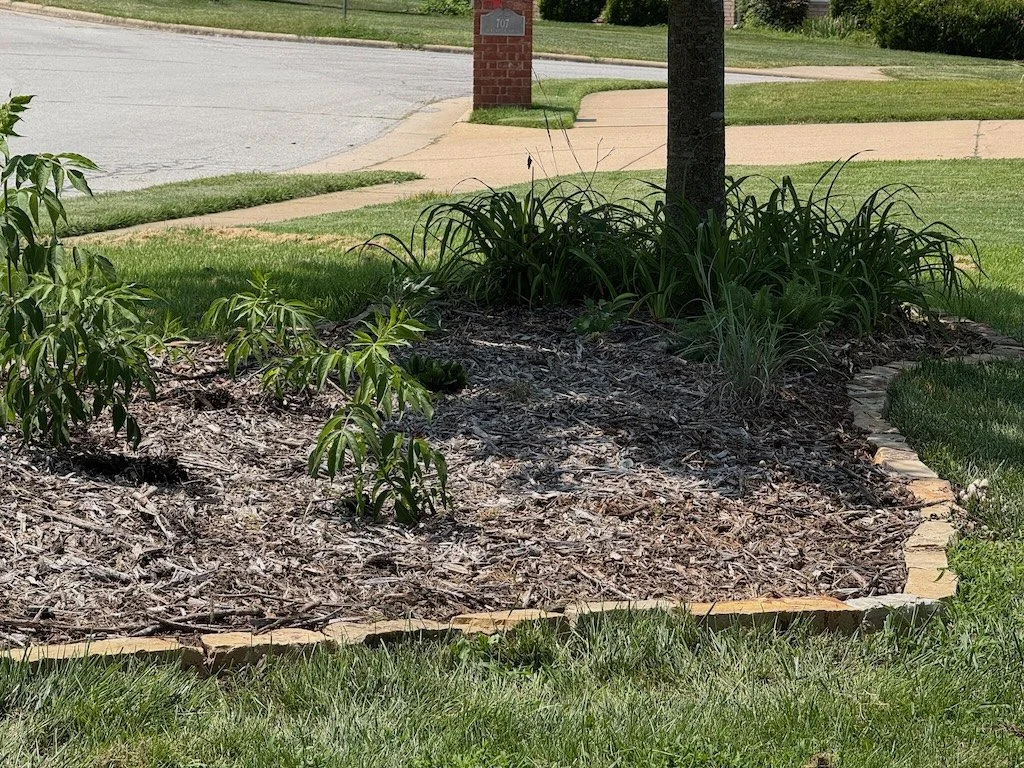
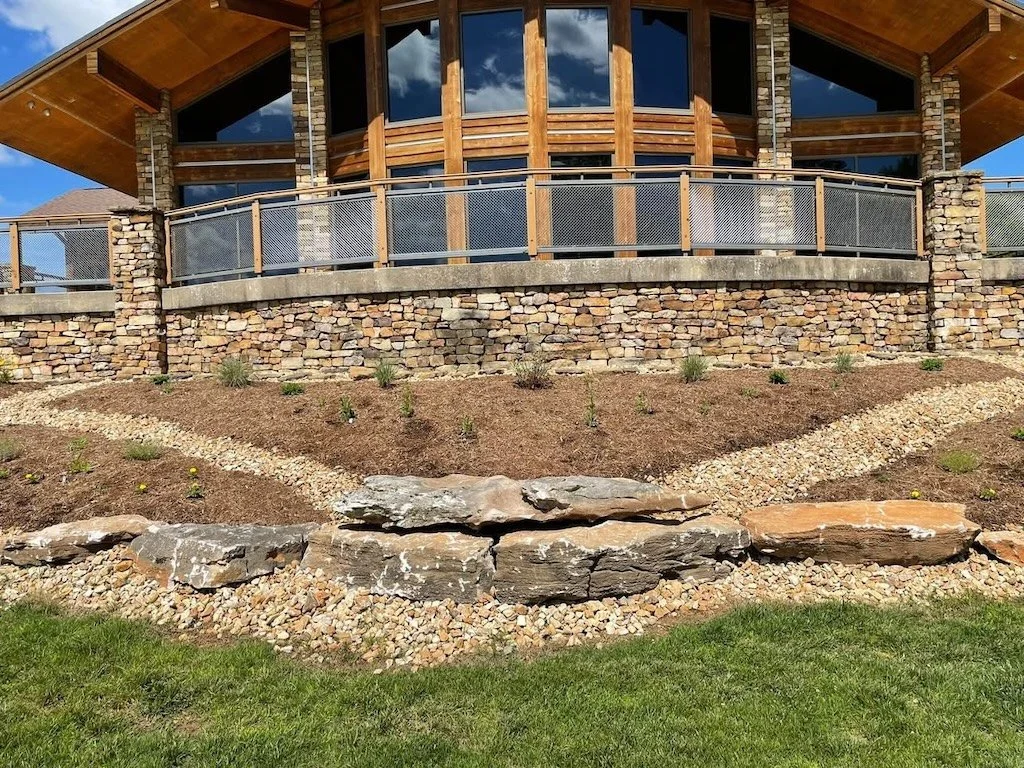
Up until a week ago the native plant garden in my front yard was mulch that had been laid down last fall – originally 6+ inches thick – with plants added last spring. Installing something around the edge to define the space required too much back-straining work for me to do myself. I decided to have stone installed, but the work was not scheduled until October; I was thrilled when the company had a cancellation and fit in the work last week!

The two-person crew dug a trench for the stones and finished it in a few hours. Now I can easily do a quick round with the weed-eater and then mow neatly around the garden. I love its irregular shape.

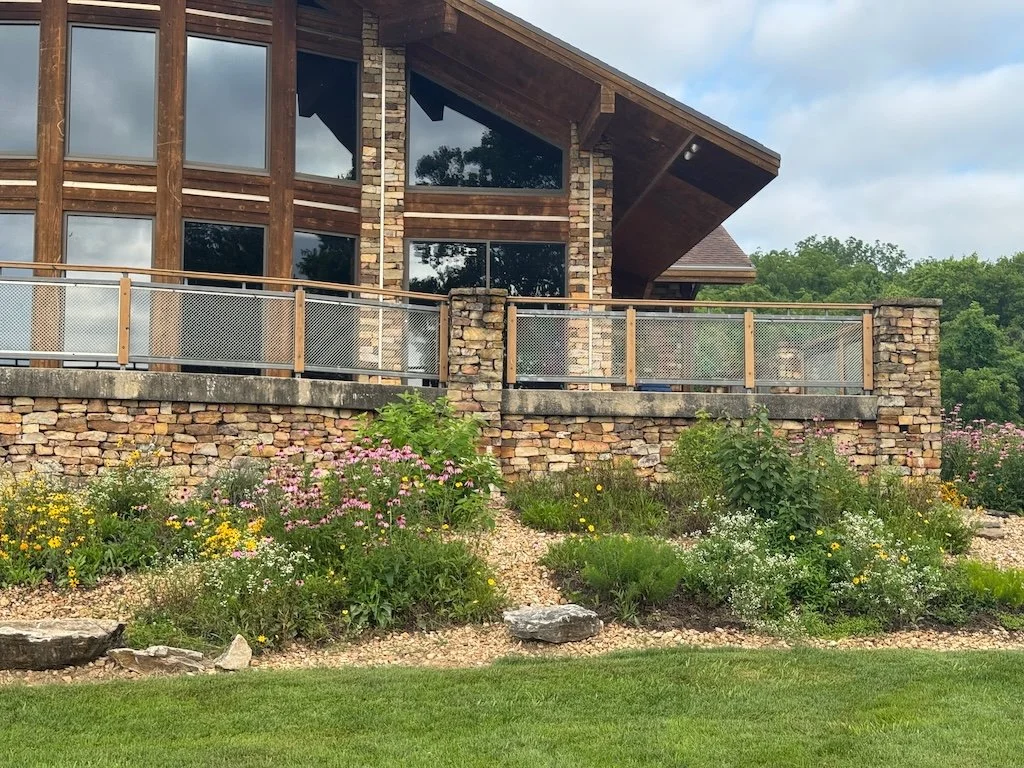
Lake Springfield Boathouse Garden

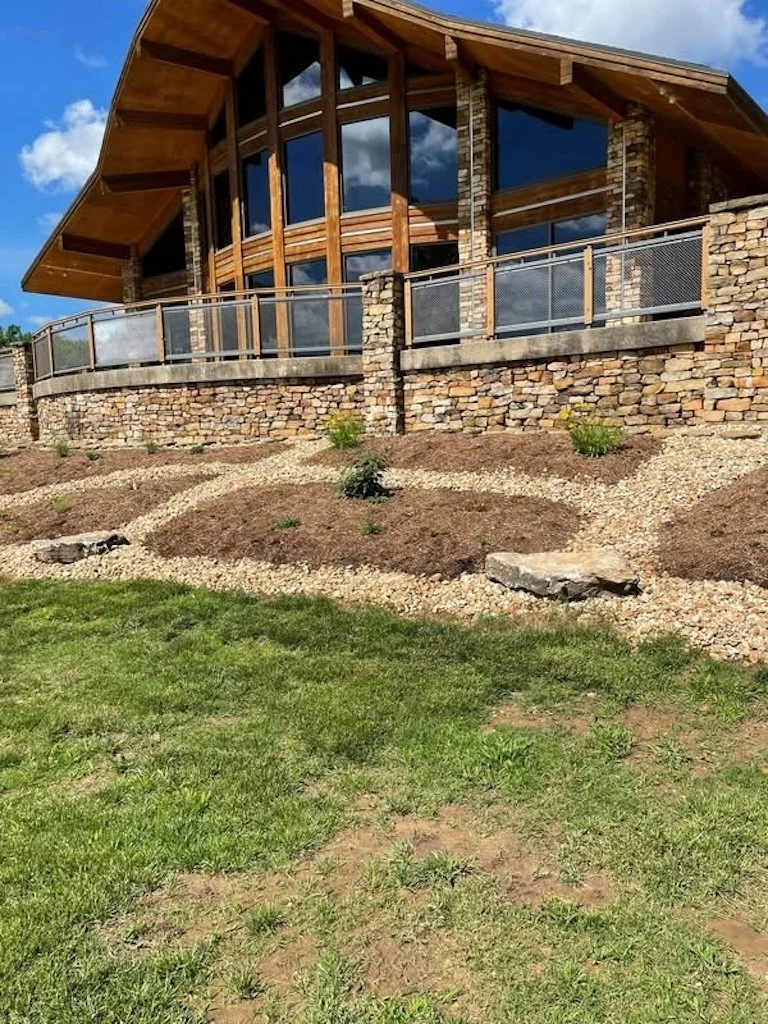
I’ve been volunteering for the weekly maintenance sessions at the Lake Springfield Boathouse Garden this year. It’s been a learning experience. Recently the ‘taskmaster’ sent some pictures from 3 years ago – around the time I first visited the place.

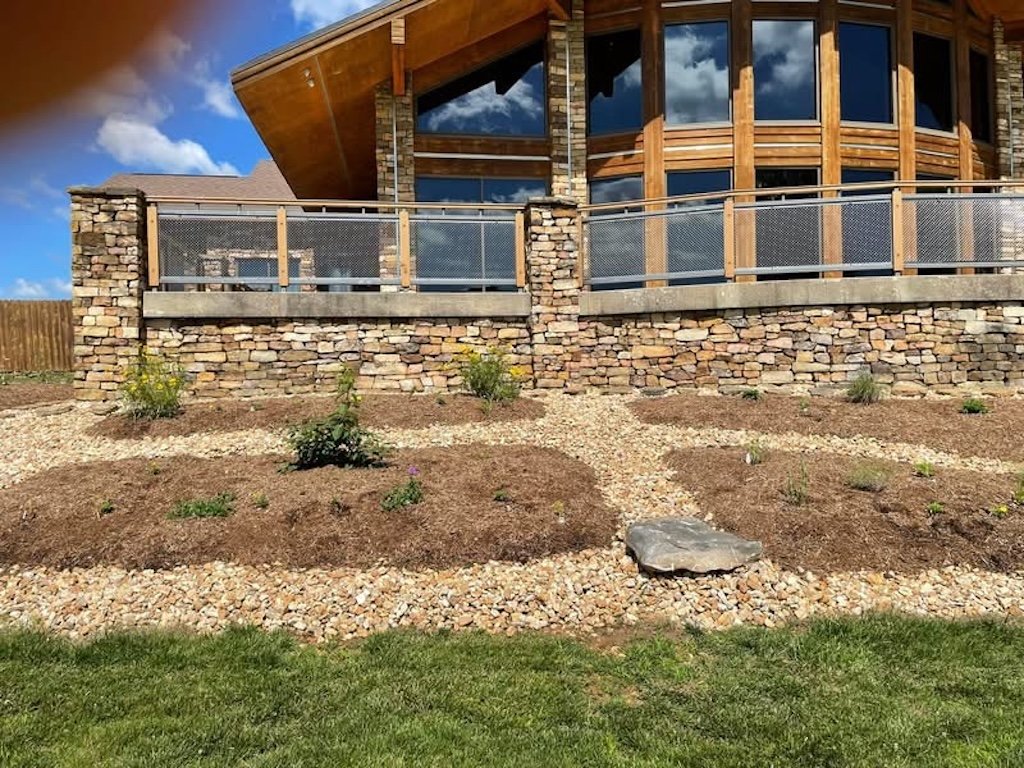
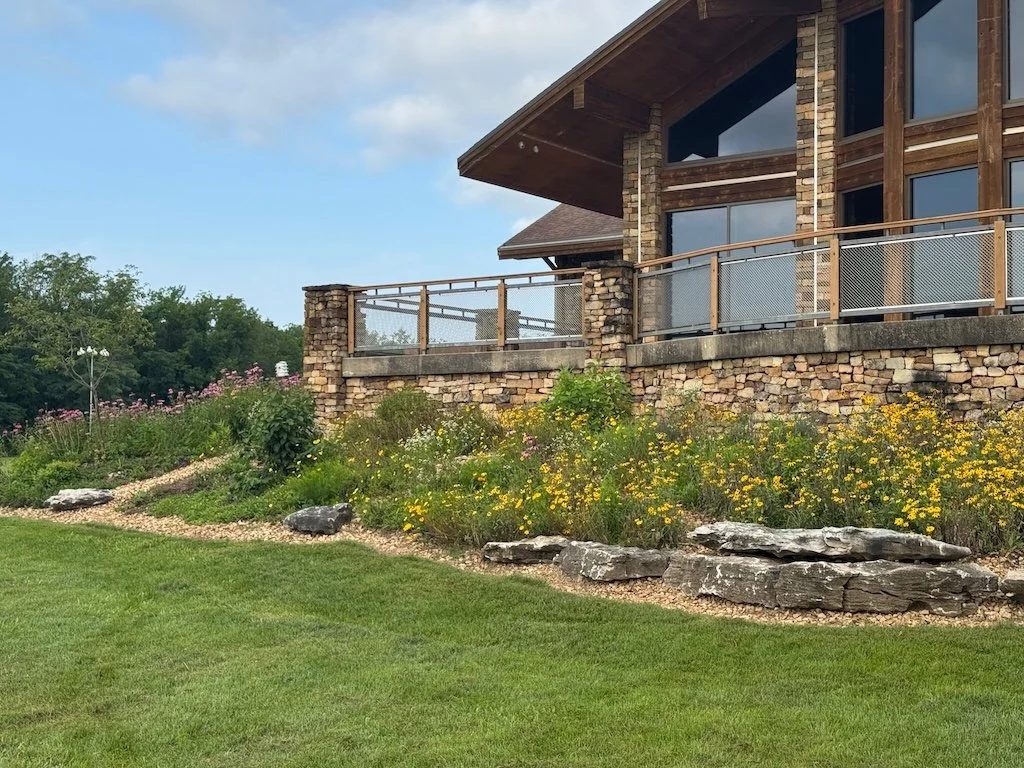
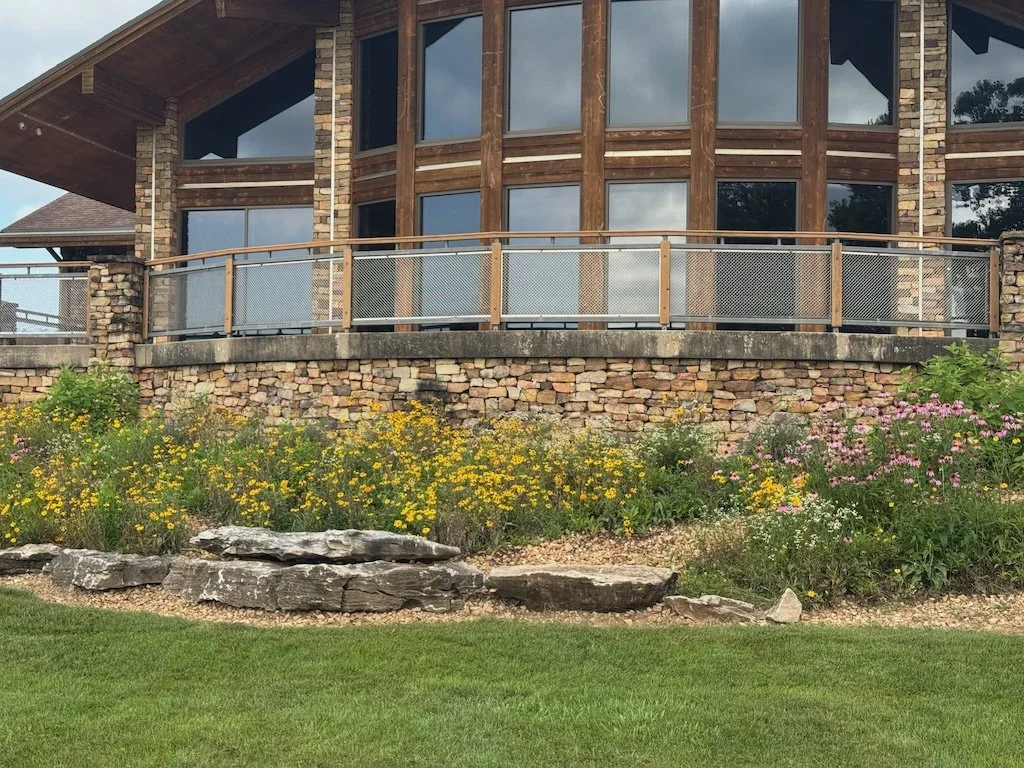
The next time I volunteered, I took some similar pictures to document the way it looks in 2026. The plants are much more established now.

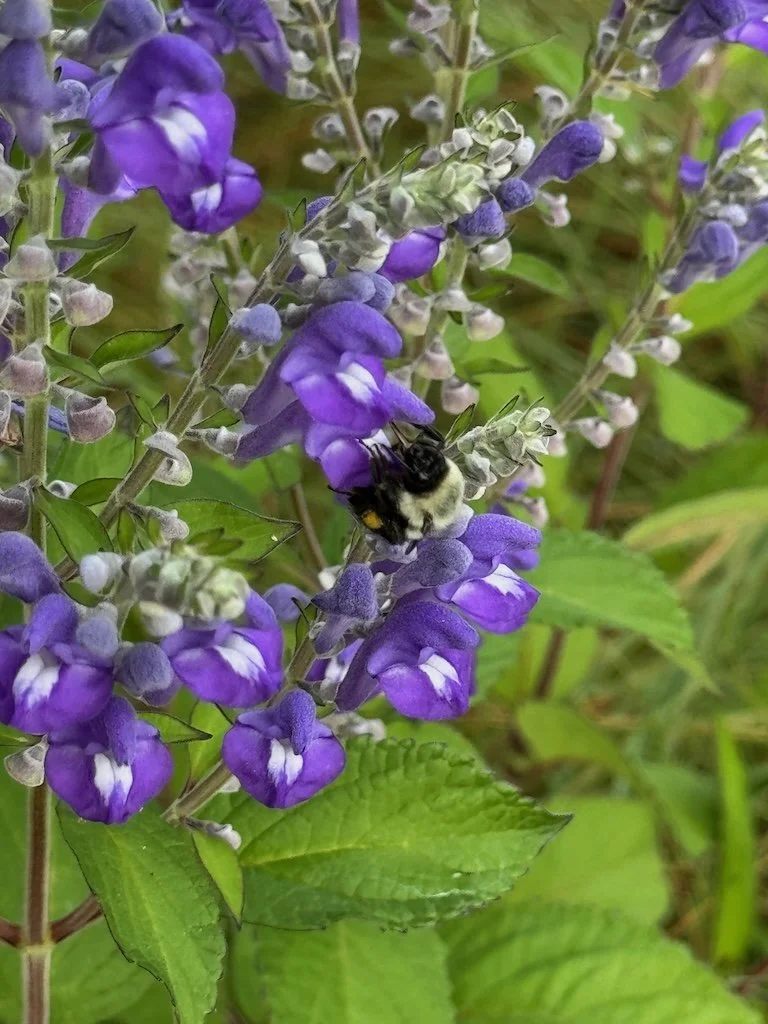
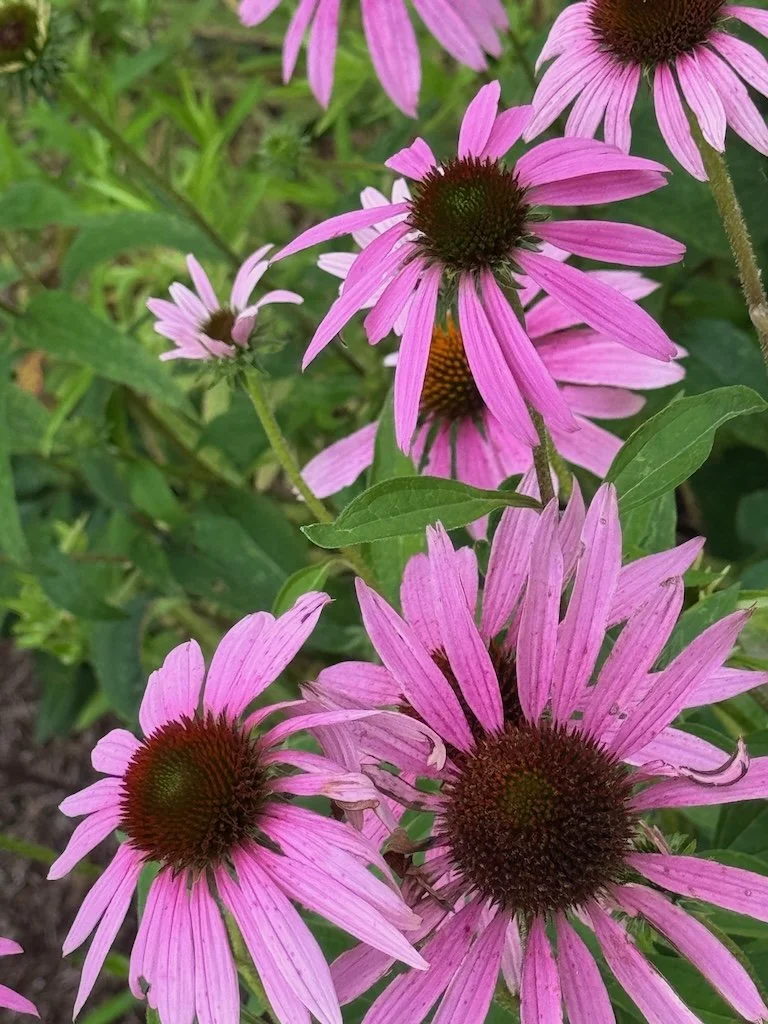
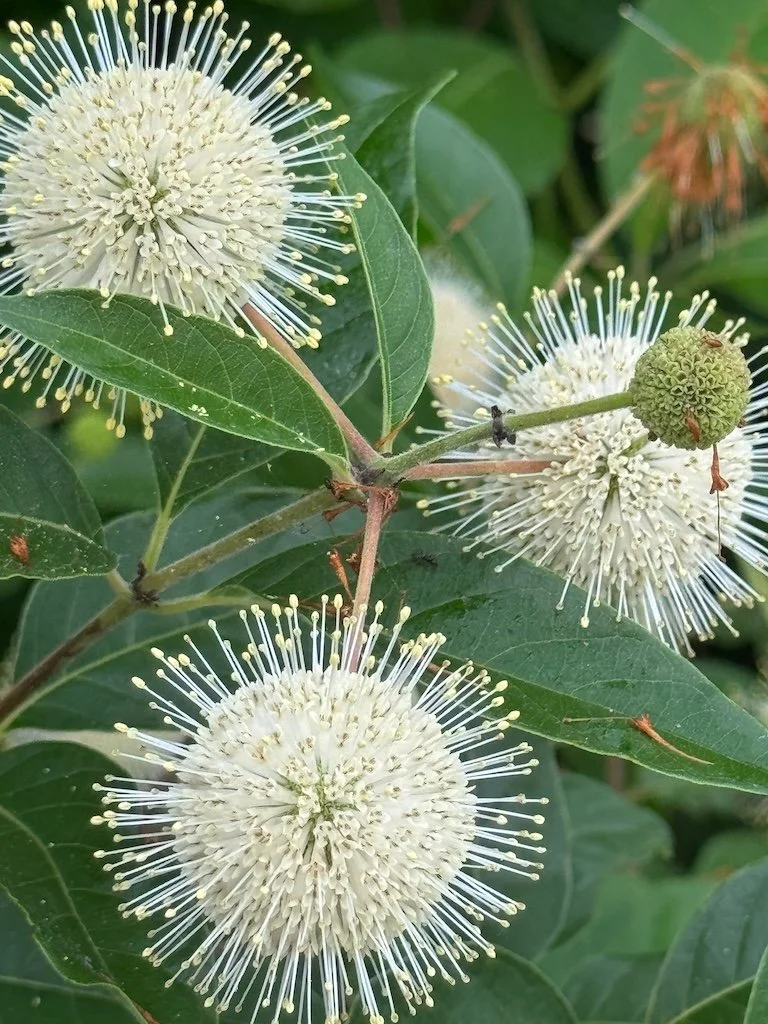
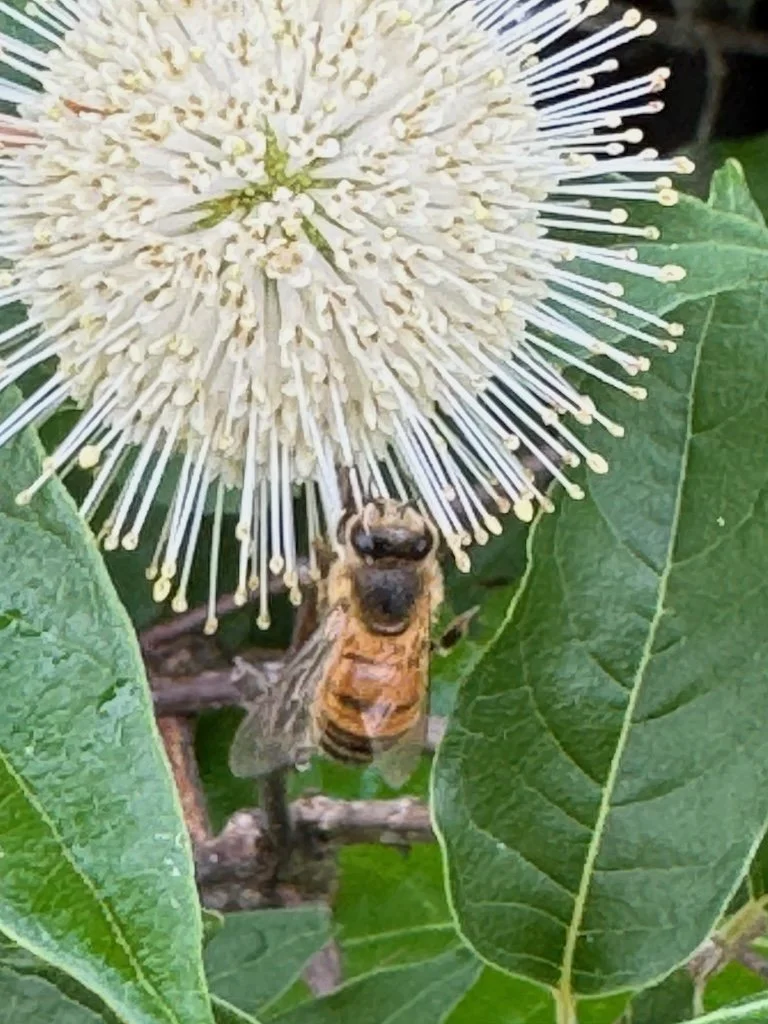
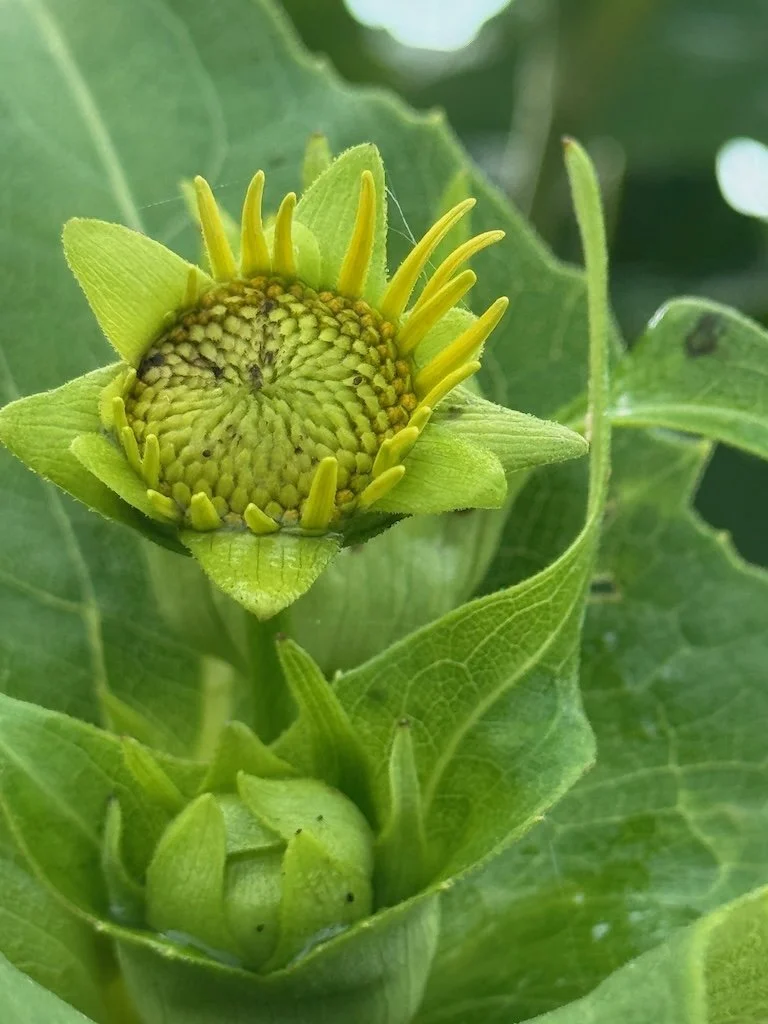
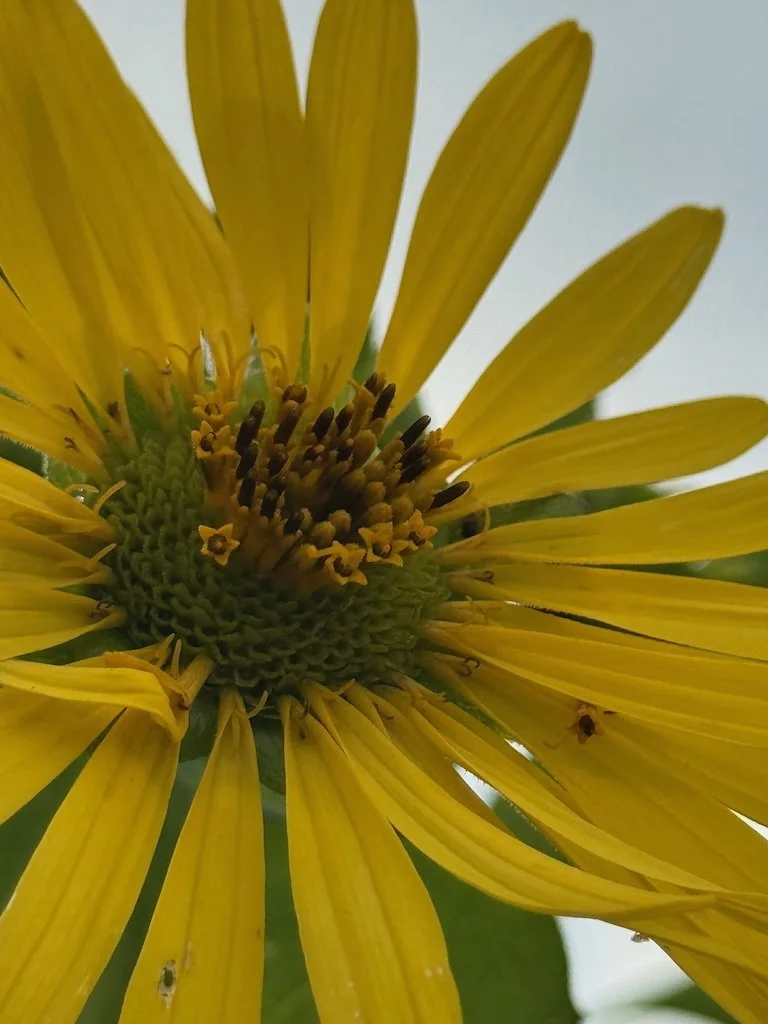
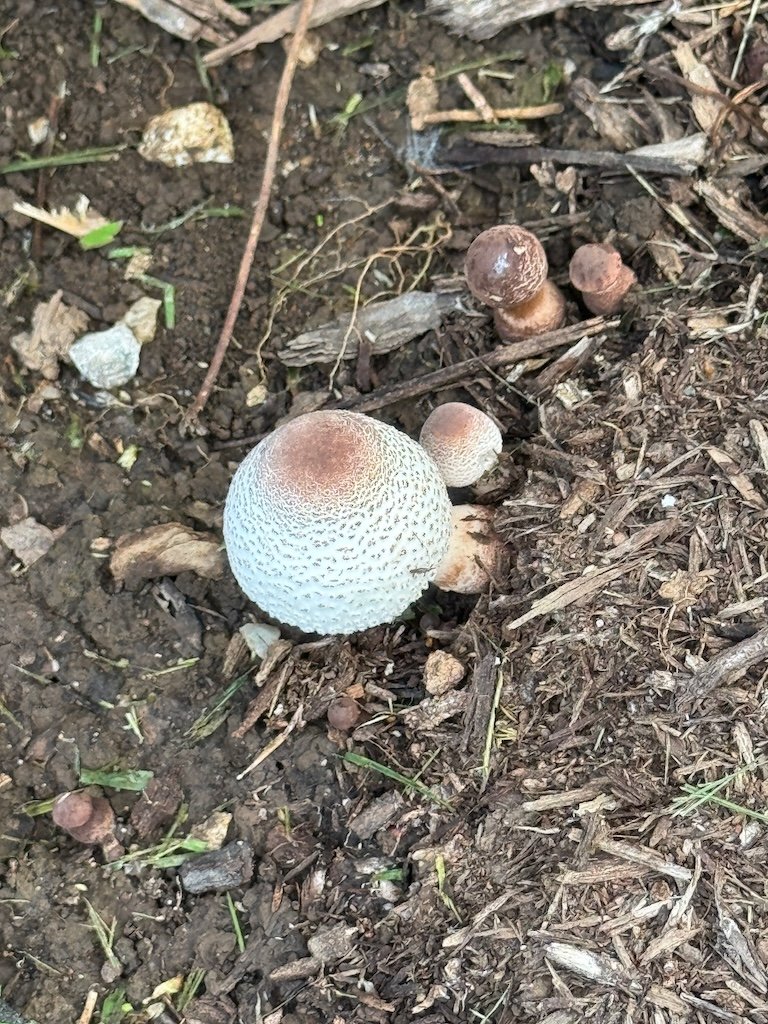
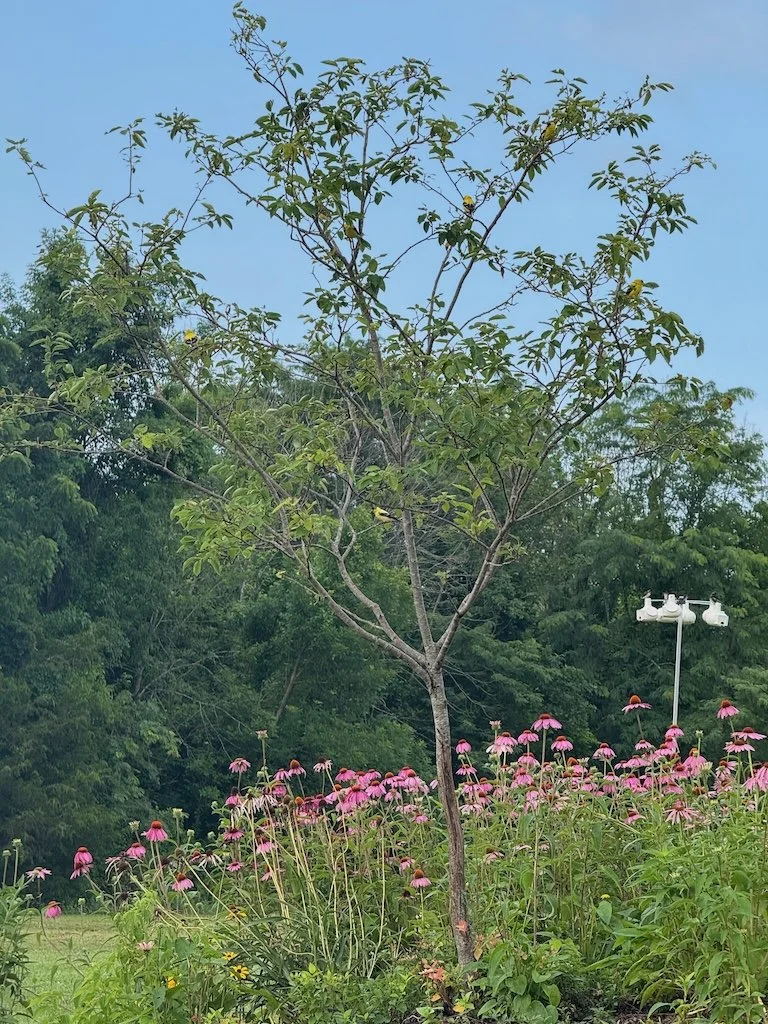
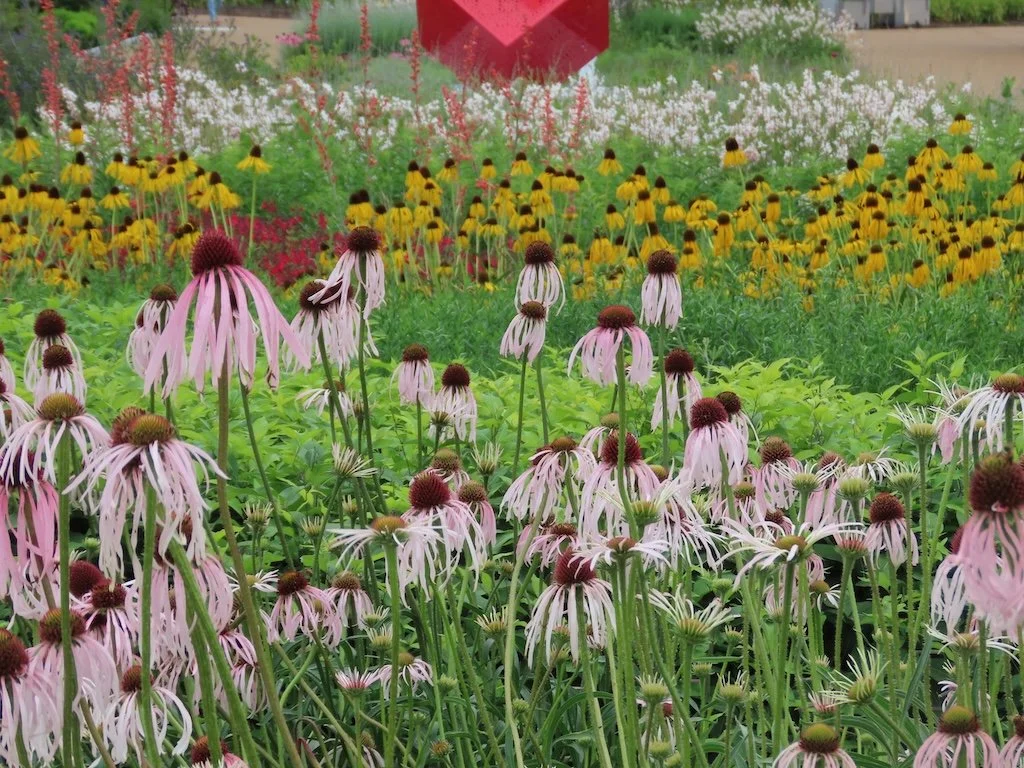
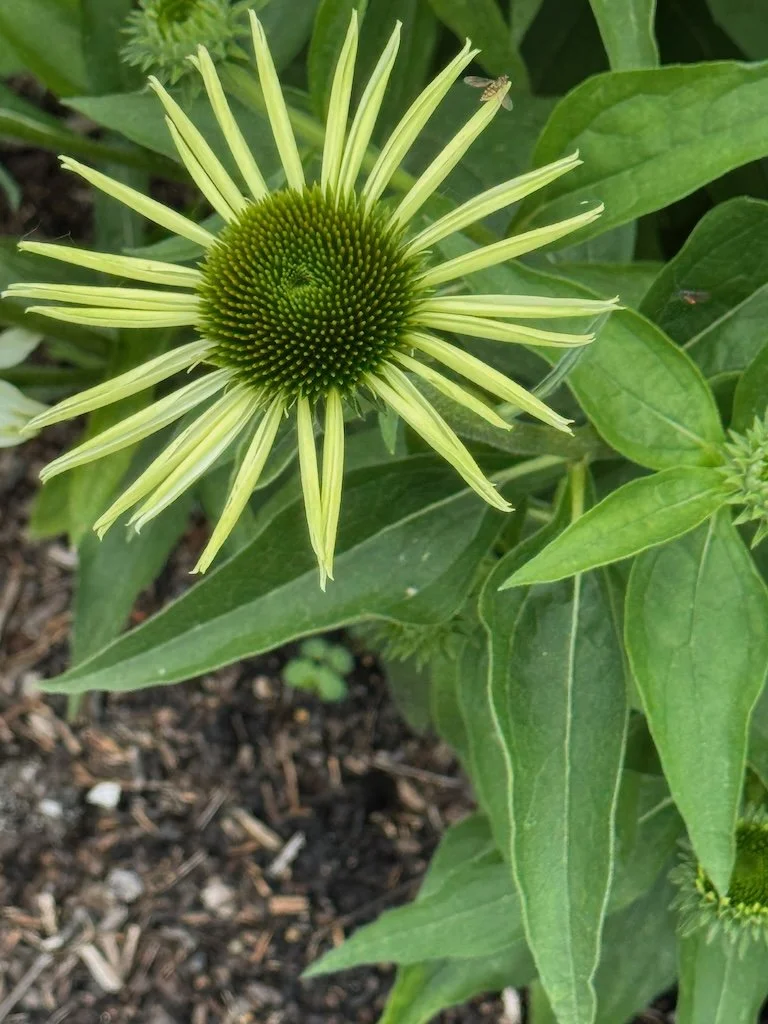
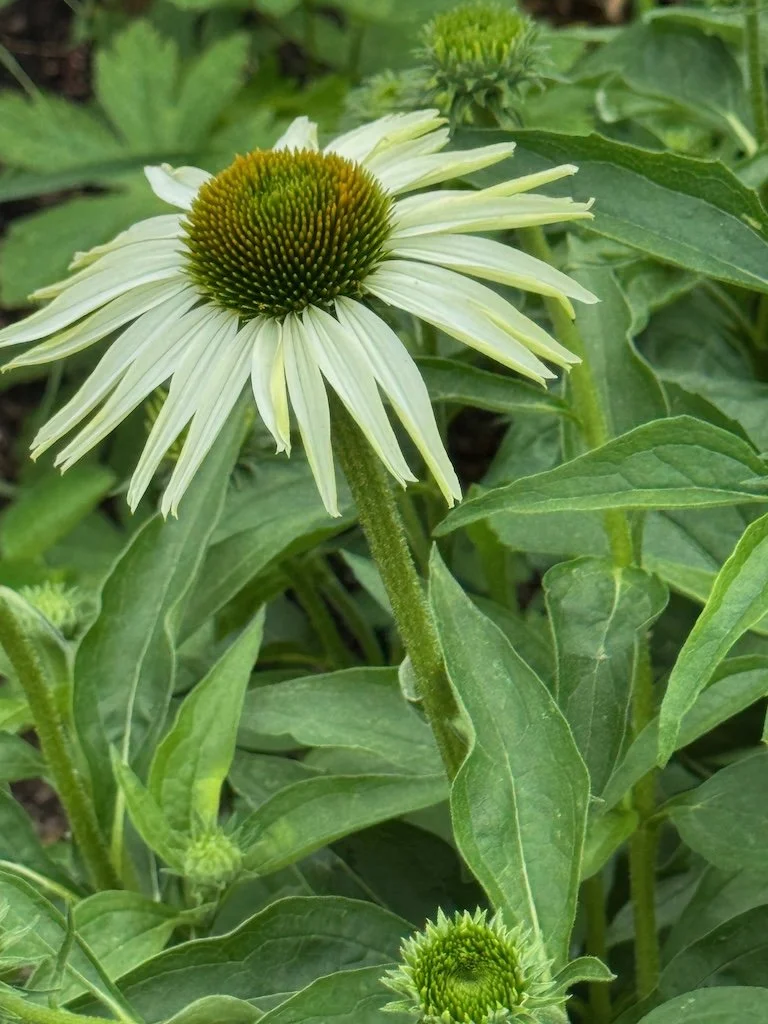
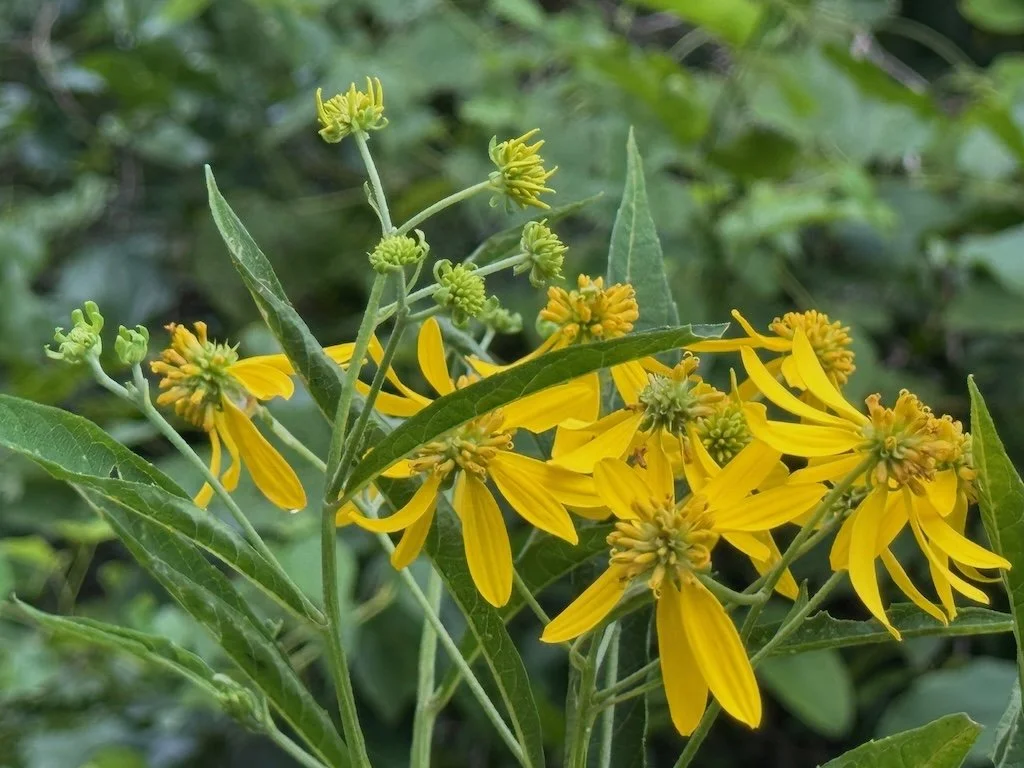
Of course I couldn’t resist taking some closer photos – cone flowers, button bush, cup plant, and some mushrooms that reminded me of roasted marshmallows.

Missouri Botanical Garden – Part 1

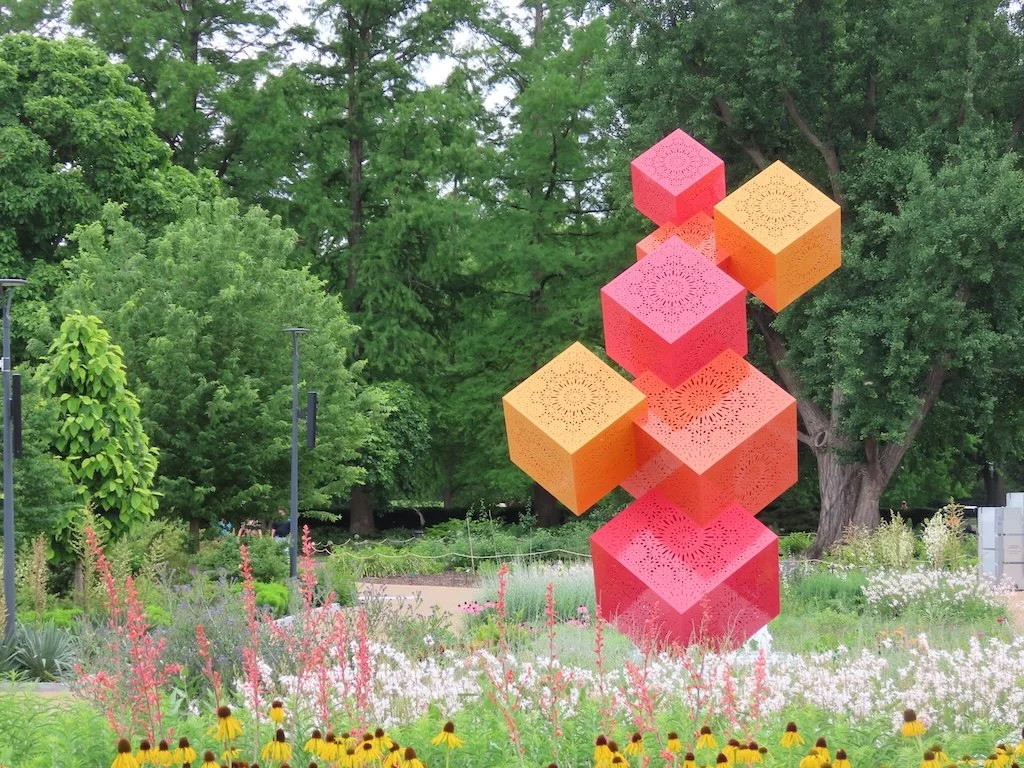
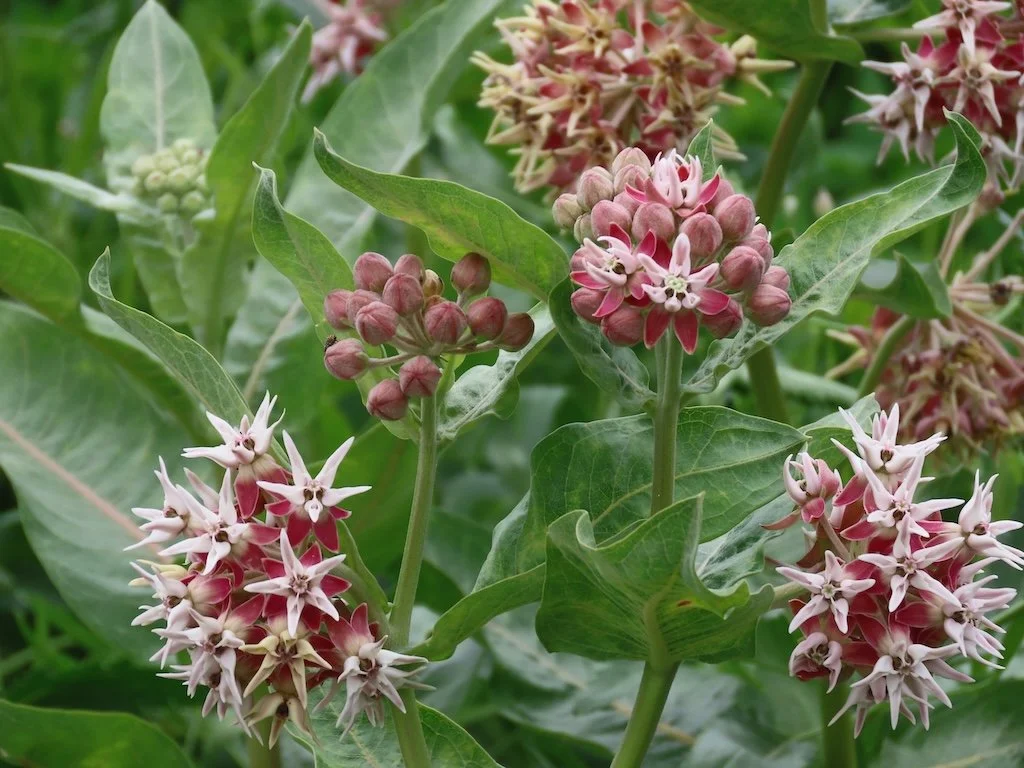
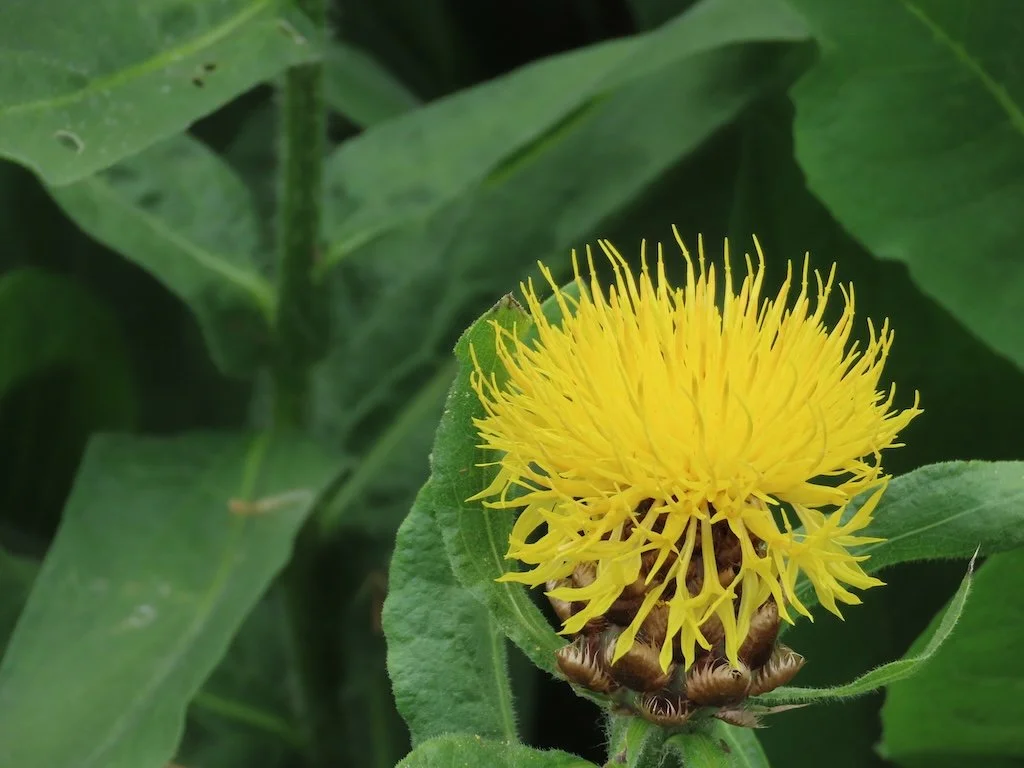
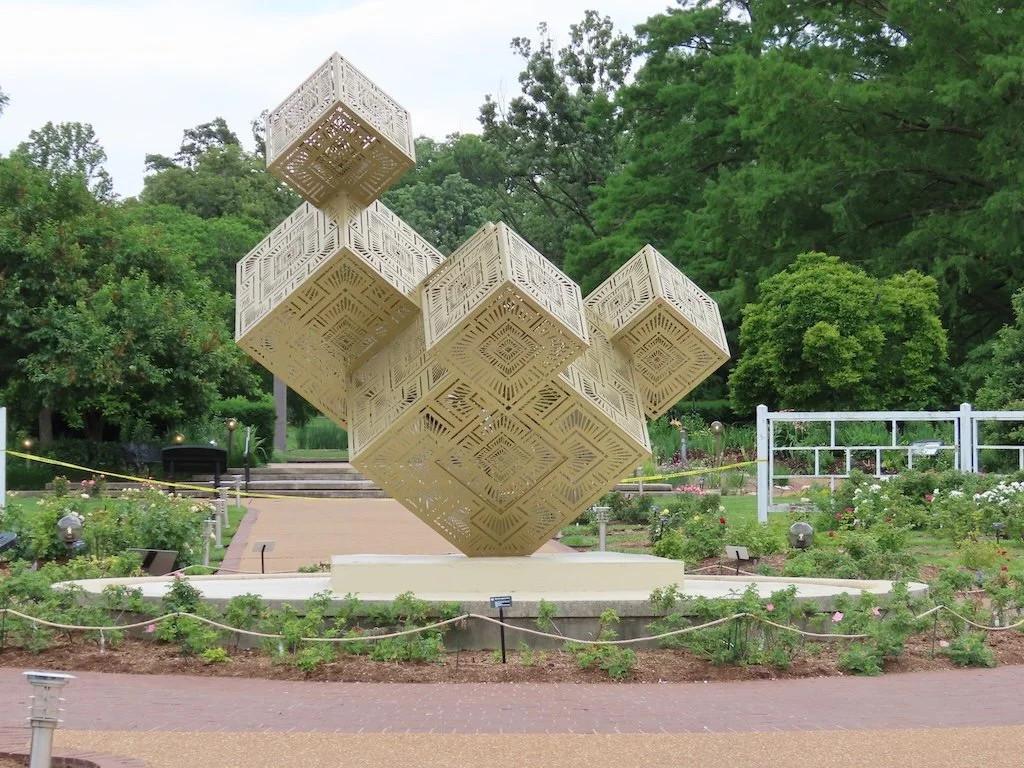
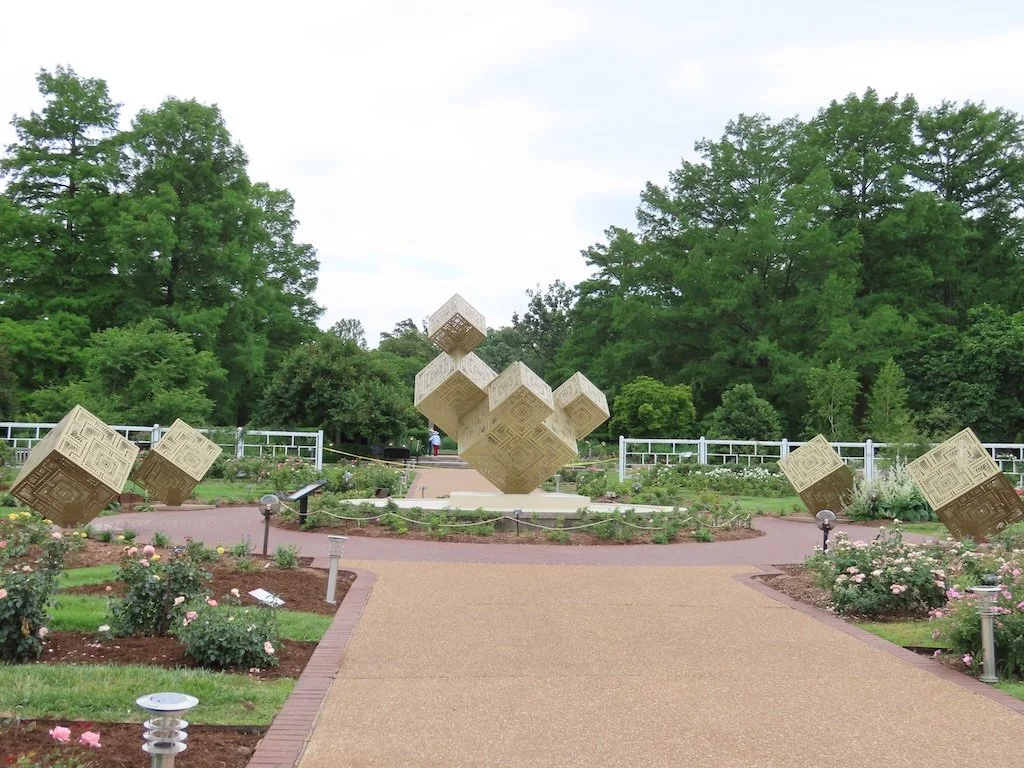
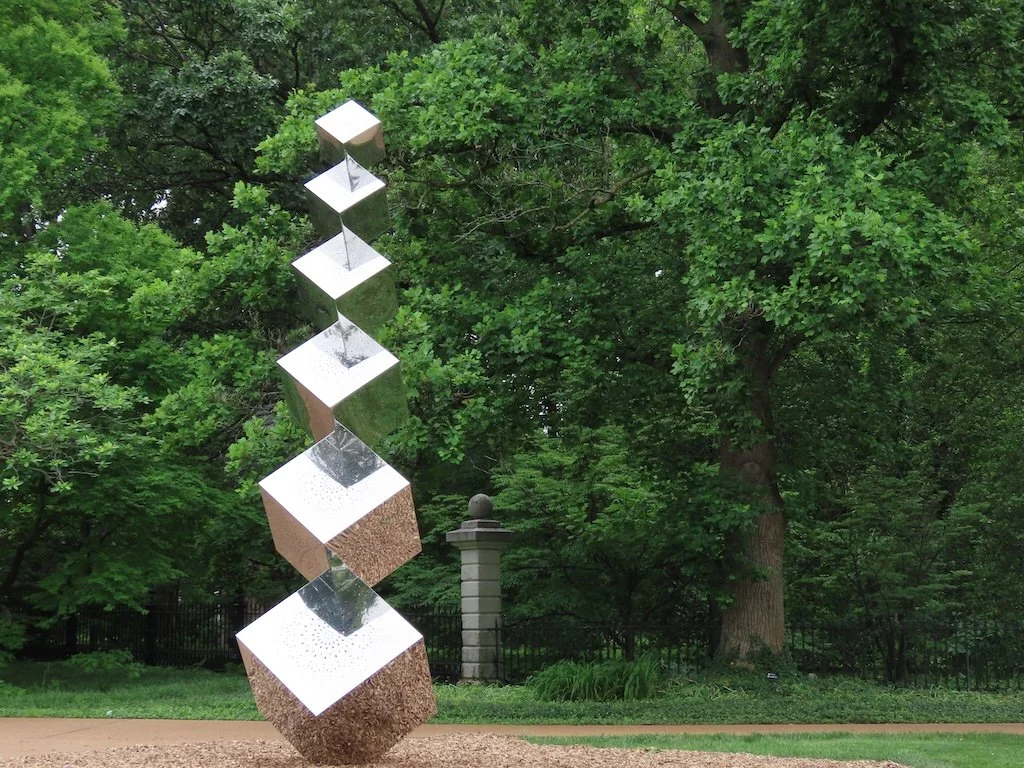
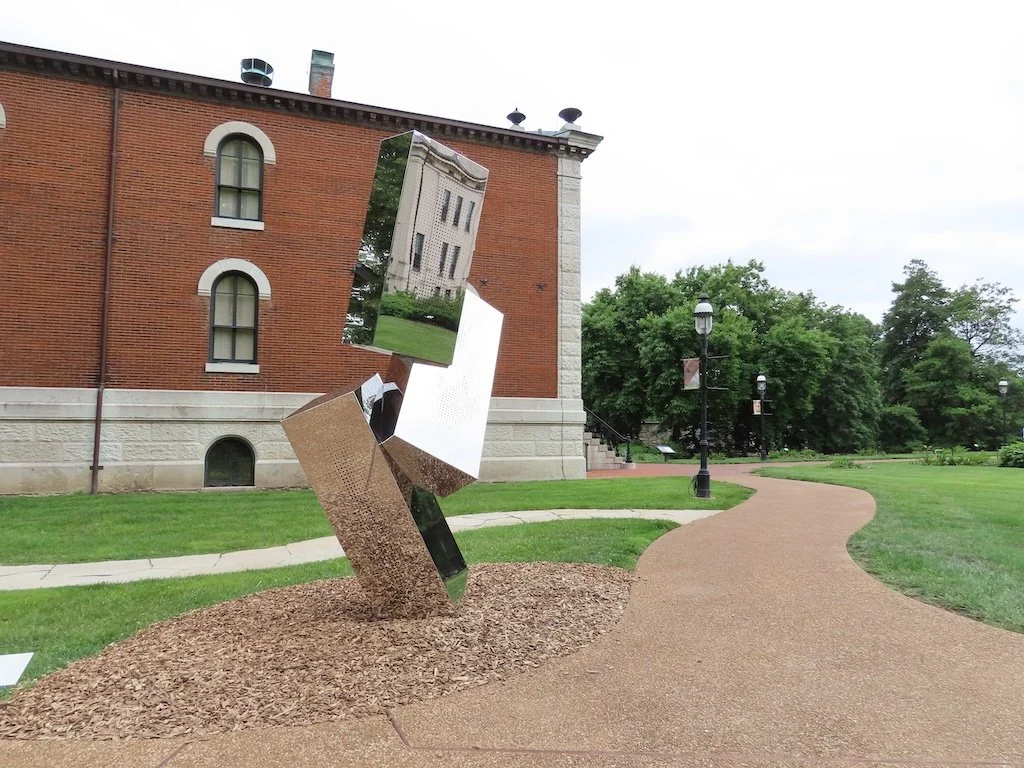
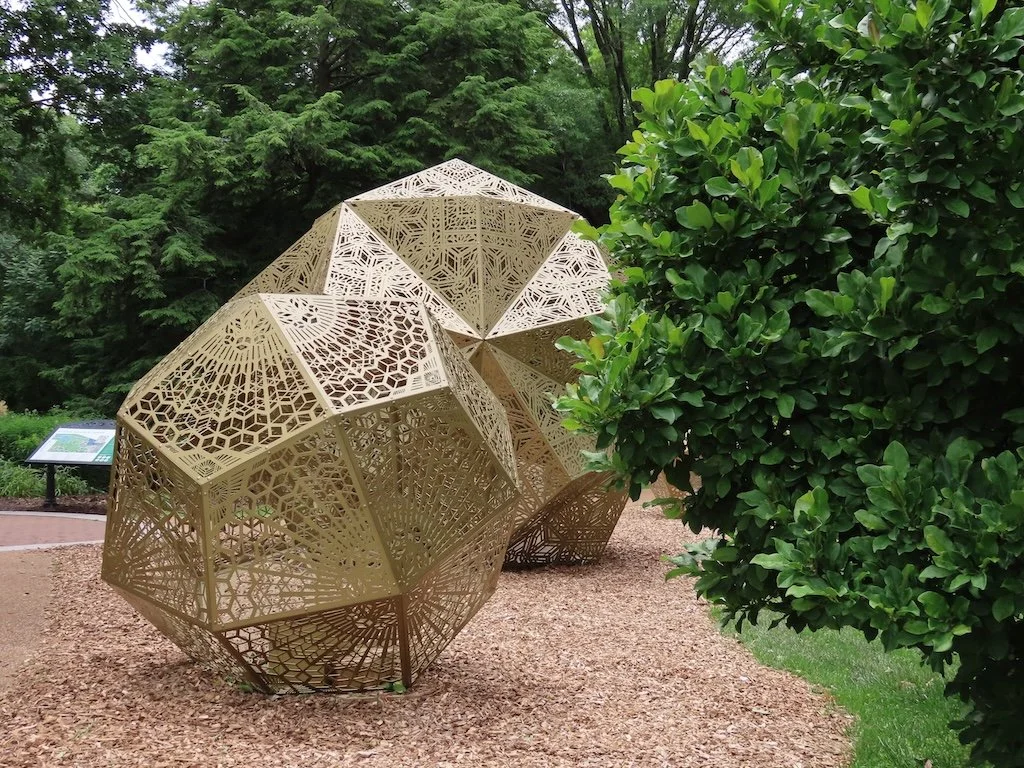
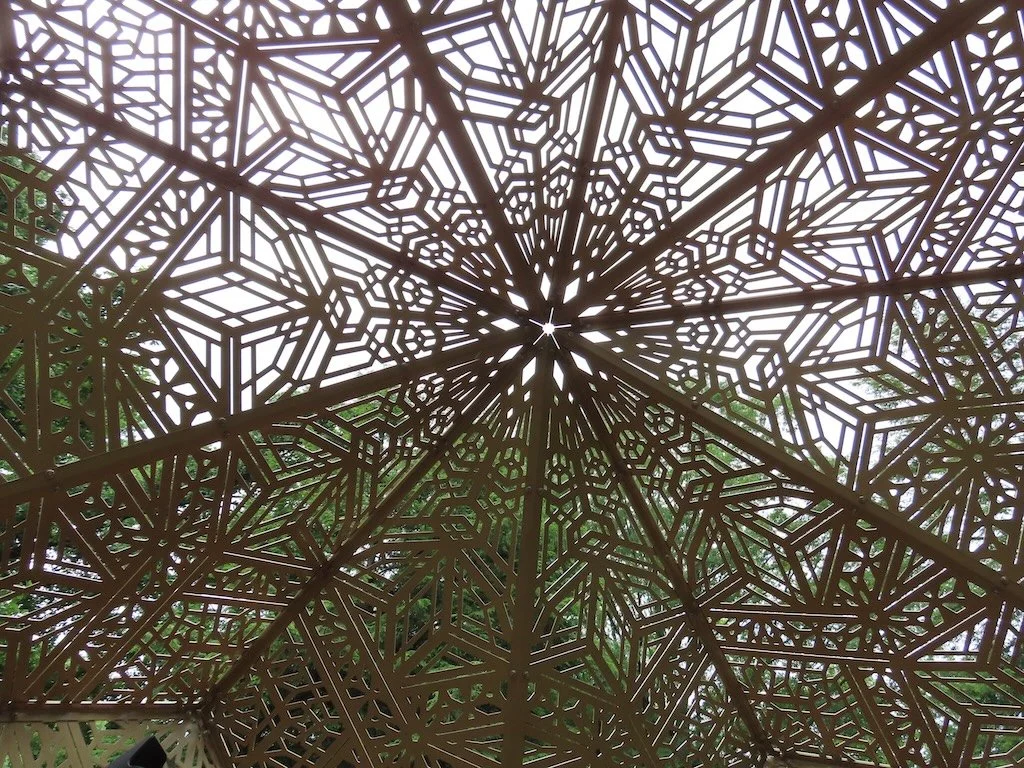
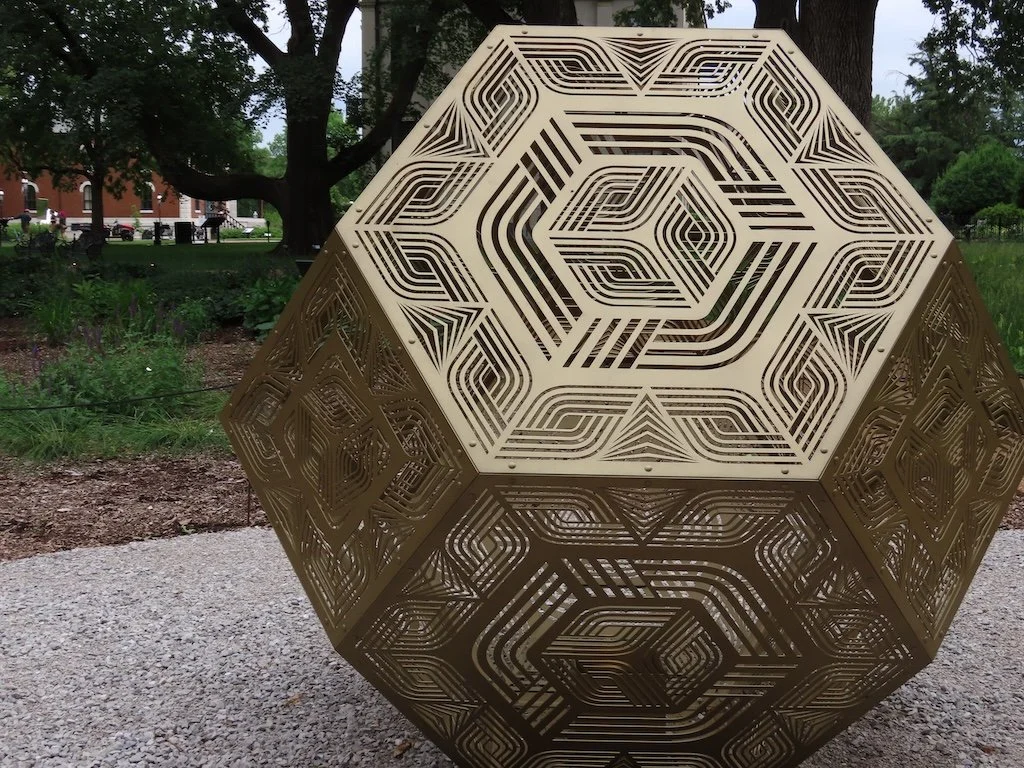
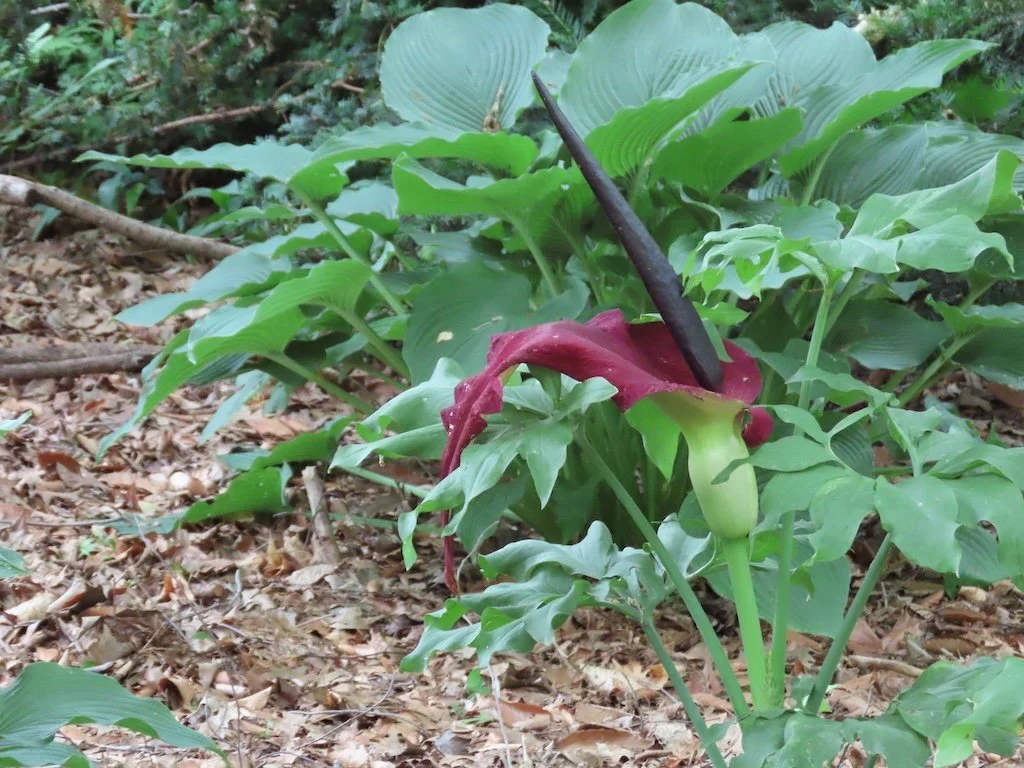
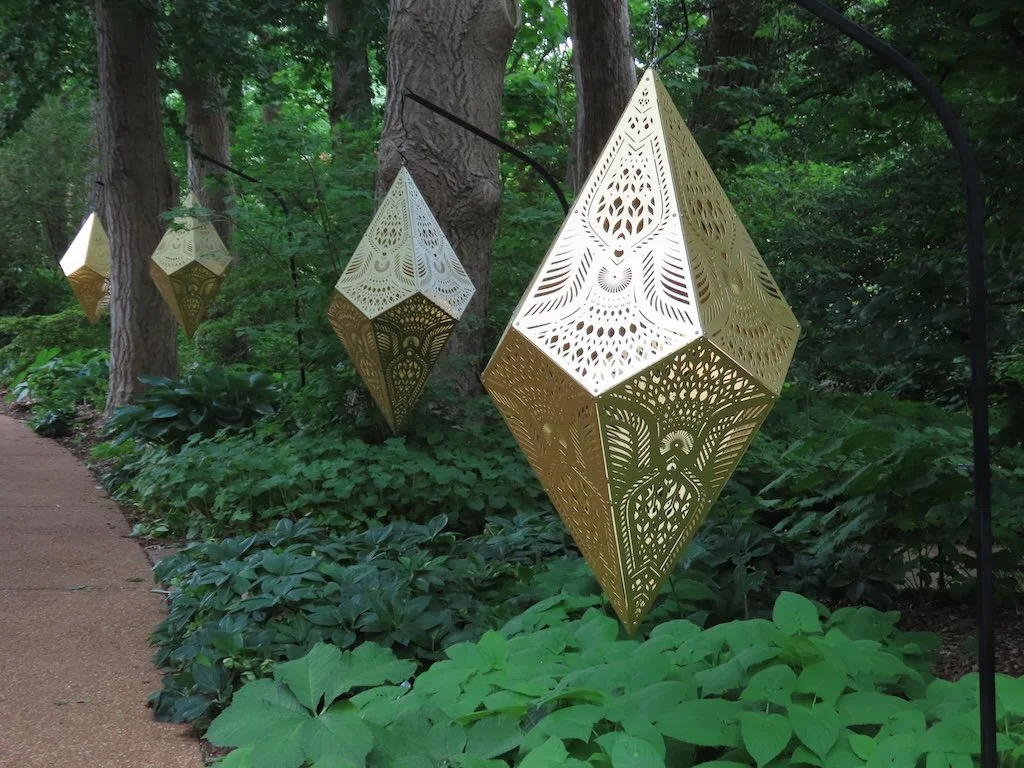
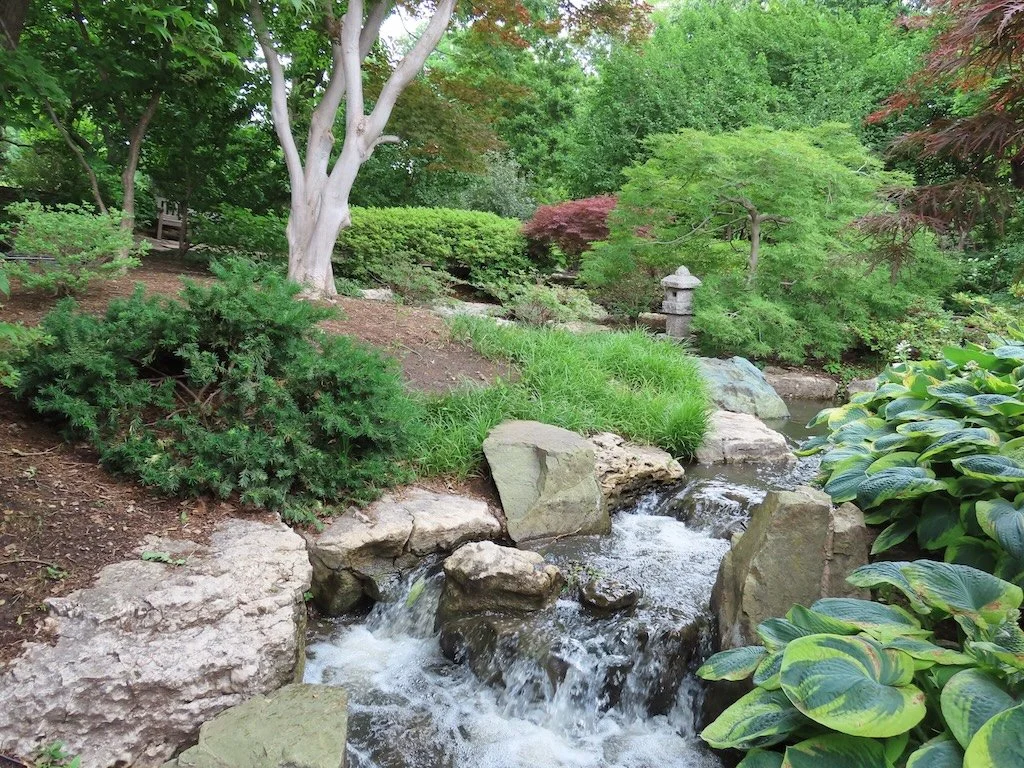
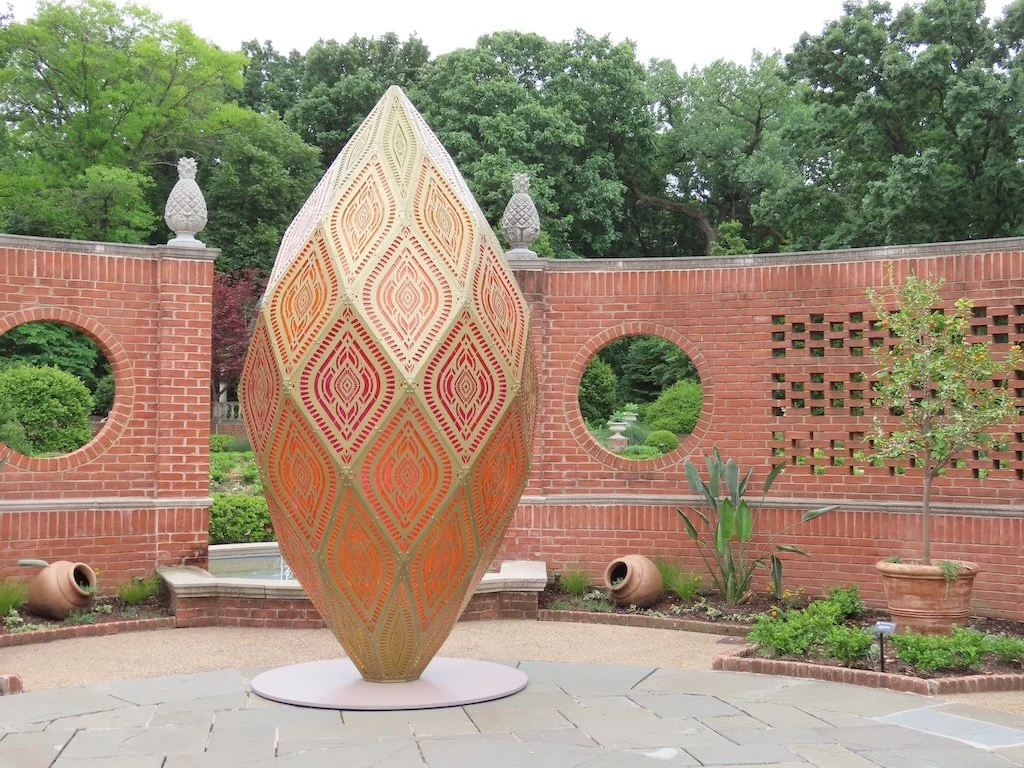
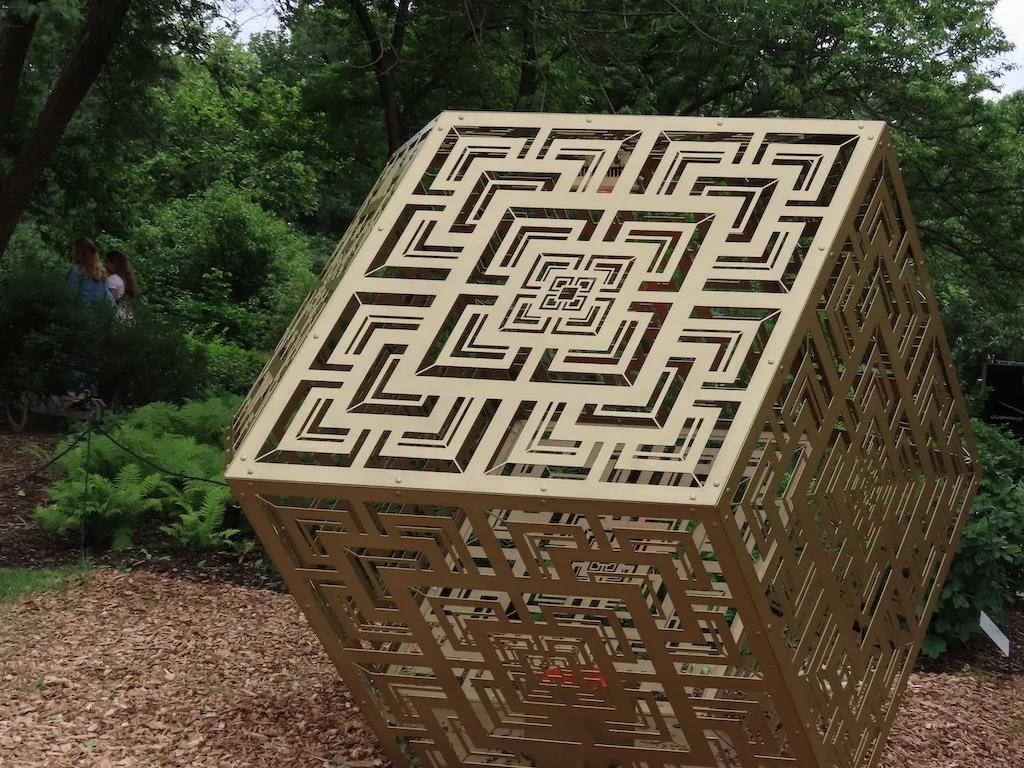
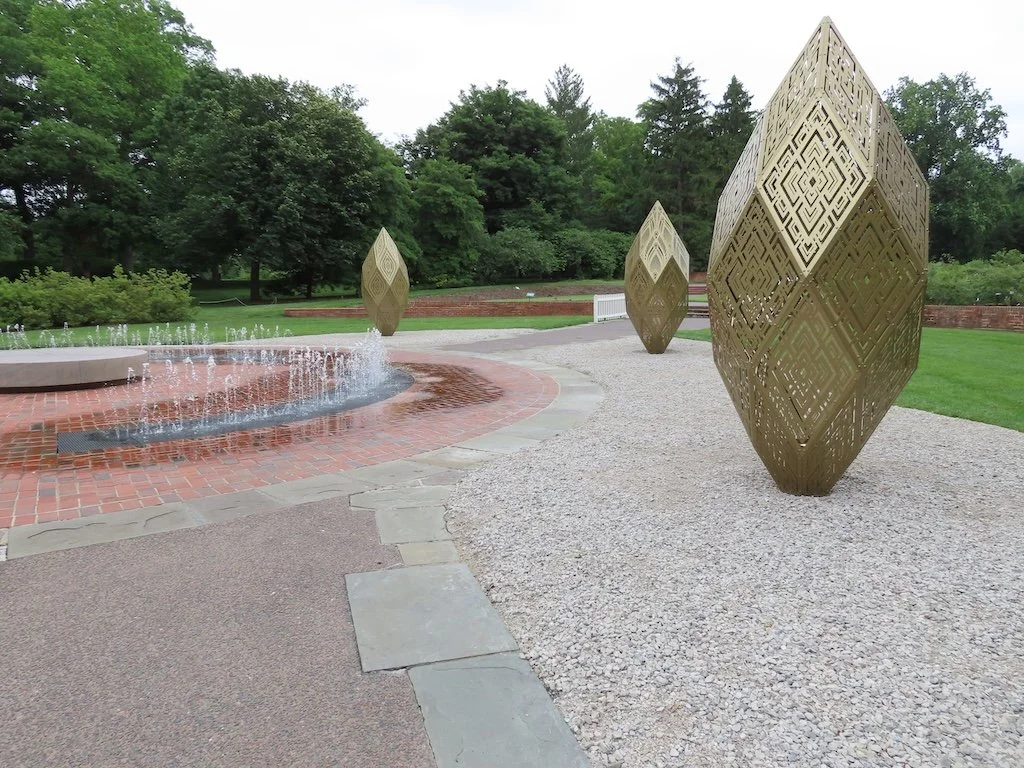
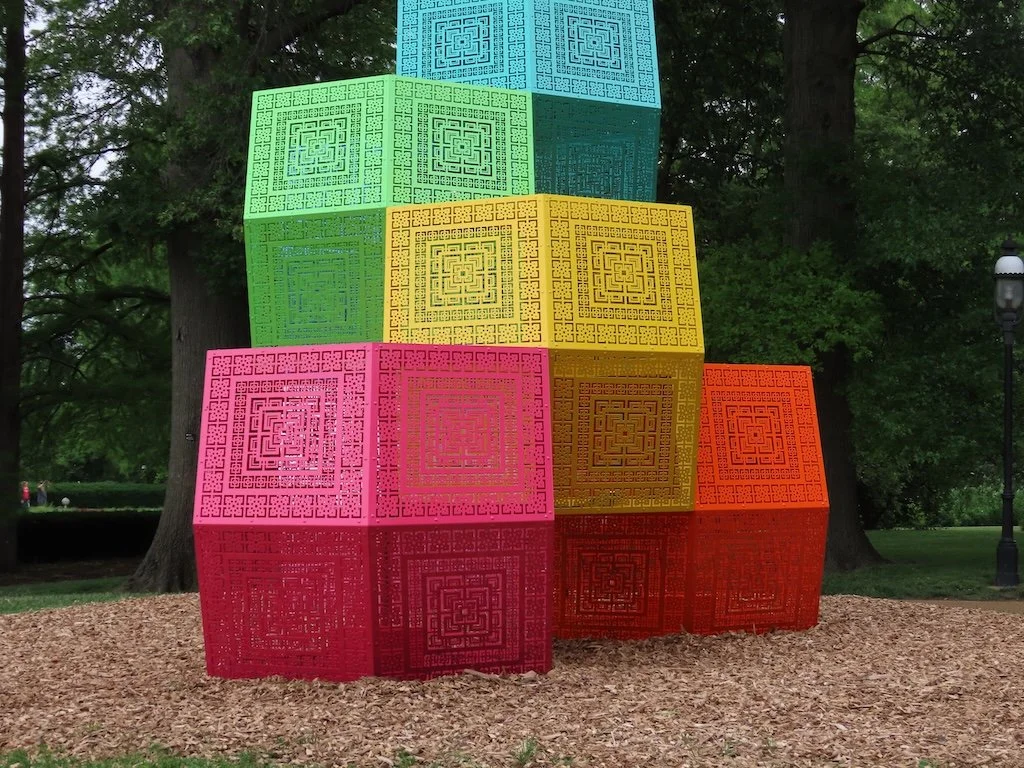
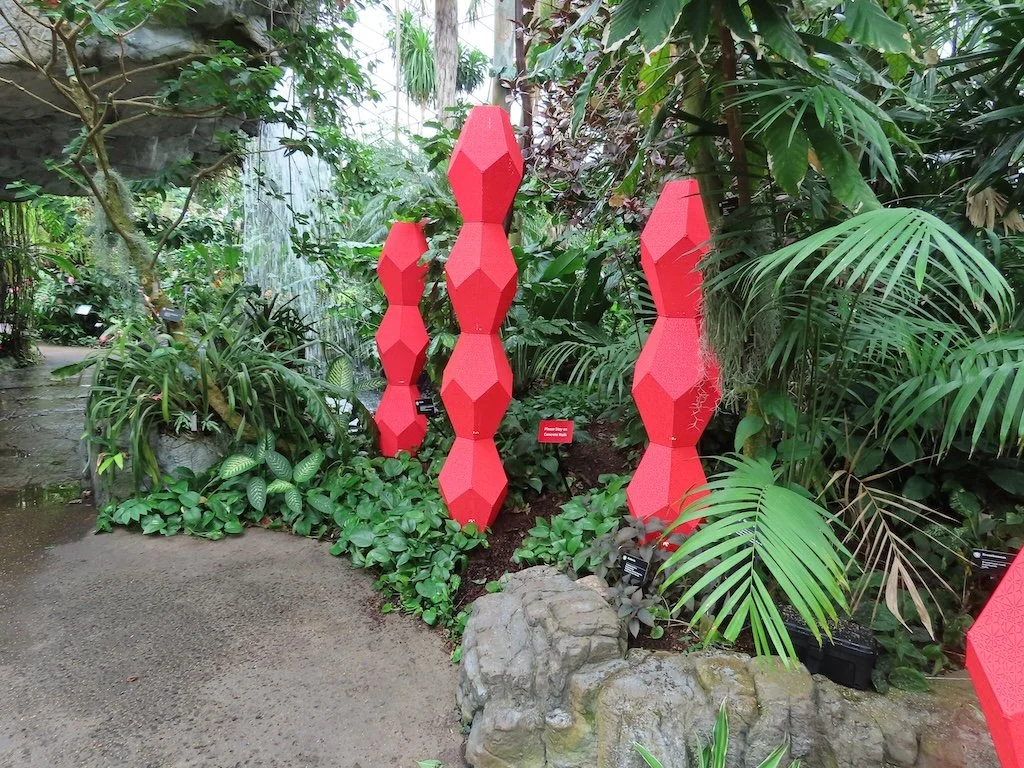
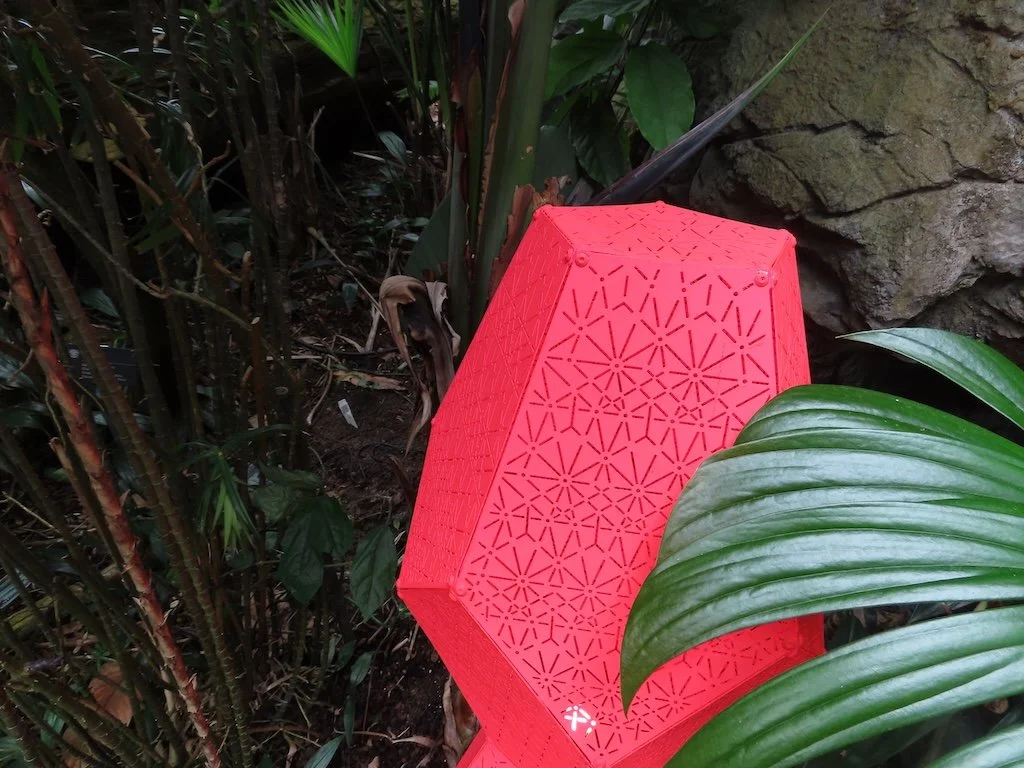
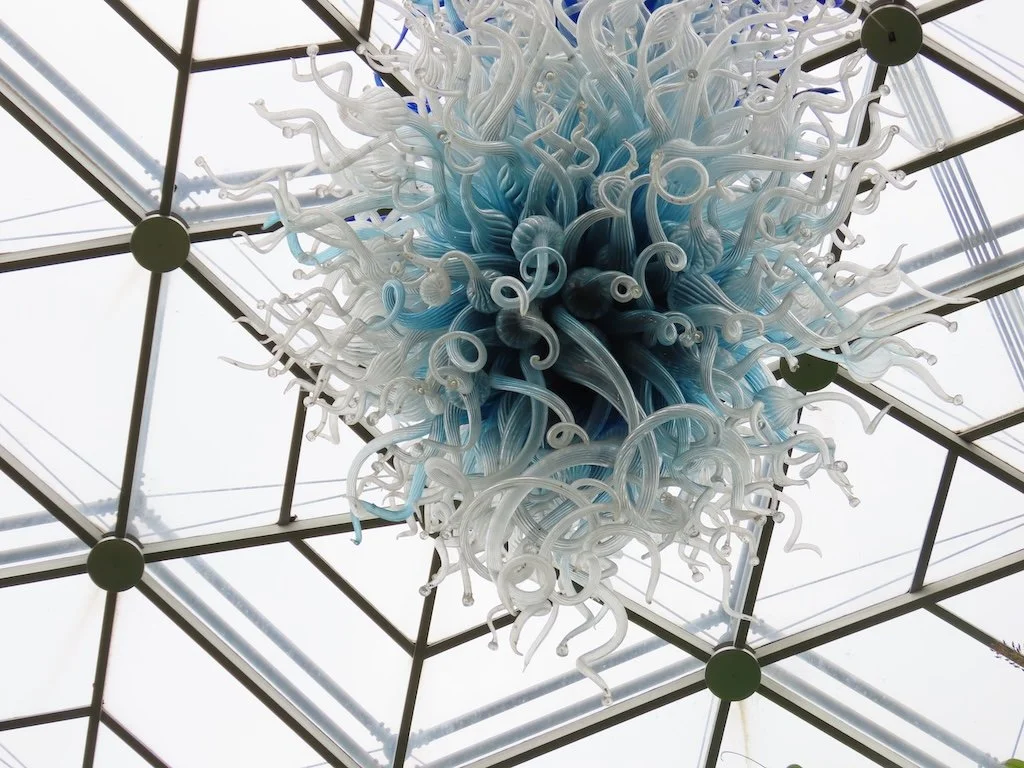
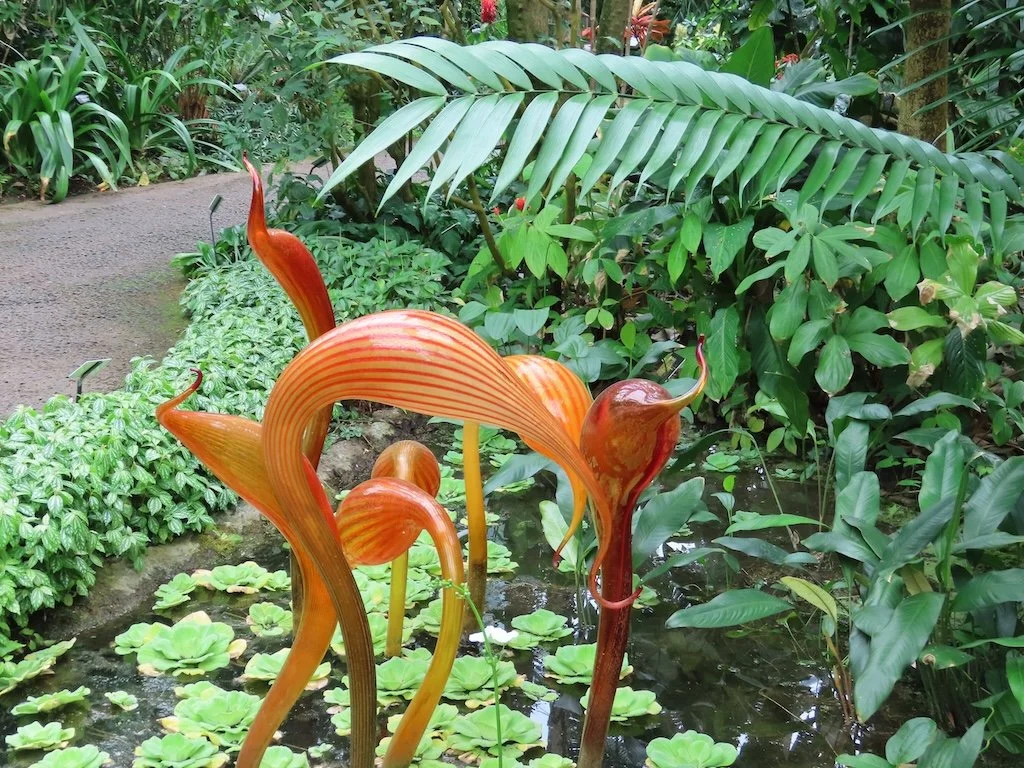
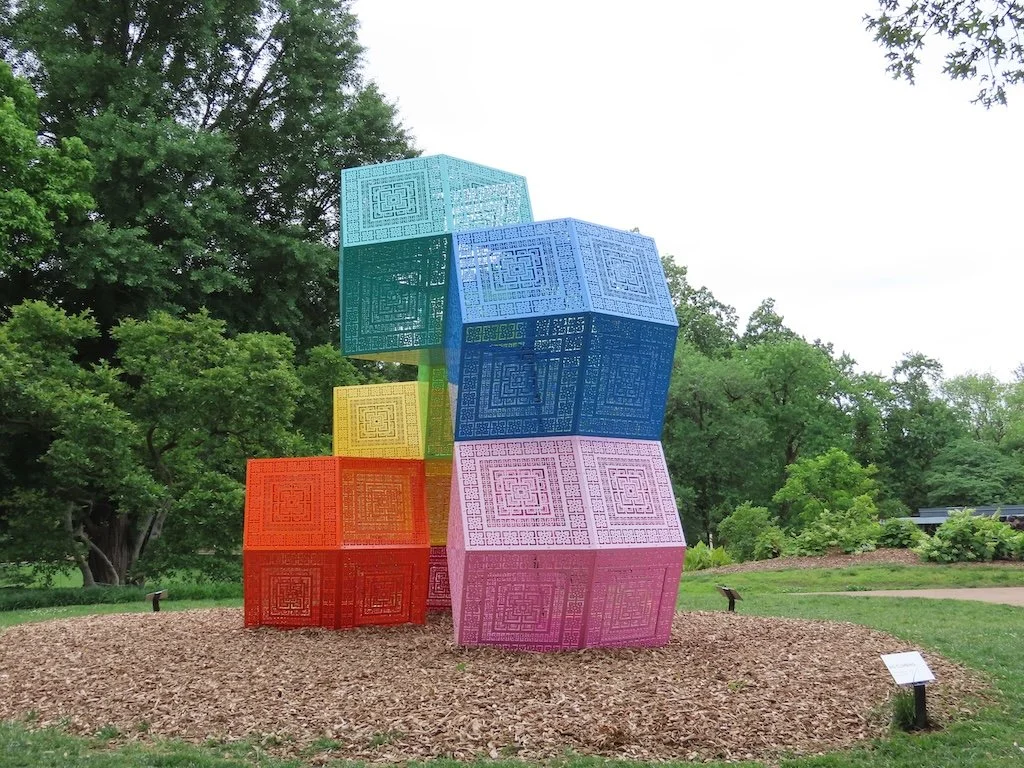
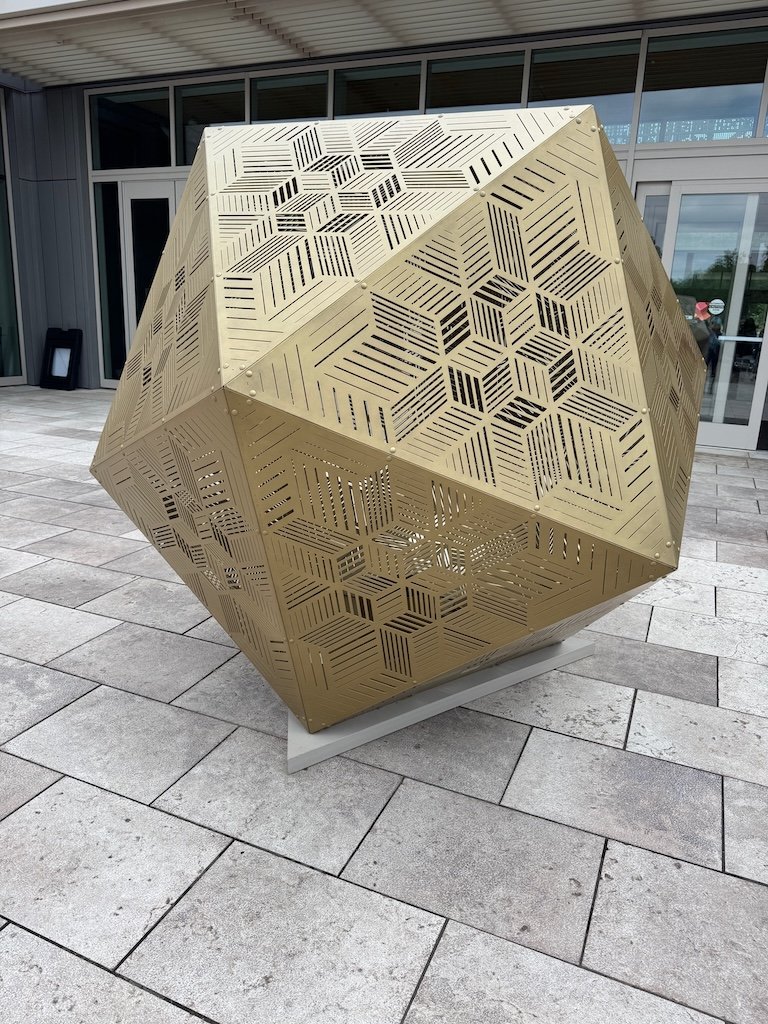
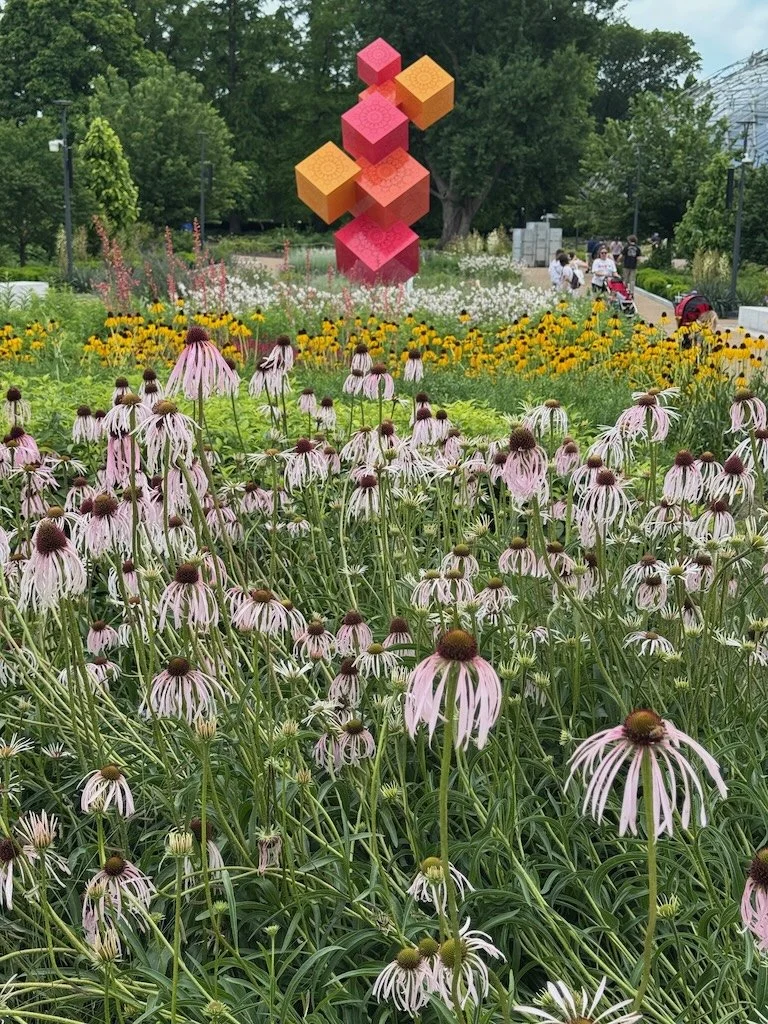
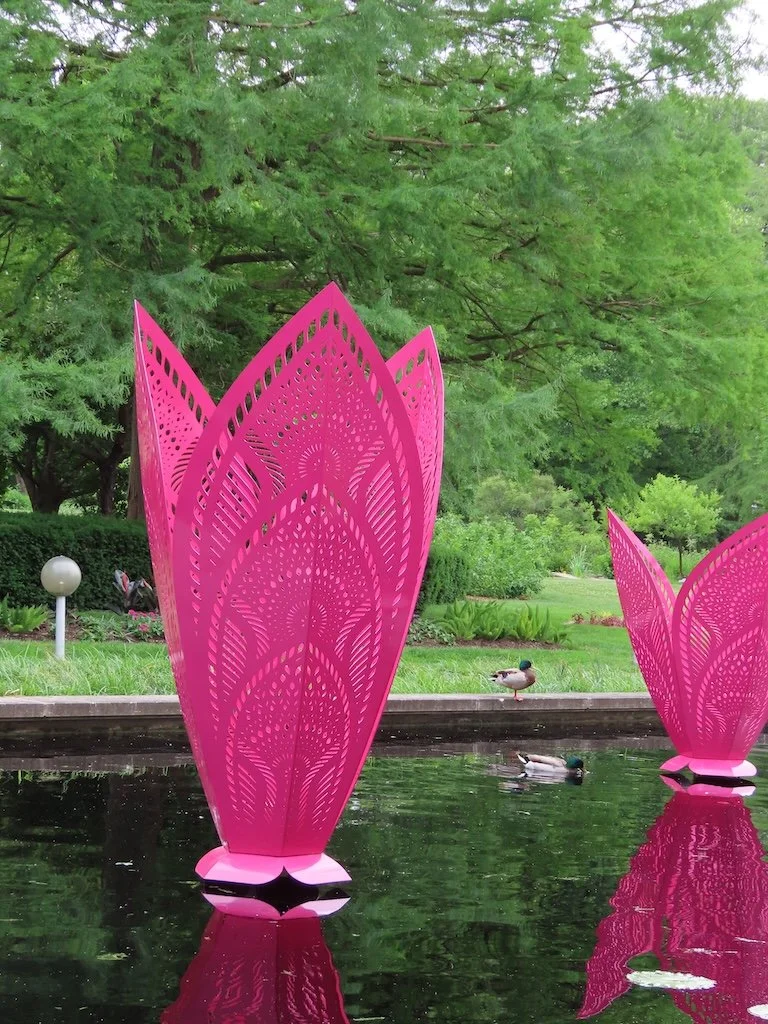
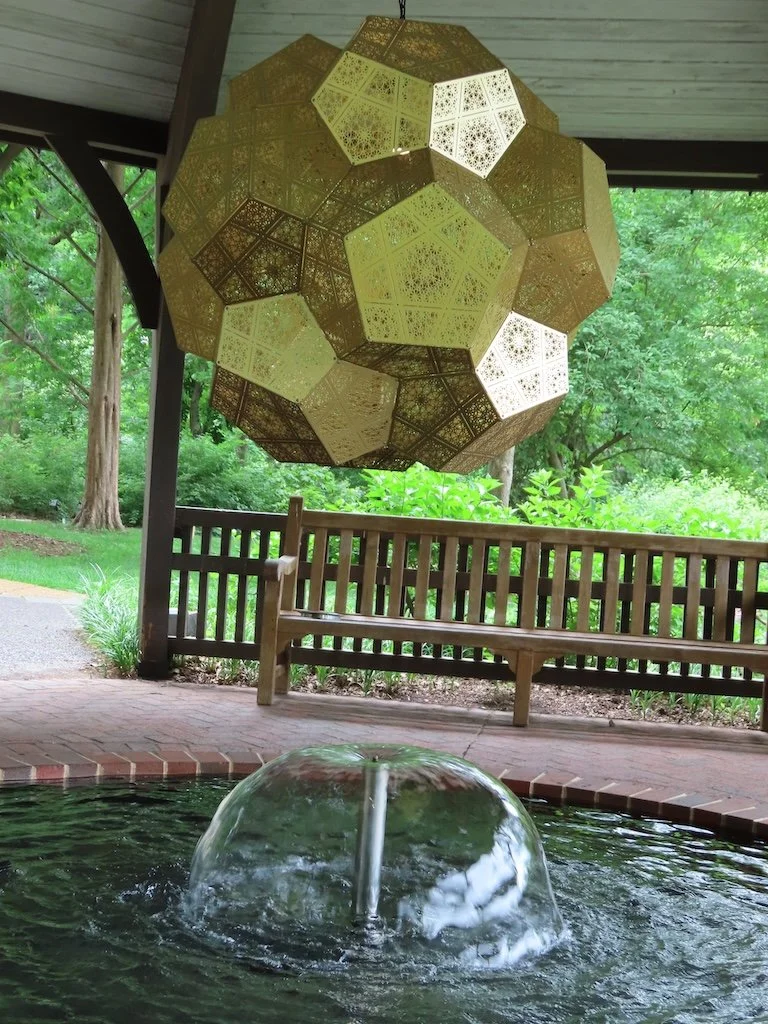
We made a road trip to the Missouri Botanical Garden in St. Louis to see the Patterns of Nature: Lightform exhibit….during an afternoon and then returned to see the forms at night. This post is about the daytime portion of our visit. The day was cloudy and stayed in the 60s. It was still bright enough for good photography. The first area we saw included a colorful sculpture and some native plants. We made our way around to see as many of the geometric shapes of the special exhibit as we could….even though I frequently was sidetracked by plants! I used my bridge camera (Canon Powershot SX70 HS) for the landscape pictures.

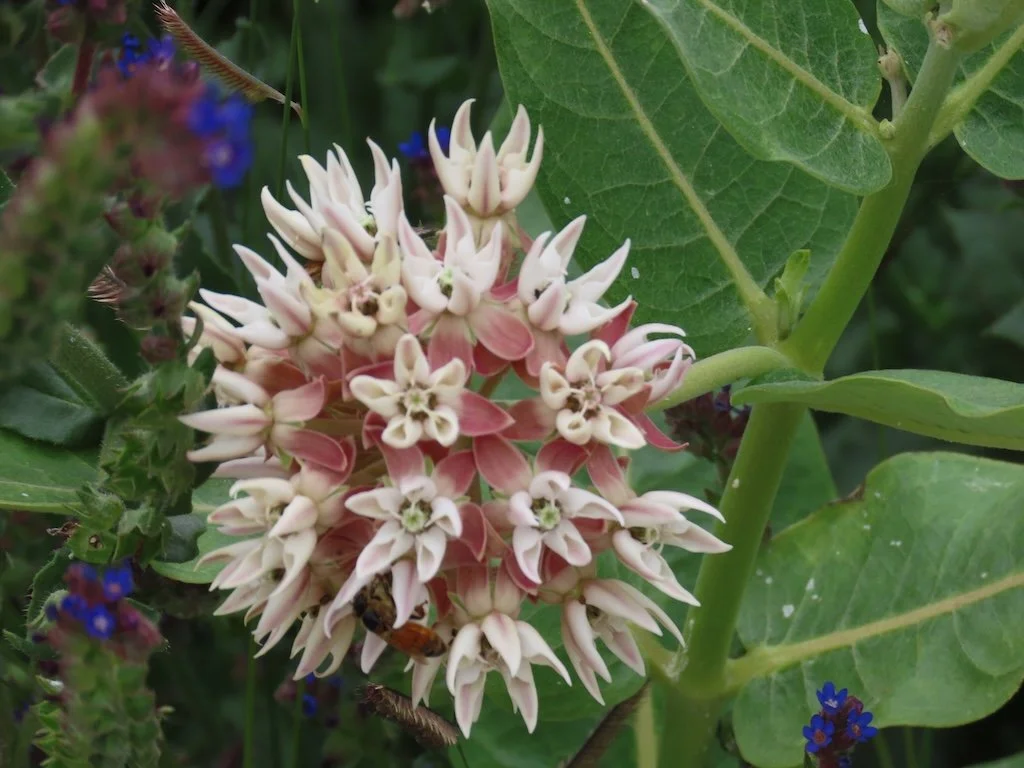
My phone (iPHone 15 Pro Max) does better with the close-up shots! I realized by the time we left to check into hotel that I would lighten my load for the evening and just bring my phone. It was good in the close confines of the conservatory for sure!

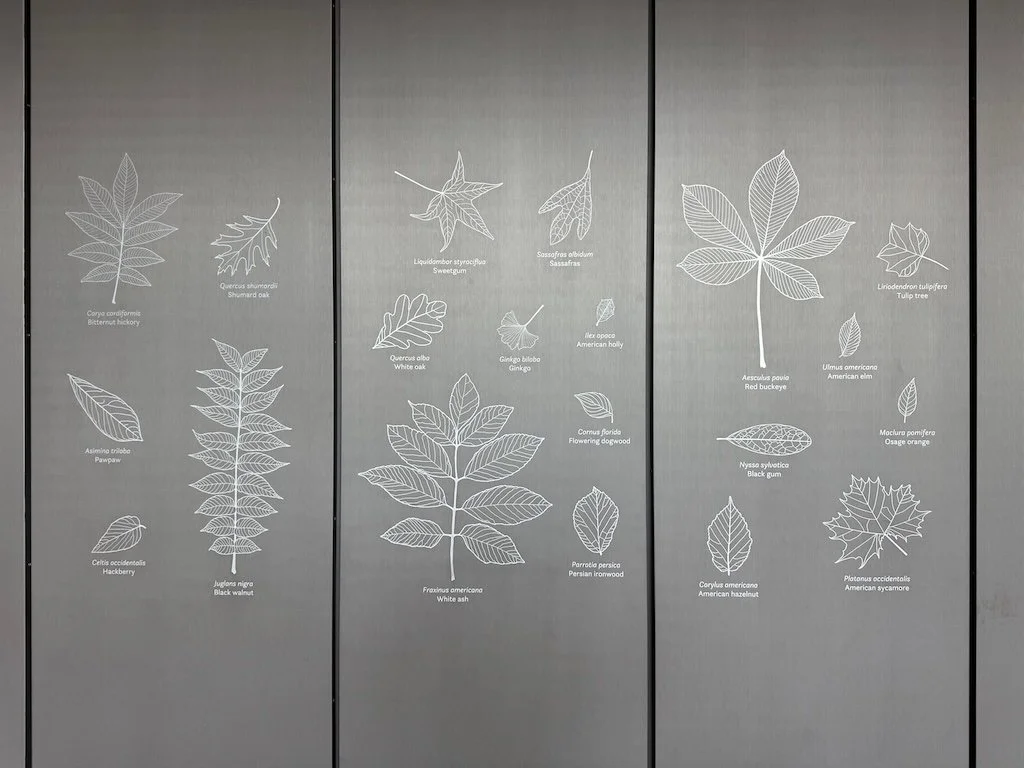
I took a picture of the wall in the visitor center that is a key for the leaf patterns in the flower of building. Most of them are natives!

Buying Native Plants for the Front Yard

The local nature center hosted two native plant vendors (Ozark Soul and Missouri Wildflowers Nursery) on a recent Saturday, and I bought the initial plants for my new front yard native plant garden. The oak chips have been in place since last fall, and the temperatures are warm enough to begin plantings. It was a damp morning, but my daughter helped by volunteering her time and her car; we loaded up three bins of plants.

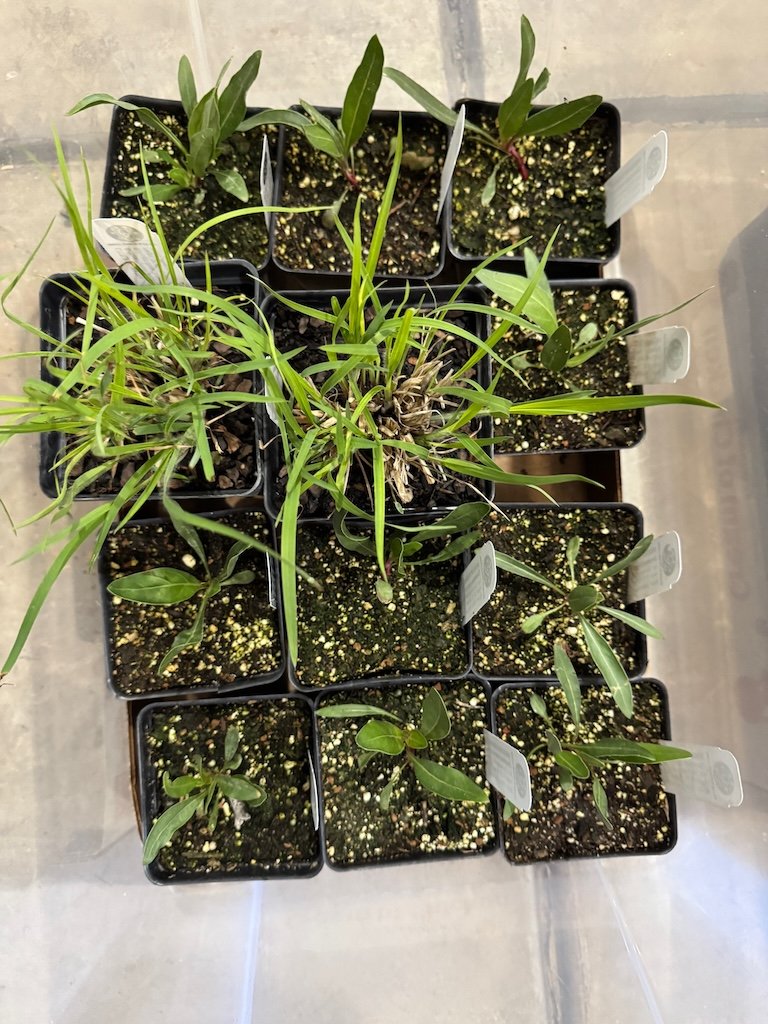
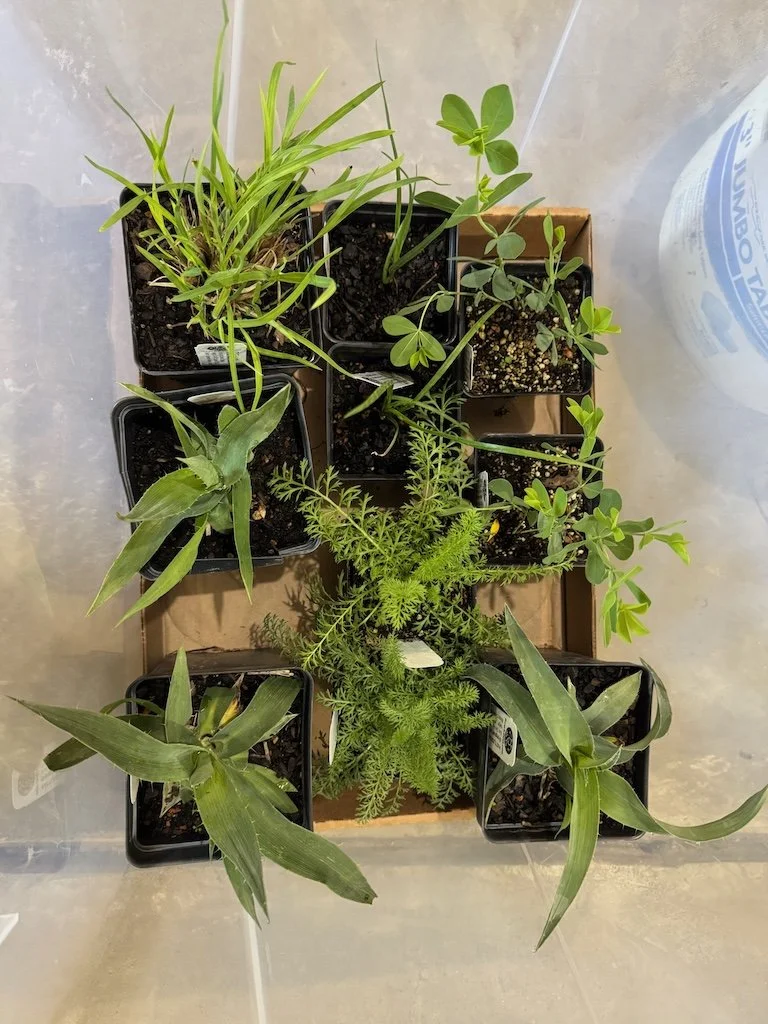
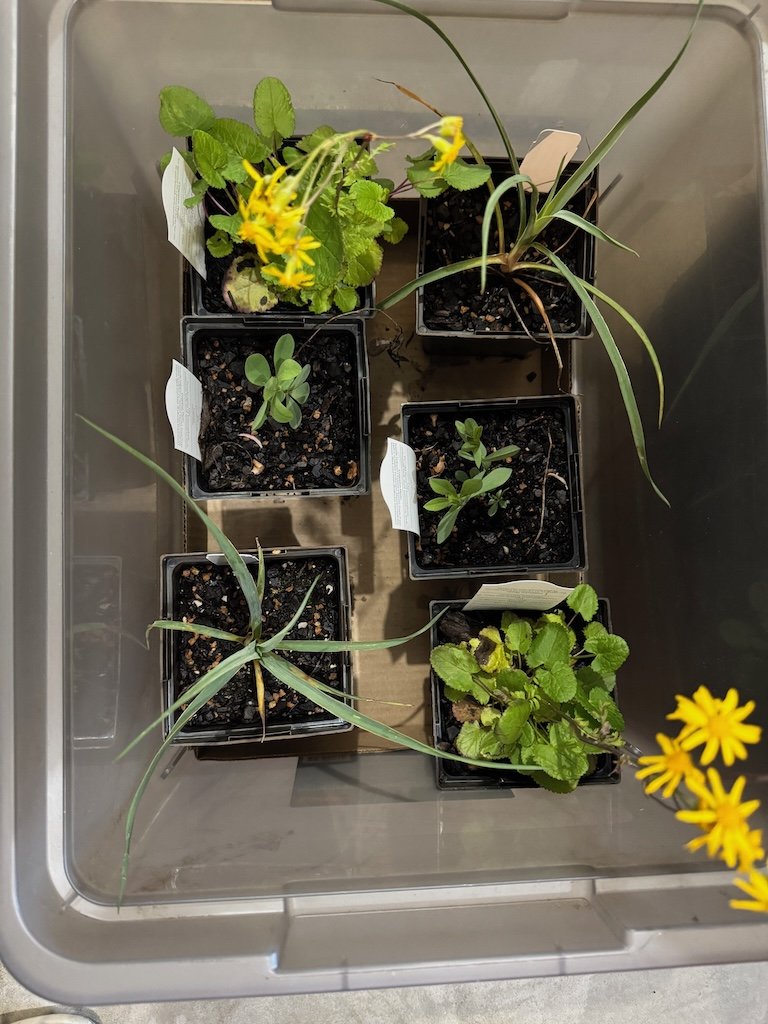
I took pictures of the bins when I got home and documented what I bought. I’m keeping a record of what I buy, plant…what survives.

In bin1 there are:

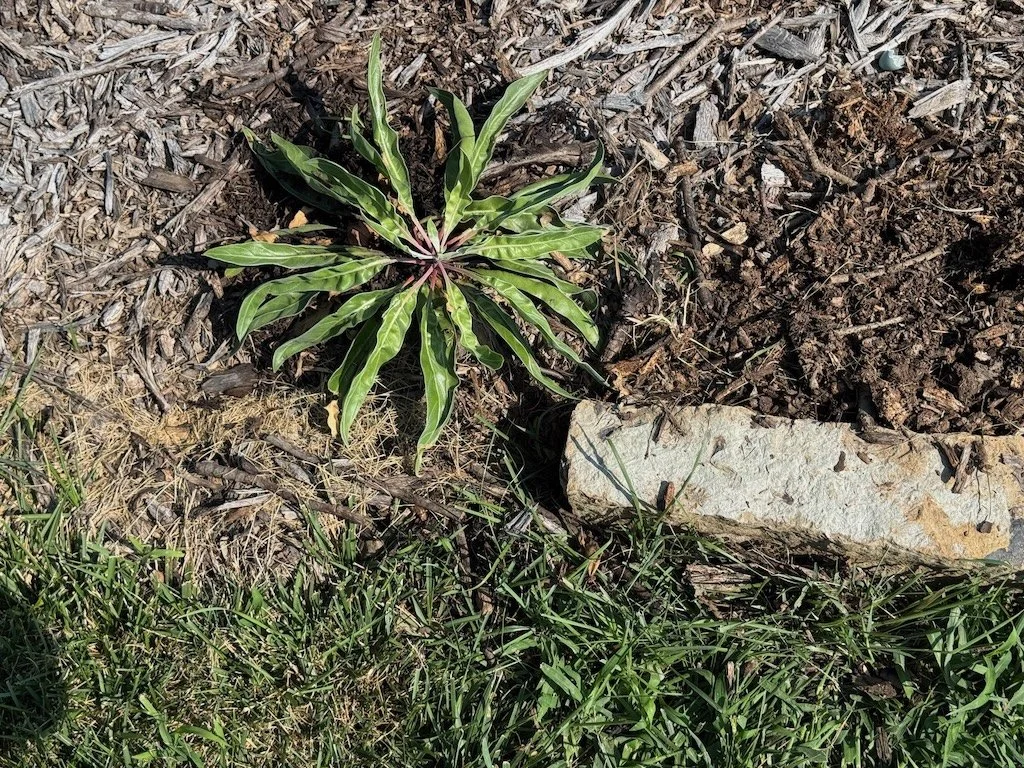
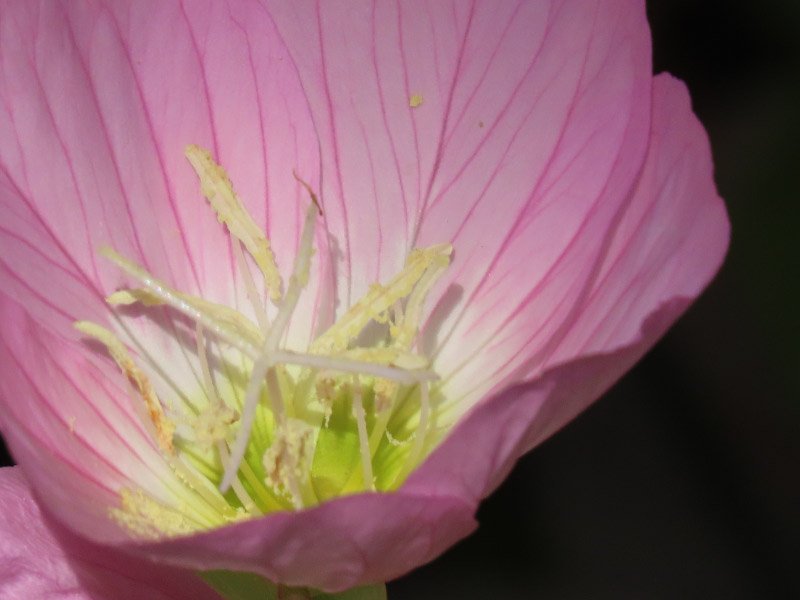
  • 10 Missouri Evening Primrose Oenothera macrocarpa The one near my mailbox is doing very well and these plants will become the ground cover level of my native plant garden.

  • 2 Little Bluestem Schizachyrium scoparium It will be the background for the lower part of the garden….and show up more after other vegetation has died back for the winter.

  • In bin 2 the rows from top to bottom are:

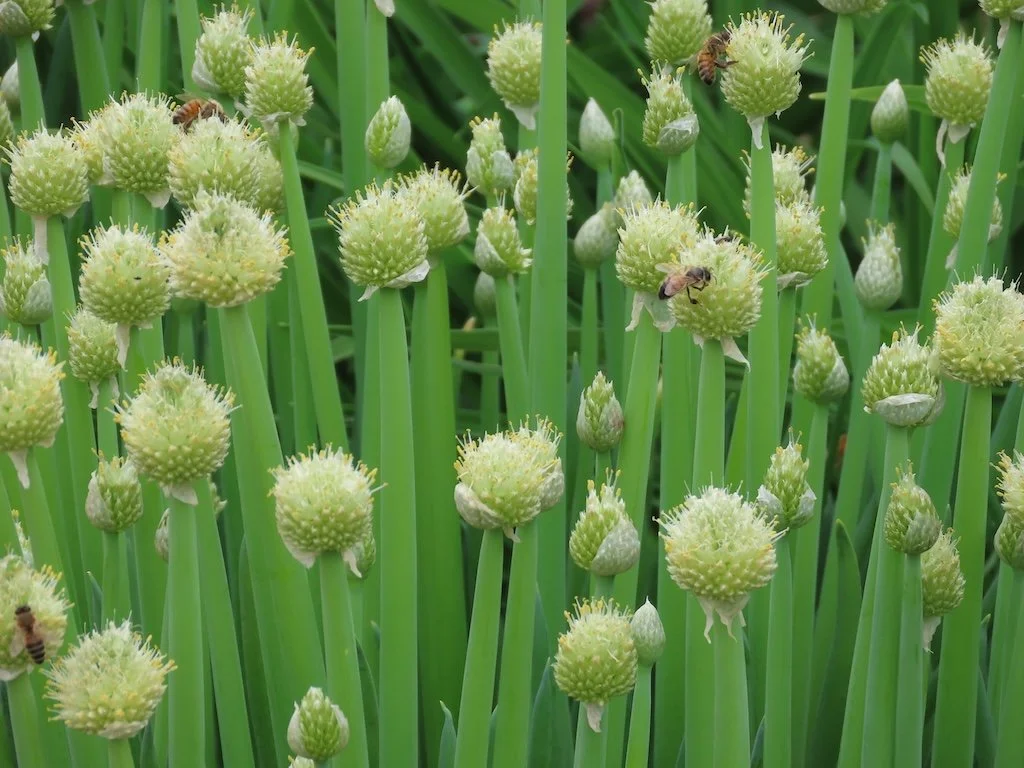
  • Little Bluestem Schizachyrium scoparium, Nodding Onion Allium cernuum, Wild Blue Indigo Baptisia australis

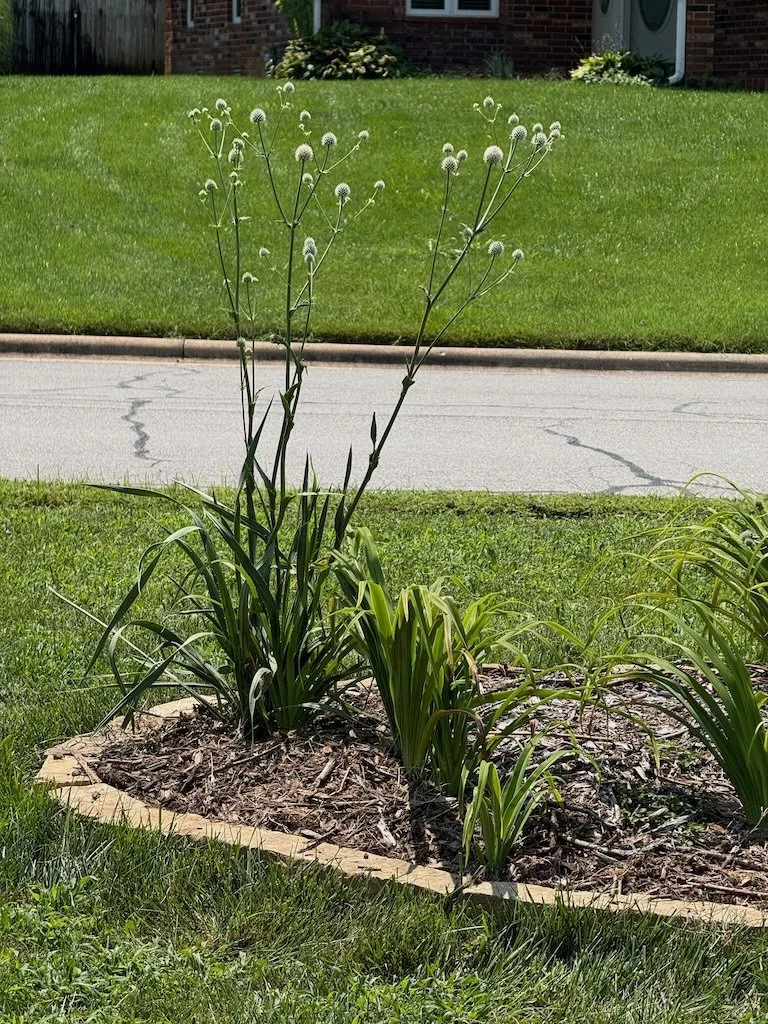
  • Rattlesnake master Eryngium yuccifolium, Nodding Onion Allium cernuum, Wild Blue Indigo Baptisia australis

  • Rattlesnake master Eryngium yuccifolium, Yarrow Achillea millefolium, Rattlesnake master Eryngium yuccifolium

In bin 3 the rows top to bottom are:

  • Golden ragwort Packera aurea, Soapweed yucca Yucca glauca

  • 2 Cream wild indigo Baptista bracteate

  • Soapweed yucca Yucca glauca, Golden ragwort Pakera aurea

My next post will be about planting these into the garden. There are 28 plants in all.

There is another native plant sale at the botanical garden in early May. Hopefully these plants will be thriving, and I can focus on filling in with the plants that will bloom into the fall…provide food for pollinators at the end of the season.

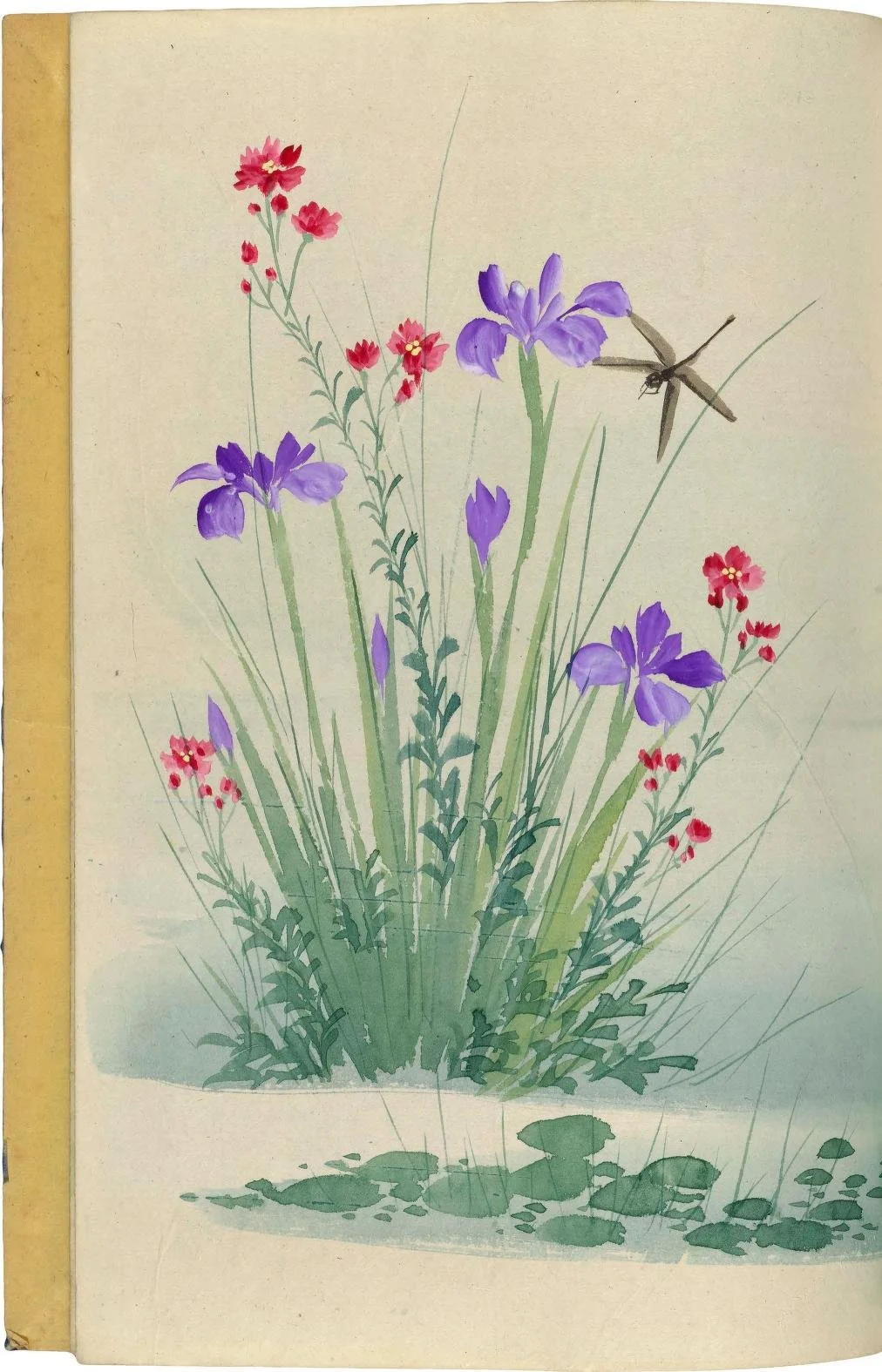
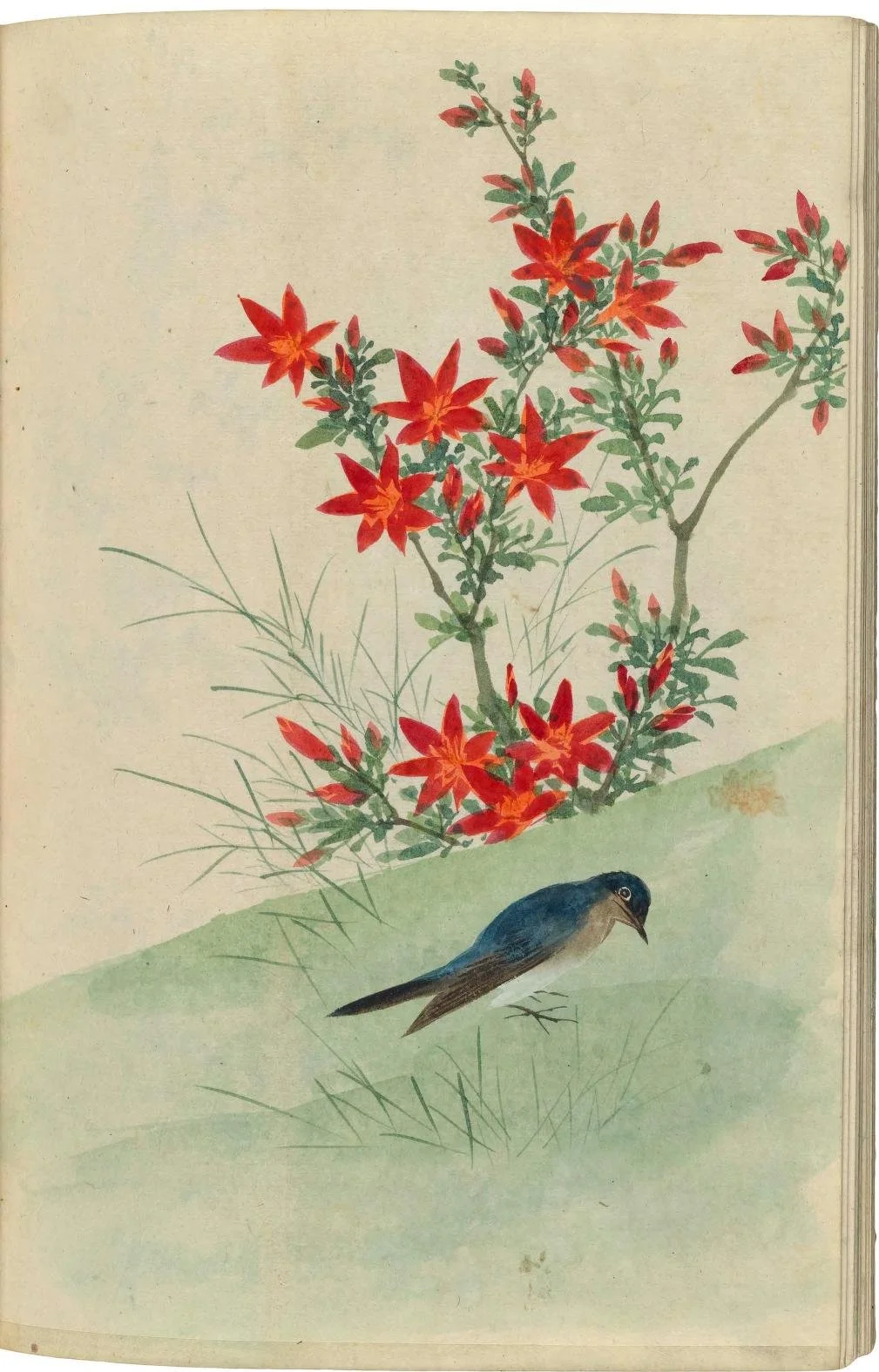
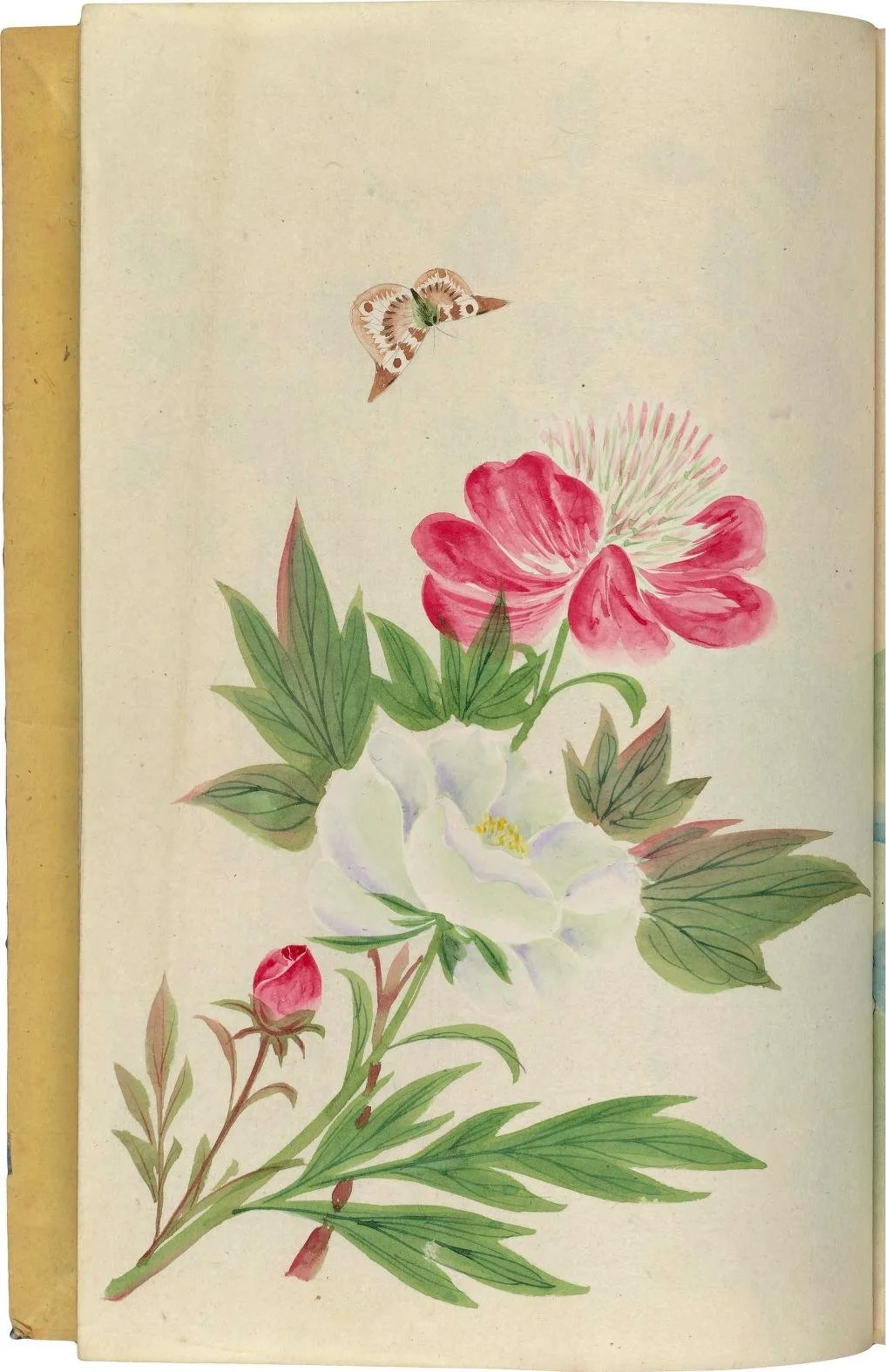
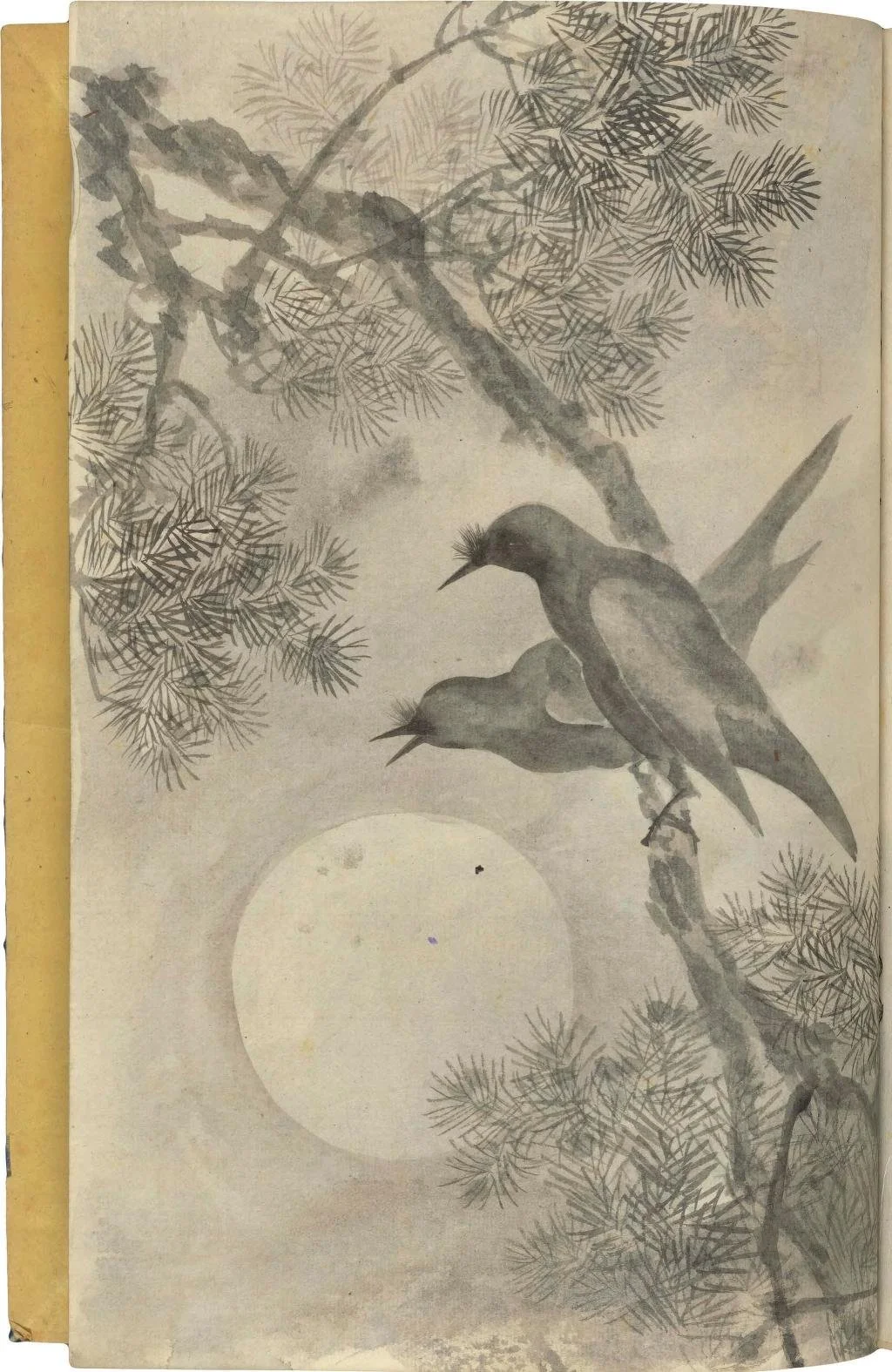
Album of flowers and birds

My ‘book of the week’ selection is a manuscript of 50 tempera, water- and bodycolor drawings. The original is held by the Oak Spring Garden Foundation, Upperville, Virginia and is available online at Internet Archive; the foundation is evidently working to digitize the collection accumulated by Rachel (“Bunny”) Lambert Mellon in the Oak Spring Garden Library.  This manuscript is not dated and the authors are unknown but it has Chinese circular red stamps on the first drawing and the back endpaper so is attributed generically to ‘Chinese School.’

 Images of plants and wildlife (insects, birds) always appeals to me. I like the artistic techniques of the collection as well. Enjoy browsing the book online!

 Album of flowers and birds

Gleanings of the Week Ending June 21, 2025

The items below were ‘the cream’ of the articles and websites I found this past week. Click on the light green text to look at the article.

From Dead Dirt to Healthy Soil in 7 Simple Steps – The articles from Leaf & Limb are always full of practical suggestions. I am doing all 7 of these steps in my yard!

A Large, Invasive Lizard Was Spotted in a California Park – An Argentine black and white tego. Another invasive...probably a pet that escaped or was released. Tegus have established populations in several parts of Florida, where they’ve been declared an invasive species. The lizards have also infiltrated southeast Georgia, and they have been spotted in Alabama, Texas, South Carolina and Louisiana.

Ultra-processed foods are everywhere — and they’re quietly raising health risks - The effects of UPFs can pile up over time, adding to the risk of heart attack, stroke and other serious health issues by raising blood pressure and blood sugar levels. While ultra-processed foods include obvious culprits like potato chips, candy and frozen pizza, there are also some that people may believe are good for them, such as packaged granola bars, sports drinks and fruit-filled yogurt.

The hunt for Marie Curie's radioactive fingerprints in Paris - Marie Curie worked with radioactive material with her bare hands. More than 100 years after her groundbreaking work, the lingering radioactive fingerprints she left behind are still measurable.

5 simple (and cheap) things to make your house use less energy - Climate solutions for reducing home energy use can be extremely simple — and sometimes even free.

When Rivers Take a Weird Turn – Two examples where water (river) flows in unexpected ways…with satellite images from Landsat 9 of the two areas.

6 feel-good exercises to alleviate sore, achy feet – Some of these were new-to-me. I’m trying them all!

Is it better to neglect your garden? – Maybe…except for stepping in strategically to keep invasives from taking over. My yard is a work in progress but the goal it to make changes that mean it will require less and less intervention over time.

Sequoia And Kings Canyon National Parks' Giant Sequoia Trees - Giant sequoia trees can live to be more than 3,000 years old! Large giant sequoias often owe their size to rapid growth rather than age, so an old giant sequoia will not necessarily be the largest specimen. While these giant trees are more resistant to threats, they are not immune. Climate change influences the growth and survival of sequoias, particularly in the form of droughts with unusually high temperatures known as “hotter droughts.”

5,000-Year-Old Bread Buried in Bronze Age House - The flatbread, which measures, five inches wide and one inch thick, is among the earliest known baked items ever discovered. Analysis determined that it was made from a coarsely ground flour made of emmer, a type of ancient wheat, and lentils. A modern bakery has already begun to reproduce and sell breads based on the ancient recipe.

The Green Island

The book-of-the-week is a children’s book about the Botanical Garden in the middle of Moscow published in 1983. The story is about a visit to the garden by a six year old boy and his father. It is illustrated with colorful art and photographs. I’ve picked 4 sample images but there are many others to browse via Internet Archive. The author (and photographer) is Victor Datskevich and translated from Russian by Jan Butler.

The Green Island

This is one of the many books published in the waning days of the Soviet Union and part of the MIR-titles collection in Internet Archive.

Spring Miscellaneous

So much going on in April --- I’ve been out and about…noticing and photographing bits of springtime.

These first two are from my yard – two native plants I added 2 years ago: the fragrant sumac (a woody plant) that is putting up more stems and is blooming right now and the American spikenard (a perennial) that is coming up where I can see it from my office window!

On the Missouri State campus as I walked to my geology lab class: two maples that have produced samaras, sweet gum has small leaves and is beginning of seed formation, and some ‘carnation’ trees that have been added very recently are blooming at the edge of a parking lot.

There were some things I noticed at my daughter’s house as I waited for the tree crew to arrive: hostas coming up (she could easily divide these to supplement the few that are growing under her southern magnolia), a bed recently cleared of a bush honey suckle and other invasive plants…and there is some good stuff that survived underneath), Carolina silverbell in bloom, an azalea with a few flowers in deep shade under the hemlock,

Leaves unfurling on the oak leaf hydrangea, and

I like the garden gate on the shady side of her house. It’s idyllic looking but in previous years not a place to sit…because the mosquitos tend to like the area. Now that the redbud is gone, the area will get a little sun…maybe make it a pleasant place for a chair and small table.

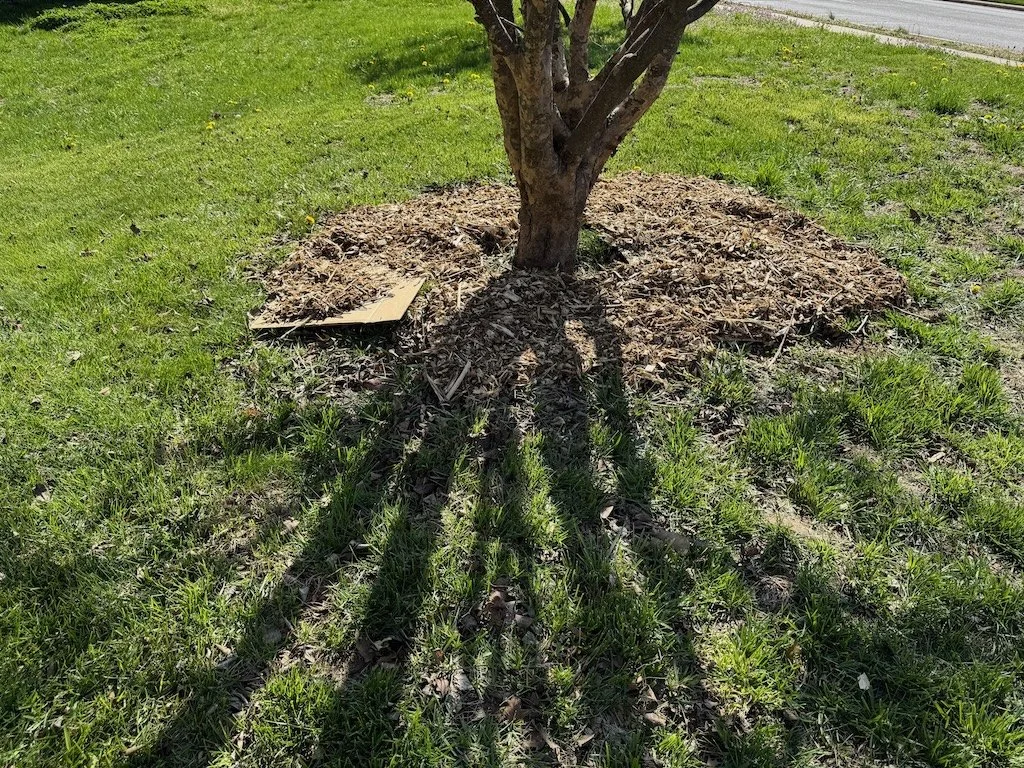
Back at my home, the front yard has been mowed, and I made the decision to put mulch under the Asian dogwood tree. I cut the grass that had come up there very short with the weed eater and trimmed off the lower branches. I had enough cardboard to put under the mulch. The day was windy, so it was a bit challenging to keep the cardboard in place before I got the mulch on top. I used about 1/3 of the mulch I got from my daughter: a big blue bin and then a smaller bin. I used the snow shovel to move it around on top of the cardboard pieces…was pleased with the results. I am already planning the projects for the rest of the mulch – waiting to accumulate enough cardboard!

Gleanings of the Week Ending December 28, 2024

The items below were ‘the cream’ of the articles and websites I found this past week. Click on the light green text to look at the article.

5 New Year’s Resolutions for Your Garden – All 5 are good ideas! I am on my second year of ‘turn an area of turf grass into a native garden.’ If the native trees/shrugs I planted last fall survive…it won’t be hard at all to reduce some turf in 2025. I haven’t used pesticides since we moved to Missouri and we already use electric or hand-powered tools. We have a bird bath. I am not at 70% native plants – yet. That one could be hard although I am going making some progress; I will eliminate a Japanese barberry and forsythia in the spring to make way for more native plantings.

Best of 2024 – Square Meter Prairie Photos – Macro photographs from The Prairie Ecologist.

Scientists Unlock the Secrets of Crocodile Skin and Its Irregular, Mystifying Patterns – Research that discovered that the uniqueness of crocodiles’ head scales is driven from mechanical processes, such as growth rate and skin stiffness, rather than gene expression.

The Case of The Missing Cinders from Yellowstone's Cinder Pool - What happened to the cinders that used to float atop Cinder Pool in the One Hundred Spring Plain area of Norris Geyser Basin? Cinder Pool was one of the few known cinder-producing pools in the world. Using historical water chemistry data, the pH (4.1 ± 0.2) of Cinder Pool was fairly constant from 1947 to 2015, and the sulfate concentration was relatively low (80 ± 20 mg/L). Cinders were last observed in 2018. By April 2019, the pool was lacking cinders and had become significantly more acidic, with the pH dropping to 2.6 and the sulfate concentration increasing to 350 mg/L. Cinders were no longer being generated, and the appearance of the pool changed drastically. Dynamic Yellowstone!

Animals That Turn White in Winter Face a Climate Challenge – There are some snowshoe hares that stay brown during winter…and they may be surviving better in areas that are now getting less snow in the winter. Animals that are adapted to winter by turning white…might find the adaptation a hazard if there is no snow!

Natural disasters killed thousands around the world, caused billions in damage in 2024 - In the United States alone, there have been at least 24 weather-related disasters that caused more than $1 billion in damages each according to the National Oceanic and Atmospheric Administration. Since 1980, the annual average number of events is 8.5. When counting the most recent five years alone -- 2019 through 2023 -- that average increases to 20.4 events per year. The cost of climate change is increasing around the world…impacting everyone.

The global divide between longer life and good health - Life expectancy, or lifespan, increased from 79.2 to 80.7 years in women and from 74.1 to 76.3 years in men between 2000 and 2019, according to WHO estimates. However, the number of years those people were living in good health did not correspondingly increase. The average global gap in lifespan versus healthspan was 9.6 years in 2019, the last year of available statistics. That represents a 13% increase since 2000.

Scientists Just Dissected the World’s Rarest Whale in New Zealand - Only seven spade-toothed whales have ever been identified, and the species has never been seen alive. When a 16-foot, 3,000-pound carcass washed ashore on the South Island of New Zealand in July; it was in remarkably good condition and appeared in a region of New Zealand that allowed researchers to perform the first-ever dissection of the species. The research and dissection process was under the guidance of both scientists and members of local Māori tribes on the South Island. Some discoveries: vestigial teeth, 9 stomach chambers, and head trauma was cause of death.

Interior Department Signed 69 Tribal Co-Stewardship Agreements In 2024 - The agreements cover a range of ways designed to bring tribes into management of public lands. That includes efforts by Interior to expand bison habitat and entering into bison co-management agreements with tribal leaders, shifting historic preservation responsibilities from federal agencies to tribal agencies, carefully weighing the impact of federal agency action on sacred sites, and expanding and reforming self-governance as part of the Practical Reforms and Other Goals to Reinforce the Effectiveness of Self-Governance and Self Determination for Indian Tribes (PROGRESS) Act.

Study likely to change standard of care for deadly strokes - Endovascular therapy, or EVT, -- a minimally invasive surgery performed inside the blood vessels -- is 2 ½ times more likely than standard medical management to achieve a positive outcome after vertebrobasilar stroke that affects the back of the brain, including the brain stem.

Through my Office Window

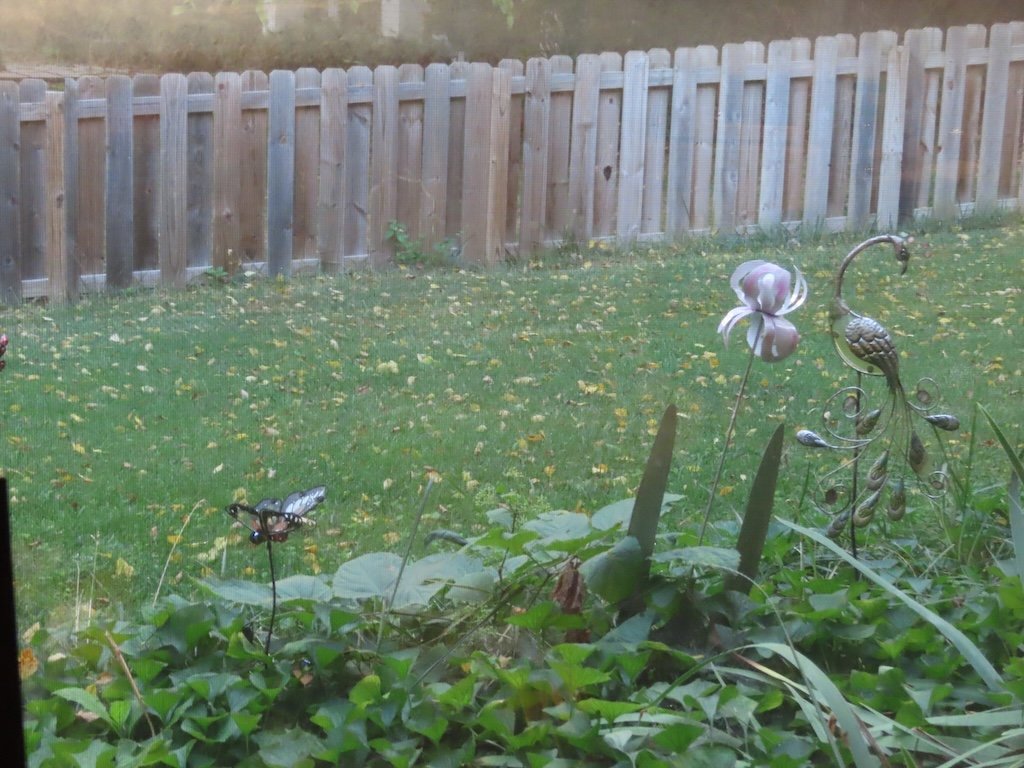
My office is my favorite room in my home. There is a garden area I can see through a window while I am at my computer. It has several garden ornaments, and is crowded with violets and iris leaves….and a spikenard in bloom. The yard beyond is sprinkled with fallen river birch leaves that are yellow. It’s a great place to watch robins searching for worms.

The area is shady for most of the day – from the river birch in the morning and from the house in the afternoon. There is a short time when the sun shines on the stainless-steel iris. I am documenting the blooms of the spikenard as well.

The windowsill of that same window can also be a platform for high key type photographs. This one of a dried black-eyed susan has the silhouette of the river birch in the background.

On the other side of the room, the glass paneled door looks out onto the patio under the deck and I can photograph barn swallows that congregate on the light fixtures and the ceiling fan blades before leaving all at once for their next stop.

The 4 windows of my office make it almost a garden room.

Garvan Woodland Gardens (1)

I’d heard about Garvan Woodland Gardens from one of my neighbors – decided that it was a place to see along with Hot Springs National Park. Out membership in Friends of the Springfield Botanical Gardens provided us with free admission so we visited on both days we were in Hot Springs.

On the first day, we arrived after lunch and noticed the carillon as we walked from the parking lot to the welcome center.

It had rained earlier in the day and the humidity was very high. We opted to take the Golf Cart Tour (which cost us $20 each) – which turned out to be a great way to orient ourselves to the place. Our driver/guide was very informative about the history, maintenance, and highlights of the gardens. Our visit between spring and summer flowers so there were not a lot of blooms…but the trees and the ambiance of the place made the visit worthwhile. I took a few pictures along the tour: pools of water on rocks, a stone bridge, a few flowers, the slope down to the lake, butterfly weed, ferns with horsetails, fairy houses, and the shape of an eye in stone.

Tomorrow’s post will be about our second visit to Garvan Gardens when we revisited our favorite places.

2023 in a Carrollton Yard

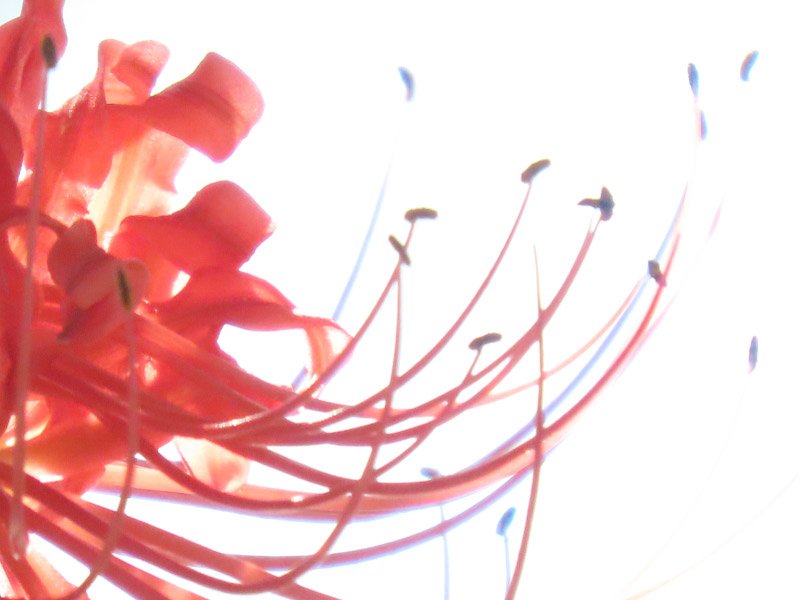
My parents’ yard in Carrollton is almost overflowing with plants. They have accumulated over the years. Many of them are from seeds/cuttings/gifts from extended family…my paternal grandmother’s sisters (pink maiden sage), my father’s cousin (a 30+ year old rose bush), my maternal grandparents gardens (cannas), sunflowers that started from a granddaughter’s kindergarten ‘flower in a cup’ project more than 20 years ago, and orange spider lilies that came up in one of my sisters yards when she bought her house more than 30 years ago. One of my sisters does most of the maintenance these days…to the joy of my parents. My dad helps with mowing the yard (this month is more ‘mowing the leaves’ rather than grass)!

The year started out very cold with heavy frost on the first mornings of the year.

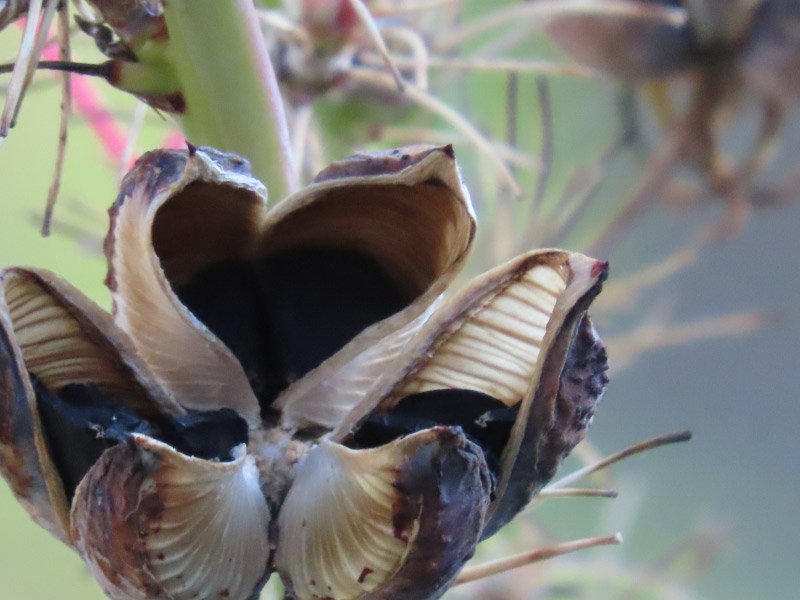
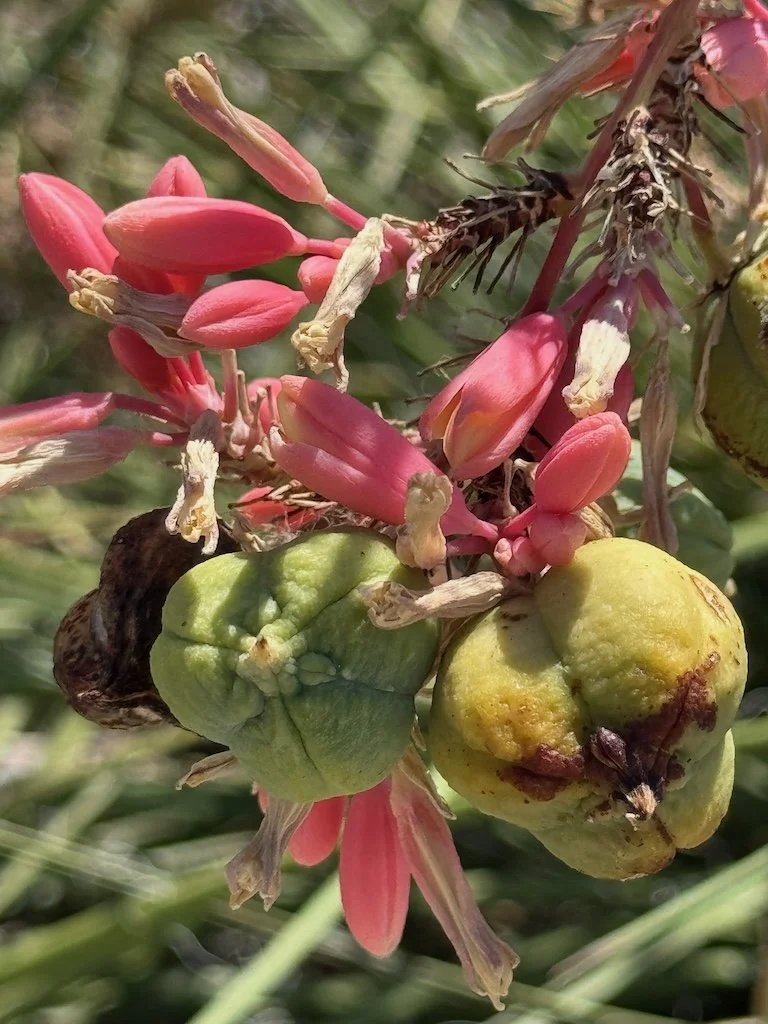
The quince blooms early…a splash of color near the fence. The bird feeder attracts birds that can easily be viewed from the garden room. Bulbs and dandelions mark the warming temperatures of spring. The cosmos and red yucca bloom all through the season. The 2023 summer was challenging with a longer than usual period of very hot days with no rain. Some plants survived with the water from sprinklers, but others died back (hopefully will return next spring). The naked lady lilies put up their fonds early then bloom in midsummer. The spider lilies are late bloomers too. The cosmos lasted through most of November. And now in December – the seedpods of red yucca and chives provide texture as the winter begins. We are beginning to see some of the garden ornaments that were buried in foliage previously!

My parents have lived in their house for 33 years and the garden area of the yard has evolved over time. The rose bush purchased for my Grandmother’s 80th birthday in 1992 still blooms in the spring and fall!

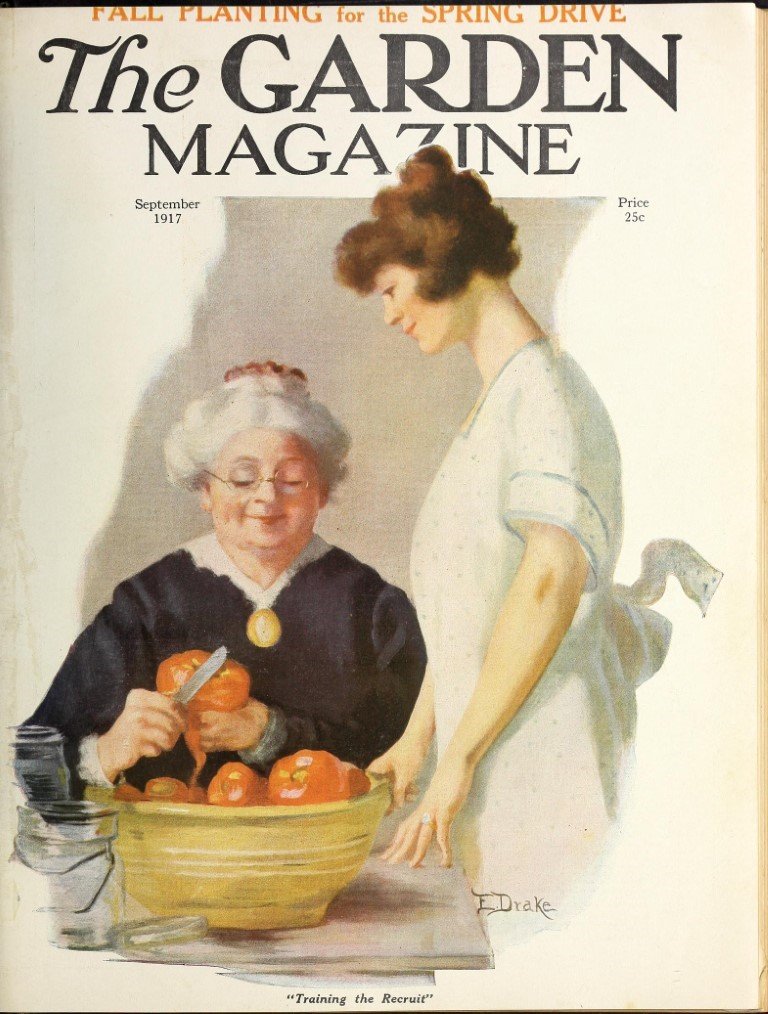
The Garden Magazine 1905-1924

Internet Archive has 34 volumes of The Garden Magazine – a New York based magazine “devoted to planting and managing the grounds about the home, and to the cultivation of Fruits, Vegetables and Flowers". The magazines are a window into the way life was during the early 1900s. I enjoyed browsing them all! Click on the sample images below to see an enlarged version….better yet – browse a whole volume (or two or three….maybe all of them)  by following the link.

The Garden Magazine V1 (1905)

The Garden Magazine V2 (1906)

The Garden Magazine V3 (1906)

The Garden Magazine V4 (1907)

The Garden Magazine V5 (1907)

The early issues had little color except for some of the covers and a few ads. Note that the ad for Japanese Iris included some birds among the flowers.

The Garden Magazine V6 (1908)

The Garden Magazine V7 (1908)

The Garden Magazine V8 (1909)

The Garden Magazine V9 (1909)

The Garden Magazine V10 (1910)

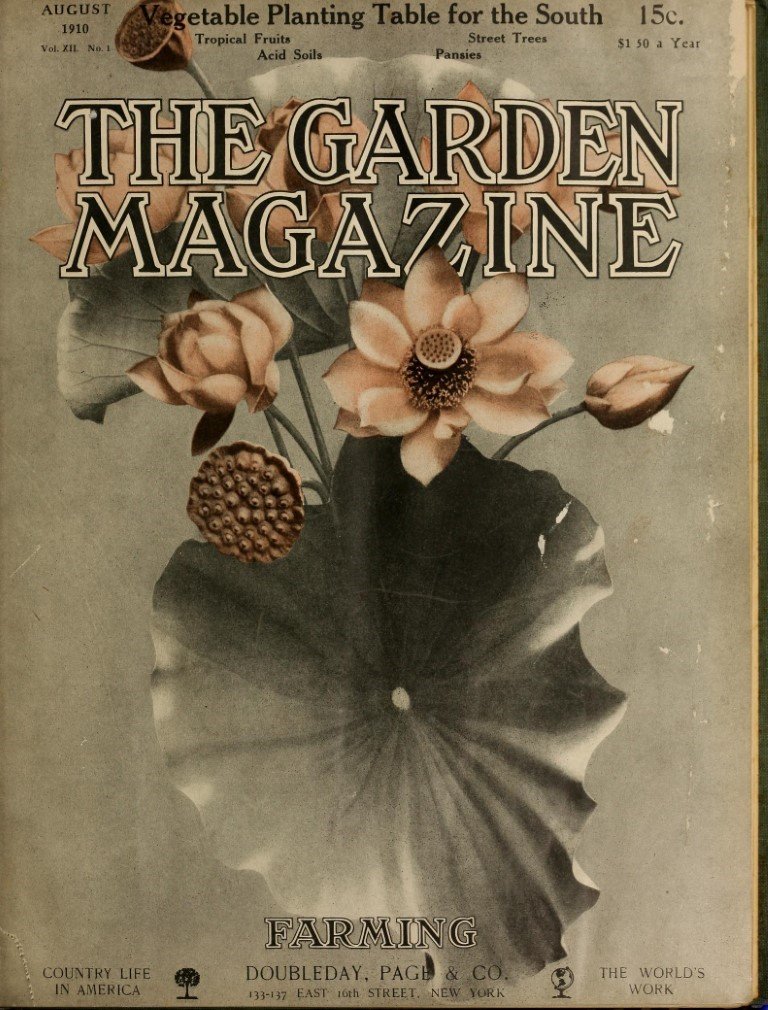
Farming was important to a lot of people and so - was an important aspect of the magazine…in all seasons. Note that Kodak was already advertising in 1909….and that the photographer was not always male!

The Garden Magazine V11 (1910)

The Garden Magazine V12 (1911)

The Garden Magazine V13 (1911)

The Garden Magazine V15 (1912)

The Garden Magazine V14 (1912)

Unusual garden features like Japanese lanterns and plants like lotuses/wisteria featured in some issues – popularizing new things for the garden. C. Coles Phillips’ work was part of a Waterman’s Ideal Fountain Pen ad in 1912.

The Garden Magazine V16 (1913)

The Garden Magazine V17 (1913)

The Garden Magazine V18 (1914)

The Garden Magazine V19 (1914)

The Garden Magazine V20 (1915)

An overhead view of an idealized farm and a vine covered façade of a stately house featured on some covers. Cannas and poinsettias were plants of interest. Victor-Victrola ads depicted the sounds of the world come to your home.

The Garden Magazine V21 (1915)

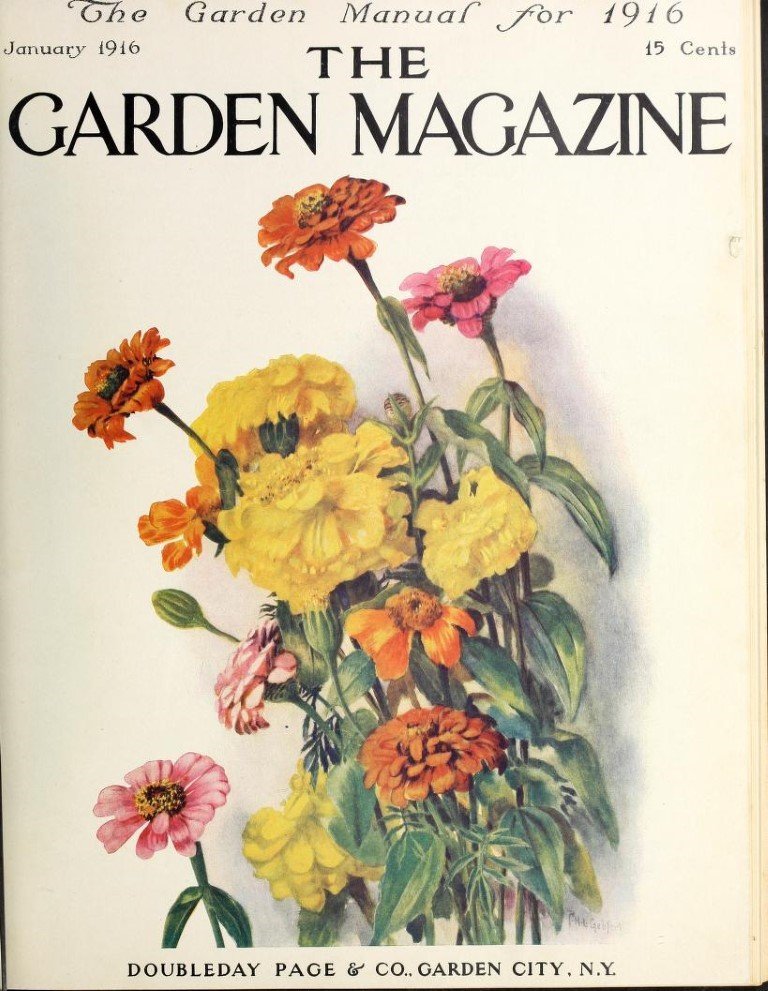
The Garden Magazine V22 (1916)

The Garden Magazine V23 (1916)

The Garden Magazine V26 (1918)

The Garden Magazine V27 (1918)

As America entered World War I food was featured in covers – the slogan ‘America’s Part: to keep the Horn of Plenty Full.”

The Garden Magazine V28 & 29 (1919)

The Garden Magazine V30 (1920)

The Garden Magazine V31 & 32 (1921)

The Garden Magazine V33 (1921)

The Garden Magazine V34 (1921)

By 1919, the wounded were home. Davey Tree Surgeons was advertising…trees were a big topic. Gladiolas and other flowers in the garden were becoming a bigger business too.

The Garden Magazine V35 (1922)

The Garden Magazine V37 (1923)

The Garden Magazine V38 (1924)

The Garden Magazine V39 (1924)

The cover art for the last issues reflects the aesthetics of the 1920s….more children, relaxed fashion, abundant flowers.

Ten Little Celebrations – July 2023

Celebrating is often linked with appreciation. When I notice that I am celebrating something – I almost always notice that I appreciate that it happened or how beautiful it is…or just that it is a brilliant positive in my day.   Noticing little things to celebrate/appreciate every day is a habit that builds mental resilience!

Miniature pumpkins on the vine. I planted the seeds back in May, not confident that they would be more than vines. They started to bloom – and I enjoyed the flowers. I am celebrating the recognizable little pumpkins now.

A new low weight of the year. Slowly but surely…I am getting to the ‘normal’ weight for my height. Every time I reach a new low for the year, I celebrate!

Ozark (Missouri) farmers market. I was overwhelmed by the crowd at the farmers market in Springfield and underwhelmed by the sparse number of vendors in Nixa. I celebrated that the Ozark farmers market was the Goldilocks (i.e. ‘just right’).

2 ‘hens and chicks’ planted. I finally planted something new in the front flower bed; it wasn’t a simple task since it required moving rock and cutting away landscaping fabric underneath. I celebrated the completed project…and am enjoying the anticipation of ‘chicks’ appearing before fall.

Getting the lawn mowed. Avoiding high temperatures…rain..heavy due. I celebrated that the night was dry, the light dew in the morning, and the temperatures still in the 70s when I did the mowing.

Intensity minutes while gardening. This summer I have increased my ‘intensity minutes’ rather than simply sustaining my low sedentary time. Mowing generally results in ‘intensity minutes’…but I celebrated when some of my general gardening did too!

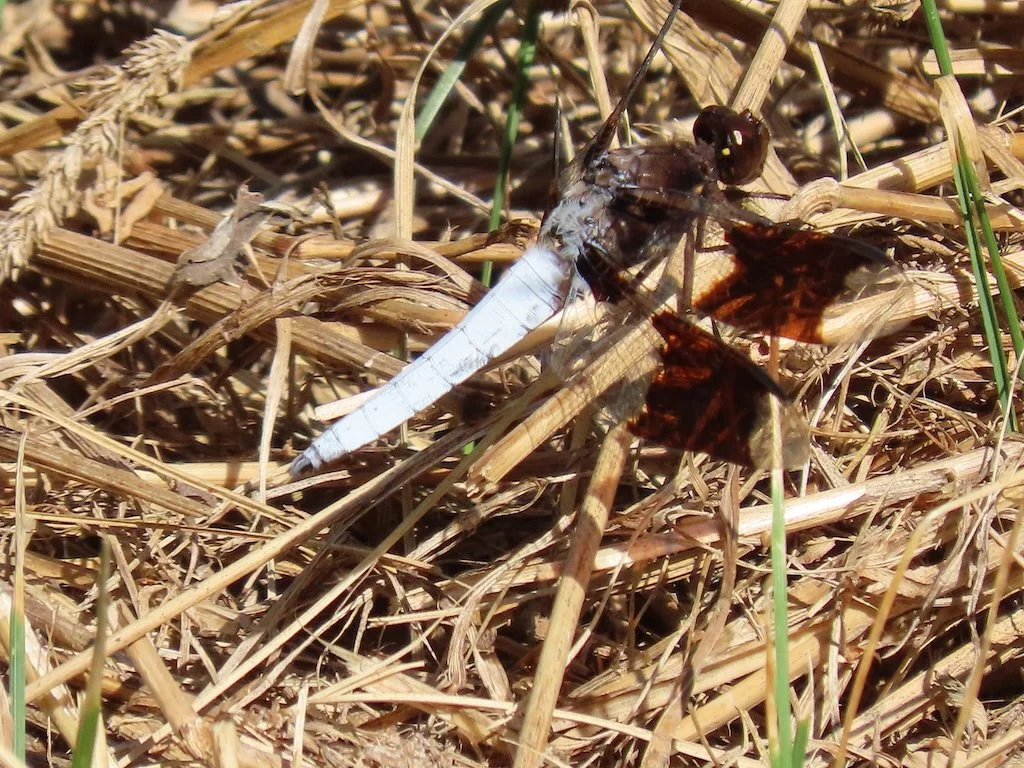
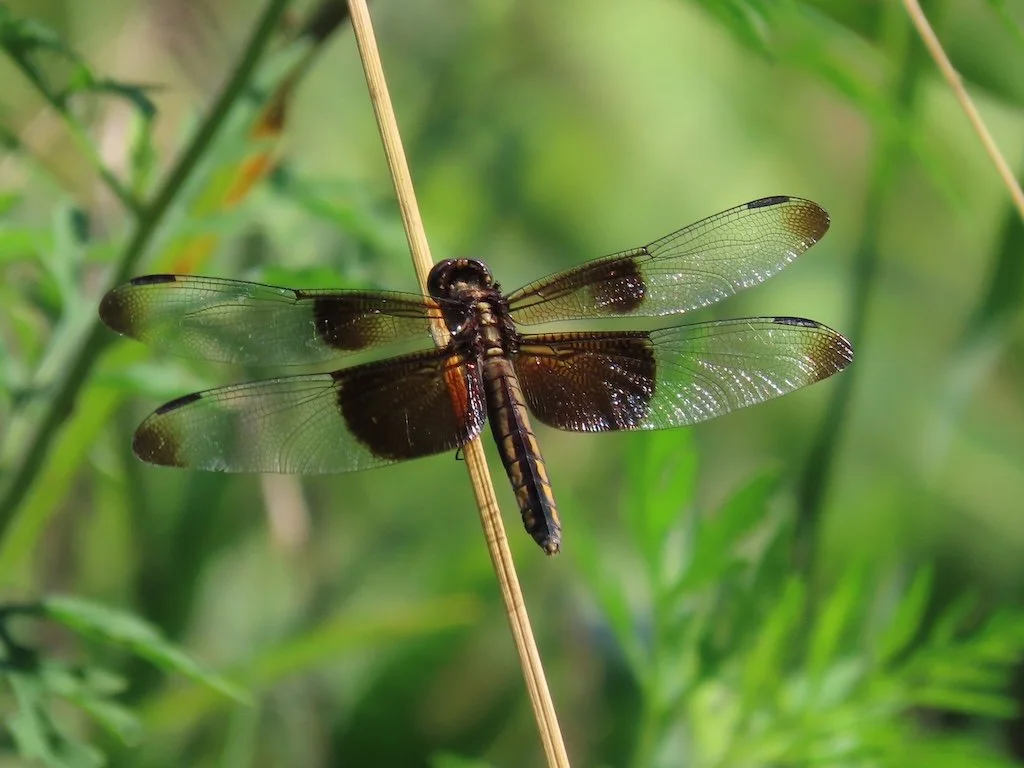
Lake Springfield meadow. There is something different to celebrate every time I go. In July the uptick in dragonflies and butterflies was the high-point.

Sprinklers all working. We noticed that one zone of our sprinkler system was not working when the grass started turning brown…so we celebrated when it was fixed (and also that we got rain too) and the grass started its recovery.

Rounding of 3 corners in our yard. I had an idea to round the corners of our yard to make mowing easier (curves rather than right angles) and celebrated that the actions I took for 3 corners (planting some and putting down landscaping cloth to kill grass so that I can plant something) is working!

Test at doctors office shows all OK. Its always worth celebrating when a test comes back with the desired result….of course, with some measure of relief too.

Macro in the Garden

My garden plot has done reasonably well for its 1st season. I am letting all the wildflowers bloom and make seeds. The bulbs will hopefully be more robust next year too. The plot has been a joy to see at every stage – a reward for my efforts to plant and keep watered.

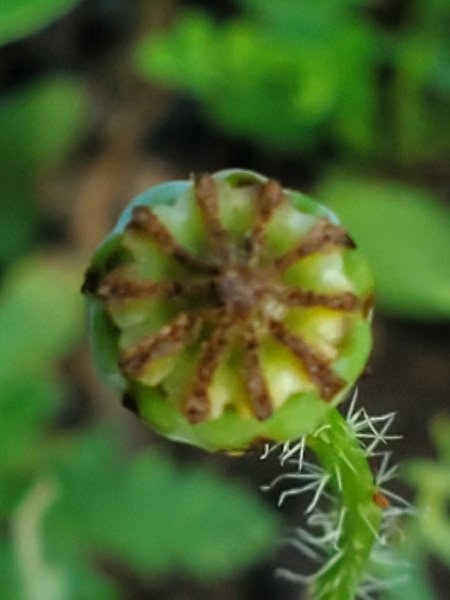
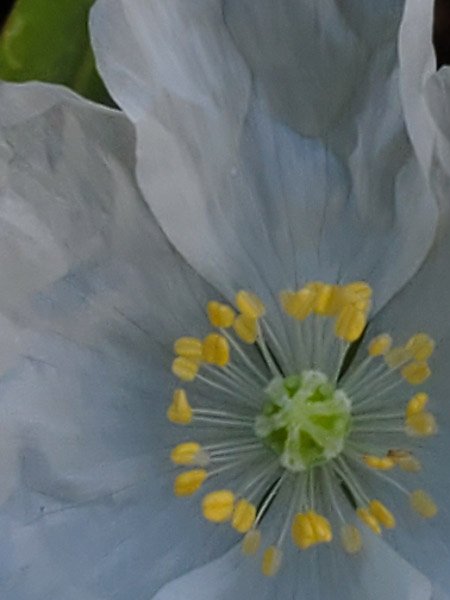
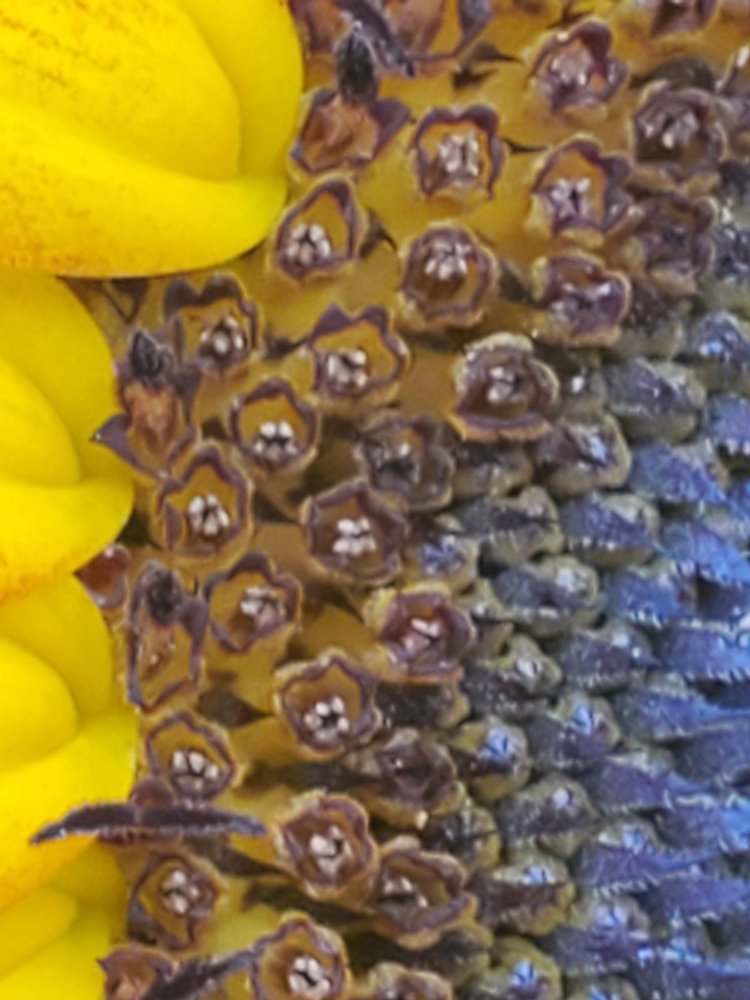
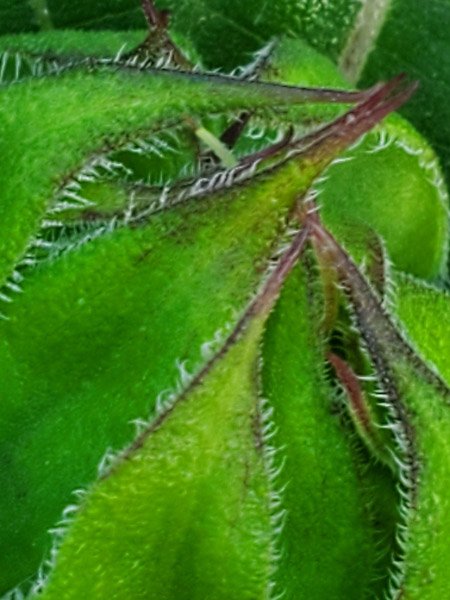
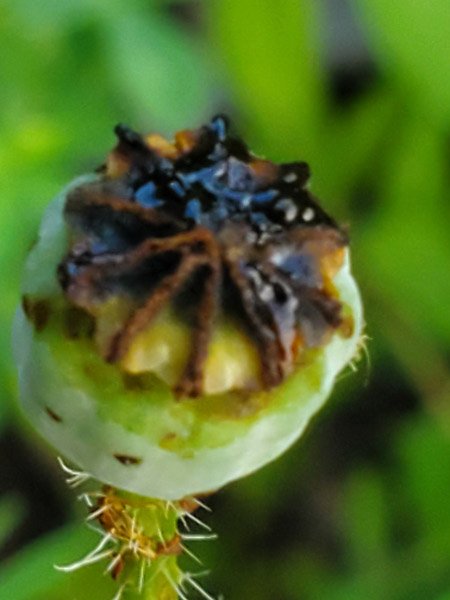
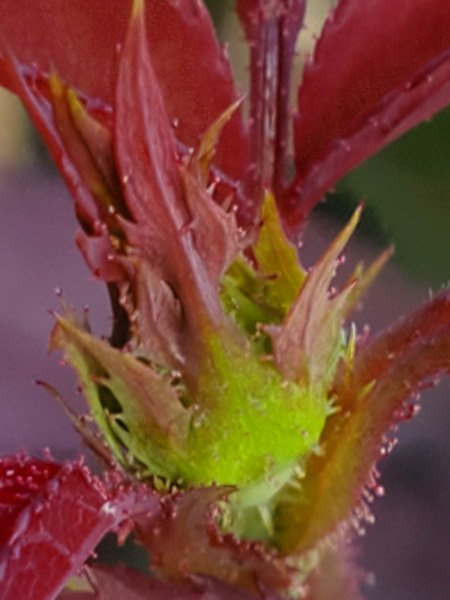
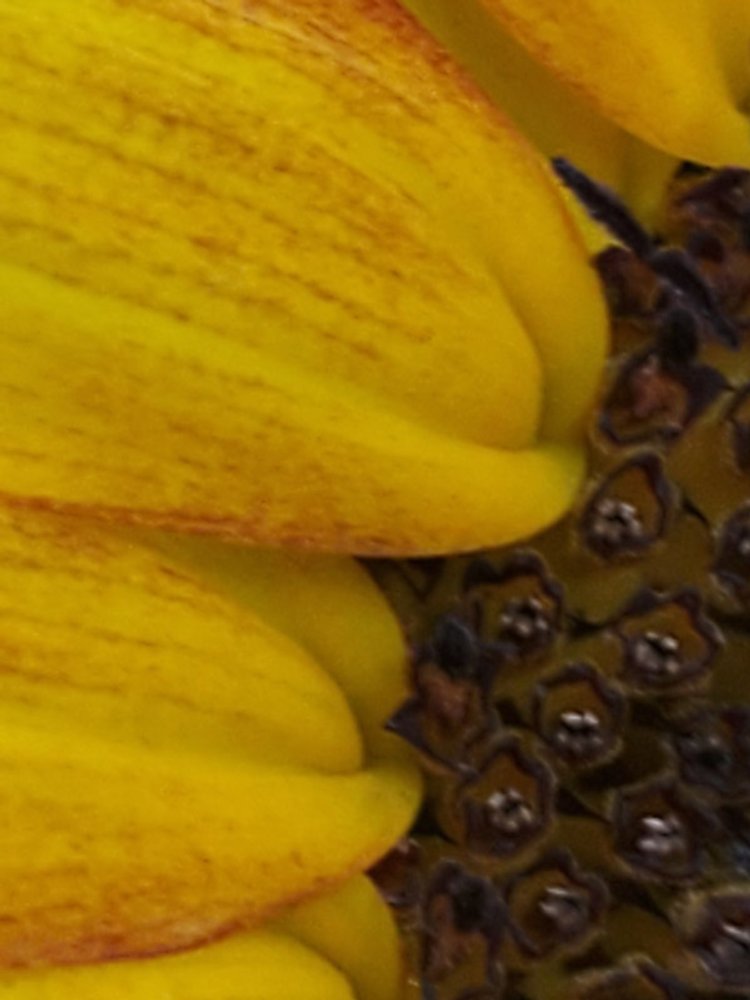
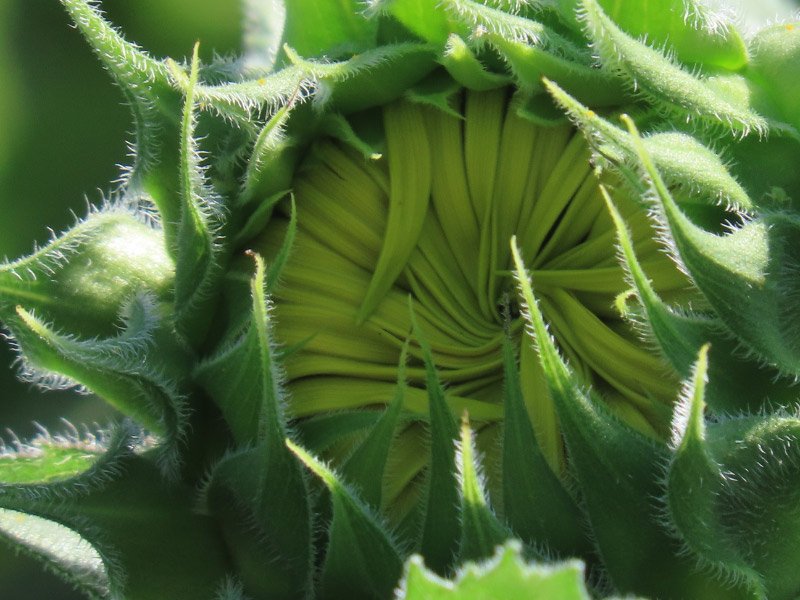
The added benefit is the variety of plants for macro photography (using Samsung Galaxy S10e phone). My goal is to make the rounds at least once a month since the plants change throughout the season. The highlights this month are the poppies making seeds and the sunflower just beginning the process. The red leaves are a rosebush next to the patch of wildflowers and bulbs.

Next to the wildflower garden, I have a vine of miniature pumpkins. There are three that are getting  bigger every day.

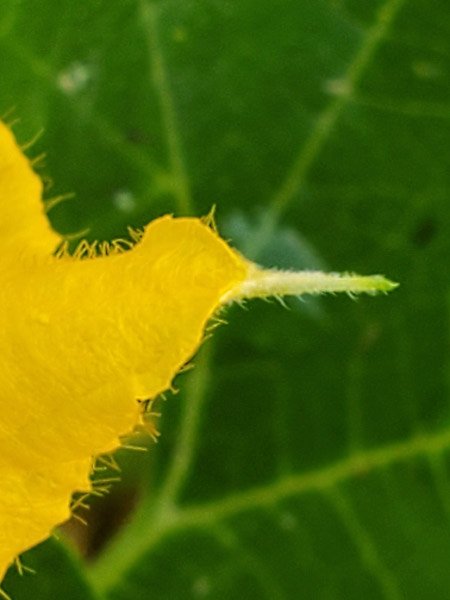
I noticed that the petals of the showy flowers have spikes at the tip that shortens as the petals unfurl. When I first started looking at the flower, I noticed some small insects were there. I wondered if they were pollinators; then a black carpenter bee came, and I switched to video mode. Clearly the carpenter bee was the pollinator!

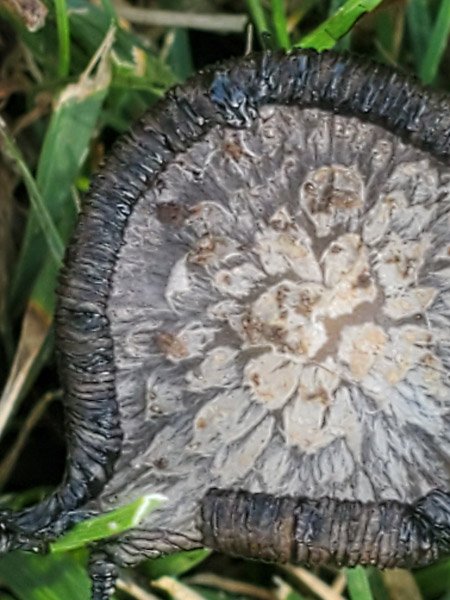
In the front yard – there were three types of mushrooms growing where the large tree was cut down well before we saw our house; I know it was there because of the depression and general bumpiness caused by the decaying roots. The most numerous mushrooms this time were white blobs pushing up out of the grass.

In closer looks – they remind me of toasted marshmallows!

The second type was darker and still had rolled edges. They had previously been the most numerous kind I’d seen in the area…but not this time. I wondered if there is a fungi succession when it came to tree stumps/roots.

The third type was a single specimen….more delicate looking than the others. I see it elsewhere in the yard.

 The macro world….easier to observe with my phone in hand!

Missouri Botanical Garden – June 2023 (2)

There are aspects of the Missouri Botanical Garden that are not plants….but are part of the garden experience.

There are benches at handy intervals; it always seemed easy to find one in the shade! Maybe I will make a project of photographing more of the benches during some future visit.

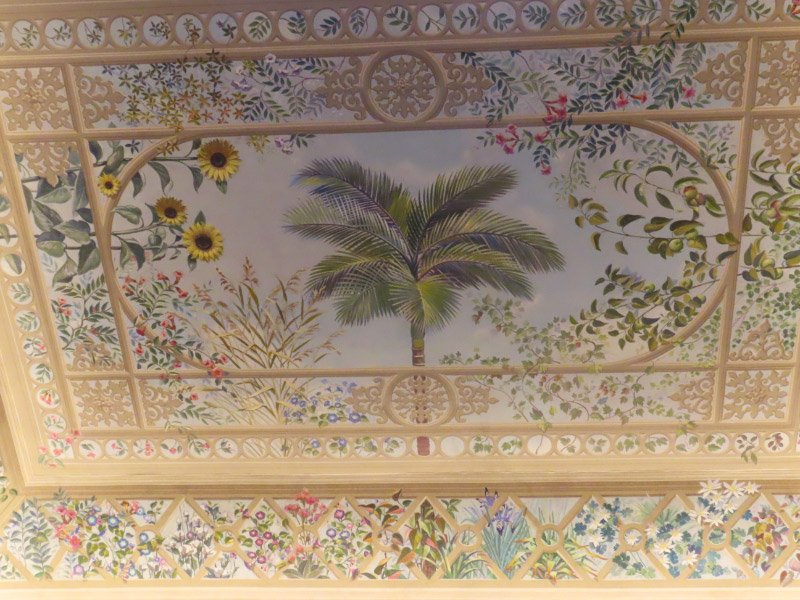
The ceiling in the Sachs Museum is worth the few steps inside…check out whatever is being exhibited there too.

There is a statue of Henry Shaw, founder of the Missouri Botanical Garden near his mausoleum. He set out to create a major and lasting institution more than 150 years ago. He died in 1889 and the garden has continued to thrive in all the directions he initiated…has expanded in ways he could not have imagined. My first experience with the garden was via their Botanicus site where the Missouri Botanical Garden has been digitizing botanical books and making them available since 1995; I found the site in 2009 and have been browsing their books (mostly via the Internet Archive interface). Visiting the garden is something I have wanted to do for a long time.

The Japanese Rock Garden areas around the water feature have smooth curves created with a rake…and there are Japanese lanterns too. A Great Blue Heron flew to a large rock in the center of the water feature and began to preen; the Canada goose in the background is doing the same.

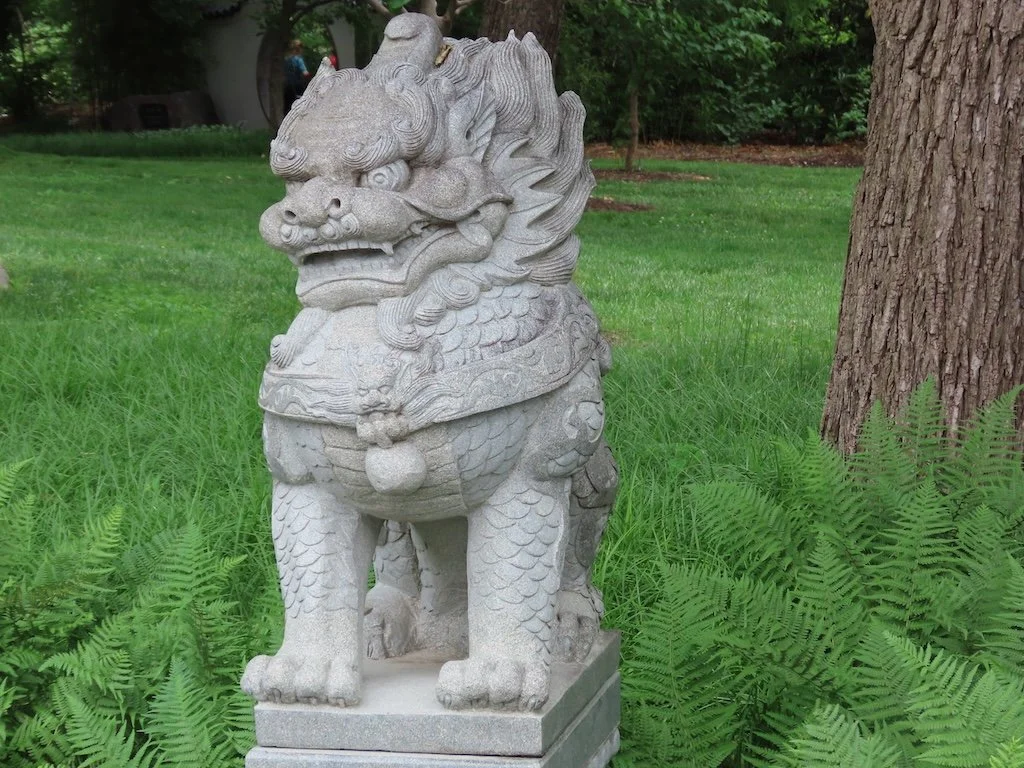
In the Chinese Garden there are mosaics made with small stones as well as the traditional lions at the entrance.

I liked the bench around a tree. It reminded me of the one at Longwood Gardens when my daughter was young; we used it as a resting place where she could easily get up to run into the mists when the big fountains came on (it was a warm day); and then it was gone as part of the fountain renovation. I savored that memory sitting on this bench half the country away from Longwood (near Philadelphia).

There are small sculptures of wildlife too: wood ducks in the forest, butterflies in the butterfly garden….

Geese and racoons as part of fountains.

A purple martin house looked almost full.

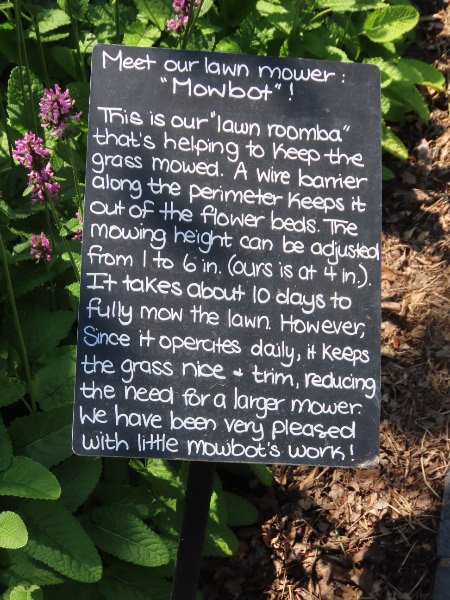
One of the green areas had a ‘Mowbot’ to keep it trimmed.

At the end – I took pictures of the floor in the visitor center…familiar leaf shapes: horse chestnut, tulip poplar, sweet gum.

Looking back, it was a good ‘first visit’ – but I already want to go again!

Missouri Botanical Garden – June 2023 (1)

So much to see at the Missouri Botanical Garden…

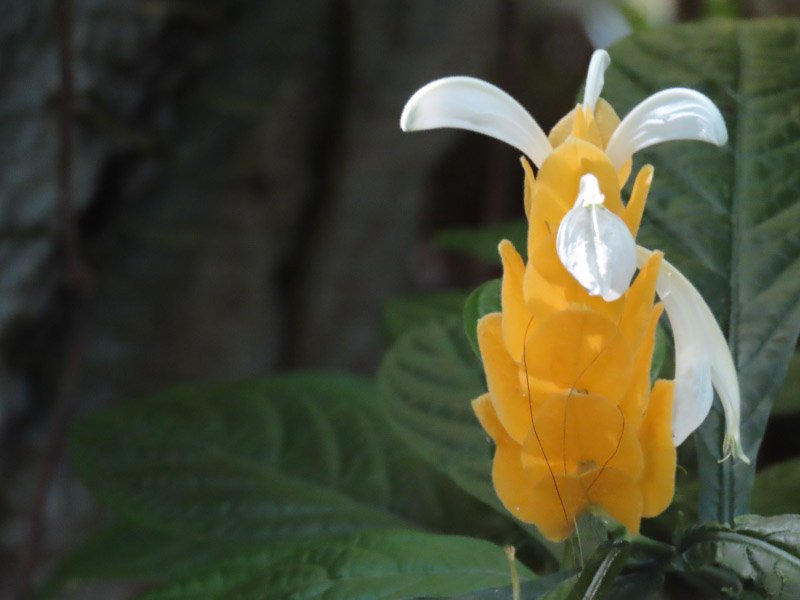
The Climatron is full of lush tropical plantings. Intimate landscapes of ferns and bromeliads…

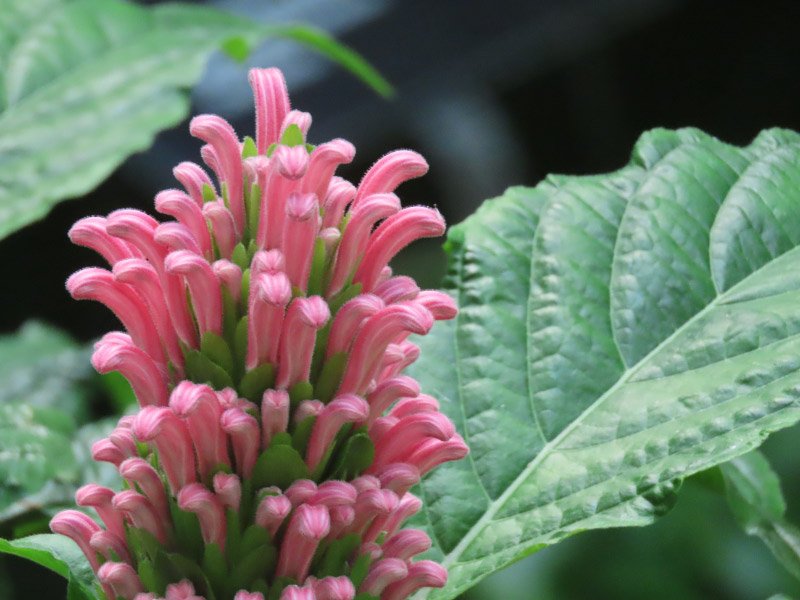
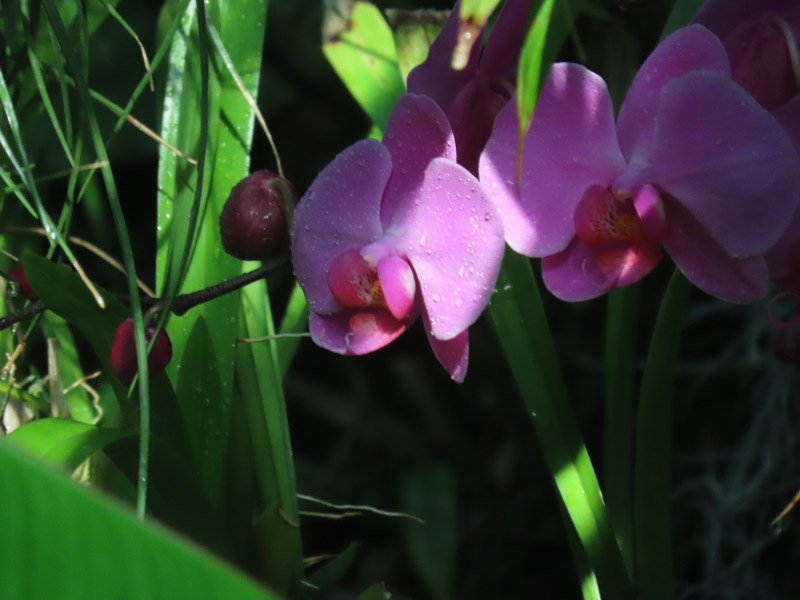
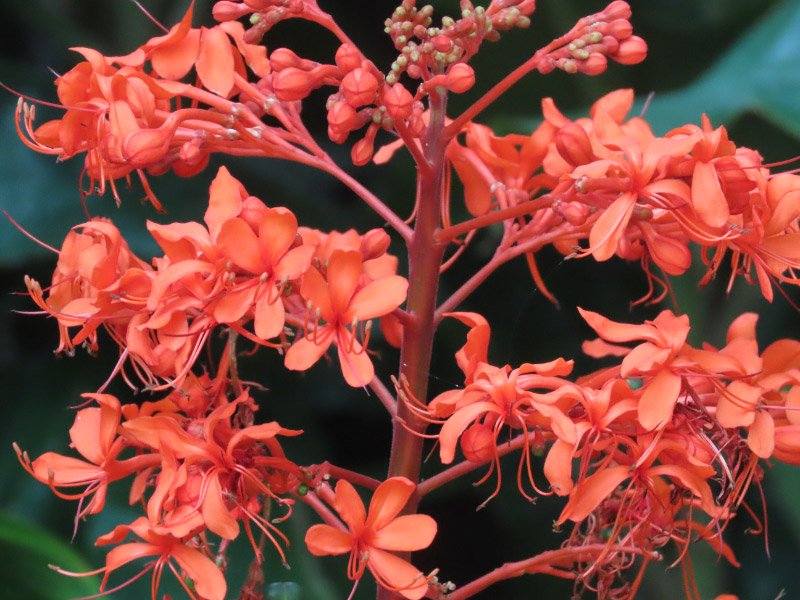
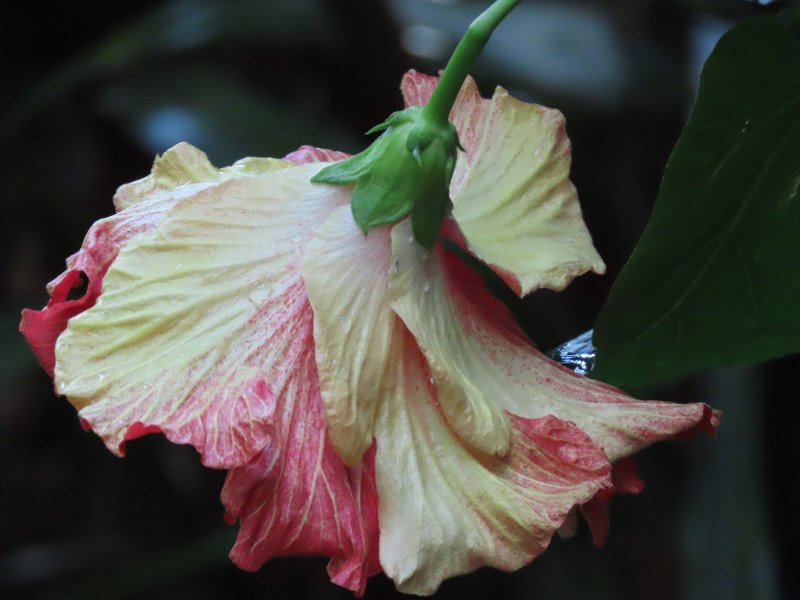
Flowers (including orchids) and seeds tucked into the greenery….

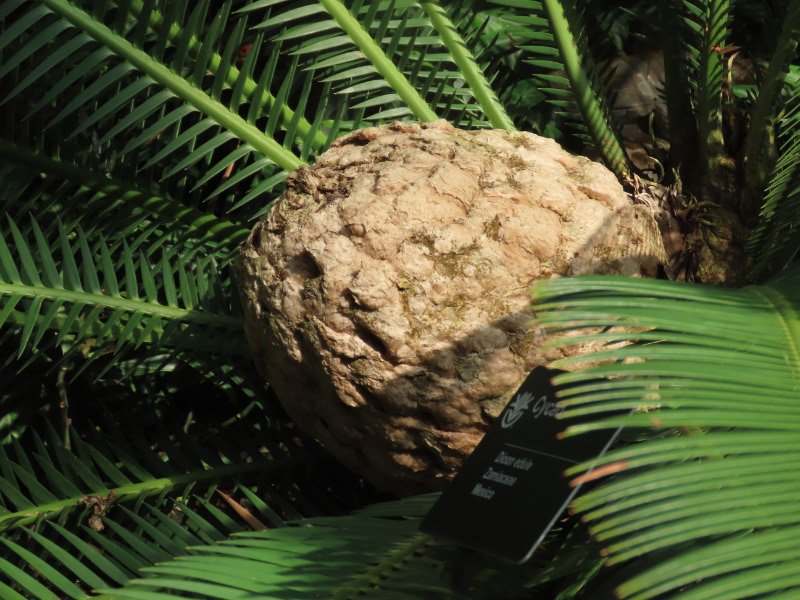
Cycads….

Flowers and stems different than we see in temperature parts of the world.

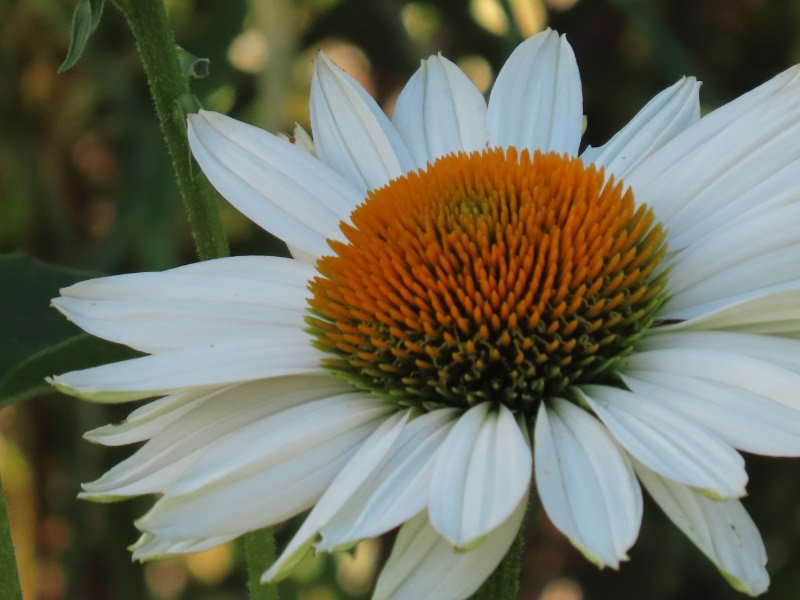
Out in the summer sunshine…cone flowers and sunflowers thrive.

Daylilies are blooming profusely.

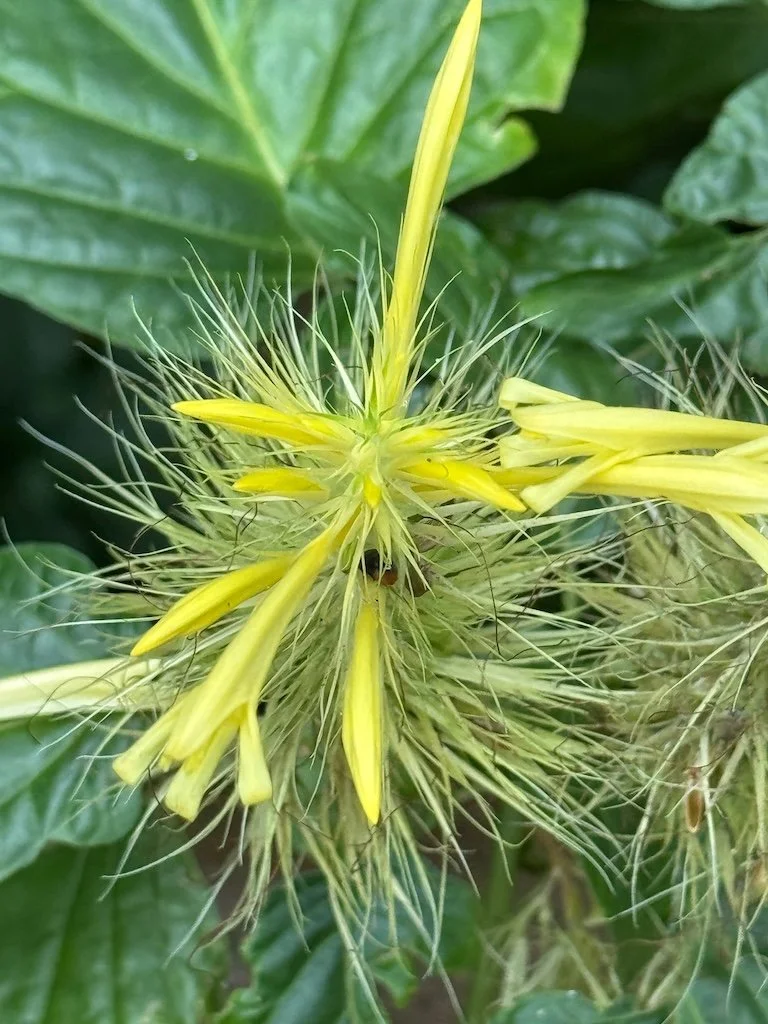
There was a very odd plant in Linnean House. I took several views of it…and should have taken a picture of the tag too!

I found myself interested in objects where the light was not overly bright or overhead.

And there were some places/plants that became immediately special: a large puffball under a bald cypress that was growing before the garden was started, button bush (one of my favorite native plants), and a woodland area with a gurgling stream (artificial but made to look natural, I enjoyed a short rest on a bench).

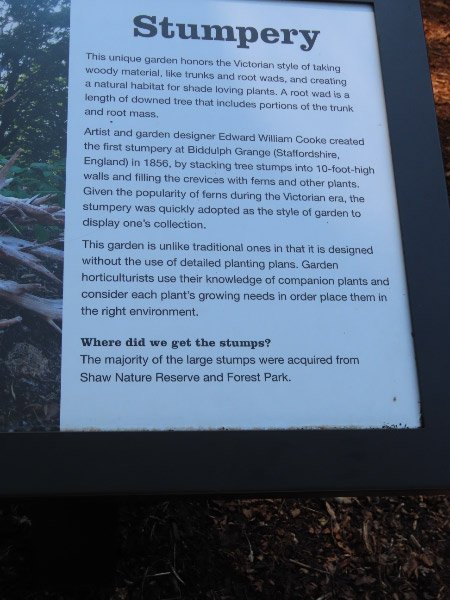
I appreciated the Stumpery garden….learning a bit about the history too.

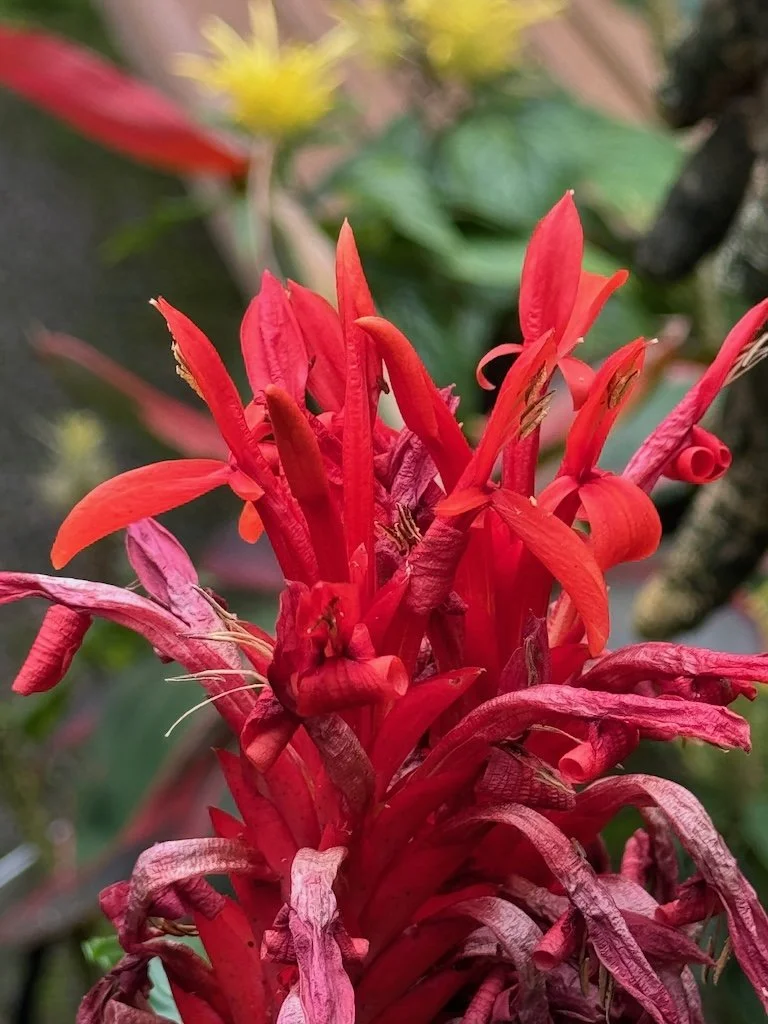
And a few more plants I enjoyed photographing….before we went into the restaurant for lunch (and air conditioning) before we headed home.

Laumeier Sculpture Park

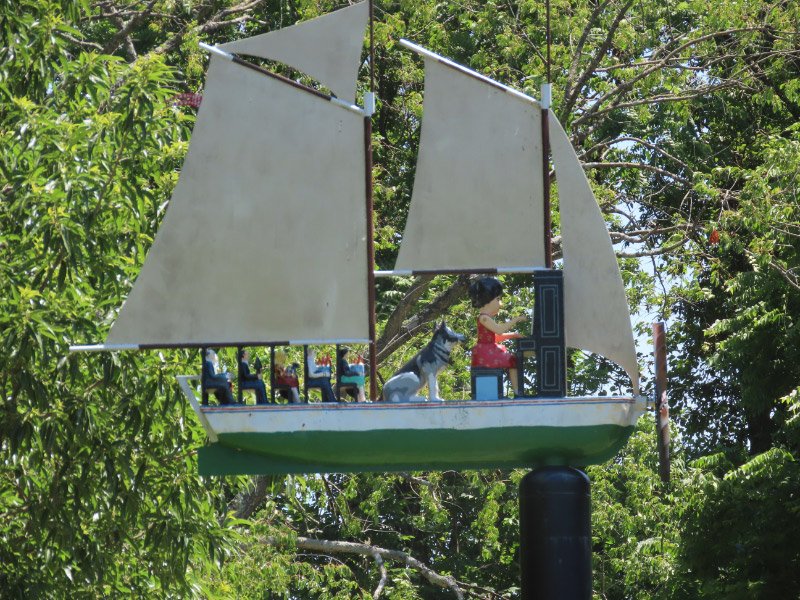
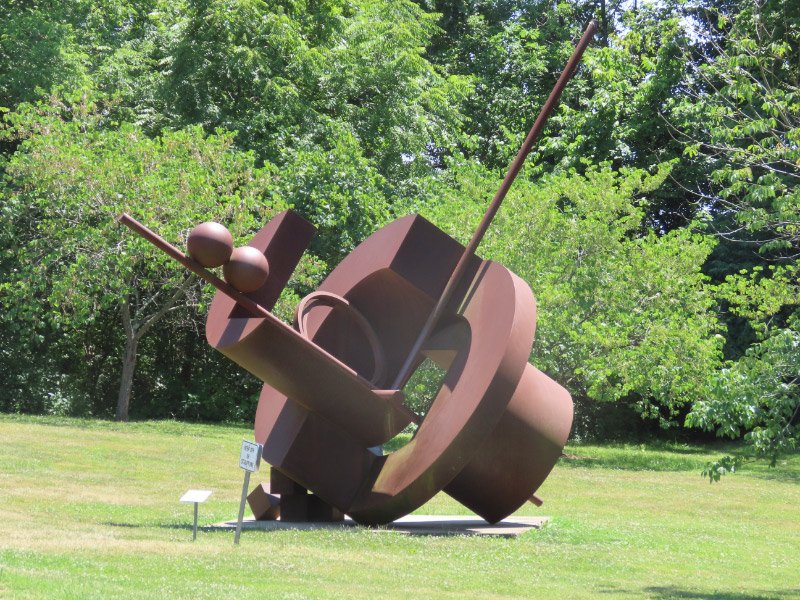
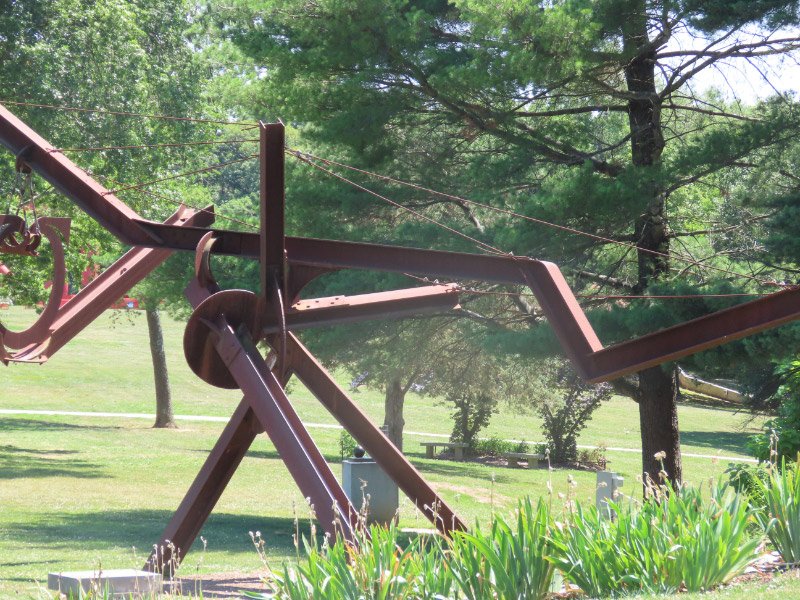
We walked around Laumeier Sculpture Park on our way to the hotel in St. Louis, MO. The park is convenient from I-44 which is the interstate we take from Springfield to St. Louis. The goal of the place (engaging the community through art and nature) is appealing and it was a good time of year to be outdoors. The first sculpture we saw was the cat near the parking lot….full of color and texture…welcoming form. The cat was a good start to our visit!

It was a warm (maybe hot) afternoon, so we carried a bottle of water and did a circuit that went uphill first, then down and shady on the way back as recommended when we picked up our map. We didn’t see every sculpture…but enough to enjoy the place.

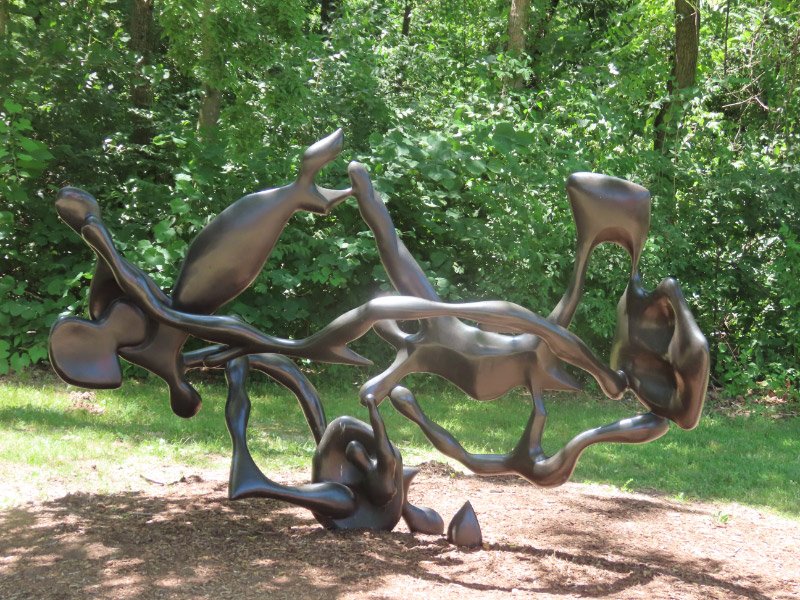
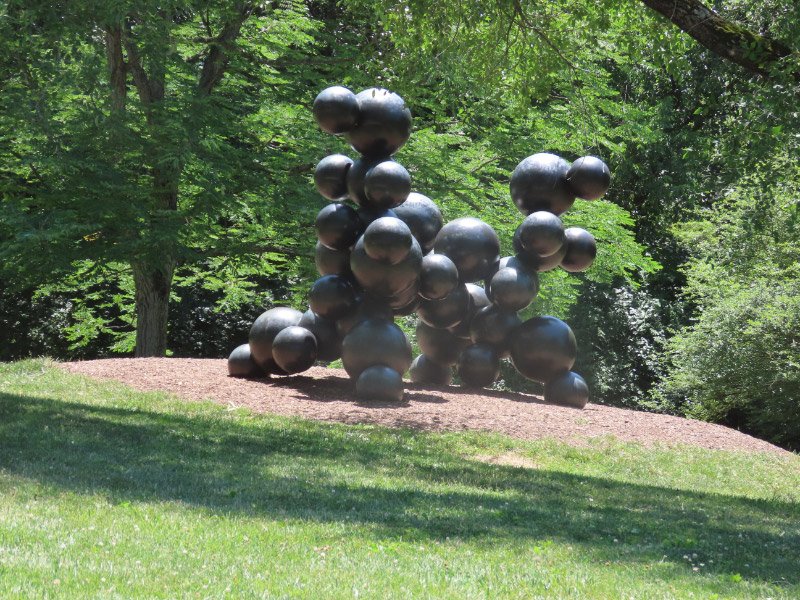
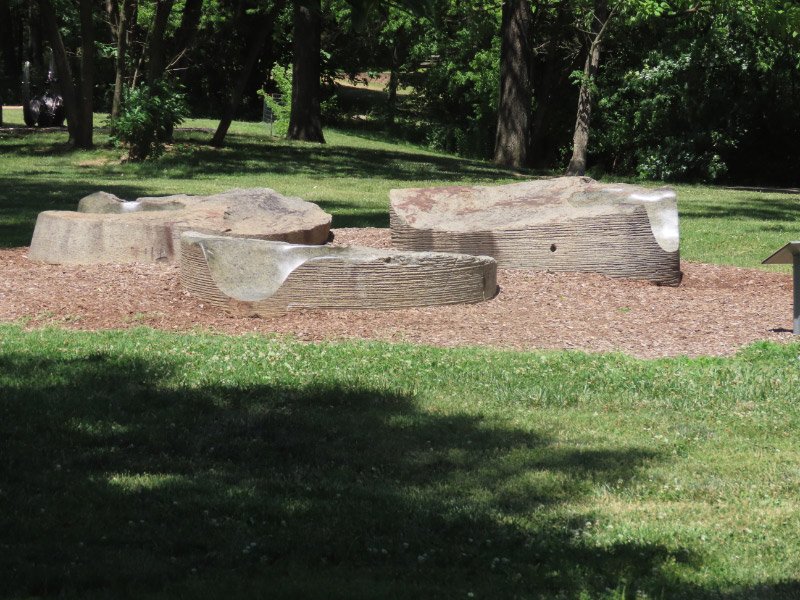
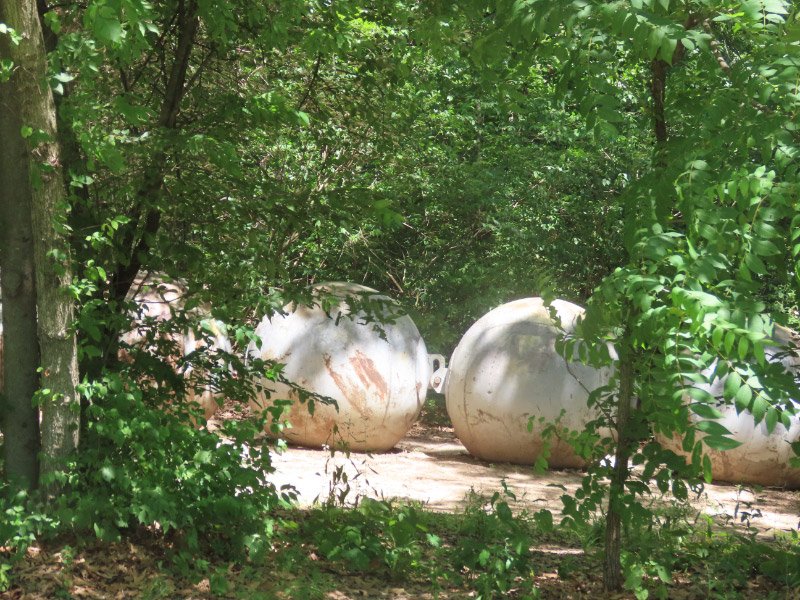
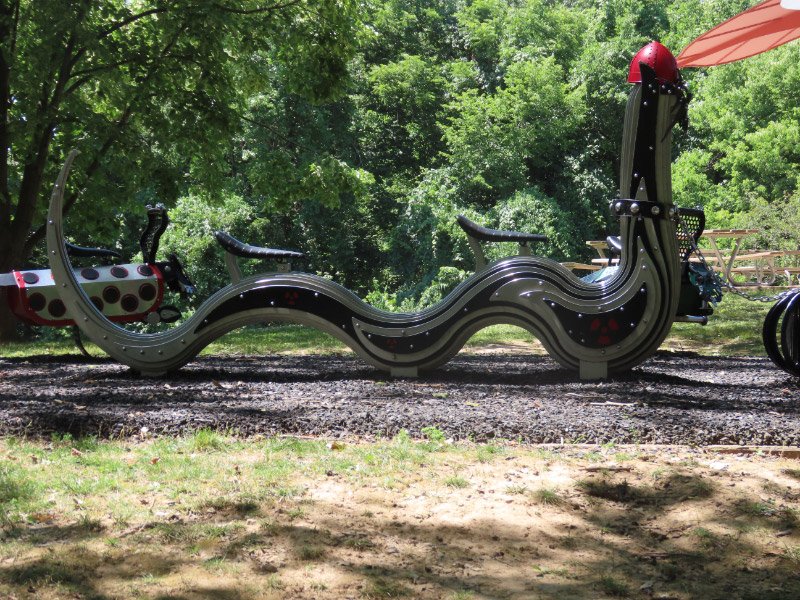
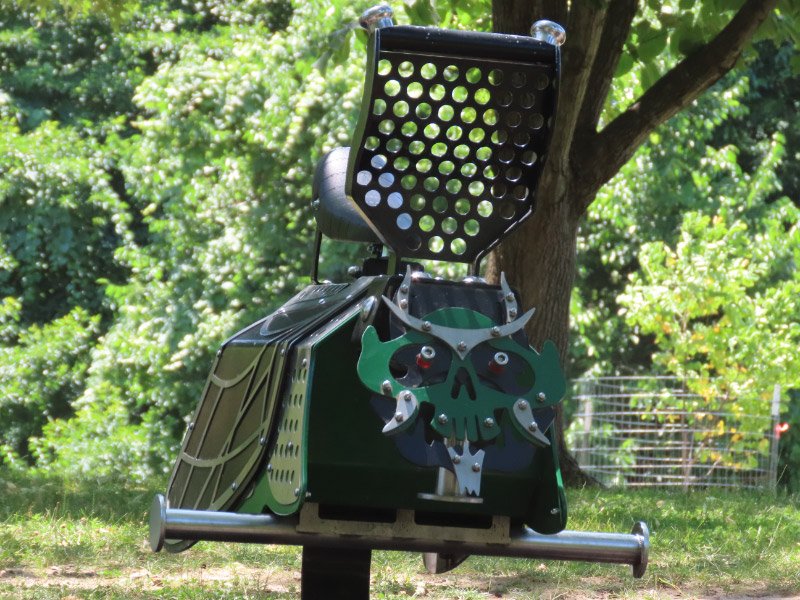
I like sculptures in gardens. A few of the sculptures (the ones in the children’s area) are intended to be climbed on. My favorite was probably the large, connected balls (titled “Ball? Ball! Wall? Wall!) that made their way through a forested area. My imagination made it into a strand of beads for a giant.

Toward the end, there were urns of succulents that caught my attention. They were much more attuned to the hot weather than we were; I was glad to have the blast of the air conditioner going as we headed to the hotel less than 30 minutes away.

More about our touring in St. Louis, MO in upcoming days.