Five Years from Now

During my career – there were development plans that addressed ‘what do I want to be doing 5 years from now…and what can I do to prepare myself?” I am trying to apply the idea to my post-career life – which does not have salary as a motivating factor. My overarching goal is to become wiser every year…to care for my family…to contribute to the well-being of my community….to blend the things I do rather than trying to separate them.

In 5 years, I want to be much as I am now…but better prepared for whatever health/infirmity develops as I get older and take more action to leave the world a better place.

Here is my high level “what I can do to prepare myself:”

  • Continue doing what I am doing now with some changes

  • Consciously increase activities that sustain or improve my physical resilience (i.e. targeted exercise primarily)

  • Decrease my carbon footprint. Here are some things I have in mind:

    • Replace my plug-in hybrid car with an electric. This will probably happen in 2027.

    • Put solar panels with battery on my home. This will probably happen in the next 2 years.

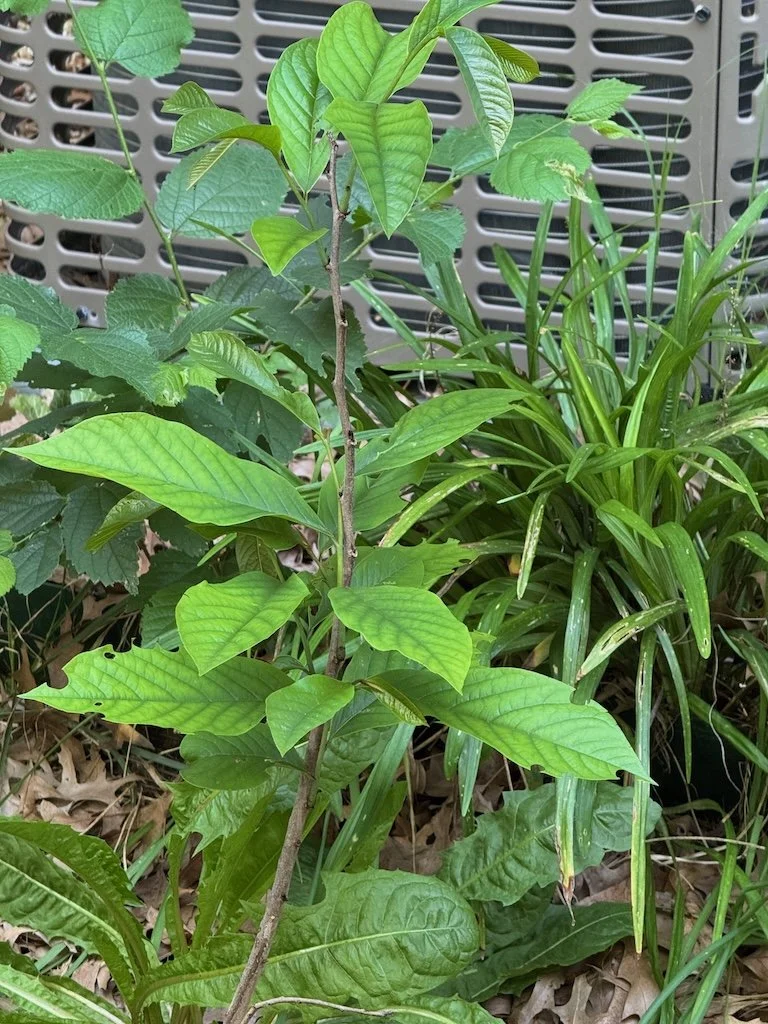
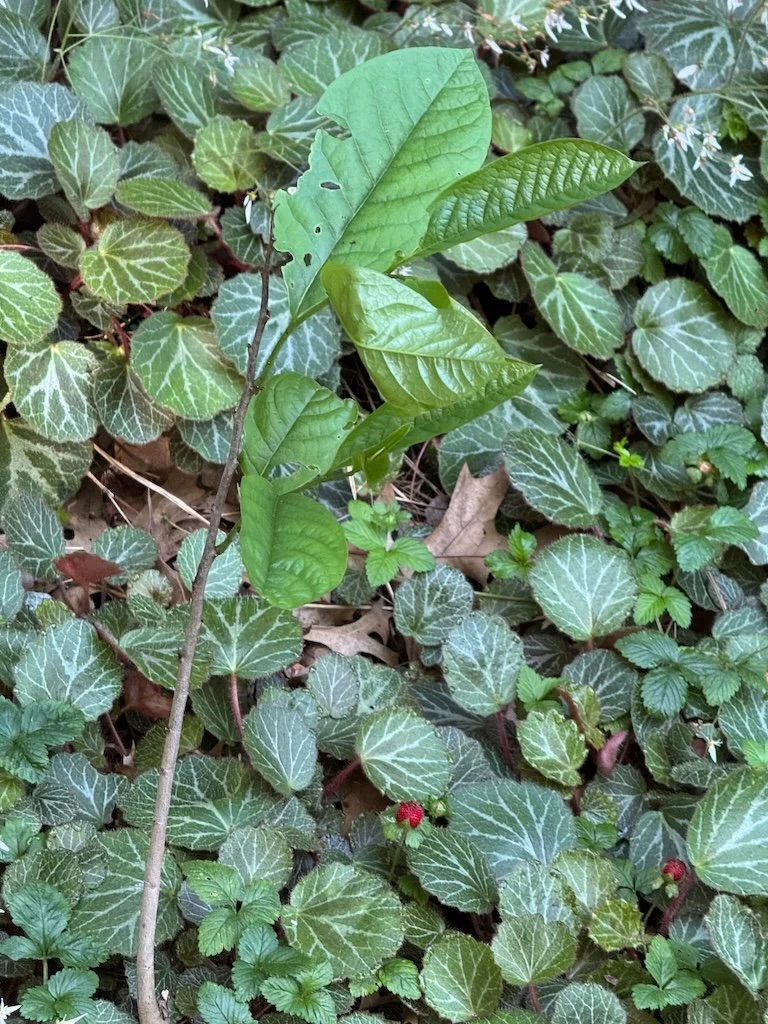
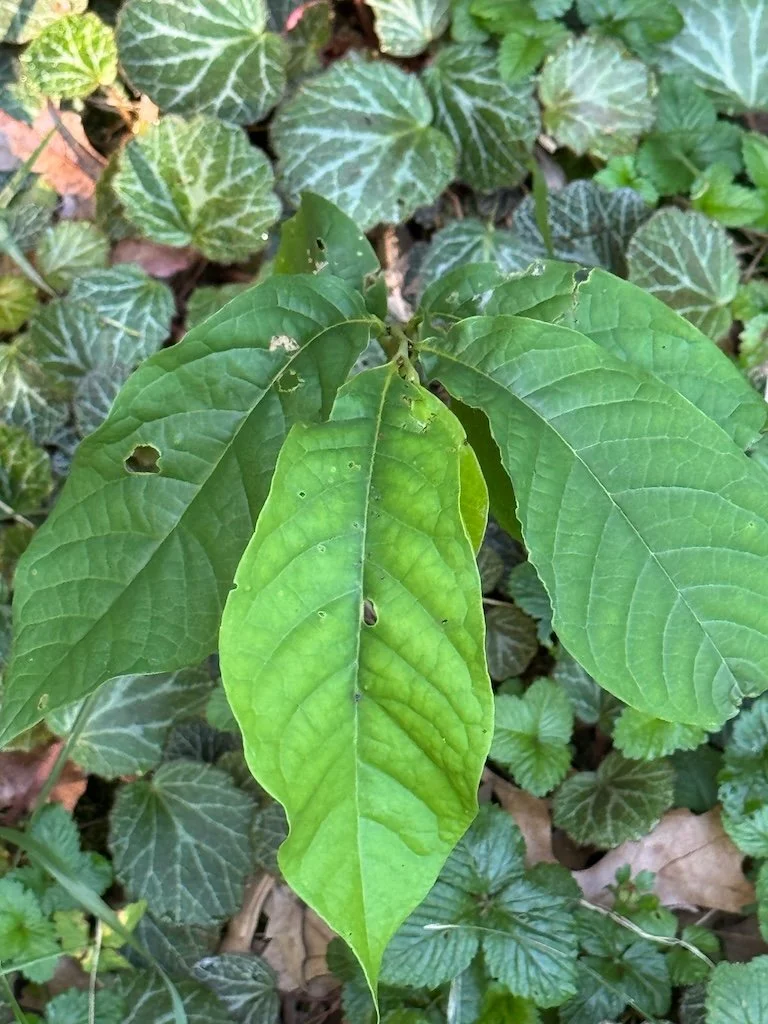
    • Eat more from my own yard (I already eat seasonal greens from the yard….and am looking forward to elderberries and pawpaws in the coming years).

    • Gradually replace my wardrobe with clothes made from natural fibers.

    • Reduce the turf in my yard to 30% or less.

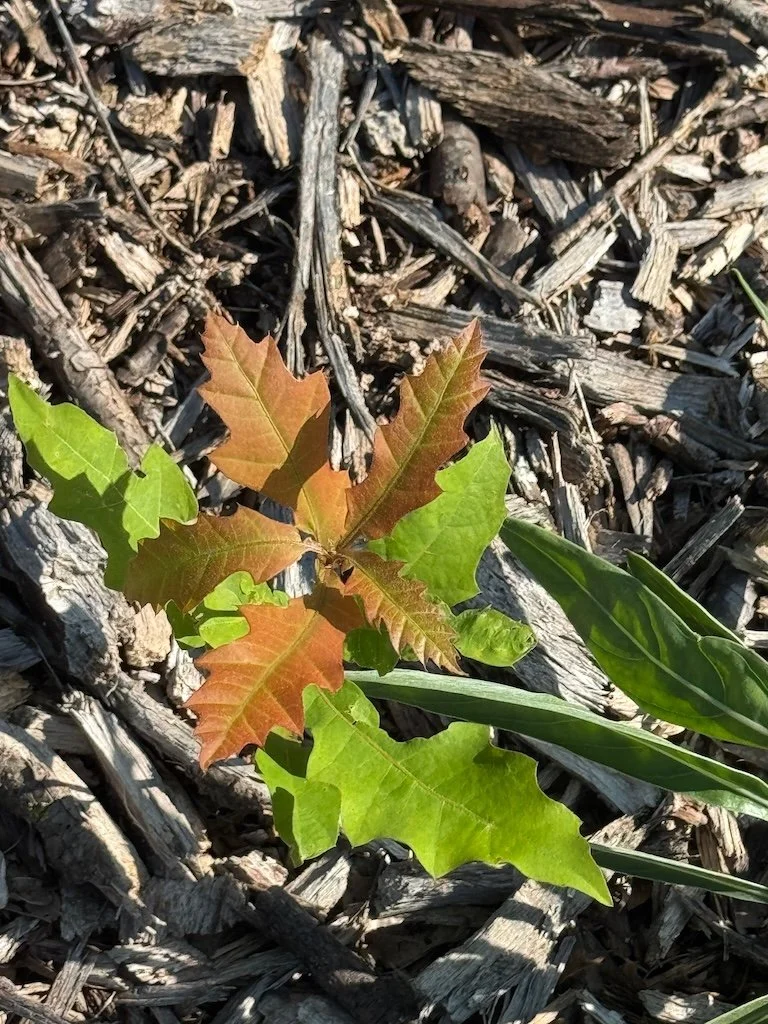
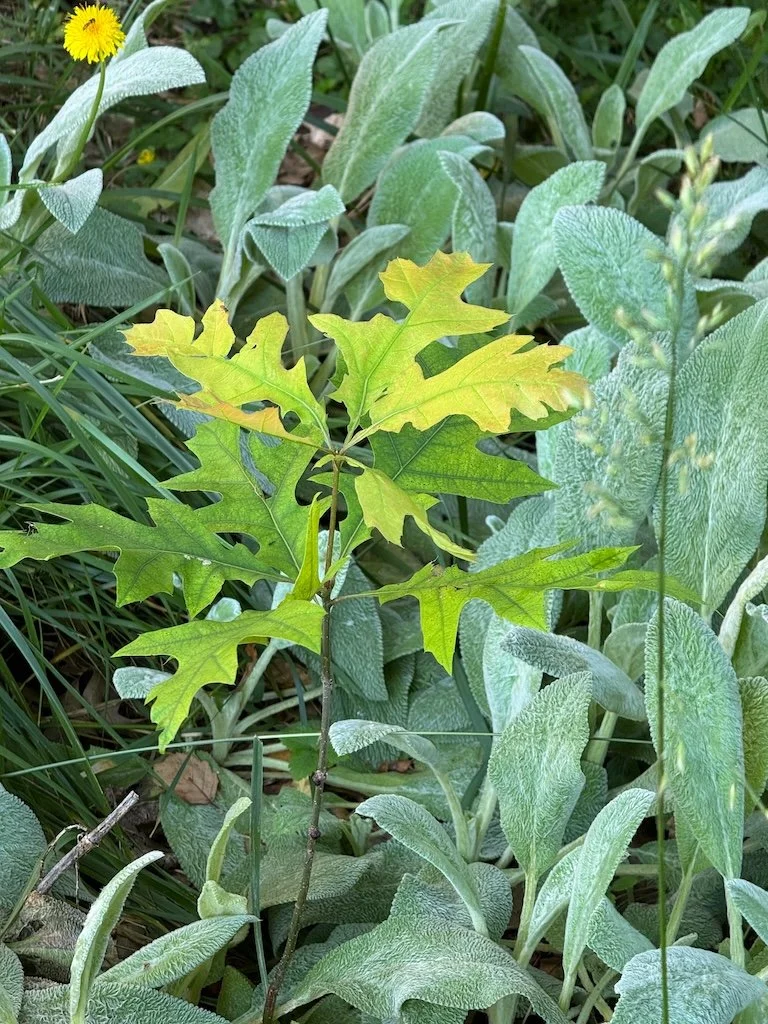
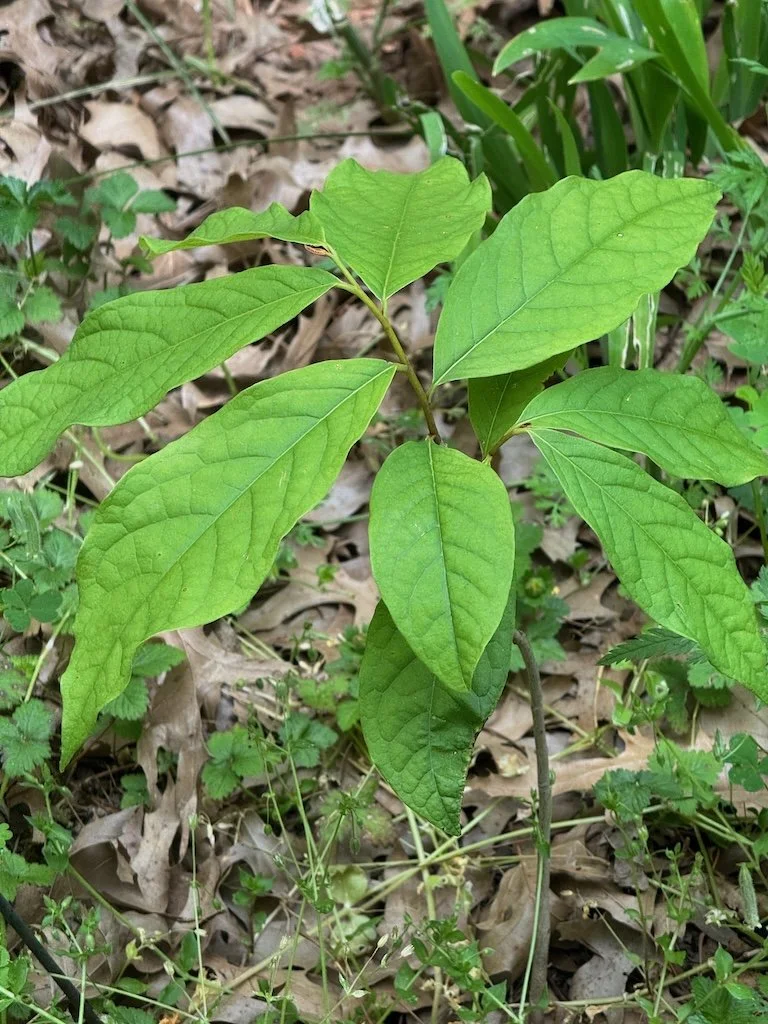
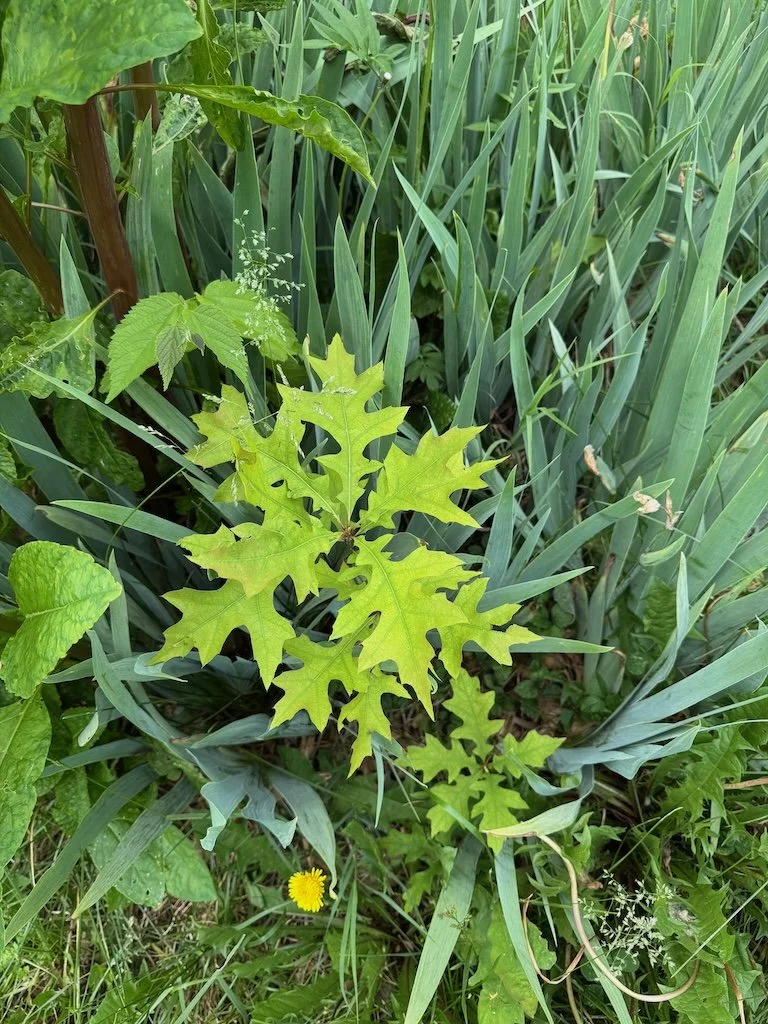
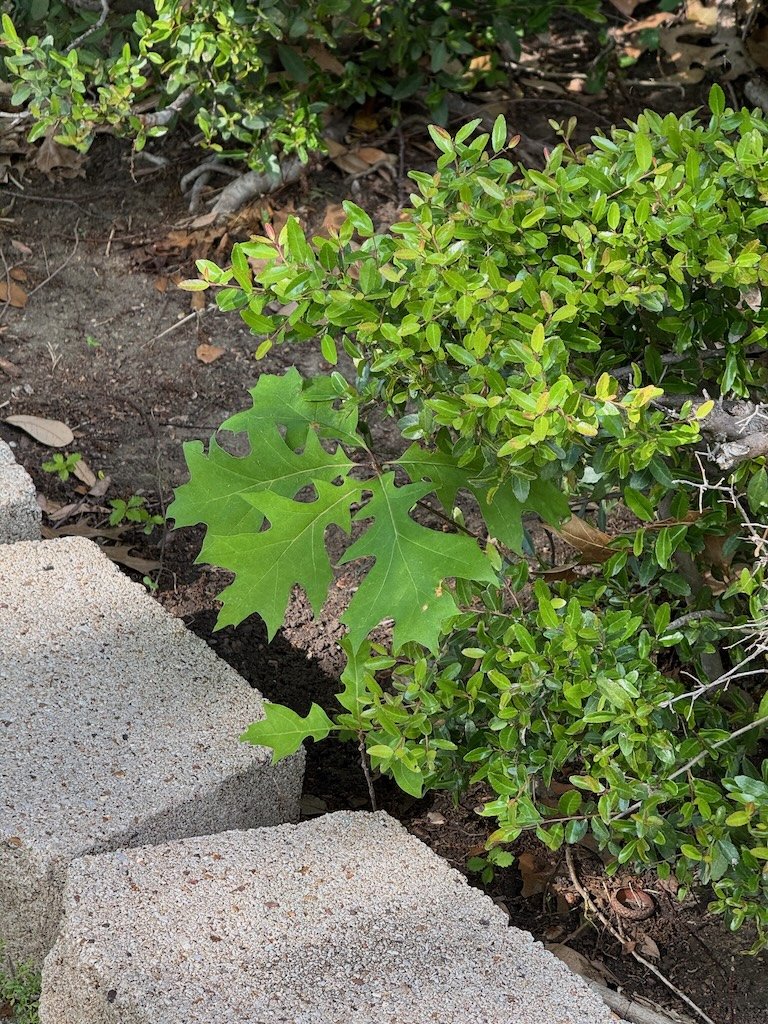
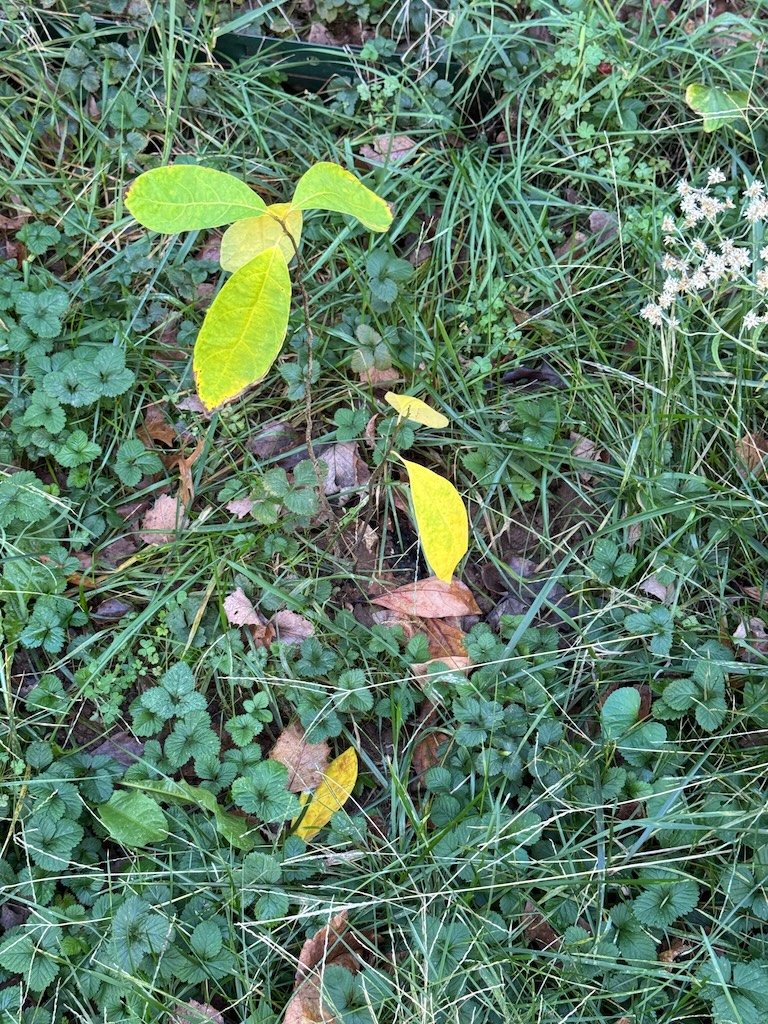
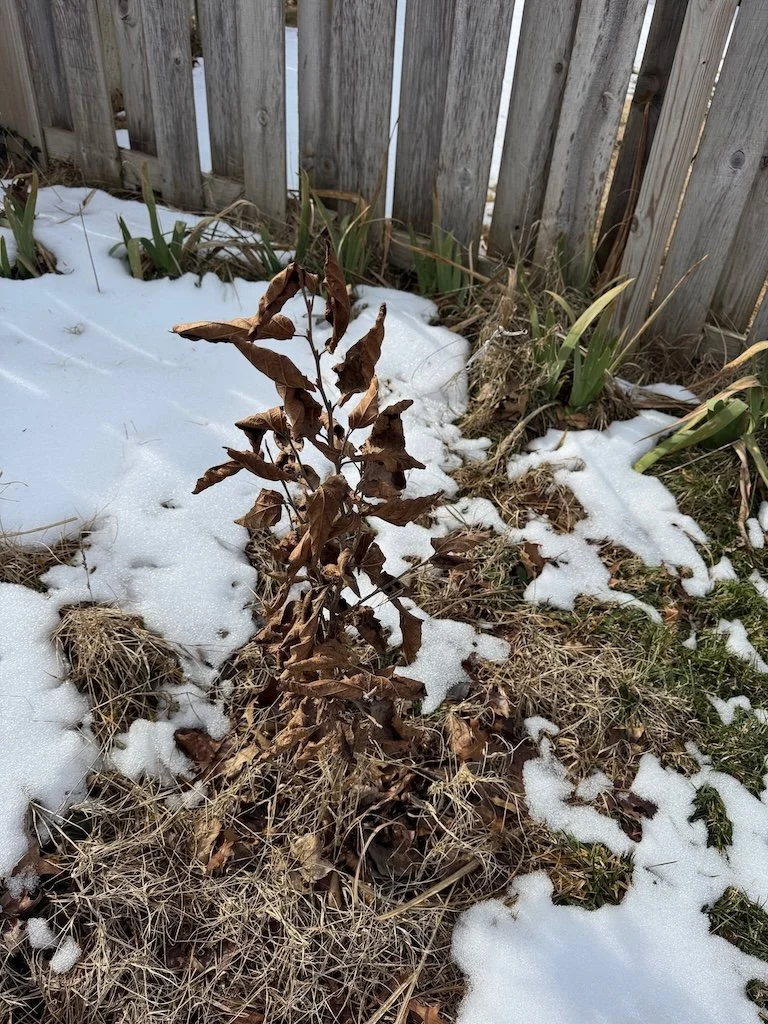
    • Allow an oak to grow in both the back and front yard (they as seedlings now).

  • (Maybe) Begin to skew from outreach/education type volunteering toward advocacy. This could mean that I would decide not to continue as a Missouri Master Naturalist.

Now that I have written this down, I realize that my trend is good….that the plan is simply tweaks that will take some disciple/energy to implement.

Our Missouri Yard – June 2026

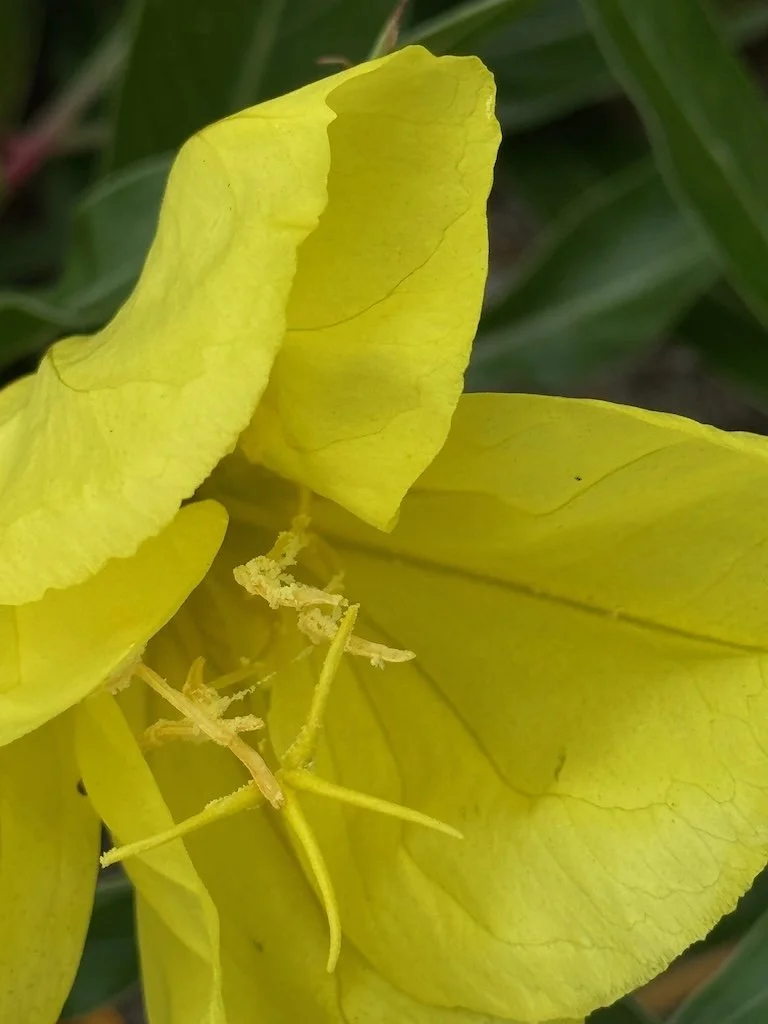
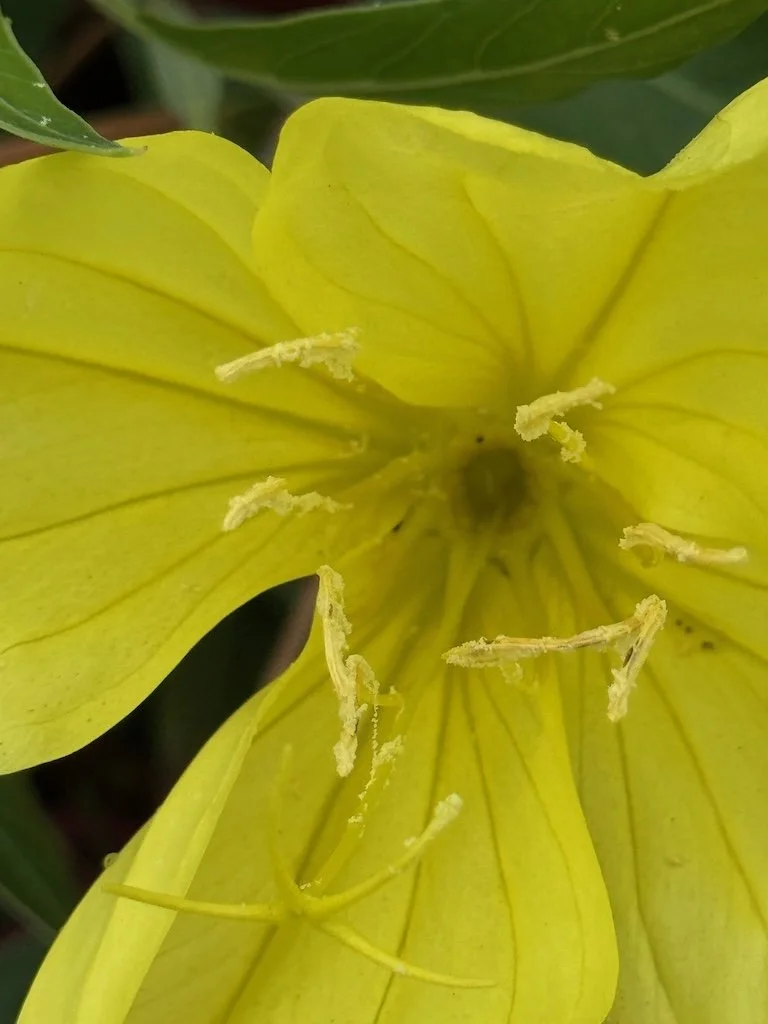
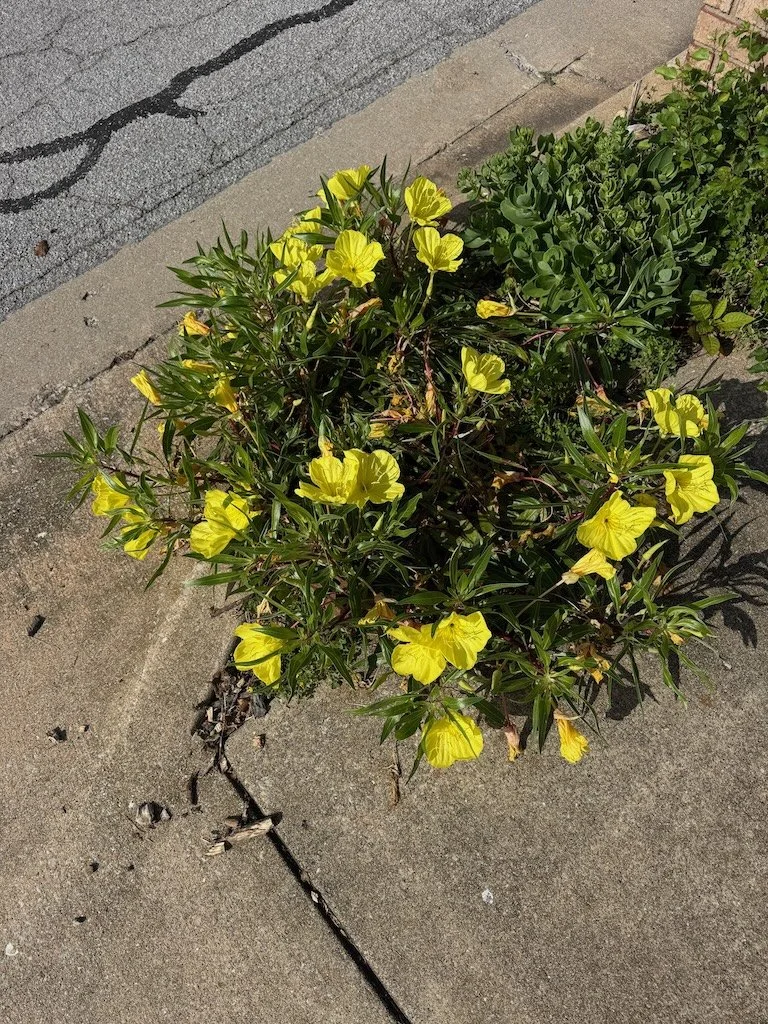
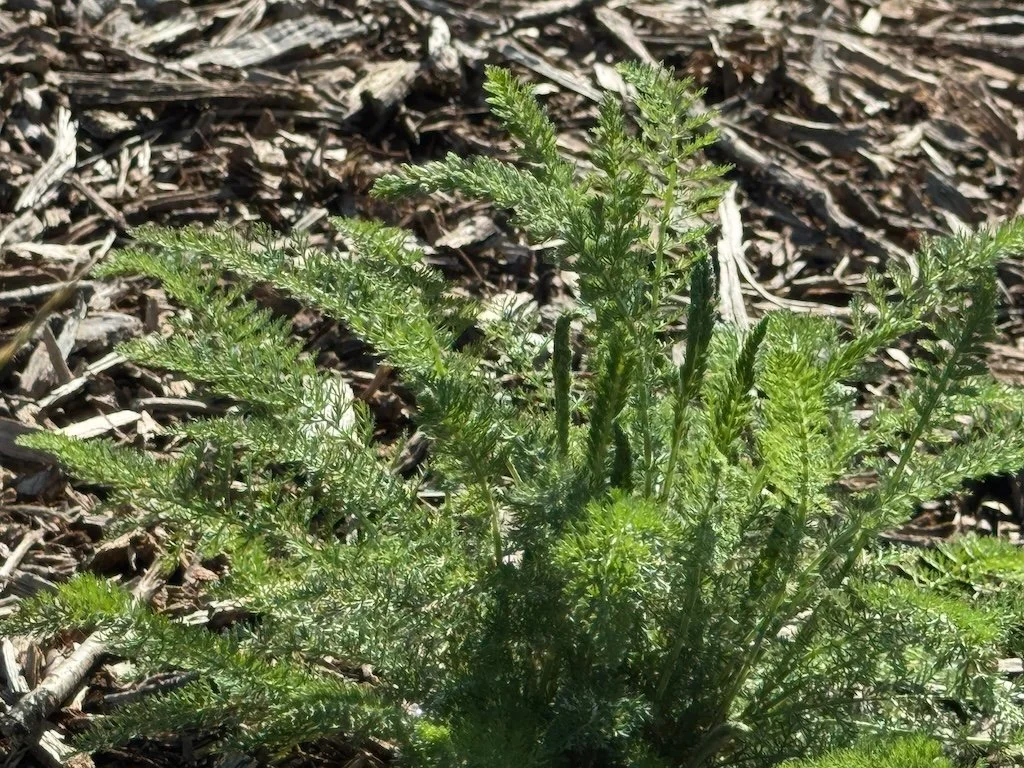
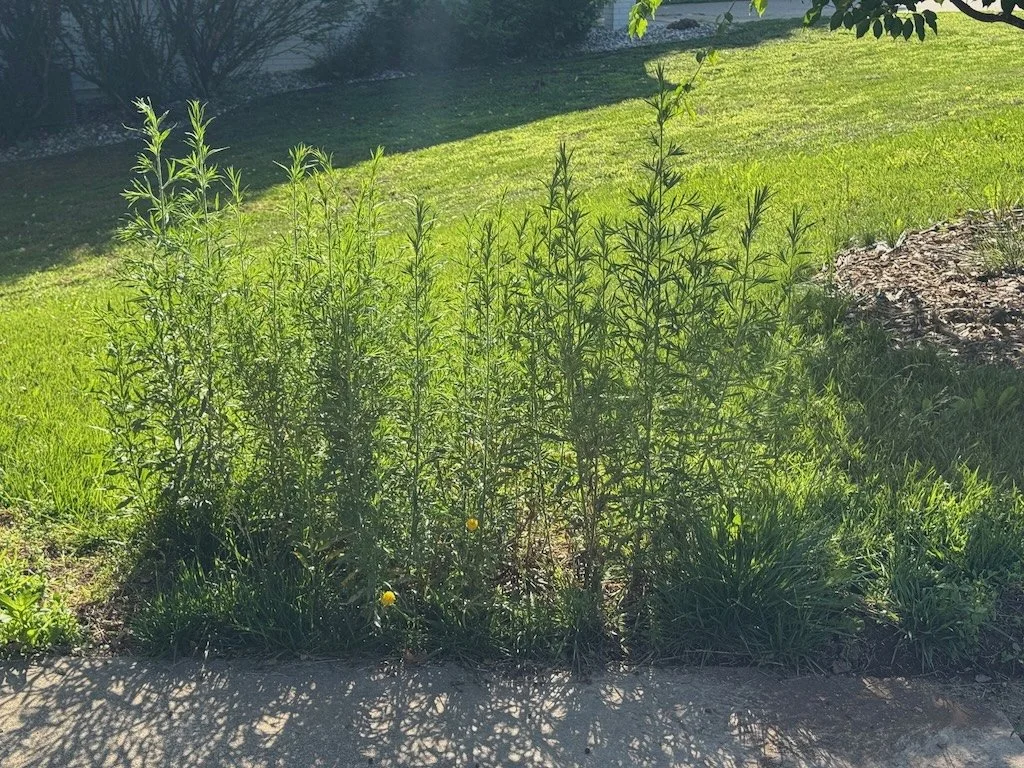
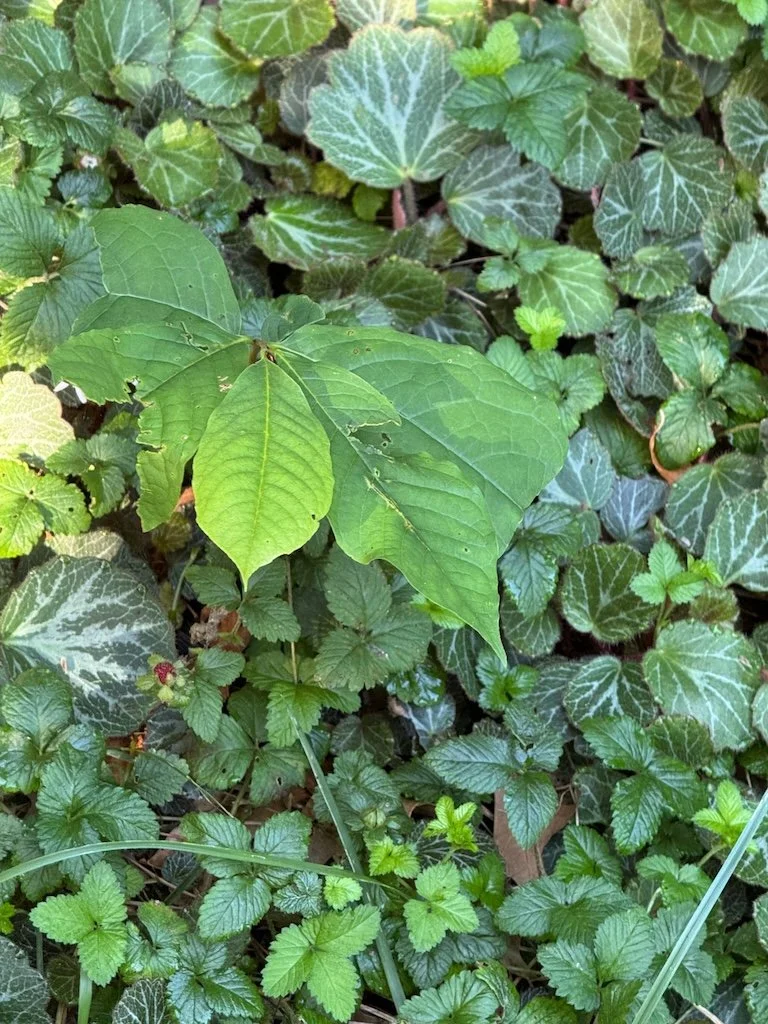
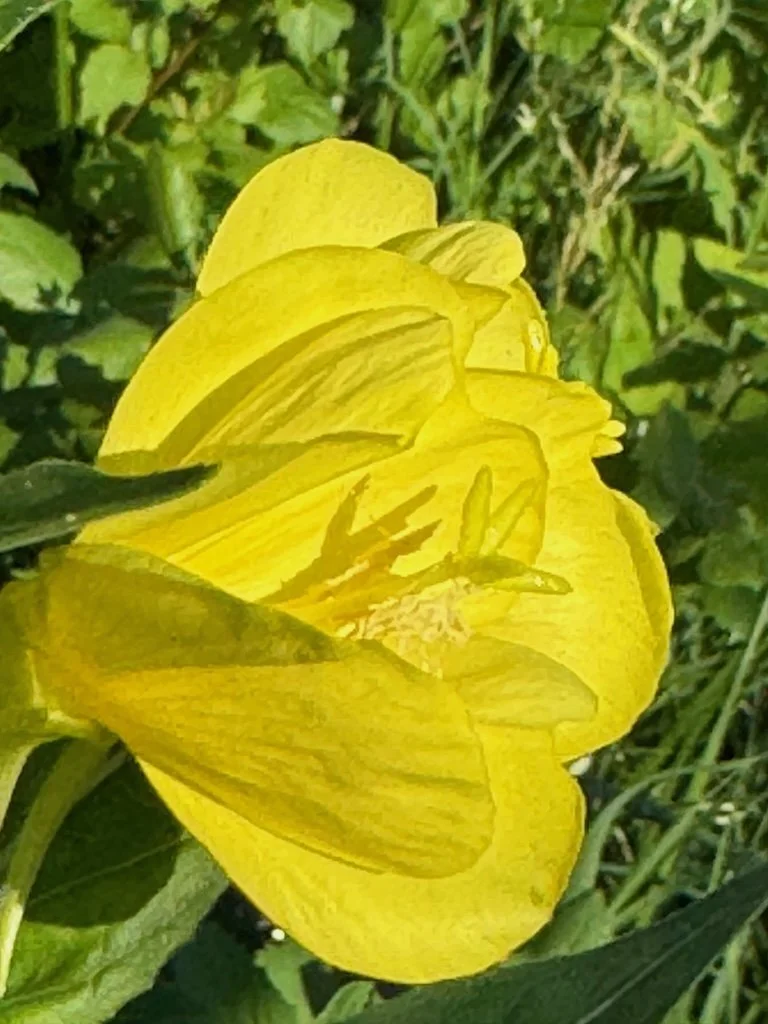
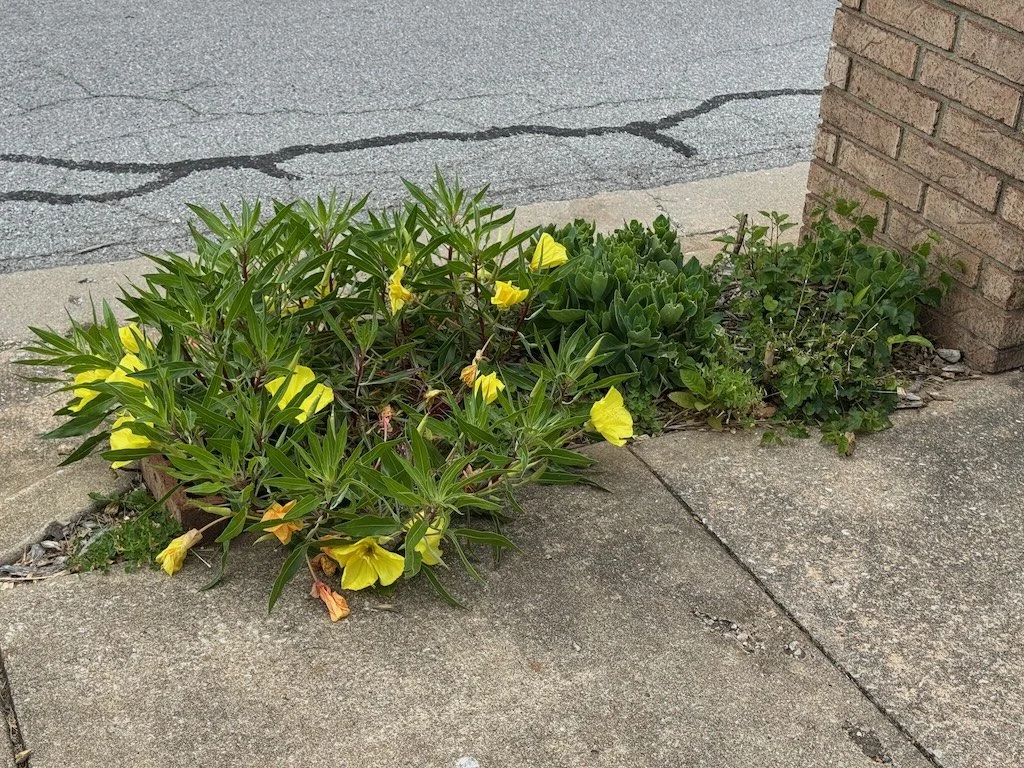
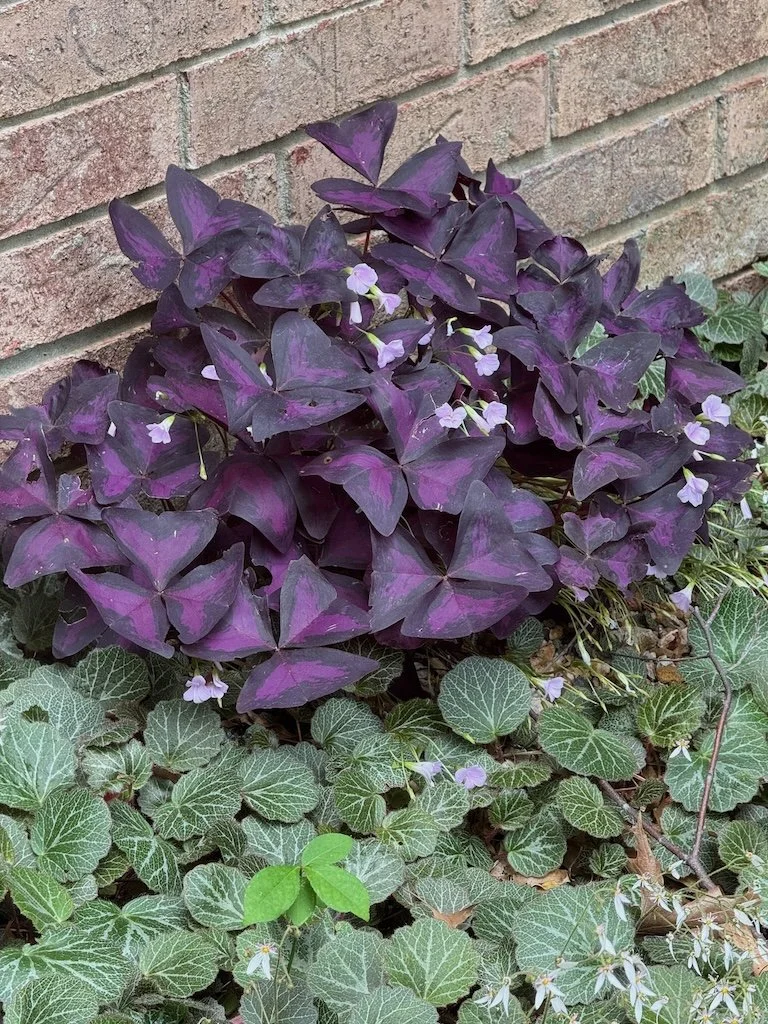
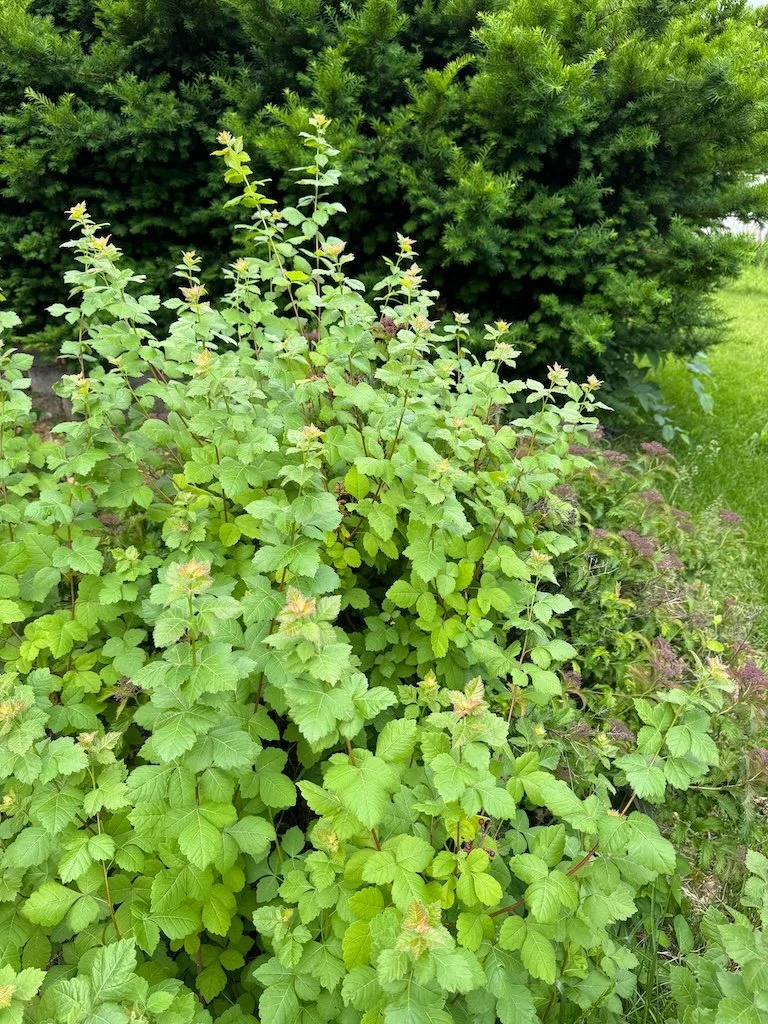
There are a lot of things looking good in our yard right now…the time of year and the rains in late May resulted in a lot of growth since last month. The Missouri Evening Primrose near the mailbox is blooming profusely – will probably crowd out the non-native plant in the small bed with it.

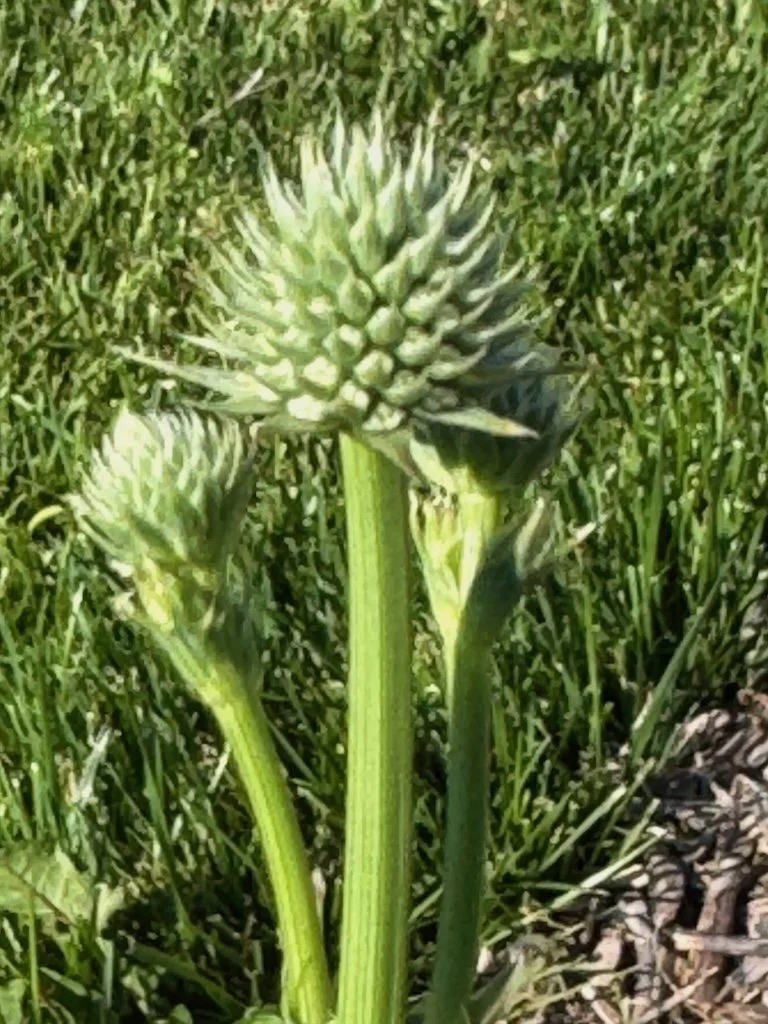
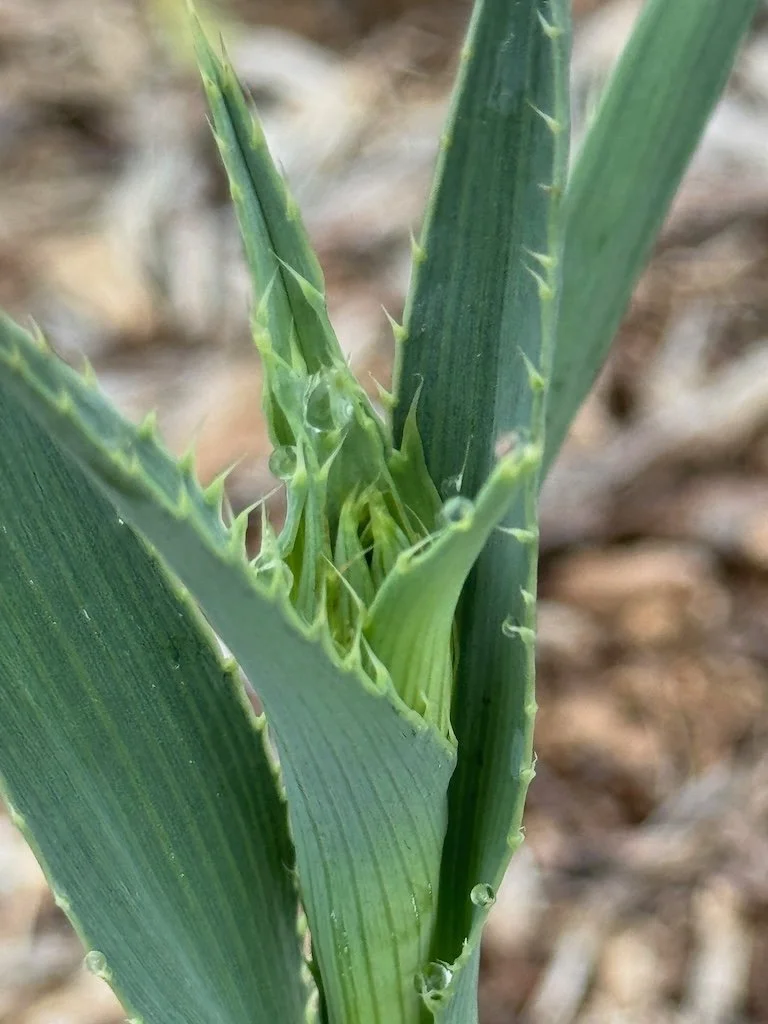
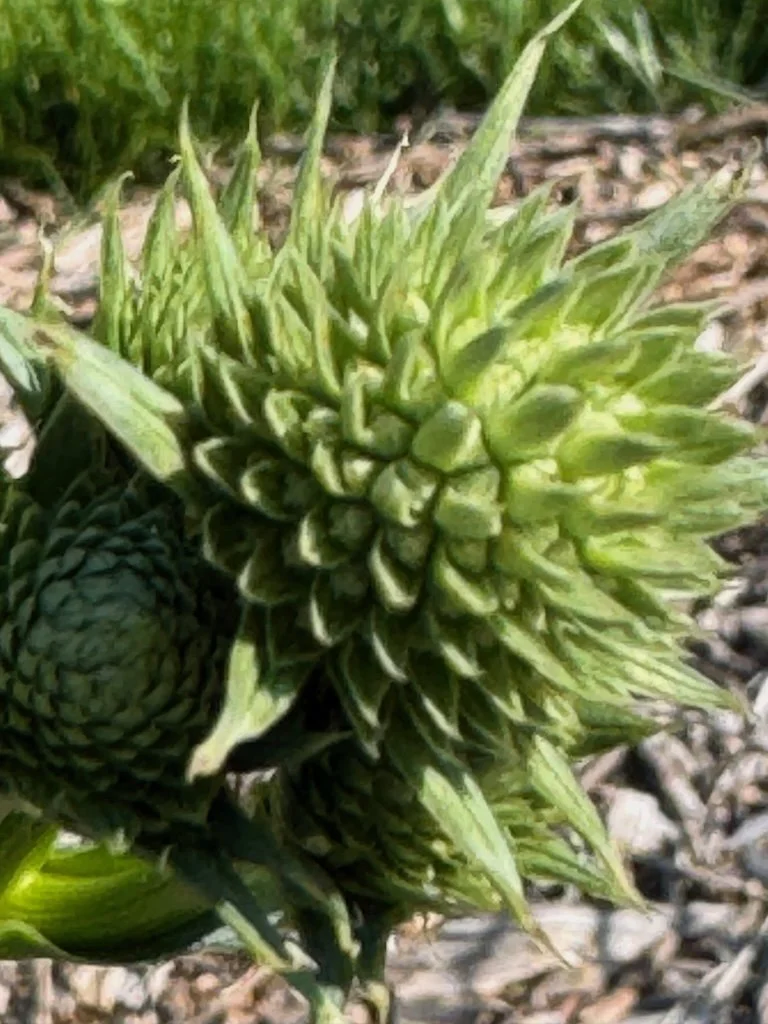
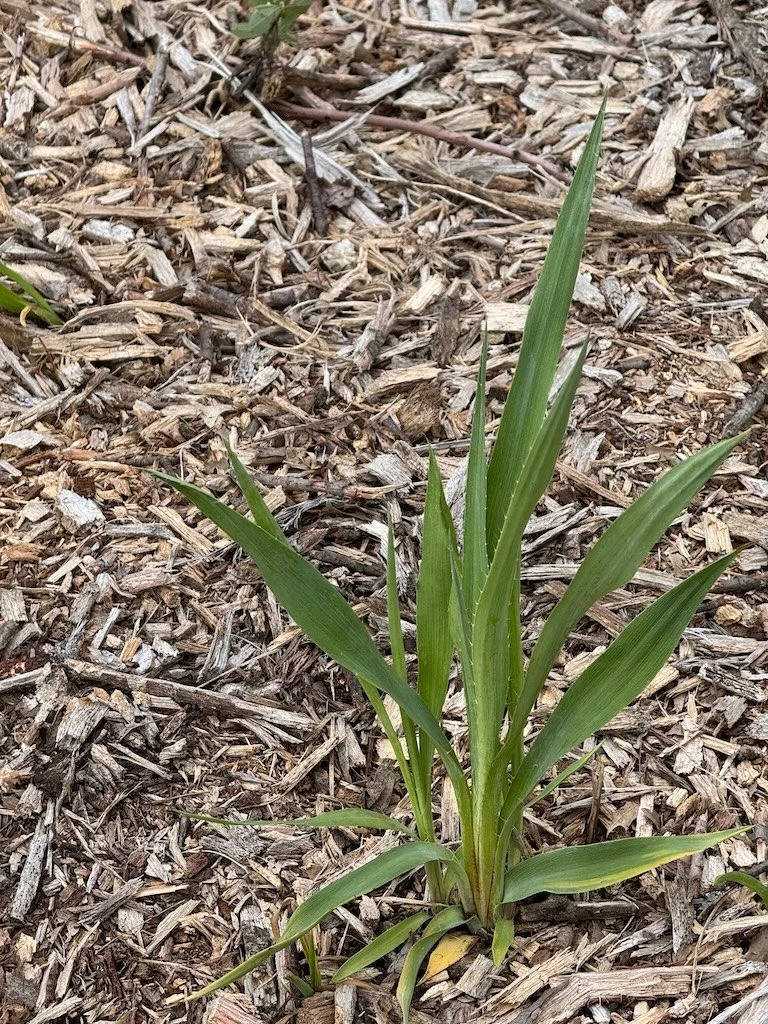
Two of the three rattlesnake master plants in the native plant garden started this year have stalks getting ready to bloom!

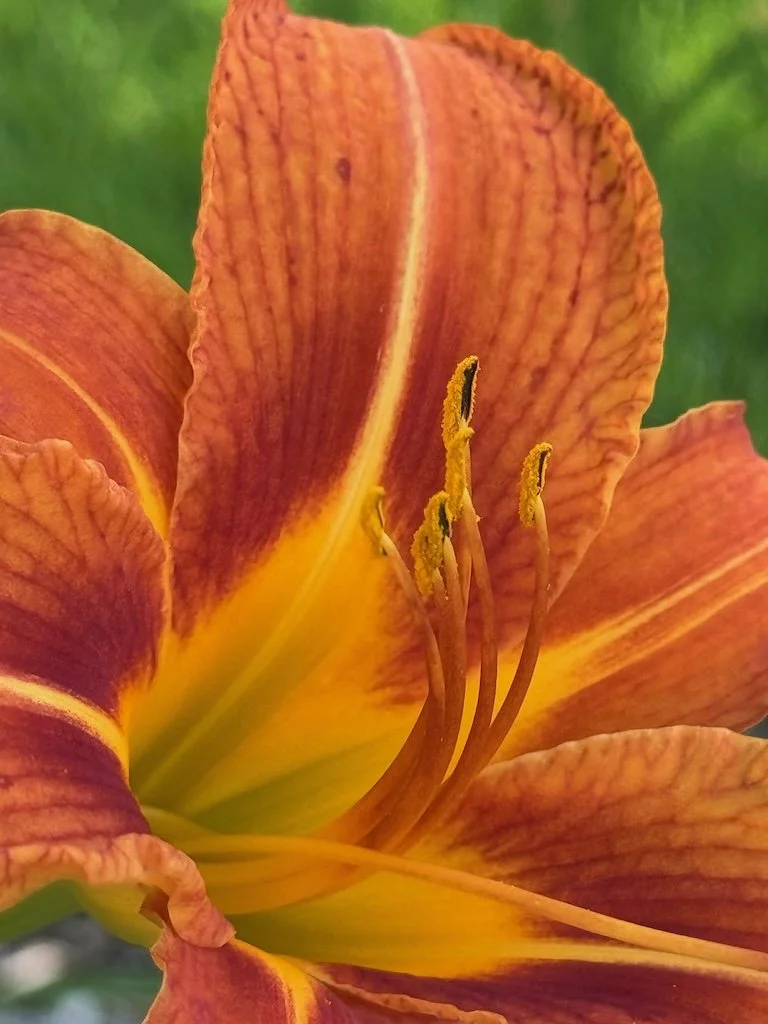
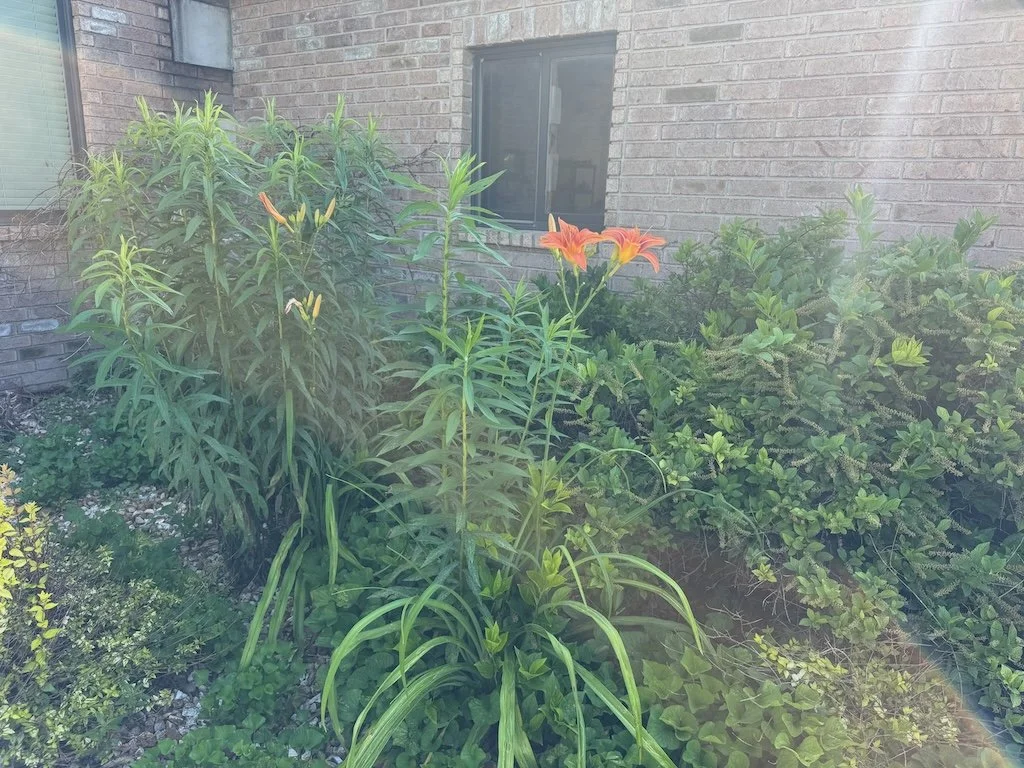
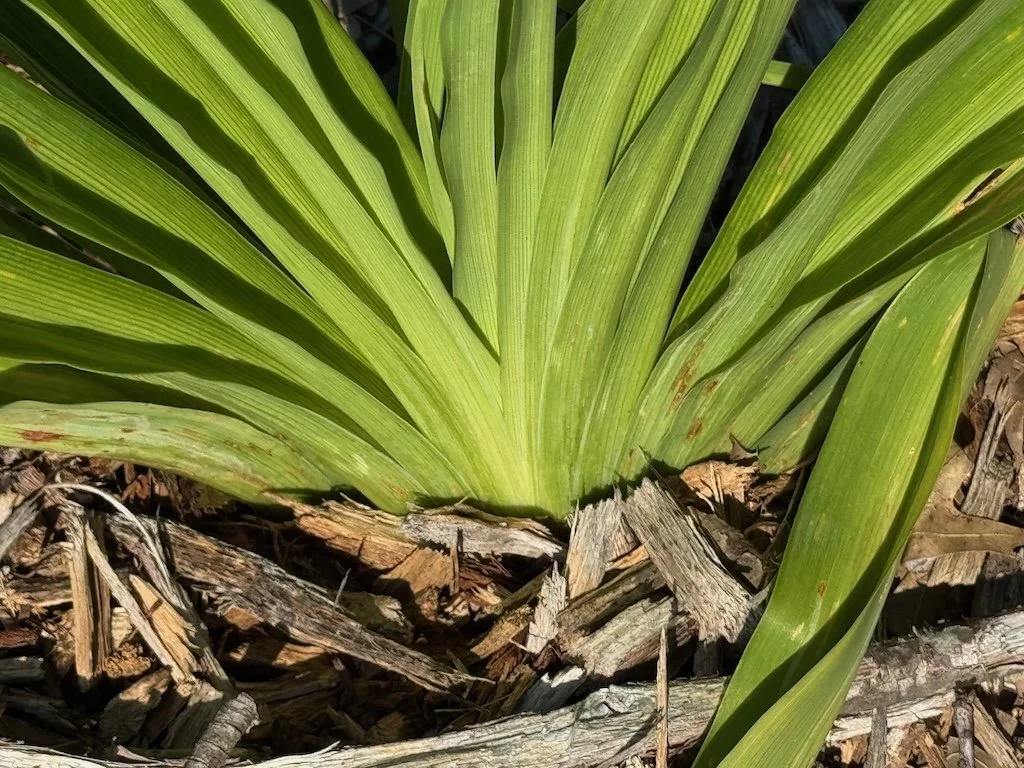
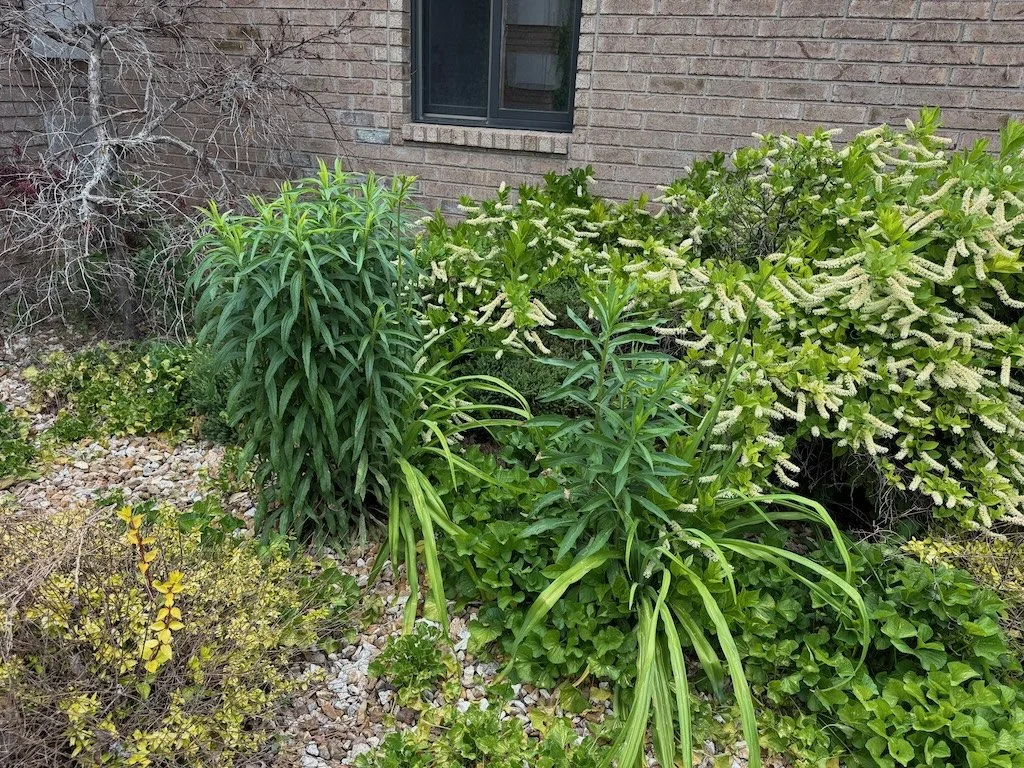
Daylilies are blooming in the corner garden (along with some natives that will bloom in the fall) and in the native plant garden (they came up through the mulch and I am leaving them for now until the natives cover the area completely).

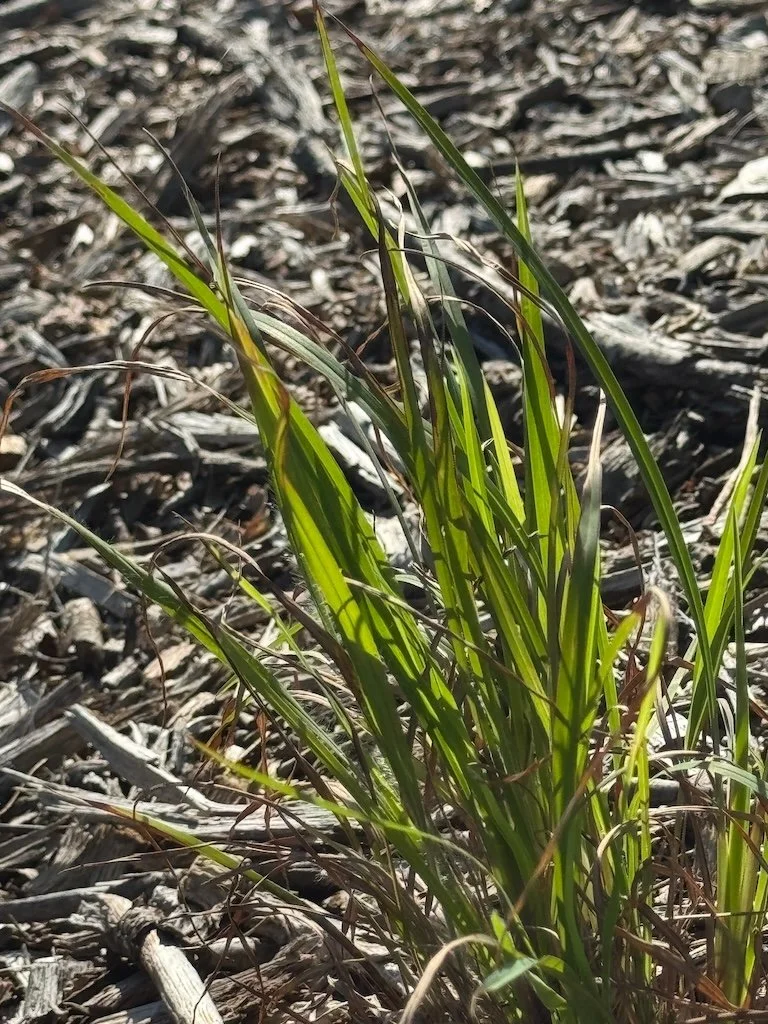
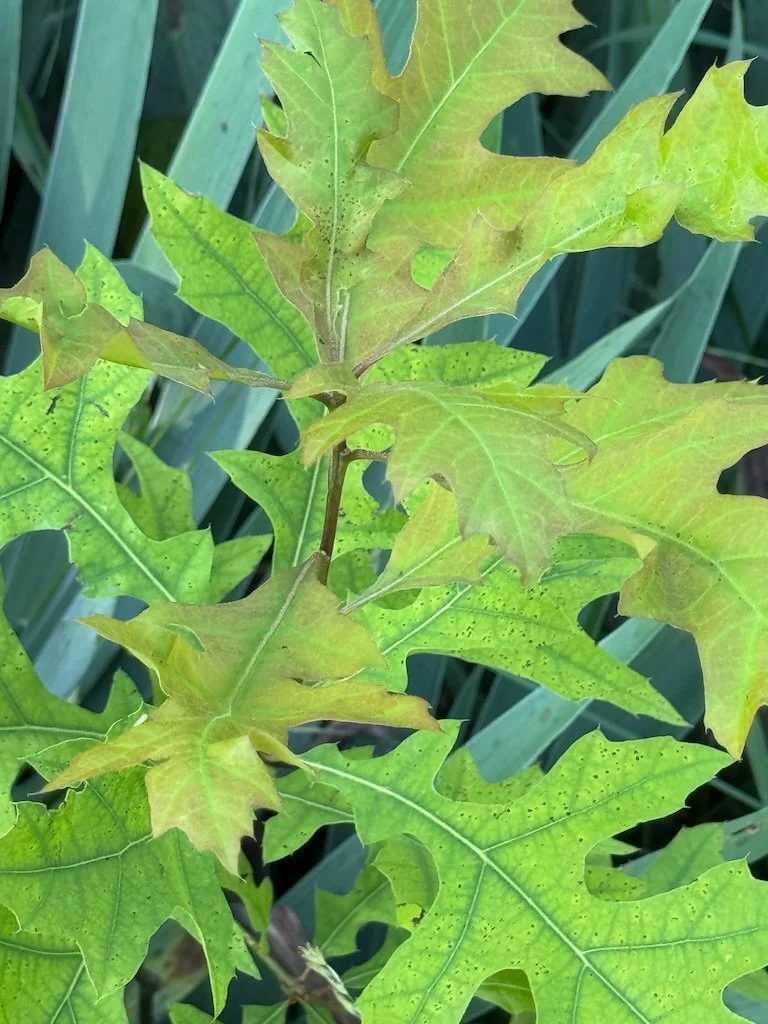
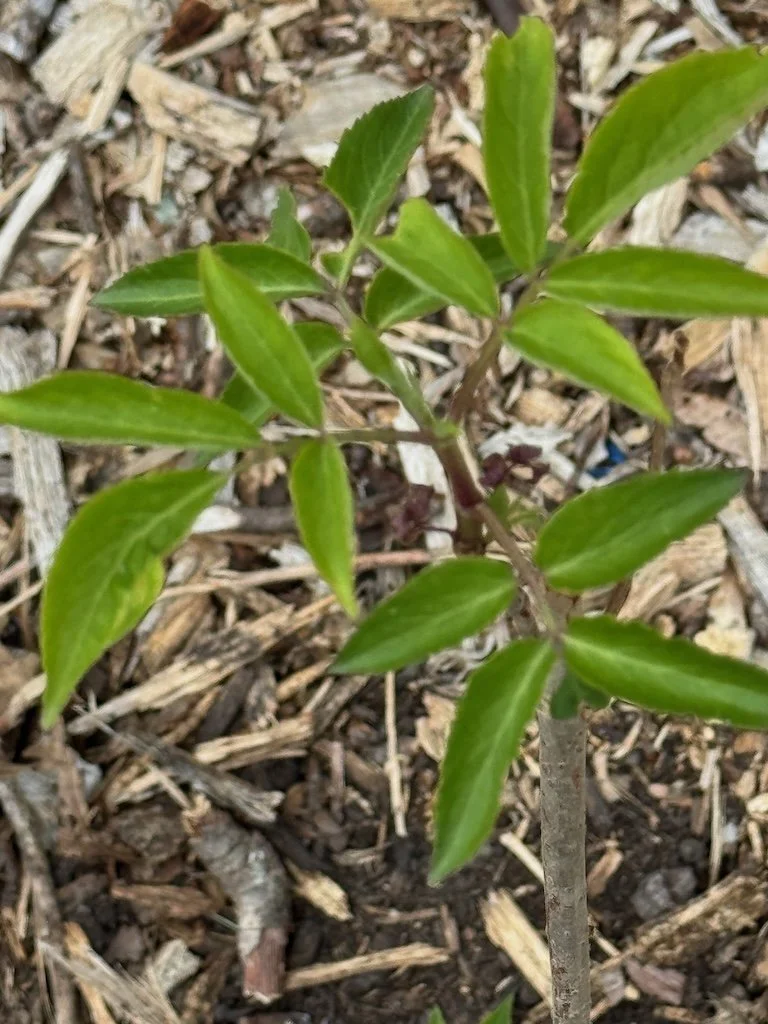
There is an oak seedling that sprouted in the native plant bed that I will simply leave where it is for now while the little blue stem and elderberries are still very small. The elderberries might crowd it out eventually…or is could become the big tree of the front yard.

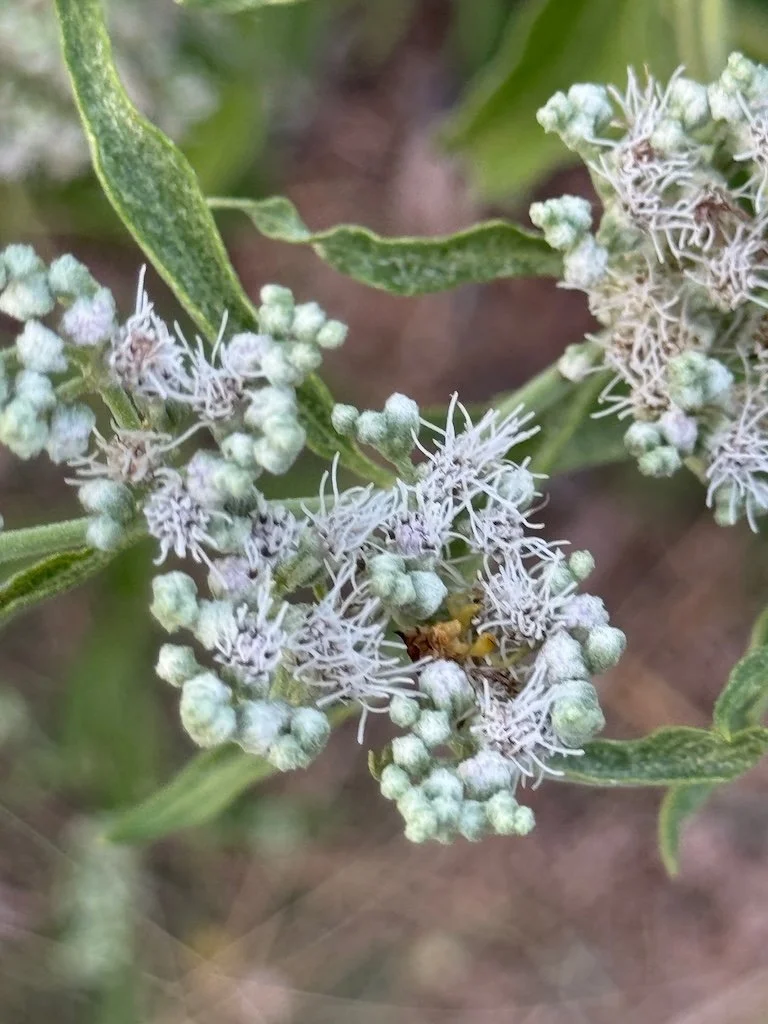
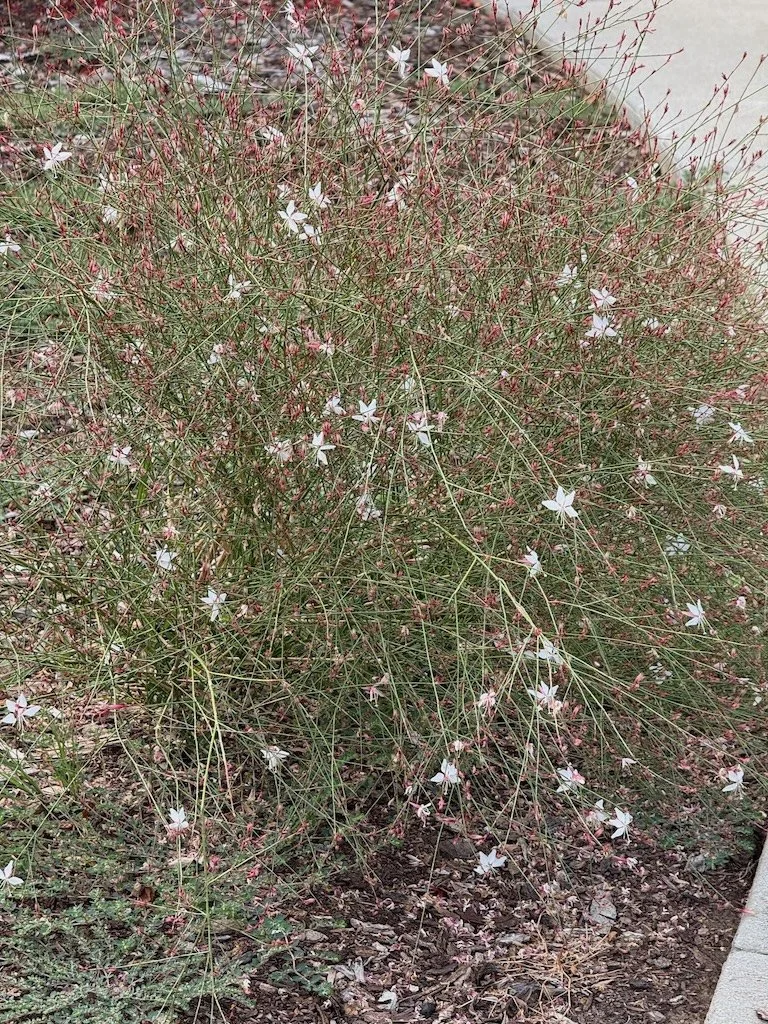
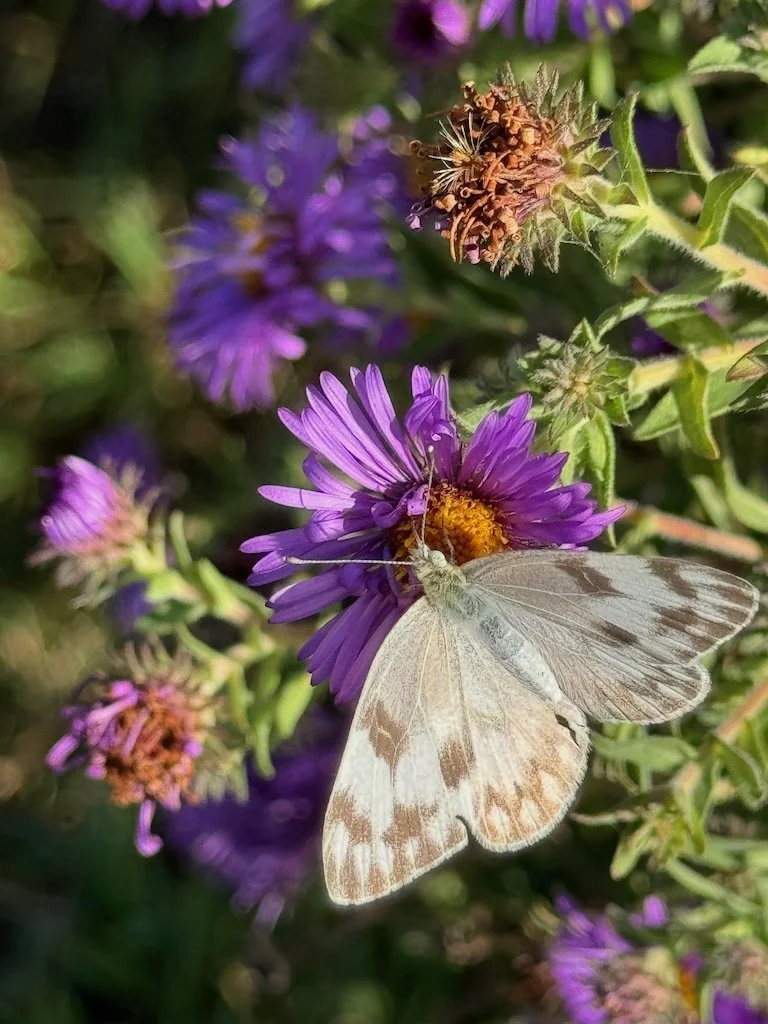
On the east side of the driveway the white heath aster has come up again. I am leaving the plants since the area has a lot of mole activity and I want something there to hold the soil. They are prolific late summer/fall bloomers.

There is a small oak in the bed near the gate to the back yard. I will cut it soon since it is not in a good place for a big tree.

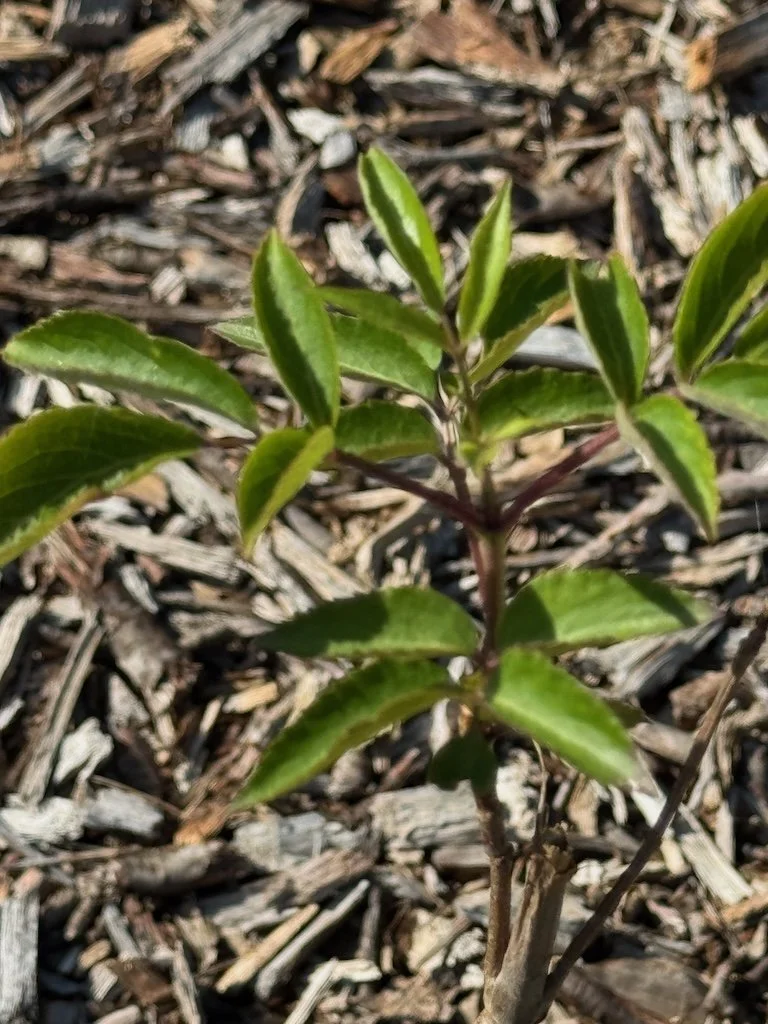
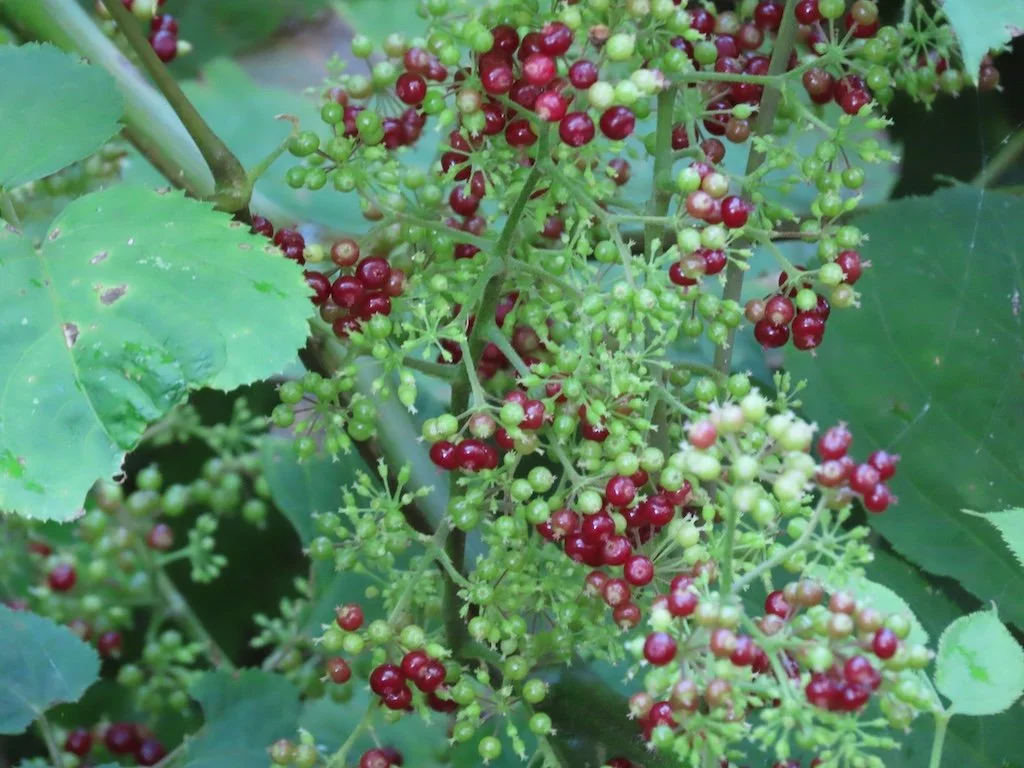
On the east side of the house there are at least 7 young pawpaw plants: 2 from seeds I planted after eating a pawpaw from the butterfly house last fall, 1 purchased from Ozark Soul, and 4 from MDC (there could be one more from MDC but I didn’t see that it had leafed out…maybe it didn’t survive).

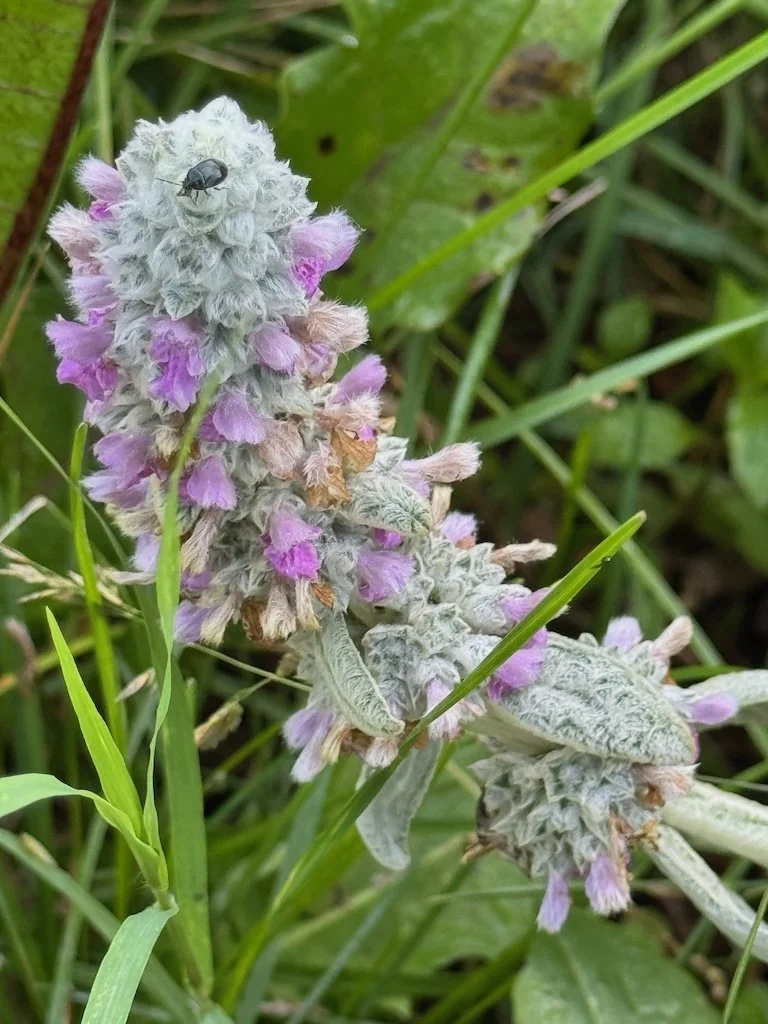
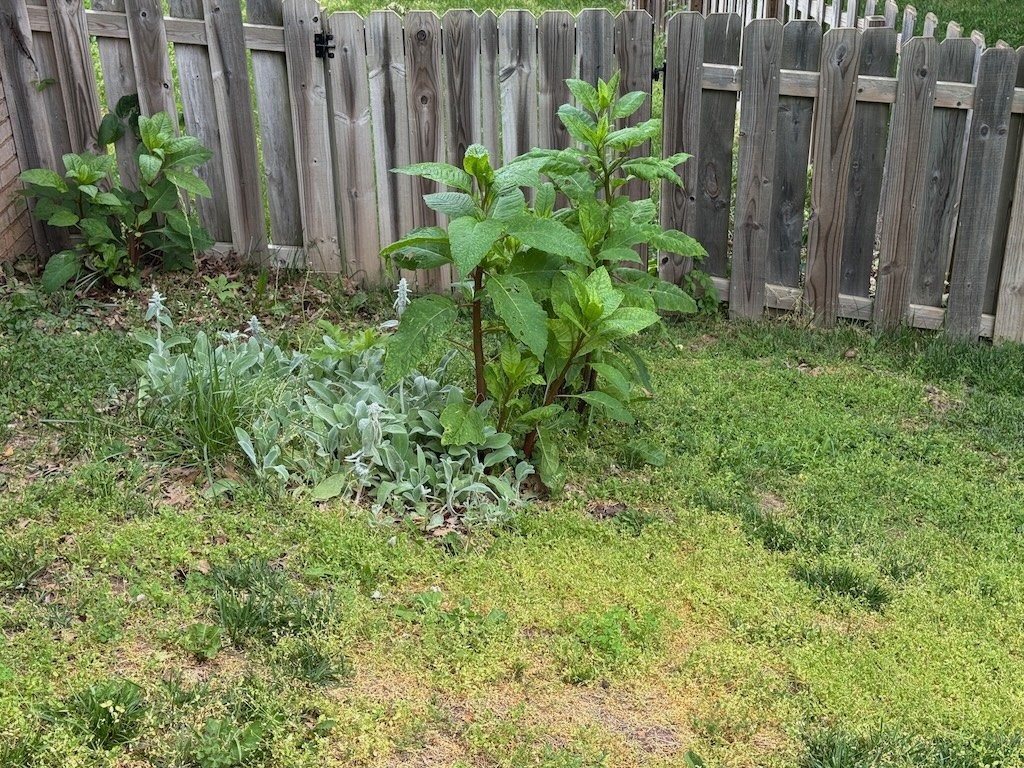
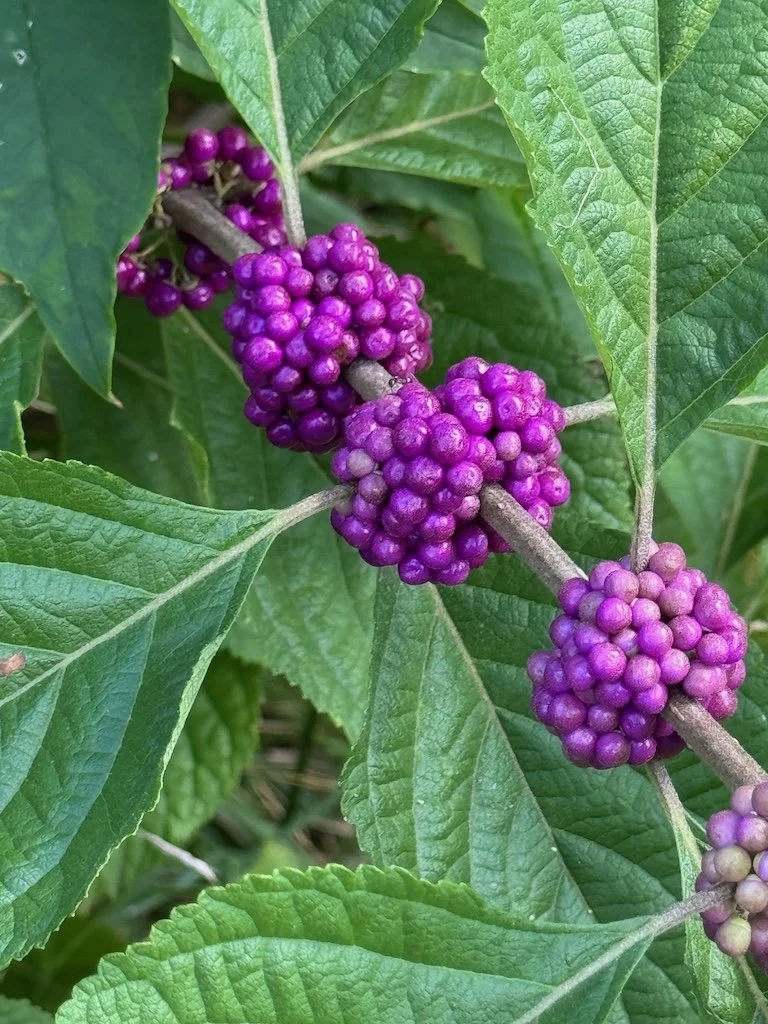
In the garden where we had a pine taken out, there are lambs ear (blooming…not abundant because the bed is crowded with irises and goldenrod), two elderberries (from MDC), beautyberry (the garden is exposed so the plants appear to be dying back each winter and then coming up from the roots…there might be 2 of them), and a healthy looking oak seedling which I am leaving.

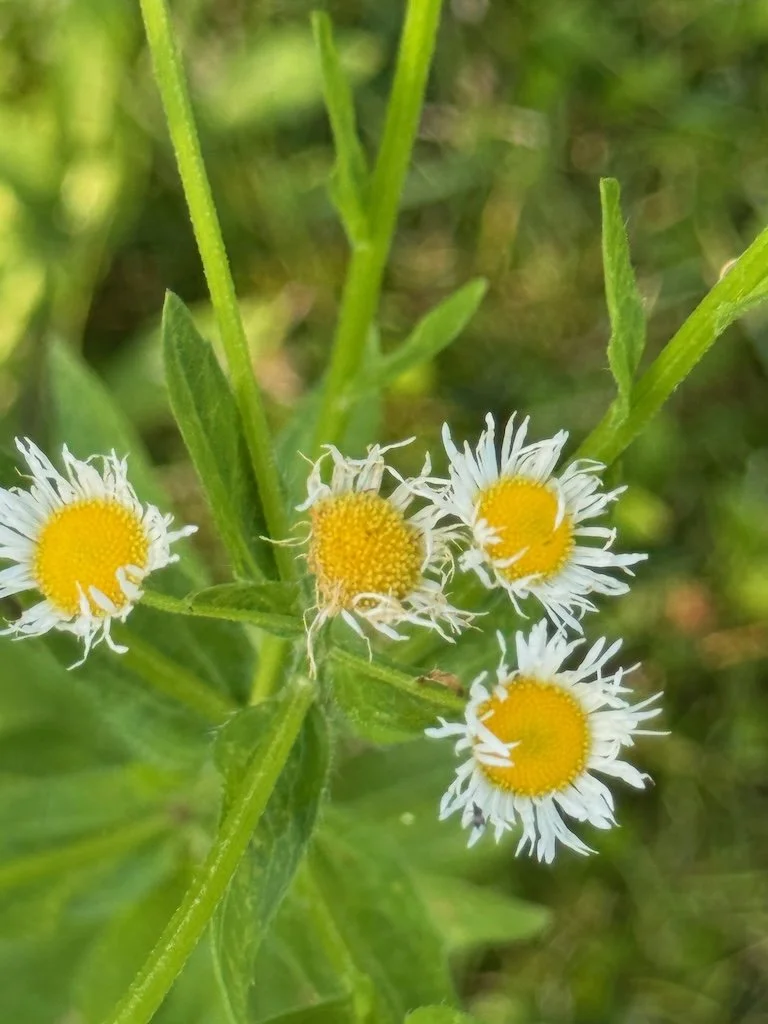
Some of the plants I have been mowing around are blooming!  I think most of them are annual fleabane.

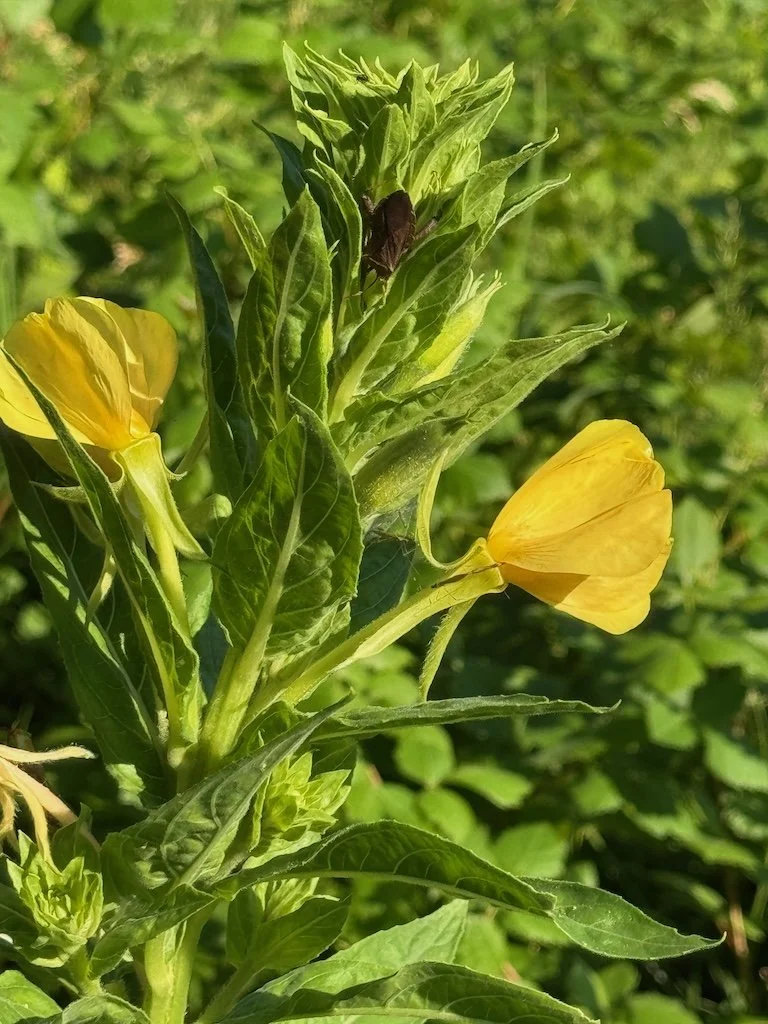
There is common evening primrose in the garden by the patio…it seems to be everywhere…this is its year to bloom!

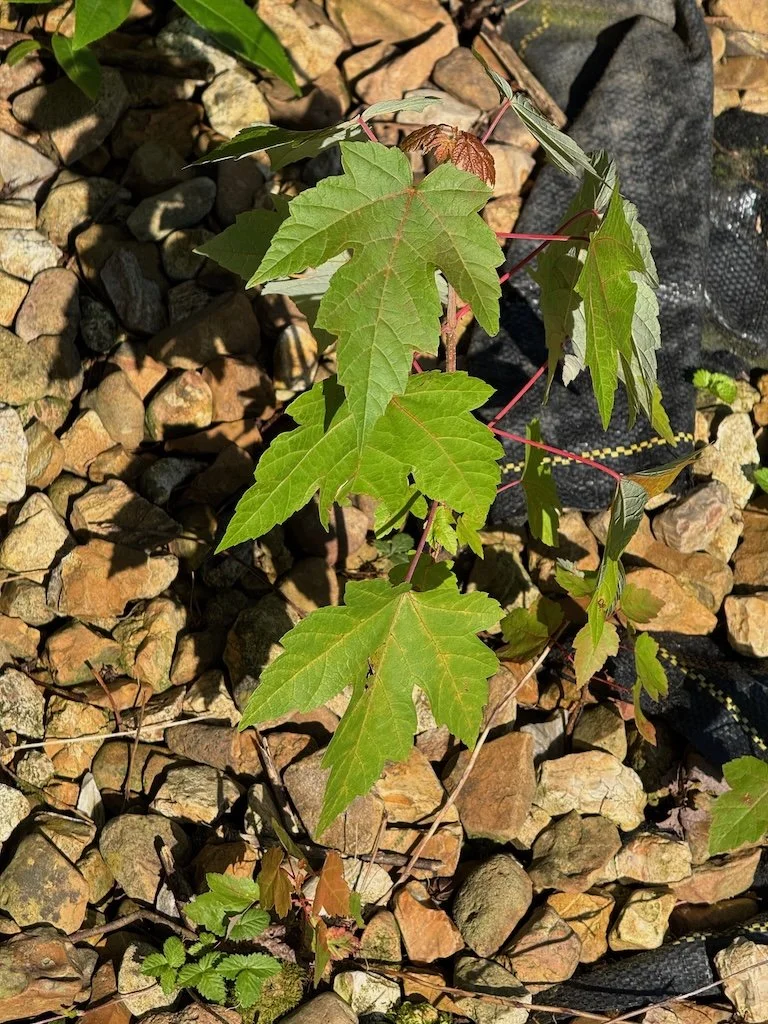
I have lots of maple seedlings…successfully pulled several of them after a recent rain and enough roots came out that they should survive in water for tree tabling later this month.

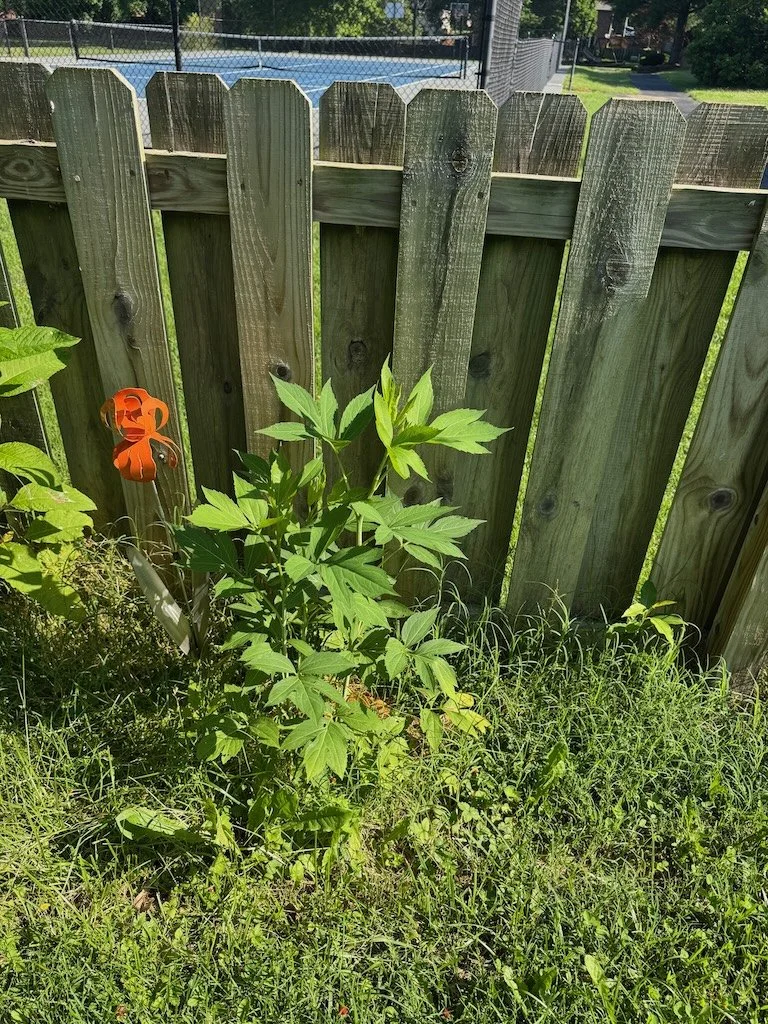
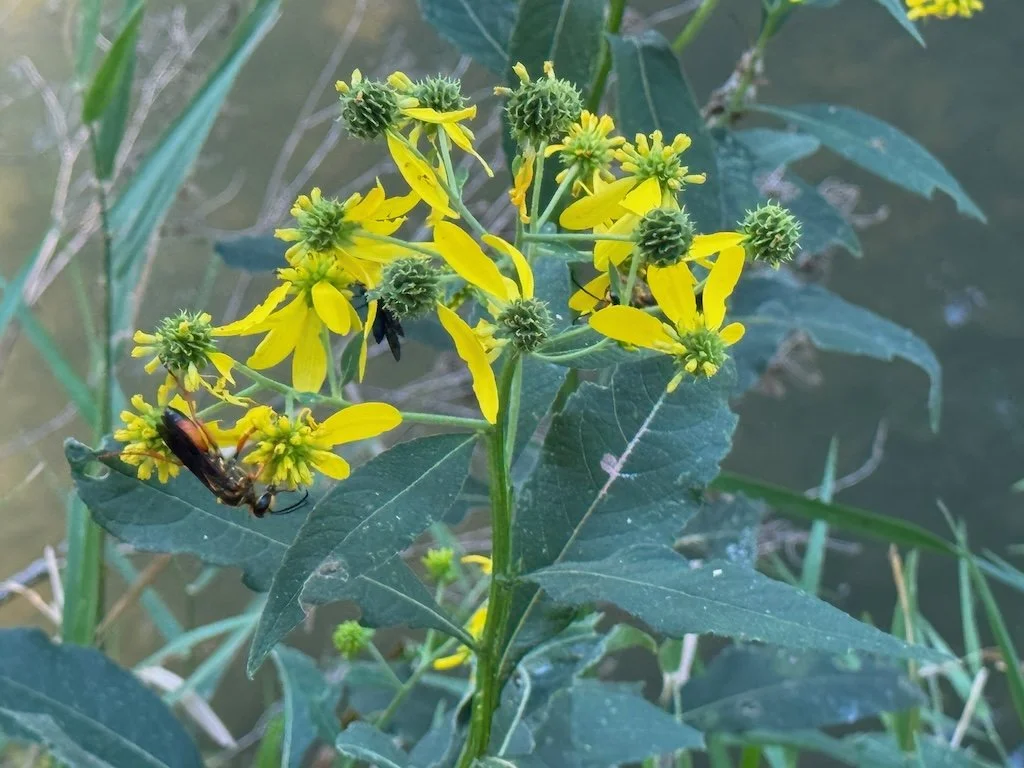
The Rudbekia laciniata (sochan) is thriving. I haven’t tried eating any of it yet…want to make sure it is well established before I do.

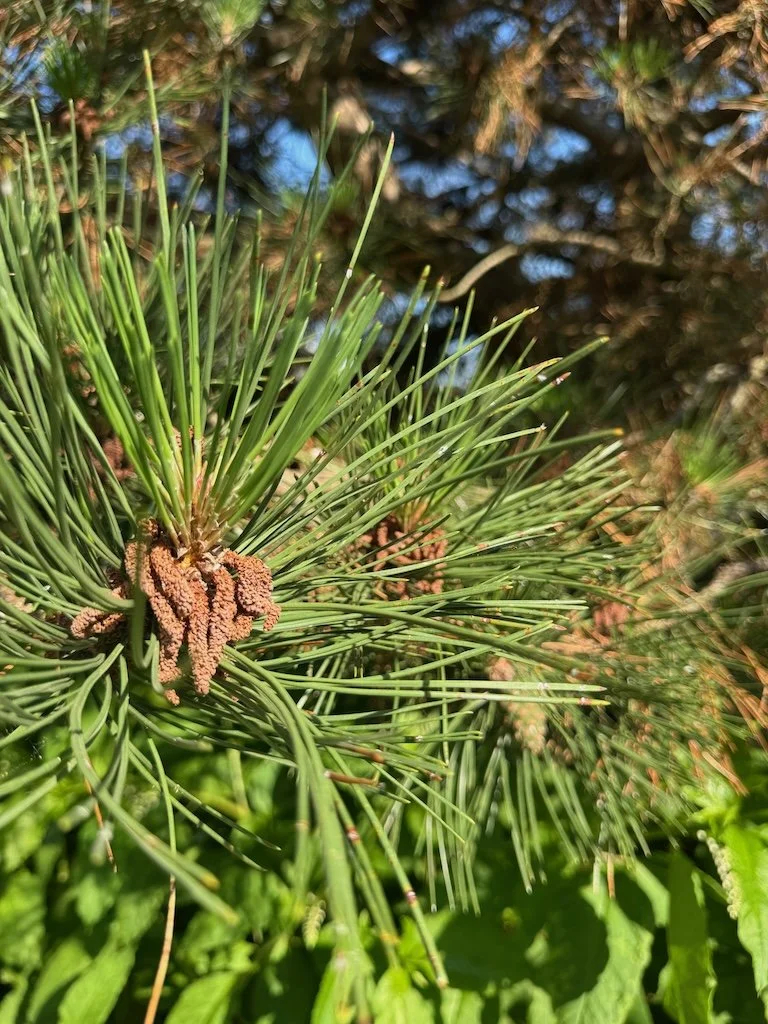
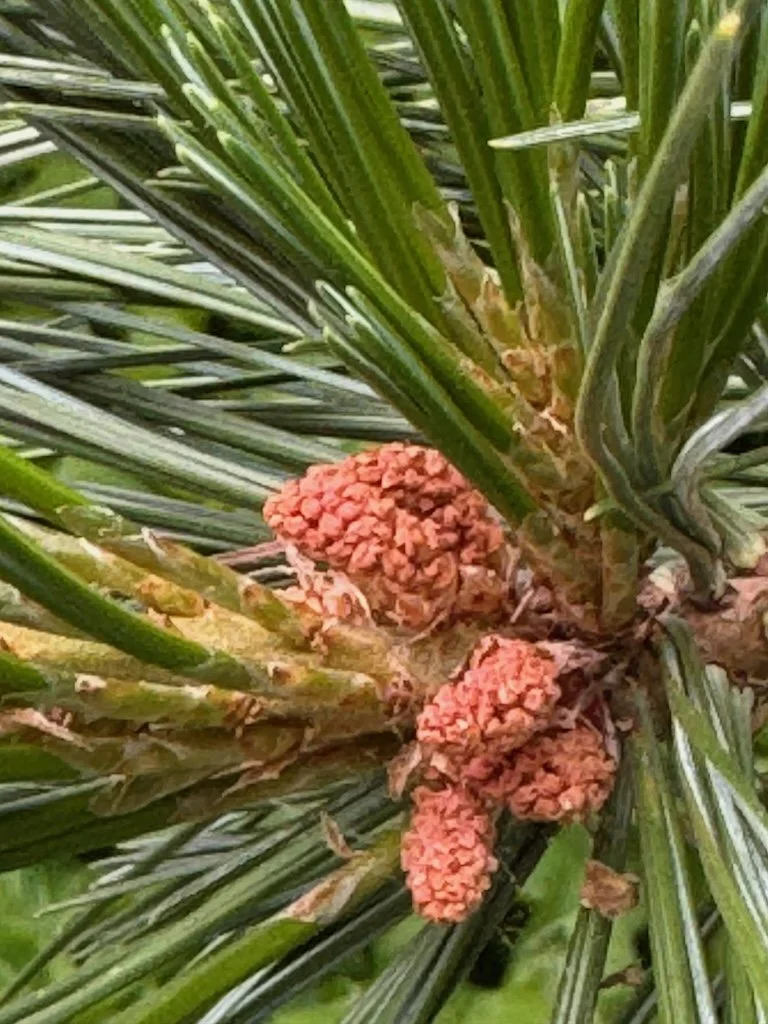
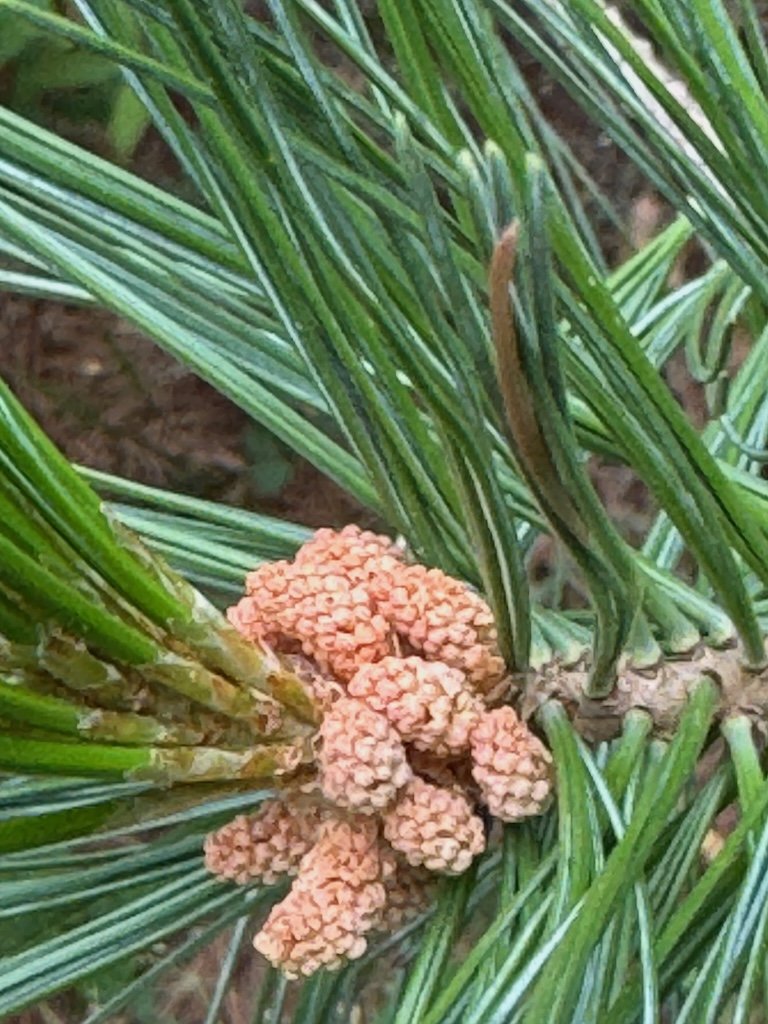
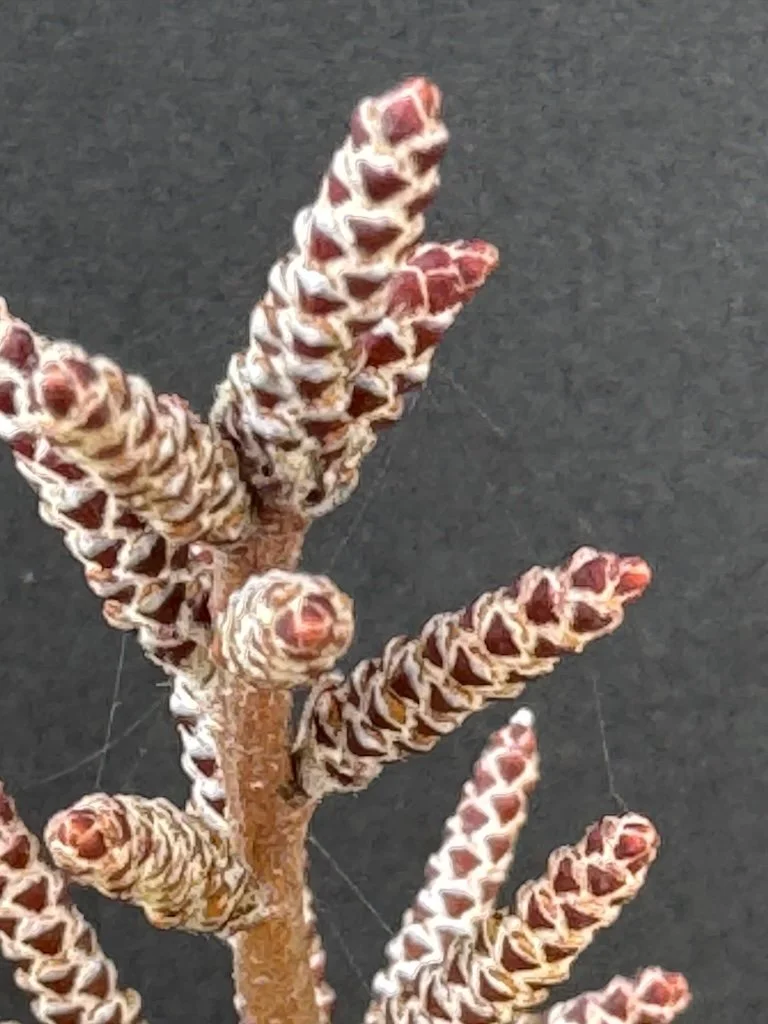
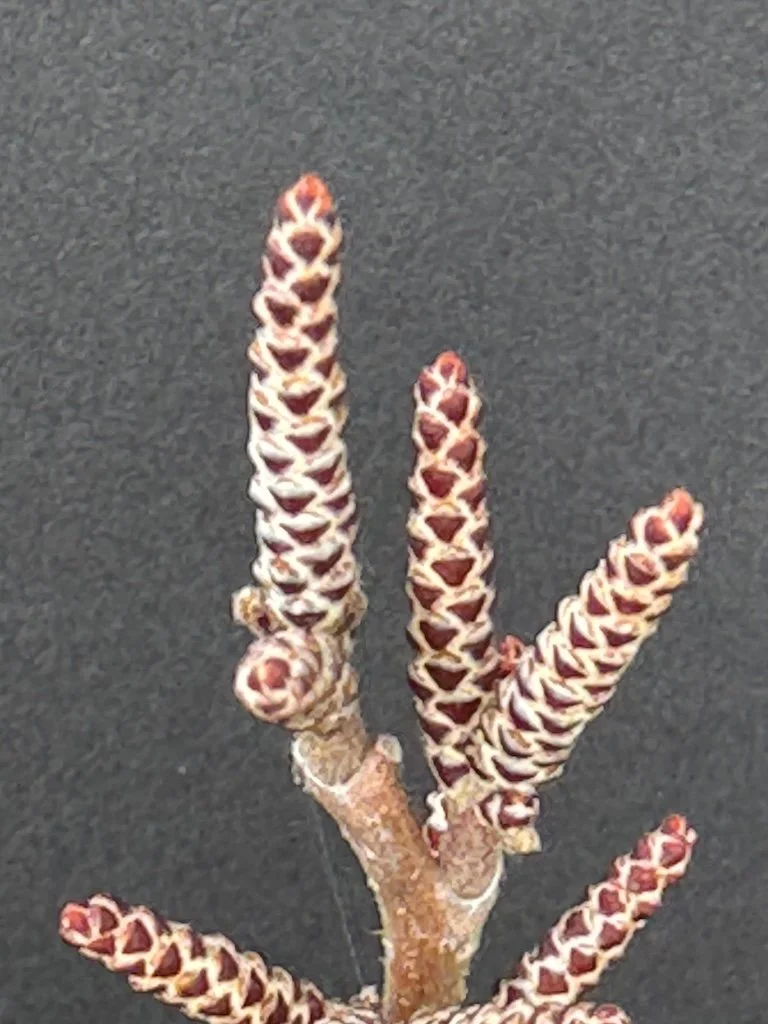
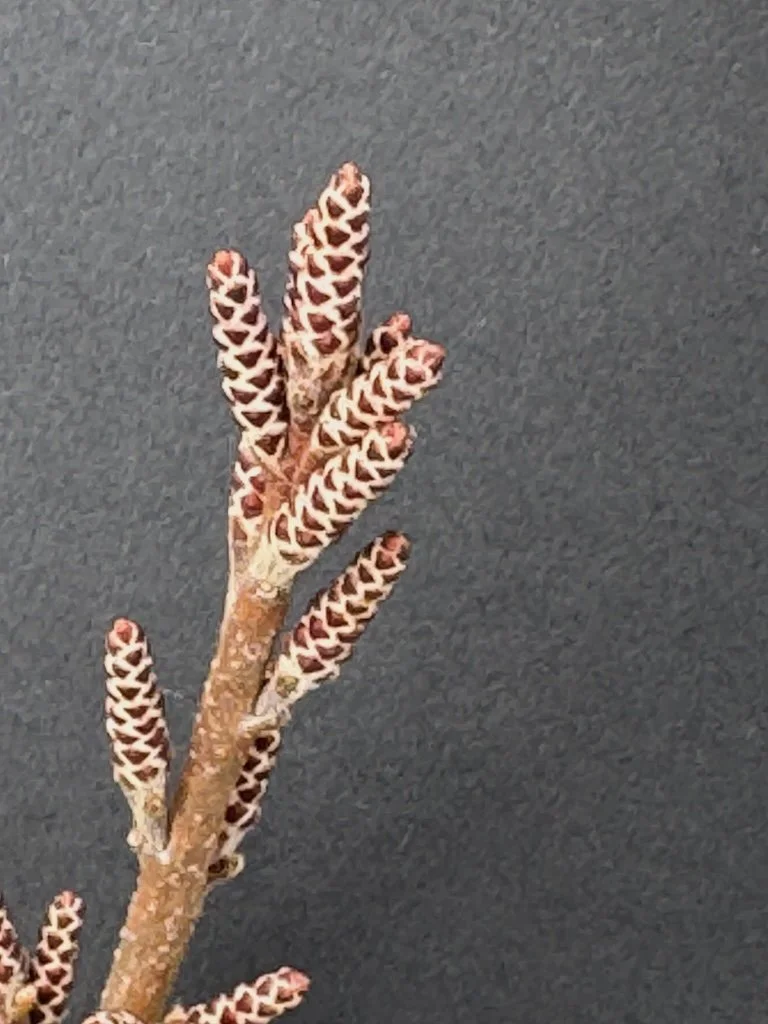
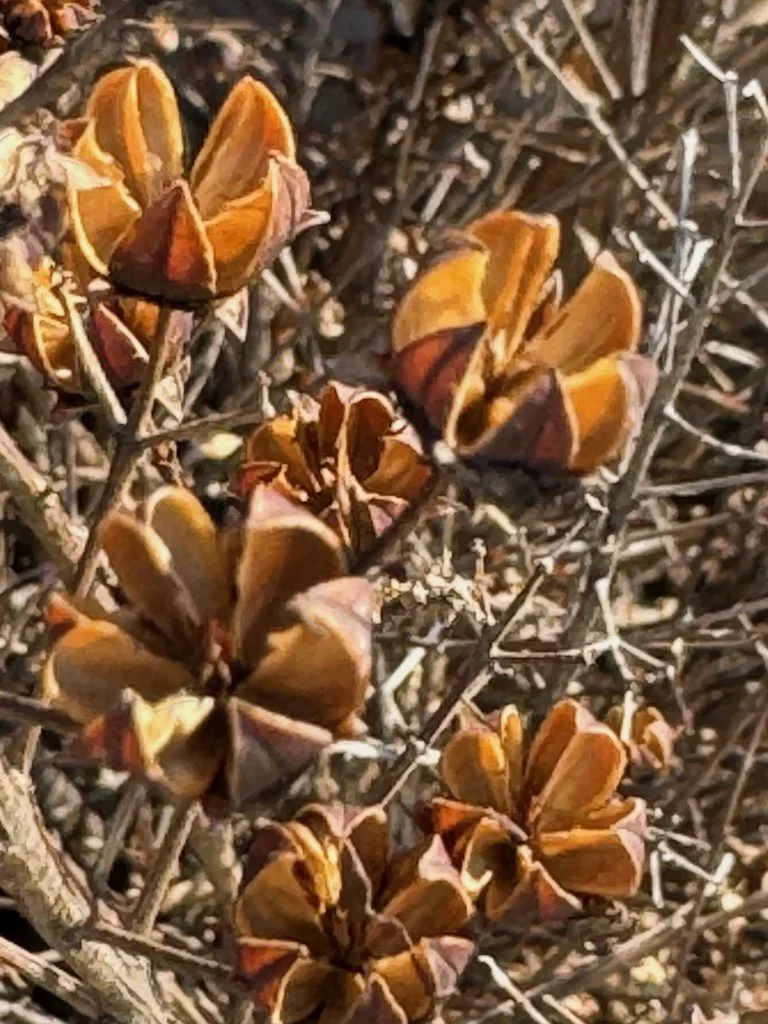
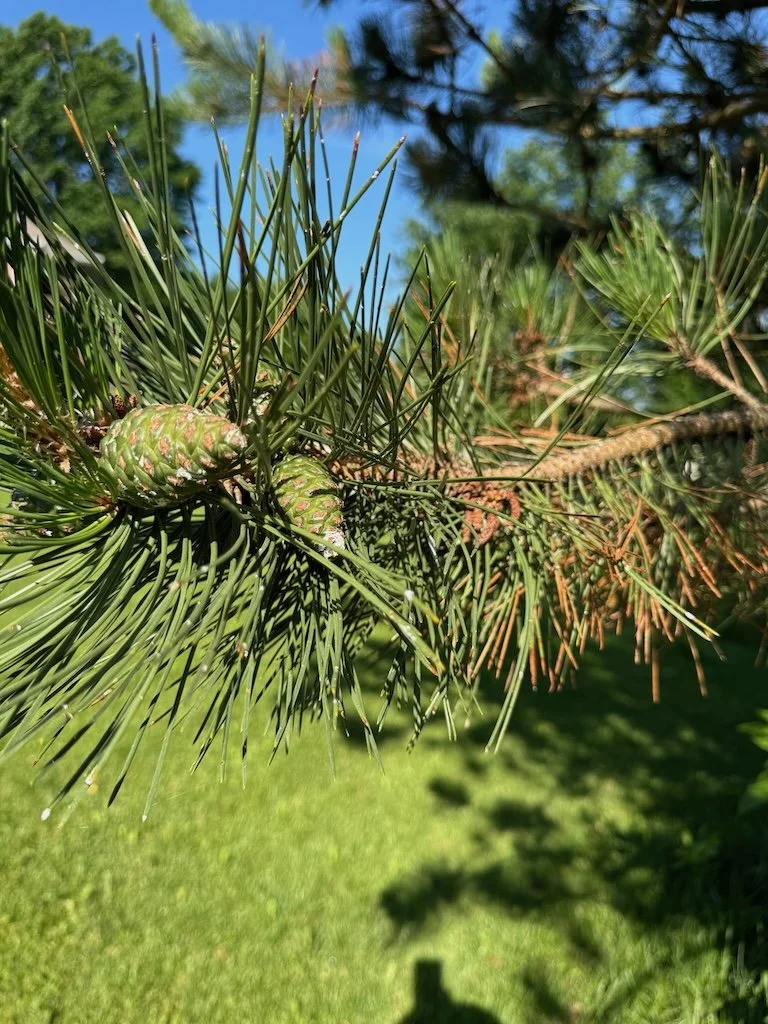
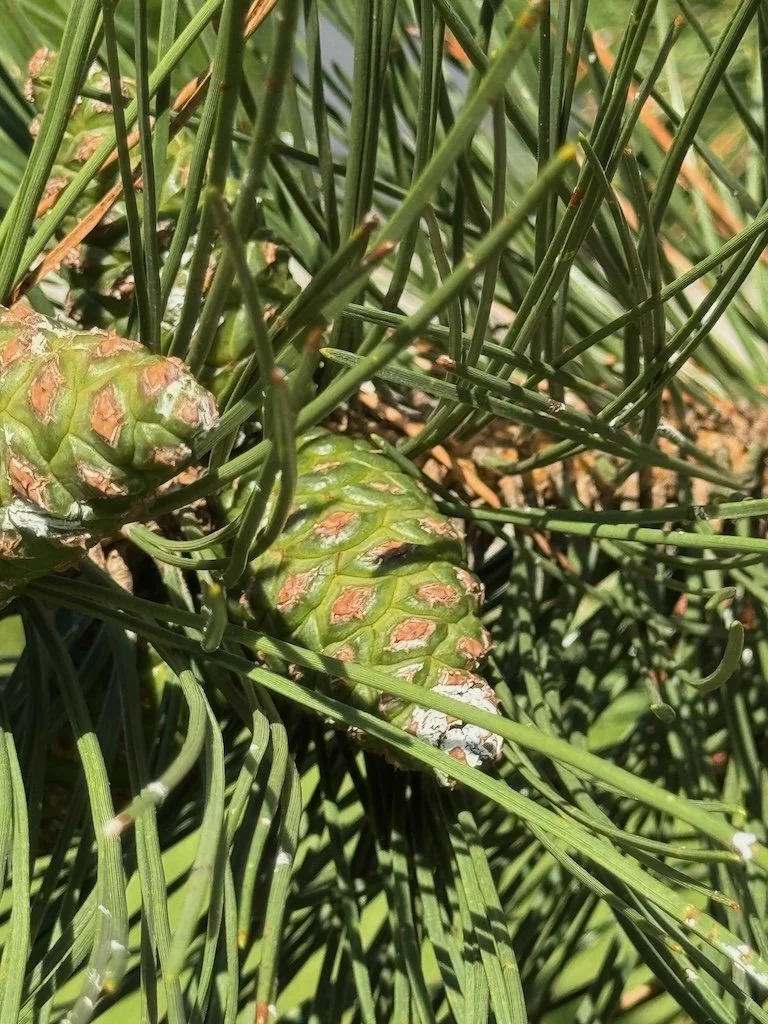
The shortleaf pine is full of new cones.

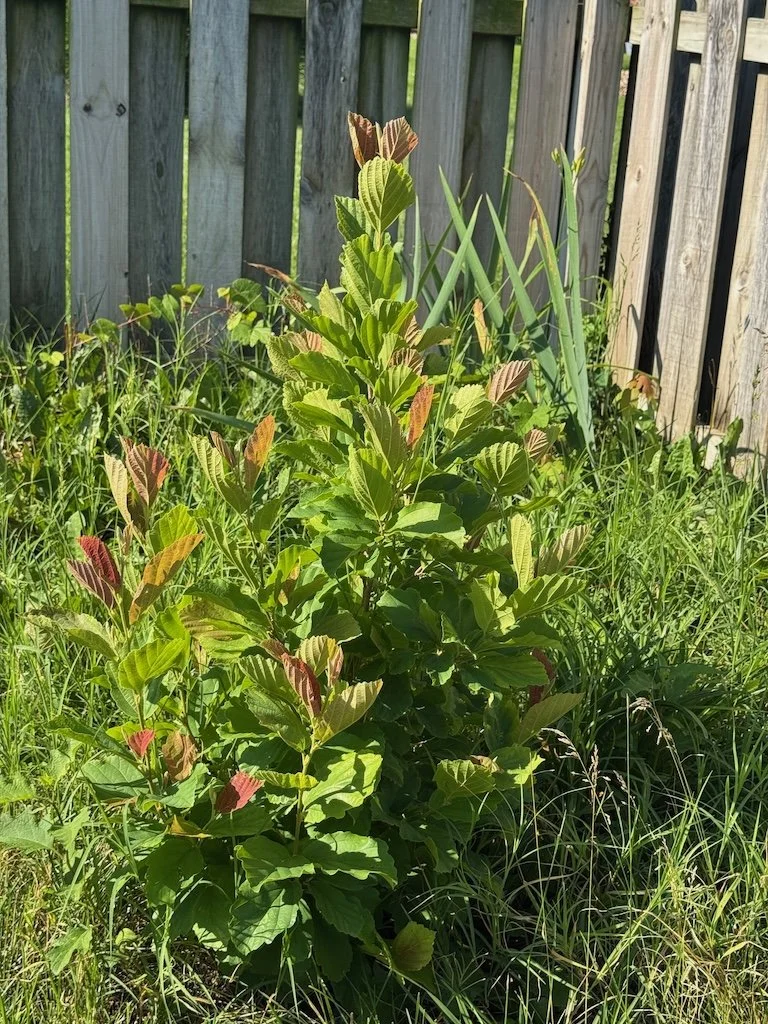
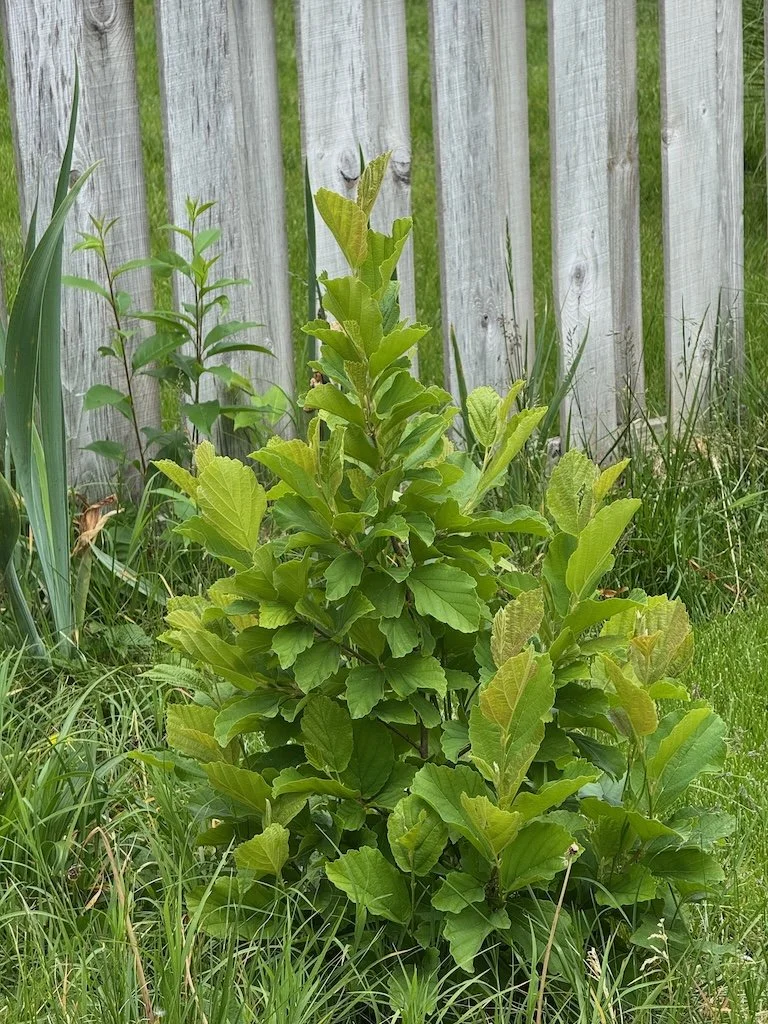
The Ozark Witch Hazel is becoming more established. Its new leaves have a reddish tinge.

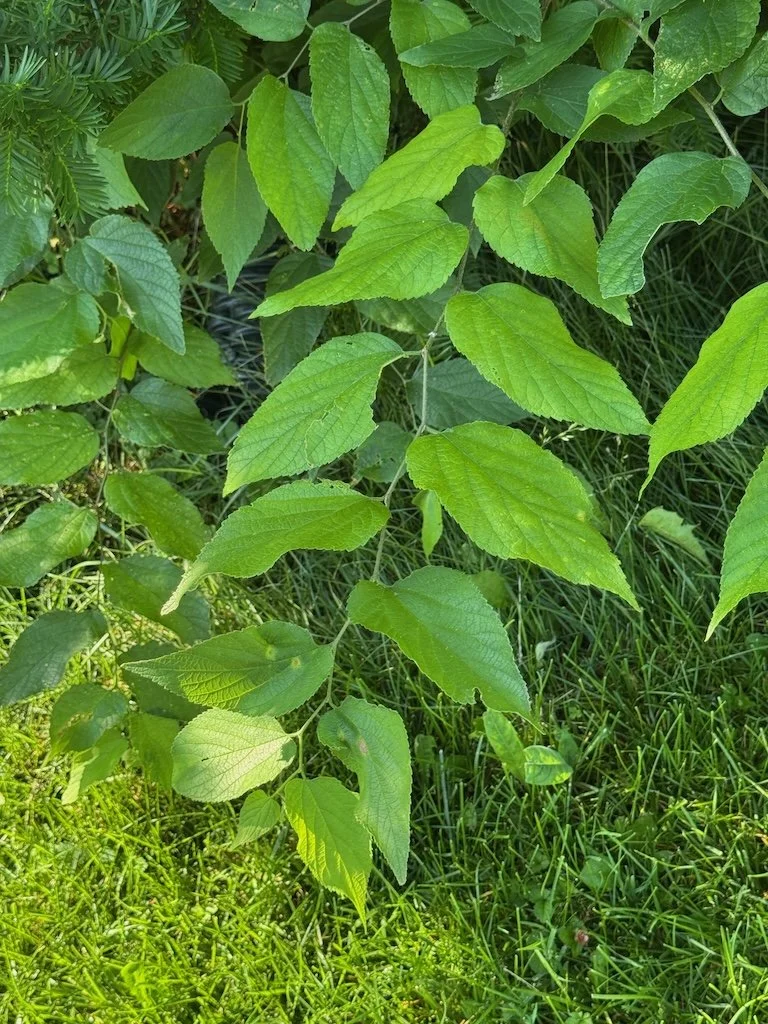
There is a hackberry that is growing in the yew which I will be cutting down…it’s not in a good place for a tree. It is already colonized by gall-producing insects genus Pachypsylla (note the two whitish circles on one of the lower leaves…the galls are underneath the leaf).

Overall, I am pleased with the way the yard is shaping up for this season….but there is a lot of work to do too.

Our Missouri Yard – May 2026

May was full of new growth in our yard.

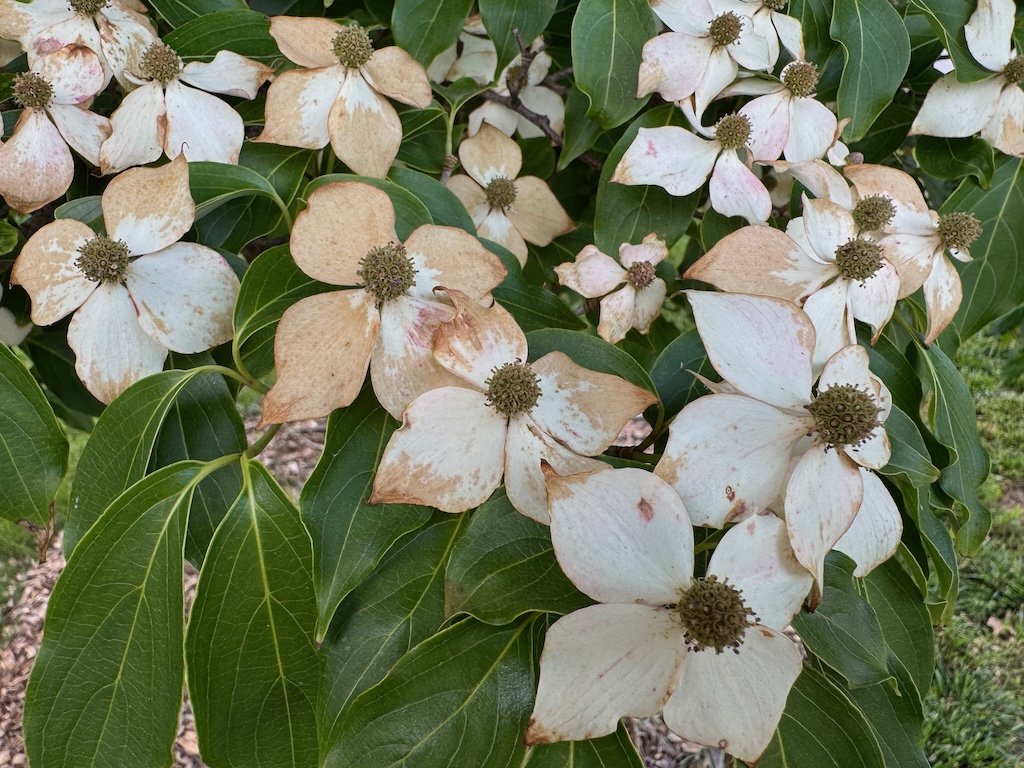
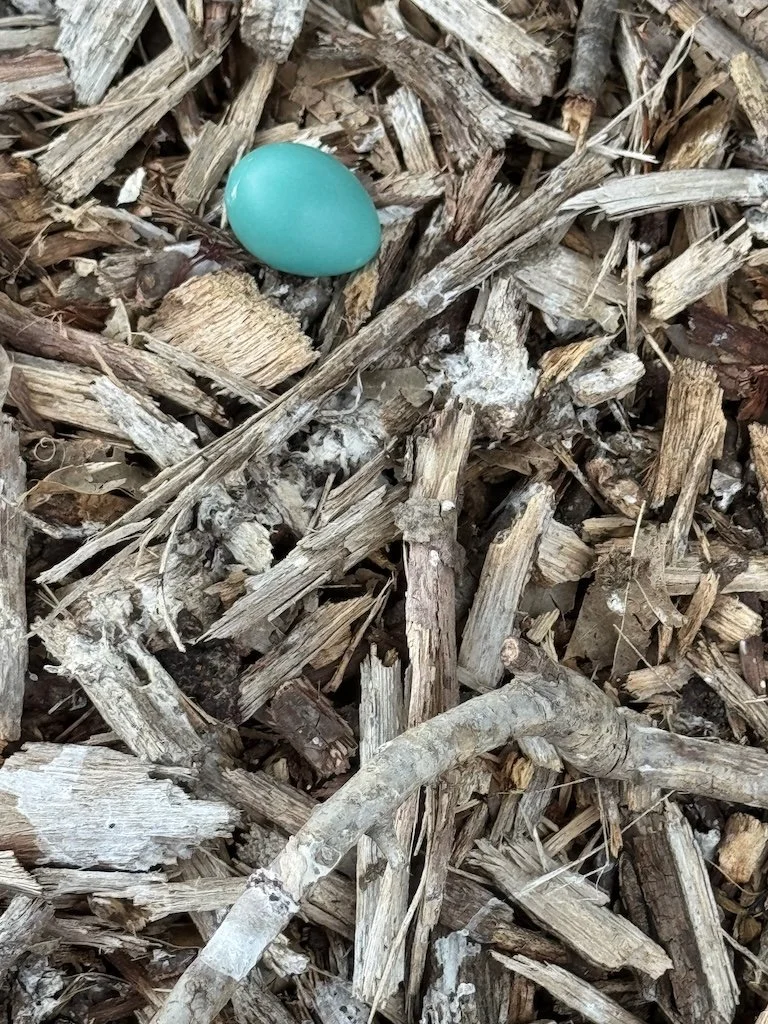
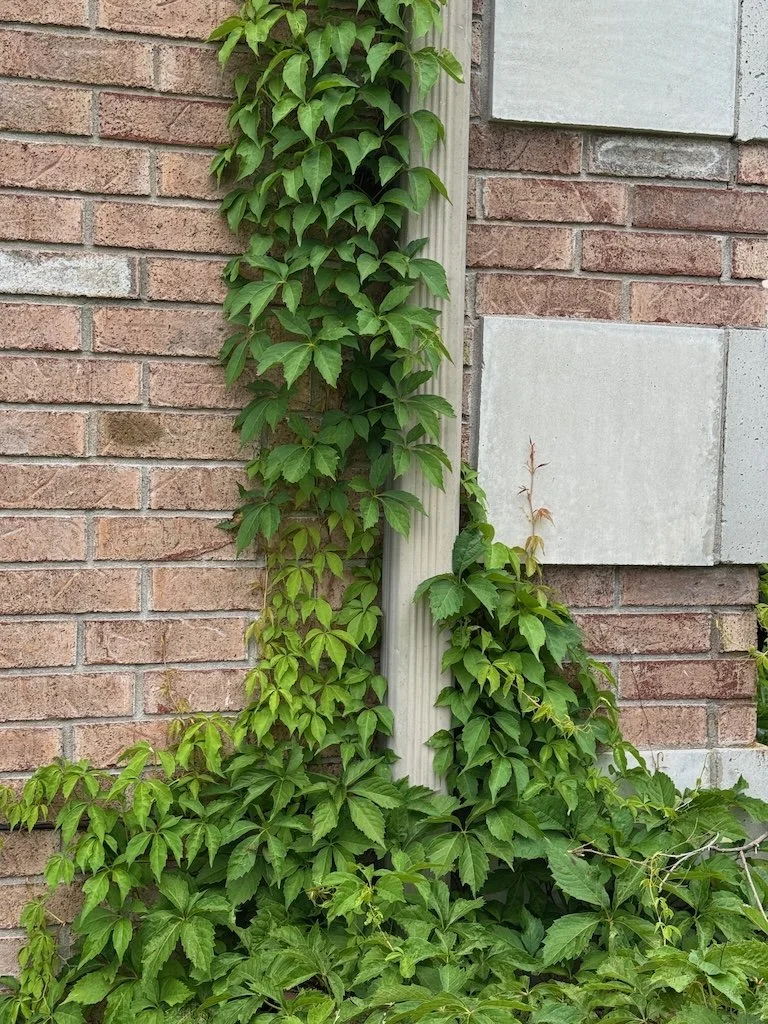
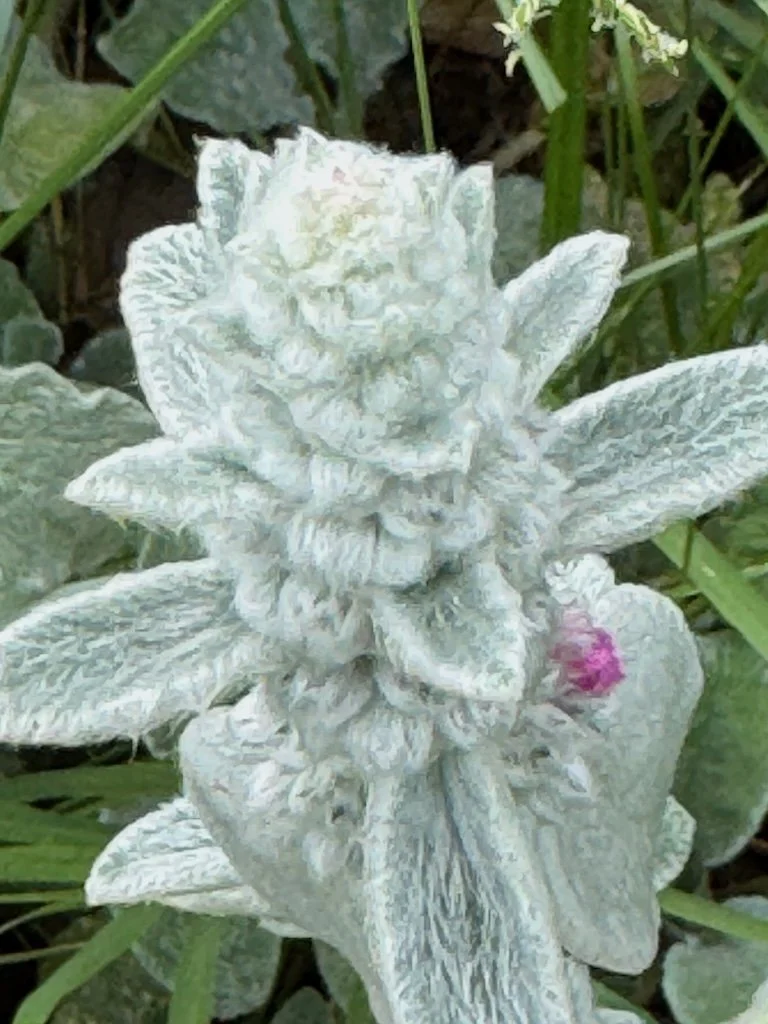
In the front yard…the Kousa Dogwood bloomed…and began to fade. The Missouri Evening Primrose near the mailbox began to bloom. In the new native plant garden, the new plants (like the Ratttlesnake Master and Elderberry) began to thrive; there was a robin’s egg in the mulch under the maple there. The Virginia creeper was lush and green filling the spaces in the flower bed near the house and climbing over everything. There were some asters that came up in one bed on their own in spaces near some daylilies. In the side yard a clump of lambs ear and poke weed were in the same place as last year – not specifically planted but seemed to thrive in that spot.

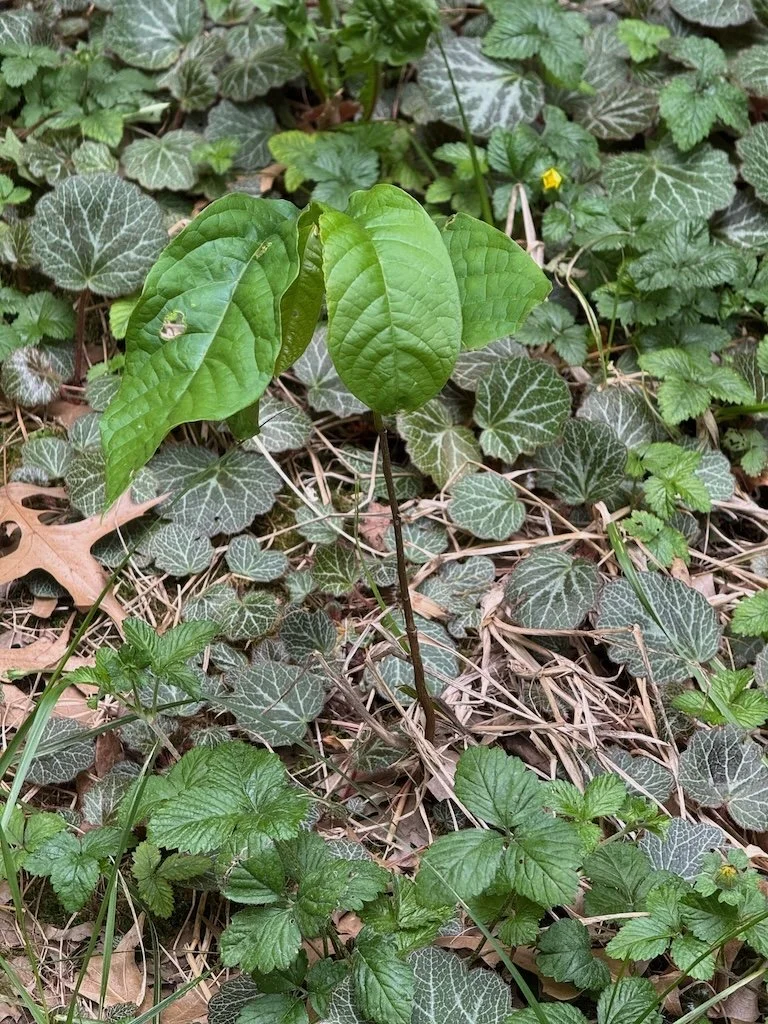
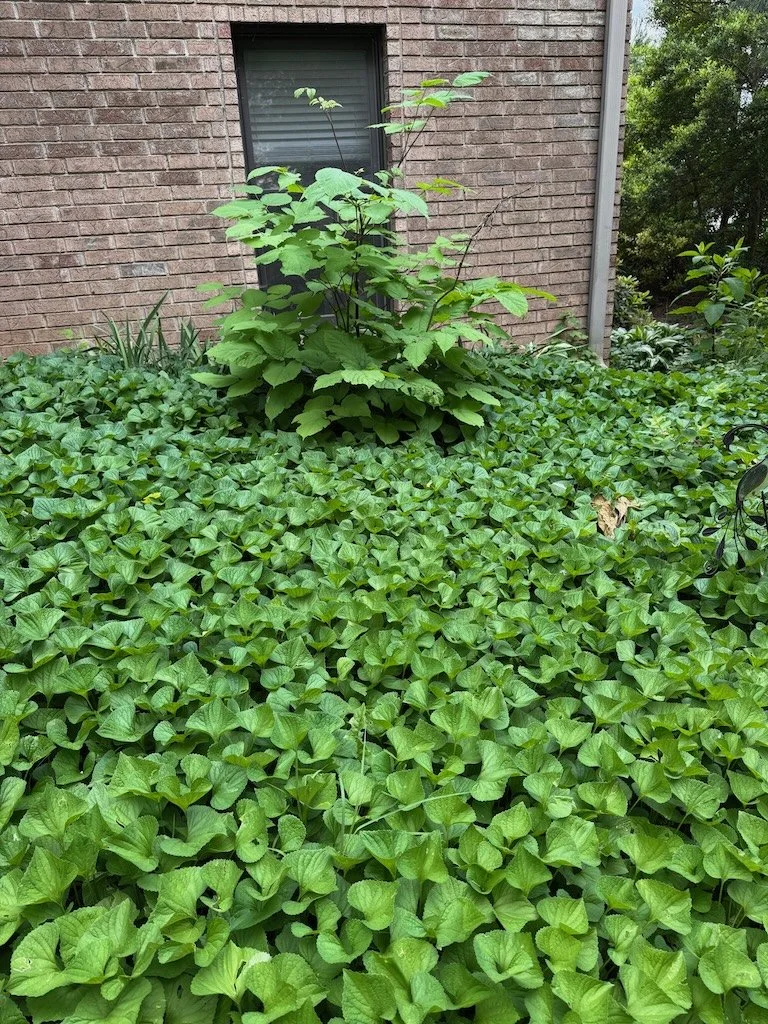
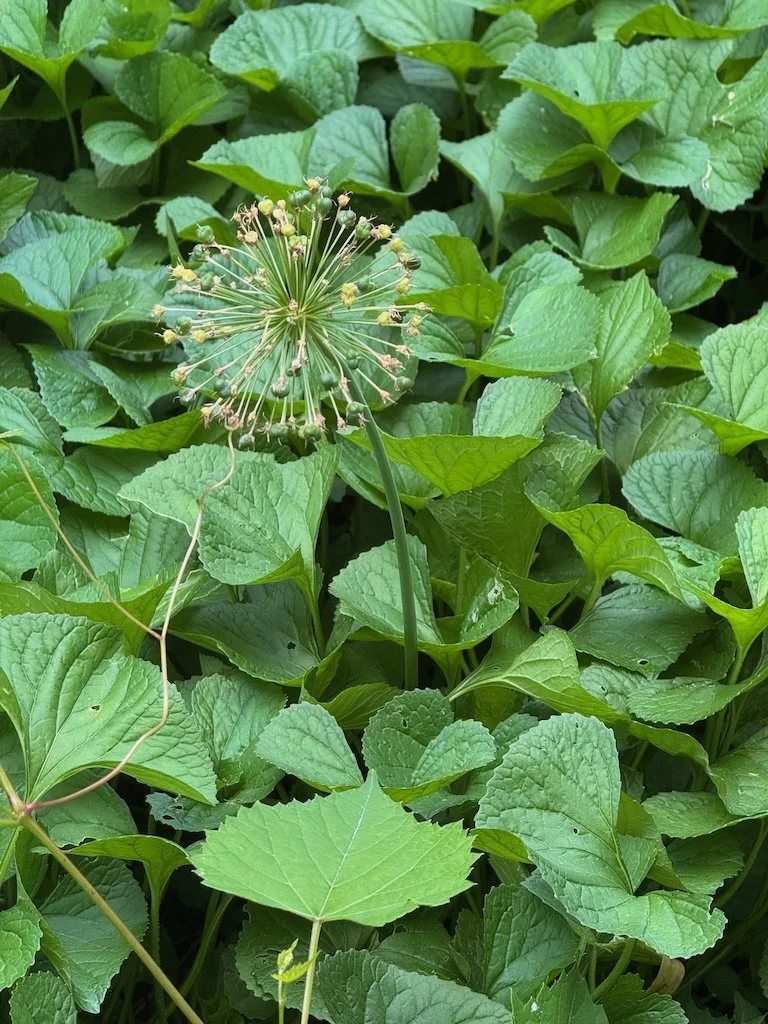
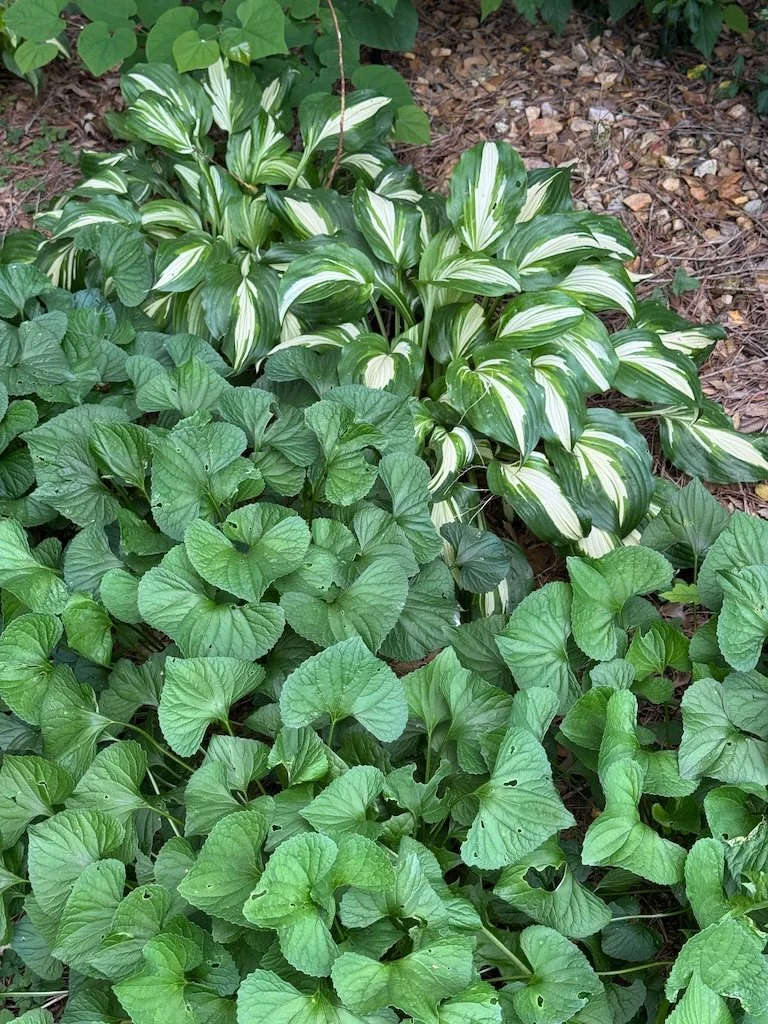
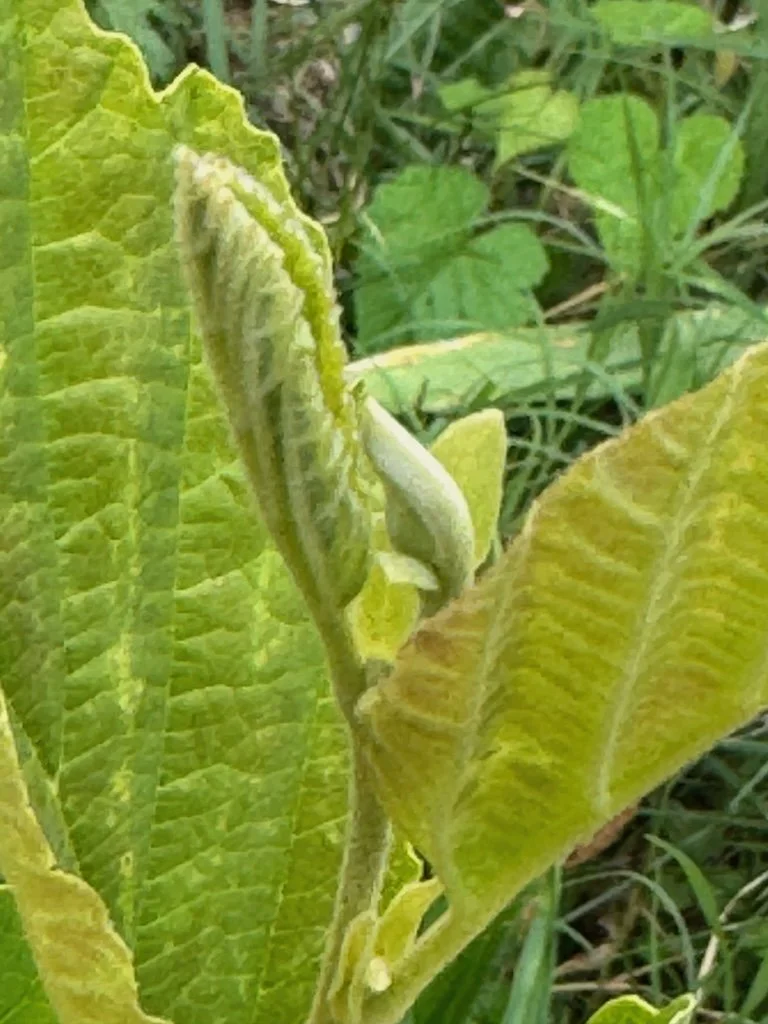
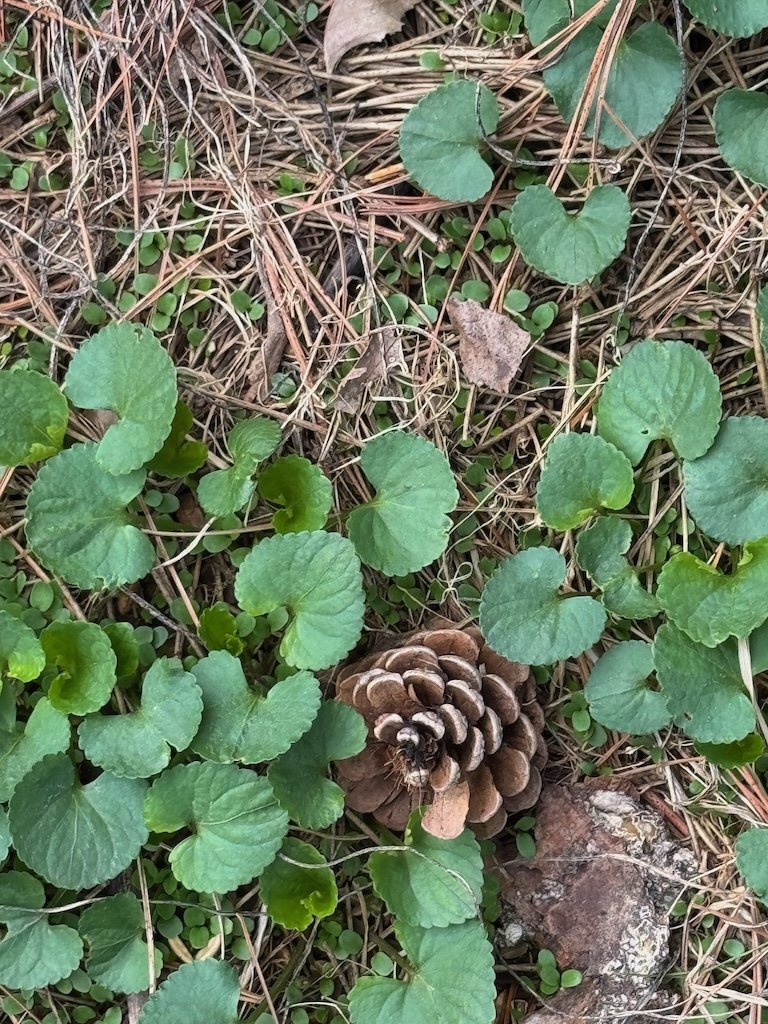
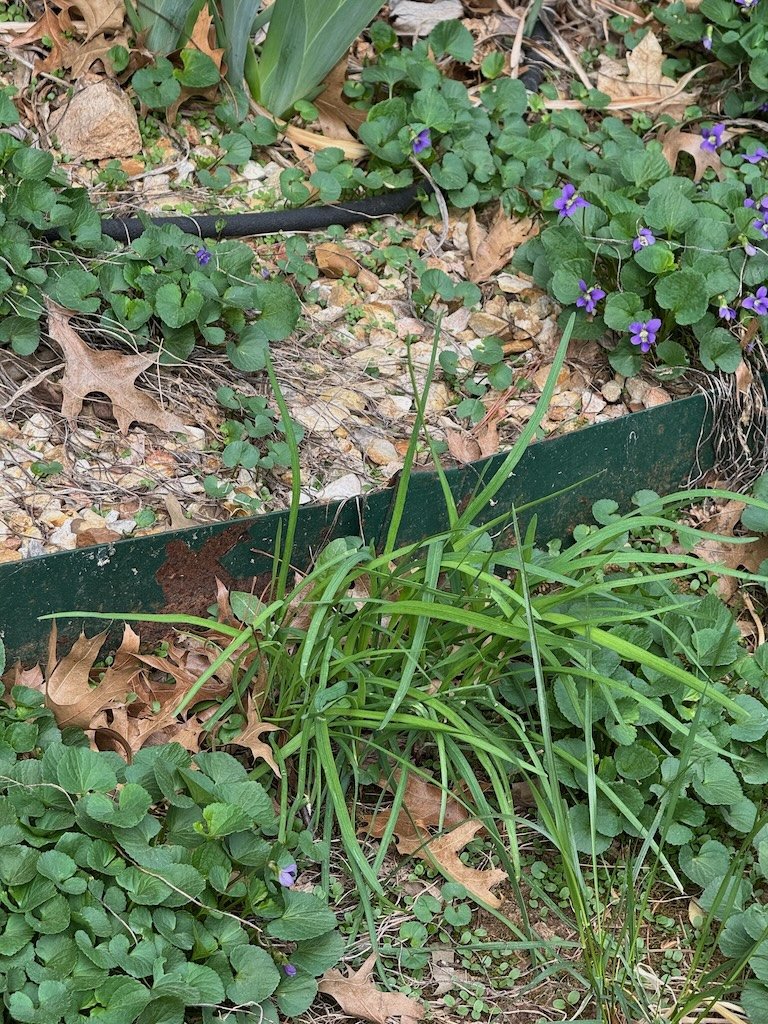
The shade garden at the side of the house includes young pawpaws (one purchased from Ozark Soul last year, 2 from seeds of a pawpaw from the Roston Native Butterfly House, and 3 from seedling I bought from MDC). The American Spikenard presides over an expanse of violets (I’ve been harvesting the violet leaves to eat as leafy greens). The allium bulbs I planted the first fall we lived in the house bloomed in April and are forming seeds now. The hostas (not native) sometimes provide a contrast with nearby violets. The Eastern White Pine that makes the lower part of the shade garden may produce cones this year – if it does it will be the first time.

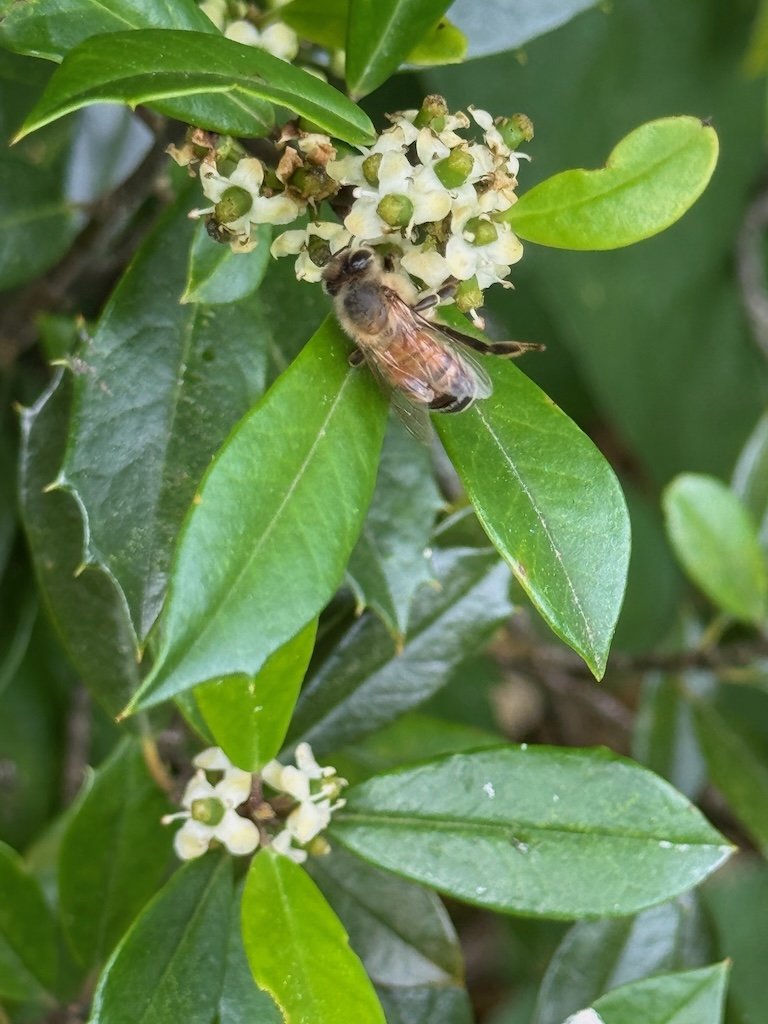
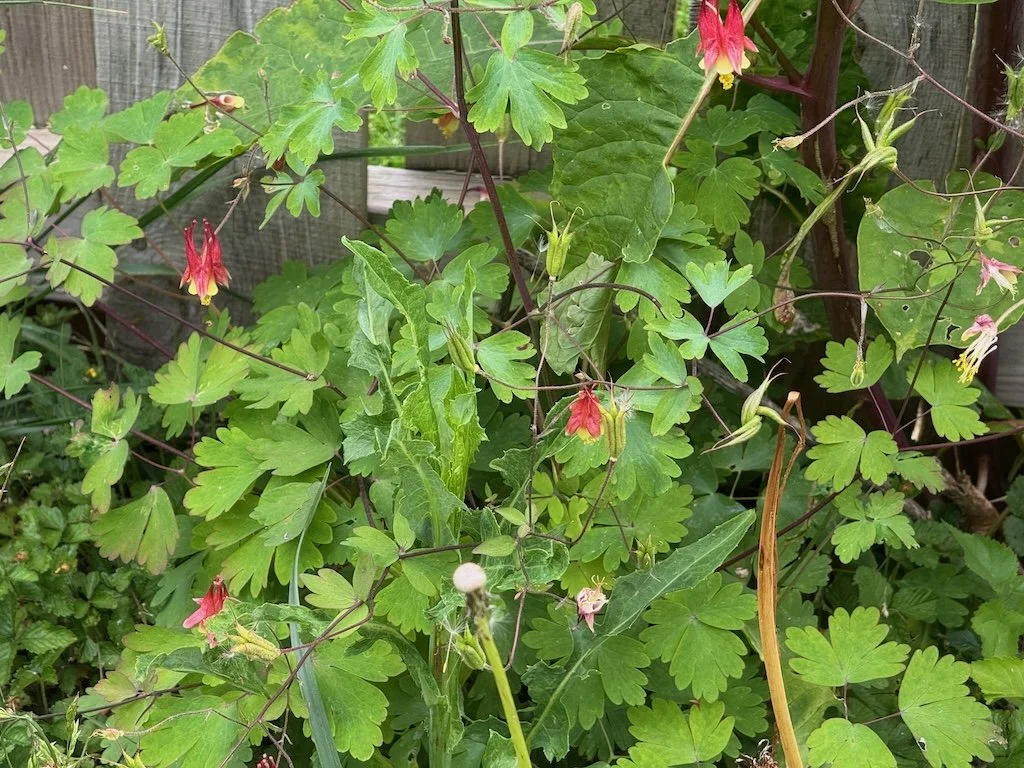
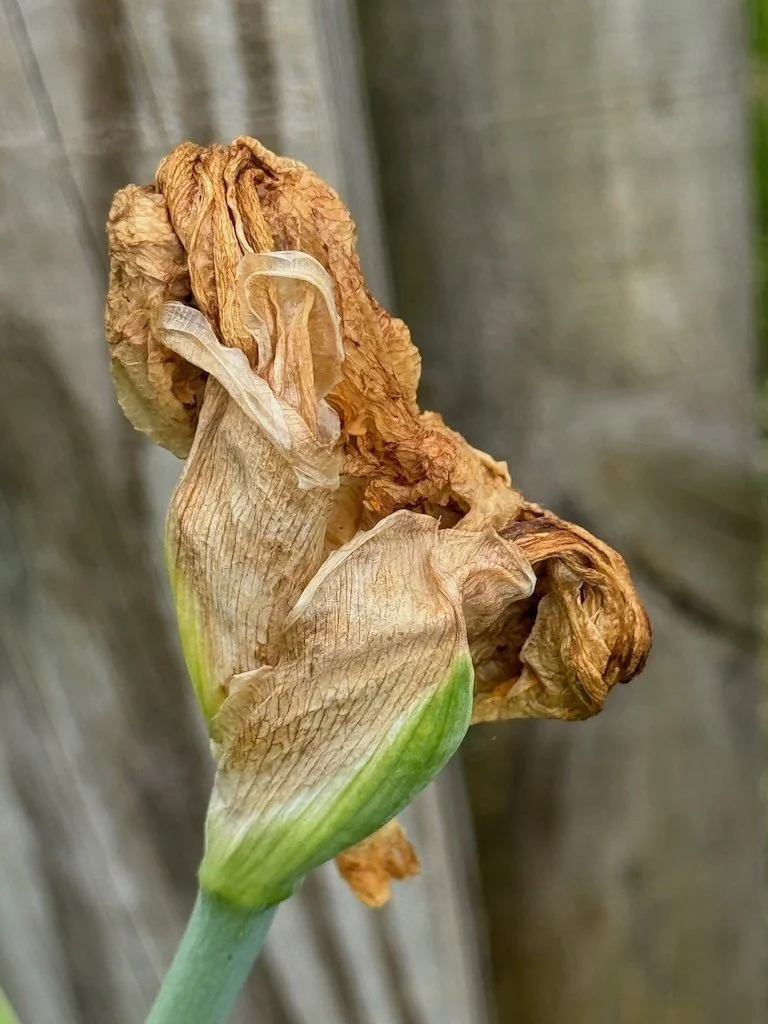
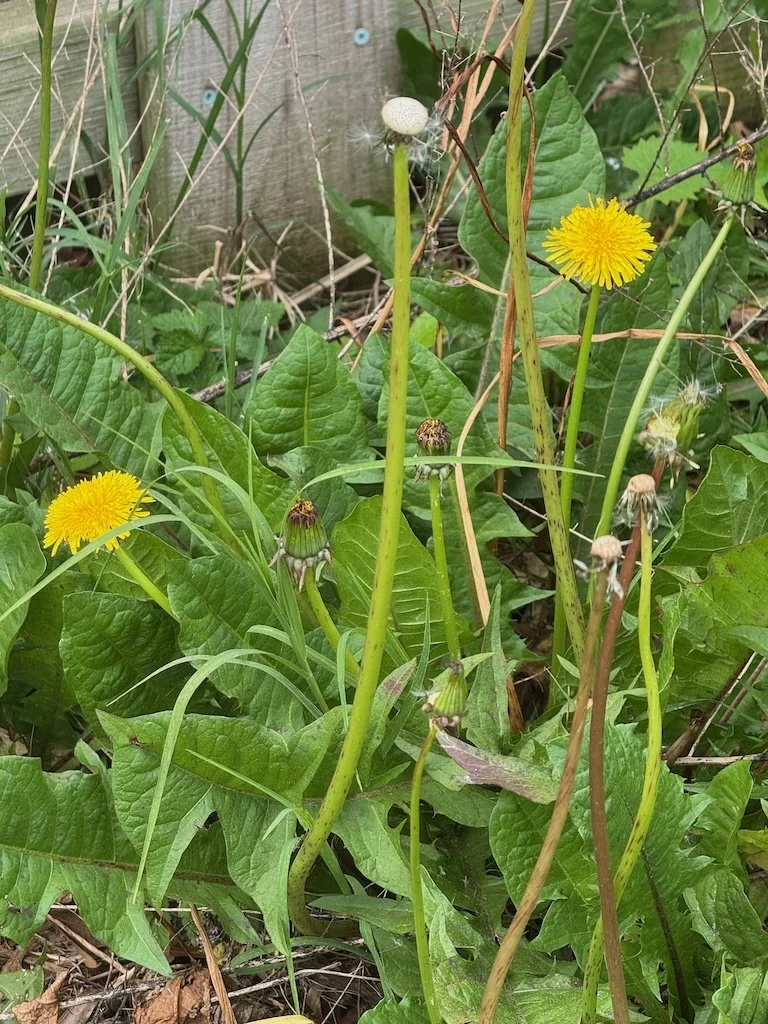
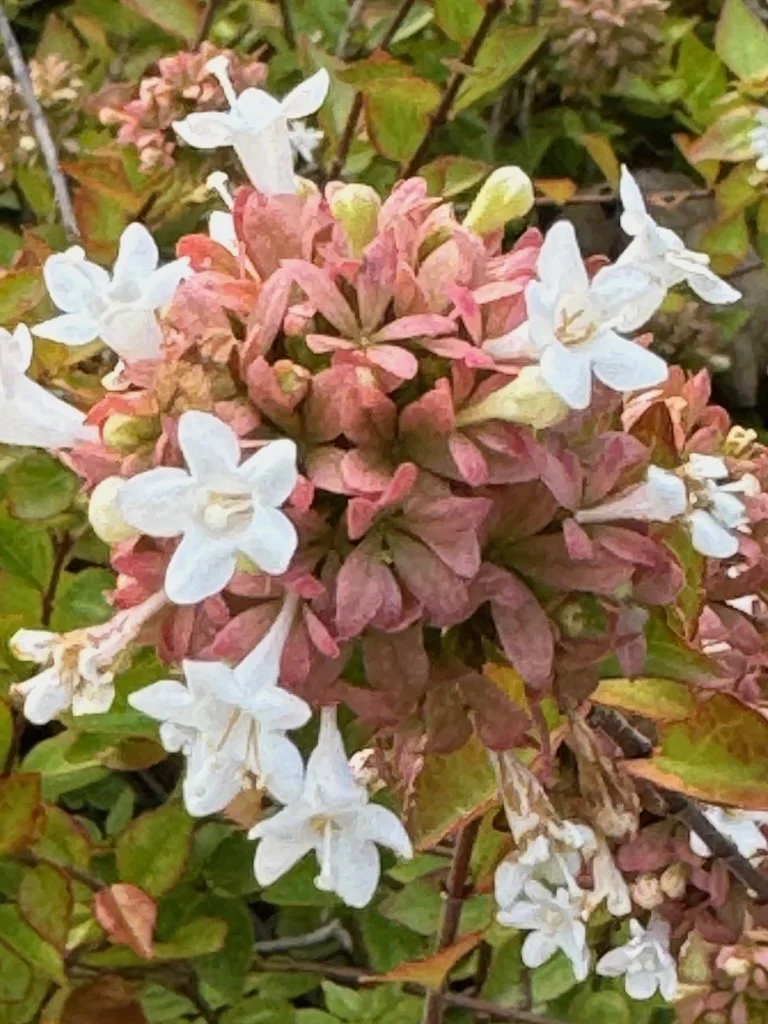
In the back yard….The Witch Hazel will probably grow rapidly this year; it did have a few blooms last winter but has no seed pods. The hollies are blooming (delighting bees). The garden where a pine once stood has lambs ear…some elderberries…and an oak seedling (squirrel planted); it will be interesting to see how it develops. The columbines along the fence have a few blooms but are fading….and the irises are done for the year. Some of dandelions seem huge and I wonder if they are a variety grown for greens; I will start to harvest them! The Fragrant Sumac that was the first native plant that I purchased is taking over a space near the patio; I need to keep the Japanese honey suckle away from it….otherwise let it do its thing!

May growth points to 2026 being a great year for my developing yard!

Slime Mold in the Oak Mulch

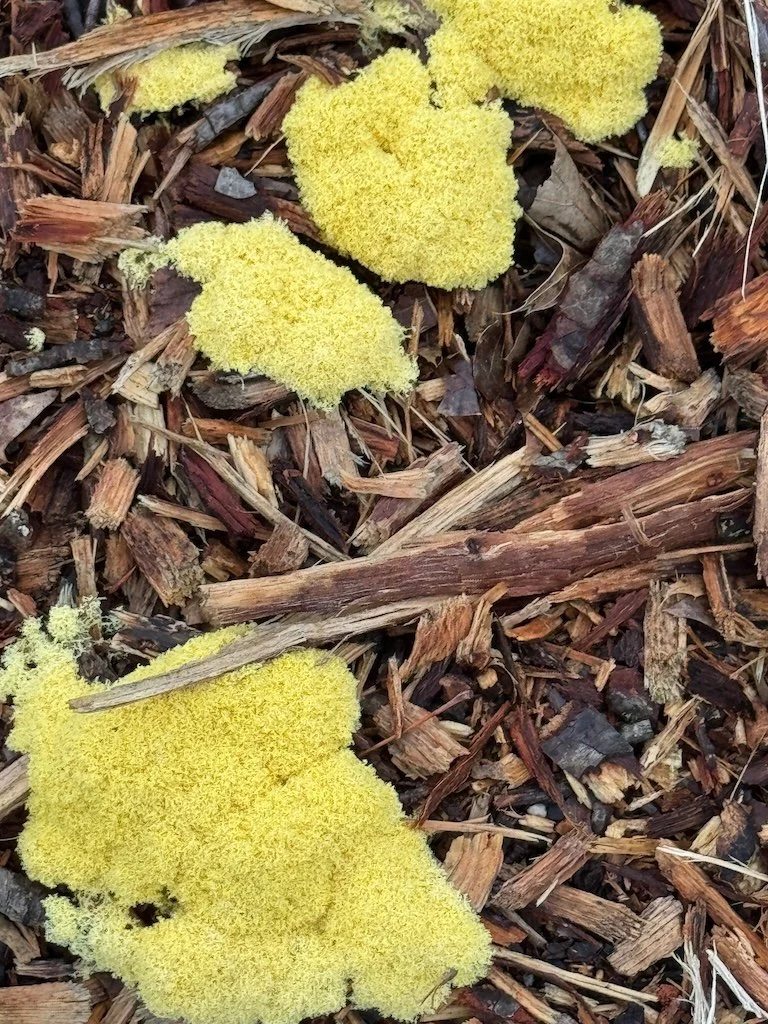
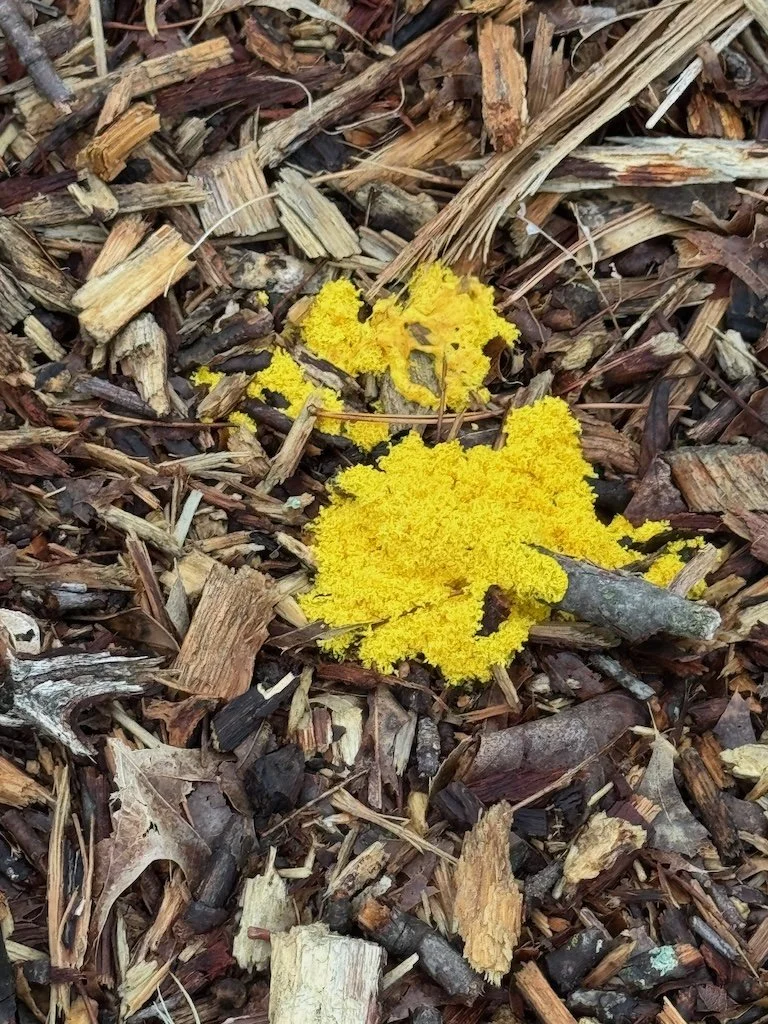
I started my native plant garden last fall with a thick layer of wood chips – primarily oak from my daughter’s tree trimmers. I’ve only recently planted into it. When planting, I observed that while the surface looked dry, it was moist just below the surface. There were some areas of crust on the surface that I wondered about. Then the yellow splotches of slime mold appeared after a rain…..and a few days later dried out and became crusts like I had seen earlier.

It’s good to have natural cycles playing out in my yard…and molds are part that often go unnoticed. My goal now is to observe frequently….enjoy the garden’s evolution.

Sustaining Elder Care/Road Trip to Texas – April 2026

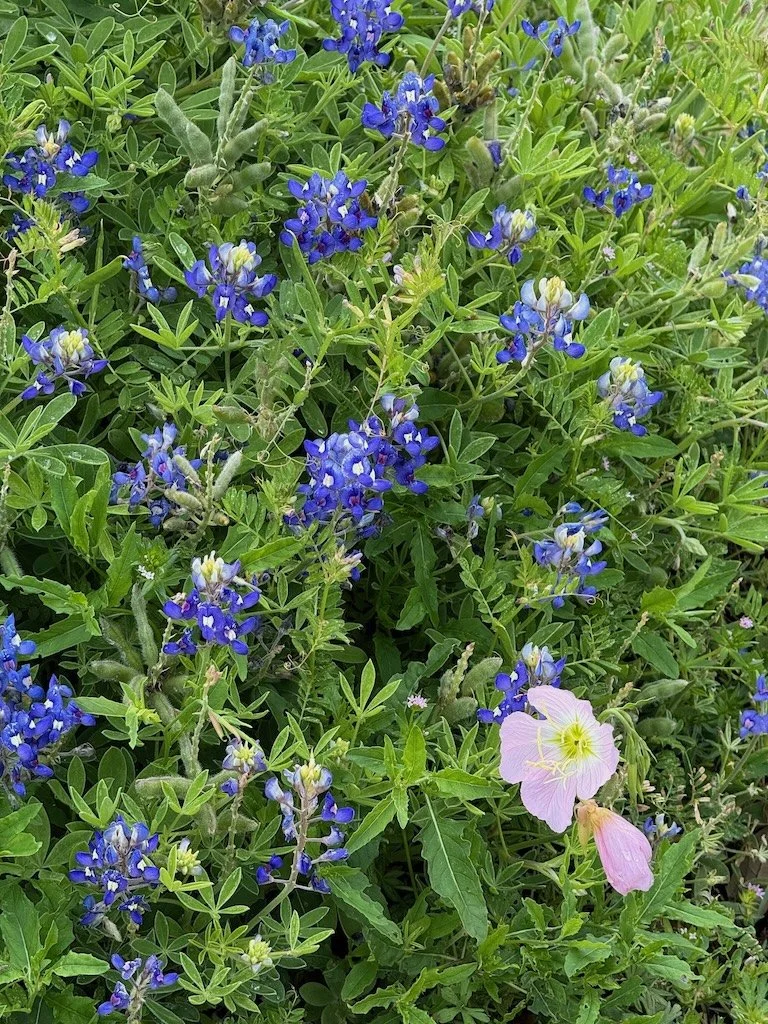
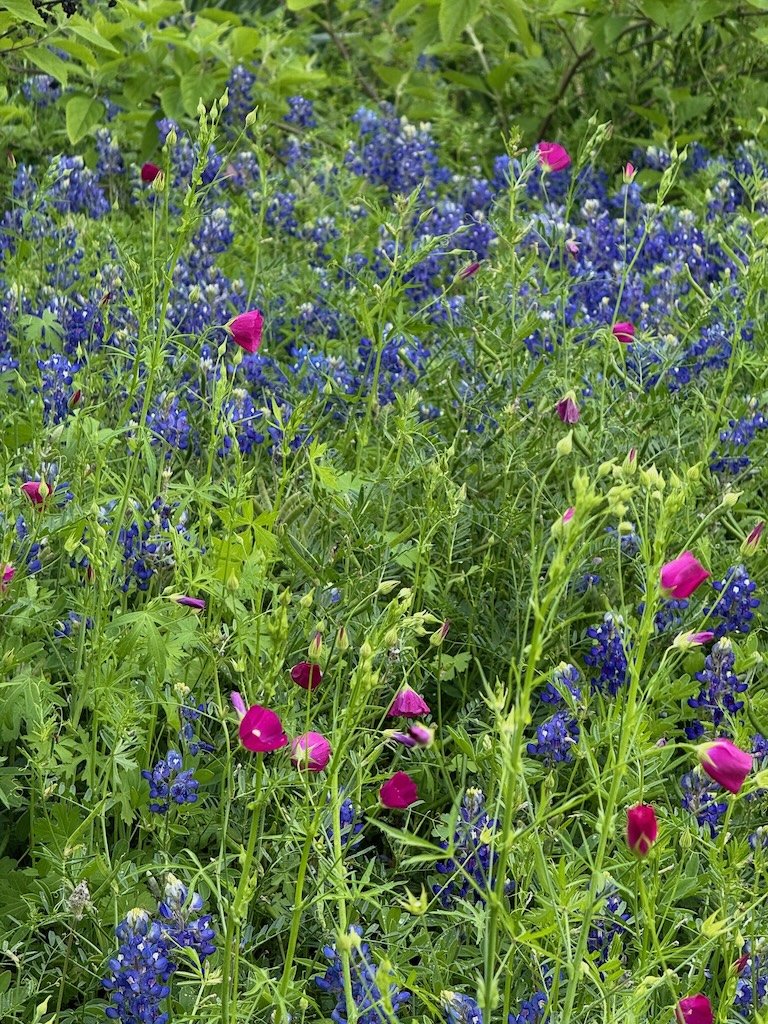
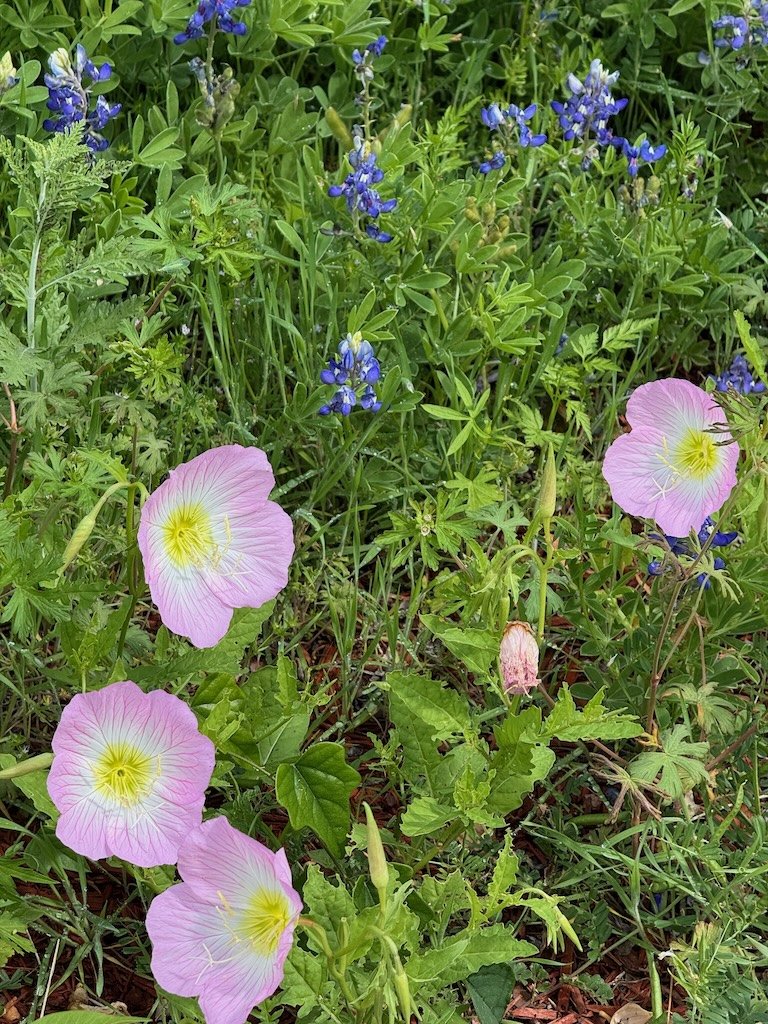
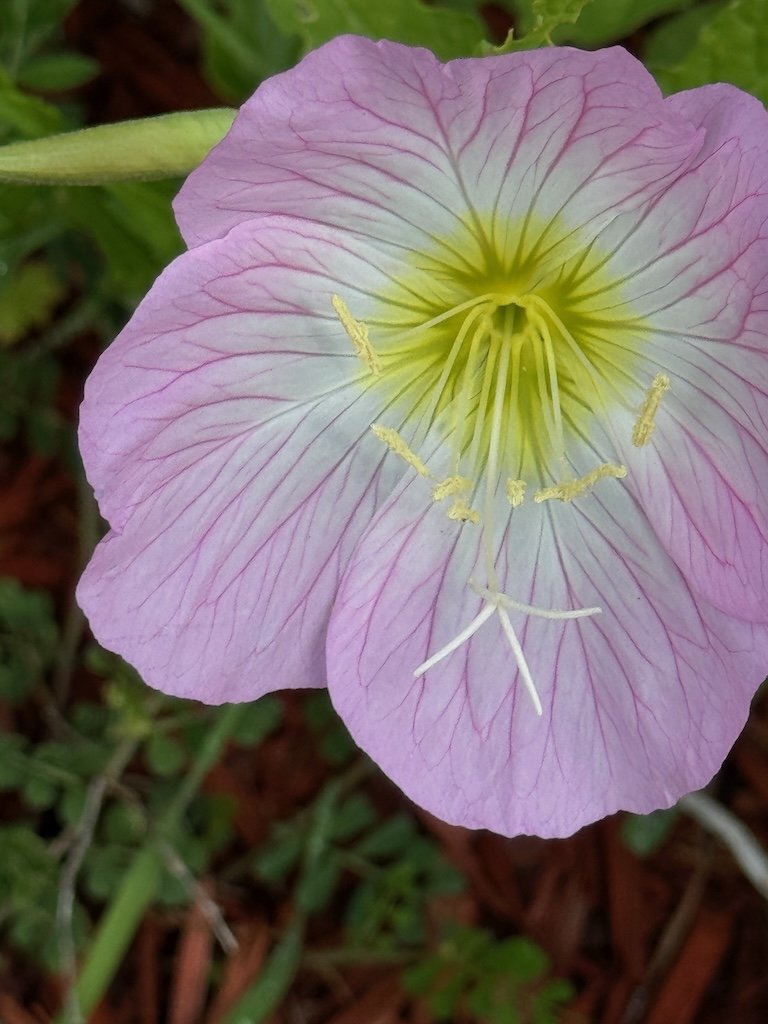
I made my monthly trip to see my dad in Lewisville TX a week ago. It was a pleasant sunny day for the drive down. I bought a salad at my last stop in Oklahoma and ate it at the Texas Welcome Center on US 75. The temperature was perfect to park in the shade, roll down the window and eat my salad. There were still bluebonnet blooming and other flowers had appeared as well – I took pictures as I walked around a little after lunch.

My dad was sleeping when I arrived…but he woke up after about 20 minutes, and I was able to convince in to take a walk around the courtyard. He can’t see very well so I keep a hand on the walker to set the direction but let him set the pace. He seems to move slower than he did prior to last month’s hospitalization, but he still enjoys being outside. We sat in the shade on the patio for a while afterward.

Once I got him back to his room, he seemed exhausted, so I left to meet one of sisters. She is cleaning out her mother-in-law’s house (she moved into an assisted living apartment). I got there a little before my sister and enjoyed seeing the large trees in the front yard; one was an oak (progeny in the flowerbed) but its trunk was not nearly as large as the ones in Maryland and Missouri; the heat stress in Texas probably causes them to grow differently. I got some botanical artwork my sister’s mother-in-law had done years ago; I got several different sunflowers that will look good in my office.

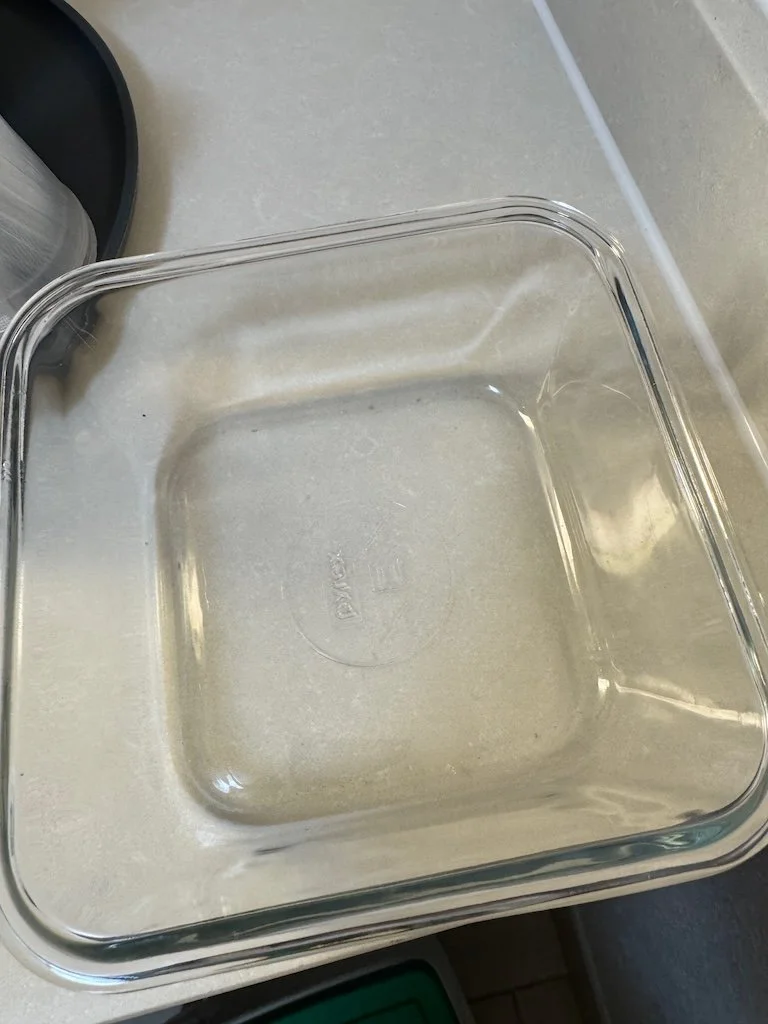
Some of my plastic reduction strategies worked better than usual this trip. My tin with stainless forks worked well for my lunch salad the first day and my breakfast the next morning. I put the used forks in the ice chest so that I could easily put them in the dishwasher when I got home. Coffee filters (left over from when I switched from a coffee maker to an electric kettle (glass and stainless) work well to hold microwave popcorn for my evening snack. A Pyrex bowl that had carrots and celery in the ice chest on the way down was emptied the first evening and then used to hold my breakfast the next morning – avoiding a Styrofoam plate.

The season is warm enough now that I am realizing that I need to put my cosmetics in the ice chest since the suitcase stays in the care when I am visiting my father. It avoids melted or separated products. It takes as much room as food stuff.

I saw my dad just after he finished breakfast in the morning and he was keen to go for a walk. It was a little cooler, so we did a walk that was part inside and part outside…and he was a little tired by the time we were back in his room. It wasn’t long before an aide came to give him a shower…so I headed toward home about 30 minutes earlier than I had planned.

I got to the diner I wanted to try in McAlester OK about noon. It probably will be the place I will stop on my way home from now on. I was glad I had a good lunch since the middle of the drive was full of rain which made it a bit more challenging; the road in the small towns often has curbs but no drains so water accumulates quickly. I had expected rain closer to home but it cleared off for the last couple of hours. Still – I just wanted to relax when I got home.

Gleanings of the Week Ending March 21, 2026

The items below were ‘the cream’ of the articles and websites I found this past week. Click on the light green text to look at the article.

3/8/2026 Our World in Data What are the world’s deadliest animals, and can we protect ourselves against them? – Mosquitoes and snakes top the list! In many regions, deaths from mosquitoes have decreased dramatically. Malaria was once prevalent in countries that are now free of it. If we could achieve this in all parts of the world, the number of deaths caused by other animals would be almost six times smaller. If we were to also eliminate deaths from snakes with antivenoms and better diagnostics, the death toll would be again reduced by almost two-thirds.

3/8/2026 Science Daily Scientists stunned to find signs of ancient life in a place no one expected - Chemosynthetic microbes—organisms powered by chemical reactions—creating the mats in the dark depths of an ancient ocean.

2/24/2026 BBC 'It seemed to defy the laws of physics': The everlasting 'memory crystals' that could slash data center emissions -Silica and DNA are "very attractive from a sustainability perspective", acknowledges Tania Malik, assistant professor at the School of Informatics and Cybersecurity at Technological University Dublin in Ireland. "However, these technologies are unlikely to replace conventional storage for everyday computing or AI workloads anytime soon."

2/11/2026 The Scientist Oak Trees’ Drought Resilience is Rooted in Microbes - Oak trees maintained relatively stable microbial communities with subtle shifts in response to drought stress. They observed an increased abundance of Actinobacteriota, which are linked to drought tolerance, and other bacterial and fungal genera, suggesting that the oak trees can recruit beneficial organisms under stressful conditions. These changes could help researchers identify additional bacterial biomarkers as trees adapt to climate change.

3/9/2026 Compound Interest International Women’s Day: Twelve women from chemistry history – 12 women chemists from around the world.

3/8/2026 National Parks Traveler North Kaibab Trail at Grand Canyon National Park Seriously Damaged by Debris Flows - Debris flows in the wake of the Dragon Bravo fire at Grand Canyon National Park last year heavily damaged sections of the North Kaibab Trail, which will require some significant rebuilding in places this spring.

3/6/2026 Clean Technica It’s Time for an Authentic Golden Age of Agriculture - Contemporary industrial agriculture is less about producing food and more about generating animal feed, biofuels, and industrial ingredients for processed food products. Frank Carini of ecoRINews argues that producing more local food requires a series of changes. He offers a series of steps:

  • Stop taking farmland out of production;

  • Provide better financial support to local and regional farmers;

  • Increase funding for federal extension services;

  • Approve more bond money for farmland protection;

  • Attract young farmers to the profession;

  • Make farmland affordable; and,

  • Use the land we do have with our future in mind.

3/6/2026 Planetizen Hundreds of Vacant NYC Public Housing Units ‘Taken Over’ by Squatters –Vacancies often result from the need to make extensive renovations before units can be leased out when a prior tenant leaves. That frequently includes costly lead paint and asbestos abatement—required by local law and under NYCHA’s federal monitorship—work which takes an average of four to six months to complete, officials have said. In general, it takes the housing authority an average of 326 days to “turnaround” a vacant apartment for new occupancy, according to the most recent public data.

3/5/2026 Smithsonian Magazine See the New U.S. Postage Stamp Honoring the Bison, America’s National Mammal – A stamp within a stamp design.

3/4/2026 The Conversation Pollution, noise and climate stress all pose a serious threat to heart health - In an unprecedented collaboration, the European Society of Cardiology, the American College of Cardiology, the American Heart Association and the World Heart Federation have issued a joint statement calling for immediate action against environmental stressors – pollution, noise, climate stress – to reduce cardiovascular mortality. The question is no longer whether pollution causes cardiovascular disease, but how much additional harm we are willing to accept knowing that it is, to a large extent, preventable.

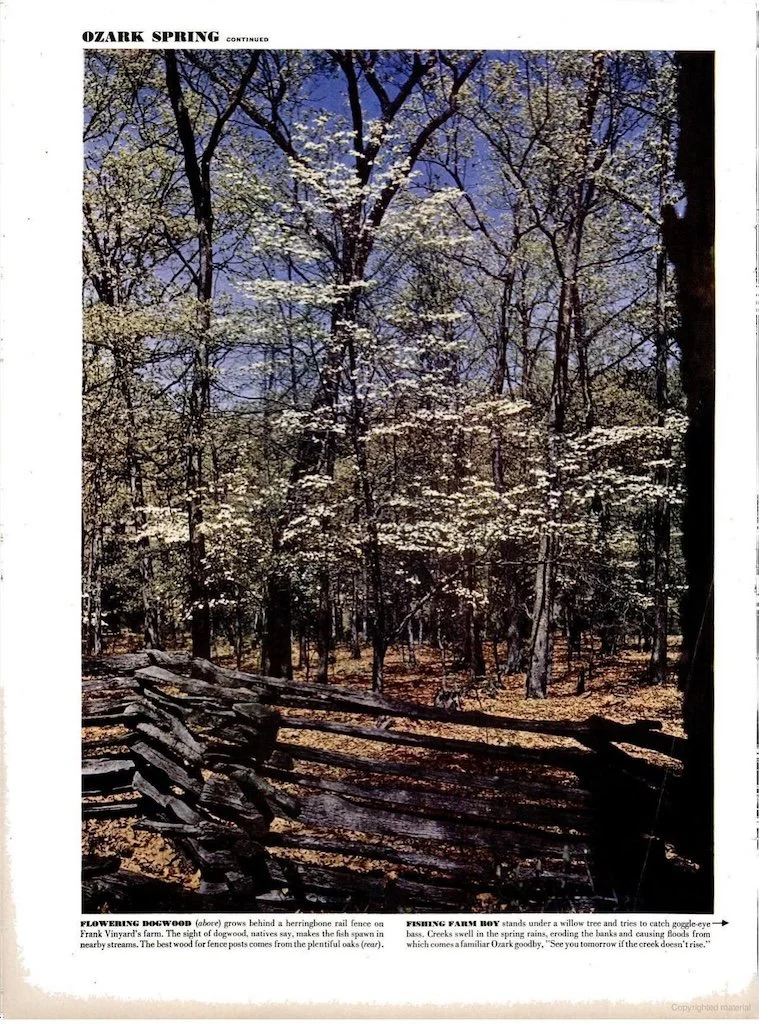
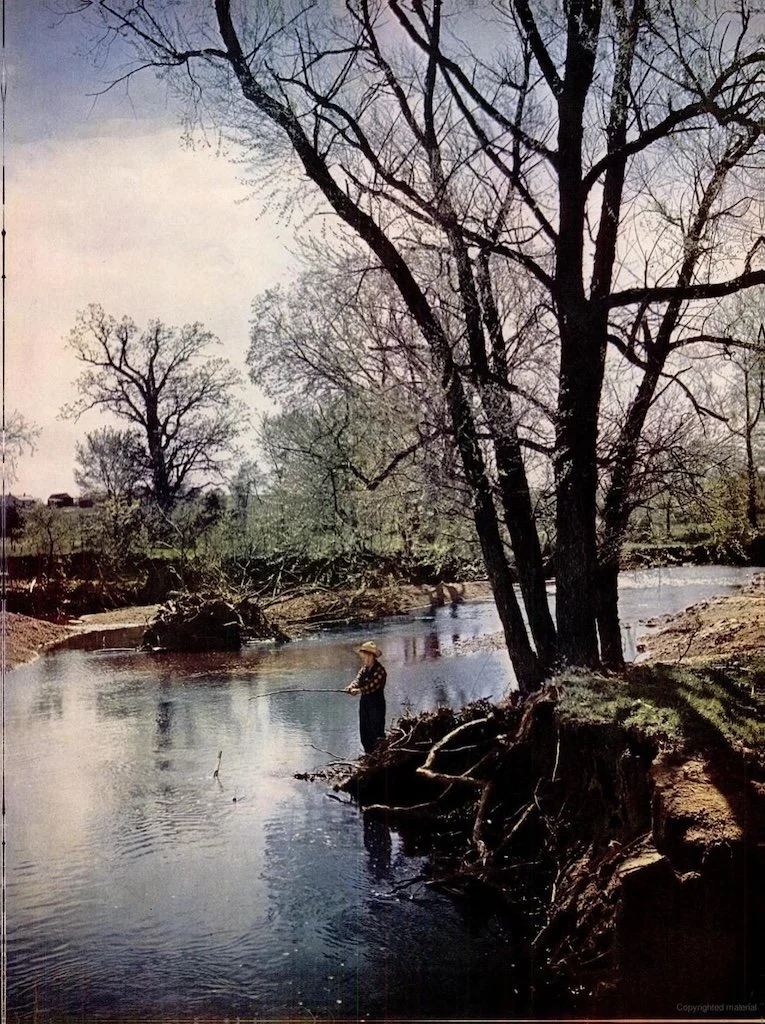
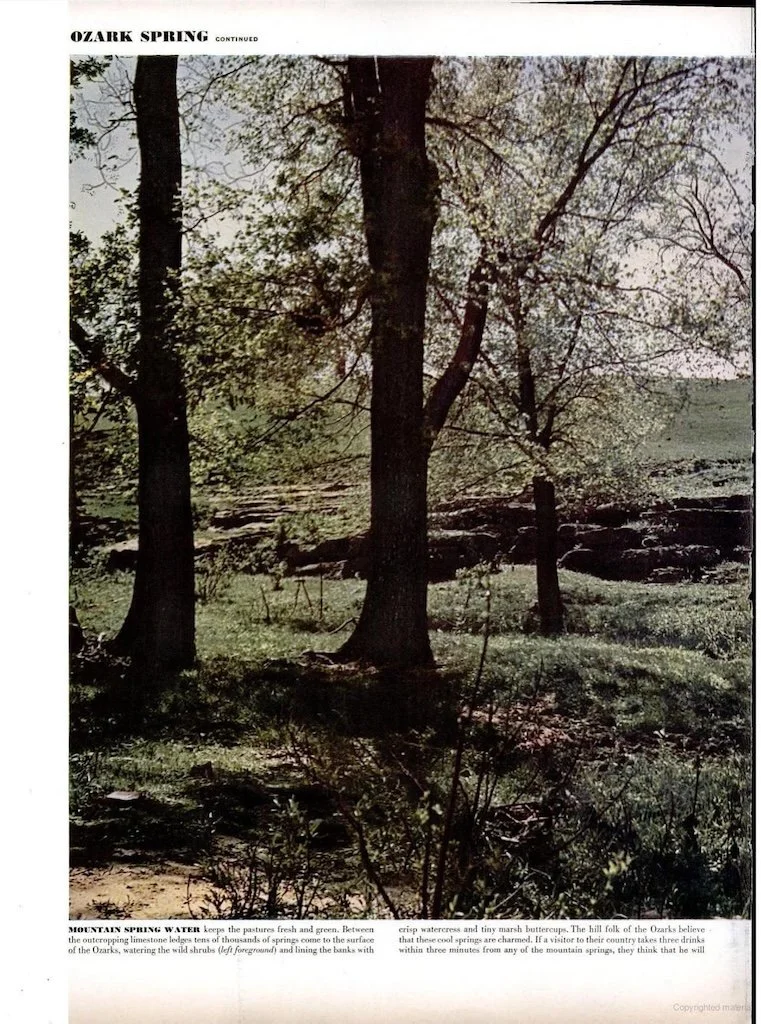
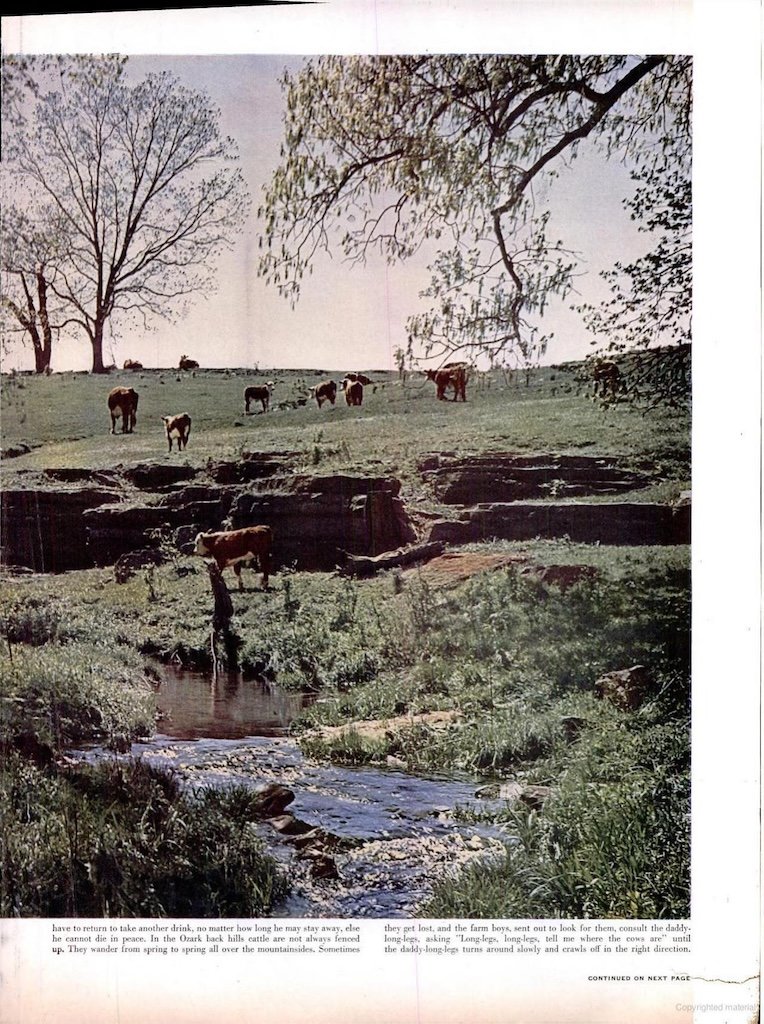
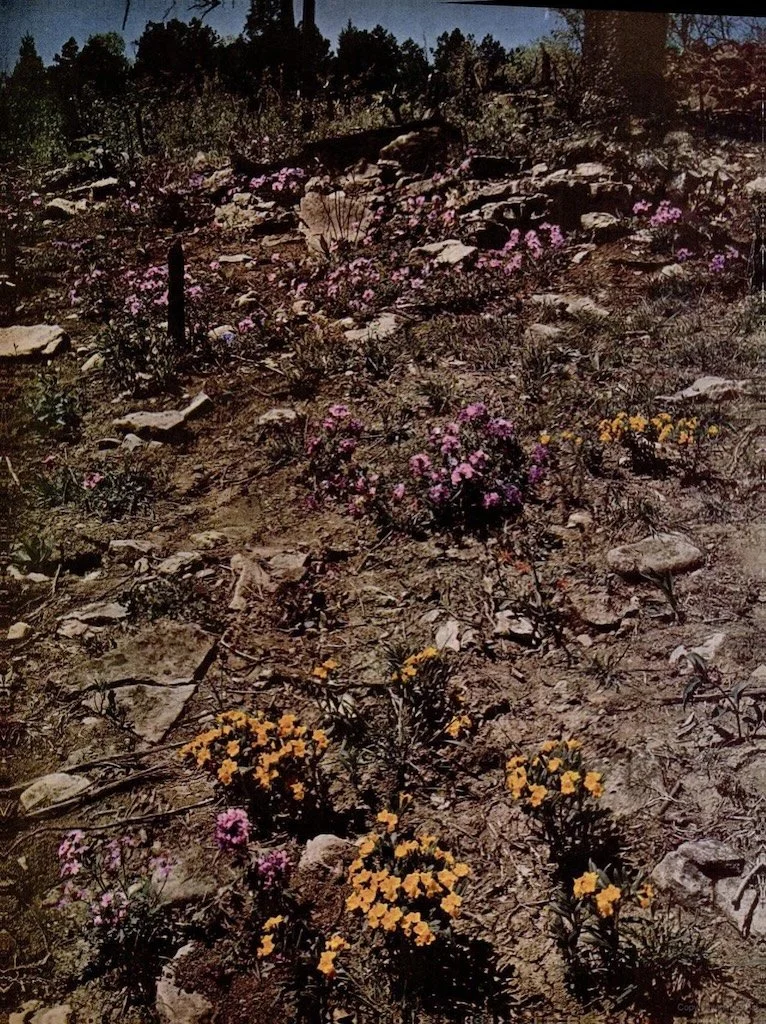
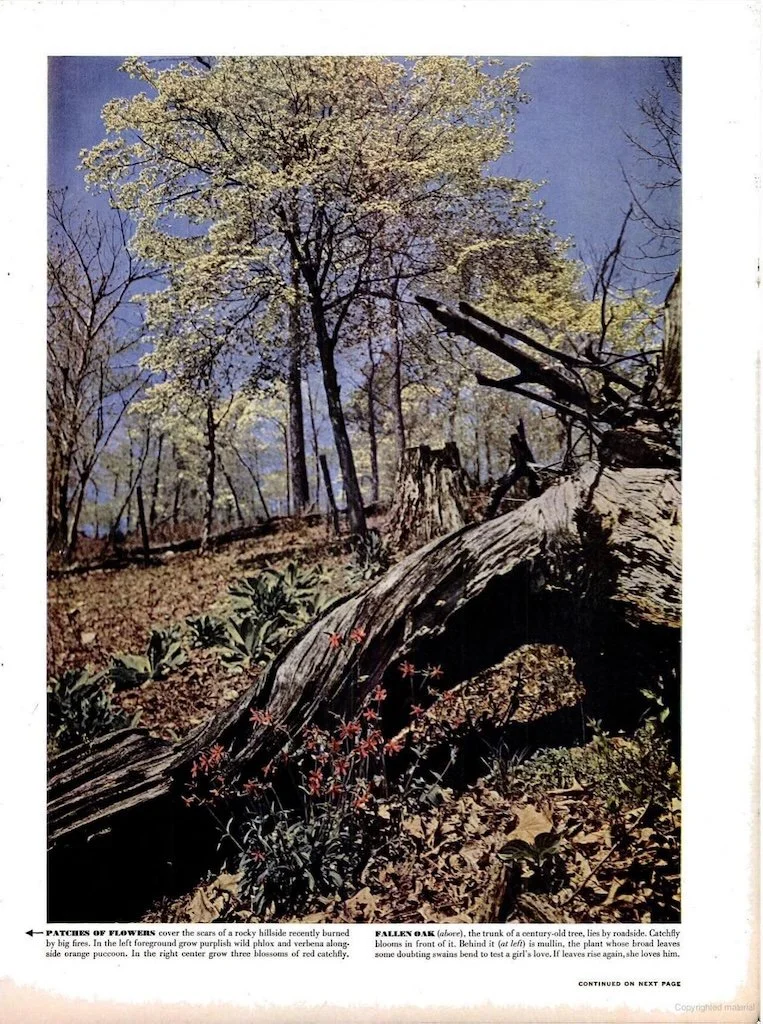
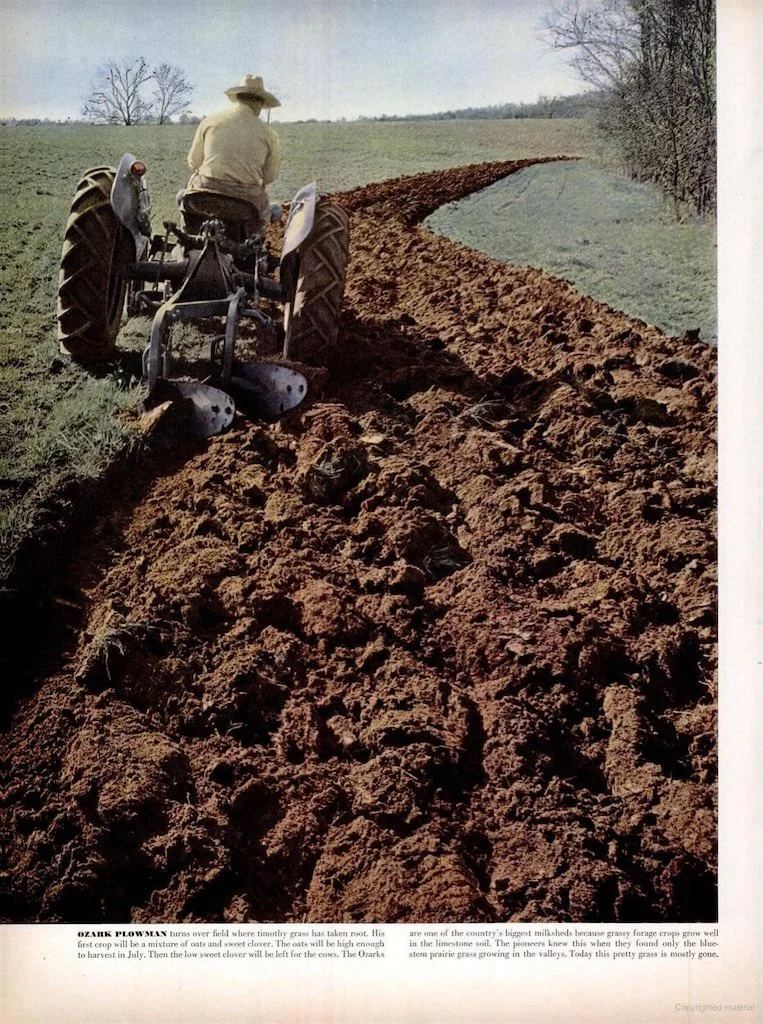
Ozark Spring in 1948

A story in Life Magazine for April 5, 1948 was an pictorial record of what it was like in spring during that time. The trees were leafing out or blooming and wildflowers were blooming in an area that had burned. There were already signs of loss – a farmer plowing before planting oats and sweet clover in an area that has once been bluestem prairie and cows making ruts down to the spring. The dogwoods are not as numerous today as in these pictures. Still – spring comes and we all appreciate the beauty that has survived in the Ozarks.
(Use the arrows on the left and right of the image to move through the slideshow.)

Our Missouri Yard – March 2026

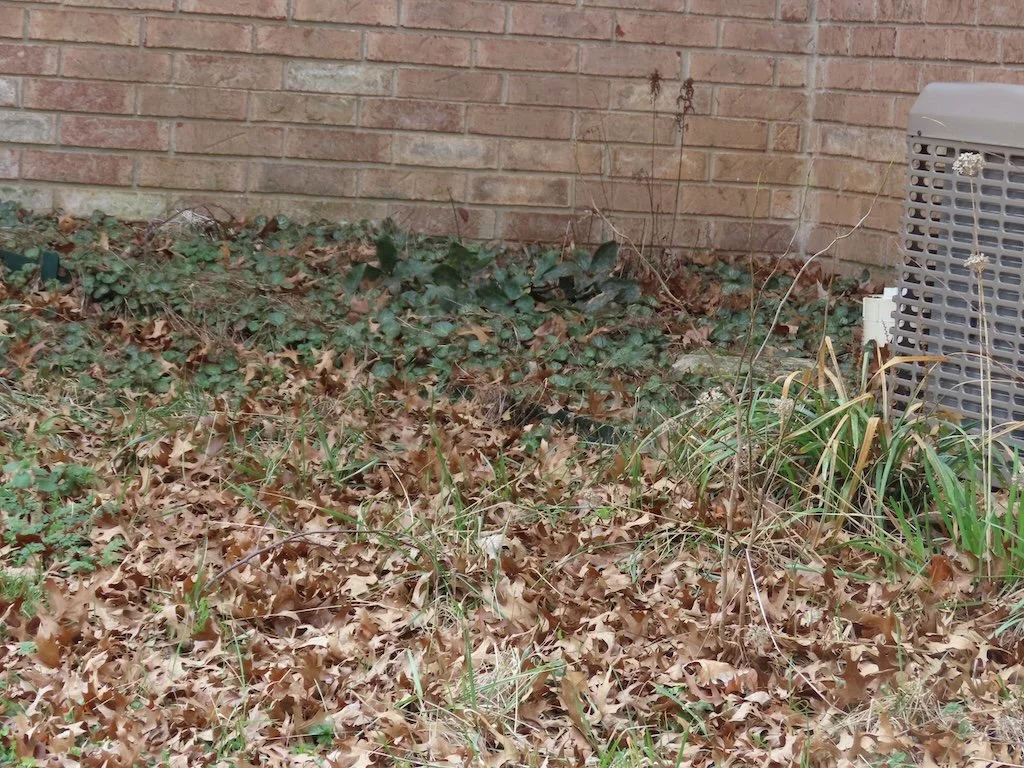
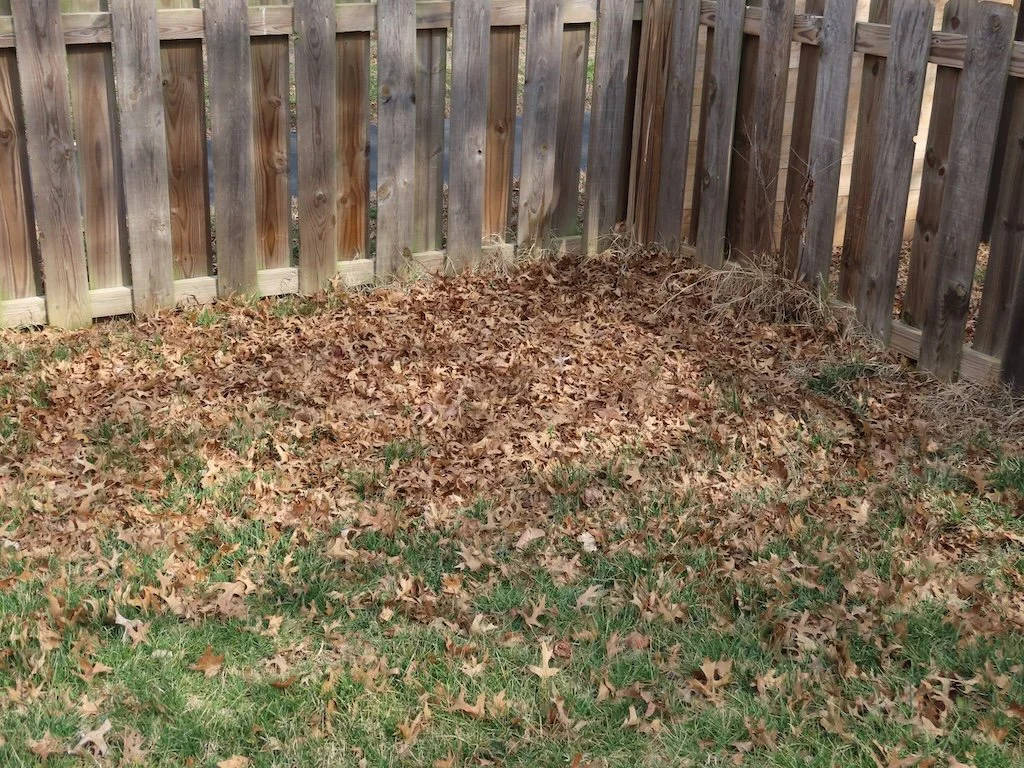
The dry days of March are great for working off my ‘to do’ list for the back yard. It does not include doing anything with leaves. I’m pleased that the wind has blown the leaves into two corners of the backyard where they can stay! I will leave them alone and allow whatever insect cocoons are there to empty. Most of the leaves are oak. My goal is start mowing parts of the backyard in May…but I will be mowing less this year than last because of the way the yard is developing.

The Fragrant Sumac I planted a few years ago now has shoots in the yard and is taking more space in the flowerbed as well. The ‘to do’ in that bed is to pull/cut Japanese honeysuckle frequently.

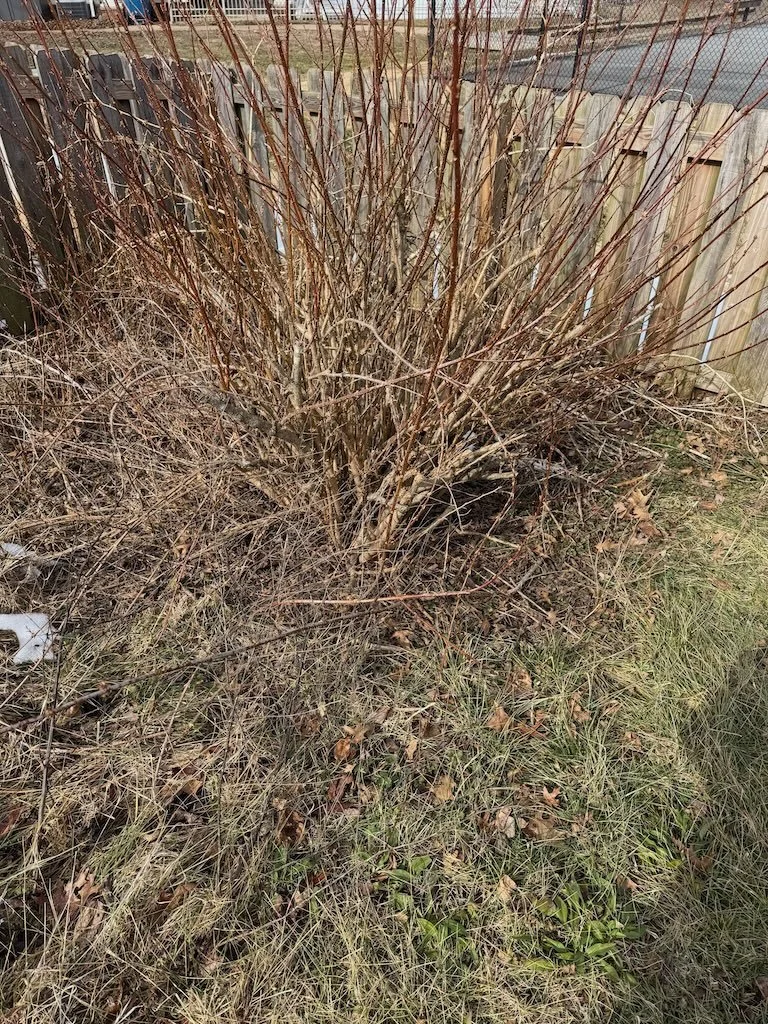
Getting the forsythia and Japanese barberry cut down are high on the ‘to do’ list. The pruning chainsaw will make it a bit easier.

I’ll buy 1 or 2 more paw paws to plant near the one I bought last year since I don’t think the seeds I have in pots are going to sprout.

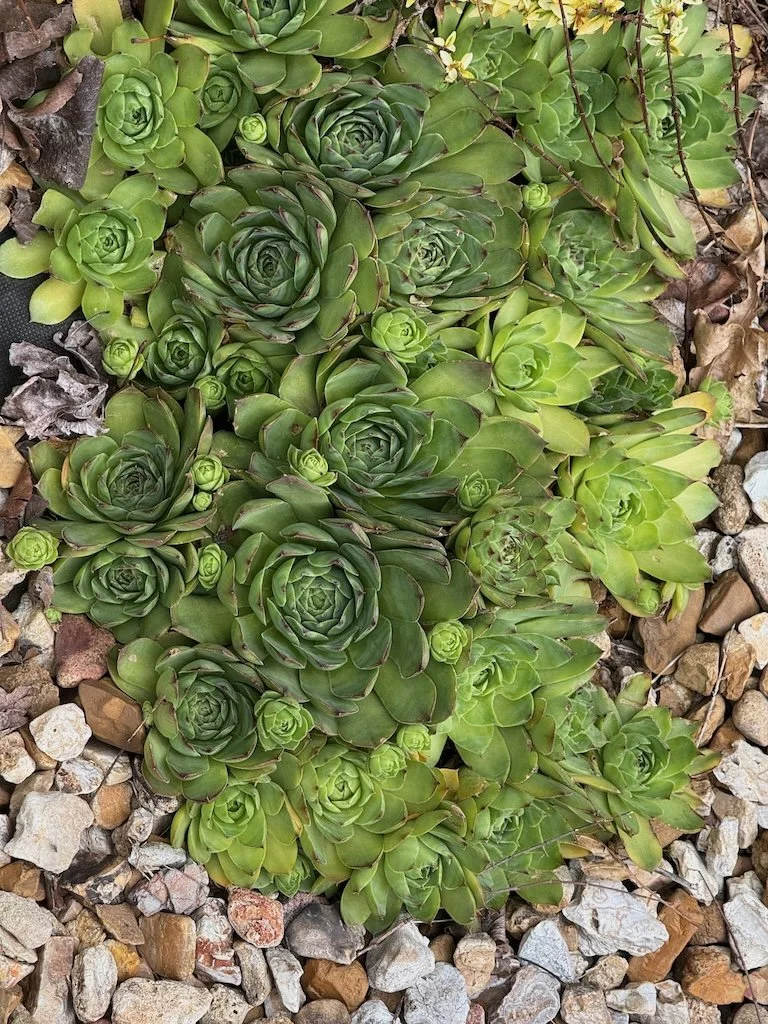
The more significant list is for the front yard where I will be planting into the large mulch bed I created last fall. I have done one round cutting back the existing crape myrtles that had gotten too tall (I enjoy photographing their empty seed pods). There is some clean up there but the big ‘to do’ before the planting in April is to take dead cedars out of the corner flower bed and clear more rock from around the hens/chicks so that the plant can continue to expand. Trimming the boxwood is not high on the list but I might do the top to keep it from getting too high to reach comfortably.

There is plenty to keep me busy in March….on the dry days!

Our Missouri Yard – February 2026

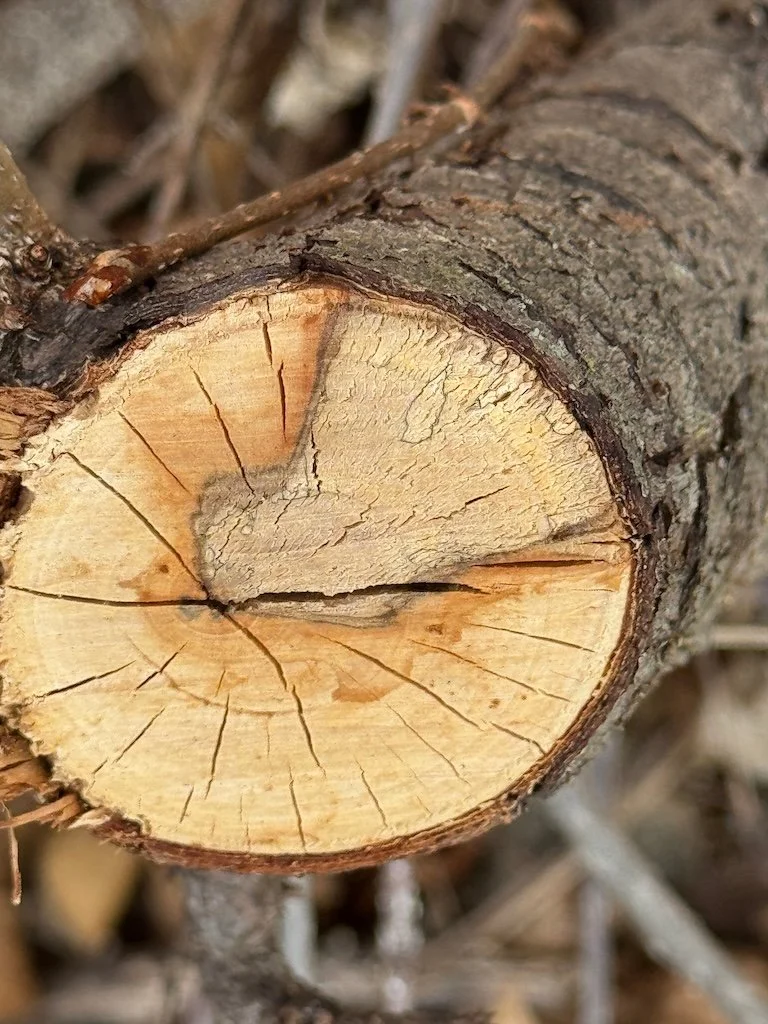
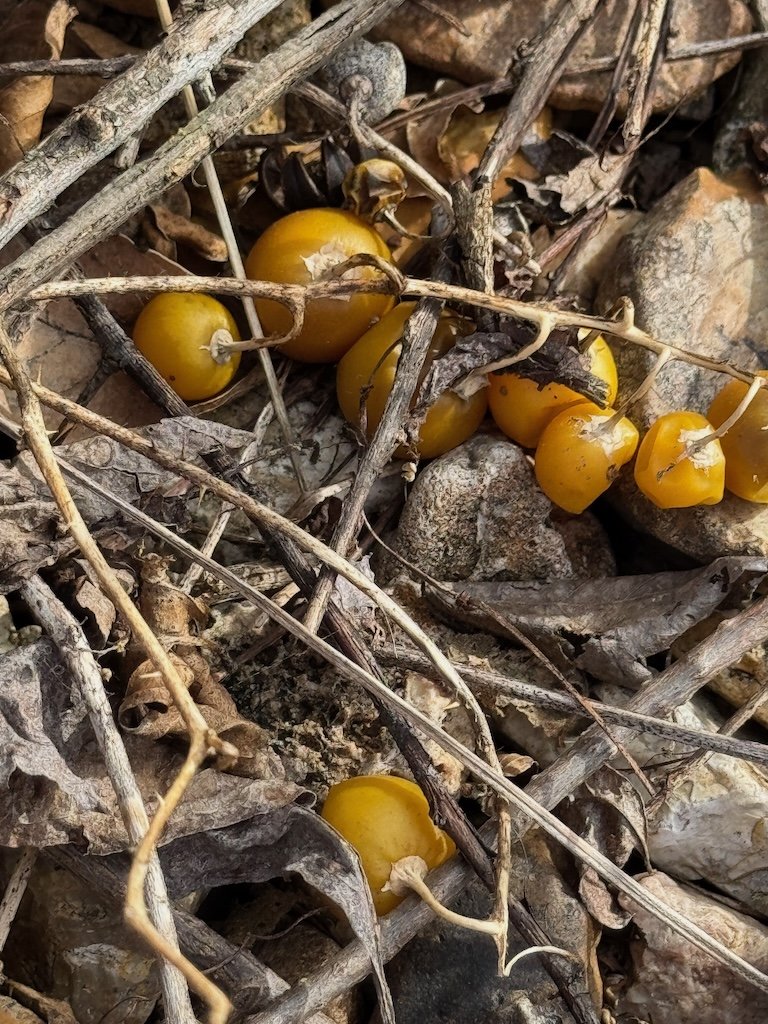
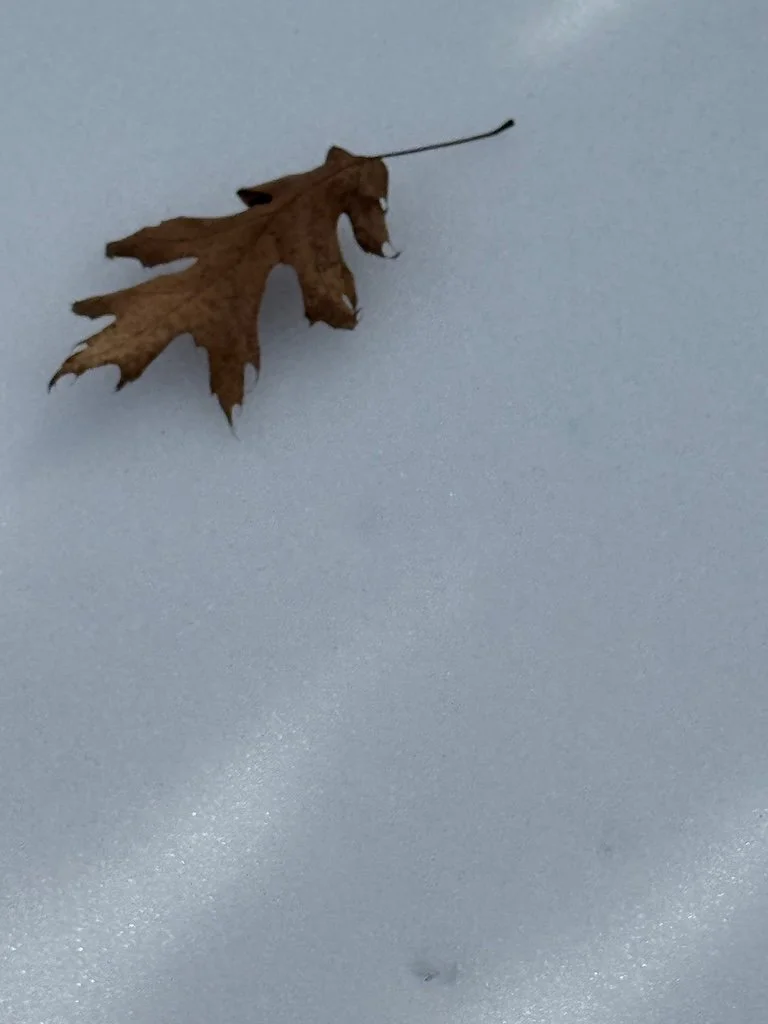
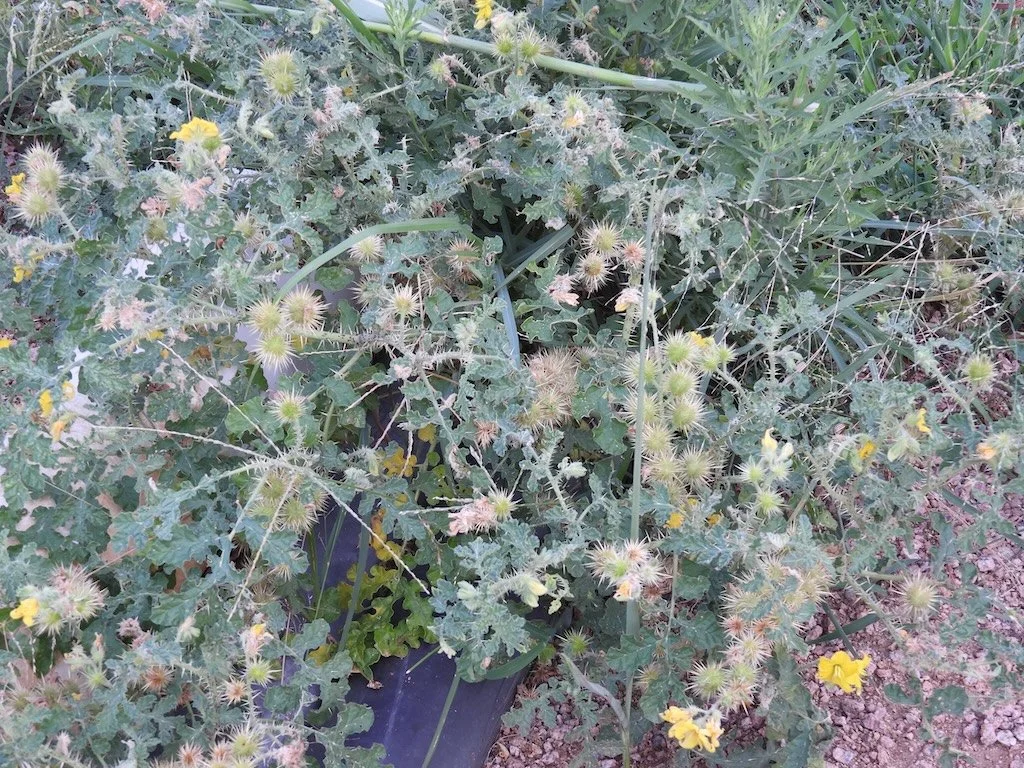
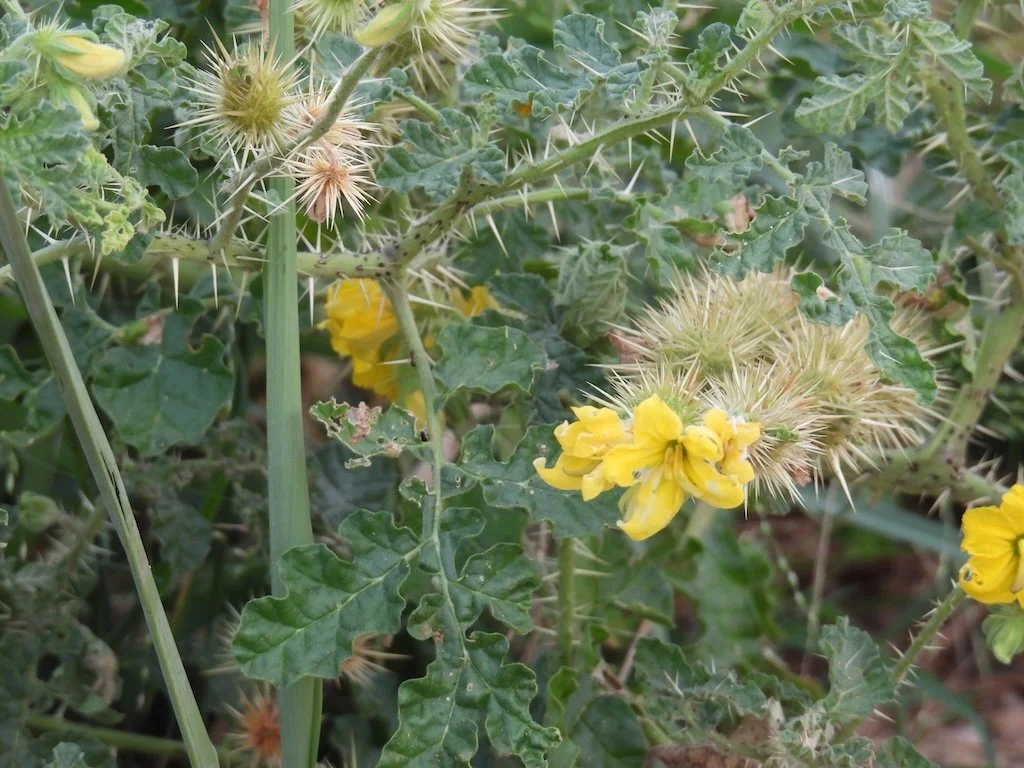
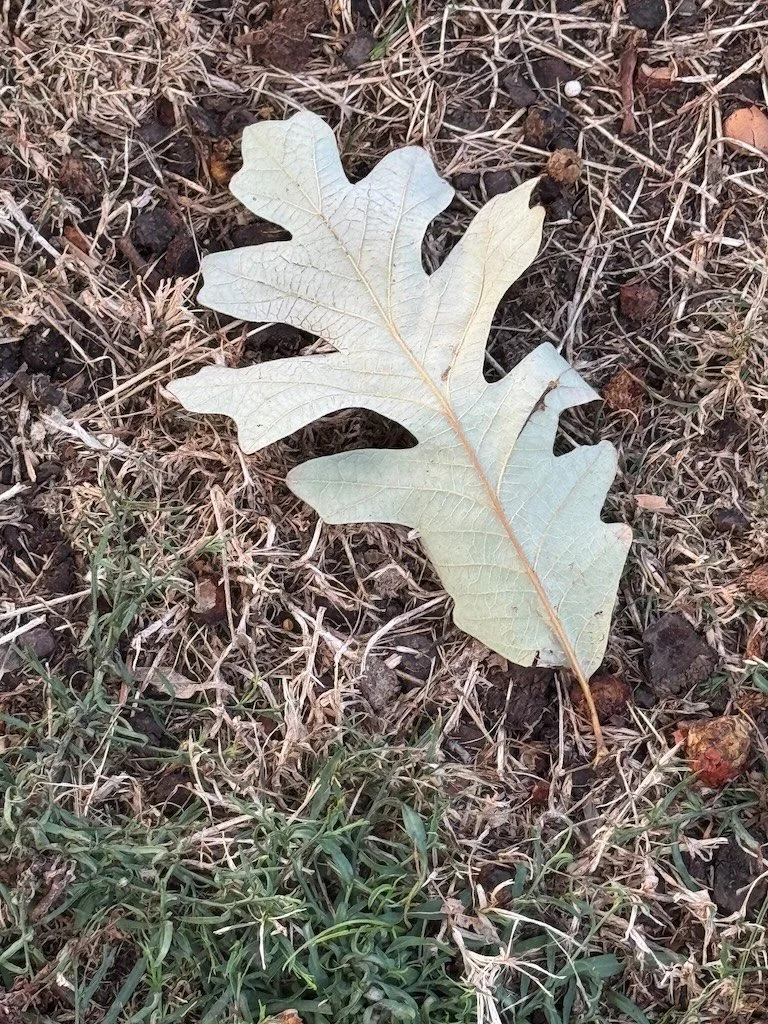
I put on my river boots to walk around the yard as the snow melted last week. I was glad to see the recently cut stump of the Callery Pear looked like it was rotting; I’ll be continuing to cut it until it is dead; the stems have thorns! The horse nettle fruits from last fall are a bit of color in the flower bed. An oat leaf blown from our neighbor’s tree was a point of interest in a snowbank on the far side of our yard. The forsythia in the northwest corner of our yard is another project where the pruning chainsaw will be used.

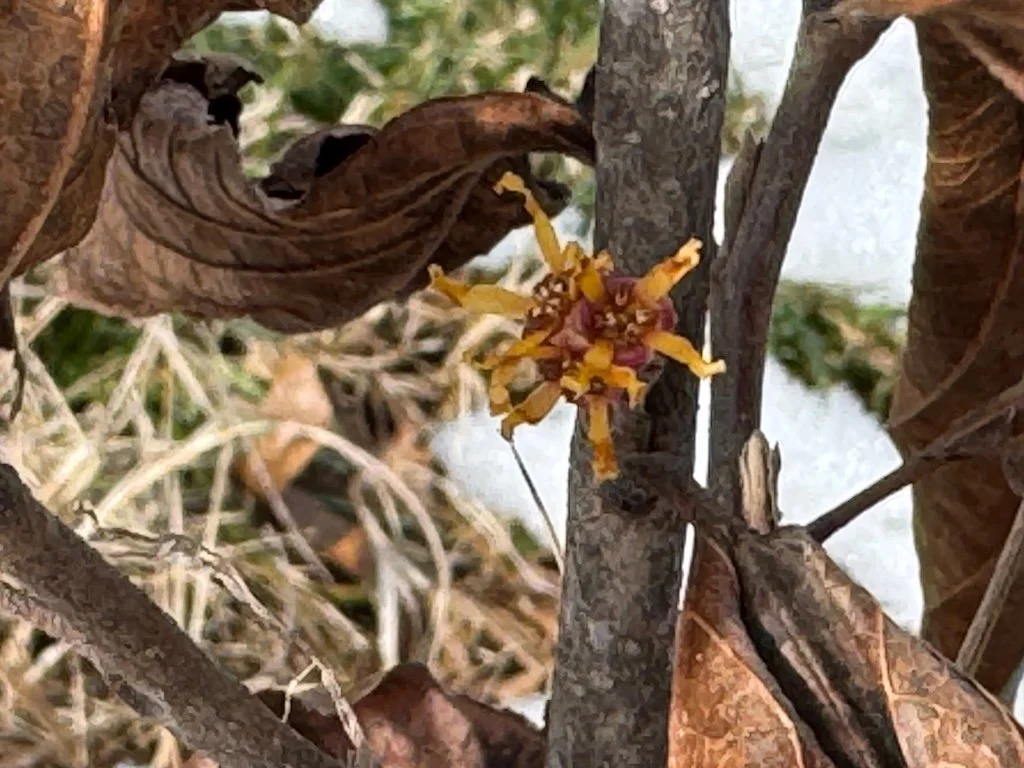
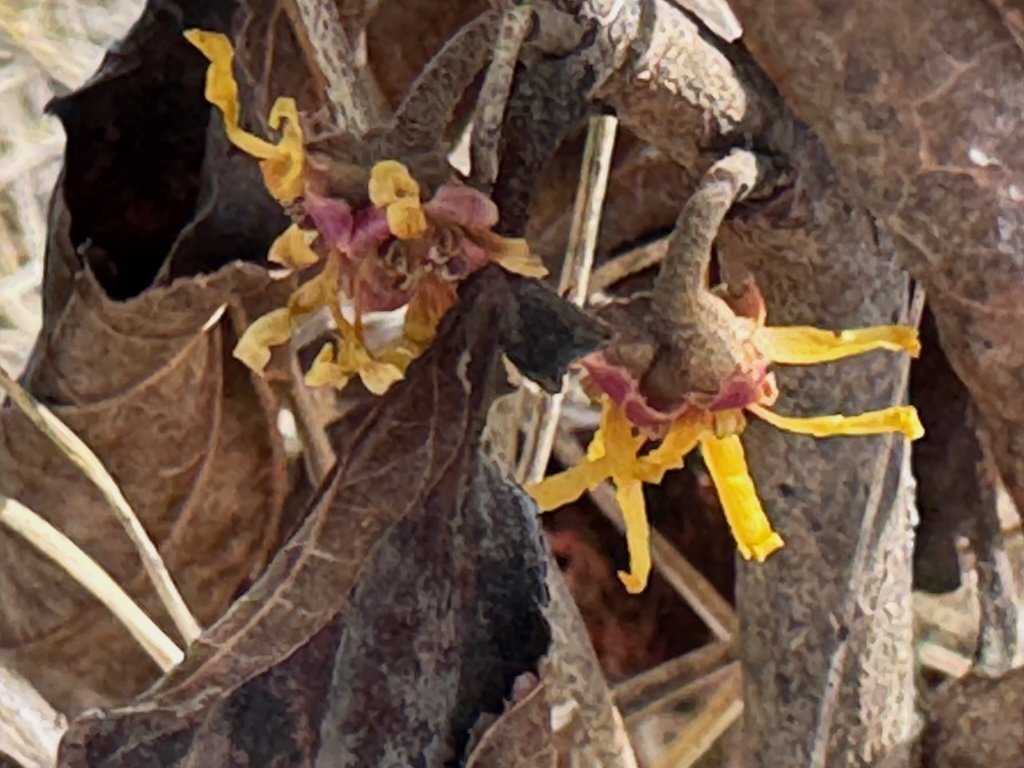
The high point of my walk was seeing that my small Ozark Witch Hazel is blooming! This is the time of year for it to bloom, but I hadn’t noticed the blooms before since the young tree kept most of its leaves. I am hopeful that it will take over the southwest corner of my back yard but that might take a few years.

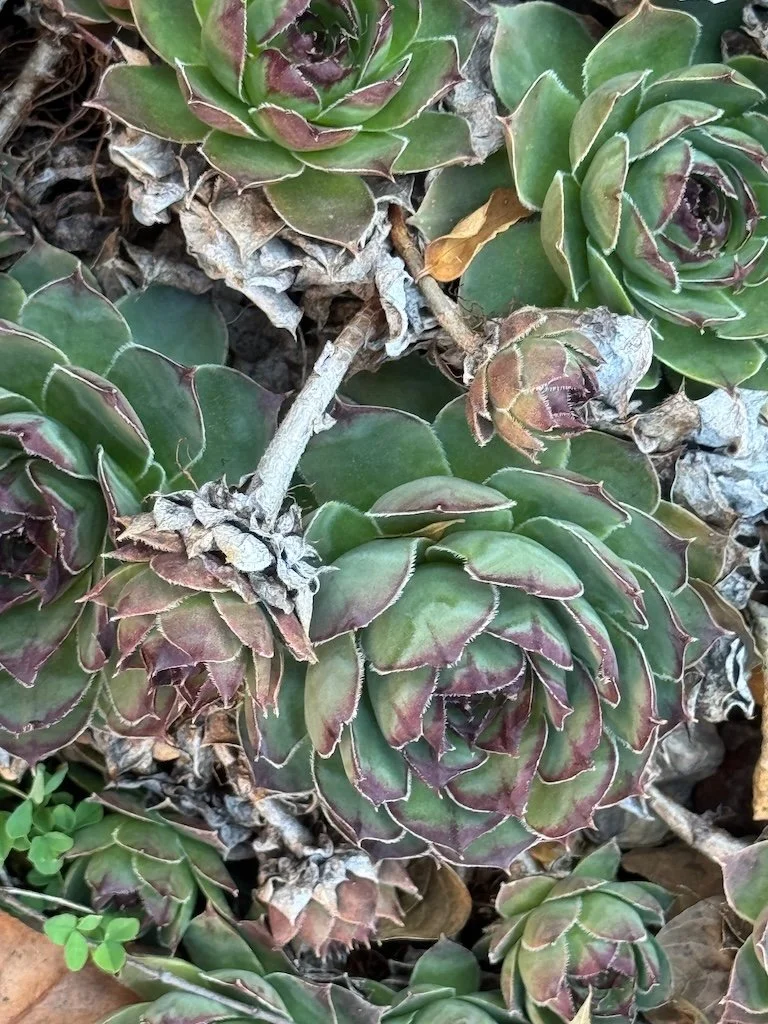
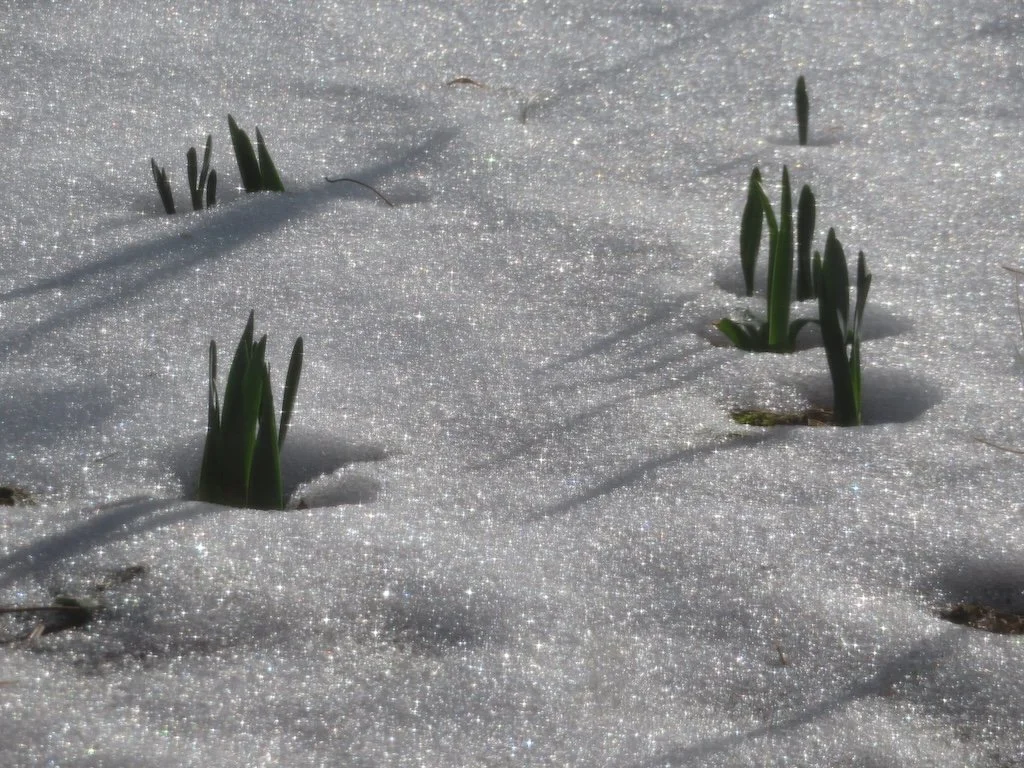
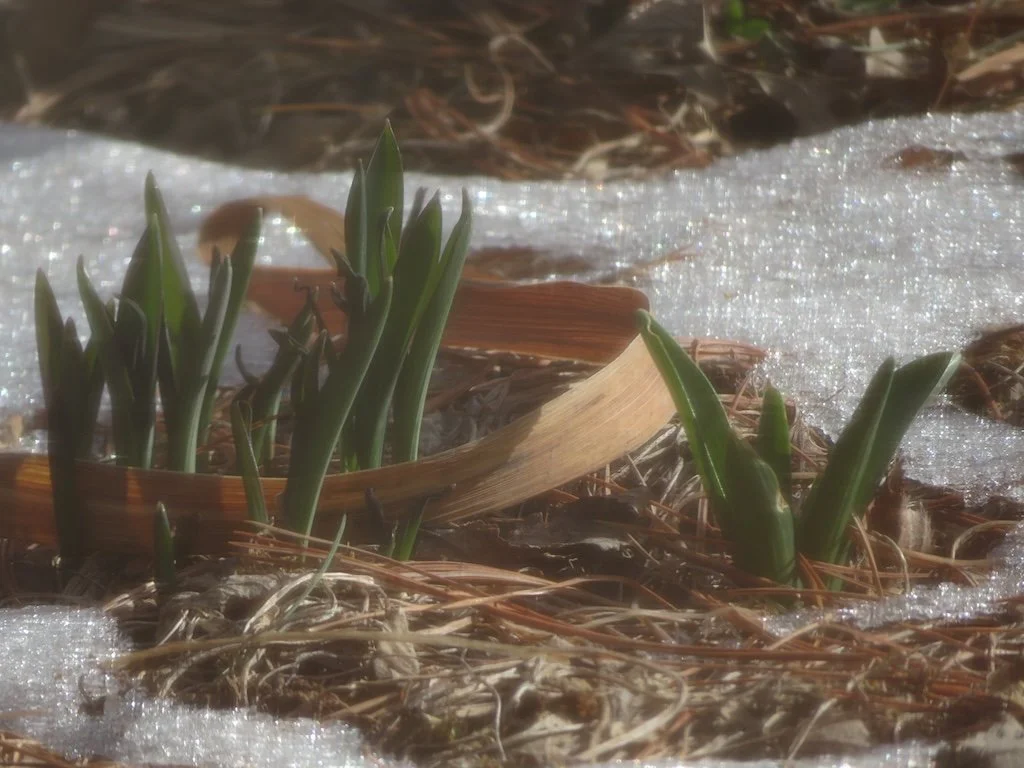
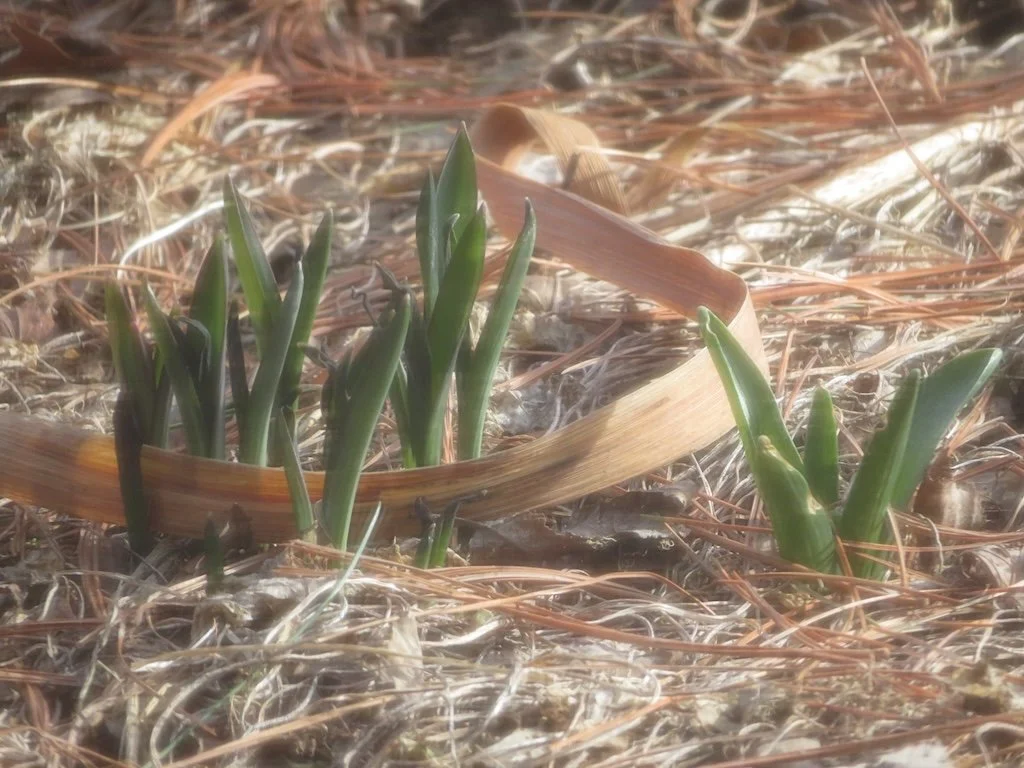
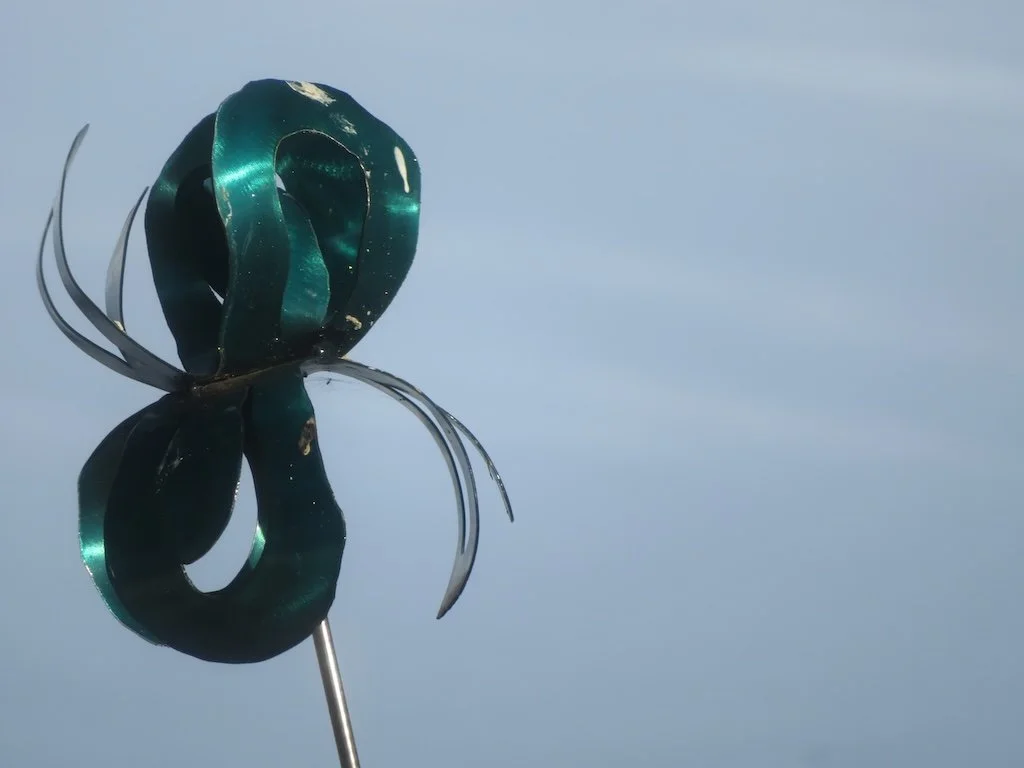
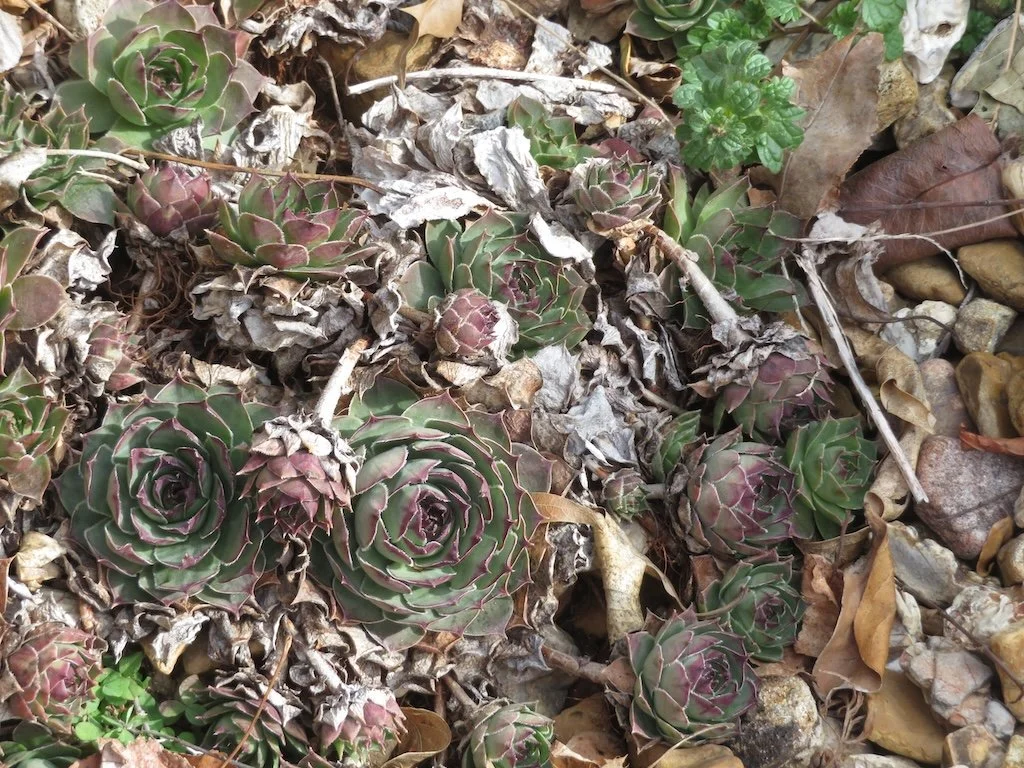
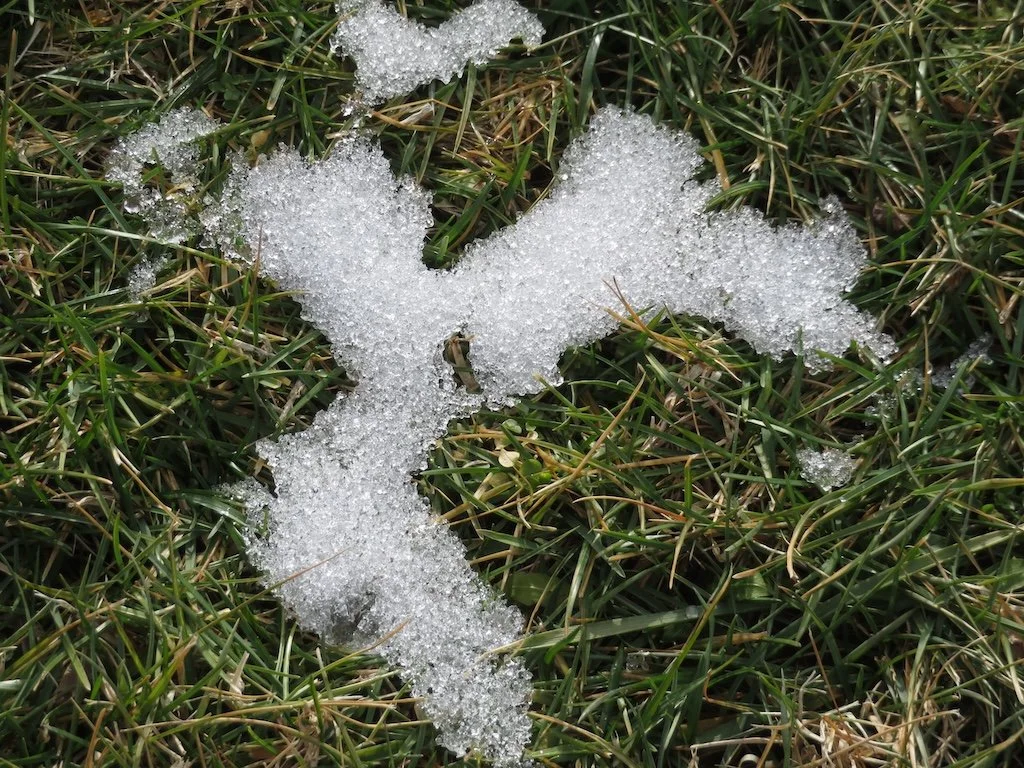
Bulbs are up on the east side of my house, and the metal sculpture is marking something I planted last year (and adding some color). The Hens and Chicks are still doing well in our rock garden. The snow formed hieroglyph type shapes as it melted.

The forecast is for temperatures warm enough this weekend that I might get out to do some winter yard work!

Oak Mulch

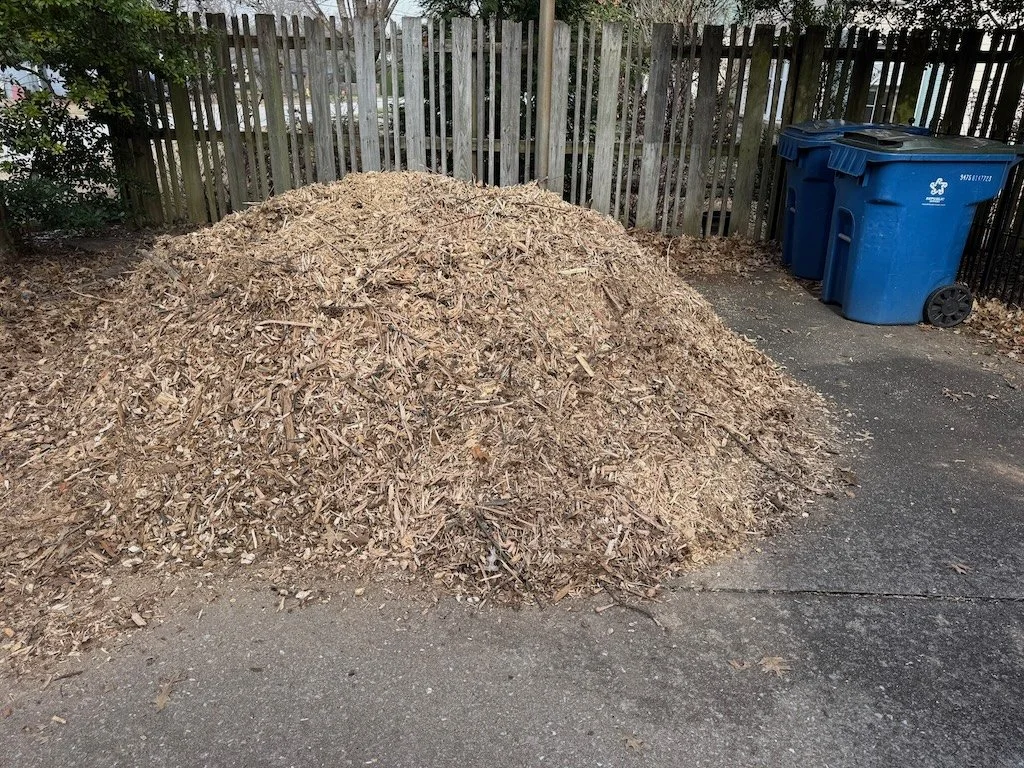
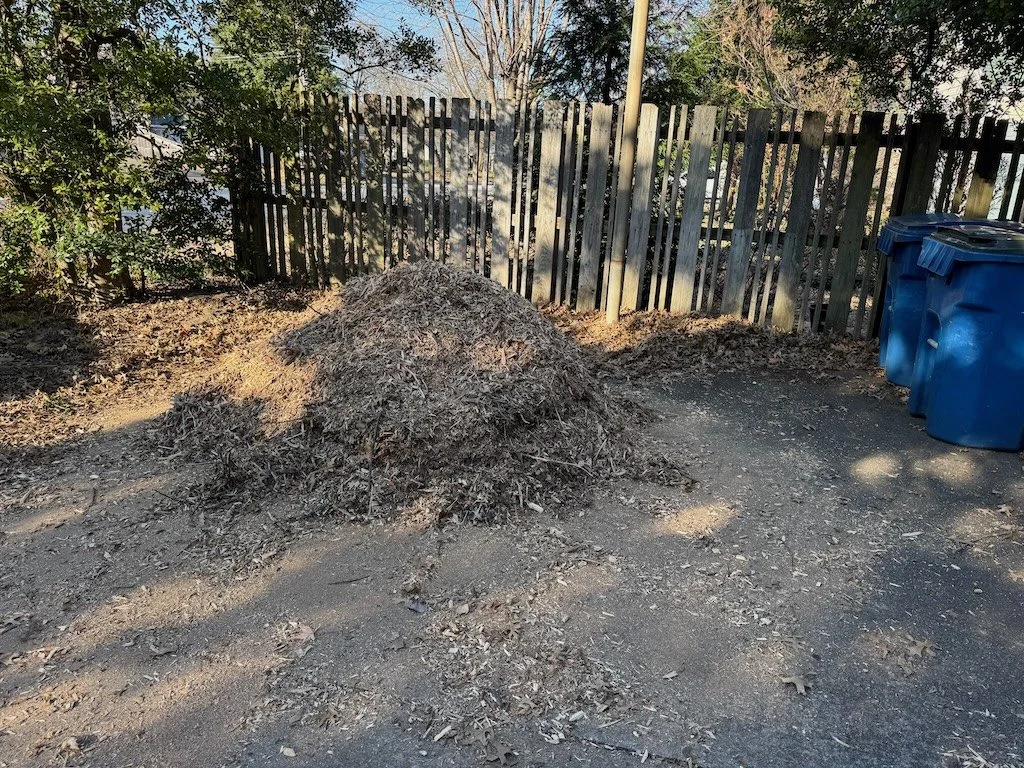
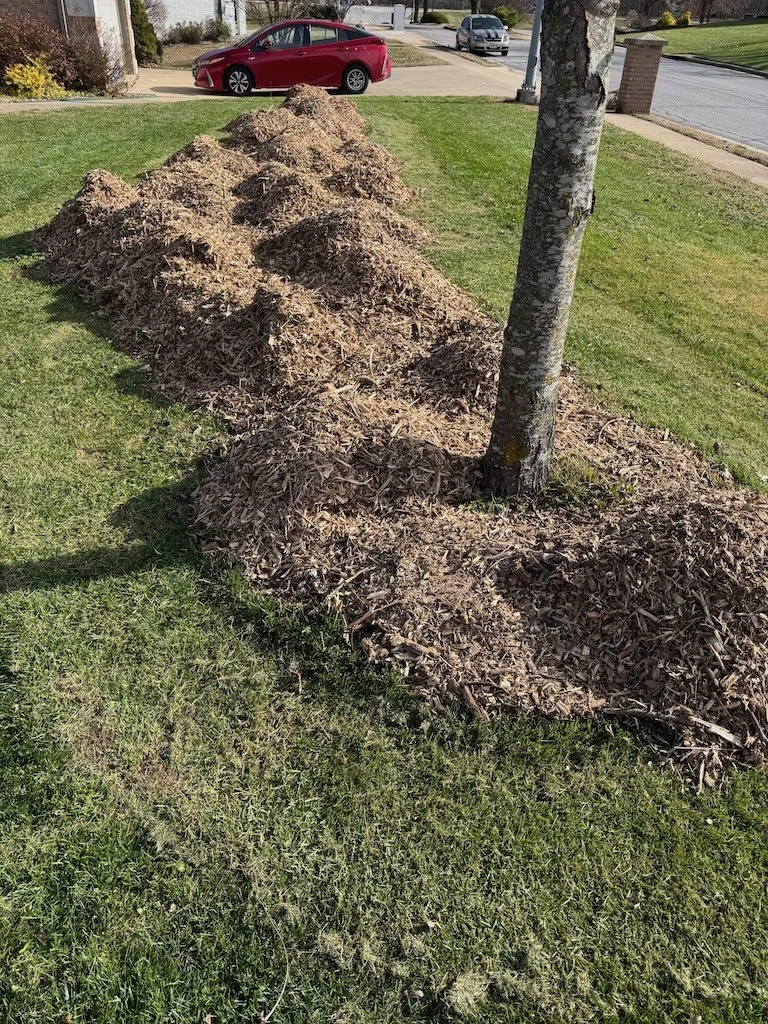
The tree service finally came to trim my daughter’s oak and to handle a larger branch that fell from her Amur Maple…and they left a substantial pile of (mostly) oak mulch as we requested.

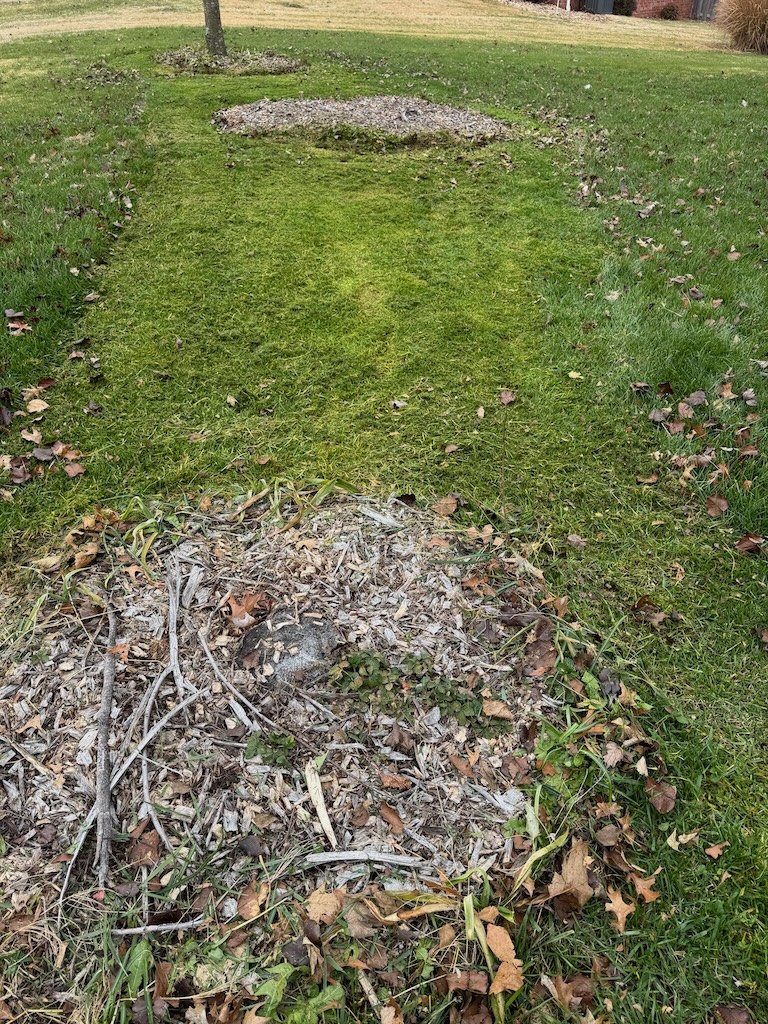
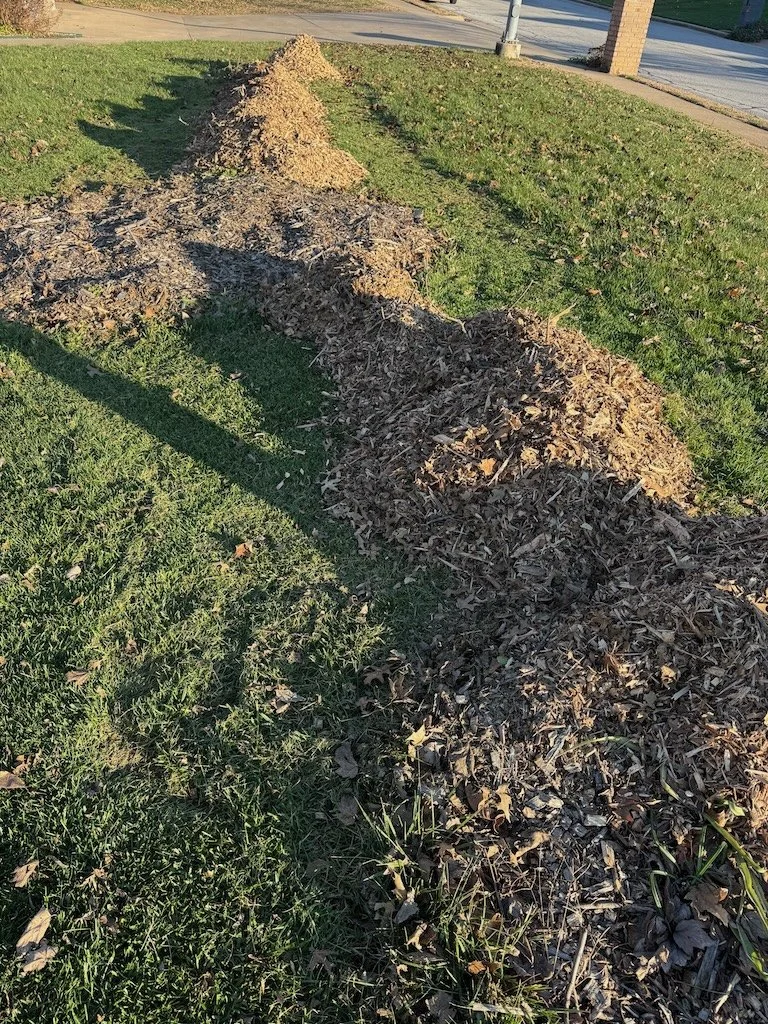
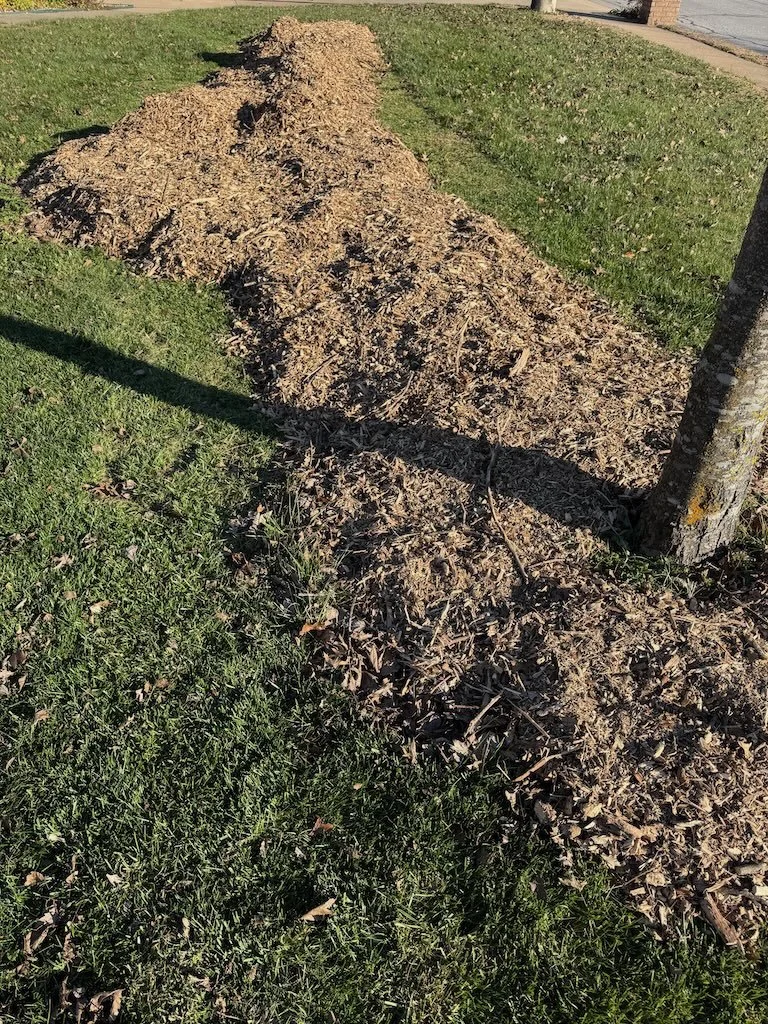
I have big plans for that mulch as part of my plan for transform my front yard with a native plant garden. I had used mulch from a maple there that had to be removed last summer to create three areas in my front yard and with the additional mulch I could make a much more substantial area for planting next spring.

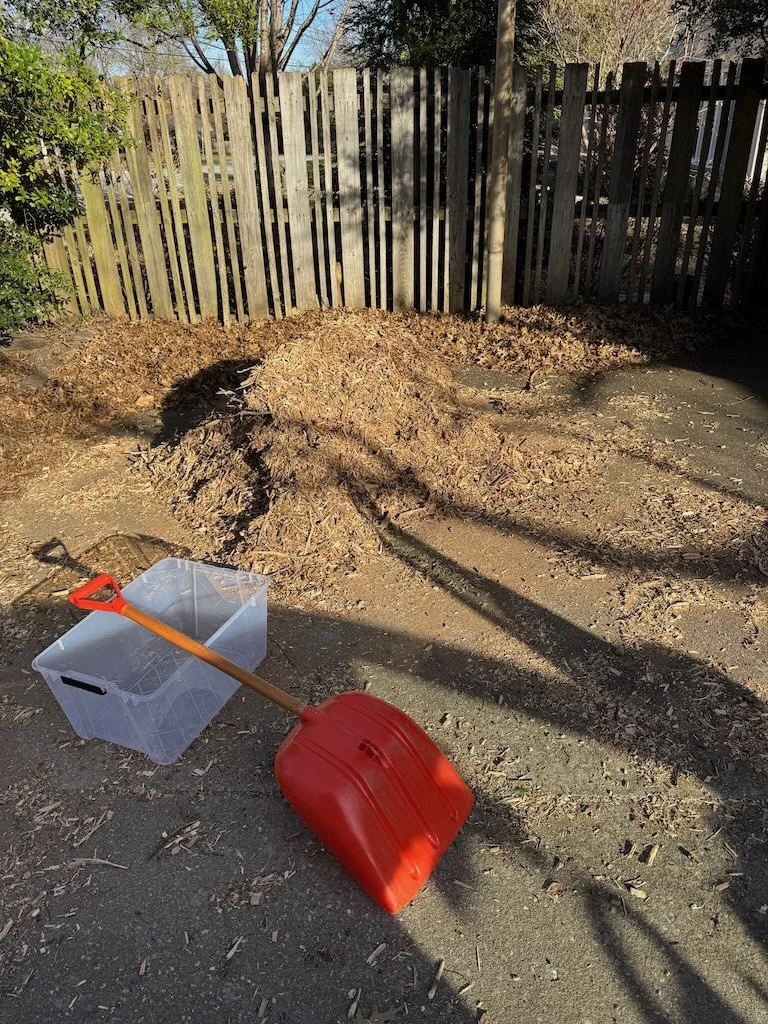
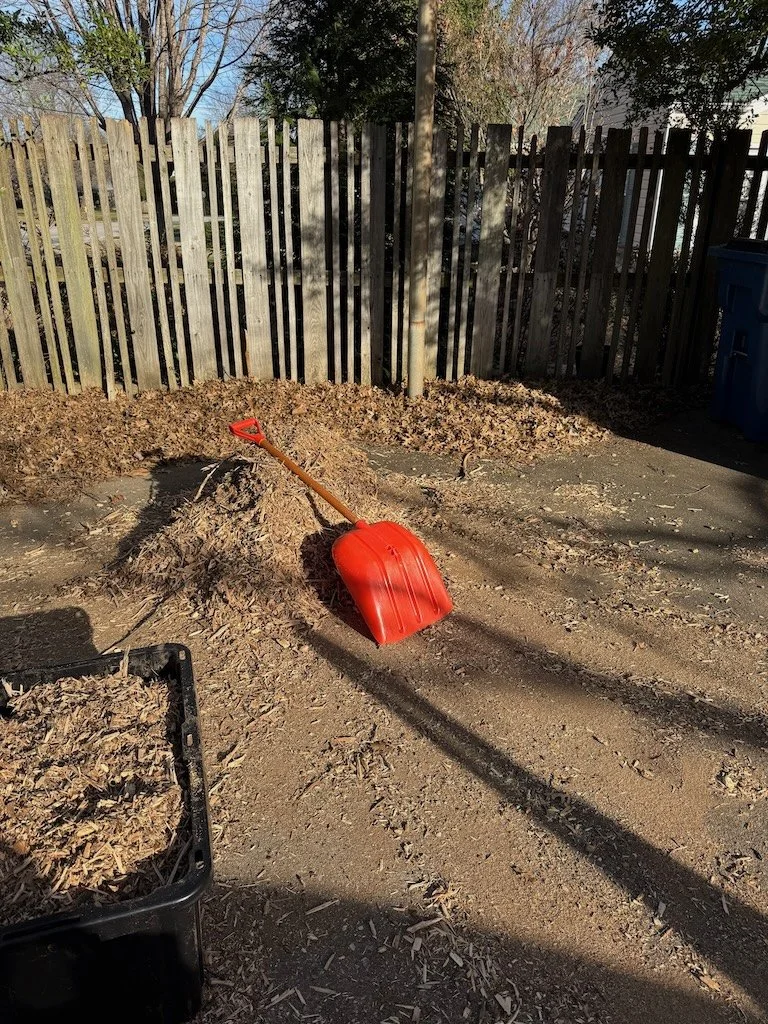
We loaded bins and moved the pile one carload at a time. Even after the first 4 loads the new bed was looking bigger.
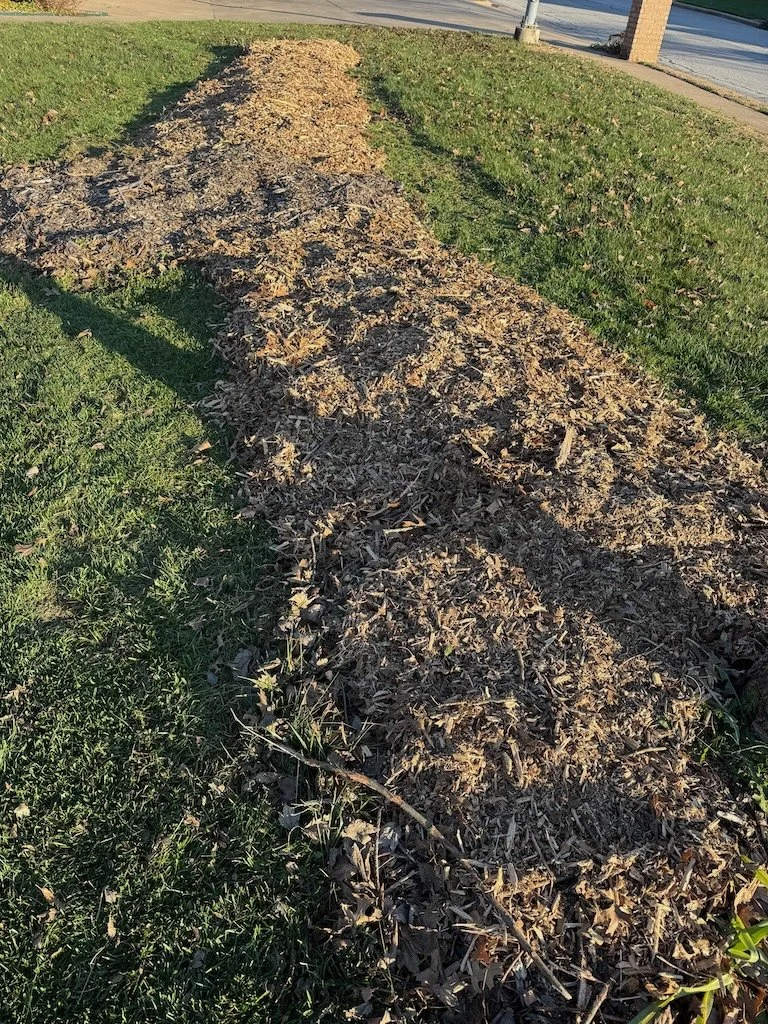
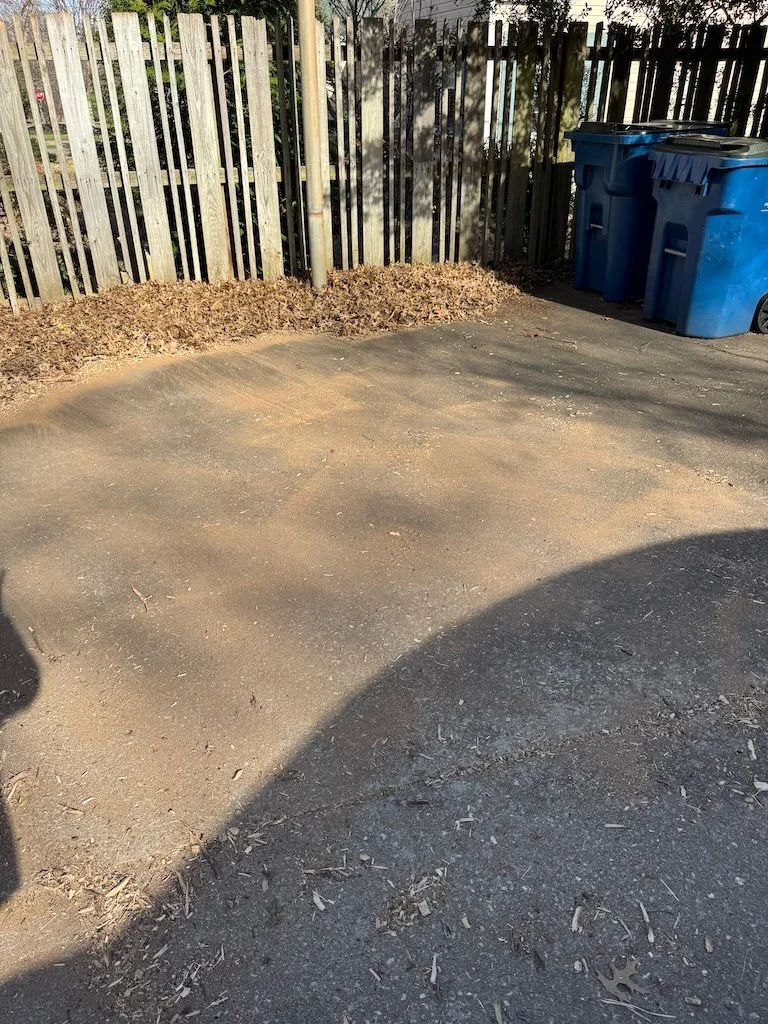
After the first big day, I only managed 2 carloads per day. It took 5 days in all (a total of 12 carloads…about 1.5-2 hours per load depending on traffic). On the last day, I was celebrating that my daughter’s driveway was back to normal….even though I still needed to spread the mulch and define the finally shape for the new bed!

I can hardly wait for the native plant sales to begin next spring. I’m going to review my plant list until then to be ready to shop and then plant my new garden in the oak mulch.

Josey Ranch – August 2025

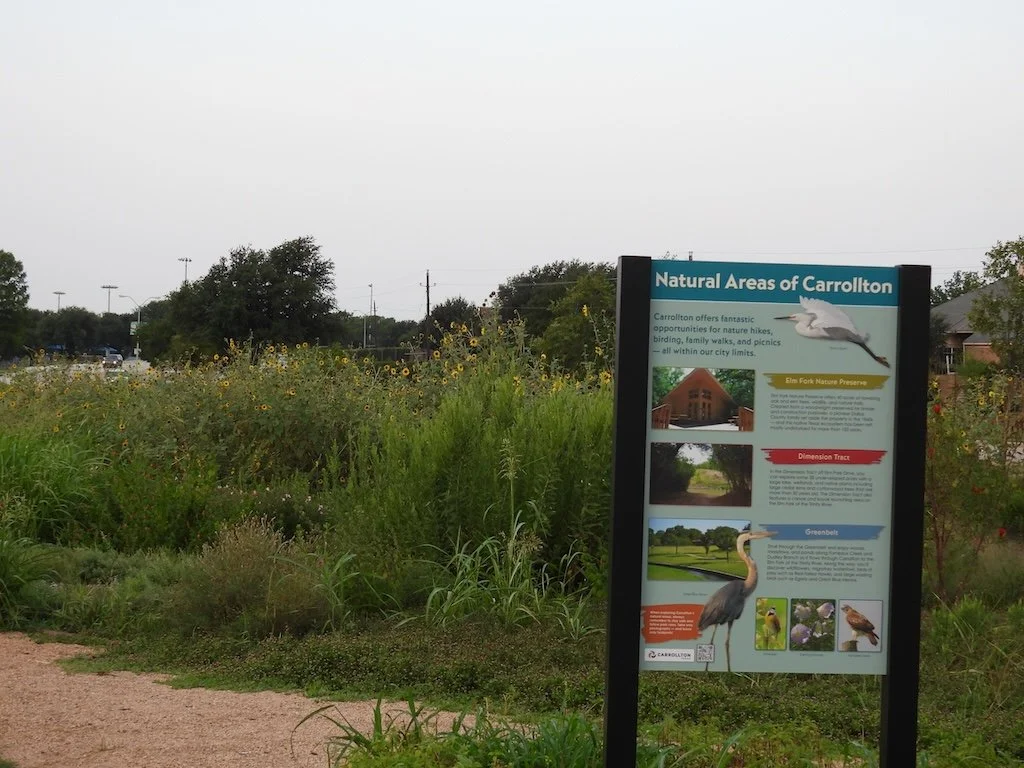
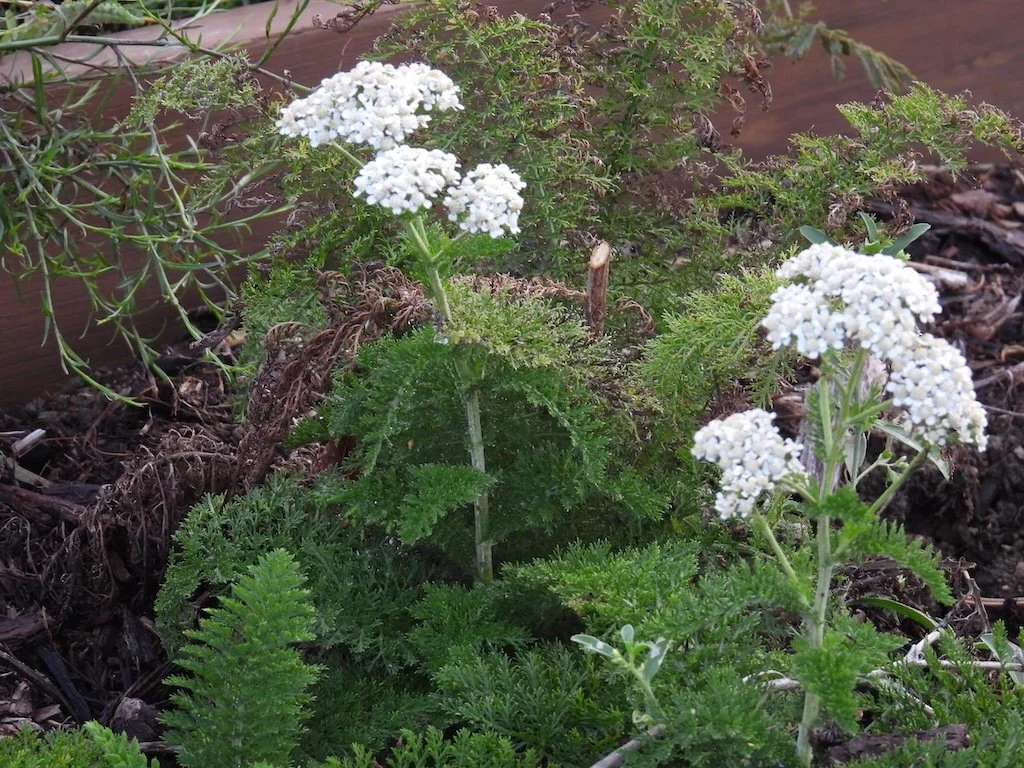
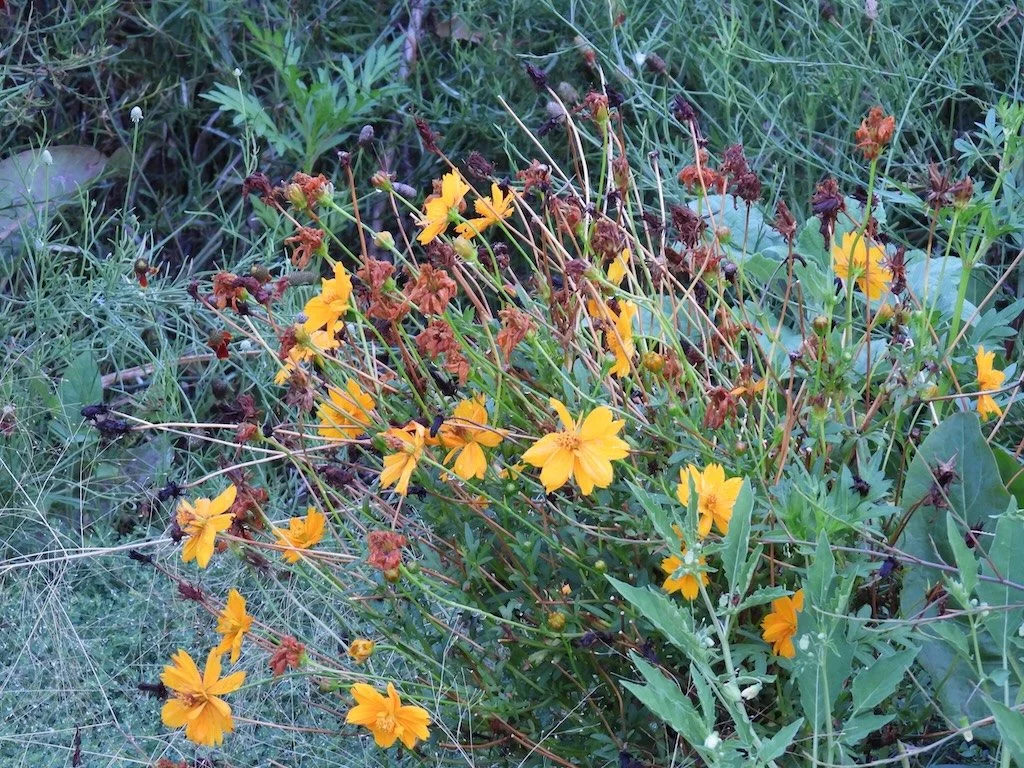
While I was in Dallas in August, I made an early trip to the pocket prairie and lake at Josey Ranch in Carrollton – a place I visited frequently before we moved my parents to assisted living in January 2024.

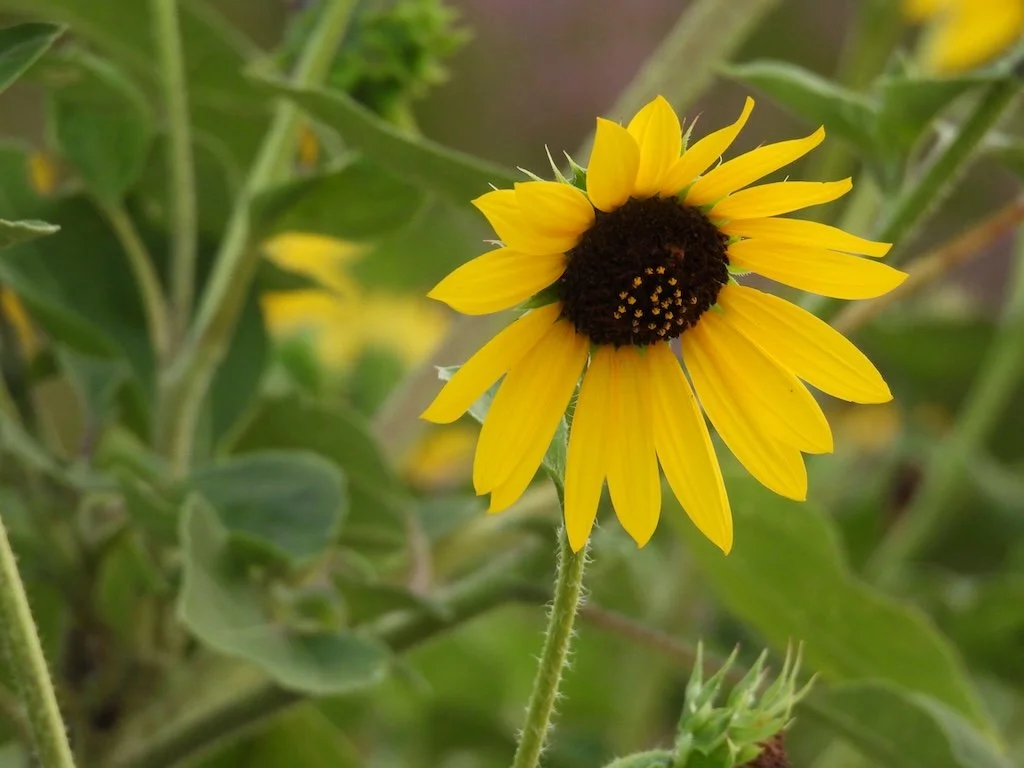
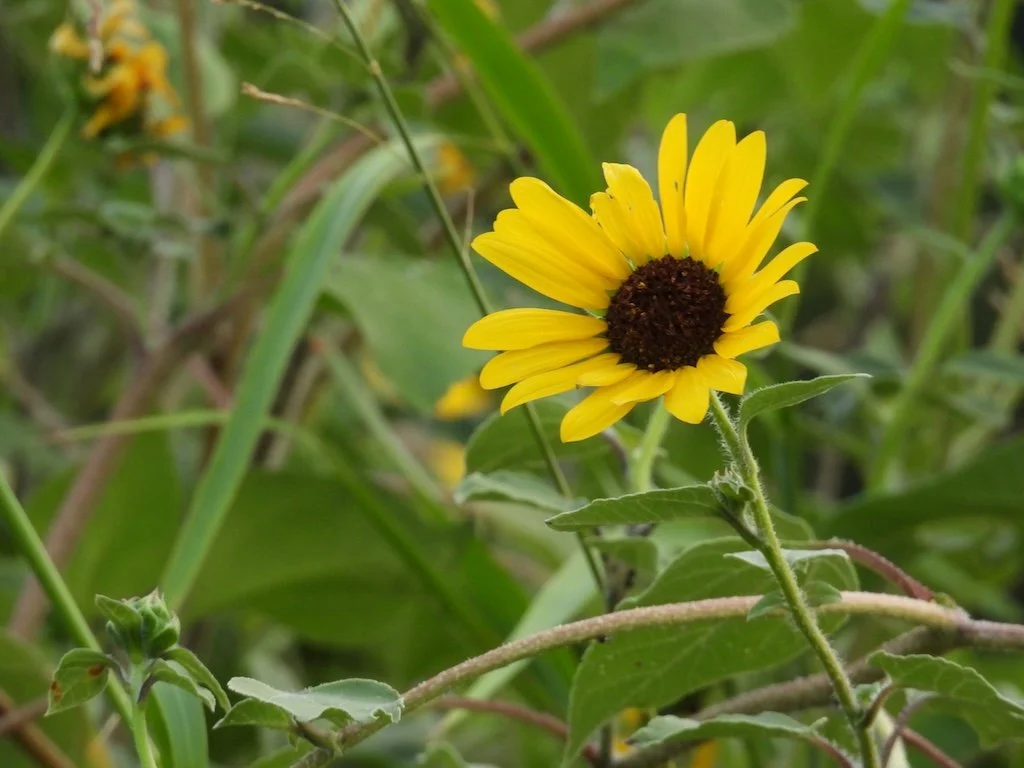
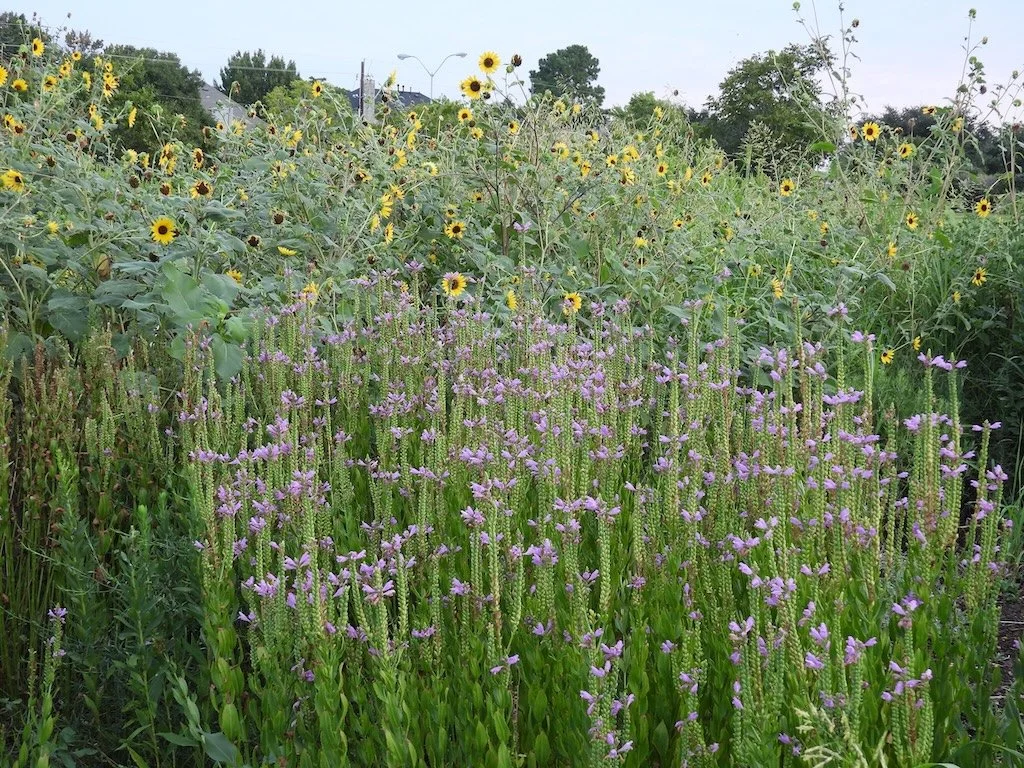
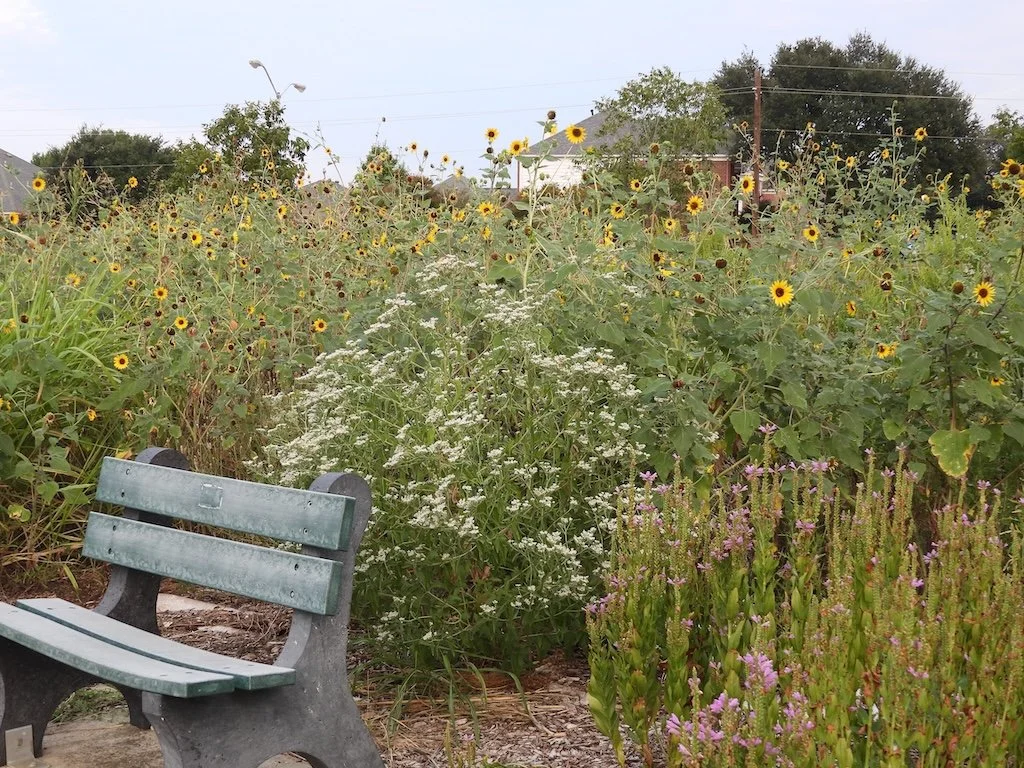
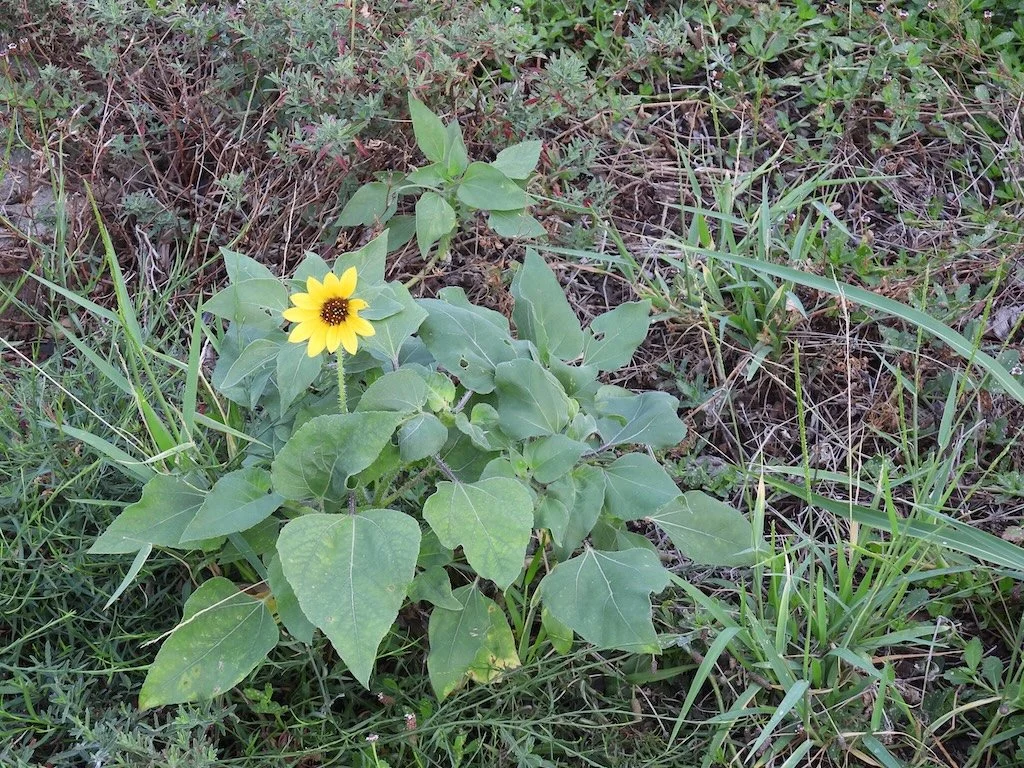
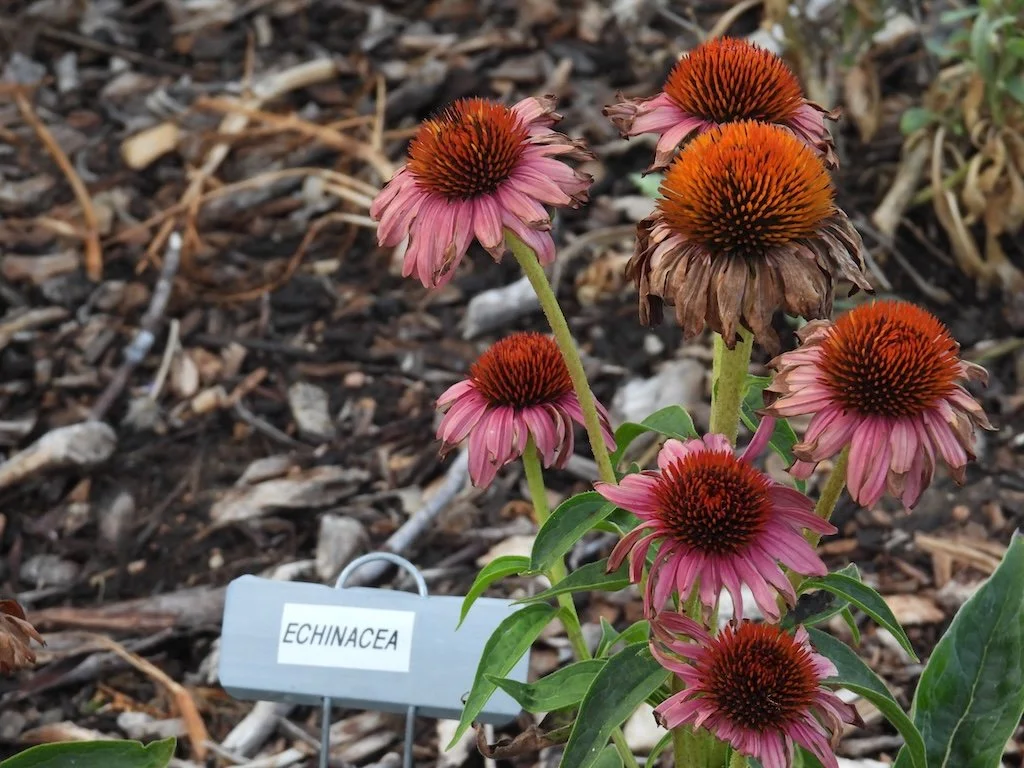
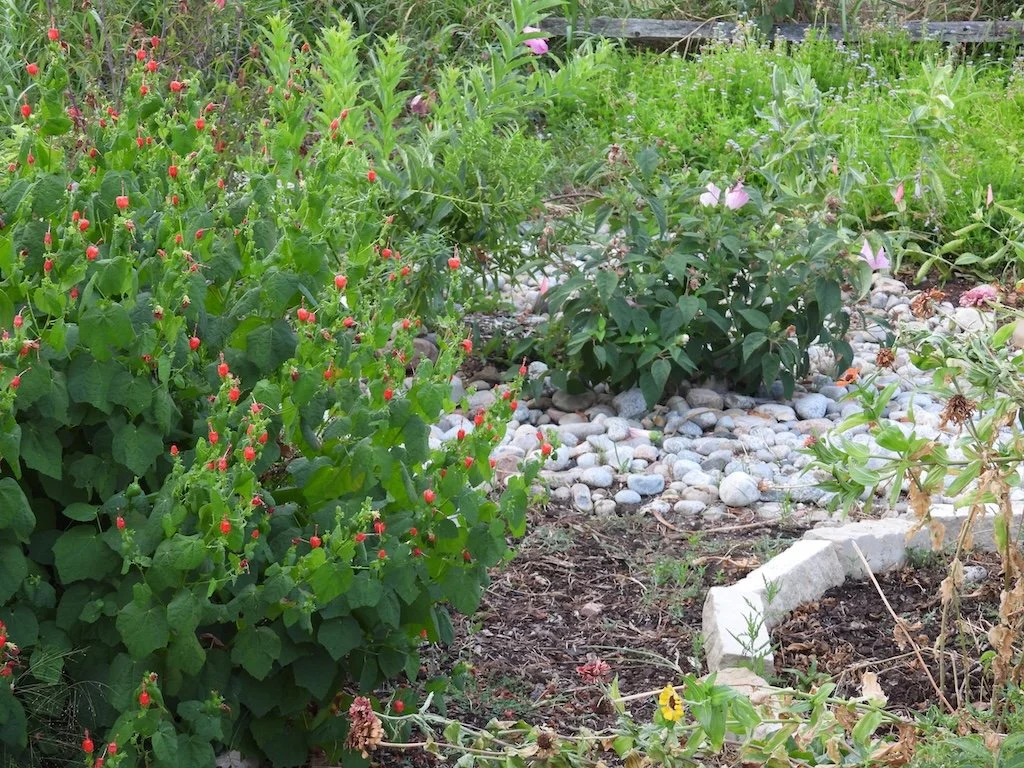
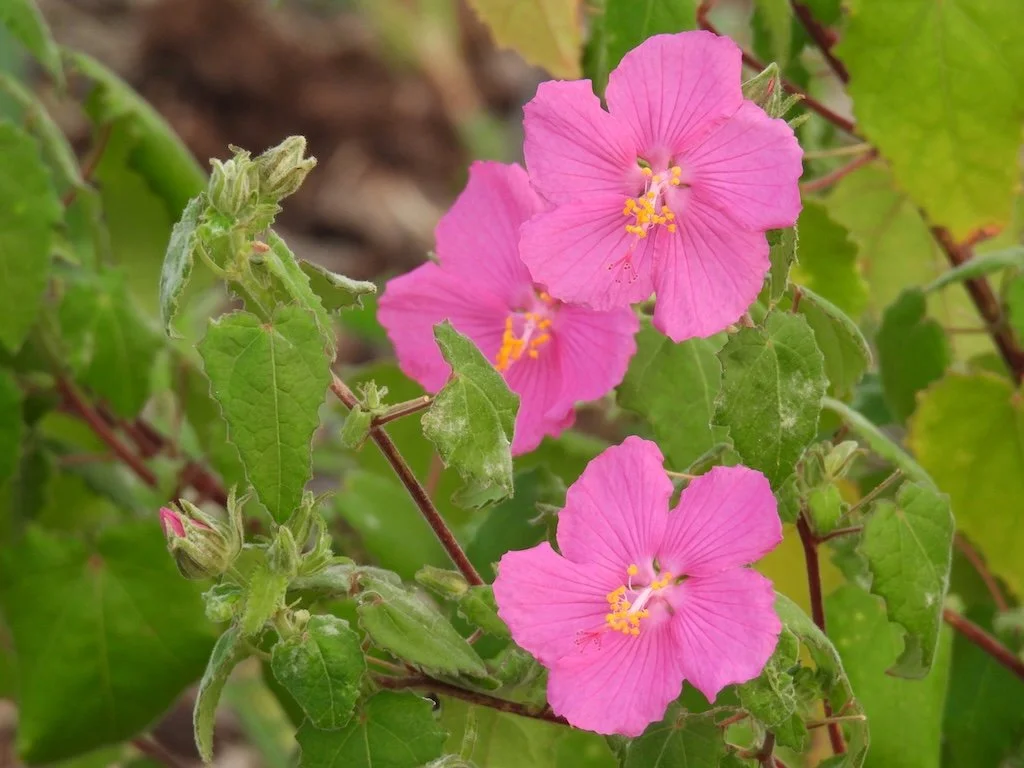
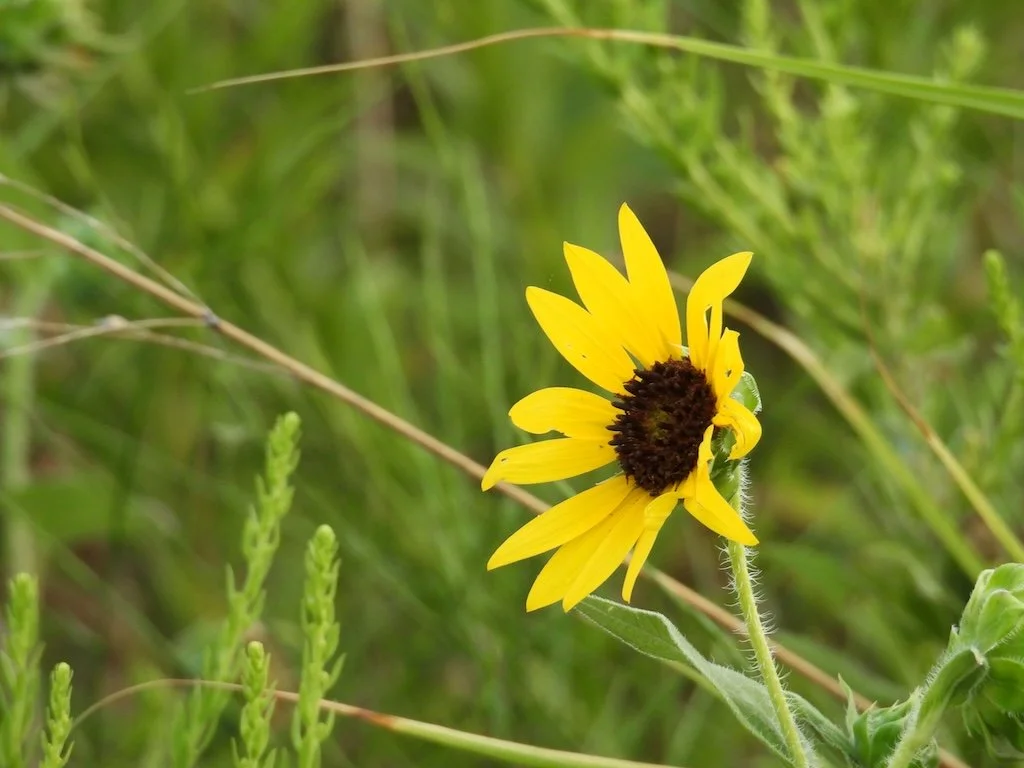
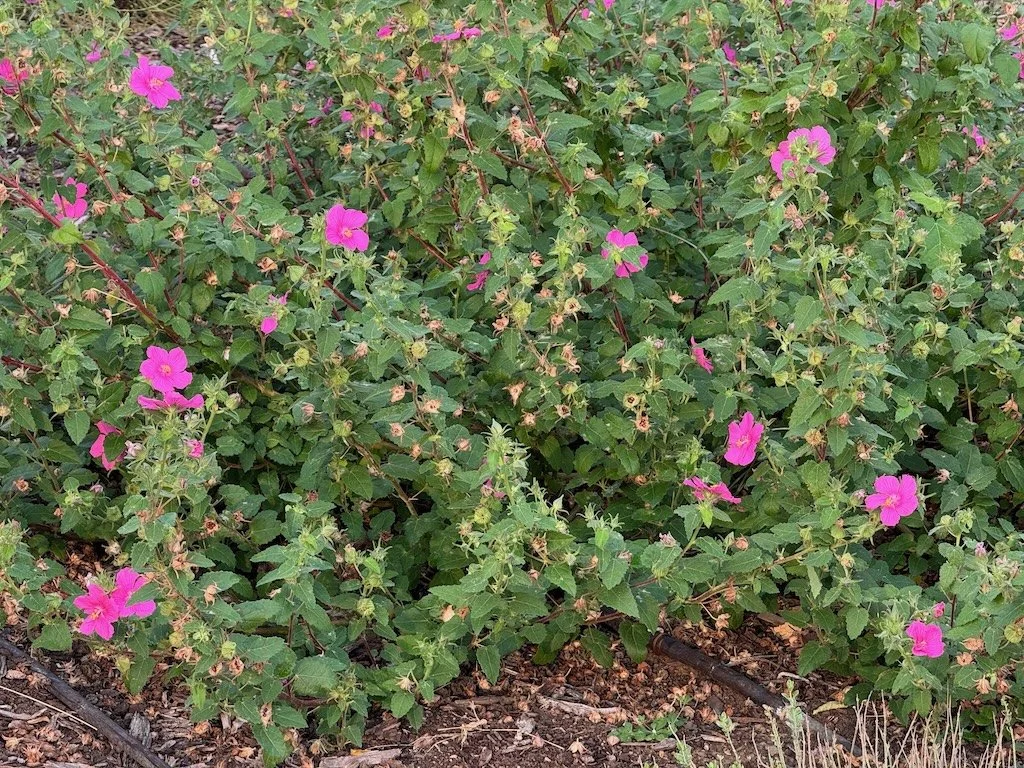
There didn’t seem to be very many birds around, so I started my visit at the pocket prairie. The trash cans looked freshly painted, and the gardens looked like they had been recently weeded (piles of vegetation waiting to be picked up). Some of the flowers had gone to seed but that is normal for August. There were marshmallows that were surviving in the rain garden area. The sunflowers dominate but I was glad to see Texas rock rose among the plantings.

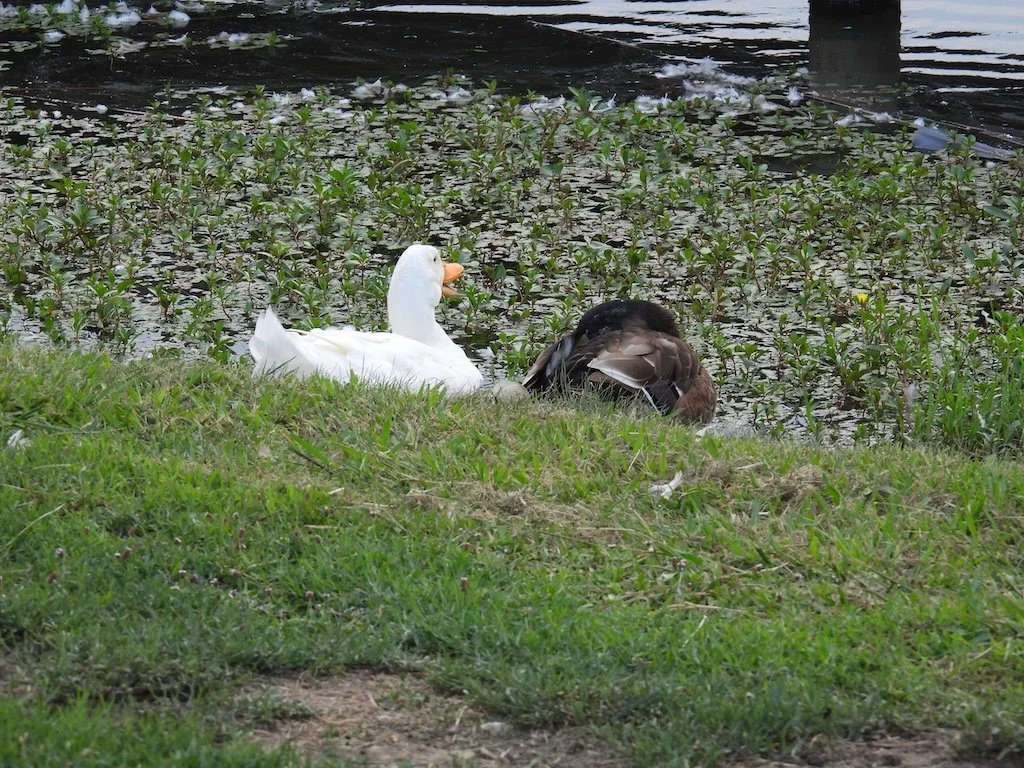
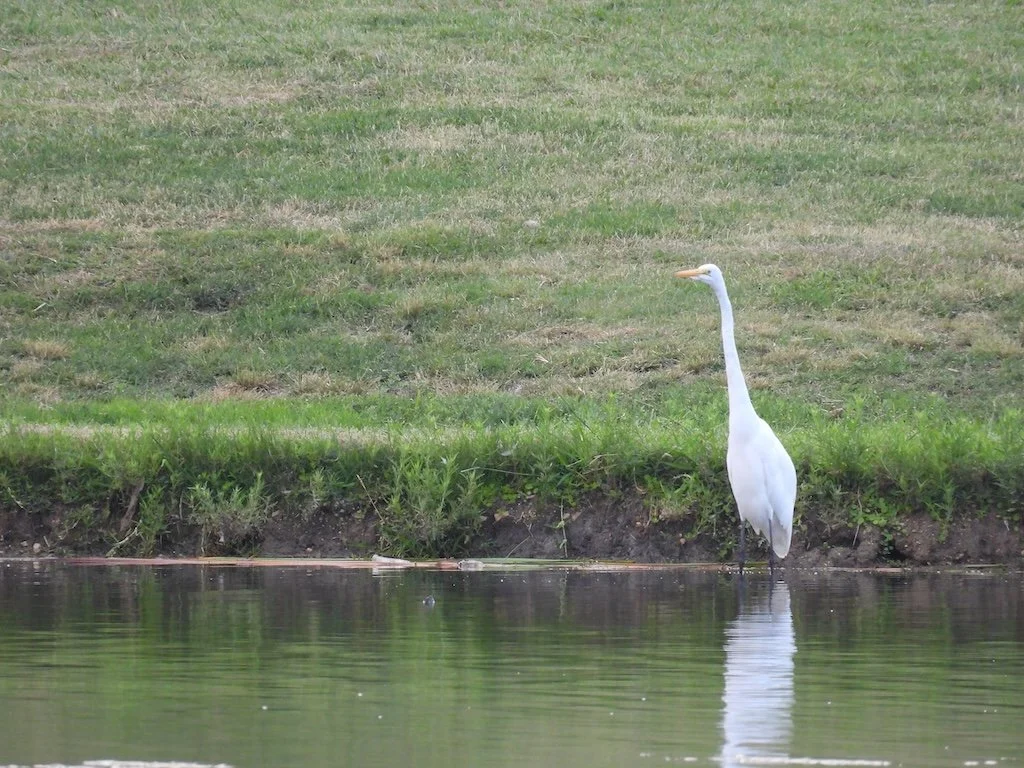
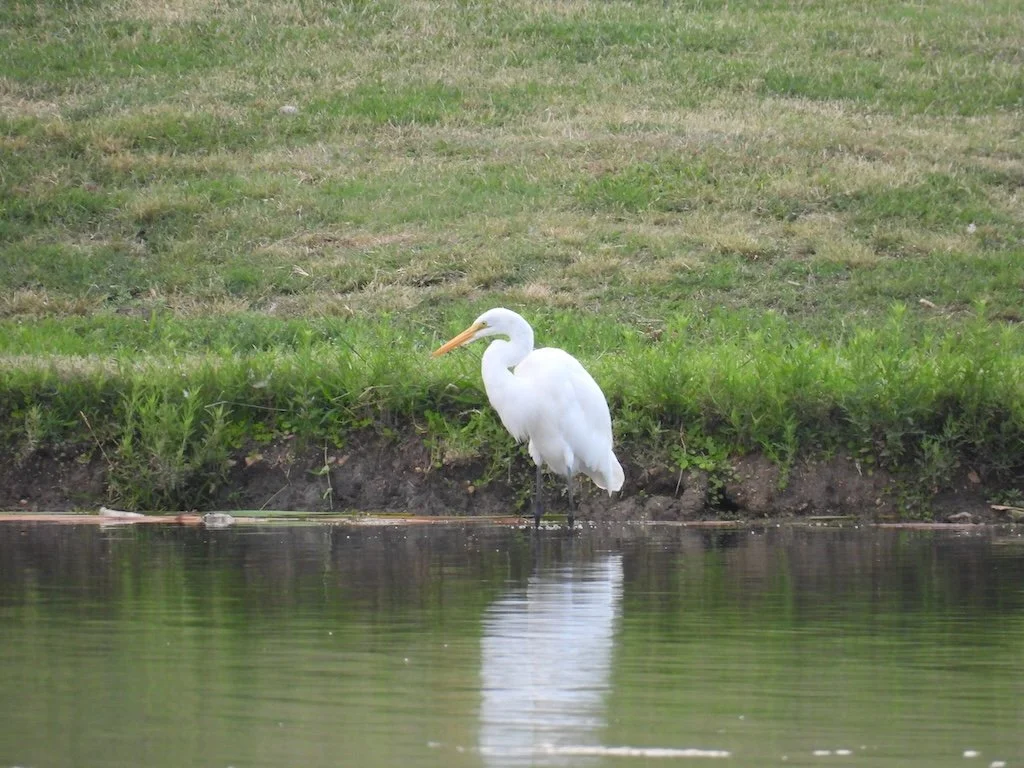
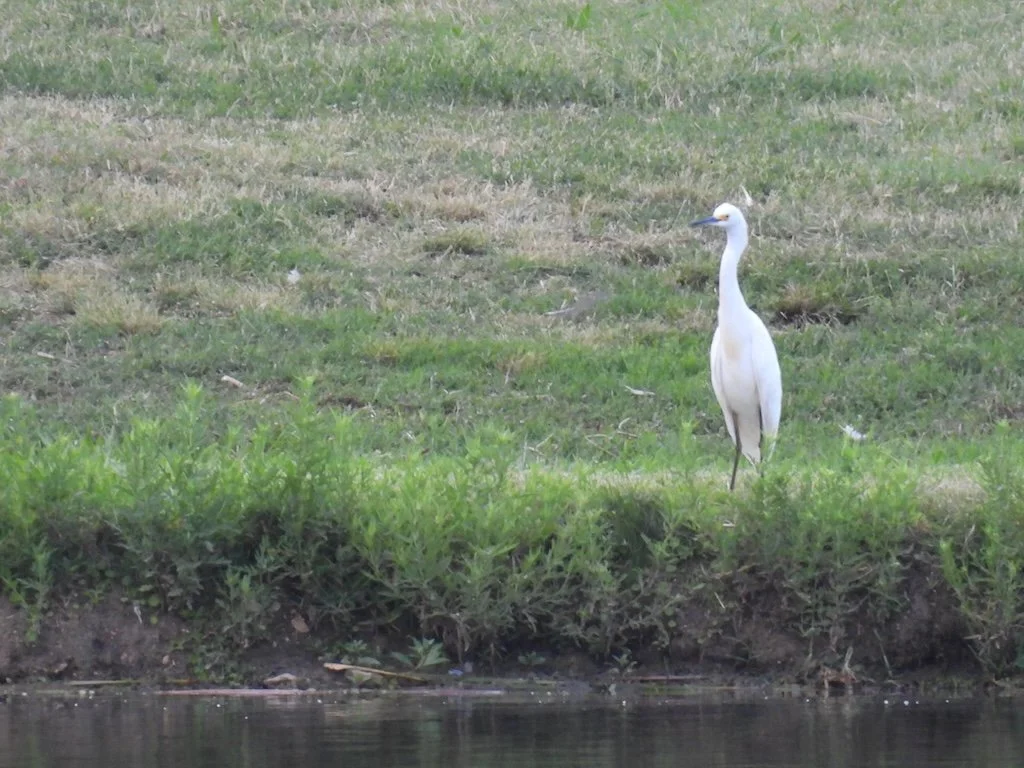
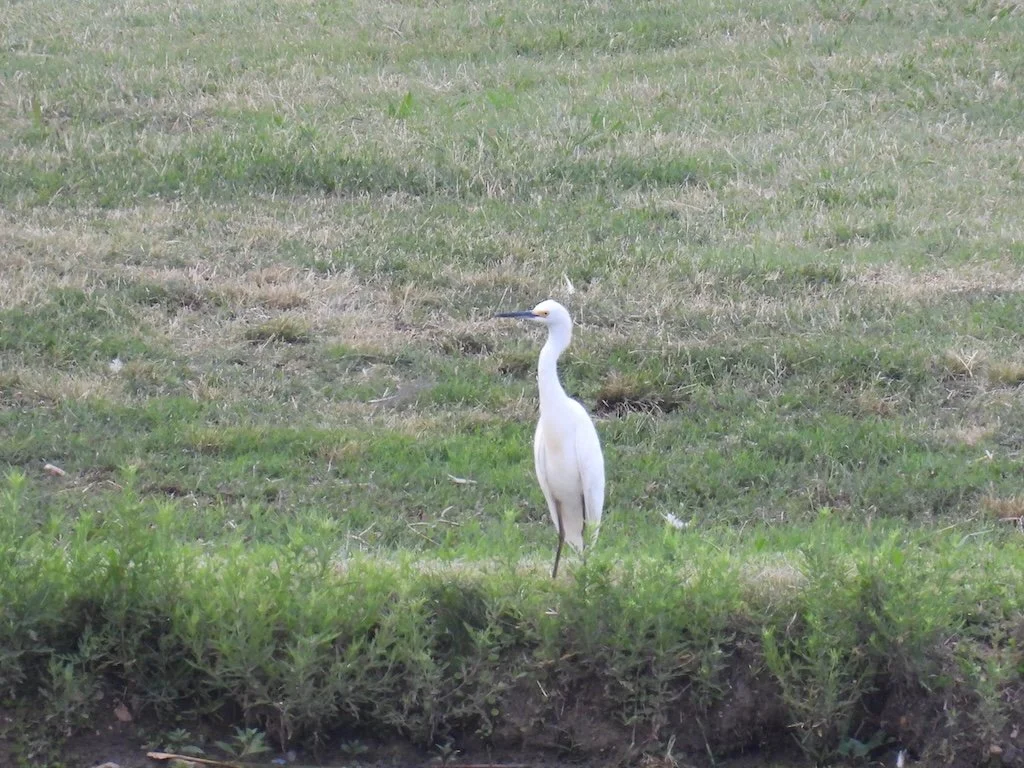
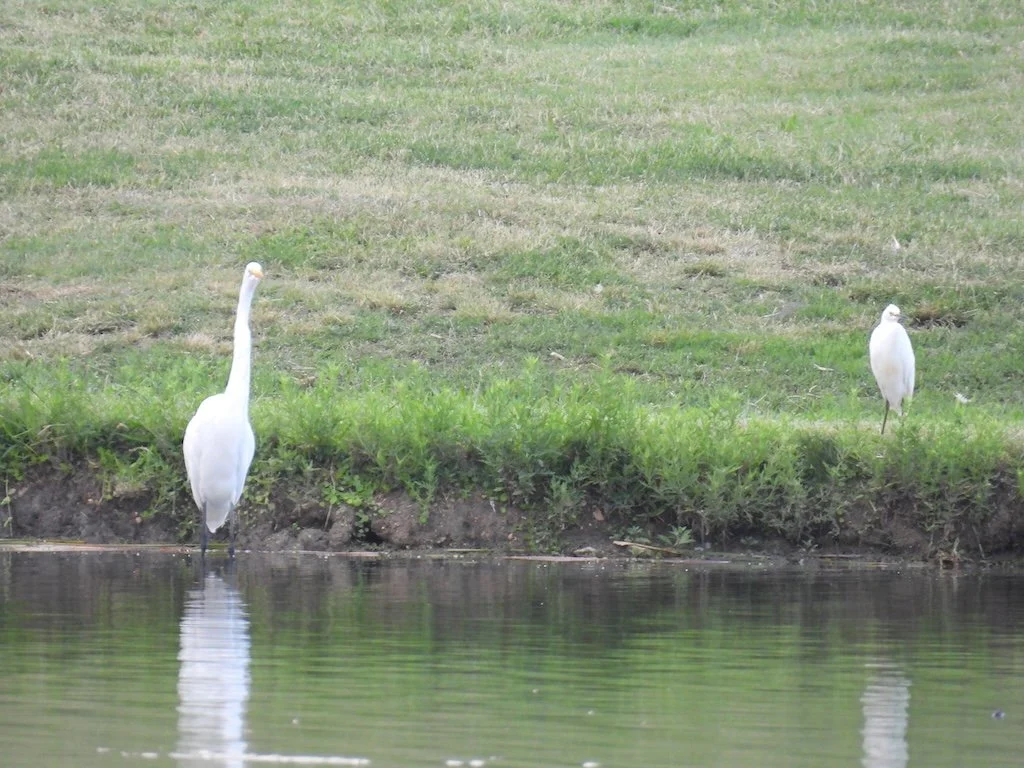
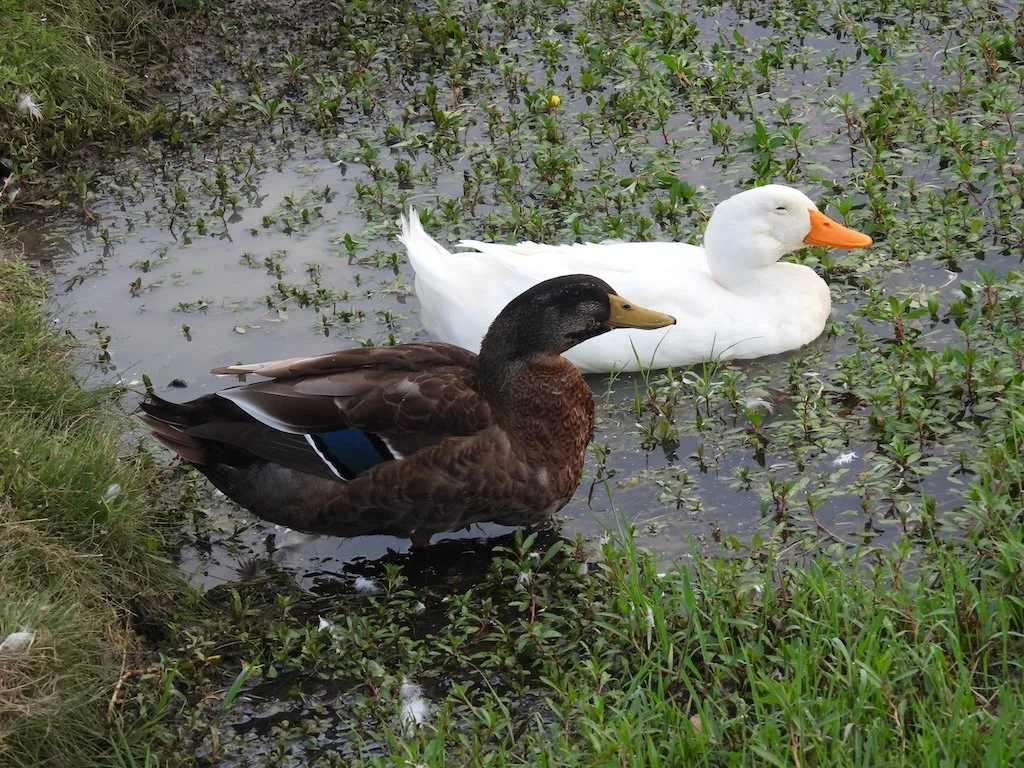
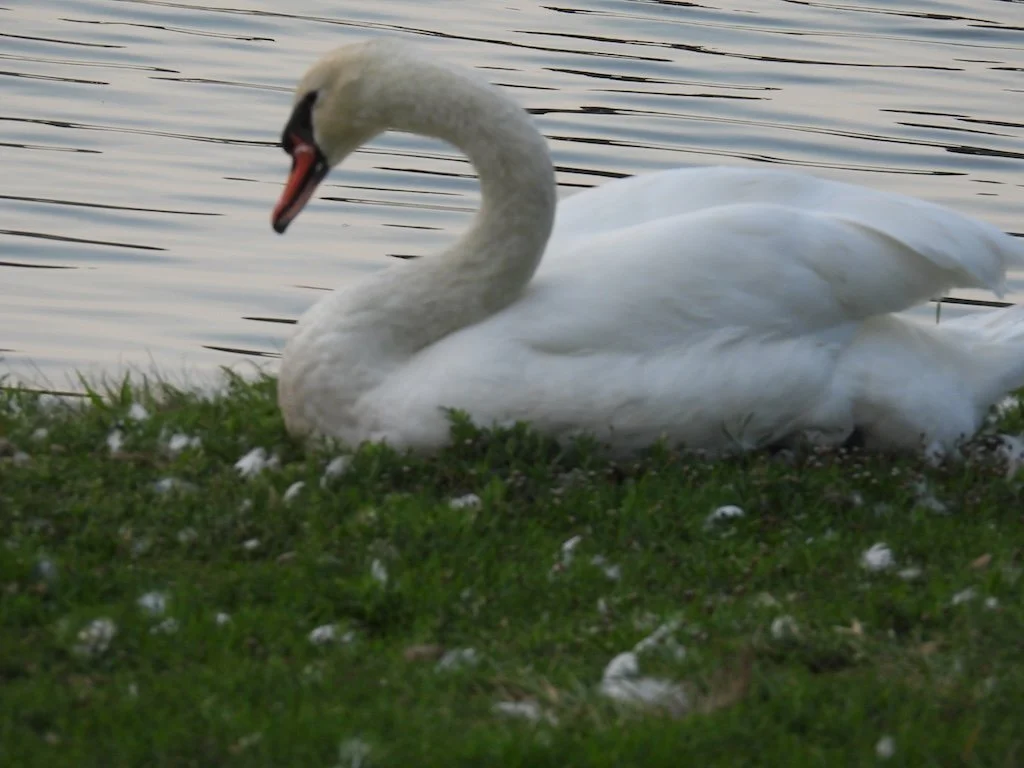
I went back to look at the lake and realized that there were not many grackles (I heard several…only saw one)…pigeons were about as numerous as always…only two ducks and one was a white domestic duck. The only birds I saw in the pond were one great egret and one snowy egret. The two swans were still there. Evidently there were a lot of geese there recently judging from the goose poop on the sidewalks. It was depressing that there weren’t more birds around and I wondered what happened.

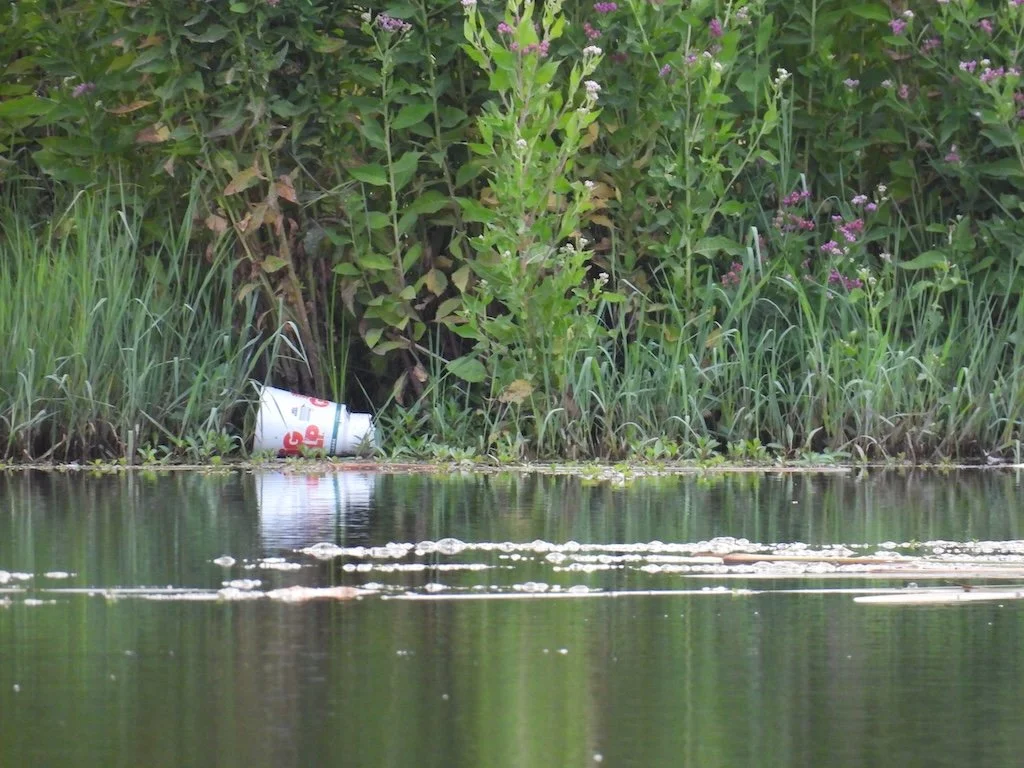
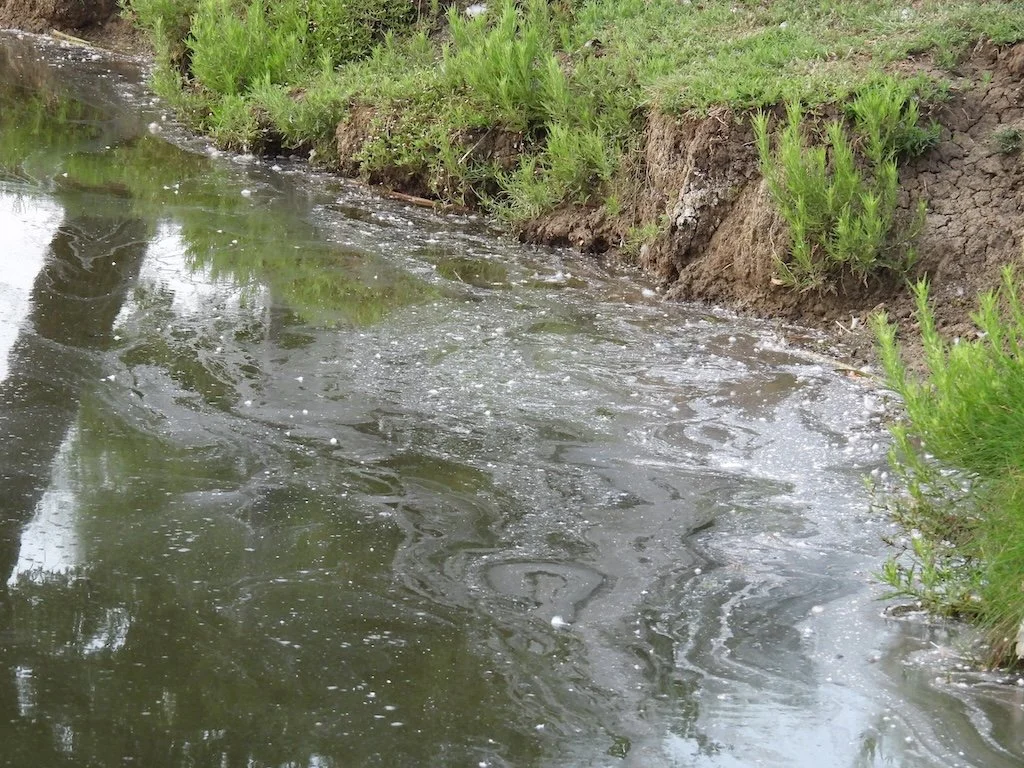
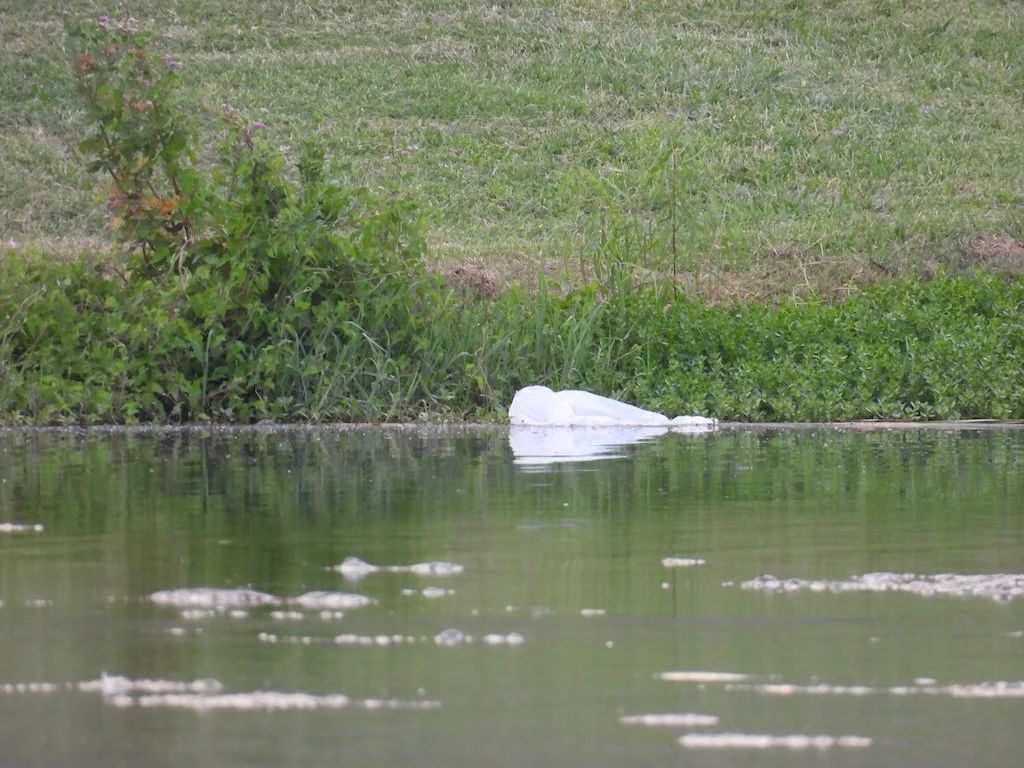
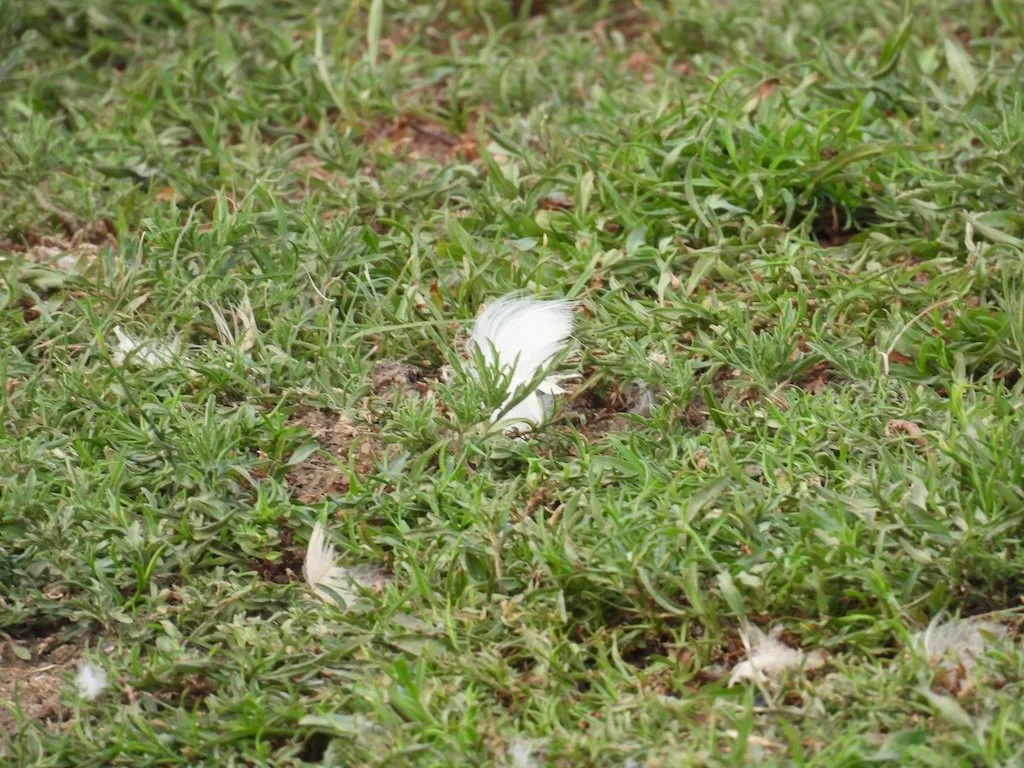
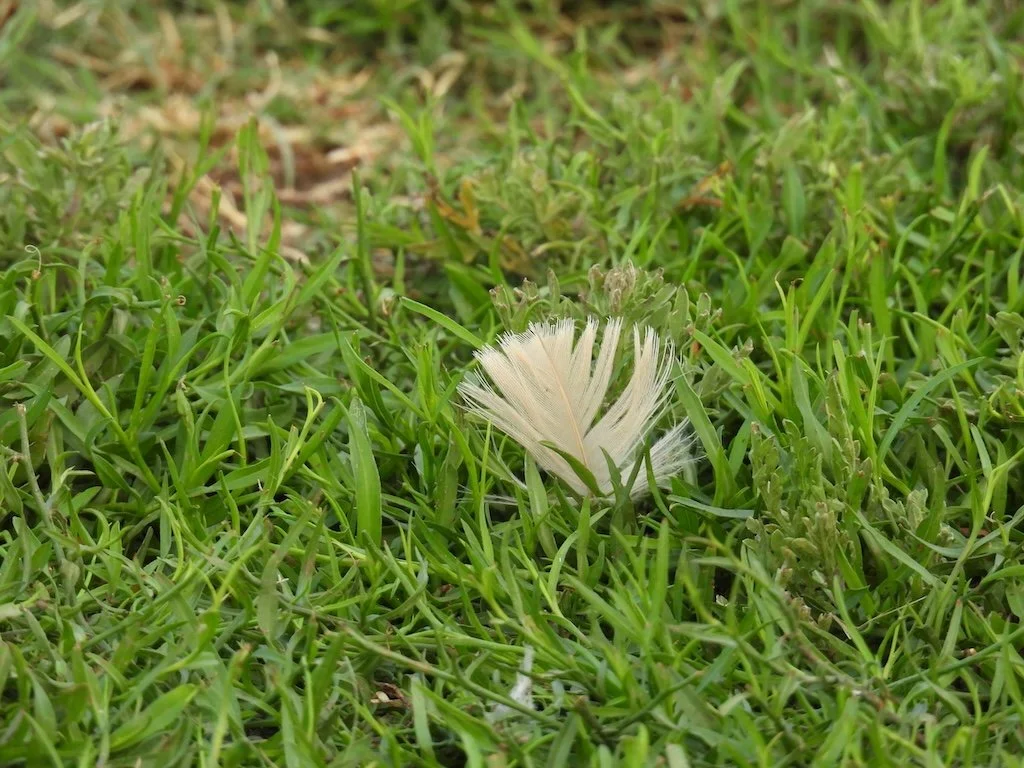
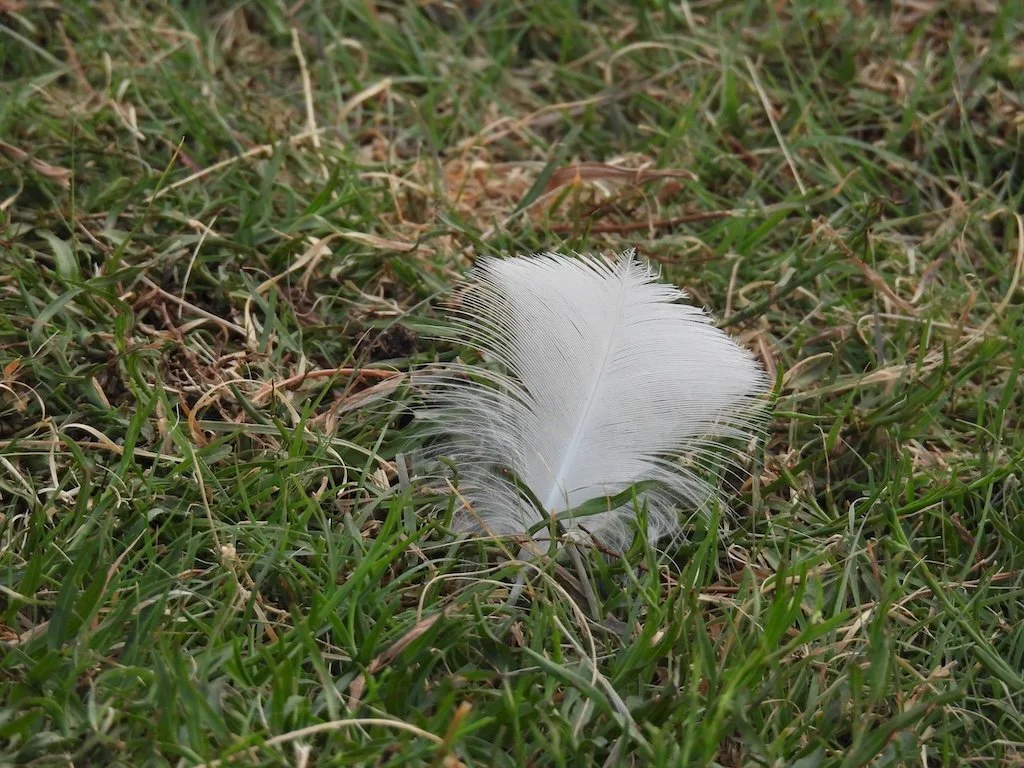
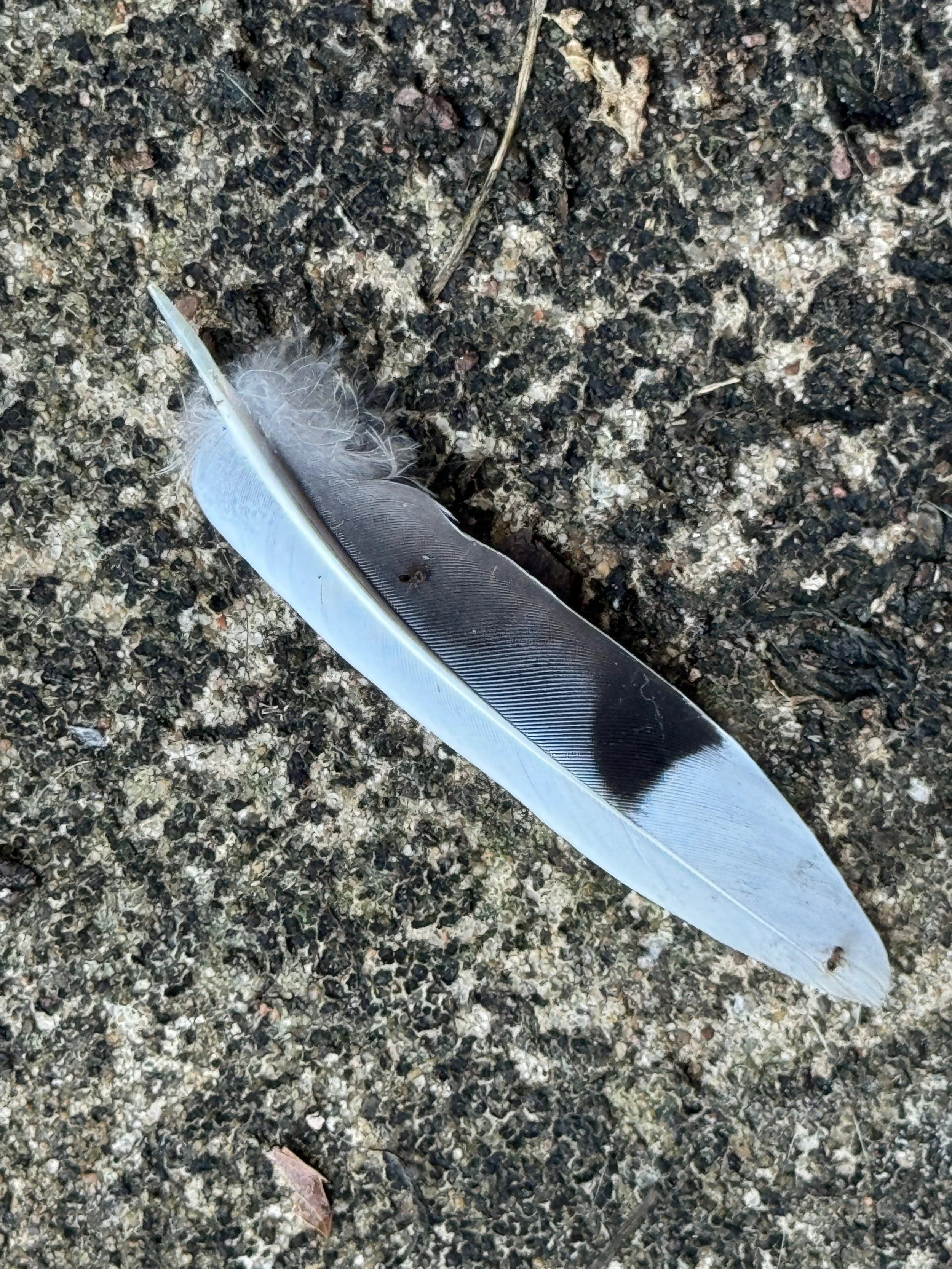
I noticed more trash in the water – a foam cup, plastic bags, and sheen on the water near the shore. Is there more pollution in the pond now? I saw one turtle snout from a distance. Overall, the pond does not look as healthy as it was a few years ago. I took a few pictures of feathers in the grass.

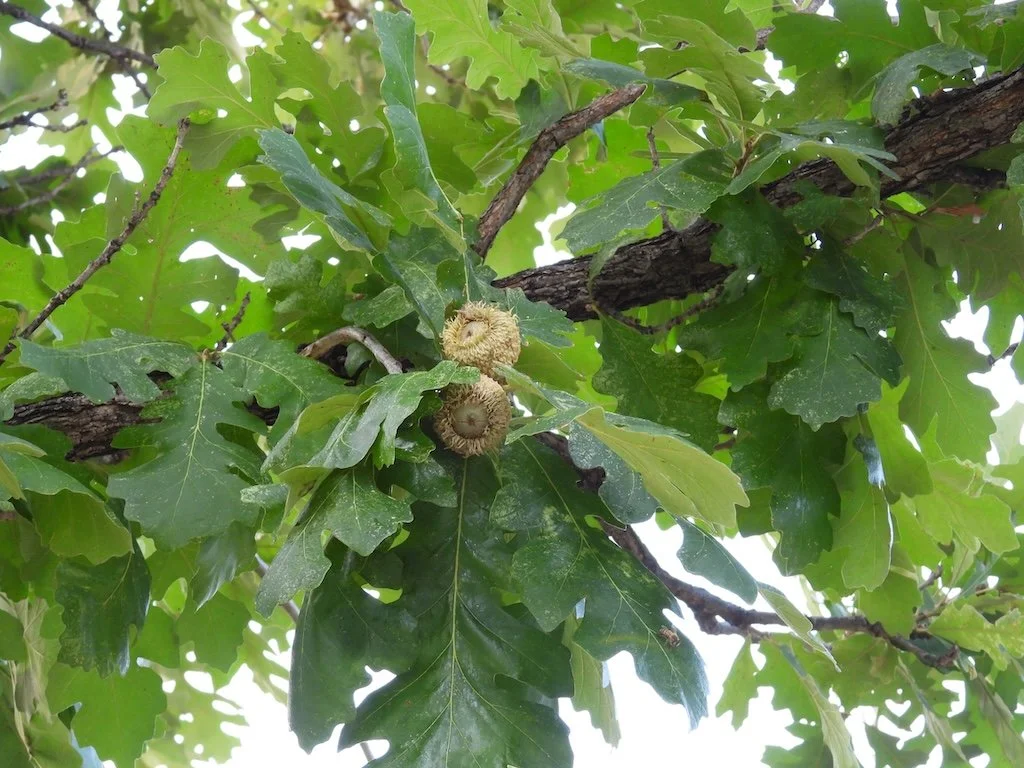
As I walked to the plantings between the library and senior center, I noticed a tree that was planted in memory of someone. It was about 6 feet from the sidewalk….a Bur Oak! I was surprised that it was planted so close to the sidewalk…maybe the climate in Texas will cause it to not get as big as Bur Oaks usually grow.

I looked for the beautyberry that seemed to thrive previously in that area, but they were gone. One of the new plants was a rock rose. The morning was warming up but I didn’t see many insects.

It was a little depressing that the wildlife that used to be around the area seems to be reduced. Maybe I was there at an odd time….I’ll try to look again later this year when the birds that typically winter in Texas might be around.

Spring Yard Work

There is always a lot to do in our yard after the winter months. Right now - mowing and cleaning up beds is not on my list. The temperature lows have not gotten reliably above 50 for enough days that the insects have emerged, so I am concentrating on all the rest – and enjoying some early blooms. The violets in the front (south) beds bloomed a couple of days before the ones on east side of the house.

The chive seeds I planted winter before last are now clumps of chives along the edge of the east facing bed as well. The seeds were from my mother’s garden. I’ll keep propagating them until they outline the bed. Maybe someday I will take out the metal edging completely. I like the way look and that, as soon as they are well established, they make excellent additions to salads. They are also a good reminder of my mother’s life and garden.

In the front flower bed, the space I cleared of rocks for the hens and chicks is overflowing with plants. Clearing more of the rocks (and the landscaping cloth underneath it) so that the group can expand further is on my list!

I picked up small branches around our yard – mostly from our neighbor’s river birch which is a prolific self-pruner. I piled them on the patio and made bundles of them to easily feed into our chiminea and

Waited for a calm day to burn them. I got about half of them burned before I felt thoroughly smoked and saved the rest for another day!

The highest priority task now is to remove rocks from around the hostas sprouting in the flowerbeds (some in places that are now under bushes), dig out the clump and divide them for transplanting into an area between a pine tree and the flower bed surrounding the patio. The area has been thoroughly mulched and is ready for them. I’ll not disturb the crocus bulbs that have multiplied there and have already finished blooming this season.

A challenge: the oak pollen is high and I am allergic. I’ll either wait a few days or wear a mask when I work on the hostas…or maybe I’ll be delayed by some spring showers.

Valley Water Mill Park

I finally managed to walk the trail around Valley Water Mill Lake just before Thanksgiving. It was my 3rd time at the park; the first time was with my Identifying Woody Plants class and the 2nd was on a very rainy day to learn about what kind of volunteers they needed. This 3rd time was on a dry but cloudy day in the 40s. Most of the fall color was gone but there was still plenty to see. I was a little rushed because my husband was using the hike for exercise while I wanted to slow down and take pictures!

The honey locust (Gleditsia triacanthos) pods were frequently on the trail….and it was easy to spot the trees with thorns!

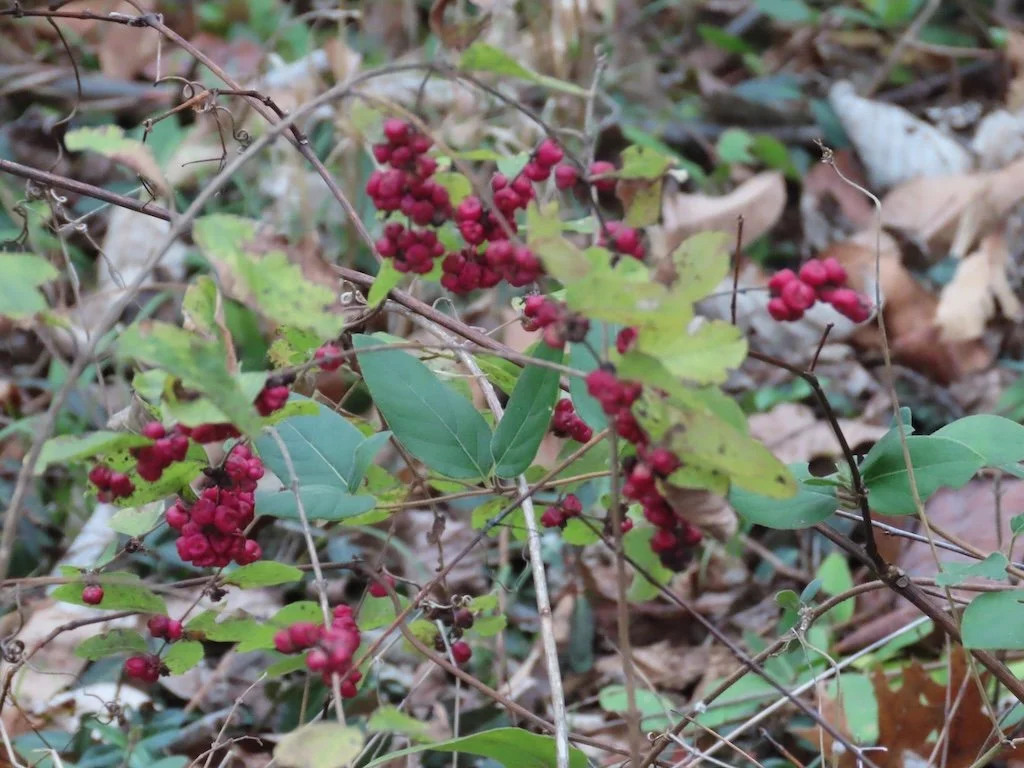
The coralberry (Symphoricarpos orbiculatus) was still beautiful along the trail. The berries require some freeze-thaw cycles to become palatable to birds.

The other color in understory was burning bush (Euonymus alatus)– a non-native invasive that is popular in landscaping. I looked at the stems to be sure that is what it was….they have corky wings. There is also wintercreeper (Euonymus fortune) in the park. Both are very difficult to eradicate.

I was on the lookout for fungus too but was rushed enough to see only the most obvious. There was a cut end of a log that has shelf fungus around the outer edge…and some that looked a lot like meringue on another.

Most of the oak leaves were brown and crackly…an occasional one still colorful.

There were a lot of leaves on the ground. Most of the time the trail has been swept clear by the wind but there were drifts of leaves everywhere.

I photographed two exposed roots. One that was close to the trail and displaying the impact of being stepped on. The other looked more like the soil has been eroded from the base of the tree – maybe during a flood; the tree was not that far from the riverbank.

Next time I go to Valley Water Mill I want to plan to spend a bit longer….explore a bit more thoroughly!

Our Missouri Yard Before the Killing Frost

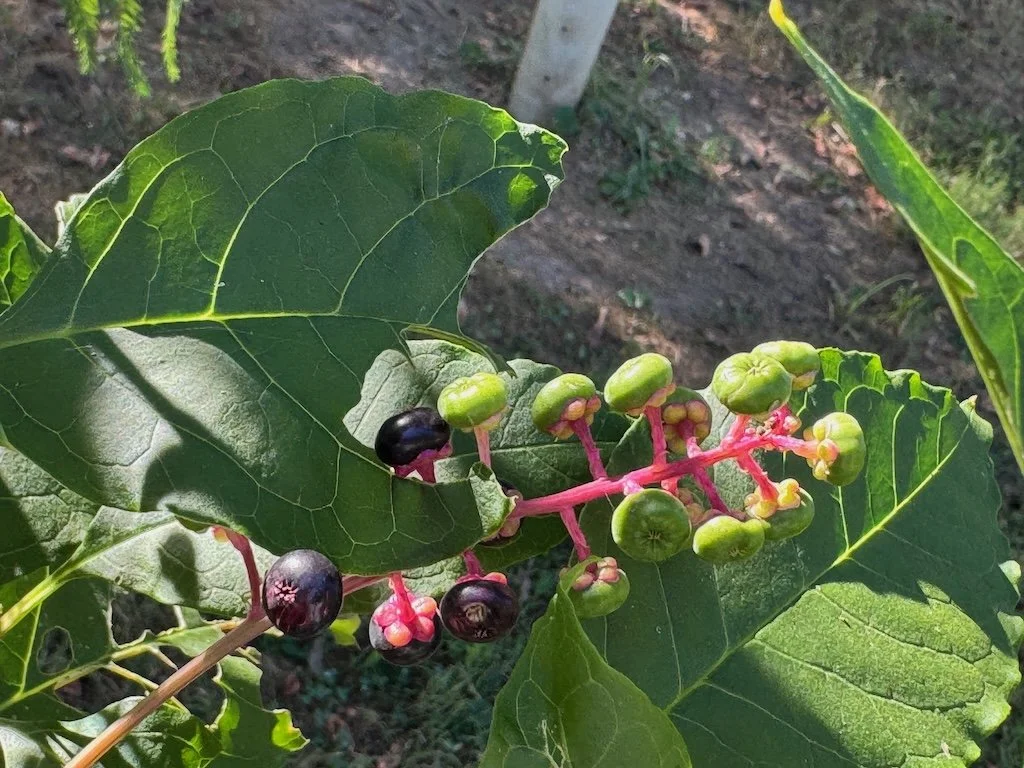
I walked around our yard before the killing frost last week…to capture the colors of late fall. There is not much to do in the yard right now. I am following the ‘leave the leaves’ strategy. The winds swept away most of the leaves in the front yard but there are two drift areas in the back which may thin the grass. I don’t mind at all if that happens. I’ll plant black-eyed susans, cone flowers, golden rod, asters, bee balm, golden alexander, etc. I am inclined to let the pokeweed grow at will since I have seen mockingbirds eat the berries this fall.

There were still a few dandelions in bloom….and insects. The morning I walked around was in the 40s so the insects were not moving very fast.

Of course there was lots of color…including aromatic sumac, a young maple, our Kousa dogwood…as well as other plants that are probably not native.

The seeds of the chives are easily falling out of their husk. The pods on the crape myrtle will probably freeze before the can mature; the plants have died back to the ground every year we have lived in Missouri so far. The big buds on the rhododendron look great and will likely make it through the winter to bloom next spring.

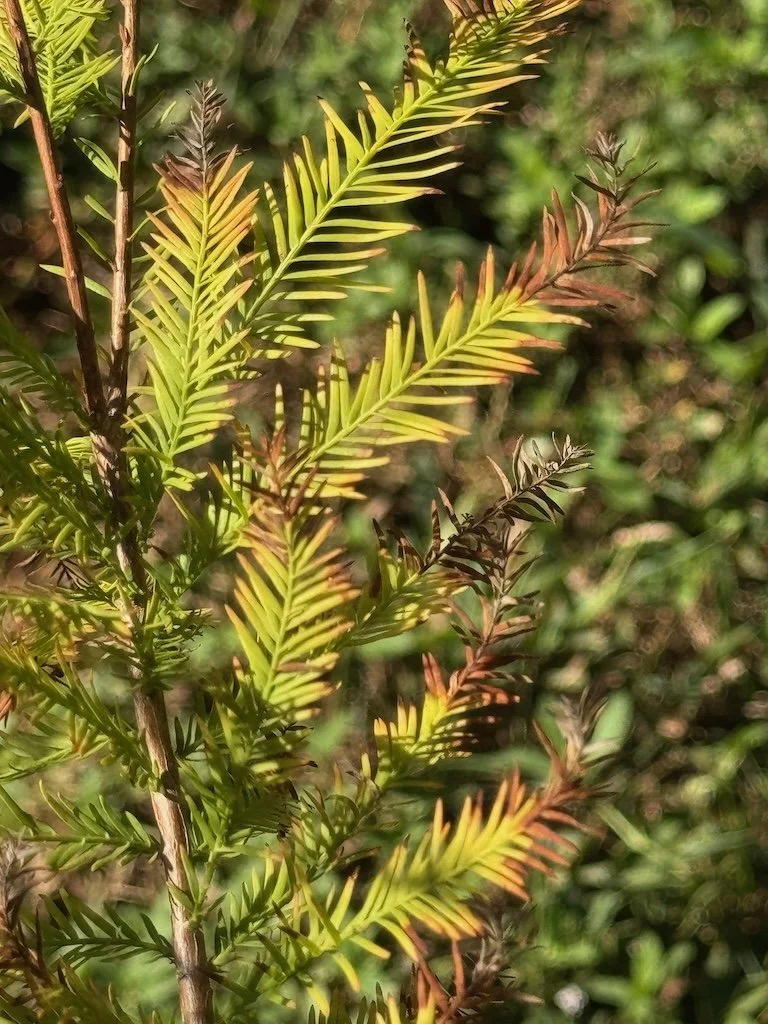
Both the Eastern White Pine and Short Leaf Pines are doing well in our back yard – pokeweed growing underneath them. There is also a small Eastern Redcedar that has come up in my wildflower bed; I’m thinking about where to move it next spring…maybe to the area where I planted a button bush…which a squirrel promptly clipped to the ground.

My husband got the barn swallow nests removed from under our deck. We succeeded in not letting them build a nest on the brick of our house last summer…but they found a place on the deck supports and we didn’t notice soon enough.

Our maples in the front yard have lost their leaves. Our neighbor’s river birch has also lost its leaves and it looks like there is a squirrels nest in the tree. The oak in our neighbor’s yard (a pin oak) still has a lot of leaves but seemingly has dropped a lot as well; most of the leaves in our back yard are from that tree.

Even though the drought of the summer made the fall not as brilliantly colored, fall lingered lingered…and the transition to winter was worth noticing.

Zooming – November 2024

The zooming images for November are mostly a celebration of fall in our area of Missouri. There are a few animals in the group that could have happened at other times – a robin bathing in a stream, a grackle at our feeder, and a small red-eared slider in our neighborhood pond.

Can you find the poison ivy seeds (hint…they are white), the glorious fall Virginia creeper, a chestnut husk, 4 kinds of oak, and a maple?

I enjoyed searching out little bits of nature to photograph…fill frame…using my camera to ‘see’ better than I do with just my eyes. My camera’s optics are the great enabler!

Our Missouri Yard – November 2024

We haven’t had any extremely cold weather yet. Some trees have lost their leaves but not the oaks. We already are well above the monthly average for rainfall so are recovering somewhat from the drought through the summer and fall…just as we are bracing for winter.

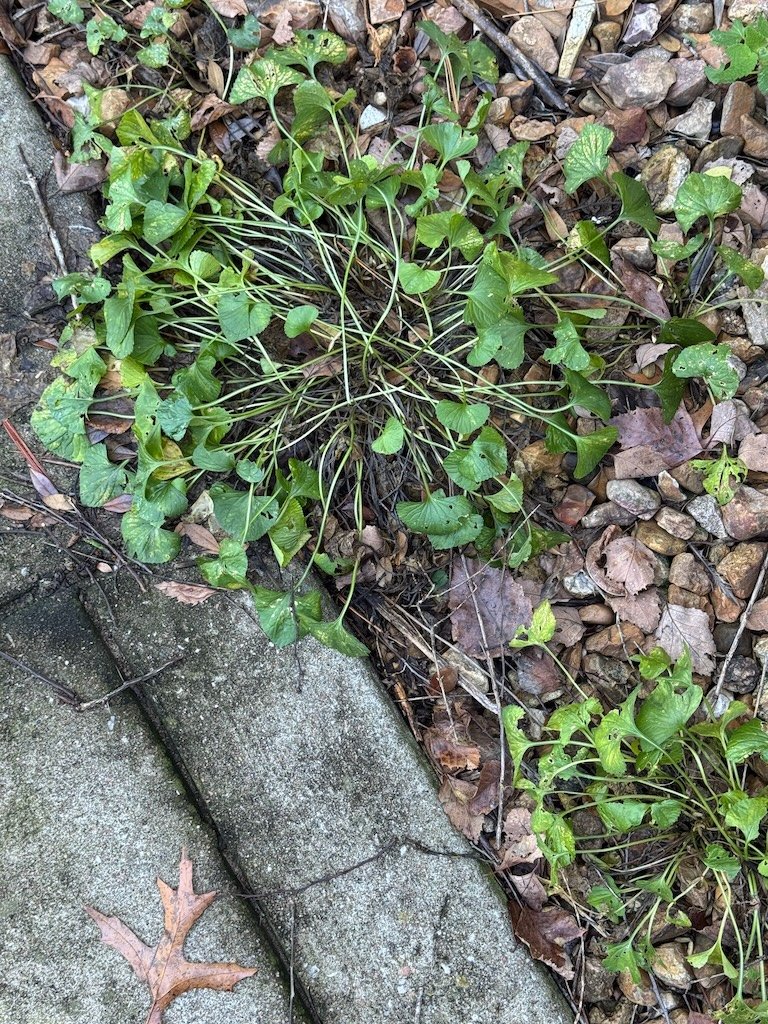
The violets are reduced in volume but still mostly green. They have been a great plant for extending the flower beds on the east side of our house into the yard (I have several feet of ‘grass’ that is so thick with violets that I haven’t mowed it for at least two months!).

I have an area that is full of pine needles and clippings (grass, boxwood, yew) that I will plant with hostas next spring – as soon as my established clumps of hostas begin to sprout and can be easily divided. The rhododendron looks great…lots of buds for next spring’s blooms. The grapevine that I’ve draped over the stubble of a crape myrtle is turning yellow. I’m not sure what I will do with it next year. I don’t want it growing into the rhododendron but there is not a lot of space where it can go otherwise.

The seeds are falling out of the chives. These plants were started a few years ago from seeds I got from my mother’s garden. There is an oak seedling growing in the lambs ear. The closest oak tree is a pin oak, but the squirrels might plant acorns from further afield. The parent of a maple seedling might be one of the maples in our front yard…although it is on the other side of the house from where this seedling is growing.

The spicebush that I bought and planted about a month ago is showing some fall color…hope it comes back in the spring.

It is obvious we haven’t had a hard freeze yet this year. There are ‘intimate landscapes’ with fall colors everywhere.

I am trying to ‘leave the leaves’ this year rather than mow them. There were two piles that had been created by the wind in my front yard so I gathered them up into the wheelbarrow to move to my compost spot where the hostas will go. Otherwise I am leaving the scattering of leaves on the yard. I might have to move some oak leaves that fall into our yard once our neighbor’s tree drops its leaves. Overall, the wind had done most of the ‘raking’ of leaves either away from my yard or into areas where they can stay.

The Virginia creeper on the west side of the house has already lost its leaves but the plants near our front door are spectacularly red.

The aromatic sumac has lots of buds. I hope it makes seed clusters next season.

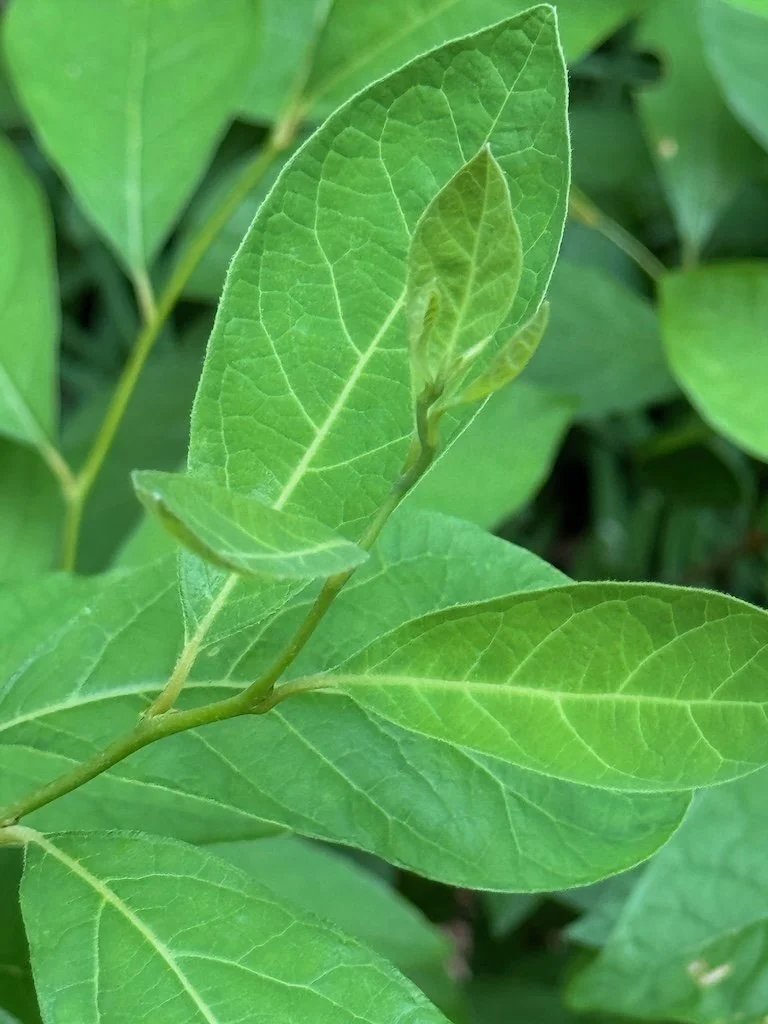
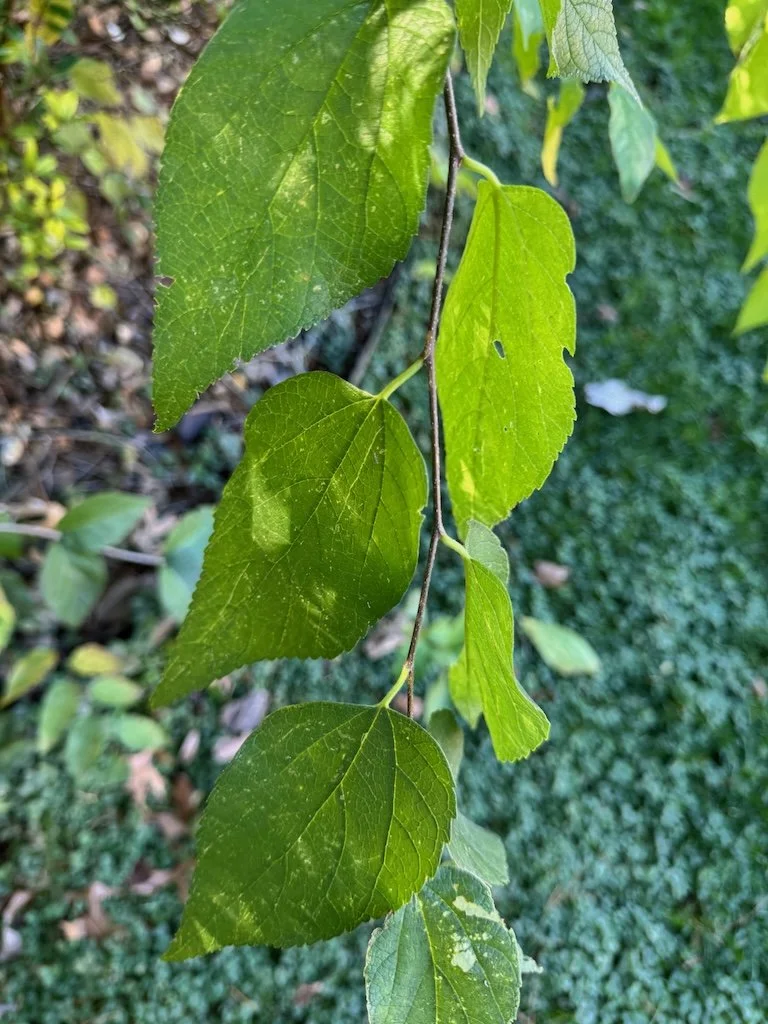
The Ozark witch hazel is probably too small to bloom in January but hopefully it will in a few years. I found a small tree growing under the holly trees. The leaves are rough…maybe a hackberry? I am going to leave it be for now…just as I am all the redbud seedlings!

I still have work to do before it gets too cold: pulling/digging out Japanese honeysuckle primarily.

Sprouting an Acorn

I picked up some acorns back in September – pin oak (neighbor’s oak) and white oak (from Identifying Wood Plants field trip). Some of each were wrapped in damp paper towels to sprout. Only one sprouted! It was a white oak which was not too surprising since they are known for sprouting in the fall (didn’t learn this until I had the acorns in the damp paper towels).

The sprouted acorn is now in a modified soft drink bottle with some soil…in the window of my office. The pictures below show the young white oak over the past 7 days.

The plan is to keep it indoors through the winter and plant it outdoors after the last frost next spring. It could be the only white oak in the neighborhood!

Identifying Woody Plants (Month 2)

The Identifying Woody Plants field class I am taking at Missouri State University has met 5 more times since my last post about the field sessions on the campus.

I am continuing to take pictures of items in the classroom before class:

An opened Maclura pomifera (Osage orange) fruit

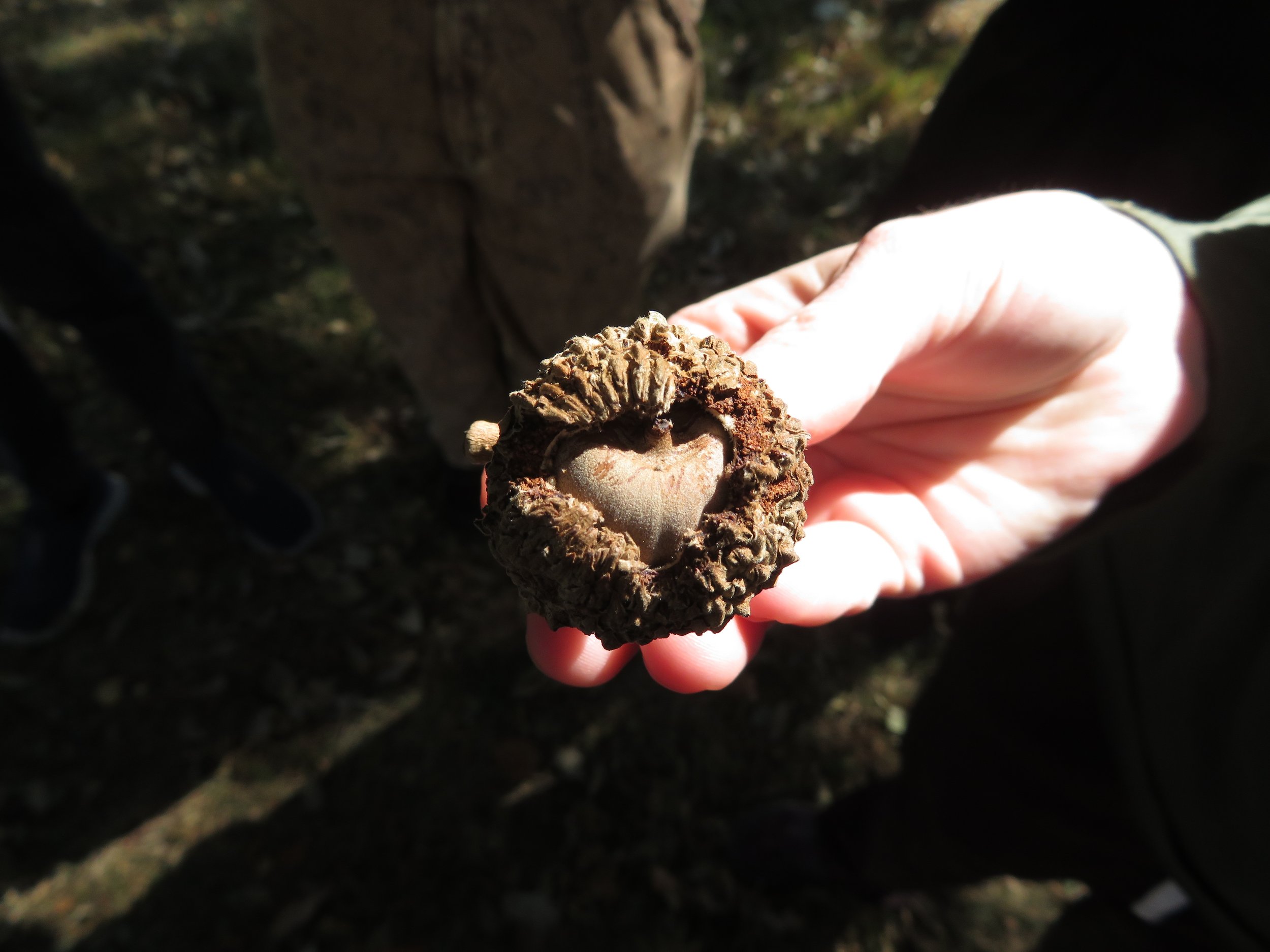
Some Quercus macrocarpa (Bur oak) acorns

An herbarium page showing Tilia americana (American Basswood) fruit which we have seen in the field, but my pictures were not very good.

Cuttings from two plants were brought in and we were asked to ID them based on our notes – with the hint that the first one had milky sap (hard to see since it had been cut):

Morus alba (white mulberry) – a non-native that is frequently seen as a ‘weed’ tree and Vitis (grape).

Recently the walk from the parking lot to the classroom building has been full of late blooming pollinator plants and fall foliage.

The one session where we stayed on campus added some new trees to our list:

Quercus bicolor (Swamp white oak)

Sassafras albidum (Sassafras)

Carya ovata (Shagbark hickory)

Quercus lyrata (Overcup oak)

We also saw some review trees and I got better pictures of Celtis occidentalis bark (Rough hackberry)

And some add odd growth of a Liriodendron tulipifera (tulip/yellow poplar). The trunk of the tree was growing at a slant rather than straight upward and it had small branches coming out relatively close the ground.

The hikes on campus and further afield have been more pleasant this past month because the temperatures have been cooler. There have been no rainy days in the field either!

Previous posts about Identifying Woody Plants field class

Solar Eclipse – Part 1

We traveled from our home near Springfield MO to Poplar Bluff MO for the solar eclipse on April 8th. There was a flurry of activity on the day before the event to finalize our destination; the weather forecast was the key driver for us to choose Poplar Bluff (along with Whitely Park being a good location that was not included as part of the event planning by the city).

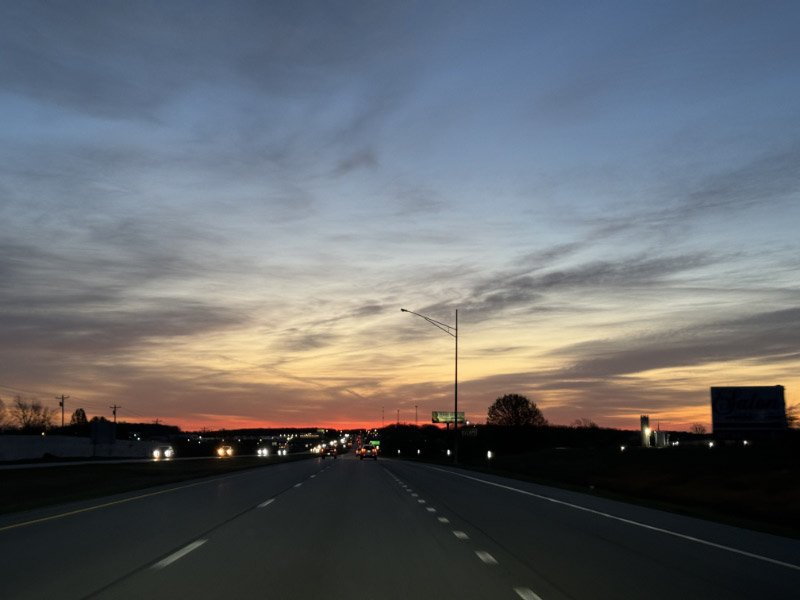
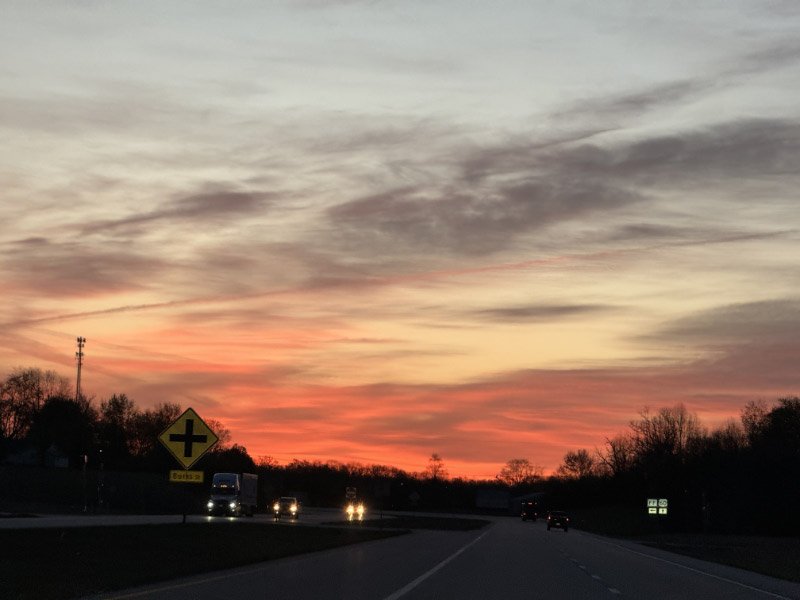
We left our house at 5:30 AM to pick up our daughter and son-in-law before heading east; it wasn’t long before sunrise. I took some pictures of it through the windshield of the car (my husband did all the driving).

We did not encounter any heavy traffic during our morning drive…got to the park 2 hours before the first contact…plenty of time for set up and looking around the park. We set up on an asphalt parking lot that never completely filled up so we spilled over onto the two spaces on either side of where we were parked next to a fenced soccer field.

I walked around to look at a few low growing plants…

And trees that were just beginning to leaf out. I realized that the trees did no have enough foliage to make projected crescent patterns onto the ground as happened when we were in Loup City, Nebraska for the August 2017 solar eclipse.

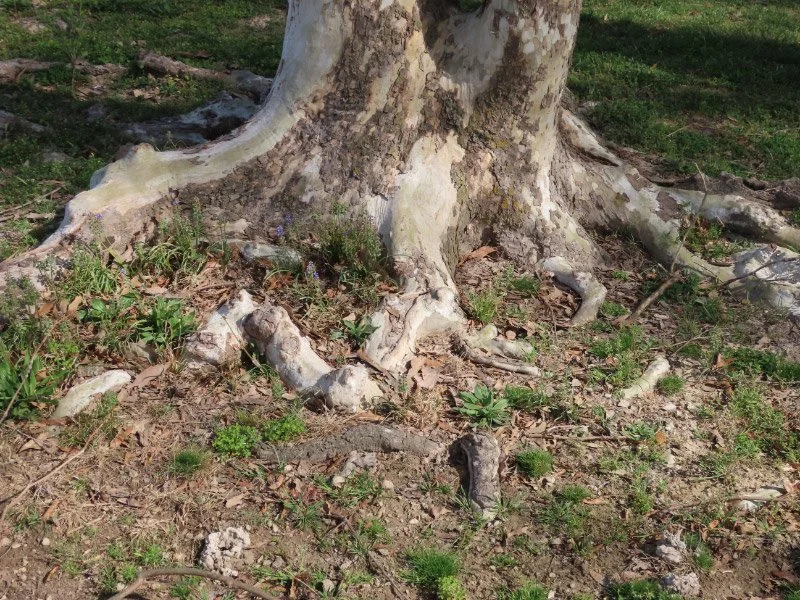
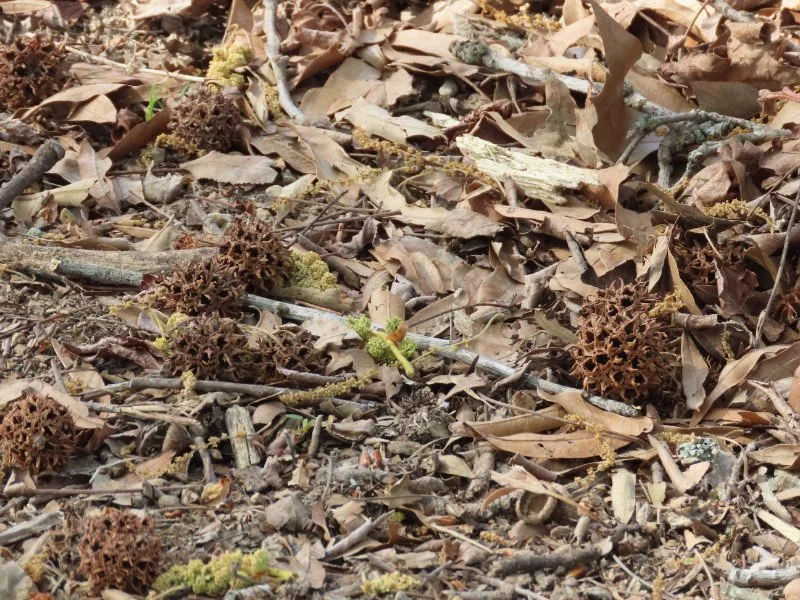
On the ground – I noted roots of a sycamore, seed pods of sweet gums (from last year and green ones from this year) and a clump of green (probably a weed) surrounded by brown thatch.

There were birds about:

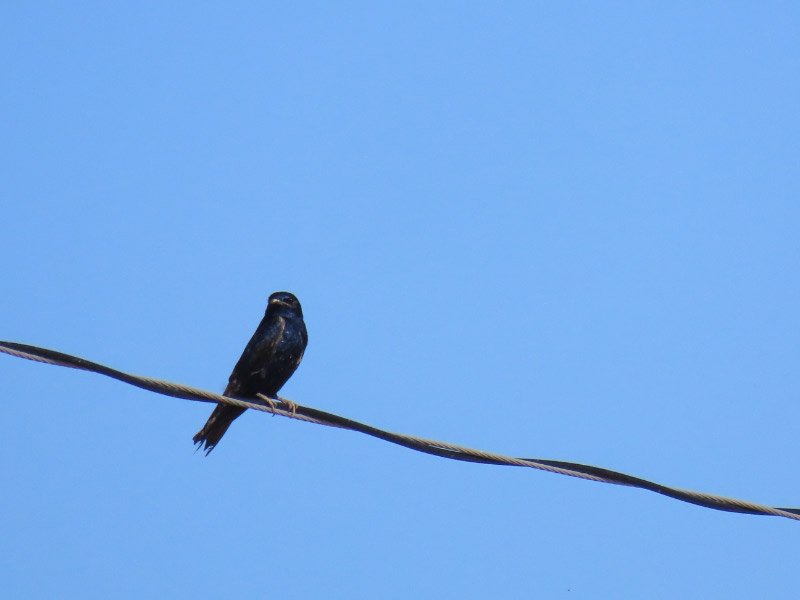
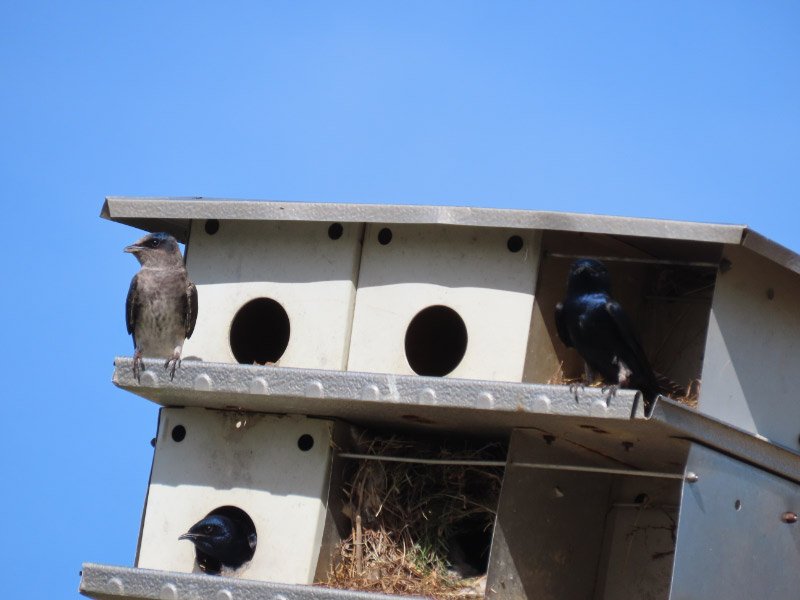
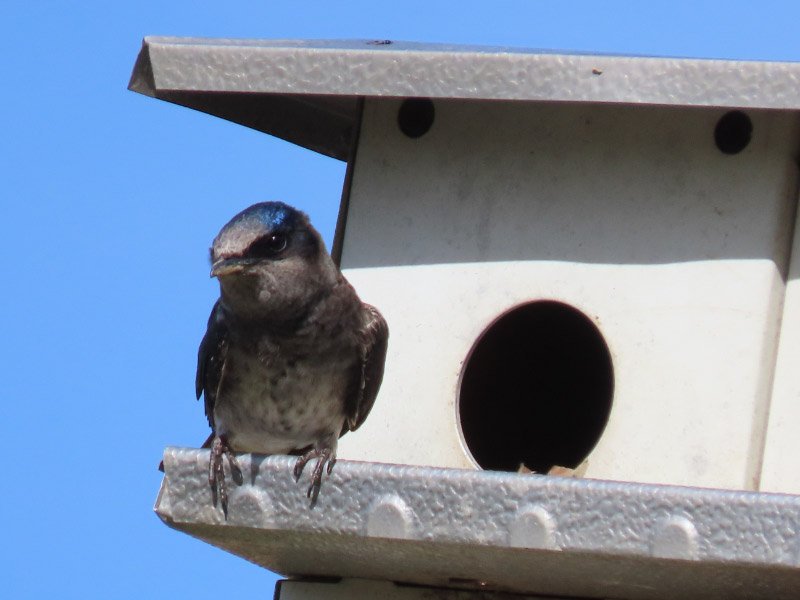
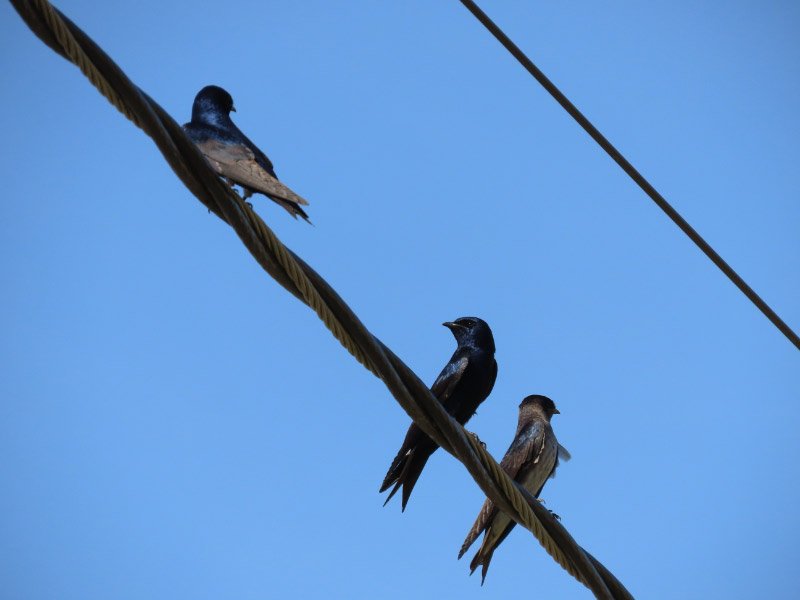
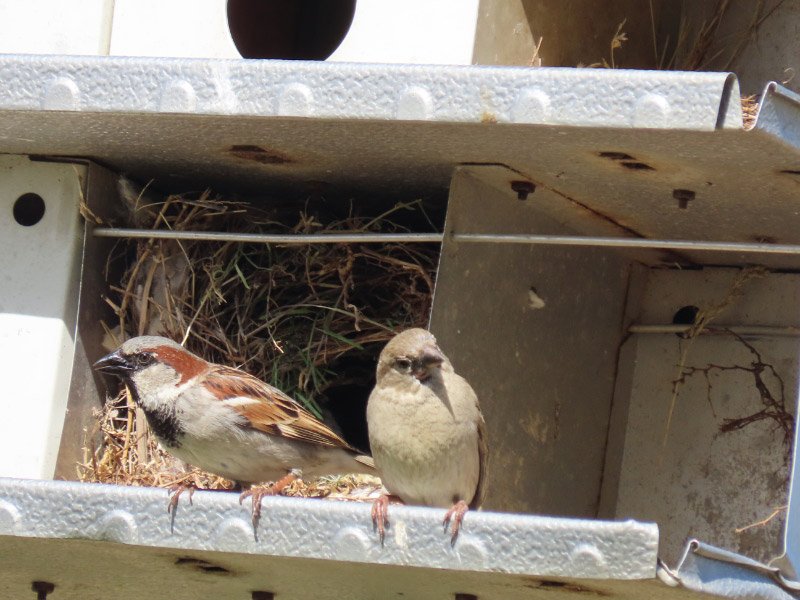
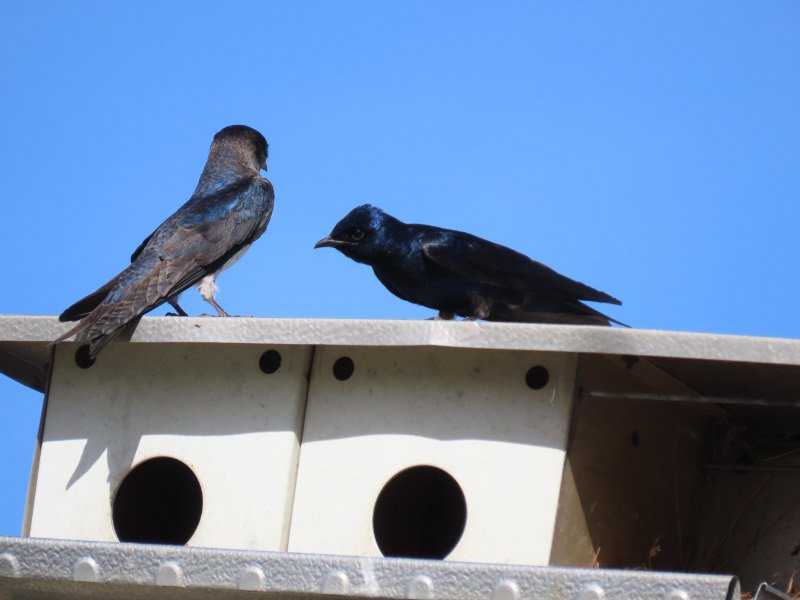
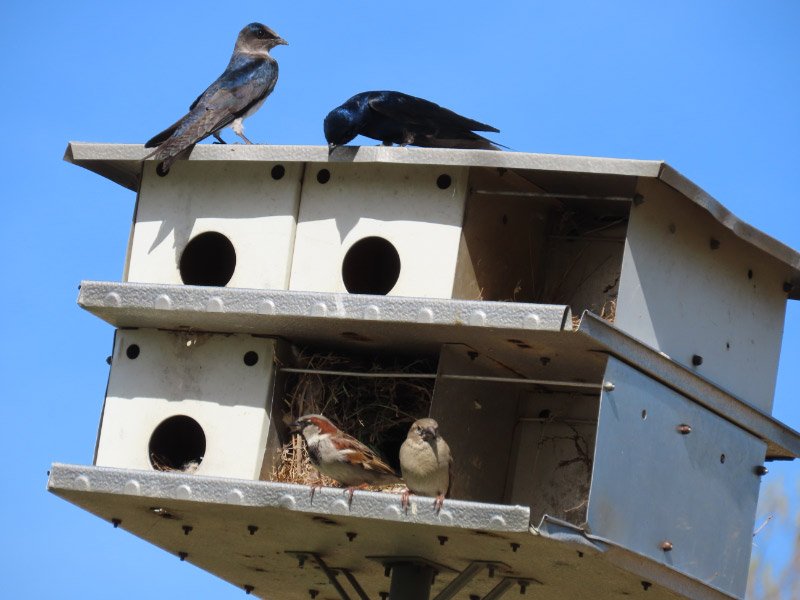
Two purple martin houses that were beginning to be populated. One had a pair of house sparrows too; I wondered how long it would take for the purple martins to evict them.

A starling in the grass – keeping an eye on the sky.

And a group of robins in a tree without leaves but lots of twigs that made it hard to get a good image.

I took most of my eclipse pictures with my bridge camera (Canon Powershot SX70 HX) on a tripod with a solar filter taped to the camera body to cover the lens until totality). I had eclipse glasses that I wore to look at the sun with my eyes and put over the camera on my iPhone to take one picture. I’ll post my eclipse pictures on Sunday along with some my husband took…stay tuned for that.

Our yard/yard work – March 2024

There is a lot going on in our yard this month. The bulbs I planted last year have thrived. The crocus bloomed first followed by the hyacinths and daffodils. The hyacinths don’t seem to bloom as well here as they did years ago in Maryland.

The forsythia bush in the corner of our yard is blooming profusely. I cut some to bring inside…and took some macro pictures of the flowers there. After the bush finishes blooming, I will trim it back significantly. I planted pawpaw seeds under it and I am hoping they come up…start my grove of pawpaw trees with the forsythia’s protection from the hottest parts of the summer days.

The fragrant sumac is blooming. I bought the young plant last spring after the bloom time so this is my first season to observe the small flowers.

The lambs’ ear is returning. The clumps that get more sun did not die back like the largest clump on the north side of the house. There are two in a sunny place that might merge over the summer.

The small hens and chicks are pretty with additional color forming on the tips of their leaves over the winter. There are still two chicks. I’ll be moving more rocks away from them so it will be easier for them to spread.

The vinca under one of our cedars is blooming. It seems to be well contained. I don’t want more of it!

I’ve planted more pollinator/butterfly garden seeds in two places: enlarging the existing wildflower garden and a sunny area under a pine tree where I cleared away most of the pine needles (it is sunnier there because I cut some low branches).

I’m not sure if the bulbs I planted from my parents’ garden are going to survive. They had to be planted in the winter…not the optimal time. Hopefully they will become established over this summer although I doubt they will bloom.

The mound where a pine tree used to be (it fell and had to be removed) is going to fill out nicely with irises and I planted a tiny oak there (I cut it from my flower bed last fall and put it in a vase to enjoy the fall color….it grew a root and put out green leaves! It will take years before it gets big enough to impact the bed but could eventually dominate the back yard!). The beautyberry that is there has not leafed out yet.

The hostas are beginning to emerge…in dense clumps. I decided to divide two clumps…since I have a shady place that I’d like to convert from grass.

I planted divided clumps (roots plus a furled leave or two) at the pine needle and flower bed boundaries with grass. I covered the grass with extra pine needles (from under the tree where I planted pollinator/butterfly garden seeds) and clippings from some bushes). I was thrilled when the hosta leaves unfurled within a day or two after they were planted!

There is still a lot to do in the yard. I get a little done every day I am at home and it’s dry…over 60 degrees.