Sustaining Elder Care/Road Trip to Texas – May 2026

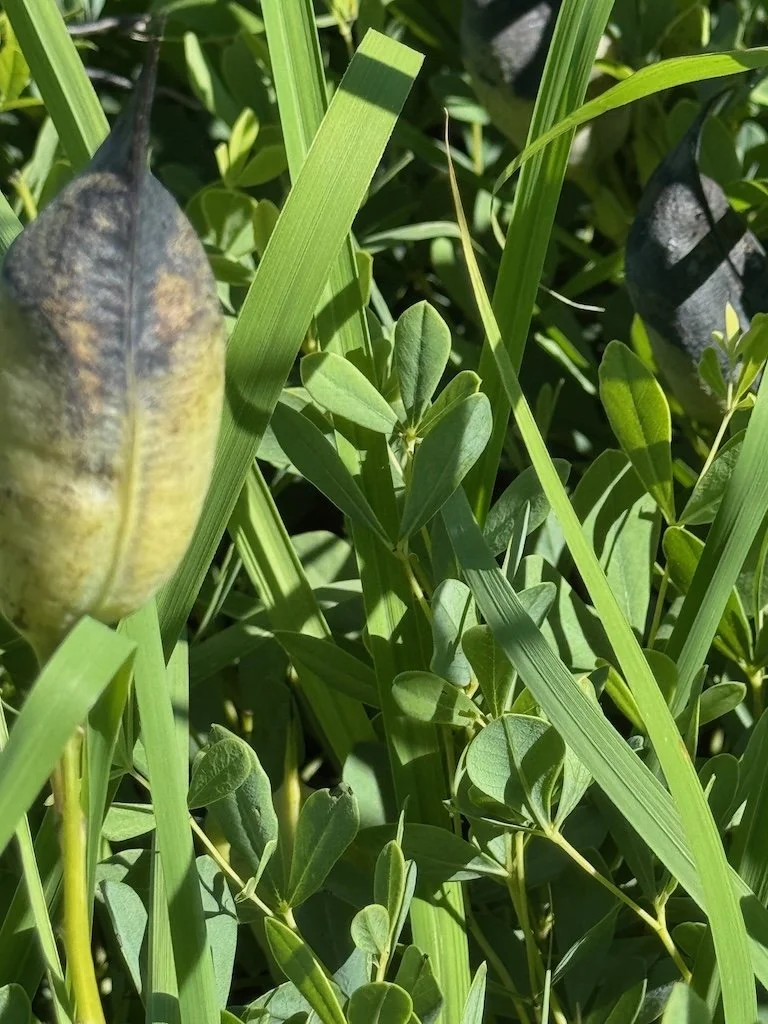
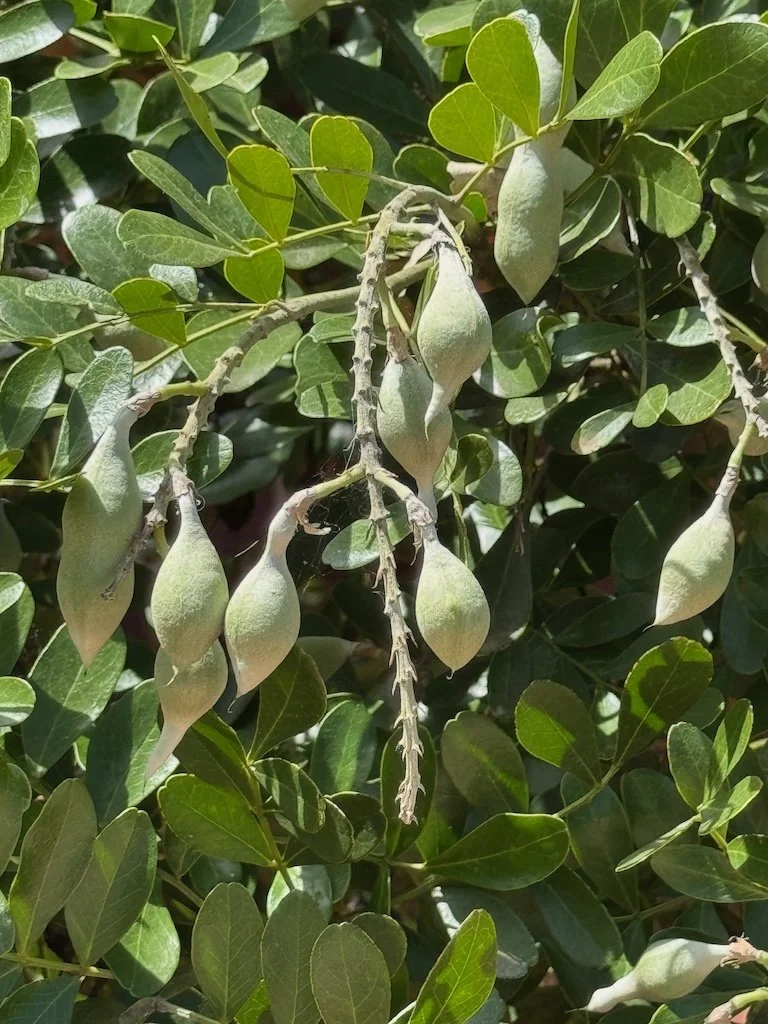
I made my monthly trek to Texas to see my dad last week. I made the usual stop at the Texas Welcome Center on US75 to eat my salad lunch and note the changes in the native plant garden near the building. The bluebonnets have lots of seed pods forming – with a few blooms remaining. The Texas Mountain Laurel was also producing pods.

An hour later…I found my dad in the activity room with a lot of other residents. It was ice cream sandwich day! He was soundly asleep! I decided that I would wake him up for the treat since ice cream has always been his favorite dessert. He enjoyed it --- but made no attempt to feed himself. Afterward we walked outside. I guided the walker since he can no longer see well enough to stay on the sidewalk. He moved very slowly but did make it around the courtyard and back to his room without stopping for a rest….and then he wanted to go back to sleep in his chair.

The next morning, I arrived after he ate breakfast. He was asleep in the chair! I noticed that he hadn’t taken his medications, so I woke him up for that. He managed to take them with a little assistance and then agreed to go for a walk. He had more difficulty getting up from the chair than he did in April. We walked indoors since the morning was wet and cool outside. He managed a normal walk, but when we got back to his room he wanted to go to sleep. He seemed to listen when he was awake but the only clear comments he made were about not being able to see.

My sisters are noticing his decline as well. We’re trying to keep him moving on his own (with his walker)…but we all are aware that it might not be possible for much longer.

Daughter’s April Yard

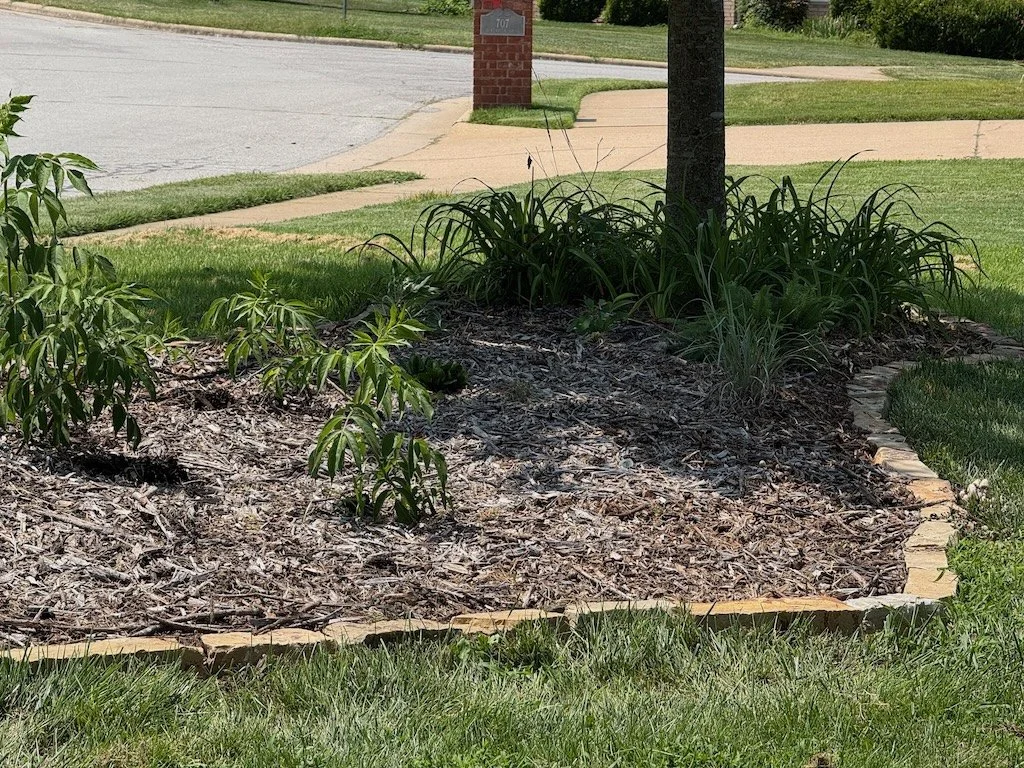
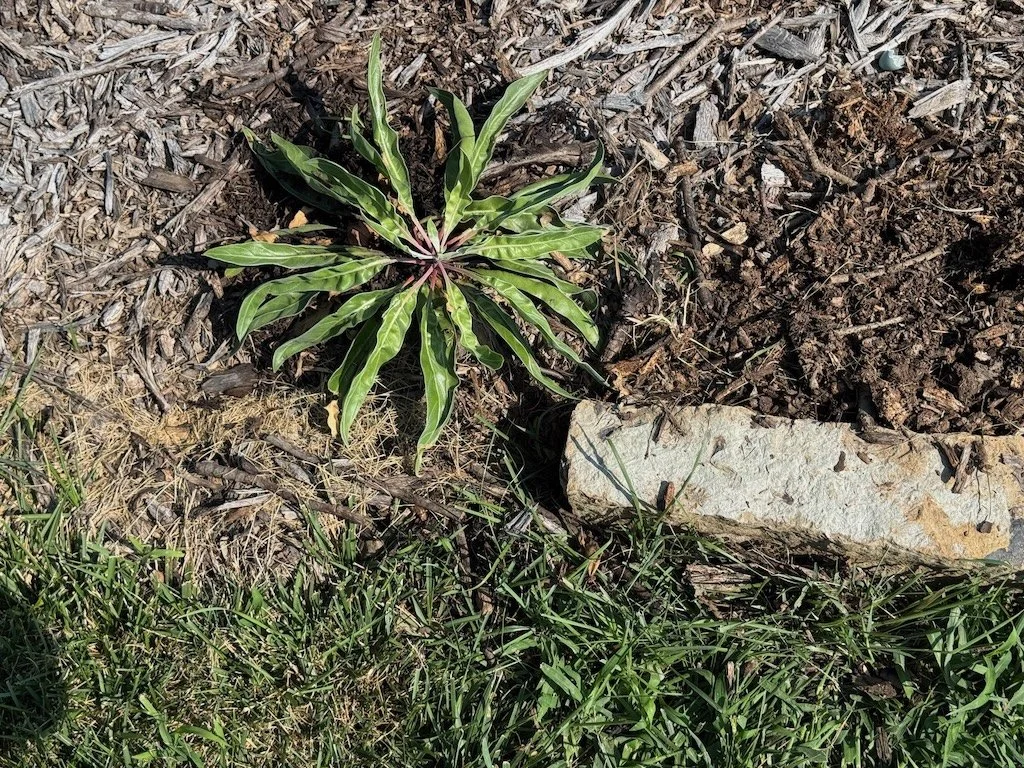
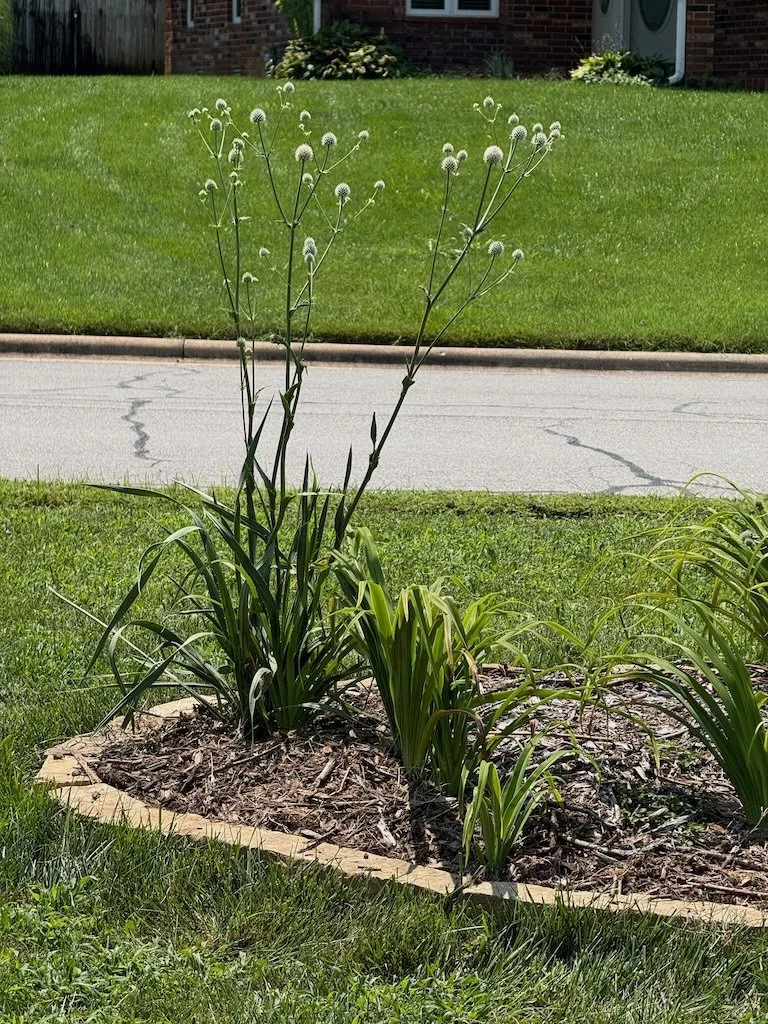
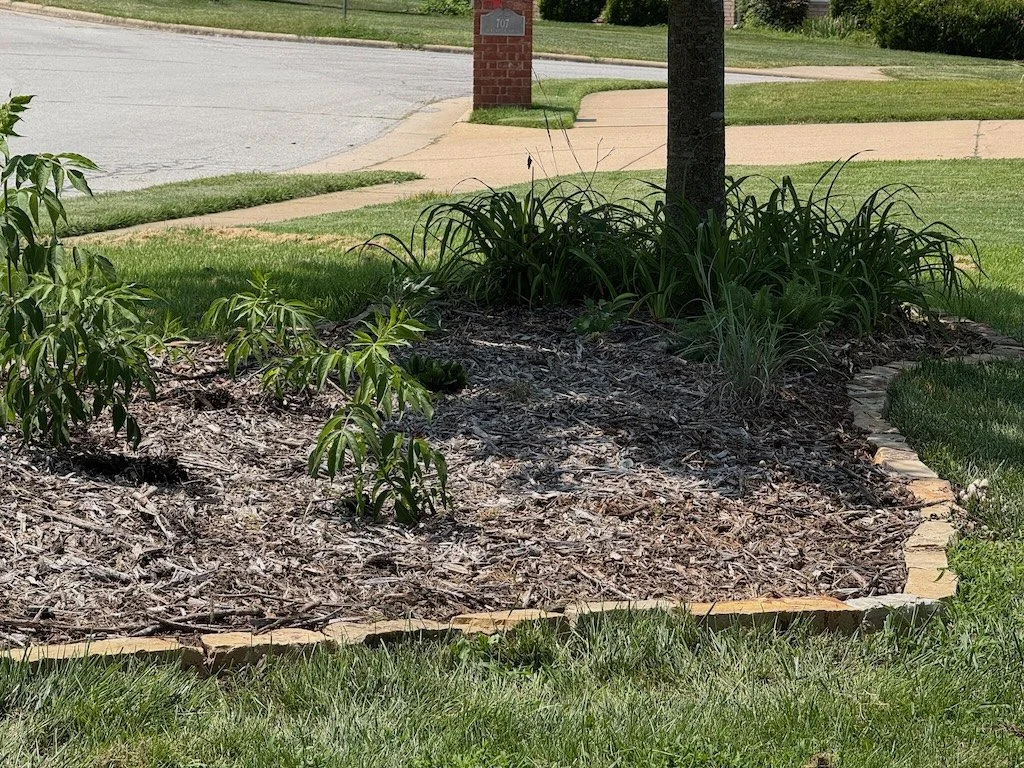
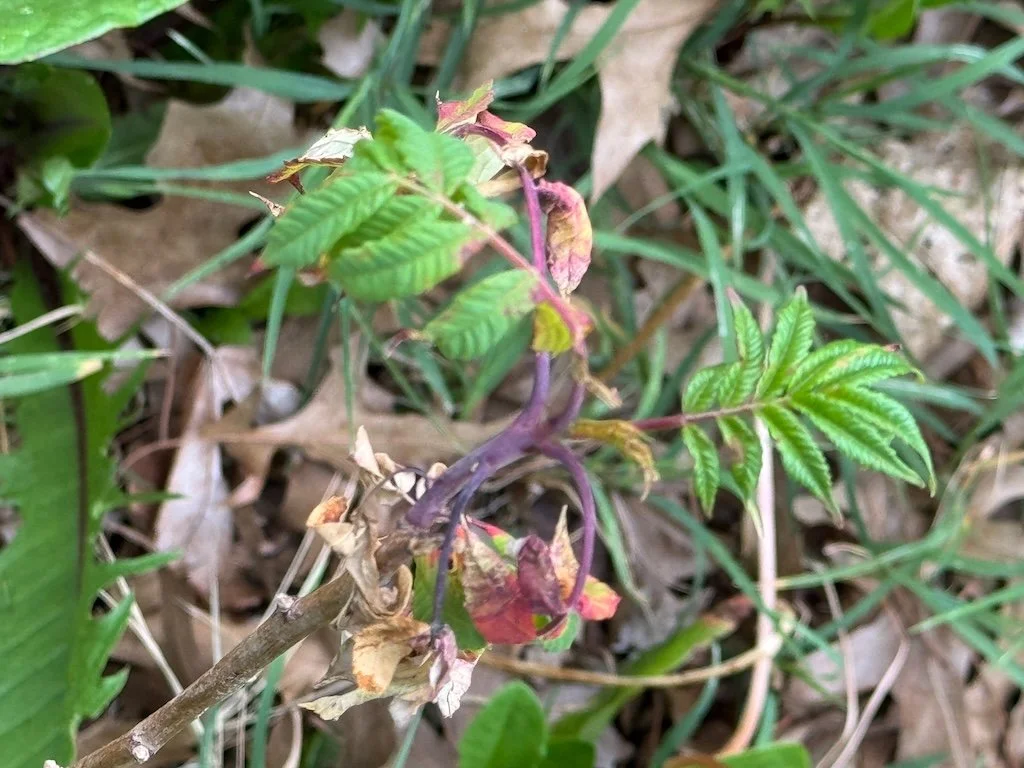
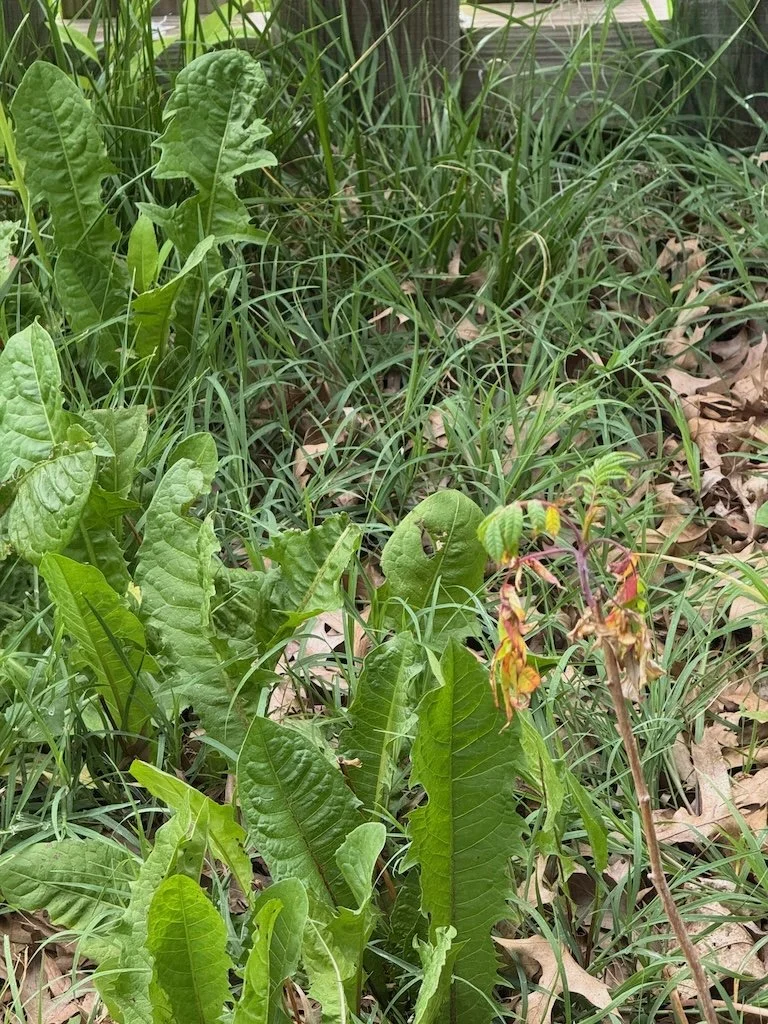
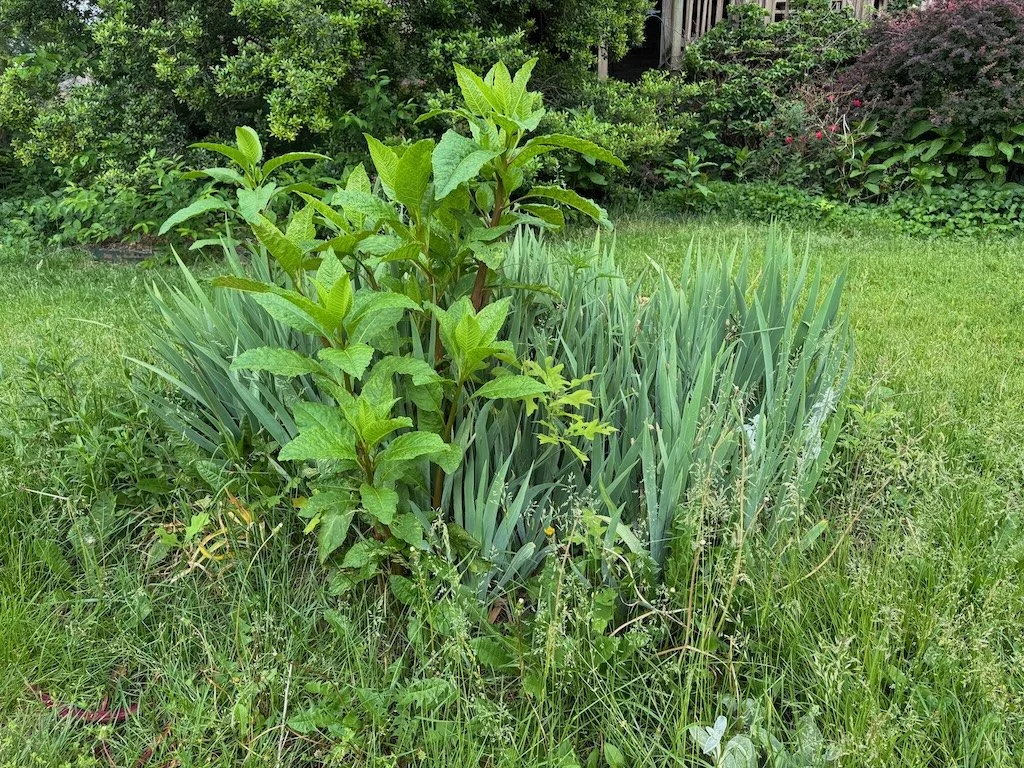
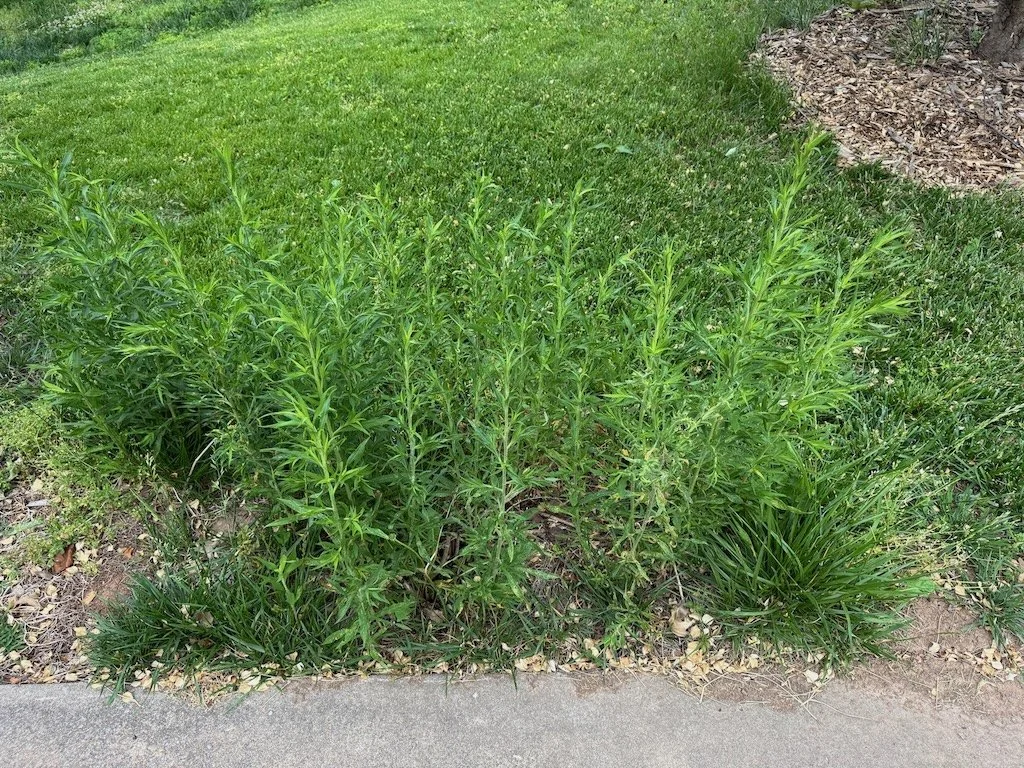
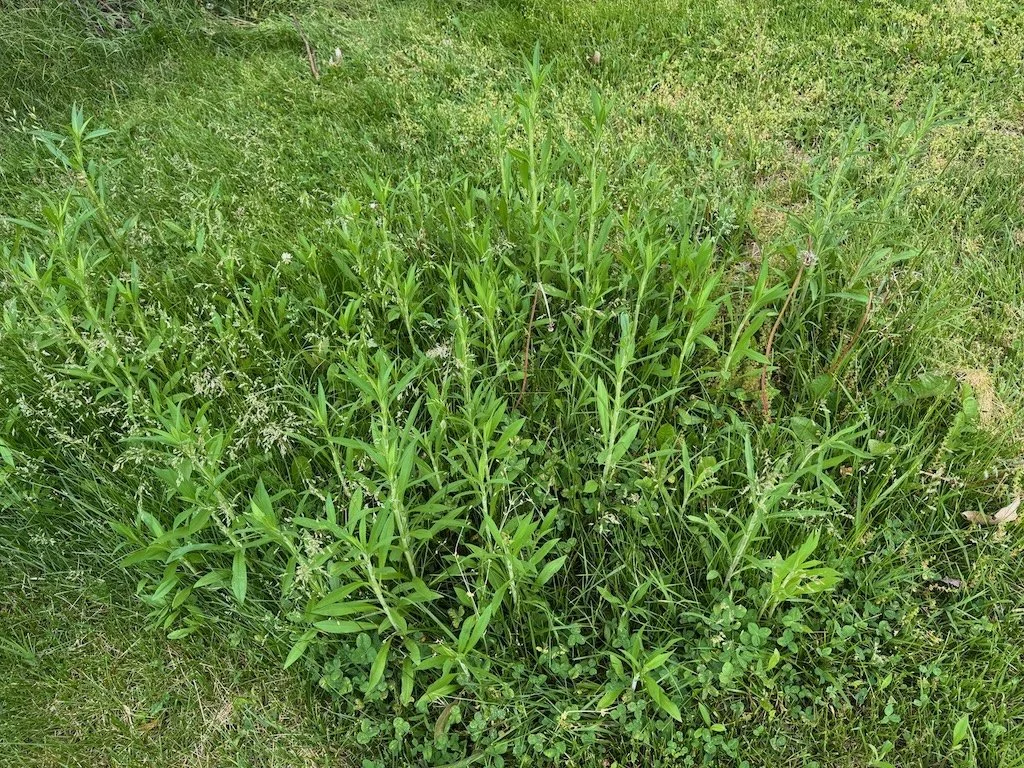
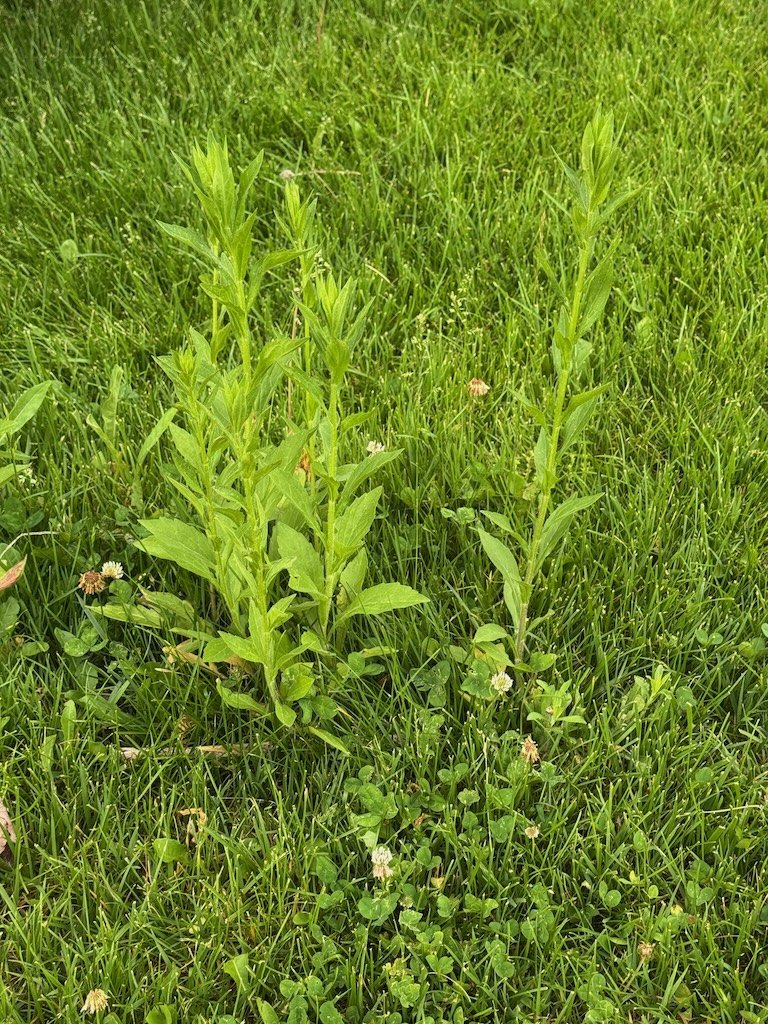
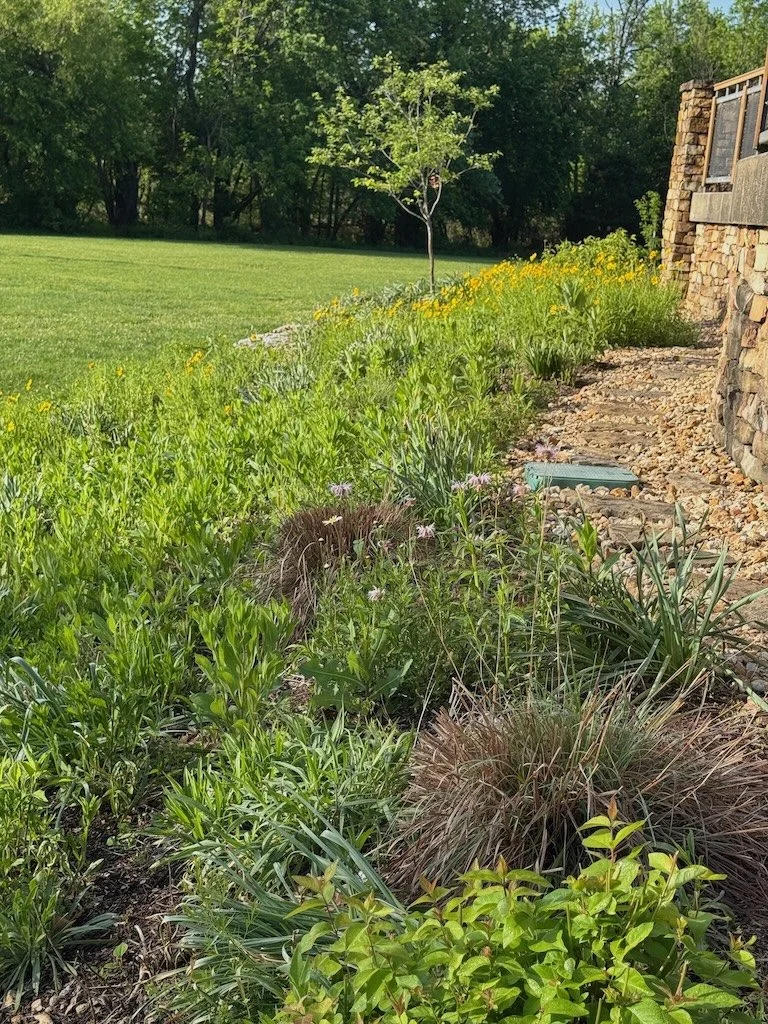
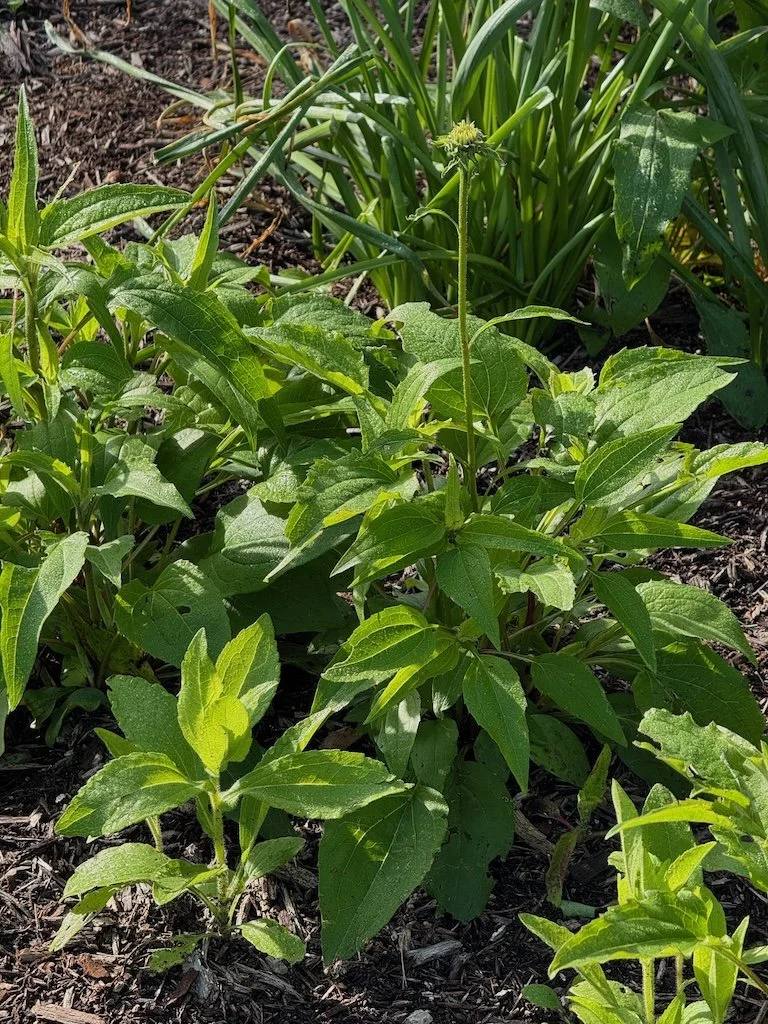
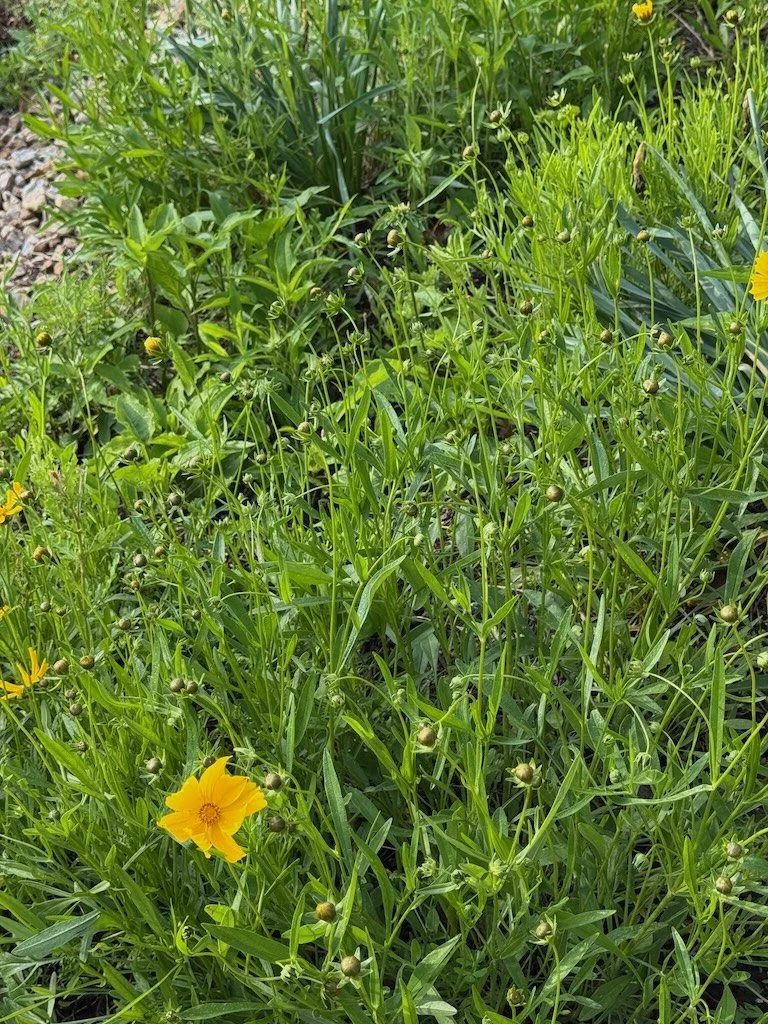
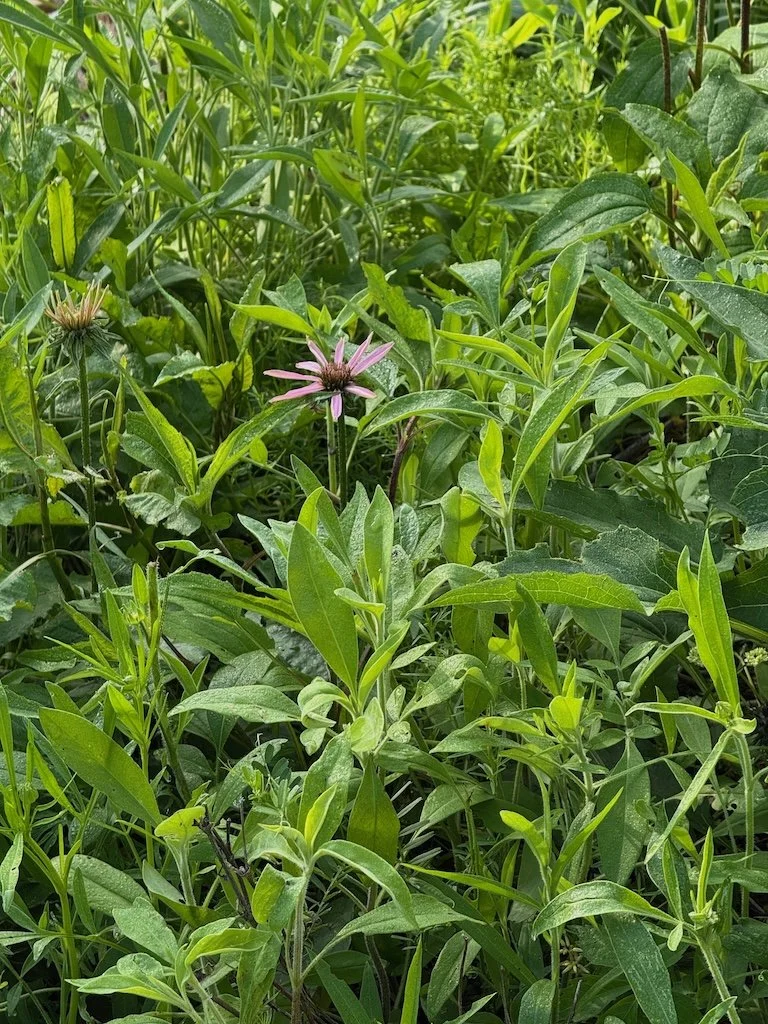
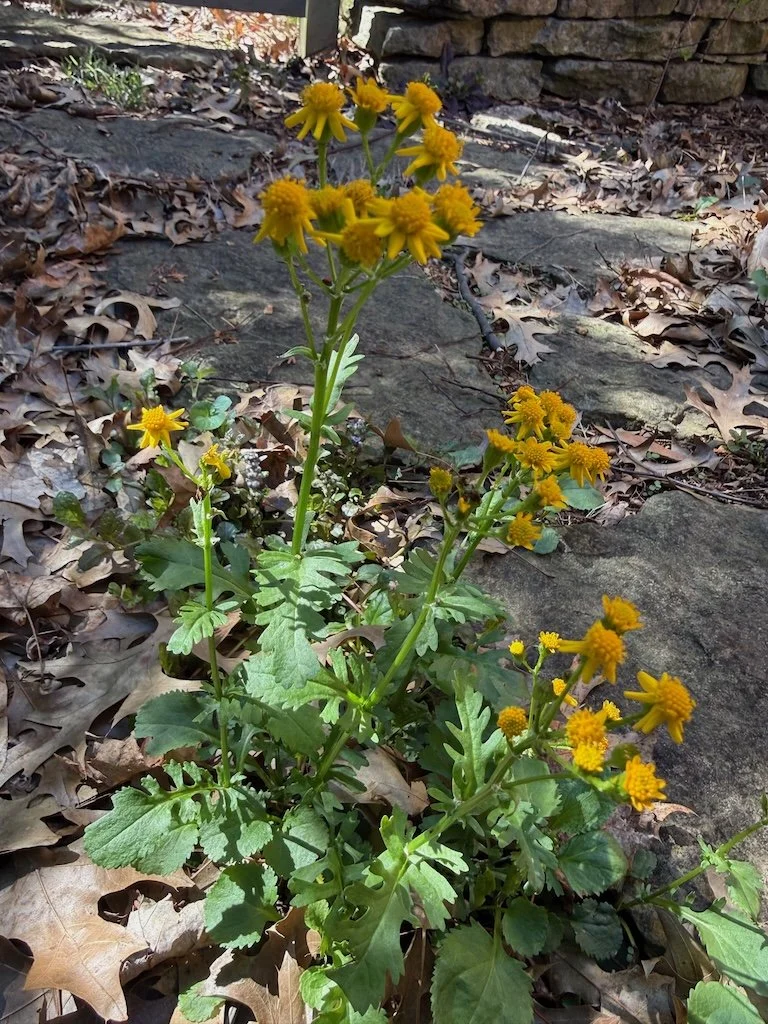
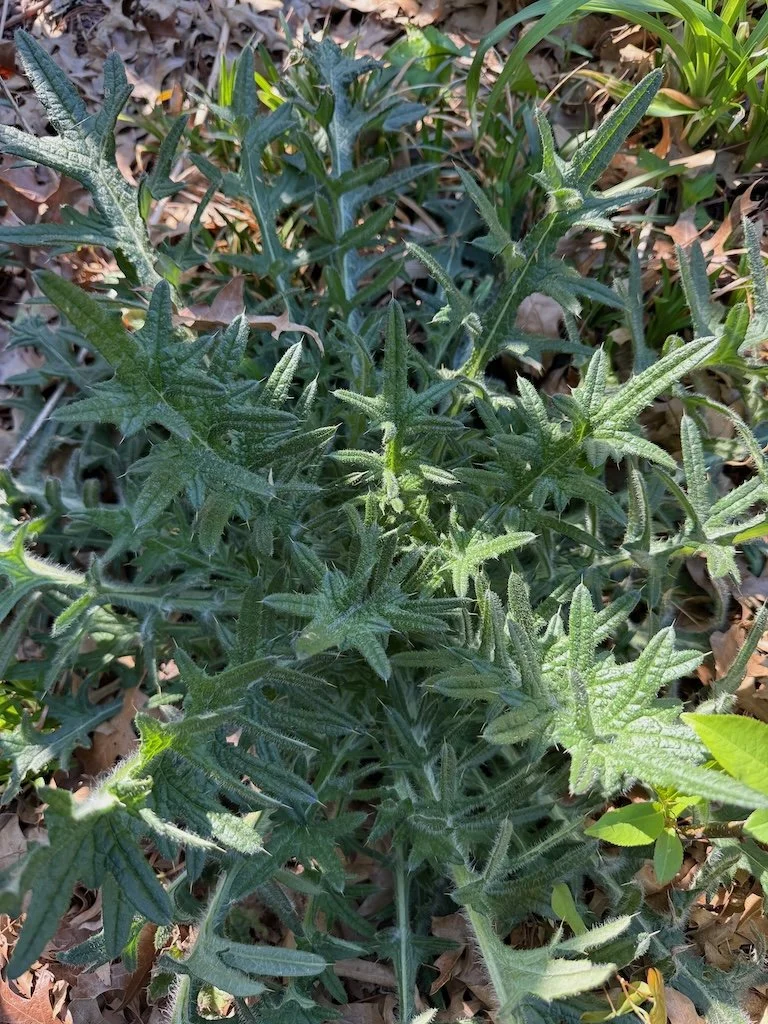
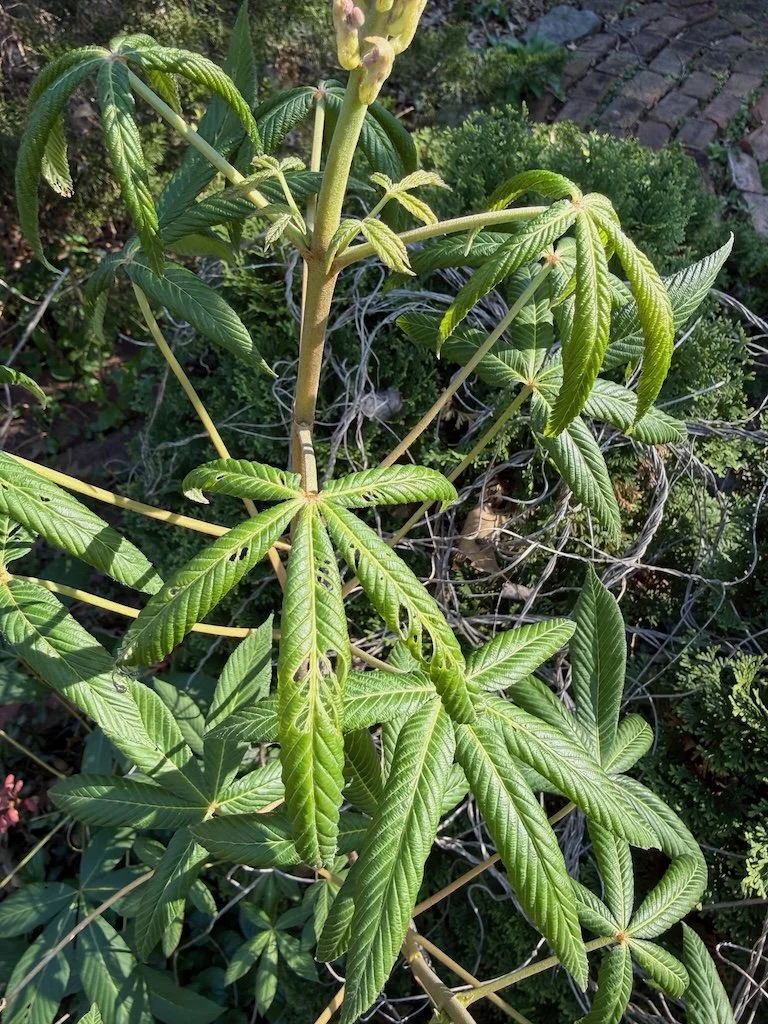
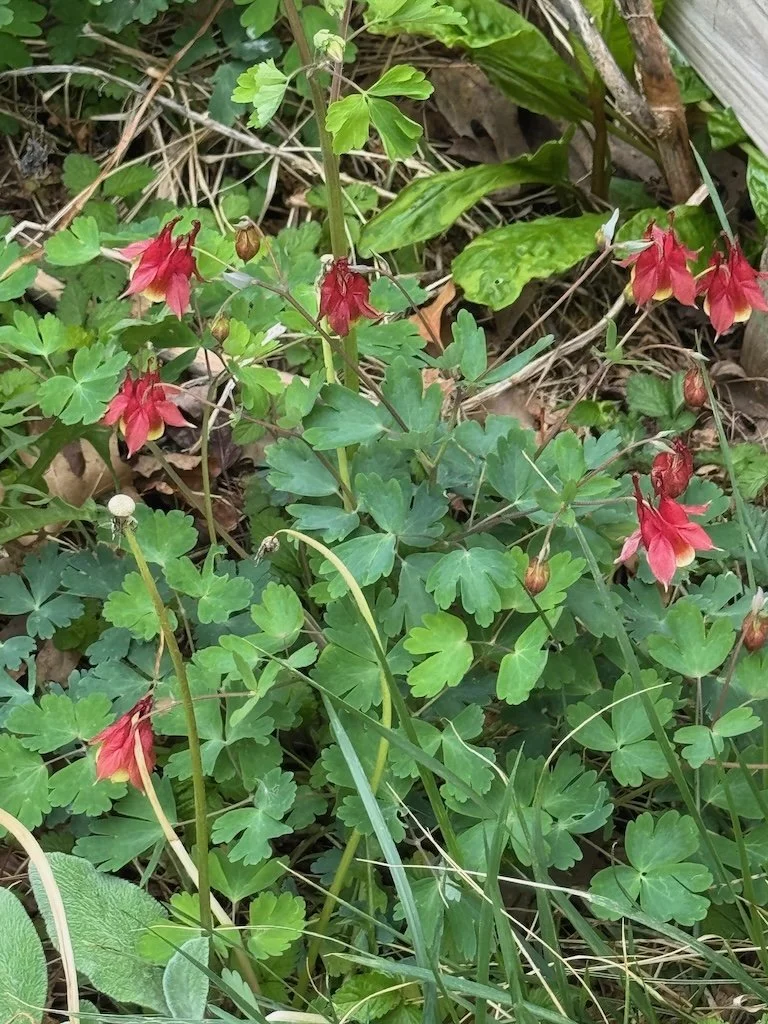
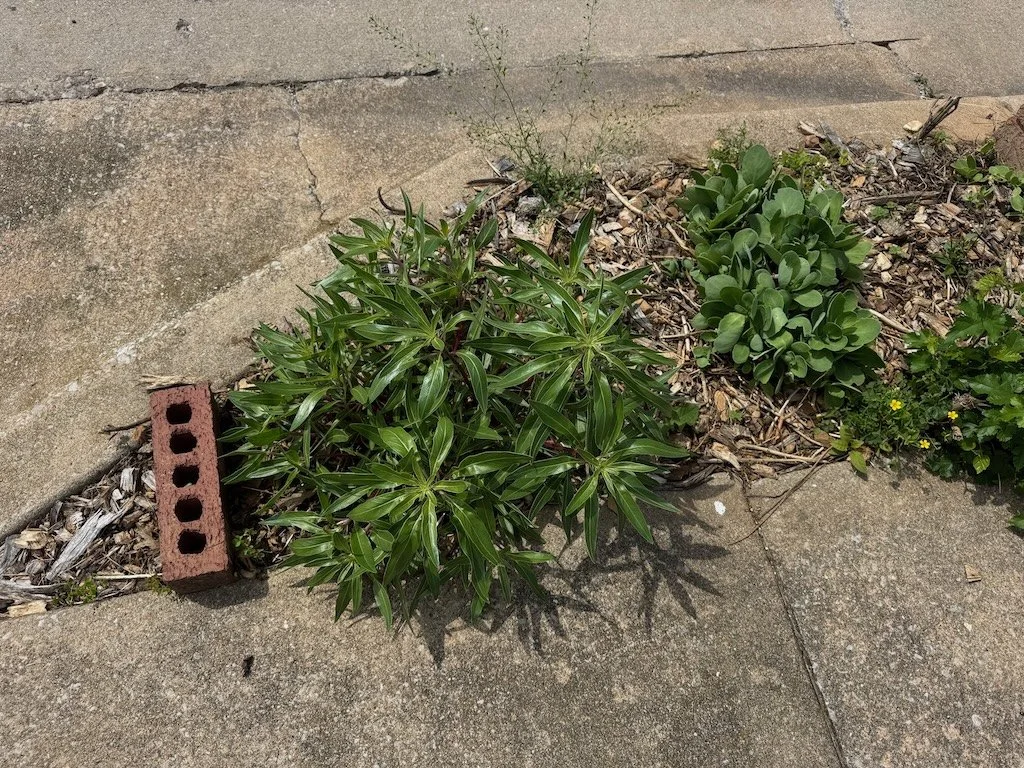
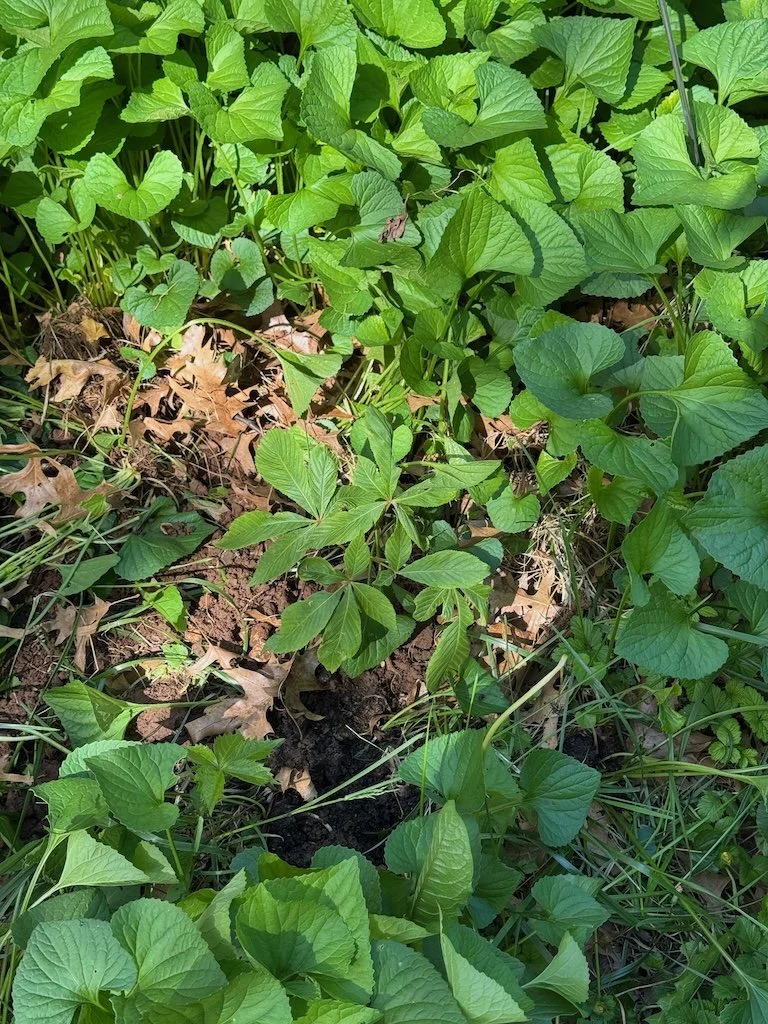
I am enjoying my daughter’s yard through her occasional pictures and when I am at her house. Early in April, she sent me pictures of the plants in her garden by the driveway. She was uncertain if the second one (not blooming) was a weed or something they had planted.

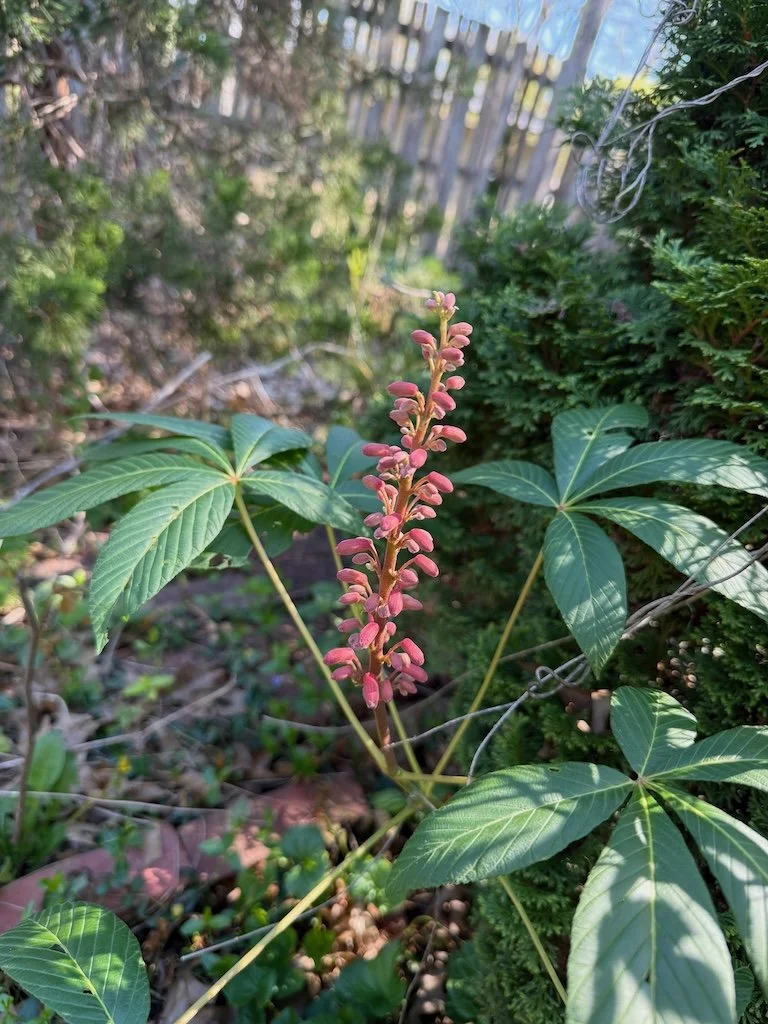
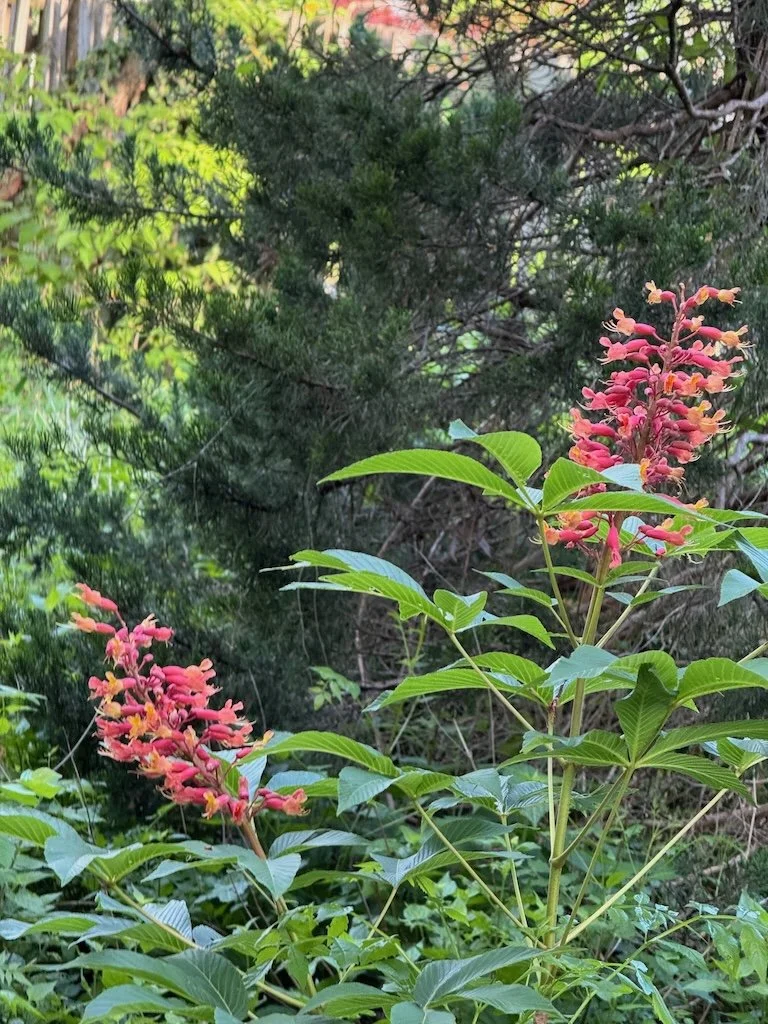
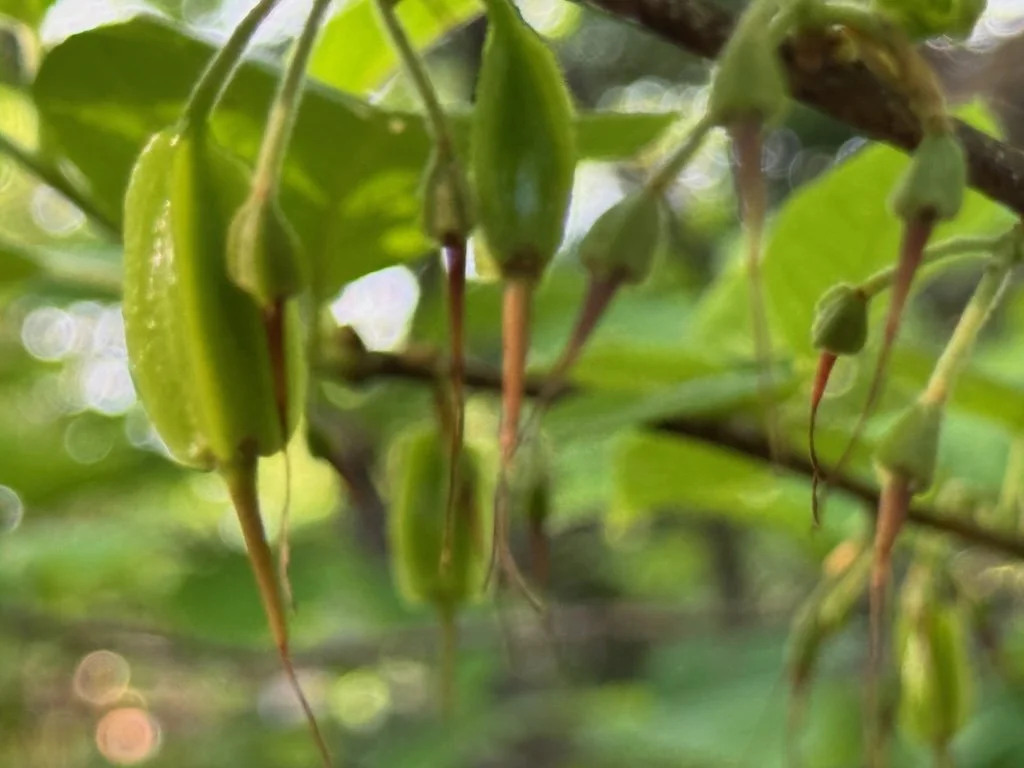
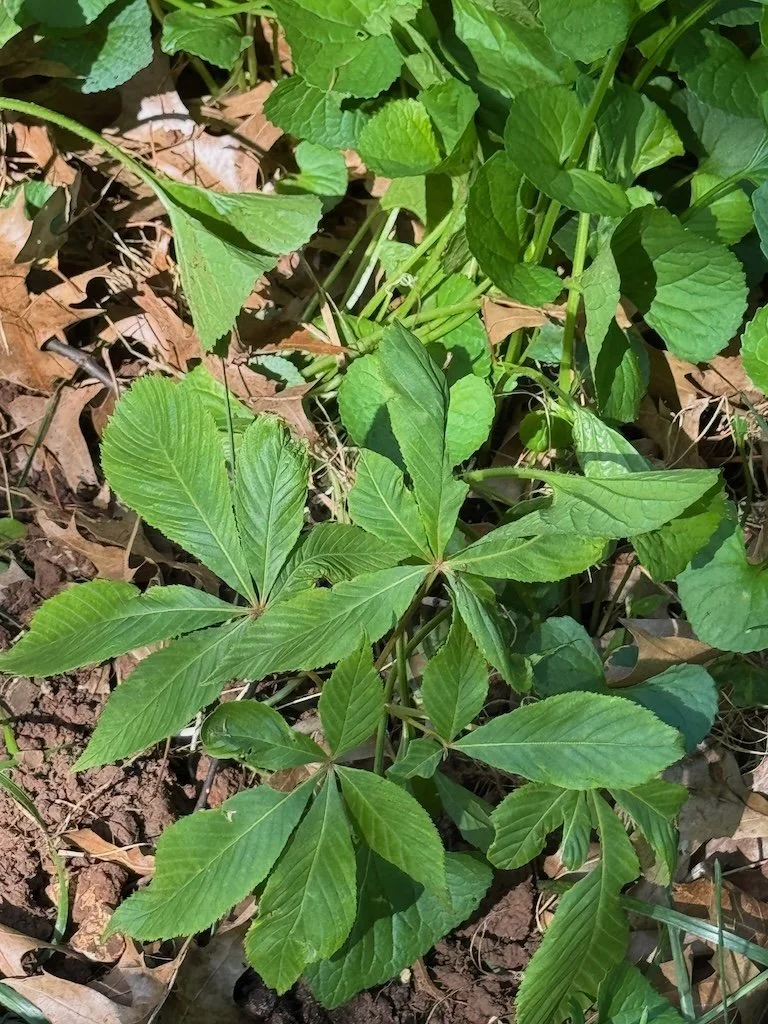
The small red buckeye we had seen in her yard last summer was up and had one cluster of blooms.

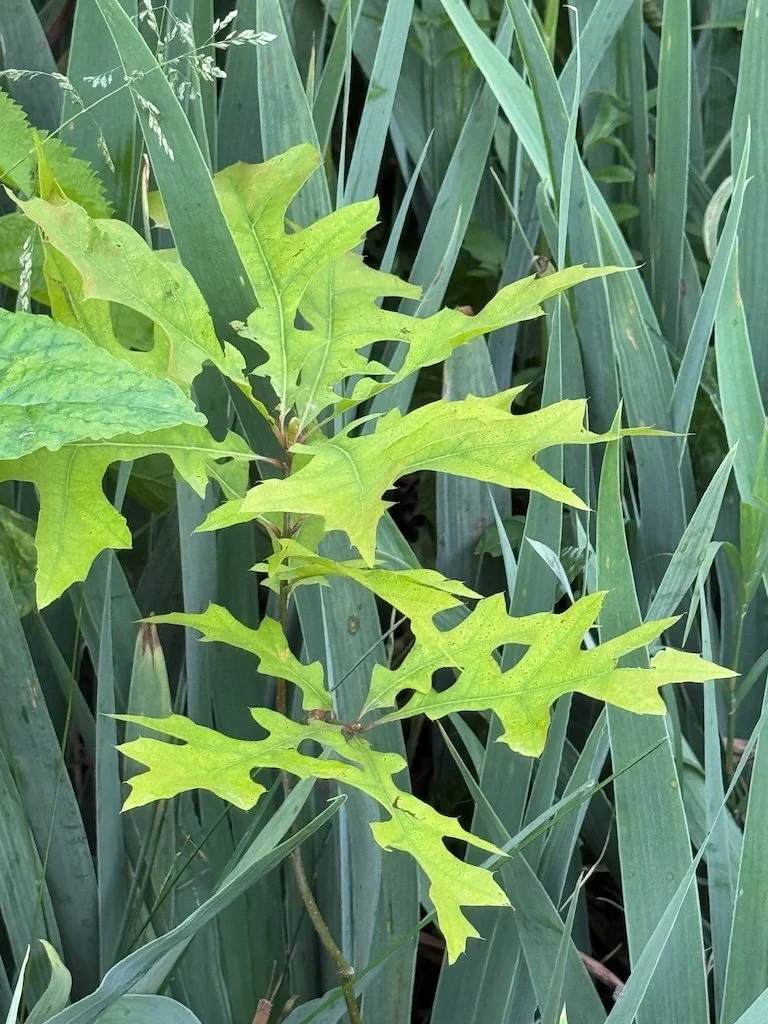
Later in the month the young tree had grown more than a foot and had two bloom clusters. Hopefully the hummingbirds are finding the flowers.

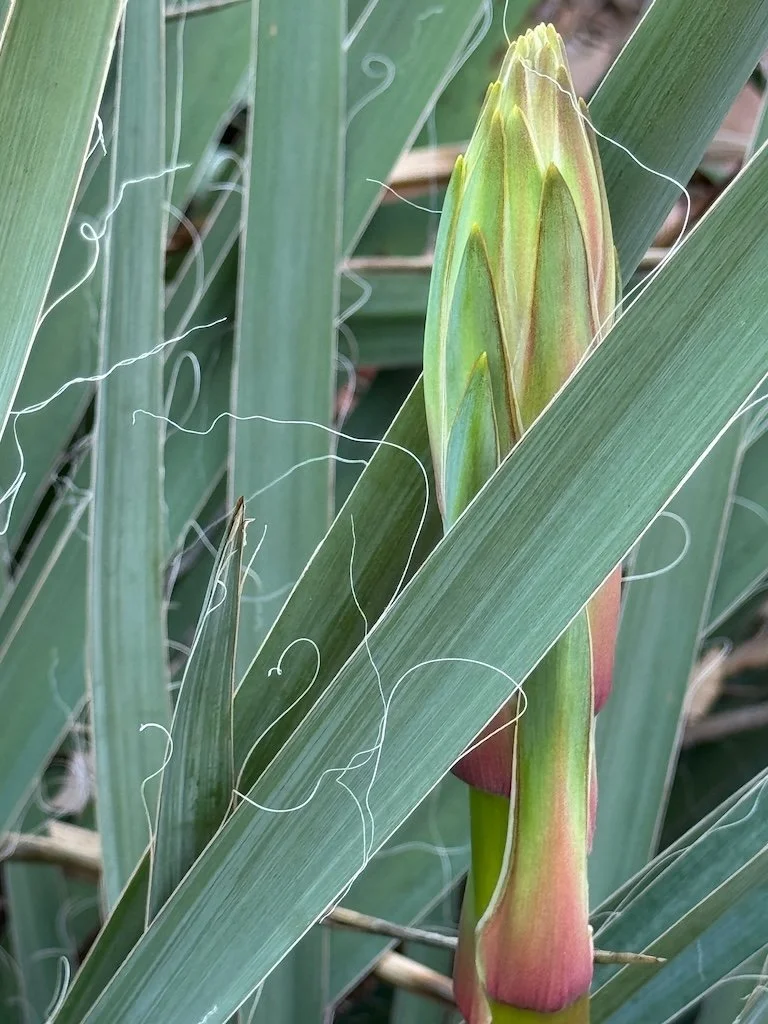
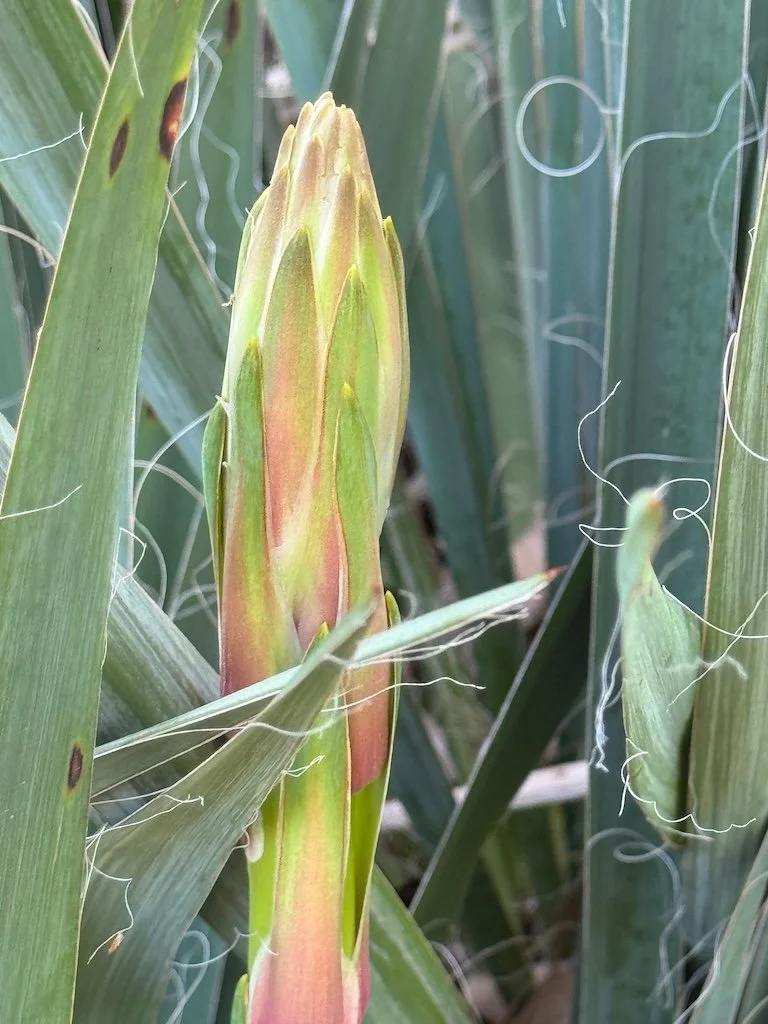
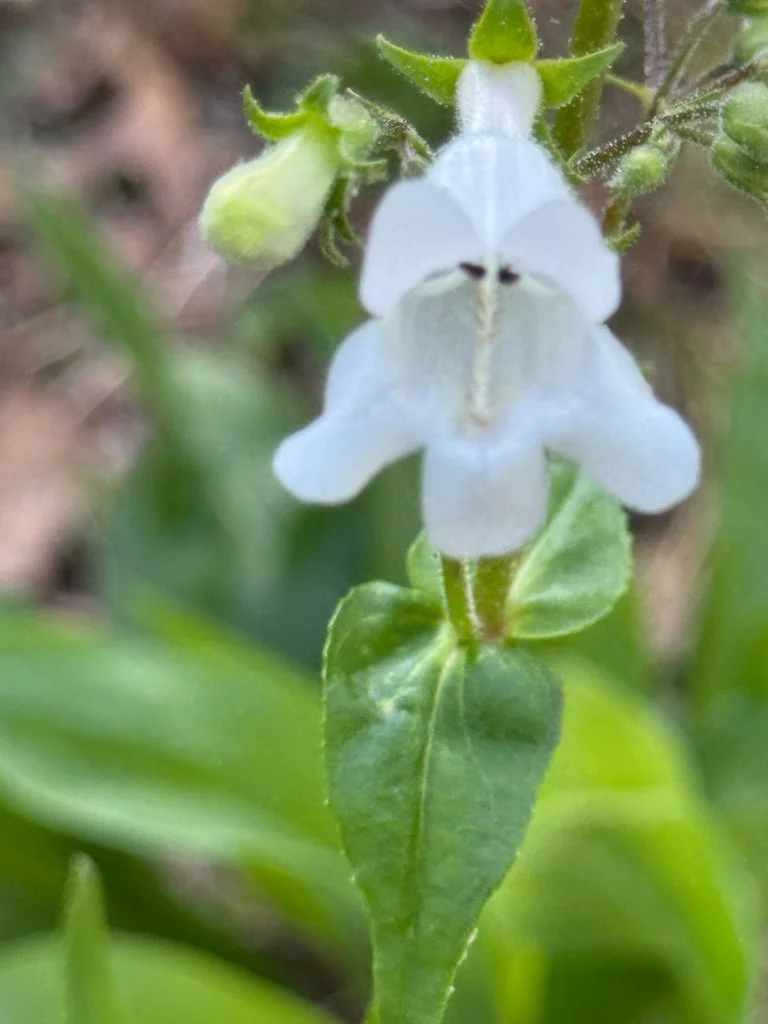
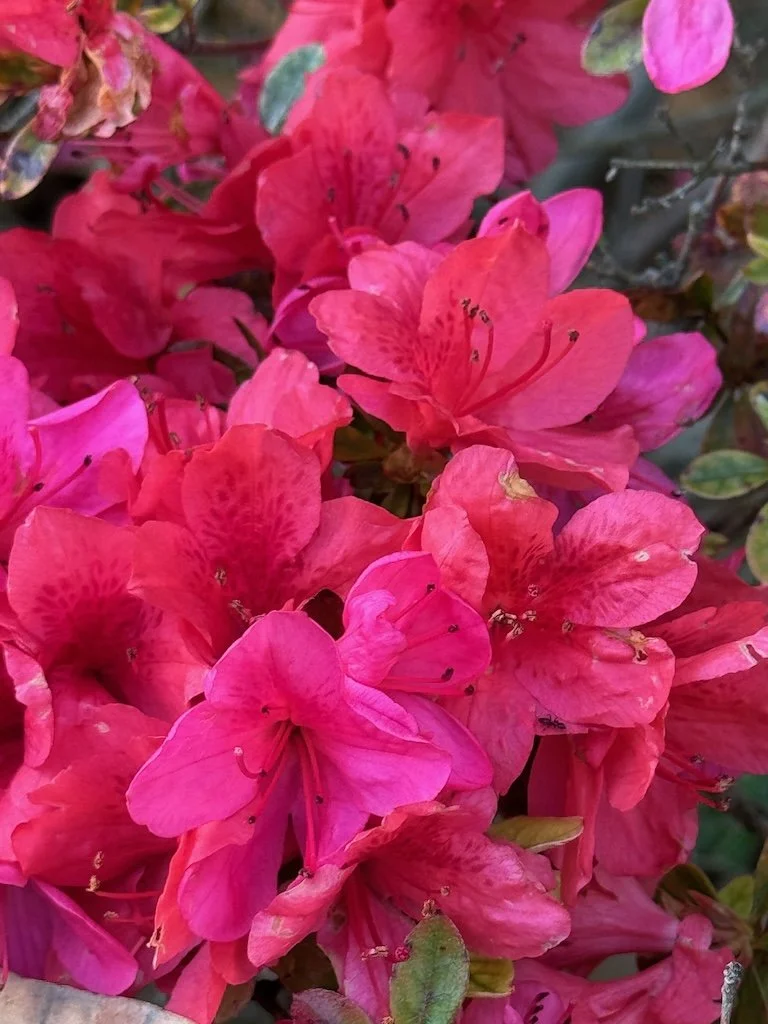
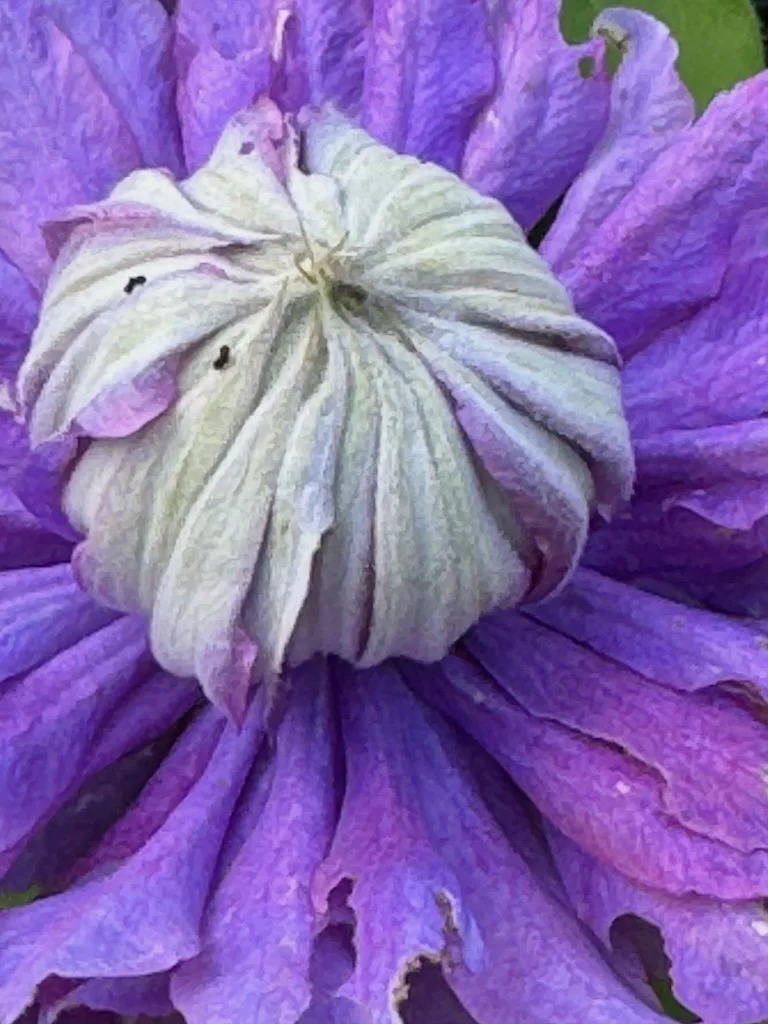
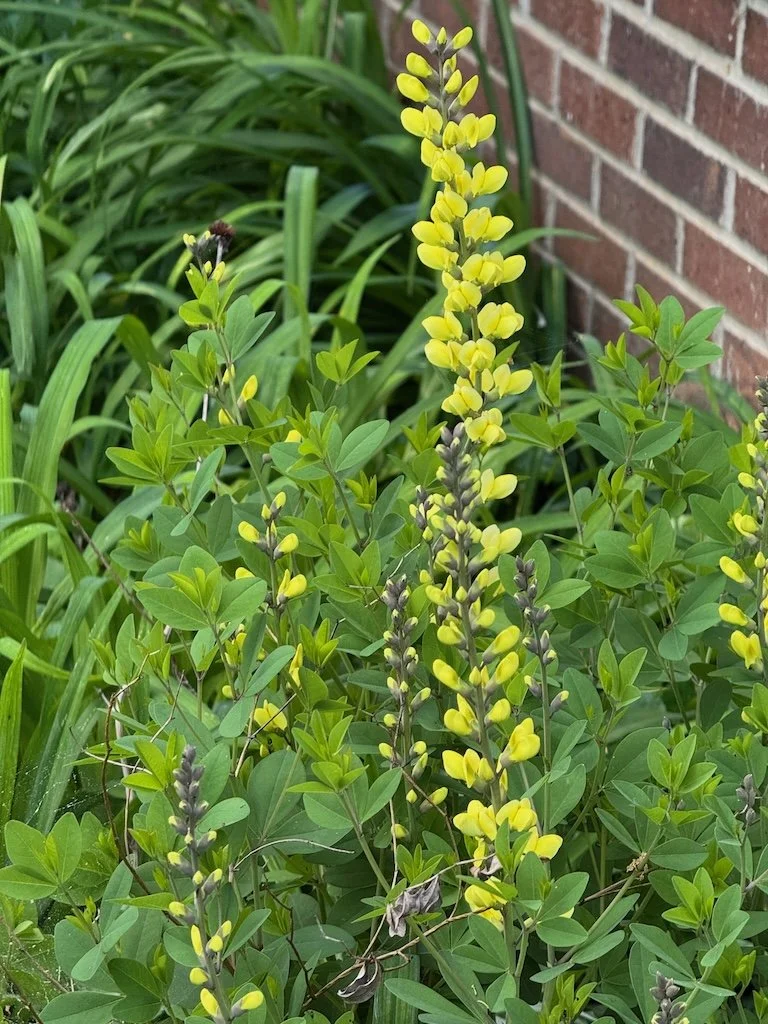
The bloom stalks were visible in two yuccas. Penstemons, azaleas, clematis, and yellow wild indigo were already blooming.

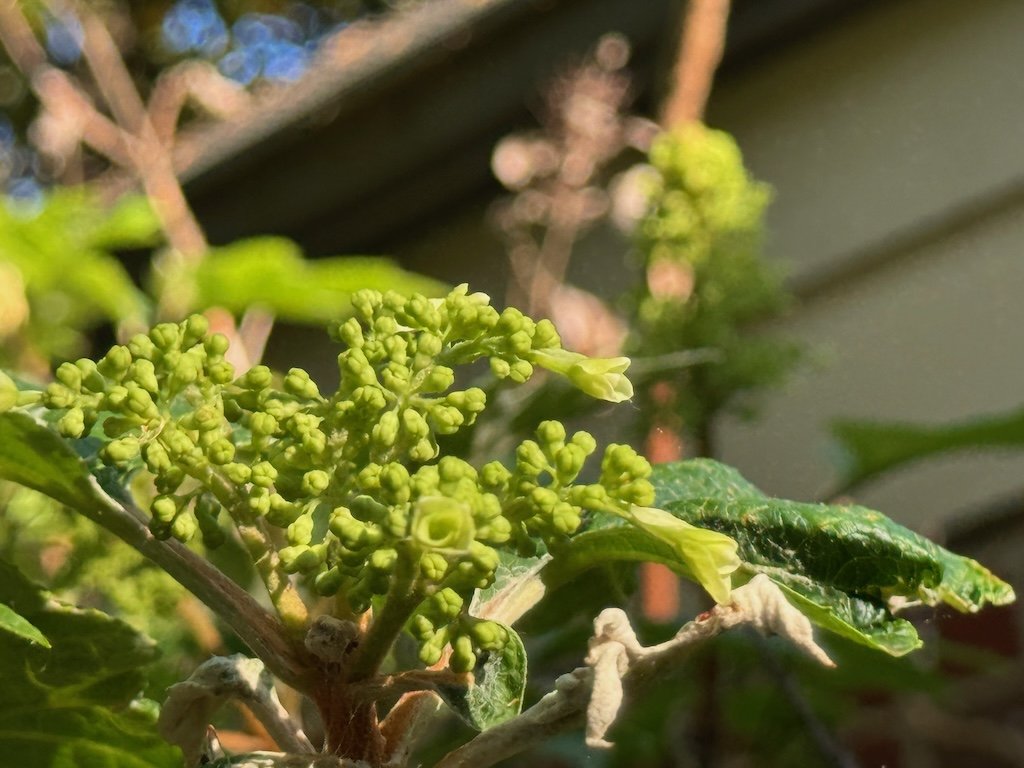
Several plants in the shady part of the yard (including oak leaf hydrangea and American spikenard were looking good too.

Her house was built in the 50s so many of her trees are quite large – particularly an oak, a river birch, and an Eastern Hemlock. Her yard has more shade than mine…and she is slowly adding more natives to the mix of perennials in the few sunny places.  

Our Missouri Yard – April 2026

A lot was happening in my yard in April – beyond the planting of the native plants in my front flowerbed.

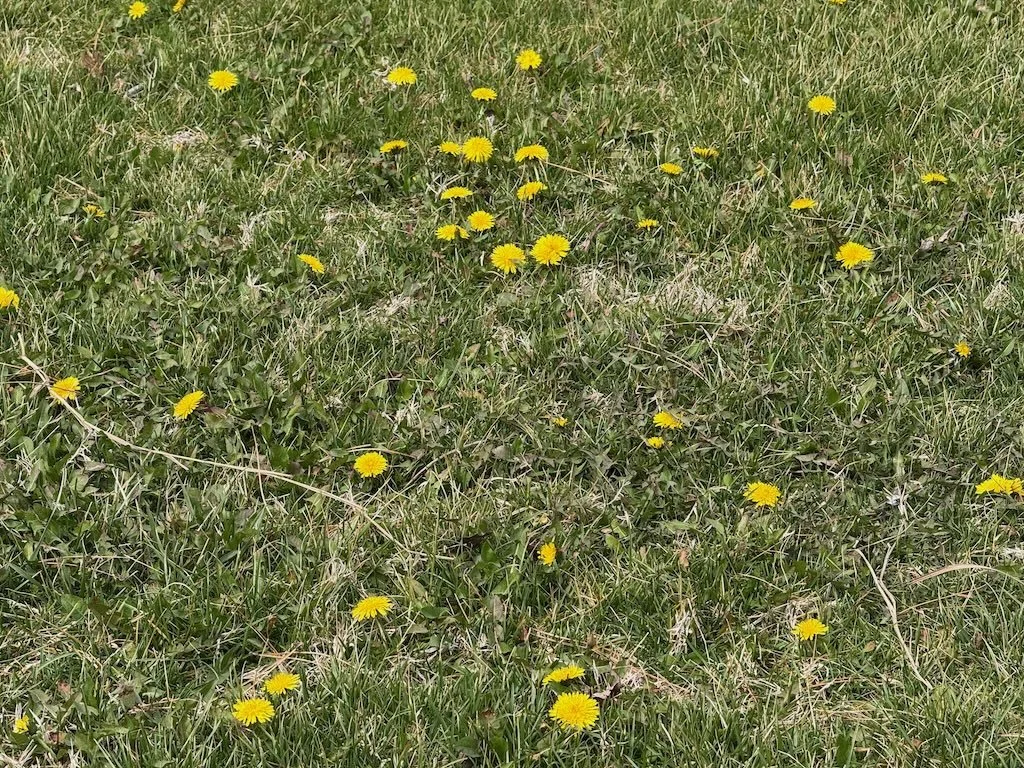
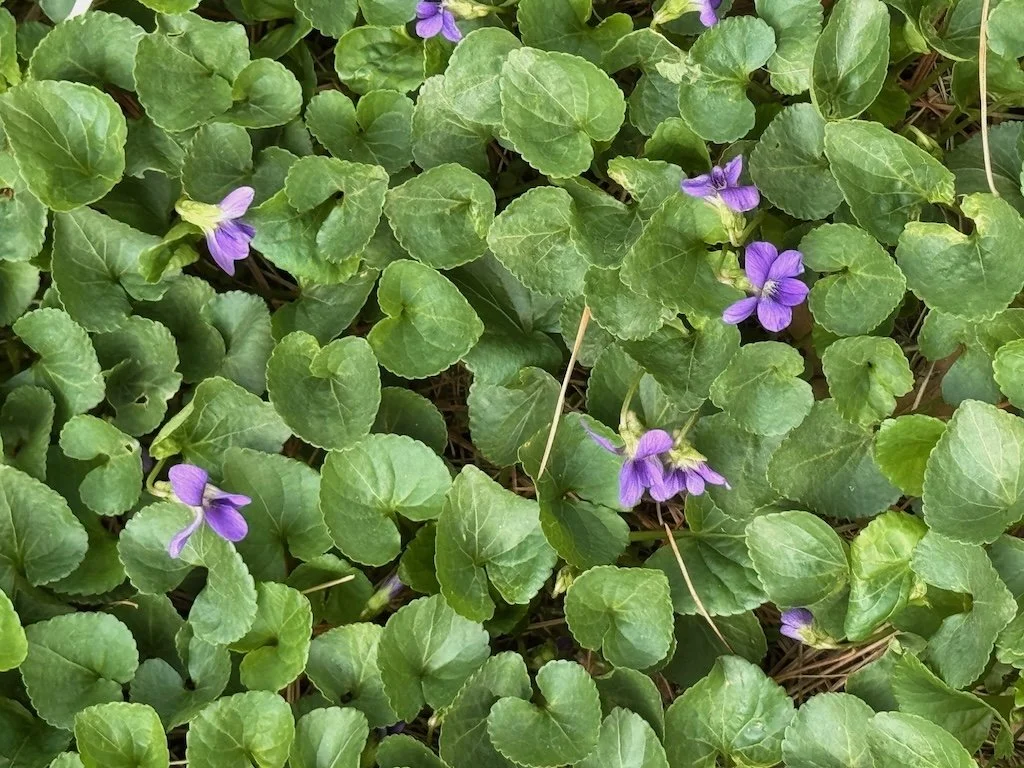
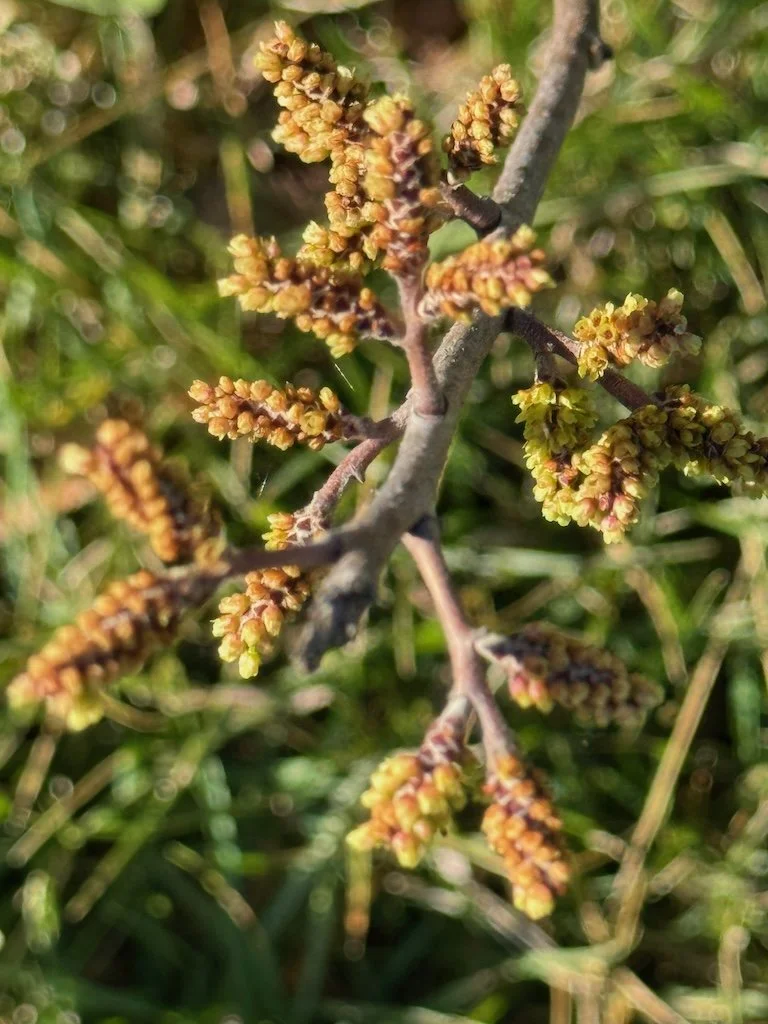
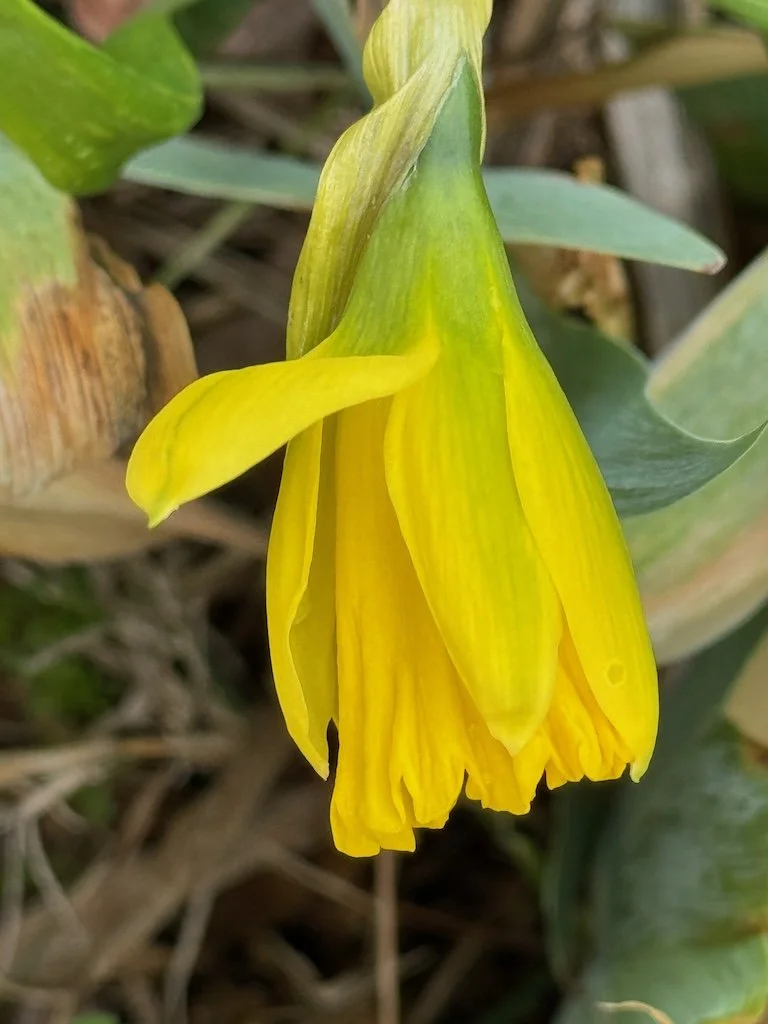
Early in the month was the maximum bloom time for dandelions, violets, fragrant sumac and daffodils.

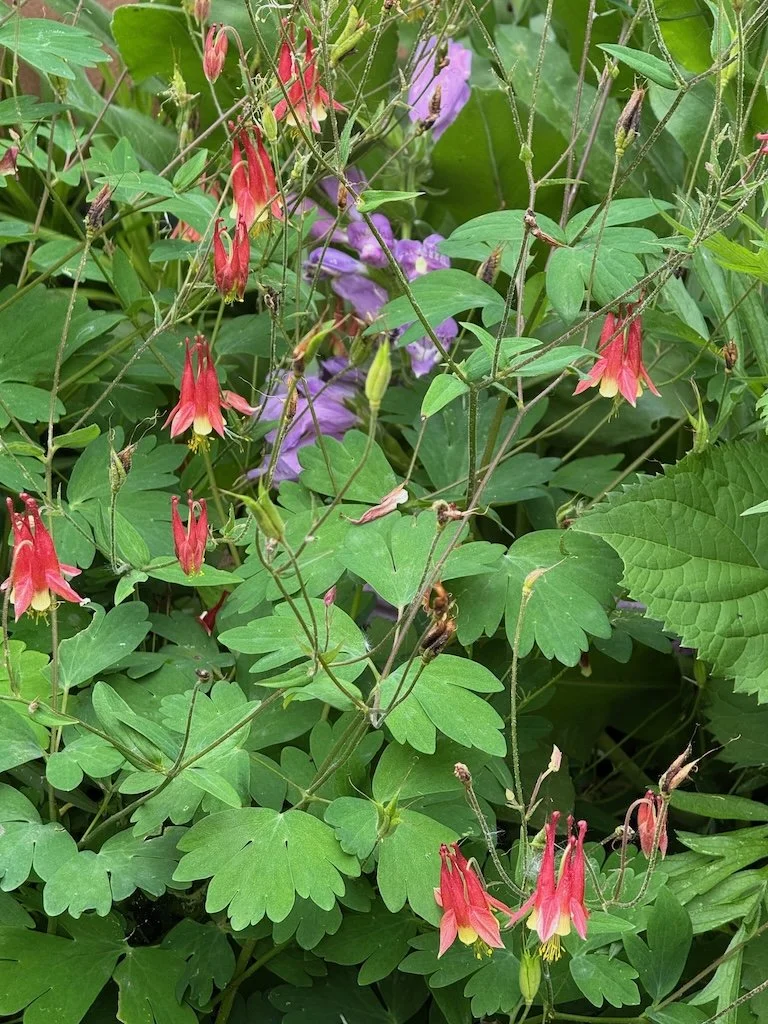
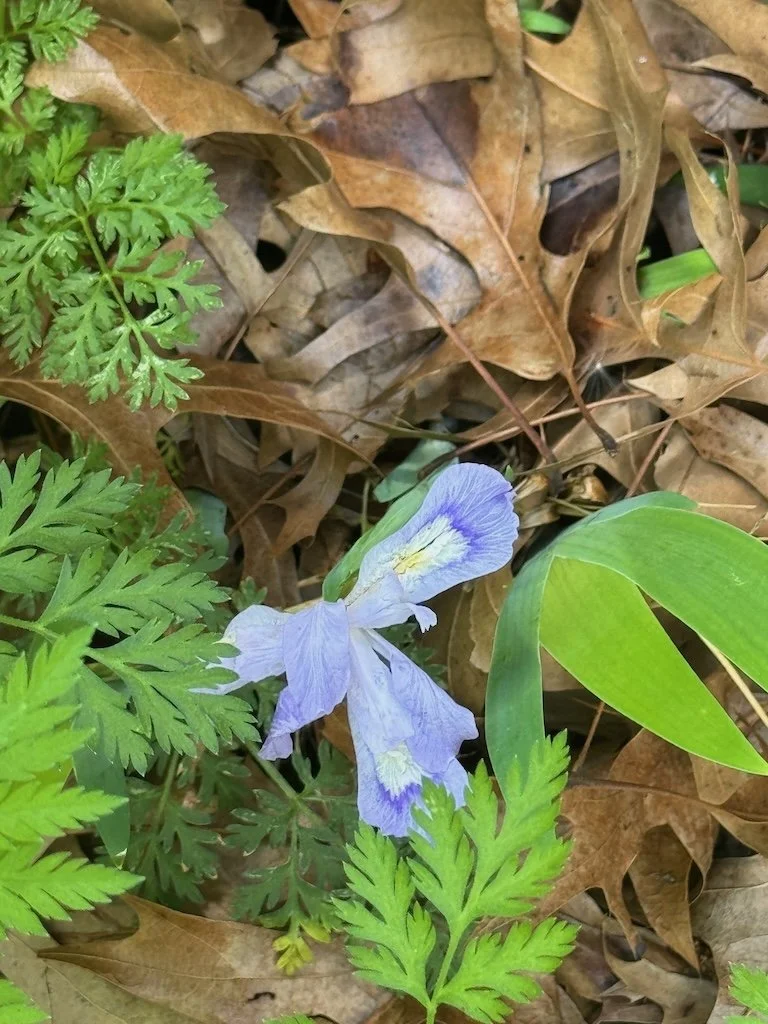
A week or so later the crested iris and columbine were blooming.

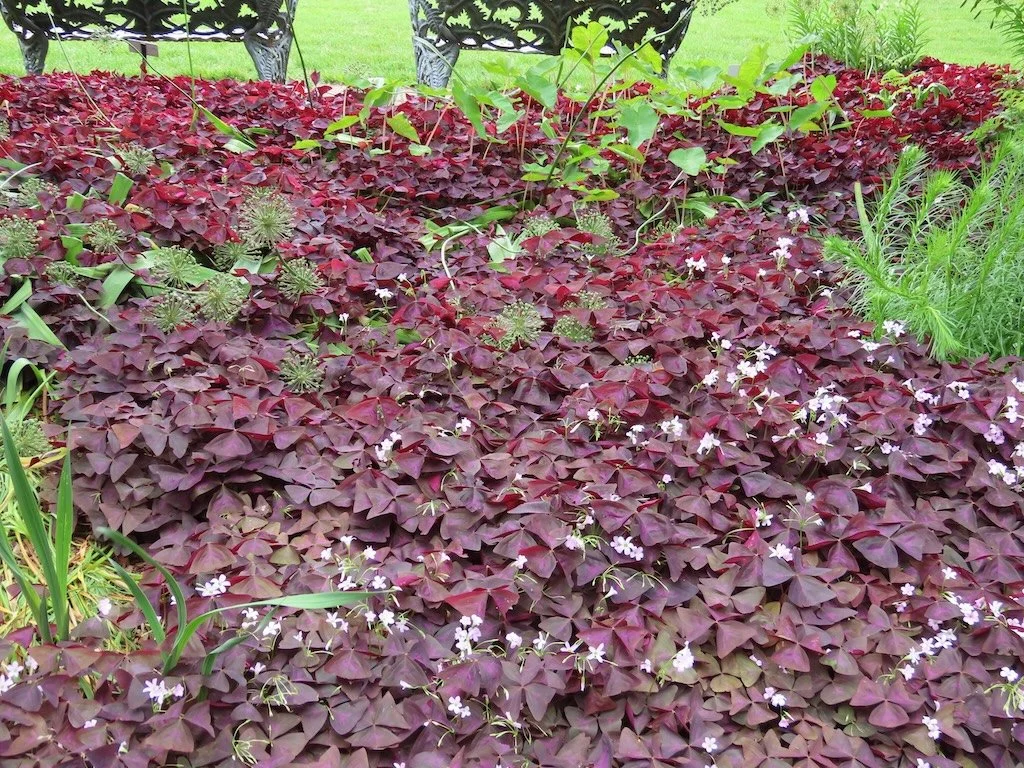
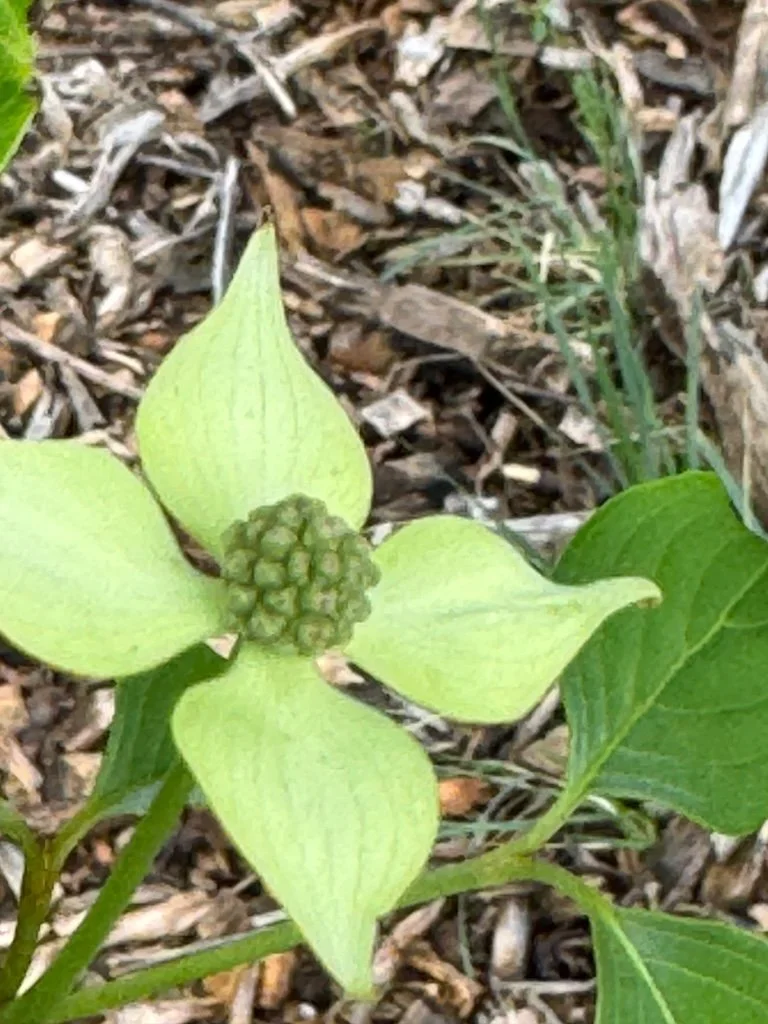
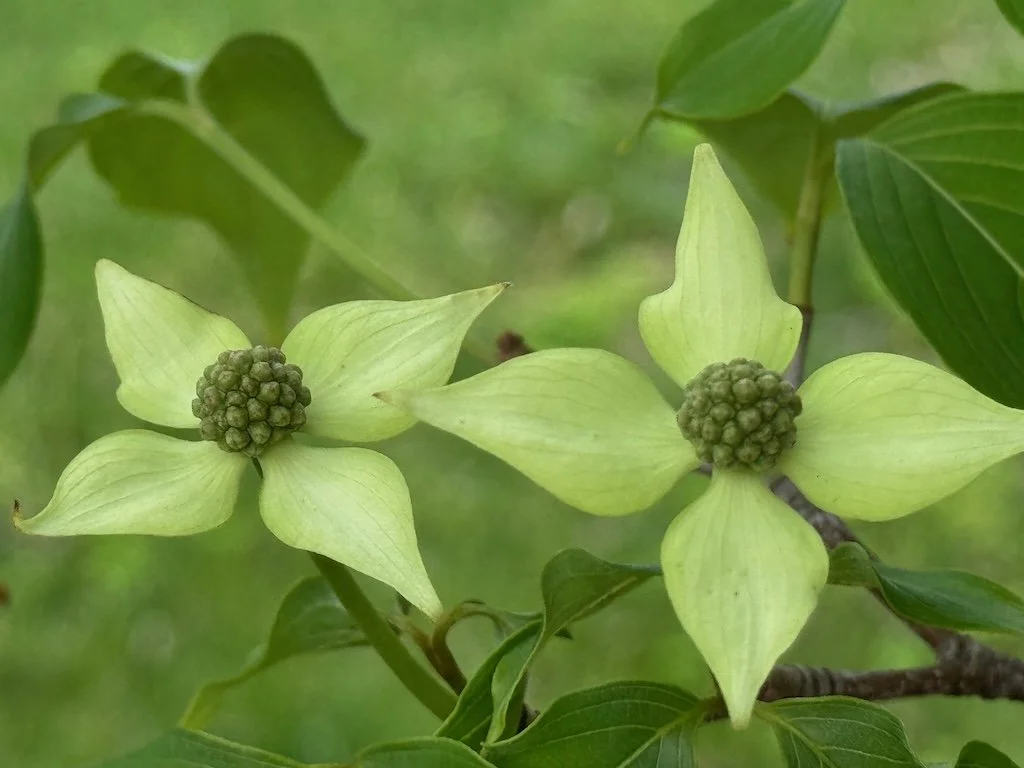
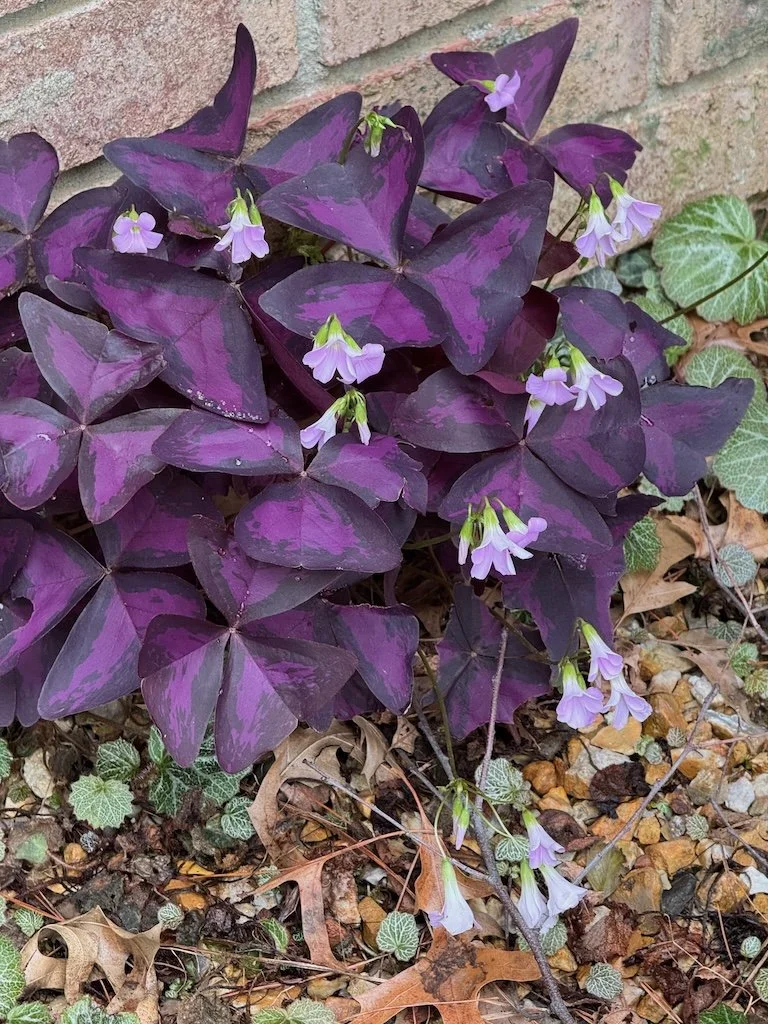
The Kousa dogwood (Asian) and false shamrock Oxalis trangularis (South American) were also blooming.

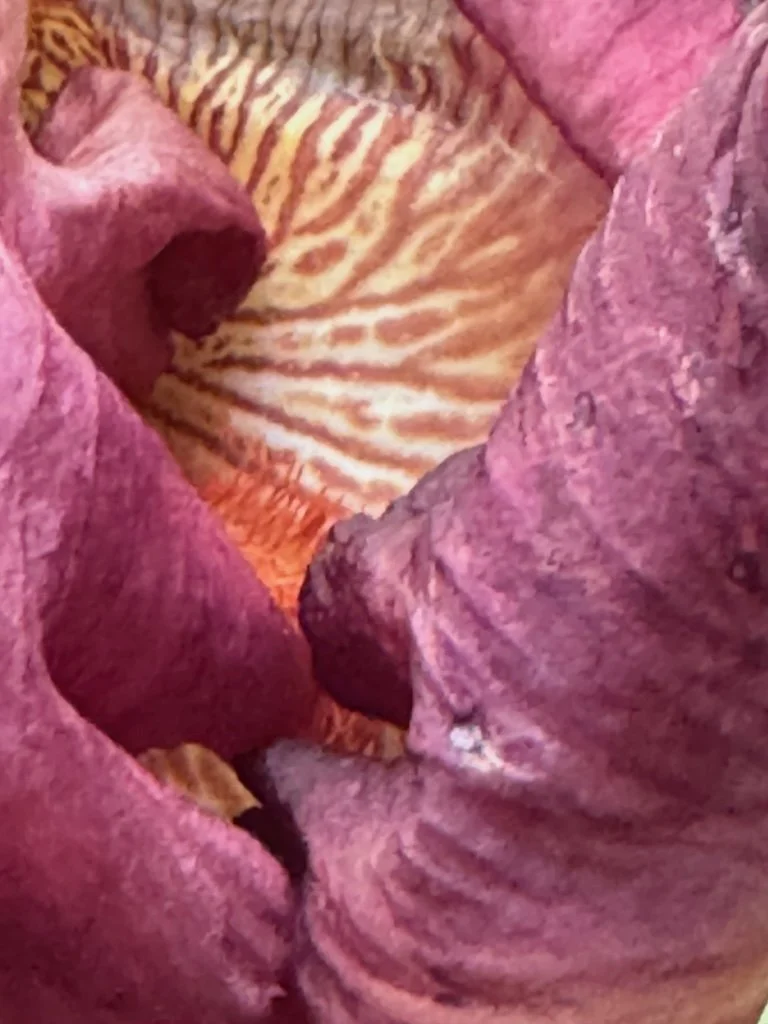
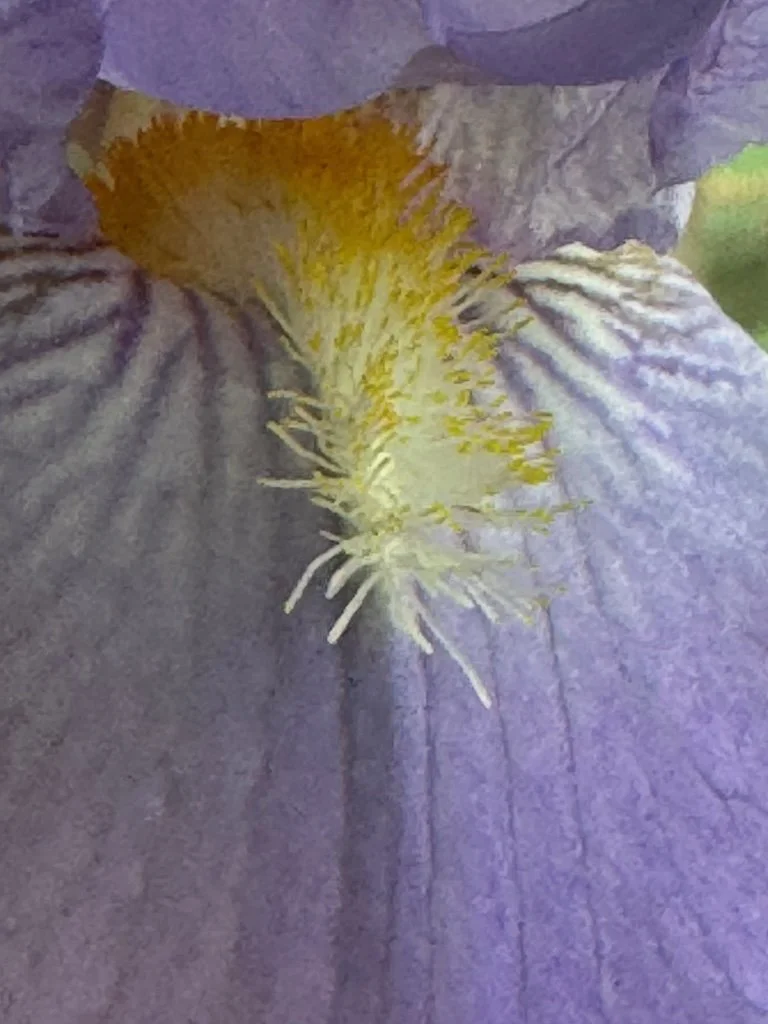
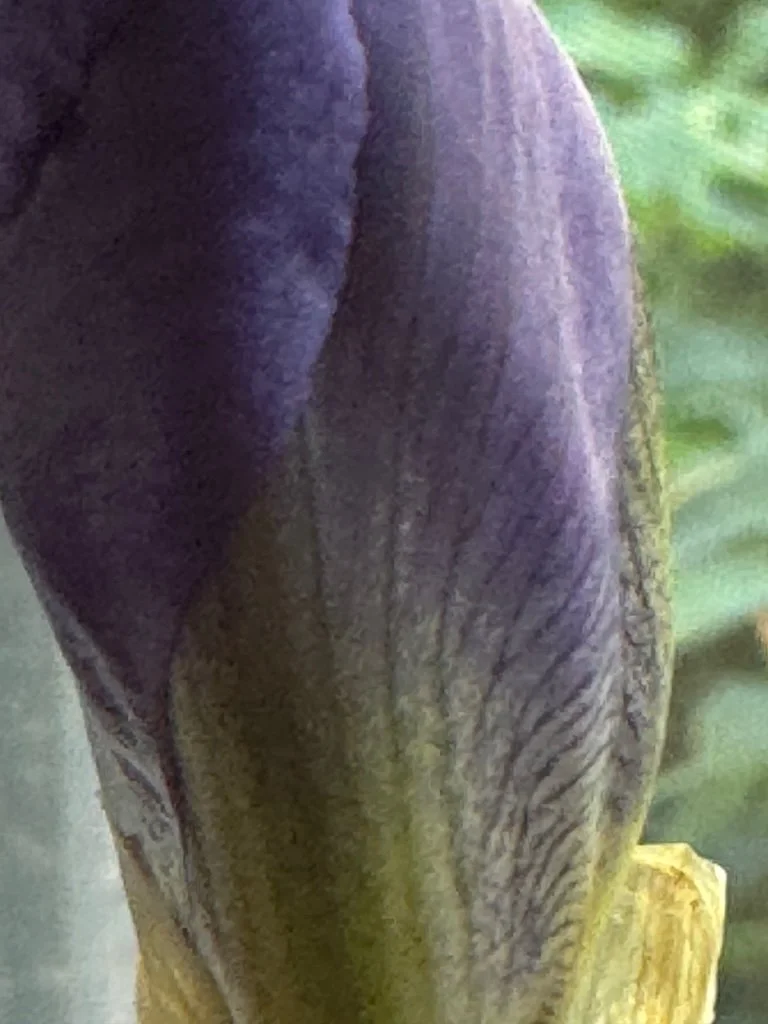
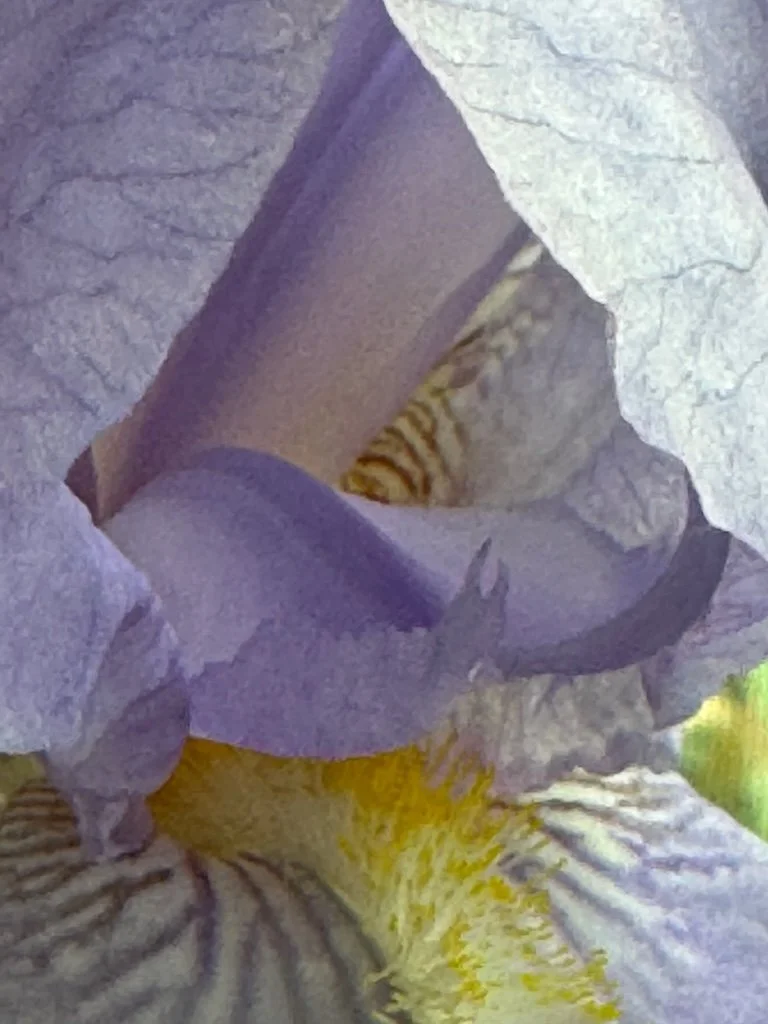
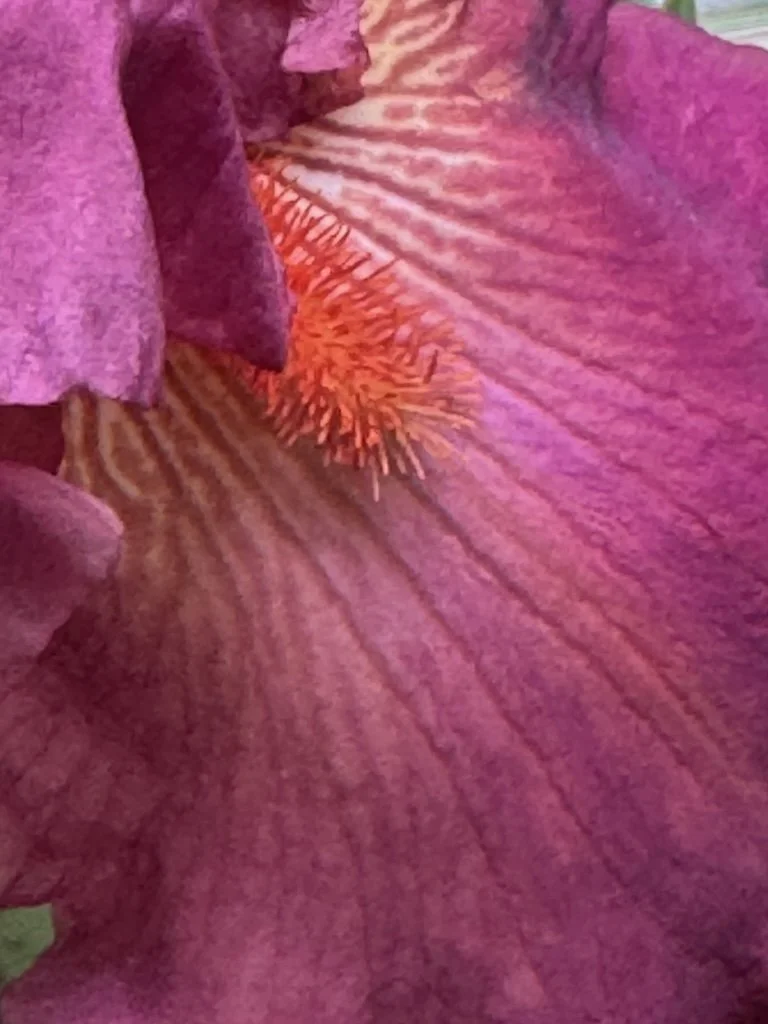
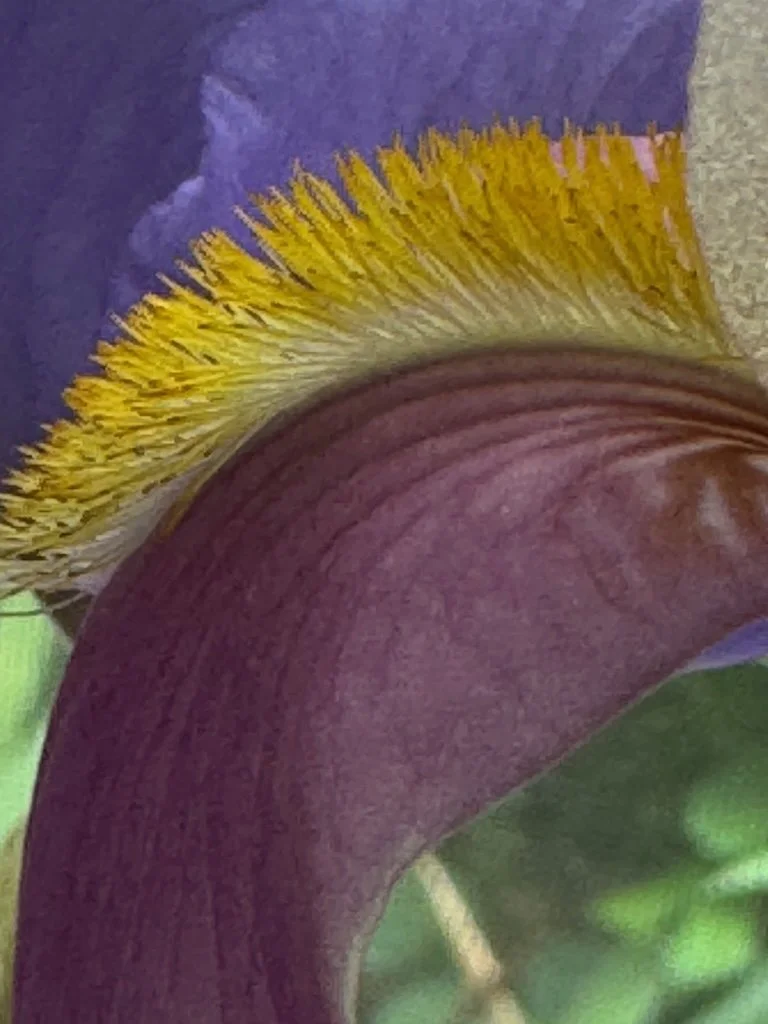
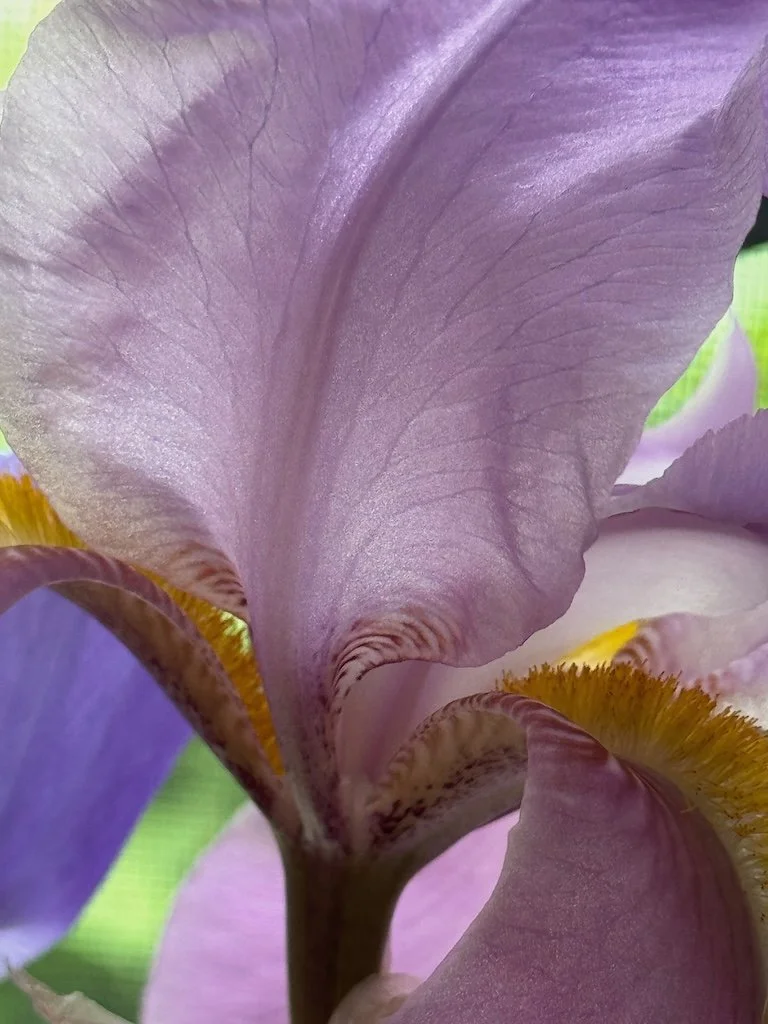
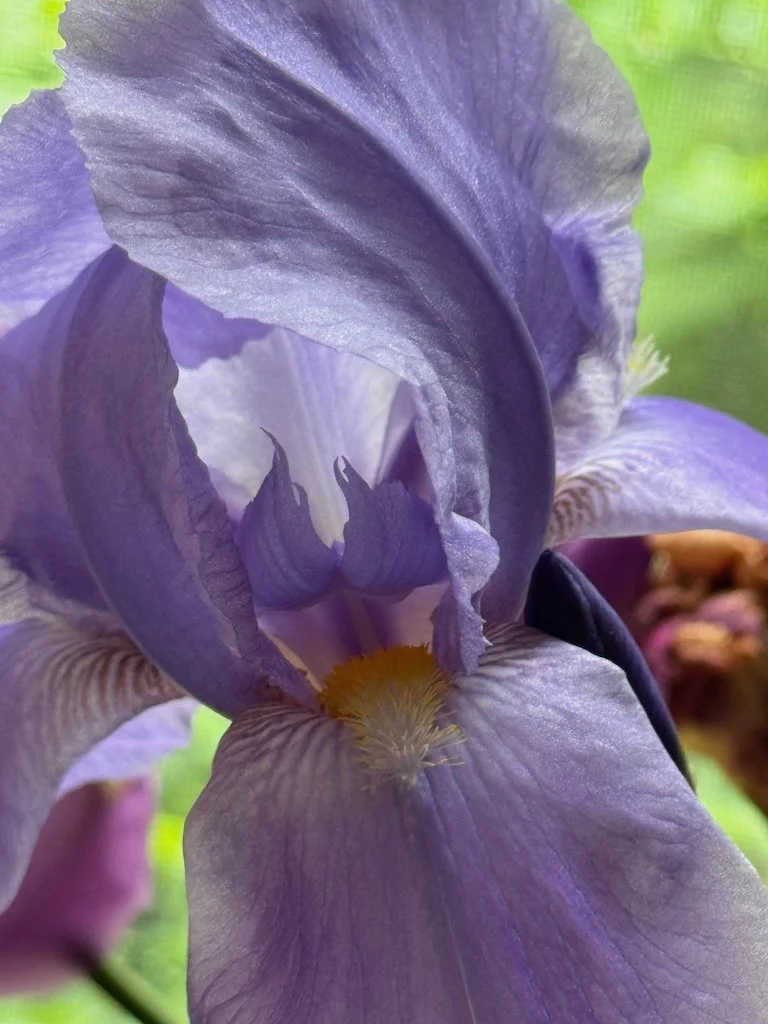
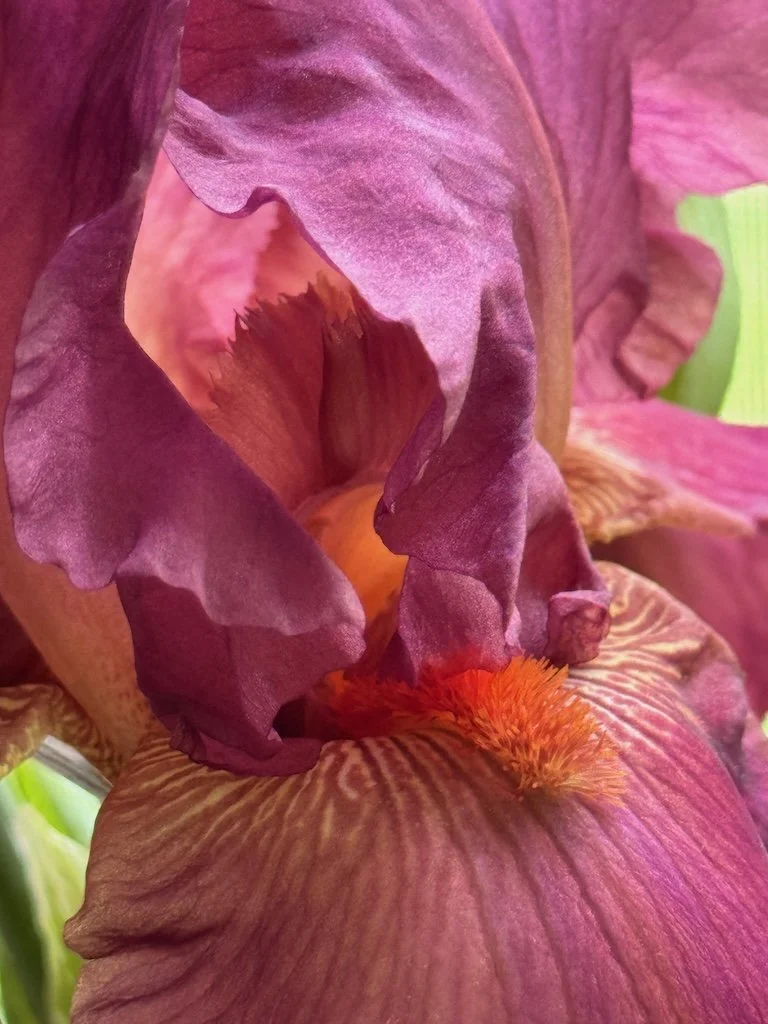
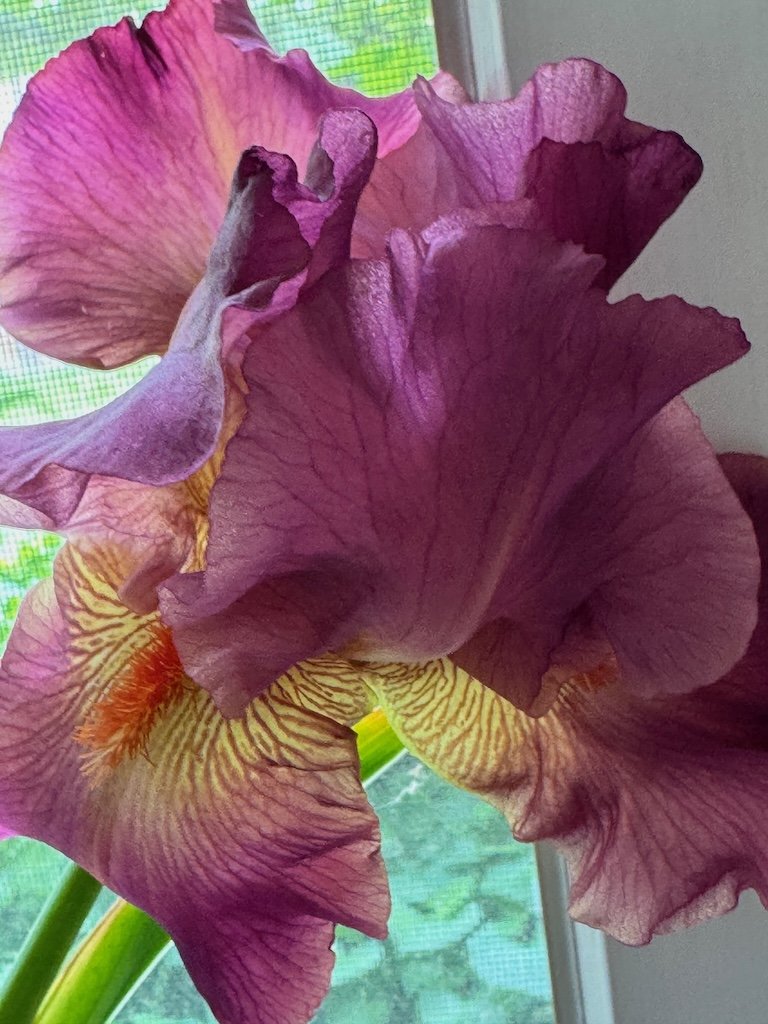
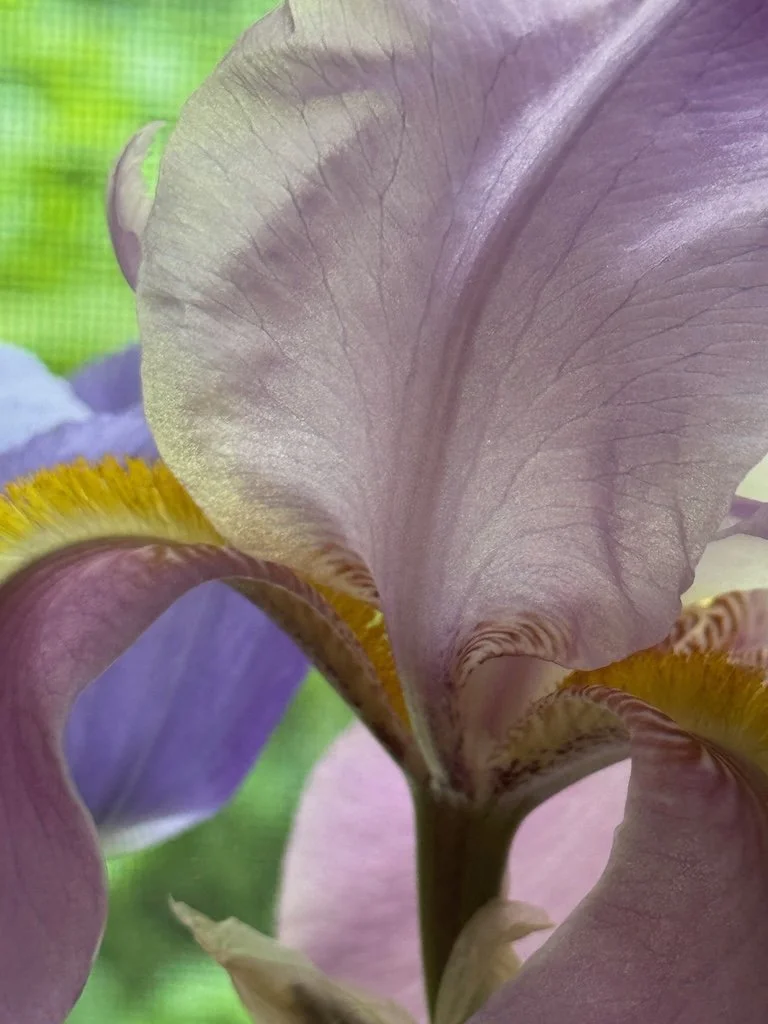
The irises bloomed in several places in the yard. I cut some of them and enjoyed creating some macro images.

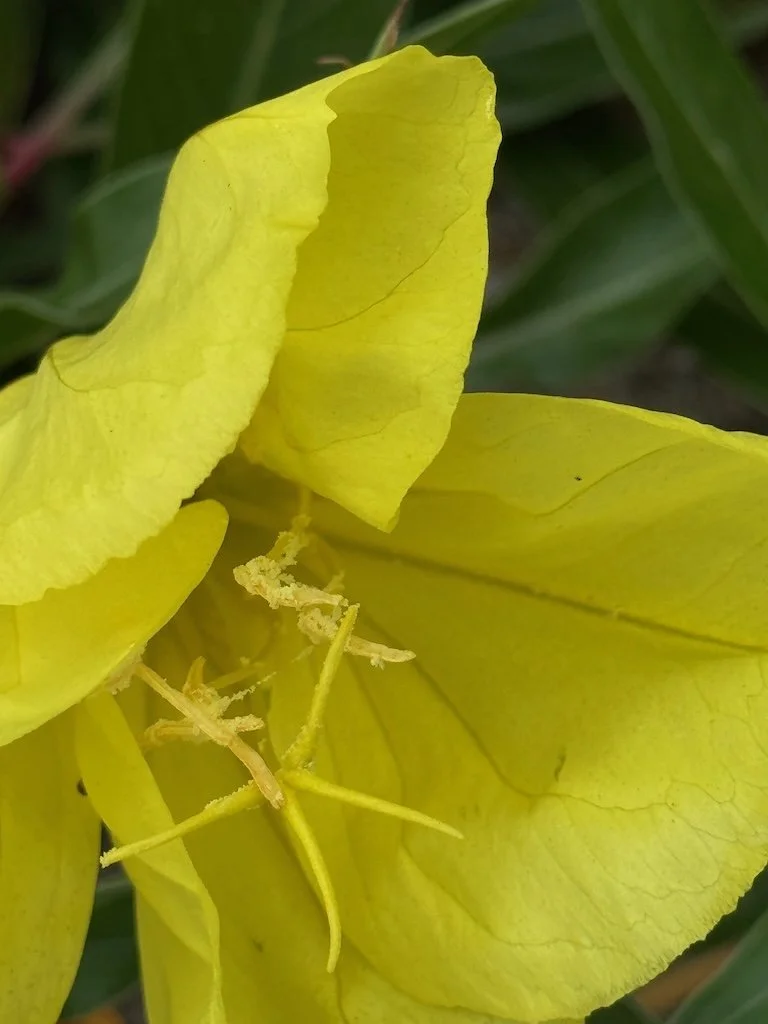
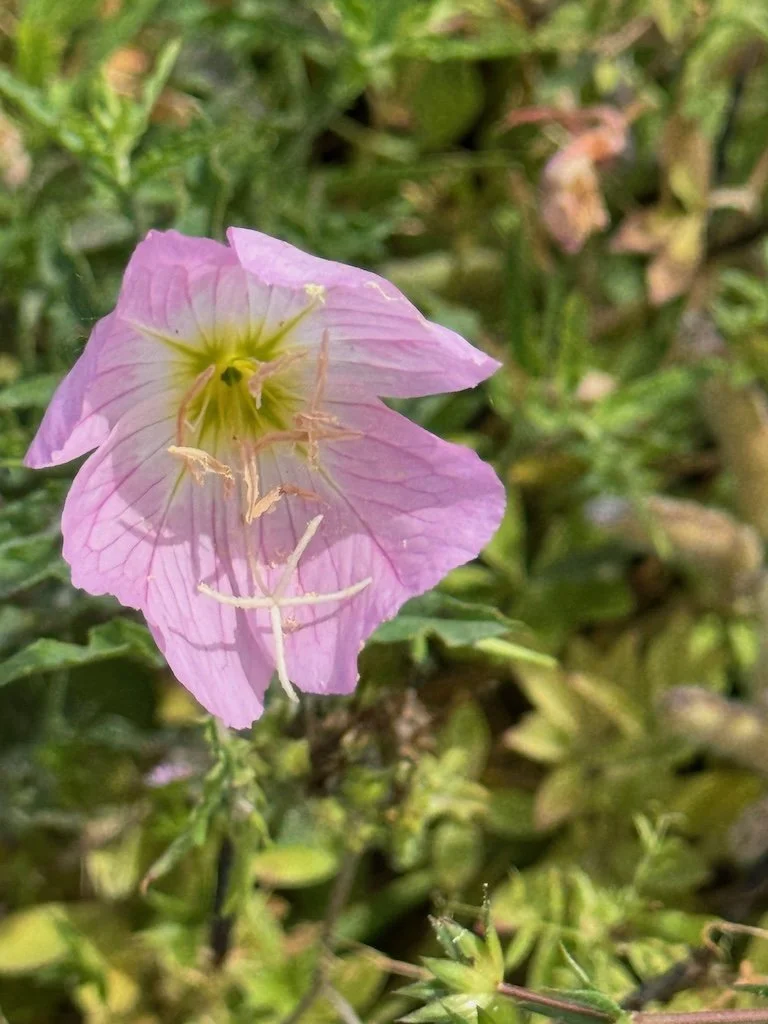
The Missouri evening primrose near my mailbox that was planted last spring is growing well – but not yet blooming. Once it starts it will probably have a lot of flowers.

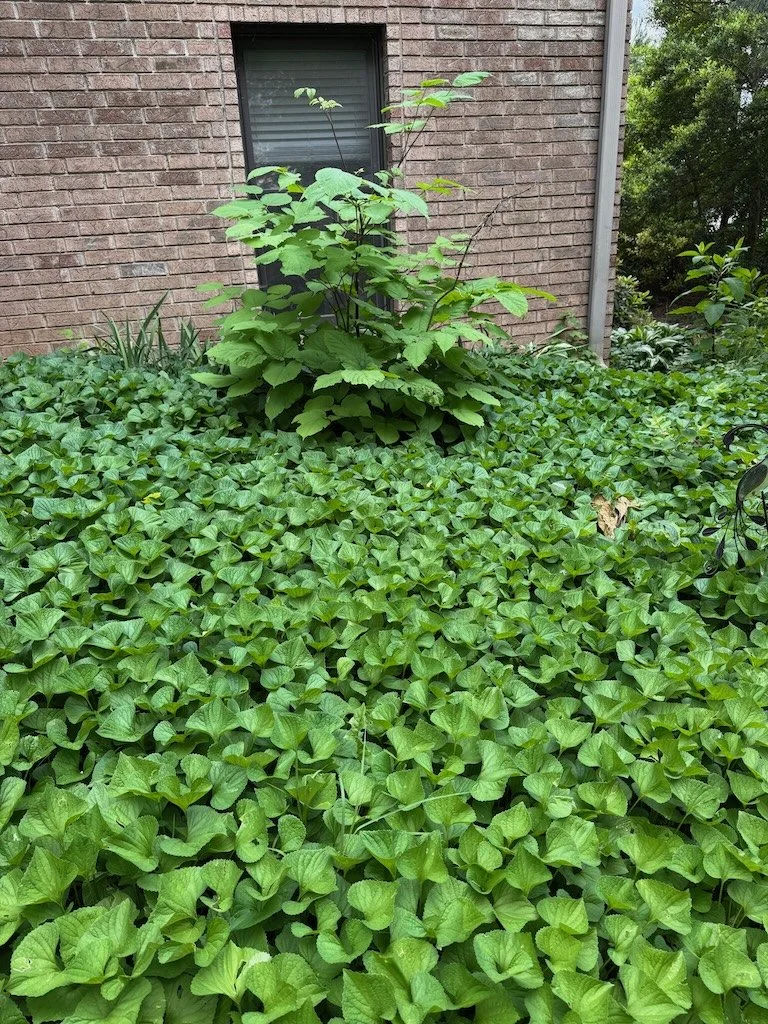
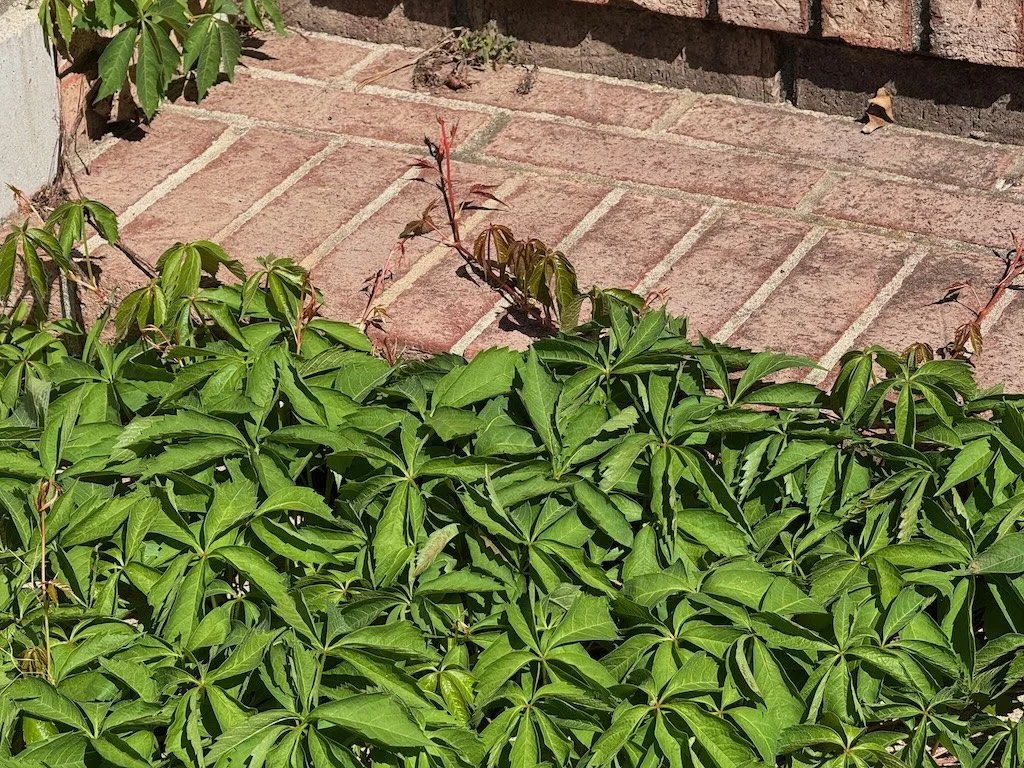
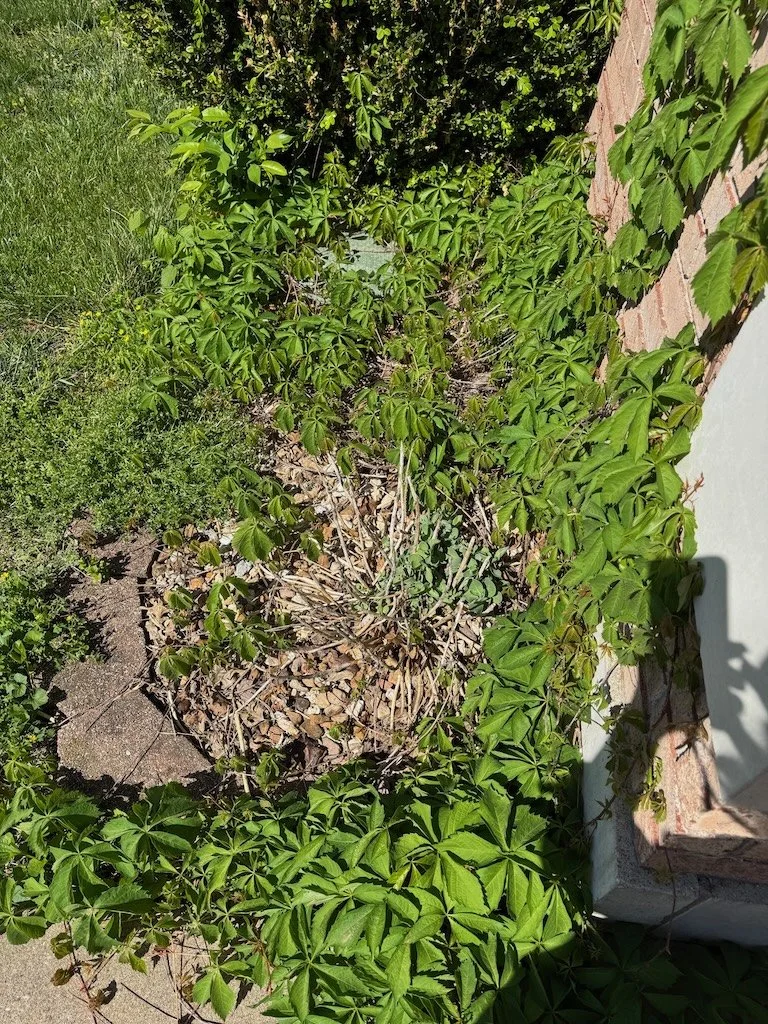
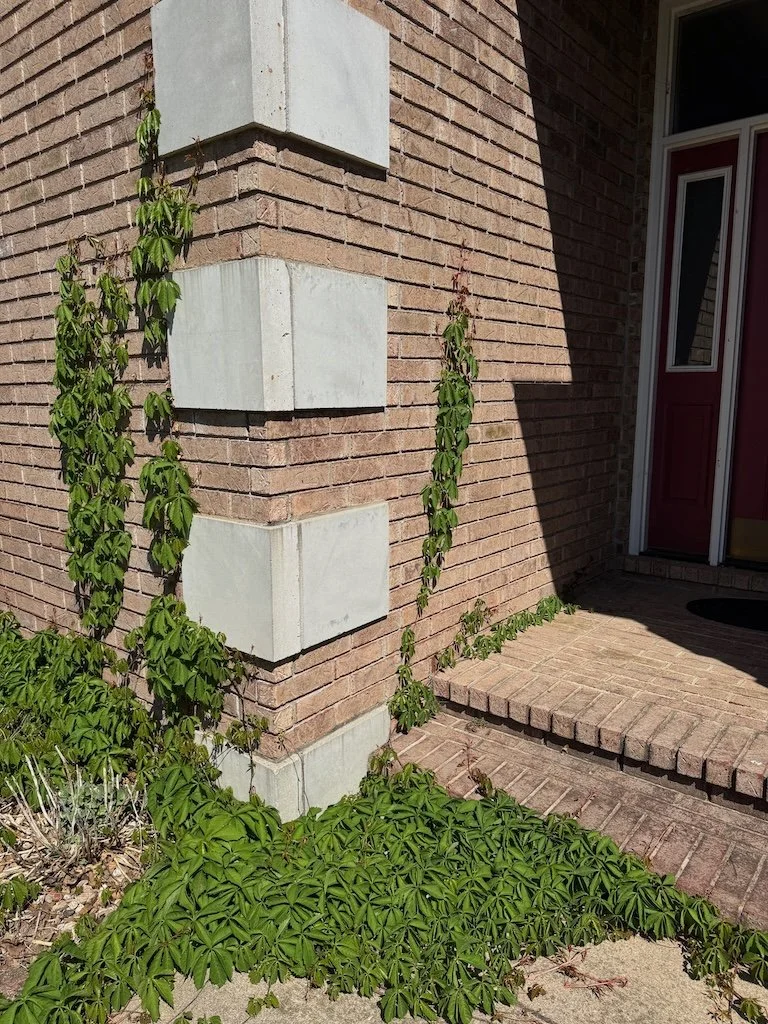
The Virginia Creeper is looking good as the groundcover in my front flower bed.

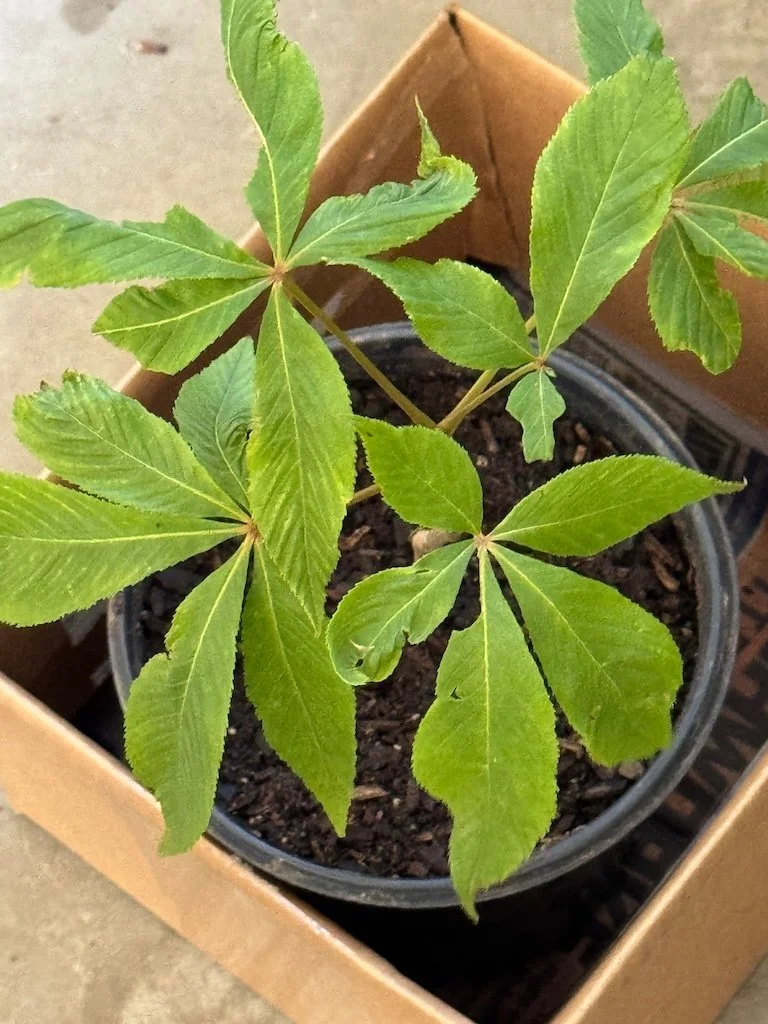
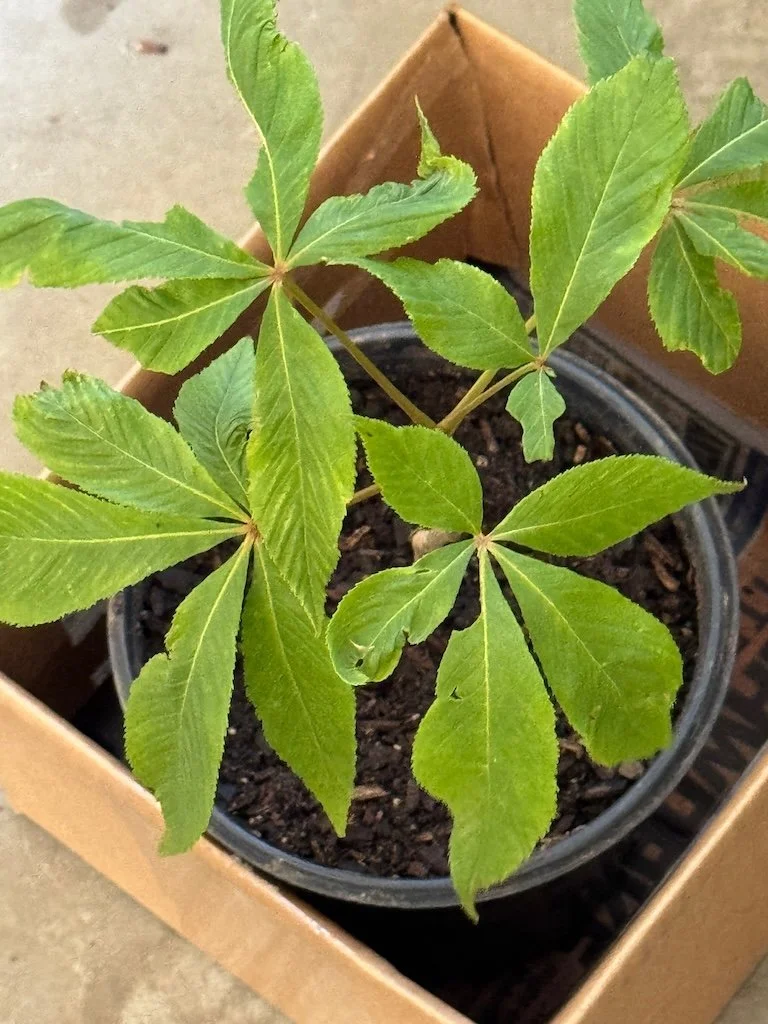
I planted two more native plants near the end of the month: a red buckeye that I got from a Master Naturalist friend to replace the one that froze (and was killed) a few weeks before) and a smooth sumac that I picked up as a give away from a table at the Earth Day Music Festival in Springfield.

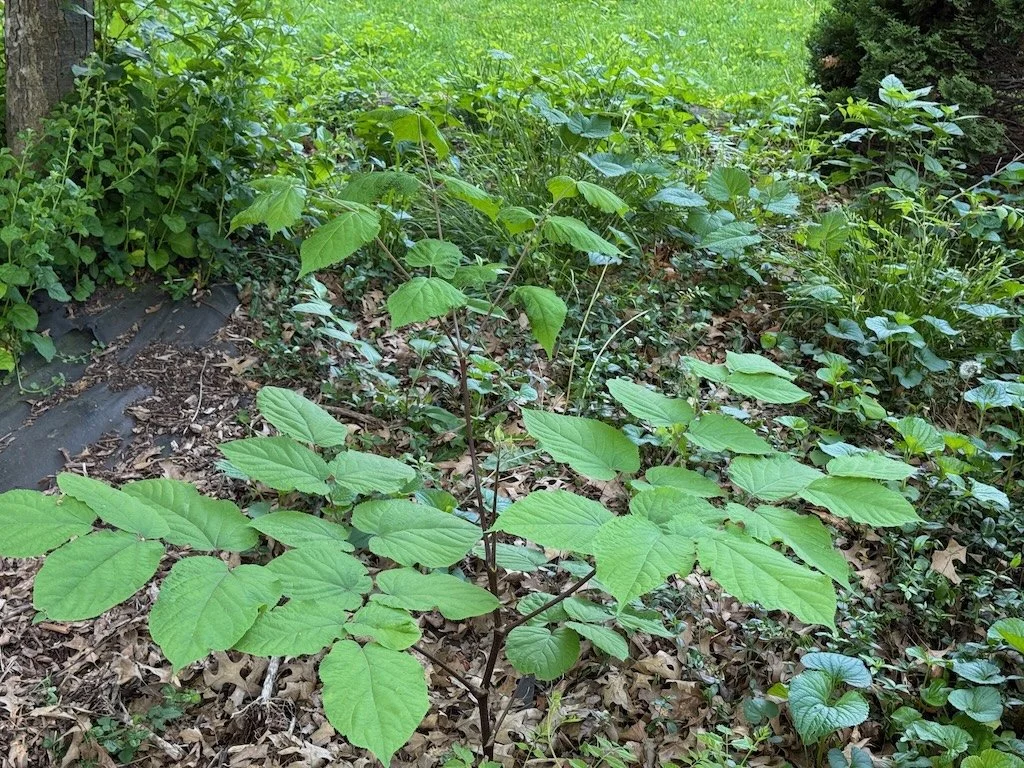
The American spikenard that I see from my office window is on its third season and is almost as tall as me. It dies back to ground level in the winter (i.e. it is not a woody plant) but the roots get more substantial as time goes by and it has been bigger every year I’ve had it.
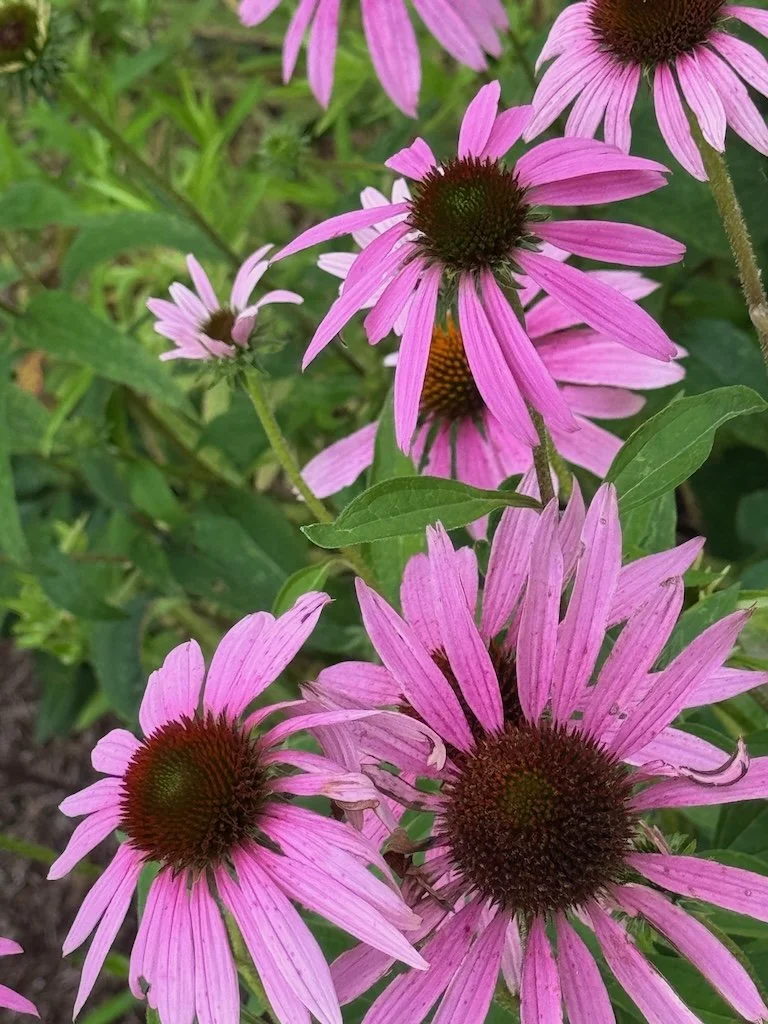
I’m pleased with the way the yard is shaping up for 2026!

Ten Little Celebrations – April 2026

April was full of springtime happenings worth celebrating.

Native plants for my garden. I celebrated finding all the plants on my list at a native plant sale….and when I got all 28 of them planted.

Angel’s Diner. Celebrating finding a great place to stop for lunch on my way home from my monthly trips to Dallas….in McAlester OK.

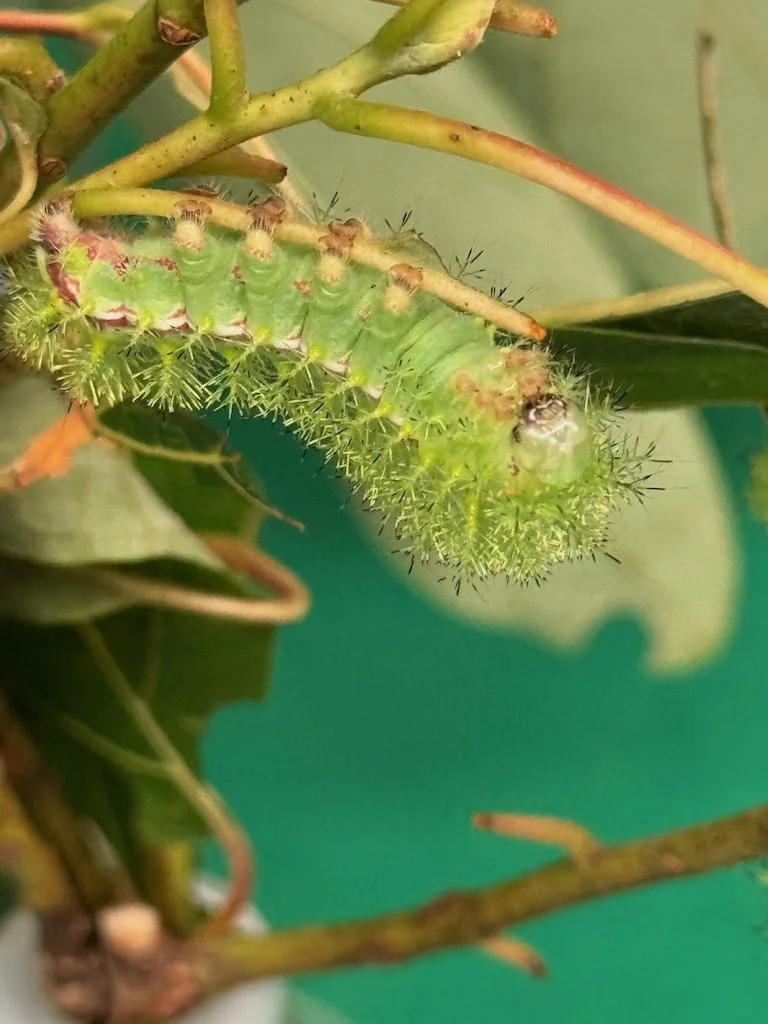
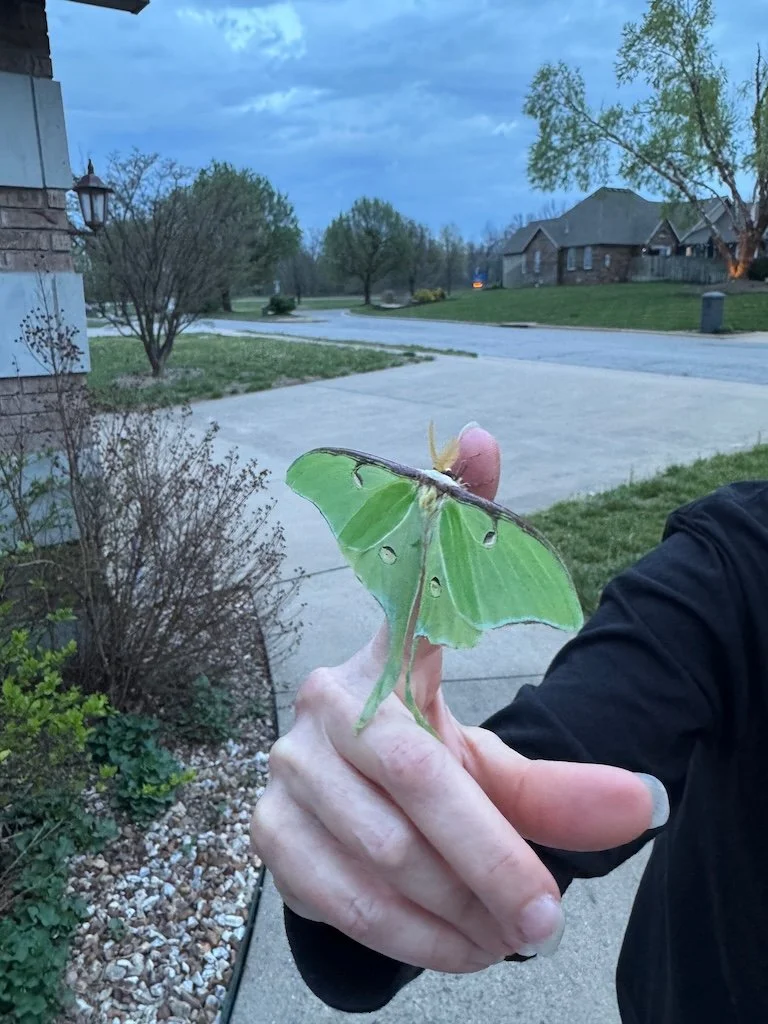
Luna moths. 10 luna moths emerged from cocoons that had overwintered in my John Deere room. I celebrated every time one took off into the wild.

Another red buckeye. My young red buckeye that made it through the winter was killed by several frosts as its buds were popping…so it was a day to celebrate when a Master Naturalist friend dug up a seedling from her yard for me.

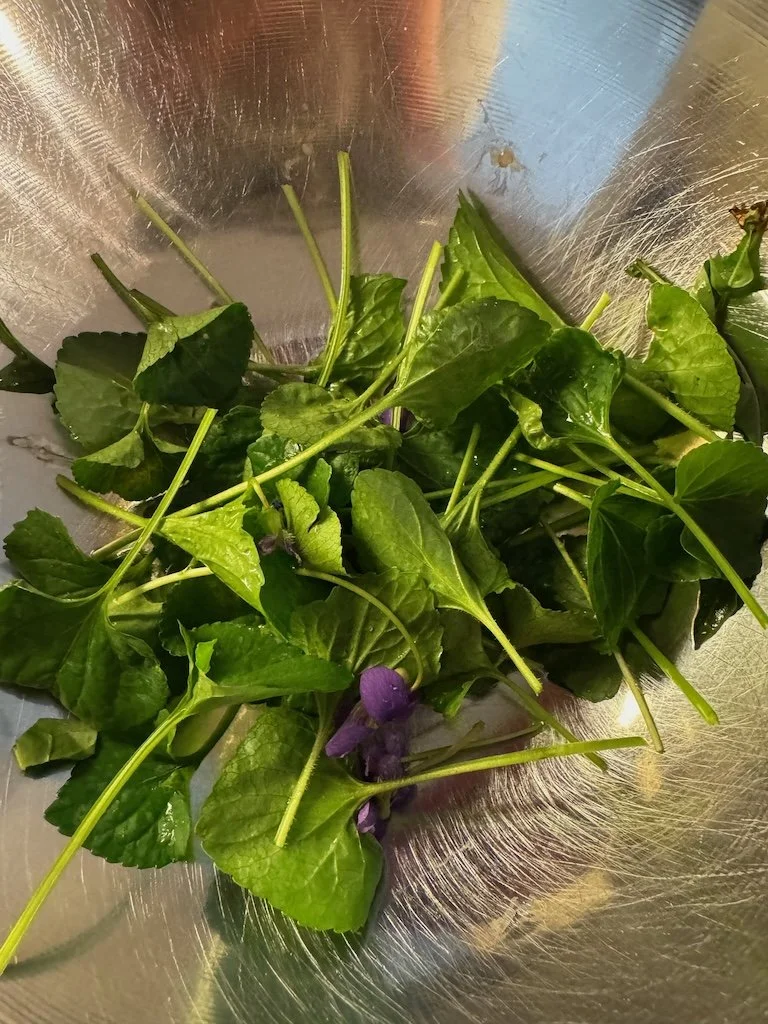
Dandelion and violet leaves in my salads. It’s that time of year when I don’t need to buy leafy greens…there are so many that are available in my yard. I’m celebrating the bounty.

Pawpaw and elderberry seedlings. I hadn’t anticipated how hard digging 10 holes for seedlings was going to be….so the biggest celebration of the day was when it was done!

Earth Day. I celebrated having 2 (very different) tabling gigs for Earth Day this year.

Scissor-tailed Flycather. Celebrating that they are back…I saw one in Oklahoma on my trip to Lewisville/Dallas this month.

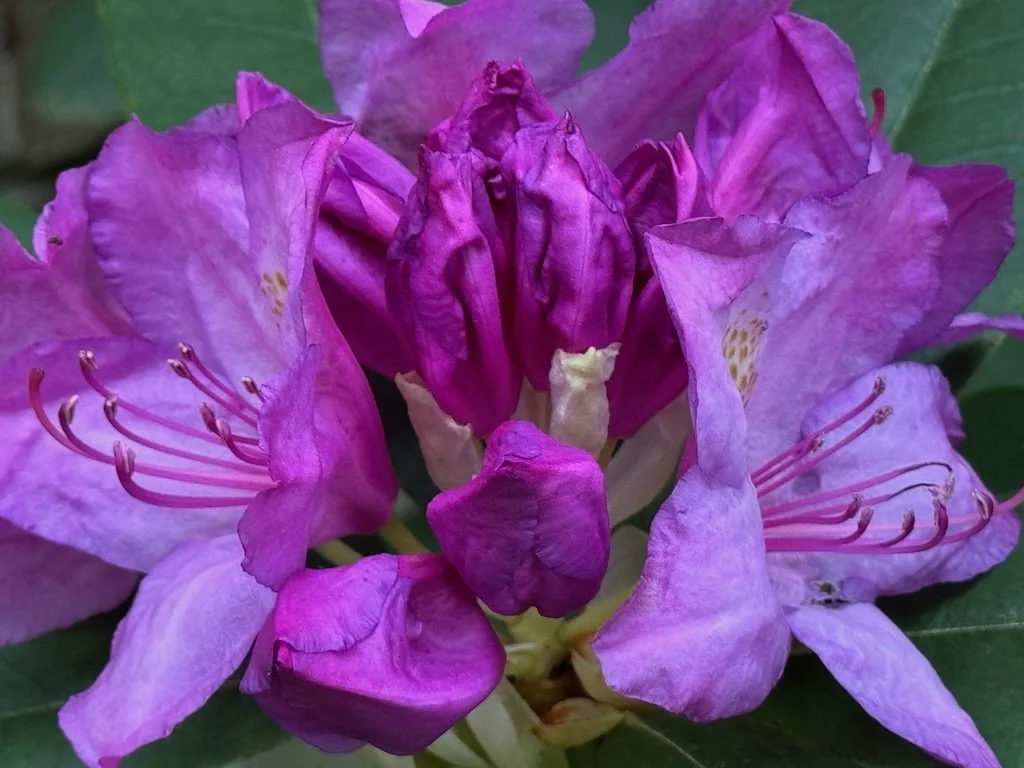
Rhododendron blooming. Celebrating the big clusters of flowers.

Show-me less plastic events. 2 successful events….good interactions and learning experiences. Celebrating baby steps toward plastic reduction.

Pawpaw and Elderberry Seedlings

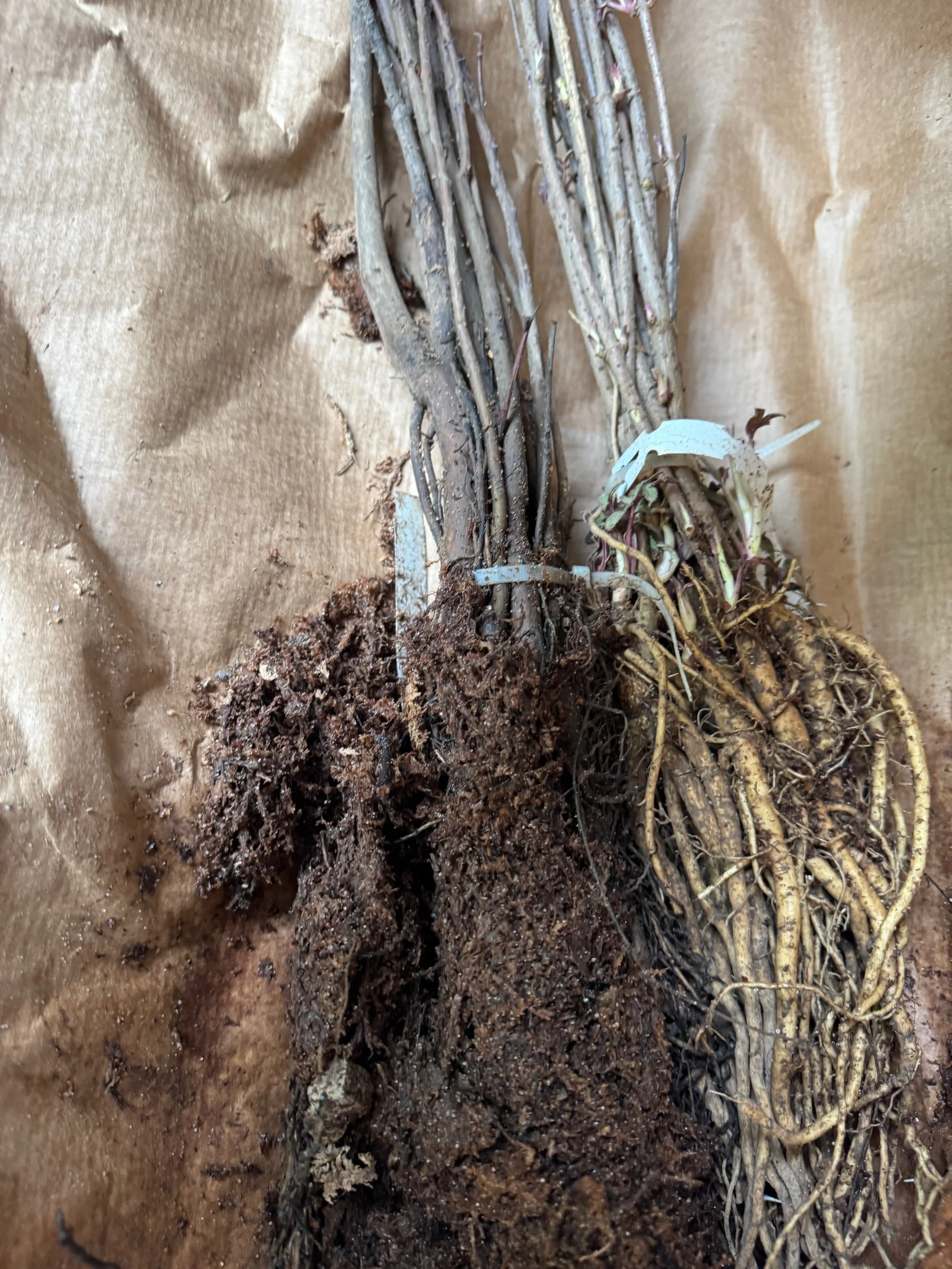
I ordered Pawpaw (Asimina triloba) and Elderberry Elderberry (Sambucus canadensis) seedlings from Missouri’s George O. White State Forest Nursery (a service provided by the Missouri Department of Conservation)….and they came last week! There were 10 seedlings for each species – the plan was for me to plant half of them in my yard and my daughter getting the rest for hers.

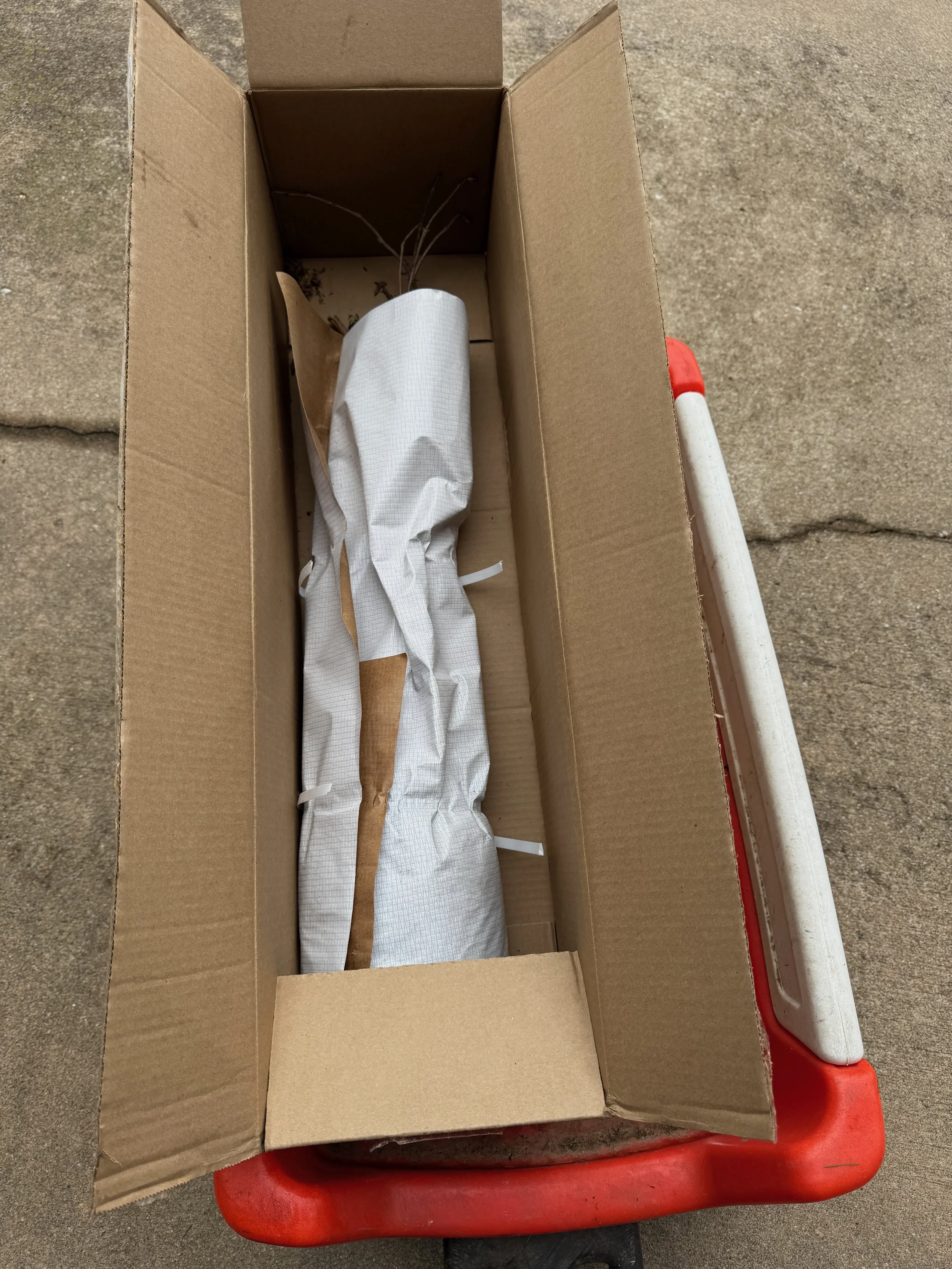
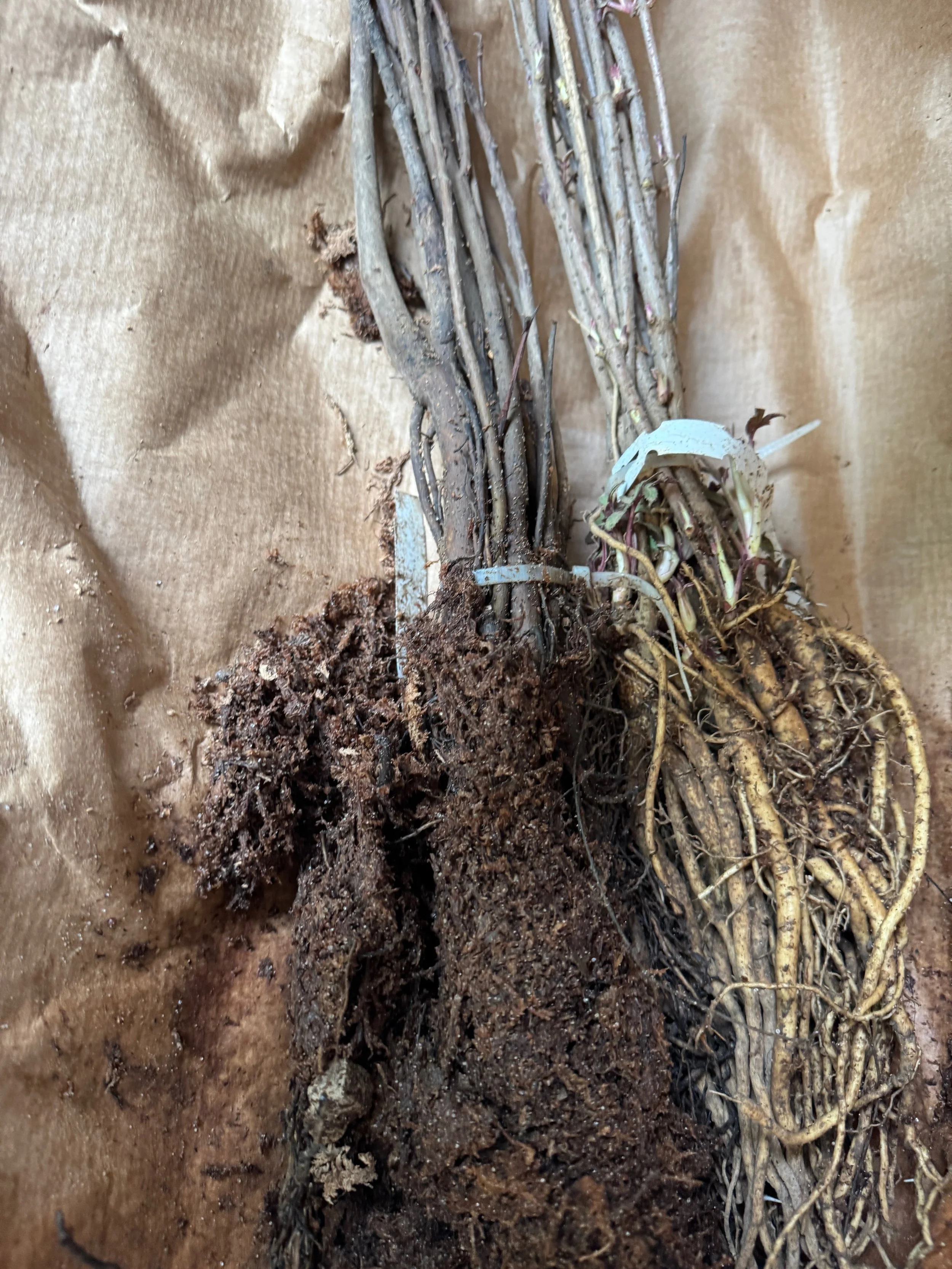
The box came in the evening, and I opted to plant the next day. They came in a box wrapped in paper backed plastic held in place with ties. The tops of some were showing at the top.

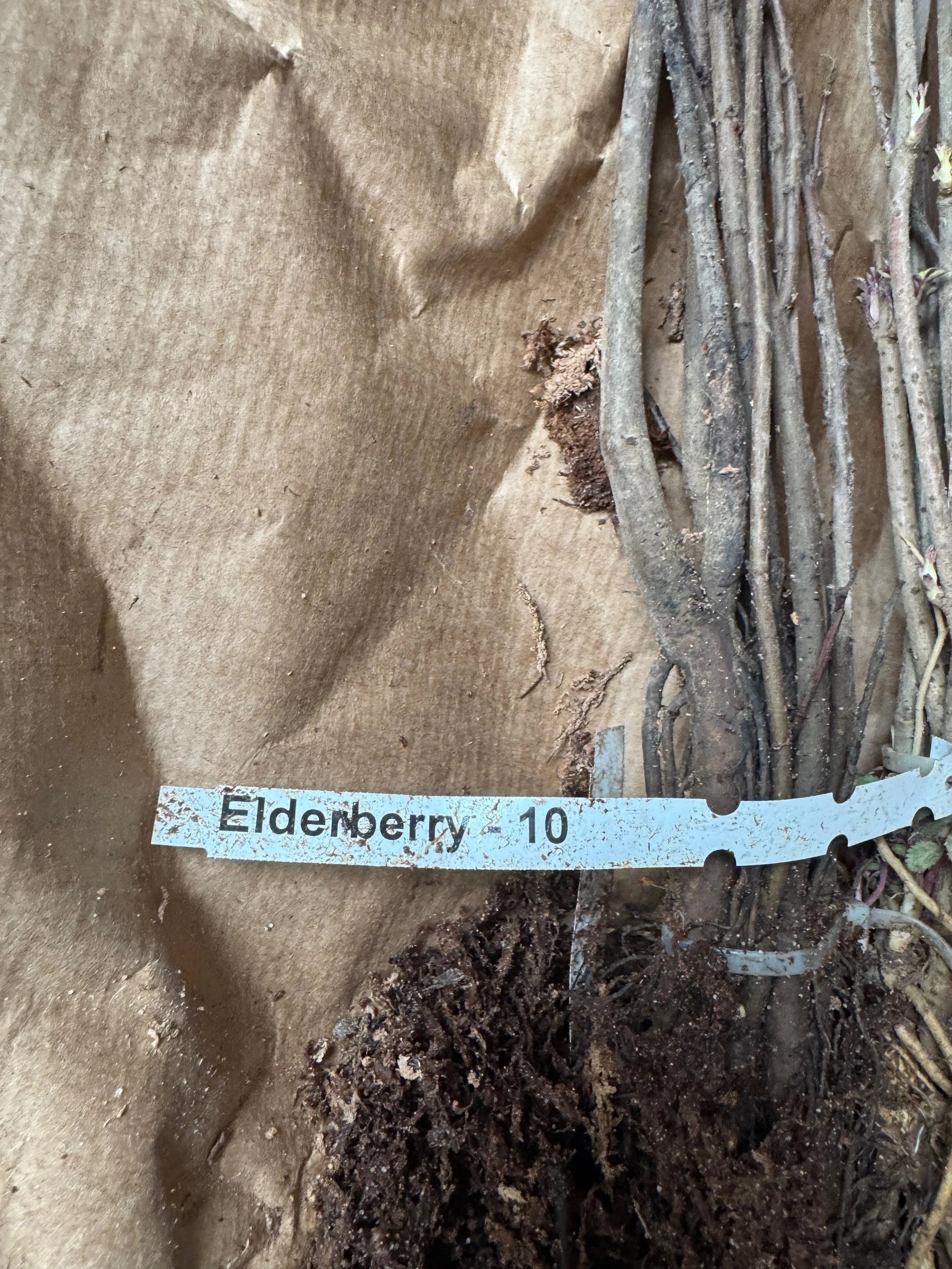
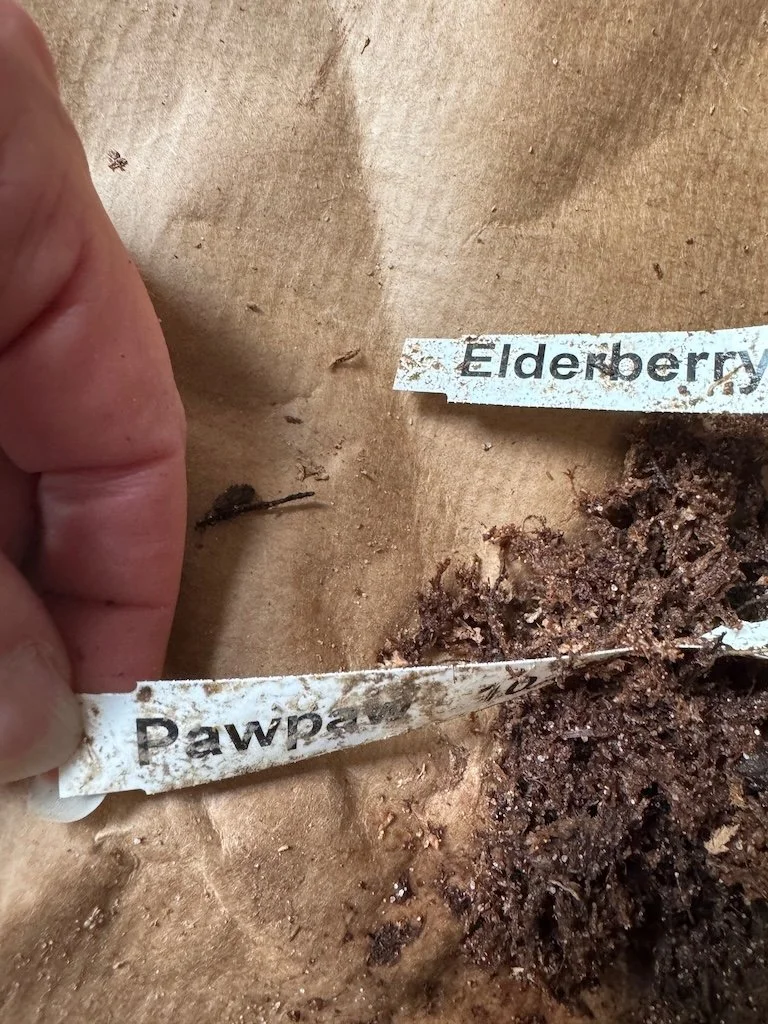
There was an instruction sheet that got a little damp even though it was outside the wrapping. The seedlings themselves had been packed with damp moss. They were labeled – the pawpaw is the darker bark/roots and the elderberry – aside from being lighter in color – had leaves beginning to emerge.

Digging the 10 holes was work; the day was cool but very humid. I planted 3 elderberry in the front yard native plant garden (these were the only easy holes because they were in mulch!), all the pawpaw in an area of my backyard that will become my pawpaw patch (it already had one plant that I purchased last fall), and the other 2 elderberry at two places in my back yard. It had rained not long before I planted, and rain was in the forecast, so I packed down the soil around them and let nature take over.

I finished up and took the remaining seedlings to my daughter…left her to dig her own holes. It was an exhausting day.

I hope at least half of what I planted survive….would be thrilled if more did. Getting seedlings this way was less expensive than buying that many plants from at native plant sales, but I am not as confident about their survival.

Suburban Savanna - 1

Shortly after I started the 9-month Missouri Woodland Mentor series back in January, I started pondering whether the sterile suburban yards (highly fertilized, sprayed with pesticides, rigidly trimmed, full of non-native plants, toxic to most wildlife) could be transformed into something with a positive impact on the natural environment. It seemed to me that the definition of a savanna fit closest to what suburbs looked like on the surface: grass interspersed with trees providing less than 30% canopy cover.

There are some qualities of a suburb that would work against it becoming a full-fledged savanna:

There is too much impervious surface: streets, houses, sidewalks, driveways…which means that water will run off more quickly. There are often water retention ponds in newer developments to collect run off – somewhat slow the flow.

The building of the houses and infrastructure often is a severe disruption to the land: scraping off topsoil and hauling it away, removing almost all vegetation, and planting of turf. Sometimes there are a few trees planted by the builder – but they are not necessarily natives.  It takes a long time to recover from that disruption. It is the starting point for neighborhoods to progress toward a suburban savanna.

Even with those challenges, there are things I am already doing to nudge my yard toward the savanna goal:

I don’t spray pesticides or herbicides….and I don’t fertilize.

I don’t mow the fall leaves in my back yard until late spring (let the moths and insects emerge.

The non-native trees to Missouri (a Kousa dogwood and an eastern white pine and a variety of holly) are not going to be cut down…but I am planting more native woody plants: pawpaw, fragrant sumac, spice bush (hosted spice bush swallowtail caterpillars last summer), red buckeye, elderberry, and Ozark witch hazel. A red maple and shortleaf pine are the two native trees that were already growing in my yard. The forsythia and Japanese barberry will eventually be dug up.

The violets that were contained in a bed on the east side of the house when I moved here have been allowed to spill out taking over half the grass/moss area of that side yard. I have noticed more birds finding food in the debris from the violets over this past winter – even that small change has made a difference to birds.

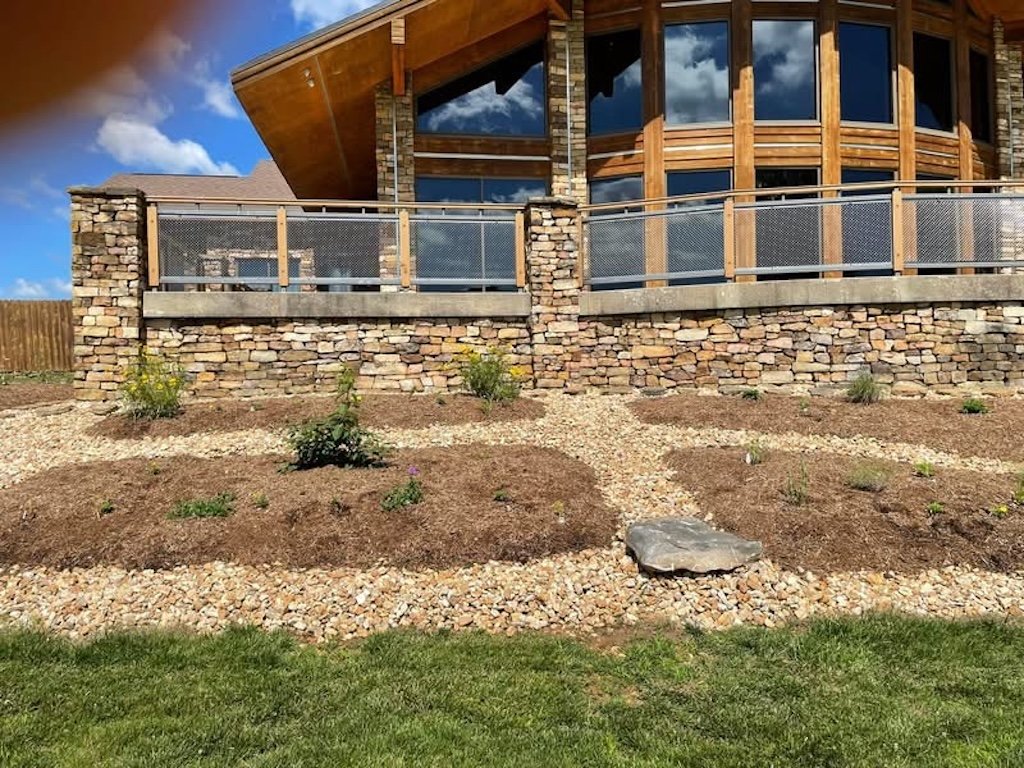
I have planted a native plant garden in the middle of my front yard. As it matures – I will extend it so that there will be less ‘turf’ remaining.

Last summer I avoided mowing patches of clover I found growing in the year as a step toward improving the quality of the soil.

I am learning to recognize goldenrod, asters, and Rudbekia coming up in my yard that I can simply mow around!

I will post next month about my progress transforming my yard into a suburban savanna. My focus currently is on my yard …but I will take every opportunity to encourage others in my neighborhood to begin the process as well.

Planting Native Plants in the Front Yard

I waited a day or so to plant the young plants – when the nighttime temperatures would not be dipping into the 30s again. I planted into the oak mulch that I had put down last fall. As I made the hole for the first plant, I noticed that the surface was dry but underneath for very moist. There were worms and small grubs and white fungus hyphae. The new plants are going to love it. Of course, this also means that plants I don’t want there were going to love it too….I will need to recognize and pull as they appear!
I planted 8 plants on the first day:

Wild Blue Indigo Baptisia australis and Cream wild indigo Baptista bracteate

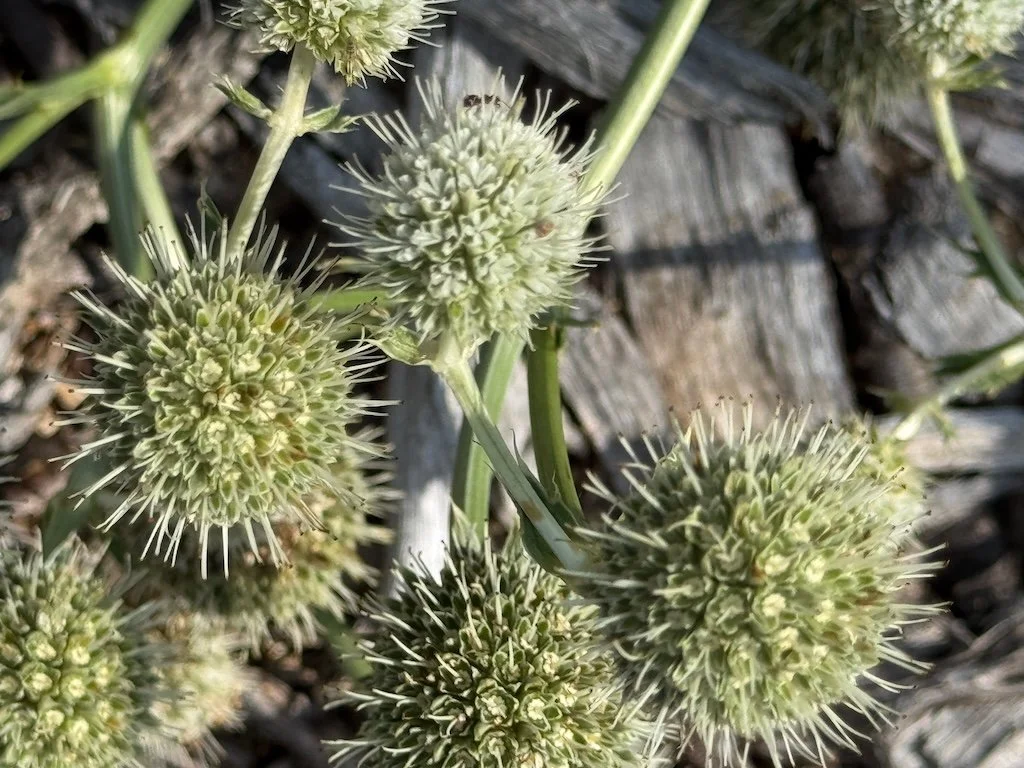
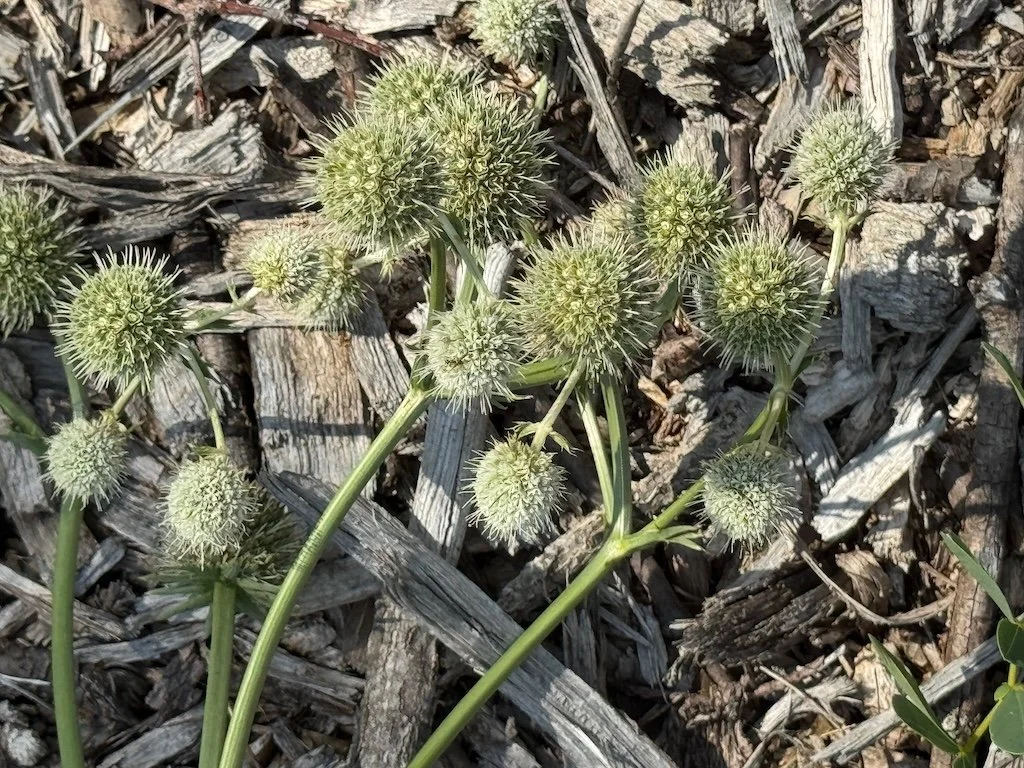
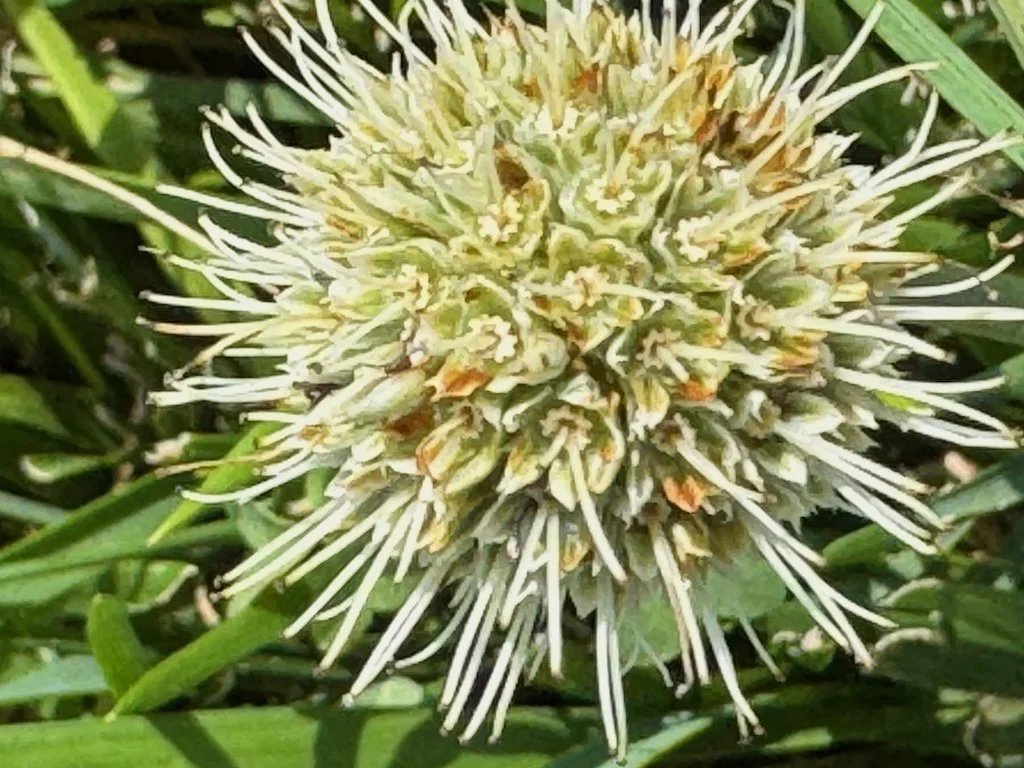
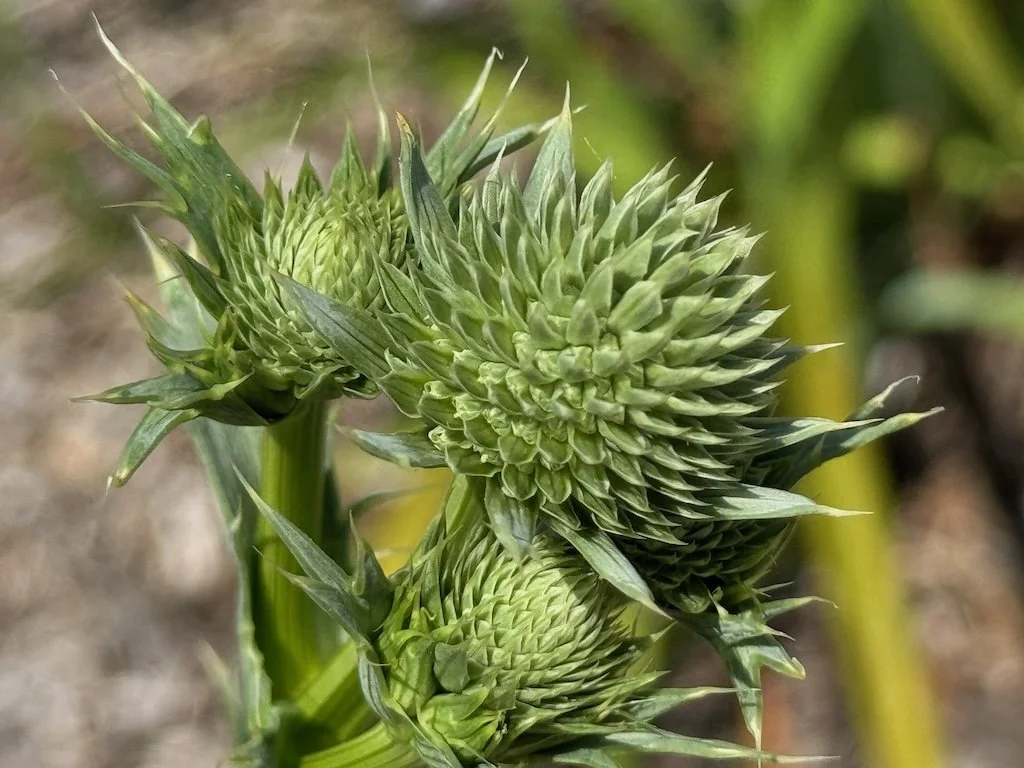
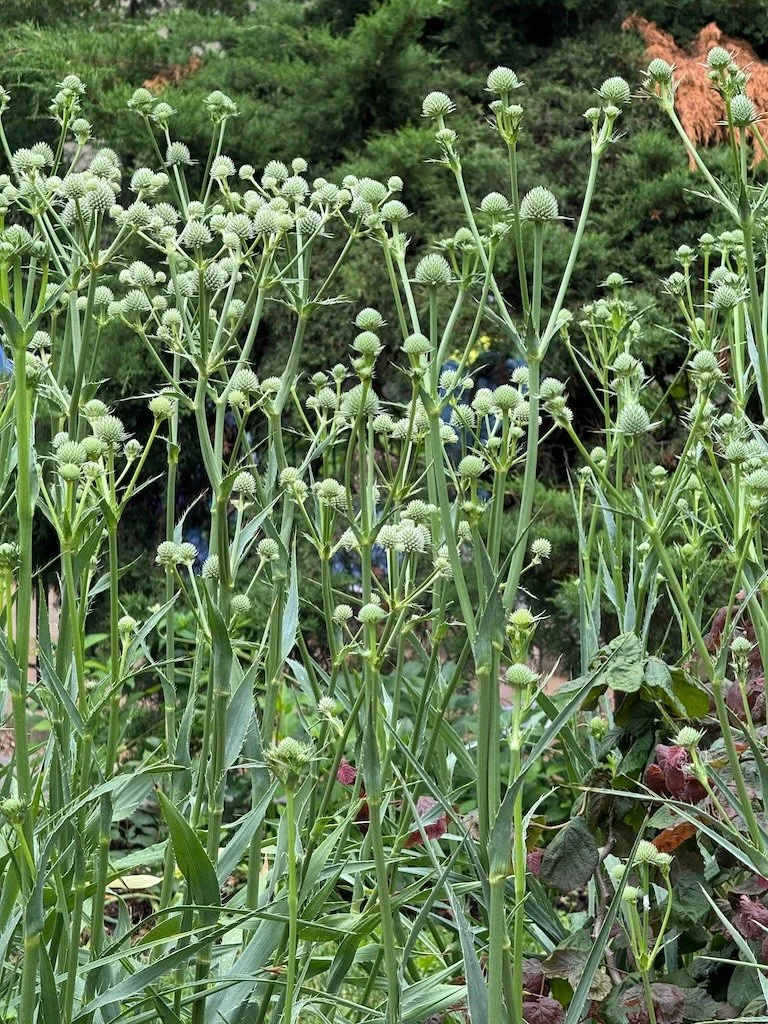
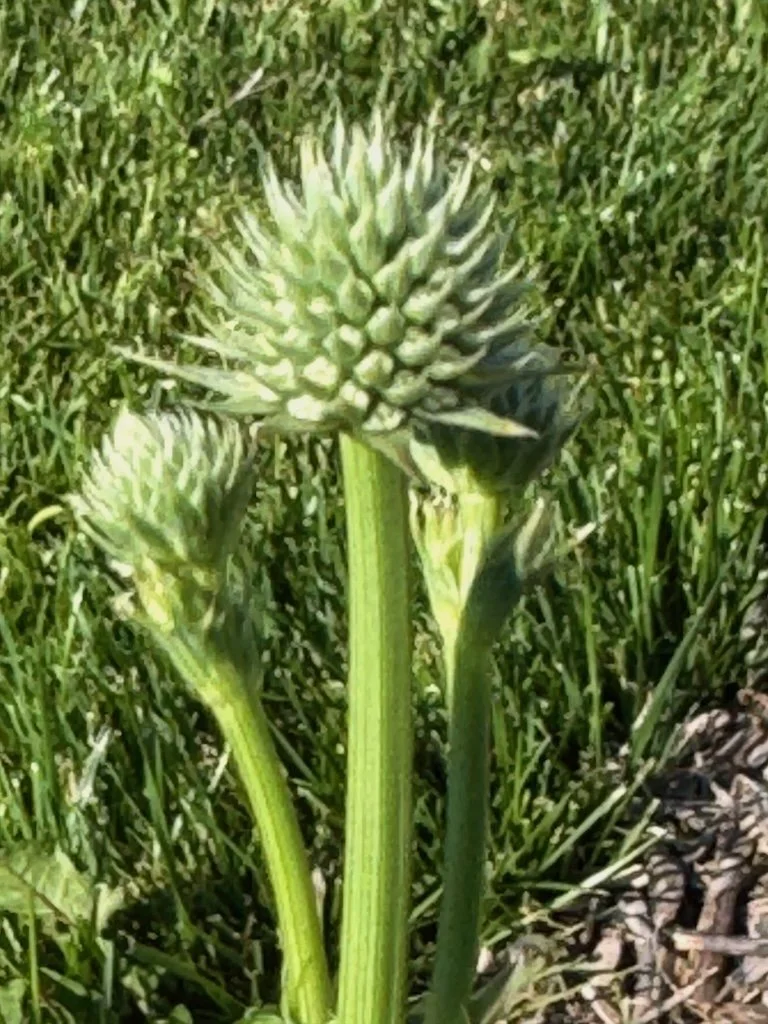
Rattlesnake master Eryngium yuccifolium and Golden ragwort Packera aurea

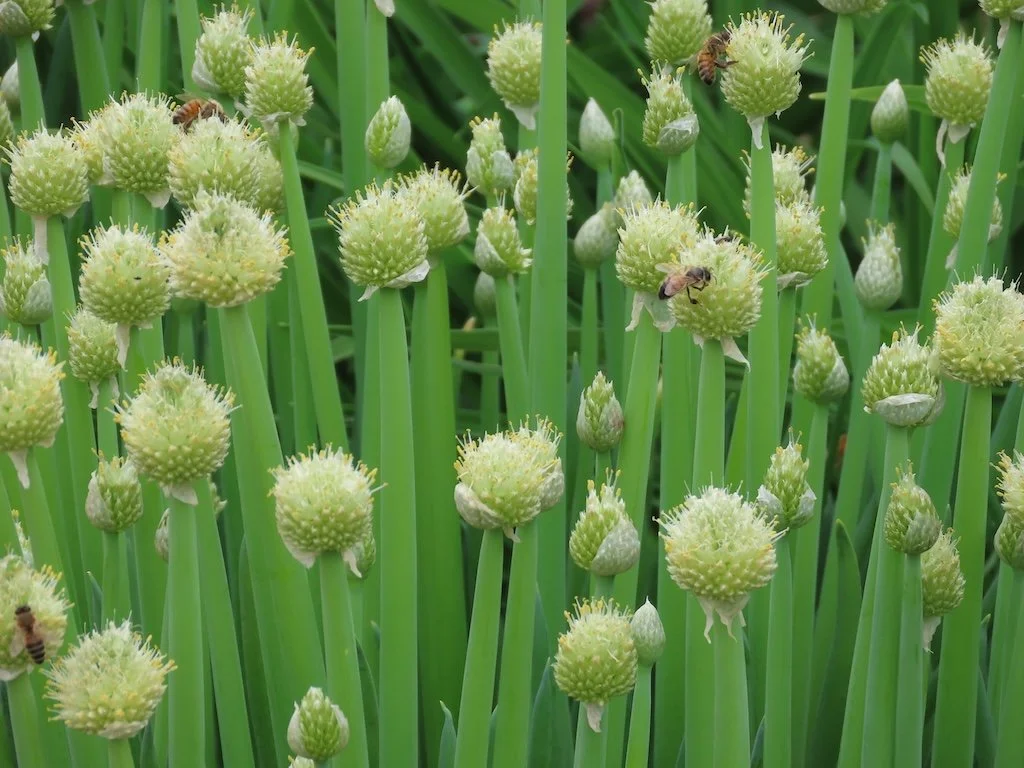
Missouri Evening Primrose Oenothera macrocarpa and Nodding Onion Allium cernuum

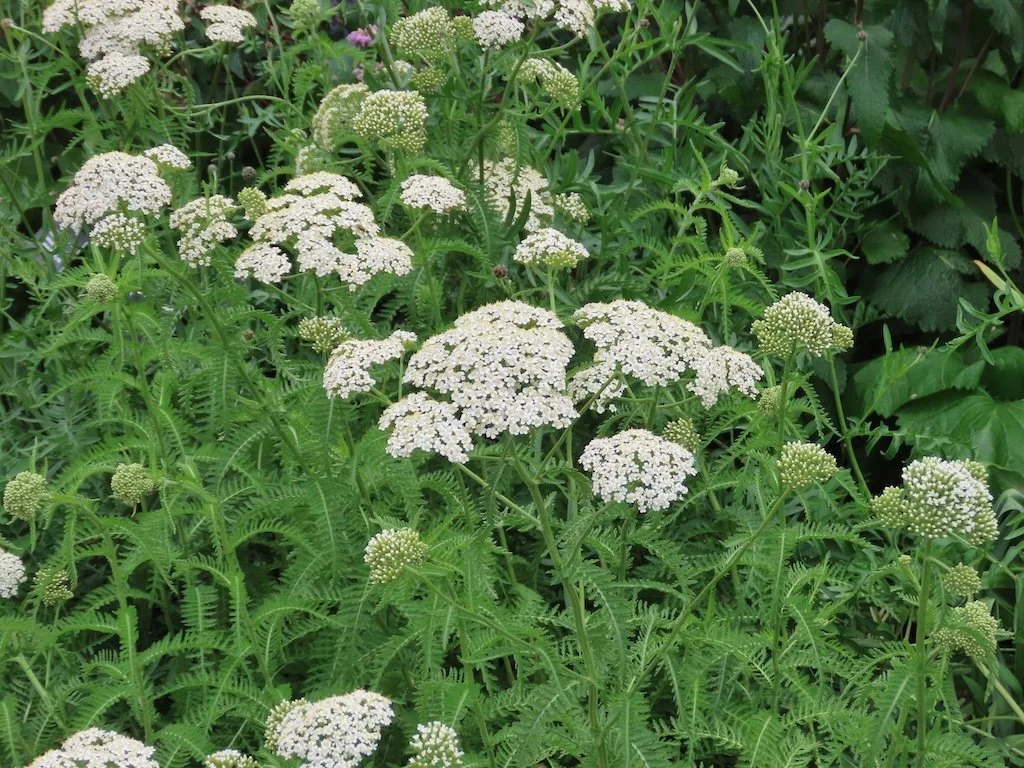
Yarrow Achillea millefolium and Little Bluestem Schizachyrium scoparium

The Soapweed yucca Yucca glauca was planted the following day in a bed where I had to remove rocks and landscaping cloth. The bed is not covered by our sprinkler system and some of the plants previously there had not done well with the dry conditions.

Now that this first round of plants is in the ground, I am in monitoring mode….to water if it doesn’t rain enough and to pull weeds. I am expecting some elderberry seedlings that I will add to the front garden….and some pawpaw seedlings that will join one I planted last year in my back yard (completing the pawpaw patch).

Buying Native Plants for the Front Yard

The local nature center hosted two native plant vendors (Ozark Soul and Missouri Wildflowers Nursery) on a recent Saturday, and I bought the initial plants for my new front yard native plant garden. The oak chips have been in place since last fall, and the temperatures are warm enough to begin plantings. It was a damp morning, but my daughter helped by volunteering her time and her car; we loaded up three bins of plants.

I took pictures of the bins when I got home and documented what I bought. I’m keeping a record of what I buy, plant…what survives.
In bin1 there are:

  • 10 Missouri Evening Primrose Oenothera macrocarpa The one near my mailbox is doing very well and these plants will become the ground cover level of my native plant garden.

  • 2 Little Bluestem Schizachyrium scoparium It will be the background for the lower part of the garden….and show up more after other vegetation has died back for the winter.

  • In bin 2 the rows from top to bottom are:

  • Little Bluestem Schizachyrium scoparium, Nodding Onion Allium cernuum, Wild Blue Indigo Baptisia australis

  • Rattlesnake master Eryngium yuccifolium, Nodding Onion Allium cernuum, Wild Blue Indigo Baptisia australis

  • Rattlesnake master Eryngium yuccifolium, Yarrow Achillea millefolium, Rattlesnake master Eryngium yuccifolium

In bin 3 the rows top to bottom are:

  • Golden ragwort Packera aurea, Soapweed yucca Yucca glauca

  • 2 Cream wild indigo Baptista bracteate

  • Soapweed yucca Yucca glauca, Golden ragwort Pakera aurea

My next post will be about planting these into the garden. There are 28 plants in all.

There is another native plant sale at the botanical garden in early May. Hopefully these plants will be thriving, and I can focus on filling in with the plants that will bloom into the fall…provide food for pollinators at the end of the season.

Battle with a Forsythia

The forsythia was in the northwest corner of my backyard when we bought the house. It is non-native and does not do anything for my yard’s ecosystem – no pollinators visit its blooms; nothing eats its leaves. I have been trying to keep it controlled for the past few seasons, but it always seems to grow faster than I can prune it. I should have cut it and painted the stumps with poison last fall.
I did manage to cut it back more than ever before one morning last week and will go back to cut more soon. It was a lot of work, and I managed to clog my pruning chainsaw; that will take some effort to get it working again. I did most of work with my manual long handled pruners.  My gardening seat worked well….I slowly moved it around the plant cutting everything I could reach. My back only started hurting when I started carrying the trimmed branches up to the patio to dry (and then burn in a few weeks in the chiminea).

Last year I waited until after the plant had bloomed and it was a big mistake. This year there were a few flowers open….but I cut it all away from the plant! I am going to plant some native plant seeds in the soil left bare – it will be a bonus if any come up. I’ll keep cutting the forsythia back as severely as I can over this next season to give the other plants a chance to take over.

Oak Mulch

The tree service finally came to trim my daughter’s oak and to handle a larger branch that fell from her Amur Maple…and they left a substantial pile of (mostly) oak mulch as we requested.

I have big plans for that mulch as part of my plan for transform my front yard with a native plant garden. I had used mulch from a maple there that had to be removed last summer to create three areas in my front yard and with the additional mulch I could make a much more substantial area for planting next spring.

We loaded bins and moved the pile one carload at a time. Even after the first 4 loads the new bed was looking bigger.

After the first big day, I only managed 2 carloads per day. It took 5 days in all (a total of 12 carloads…about 1.5-2 hours per load depending on traffic). On the last day, I was celebrating that my daughter’s driveway was back to normal….even though I still needed to spread the mulch and define the finally shape for the new bed!

I can hardly wait for the native plant sales to begin next spring. I’m going to review my plant list until then to be ready to shop and then plant my new garden in the oak mulch.

Our Missouri Yard – October 2025

We don’t have many leaves falling so I am still mowing the parts of the yard that are grass. I will stop mowing the back when our neighbor’s oak starts dropping leaves – participating in ‘leave the leaves’ for a second year and hoping to preserve some overwintering moths/butterflies.

I bought two new additions for my yard from Ozark Soul: Rubekia laciniata (common names: sochan, golden glow, and cutleaf coneflower) and Asimina triloba (common name pawpaw). The leaves of the first are edible; I will use it along with violet leaves for ‘greens’ next spring and early summer. The pawpaw will take years to produce fruit; I have some seeds in pots that I am sprouting to add to the ‘patch’ so there will be at least two trees eventually. Both plants are small so I have them marked with yard sculptures!

The Missouri Evening Primrose next to my mailbox is blooming profusely although not producing seed; I suspect that perhaps insects are not finding it.  There is a tiny prickly pear cactus growing with it which I am monitoring.
Pollinators are enjoying two types of late blooming plants in my yard: goldenrod and what I think is Symphyotrichum pilosum (white heath aster) which came up in a bare spot at the edge of my driveway, and I mowed around it. Both plants are full of insects…at least two kinds of bumblebees even on cool mornings!
My husband and I realized we had waited too late to plant our new native plant garden in our front yard so we will get the bed created sometime over the next few months then plant the garden in the spring after the last frost.
MDC Partners Roundtable

I’ve posted about the side trips I did to and from my trip to Jefferson City…but the reason for going was the Missouri Department of Conservation Partners Roundtable! It was a 2-day conference and a learning experience for me as a Missouri Master Naturalist.

There was the usual bling – a canvas tote (I might leave this one in my car to use when I don’t have my regular grocery bags with me), a 2026 MDC calendar (beautiful Missouri pictures…we’ll hang it on the side of our refrigerator in January), and a lanyard. I picked up a small flashlight from one of the tables and won a hammock when I asked a question in the closing session!

My favorite of the Plenary Speakers was Dr. Nadia Navarrette-Tindall from Lincoln University….talking about native plants….edible ones in particular. I stopped by her table after the talk and enjoyed a persimmon. I also picked up a card about a plant with edible leaves -Rubekia laciniata; common names for it are sochan, golden glow, and cutleaf coneflower. There was a native plant sale the weekend after the conference, and I bought golden glow and a pawpaw….so the talk prompted an immediate action. I hope Dr. Navarrette-Tindall will talk at next summer’s Missouri Master Naturalist Conference.

I was asked to play an ‘expert witness’ in a mock trial of an invasive species in one of the sessions the next morning. It was fun…a little stressful in front of a room full of people but worth it for the experience. It was part of a session for Show-me Green Schools.

There was a session where some brainstorming was done, and the organizers said they would send out a summary…but I haven’t received it yet and am disappointed. It was the most strategic session of the conference.

In general – I came away from the conference understanding that there are a lot of good things being done by MDC and their partners…but there does not seem to be much wiggle room for innovation or doing more. That is concerning because climate change and growing plastic pollution…maybe other factors too…are causing changes that existing conservation efforts might not address very well.

On the way home I stopped to get a snack…and scraped the bottom of my car (a concrete berm at the front of the parking spot…a little too high for the front of my car). It didn’t seem like anything was wrong until I was back on the highway. I heard a noise from the front passenger side of the car…stopped…discovered there was a piece of the tire well hanging down/damaged. I used my phone to photograph underneath. The piece could be pushed up but wouldn’t stay so I moved to more secure place on a sideroad rather than on the highway…and called for a tow. It was a very different process to get home than I anticipated!

Our Missouri Yard – September 2025

There are parts of my yard that I am enjoying even with the prospect of the big landscaping change that is coming (which hopefully will not impact any of the plants in this post):

The Missouri Evening Primrose is thriving by my mailbox (there is a tiny remnant of a prickly pear cactus underneath it that I discovered when I cleaned out the weeds earlier this summer…its growing too!) and a crape myrtle that seems healthier than in previous years.

The Virginia Creeper is crowing on the front steps and onto the bricks. I’ll enjoy it a bit longer than pull it down – relegate it to the horizontal surface of the front flower bed.

The chives are thriving in several places in the back yard. They were started from seeds harvested from my mother’s garden. They don’t seem to care if they are in the sun or shade!

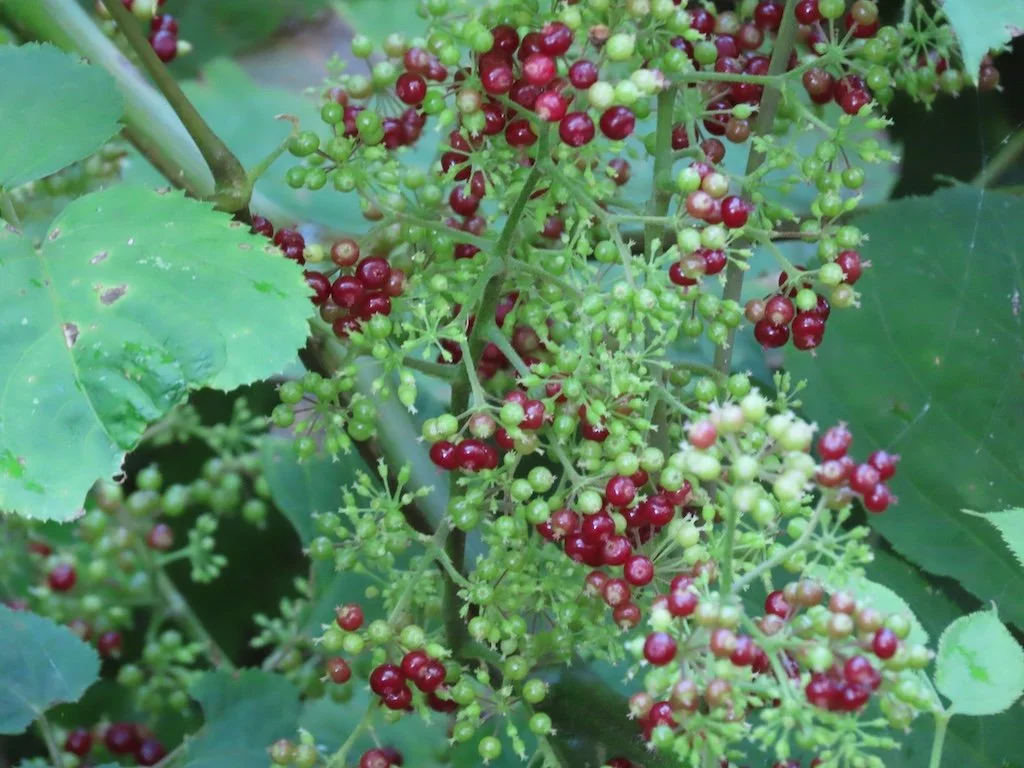
The American spikenard – one of my first native plant purchases – is larger each year. There are violets under it (and a small pokeweed in the foreground). The fruit is beginning to turn purple. I’ll harvest some and try to sprout them indoors to plant outdoors next year.

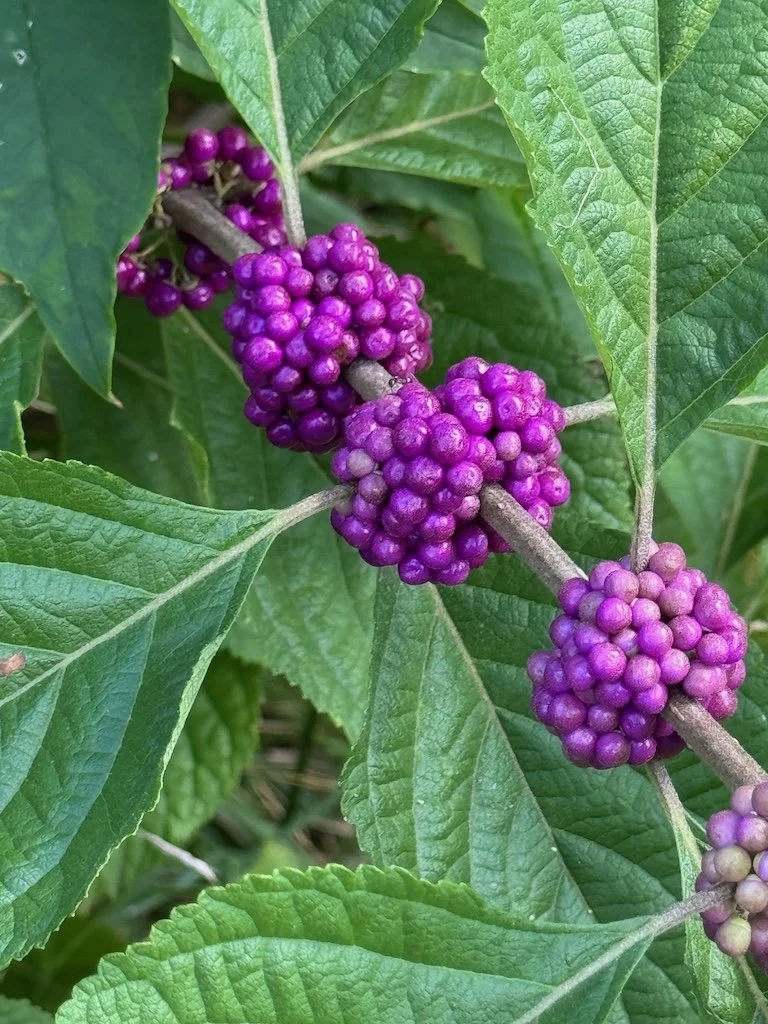
There are a variety of things in the garden where a pine tree once grew. The iris leaves look a little burnt on the ends, but the pokeweed is full of berries that the birds will eat as they ripen. I am still watching developments…not sure of everything there although I like the surprises discovering the naked lady lilies blooming in August and the beautyberry that I planted…glad that has survived.

The area under the short leaf pine is full of pokeweed – mostly. As the season changes, I will enjoy its red foliage…then cut it down and clear out anything else growing under the tree….except the redbud (perhaps).

Big Landscaping Change – Getting Help?

I contacted a nearby nursery as I started to realize how big a task creating the new bed in my front yard was going to be. A landscape designer came out to look at my yard and then I went to the nursery to look at what they have…and get a better idea on their approach. I’ll get their estimate next week.

On the plus side –

  • The new landscaped bed will look good sooner than if I do it myself. It would have layers of topsoil/compost covered by finer oak mulch and it would have a flat rock edge that would make it easier to mow around. Part of it would be 18 inches above the rest.

  • The plants will be bigger than the native plant supplier would provide. They have some of the plants I want in stock: golden ragwort, wild indigo (gold and blue), American Beautyberry, and serviceberry.

  • They would handle all the labor and logistics for creating the new area.

  • They had rattlesnake master in stock and I remembered seeing in on my prairie walks…it would add some drama to the front yard planting.

The negatives could be -

  • Cost – although I don’t have the estimate yet…but it will obviously cost more that if I did it myself.

  • They don’t have spicebush and I really wanted that instead of serviceberry in the front yard.

  • Some of the plants might be varieties of natives rather than the native form of the plants.

  • They would use roundup as part of the initial bed creation.

I’ll wait to get the estimate before making a decision, but I would very much want the initial bed creation and some of the plantings to be done by professionals. I can fill in with more plants next spring if I want.

I’ve already ask my arborist for another load of wood chips…so, if I accept the proposal from the nursery, I’ll use the load of woodchips in other parts of the yard rather than in the front….and I might need to move some of the mulch I put in the front yard to other places before the new bed is created.

Previous posts about Big Landscaping Change

Gleanings of the Week Ending August 30, 2025

The items below were ‘the cream’ of the articles and websites I found this past week. Click on the light green text to look at the article.

How Do Plants Know It’s Getting Hot? - Over the past decade, scientists have identified a few temperature sensors that regulate plant growth, some of which also detect light. Many of the experiments to understand the function of these sensors were done in the dark, leaving daytime temperature sensing unexplored. Now, in a recent study researchers discovered a brand-new role for sugar in daytime temperature sensing. They showed that at high temperatures, sugar acts as a thermostat to override plant-growth brakes, thus enabling heat-responsive stem elongation. These findings could pave way for breeding climate-resilient crops in the face of global warming.

Volunteers Discover 115-Million-Year-Old Dinosaur Tracks Revealed in the Wake of Devastating Texas Floods - Last month’s extreme floods in central Texas have uncovered 115-million-year-old dinosaur tracks in Travis County, which includes Austin. While the discovery is overshadowed by the deaths of more than 138 people at the hands of the very same natural disaster, it sheds further light on the state’s richly preserved paleontological history.

Horseshoe Crabs Break Free from Biomedical Testing - For 40 years, researchers relied on horseshoe crab blood to catch endotoxins in drugs. Now, synthetic alternatives and updated regulations can end the practice.

Cultivating for color: The hidden trade-offs between garden aesthetics and pollinator preferences - There are native plants with colorful and interesting flowers that bloom at different times, from early spring to late fall. These plants tend to produce reliable floral signals and offer the nectar and pollen needed to support pollinator nutrition and development.

Ancient Dental Plaque Unearths Prehistoric People’s Lifestyle - Tartar on ancient teeth is the oral microbiome fossilized over time. When researchers sequenced the genetic material isolated from ancient tartar, they found it teeming with bacterial DNA. The researchers identified several pathogenic bacteria and some antibiotic resistance genes, suggesting that the potential for antibiotic resistance was present in prehistoric times. Several bacteria such as those belonging to the genera Streptococcus and Actinomyces coexisted with humans through their evolution, offering insights into microbial health and disease through the ages.

An interstellar visitor and hairy caterpillars: The best science pictures of the week – From the BBC.

One small walking adjustment could delay knee surgery for years - A groundbreaking study has found that a simple change in walking style can ease osteoarthritis pain as effectively as medication—without the side effects. By adjusting foot angle, participants reduced knee stress, slowed cartilage damage, and maintained the change for over a year. The caveat: Before this intervention can be clinically deployed, the gait retraining process will need to be streamlined.  

A 2,000-Year-Old Sun Hat Worn by a Roman Soldier in Egypt Goes on View After a Century in Storage - A Roman soldier in ancient Egypt dealt with the excruciating power of the sun roughly 2,000 years ago: by donning a felt cap.

Amazon & Brimstone Advance Lower-Carbon Cement Collaboration - Brimstone developed a breakthrough process to co-produce multiple industrial materials, including portland cement, supplementary cementitious materials, and smelter grade alumina. The company was founded in 2019 to develop next-generation industrial processes optimized for economics, efficiency, and sustainability. The companies announced they signed a commercial agreement to secure a future supply of Brimstone’s materials in the coming years, pending successful completion of testing and commercialization to scale up requirements.

As Fire Season Ramps Up, Thousands of U.S. Firefighting Positions Are Vacant - ProPublica’s review of internal agency data found that more than 4,500 Forest Service firefighting jobs — over one-fourth of all the agency’s firefighting jobs — were vacant as of July 17. The Guardian also reported that vacancy rates were highest in the Pacific Northwest and Intermountain Regions, at 39 percent and 37 percent respectively. Even before all the layoffs and resignations this spring — the Forest Service sometimes struggled to get through busy fire seasons. Firefighters have been called in from Canada, Mexico, and Australia when resources are stretched too thin, and sometimes National Guard or military troops are deployed.

Ten Little Celebrations – August 2025

August was hot…so some of the celebrations were indoors (with air-conditioning) this month!

Naked lady lilies. It was a pleasant surprise that I have three of these plants in my yard – blooming for the first time this August. But I celebrated them because they are a remnant of my mother’s garden from 2023 just before the house/garden was sold.

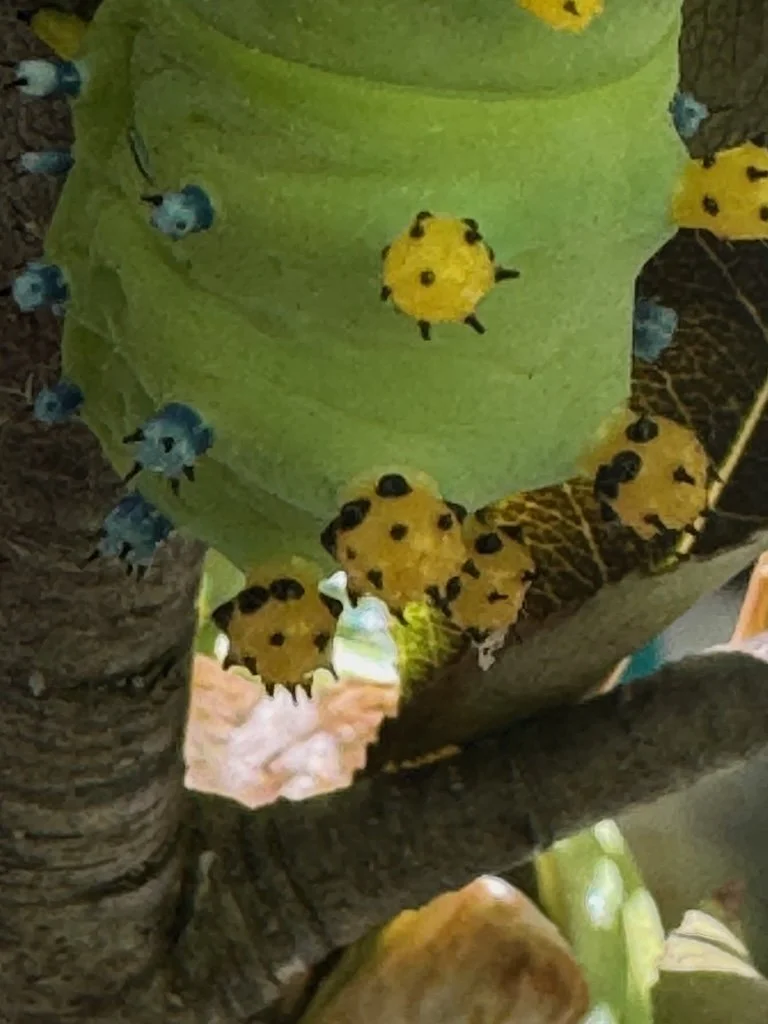
Spicebush caterpillars. Earlier this summer my young spicebush didn’t have caterpillars…but is does now. I celebrated that the swallowtails have found my plant to lay their eggs.

Beautyberry. While I was pulling grass and weeds in my yard, I discovered that the beautyberry I planted last fall has survived…and is blooming. Time to celebrate!

Dispelling Myths of Native Gardening webinar (from Grow Native!). I celebrated the timing of a panel discussion about native gardening (webinar)…and gleaned some ideas I will apply in the next few weeks as I create a new area of by front yard…with native plants.

Field trip at the Lake Springfield Boathouse gardens. Another well timed opportunity for learning how to better create my new native plant garden. It was hot…but I learned enough to make it all worthwhile.

Roston Native Butterfly House. Celebrating my favorite volunteer gig of the summer…every time I work a shift there.

Turpentine Creek Wildlife Refuge. The big cats are the draw, but I celebrated seeing a juvenile racoon and butterflies!

Two caves in one day – Cosmic Caverns and Onyx Cave. Celebrating caves…cooler than the outside temperature.

Dr. Megan Wolff’s webinar “Plastics and Public Health: the unsettling latest in medical research.” A different kind of celebration…it’s more like FINALLY someone had done a reasonable job to at articulating the rationale in one place about why our plastic creation must change dramatically. Here’s the link to the video. The bottom line is that we can’t “recycle” or “reuse” our way out of the mess.

Lawn mowing – getting it done. It’s been hot this month and I celebrate every time I finish mowing the yard…so glad that it is done for another week.

Big Landscaping Change – Tweaking the Plan

The Missouri Master Naturalist chapter meeting this month was about the Lake Springfield Boathouse Garden. As we walked around the boathouse and learned the history (and challenge) of some of the plantings, I realized that I was mentally tweaking the plan for my front yard.

The beautyberry at the Boathouse is thriving and it provides winter food for birds. I have one in my backyard and am going to plant another one in the front yard rather than a wild hydrangea which was not doing well at the Boathouse.

The serviceberry at the Boathouse was about 4 years old and had already lost most of its leaves (i.e. young trees might not have pretty fall color). I am still going to plant one, but I am adding a spicebush to my list to enhance the near-term look of the garden.

The big bluestem clumps looked great in the back of the garden at the Boathouse. They would be great to provide a different color and shape among the other plants in my front yard. The garden is on the south side of the house so the plants will always get some sun for part of the day…so the grass should thrive long term.

The cup plants are insect magnets, but they are too tall for the front garden. I decided to buy some to plant along my back fence (I can put some twine looped to the fence to hold them up).

It could be 4 years before the new plantings are big enough to look like I want – but there should be improvement each year. I might add some nectar plants like coreopsis next spring. To fill in around the young plants

I’m going to trim some of my larger plants before they get buds/are too tall (like gray headed coneflower and pokeweed) to see if I can keep them short enough to use as front yard plants too. I’ll do that experiment in my backyard next spring with the plants already established there.

After this first round of tweaking – the plantings I will buy in early October are:

  • Roundleaf groundsel or Golden ragwort Packera aurea (3) (change made because of what the native plant vendor offers)

  • Blue Wild Indigo Baptisia australis (3)

  • American Beautyberry Callicarpa americana

  • Big bluestem Andropogon gerardii (2)

  • Spicebush Lindera benzoin

  • Serviceberry Amelanchier arboria

  • Pawpaw Asimina triloba (2- one for the front and one for backyard)

  • Cup plant Silphium perfoliatum (2 for backyard)

The plan for before winter comes is:

  • Order more wood chips/mulch and complete making the new bed (lots of work)

  • Place order for plants to be picked up the first week in October

  • Make 811 request (need to do before digging)

  • Plant (lots of work…but maybe not as much as making the new bed)

  • And, of course, continued pulling of weeds as they come up in my new landscaping area!

  • I am making a diagram to guide my planting…and will in include it in my next progress report.

Previous posts about Big Landscaping Change

Big Landscaping Change – the plan

Having a maple cut down after a storm damaged it, prompted some thinking about what to do with our front yard. It looked way too open, and I didn’t want more grass to mow! I talked to another Master Naturalist that has a lot more experience than me for advice about good native plants for a front yard. She had done a lecture about native plantings last fall when I attended the Missouri Master Naturalist core training, and I remembered her comments about serviceberry (Amelanchier aborea) – was leaning toward that plant as the largest in the new landscaping. She invited me to see the plantings in her yard…and that helped me decide on the other plants I wanted:

Wild hydrangea (the one that would be the next largest and be planted midway between the remaining maple and the serviceberry)…this is the one in am still thinking about…my alternative would be a Ninebark like I had in Maryland…it does well here too!

Multiple wild indigos as a smaller shrub and a legume that will put nitrogen into the soil

Roundleaf groundsel that will become the groundcover and will stay green when the other plants are dormant

My Homeowners Association has an Architecture Committee that wants to know about significant landscaping changes so I drew a sketch and listed the plants I was considering….and they approved it about 30 minutes after I sent the email! It was much easier that I thought it would be.

Now to get the bed made (an area encompassing the three areas I heavily mulched with wood chips from the maple)…and order the plants…and plant them in late September/early October.

Late June Storm

We are still dealing with the aftermath of a late June storm. At our house, one of the two maples in our front yard lost some larger branches. It spilt in such a way that leaves it vulnerable to the next high wind event – likely to fall into the street. This was the first year that the daylilies I’d planted around its base have been numerous enough to look good. It is upsetting; we’ve accepted the arborist’s recommendation to cut it down. In preparation I’ve cut the daylily flowers and am going to transplant the rhizomes elsewhere. We aren’t going to grind the stump. Instead, I am going to create a native plant garden around where the tree was cut and incorporate a lower place where a tree was removed before we bought the house. It will include a small tree (maybe a serviceberry), a bush (maybe winterberry holly or ninebark)…and then some perennials; I’m looking for a landscaping company that can do most of the work…hopefully leaving it where I can maintain it. I’ve also requested the wood chips from the tree that I can spread elsewhere around my yard…keeping the nutrients on my land.

My daughter’s yard had damage too. One of her amur maples dropped a limb on the driveway and the other dropped a limb on a fence (but gently enough that it didn’t take the fence down. Her husband handled the branch in their driveway shortly after it fell. The tree service will take the limb that fell on the fence and the junipers that fell over at the side of her house. She had her trees trimmed earlier this season or she probably would have had more damage. She is contemplating what to plant once the junipers are gone.

There were many people that had more damage that we did and were without power for days. We are using the destruction of the storm as an opportunity to plant more natives in our yard!

Yards in June

There was a lot going on in yards in June.  I enjoyed documenting my own yard and that of my daughter’s too.

The native plants in my yard are doing quite well: fragrant sumac (the first one I planted),

American spikenard (one that is a few years old and another than I planted this year),

Missouri evening primrose with its big yellow flowers,

Common Primrose that is becoming well established in my wildflower garden, and

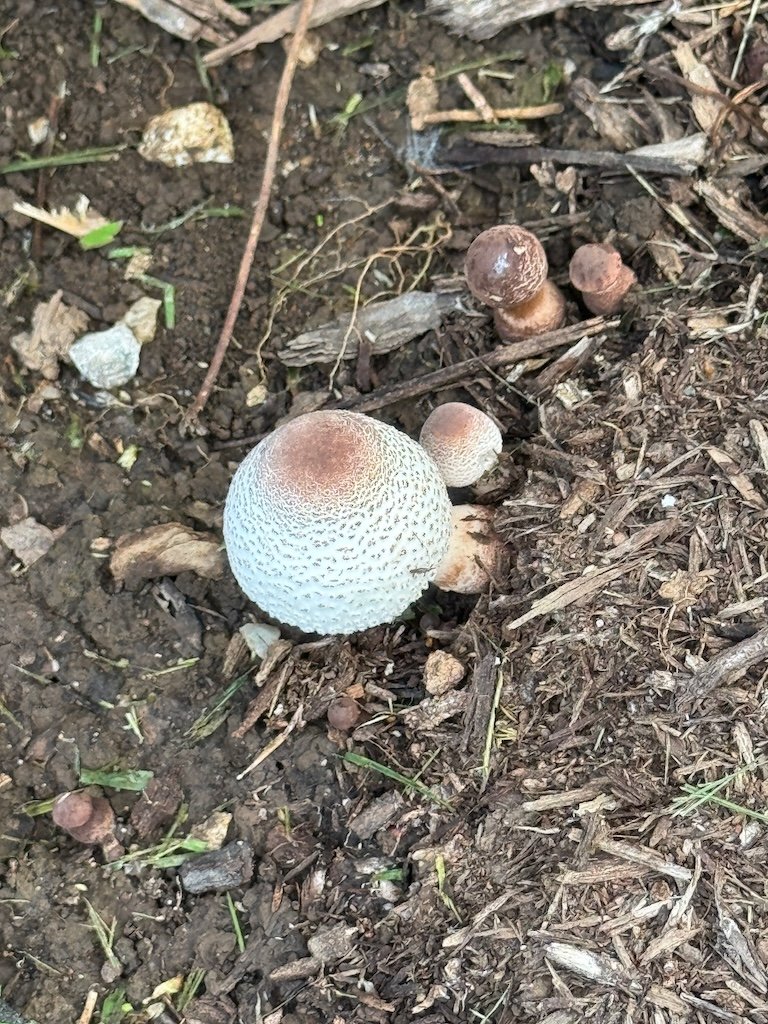
Mushrooms keep coming up in the area where a tree was cut down several years before we bought the house.

My daughter and son-in-law planted some native plants in an area near their driveway and the street recently; they are thriving along with the yucca that has been there for a long time.  

There are non-natives: daylilies in both yards,

Asian hydrangeas in her yard (that she generously cut for a bouquet now in my office window),

A very large Southern Magnolia in my daughter’s house,

Lambs ear – that bumblebees like when it is blooming at my house,

Roses and hostas at both houses!

I have arugula flowers since I didn’t start eating the leaves soon enough. Oh well – they attact some small pollinators. There are zinnia flowers nearby too.

We are both challenged with grass growing where we don’t want it…and some invasives like Asian bush and vine honeysuckles. I have a lot of tree seedlings to control too – particularly hackberry, mulberry, redbud, oak, and maple.