Battle with a Forsythia
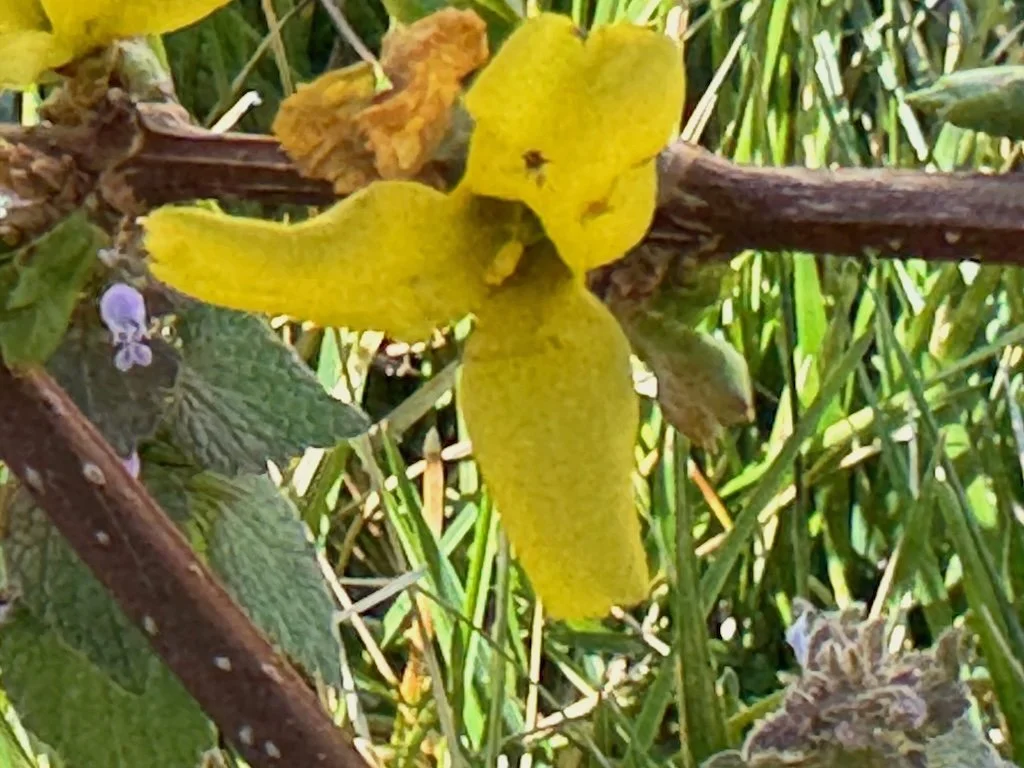
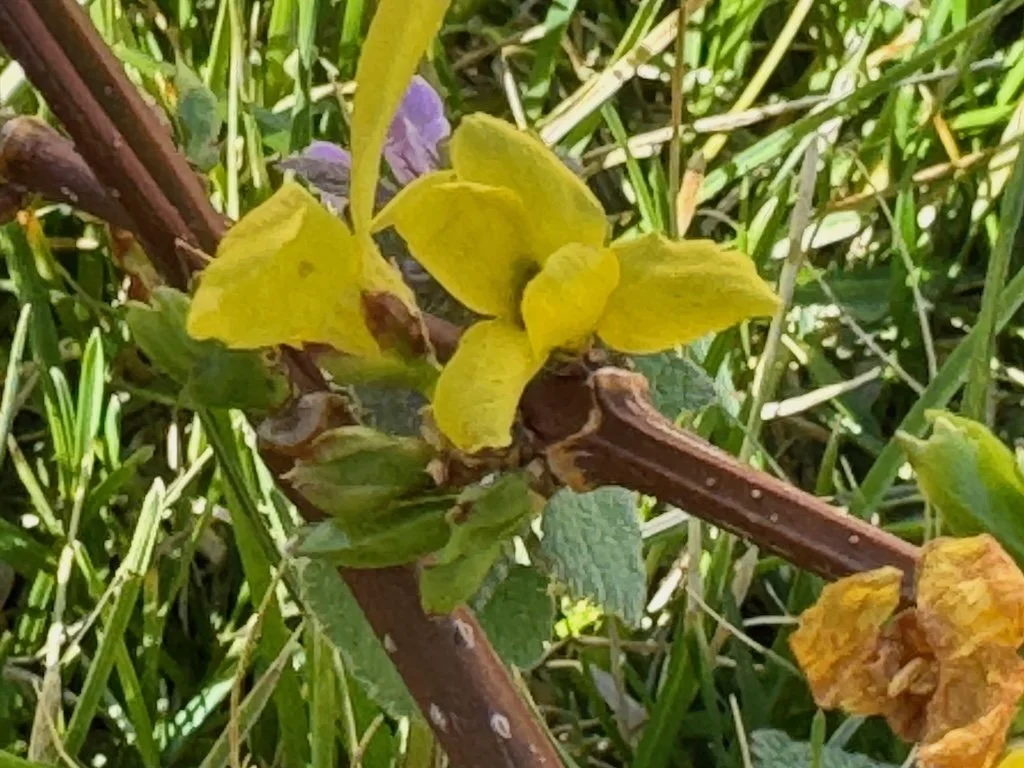
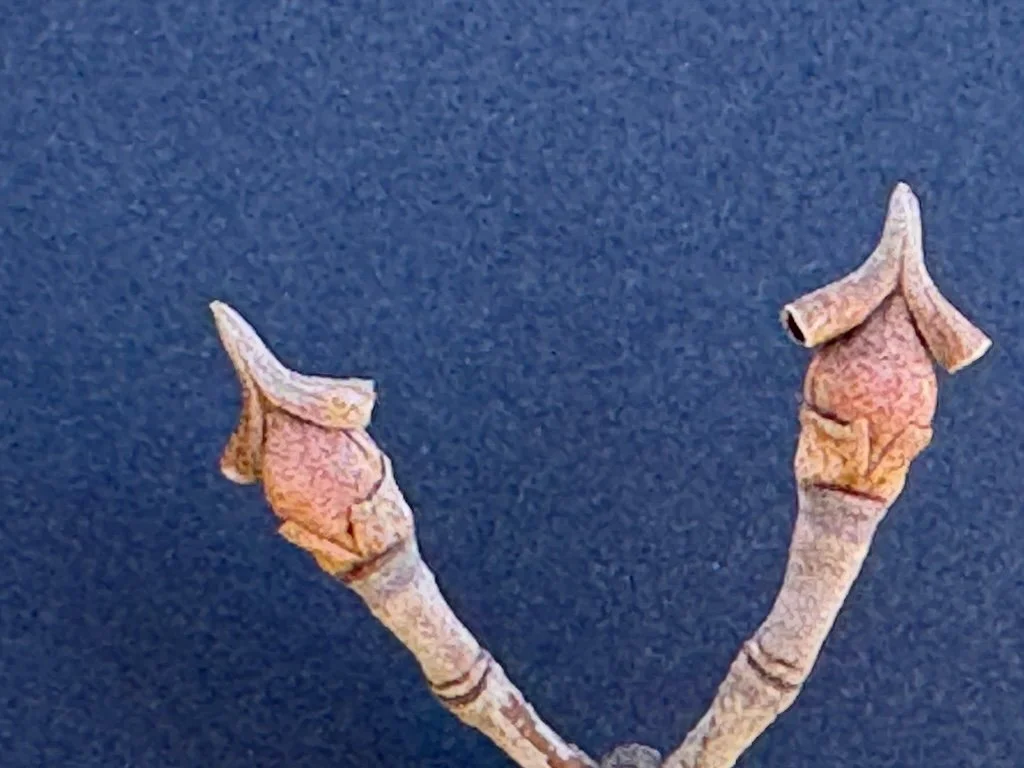
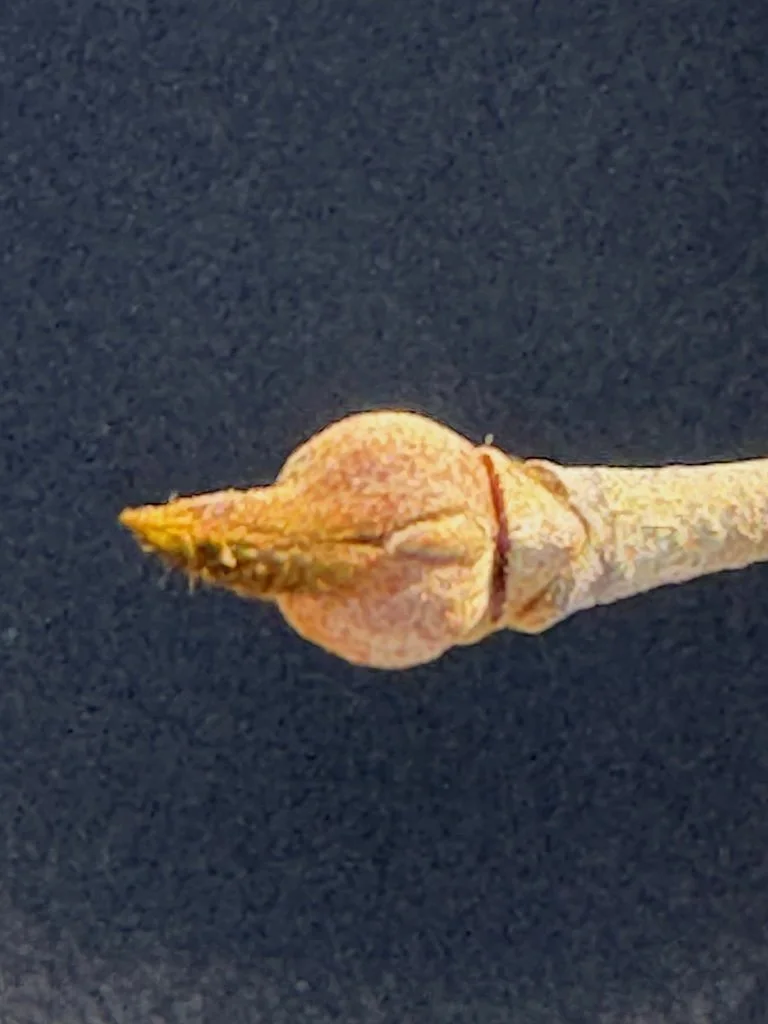
/The forsythia was in the northwest corner of my backyard when we bought the house. It is non-native and does not do anything for my yard’s ecosystem – no pollinators visit its blooms; nothing eats its leaves. I have been trying to keep it controlled for the past few seasons, but it always seems to grow faster than I can prune it. I should have cut it and painted the stumps with poison last fall.
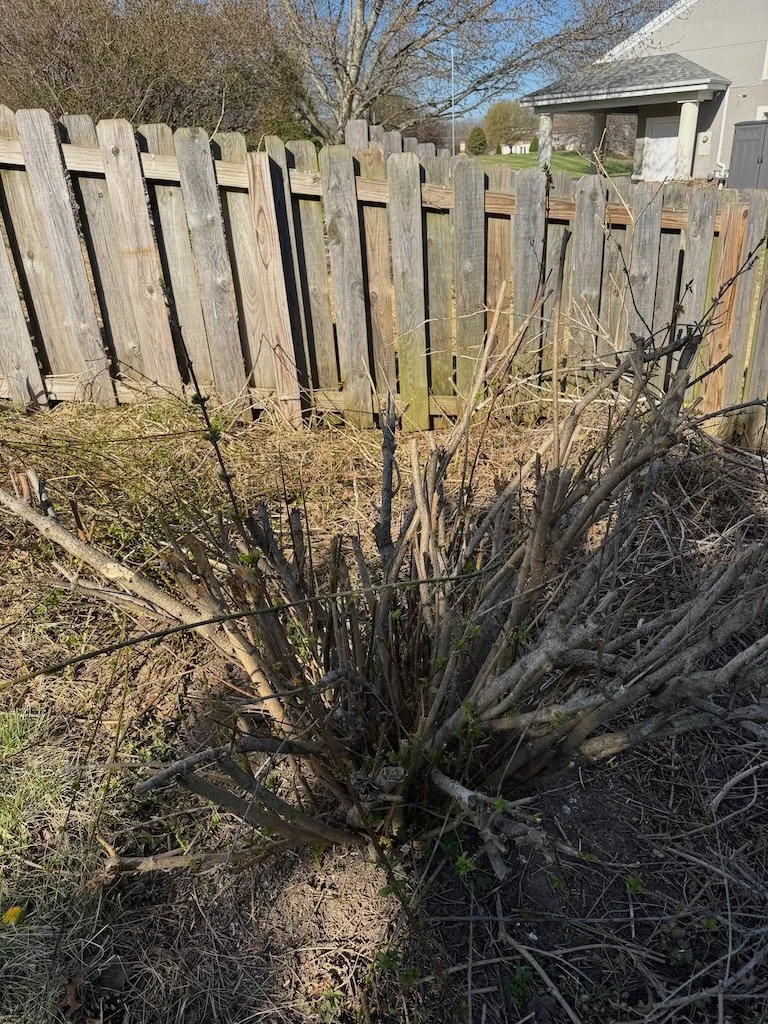
I did manage to cut it back more than ever before one morning last week and will go back to cut more soon. It was a lot of work, and I managed to clog my pruning chainsaw; that will take some effort to get it working again. I did most of work with my manual long handled pruners. My gardening seat worked well….I slowly moved it around the plant cutting everything I could reach. My back only started hurting when I started carrying the trimmed branches up to the patio to dry (and then burn in a few weeks in the chiminea).
Last year I waited until after the plant had bloomed and it was a big mistake. This year there were a few flowers open….but I cut it all away from the plant! I am going to plant some native plant seeds in the soil left bare – it will be a bonus if any come up. I’ll keep cutting the forsythia back as severely as I can over this next season to give the other plants a chance to take over.