Suburban Savanna – 3

Continuing my series on my progress toward transitioning my yard to a suburban savanna…..

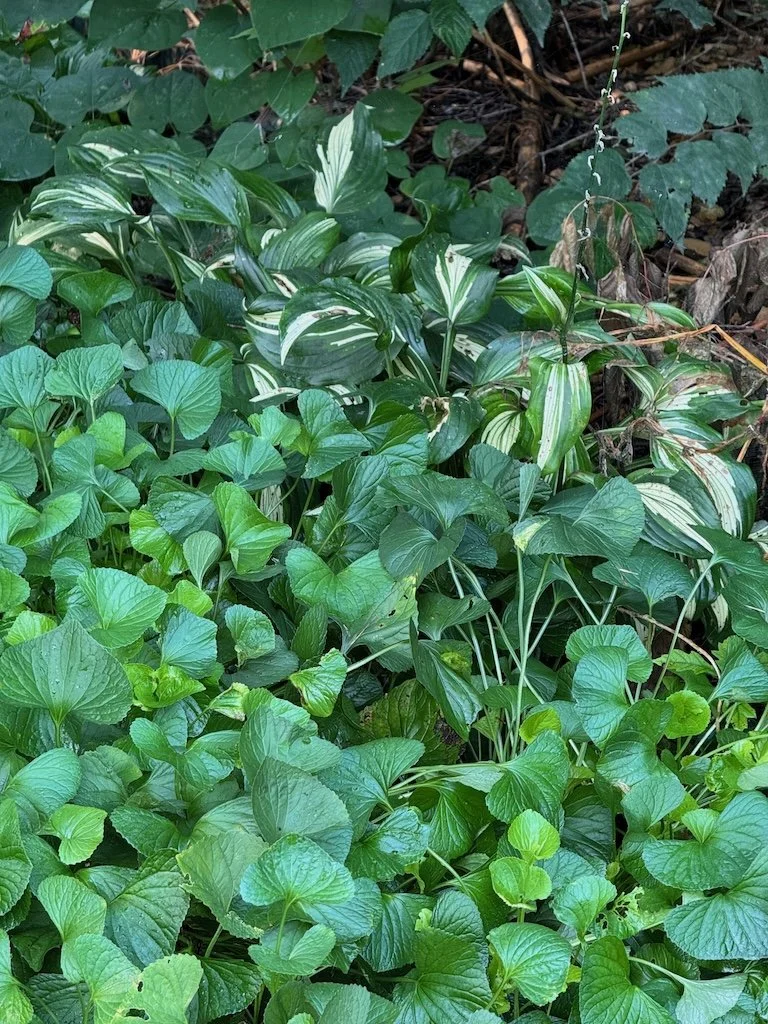
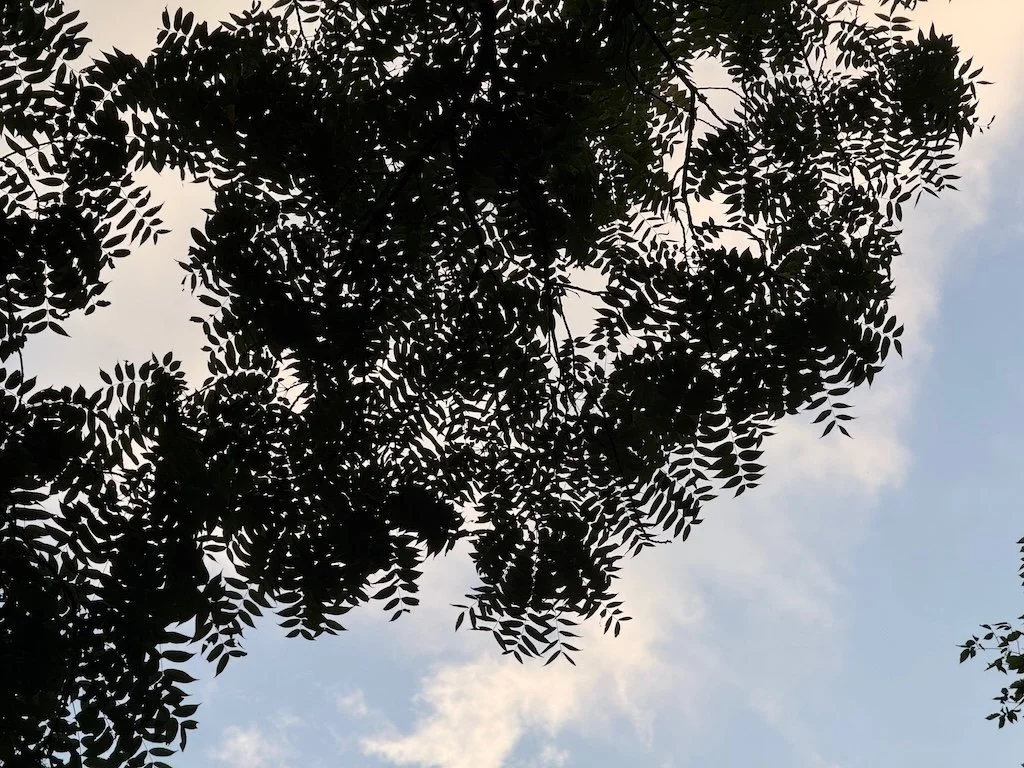
This month I am focusing on the shade garden since it is closest to being complete. The plants there will continue to develop…without a lot of work on my part. It is on the east of my house and includes an eastern white pine and a group of holly trees with low branches; a neighbor’s river birch and oak add to the shade in the summer.

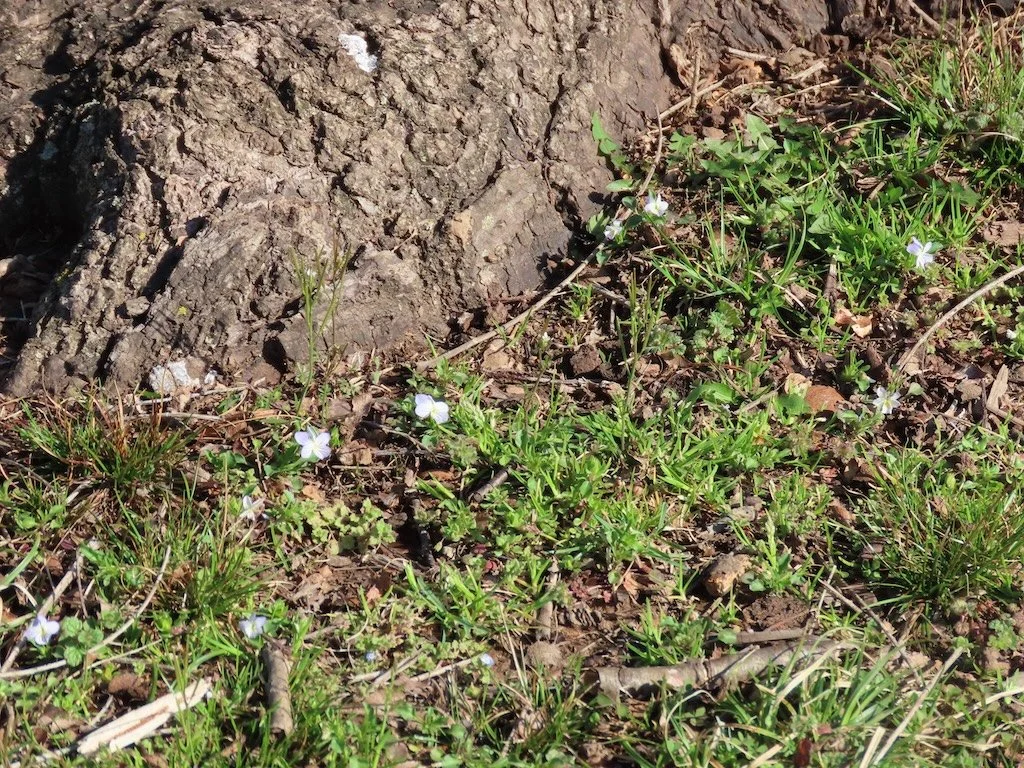
There were a few violets near the house when we arrived 4 years ago and they have spilled out to take over what used to be struggling grass (I stopped mowing and the violets took over); they have progressed about 6 feet into the yard and I will further reduce my mowing to allow them to take over more!

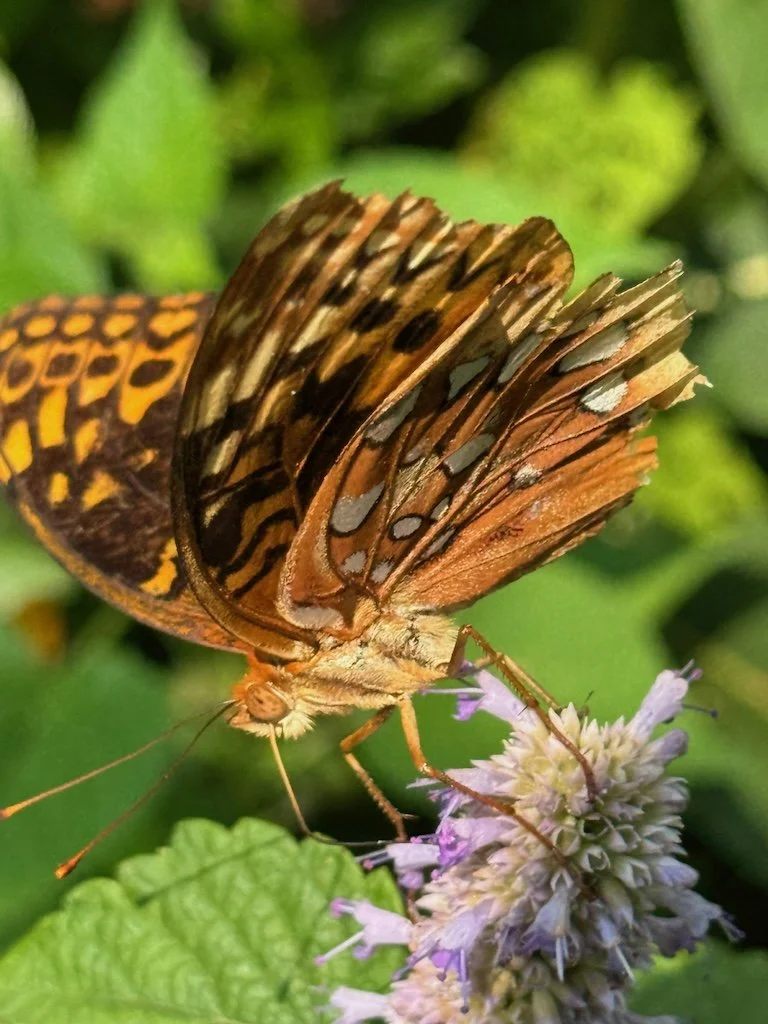
I noticed last winter that several birds – particularly mourning doves and wrens – seemed to spend a lot of time finding tidbits to eat in the brown debris of the violets; I wondered if they were finding the tiny Great Spangled Fritillary (butterfly) caterpillars.
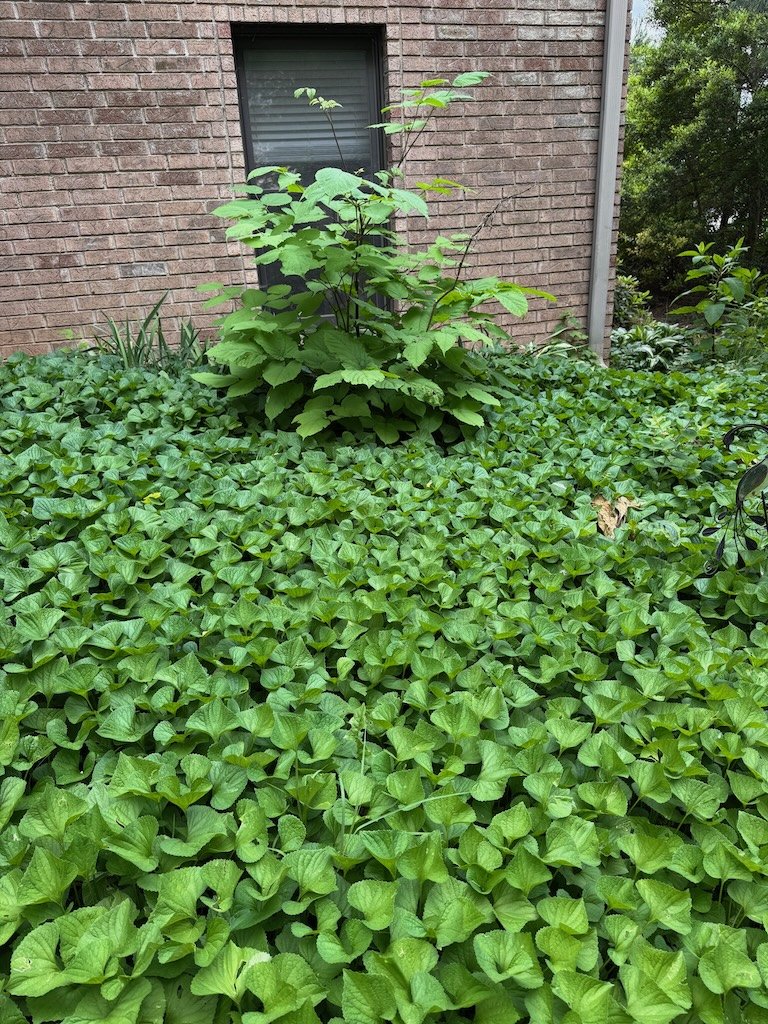
I planted American Spikenard, spice bush, and pawpaw to provide some taller plants to break the thick violet groundcover. I might eventually add another spice bush since the one I have is male (i.e. no red fruits!). The American Spikenard was one of the first native plants I added to my garden (where it is visible from my office window) and it gets bigger every year…this year it is over 5’ tall so it must be happy in its location. It blooms in June – attracting pollinators; the fruit is eaten by birds.

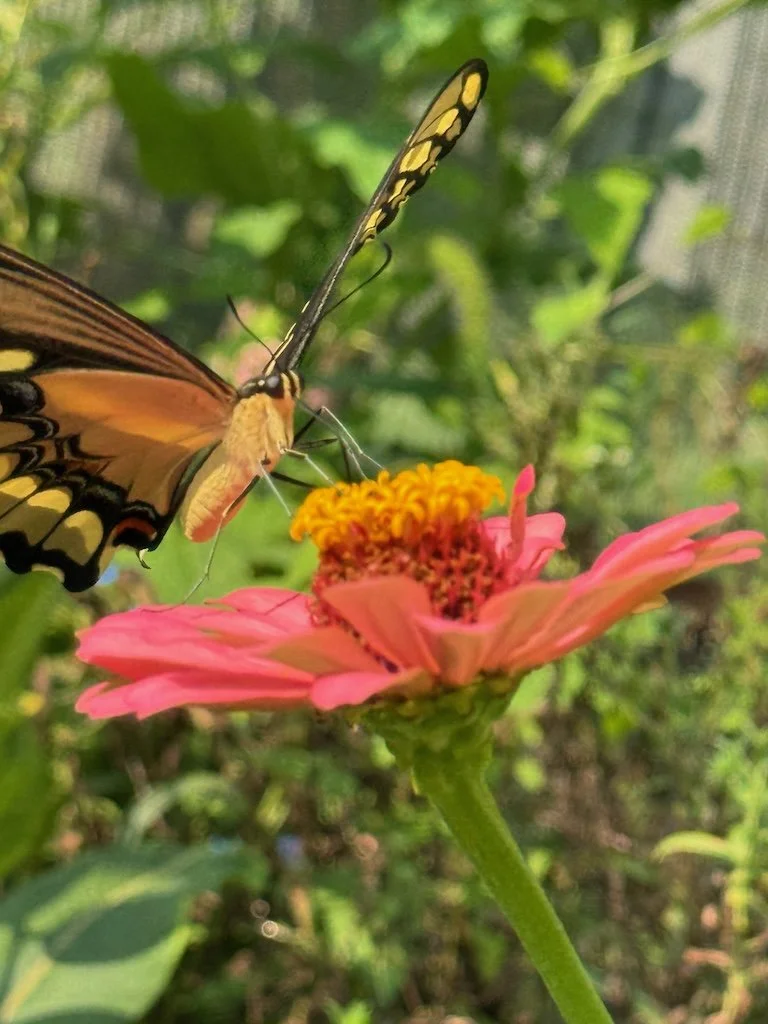
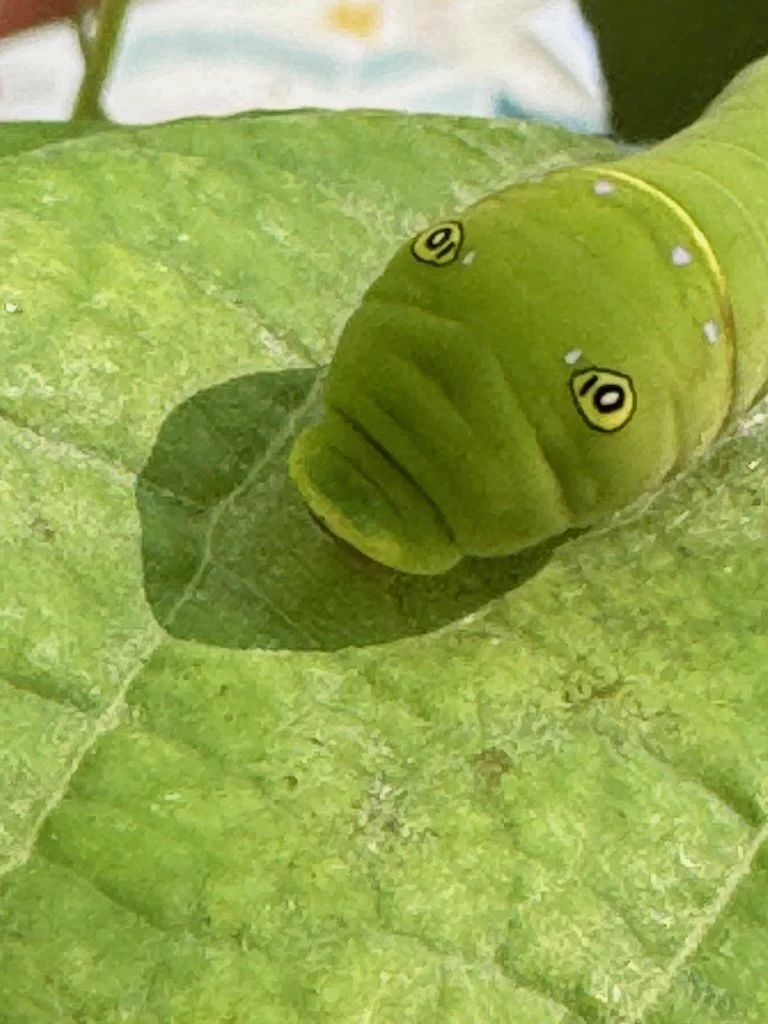
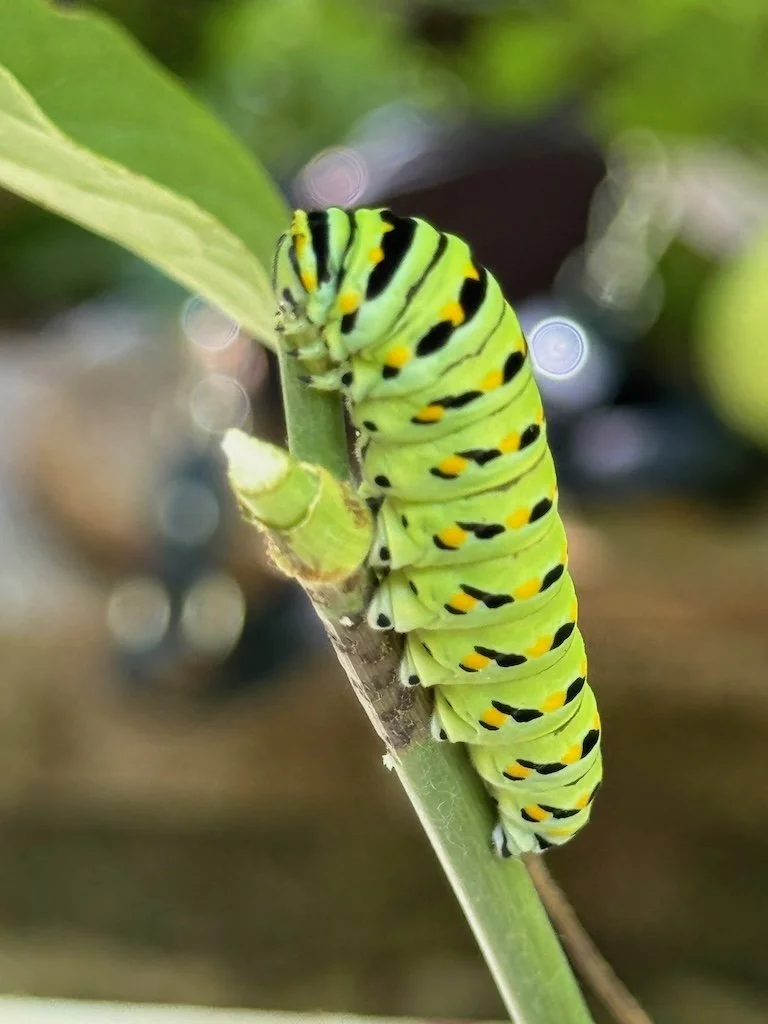
The spice bush had black swallowtail caterpillars eating it last summer…a great indication that the shade garden is supporting wildlife that had not been in the yard previously. I also noticed more fireflies in the summer beginning last year.
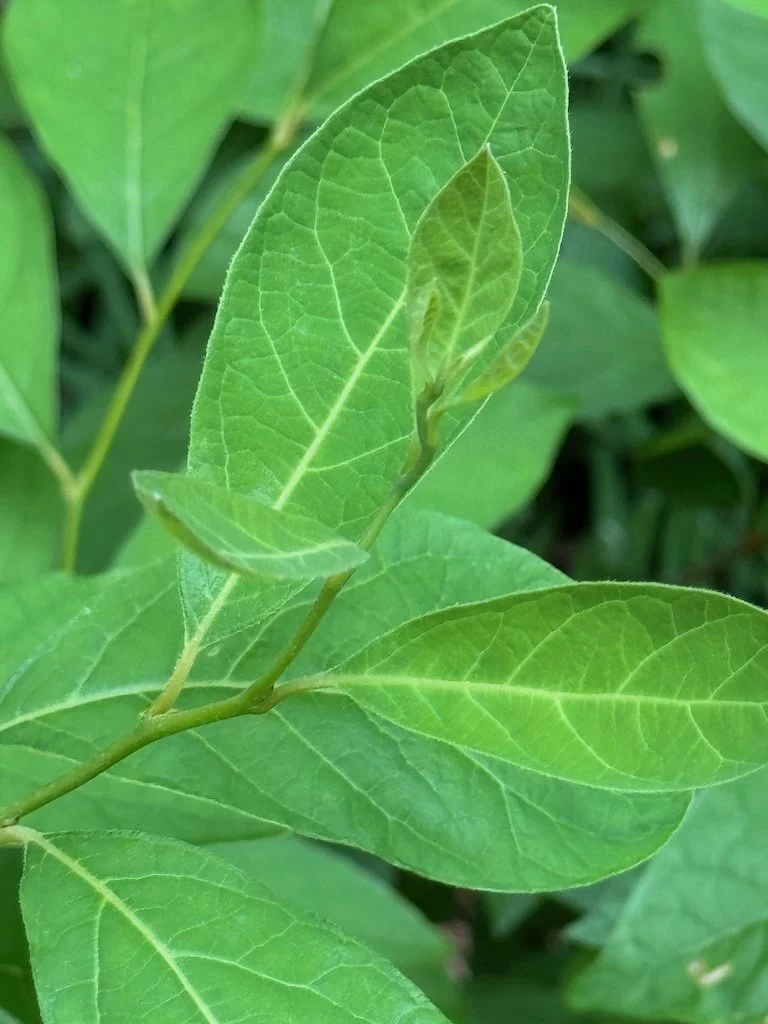
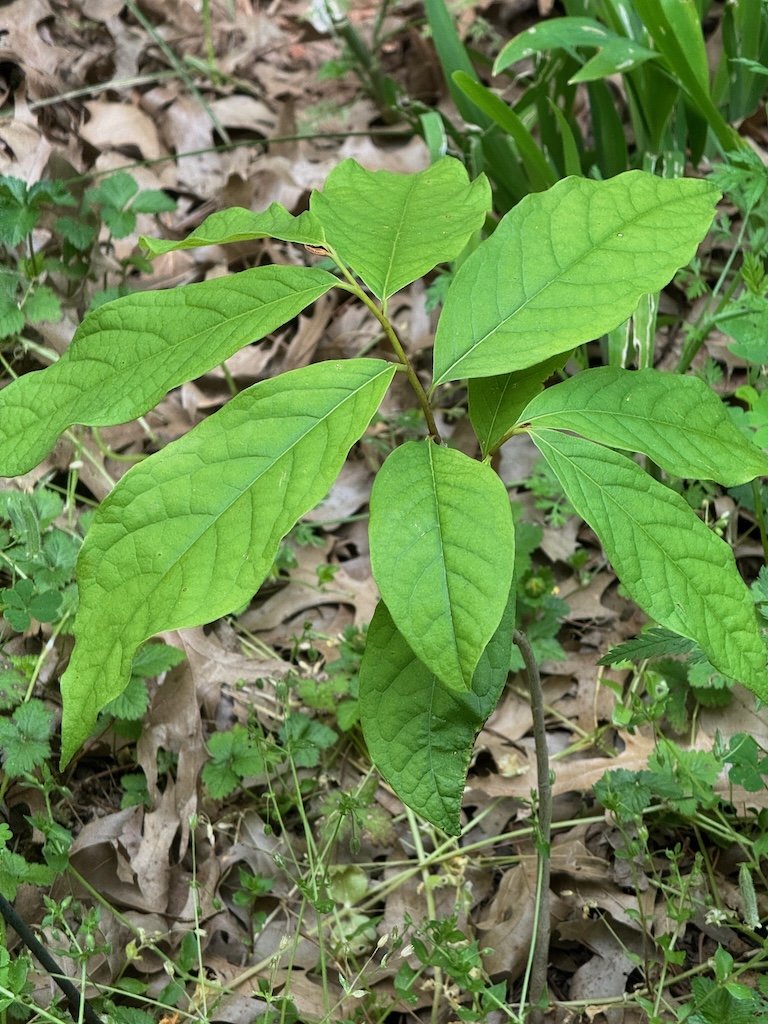
The pawpaw trees are still very young: one was planted as a seedling last year, 2 came up from seeds this spring, and 4 were planted as seedlings this spring. Hopefully most of them will survive and eventually host zebra swallowtail caterpillars. It will be years before they bear fruit….but I am excited about the prospect.

Around the white pine there is a mix of native and non-native plants. The natives are another American Spikenard, black raspberries (that came up on their own), violets, grapevine (which I cut to keep it out of the tree), hackberry (which I take out periodically, there is a neighborhood tree so the birds plant the seeds everywhere), and, unfortunately, an occasional poison ivy. The non-natives offer some color/shape contrast: hostas and lambs ear now…earlier in the season crocus, daffodils….later in the season chives.
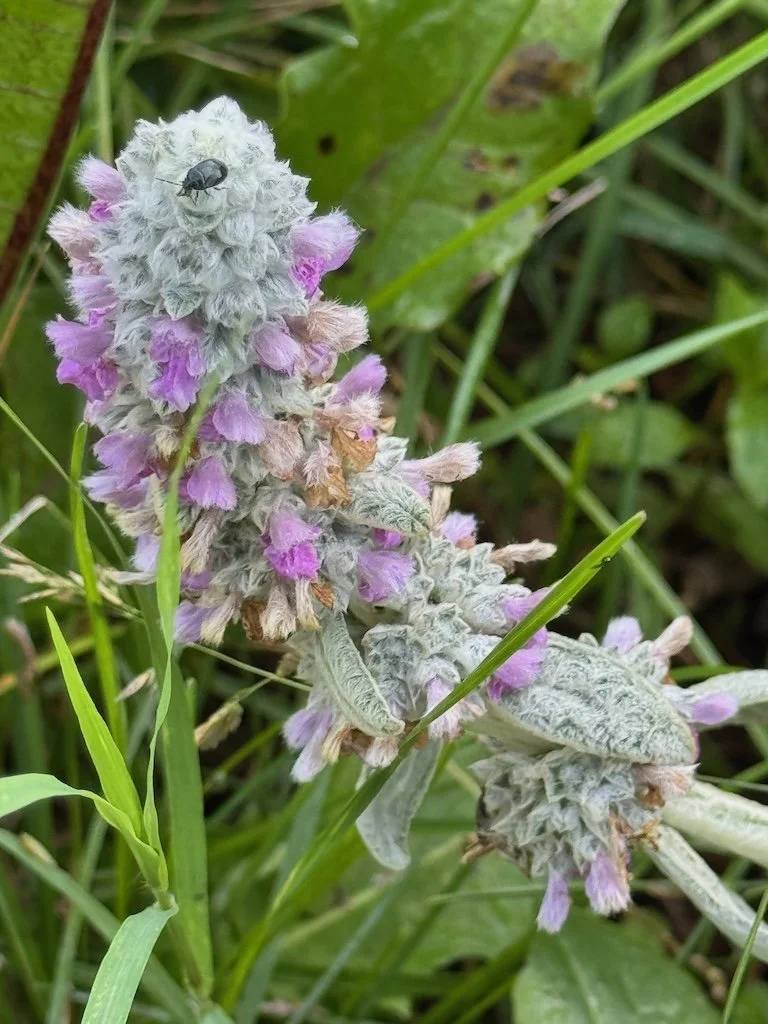
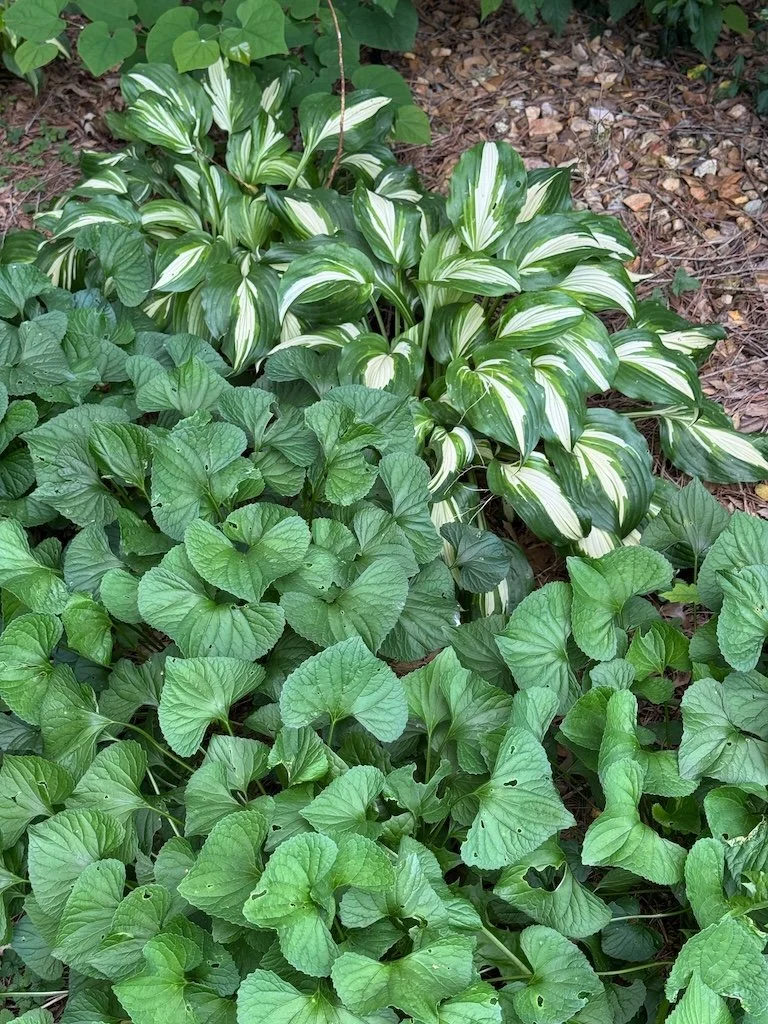
I like that there are plants in the garden that are edible…that I can easily harvest and eat immediately: violet leaves and flowers, grape leaves, and chives.

The maintenance I anticipate on the garden is mainly controlling things like grape vines, poison ivy, and hackberries….keeping an eye out for invasives like poison hemlock and wintercreeper (removing immediately). I will eventually begin removing the lower branches of the pine (they are already sparsely needled because they only get enough light at their tips); it could reduce the shade a little in the morning, but the hollies will shade the area in the afternoon and the pine needle mulch sustains the soil moisture).   The violets will grow out into the yard at least a little further but that just requires me to stop mowing the area where I want the violets to take over! My sprinkler system still waters the area when it hasn’t rained but I envision that I might turn off the zone once the plants are all well established.

More about my suburban savanna and water next month.

Previous Suburban Savanna Posts:

April 2026 – Overview

May 2026 – Planting Natives
Springfield Botanical Gardens (1) – March 2026

The Springfield Botanical Gardens are full of new beginnings in March. I took a walk around them on a sunny day – using by bridge camera (Canon Powershot SX70 HS) on a monopod. The monopod worked great as a hiking pole, so my back didn’t hurt; I did have to clean mud off the tip though!

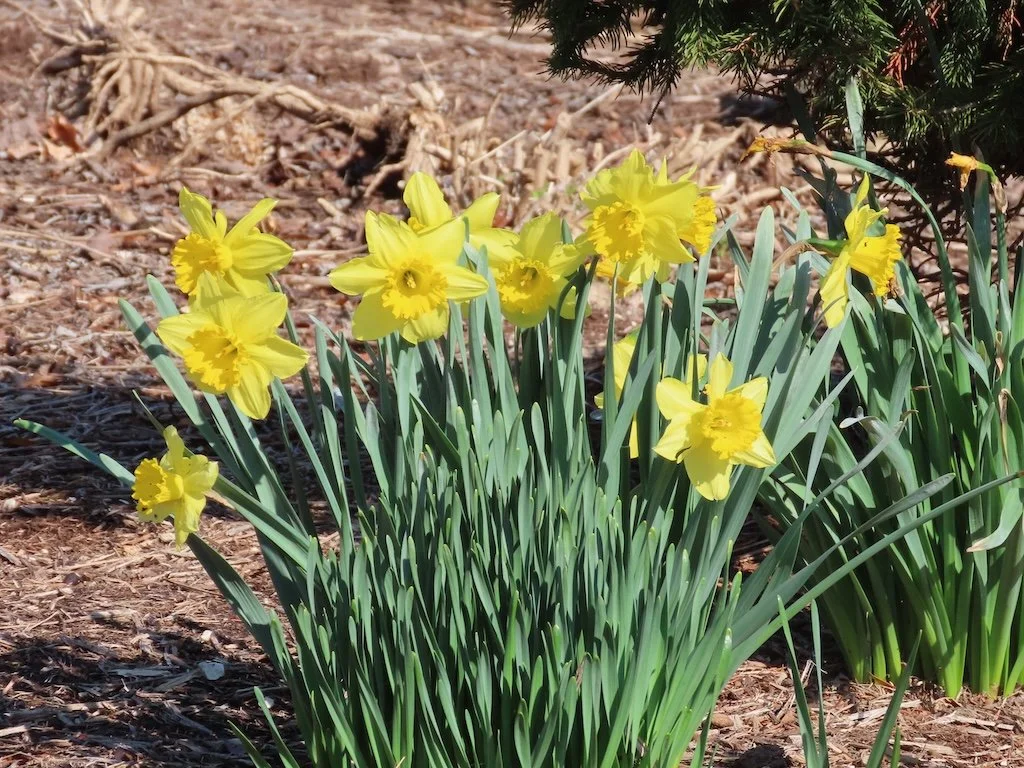
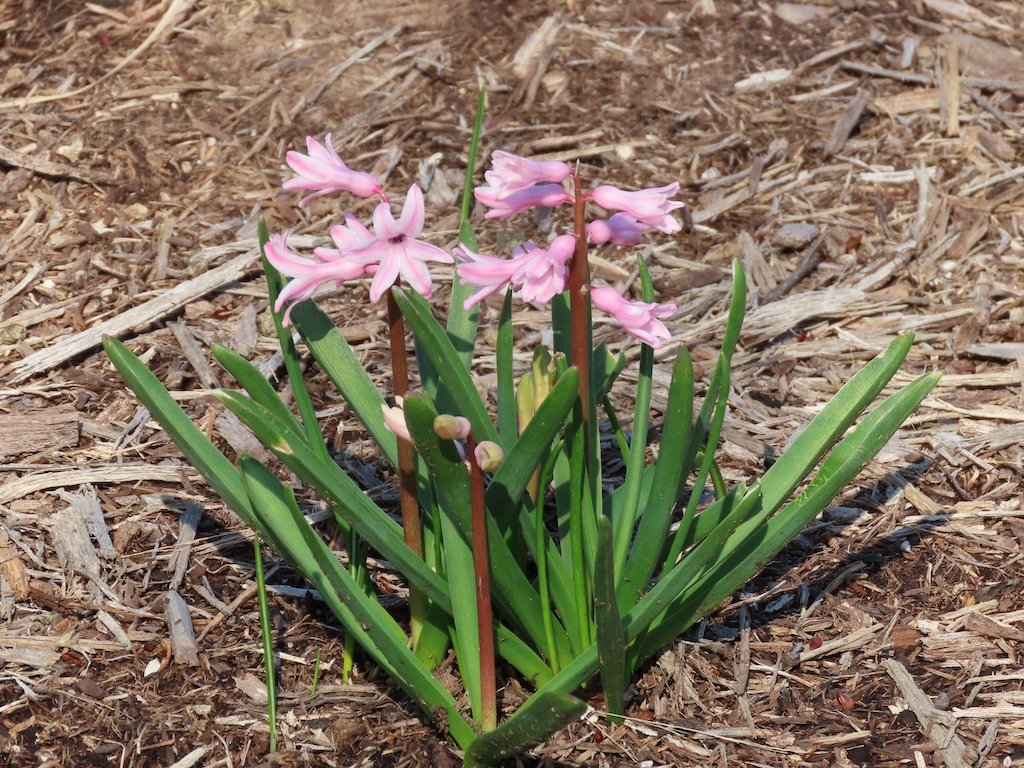
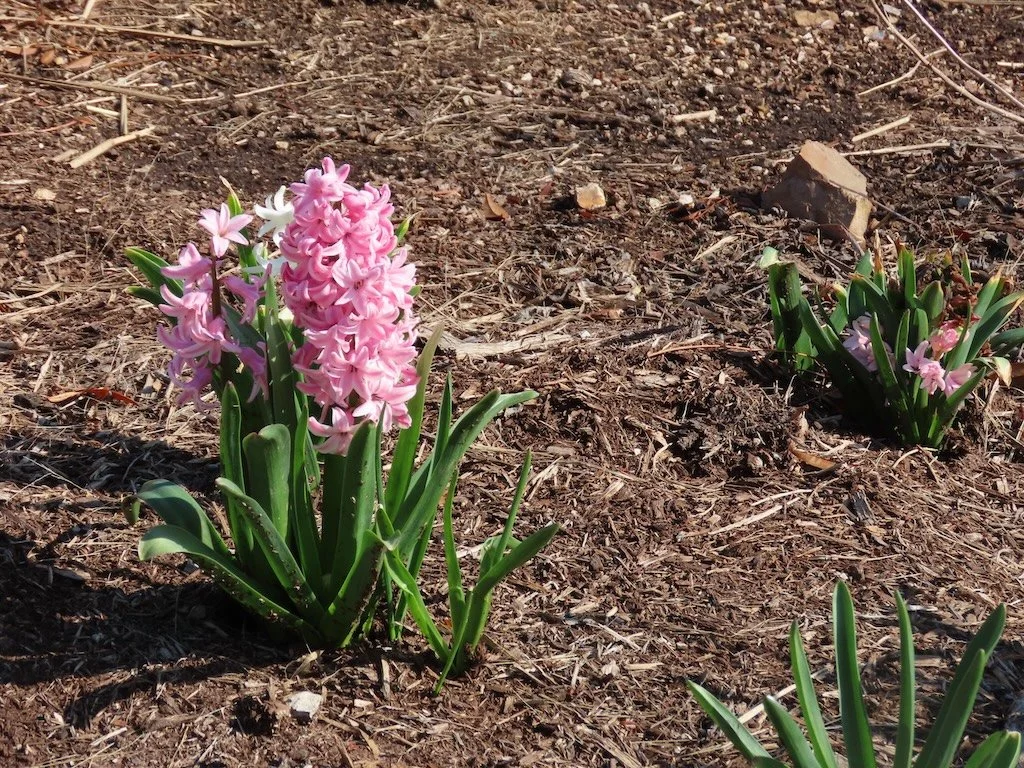
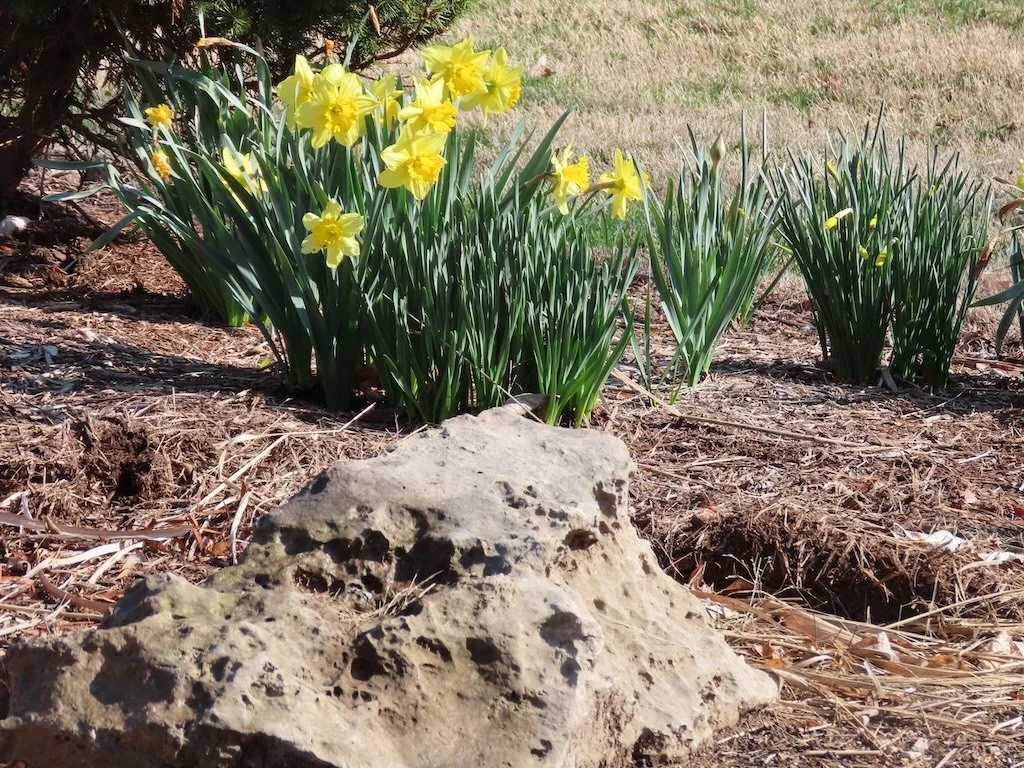
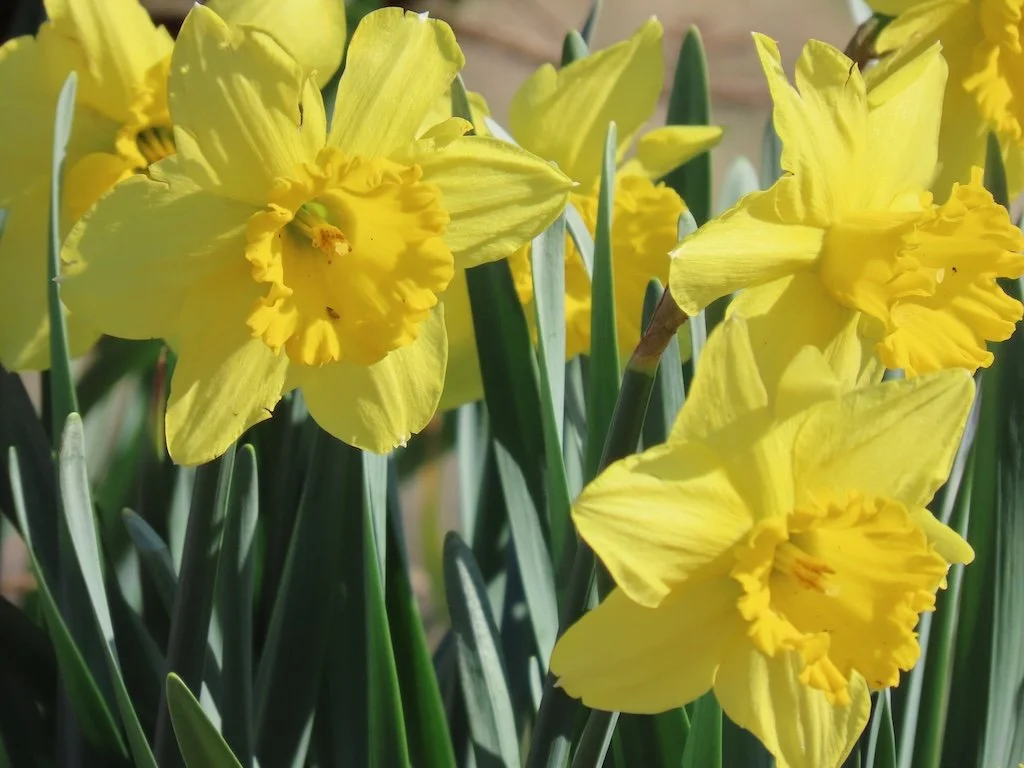
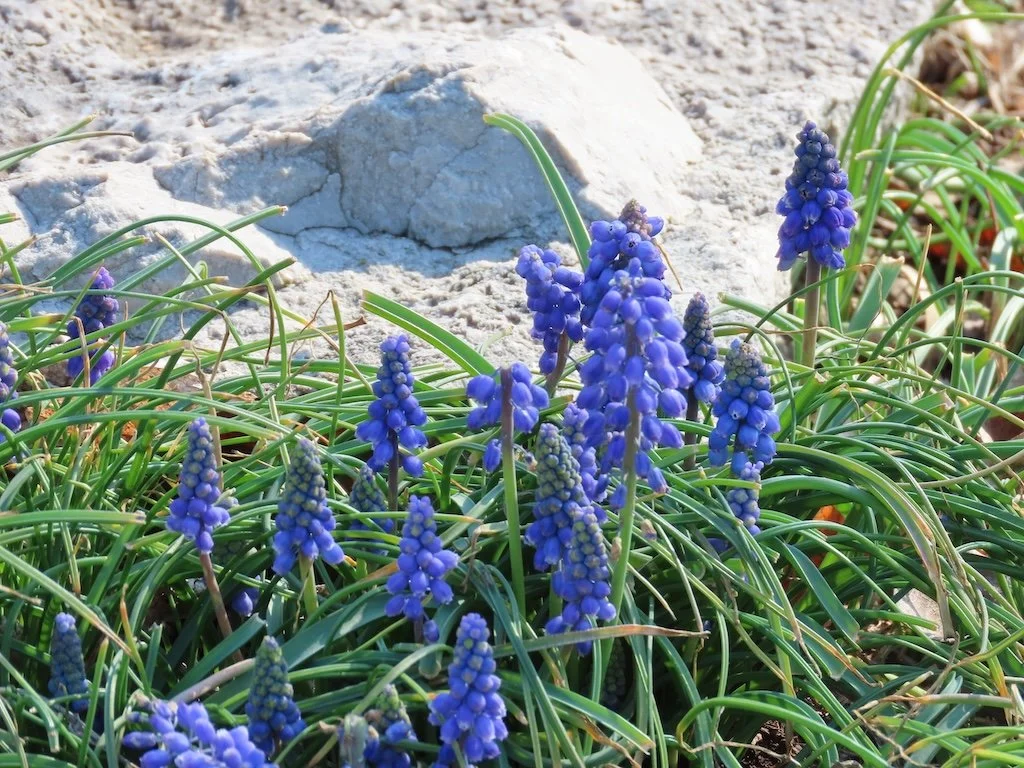
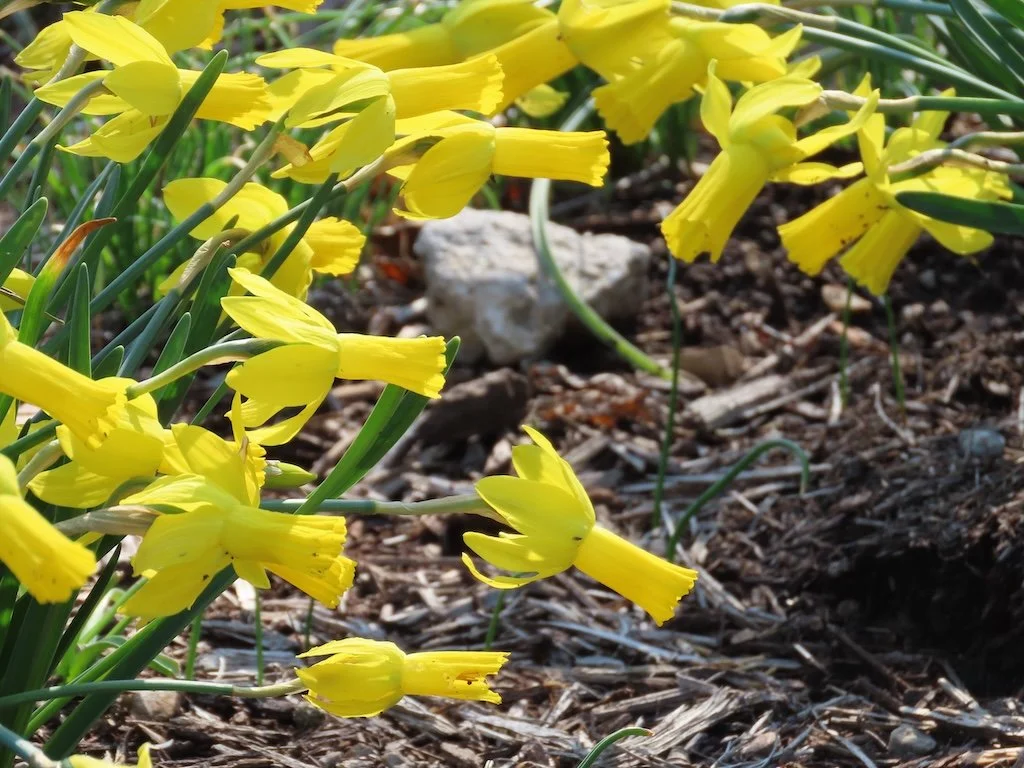
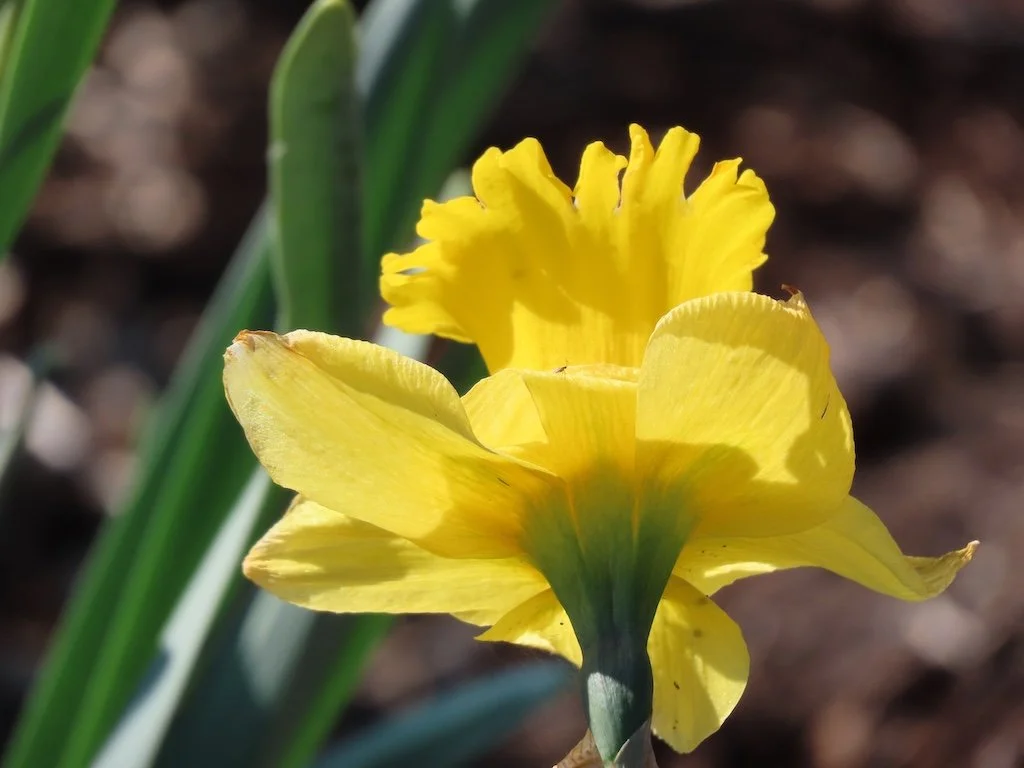
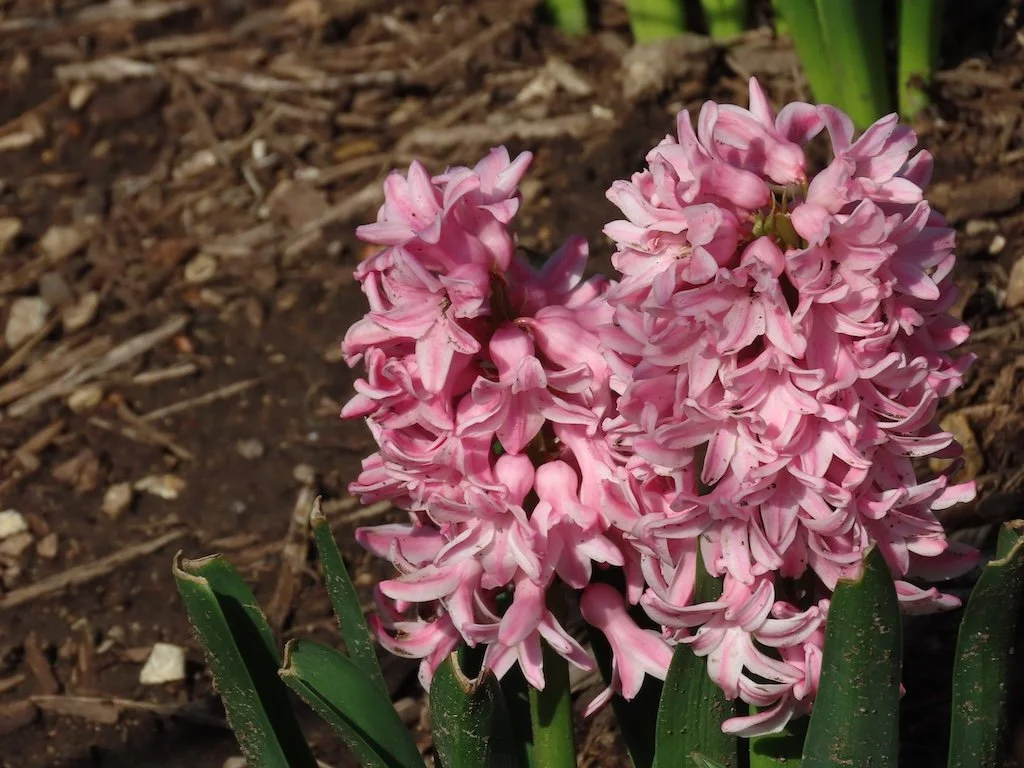
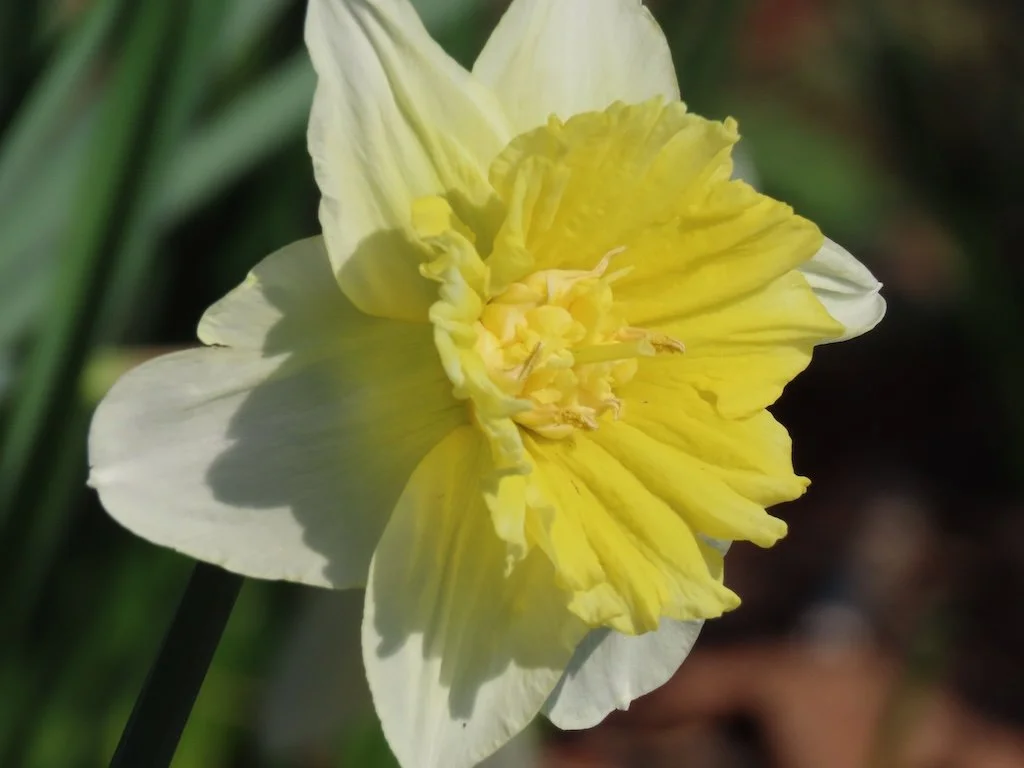
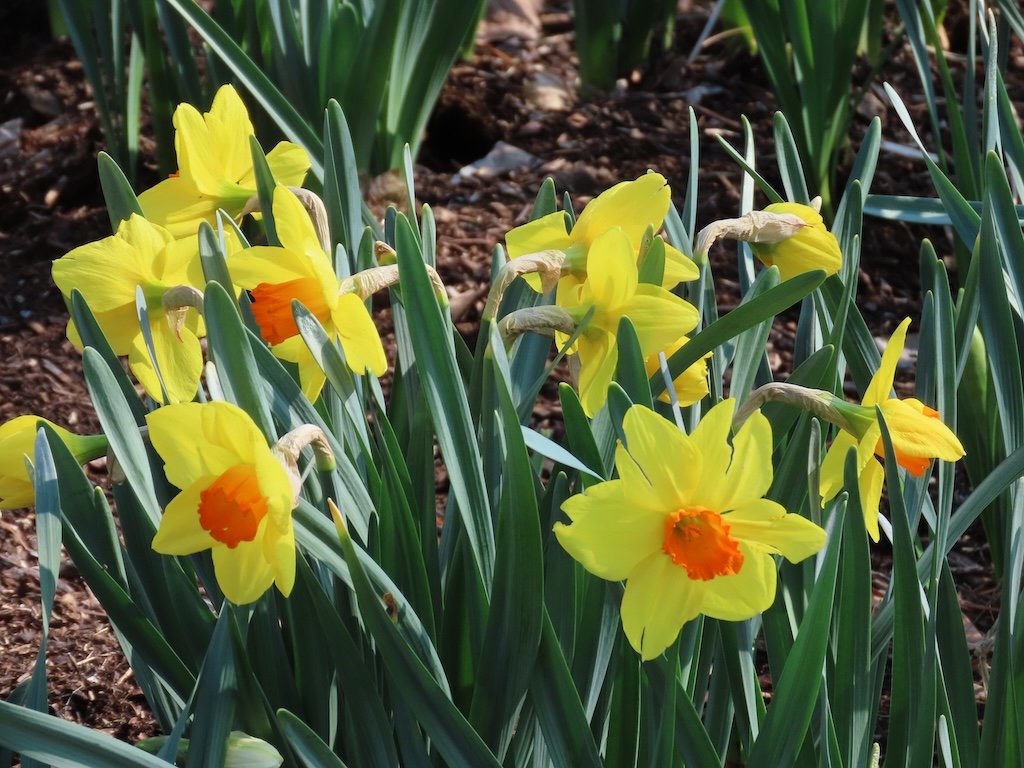
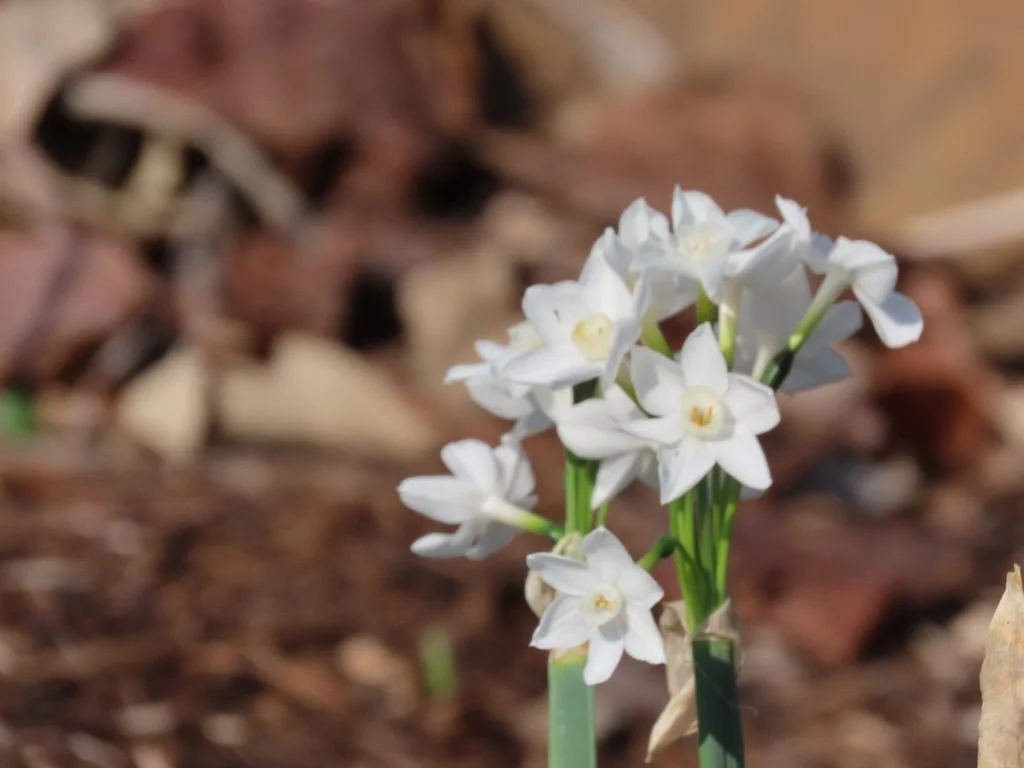
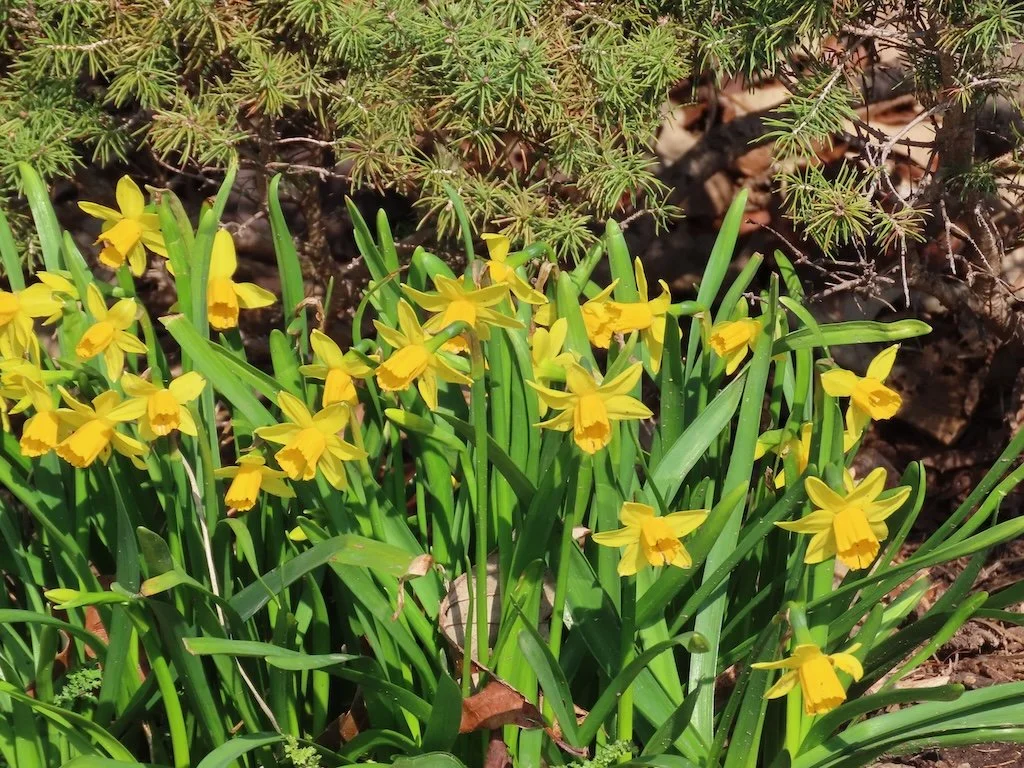
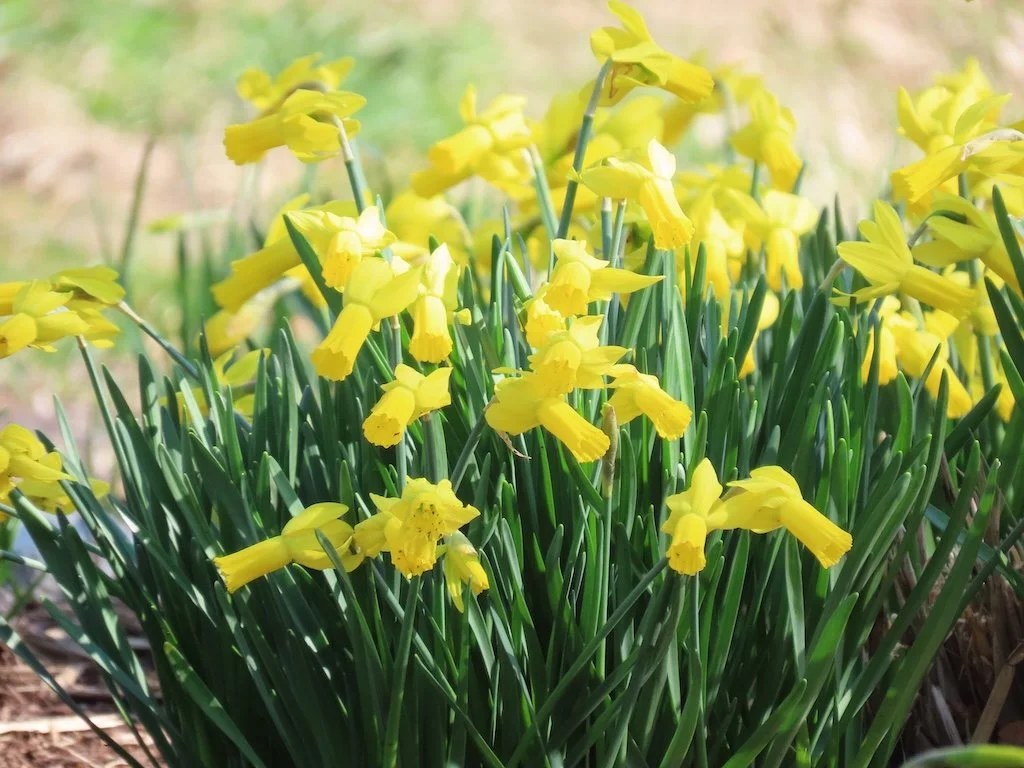
The daffodils and other bulbs are the biggest splashes of color. They are in clumps of mulched beds…sometimes with a rock to provide a backdrop (texture and color that is always there no matter the season). My favorites were the large pink hyacinths. They don’t grow as well now as I remember them from years ago evidently since there were some that looked scraggly; there weren’t enough to make give the garden their smell either.

There were other flowers of the season in the grassy areas – small but worth noticing…and dandelions are blooming as well. I have declared a truce with dandelions – won’t cultivate them but I won’t poison them or dig them out either; I might even eat some leaves of the ones that grow in my yard where I know they haven’t been sprayed with anything.

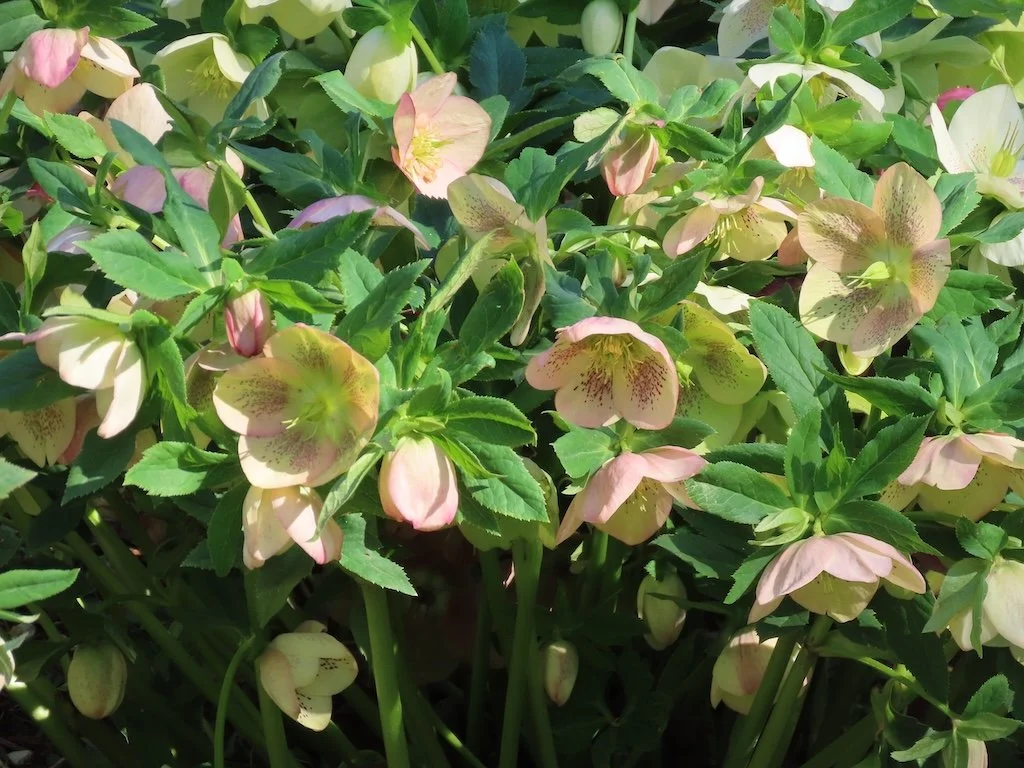
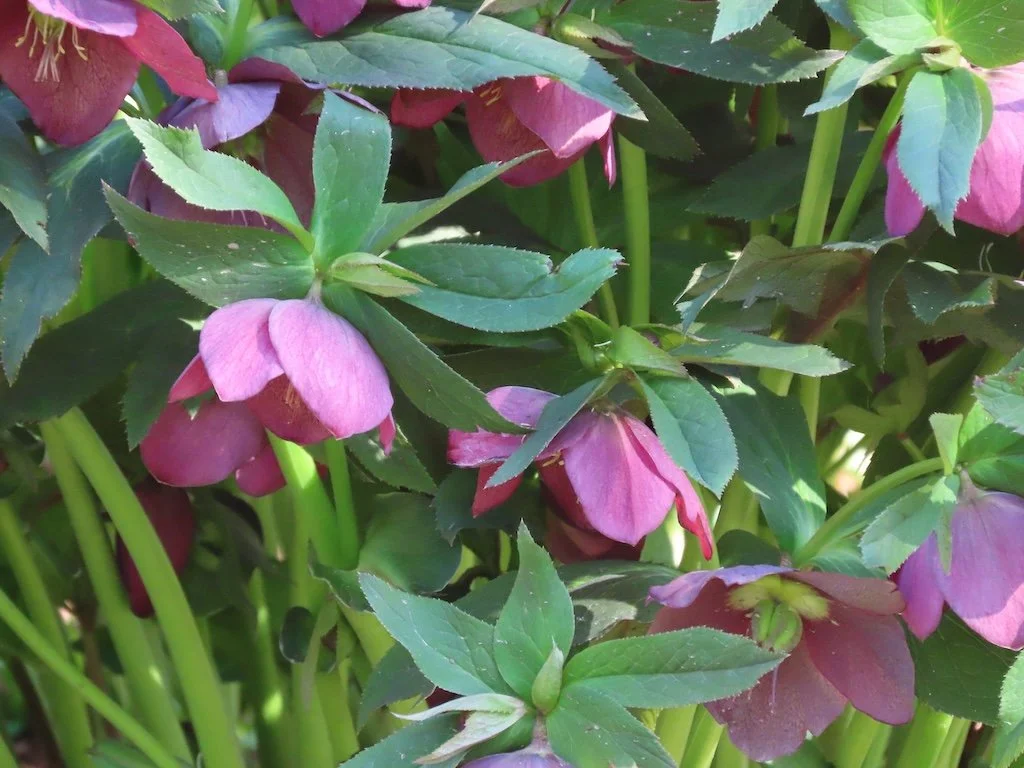
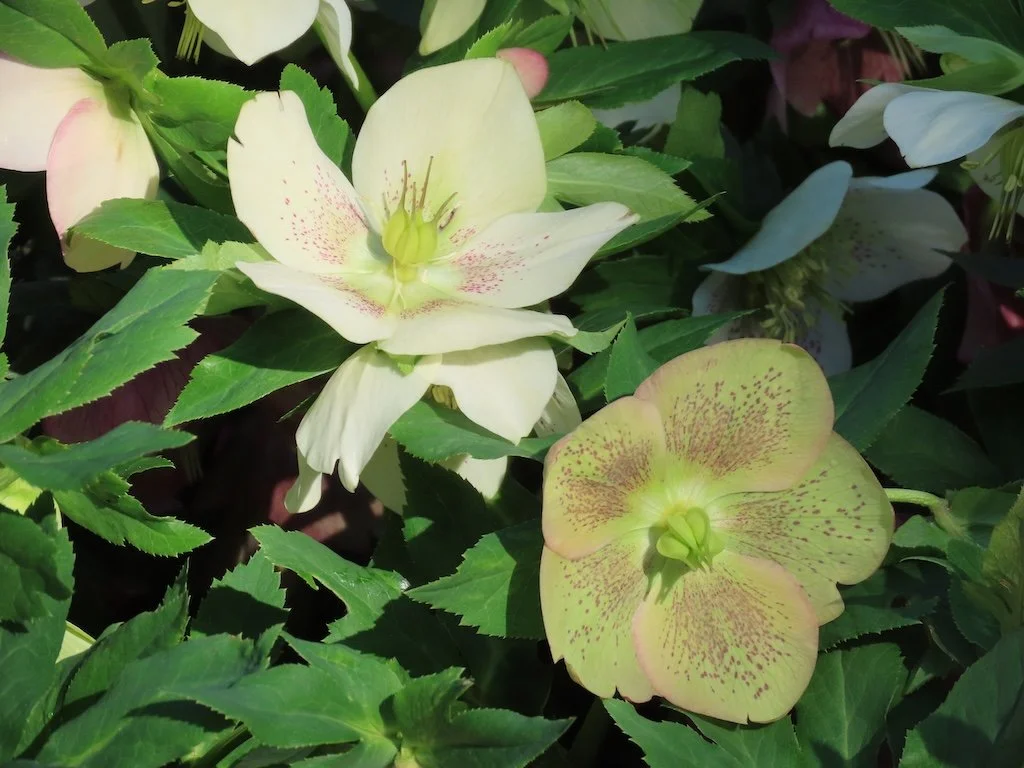
The Lenten roses/hellebores were blooming. They are always some the first blooms of the year.

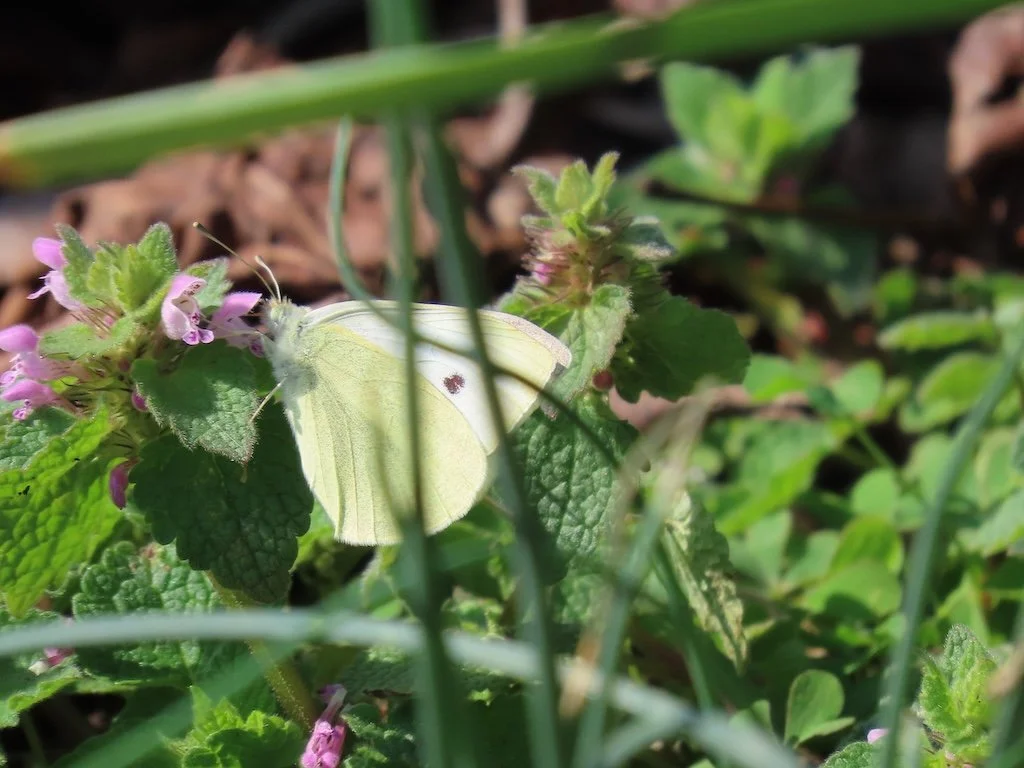
There weren’t many insects active….but I did see a cabbage white butterfly!

Stay tuned for the trees I noticed while I was walking around the gardens in tomorrow’s post.

Carrollton Yard in Early Spring – Macro

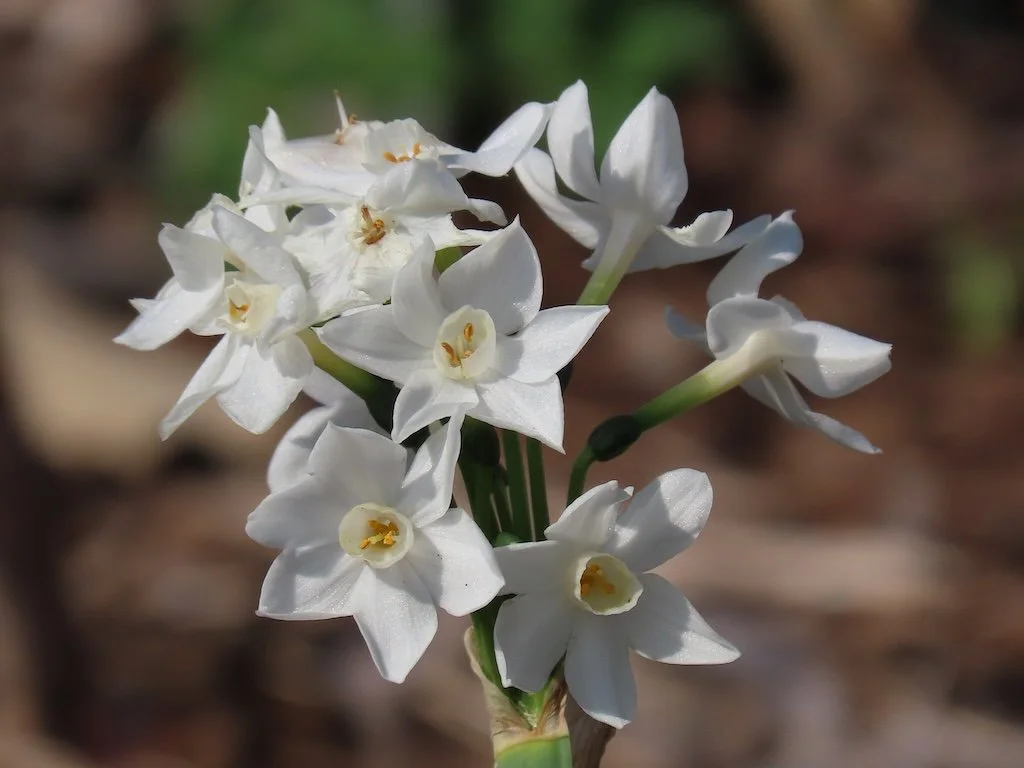
I posted about the larger view of the Carrollton yard last week; today the post is from the macro perspective. I started indoors where my mother had some vases of spring blooms (daffodils and hyacinths) that looked cheery.

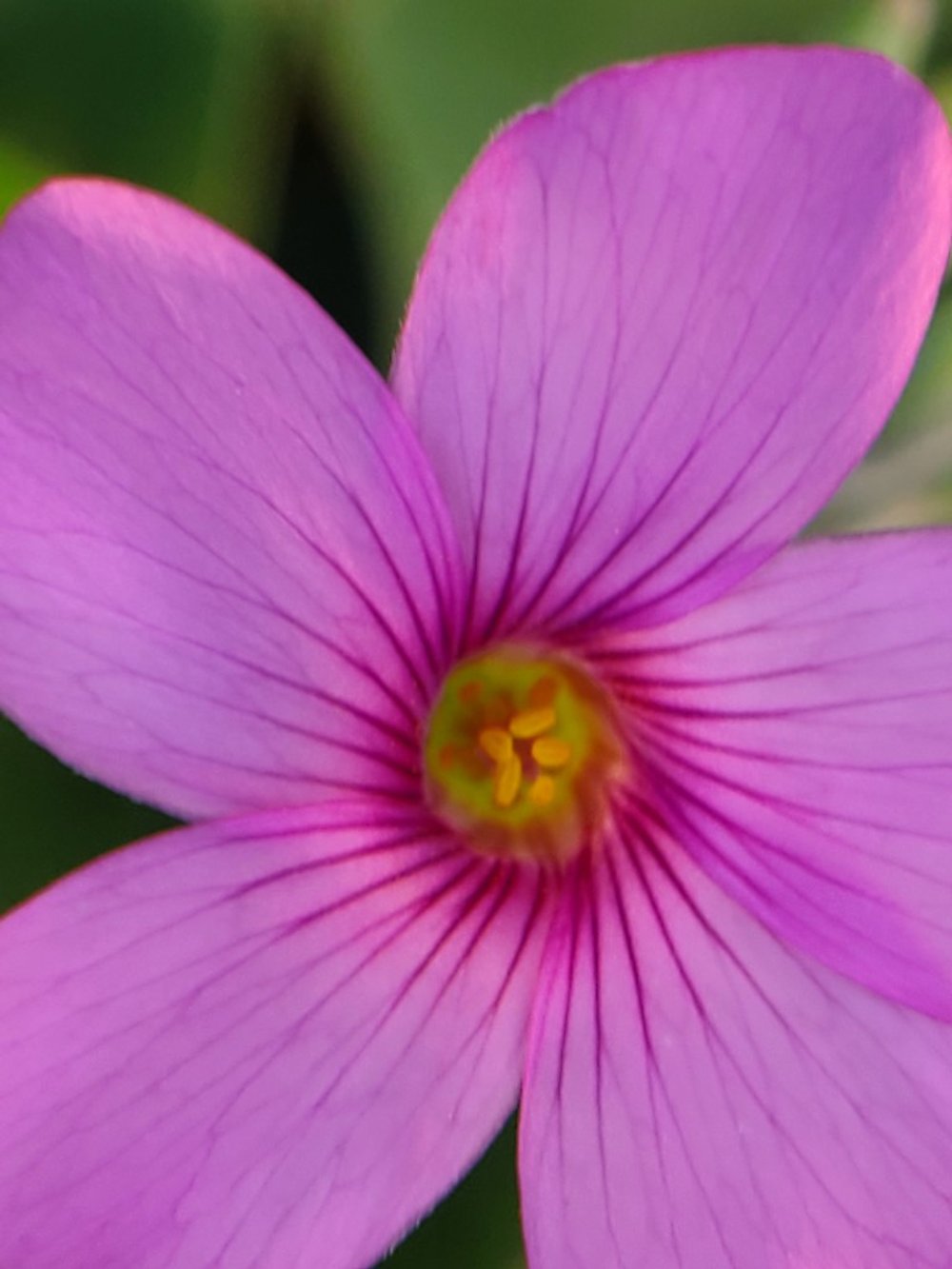
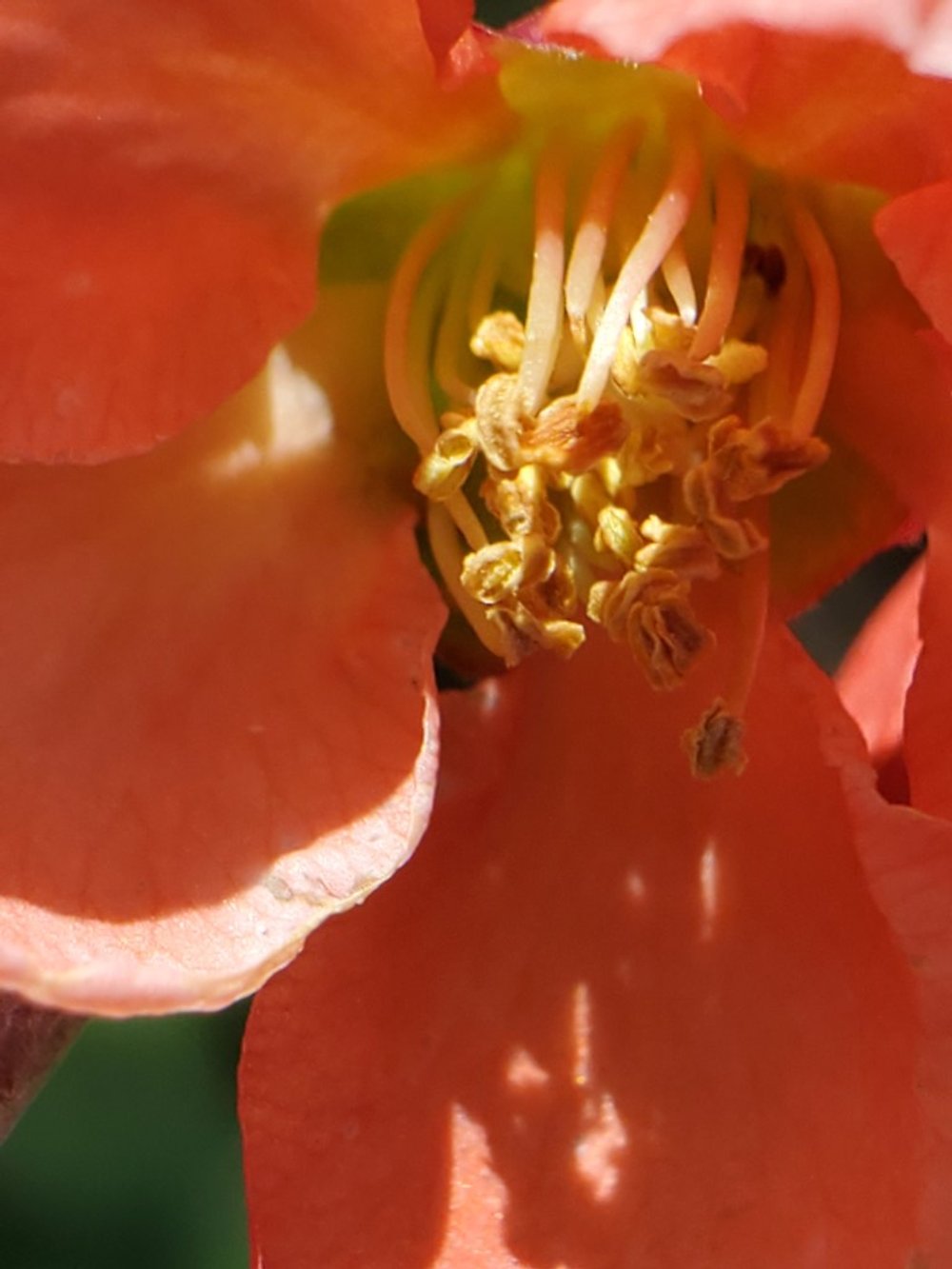
A few days later, I walked around the yard…the hyacinths and daffodils were mostly spent so I photographed other flowers: oxalis, Japanese quince, dandelion. The dandelion is my favorite.

The new rose leaves were not wet…but the new leaves must have some waxy material that protects them from cold temperatures this time of year.

A larger rock under one of the old mulberries had several kinds of lichen growing on it. The encrustations overlap and I found myself wondering if, in the overlap, are they melding or overlapping. Lichen are an organism that operate on an entirely different timescale than me do; some might continue to slowly grow and dissolve their rock for thousands of years.

Our Yard – March 2020

It was a great March day – cold in the morning, warming to the mid-50s by the afternoon, and almost no wind. My plan was to walk around the yard - see what was coming up and clean out the compost bin…restart with the small amount of veggie kitchen scraps I had accumulated over the past few weeks. I did the compost job first: using a pitchfork to move the contents from the old turtle sandbox (my compost bin), dumping the bucket I keep on my deck for kitchen scraps into the near empty bin, putting a layer of leaves from last fall onto the top. I’ll be adding a layer and/or stirring it up every week now that it’s warmer.

2021 03 IMG_3953 (2).jpg

I took stock of our early spring bulbs. The regular sized daffodils I planted about 5 years ago are just beginning to bloom but the miniature ones that started with a few bulbs my mother-in-law bought for us over 30 years ago are blooming profusely. I’ve discovered that they last a long time as cut flowers as well.

The crocuses are fading at this point. There seem to be fewer each year although I have started noticing them in different places than where the bulbs were originally planted. Maybe the squirrels move them around (and sometimes eat them).

The day lilies are coming up. The deer have already nibbled the ones that are around the base of the oak tree near the mailbox.

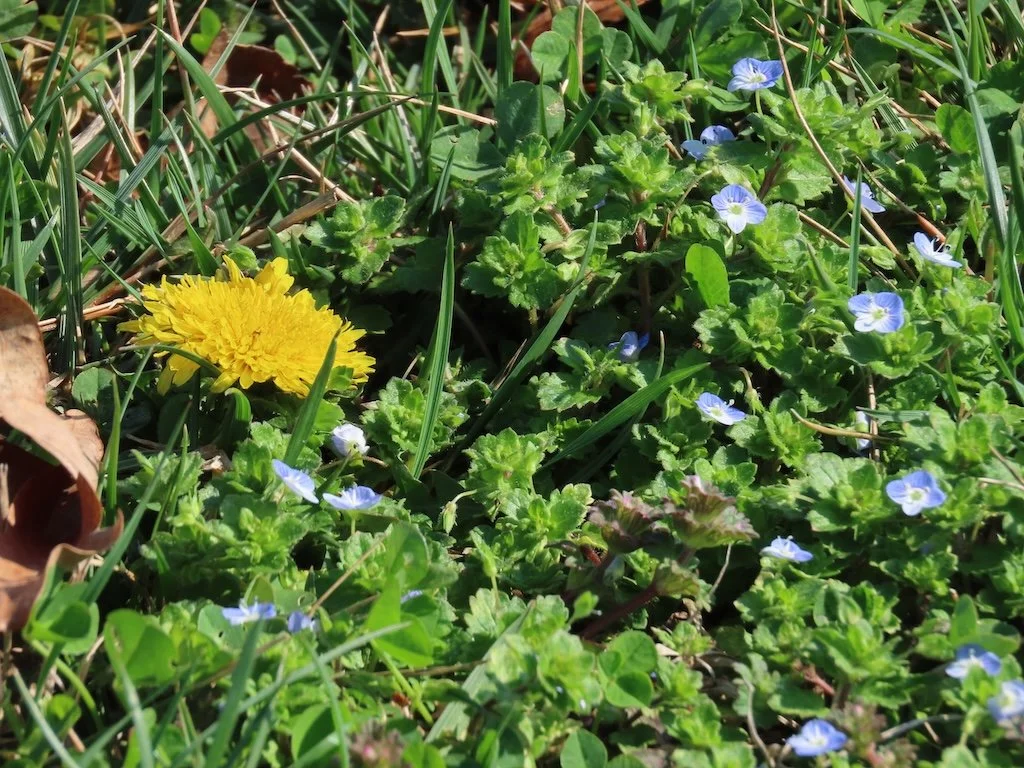
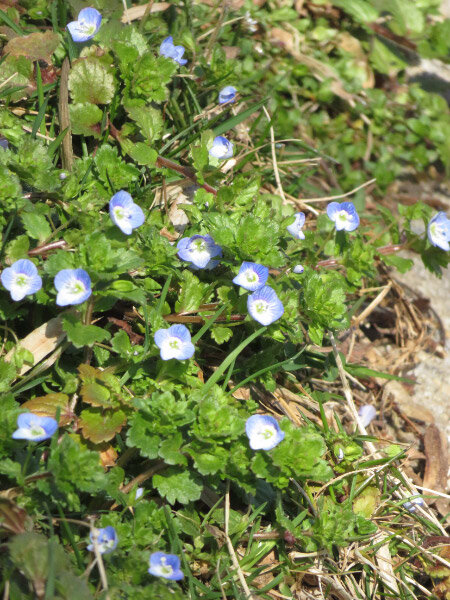
The mini clover we planted last fall appears to have survived the winter although it hasn’t started growing a lot yet. I hope it will expand its growth and bloom/make seeds. Near one of the patches we filled in with clover, there is a small plant with blue flowers already blooming. The Maryland Extension has a page on ‘spring weeds’ which helped me identify it as

2021 03 IMG_3953 (9).jpg

Speedwell

It’s a weed but not invasive. In a recent webinar for Brookside Gardens volunteers about sustainable gardening, I learned about spring weeds that can often be left alone. They cover what would otherwise be bare ground, offer food for pollinators in early spring and will be overtaken by other plants as the season progresses. In this case, it’s likely that the mini clover will grow over the area during the summer and there won’t be as much speedwell next spring. Even if there is some – I’d rather have a yard that provides food for pollinators…particularly early in the season!

Macro Landscapes

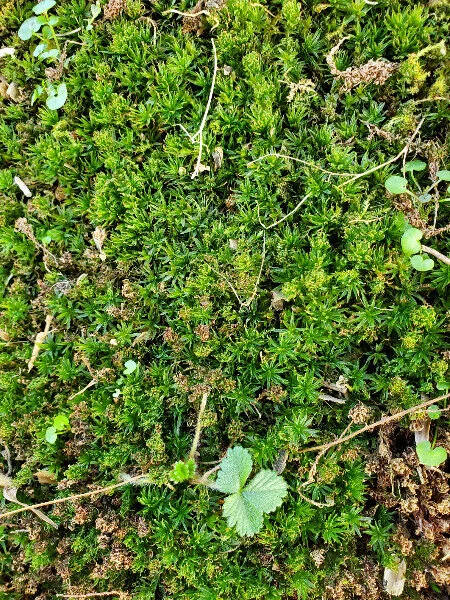
On my recent walks around the yard, I’ve been noticing the tiny landscapes on the ground….the greens of very early spring. The moss under our deck stays green all winter and now there are tiny plants (clovers and mock strawberry) coming up through it. They’ll stay low growing so we’ll never mow the area.

A patch of moss can also be found near our chaos garden. It appears to be more yellowish (maybe got too dry) with red seta…the  sporophyte that was at the top of the seta is already gone (i.e. the spores long dispersed). The grass is beginning to grow around the moss and it will eventually be in the path of the lawn mower.

20210308_135132.jpg

There are some weeds beginning to grow too…..coming up in the grass, tulips poplar seeds, and rolls of sycamore bark. The mowing will keep it short. I tend to leave weeds like this…hoping they have deeper roots than the turf grass…better at holding the soil on the slope.

20210308_135202.jpg

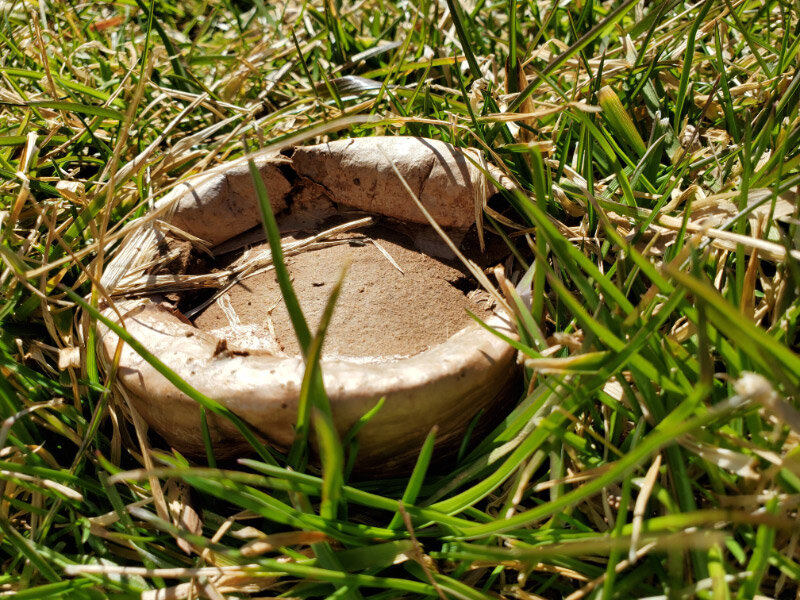
The soil a few feet away from the chaos garden must be rich in humus since there seems to be a puff ball or two every year. This one is from last fall. I remember finding it when I was mowing the leaves! It has collapsed but somehow managed to stay relatively intact through the winter. Underground the mycelium is growing and decomposing the humus further with the help of microbes….the makings of healthy soil.

20210308_135218.jpg

The daffodils are up in the oak leaves, old day lily leaves, and tulip poplar seeds in our front flower beds. Maybe I’ll cut a few of the flowers this season to bring their springtime indoors.

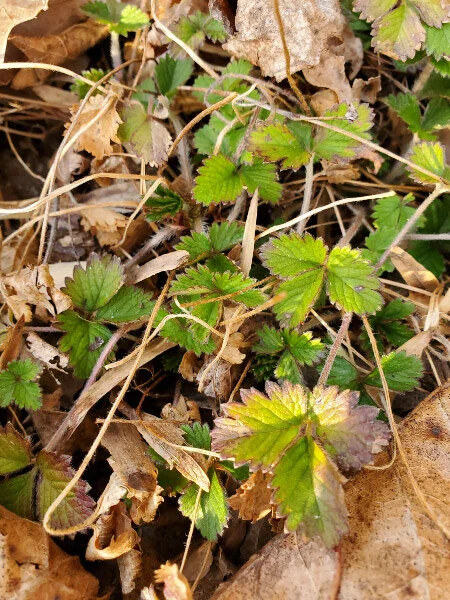
There are the usual ‘weeds’ in the same beds. I recognize the mock strawberry. There is a chance that some of the others could be black-eyed susans which I  want for the bees and butterflies during the summer.

There are a few crocuses coming up. There are fewer every year. One came up last year out in the yard…the bulb probably moved there by a squirrel.

20210309_080544.jpg

I looked closely at the joint between the driveway and our front walkway – lots of tulip poplar seeds there. They had made enough ‘soil’ for a small clover and some mock strawberry to grow. And there was a worm using the crack as a highway between the lawn and the flower bed; it was heading toward the flower bed….a much richer place for the worm!

Finally, I checked the bush at the corner of the garage. I’ve been nurturing a young holly to take over for the old bush. I discovered a plant growing in the stump of the old bush…a sure sign that it is rotting. I’ll be cutting it closer to the ground and let the holly take over completely.

20210309_080838.jpg

Overall – these macro landscapes look more springlike than our trees at this point. I’ll wait a few more weeks to photograph the large scale spring landscape.