Suburban Savanna – 5

Continuing my series on progress toward transitioning my yard to a suburban savanna…..

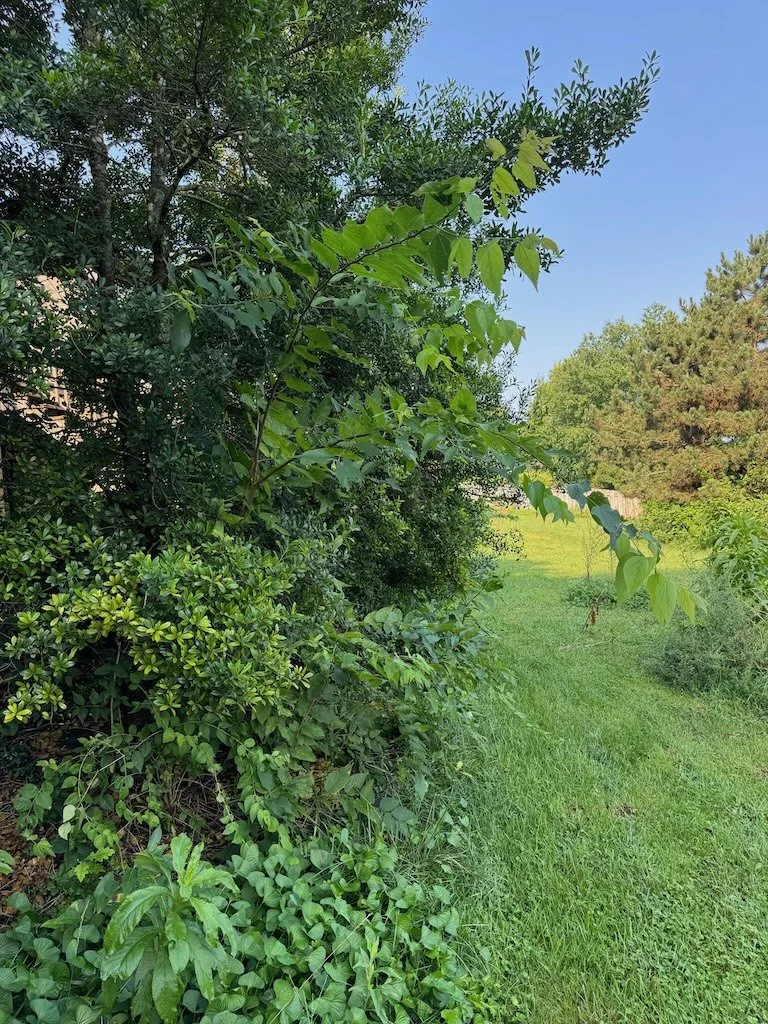
This is only my first summer implementing the strategy, but I am already experiencing some areas that are overgrown…with natives. In a larger space, the tangle would simply be allowed to continue but in my third acre suburban savanna, actions are needed on my part very similar to my actions when it comes to invasives!

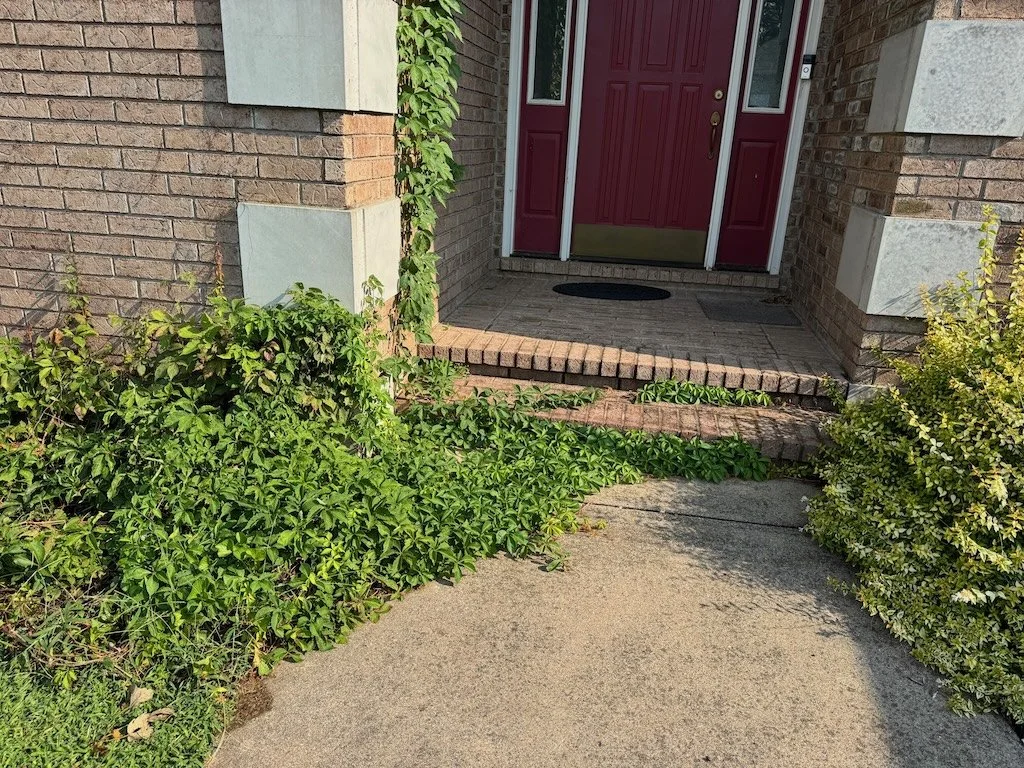
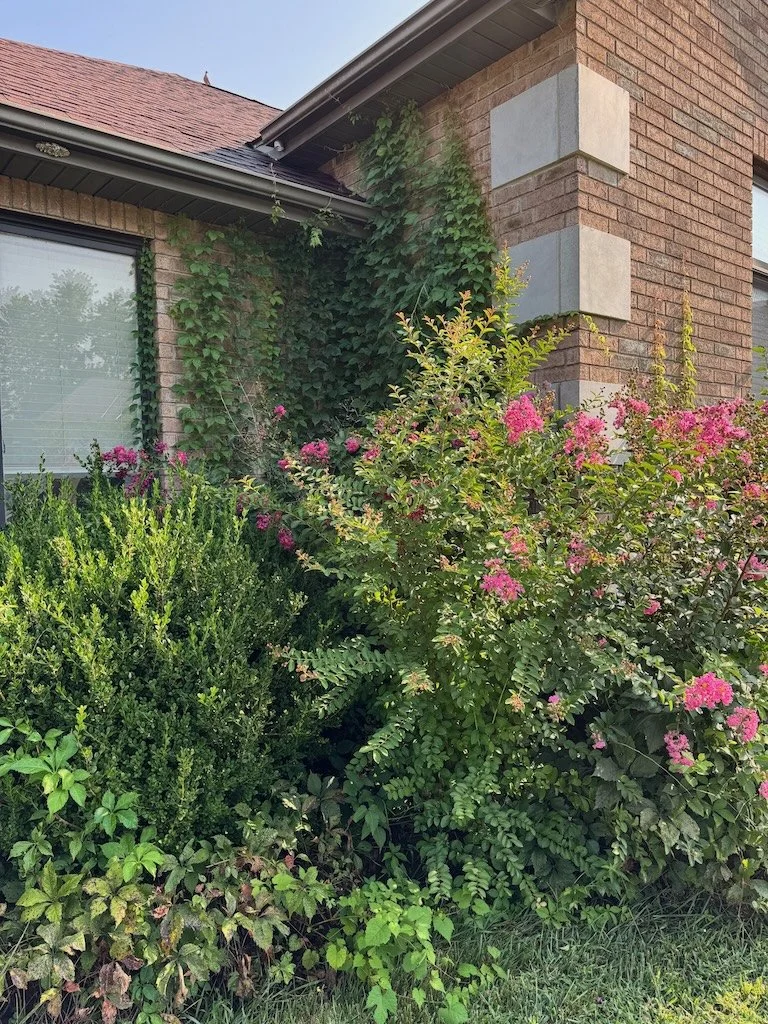
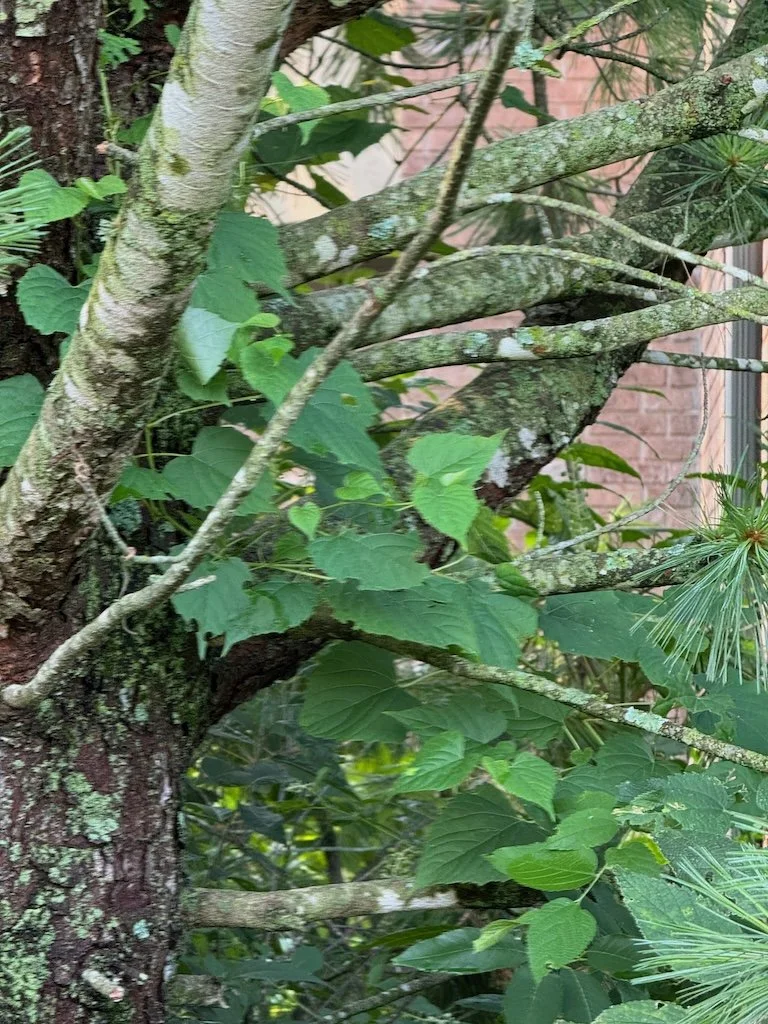
Virginia creeper is great near my front door, and I can easily keep it controlled there because I see it all the time. In other places (in a corner of a flower bed behind some crape myrtle and boxwood, for example), it tends to be problematic, and it requires me to get back there to hack it out. I have been cutting only what is on the brick but now I will cut more and hopefully eventually reduce it to a once-a-year job.

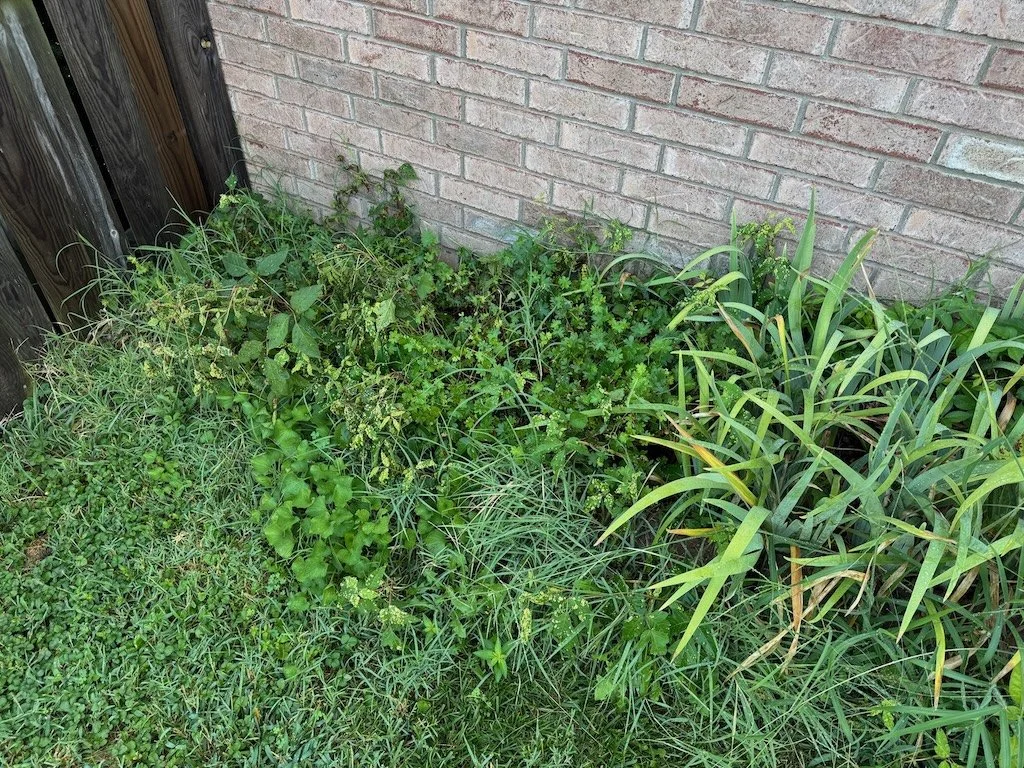
My strategy with poison ivy was to leave it unless it was in a place I would likely be without gloves. Now I am rethinking that even though the patch is interesting because it has the poison ivy leaf gall too. I’m going to gear up and clean out that bed…maybe plant some cone flowers there!
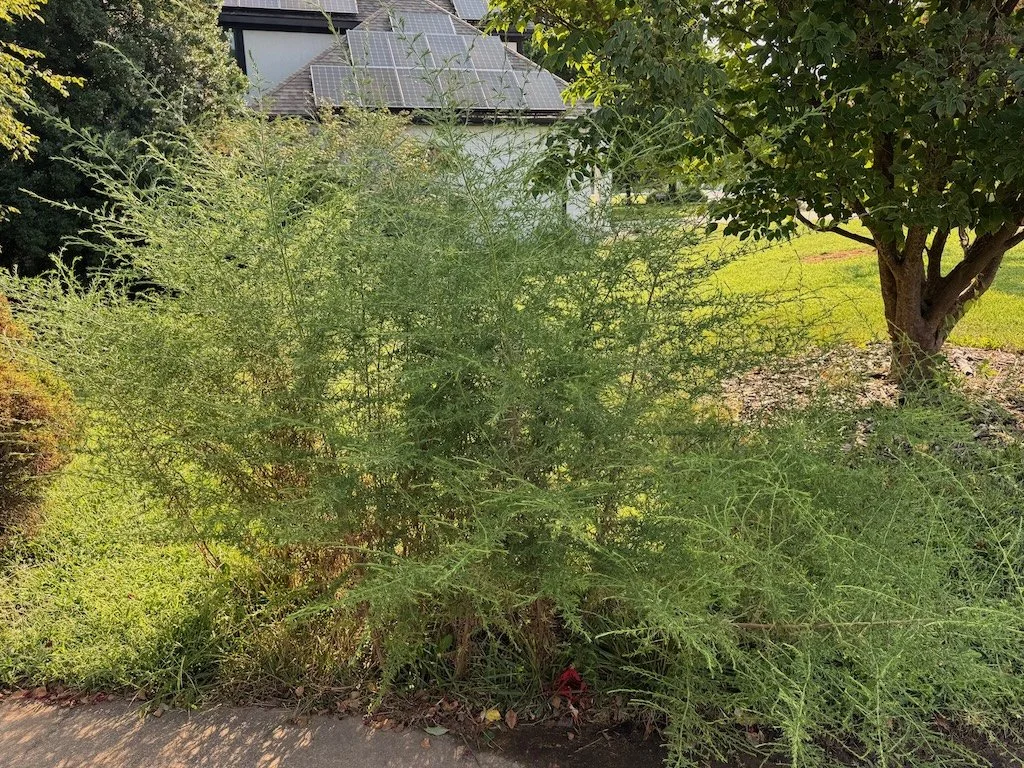
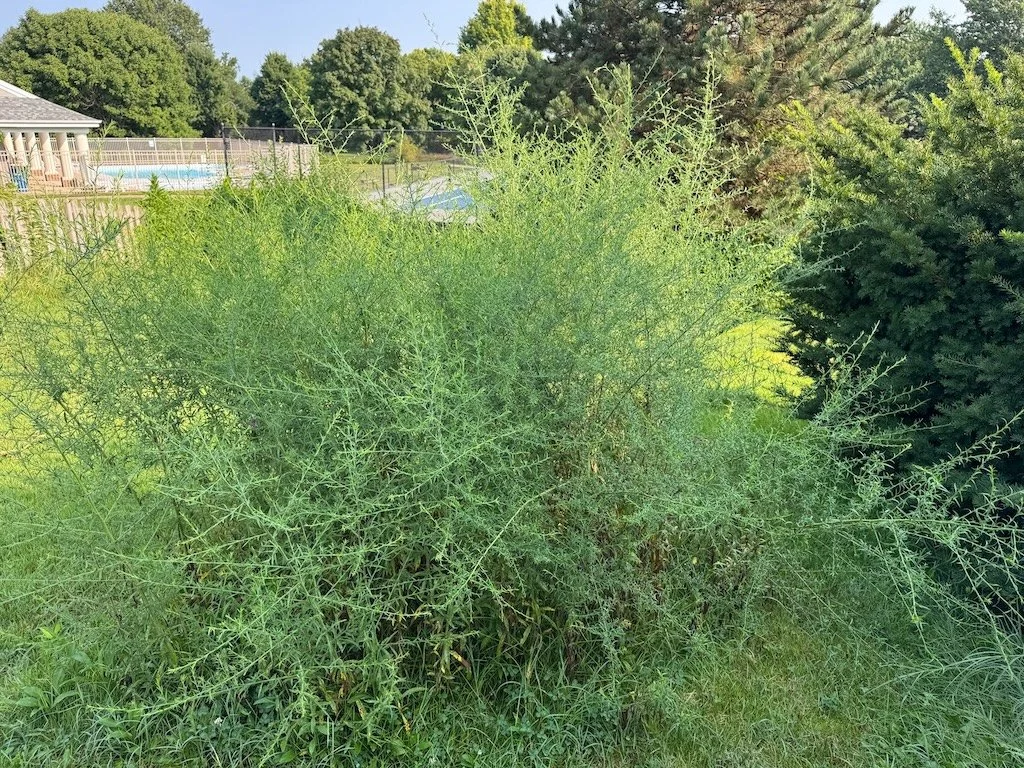
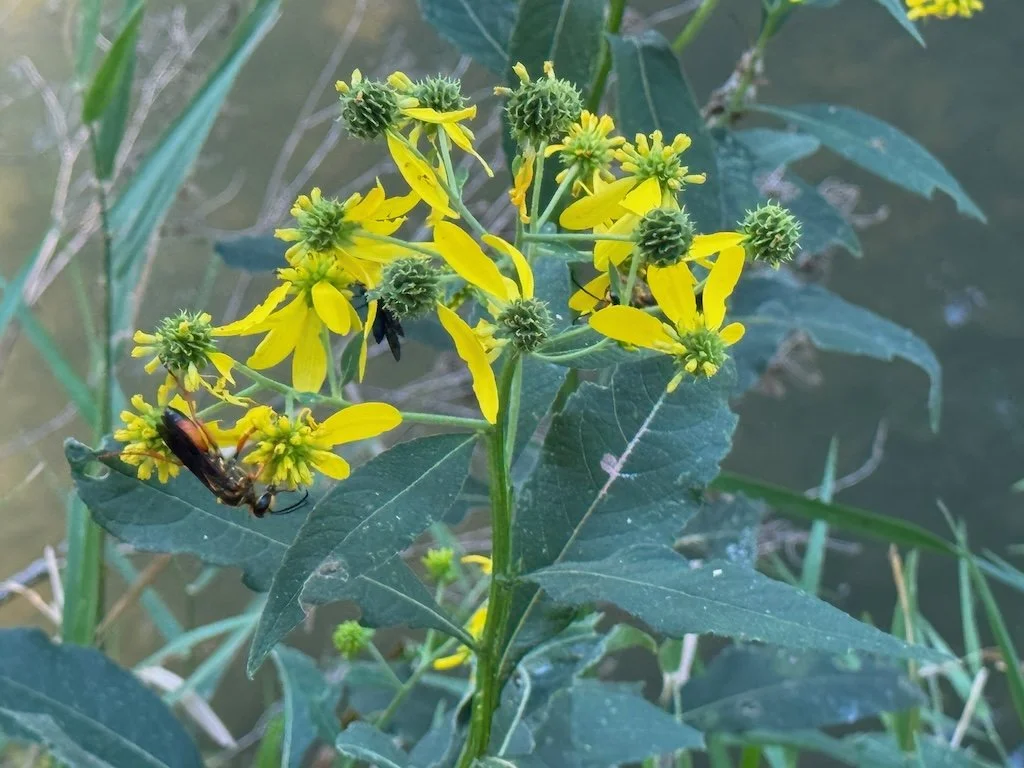
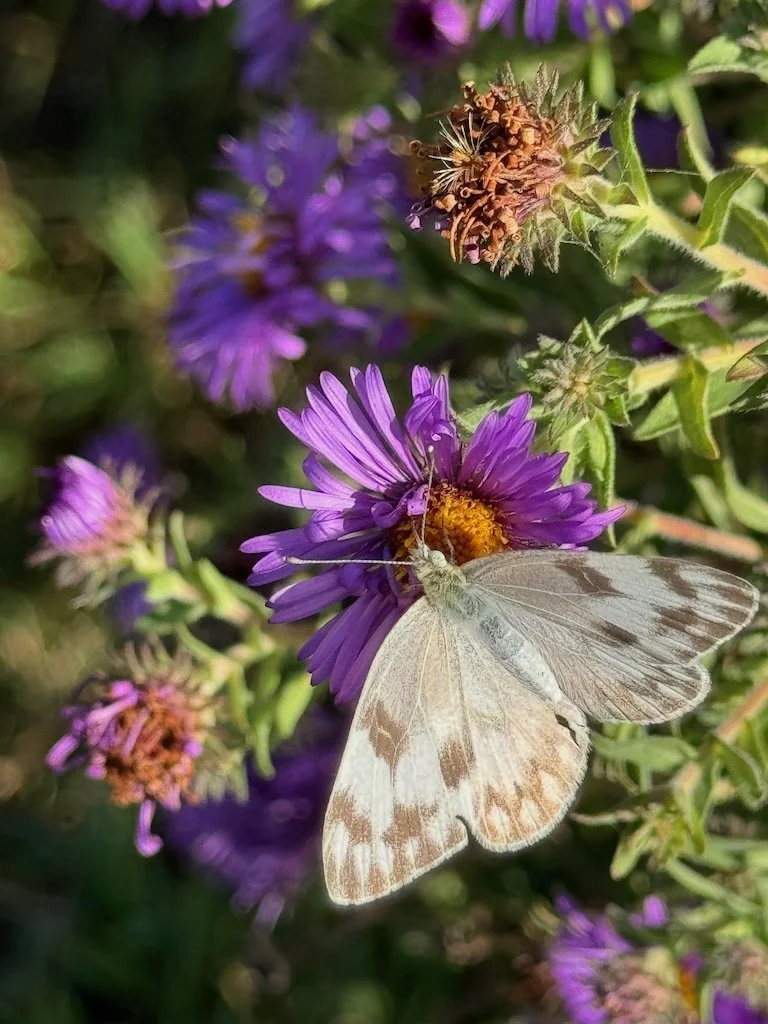
Last year I had a clump of White Heath Aster near my driveway, and it is there again this year….and there is clump in my backyard too. I am leaving both since they are great for pollinating insects in the fall – but I don’t want more of them in my yard.  If they come up in more places next year, I will mow them!
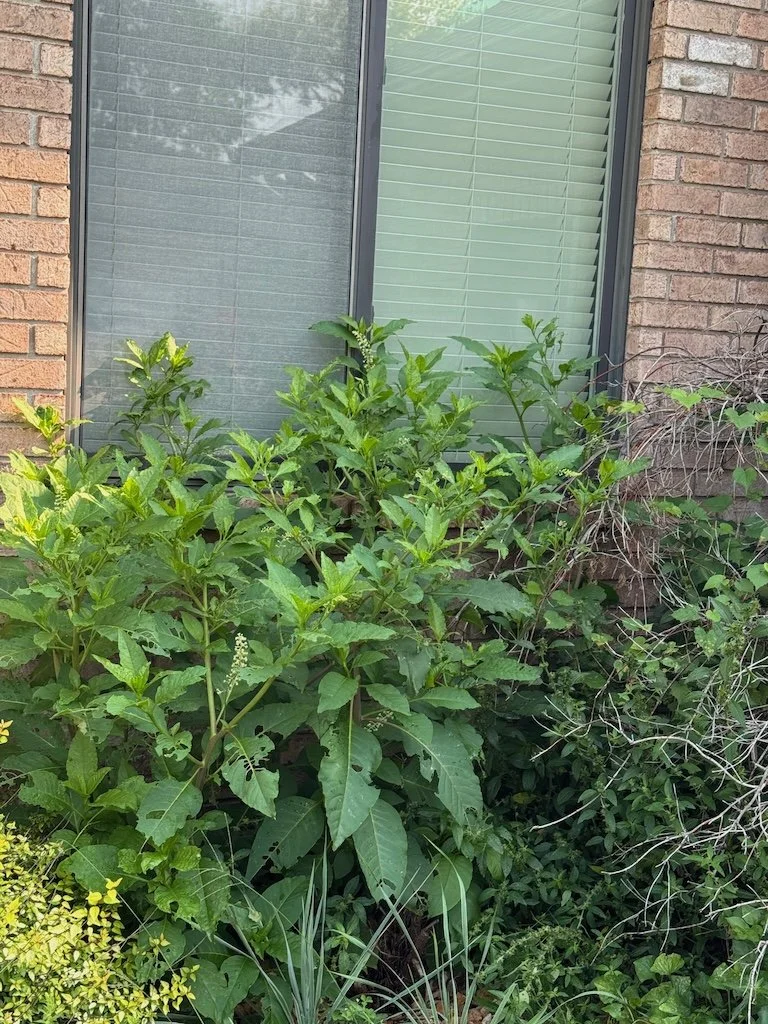
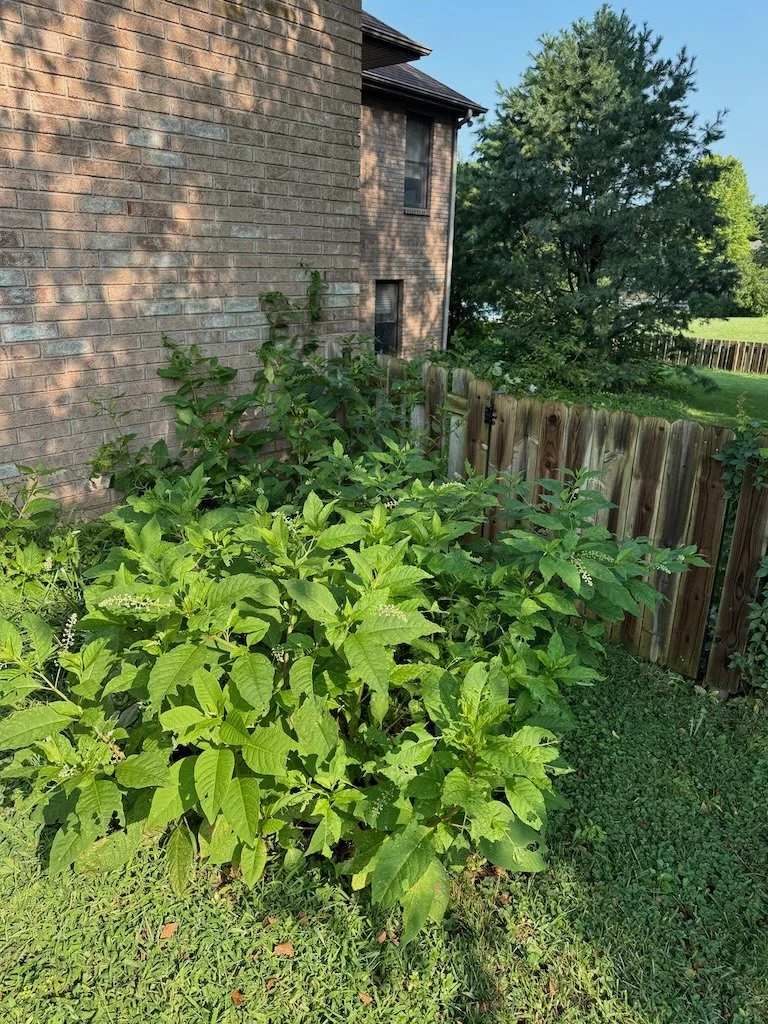
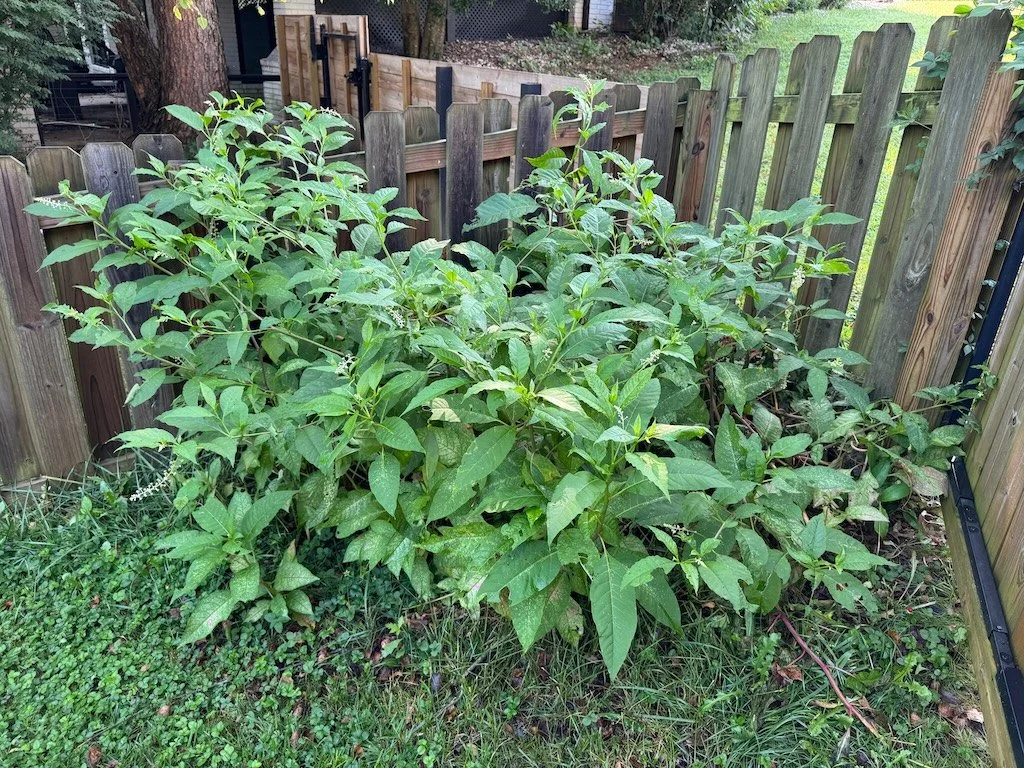
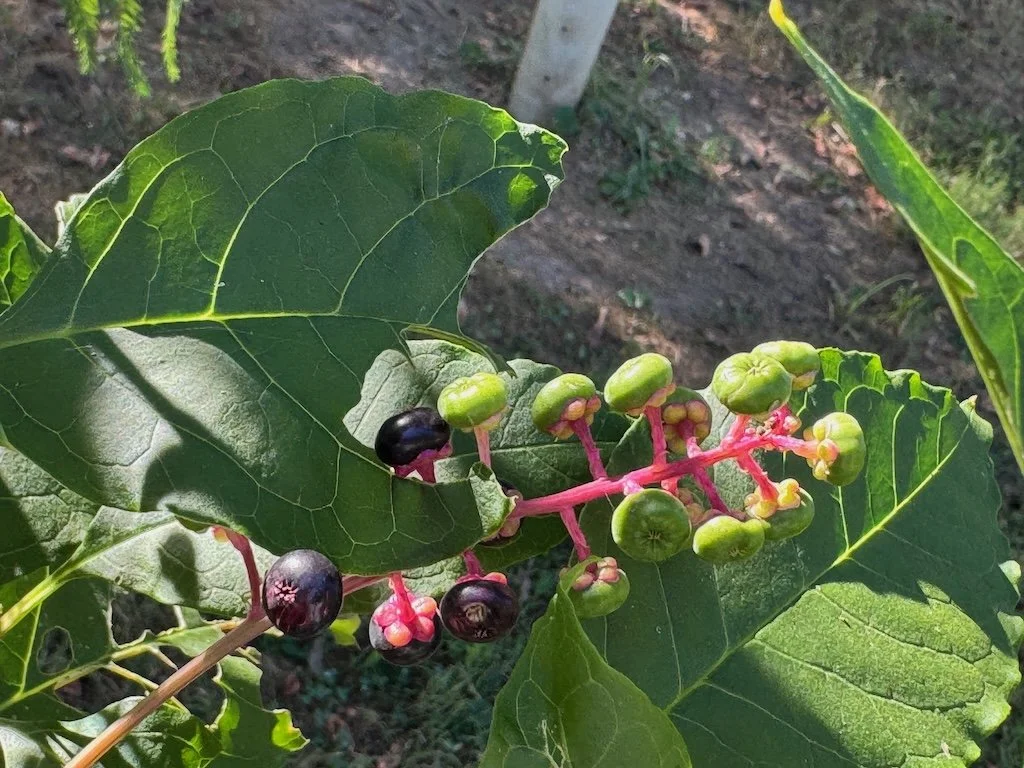
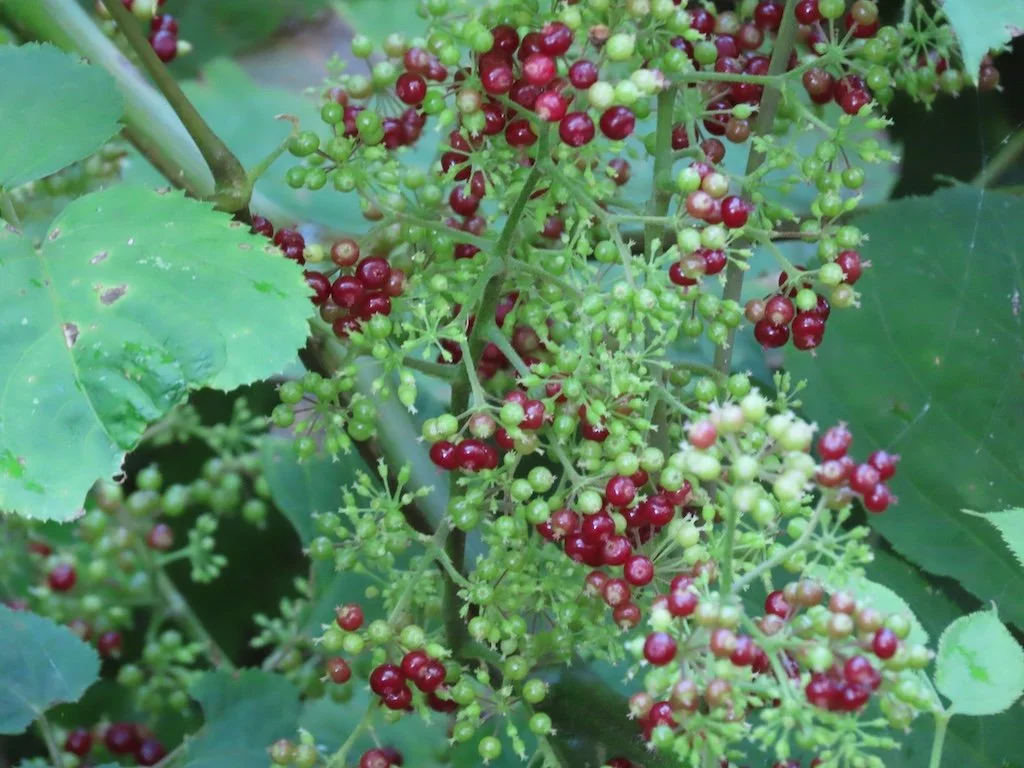
I am learning to cope with pokeweed. If it comes up in an empty space, I leave it…but I trim it to keep it low and leafy. It has filled in an area under a window where a non-native cedar died, a slope on the side of the house (reducing the area I mow and holding the soil with its deeper roots, and filling in a corner (it is hiding a place I dump grass clippings too!).

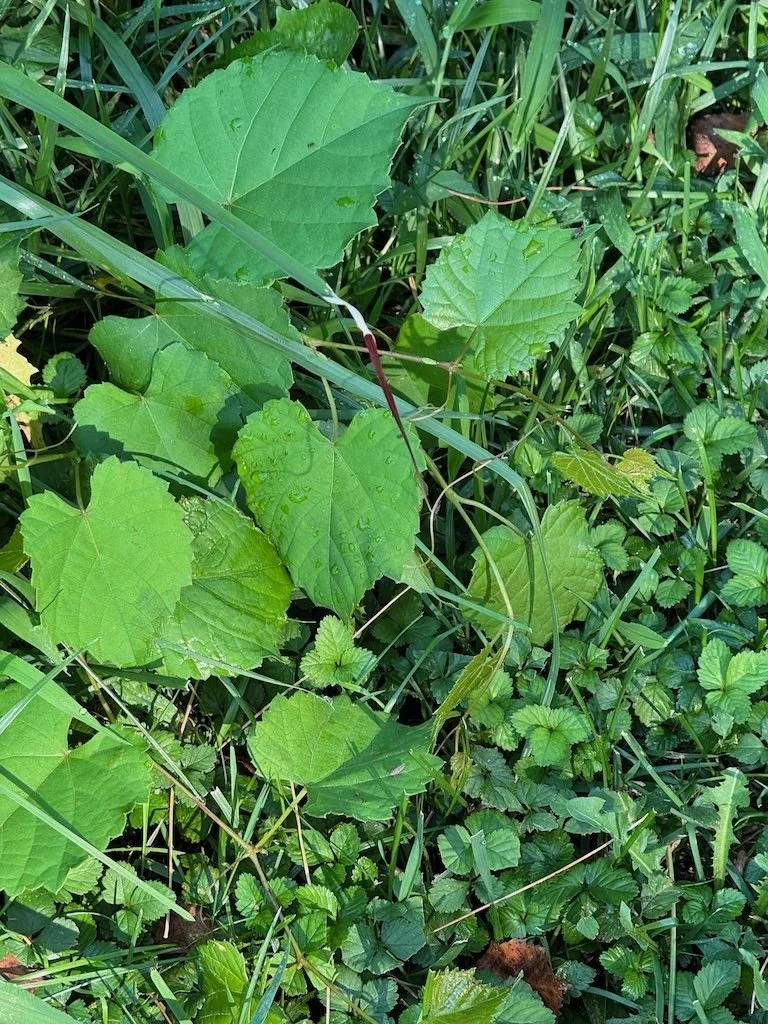
Grapevines seem to be everywhere this year. I don’t mind them in some places…but I will keep them out of my trees. It is going to take some vigilance.

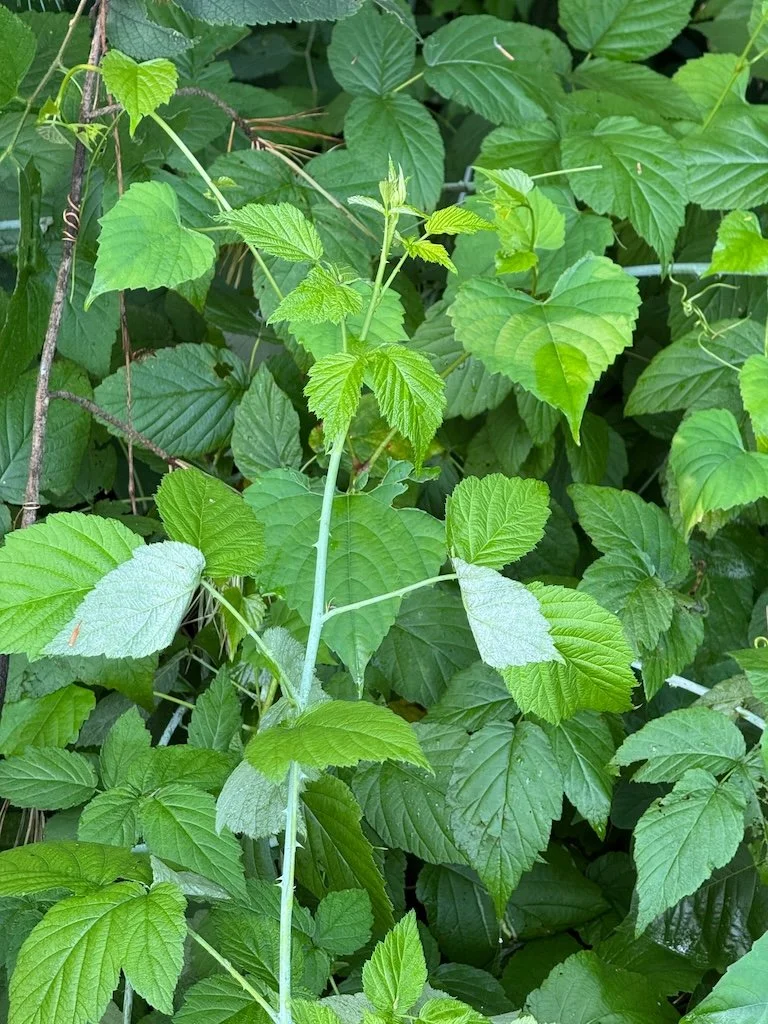
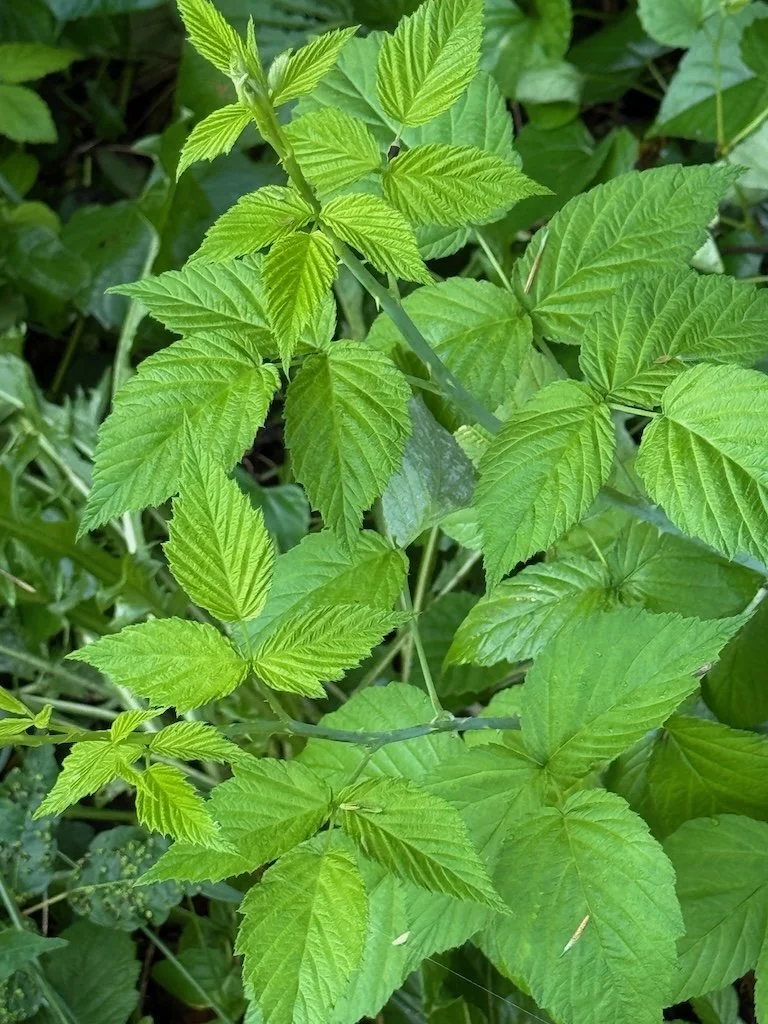
The same is true with the black raspberry canes. They have lovely pale green stems and white underside of the leaves. There are thorns too. I want to leave some of the plants since wildlife like the fruit…but I will be cutting them in places I want to be able to easily access!

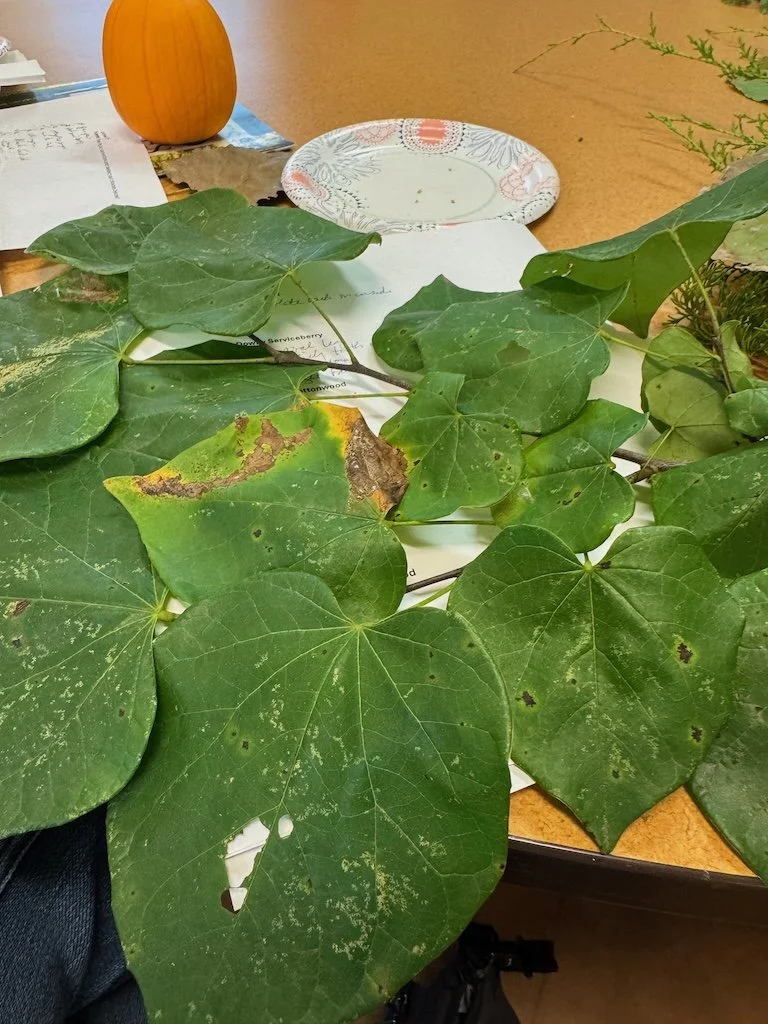
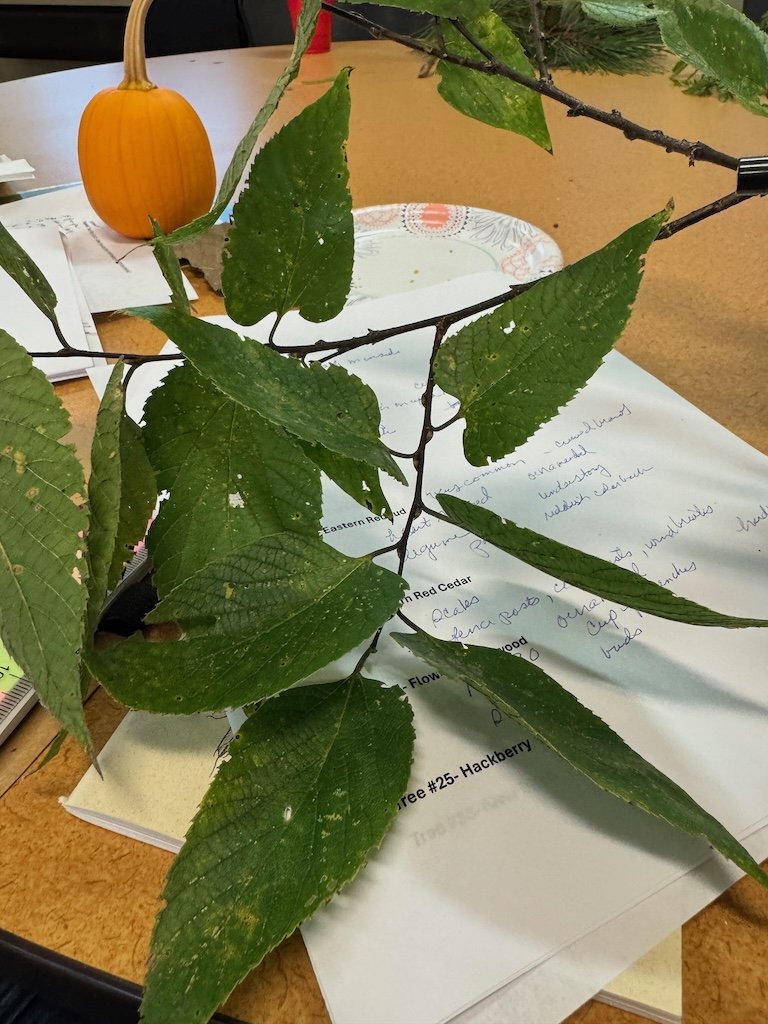
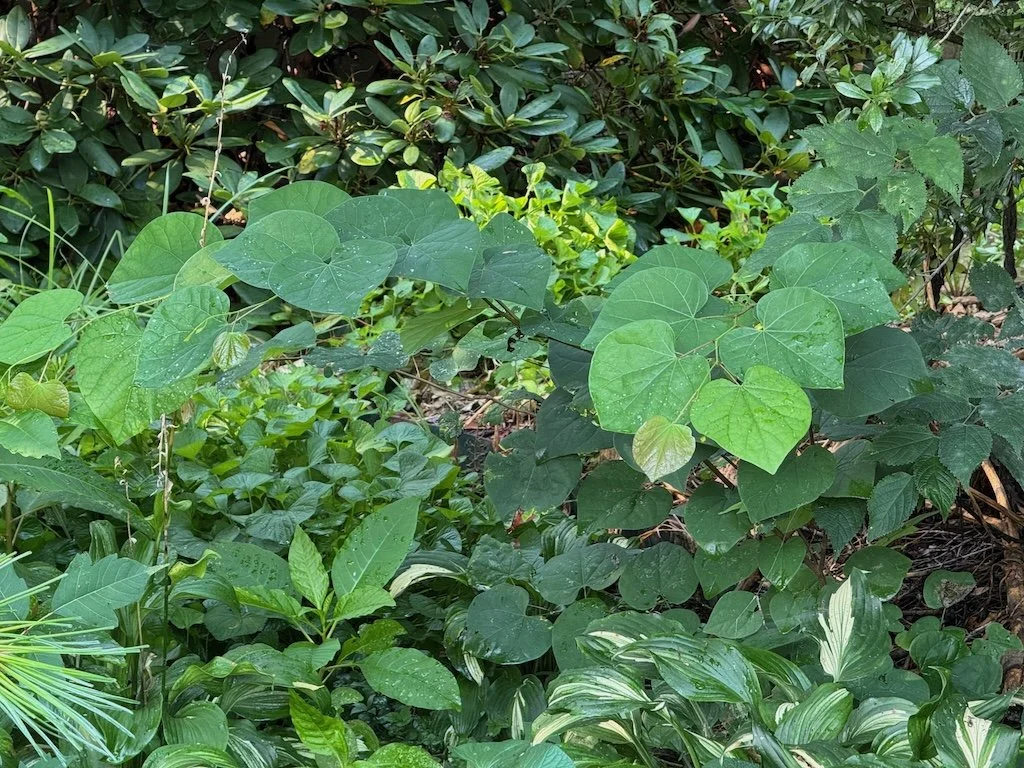
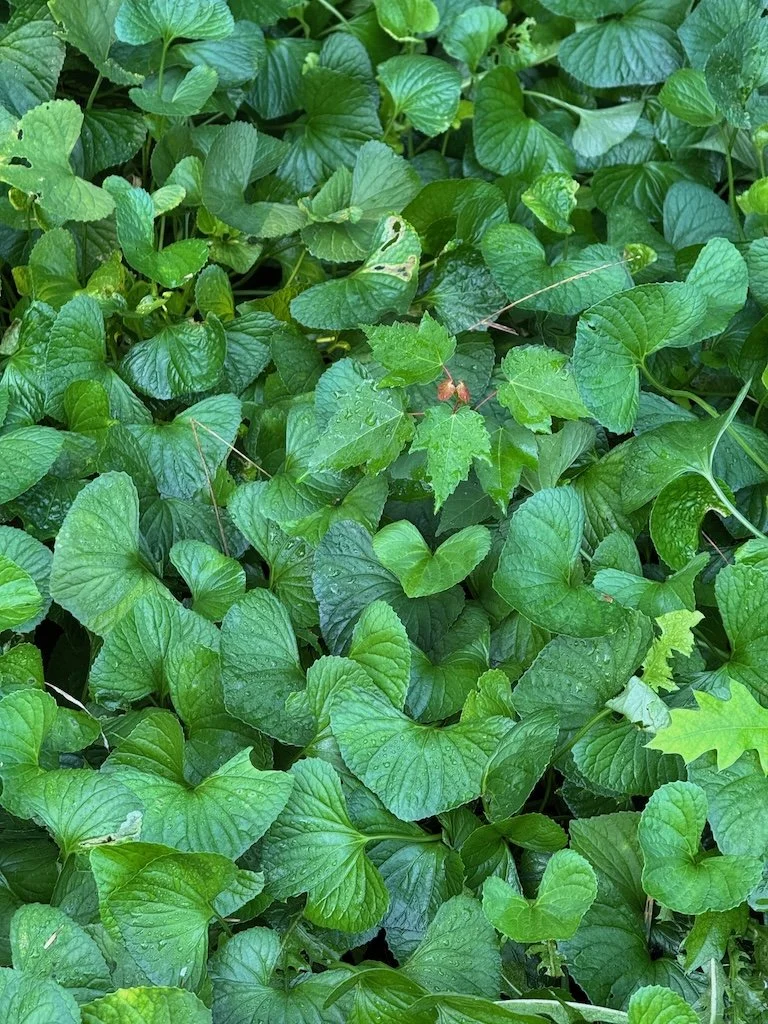
I like violets for the ground cover in all my shady areas but they hide young redbuds and maples and oaks that will eventually need to be cut. Hackberries are everywhere – growing with the hollies and in other bushes. I am considering leaving them but also realizing that I will eventually need to cut them down since they are not in places where I want a larger tree!

All these native plants that I am considering controlling and this is my first year thinking about my yard as a suburban savanna!

April 2026 – Overview

May 2026 – Planting Natives

June 2026 – Shade Garden

July 2026 - Water

Powell Gardens – Part I

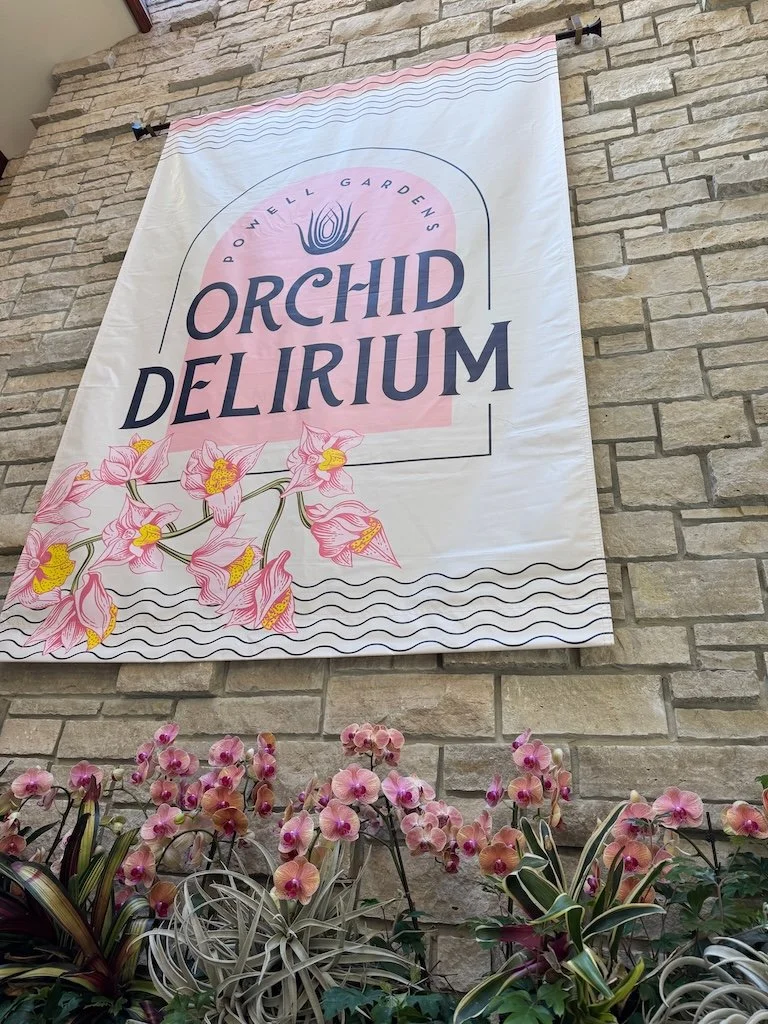
Last week, I made my first trip to Powell Gardens to see their orchid display. It is a day trip from my home in Nixa MO so I will probably go again later this spring….and/or next fall. It was a cold day, and we weren’t planning on walking around outdoors, so we weren’t disappointed that the trees were mostly still bare. Our membership at Springfield Botanical Garden got us into Powell Gardens too!

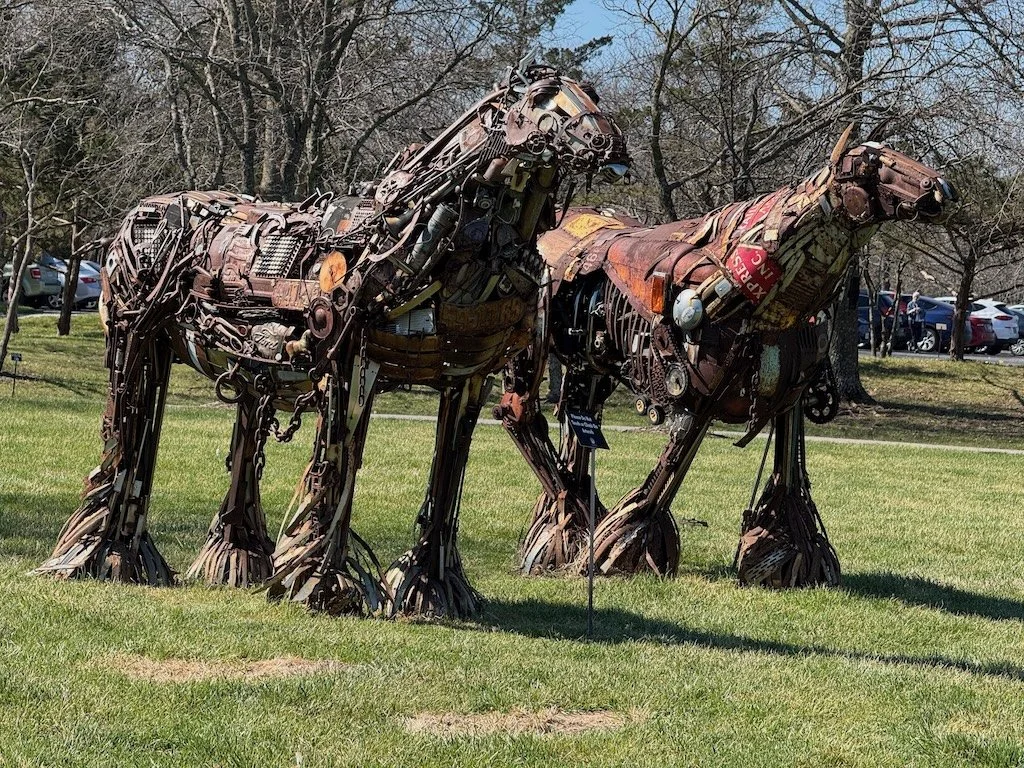
The horse sculptures on the way into the visitor center were a plus. I was surprised that they were not listed in the Wander Walk Art in the Gardens brochure.

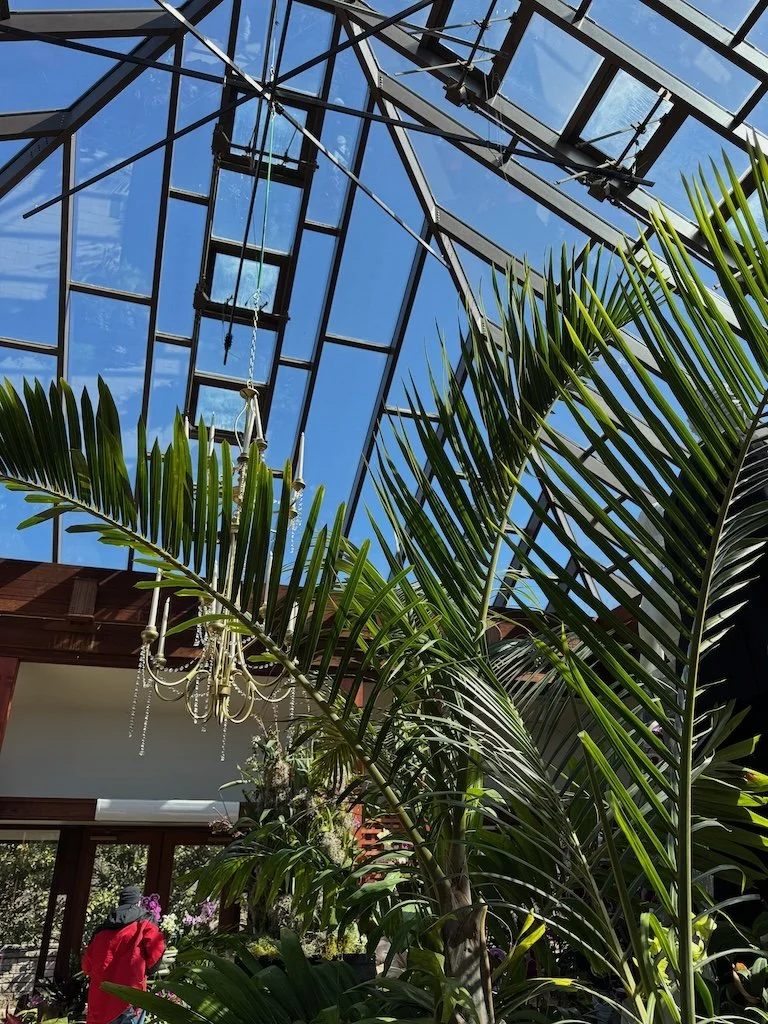
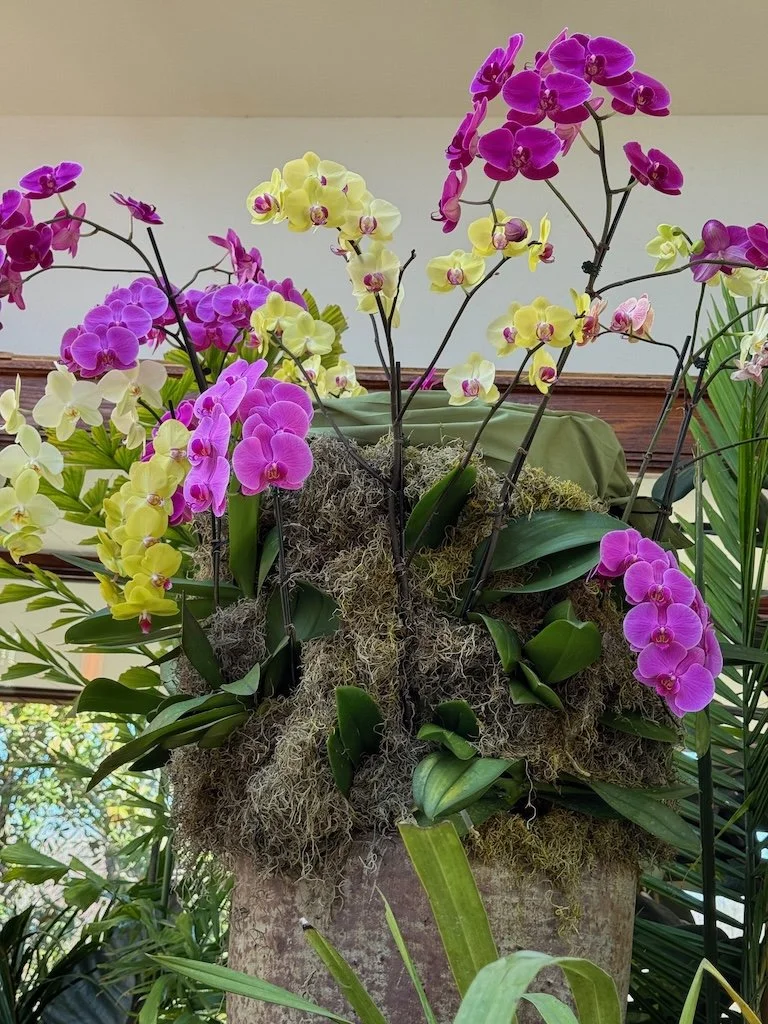
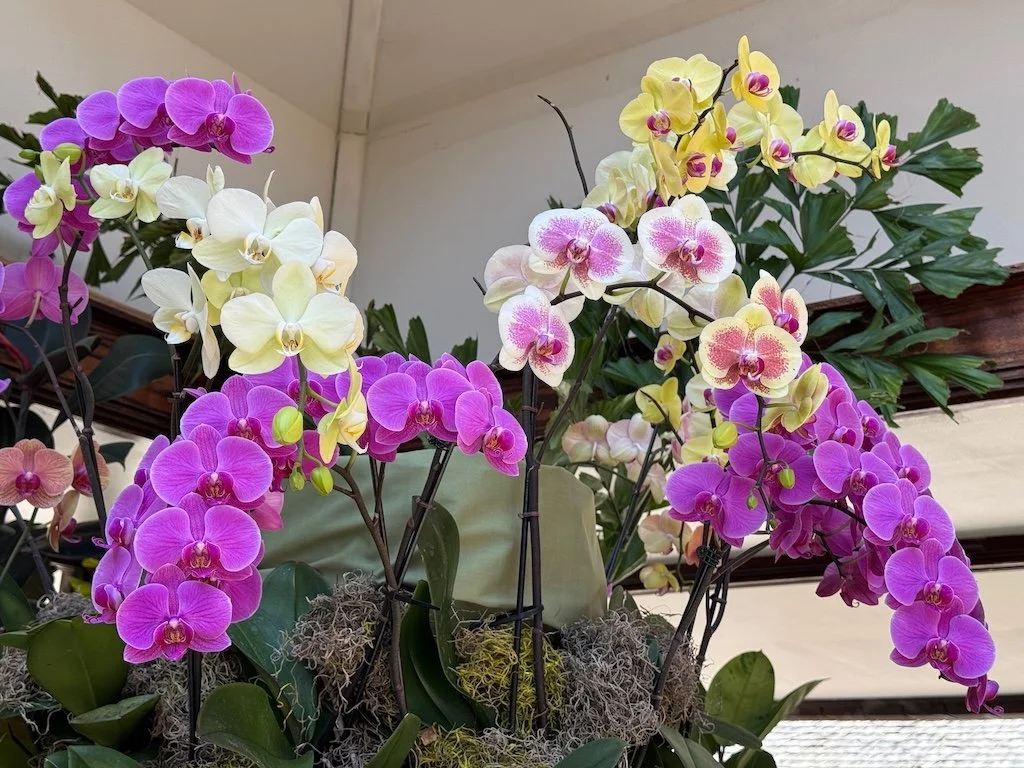
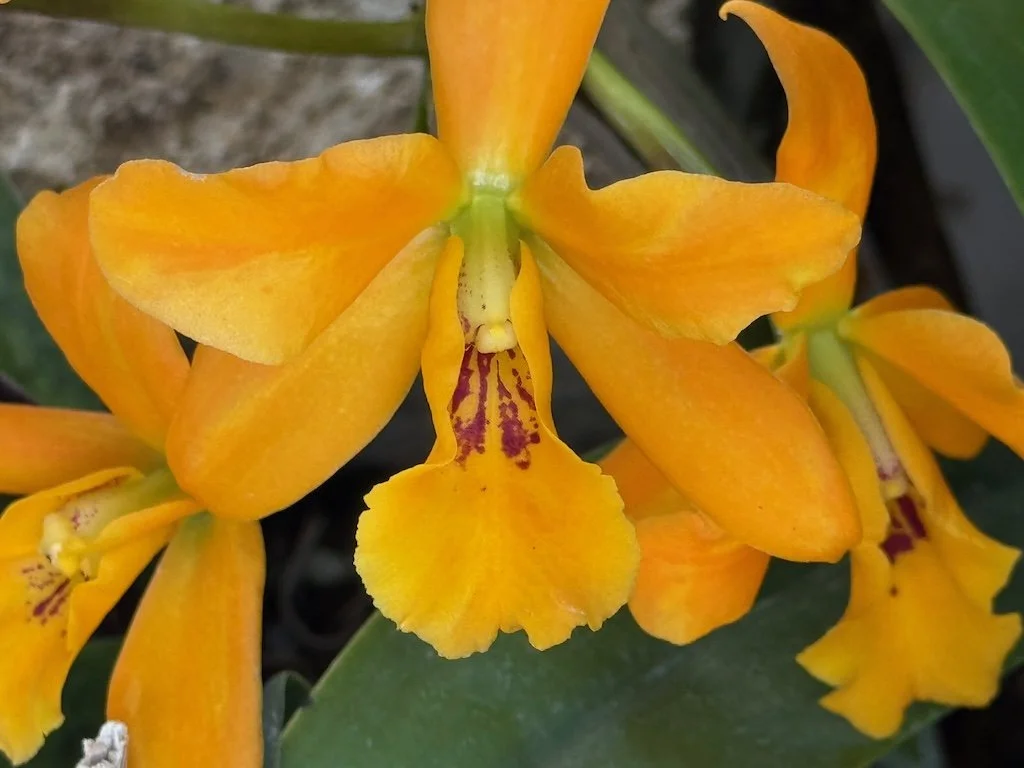
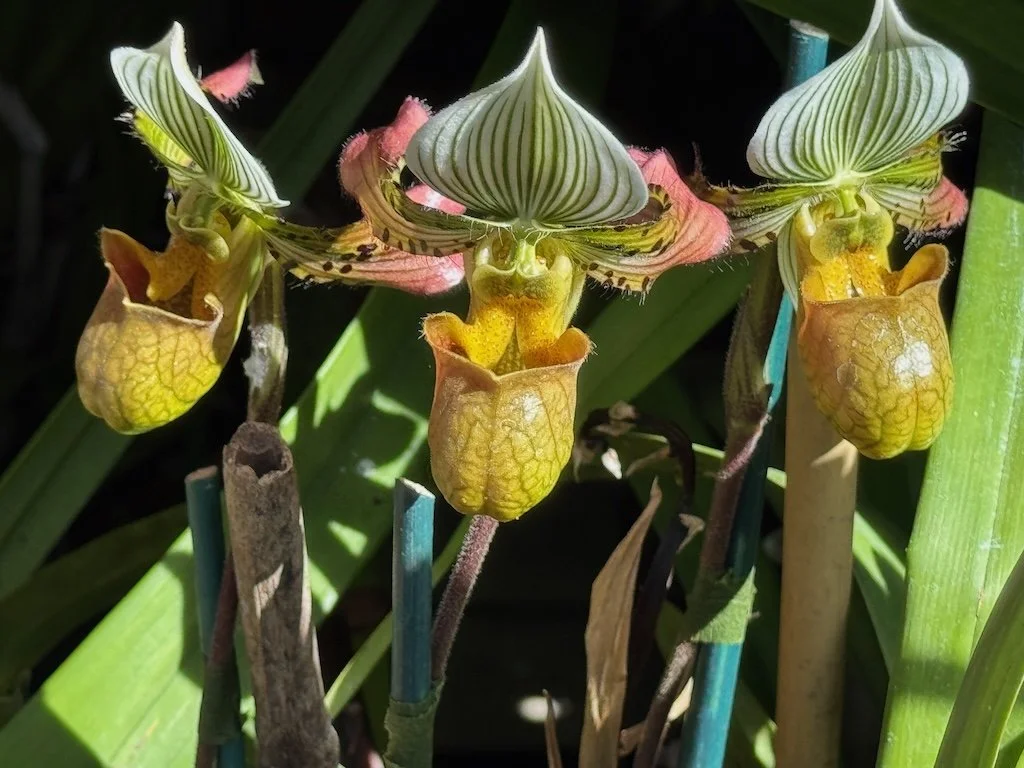
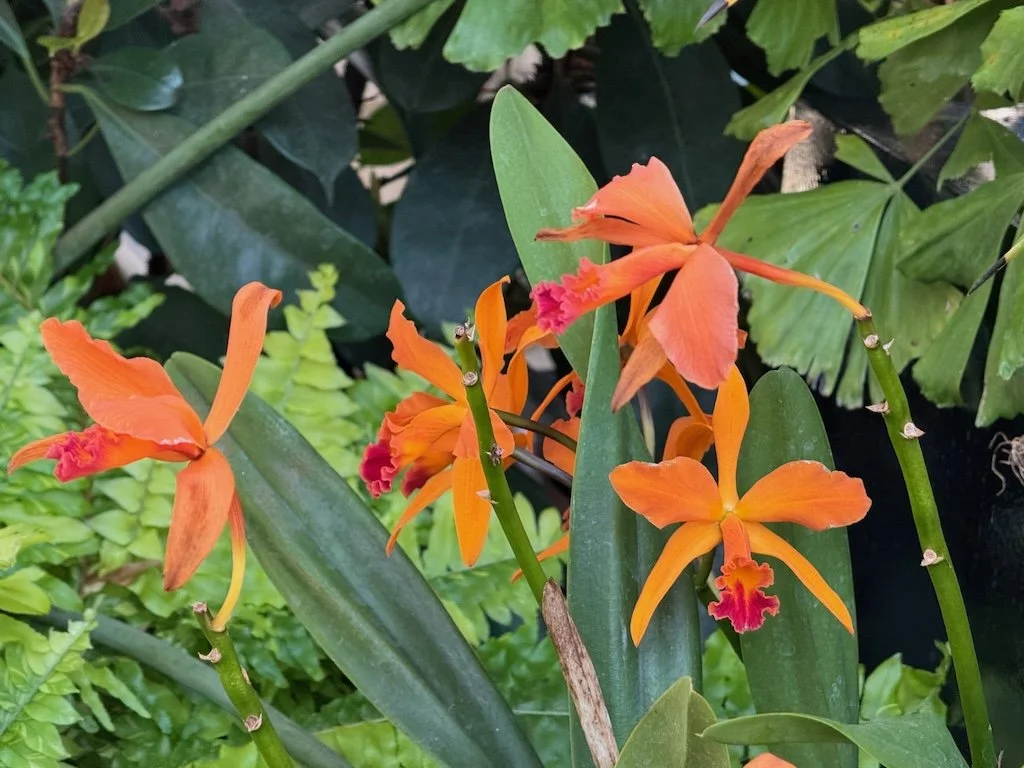
We knew in advance that the main reason for our trip was the Orchid Delirium event. It was in the visitor center….beginning as soon as we walked in. There is a large area of the building that has a glass roof – and lots of windows in the walls.

It was a great place to wander around and get close looks at orchids; more of my orchid pictures in the blog post for day after tomorrow.

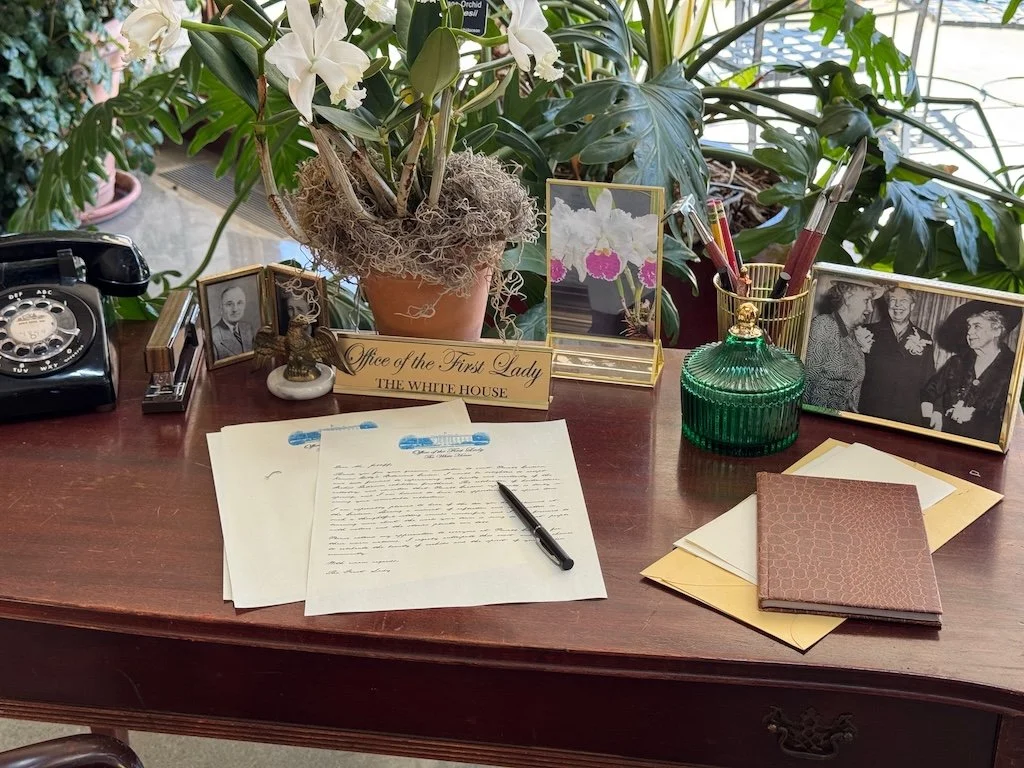
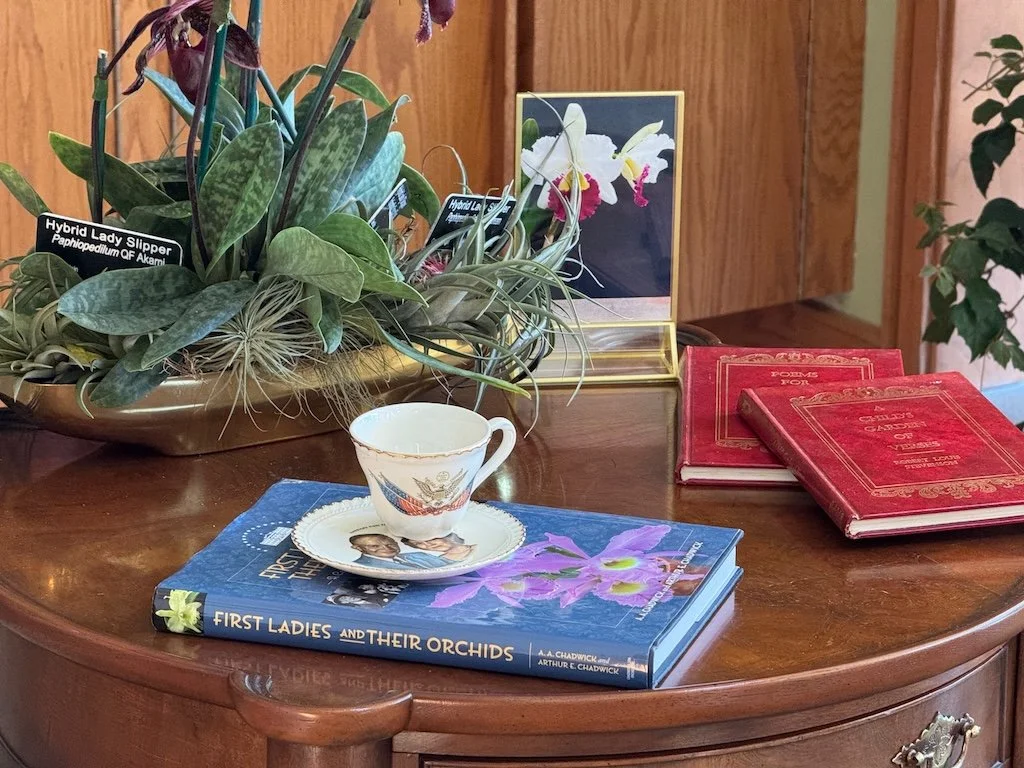
There was a side exhibit about First Ladies and Orchids that I enjoyed.

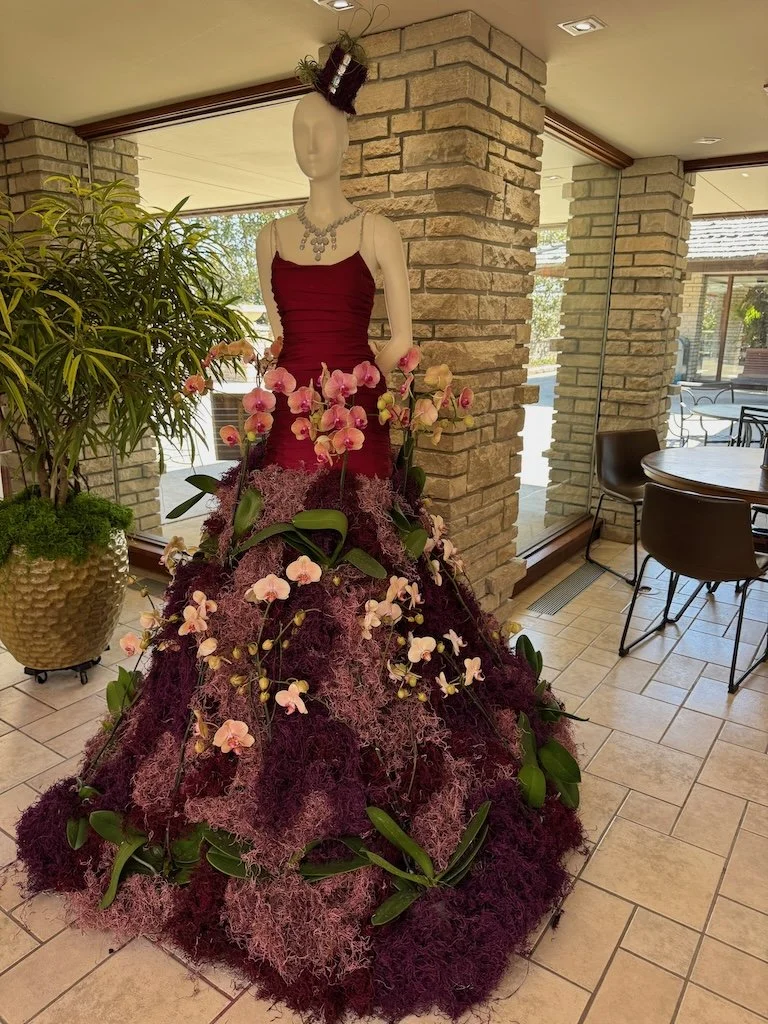
One aspect of the exhibit that was unique was manikins in formal wear among the orchids. My favorite was one where the skirt of the gown was plants!

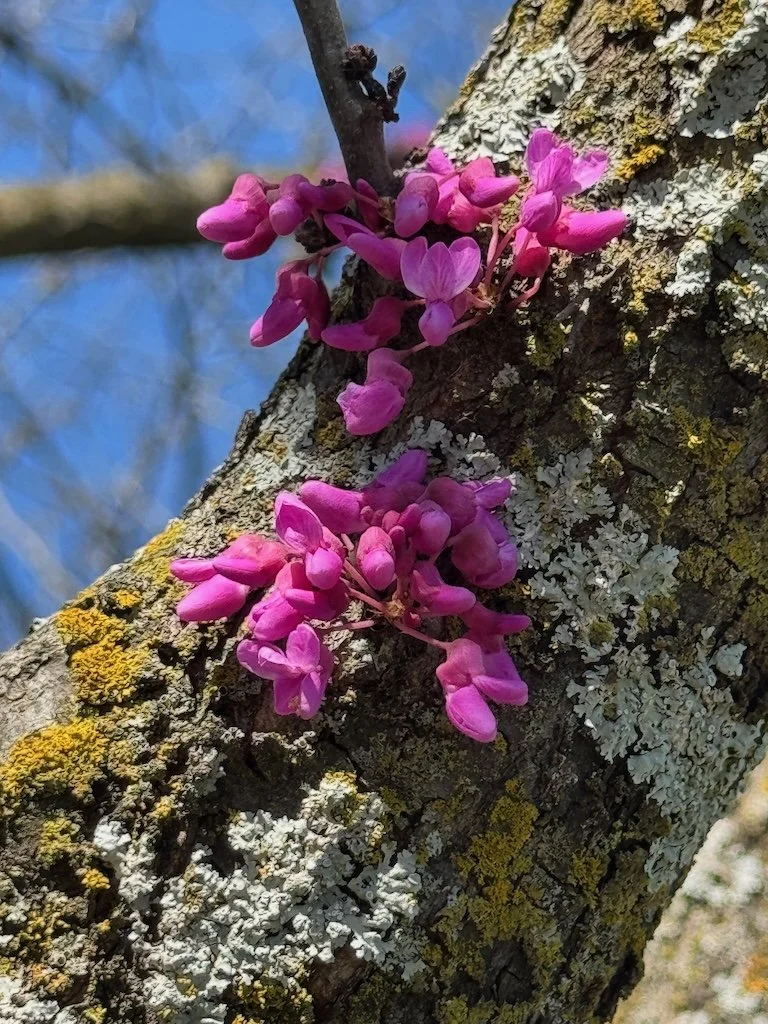
On the way back to the car, I saw a redbud in bloom. The flowers along the larger branches were OK but the ones on the small branches appeared to be damaged (killed?) by recent frosts.

More orchid photos day after tomorrow….

Phenology in my Neighborhood

Spring is a great time to start participating in citizen science phenology (study of periodic events in biological life cycles and how these are influenced by seasonal and interannual variations in climate, as well as habitat factors) via the Nature’s Notebook app. I selected an area that included my backyard and part of the common neighborhood area that included 5 plants I would begin monitoring: 2 Eastern Redbuds, a Red Buckeye, an American Beautyberry, and a Common Hackberry. The monitoring consists of looking at each plant every 3 days and marking the phenophases as yes or no. The list of phenophases for plants is:

  • Breaking leaf buds

  • Leaves

  • Increasing leaf size

  • Colored leaves

  • Falling leaves

  • Flowers or flower buds

  • Open flowers

  • Fruits

  • Ripe fruits

  • Recent fruit or seed drop

So far, the plants are in winter mode – so all the phenophases are marked ‘no.’ I am observing some changes in some of the plants and I’ve done a little photography to document their late winter look.

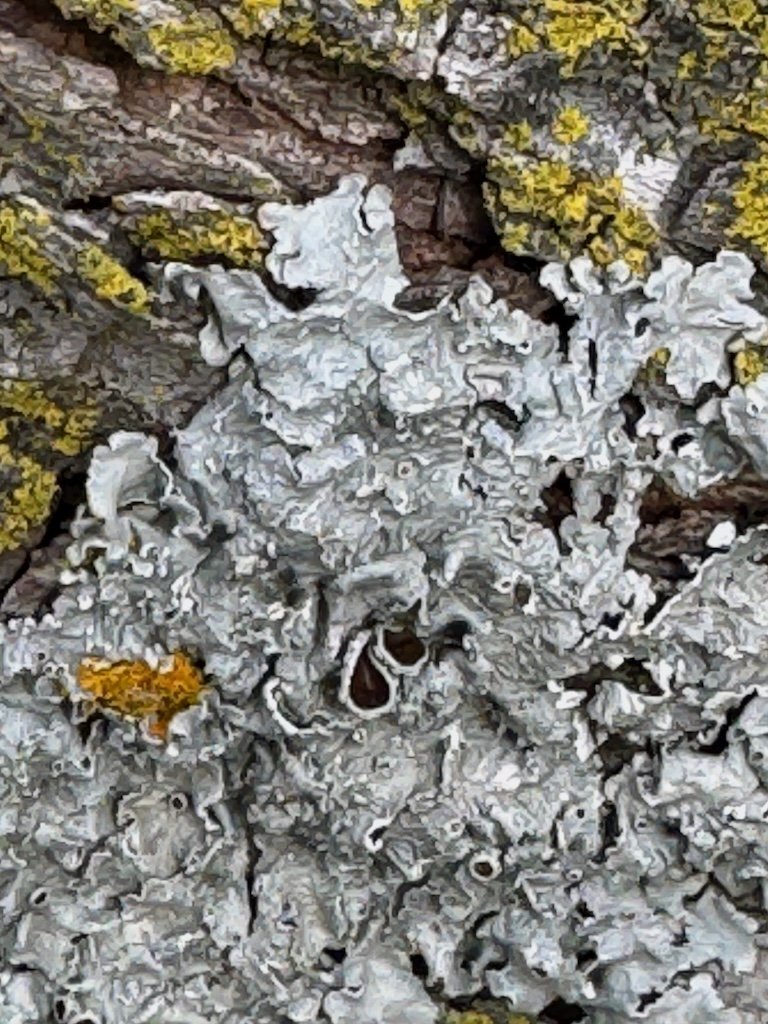
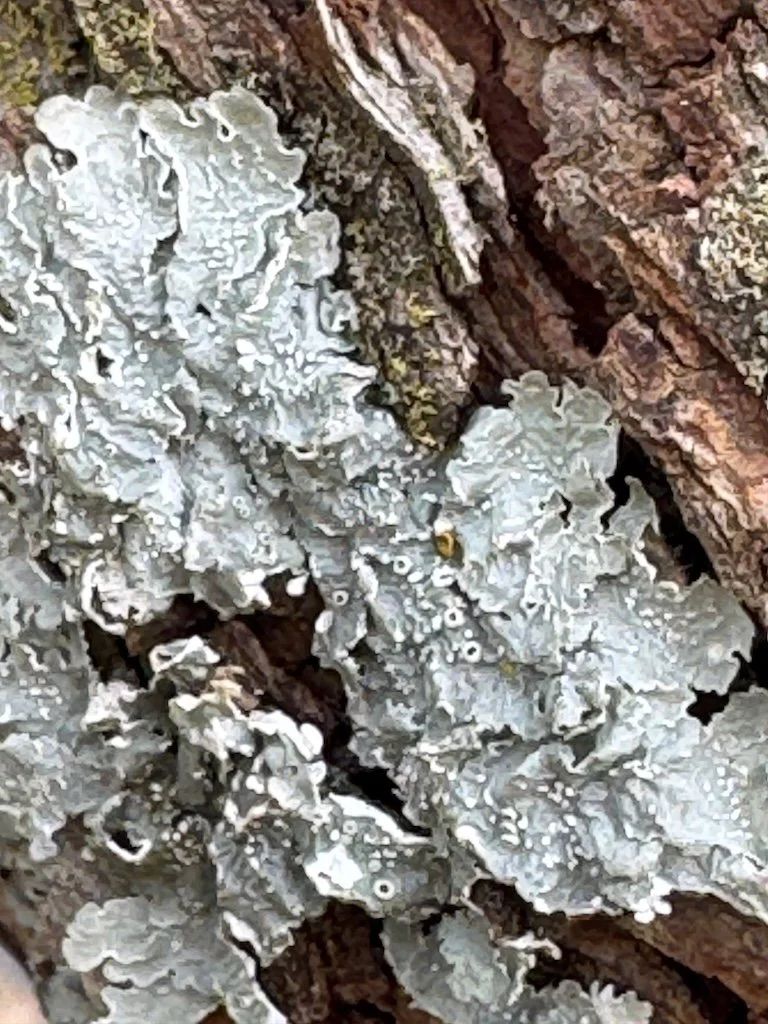
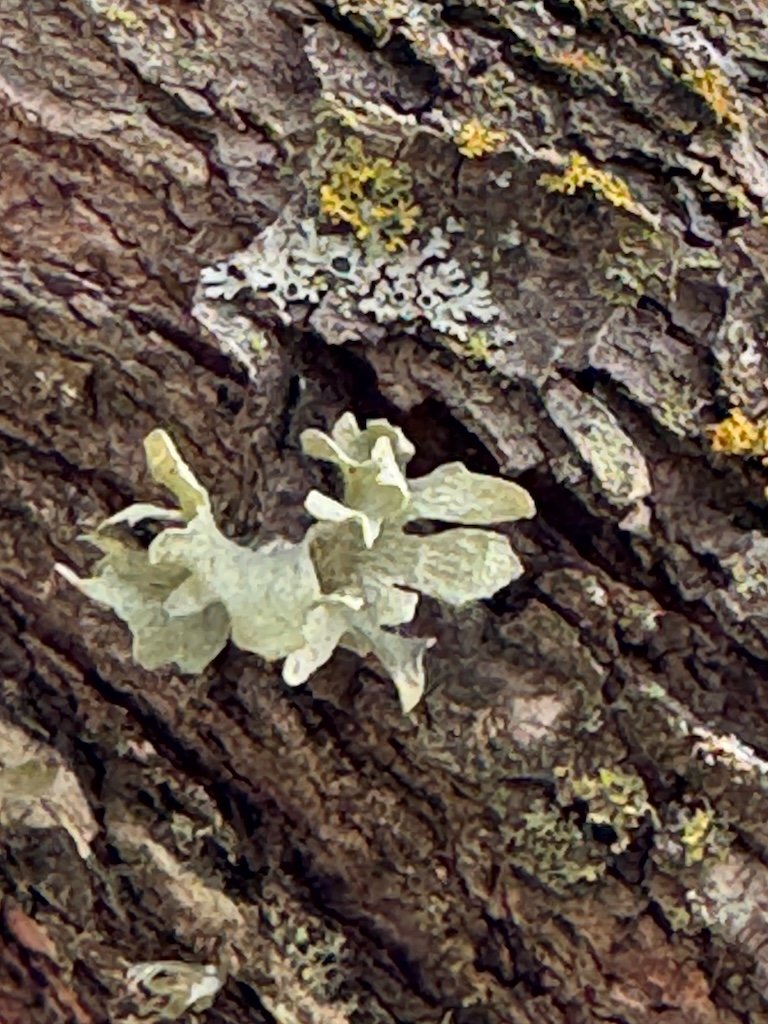
The 2 Eastern Redbuds are very different: one is very young and the other is old and lost some larger branches last year. All the buds are still very small on both trees. I took some pictures of lichen growing on the older tree…nothing to do with phenology of the redbud…but something to photograph while I was looking closely at the tree.

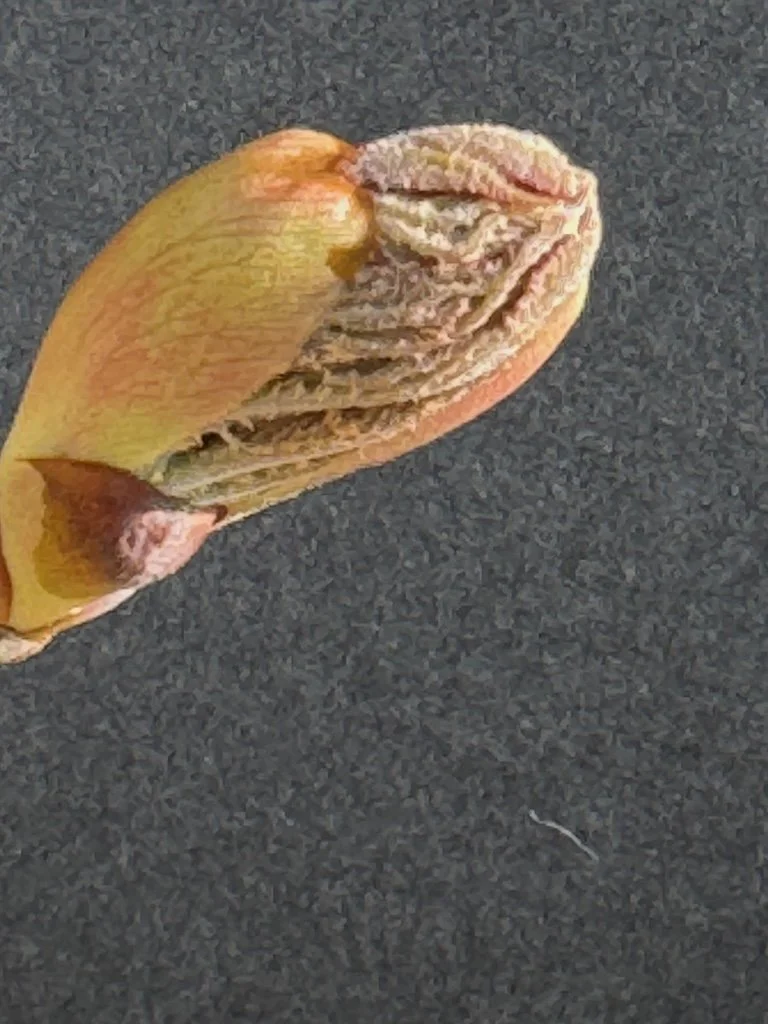
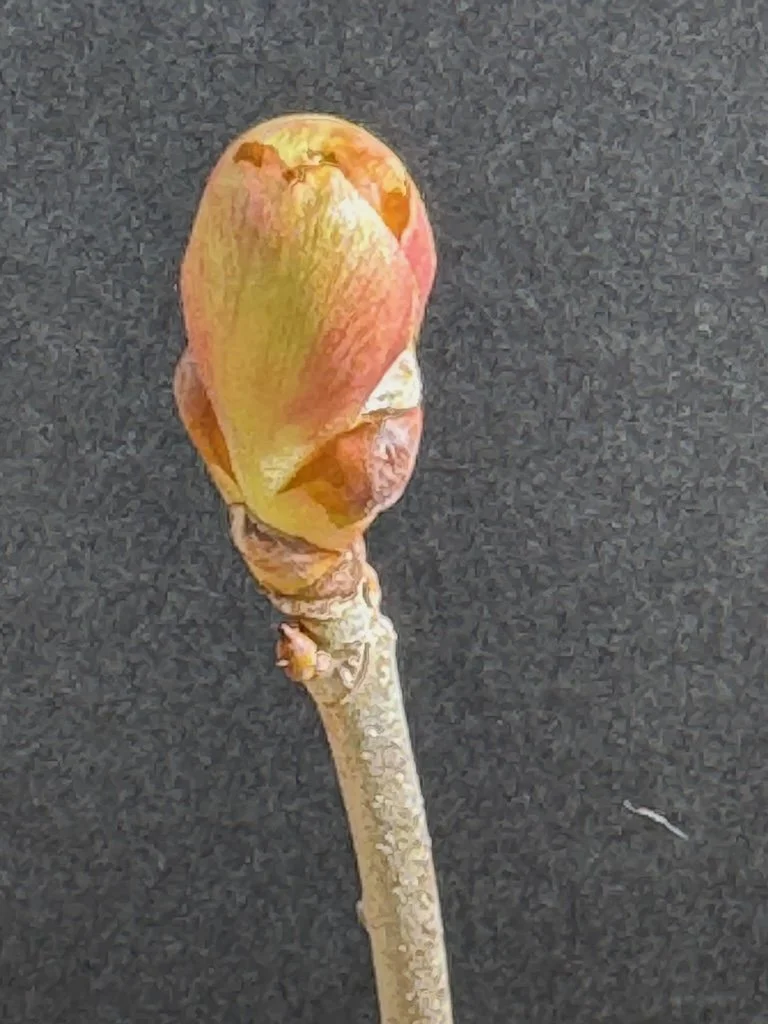
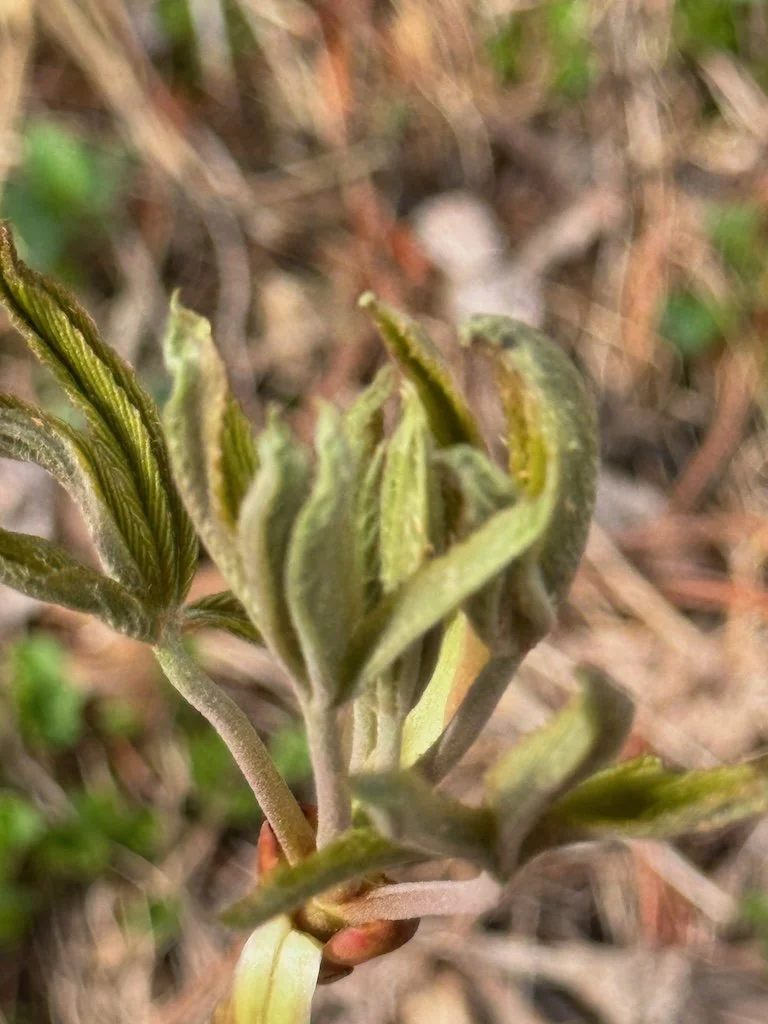
The Red Buckeye is a very young tree and probably won’t bloom this year, but the leaf buds are very large. It will be interesting to see how they develop. The ‘breaking leaf buds’ phase is when a green leaf tip becomes visible at the end of the bud. There is one that appears to be closer to that point than the others!

Update: The leaf buds had broken when I went to look on March 6th – just 2 days after I wrote this blog!!! All the other plants were still in winter mode. It was exciting to see the Red Buckeye leaves begin to emerge.

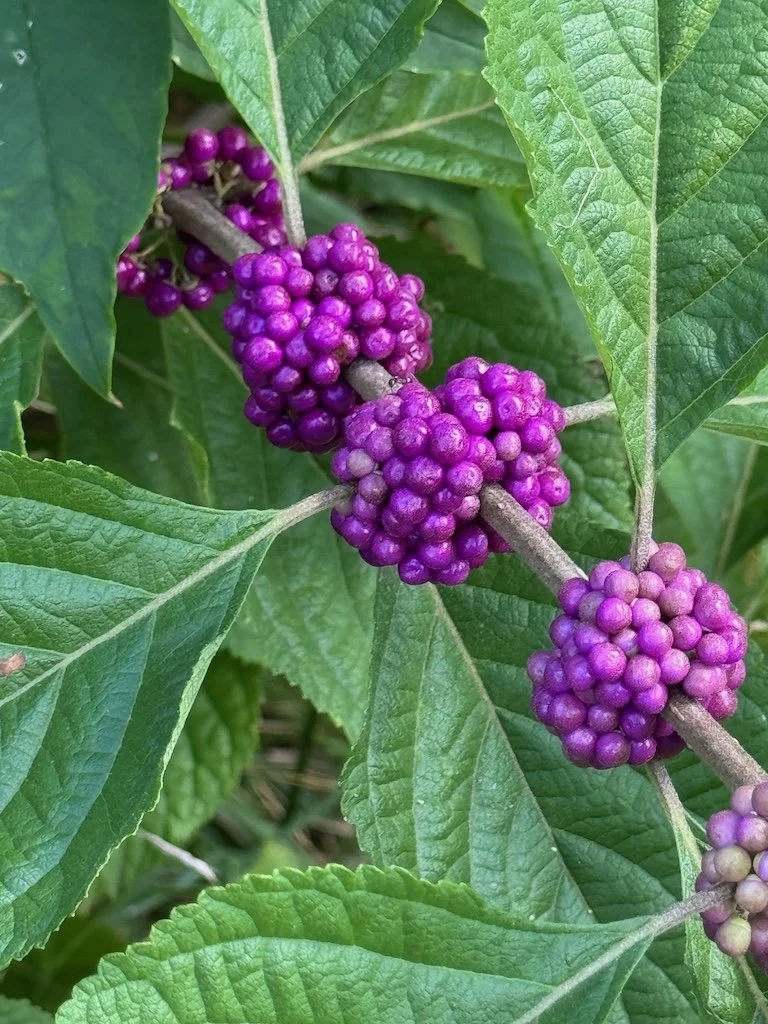
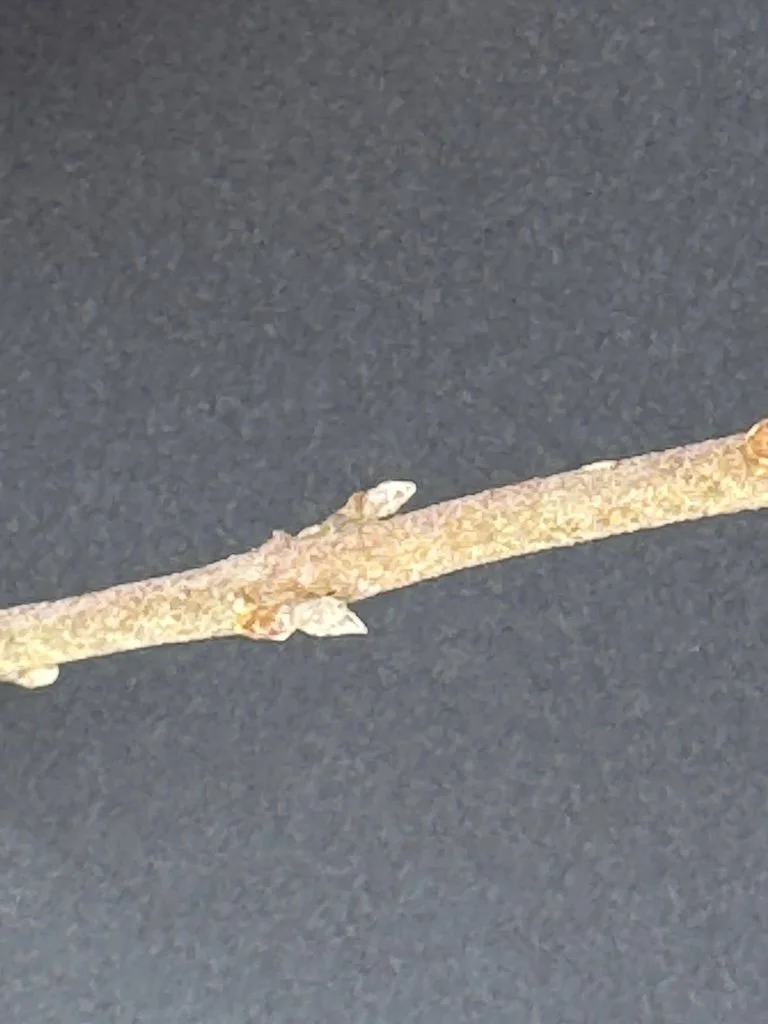
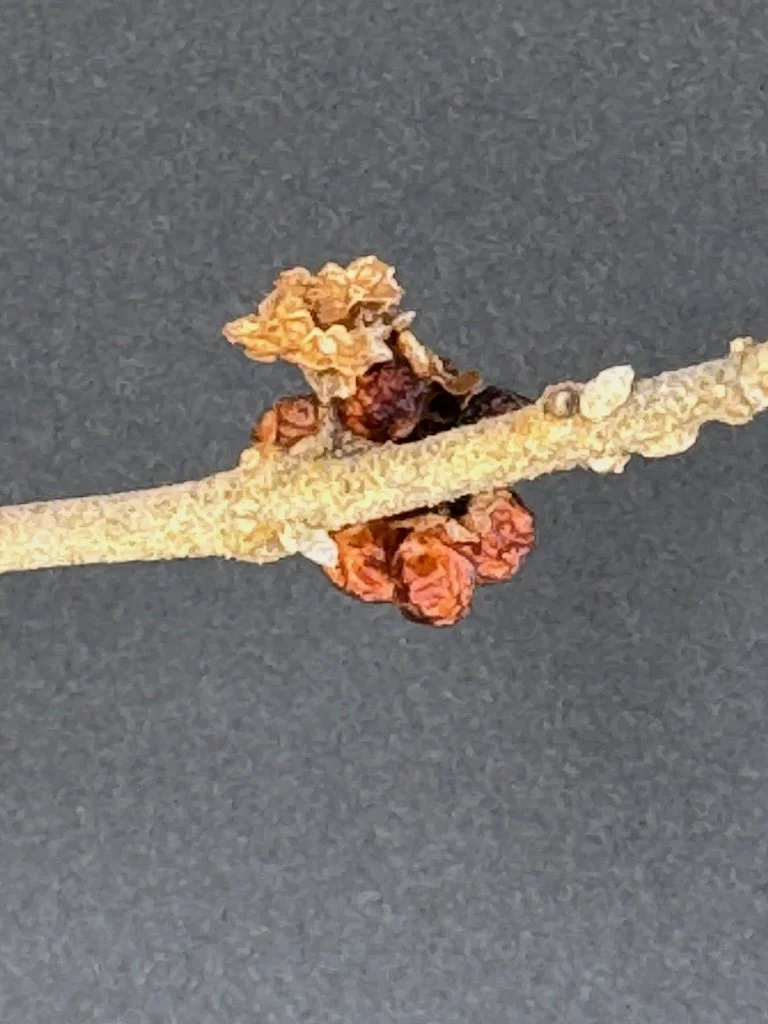
The American Beautyberry has tight buds that I keep thinking might be getting a little larger. The plant also has some dried berries from last season which don’t count for this year.

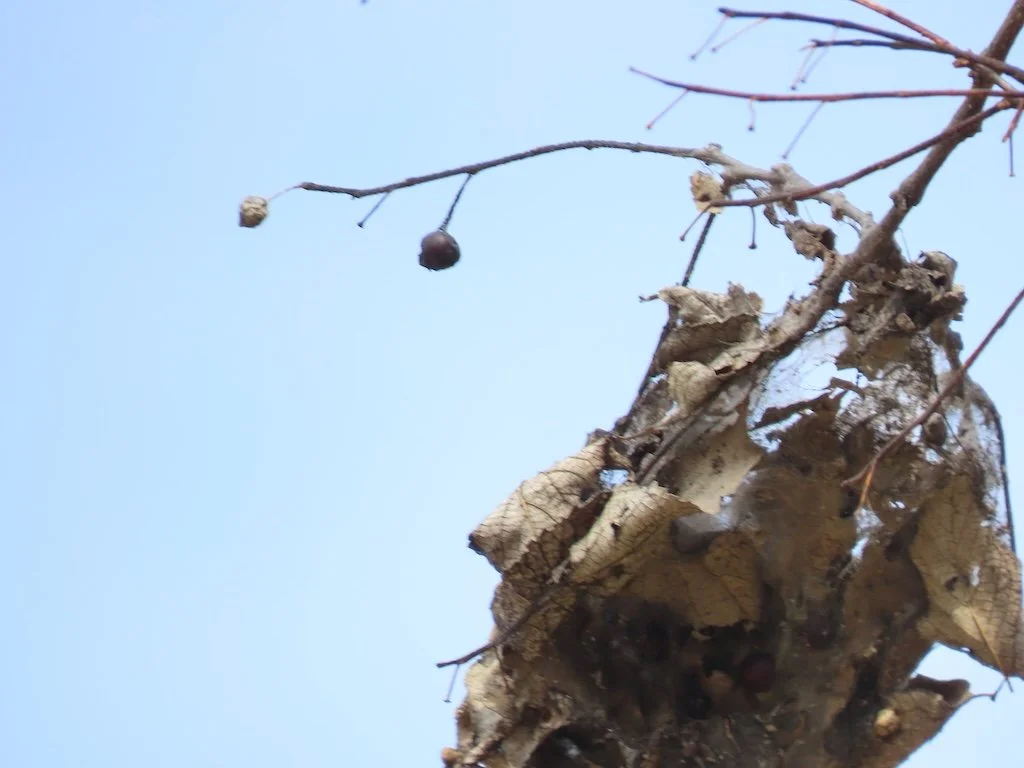
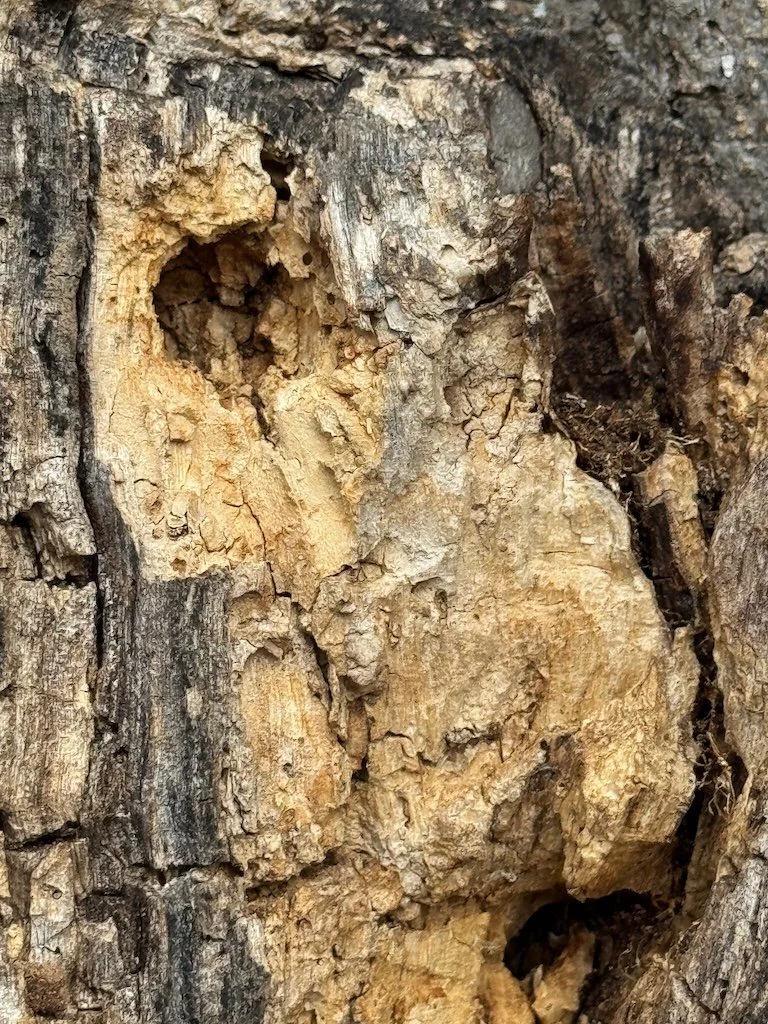
The Common Hackberry is also an older tree and might noy been entirely health; it lost a large limb last year and the woodpeckers seem to be working on the scar (maybe finding insects there). The tree has some dried leaves and fruit from last year. The buds are still very tight.

This is my first experience with a project like this. I will get to know these 5 plants very well!