Our Neighborhood – February 2026

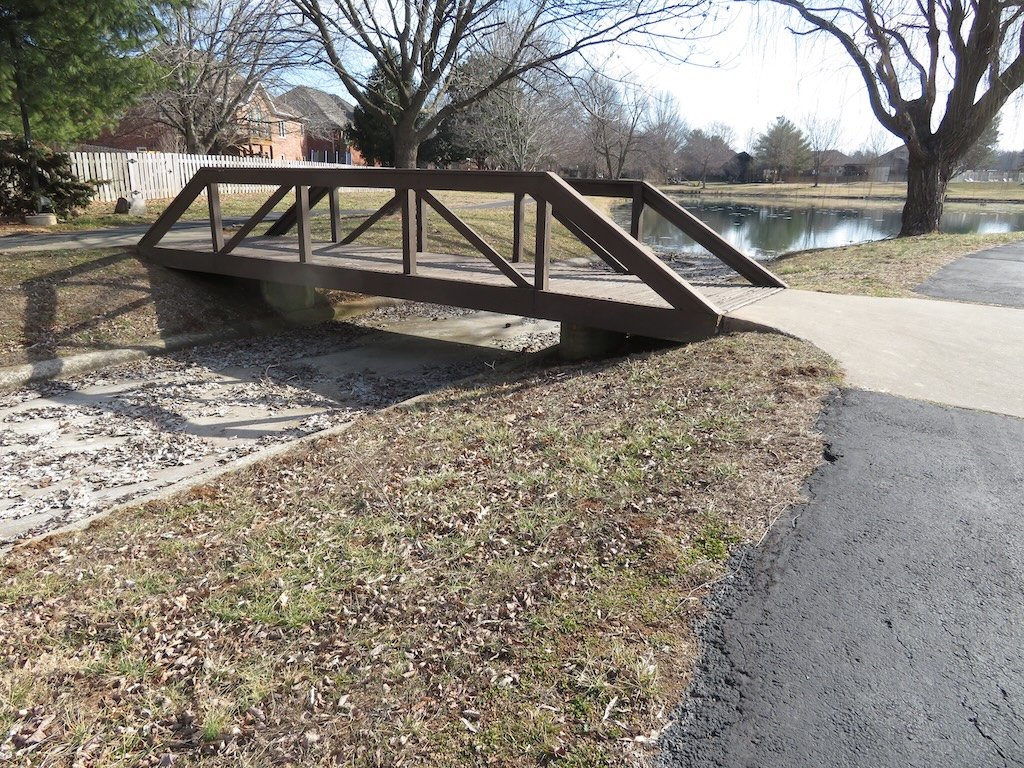
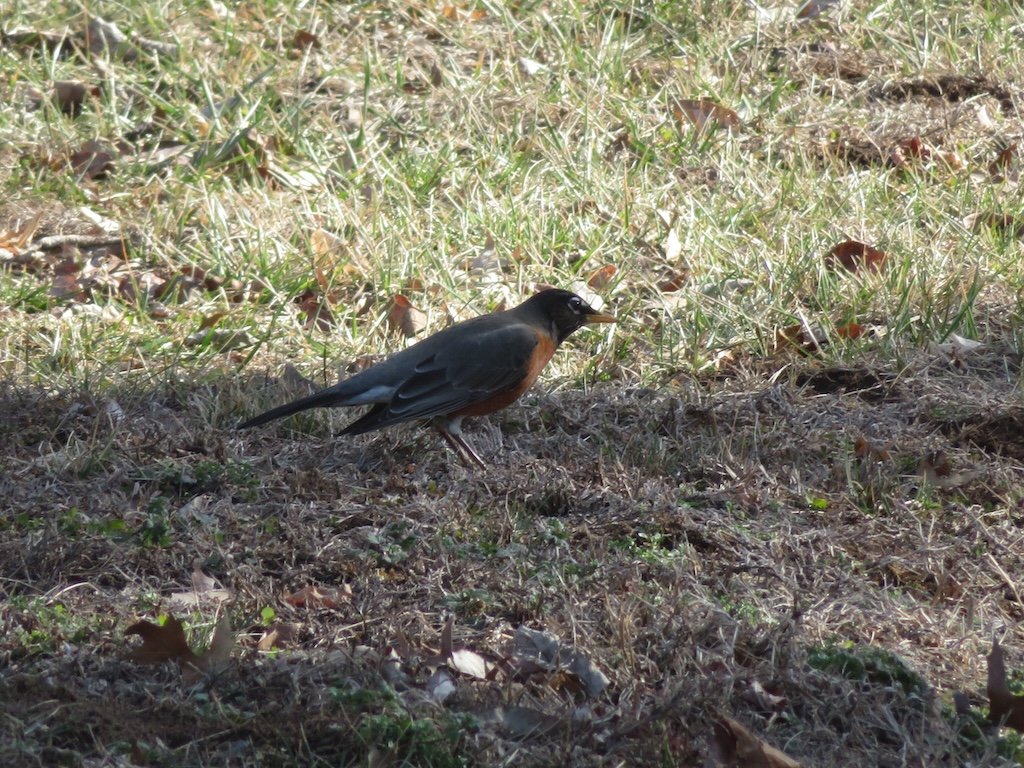
It was a sunny day in the mid-60s in our neighborhood. As I started my walk around our storm water ponds, I saw two robins – the first ones I’ve seen since last fall!

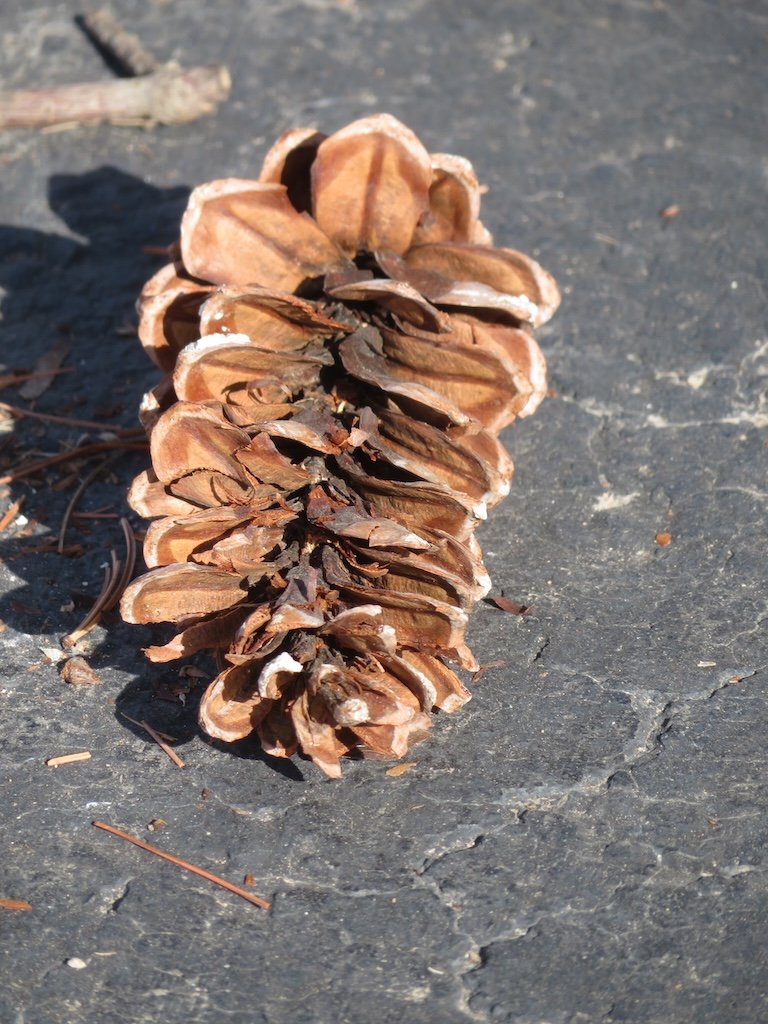
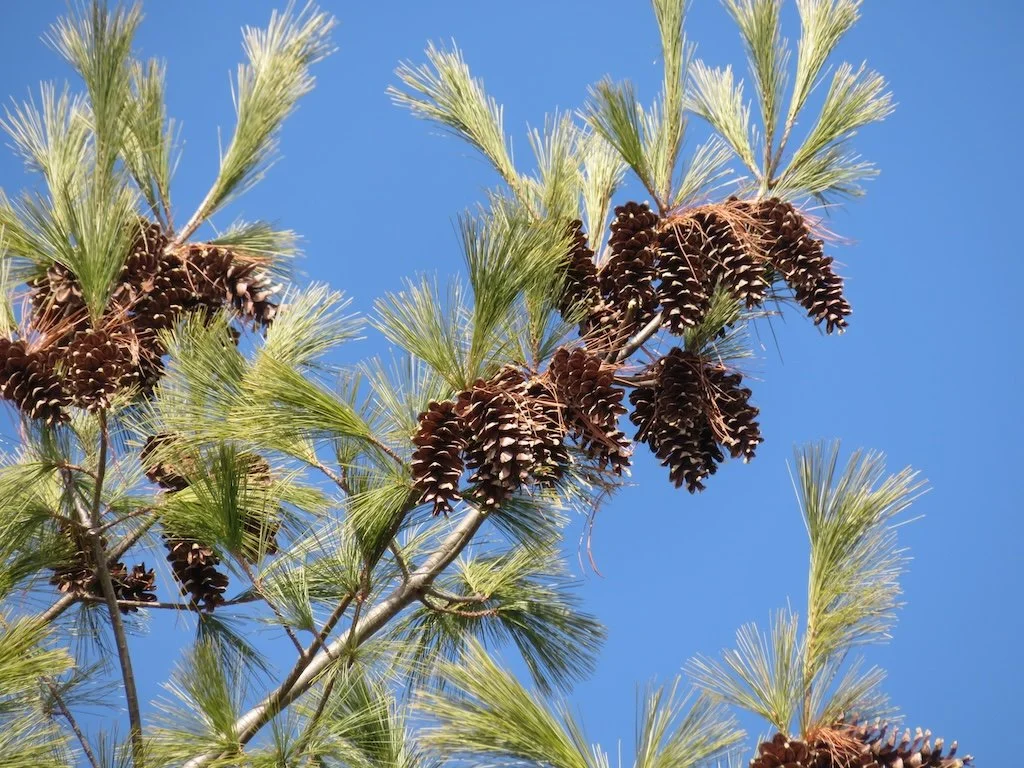
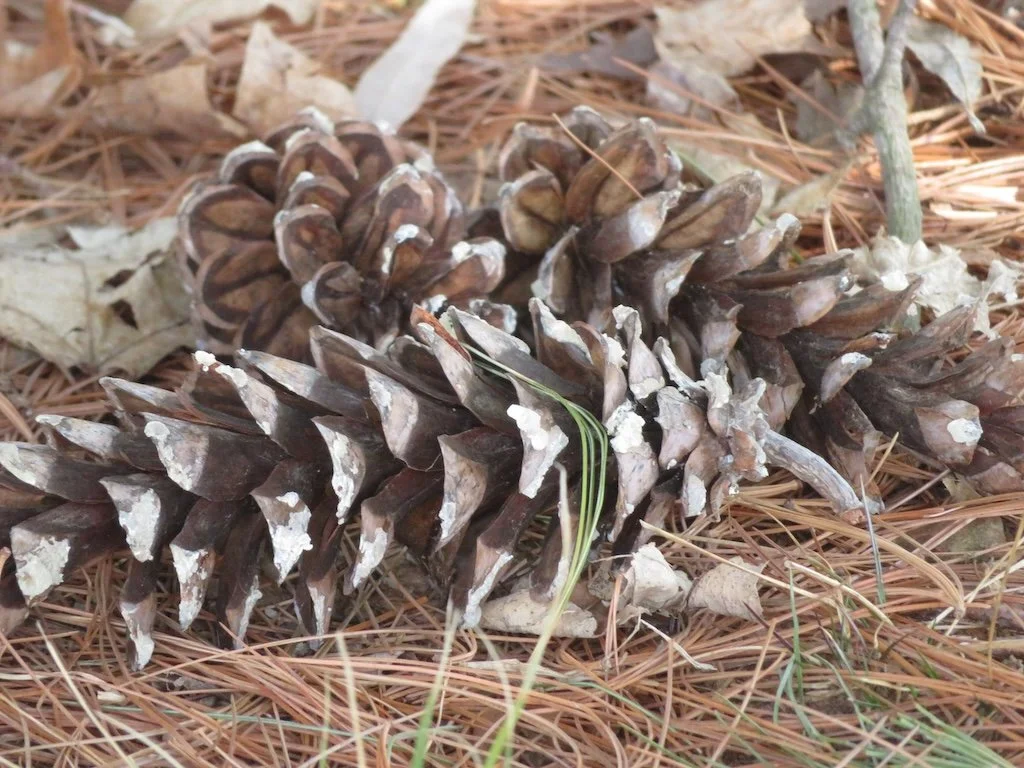
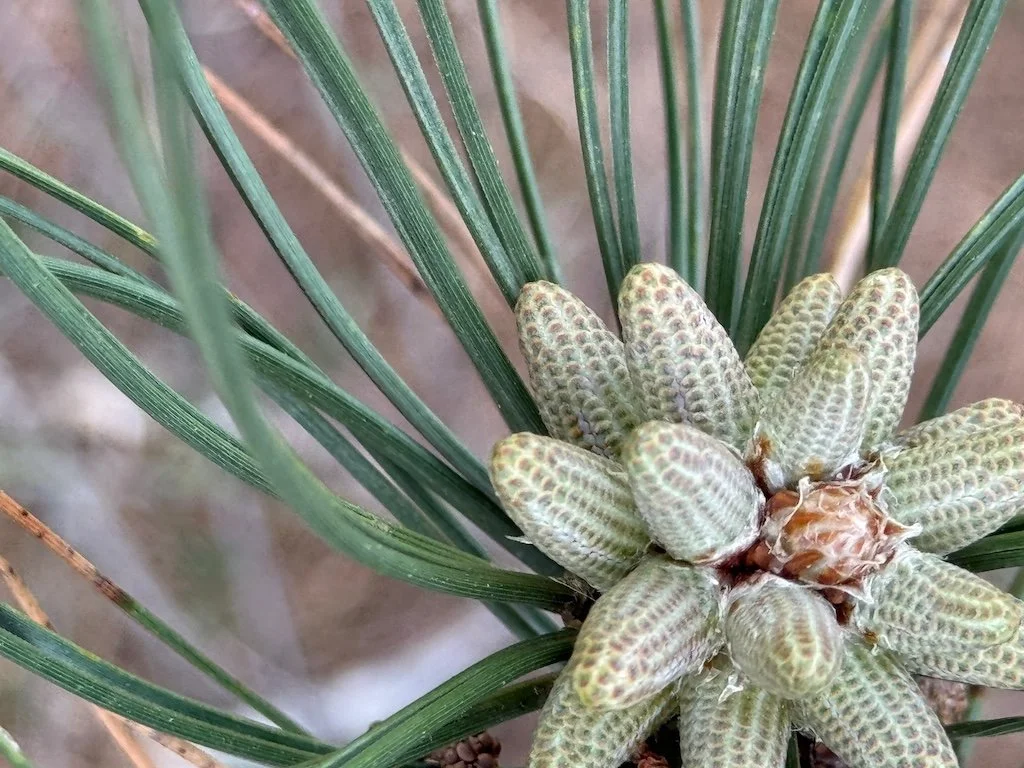
There seemed to be quite a few eastern white pine cones on the ground and in the trees. The tree in my yard is not old enough to produce cones yet.

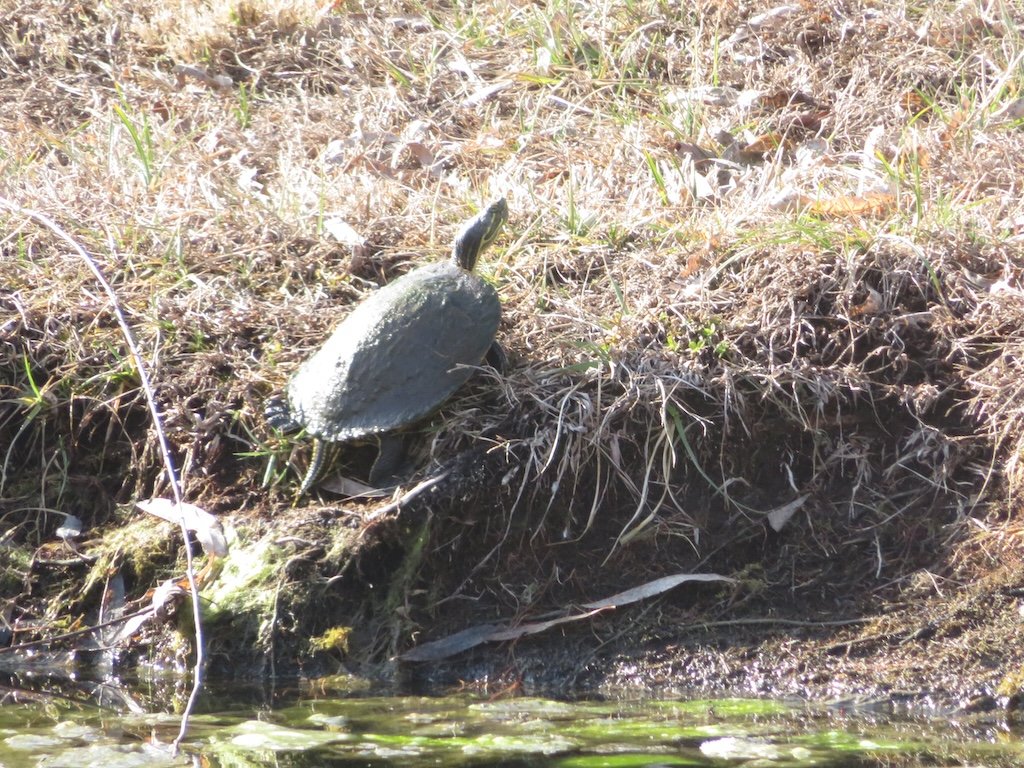
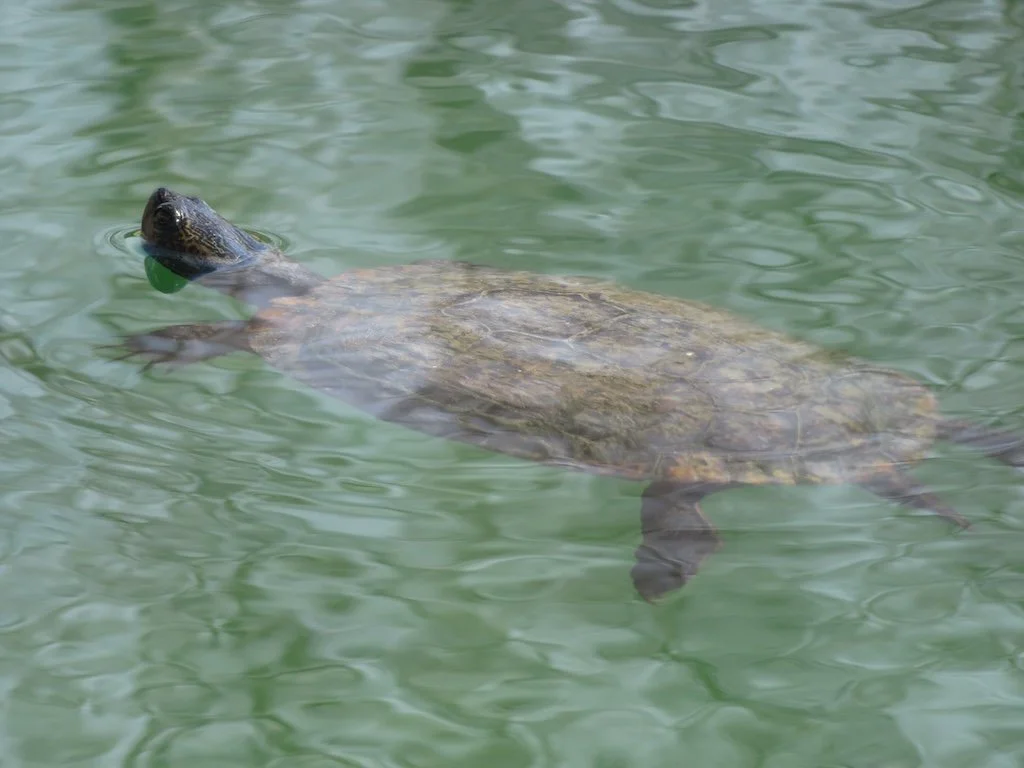
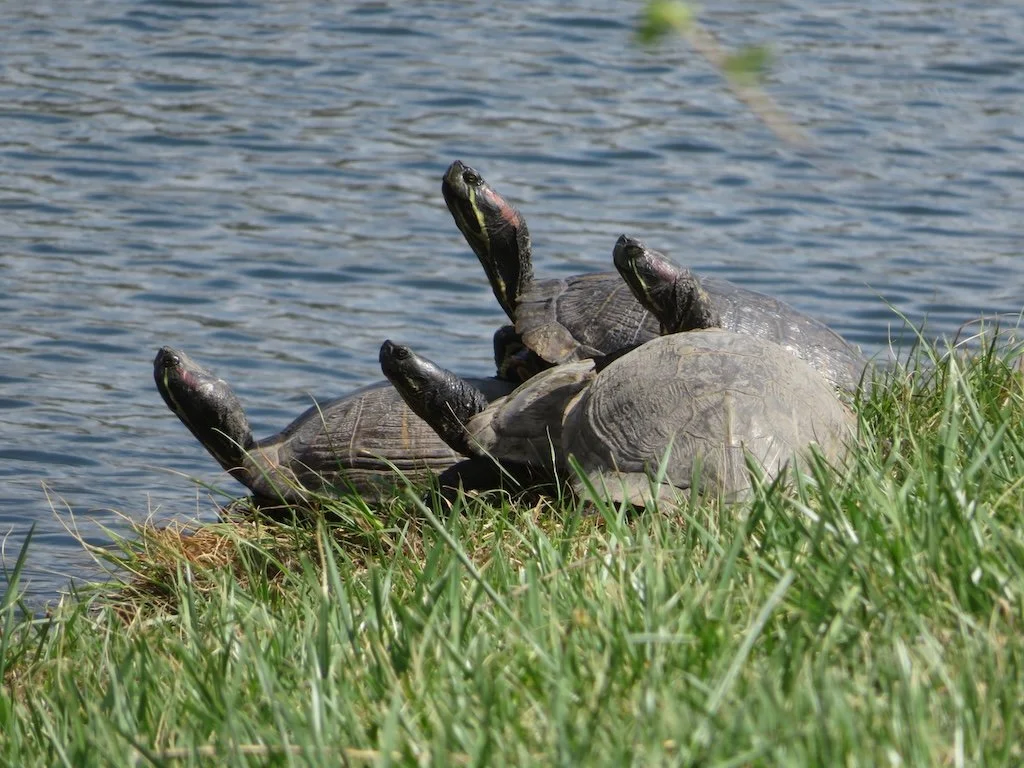
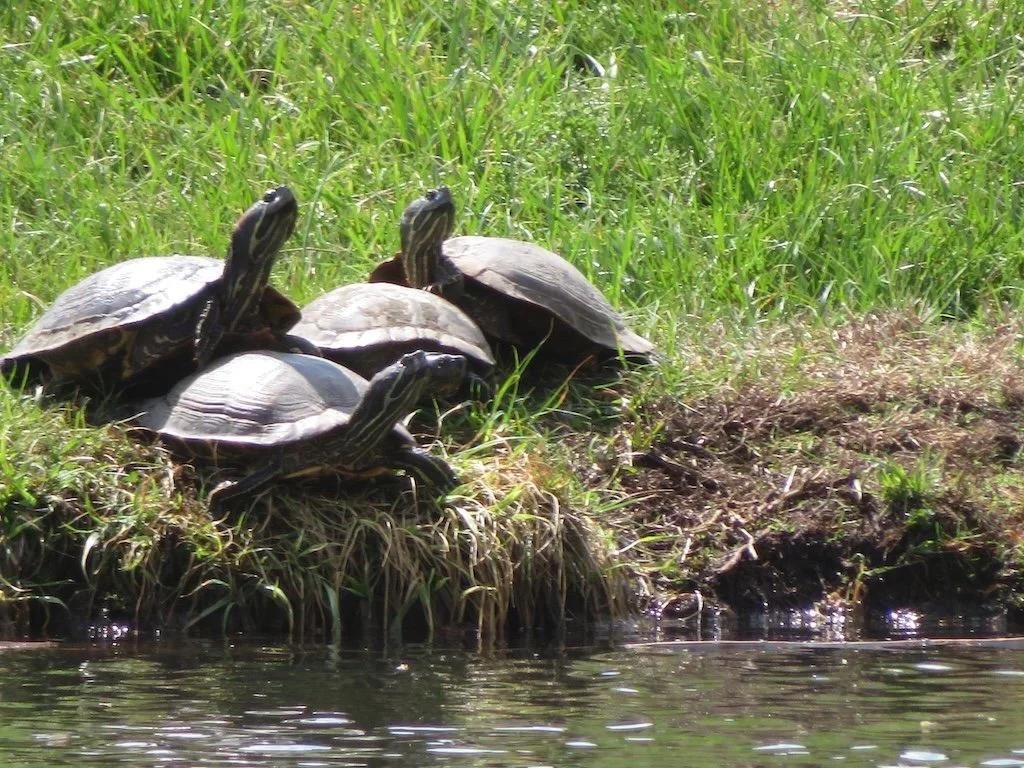
There were turtles on the bank and in the water at the place I seem them most frequently.

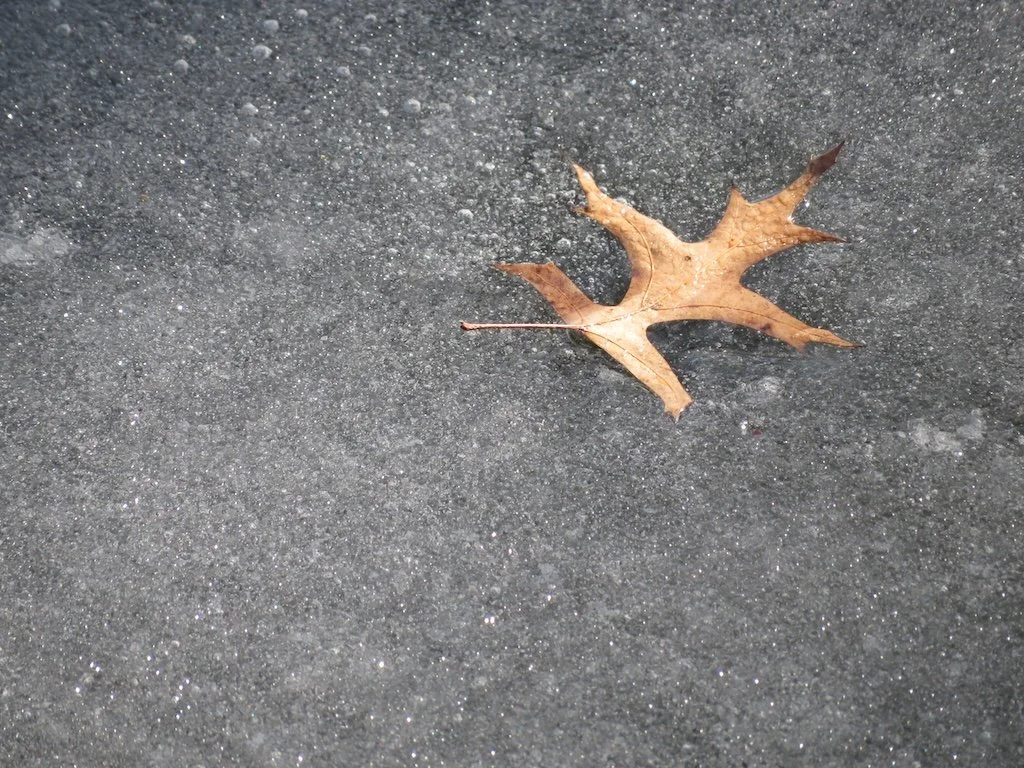
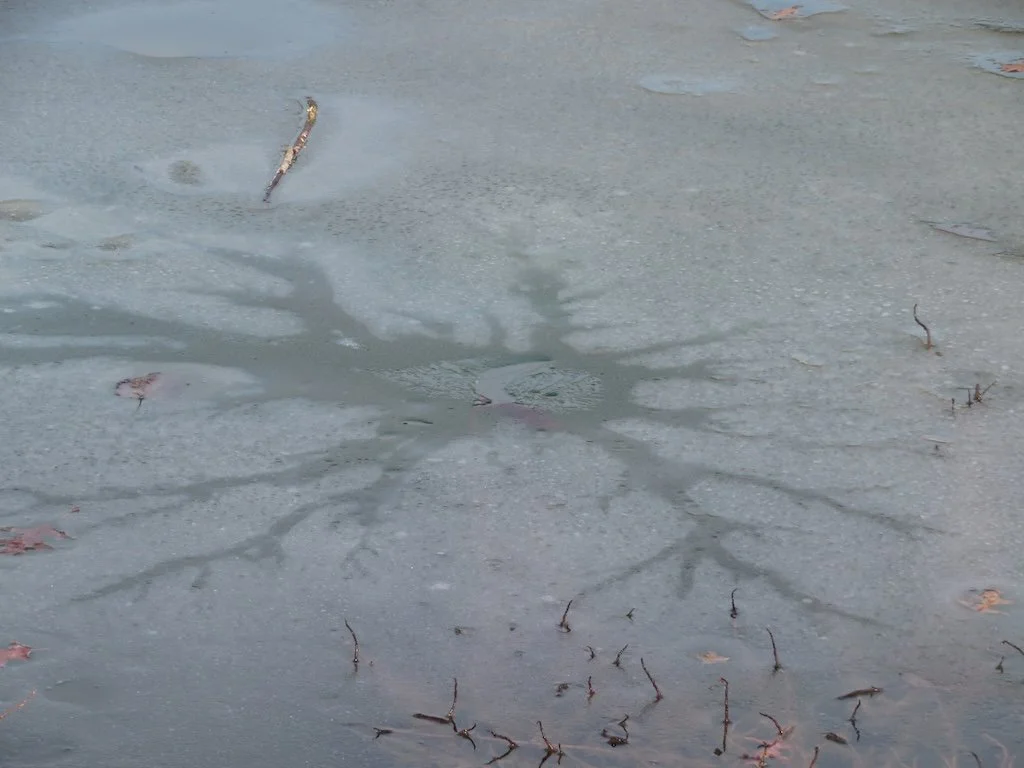
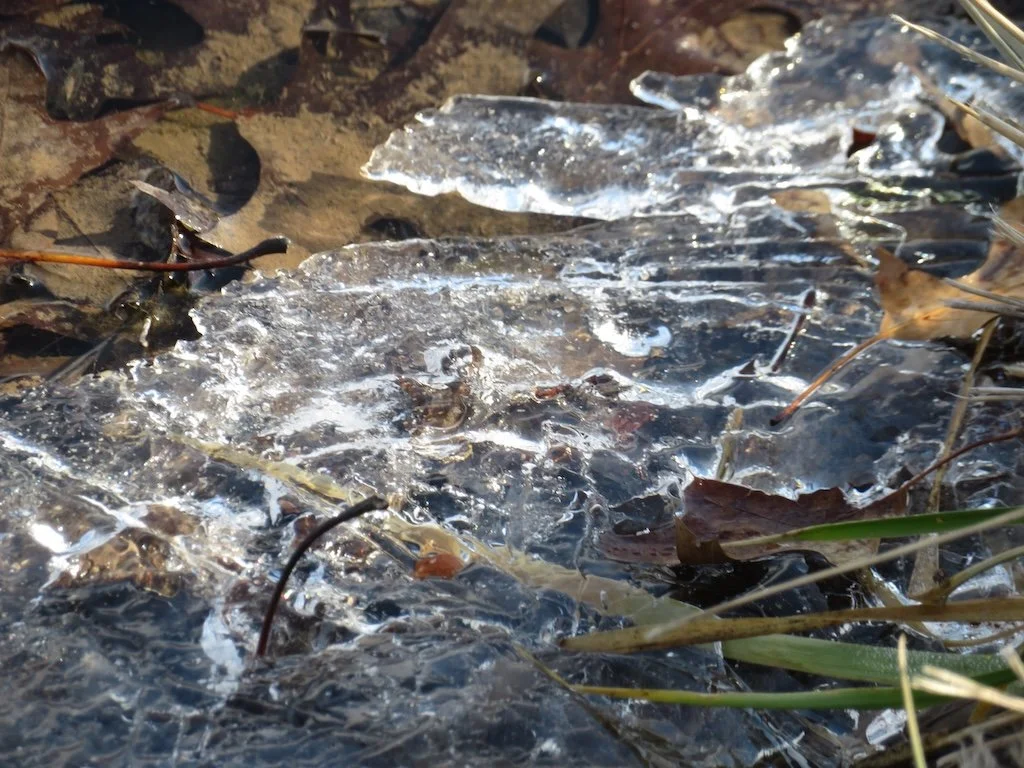
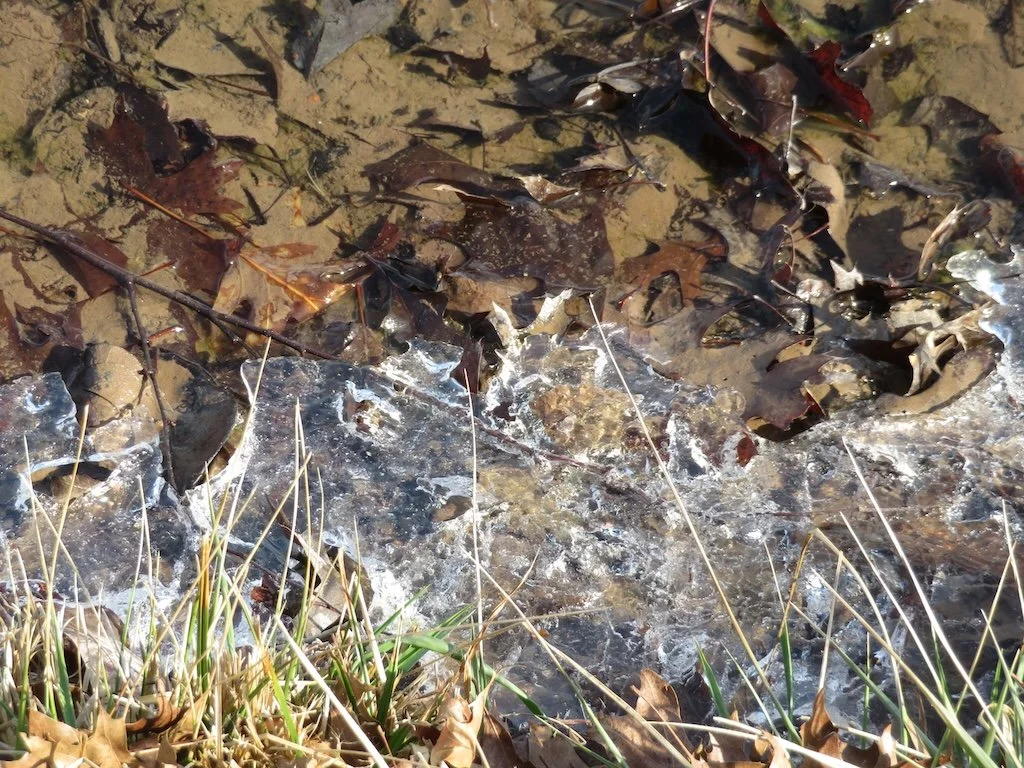
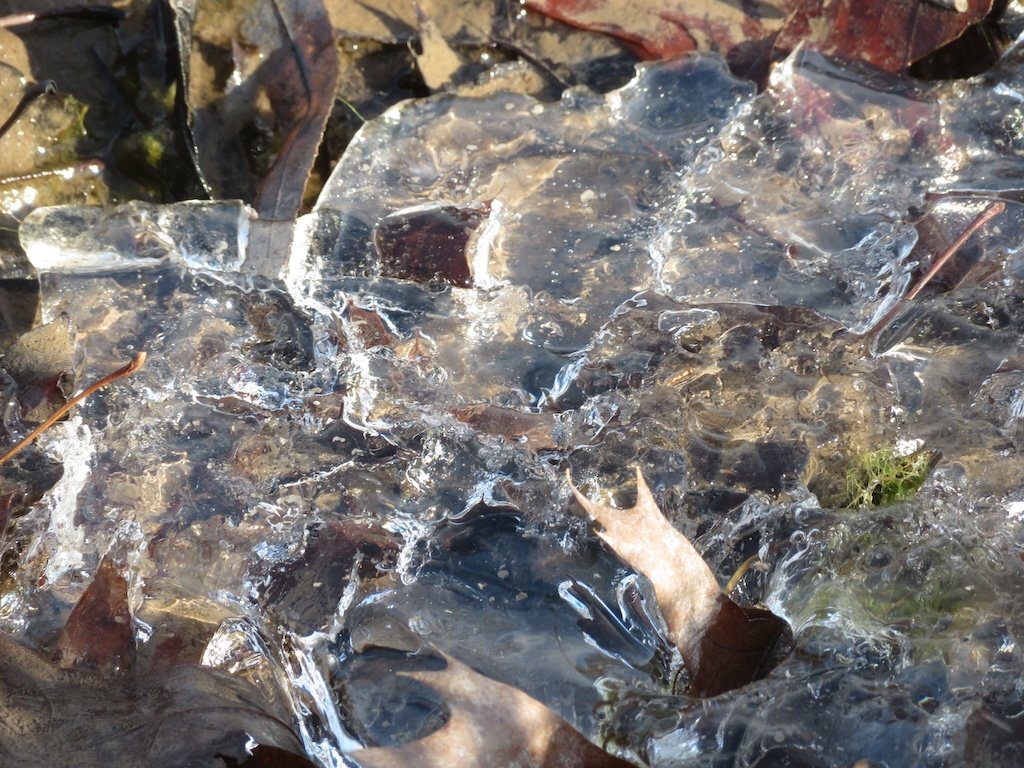
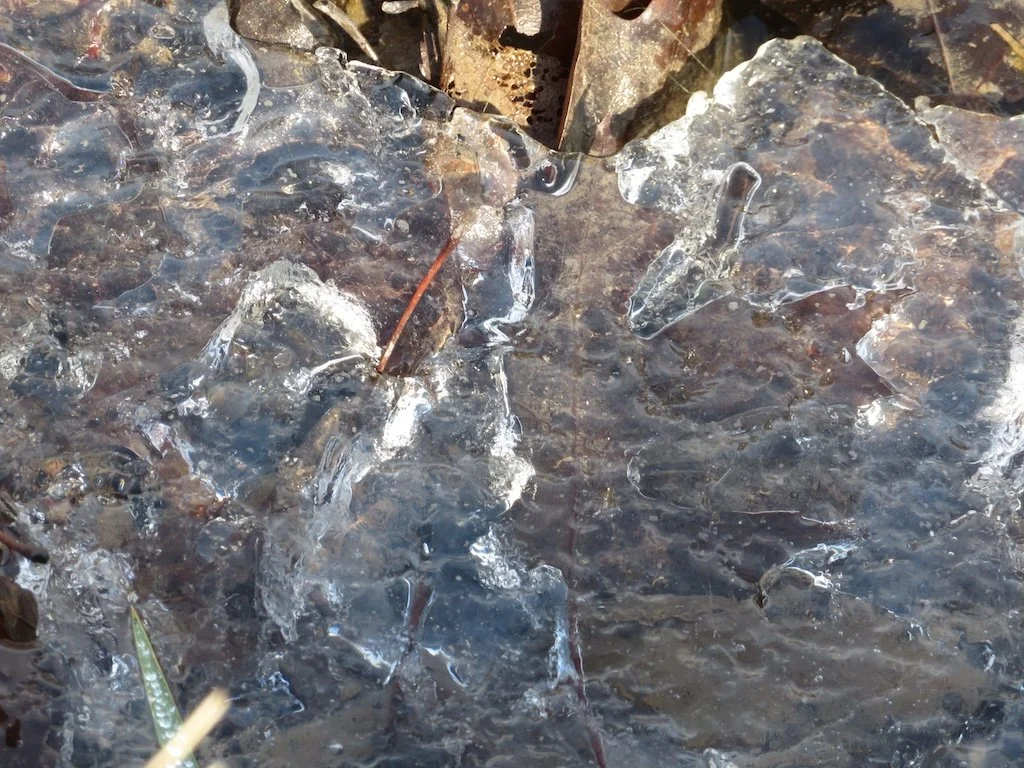
There was ice on the second (smaller) pond. There were leaves stuck in the ice. One area has a circular center and then branches off that center. The ice would likely be gone by the end of the day.

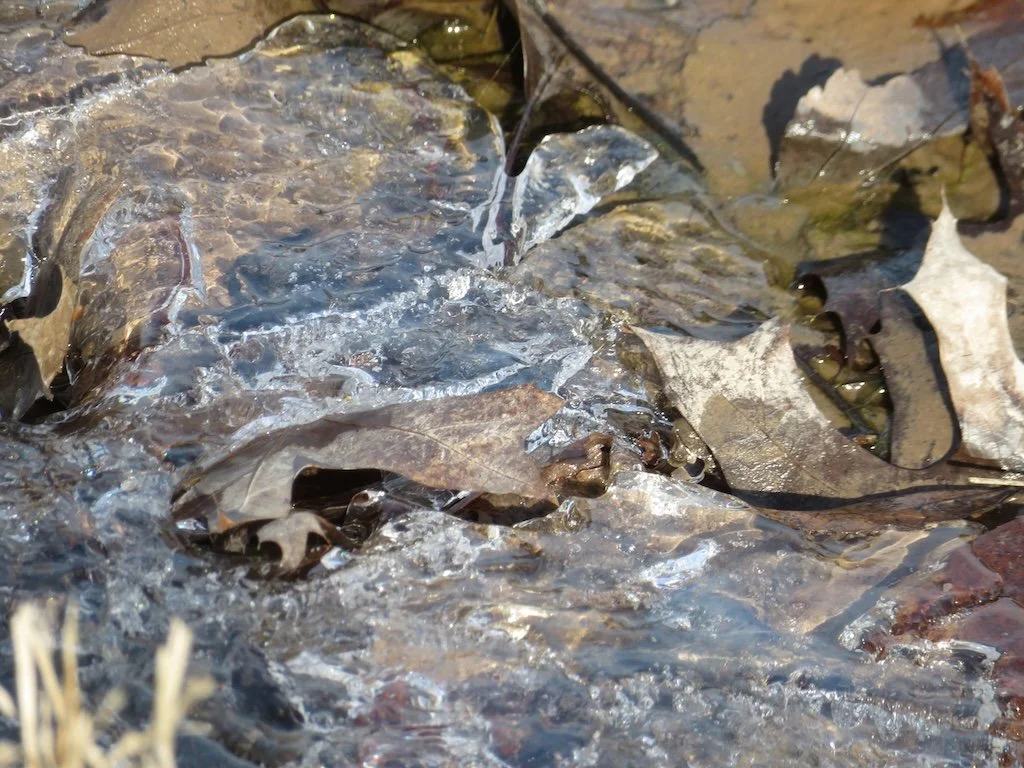
Further around I noticed ice along the edge of the larger pond. The patterns there were changing…visible melting.

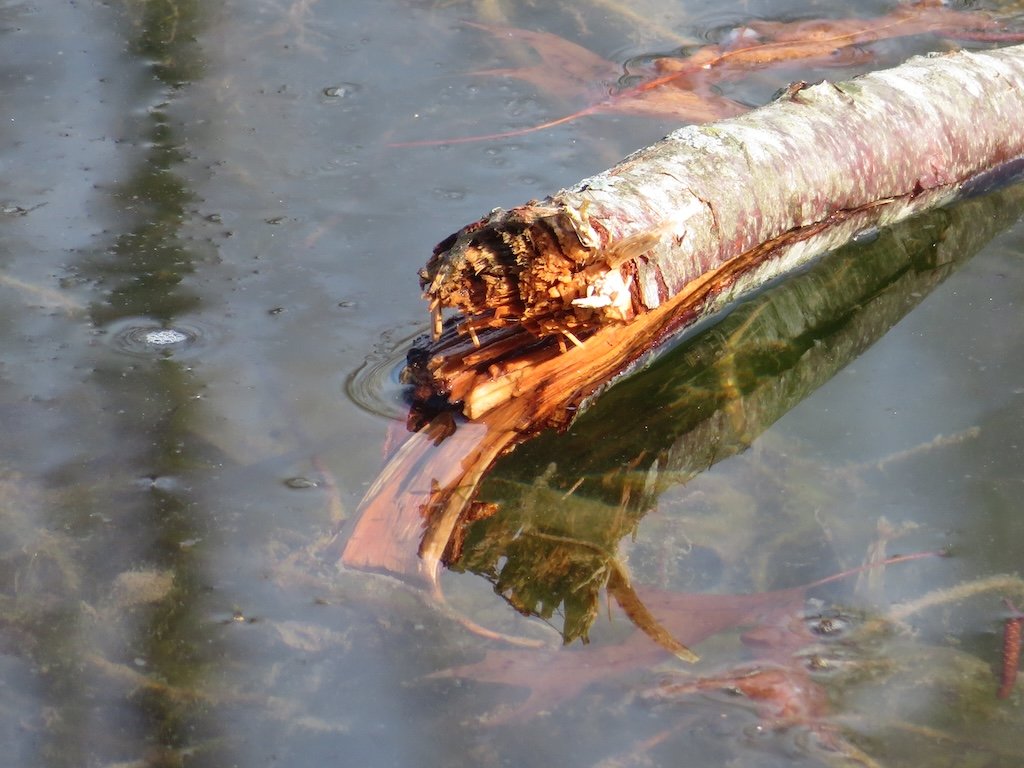
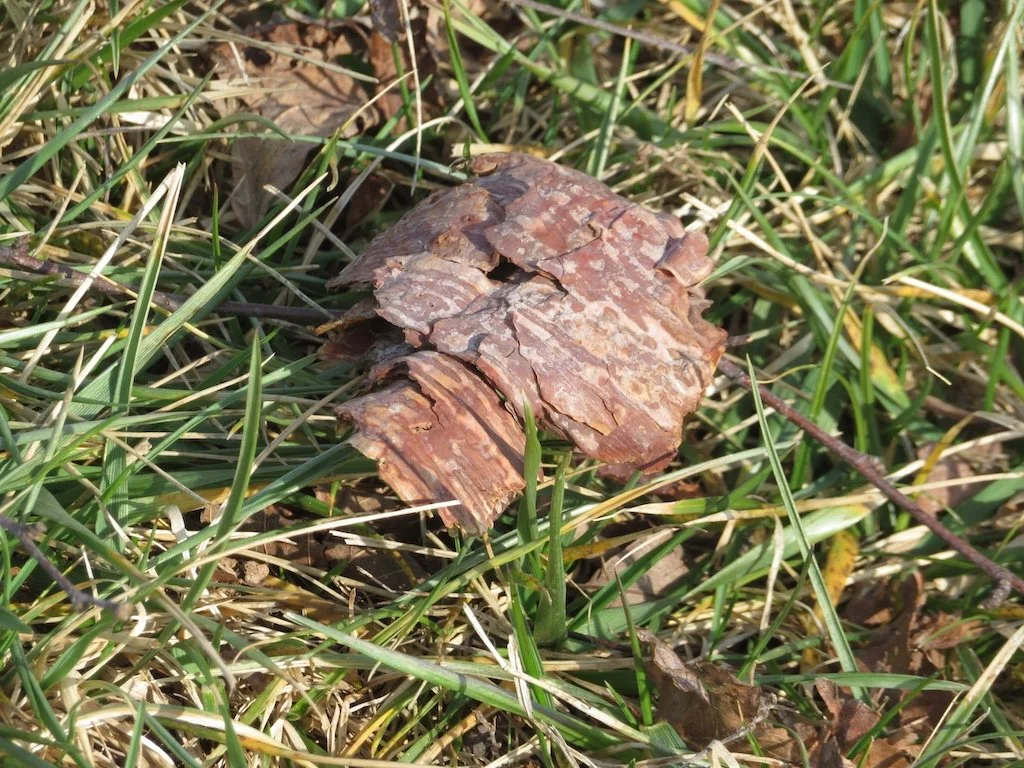
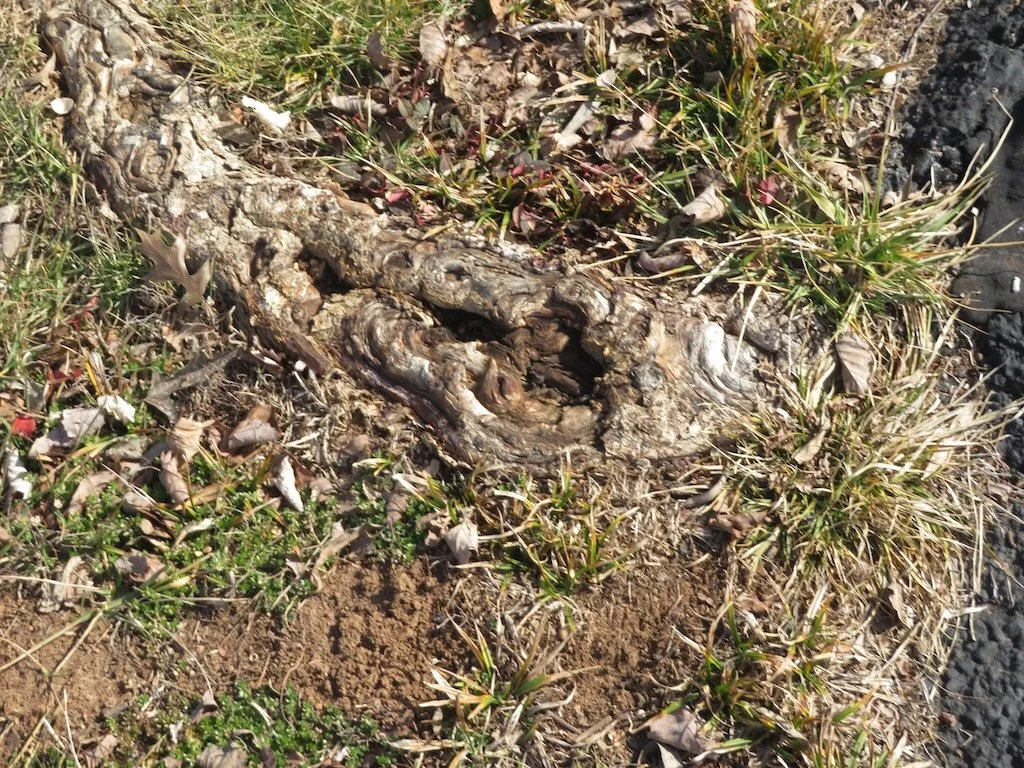
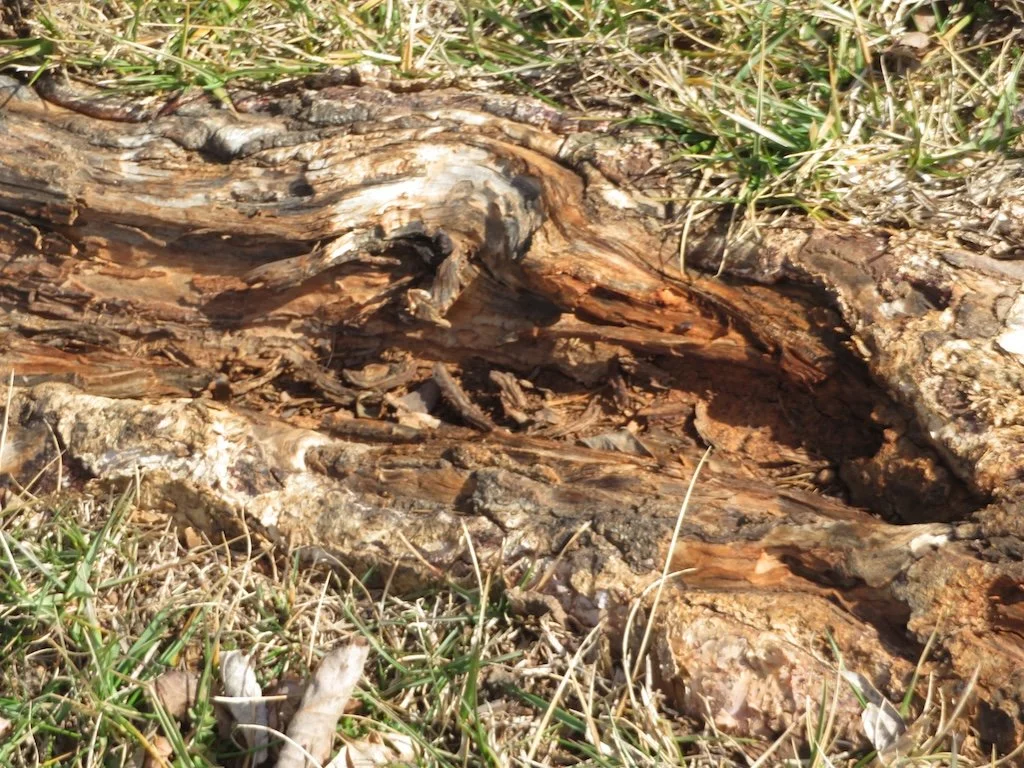
A recently ripped branch of a river birch was in the water, and some curly bark from the same kind of tree was on the shore nearby….both detached from the tree during the recent storm probably. One of the trees has exposed roots damaged by mowers.

A male and female mallard swam out into the pond. The female was eating and posed for a better picture that the male. I wondered if they were the same pair that has been at our pond for the last couple of years…hatching ducklings…and then losing them to the turtles.

Our area has been very dry since a very wet spring in 2025…and the snow earlier last month must have soaked in very close to where it melted. My yard is a little wet (would be muddy if there was vegetation everywhere). The intake channels for our stormwater ponds were dry and the water level in both ponds was low as well. Maybe we’ll have spring rains again soon.

Gleanings of the Week Ending February 14, 2026

The items below were ‘the cream’ of the articles and websites I found this past week. Click on the light green text to look at the article.

12/18/2025 Ozark Public Television Wild Ozarks: A Legacy of Conservation – Very well done. I am recommending it to be part of the core training for the next group of Springfield Plateau Missouri Master Naturalists!

2026 Million Marker Test Kit – I’m going to do as much as I can to reduce microplastics…then do this test….probably next summer. It is advertised as the only mail-in test for BPA, BPS, BPF, phthalates, parabens, and oxybenzone.

2/3/2026 Yale 360 China to See Solar Capacity Outstrip Coal Capacity This Year - By the end of 2026, wind and solar will account for nearly half of China’s power capacity. Including hydro and nuclear power, clean energy will amount to nearly two-thirds of total power capacity, while coal will amount to a third. Competing with cheap solar and wind, a large share of coal plants are now operating at a loss.

2/1/2026 Cool Green Science Catching Sharks for Science - On Long Beach Island, volunteer anglers help researchers uncover the hidden journeys of sharks in threatened salt marsh ecosystems.

2/3/2026 Science Daily Even remote Pacific fish are full of microplastics - Even in some of the most isolated corners of the Pacific, plastic pollution has quietly worked its way into the food web. A large analysis of fish caught around Fiji, Tonga, Tuvalu, and Vanuatu found that roughly one in three contained microplastics, with Fiji standing out for especially high contamination. Reef and bottom-dwelling fish were most affected, linking exposure to where fish live and how they feed.

2/1/2026 National Parks Traveler New York Art Teacher Earns 30 National Park Resident Artist Spots In 10 Years – Artist-in-residence at National Park Service sites. Many of the programs are funded by nonprofits, grants, or donations made directly to the Park Service. Categories are broad and include writers, painters, photographers, musicians, dancers, sculptors, and animators. 

1/30/2026 My Modern Met Society of Photographers 2025 Contest Announces Its Astounding Winners – Chosen from over 6,000 photographs submitted!

1/29/2026 BBC From bad omen to national treasure: The rare bone-swallower stork saved by a female army - Known locally as the hargila (or "bone-swallower") for its scavenging ways, greater adjutant storks are unique birds. Roughly 5ft (1.5m) tall, they aren't only imposing but also play a vital role in maintaining the health of a wetland ecosystem. As scavengers that consume and clean up carcasses, they prevent the spread of disease and break down decaying organic matter, recycling essential nutrients back into the soil. They were feared, reviled and in some communities, hunted for their meat which was once widely used in folk medicine as a cure for leprosy or antidote to poison.

1/28/2026 Archaeology Magazine Study tracks wild potato across the Southwest - People carried a small, wild potato known as the Four Corners potato (Solanum jamesii), across the southwestern United States some 10,000 years ago.

1/27/2026 Super Age Wellness Is Finally Admitting It Got the Last Decade Wrong – The article lists 10 trends from the 2026 Global Wellness Report. One of the 10 is “Microplastics are at threat to healthspan.”

Sustaining Elder Care – February 2026

My dad has been in his new memory care place since mid-November, and we are still not quite settled. He had a visit from a podiatrist, and they sent information on getting into their portal to see the report to me rather than my sister that handles his medical care (i.e. is his Medical POA) …a continuing issue which I have now escalated to the director since it has happened with other providers. My dad has been seen by a Nurse Practitioner and had bloodwork, but my sister had to ask for the results repeatedly before getting them and the question of the physician or medical practice that is monitoring the Nurse Practitioner has not been answered.

On the plus side, the facility has started using a new app to report to families about the activities their person in memory care is participating in like music therapy, hands & nails spa, coffee bar social, and (most frequently) chair exercise. The app has the capability of including pictures but, so far, they haven’t been doing that; it could be that it would take an extra staff person to get pictures during the activity. Since I am not local – I like the daily reports through the app to understand the types of activities he does with other people.

One of my other sisters was able to attend a session held for families of people in memory care and sent us “what NOT to do --- what to do instead.” Since we are all trying to be respectful and accept our father the way he is now, we do reasonably well. Our challenge is to have a conversation with our dad. We’ve come to accept his pronouncements whether they reflect reality or not…encouraged that he is trying to communicate.

It is not easy to watch a person that has been around for my whole life decline. He is a very different person now than he was during my growing up. I’m glad that my sisters and I are staying engaged with his care. We are all learning from his experience…storing away ideas for the way we want to live our own lives. None of us wants to regret anything.

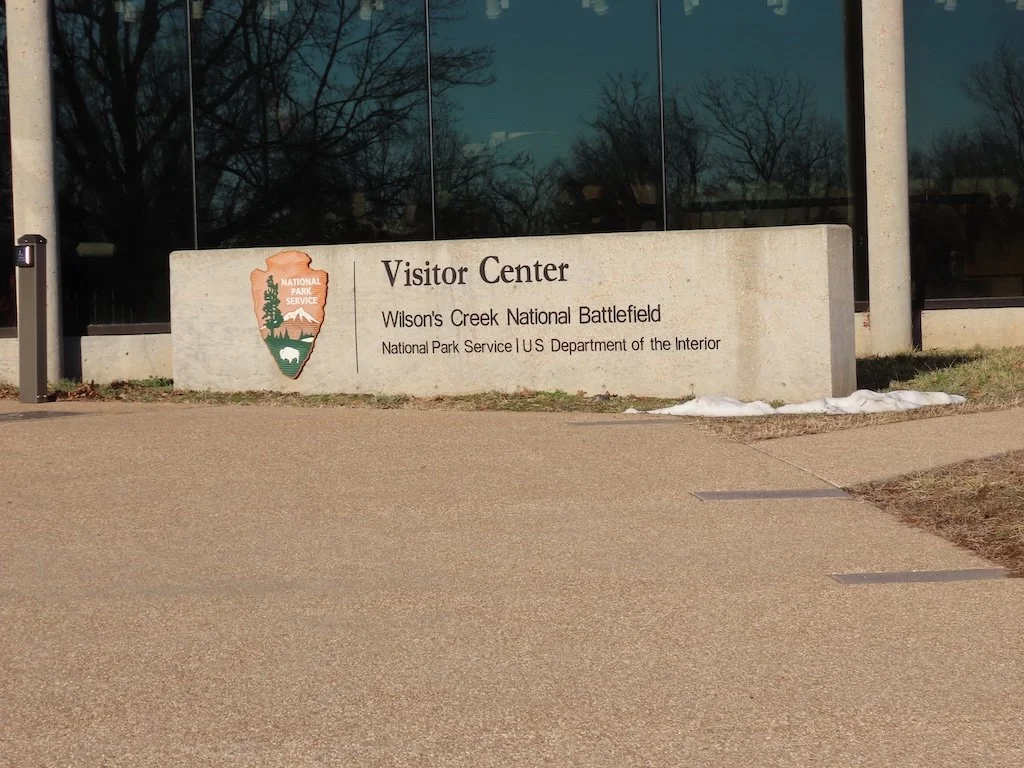
Wilson’s Creek National Battlefield

I left the house a little before 8 AM. One of my fellow Missouri Master Naturalist’s was leading a birding hike at Wilson’s Creek National Battlefield to begin at 8:30. This was my first visit to Wilson’s Creek. It was a sunny winter morning – much warmer than the previous 2 Saturdays and without snow on the ground. It was cold enough that the mud was frozen. We met at the parking lot of the Visitor Center and then drove into the park.

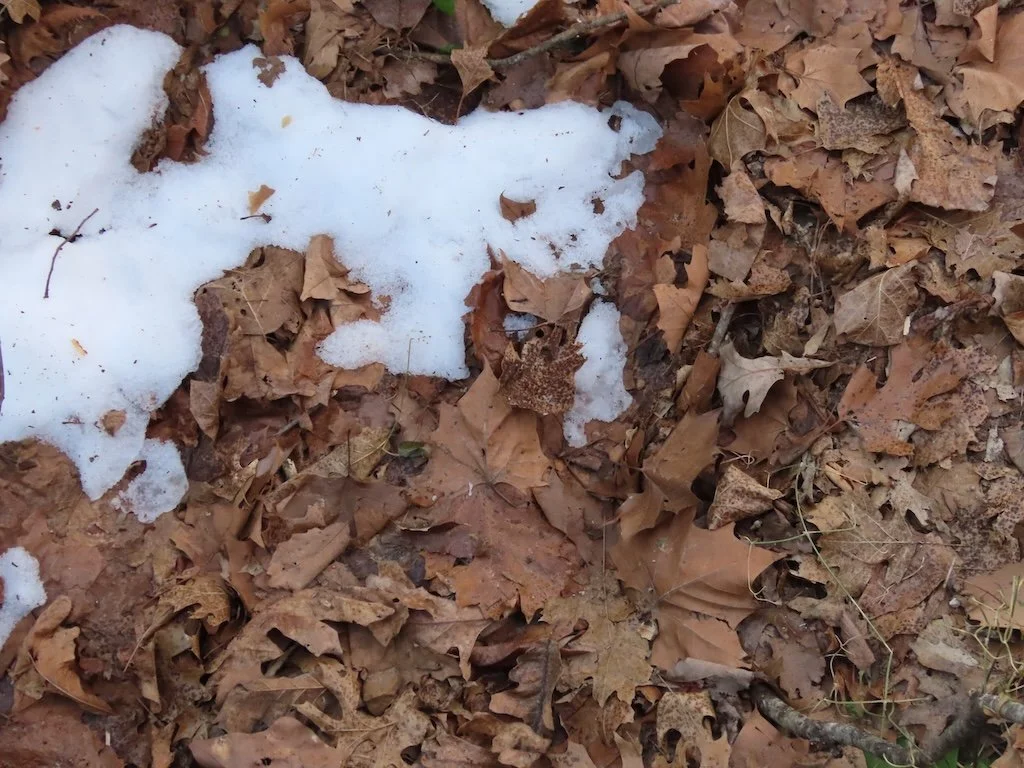
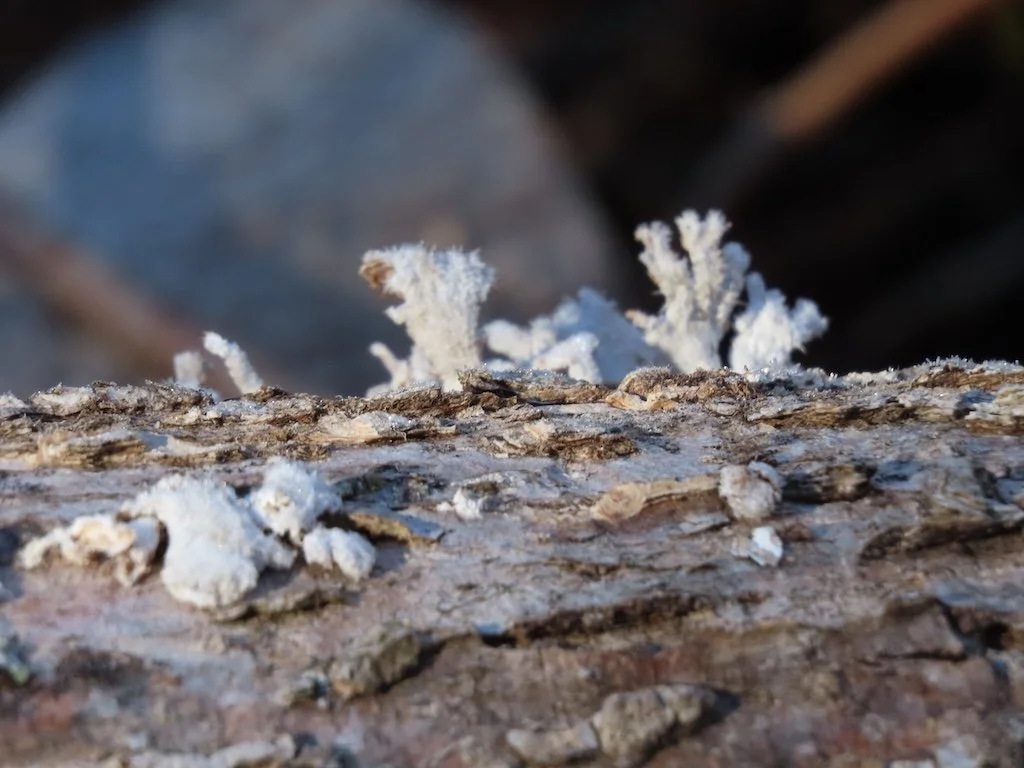
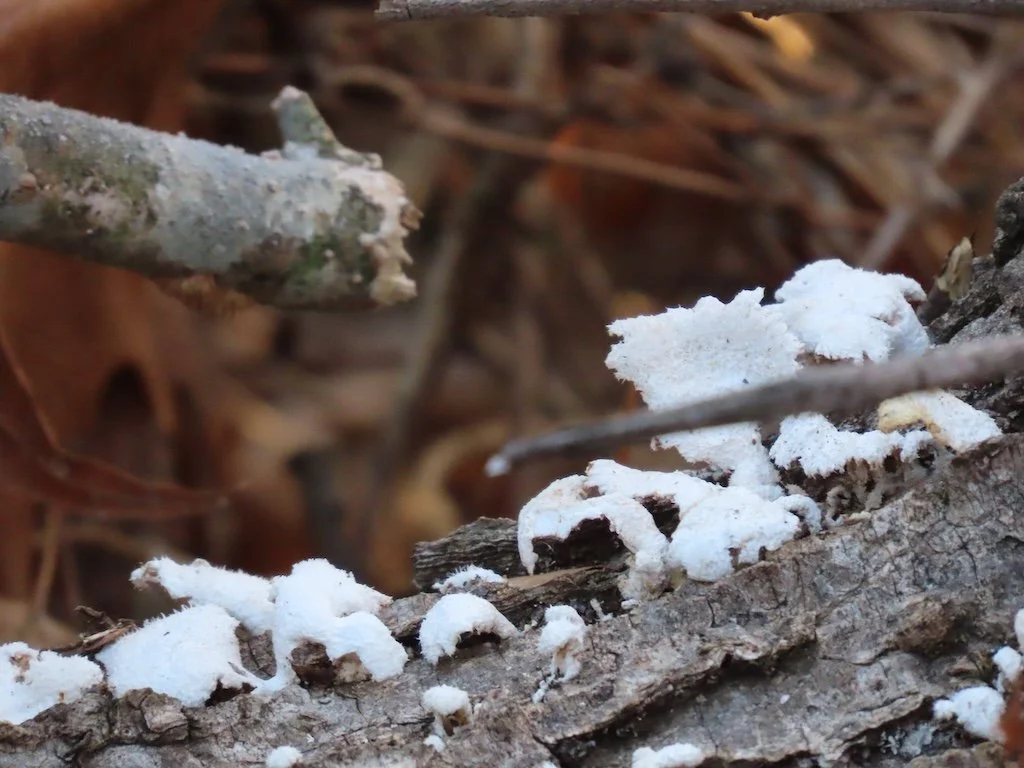
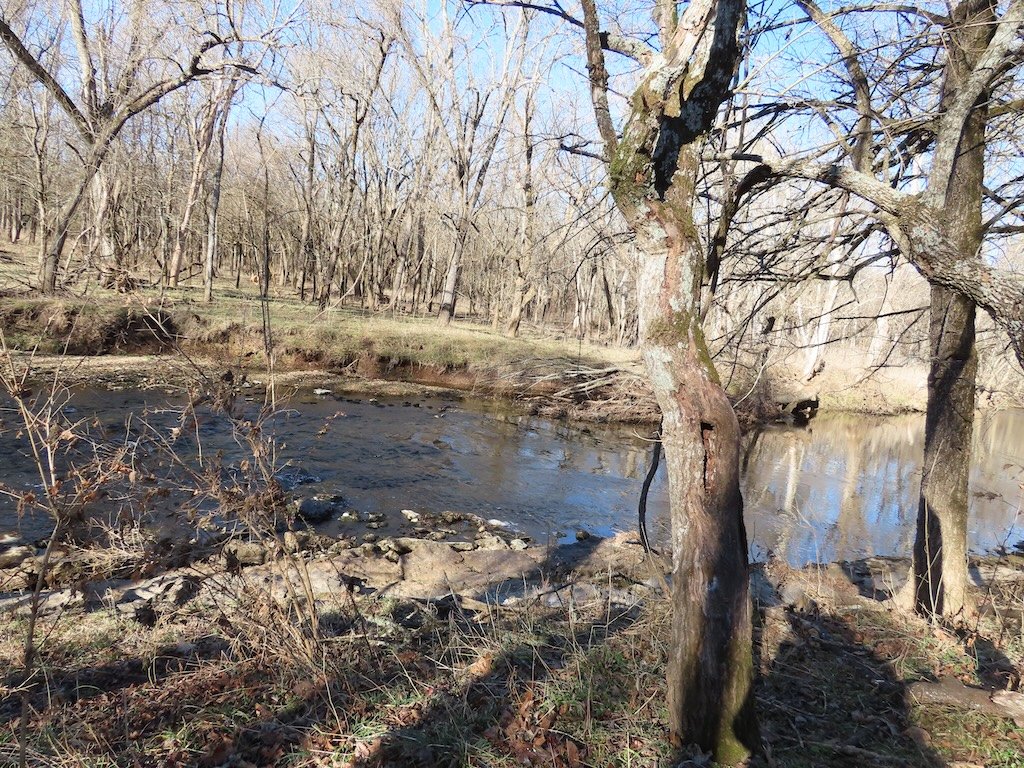
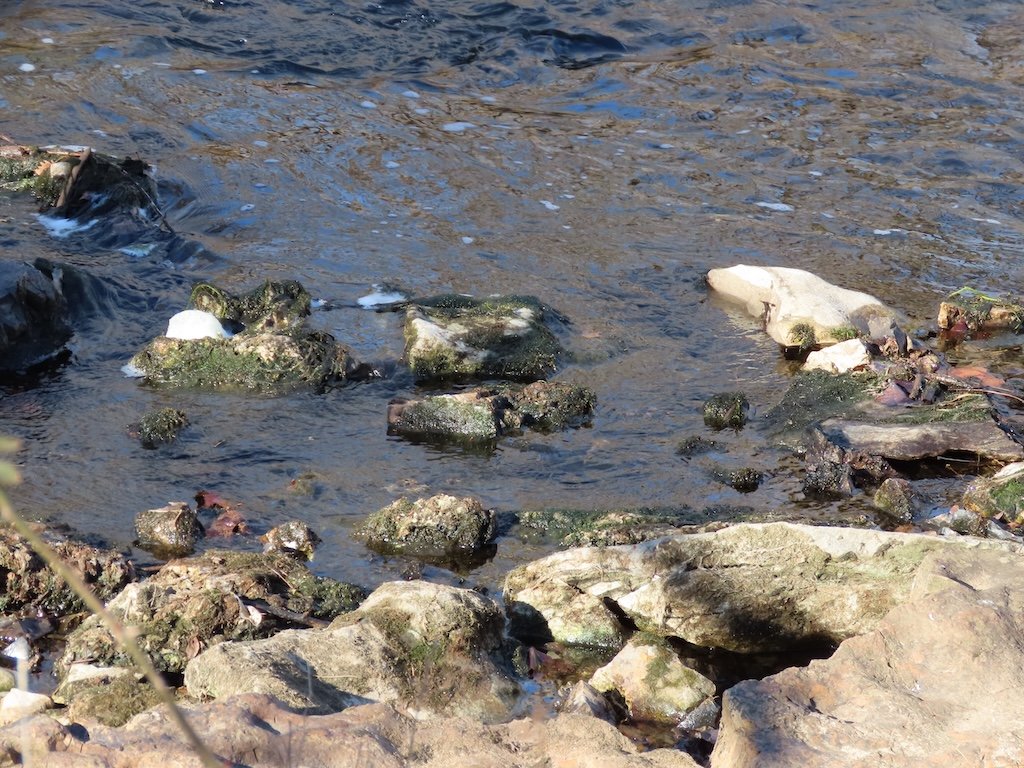
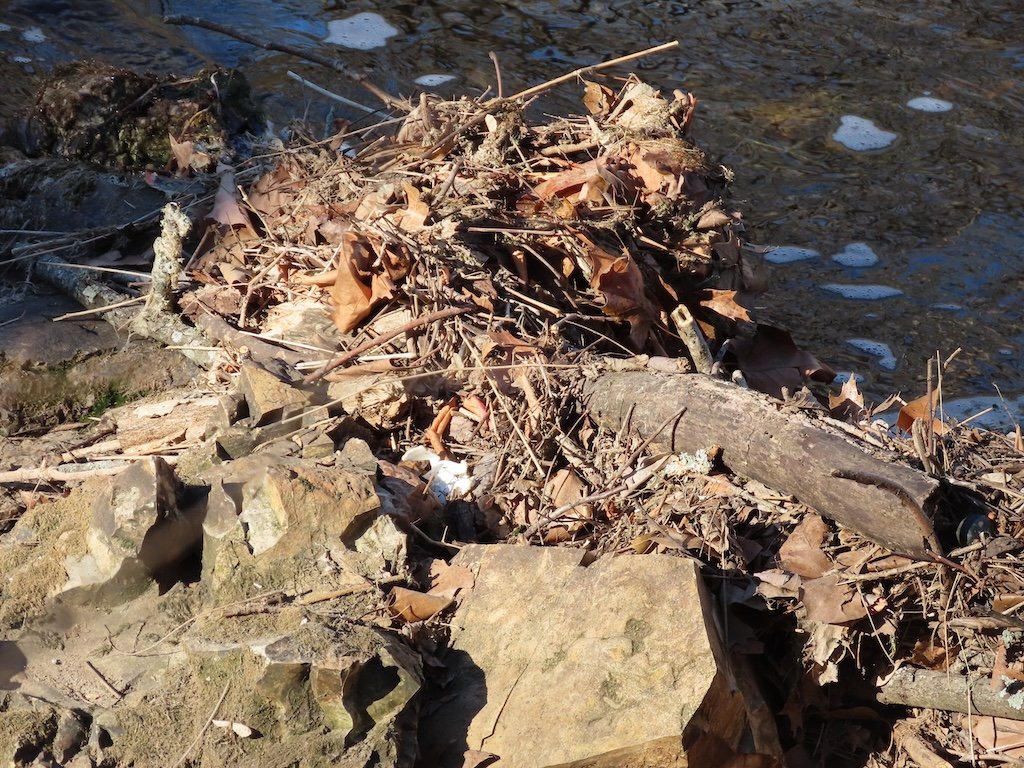
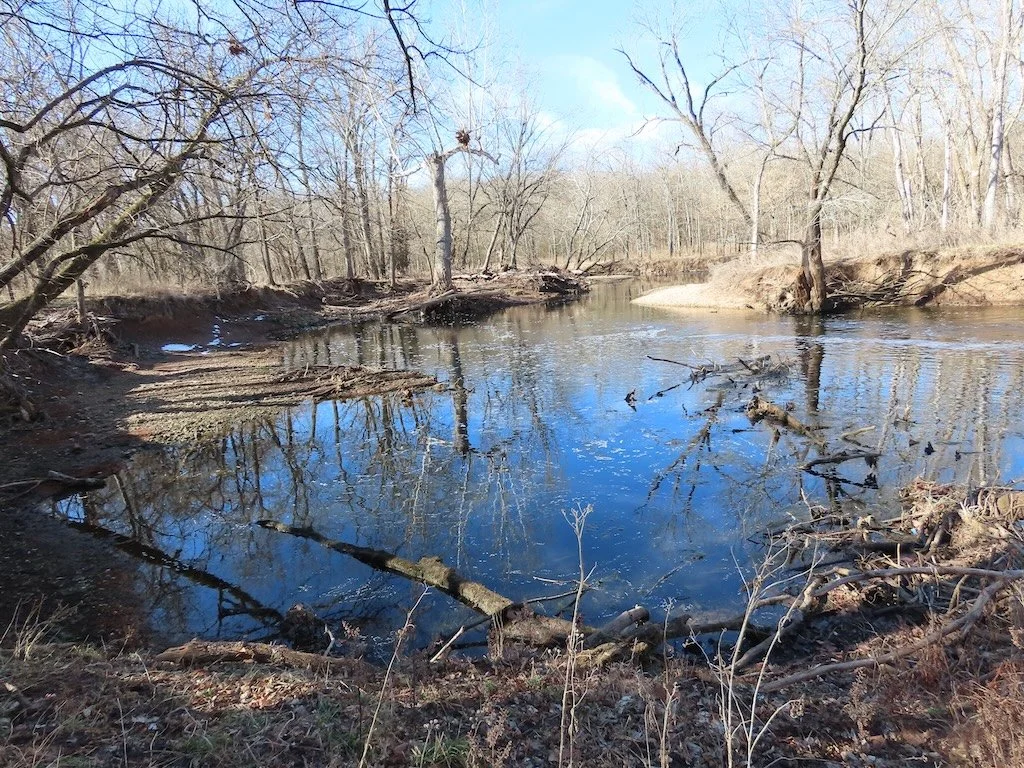
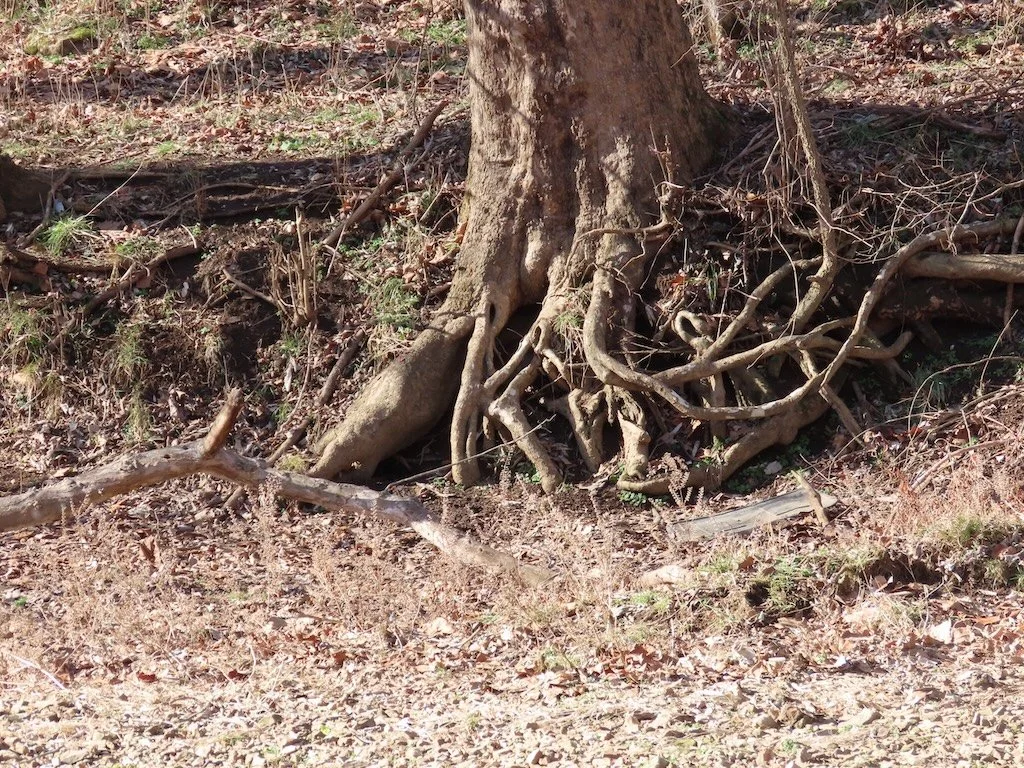
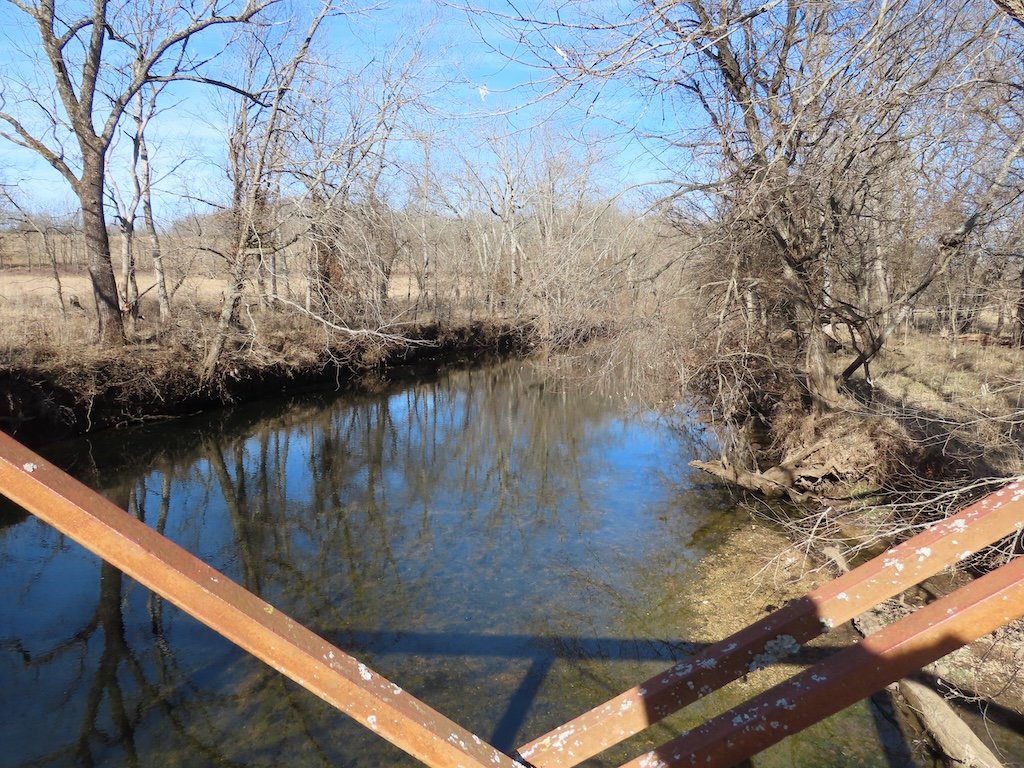
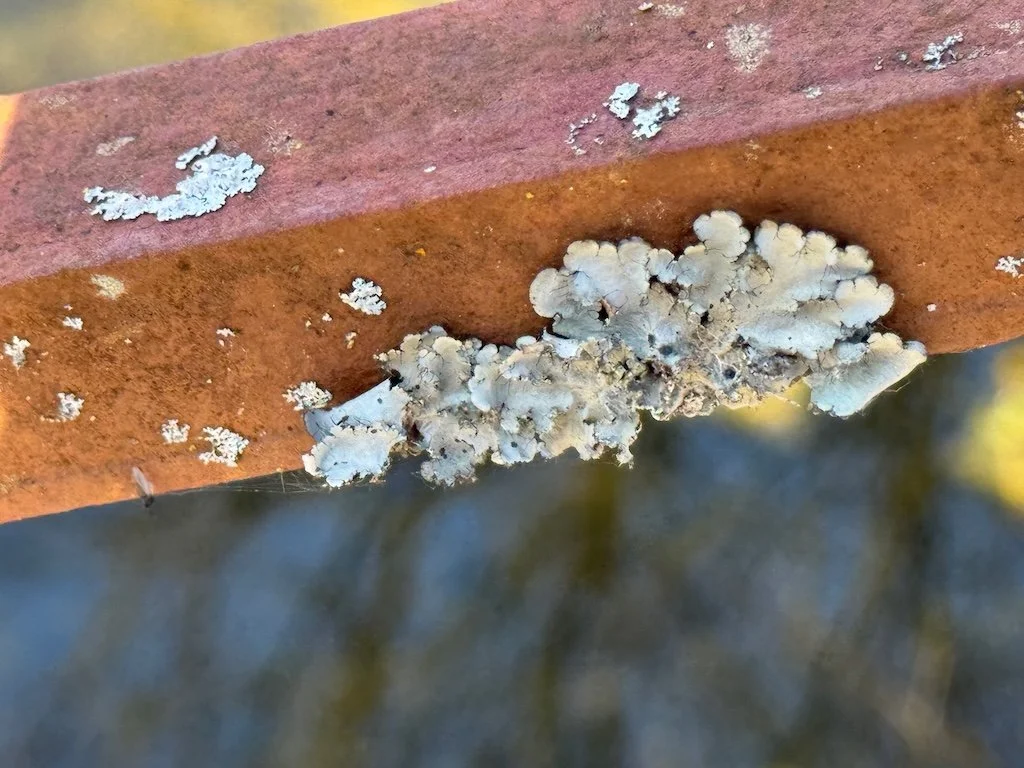
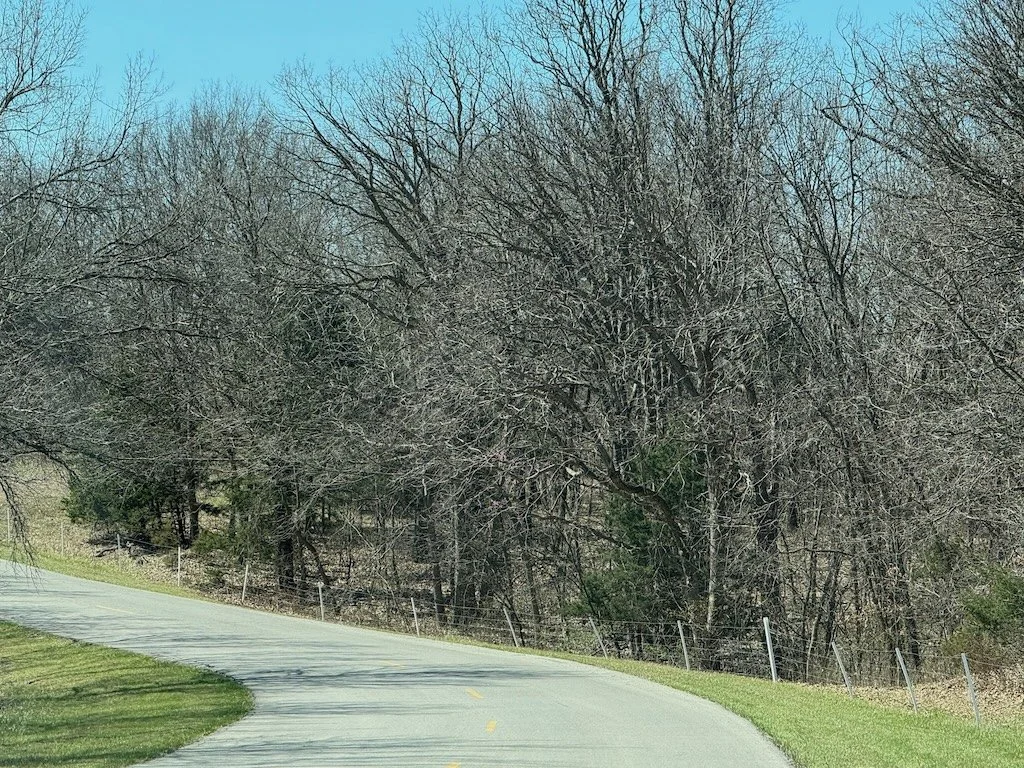
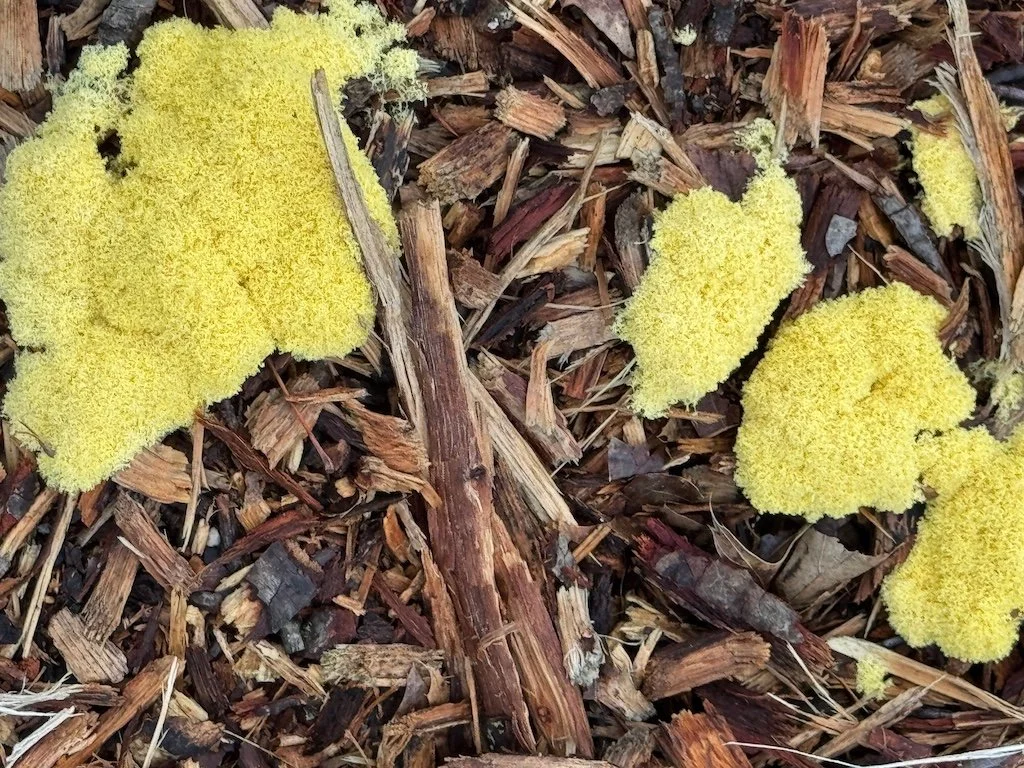
We hiked for about 3 hours! I took some landscape pictures…some very white fungus on a log…a sycamore almost undermined along the edge of the creek (perhaps it will fall during the next big storm)…leave wads at the edge of the creek…the riparian zone…lichen on the bridge.

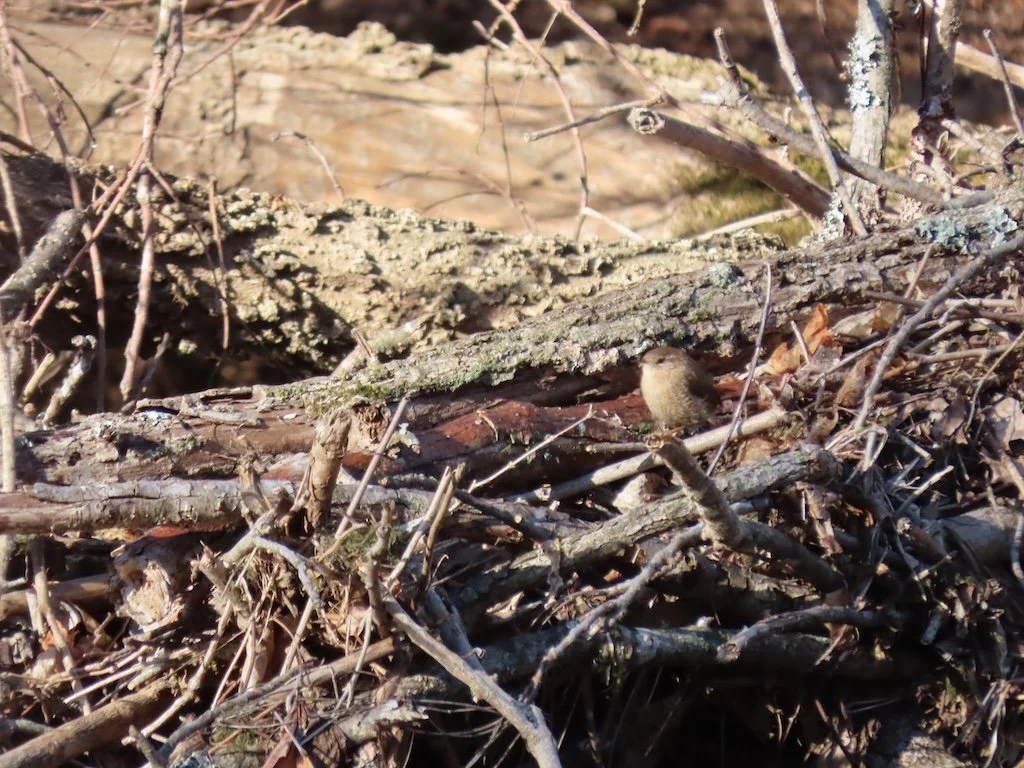
The bird highlight of the early part of the hike was a winter wren on the opposite side of Wilson’s Creek in the debris around a fallen tree. They are small and blend in very well…it took be a bit to see it move – find it. There was more bird activity as it got warmer toward the end of the hike.

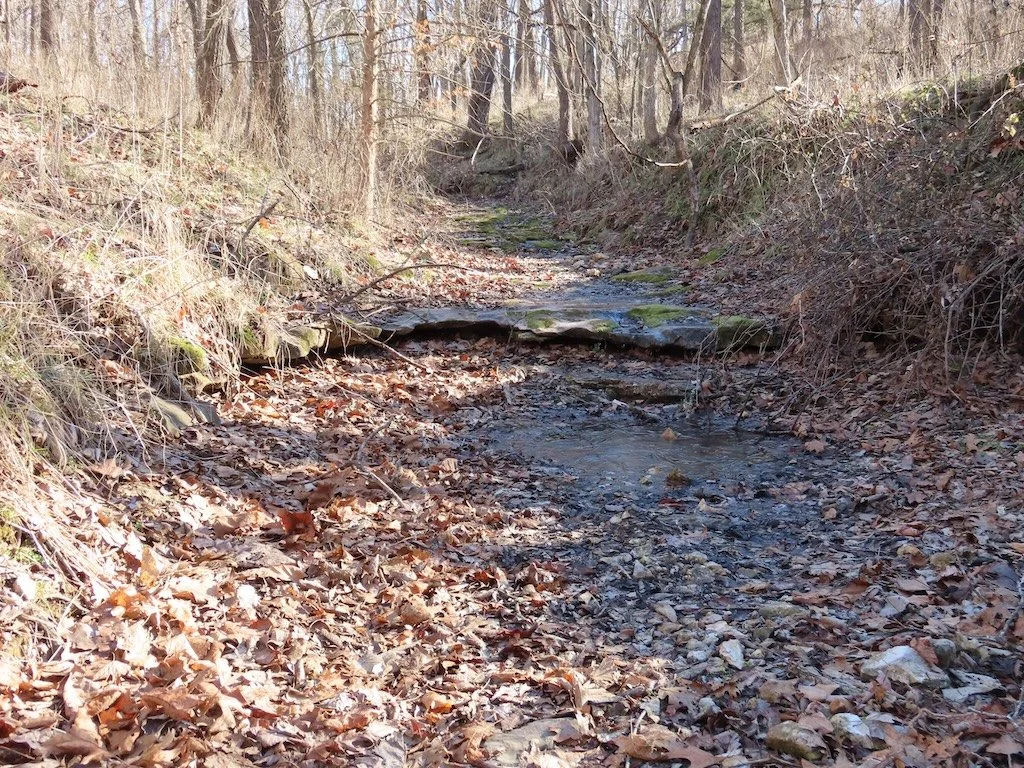
We hiked up a rocky stream bed of a losing stream. There was a frozen pool where it usually goes dry.

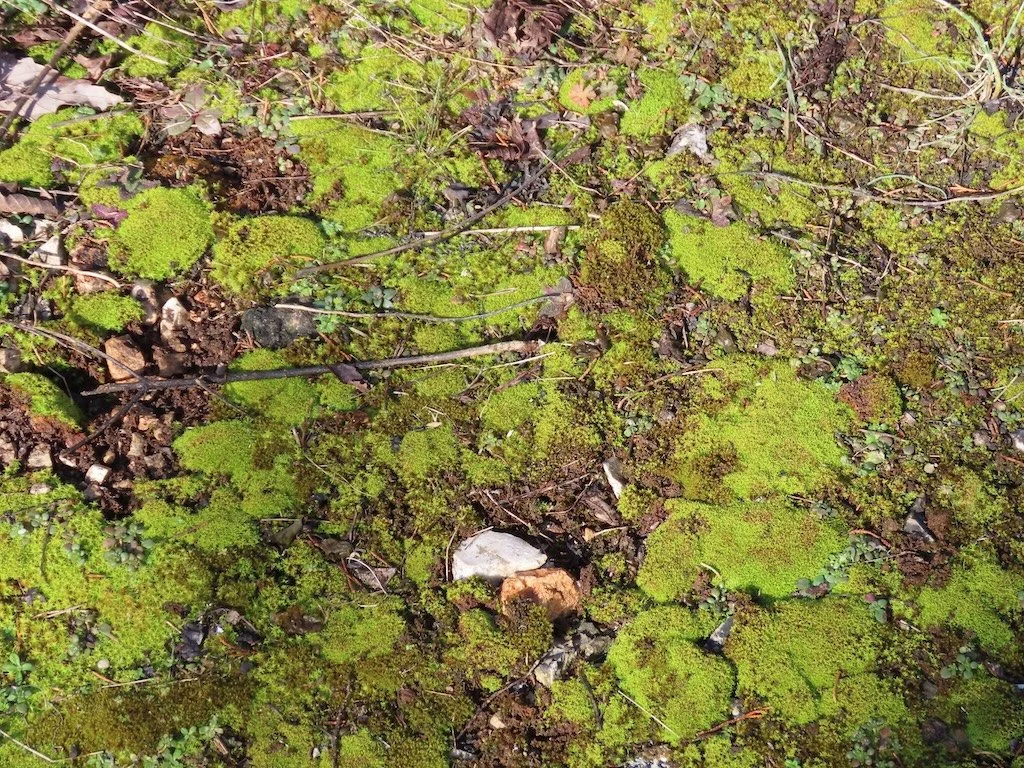
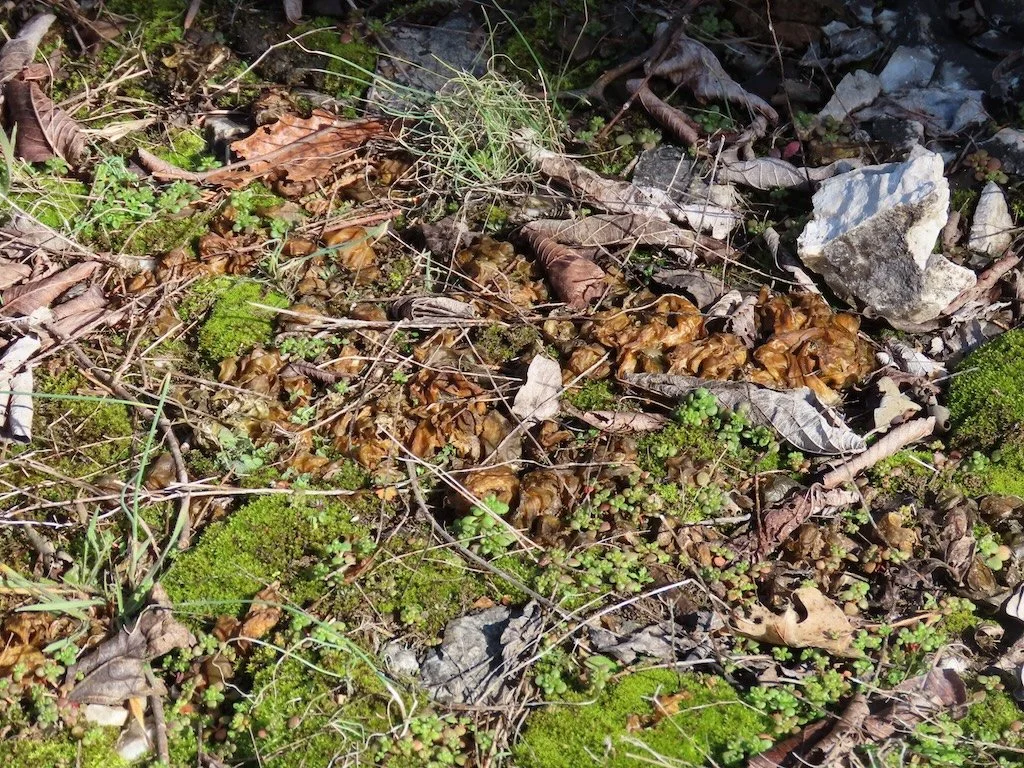
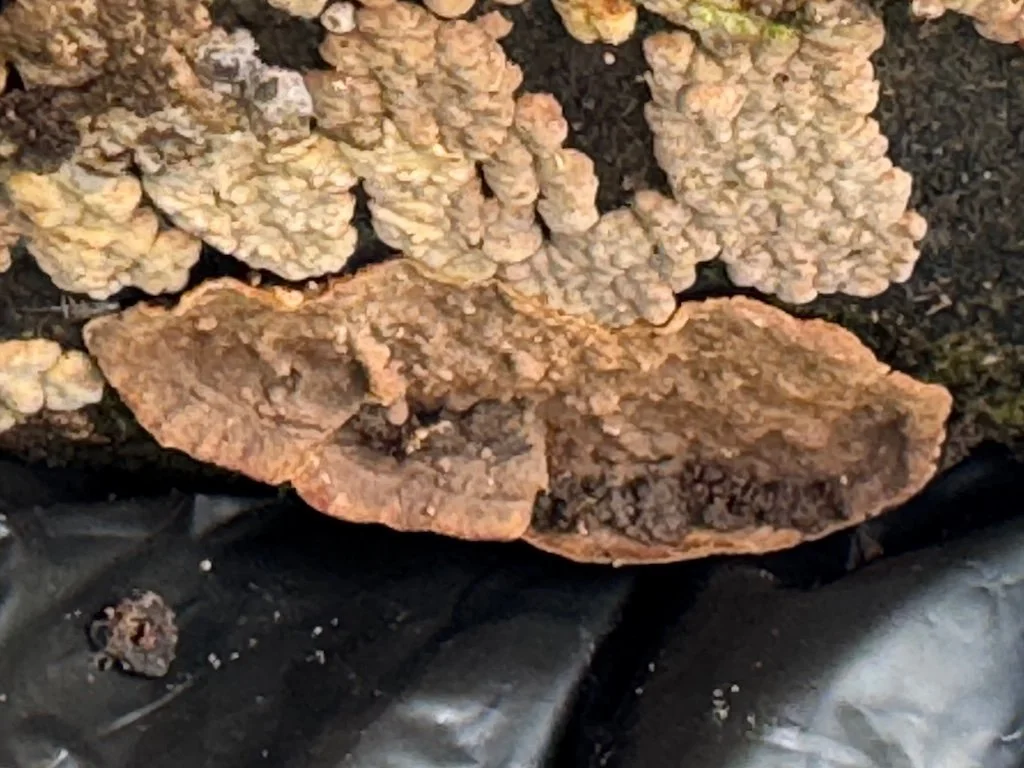
We stopped by two small glades – lots of green moss and some brownish fungus. There was also some prickly pear.

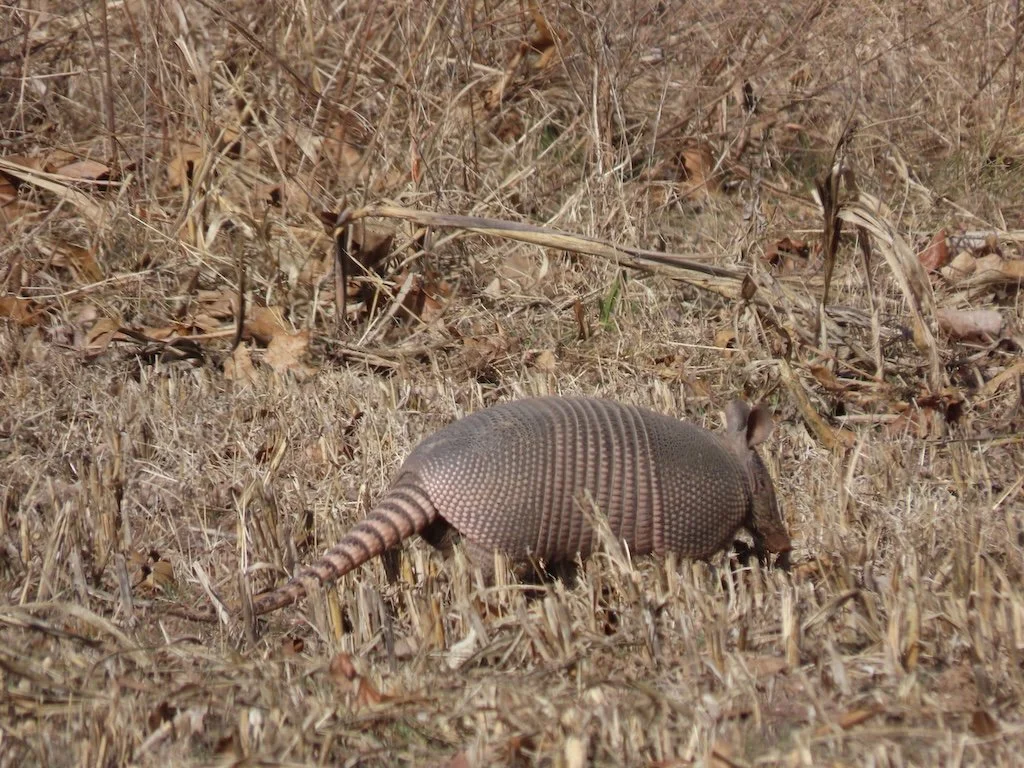
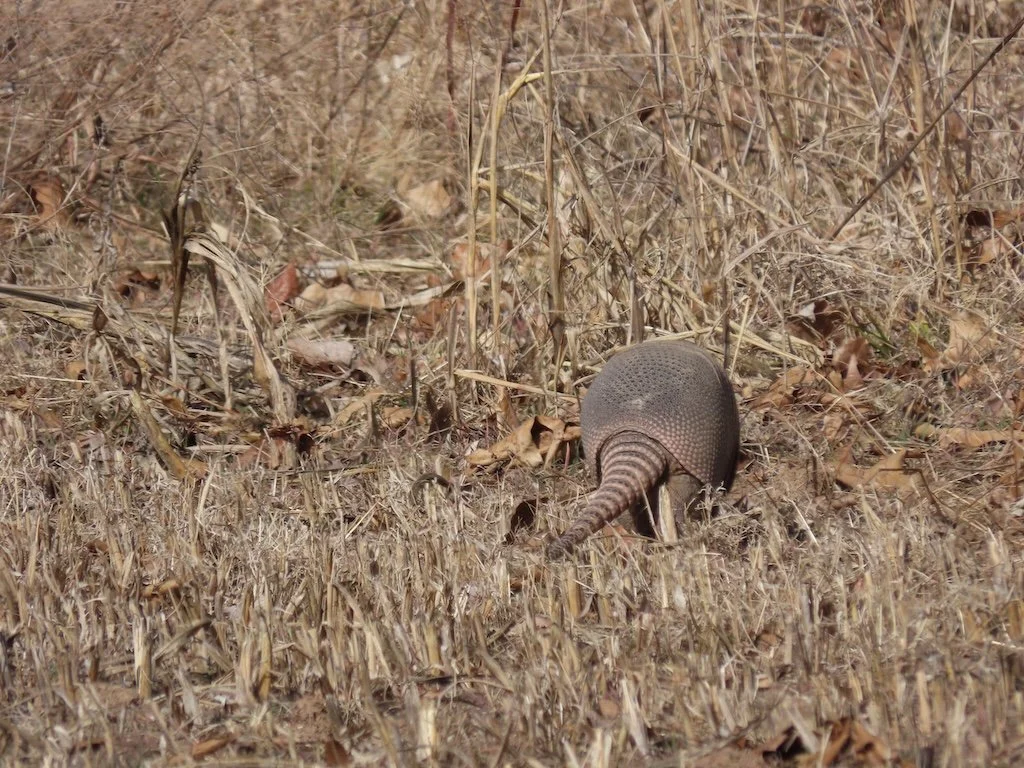
The highlight at the end of the hike was seeing an armadillo in a field of corn stubble! This species has been moving northward in recent decades!

It was too early for wildflowers…so I am already thinking about going back…

Air quality

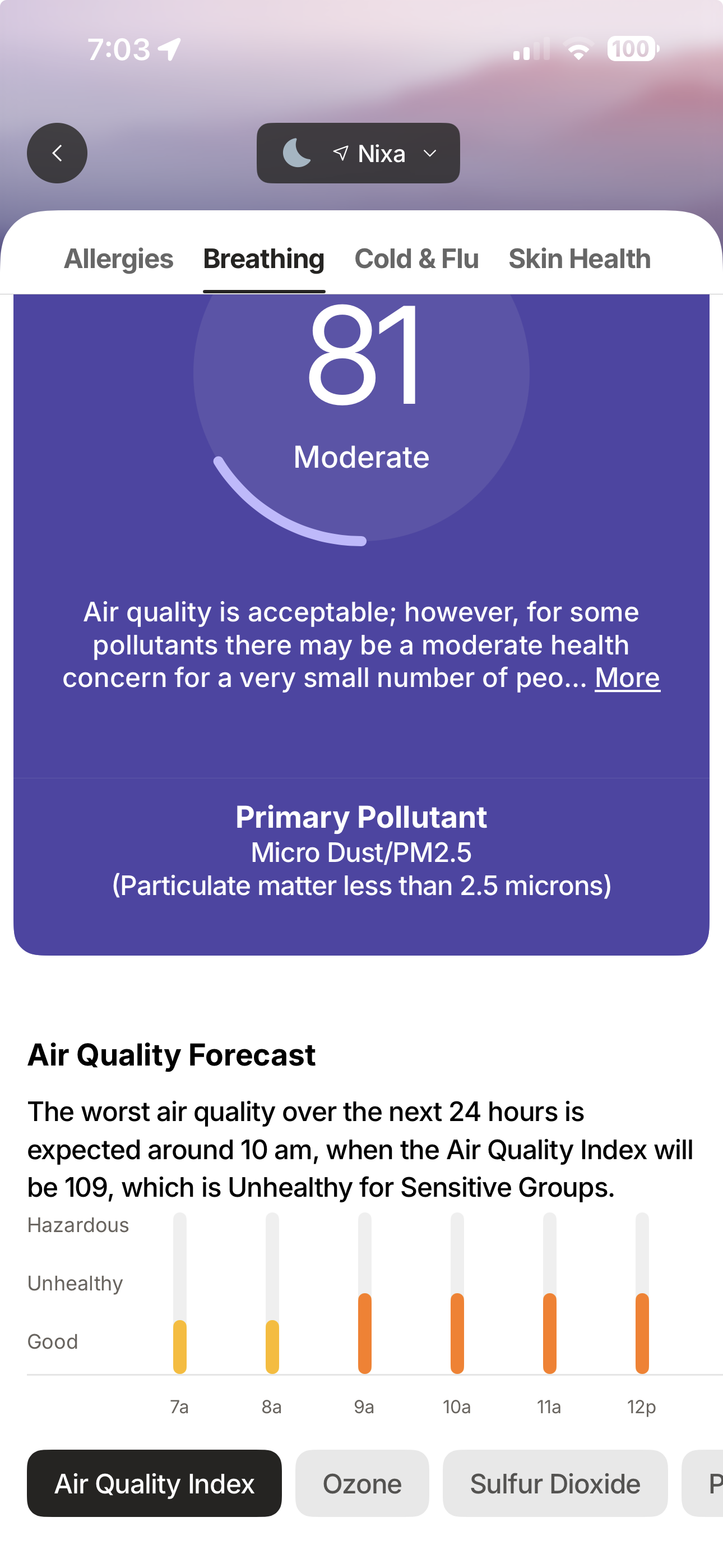
I’ve been noticing that the air quality where I live (as reported in The Weather Channel app) has not been good during the recent cold weather. The primary pollutant is always Micro Dust/PM2.5. Since transportation sources of pollution (cars, trucks) are, if anything, a little lower during cold and snowy weather – I am assuming that the uptick is from the electricity generating coal plant or wood burning stoves/fireplaces.

I notice that my eyes are the first to register air quality issues. They start to itch or feel gritty – not as bad as a floating eyelash but not comfortable. Saline drops help but time consuming to do frequently. I find myself just forging ahead with my eyes itching and trying not to rub them. Recently I have been wondering if some of my ‘allergies’ (runny nose and sneezing that comes and goes over the course of the day) are PM2.5 related rather than pollen since there isn’t pollen in the air in winter.

If the day is orange – like shown in the screen shot – I try to stay indoors with the filters of my HVAC and some room air purifiers between me and the ‘bad air.’ That is possible for me most of the time since I am a post-career person. I do sometimes have things I do away from home, but they are mostly indoors this time of year and presumably well filtered/ventilated. I am a little anxious about some ‘winter wellness’ hikes I have planned…hoping that the air quality will be ‘green’ when those occur.

I enjoy being outdoors and realize that air quality will impact when I will be comfortable as time goes on (i.e. air quality will deteriorate since there is less being done right not to reverse the trend). Working in my yard won’t be impacted too much since I can simply check the air quality and only go out when it is ‘green.’ I hope I can get through a few more years of volunteering in the Butterfly House at the Springfield Botanical Garden during the summer months; signing up for shifts is done well in advance and the air quality could be problematic when the day arrives…I want to be a dependable volunteer but do I go even if the air quality is poor?

The air quality in Lewisville TX (where I go monthly to visit my dad) is considerably worse than in Springfield MO. This winter it has been orange or red most of the times I’ve been in the area. It’s been too cold to take Dad for a walk outside – and I will always check the air quality before taking him for an outdoor walk even when the weather is pleasant again. There are times that Oklahoma smells smokey (grass fires or power plants?) as I drive through. I am adding a small air purifier to the inside of the car and not doing a lot outdoors when I am there unless I check and the air quality happens to be ‘green.’

I find myself wondering what contributes to the air quality being ‘not green,’ but it is hard to tease out that information. The measurement just reports how much PM2.5 there is. I hope that some organization begins to make the contributors more visible to the public (and it would be great if The Weather Channel added that info in their app). Would it spur more people to push for changes to utilities….to retire coal burning plants a quickly as possible?

Note: To find the hourly air quality forecast on The Weather Channel App, scroll down on the Home screen to find the Allergies – Breathing – Cold & Flu block and select ‘Breathing.’ Scroll down to see the Air Quality Forecast.

Gleanings of the Week Ending February 7, 2026

The items below were ‘the cream’ of the articles and websites I found this past week. Click on the light green text to look at the article.

1/22/2026 I’m Plastic Free How Geography Impacts Plastic-Free Living - Many people want to reduce plastic, but simply don’t have the tools nearby. In larger cities, it’s often easier to find refill stores, farmers’ markets, and shops that sell loose produce, but the access varies widely between wealthier and lower-income city areas. Living in a city doesn’t guarantee sustainable options. here are a variety of factors that determine the amount of plastic used by consumers. These usually include their location, the system of commerce, and the accessibility of plastic products. Understanding how an area shapes shopping decisions will lead to people advocating for a change where it matters the most.

1/22/2026 Yale Environment 360 In Europe, Wind and Solar Power Overtakes Fossil Fuels - Last year, for the first time, wind and solar supplied more power than fossil fuels to the E.U. In parts of Europe, there are signs that increasingly cheap batteries are beginning to displace natural gas in the early evening, when power demand is high, but solar output is waning.

1/23/2025 Smithsonian Magazine United Nations Declares That the World Has Entered an Era of ‘Global Water Bankruptcy’ - Life around the world has been feeling the effects of climate change, land degradation, deforestation, pollution and the overuse of water. Ultimately, most regions are using too much of their renewable “income” of water from rivers and snowmelt and have emptied their “savings” in groundwater and other reservoirs, ushering in an era of “global water bankruptcy.” We cannot rebuild vanished glaciers or reinflate acutely compacted aquifers. But we can prevent further losses and redesign institutions to live within new hydrological limits.

1/21/2026 BBC Future How the nutritional benefits of foods change as you age - The two main nutrients we should focus on in old age are calcium and vitamin D. Eating enough quality protein is also really important as we age.

1/20/2026 ScienceDaily Stanford scientists found a way to regrow cartilage and stop arthritis - Scientists at Stanford Medicine have discovered a treatment that can reverse cartilage loss in aging joints and even prevent arthritis after knee injuries. By blocking a protein linked to aging, the therapy restored healthy, shock-absorbing cartilage in old mice and injured joints, dramatically improving movement and joint function. Human cartilage samples from knee replacement surgeries also began regenerating when exposed to the treatment. Human trials will be launched soon.

1/12/2026 The Daily Show Vitamin Plastic Water: Don’t Just Consume Microplastics, Enjoy Them! – Humor in a plastic world.

1/20/2026 NASA Explore North America’s Greenhouse Hub - In the Leamington (Ontario) area, growers cultivate vegetables and other crops within millions of square feet of greenhouse space. Commercial greenhouse operations began to gain a foothold in this area in the 1960s and 1970s as technology advanced and regional demand for fresh vegetables increased. Since then, the industry has continued to grow, securing Leamington’s reputation as the “greenhouse capital of North America.”

1/20/2026 NPR Polyester clothing has been causing a stir online. But how valid are the concerns? - Though polyester has been around for a while, in many cases, manufacturers have begun using polyester for items that natural fibers would be better suited for. For example, polyester is often found in summer clothes, even though the material traps heat. And people eventually dump clothes that are uncomfortable. Mounds of abandoned clothing are showing up on coastlines in countries like Ghana, India and Chile, Palladino said. Ghana, for example, has a large market for upcycling clothes. But many of the clothes it receives from the U.S. are of increasingly lower quality, so some purchasers dump them in lagoons and landfills, which end up in the oceans. Natural fibers clothing have cost you a little more, but you're going to have it longer.

1/19/2026 ArtNet The Forgotten Designer Who Created America’s First National Parks Posters - Dorothy Waugh was a pioneering Modernist designer who created the U.S. government’s first in-house National Parks poster campaign during the Great Depression, is the subject of her first-ever solo exhibition. After leaving the NPS, Waugh got a job at Knopf, founding and leading the publishing house’s Books for Young Adults Division. She also worked for 25 years as the head of public relations at the Montclair Public Library in New Jersey. In addition, Waugh was an educator, offering the first-ever course in typography at the New York School of Fine and Applied Art, now the Parsons School of Design. On top of all that, she moonlighted as journalist and poet, and even as a radio personality, with her own regional radio program. She also wrote and illustrated many books for children, as well as two scholarly tomes on the poet Emily Dickinson. The last of those was published when Waugh, who lived to be 99, was 94.

1/18/2026 Our World in Data How have crime rates in the United States changed over the last 50 years? - Several crimes fall within the category of violent crimes. In US statistics, this includes homicide (murder and non-negligent manslaughter), rape, robbery, and aggravated assault. Violent crime rates increased during the 1980s, reaching a peak in the early 1990s at around 750 offenses per 100,000. Since then, rates have more than halved. Over the past three decades, rates have fluctuated slightly from year to year, but the overall trend has been downward.

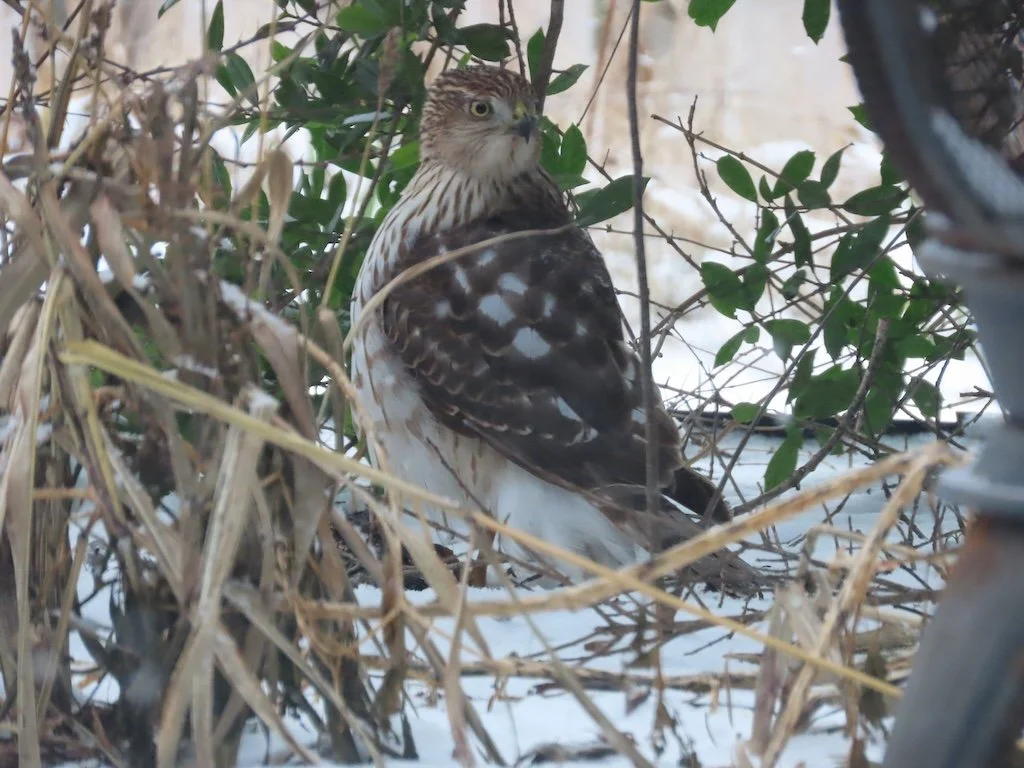
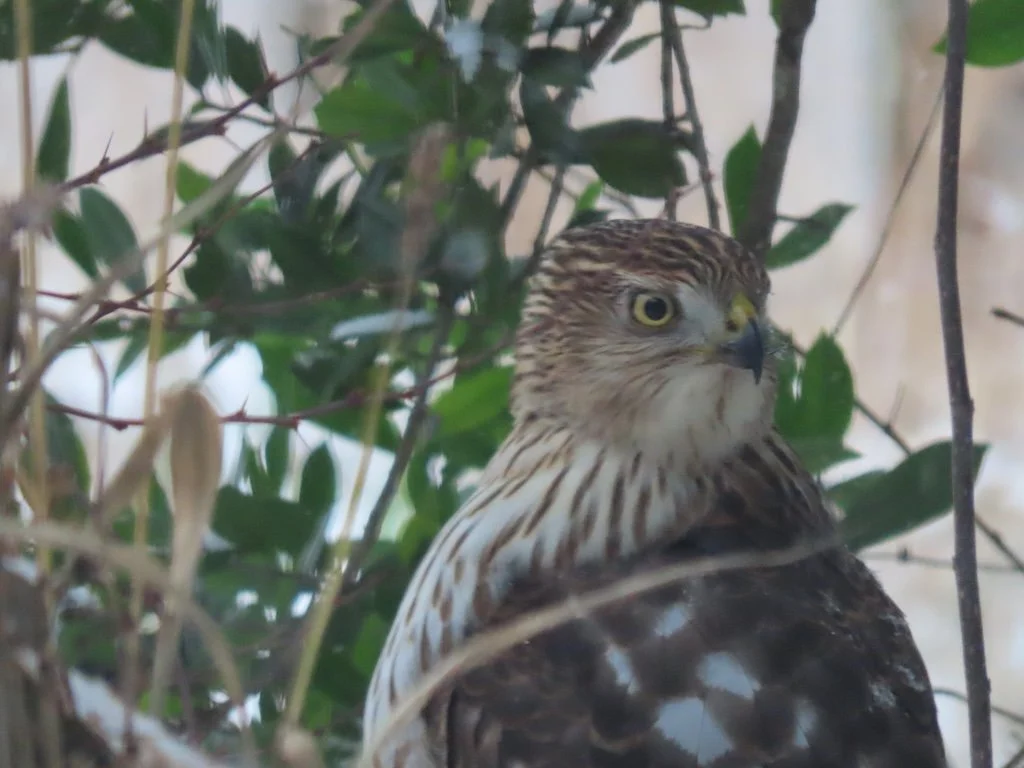
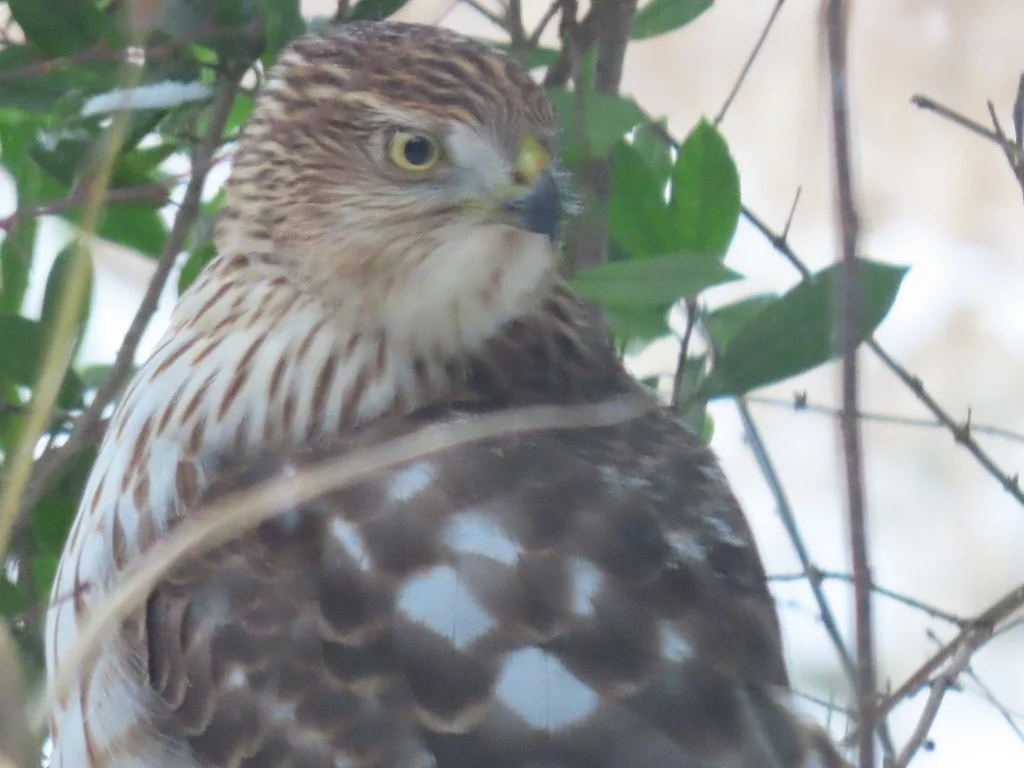
Cooper’s Hawk

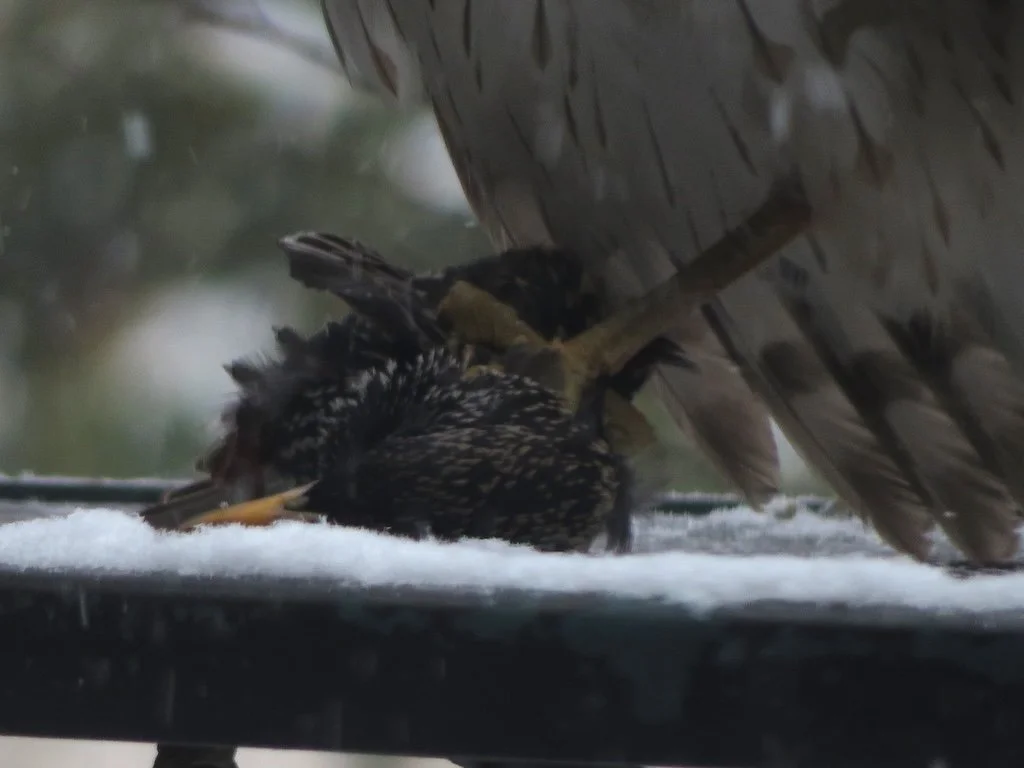
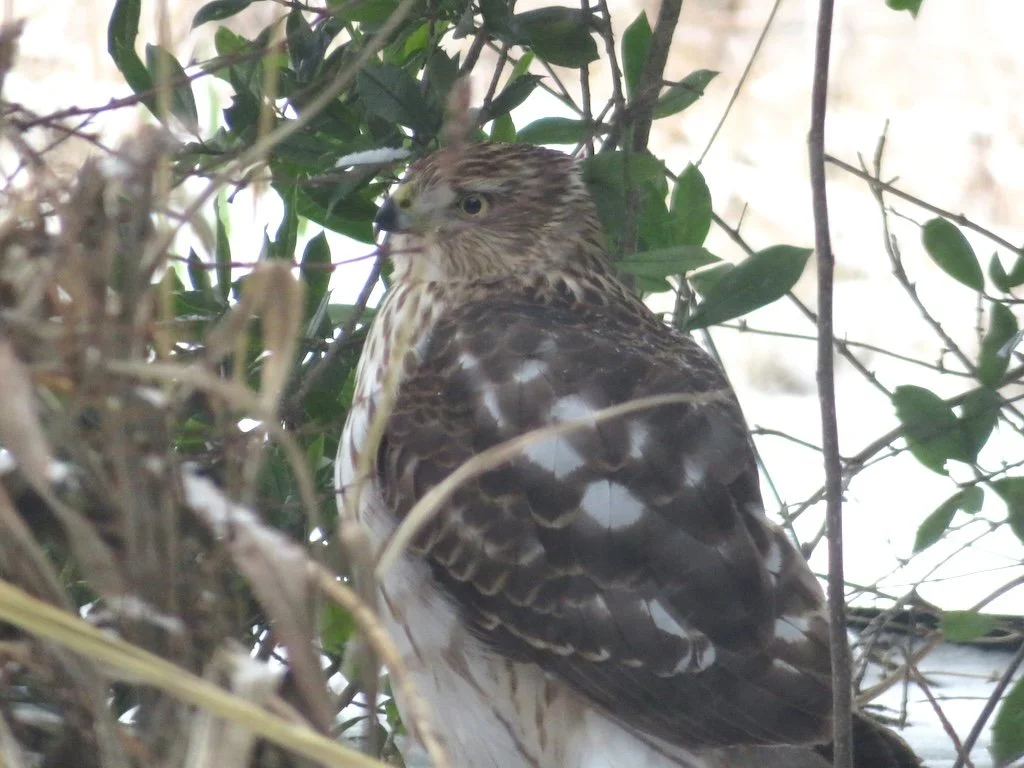
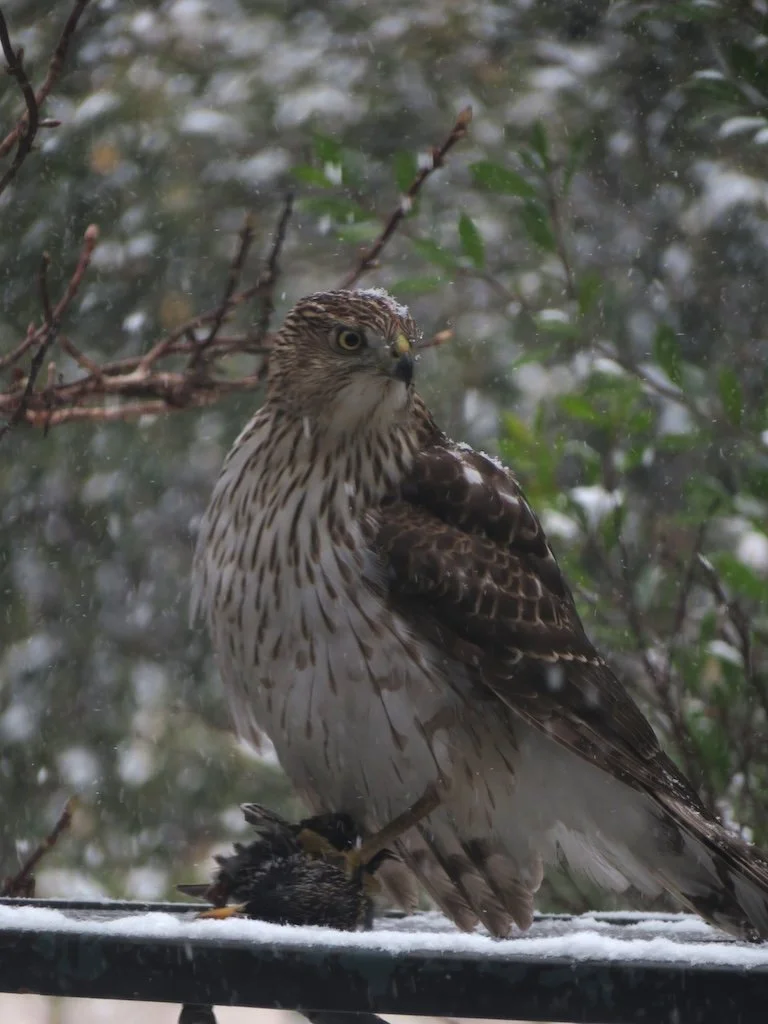
A Cooper’s Hawk caught a European Starling during our recent big snow. When I first saw it, the capture/kill had already happened, and the Cooper’s Hawk was standing over its prey on our patio table very near our feeders. It was easy to see that the prey was a starling.

The hawk carried its prey to the ground behind a clump of grass and almost directly below one of our feeders. It began to pluck the feathers. There was enough breeze that the feathers quickly blew away over the snow. As the hawk started the meal, the other birds began to return to the feeders – secure in the knowledge that the hawk was fully occupied.
The carcass was mostly behind the clump of grass but it was still disconcerting to watch the movements of the hawk with all the other little birds flitting around on the feeders and not that far away on the ground. Knowing that it is part of the ‘circle of life’ did not translate into wanting to watch it all the way through; my husband and I returned to our other afternoon activities within a few minutes.
Snow Days

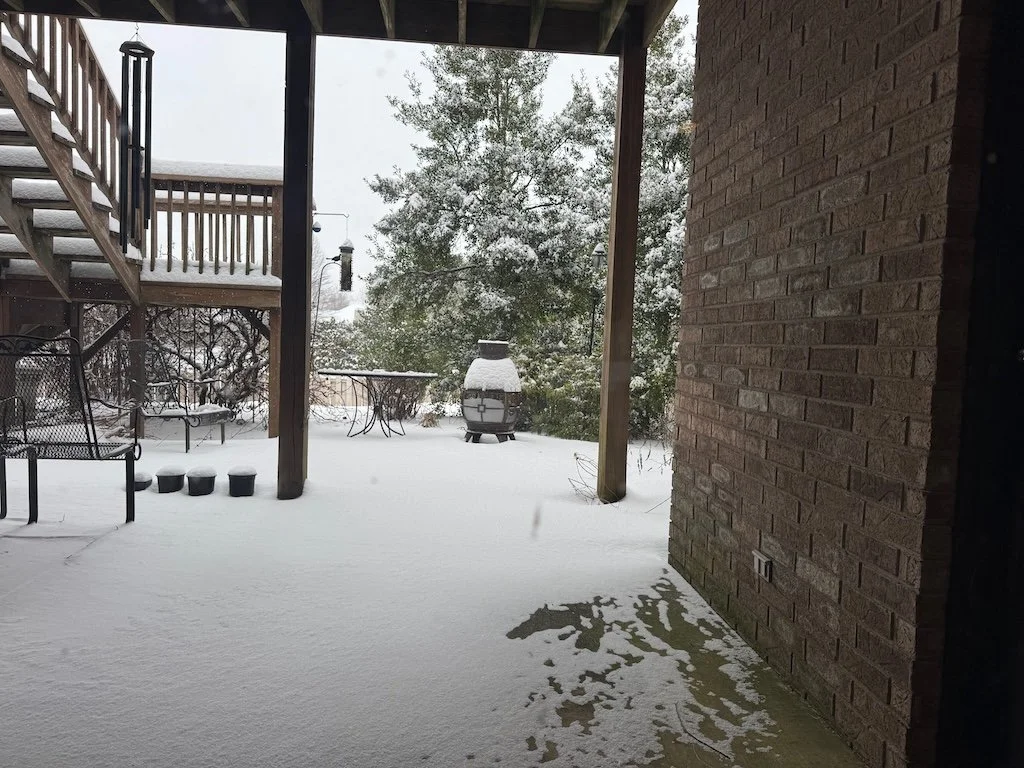
We had some snowy and cold weather last week. I filled our bird feeders before the bad weather arrived, but the feeders were getting low by the time we did our 2-day Feeder Watch.

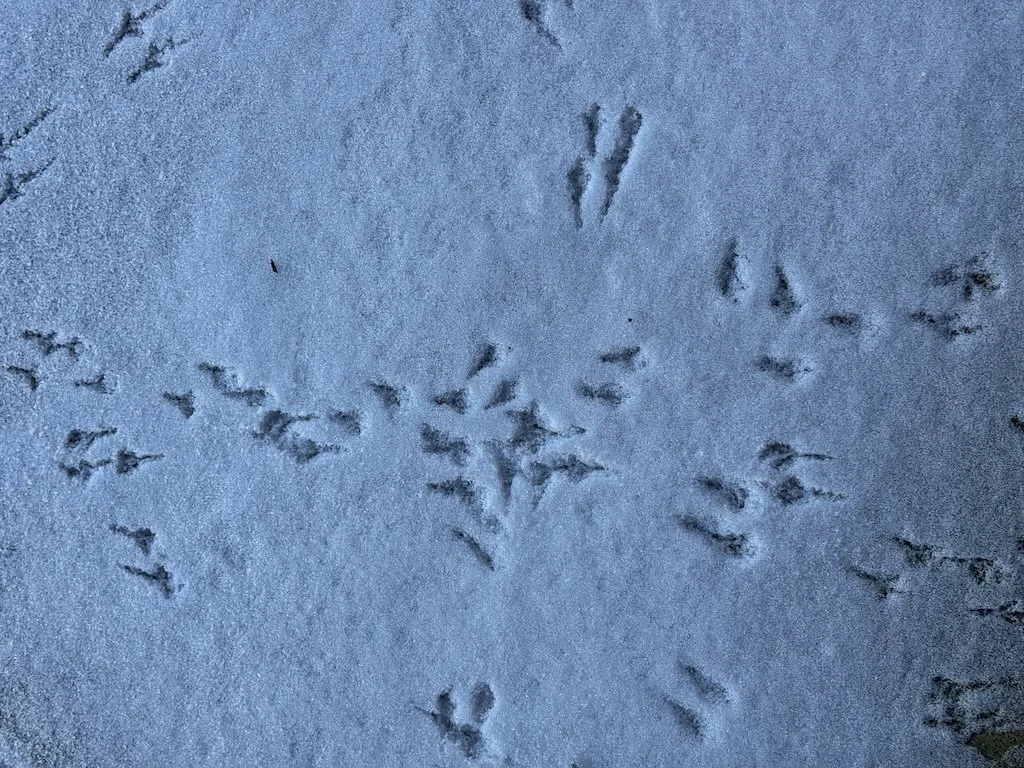
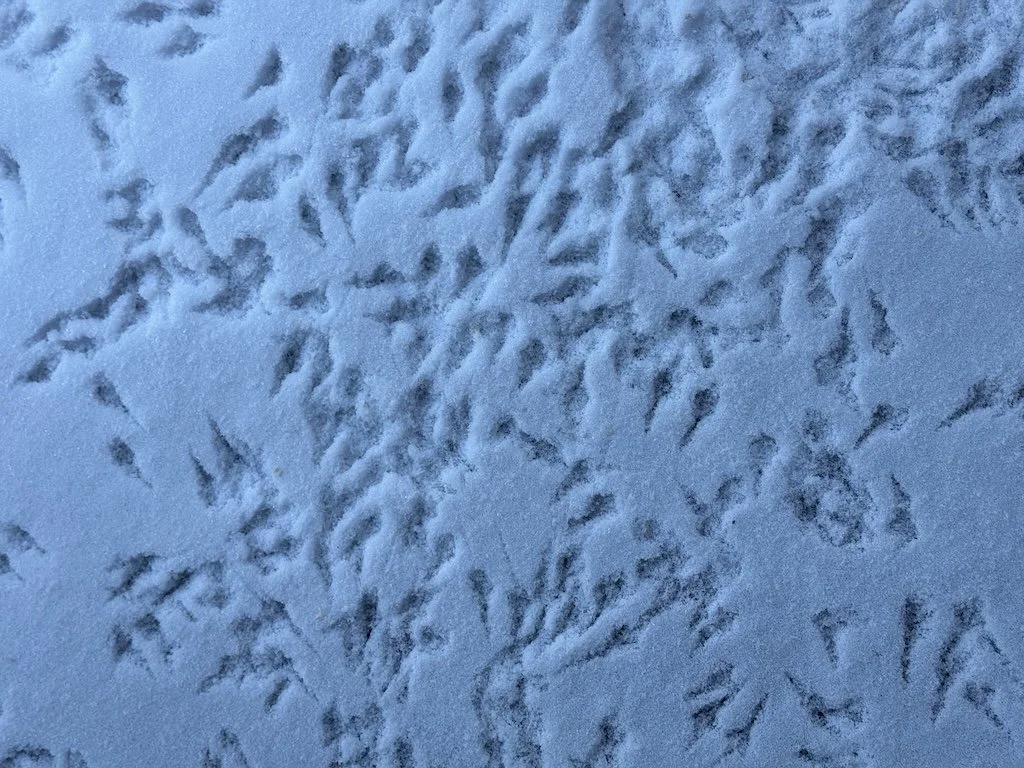
I put some seed out on trays set on the ground for the second day to supplement the waning food supply in the feeders. The temperature was in the single digits and teens! Once the birds discovered the seed on the ground, there were a lot of bird tracks around the trays; there were no tracks for the two snow days before I put the seed out on the trays!

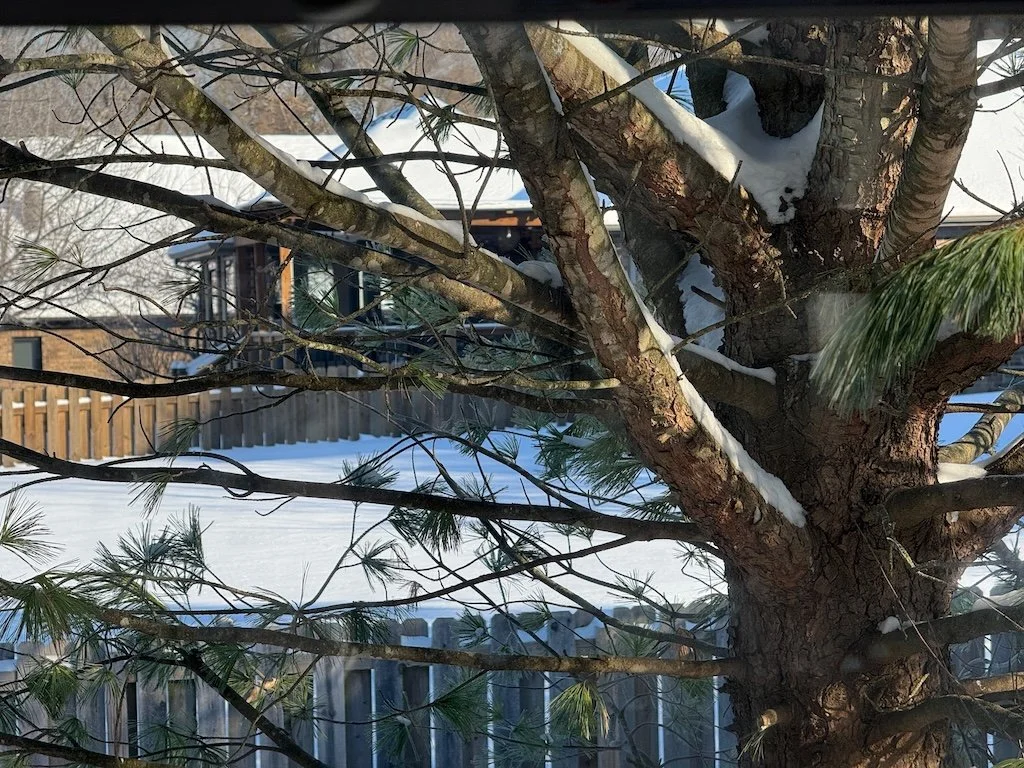
The view of the pine from my office window became less snowy after the snow stopped mid-way through the second day, since the wind quickly blew the snow from the pine needles; the snow caught in the holly leaves stayed longer.

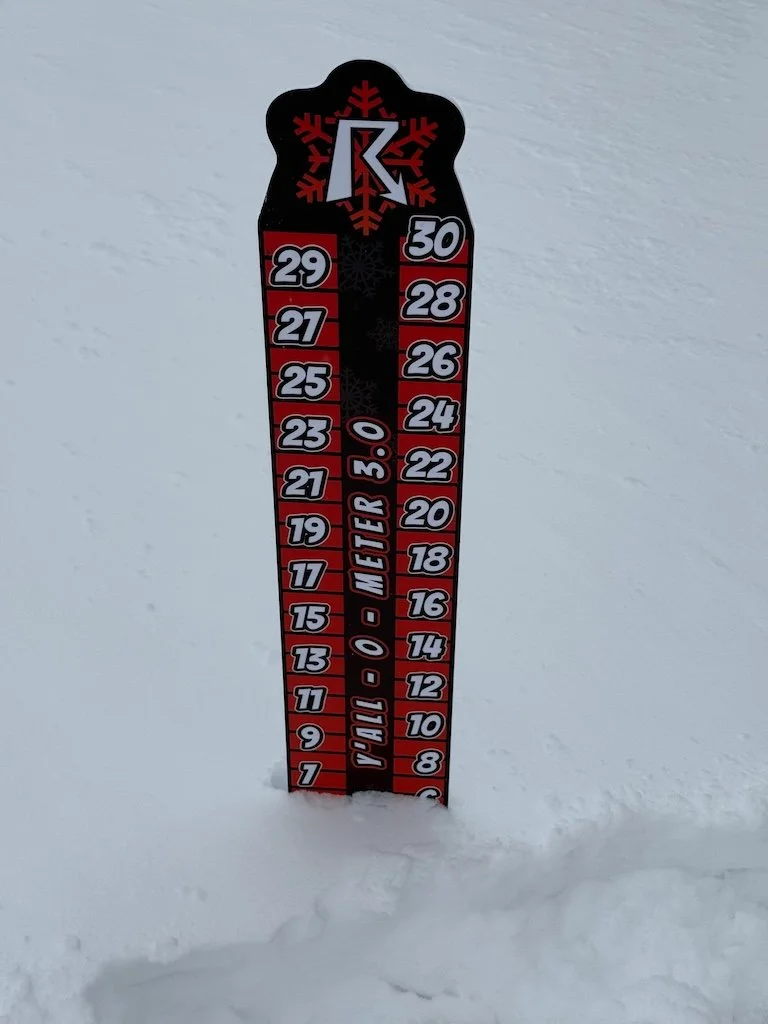
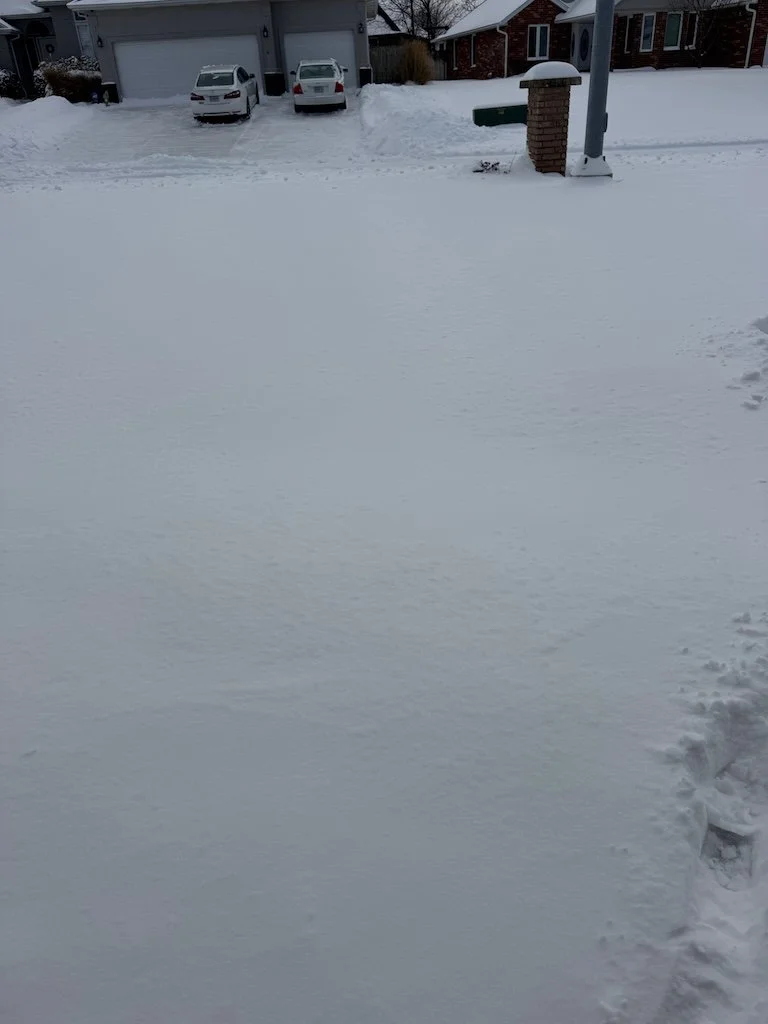
We got about 6 inches at our house (although there might have been some areas that were deeper because the snow blew around a bit). Our neighbor across the street was the first in the neighborhood to shovel their driveway.

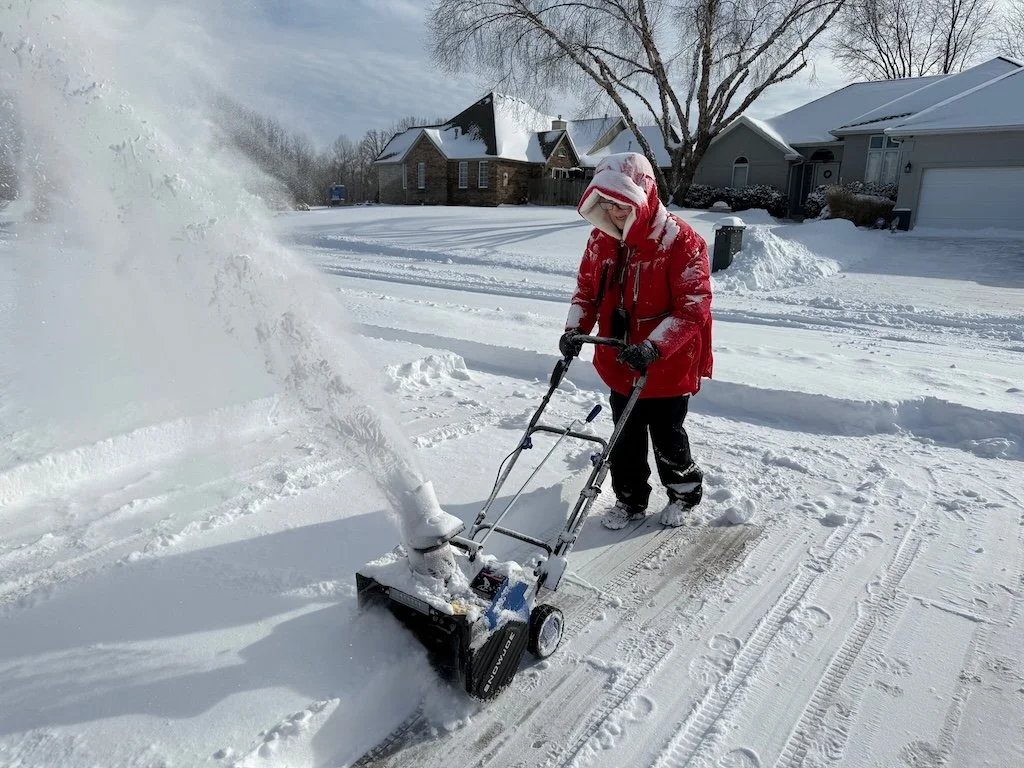
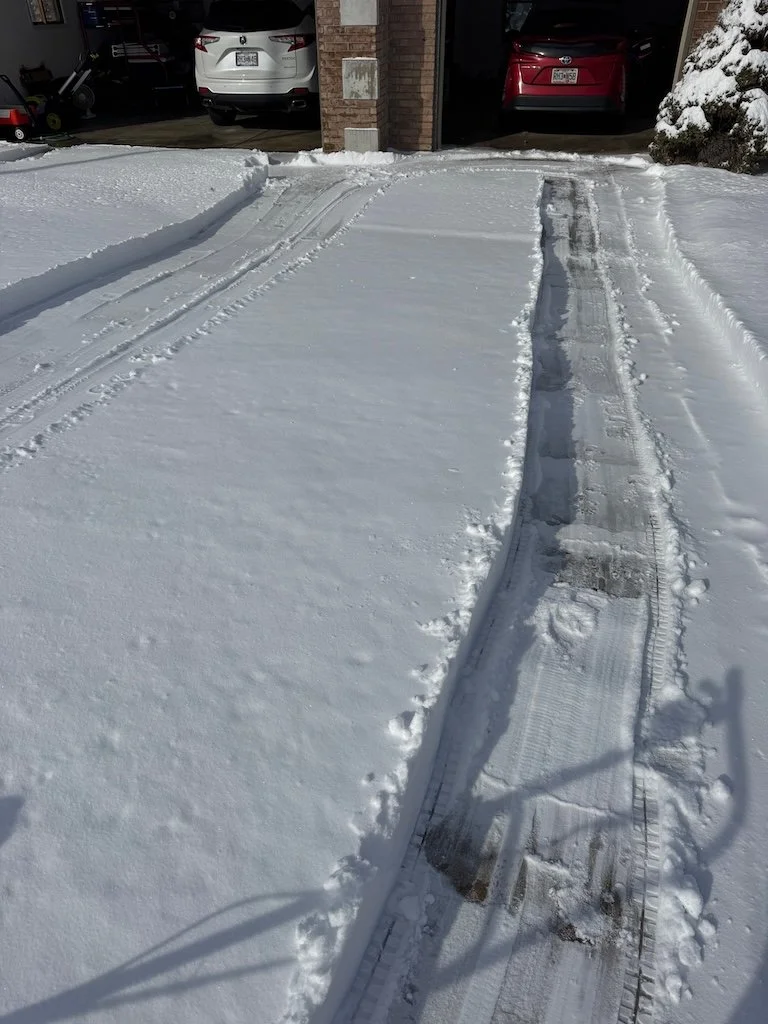
I used my snow blower for the first time; I bought it toward the end of last season after appreciating my neighbor clearing my driveway with his snow blower; my back tends to hurt immediately when shoveling snow. It was a learning experience with the blower. The breeze caused snow to blow onto me, the batteries did not last long enough to clear the whole driveway, and the big pile at the end of the driveway created by the snowplow was problematic. On the plus side – my back did not bother me at all!

I was at home for 4 days. Meetings that were on my calendar for those days were rescheduled or moved to zoom. My husband got out on the 4th morning for a dental appointment, but his car has higher clearance than mine. I got out on the 5th day to buy groceries!

Plastics Crisis – Action at the Community Level – January 2026

The weekly Plastics Crisis posts are dominated by what I am doing as an individual to reduce my plastics exposure – but I am also acting at a community level as well; my plan is to post at least once a month to document those actions. Looking back at January, there was a bigger variety than I anticipated at the beginning of the month.

Beyond Plastics Ozarks is ramping up! We added a few additional members, and I hosted my first zoom meeting for the group. I experimented with annotating the Zoom generated summary rather than writing up my own notes; it seems to work reasonably well but I will still take plenty of notes during the meeting!

I was part of a meeting with a Springfield Councilmember organized by the Show-me less plastic project.

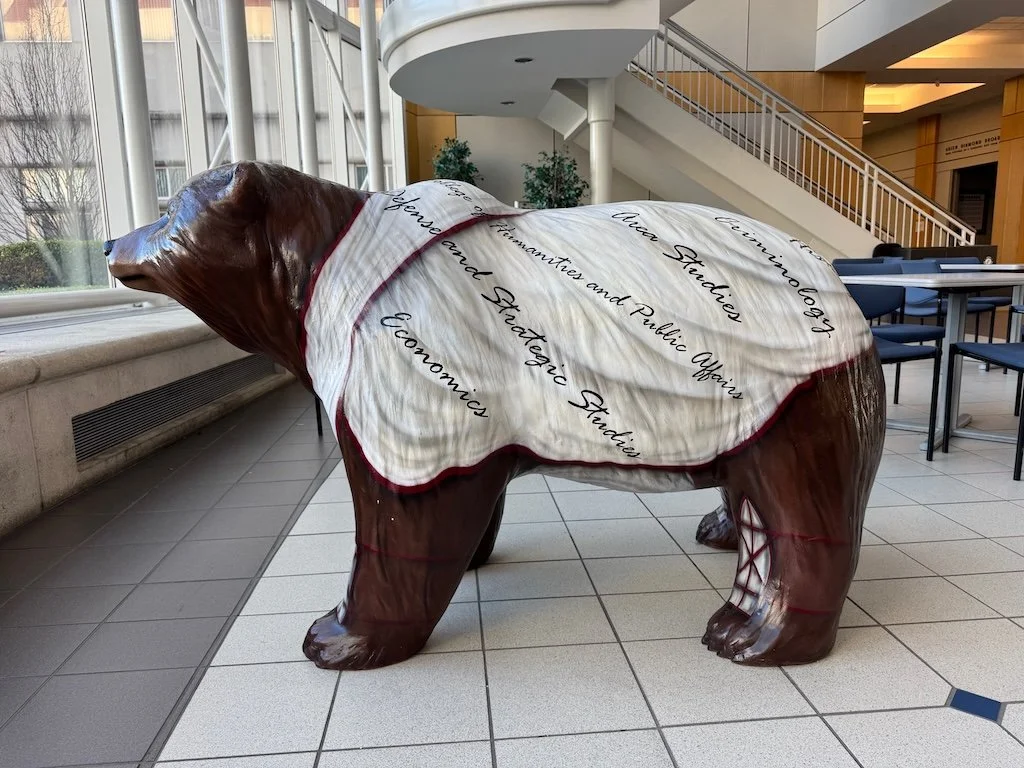
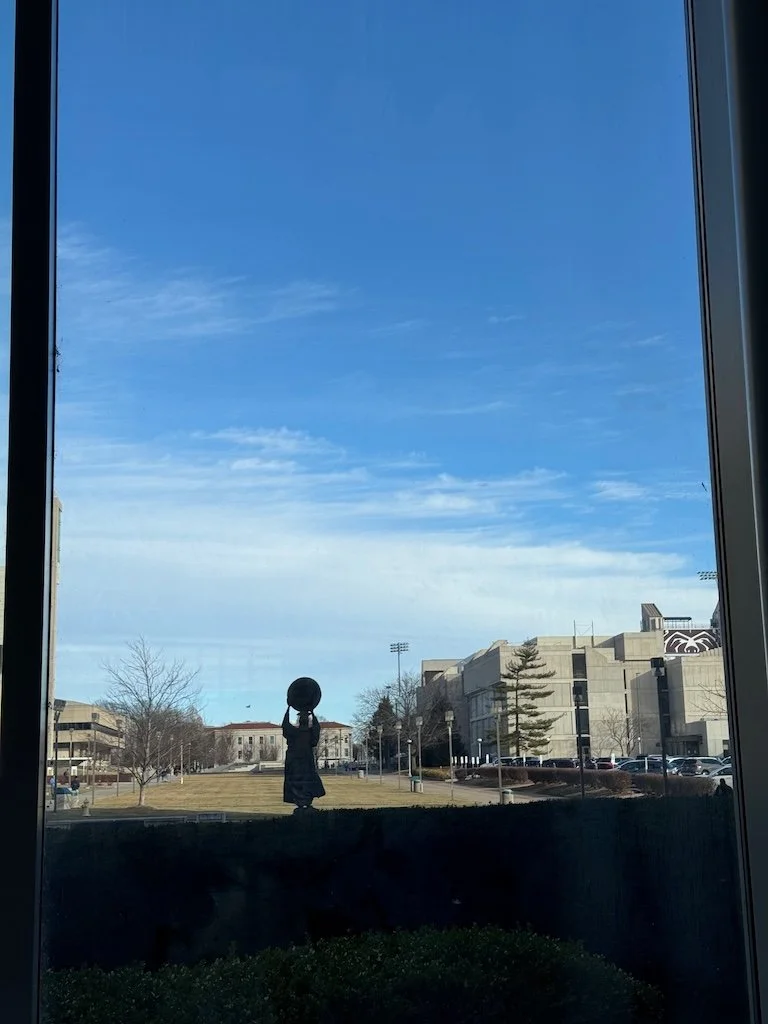
I  recorded a segment of the KSMU Growing the Ozarks podcast about Microplastics in the Environment. It was an adventure for me – going to the recording studio on the Missouri State University campus (taking some pictures as I waited in the foyer) and getting the recording acceptable on the first try thanks to my experienced interviewer.

During my travel to Lewisville TX, I noticed a lot of plastic at the hotel’s breakfast service…and used the survey from the hotel afterward to indicate my concern about Styrofoam plates and plastic utensils with hot food. I had stayed at the same brand/chain in St. Joseph MO and they had used ceramic plates and stainless utensils. The General Manager of the hotel responded: “We truly appreciate your suggestions about reducing single-use plastics and will share them with our leadership team for consideration.” I stay at the same hotel every month when I visit my dad so I will know if they make changes.
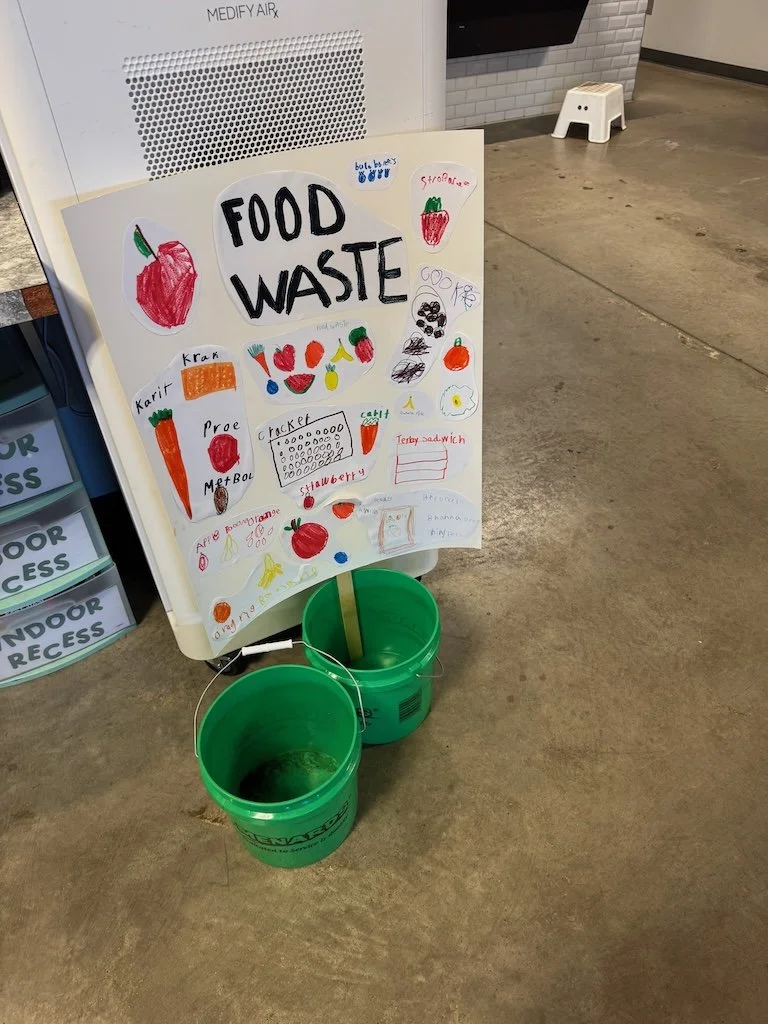
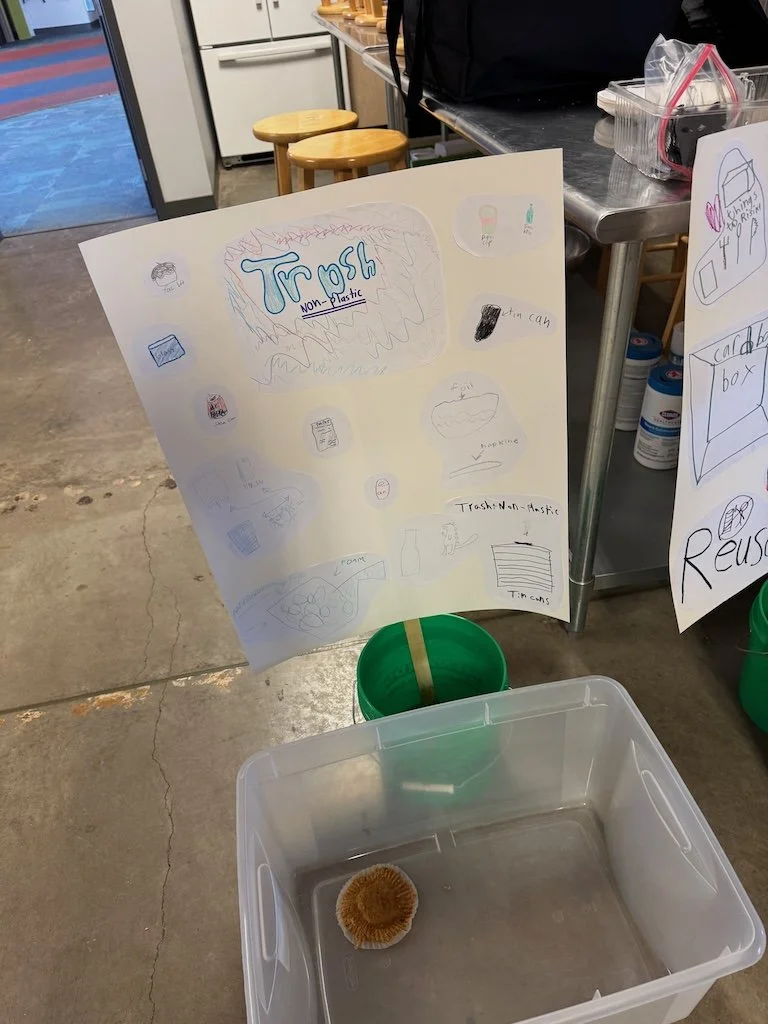
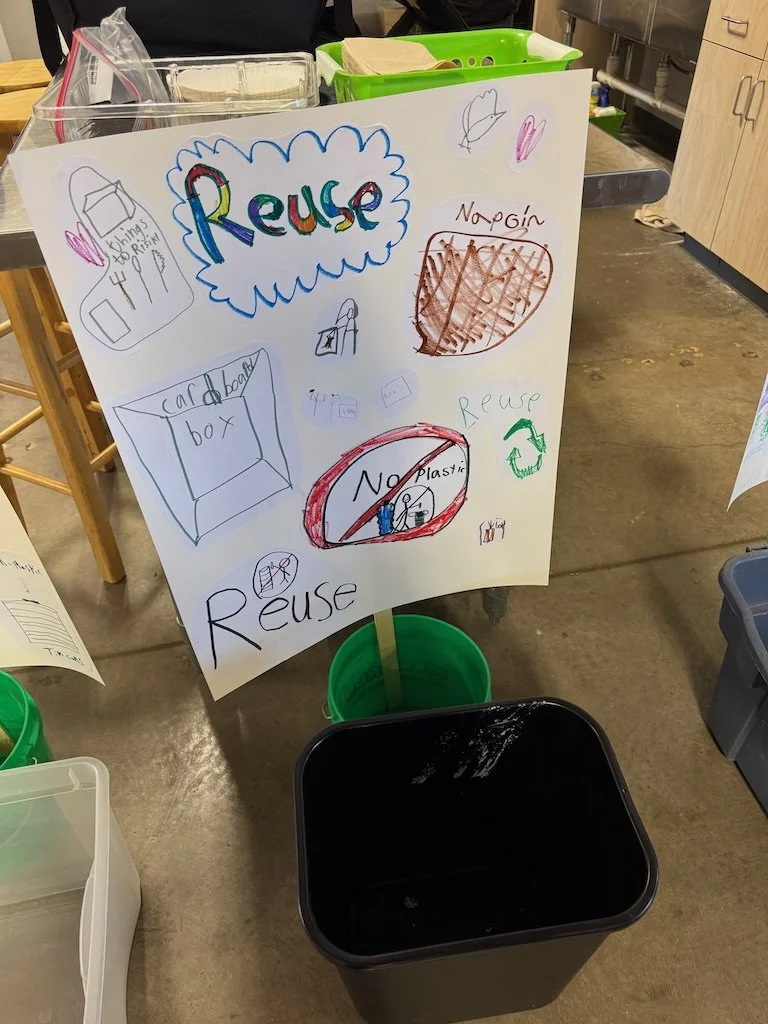
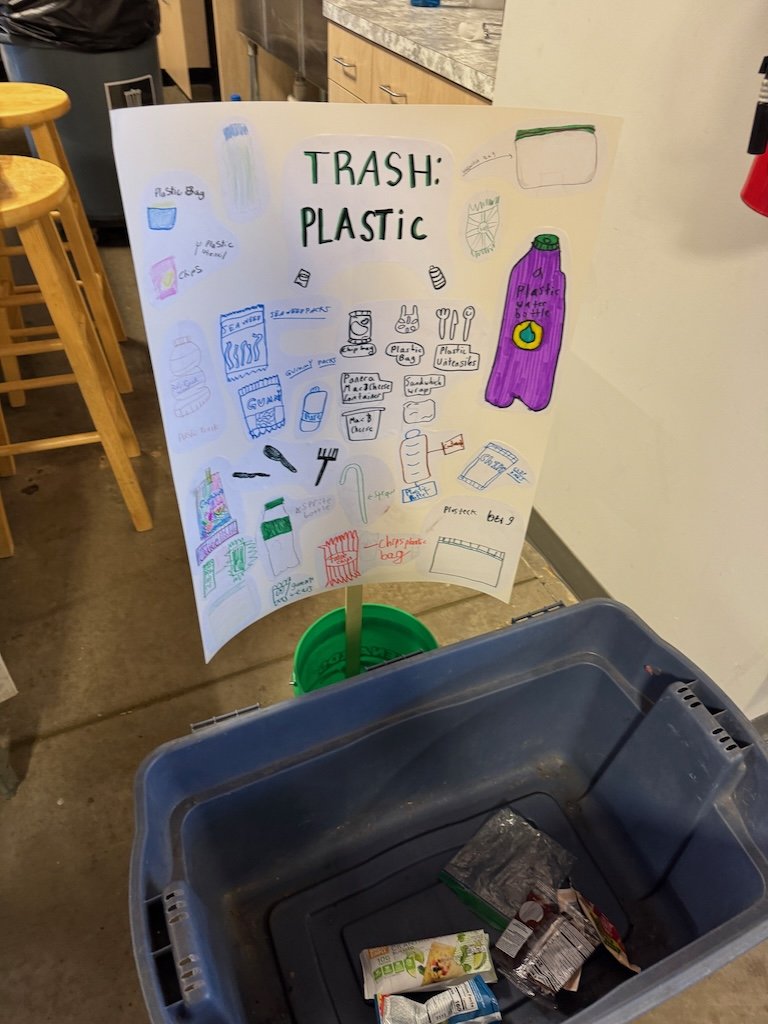
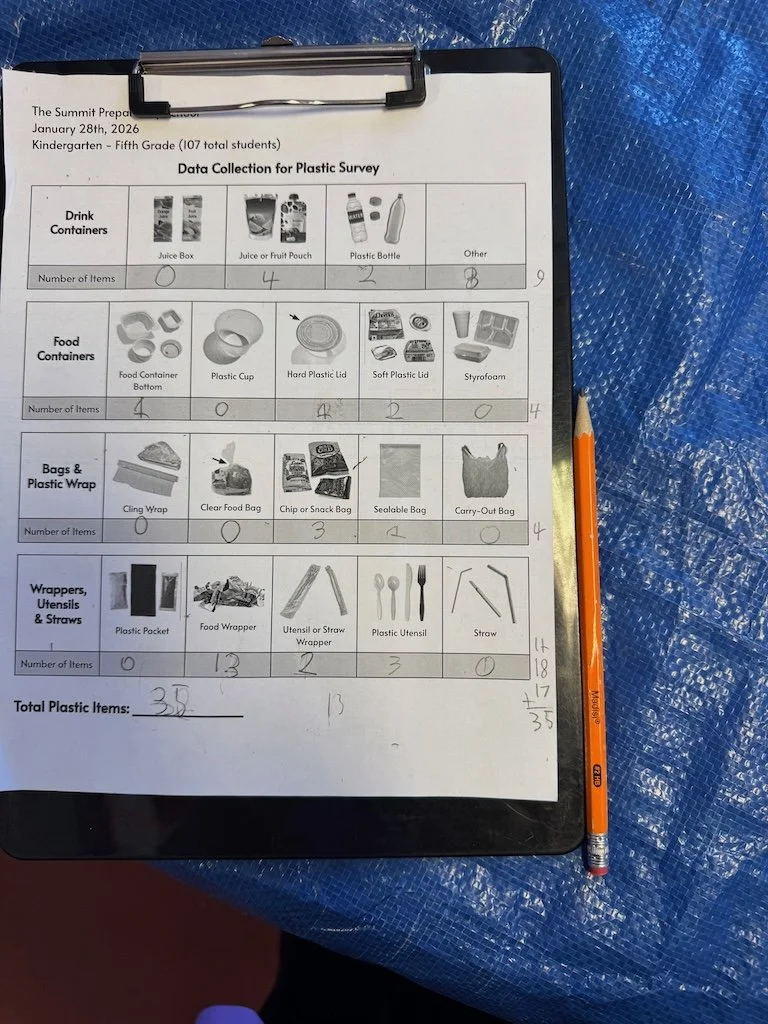
I helped with a lunch trash audit at a private school in Springfield organized by the Show-me less plastic project. The teacher was a fellow Missouri Master Naturalist and had done a great job preparing for the event – having the elementary students make posters for the initial sorting: food waste, non-plastic trash, reuse, and plastic trash. After their lunch the students put their trash in the correct bin.

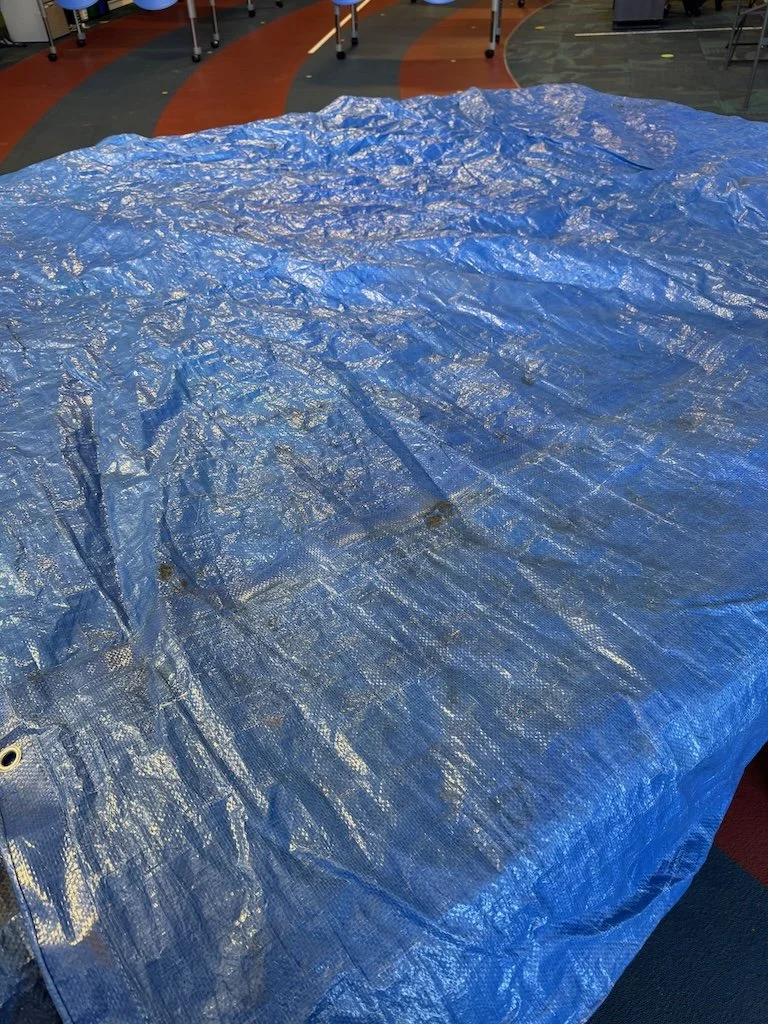
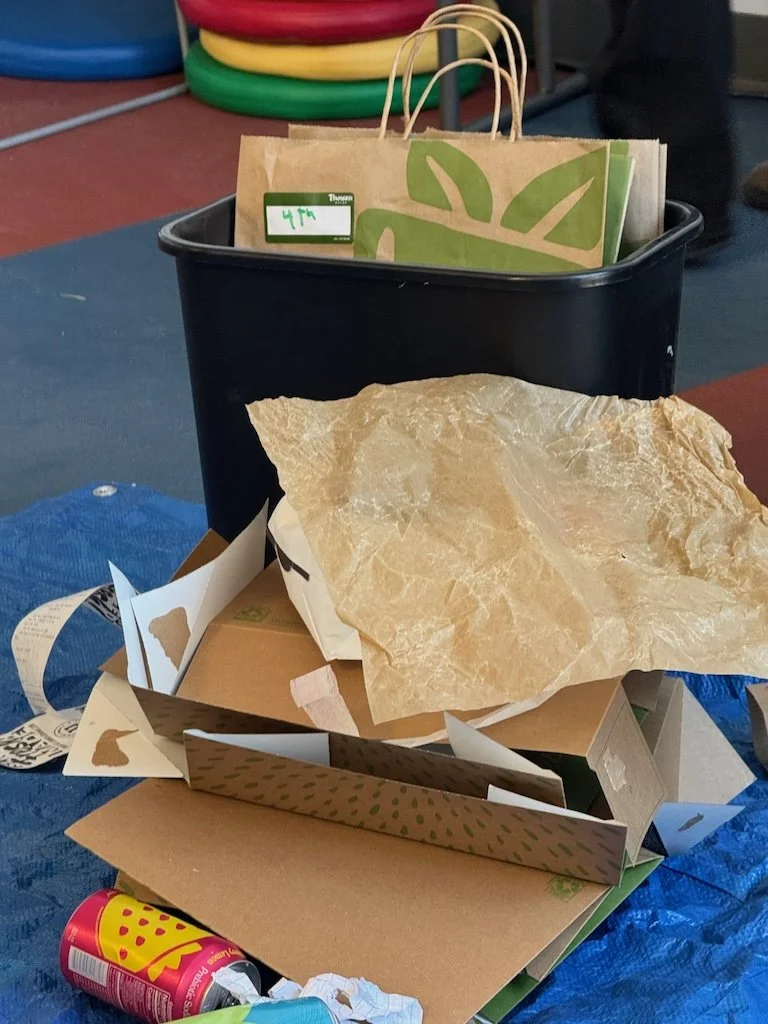
We (the adults) moved to a classroom with tarps over tables and on the floor which would be used for sorting by students over 3 class periods. The third and fourth graders divided into 4 groups and used the tarp covered table for the non-plastic  and plastic trash respectively while the second graders used the floor tarp to sort reuse/recycle.

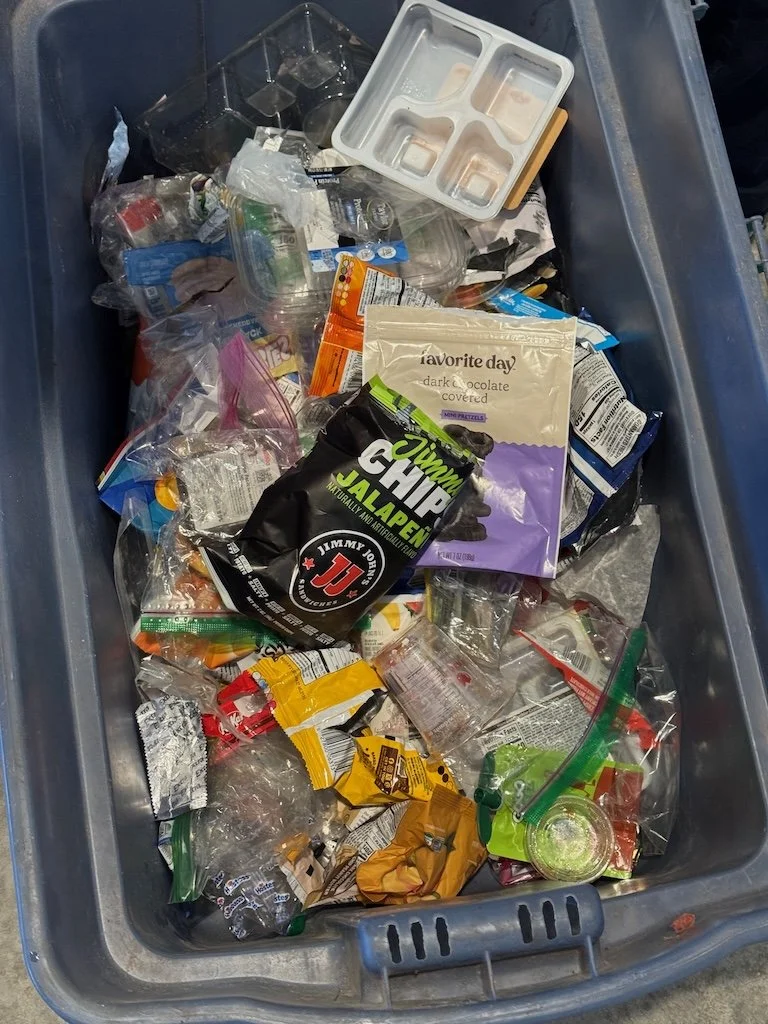
The sorting of the plastic trash was the most thorough – with a worksheet for each group to categorize pieces of trash as they counted. Some of it was quite small!  

The next action the school is considering is to do a plastic free lunch!

In looking back at January, I am wondering if there will be as much every month or whether January unusual. This type of volunteering has components that are new to me; my strategy is to let it develop rather than try too hard to determine its direction!

Gleanings of the Week Ending January 31, 2026

The items below were ‘the cream’ of the articles and websites I found this past week. Click on the light green text to look at the article.

12/5/2025 The Scientist The Ice is Alive: Uncovering the Vanishing World of Glacial Microbes - The ice teems with an invisible and thriving biosphere, lush with bacteria, fungi, and viruses. Scientists have estimated that the glaciers and ice sheets around the globe could contain as many as 1029 cells. The most dynamic … is the surface, where windblown dust mixes with microorganisms to form a dark, granular sediment known as cryoconite. Because this aggregate is darker than the surrounding white ice, it absorbs more solar radiation, melting the ice beneath it. This melting creates water-filled depressions called cryoconite holes that pockmark vast areas of the ice sheet. Cryoconite holes are far from simple puddles; they are oases of life in a polar desert.

2023 NASA History Office NACA to NASA to Now – A book about the history of NASA available free online from the NASA website.

1/14/2026 The Conversation Native pollinators need more support than honeybees in Australia – here’s why - Since the 1990s, the global decline of pollinators due to human activities, climate change and diseases has been a serious concern, especially in Europe and North America. The honeybee is so good at invading and proliferating in Australian landscapes, we now have some of the highest reported densities of feral honeybees in the world. Despite the global pollinator decline, honeybees haven’t disappeared anywhere in the world, even in countries with far fewer resources than Australia. Nor has any plant species gone extinct from a lack of honeybees. In contrast, there is overseas evidence of plant population declines due to the presence of honeybees and lack of native pollinators.

1/13/2026 Yale Environment 360 Photos Capture the Breathtaking Scale of China’s Wind and Solar Buildout - Last year China installed more than half of all wind and solar added globally. In May alone, it added enough renewable energy to power Poland, installing solar panels at a rate of roughly 100 every second.

1/12/2026 Compound Interest What are rubber ducks made from? - Scientists discovered polyvinyl chloride, or PVC for short, accidentally in the 1800s on more than one occasion. A hard and brittle plastic, PVC had little commercial use until it was mixed with softening plasticizers to make a much more moldable material. The modern rubber duck is not made from rubber, but from plasticized PVC colored with a bright yellow pigment.

1/13/2026 Clean Technica EPA Cooks the Books on Industrial Pollution Costs – They (EPA) will henceforth consider only the economic cost of the regulations to corporations, and if they are deemed to be too burdensome, those regulations will be softened in order to avoid undue economic harm to the polluters. This includes fine particulates (2.5 microns or less) that include microplastics and fossil fuel combustion products….contributing to many negative health outcomes.

1/13/2026 UPI U.S. greenhouse gas emissions growing faster than economy - For the first time in three years annual U.S. greenhouse gas emissions increased, climbing by 2.4% in 2025 as federal policy shifted back to fossil fuels. For the first time in three years annual U.S. greenhouse gas emissions increased, climbing by 2.4% in 2025 as federal policy shifted back to fossil fuels.

1/11/2026 Science Daily A room full of flu patients and no one got sick - n a striking real-world experiment, flu patients spent days indoors with healthy volunteers, but the virus never spread. Researchers found that limited coughing and well-mixed indoor air kept virus levels low, even with close contact. Age may have helped too, since middle-aged adults are less likely to catch the flu than younger people. The results highlight ventilation, air movement, and masks as key defenses against infection.

1/15/2026 BBC Rare images of Europe's 'ghost cat' - After several decades, this mysterious little beast is returning to our forests.

1/14/2026 NASA Earth Observatory Fires on the Rise in the Far North - In the far north, wildfires are breaking old patterns. Satellite data show that wildland fires once scattered across the Arctic are now surging in numbers—particularly in northern Eurasia—and many are burning more intensely than before. n the 2000s, fires north of 60 degrees latitude appeared across both North America and Eurasia, but starting in the early 2010s, their numbers skyrocketed, most dramatically in Eurasia. Even the icy island of Greenland entered a new fire regime during this period, experiencing more large fires, though still too few to be visible on these maps. Researchers attribute these trends to rising temperatures, which have made northern landscapes more flammable, along with a poleward expansion of lightning—the primary ignition source for these fires.

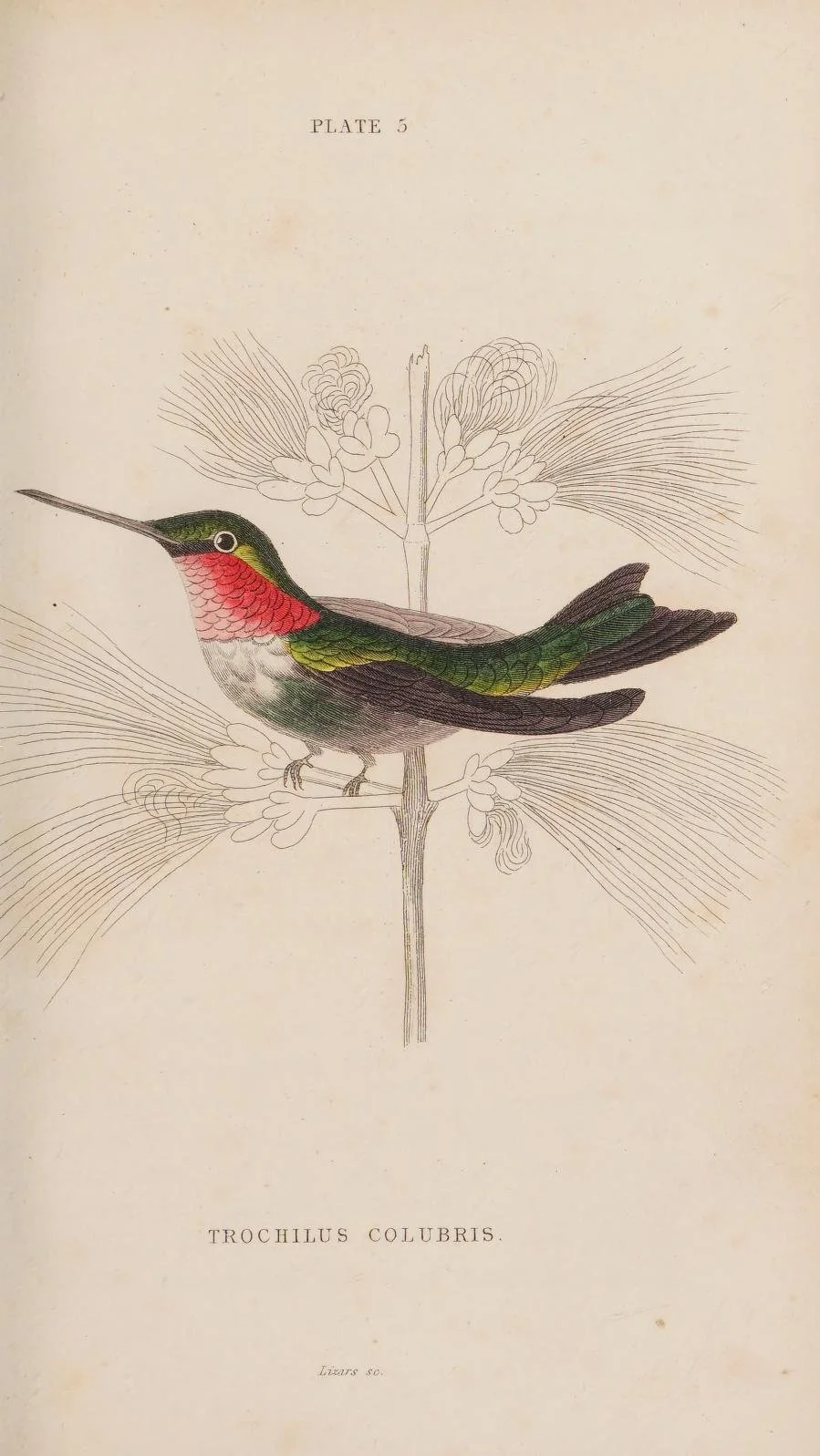
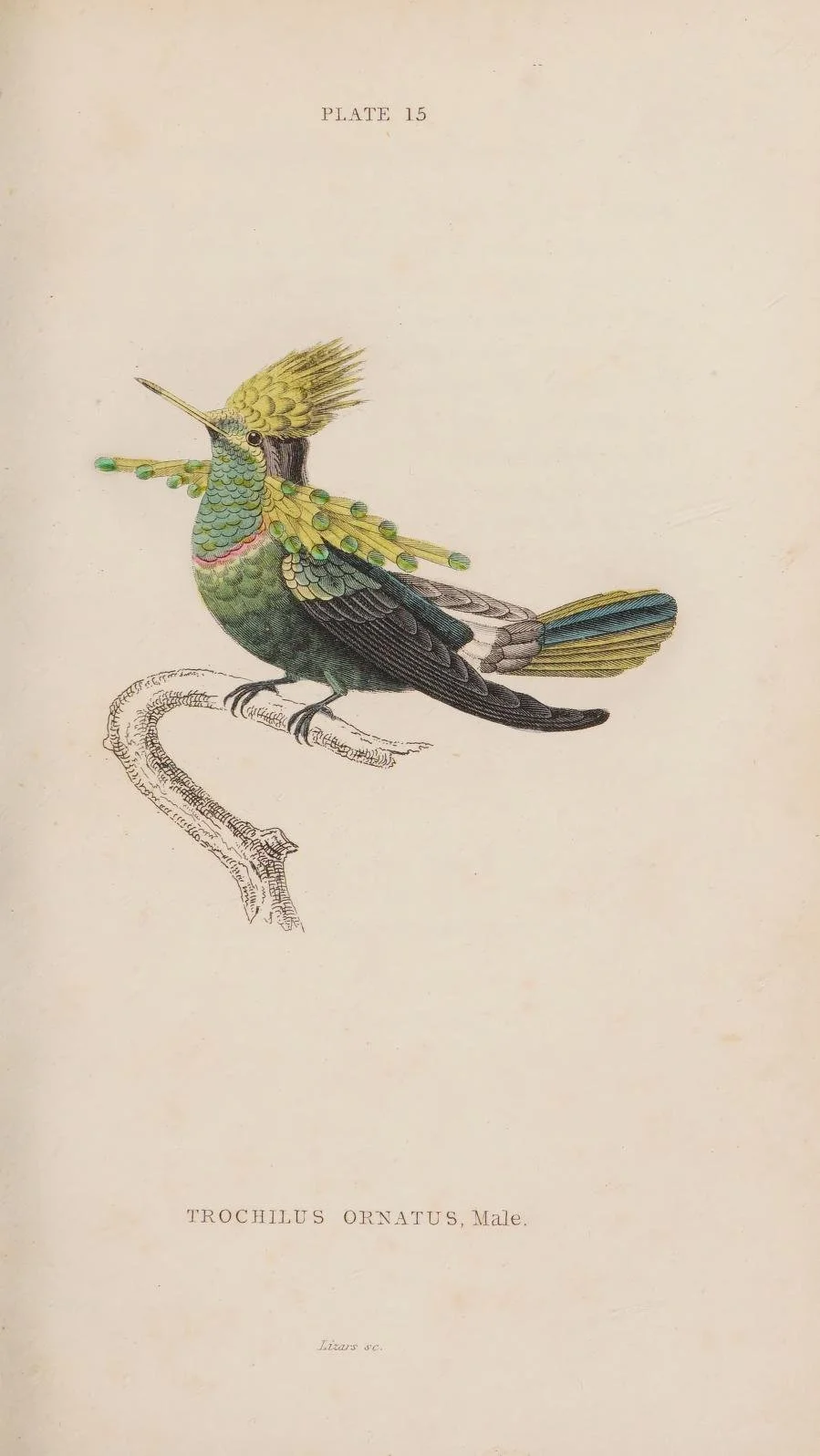
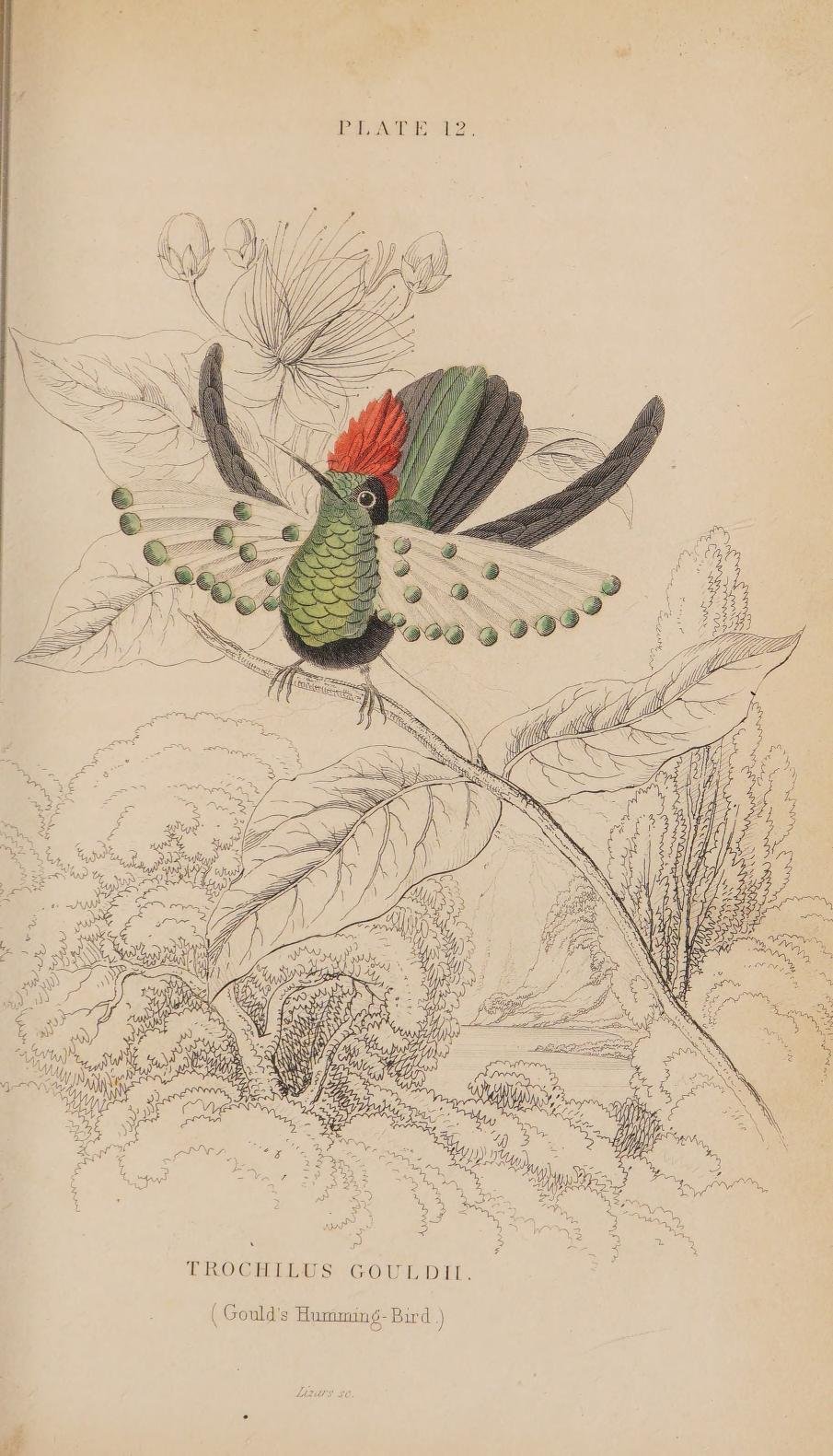
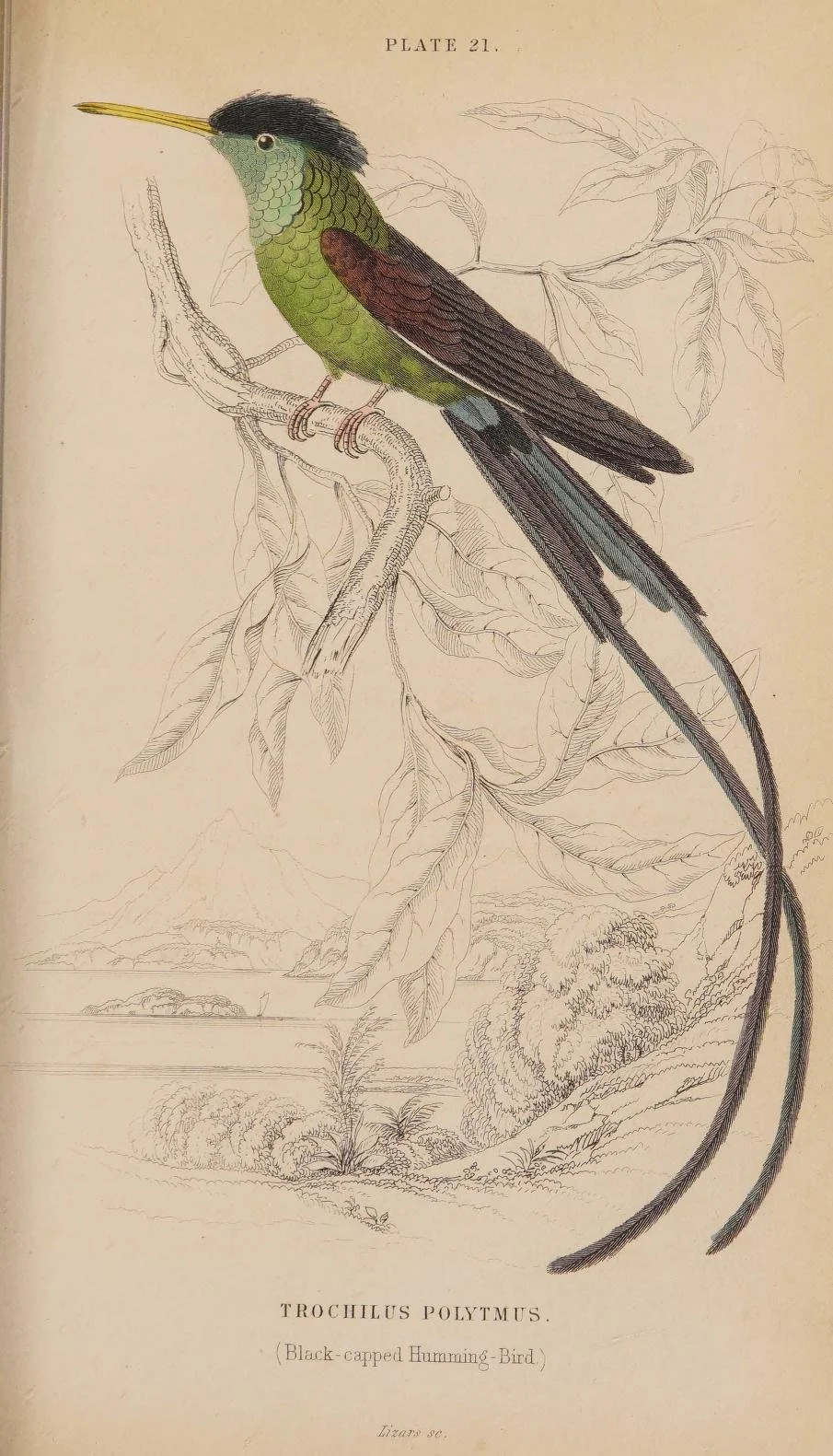
Jardine’s Hummingbirds

Sir William Jardine was a Scottish naturalist in the 1800s. He edited a series of natural history books; two of them (about hummingbirds) are the pick for this week’s eBooks. They were published in 1833 and 1836 respectively and are available from Internet Archive. I picked two images from each volume…many more are available in these volumes.

 The natural history of humming birds V1

The natural history of humming birds V2

Zooming - January 2026

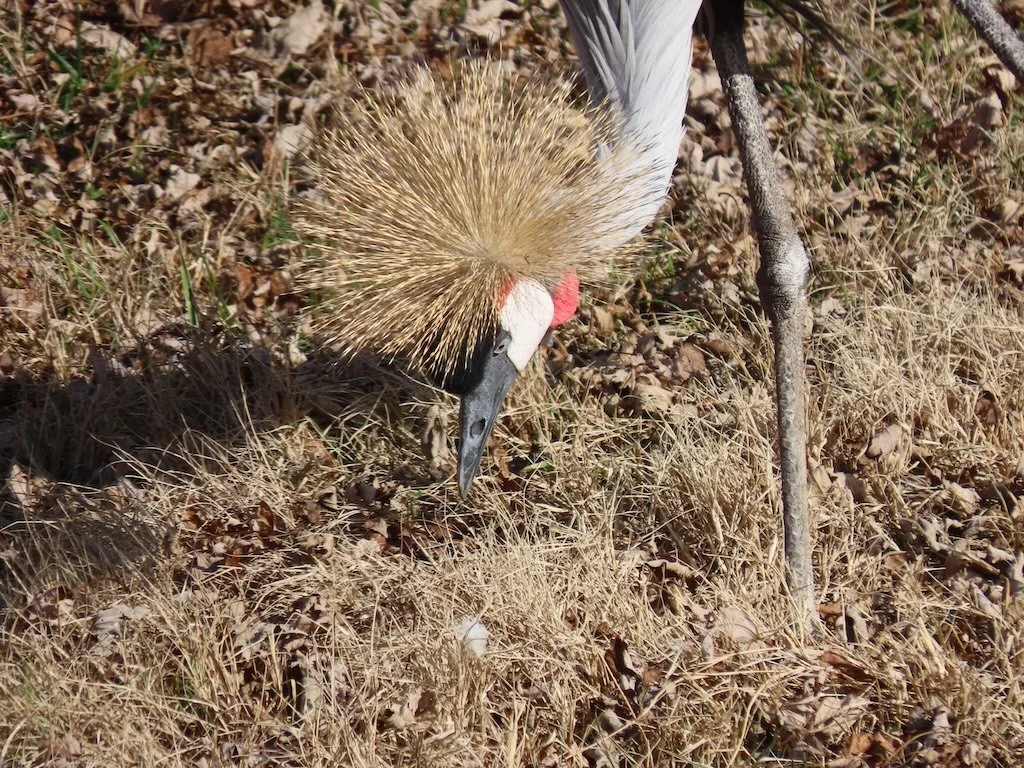
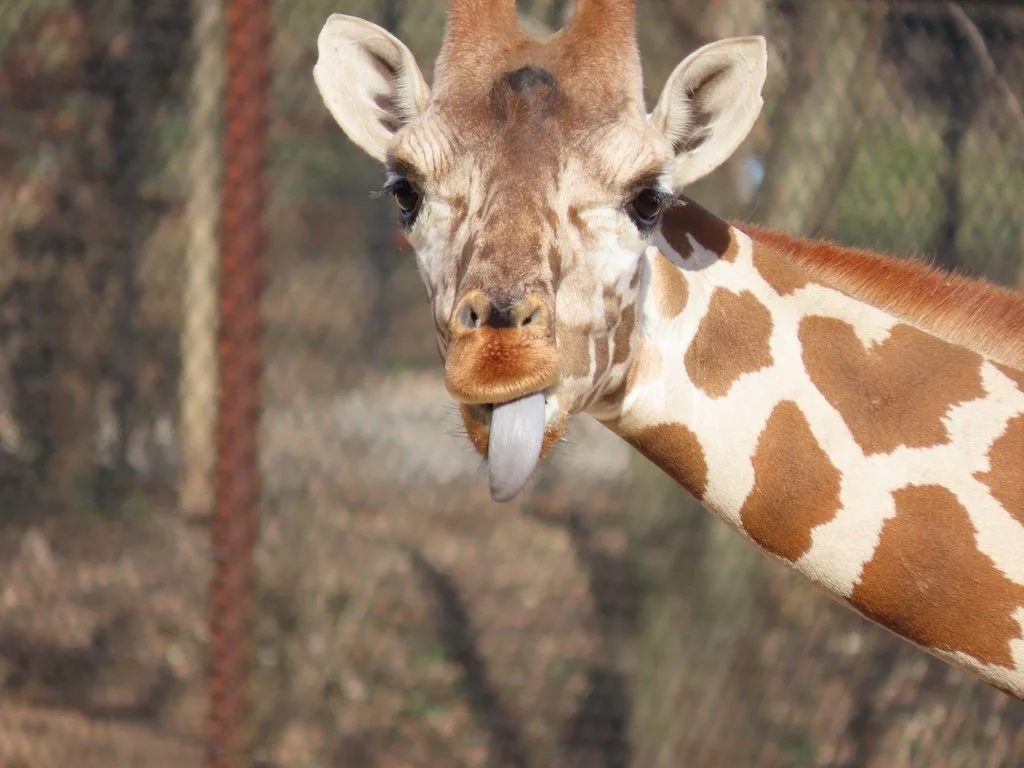
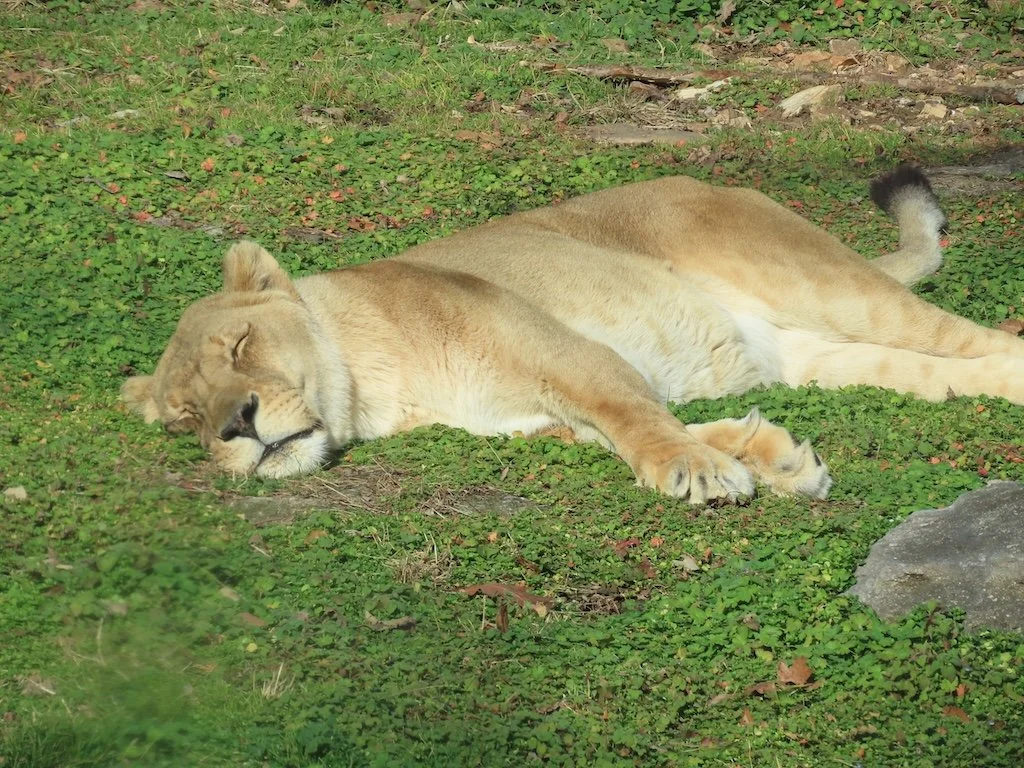
The zoomed imaging from this month were taking in my daughter’s yard in Springfield MO, my yard in Nixa MO, Loess Bluffs National Wildlife Refuge, the Dickerson Park Zoo in Springfield MO, the Lake Springfield Boathouse and the Texas Welcome Center on US 75. It was not a big photography month. I expect February will have more if the weather does not cause cancellations of winter hikes I have planned.

Plastics Crisis – Travel and Plastics

I thought about plastics as I made my monthly drive from Missouri down to Lewisville TX and back. It might have been the noticeable plastic trash along the road – perhaps there was more of it because of recent winds.

The other reason I was thinking about it more was the breakfast set up. The same hotel chain we had stayed in when we went to St. Joseph MO late last month had used ceramic plates and stainless utensils – so it felt like a step backwards to have foam plates and plasticware. Both places had Keurig coffee makers in the room and plastic single used glasses. When I got the request for feedback to the hotel – I filled in several responses about the plastic in their hotel and pointed out that the bottle of water ‘gift’ is not as appreciated any more.

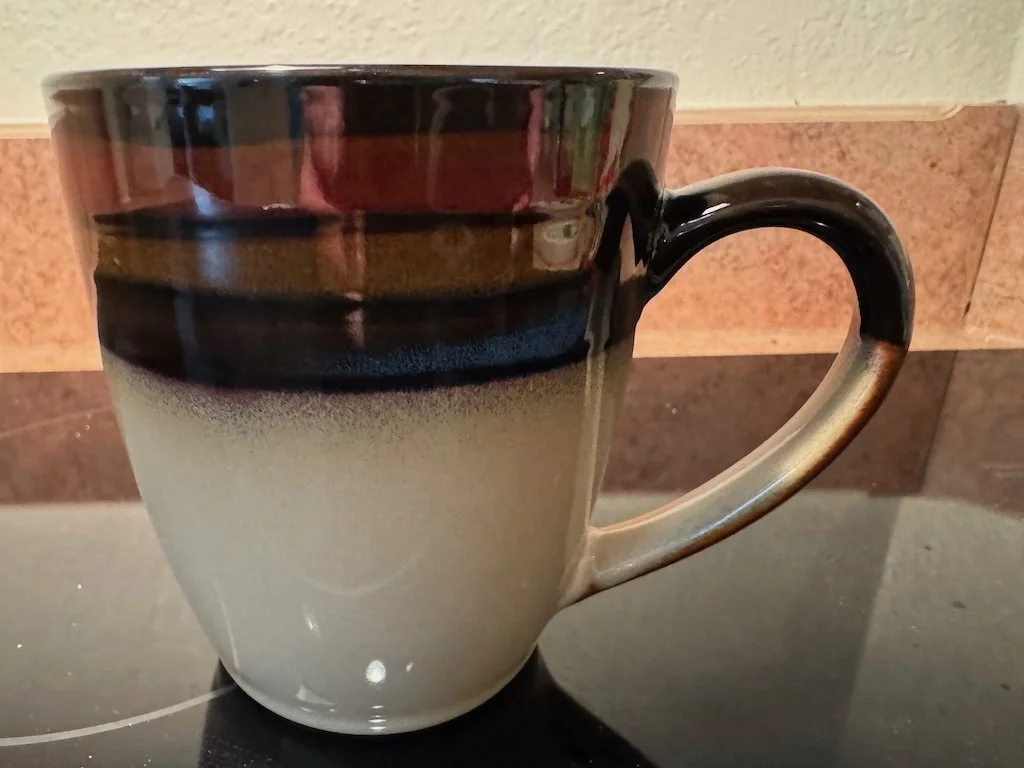
I have started carrying a ceramic mug in my suitcase…to make tea – avoid the Keurig completely and the cups they provide. I also carry a small water filtration pitcher to replenish my reusable water bottle and to make tea.

My eyes were itchy the whole time I was in Lewisville; when I checked, the air quality was yellow…and the hotel HVAC filter did not seem to help. The dominate pollutant type causing the ‘yellow’ level was PM2.5 which includes microplastics and products of fossil fuel combustion. I am considering whether I should travel with an air purifier like I did on road trips after COVID – when vaccines were still quite new.

The drive home was very windy with a front coming through (bringing ice and snow for the weekend) and there were several places where plastics were blowing in the wind. Not long after I got to I44 and was less than 2 hours from home, there was grass fire along the shoulder that seemed to go for at least ¼ mile…and the smoke was blowing across the road.  Another hit to air quality!

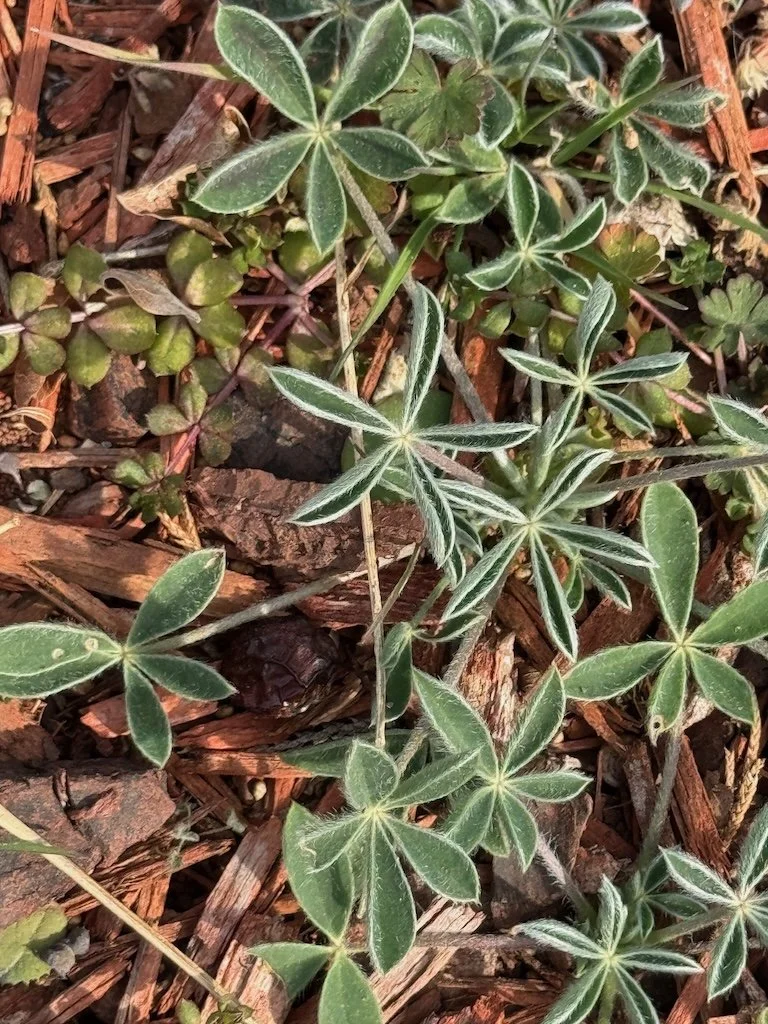
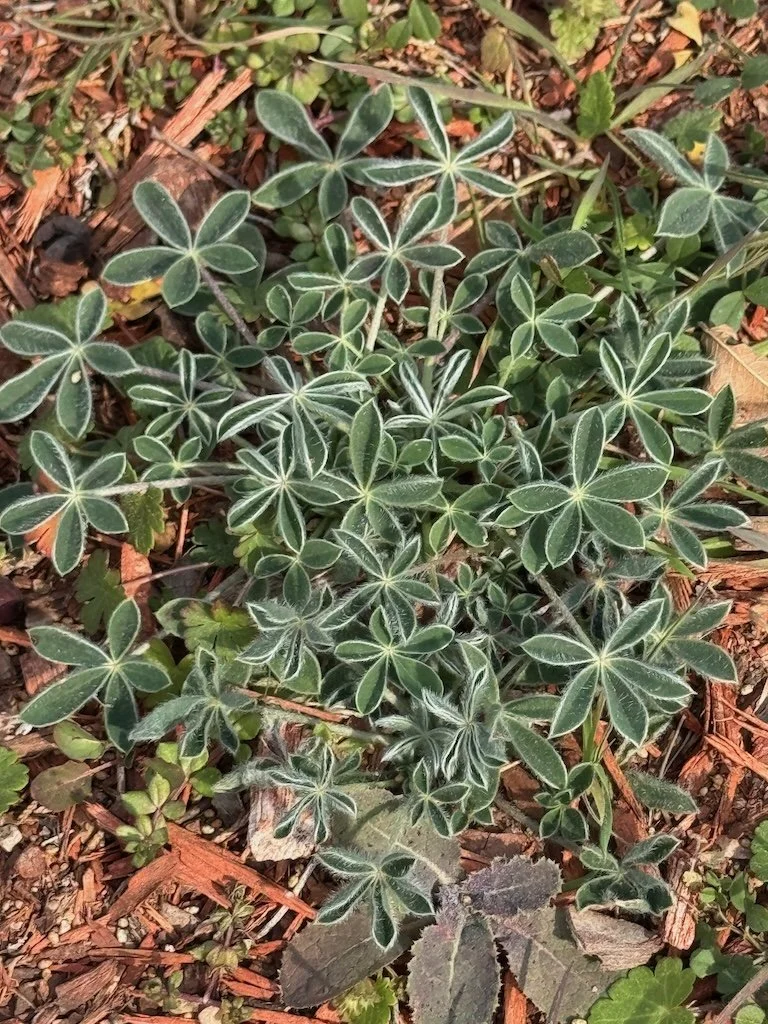
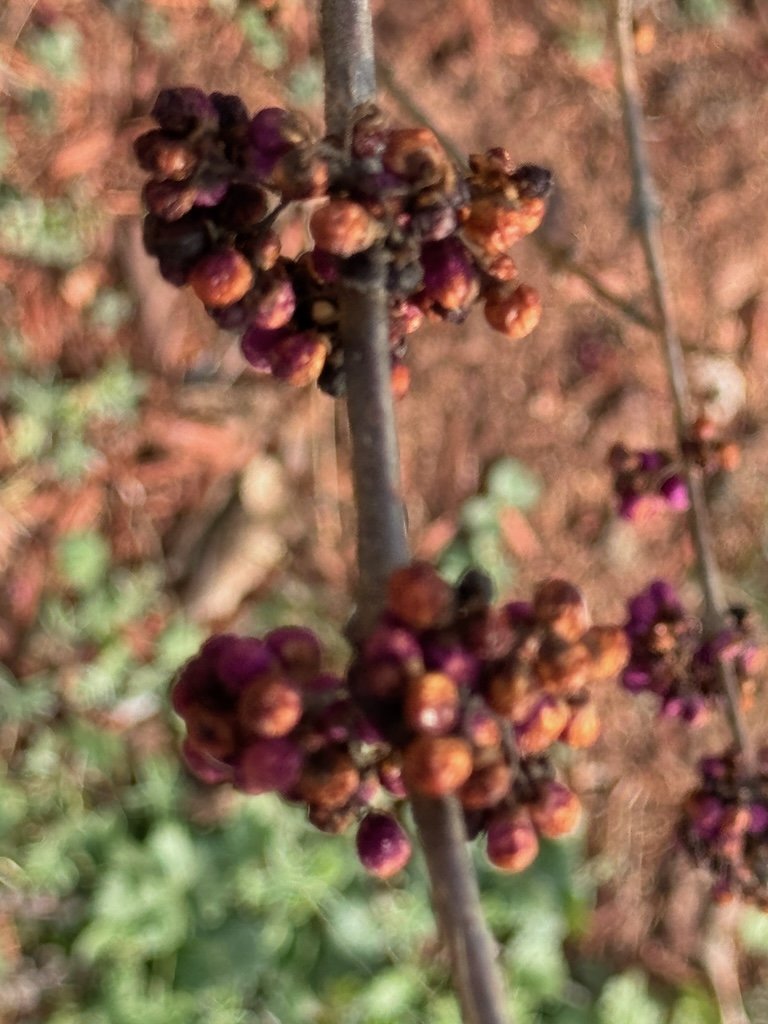
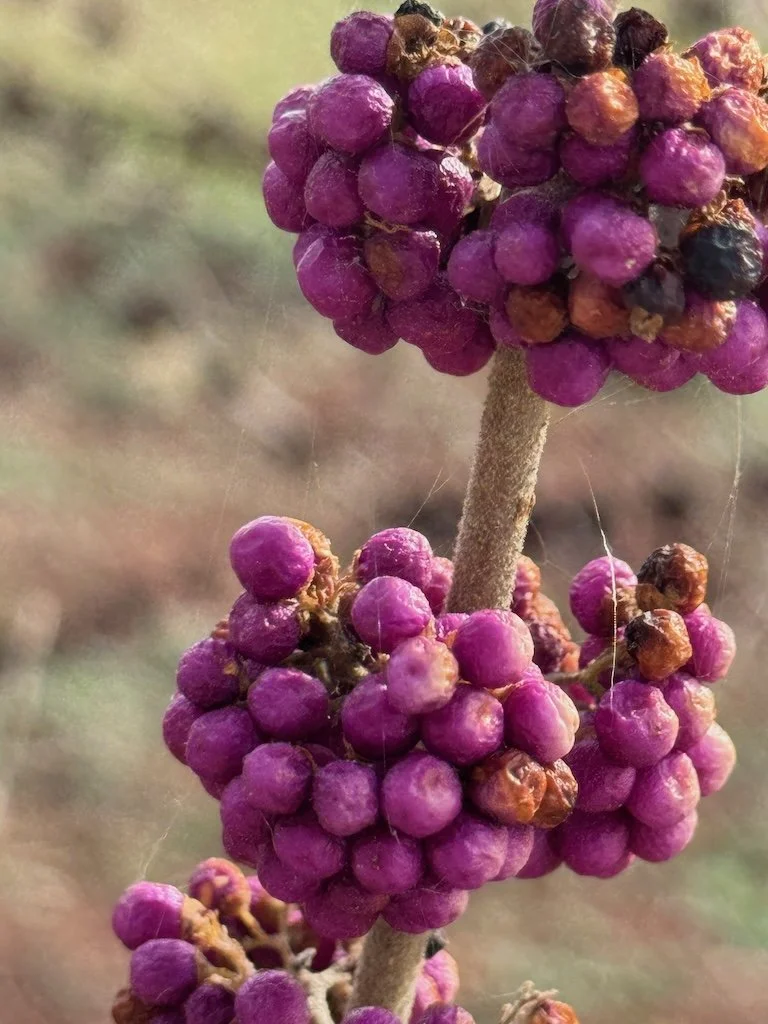
There was a bit of nature at the Texas Welcome Center where I stopped on the way down that I’ll use as a positive ending for this post even though it has nothing to do with plastics or air quality: the bluebonnet plants are above ground and the beautyberry still has a bit of color!

Sustaining Elder Care – January 2026

We moved my father to a new memory care place in early November, and we are just now getting his medical care transitioned to a new provider (since the new place is out of range from the previous one). It has been harder than we expected and there could be other challenges we just haven’t uncovered yet.

He is still having some difficulty finding his way around in the new place without assistance. The size of the place, his worsening eyesight, and cognitive ups/downs are all contributing to our observations and reports from staff of almost daily incidents – him thinking someone else’s apartment is his, him losing the key fob to get into his room, and him saying that he can’t find his room.

One of my sisters noticed that he couldn’t get his belt buckle open…and closed again. Maybe it was threaded around his jeans the wrong way? I hope that was the explanation since, if it is not – we may be approaching a time when he will need assistance in the bathroom. A year or so ago one of my sisters bought him some pull-on pants that did not require a belt – but he didn’t like them at all. He likes his jeans with a belt and a button front shirt (short sleeves for summer and long sleeves for winter)!

His decline – mental and physical – is obvious…but not predictable. There are times that he seems to remember more but those times are happening less often. The decline of his eyesight is related. If he could see better, perhaps he would not get lost so easily even though his short-term memory has not been reliable for quite some time so the move to a new environment has been hard for him.

It is taking more effort for me to stick with my strategy of accepting him as he is in the moments when I am with him….try to encourage him to move about and talk. In the back of my mind when I plan my monthly road trips to visit him, I always think about making the best of the visit because it might be the last one.

Gleanings of the Week Ending January 24, 2026

The items below were ‘the cream’ of the articles and websites I found this past week. Click on the light green text to look at the article.

1/3/2026 The Scientist Polio Vaccine History: The Shot That Saved Millions - On April 12, 1955, when the Salk polio vaccine was declared “safe and effective,” church bells rang out, kids were let out of school, and headlines around the world celebrated the victory over polio. When asked whether he was going to patent the vaccine, Salk told journalist Edward R. Murrow it belonged to the people and would be like “patenting the sun.”

1/8/2026 Smithsonian Magazine Hundreds of Flowering Species Bloomed Across Britain and Ireland Last Winter - Citizen scientists in the British Isles documented more than 300 native plant species blooming in early 2025, a phenomenon likely caused by climate change. While it’s lovely to see so many wildflowers in bloom … it’s also a sad reflection of the way our climate is changing and the knock-on effects this might have for all the wildlife—bees and other pollinators, butterflies and all the larger creatures further up the food chain—that depend on plants. If flowering times are increasingly out of sync with insect hatching times, the consequences could be very serious.

1/8/206 People in Brazil are living past 110 and scientists want to know why – Brazil’s highly diverse population harbors millions of genetic variants missing from standard datasets, including rare changes linked to immune strength and cellular maintenance. Brazilian supercentenarians often remain mentally sharp, survive serious infections, and come from families where multiple members live past 100. Together, they reveal aging not as inevitable decline, but as a form of biological resilience.

1/7/2026 The Conversation Surprising number of foods contain microplastics. Here’s how to reduce the amount you consume - While eliminating plastics entirely from our diets may be impossible, making these swaps should help to reduce your exposure.

1/6/2026 Nature Defossilize our chemical world - Achieving net zero means eliminating fossil fuels, not carbon — the chemical element has a crucial part to play in powering the modern world. Defossilization means finding sustainable ways to make carbon-based chemicals. Alternative sources of carbon include the atmosphere and plants, as well as carbon in existing biological or industrial waste, such as used plastics or agricultural residue. In some cases, these chemicals will eventually return carbon dioxide to the atmosphere through burning or biodegradation. In principle, this will occur as part of a circular process, rather than one that has added greenhouse gases.

1/5/2026 Planetizen The Child Population in These Cities is Dropping Fast - The proportion of young children in western U.S. metros is falling faster than in other parts of the country. Lower birth rates can sometimes ease immediate pressure on housing and schools but also lead to challenges in supporting economic growth and elder care, as the ratio of working adults to retirees declines.

1/4/2026 Washington Post What we learned about microplastics in 2025 - For many scientists, 2025 was the year of microplastics. It’s only in the past year or so that we have begun to understand that the tiny plastics — including some that are impossible to see with the naked eye — are in our bodies and food as well.

1/9/2026 Science Alert Study Finds Microplastics Are Widespread in Popular Seafoods - In the Pacific Northwest – a region of North America renowned for its seafood – researchers have found particles from our waste and pollution swimming in the edible tissue of just about every fish and shellfish they collected.

12/18/2025 Yale Environment 360 After Ruining a Treasured Water Resource, Iran Is Drying Up - Iran is looking to relocate the nation’s capital because of severe water shortages that make Tehran unsustainable. Experts say the crisis was caused by years of ill-conceived dam projects and overpumping that destroyed a centuries-old system for tapping underground reserves. 

1/8/2026 BBC The animals saved in Greece's ancient accidental 'arks' - Shielded from development and agriculture, many archaeological sites have now become inadvertent safe harbors for plants and animals. In Italy, rare orchids flower around an Etruscan necropolis. In the ancient Greek religious centre of Delphi, researchers found what they believe is a new species of snail – just 2mm (0.08in) long – suspected to live only in that area. In recent years, two new species of lizard were identified in Machu Picchu that may have once had a wider range and today enjoy the relatively undisturbed conditions of the ancient sanctuary. To better understand the connection between historical sites and nature, in 2022 the Greek government launched the Biodiversity in Archaeological Sites research project. Over two years, 49 specialists in all kinds of plants and animals surveyed 20 archaeological sites that spanned Greek history. 

Project Feeder Watch – January 2026

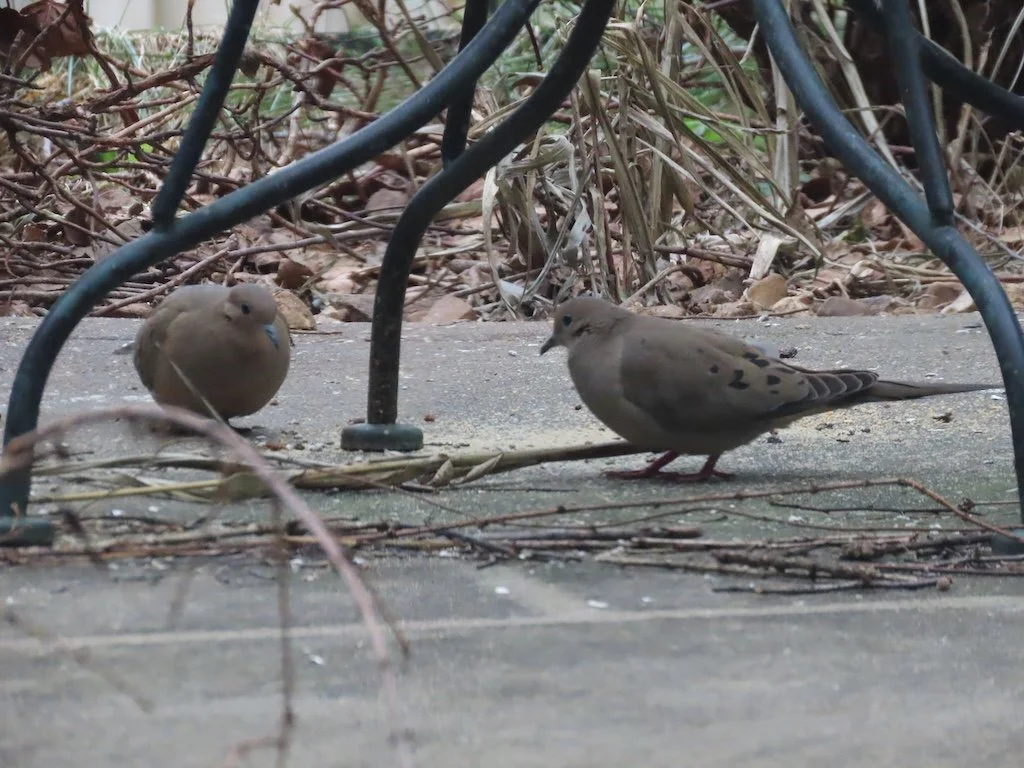
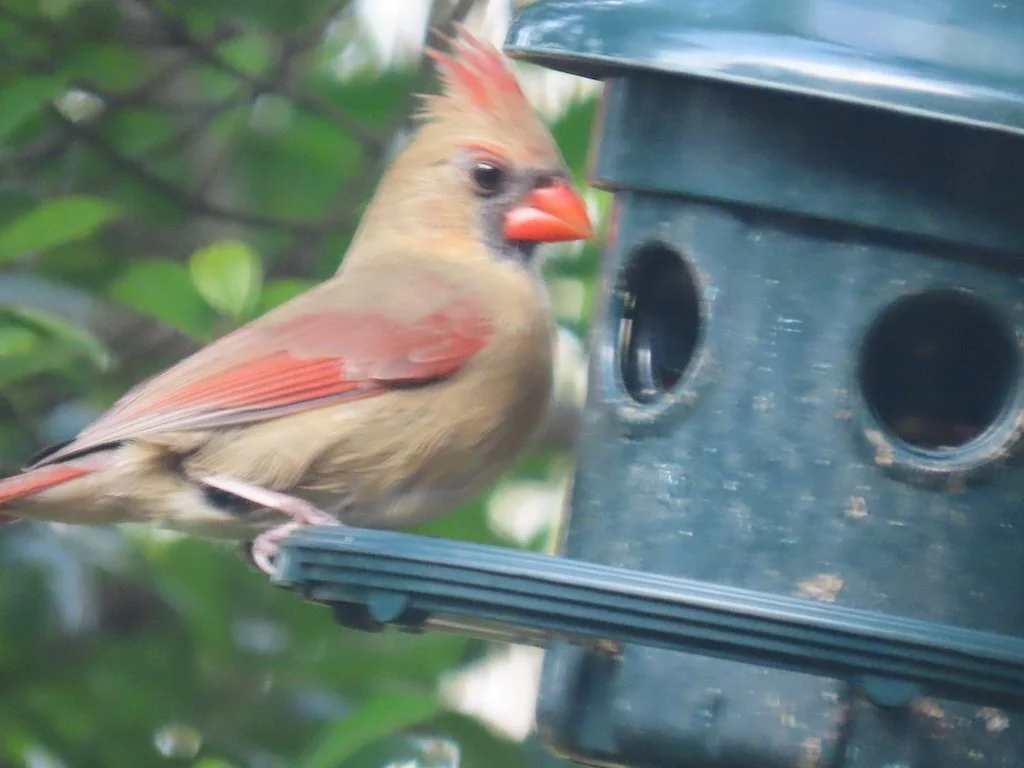
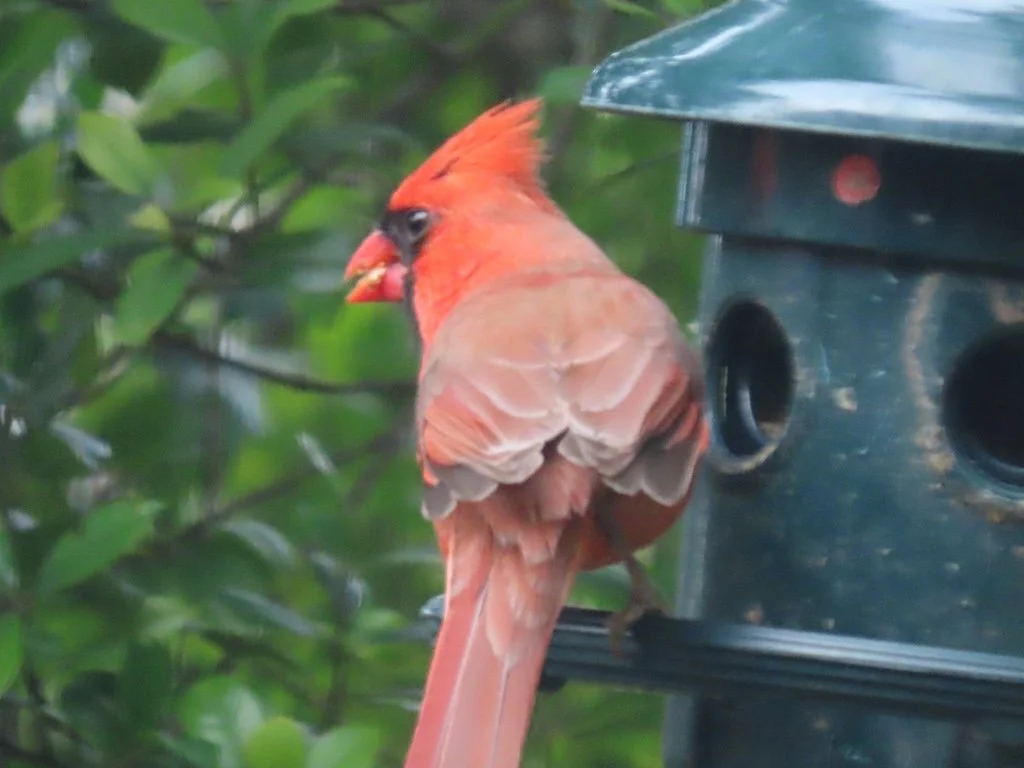
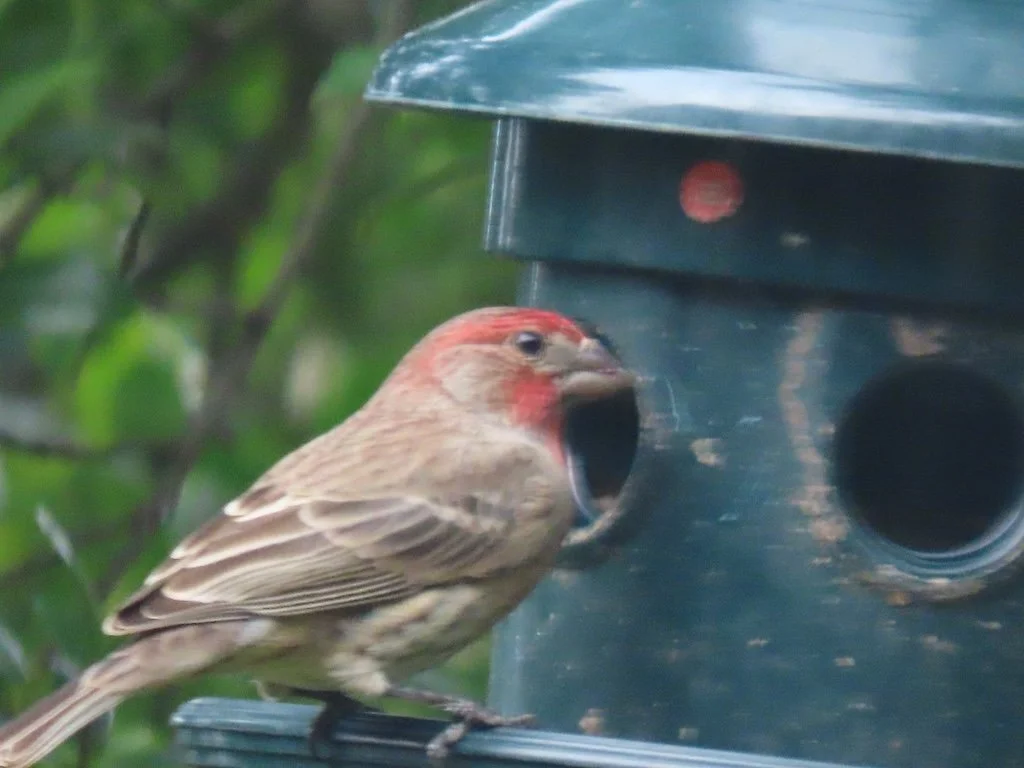
My husband and I enjoy our time watching birds at our home feeders for 4 30-minute segments each week as part of Project FeederWatch. Something interesting always seems to happen – varying numbers and kinds of birds, relaxed feeding and then a round of bird frenzy,  the regulars and then silent/empty feeders (our theory when this happens is that our neighborhood Cooper’s Hawk is somewhere nearby). Our feeders are not situated for optimal photography…but I still take a few pictures.

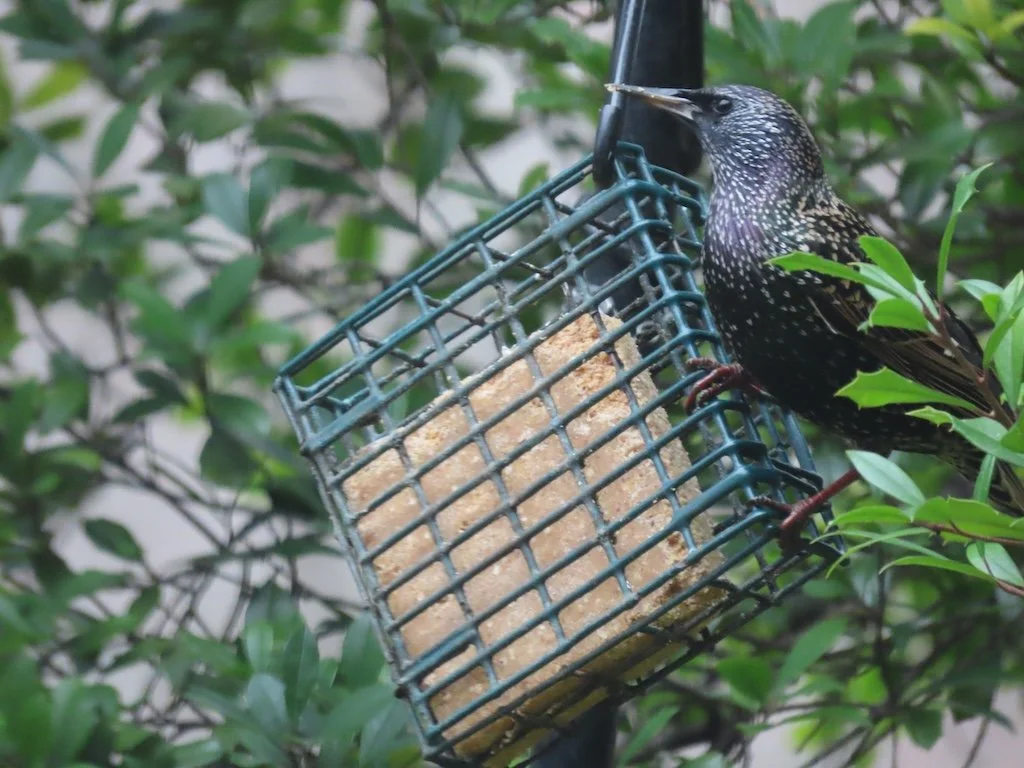
We often develop profiles of the different birds; for example, the Carolina chickadee and Titmouse are the quick grab and go experts….the starlings come in mobs and bully everyone else!

Snack in Blue Tulip Glassware

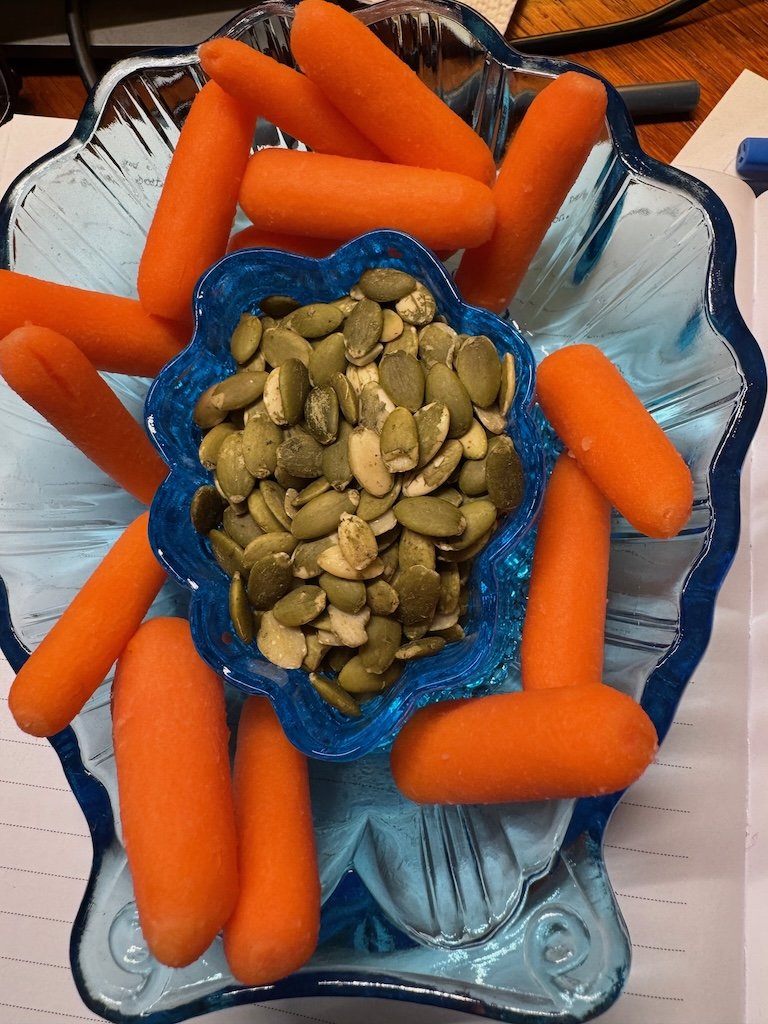
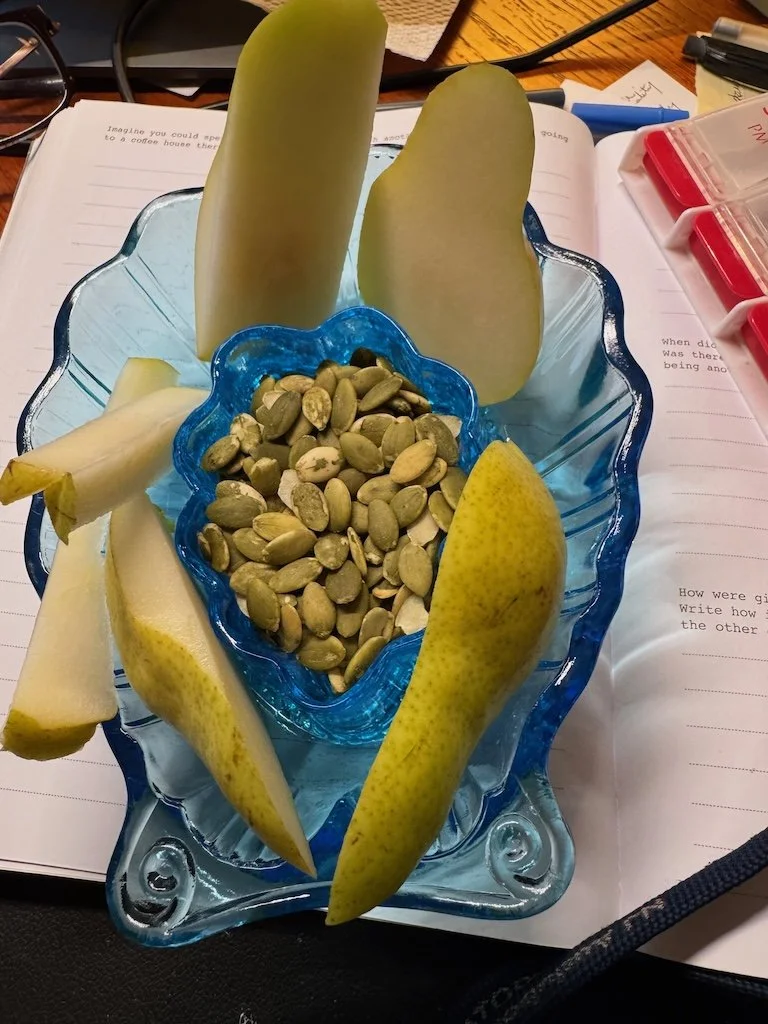
I’ve had my set of Blue Tulip depression glassware for over a decade now. It is special because of how I got it – from some friends of my parents (from college onward) that collected it when they retired and sold it to me when they downsized from their last house. Although I don’t use the dinner plates very often – I do enjoy the small pieces frequently because they encourage smaller portions. One piece that I have only started using recently is in the shape of a shell with a center area for dip/sauce; I like pumpkin seeds in the center and fruit/veggies around the edge. It is just the right size of a hefty snack (when I am not hungry enough for a full evening meal).

The memories are a bonus – summertime visits with their family which included a daughter my age…observing a career dietician for small hospitals in action and the field work of a soil conservation professional in the 1960s. I remember outings with them to amusement parks and overnight visits to state parks in Oklahoma….digging up salt crystals at the lake near Cherokee, Oklahoma. The friends of my parents and their daughter are gone now – the last one going before my mother; my dad doesn’t remember them. I remember…and the Blue Tulip glassware is a wonderful reminder.

Fifty-third Wedding Anniversary

Still together after 53 years….

Our anniversary is not a big celebration in January; we don’t buy gifts; usually we just go out for a nice meal. This year my only requirement was that it be a place with interesting desserts. We chose The Village Inn in Springfield. He got pancakes and I got key lime pie.

I’m thinking about how we are accommodating each other more as we age.

  • Right now, he has a wrist bothering him, so I am doing more household chores that require two hands.

  • He keeps a pillow in his car for me because I haven’t been able to adjust the front passenger seat to avoid my back hurting on road trips.

  • Over the past year we have both sat in medical waiting rooms – doing the driving to and from an outpatient procedure.

  • When we travel, we both like to stop about once an hour; neither one of us likes to sit for a long time.

  • I do the grocery shopping, and he does the shopping at Home Depot/Loews and Wild Birds Unlimited (although I am loading the bird feeders with seed and putting the groceries away right now because those are two-hand jobs). In years past we shopped together but now we both enjoy the independence.

  • He has allergies to a lot of household products which we have been working with for a few years. That is dovetailing with my efforts to reduce plastics/microplastics in our household.

  • When one of us is on a solo road trip, the other is tracking progress with the Find My app. This is the one item on the list that we might have done earlier if the technology had been available.

  • When we travel, I always make the hotel reservations and pack the ice chest (mostly things for him these days). He always makes sure the car is ready to go and does all the driving; I keep volunteering to trade off driving, but road trips are generally more restful for me since he still wants to do it all.

As we get older, there will be plenty more accommodations we’ll develop for ourselves and each other. We’re already a lengthy marriage…have no plans of cutting it short!

Gleanings of the Week Ending January 17, 2026

The items below were ‘the cream’ of the articles and websites I found this past week. Click on the light green text to look at the article.

12/28/2025 SciTechDaily Microplastics Burrow into Blood Vessels and Fuel Heart Disease - New research led by biomedical scientists at the University of California, Riverside suggests that routine contact with microplastics — tiny particles released from packaging, clothing, and many plastic products — may speed up atherosclerosis, a condition in which arteries become clogged and can lead to heart attacks and strokes. The team studied LDLR-deficient mice, which are genetically prone to developing atherosclerosis. Both male and female mice were fed a low-fat, low-cholesterol diet comparable to what a lean and healthy person might consume. Over a nine-week period, the mice received daily doses of microplastics (10 milligrams per kilogram of body weight). These exposure levels were chosen to reflect amounts considered environmentally relevant and similar to what humans could encounter through contaminated food and water.

1/1/2026 ScienceDaily This 100-year-old teaching method is beating modern preschools - Public Montessori preschool students enter kindergarten with stronger reading, memory, and executive function skills than their peers. These gains don’t fade — they grow over time, bucking a long-standing trend in early education research. Even better, Montessori programs cost about $13,000 less per child than traditional preschool. (My daughter went to a private Montessori school for preschool-kindergarten…she enjoyed it and did very well in her subsequent education/career so I am not surprised by the results of this national trial.)

12/31/2025 Archaeology Magazine Bones of Chaco Canyon’s Imported Parrots Reexamined – A reexamination of more than 2,400 parrot bones unearthed at Chaco Canyon suggests that most of the macaws and parrots that were kept by ancient Puebloans were likely restricted to the large, multistory buildings known as great houses, where they lived in heated rooms with plastered walls.

12/31/2025 ScienceDaily Microplastics are leaking invisible chemical clouds into water - Microplastics in rivers, lakes, and oceans aren’t just drifting debris—they’re constantly leaking invisible clouds of chemicals into the water. New research shows that sunlight drives this process, causing different plastics to release distinct and evolving mixtures of dissolved organic compounds as they weather. These chemical plumes are surprisingly complex, often richer and more biologically active than natural organic matter, and include additives, broken polymer fragments, and oxidized molecules. Understanding how these chemicals evolve across different stages of plastic breakdown will be essential for assessing their long-term environmental impact.

1/2/2026 National Parks Traveler A Day in the Park: Assateague Island National Seashore – This was a great get away from where we lived in Maryland until recently. We’d cross the Bay Bridge, visit Blackwater National Wildlife Refuge and then be at Chincoteague and Assateague Island National Seashore after that.

1/2/2026 The New York Times A Study Is Retracted, Renewing Concerns About the Weedkiller Roundup - In 2000, a landmark study claimed to set the record straight on glyphosate, a contentious weedkiller used on hundreds of millions of acres of farmland. The paper found that the chemical, the active ingredient in Roundup, wasn’t a human health risk despite evidence of a cancer link. Last month, the study was retracted by the scientific journal that published it a quarter century ago, setting off a crisis of confidence in the science behind a weedkiller that has become the backbone of American food production.

1/2/2026 Smithsonian Magazine When the Bayeaux Tapestry Makes its Historic Return to England - Created in the 11th century, the delicate, 230-foot-long embroidered textile has been in France since 1077.

12/30/2025 YaleEnvironment360 2025 Was Another Exceptionally Hot Year - 2025 was the second hottest on record, surpassed only by 2024. It continues a recent trend of exceptional, unexplained warming. The last three years have been, by a wide margin, the hottest ever recorded. The recent jump in warming, which exceeded the predictions of climate models.

12/21/2025 My Modern Met Photographer Explores the Rich Complexity of Africa’s Great Rift – Photography of a place --- and an interview with the photographer.

12/17/2025 Washington Post These kitchen items may be contaminating your food with chemicals - Plastic ushered in a new era of convenience and filled homes with cheap, disposable goods. But it also has exposed ordinary people to tens of thousands of chemicals that slip out of those items into household dust, food, water — and from there, into bodies. Some of these chemicals are known to disrupt pregnancies, triggering birth defects and fertility problems later in life; others have been linked to cancer and developmental problems. “The problem is, none of the plastics that we have right now are safe,” said Wagner, of Norwegian University of Science and Technology. “That’s not a very nice thing to hear, but that’s what the data tell us.”

12/15/2025 Nature The best science images of 2025 — Nature’s picks – Educational and beautiful at the same time.

Phoenix Vicariously

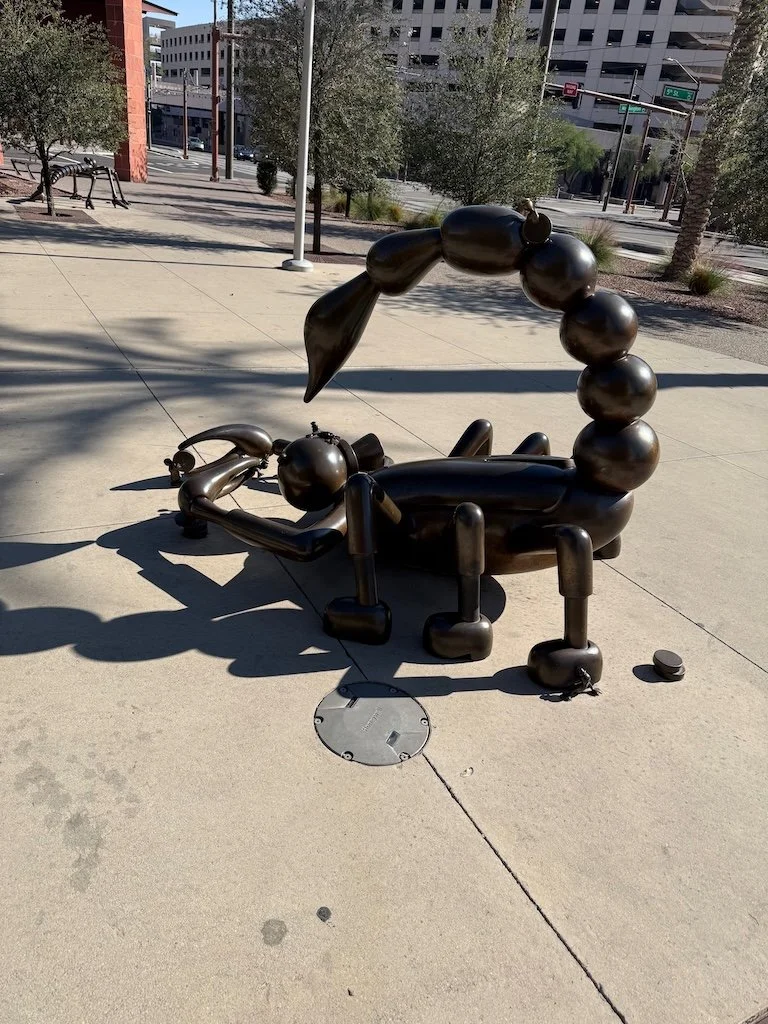
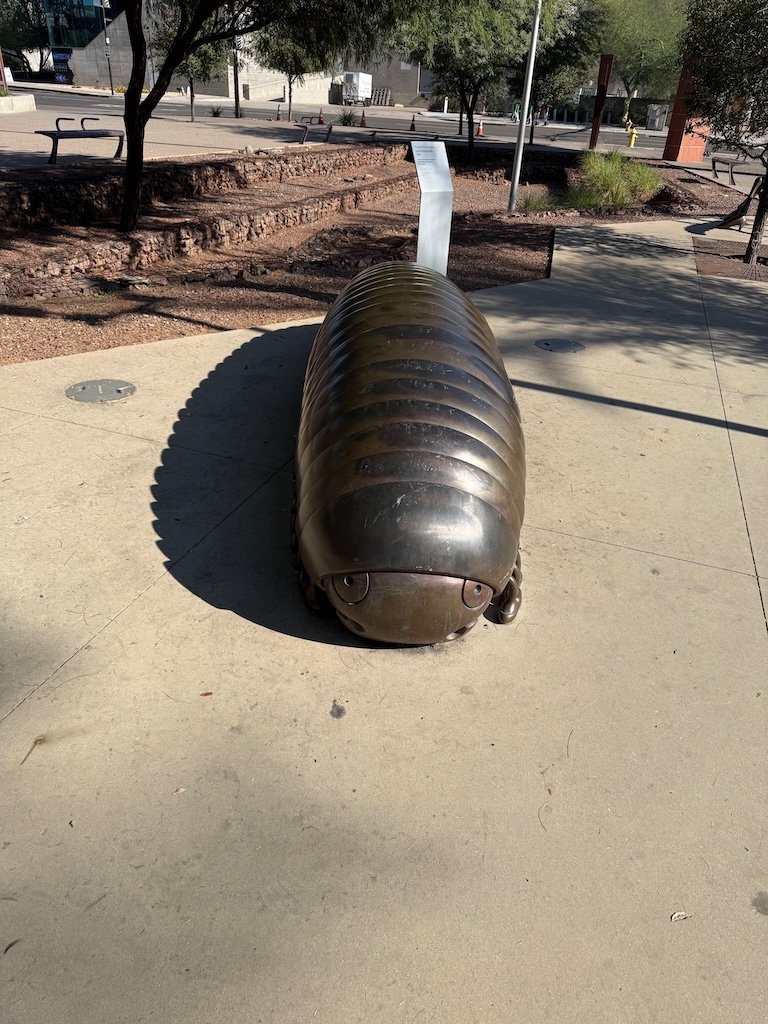
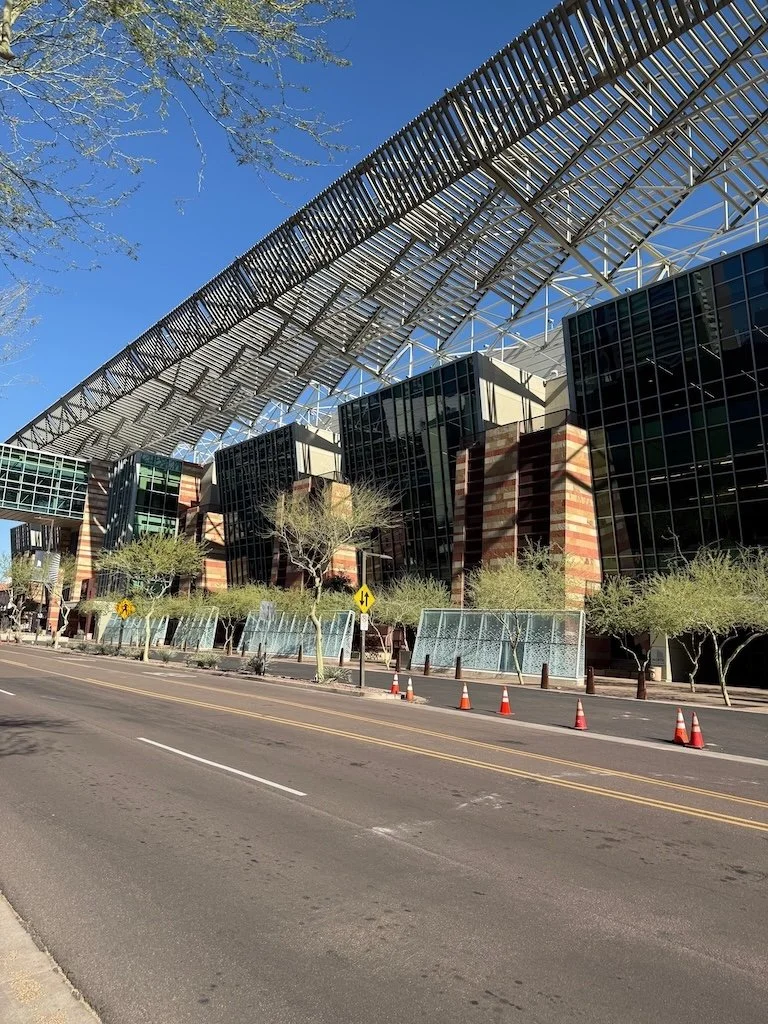
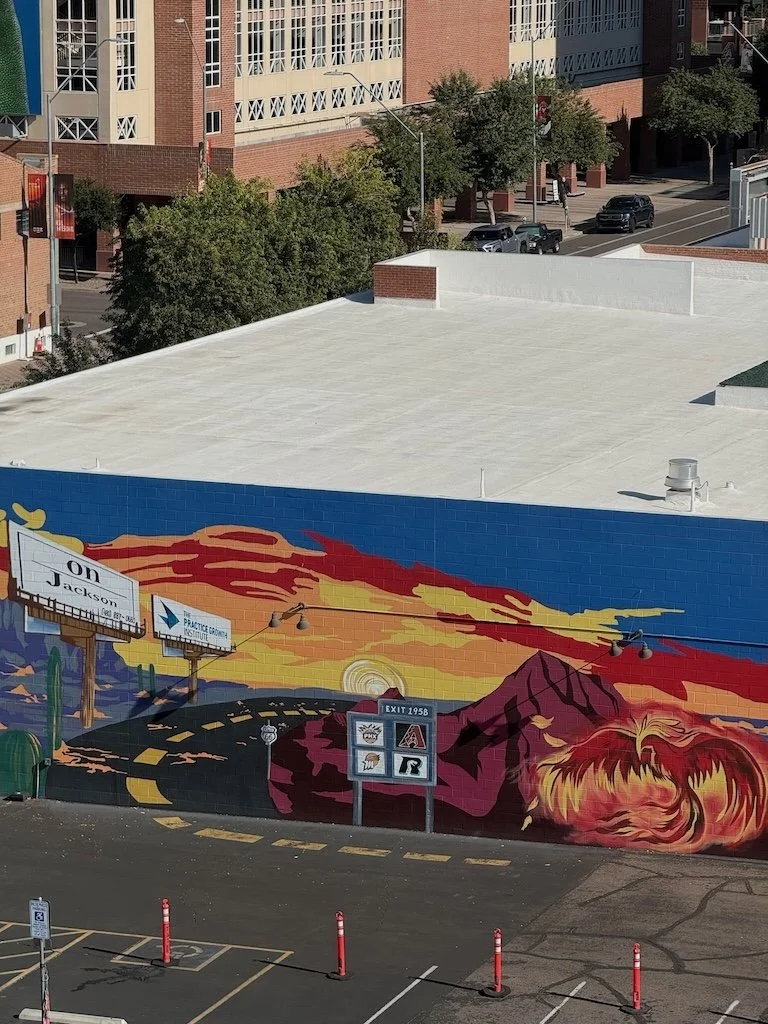
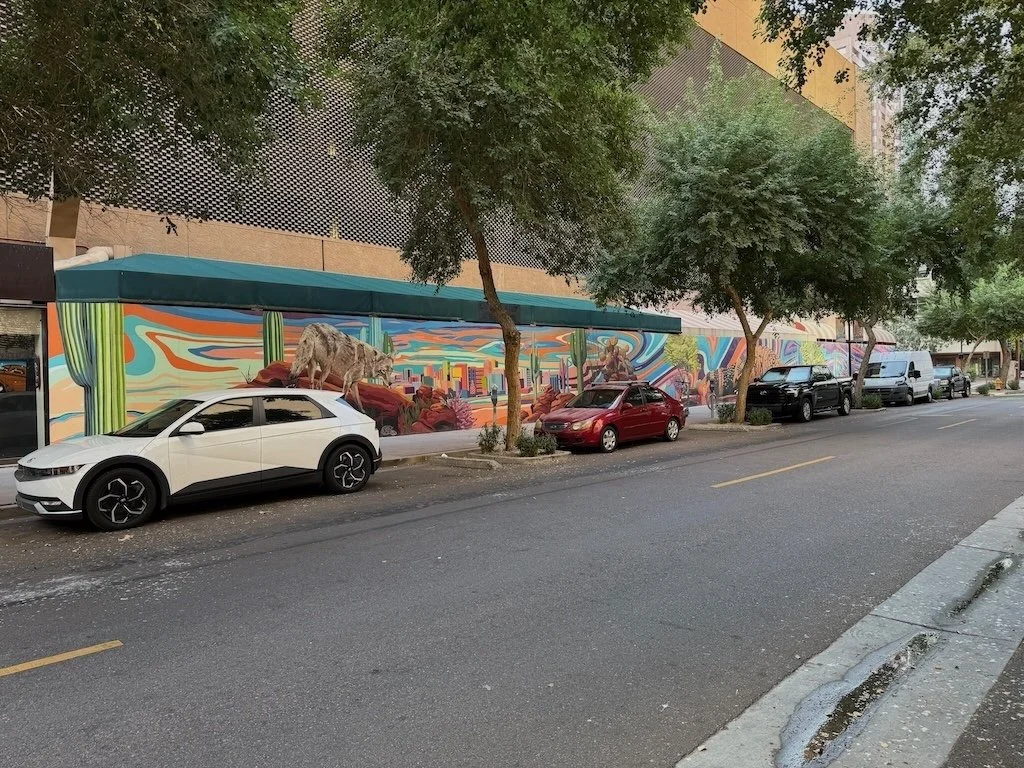
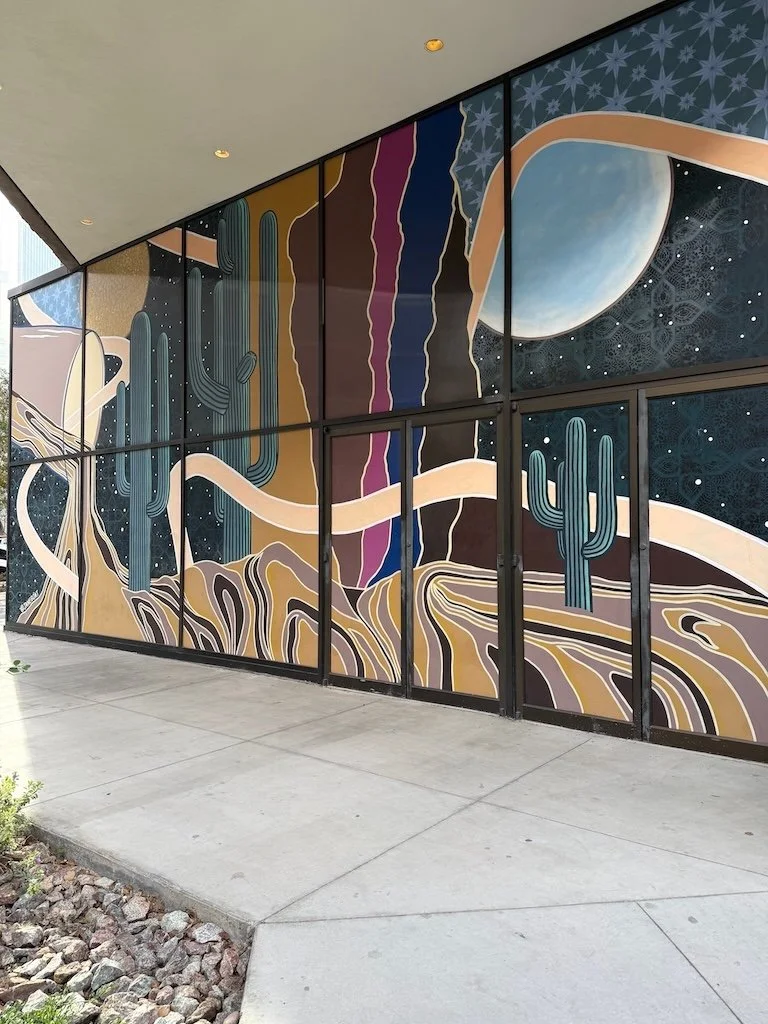
My daughter was at a conference in Phoenix last week and I enjoyed seeing her pictures of the area near the convention center. She went early for a workshop and managed to see a basketball game in the arena that evening!

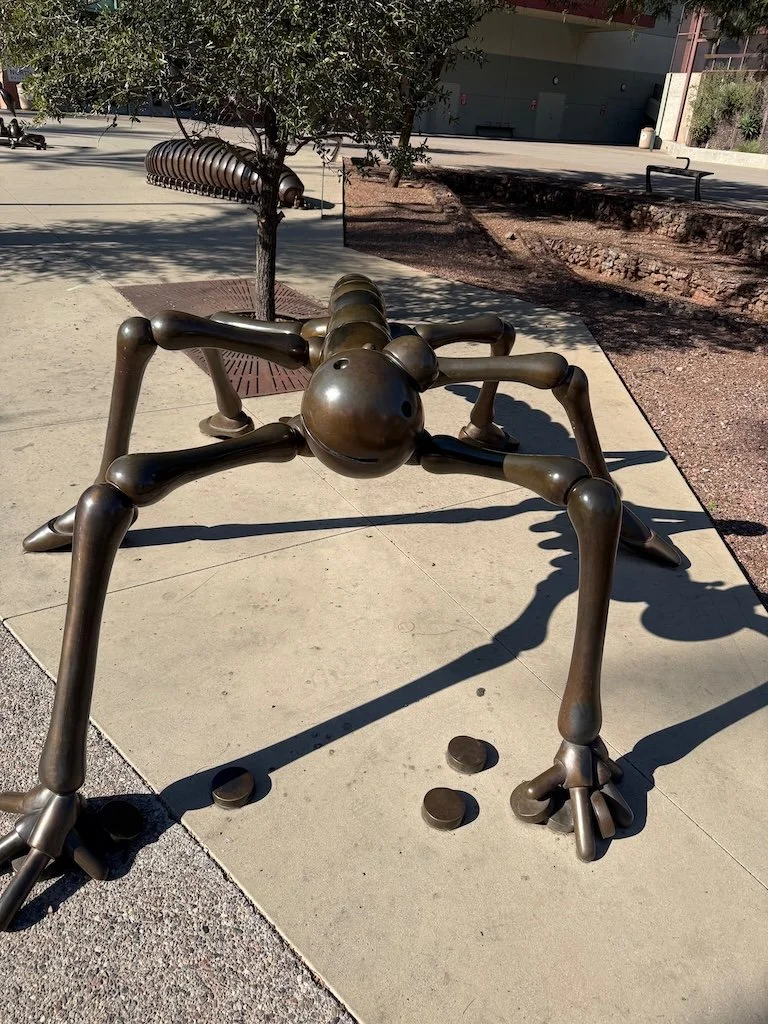
She sent pictures of desert creature sculptures

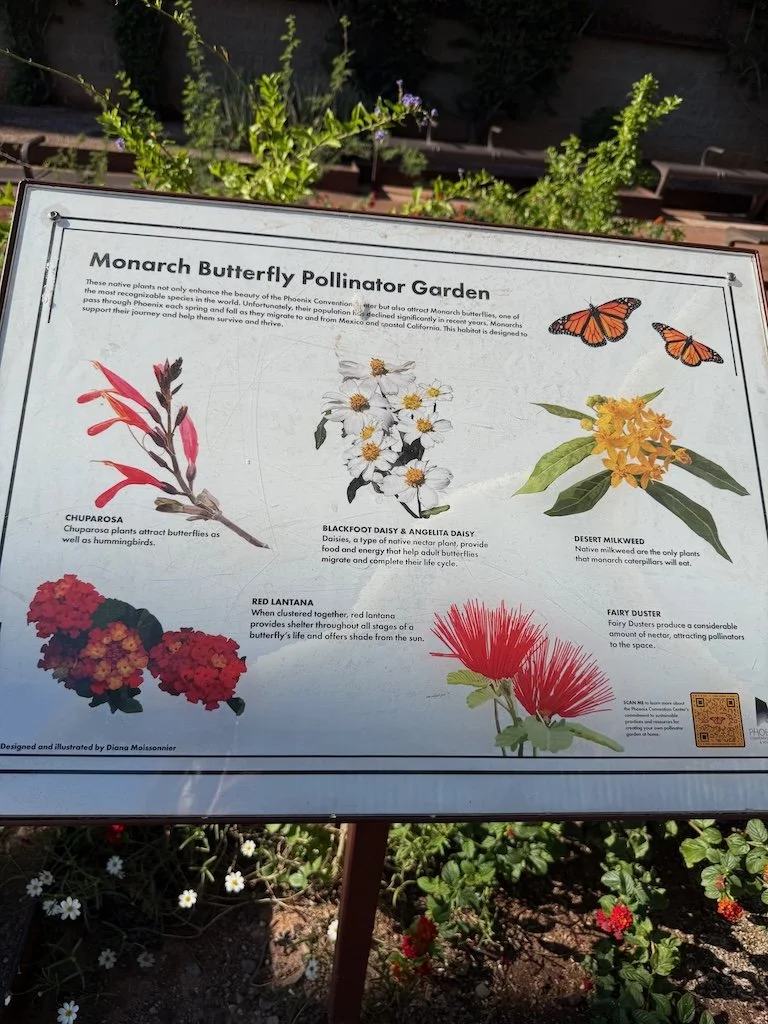
And the sign for a pollinator garden – that obviously still has some plants blooming (daisies and lantana) – an urban garden.

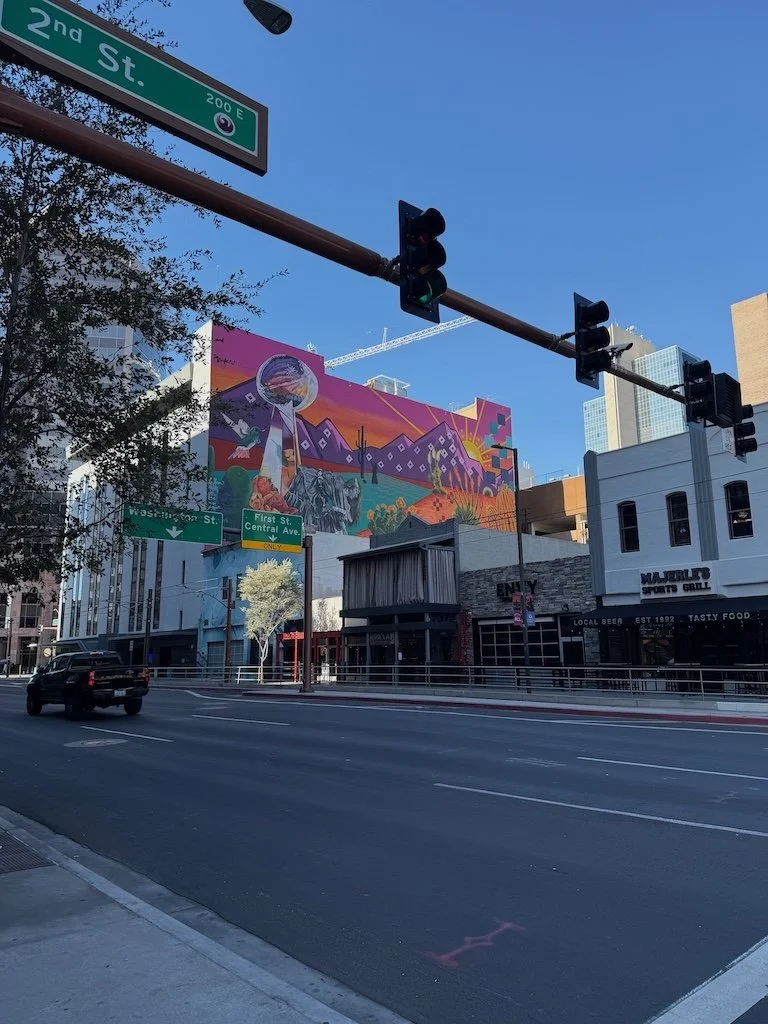
My favorites were the images of architecture and murals. The one showing the white roof (along with a mural) was taken from her hotel window. I wondered how often the white needed to be refreshed to maintain its ability to reflect heat.

It’s been over a decade since I was in Phoenix and then I did more in the outskirts rather than the downtown area. Winter would be the time I’d pick to visit again!