Sustaining Elder Care – February 2026

My dad has been in his new memory care place since mid-November, and we are still not quite settled. He had a visit from a podiatrist, and they sent information on getting into their portal to see the report to me rather than my sister that handles his medical care (i.e. is his Medical POA) …a continuing issue which I have now escalated to the director since it has happened with other providers. My dad has been seen by a Nurse Practitioner and had bloodwork, but my sister had to ask for the results repeatedly before getting them and the question of the physician or medical practice that is monitoring the Nurse Practitioner has not been answered.

On the plus side, the facility has started using a new app to report to families about the activities their person in memory care is participating in like music therapy, hands & nails spa, coffee bar social, and (most frequently) chair exercise. The app has the capability of including pictures but, so far, they haven’t been doing that; it could be that it would take an extra staff person to get pictures during the activity. Since I am not local – I like the daily reports through the app to understand the types of activities he does with other people.

One of my other sisters was able to attend a session held for families of people in memory care and sent us “what NOT to do --- what to do instead.” Since we are all trying to be respectful and accept our father the way he is now, we do reasonably well. Our challenge is to have a conversation with our dad. We’ve come to accept his pronouncements whether they reflect reality or not…encouraged that he is trying to communicate.

It is not easy to watch a person that has been around for my whole life decline. He is a very different person now than he was during my growing up. I’m glad that my sisters and I are staying engaged with his care. We are all learning from his experience…storing away ideas for the way we want to live our own lives. None of us wants to regret anything.

Zentangle® – January 2026

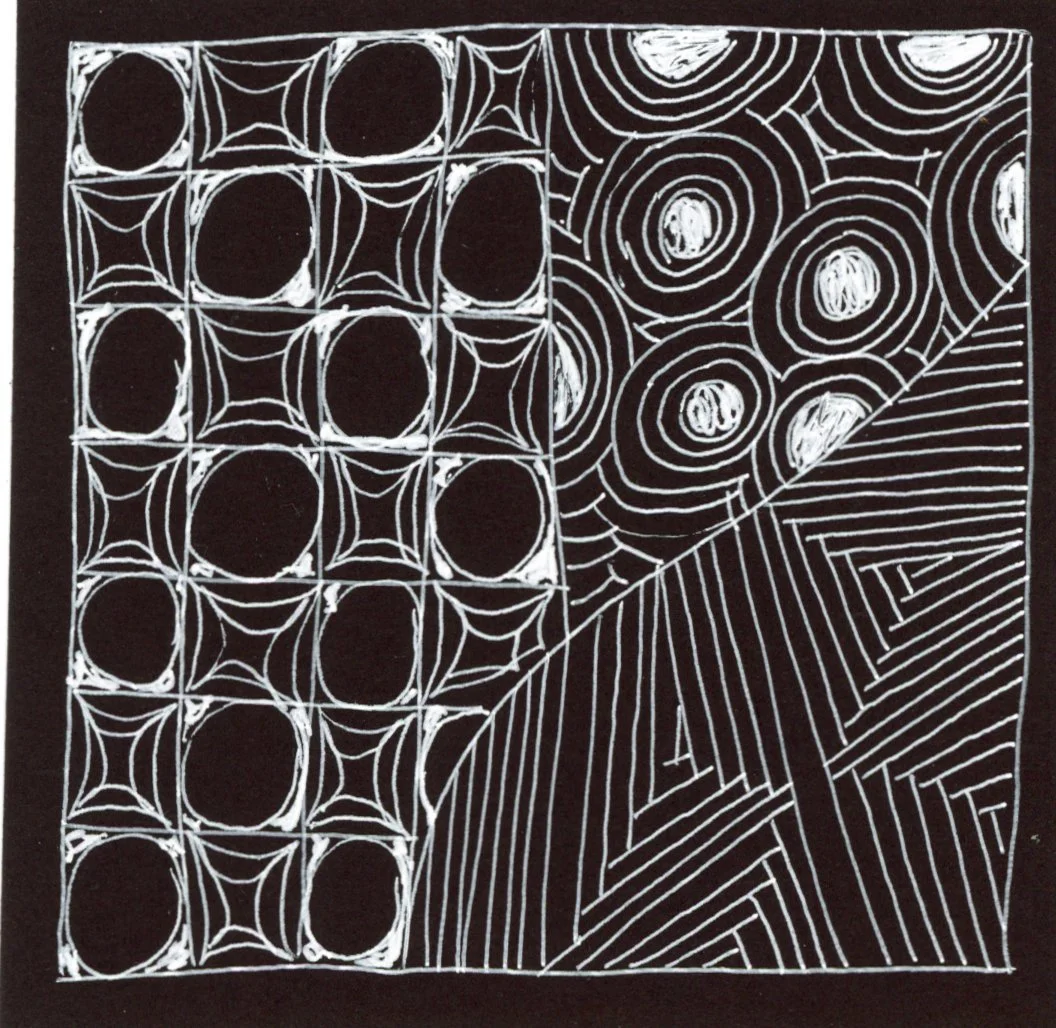
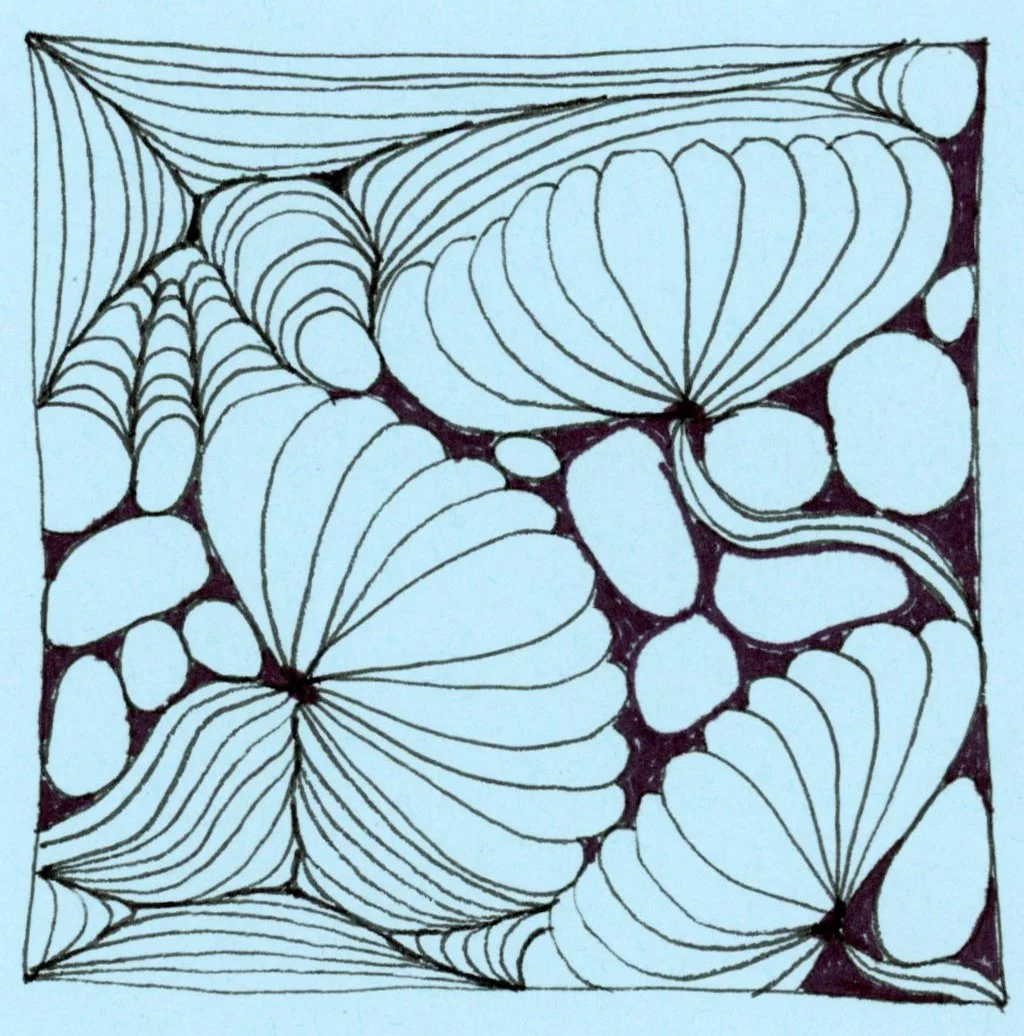
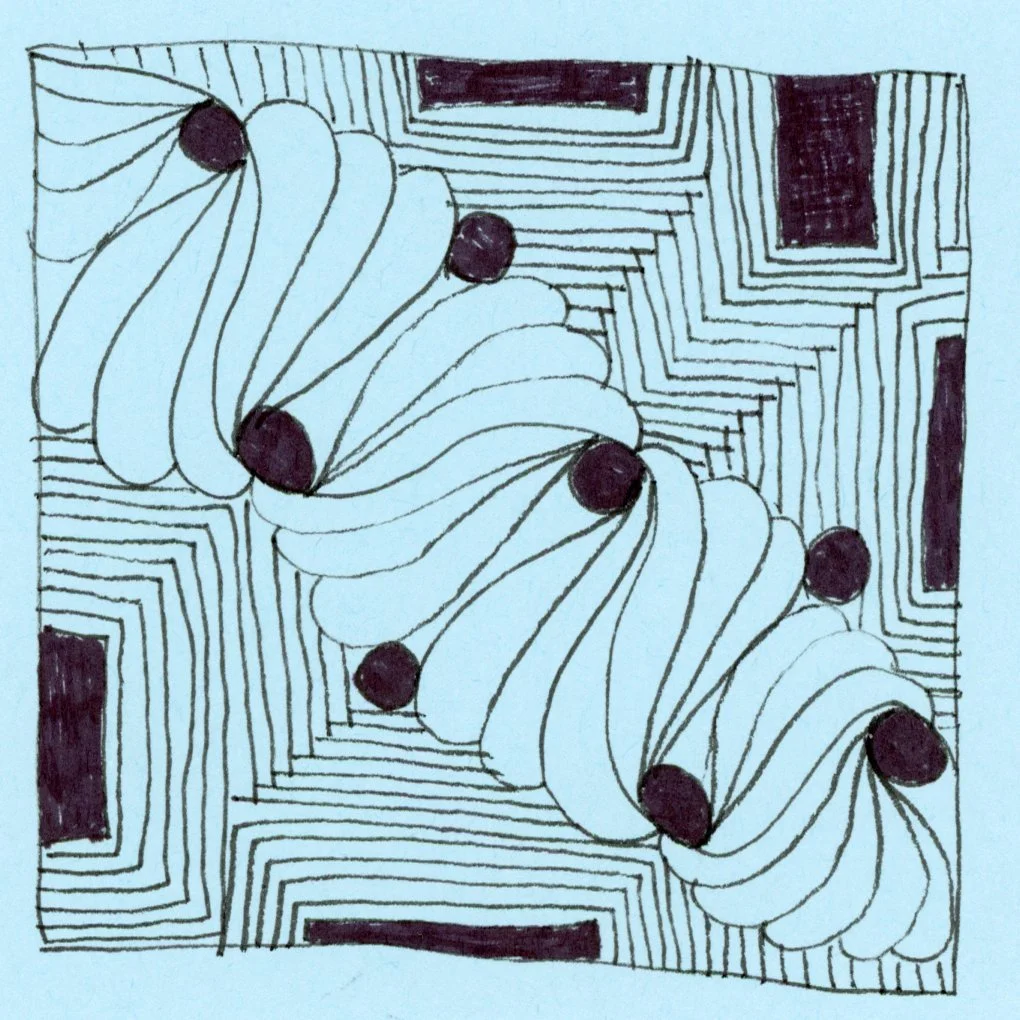
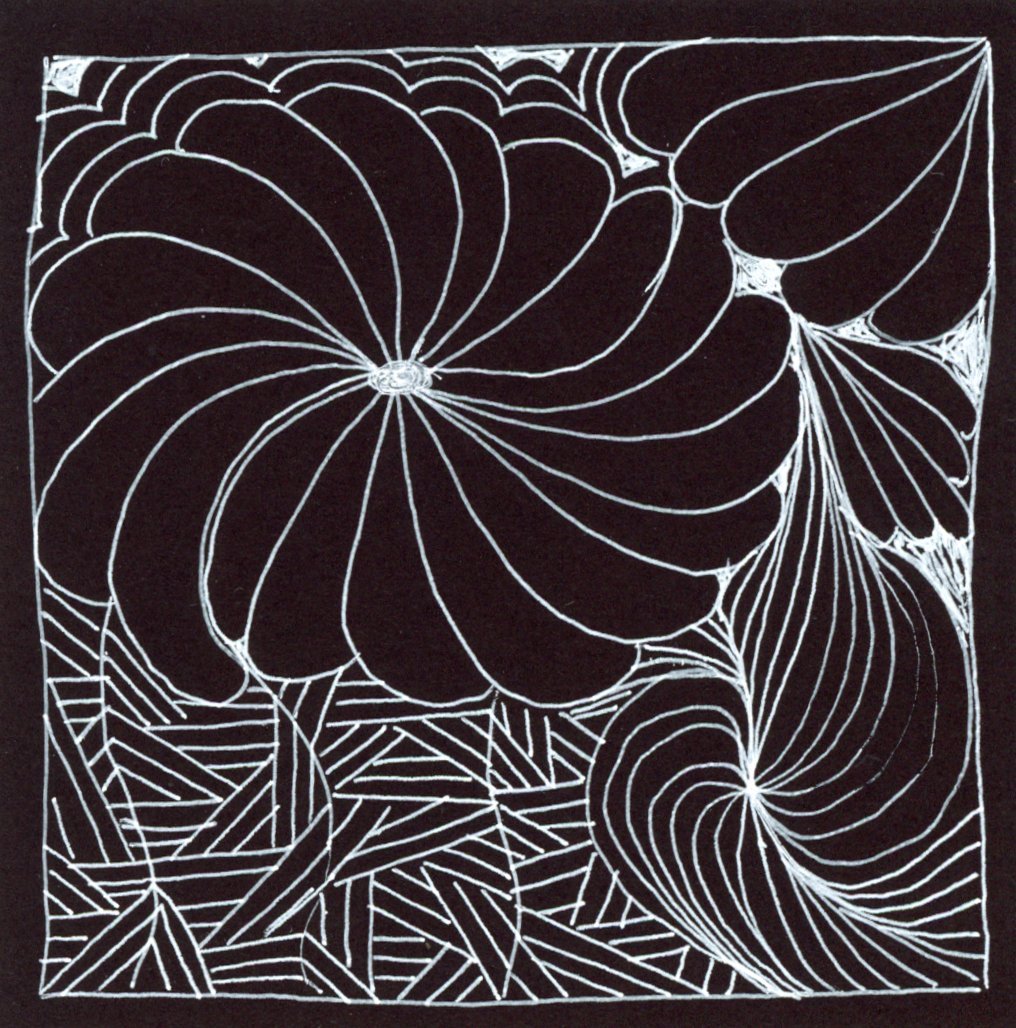
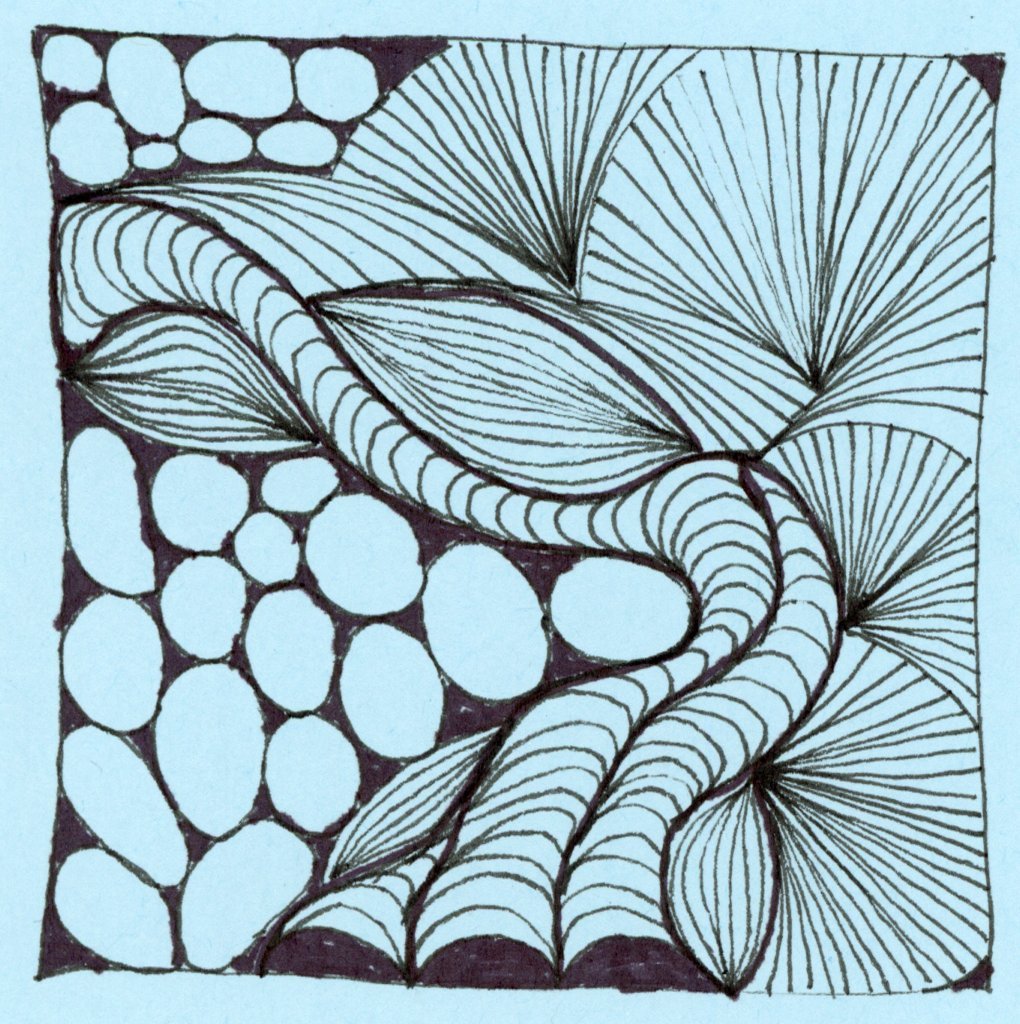
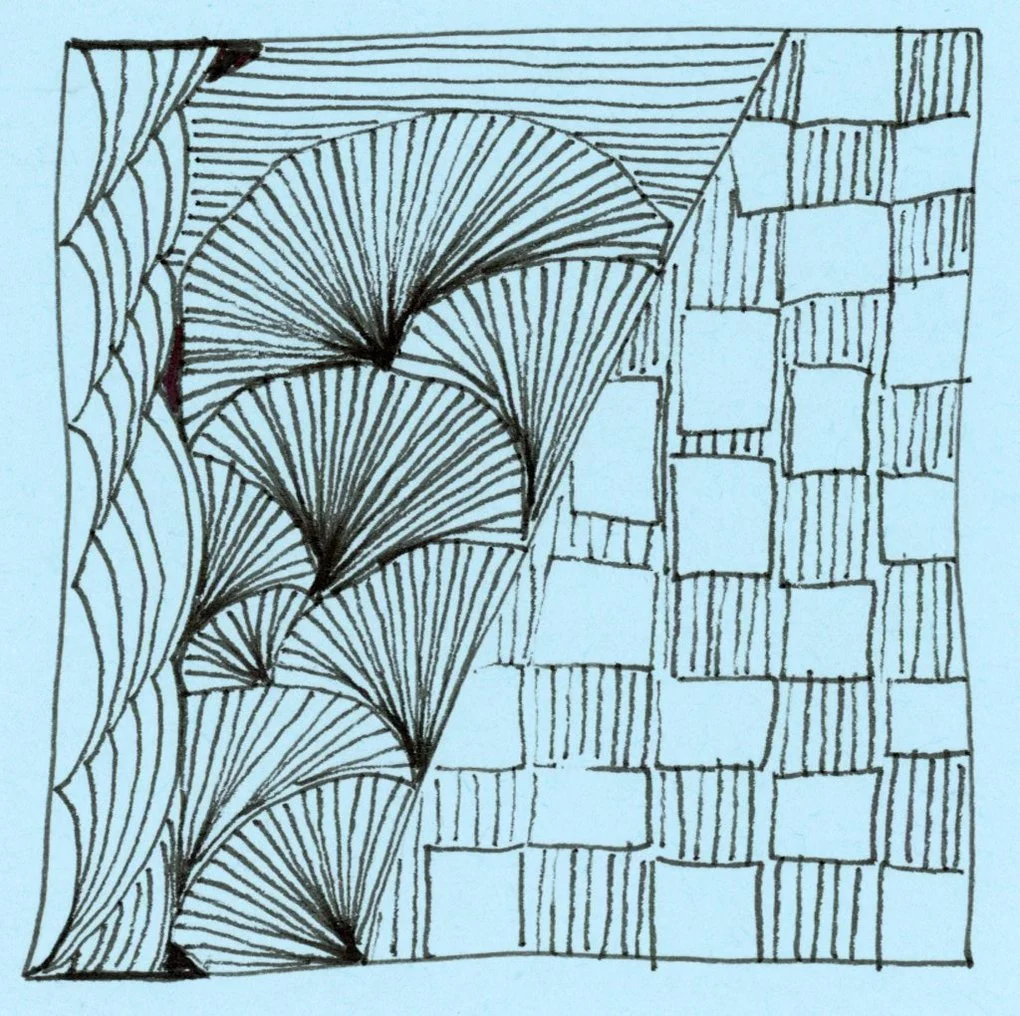
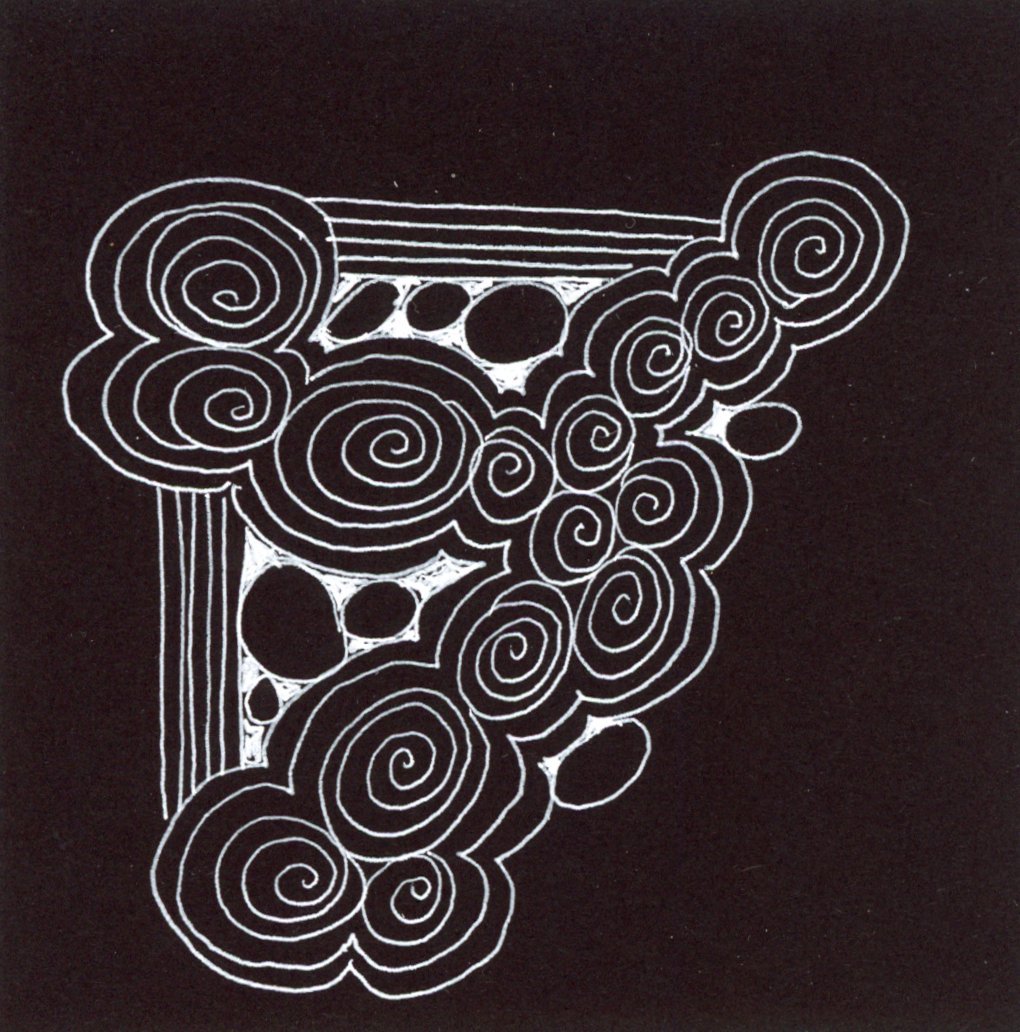
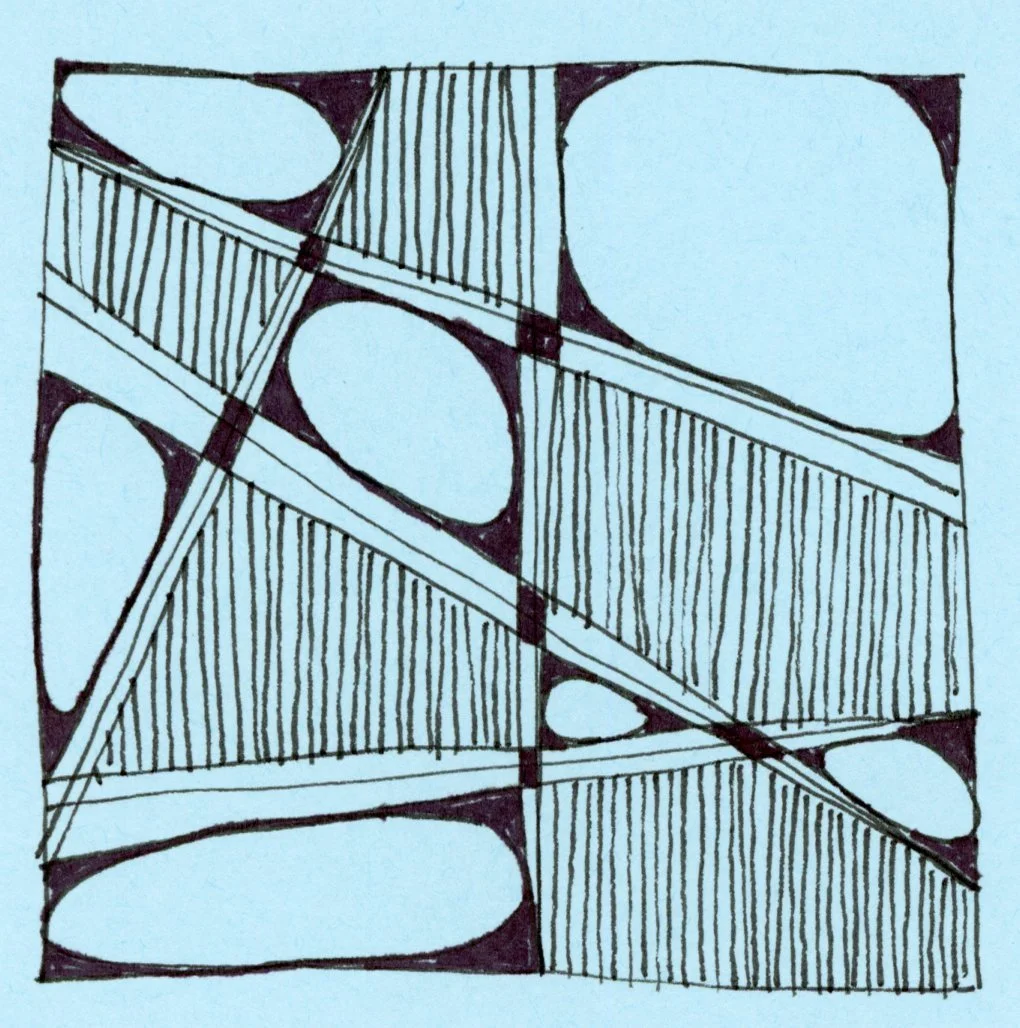
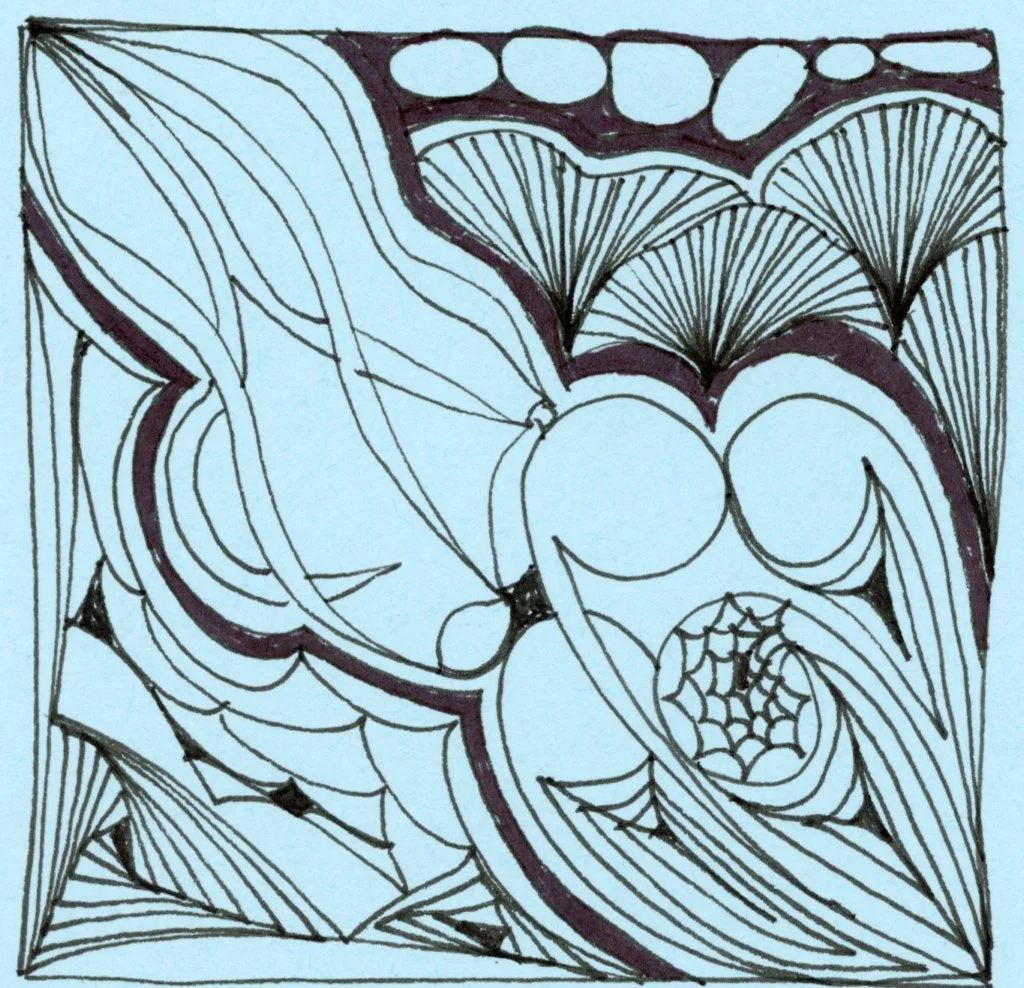
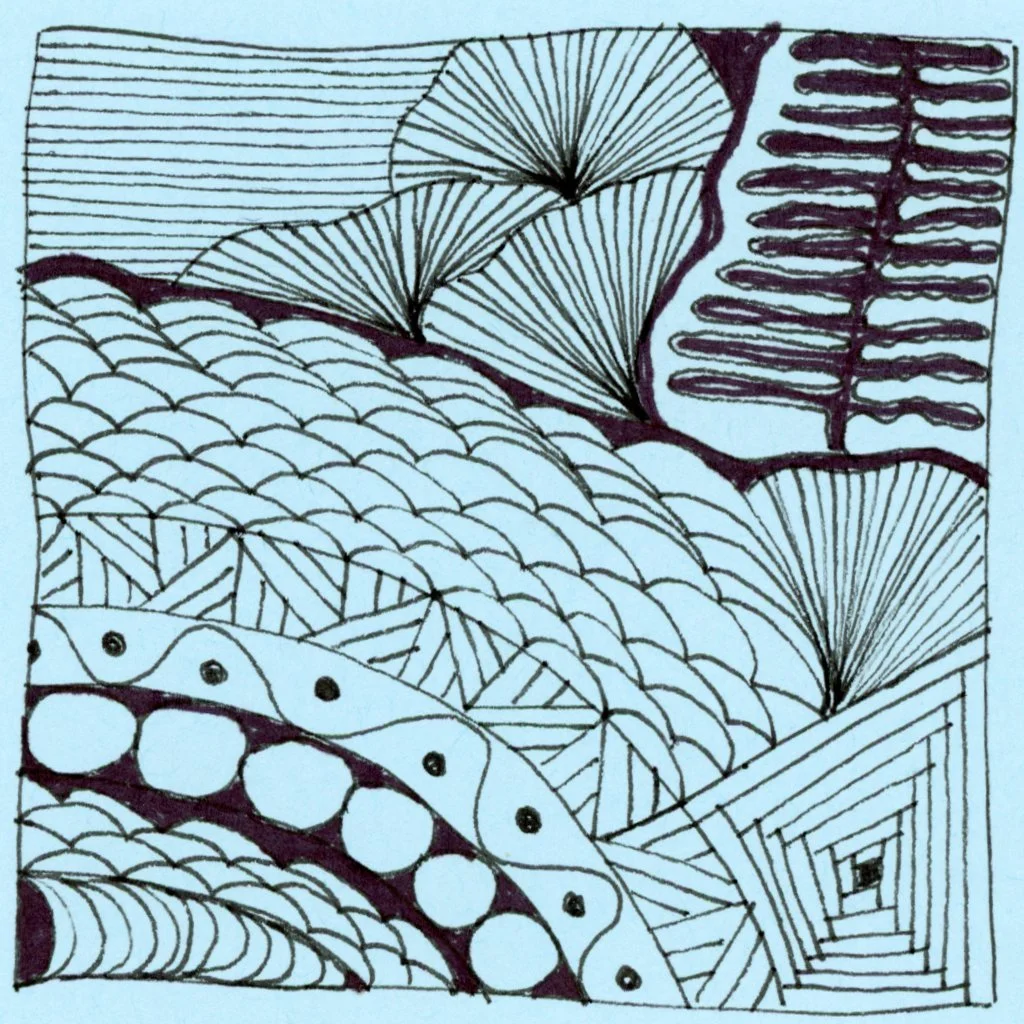
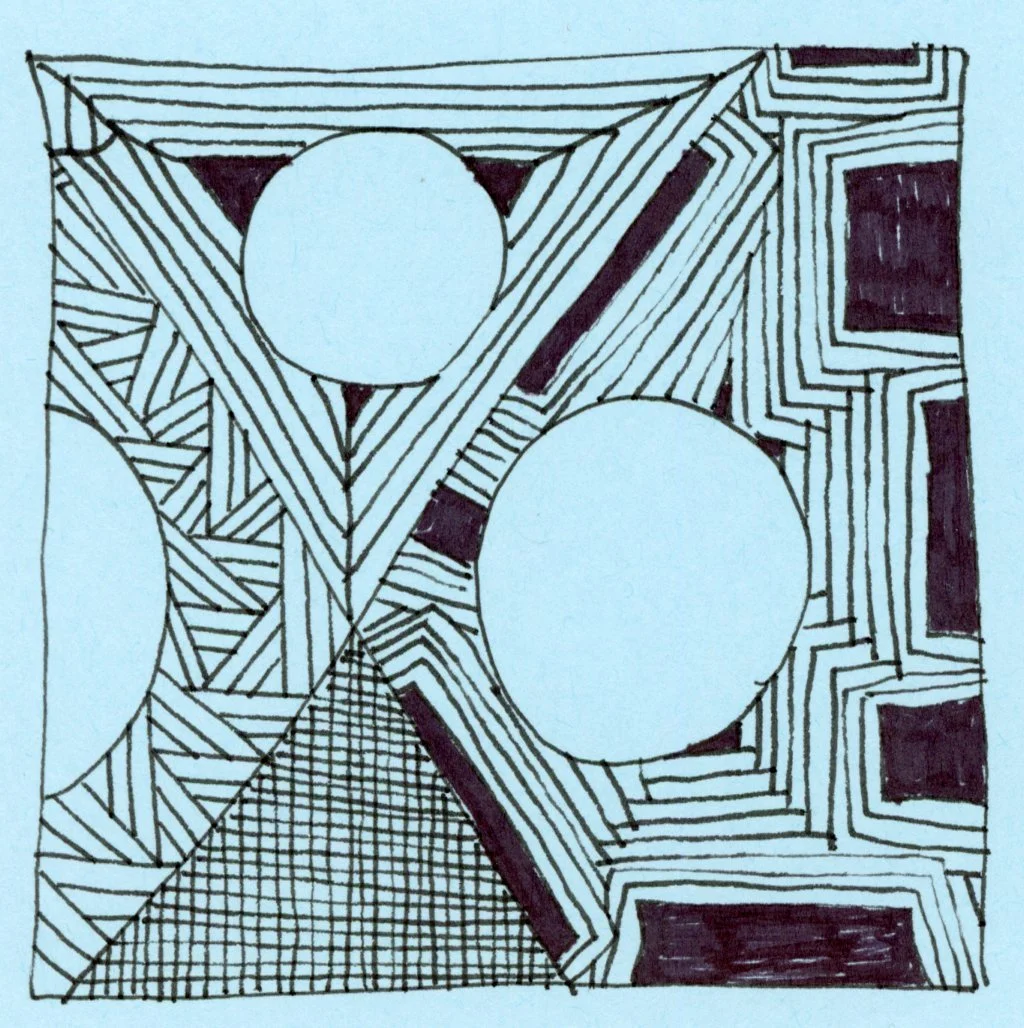
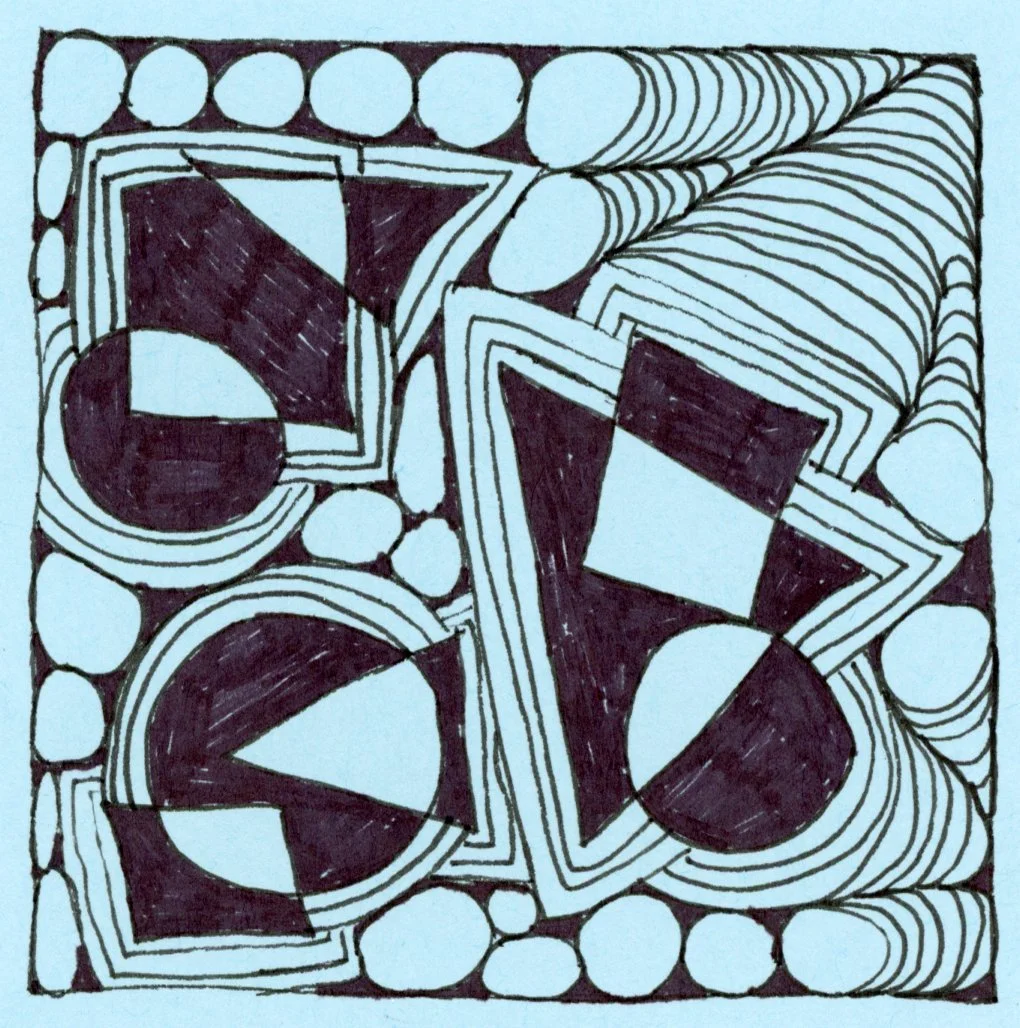
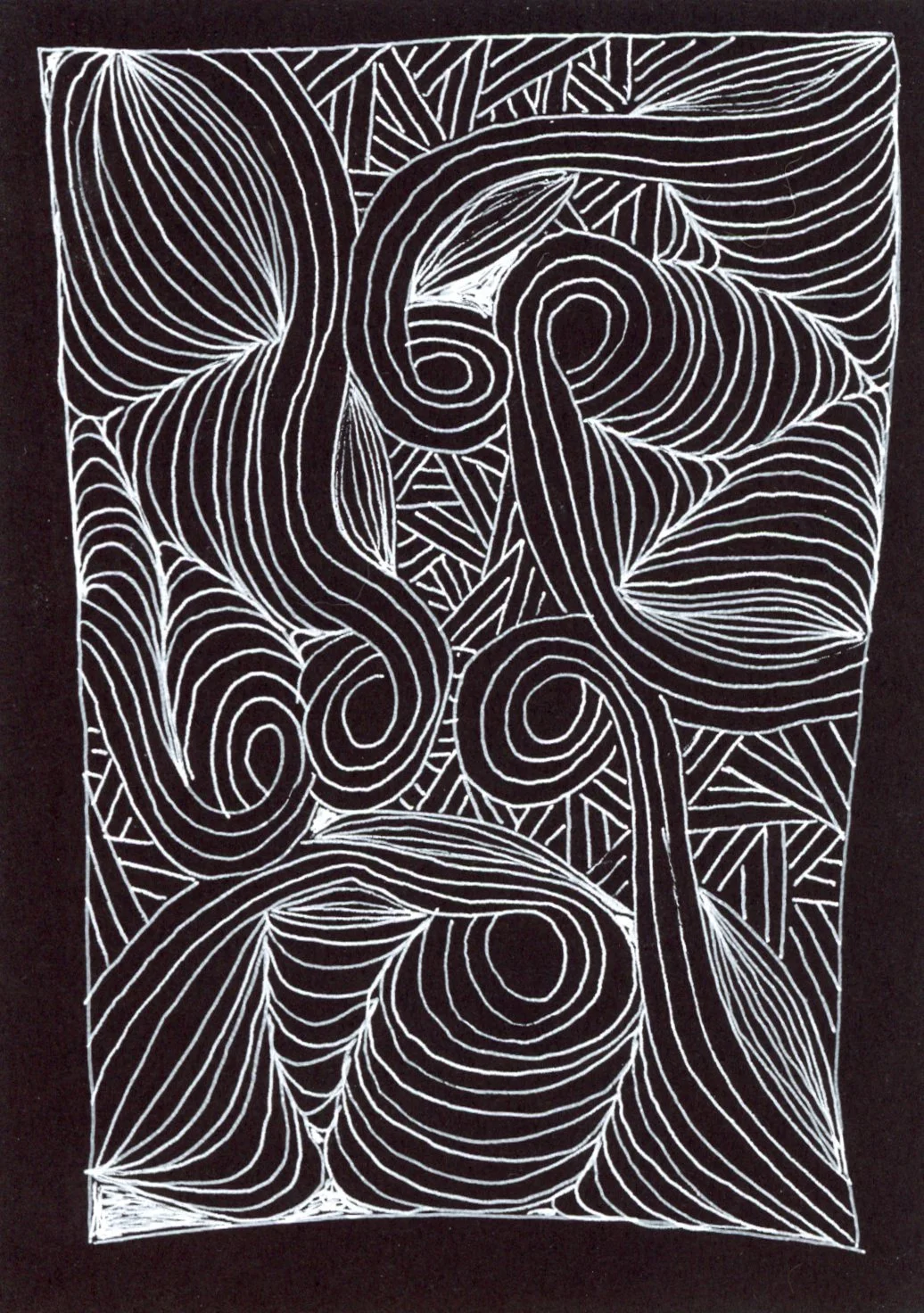
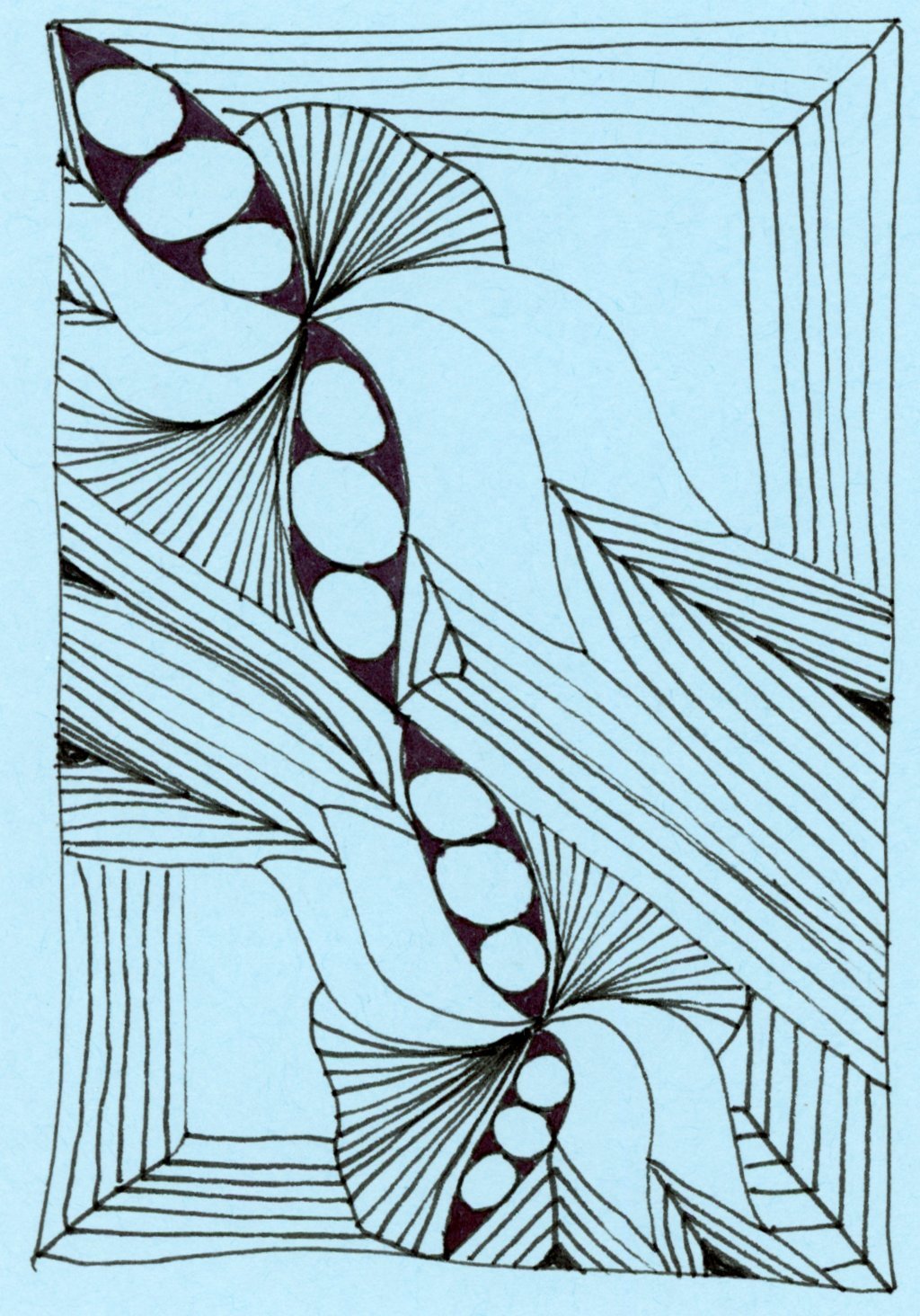
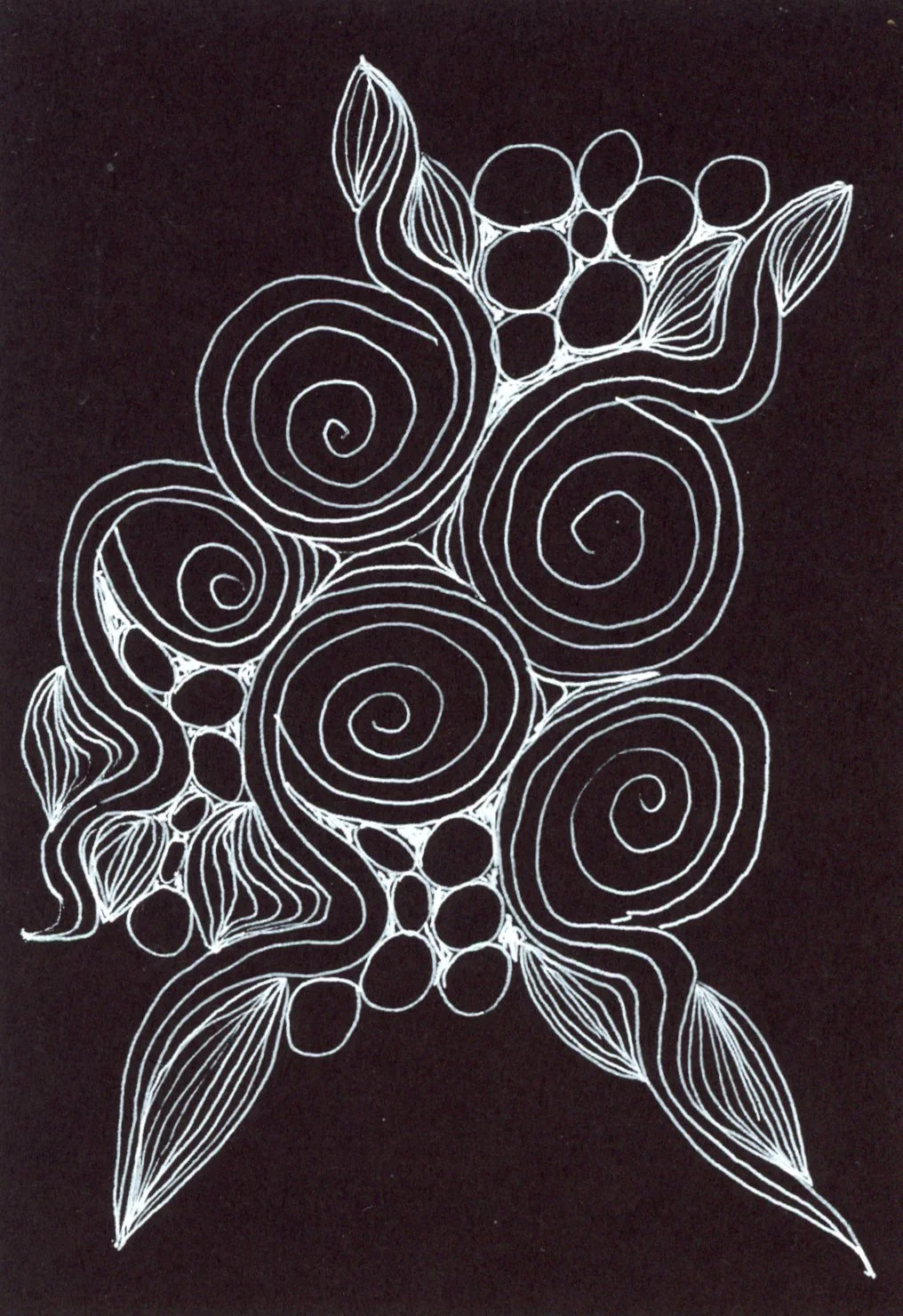
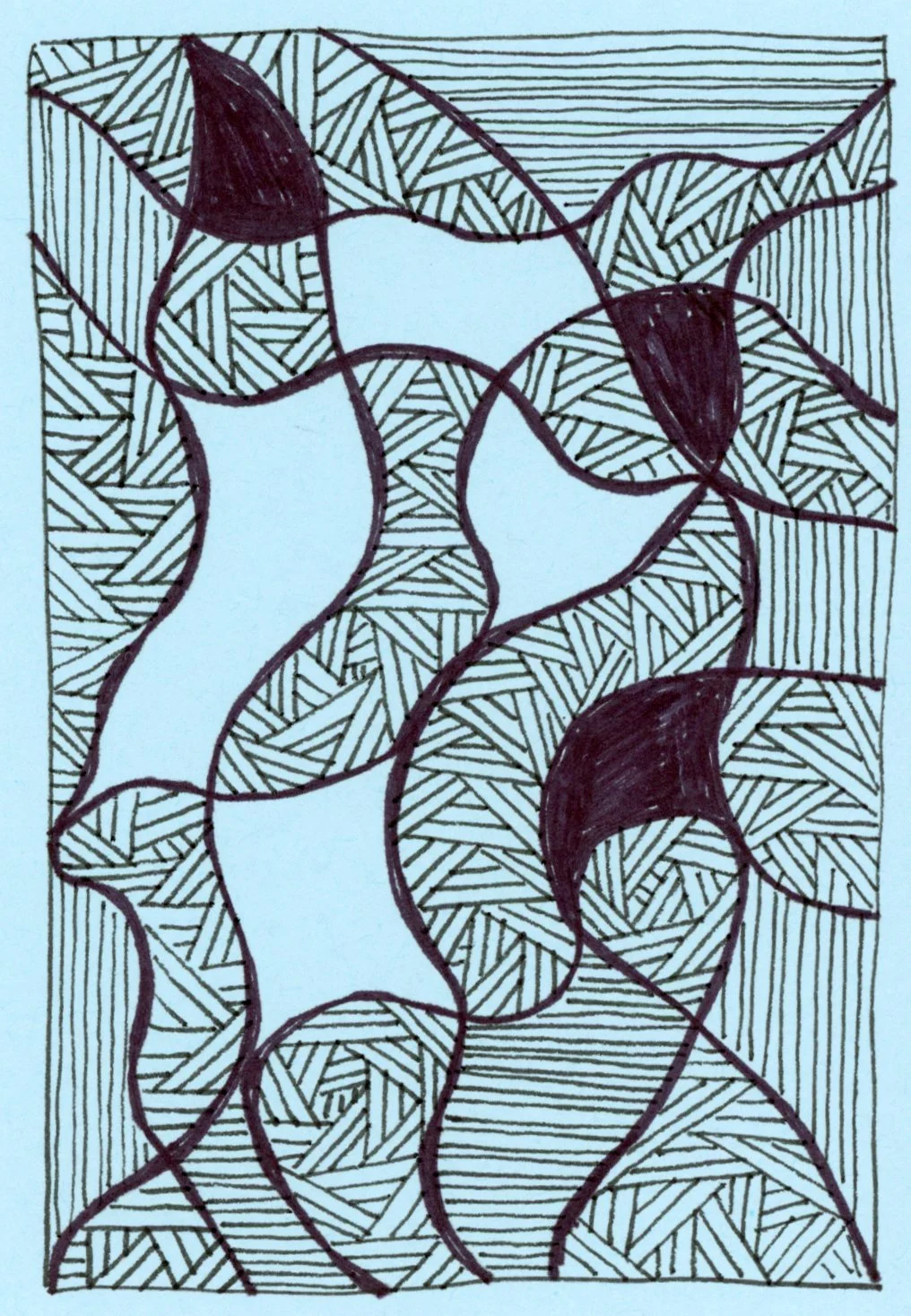
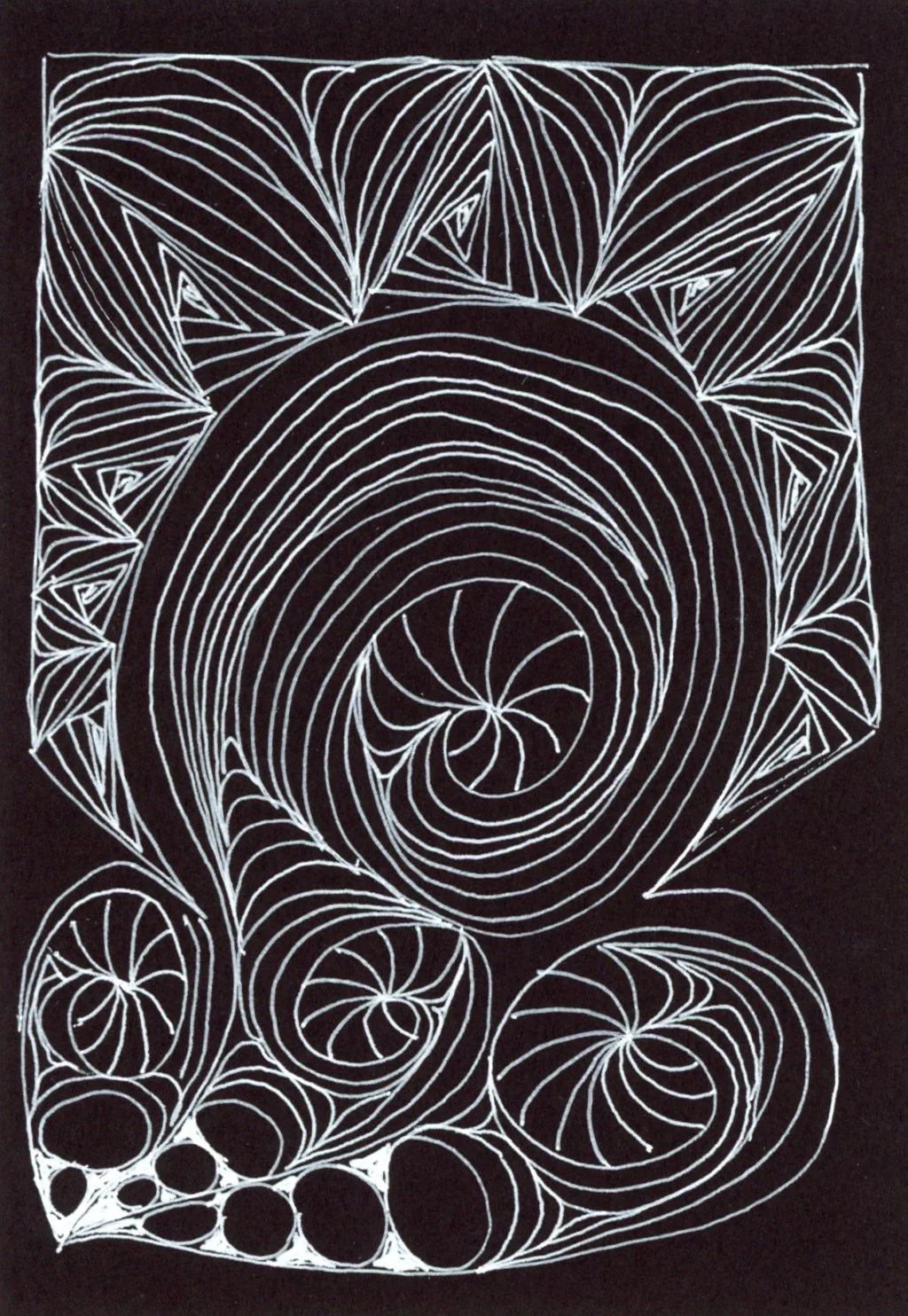
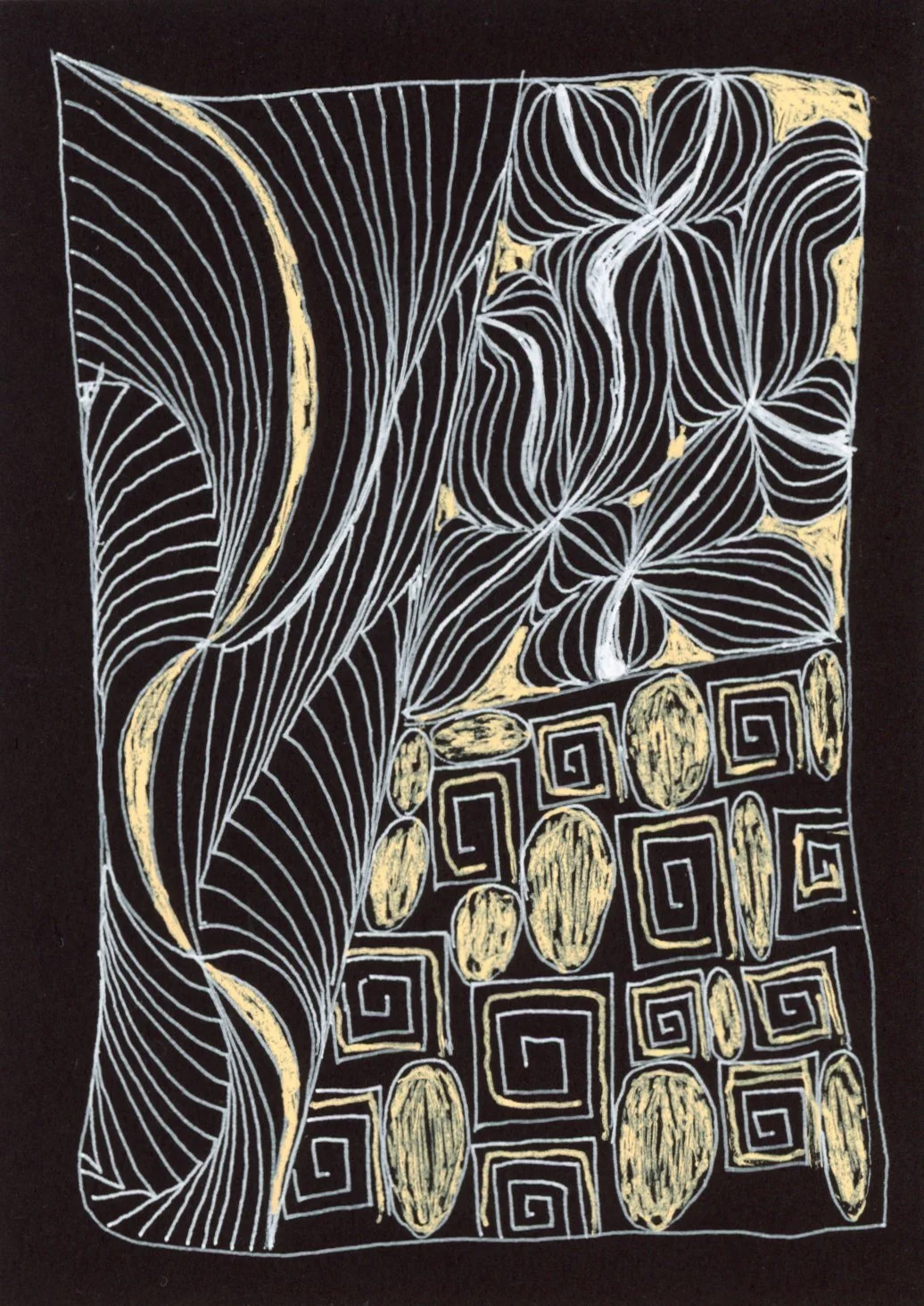
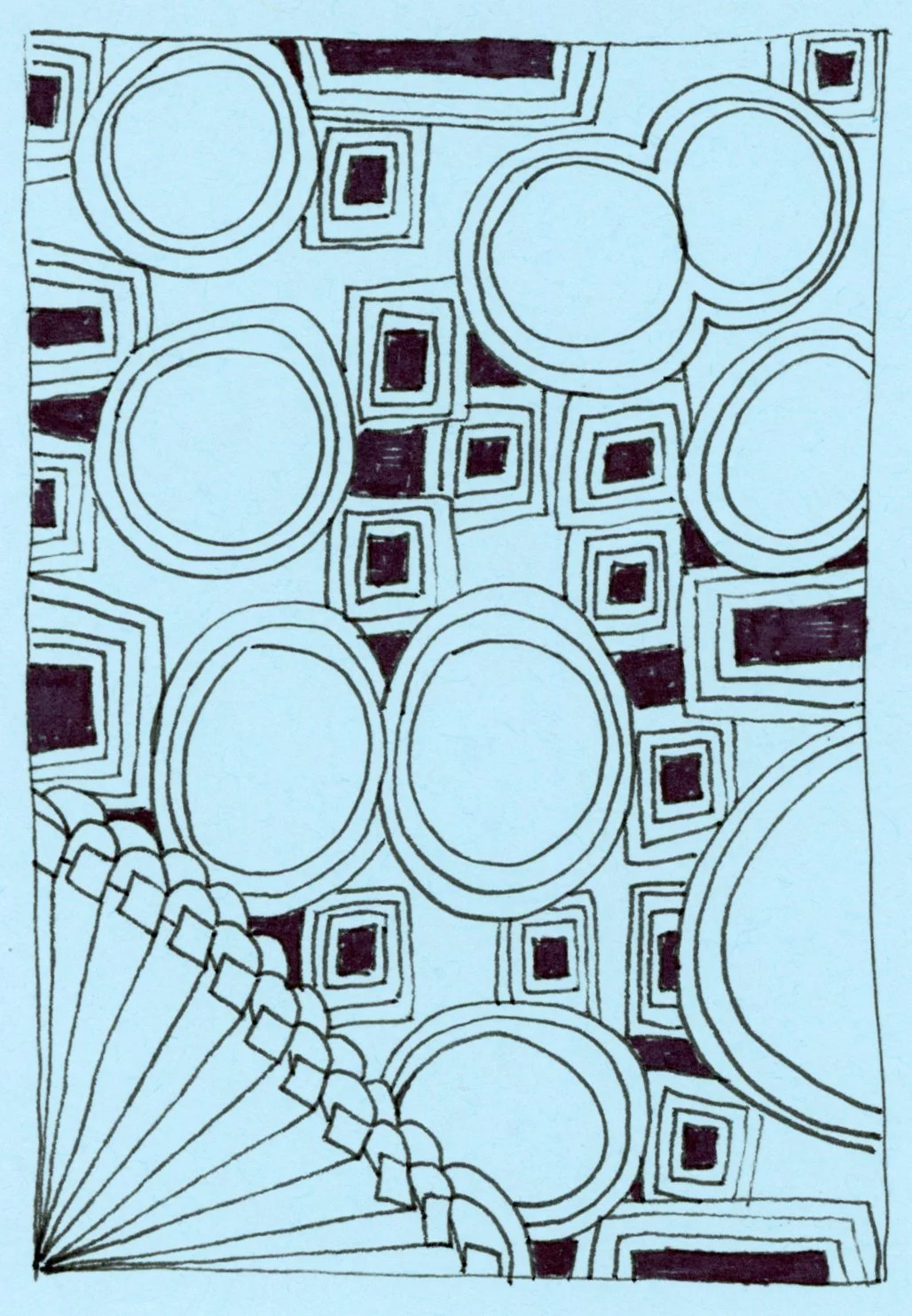
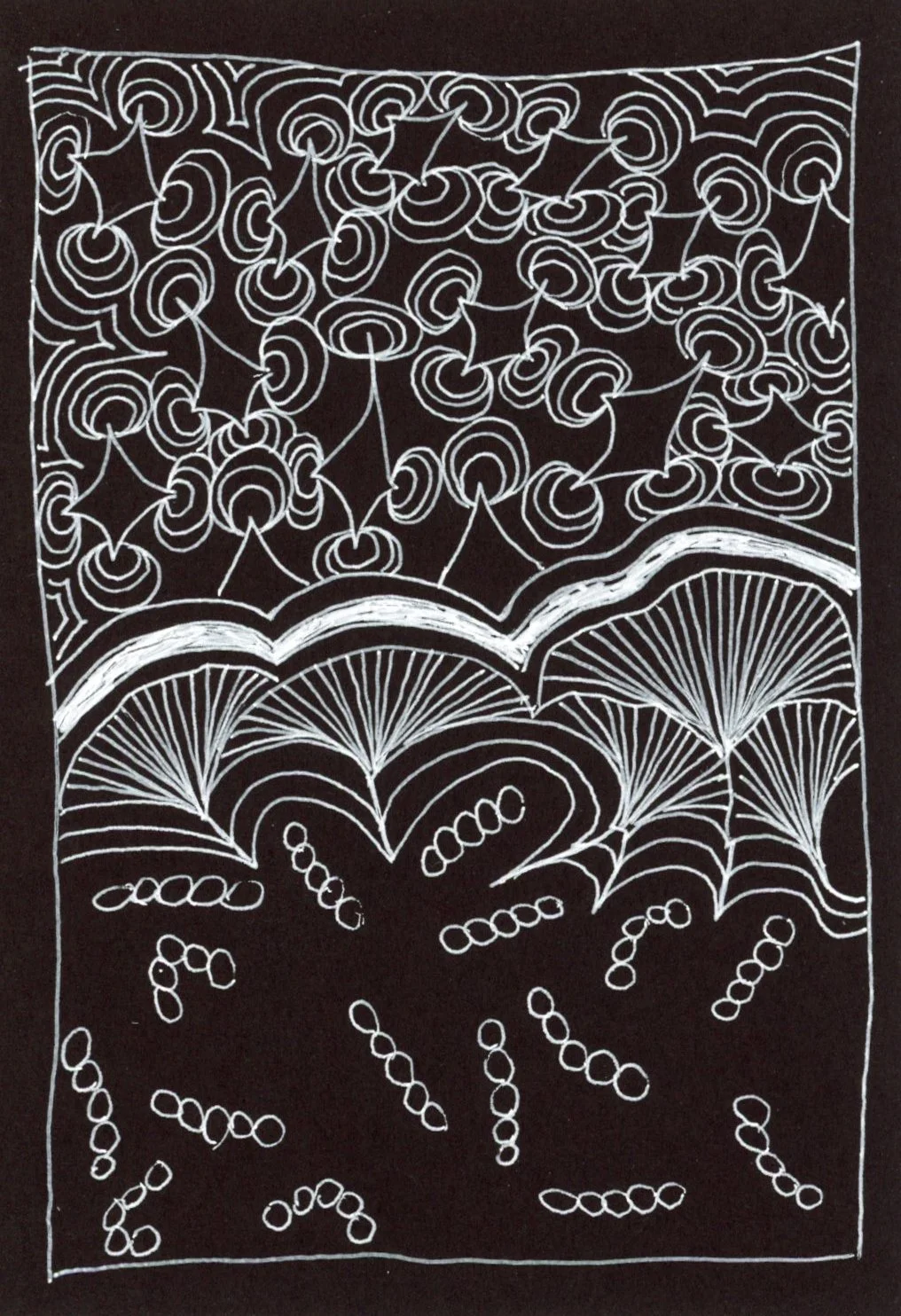
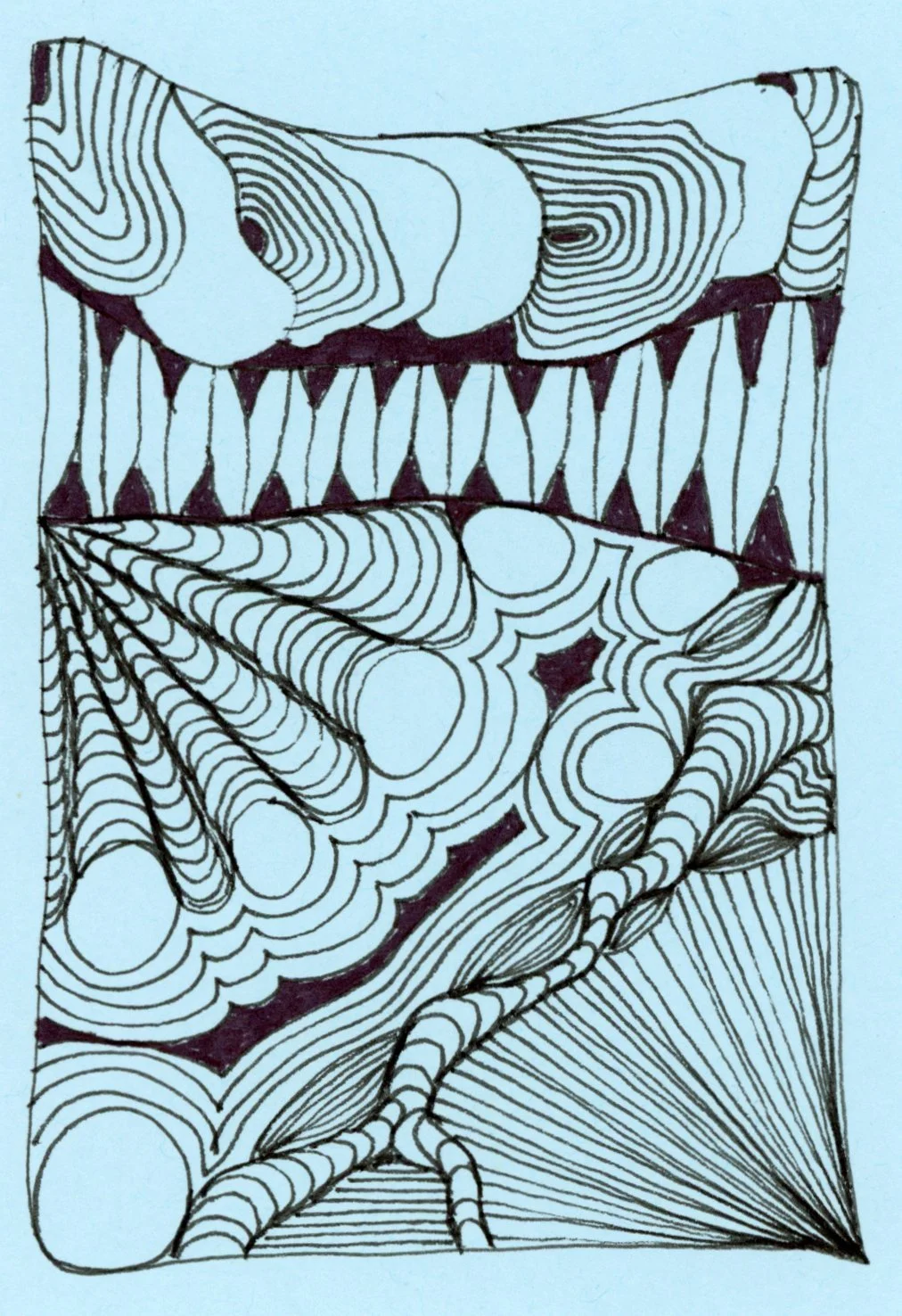
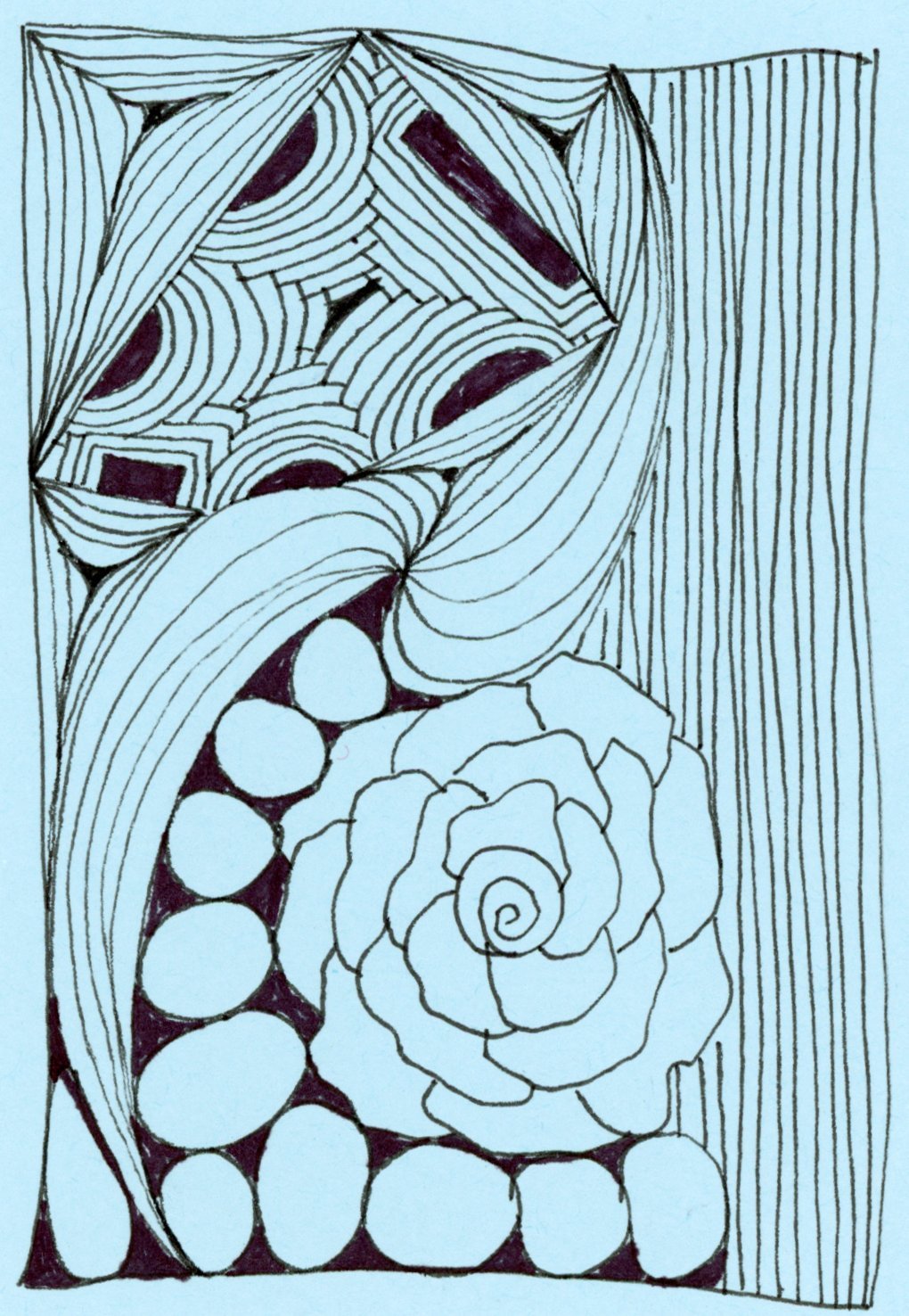
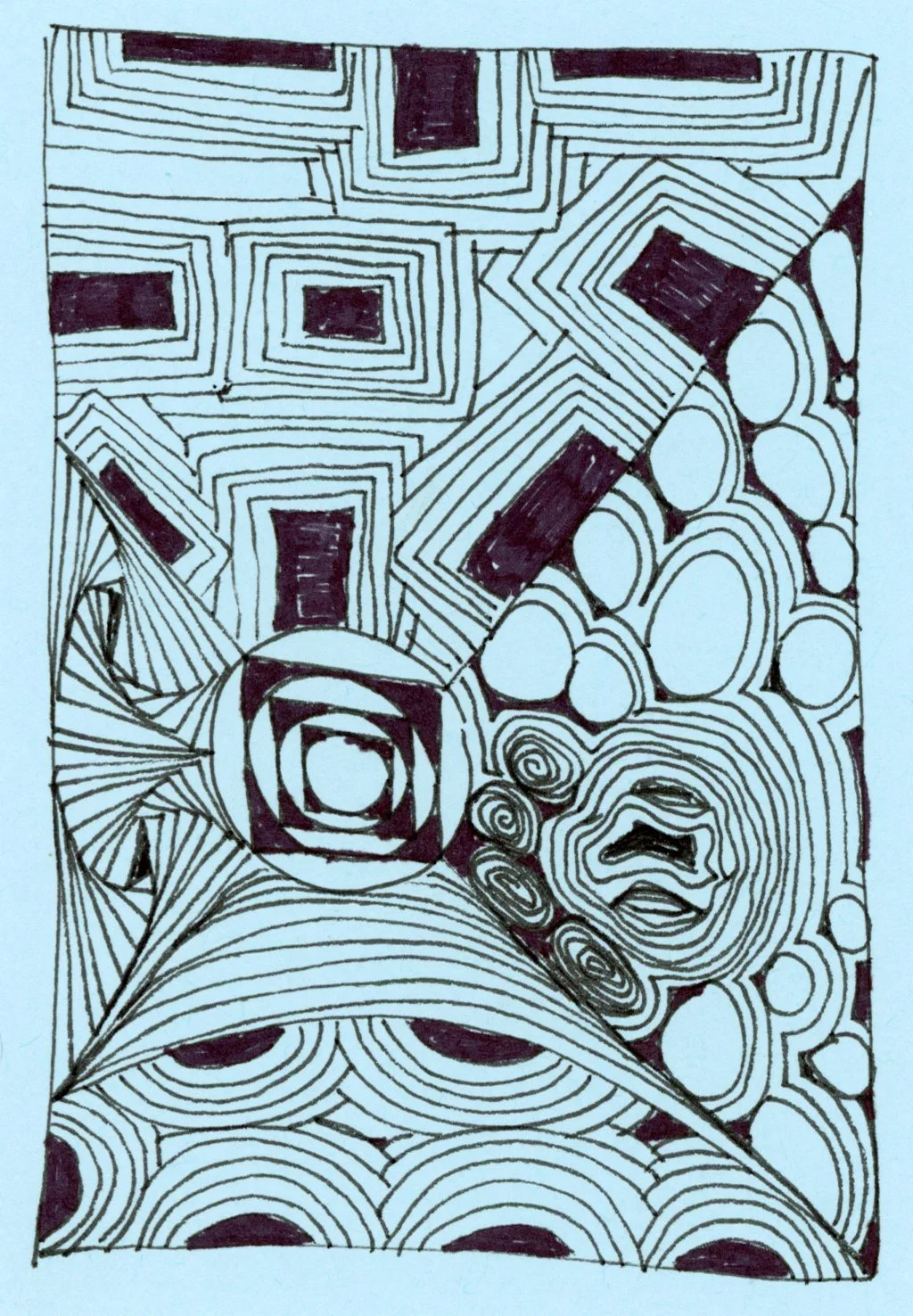
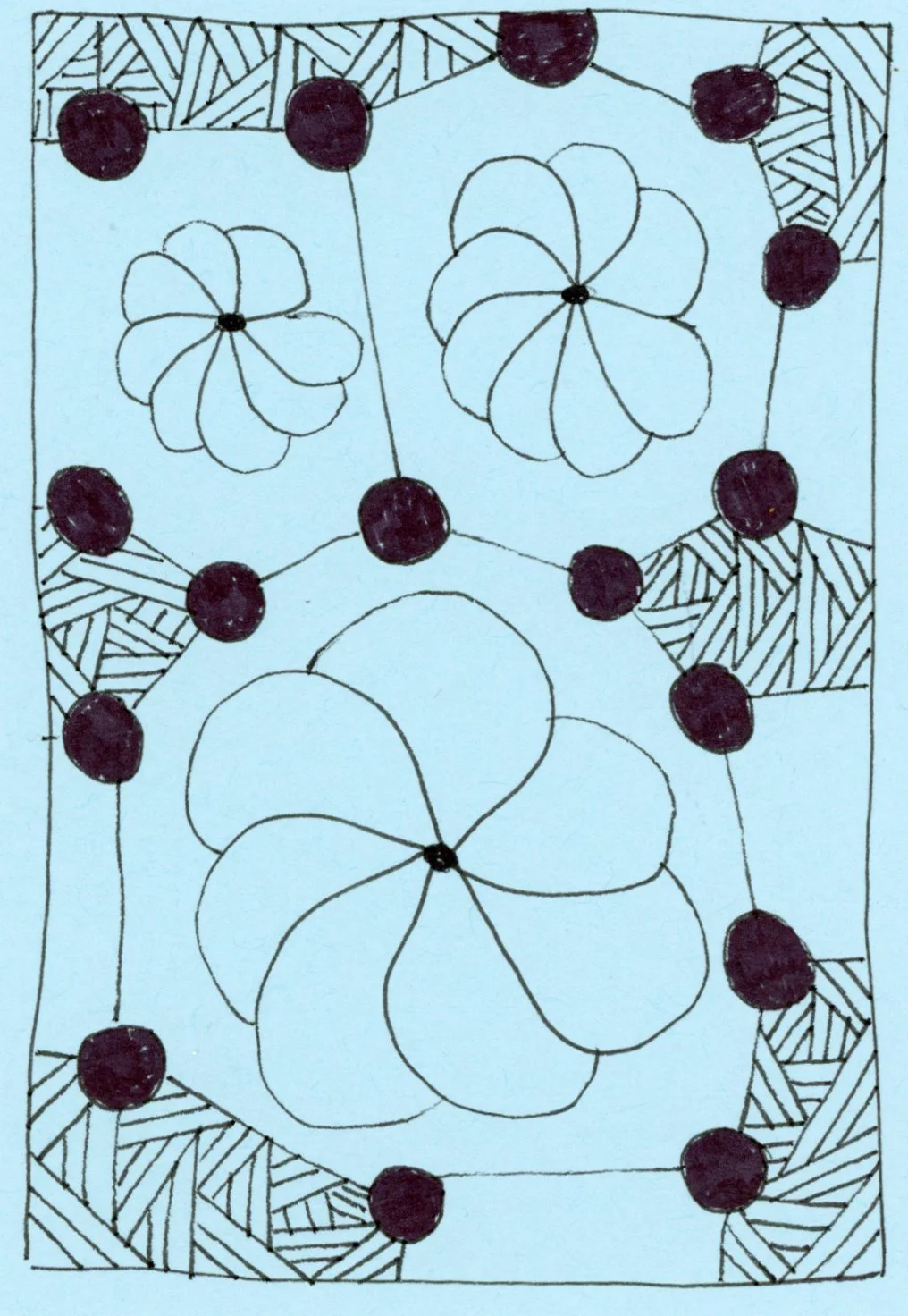
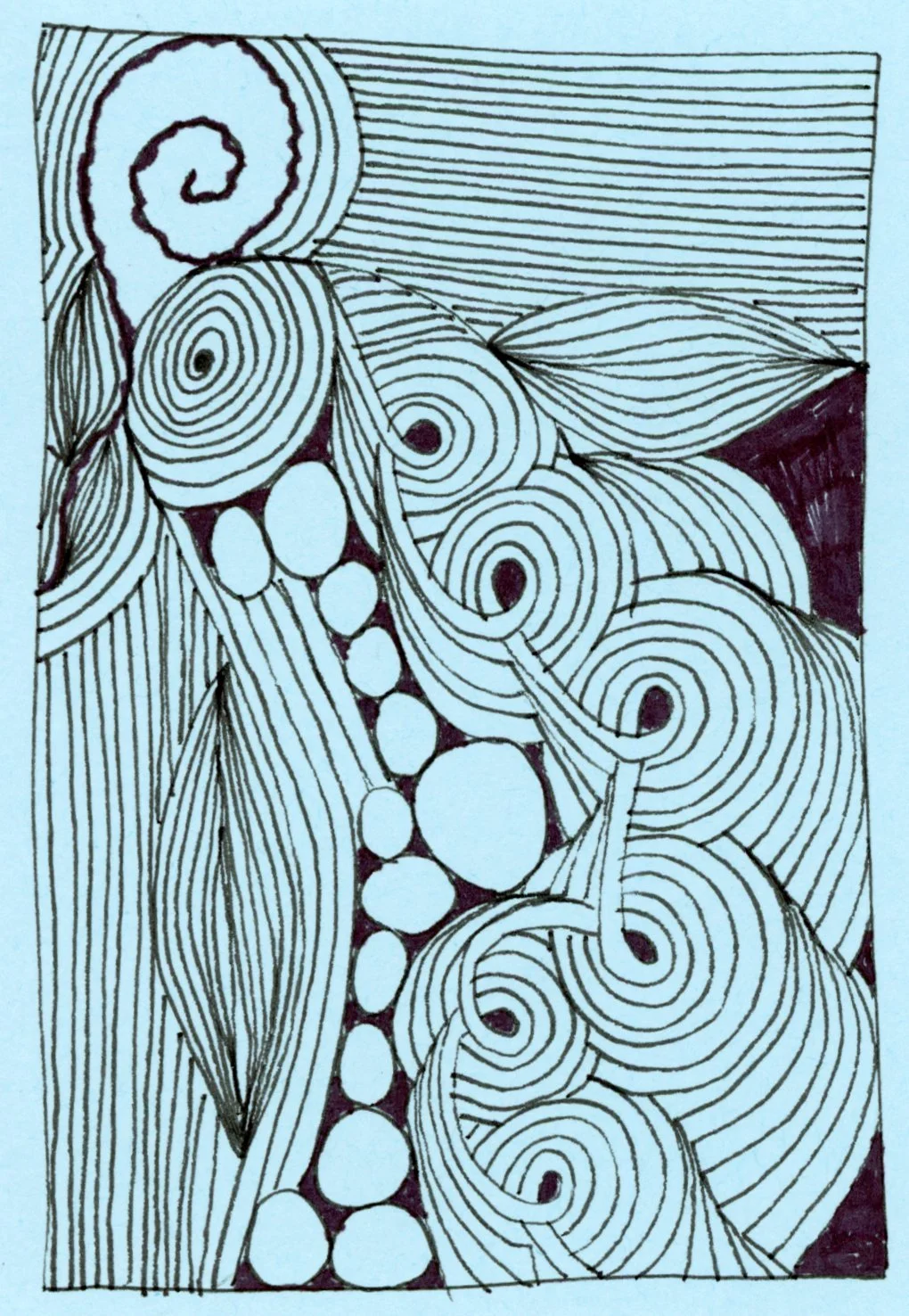
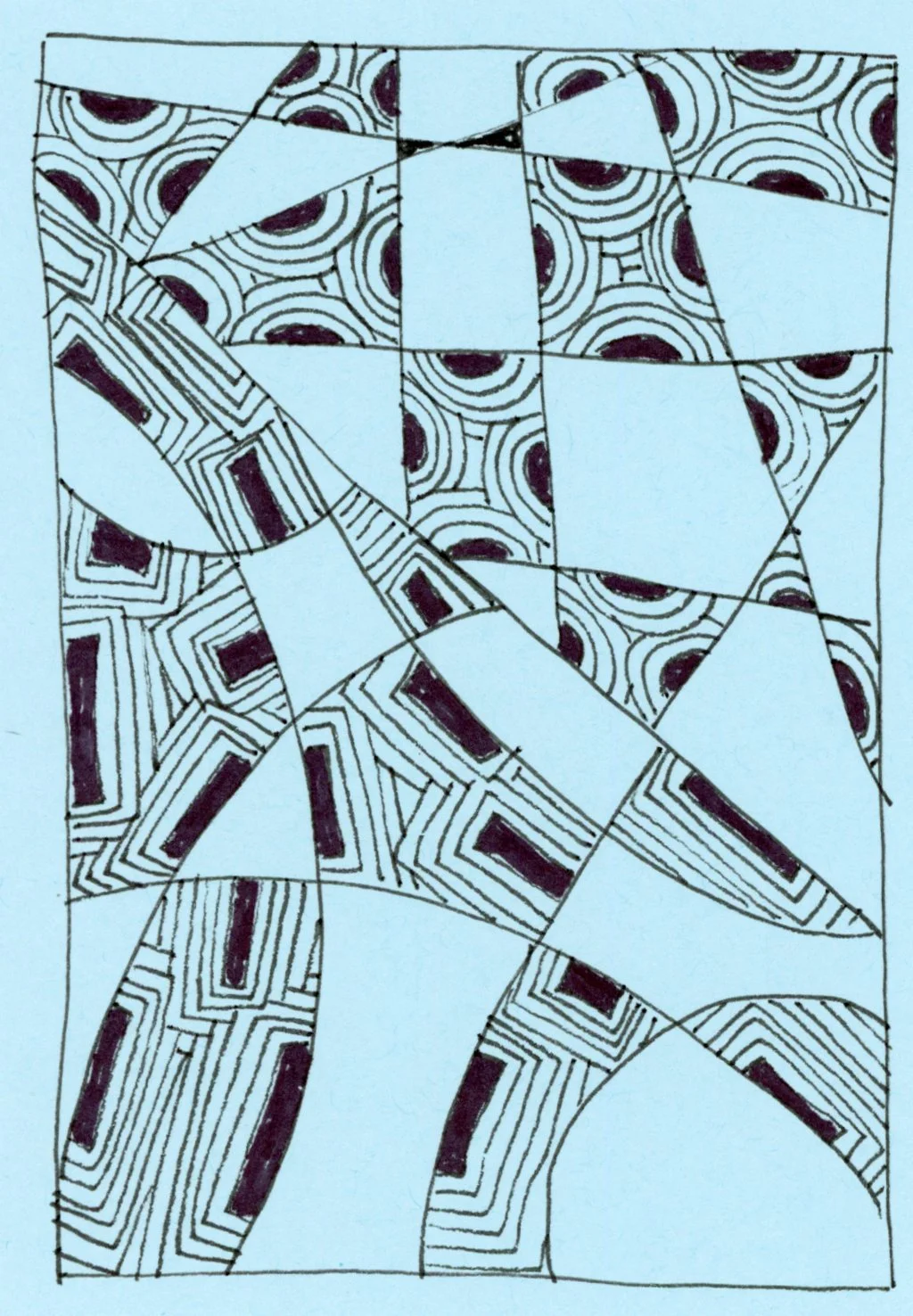
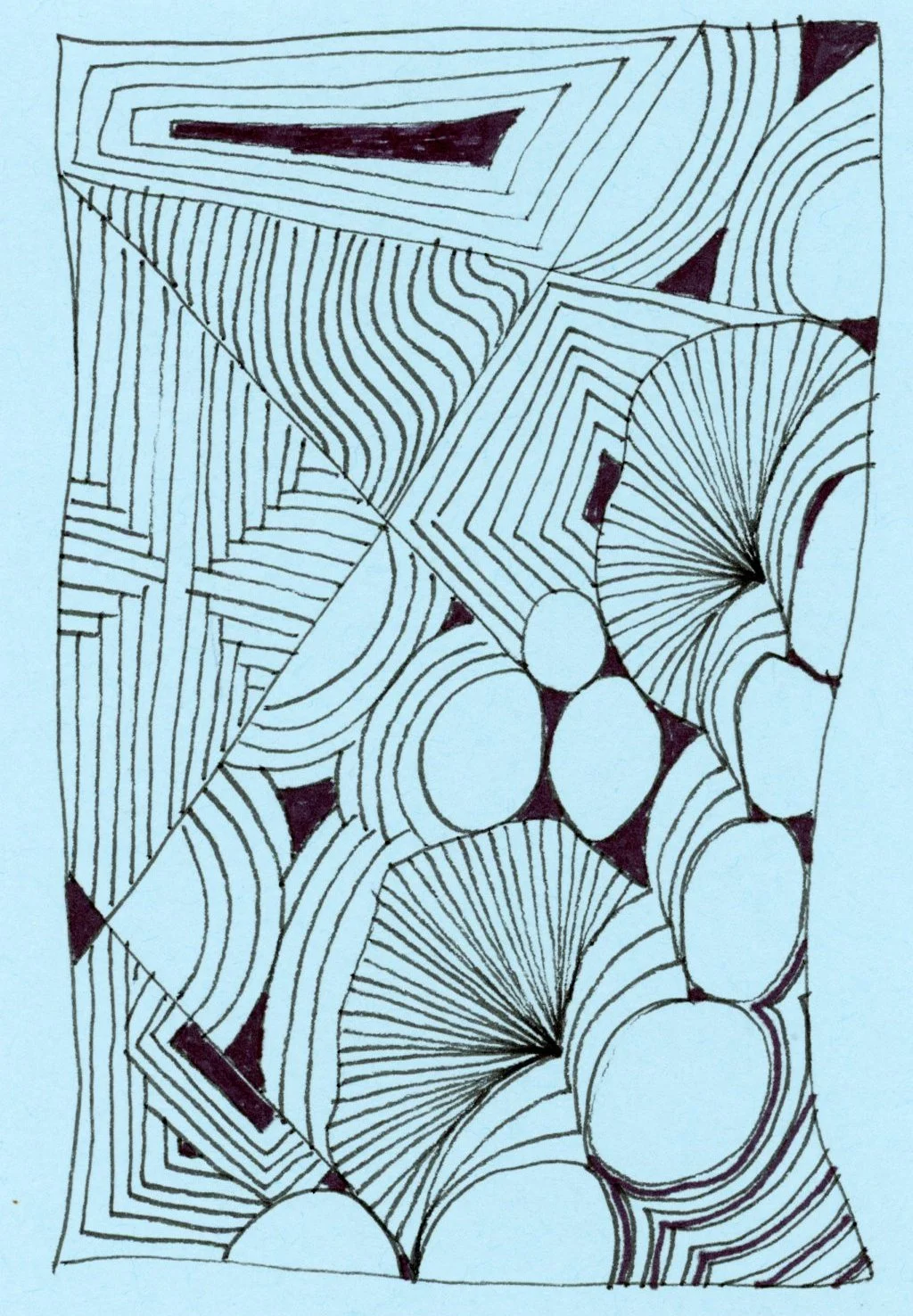
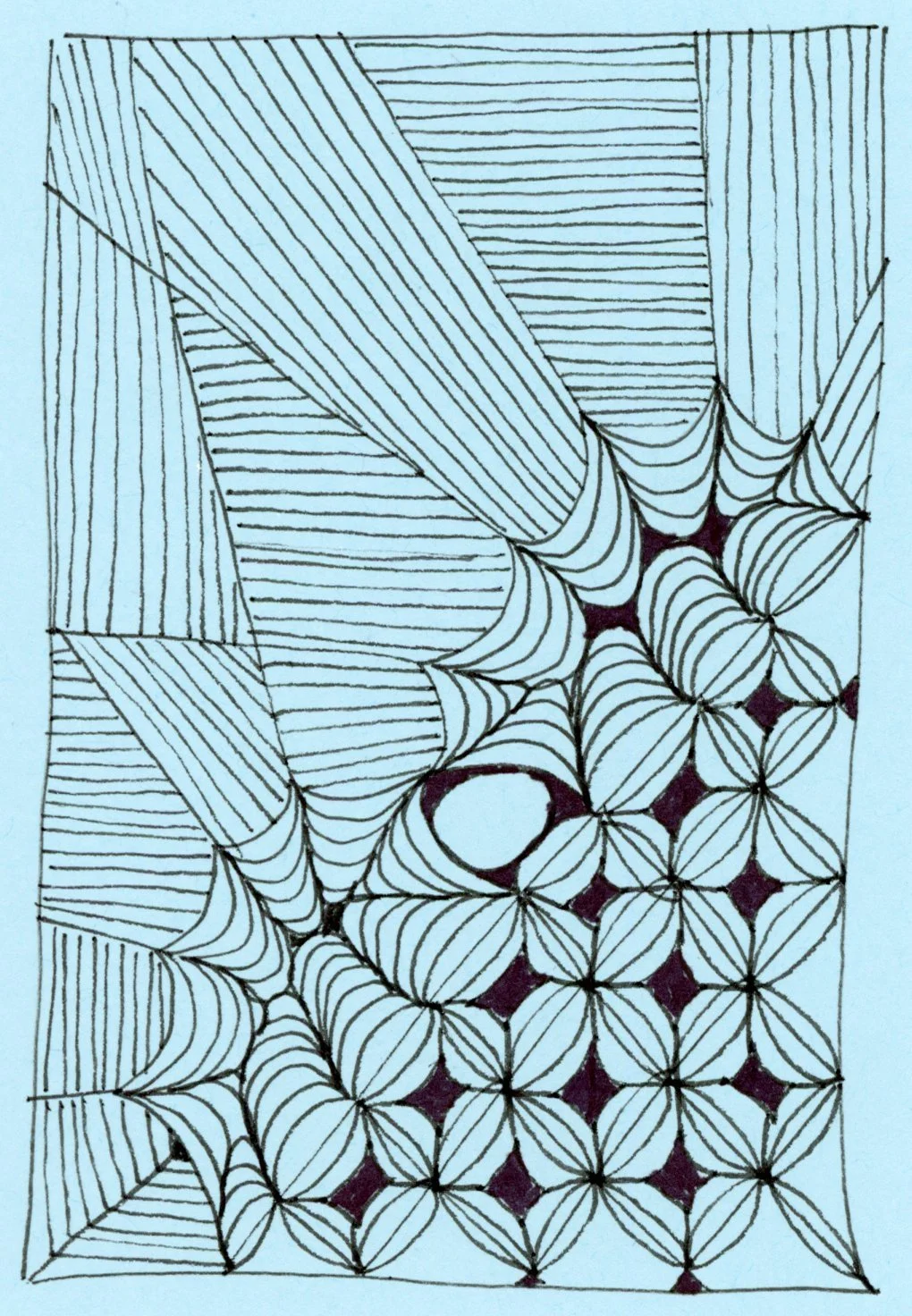
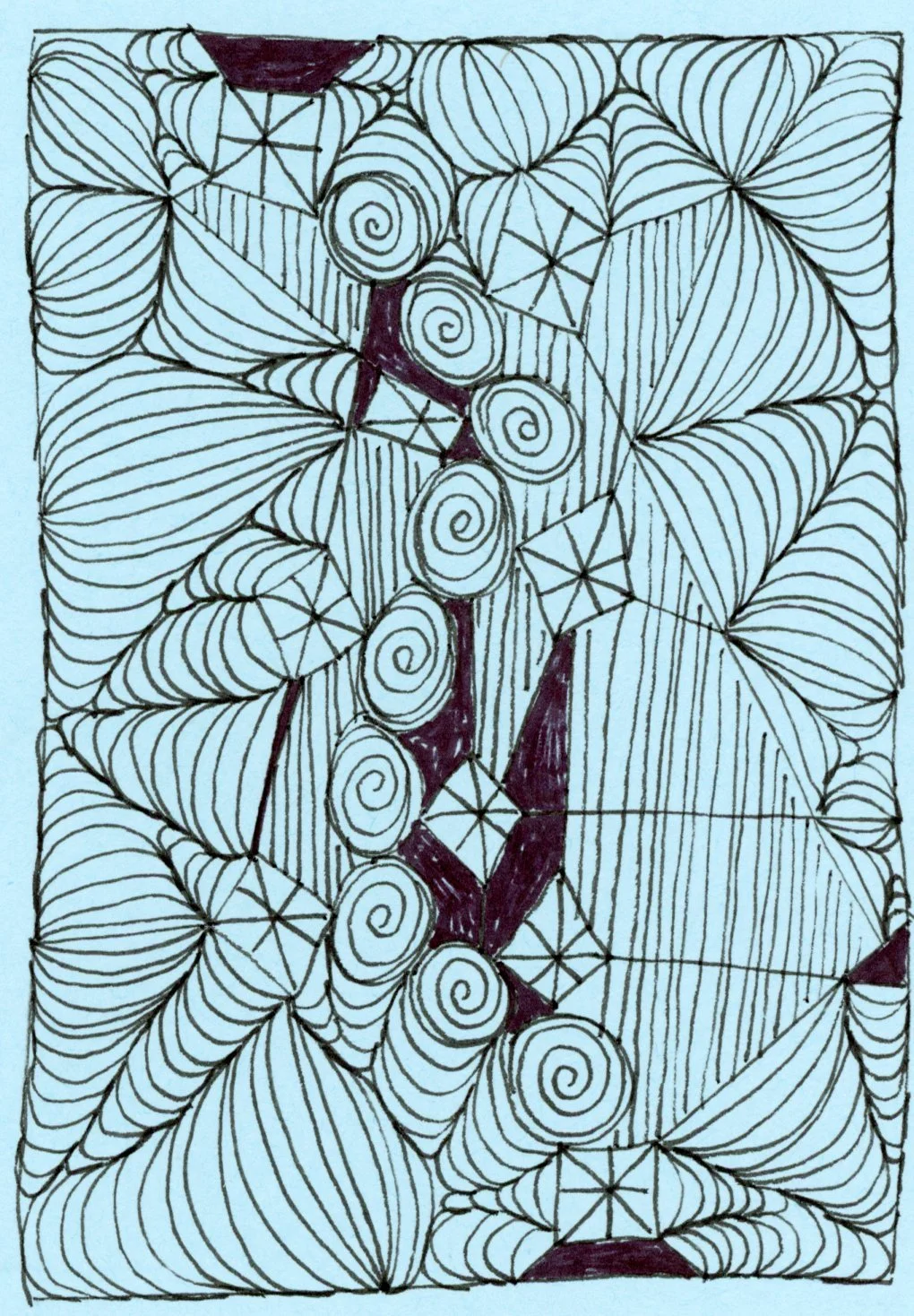
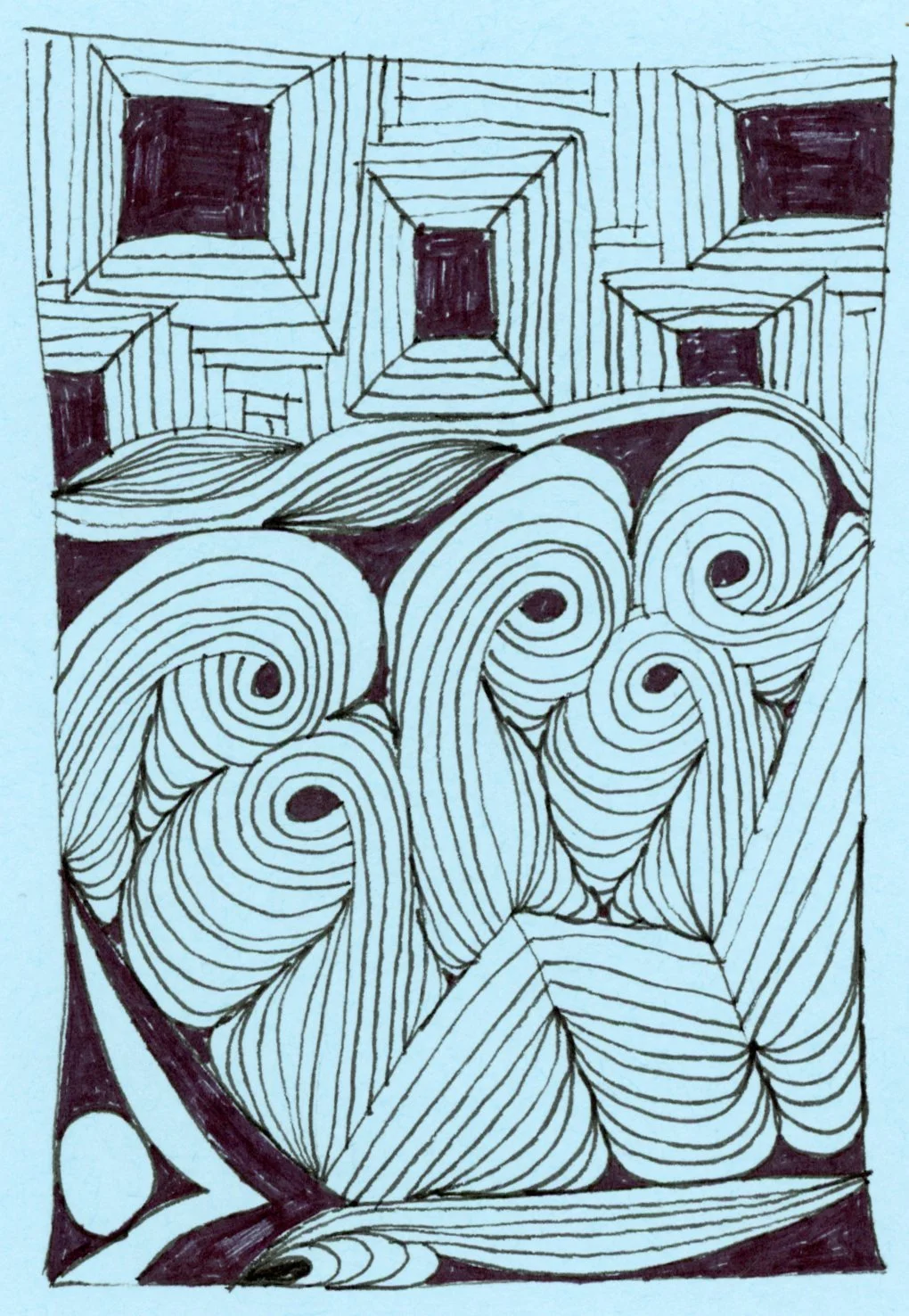
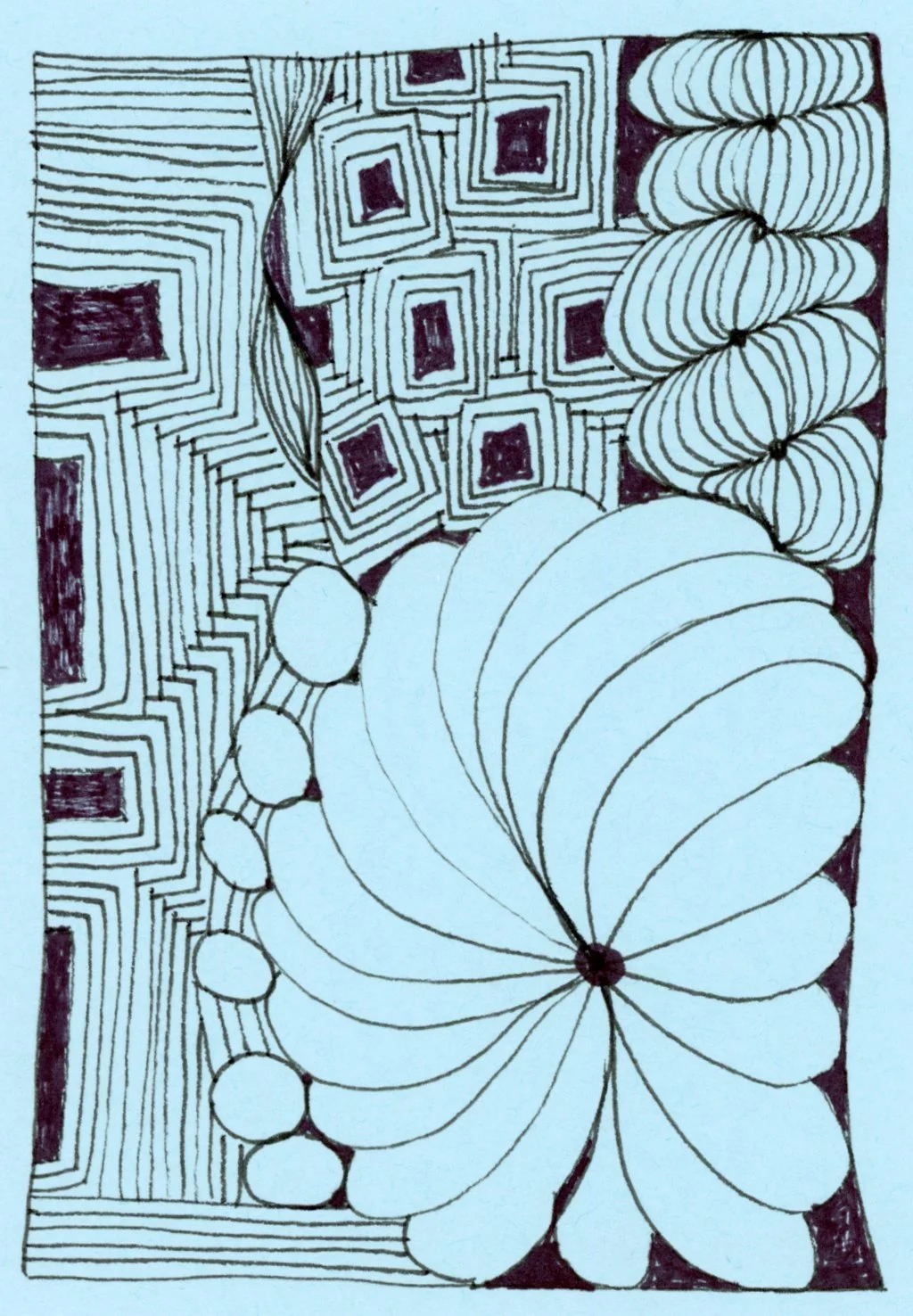
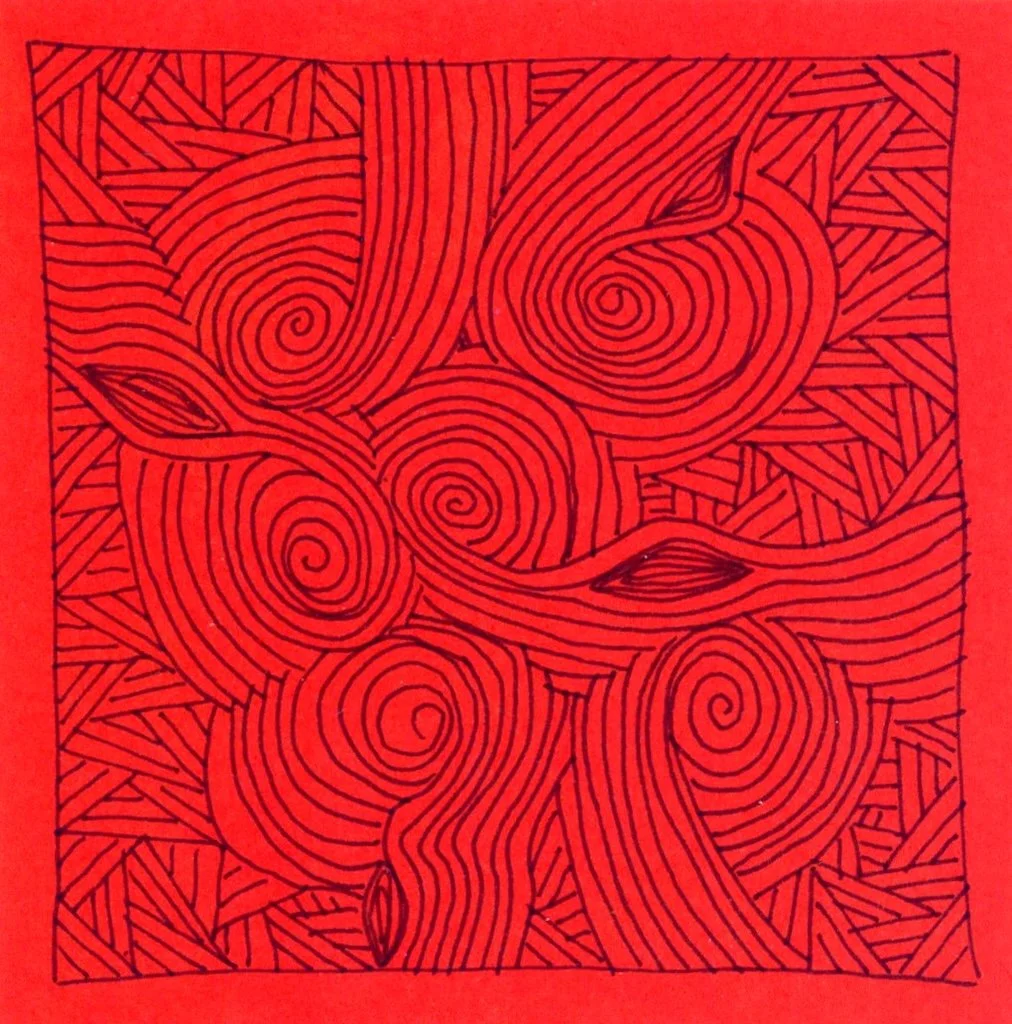
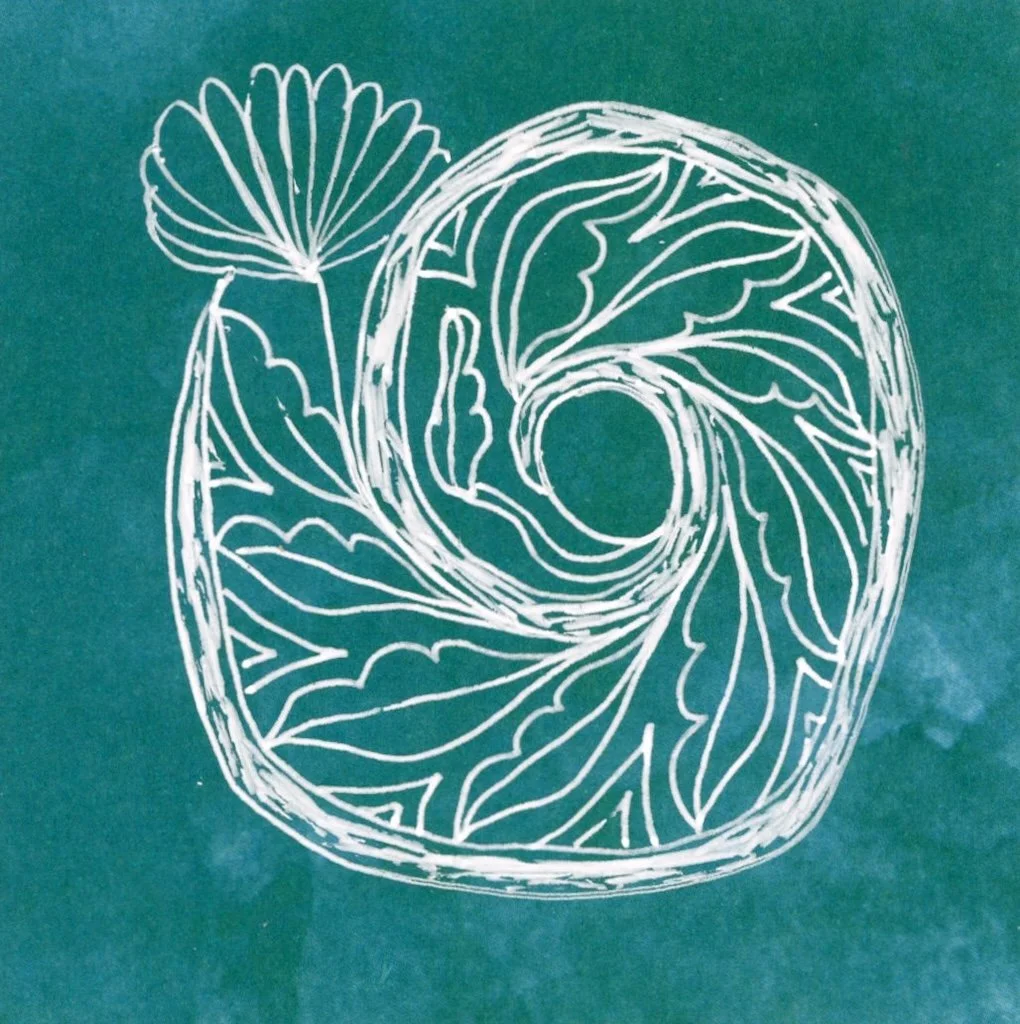
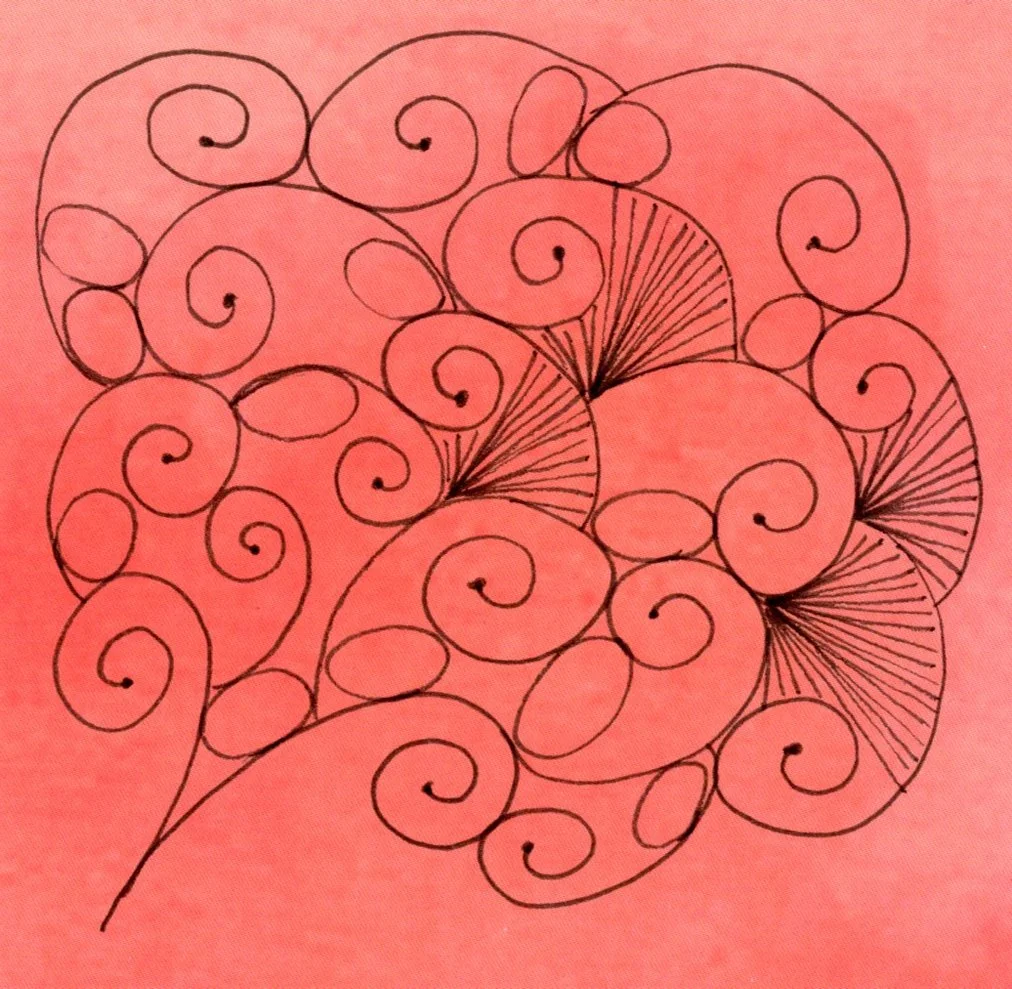
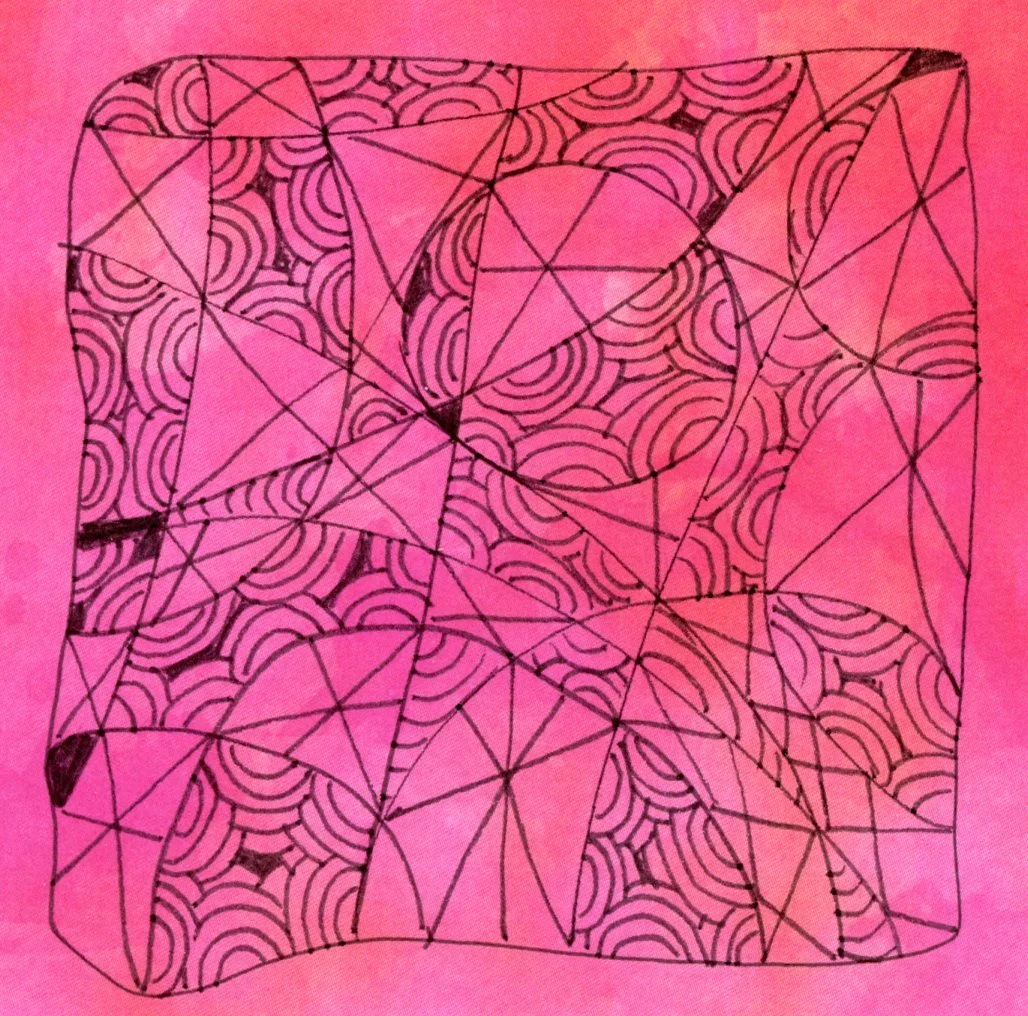
31 Zentangle tiles – one for each of the 31 days in January.

I chose to cut black and light blue cardstock for the month and skewed a bit toward the light blue as the month progressed. Most of the tiles I make are during the wind down of the day – the hour before bedtime. Many times my Garmin registers ‘rest’ during the time I am making them!

The Zentangle® Method is an easy-to-learn, relaxing, and fun way to create beautiful images by drawing structured patterns. It was created by Rick Roberts and Maria Thomas. “Zentangle” is a registered trademark of Zentangle, Inc. Learn more at zentangle.com.

Sustaining Elder Care – January 2026

We moved my father to a new memory care place in early November, and we are just now getting his medical care transitioned to a new provider (since the new place is out of range from the previous one). It has been harder than we expected and there could be other challenges we just haven’t uncovered yet.

He is still having some difficulty finding his way around in the new place without assistance. The size of the place, his worsening eyesight, and cognitive ups/downs are all contributing to our observations and reports from staff of almost daily incidents – him thinking someone else’s apartment is his, him losing the key fob to get into his room, and him saying that he can’t find his room.

One of my sisters noticed that he couldn’t get his belt buckle open…and closed again. Maybe it was threaded around his jeans the wrong way? I hope that was the explanation since, if it is not – we may be approaching a time when he will need assistance in the bathroom. A year or so ago one of my sisters bought him some pull-on pants that did not require a belt – but he didn’t like them at all. He likes his jeans with a belt and a button front shirt (short sleeves for summer and long sleeves for winter)!

His decline – mental and physical – is obvious…but not predictable. There are times that he seems to remember more but those times are happening less often. The decline of his eyesight is related. If he could see better, perhaps he would not get lost so easily even though his short-term memory has not been reliable for quite some time so the move to a new environment has been hard for him.

It is taking more effort for me to stick with my strategy of accepting him as he is in the moments when I am with him….try to encourage him to move about and talk. In the back of my mind when I plan my monthly road trips to visit him, I always think about making the best of the visit because it might be the last one.

Snack in Blue Tulip Glassware

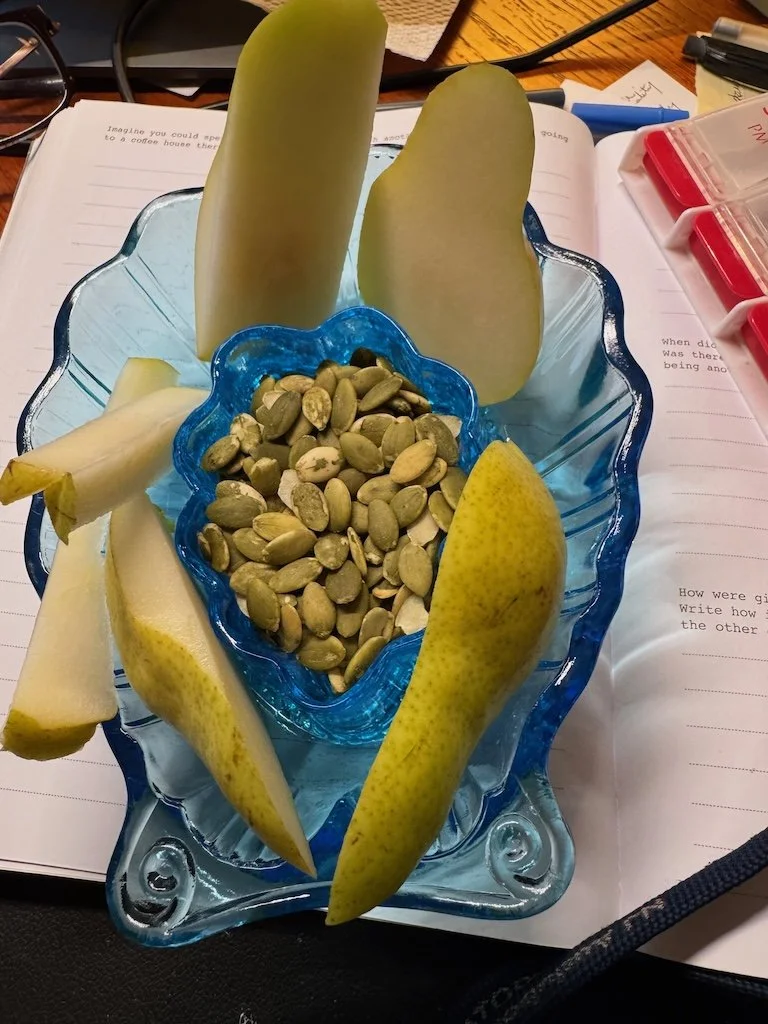
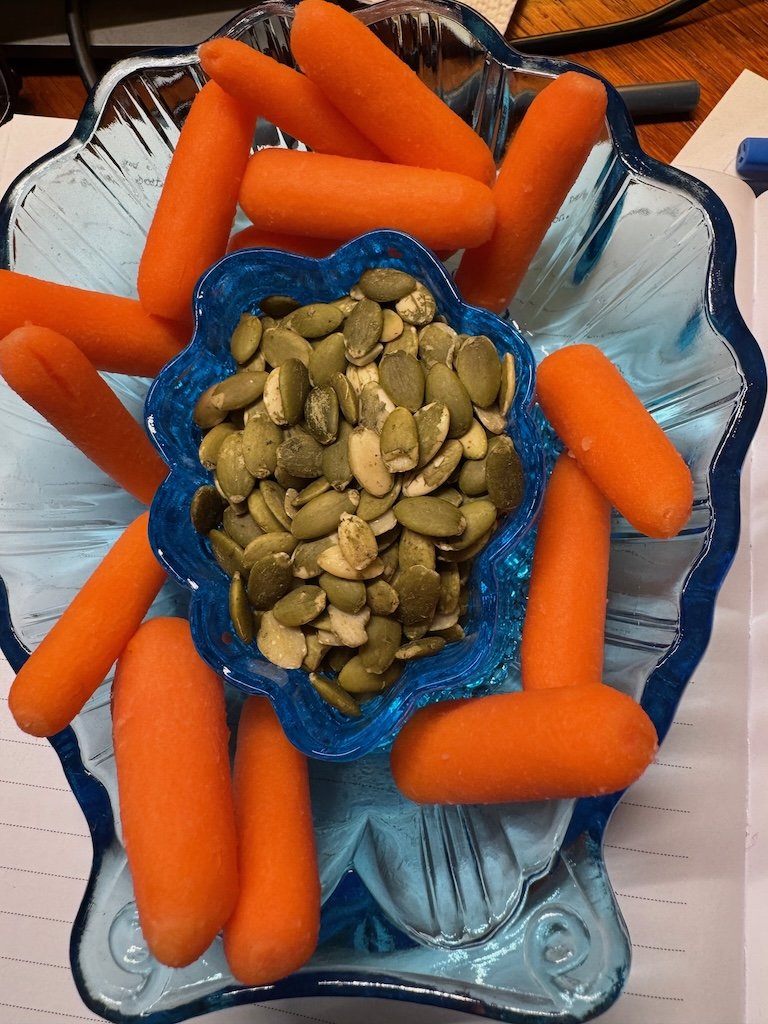
I’ve had my set of Blue Tulip depression glassware for over a decade now. It is special because of how I got it – from some friends of my parents (from college onward) that collected it when they retired and sold it to me when they downsized from their last house. Although I don’t use the dinner plates very often – I do enjoy the small pieces frequently because they encourage smaller portions. One piece that I have only started using recently is in the shape of a shell with a center area for dip/sauce; I like pumpkin seeds in the center and fruit/veggies around the edge. It is just the right size of a hefty snack (when I am not hungry enough for a full evening meal).

The memories are a bonus – summertime visits with their family which included a daughter my age…observing a career dietician for small hospitals in action and the field work of a soil conservation professional in the 1960s. I remember outings with them to amusement parks and overnight visits to state parks in Oklahoma….digging up salt crystals at the lake near Cherokee, Oklahoma. The friends of my parents and their daughter are gone now – the last one going before my mother; my dad doesn’t remember them. I remember…and the Blue Tulip glassware is a wonderful reminder.

Fifty-third Wedding Anniversary

Still together after 53 years….

Our anniversary is not a big celebration in January; we don’t buy gifts; usually we just go out for a nice meal. This year my only requirement was that it be a place with interesting desserts. We chose The Village Inn in Springfield. He got pancakes and I got key lime pie.

I’m thinking about how we are accommodating each other more as we age.

  • Right now, he has a wrist bothering him, so I am doing more household chores that require two hands.

  • He keeps a pillow in his car for me because I haven’t been able to adjust the front passenger seat to avoid my back hurting on road trips.

  • Over the past year we have both sat in medical waiting rooms – doing the driving to and from an outpatient procedure.

  • When we travel, we both like to stop about once an hour; neither one of us likes to sit for a long time.

  • I do the grocery shopping, and he does the shopping at Home Depot/Loews and Wild Birds Unlimited (although I am loading the bird feeders with seed and putting the groceries away right now because those are two-hand jobs). In years past we shopped together but now we both enjoy the independence.

  • He has allergies to a lot of household products which we have been working with for a few years. That is dovetailing with my efforts to reduce plastics/microplastics in our household.

  • When one of us is on a solo road trip, the other is tracking progress with the Find My app. This is the one item on the list that we might have done earlier if the technology had been available.

  • When we travel, I always make the hotel reservations and pack the ice chest (mostly things for him these days). He always makes sure the car is ready to go and does all the driving; I keep volunteering to trade off driving, but road trips are generally more restful for me since he still wants to do it all.

As we get older, there will be plenty more accommodations we’ll develop for ourselves and each other. We’re already a lengthy marriage…have no plans of cutting it short!

2025 in Review

As the year winds down, I am looking back at 2025 and realizing that while there was no major life pivot point, there was a lot to going on.

Over the course of the year, we replaced three appliances: refrigerator, hot water heater, and dishwasher. None of that was planned. There was some inconvenience, but we appreciated that the separate apartment in our basement has its own version of all three…reducing the impact. Still – we realize that we should plan for other future maintenance needs. I’m not sure whether the roof or the HVAC will be next.

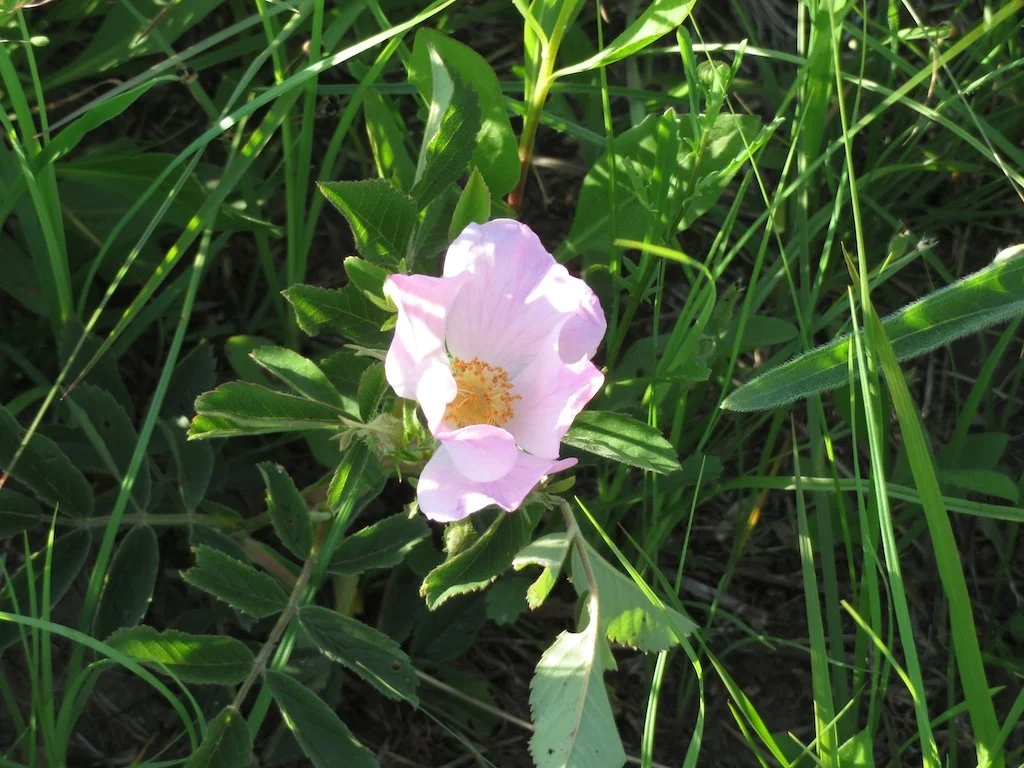
I continued my exploration of Missouri – focusing on prairies during the spring and early summer; I signed up for walks in 4 prairie remnants in southwest Missouri and seem to have learned to ID some plants I saw.

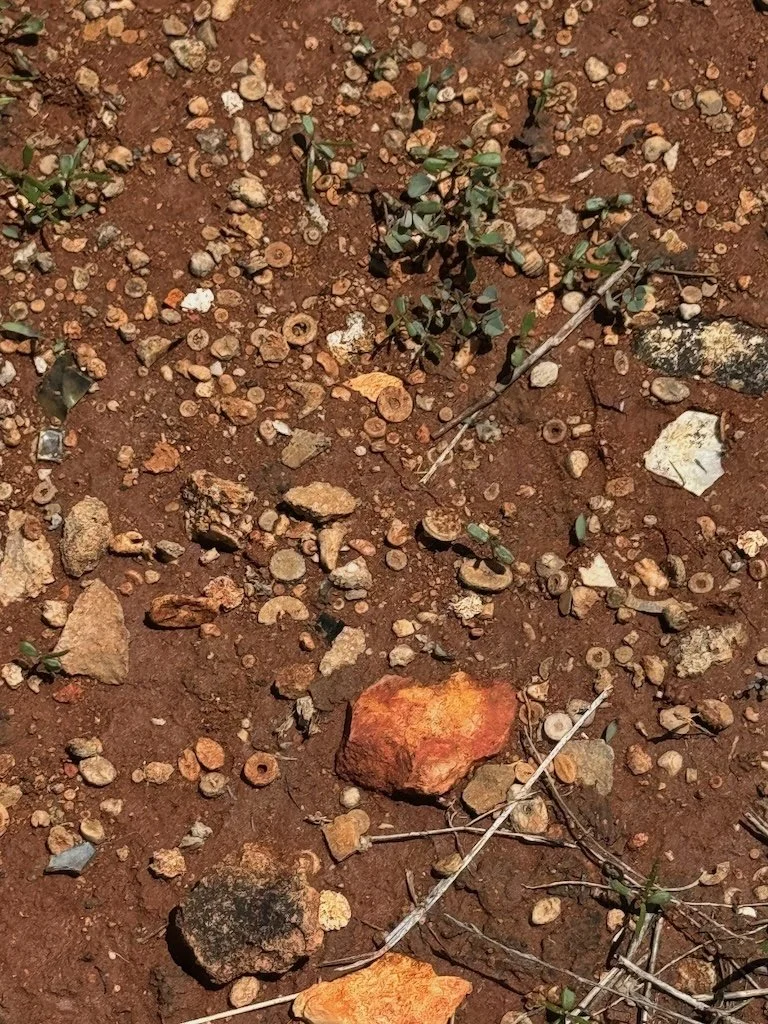
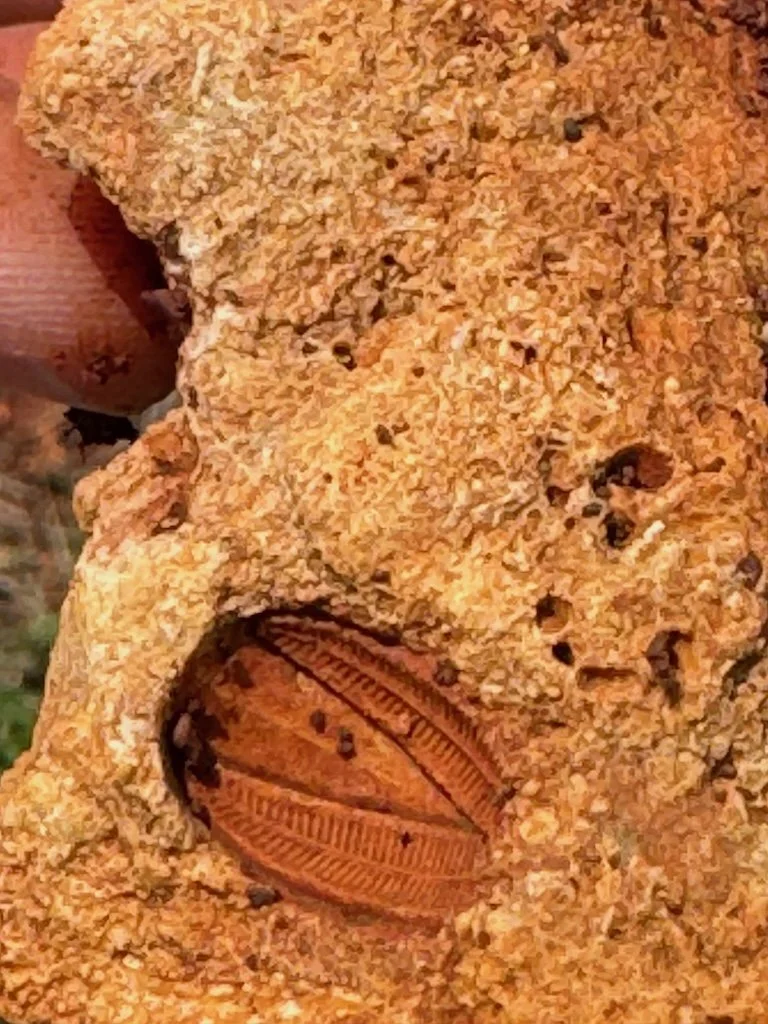
I also took a geology class and enjoyed a field trip in May that highlighted the geology close to home.

My husband and I made a short trip to Loess Bluffs National Wildlife Refuge in the part of Missouri that was glaciated – quite different where I leave in the southern part of the state in the Ozarks!

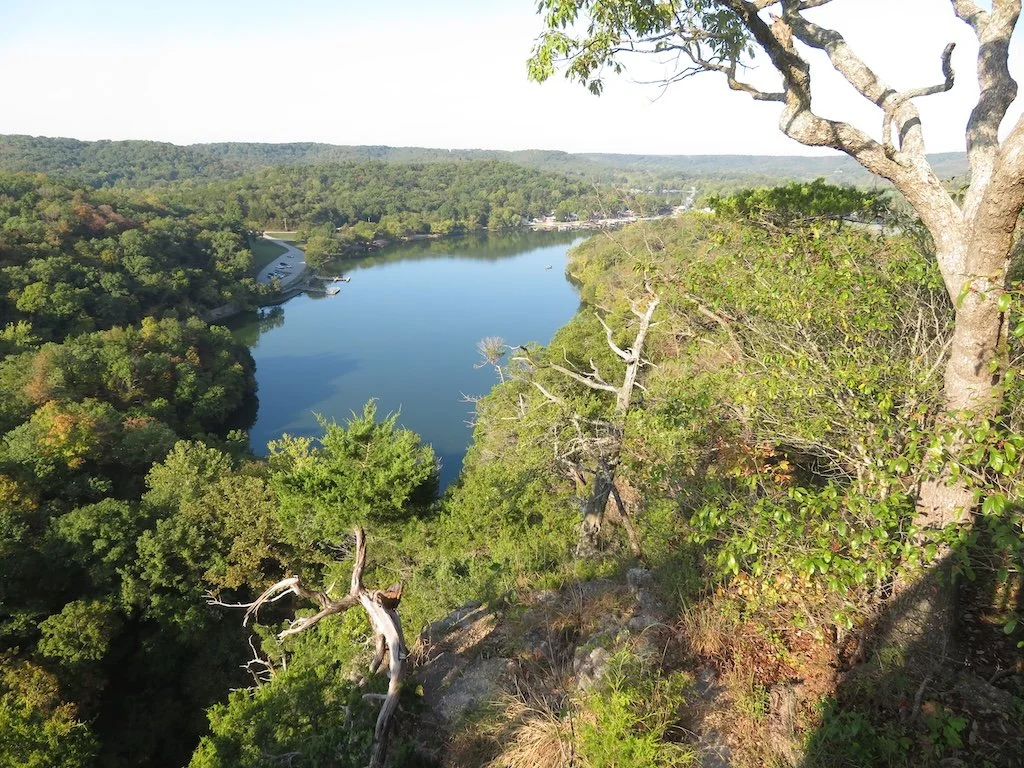
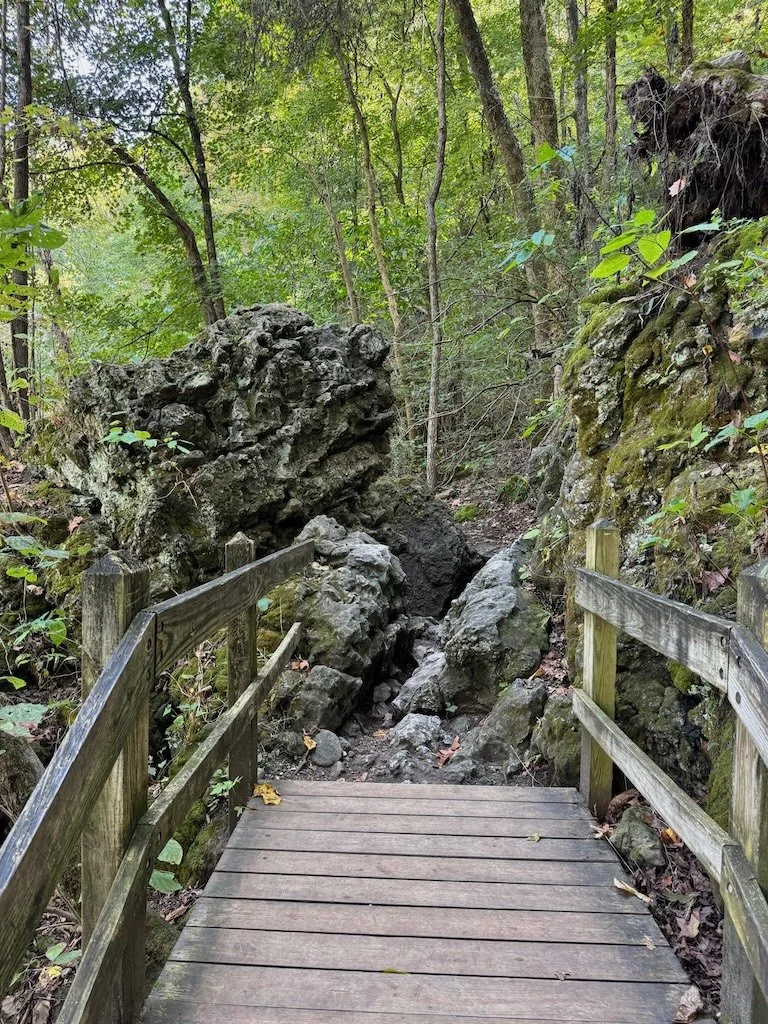
Later in the year I enjoyed walks at Ha Ha Tonka State Park – which is pretty close to the middle of the state.

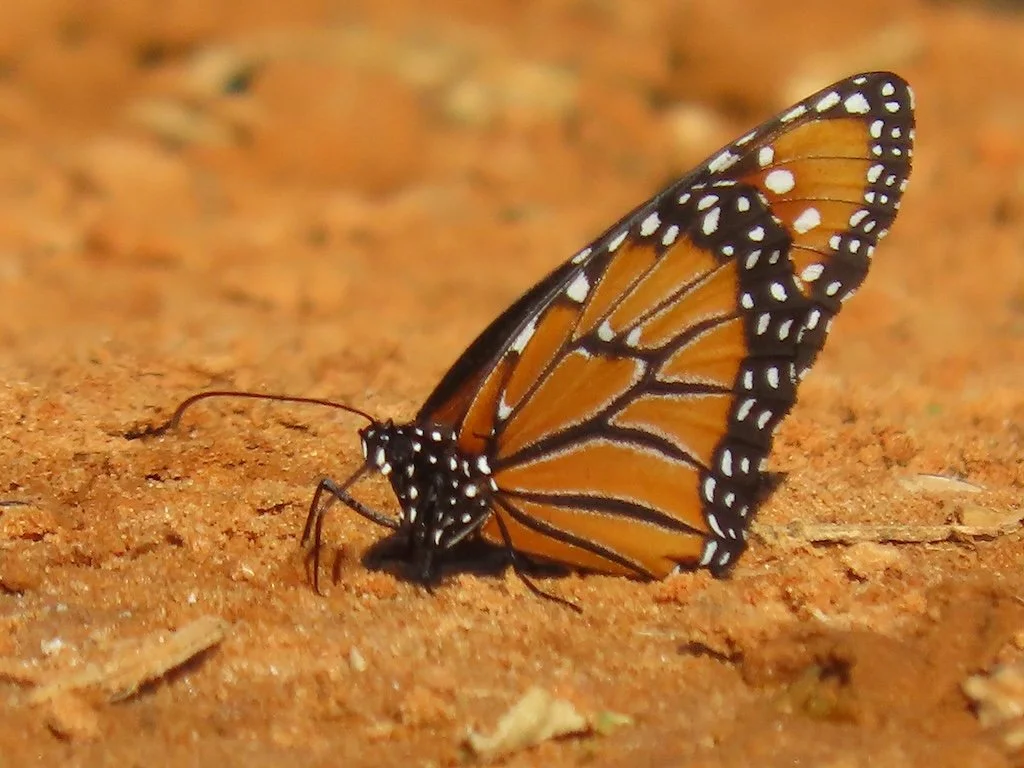
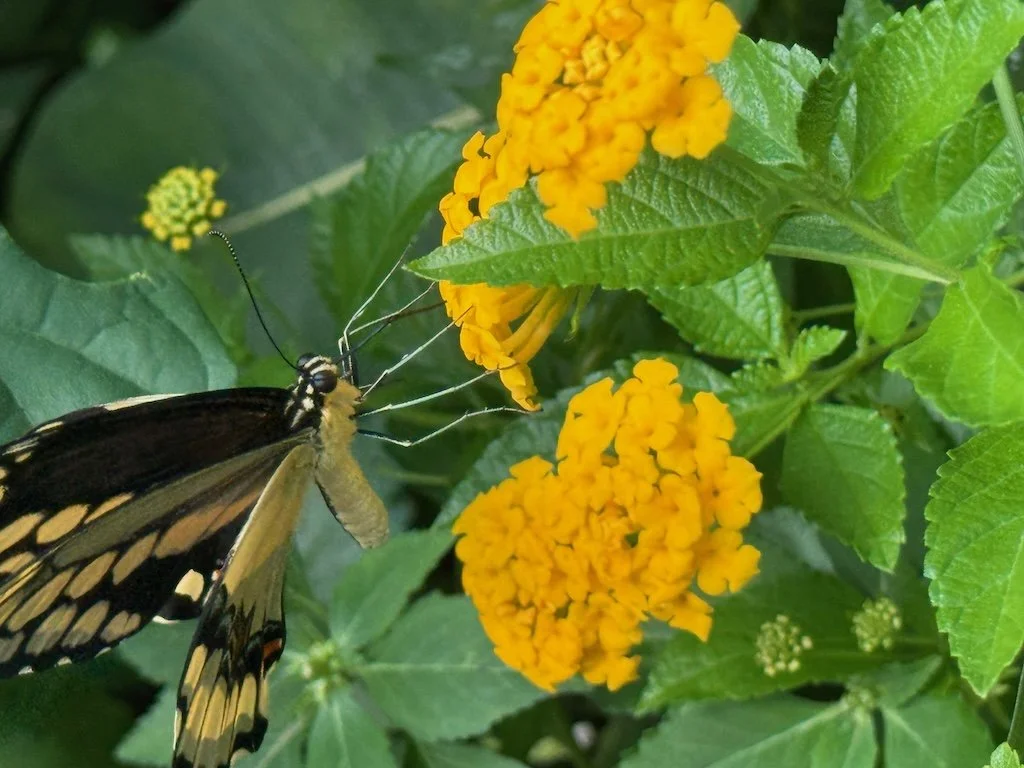
I savored volunteering at a butterfly house from May to September; it was more enjoyable than the one I volunteered at in Maryland because it was native butterflies --- no close monitoring of the entry/exit to prevent exotics escaping into the wild.

We had some health challenges this year requiring outpatient surgery and some PT (maybe more) for my husband – PT for me that has become on a long term exercise regime.

Nothing kept us from enjoying our trip to the Rio Grande Valley Birding Festival this past fall.

I maintained my monthly trips to Dallas/Lewisville TX to see my dad…occasionally my sisters. There is a routine aspect to them…but also something unique that happens each time. It is often stressful – hard to witness the month to month decline of my dad in his mid-90s.

My mood at the end of the year is not as optimistic as it was at the beginning. Have I crossed over to a pessimistic view of the future for our country (and for myself and my family)? It has occurred to me recently that maybe I have. There have been a lot of changes in the US over the past year that seem to increase the possibility of a dystopian future. Will 2026 be a pivot point for the country….or has the pivot occurred? There seems to be relatively little that individuals can do, but that doesn’t mean it is OK to do nothing.

Volunteering – November 2025

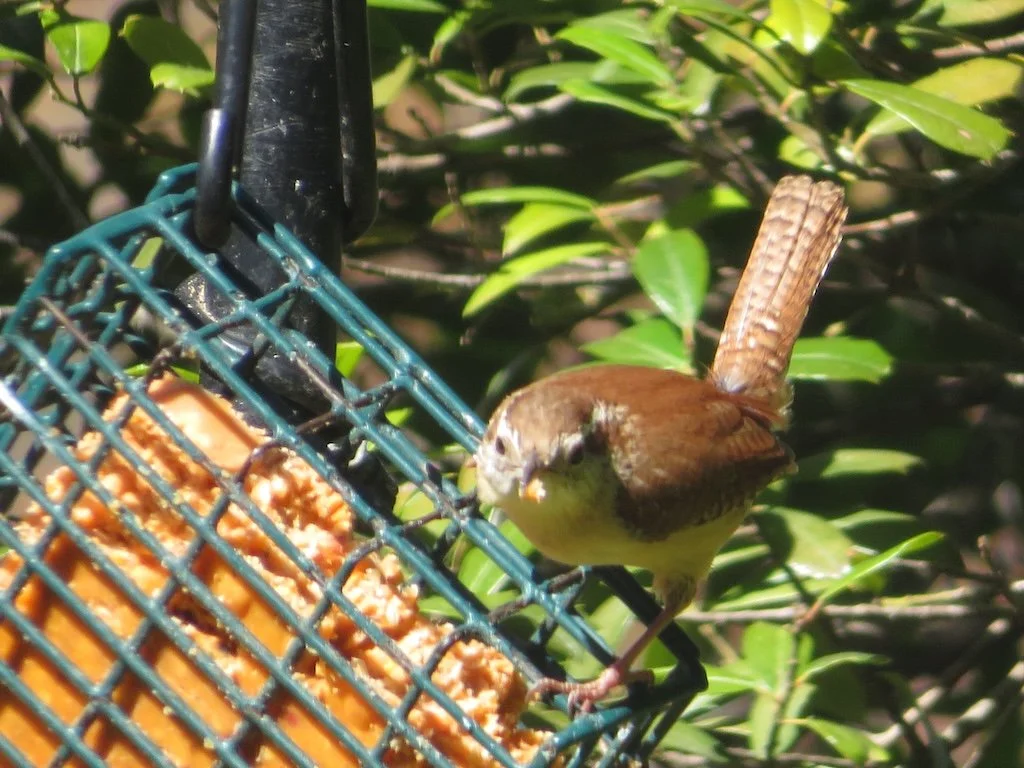
October was a lull in regular Missouri Master Naturalist volunteer gigs; the Butterfly House closing at the beginning of the month and Project FeederWatch not yet begun. Project FeederWatch starts in November and will continue until the spring. My husband I enjoy our view of the birds at our feeders through a window…accumulating our count for each week. I looked back at my FeederWatch pictures from last year and created the slideshow below…savoring the images before we really get going on FeederWatch volunteering this year.

The fall festival volunteering bridged September and October and is over until the spring festivals start. The hours to support the MMN chapter continue throughout the year.

I attended the Beyond Plastics Grassroots Advocacy Training so I am ready for that volunteering in the coming months; it will probably be the most significant change in the type of volunteering I do…and I am still exploring the form it will take.

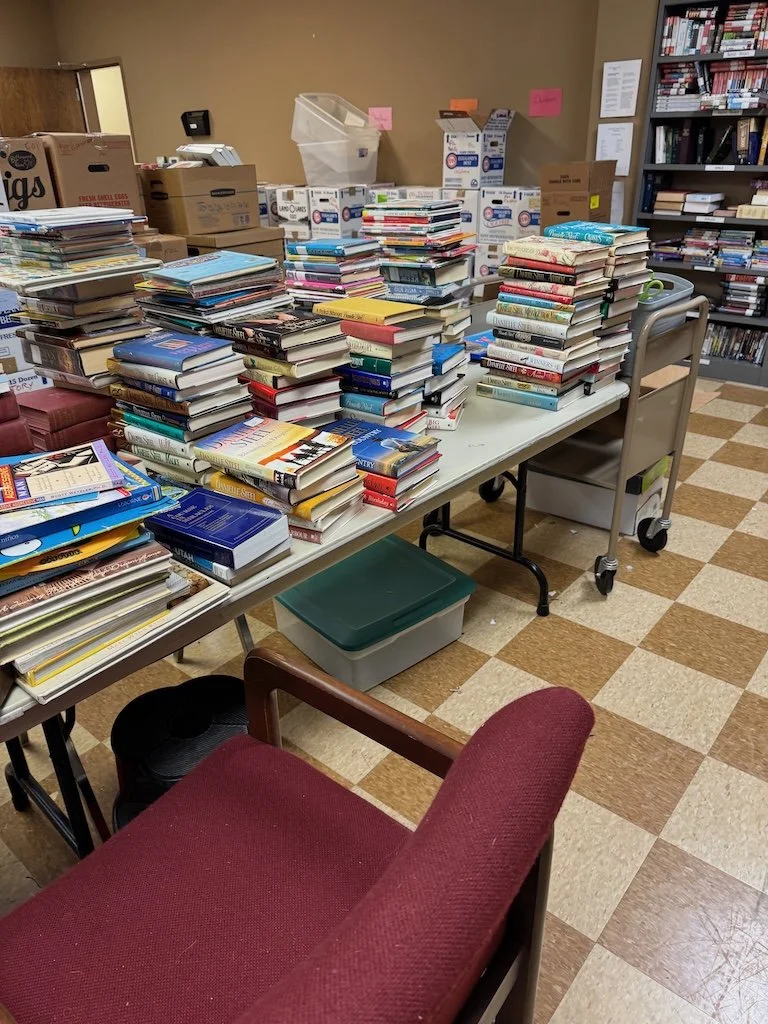
I am still volunteering as a Friends of the Library in the county where I live. It takes the form of sorting used books and then setting up for used book sales. This month there will be a general meeting of the group that I plan to attend.

Overall – the cool season volunteering is beginning and I am looking forward to the change.

Plastics Crisis – Beyond Plastics Grass Roots Advocacy Training

The Beyond Plastics Grass Roots Advocacy Training for Local Groups was a 2-hour online training offered by the Beyond Plastics organization in late October. It was very well done and built on the things I learned but never fully applied in the HoLLIE (Howard County Legacy Leadership Institute for the Environment) back in early 2018. The focus of HoLLIE was broader….but learning to have productive interactions with government (particularly at the local level) was very similar. Perhaps having a narrower focus will make it easier for me to go beyond public outreach.

The session was recorded, and they committed to sending out reference links afterward – primarily to items within the Beyond Plastics site. I managed to get some in my notes and have already started reviewing them.

My first action was to craft an email to everyone I know that might be interested in forming a local group in the Springfield area….hoping to find at least 3 people to form a local group… and start identifying our partners.

Missouri has a ‘ban on bans’ law that will limit our advocacy, but there are still a lot of opportunities to increase awareness of the issue and begin to reduce plastics (and microplastics) in our environment. The key for our local group will be to pick a reasonable initial goal…and start.

I also found out about an upcoming webinar: Protecting Our Health: Toxic Chemicals in Plastics  on November 12th at 6 PM CT and signed up for that.

And I pre-ordered Judith Enck’s book: The Problem with Plastics coming out in early December.

Beyond Plastics is a great resource and will be very helpful as we develop our goal(s) and plan. I have signed up to get their emails.

Previous Plastic Crisis posts

Evaluating Memory Care Facilities – Again

My sisters and I have decided the niggling issues with my dad’s current assisted living/memory care situation have become significant enough for us to research moving him to a different facility. The main issues are:

  • The staff yells rather than coming to get him for meals. He thinks all the yelling is directed at him (even when the are yelling for someone else to come).

  • He is alone in his room a lot.

  • His fingernails are always dirty, and the staff does not clean his electric razor.

  • When he doesn’t like a meal (usually because he can’t chew the meat well), they don’t offer anything else even though we provide protein shakes for that issue.

  • Things seem to disappear – clothes, towels, combs.

Some of the appealing aspects of the place we chose 2 years ago don’t matter as much now. For example, he is no longer physically able to walk in the beautiful neighborhood; he doesn’t see well enough to see the details of the trees and small garden near the patio which we have planted/watered although he does enjoy the yard furniture on the patio when it’s not too hot or cold. The smaller setting of a former house turned into assisted living/memory care has not led to interactions or friendships with the staff or other residents as we expected.

 I am being more thorough when I look for a place now and I have a checklist that I cobbled together from various sources(https://alzni.org/wp-content/uploads/2021/03/assisted-living-checklist.pdf, https://www.agingtogether.org/uploads/1/3/0/9/130908318/memory_care_checklist.pdf, and https://www.aplaceformom.com/caregiver-resources/articles/memory-care-checklist).

I have three places that I am looking at in detail. I’ve looked at their websites and made an appointment for a tour. My sister filled in some of the checklist for one of them and I have incorporated the answers she got into the checklist I will use when I do the tour with them.

All of them are larger than where he is now…more institutional. They have more specialized staff because of their size – nurses in the facility on weekdays and on call the rest of the time, a chef. My sisters and I feel the responsibility making the best decision for him and his ongoing needs. We acknowledge that the move will not be without some anxiety for him and for us…but we are doing everything we can to make sure it will be better him (after the settling in time).

Plastics Crisis: As an Individual

We cannot eliminate micro and nano plastics from our lives. They are in the air we breathe, the water we drink, the food we eat, and the toiletries we use. They are in us – our lungs, our heart, our kidneys, or brain…everywhere. The impact on our health is something that develops over long exposure/accumulation; research studies are just now beginning to clarify their impact. It is possible to reduce our exposure, and we probably need to do what we can to stay healthy as long as possible. This post is about my initial strategy to reduce micro and nano plastic exposure for myself and my family.

Air

The air purifiers that we bought during the COVID-19 pandemic are still running in our bedroom and my office. They help with seasonal allergies and take out some of the plastics in the air.

I try to reduce time outdoors when the air quality is yellow and avoid going outside if the air quality is red. The PM2.5 (Particulate matter less than 2.5 microns) is almost always the major contributor to the air quality ‘color’ in the area where I live and it includes microplastics. It might not be counting nano-plastics effectively and there are probably some in the air; those are the plastics small enough to move through capillaries in our bodies; hopefully these smaller particles will start being monitored more effectively.

Water

I currently filter the water we drink with Brita Elite water pitchers. They get some of the plastics out of our water. My daughter and I are talking about upgrading…perhaps all the way to reverse osmosis filtration. I have a glass carafe for filtered water in the bathroom since I am always thirsty when I first get up.

We always carry stainless steel water bottles with us when we are out and about. When we leave home they contain filtered water.

On overnight trips, we are taking a filtration pitcher with us so that we can easily refill our water bottles with filtered water. If we need to buy something to drink, we strive to buy it in a can, glass, or paper container….but sometimes that is difficult. I am tempted to ask if I can buy a drink but use my refillable stainless steel container rather than a Styrofoam or plastic cup.

We try to avoid plastic water bottles completely. The plastic sluffs off microplastics – particularly if the bottle has ever been warm.

We don’t use plastic glasses at home…and don’t eat out frequently except when we travel.

Food

Micro plastics are often found in soil and can be absorbed by plants as they grow so they can be in the veggies and fruit we eat, and they accumulate in the animals that provide meat that we eat. Organic foods will have microplastics too; they might even have more plastic since organic farms sometimes use plastic sheeting to avoid the need for chemical weed control and to conserve water around the base of plants. There is not much that can be done to reduce the microplastics that are integrated into our food in this way.

Packaging is another way microplastics can be incorporated into food and there are actions that can be taken to reduce this source of microplastics.

  • Buy fresh fruits and vegetables unpackaged. Use reusable produce bags. Don’t store them in the bags either – particularly if the bags are a synthetic fabric.

  • Buy in glass rather than plastic jars and bottles. Prioritize fatty and acidic foods to buy in glass if you are on a budget. Peanut butter and olive oil are examples of fatty foods. Lemon juice, soft drinks (not a health food ever but even less healthy in plastic), spaghetti sauce, and salad dressing/vinegars are examples of acidic foods. Sometimes this is difficult since some stores only carry the commodity in plastic packaging.

  • Meats are almost always packaged in plastic now, so it is almost impossible to avoid. I buy some meats frozen so that the plastic is not closely touching the food and when there is a canned version (canned chicken, canned chili, canned tamales), I take that option sometimes.

  • Consider making some condiments from scratch (salad dressing, marinade). I already make my own marinade with basaltic vinegar and olive oil. I am going to experiment with making salad dressing so that I can forego buying it pre-made in a plastic bottle.  

  • Avoid plastic bags of things like popcorn (I rarely use the pre-packaged microwave popcorn), pumpkin seeds, or beans. Buy them in bulk (often you can use produce bags to get them from the store to home) and load up glass or metal canisters once  at home. Frequenting a store with a bulk food section will be a continuing experiment for me…the goal will be to reduce plastic containers touching food in my home.

  • Store leftovers in and eat from  glass or ceramic or stainless steel rather than plastic. Use stainless steel or wooden utensils. My cutting board is bamboo.

  • Cook in stainless steel – uncoated – pans.

  • Don’t heat or reheat food in plastic. Glass or ceramic always.

  • Buy eggs in pulp paper cartons rather than Styrofoam or plastic cartons. The eggs probably don’t get much microplastic from their container, but the pulp paper is generally the superior carton, and, like all the above measures, it reduces the plastic trash/recycle load to the environment.

Toiletries

Some plastic is small enough to be absorbed through the skin. There are two sources of plastics in toiletries: packaging and ingredients.

I try to buy cosmetics in glass. Usually this is possible for moisturizers and foundation makeup. There don’t seem to be good alternatives to plastic packaging for most items like shampoo, toothpaste, lotion, lipstick, or lip balm. I have started using bar soap which usually comes in paper wrapping or a box for hand washing and in the shower.

The ingredients in many cosmetics are sometimes microplastics or contain the same chemicals as microplastics. It’s very confusing…I don’t have a good strategy yet to fully understand the risk or how to avoid the worst offenders. I do realize that fewer ingredients is generally better and that maybe some ‘make your own’ would be better (for example, a water – glycerin – essential oil mixture in a glass bottle might be a good replacement for setting spray).

Previous Plastic Crisis posts

Volunteering – August 2023

I have three areas of volunteering going on this summer: Friends of the Library, Master Naturalist chapter, and Butterfly House (that counts as Master Naturalist hours too).
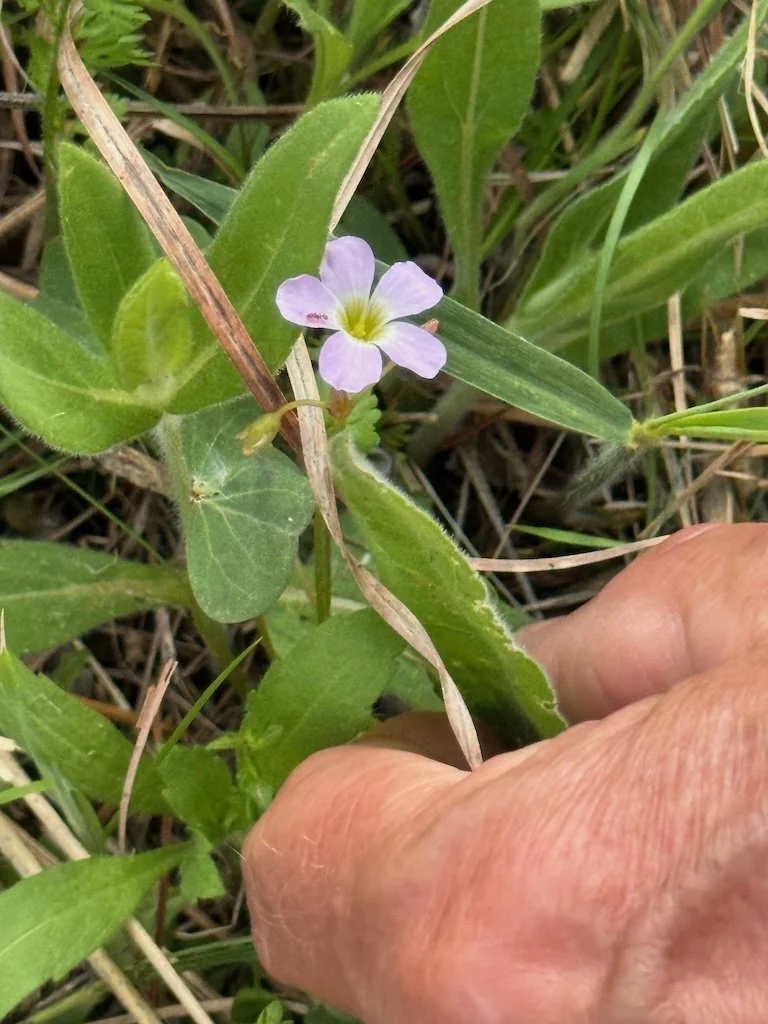

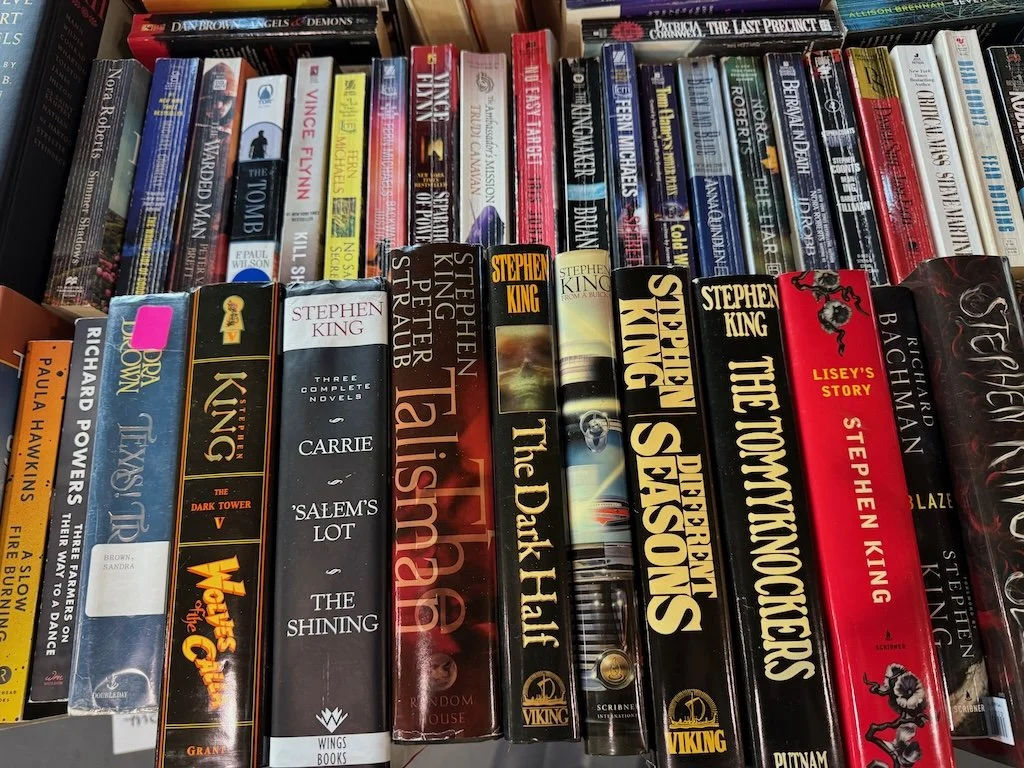
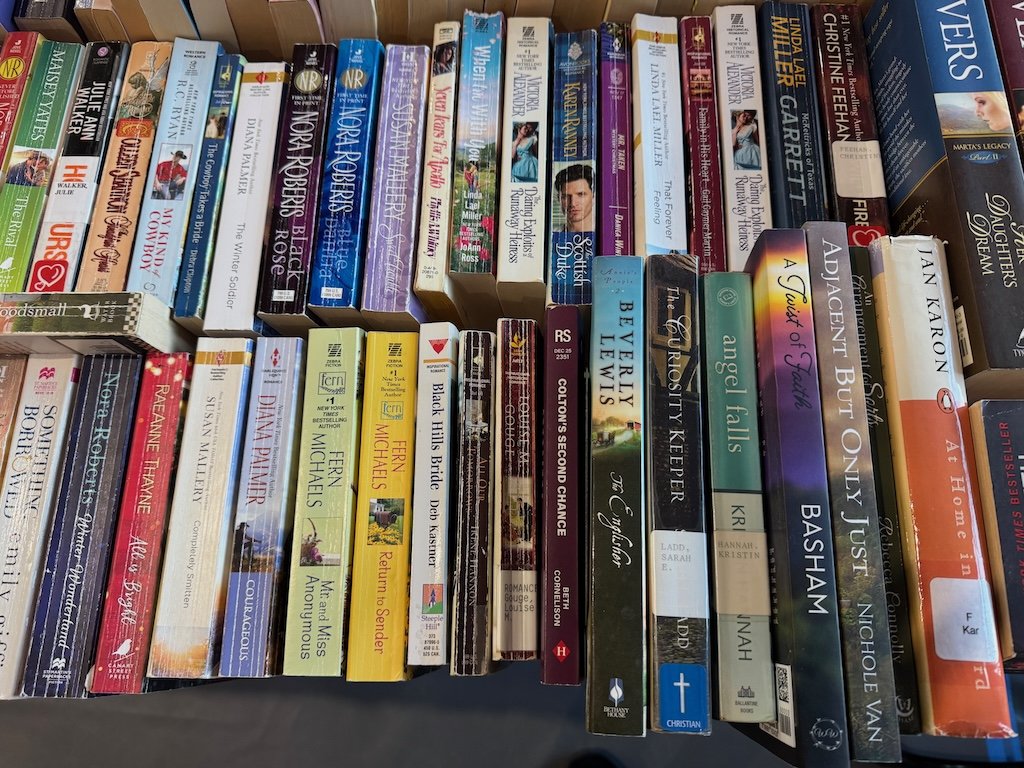
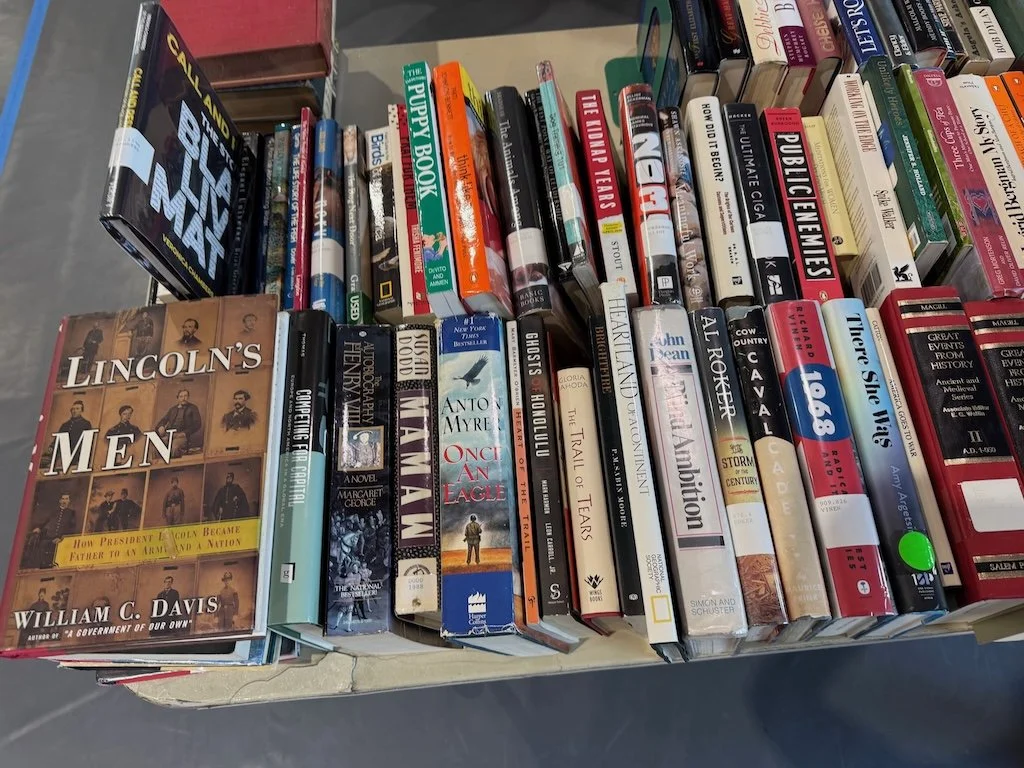
I volunteer once a month to sort used books at my local library that will be sold in the sales that happen once a year at each branch. Setting up or helping during the sale itself is another volunteer opportunity (I prefer the set up!). This month the sale will be at the branch closest to where I live but I have used the sales as an opportunity to explore other the parts of the county that I am not as familiar with. The monthly sorting usually starts out a bit daunting with tables full of books that have been donated. Two people come in each week but there are certainly times that there is more than two people can sort into shelving by subject or box up within the 2-hour shift. I am always relieved when the table is cleared when I leave…and that the area is air conditioned; sorting books is good exercise.
I am the programs chair for my local Missouri Master Naturalist chapter, so I am doing the behind-the-scenes activity to arrange for speakers…and writing announcements to the chapter about what is happening. The speakers count as advanced training so I create an entry in the tool we have for logging our advanced training so that others can simply select it when they attend…minimizing what they must do to get credit for the training.

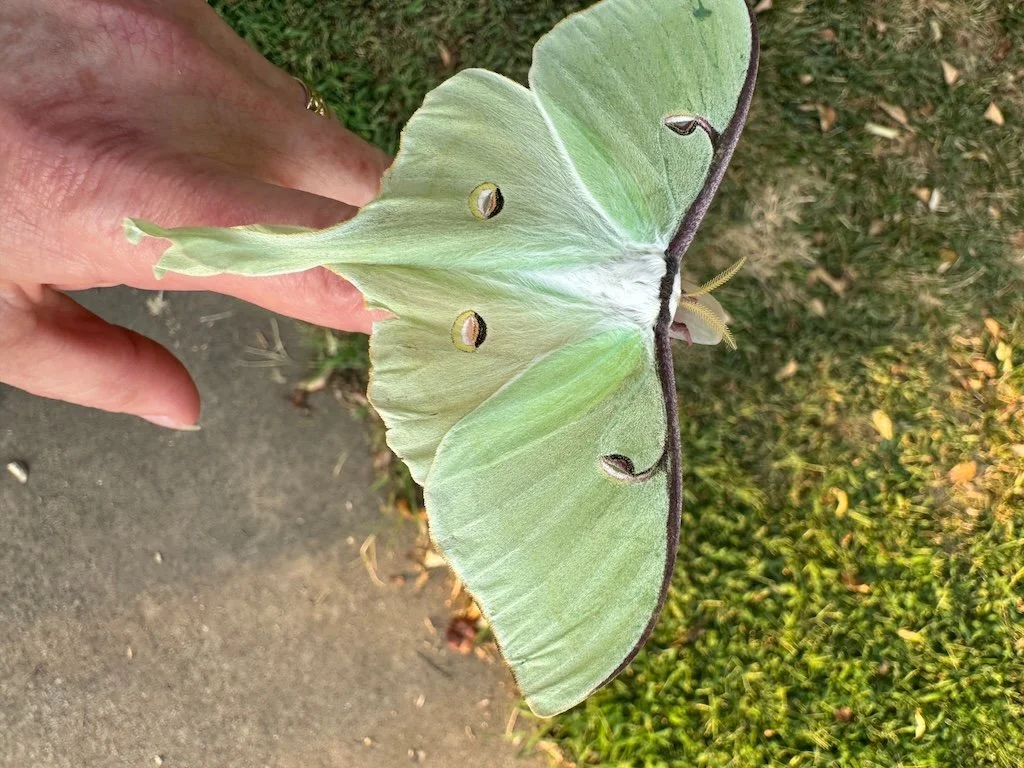
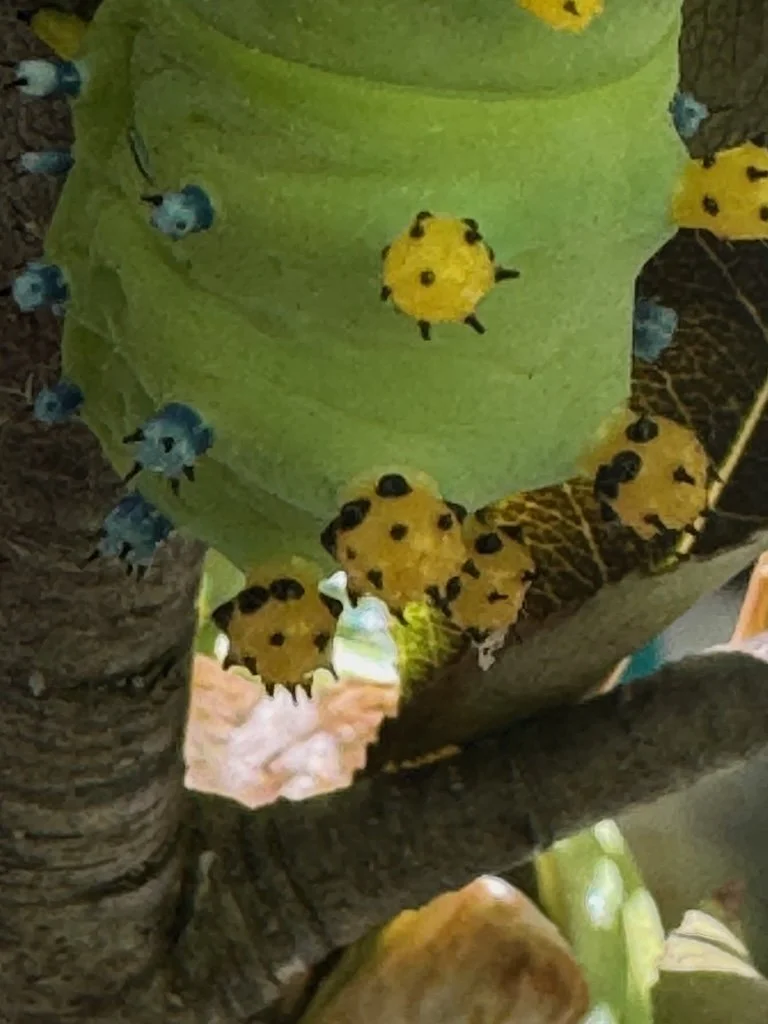
The Butterfly House has been my most substantial volunteering this summer…both in the house itself talking to visitors as they enjoy the butterflies and moths there and raising Luna moth caterpillars at home that have been taken to the house as big caterpillars and moths recently. The large cecropia caterpillars on display in the butterfly house recently were the 3 that were raised with my luna caterpillars (because they were mixed in when I was given the bin with a lot of newly hatched caterpillars). 

I’ve enjoyed all the volunteer gigs I’ve had this summer…even the ones that were outdoors on very hot days!

Volunteering at the Library

I helped set up the used book sale at one of our county libraries last Friday. It was different than last year because the room was in use until 5 PM so our set up was delayed until after that. In addition, it was raining all afternoon. I wondered if there were going to be a lot of wet boxes.

I got there about 10 minutes before the allotted time and there were indeed people in the room, so I worked on a jigsaw puzzle that the library had set up near a window while I waited. Other volunteers were arriving too – some with a load of book boxes in their cars (since it was raining – enclosed vehicles were required…the usual pickups could not be used).

After helping stack chairs and move tables to the periphery of the room, I got started on the children’s books like what I did last year. There was a table and a cart. The differences from last year were 1) more helpers and 2) less books (we estimated what we needed for the sale based on what happened last year). I had two helpers that loaded the bottom shelf of the cart, so I didn’t have any backache from this set up! We were done in less than an hour.

Zentangle® – May 2025

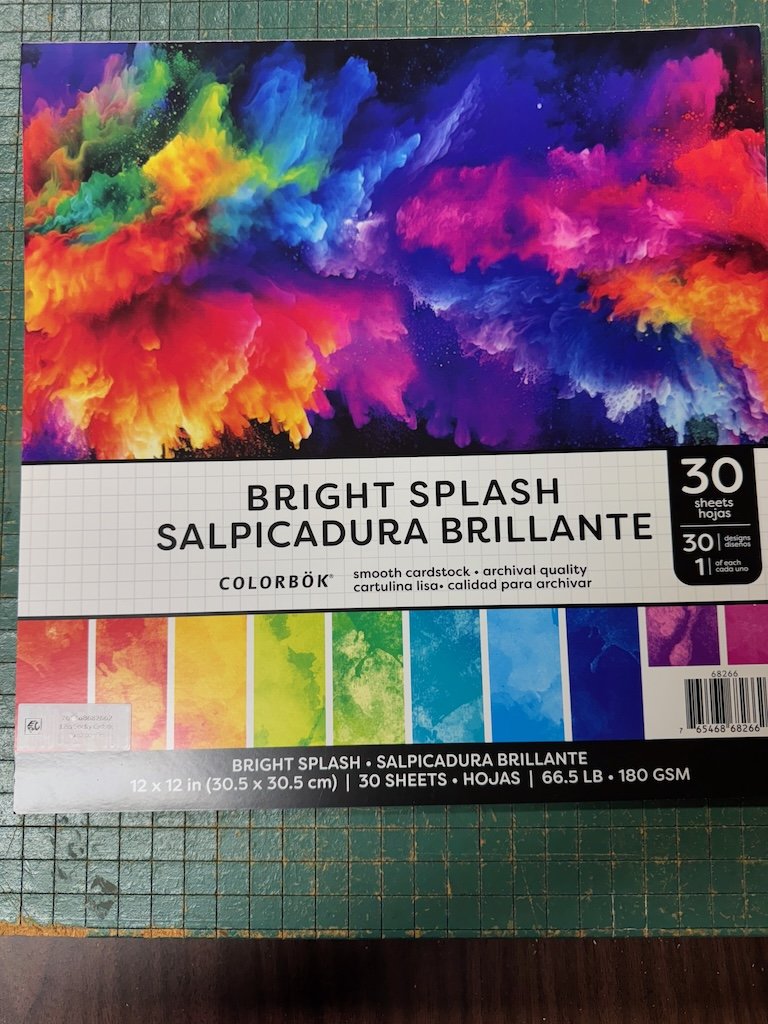
31 days in May….31 Zentangle tiles selected from over 120 I created during the month! I am still enjoying the “Bright Splash” card stock for the tile material

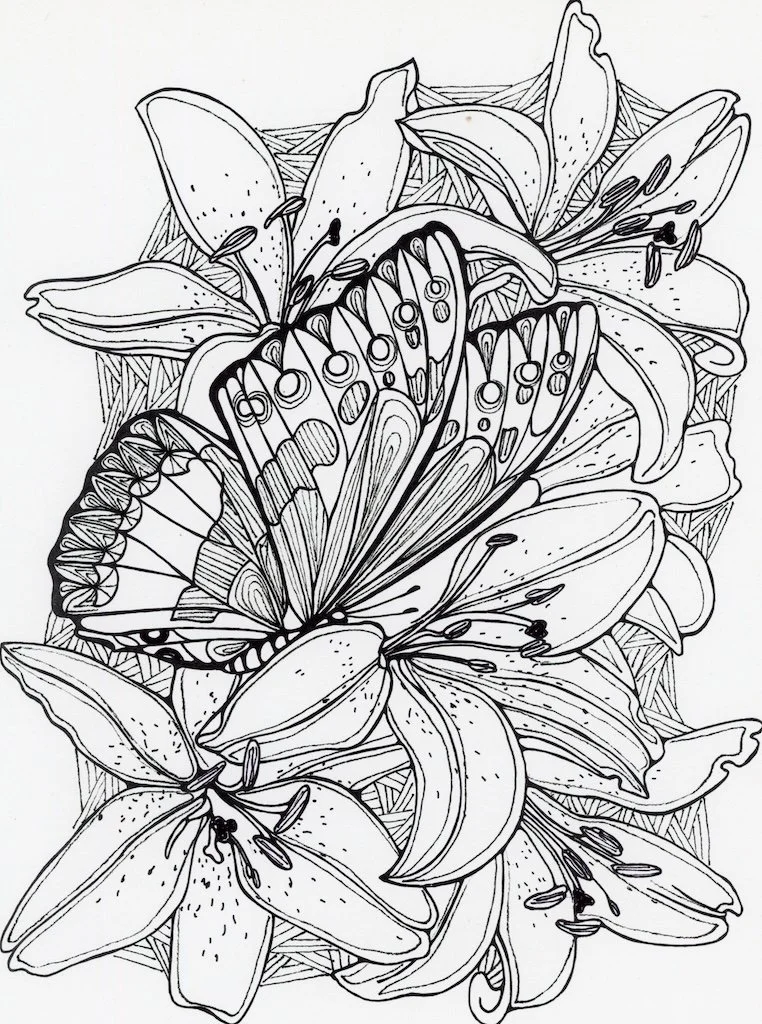
although I occasionally work on a page out of a Ruth Heller’s Designs for Coloring book that I bought for $1 at the library used book sale. I was in pristine condition.

I bought a second pad of the “Bright Splash” card stock but all the tiles for this month – and probably for June as well – are still cut from the first one. The color variation over the surface of the tile appeals to me. Sometimes I make patterns over the variations…sometimes I use the variations as the ‘string’ to start or contain the patterns.

The Zentangle® Method is an easy-to-learn, relaxing, and fun way to create beautiful images by drawing structured patterns. It was created by Rick Roberts and Maria Thomas. “Zentangle” is a registered trademark of Zentangle, Inc. Learn more at zentangle.com.

Road Trip to Dallas in May 2025

The drive was easier than expected – no heavy rain or high winds. I made such good time that I was able to stop at the Texas welcome center on US 75 to photograph their wildflowers before meeting my sister for lunch in Sherman. The bluebonnets are waning but other flowers are blooming profusely.

I had an odd experience with my hotel. My reservation was canceled a couple of hours before I arrived because they had overbooked! They wanted me to make a reservation at a hotel next door, but I was already visiting my dad…so I told them to arrange to have a room held for me….and they did. They didn’t apologize at all for their overbooking. When I checked into the other hotel, I told them that it didn’t seem fair that I would have had to pay for the night if I had cancelled a few hours before my arrival…but the hotel could do it for apparently no penalty at all. That is still the way I feel. I am looking at other hotels in the area rather than continue to patronize a place that chose to not honor my reservation shortly before I was arriving.  The experience was made worse by the second hotel having a lot of noise during the night…and a mattress so lacking in support that my back hurt.

Now that I am home again…I have decided to try another hotel for my June trip to Dallas.

Volunteering – April 2025

April was a month of volunteering and training for some new activities in the upcoming months. I was glad to use my tree materials again at the Scouting event, find 23 puzzles for my dad as I volunteered twice with Friends of the Library (at a used book sale and sorting books for the next sale), talk to people visiting Nature Touch Tables as part of Earth Day, and do another month of Feeder Watch (citizen science). I also worked on the programs (planning, prep, and follow-up) for the Master Naturalist Chapter. I am looking forward to Butterfly House related volunteering beginning in May.

I am thinking about my motivations in volunteering. After I retired more than a decade ago, volunteer activities became one of the best sources of interaction with a broader range of people. That is still the case. I chose to become a Maryland Master Naturalist since I also wanted at least some of the volunteer work to be outdoors; becoming a Missouri Master Naturalist is the same. In Maryland, the reactions of school groups on field trip hikes, conversations with other volunteers before and afterward, and positive feedback from non-profits that organized the events were the appreciation/acknowledgment that what I was doing mattered. In Missouri, it is the same although there is the added dimension of the Master Naturalist Chapter. I’m not sure what I expect….it could just be more ‘icing on the cake’!

Volunteering is good for my community and for me too!

Zentangle® – April 2025

30 days in April….so I chose 30 Zentangle tiles from the 93 I made during April. There were more to choose from that usual because I’m dedicating some time as I am winding down each day to creating Zentangle tiles and I made the tiles from a pad of Bright Splash card stock I found at Walmart. It was colorful and prompted some very different starting strings! I am probably going to stock up since it is imported from Vietnam…maybe won’t be restocked. This card stock along with the solid black are my favorites!

The Zentangle® Method is an easy-to-learn, relaxing, and fun way to create beautiful images by drawing structured patterns. It was created by Rick Roberts and Maria Thomas. “Zentangle” is a registered trademark of Zentangle, Inc. Learn more at zentangle.com.

Used Puzzles!

This is my second year to volunteer with the used book sale held by my local Friends of the Library. This year the first set up day was raining so transporting boxes of books from the storage area to the location of the sale was a bit more challenging. I helped set up tables to load with the books and then to unpacked boxes. We had to get everything off the floor before we were left since the building has sometimes gotten flooded in the past; the rain had stopped…but the nearby river might not have crested.

I volunteered again on the first day of the sale – the ‘members only’ afternoon and evening. The building had not flooded so the second day of set up had gotten everything in place and ready for people to buy books.

There was a rack that was great for displaying puzzles that was brought in on that second day of set up that was new this year; there was also a table full of puzzles.

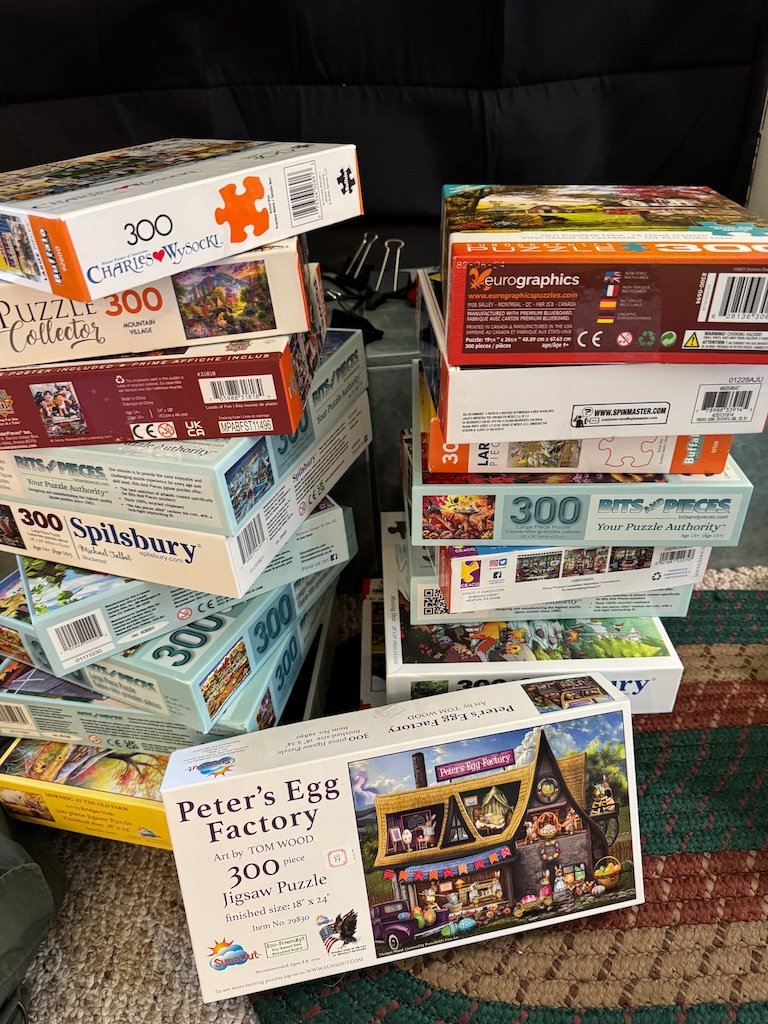
I bought 20 300-piece puzzles for my dad! They are quite a bargain at $2 each. I will take them 4-5 at a time when I make my monthly trip to Dallas!

Stress Reduction Strategies

Late last summer, I started a lot of new activities and noticed that my stress level, as detected by my Garmin Lily, increased. My stress level and the quality of my sleep are related – when stress is high, sleep quality (and sometimes quantity) is low. At the time I thought I would acclimate, and my stress level would be reduced…but that didn’t happen.

I realize now that the new activities were not the only reason my stress level was high. My back was bothering me and the politics of the country were causing some anxiety as well. I asked my doctor for a referral for physical therapy to help with the back pain and started the PT sessions in December. They coincided with the holidays and a dramatic reduction of my new activities. By early January, I thought my stress level was trending downward along with the level of pain caused by my back.

It didn’t last. With the start of a new semester (geology class), an uptick in new volunteer activities, and the changes occurring at the Federal level….anxiety and stress spiked again and were even more volatile that before. Most of the time I was able to minimize my back issue (thanks to continuing the exercises I learned in physical therapy) so that was not usually a big component to my stress level. The strategies I am applying now (see below) seem to be helping…but I only have a few weeks of results so far. I suspect that I will be tweaking my stress reduction strategies for the foreseeable future!

  • No caffeine after 9 AM.

  • Limit TV news and news feeds. Be informed but not scrolling through news frequently.

  • Practice focusing thoughts on the present.

  • Continue physical therapy exercises focused on reducing back pain + at least 8,000 steps per day. Swopper chair (bounces) when sitting at my computer.

  • Move every hour….i.e. take a break from sitting. Use the time for a household chore.

  • Get some outdoor time every day.

  • 2 hours before bedtime: no screens. Read physical book and create Zentangle tiles. Do relaxing stretches.

  • Electrolyte drink 3 hours before bedtime.

Volunteering – March 2025

Am I settling into my post-covid level of volunteering? I’m not sure. I’m still changing…I’m discovering that some of the activities at did pre-Covid are either not readily available here or I prefer different things.

I am enjoying the Friends of the Library used book volunteering once a month and then helping with the used book sales. Sometimes I can find used puzzles for my dad in the piles of donated books! On the downside, moving boxes of books is harder for me now; I am going to start loading books into boxes already on the stack rather than having to lift them after they are loaded!

The bulk of my volunteer time is as a Missouri Master Naturalist. There is a lot of variety in types of activities: chairing the programs committee (speakers for the monthly chapter meeting), volunteering with local stewardship non-profits like James River Basin Partnership, nature programs for elementary aged children (Cedar County Libraries) and citizen science (Feeder Watch). I am thinking a bit about the seasons of this type of volunteering. Feeder Watch is from October to April, for example. I am anticipating a few more nature programs this spring but the dominate volunteering over the summer might be the Butterfly House at the Springfield Botanical Garden that opens in mid-May. I’ve established a goal for myself to volunteer 250 hours in 2025 and, so far, that goal seems achievable!

Volunteering at a Watershed Festival

I volunteered for a James River Basin Partnership Watershed Festival at a public school about 10 minutes from my house. There were about 250 5th graders that participated over a 4-hour period (fortunately we had a lunch break in the middle). For the first sessions we were in a classroom because it was quite cold outside, and the school grounds were muddy from recent rain/snow. In the afternoon we were in an outdoor classroom – out of the mud and enjoying the sunshine and warm enough temperatures. It was an exhilarating day!

A partner and I led a game from Project Wet called The Incredible Journey where every student becomes a drop a water and they move through the 9 stations (clouds, plants, animals, rivers, oceans, lakes, groundwater, soil, and glaciers) based on a role of a dice at each stop. With 25 students moving around the space, it sometimes appeared chaotic, but every session was a success. Some students/drops-of-water got stuck in the ocean…some alternated between clouds and other stations. A few spent significant time as plants! It was a fun activity…and hopefully a learning experience too.

As we packed up everything in the plastic bin at the end of the day – the dice taking up most of the space – I realized that it had been an exhausting day. In the flurry of activity during the sessions, it was easy to be so engaged with the students enjoying the game that it was easy to just keep going.