Gleanings of the Week Ending January 17, 2026

The items below were ‘the cream’ of the articles and websites I found this past week. Click on the light green text to look at the article.

12/28/2025 SciTechDaily Microplastics Burrow into Blood Vessels and Fuel Heart Disease - New research led by biomedical scientists at the University of California, Riverside suggests that routine contact with microplastics — tiny particles released from packaging, clothing, and many plastic products — may speed up atherosclerosis, a condition in which arteries become clogged and can lead to heart attacks and strokes. The team studied LDLR-deficient mice, which are genetically prone to developing atherosclerosis. Both male and female mice were fed a low-fat, low-cholesterol diet comparable to what a lean and healthy person might consume. Over a nine-week period, the mice received daily doses of microplastics (10 milligrams per kilogram of body weight). These exposure levels were chosen to reflect amounts considered environmentally relevant and similar to what humans could encounter through contaminated food and water.

1/1/2026 ScienceDaily This 100-year-old teaching method is beating modern preschools - Public Montessori preschool students enter kindergarten with stronger reading, memory, and executive function skills than their peers. These gains don’t fade — they grow over time, bucking a long-standing trend in early education research. Even better, Montessori programs cost about $13,000 less per child than traditional preschool. (My daughter went to a private Montessori school for preschool-kindergarten…she enjoyed it and did very well in her subsequent education/career so I am not surprised by the results of this national trial.)

12/31/2025 Archaeology Magazine Bones of Chaco Canyon’s Imported Parrots Reexamined – A reexamination of more than 2,400 parrot bones unearthed at Chaco Canyon suggests that most of the macaws and parrots that were kept by ancient Puebloans were likely restricted to the large, multistory buildings known as great houses, where they lived in heated rooms with plastered walls.

12/31/2025 ScienceDaily Microplastics are leaking invisible chemical clouds into water - Microplastics in rivers, lakes, and oceans aren’t just drifting debris—they’re constantly leaking invisible clouds of chemicals into the water. New research shows that sunlight drives this process, causing different plastics to release distinct and evolving mixtures of dissolved organic compounds as they weather. These chemical plumes are surprisingly complex, often richer and more biologically active than natural organic matter, and include additives, broken polymer fragments, and oxidized molecules. Understanding how these chemicals evolve across different stages of plastic breakdown will be essential for assessing their long-term environmental impact.

1/2/2026 National Parks Traveler A Day in the Park: Assateague Island National Seashore – This was a great get away from where we lived in Maryland until recently. We’d cross the Bay Bridge, visit Blackwater National Wildlife Refuge and then be at Chincoteague and Assateague Island National Seashore after that.

1/2/2026 The New York Times A Study Is Retracted, Renewing Concerns About the Weedkiller Roundup - In 2000, a landmark study claimed to set the record straight on glyphosate, a contentious weedkiller used on hundreds of millions of acres of farmland. The paper found that the chemical, the active ingredient in Roundup, wasn’t a human health risk despite evidence of a cancer link. Last month, the study was retracted by the scientific journal that published it a quarter century ago, setting off a crisis of confidence in the science behind a weedkiller that has become the backbone of American food production.

1/2/2026 Smithsonian Magazine When the Bayeaux Tapestry Makes its Historic Return to England - Created in the 11th century, the delicate, 230-foot-long embroidered textile has been in France since 1077.

12/30/2025 YaleEnvironment360 2025 Was Another Exceptionally Hot Year - 2025 was the second hottest on record, surpassed only by 2024. It continues a recent trend of exceptional, unexplained warming. The last three years have been, by a wide margin, the hottest ever recorded. The recent jump in warming, which exceeded the predictions of climate models.

12/21/2025 My Modern Met Photographer Explores the Rich Complexity of Africa’s Great Rift – Photography of a place --- and an interview with the photographer.

12/17/2025 Washington Post These kitchen items may be contaminating your food with chemicals - Plastic ushered in a new era of convenience and filled homes with cheap, disposable goods. But it also has exposed ordinary people to tens of thousands of chemicals that slip out of those items into household dust, food, water — and from there, into bodies. Some of these chemicals are known to disrupt pregnancies, triggering birth defects and fertility problems later in life; others have been linked to cancer and developmental problems. “The problem is, none of the plastics that we have right now are safe,” said Wagner, of Norwegian University of Science and Technology. “That’s not a very nice thing to hear, but that’s what the data tell us.”

12/15/2025 Nature The best science images of 2025 — Nature’s picks – Educational and beautiful at the same time.

Gleanings of the Week Ending April 26, 2025

The items below were ‘the cream’ of the articles and websites I found this past week. Click on the light green text to look at the article.

Liberation of Bergen-Belsen: how a lack of protective clothing cost lives – Typhus was rampant when the Bergen-Belsen concentration camp was liberated by British troops on April 15, 1945. Anne Frank had died there just a few weeks before. What happened in the immediate aftermath of liberation is described.

How climate change is supercharging pollen allergies – Longer growing season….and extreme allergy events where trillions of pollen particles, sucked up into the clouds as the storm formed, splintered by rain, lightning and humidity into ever-smaller fragments – then cast back down to Earth for people to breathe them in. In one such event in Australia - emergency rooms saw eight times as many people turning up with breathing problems as they would normally expect. Nearly 10 times as many people with asthma were admitted to hospital. 10 people died. It’s been called ‘thunderstorm asthma.’ In the US, pollen levels are expected to be higher than average in 39 states…with worse symptoms.

Colorful city birds – Brown shades are more common in natural environments than in cities. Successful urban bird species have more elaborate colors in their plumage, which is especially true for females. Cities seem to favor more colorful birds -- probably because there are fewer predators in urban areas and 'being seen' poses a lower risk than in rural areas.

See the Titanic in Remarkable Detail With a 3D Scan – From National Geographic. …a digital reconstruction of the wreck.

Royal Meteorological Society Celebrates 10 Years of Incredible Weather Photography – Great photographs an interview with Kirsty McCabe, UK's Royal Meteorological Society’s senior broadcast meteorologist and editor of their MetMatters blog.

Odd-Looking Blue Creatures Are Washing Up in Large Groups on California’s Beaches Once Again –The jellyfish-like creatures in this post are Velella velella – thin, oval shaped blue or purple that usually are 3-4 inches long. They use their stinging blue tentacles to prey on plankton.

Meet Four Amazing Endemic Parrots from New Zealand – They are quite different from each other…and the parrots we see in zoos.

Why you should avoid lotions and creams that contain 'fragrance' – Avoiding fragrance is easy enough…but other things are harder to detect and avoid.

Six immersive experiences for more joy – The 6 seems reasonable to me…most of them I had derived for myself already!

Ten National Wildlife Refuges That Need Our Support Most – All the wildlife refigures I have visited over the past few years have unmet maintenance needs. Funding for materials, equipment and staff has been too low for some time. There are Friends organizations that try to address some of the needs…but it is never enough. Some of the places that became refuges because they are very special are suffering now…maybe being irrecoverably harmed.

Gleanings of the Week Ending July 6, 2024

The items below were ‘the cream’ of the articles and websites I found this past week. Click on the light green text to look at the article.

Extended maternal care central factor to human other animal, longevity – In species where offspring survival depends on the longer-term presence of the mother, the species tends to evolve longer lives and a slower life pace, which is characterized by how long an animal lives and how often it reproduces.

The 'gene deserts' unravelling the mysteries of disease - Less than 2% percent of the human genome is dedicated to coding for genes which produce proteins, while much of the remaining 98% has no obvious meaning or purpose. But scientists are slowly managing to accrue information about the ‘gene deserts’ apparent purpose and why they exist.

These Stunning Butterflies Flew 2,600 Miles Across the Atlantic Ocean Without Stopping – Painted Lady butterflies spotted in French Guiana where they are not usually found. Sequencing the butterflies’ genome revealed that they were related to African and European painted ladies – not North American. And looking at weather data revealed that wind conditions in the weeks prior to the sighting were favorable for the butterflies moving from Africa to South America.

Simple test for flu could improve diagnosis and surveillance - Fewer than one percent of people who get the flu every year get tested, in part because most tests require trained personnel and expensive equipment. The current version of new test is a low-cost paper strip that distinguishes between influenza A and B and subtypes H1N1 and H3N2. It works at room temperature…takes about 90 minutes. They are working to reduce the time to 15 minutes.

To Save the Red Knots, Look to Blue Carbon – Red Knots migrate over 9,000 miles to the Arctic to breed. Along the way they stop for meals of mussels and clams in coastal areas. This post highlights 6 projects from around the world that are restoring those area…for the red knots and the health of the planet.

Photography In the National Parks: Two Cave Parks Above and BelowWind Cave National Park and Jewel Cave National Monument. Full of ideas for photographing inside caves and above them! My first thought was to see if there is a trail that goes over the top of Sequiota Cave and Spring near Springfield MO (we did a boat tour of the cave last spring).

Surprising phosphate finding in NASA's OSIRIS-REx asteroid sample – Remembering when we went to the launch of the mission in September 2016.

Swift Parrots and the Heartbreak of Rare Species – Endangered Australian parrots…with only an estimated 500 birds left in the wild. “We conservationists bear witness to so much loss: of species, ecosystems, and the places we know and love. Often, it feels like we’re watching extinction in real time, powerless to stop it. But there is value in staring these losses in the face. Value in bearing witness to a rare parrot with an uncertain future, knowing full well I might mourn its extinction in a few years time. If the worst happens, at least I will have cherished it while it was here.”

A Big Picture of the US Housing Market - High interest rates, supply constraints and growth in home insurance premiums (particularly in states like California and Florida) are all driving housing costs. There is some news that’s more positive. Nearly 450,000 new apartments were finished in 2023, the highest rate in about three decades. However, average rents remain above pre-pandemic levels in most markets.

Sheep & Solar: A “Beautiful Symbiotic Relationship” - When solar farms use sheep instead of mowers for vegetation management, they minimize burning fossil fuels, and costs associated with labor are also reduced. Investment costs for a solar farm might include water tanks, troughs, a small water pump to fill the troughs, predator-proof fencing, and dividing into sections for rotational grazing. The sheep eat the tall grass, weeds, and clover, and their chomping inhibits the vegetation from blocking the panels. Their steady consumption of forage on the land prevents grassy plants from growing high enough to block sunlight from reaching the panels, maintaining the productivity of the array. Sheep are the most appropriate ruminant species when it comes to vegetation management on solar farms because they are too small to damage the panels when rubbing against them, and they are not predisposed to chewing on wires or jumping on the panels.

Gleanings of the Week Ending December 28, 2019

The items below were ‘the cream’ of the articles and websites I found this past week. Click on the light green text to look at the article.

Top 25 Wild Bird Photographs of the Week: Colourful Birds – National Geographic Society Newsroom – Starting off this last gleanings list of 2019 with birds! My favorite picture of this set is the scarlet macaw with a stick. Is it eating it or using it as a beak-pick?

Artistic Photographs of Mushrooms and Myxomycetes by Alison Pollack – Focusing on small things in the forest.

In Search of Australia’s Amazing Rainbow Finch – A bird survey experience…and some pictures.

Patchwork of Corn in the Snow – As of late November a lot of corn was unharvested because it was too wet. Corn needs to dry on the stalks before it is harvested and this 2019 crop may not be harvested in some areas until February or March of 2020.

Watching Wildlife on Skis – Winter wildlife….another benefit to being out and about (with proper gear) during the winter.

Life Rides the Wind in the Desert | The Scientist Magazine® - Finding life in the Atacama Desert.

Decking the halls of history: the origins of Christmas decorations – A little historical note for after the holiday.

Image of the Day: Horns and Wings | The Scientist Magazine® - Technology that can turn off genes is the enabler of this research into how horns and wings develop in dung beetles…and maybe other insects too.

Children’s Book Review: Wake up, Woods – A book about native woodland plants for children.

Real Reindeer Are More Amazing Than You Ever Imagined – Another Christmas themed post…about an iconic animal that isn’t just a cartoon.

Gleanings of the Week Ending September 28, 2019

The items below were ‘the cream’ of the articles and websites I found this past week. Click on the light green text to look at the article.

Marriott Aims For 33% Reduction in Plastic Waste | CleanTechnica – Marriott will do this by 2020. They will do away with the tiny tubes of shampoo, conditioned and other toiletries, replacing then with larger bottles affixed to the walls. It’s a step in the right direction and we all need to be looking for these steps that are ‘easy.’ We also need vendors to do their part and transition away from plastic packaging. Remember that plastic is relatively recent; there are still people alive that remember a time without it! But we need new solutions rather than just going back to pre-plastic days….it will take focus and creativity…and a demand from all of us – to rid ourselves of the negative aspects of plastic.

Top 25 Wild Bird Photographs of the Week: Endemic Birds – National Geographic Society Newsroom – Beautiful birds.

Dam Removal Complete on Maryland's Patapasco River - News | Planetizen – Some close-to-home news. I had been tracking these dam removals over the past few years and hearing reports about preparation and results at the annual Maryland Water Monitoring Council conference.

Harmful Algal Blooms (Red Tide) – Information and maps about algal blooms. I looked at the Chesapeake Bay part of the site.

Ghost Crabs Use Teeth in Their Stomachs to Ward Off Predators | Smart News | Smithsonian – This article reminded me of the ghost crab we saw on Two Mile Beach near Cape May, New Jersey last May. We must have been far enough away to not be too threatening; the crab did not make any noise at all.

Drinking tea improves brain health, study suggests -- ScienceDaily – I like to drink tea…and it gets even better with studies like this. The opposite it true for soft drinks…even the diet ones. Those I need to reduce or stop drinking completely.

Can We Turn Down the Temperature on Urban Heat Islands? - Yale E360 – Work to gather more detailed information about the heat islands within cities. The extra details help clarify strategies of how to reduce them. Some of the ideas I had heard before…others – like varying building heights – I had not.

Topography could save sensitive saguaros as climate changes -- ScienceDaily – We haven’t been back to Tucson since my daughter finished her graduate work at University of Arizona; but I always browse articles about the place. This research was done at U of A…and I was glad that the iconic saguaros might adapt to climate change – at least on Tumamoc Hill.

A Field Guide to The Feral Parrots of the US – Cool Green Science – Wow – there are a lot more of them than I realized.

Neurotoxin lead sometimes added to turmeric for brighter color -- ScienceDaily – Very scary. Are we sure they don’t export the tainted turmeric?

Gleanings of the Week Ending June 1, 2019

The items below were ‘the cream’ of the articles and websites I found this past week. Click on the light green text to look at the article.

Flu virus' best friend: Low humidity -- ScienceDaily – Yet another reason to have a good humidifier in our homes during the winter.

Top 25 Wild Bird Photographs of the Week: Seabirds – National Geographic Society Newsroom – I saw a few of these during the Cape May trip in May: American Oystercatcher, Northern Gannett, Laughing Gull, and Forster’s Tern.

Novel 5-minute workout improves blood pressure, may boost brain function -- ScienceDaily – Preliminary results….have to wait to see if it holds up. It would be great to have another option than medication (that often has side effects).

More Megalithic Jars Mapped in Laos and A Singular Landscape - Archaeology Magazine – Plain of Jars in Laos. The jars were created 1,500 to 2,500 years ago. Excavations are revealing a bit more about the people that created them.

Common food additive found to affect gut microbiota: Titanium dioxide nanoparticles E171 may impact human health -- ScienceDaily – It’s a whitening agent used in foods and medicines in high quantities. I checked the jar of mayonnaise in my refrigerator and it didn’t list it on the ingredients list but evidently some brands do contain titanium dioxide. Maybe I will cut back on the mayo.

Solar System and Beyond Poster Set | NASA Solar System Exploration - Beautiful posters suitable for printing in 11x17 format.

Ancient Egyptians Enjoyed Sweet Watermelons - Archaeology Magazine – All melons in ancient Africa were not the bitter cucurbitacins found wild in Africa today!

Walnuts may help lower blood pressure for those at risk of heart disease -- ScienceDaily – Walnuts are tasty too.

The Bird Conservation Program You’ve Never Heard Of (And the Birds It Saves) – Cool Green Science – Going beyond the Migratory Bird Treaty Act to improve neotropical habitat the birds require during their annual migrations.

Escaped pet parrots are now naturalized in 23 US states, study finds -- ScienceDaily – 25 species! They are not native to North America, but many are thriving, and those populations become critical to the survival of their species.

3 Free eBooks – June 2018

I picked 4 books instead of 3 in June because of the first two were about the same place – New York – and I thought they were interesting history.

Wittemann, Adolph. Select New York. New York: A. Wittemann. 1889. Available from Internet Archive here. This book includes photographs of New York and almost all of them include a tangle of electrical wires…at the beginning of the electrification of the city when there was a lot of chaos and little standardization.

2018 07 ebook1.jpg

Wittmann, Adolph. New York: An Album of Photographs. Brooklyn: Wittemann. 1900. Available from Internet Archive here. The photographs have been tinted and there are no wires at all. Were the electrical conduits underground by 1900 or did the publisher manage to take them out of the photographs?

2018 07 ebook2.jpg
2018 07 ebook3.jpg

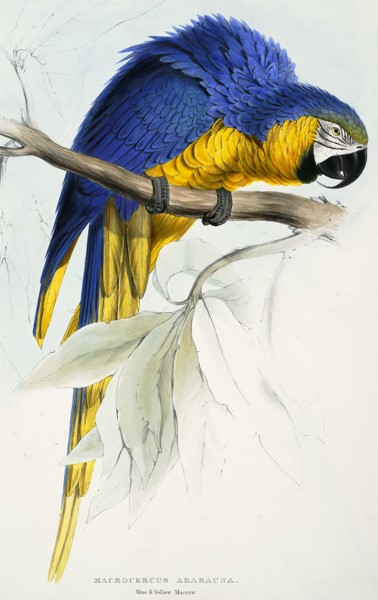
Lear, Edward. Illustrations of the family of Psittacidae, or parrots: the greater part of them species hitherto unfigured, containing forty-two lithographic plates, drawn from life, and on stone. London, England: E. Lear. 1832. Available from the Digital Library for the Decorative Arts and Material Culture here. I was surprised to find this book of parrot illustrations…but the same man that wrote the poem ‘The Owl and the Pussycat’ I remember from my childhood!

2018 07 ebook4.jpg

Wantanabe, Seitei. Seitei kachō gafu v. 2. Okura Mogabe, Toyko, Meije 23. 1890. Available from Smithsonian Libraries here. I enjoyed the Japanese artwork…like the type of nature photography I like to do. I wanted to be in the place seeing a bird walking in a wetland – perhaps it was early morning.