Suburban Savanna – 3

Continuing my series on my progress toward transitioning my yard to a suburban savanna…..

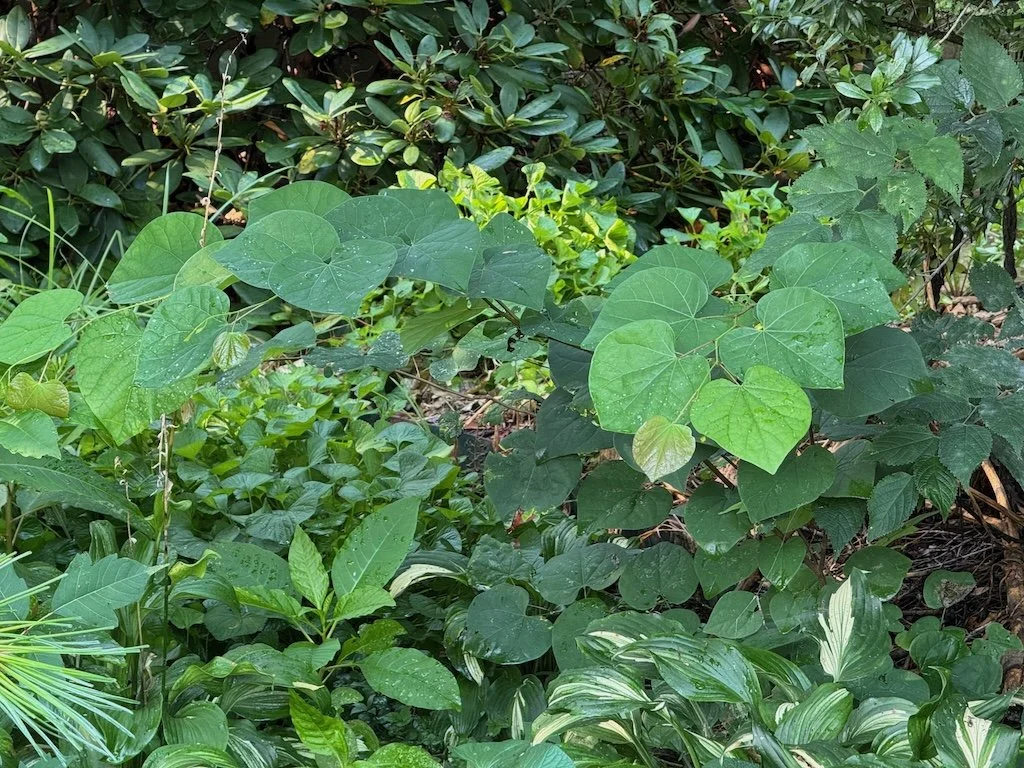
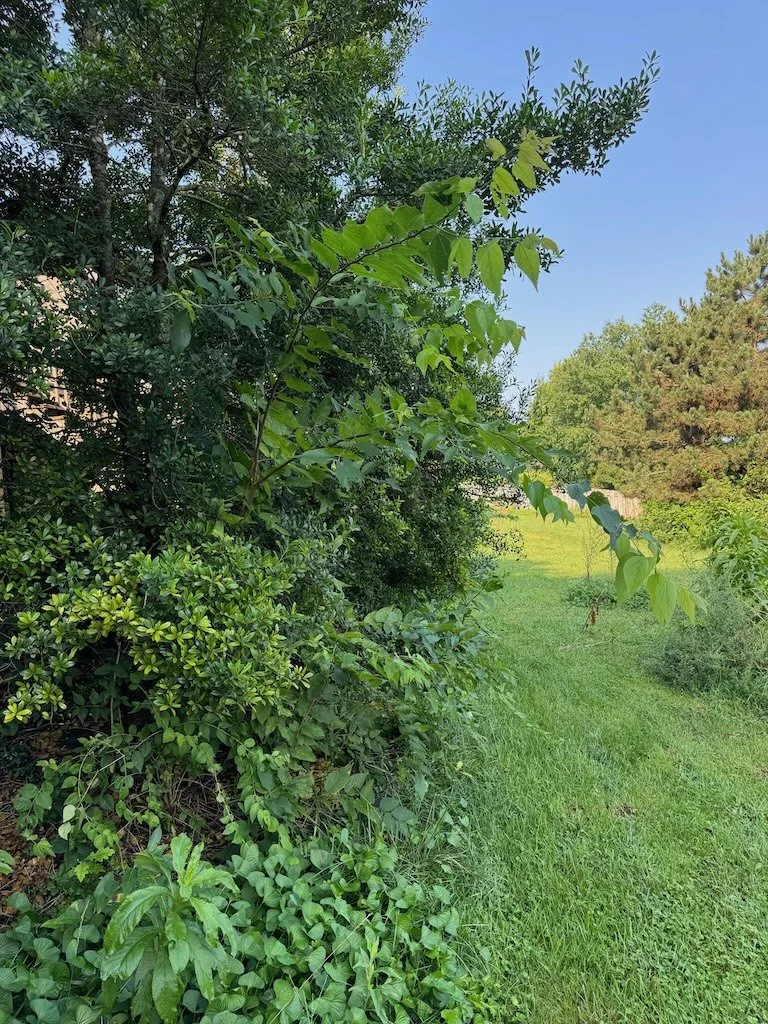
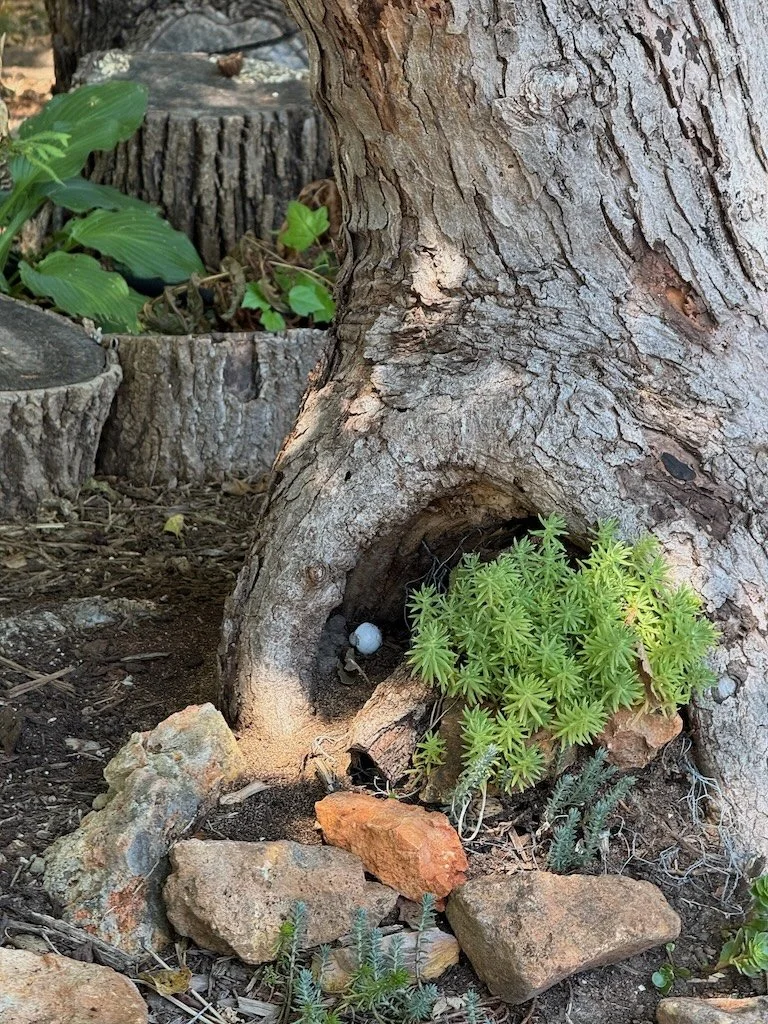
This month I am focusing on the shade garden since it is closest to being complete. The plants there will continue to develop…without a lot of work on my part. It is on the east of my house and includes an eastern white pine and a group of holly trees with low branches; a neighbor’s river birch and oak add to the shade in the summer.

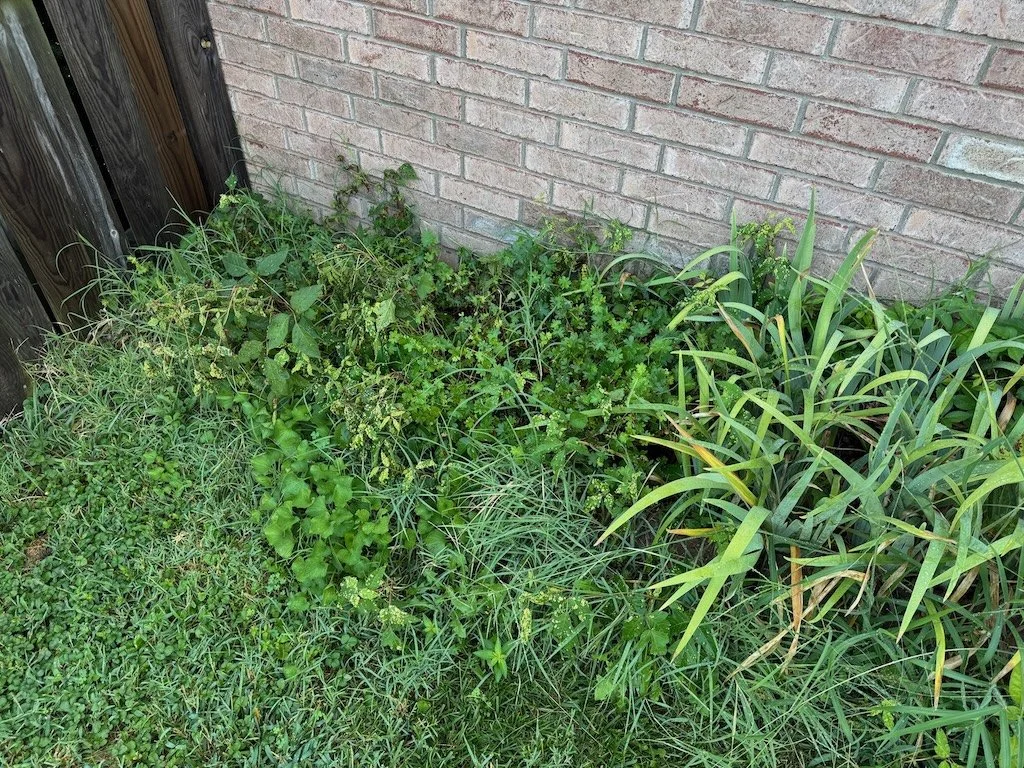
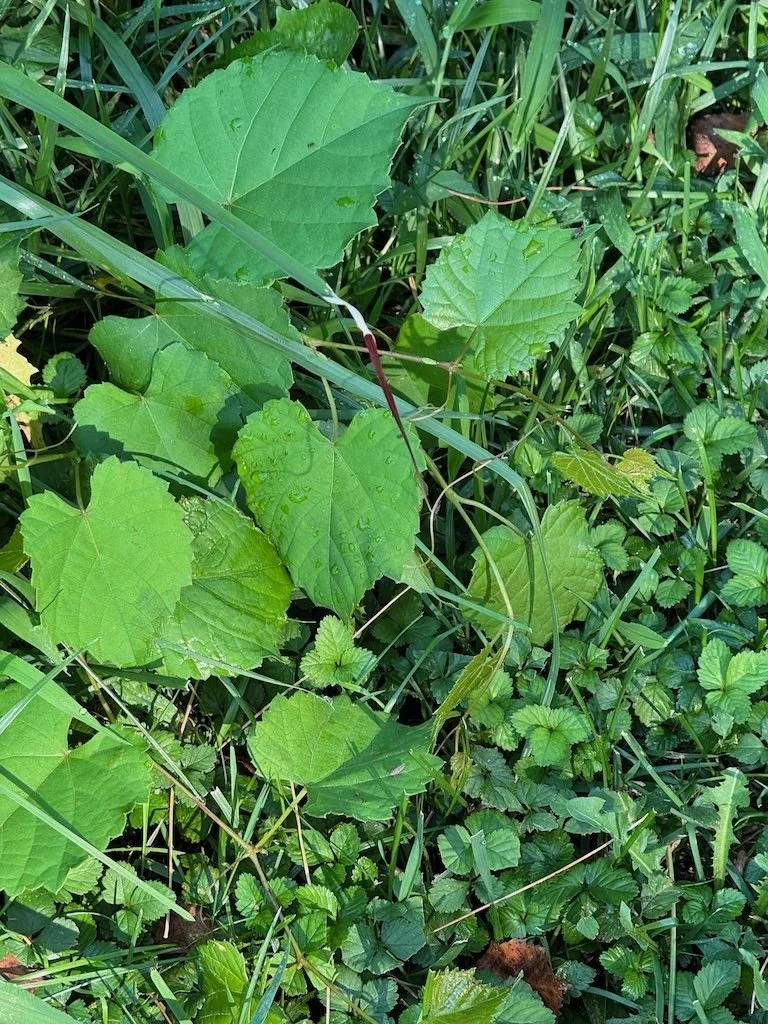
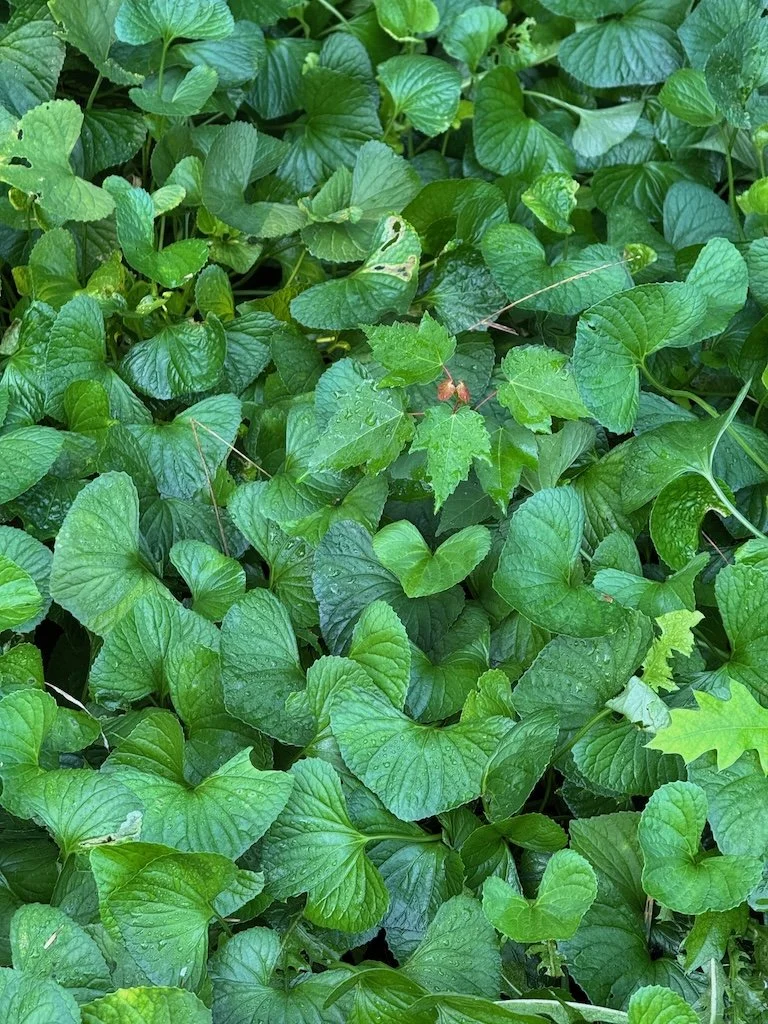
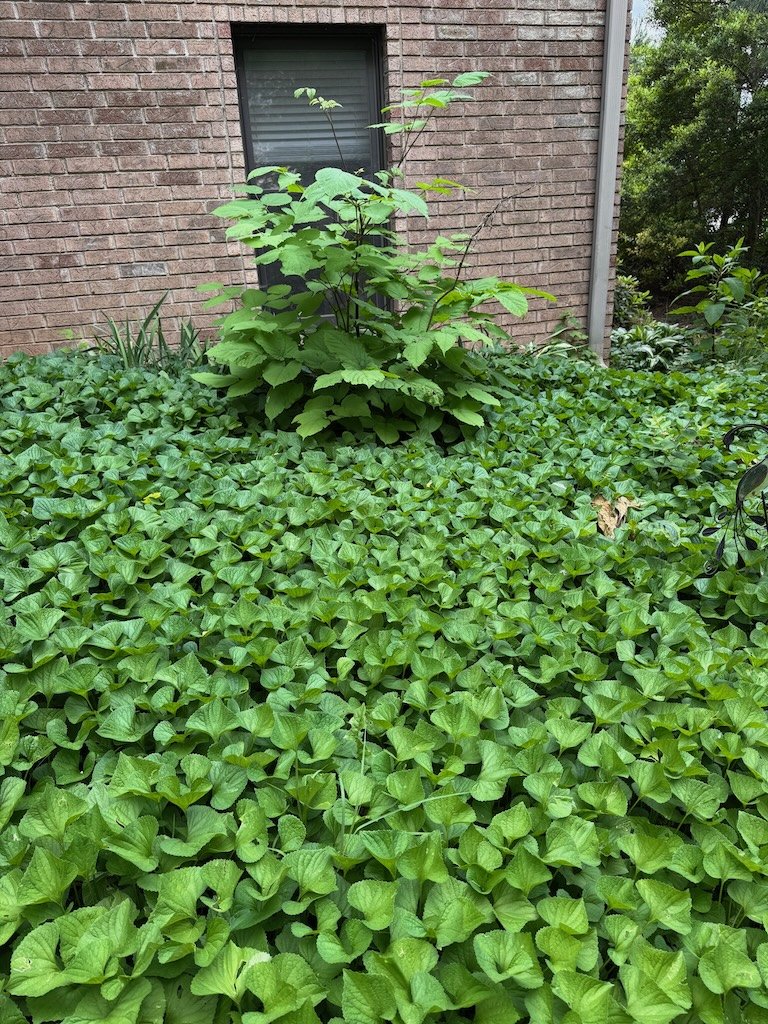
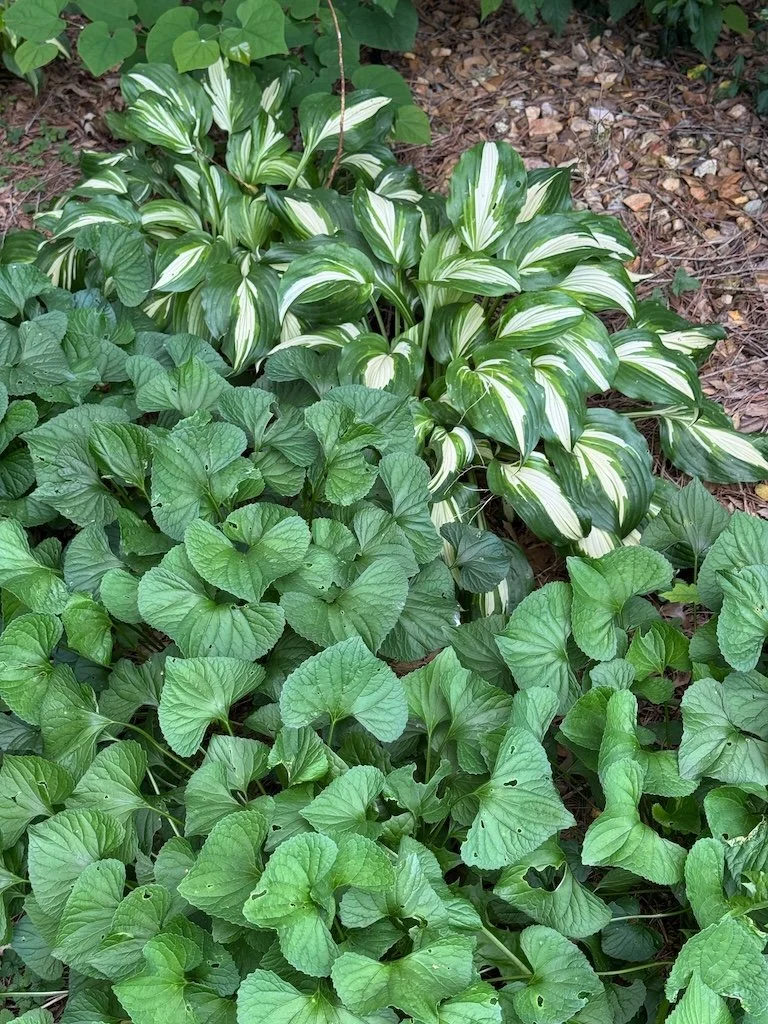
There were a few violets near the house when we arrived 4 years ago and they have spilled out to take over what used to be struggling grass (I stopped mowing and the violets took over); they have progressed about 6 feet into the yard and I will further reduce my mowing to allow them to take over more!

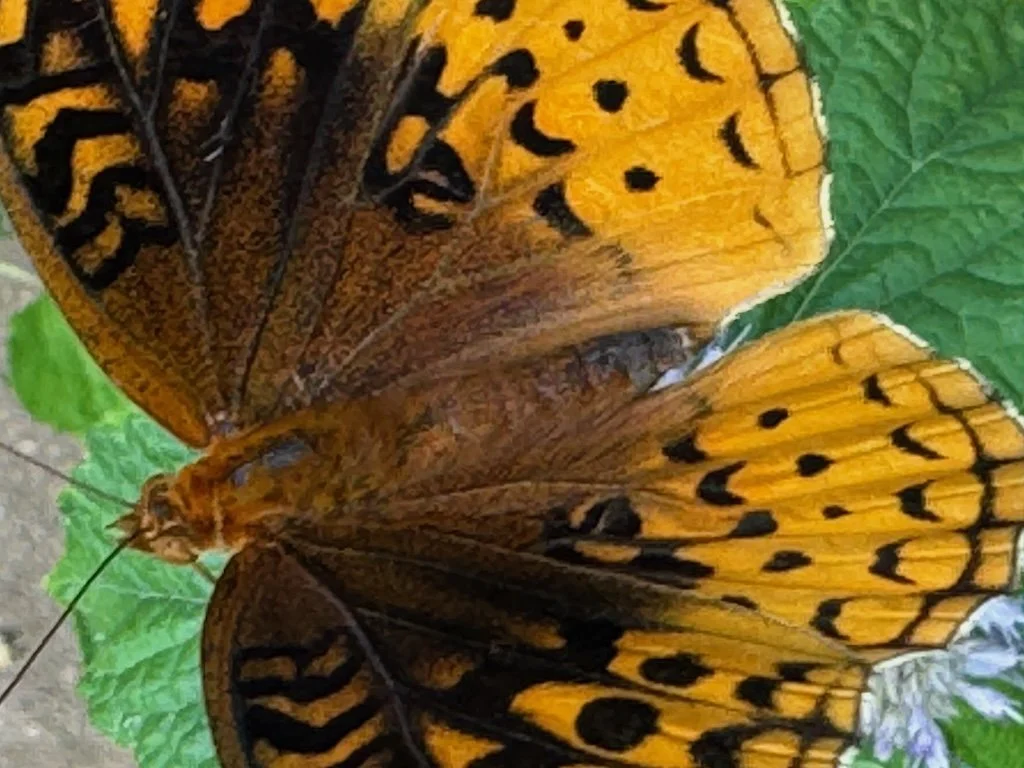
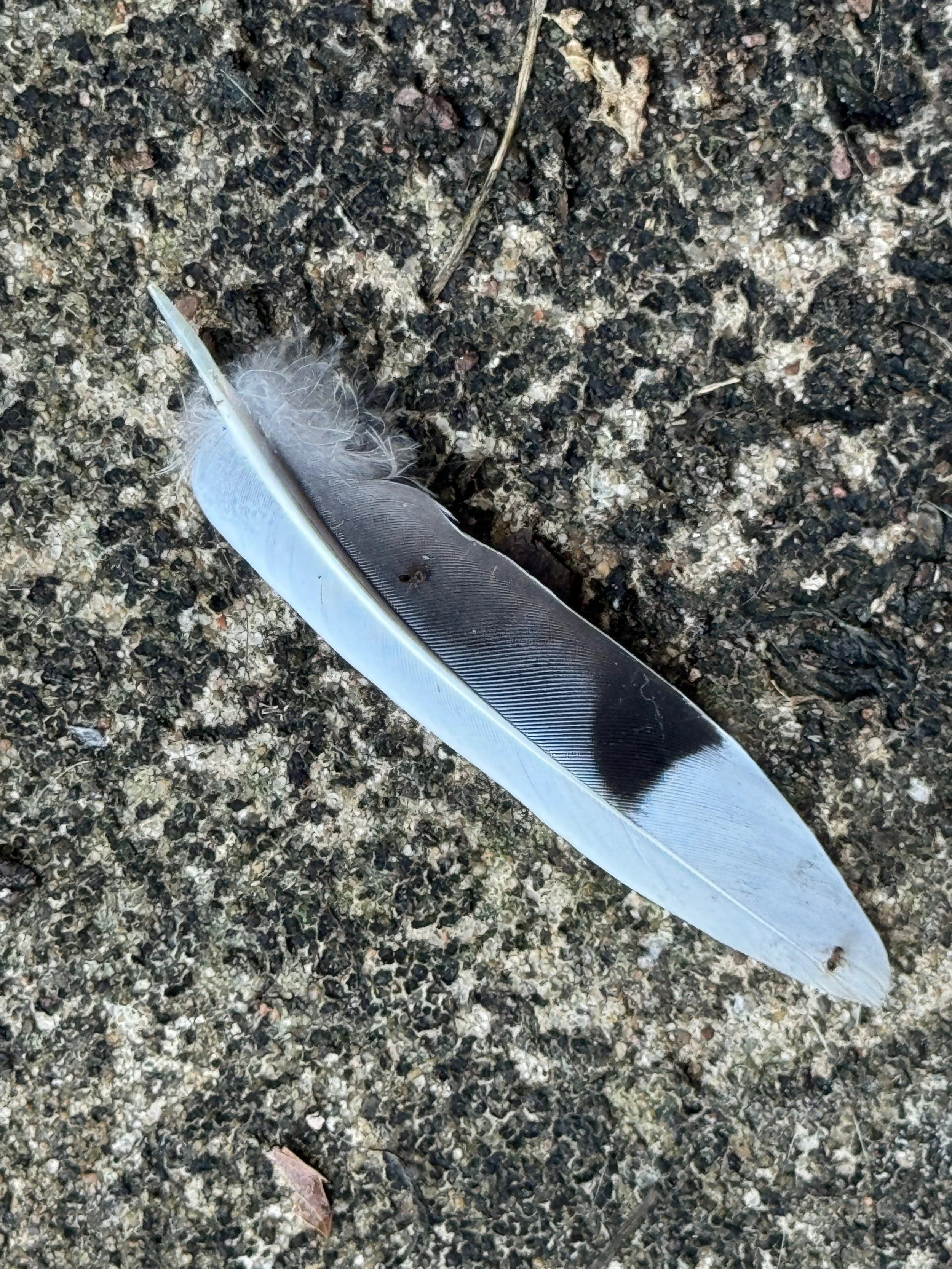
I noticed last winter that several birds – particularly mourning doves and wrens – seemed to spend a lot of time finding tidbits to eat in the brown debris of the violets; I wondered if they were finding the tiny Great Spangled Fritillary (butterfly) caterpillars.

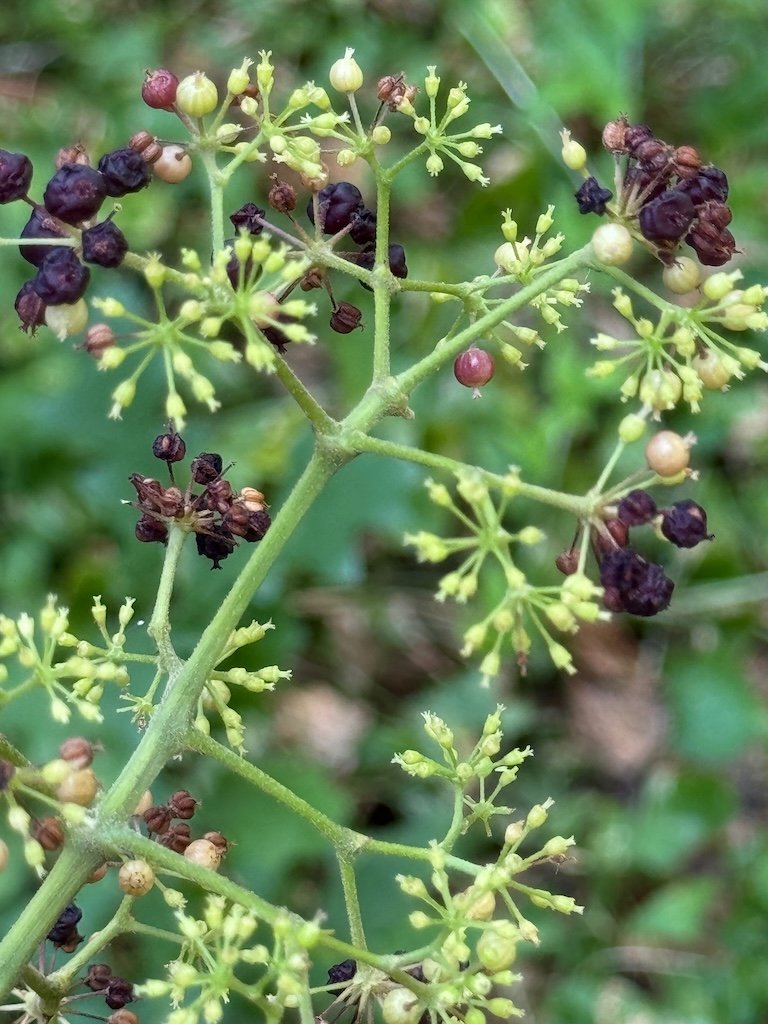
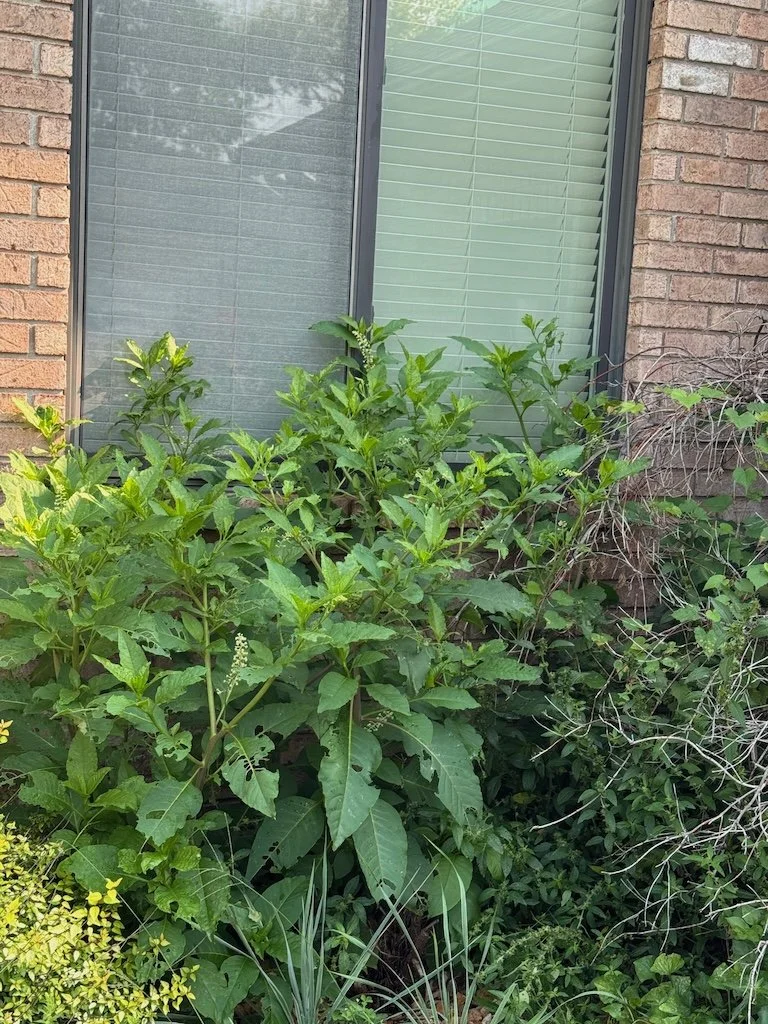
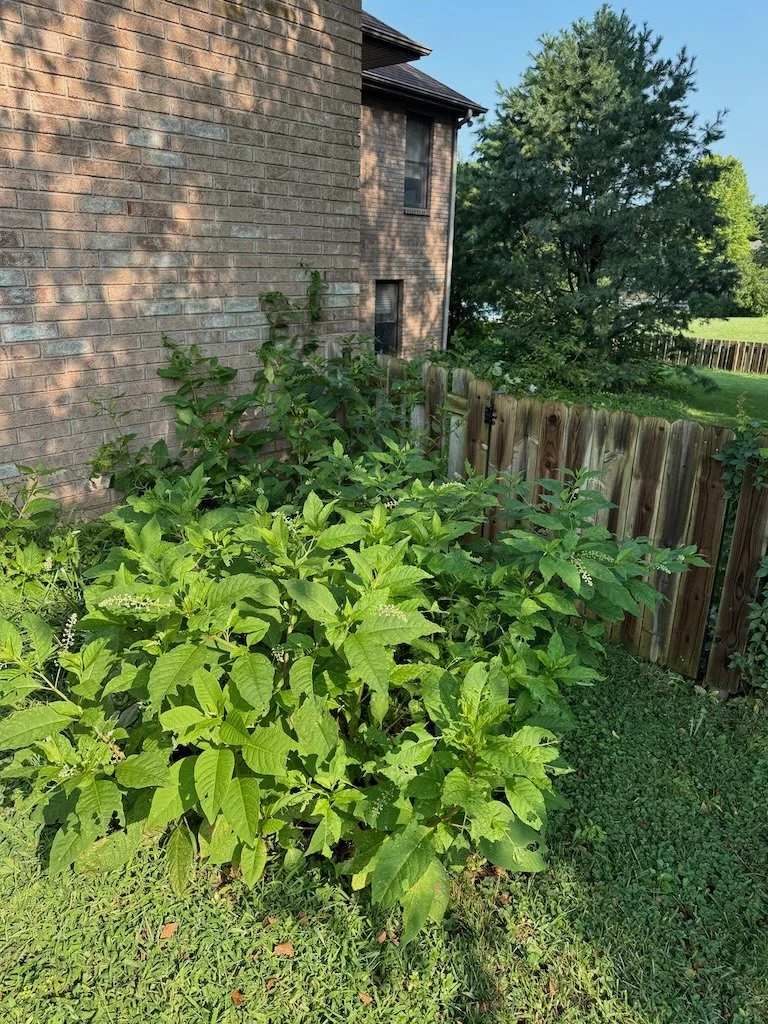
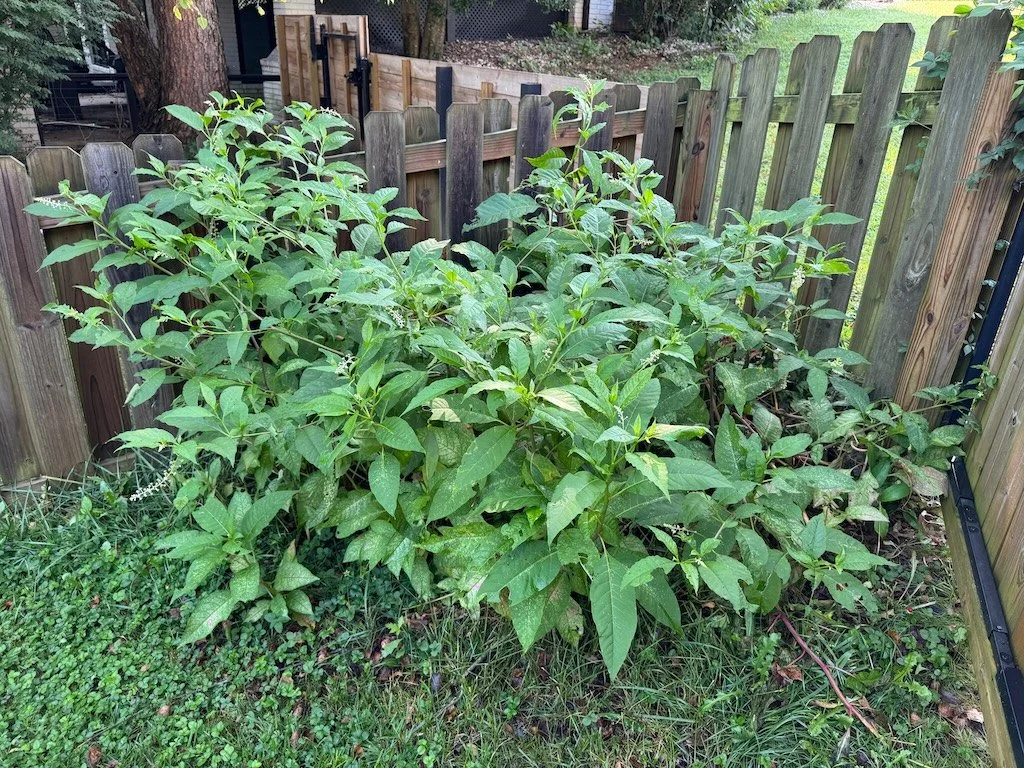
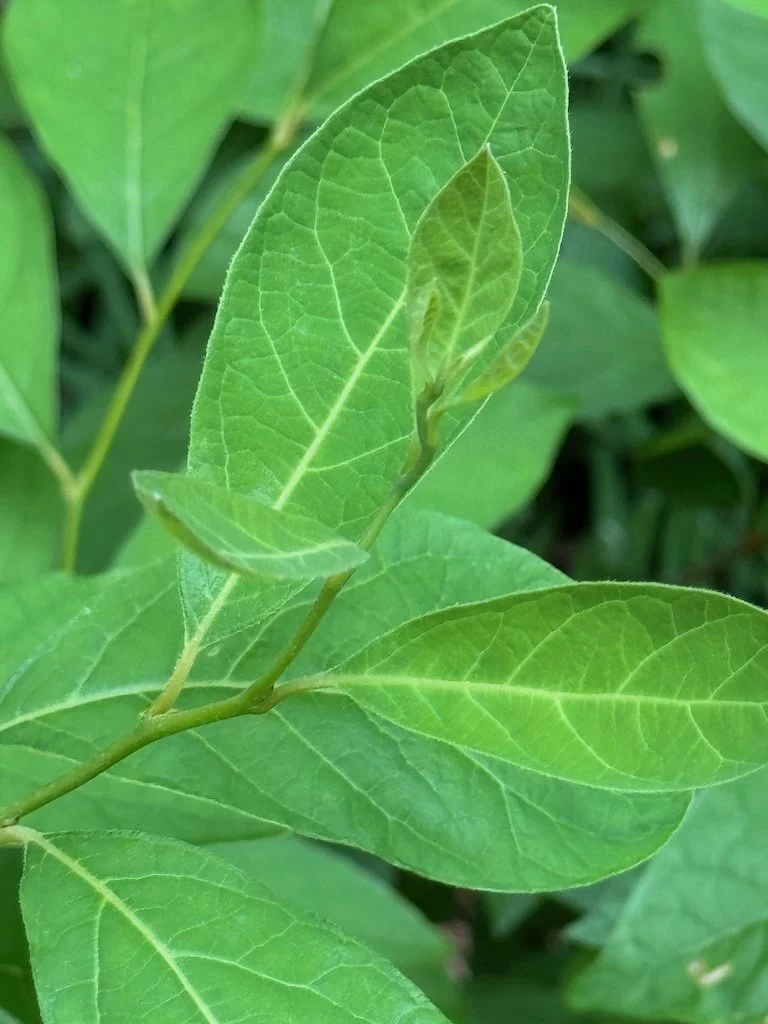
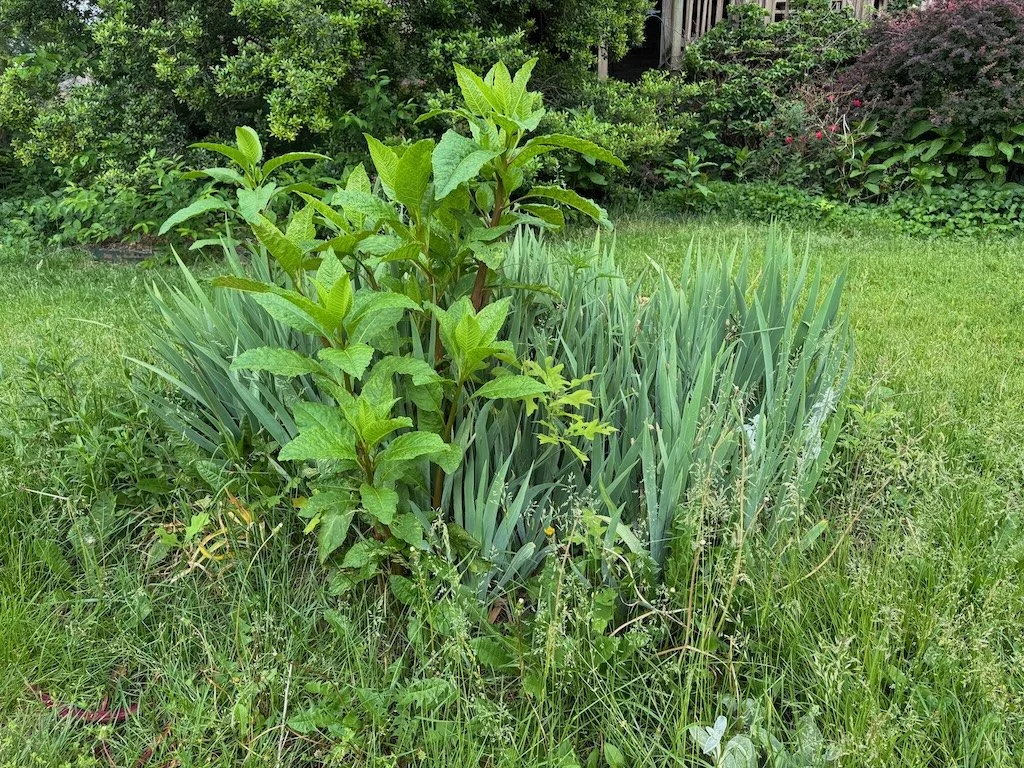
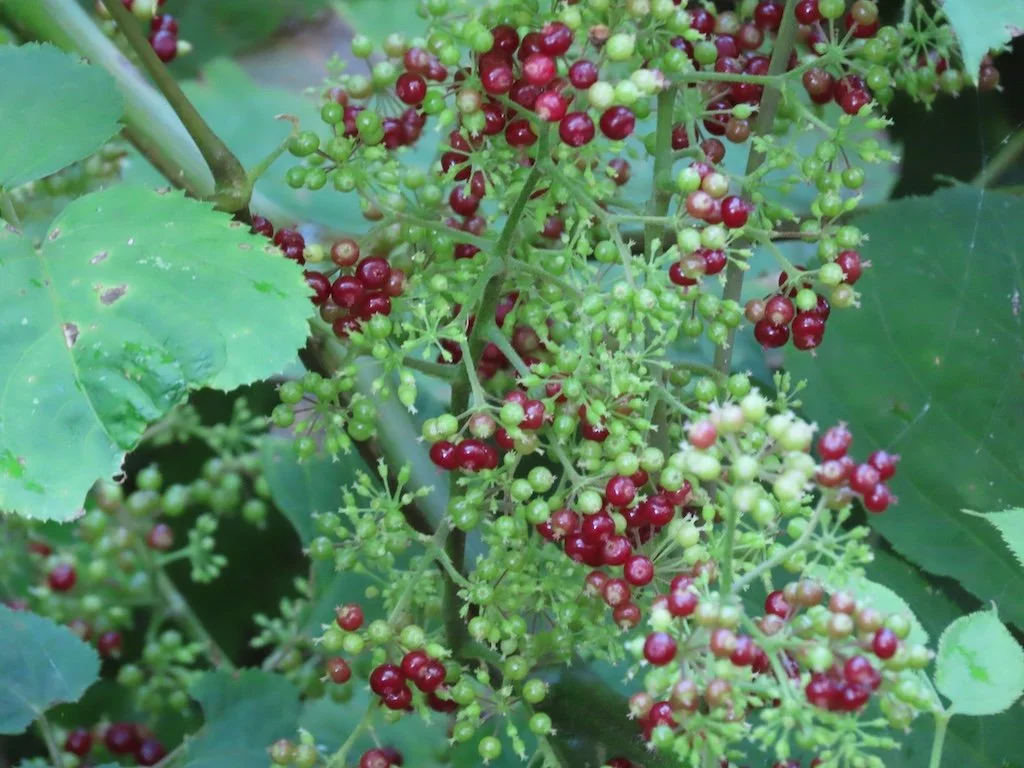
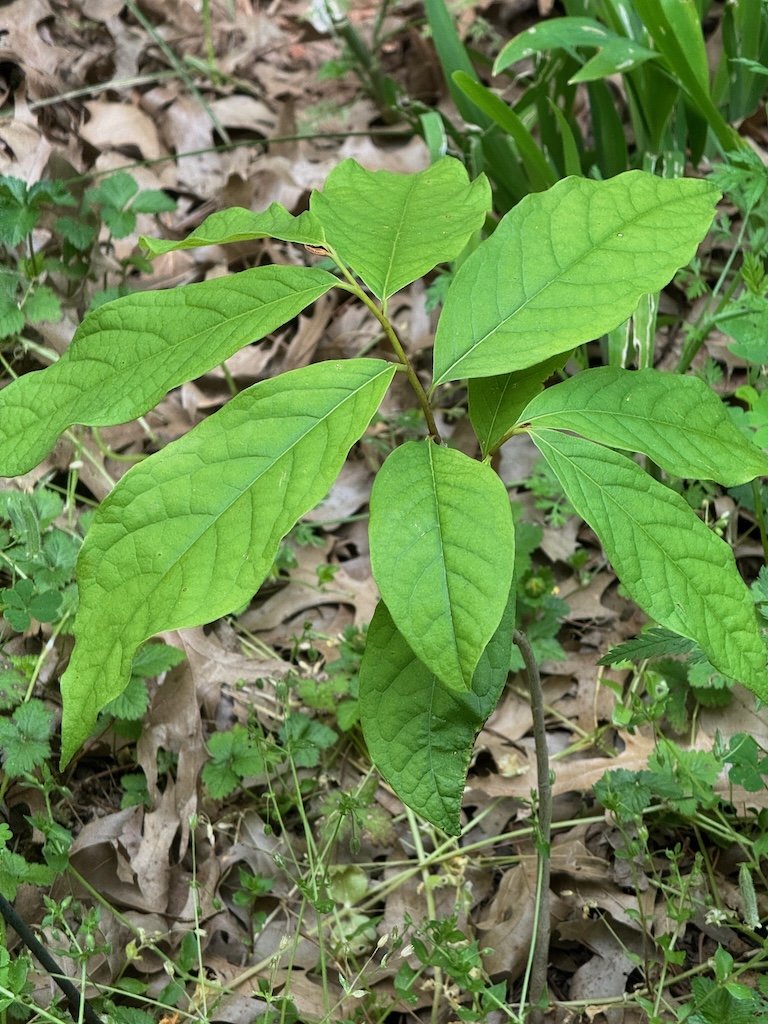
I planted American Spikenard, spice bush, and pawpaw to provide some taller plants to break the thick violet groundcover. I might eventually add another spice bush since the one I have is male (i.e. no red fruits!). The American Spikenard was one of the first native plants I added to my garden (where it is visible from my office window) and it gets bigger every year…this year it is over 5’ tall so it must be happy in its location. It blooms in June – attracting pollinators; the fruit is eaten by birds.

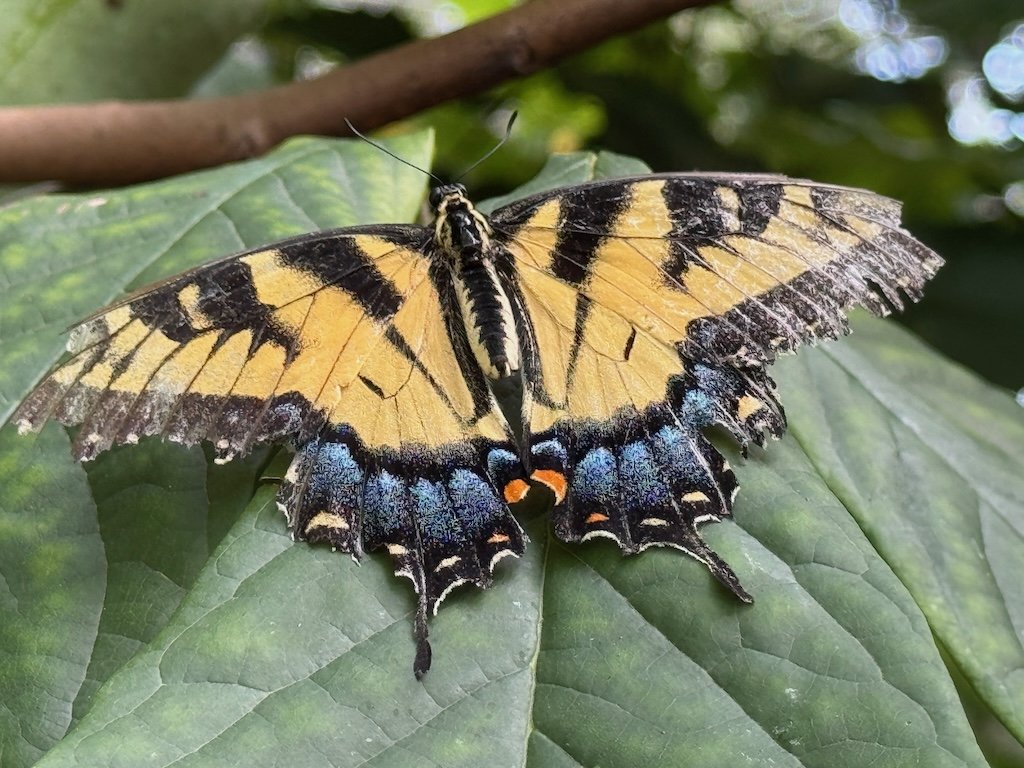
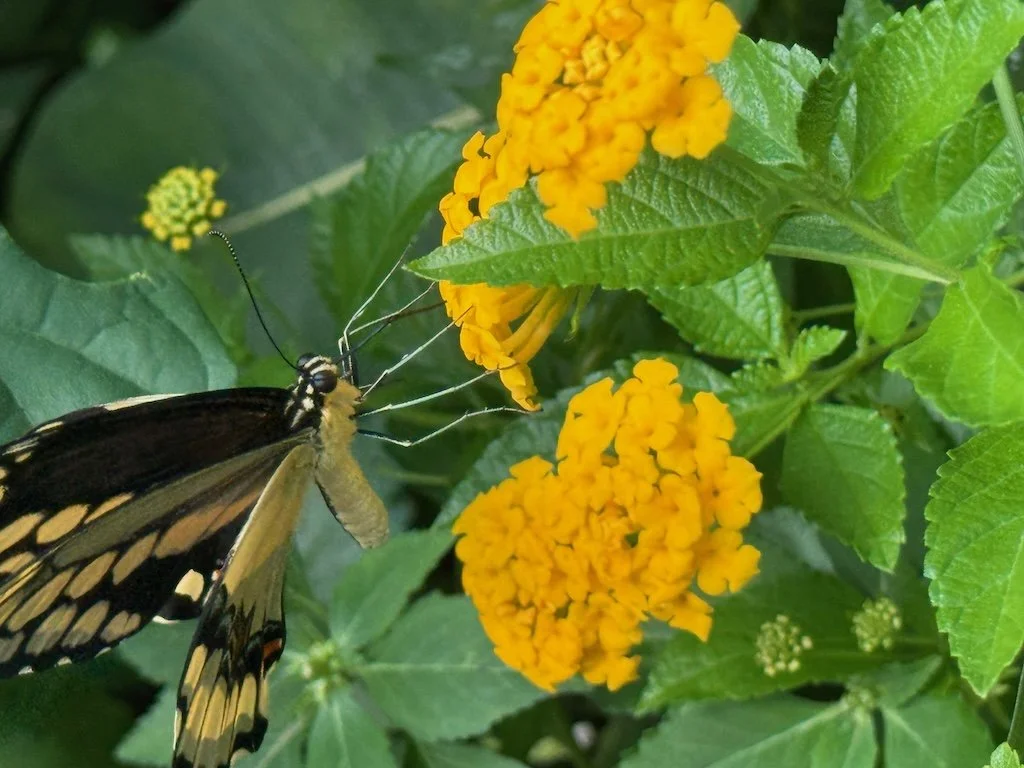
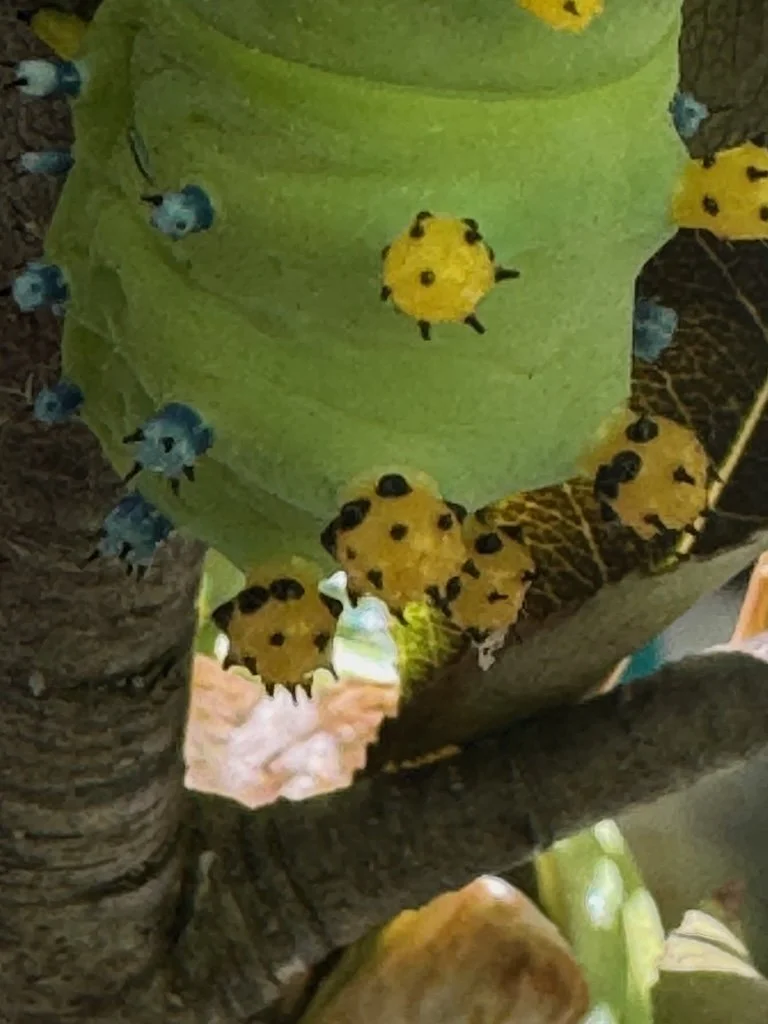
The spice bush had black swallowtail caterpillars eating it last summer…a great indication that the shade garden is supporting wildlife that had not been in the yard previously. I also noticed more fireflies in the summer beginning last year.

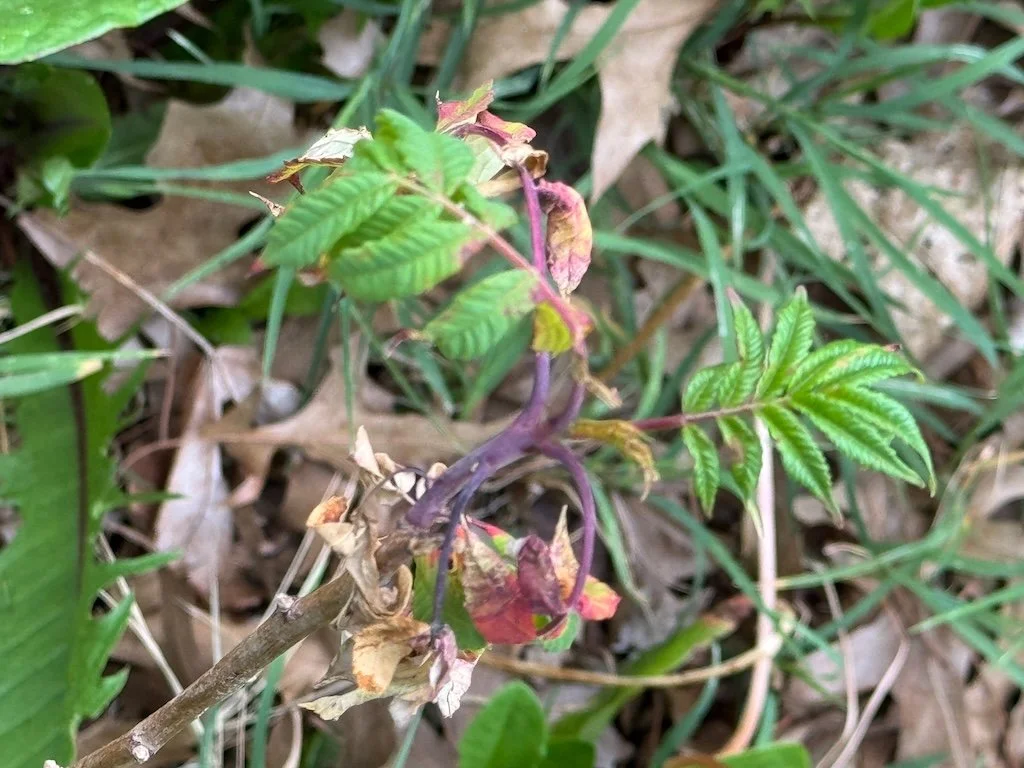
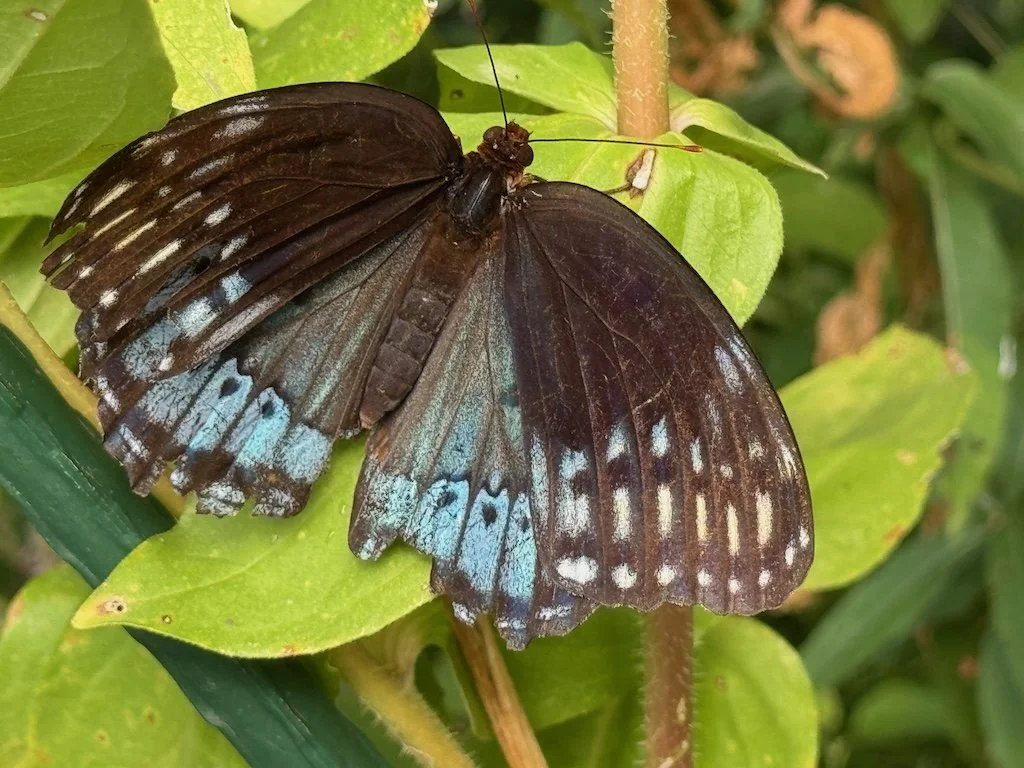
The pawpaw trees are still very young: one was planted as a seedling last year, 2 came up from seeds this spring, and 4 were planted as seedlings this spring. Hopefully most of them will survive and eventually host zebra swallowtail caterpillars. It will be years before they bear fruit….but I am excited about the prospect.

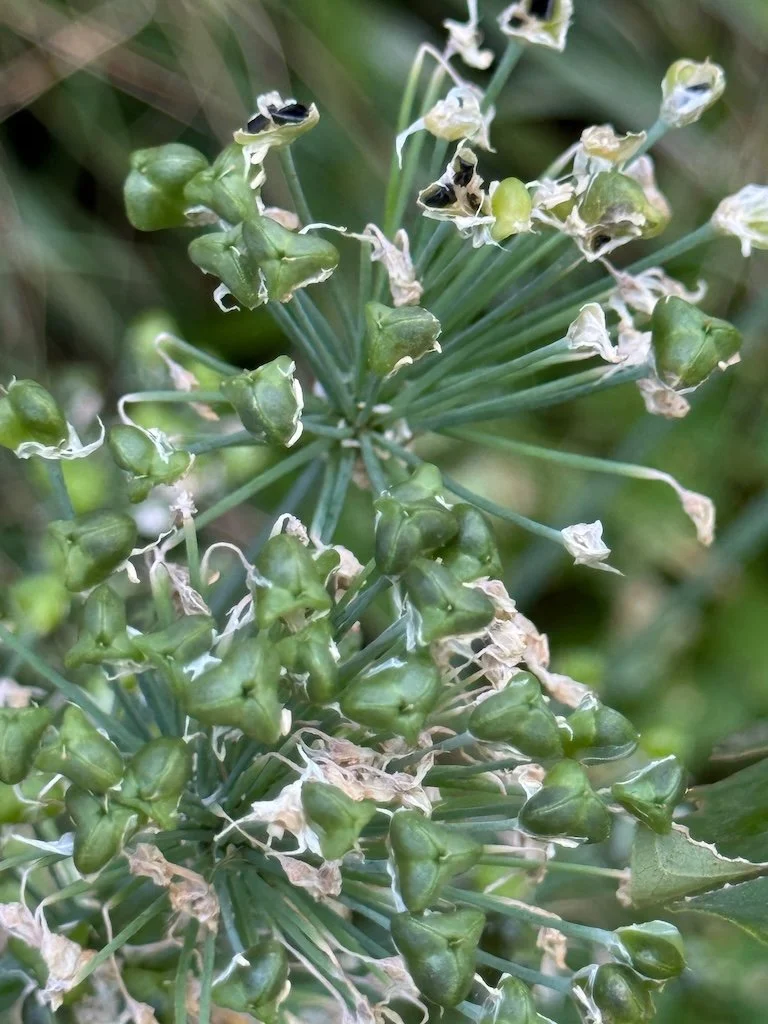
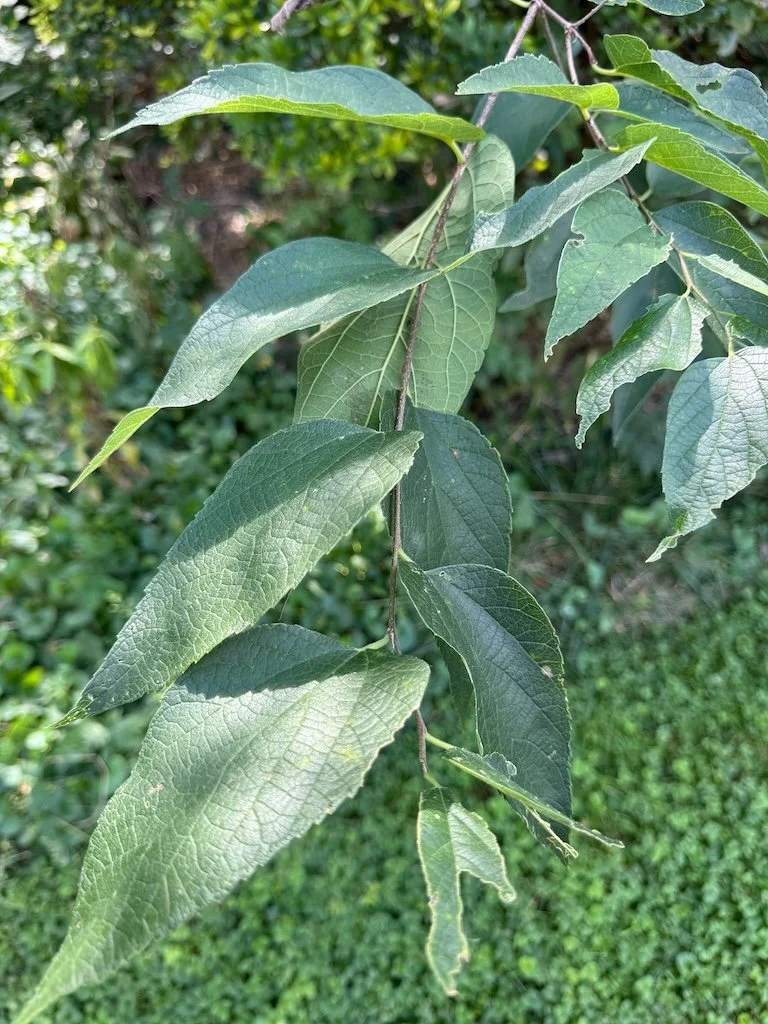
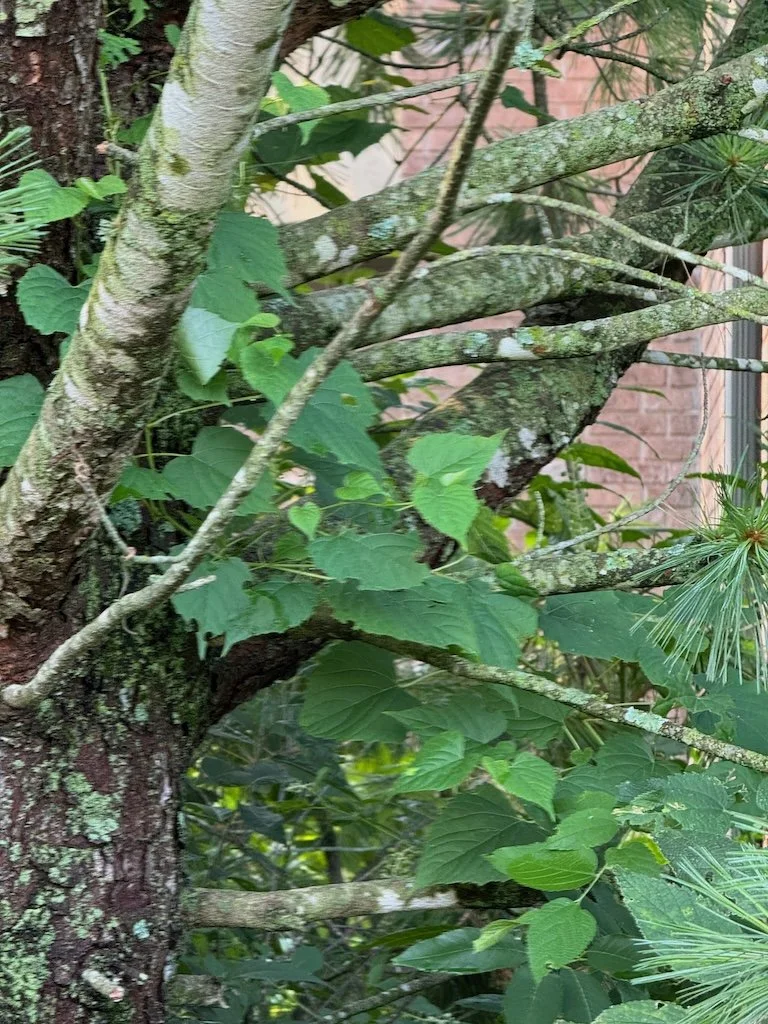
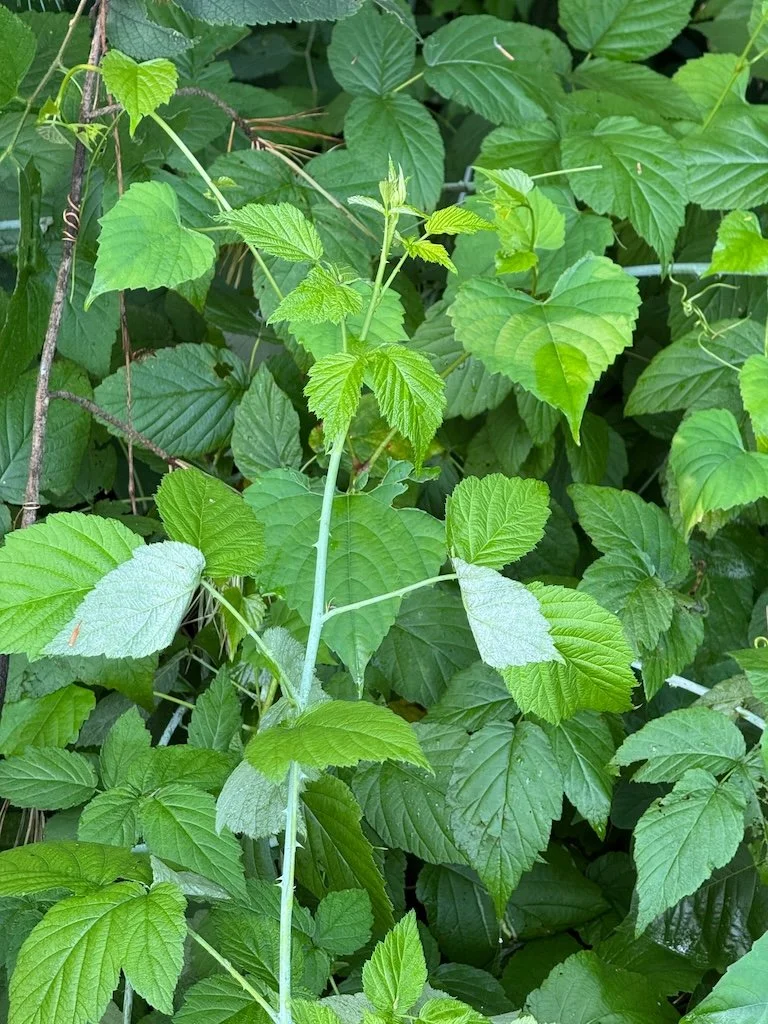
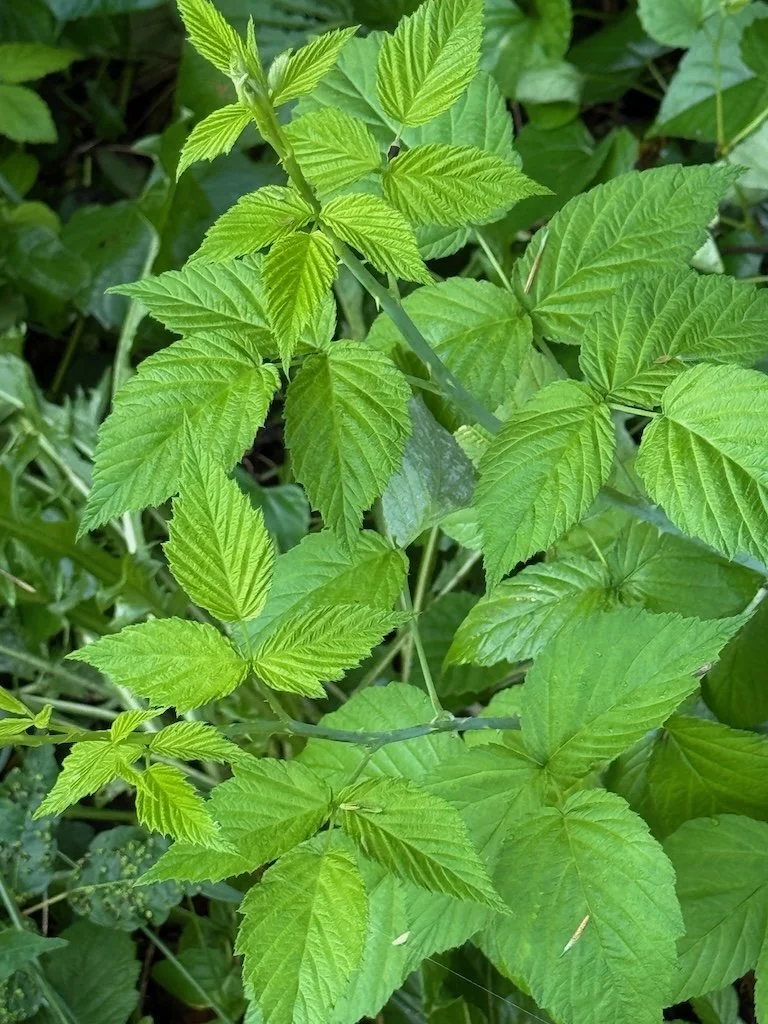
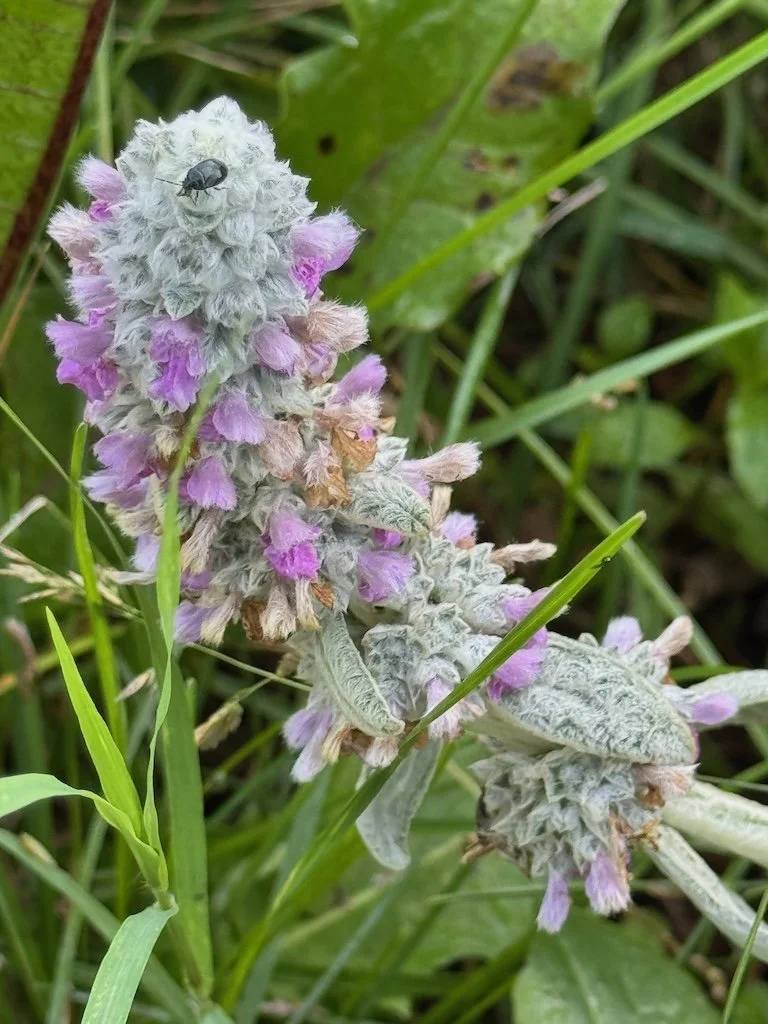
Around the white pine there is a mix of native and non-native plants. The natives are another American Spikenard, black raspberries (that came up on their own), violets, grapevine (which I cut to keep it out of the tree), hackberry (which I take out periodically, there is a neighborhood tree so the birds plant the seeds everywhere), and, unfortunately, an occasional poison ivy. The non-natives offer some color/shape contrast: hostas and lambs ear now…earlier in the season crocus, daffodils….later in the season chives.

I like that there are plants in the garden that are edible…that I can easily harvest and eat immediately: violet leaves and flowers, grape leaves, and chives.

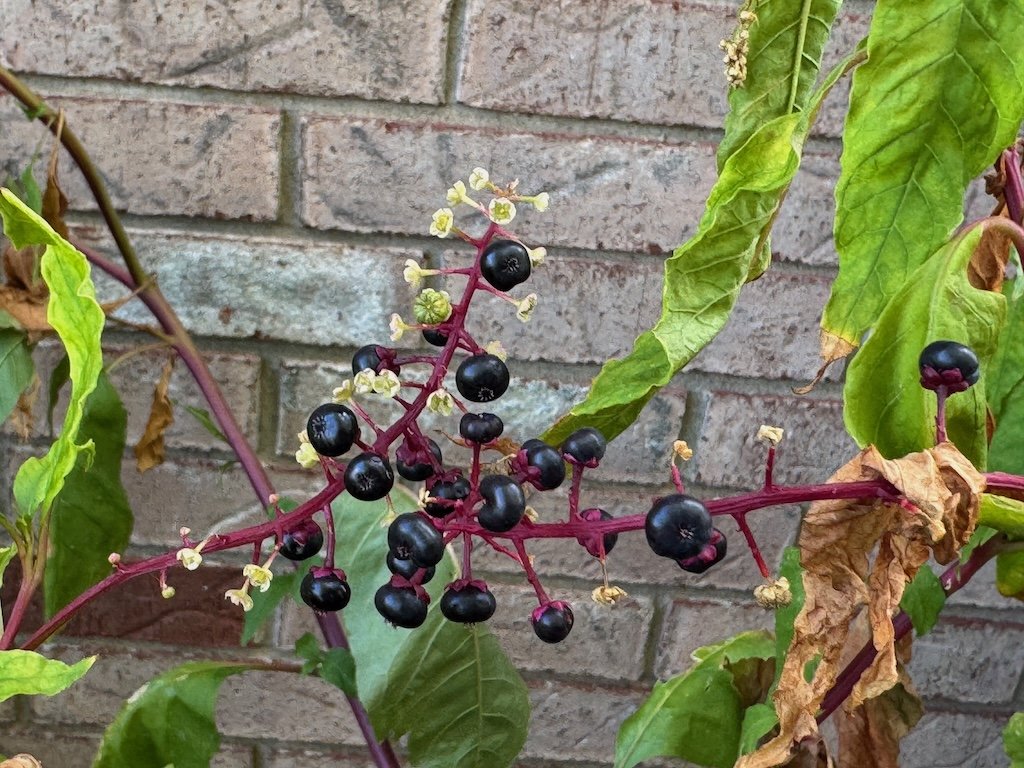
The maintenance I anticipate on the garden is mainly controlling things like grape vines, poison ivy, and hackberries….keeping an eye out for invasives like poison hemlock and wintercreeper (removing immediately). I will eventually begin removing the lower branches of the pine (they are already sparsely needled because they only get enough light at their tips); it could reduce the shade a little in the morning, but the hollies will shade the area in the afternoon and the pine needle mulch sustains the soil moisture).   The violets will grow out into the yard at least a little further but that just requires me to stop mowing the area where I want the violets to take over! My sprinkler system still waters the area when it hasn’t rained but I envision that I might turn off the zone once the plants are all well established.

More about my suburban savanna and water next month.

Previous Suburban Savanna Posts:

April 2026 – Overview
May 2026 – Planting Natives

Suburban Savanna – 2

Last month was my first post about my goal to turn my yard into a suburban savanna. The series continues this month.

I’ve done the planting for the year already.

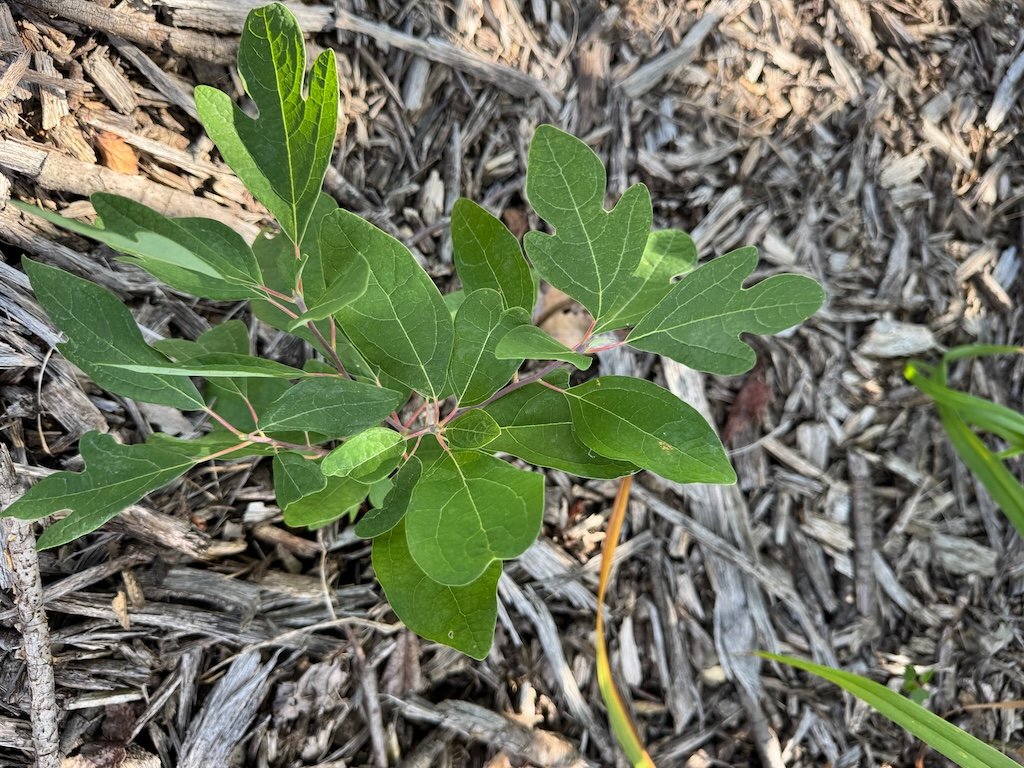
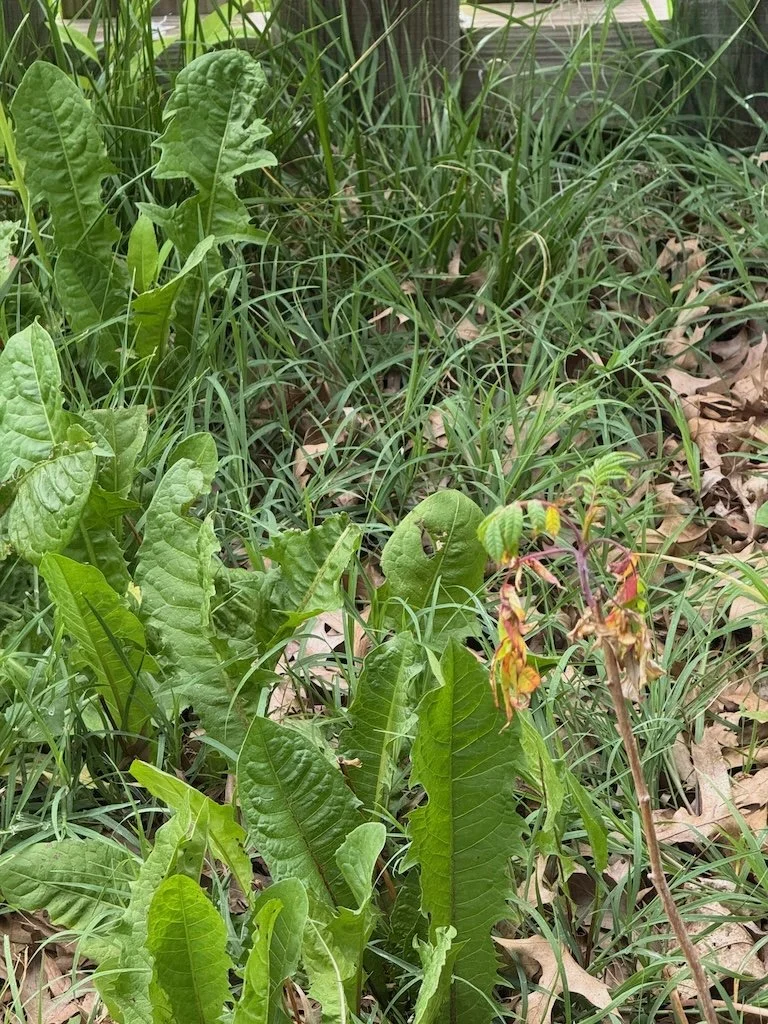
The last new plant was a free smooth sumac from the Earth Day Music Festival that I planted in the corner of the yard where oak leaves (neighbor’s tree) accumulate, and the dandelions have very large leaves. I hope it will eventually fill that corner of the yard.
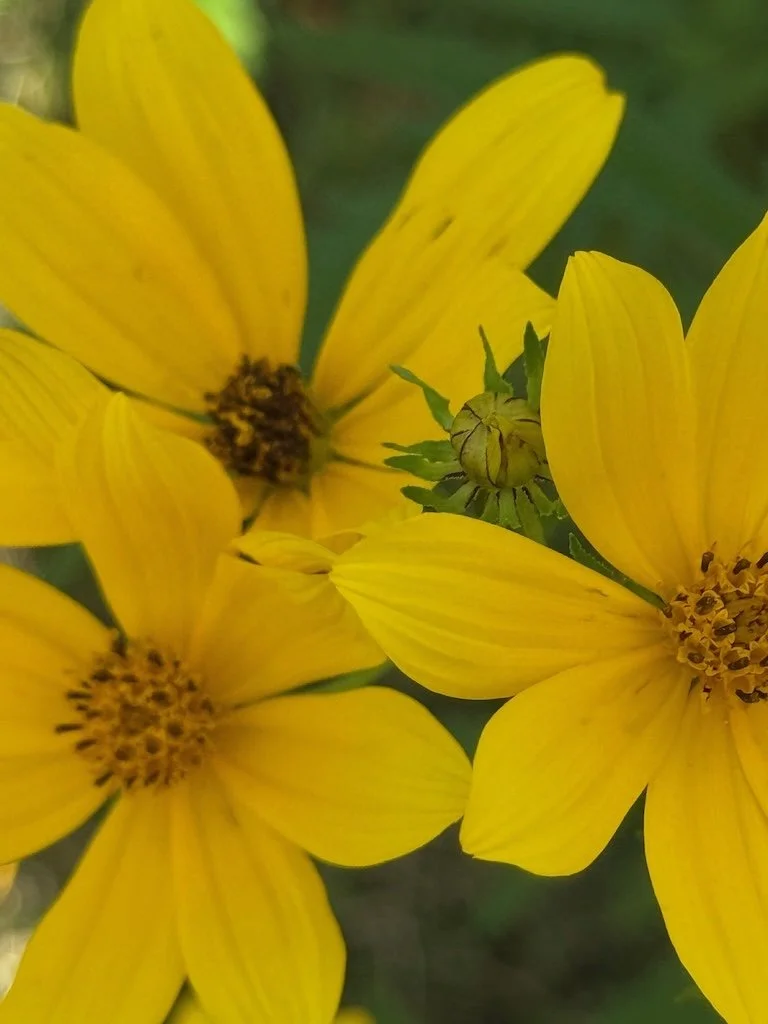
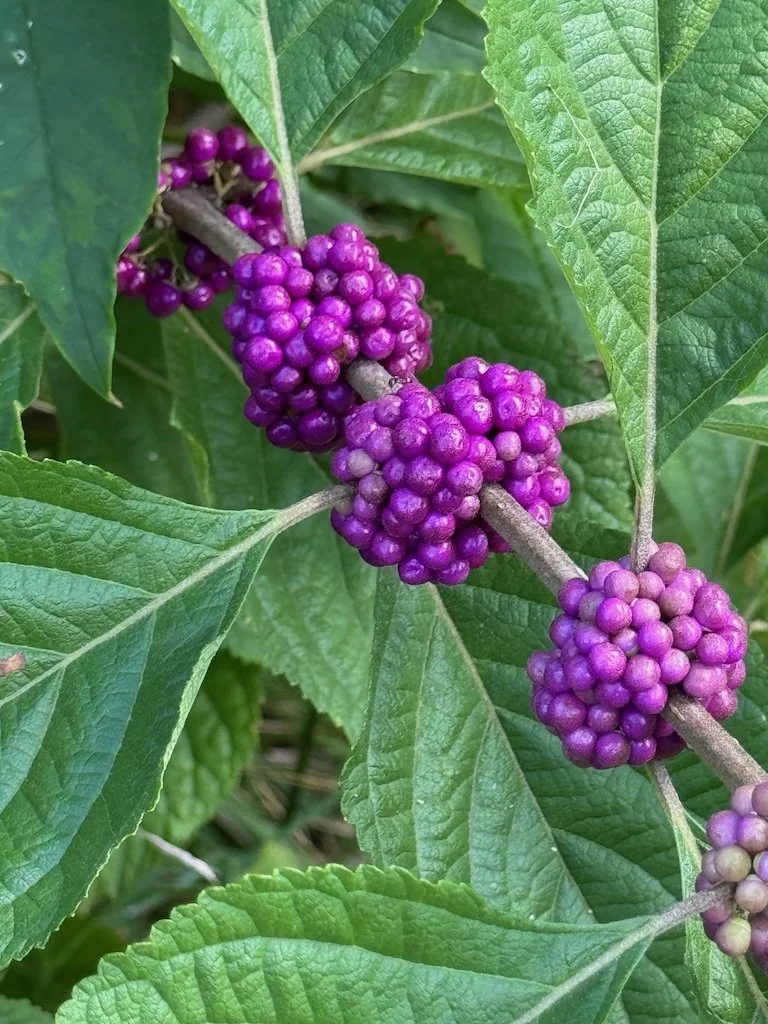
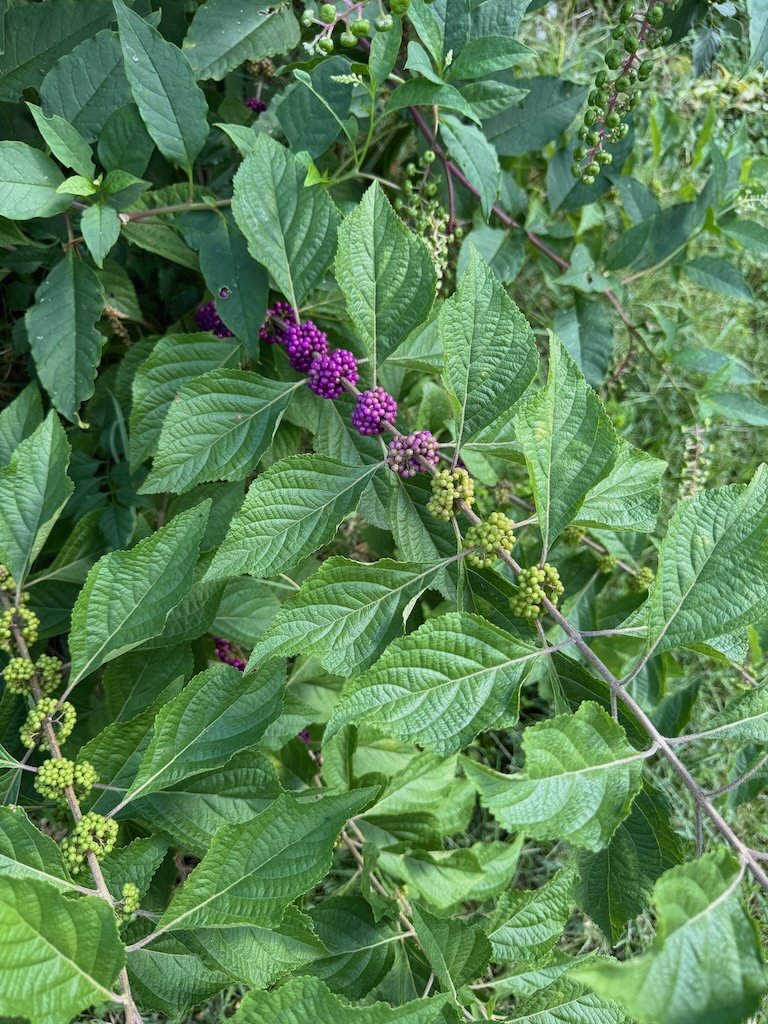
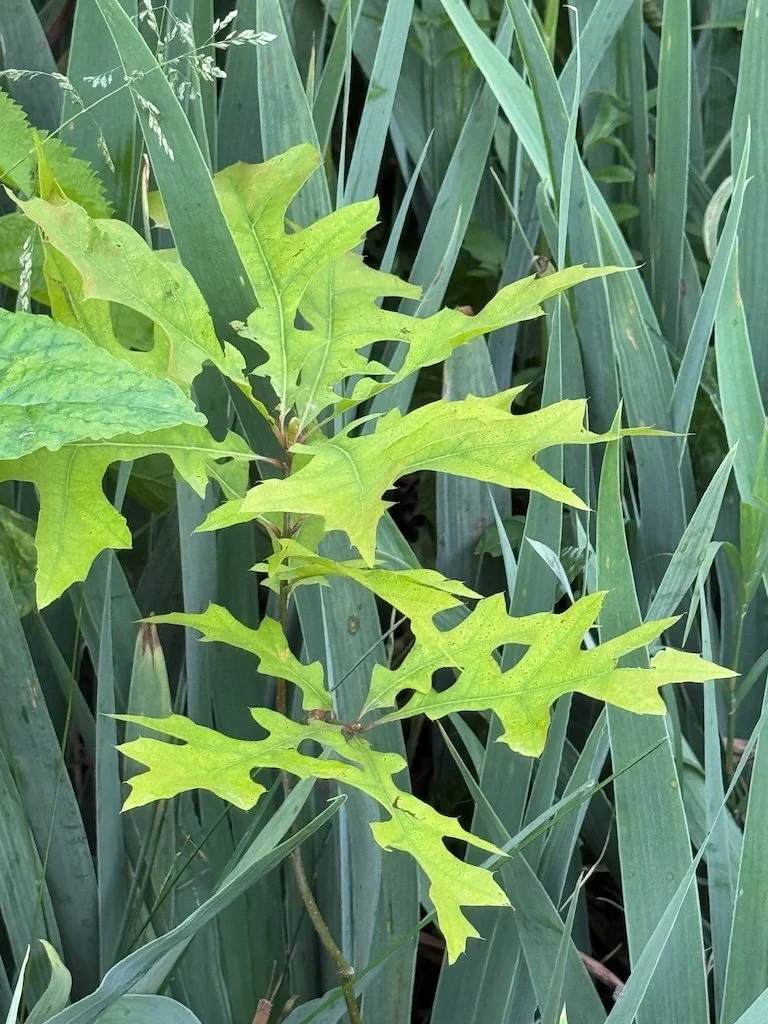
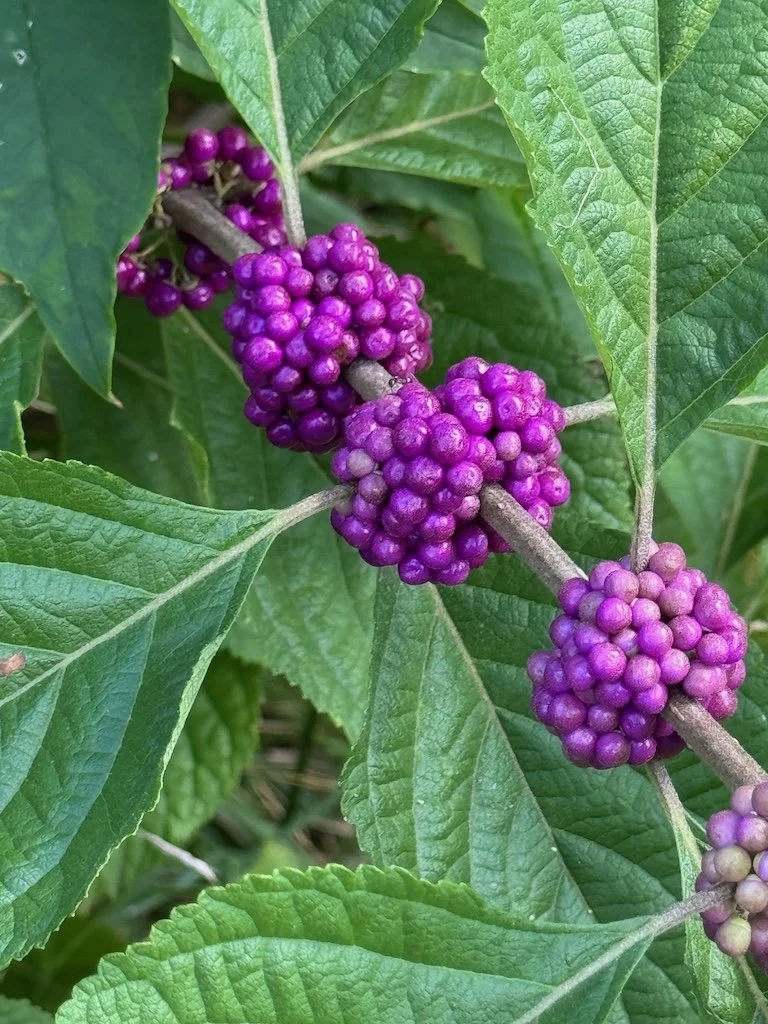
I have discovered a sturdy red oak seeding (squirrel planted) in the bed that I made after a pine fell. I am letting it grow. There will be elderberry and beautyberry along with iris and naked lady lilies around its base. It will be a long time before the oak will be big enough to make shade an issue. I anticipate that the progression of this garden will be the most interesting of the yard.

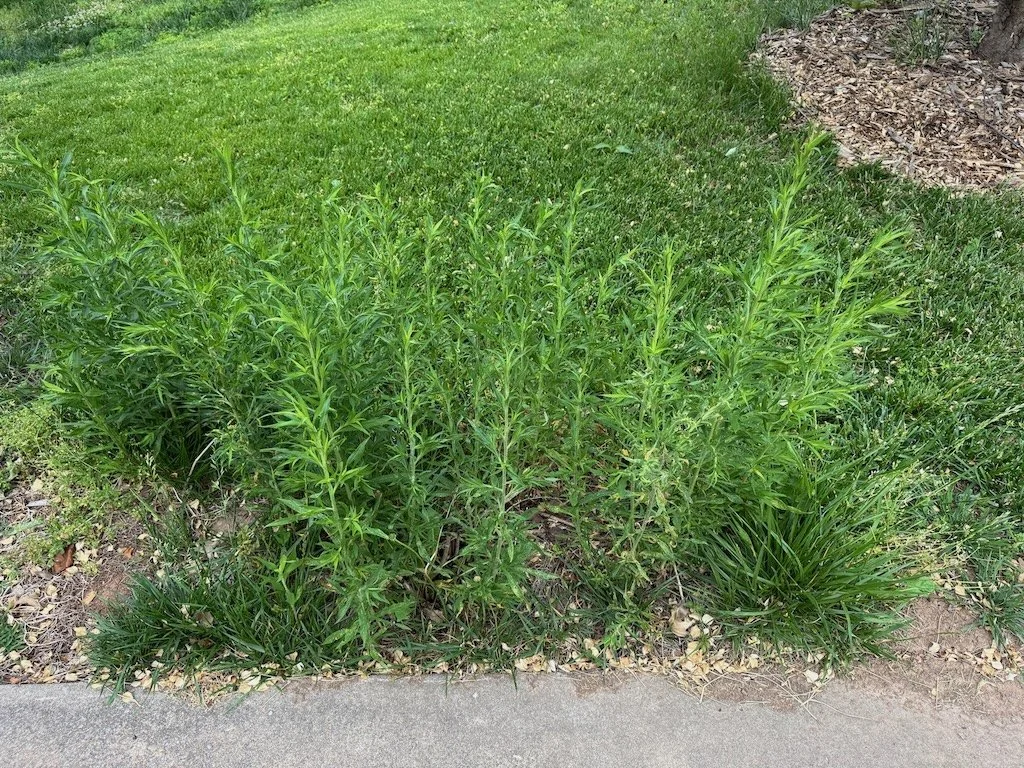
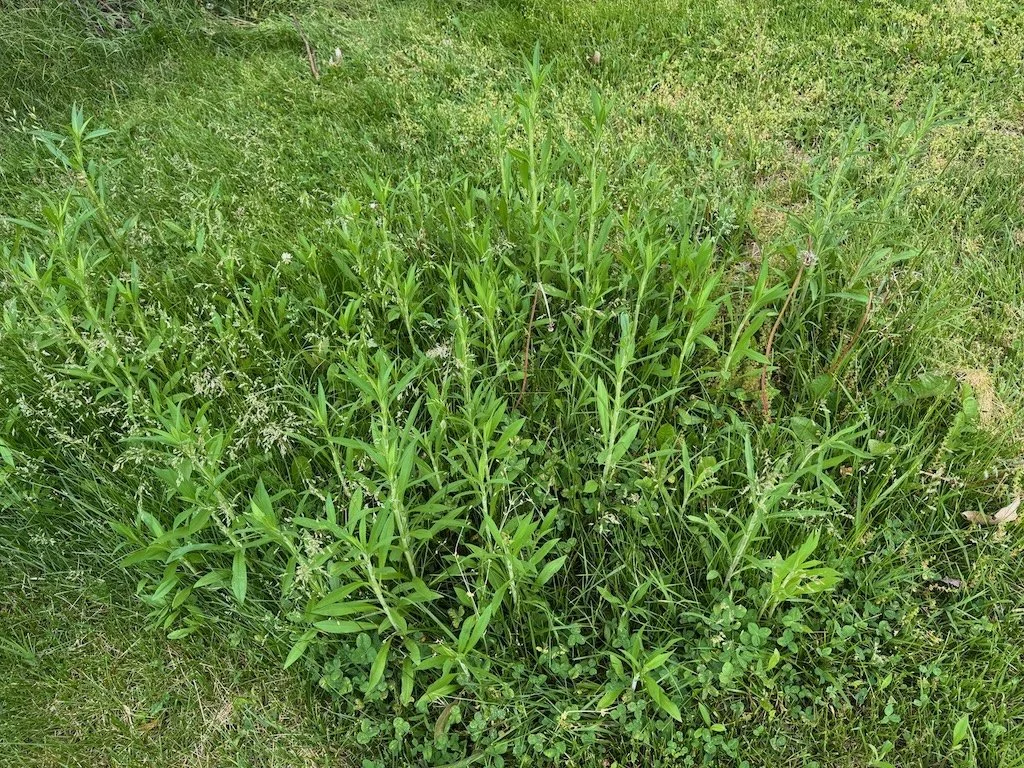
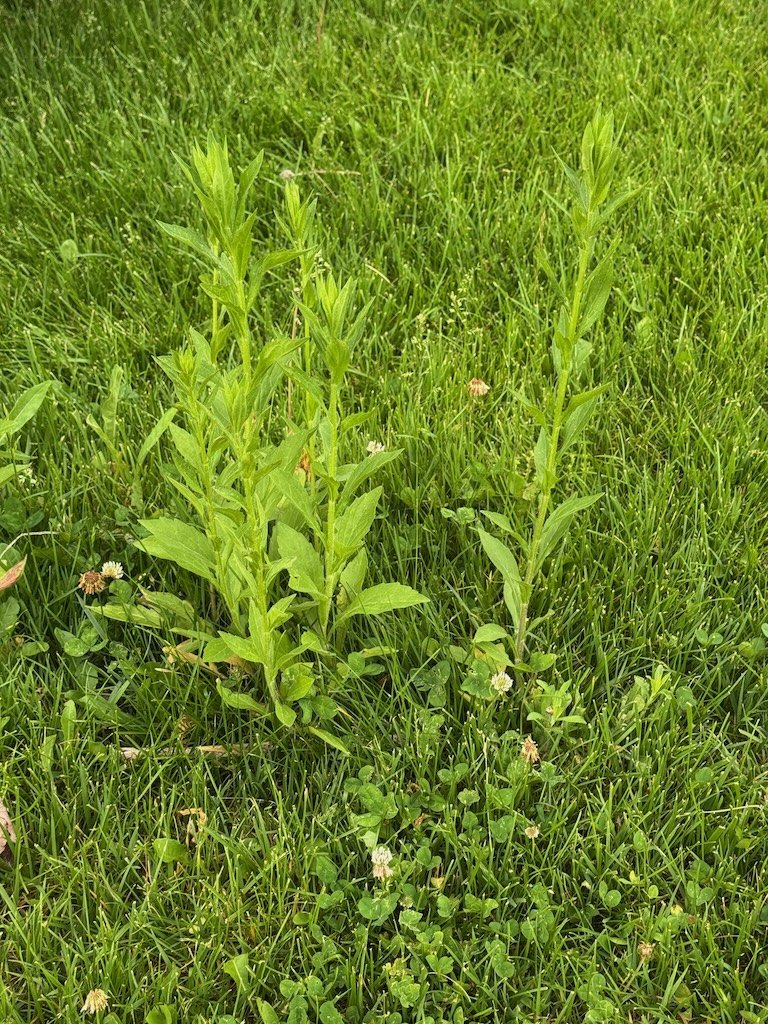
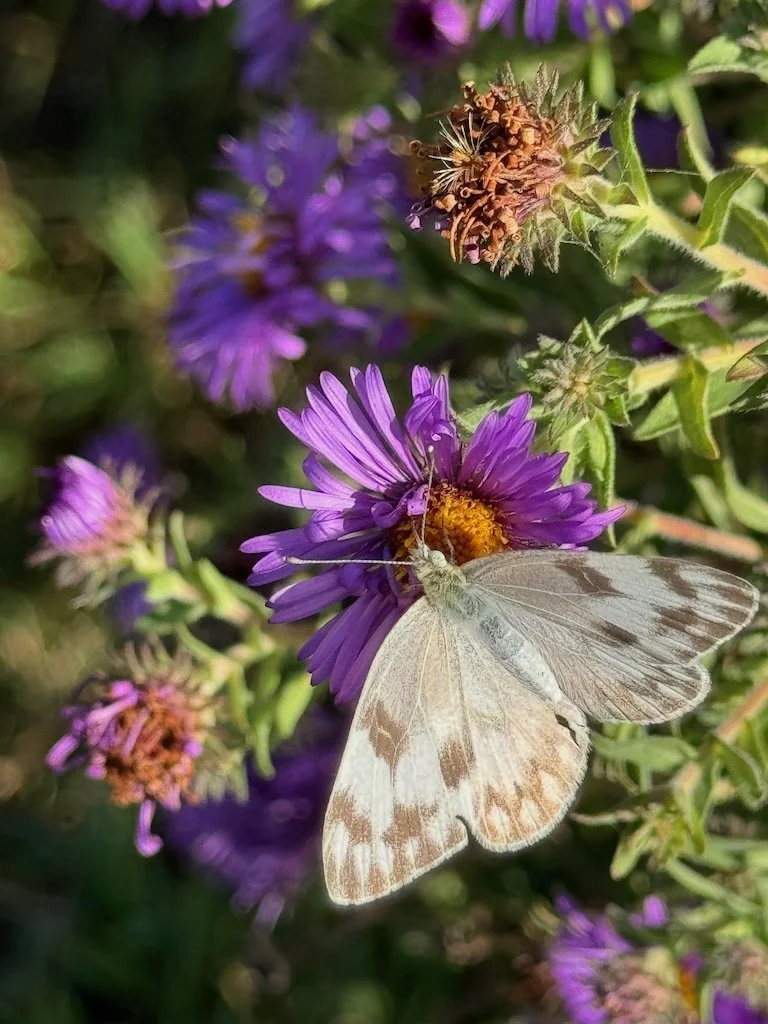
The panicled aster Symphyotrichum lanceolatum that came up next to my driveway last summer is there again – and is larger. I am letting it grow since it is a fall bloomer and was full of pollinating insects last fall.
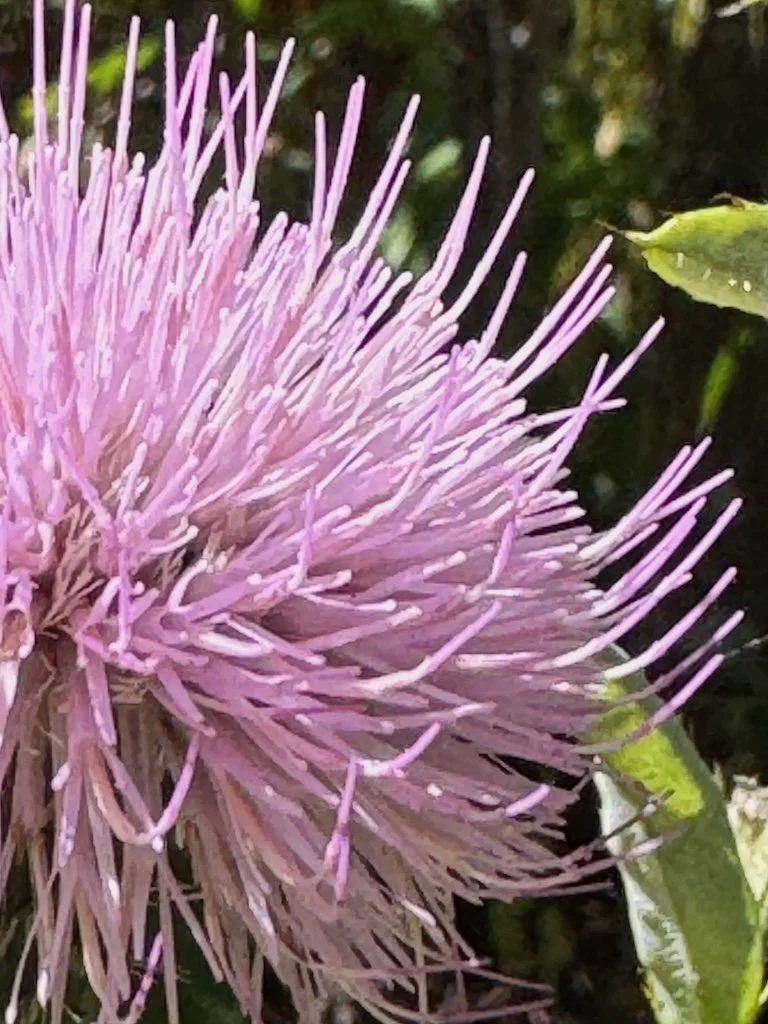
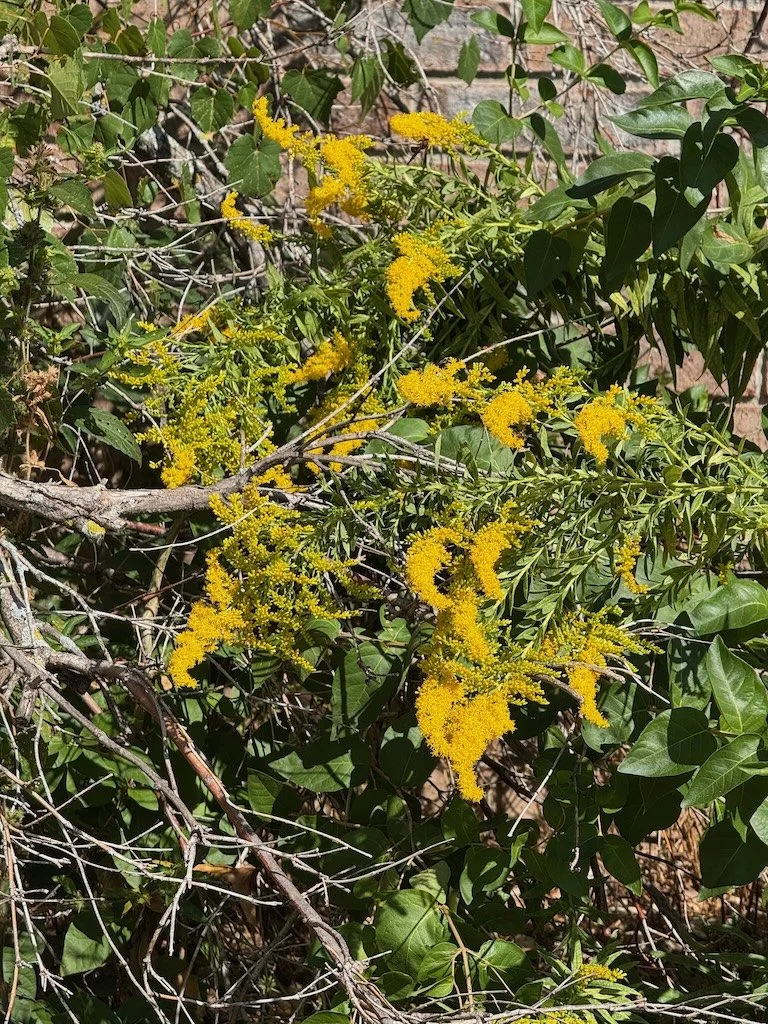
Goldenrods, rudbekias, and other asters are coming up in the yard too. I mow them in the front yard – keeping up the ‘look’ that the HOA wants for now – but I mow around them in the back and will let them bloom.

Our sprinkler system is over 25 years old and is fixed to begin the season…but might need to be replaced as more of the underground components fail (or leak). The further I get in the transition to native plants, the less watering the yard will require. I am going to water the native plant garden in the front yard this season to help the plants get established, but it might not need it in 2027! The decision to keep a sprinkler system might be driven more by our perception of how variable the rains will be as the climate continues to change than what the native plants require.

Next month I will write about the shade garden which is the most developed part of my suburban savanna.

Previous Suburban Savanna Posts:

April 2026

Suburban Savanna - 1

Shortly after I started the 9-month Missouri Woodland Mentor series back in January, I started pondering whether the sterile suburban yards (highly fertilized, sprayed with pesticides, rigidly trimmed, full of non-native plants, toxic to most wildlife) could be transformed into something with a positive impact on the natural environment. It seemed to me that the definition of a savanna fit closest to what suburbs looked like on the surface: grass interspersed with trees providing less than 30% canopy cover.

There are some qualities of a suburb that would work against it becoming a full-fledged savanna:

There is too much impervious surface: streets, houses, sidewalks, driveways…which means that water will run off more quickly. There are often water retention ponds in newer developments to collect run off – somewhat slow the flow.

The building of the houses and infrastructure often is a severe disruption to the land: scraping off topsoil and hauling it away, removing almost all vegetation, and planting of turf. Sometimes there are a few trees planted by the builder – but they are not necessarily natives.  It takes a long time to recover from that disruption. It is the starting point for neighborhoods to progress toward a suburban savanna.

Even with those challenges, there are things I am already doing to nudge my yard toward the savanna goal:

  • I don’t spray pesticides or herbicides….and I don’t fertilize.

  • I don’t mow the fall leaves in my back yard until late spring (let the moths and insects emerge.

  • The non-native trees to Missouri (a Kousa dogwood and an eastern white pine and a variety of holly) are not going to be cut down…but I am planting more native woody plants: pawpaw, fragrant sumac, spice bush (hosted spice bush swallowtail caterpillars last summer), red buckeye, elderberry, and Ozark witch hazel. A red maple and shortleaf pine are the two native trees that were already growing in my yard. The forsythia and Japanese barberry will eventually be dug up.

  • The violets that were contained in a bed on the east side of the house when I moved here have been allowed to spill out taking over half the grass/moss area of that side yard. I have noticed more birds finding food in the debris from the violets over this past winter – even that small change has made a difference to birds.

  • I have planted a native plant garden in the middle of my front yard. As it matures – I will extend it so that there will be less ‘turf’ remaining.

  • Last summer I avoided mowing patches of clover I found growing in the year as a step toward improving the quality of the soil.

  • I am learning to recognize goldenrod, asters, and Rudbekia coming up in my yard that I can simply mow around!

I will post next month about my progress transforming my yard into a suburban savanna. My focus currently is on my yard …but I will take every opportunity to encourage others in my neighborhood to begin the process as well.