Suburban Savanna – 3

Continuing my series on my progress toward transitioning my yard to a suburban savanna…..

This month I am focusing on the shade garden since it is closest to being complete. The plants there will continue to develop…without a lot of work on my part. It is on the east of my house and includes an eastern white pine and a group of holly trees with low branches; a neighbor’s river birch and oak add to the shade in the summer.

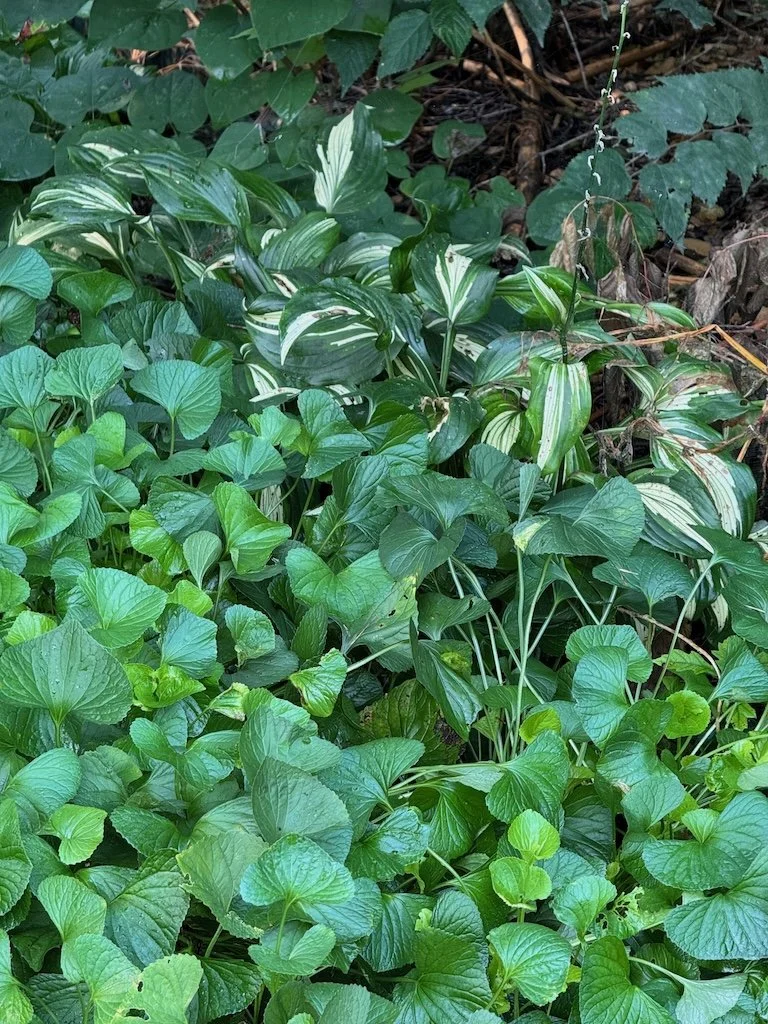
There were a few violets near the house when we arrived 4 years ago and they have spilled out to take over what used to be struggling grass (I stopped mowing and the violets took over); they have progressed about 6 feet into the yard and I will further reduce my mowing to allow them to take over more!

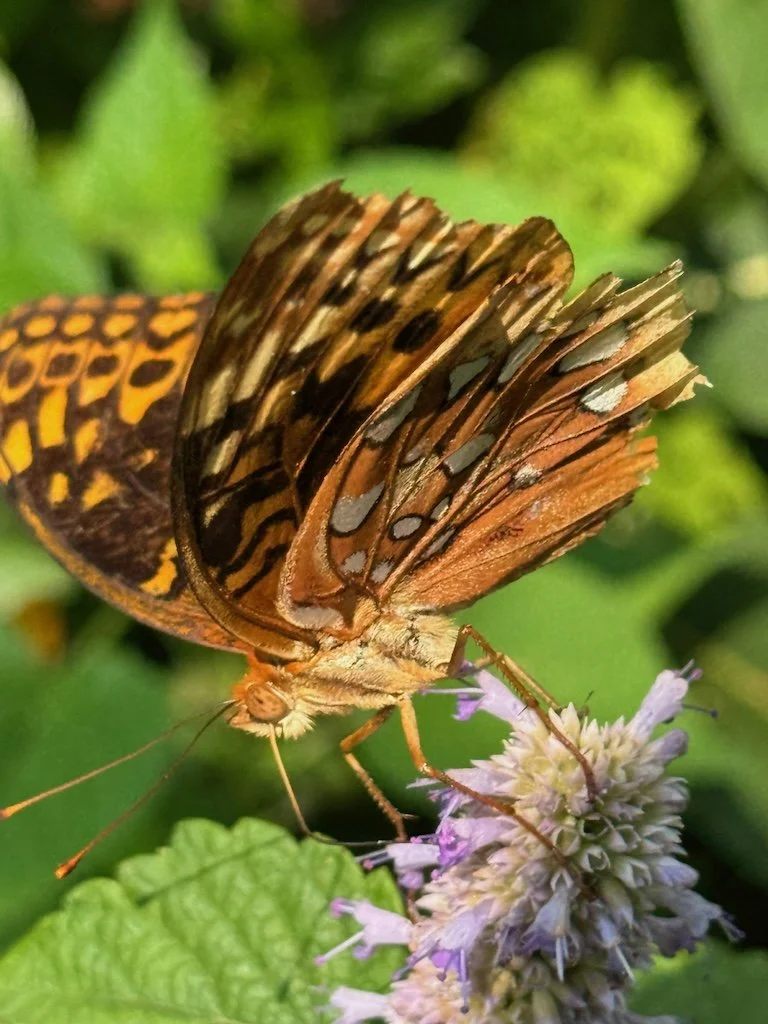
I noticed last winter that several birds – particularly mourning doves and wrens – seemed to spend a lot of time finding tidbits to eat in the brown debris of the violets; I wondered if they were finding the tiny Great Spangled Fritillary (butterfly) caterpillars.
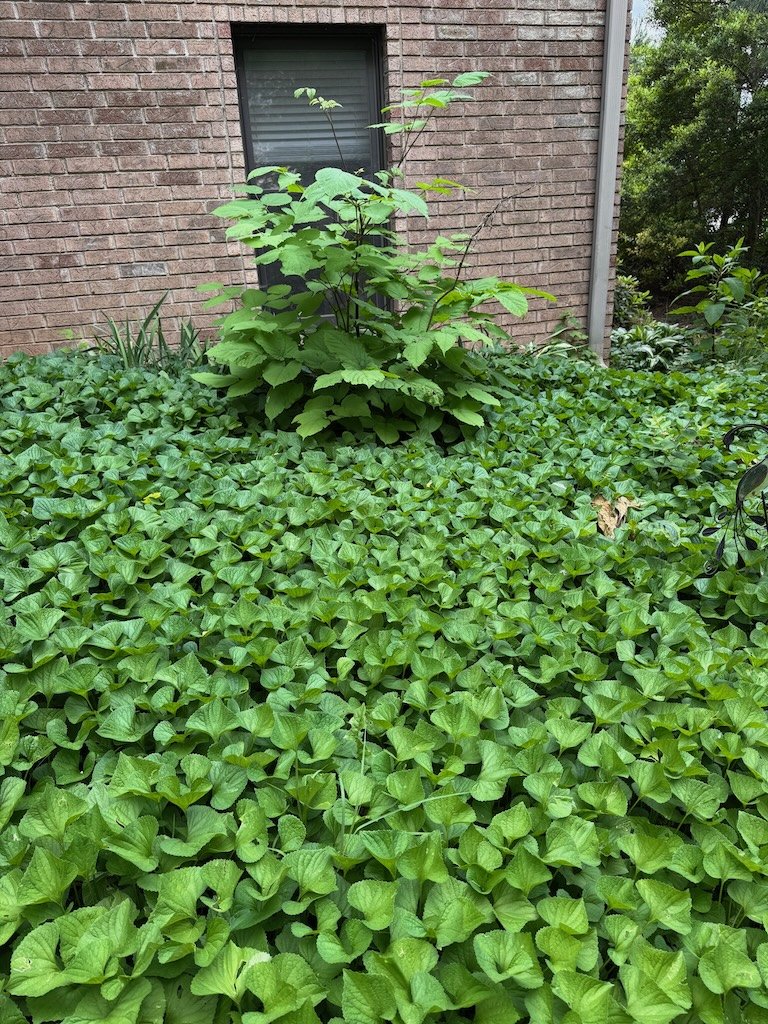
I planted American Spikenard, spice bush, and pawpaw to provide some taller plants to break the thick violet groundcover. I might eventually add another spice bush since the one I have is male (i.e. no red fruits!). The American Spikenard was one of the first native plants I added to my garden (where it is visible from my office window) and it gets bigger every year…this year it is over 5’ tall so it must be happy in its location. It blooms in June – attracting pollinators; the fruit is eaten by birds.

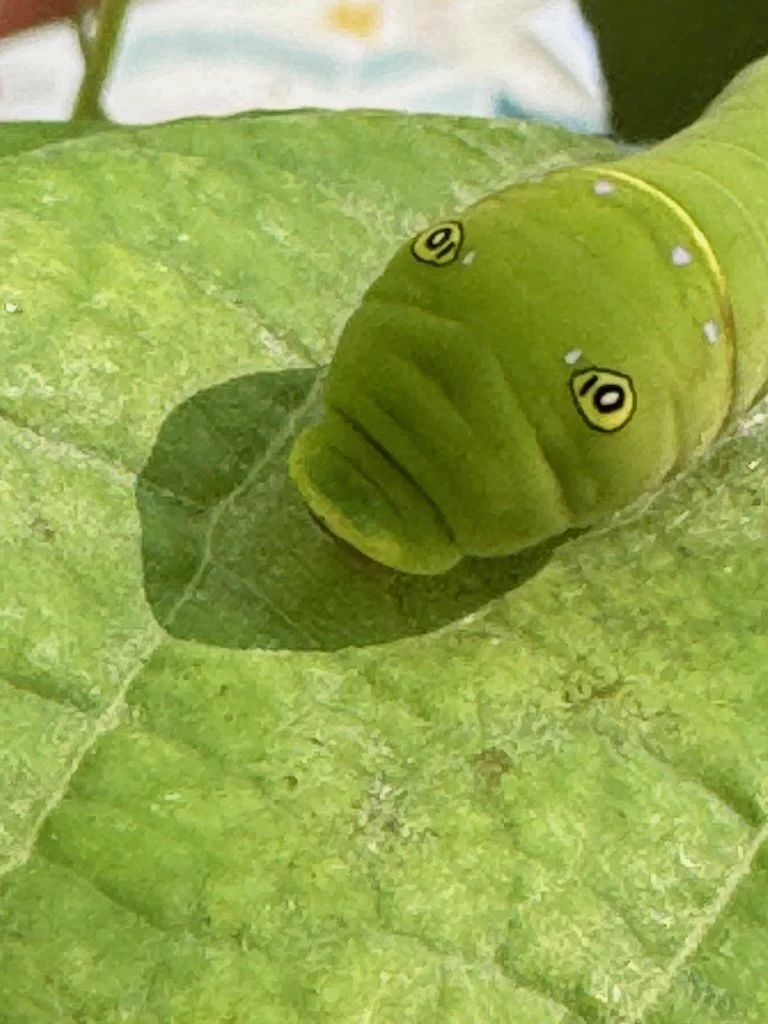
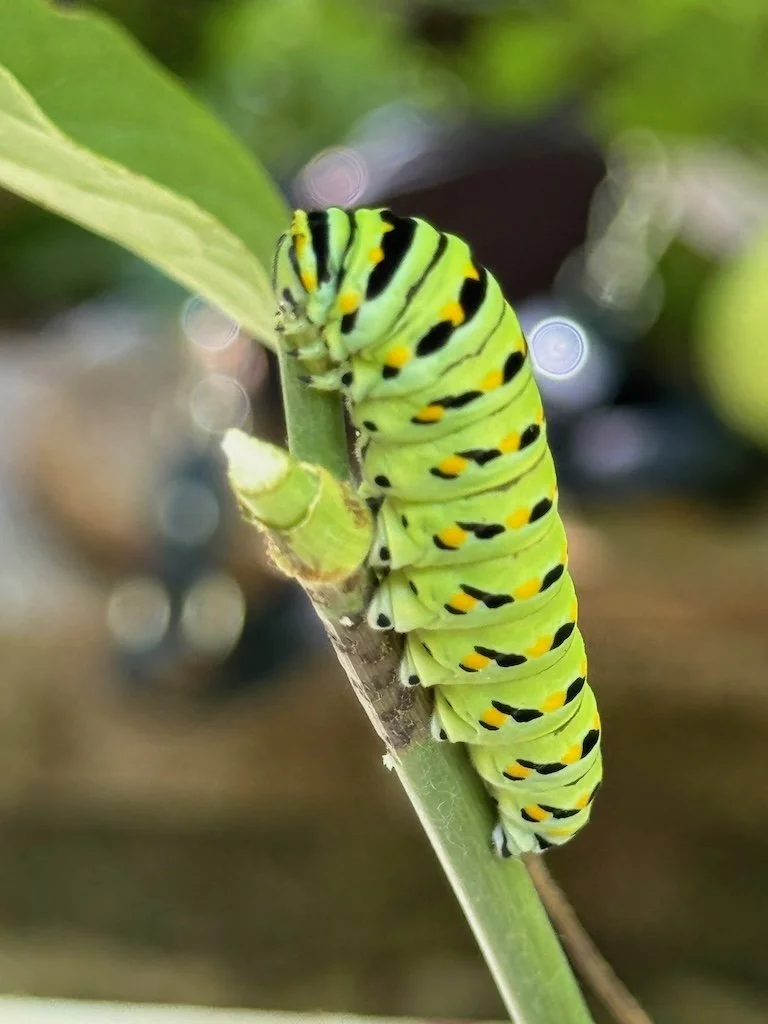
The spice bush had black swallowtail caterpillars eating it last summer…a great indication that the shade garden is supporting wildlife that had not been in the yard previously. I also noticed more fireflies in the summer beginning last year.
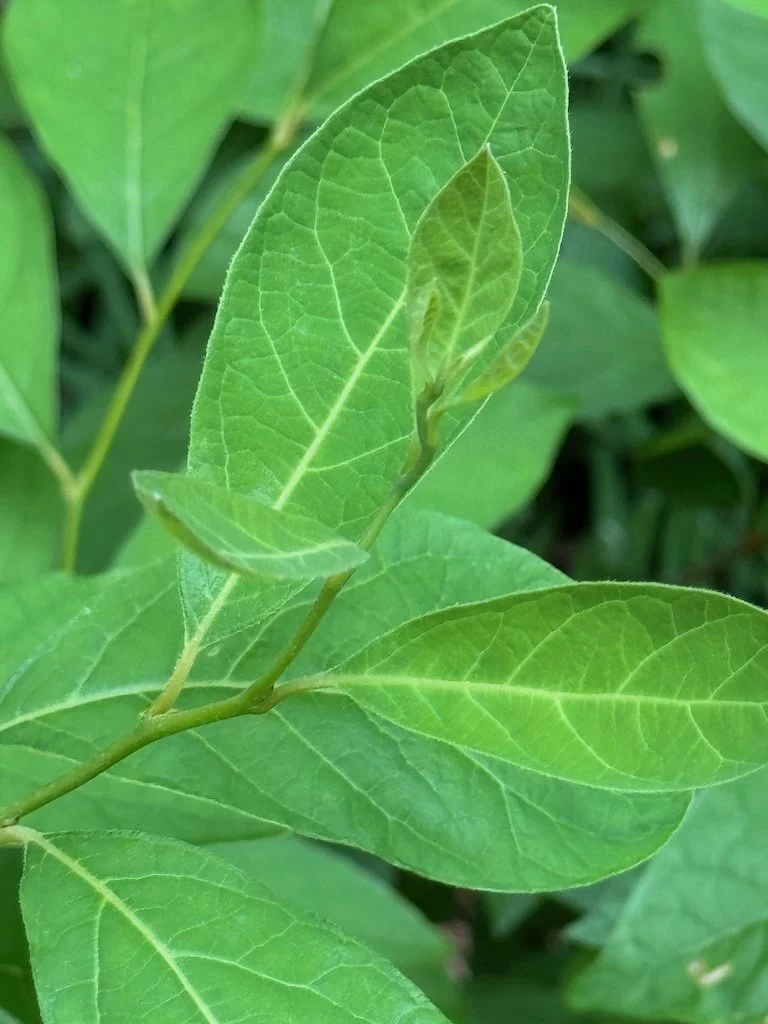
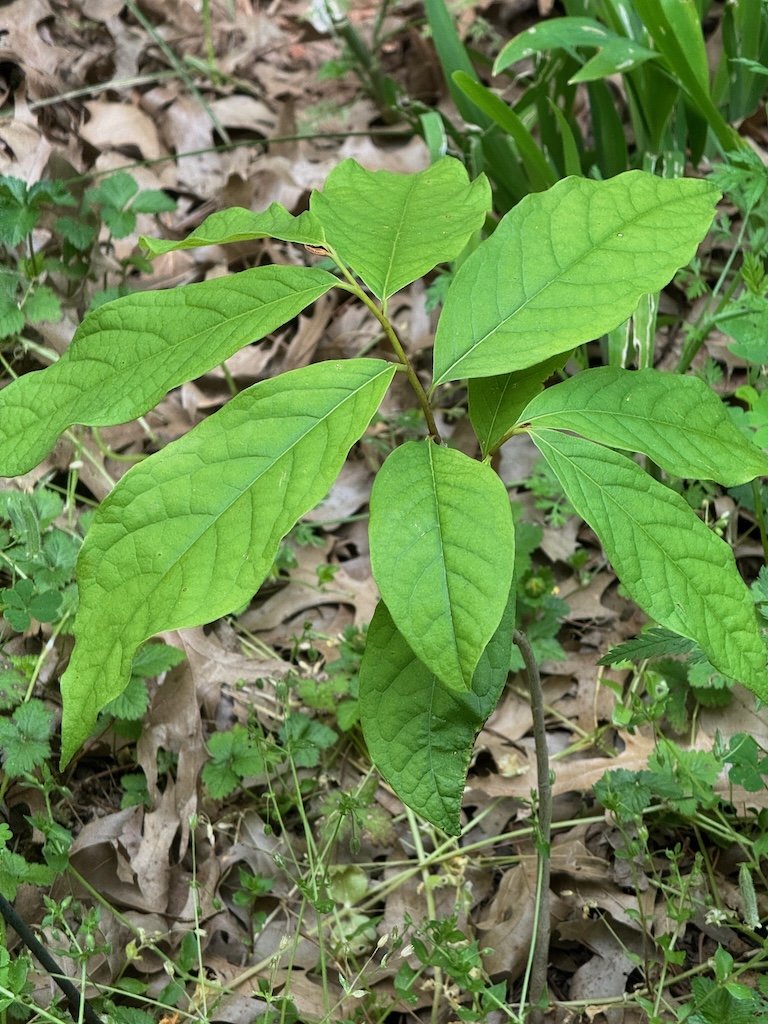
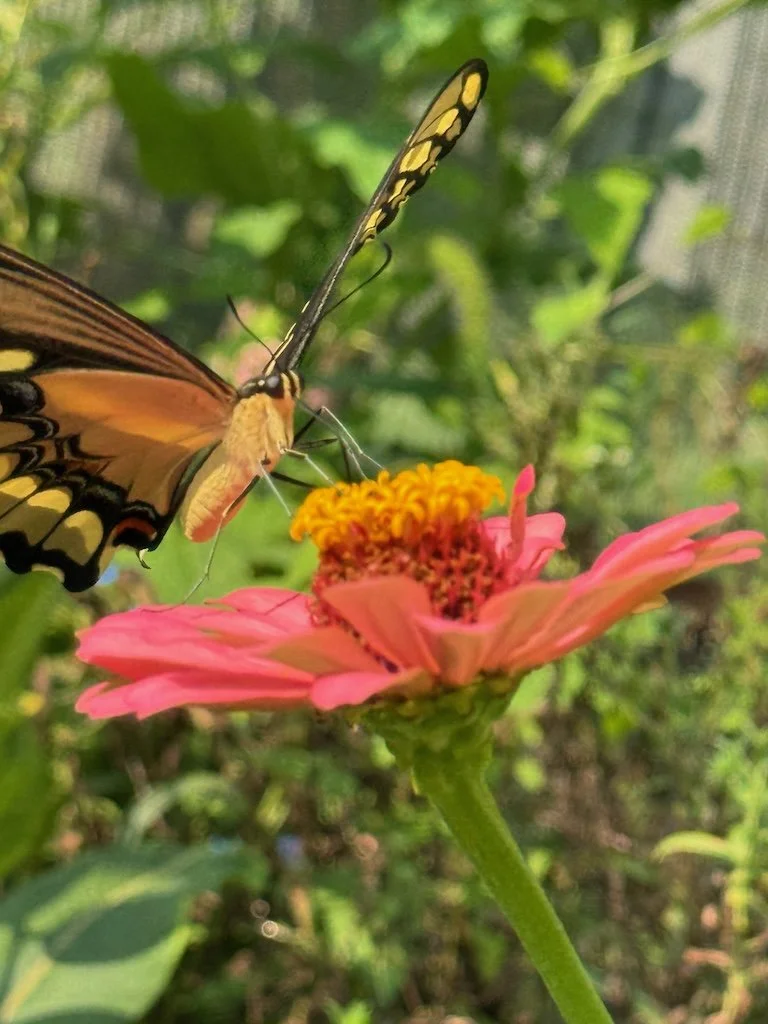
The pawpaw trees are still very young: one was planted as a seedling last year, 2 came up from seeds this spring, and 4 were planted as seedlings this spring. Hopefully most of them will survive and eventually host zebra swallowtail caterpillars. It will be years before they bear fruit….but I am excited about the prospect.

Around the white pine there is a mix of native and non-native plants. The natives are another American Spikenard, black raspberries (that came up on their own), violets, grapevine (which I cut to keep it out of the tree), hackberry (which I take out periodically, there is a neighborhood tree so the birds plant the seeds everywhere), and, unfortunately, an occasional poison ivy. The non-natives offer some color/shape contrast: hostas and lambs ear now…earlier in the season crocus, daffodils….later in the season chives.
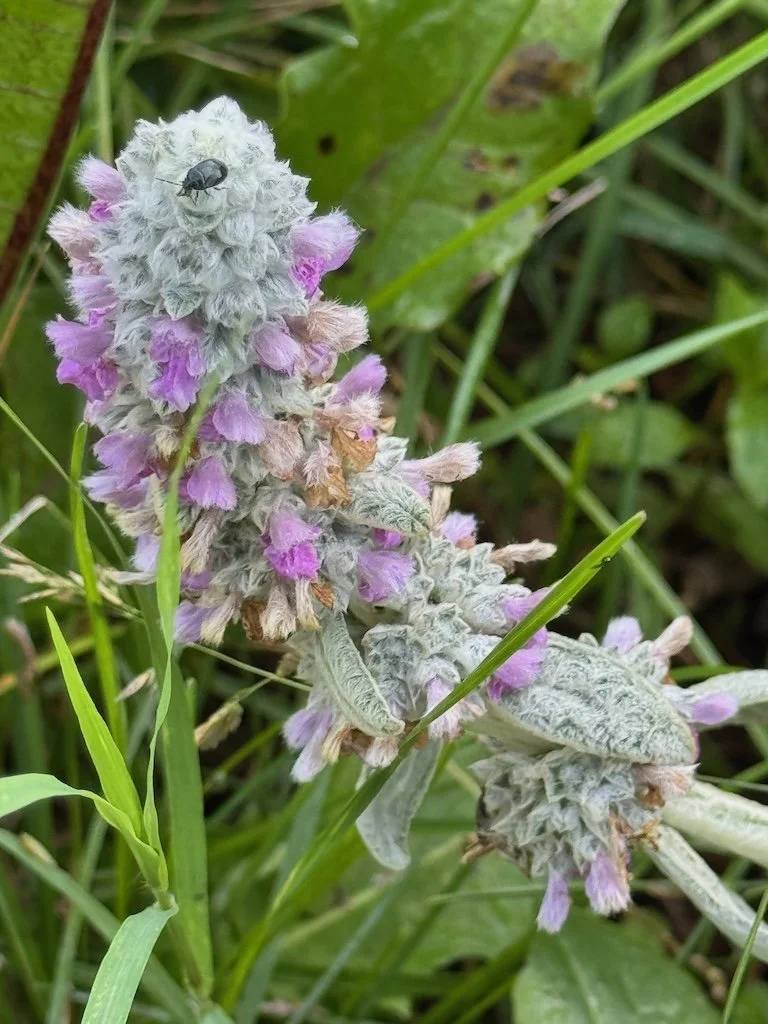
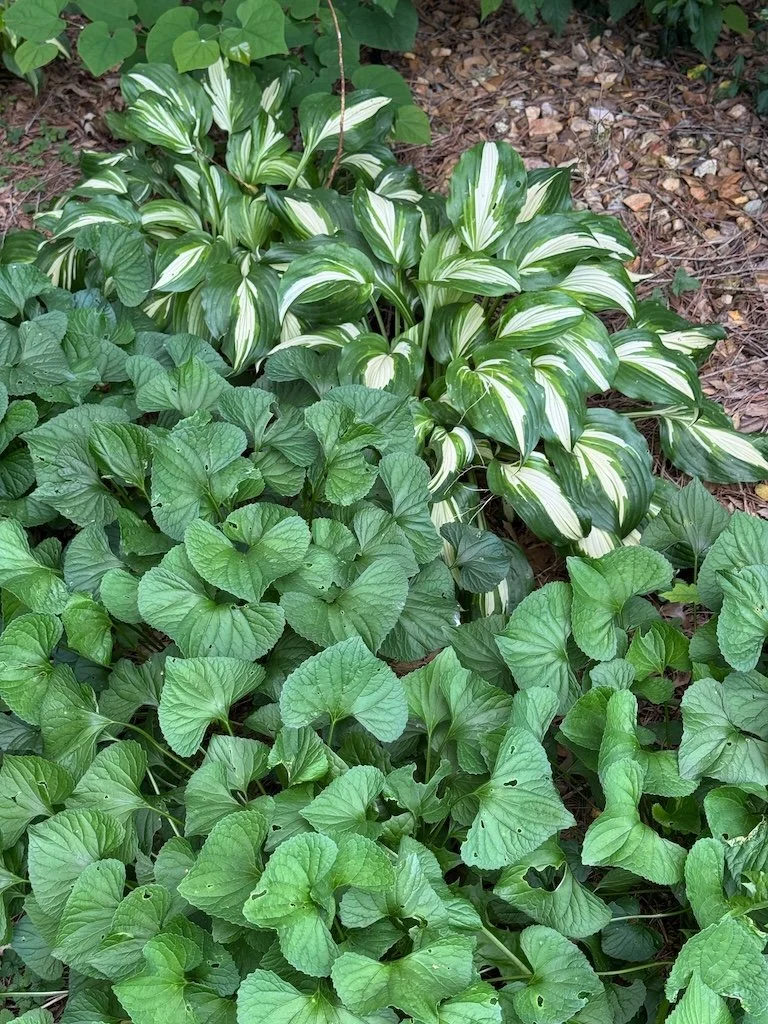
I like that there are plants in the garden that are edible…that I can easily harvest and eat immediately: violet leaves and flowers, grape leaves, and chives.

The maintenance I anticipate on the garden is mainly controlling things like grape vines, poison ivy, and hackberries….keeping an eye out for invasives like poison hemlock and wintercreeper (removing immediately). I will eventually begin removing the lower branches of the pine (they are already sparsely needled because they only get enough light at their tips); it could reduce the shade a little in the morning, but the hollies will shade the area in the afternoon and the pine needle mulch sustains the soil moisture).   The violets will grow out into the yard at least a little further but that just requires me to stop mowing the area where I want the violets to take over! My sprinkler system still waters the area when it hasn’t rained but I envision that I might turn off the zone once the plants are all well established.

More about my suburban savanna and water next month.

Previous Suburban Savanna Posts:

April 2026 – Overview

May 2026 – Planting Natives
Yard Work – June 2025

This time of year, all the grasses are growing well. I have reduced the amount of yard with grass…but mowing is still the most time consuming form of yard work for me over the whole season.

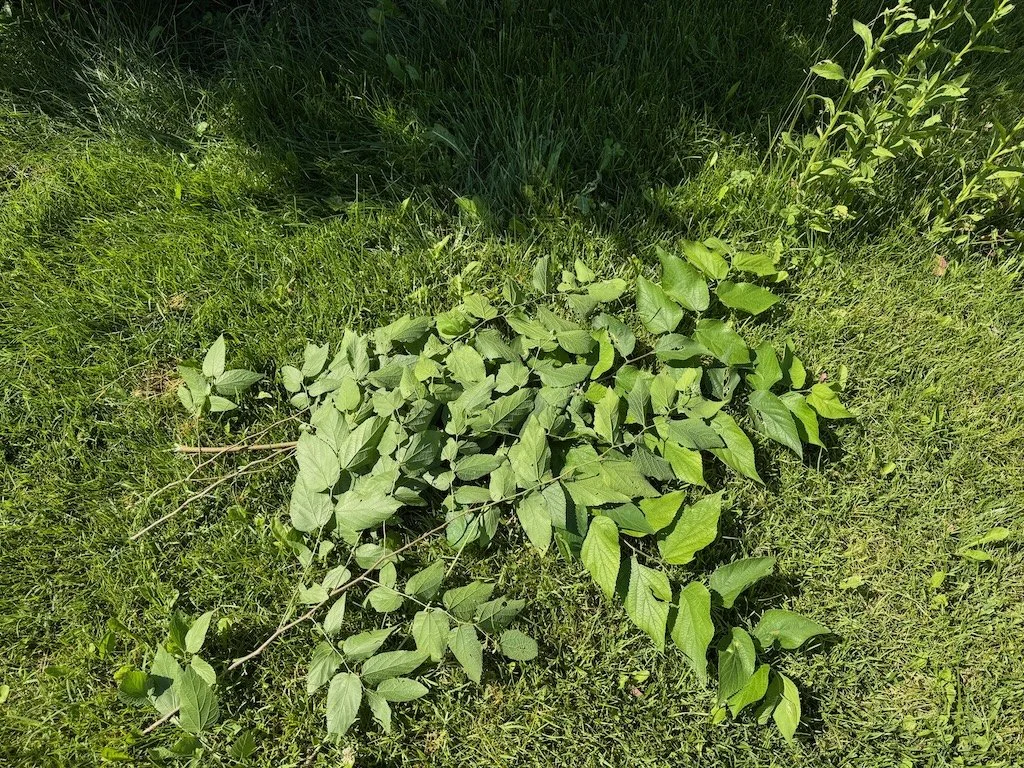
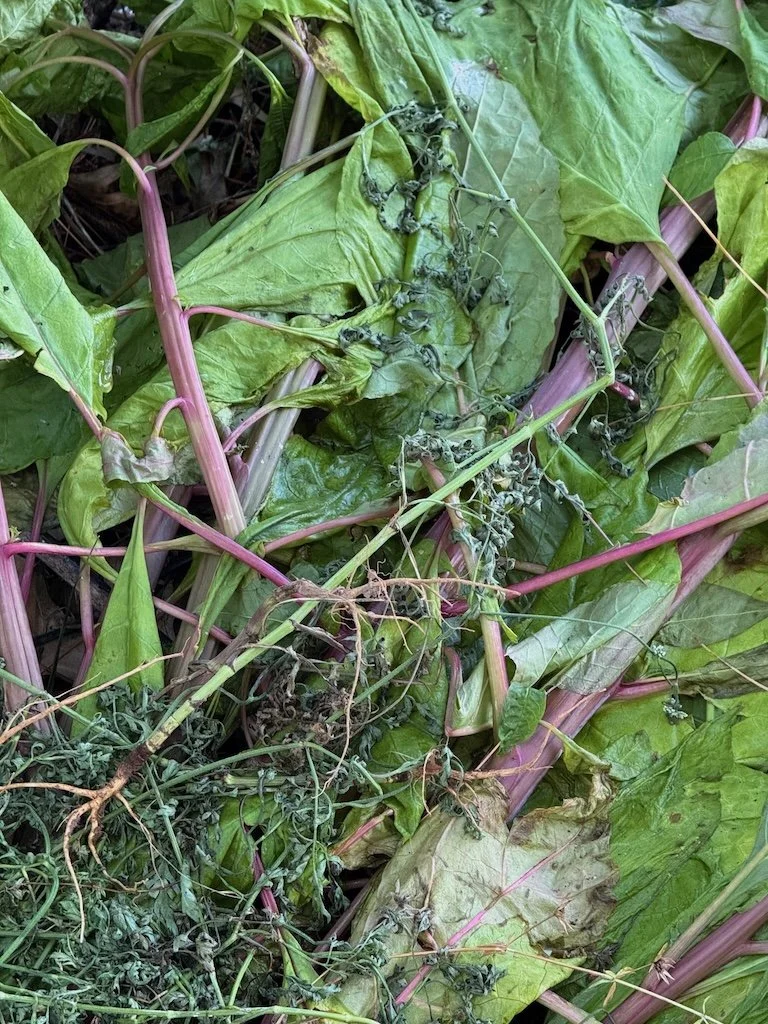
My goal is to cut back on the area I mow and skew the ‘yard work’ toward establishing my native plant gardens. My shade garden is close to being the way I want it. Recently I’ve cut down pokeweed and pulled poison hemlock that was growing in the area near the young pawpaw trees. I took a picture of the compost pile the day after I added the debris from that effort. The stems of the pokeweed are still identifiable by color. The more delicate curls of vegetation are the poison hemlock.

In the new native plant garden in the front yard, I am digging out dandelions that are growing through the mulch….keeping the area clear for the native plants to spread and fill the space.

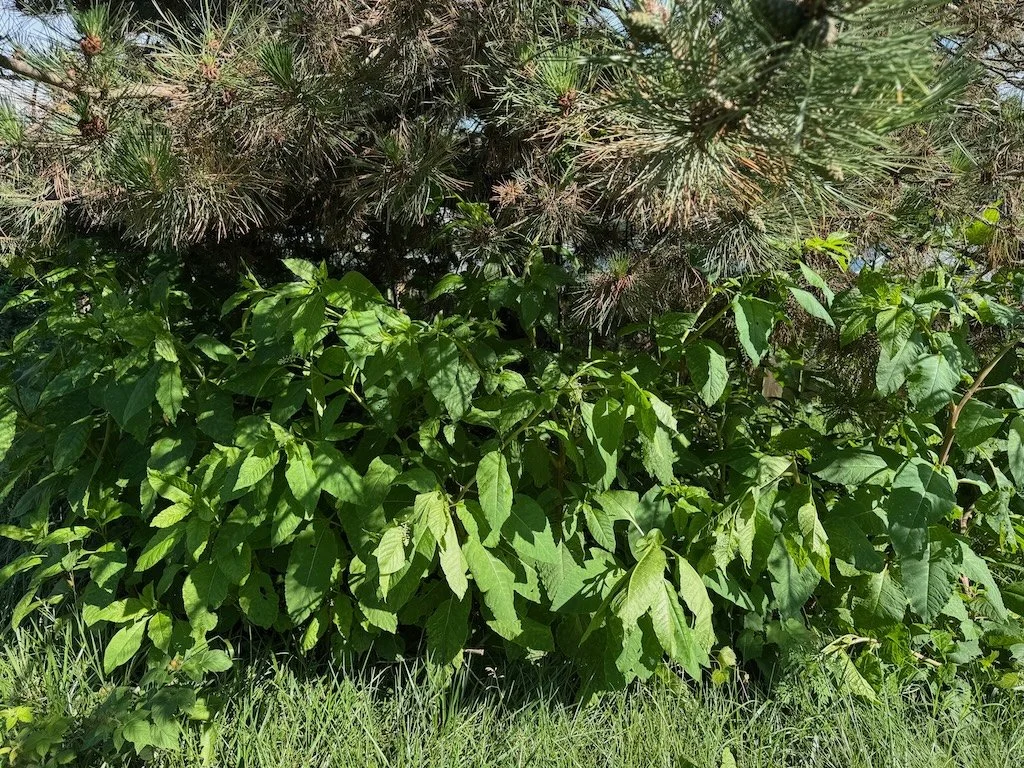
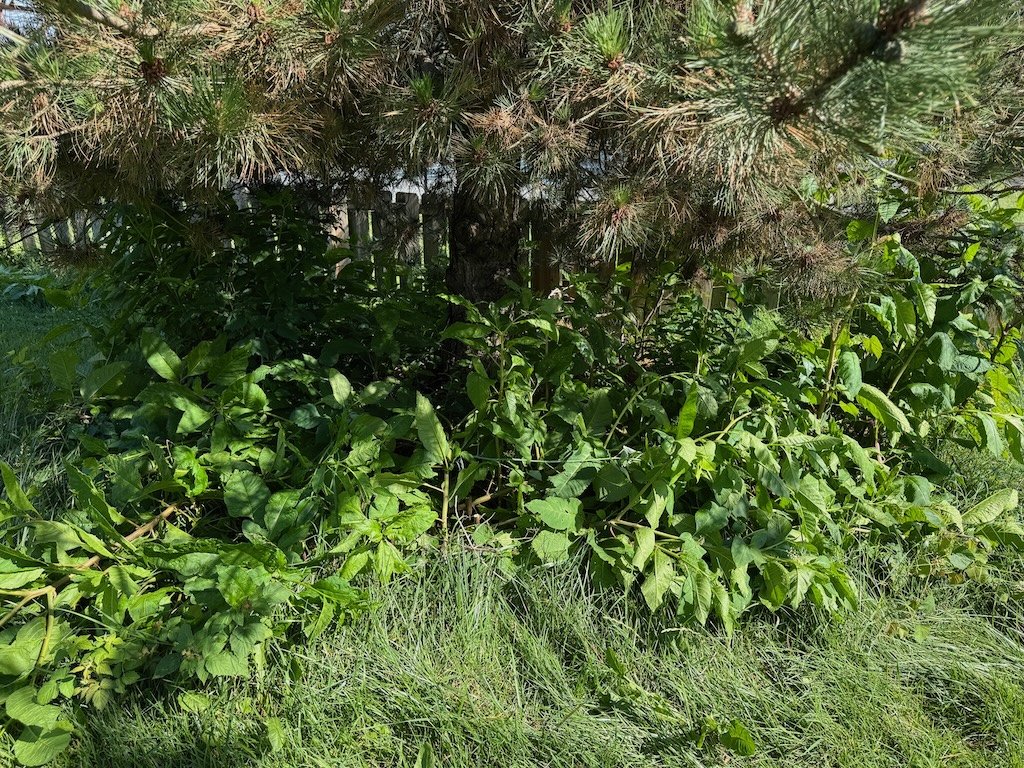
The area under the shortleaf pine was crowded with pokeweed up to the lower branches. I cut quite a few down and will let them rot where they fell!

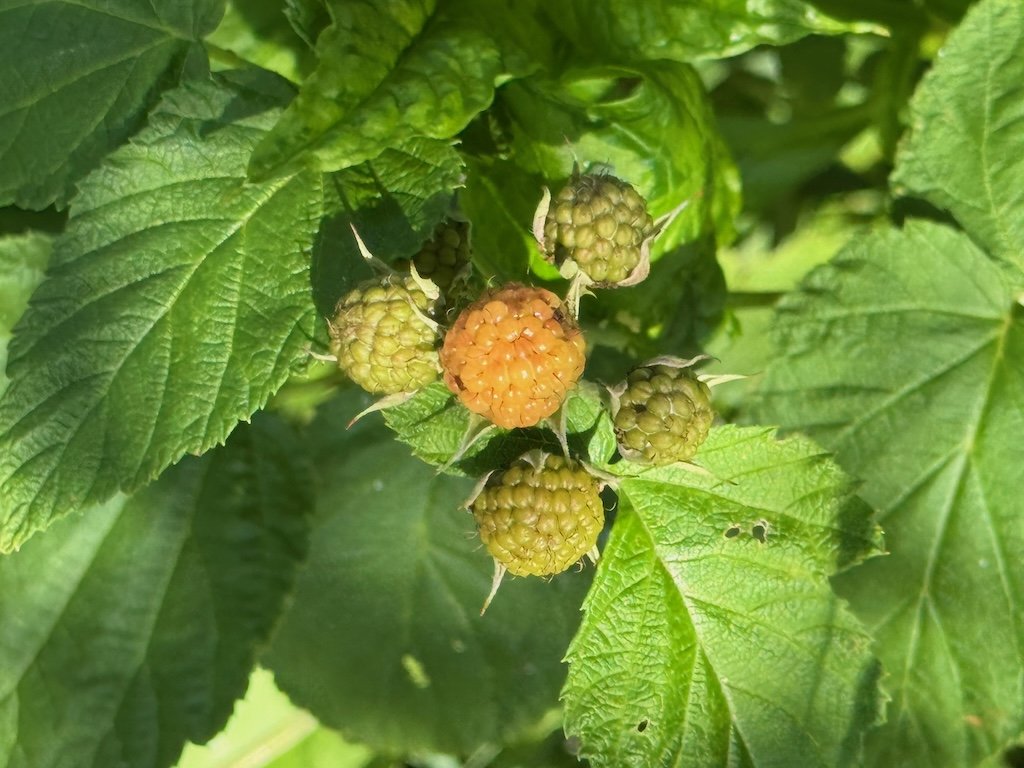
On the plus side, I discovered some blackberries growing under the pokeweed!

The hackberry that was growing in the yew hedge was cut back – I don’t want a tree growing there. I couldn’t get to the root so it will likely return.

My goal in June is to do as much as I can to get the yard in great shape so there won’t be much aside from mowing in the hotter part of the summer.

Schuette Prairie

I visited my 4th prairie of the spring/early summer last week for a Missouri Prairie Foundation guided hike – Schuette Prairie. It was a late afternoon hike with occasional light rain and rainbows adding to the adventures. Some the of the prairie plants are beginning to look familiar to me! It’s good to see the progression of development over time and the differences in plant communities on each of the prairies.

Schuette’s Prairie has some woody plants that are kept at bay by periodic prescribed burns…but not actively eradicated. The woody plants we noticed were persimmon, winged sumac, button bush, and sassafras. The first two are pictured below. The button bush is an indicator that part of the prairie retains a lot of moisture.

There are also areas of the prairie that have very shallow soil over dolomite and there are stands of prairie dock that grow in those areas. The rest of the prairie has sandstone under the soil (and the soil layer is thicker).

Lead plant was a plant I remembered from precious prairie hikes. This time it was blooming and the contrasting colors popped in the late afternoon light.

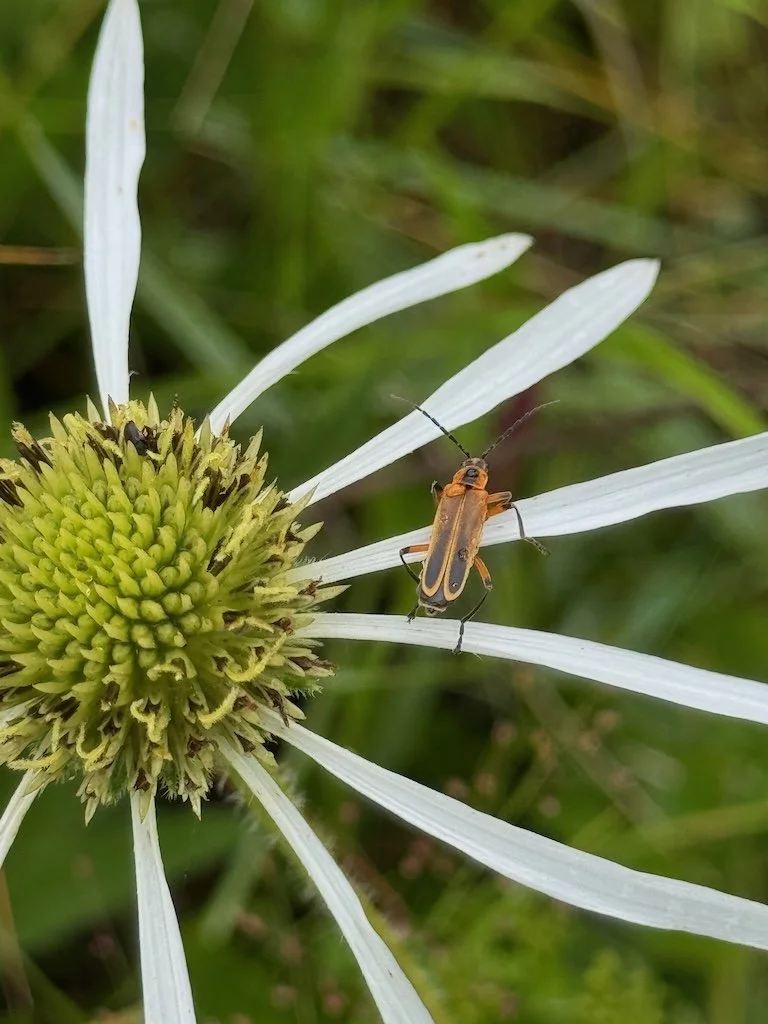
I saw more bugs that I was able to photograph. While it was raining, they were not as noticeable, but we had enough times when it was not raining to see them more active.

The compass plants are not blooming yet but their sandpaper leaves are very recognizable. They are a reason to come back again later in the season.

There were two types of coneflowers in bloom: Pale Purple Coneflower and Yellow Coneflower.

Goat Rue was a new-to-me plant. Maybe I had seen it elsewhere, but this was the first time I had seen them in bloom.

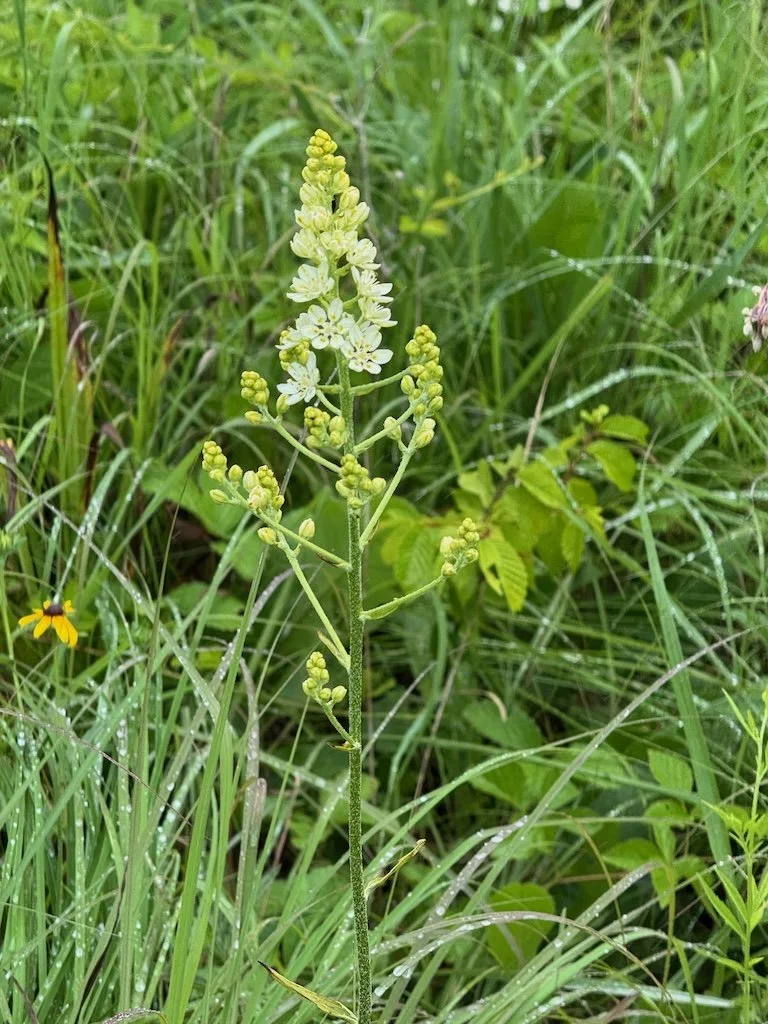
My favorite plant of the hike was the bunchflower. The flowers are showy and are above most of the other vegetation.

There were two kinds of milkweed. Neither one had any holes in their leaves….yet.

The orchids were blooming…small and down in the vegetation…worth noticing.

Quite a few of the prairie blazing star plants had galls in the very tip of the stalk…so they are not going to bloom normally…but the gall looked interesting at this stage.

Rattlesnake master is another plant I remembered from previous prairie walks.

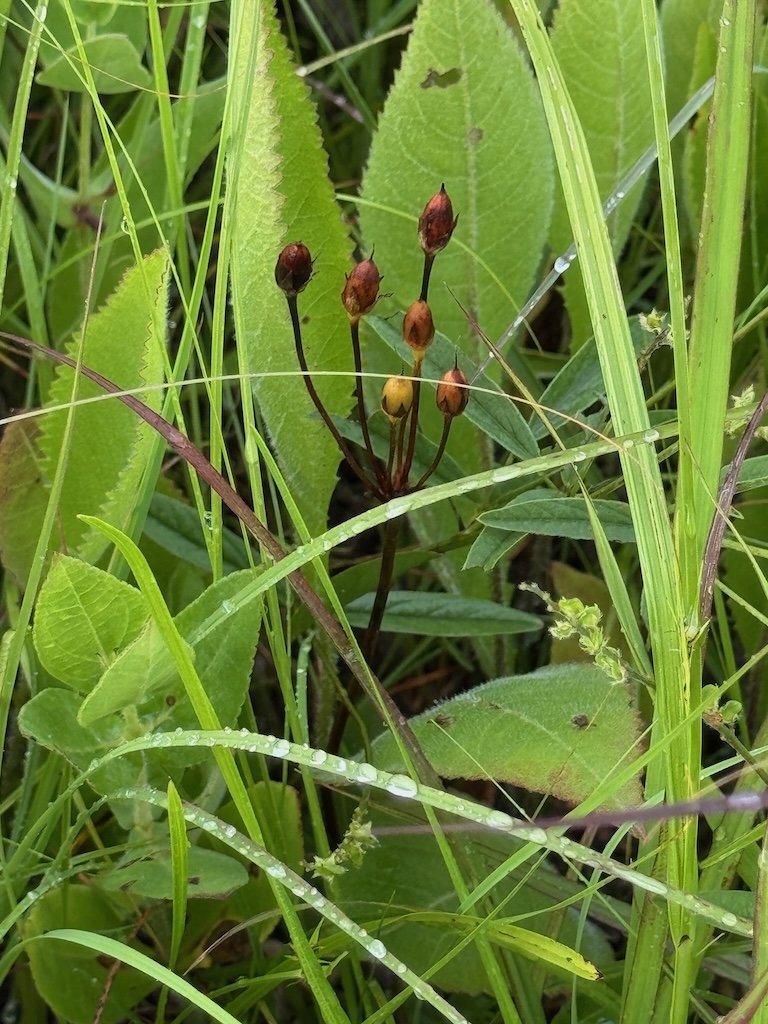
The shooting stars that I saw blooming on other prairies…were seeds on this one.

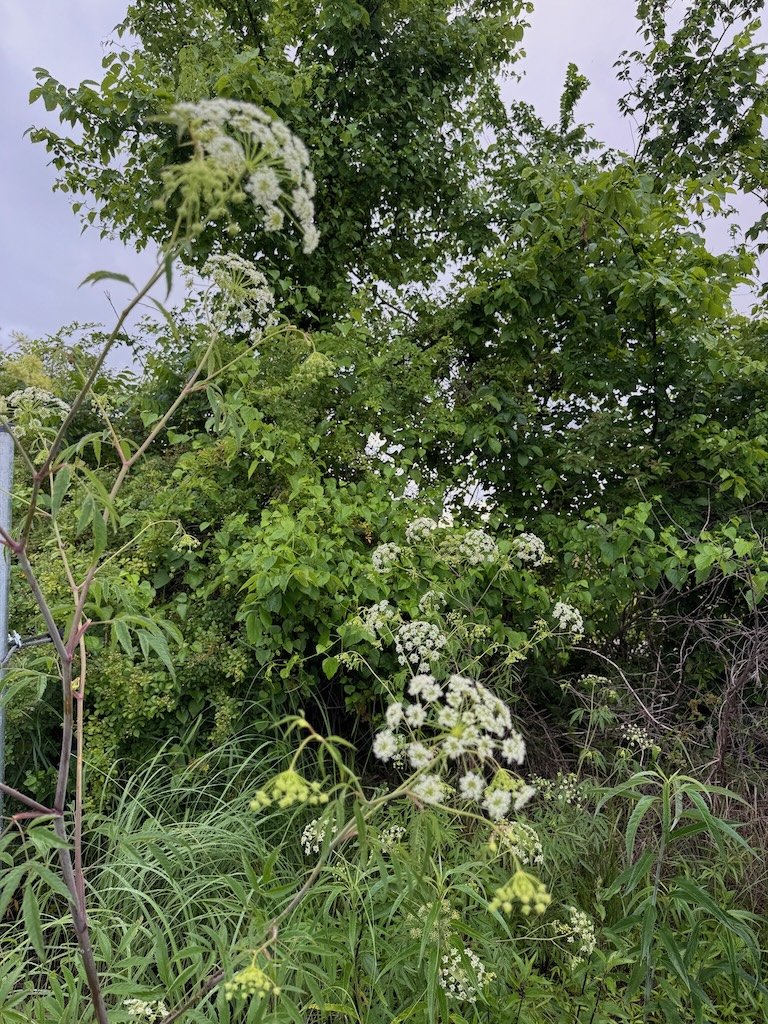
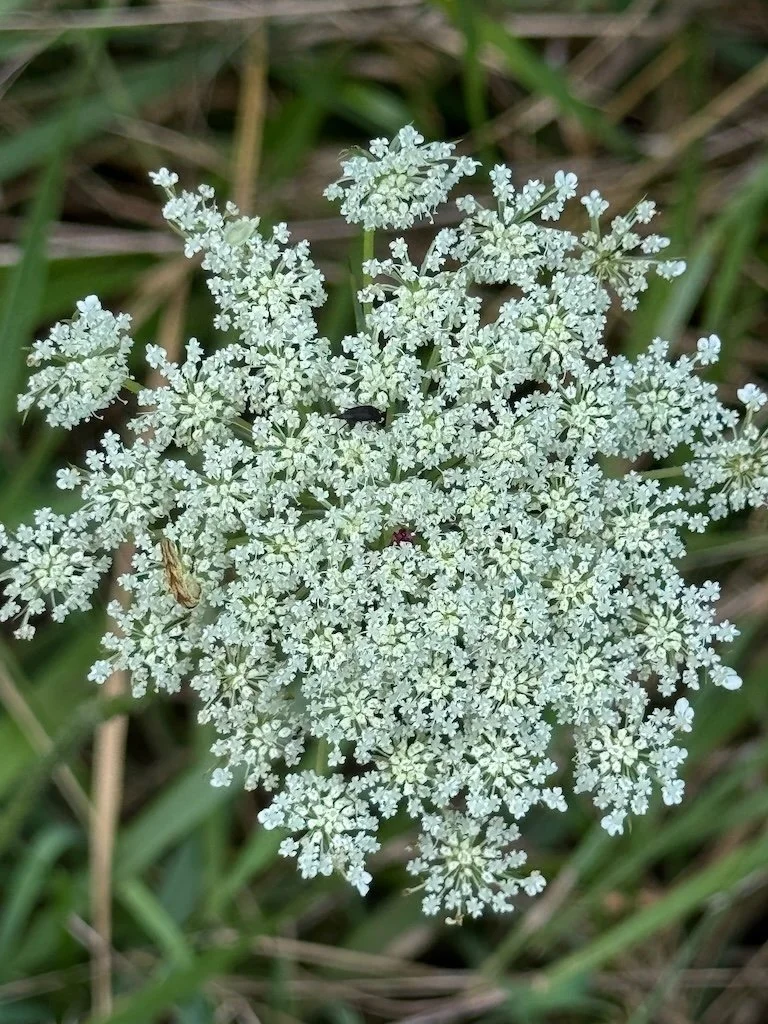
Near the parking area was a stand of poison hemlock….this is a plant I seem to be more aware of growing on roadsides this year.

And now for a slideshow of the rest of the pictures I took!

I even enjoyed the drive home after the hike was over; there were rainbows visible the whole way!

Previous blog posts about my recent prairie hikes:

Harold Prairie in late April

Noah Brown’s Prairie in early May

Linden’s Prairie in mid-May