Gleanings of the Week Ending November 29, 2025

The items below were ‘the cream’ of the articles and websites I found this past week. Click on the light green text to look at the article.

Everyday microplastics could be fueling heart disease - Microplastics—tiny particles now found in food, water, air, and even human tissues—may directly accelerate artery-clogging disease, and new research shows the danger may be far greater for males.

The Mystery of the Mast Year - Every few years, certain species of trees seem to go buck wild, dropping an extraordinary quantity of nuts, seeds, or fruits all at once. What’s more, this bumper crop tends to extend across vast geographical ranges, so that a white oak in Central Park is shedding buckets of acorns at the same time as a white oak in the Shenandoah Valley. Not all trees mast, but many species dominant in American forests do, such as oak, hickory, beech, and dogwood.

Ultra-processed foods quietly push young adults toward prediabetes - More than half of the calories people consume in the United States come from ultra-processed foods (UPFs), which include items such as fast food and packaged snacks that tend to contain large amounts of sodium, added sugars and unhealthy fats.

Why Should We Avoid Heating Plastic? - When plastic is heated, its molecules will move around more freely and the whole structure will become less rigid. This makes it easier for those additives to detach and migrate into nearby foods or liquids. To reduce your exposure, heat food in containers made of inert materials like ceramic or glass, avoid storing hot, fatty, or acidic food in plastic, and try to shorten the storage time of all food and beverages in plastic containers.

'They're just so much further ahead': How China won the world's EV battery race - In 2005, China only had two EV battery manufacturers. Twenty years later, it produces more than three-quarters of the world's lithium-ion cells. Today, China dominates the production at every stage of the battery supply chain, apart from the mining and processing of some raw minerals.

Obesity-Related Cancers Are Rising in Young and Old - Six of cancers—leukemia, thyroid, breast, colorectal, kidney, and endometrial—increased in prevalence in young adults in at least 75 percent of the examined countries. However, five of these six cancers also showed increased prevalence in older adults. Colorectal cancer was the exception. The cancer types with increased incidence in both younger and older adults were all linked to obesity.

Growth of Wind and Solar Keeping Fossil Power in Check - This year it is projected that new wind and solar power will more than meet growing demand for electricity globally, keeping fossil fuel consumption flat. However, while the world is beginning to keep emissions from power plants in check, overall emissions continue to tick up, rising by 1.1 percent this year.

Researchers Discover ‘Death Ball’ Sponge and Dozens of Other Bizarre Deep-Sea Creatures in the Southern Ocean - Researchers have discovered 30 previously unknown deep-sea species in the remote ocean surrounding Antarctica - an achievement highlighting just how little humanity knows about some of the deepest regions of the planet. Fewer than 30 percent of the expedition’s samples have been assessed thus far so there could be more discoveries to report soon.

Short-Chain PFAS Eclipse Their Longer Counterparts in Blood Serum - The conventional wisdom is that short-chain PFAS are of lesser concern because they don’t bioaccumulate, but what we’re seeing is that they can occur at high levels in people. A new study shows that young adults who ate more UPFs also showed signs of insulin resistance, a condition in which the body becomes less efficient at using insulin to manage blood sugar.

Get Up Close with Alabama’s Rivers – Mac Stone photographing Alabama’s waterways…places full of biodiversity. The post includes pictures: southern dusky salamander, pitcher plant blooms, alligator snapping turtles, swamp lily, brown pelican.

Ritter Springs Park

Another fall foliage outing we enjoyed a week or so ago….

Ritter Springs Park is north of Springfield. We took a scenic route to get there and then hiked to the lake and back. I was with my husband and daughter who were intent on hiking rather than photography….so I didn’t take many pictures.

There were lots of oaks and hickories…hackberries…sweet gum. I picked up several cones from the Norway Spruce that was near the parking lot; they will make a fourth type of pinecone in my tree educational trunk!

The water level at the lake was low but still flowing out into the stream below the dam. There were dead leaves in the shallow water beginning to decay…lots of food for the macroinvertebrates in the water.

I read on the park’s web page that there is a summer camp there. I wondered how they handled the campers when thunderstorms come though since there is only a pavilion (not a building).  Otherwise, the place has a lot to offer for a summer camp.

Fall Foliage in our Yard

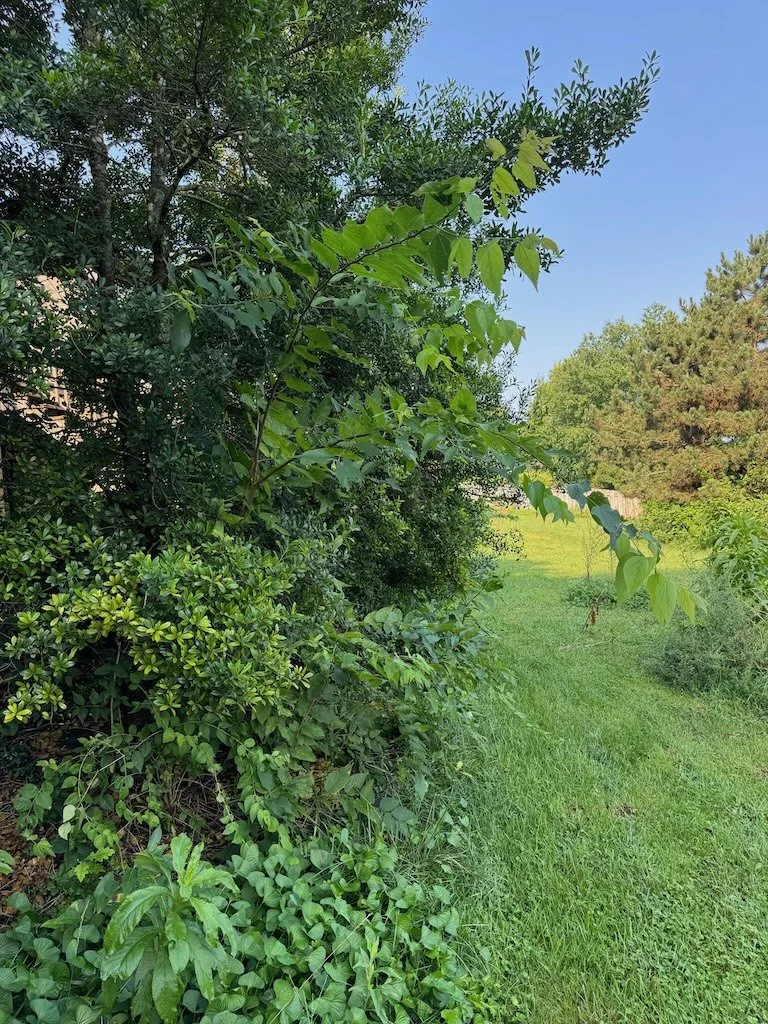
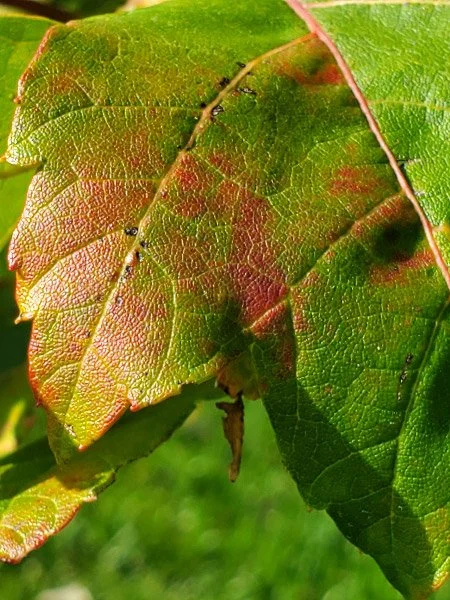
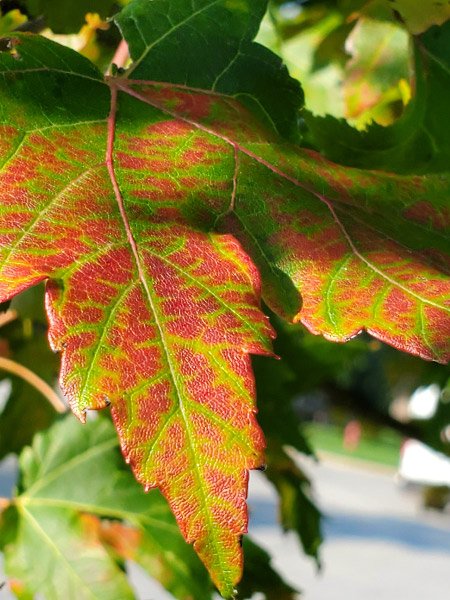
The change in foliage started back in early October with the leaves of our red maple showing patches of red.

When I mowed our yard in late October, I noticed one of the bushes had red leaves, the red maple was beginning to shed its leaves, and the Virginia creeper in the flower bed had turned red. One side of our back yard had a dusting of river birch leaves from a neighbor’s tree.

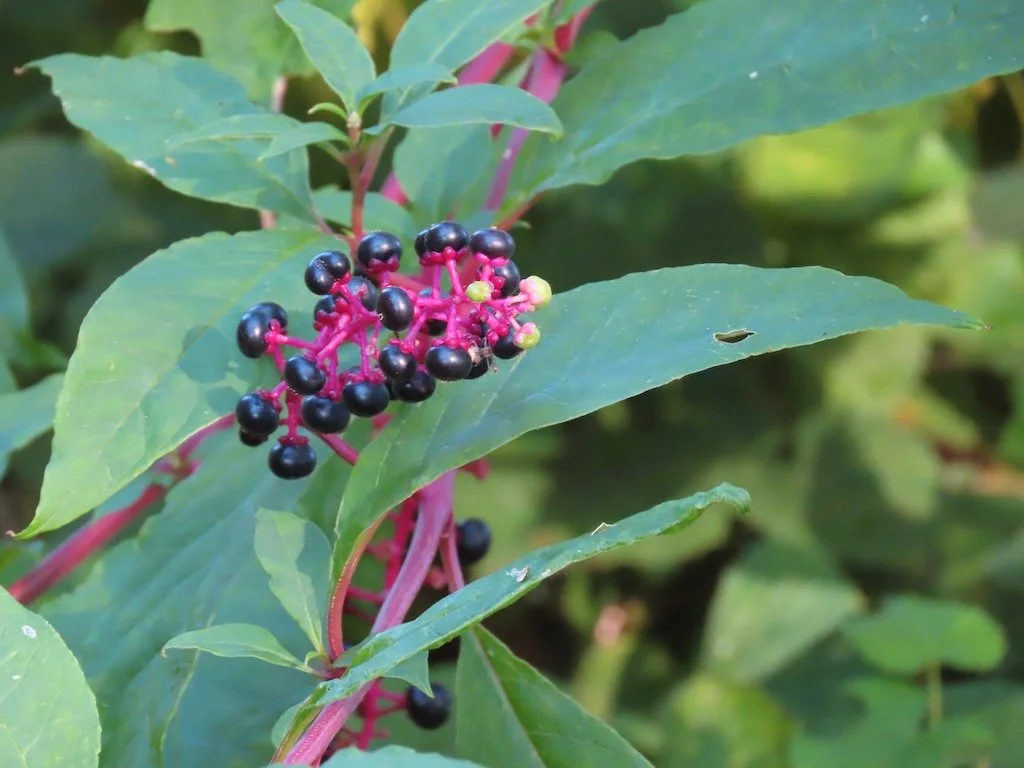
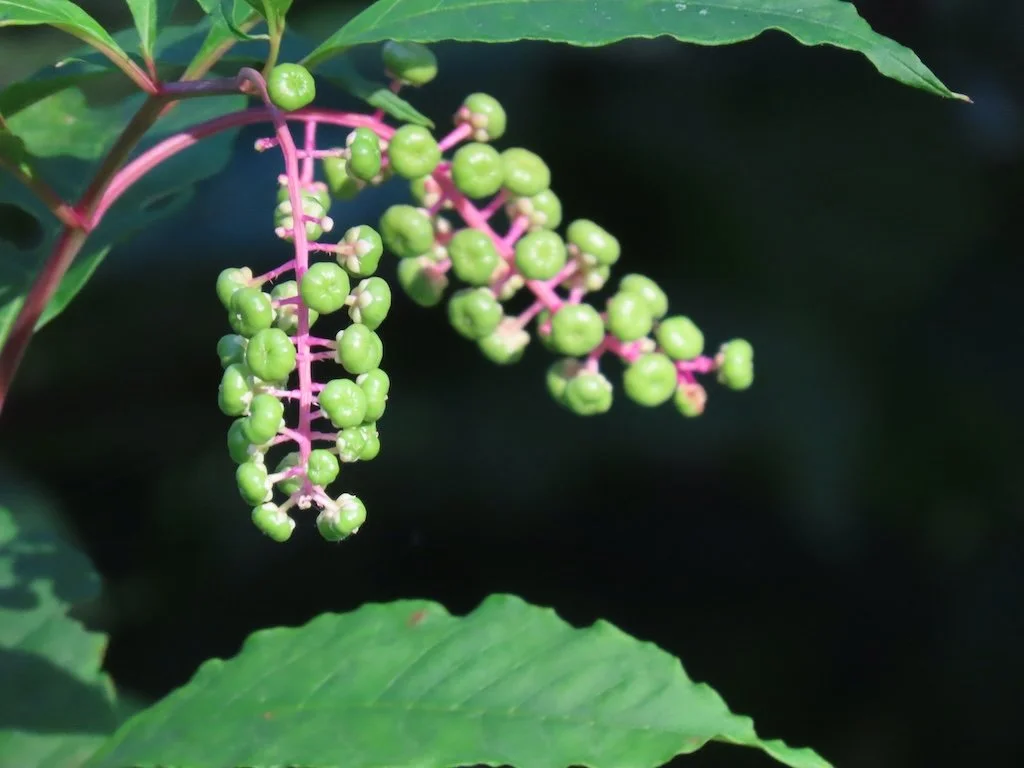
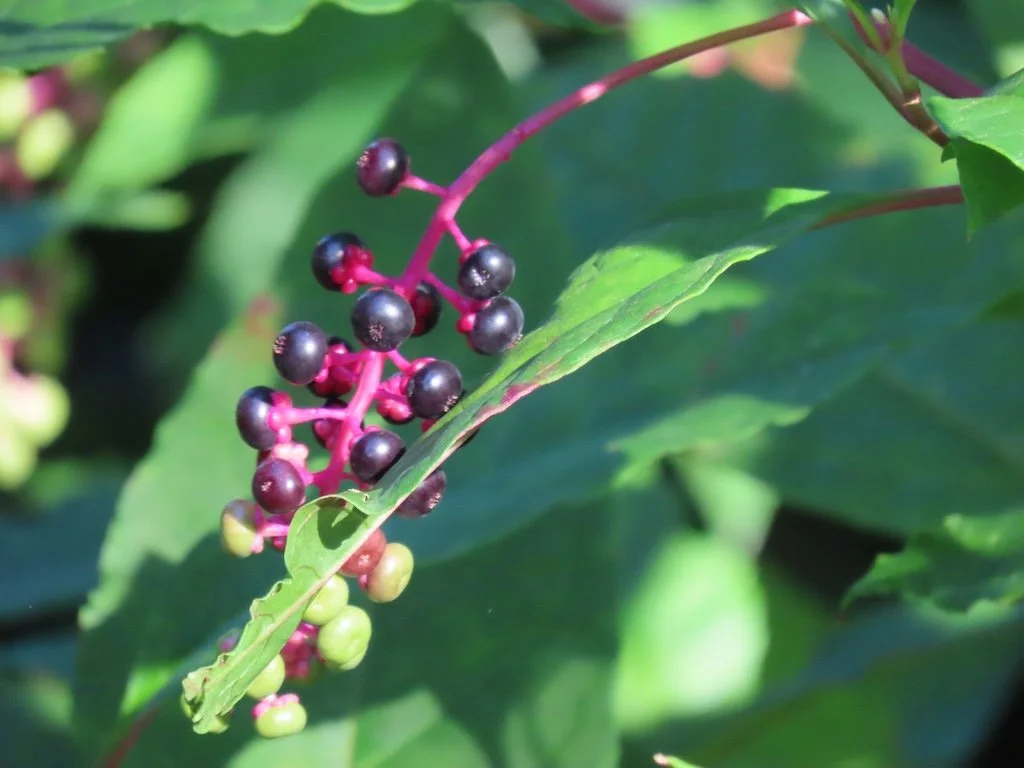
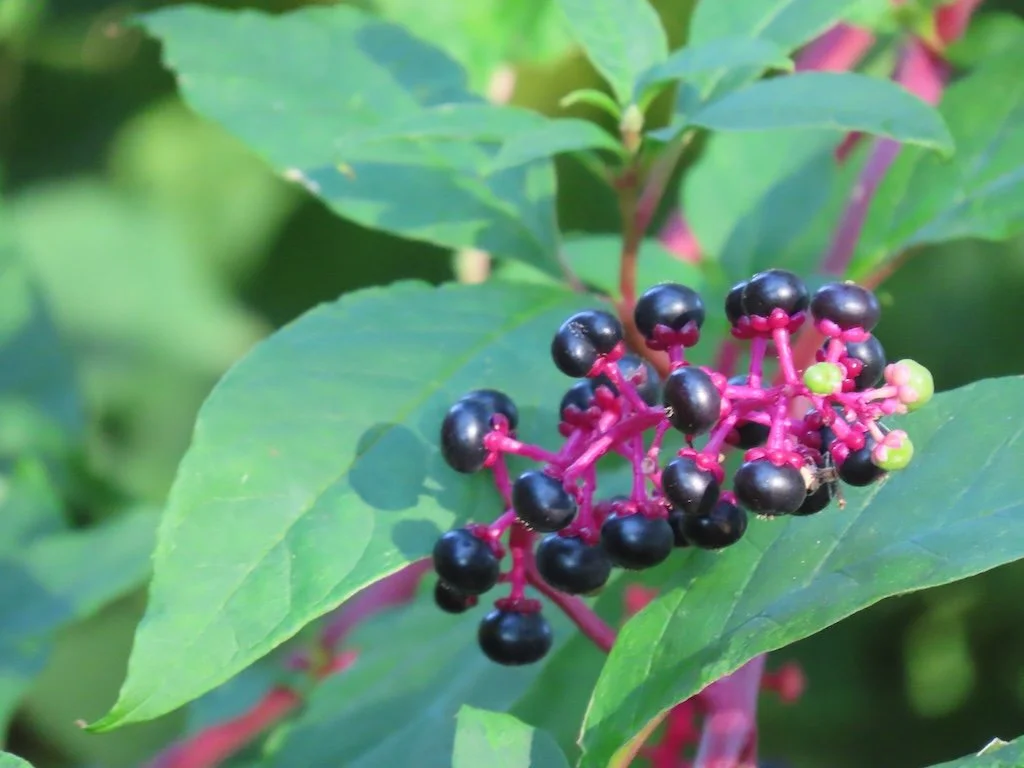
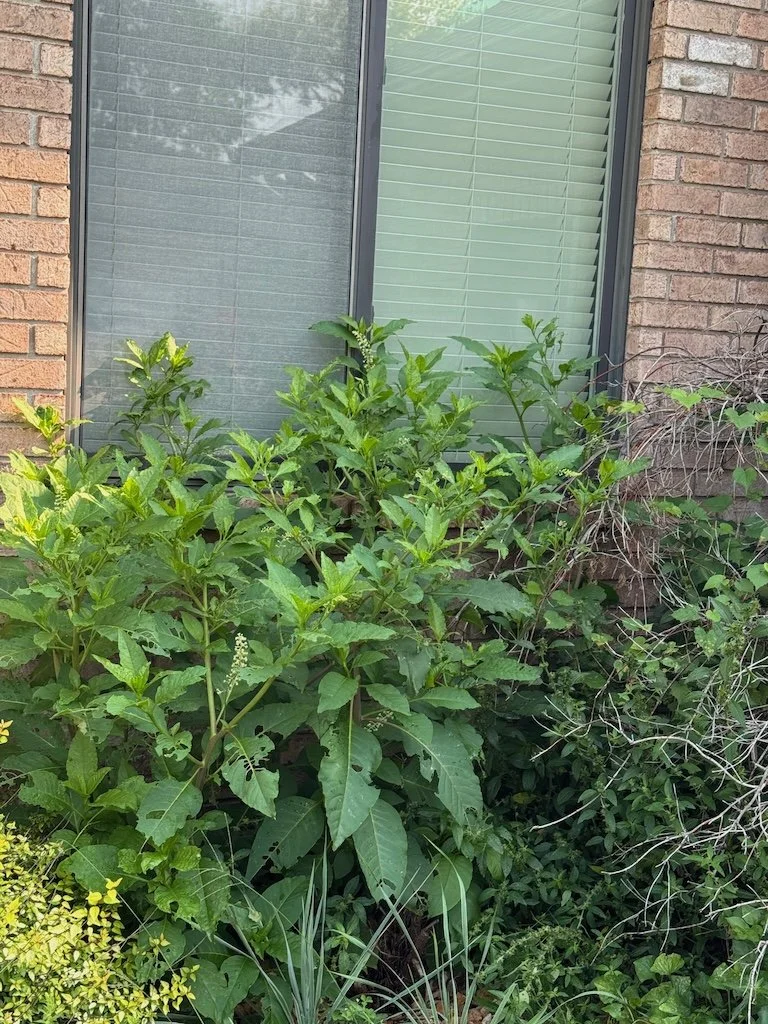
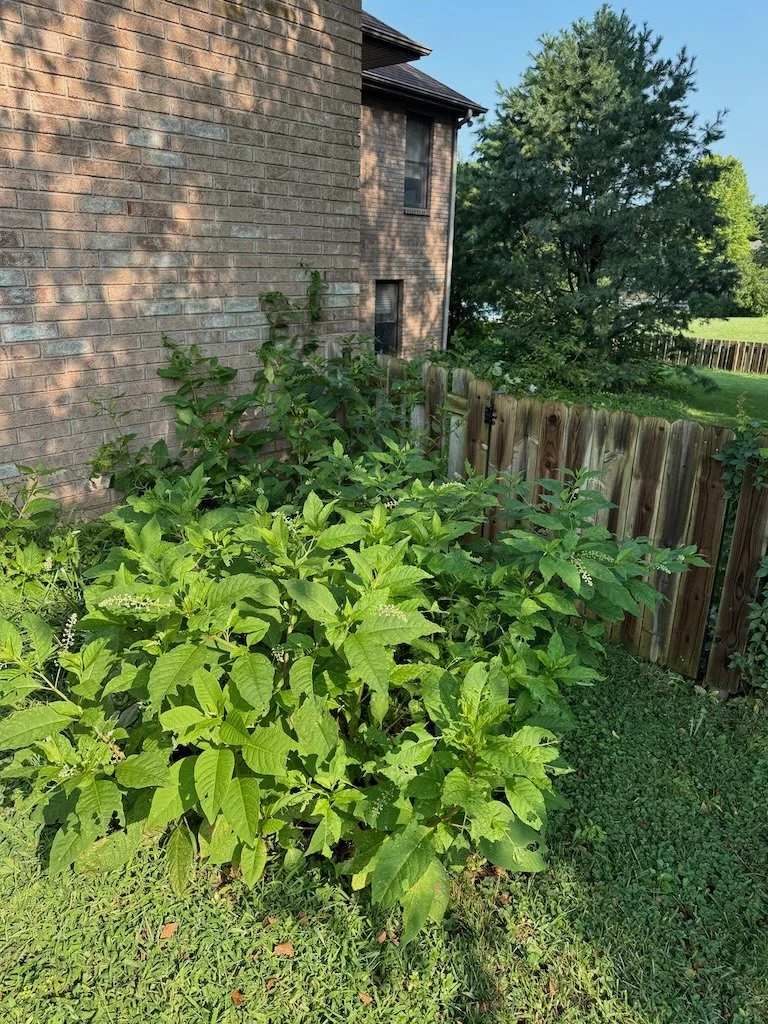
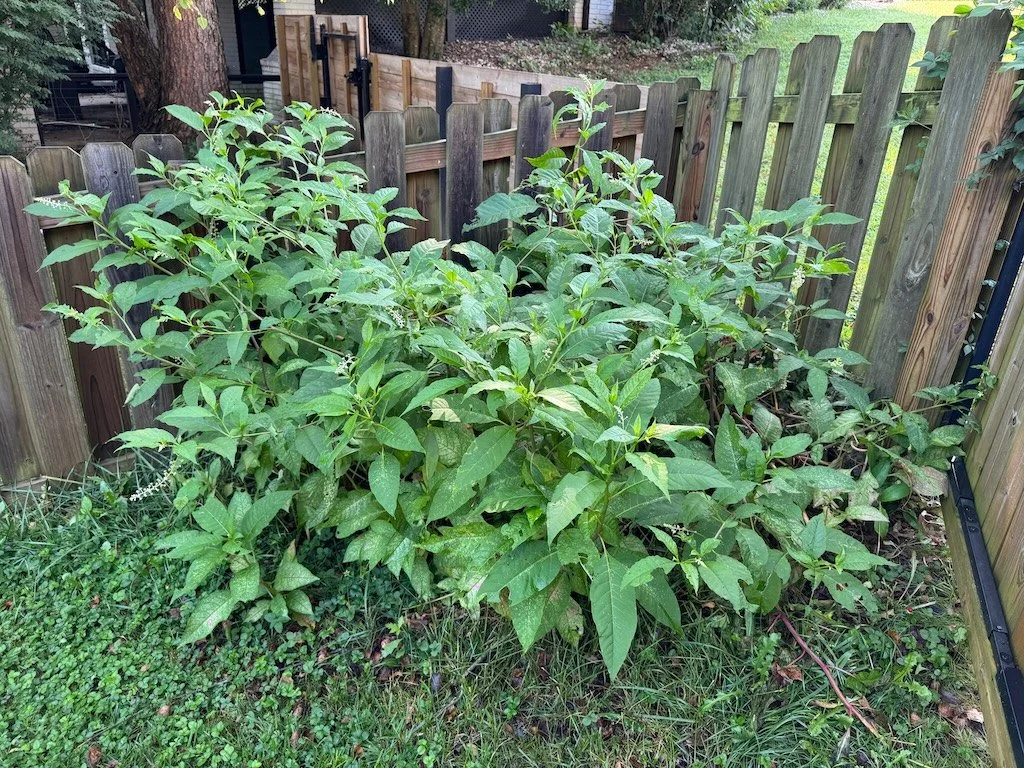
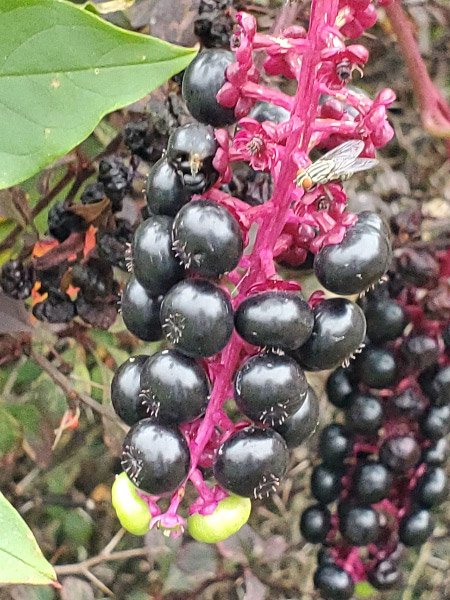
The pokeweed berries were ripe – being eaten by birds!

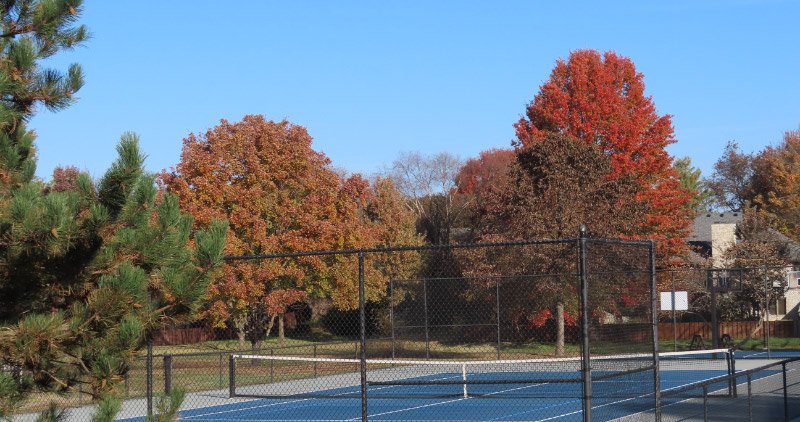
While I was away in Texas, our Missouri neighborhood experienced a hard freeze.  I took a panorama image from my backyard toward the tennis courts and pond. The trees were very colorful.

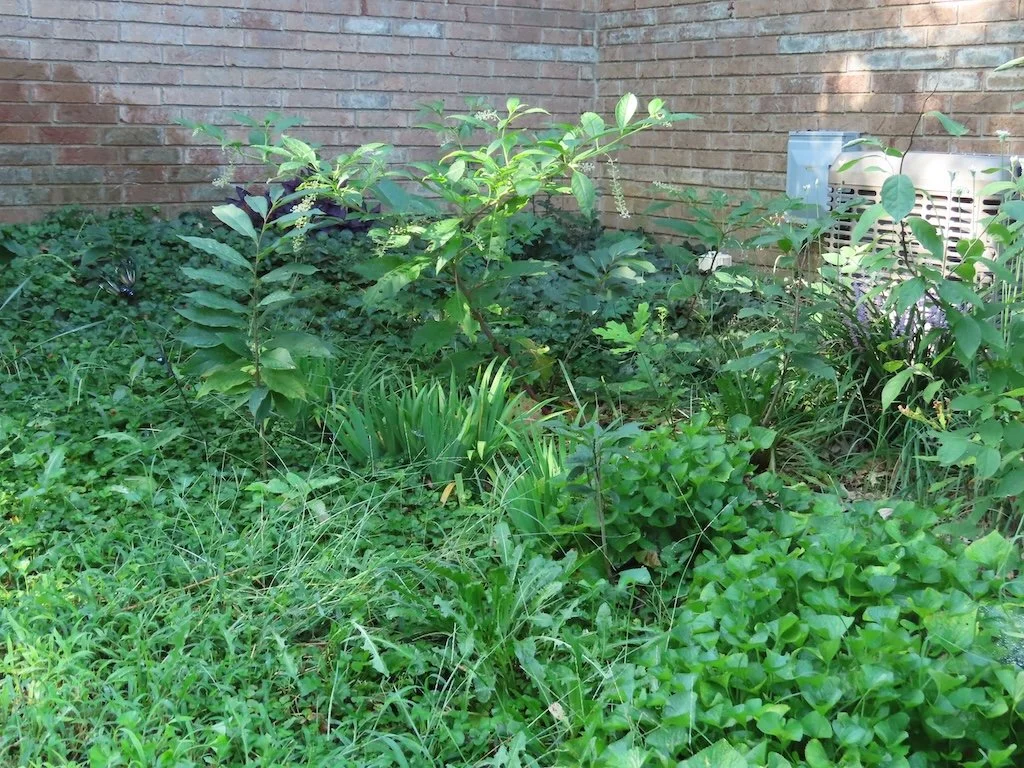
The next day I walked around the yard for a closer look. The dogwood leaves looked brown….although they looked interesting enough backlit. The forsythia (in the foreground looking toward the tennis court) looked like the frost had surprised it – the leaves curled and limp.

Tender plants like pokeweed (lower right corner of the first image and the taller pants in the second) and hostas had wilted/collapsed with the cold. I’ve cut down the pokeweed in the most visible areas of the yard but left it in out-of-the-way places…will see if the birds continue to eat the berries.

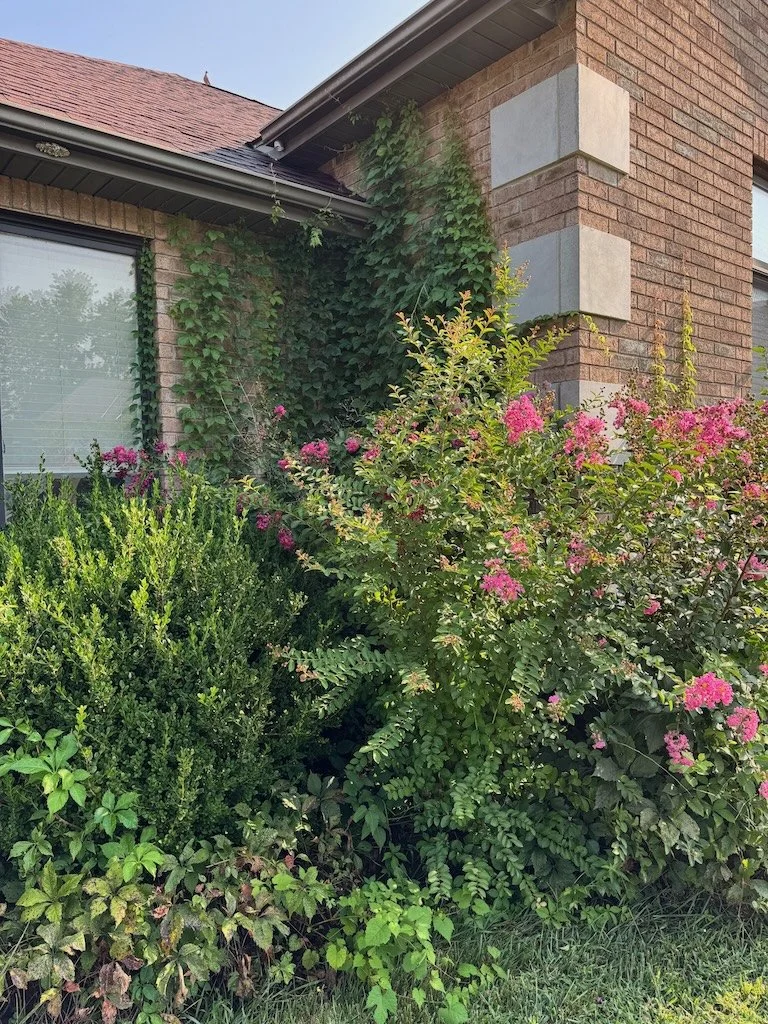
At this point, the river birches have lost all their leaves. The maples are thinning fast; the ones in my front yard have lost more than half their leaves. The oaks are just beginning to shed their leaves. I think the early frost got all my crepe myrtles…hopefully not killing them back to the roots – which is what happened last winter. One of my pines shed old needles (already brown) after the cold snap and enlarged the circle of needles around it (must mean the tree is getting bigger).

I am enjoying my fall yard!
Gleanings of the Week Ending February 26, 2022

The items below were ‘the cream’ of the articles and websites I found this past week. Click on the light green text to look at the article.

After a shaky start, airborne wind energy is slowing taking off – Another way electricity might be generated in the future…but still a lot of work to be done.

Crews working to cull 600-900 bison from Yellowstone’s herds – I guess this happens every year at this time…even though in the rationale to cap the Yellowstone herd at 5,000 animals involved the mistaken idea that the bison were spreading brucellosis to cattle herds (research has shown that it is elk that spread the disease).

What damaged that tree? Probably not what you think – I guessed correctly….but only because I had seen something similar on a tree during a naturalist led hike…and they had identified the animal that make the marks!

The mystery of Mexico’s vanishing stream oaks – A great piece of trivia: Mexico has more species of oak tree than any other country! The article is about trying to save one of those species.

Three in four people worldwide support a ban on single-use plastic – Wide support…but no clear path on how we can do it. As a consumer – I try to avoid single use plastics, but some products don’t come in any other kind of packaging!

Seeing ‘green’ can ease confusion, anger in navigating hospitals – It’s not just hospitals that could use more natural views and ‘green.’

Top 25 birds of the week: waterbirds and seabirds – Terns, scoters, herons, gulls, cormorants, ducks, spoonbills, kingfishers, sandpipers, plovers, grebes…enjoy the photographs!

Warming temperatures are turning Antarctica green – Another indicator of how fast the Earth is changing….and that even Antarctica is not immune.

Drought depletes a reservoir in Spain, revealing a ghost village – The dam was installed in 1992 so this is not an old reservoir. The US is having similar drought related problems with Lake Mead behind Hoover Dam installed in 1935.

After 25 years at sea, shipwrecked Lego pieces are still washing ashore on beaches in England – Plastic is very durable…the pictures of the small Lego pieces still look pristine. Some of the pieces sank…some floated…they are all moving around and, very slowly, breaking down either in the ocean or on the beaches of Cornwall.