Suburban Savanna – 5

Continuing my series on progress toward transitioning my yard to a suburban savanna…..

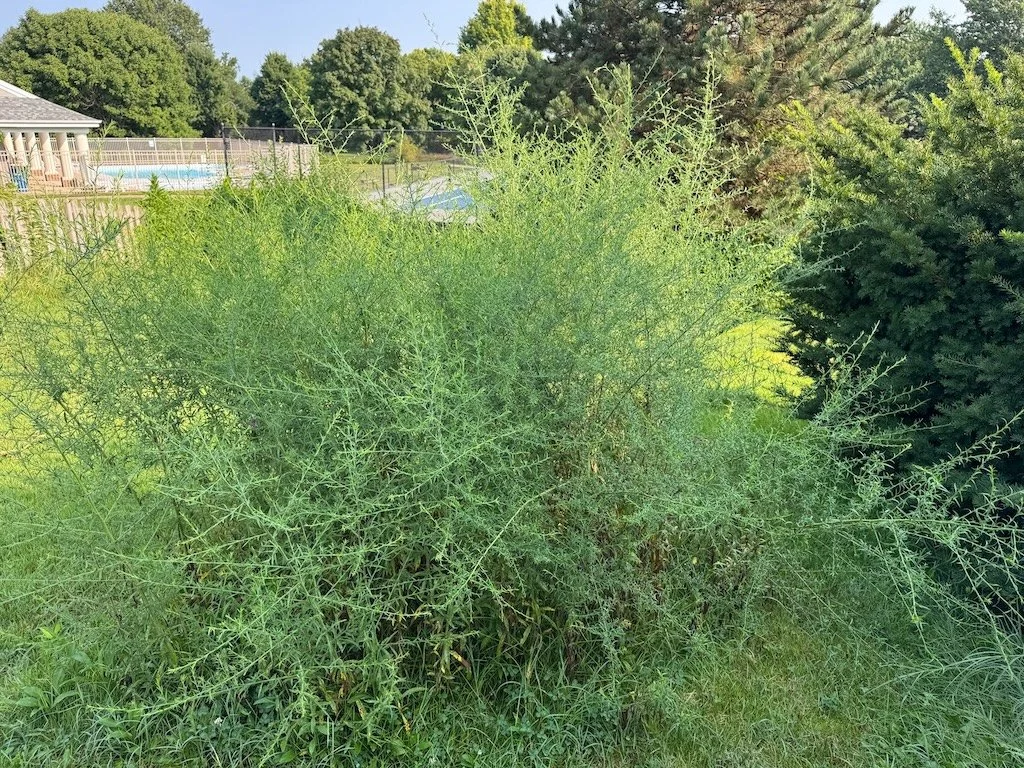
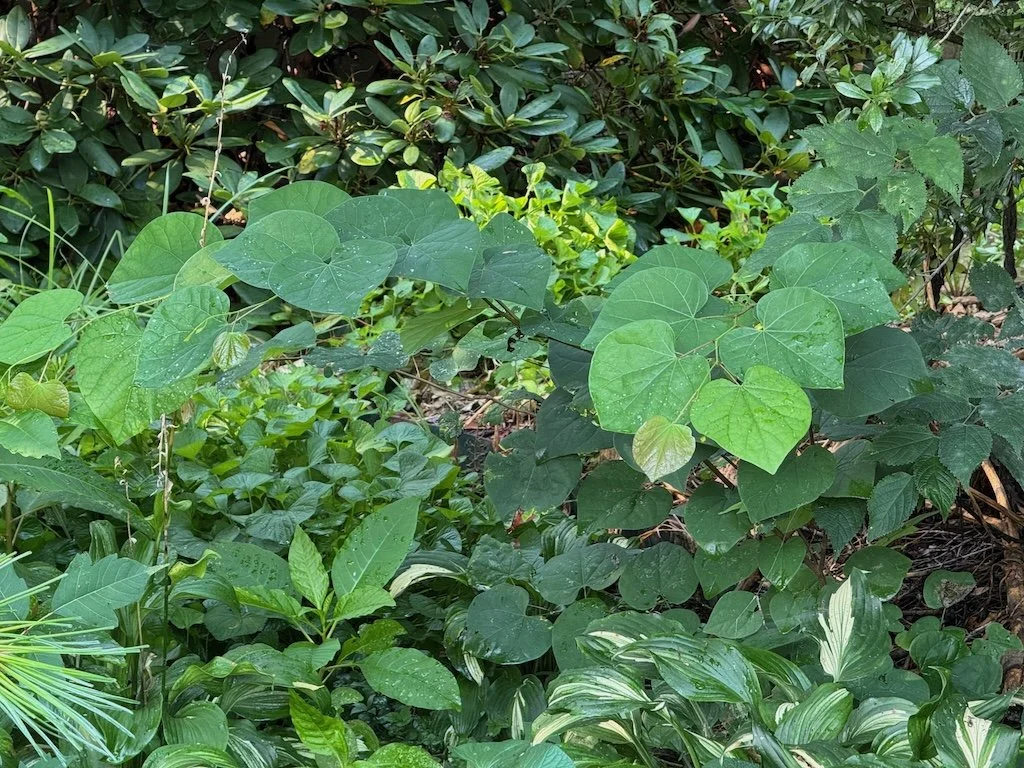
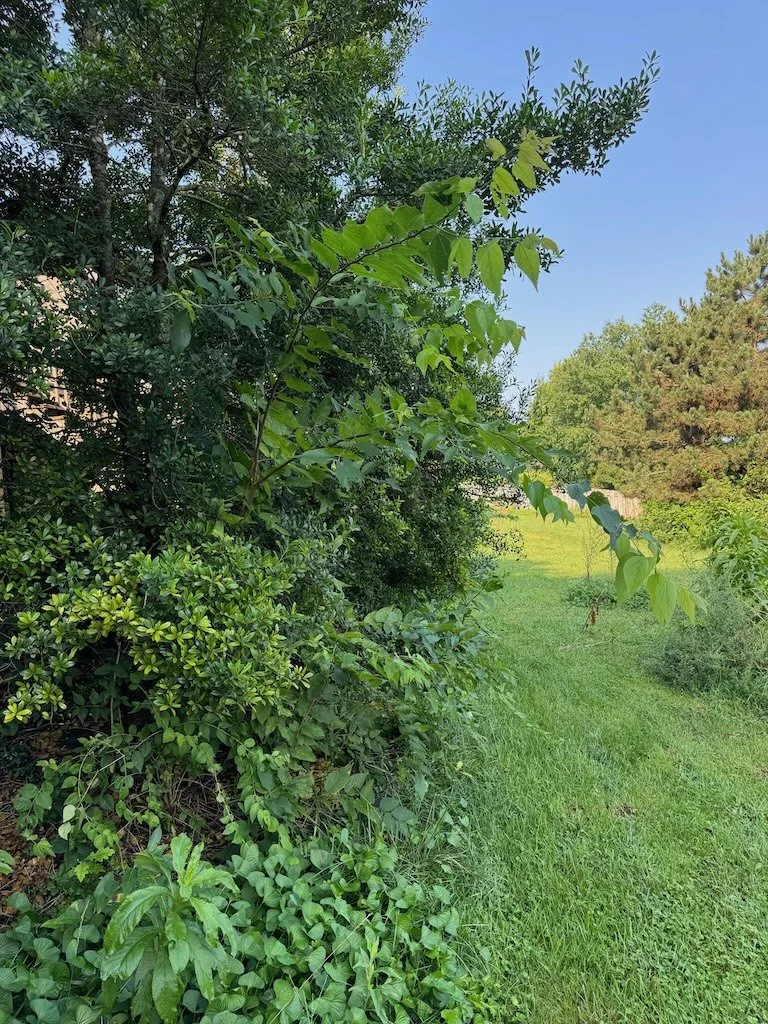
This is only my first summer implementing the strategy, but I am already experiencing some areas that are overgrown…with natives. In a larger space, the tangle would simply be allowed to continue but in my third acre suburban savanna, actions are needed on my part very similar to my actions when it comes to invasives!

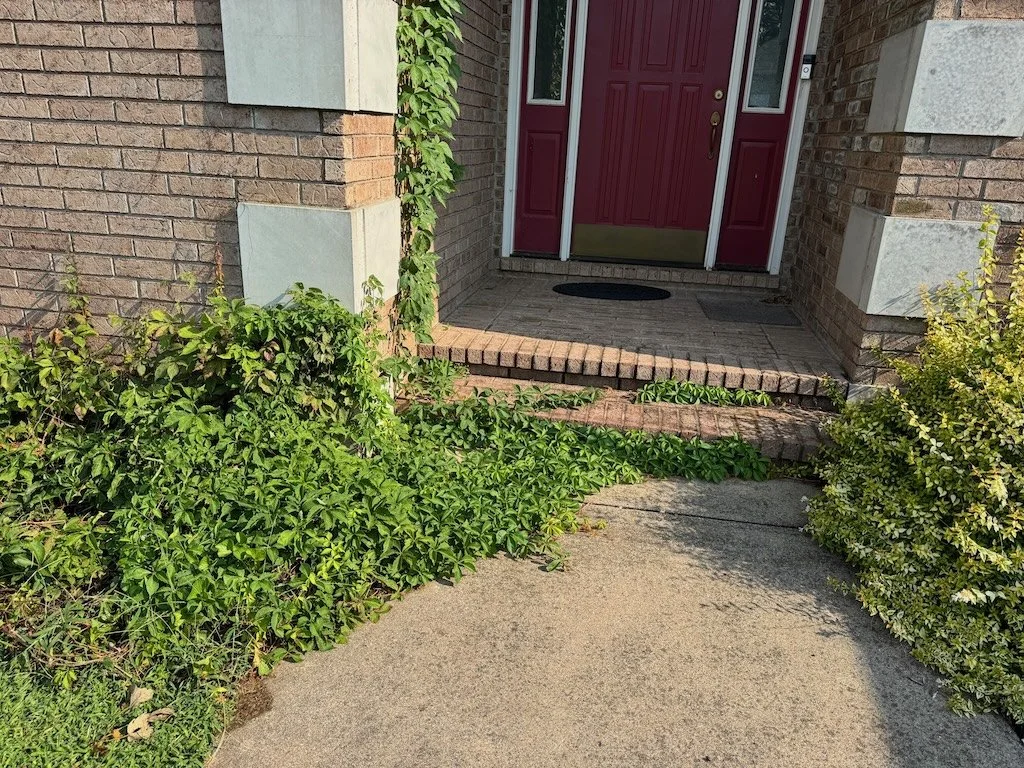
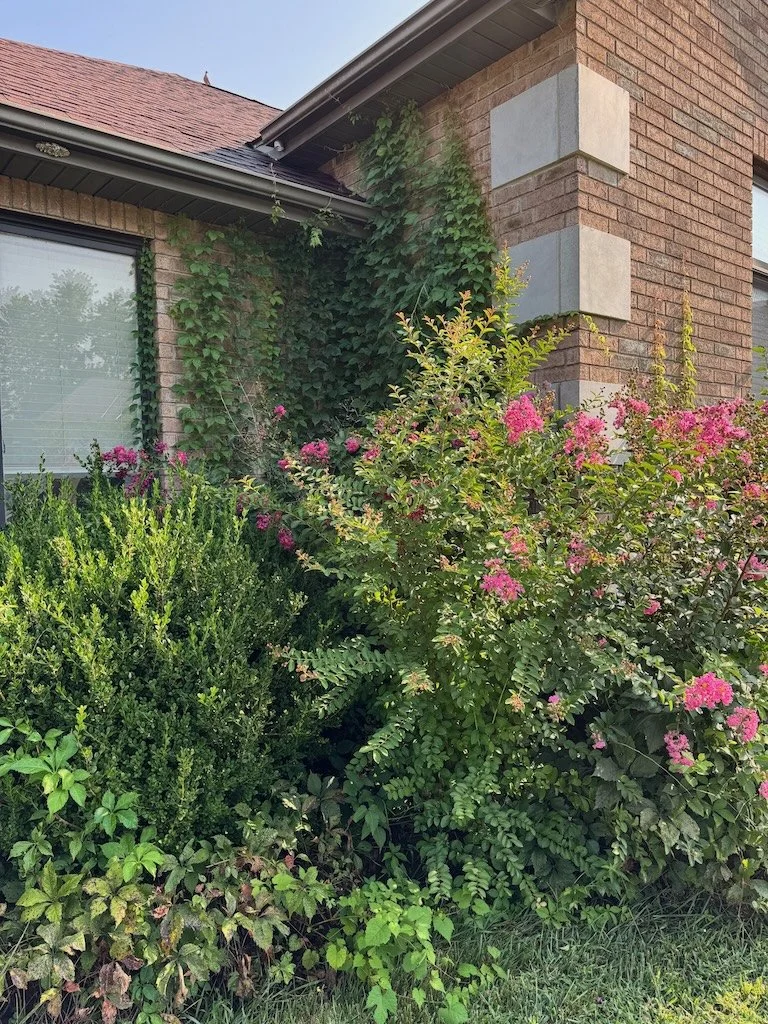
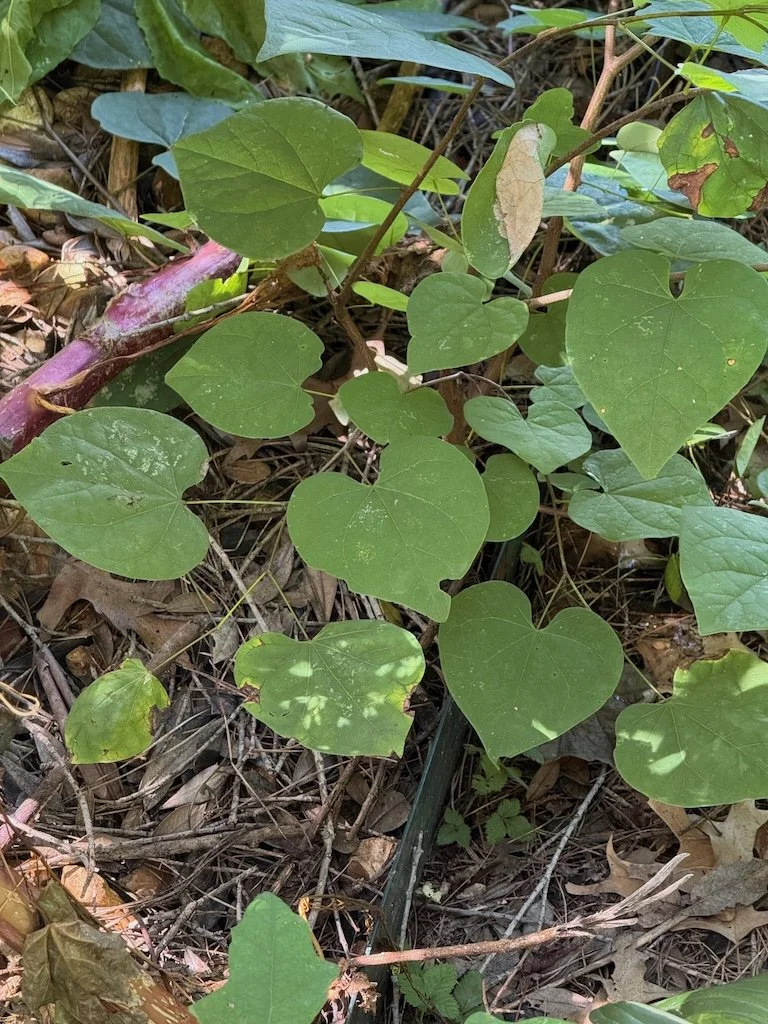
Virginia creeper is great near my front door, and I can easily keep it controlled there because I see it all the time. In other places (in a corner of a flower bed behind some crape myrtle and boxwood, for example), it tends to be problematic, and it requires me to get back there to hack it out. I have been cutting only what is on the brick but now I will cut more and hopefully eventually reduce it to a once-a-year job.

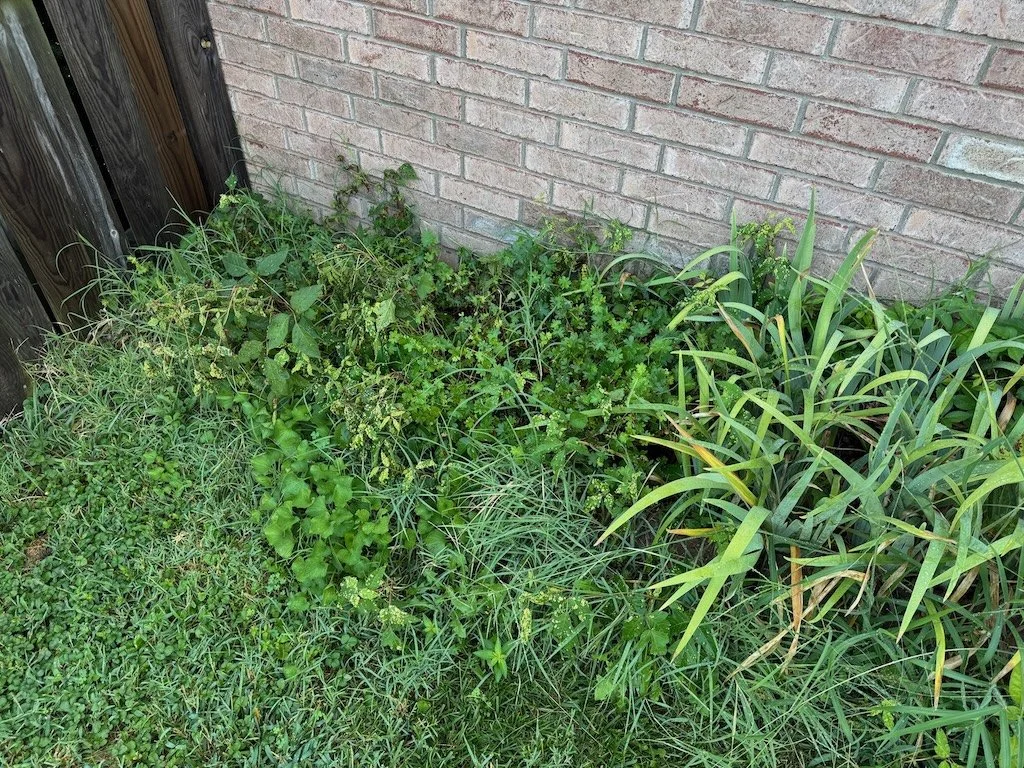
My strategy with poison ivy was to leave it unless it was in a place I would likely be without gloves. Now I am rethinking that even though the patch is interesting because it has the poison ivy leaf gall too. I’m going to gear up and clean out that bed…maybe plant some cone flowers there!

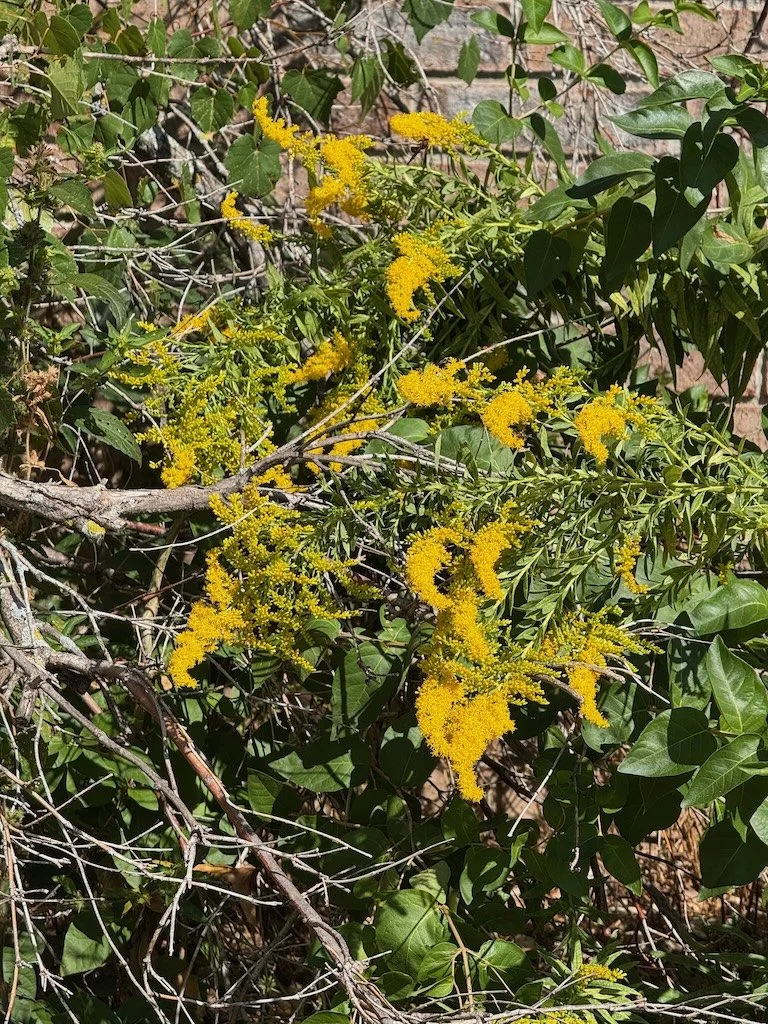
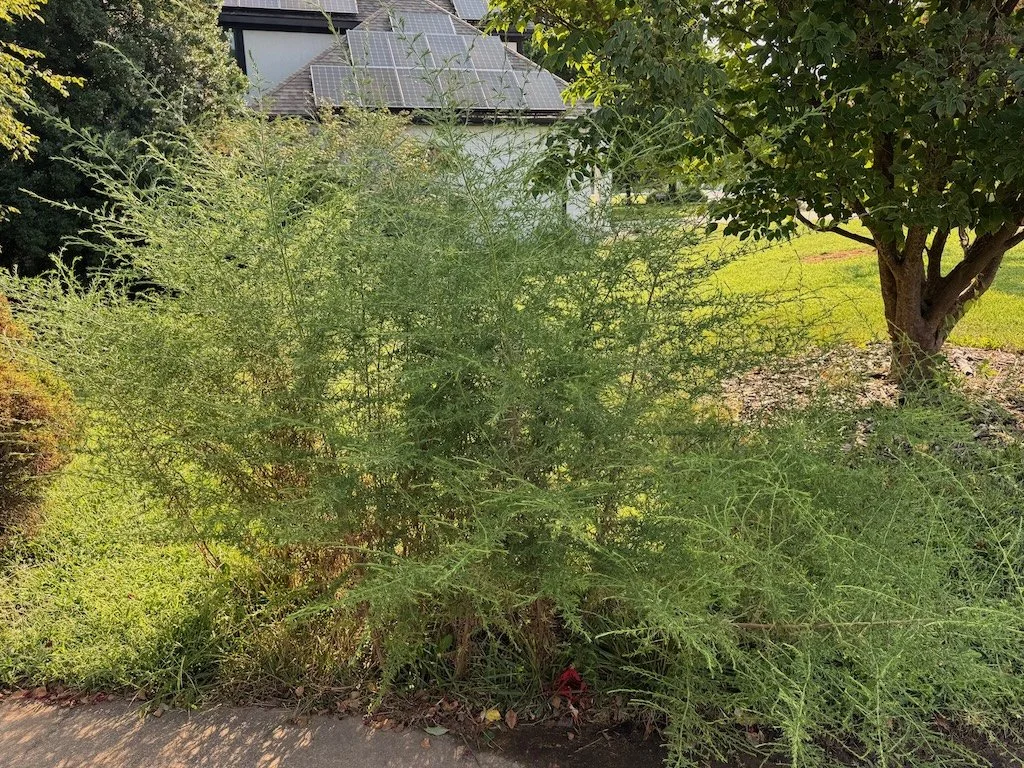
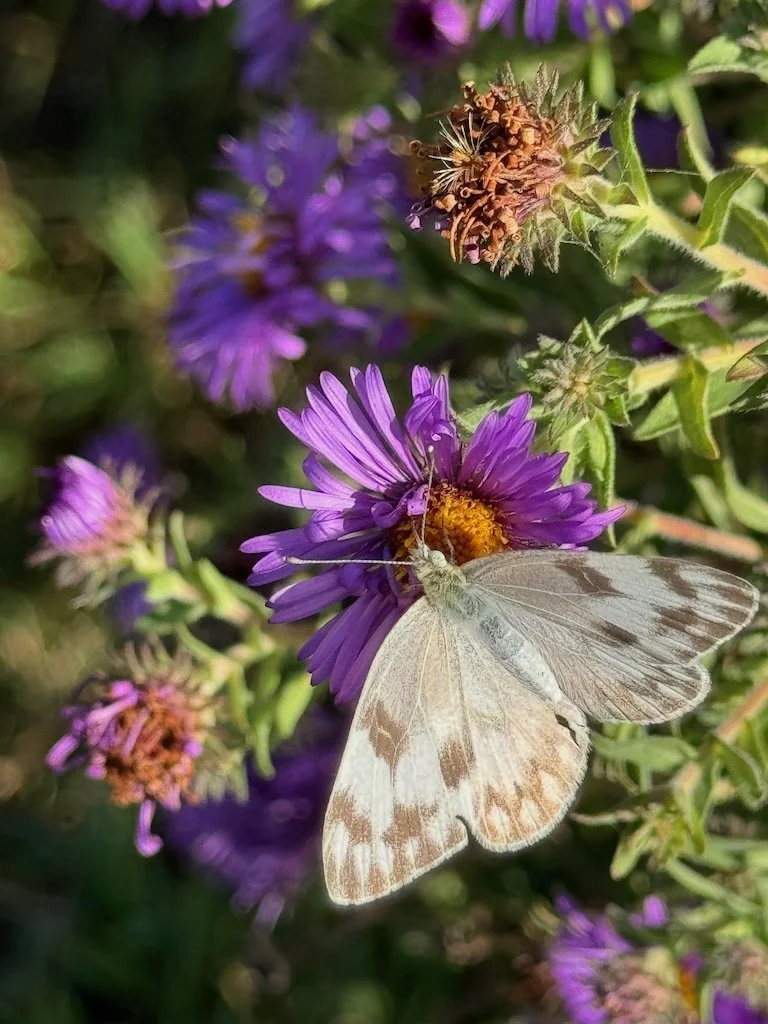
Last year I had a clump of White Heath Aster near my driveway, and it is there again this year….and there is clump in my backyard too. I am leaving both since they are great for pollinating insects in the fall – but I don’t want more of them in my yard.  If they come up in more places next year, I will mow them!

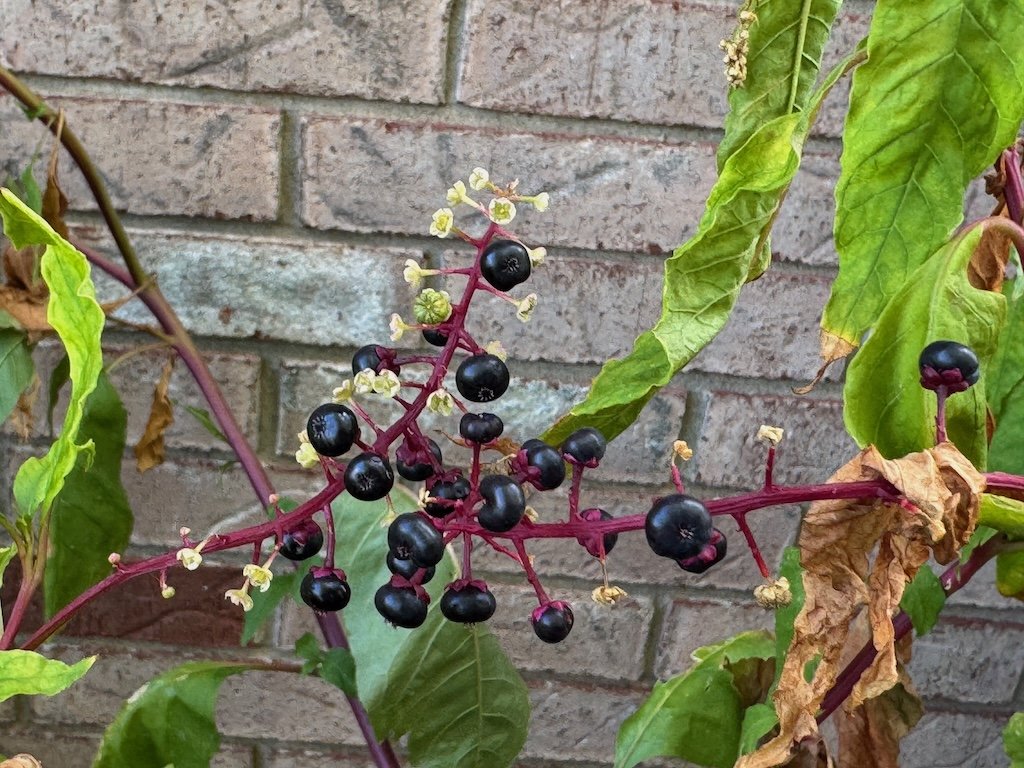
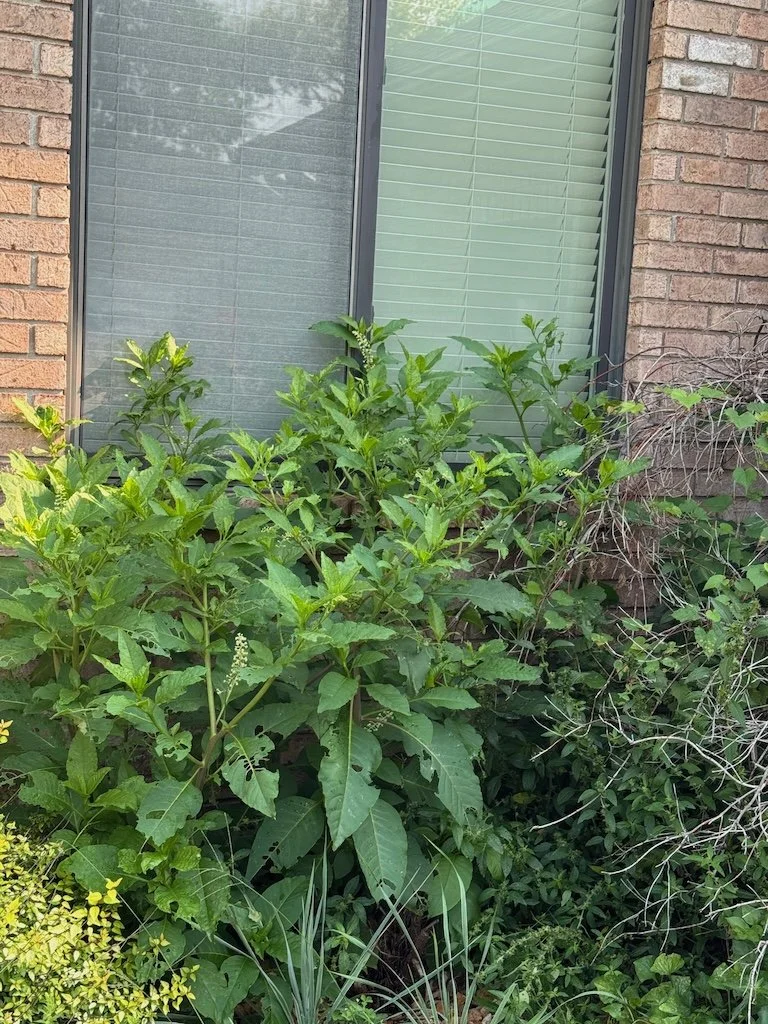
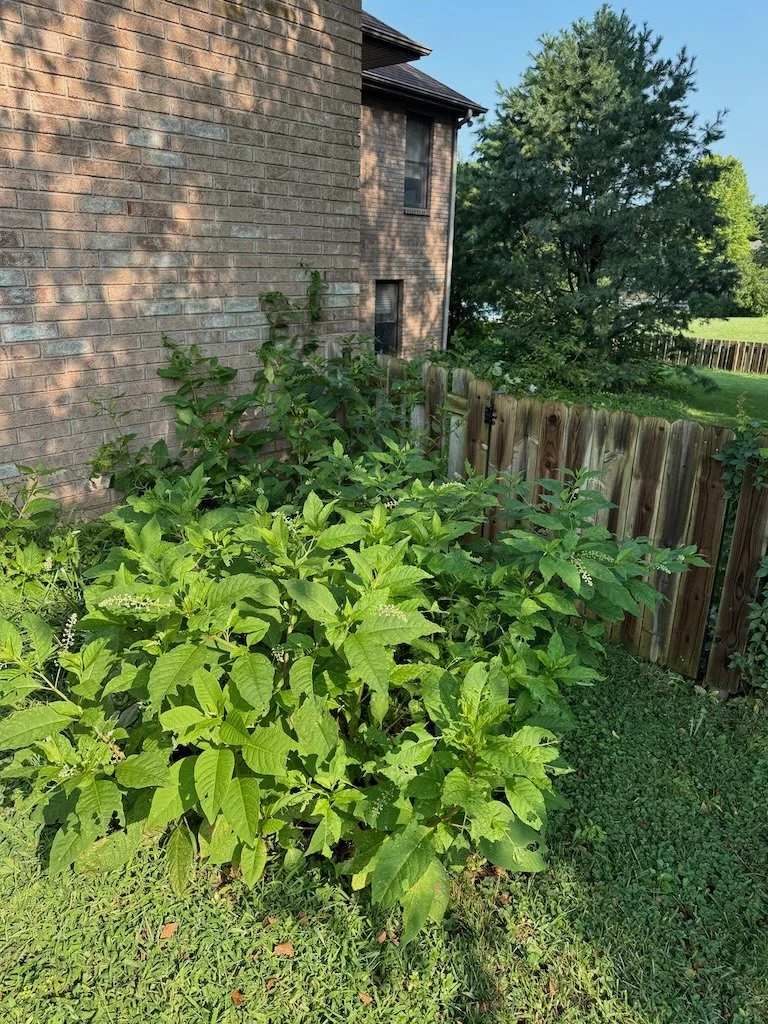
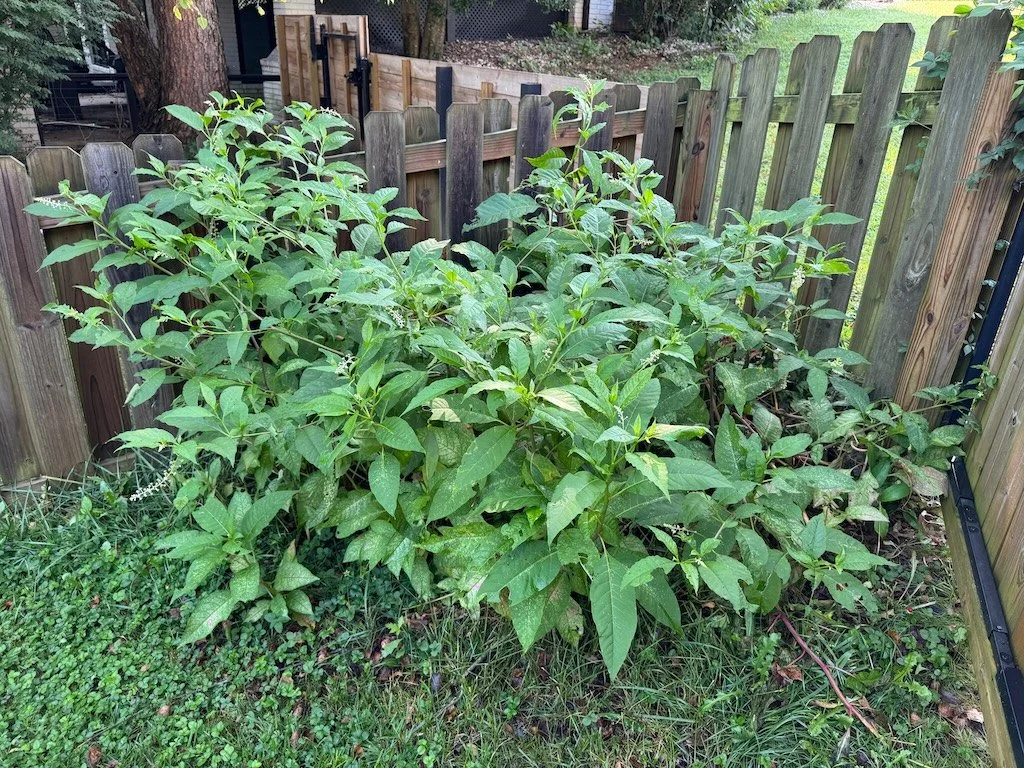
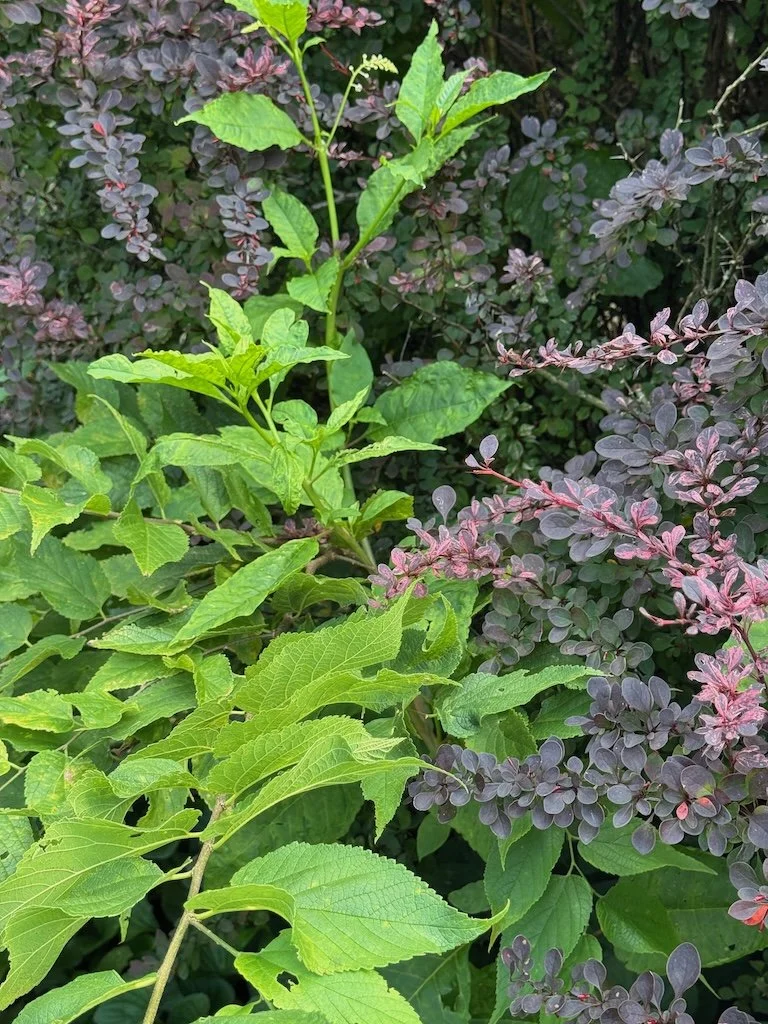
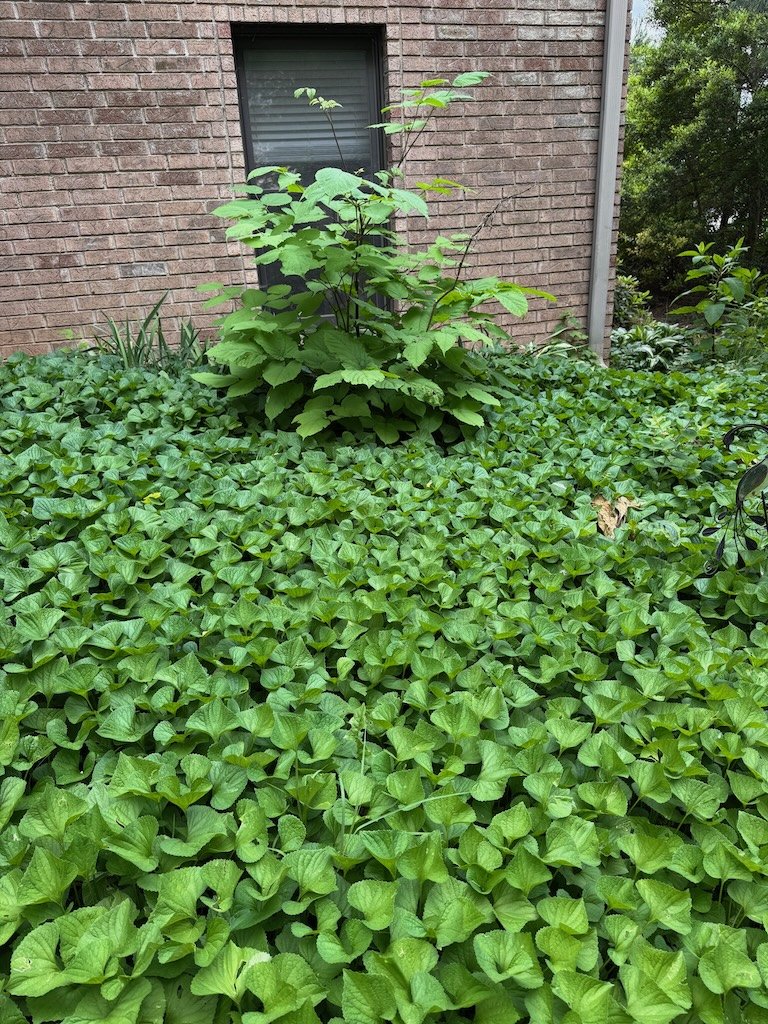
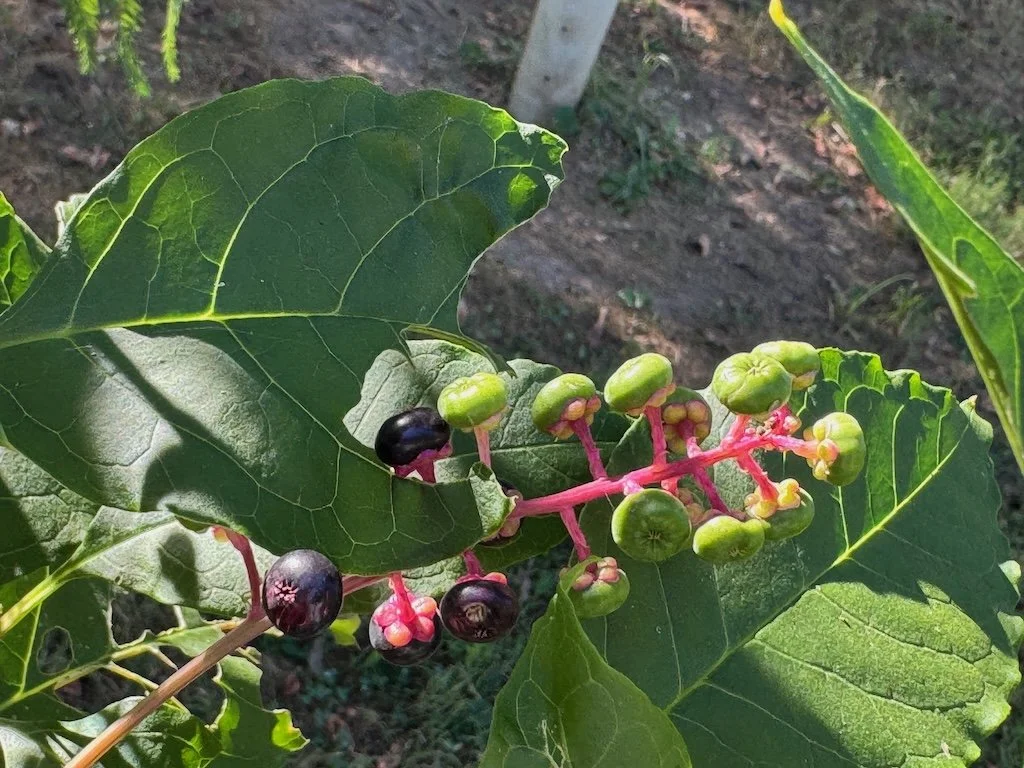
I am learning to cope with pokeweed. If it comes up in an empty space, I leave it…but I trim it to keep it low and leafy. It has filled in an area under a window where a non-native cedar died, a slope on the side of the house (reducing the area I mow and holding the soil with its deeper roots, and filling in a corner (it is hiding a place I dump grass clippings too!).

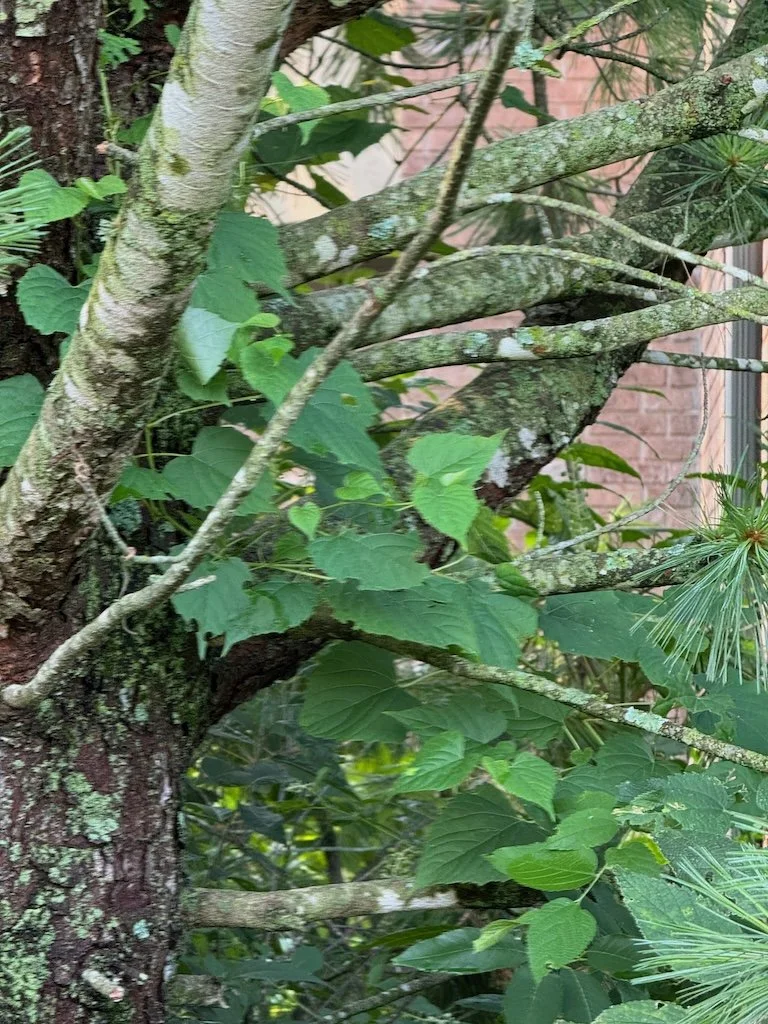
Grapevines seem to be everywhere this year. I don’t mind them in some places…but I will keep them out of my trees. It is going to take some vigilance.

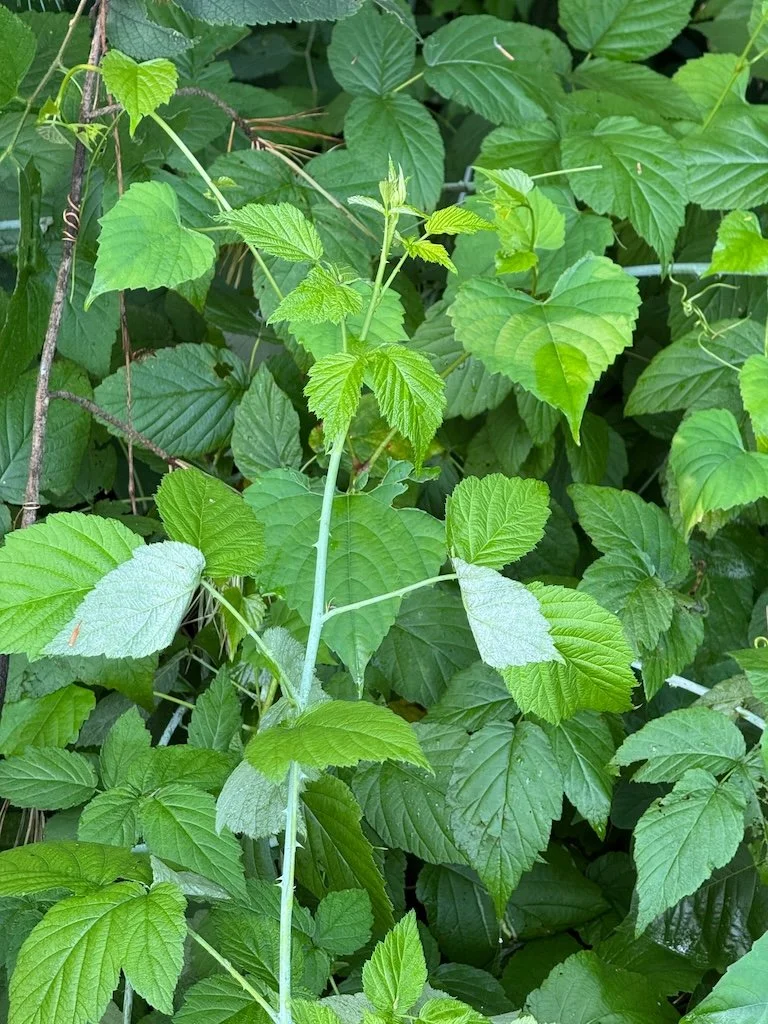
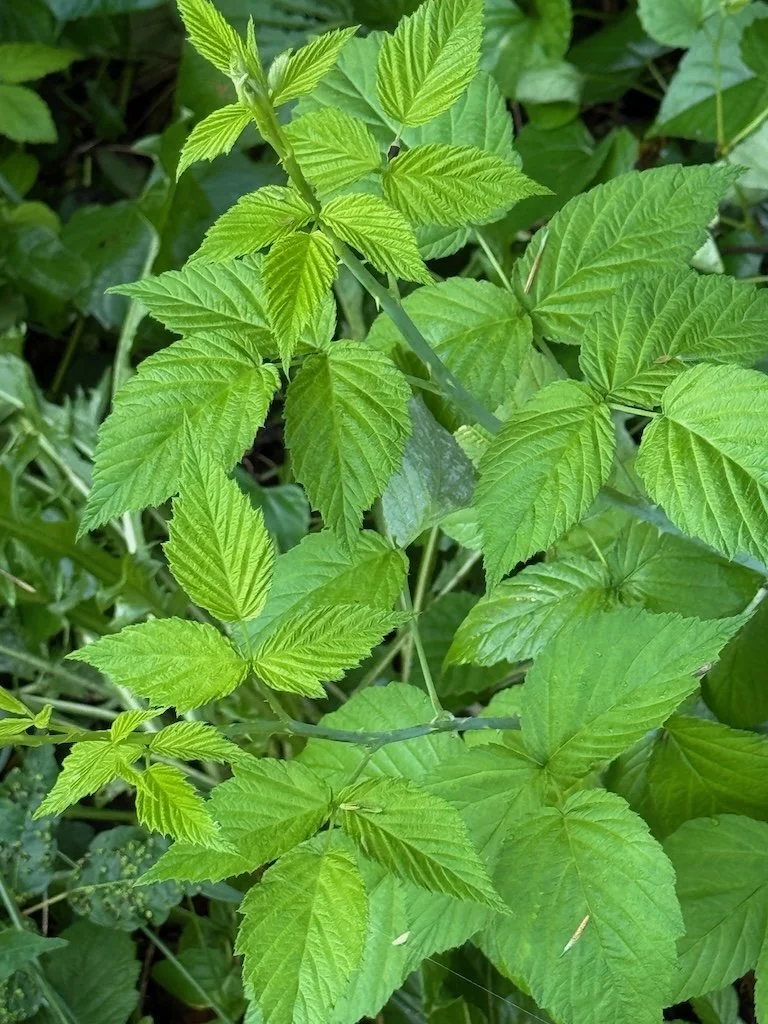
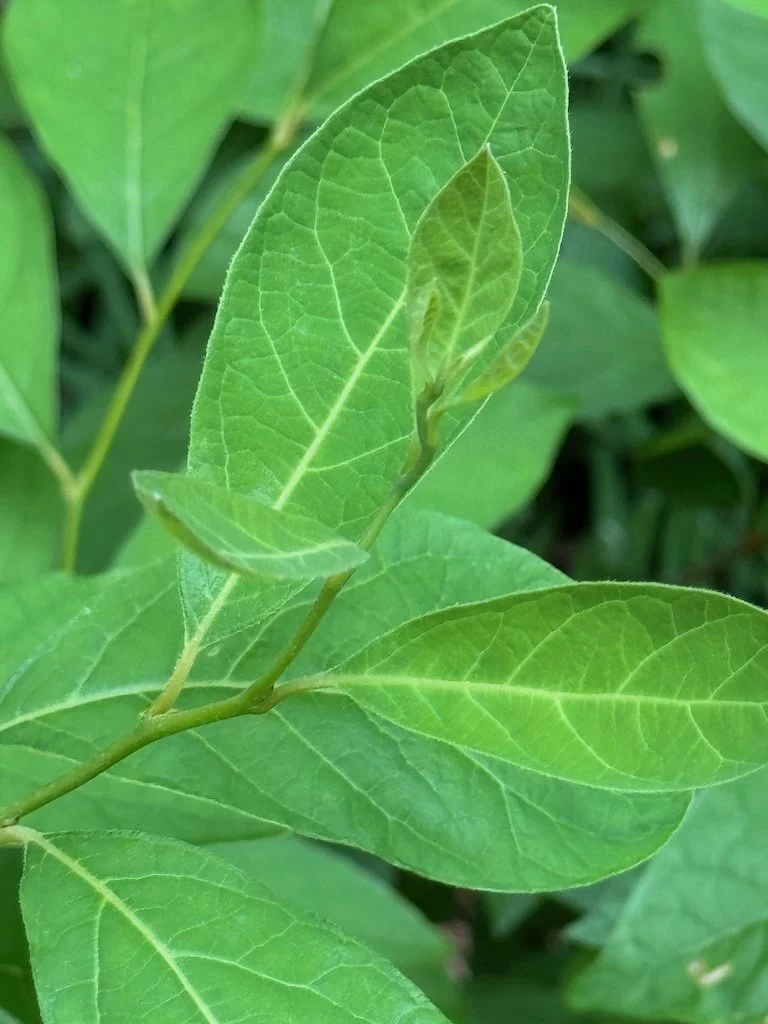
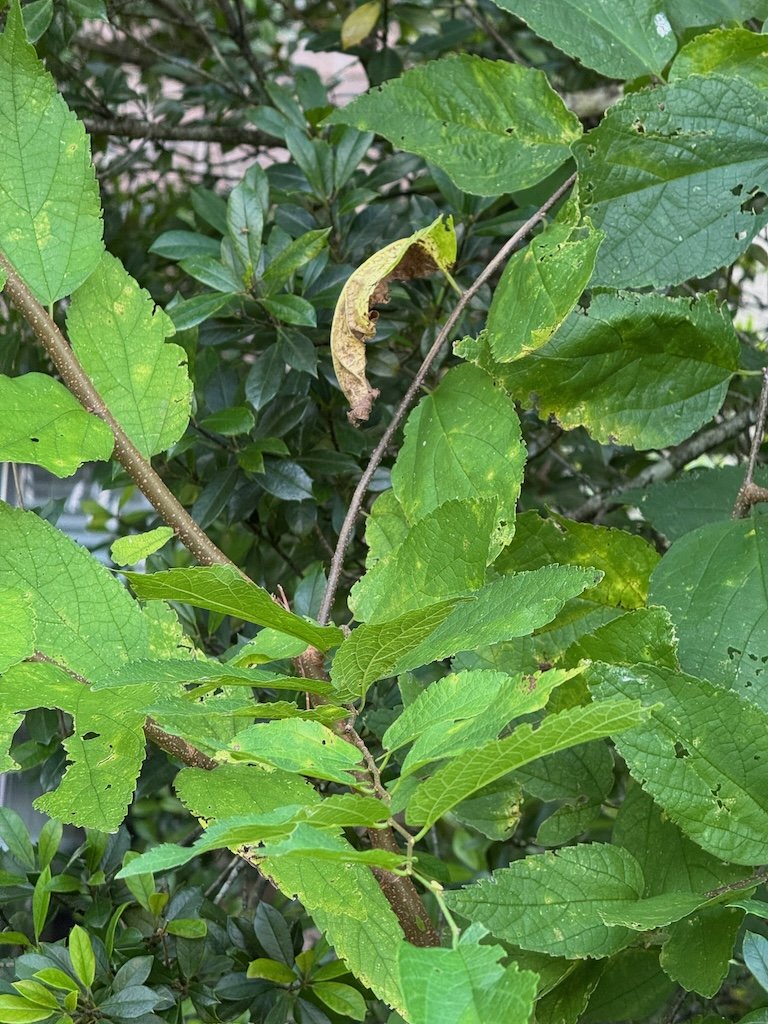
The same is true with the black raspberry canes. They have lovely pale green stems and white underside of the leaves. There are thorns too. I want to leave some of the plants since wildlife like the fruit…but I will be cutting them in places I want to be able to easily access!

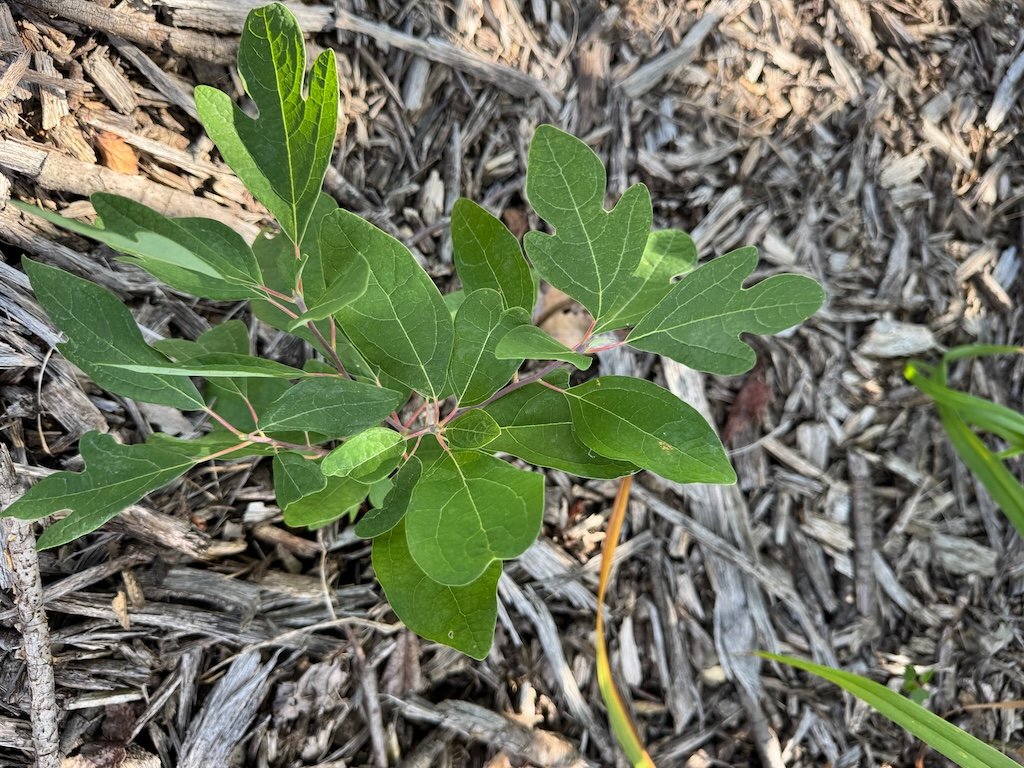
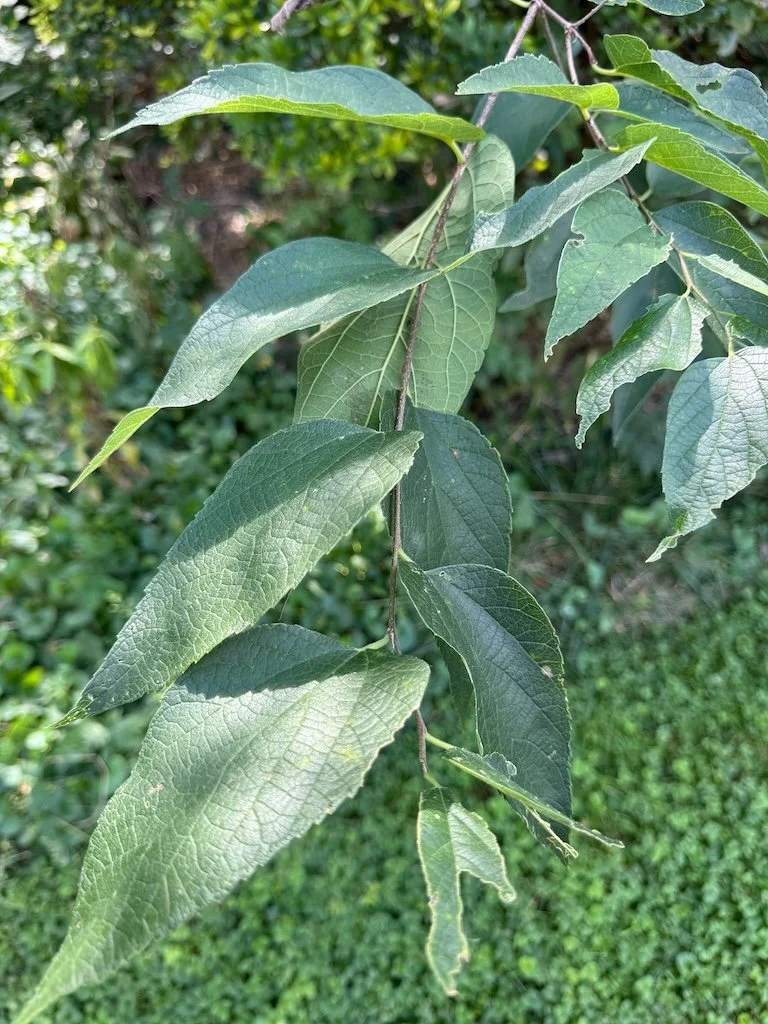
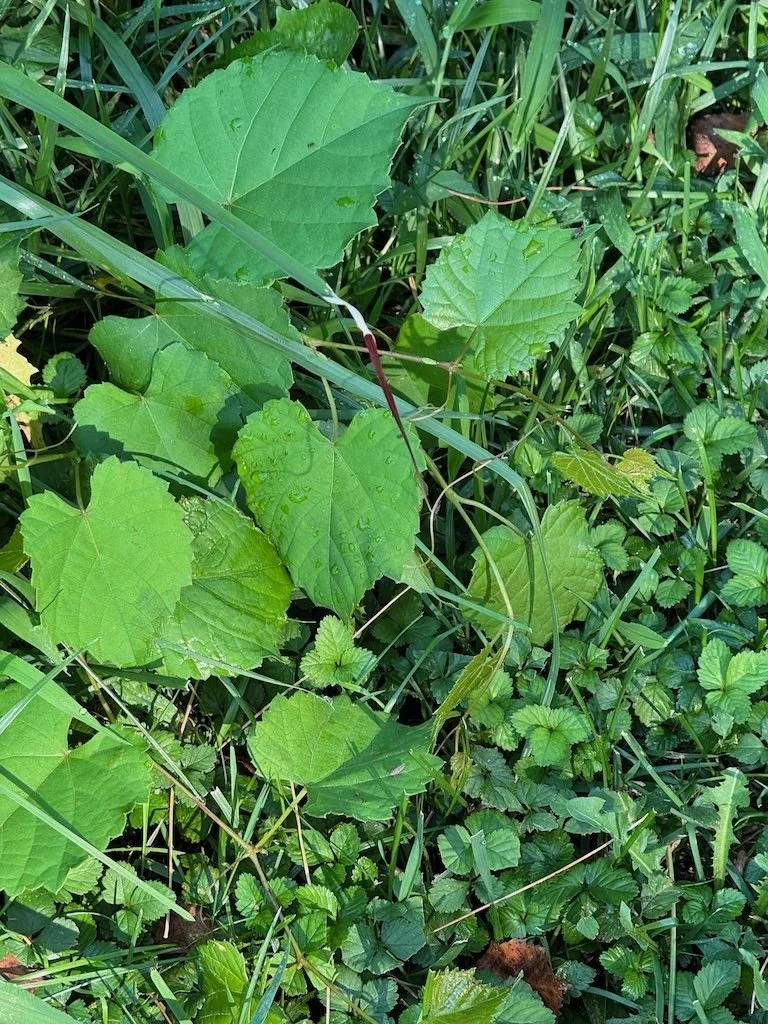
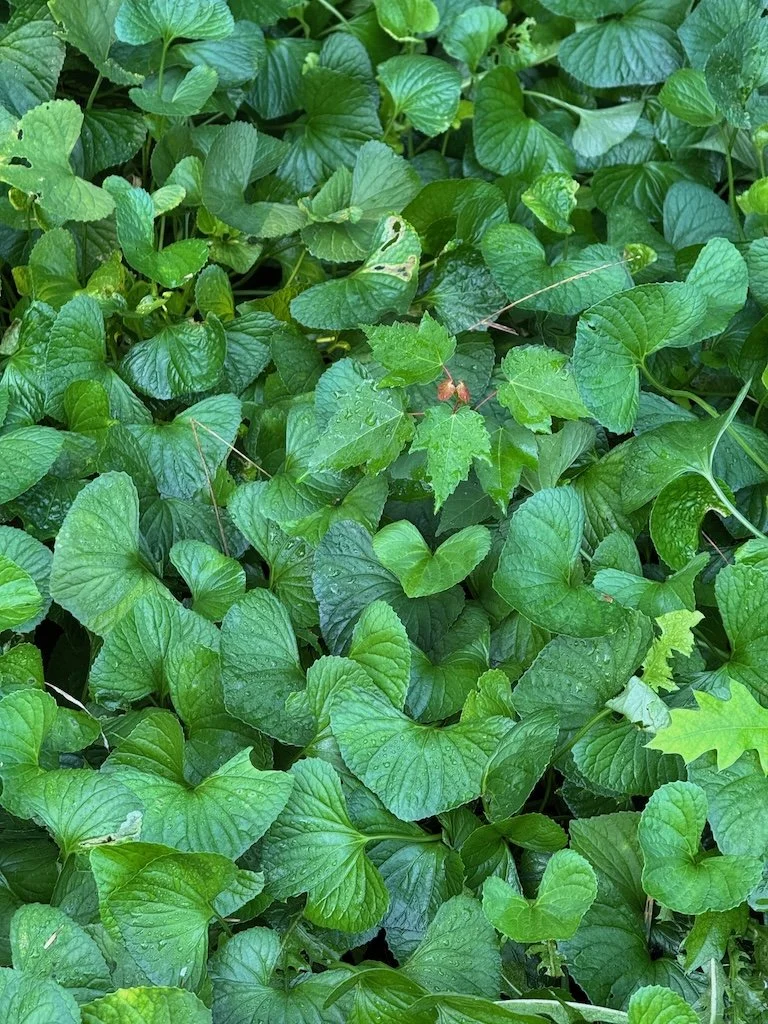
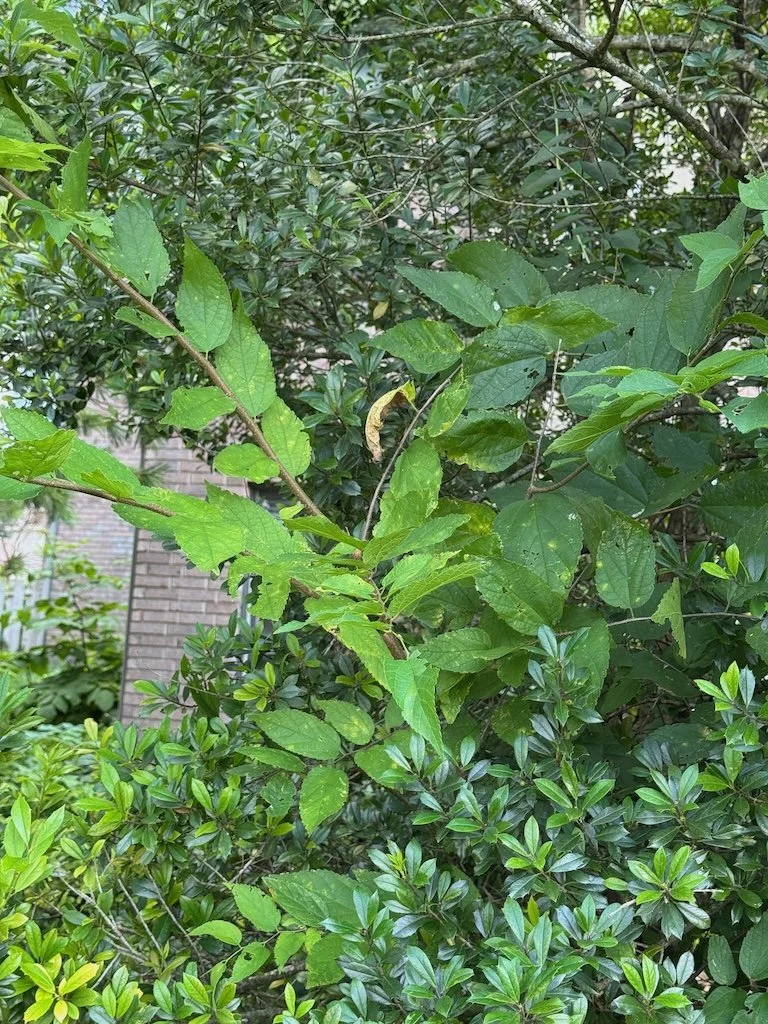
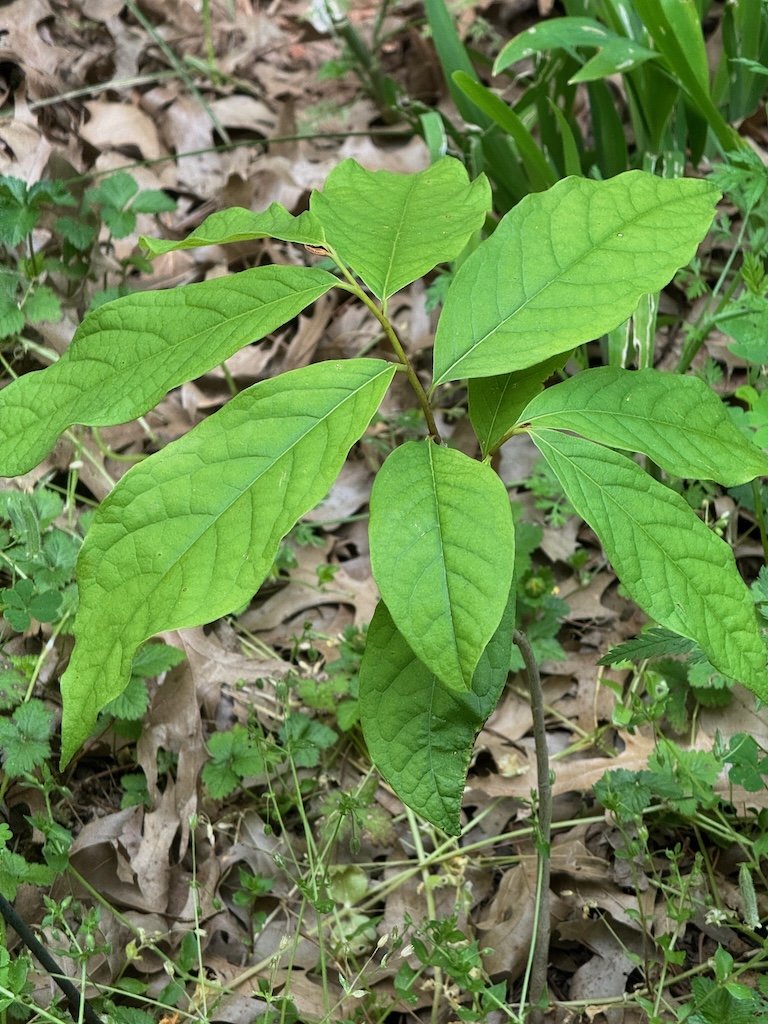
I like violets for the ground cover in all my shady areas but they hide young redbuds and maples and oaks that will eventually need to be cut. Hackberries are everywhere – growing with the hollies and in other bushes. I am considering leaving them but also realizing that I will eventually need to cut them down since they are not in places where I want a larger tree!

All these native plants that I am considering controlling and this is my first year thinking about my yard as a suburban savanna!

April 2026 – Overview
May 2026 – Planting Natives

June 2026 – Shade Garden

July 2026 - Water

Serendipity Trees

Serendipity trees are one of the joys of native gardening! I have 3 different kinds in my yard.

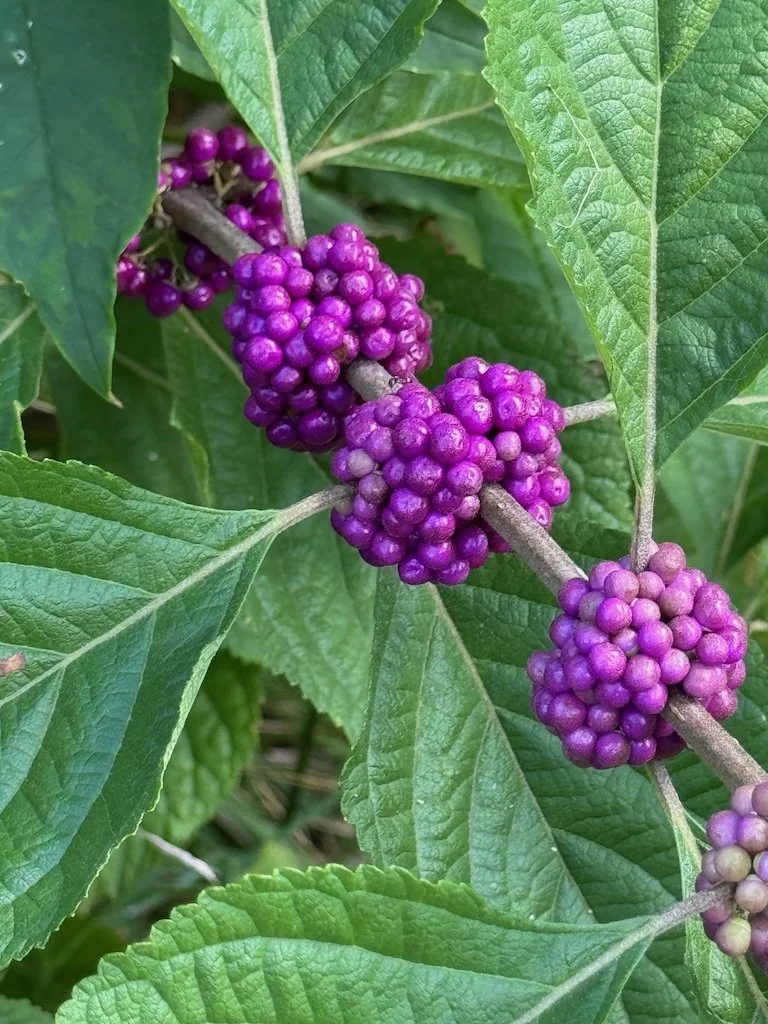
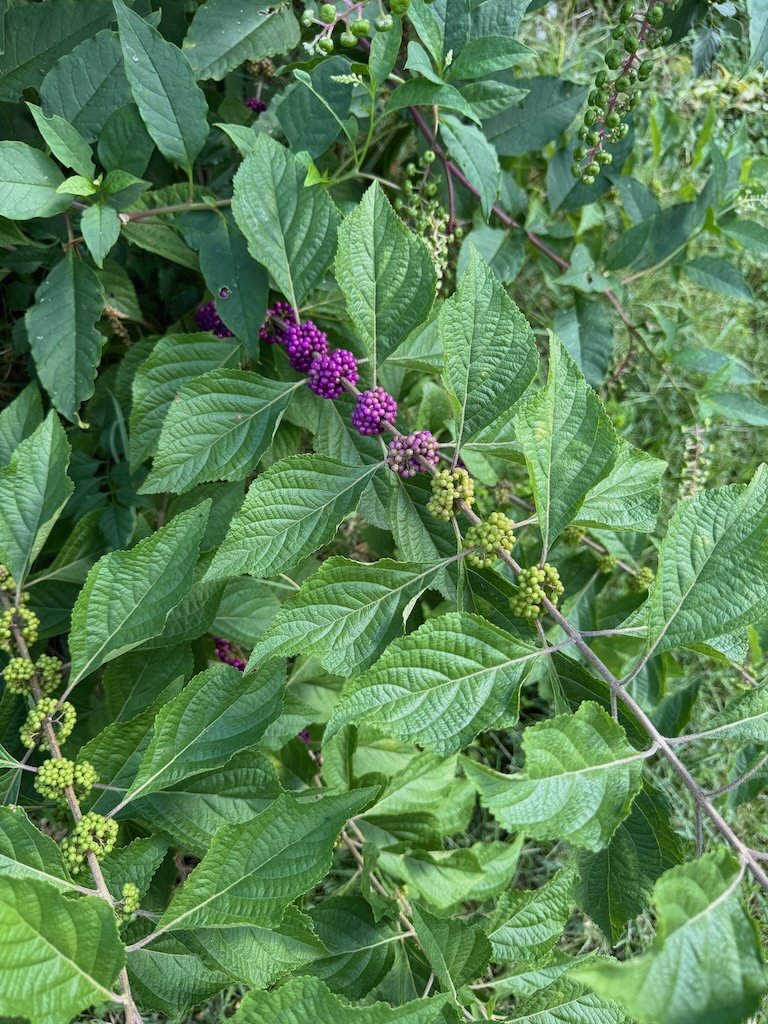
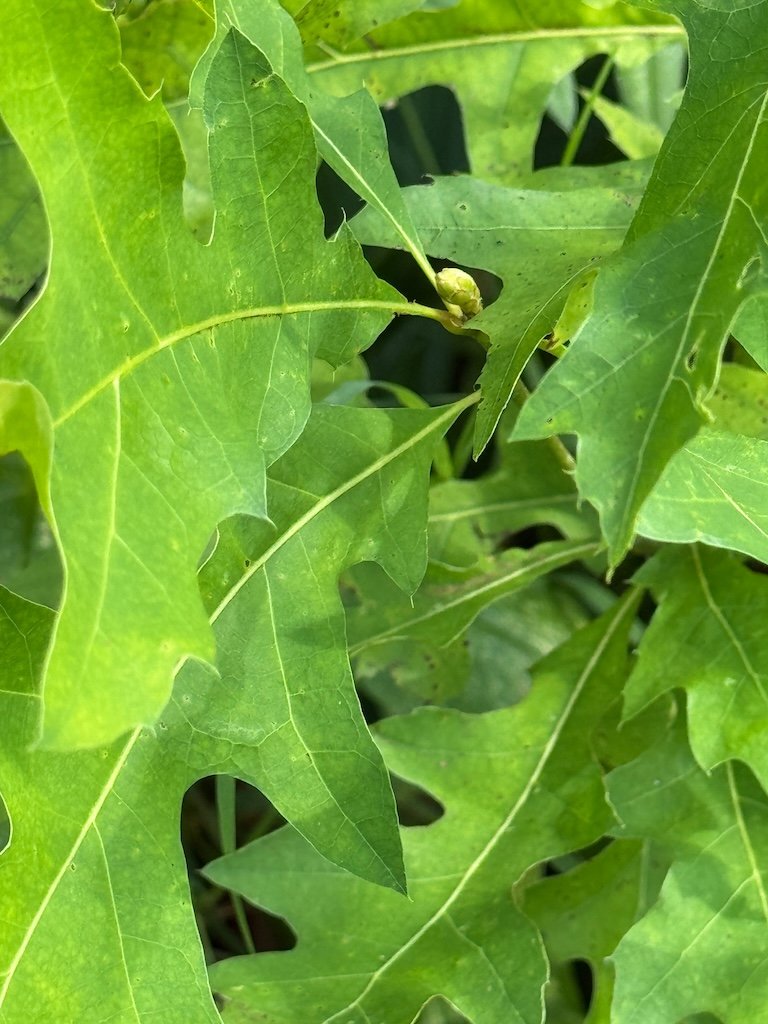
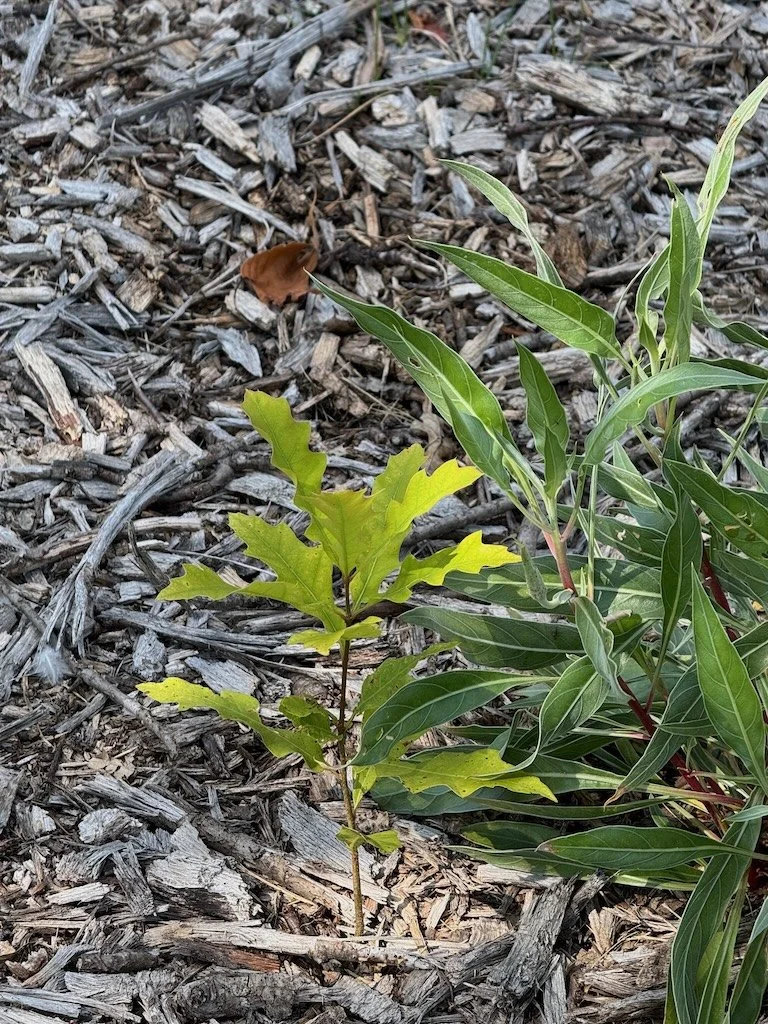
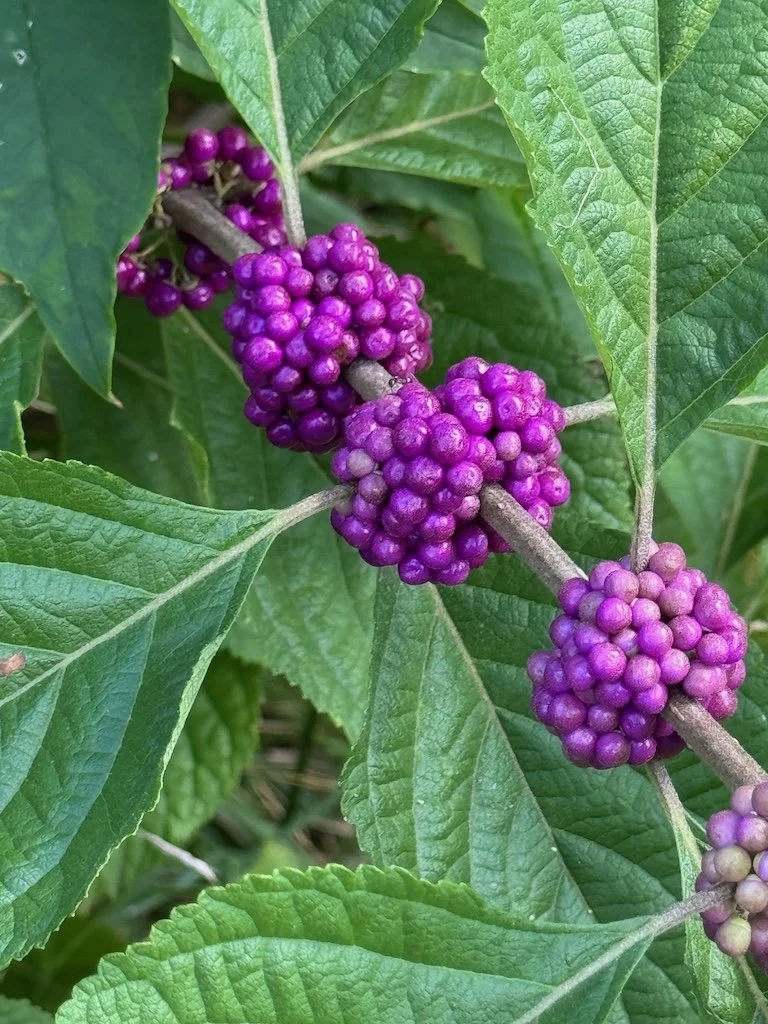
The oaks are from ‘squirrel planted’ acorns – probably from my neighbor’s red oak. Most of the time I mow the seedlings but there is one that is growing in the place where we had to cut down a pine (it fell on its own really). The oak is growing well and is no longer much shorter than the plants around it: iris, beautyberry, gray-headed coneflower, and newly planted elderberry. My plan is to enlarge the bed as the oak grows so that most of its leaves will fall in places that will never be mowed! In the front yard, there is a younger seedling in the native plant garden that is shorter than the Missouri evening primrose beside it! It too can continue to grow and the bed can be expanded over time to receive its leaves.

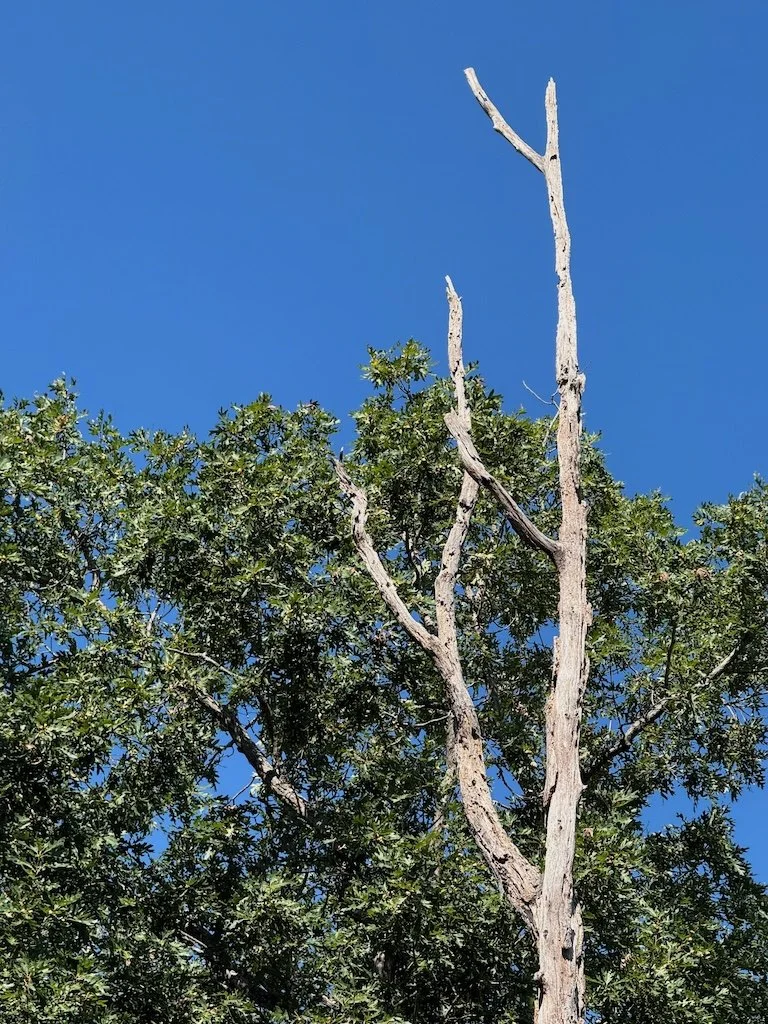
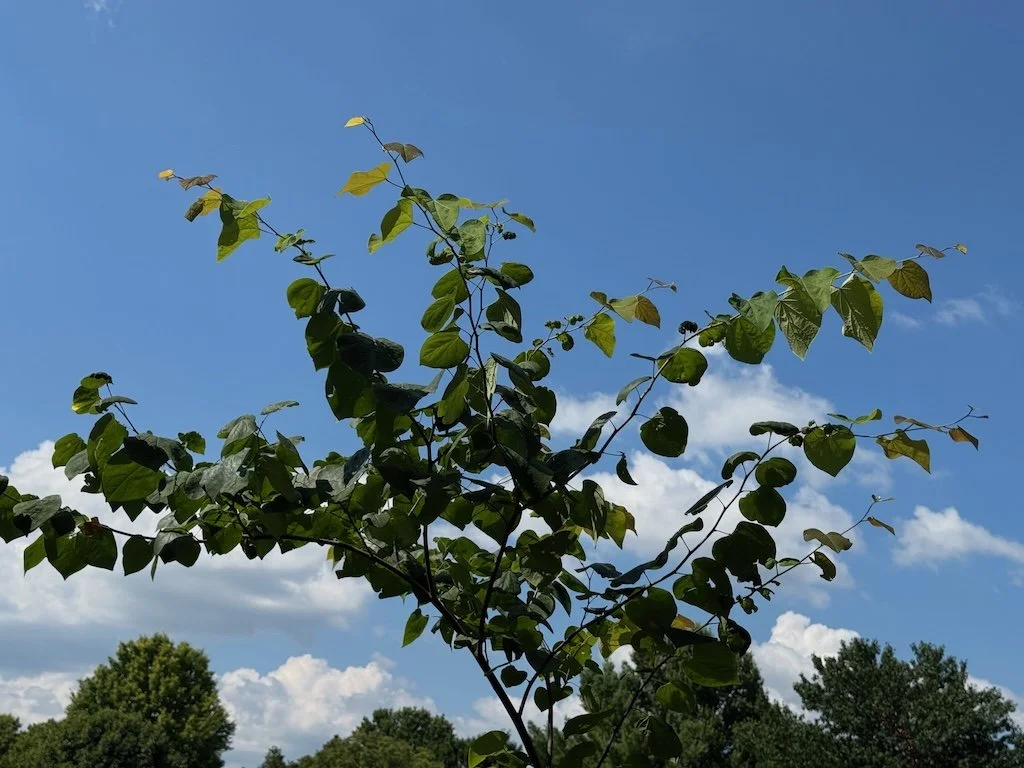
There is a dying redbud near the neighborhood stormwater pond, but it is leaving its progeny all over the neighborhood – seeds probably transported by birds. Some are growing as shrubs near the holly…and other is growing in a good place to provide some nice afternoon shade to our deck in the next few years.

The hackberries are also bird planted; there is a big healthy tree near the dying redbud with lots of seeds that I see on the sidewalk in the fall. I have several that are coming up in the bed with the hollies and with a Japanese barberry. The Japanese barberry is not native and somewhat invasive so I will be cutting it down repeatedly until it dies – making room for the hackberry!

I like the serendipity trees. It akin to a savanna replenishing itself naturally.

Suburban Savana – 4

Continuing my series on my progress toward transitioning my yard to a suburban savanna…..

This month I am focusing on water. My yard has a sprinkler system that was installed in the late 90s. We get it checked at the beginning of each season and replaced the controller last year so that it doesn’t come on if there was rain recently (prior that that we often manually turned if off earlier in the growing season when our area gets enough rain for plants to thrive).

This year I am watering as I have in years past since so many of the plants are new. Next year I will likely reduce either the duration or the frequency since the plants are native and should thrive without extra water. In subsequent years when most plants are well established, I might simply turn on the sprinklers manually…only when there are very long periods with no rainfall (i.e. in drought conditions).

The only plant that will likely need extra attention is an Kousa dogwood (planted by a previous owner) that is growing in full sun. Even with the watering I do now, it tends to get some dry/brown leaves in summers with high heat and little rain. It’s not a native so obviously is not honed to our Missouri climate! I might put a soaker hose in to specifically provide water to the roots of the tree….or plant some green native ground cover (something like golden ragwort on the north and south, Missouri evening primrose on the western side, violets on the eastern side) under the tree that will keep the soil cooler than the mulch that is currently there.  

In a few years, if something on the sprinkler system breaks enough that it would required replacement – maybe I will decide I don’t need a sprinkler system often enough to warrant the expense!

More about my suburban savanna and blooms for pollinators next month.

Previous Suburban Savanna Posts:

April 2026 – Overview
May 2026 – Planting Natives

June 2026 – Shade Garden

Suburban Savanna – 3

Continuing my series on my progress toward transitioning my yard to a suburban savanna…..

This month I am focusing on the shade garden since it is closest to being complete. The plants there will continue to develop…without a lot of work on my part. It is on the east of my house and includes an eastern white pine and a group of holly trees with low branches; a neighbor’s river birch and oak add to the shade in the summer.

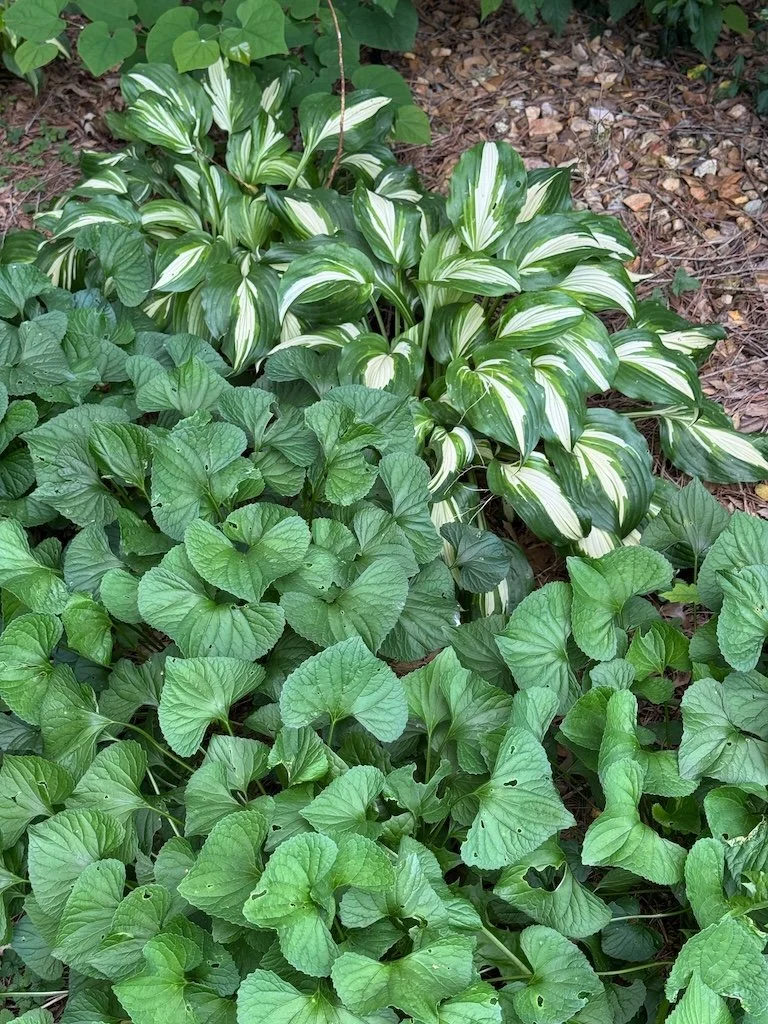
There were a few violets near the house when we arrived 4 years ago and they have spilled out to take over what used to be struggling grass (I stopped mowing and the violets took over); they have progressed about 6 feet into the yard and I will further reduce my mowing to allow them to take over more!

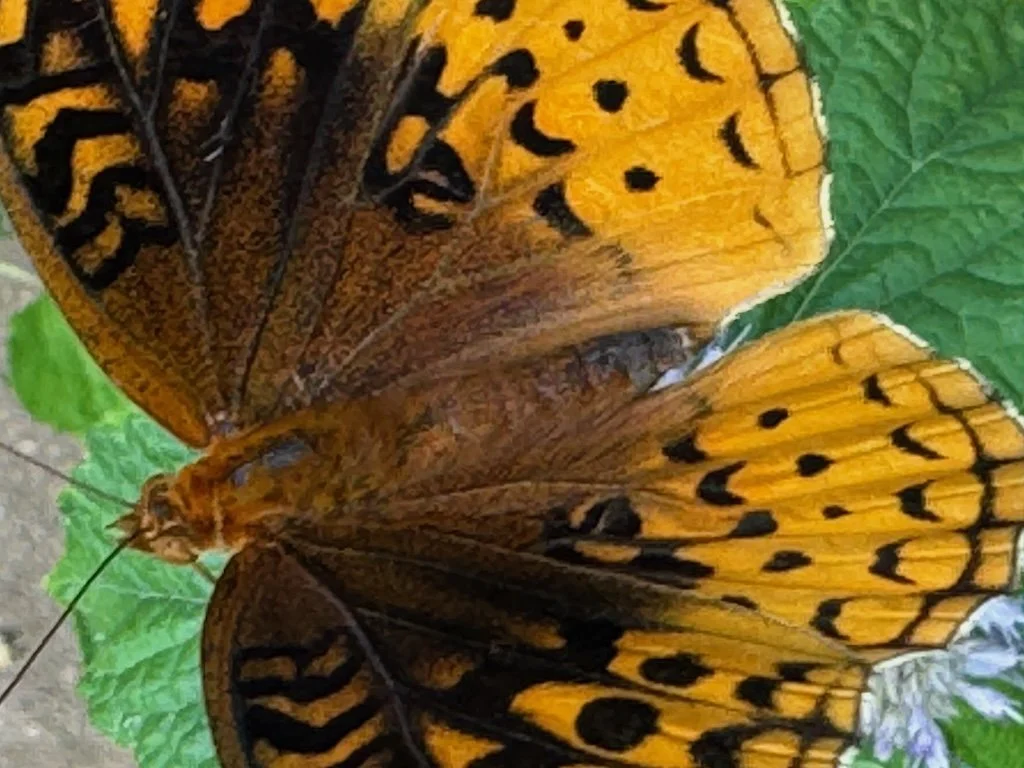
I noticed last winter that several birds – particularly mourning doves and wrens – seemed to spend a lot of time finding tidbits to eat in the brown debris of the violets; I wondered if they were finding the tiny Great Spangled Fritillary (butterfly) caterpillars.

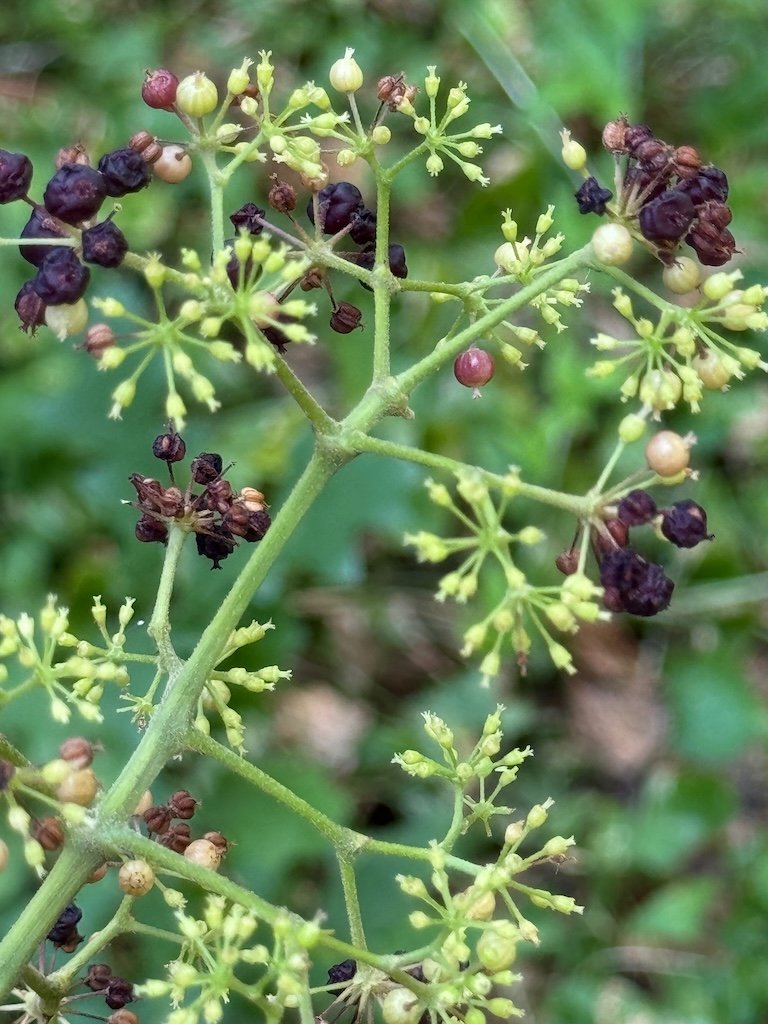
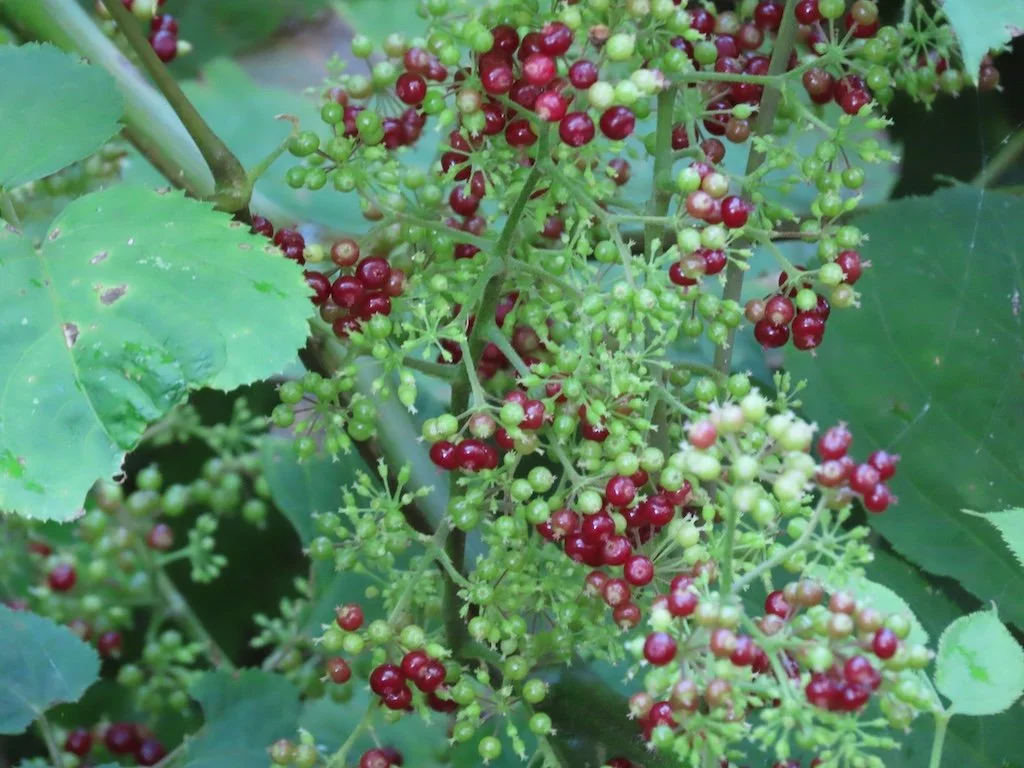
I planted American Spikenard, spice bush, and pawpaw to provide some taller plants to break the thick violet groundcover. I might eventually add another spice bush since the one I have is male (i.e. no red fruits!). The American Spikenard was one of the first native plants I added to my garden (where it is visible from my office window) and it gets bigger every year…this year it is over 5’ tall so it must be happy in its location. It blooms in June – attracting pollinators; the fruit is eaten by birds.

The spice bush had black swallowtail caterpillars eating it last summer…a great indication that the shade garden is supporting wildlife that had not been in the yard previously. I also noticed more fireflies in the summer beginning last year.

The pawpaw trees are still very young: one was planted as a seedling last year, 2 came up from seeds this spring, and 4 were planted as seedlings this spring. Hopefully most of them will survive and eventually host zebra swallowtail caterpillars. It will be years before they bear fruit….but I am excited about the prospect.

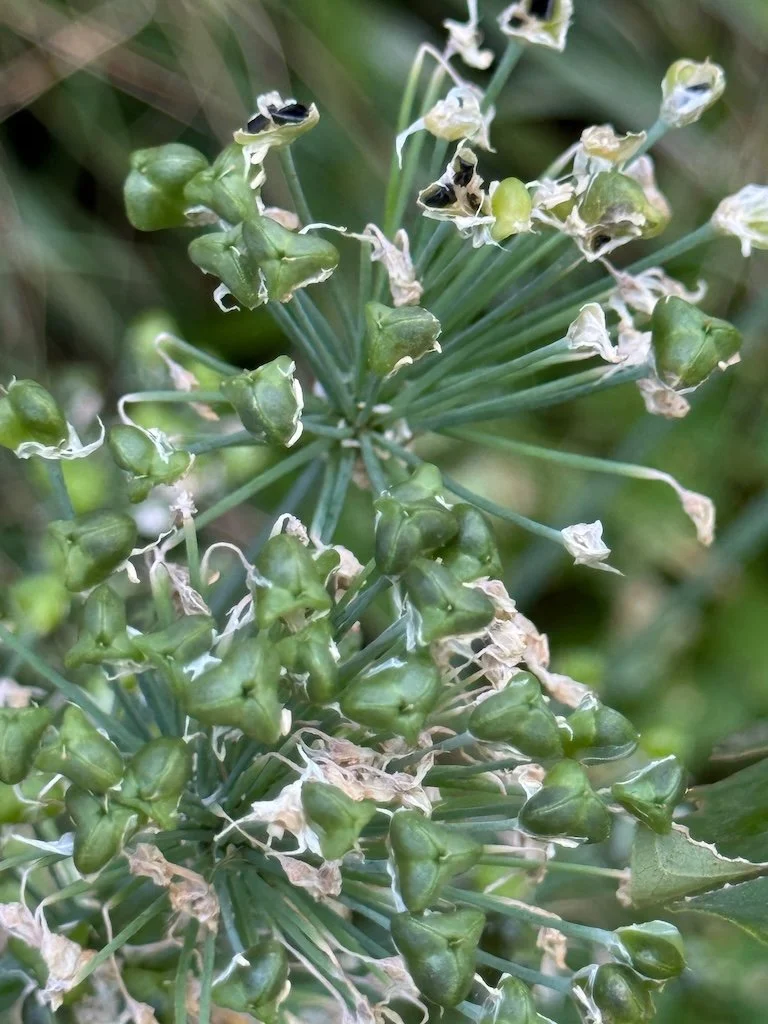
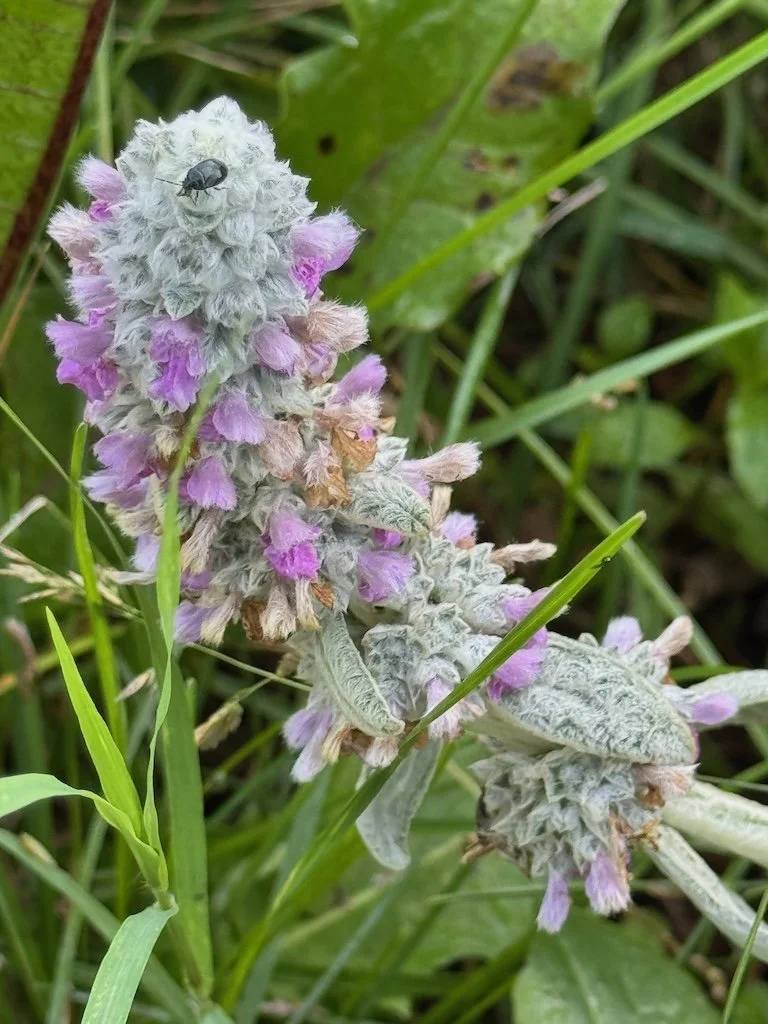
Around the white pine there is a mix of native and non-native plants. The natives are another American Spikenard, black raspberries (that came up on their own), violets, grapevine (which I cut to keep it out of the tree), hackberry (which I take out periodically, there is a neighborhood tree so the birds plant the seeds everywhere), and, unfortunately, an occasional poison ivy. The non-natives offer some color/shape contrast: hostas and lambs ear now…earlier in the season crocus, daffodils….later in the season chives.

I like that there are plants in the garden that are edible…that I can easily harvest and eat immediately: violet leaves and flowers, grape leaves, and chives.

The maintenance I anticipate on the garden is mainly controlling things like grape vines, poison ivy, and hackberries….keeping an eye out for invasives like poison hemlock and wintercreeper (removing immediately). I will eventually begin removing the lower branches of the pine (they are already sparsely needled because they only get enough light at their tips); it could reduce the shade a little in the morning, but the hollies will shade the area in the afternoon and the pine needle mulch sustains the soil moisture).   The violets will grow out into the yard at least a little further but that just requires me to stop mowing the area where I want the violets to take over! My sprinkler system still waters the area when it hasn’t rained but I envision that I might turn off the zone once the plants are all well established.

More about my suburban savanna and water next month.

Previous Suburban Savanna Posts:

April 2026 – Overview
May 2026 – Planting Natives