Our Missouri Yard – December 2025

December had started off with some very cold days with low temperatures in the 20s or teens at night and barely getting above 50 on 3 days (other days the high was in the 40s). Almost all the trees had lost their leaves abruptly in November when we had some very cold days. As I walked around the yard taking pictures for this post, I found myself searching for color and interesting textures.

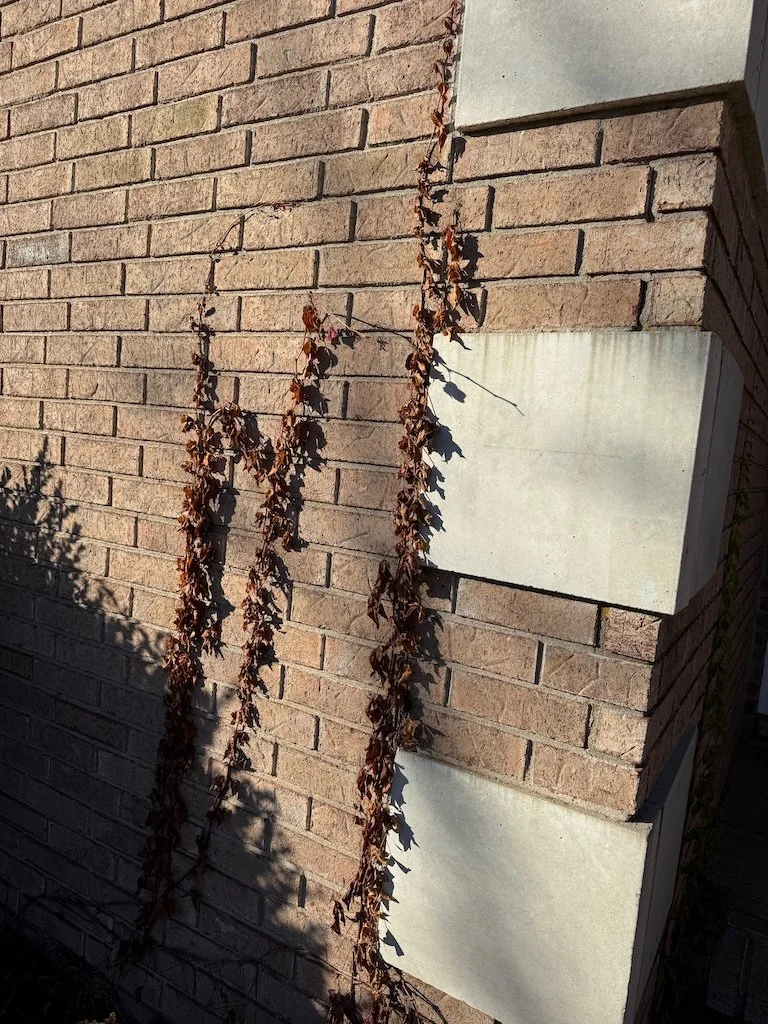
The Virginia Creeper that had been so beautiful in previous falls (red leaves) had either died back or retained the color for only a few days. Some of the vines retained their leaves – but they are brown rather than bright red.

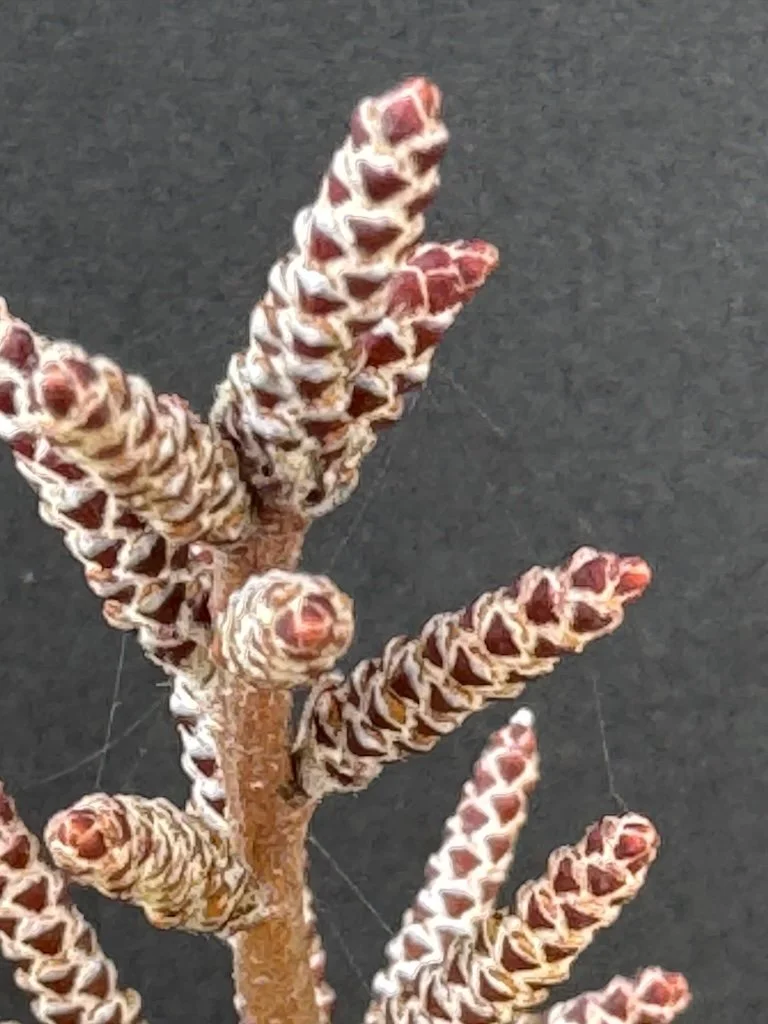
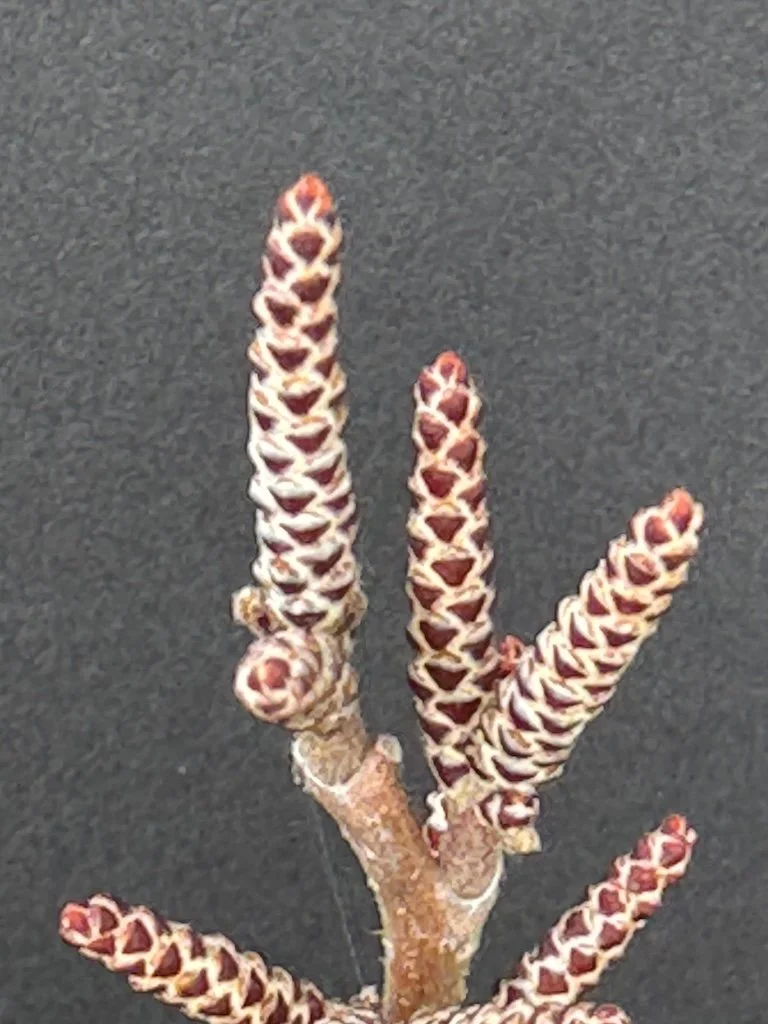
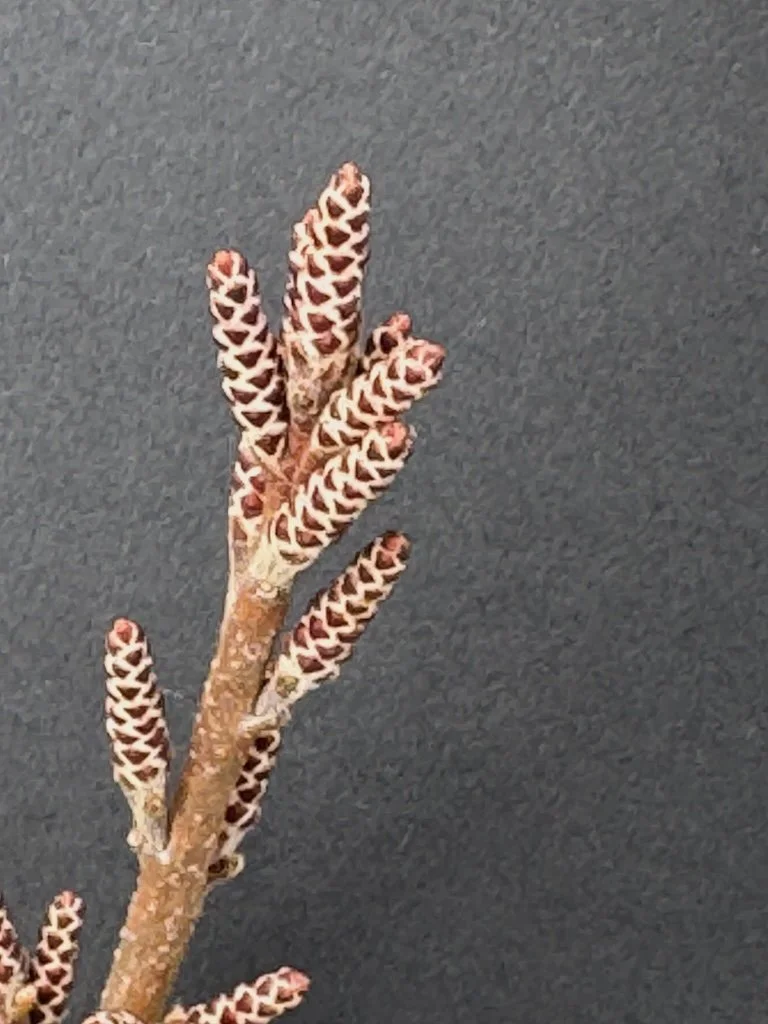
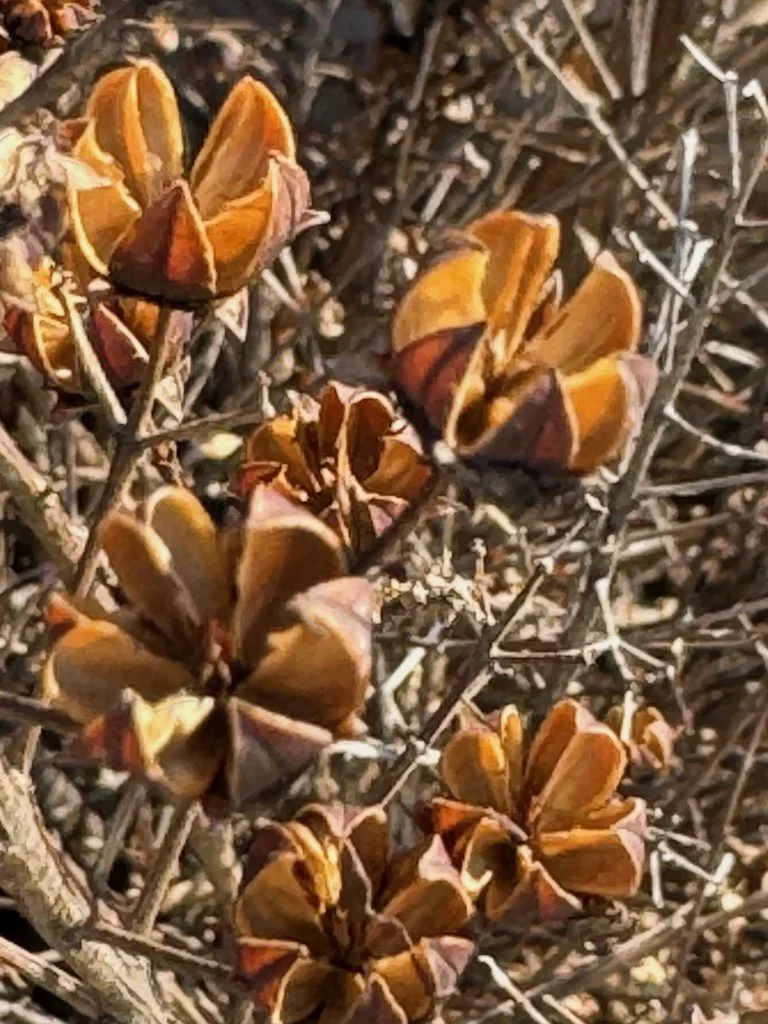
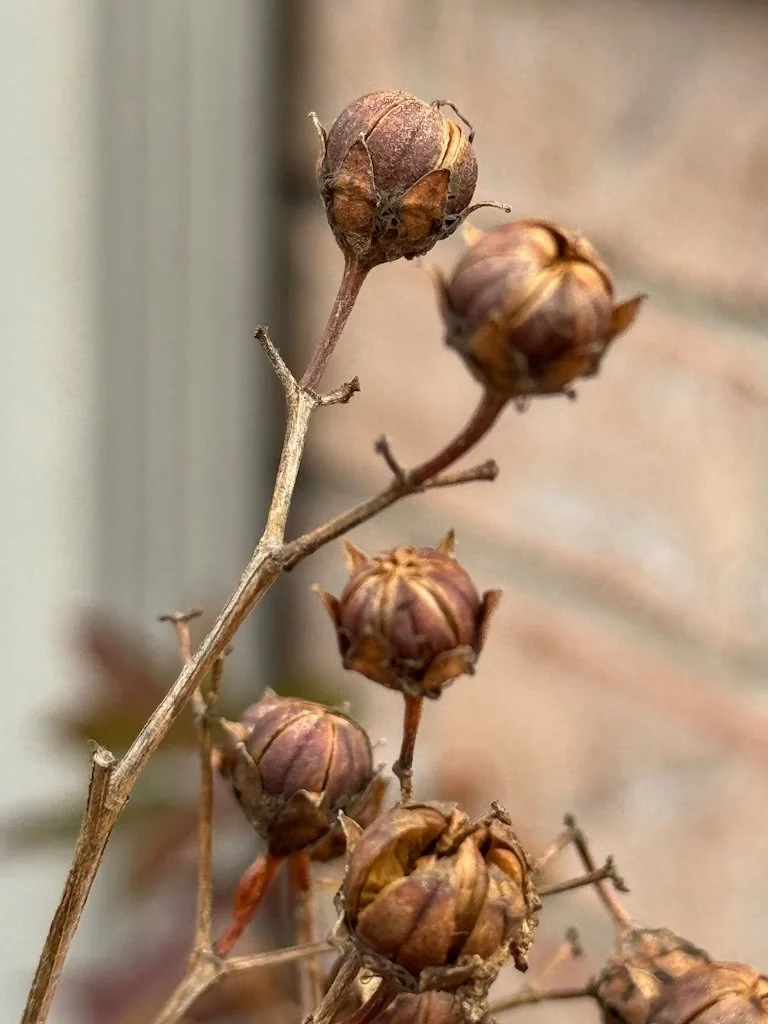
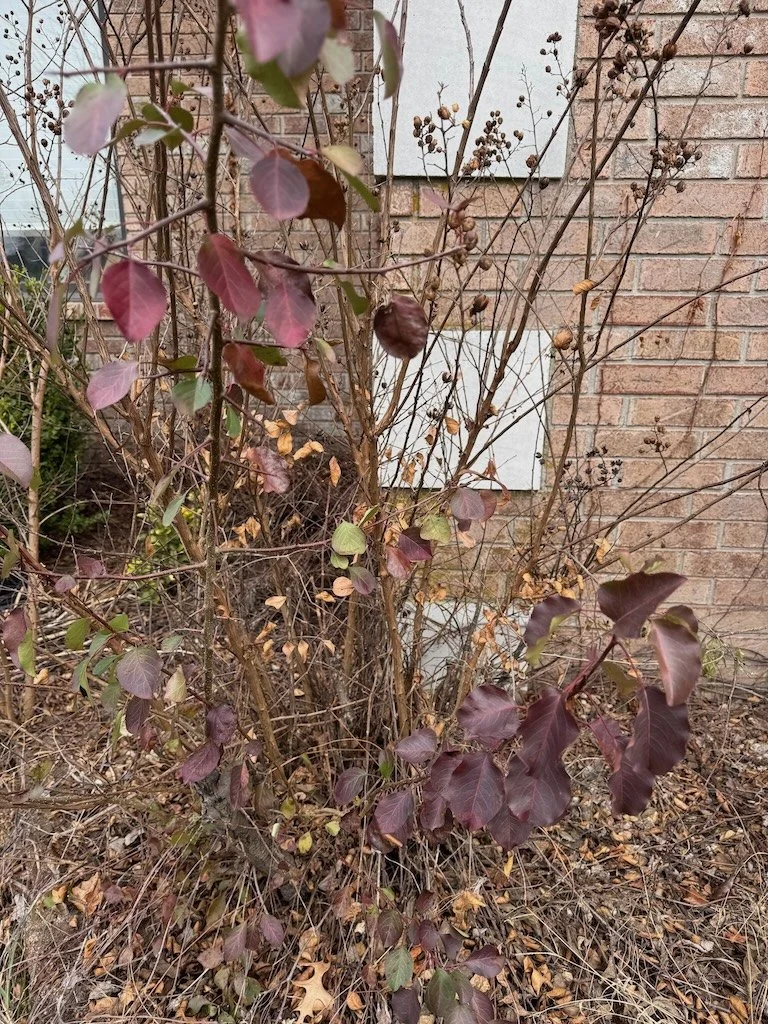
The crape myrtles have interesting seed pods. I am going to cut them all back when there is a day above 50….they will look better next year if I do. One of them is tall enough to brush against the eve of the house so that one is the priority to get cut. The other one to tackle is the one that has a Callery Pear (wild form of the Bradford Pear) growing with it. The red leaves are the pear so I can (hopefully) cut it very close to the ground.

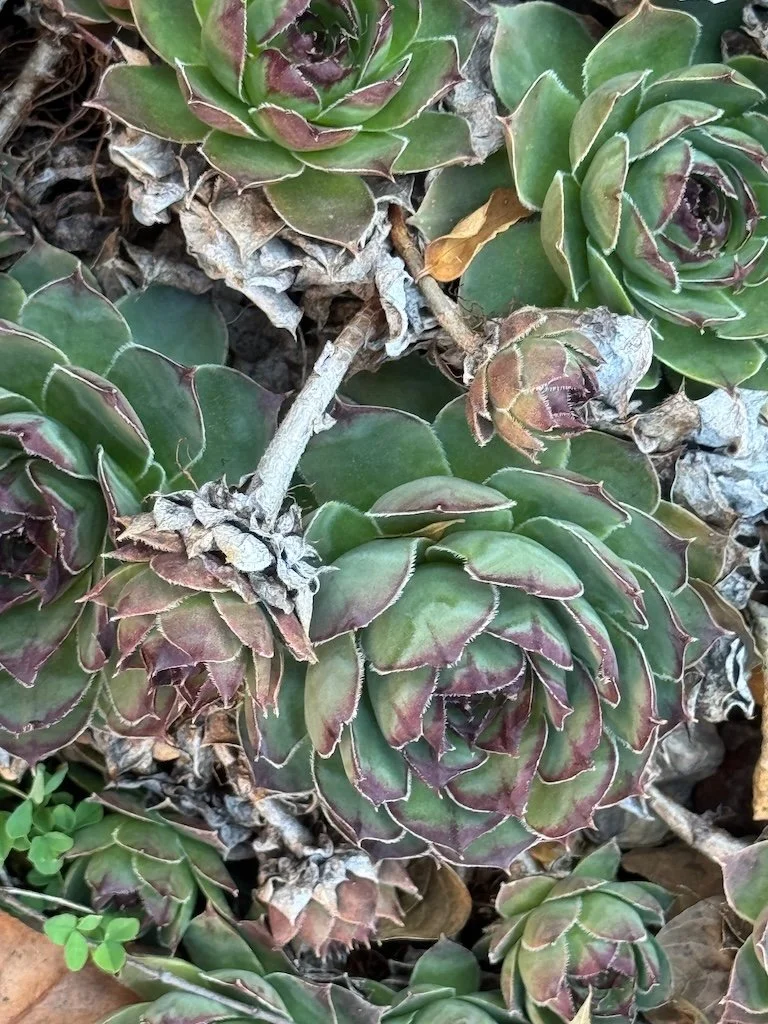
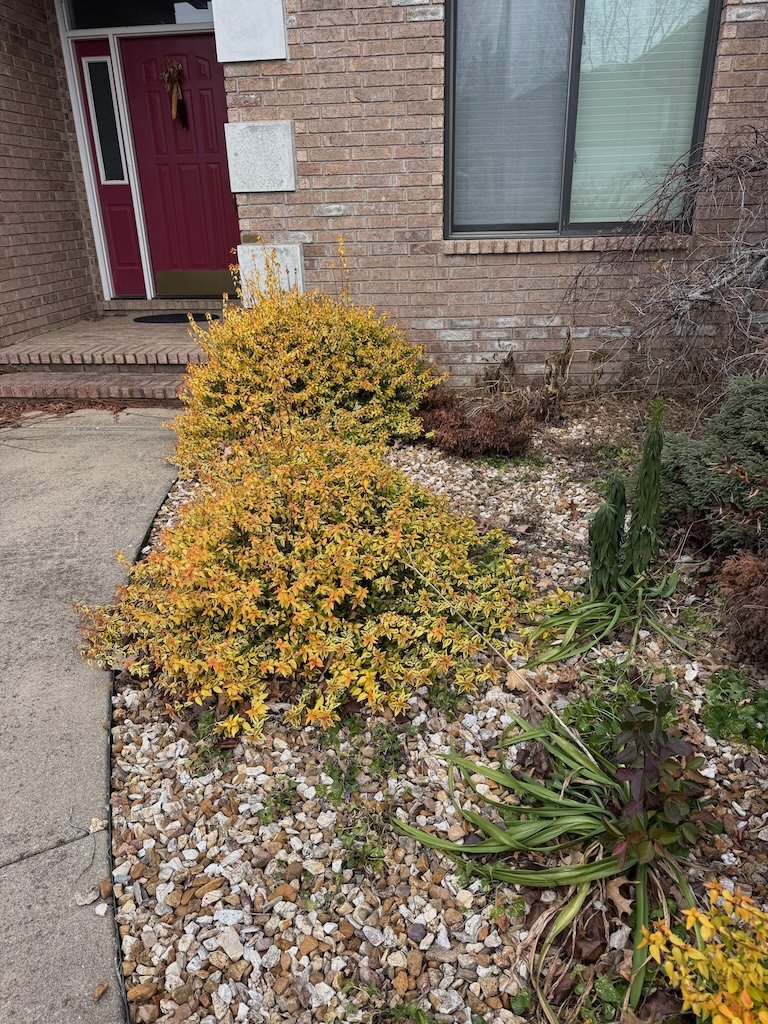
The bed near our front door has some color – bushes that are bright yellow (that need to be trimmed) and some plants that haven’t succumbed to cold temperatures yet because they are protected. The Japanese Maple in the corner has lost its leaves and may be dying; that corner has not worked well for that small tree.

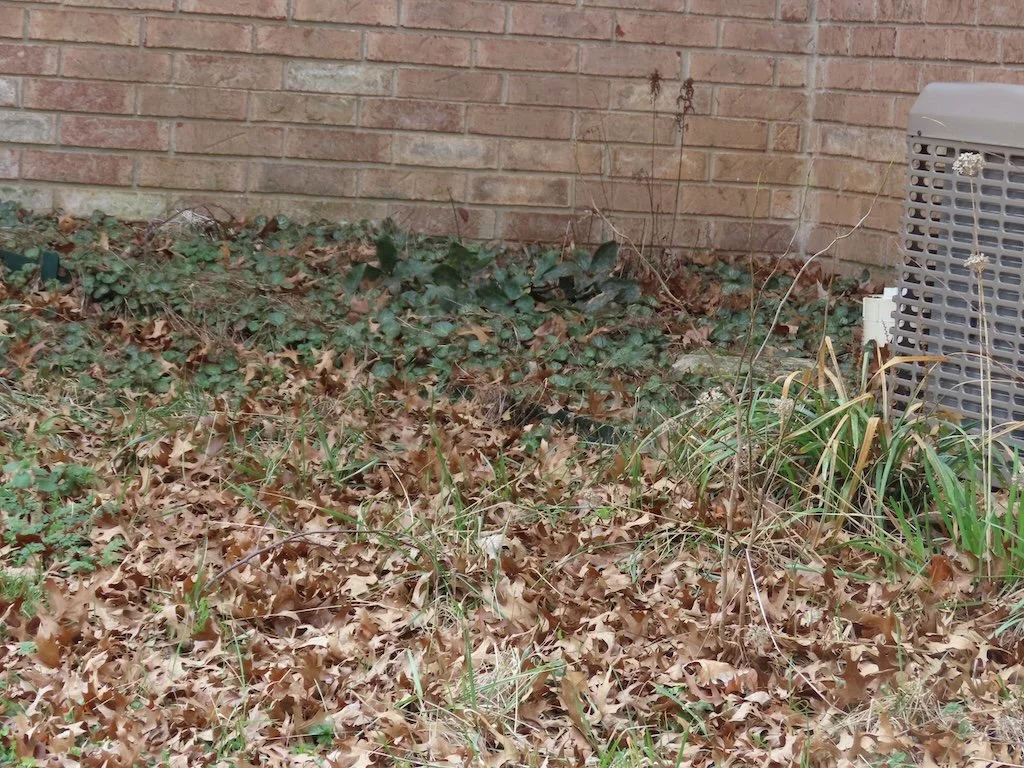
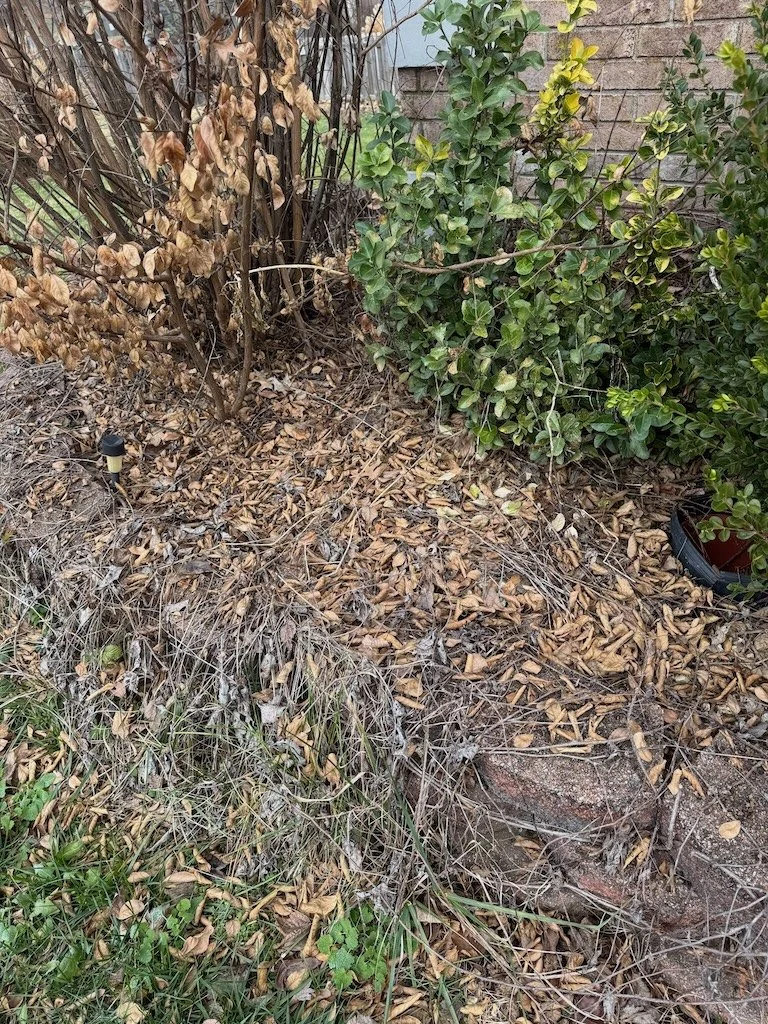
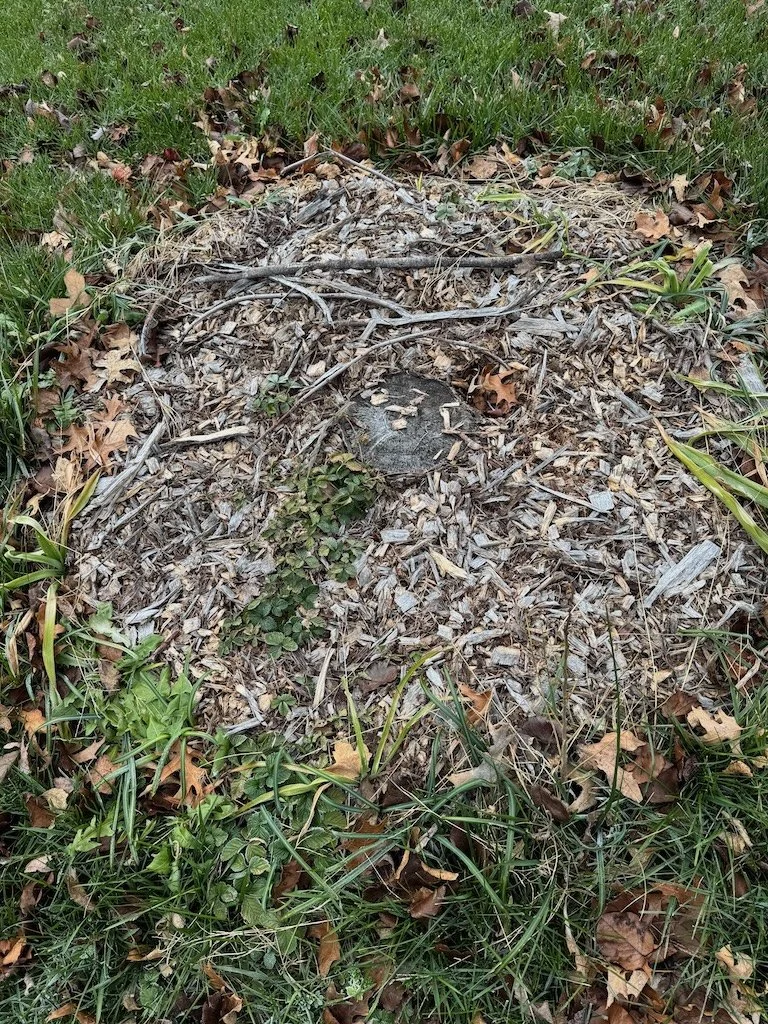
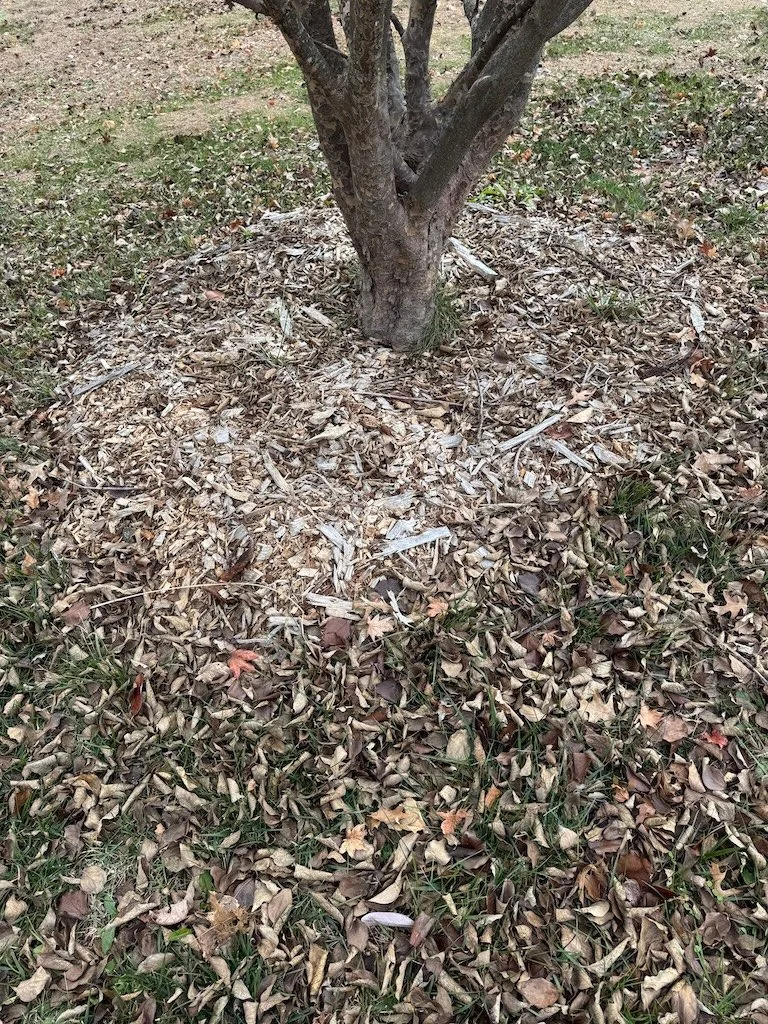
The places where I put the bark mulch from our last tree trimming are holding up well. I will pull weeds from them and plant new plants into some of them next spring. The one under the Kousa dogwood mulch needs some native ground cover planted there…and maybe some of the lower branches cut.

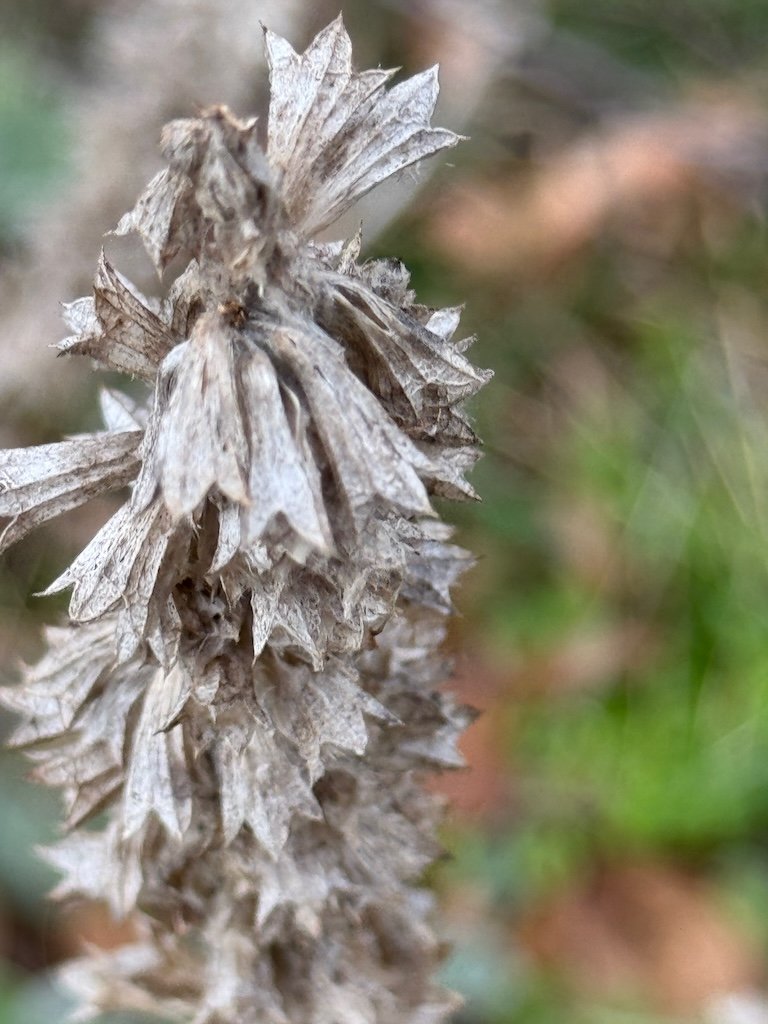
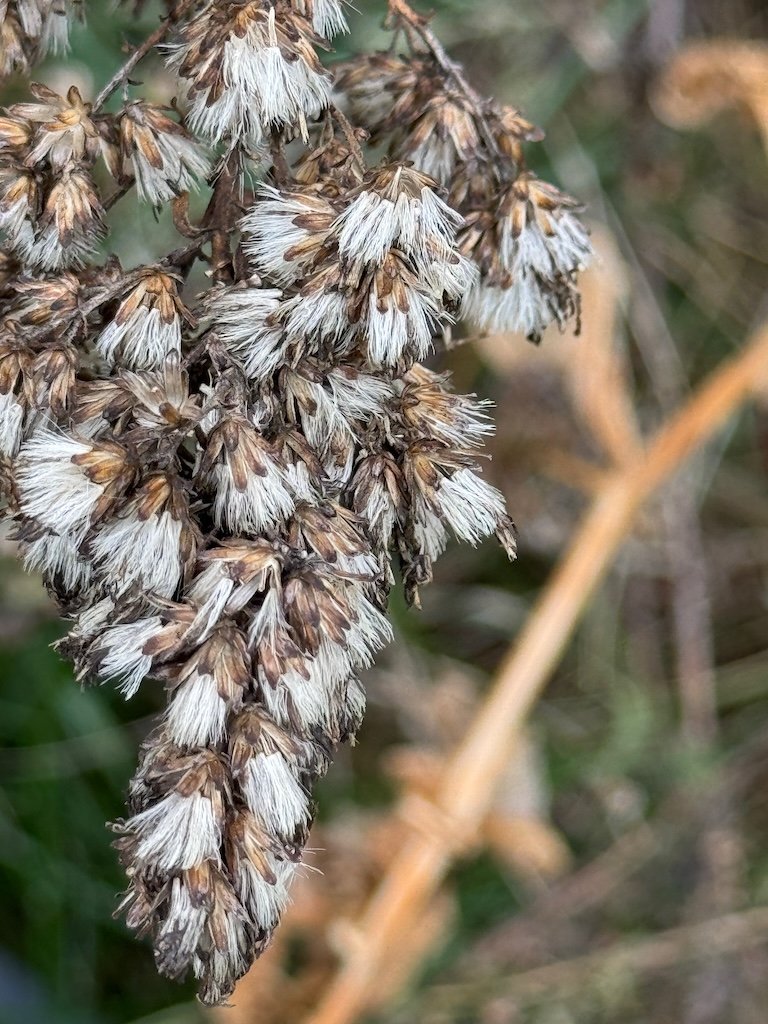
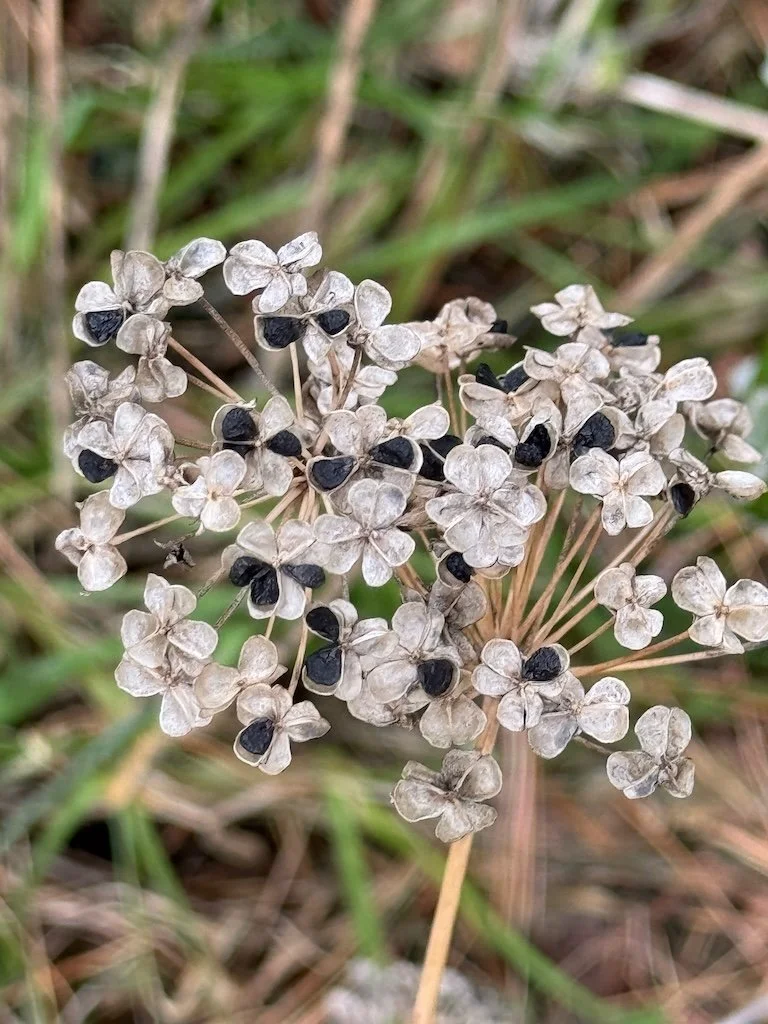
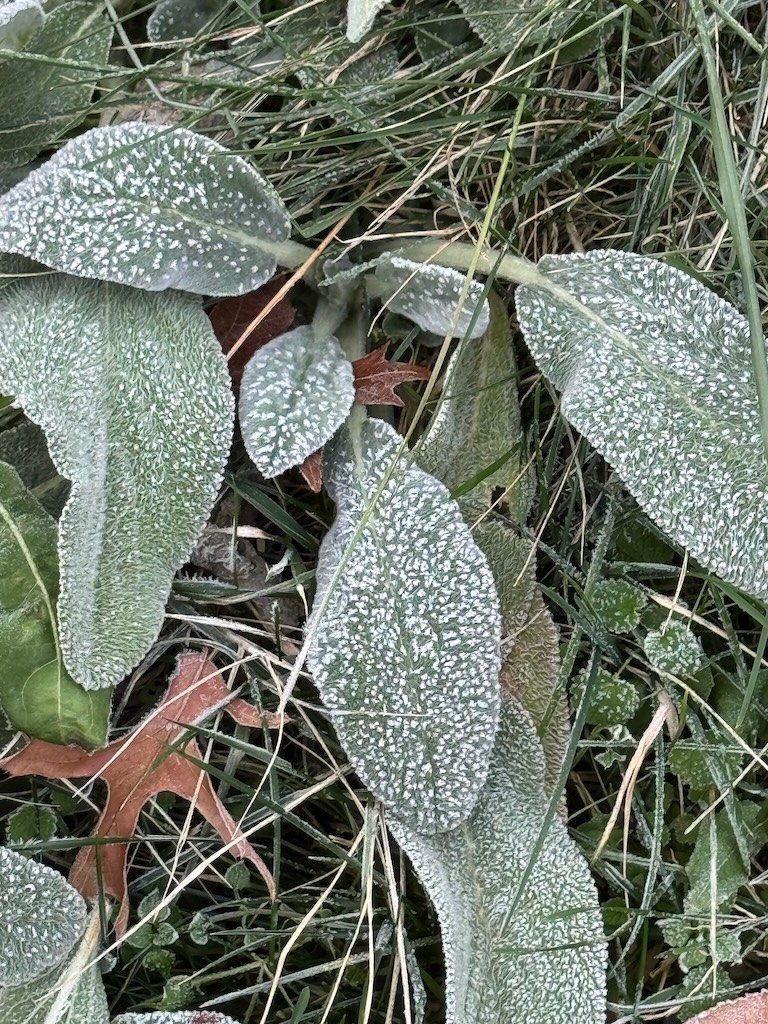
There are seed heads on the lambs ear and goldenrod and chives…hopefully I will have more of those plants next year.

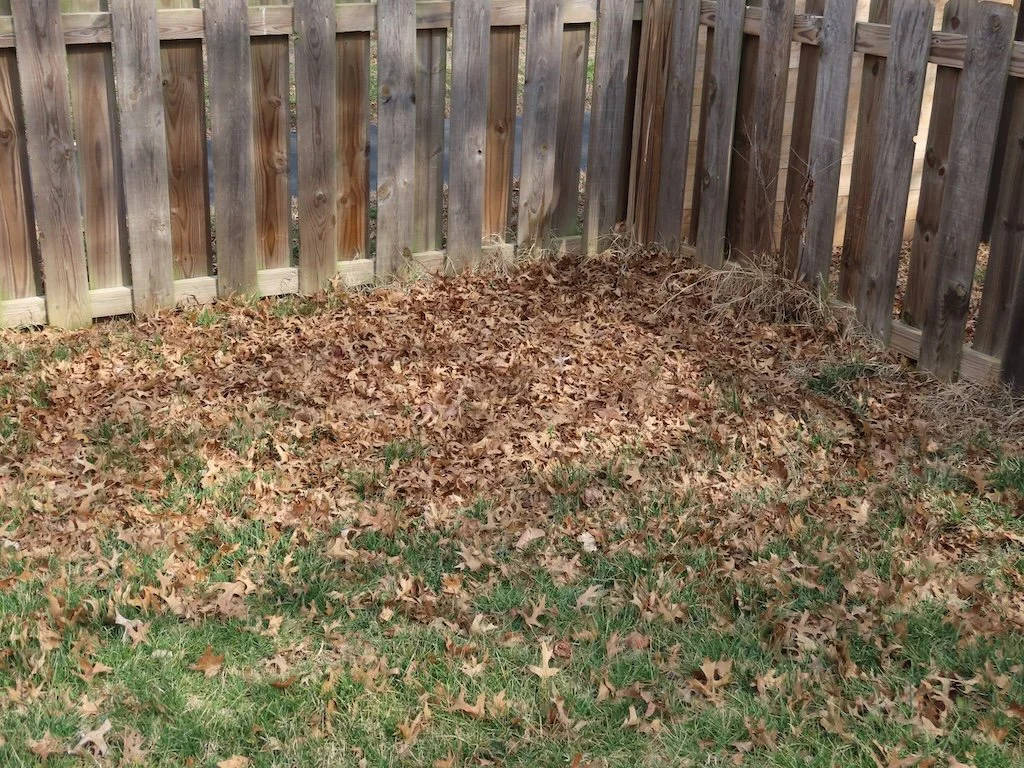
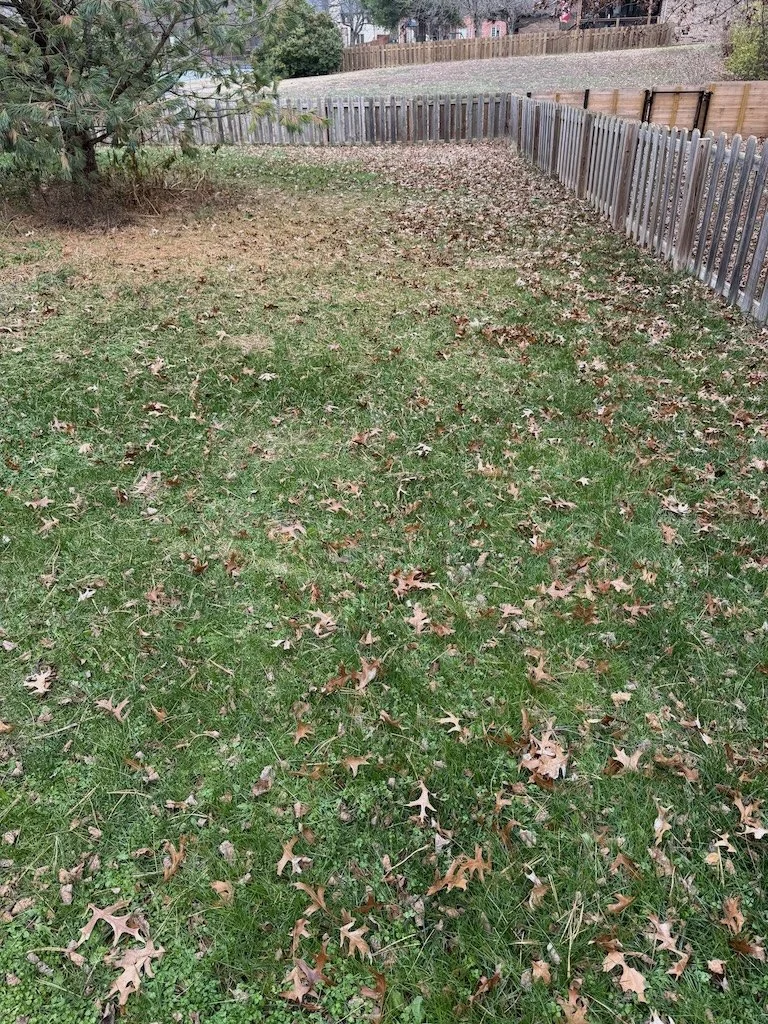
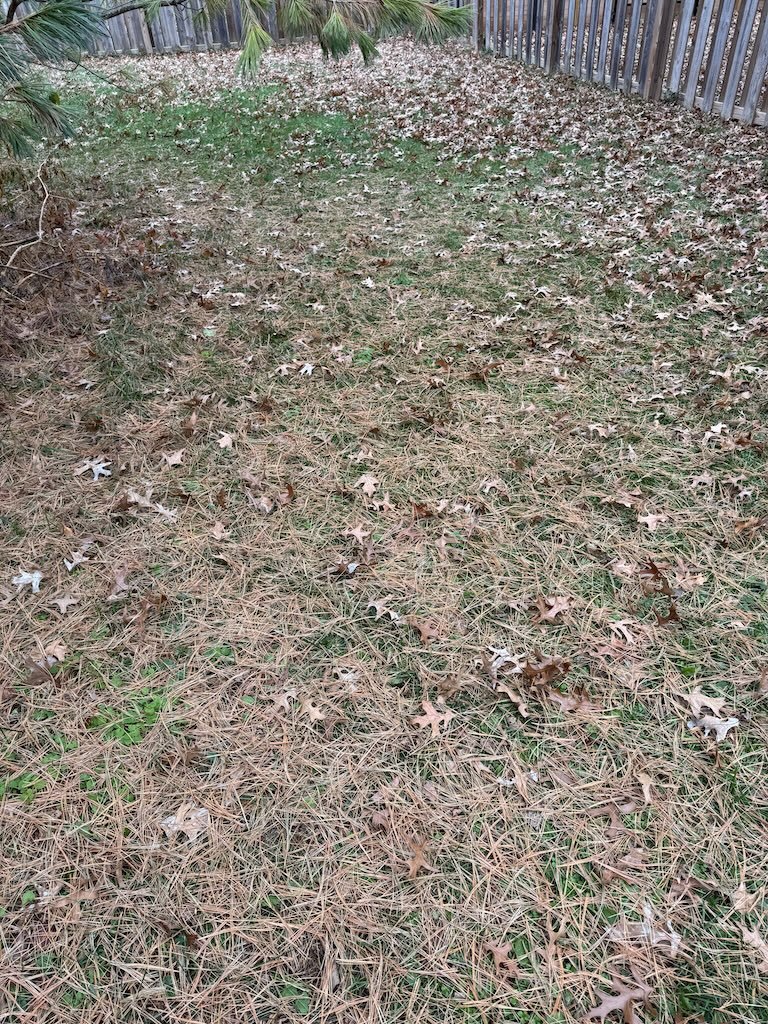
Our backyard is fenced and I am planting to not mow until early summer - leave the leaves. A lot of the leaves are from our neighbor’s oak and probably contain overwintering insects. The birds will appreciate the bounty – food for their chicks next spring. I am noticing that the circle where the pine needles are falling is enlarged than last year. I will be mowing less of the side yard next year! My long-term plan for the side yard a mowed path….not much grass at all…native plants filling in on both sides of the path (and maybe the path itself which might change from year to year.  

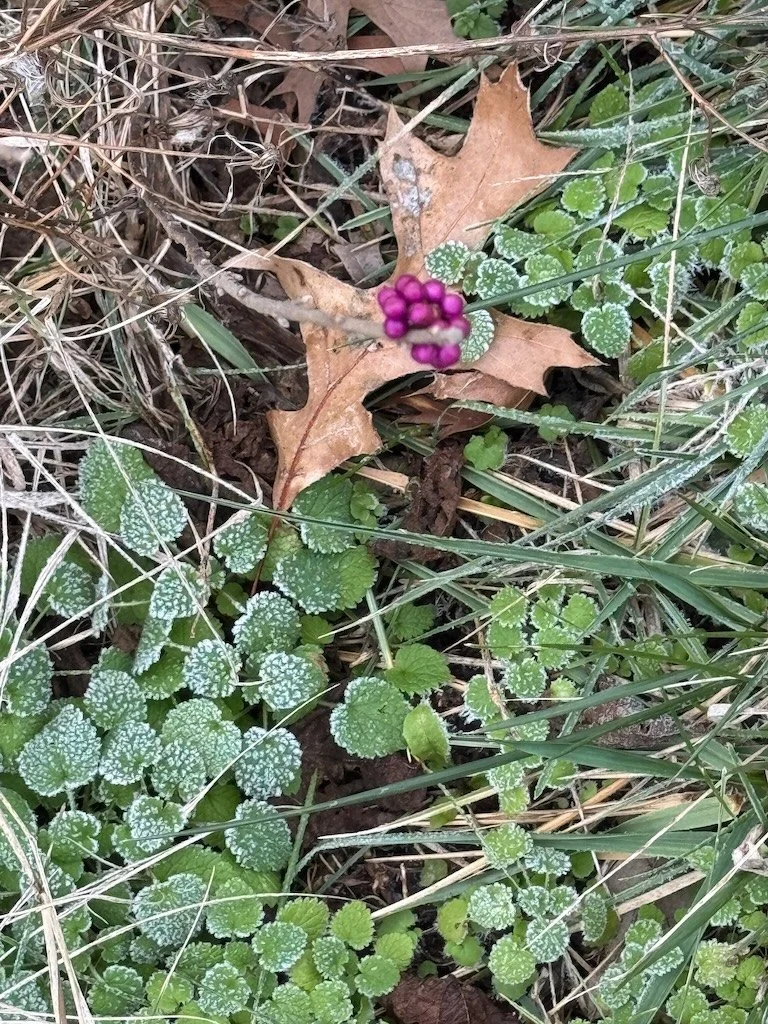
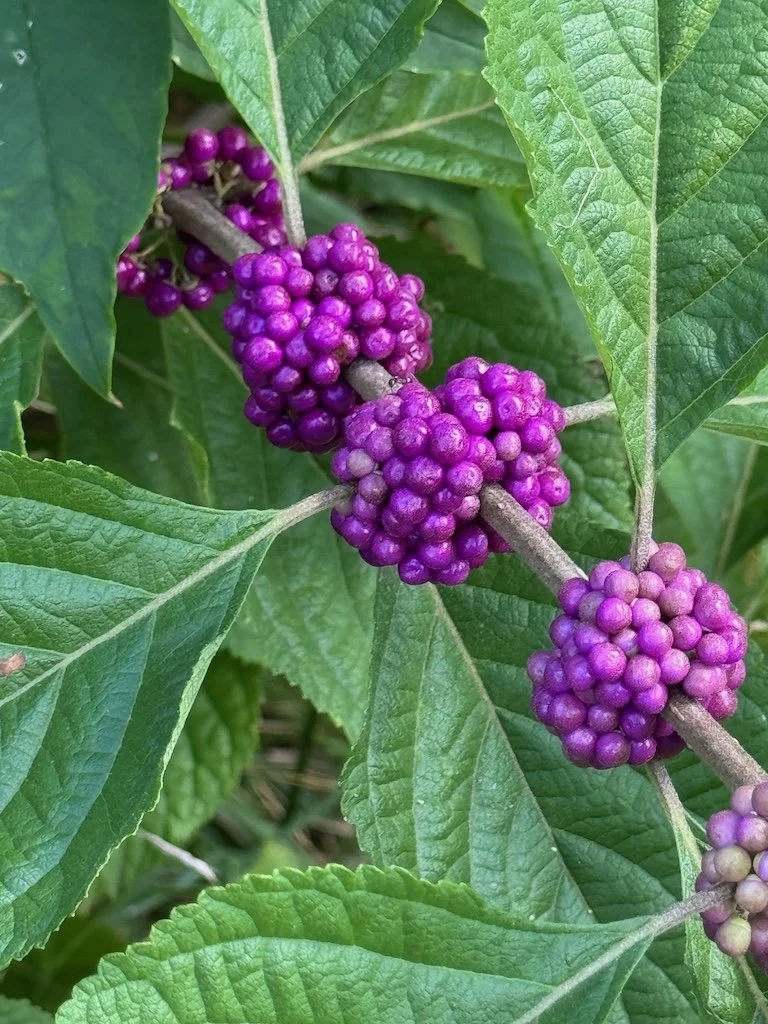
The bed where we removed a pine tree that fell over is more exposed that most of our beds. The plants there had frost. The small cluster of American beautyberry (Callicarpa americana) fruit is a pop of color. Hopefully next year the beautyberry will begin to grow more rapidly and become the dominate plant in the bed at some point. I will probably allow a native tree that comes up (bird or squirrel planted)…whichever one shows up first: oak, redbud, or hackberry.

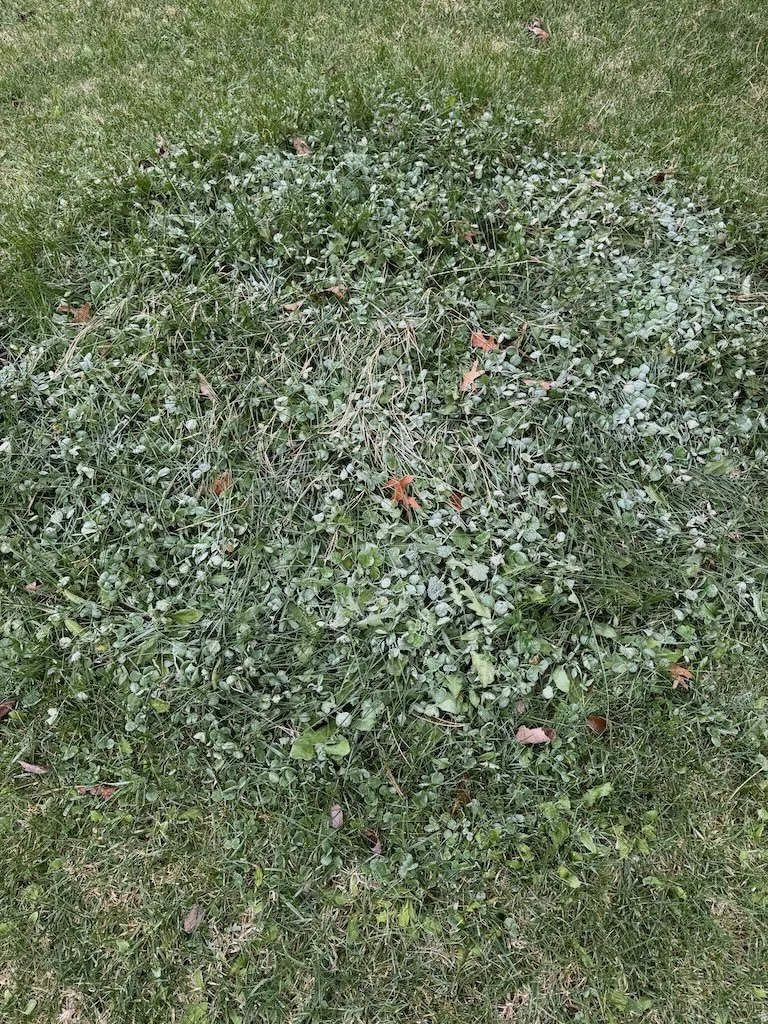
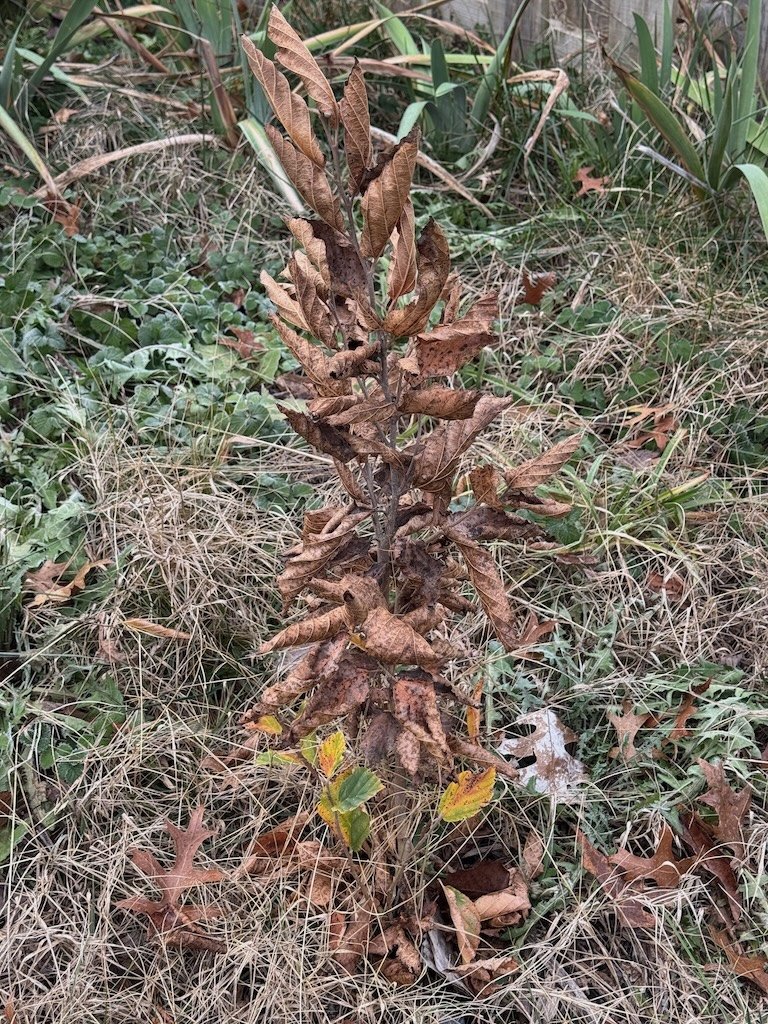
On the west side of the house there is a clover pillow that seems greener than the area around it. Maybe the grass growing there is greener with the extra nitrogen the clover provides in the soil! The witch hazel is still small but I am hopeful I might see a few blooms next year. It is a Missouri native – Ozark Witch Hazel (Hamamelis vernalis) which blooms in January/February.

I am watching the forecast for warmer day to get some cleanup done….and to put down a thick layer of mulch for my new bed that will be planting into next spring. My daughter will be getting more mulch when she has her oak trimmed.

Gleanings of the Week Ending October 11, 2025

The items below were ‘the cream’ of the articles and websites I found this past week. Click on the light green text to look at the article.

What Makes Bruises Change Color Over Time? - What appears as a red or purplish skin contusion in the beginning, slowly transitions to green, yellow, and finally brown, before disappearing entirely. What are the mechanisms that produce this bouquet of bruise colors?

Scientists finally explain the real reason pregnant women get morning sickness - According to the National Institutes of Health, up to 80% of early-stage pregnant mothers experience some nausea, vomiting and aversions to certain foods and smells. A unique mix of inflammatory responses function to prevent the mother's body from rejecting the fetus, alongside adaptive behavioral mechanisms, like nausea, that encourage the mother to avoid foods that are potentially harmful, especially in the first and second trimesters when the fetus is most vulnerable.

This company is turning empty offices across America into farms - Area 2 Farms is a three-year-old company based in Arlington, Virginia, that’s taking the concept of indoor farming to unusual spaces. Its first farm, in Arlington, grows dozens of varieties of crops (including lettuce, spinach, carrots, potatoes, tomatoes, and mushrooms, as well as more niche items like amaranth microgreens and purple shamrock) in a low-slung brick building tucked between a dog day care and a car repair shop. The goal is to eventually build indoor farms within 10 miles of 90% of the U.S. population.
Bird Soaring Below a Total Solar Eclipse Wins 2025 Bird Photographer of the Year – Some beautiful…some thought provoking.

In Her Final Interview, Jane Goodall Issued Urgent Call to Protect the Planet - “We need to protect this planet and think about the future,” she told The Wall Street Journal. “Because if we don’t, that’s the end of our species. Humans are not exempt from extinction.”

Leaf Layer Safari: How to Spot Hidden Moth Cocoons in Your Backyard - This autumn, instead of raking, try exploring. Step carefully, look closely, and you may discover a miniature safari happening right under your feet.

Scientists Studied the Genes of a Woman Who Lived 117 Years - The findings point to a combination of genetic luck and lifestyle choices.

The Secret Apartment Atop the Eiffel Tower - Around 1,000 feet above Paris’ streets perches Gustave Eiffel’s apartment, complete with a bathroom, a kitchen, and wax sculptures of Eiffel, his daughter, and Thomas Edison. At the very top of the tower, Eiffel allotted himself a 1,075 square foot private office, and with it the best view in Paris. After all, he had footed three-quarters of the bill.

Winter Transforms the Mississippi River Delta - The Mississippi River’s watershed drains 41 percent of the United States (spanning all or part of 31 states) and reaches into two Canadian provinces. Its nutrient-rich waters support fertile agricultural lands along its shores and throughout the deltaic basin. The river also plays a role in the U.S. economy by providing transportation shipping routes. To maintain these functions, engineers have implemented channelization to help maintain navigable shipping lanes and, in recent decades, launched sediment diversion projects aimed at returning vital sediments to the wetlands.

How to future-proof your knees - After back pain, throbbing aches in the knees are the most cited musculoskeletal ailment in older adults. The post shows five quick, home-based exercises which will all help.

Our Missouri Yard – November 2024

We haven’t had any extremely cold weather yet. Some trees have lost their leaves but not the oaks. We already are well above the monthly average for rainfall so are recovering somewhat from the drought through the summer and fall…just as we are bracing for winter.

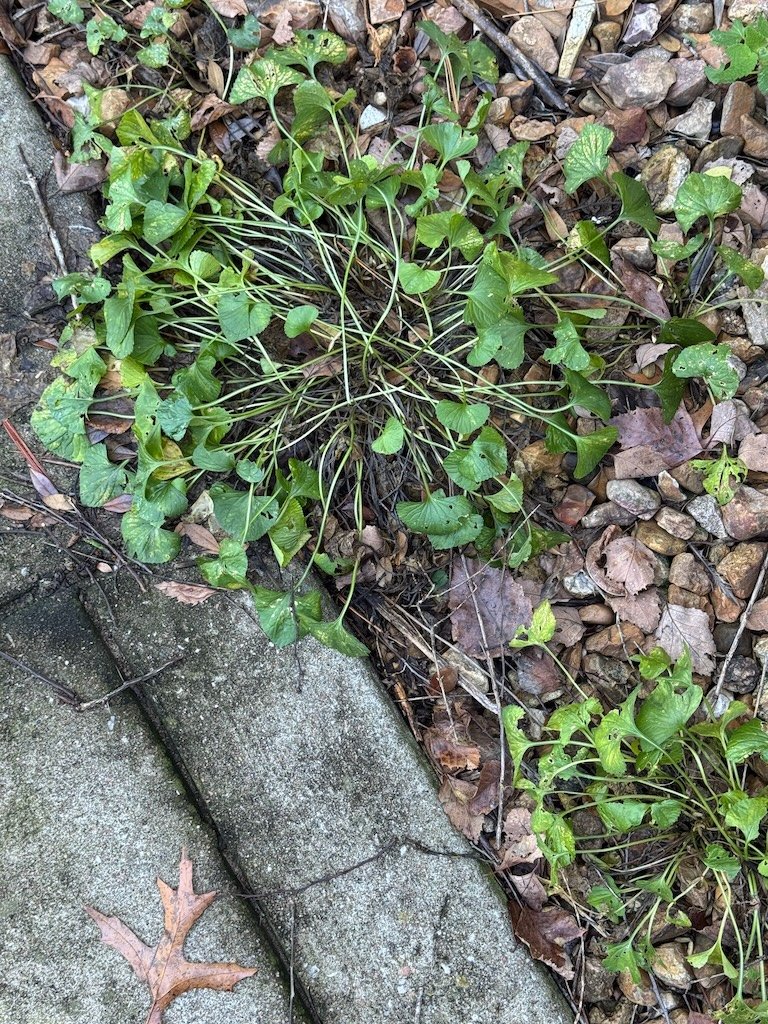
The violets are reduced in volume but still mostly green. They have been a great plant for extending the flower beds on the east side of our house into the yard (I have several feet of ‘grass’ that is so thick with violets that I haven’t mowed it for at least two months!).

I have an area that is full of pine needles and clippings (grass, boxwood, yew) that I will plant with hostas next spring – as soon as my established clumps of hostas begin to sprout and can be easily divided. The rhododendron looks great…lots of buds for next spring’s blooms. The grapevine that I’ve draped over the stubble of a crape myrtle is turning yellow. I’m not sure what I will do with it next year. I don’t want it growing into the rhododendron but there is not a lot of space where it can go otherwise.

The seeds are falling out of the chives. These plants were started a few years ago from seeds I got from my mother’s garden. There is an oak seedling growing in the lambs ear. The closest oak tree is a pin oak, but the squirrels might plant acorns from further afield. The parent of a maple seedling might be one of the maples in our front yard…although it is on the other side of the house from where this seedling is growing.

The spicebush that I bought and planted about a month ago is showing some fall color…hope it comes back in the spring.

It is obvious we haven’t had a hard freeze yet this year. There are ‘intimate landscapes’ with fall colors everywhere.

I am trying to ‘leave the leaves’ this year rather than mow them. There were two piles that had been created by the wind in my front yard so I gathered them up into the wheelbarrow to move to my compost spot where the hostas will go. Otherwise I am leaving the scattering of leaves on the yard. I might have to move some oak leaves that fall into our yard once our neighbor’s tree drops its leaves. Overall, the wind had done most of the ‘raking’ of leaves either away from my yard or into areas where they can stay.

The Virginia creeper on the west side of the house has already lost its leaves but the plants near our front door are spectacularly red.

The aromatic sumac has lots of buds. I hope it makes seed clusters next season.

The Ozark witch hazel is probably too small to bloom in January but hopefully it will in a few years. I found a small tree growing under the holly trees. The leaves are rough…maybe a hackberry? I am going to leave it be for now…just as I am all the redbud seedlings!

I still have work to do before it gets too cold: pulling/digging out Japanese honeysuckle primarily.