Gleanings of the Week Ending September 12, 2026

The items below were ‘the cream’ of the articles and websites I found this past week. Click on the light green text to look at the article.

08/27/2026 Plastic Pollution Coalition The Plastic We Wear: Hidden Fibers, Chemical Dyes, and the Future of Clean Textiles - Washing synthetic clothing releases hundreds of thousands to millions of microplastic fibers per load, many of which are not captured by wastewater treatment and instead are often discharged directly into waterways. Synthetic dyes and chemical finishes used on many mass-produced textiles have been linked to skin irritation and allergic contact dermatitis.

0 9/3/2026 Smithsonian Magazine Leaf-Peeping Season Is Almost Here. These Interactive Maps Can Help You Figure Out When Fall Foliage Will Peak in Your Area – The article points to several site but Explore Fall is my favorite. I’ve always enjoyed fall foliage road trips!

9/2/2026 Science Daily Too much coffee may weaken bones - Following nearly 10,000 older women for 10 years, researchers found that tea drinking was associated with slightly higher hip bone density. Moderate coffee consumption did not appear harmful, but drinking more than five cups a day was linked to lower bone density. The findings suggest tea may offer a small bone-health boost, while excessive coffee could carry some drawbacks.

09/1/2026 Clean Technica Most EU Ships Are Being Scrapped in South Asia Despite Sufficient Domestic Recycling Capacity - The vast majority of EU-owned or EU-flagged ships are being scrapped under poor conditions in India, Pakistan and Bangladesh, while EU-located ship recycling facilities operate under capacitya new study from the NGO Shipbreaking Platform and T&E shows. This is both an environmental scandal and a loss of high-quality materials for the EU economy, say the NGOs, who issued a report concluding that the EU has enough domestic capacity to recycle all EU-flagged and EU-owned vessels.
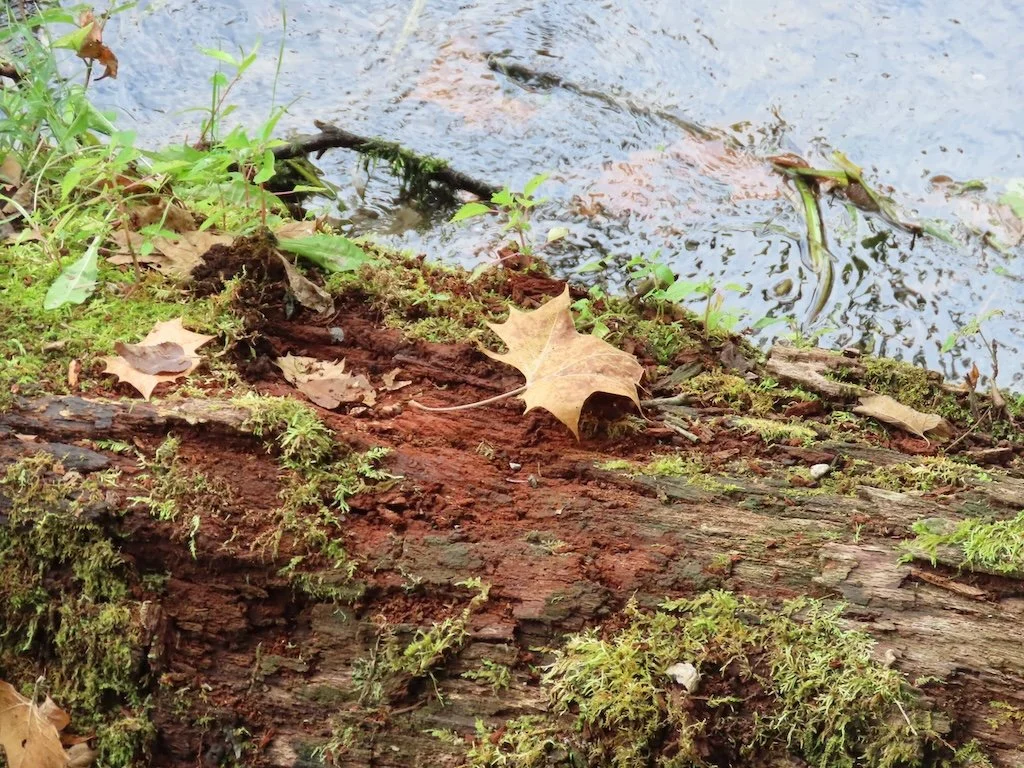
08/31/2026 NWF Blog 5 Benefits of Using Fallen Leaves in Your Garden - One of the best things you can do for wildlife, the environment, and even your wallet is to intentionally use the fallen leaves and other organic matter in your garden.

08/31/2026 Our World in Data Beef production in Brazil has been the largest driver of global deforestation in recent decades - When we look at the largest drivers of this deforestation, beef production is the standout. The clearing of forests to make space for grazing pastures has driven 41% of global deforestation in recent decades. Almost two-thirds of it has taken place in Brazil. The expansion of cattle pastures has not just come at the expense of natural forests, but particularly of biodiverse regions in the Amazon rainforest and Cerrado savanna. Beef consumption has grown a lot in Brazil, with per-person demand doubling over the past 50 years. Average consumption is now three times the European average.
08/31/2026 NASA Pasterze Hangs on as Austria’s Largest Glacier - Austria’s largest glacier was holding on by one dwindling thread of ice. The last icefall connecting the upper and lower portions of the Pasterze Glacier in the Eastern Alps appeared poised to break, which would put an end to its reign as the country’s largest. Groups monitoring the glacier say the last conduit of ice may, depending on weather conditions, survive to see another year or two, or it may face its demise before the cold months arrive this year.

08/31/2926 NPR NPR spent 2 years tracking deaths from heat. We found a staggering hidden toll - As summer heat intensifies because of human-driven climate change, the United States' official tally of heat-related deaths does not come close to capturing the full human toll. The data feeding into nationwide death counts is collected inconsistently and rarely thoroughly. The result is a vast undercount of the number of people who die because of heat. And experts say failing to recognize and address this may cost more people their lives. The reasons for the undercount are complex. Heat can often be the trigger that pushes someone's health condition — like cardiovascular disease — from manageable to fatal. But often because heat leaves no obvious mark behind for doctors or coroners to examine, the cause of death gets marked down only as a heart attack. Heat isn't noted on the death certificate. There is better counting of heat-related deaths in some parts of the country. For example, Arizona's Maricopa County — home to Phoenix — has developed sophisticated protocols for sussing out the subtle influences of heat on people's deaths. Maricopa County trains "death investigators" to look for signs of heat stress, such as asking about the state of the deceased's air conditioning system, their ability to pay electric bills to run ACs, their use of medications that increase heat sensitivity, and more.

08/28/2026 Smithsonian Magazine Forests Didn’t Fare Well During an Ancient Global Warming Event, Offering a ‘Cautionary’ Tale About Today’s Climate Change - An intense global warming event 56 million years ago caused a forest in modern-day Wyoming to lose around 60 percent of its canopy cover, and it took more than 100,000 years to bounce back.

08/27/2026 Planetizen Feds want to stop notifying landowners about drilling under their land - Currently, if the BLM owns the mineral rights underneath private property, the bureau is required to notify the owners of proposed drilling and give the public 90 days to comment on any leasing of rights to outside companies. But a recent proposal would eliminate the landowner notification requirement and reduce public comment time to 10 days. A rancher in Wyoming said that ditches from developers trying to build pipelines stranded his cattle during a blizzard, and abandoned oil wells have caused bovine health issues. In a separate proposal, the BLM also proposed reducing the minimum bonds companies are required to pay if drilling is abandoned without environmental cleanup.

Plastics Crisis - Textiles

There seem to be plastics everywhere. I’ve come to realize that in my home, the largest source is probably textiles! The carpets that were in the house when we purchased it a few years ago are likely all synthetic fibers (although about 1/3 of the house is tile or vinyl (plastic)). When we vacuum the particles are gray and powdery…the plastic there is already very small.

And then there are clothes. We have some clothes that are cotton or cotton/polyester (plastic)…but some items are 100% synthetic (polyester, acrylic, nylon, spandex). I don’t dry more than half my clothes that are synthetic fibers, but there are enough that the lint from the dryer should probably be considered toxic (probably should put it in a covered trash can so microplastics will not waft from it); I hope washing machine technology will eventually filter their waste water but I’m not sure how to handle what a filter would collect safely).

Back in March 2019 I posted some macro photography of textiles; I’ve copied it below with some commentary afterward.

I am finally experimenting with my 60x macro lens that I got for my phone. Textiles around the house were an easy project. The lens has a light and I found it handy. With this lens, I use the zoom on the phone to avoid clipping the image to take out the vignetting around the edges. I’d rather compose the image in the camera.

2019 01 IMG_1253.jpg
20190308_082610.jpg

I liked the simple weave and colors of the worn dishcloth.

20190314_114644.jpg

A crocheted hat had brilliant color but was not flat enough to focus well.

20190314_114655.jpg

The washcloth had more fuzzy fibers than I expected but

20190314_114829.jpg

Not nearly as many as the wool sock.

I got stuck on a tapestry jacket…had a challenge to choose just 3 to include in this post. The last one was from the inside of the jacket.

20190314_114948.jpg

The machine embroidery of a silk jacket looked very different than I anticipated.

20190314_115026.jpg

The weave of a light-weight jacket was more complex.

I realized that the patterns on t-shirts were painted – but hadn’t thought about what they would look like with the macro lens. The blobs of color stand out on the surface of the cotton knit.

20190314_115243.jpg

The most non-fuzzy fabric was microfiber underwear!

20190314_115315.jpg

The yarn in the bulky cardigan was almost too big to look interesting at this magnification.

20190314_115443.jpg

Machine-made borders look more orderly than the fabric sometimes (the black is thread).

20190314_115534.jpg

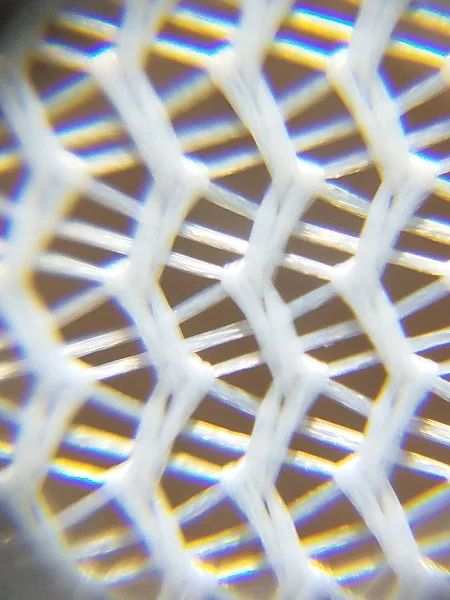
The eye detects tiny holes in the fabric of the bag for delicate fabrics to go in the washer; with macro lens, it looks like a Zentangle.

After I got back to my office, I looked at two mouse pads with the macro lens. One is a woven surface…the other looks like a paint.

--

The macro photographs make it easy to see how easily fibers escape from our clothes and carpets.

Right now I am thinking that at home the 1st priority is to not have any plastic around heat (mostly in the kitchen) and the 2nd is reducing synthetic textiles!

Gleanings of the Week Ending July 29, 2023

The items below were ‘the cream’ of the articles and websites I found this past week. Click on the light green text to look at the article.

An elegant enigma – A shipwreck discovered 30 feet below the surface 15 years ago…what we know (and don’t know) about it after study of the 1,500 objects recovered including textiles in 4 chests. The name of the ship is still unknown but the construction indicates it was a Dutch trader constructed around 1645 and sank around 1660.

At Peru temple site, archaeologists explore 3,000-year-old 'condor's passageway' – A 3,000 year old sealed corridor in a massive temple complex built by the ancient Chavin culture.

Does Nature Need a Trigger Warning? – A thought provoking post. Predators must be part of our conservation actions…and need to be valued as they are rather than simplistically.

Two-Hundred Years of Written Observations of Kīlauea's Summit Activity – On August 1, 1823, an English missionary visited the summit and published his observations (I found the book online -available on Internet Archive…Chapter 6 begins on page 121…image below). Mark Twain visited in 1866 and trekked across the caldera floor to Halema’uma’u, watching “a heaving sea of molten fire of seemingly limitless extent.” There are several links in the article that are worth following. My favorite is the USGS Views of a Century of Activity at Kilauea Caldera – A Visual Essay.

How Texas is racing to thwart the heat  - Unfortunately, planning for heat is not as well-developed in the US as planning for other hazards like flooding so many cities are scrambling to take proactive measures to cool their streets down and protect people from the dangerous impacts of overheating. In urban heat islands, temperatures can be up to 20 degrees Fahrenheit hotter than less populated areas. Austin, TX has a climate resilience plan that includes strengthening emergency response and future-proofing new facilities and infrastructure. It also developed an urban forest canopy for the city to ensure cool outdoor spaces. The city has now applied for a United States Department of Agriculture (USDA) grant to plant more trees after finding the tree canopy coverage was helping Austin to adapt to hotter temperatures. In 2021, San Antonio became the first city in Texas to participate in a pilot project to lower pavement temperatures by applying a coat of paint that reflects the sun's rays. I was disappointed that other large cities in Texas (like Dallas and Houston) were not mentioned in the article. My impression of Dallas is that there is a lot of concrete.

Detecting spoiled foods with LEDs – A potential improvement in non-invasive monitoring of fruit and vegetable freshness.

Joshua trees are dying. This new legislation hopes to tackle that – A compromise law…sets up a conservation fund and requires the state to develop a conservation plan and companies to obtain a permit from the state to cut down or relocate existing trees.

The looming 840,000 ton waste problem that isn't single-use plastics – Carbon and glass fiber composites used in wind turbine blades, hydrogen tanks, airplanes, yachts, construction, and car manufacturing. "This is a huge opportunity," said Dr Wei. "And not only because various modes of recycling are cost-effective and minimally impactful on the environment. In an era of mounting supply chain disruptions, local recycled products can provide a more immediate product when compared to imports and create a burgeoning advanced manufacturing industry."

National Park Visitors Warned to Be "Prepared to Survive" Heat – My husband and I have avoided trips to the western national parks in summer since the 1980s…primarily to avoid crowds but now ‘excessive heat’ is part of our rationale too.

The ocean's color is changing as a consequence of climate change – The color shifts have occurred in 56% of the world’s ocean based on analysis of data from the Moderate Resolution Imaging Spectroradiometer (MODIS) aboard the Aqua satellite, which has been monitoring ocean color for 21 years. Tropical oceans have become steadily greener. Changes in color reflect changes in plankton communities, that will impact everything that feeds on plankton. It will also change how much the ocean will take up carbon, because different types of plankton have different abilities to do that. 

Gleanings of the Week Ending November 16, 2019

The items below were ‘the cream’ of the articles and websites I found this past week. Click on the light green text to look at the article.

Top 25 Wild Bird Photographs of the Week: November – Enjoy the birds!

Common nutrient supplementation may hold the answers to combating Alzheimer's disease -- ScienceDaily – Choline….not sure I am even getting the recommended intake very often. Taking a supplement might be worthwhile.

Female scientists gaining recognition for their breakthroughs – A little history….and hope that things are changing for female scientists working now. This article is from the November 2019 special issue of National Geographic, “Women: A Century of Change.”

New report highlights Alaska’s last five years of dramatic climate change | NOAA Climate.gov – There are often stories about dramatic high temperatures in Alaska…but this is an overall look at what is happening.

A Field Guide to Commonly Misidentified Snakes – Cool Green Science – The first photograph is labeled ‘#NotACopperhead’ – lots of snakes have probably been killed by people thinking they were a poisonous snake.

Image of the Day: Stick and Leaf Insects | The Scientist Magazine® - The article includes a link to the full study too (here). The figures alone are worth a look.

Non-pharmacologic treatments may be more effective for psychiatric symptoms of dementia -- ScienceDaily – Outdoor activities, massage and touch therapy may be more effective that drugs….and they don’t have the side effects of the drugs. I hope the findings of this study are incorporated into care decisions.

Image of the Day: Brains and Braincases | The Scientist Magazine® - The human skull shows adaptations for walking upright more than changes because of our brain structure.

Photos of the Week – October 18, 2019 | The Prairie Ecologist – Milkweed seeds.

Textile technology: Joseph-Marie Jacquard and the loom that changed the world – Some textile history from the early 1800s.

Macro Photography - Textiles

I am finally experimenting with my 60x macro lens that I got for my phone. Textiles around the house were an easy project. The lens has a light and I found it handy. With this lens, I use the zoom on the phone to avoid clipping the image to take out the vignetting around the edges. I’d rather compose the image in the camera.

2019 01 IMG_1253.jpg
20190308_082610.jpg

I liked the simple weave and colors of the worn dishcloth.

20190314_114644.jpg

A crocheted hat had brilliant color but was not flat enough to focus well.

20190314_114655.jpg

The washcloth had more fuzzy fibers than I expected but

20190314_114829.jpg

Not nearly as many as the wool sock.

I got stuck on a tapestry jacket…had a challenge to choose just 3 to include in this post. The last one was from the inside of the jacket.

20190314_114948.jpg

The machine embroidery of a silk jacket looked very different than I anticipated.

20190314_115026.jpg

The weave of a light-weight jacket was more complex.

I realized that the patterns on t-shirts were painted – but hadn’t thought about what they would look like with the macro lens. The blobs of color stand out on the surface of the cotton knit.

20190314_115243.jpg

The most non-fuzzy fabric was microfiber underwear!

20190314_115315.jpg

The yarn in the bulky cardigan was almost too big to look interesting at this magnification.

20190314_115443.jpg

Machine-made borders look more orderly than the fabric sometimes (the black is thread).

20190314_115534.jpg

The eye detects tiny holes in the fabric of the bag for delicate fabrics to go in the washer; with macro lens, it looks like a Zentangle.

After I got back to my office, I looked at two mouse pads with the macro lens. One is a woven surface…the other looks like a paint.