New Tools

I have two new tools.

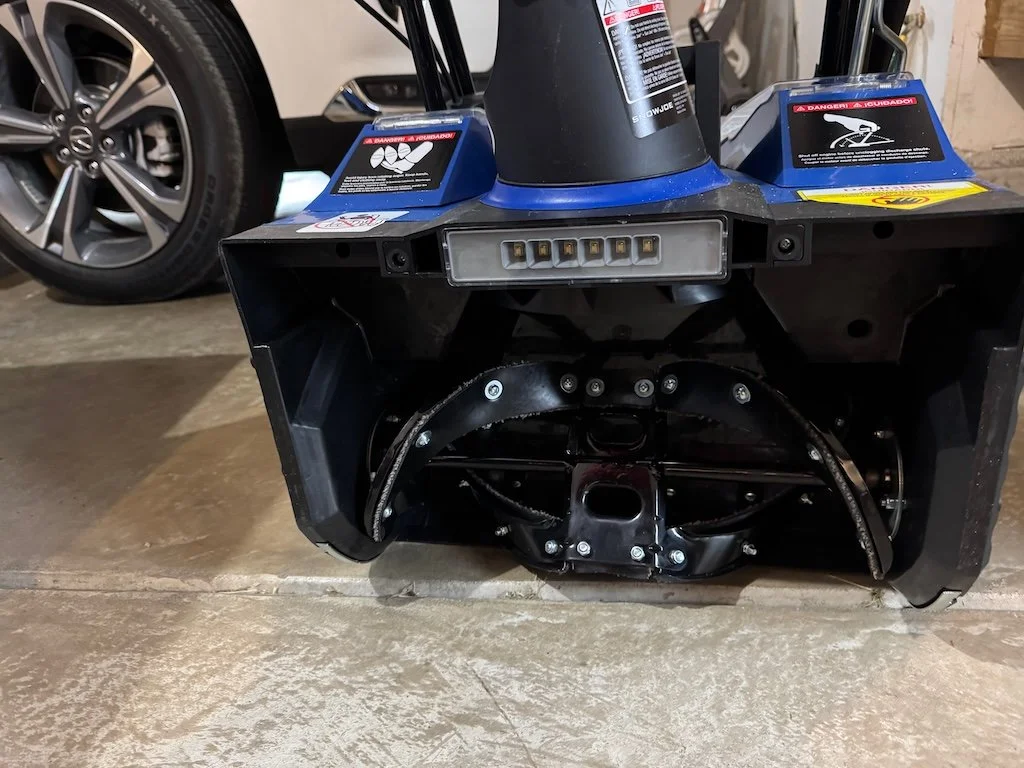
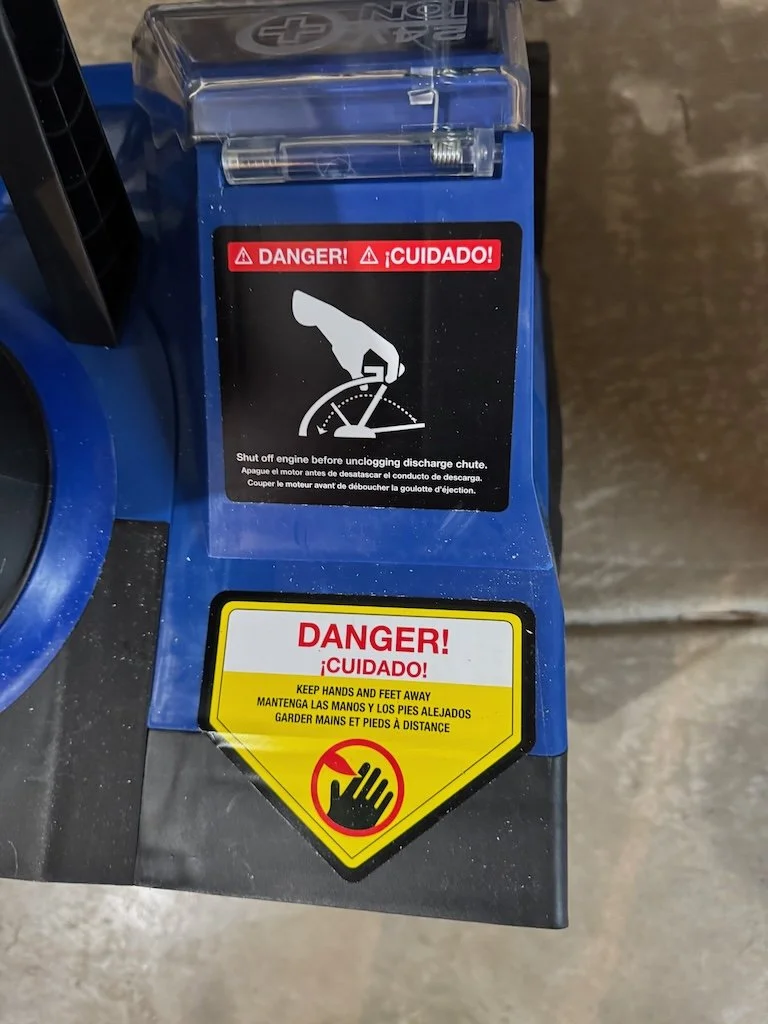
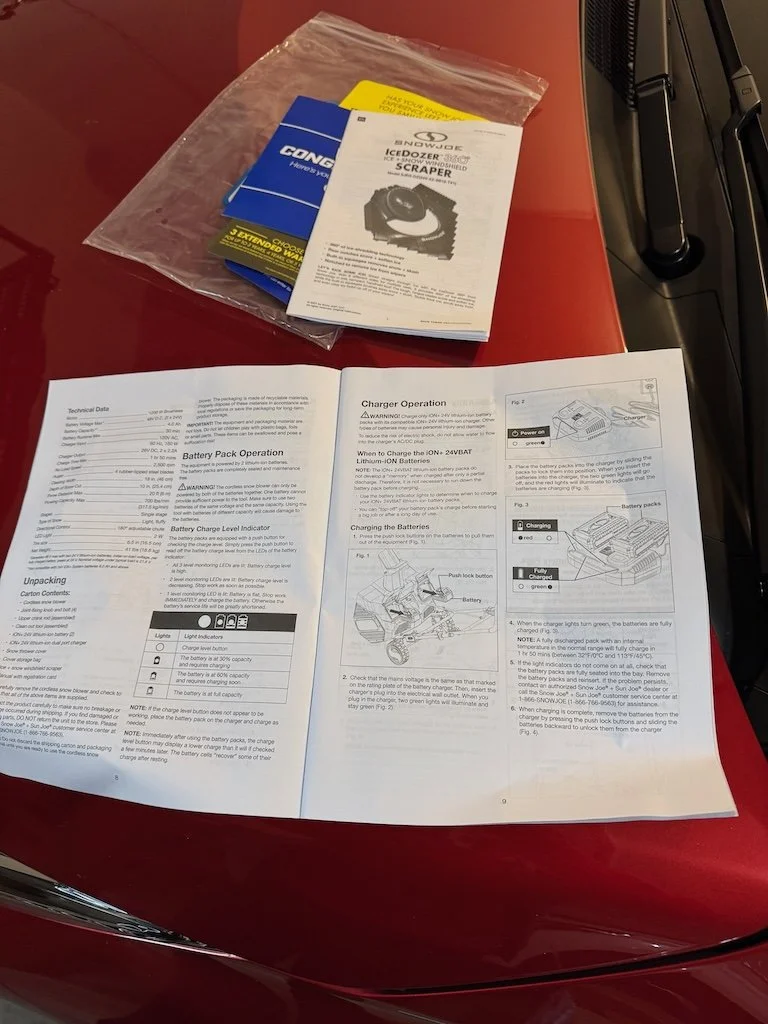
The first one I bought at the end of last winter….and just now unpacked it – a Cordless Snow Blower (SnowJoe 48V 18-inch). The only parts that were separate from the pain unit were the two batteries, charger, and cover. I got it all out of the box then realized I need to read the manual since I haven’t used a snow blower before. I’ll do that in the next few days and be ready if there is snow in our forecast.

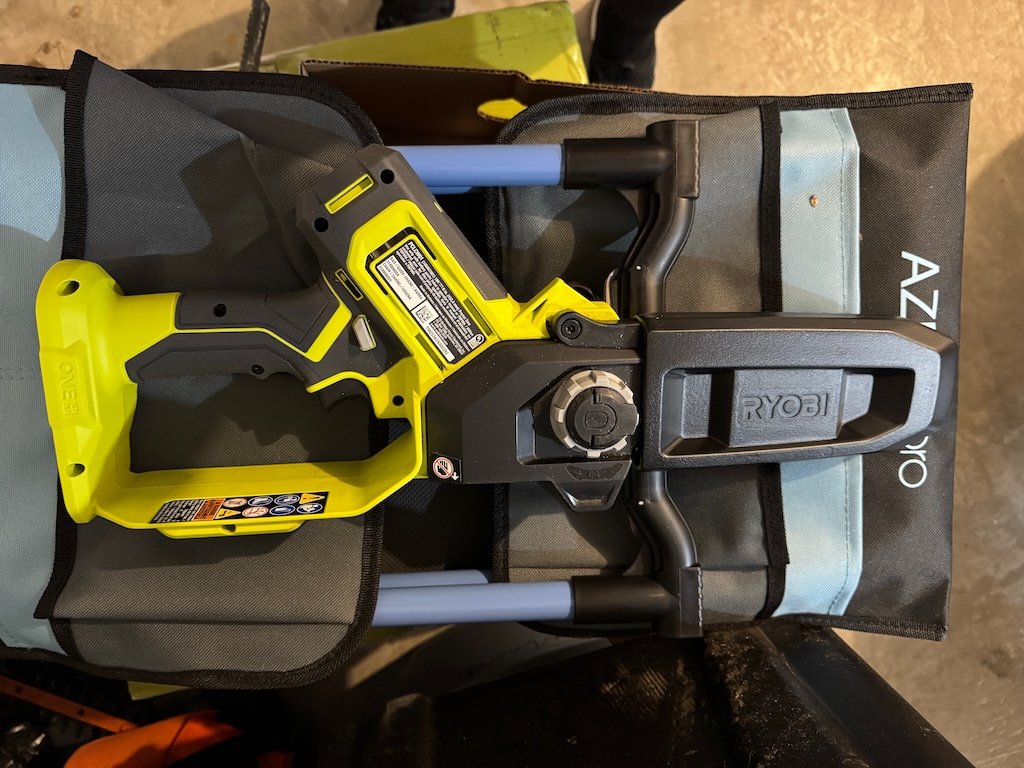
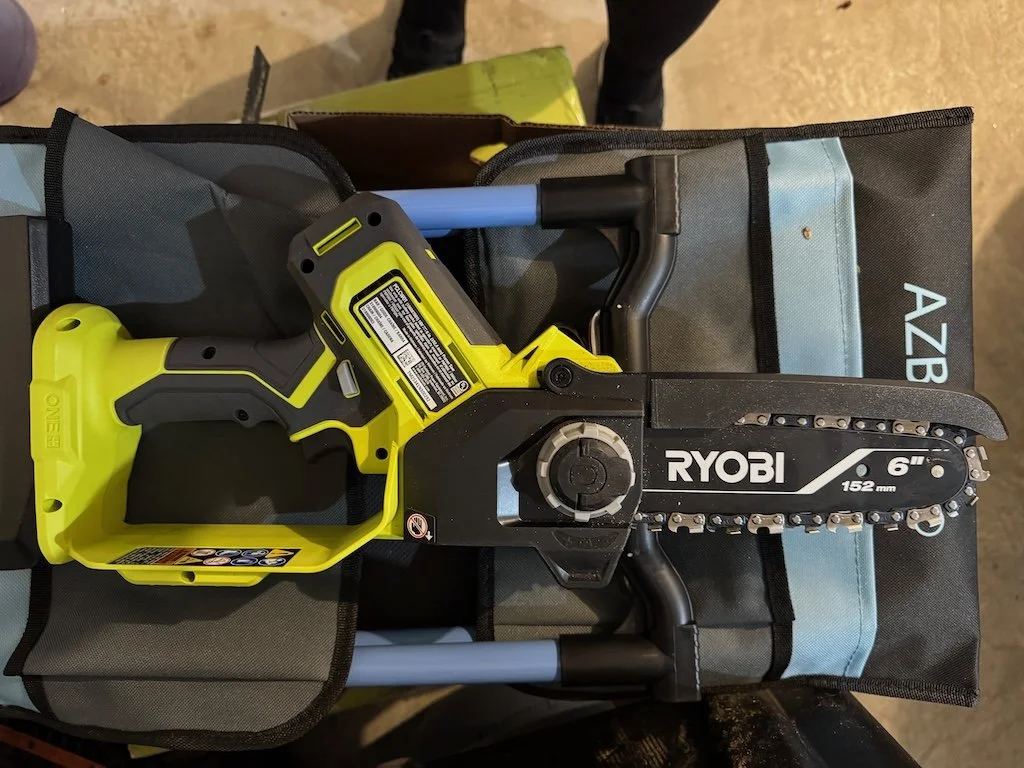
The second one was a tool I asked my husband to get for me – a pruning chainsaw (Ryobi 18V 6-inch). My sister had purchased one several years ago and enthusiastically recommended it. It came with a 2ah battery, and we had a 4ah one for our Ryobi weed-eater that will work with the chainsaw as well.

I am going to cut back the crape myrtles that are growing too high in the front flower beds and then work on cutting down the forsythia and Japanese barberry in my back yard. Those are my winter maintenance projects that can be done any day that gets above 60 degrees! I’ve read the manual and had a good first experience on one of the crape myrtles. I will only be cutting very small stems with my hand pruners from now on!

Plastics Crisis – Healthy Food in Unhealthy Packaging

Plastic dominates packing in the grocery stores – even in the produce section.

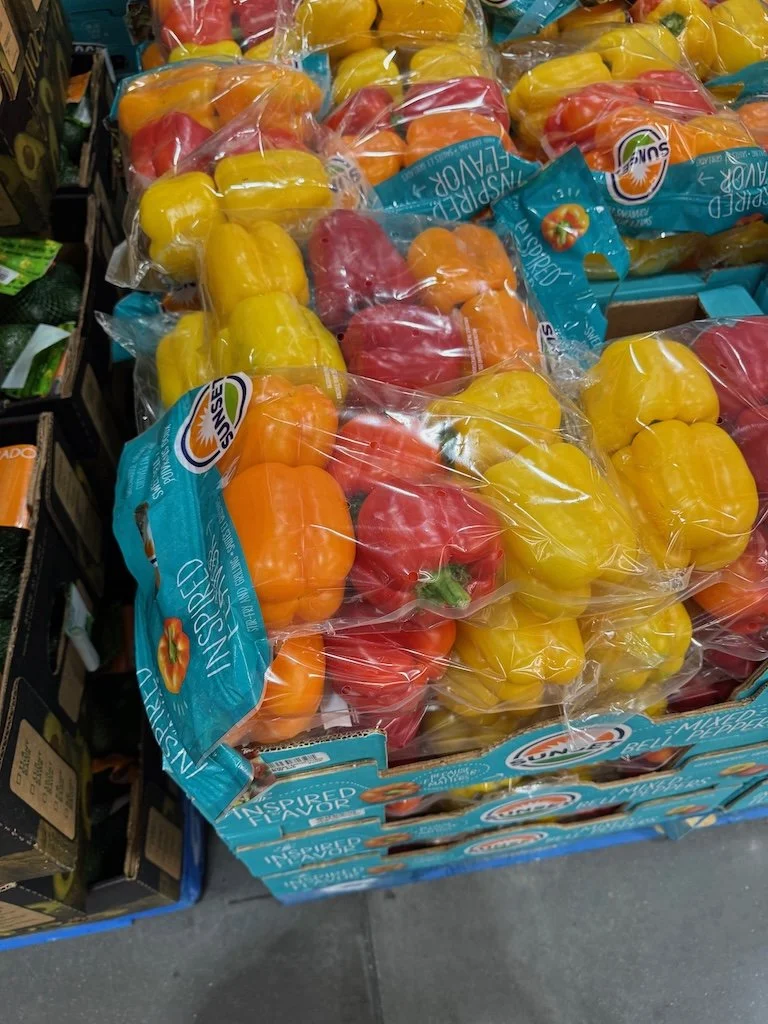
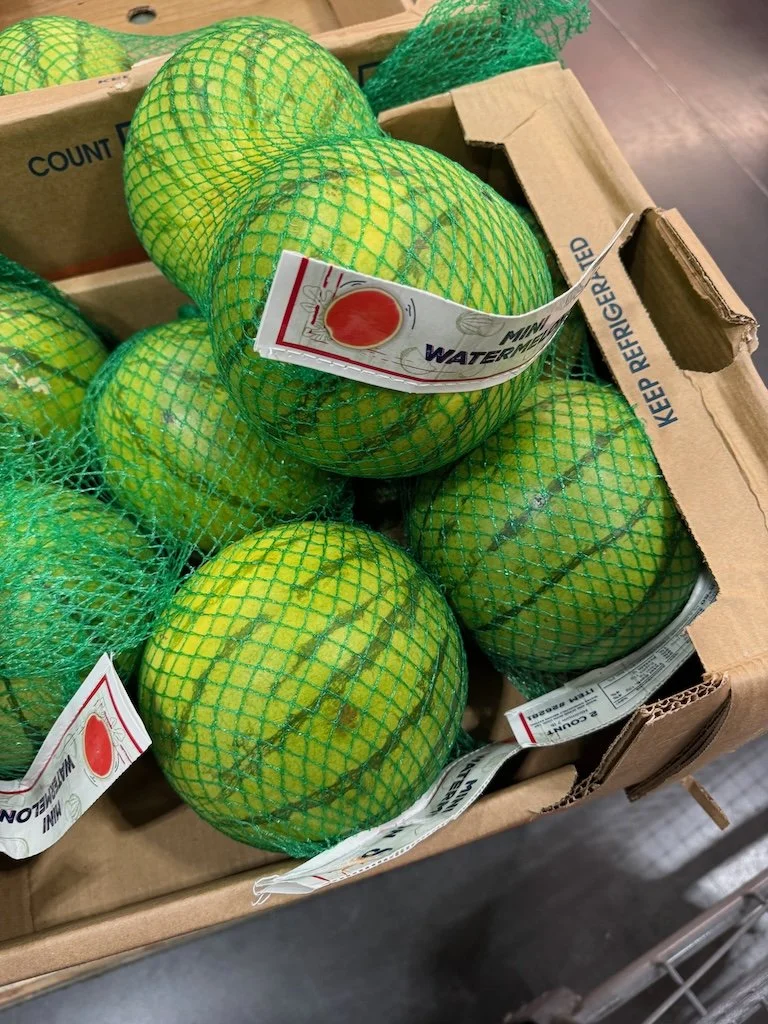
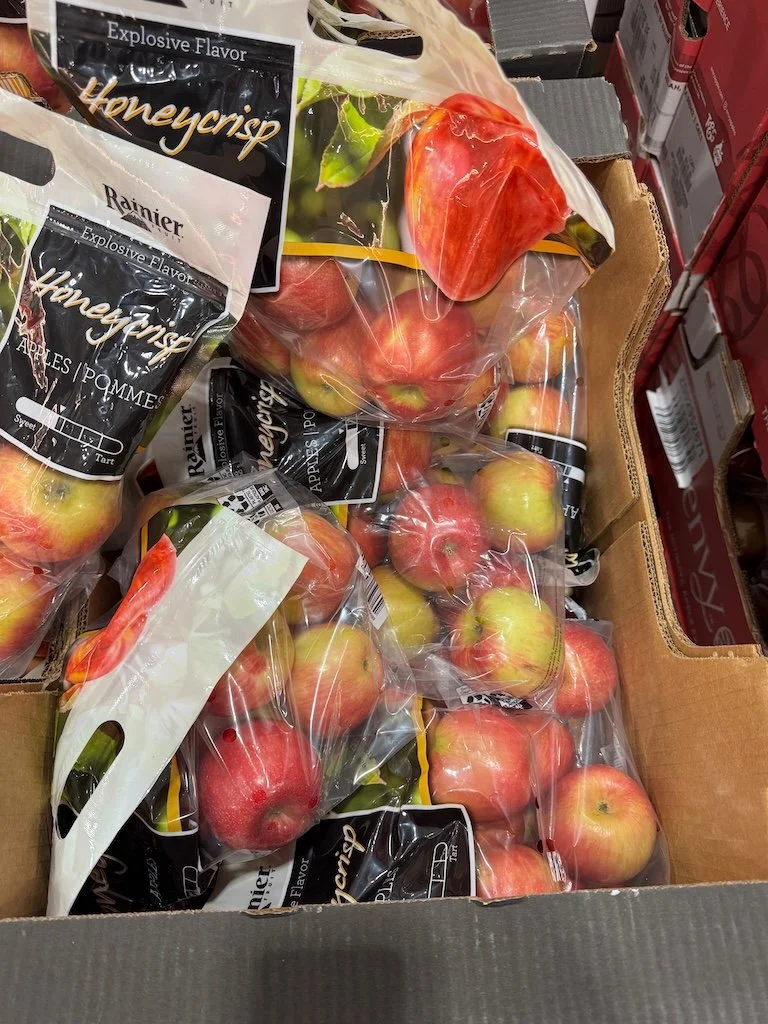
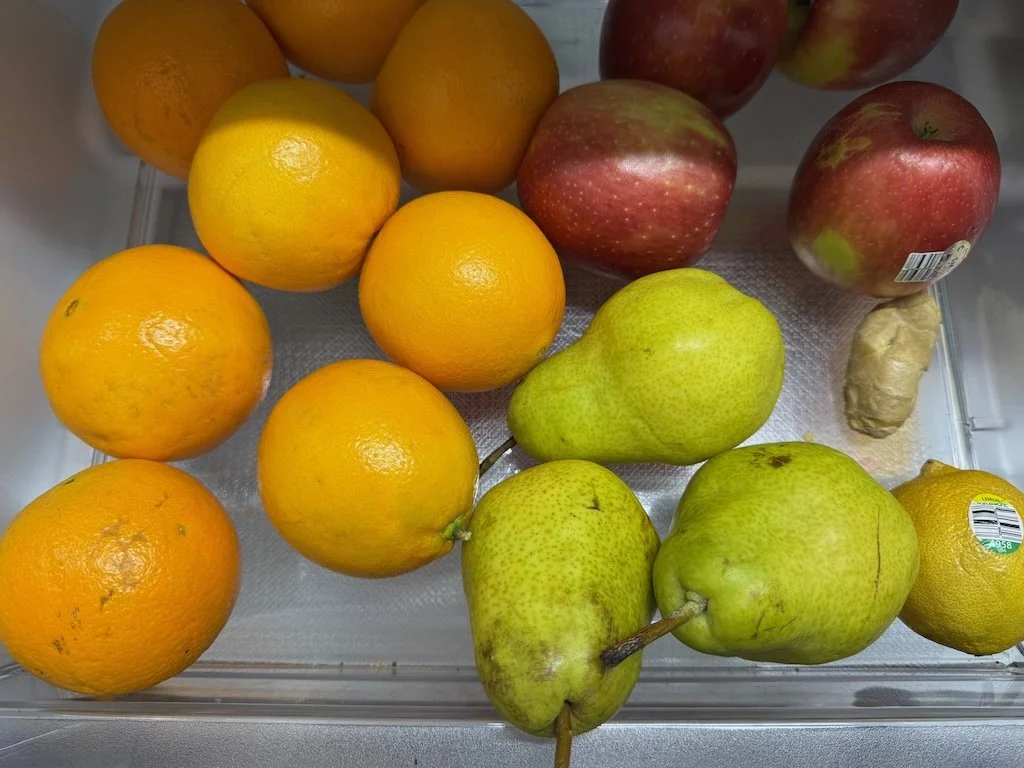
 In the store where I shop, more than half the produce items are in plastic – either clamshell (more rigid plastic) or flexible bags. Neither type of plastic is recycled effectively. It’s impossible to buy leafy greens or grapes or carrots or mushrooms, or celery or blueberries…the list goes on and on…in the store where I usually shop without the plastic! Usually there are potatoes, squash, broccoli, cabbage, kale, bell peppers, cucumbers, apples, pears, lemons, and oranges from bins where I can use my own bags or keep them unbagged…but none of them are the organic versions. I am beginning to wonder whether organic is worth it with all the plastic around those foods (and maybe used during production to control weeds). Right now, I am skewing toward the food with the least packaging (or no packaging). If I do buy something in plastic packaging, I take it out of that packaging as soon as I get it home!

I’ve started buying eggs in a pulp paper carton (even though they are more expensive) rather than the Styrofoam cartons; not sure why the producers are using Styrofoam since it isn’t a healthy material and does not protect the eggs from breakage very well either.

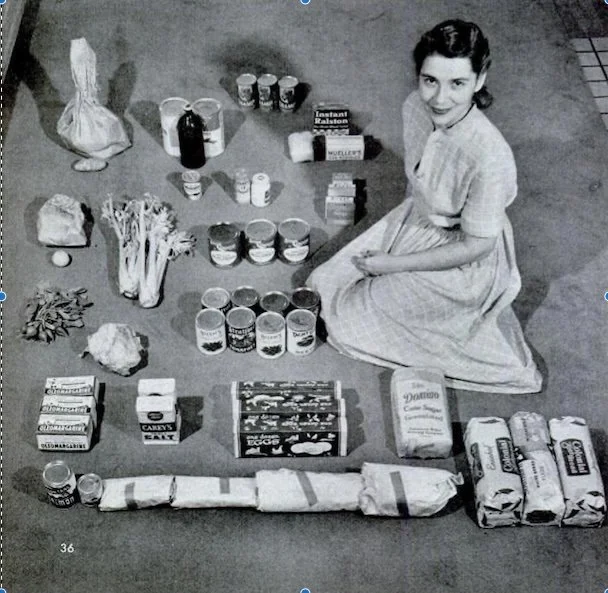
The picture below is from Life Magazine from November 10, 1947. The groceries in the picture fed a family of 4 (parents and 4-year-old twins) plus their cat. There might not be any plastic in the picture! The meat and bread appear to the wrapped in paper. The eggs are in boxes and there are canned goods. There isn’t much produce (celery, lettuce, radishes, onions, potatoes); the potatoes and onions are in paper bags and the rest is unwrapped.

I’m not advocating reverting to the 1940s – but we should revie the history of food packaging now that we are understanding the downsides of its single-use design that results in environmental contamination. No one wants to be full of plastic and the associated health challenges.

St. Joseph MO

Our hotel for our visit to Loess Bluffs National Wildlife Refuge was in St. Joseph MO. After an afternoon on the loop at the refuge, we checked into our hotel and made the decision to go see the Holiday Lights at Krug Park rather than spending time going out to dinner!

It was another loop through a large park with lots of vegetation to act as a backdrop to lights. We got to the park shortly after they opened at 6 and waited in line for a few minutes for the drive through. It was a popular event in St. Joseph and has evidently been happening since 1981.

The next morning, I was impressed with the breakfast at the hotel because they used silverware and ceramic plates rather than plastic! Kudos to Holiday Inn Express! I had scrambled eggs, turkey sausage, and a blue berry muffin (as usual I raided the oatmeal fixings for a few walnuts and cranraisins).

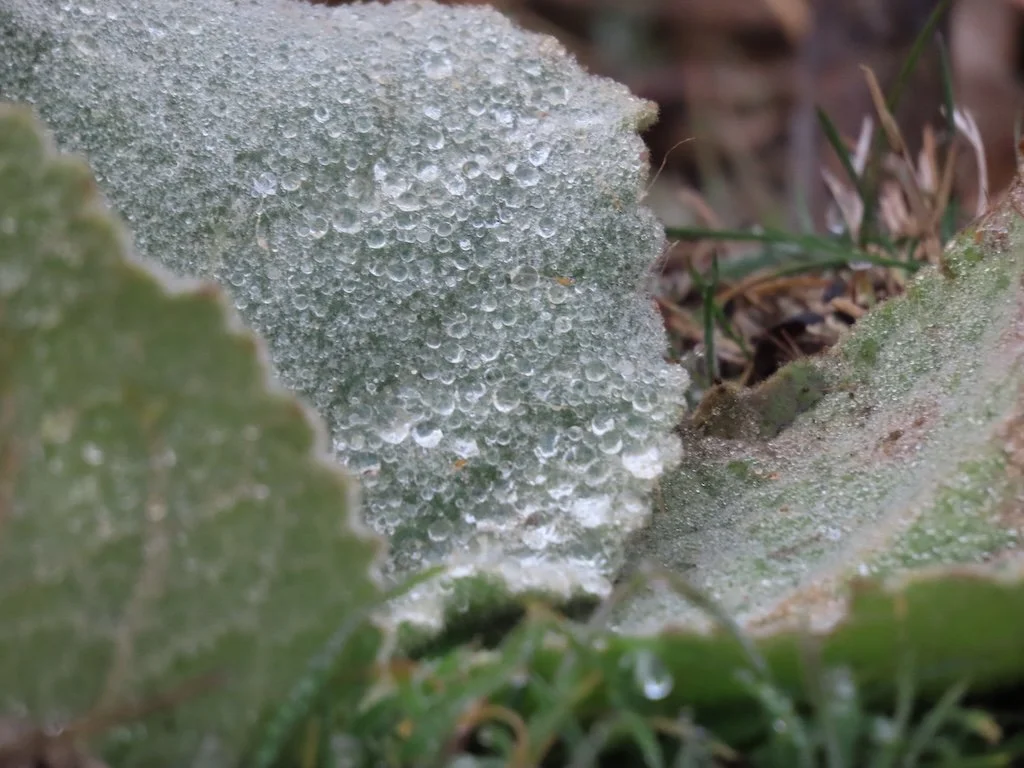
We waited a little later than we originally planned to leave since the fog was so thick. Everything was very wet (note the pattern of moisture on my car window) as we left the hotel hoping that the fog would be less dense by the time we got to the refuge.

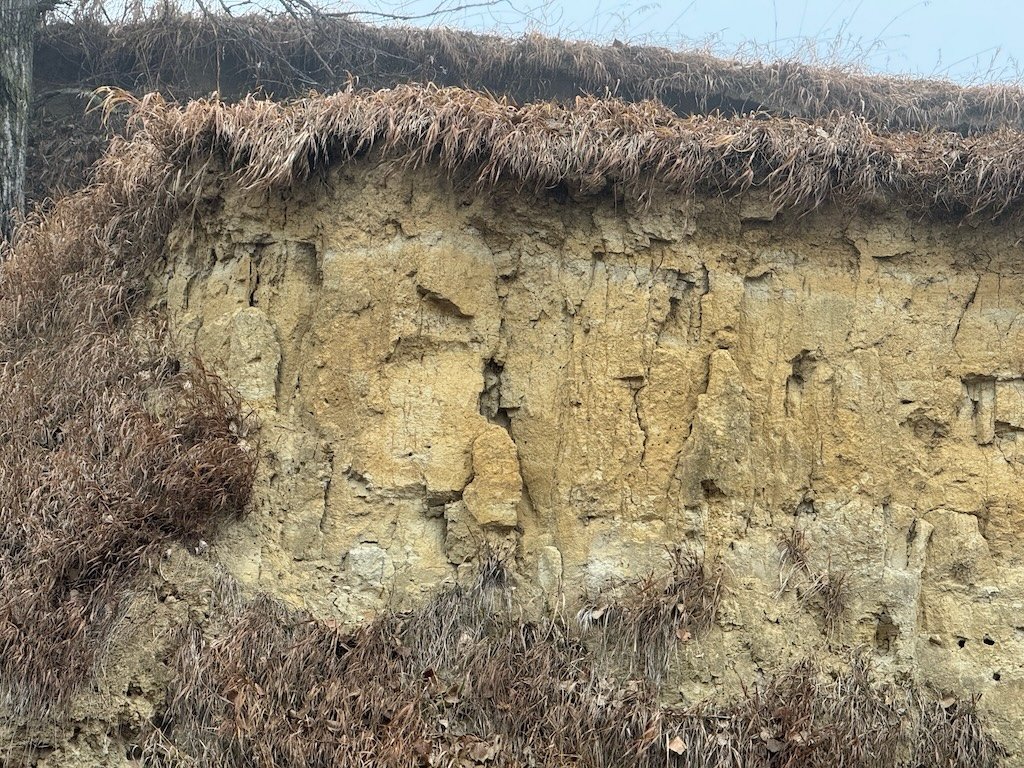
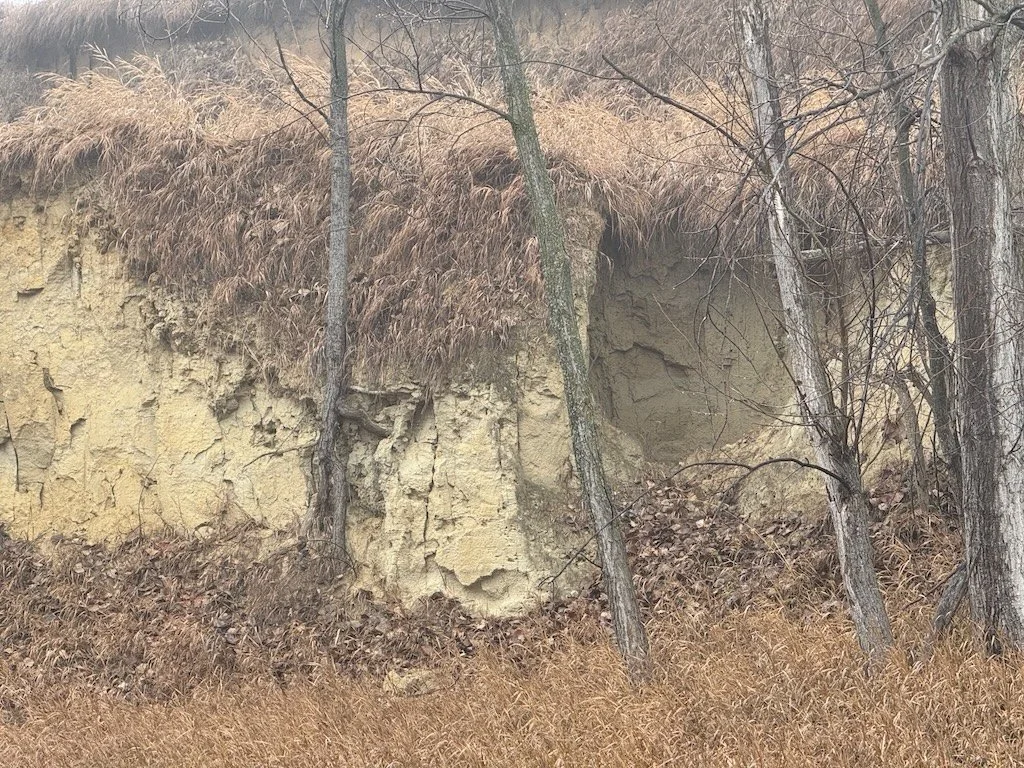
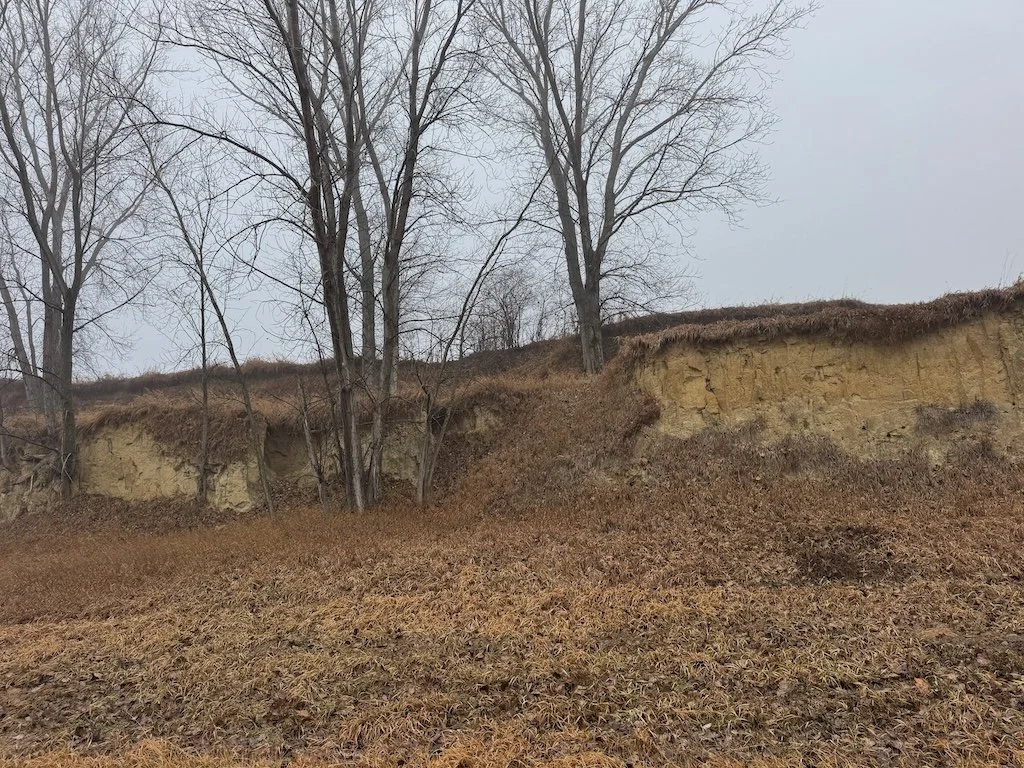
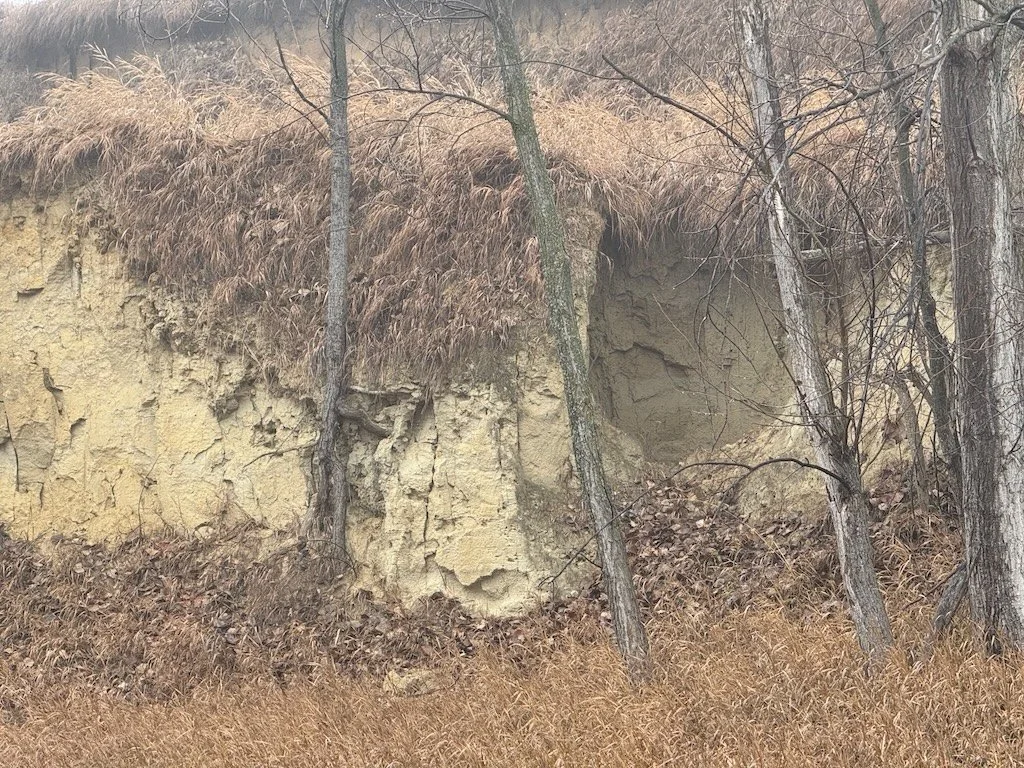
I remembered to have my husband stop on the road to the refuge where loess is visible….something left behind when the glaciers melted and the sediment dried out…and was carried/sculpted by wind.

After one more time around the wildlife loop and a trip to visitor center (it had been closed the previous day), we headed toward home.

Gleanings of the Week Ending January 10, 2026

The items below were ‘the cream’ of the articles and websites I found this past week. Click on the light green text to look at the article. (Note: I have changed the format to include the date and source of the article.)

11/9/2025 BBC Seated salsa - the miracle movement to help ease back pain – Wow – easy to do and very effective. I might even be able to do it on road trips….increase the likelihood of no back pain when getting out of the car!

12/30/2025 Clean Technica Maryland’s Largest Solar Project Launches, On Old Coal Mine – In Garret County MD – “helping to preserve our region’s natural beauty while creating new economic value for our residents. It’s a win-win for us and the environment.” Goo for them!

12/29/2025 Yale Environment 360 Sea Ice Hits New Low in Hottest Year on Record for the Arctic - The Arctic endured a year of record heat and shrunken sea ice as the world’s northern latitudes continue a rapid shift to becoming rainier and less ice-bound due to the climate crisis. The Arctic is heating up as much as four times as quickly as the global average, due to the burning of fossil fuels, and this extra heat is warping the world’s refrigerator. We can point to the Arctic as a faraway place but the changes there affect the rest of the world.

12/30/2025 Science Daily Why your vitamin D supplements might not be working - Magnesium may be the missing key to keeping vitamin D levels in balance. The study found that magnesium raised vitamin D in people who were deficient while dialing it down in those with overly high levels—suggesting a powerful regulating effect. This could help explain why vitamin D supplements don’t work the same way for everyone and why past studies linking vitamin D to cancer and heart disease have produced mixed results. (I also learned that dark chocolate is a good source of magnesium from this post!)

12/26/2025 National Parks Traveler Visual Guide Reveals Stunning Fossil Discovery at Lake Powell – A visual guide published this year and compiled by paleontology experts within the National Park System offers a fresh look at paleontological resources across the 13 park units in the State of Utah. It is available online here.

12/19/2025 Smithsonian Magazine Flesh-Eating Screwworms Are Creeping Closer to a Comeback in the United States - Roughly 60 years ago, the United States eradicated the New World screwworm, an insect that feeds on living tissue. A concerted effort led by USDA wiped them out by 1966 by releasing sterile male flies and, since female flies only mate once, this strategy helped diminish their numbers until the population collapsed. The agency estimates the eradication of screwworms saves ranchers $900 million per year in lost livestock. But now, the flesh-eating creature appears to be creeping closer to a comeback. Efforts are ramping up to monitor for screwworms and prepare to fight it back again.

12/17/2025 Archaeology Magazine How did the Roman invasion of Britain impact health? - The health of the women and children declined overall during the Roman period, but mainly among those who lived in urban areas. The decline in health in urban areas can be attributed to overcrowding, pollution, limited access to resources, and devastating exposure to lead in Roman infrastructure.

12/17/2926 The Conversation The US already faces a health care workforce shortage – immigration policy could make it worse - America’s health care system is entering an unprecedented period of strain. An aging population, coupled with rising rates of chronic conditions, is driving demand for care to new heights. The workforce isn’t growing fast enough to meet those needs. For decades, immigrant health care workers have filled gaps where U.S.-born workers are limited. Nationally, immigrants make up about 18% of the health care workforce, and they’re even more concentrated in critical roles. Roughly 1 in 4 physicians, 1 in 5 registered nurses and 1 in 3 home health aides are foreign-born.

12/15/2025 Nature Tracing pollution in the lives of Arctic seabirds – Scientists on Svalbard — the largest island of the Norwegian polar archipelago: there used to be sea ice in the fjord in May when we arrived for the start of the season, but we haven’t seen any sea ice since 2009. They are monitoring the presence of polyfluoroalkyl substances (PFASs) in the birds. The years long research has shown that some contaminants transfer to the yolks of the birds’ eggs. High levels of PFASs have been found to lower hatching rates and reduce overall survival rates. In particular, PFASs disrupt hormones and lower fertility rates in male birds.

12/14/2025 The Marginalian A Decalogue for the Dignity of Growing Old: Eva Perón’s Revolutionary Rights of the Elderly – Eva Peron identified 10 rights of elderly people in 1948 to be included in Argentina’s Constitutional Reform the following year; the right to assistance, housing, nourishment, clothing, physical health care, moral health care, recreation, tranquility, and respect.

Plastics Crisis – Coming in with the Tide

NPR published a story just before Christmas (At this museum, the tide brings in odd treasures that become a lasting lesson) that I thought was worth featuring in a blog post of its own rather than just adding it to my weekly gleanings post.

My first thought was how familiar so many of the objects looked. Most are relatively small. They are colorful. They don’t look worn although some of them might be decades old. It is easy to image them accidently floating away in the water rather than being thrown away intentionally. Then again – most of them were so inexpensive that maybe their owners were not bothered too much that they were lost on a beach.

My second thought was how this museum and the crafted message about “human consumption and the eternal life of plastic waste” can serve as a tutorial for how to talk about plastics and microplastics in our community. We need to find ways to be “persuasive without being preachy.”

Gleanings of the Week Ending January 03, 2026

The items below were ‘the cream’ of the articles and websites I found this past week. Click on the light green text to look at the article. (Note: I have changed the format to include the date and source of the article.)

9/15/2025 NIH National Library of Medicine Microplastics in Drinking Water: A Review of Sources, Removal, Detection, Occurrence, and Potential Risks - Microplastics in drinking water systems exhibit multi-source input characteristics, originating from environmental infiltration into water sources; leaching from materials in water distribution systems; migration from bottled water packaging interfaces; and re-release during water treatment processes. The potential hazards of MPs remain a critical concern. Future work needs to integrate research from environmental science, toxicology, and public health to clarify the dose–effect relationships of MPs, improve risk assessment systems, and promote technological innovation and policy regulation to effectively ensure drinking water safety and public health.

12/21/2025 Plantizen Winter Road Salt is Making Waterways Toxic to Wildlife - Salt used to keep roadways free of ice and snow is accumulating in waterways, causing dangerously high salinity levels in water bodies in Pennsylvania, New Jersey, and Delaware - well above the healthy accepted drinking water standard for people on a low-salt diet.

12/22/2025 ScienceDaily This fish-inspired filter removes over 99% of microplastics - Washing machines release massive amounts of microplastics into the environment, mostly from worn clothing fibers. Researchers have developed a new, fish-inspired filter that removes over 99% of these particles without clogging. The design mimics the funnel-shaped gill system used by filter-feeding fish, allowing fibers to roll away instead of blocking the filter. The low-cost, patent-pending solution could soon be built directly into future washing machines.

12/24/2025 The Prairie Ecologist Photos of the Year – From Chris Helzer: “Well, we’ve almost made it through 2025. To say it has been an eventful year seems like a massive understatement. As I’m sure is true for many of you, I tried to manage stress and anxiety by spending time in nature – exploring with curiosity and wonder and giving myself a break from the rest of the world for a little while. It helped.”

12/24/2025 ScienceDaily Scientists reverse Alzheimer’s in mice and restore memory - The damaged brain can, under some conditions, repair itself and regain function. )ne drug-based way to accomplish this in animal models in the study, and also identified candidate proteins in the human AD brain that may relate to the ability to reverse AD and opens the door to additional studies and eventual testing in people. The technology is currently being commercialized by Glengary Brain Health, a Cleveland-based company.

12/22/2025 The Conversation Everyday chemicals, global consequences: How disinfectants contribute to antimicrobial resistance - During the COVID-19 pandemic, disinfectants became our shield. Hand sanitizers, disinfectant wipes and antimicrobial sprays became part of daily life. They made us feel safe. Today, they are still everywhere: in homes, hospitals and public spaces. But….The chemicals we trust to protect us may also inadvertently help microbes evolve resistance and protect themselves against antibiotics.

10/14/2025 All about Vision How microplastics affect your eyes, and what you can do - Microplastics don't go away. They just get smaller and smaller over time. They can come from everyday things like bottles, tires, fabrics and personal care products. Studies have found microplastics on and even inside people's eyes.

12/25/2025 BBC The best nature photography of 2025 - From the depths of the oceans to deserts, mountains and the remote Amazon, this year's most extraordinary nature photography brings us glimpses of the diversity and awe of the natural world. This year we meet acrobatic gorillas, maritime lions and grinning bears. 

12/22/2025 Smithsonian Magazine This Mama Polar Bear Adopted a Young Cub - The bears need all the help they can get these days with climate change. If females have the opportunity to pick up another cub and care for it and successfully wean it, it’s a good thing for bears in Churchill.

12/19/2026 Artnet Inside the 6,000-Year-Old Underground Temple Where the Walls Literally Sing - Ħal Saflieni Hypogeum, an ancient, underground burial complex on the Mediterranean island of Malta. Built around 4,000 B.C.E. this subterranean burial ground amplifies sound at a soothing frequency.

eBotanical Prints – December 2025

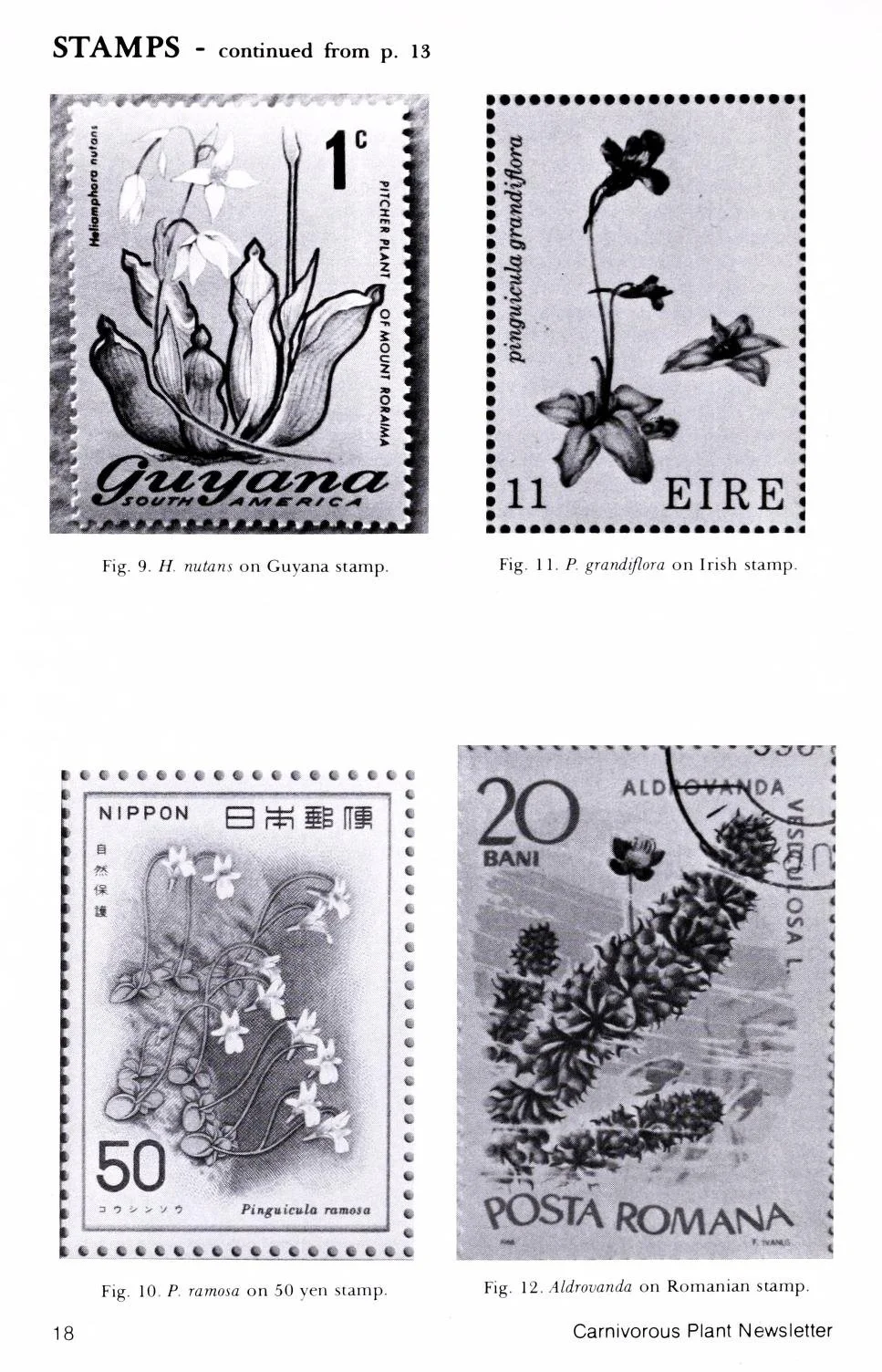
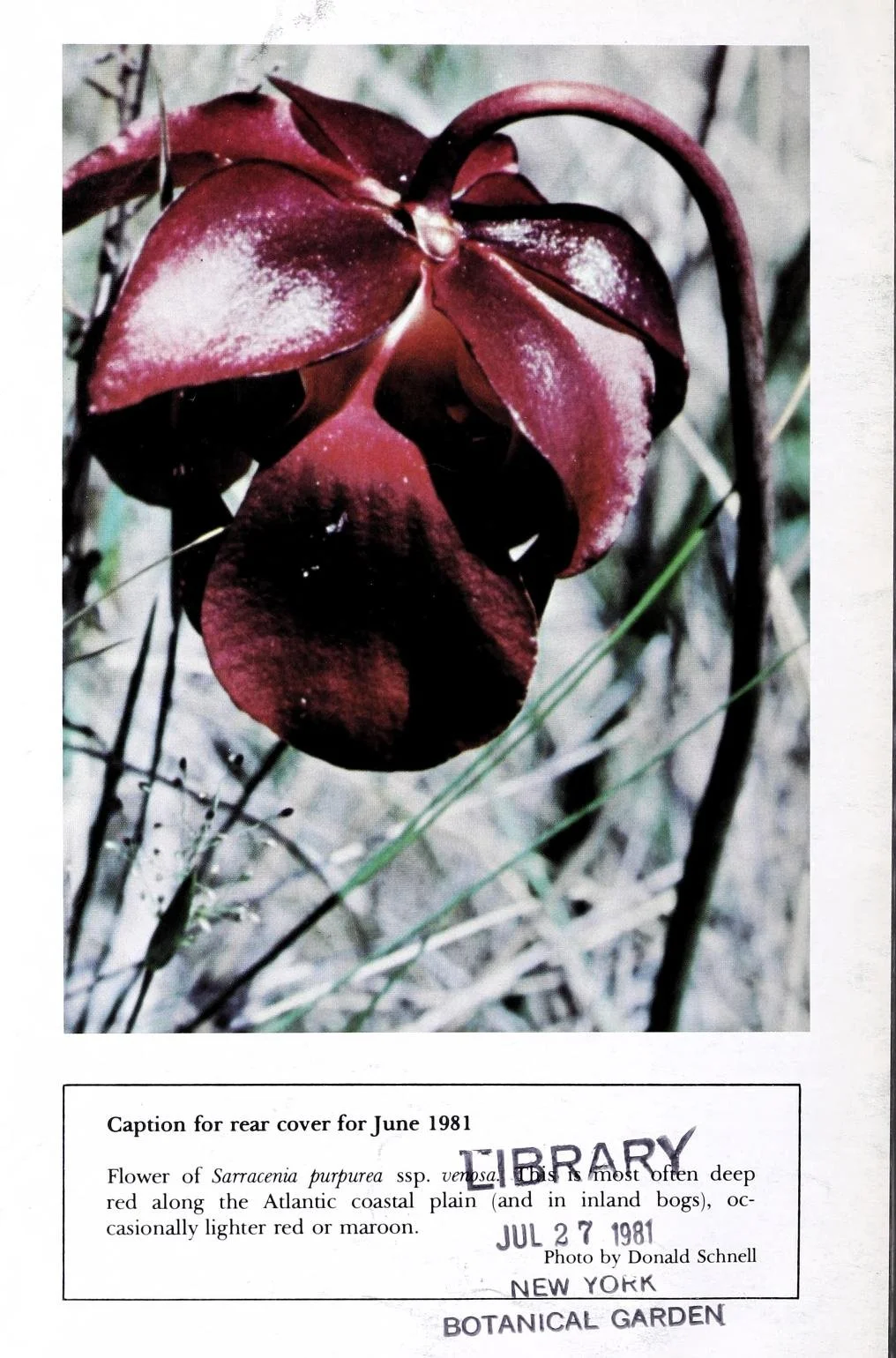
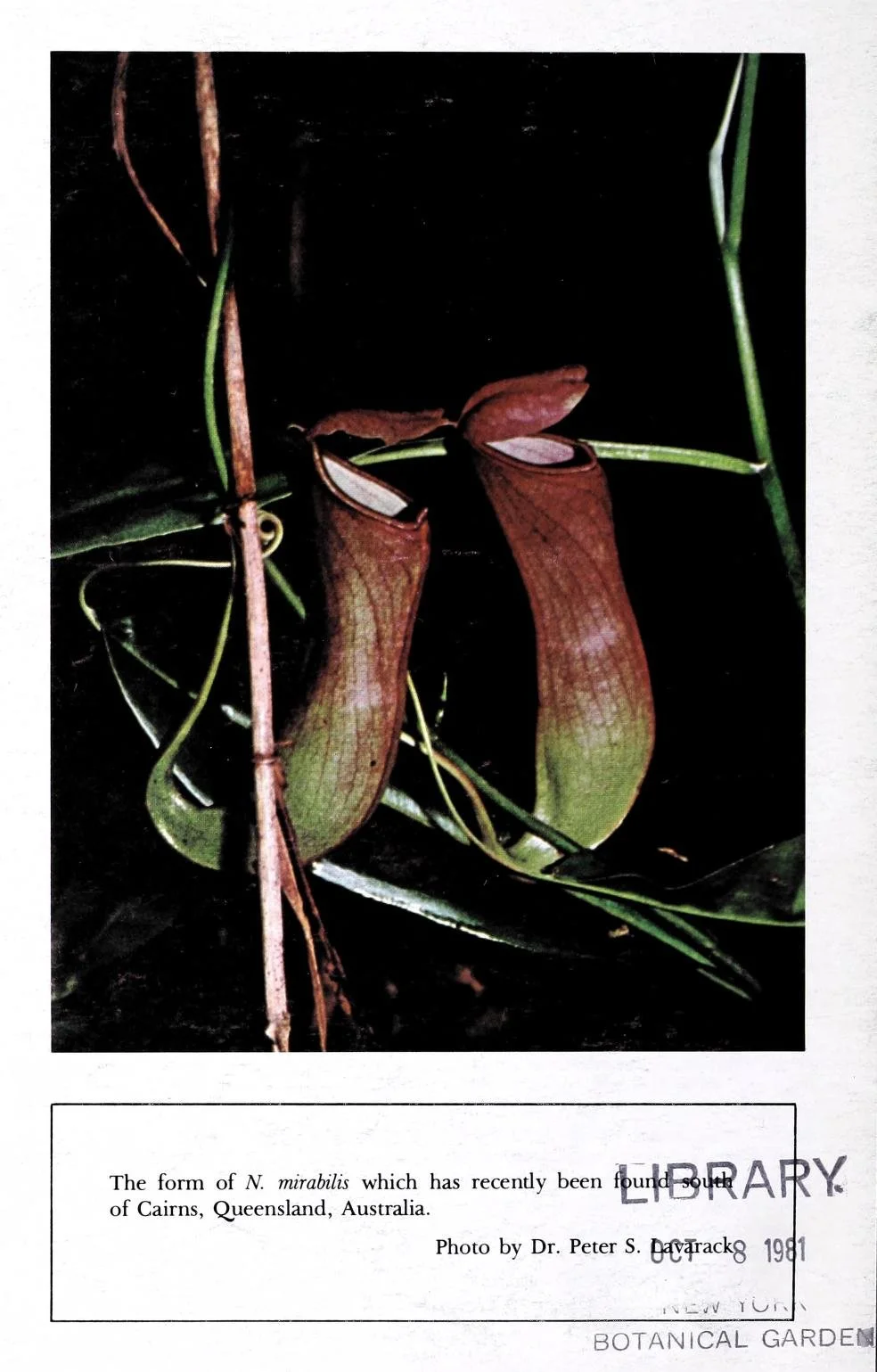
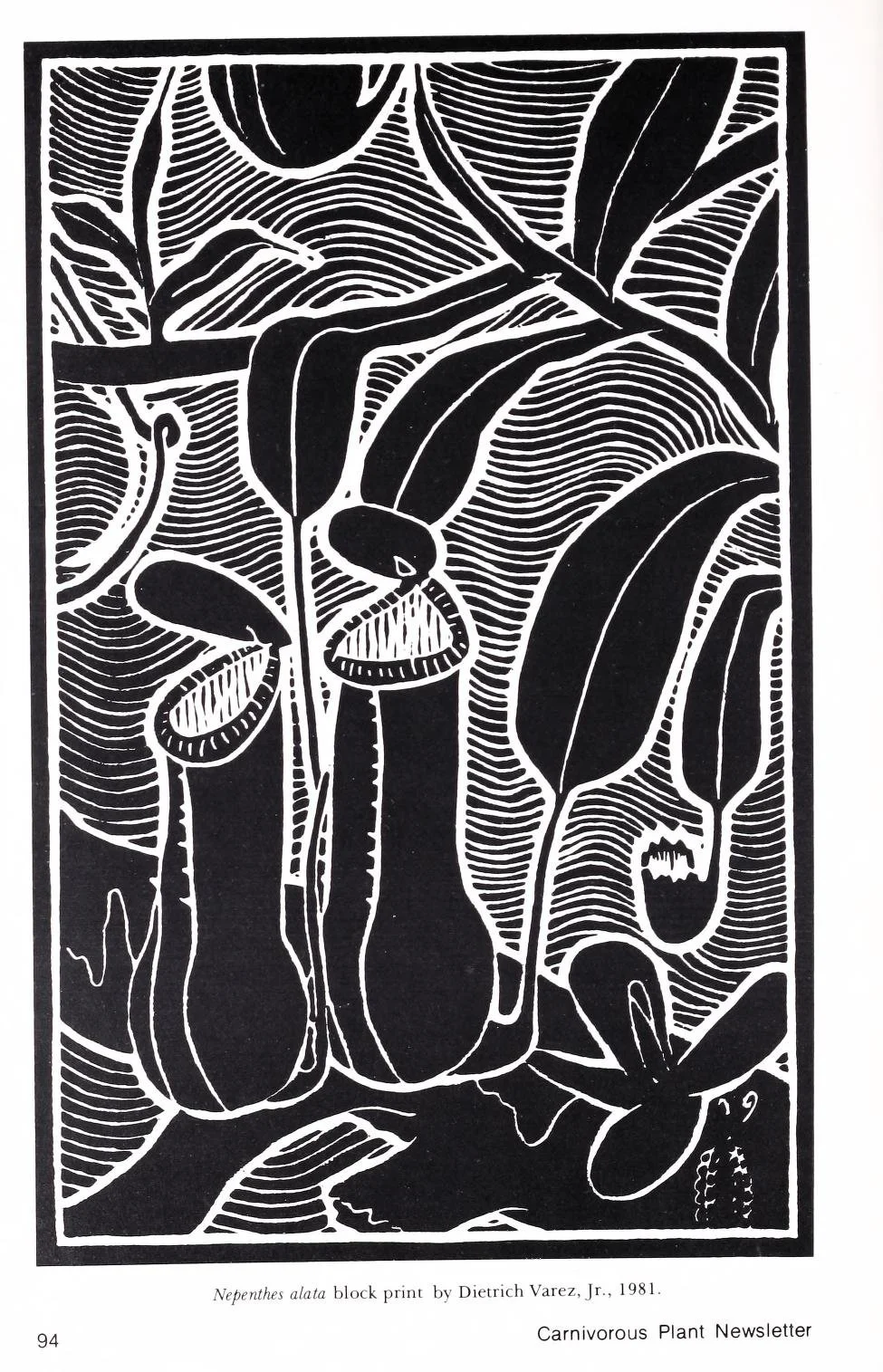
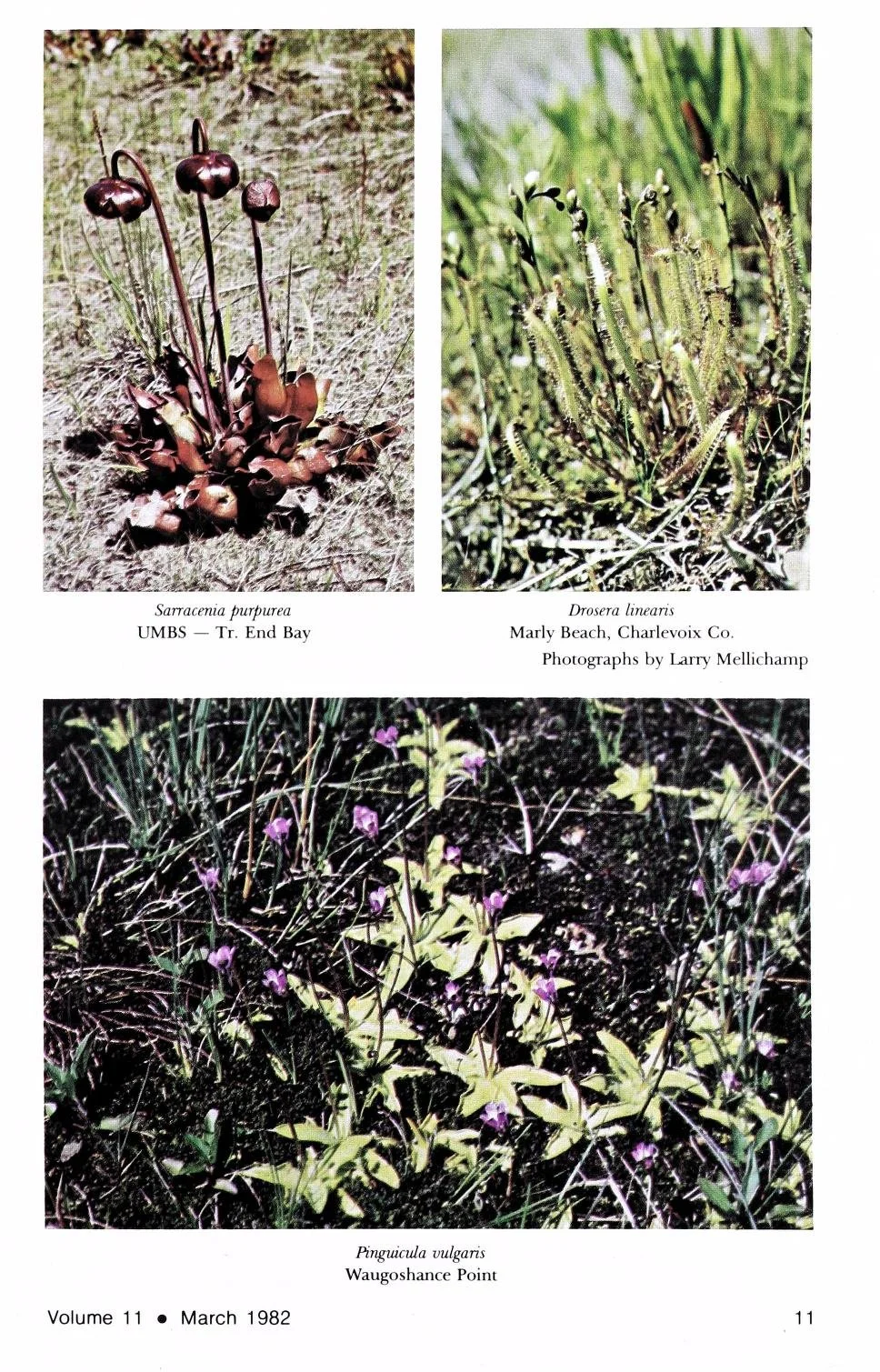
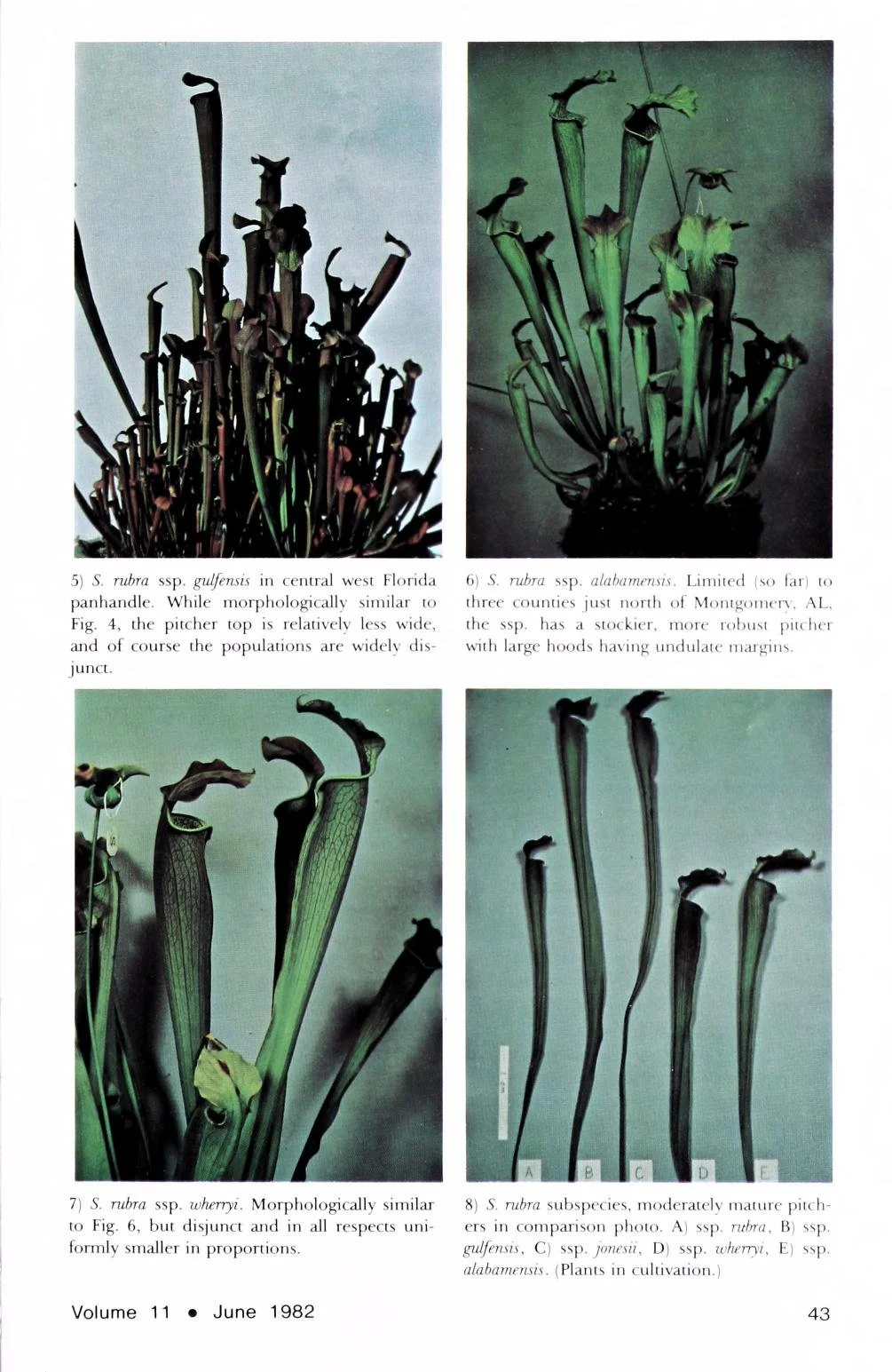
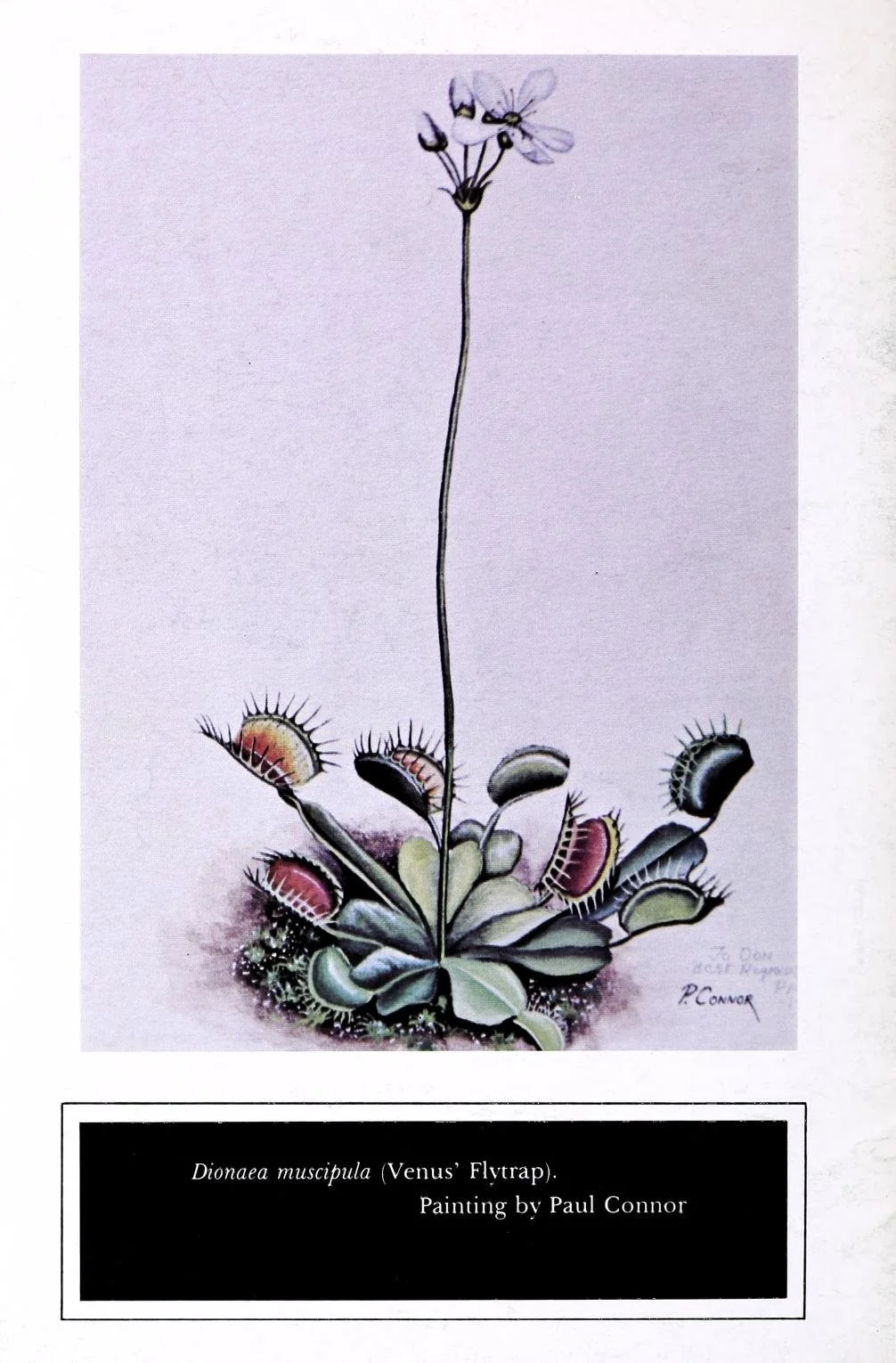
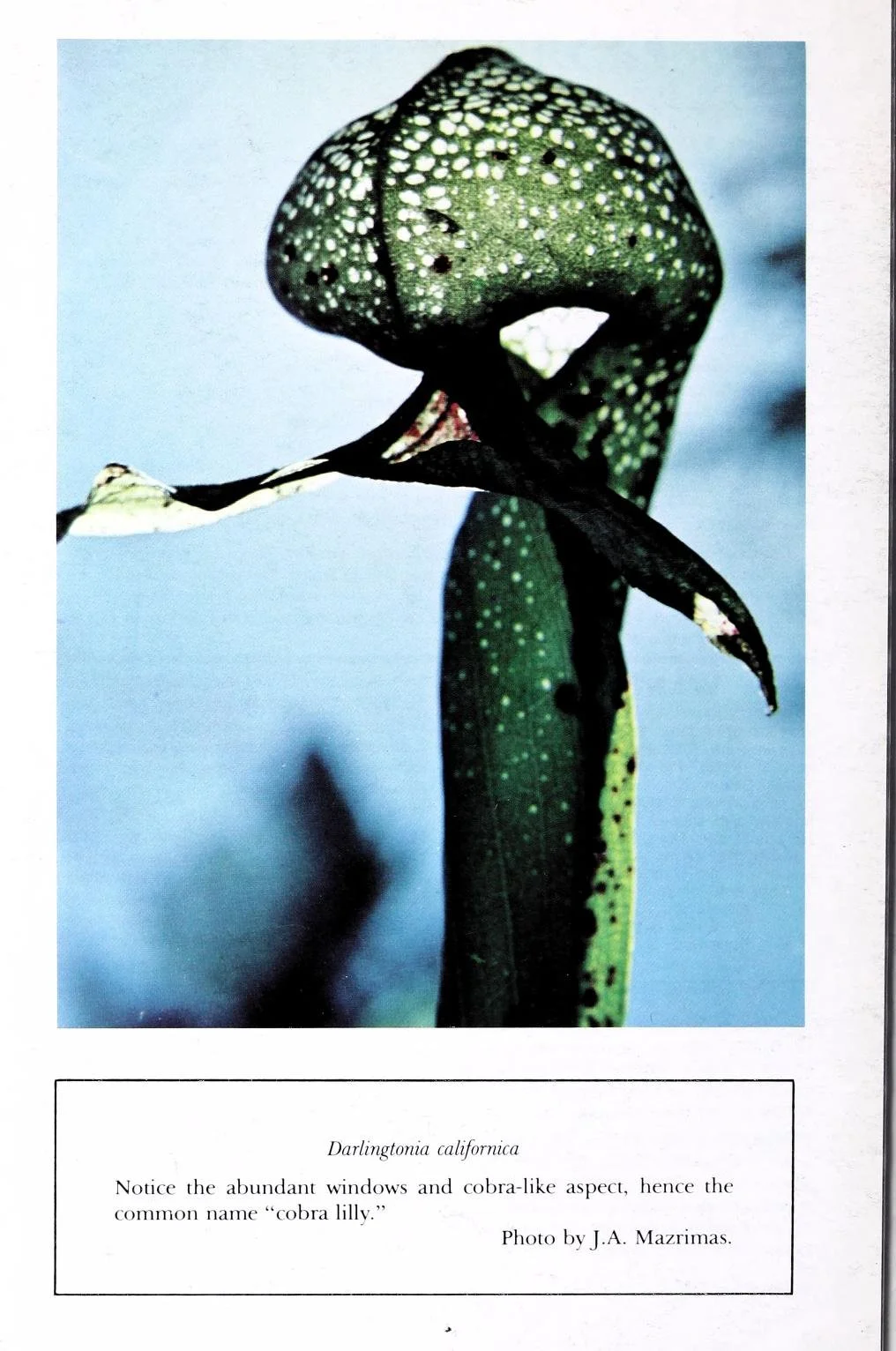
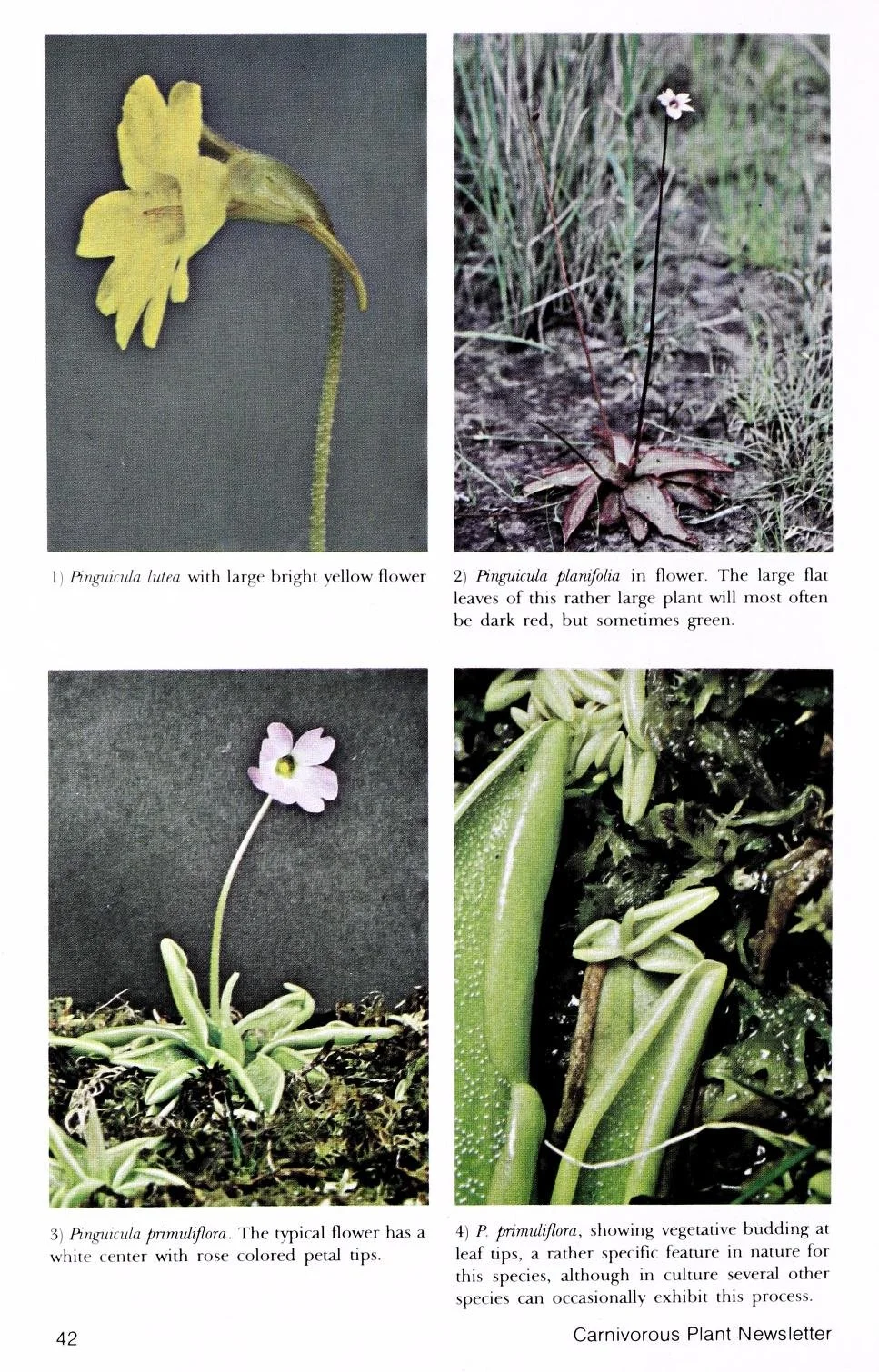
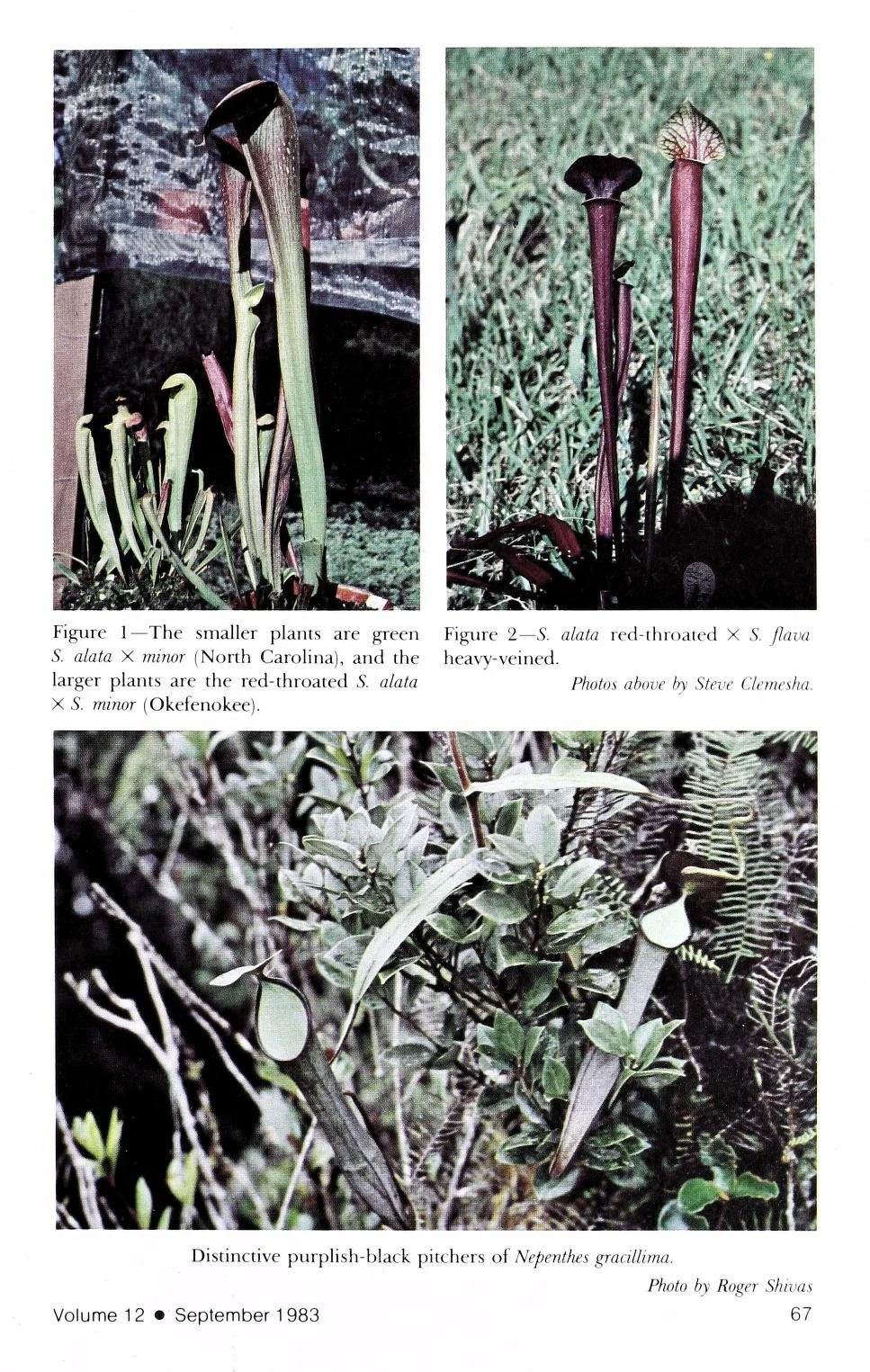
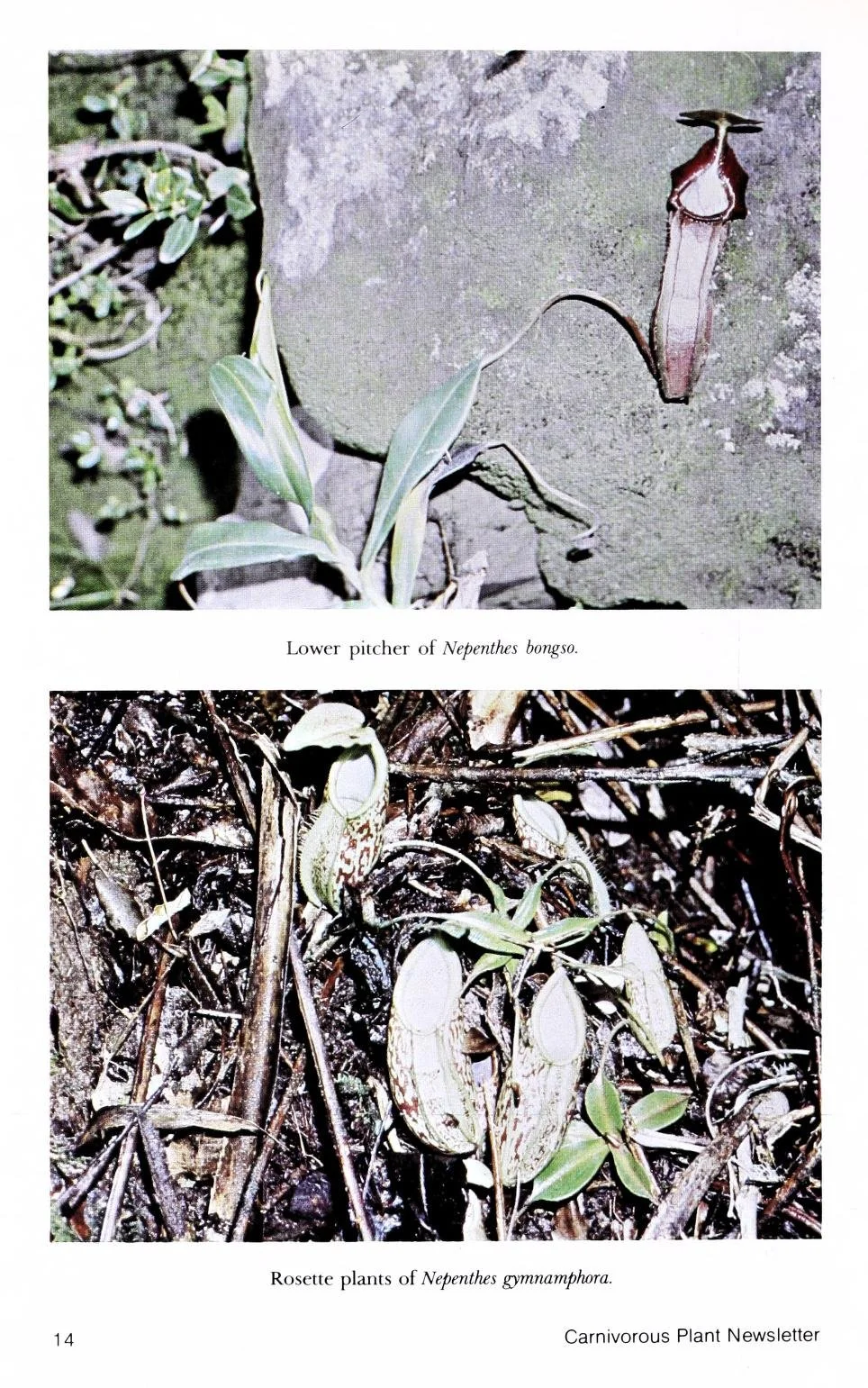
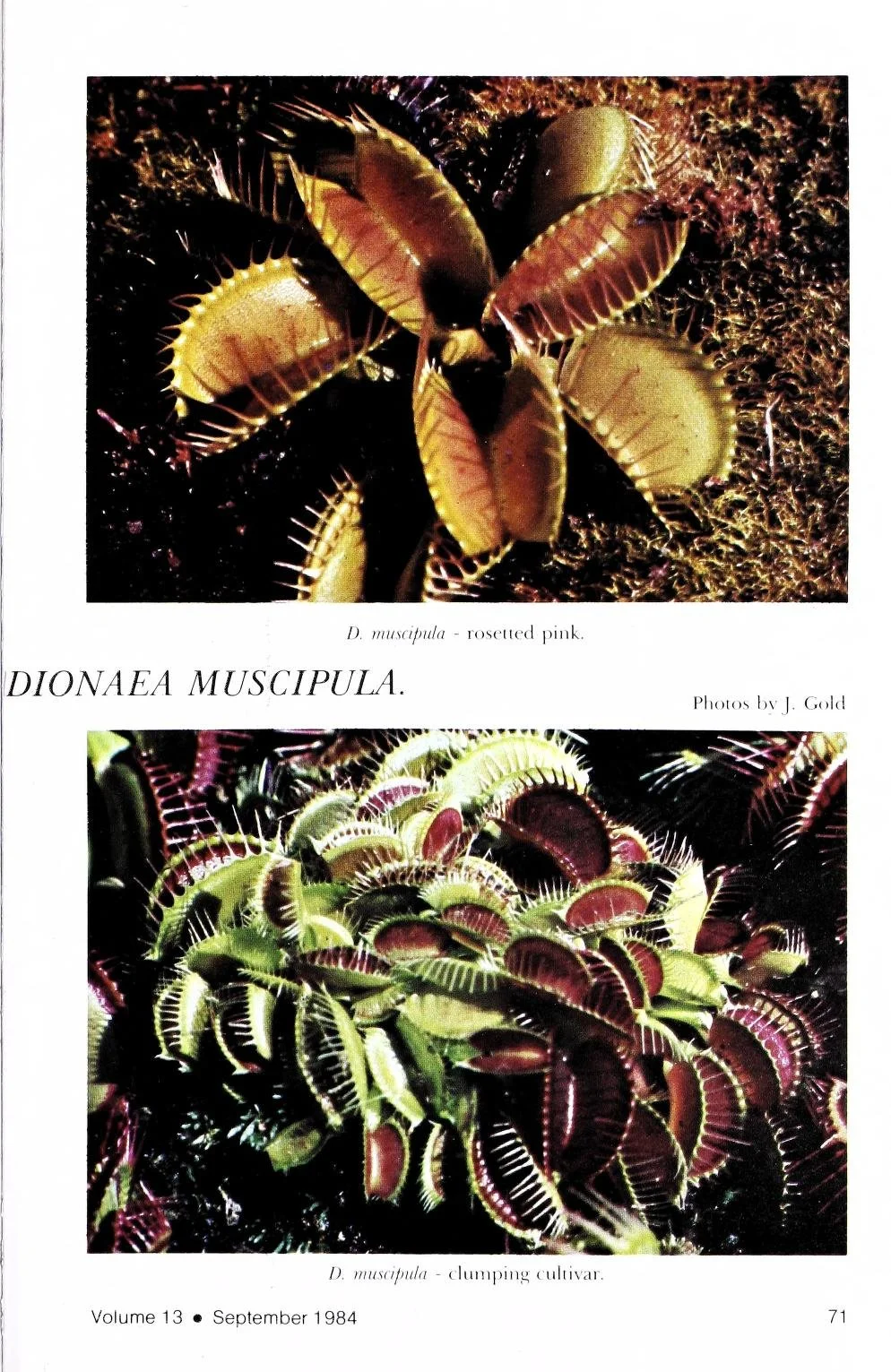
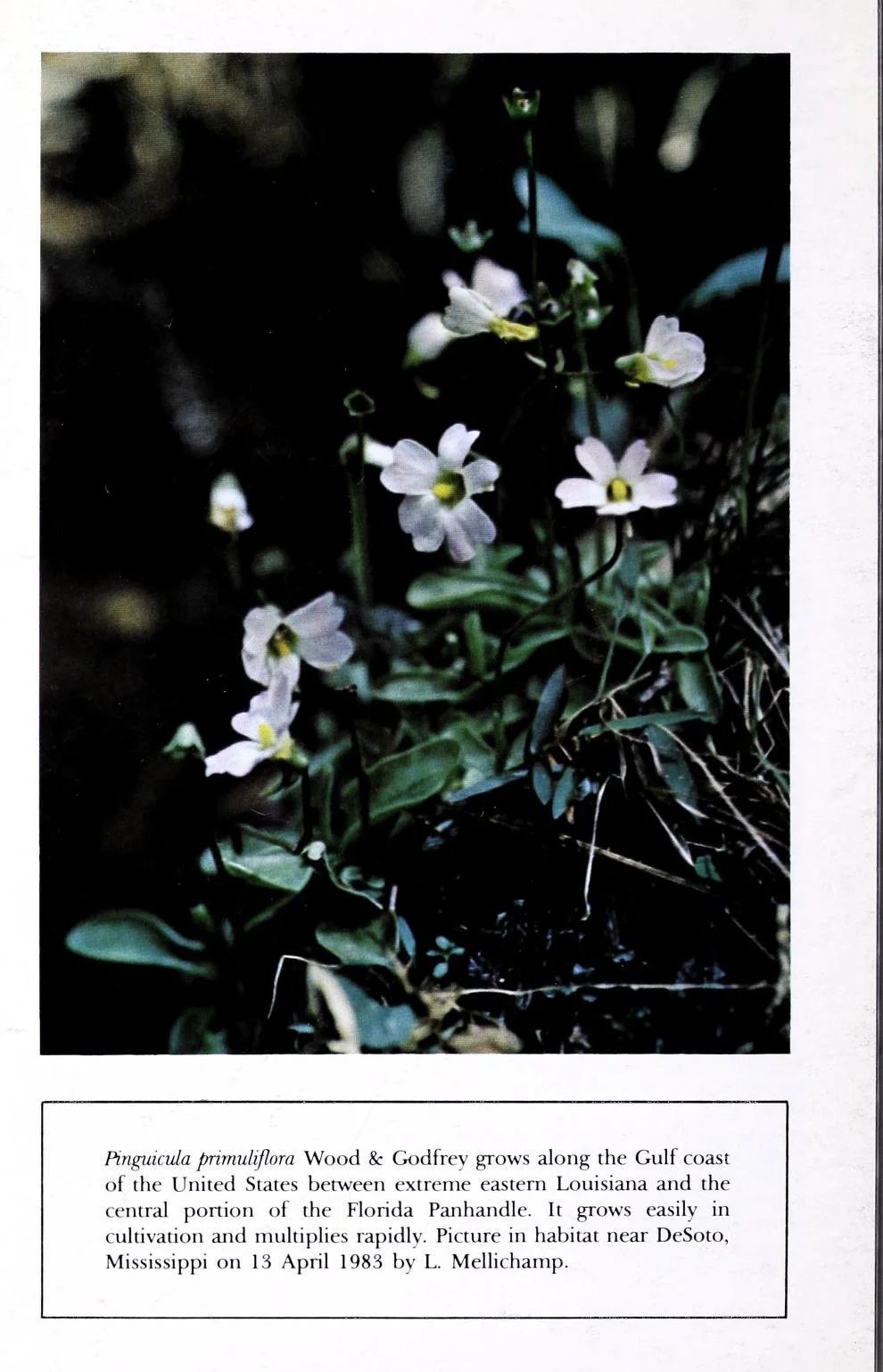
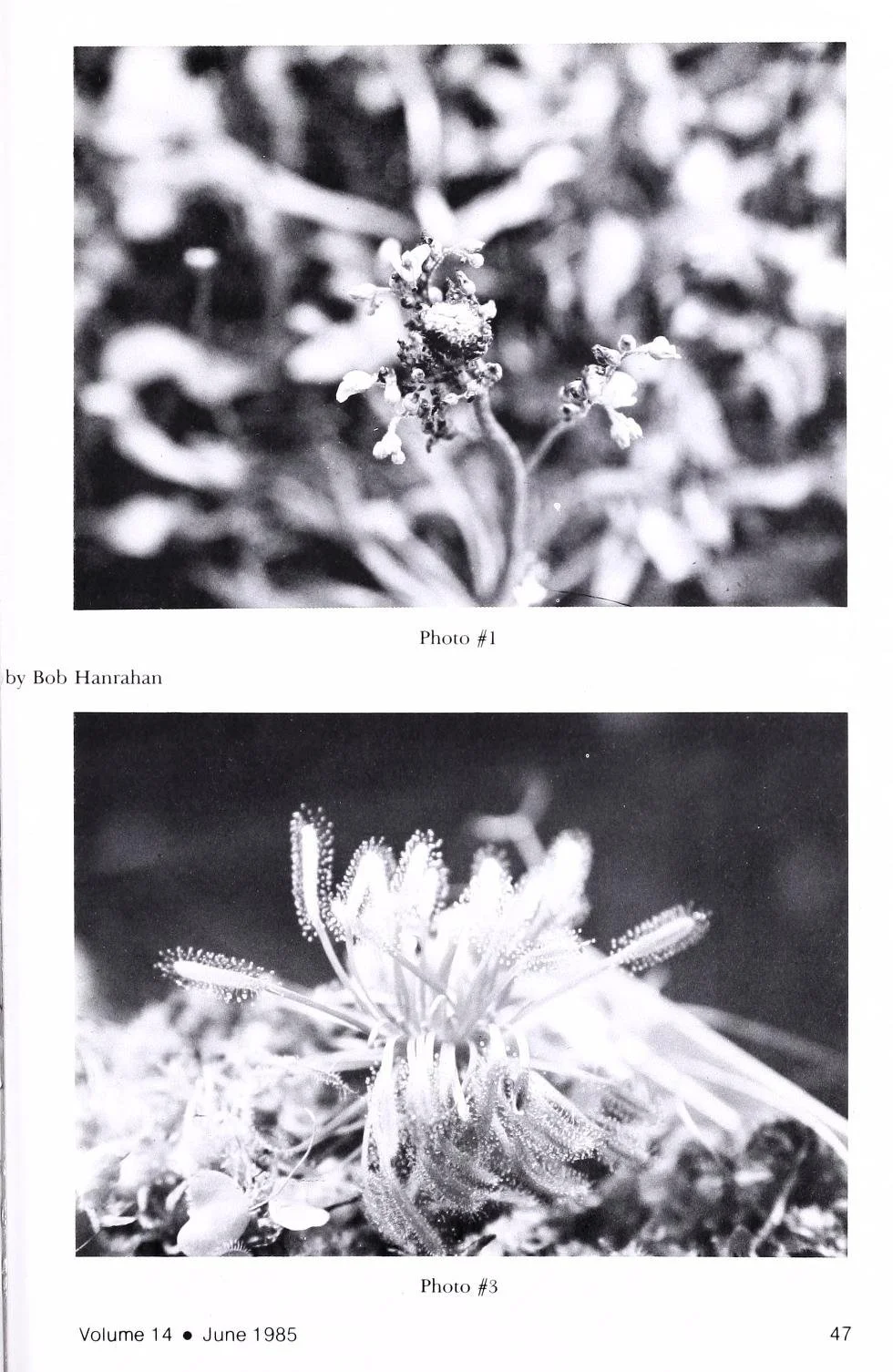
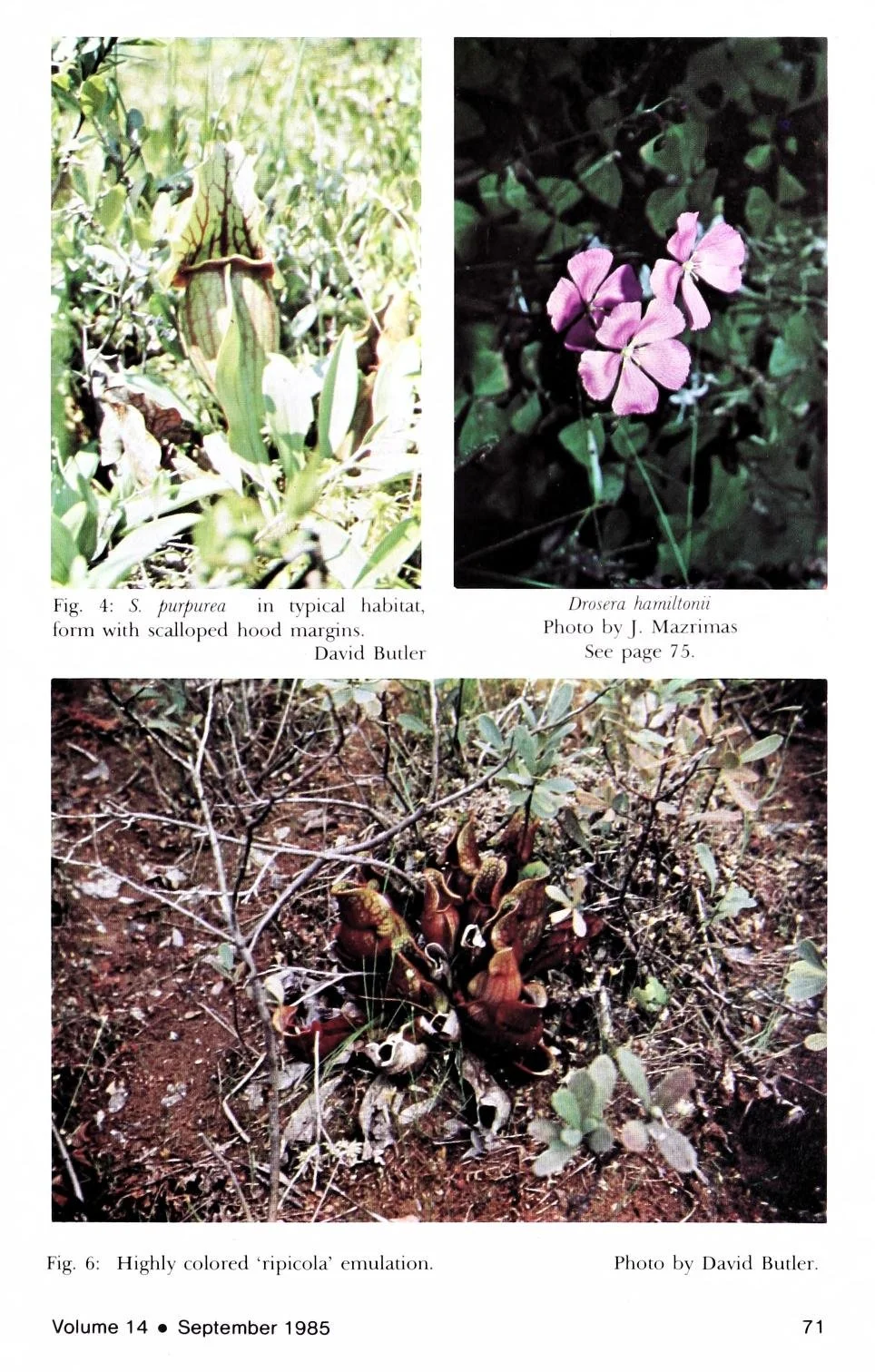
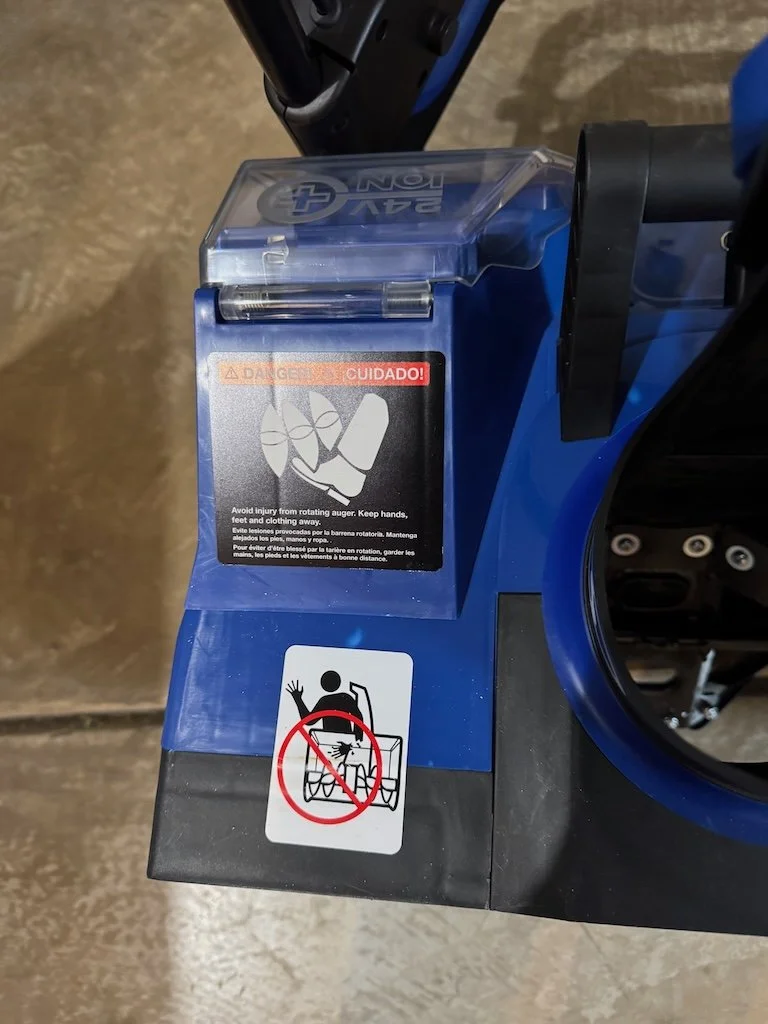
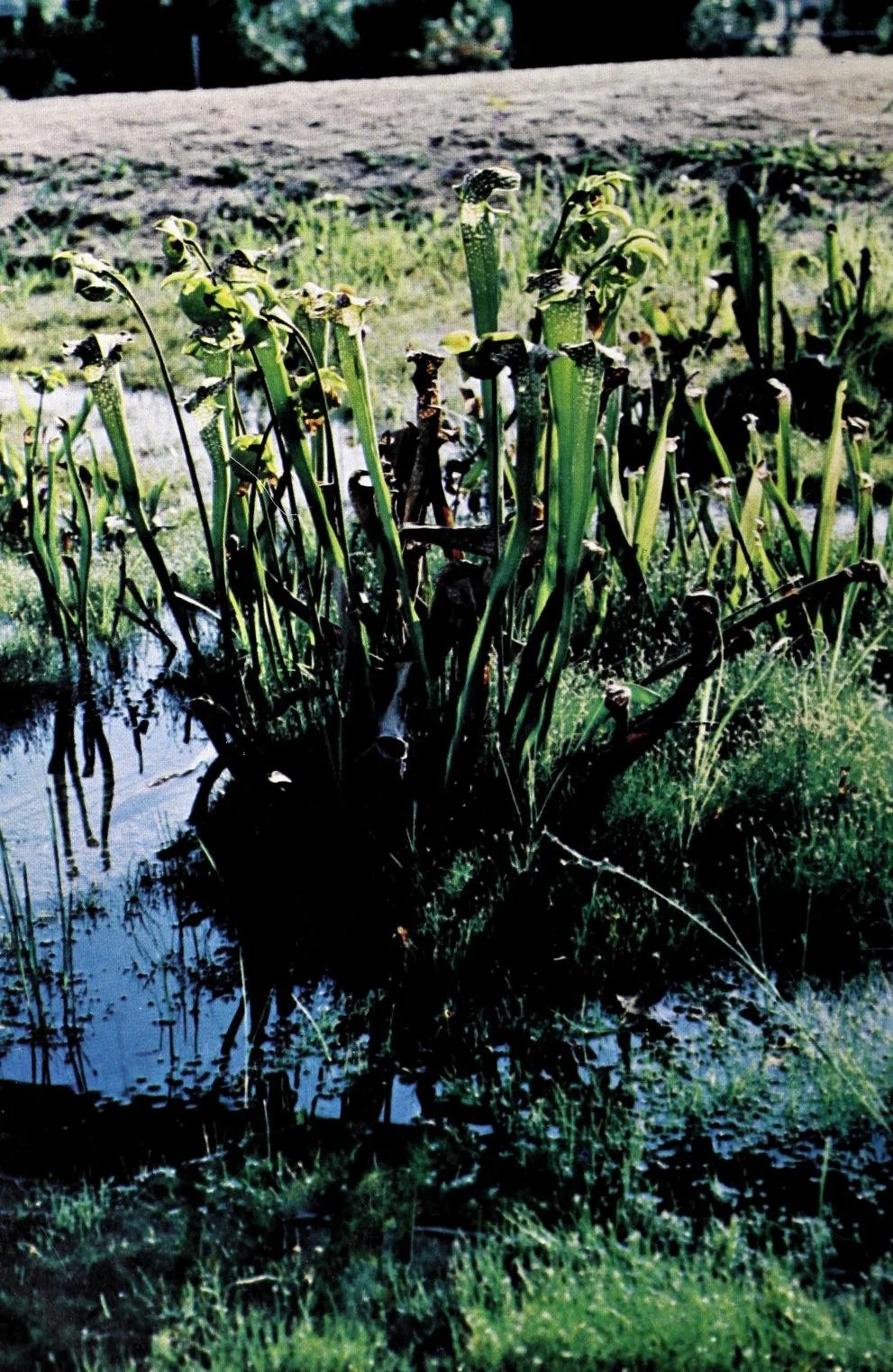
Twenty more books were added to my botanical print eBook collection in December – all are available for browsing on Internet Archive.   I started working my way through the Carnivorous Plant Newsletters in December; there are 4 volumes per year so I only browsed the first ones from the first half of the 1980s; I’ll continue browsing this periodical in January.

My list of eBotanical Prints books now totals 3,263 eBooks I’ve browsed over the years. The whole list can be accessed here.

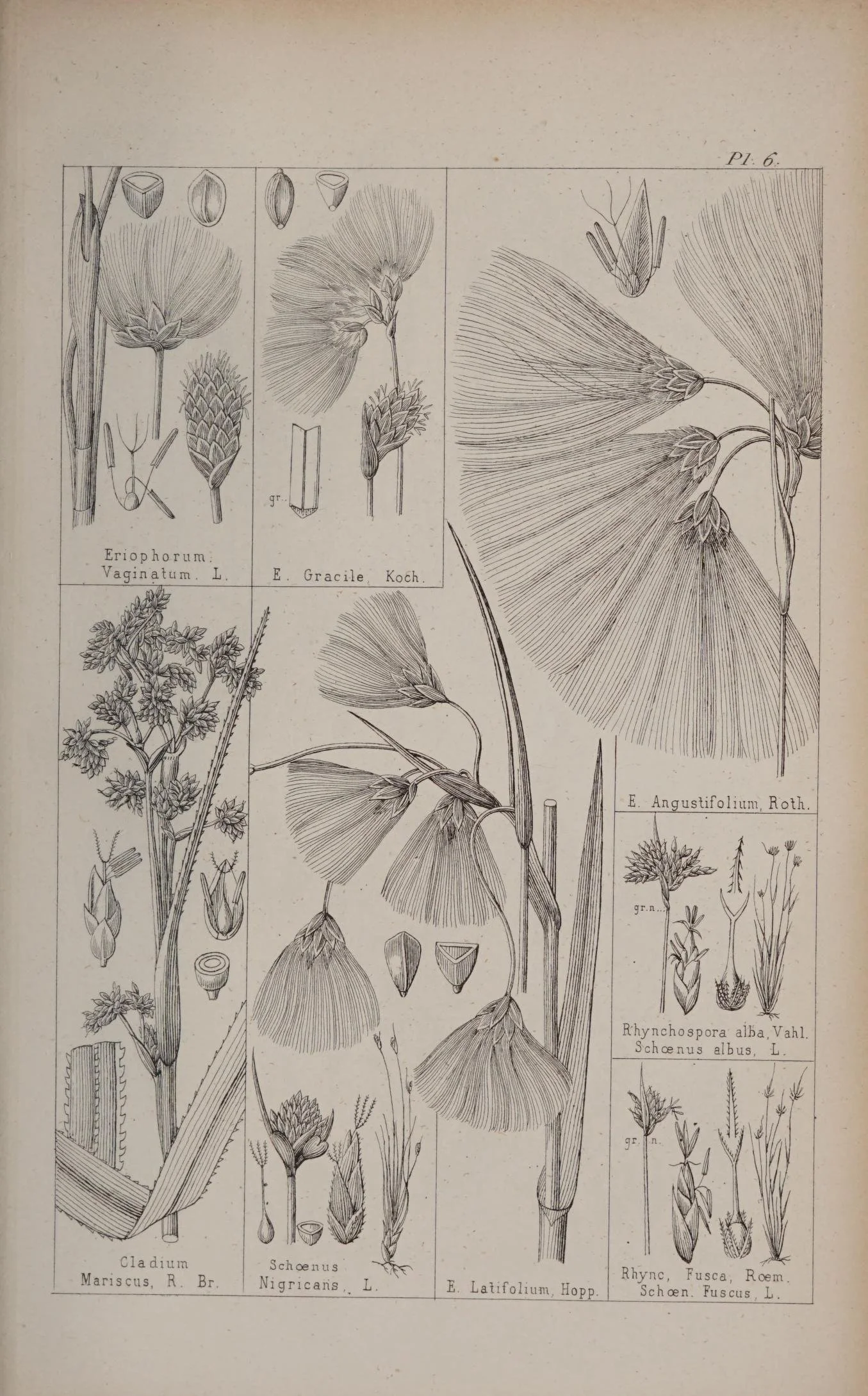
Click on any sample image from December’s 20 books below to get an enlarged version…and the title hyperlink in the list below the image mosaic to view the entire volume where there are a lot more botanical illustrations to browse.

Enjoy the December 2025 eBotanical Prints!

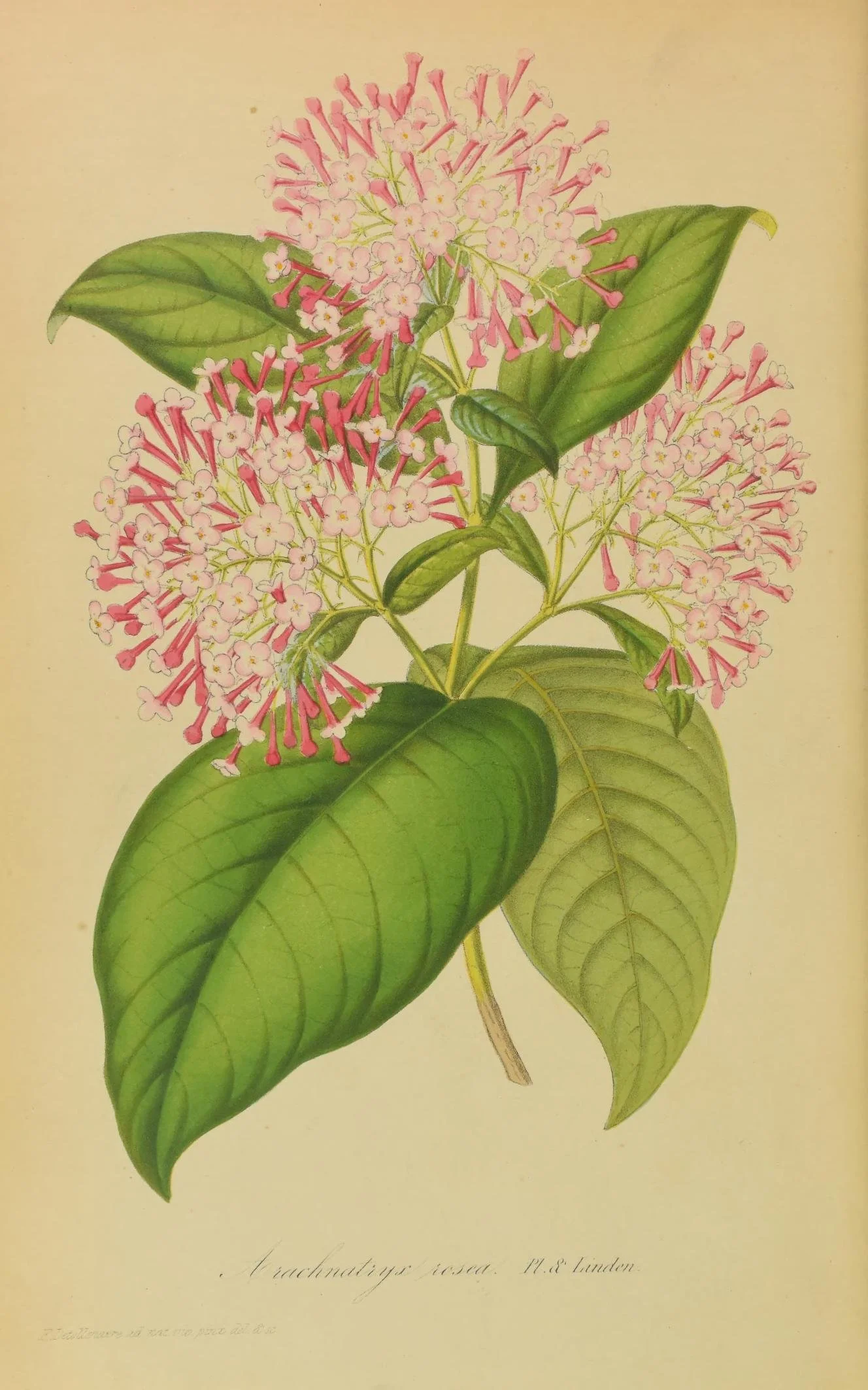
Hortus Lindenianus : recueil iconographique des plantes nouvelles introduites par l'établissement * Linden, Jean Jules * sample image * 1859

Indicateur de Maine et Loire V2 * Millet de La Turtaudière, Pierre-Aimé * sample image * 1864

Carnivorous plant newsletter v.10:no.1 (1981)  * California State University, Fullerton. Arboretum * sample image * 1981

Carnivorous plant newsletter v.10:no.2 (1981)  * California State University, Fullerton. Arboretum * sample image * 1981

Carnivorous plant newsletter v.10:no.3 (1981)  * California State University, Fullerton. Arboretum * sample image * 1981

Carnivorous plant newsletter v.10:no.4 (1981)  * California State University, Fullerton. Arboretum * sample image * 1981

Carnivorous plant newsletter v.11:no.1 (1982)  * California State University, Fullerton. Arboretum * sample image * 1982

Carnivorous plant newsletter v.11:no.2 (1982)  * California State University, Fullerton. Arboretum * sample image * 1982

Carnivorous plant newsletter v.11:no.3 (1982)  * California State University, Fullerton. Arboretum * sample image * 1982

Carnivorous plant newsletter v.12:no.1 (1983)  * California State University, Fullerton. Arboretum * sample image * 1983

Carnivorous plant newsletter v.12:no.2 (1983)  * California State University, Fullerton. Arboretum * sample image * 1983

Carnivorous plant newsletter v.12:no.3 (1983)  * California State University, Fullerton. Arboretum * sample image * 1983

Carnivorous plant newsletter v.12:no.4 (1983)  * California State University, Fullerton. Arboretum * sample image * 1983

Carnivorous plant newsletter v.13:no.1 (1984)  * California State University, Fullerton. Arboretum * sample image * 1984

Carnivorous plant newsletter v.13:no.2 (1984)  * California State University, Fullerton. Arboretum * sample image * 1984

Carnivorous plant newsletter v.13:no.3 (1984)  * California State University, Fullerton. Arboretum * sample image * 1984

Carnivorous plant newsletter v.13:no.4 (1984)  * California State University, Fullerton. Arboretum * sample image * 1984

Carnivorous plant newsletter v.14:no.1 (1985)  * California State University, Fullerton. Arboretum * sample image * 1985

Carnivorous plant newsletter v.14:no.2 (1985)  * California State University, Fullerton. Arboretum * sample image * 1985

Carnivorous plant newsletter v.14:no.3 (1985)  * California State University, Fullerton. Arboretum * sample image * 1985

Zooming – December 2025

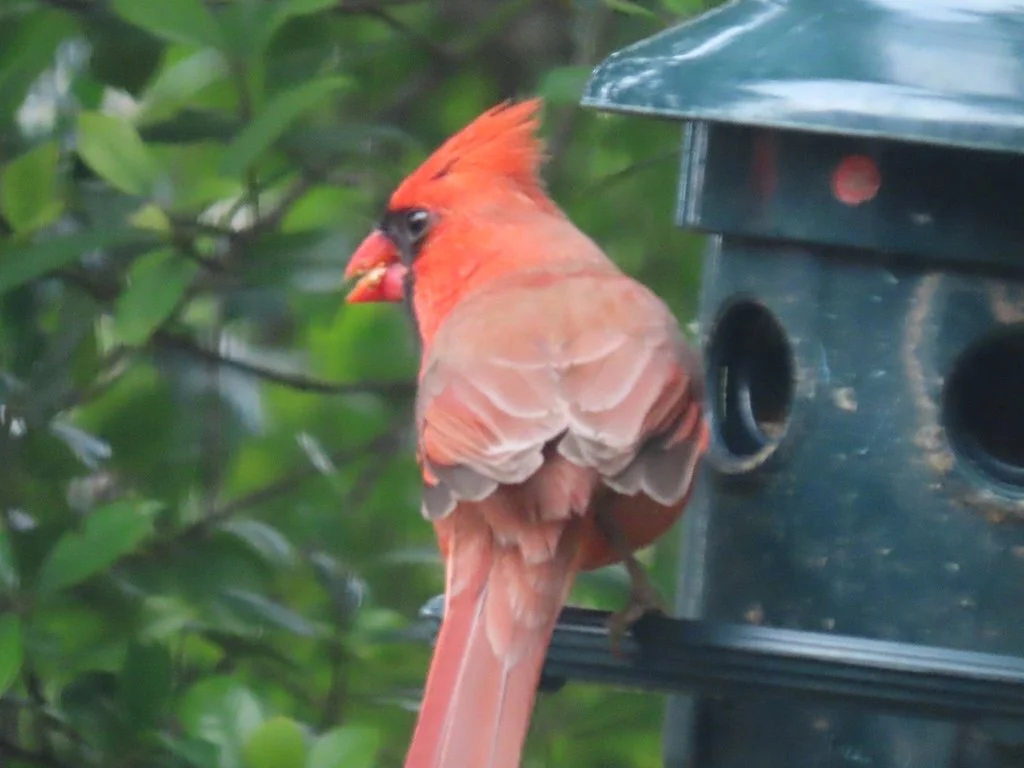
The slideshow for this month includes some pictures I took at the Rio Grande Birding Festival in November but didn’t get posted about until this month. There are a few pictures from my visit to Dallas and the holiday lights too. Enjoy the slideshow!

Ten Little Celebrations – December 2025

December is always a month with a lot of celebrations – Christmas…my birthday…the end of the semester for my daughter…a great time to travel.

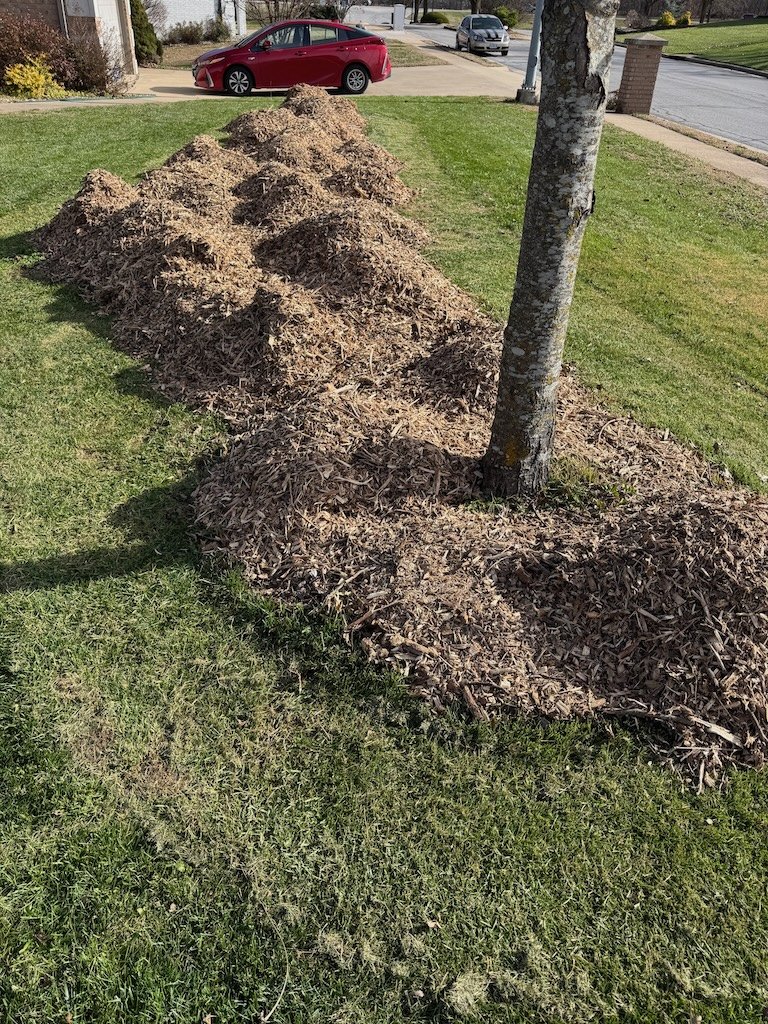
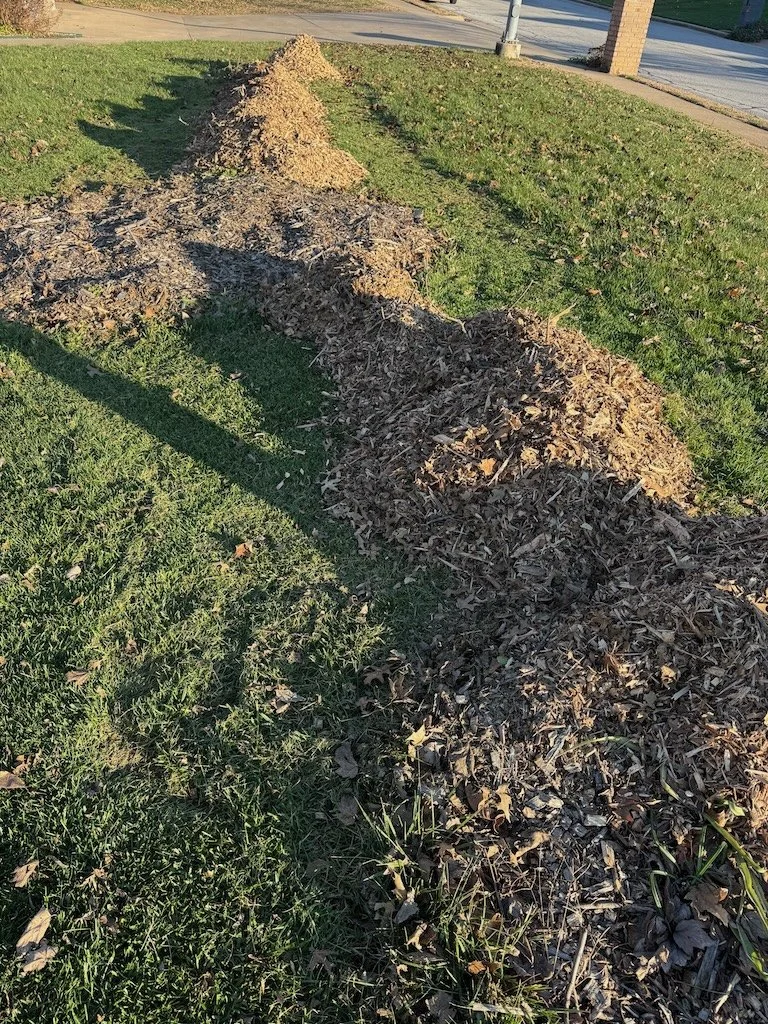
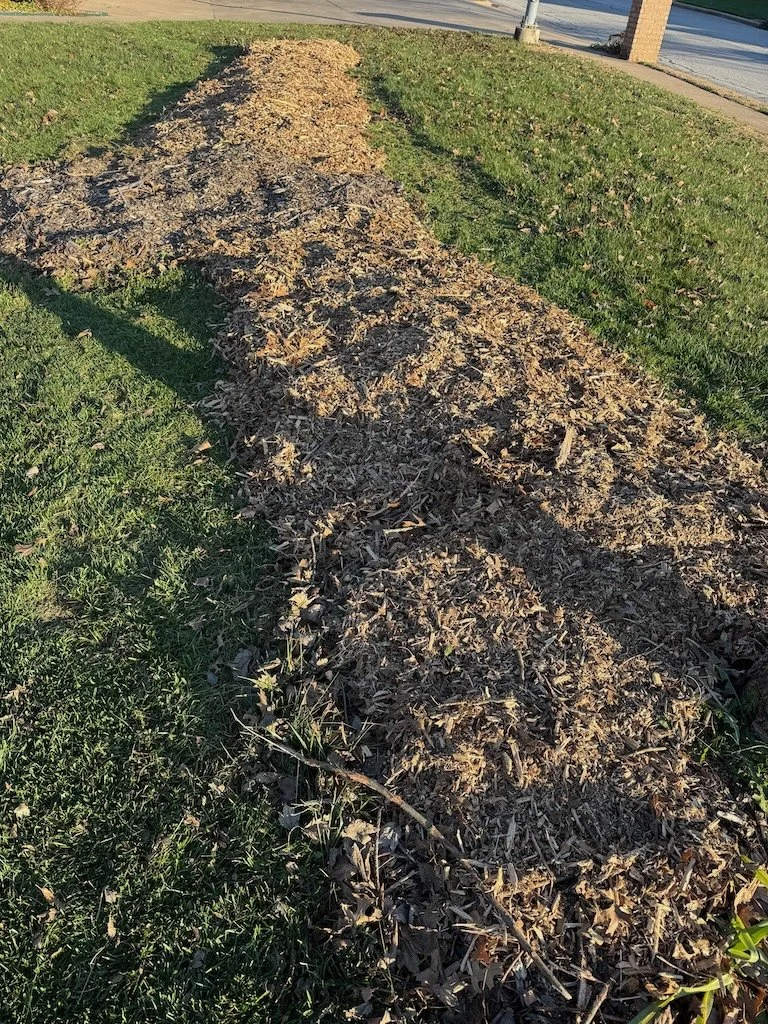
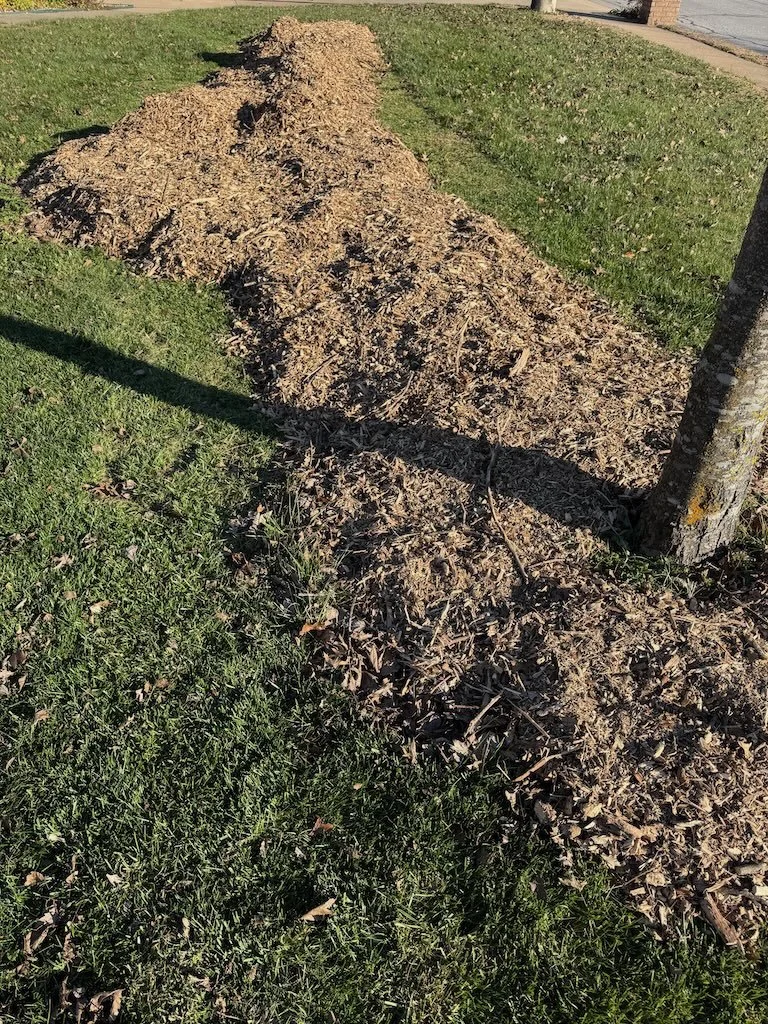
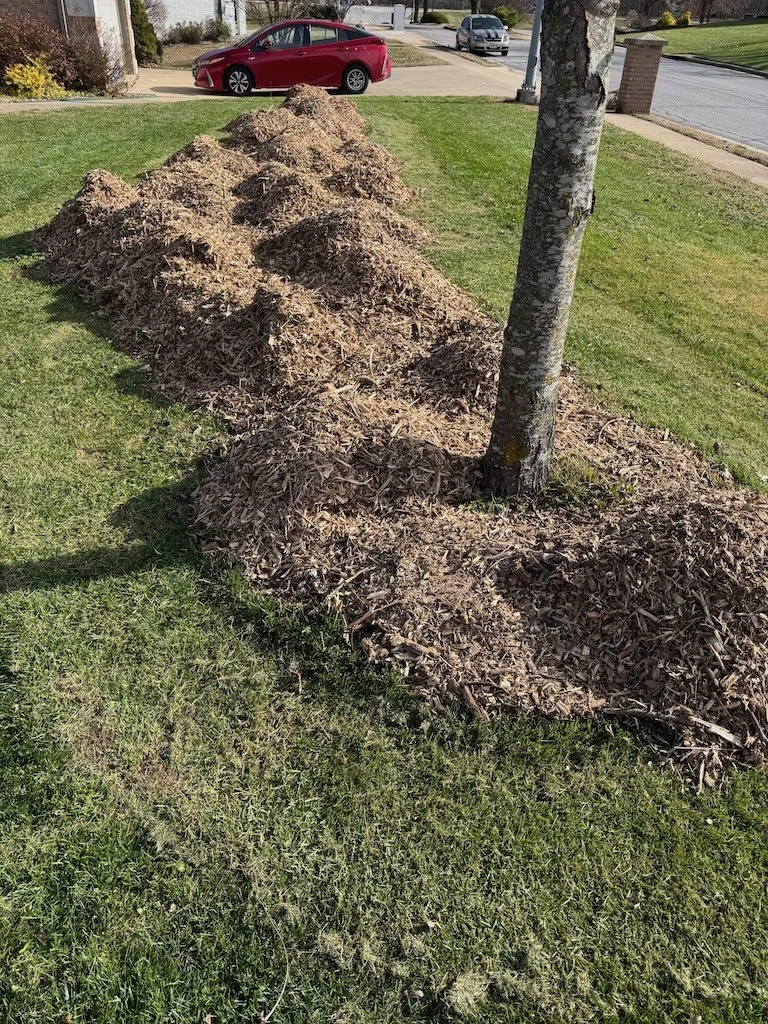
Oak wood chips to create a new native plant area. The branches trimmed from daughter’s oak (stabilizing an old tree) were chipped and I celebrated when I got the whole pile moved to my front yard – creating a great bed that I will plant with native plants in the spring.

Sweet potato soup. I celebrated a soup with of sweet potatoes, chicken, apple, fresh ginger, and a little lime…toast cubes on top. It was probably the best soup of the month!

New docking station. I had been having problems with my monitors becoming disconnected from my Mac…and an external drive not being available. There were work arounds that no longer worked consistently to fix the problem. I celebrated when my husband provided a new docking station….and the problems were resolved.

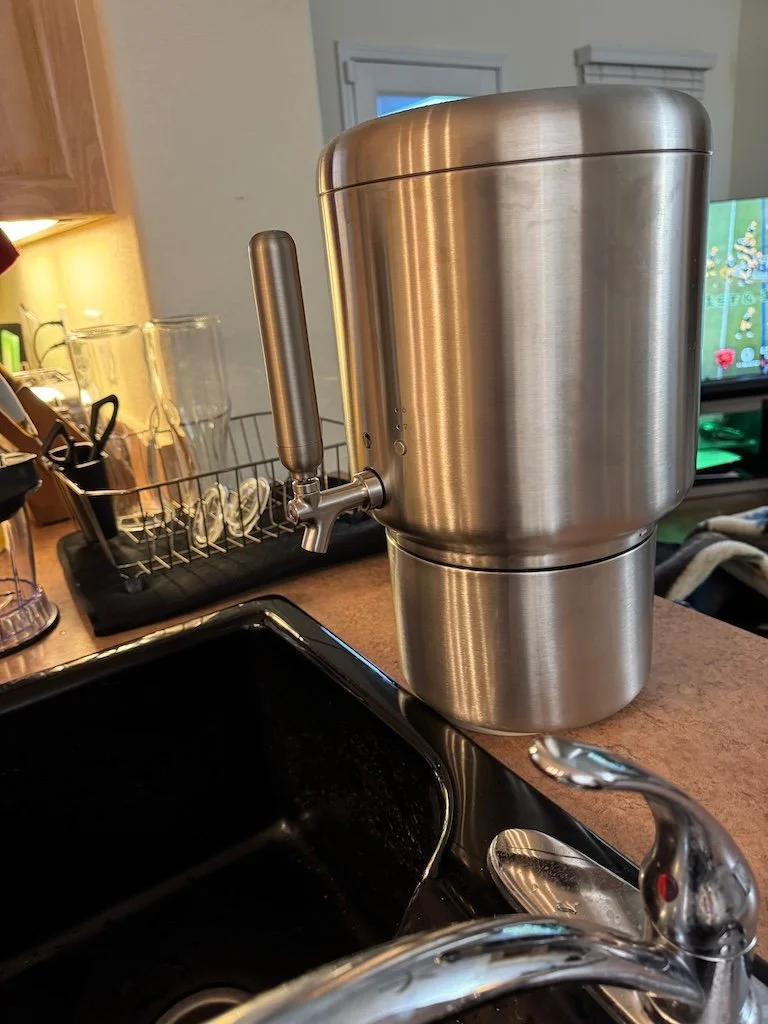
Rorra water filtration system. In my quest to reduce the microplastics in food, I bought the Rorra system and celebrated the step to reduce microplastics (and some other things) in our water. Now I can move on to other aspects of my kitchen/grocery shopping.

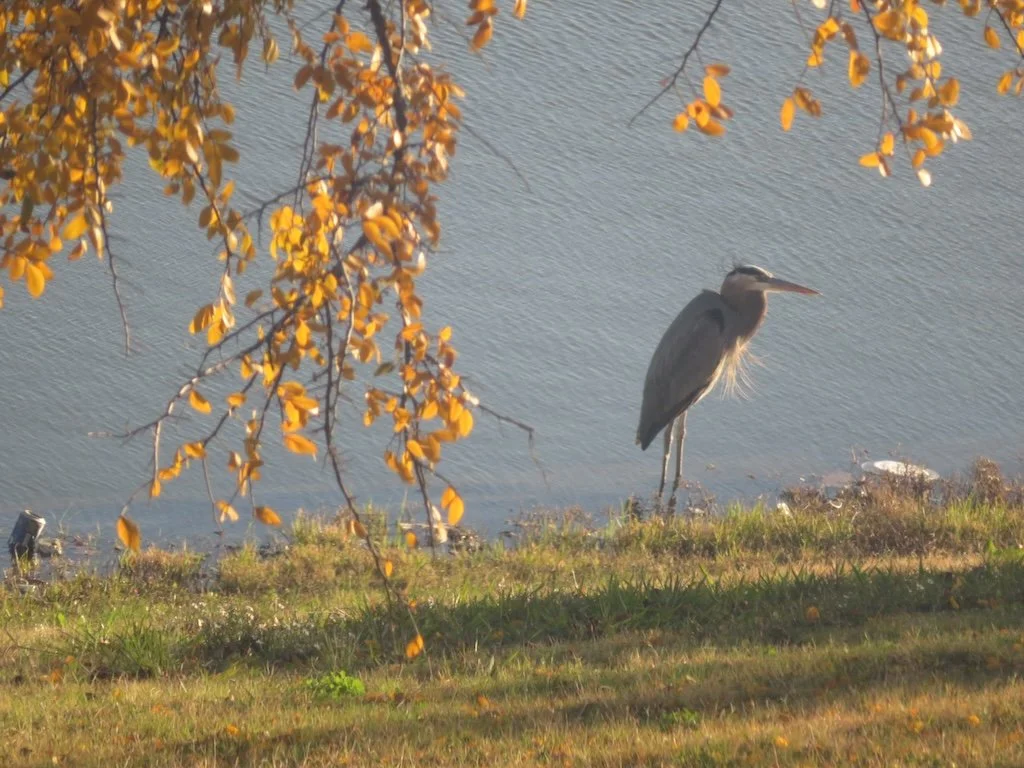
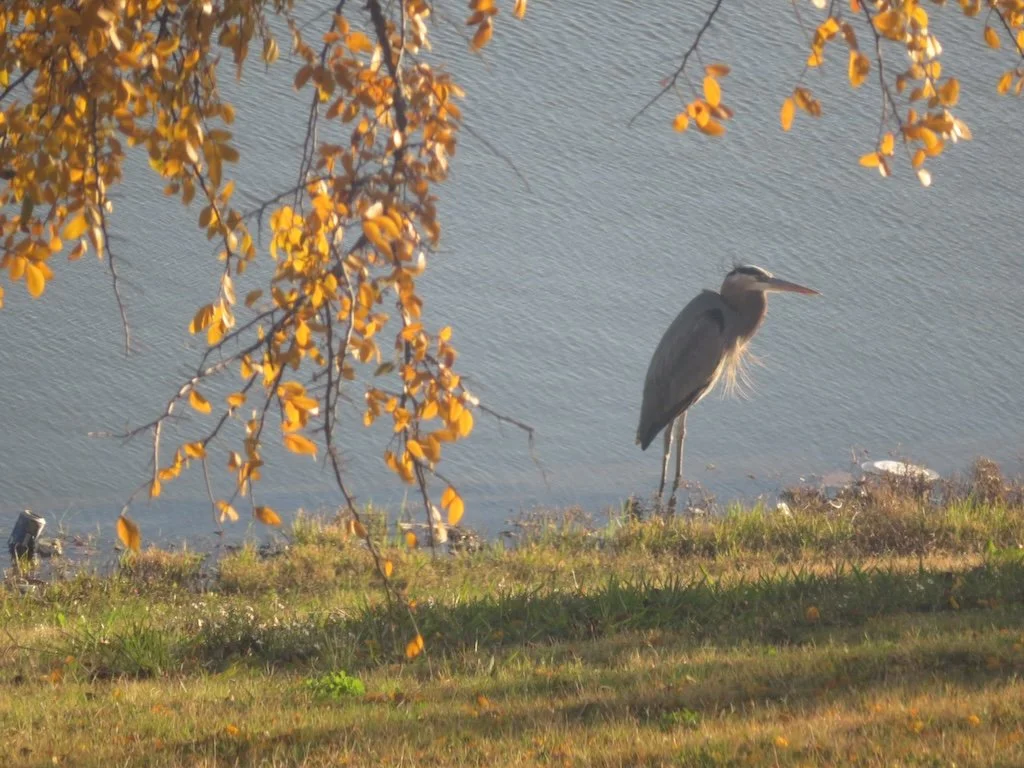
Great blue heron from my hotel window. I celebrated that the view from my hotel window in Lewisville included a great blue heron for a second month in a row.

Home before dark. I knew that December was the hardest month for me to get home before dark on my return from Texas…but I managed it…about 5 minutes before sunset.

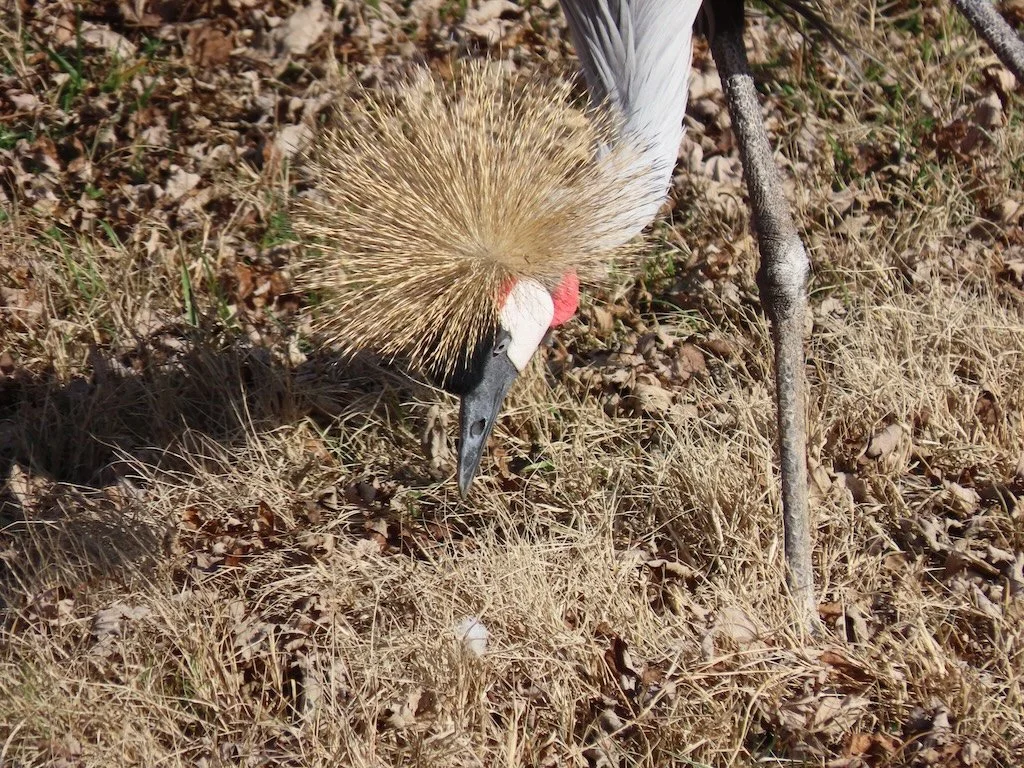
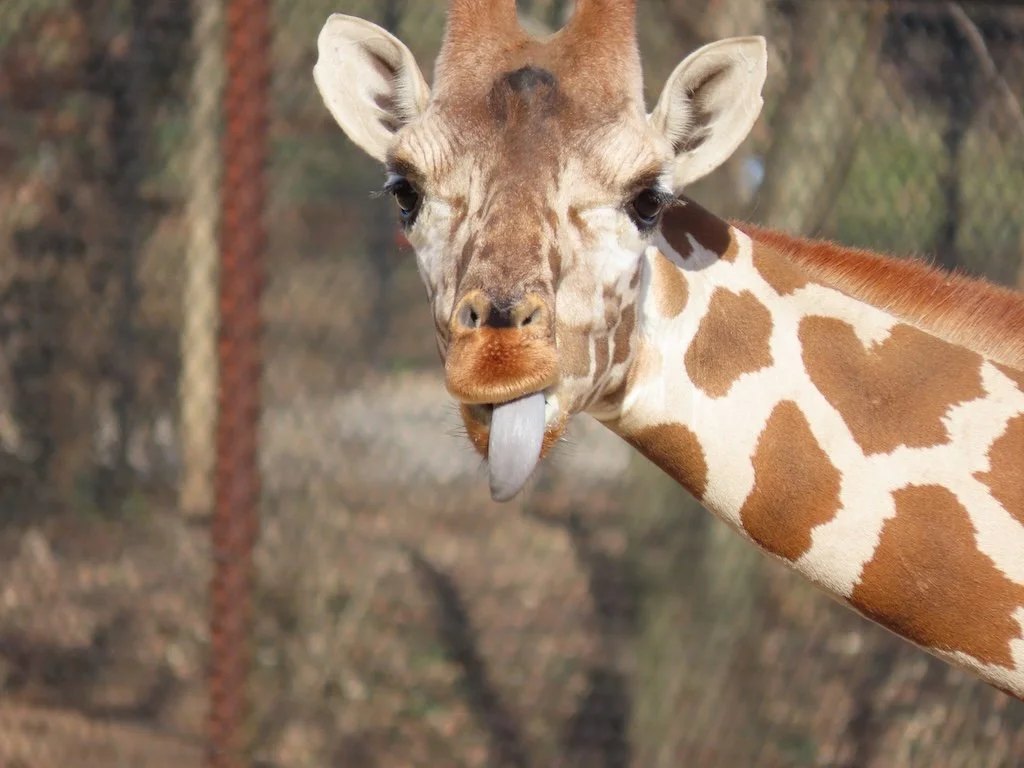
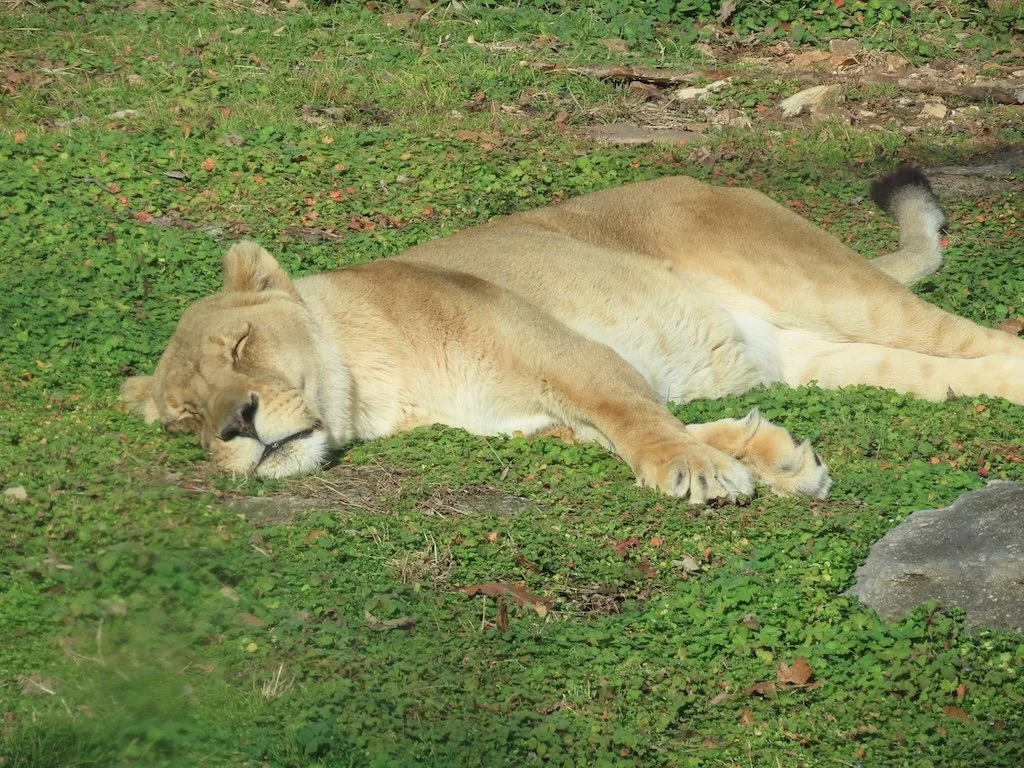
Dickerson Park Zoo. There were some cold days in December but we took advantage of a day that the temperature reached into the 70s to visit the zoo. I always find something the celebrate there – either an animal seemingly poising for a photography or the different noises they are making (or not).

Daughter’s tenure. The major hurdles in the tenure process for my daughter happened in December. It won’t be formalized until the spring, but we are celebrating this milestone of her academic career.

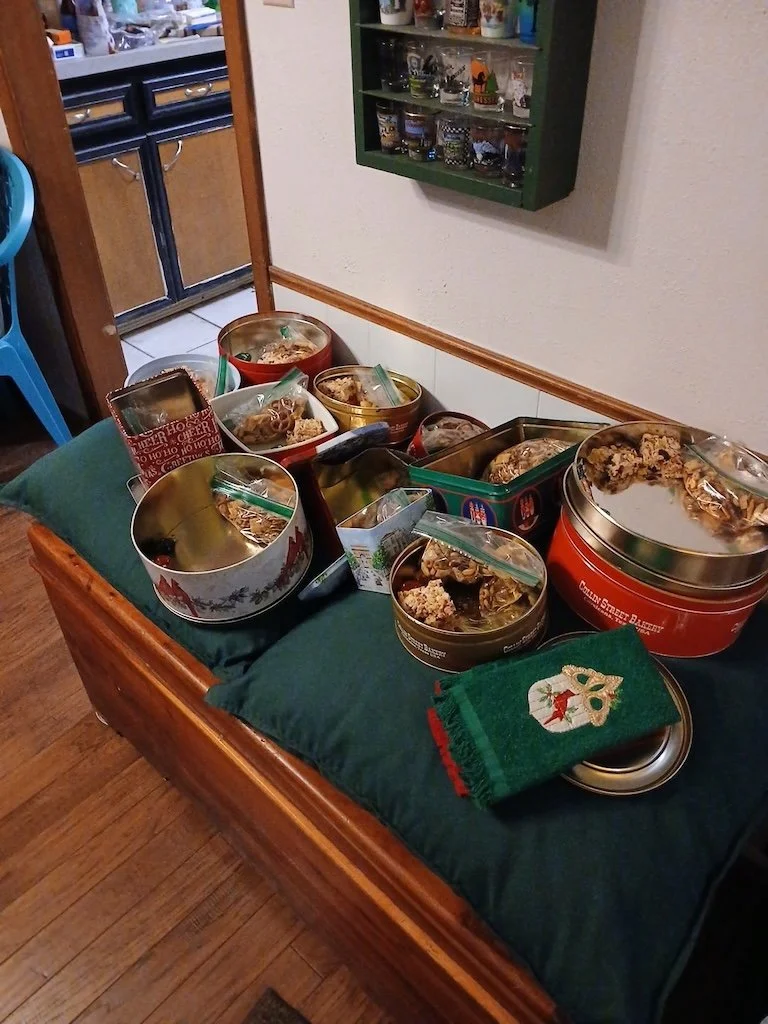
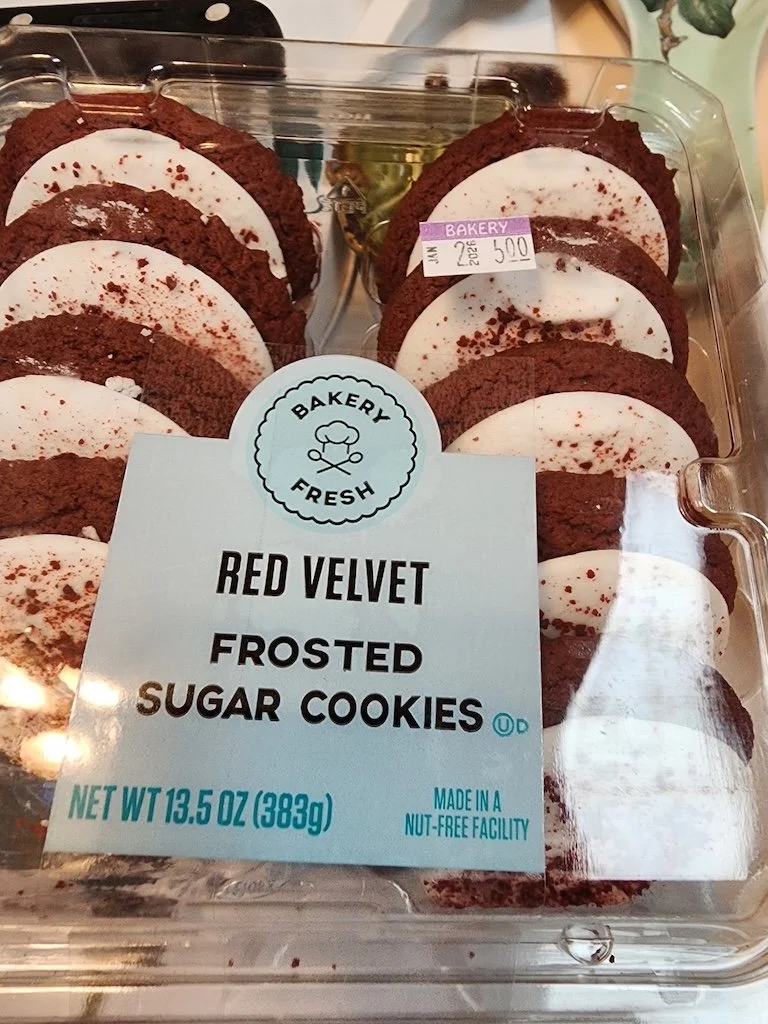
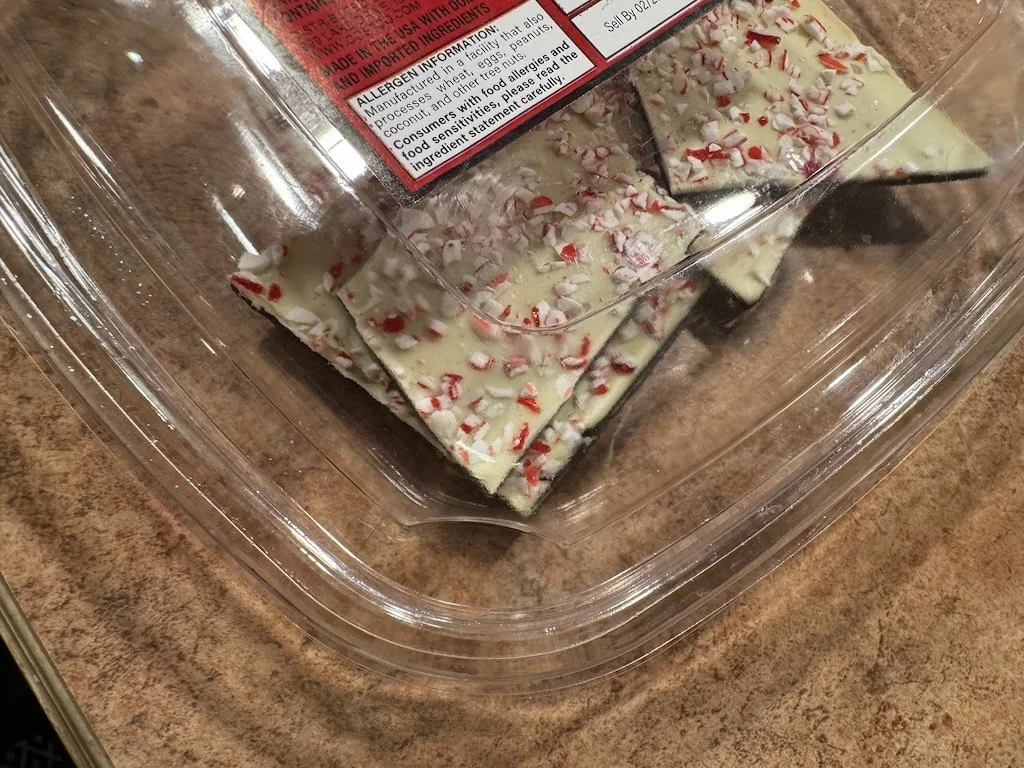
Christmas time goodies. December is not a diet month. I’ve celebrated with goodies I bought for myself and the ones my sister provided! January will be the diet month.

Another birthday. Celebrating another year…and the experiences that surrounded my birthday this year – several out-to-eat events, a trip to the zoo, a trip to a wildlife refuge. My present was an electric tea kettle made of glass and stainless steel – replacing a coffee maker that had a lot of plastic components.

Plastics Crisis – Holiday Plastic

Plastic is everywhere…so it isn’t hard to spot in our holiday preparations.

For example – if we buy holiday desserts at the grocery store, they are likely to be in plastic clamshells which are not generally recycled even though most of the manufactures try to say that they are. My curbside recycling company does not accept them and the city recycling center doesn’t either. They are plastic that touches food (not good) …and they go immediately into the trash since there are very few ways to reuse them. The only way to avoid them it to make your goodies from basic ingredients (no weird additives) that come in less toxic packaging.

My sister made homemade goodies for the family and the staff at my dad’s memory care facility this year. The party mix (a tradition in our family for decades) is in Ziplocs so some plastic…but all the other things are contained in tins that are reused. The version she gave me had the party mix in a tin of its own so mine had no plastic.

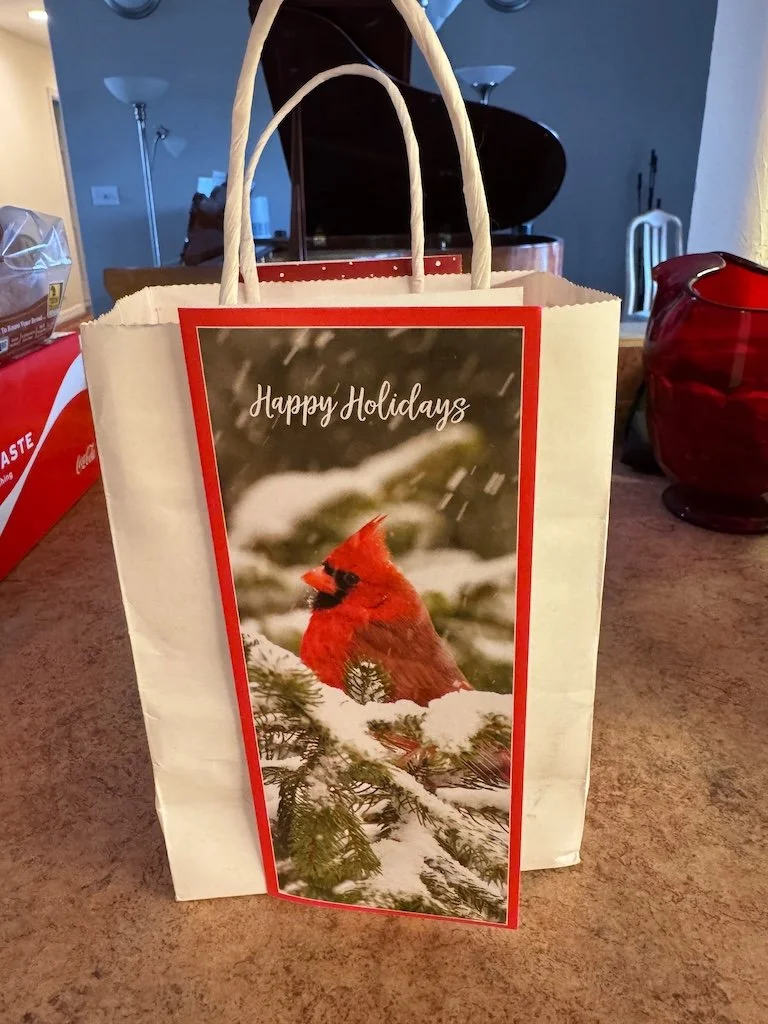
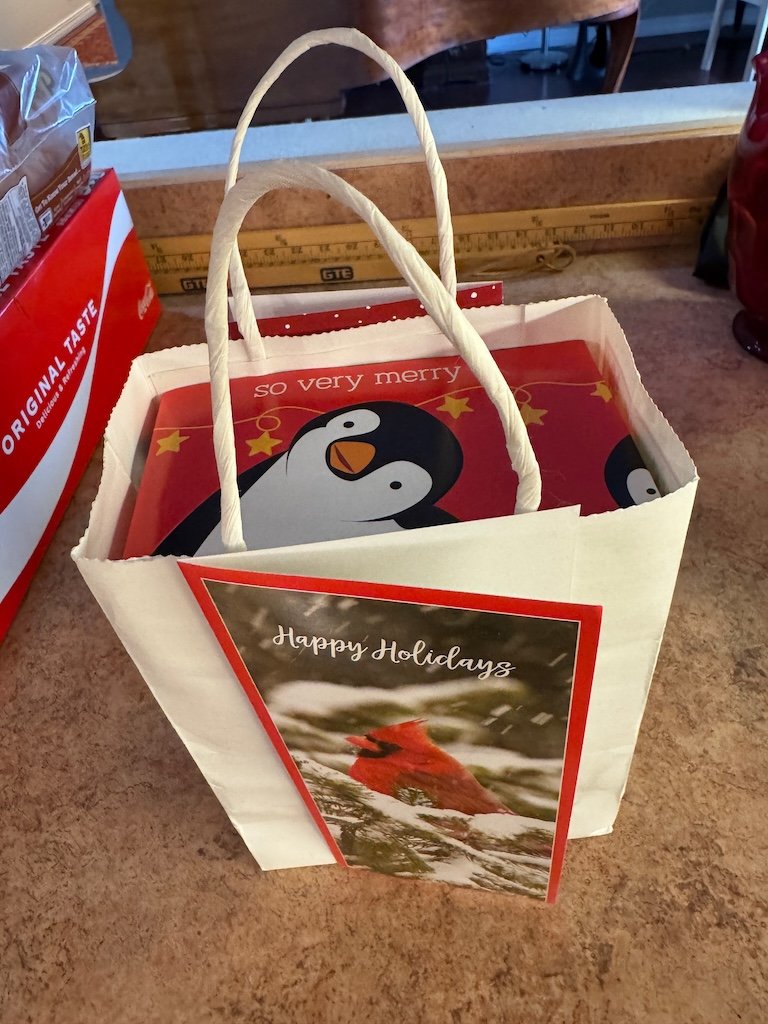
I selected some boxes of tea bags to give to my sister (paper/cardboard packaging) and reused a bag I had from a soap shop….hiding the logo and covering the top with Christmas cards!

Later I tried wrapping a present with no tape…and wasn’t quite successful (I had to add 2 pieces of tape). I used cotton crochet thread to tie around the package. So – not plastic-free but less plastic than I would have used previously.

It’s hard to avoid plastic but it occurs to me that at least some of the time there are benefits to thinking about it beyond reducing plastic in the environment – reduced cost by reusing something I already have, healthier treats with known ingredients, and more thoughtful presents!

2025 in Review

As the year winds down, I am looking back at 2025 and realizing that while there was no major life pivot point, there was a lot to going on.

Over the course of the year, we replaced three appliances: refrigerator, hot water heater, and dishwasher. None of that was planned. There was some inconvenience, but we appreciated that the separate apartment in our basement has its own version of all three…reducing the impact. Still – we realize that we should plan for other future maintenance needs. I’m not sure whether the roof or the HVAC will be next.

I continued my exploration of Missouri – focusing on prairies during the spring and early summer; I signed up for walks in 4 prairie remnants in southwest Missouri and seem to have learned to ID some plants I saw.

I also took a geology class and enjoyed a field trip in May that highlighted the geology close to home.

My husband and I made a short trip to Loess Bluffs National Wildlife Refuge in the part of Missouri that was glaciated – quite different where I leave in the southern part of the state in the Ozarks!

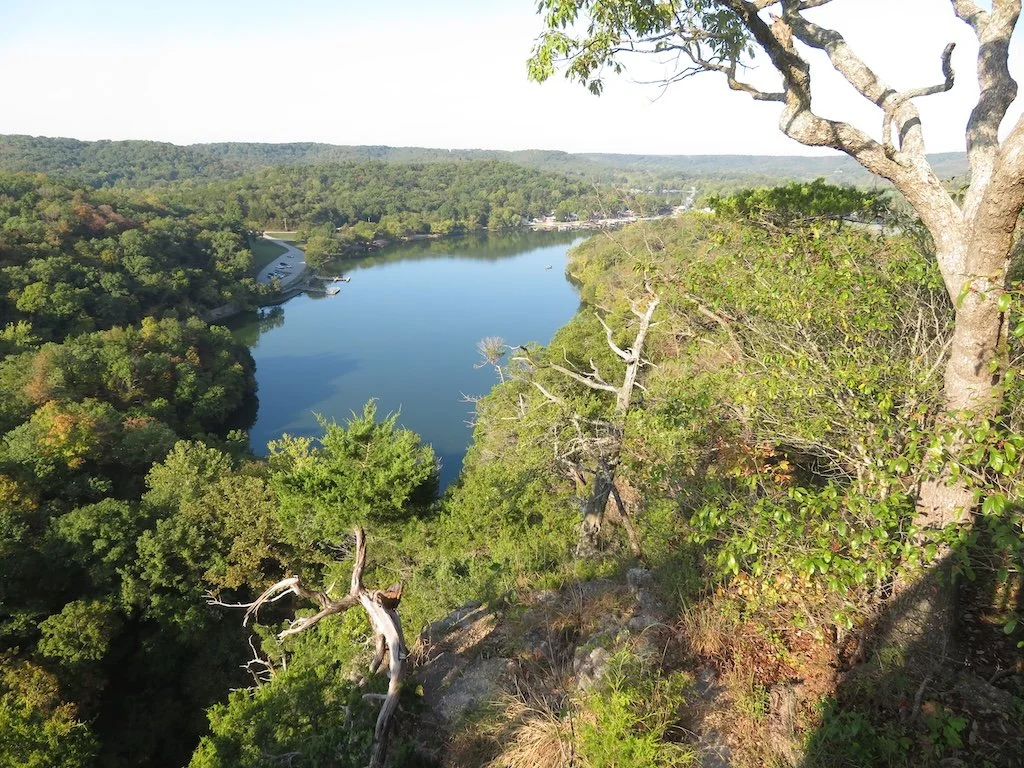
Later in the year I enjoyed walks at Ha Ha Tonka State Park – which is pretty close to the middle of the state.

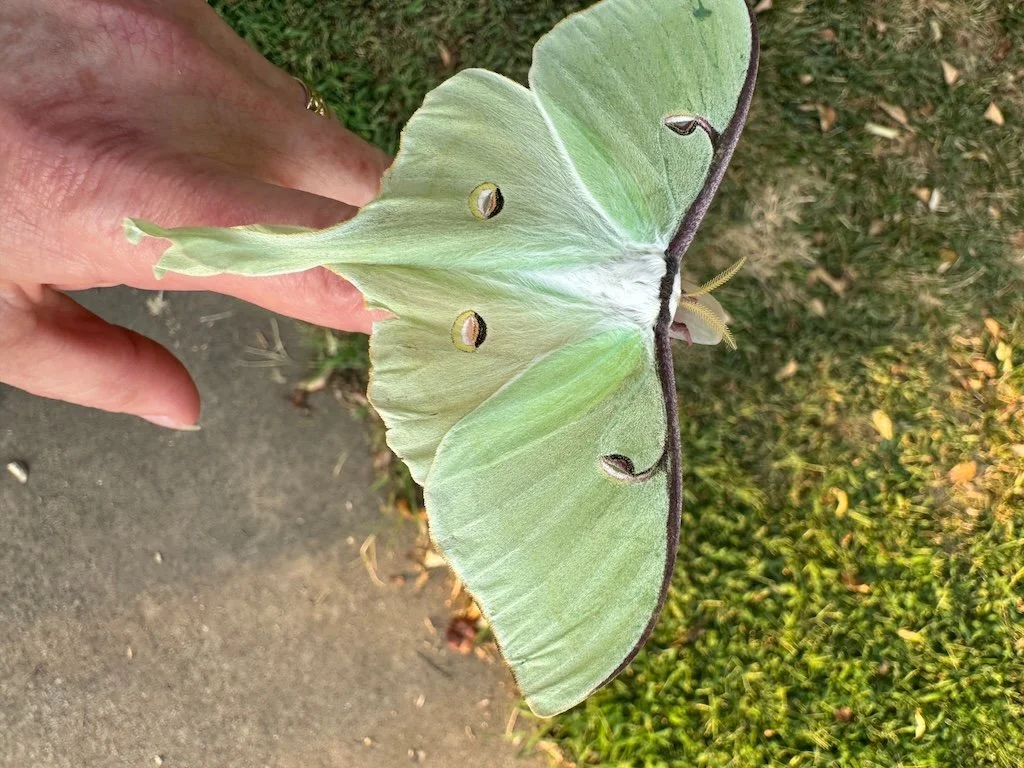
I savored volunteering at a butterfly house from May to September; it was more enjoyable than the one I volunteered at in Maryland because it was native butterflies --- no close monitoring of the entry/exit to prevent exotics escaping into the wild.

We had some health challenges this year requiring outpatient surgery and some PT (maybe more) for my husband – PT for me that has become on a long term exercise regime.

Nothing kept us from enjoying our trip to the Rio Grande Valley Birding Festival this past fall.

I maintained my monthly trips to Dallas/Lewisville TX to see my dad…occasionally my sisters. There is a routine aspect to them…but also something unique that happens each time. It is often stressful – hard to witness the month to month decline of my dad in his mid-90s.

My mood at the end of the year is not as optimistic as it was at the beginning. Have I crossed over to a pessimistic view of the future for our country (and for myself and my family)? It has occurred to me recently that maybe I have. There have been a lot of changes in the US over the past year that seem to increase the possibility of a dystopian future. Will 2026 be a pivot point for the country….or has the pivot occurred? There seems to be relatively little that individuals can do, but that doesn’t mean it is OK to do nothing.

Gleanings of the Week Ending December 27, 2025

The items below were ‘the cream’ of the articles and websites I found this past week. Click on the light green text to look at the article. (Note: I have changed the format to include the date and source of the article.)

12/4/2025 American College of Emergency Physicians Opinion: Physicians Must Reduce Plastic Waste - Waste audits in the emergency departments (EDs) of Kent Hospital in Warwick, Rhode Island, and Mass General Hospital in Boston found that four pounds of waste is generated per patient, per encounter, and about 60 percent of the waste is plastic…. If we consider our plastic footprint with everything we are doing, we can adjust our habits to give our patients and our world healthier care.

11/19/2025 Consumer Reports Consumer Reports announces winners of its Microplastics Detection Challenge - Contest challenged participants to develop simple and inexpensive at-home tests to enable people to detect microplastics in their food. 

12/12/2025 Yale Environment 360 Dozens of Countries See Their Economy Grow as Emissions Fall - Historically, more industry meant burning more fossil fuels. But renewable energy has made it possible to generate more wealth without producing more emissions. The U.S. and most of Europe, have completely decoupled growth from emissions over the last decade. Fortunes rose, while emissions fell. Together, these countries account for 46 percent of the global economy.

12/12/2025 Science Daily Scientists find dark chocolate ingredient that slows aging - Scientists have uncovered a surprising link between dark chocolate and slower aging. A natural cocoa compound called theobromine was found in higher levels among people who appeared biologically younger than their real age.

12/11/2025 Clean Technica Drones, Diesel, & Policy: Two Countries, Two Agricultural Futures - China’s rapid adoption of agricultural drones is one of the most interesting examples of technological divergence between two major food producers. The contrast is striking. Chinese pilots are now treating an amount of land with drones each year that is larger than the total farmland base, which means multiple drone passes on the same fields to handle weeds, pests, fertilizer and sometimes seeding. At the same time, the United States is advancing a policy coalition that targets DJI with composite national security concerns and proposes to ban the most widely used spray drones in the country. This fight matters because the ban would remove the only cost effective and widely deployed option for seeding and spraying. It would also shut down a path for lower diesel use and lower chemical demand in a sector that does not have many easy ways to cut operating costs.

12/11/2025 Smithsonian Magazine Gas Stoves Are Poisoning Americans by Releasing Toxic Fumes Associated with Asthma and Lung Cancer - A new study, published this month in the journal PNAS Nexus, suggests that gas stoves are the main source of indoor nitrogen dioxide pollution in the United States, responsible for more than half of some Americans’ total exposure to the gas. The gas can irritate airways and worsen or even contribute to the development of respiratory diseases like asthma. Children and older individuals are particularly susceptible to its effects.

12/7/2025 Cool Green Science Family, Survival and Change: The Secret Life of the Red-cockaded Woodpecker - In the heart of the longleaf pine forests of the southern United States, a quiet drama plays out each spring. Inside tiny nest cavities high into pines, red-cockaded woodpecker (RCW) parents work tirelessly to feed their chicks. They live in family groups where everyone, even older offspring, helps care for the young. That’s what makes them special; they’re cooperative breeders, families bound not just by instinct, but by teamwork. These woodpeckers remind us that recovery isn’t just about numbers. It’s about understanding the subtle, interconnected forces that make life possible in the first place. 

11/30/2025 The Conversation 56 million years ago, the Earth suddenly heated up – and many plants stopped working properly - Plants can help regulate the climate through a process known as carbon sequestration. However, abrupt global warming may temporarily impact this regulating function. What happened on Earth 56 million years ago highlights the need to understand biological systems’ capacity to keep pace with rapid climate changes and maintain efficient carbon sequestration.

12/8/2025 The Planetary Society The year in pictures 2025 - This collection of images, going as far back as late November 2024, captures some of the highlights of humanity’s exploration of space over the past year.

11/6/2025 The Scientist What Happens When a Fly Lands on Your Food? - How many microbes does a single fly typically carry? How many microbes does it take to get people sick?

Louise Herreshoff

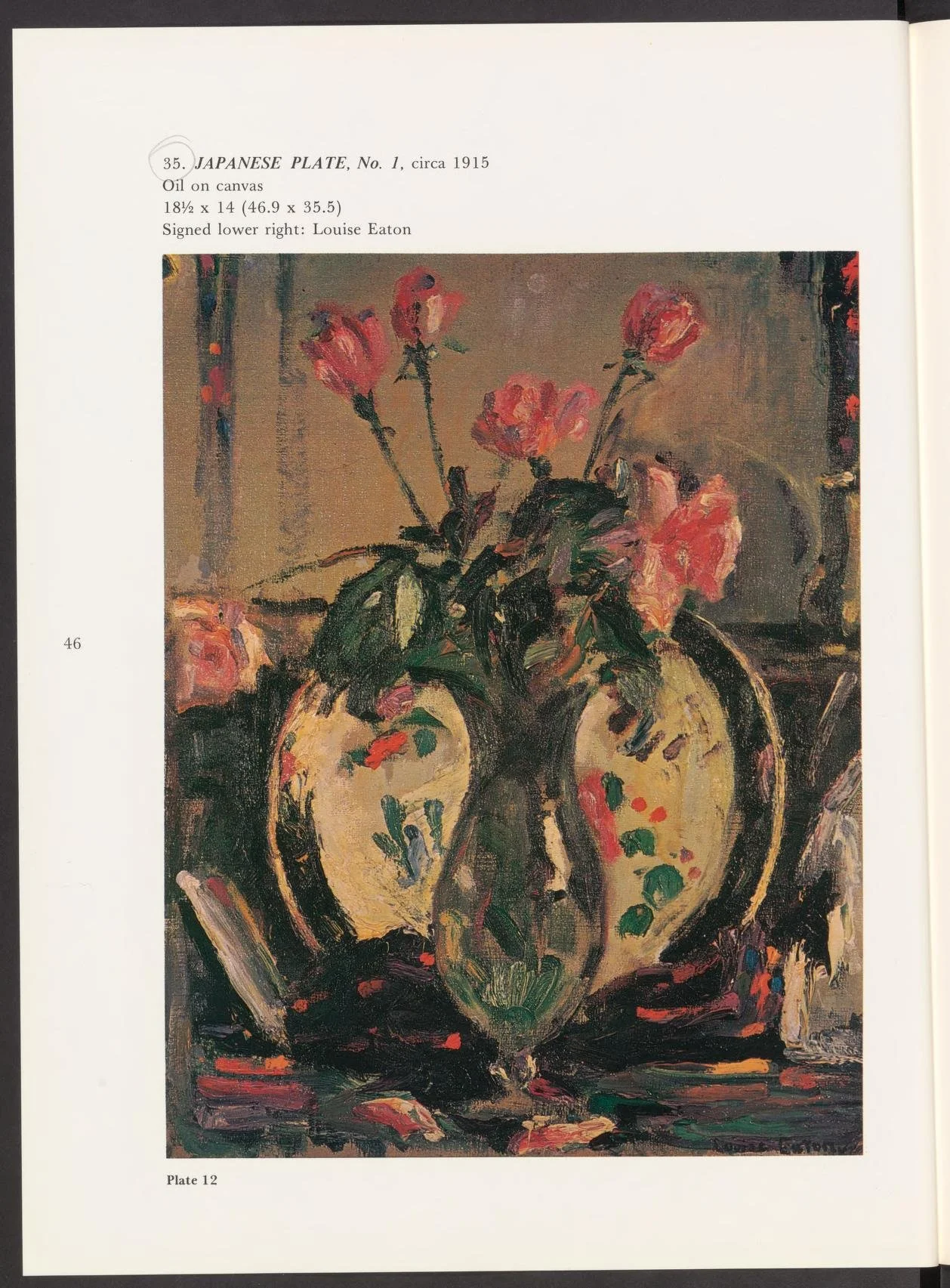
The book I am highlighting this week is the exhibit book from a 1976 exhibit of Louise Herreshoff paintings at Washington and Lee University and the Corcoran Gallery of Art. When the artist died in 1967, she had not painted since her aunt (her foster mother) had died in 1927; her paintings were discovered when movers came to move her extensive porcelain collection from her home to Washington and Lee University – as directed by her will! The book is available from Internet Archive.

 Louise Herreshoff: An American Artist Discovered

Happy Holidays!!!

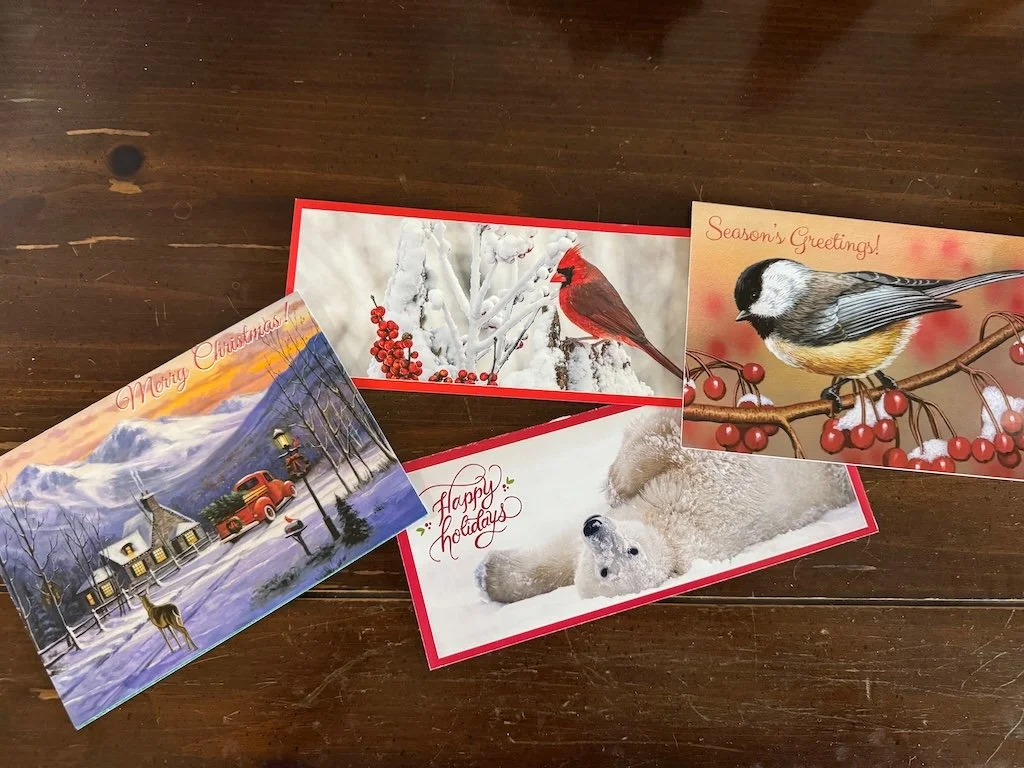
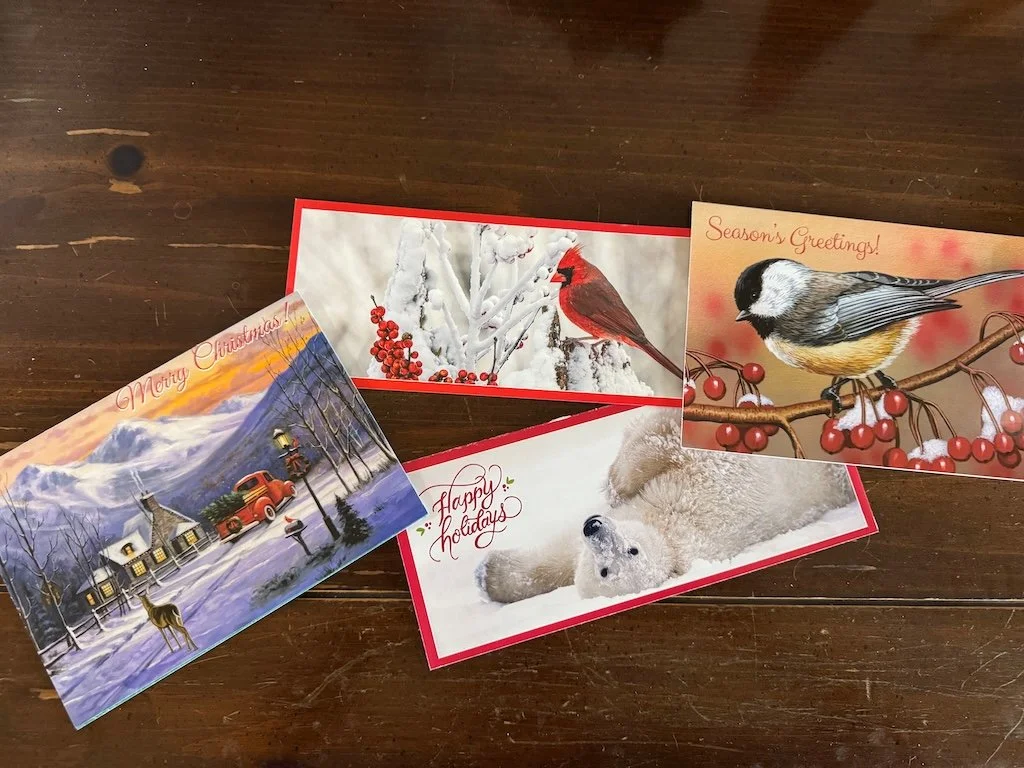
Lights and good food…wishing a joyous season and happy new year for all (enjoying old Christmas cards too even though we don’t send or receive them anymore)!

Happy Holidays to all!

Plastics Crisis – Rorra Countertop Water Filtration System

After reading a lot about municipal water quality, I realized that the water filtration I have been using the past few years (Brita Elite) was not good enough. Yes, the filters claimed to remove some microplastics (I guess they would be considered ‘Particulates (Class 1)’, but I was unclear what testing had been done on the filter). Then there were the issues of the filter housing (plastic) and the pitcher it was installed in (plastic). I started looking for possible upgrades.

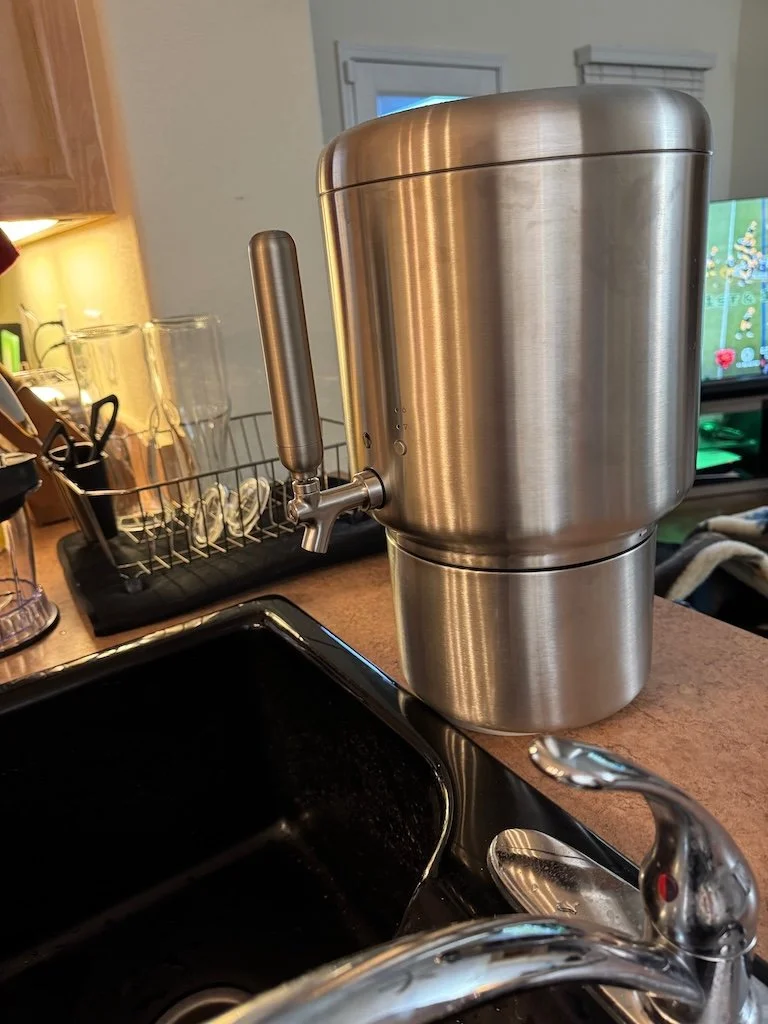
I opted to replace my Brita pitchers with a Rorra Countertop Water Filtration System. It is a 2.5-gallon countertop unit that has stainless-steel parts. I bought the unit along with a filter subscription since it will probably need a new filter every 90 days. The company has results from NSF and NSF/ANSI accredited testing showing that system reduces over 50+ contaminants including Total PFAS, Lead, Microplastics, and Estrone. It is engineered and manufactured in the US.

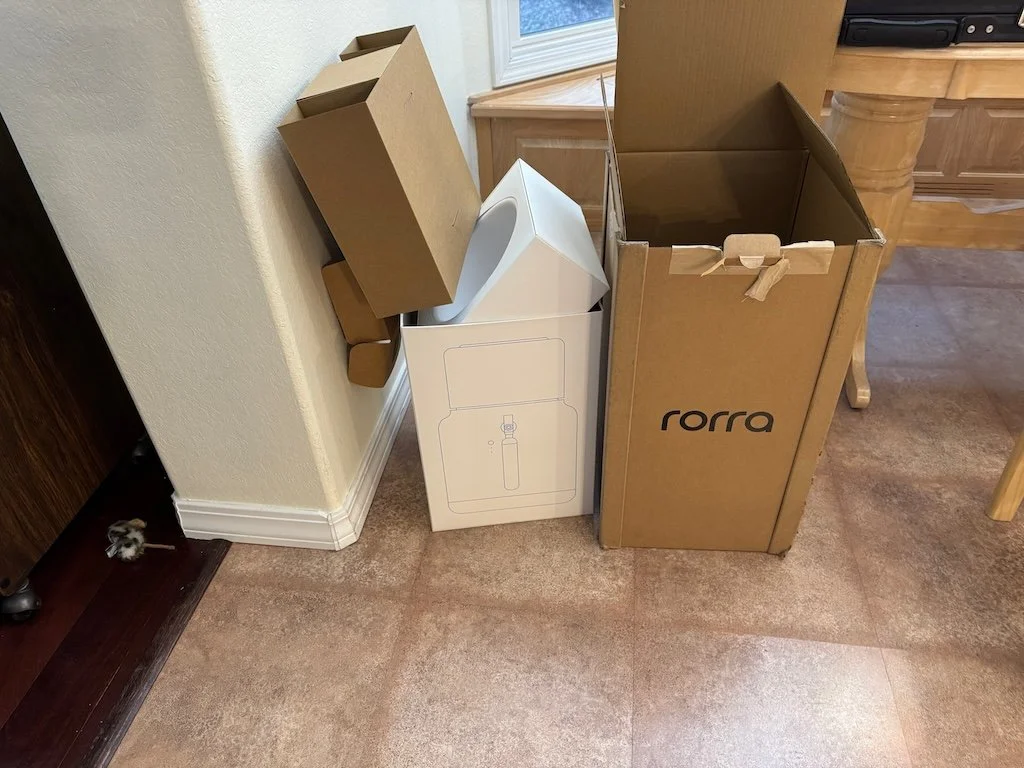
The set up was relatively easy once I got it out of the box! There were an outer box and several inner boxes. I am still working to segregate the recyclable parts from the (relatively small) amount that is not cardboard. They recommended washing all the parts with soapy water which was a little daunting because of the size (like a large mixing bowl). I had to watch the video a couple of times about how to get the filter in properly but – in the end – it was easy.

I have enjoyed the Rorra so far although I am thinking about moving it to another location around the sink, so I don’t have to reach all the way over the sink to fill it from the top. I have carafes that I am using to put water in the refrigerator and to carry downstairs for use for tea in my office. I also use the carafes to fill the reservoir as needed. The spigot is very convenient!

Looking back, I am glad I started filtering our drinking water several years ago. The water supply to our house is from our municipality and it is hard to address the potential of plastic water pipes in our city, community, and house (they probably would shed more microplastics they older they are)…or the microplastics that come from the source of water to our city (wells). Now – with the Rorra – we are upgrading that filtering. It is an investment for our long-term health – not eliminating microplastics (since there are so many other sources of microplastics in our environment) but a dramatic reduction in this one source is a good thing.

Looking Ahead to 2026

With 2025 winding down, I am thinking about what will stay the same…what will be different in 2026.

On the ‘different’ list are:

  • Ramping up activity with Beyond Plastics Ozarks

  • Organizing Winter Wellness field trips in January and February for the chapter of Missouri Master Naturalistis in Springfield and making sure training/field trips that are offered by other organizations but relevant to the membership are communicated throughout the year

  • Reducing plastics in my life/home

  • Planting a front yard native plant garden in the spring and maintaining/adding to it during its first year

  • Remembering to use violets from my yard as greens in season (rather than buying greens)

On the ‘same’ list are:

  • Traveling to Lewisville every month to see my Dad

  • Arranging programs for the chapter of Missouri Master Naturalists in Springfield

  • Staffing shifts at the Roston Butterfly House

  • Sorting donated used books at my county library and setting up for books sales

  • Posting daily to my blog

  • Browsing/reading at least 4 books per day

  • Walking on the treadmill if I am not otherwise active each day

And there are bound to be things that will occur and force me to change that I am not anticipating!

Gleanings of the Week Ending December 20, 2025

The items below were ‘the cream’ of the articles and websites I found this past week. Click on the light green text to look at the article. (Note: I have changed the format to include the date and source of the article.)

11/30/2025 NPR  More cities are seeing PFAS pollution in drinking water. Here's what Louisville found - What we do is manage risk, and we start that at the river. It sounds weird, but source water protection – keeping the stuff out of the river – is a big deal.

11/25/2025 Artnet Radiant Tiffany Landscape Window Leads Major Auction of the Studio’s Masterpieces – Beautiful glass…there are some coming to auction in December. I enjoyed the pictures in the article.

12/2/2025 Washington Post ‘Everywhere chemicals’ are in our food, decades after scientists recognized dangers - A large body of science has linked phthalates to a variety of serious health conditions, including premature birth and infertility. The costs to society are huge. A 2024 NYU-led study that catalogued health effects from phthalates exposure in the United States — including contributions to diabetes levels and infertility — estimated that dealing with phthalate-related diseases cost $66.7 billion in a single year. Previous Washington Post article on phthalates from last September: The health risks from plastics almost nobody knows about.

12/2/2025 Science Daily Is your gut being poisoned? Scientists reveal the hidden impact of everyday chemicals - Many chemicals designed to act only on one type of target, say insects or fungi, also affect gut bacteria. Some of these chemicals had strong effects. For example, many industrial chemicals like flame retardants and plasticizers -- that we are regularly in contact with -- weren't thought to affect living organisms at all, but they do.

12/7/2025 Clean Technica Your Single-Use Plastic Bottles Are Killing Endangered Sea Turtles - A recent study published in Proceedings of the National Academy of Sciences concludes that plastic ingestion has been documented in nearly 1,300 marine species, including every seabird family, marine mammal family, and sea turtle species. Researchers analyzed data from more than 10,000 autopsies from marine creatures killed by ingesting plastic; they calculated amounts consistent with a 90% likelihood of death:

  • 23 pieces (0.098 cm3/cm) in seabirds;

  • 29 pieces (39.89 cm3/cm) in marine mammals: and,

  • 405 pieces (5.52 cm3/cm) in sea turtles (377 for juveniles).

12/2025 Greenpeace Plastic Merchants of Myth: Circular Claims Fall - After decades of meager investments accompanied by misleading claims and a very well-funded industry public relations campaign aimed at persuading people that recycling can make plastic use sustainable, plastic recycling remains a failed enterprise that is economically and technically unviable and environmentally unjustifiable. (Press release for the document)

12/8/2025 The Conversation PFAS in pregnant women’s drinking water puts their babies at higher risk – Data on all births in New Hampshire from 2010-2019 were analyzed. The 11.5 thousand births that occurred within 3.1 miles of a site known to be contaminated with PFAS and where mothers were served by public water system (well based) were selected for further analysis. PFAS was greater in the water system wells downstream from the site. Births in the area served by wells downstream were 43% more likely to be low-weigh (under 5.5 pounds), 20% greater chance of preterm birth, and 191% greater chance of the infant not surviving its first year. Research was done at University of Arizona.

12/8/2025 Science Daily Humans are built for nature not modern life - Human biology evolved for a world of movement, nature, and short bursts of stress—not the constant pressure of modern life. Industrial environments overstimulate our stress systems and erode both health and reproduction. Evidence ranging from global fertility declines to chronic inflammatory diseases shows the toll of this mismatch.

12/7/2025 Clean Technica The Floating Solar Revolution - Despite this year’s sharp U-turn in federal energy policy, the renewable energy transition continues to branch out in new directions. One emerging factor is the relatively new area of floating solar. The field has already begun to scale up in some regions around the world, and innovative solar firms are carving out new opportunities here in the US as well.

12/7/2025 Science Daily New moonquake discovery could change NASA’s Moon plan - Scientists have discovered that moonquakes, not meteoroids, are responsible for shifting terrain near the Apollo 17 landing site. Their analysis points to a still-active fault that has been generating quakes for millions of years. While the danger to short missions is low, long-term lunar bases could face increasing risk. The findings urge future planners to avoid building near scarps and to prioritize new seismic instruments.

Weggeloopen!

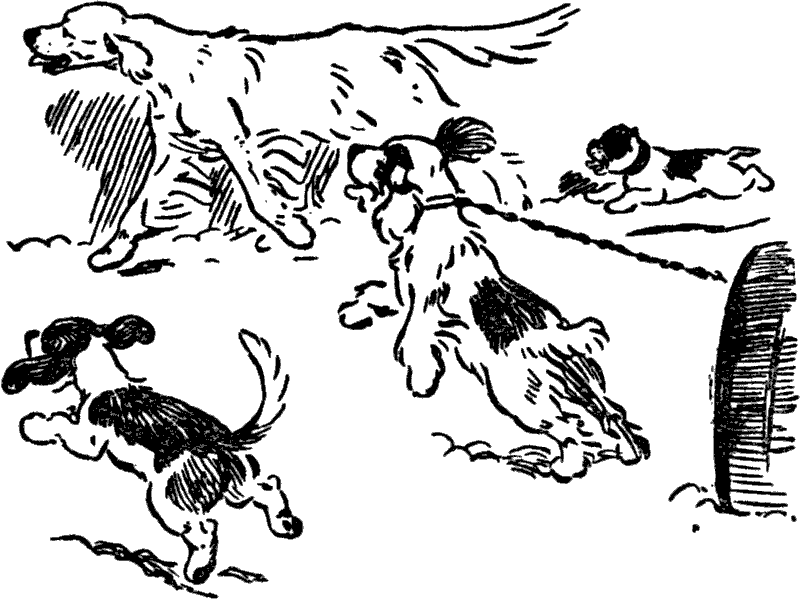
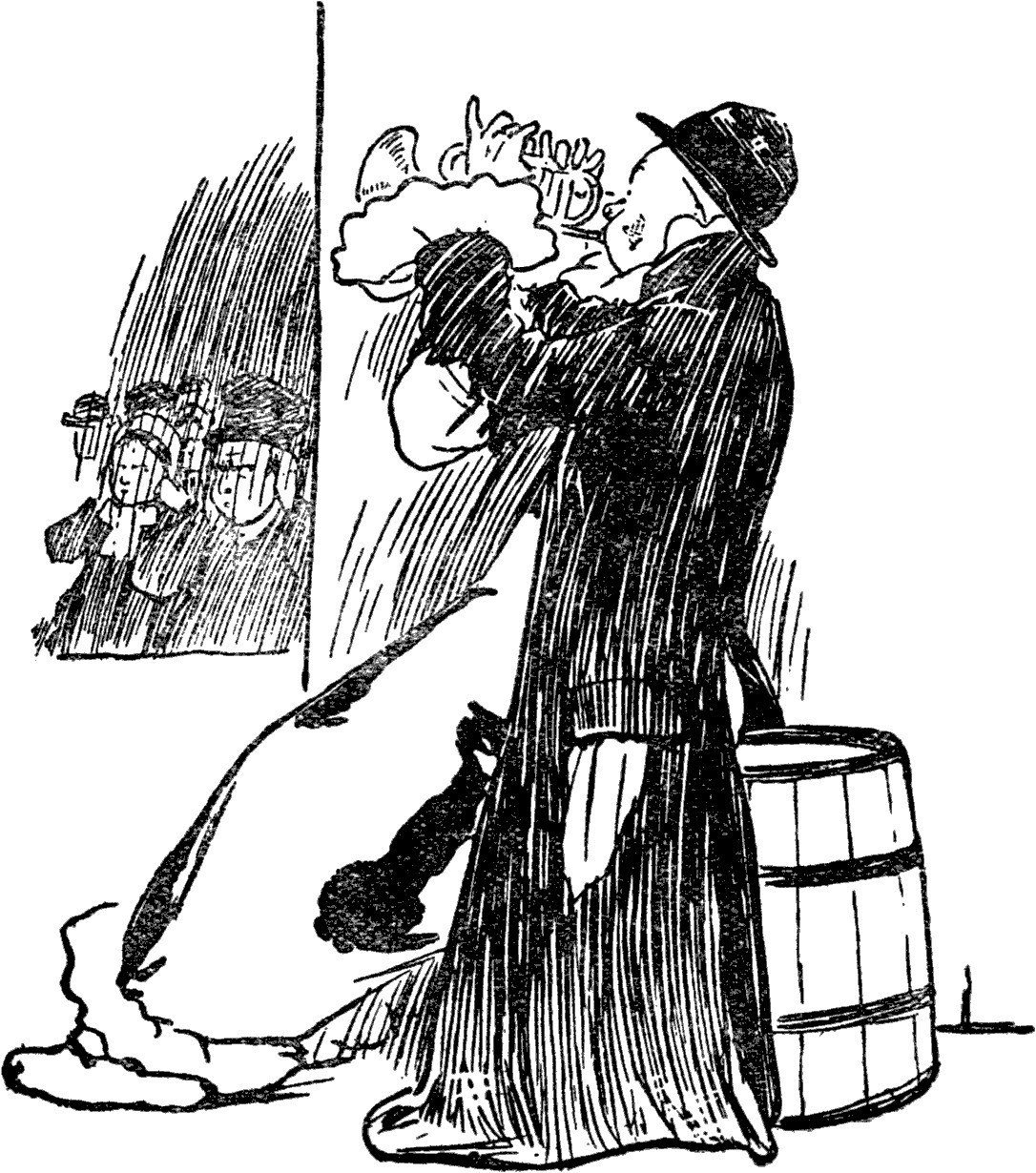
"Weggeloopen!" was published in 1919 – a story about a mischievous boy named Paul, who frequently disobeys his parents and often gets into trouble. The illustrator was Cecil Aldin – a British artist and illustrator. The book contains many of his drawings which depict the time in the first decades of the 1900s. It is available from Project Gutenberg.

Weggeloopen!!

There are quite a few books illustrated by Cecil Aldin available on Internet Archive, but this is the only one not in English! Because of the publication date, I wondered if the illustrations for this book were done after his only son died in World War I in 1916.

Oak Mulch

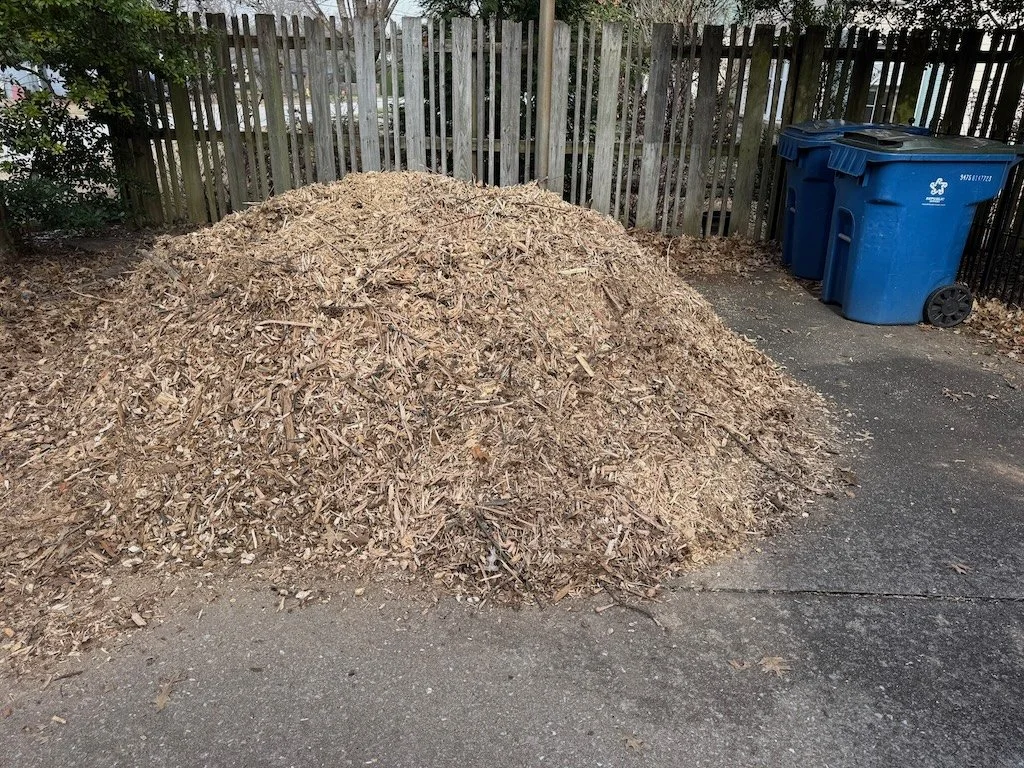
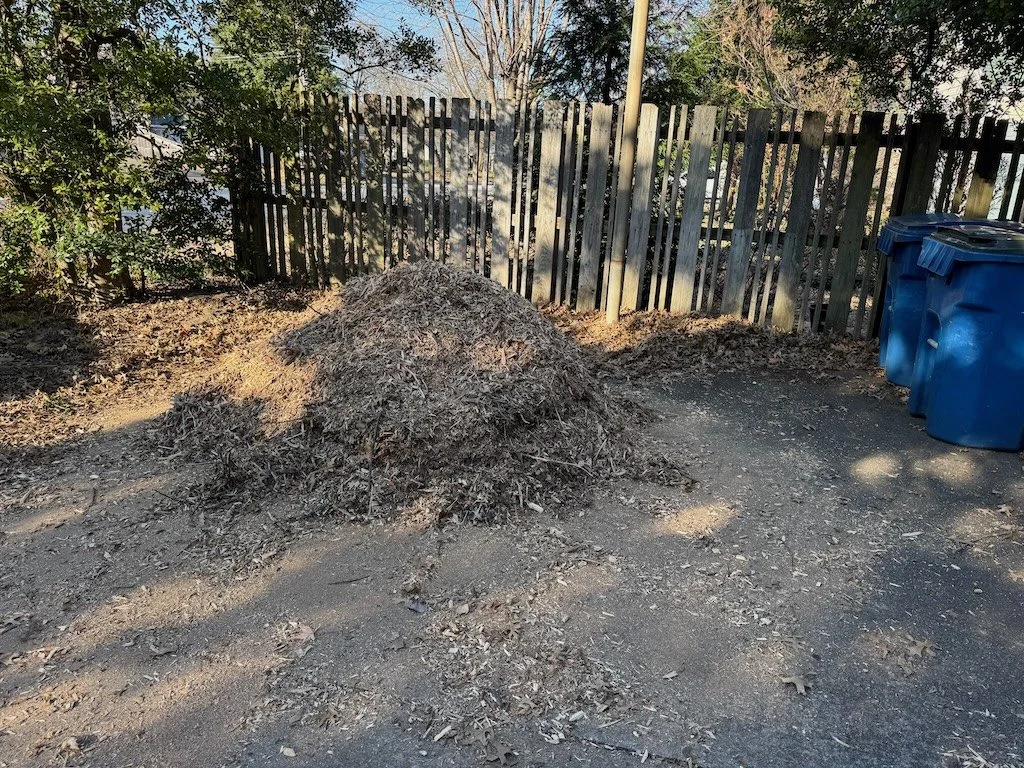
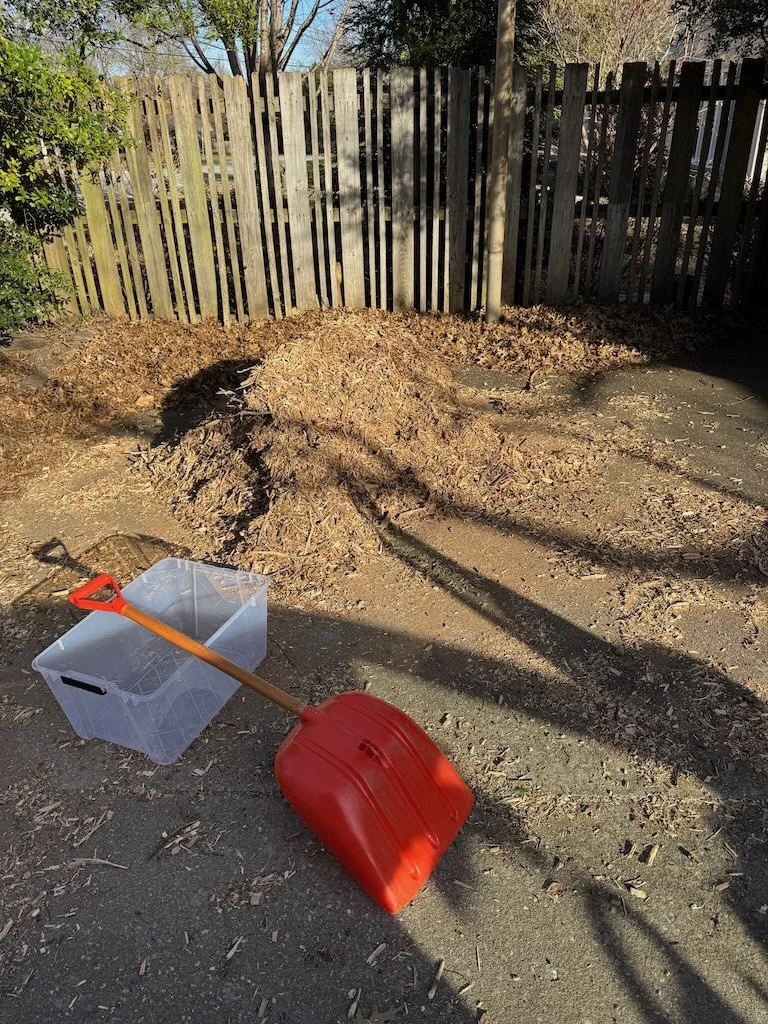
The tree service finally came to trim my daughter’s oak and to handle a larger branch that fell from her Amur Maple…and they left a substantial pile of (mostly) oak mulch as we requested.

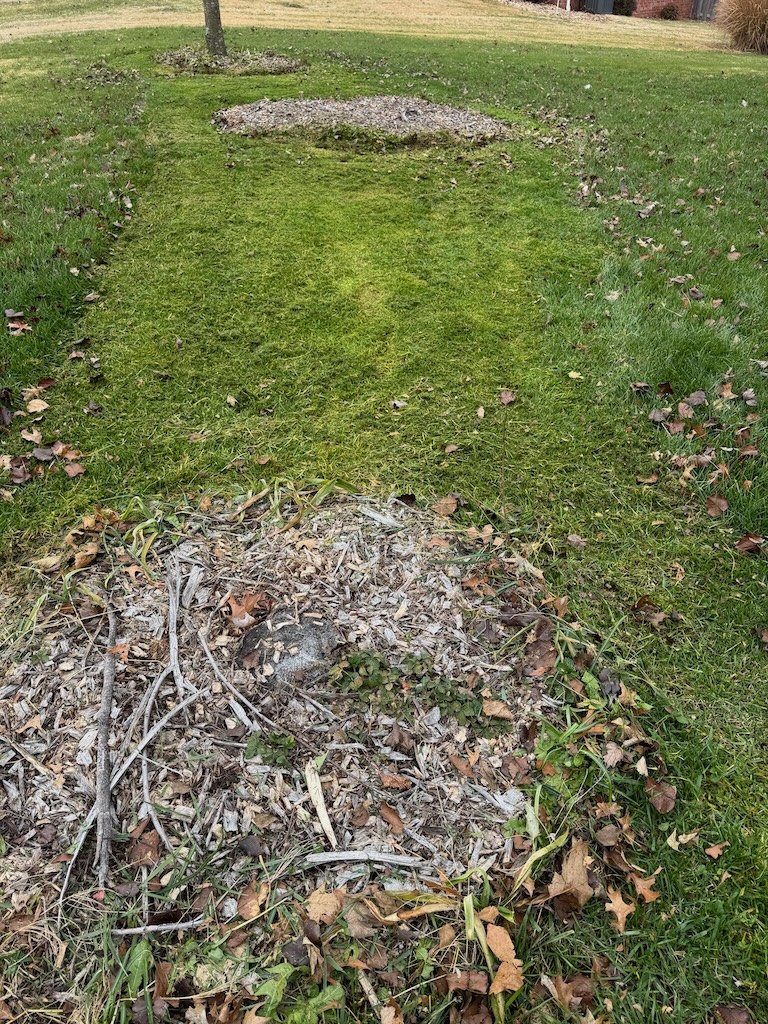
I have big plans for that mulch as part of my plan for transform my front yard with a native plant garden. I had used mulch from a maple there that had to be removed last summer to create three areas in my front yard and with the additional mulch I could make a much more substantial area for planting next spring.

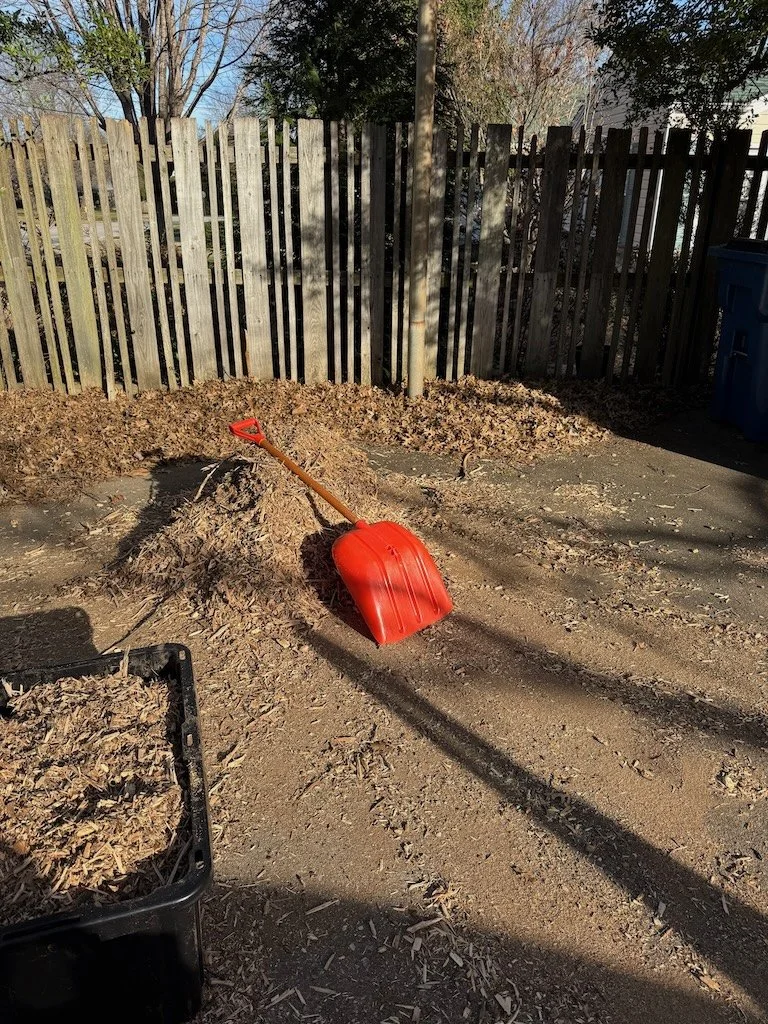
We loaded bins and moved the pile one carload at a time. Even after the first 4 loads the new bed was looking bigger.

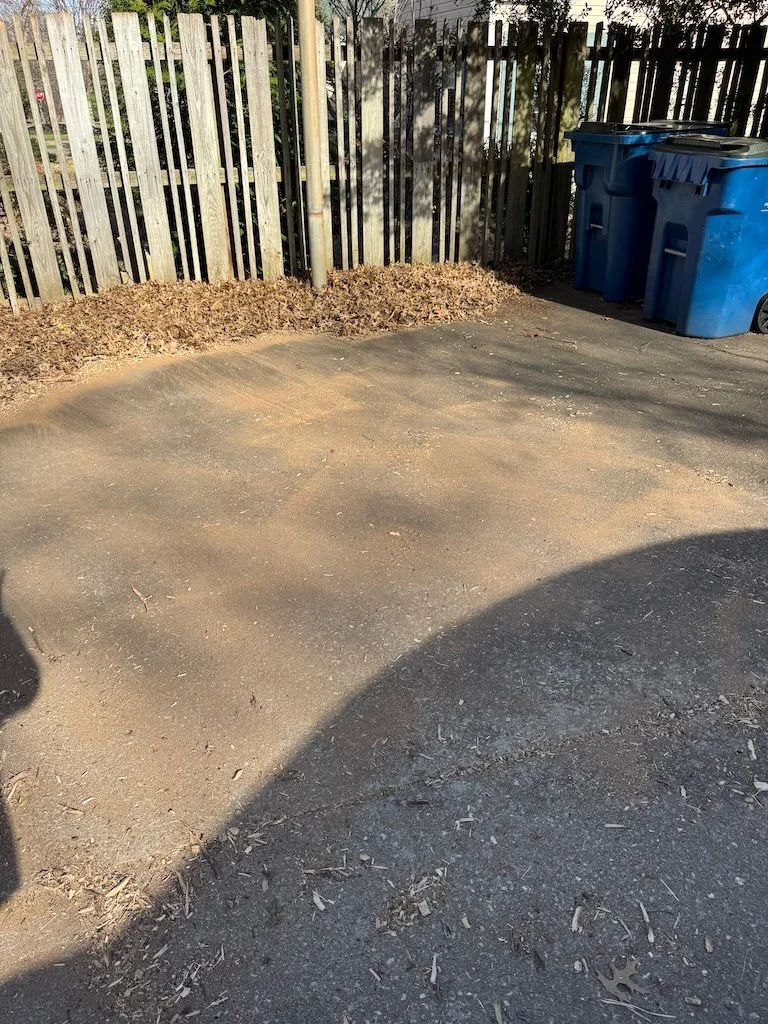
After the first big day, I only managed 2 carloads per day. It took 5 days in all (a total of 12 carloads…about 1.5-2 hours per load depending on traffic). On the last day, I was celebrating that my daughter’s driveway was back to normal….even though I still needed to spread the mulch and define the finally shape for the new bed!

I can hardly wait for the native plant sales to begin next spring. I’m going to review my plant list until then to be ready to shop and then plant my new garden in the oak mulch.

Gleanings of the Week Ending December 13, 2025

The items below were ‘the cream’ of the articles and websites I found this past week. Click on the light green text to look at the article.

How extreme weather is making plastic pollution more mobile, more persistent and more hazardous - Rising temperatures, humidity and sunlight break plastic down, making it brittle and cracked, accelerating its disintegration into tiny fragments. A 10-degree Celsius (18 Fahrenheit) rise in temperature during an extreme heat wave could double the rate at which plastic degrades. Extreme storms, flooding and wind also hasten the breakdown of plastic, mobilize it and spread it more widely. Flooding can also help forge “plastic rocks,” created when rocks and plastics form a chemical bond and merge together. These become hotspots for microplastic generation. Wildfires release microplastics and highly toxic compounds into the atmosphere. Global annual production of plastic increased 200-fold between 1950 and 2023 and is predicted to keep increasing as the world moves toward clean energy and oil companies shift investments to plastics.

YMCA: The Swan Song of SROs and the Birth of Modern Homelessness - Single room occupancy hotels played a central role in America’s affordable housing ecosystem for decades, providing cheap, flexible accommodations without government subsidy. They are effectively large-scale boarding houses, offering small private rooms or dorm-style quarters with shared bathrooms and minimal kitchen facilities. The YMCA was the nation’s largest SRO provider, with more than 100,000 units nationwide at its peak. SROs were far from ideal, but without this form of housing or any other low-cost option, homelessness was the inevitable result. It was just as Edith Elmer Wood feared back in 1919: Housing reform had created a housing famine.

Recycling Lead-Acid Batteries Has Significant Health Risks - What happens to the old ones when they are no longer serviceable? They get melted down to recover the lead in them, which can then be used to make new batteries. In the US, that work often gets outsourced to other countries. It’s a patchwork of shoddy factories in places like Ghana, Nigeria and Tanzania providing more lead for new car batteries….and where people die from lead poisoning. Car companies look the other way.

More Than 1,200 Marine Animal Species Eat Plastic. Ingesting Even a Tiny Amount Can Kill Them - Data from more than 10,000 marine animal autopsies. About half of the examined sea turtles, one-third of seabirds and one in eight marine mammals had plastics in their stomachs. The study didn’t examine other ways plastics can hurt wildlife, such as strangulation, malnutrition or toxic effects. It also didn’t look at the harms of tinier pieces of plastics—microplastics—which have been found in the deep ocean and can also affect marine life. Researchers say the best way to protect wildlife from plastic is to reduce the amount of it that enters the ocean, namely through local and national policy.
The Forgotten Roman Ruins of the ‘Pompeii of the Middle East’ – Jerash – ruins near Amman, the capital of Jordan and the country’s second most popular tourist destination after Petra. After spending more than a millennium covered by sand, Jerash has reclaimed its place as a cornerstone of both Western and Middle Eastern civilization.
Just ten species make up almost half the weight of all wild mammals on Earth – Deer and boars account for almost half the biomass of wild land animals.

New research reveals what’s really hiding in bottled water - Each sip may contain invisible microplastics that can slip through the body’s defenses and lodge in vital organs. These tiny pollutants are linked to inflammation, hormonal disruption, and even neurological damage, yet remain dangerously understudied. “People need to understand that the issue is not acute toxicity -- it is chronic toxicity.”

Beavers are Dam Good for Biodiversity, Bringing Bats, Butterflies and Other Critters to Their Neighborhoods - Beavers are famous for being ecosystem engineers, capable of transforming once-dry landscapes into lush, green wetlands that support many other land- and water-dwelling species. Now, two new studies suggest these benefits also extend to creatures who spend much of their time in the air like bats and pollinator insects.

This tiny pill could change how we diagnose gut health - Tiny ingestible spheres filled with engineered bacteria can detect intestinal bleeding by glowing when they encounter heme. Early tests in mice suggest they could become a quick, noninvasive way to monitor gut disease. The work was done by the NSF of China and other sources in China. Will China now dominate this type of research with the funding cuts in the US?

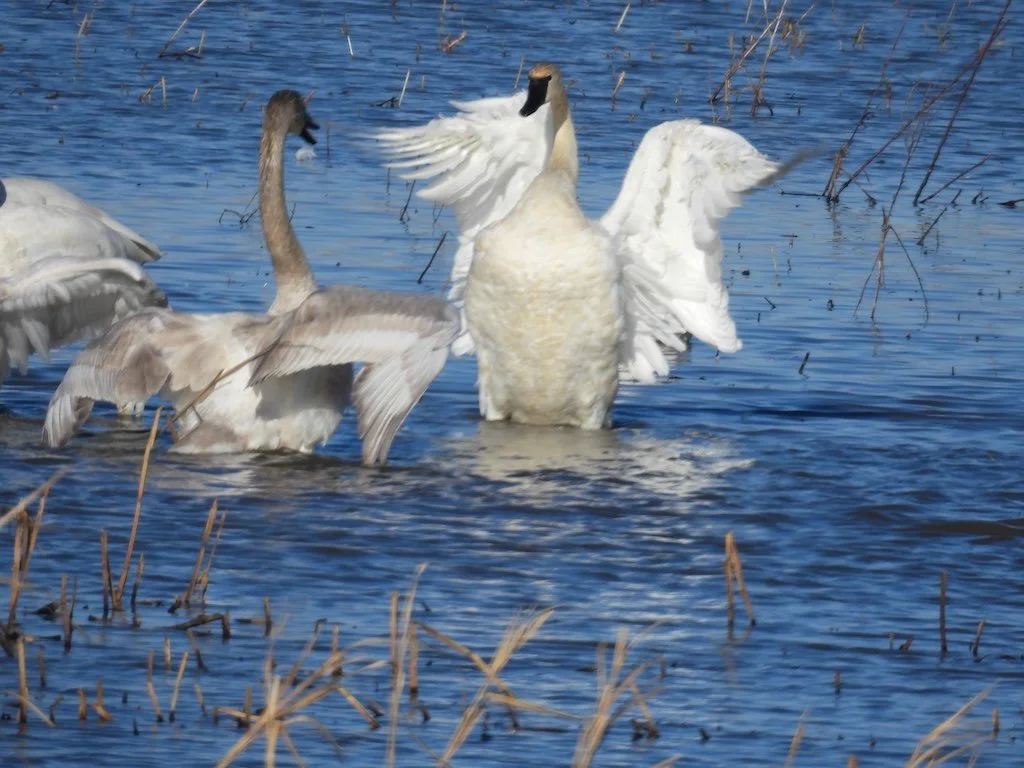
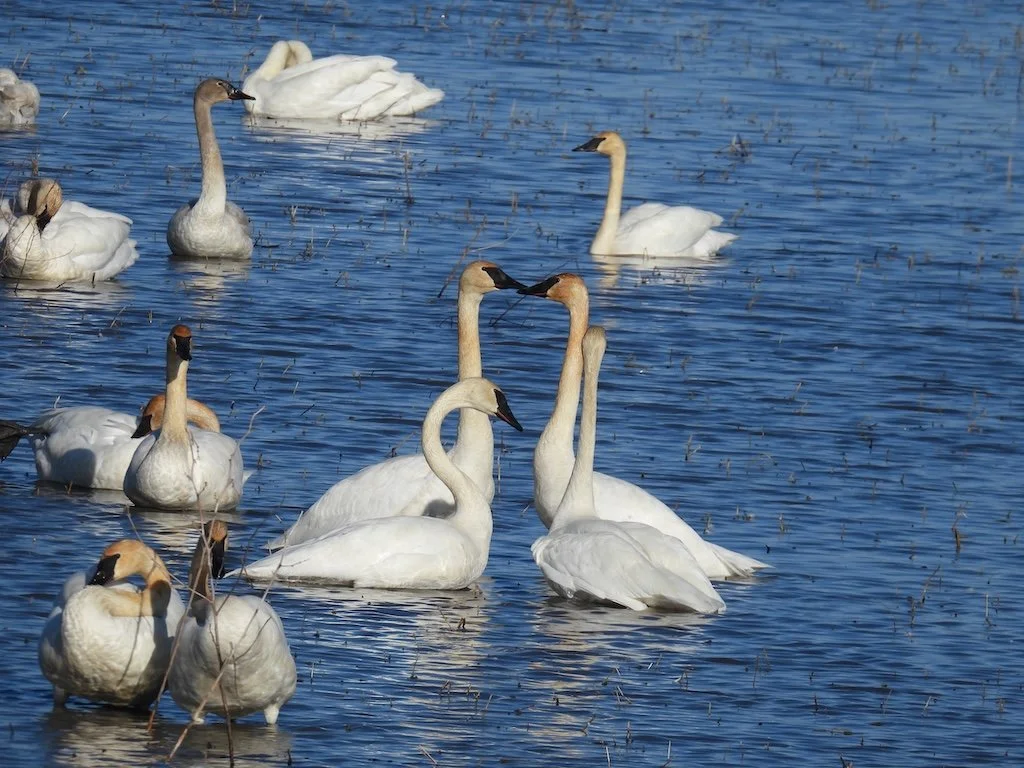
Meet the 7 Swans a-Swimming – There are 7 swan species in the world…which fits very well with The Twelve Days of Christmas.