Gleanings of the Week Ending December 13, 2025

The items below were ‘the cream’ of the articles and websites I found this past week. Click on the light green text to look at the article.

How extreme weather is making plastic pollution more mobile, more persistent and more hazardous - Rising temperatures, humidity and sunlight break plastic down, making it brittle and cracked, accelerating its disintegration into tiny fragments. A 10-degree Celsius (18 Fahrenheit) rise in temperature during an extreme heat wave could double the rate at which plastic degrades. Extreme storms, flooding and wind also hasten the breakdown of plastic, mobilize it and spread it more widely. Flooding can also help forge “plastic rocks,” created when rocks and plastics form a chemical bond and merge together. These become hotspots for microplastic generation. Wildfires release microplastics and highly toxic compounds into the atmosphere. Global annual production of plastic increased 200-fold between 1950 and 2023 and is predicted to keep increasing as the world moves toward clean energy and oil companies shift investments to plastics.

YMCA: The Swan Song of SROs and the Birth of Modern Homelessness - Single room occupancy hotels played a central role in America’s affordable housing ecosystem for decades, providing cheap, flexible accommodations without government subsidy. They are effectively large-scale boarding houses, offering small private rooms or dorm-style quarters with shared bathrooms and minimal kitchen facilities. The YMCA was the nation’s largest SRO provider, with more than 100,000 units nationwide at its peak. SROs were far from ideal, but without this form of housing or any other low-cost option, homelessness was the inevitable result. It was just as Edith Elmer Wood feared back in 1919: Housing reform had created a housing famine.

Recycling Lead-Acid Batteries Has Significant Health Risks - What happens to the old ones when they are no longer serviceable? They get melted down to recover the lead in them, which can then be used to make new batteries. In the US, that work often gets outsourced to other countries. It’s a patchwork of shoddy factories in places like Ghana, Nigeria and Tanzania providing more lead for new car batteries….and where people die from lead poisoning. Car companies look the other way.

More Than 1,200 Marine Animal Species Eat Plastic. Ingesting Even a Tiny Amount Can Kill Them - Data from more than 10,000 marine animal autopsies. About half of the examined sea turtles, one-third of seabirds and one in eight marine mammals had plastics in their stomachs. The study didn’t examine other ways plastics can hurt wildlife, such as strangulation, malnutrition or toxic effects. It also didn’t look at the harms of tinier pieces of plastics—microplastics—which have been found in the deep ocean and can also affect marine life. Researchers say the best way to protect wildlife from plastic is to reduce the amount of it that enters the ocean, namely through local and national policy.

The Forgotten Roman Ruins of the ‘Pompeii of the Middle East’ – Jerash – ruins near Amman, the capital of Jordan and the country’s second most popular tourist destination after Petra. After spending more than a millennium covered by sand, Jerash has reclaimed its place as a cornerstone of both Western and Middle Eastern civilization.

Just ten species make up almost half the weight of all wild mammals on Earth – Deer and boars account for almost half the biomass of wild land animals.

New research reveals what’s really hiding in bottled water - Each sip may contain invisible microplastics that can slip through the body’s defenses and lodge in vital organs. These tiny pollutants are linked to inflammation, hormonal disruption, and even neurological damage, yet remain dangerously understudied. “People need to understand that the issue is not acute toxicity -- it is chronic toxicity.”

Beavers are Dam Good for Biodiversity, Bringing Bats, Butterflies and Other Critters to Their Neighborhoods - Beavers are famous for being ecosystem engineers, capable of transforming once-dry landscapes into lush, green wetlands that support many other land- and water-dwelling species. Now, two new studies suggest these benefits also extend to creatures who spend much of their time in the air like bats and pollinator insects.

This tiny pill could change how we diagnose gut health - Tiny ingestible spheres filled with engineered bacteria can detect intestinal bleeding by glowing when they encounter heme. Early tests in mice suggest they could become a quick, noninvasive way to monitor gut disease. The work was done by the NSF of China and other sources in China. Will China now dominate this type of research with the funding cuts in the US?

Meet the 7 Swans a-Swimming – There are 7 swan species in the world…which fits very well with The Twelve Days of Christmas.

Frank Finn eBooks

Enjoy 11 well-illustrated eBooks this week by Frank Finn from the early decades of the 1900s. Most of them are about birds and there is a skew toward Asia since the author spent almost a decade in India. The Wikipedia article was shorter than I expected so I searched further and found an obituary in Nature from 1932 which was more informative. These books are freely available on Internet Archive and worth browsing!

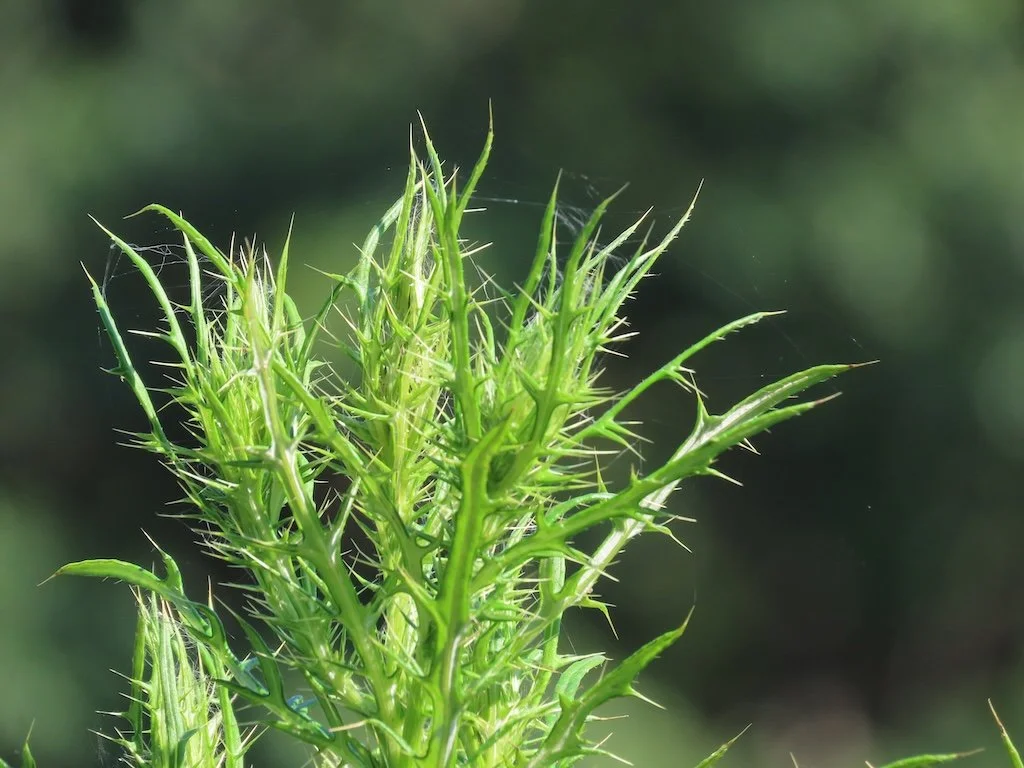
The world's birds a simple and popular classification of the birds of the world

The wild beasts of the world

Bird Behavior physical and physiological

Gleanings of the Week Ending November 11, 2023

The items below were ‘the cream’ of the articles and websites I found this past week. Click on the light green text to look at the article.

In search of the Old Ones: Where to find the world's longest-lived trees – 25-30 woody plants can, without human assistance, produce specimens that reach the age of 1,000 years or older. Of those, only about 10 can reach 2,000 years and those are all conifers. 3 can produce trimillenials and 1 can produce quadrilmillenials. The longest-lived trees of eastern North America, bald cypress, grow in swamps and blackwater rivers. The eldest occur in backwater sections of North Carolina's Black River, just miles from industrial hog farms and fields cleared long ago for tobacco….these bald cypresses reach ages of 2,600+ years. Conifers achieve maximum longevity when conditions are cold and dry, or hot and dry, or steep and exposed, or high altitude, or nutrient poor. In the case of Great Basin bristlecone pine, the longest-living plant on the planet, it is all of the above, with some of these plants reaching up to 4,900 years old.

Conservation of Monumental Mexica Snake Sculpture Continues - Discovered last year in the heart of Mexico City at the site of the Templo Mayor, the main temple in the Mexica city of Tenochtitlan. The 500-year-old sculpture, which measures about six feet long and three feet tall, was painted with yellow, blue, red, black, and white colors made from minerals and plants employed by the Mexica on cult images and temples.

Fungal infection in the brain produces changes like those seen in Alzheimer's disease - When the fungus Candida albicans enters the brain, the body’s response generates amyloid beta (Ab)-like peptides, toxic protein fragments from the amyloid precursor protein that is considered to be at the center of the development of Alzheimer's disease.

Wildlife Photographer of the Year winners show the beauty — and precarity — of nature – My favorite is the Plants and Fungus winner (Last Breathe of Autumn) taken on Mount Olympus.

Scientists says identifying some foods as addictive could shift attitudes, stimulate research - Most foods that we think of as natural, or minimally processed, provide energy in the form of carbohydrate or fat -- but not both. Many ultra-processed foods have higher levels of both. That combination has a different effect on the brain. In a review of 281 studies from 36 different countries, researchers found ultra-processed food addiction is estimated to occur in 14 percent of adults and 12 percent of children. Viewing some foods as addictive could lead to novel approaches in the realm of social justice, clinical care, and public policy.

Flood Resilience Through Green Infrastructure - Green spaces don’t just mitigate flooding. They beautify the urban landscape and improve residents’ mental health. They filter out microplastics and other pollutants, keeping them from reaching sensitive water bodies like rivers. And when the weather is hot, they cool neighborhoods, because plants ‘sweat.’

15th-Century Theater Floorboards Uncovered in Norfolk - A combination of tree-ring dating and study of the building's construction dated the floorboards to between 1417 and 1430. This suggests that William Shakespeare may have performed on the boards!

Second report on the status of global water resources published - Large parts of the world experienced drier conditions in 2022 than those recorded on average for the equivalent periods over the last 30 years. The report results from the expertise provided by 11 international modeling groups to extrapolate from the data/statistics available. There is a particular lack of data on the situation regarding groundwater.  

More Mammals Can Glow in the Dark Than Previously Thought - By examining museum specimens, researchers documented the glowing property across 125 mammal species. Humans, for example, have fluorescent teeth, like all mammals do. In 1911, researchers reported fluorescence in European rabbits, marking the first documented case of the glowing ability in a non-human mammal.

21 species have been declared extinct, the U.S. Fish and Wildlife Service says – 10 birds, a bat, 2 fish and 8 freshwater mussels. There are now 650 species that have gone extinct in the U.S., according to the Center for Biological Diversity, which says factors such as climate change, pollution and invasive species contribute to species loss.

Gleanings of the Week Ending April 30, 2021

The items below were ‘the cream’ of the articles and websites I found this past week. Click on the light green text to look at the article.

This Map Shows You the Odds of Finding a New Species in Your Neighborhood | Smart News | Smithsonian Magazine – In most of the North America, the odds are small…but there are some hot spots.

How our microplastic waste becomes 'hubs' for pathogens, antibiotic-resistant bacteria -- ScienceDaily – Another way that microplastics cause problems. The material is changing the composition and activity within wastewater treatment sludge.

How your sense of smell predicts your overall health - BBC Future – What about people with chronic stuffy noses from allergies or responses to poor air quality? Wouldn’t nose stuffiness reduce the sense of smell somewhat?

Twin Birth Rates Have Soared Globally in the Last Three Decades | Smart News Science | Smithsonian Magazine – Having children later in life and medically assisted reproduction are thought to be the cause.

Top 25 birds of the week: April 2021! - Wild Bird Revolution – Beautiful birds…I always enjoy the 25 pictures each week.

Discarded Covid-19 Masks and Plastic Gloves Are Killing Wildlife | Smart News | Smithsonian Magazine – Ugh! I’m always upset if I see PPE litter; disposable of them properly so they don’t escape into the environment. I will be following the suggestions of ‘snipping the straps on disposable masks’ before I put mine in the trash. I haven’t been using gloves…just soap/water and hand sanitizer.

Thurston Lava Tube Open Again at Hawai'i Volcanoes National Park  - I walked this trail! Glad it is reopened for people to enjoy.

Small farms outdo big ones on biodiversity — and crop yields: Research Highlights – Hurray for small farms.

Beaver? Otter? Muskrat? A Field Guide to Freshwater Mammals – Look at the pictures – how many can you identify?

Climate change cut global farming productivity 21% since 1960s -- ScienceDaily – The changing climate has made subtle changes that add up to the impact on farming productivity. Evidently the impact is greatest in areas that were already hotter.  

The Royal Natural History from the late 1800s

The Royal Natural History series was published in the mid-1890s by Frederick Warne & Co. – the publisher of Beatrix Potter’s books a few years later in the early 1900s.

These natural history books were edited by Richard Lydekker with a long list of illustrators. I enjoyed browsing through 5 of the volumes back in November: one, two, four, five and six. Two sample images from each volume are below.

As I was looking at these volumes again for this post, I discovered that there were a lot more books to look at. They were published as 6 volumes, 12 sections….many of the ‘volumes’ are multiple books! So – I’ve bookmarked the Internet Archive list again…planning to go back to look at the books I missed on the first pass!

Gleanings of the Week Ending September 7, 2019

The items below were ‘the cream’ of the articles and websites I found this past week. Click on the light green text to look at the article.

BBC - Future - Is city life really bad for you? – Some additional reasons we need to make changes to cities --- if that is where the bulk of humans will live in the future.

A Field Guide to Commonly Misidentified Mammals – Cool Green Science – How many of these animals can you correctly identify?

Blood vessels turning into bone-like particles -- ScienceDaily – The headline caught my interest…bone-like particles in the blood. Then I noticed that the researcher was from the school where I did my undergraduate work back in the 1970s!

Top 25 Wild Bird Photographs of the Week: Raptors and Migration – Catching up on these weekly posts from National Geographic. I always enjoy them.

BBC - Future - Can you cool a house without air conditioning? – We’ve probably had our last 90 degree plus day for the season at this point….but over the long term, I expect broadening the technologies we use to cool our homes and buildings is going to be important.

Turquoise-Tinted Tarantula Discovered in Sri Lanka | Smart News | Smithsonian – Iridescent color that must startle the spider’s prey (or a predator) --- and a discussion of collecting by scientists.

See a different endangered animal in every U.S. state – The map is easy to explore. The Puritan Tiger Beetle was the one listed for Maryland….not something I had heard of before.

Infographic: How Muscles Age | The Scientist Magazine® - A little muscle anatomy lesson – for young and old.

The Earth's Vegetation Stopped Expanding 20 Years Ago - News | Planetizen – Another indication that climate change is already having a worldwide impact?

Forest-killing bark beetles also might help ecosystem, experts say - UPI.com – It’s distressing to see a forest of dead trees…but maybe it’s an indicator that monoculture forests and fire suppression are not healthy. And then there is climate change in the mix as well. The beetles now survive the winter temperatures in much of their range.

HoLLIE – week 2

The second HoLLIE (Howard County Legacy Leadership for the Environment) class day was last week and it was held at NASA Goddard. I was worried about hitting rush hour traffic so left very early since we were to meet in the Goddard Visitor Center parking lot to catch the bus into the facility. The day was sunny and clear…but very cold and breezy. I managed to take this picture of the visitor center (not yet open) without getting out of my car!

20180208_073546.jpg

The theme for the day was “what informed citizens need to know about earth systems science.” It was the first of two days that our classes will be at Goddard; last week we started with lectures on “understanding the tools and the state of the art in earth science” from the Project Scientist for the AQUA satellite and then got a tour of mission control for several earth science satellites from the Aqua Mission Director. They did a good job of demonstrating the types of data that can be collected, the methods used to collect it, and the ways it has been analyzed. I was surprised to see the LRO (Lunar Reconnaissance Orbiter) mission control in the same building. That brought back the memory of my daughter being on the team to do image calibration shortly after it launched during her undergraduate days!

20180208_121831.jpg

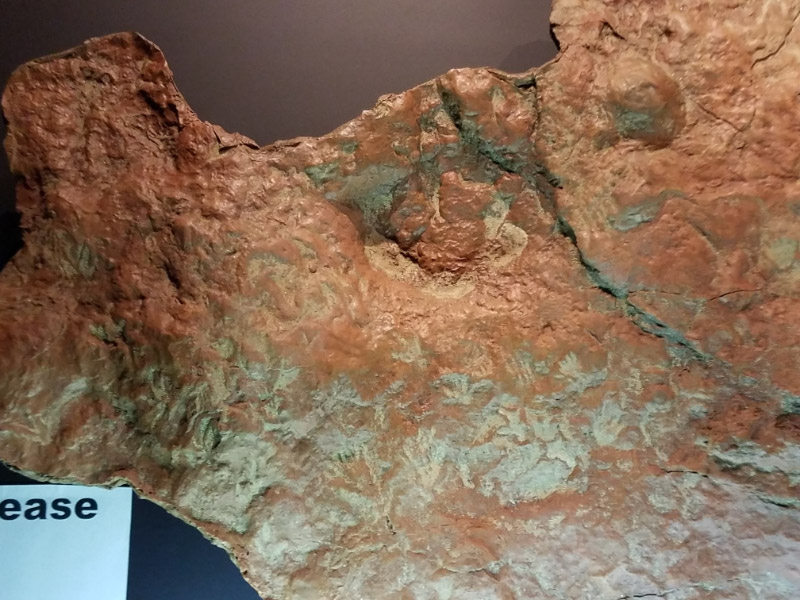
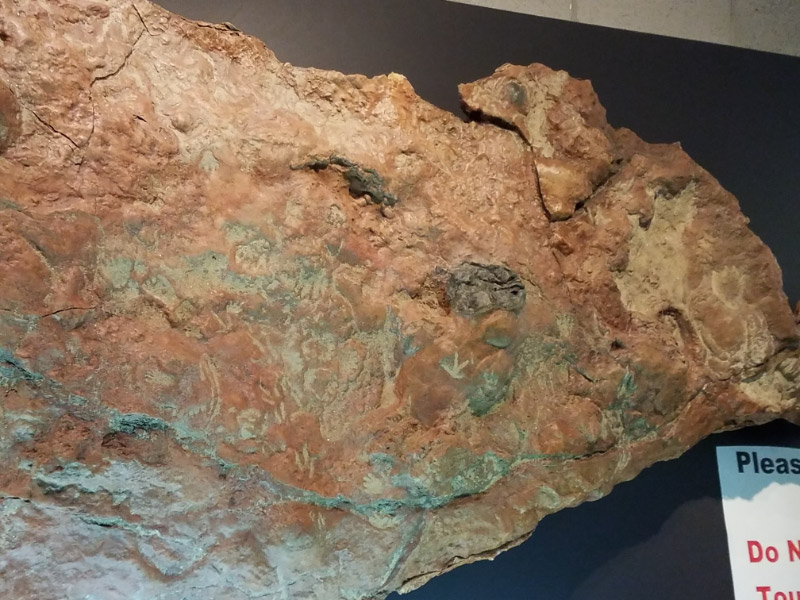
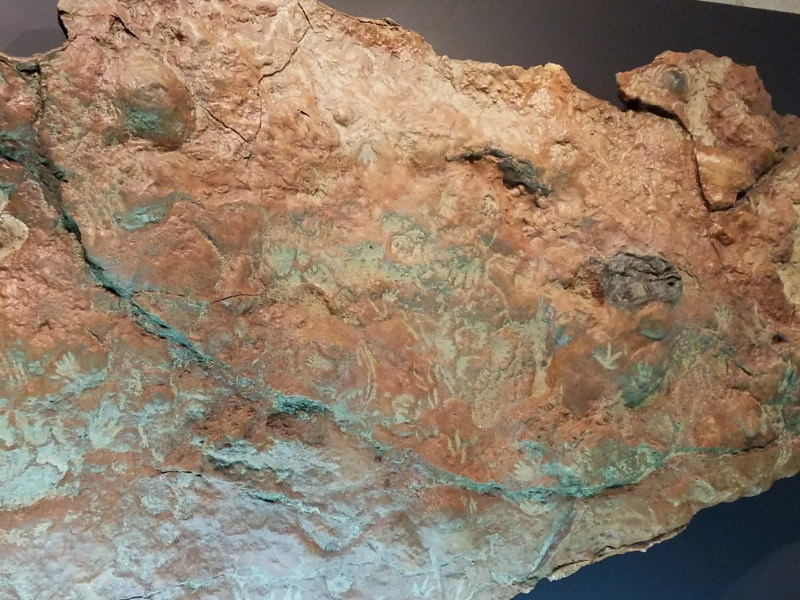
On the way back to our classroom, we stopped by the replica of the big rock found at Goddard that has mammal and dinosaur and mammal tracks. This was not on our agenda originally but was a wonderful serendipity aspect to the day even if it took part of our lunch time. I’d read about it in one of my news feeds and followed the link to the paper…but it was such a thrill to see the exhibit and hear the short lecture. I managed to take a few pictures.

We started the lectures on ‘understanding the science of earth’s cycles’ that will continue in this week’s class. We talked about the oceans and the carbon system in this second class. One of the interesting videos in the lectures is available online: twenty years of global biosphere data mapped on a slowly spinning globe; it easy to see the annual cycles. With the massive amounts of data, visualization becomes an important component.

20180208_120511.jpg

When I got home an article in one of my newsfeeds talked about climate models that are developing that explain why there might be a linkage between melting of Arctic sea ice (one of the topics for the HoLLIE lectures this week) and droughts in California (How nuclear weapons research revealed new climate threats). It was easier to understand since I had the background of the lectures!

Previous HoLLIE posts: Week 1