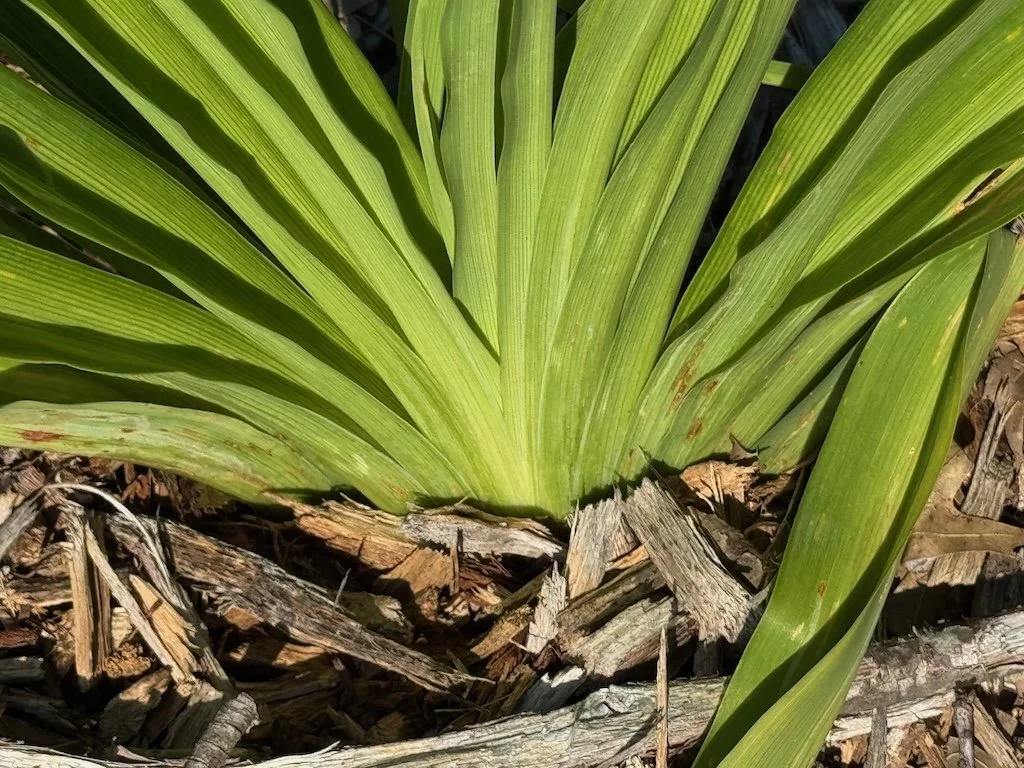
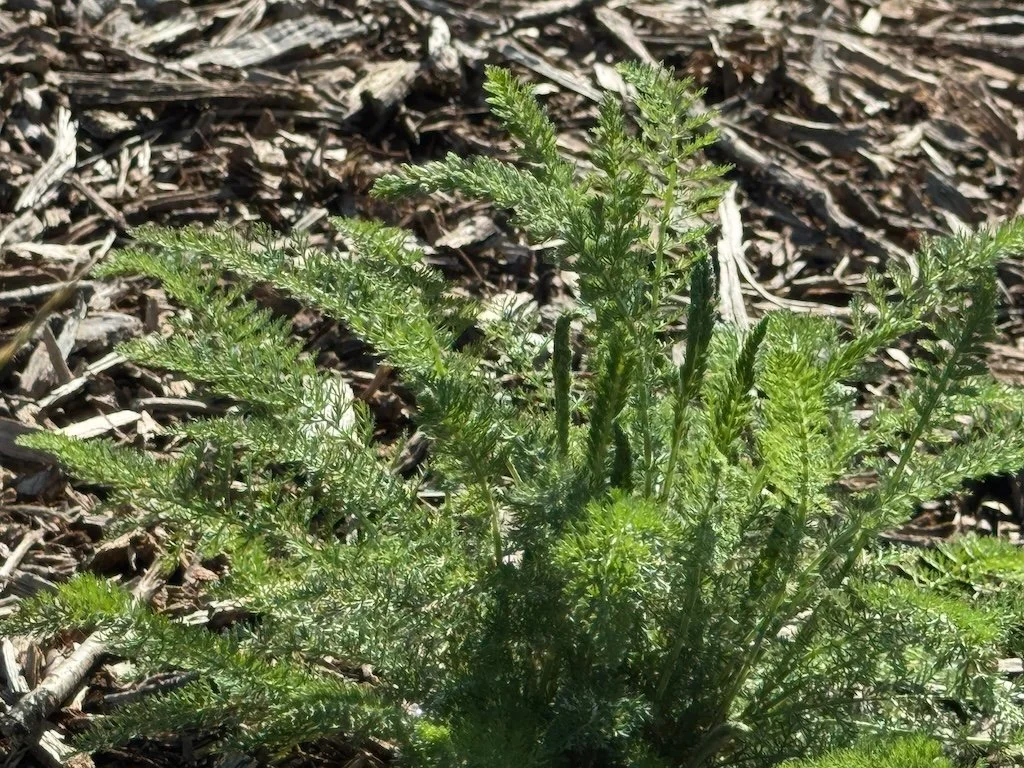
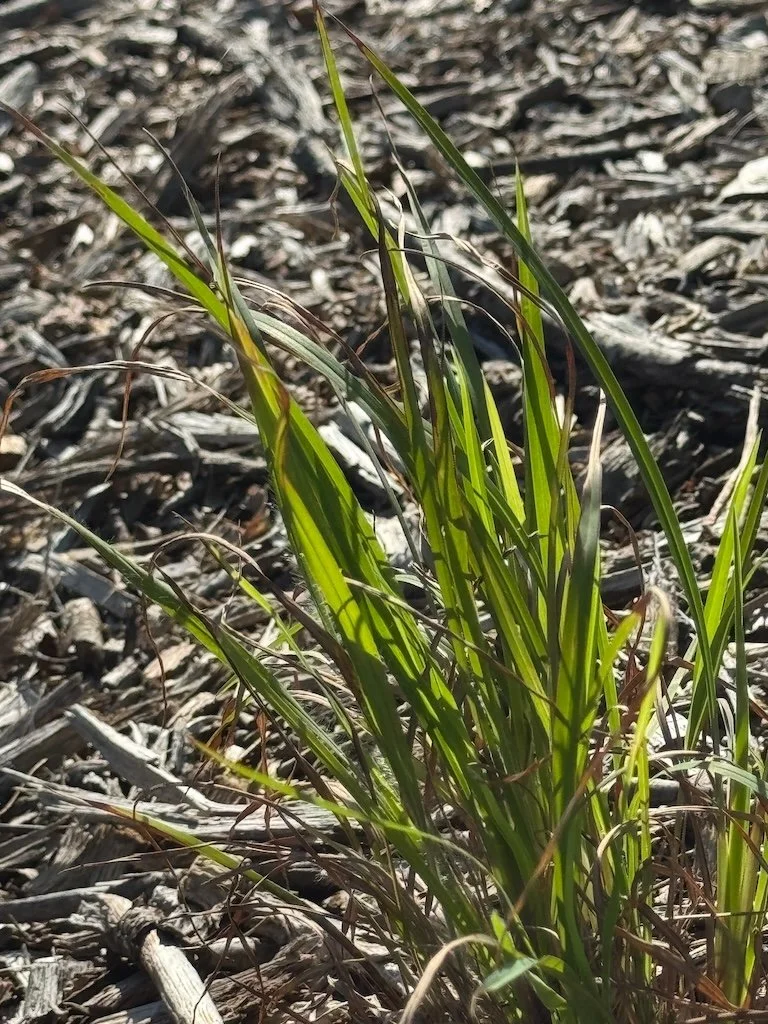
Our Missouri Yard – December 2025

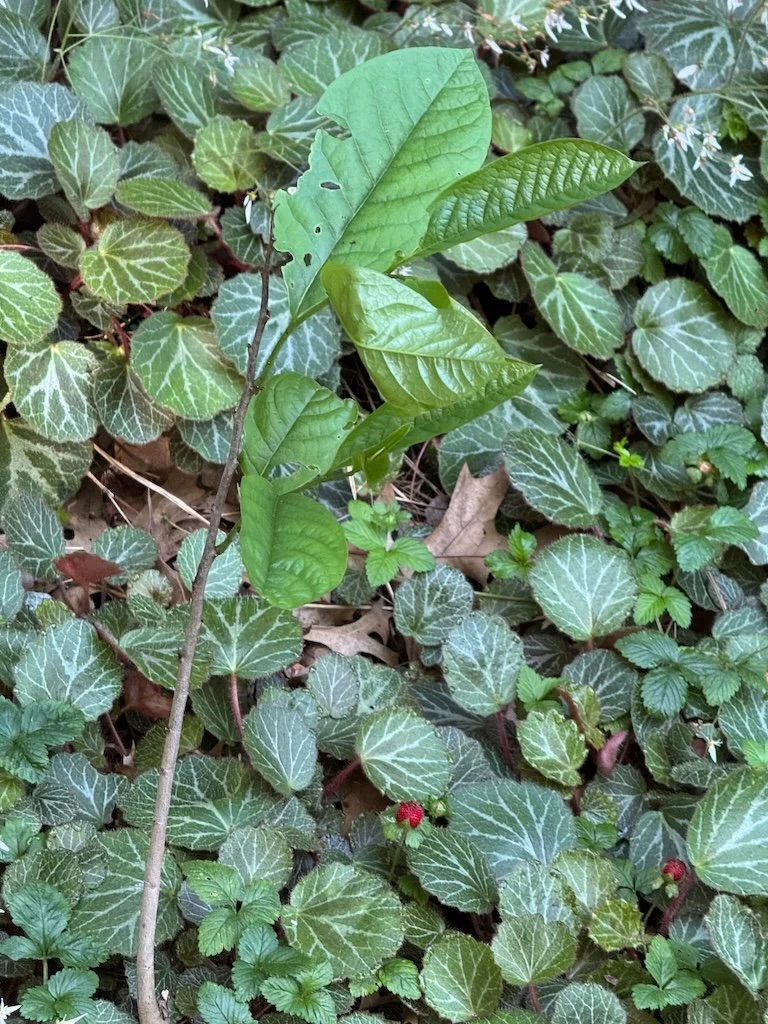
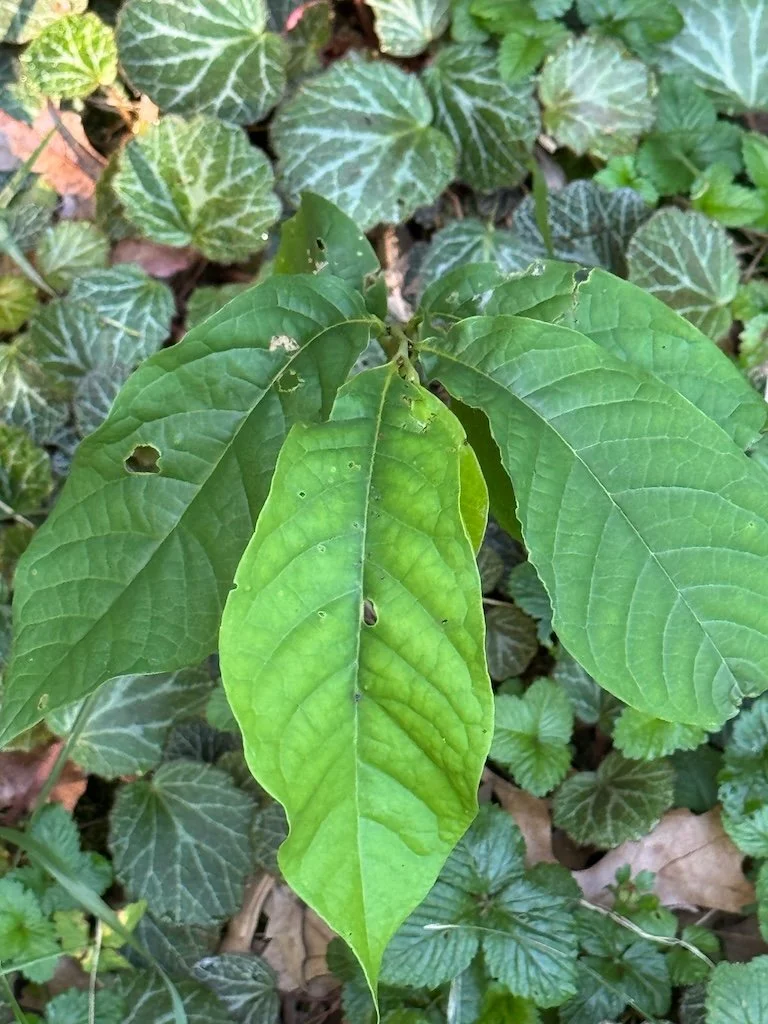
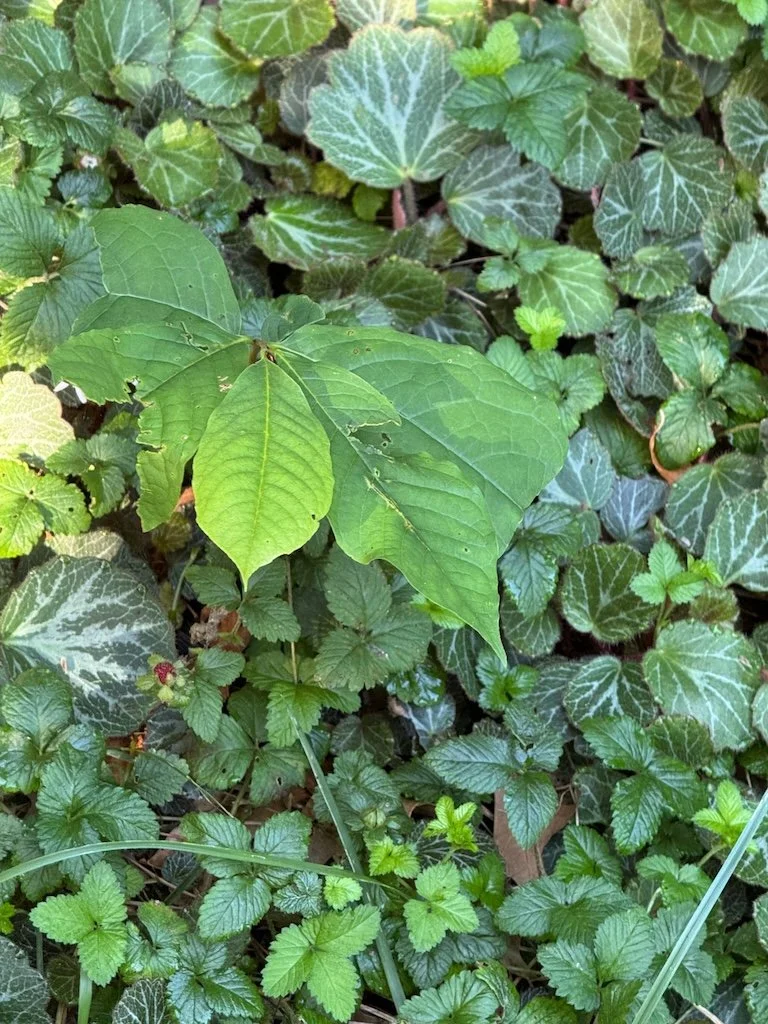
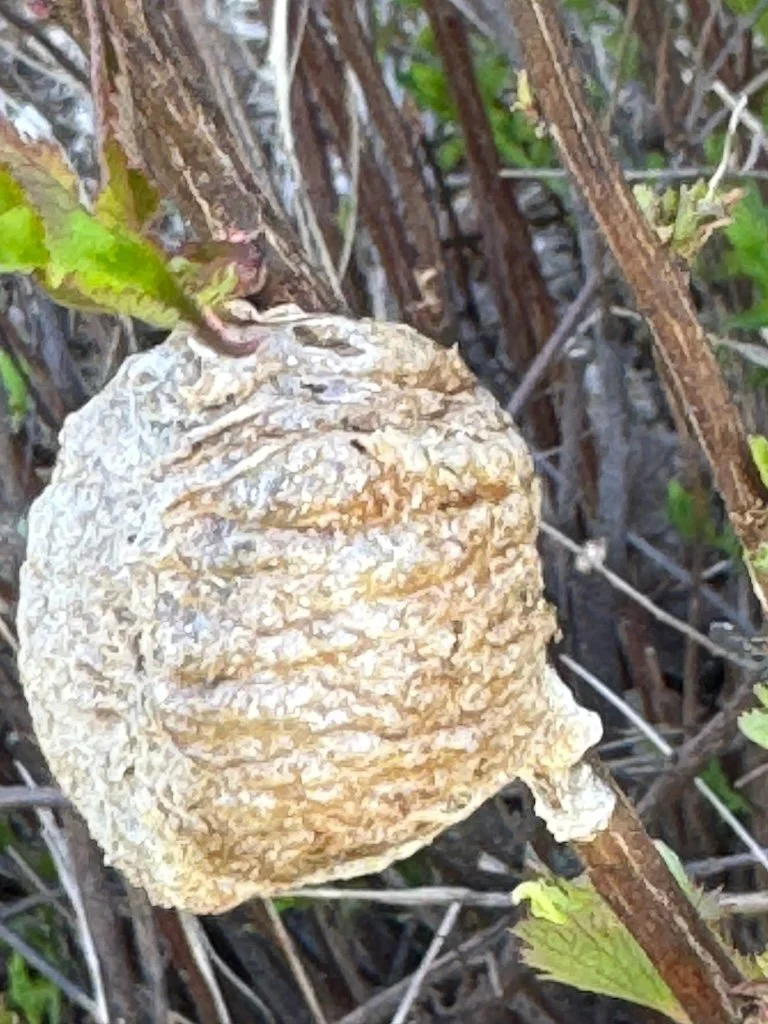
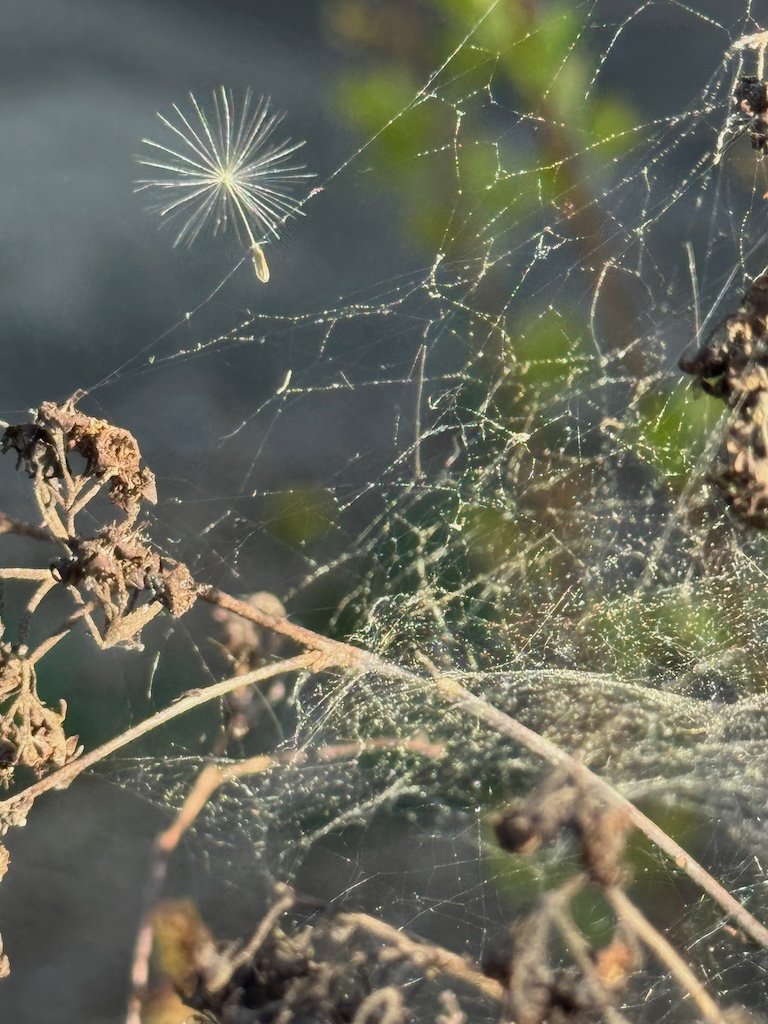
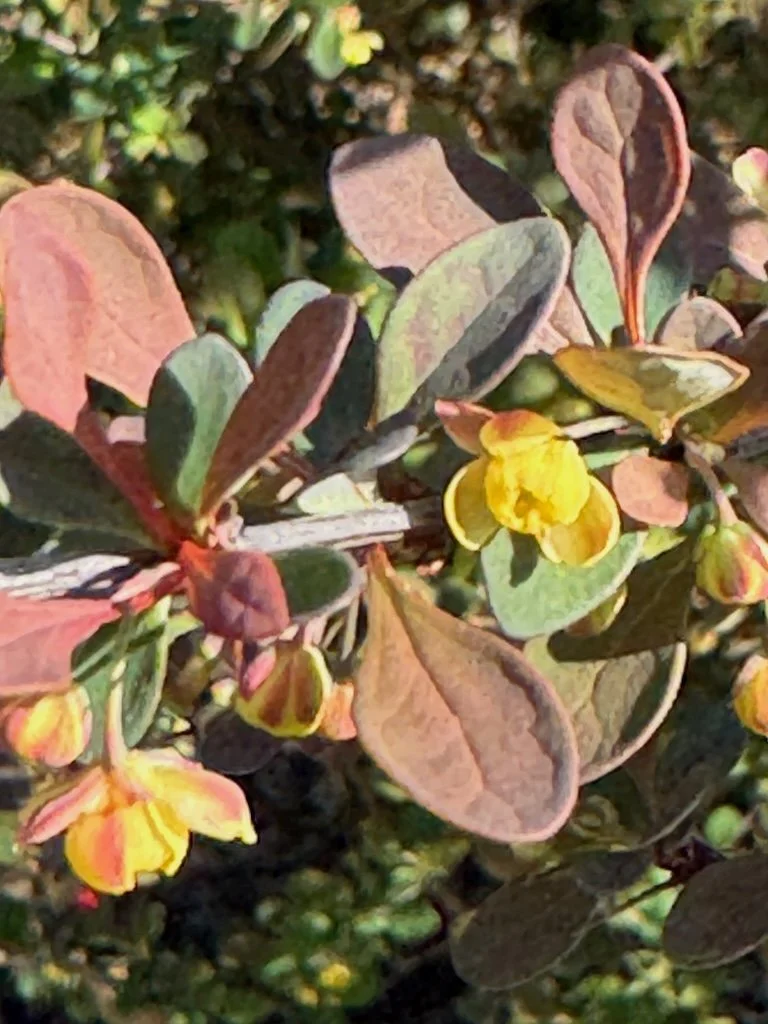
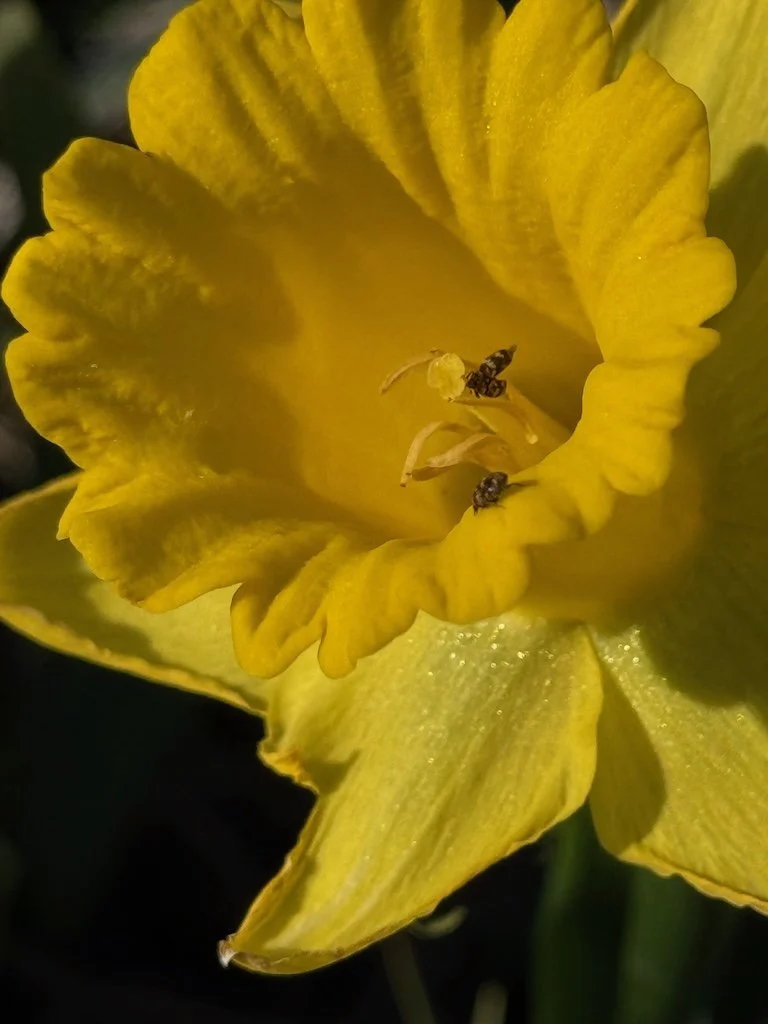
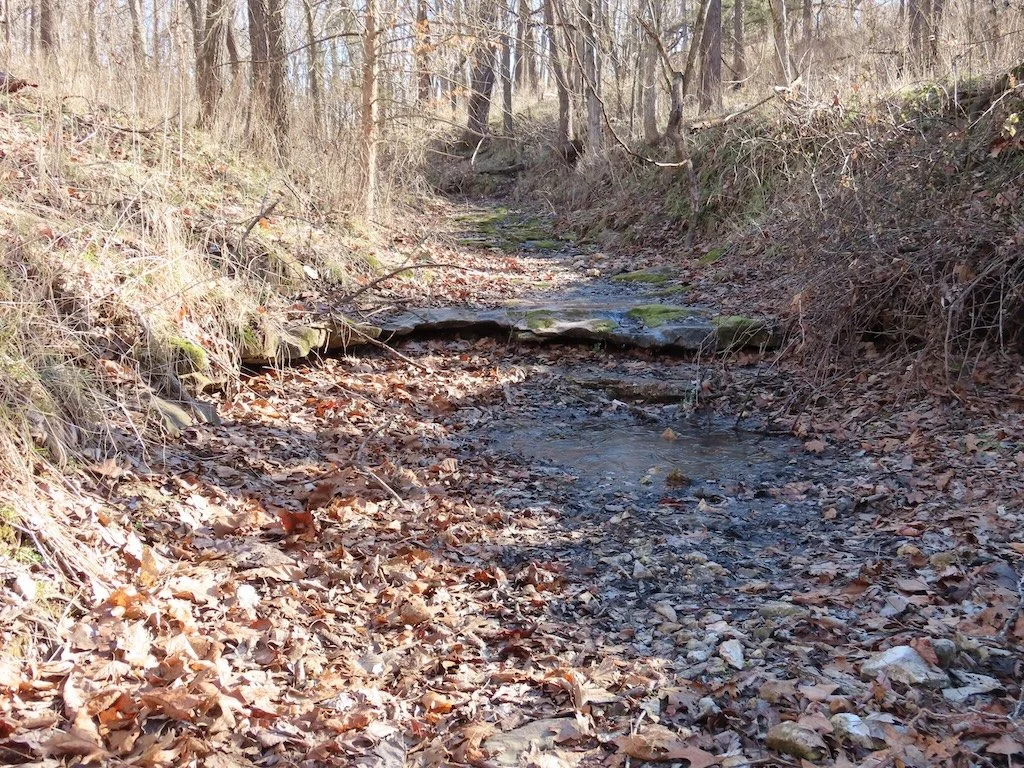
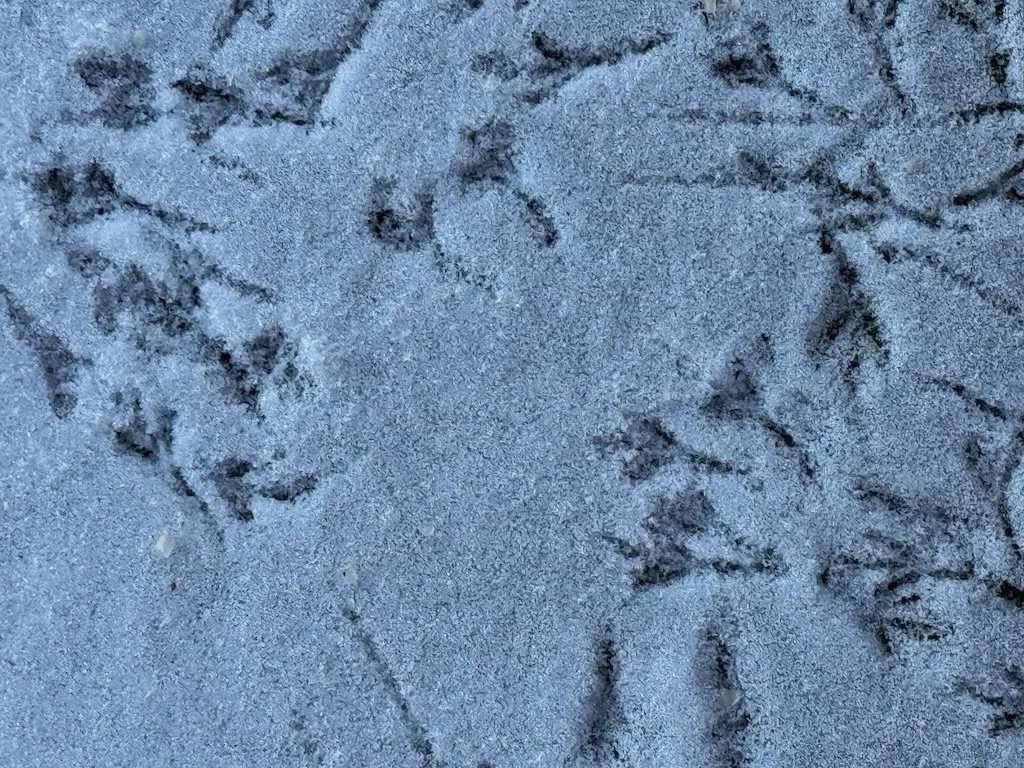
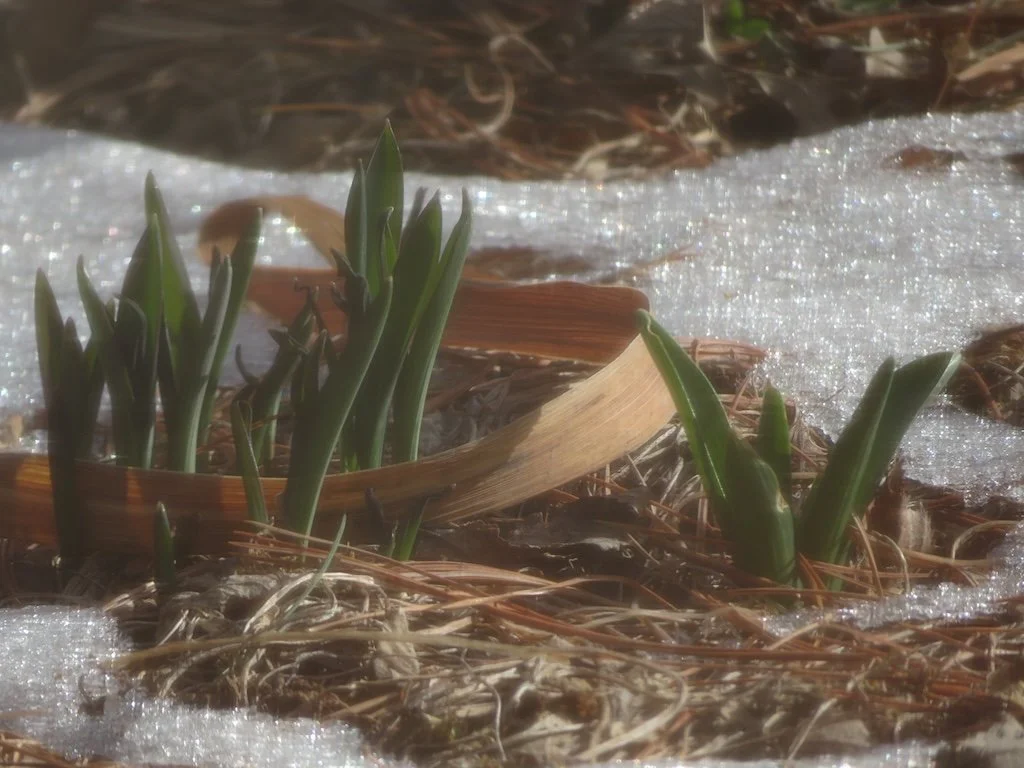
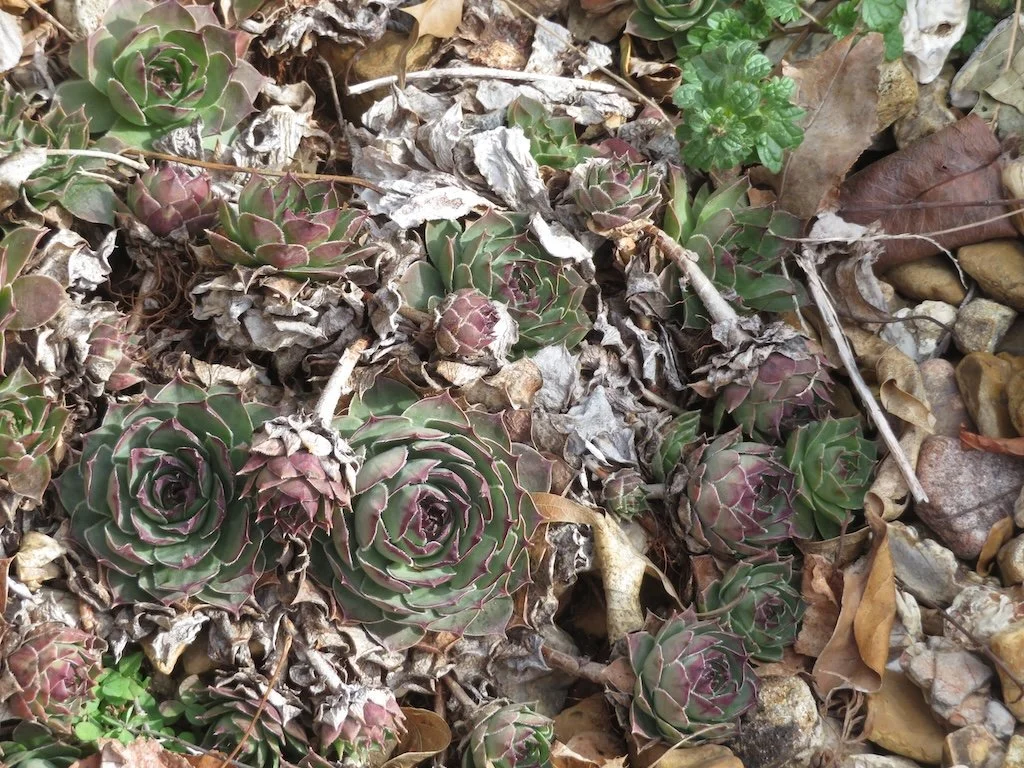
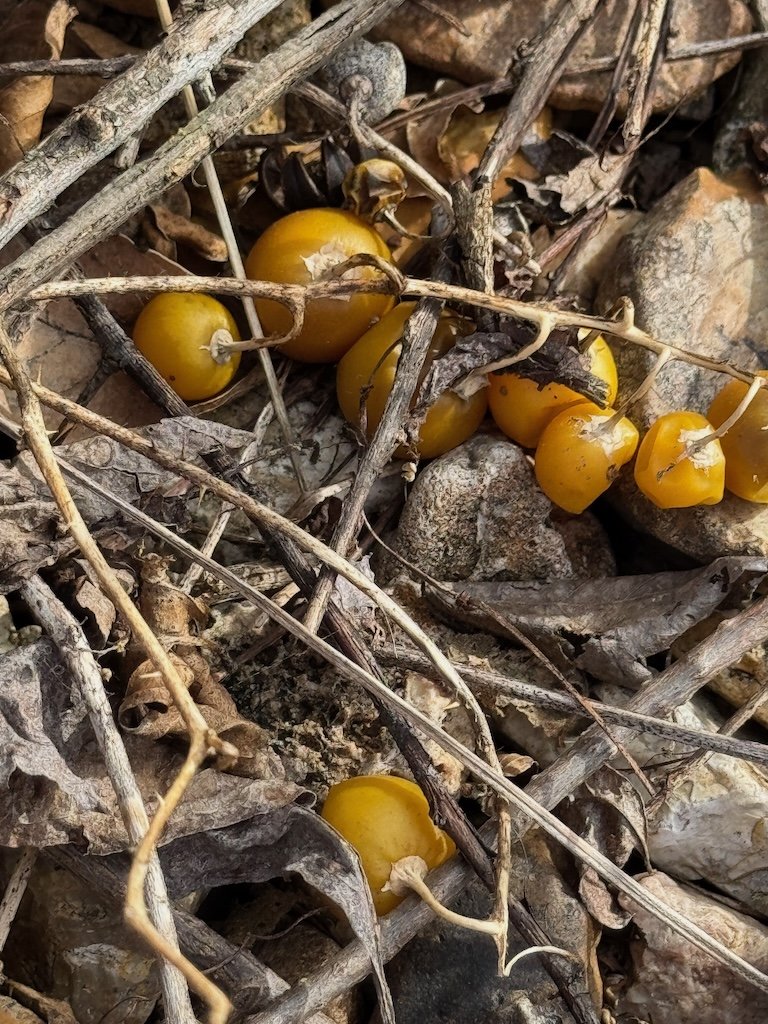
December had started off with some very cold days with low temperatures in the 20s or teens at night and barely getting above 50 on 3 days (other days the high was in the 40s). Almost all the trees had lost their leaves abruptly in November when we had some very cold days. As I walked around the yard taking pictures for this post, I found myself searching for color and interesting textures.

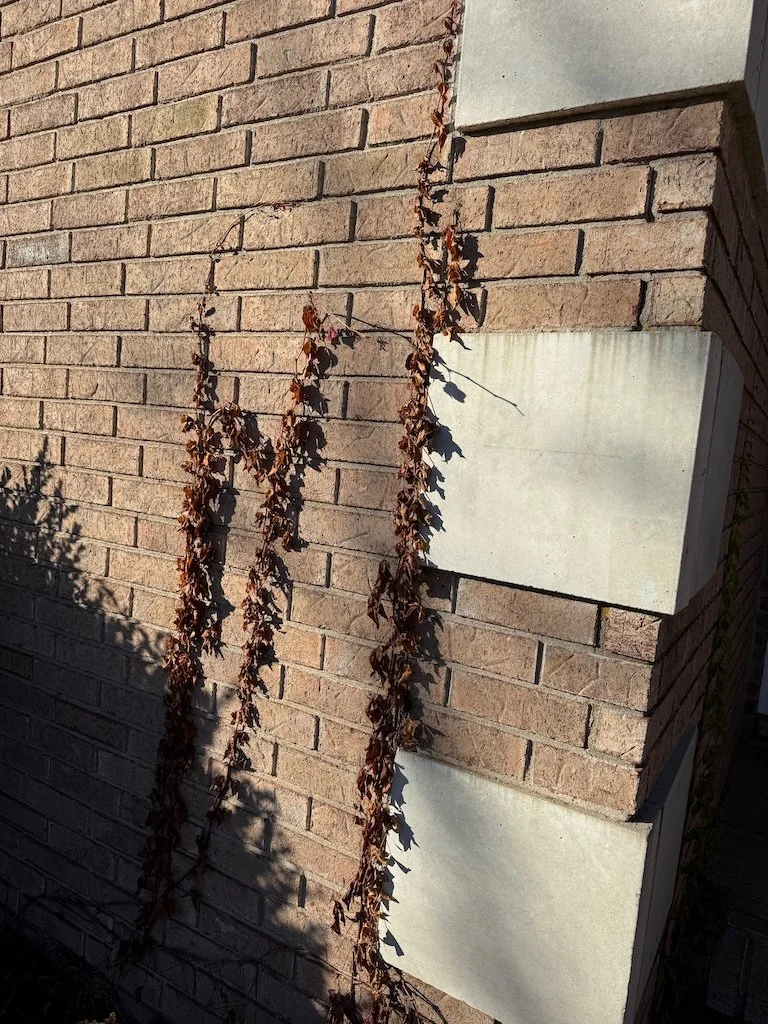
The Virginia Creeper that had been so beautiful in previous falls (red leaves) had either died back or retained the color for only a few days. Some of the vines retained their leaves – but they are brown rather than bright red.

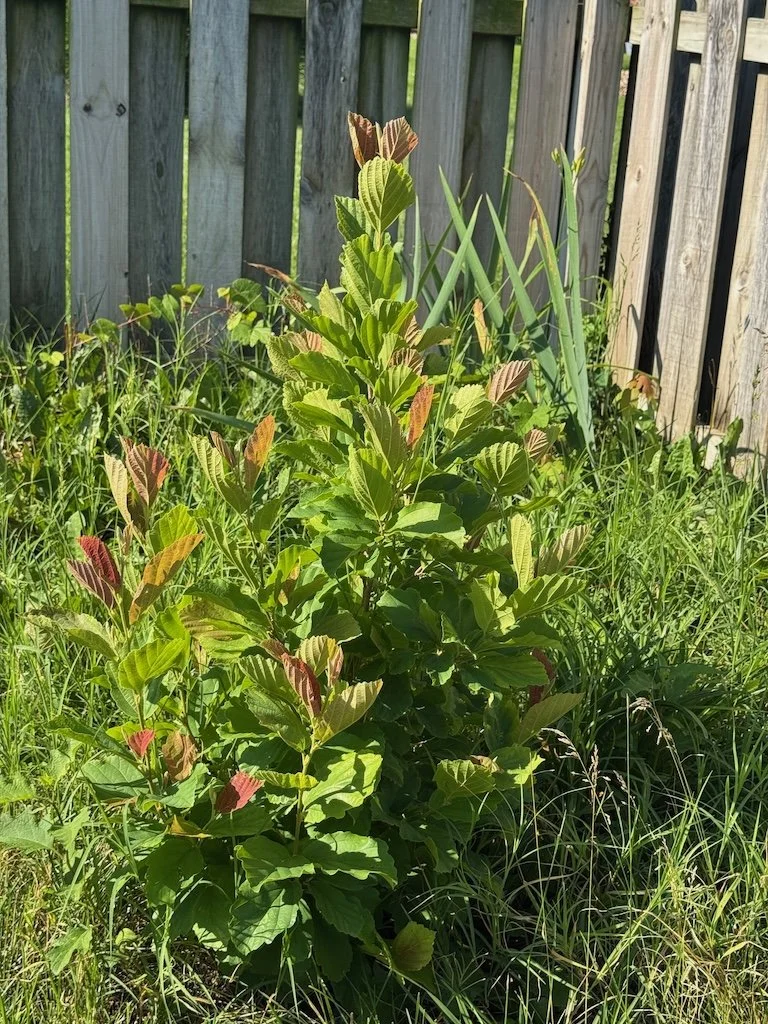
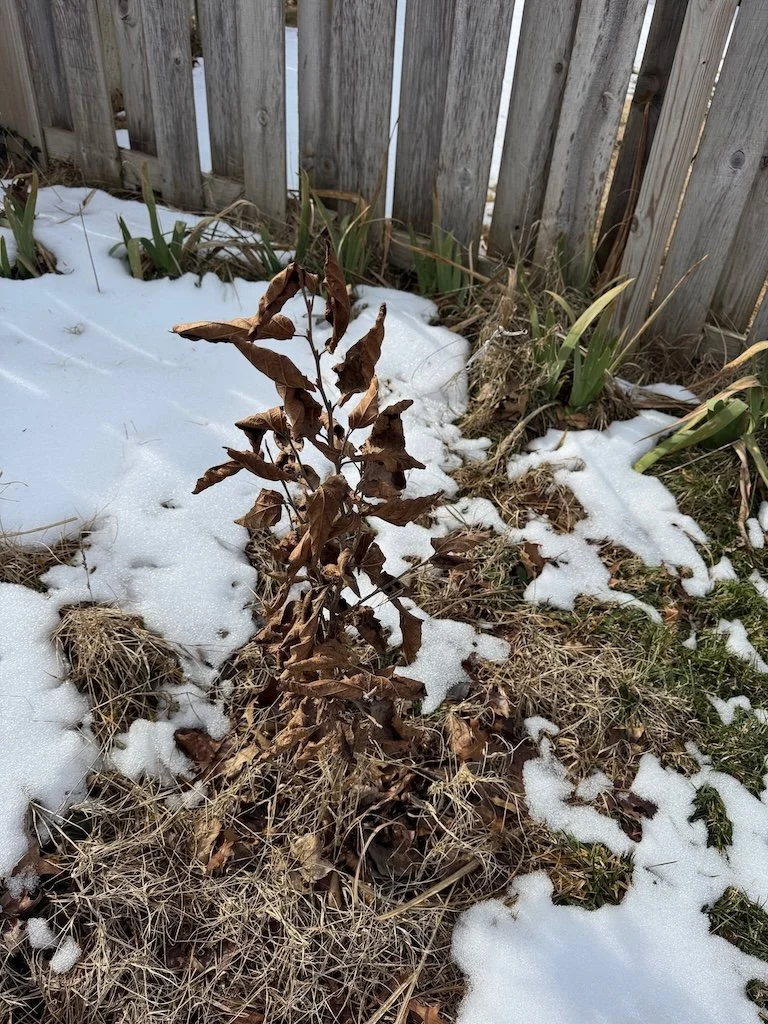
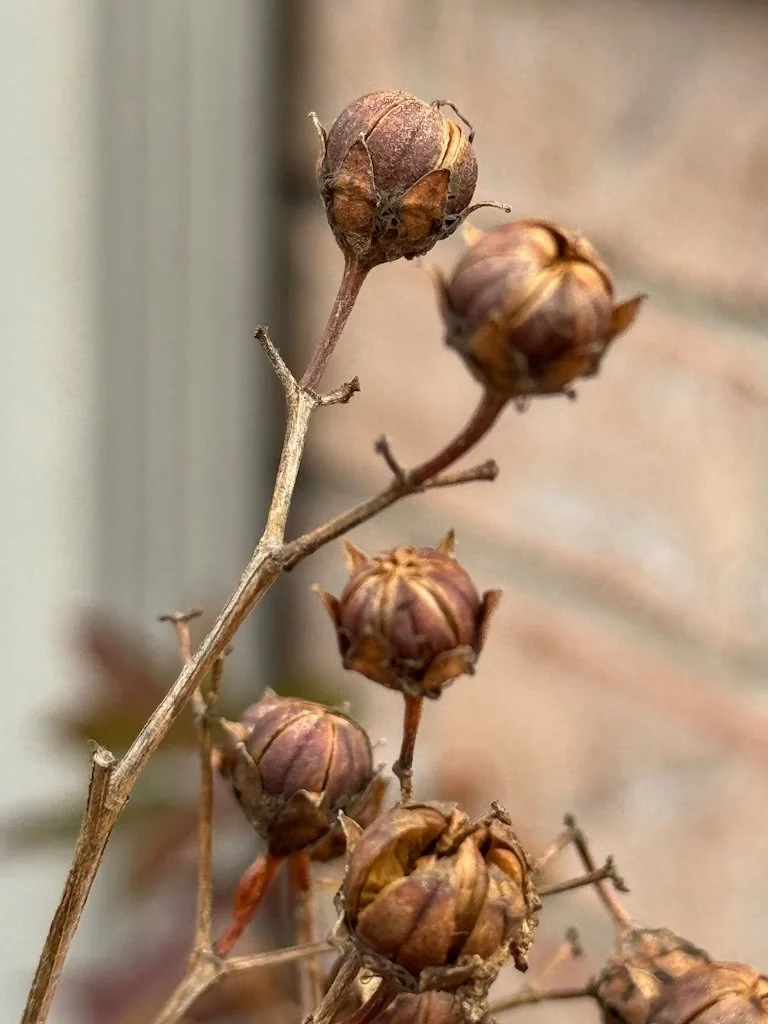
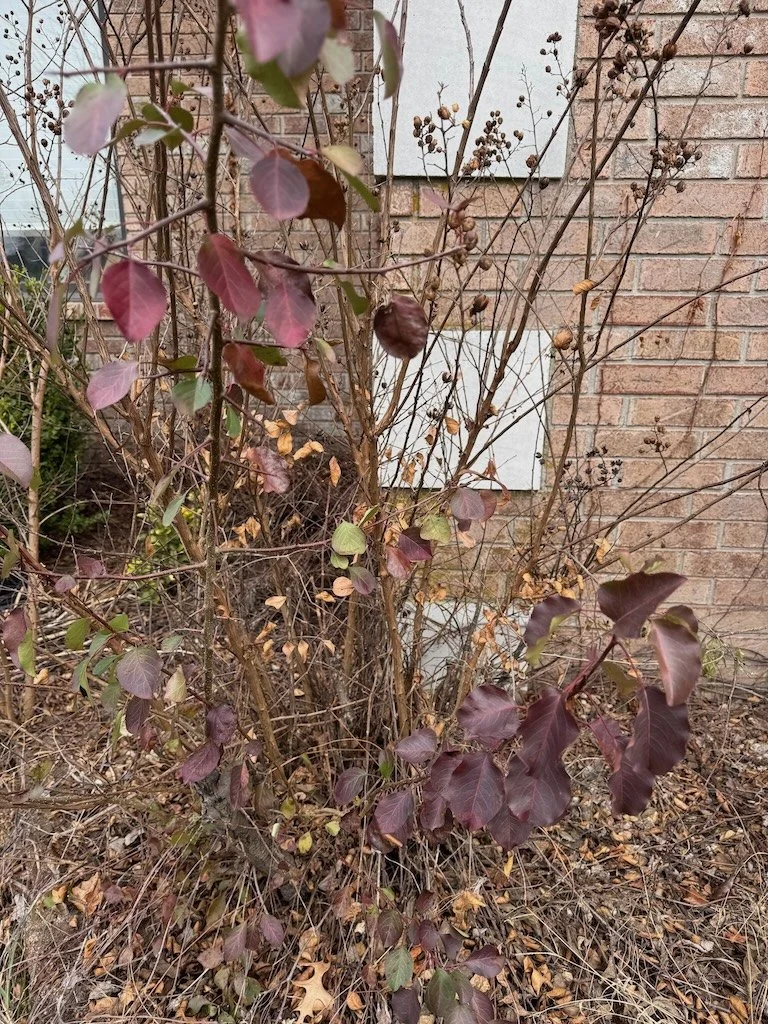
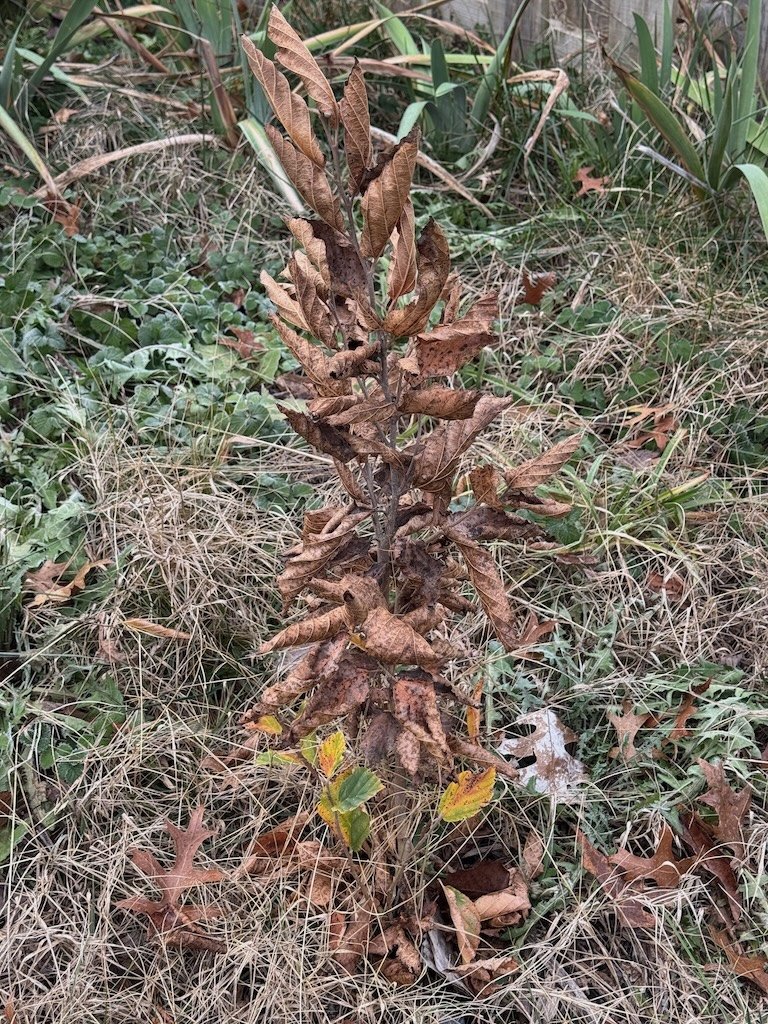
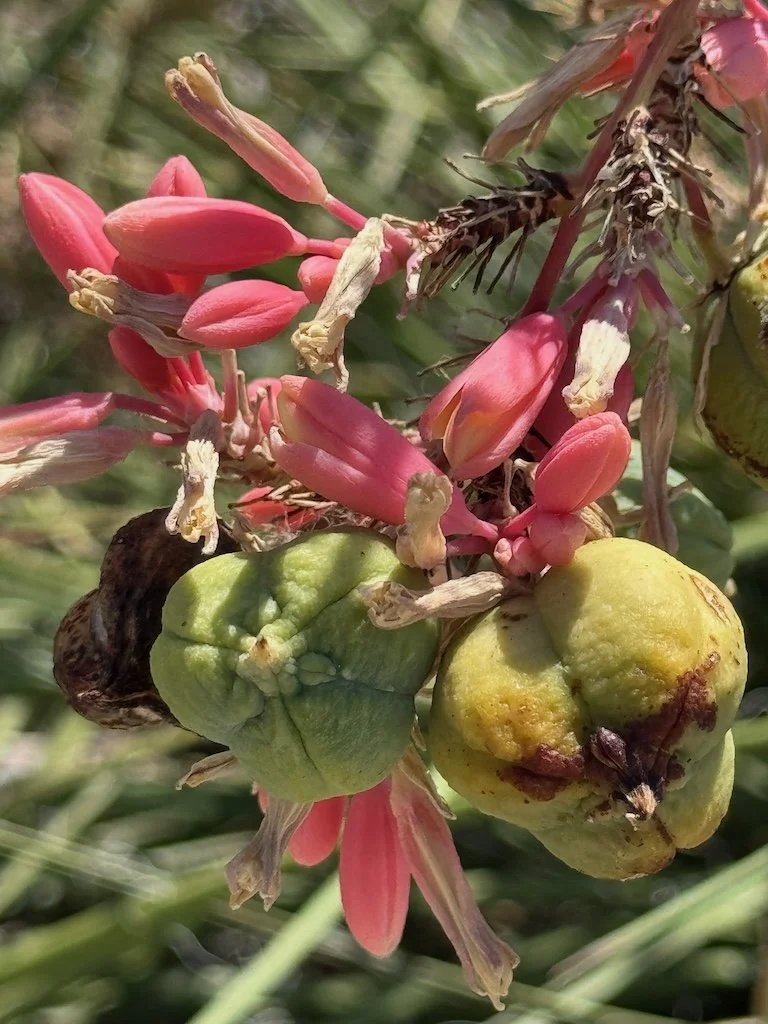
The crape myrtles have interesting seed pods. I am going to cut them all back when there is a day above 50….they will look better next year if I do. One of them is tall enough to brush against the eve of the house so that one is the priority to get cut. The other one to tackle is the one that has a Callery Pear (wild form of the Bradford Pear) growing with it. The red leaves are the pear so I can (hopefully) cut it very close to the ground.

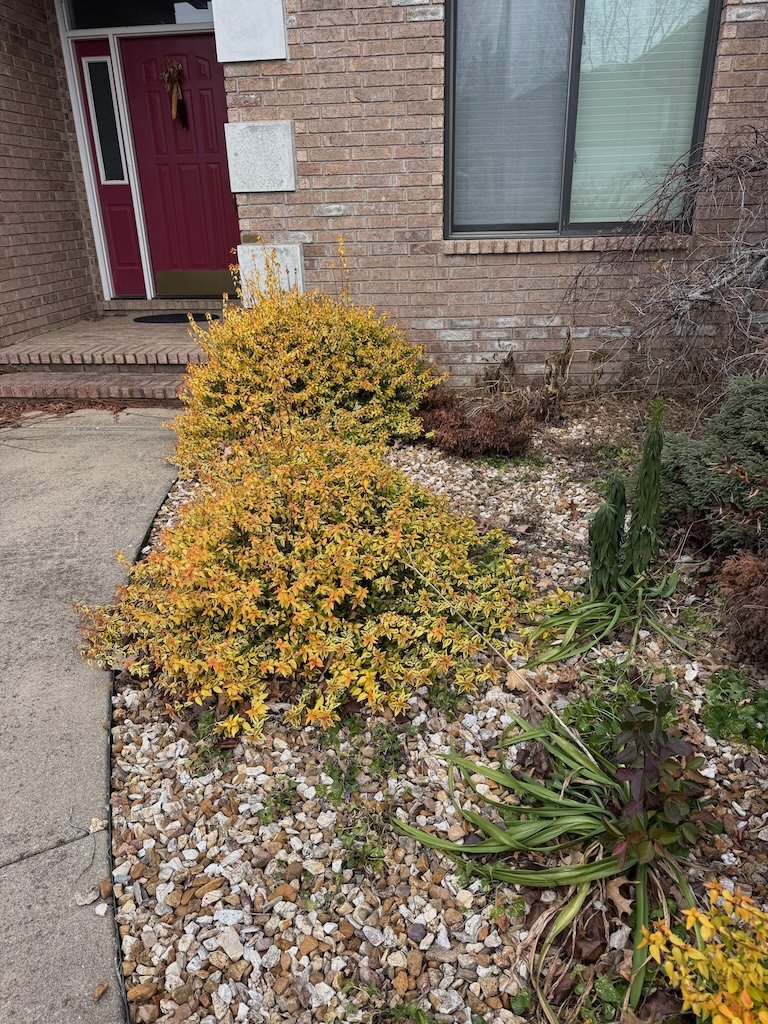
The bed near our front door has some color – bushes that are bright yellow (that need to be trimmed) and some plants that haven’t succumbed to cold temperatures yet because they are protected. The Japanese Maple in the corner has lost its leaves and may be dying; that corner has not worked well for that small tree.

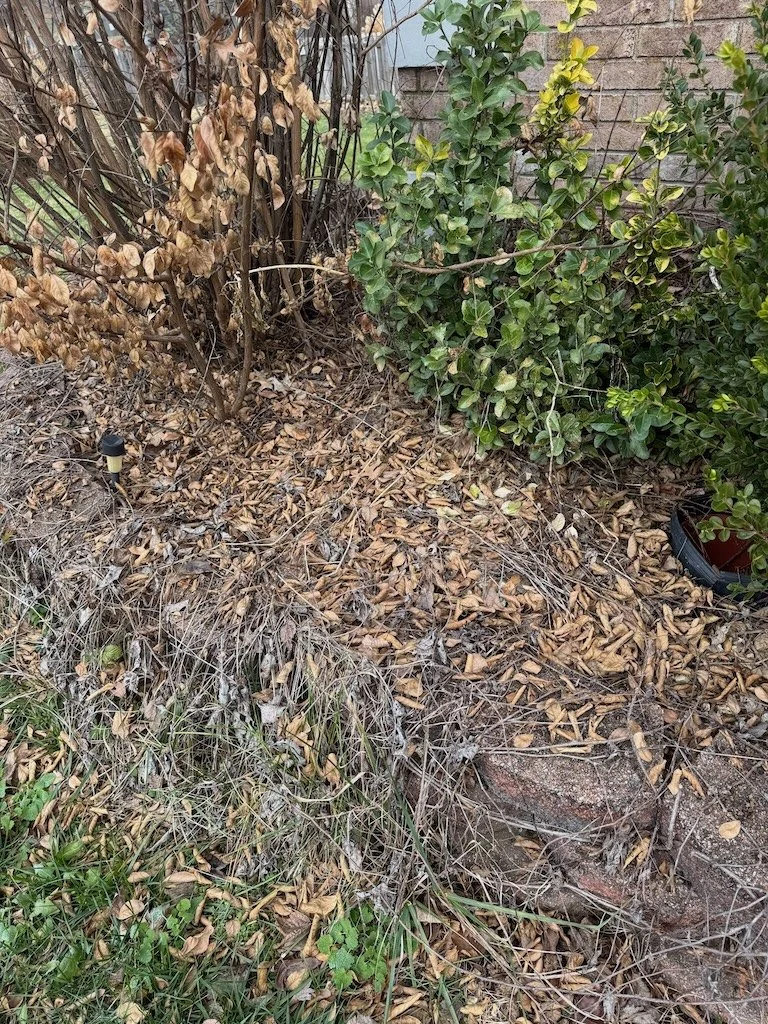
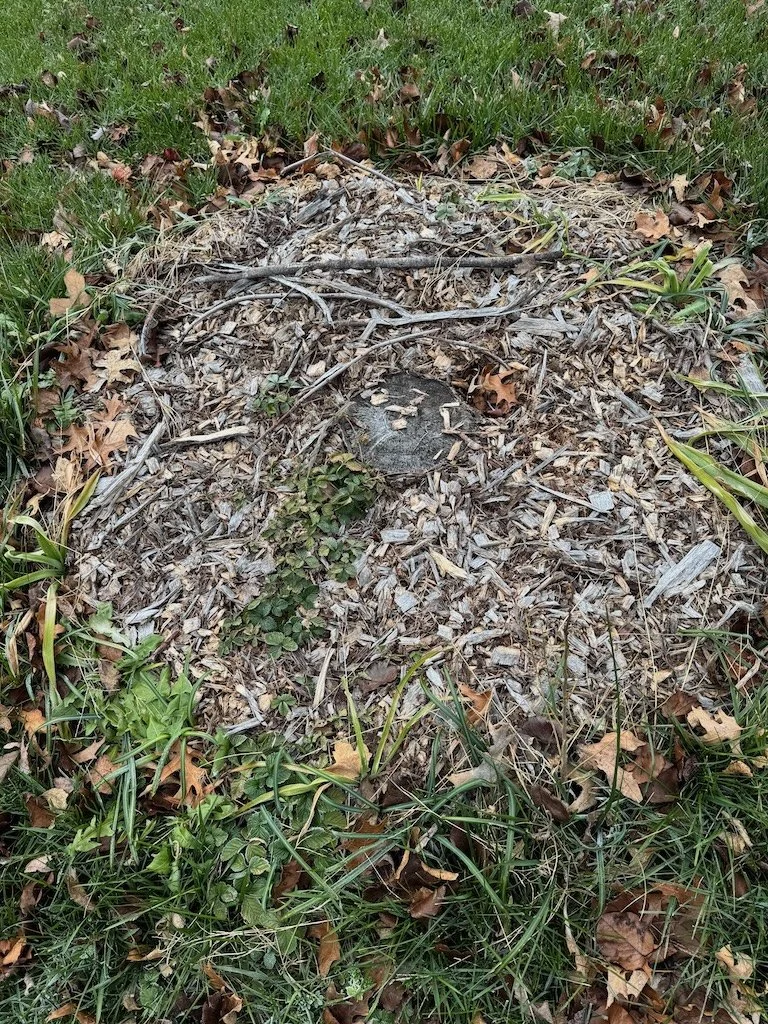
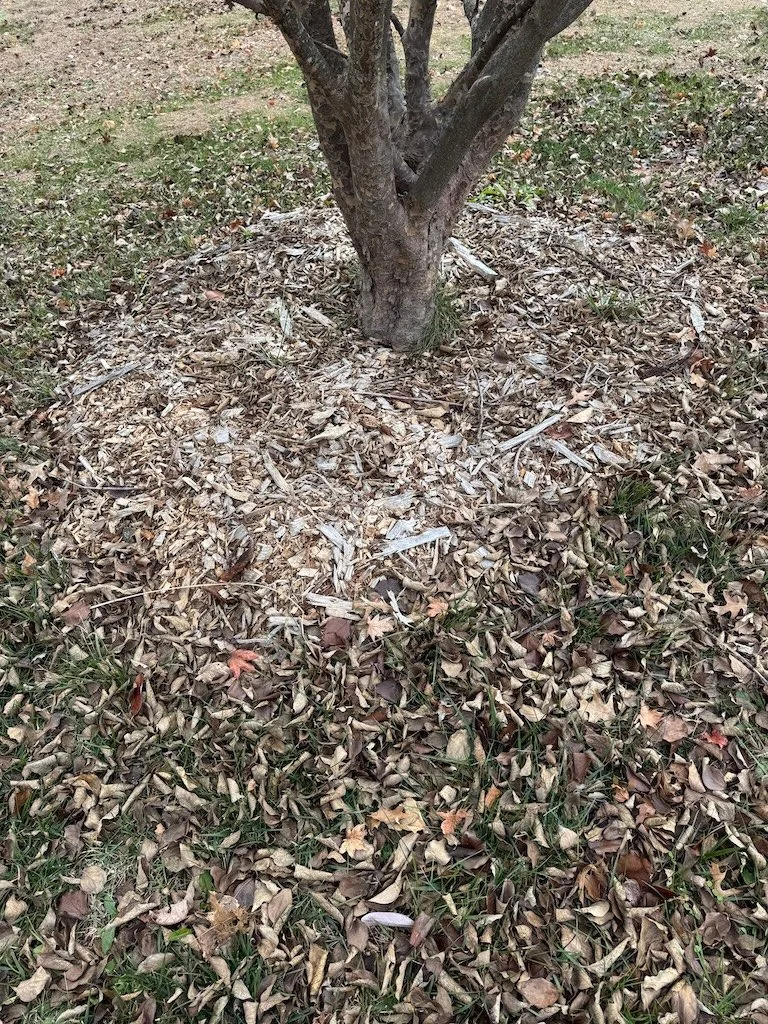
The places where I put the bark mulch from our last tree trimming are holding up well. I will pull weeds from them and plant new plants into some of them next spring. The one under the Kousa dogwood mulch needs some native ground cover planted there…and maybe some of the lower branches cut.

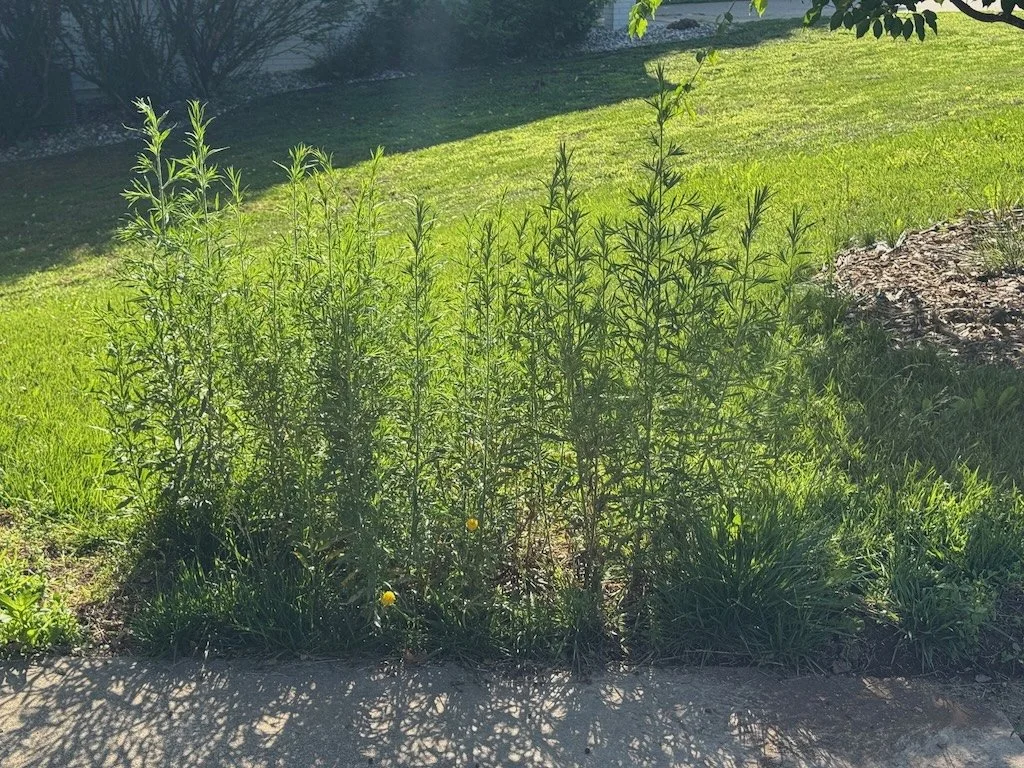
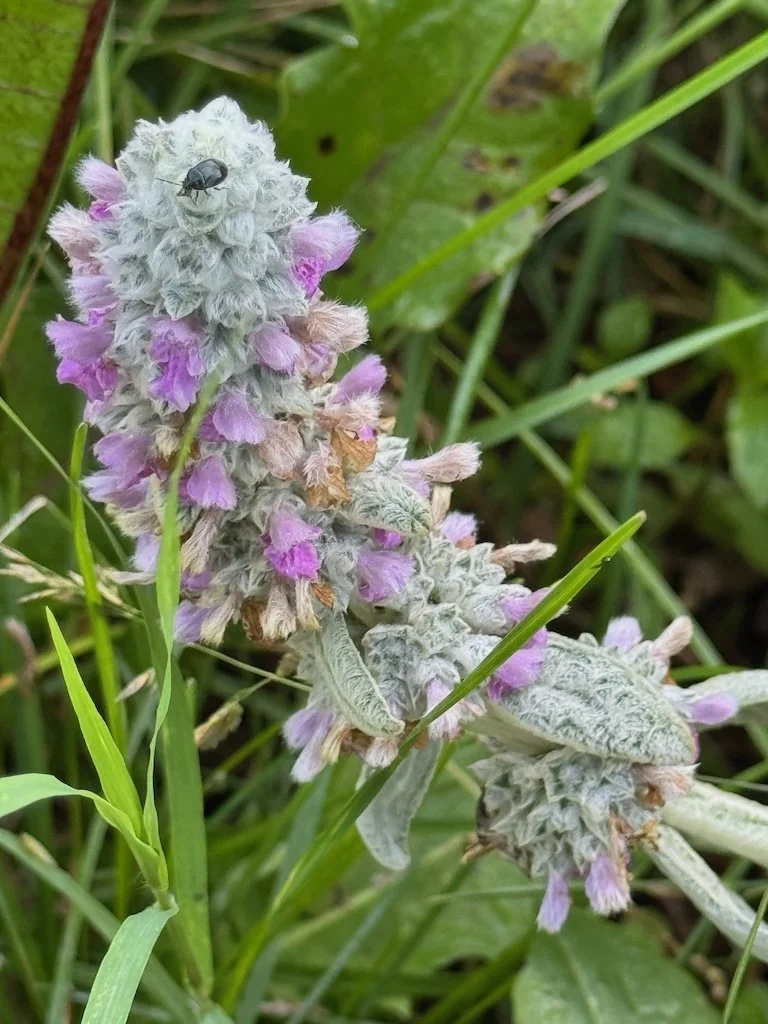
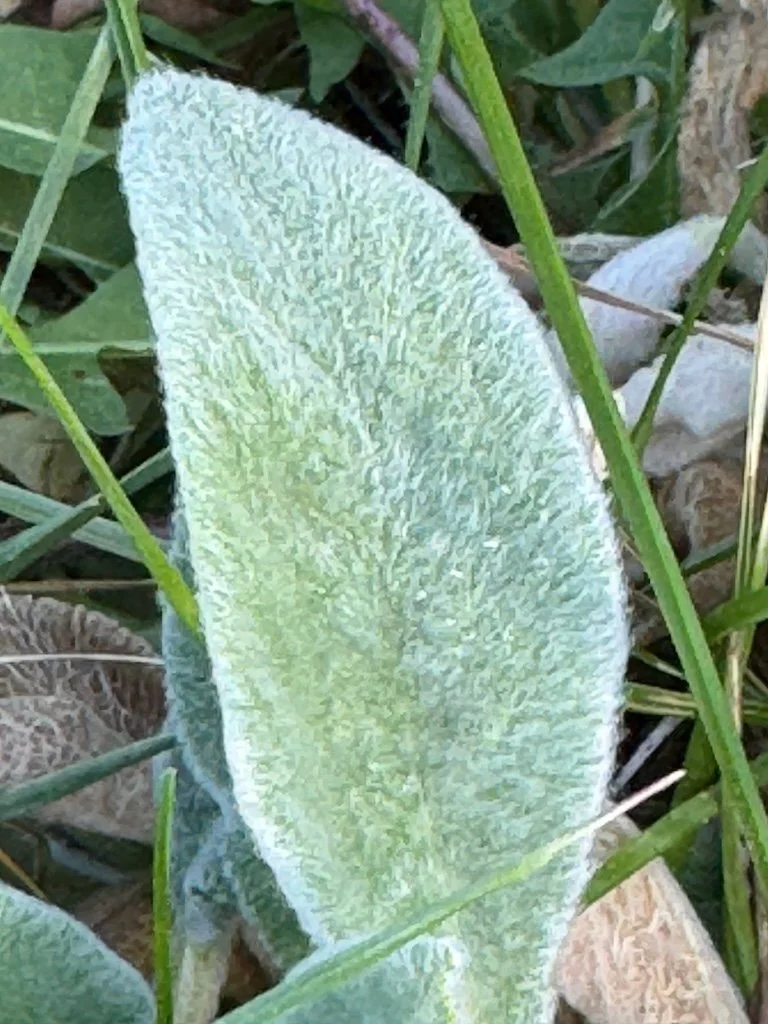
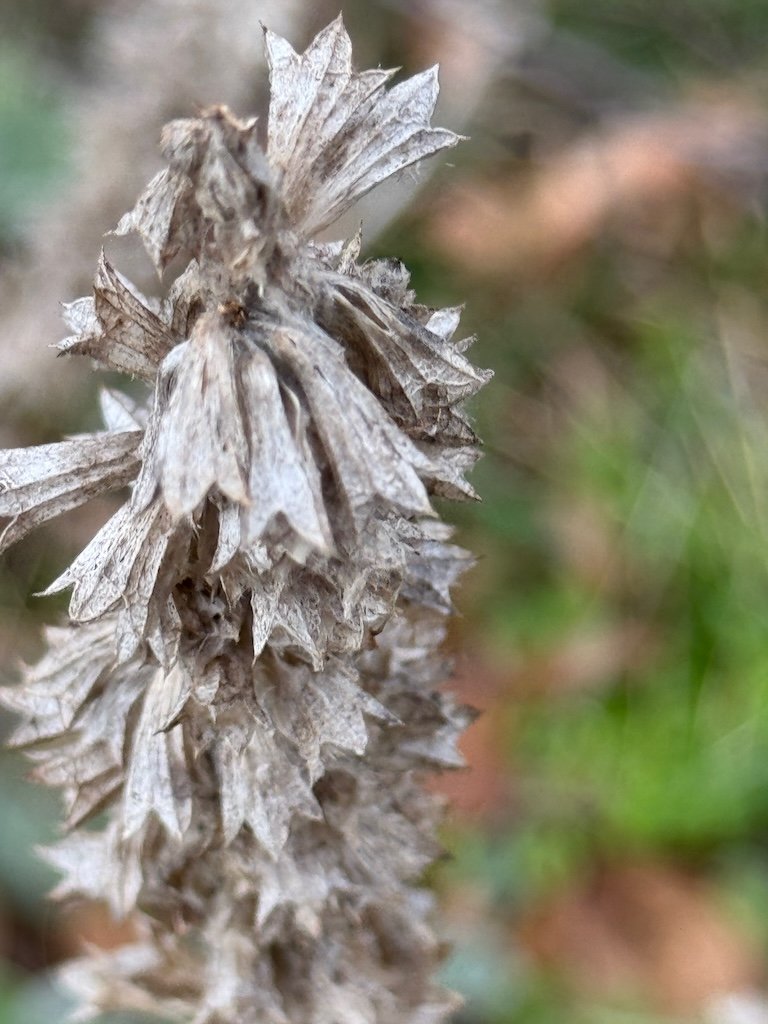
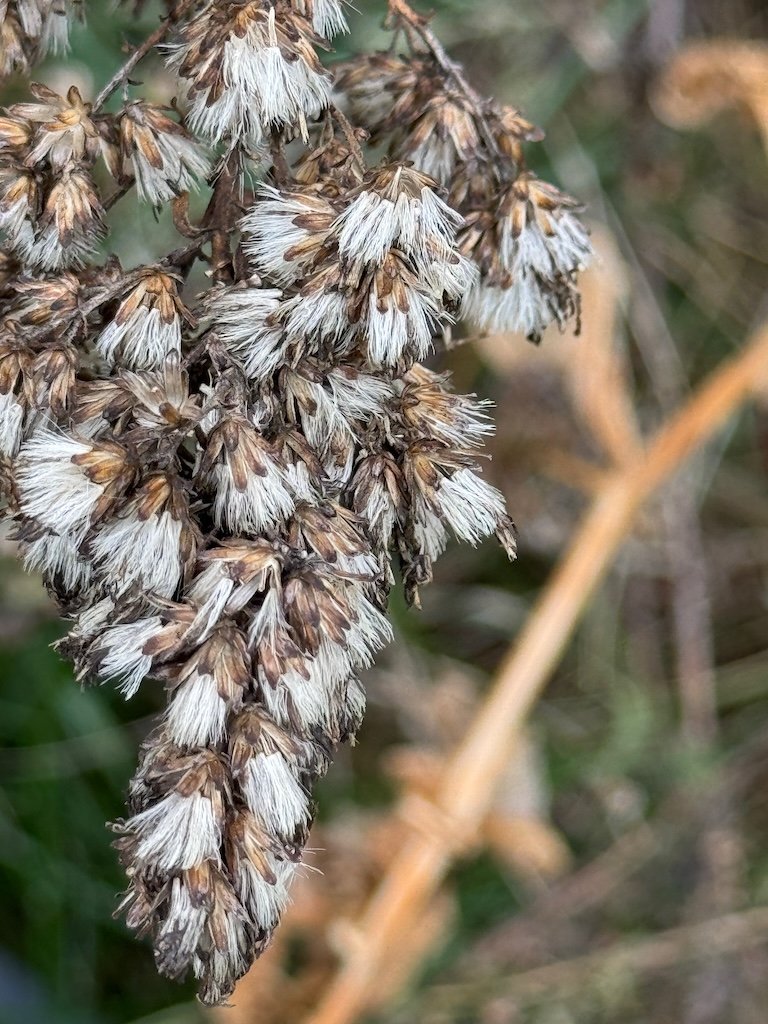
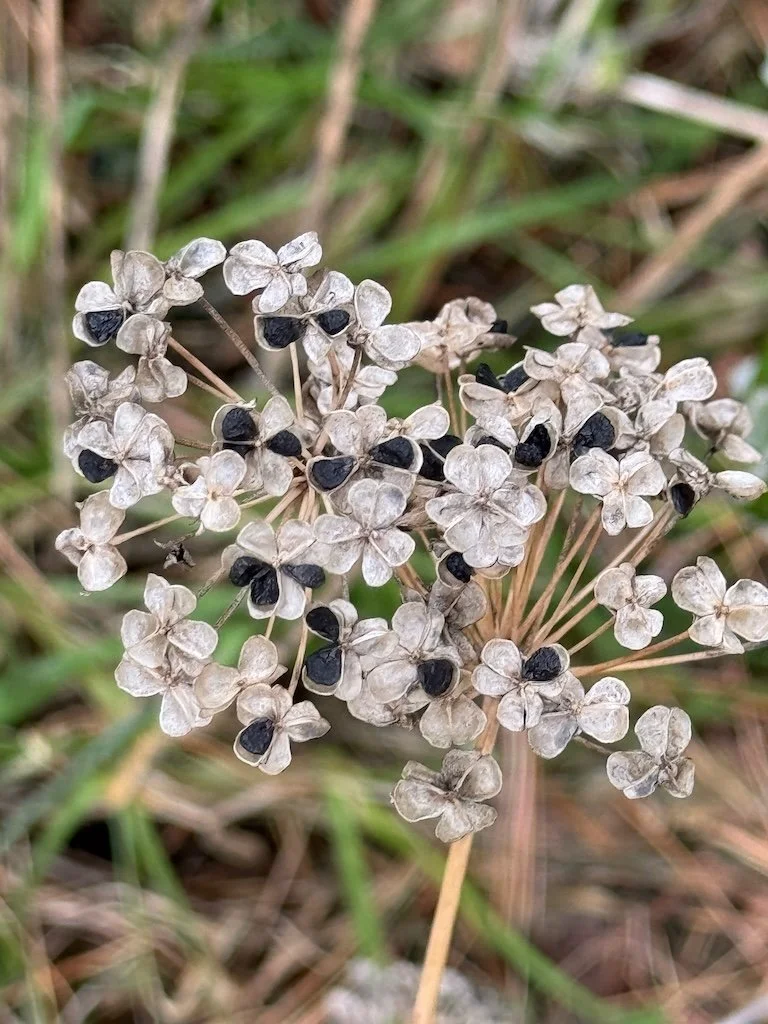
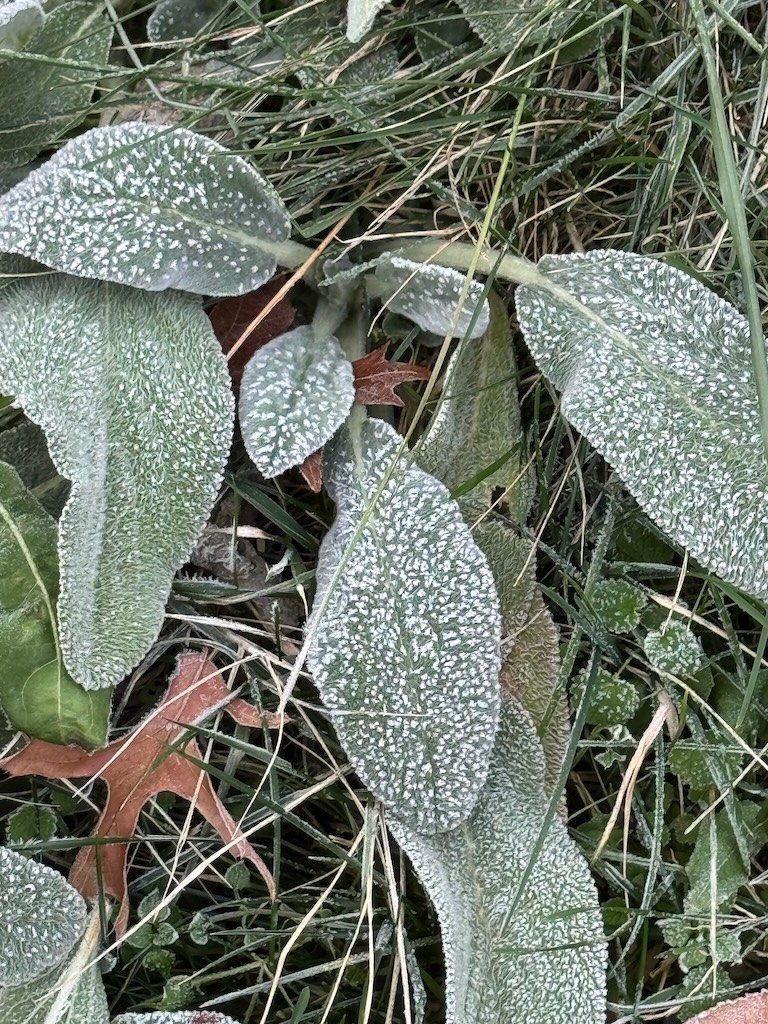
There are seed heads on the lambs ear and goldenrod and chives…hopefully I will have more of those plants next year.

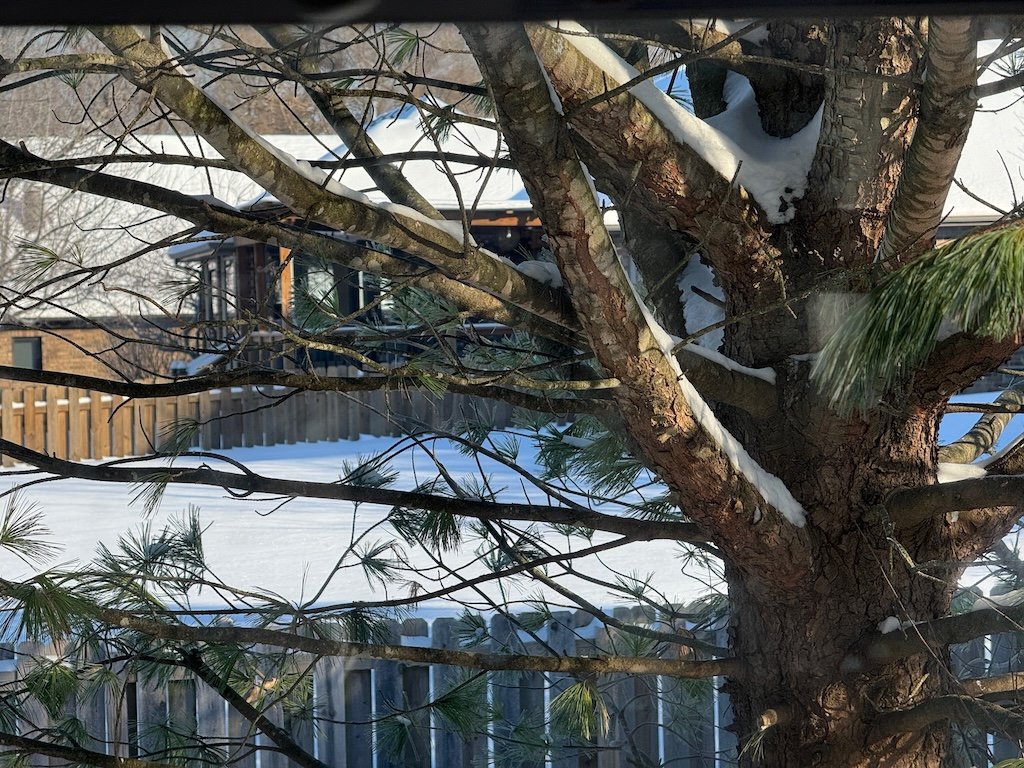
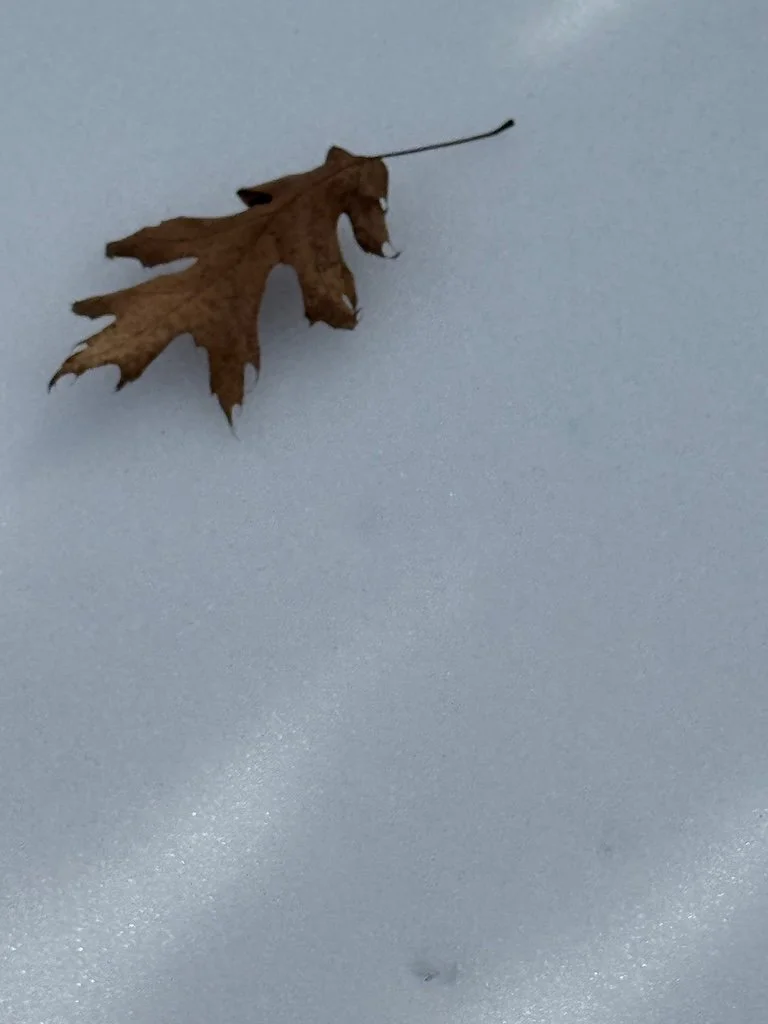
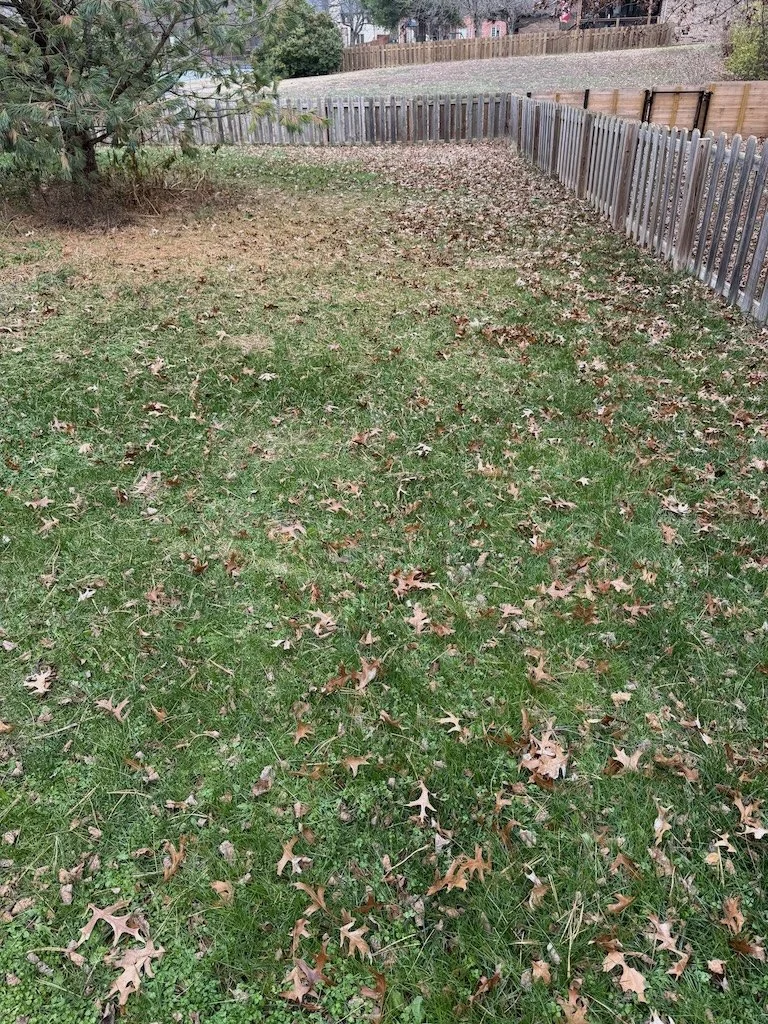
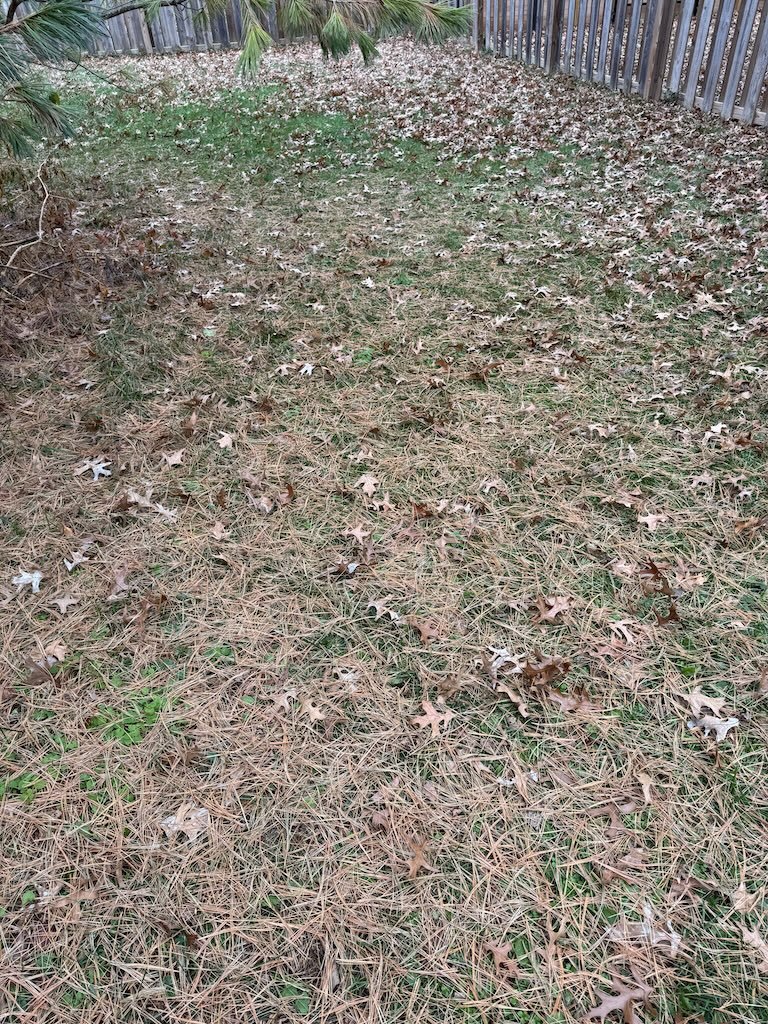
Our backyard is fenced and I am planting to not mow until early summer - leave the leaves. A lot of the leaves are from our neighbor’s oak and probably contain overwintering insects. The birds will appreciate the bounty – food for their chicks next spring. I am noticing that the circle where the pine needles are falling is enlarged than last year. I will be mowing less of the side yard next year! My long-term plan for the side yard a mowed path….not much grass at all…native plants filling in on both sides of the path (and maybe the path itself which might change from year to year.  

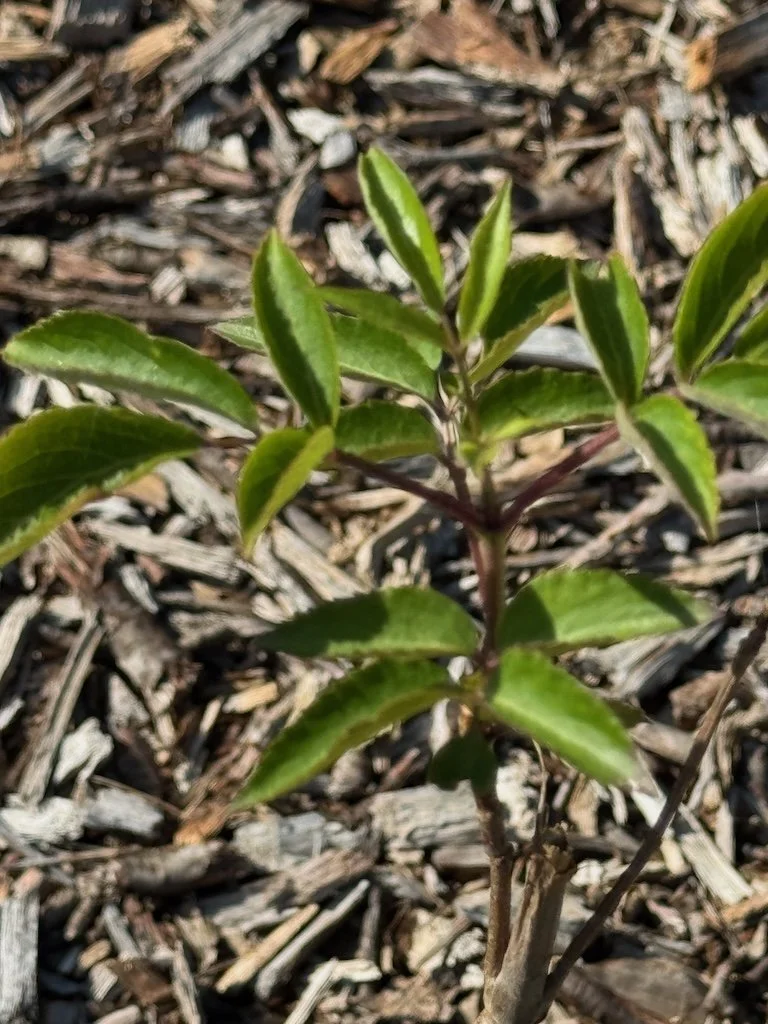
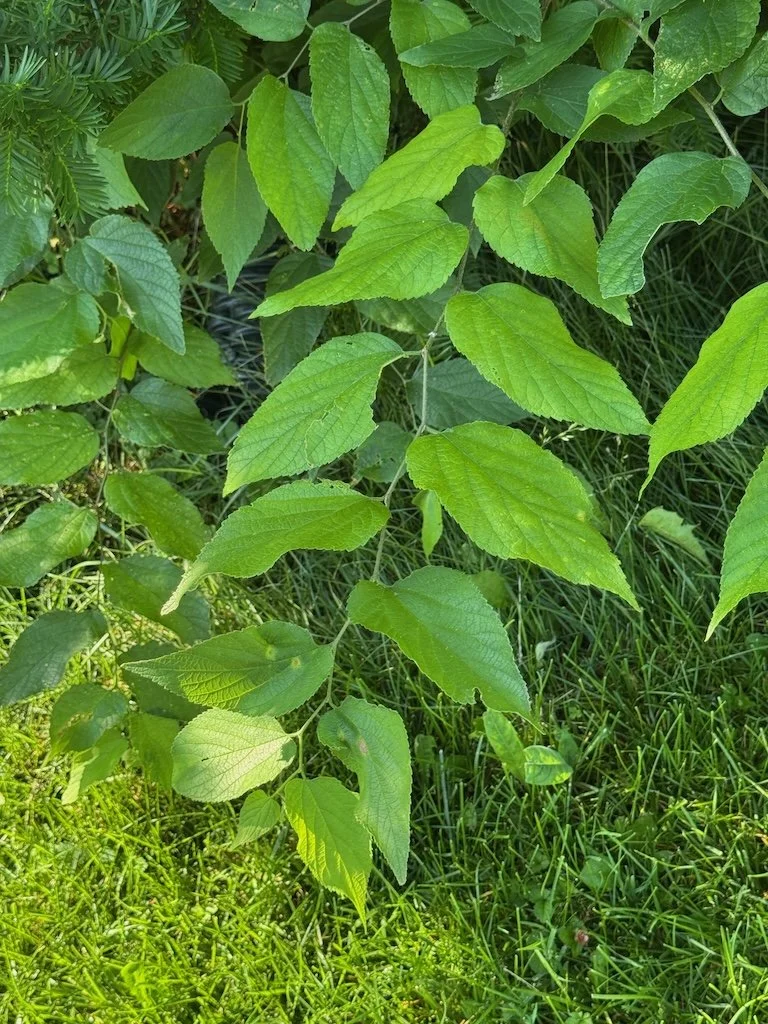
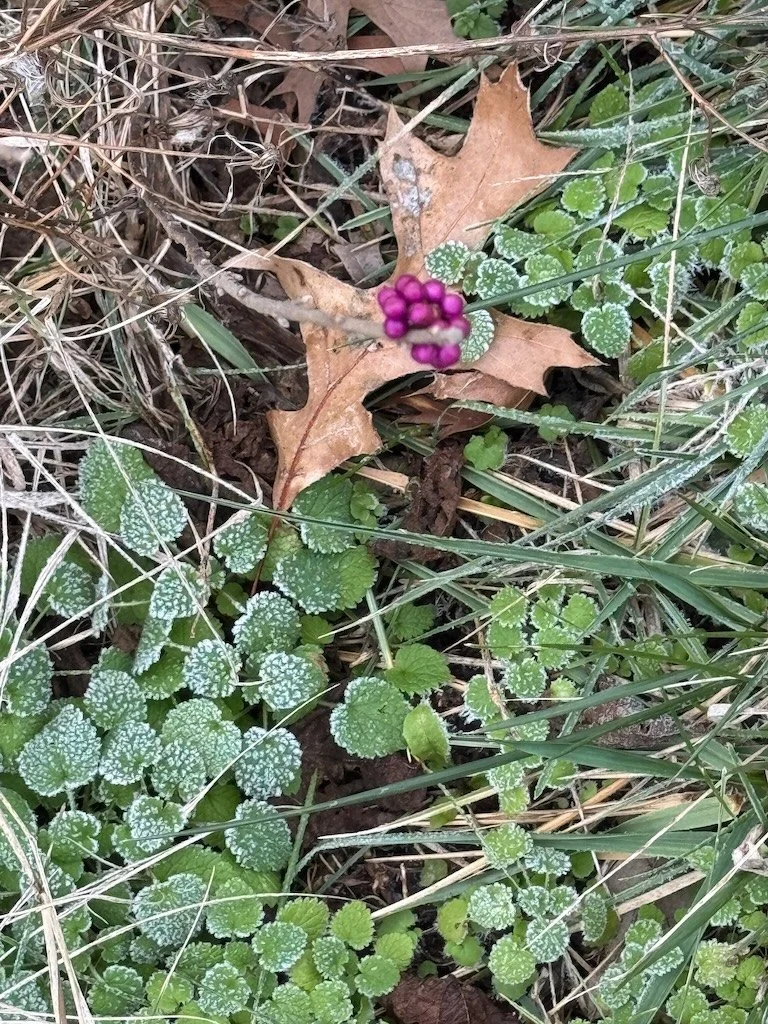
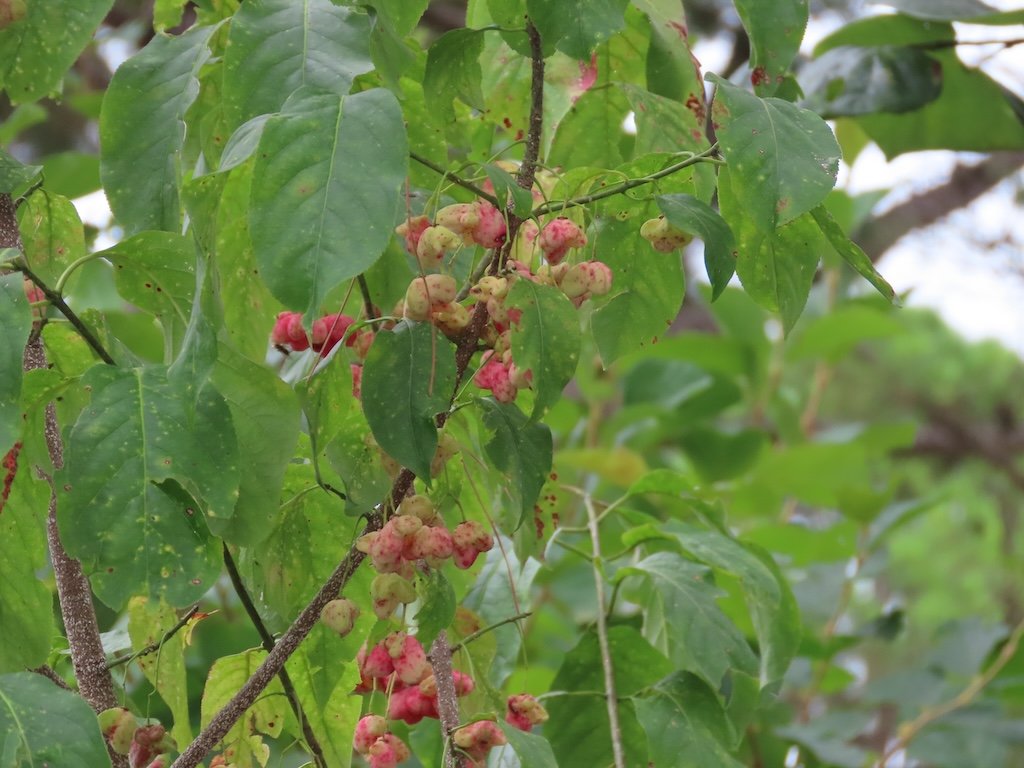
The bed where we removed a pine tree that fell over is more exposed that most of our beds. The plants there had frost. The small cluster of American beautyberry (Callicarpa americana) fruit is a pop of color. Hopefully next year the beautyberry will begin to grow more rapidly and become the dominate plant in the bed at some point. I will probably allow a native tree that comes up (bird or squirrel planted)…whichever one shows up first: oak, redbud, or hackberry.

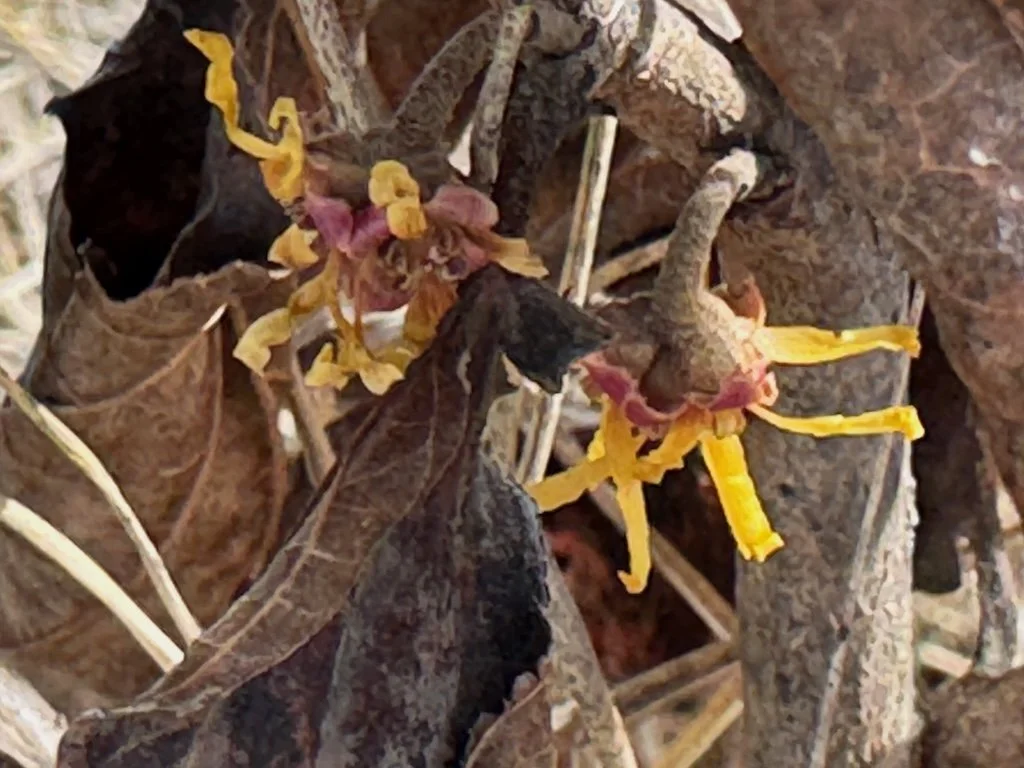
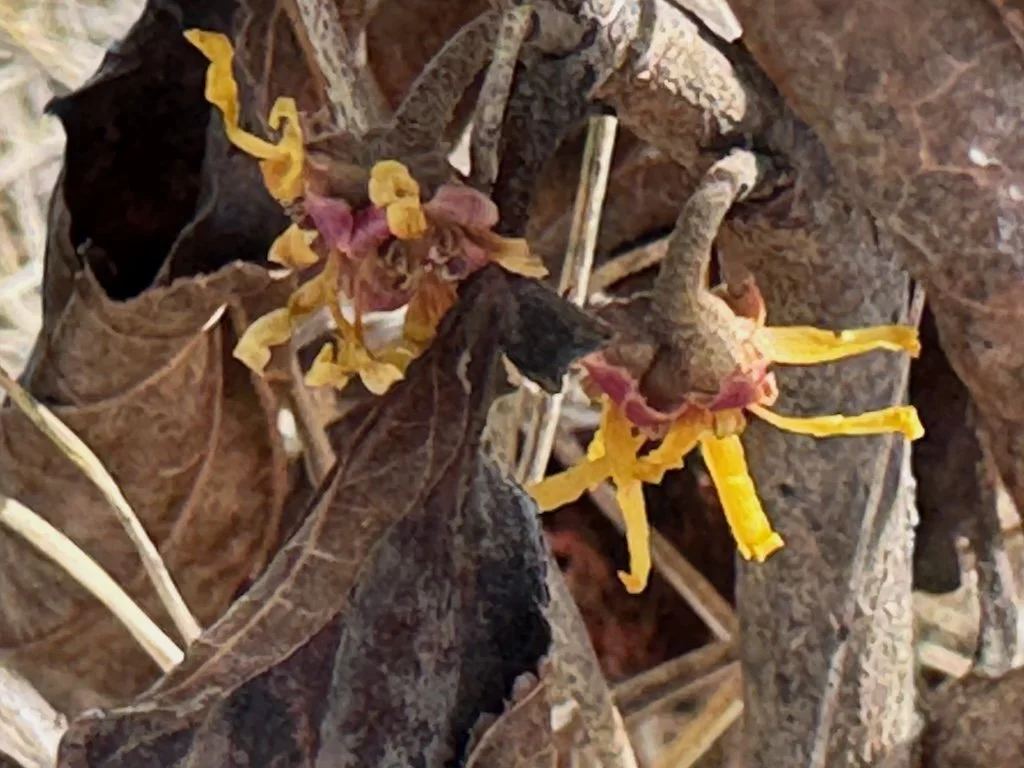
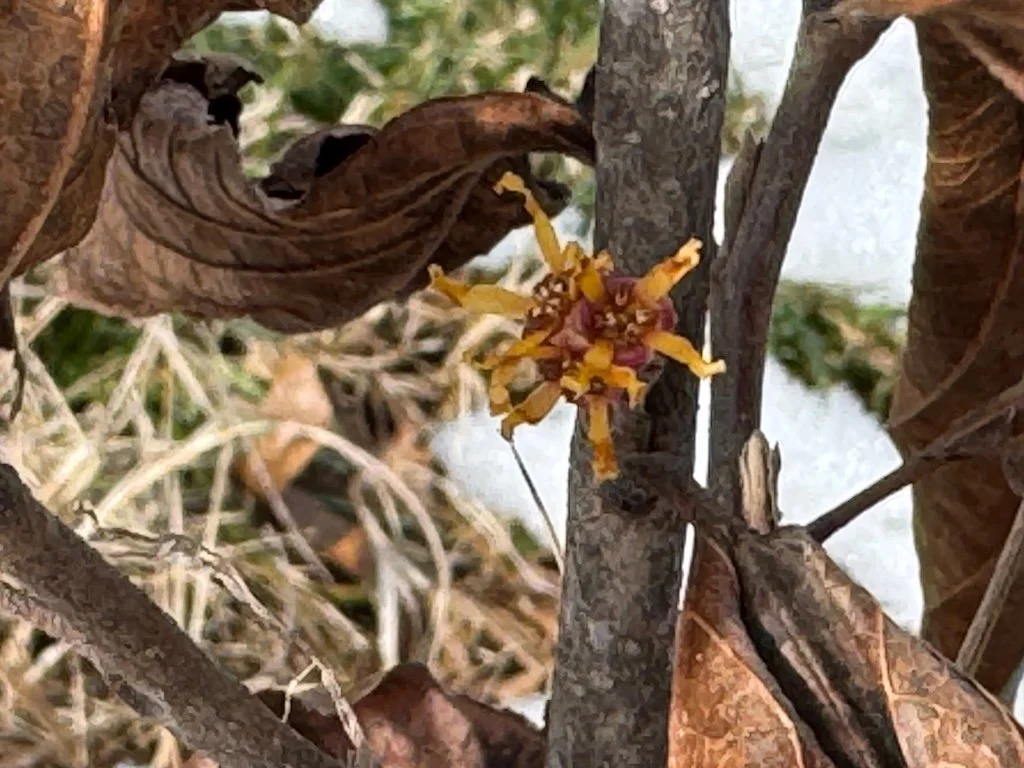
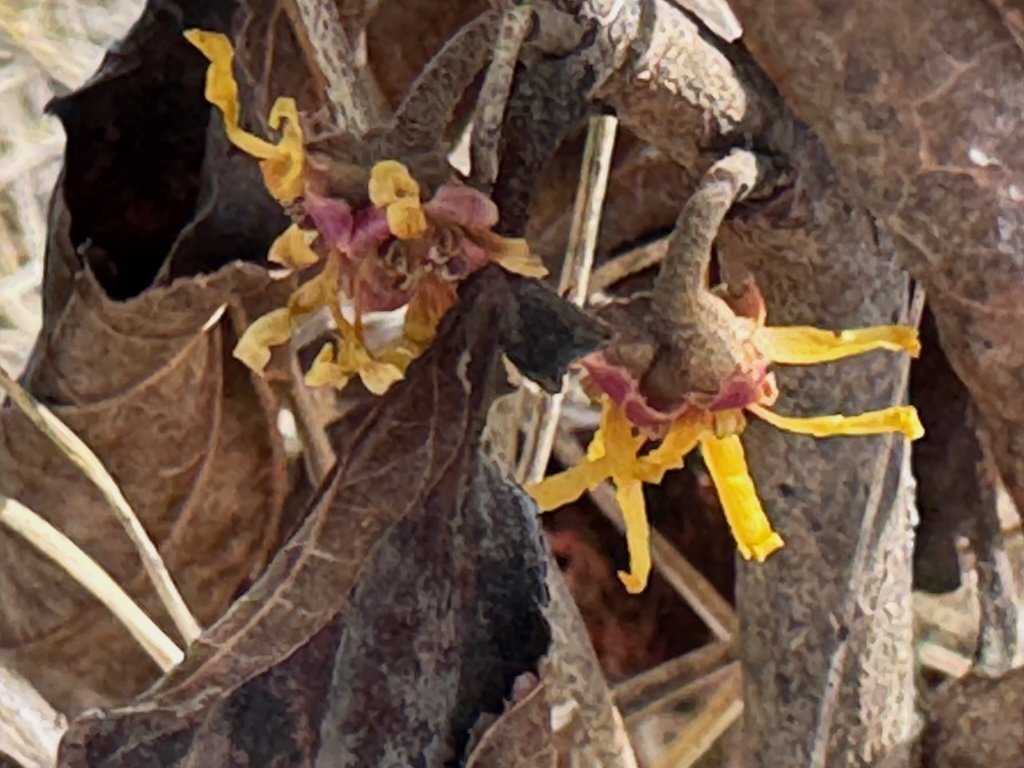
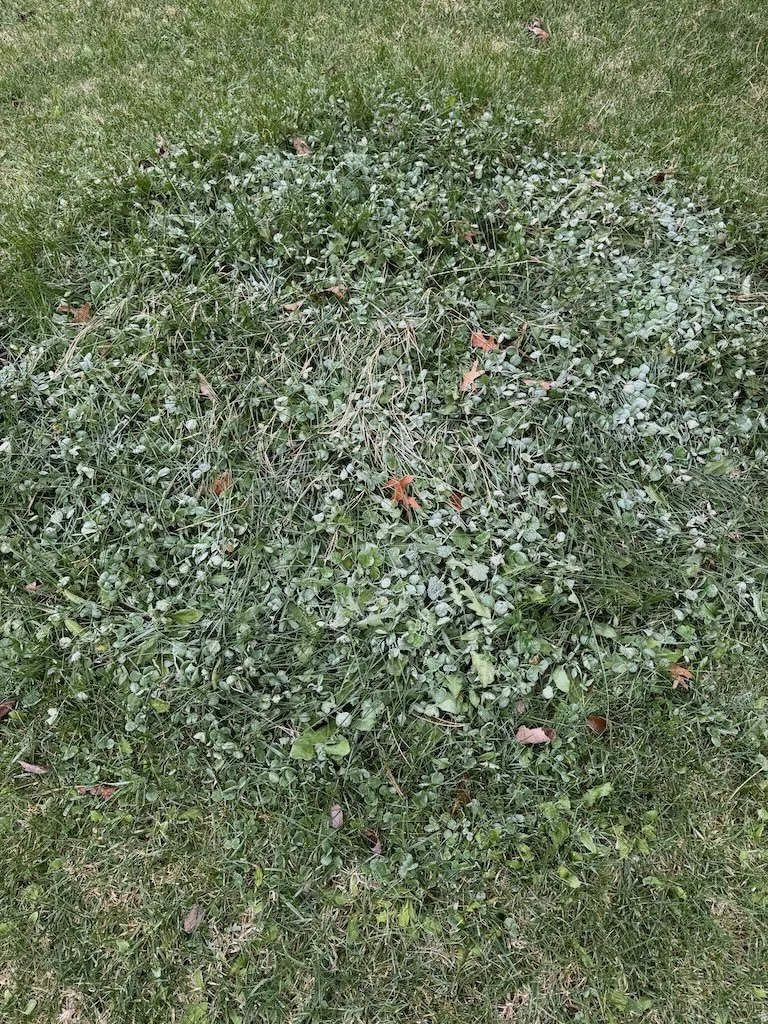
On the west side of the house there is a clover pillow that seems greener than the area around it. Maybe the grass growing there is greener with the extra nitrogen the clover provides in the soil! The witch hazel is still small but I am hopeful I might see a few blooms next year. It is a Missouri native – Ozark Witch Hazel (Hamamelis vernalis) which blooms in January/February.

I am watching the forecast for warmer day to get some cleanup done….and to put down a thick layer of mulch for my new bed that will be planting into next spring. My daughter will be getting more mulch when she has her oak trimmed.

Our Missouri Yard – November 2024

We haven’t had any extremely cold weather yet. Some trees have lost their leaves but not the oaks. We already are well above the monthly average for rainfall so are recovering somewhat from the drought through the summer and fall…just as we are bracing for winter.

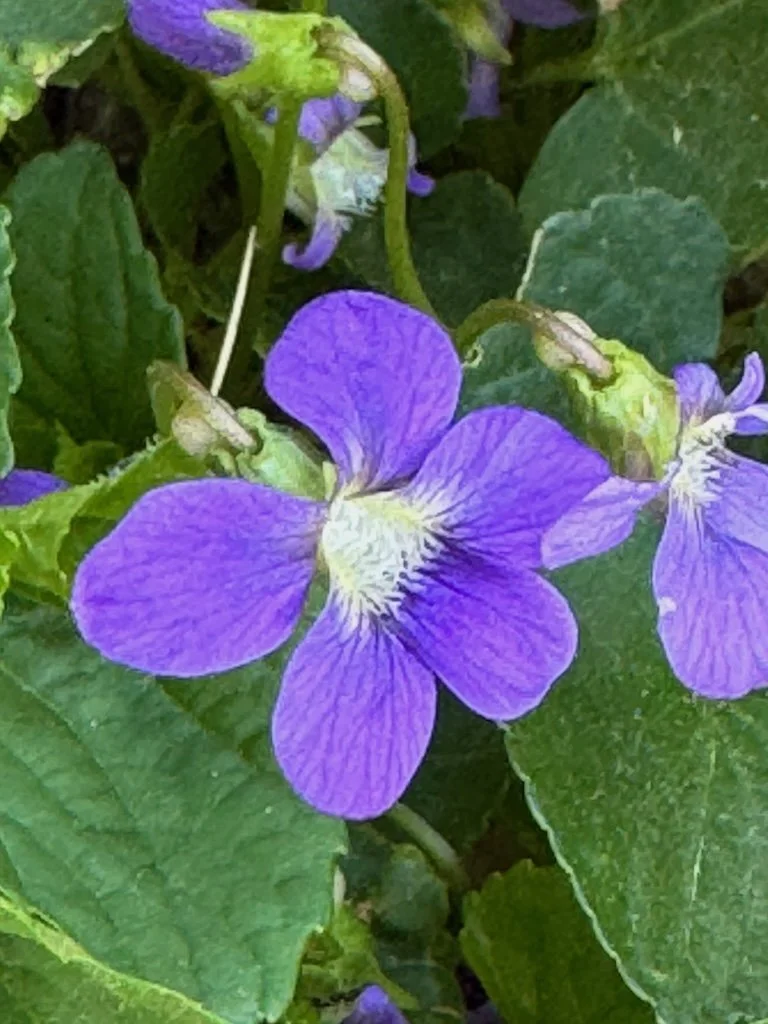
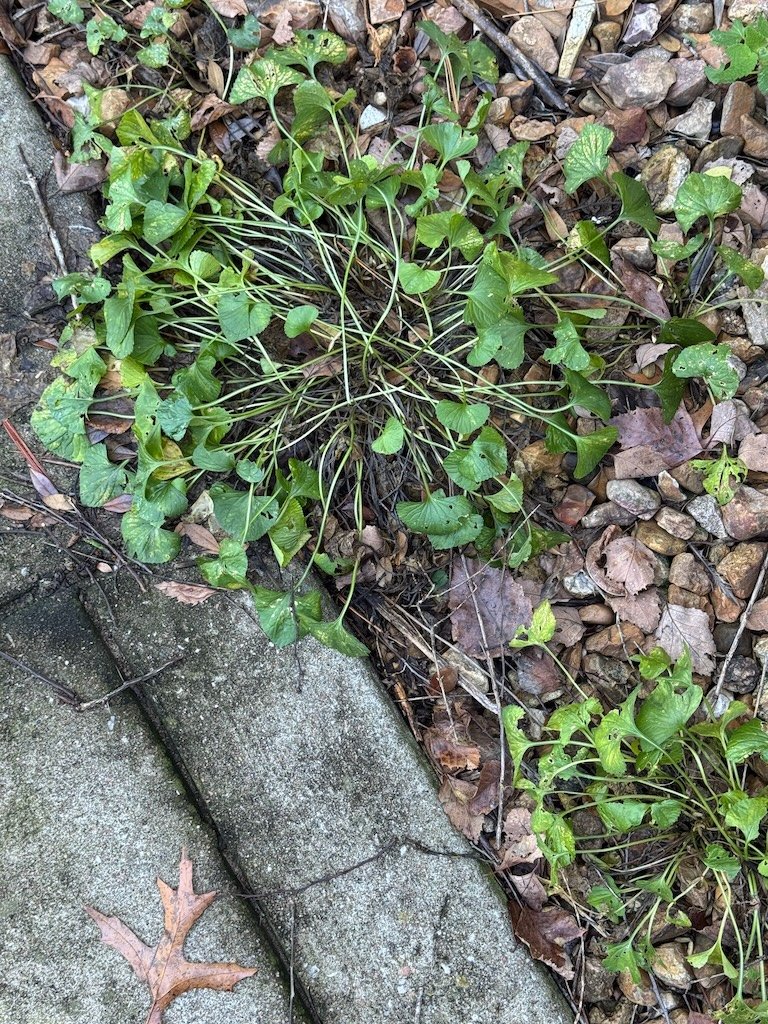
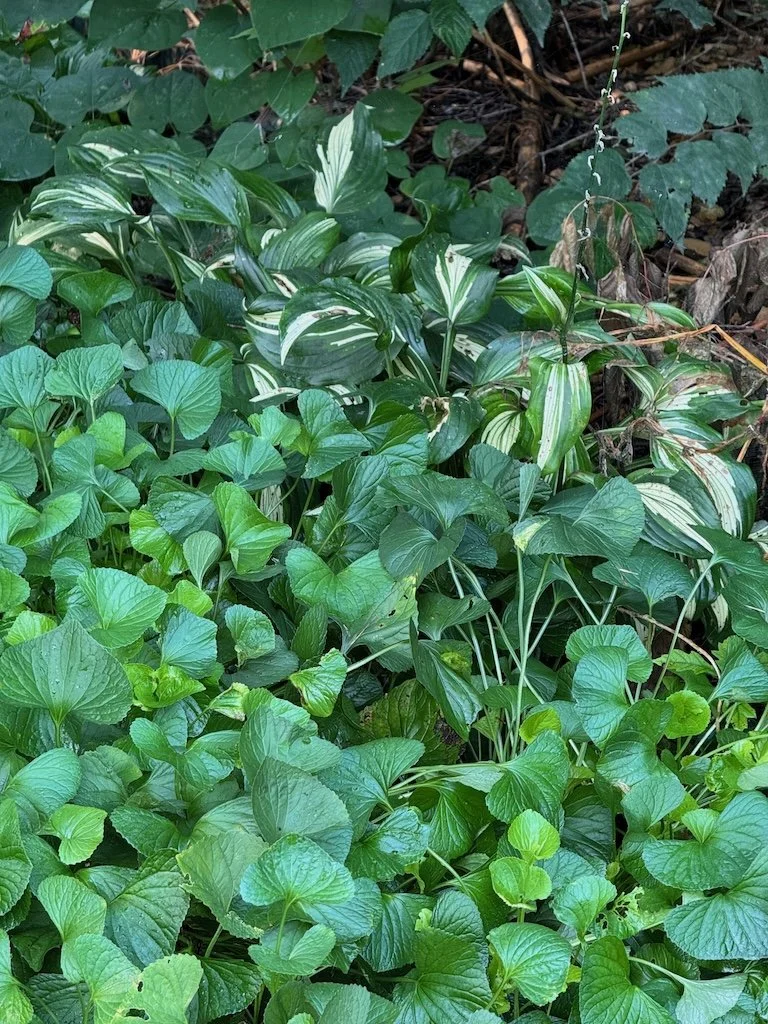
The violets are reduced in volume but still mostly green. They have been a great plant for extending the flower beds on the east side of our house into the yard (I have several feet of ‘grass’ that is so thick with violets that I haven’t mowed it for at least two months!).

I have an area that is full of pine needles and clippings (grass, boxwood, yew) that I will plant with hostas next spring – as soon as my established clumps of hostas begin to sprout and can be easily divided. The rhododendron looks great…lots of buds for next spring’s blooms. The grapevine that I’ve draped over the stubble of a crape myrtle is turning yellow. I’m not sure what I will do with it next year. I don’t want it growing into the rhododendron but there is not a lot of space where it can go otherwise.

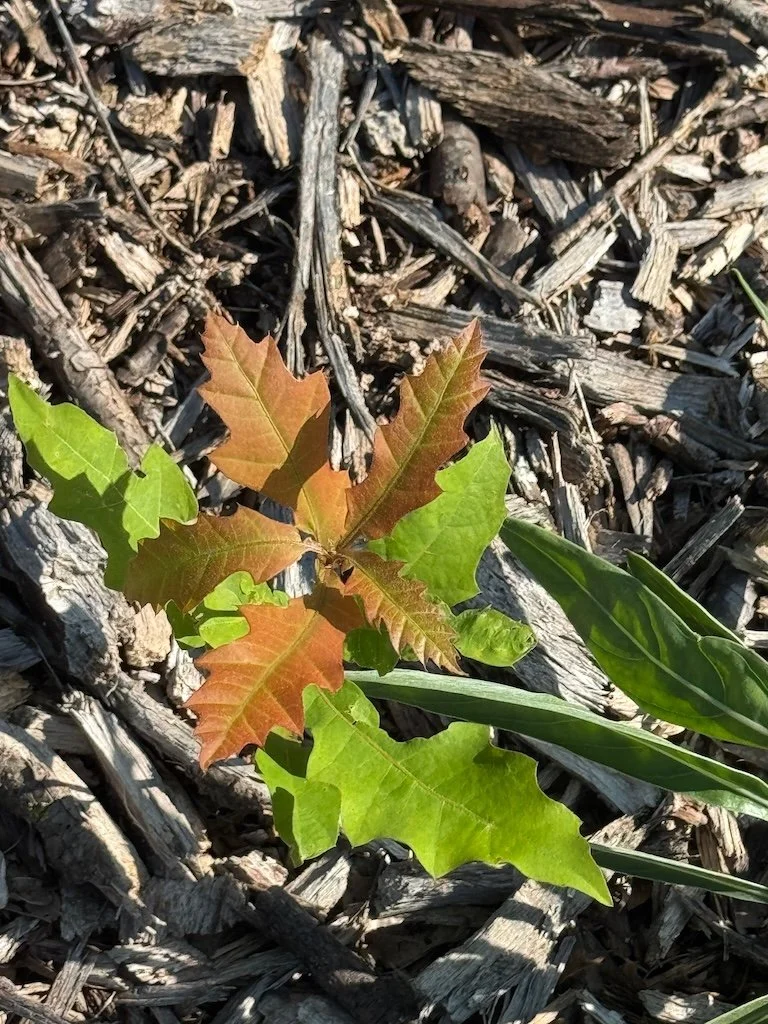
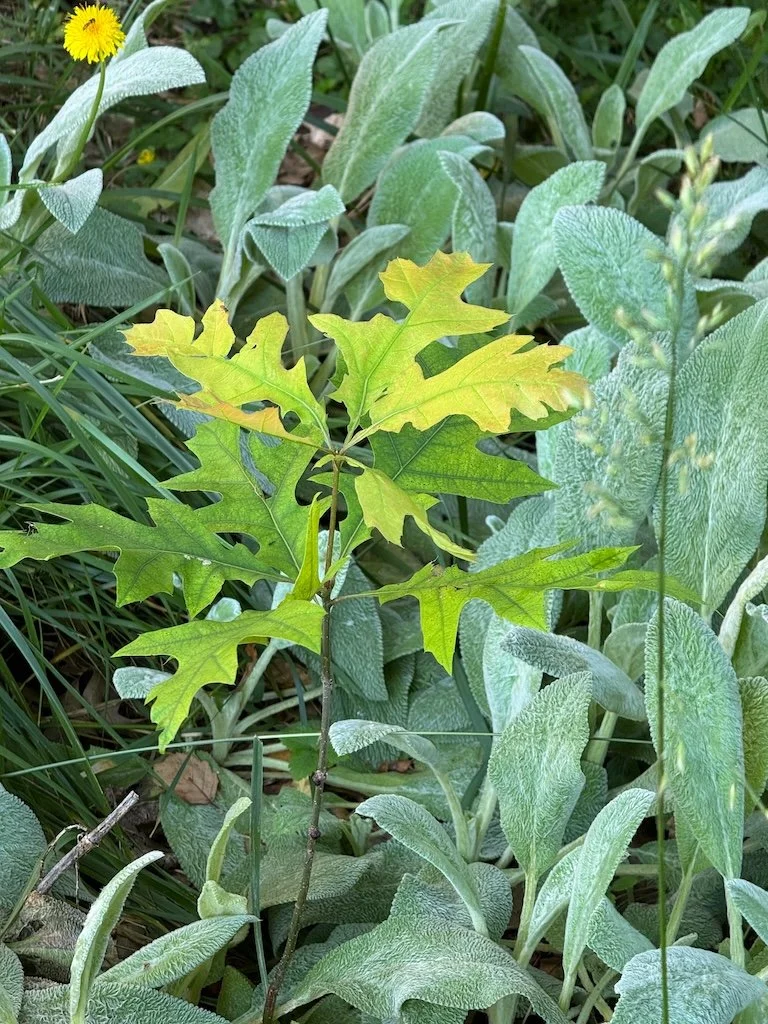
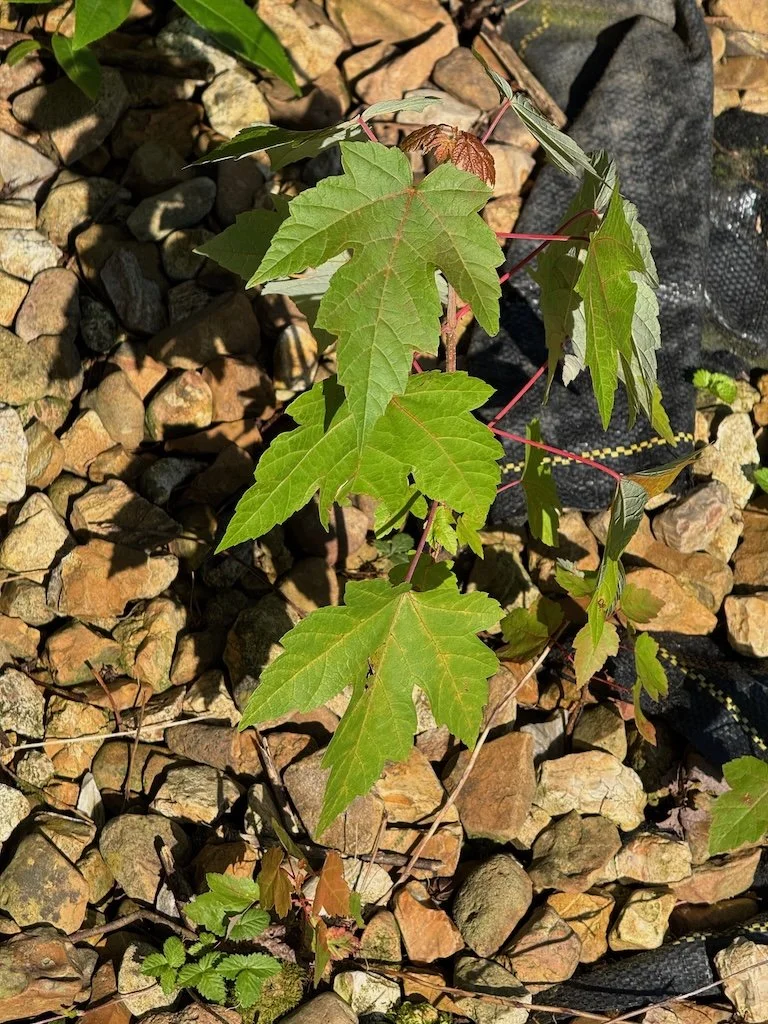
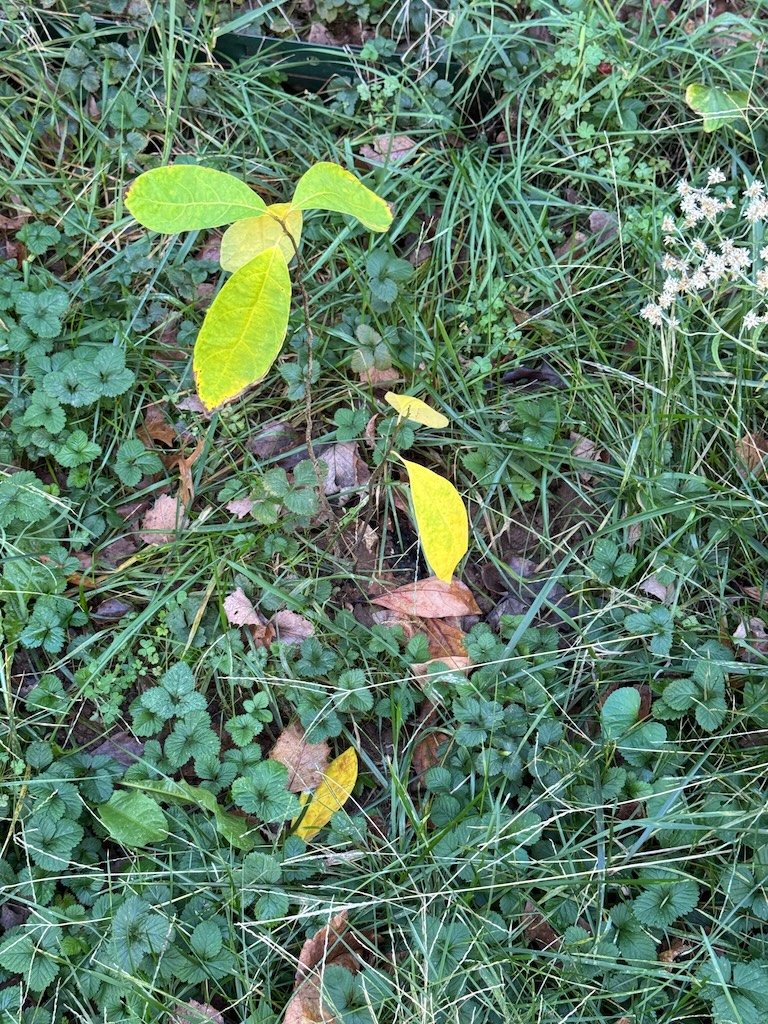
The seeds are falling out of the chives. These plants were started a few years ago from seeds I got from my mother’s garden. There is an oak seedling growing in the lambs ear. The closest oak tree is a pin oak, but the squirrels might plant acorns from further afield. The parent of a maple seedling might be one of the maples in our front yard…although it is on the other side of the house from where this seedling is growing.

The spicebush that I bought and planted about a month ago is showing some fall color…hope it comes back in the spring.

It is obvious we haven’t had a hard freeze yet this year. There are ‘intimate landscapes’ with fall colors everywhere.

I am trying to ‘leave the leaves’ this year rather than mow them. There were two piles that had been created by the wind in my front yard so I gathered them up into the wheelbarrow to move to my compost spot where the hostas will go. Otherwise I am leaving the scattering of leaves on the yard. I might have to move some oak leaves that fall into our yard once our neighbor’s tree drops its leaves. Overall, the wind had done most of the ‘raking’ of leaves either away from my yard or into areas where they can stay.

The Virginia creeper on the west side of the house has already lost its leaves but the plants near our front door are spectacularly red.

The aromatic sumac has lots of buds. I hope it makes seed clusters next season.

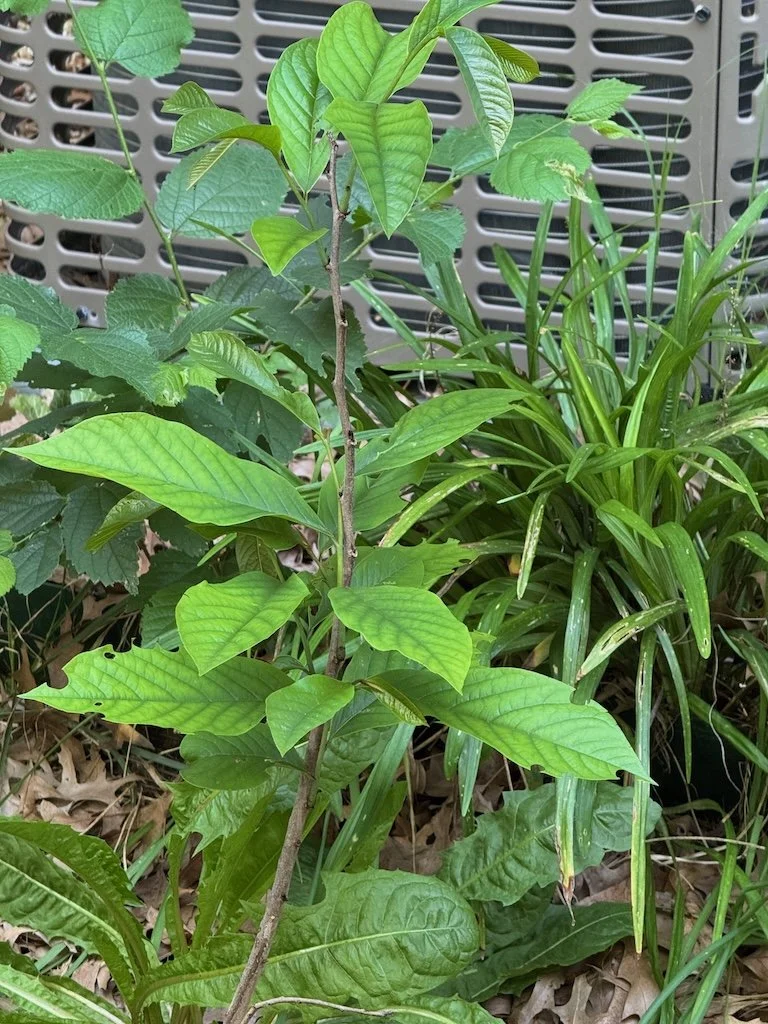
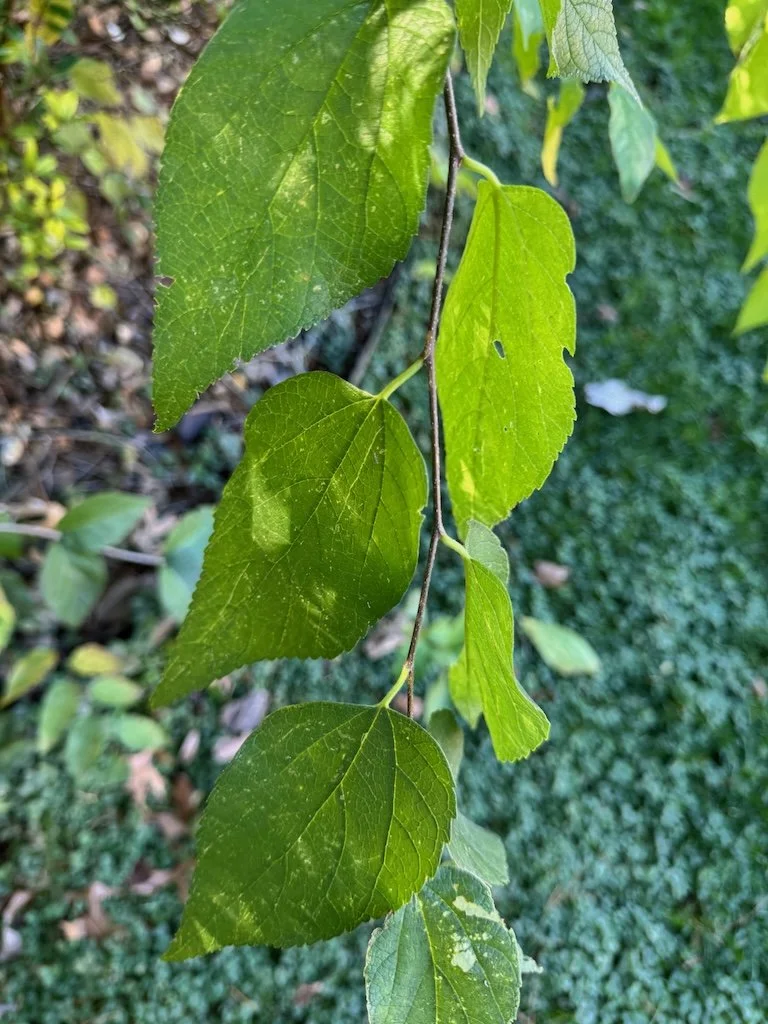
The Ozark witch hazel is probably too small to bloom in January but hopefully it will in a few years. I found a small tree growing under the holly trees. The leaves are rough…maybe a hackberry? I am going to leave it be for now…just as I am all the redbud seedlings!

I still have work to do before it gets too cold: pulling/digging out Japanese honeysuckle primarily.

Our Missouri Yard – September/October 2024

The chives have flowered and the seeds are almost mature. I savor these plants at the edges of some of my back yard beds since they are descendants of my mother’s plants; I harvested the seeds from her garden several years ago and will be enjoying them in my garden and in meals for as long as I live in this house.

The poke weed that I didn’t pull up is being eating by something. Maybe I should leave more of it for the insects.

There is a plant blooming in one of the areas I’ve not been mowing…letting the violets grow into the grass. I think it is sweet everlasting – which is native. Maybe I’ll collect the seeds and plant it elsewhere too.
I’ve harvested some of the American Spikenard seeds and planted them in a shady area where they might grow next spring. I would like to establish more of this plant in my yard. It dies back each winter but comes back from the root the following year getting bigger each year.
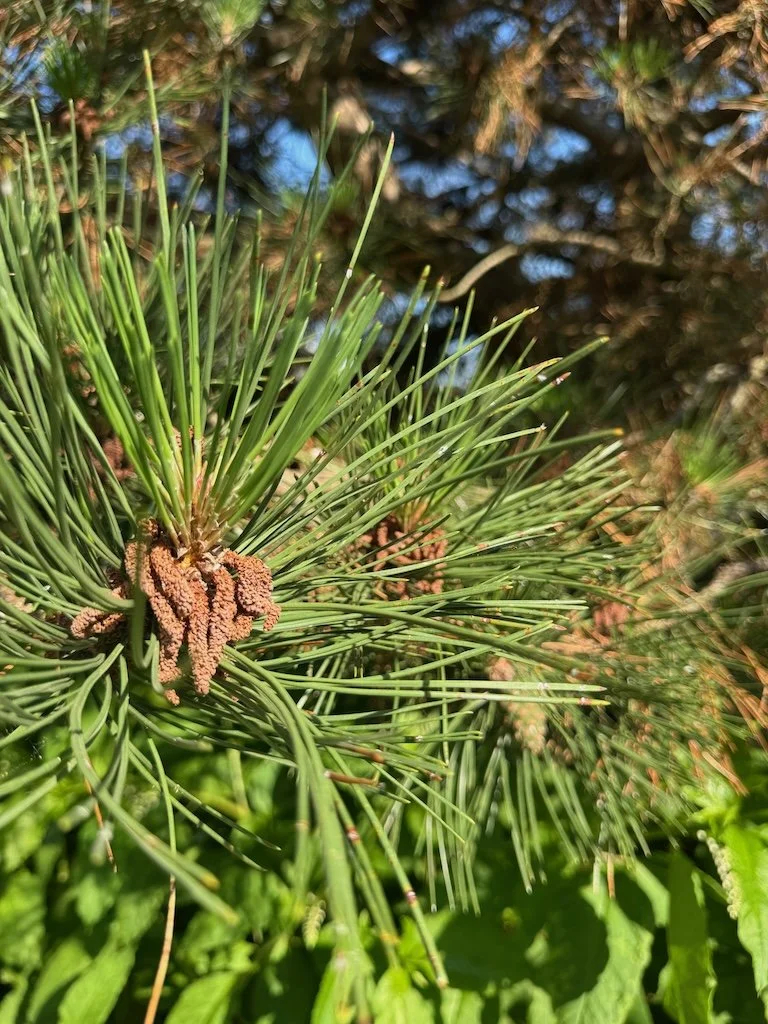
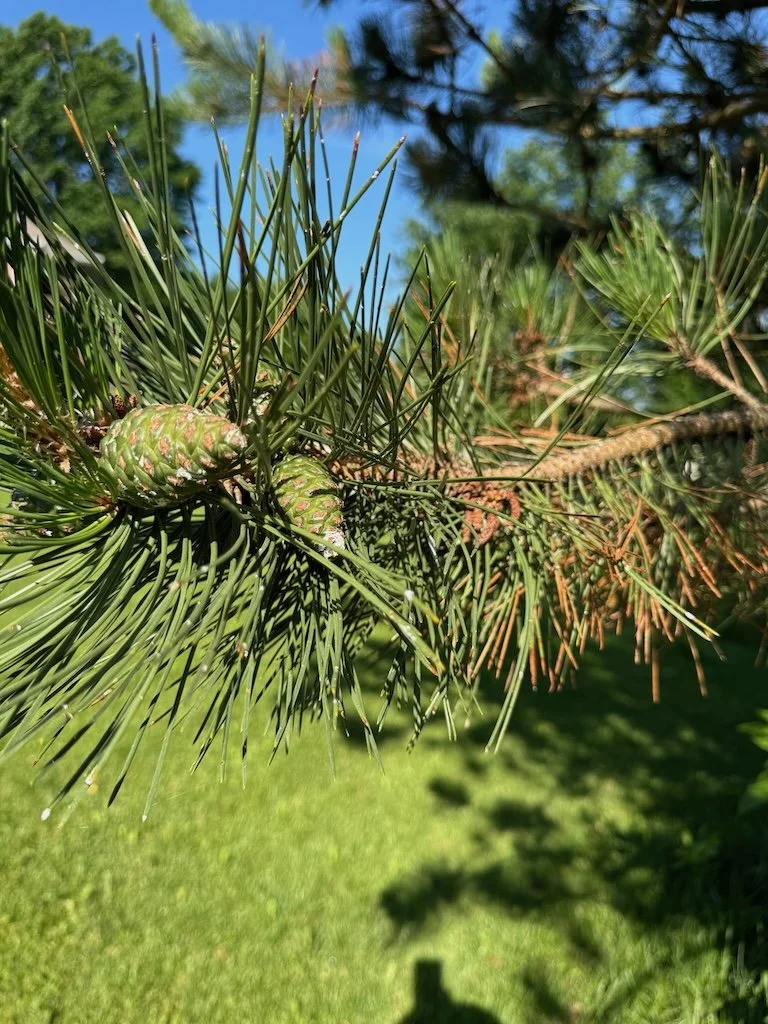
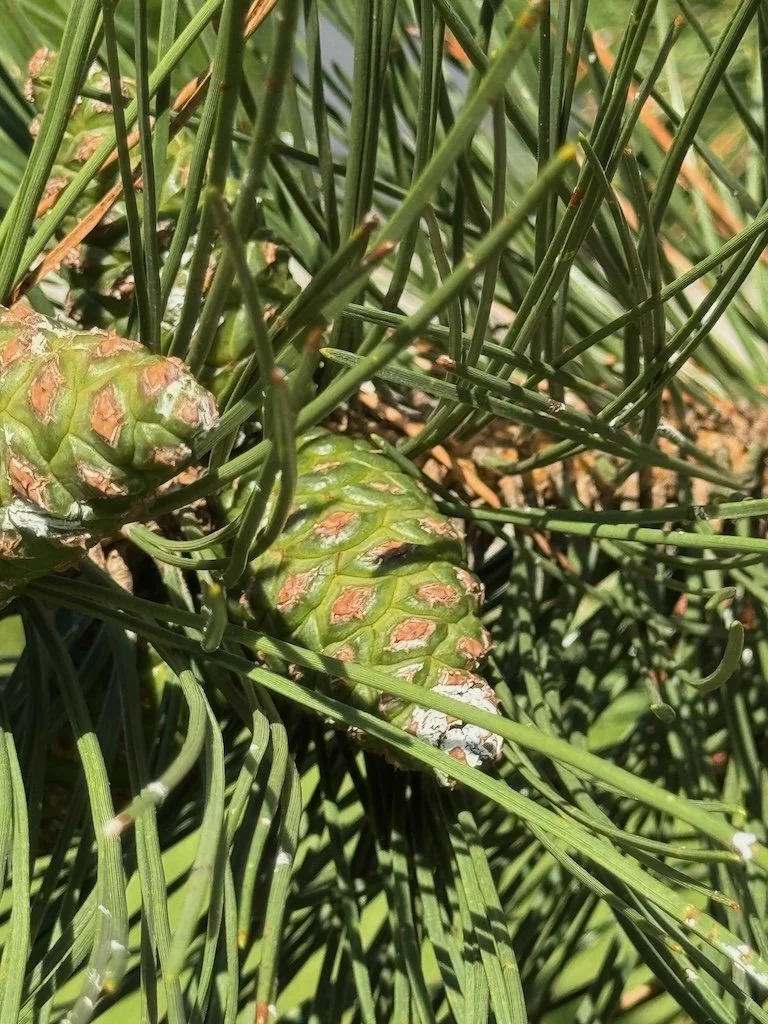
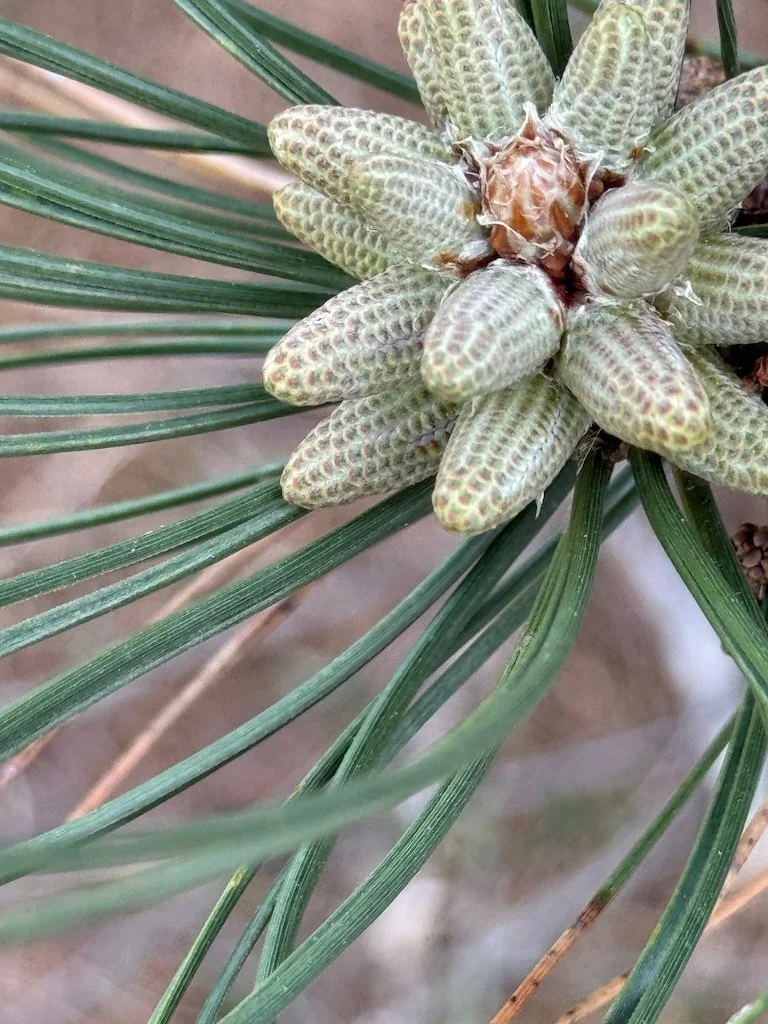
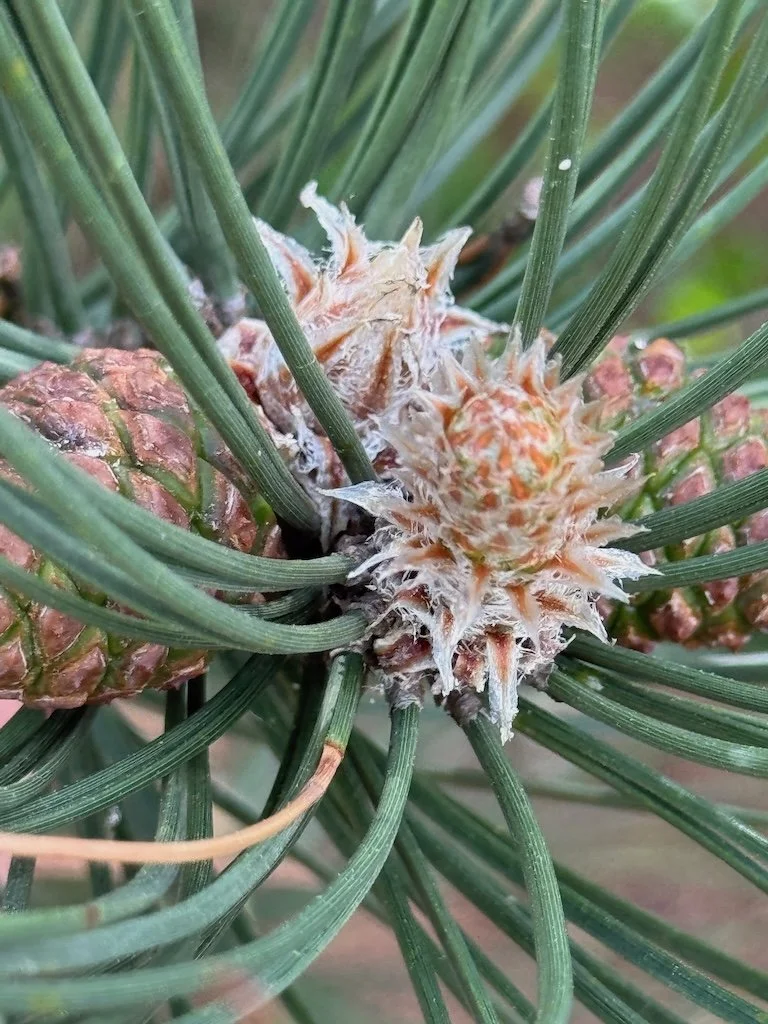
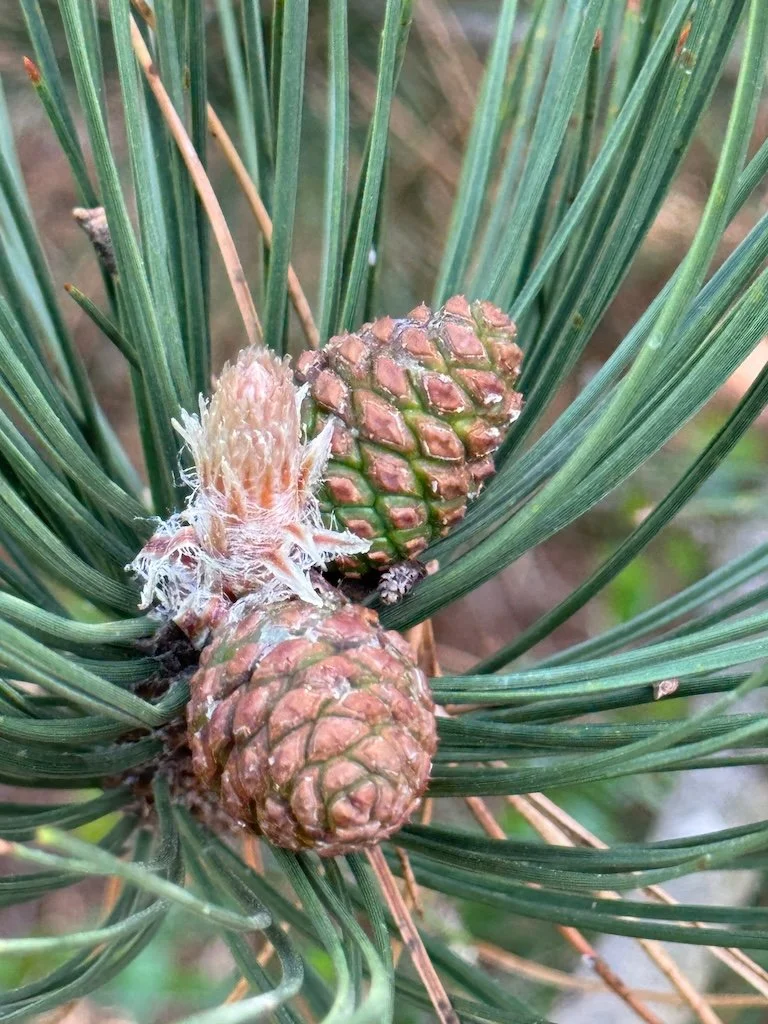
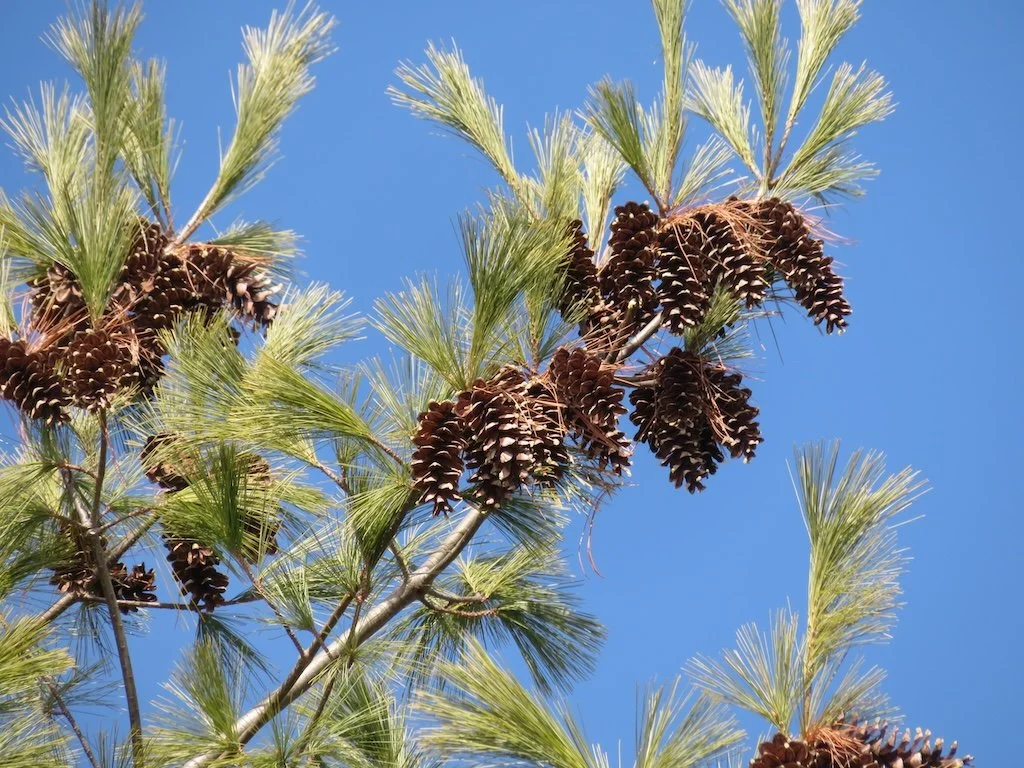
The shortleaf pine has dropped most of its mature cones but there are still a few in the tree and the terminal buds are a great color contrast to the needles….good photo opportunities!

I bought 4 native shrubs and small trees

And got them planted in my back yard the day after I bought them:

Spicebush – Lindera benzoi

Ozark Witch Hazel – Hamamelis vernalis

Buttonbush – Cephalanthus occidentalis

American Beautyberry – Callicarpa American

Digging the holes for these small plants was harder than I expected – a lot of small rocks and some plastic mesh that is a few inches under the soil surface (the previous owner had the yard sodded and they must have put the mesh down before they put the sod…I am chagrined that there is a plastic pollutant under most of my yard but can’t do anything about it).  

I’ll save the fall foliage pictures for another post!

Some New Native Plants

This time of year, there are native plant sales at local gardens and nature centers. My daughter and I went to one last week and I got 4 new native plants for my back yard:

Buttonbush – Cephalanthus occidentalis is going in a location to extend a flowerbed out into the backyard and maybe eventually connect to the bed that is in the middle of the yard that I planted where we had a pine tree that fell over and was removed.

Spicebush – Lindera benzoin is going on the east side of the backyard that is shady most of the day and the violets are overflowing the boundaries of the flower bed. I have stopped mowing part of it and the Spicebush will go into that area (I’ve also planted some pawpaw seeds there so the area could be very lush in the future if they come up.

Ozark Witch Hazel – Hamamelis vernalis is going on the southwest side of our back yard where I have stopped mowing. I will have to make a point of walking out into the yard to see it bloom in January!

American Beautyberry – Callicarpa American is going in the bed where the pine tree was removed. It is a lower growing that the button bush so will be a nice layer in the yard from the walking trail on the outside of our fence that leads to the neighborhood ponds….in a few years.

Several of the native plants that I got last year are doing well this year. The goldenrod is blooming and the American spikenard has made seeds that I am scattering in other shady places in my yard where they might grow well. I’ll continue to plant native wildflowers…but with these 4 new ones I probably have most of the bushes that I want to add to my yard.

I am preparing a relatively narrow area between an eastern white pine and the beds on the east side of our patio by making layers of clippings; it will become a leaf pile un a few weeks for the winter. It is very shady there. I have hostas and lambs ear that I will divide in the spring (non-native but I have them already growing in my yard); longer term – I hope the American spikenard seeds come up and that that plant will add an ‘umbrella’ of vegetation.

Lovett Pinetum

The Identifying Woody Plants class I am taking made a field trip to Lovett Pinetum last week. It was about 30 minutes in traffic getting there and 30 minutes back. 8 more woody plants were added to our list to recognize in the field…plus we saw some plants not required but interesting…and walked around a new-to-me place. I took my camera along.

Here are some of the plants I photographed at Lovett Pinetum. I share the scientific name and family for those that are added to the list of plants we are to recognize for the class…only the common names for those that were easily visible and pointed out to us in passing at the Pinetum.

Eastern wahoo…with lots of aphids on the stems.

Poison ivy - Toxicodendron radicans – Anacardiaceae: “leaves of three,” leaves are oval, but margins vary considerably

Black walnut – Juglans niger – Juglandaceae: with chambered pith. This is a tree I was very familiar with from Maryland…nuts on the ground in the fall are always very noticeable!

Joint fir (Ephedra): not native to Missouri but an interesting plant.

True cedar – Cedrus – Pinaceae: needles on short shoots, evergreen, cones upright, does not grow very well in Missouri.

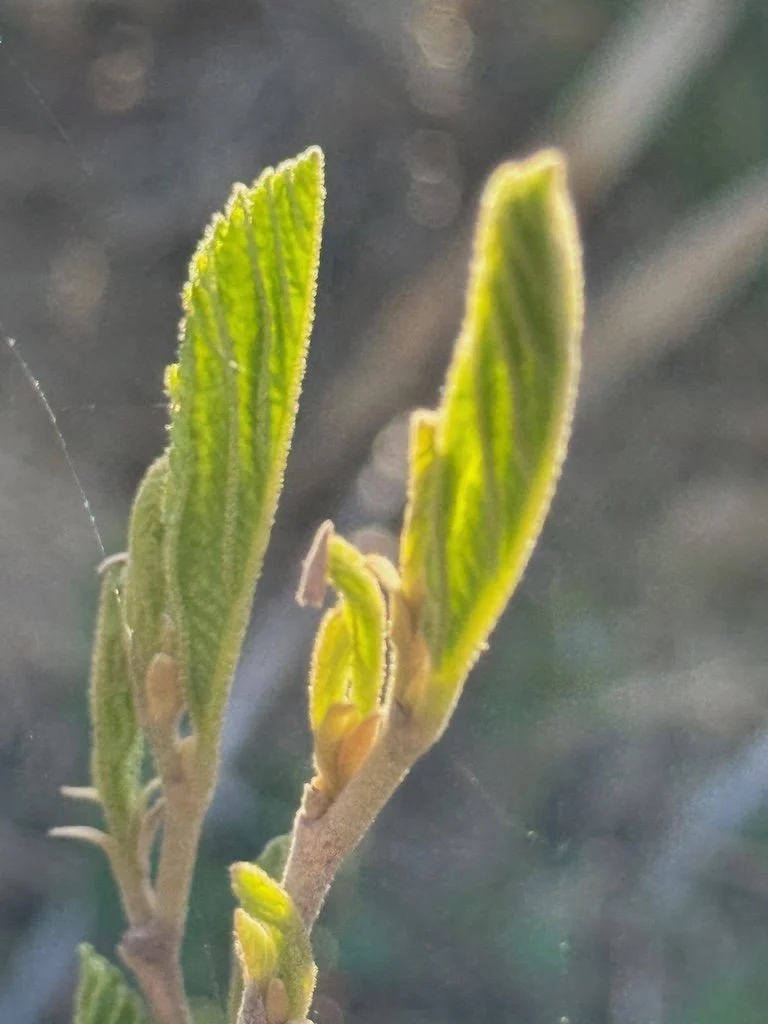
Ozark witch hazel – Hamamelis vernalis – Hamamelidaceae: Woody seed capsule from flowering last January still not open; hairy twigs; shrub; leaves already changing. Flowers, when they appear, will have ribbon-like petals

American hazel – Corylus americana – Betulaceae – nuts will turn brown as they ripen; shrub; leaves wide oval and doubly serrate

Longleaf pines – Along Atlantic coast and Florida; white bud at ends of branches

Jewelweed (not a woody plant) was blooming in several places…particularly around the spring area.

There was large black oak that was pointed out on our trek back to the vans…but oaks must be for another class since it wasn’t added to our ‘must know’ list this time.

While we were at the Pinetum, we noted two animals: a black rat snake parallel to our trail (very sluggish, might have just eaten since it didn’t move while we watched) and a deer that watched us from across an open area then took off when we got a little closer.

It was a good field trip for identification of trees, vines, and shrubs!

Previous posts about my experiences in the Identifying Woody Plants class at Missouri State University