Out on Lake Michigan

We had signed up for birding out on Lake Michigan on the last day of the Urban Birding Festival in Chicago. We had to be at the dock by 5 AM so we were leaving our hotel about 4:30…checking out and loading everything into our car. Both of us were feeling a bit sleep deprived.

Everyone that had signed up for the trip appeared and we were heading out of the harbor by 5:30 AM. The boat was a fishing boat. It wasn’t a windy morning, but I appreciated the extra handholds that the rod holders provided when I tried to move around. I sat most of the time!

Everyone that had signed up for the trip appeared and we were heading out of the harbor by 5:30 AM. The boat was a fishing boat. It wasn’t a windy morning, but I appreciated the extra handholds that the rod holders provided when I tried to move around. I sat most of the time!

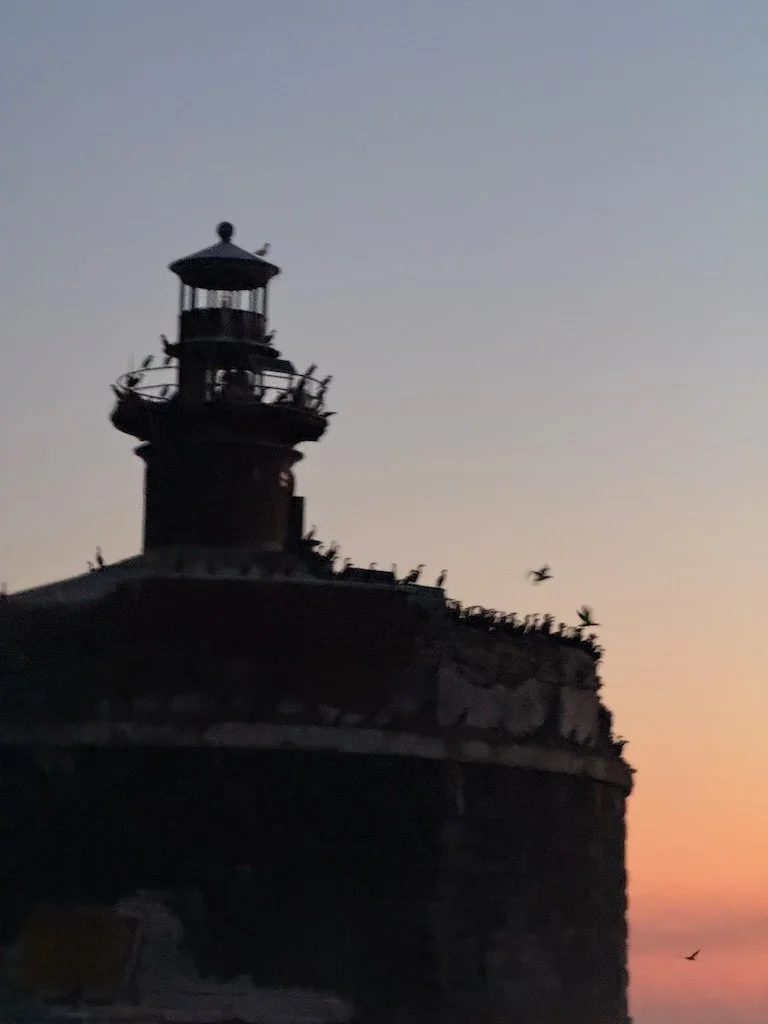
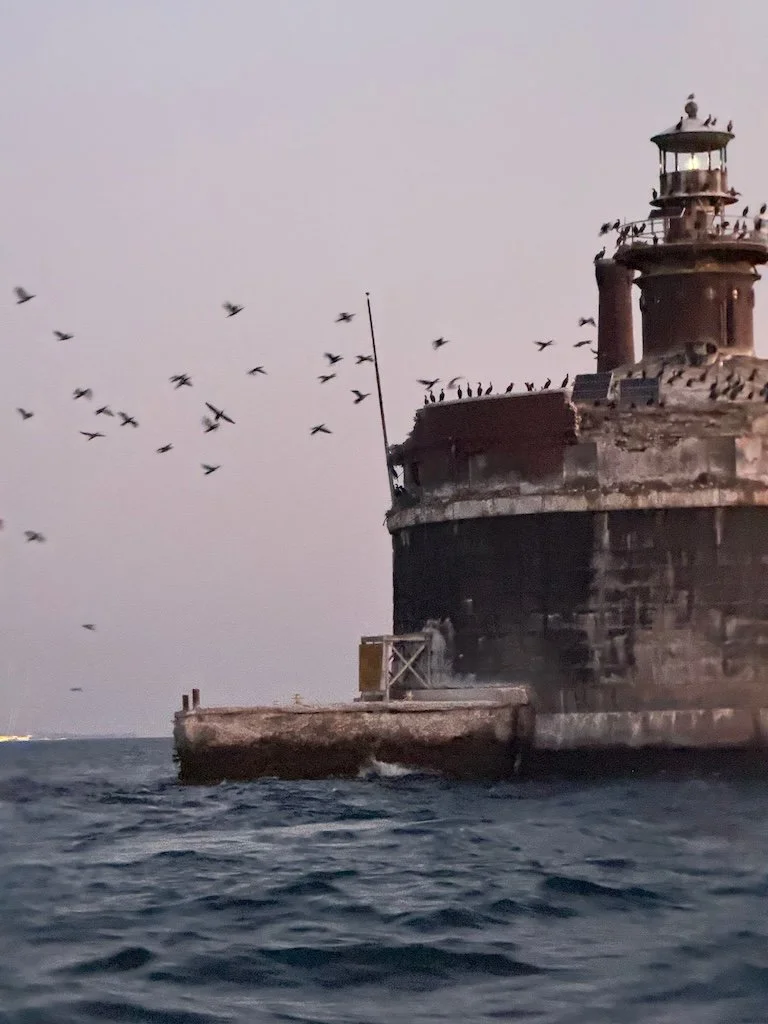
We saw the sunrise on the lake. We passed several of the water intakes for the city that are a ways out into the lake and often host colonies of cormorants.

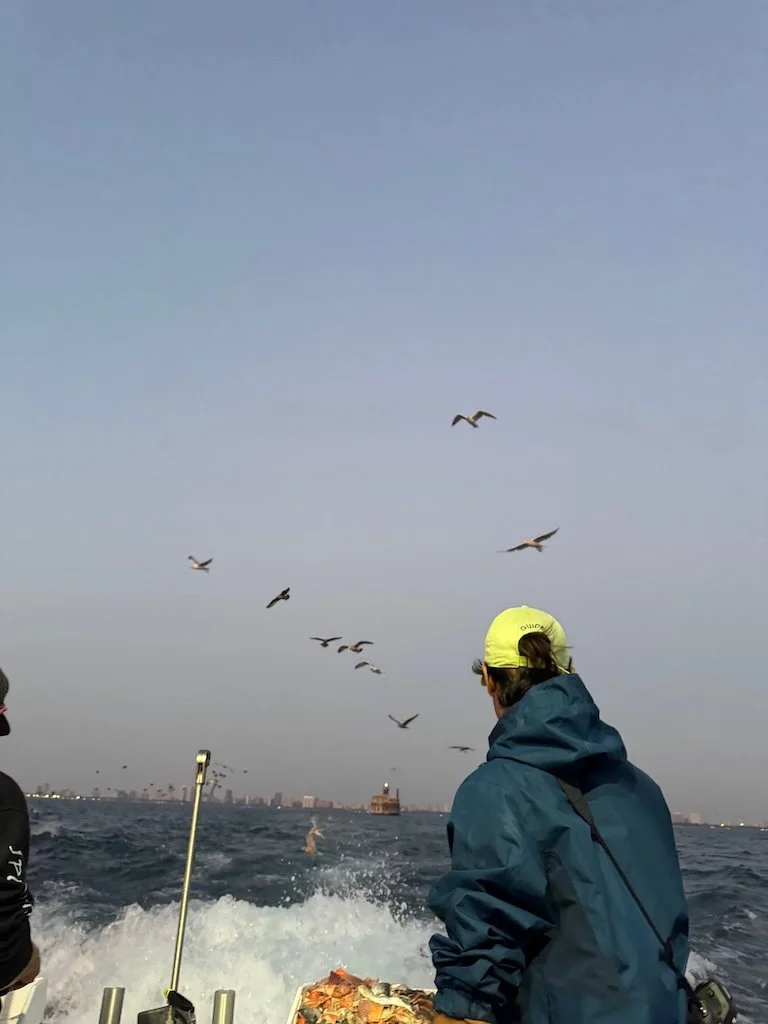
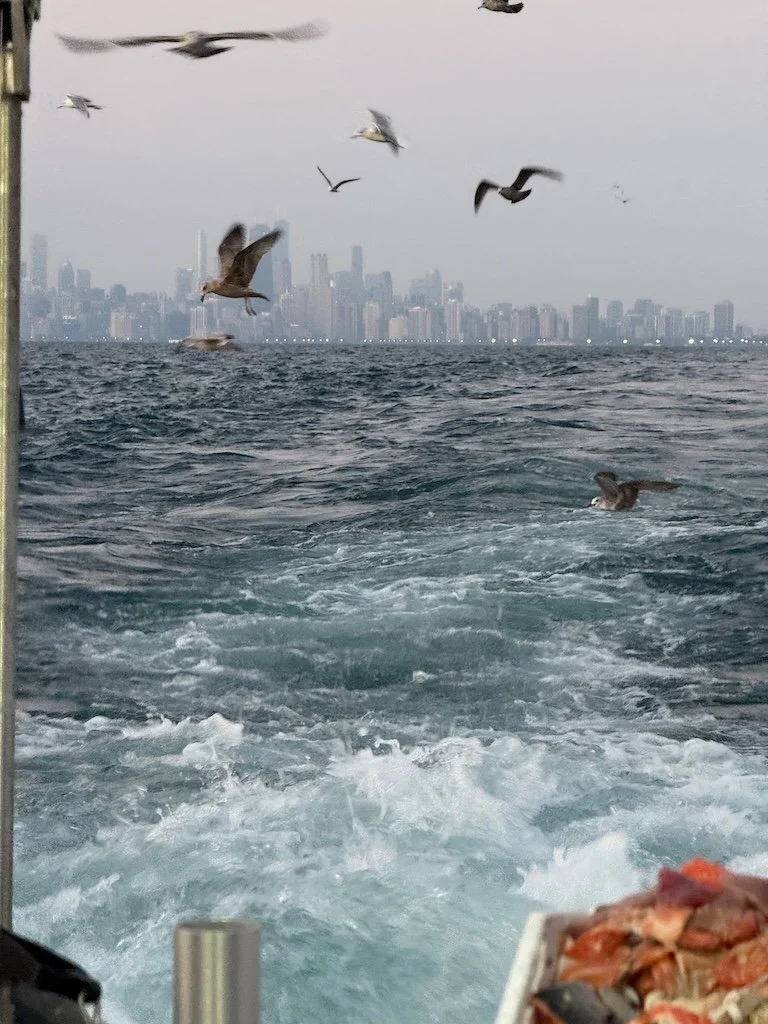
The guides were throwing chum (fish, bread, popcorn) to the birds from the back of the boat. There were more Herring Gulls than Ring-billed Gulls already. We saw a few terns. The hope was for some rarer birds – like a Parasitic Jaeger. That didn’t show up so I focused on observing gulls at various stages of development and how they used their tail feathers to control their flight/landing behind the boat.

The rocking of the boat was calming…at least while I was sitting…not so much when I was moving around.

The skyline of Chicago was always present…although we were at least 15 miles out on the lake. The air around the city was hazy. The air in the city and on the lake was humid and the air quality was yellow (small particulates). It is a big city and there are a lot of cars.

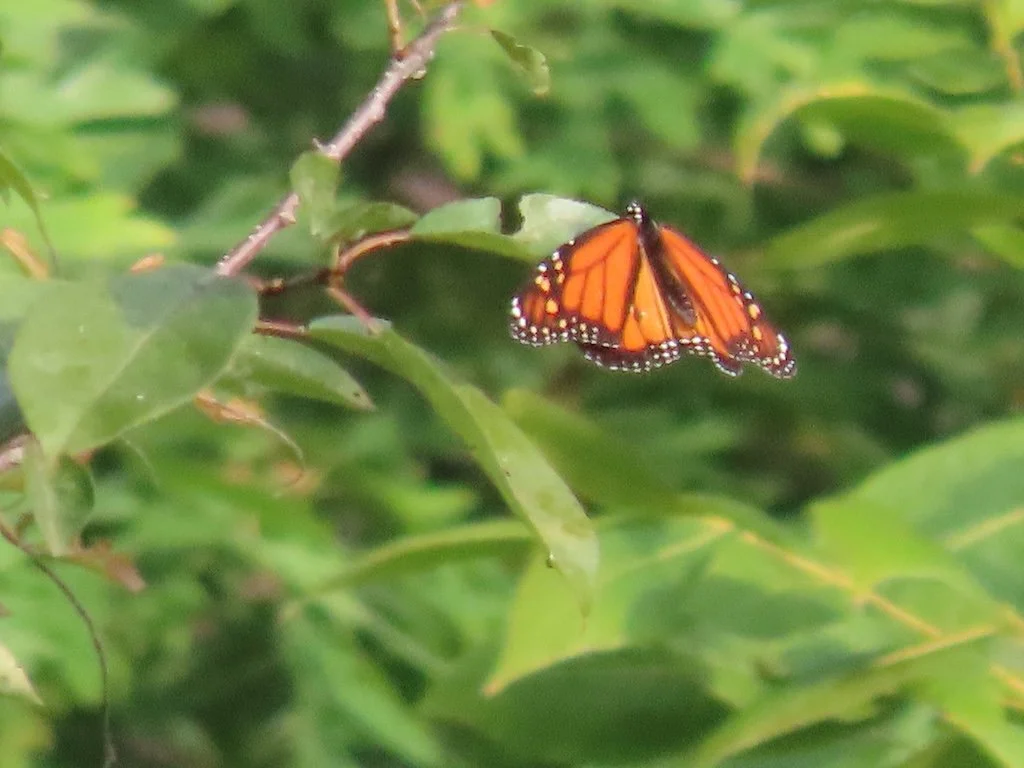
The surprise of the trip was seeing a Monarch butterfly – flying south – when we were between 10 and 15 miles from shore. I had assumed that they took the land route south from Canada…but some of them obviously don’t.

Peggy Notebaert Nature Museum and Lincoln Park Zoo

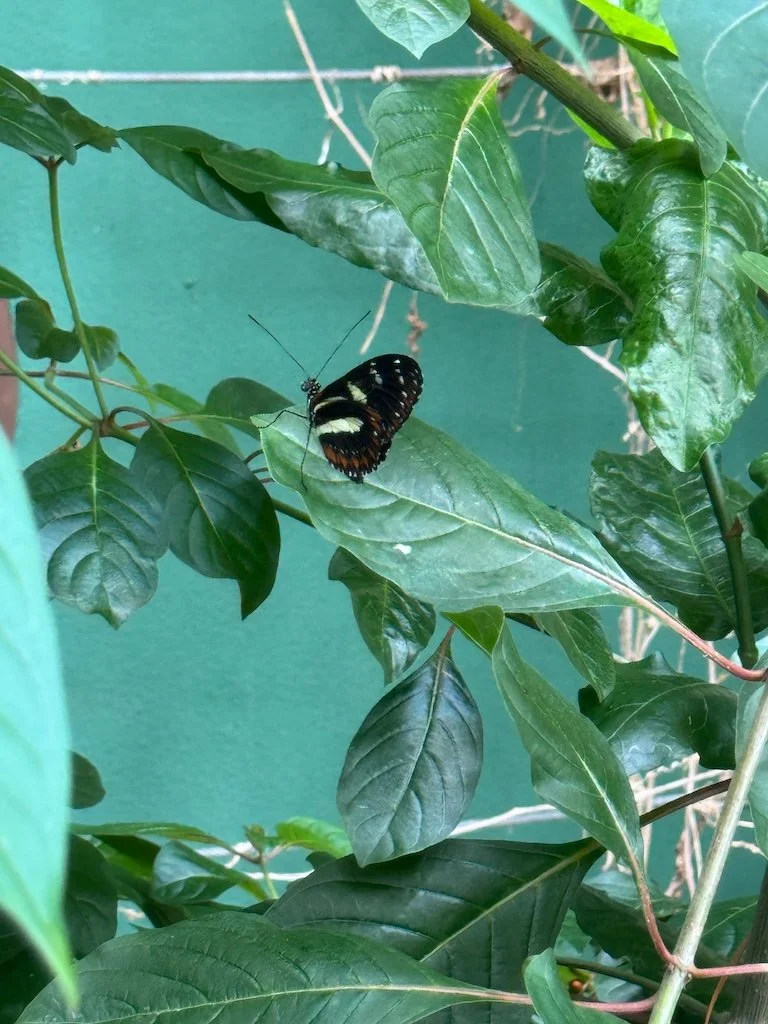
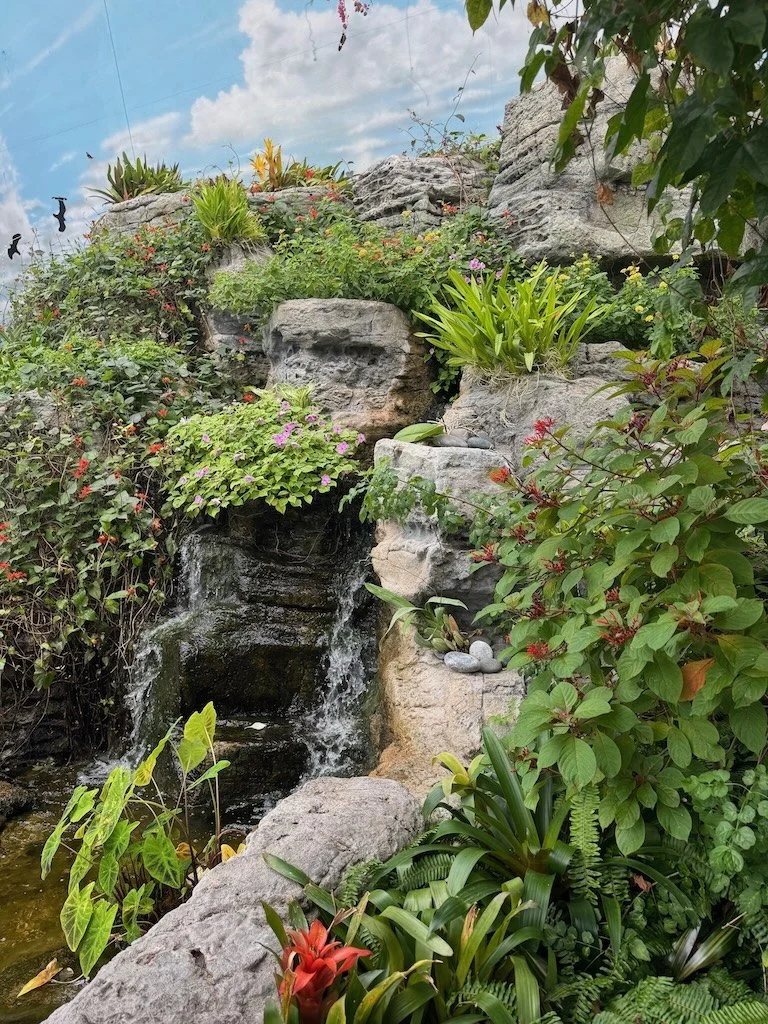
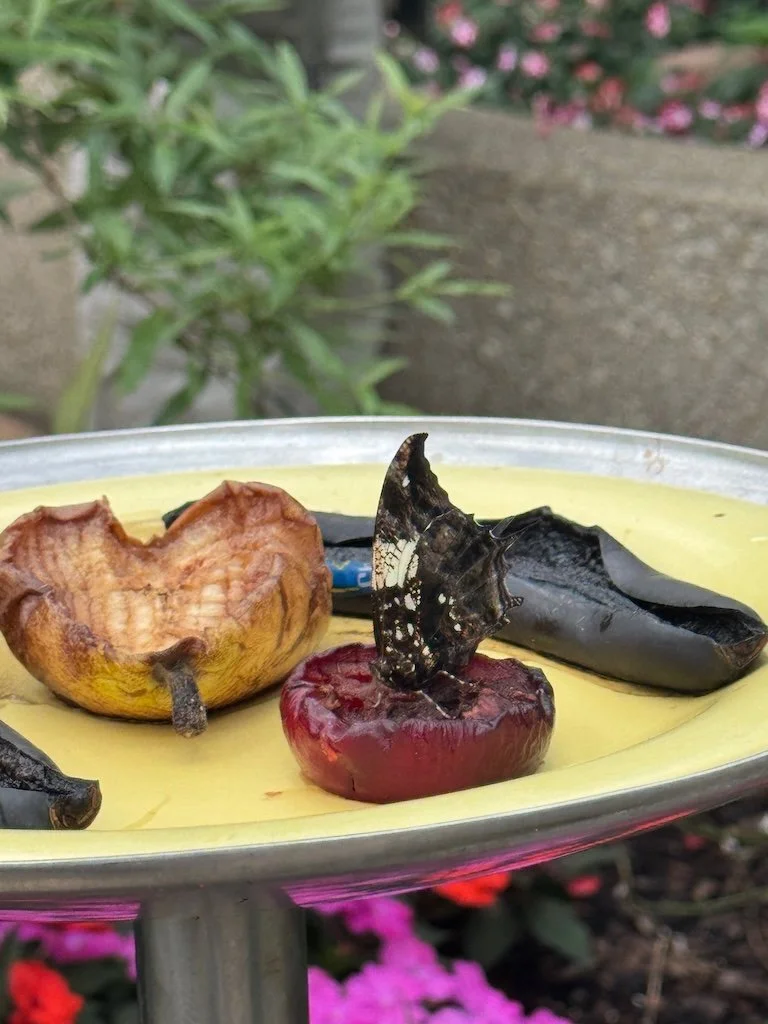
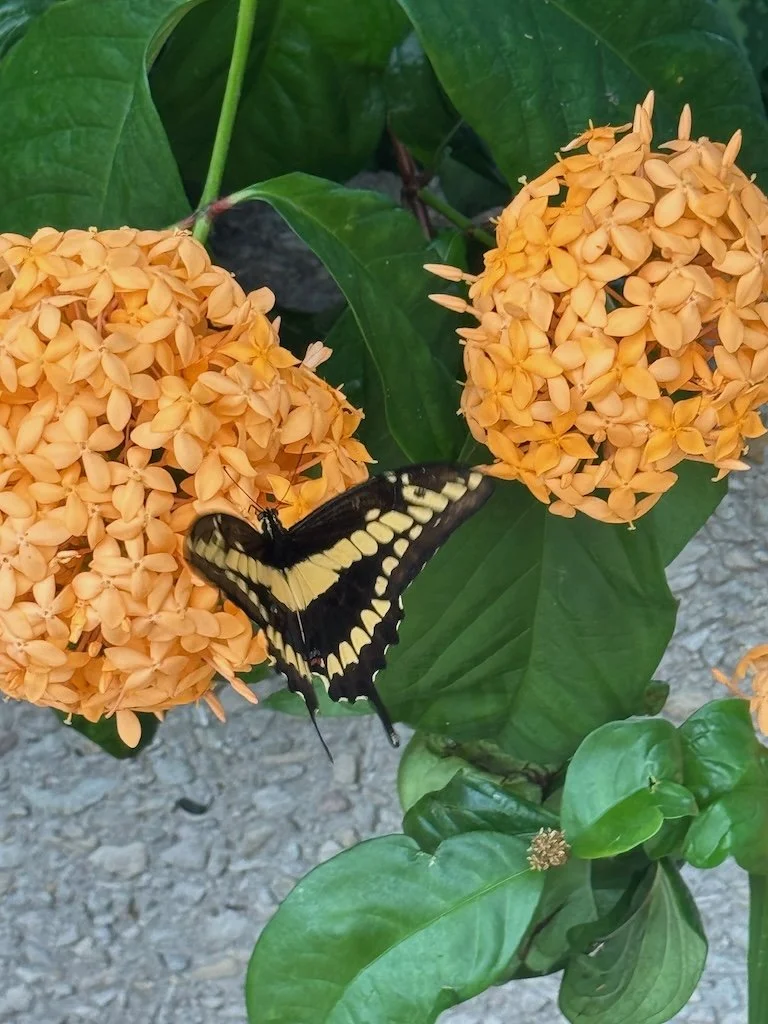
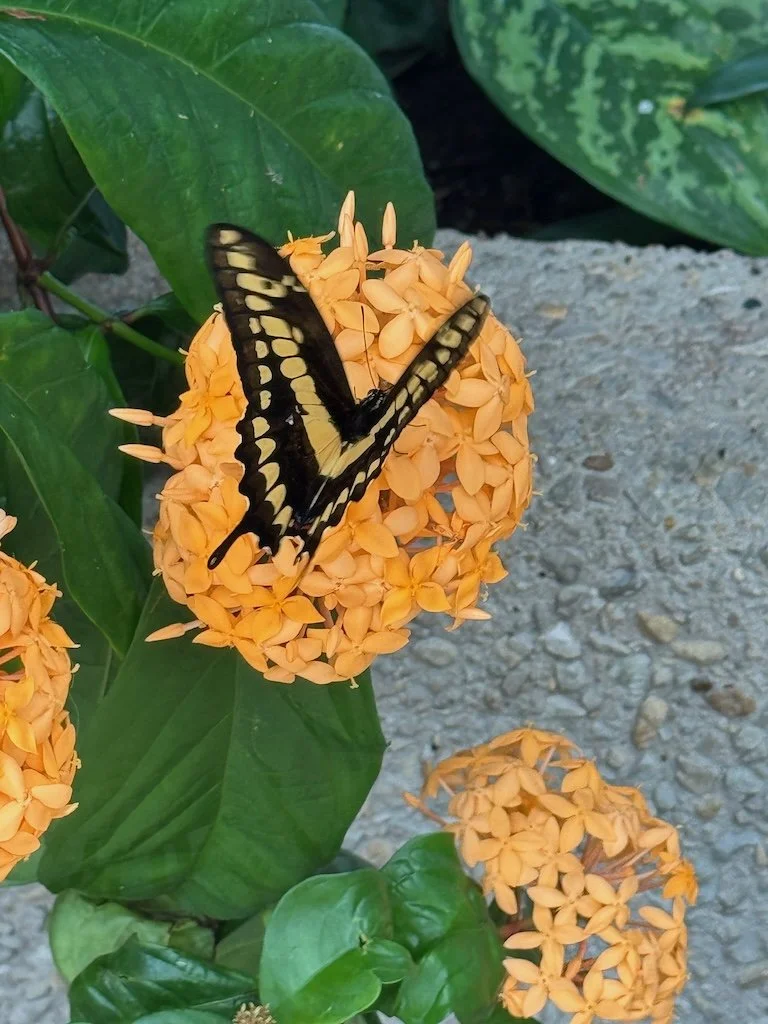
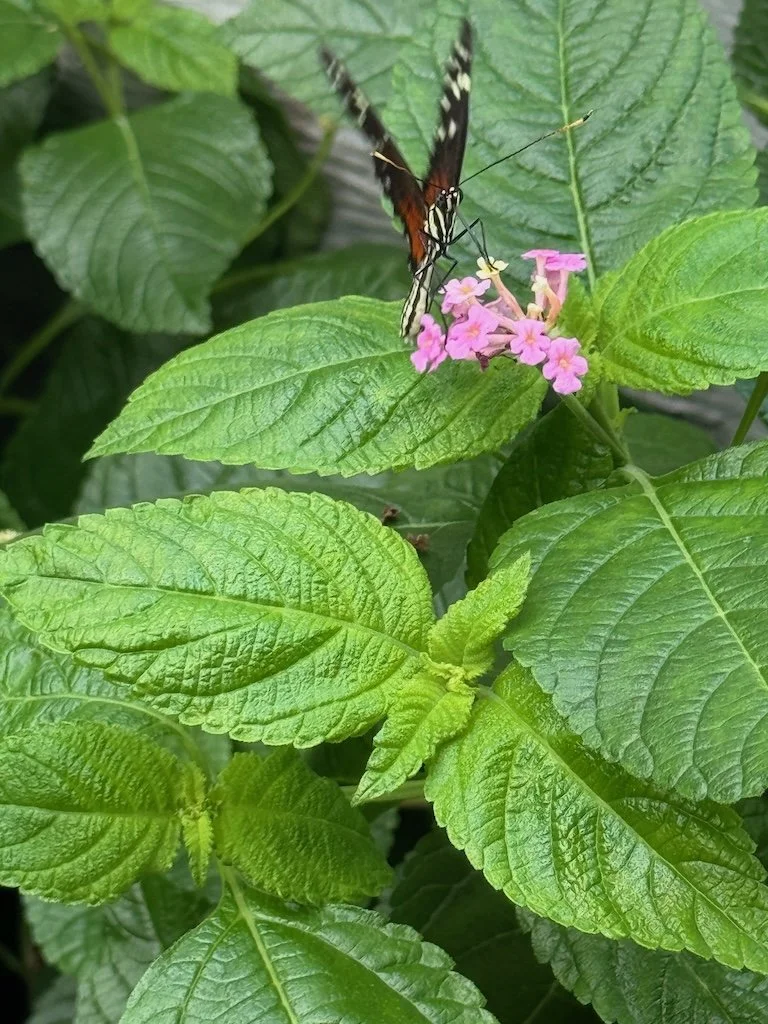
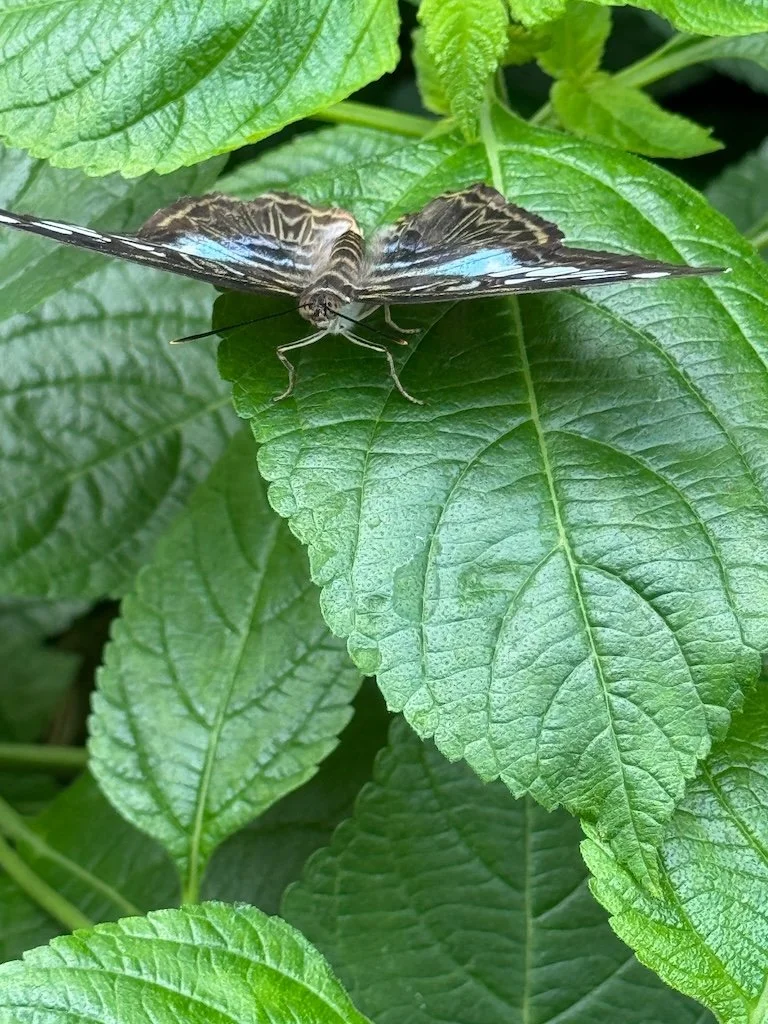
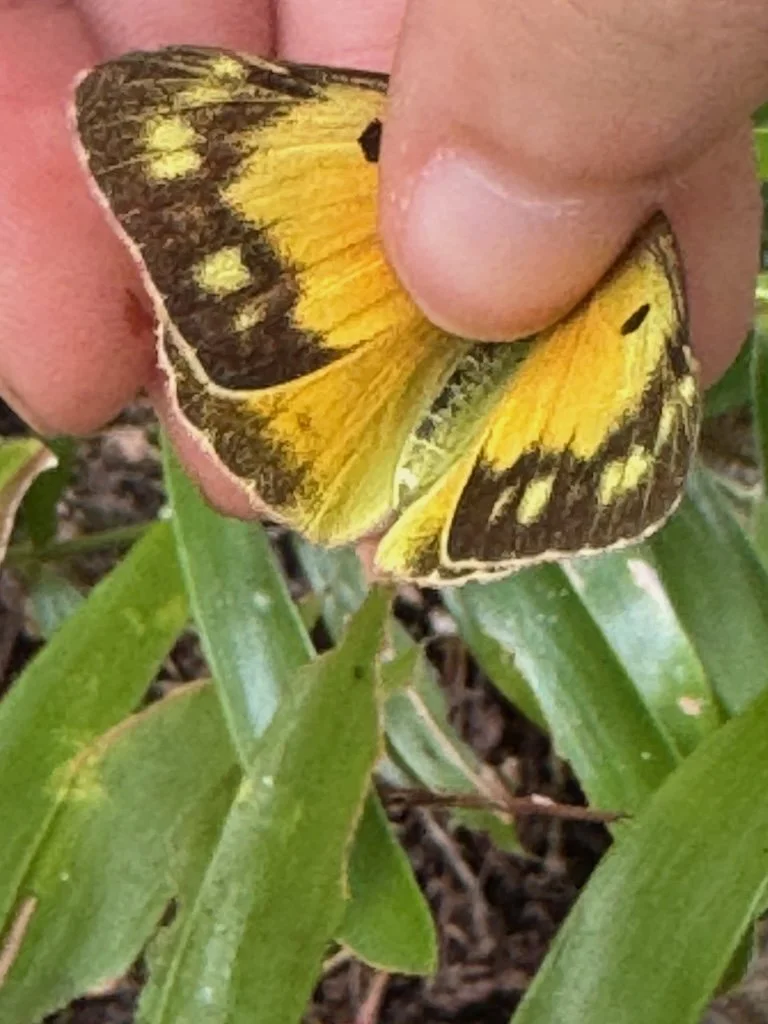
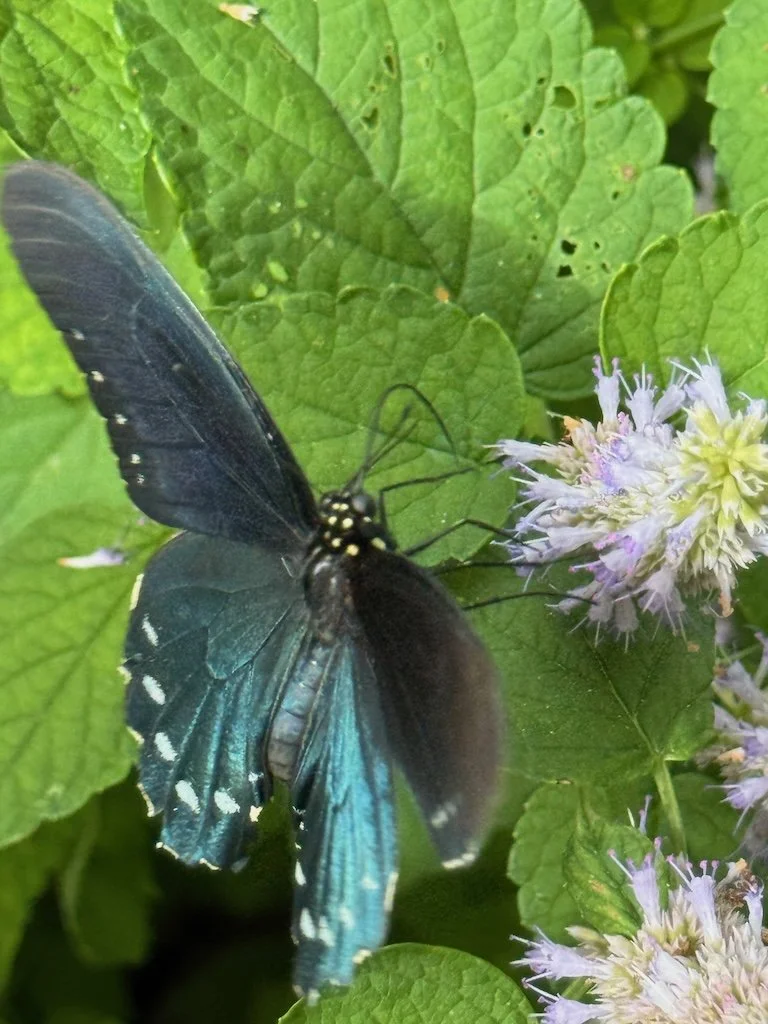
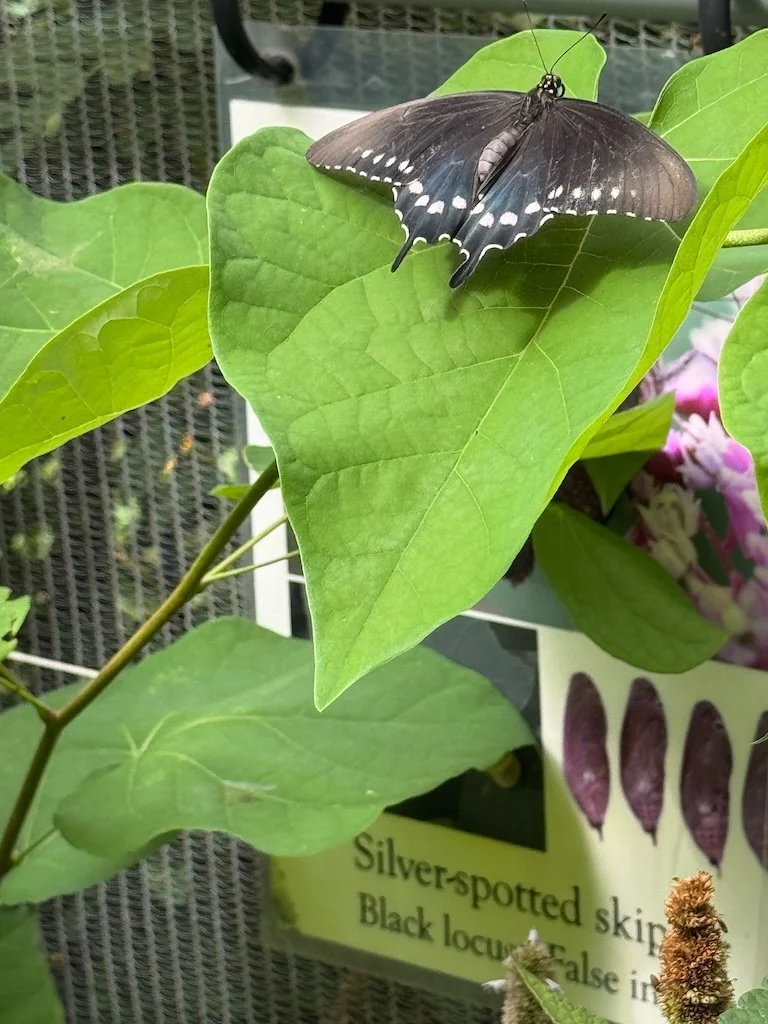
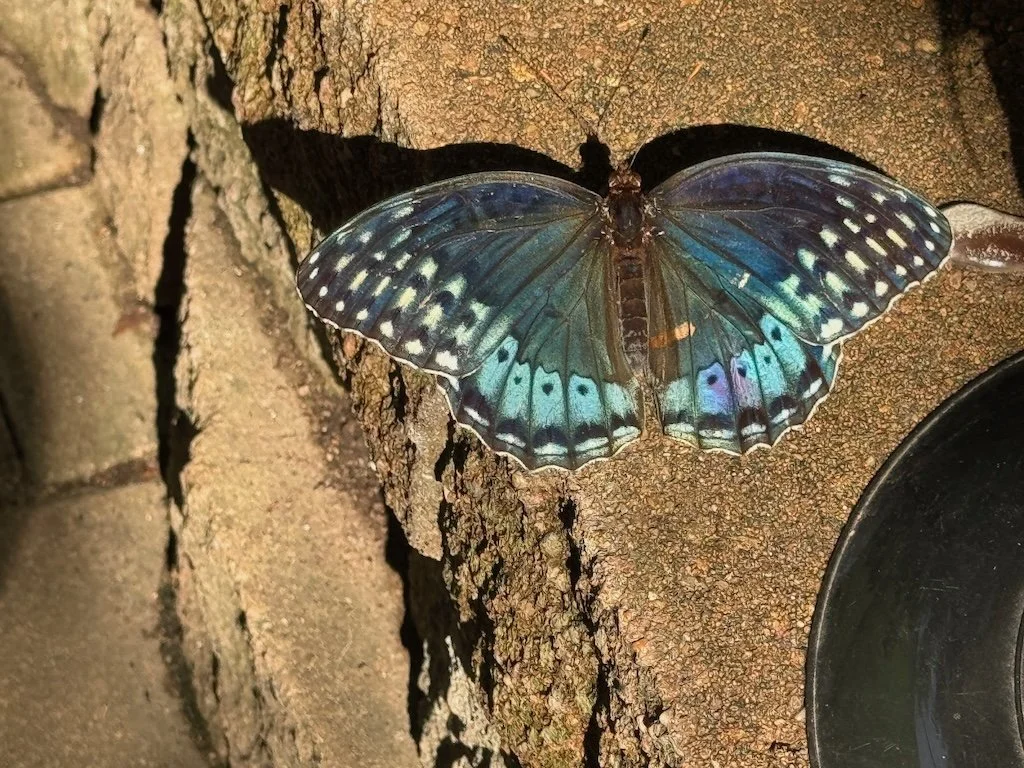
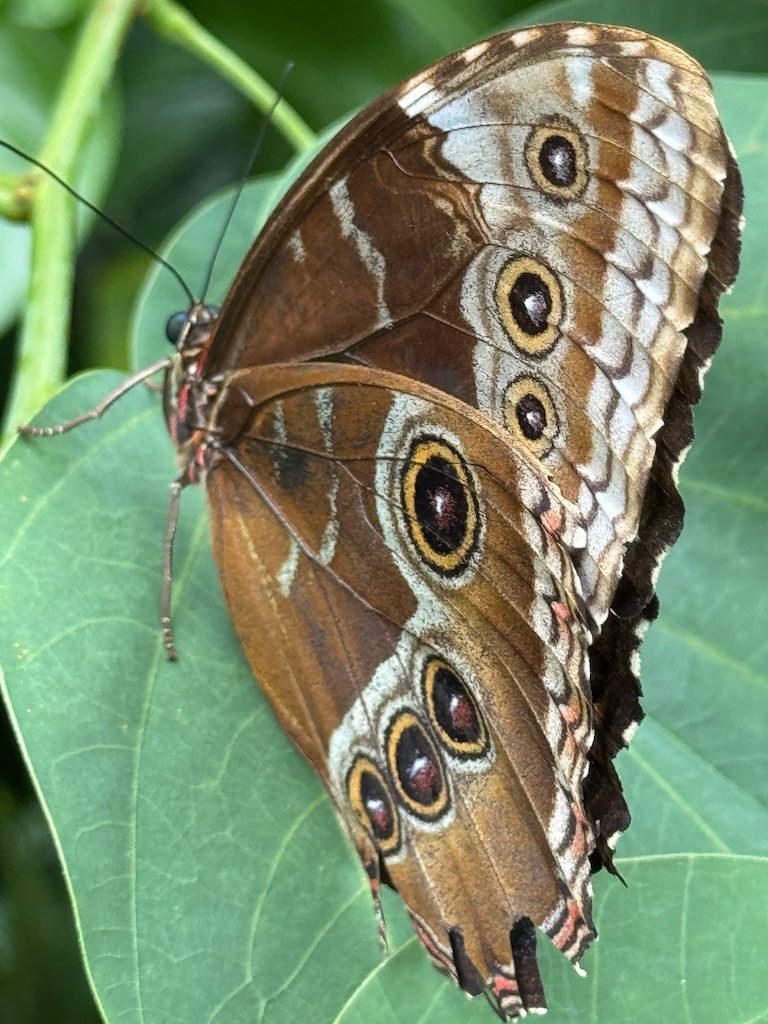
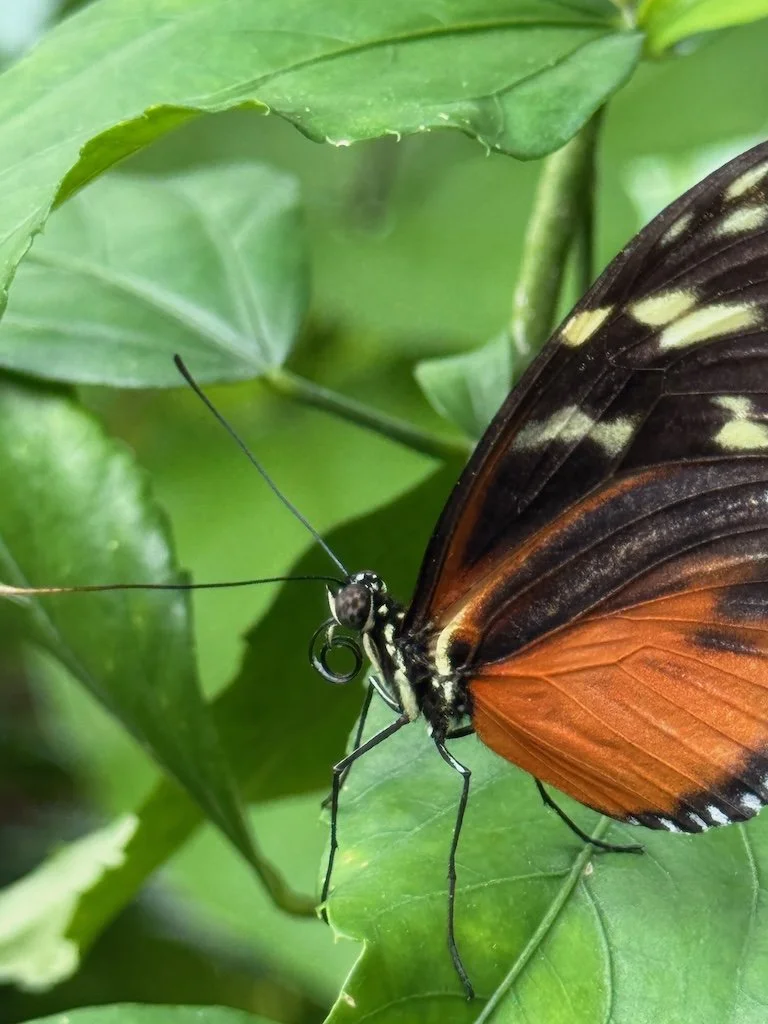
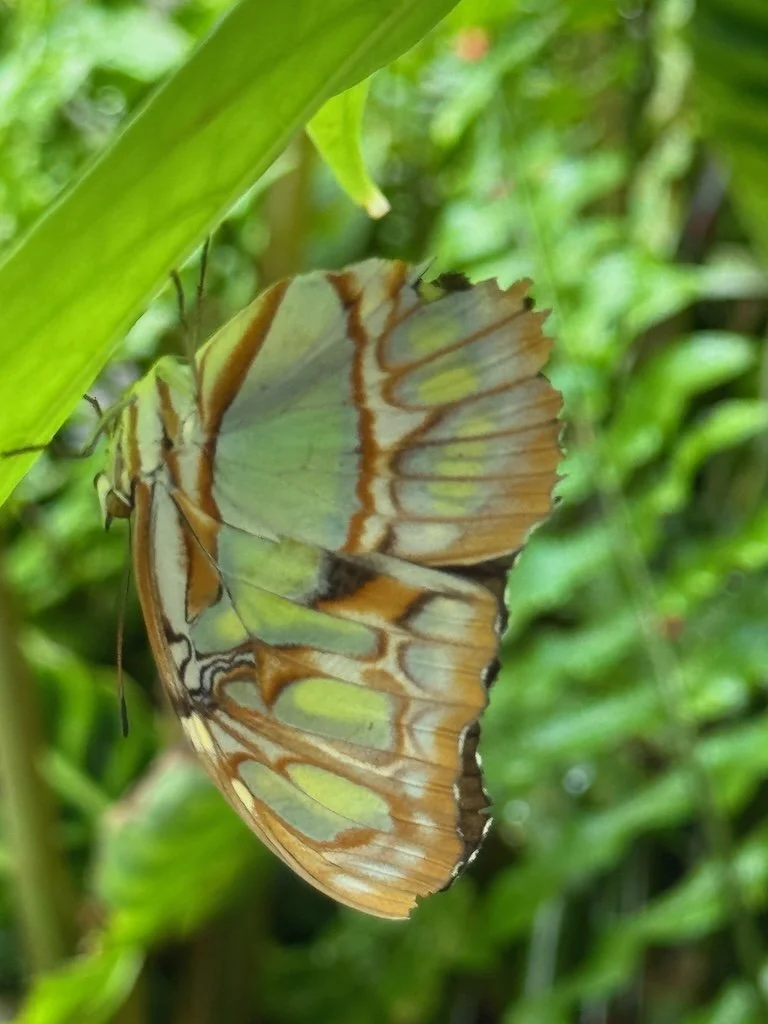
The headquarters and registration for the Urban Birding Festival in Chicago was at the Peggy Notebaert Nature Museum. We were in and out of the building during all three days of the festival. They have a small butterfly house with some exotics…some natives.

I managed to make a short video of a butterfly feeding.

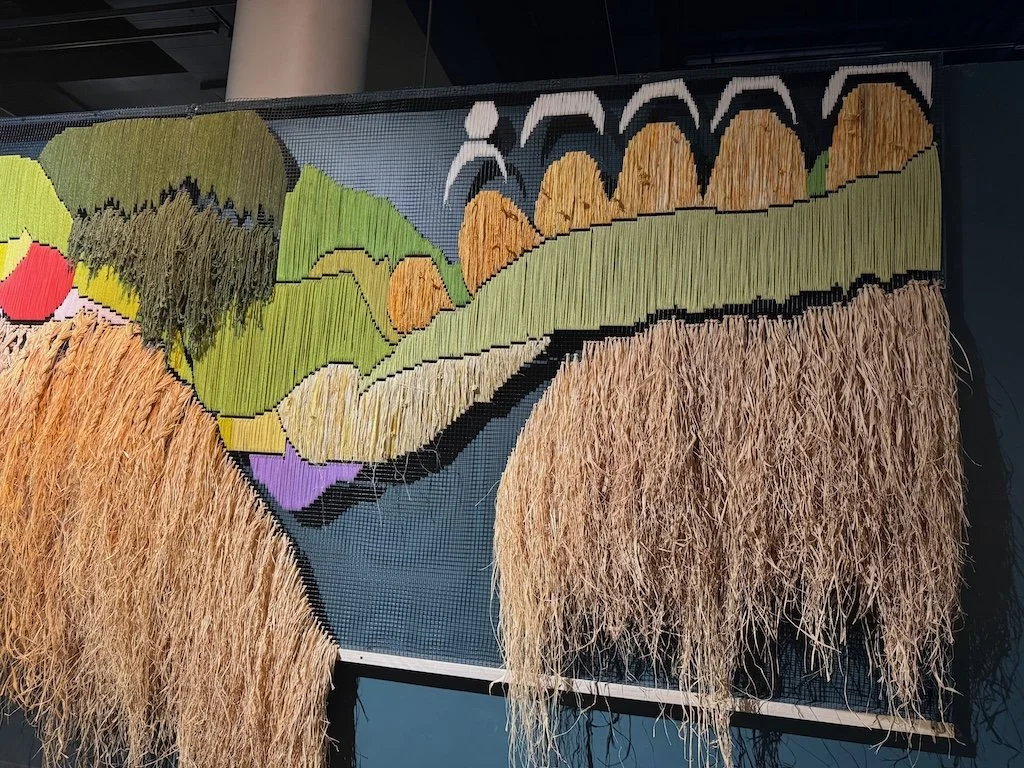
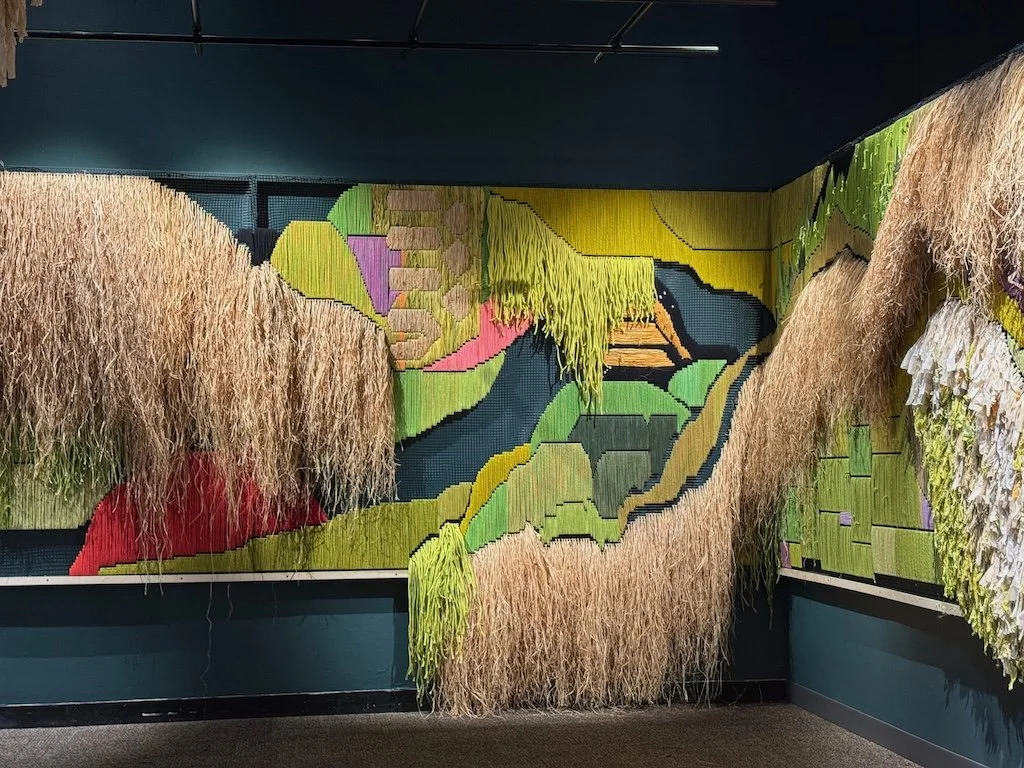
There were lots of activities for young children. It was fun watching them explore. A fiber mural appealed to me too.

We signed up for a walk at Lincoln Park Zoo – birds and botany – skewed toward botany.

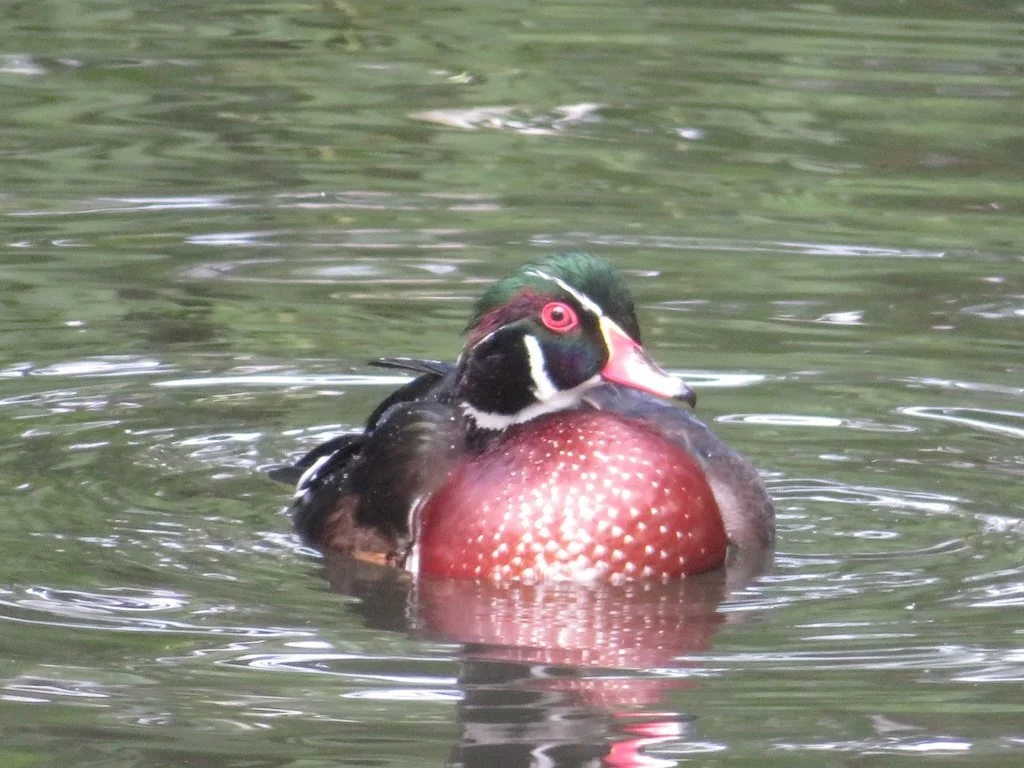
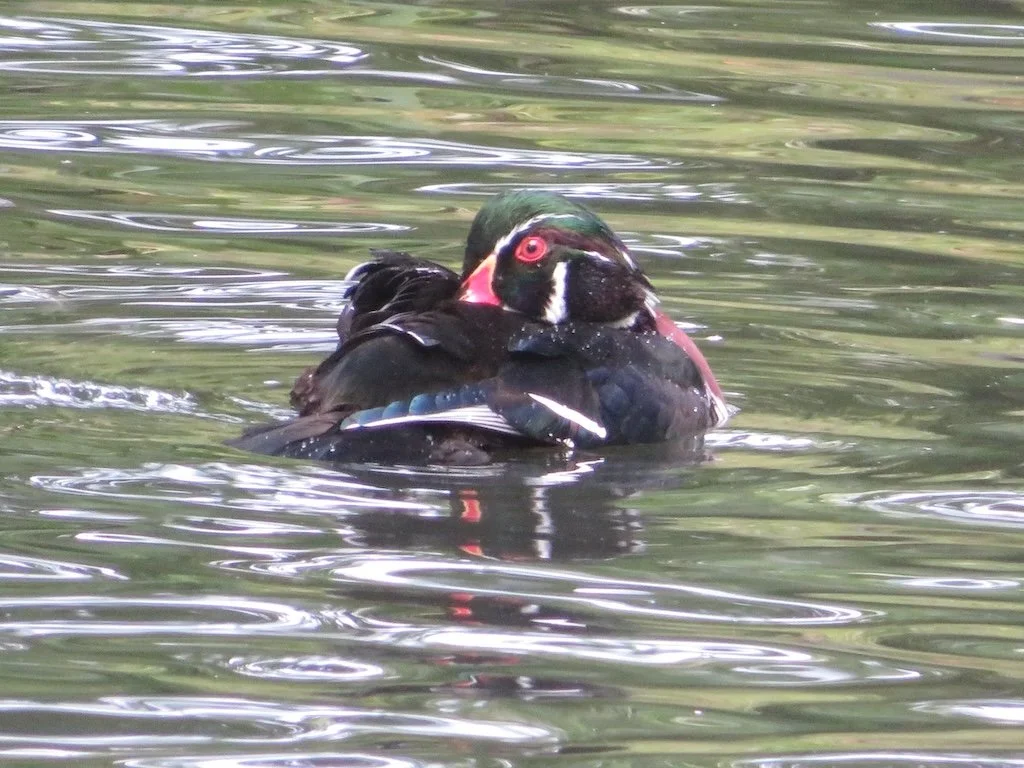
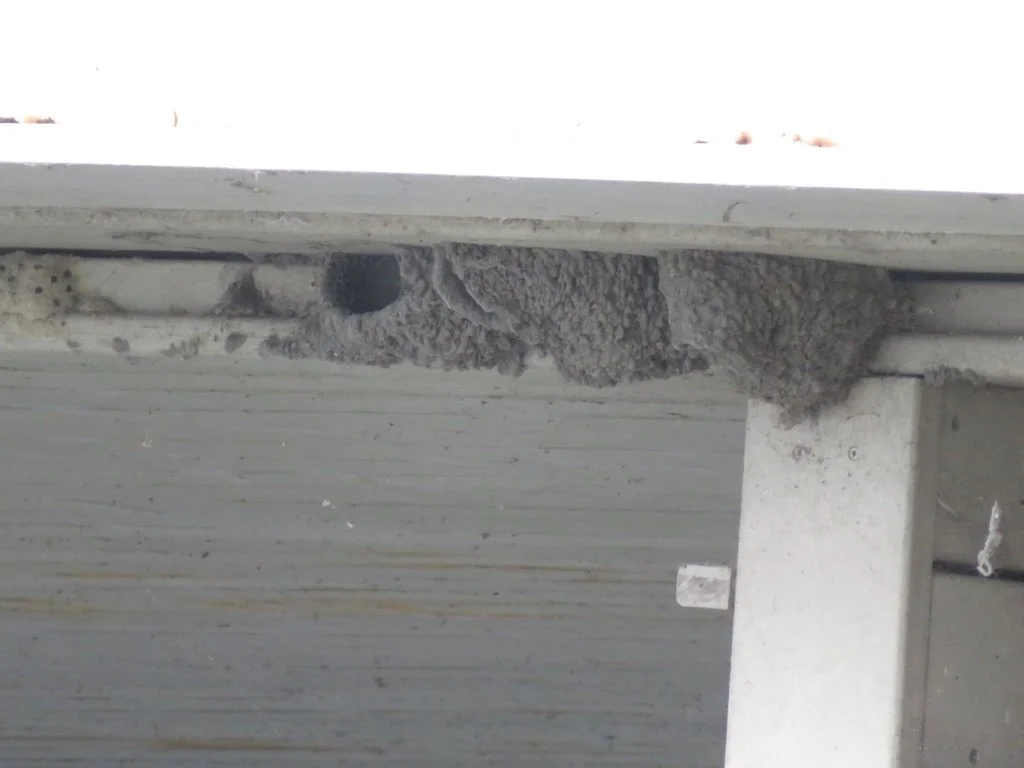
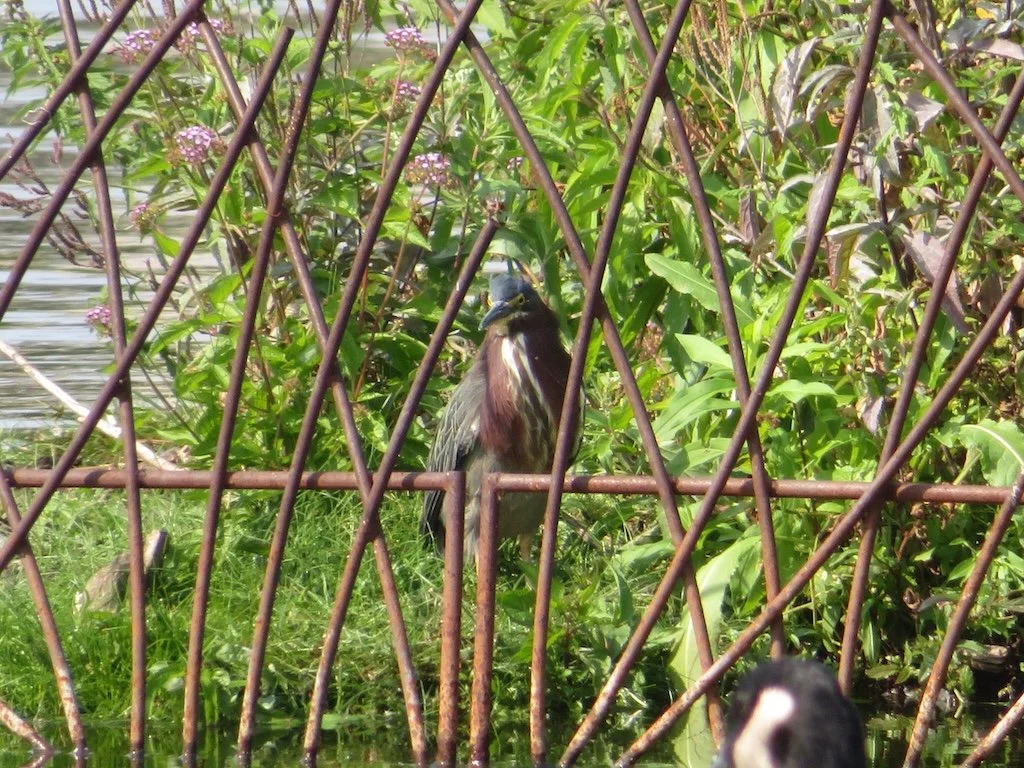
The two birds that I photographed were in a wilder area of the zoo…where wild birds sometimes drop in…sometimes decide to stay. The wood duck was relatively close and preening. The green heron was further way and harder to see through the vegetation. On the underside of a bridge were some barn swallow nests; the birds had already left for the season.

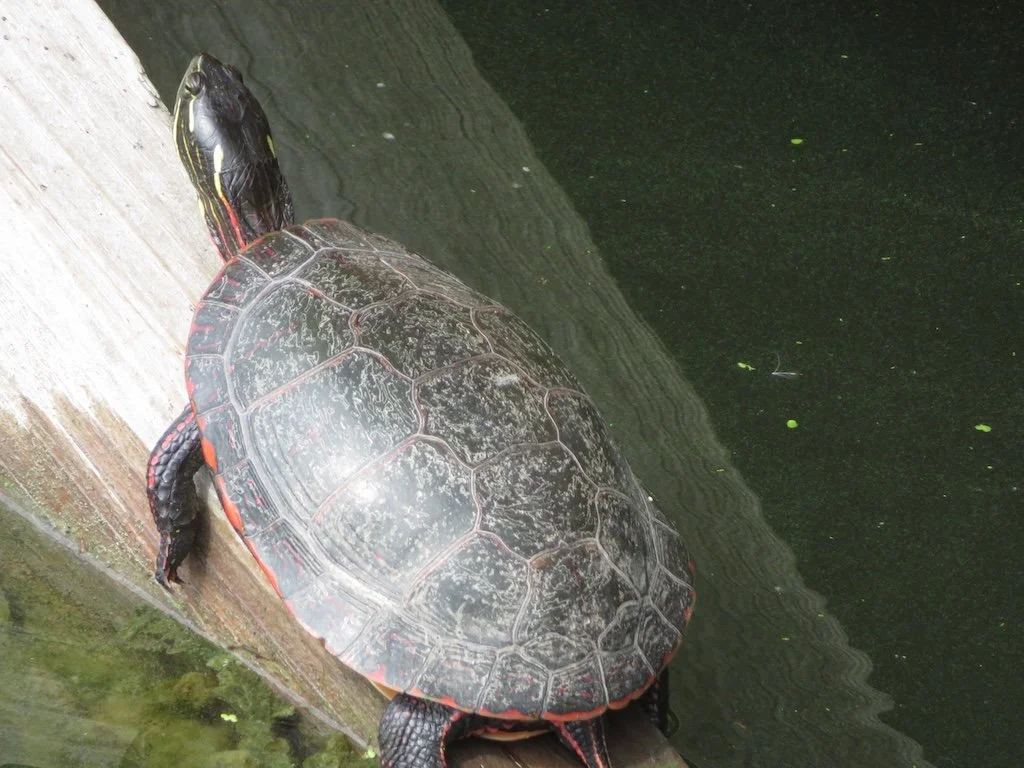
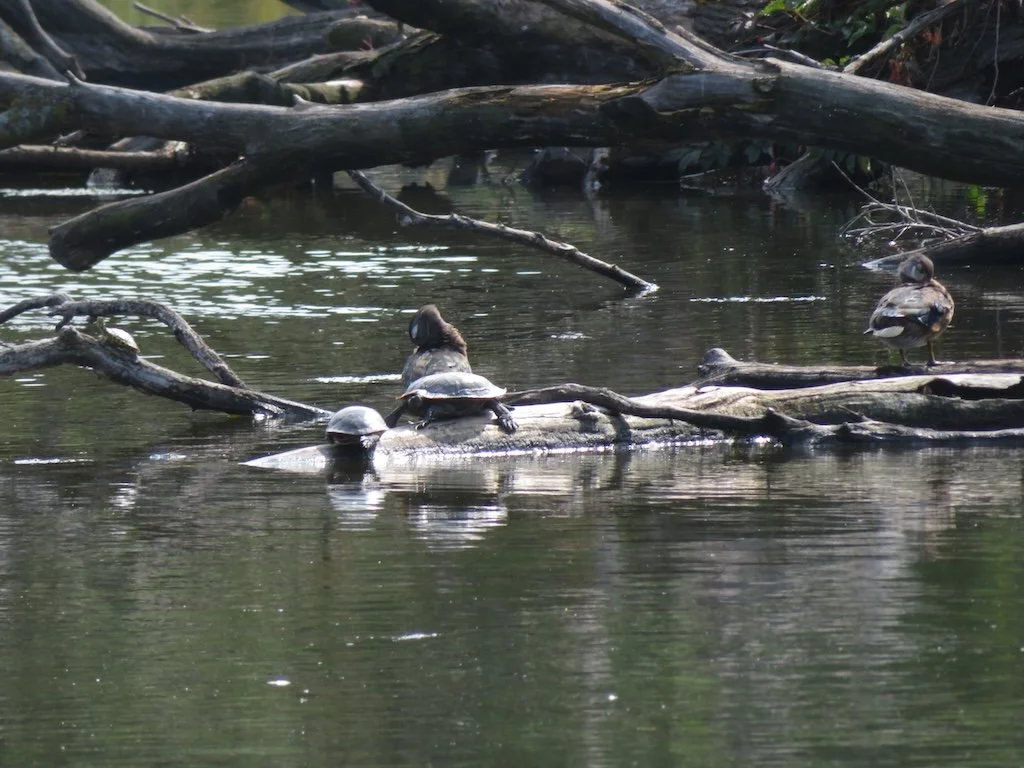
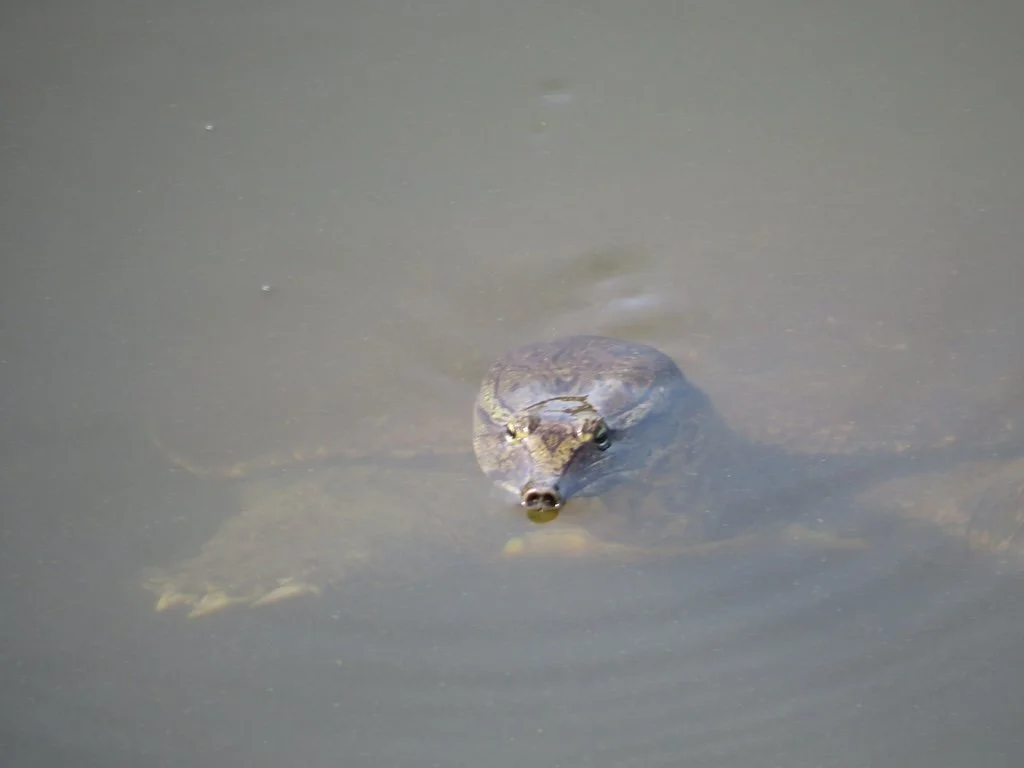
There were turtles out and about – including a soft shelled one.

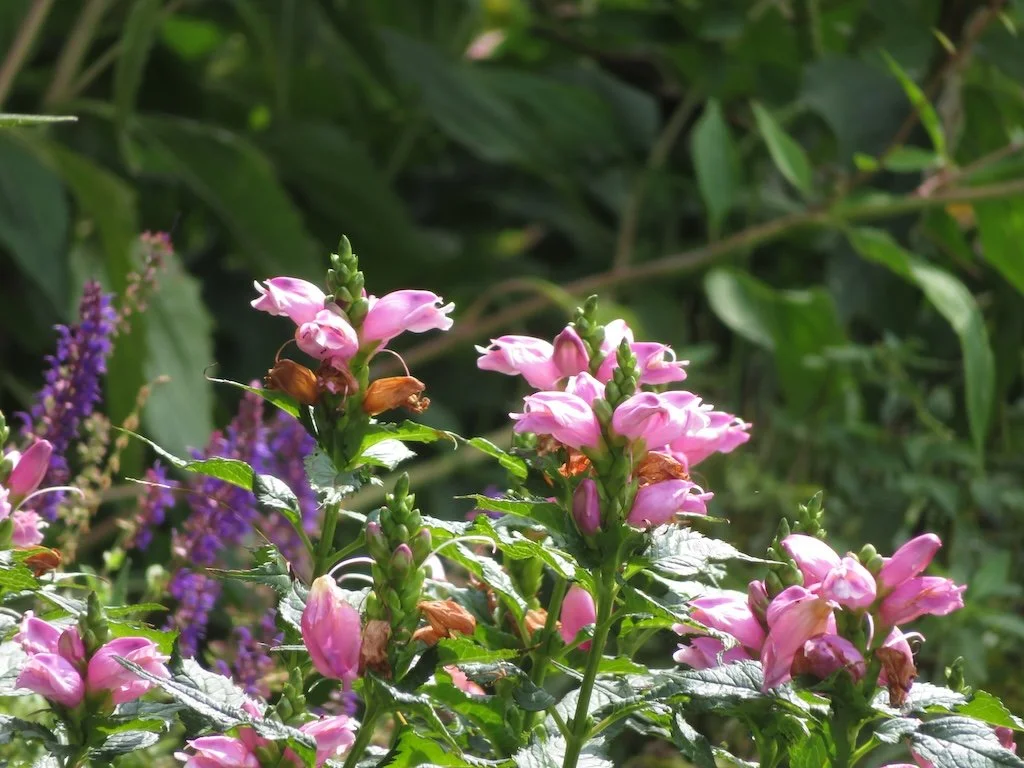
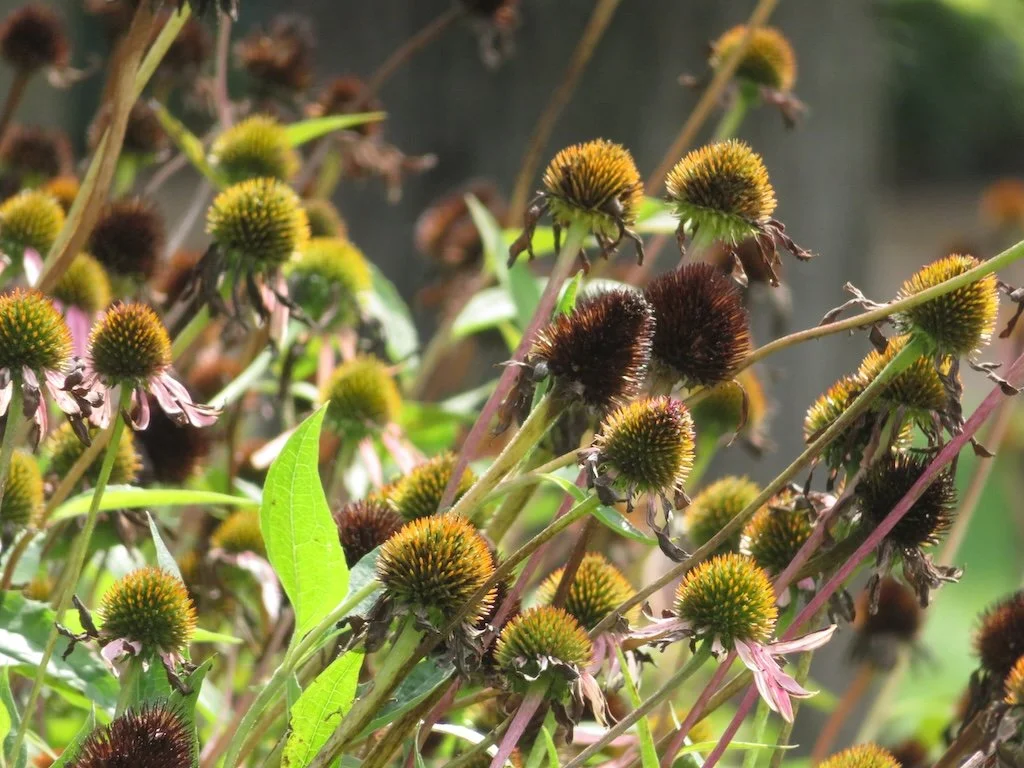
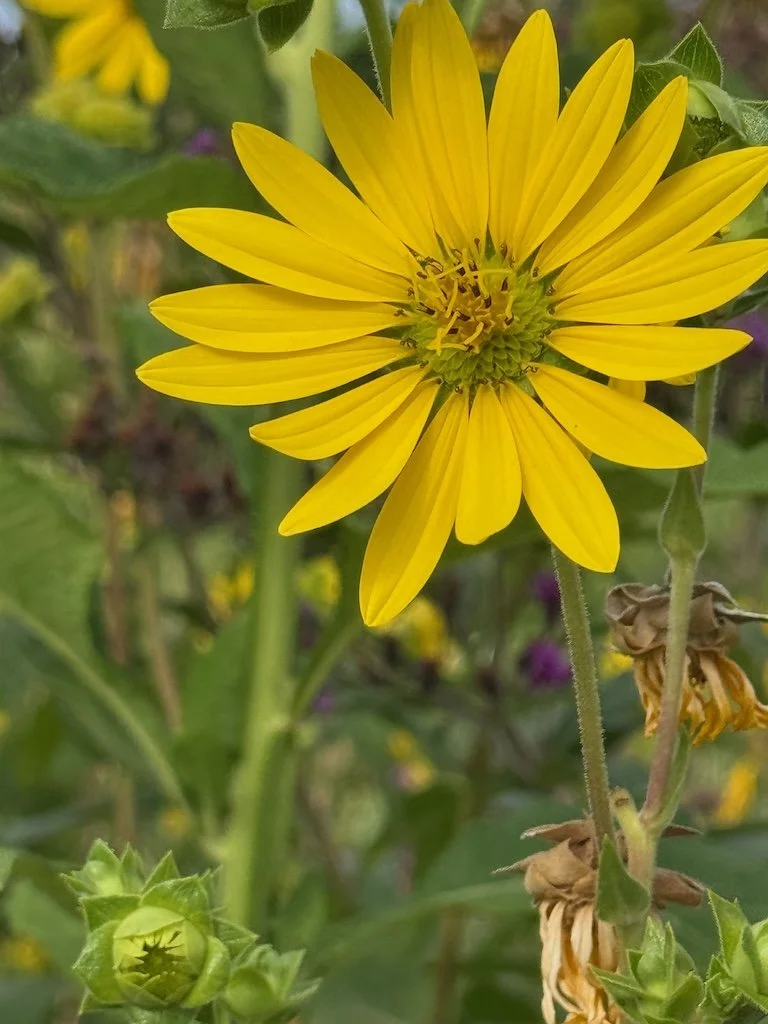
The plantings in the main part of the zoo are a mix of formal landscaping plants (non-natives) with some natives like coneflowers and turtlehead and sunflowers mixed in.

The zoo has a very old elm that is treated to keep it from succumbing to Dutch Elm Disease. They have started planting elms resistant to the disease.

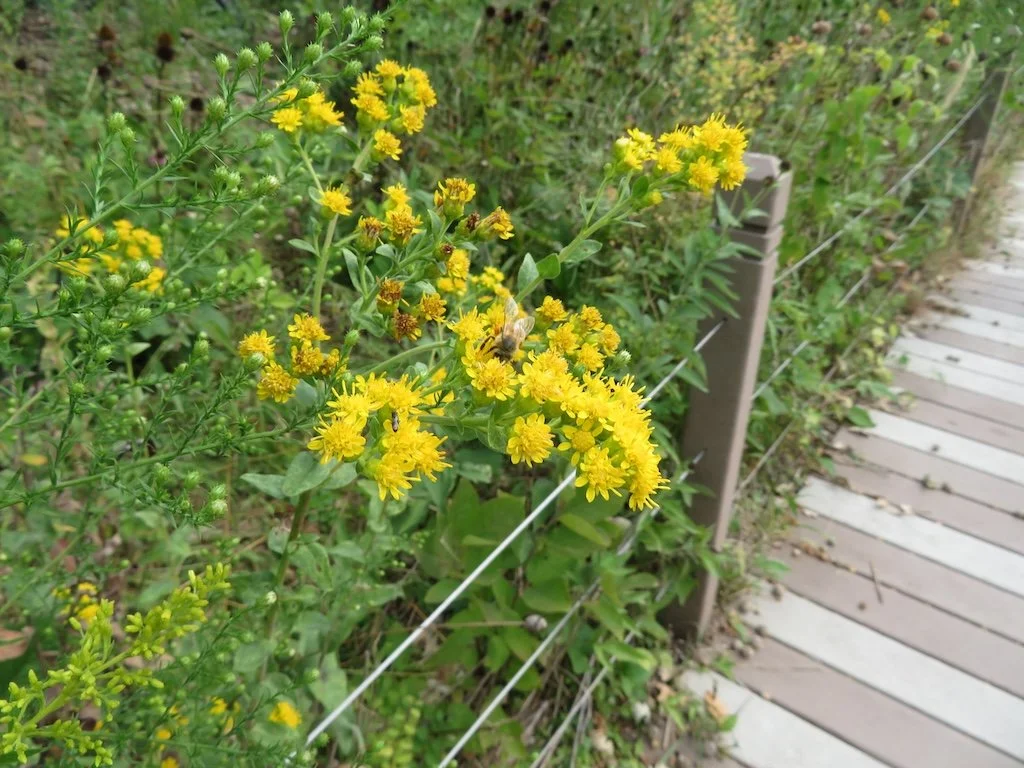
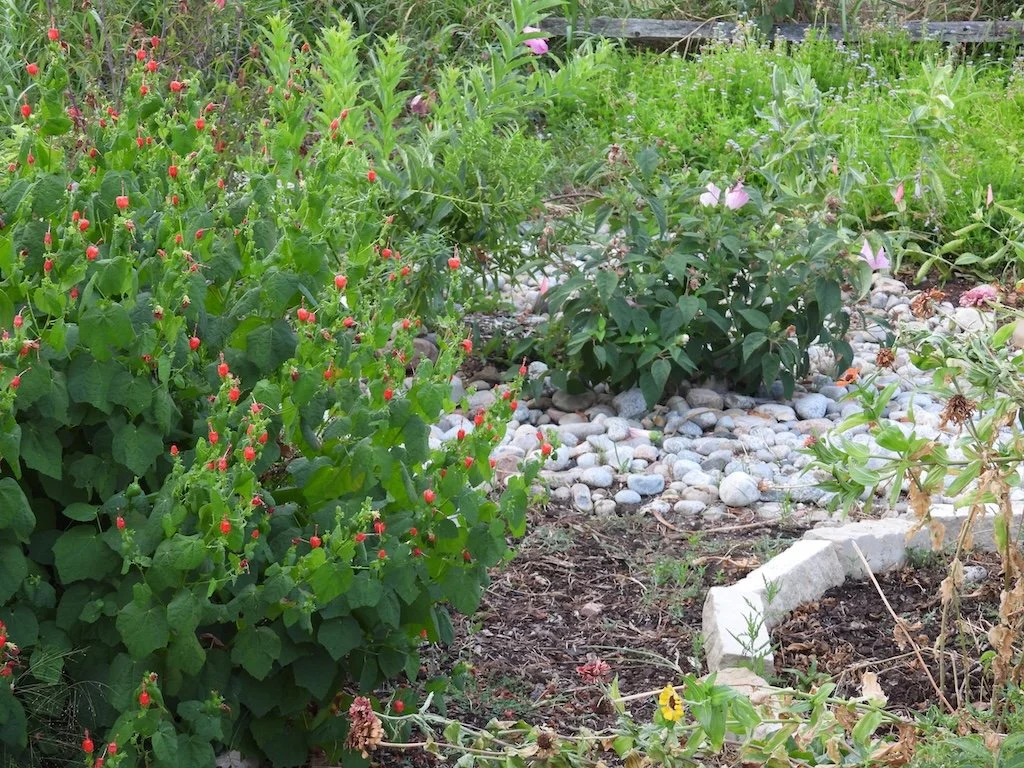
The walk around South Pond is landscaped with all natives….as close as the horticulturalist can to get prairie…with a few woody plants mixed in on the outer edges. I was surprised at how many plants I recognized! There were lots of yellows and seed pods this time of year!

We made the mistake of using Google Maps to show us the shortest route back to our car; it had exits from the zoo that didn’t exist! We circled back to find an exit….had a much longer walk than we would have had without technology!

Bill Jarvis Migratory Bird Sanctuary

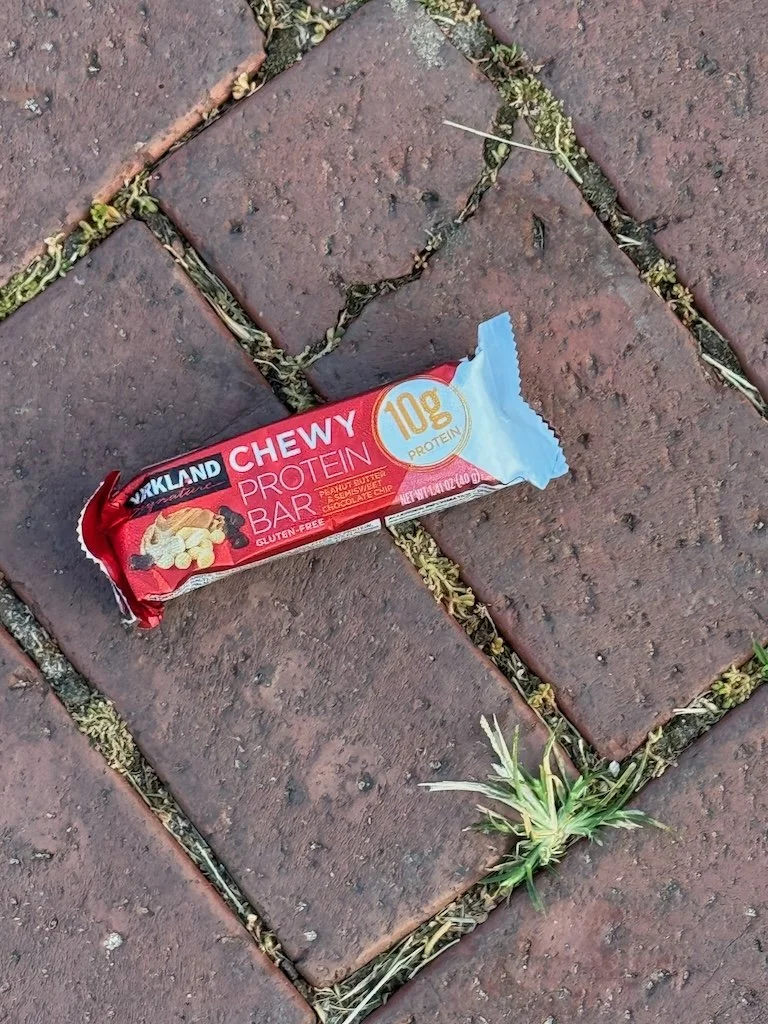
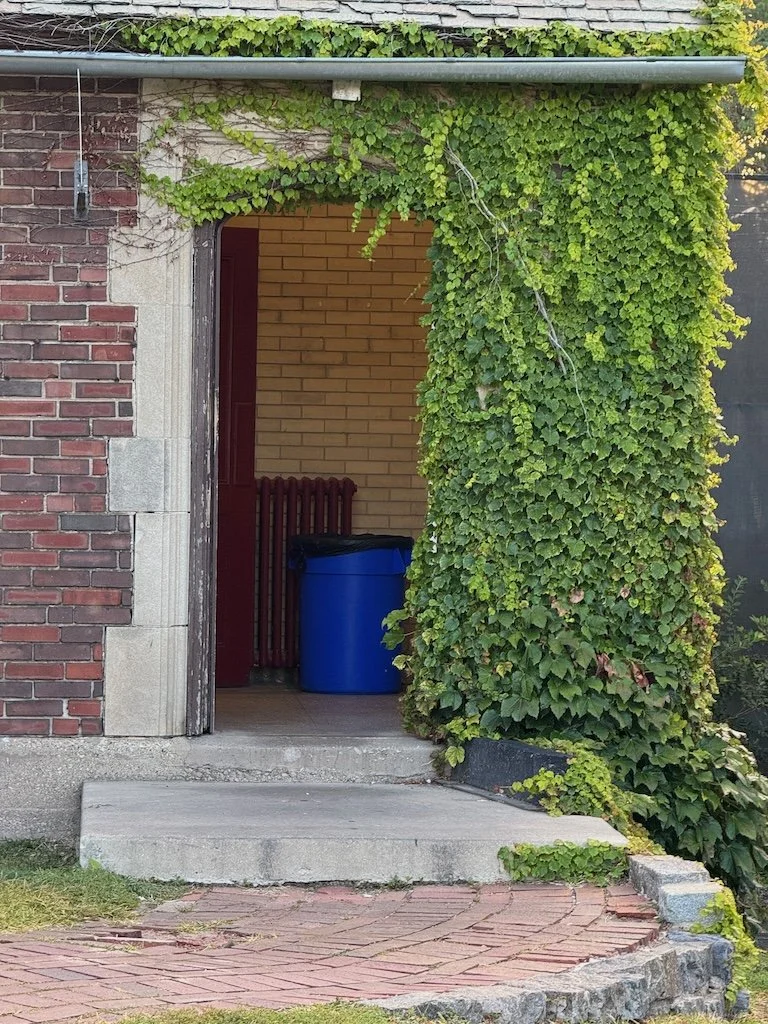
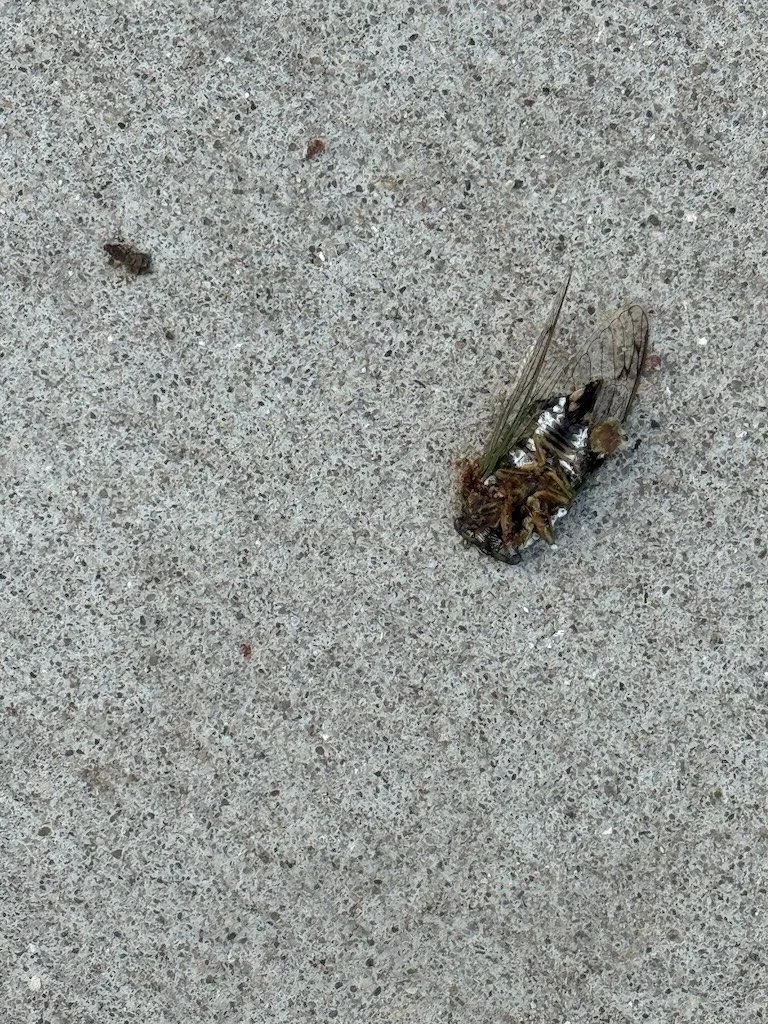
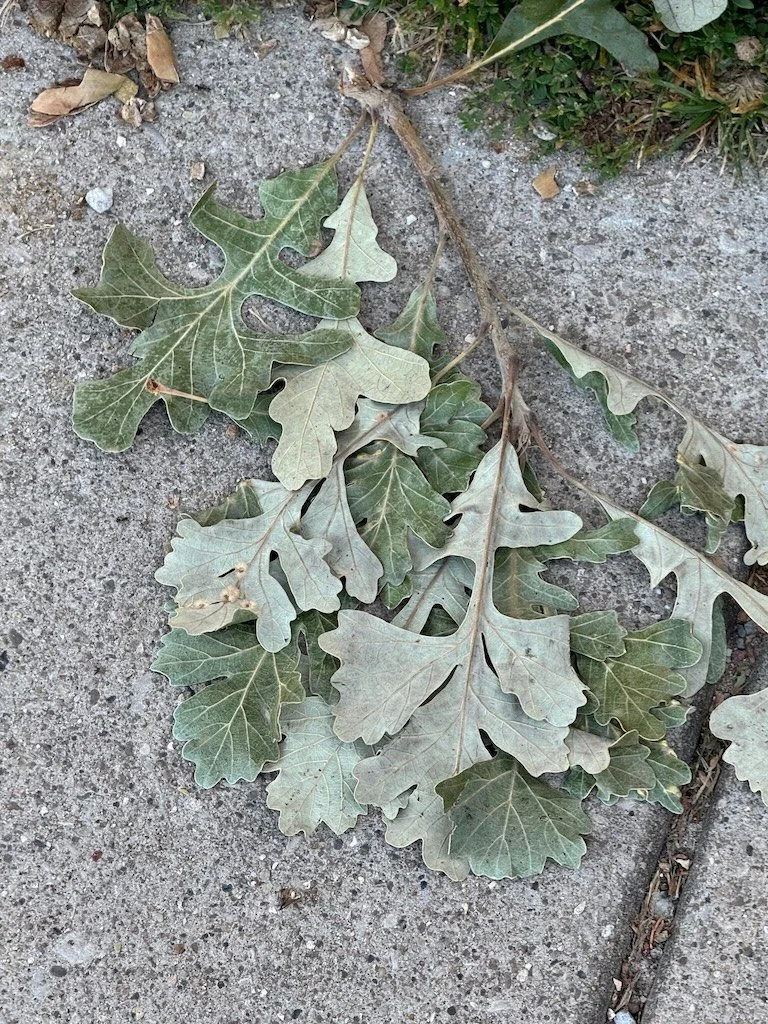
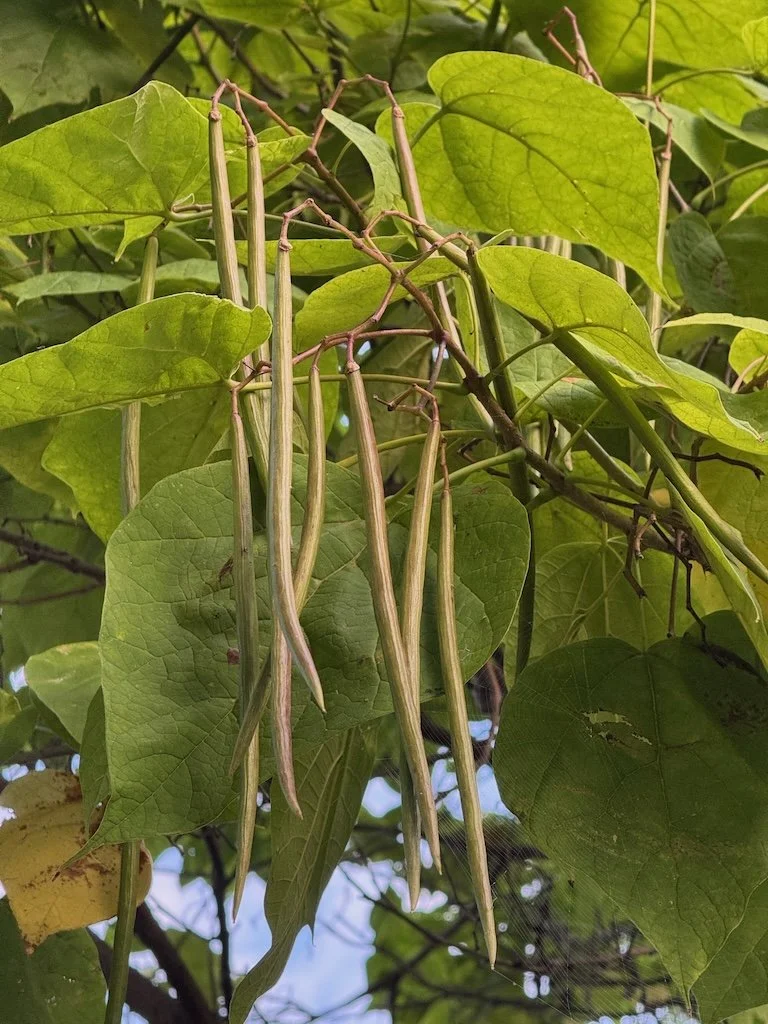
Our first field trip at the Urban Birding Festival in Chicago was at the Bill Jarvis Migratory Bird Sanctuary. We sought out the rest room facilities in the clock tower beforehand. The doorway there was half covered in ivy. There was an unopened protein bar that someone had dropped on the walk nearby…and cicadas and leaves/small branches. Not trash. There were trash/recycle bins…and evidently, they are used. I noticed a young catalpa with seed pods as we walked back toward the sanctuary.

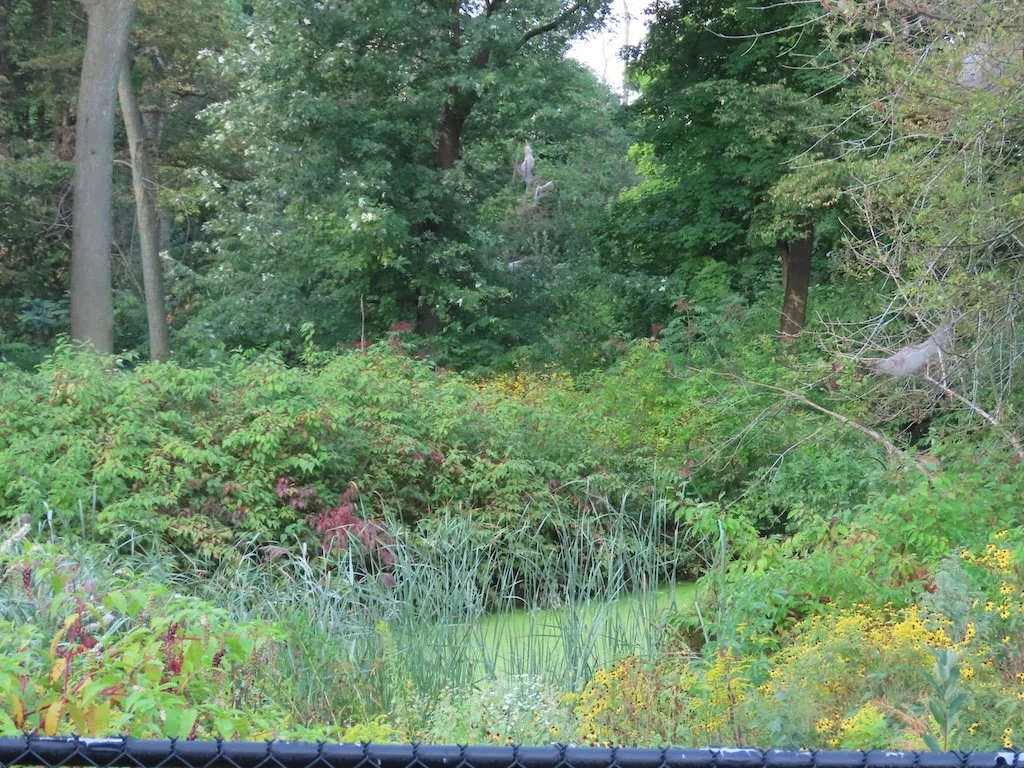
The core of the sanctuary is protected by a fence; visitors have a good view from a platform that is high enough to look over the fence and vegetation….the platform is where our group spent a couple of hours. There was plenty to see!

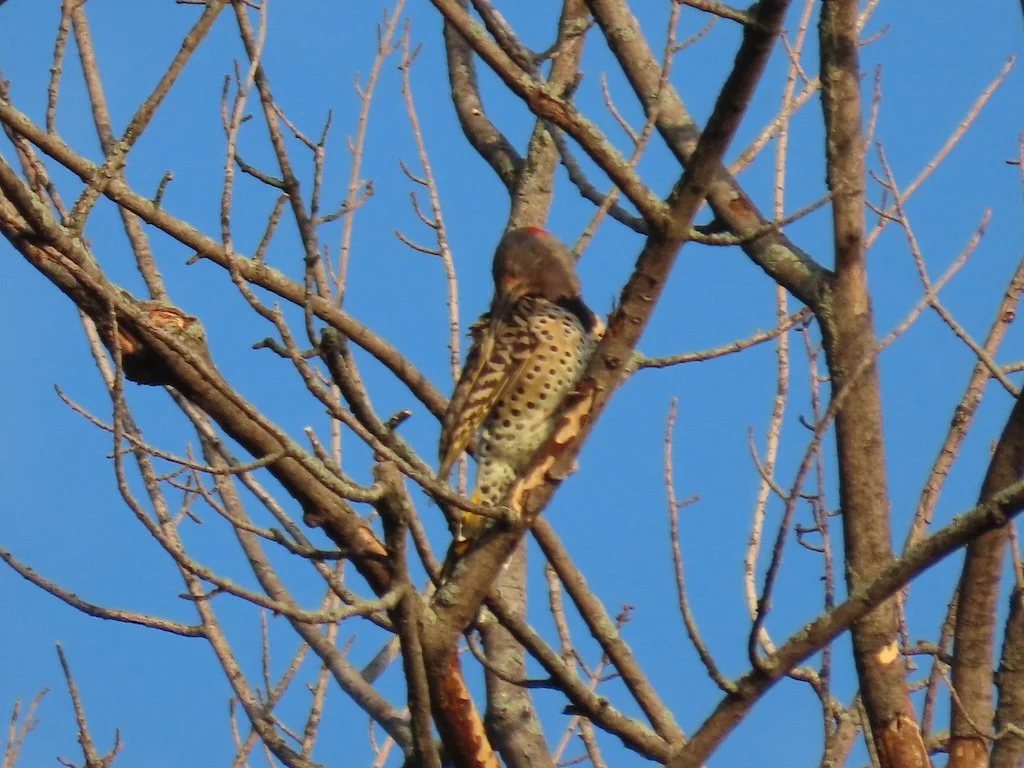
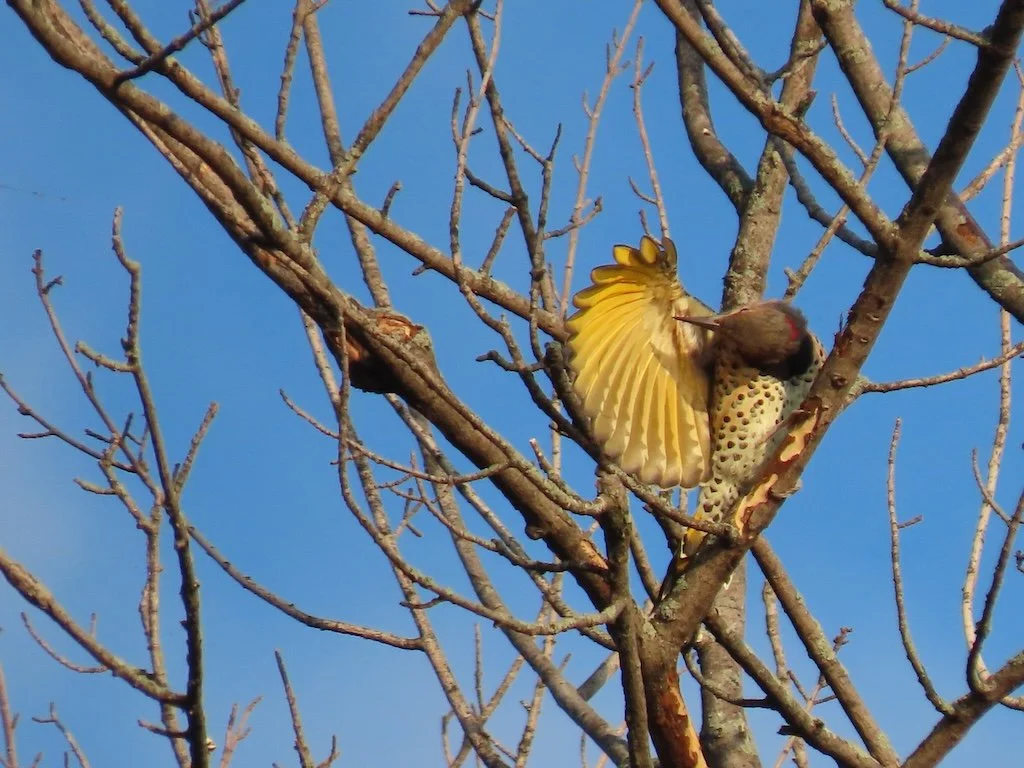
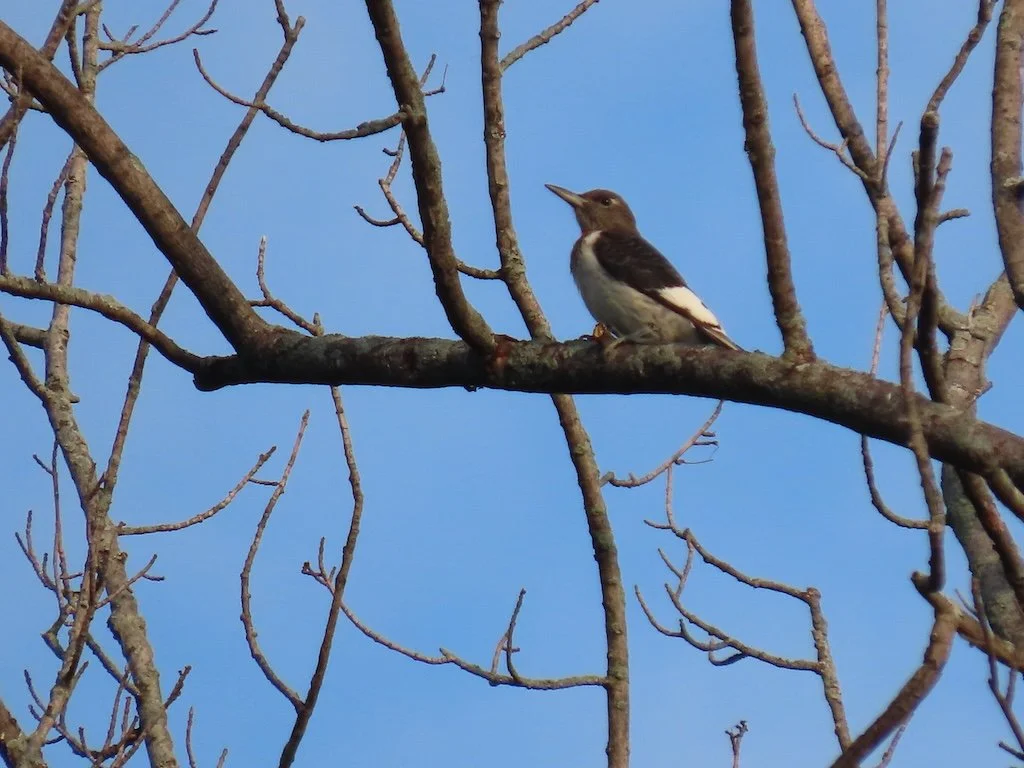
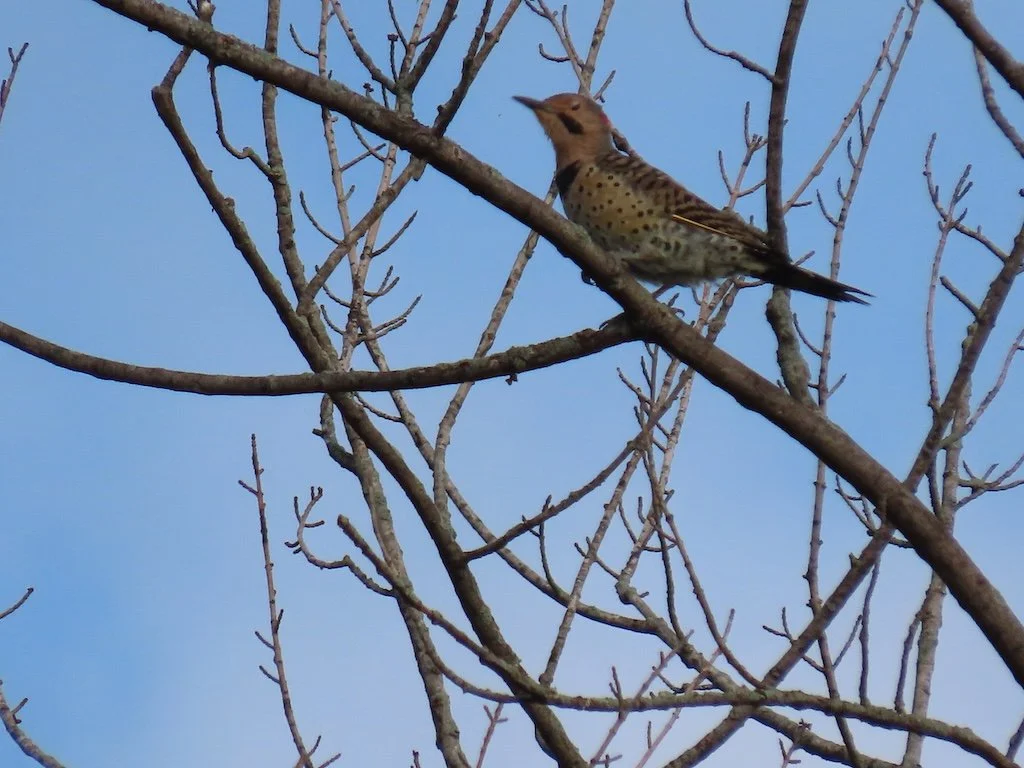
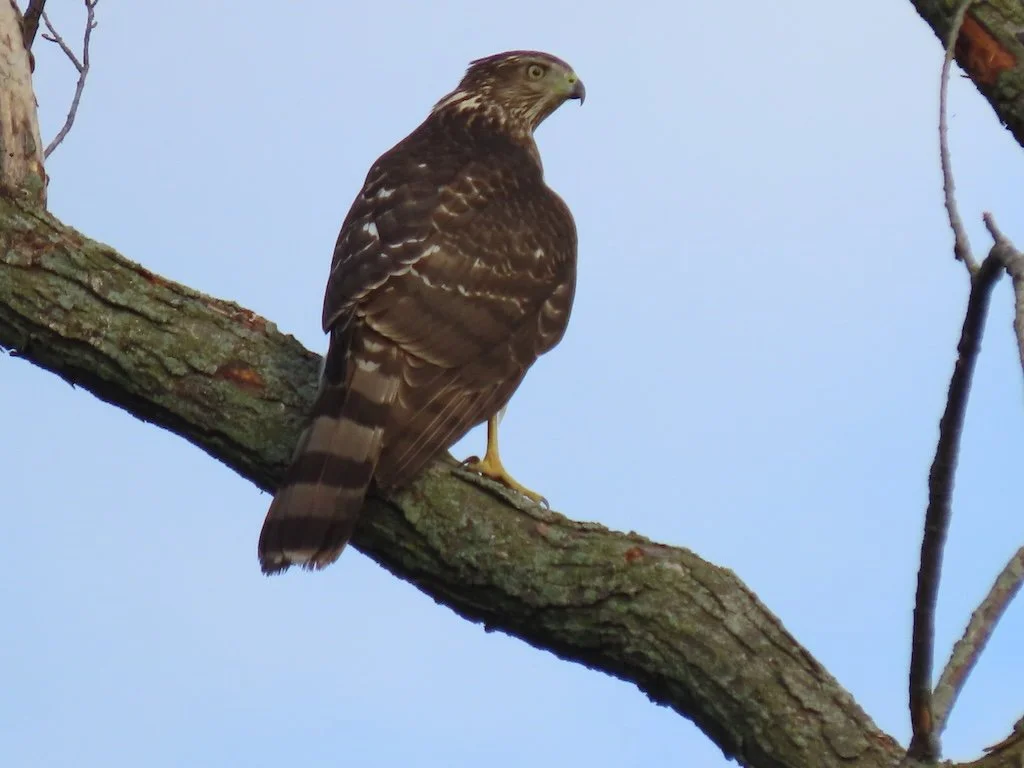
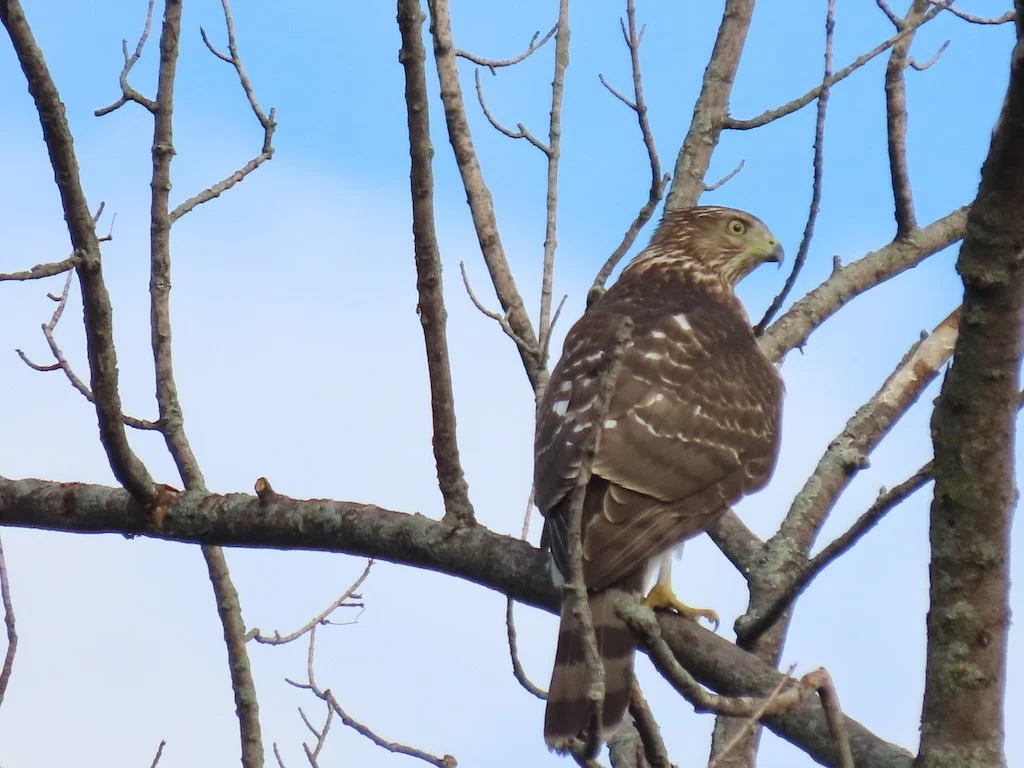
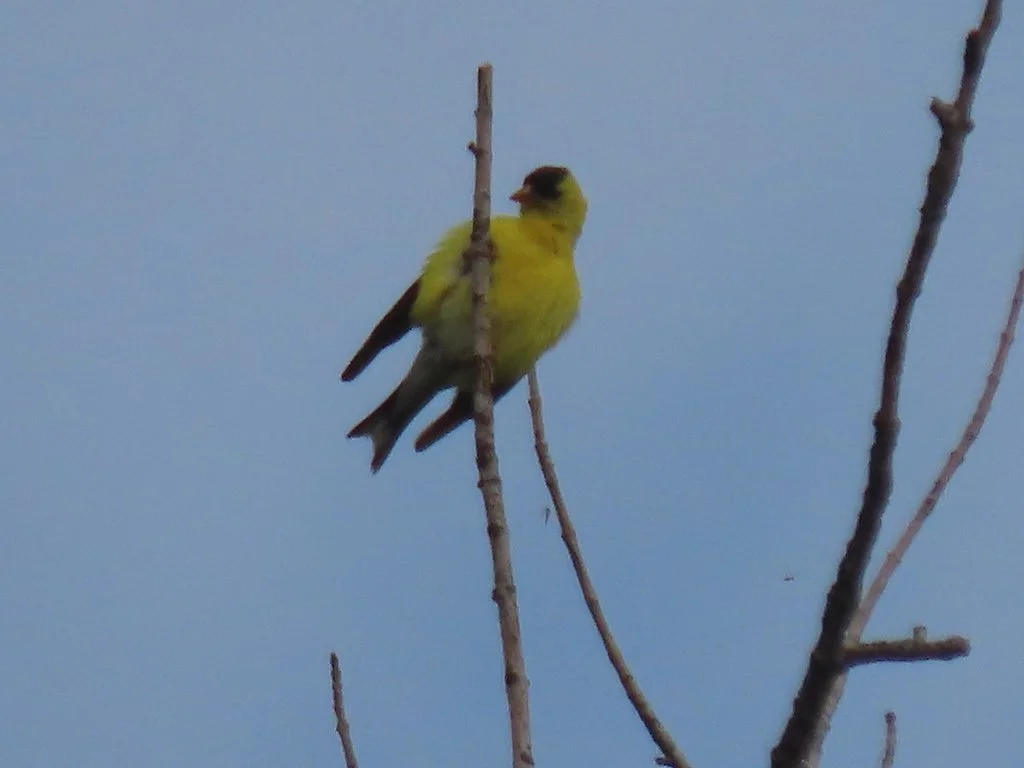
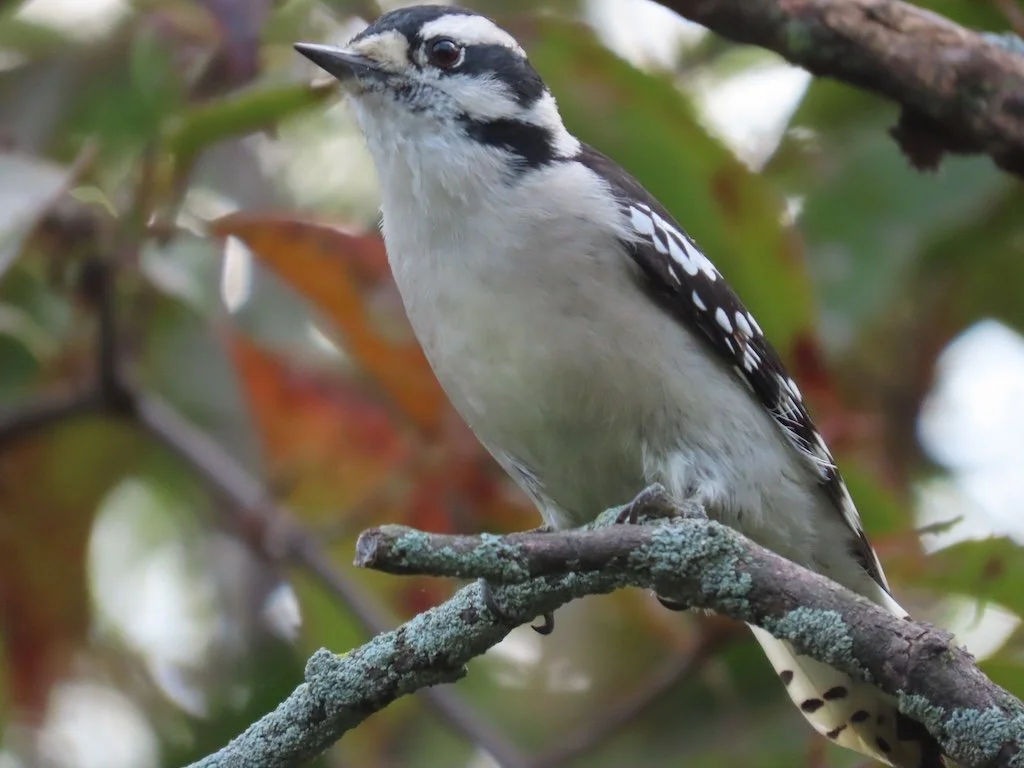
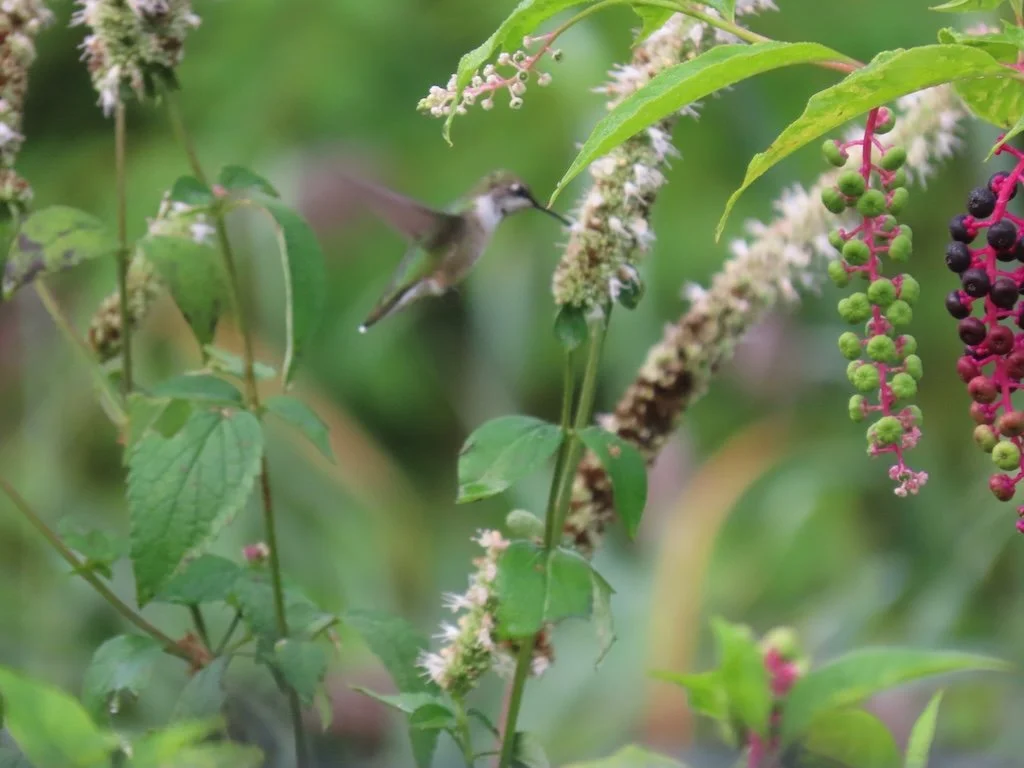
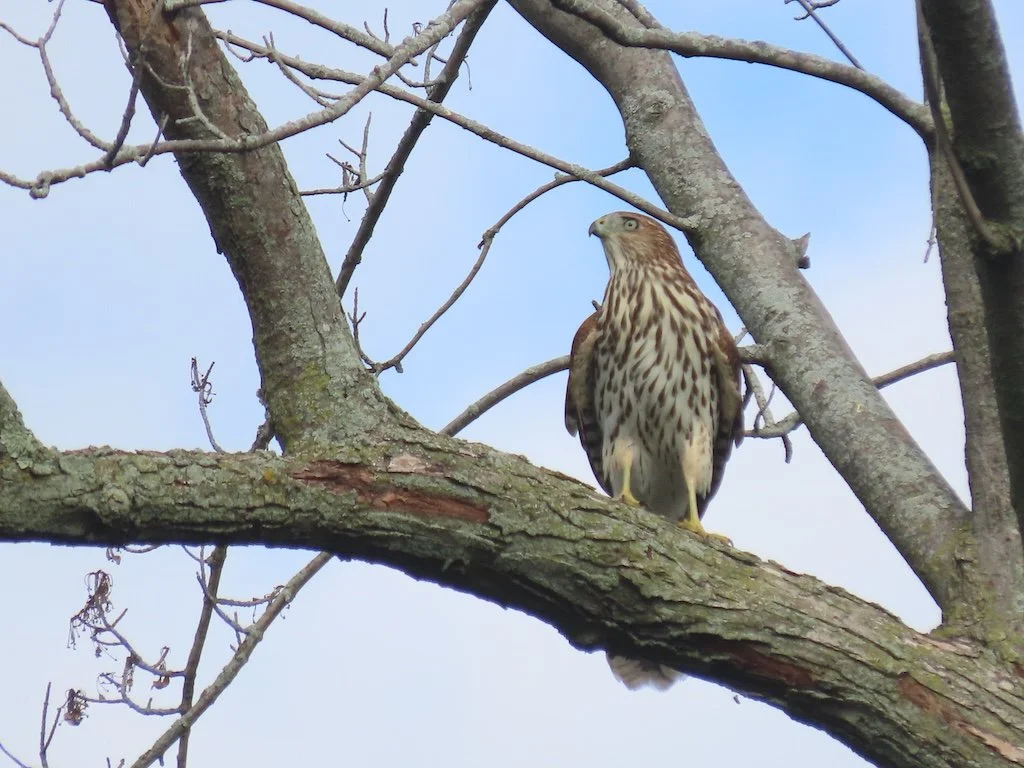
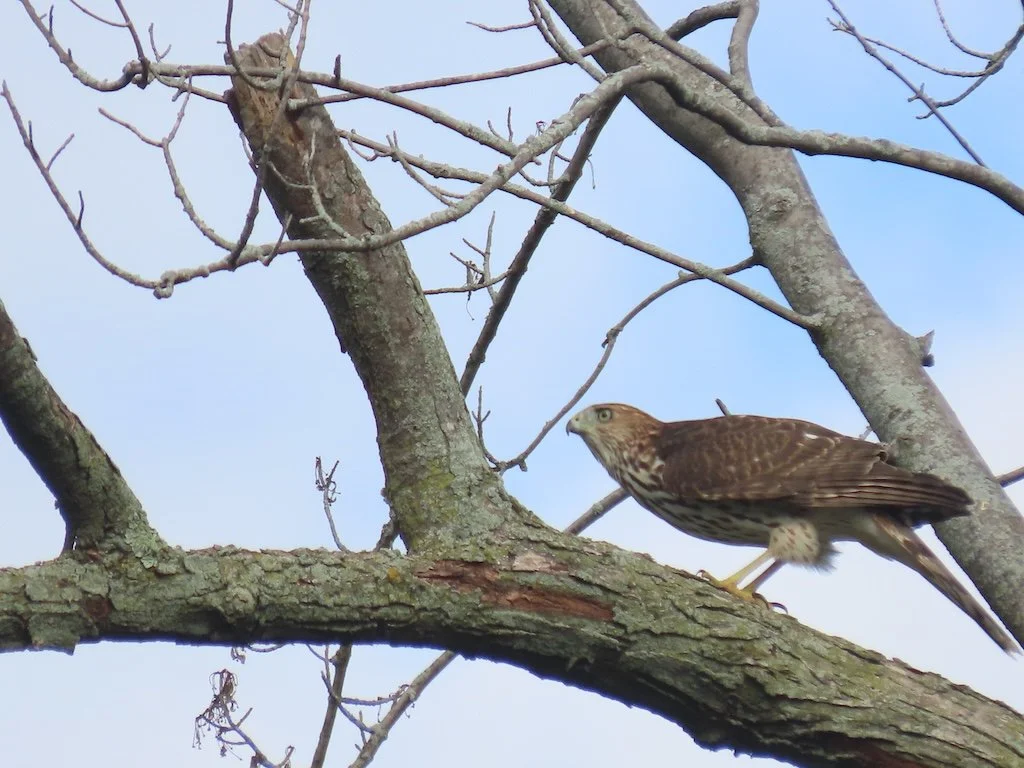
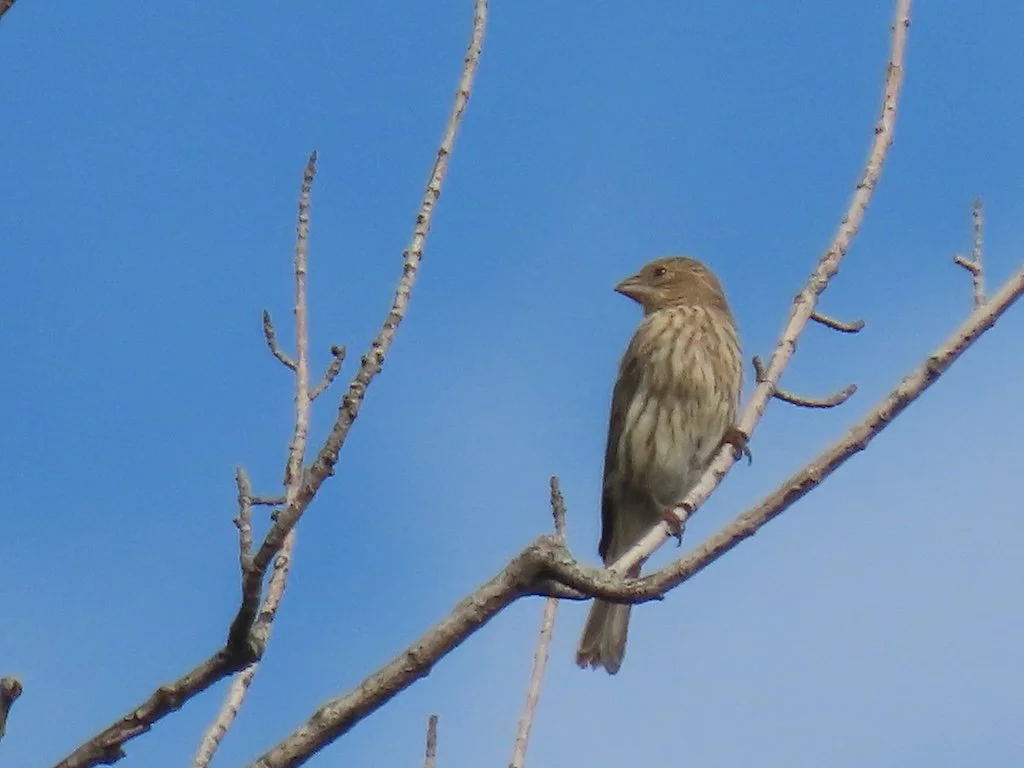
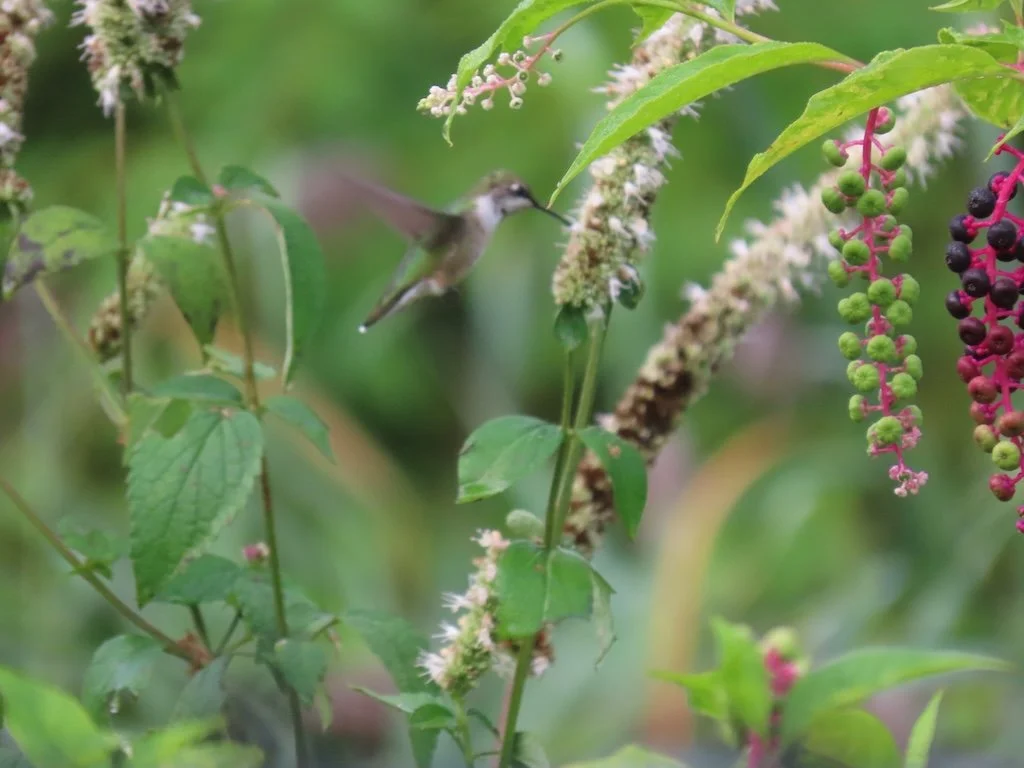
There were plenty of birds – including flickers, red-headed woodpeckers, Copper’s hawks (which scattered all the other birds when they were about), downy woodpecker, hummingbirds, and goldfinches.

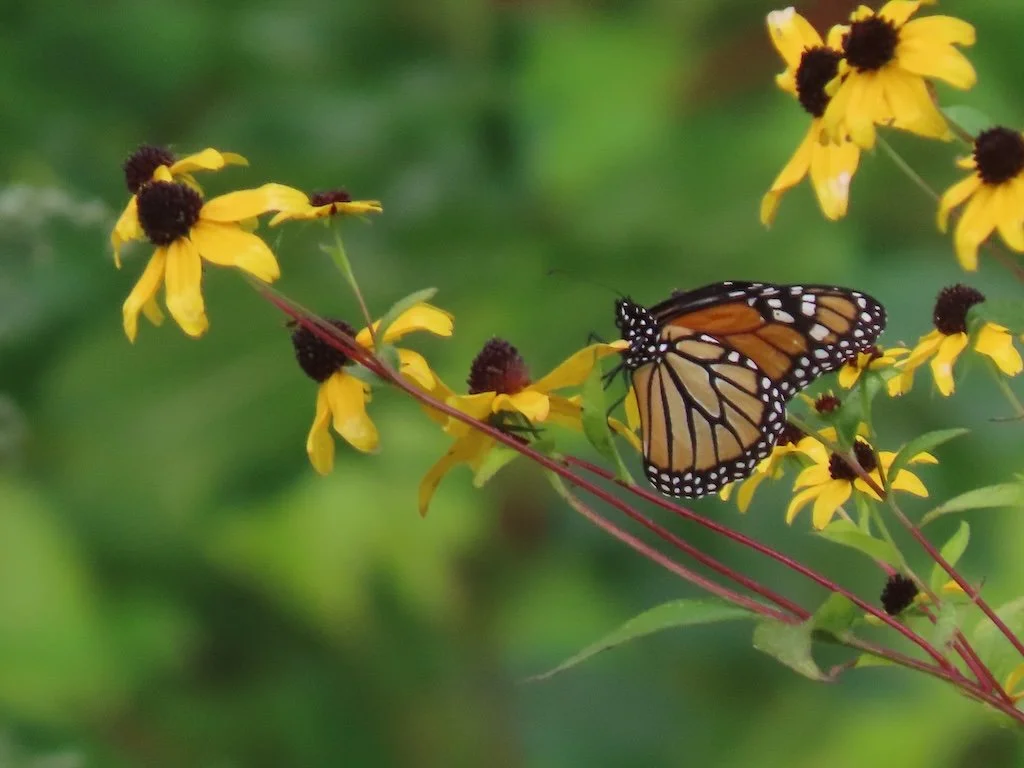
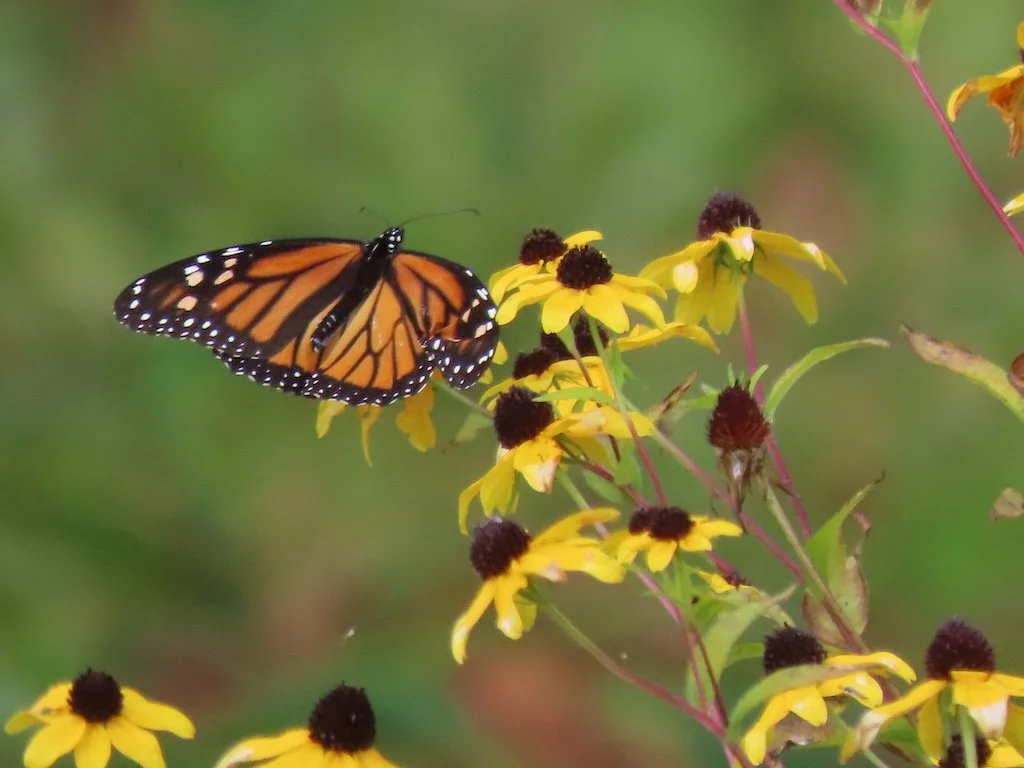
There were monarch butterflies feeding and resting…before they continued their migration south.

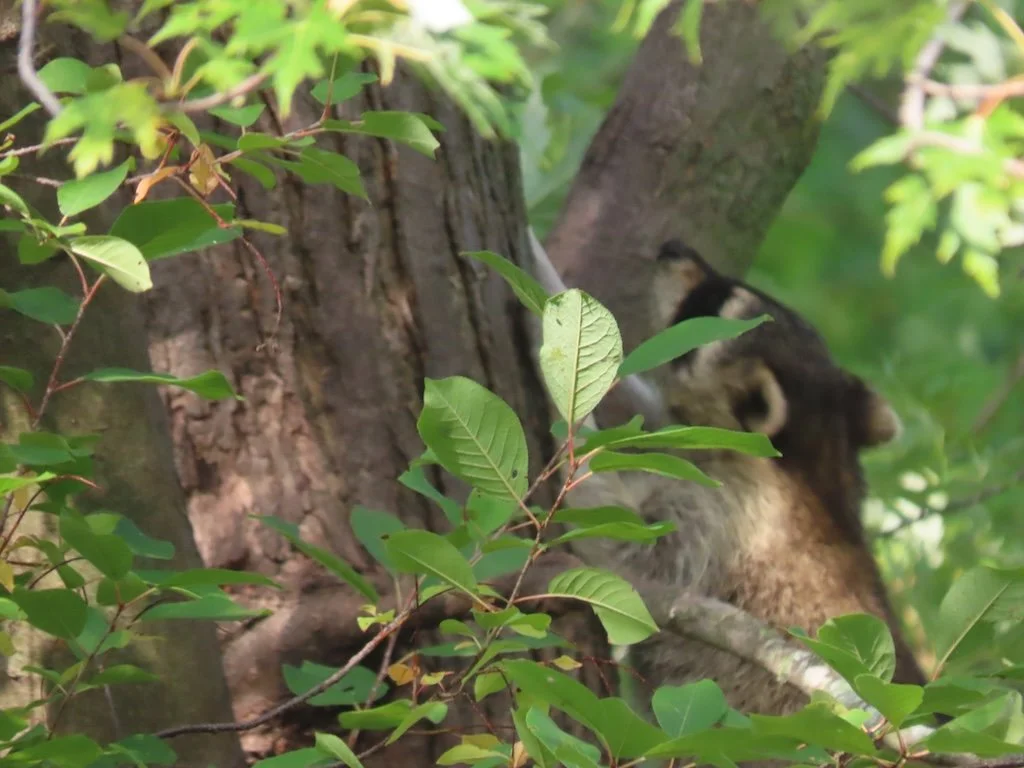
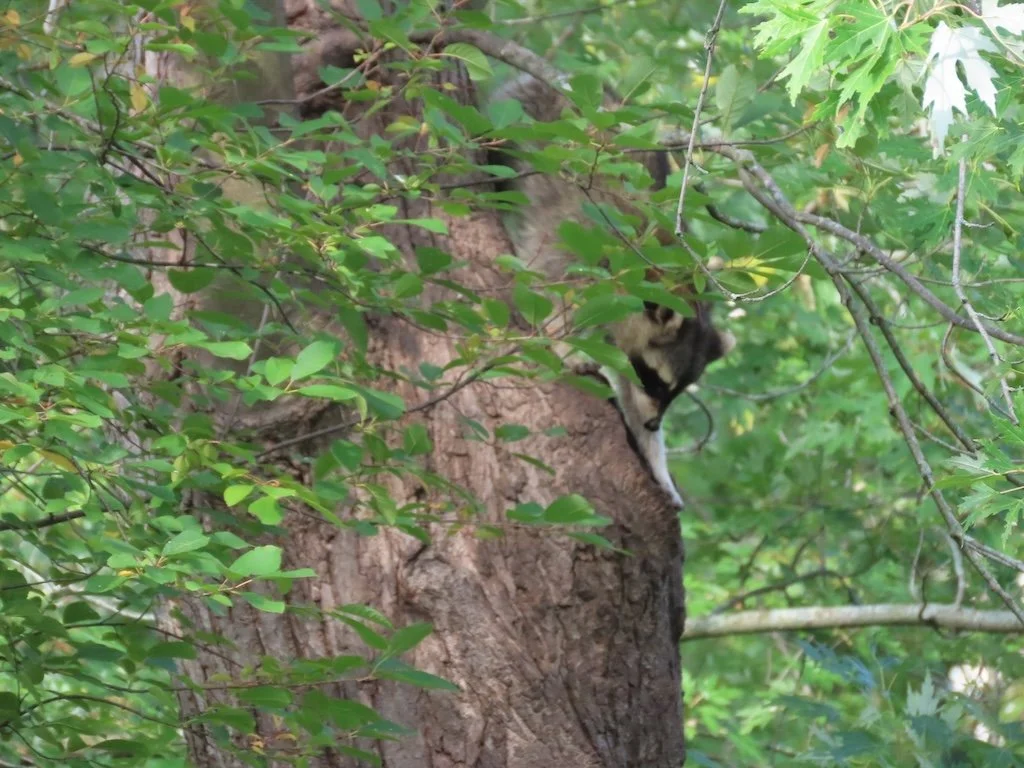
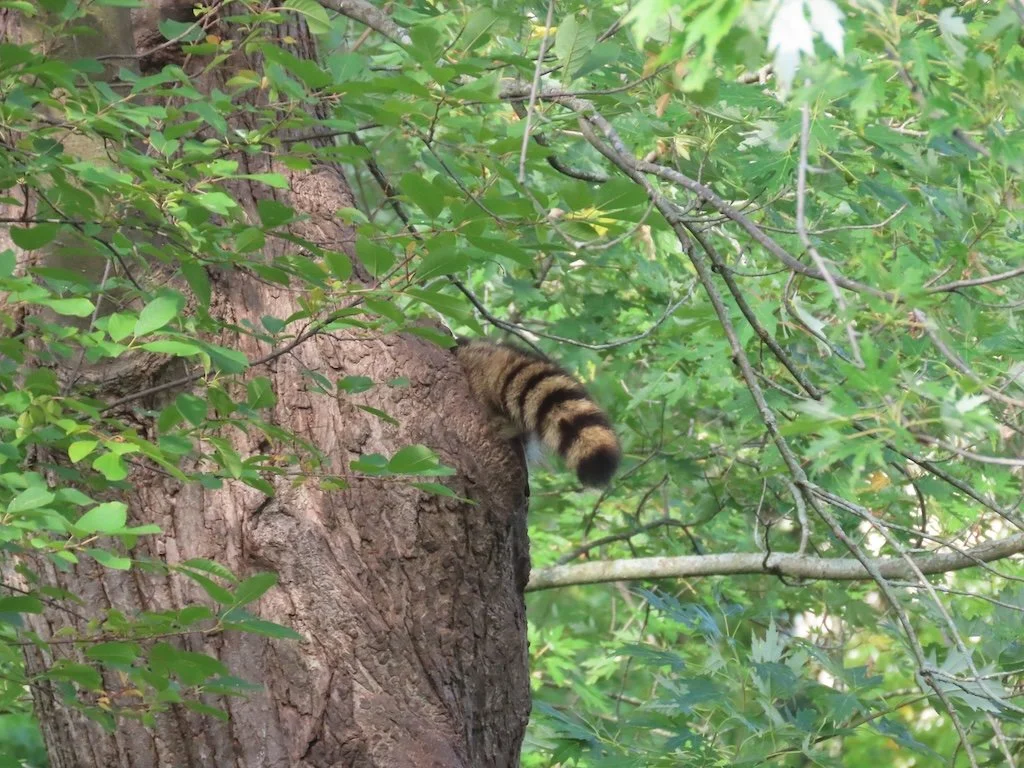
A racoon made an appearance…climbing a tree then coming back down and disappearing into what must have been a hole on the other side of the trunk!

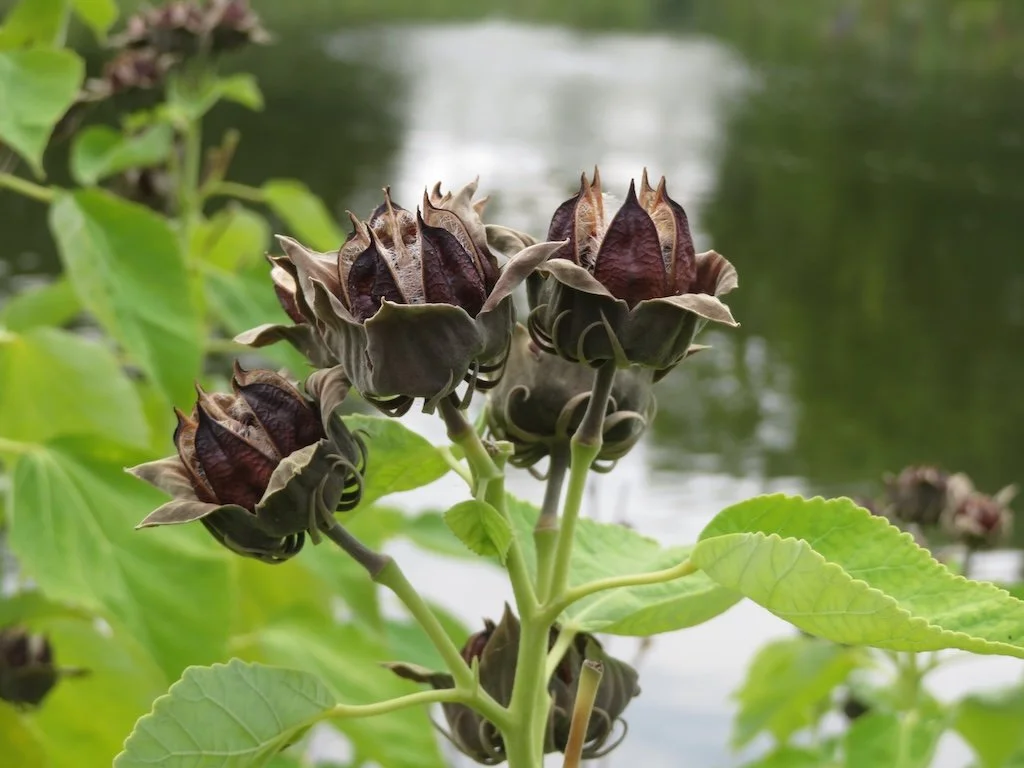
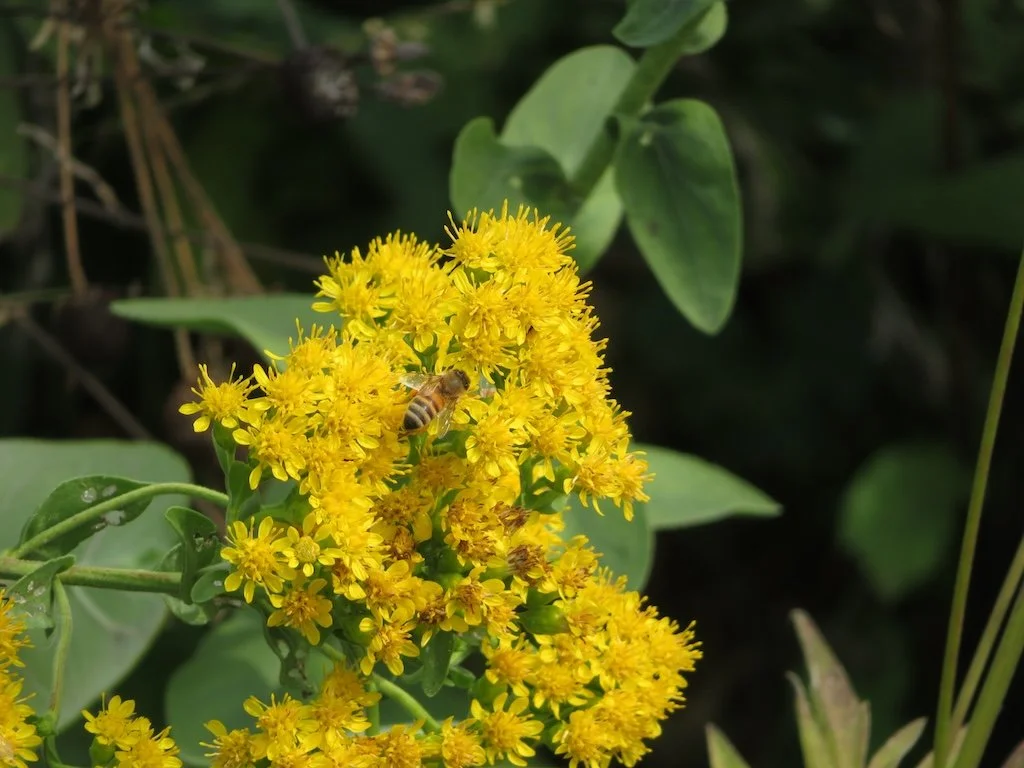
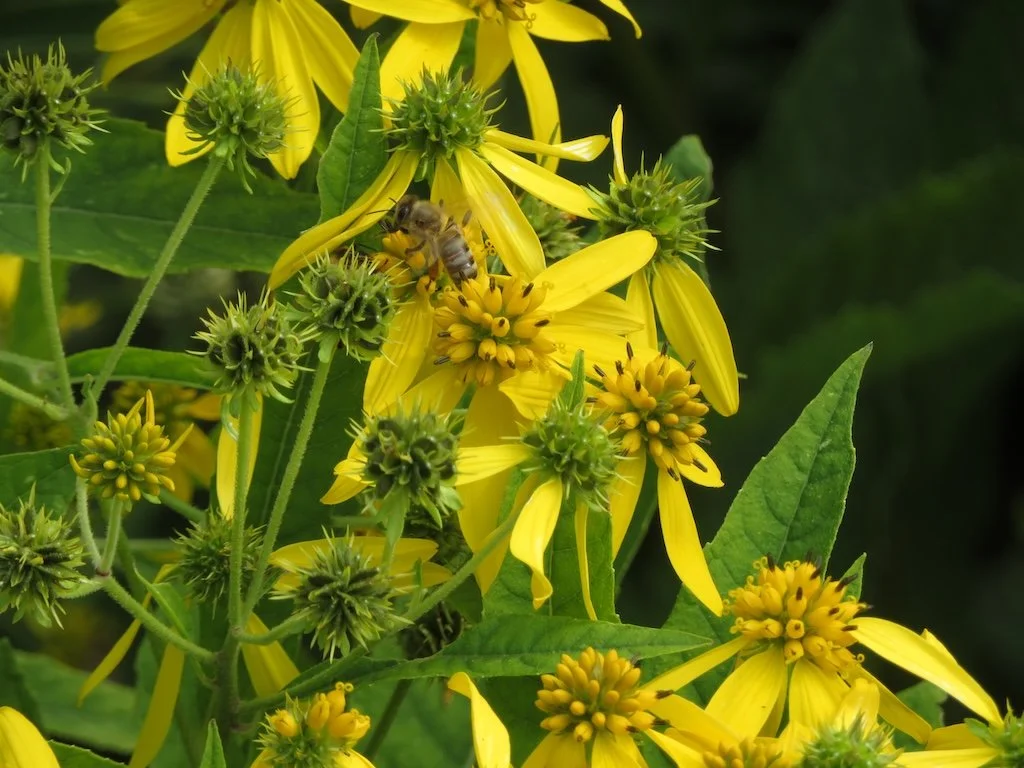
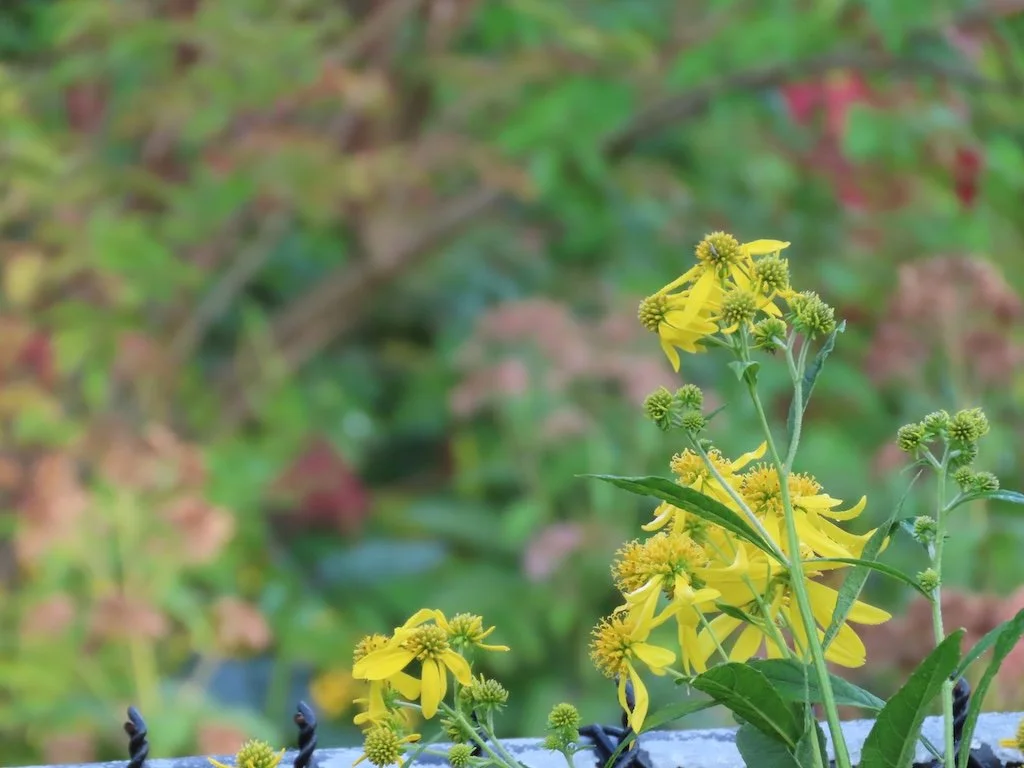
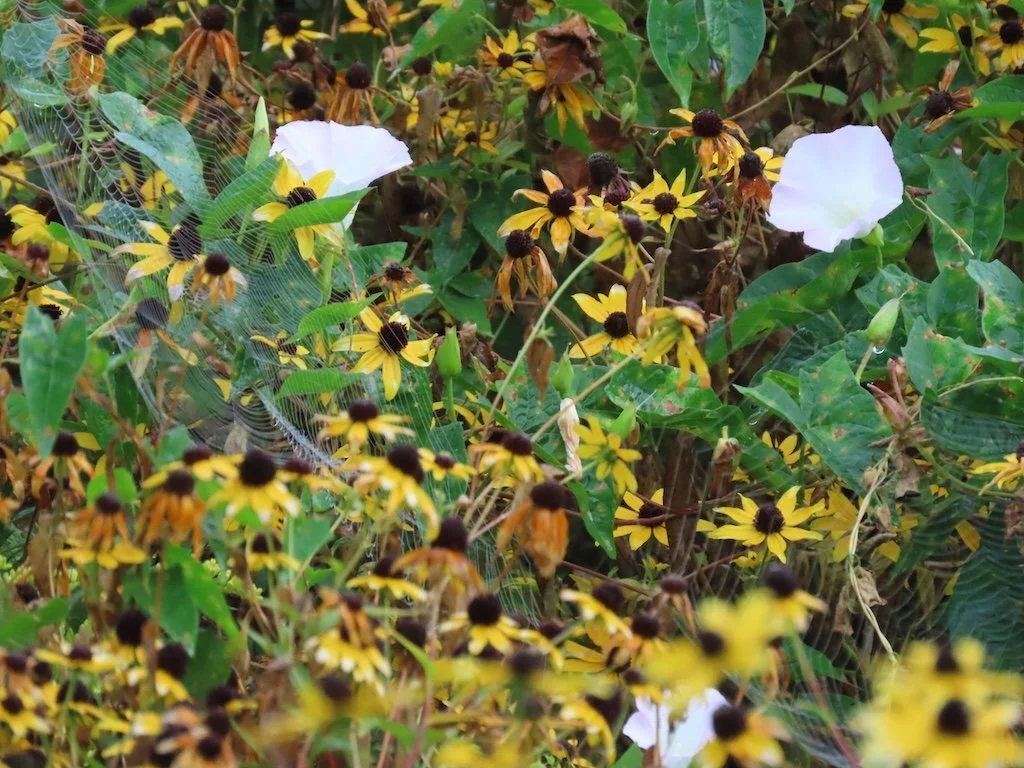
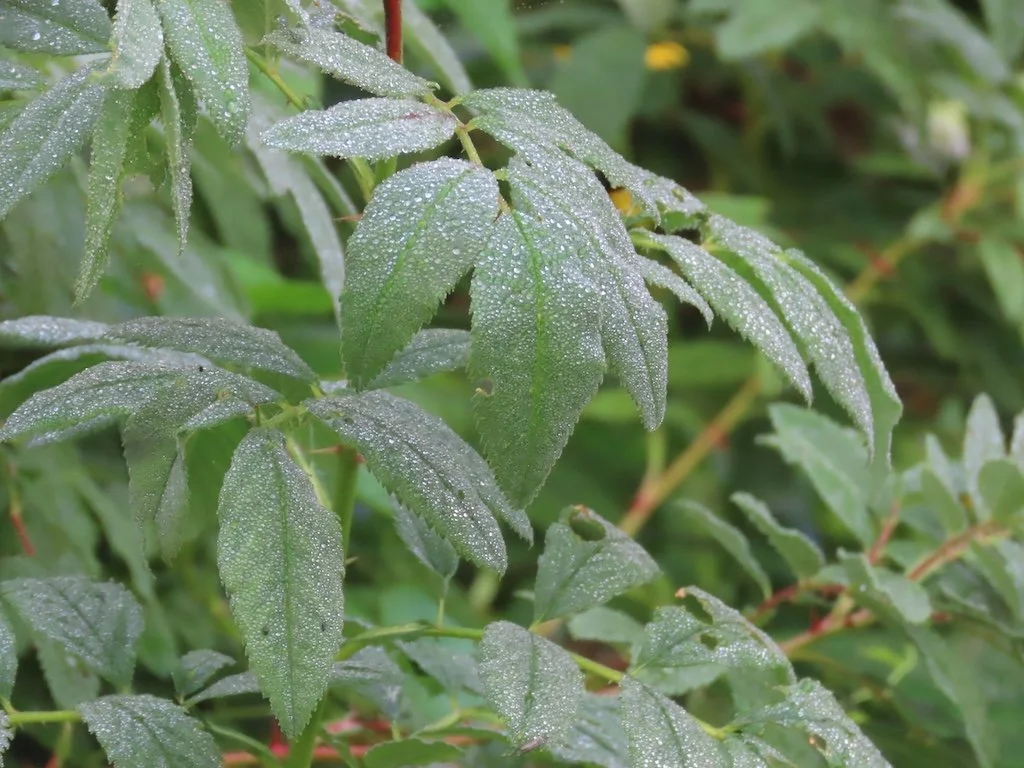
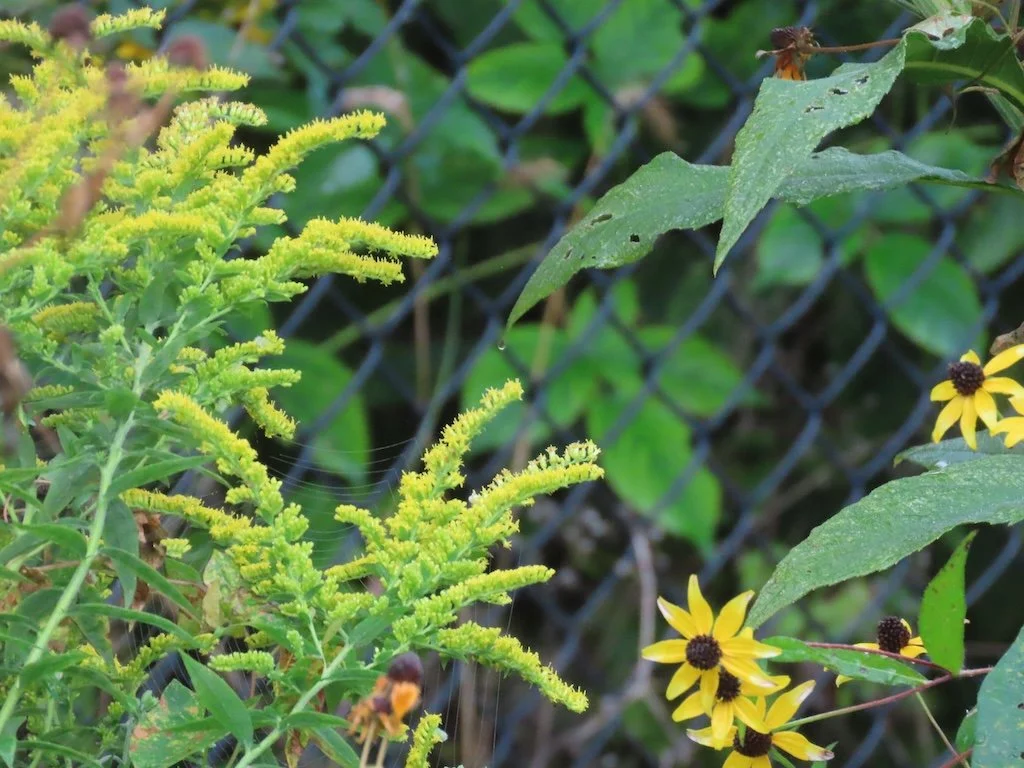
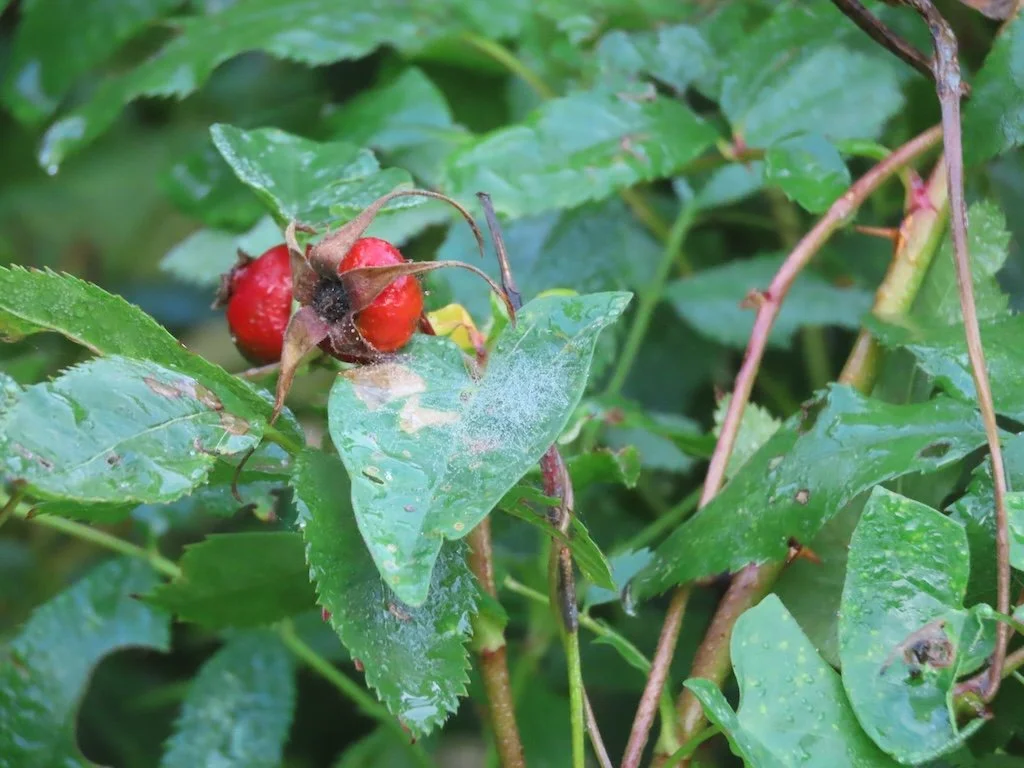
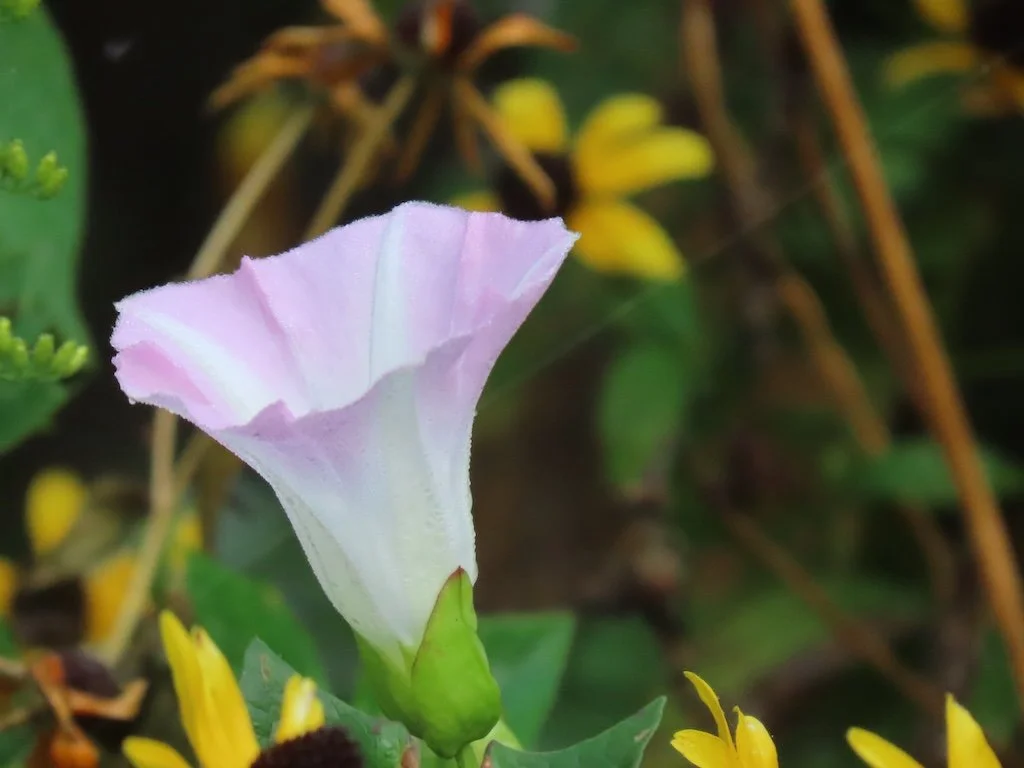
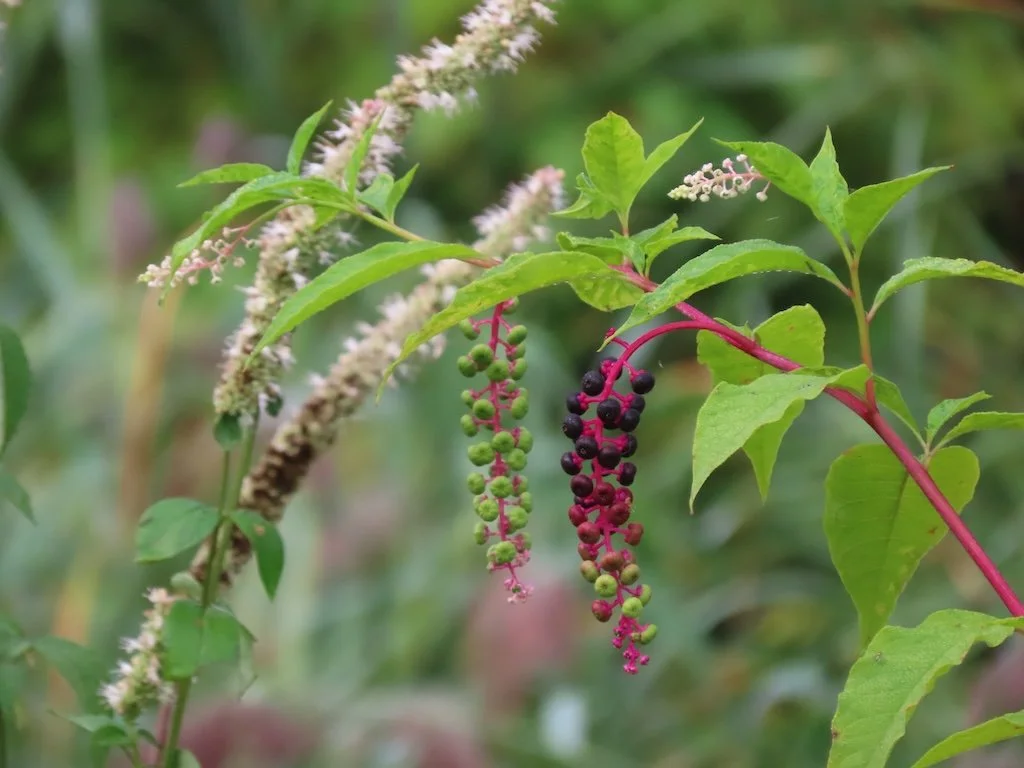
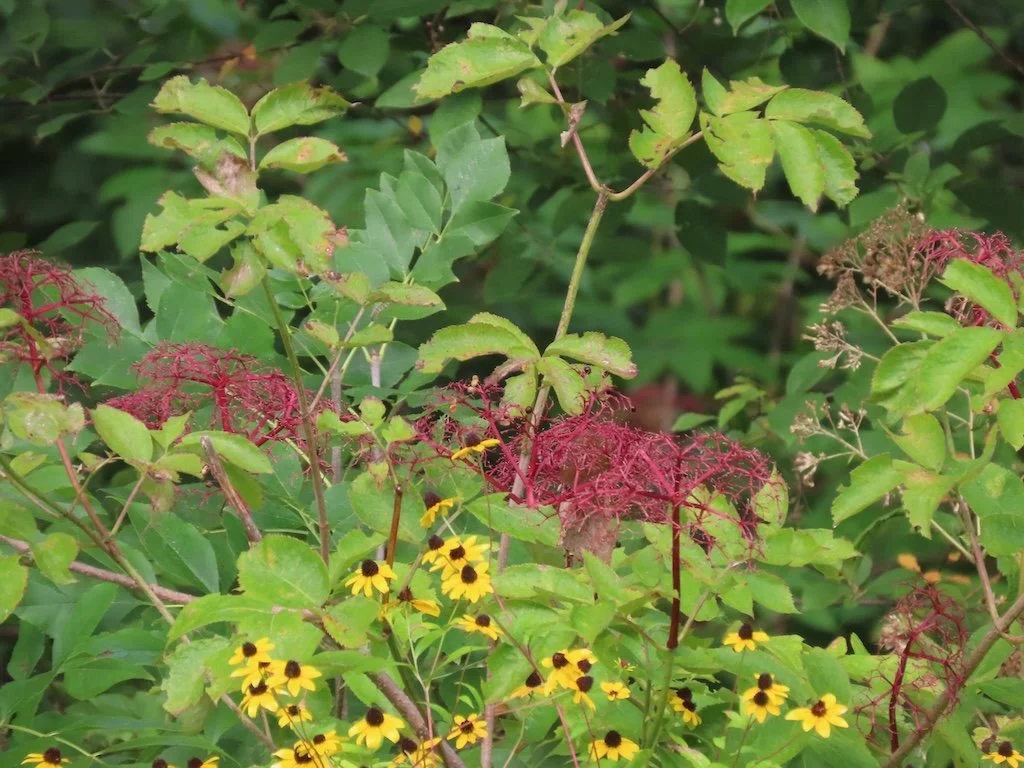
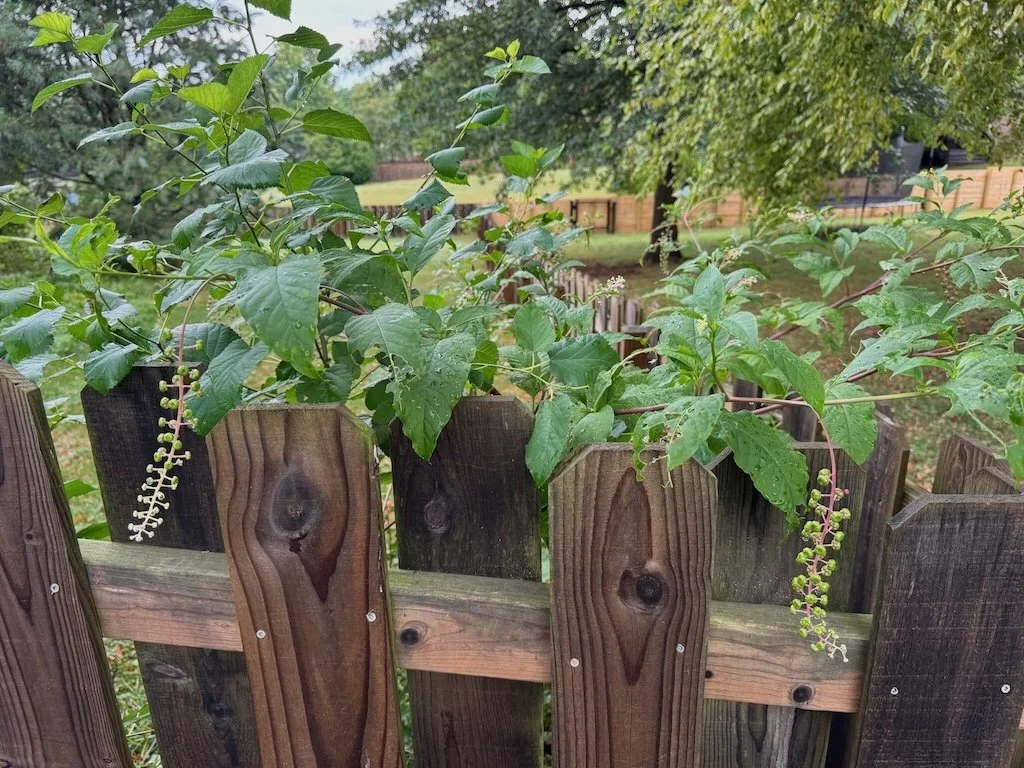
Of course, there was a lot of vegetation to look at when the birds were not active enough. The humidity was high so there was moisture on a lot of the leaves. The usual fall color was there – golden rod and pokeweed included!

To and From Chicago

My husband and I signed up for an Urban Birding Festival in Chicago earlier this month. I’ll be doing a series of posts about it over the next week. This post is about our drive to and from the city; as usual my husband did all the driving.

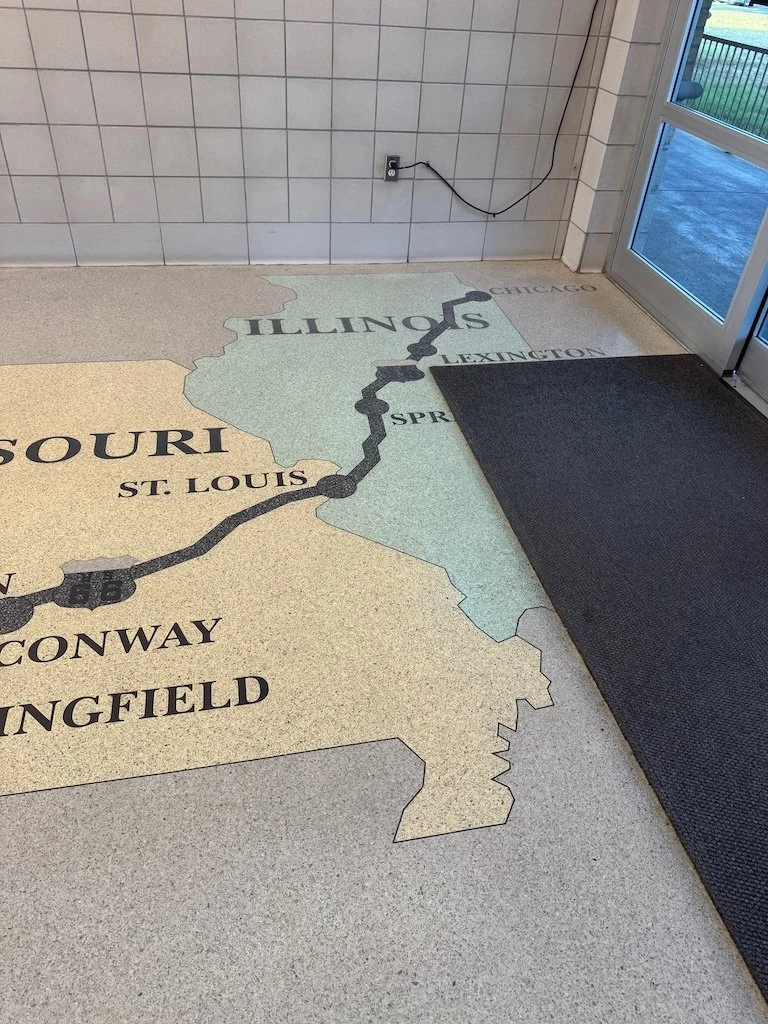
We made frequent rest stops along the way. At our first one I realized that the route from Springfield MO to Chicago via Route 66 was depicted on floor! The Interstate route of today is likely a bit straighter that the old route…and the speed we traveled was probably higher too.

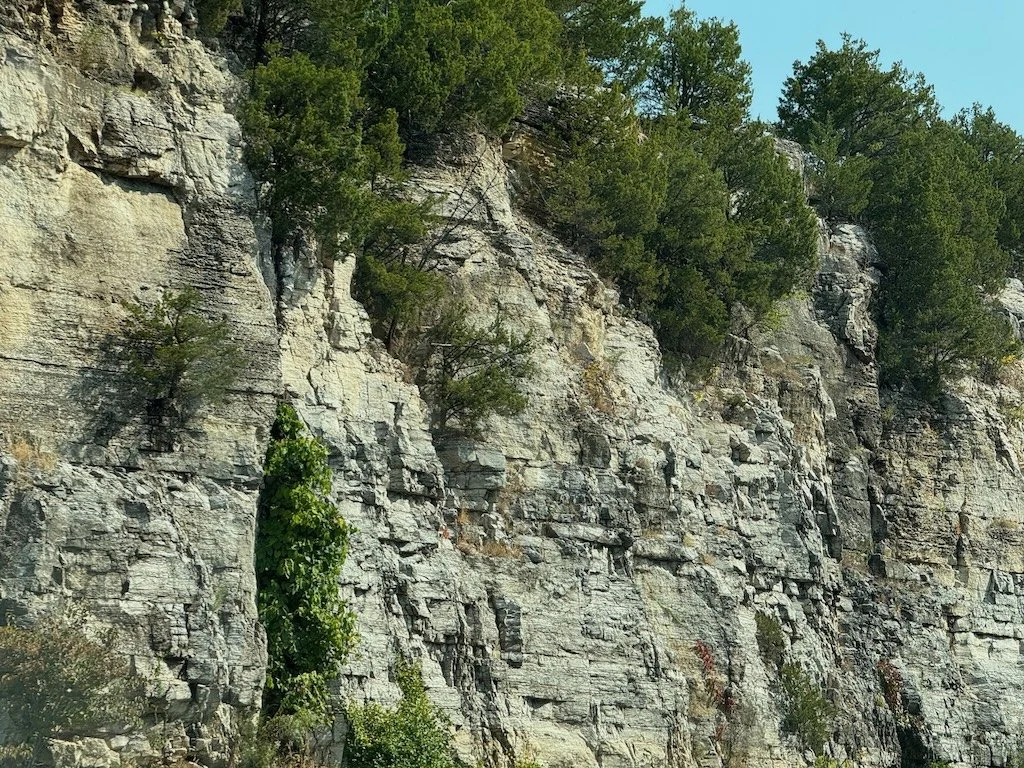
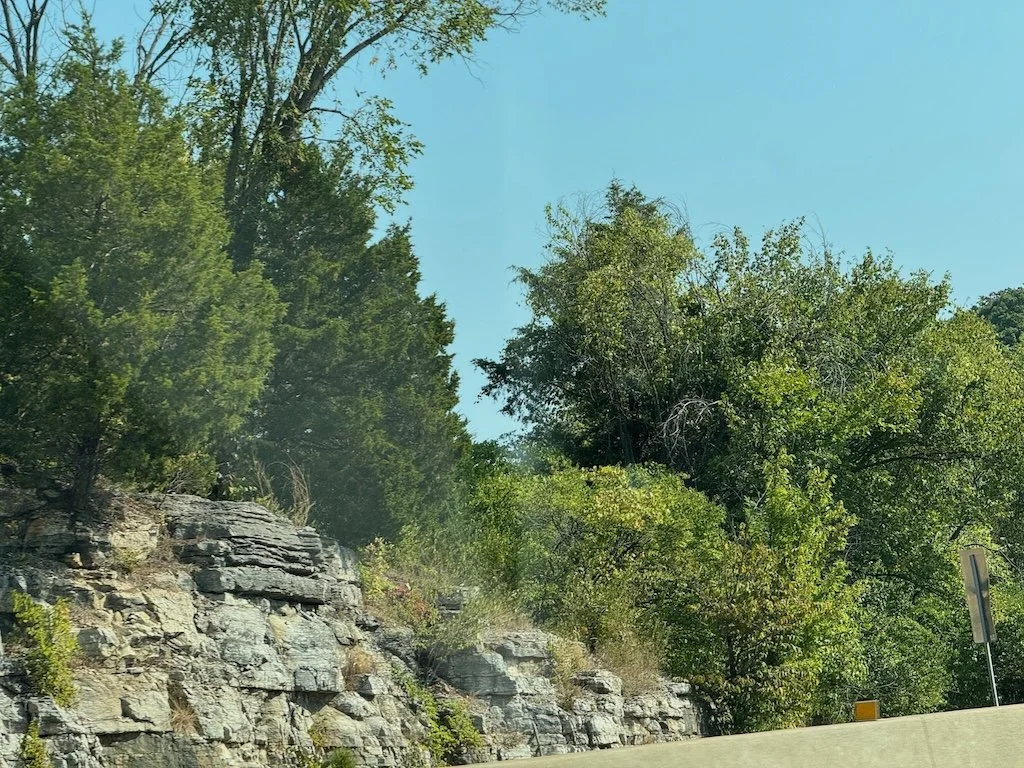
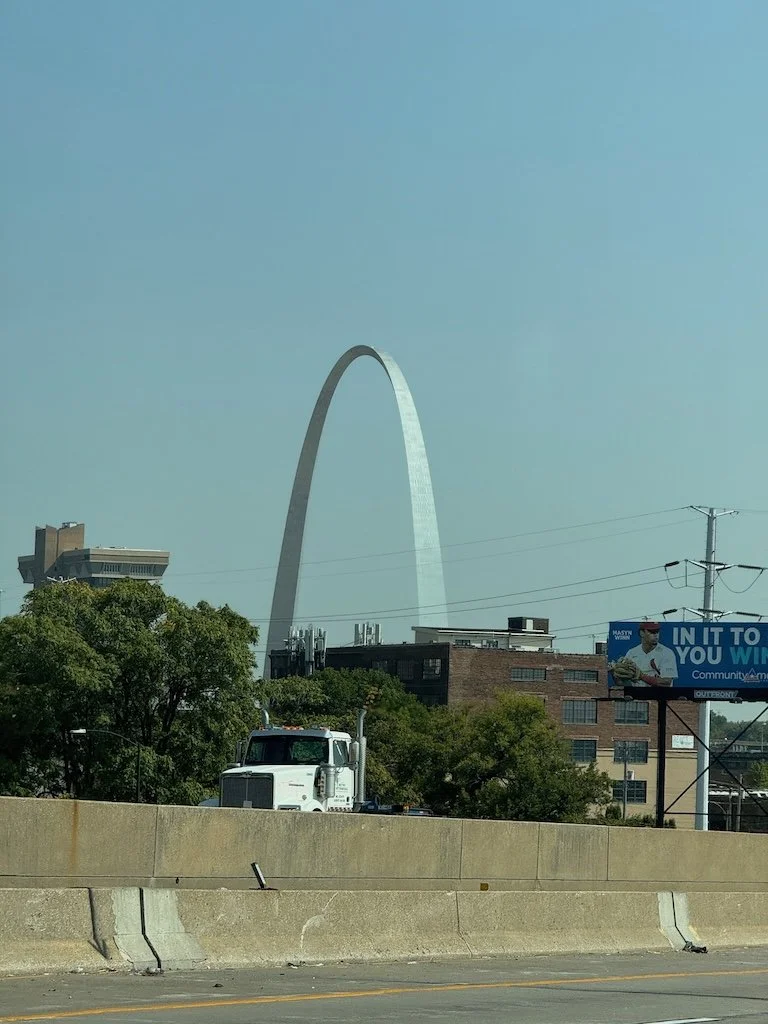
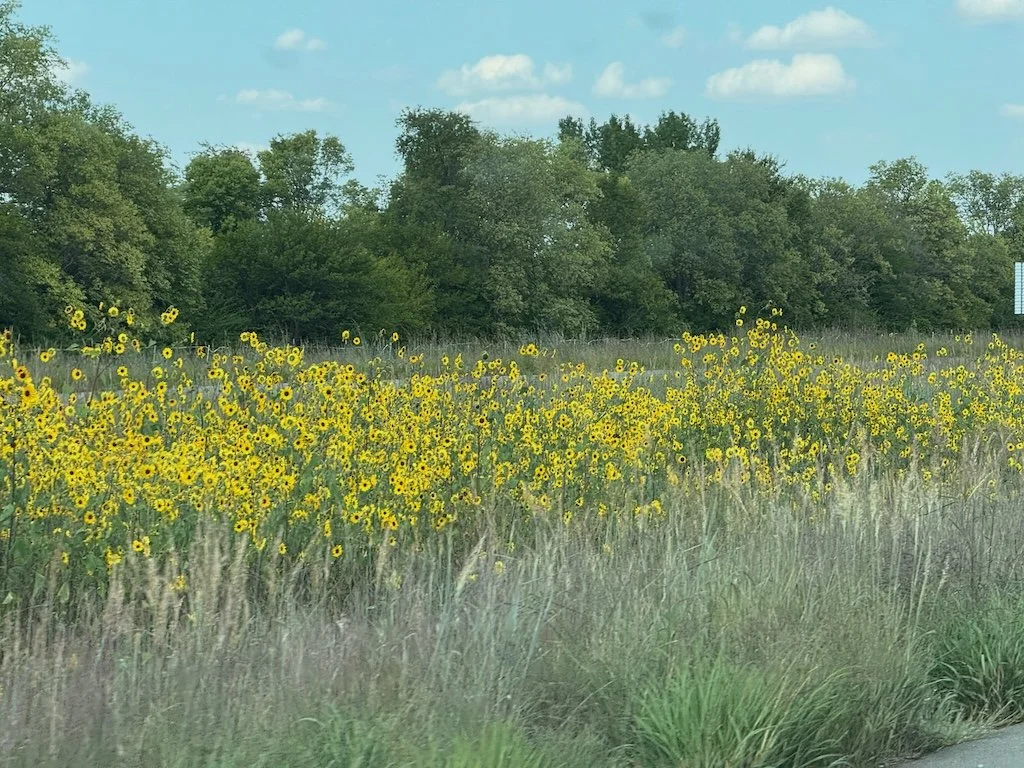
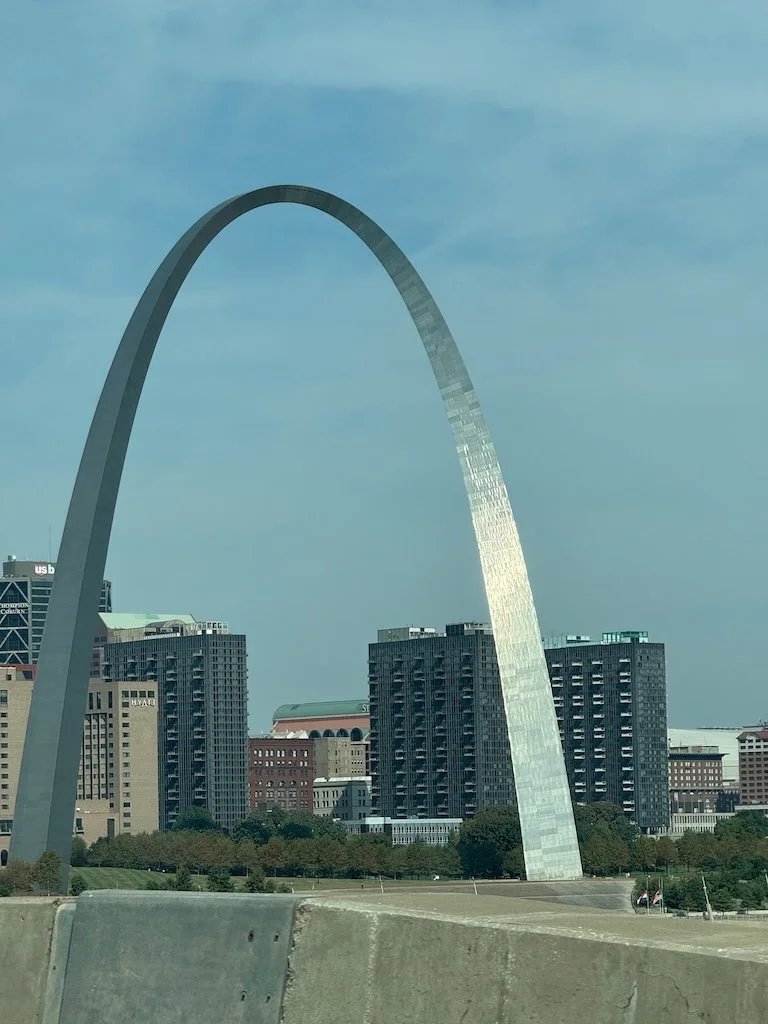
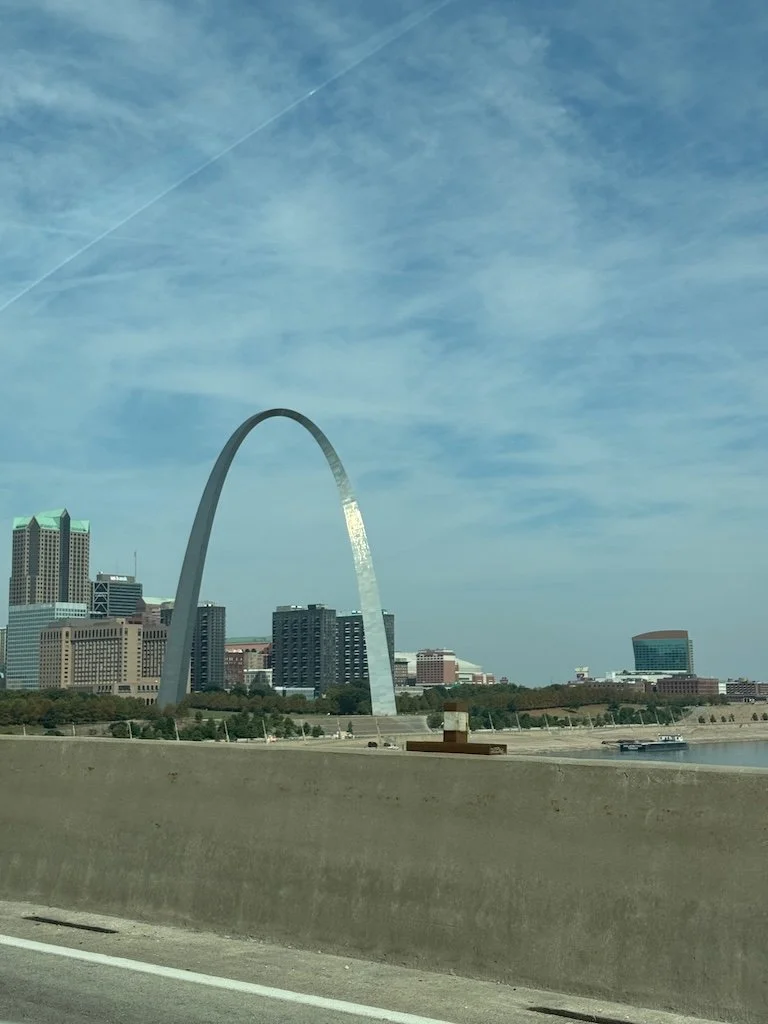
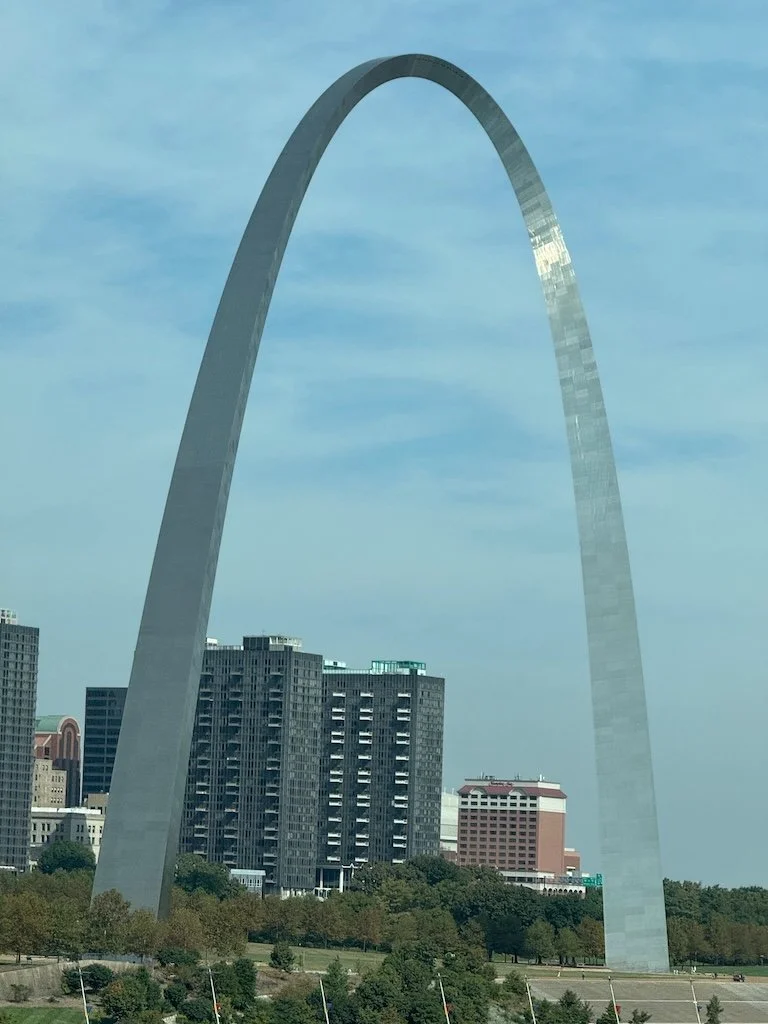
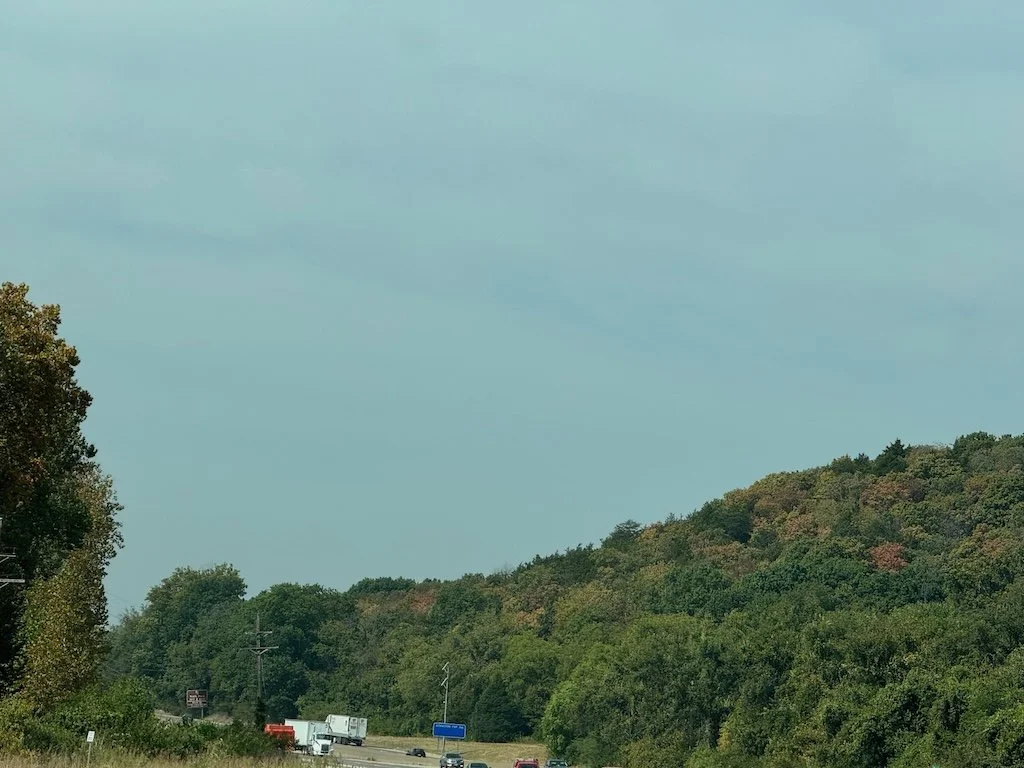
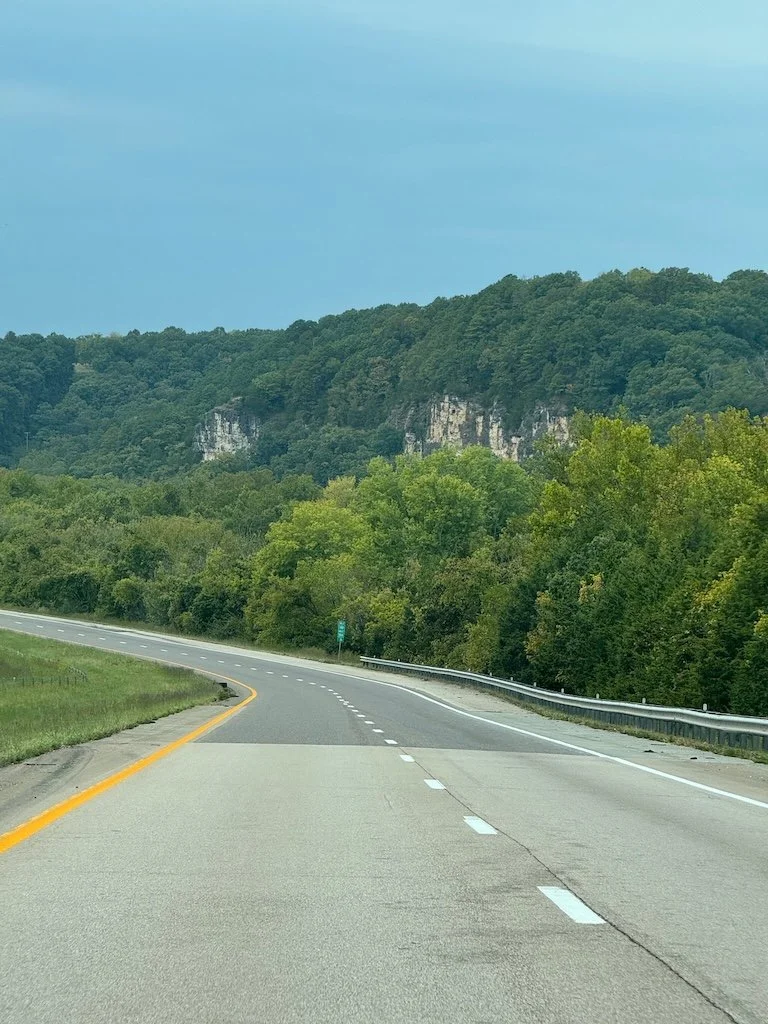
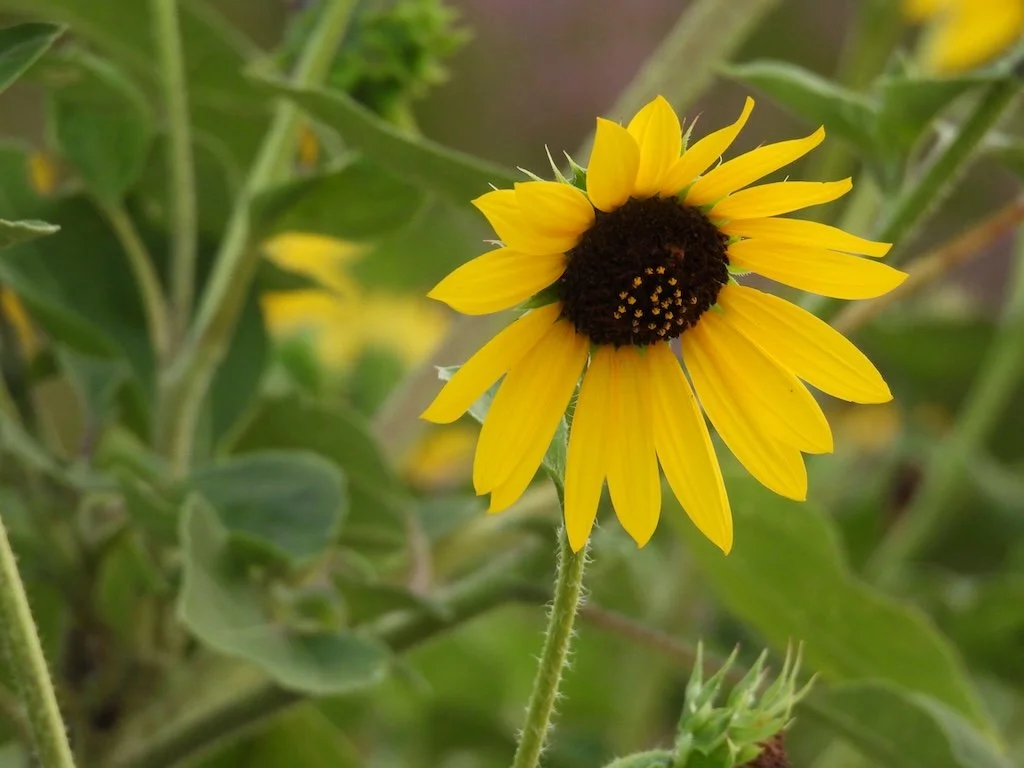
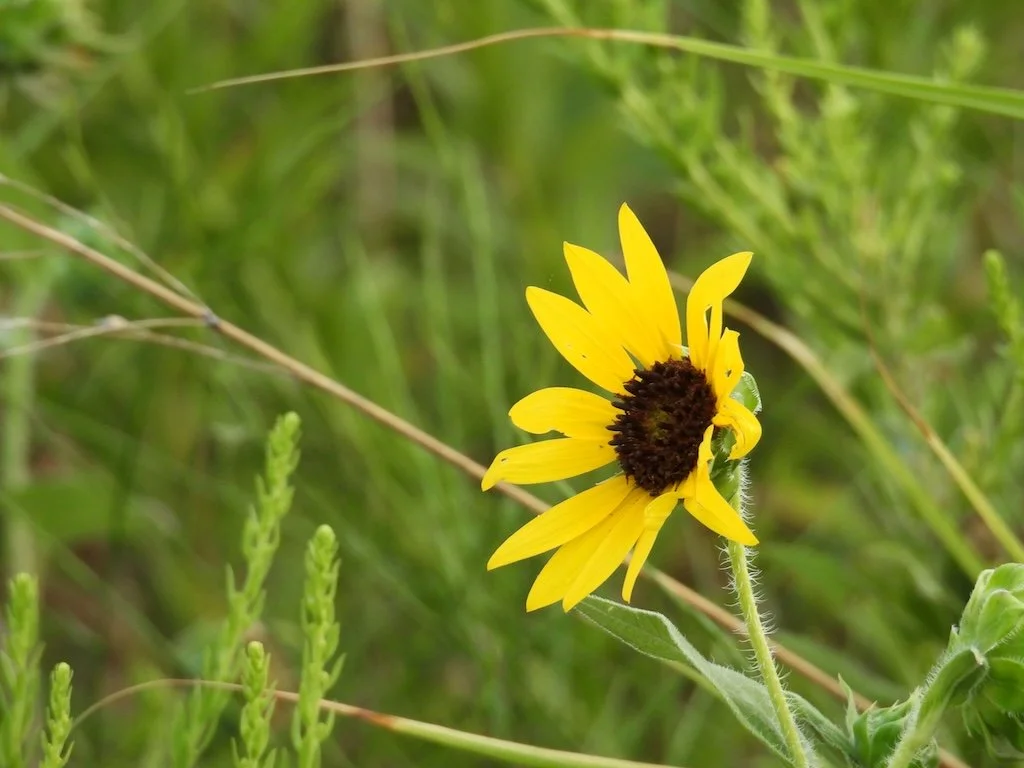
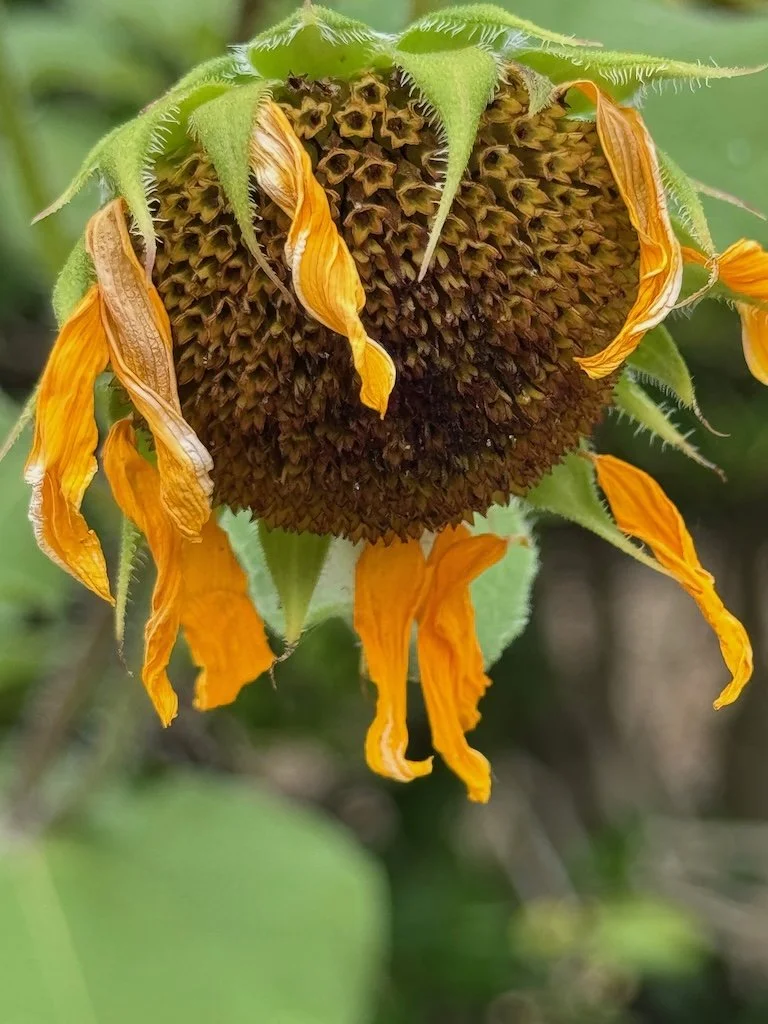
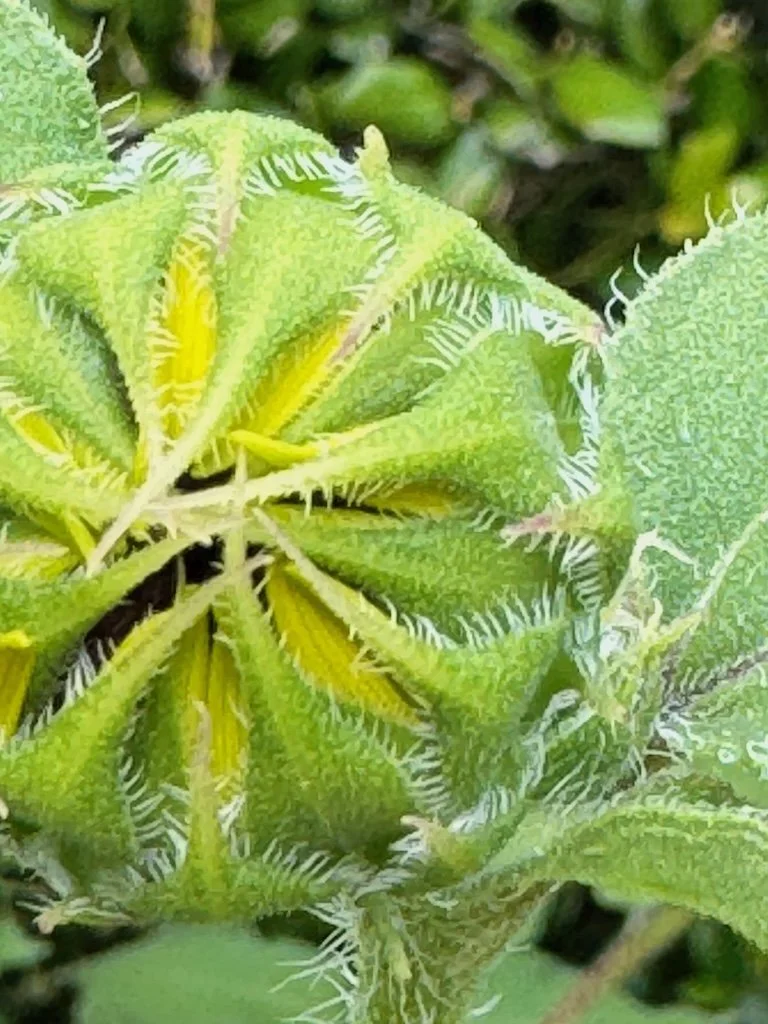
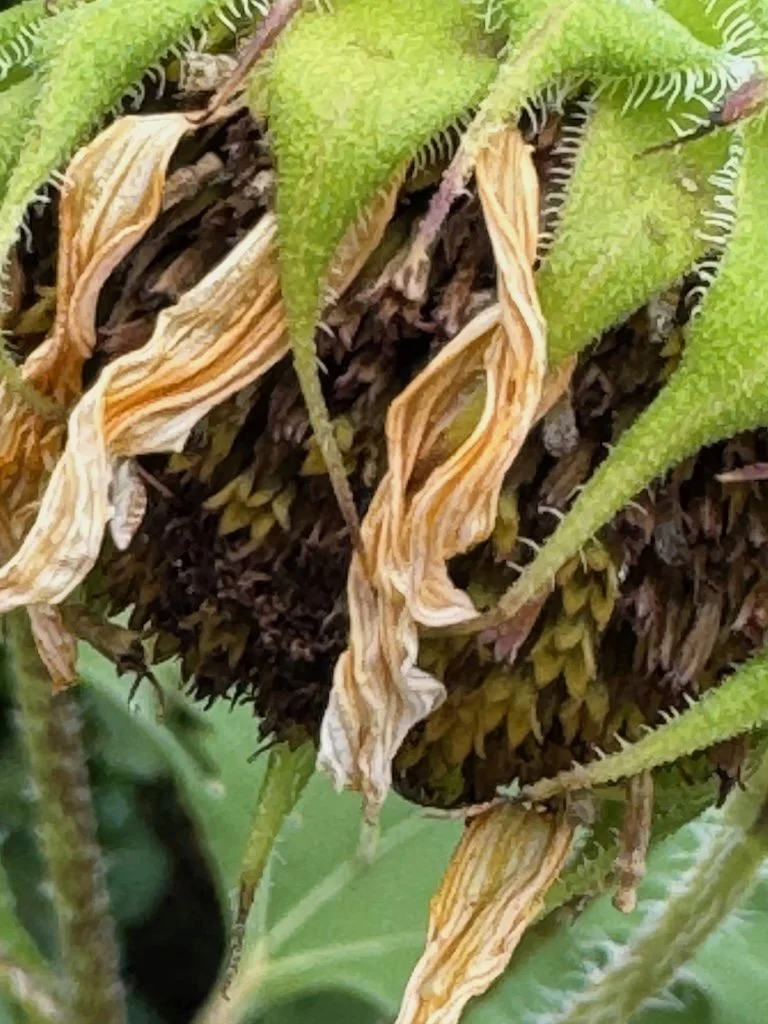
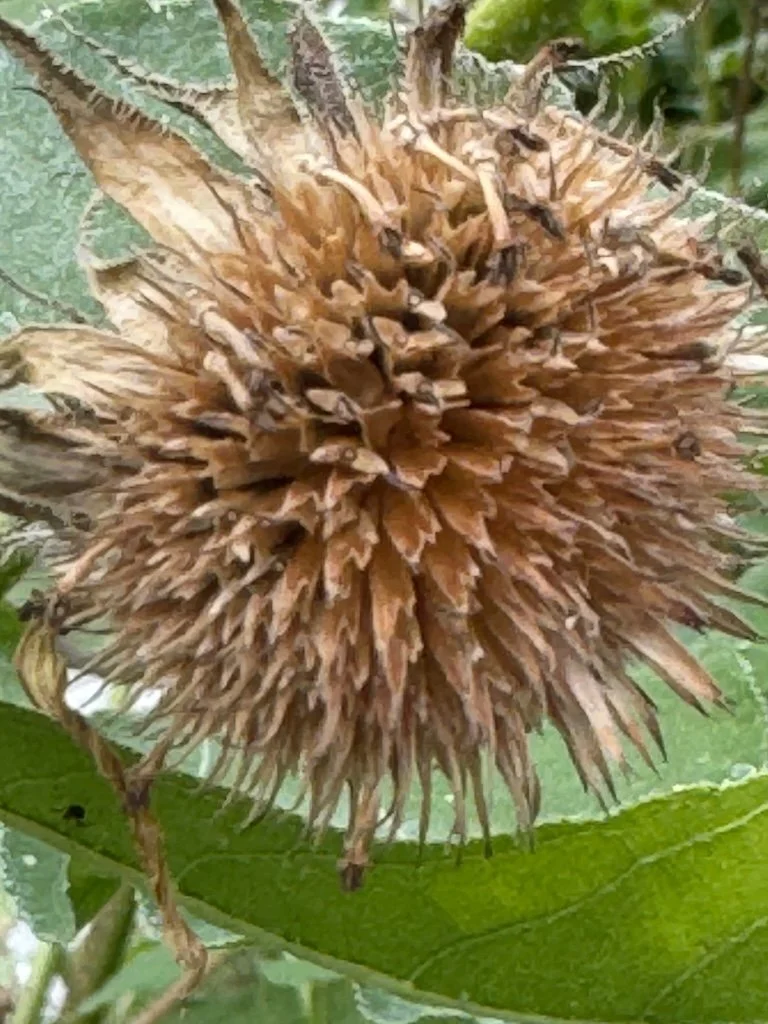
I took pictures as we drove – road cuts in Missouri, the arch in St. Louis just before we crossed the Mississippi River, and sunflowers in Illinois.

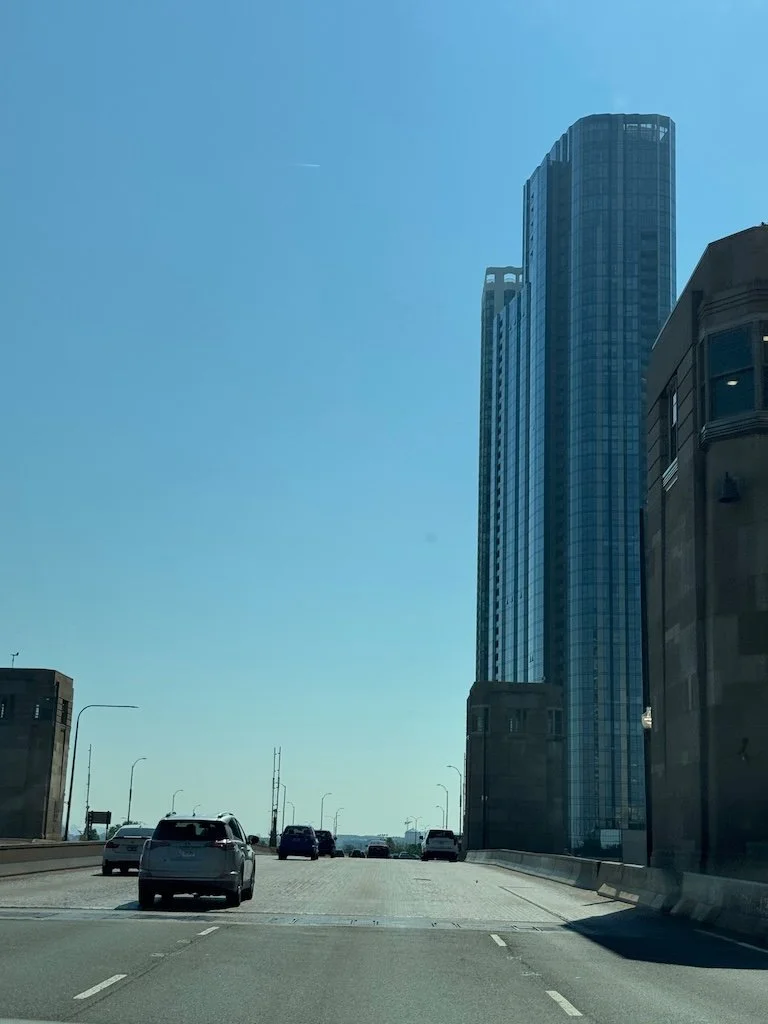
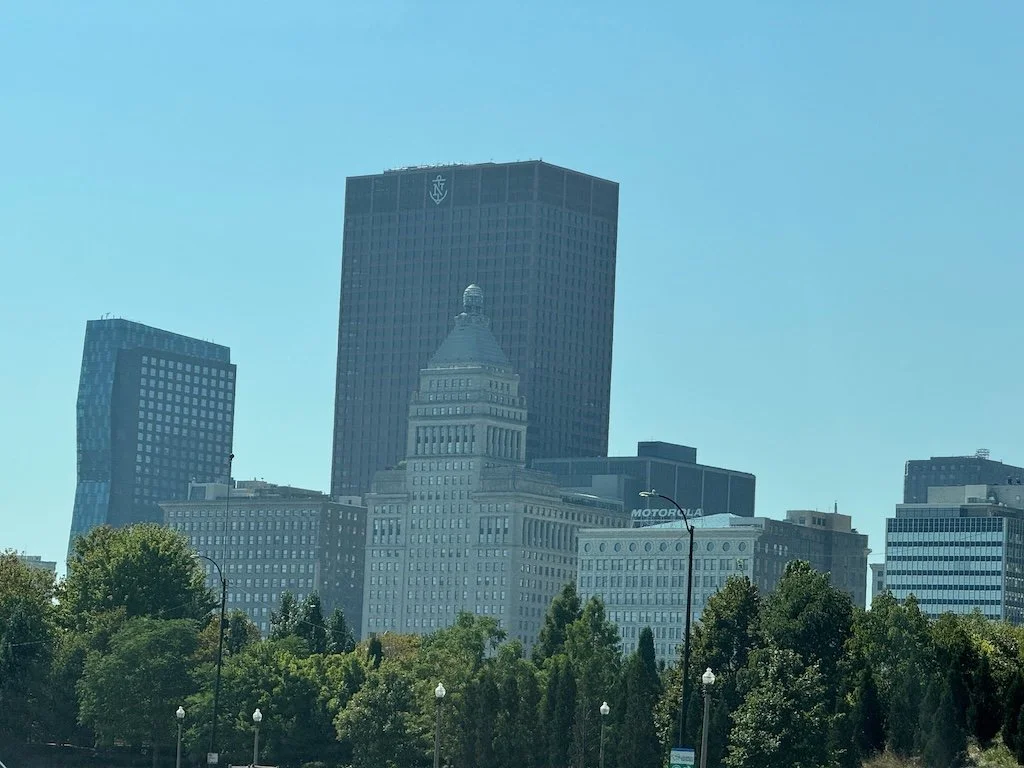
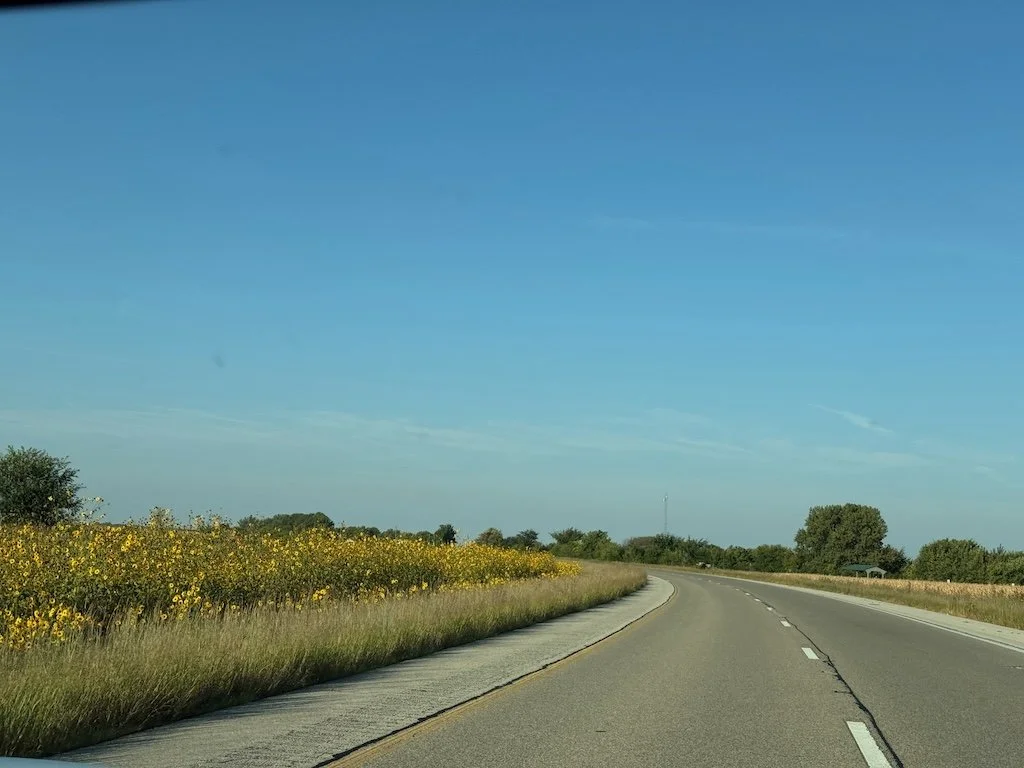
At the end of our trip, I took a few pictures as we left the city…and of sunflowers along the roadside. I like that Illinois encourages sunflowers in the medians by only mowing the edges (and not mowing too frequently even at the edge). The farmland appeared to be mostly planted in soybeans and corn.

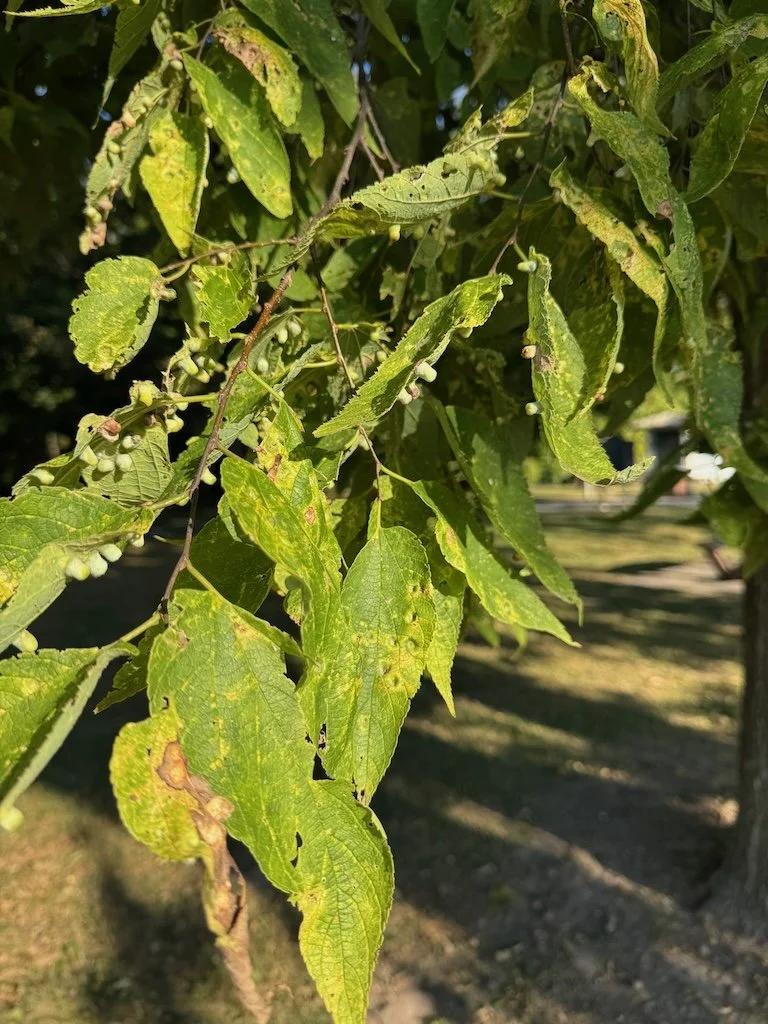
At the last rest stop in Illinois, I recognized a hackberry – it was full of galls produced by insects as most hackberries are.

And then I photographed the arch and bridges as we crossed the Mississippi River into St. Louis.

There was a little fall color in the forests west of St. Louis…and the bluffs always make for added interest.

We got home easily; our three cats were a great welcoming committee.

Gleanings of the Week Ending September 13, 2025

The items below were ‘the cream’ of the articles and websites I found this past week. Click on the light green text to look at the article.

Can Italy Protect Its Cultural Heritage from Naughty Tourists? - Each summer, as millions of tourists swarm into historic towns full of monuments and museums, a predictable kind of headline is sure to follow about badly behaved tourists putting cultural heritage at risk.

Bans on highly toxic pesticides could be a simple way to save lives from suicide - Pesticide poisoning is a common method of suicide in many low- to middle-income countries. Substituting highly toxic pesticides for less fatal ones can save lives. A cast study from Sri Lanka.

Federal Hurricane Forecasting Saves Lives & Money - A 5-day forecast in 2025 is roughly equivalent to a 2-day forecast in 2005, meaning lead times and path estimates have significantly improved, to the tune of 50% in the past 20 years. This helps save lives and has also led to an estimated 2 billion dollars in savings per storm. NOAA’s research arm, the Office of Oceanic and Atmospheric Research (OAR), houses not only the laboratories that help improve predictions, but much of the monitoring and observation infrastructure — like ocean buoys and gliders — that feed real time data into hurricane models, improving their accuracy and saving lives. The U.S. fully relies upon NOAA for our hurricane forecasts, including sea level rise and flooding. There is no other body ready or funded to pick up that work. The President’s budget proposed completely eliminating the research arm of NOAA.

Bison Benefits - A new study out this past week explains why bison are more beneficial for grasslands than traditional livestock, and the benefits increase as herd size does. A podcast from National Parks Traveler.

4 Reasons to Choose Plastic Free, All Natural Fibers Over Synthetic Fibers - Manufacturers give our fabrics trade names, so even when we look at the fiber content label inside our clothing, it isn’t clear that it is made from plastic. Buying clothing that is made from natural fibers is the fastest and safest way to save our planet.

An Explosive Beginning for Lake Bosumtwi - Bosumtwi’s exotic geology has drawn attention to the crater for economic reasons as well. When the asteroid struck, the shockwave fractured the crust around the crater, creating an extensive network of faults and cracks that allowed hot fluids to circulate. The event helped concentrate gold and other minerals from a gold-bearing rock layer called the Birimian Supergroup near the surface and primed the area around the crater to become a target of small-scale gold mining.

Common painkillers like Advil and Tylenol supercharge antibiotic resistance - Researchers discovered that these drugs not only fuel bacterial resistance on their own but make it far worse when combined with antibiotics. The findings are especially troubling for aged care settings, where residents commonly take multiple medications, creating perfect conditions for resistant bacteria to thrive.

See the Rare ‘Electric Blue’ Lobster Found Off the Coast of Massachusetts – A video showing a vibrantly colored shell that results from a genetic mutation affecting pigmentation.

New Jersey Cats Caught on Camera – Bobcats caught on camera traps…and other animals in the wilds of New Jersey.

Traveling Photographer Spends 17 Years (And Counting) Documenting Indigenous Cultures – Faces and clothes from around the world.

The surprising foods that lead to better sleep - It seems that a plant-rich diet is the most beneficial for sleep, for numerous reasons – and that eating at consistent times throughout the day – for those who can – may also help.

Meadowlark – A Journal of Illinois Birds

This week’s ‘book of the week’ is 22 issues of a journal from the Illinois Ornithological Society from 2012-2022(available on Internet Archive). I enjoyed the photography and drawings of birds that are seen in the Midwest…close enough to where I live that I see at least some of them in areas of Missouri. Click on any of the images in the mosaic to see a larger version. The links to the volumes are below the mosaic; they contain additional images and interesting articles about birds seen in the state.

As I write this post, I am planning a trip to Illinois in a week or so….hoping I will see some of these birds while I am there!

Fall Vaccinations

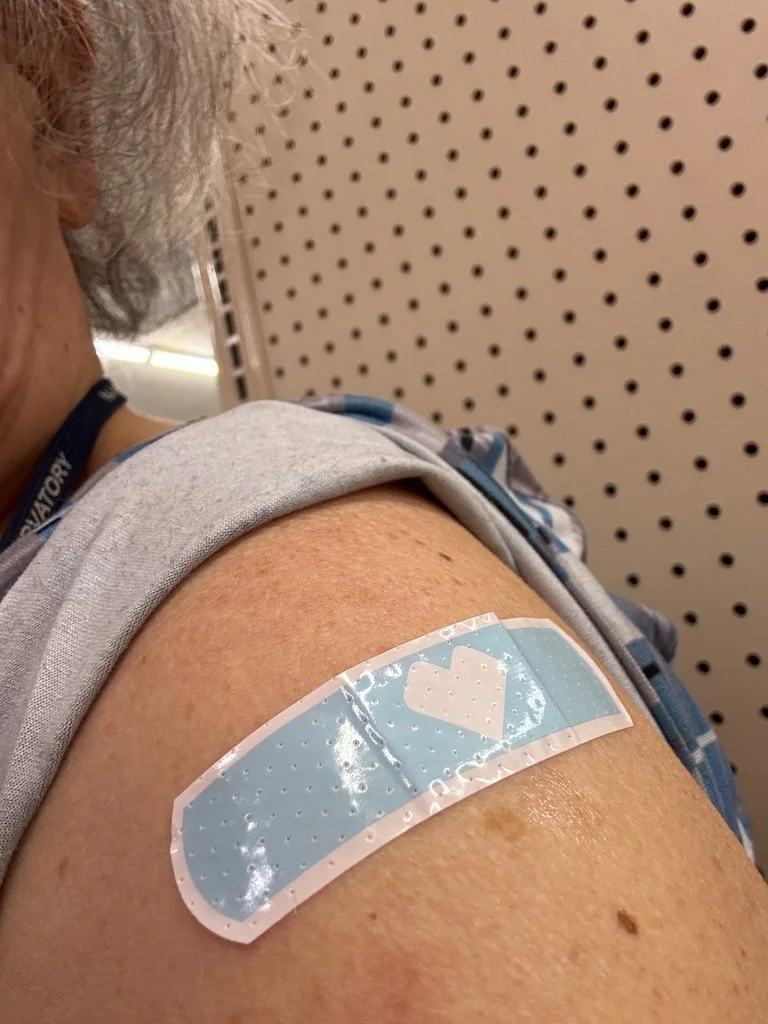
My husband and I were prompted by our pharmacy to get our flu and Covid shots…we made the appointment as soon as they had the updated Covid vaccine. We are doing some traveling this fall – being out more with other people - so we were glad to be able to get our appointment for last week.

After our appointments were made, there seemed to be a lot of stories in the media about vaccinations and how things are potentially changing in ways that might make the vaccines less available (either supply or insurance coverage or procedure to get the shots at pharmacies).

Fortunately, our appointments were almost identical to the process last fall. But I am a little anxious about the Covid booster I expect to get 6 months from now.

My sister is trying to get a COVID booster for my father. It appears that the assisted living residence is not offering them at the house with the confusion in guidance coming from the Federal level. She is going to take him to a pharmacy for the vaccination even though it will be challenging for him…as it is for many 90+ year old people.

Gleanings of the Week Ending September 6, 2025

The items below were ‘the cream’ of the articles and websites I found this past week. Click on the light green text to look at the article.

Too much salt can hijack your brain – In a study using rats, researchers showed that a high-salt diet activated immune cells in a specific brain region, causing inflammation and a surge in the hormone vasopressin, which raises blood pressure. Researchers tracked these changes using cutting-edge brain imaging and lab techniques that only recently became available.

Two-Thirds of River Trash Is Plastic - Recent research conducted at the University of California–Santa Barbara found that rivers have far too much plastic in them. 1.95 million metric tons of plastic — the weight of 5.3 Empire State buildings — travels down rivers worldwide every year. It comes from littering, illegal dumping, leakage from landfills…and is mobilized across landscapes, through urban drainages, and into waterways by wind and rains. And it isn’t harmless. Microplastic in rivers accumulates in food sources, and direct exposure via inhalation and consumption of water leads to direct accumulation in our bodies. Macroplastic in rivers affects our infrastructure and communities by blocking drainages, exacerbating flood risk and damage, and negatively affecting tourism, fisheries, and shipping. And plastic also impacts the river ecosystem and biodiversity via wildlife entanglement, ingestion, and smothering, leakage of chemical additives, and transport of non-native species and pathogens. Plastic continues to break down into smaller and smaller pieces. As microplastic breaks down, it becomes nanoplastic…which might be the most dangerous to health of living things – including humans.

'I had no idea it would snowball this far': Why a Brazilian favela facing eviction decided to go green - Favelas – or Brazilian slums – are widespread informal settlements often situated on the periphery of major cities such as São Paulo and Rio de Janeiro. They are home to low-income populations and can be built precariously on unstable land such as slopes and hills. They are often underserved in formal infrastructure – meaning they can be especially vulnerable to climate impacts and risks such as landslides – and commonly don't have access to public services such as sanitation. The post is about one favela that cleaned up trash/waste…built a garden.

These Lizards Have So Much Lead in Their Blood, They Should Be Dead. Instead, They’re Thriving – Brown anoles (non-native…native to Caribbean) around New Orleans since the 1990s. They are not physiologically impaired by the high levels of lead in their bodies.

Canadian Archaeologists Excavate Homestead of Black Rancher John Ware – He arrived in Canada in 1882…herding 3,000 head of cattle and settled near Millarville, Alberta.

In Scotland, Whale Strandings Have More Than Tripled - Over the past three decades, the number of whale strandings in Scotland has grown dramatically. Scientists say pollution and industrial noise may be driving the losses.

What Is High-Quality Prairie Anyway? - What are the criteria we should use for evaluating prairies?

Pic for Today – I saw more Jewelweed in Maryland than I do in Missouri….but always enjoy spotting it…I couldn’t resist adding this post to the gleanings this week.

113-Year-Old Bathhouse Being Restored at Hot Springs National Park – Glad the Maurice Bathhouse is going to be rehabilitated; it has been closed since 1974.

Scientists finally crack the secret to perfect chocolate flavor - Scientists have decoded the microbial and environmental factors behind cacao fermentation, the critical process that defines chocolate’s taste.

Josey Ranch – August 2025

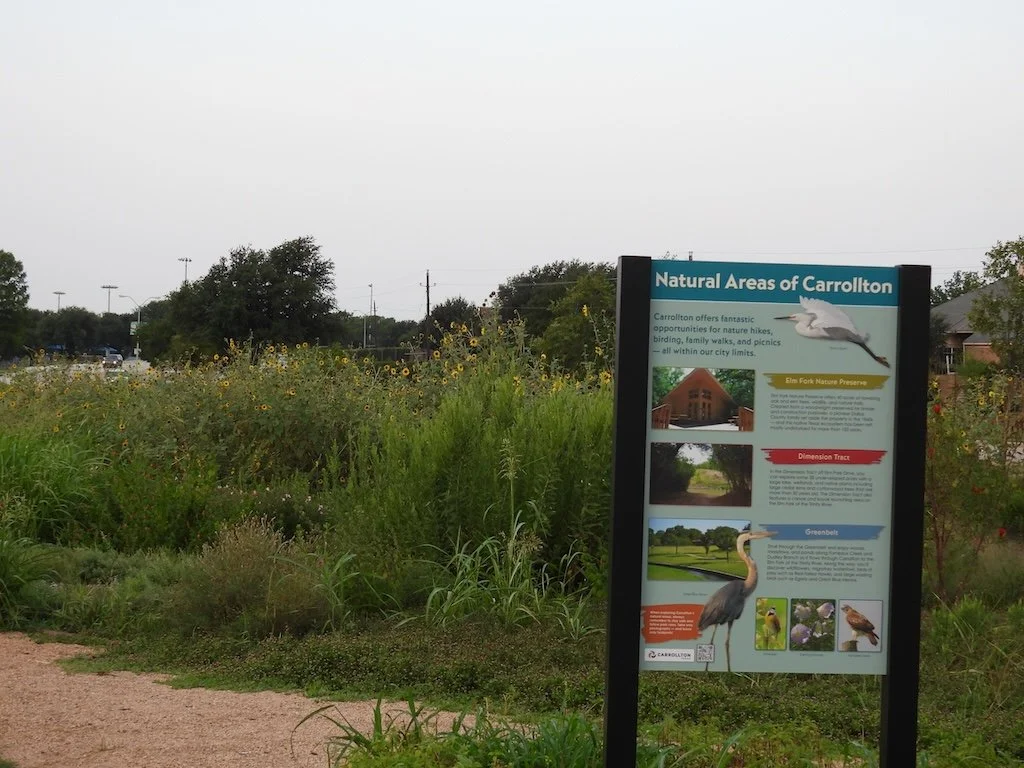
While I was in Dallas in August, I made an early trip to the pocket prairie and lake at Josey Ranch in Carrollton – a place I visited frequently before we moved my parents to assisted living in January 2024.

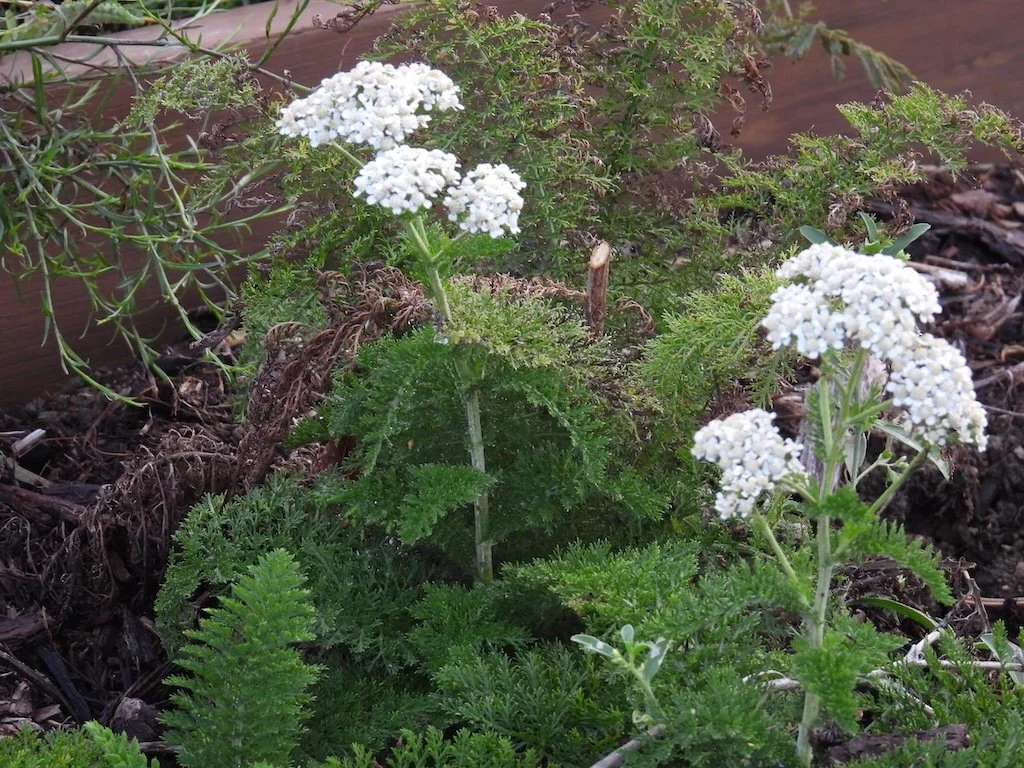
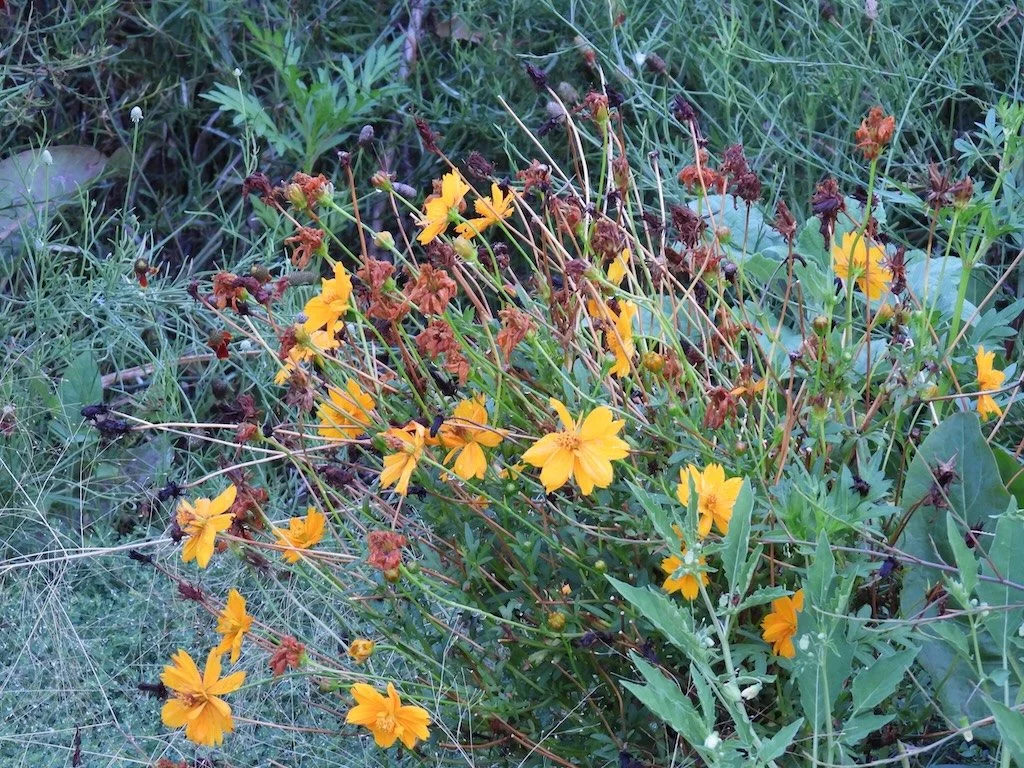
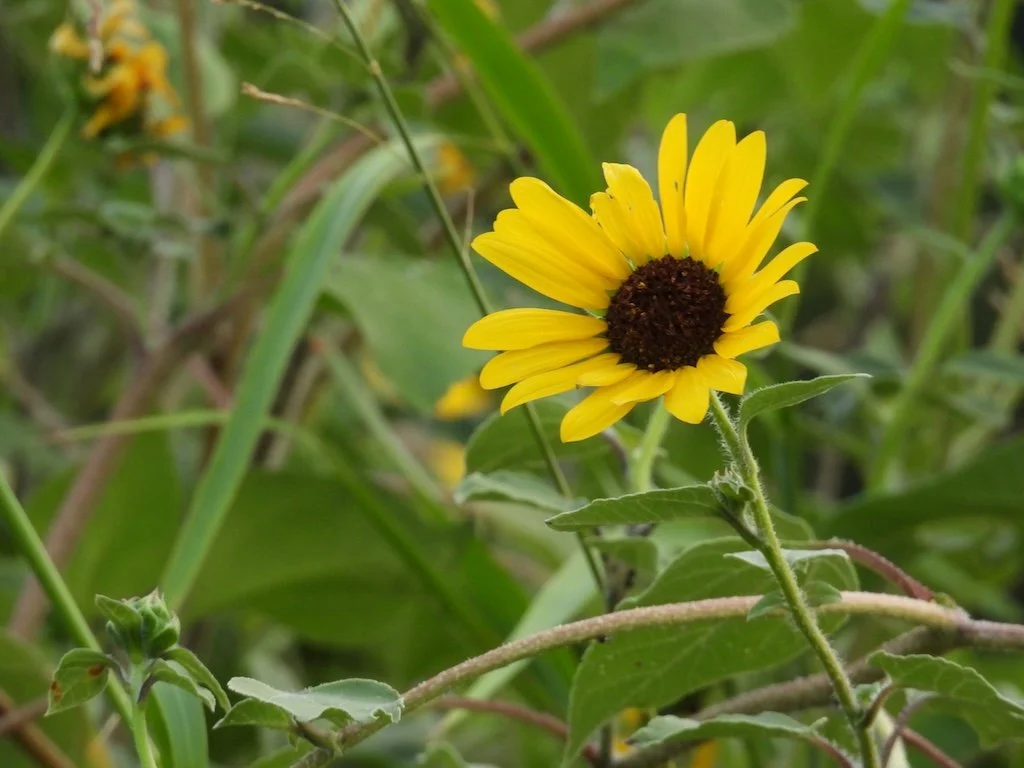
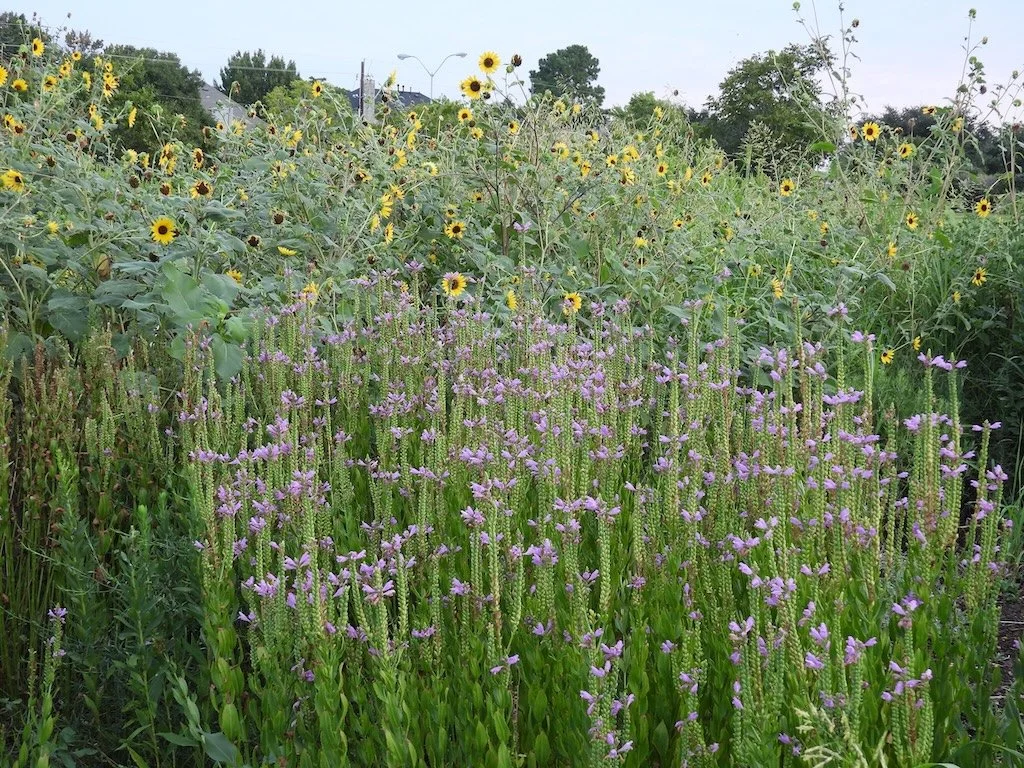
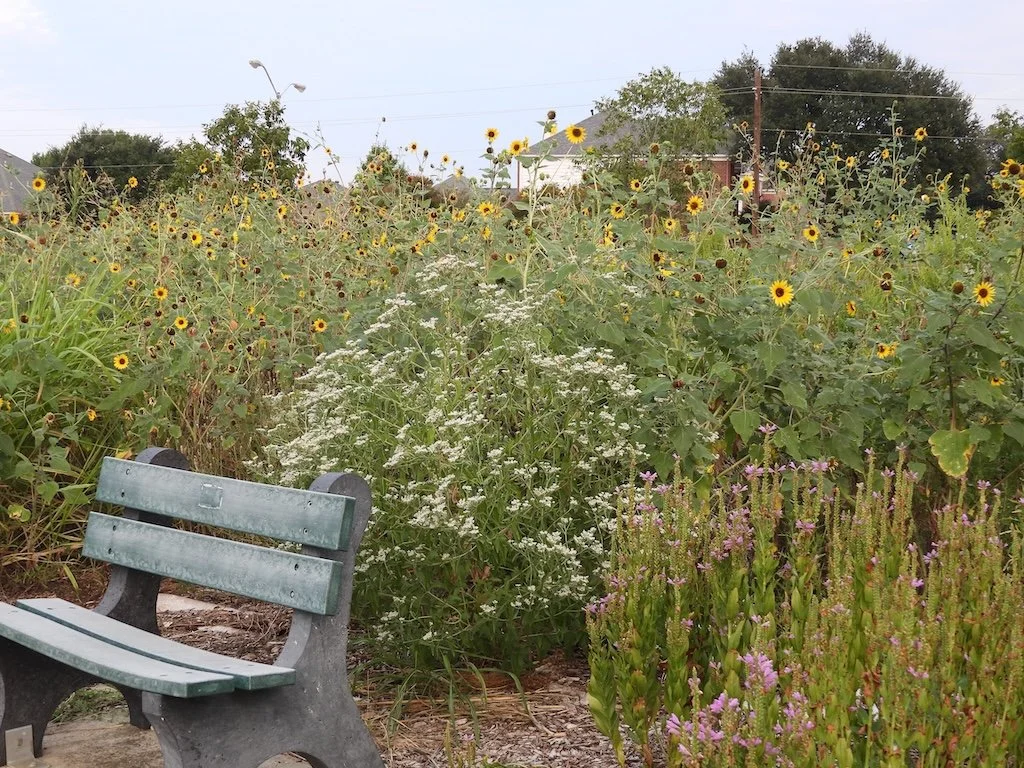
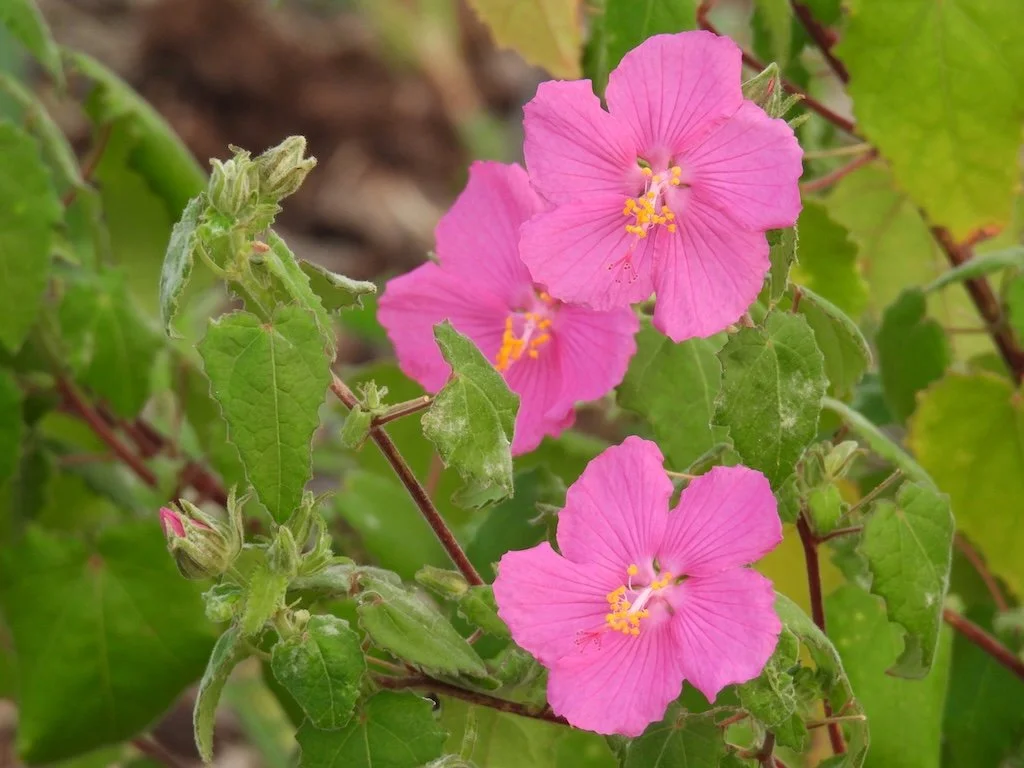
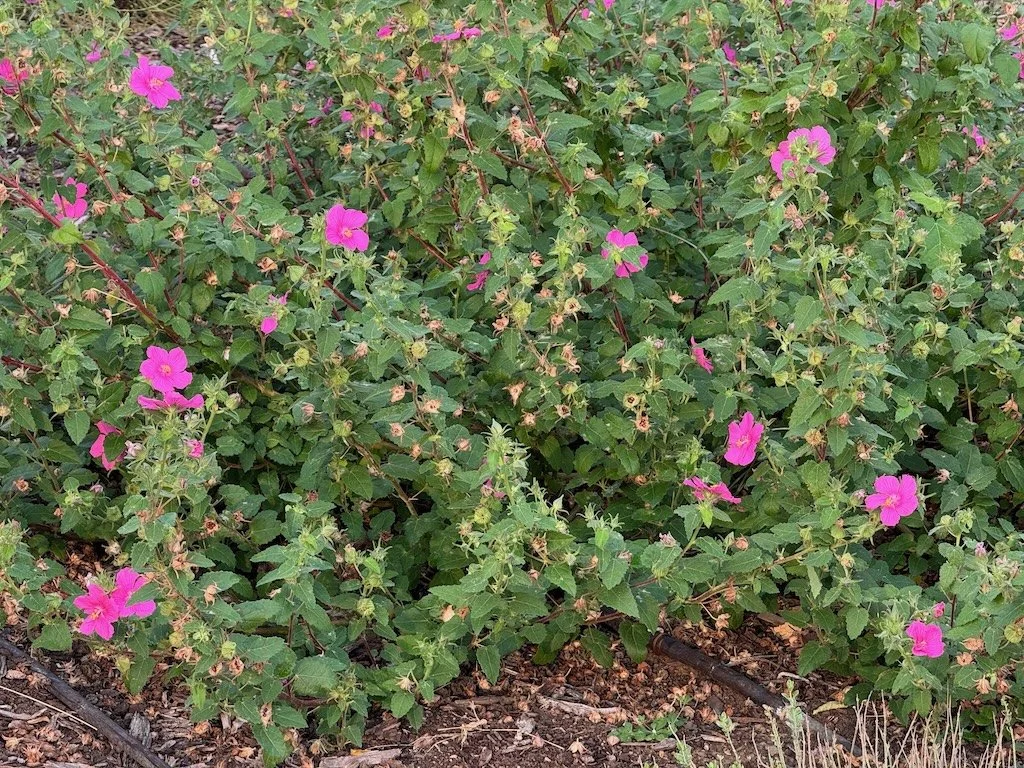
There didn’t seem to be very many birds around, so I started my visit at the pocket prairie. The trash cans looked freshly painted, and the gardens looked like they had been recently weeded (piles of vegetation waiting to be picked up). Some of the flowers had gone to seed but that is normal for August. There were marshmallows that were surviving in the rain garden area. The sunflowers dominate but I was glad to see Texas rock rose among the plantings.

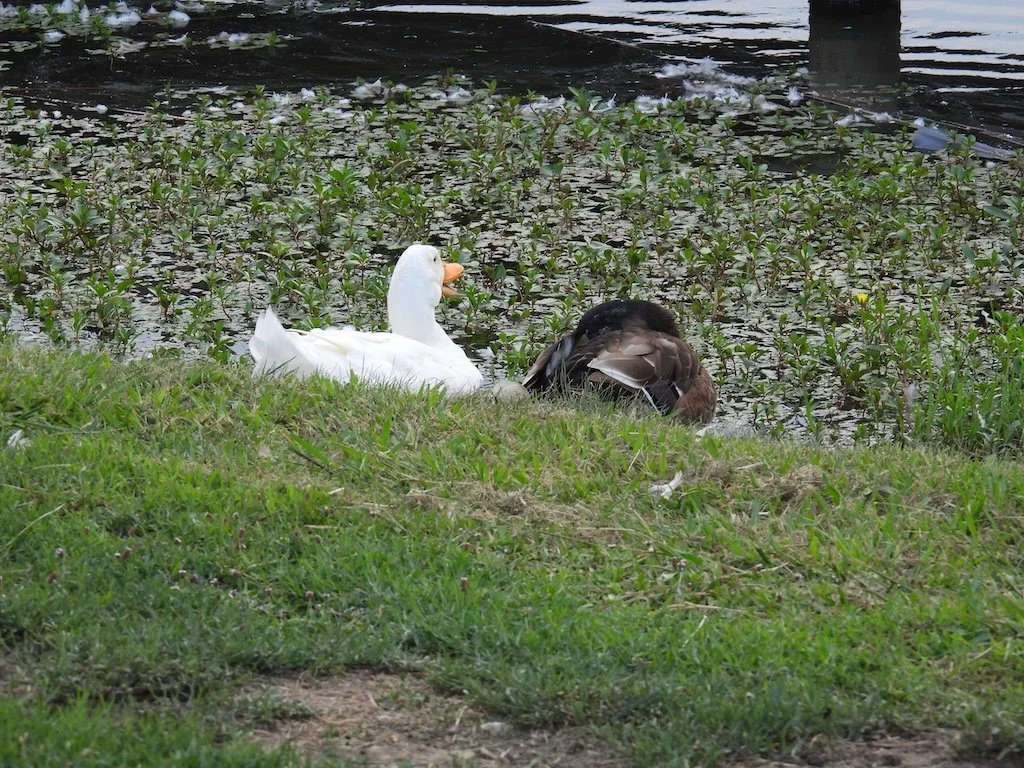
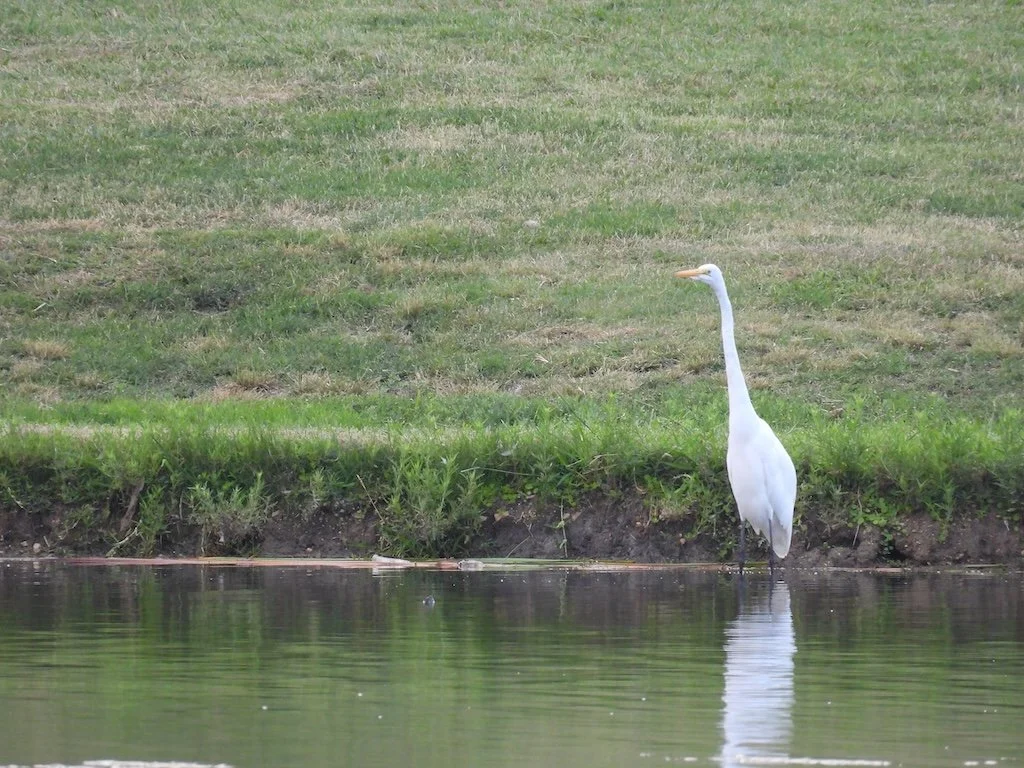
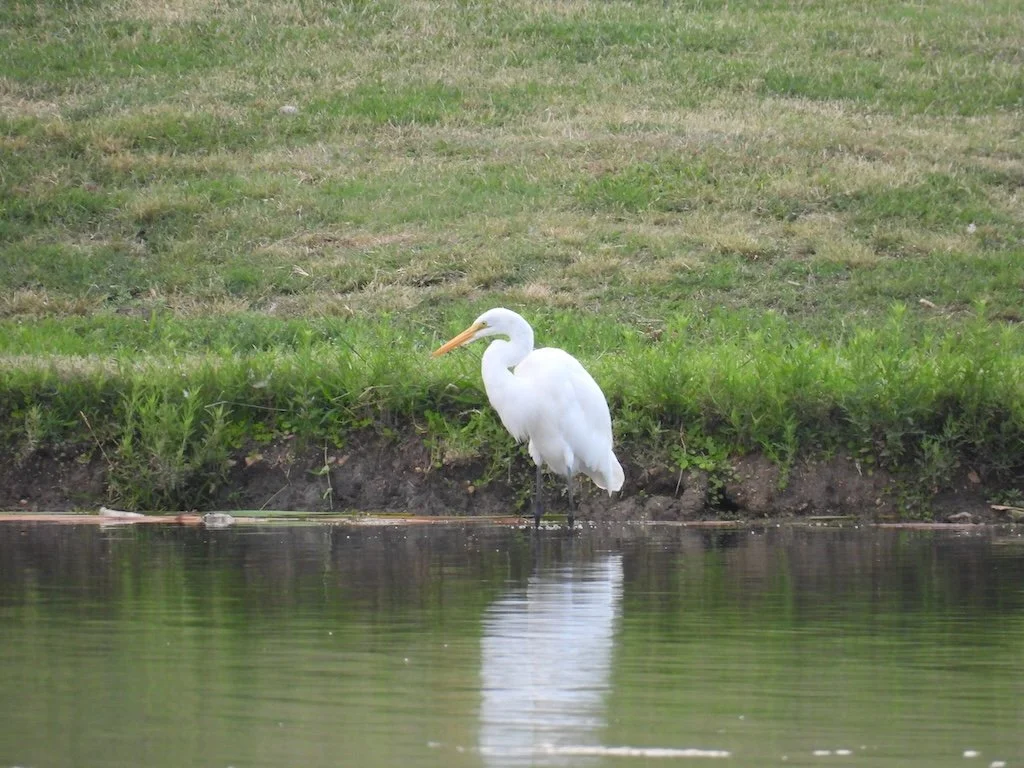
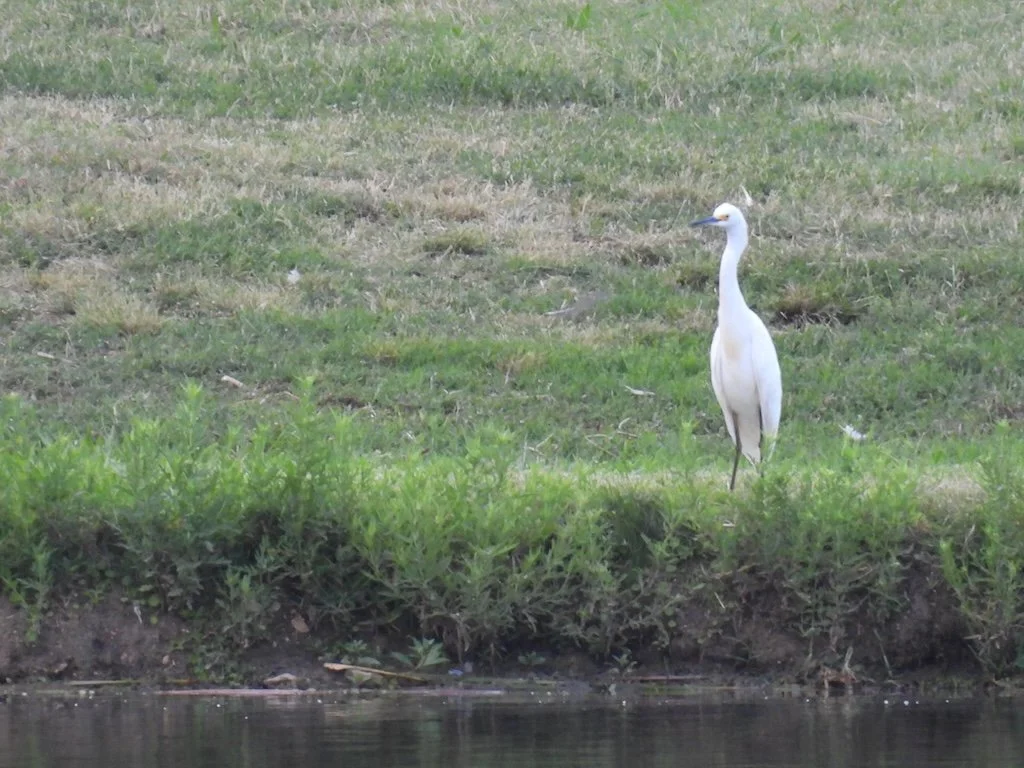
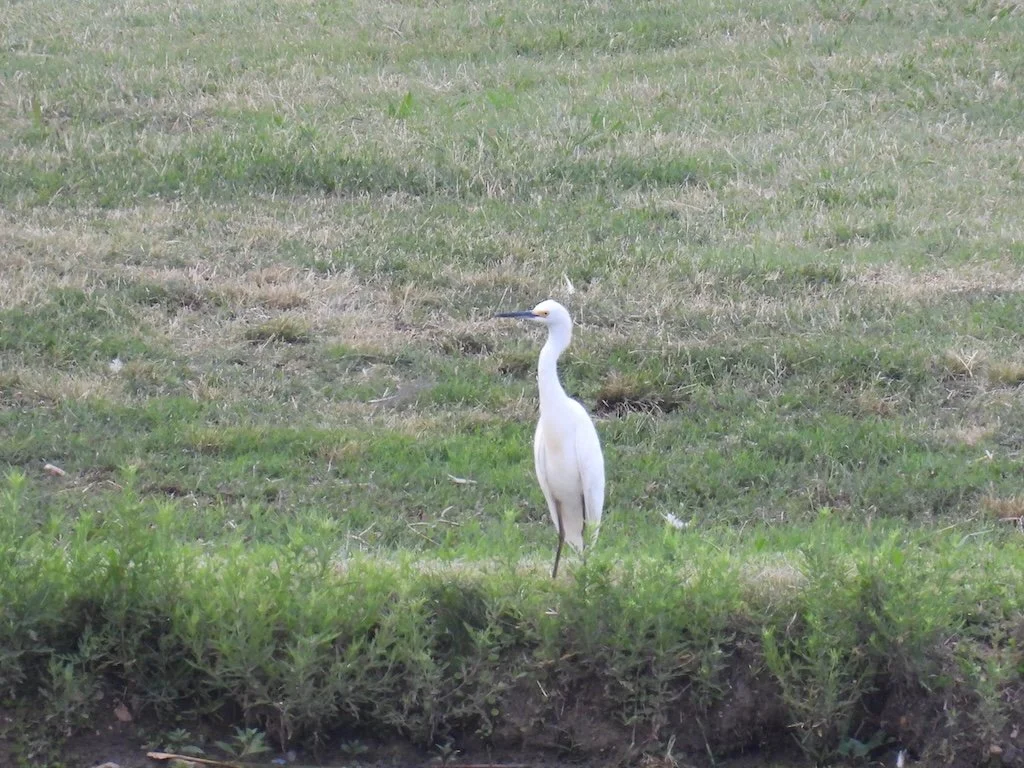
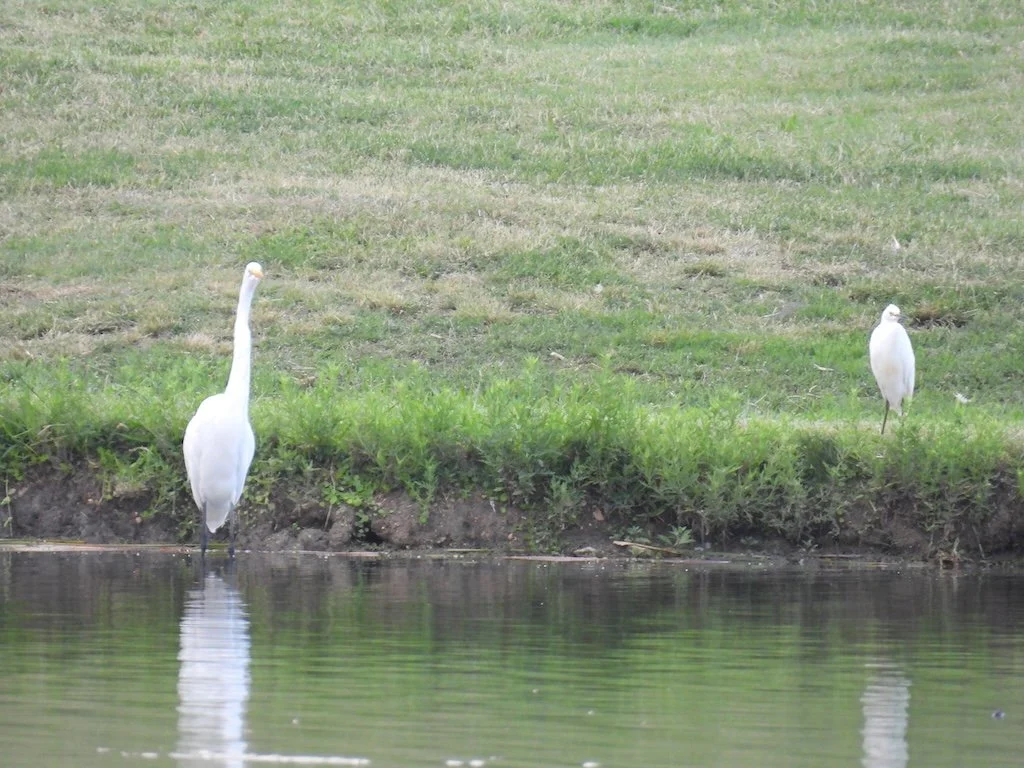
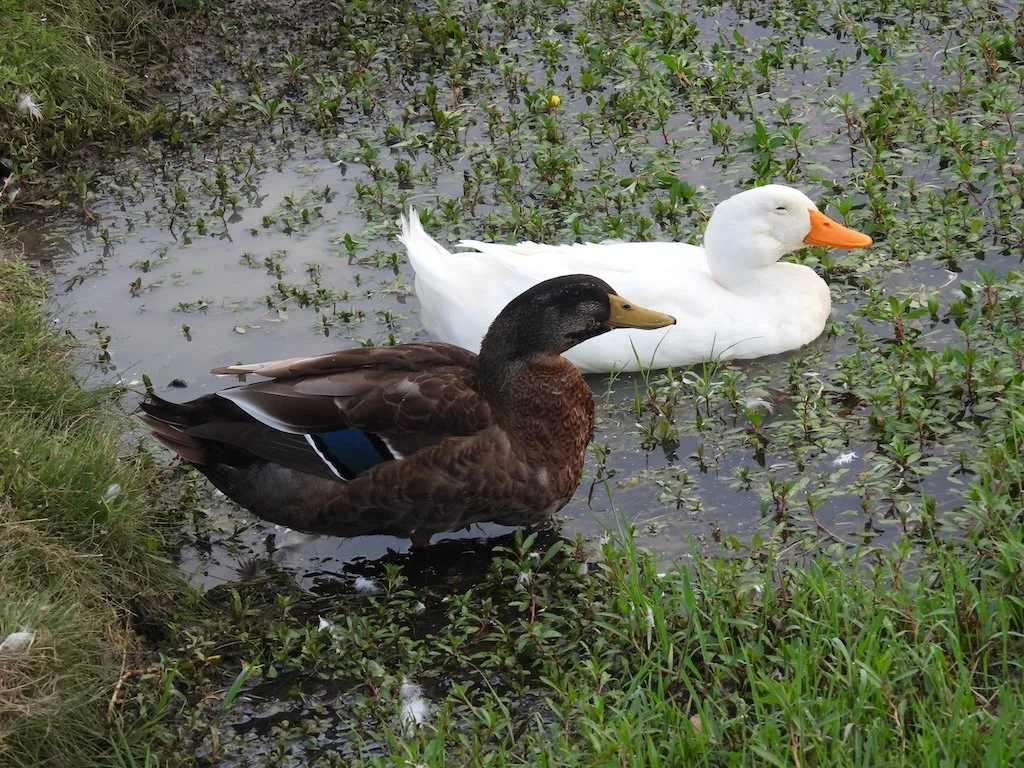
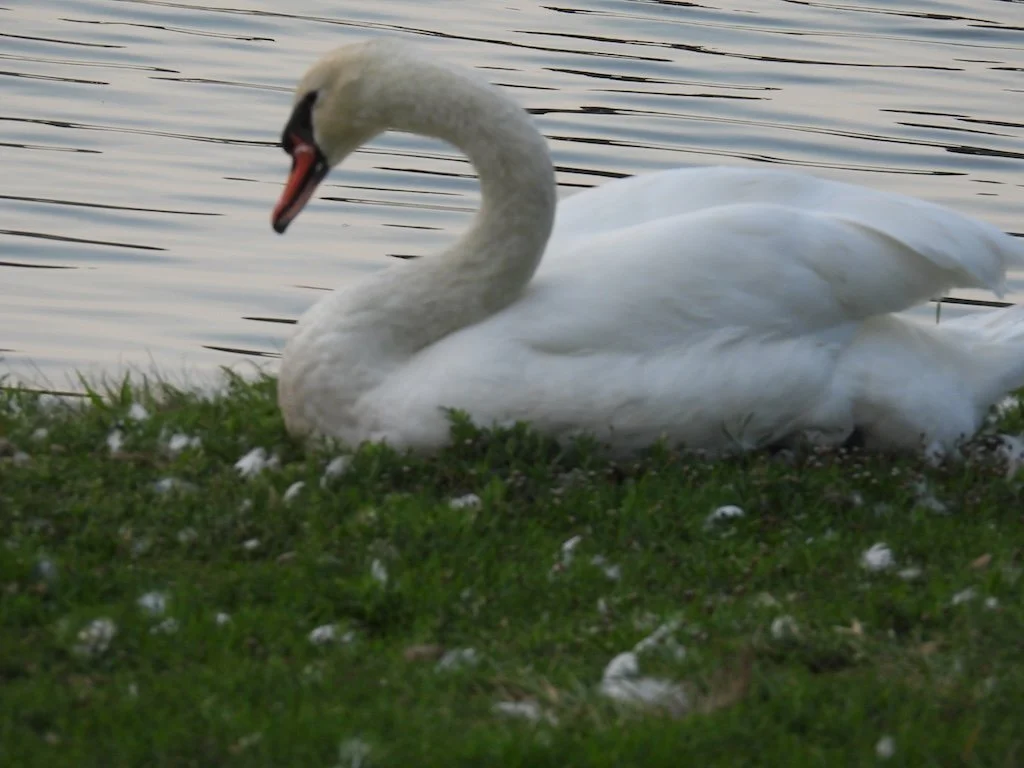
I went back to look at the lake and realized that there were not many grackles (I heard several…only saw one)…pigeons were about as numerous as always…only two ducks and one was a white domestic duck. The only birds I saw in the pond were one great egret and one snowy egret. The two swans were still there. Evidently there were a lot of geese there recently judging from the goose poop on the sidewalks. It was depressing that there weren’t more birds around and I wondered what happened.

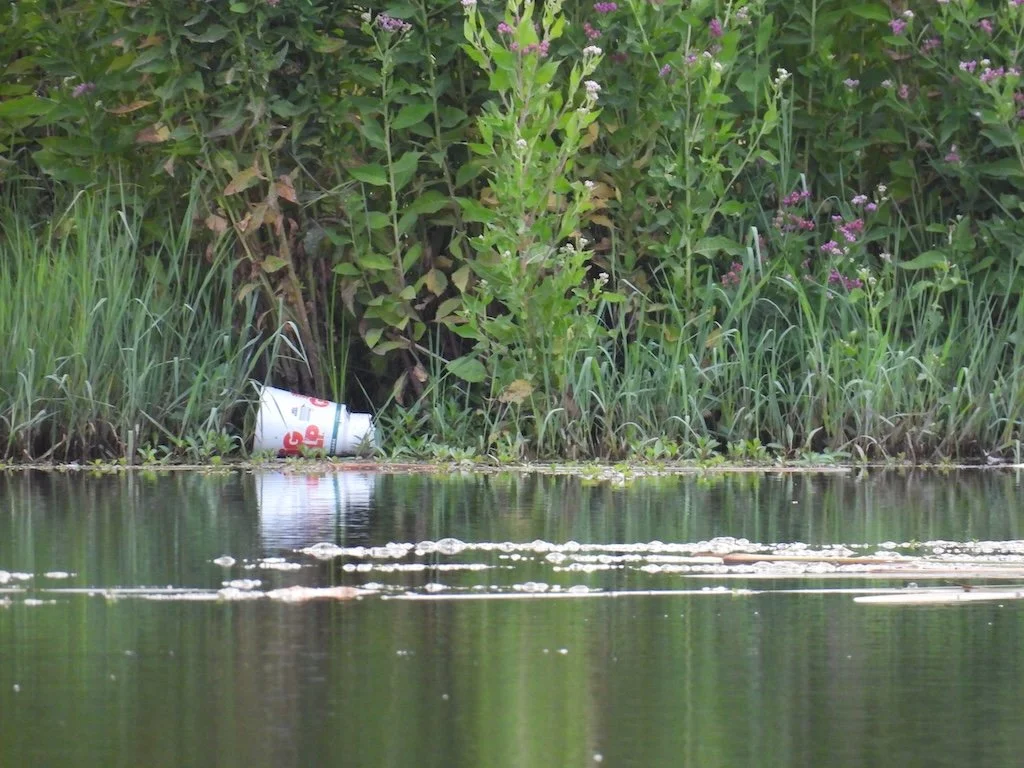
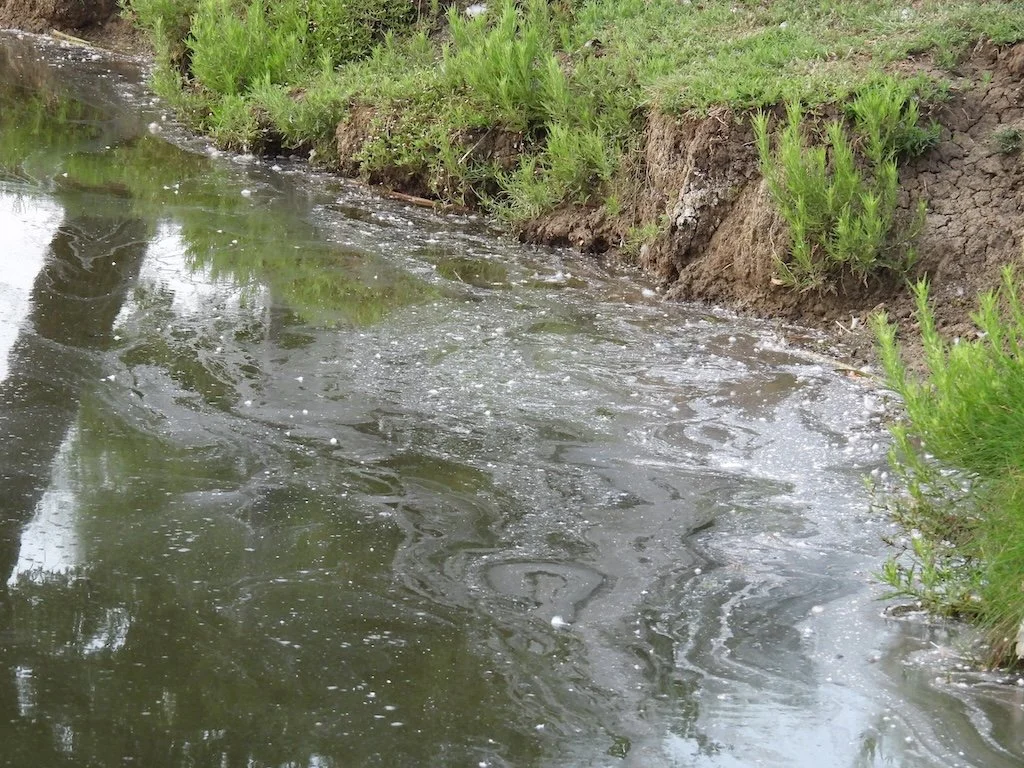
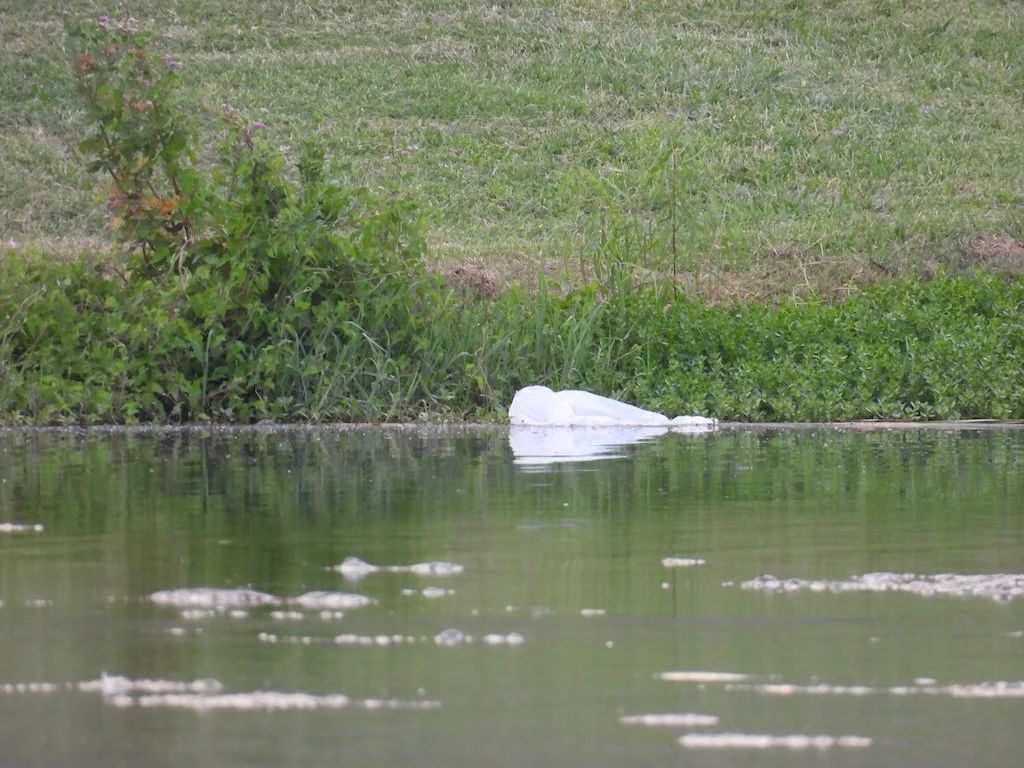
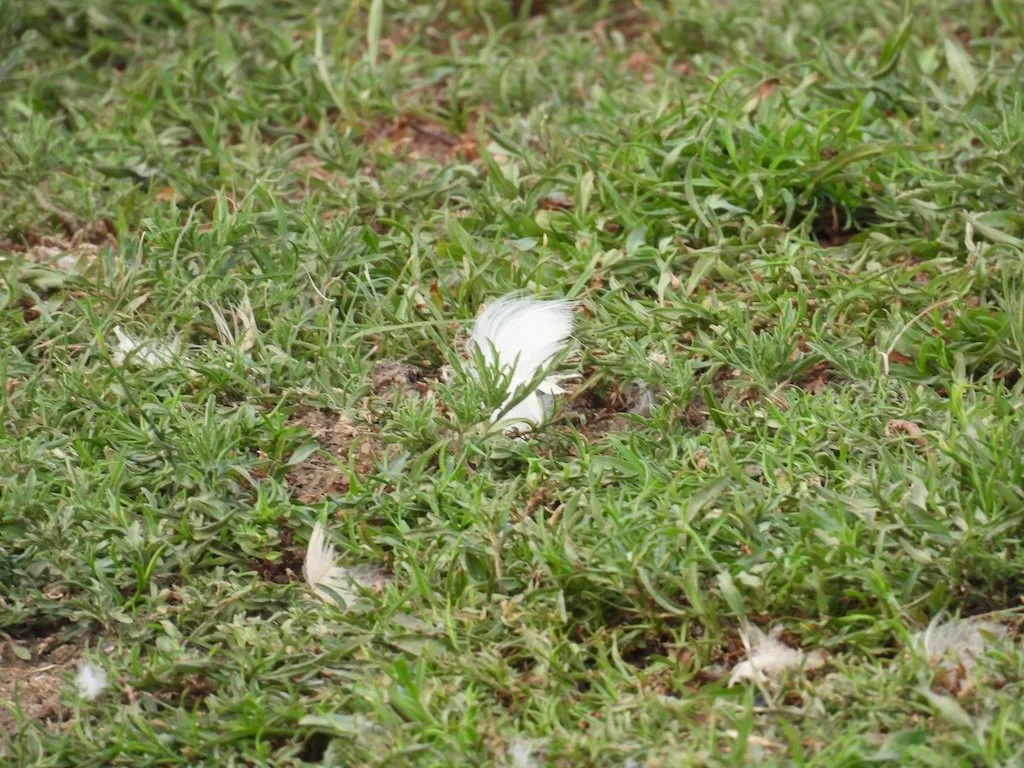
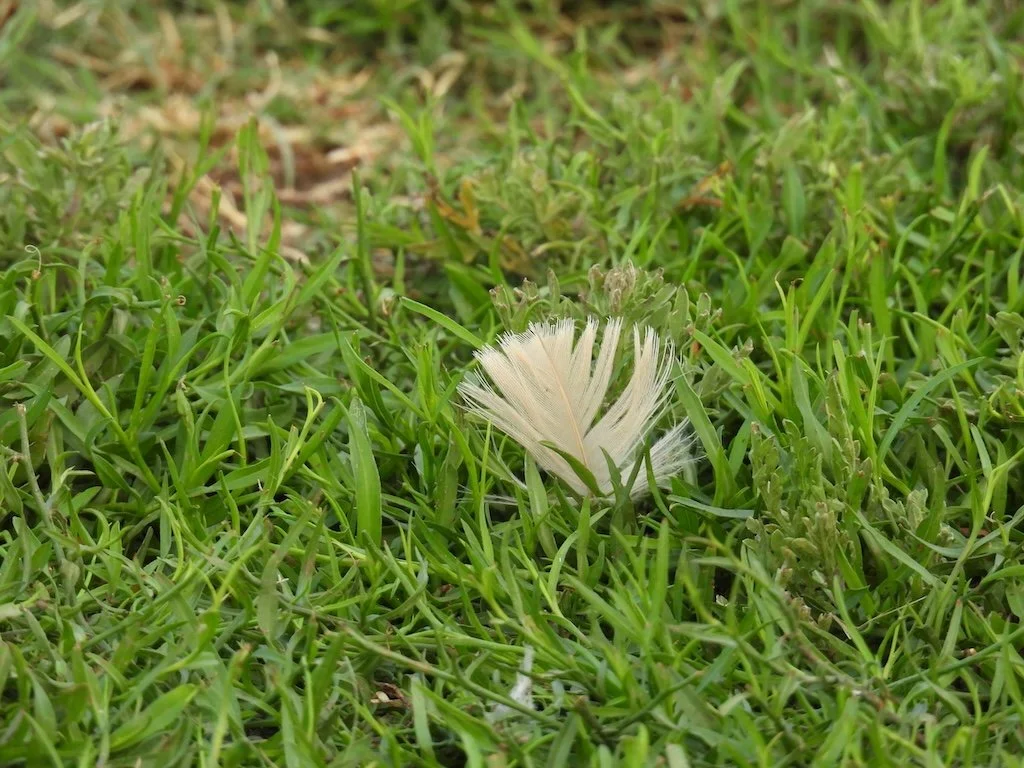
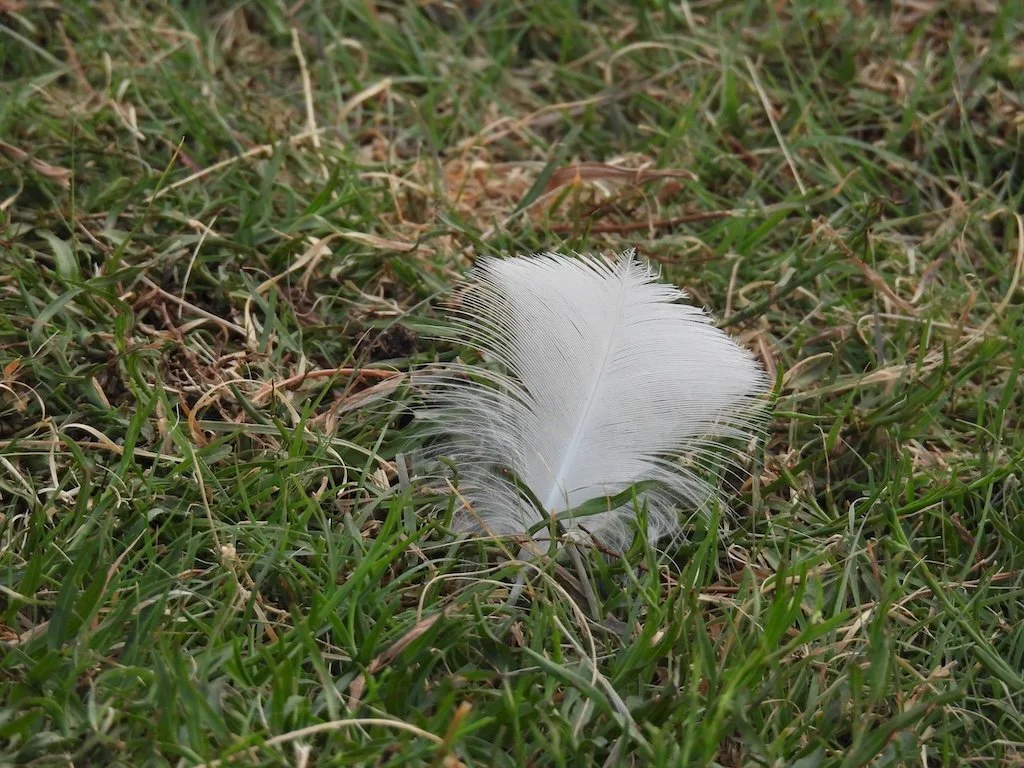
I noticed more trash in the water – a foam cup, plastic bags, and sheen on the water near the shore. Is there more pollution in the pond now? I saw one turtle snout from a distance. Overall, the pond does not look as healthy as it was a few years ago. I took a few pictures of feathers in the grass.

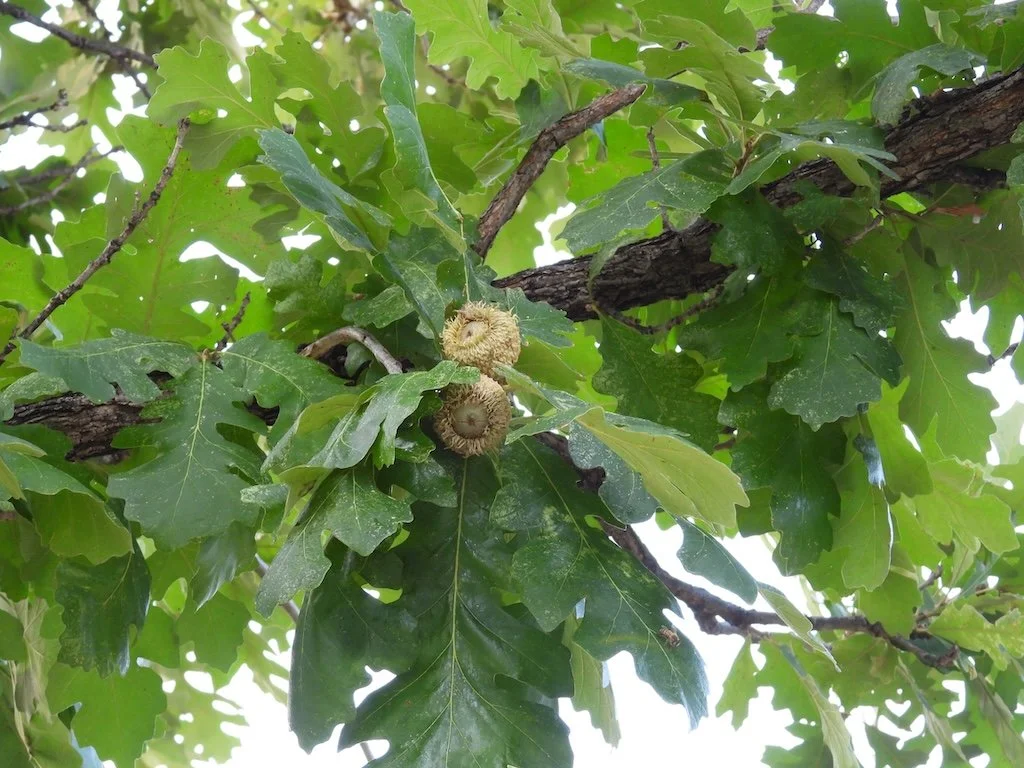
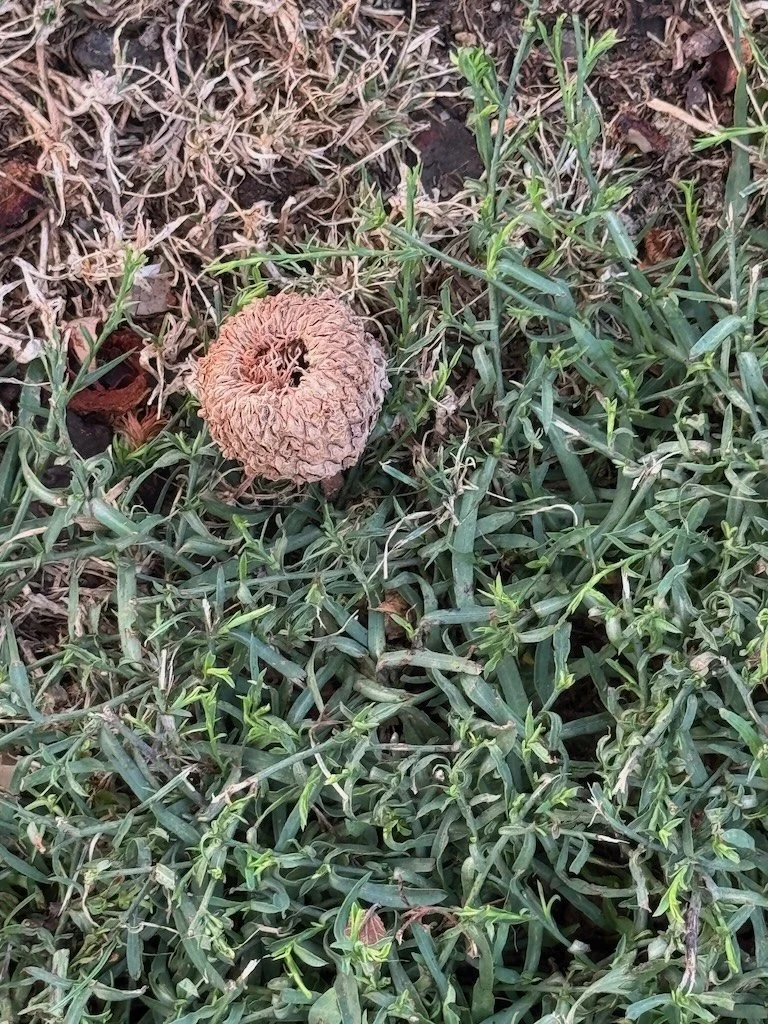
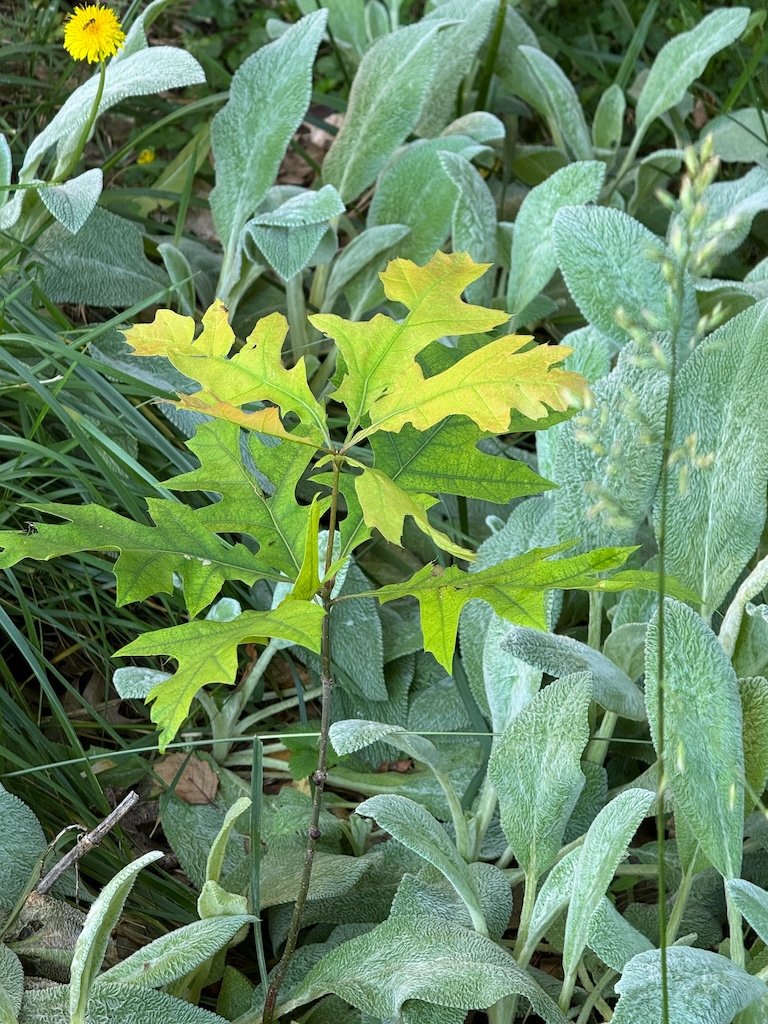
As I walked to the plantings between the library and senior center, I noticed a tree that was planted in memory of someone. It was about 6 feet from the sidewalk….a Bur Oak! I was surprised that it was planted so close to the sidewalk…maybe the climate in Texas will cause it to not get as big as Bur Oaks usually grow.

I looked for the beautyberry that seemed to thrive previously in that area, but they were gone. One of the new plants was a rock rose. The morning was warming up but I didn’t see many insects.

It was a little depressing that the wildlife that used to be around the area seems to be reduced. Maybe I was there at an odd time….I’ll try to look again later this year when the birds that typically winter in Texas might be around.

Road Trip to Dallas and Sustaining Elder Care – August 2025

My road trip to Dallas in August was over 3 days rather than 2 since the sister that visits my dad most frequently was taking a vacation. There was rain as I drove through Oklahoma on the drive down and then on the third day as I headed home….but the drive was dry on the ends (Texas and Missouri). It wasn’t as hot in Texas as I expected although the air quality was yellow the entire time I was in Dallas (and red in the later part of one day when I was, luckily, indoors).

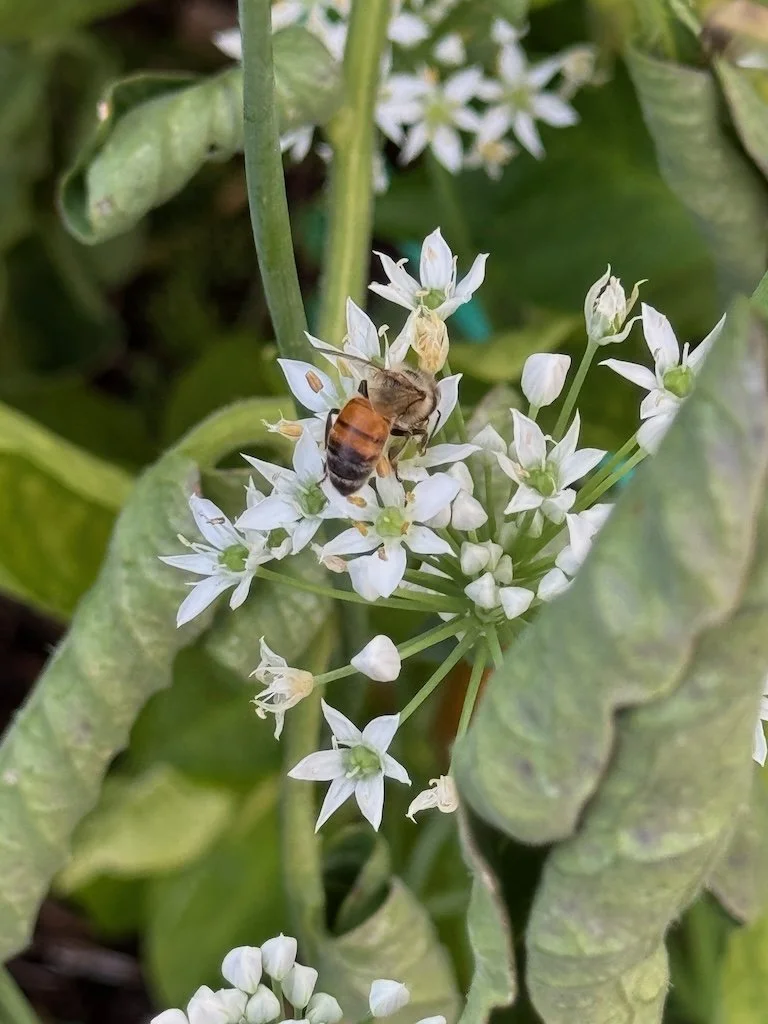
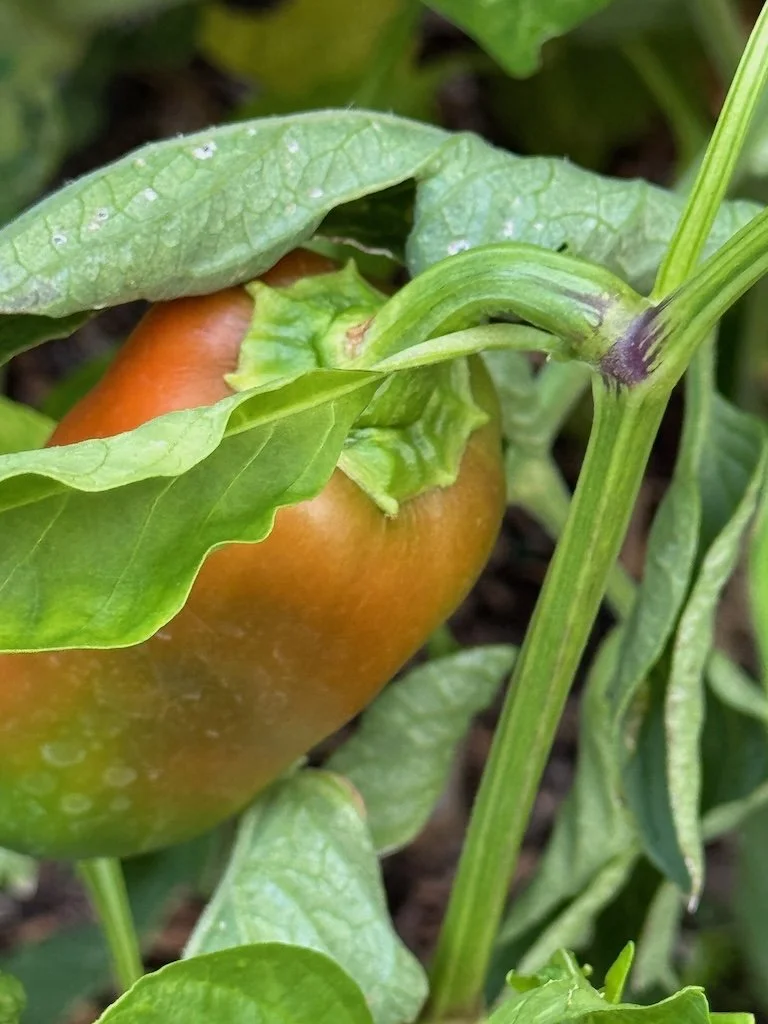
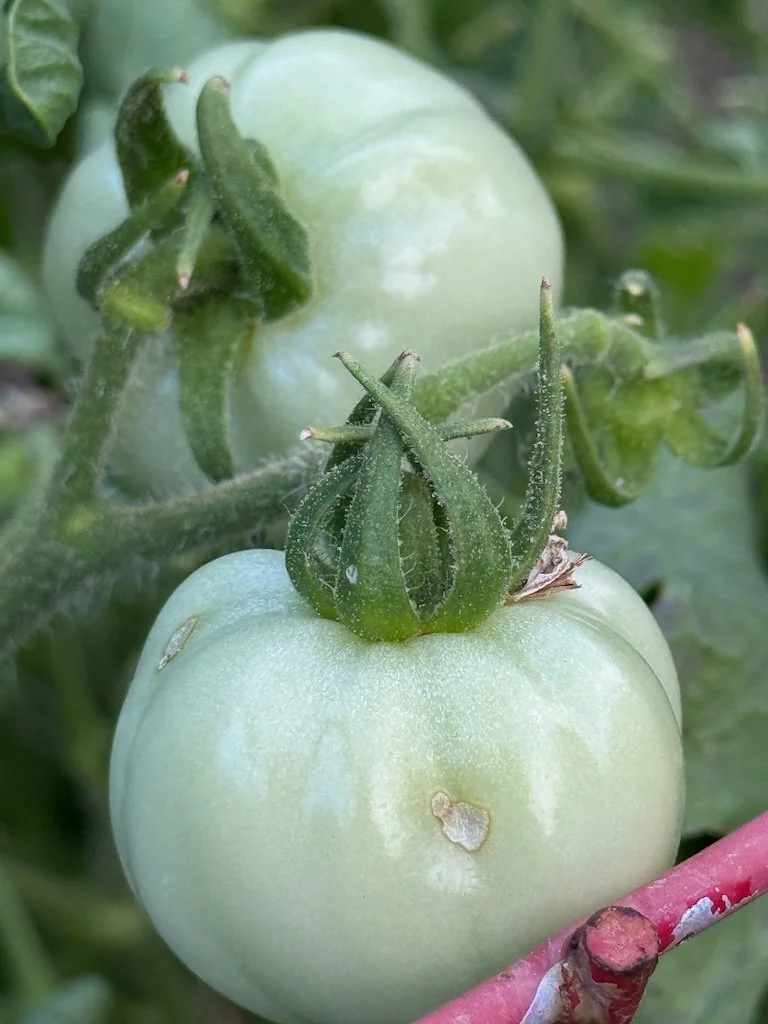
The garden my sisters have maintained at the assisted living residence needs watering every day and we all take Dad out when we do that. He sits on the patio in the shade and enjoys the change of scene and outdoors in general. The house bought a new hose recently, so it was easier to maneuver without some of the plastic coming off the hose. There are peppers, tomatoes, and chives in a raised bed.

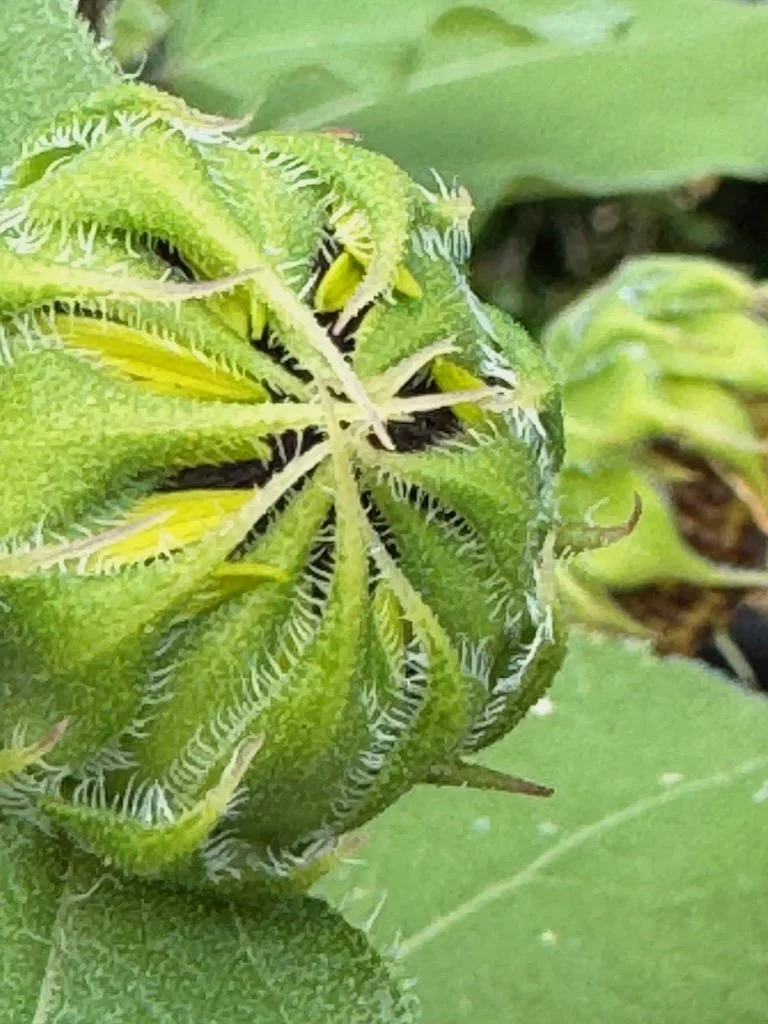
The sunflowers are at all stages of development. Next time I go, I will get some seeds to plant in my garden for next spring. I noticed that the miniature rose bush is surviving and there are some small Texas rock roses that my sister has managed to transplant successfully.

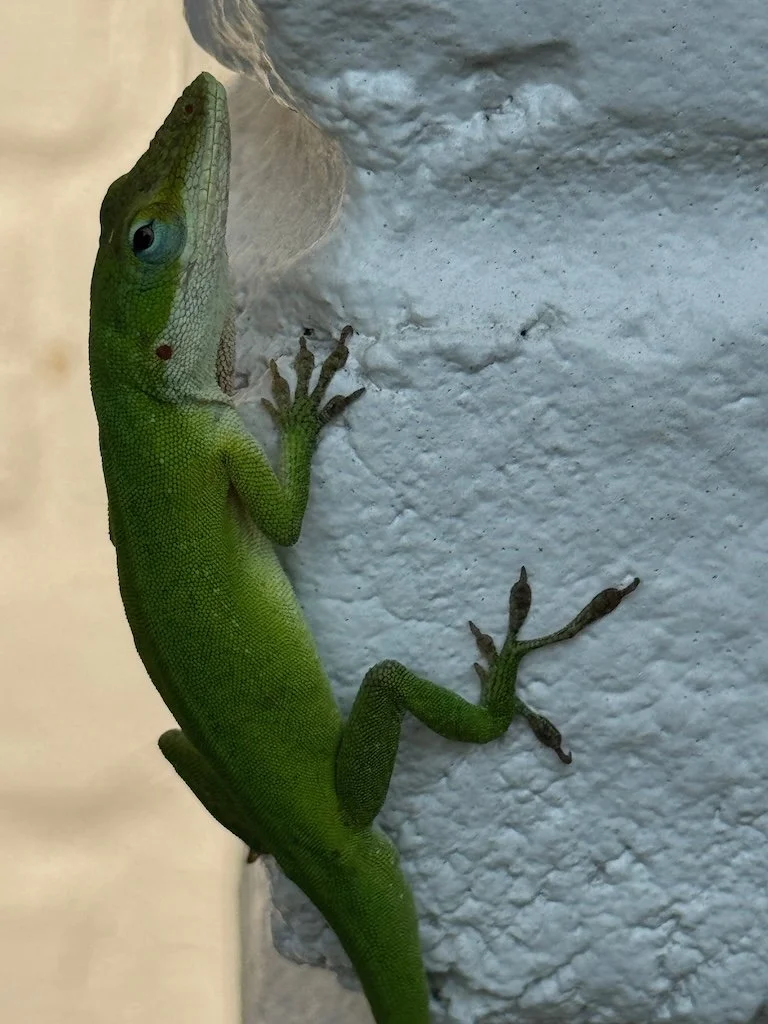
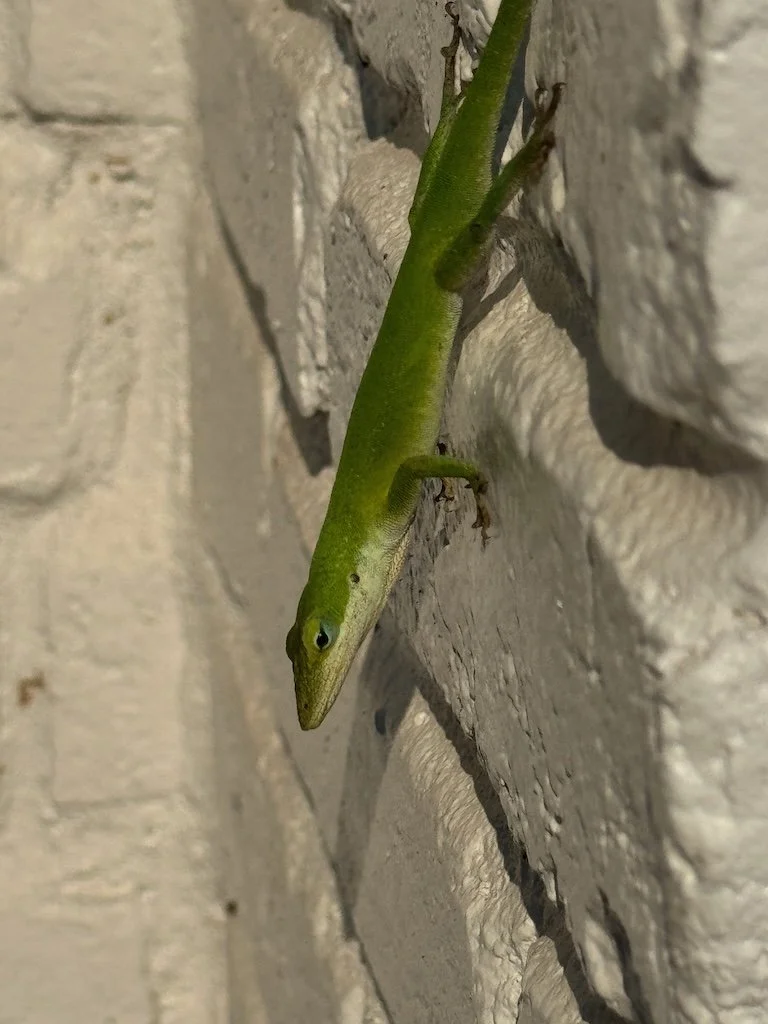
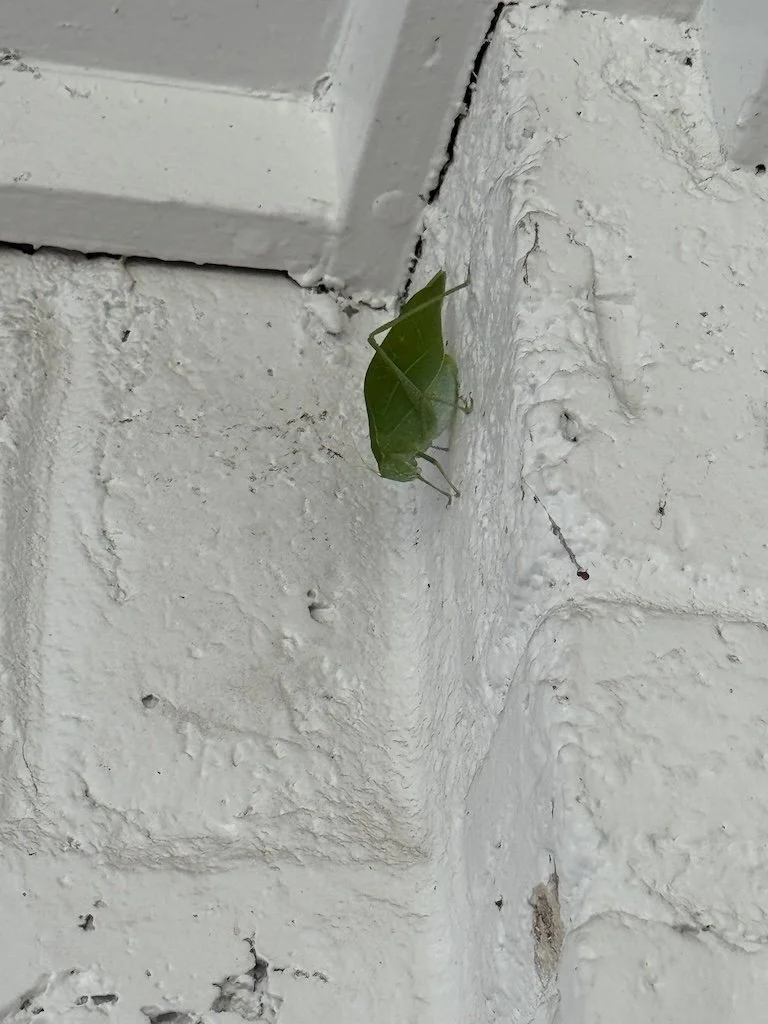
The temperature was pleasant enough that I decided to prompt Dad to do his PT in the patio chair. We were out long enough to see a lizard and katydid. On the last morning, I noticed there were lots of mosquitos, so we went back inside before finishing the round of PT…did the rest inside! I didn’t get any bites…and I hope he didn’t either.

The surprise at the residence was the staff finding out a company was coming to treat the kitchen for bugs…they quickly cleared the cabinets and asked if some of the things they weren’t using were ours. They were things we had brought from my parents’ house when they first moved to assisted living thinking it would help with the transition to have things they recognized. They did…but it’s been over 1.5 years now and my dad doesn’t remember any of them. My youngest sister packaged them up in reusable win bottle bags and took them home.

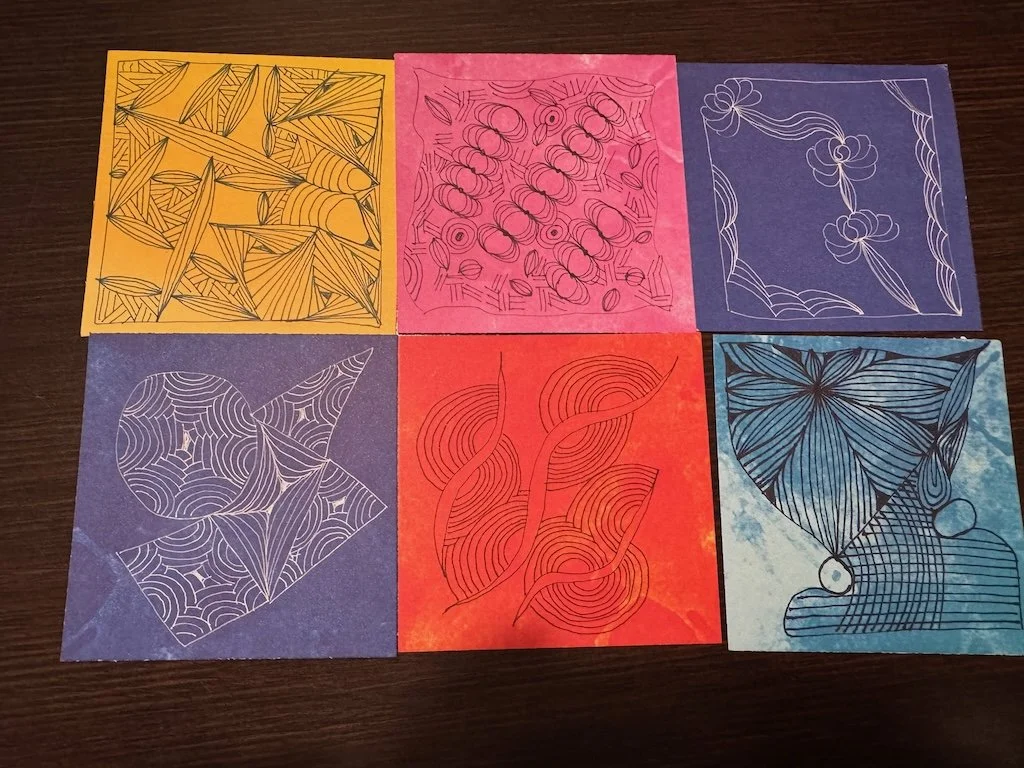
I enjoyed lunch with my youngest sister on the second day…splurged on a decadent dessert. I enjoyed the down time in the evenings – destressing with the usual Zentangle creation and reading and some exercise. The hotel breakfast was the same as usual: eggs with pepper, Cran raisins, walnuts, and a cinnamon raisin bagel.

Like always, I was glad to be home again.

Ten Little Celebrations – August 2025

August was hot…so some of the celebrations were indoors (with air-conditioning) this month!

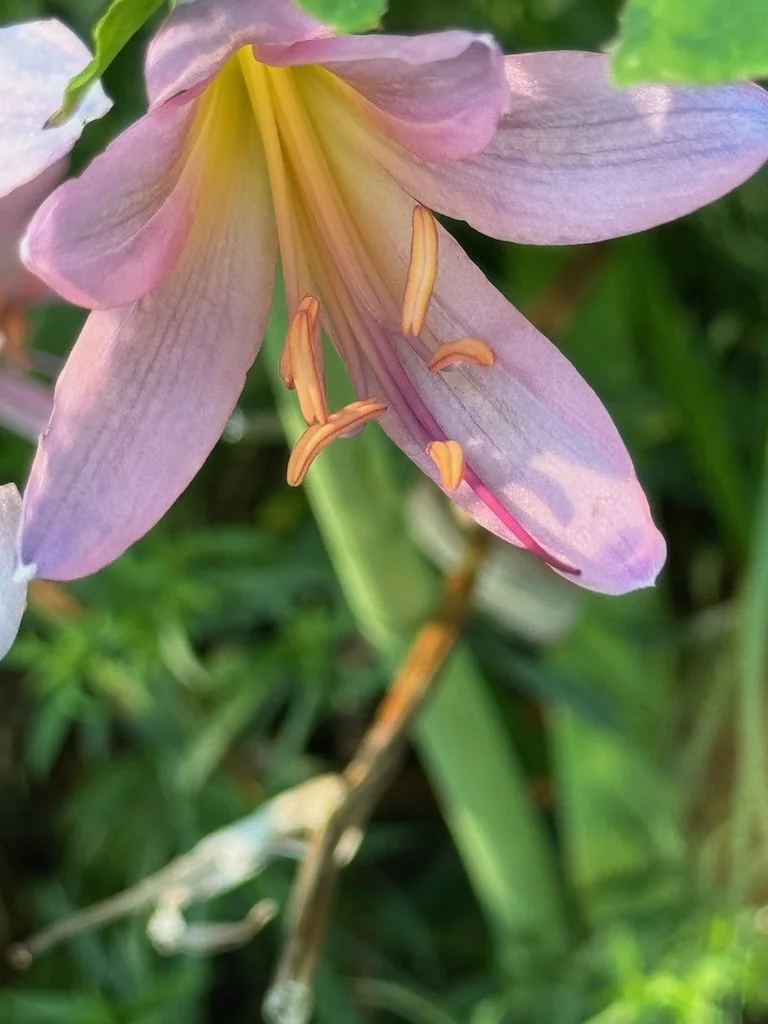
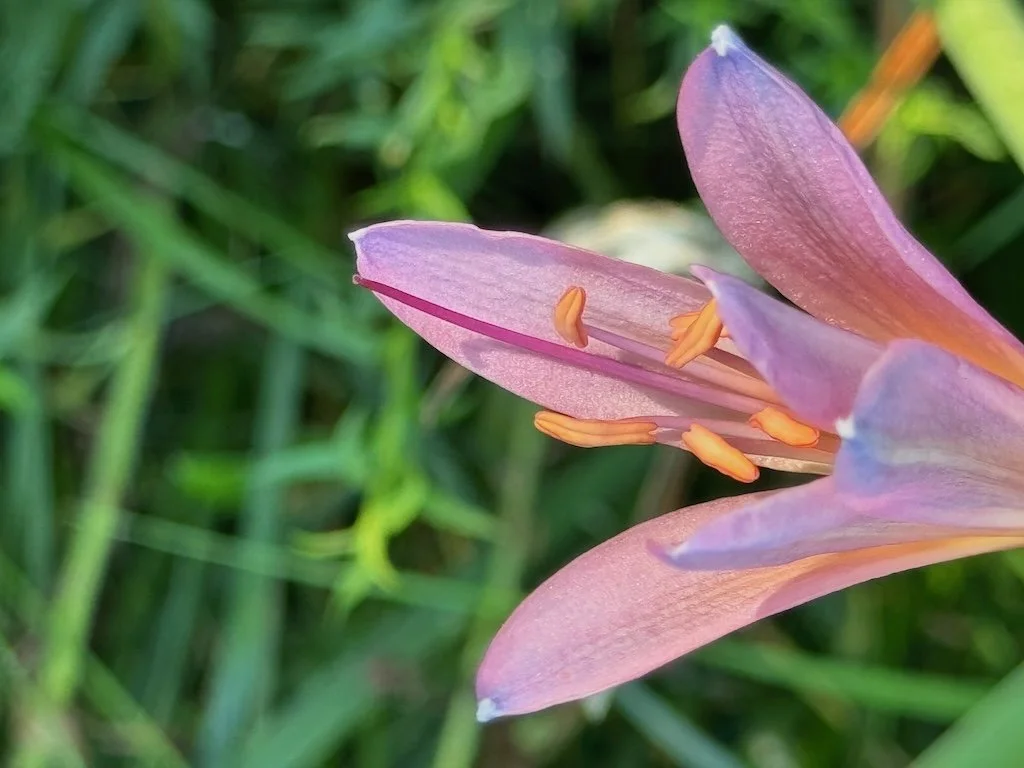
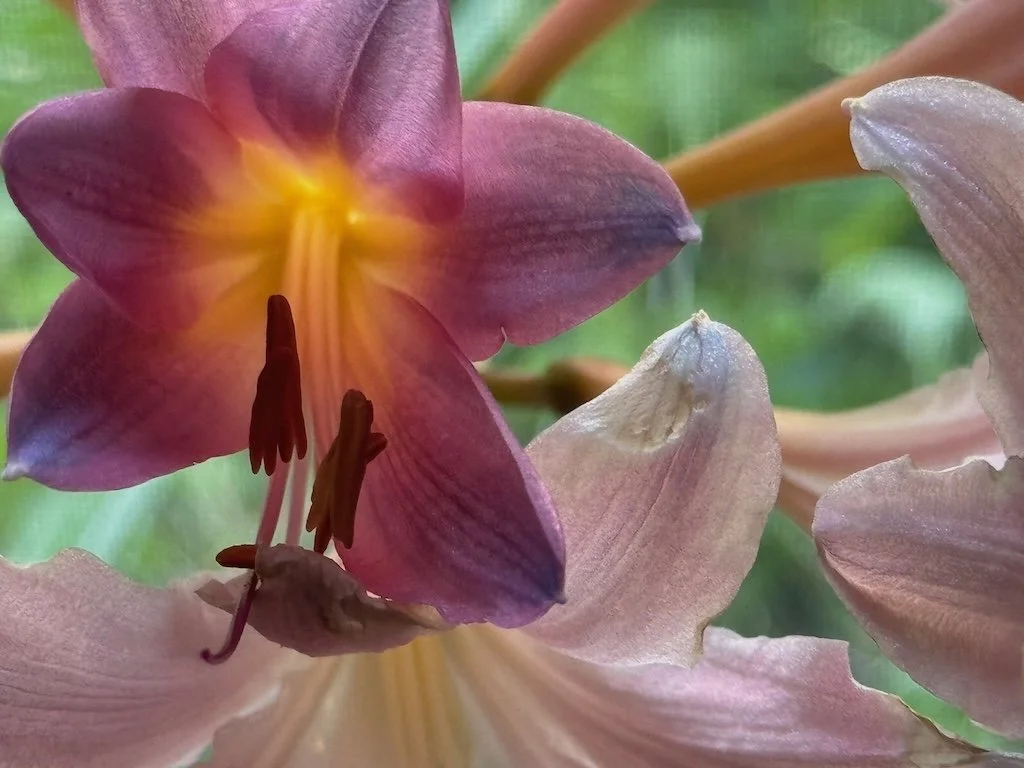
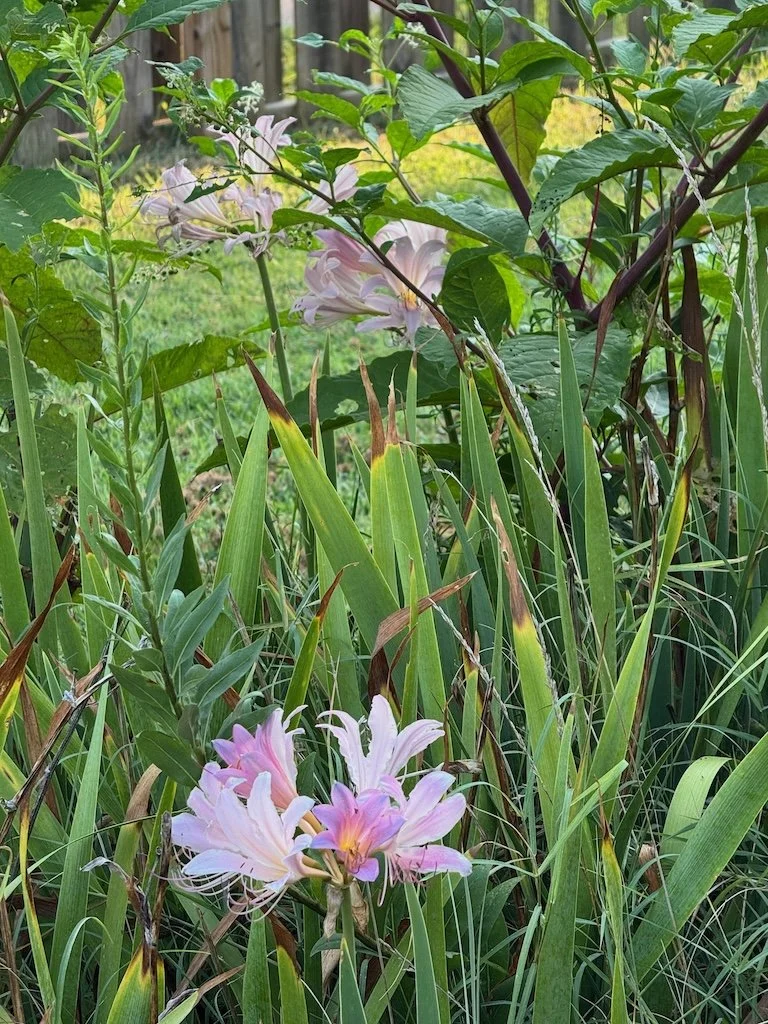
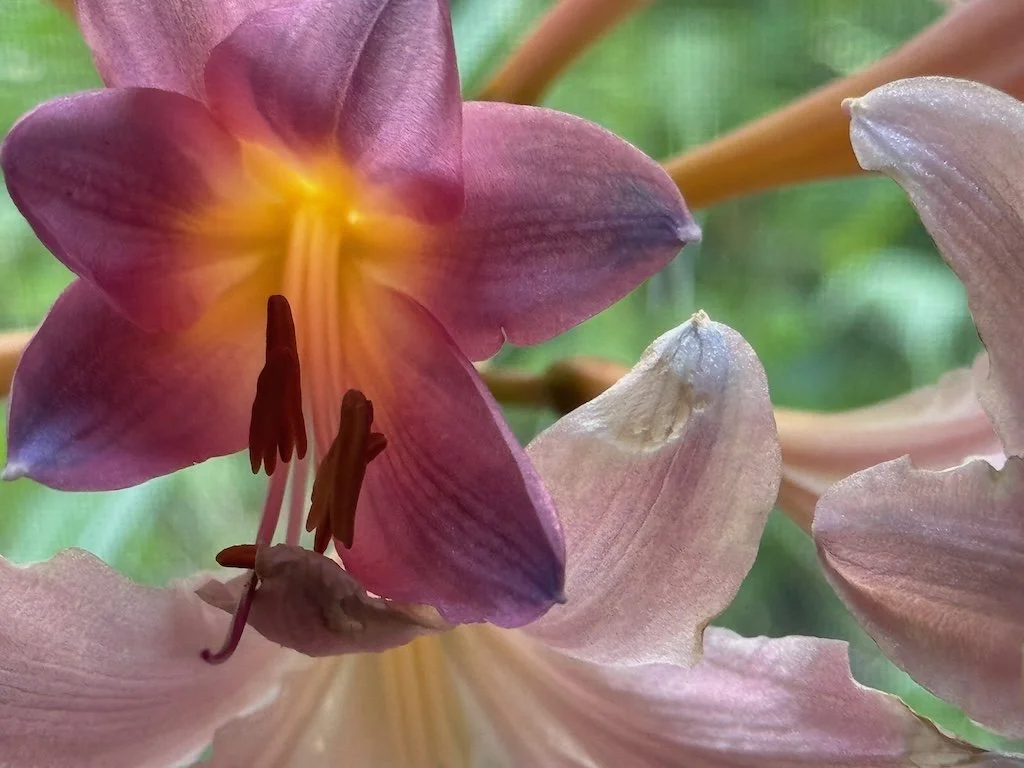
Naked lady lilies. It was a pleasant surprise that I have three of these plants in my yard – blooming for the first time this August. But I celebrated them because they are a remnant of my mother’s garden from 2023 just before the house/garden was sold.

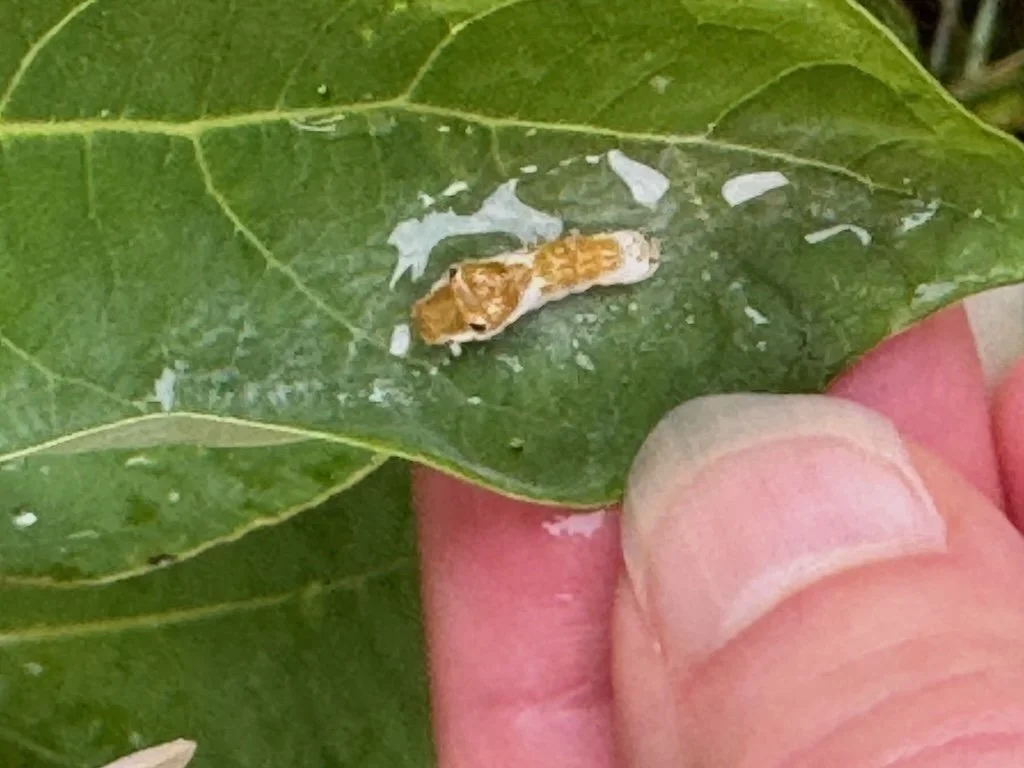
Spicebush caterpillars. Earlier this summer my young spicebush didn’t have caterpillars…but is does now. I celebrated that the swallowtails have found my plant to lay their eggs.

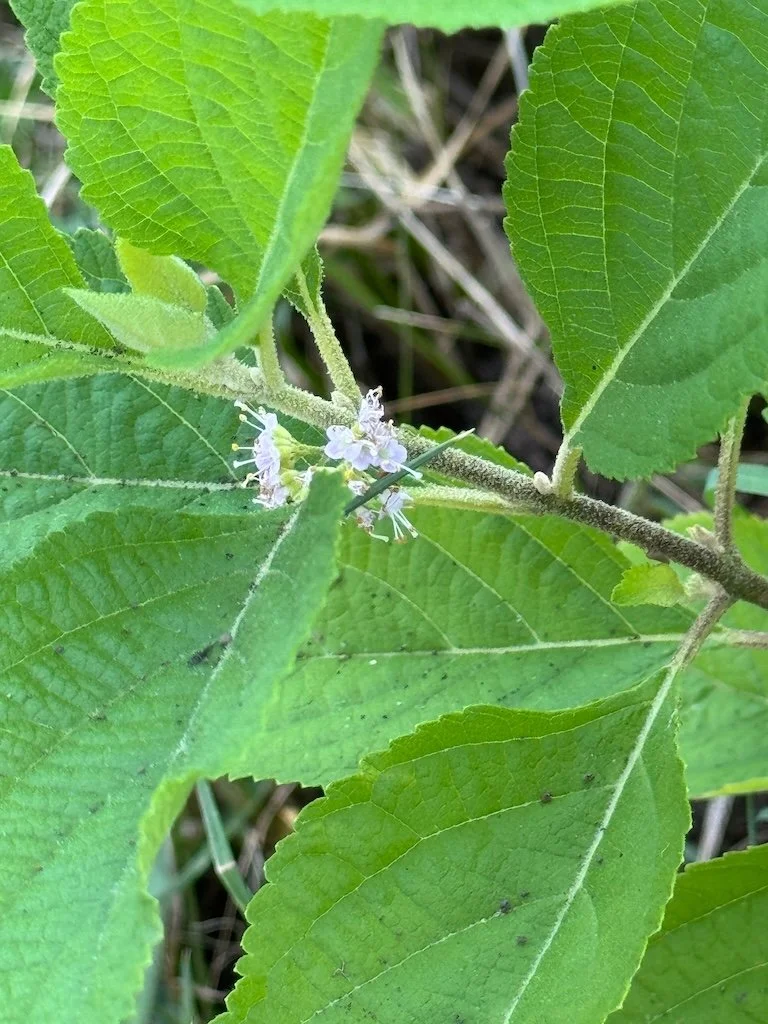
Beautyberry. While I was pulling grass and weeds in my yard, I discovered that the beautyberry I planted last fall has survived…and is blooming. Time to celebrate!

Dispelling Myths of Native Gardening webinar (from Grow Native!). I celebrated the timing of a panel discussion about native gardening (webinar)…and gleaned some ideas I will apply in the next few weeks as I create a new area of by front yard…with native plants.

Field trip at the Lake Springfield Boathouse gardens. Another well timed opportunity for learning how to better create my new native plant garden. It was hot…but I learned enough to make it all worthwhile.

Roston Native Butterfly House. Celebrating my favorite volunteer gig of the summer…every time I work a shift there.

Turpentine Creek Wildlife Refuge. The big cats are the draw, but I celebrated seeing a juvenile racoon and butterflies!

Two caves in one day – Cosmic Caverns and Onyx Cave. Celebrating caves…cooler than the outside temperature.

Dr. Megan Wolff’s webinar “Plastics and Public Health: the unsettling latest in medical research.” A different kind of celebration…it’s more like FINALLY someone had done a reasonable job to at articulating the rationale in one place about why our plastic creation must change dramatically. Here’s the link to the video. The bottom line is that we can’t “recycle” or “reuse” our way out of the mess.

Lawn mowing – getting it done. It’s been hot this month and I celebrate every time I finish mowing the yard…so glad that it is done for another week.

Zooming – August 2025

All the images I selected for this month’s zooming post were from places around Springfield MO and Berryville AR. The subjects were:

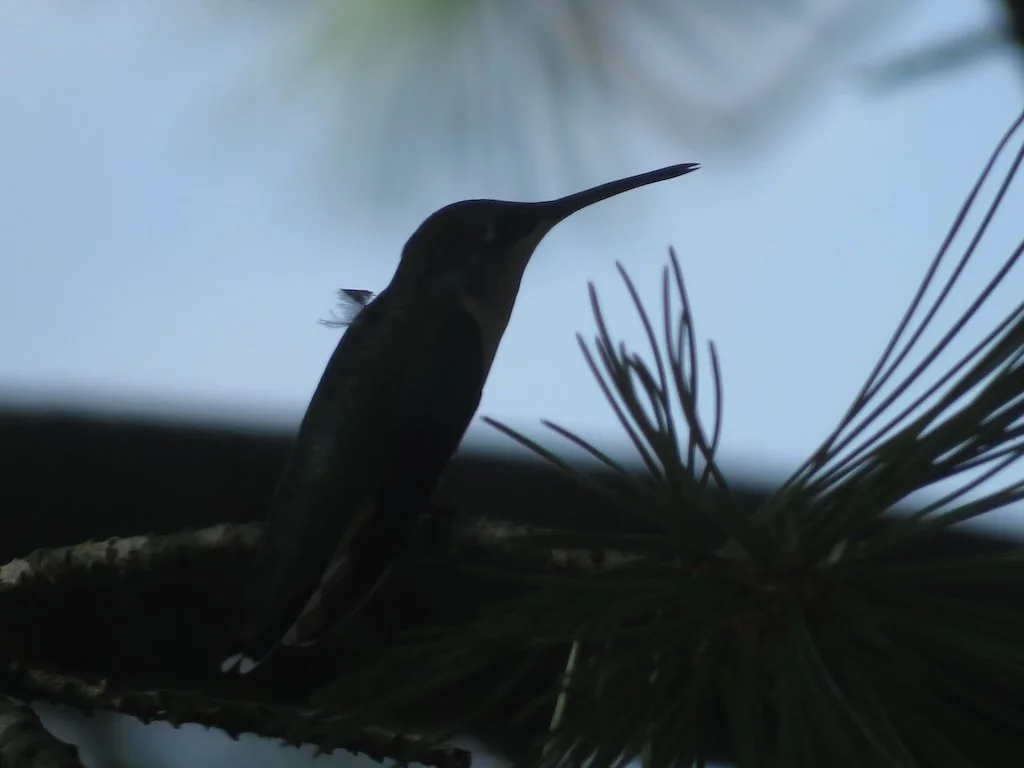
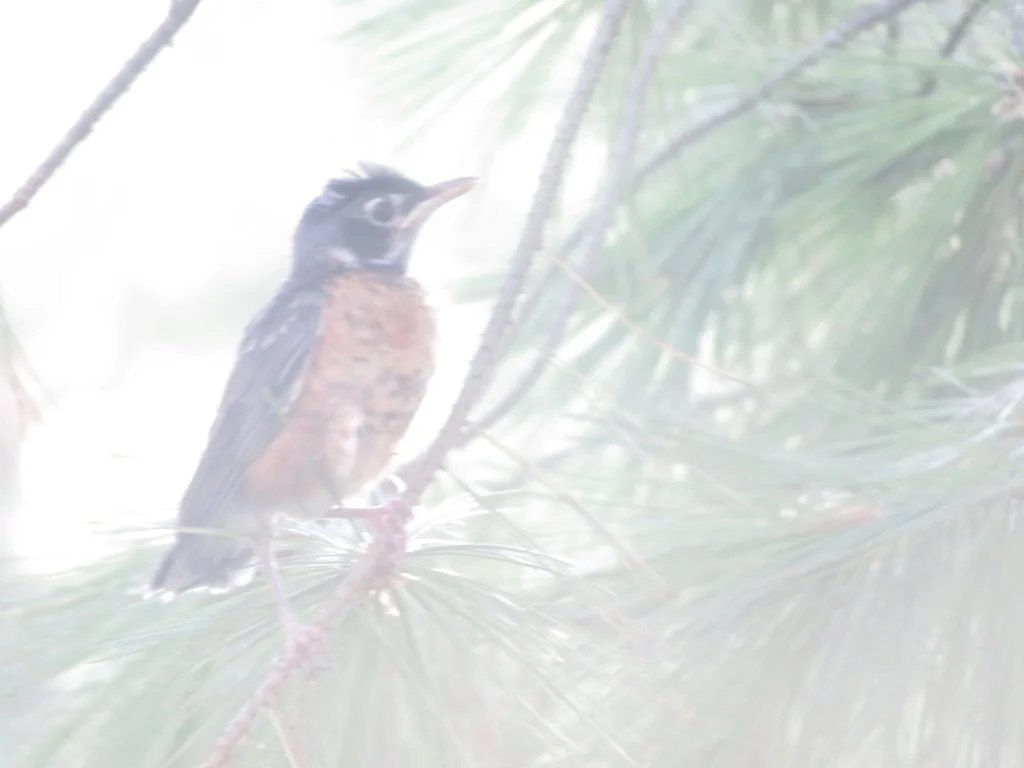
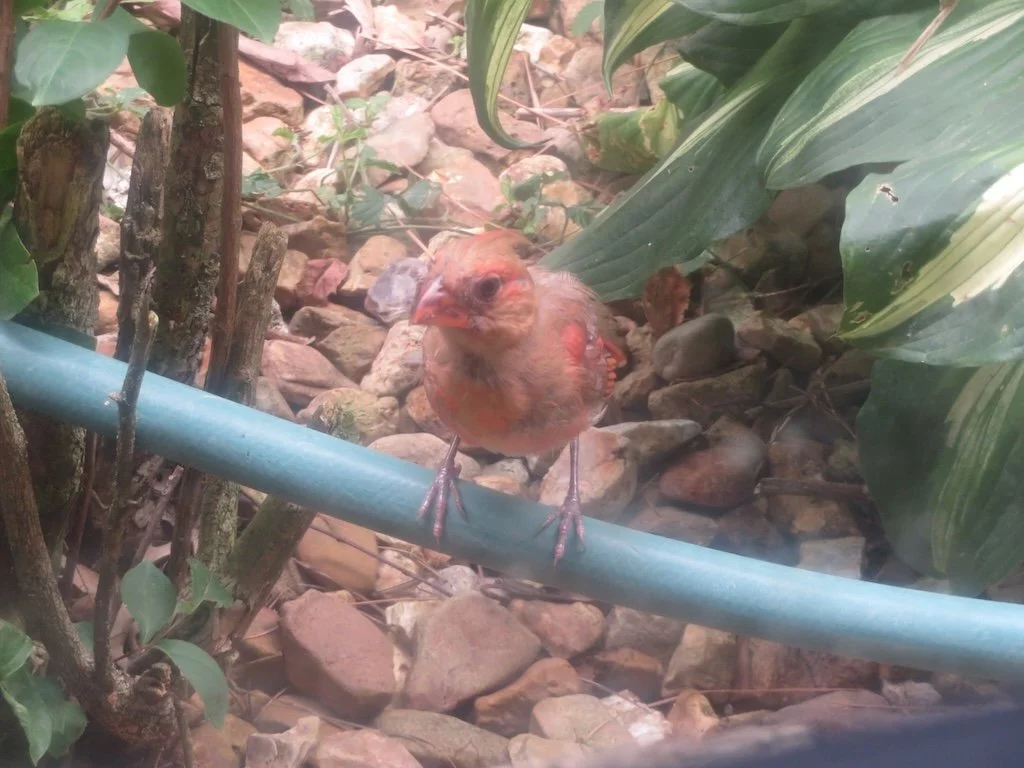
  • Juvenile birds (cardinal and robin) and an adult hummingbird

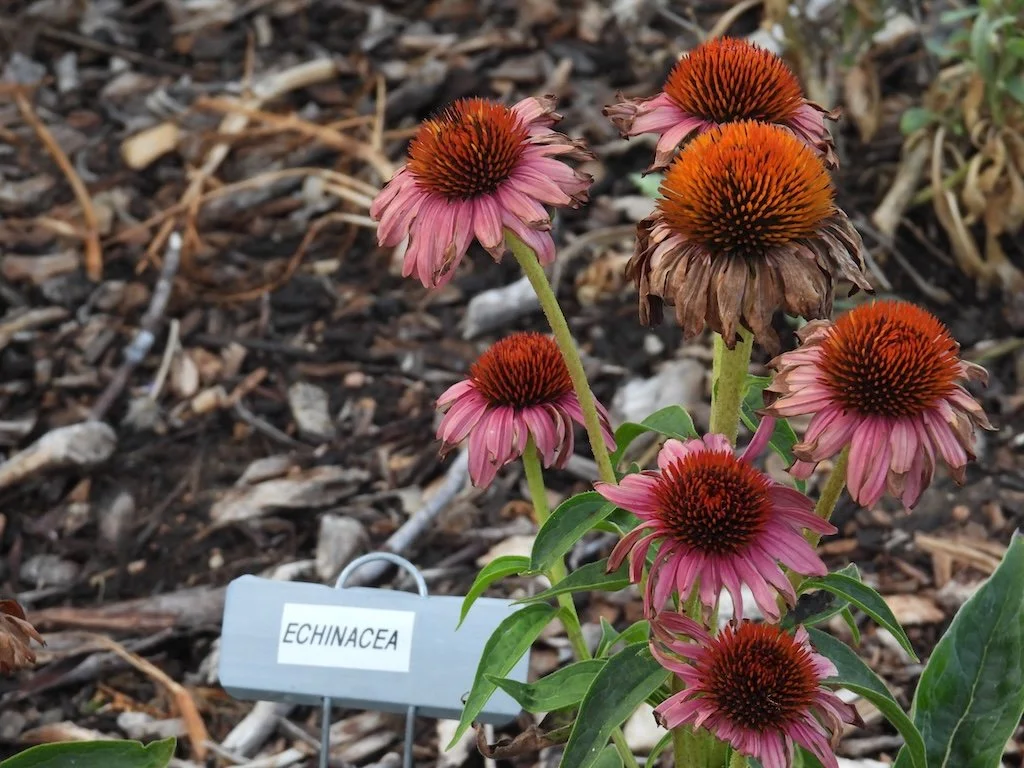
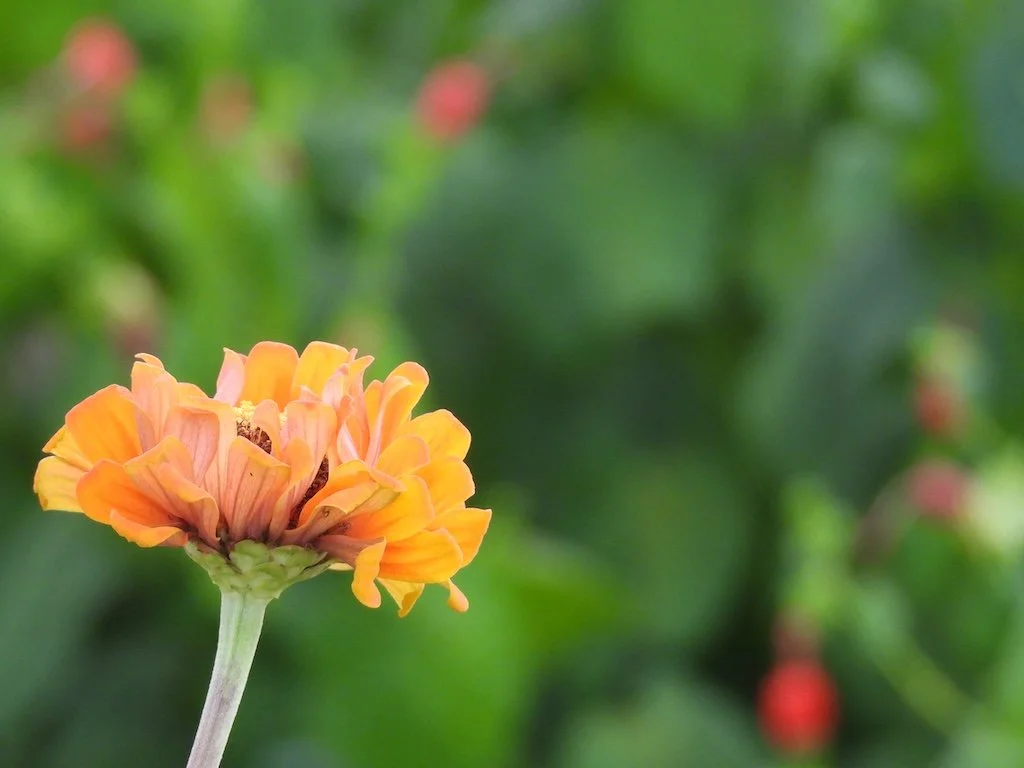
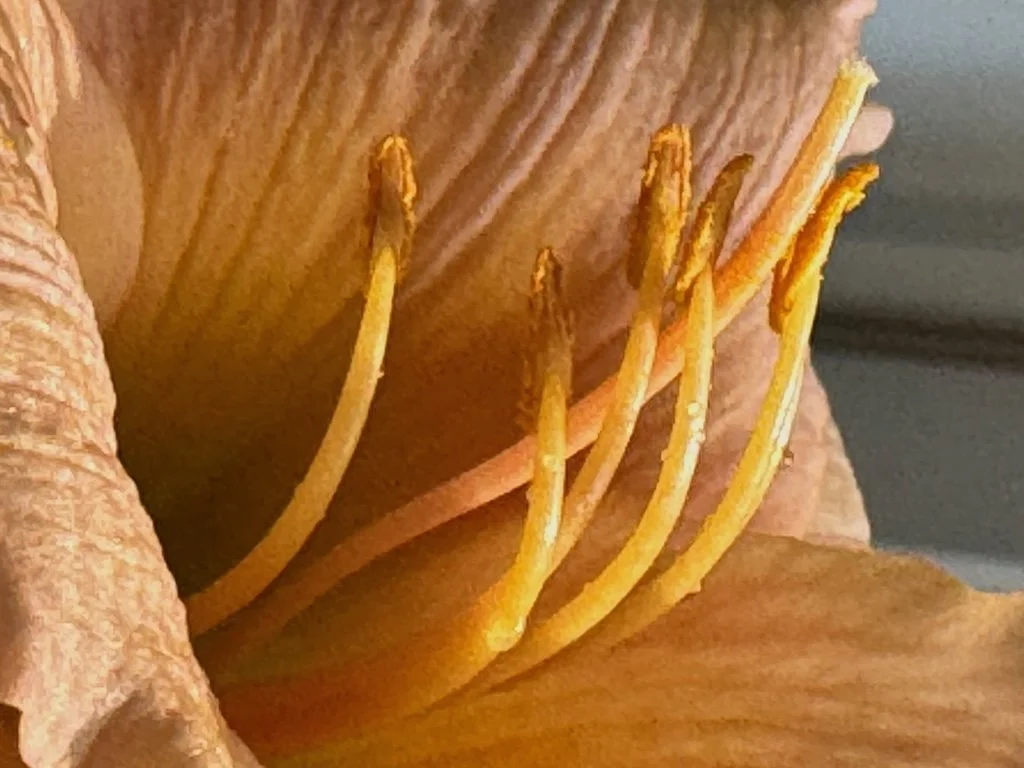
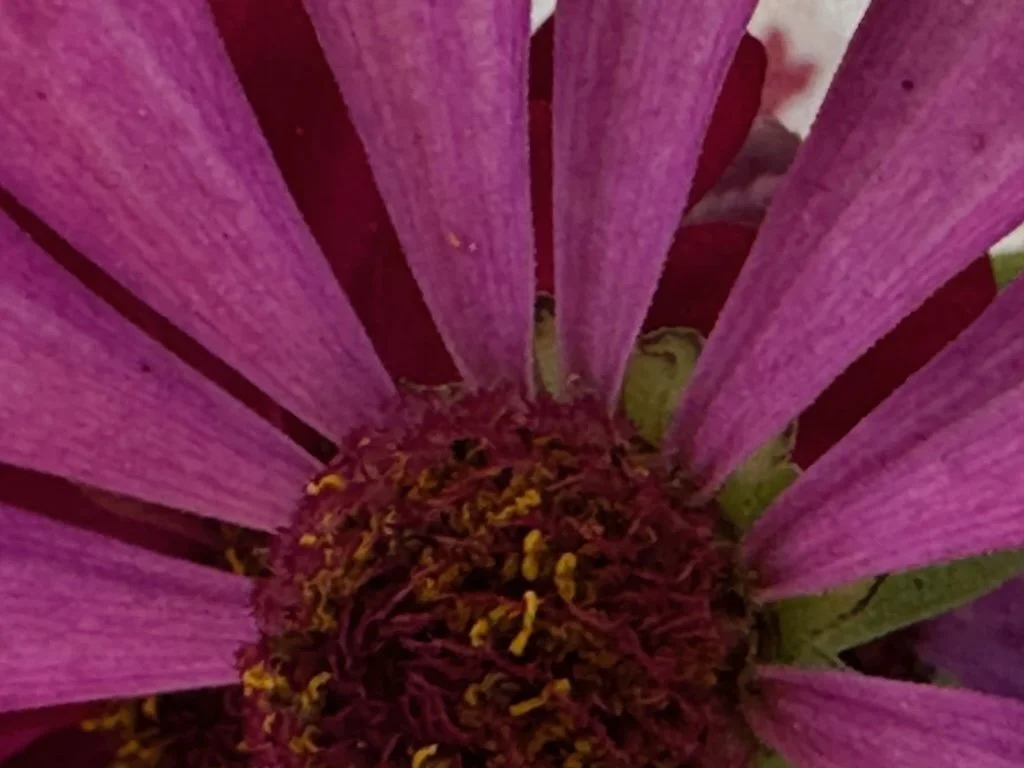
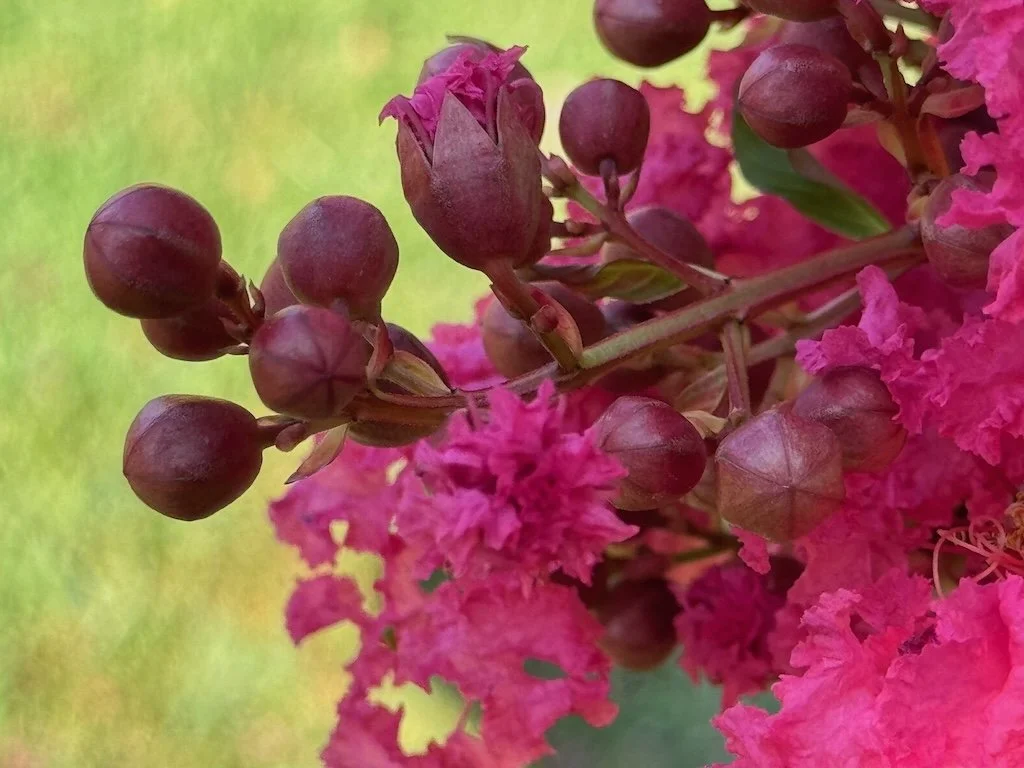
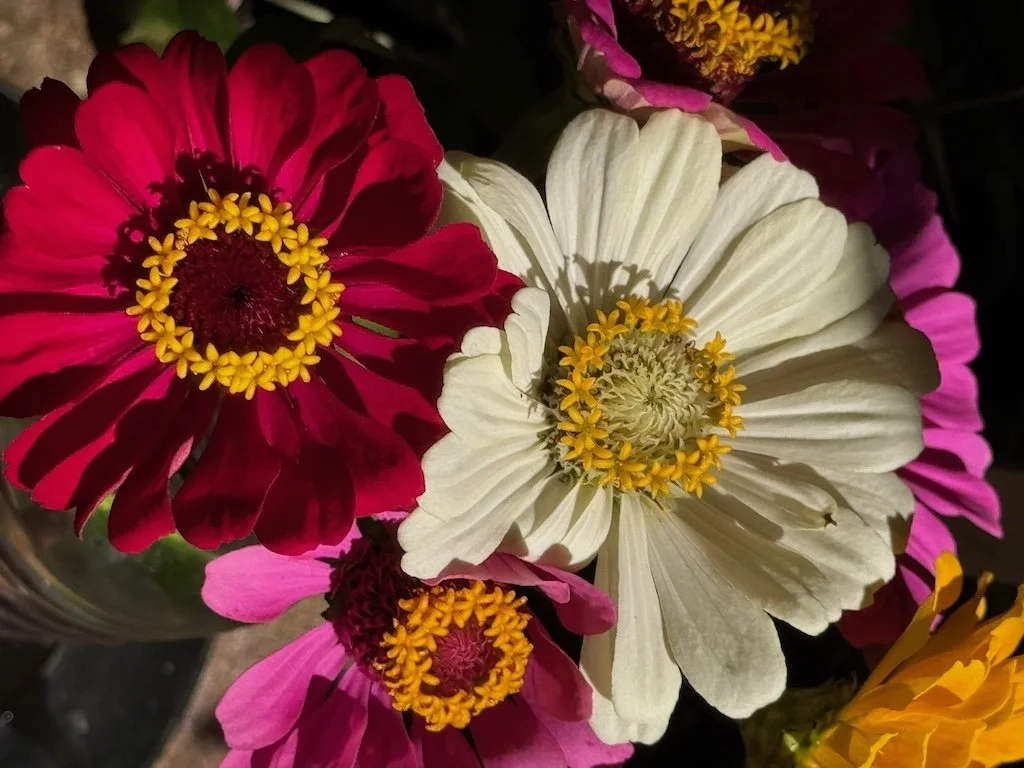
  • Flowers and plants (pokeweed, naked lady lilies, zinnias, crape myrtle, cone flowers, daylily)

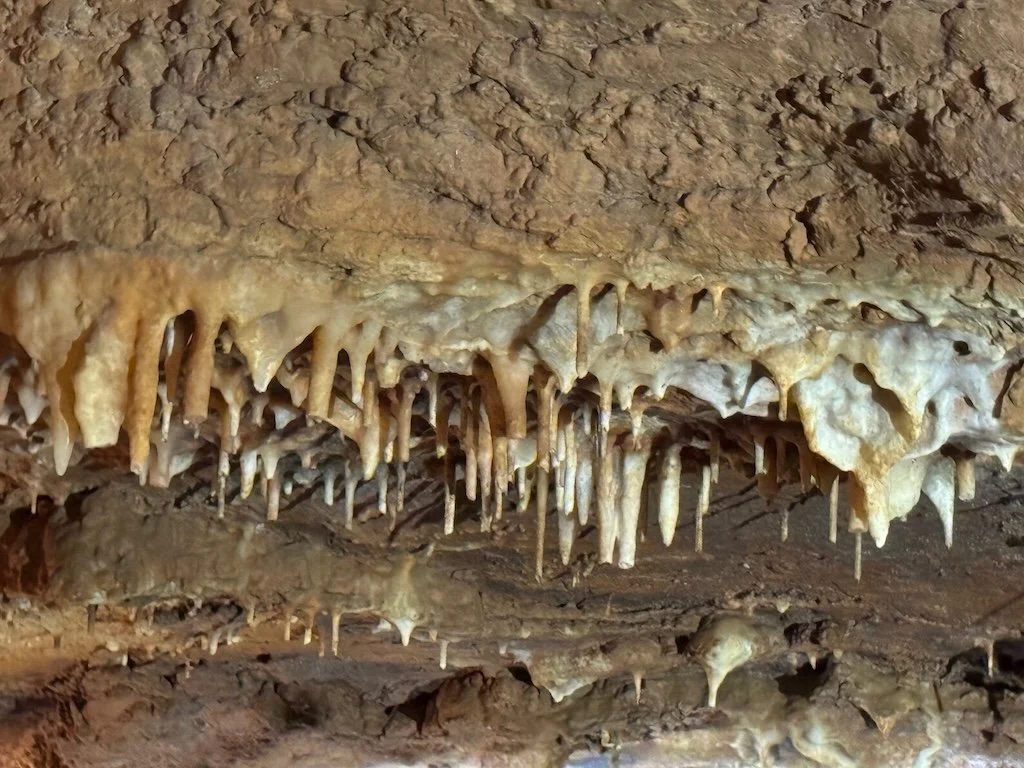
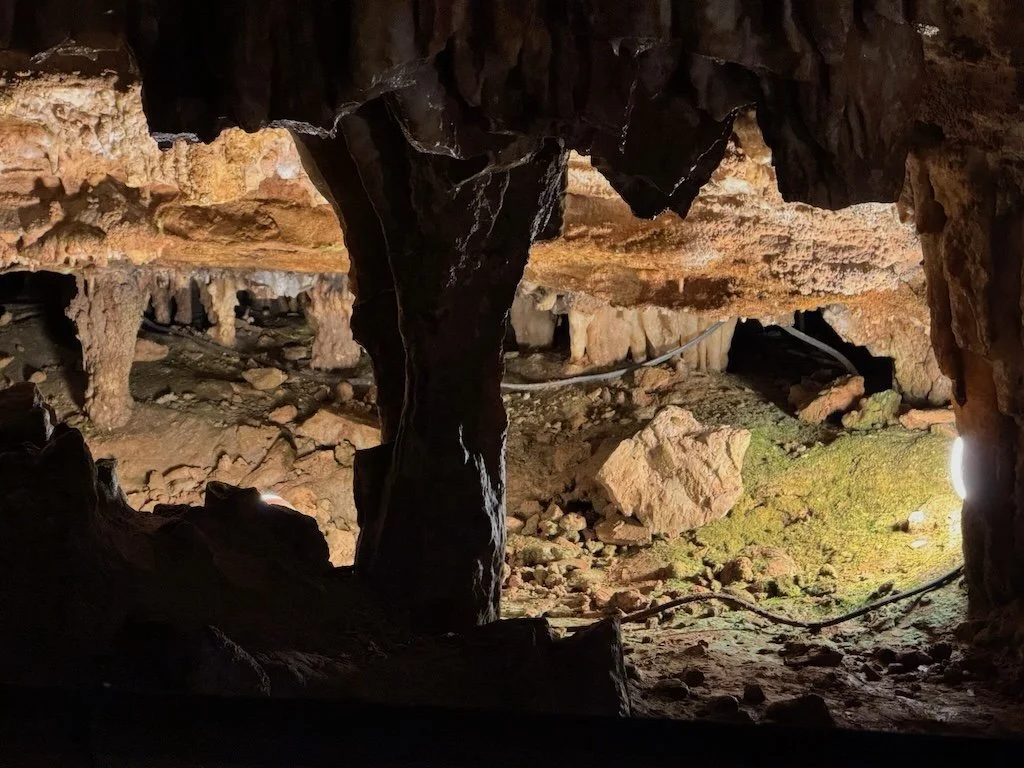
  • Caves (Cosmic and Onyx)

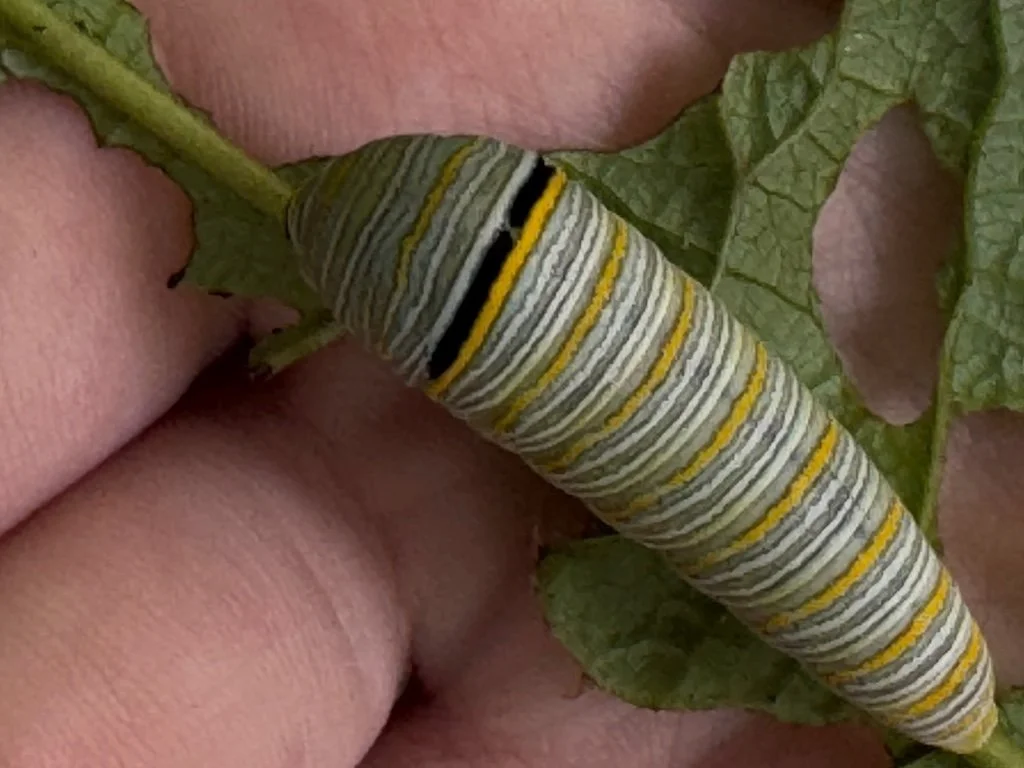
  • Caterpillars (spicebush swallowtail and zebra swallowtail)

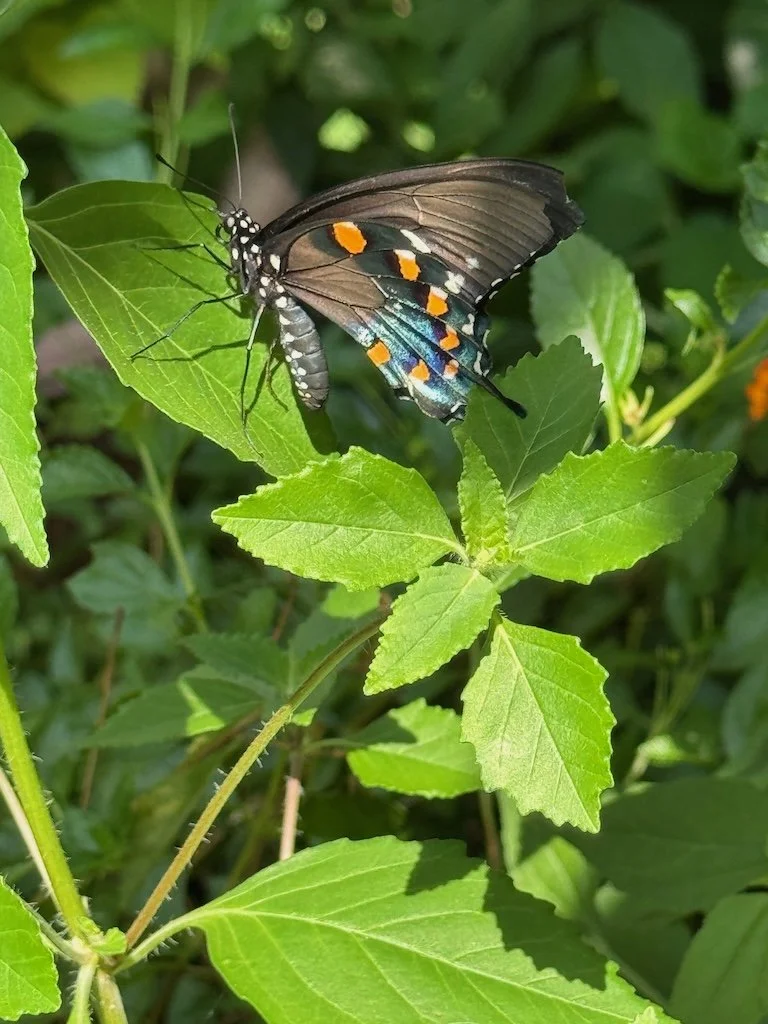
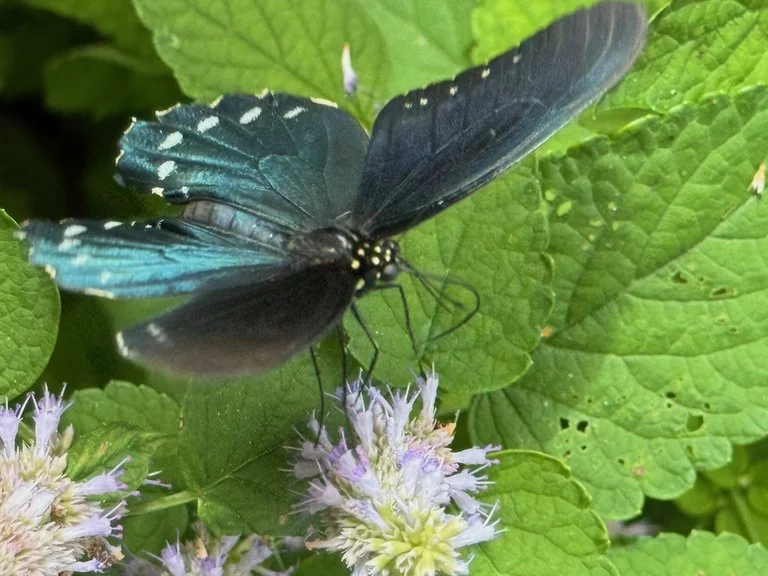
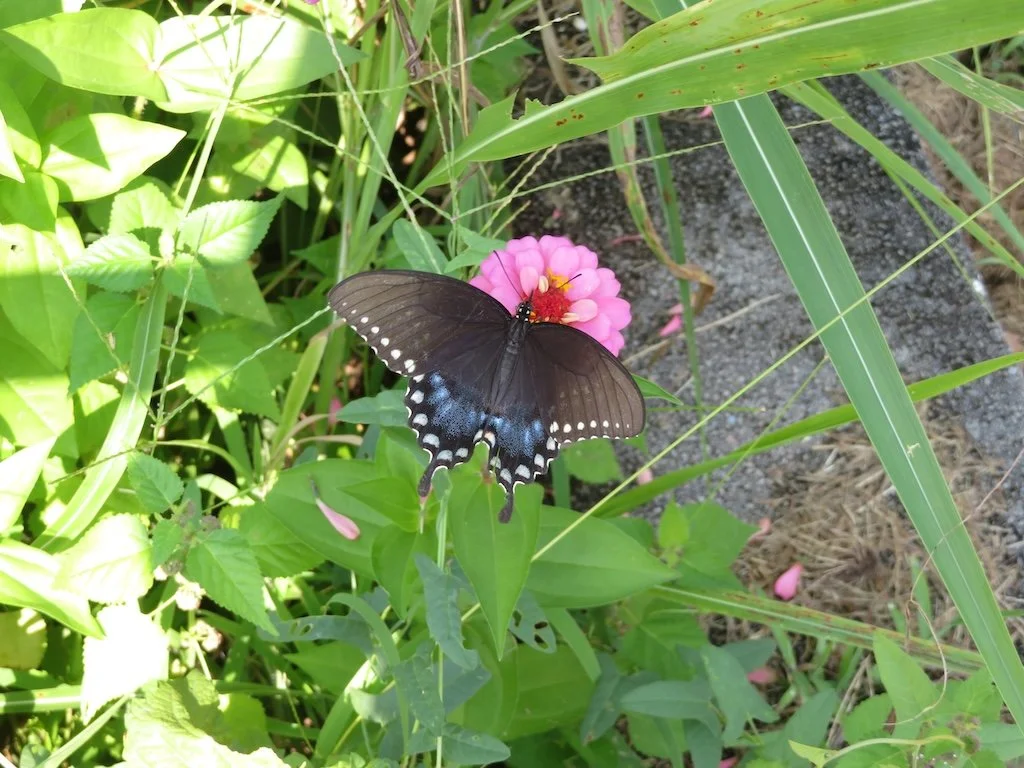
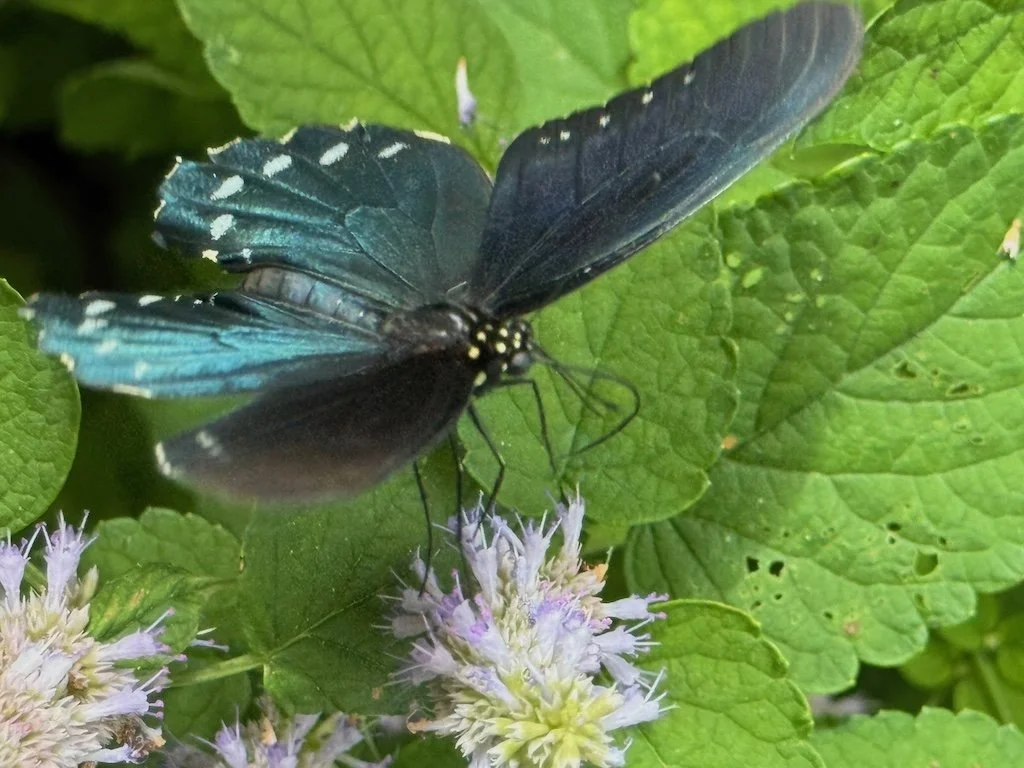
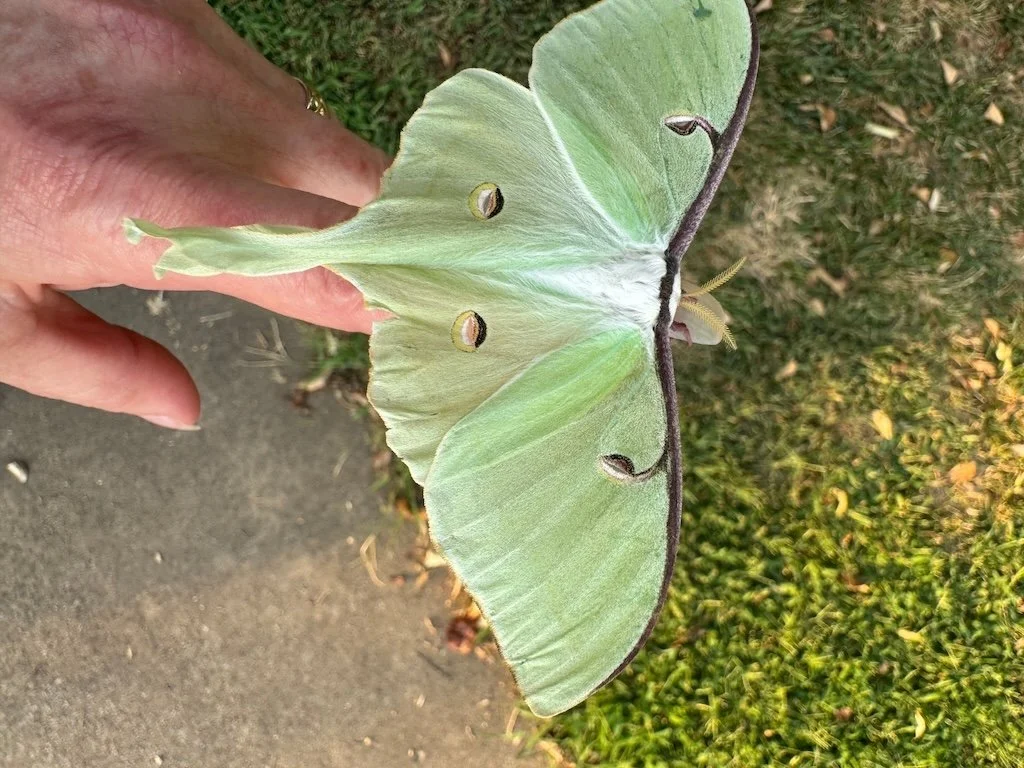
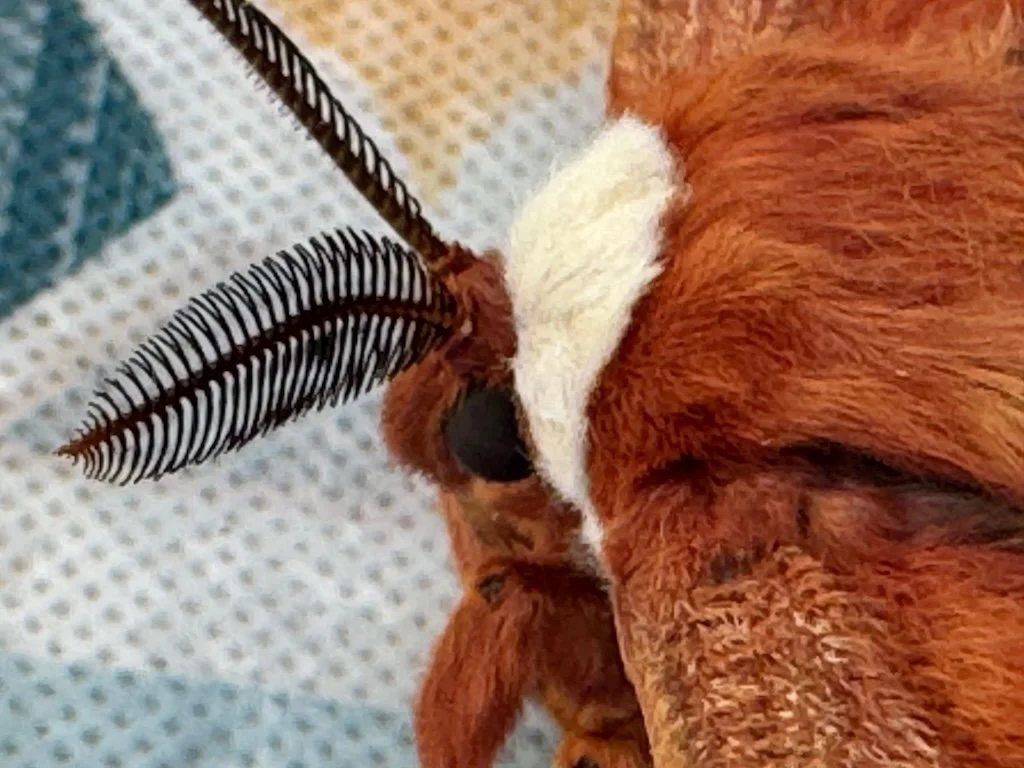
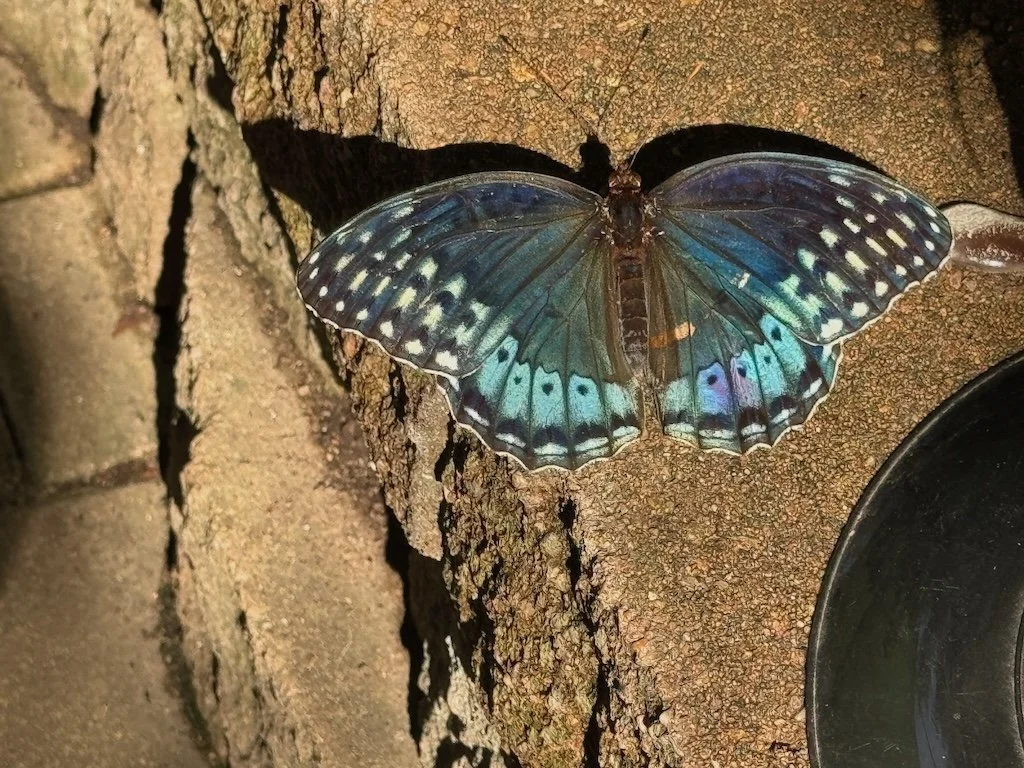
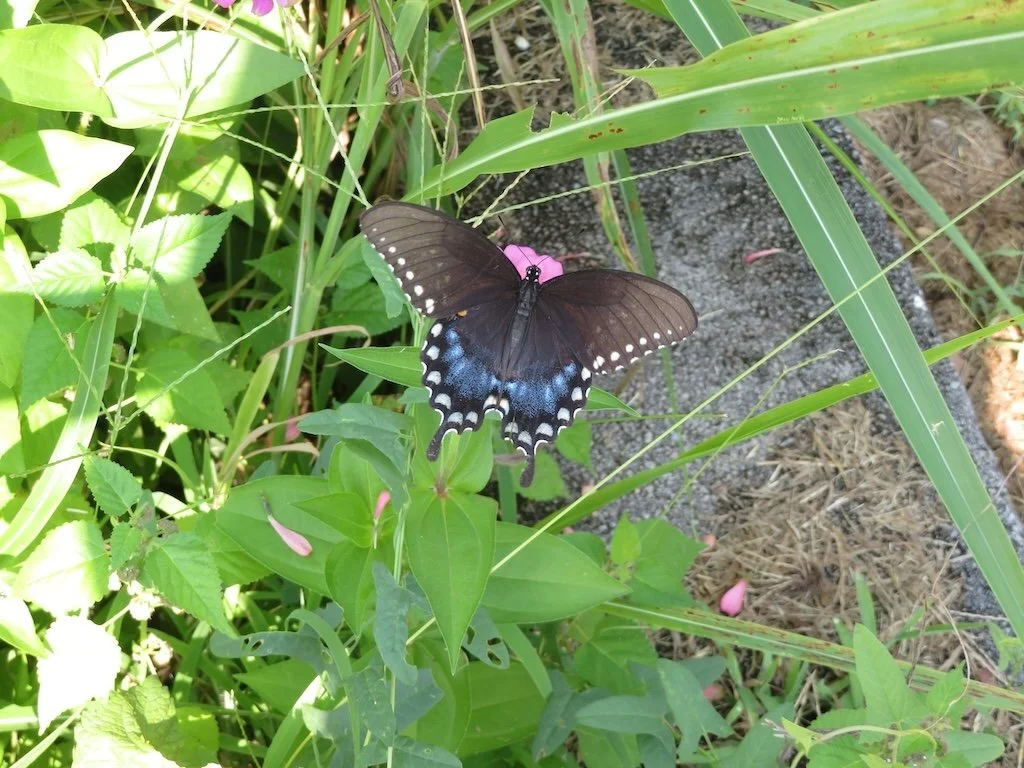
  • Butterflies and moths (spicebush swallowtail, red spotted purple, cecropia moth, luna moth

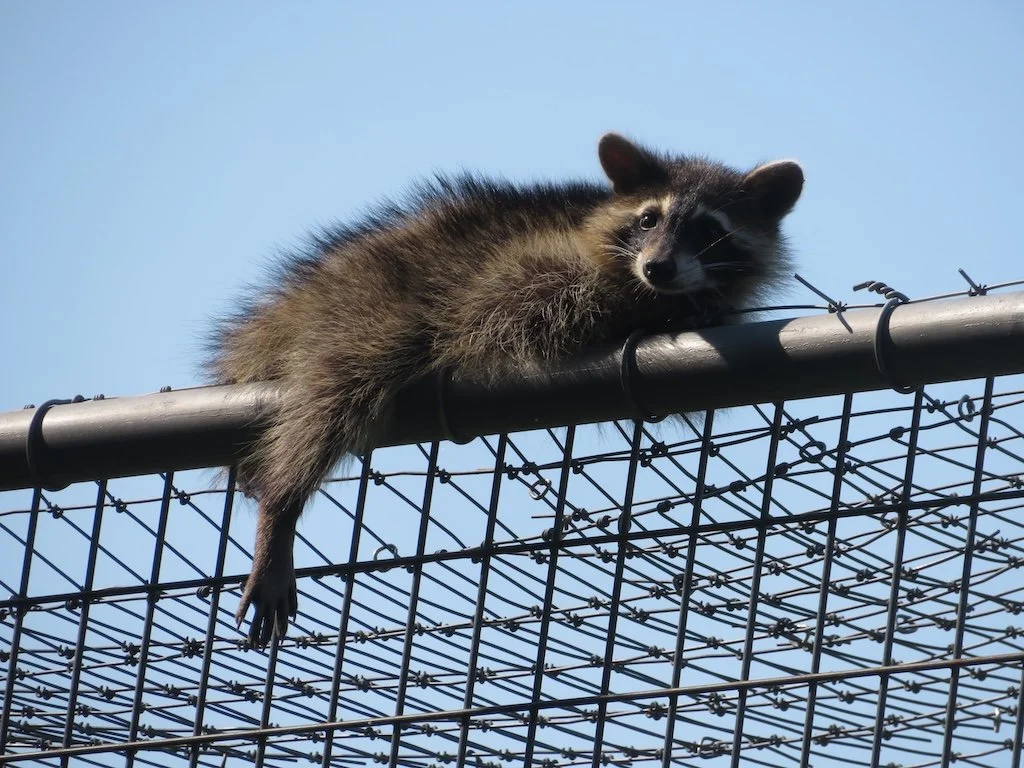
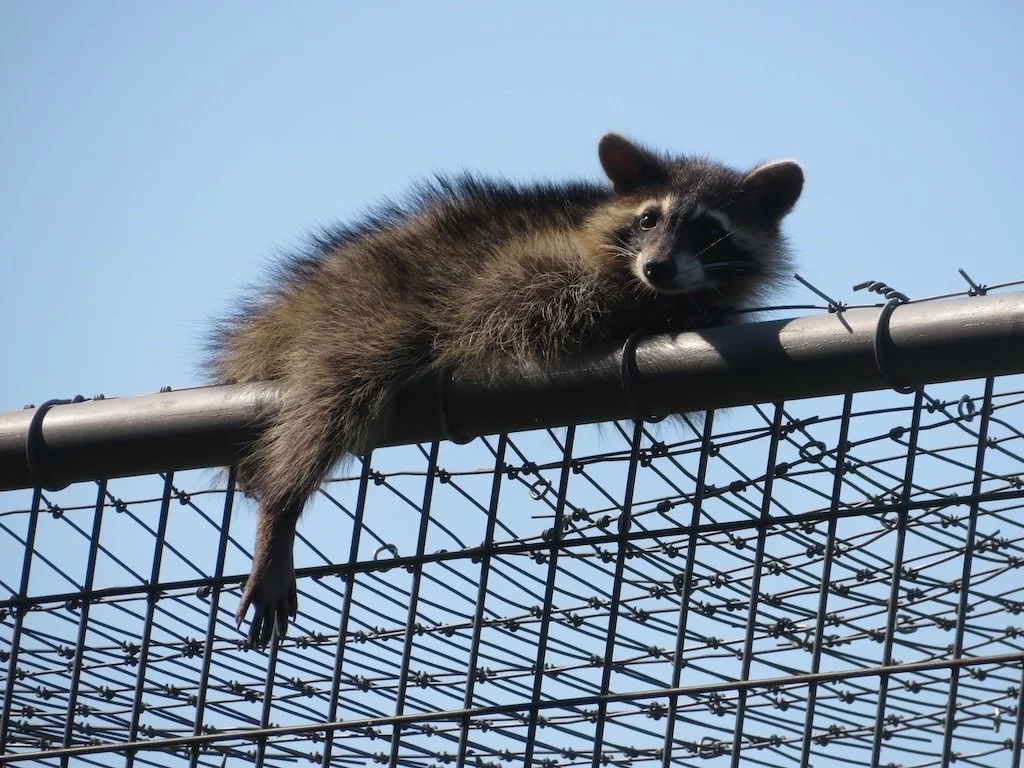
  • Juvenile racoon

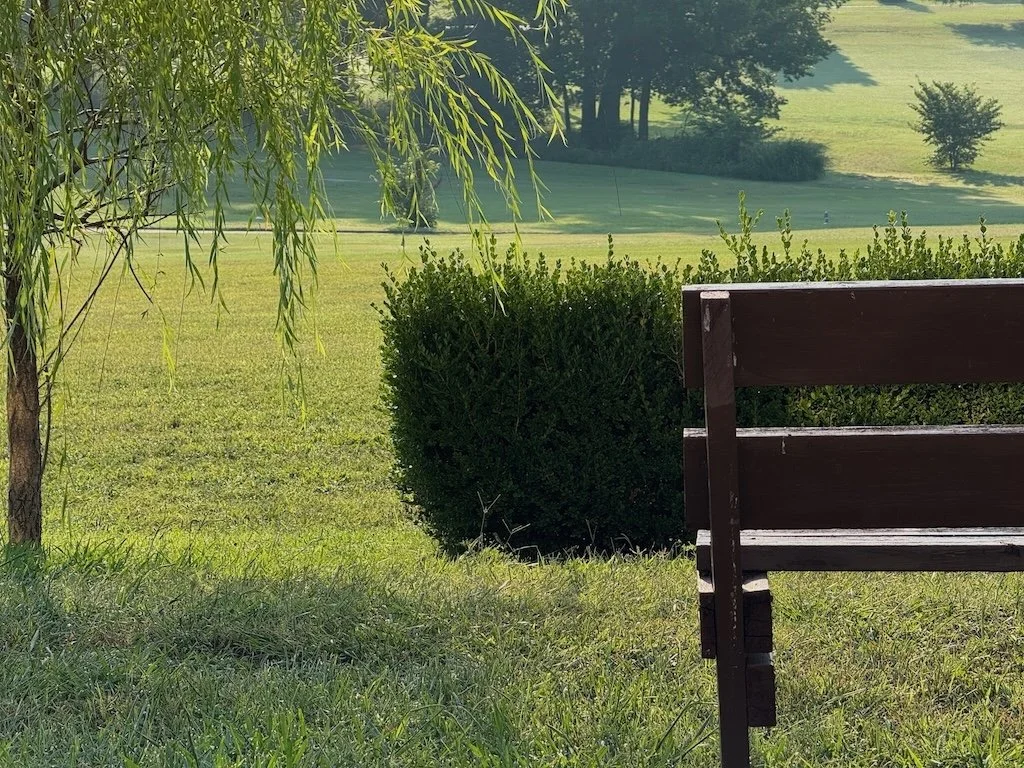
  • Edge of a golf course scene

The picture of the juvenile robin was taken through a window and with camera settings that gave it a hazy look to capture the ‘feel’ of the day – it was a very humid August day! The one of a bench looking out onto a golf course was an attempt to capture the morning mood as we prepared to leave our Berryville hotel; it was a warm, sunny morning…full of bird songs…a good beginning of the day.

Enjoy the August 2021 slide show!

Gleanings of the Week Ending August 23, 2025

The items below were ‘the cream’ of the articles and websites I found this past week. Click on the light green text to look at the article.

The strange-but-true origin story of the humble potato - Scientists have known that potatoes are most closely related to two groups of plants — the tomatoes and a cluster of three species called Etuberosum. Certain genes suggested that potatoes were more closely related to tomatoes, while other genes gave the impression that potatoes and Etuberosum had the closer relationship. The interbreeding event occurred some 9 million years ago, which happened to be excellent timing for the potato. This is when the Andes were forming and lots of cold and dry high elevation habitat was appearing.

Pompeii’s Secret Second Life Revealed by Latest Archaeological Finds - Shortly after Pompeii was buried in up to 20 feet of ash and pumice, people returned, some to sift opportunistically through the ruble, and others to try and restart their lives as best they could. The redevelopment had Rome’s backing. By the 5th century, life in the ruined city grew even more strained following the structural damage dealt by resurgent seismic activity, including a second eruption of Vesuvius in 472 C.E. Within 150 years, Roman life at Pompeii appears to have ended. This time for good.

Why lung cancer is a 'hidden epidemic' in this part of the world - There are almost no nerve endings in the lungs, so in the early stages, the most common symptom of lung cancer is no symptom at all. And when symptoms do appear, they are often quite generic — chest pain, coughing up blood, and difficulty breathing. So, doctors in sub-Saharan Africa often misdiagnose lung cancer patients as having tuberculosis, given the high burden in the region. Patients would go through the whole treatment regimen for tuberculosis and not really be investigated for lung cancer. Those lost six to nine months of possible treatment can be deadly, since 55% of people with lung cancer die within a year.

Should we all be taking vitamin supplements? - Evidence is starting to grow that popping a daily multivitamin could be beneficial for health, particularly for older adults. "Mega-dosing", or taking quantities of vitamins higher than the recommended daily allowance, is not recommended.

The Amazon Rainforest Approaches a Point of No Return - Under increasing threats from rampant deforestation and climate change, portions of the Amazon now emit more carbon to the atmosphere than they absorb. The southern Amazon has become hotter and drier, with less soil moisture, lowered water tables, and a higher-than-normal rate of tree mortality. Scientists now believe the Amazon could reach its tipping point — when it loses its natural ability to regenerate and will become permanently degraded — as soon as 2050. The impacts will reverberate globally.

The Many Types of Fluids That Flow in Yellowstone - Yellowstone is no doubt one of the most dynamic places on Earth. The many types of fluids that flow between the mantle and the atmosphere generate explosive volcanic and geyser eruptions, create lava flows, bubbling mud pots, and very rare sulfur flows, and they span nearly the full range of possible material viscosities.

New, Implanted Device Could Offer a Long-Elusive, Drug-Free Treatment for Rheumatoid Arthritis - In late July, the United States Food and Drug Administration approved an implant that uses electrical signals to control inflammation by tapping into the vagus nerve—a pair of nerves that connect the brain with important internal organs. The move marks the first time an electrical therapy has been approved for the treatment of any autoimmune disease.

Midwestern butterfly count: Big data yields bad news and clues – A study of 4.3 million observations in the U.S. Midwest from 1992–2023 to characterize changes in butterfly biodiversity. The results: 59 of the 136 species declined in abundance over the study. Both common and rare butterflies are waning.

104 Grams of Protein For $1.50? - How much ribeye steak is needed to reach 104 grams of protein? It would be about 19 ounces of ribeye steak, which costs $12–20 per pound, and premium cuts can cost more. The ribeye would cost about $14 on the low end or a bit over $20 on the high for the non-premium cuts. The black-eyed peas are only $1.50.

Historic Artifacts from Frank Lloyd Wright’s Only Skyscraper Saved by Conservancy – The Price Tower has been in the news over the past few years…controversy and renovations promised never done. Some objects from the building were sold in a breach of the easement on the building…and now they have been purchased by the Frank Lloyd Wright Conservancy to avoid their being dispersed; the plan is for them to be returned to the building after renovation. The post includes pictures!


Thinking of my Mother

I cut one of the naked lady lilies to bring indoors – a single stem in a vase that easily fits on the windowsill.

The flowers remind me of my mother. The bulbs came from her garden to mine a few weeks before she died. Until this year, I had thought they hadn’t survived the emergency transplanting in January 2023. When I noticed the three stalks with blooms (I had missed the foliage in the early summer), they prompted memories of her last decade.

  • Her joy when they bloomed in August. She could see the sea of pink blooms from her garden room. She would sit by the largest window in the morning sun to read the paper or make notes….or she would look up from working on the jigsaw puzzle. The scene of the outdoors called to her repeatedly.

  • Her desire to be outdoors among the blooms. She frequently went outdoors when it was cool enough (generally only in the morning in August) to see the flowers either from the edge of the patio or wading into the flower bed to cut a few stems. Toward the end of the decade, a walker was increasingly required, and the family tried to accompany her into the beds….although she still managed some solo forays and (thankfully) came back unscathed.

  • Her making of bouquets. The naked lady lilies are not ‘day’ lilies, so they lasted longer after they were cut. She would sometimes have a vase full of just the lilies, but other times would combine them with other plants….but always the lilies were the standout of the bouquets for the duration of their bloom time.

I have some other plants from my mother’s garden (chives and irises are the ones thriving), but the naked lady lilies are the ones that prompt the most memories…her good times in August.

Butterfly House – August 2025

So many things to see in the Botanical Garden and the Roston Native Butterfly House this month. There are plenty of native plants in bloom in the rain garden on the walk between the Botanical Center and the house….but I just take a quick look since I want a few minutes to get things cleaned up before turning the sign to ‘open.’

Sometimes we find butterflies that have died overnight. I took a picture of one before we put it in the small bin we keep for butterflies that have succumbed. Another morning I found the 4 parts of a cecropia moth’s wings scattered on the floor; maybe a mouse ate the body during the night?

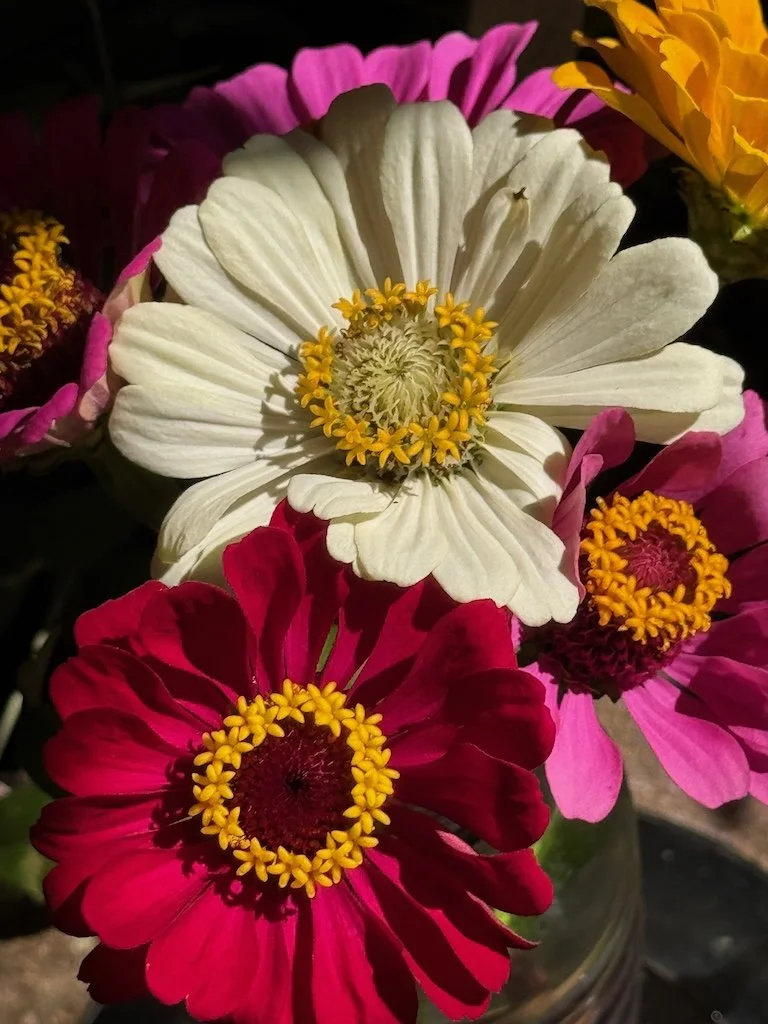
I like to see butterflies getting nectar from flowers…but sometimes it is enough to see them ‘resting.’ There are often fresh zinnias for the butterflies – freshly cut from the Master Gardener area of the Botanical Gardens. And there is always something blooming in the house itself. I like the Zen of the place when there aren’t many people but there is always the magic of a child’s wonder seeing a butterfly in a way they haven’t before.

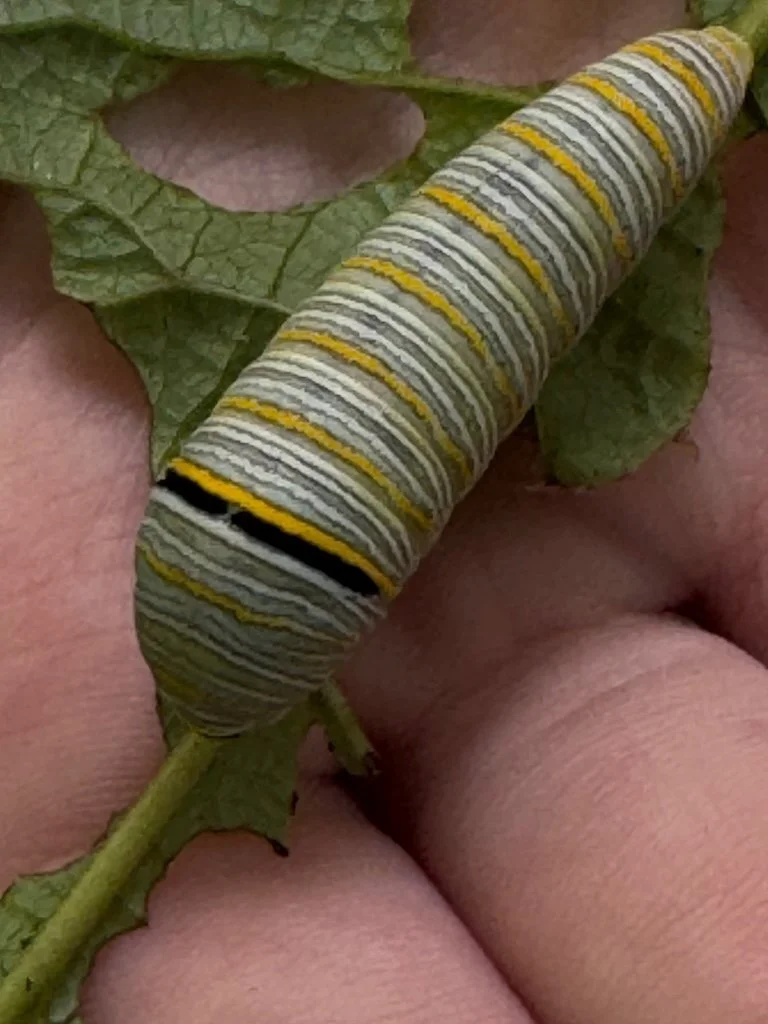
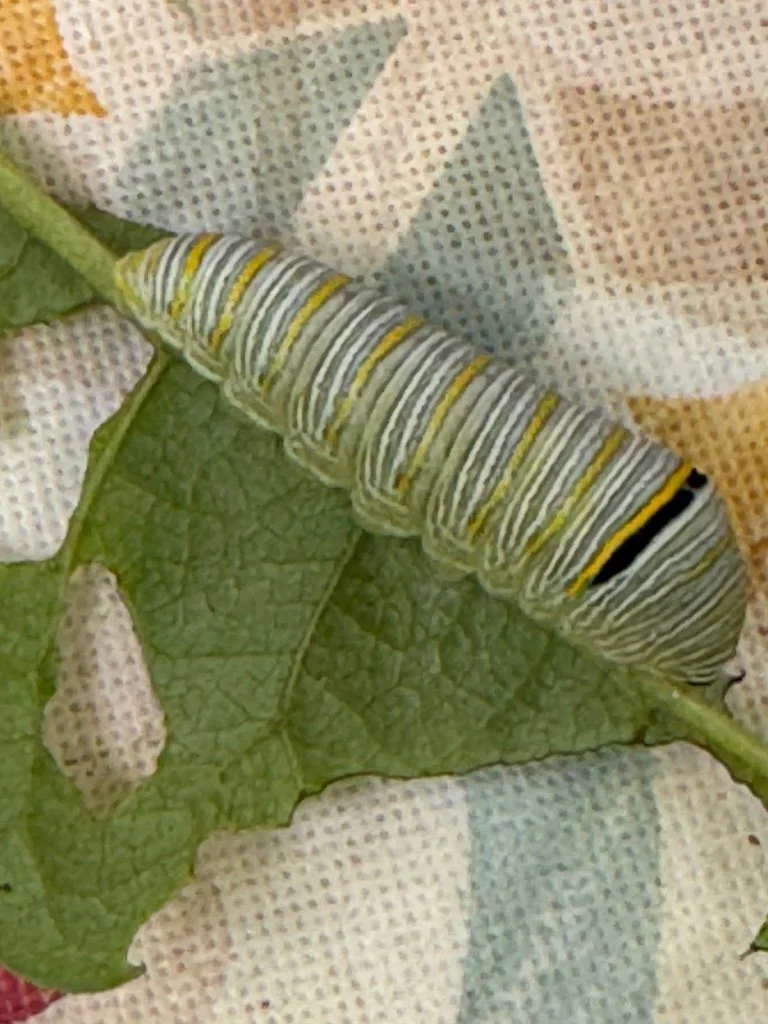
The caterpillar that was ‘new to me’ this month was a Zebra Swallowtail…large enough to make its chrysalis – picked up off the floor when it was trying to leave the plant!

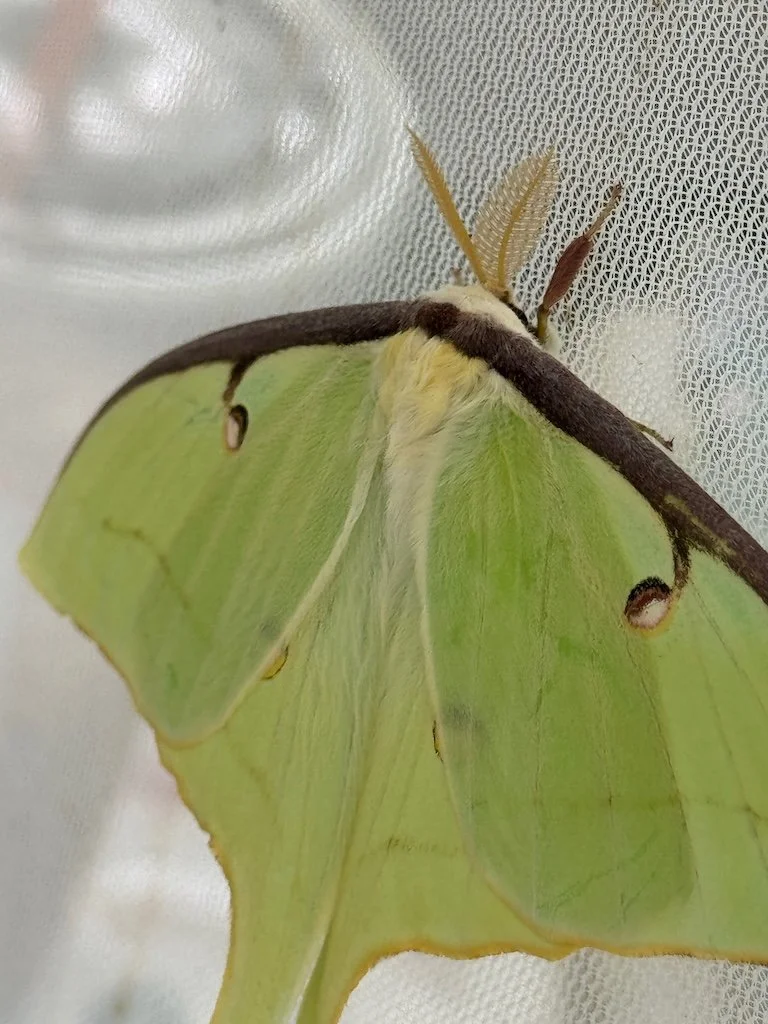
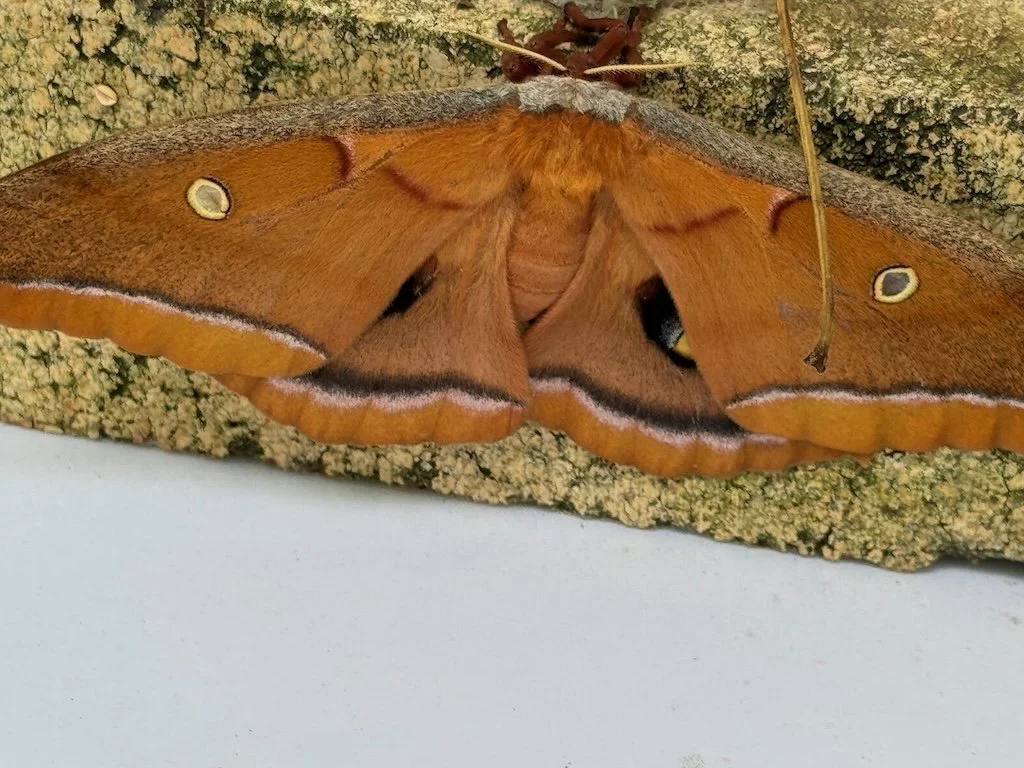
The moths are easily photographed because they are not very active during the day. The Luna moth is my favorite….but the Polyphemus is beautiful too. They, along with the Cecropia, have large caterpillars that are always interesting to visitors.

Turpentine Creek Wildlife Refuge

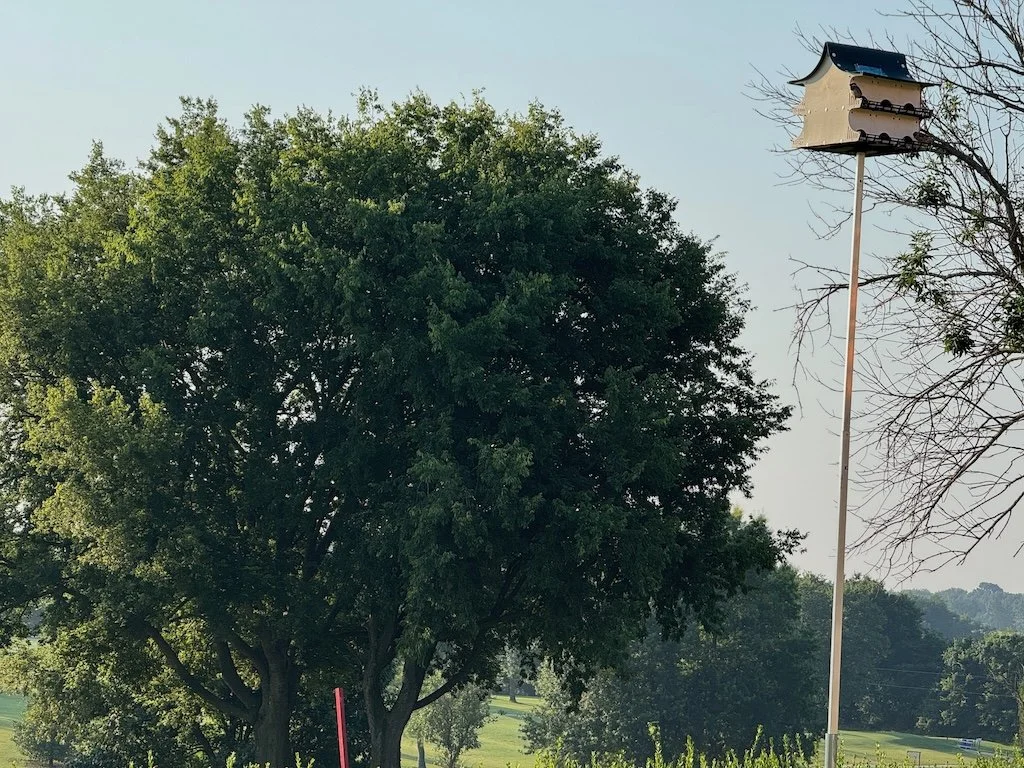
The next morning was bright and sunny. I appreciated the golf course scenes from the front of our hotel room. The sidewalk was wide enough to accommodate tables and chairs; quite a few people were outdoors enjoying the morning sunshine. The bird houses seemed to be populated with sparrows.

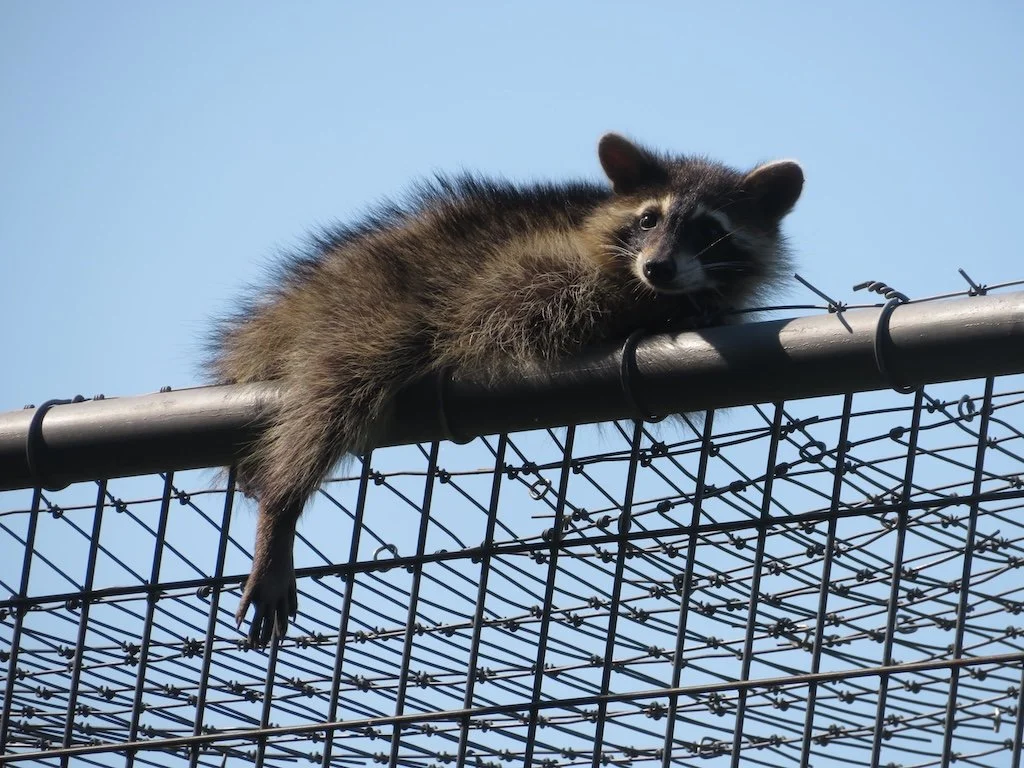
Our destination for the morning was Turpentine Creek Wildlife Refuge. It was our second visit (our first was in June of 2024) to see the big cats (and a few bears) that had been rescued from around the country and then provided for in this sprawling facility near Eureka Springs, Arkansas. Many of the cats have health challenges either from prior abuse and/or genetic disorders caused by inbreeding. We arrived just in time for the first tram tour at 9 AM. One high point of the tour for me was a juvenile racoon that was perched on the top of one of the enclosures. Hopefully it got itself back to the forest rather than wiggling through to where it would be no match for the big cat.

The other high point was sound. Two lions were communicating! We couldn’t see either one, but it was interesting to hear their back and forth conversation across the facility.

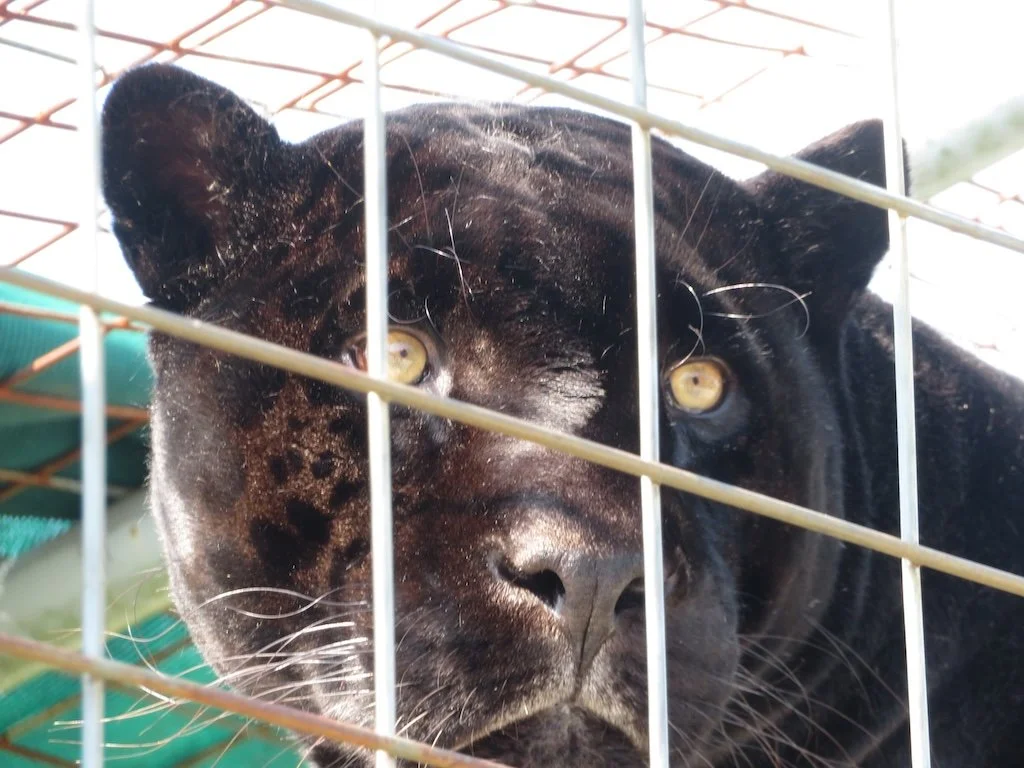
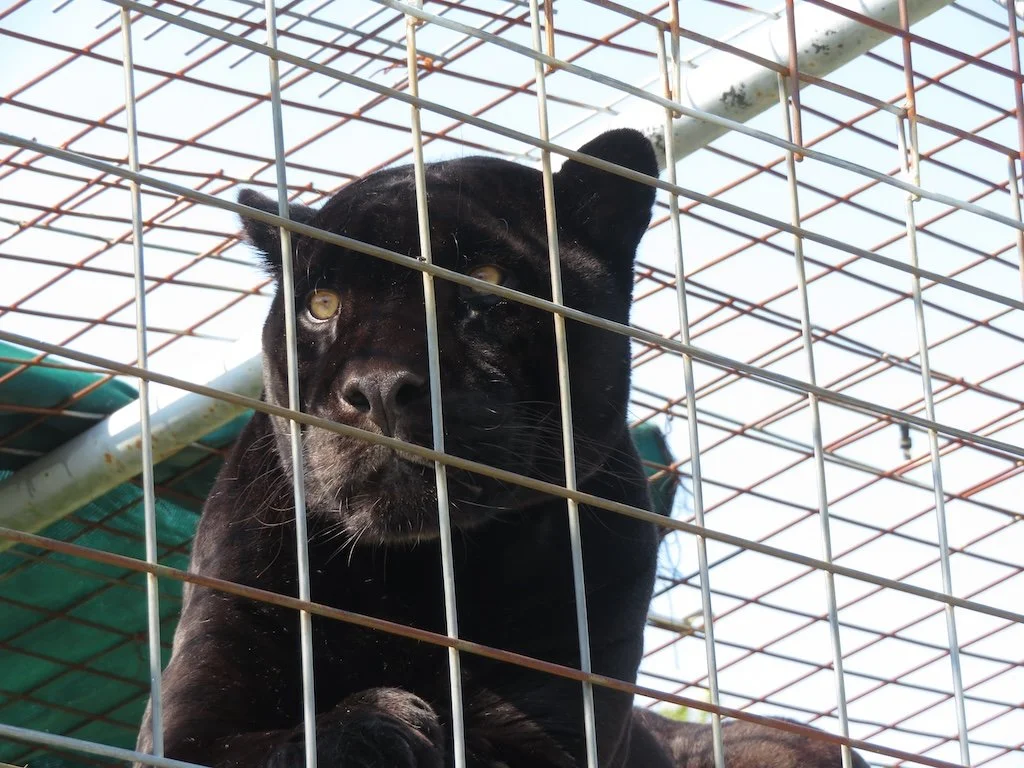
After the tram, we walked through the area closer to the entrance. I remembered some of the cats from our last visit – a serval found by a farmer in Missouri and brought to the refuge…some bobcats found as cubs. There are also some habitats for large cats. I remembered the black leopard; she was in the same place I saw her on my previous visit; She either is turned away from people or follows them as the move about on the other side of the double fence.

One tiger was new to her area and not settled in yet. She was near the back of the enclosure and trying to ignore people and the cats in the enclosure next door. A staff member was encouraging people to be quieter near her enclosure.

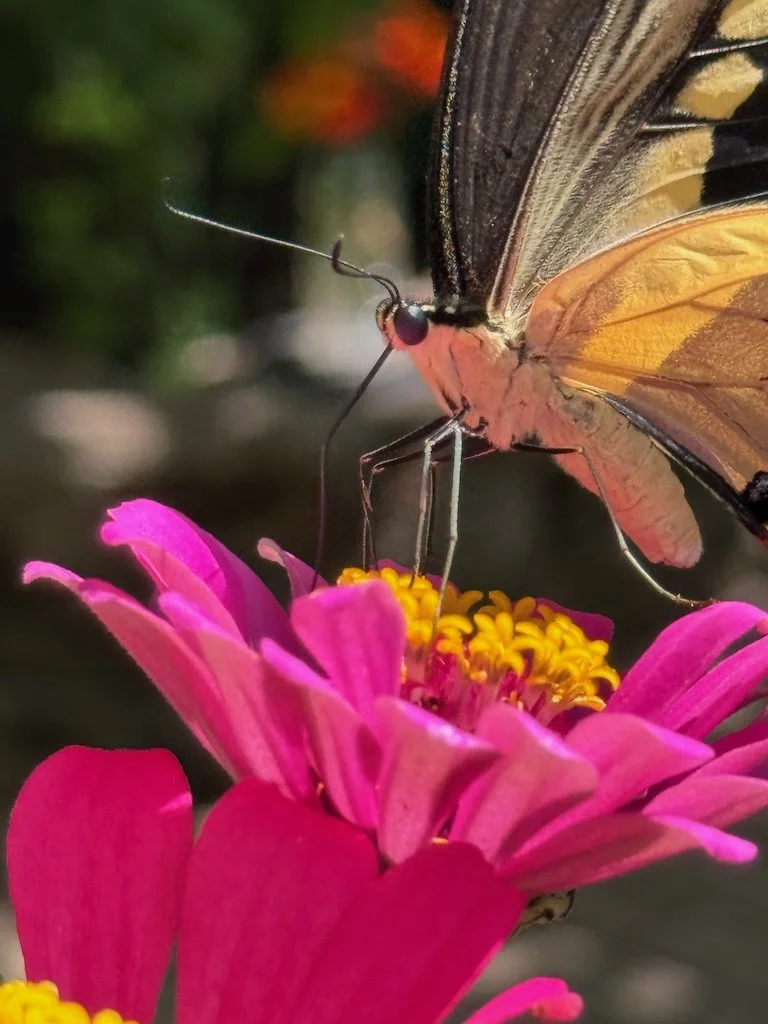
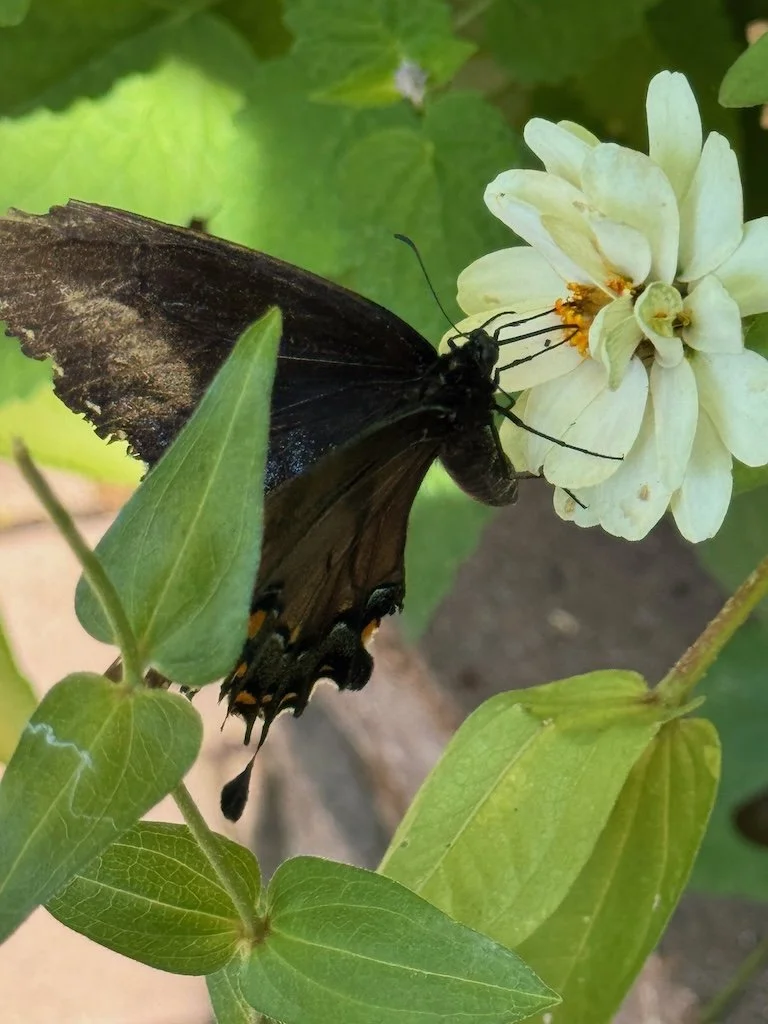
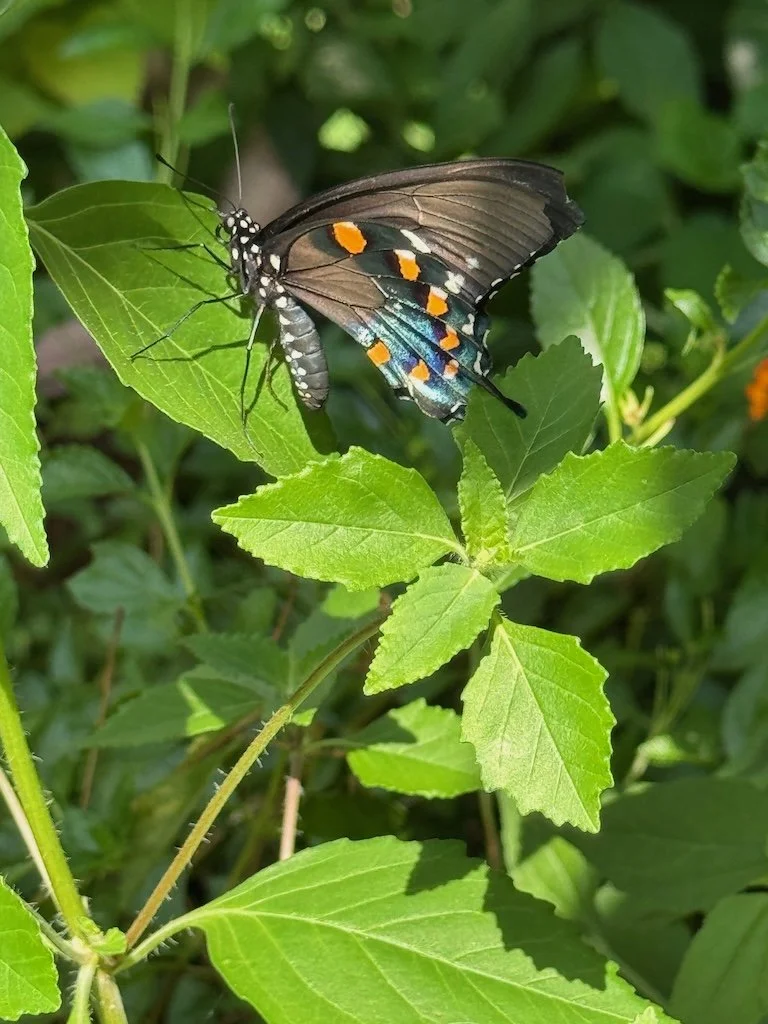
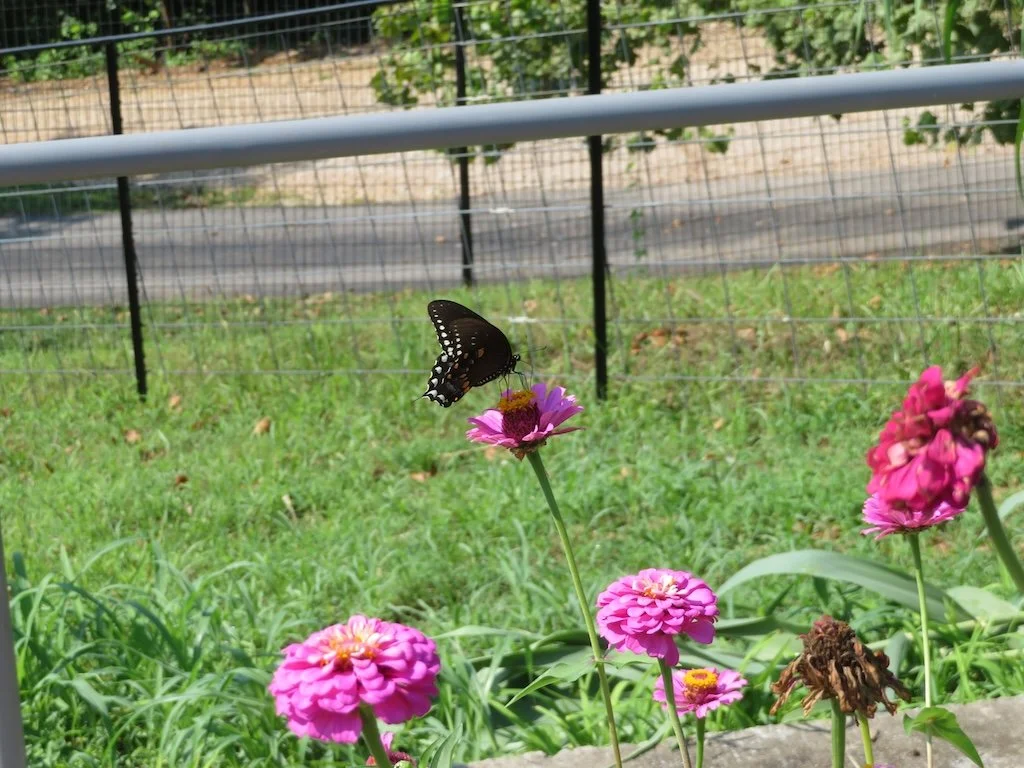
There were butterflies active on a patch of zinnias: several Spicebush Swallowtails, a dark morph of the Tiger Swallowtail (I am assuming….there was one that was a lot larger than the Spicebush Swallowtails), and a Common Buckeye butterfly.   

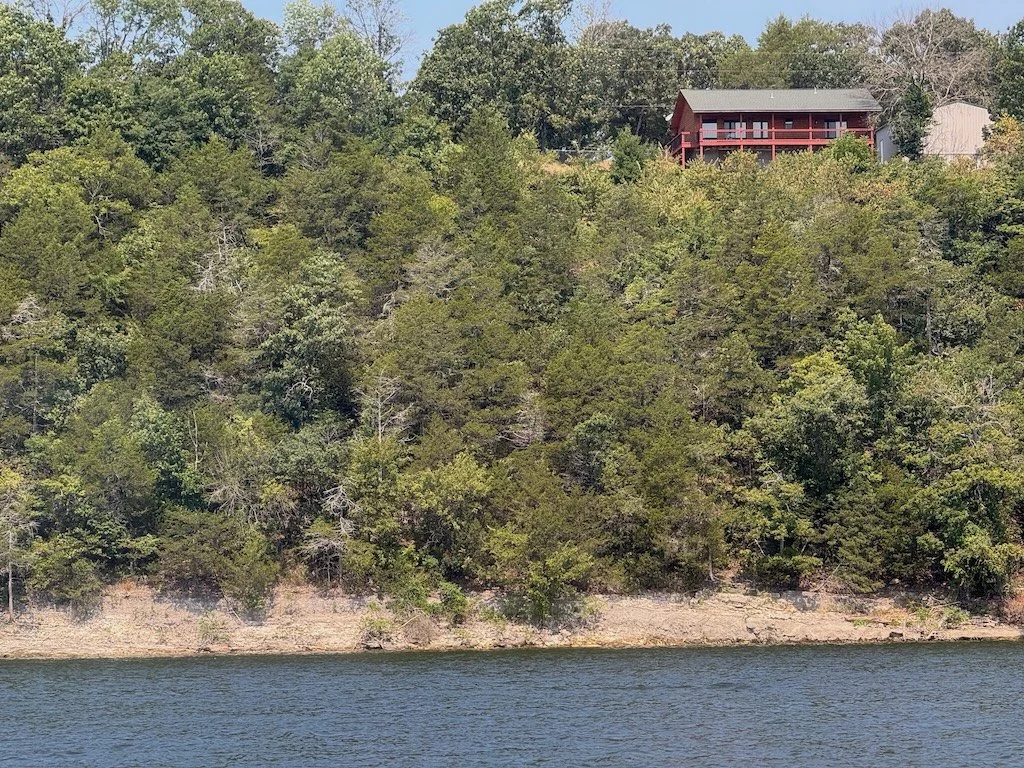
We headed toward home, stopping at a restaurant that floated on Table Rock Lake. I took a picture of the view from our table…the bluff across a narrow arm of the lake.

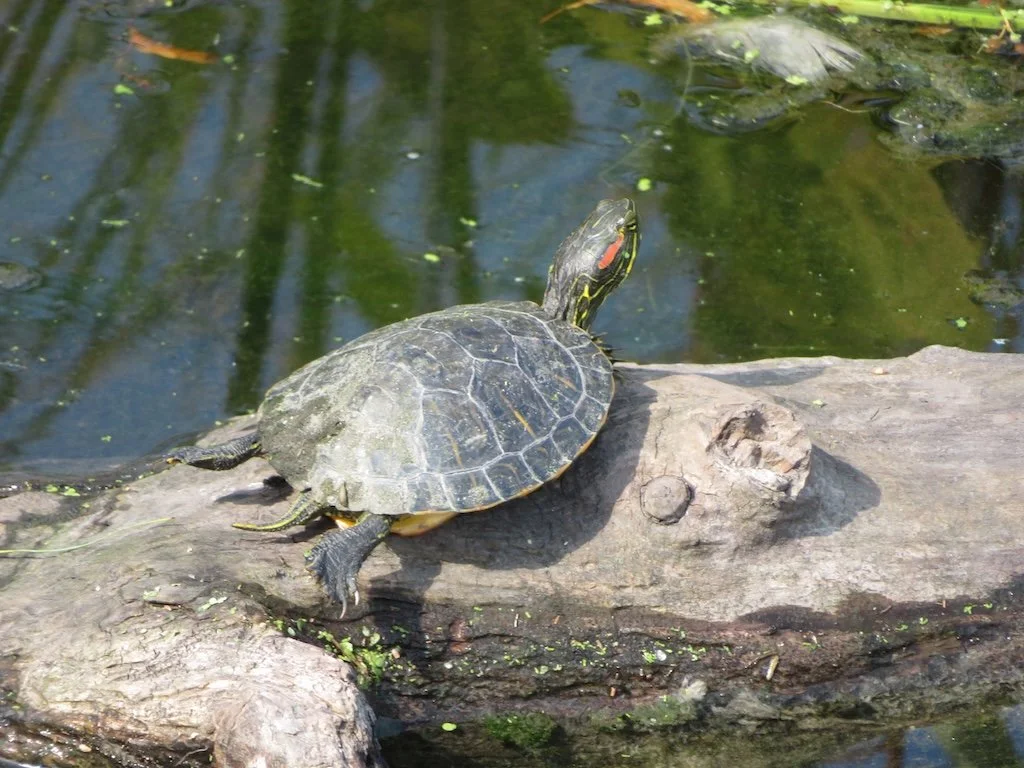
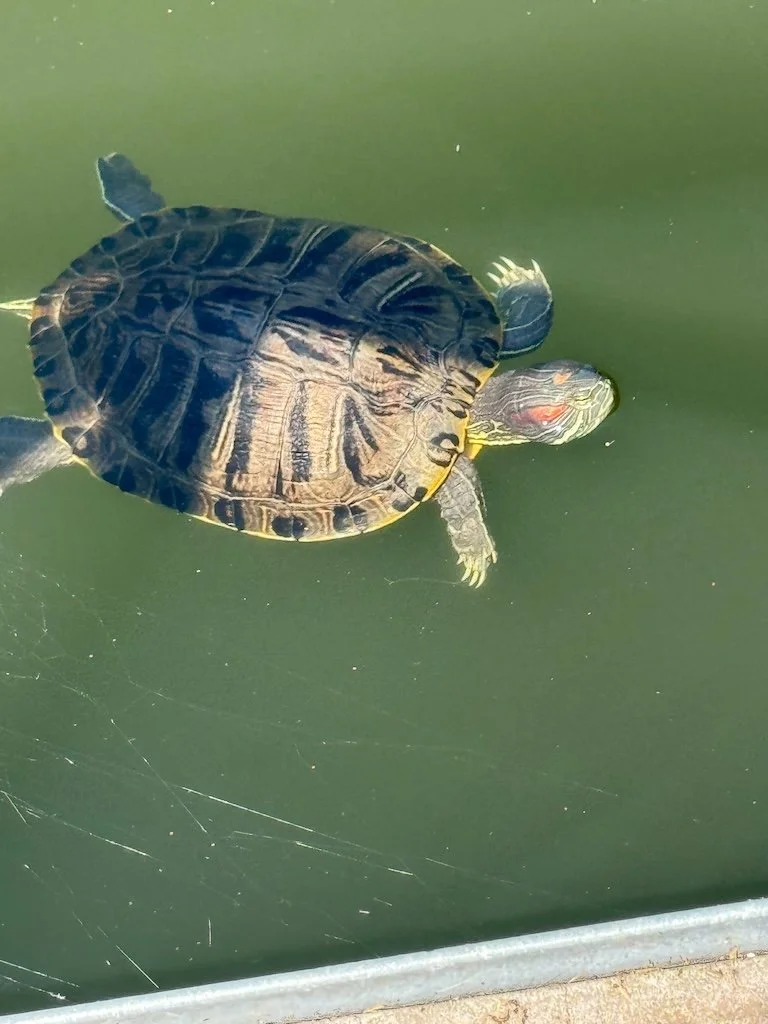
On the way back to the car – turtles were visible in the water along the pontoon walkway! The red-eared slider’s markings make identification easy.

We stopped at our house on the way to my daughters…and were greeted at the door by our 3 housecats…wanting cuddles and more food!

Gleanings of the Week Ending August 9, 2025

The items below were ‘the cream’ of the articles and websites I found this past week. Click on the light green text to look at the article.

Scientists unveil bioplastic that degrades at room temperature, and outperforms petroplastics – Sounds great…but will the existing plastic (made from petroleum) industry let this innovation move forward?

The world is getting hotter – this is what it is doing to our brains - As heatwaves become more intense with climate change, scientists are racing to understand how extreme heat changes the way our brains work. A range of neurological conditions are made worse by rising heat and humidity, including epilepsy, stroke, encephalitis, multiple sclerosis, migraine, along with several others. Heat can also alter other ways our brain functions – making us more violent, grumpy and depressed. Hospital admissions and mortality rates among people with dementia also increase during heatwaves. Rising temperatures have also been linked to an increase in stroke incidents and mortality. And there is a lot we do not know.

Bizarre New Creatures Discovered 30,000 Feet Under the Sea - Entire communities of animals, rooted in organisms that can derive energy not from sunlight but from chemical reactions. Through a process called chemosynthesis, deep-sea microbes can turn compounds like methane and hydrogen sulfide into organic compounds, including sugars, forming the base of the food chain.

Hawaiian Petroglyphs Reemerge for the First Time in Years - The full panel of petroglyphs has been exposed again after seasonal ocean swells swept away covering sand. In all, the petroglyphs are spread across 115 feet of beach and consist of 26 figures and abstract shapes that archaeologists believe were created 500 or more years ago.

The US Commercial Rooftop Solar Market Is About to Explode, Federal Tax Credits or Not - If all goes according to plan, all 500+ projects will be completed during this year into 2026, proving yet again that solar is the fastest way to add more capacity to the nation’s grid. Generating electricity on commercial rooftops and distributing it into the grid is America’s most shovel-ready energy option.

The Power of the Emerald Edge - Whether a tropical forest or coastal temperate rainforest, all forests must contend with a unique set of stressors including changes in land use, invasive insects and disease, and extreme weather events. Rapid changes in climate compound these stressors. How do we prepare our forests for the future? Preserving old-growth forests is one of the most powerful steps we can take.

Elusive and Majestic Red-Crowned Cranes in Hokkaido – Beautiful photographs…of beautiful birds.

Germany’s Stunning Fairytale Castles Added to UNESCO’s World Heritage List - The royal castles of Neuschwanstein, Linderhof, Schachen and Herrenchiemsee have been added to the prestigious list, which includes more than 1,200 sites. Neuschwanstein Castle, located near the village of Schwangau in Bavaria, is one of Germany’s most popular tourist sites. Every year, roughly 1.4 million travelers visit the site.

Learning how to live with shrubbier grasslands (part 1 and part 2) - Our grasslands are getting “shrubbier” and it’s increasingly difficult to prevent that. Because the drivers for that change are mostly beyond our control, it seems obvious that we need to start thinking differently about grassland management.

3 Ways Ancient Egypt Left Its Mark on Modern Art – Empire furniture, art deco, and artists like Bridget Riley.

Onyx Cave

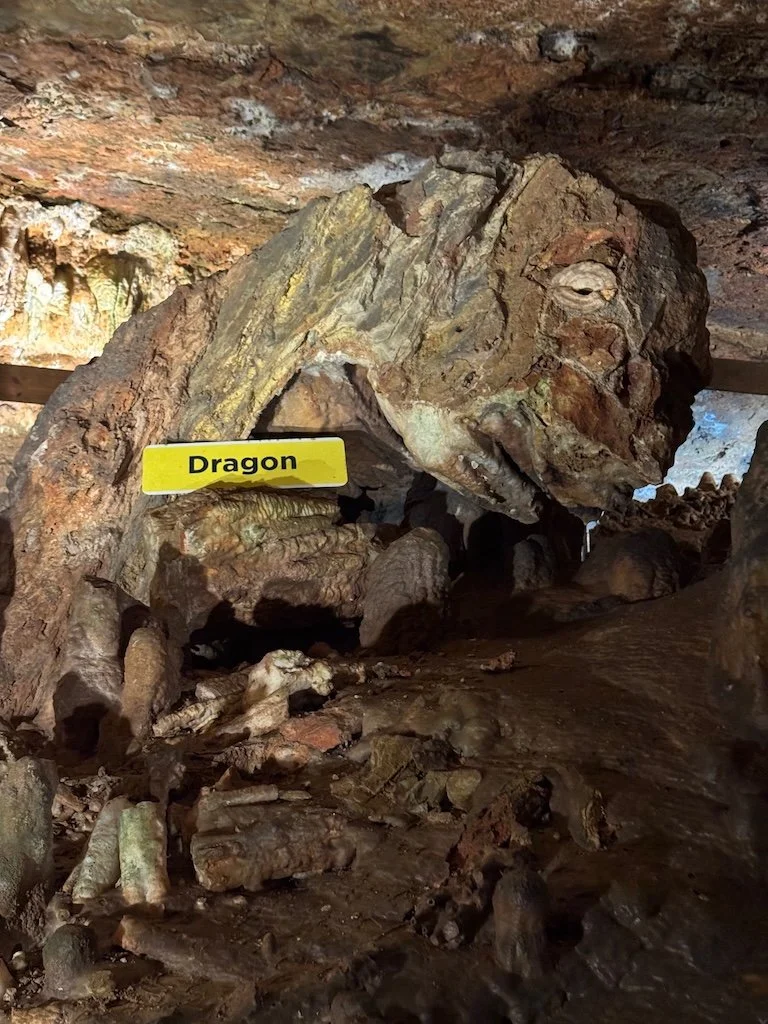
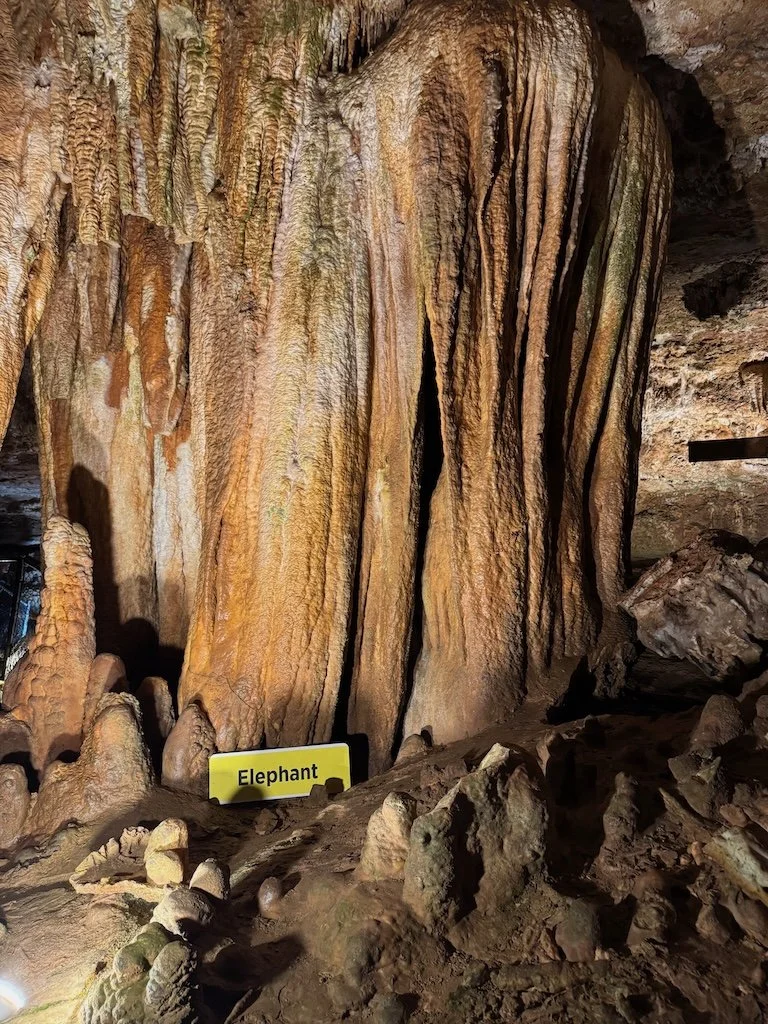
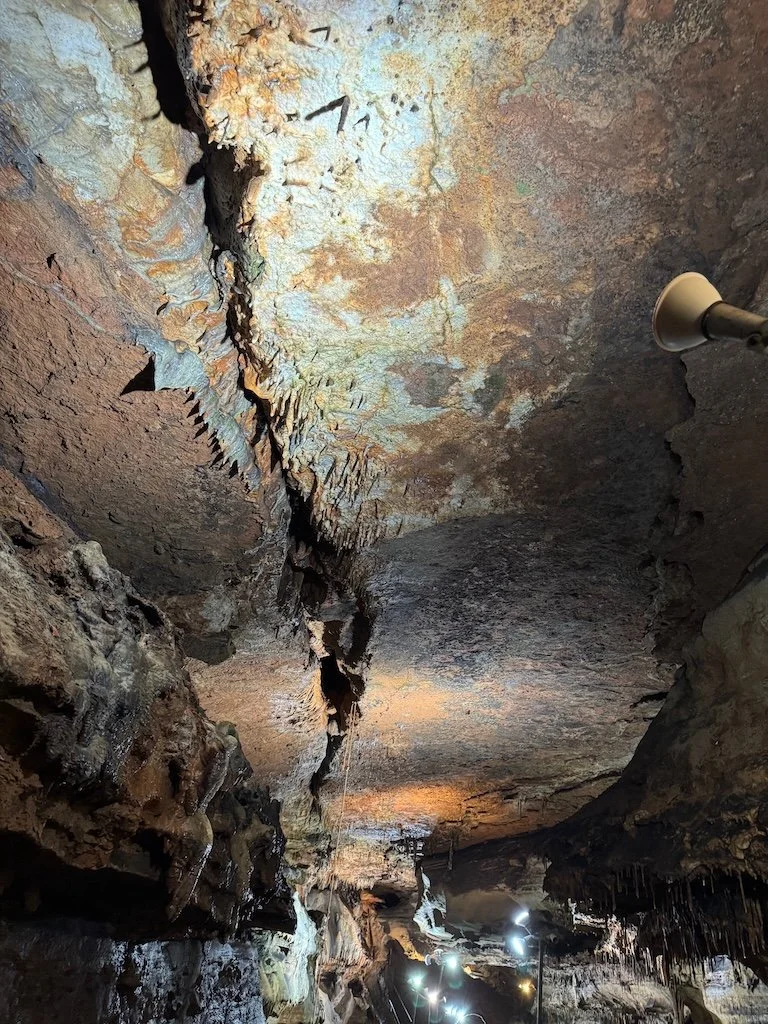
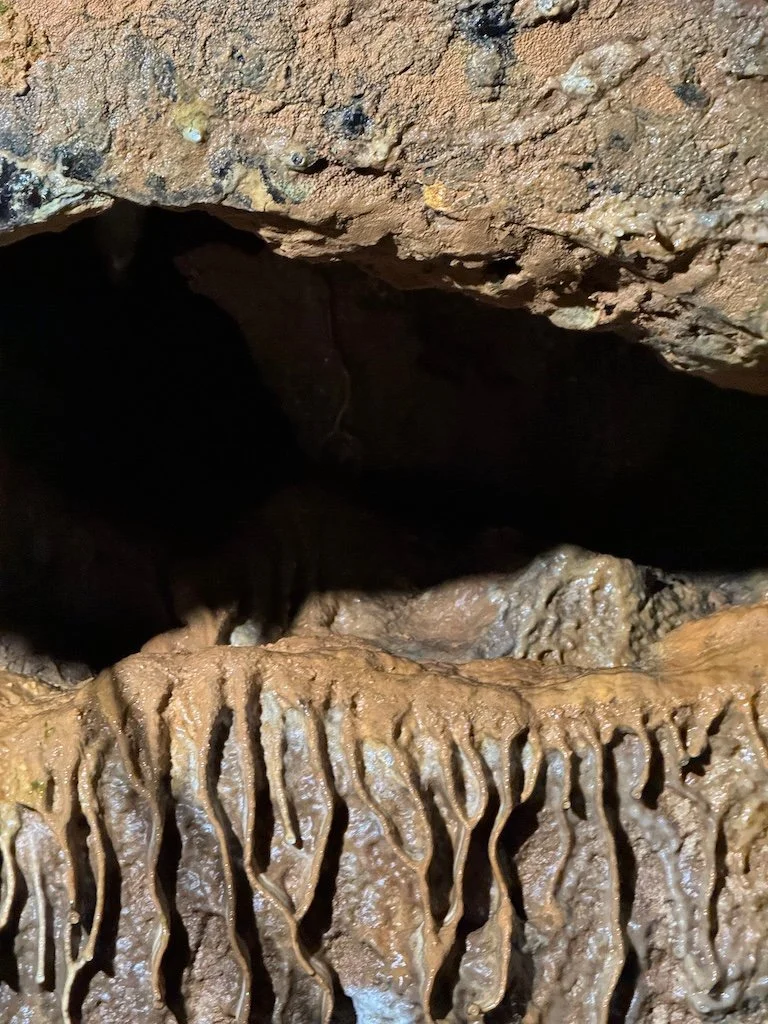
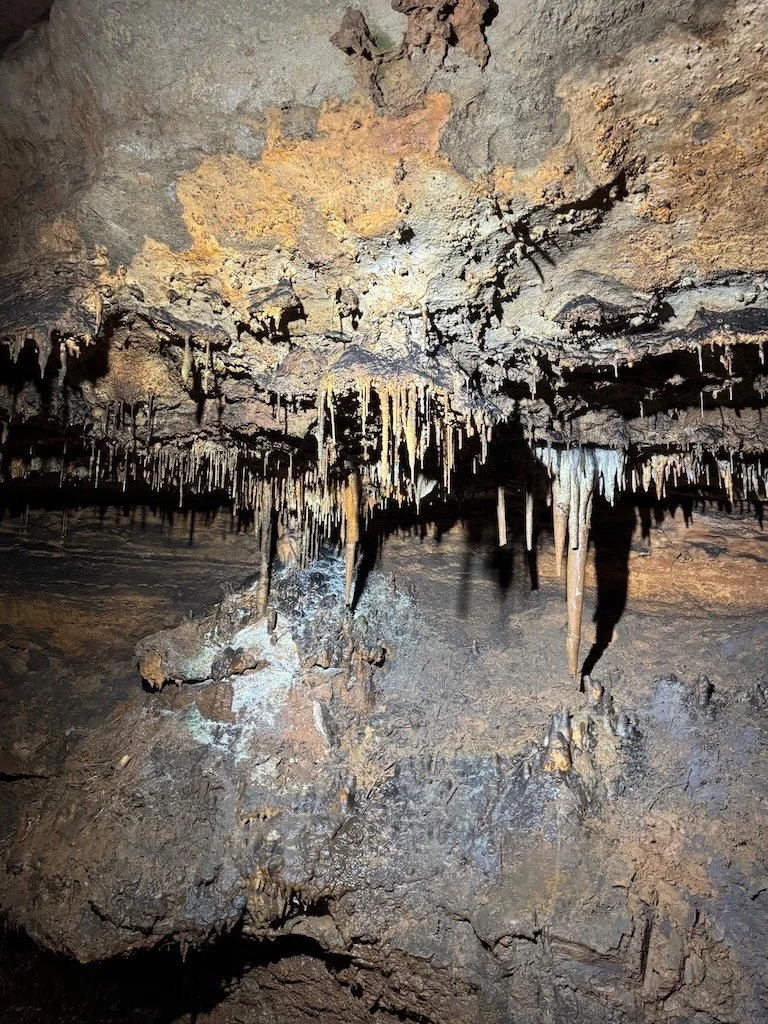
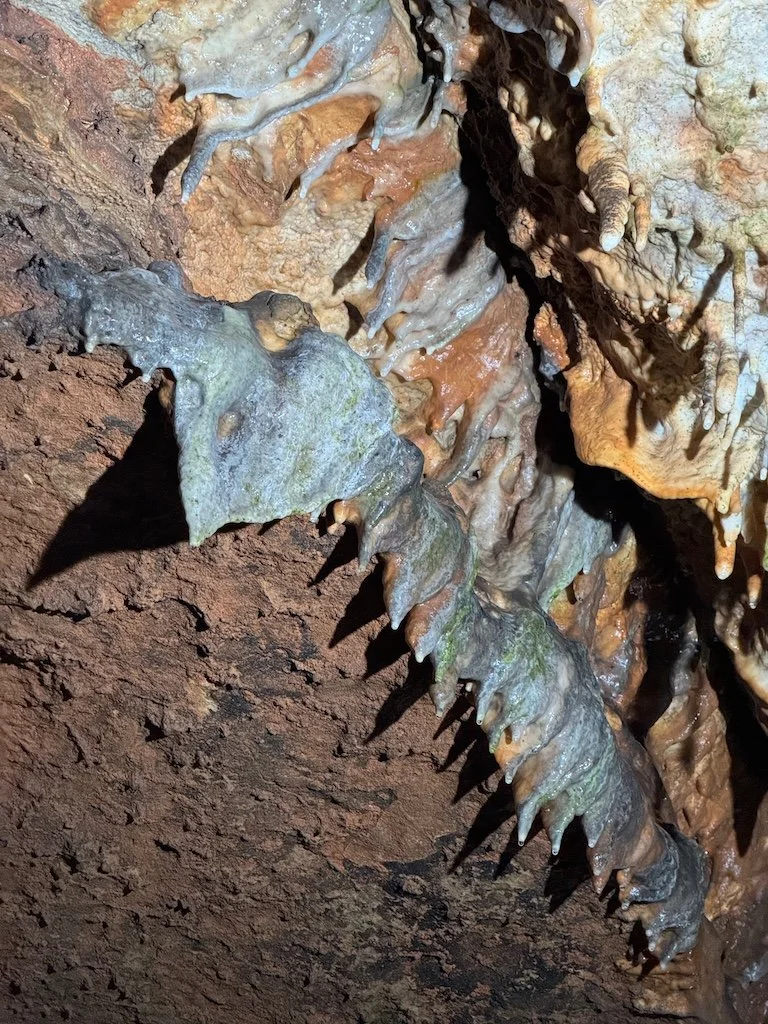
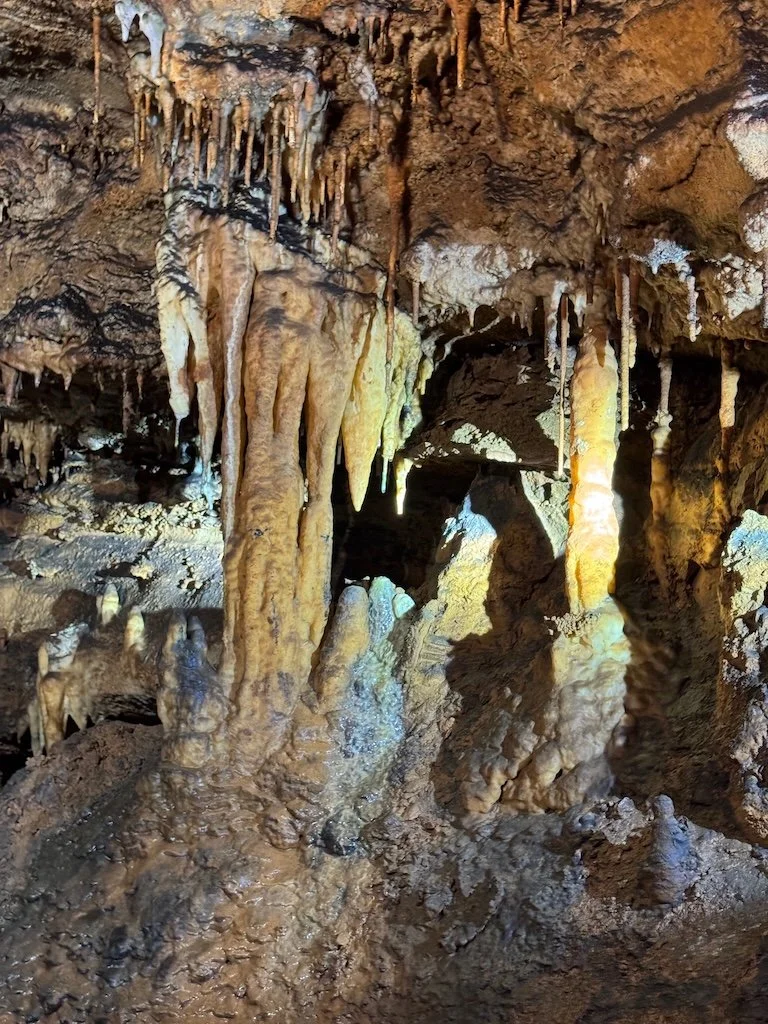
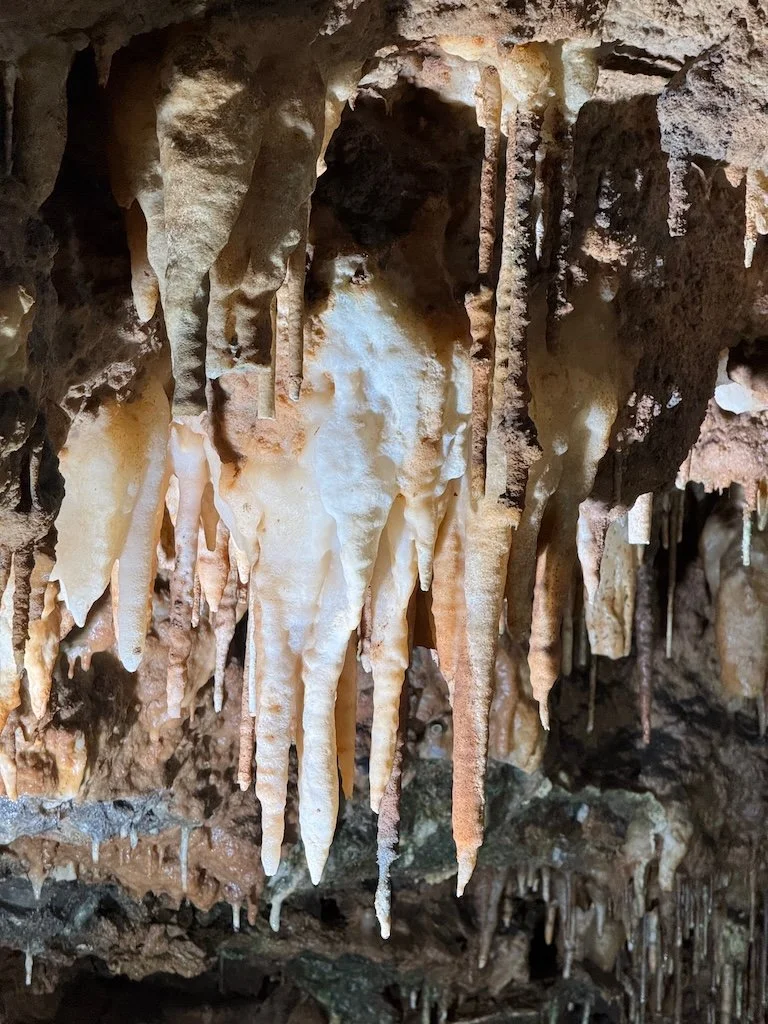
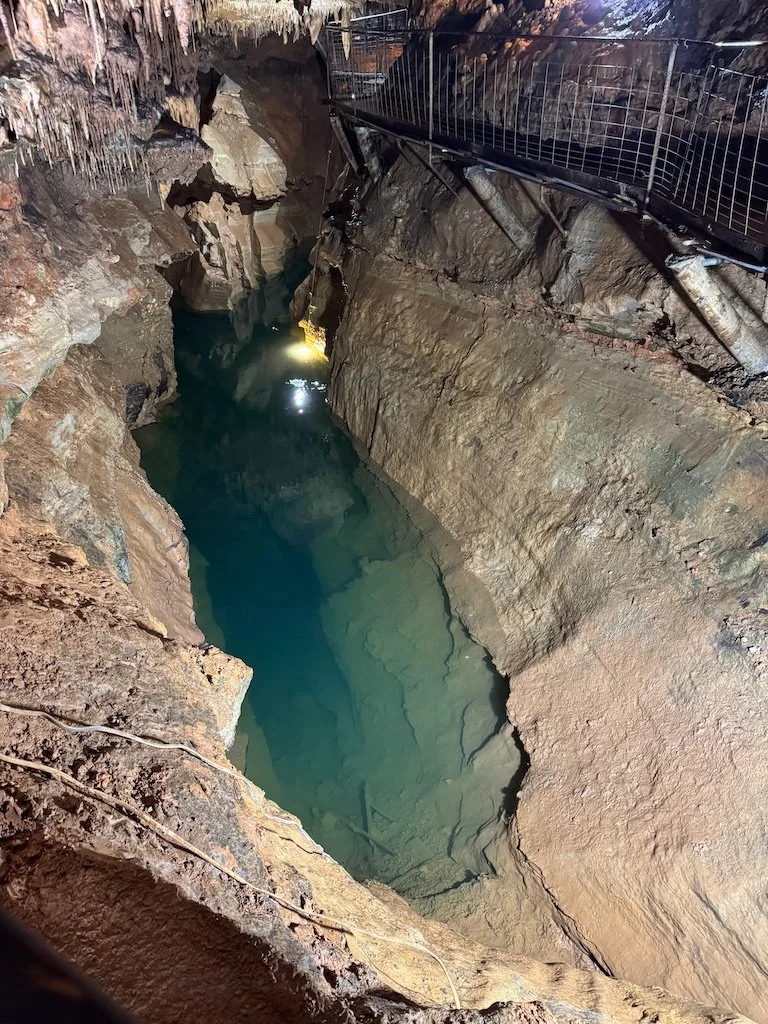
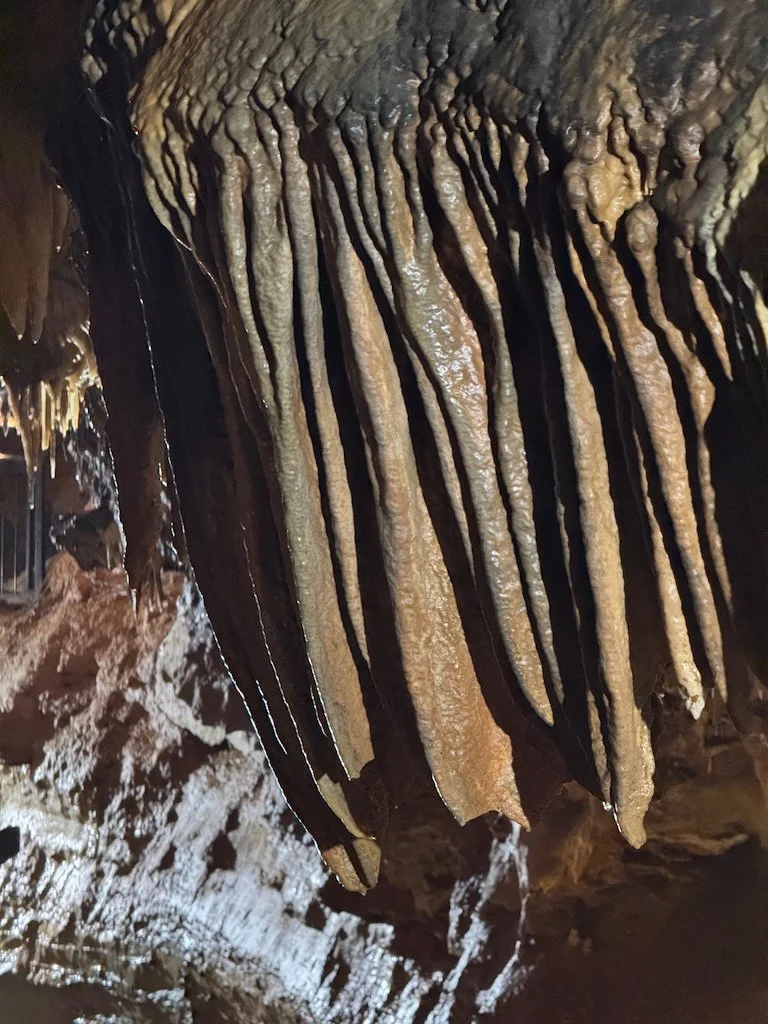
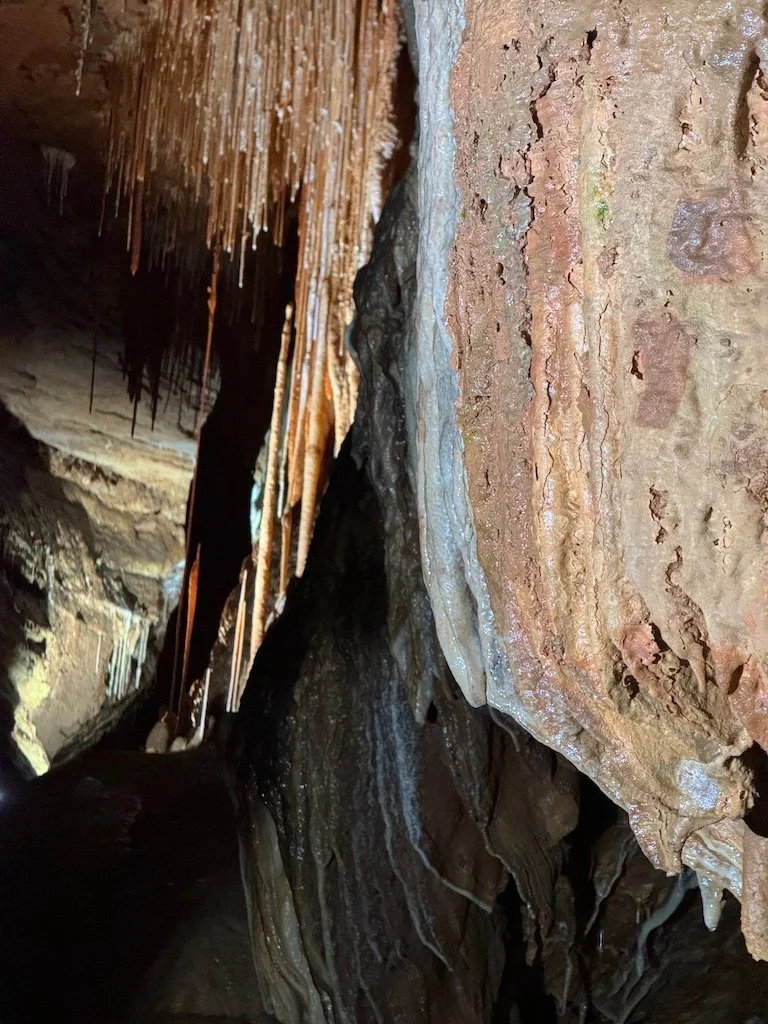
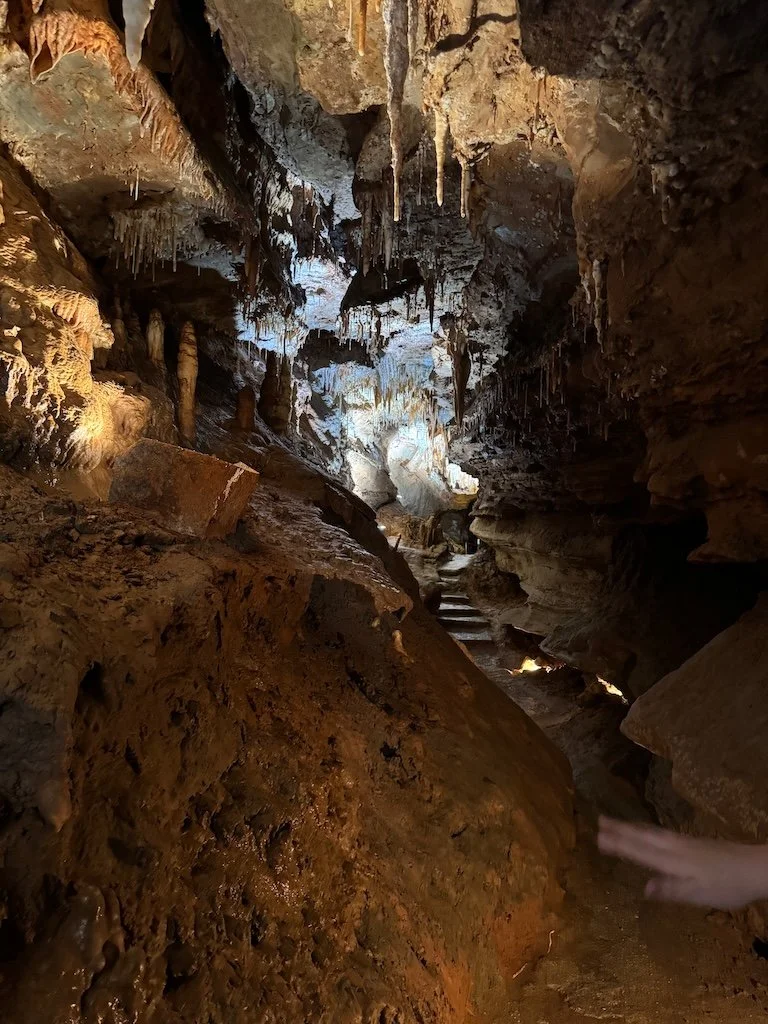
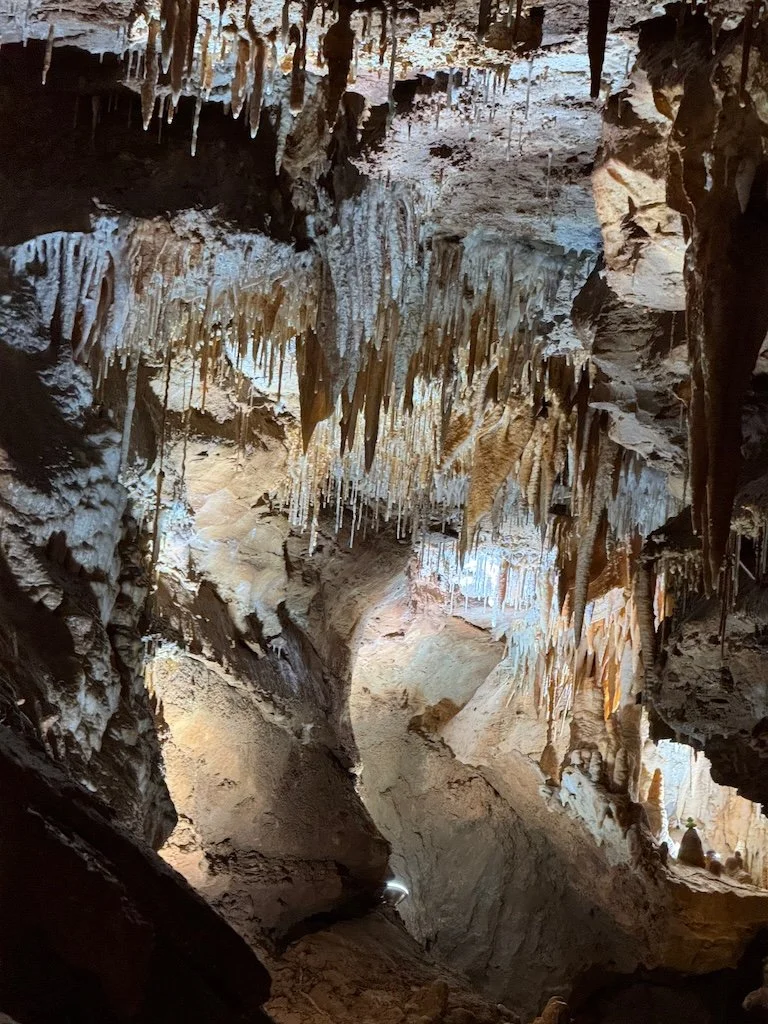
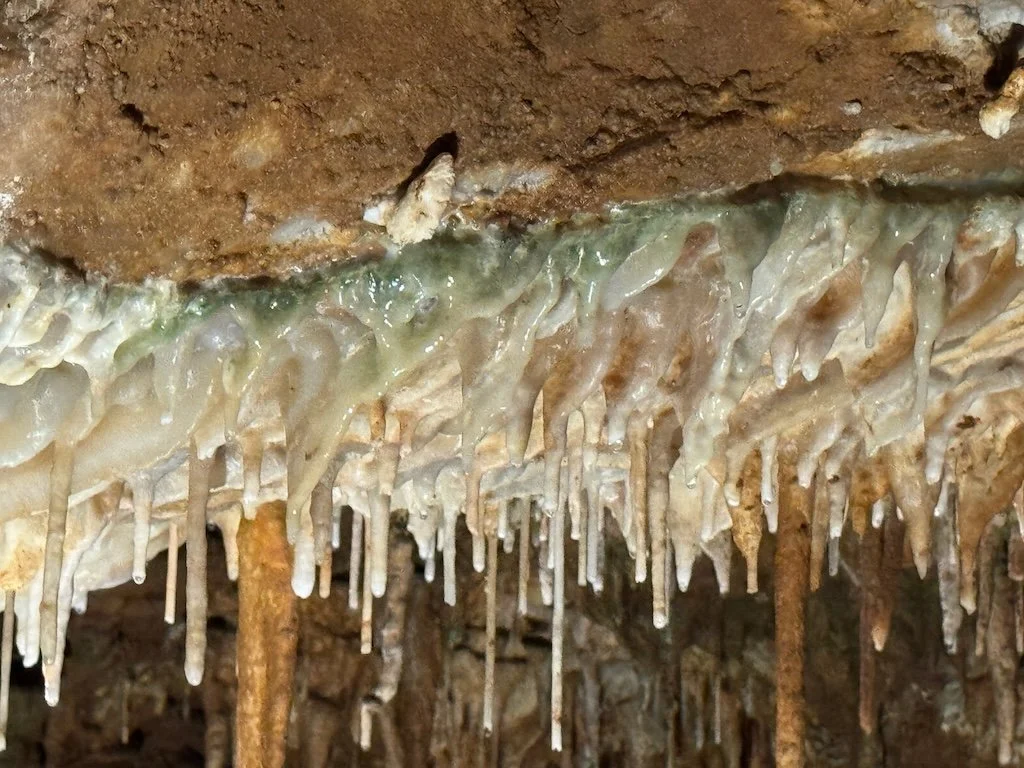
After Cosmic Caverns and lunch, we opted to see a second cave. It wasn’t on our original itinerary, but the rain had forced a change in plans. Onyx Cave became our afternoon destination. It has been famous since 1891…and there is considerable damage that has accumulated over the years.

The first part of our tour was self-guided with headphones that described things at each stop. The second part was a guided tour.

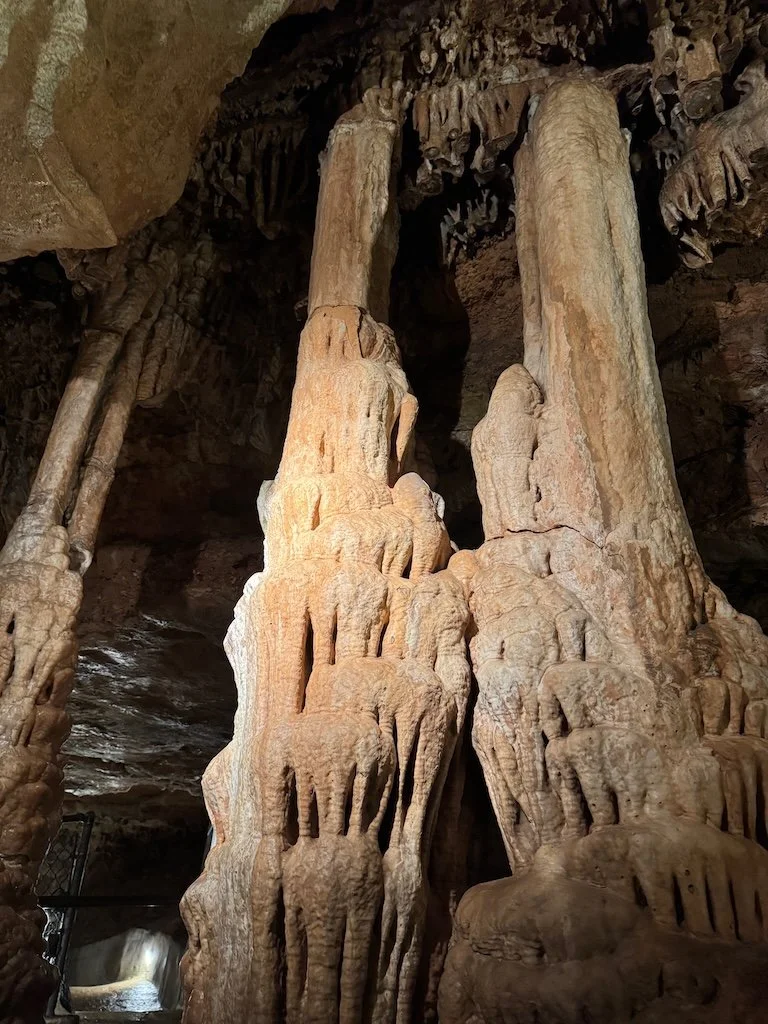
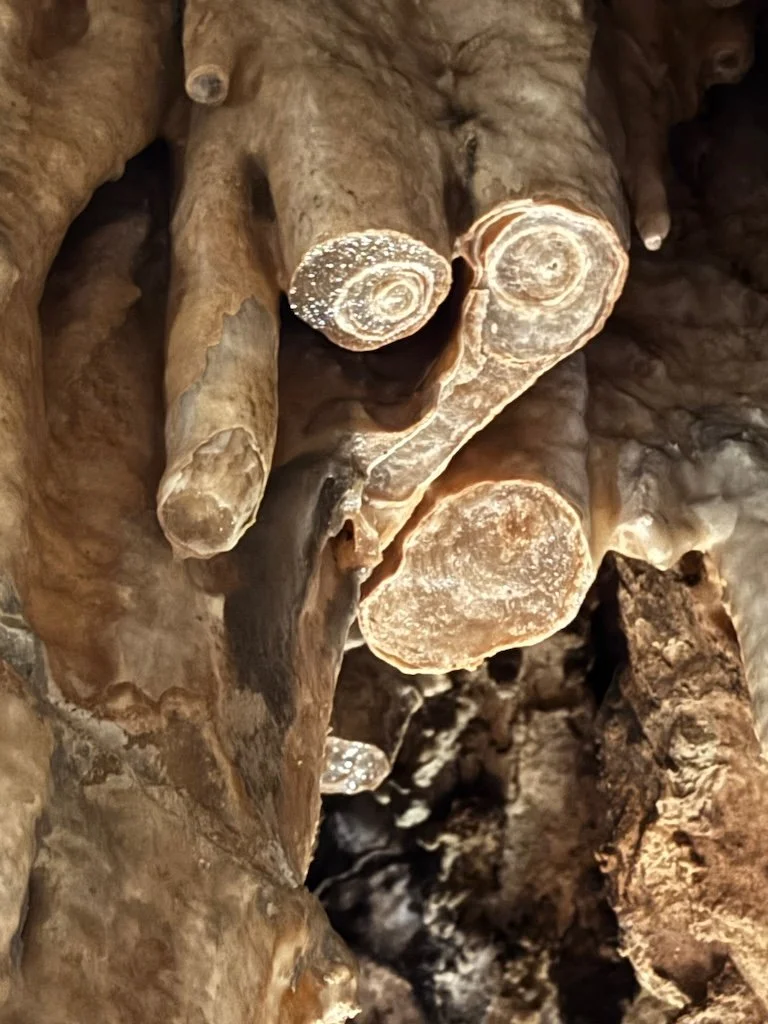
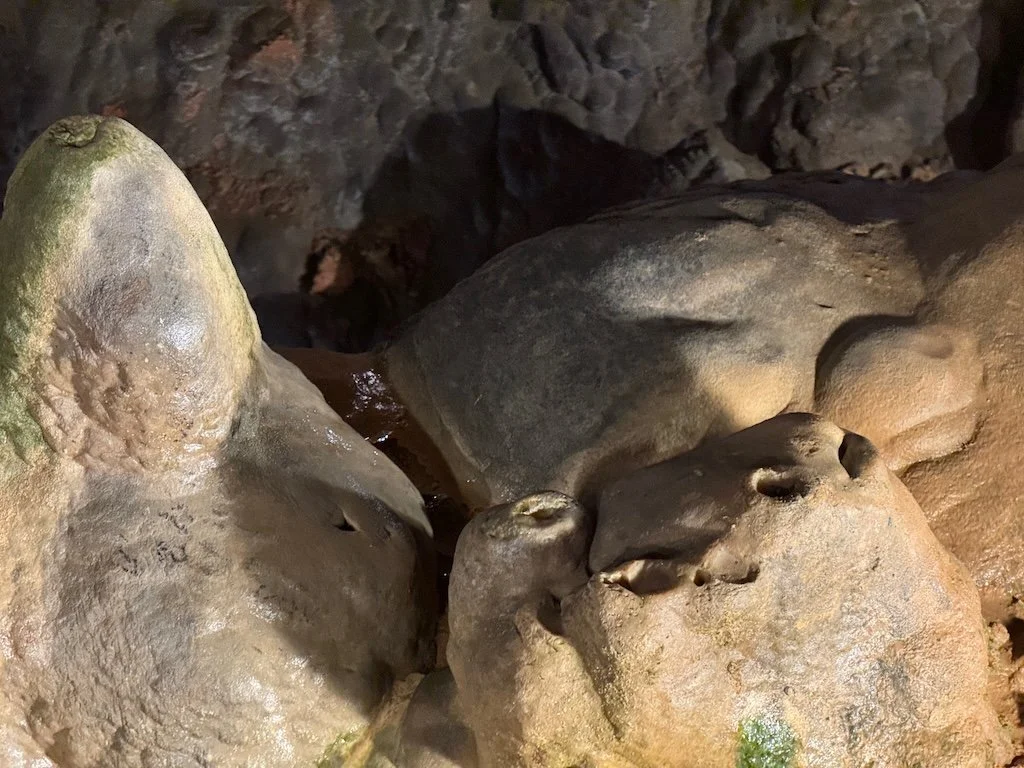
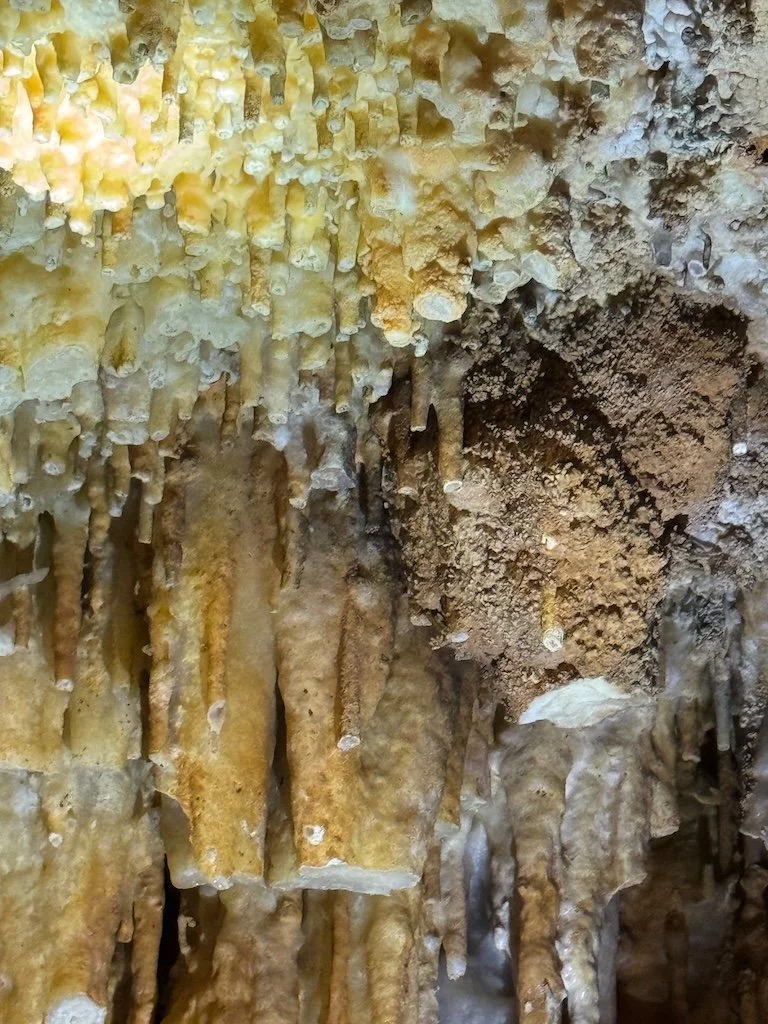
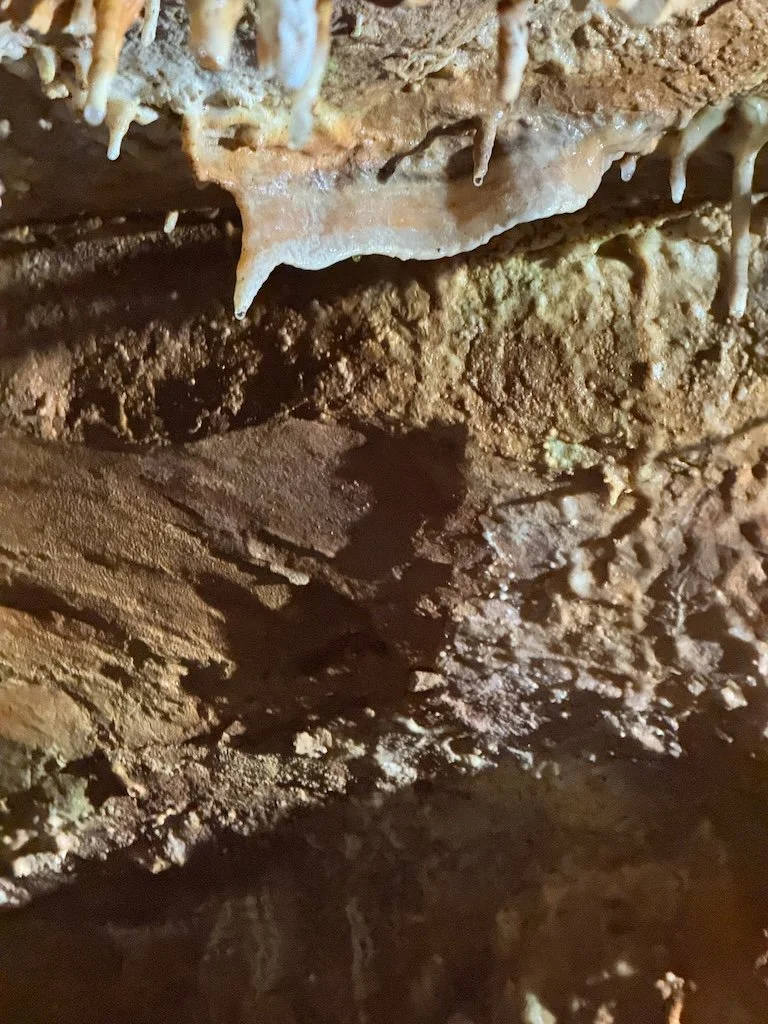
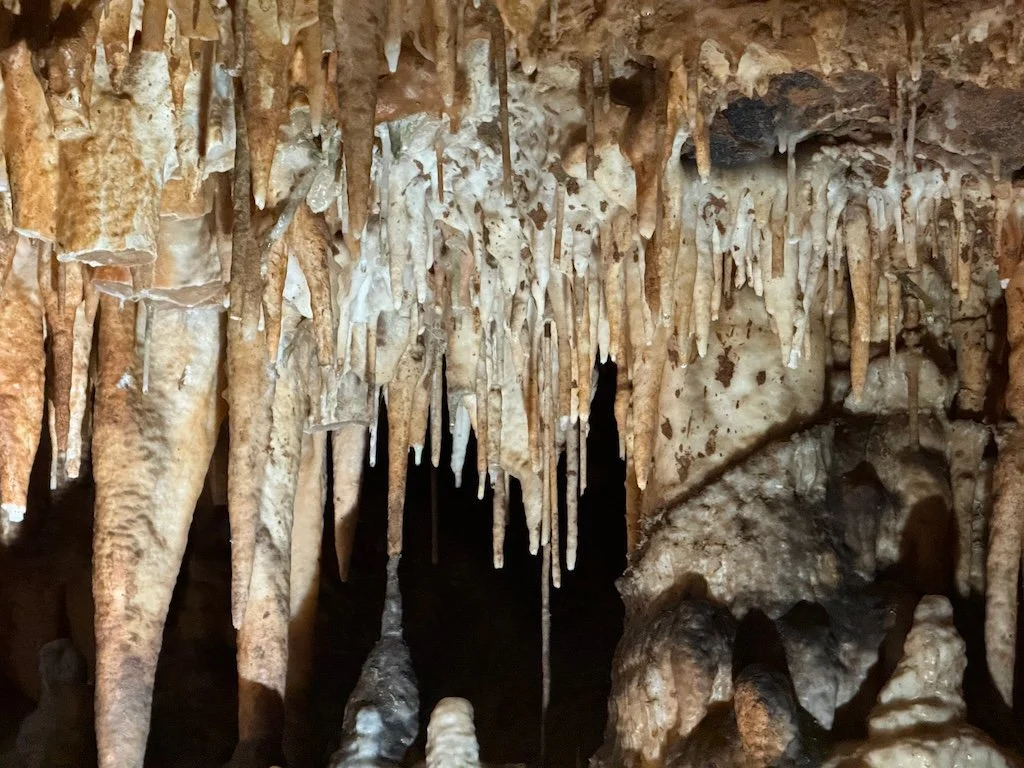
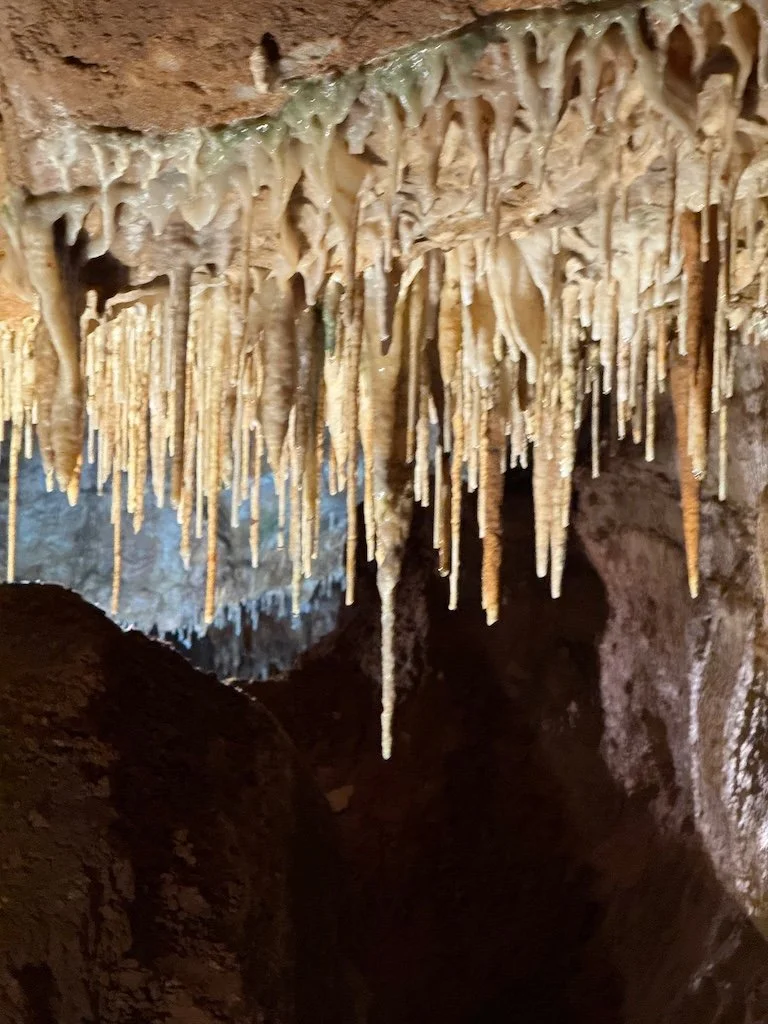
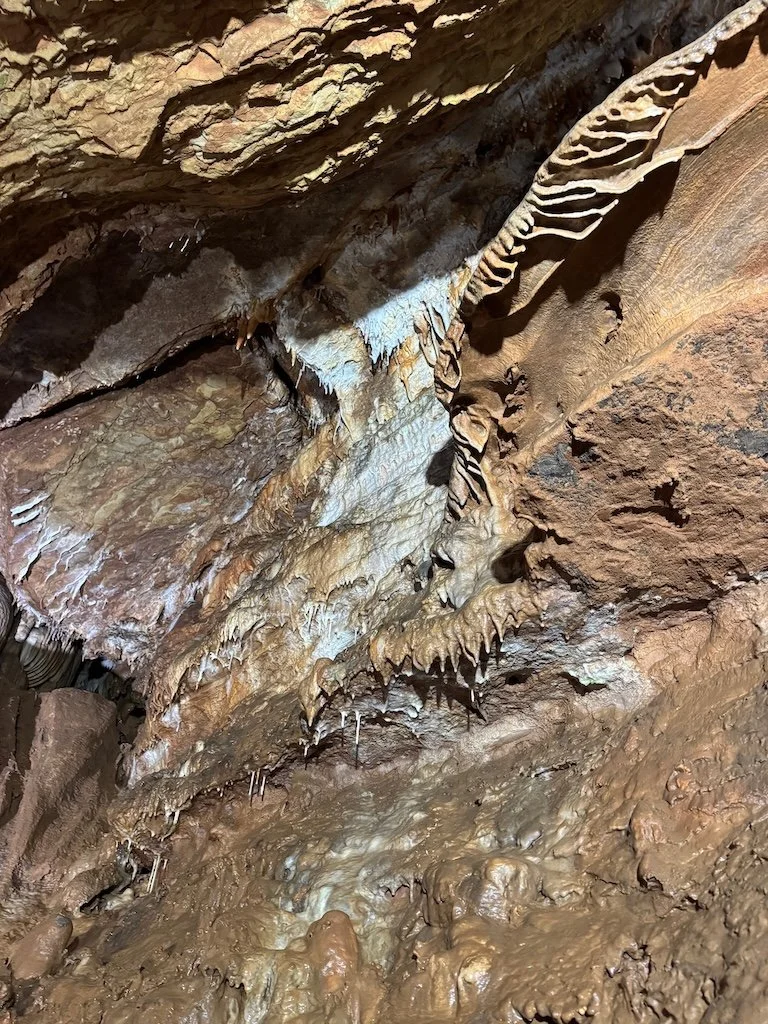
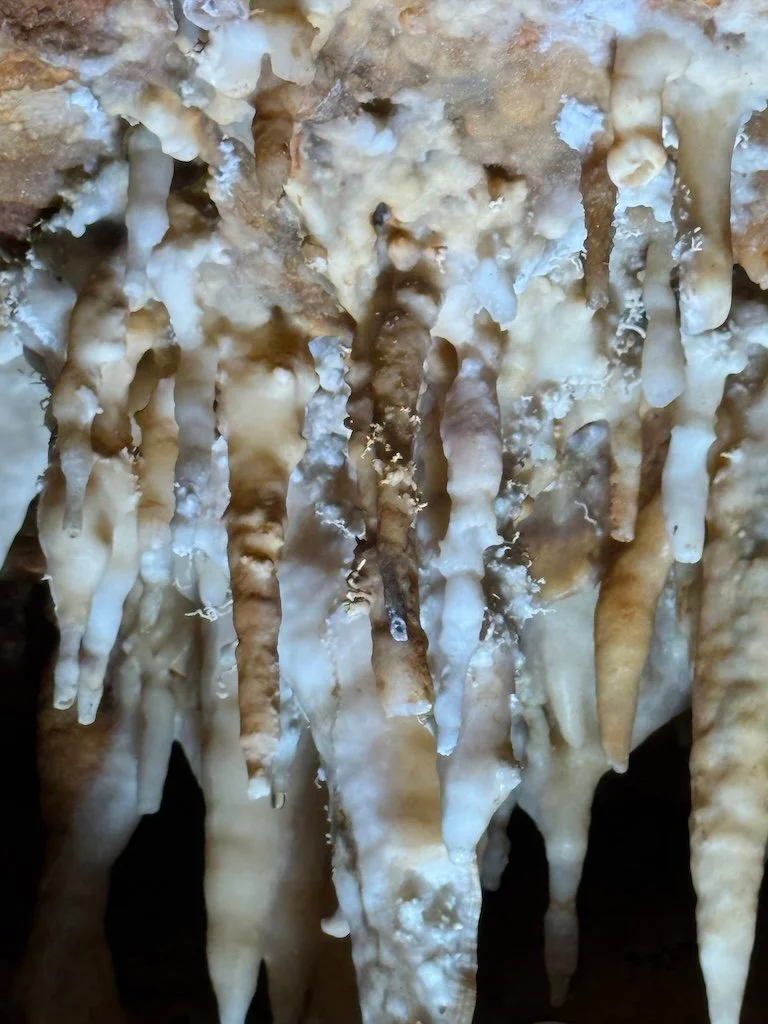
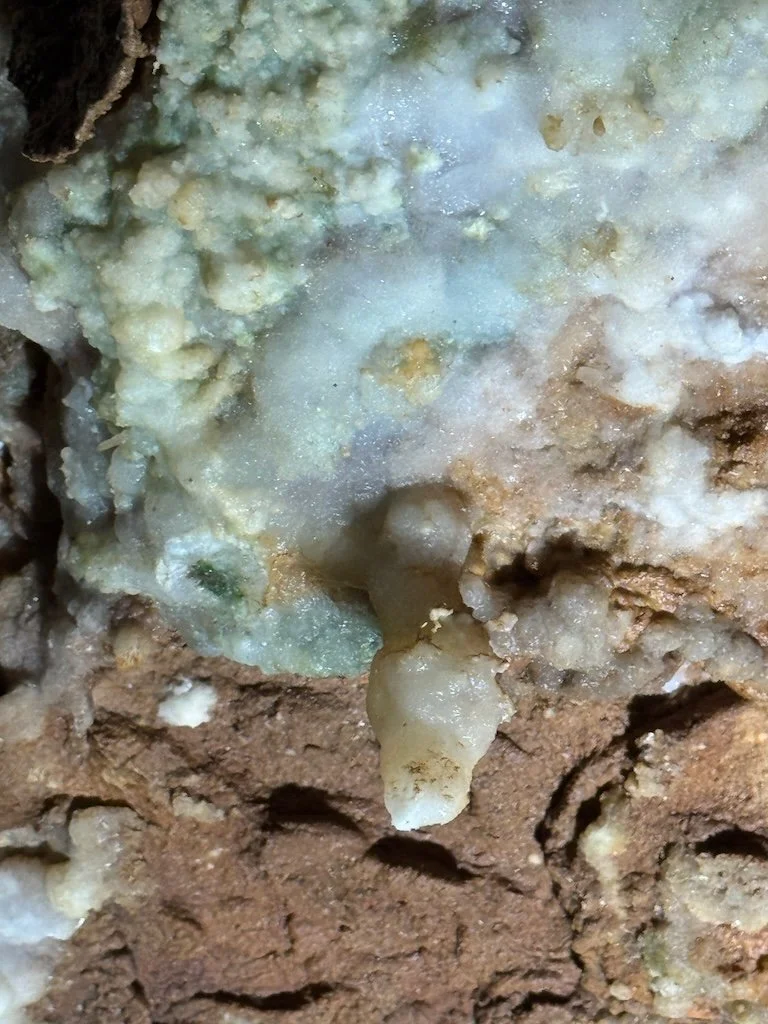
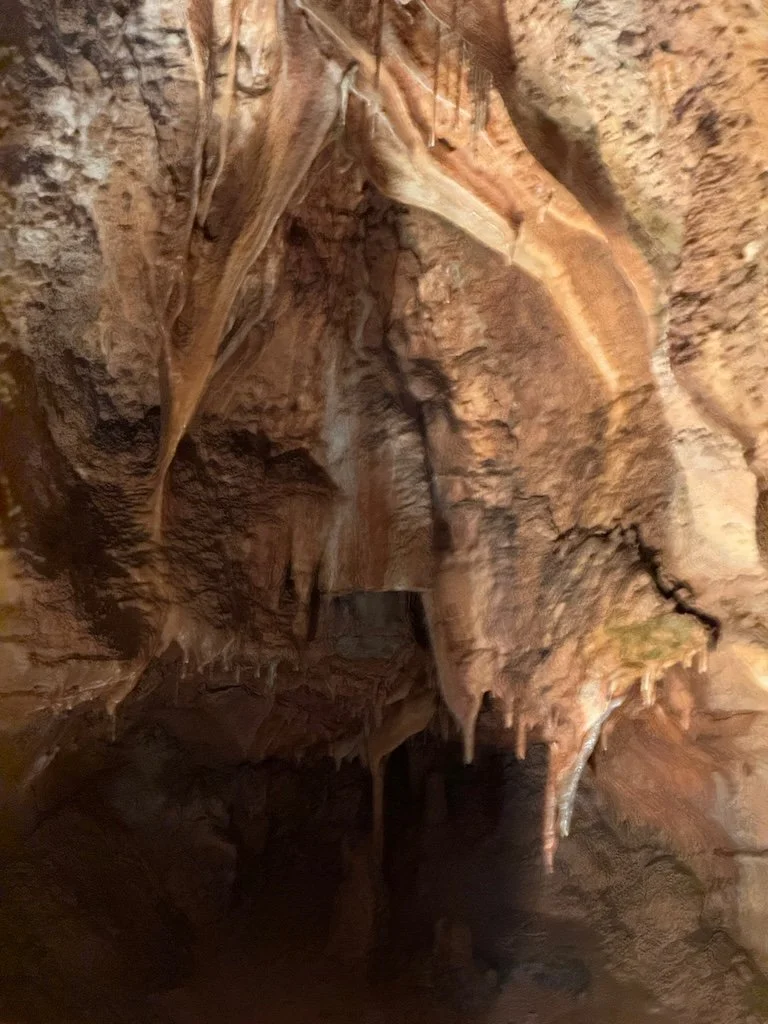
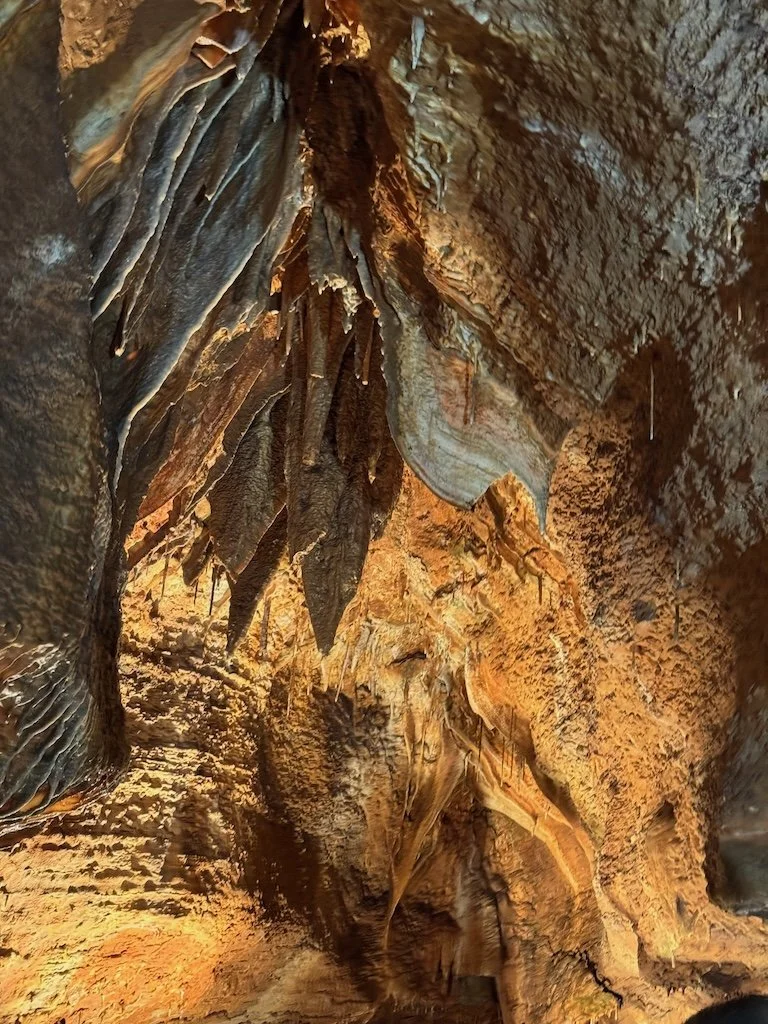
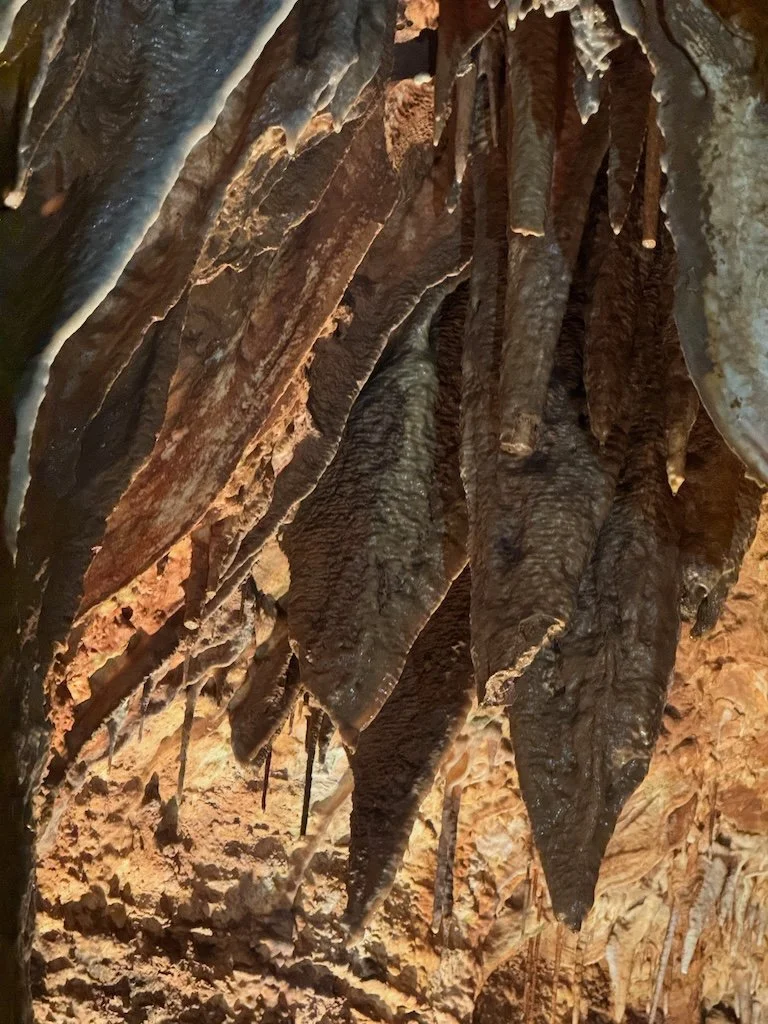
The lighting in the cave was not as good as in other caves I have visited, including Cosmic Caverns, but it is still possible to get reasonable pictures. Sometimes the damage (sawed off stalactites and soda straws) revealed the inner structure of the formations. The cave is damp but many of the formations have been touched often over the years…so they have a dry look.

I think my favorite cave tour this year is Onondaga Cave that I toured back in April (posts one and two).

Cosmic Caverns

Last weekend we made an overnight trip to Arkansas as an early birthday celebration for my daughter. We picked her up at 8 AM at her house in Springfield MO (seeing what she means about her native plant garden being overwhelmed by grass).

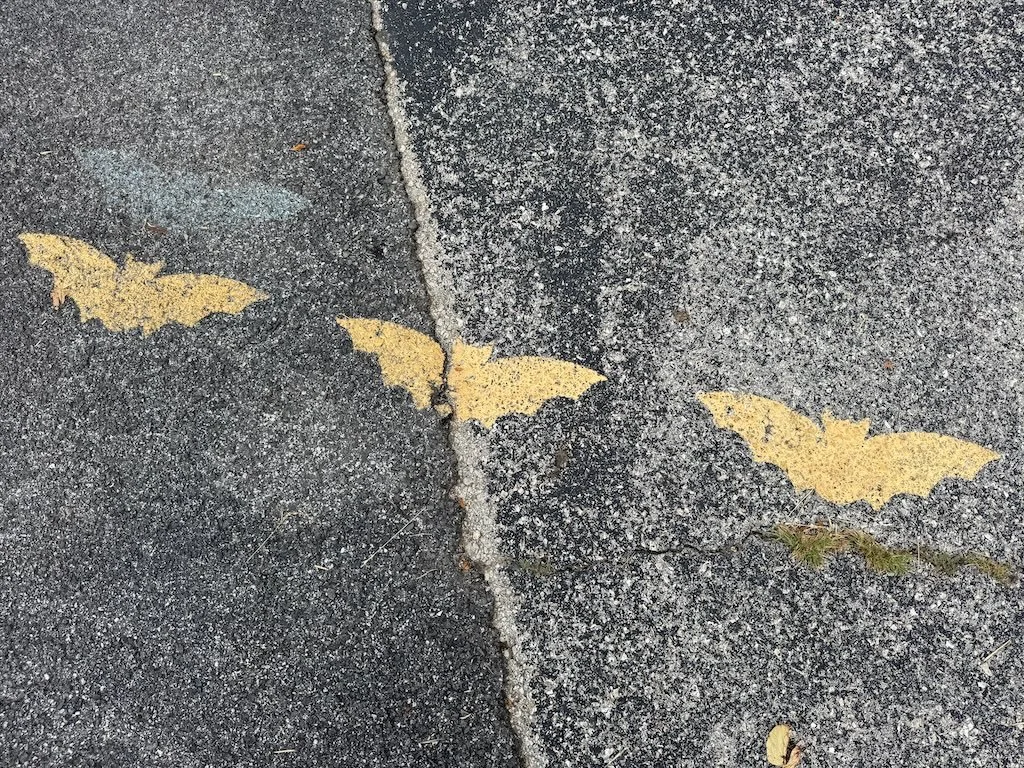
Our plan had been for a hike at a state park in the morning, but it started sprinkling on the way there and was raining hard when we got to the park. We quickly decided to head to Cosmic Caverns. The parking lines there are made with bat stencils!

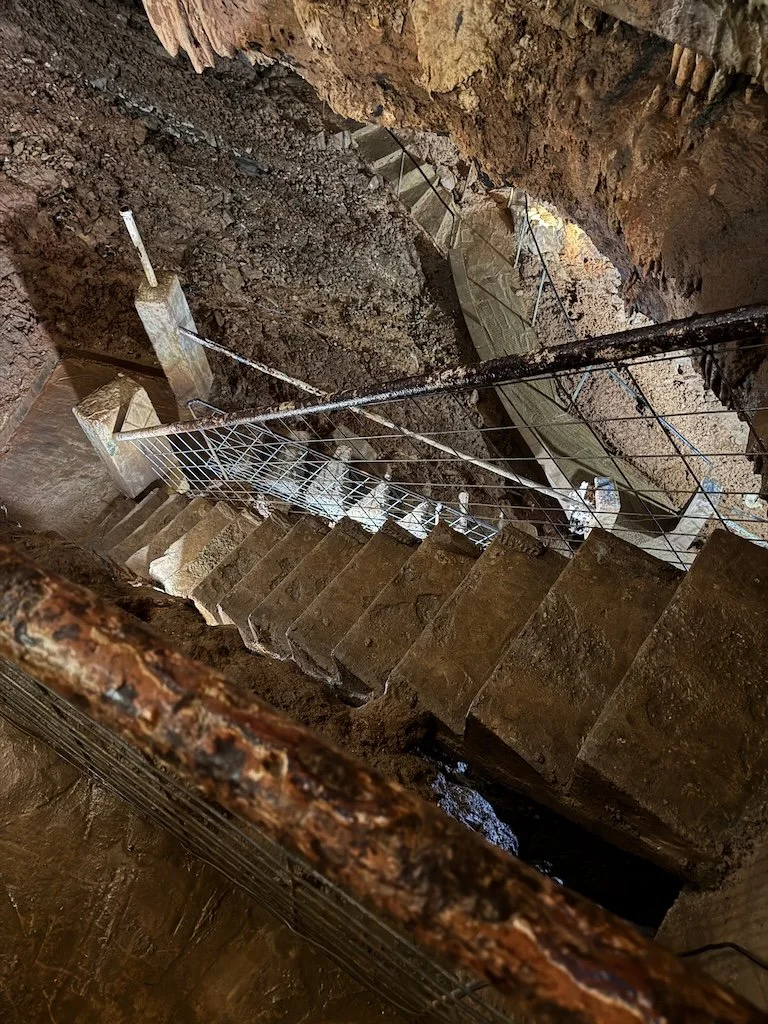
There were steep steps that reminded me of caves I toured as a child.  Now many caves have replaced their stairs with long ramps that make the cave more accessible.

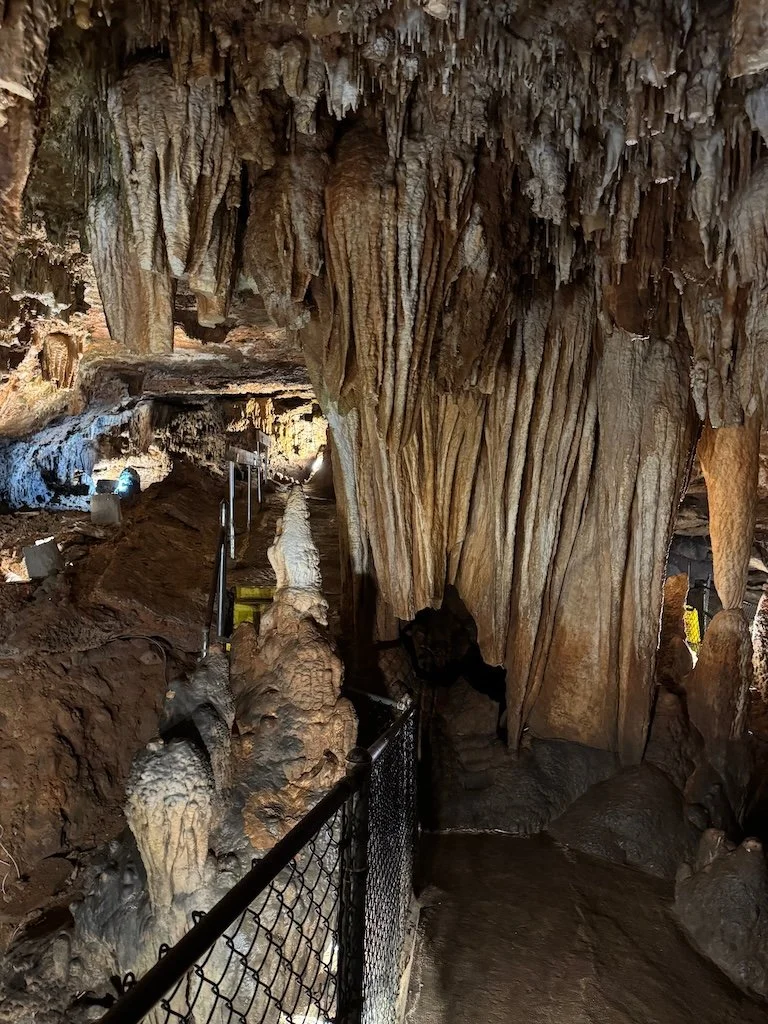
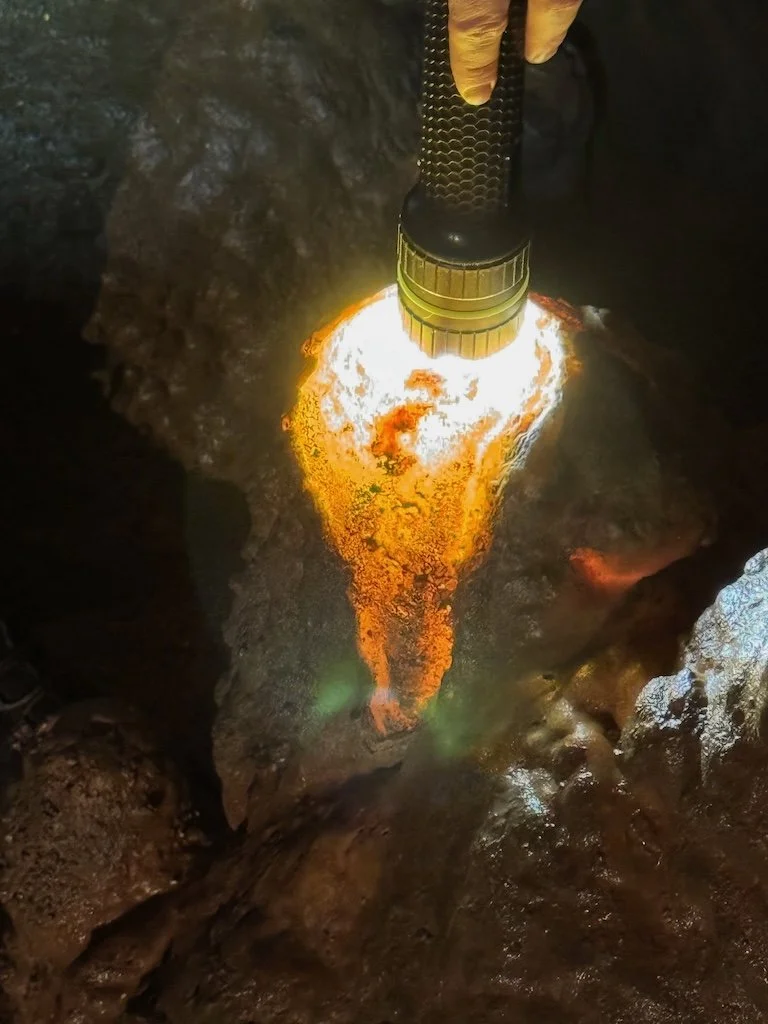
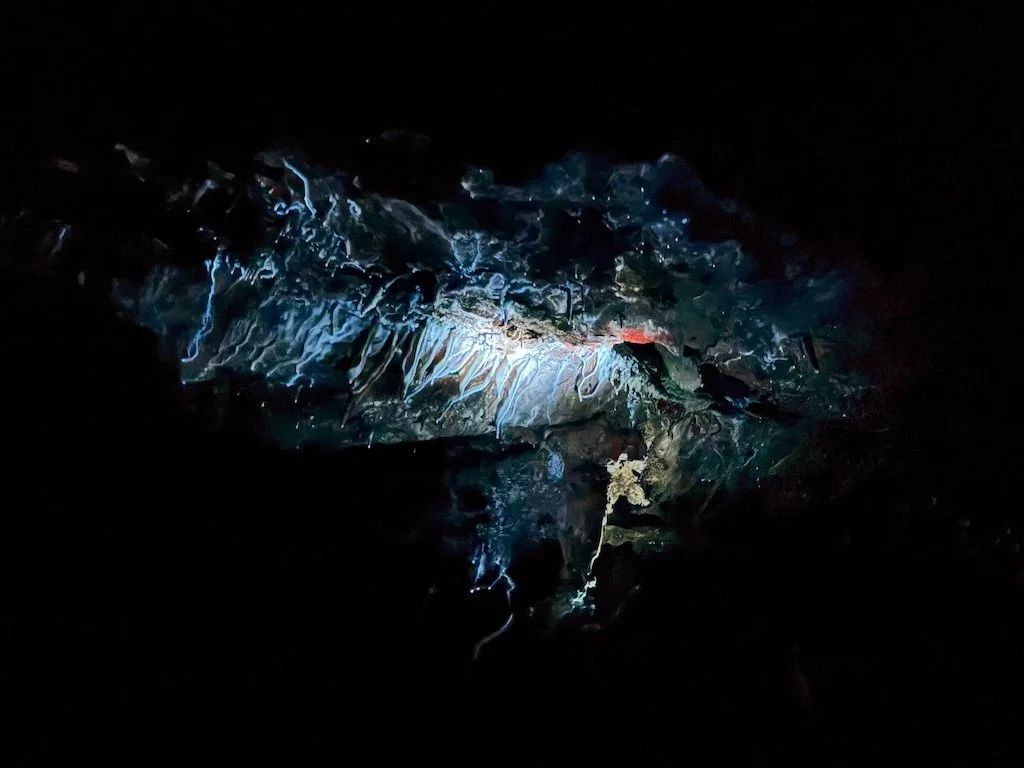
The cave lighting was good, but the guide’s flashlight was sometimes needed to highlight features…and the black light flashlight provided a different perspective of some of the formations.

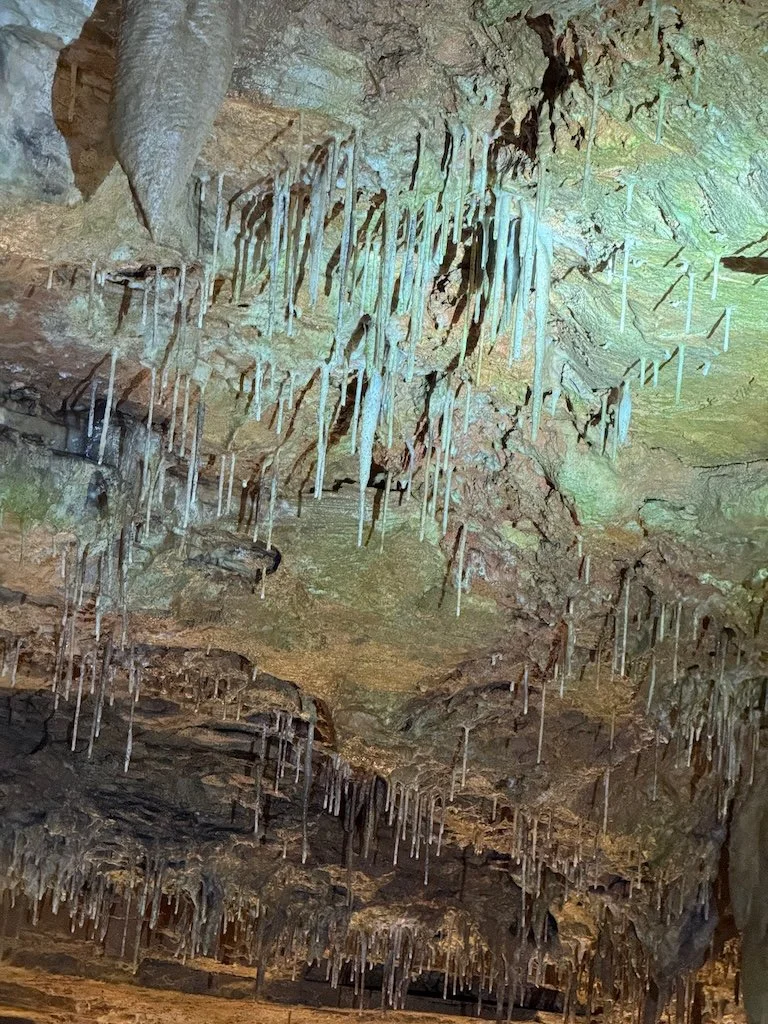
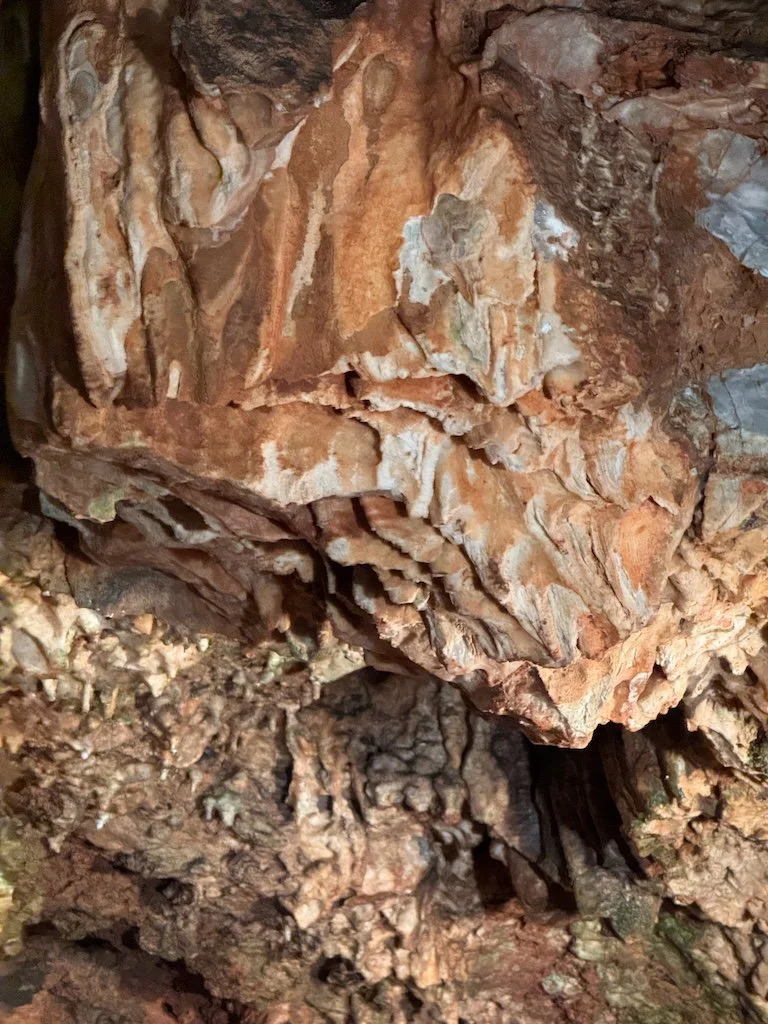
The cave was discovered in 1845 and there is damage that has occurred over the years. It is still a beautiful place to visit, and I enjoyed seeing how well my phone captured the cave formations.

Caterpillars Eating

During a slow time in the Butterfly House last week, I made short videos of two caterpillars eating.

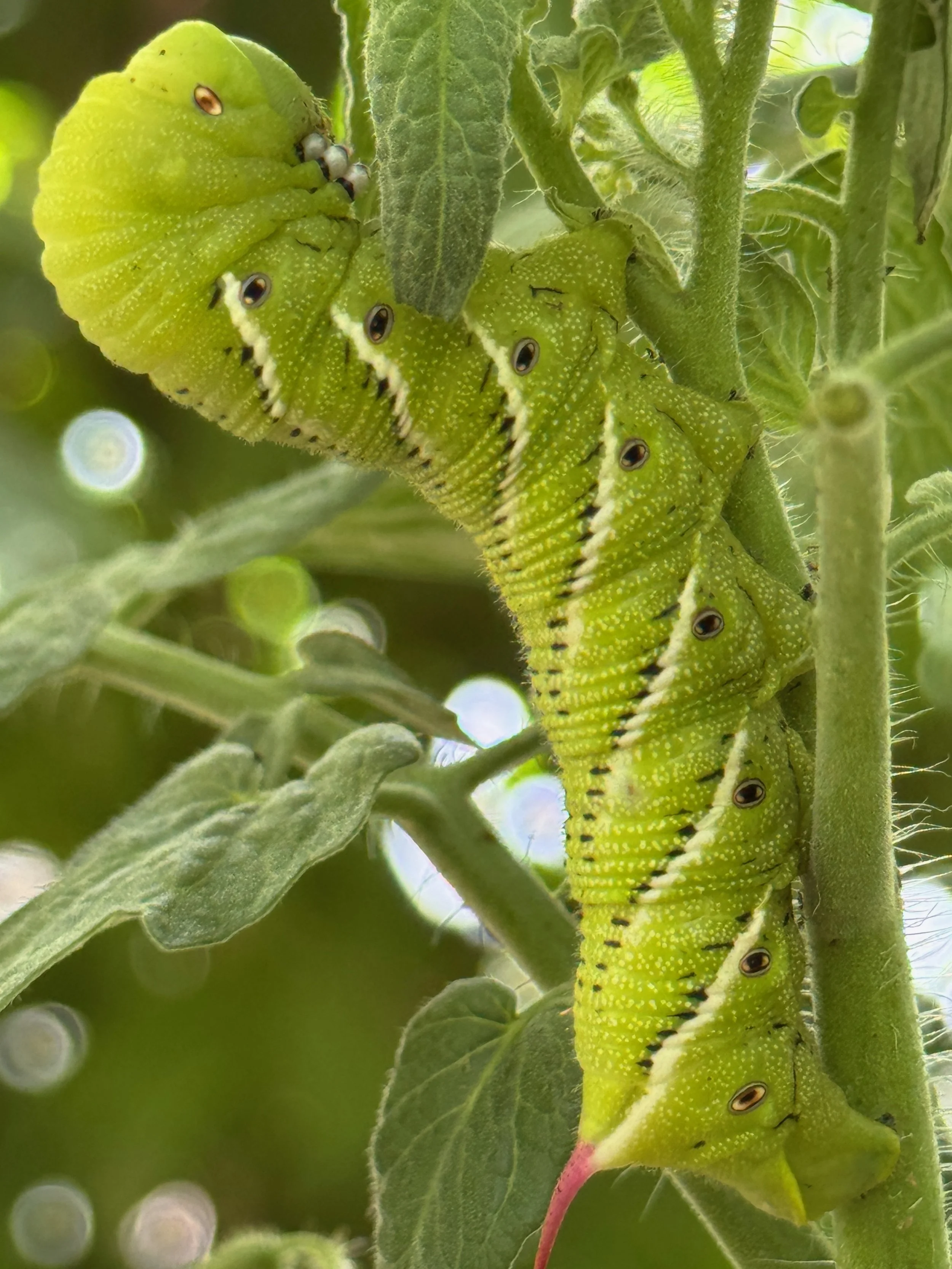
The first was a tobacco hornworm (Manduca sexta) on a tomato plant. The ‘horn’ is on the rear of the caterpillar…and looks a lot like a thorn or prickle! The caterpillar was diligently eating a tomato. Afterwards is started on a leaf rather than another tomato. I remember my grandmother picking the caterpillars off her tomato plants.

The second was a cecropia moth (Hyalophora cecropia) caterpillar – one of the ones I raises with my luna caterpillars. It was still eating sweet gum leaves! It is not an instar 4 – one more shedding of the skin and eating a lot before ready to make a cocoon to go through the winter!