Gleanings of the Week Ending May 23, 2026

The items below were ‘the cream’ of the articles and websites I found this past week. Click on the light green text to look at the article.

05/10/26 Poets.org Forever Plastics – A poem by Ronald Carson. He says “In this poem, I wanted plastics to speak in the first-person plural, tracing the path from postwar convenience to biological saturation, where the environment is no longer outside us but lodged within us.”

04/22/2026 The New York Times You Paid to Have Old Clothes Recycled. Here’s What That Really Means. - Collection services offer convenience, but most garments are shredded into low-grade stuffing or sent abroad to an uncertain fate. The most important thing, experts and environmental activists say, is to buy less in the first place. It’s easier to deal with clothes responsibly if there are fewer of them to begin with.

05/7/2026 Super Age Life Expectancy Gains Are Slowing. Your Choices Are More Important Than Ever - The future of longevity will most likely be shaped less by sweeping public health revolutions and more by targeted, personalized strategies: slowing biological aging, optimizing midlife health, and extending the years we remain active, engaged, and independent.

05/12/2026 Planetizen 16% of roads that received federal funds remain in poor condition - State DOTs are spending most of that money on highway expansions instead of repair and maintenance work. And "Because increasingly lax reporting standards conceal broken roads from public view, and DOTs routinely mis-categorize expensive expansion projects as simple 'maintenance' or lump them into a mysterious 'other' category, Transportation for America suspects the national highway network is actually even more drastically overbuilt than it appears on paper."

05/11/2026 I’m Plastic Free How to Reduce Microplastics Exposure: The Ultimate Guide & Checklist - This guide breaks down exactly how microplastics enter your system, and provides a practical, but very thorough, science-backed checklist to reduce your exposure across your home, diet, and daily habits.

05/12/2026 BBC 'Fatbergs' are taking over city sewers - scientists are fighting back - Reeking coagulations of grease and debris are clotting sewers around the world on a colossal scale. Cities are deploying new technologies to control this modern menace. New York City – where 40% of sewer backups are due to grease – spends around $18.8m annually degreasing and removing blockages from the sewers beneath its streets. 

5/12/2026 National Parks Traveler Musings About the Parks | Things I Worry About – A list from Kurt Rapanshek. He ends the post this way: “Without question, there are many, many things that are uplifting about exploring the National Park System. But if the Park Service truly is going to preserve these places and their natural resources for future generations, it really needs a lot more help from Congress and presidential administrations.”

5/11/2026 Smithsonian Magazine See 15 Stunning Images That Won the German Society for Nature Photography’s Annual Contest – Beautiful and thought-provoking images.

05/06/2026 YaleEnvironment360 Airborne Microplastics May Be Warming the Planet - Tiny particles of plastic amassing in the atmosphere may be intensifying warming. Darker bits of plastic are absorbing heat. And even though lighter particles are reflecting sunlight, with a cooling influence, in the aggregate microplastics are having a warming effect. The warming impact is tiny, far less than the impact of carbon dioxide emissions, and only a fraction of the impact of soot. The microplastic emissions produced globally each year have roughly the same warming effect as running 200 coal power plants for that year….but more study is needed

05/04/2026 CNN The Great Pacific Garbage Patch is a plastic trash nightmare. It could also be part of a much bigger, hidden problem - The Great Pacific Garbage Patch is a significant source of airborne microplastics and nanoplastics, but there are many other places where tiny plastic particles can be whipped up into the skies, including from landfills, roadside litter and car tires. Colored plastics, especially red, yellow, blue and black, absorbed around 75 times more light than pristine, non-pigmented plastics.

05/10/2026 Science Daily Antarctica is melting from below and scientists say it’s worse than expected - Deep beneath floating ice shelves, long channels carved into the ice appear to trap warmer ocean water, dramatically speeding up melting from below. Even regions of East Antarctica once considered relatively stable may be far more vulnerable than scientists realized. Researchers warn that current climate models may be missing this dangerous process entirely, meaning future sea level rise could be underestimated.
Gleanings of the Week Ending May 16, 2026

The items below were ‘the cream’ of the articles and websites I found this past week. Click on the light green text to look at the article.

5/1/2026 Science Daily A hidden brain “cleaning” effect triggered by movement - Every time you tighten your abdominal muscles—even slightly—your brain may gently sway inside your skull. This subtle motion, triggered by pressure changes in connected blood vessels, appears to help circulate cerebrospinal fluid around the brain, potentially flushing out harmful waste.

4/30/2026 NWF Blog Fighting Toxic “Forever Chemicals” on Our Farms - The Department of Defense has identified over 4,000 high-risk or already-contaminated agricultural sites across the U.S.  The PFAS contamination often came from ‘biosludge’ from local wastewater treatment plants that was spread of field as cheap fertilizer before the PFAS danger was understood. But we know how to fix this: ban PFAS at the source, regulate what’s left, and clean up what’s left without leaving the people who have already suffered to pay.

4/30/2026 Clean Technica The Petroleum System Is Entering Its Volatile Decline Phase - he UAE’s decision to leave OPEC+ is not just another Gulf oil story. It is an early signal of what happens when a producer with low-cost barrels, spare capacity ambitions, and a long view of electrification decides that flexibility may be worth more than cartel discipline. Oil demand is beginning to bend under the weight of EVs, electric trucks, efficiency, remote work, substitution, and changing logistics. The petroleum system is more likely to become less stable as it declines, because the institutions, companies, states, supply chains, and fiscal bargains built around oil were built for growth. A declining oil market does not just reduce demand. It changes incentives.

4/29/2026 NPR Baby teeth hold clues to the harms of toxic metals for infants — and older kids – A study of the baby teeth shed by 500 children in Mexico City…. s the children reached adolescence, the researchers also took detailed behavior assessments for some of the kids and MRI scans of their brains. The researchers looked at exposures to nine metals common in the environment. It's not just how much of these metals babies are exposed to that matters, but when that exposure happens. Exposure to this metal mixture during this critical period of around 6 to 9 months of development was strongly associated with negative changes in behavior in these adolescents including inattention and hyperactivity. They also found a strong link to changes in the brain, including a decrease in overall brain volume and changes in the way different areas of the brain connect with each other. They also found abnormalities in the brain's white matter, which is important to the speed and efficiency of thought.

4/30/2026 Archaeology Magazine Skeleton Study Reveals Life on the Frontier After the Fall of Rome – 250 sets of human remains in Southern Germany from between AD 400-700. After the Roman Empire fell in A.D. 476, the study suggests that life expectancy rose to 43.3 years for men and 39.8 years for women. Women are thought to have had a lower life expectancy due to the risks of childbirth, but the overall rise in life expectancy may have been due to fewer violent conflicts in the region. The study also determined that in the late fifth century, after the collapse of the Roman Empire, northern Europeans mixed with diverse Roman provincial groups as people migrated north into southern Germany and away from Roman territory. By the seventh century A.D., the population living in the area had become genetically similar to today’s Central Europeans.

5/1/2026 National Parks Traveler Climate Change Is Altering When Water Is Available - In the Upper Midwest and New England, streamflow has already become more evenly spread throughout the year due to climate change. In contrast, patterns in the western United States are more complex. I n snow-dominated regions of the U.S. West, warmer years tend to produce a wider distribution of streamflow across the year—conditions that may benefit senior water users while disadvantaging junior users. In non-snowy parts of the region, the opposite pattern emerges: warmer years are associated with more concentrated flows, potentially offering a relative advantage to junior water users.

4/29/2026 Yale Environment 360 How the Next El Niño Could Lock in a Hotter Climate - In a world already superheated by greenhouse gases, a strong El Niño during the next 12 to 18 months could permanently push the planet’s average annual temperature past the 1.5 degrees Celsius warming threshold. The potential for more destructive physical impacts raises deeper concerns about how societies that developed under relatively stable climate conditions will function in a world with shifting baselines and sharper swings between droughts and floods, more intense tropical storms, expanded fire seasons, and long-lasting unseasonal extreme heat.

4/29/2026 Smithsonian Magazine Video of a Sumatran Orangutan Crossing a Human-Made Wildlife Bridge in the Treetops - The human-made treetop overpass stretches across the Pakpak Bharat district’s Lagan-Pagindar road, which runs through the habitat of about 350 wild orangutans and separates the Siranggas Wildlife Reserve from the Sikulaping Protection Forest.

4/28/2026 The Conversation A probe into ‘forever chemicals’ in activewear lays bare fashion’s greenwashing problem - While most major brands promised to phase out PFAS by 2020, follow-up testing shows they still appear in leggings and sports bras across the sector. The transition has been slow because finding safer alternatives that perform just as well is both expensive and technically complex. Until we move from a system of voluntary promises to one of legal requirements, “sustainable” will remain a marketing choice rather than a guarantee.

4/29/2026 Science Daily Earth is splitting open beneath the Pacific Northwest - Scientists have, for the first time, clearly captured a subduction zone in the act of breaking apart. These zones form where one tectonic plate sinks beneath another, and they are responsible for some of the most powerful geological events on Earth.

Plastics Crisis – Acrylic hats/sweaters

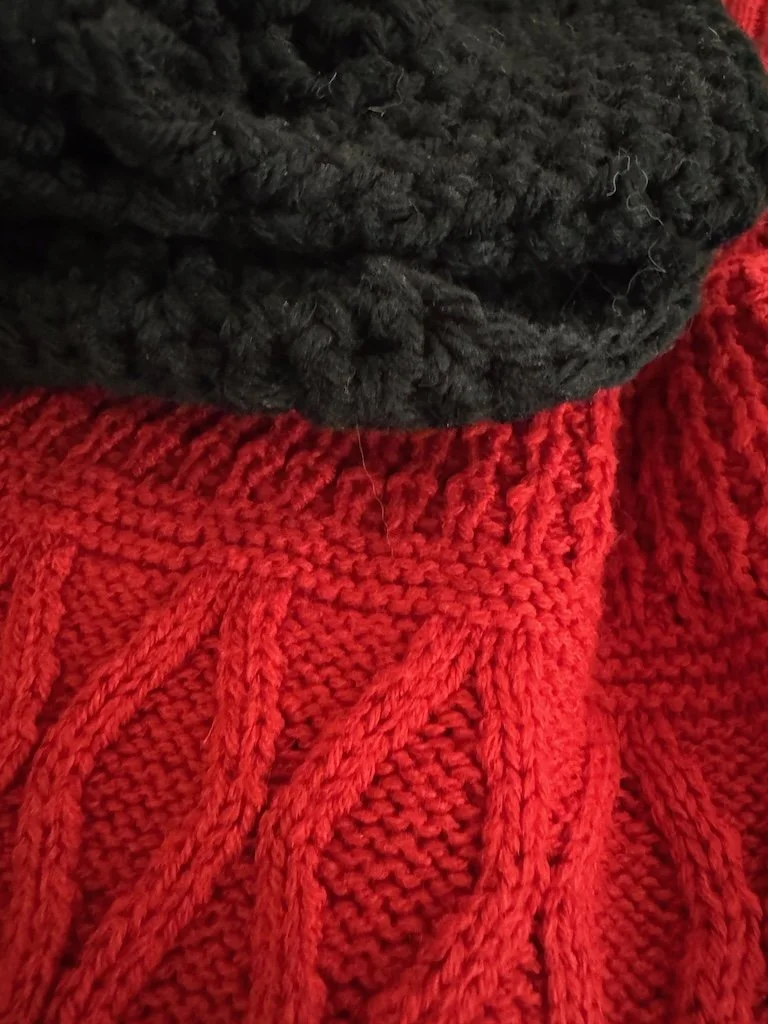
When I was rearranging my closet for the season (putting away winter clothes and getting out summer clothes), I decided to donate my fuzzy acrylics rather than saving them for next winter. They are the items in my wardrobe that shed the most plastic fibers even though I wash them in cold water in a laundry bag and air dry them flat. The items were in two categories – sweaters and a slouch hat that I crocheted recently from a skein of acrylic yard I bought years ago.

Both items can be replaced with similar items made with natural fibers next winter. They might be a bit more expensive, but my clothes tend to last a long time - so it is worth it  to buy wool, silk, or cotton sweaters…and it is easy to find cotton crochet thread/yarns for making slouch hats!

Plastics Crisis - Textiles

There seem to be plastics everywhere. I’ve come to realize that in my home, the largest source is probably textiles! The carpets that were in the house when we purchased it a few years ago are likely all synthetic fibers (although about 1/3 of the house is tile or vinyl (plastic)). When we vacuum the particles are gray and powdery…the plastic there is already very small.

And then there are clothes. We have some clothes that are cotton or cotton/polyester (plastic)…but some items are 100% synthetic (polyester, acrylic, nylon, spandex). I don’t dry more than half my clothes that are synthetic fibers, but there are enough that the lint from the dryer should probably be considered toxic (probably should put it in a covered trash can so microplastics will not waft from it); I hope washing machine technology will eventually filter their waste water but I’m not sure how to handle what a filter would collect safely).

Back in March 2019 I posted some macro photography of textiles; I’ve copied it below with some commentary afterward.

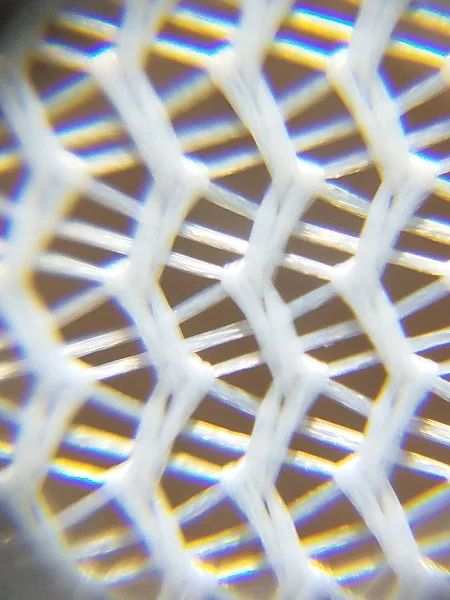
I am finally experimenting with my 60x macro lens that I got for my phone. Textiles around the house were an easy project. The lens has a light and I found it handy. With this lens, I use the zoom on the phone to avoid clipping the image to take out the vignetting around the edges. I’d rather compose the image in the camera.

2019 01 IMG_1253.jpg
20190308_082610.jpg

I liked the simple weave and colors of the worn dishcloth.

20190314_114644.jpg

A crocheted hat had brilliant color but was not flat enough to focus well.

20190314_114655.jpg

The washcloth had more fuzzy fibers than I expected but

20190314_114829.jpg

Not nearly as many as the wool sock.

I got stuck on a tapestry jacket…had a challenge to choose just 3 to include in this post. The last one was from the inside of the jacket.

20190314_114948.jpg

The machine embroidery of a silk jacket looked very different than I anticipated.

20190314_115026.jpg

The weave of a light-weight jacket was more complex.

I realized that the patterns on t-shirts were painted – but hadn’t thought about what they would look like with the macro lens. The blobs of color stand out on the surface of the cotton knit.

20190314_115243.jpg

The most non-fuzzy fabric was microfiber underwear!

20190314_115315.jpg

The yarn in the bulky cardigan was almost too big to look interesting at this magnification.

20190314_115443.jpg

Machine-made borders look more orderly than the fabric sometimes (the black is thread).

20190314_115534.jpg

The eye detects tiny holes in the fabric of the bag for delicate fabrics to go in the washer; with macro lens, it looks like a Zentangle.

After I got back to my office, I looked at two mouse pads with the macro lens. One is a woven surface…the other looks like a paint.

--

The macro photographs make it easy to see how easily fibers escape from our clothes and carpets.

Right now I am thinking that at home the 1st priority is to not have any plastic around heat (mostly in the kitchen) and the 2nd is reducing synthetic textiles!

Gleanings of the Week Ending December 7, 2024

The items below were ‘the cream’ of the articles and websites I found this past week. Click on the light green text to look at the article.

No need to overload your cranberry sauce with sugar this holiday season − a food scientist explains how to cook with fewer added sweeteners – Cranberries are one of my favorite seasonal foods. I like them so much that I buy enough to freeze and use well into spring – even summer. During the cold months I use them for relishes, adding to stir fry veggies, and in muffins. I’ll make the relishes more savory than sweet from now on!

Researchers Investigate Sustainable Ancient Construction Techniques – Studying the best-preserved earthen building in the Mediterranean. It was built between the eighth and sixth centuries BCE.

Floating Wetlands Bring Nature Back to Baltimore’s Inner Harbor – Built as part of the National Aquarium. The article interested me since we lived near Baltimore for so many years.

Check Out the Highest-Resolution Images Ever Captured of the Sun’s Entire Surface – Images from European Space Agency’s (ESA) Solar Orbiter.

Climate change and air pollution could risk 30 million lives annually by 2100 - Under the most probable projection, annual mortality rates linked to air pollution and extreme temperatures could reach 30 million/year by the end of the century. In 2000, around 1.6 million people died each year due to extreme temperatures, both cold and heat. By the end of the century, in the most probable scenario, this figure climbs to 10.8 million, roughly a seven-fold increase. For air pollution, annual deaths in 2000 were about 4.1 million. By the century's close, this number rises to 19.5 million, a five-fold increase. And yet – there is not the political will to change the scenario.

Vincent van Gogh’s Brilliant Blue ‘Irises’ Were Originally Purple – The paint faded since the painting was created in 1889. It’s still beautiful – either way.

Bee alert: Pesticides pose a real threat to over 70% of wild bees - Alarming risks that pesticides pose to ground-nesting bees (i.e. bumblebees, squash bees), which are crucial for pollination and food production.

The Chilling Sound of the Aztec Death Whistle - Creating 3D digital reconstructions of original Aztec death whistles…then recording sounds from originals and the reconstructions. Both produced sounds like a human voice or scream. There is a link to recording samples at the bottom of the post.

Overwhelmed by ever more clothing donations, charities are exporting the problem. Local governments must step up - There are more and more clothes in circulation, and they are getting cheaper and lower quality. That means the clothes you give away are worth less and less. Worldwide, we now dump 92 million tons of clothes and textiles a year, double the figure of 20 years earlier. Local governments usually handle other waste streams. But on clothes and textiles, they often leave it to charitable organizations and commercial resellers. This system is inherited from a time when used clothing was a more valuable resource, but the rising quantity of clothing has pushed this system towards collapse.

Oysters as large as cheese plates: How New Yorkers are reclaiming their harbor’s heritage – Perhaps the main accomplishment of the project, even more than increasing oyster population, is reminding New Yorkers that they are islanders. It's hard to care about something that is only abstract, something you don't have experience with. Ultimately, people have a much greater ability to improve water quality than the oysters ever will.

Then and Now - Ironing

Back in the 1960s, ironing was a skill my mother taught us. Many of our clothes needed to be ironed because they were made of natural fabrics like cotton. We sprinkled clothes in bags and then ironed them after the moisture was fully absorbed; the clothes were damp but not wet. The irons did not have a water reservoir to make them into ‘steam’ irons. Even if they did, the amount of ironing was enough that the steam would not have lasted for the whole time. My father bought a mangle iron for the laundry room in our newly built house in 1963 which my mother used for flat items like napkins and table clothes…disappointed that it was not easily used for clothes.  

I particularly remember ironing two gingham shorts/top sets during a summer in the mid-60s. I eventually got pretty good at getting all the wrinkles smoothed away.

By the later 1960s, the amount of ironing had dropped dramatically with most clothes being permanent press cotton or synthetic fabric.

Now the only things I iron are cotton bandanas! I iron them straight from the washer – which spins so much water out that they are dry by the time I iron them. I use a new-looking iron that I found when my sisters and I were cleaning out my parents’ house and an ironing board that I got when I married over 50 years ago (the cover has been replaced once).

Ironing is one of those historical life-skills that might not be important now!

Previous Then and Now posts

Patterns in the Snow

A few days after photographing the snow activity around the patio, it was a little warmer (in the teens) and the sun was out. I ventured out at mid-morning to look around the yard and neighborhood. I noticed tracks in the snow. Squirrel?

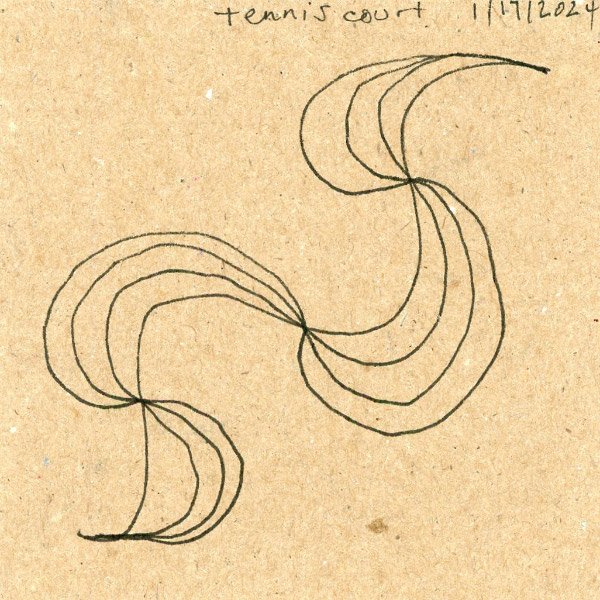
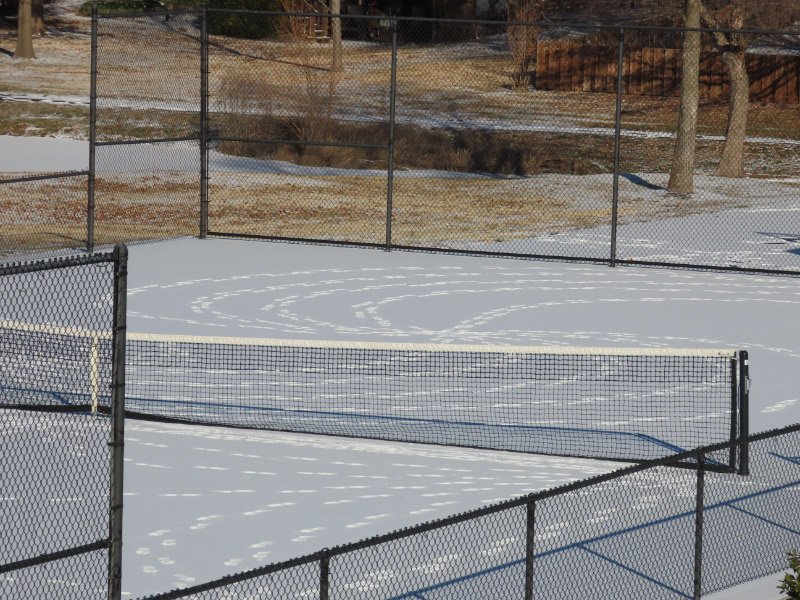
My real objective was to walk patterns on the untracked snow of the tennis courts. It was my first attempt…and a learning experience.

  • I had chosen 2 simple patterns from my Zentangle experiences. The free form curves worked better than the “straight” lines.

  • The contrast between shadows and bright sunlight played havoc with my line of sight. The poles at the ends of the net worked well but the other corners were more nebulous.

  • Even though I tried to retrace each line at least twice, additional retracing would have made the lines more solid. Maybe wearing snowshoes would make that easier although I am not quite ready to make the purchase (yet).

The tennis courts are an optimal surface to walk patterns in the snow – flat and with ‘posts’ for orientation.

  • The snow was a good depth…2-3 inches.

  • It was cold enough (teens) that there had been no melting.

After I finished on the tennis courts I walked along the path a bit – made arches away from tracks made by others. Some had melted through to the asphalt. On the bridge over the channel into the ponds, there had been more traffic and the snow had fallen between the planks.

My winter gear kept me warm enough (down filled coat with hood, tube scarf over my head under the hood, mask, snow pants, hiking boots with wool socks, battery powered heat in my gloves). But I was ready to head indoors!

History via art

Hannah (Nannie) Hudson Moore’s 1905 book includes many examples of children in paintings. My favorites are not the princes and princesses (which seem to be the majority). I like the ones that depict children that were obviously well cared for…in poses that look like children! Children then must have moved the way they do now – learning to walk and run…being outdoors…having quiet time indoors. Often the clothes seem cumbersome. How did they play? From another perspective - I always wonder if the children in the pictures managed to grow to adulthood; life expectancy was shorter then with a lot of children succumbing to diseases that are not prevented by vaccines. The book is available from Internet Archive:

Children of other days;notable pictures of children of various countries and times, after paintings by great masters

Gleanings of the Week Ending March 4, 2023

The items below were ‘the cream’ of the articles and websites I found this past week. Click on the light green text to look at the article.

Can clothes ever be fully recycled? – Evidently a lot of progress has been made in the past few years – translating processes from small to large scale production. But recycling is not the only thing that needs to change about the fashion industry. ‘Fast fashion’ is cannot the future!

A simple thing you can do to benefit backyard birds and bees – Wait until it is 50 degrees to do spring cleaning around your yard. Those leaves and dead stalks harbor insects….and birds need insects, particularly when they are raising their young! I have a big tuft of ornamental grass which I am waiting to cut. Last summer it was full of insects and I except some eggs/larvae are there now.

An incredible journey – Chinook making their way up the Klamath River in the spring and fall. (infographic)

Nearly 30 dangerous feedback loops could permanently shift the Earth’s climate - A change….triggering more change…a cycle. Our planet is full of complex connections that are often not well understood.

As Millions of Solar Panels Age Out, Recyclers Look to Cash In – Hopefully solar panels, and a lot of other end-of- life products, can become part of the ‘circular economy’ rather than going to landfills.

See Thousands of Sandhill Cranes Gather in Nebraska – Maybe next year we’ll plan to go to Nebraska to see the crane migration!

The beautiful flowers that bees can’t use – Nectar deficient hybrids (like double petal petunias) or non-native plants often don’t provide food for pollinators…even though people find bigger, brighter flowers appealing. The article also provides a link to a free book: Pollinator-Friendly Parks which might be useful for homeowners who want to support pollinators.

Anti-dust tech paves way for self-cleaning surfaces – Wouldn’t this be nice…my computer screens seem to attract dust!

'The Great Displacement' looks at communities forever altered by climate change – A book review that documents people surviving a hurricane in the Florida Keys or a big fire in California (and other climate change related disasters) and making decisions in the aftermath. A quote from the author, Jack Bittle: "In the United States alone, at least twenty million people may move as a result of climate change, more than twice as many as moved during the entire span of the Great Migration."

A Long Low Tide Dries Up Venice’s Smaller Canals – Wow…we usually think of Venice being more prone to flooding.

Gleanings of the Week Ending October 1, 2022

The items below were ‘the cream’ of the articles and websites I found this past week. Click on the light green text to look at the article.

What is the right age to get a smartphone? – No set answer or surprises in this article. I was a little disappointed but maybe the answer will always start out with “it depends….”

Air pollution might spur irregular heart rhythms in healthy teens – Air quality is important for everyone…not new news, but this study has supporting data for a segment of the population we generally think are very healthy.

A rapid shift to clean energy would save the world $12 trillion – I wish I was more confident that the people of the world have the will to save the planet (and ourselves).

Seven healthy lifestyles may reduce dementia risk for people with diabetes – Getting all 7 might be hard….but the 5 or 6 out the 7 should be something everyone can do.

Cool and Overlooked Critters of the Sagebrush Sea – Someone commented that they had driven across Kansas once and it was such a long slog that they didn’t want to do it again. This article reminded me that learning to look at unfamiliar places is a challenge…one we should consciously accept!

Daily multivitamin may improve cognition and possibly protect against decline – Easy to do!

Why you need a 'wellbeing wardrobe' – Most of my clothes are over a decade old and some were bought from a thrift store. I wear them until they are worn out and then I turn them into other things, compost them (if they a compostable fiber) or donate them (hoping that they can be sold or recycled). My sister commented that she was saving jeans to make a quilt. There are some items that seem to last longer than they did in the 70s (I remember inexpensive underwear and panty hose that were rarely worn more than a few times). Since I don’t buy many new clothes, I wondered about the demographics of who is buying so much clothing…and then trashing it so quickly.

Older adults with regular activity routines are happier and do better on cognitive tests – Picked up a vocabulary word from this article: zeitgebers – time cues which help set the body’s internal clock and can also assist in creating a stable routine. Some examples of zeitgebers are sunlight, exercise and eating…pets that require certain kinds of attention at about the same time each day.

Why plastic doesn't dry in the dishwasher – A little physics. I’ve noticed that we are using less plastic these days…more ceramic, glass, and metal. The last change was the containers we use for leftovers; I’ve gradually been replacing plastic with glass containers. My popcorn bowl (that I use in the microwave) is still plastic…but that’s about it.

Meet the Bat Falcon, the ABA Area’s Newest Bird – About the bat falcon, the ABA checklist and its importance to birders chasing a Big Year.

Favorite Shoes

I will probably have to retire my favorite pair of shoes soon and I am savoring them to the end. I like their rounded toes and decorative stitching….their metal decoration over the Velcro closure…their arch support and very slight wedge.

I bought them used several years ago. The padding on the sole is very thin and there are small tears that have formed on the sides. The metal decoration is tarnished and dented. The bottom has almost worn smooth.

I wish I could find a new pair that is the same but that is (most likely) impossible. Shoes are produced in quantity and then production is stopped for that style. A new style is produced in quantity, and it happens again…endless change hoping to attract new buyers in a faster and faster swirl of newness that encourages early trashing of products before they’re worn out. My favorite pair of shoes will be thoroughly worn out…but I am putting off buying anything new to replace them for now.

Ten Little Celebrations – October 2021

Celebrating fall…

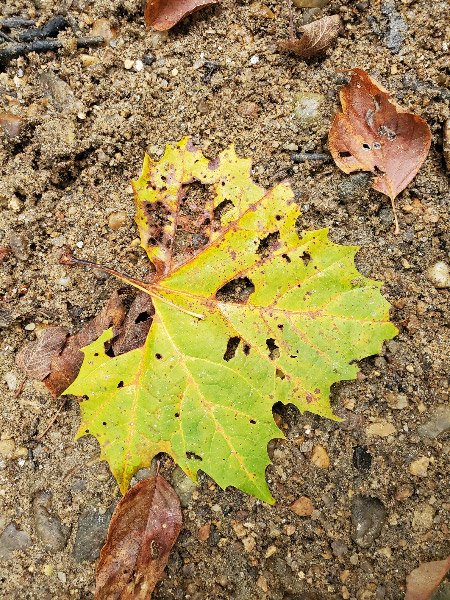
Fall view from my office window. The view from my office window includes a tulip poplar and a red maple…the first has leaves of yellow…the second red although it will be the last to turn completely and let go of its leaves. Celebrating the most colorful views of the year from my office window.

Haircut. We’ve perfected getting haircuts while wearing a mask…still wait a little longer between haircuts than we did pre-pandemic – so it is a celebration to have neatly trimmed hair!

Morning walk in the neighborhood. Cooler mornings and days. Celebrating very pleasant temperatures for the whole day (although a jacket may be required in the morning).

Middle Patuxent River with students. Celebrating the restart to volunteering that I did pre-pandemic. The river is so beautiful when I am standing in the shallows in my big boots!

A new low weight for the year and a beautiful sunrise. Taking off the pounds is hard….but I am doing it! I celebrate every new low weight for the year. Recently I was in the right place to see the sunrise on the same day. I bought and enjoyed a slice of pumpkin roll to celebrate both!

Getting out cool weather clothes. It’s not a whole new wardrobe – but one I haven’t worn in months. I always celebrate my favorite clothes as I hang them up (and also the ones I am packing away). I didn’t have anything that I decided to put in the donate pile!

Patuxent Research Refuge. Celebrating the closest wildlife refuge to where we live. There is always something to see there and I always chide myself for not visiting more frequently.

Smell of butternut squash in the oven. It’s that time of year where the smell pumpkin pie spices fill my kitchen…celebrating the special foods and family events that will continue through the end of the year.

Popcorn with butter. Most of the time I eat popcorn with just garlic salt….it’s a special celebration to have it with butter (and much higher calorie)!

Longwood Gardens. A beautiful place…and a celebration every time we go. Some parts I enjoy again and again…and sometimes there are sights that are totally new.

Sooty – An Aristocratic Cat

Internet Archive has quite a few of the Junior Press Books published by Albert Whitman & Company (Chicago) in the 1930s. Sooty – An Aristocratic Cat by Ambrosina Hurcum (1935) is one such example. Kittens and their antics must have been as popular in the 1930s as they are today. Like the other books…the story and illustrations are dated but they are interesting to browse keeping in mind when they were published. I wondered how realistic the illustrator captured clothes for children during that time. Did socks not have elastic in the 1930s? The illustrations look that way.

It was a stressful time in America with the Great Depression and so many people transitioning from the countryside into the cities for work. My parents were born in the early 1930s….a bit too young to read when this book first came out. I wondered how many children had access to books like this. My mother’s family moved from a rural area to a small town after she started school. Did the school have a library of books like this? It seems unlikely. My father grew up in the country and went to a small school of other farm children; it seems even less likely that he would have had books like this.

I’ve become a fan of absorbing history via books written in an earlier time. The authors were writing about their present and for a current audience (in this case in the 1930s and for children) without the hindsight employed in histories written about the same period today. The older books offer a way to step back and observe the author’s perspective…how it is the same or different than would be observed today in a similar situation.

Capturing Moments

There are always things to notice…and we are often carrying around something (phone or small camera) that can capture the moment. Here are some recent nature captures:

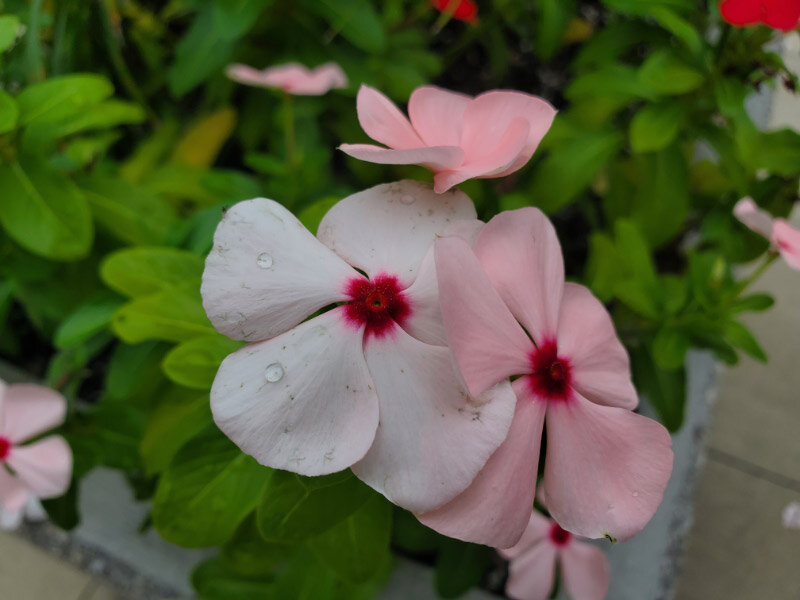
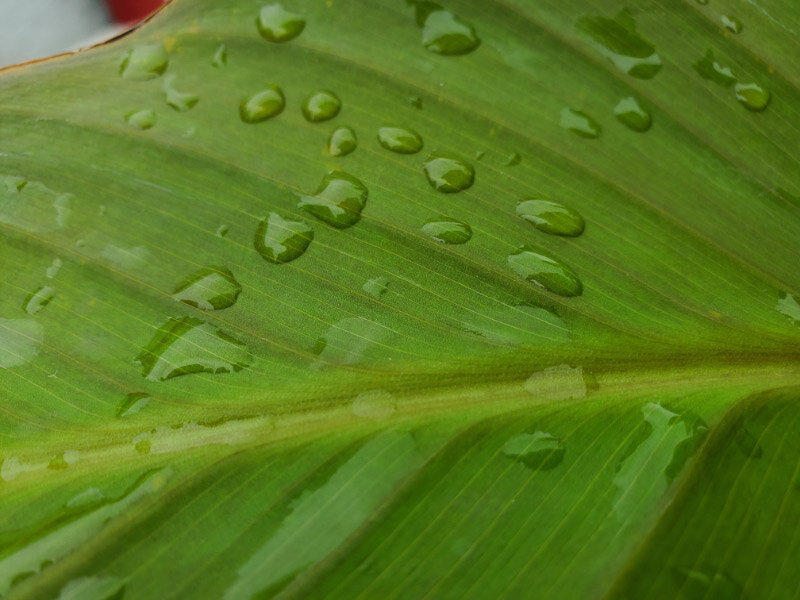
At the car dealership while I waited for my car after its service…I photographed the flowers in urns with my phone; the water droplets on the big leaves were left from the rain earlier in the morning.

My attention was captured most by the flowers that had dropped and always to land upside down with there stems pointed skyward. They must have been knocked off by the rain.

20200911_101804.jpg

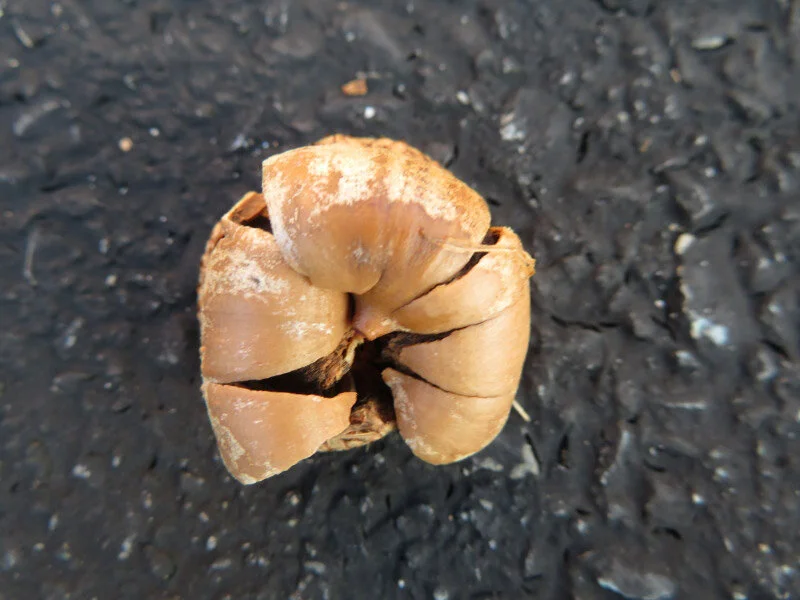
Next - I was walking down the driveway when I spied something round in the driveway. I went back to the house for my small camera. Once I looked more closely, I realized it was an crushed acorn that had stayed together rather than scattering into pieces. It still had the cap (on the bottom)!

2020 09 IMG_1881 (1).jpg

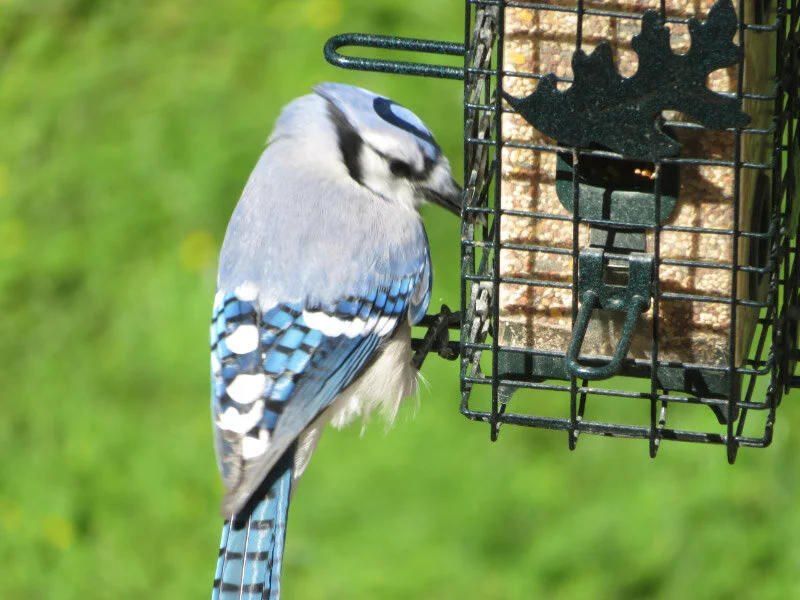
The blue jays come to our deck frequently, but I hadn’t ever seen them on the feeder. There is a reason….the roost are too close together for the birds (see how the bird is ducking and can’t perch on the roost normally) and their weight is enough to partially close the openings where the seed is available. This bird did get a few seeds but flew away and didn’t return!

Unique Activities for Yesterday:

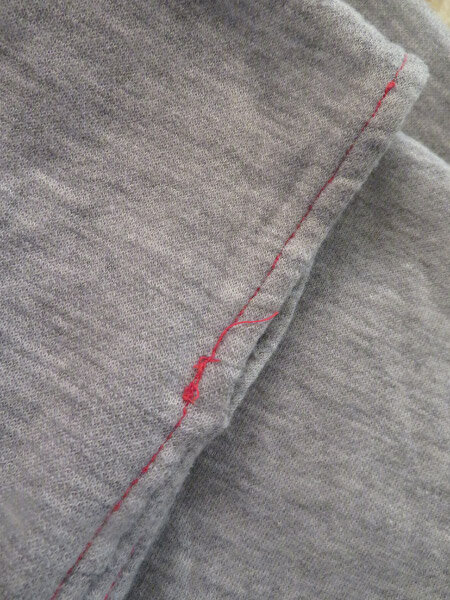
Cocoon. One of my oldest pieces of clothing is a ‘cocoon’ I made back 1985. I use it during the change in season when it’s too cool to go without a wrap but then warms up and I want something that lets in more air…then off and folded up neatly. It is made of gray cotton fleece. Its current dimensions are 19.5” x 62” – probably stretched out over the years. The construction is two French seams (narrow dimension) with an arm hole left on the fold end. It’s a semi-structured blanket!

And then a folded under hem of around the edges. I used red thread to break the monotony of the gray fleece.

IMG_2098.jpg

It folds neatly making it easy to carry and pack. It’s something I wear frequently enough to keep even though it is about 35 years old since I remember making it in the fall!

IMG_2100.jpg

First day of autumn. It was 40 degrees this morning…very autumn like. The oak and sycamore are dropping leaves, but the tulip poplars and maples are still very green. We have a lot of acorns on the driveway that I need to sweep up and take back to the forest.

Gleanings of the Week Ending August 15, 2020

The items below were ‘the cream’ of the articles and websites I found this past week. Click on the light green text to look at the article.

Top 25 birds of the week: #Spectacular - Wild Bird Revolution and Top 25 birds of the week: #August - Wild Bird Revolution – A double dose of bird pictures for this week!

A New Look at Ancient Nubia - Archaeology Magazine – South of Egypt….evidence of sophisticated culture centuries before the pharaohs extended their rule to the area.

New fabric could help keep you cool in the summer, even without A/C -- ScienceDaily – Interesting. But are there some negatives to ‘nanofibrous membranes’? Could they be worse pollutants than microplastics if we aren’t careful with them?

Photography in The National Parks: Gearing Up, Staying Safe, And Getting Back Out There with My Cameras at Crater Lake National Park  - I’m still not confident enough to try a road trip to a national park when I am still carefully timing my trips to the grocery store! I’d have to purchase a lot more masks than I have now --- and develop a strategy for ‘rest’ stops along the way.   

Older adults coped with pandemic best, study reveals -- ScienceDaily – This study seems intuitive to me. My husband and I are in the over 65 crowd and post-career. We miss volunteering and traveling…but we are not anxious about a job or childcare or facing financial catastrophe. 2020 is a going to be an odd year for us…but not a bad one. It’s not hard to laugh about not knowing when we’ll get a haircut!

Activities Discovered for Some Inactive Drug Ingredients | The Scientist Magazine® - There is more than the drug in the capsule….and it’s hard to know how many ‘side effects’ to drugs are actually a reaction to something that was supposed to be inert – but isn’t for everyone.

The Weird, Wondrous and Vulnerable American Horseshoe Crab – Cool Green Science – Blue bloods…and ancient…. Can they survive their interaction with humans?

Forty percent of dementia cases could be prevented or delayed by targeting 12 risk factors throughout life -- ScienceDaily – There 9 risk factors identified in 2017 (less education in early life; mid-life hearing loss/hypertension/obesity; later life smoking/depression/social isolation/physical inactivity/diabetes) and now there are 3 being added: excessive alcohol intake, head injury in mid-life, and air pollution in later life.

Forest Photos Captured in Different Seasons Shows the Beauty of Change – Interesting idea of a long-term photography project. I’ll have to start scouting some places easy for me to get to.

Childhood connection to nature has many benefits but is not universally positive, finds review: A connection to nature is complex, as well as positive emotions, it can generate negative emotions linked to issues like climate change -- ScienceDaily – But those negative emotions can lead to actions toward a more livable world….which would net to a positive in the long run.

Unique Activities for Yesterday:

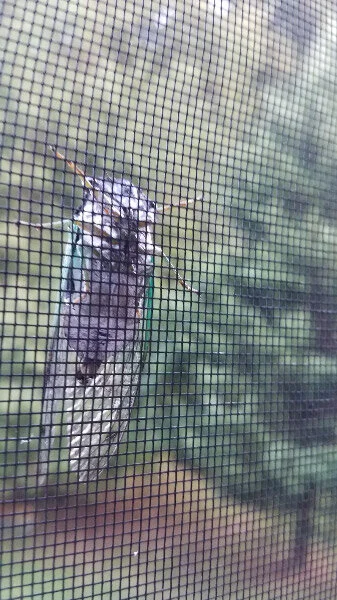
Cicada on the Screen. There don’t seem to be as many cicadas around this year. I hear one occasionally…but no answering song. I hope they are finding mates but would be more confident if there were the usual overlapping songs. There was one on the screen of our covered deck in the early morning. It must have spent the night there and it was not quite warm enough for it to be singing. Later in the day it was gone.

eBooks, Rose and Shards Prompt, and Chipmunk

Continuing the blog post series prompted by COVID-19….

3 Free eBooks for May 2020

It’s time for me to look back at the eBooks I’ve been browsing this month and pick three. I cheated a little since the first one is 11 volumes. These are quite a visual feast and all published around 1920.

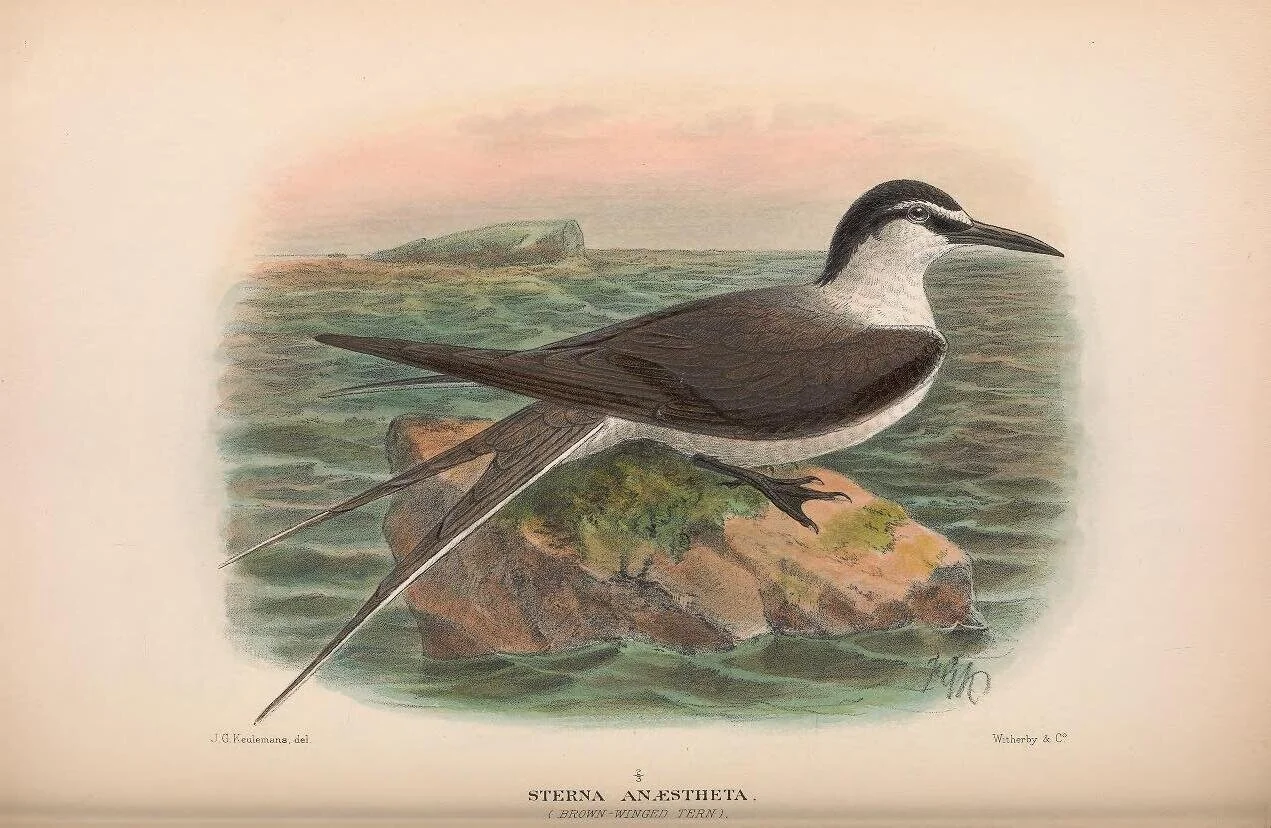
Mathews, Gregory Macalister et al. The Birds of Australia. London: Witherby & Co. 1910-1927. I am working my way through all the volumes on Internet Archive: one, two, three, four, five, six, seven, eight, nine, ten, and eleven. Mathews was an extreme splitter….so focus on the illustrations rather than the classifications. I am including some sample images from the volumes I’ve browsed so far.

43 20 05 (10).jpg

Herben, Beatrice Slayton; Richardson, Frederick. Jack O'Health and Peg O'Joy - a fairy tale. New York: Charles Scribner’s Sons. 1921. Available from Internet Archive here. I was interested in the illustrations by Frederick Richardson.

Littlejohns, John. British water-colour painting and painters of to-day. Toronto: Sir Isaac Pitman & Sons. 1920. Available from Internet Archive here. Lots of variety in this collection. Some are what I expected but the one I picked for the sample image was a standout….something different.

55z8.jpg

A Zentangle Prompt

RIBBON ROSE for the central tangle(s) and SHARD for the border/frame. Your choice whether to make the center or the frame first…. or create two tiles to try both!

Here are tiles based on the prompt: Make a tile where PHICOPS is the primary tangle. Feel free to fill out the tile with a tangle of your choice.

Unique activities for yesterday:

Summer clothes. The weather has finally gotten warm enough that I got out all my summer clothes and packed all the rest away in large suitcases that work better for out-of-season clothes than for traveling. Sometimes I leave out a few cool/cold weather clothes if we are planning a trip to the Rockies….but that is not happening this year. I also packed the t-shirts I wear for volunteering since that is not happening this summer either. The closet is less crowded. Another positive discovery – I have managed to get rid of clothes I wasn’t wearing in previous seasons; I only identified one item that is going in a giveaway pile!

20200526_073215(0).jpg

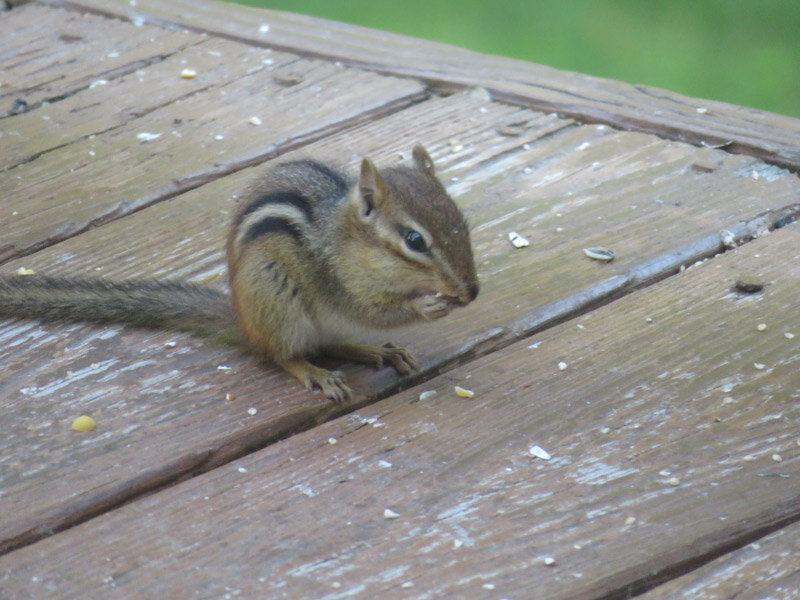
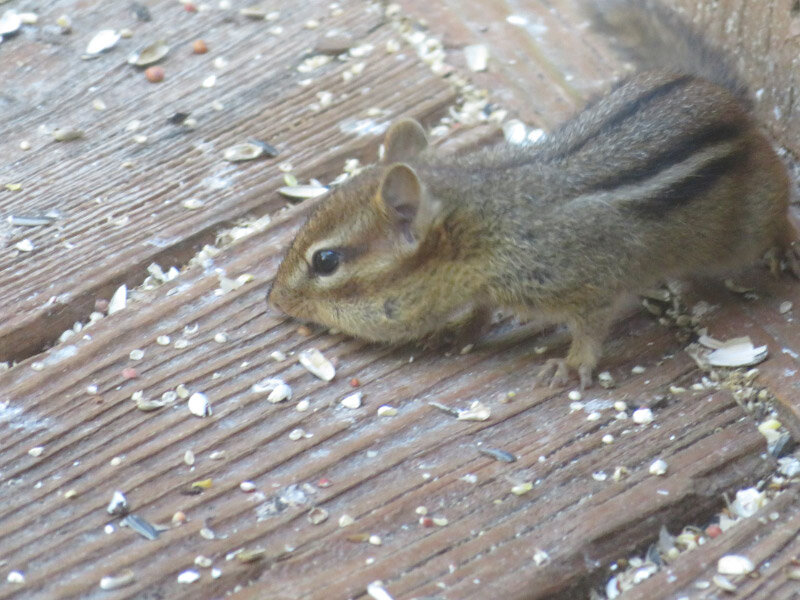
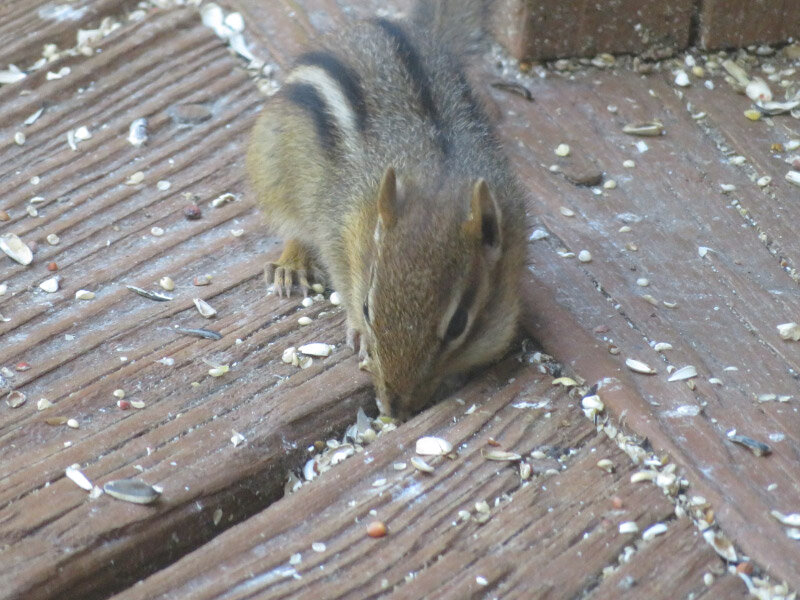
Chipmunk under the bird feeder. There was a chipmunk cleaning up under the bird. I hadn’t seen one recently although we have had them periodically since we moved to the house over 20 years ago. This one was examining each bit of debris although most were hulls rather than seeds.

Last iris. The last iris bud opened. It will be the last flower in my office until the day lilies start blooming. The day lilies are a little later than usual sending up their bud stalks because of the cooler-than-average weather. On the plus side – there is dense leaf growth which bodes well for the plants having lots of energy to bloom now that the temperatures are consistently warm.

20200526_160158.jpg

Links to my previous “filling a day of social distance” posts  here.

--

The Zentangle® Method is an easy-to-learn, relaxing, and fun way to create beautiful images by drawing structured patterns. It was created by Rick Roberts and Maria Thomas. "Zentangle" is a registered trademark of Zentangle, Inc. Learn more at zentangle.com.

Filling a Day of Social Distance – 4/28/2020 – Little Celebrations

Continuing the blog post series prompted by COVID-19….

Here are the unique activities for yesterday:

20200428_075624.jpg

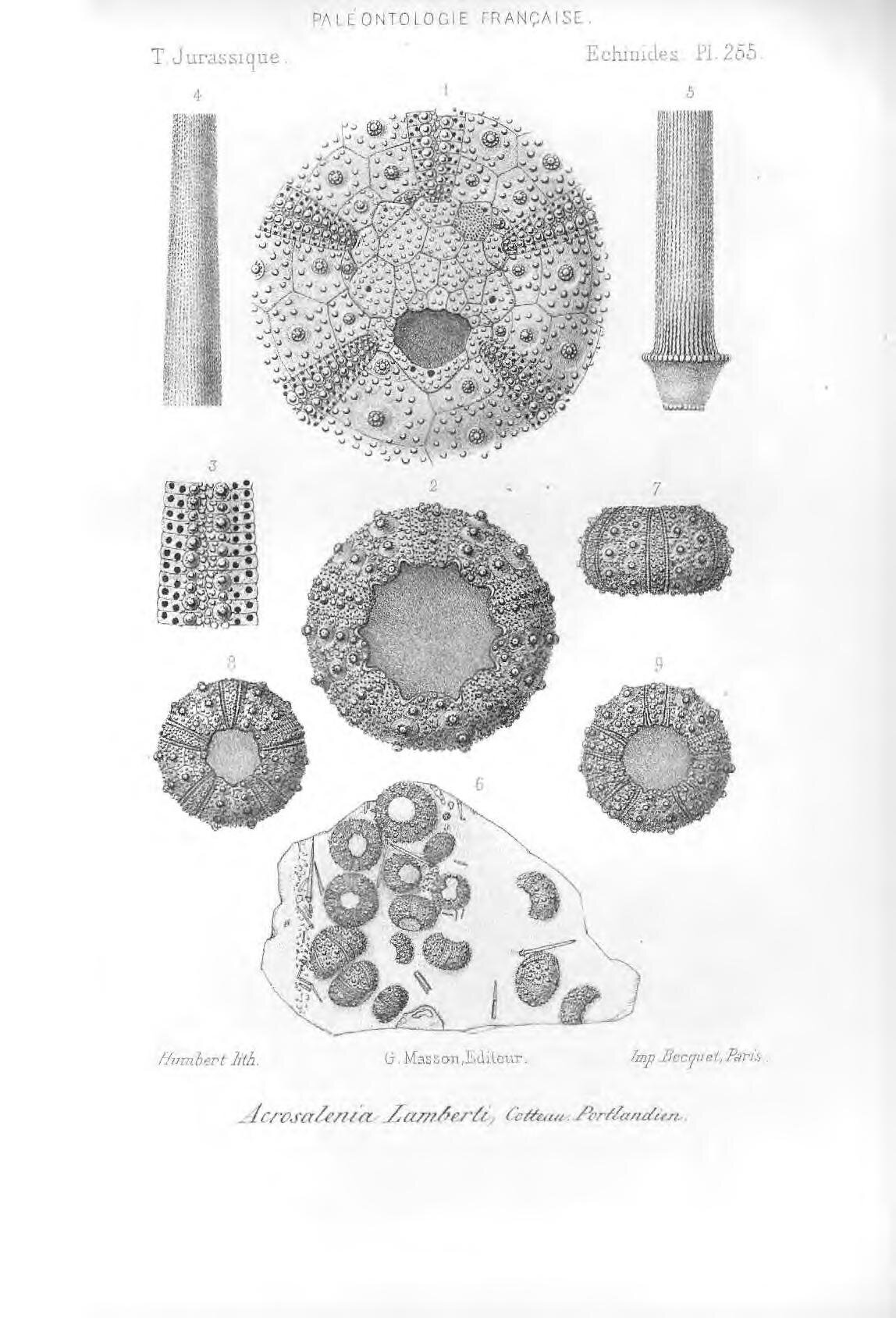
Making echinoderm prompted Zentangle® tiles. Jurassic echinoderms France is full of plates and worth browsing; it’s available on Internet Archive here. Four sample images are below. I’ve only made one Zentangle so far but I’m sure the patterns will pop up in the tiles I make over the next few days.

Starting the What is Contemporary Art? Coursera course. It is my 3rd class from MoMA. For some reason – I am interested in classes that are different from my typical science or history classes I’ve taken in non-pandemic years.

Watching a Glenn Randall Photography webinar on light for landscape photographers. It was something my husband found out about and set up for us. We watched on the television in the den. Now I have some vocabulary for some of the type of light I enjoy early or late in the day! I realized that some of the wonderful light on the sandhill cranes in the early mornings at Bosque del Apache is ‘glow light’ from the sun 20 minutes away from coming up behind us.

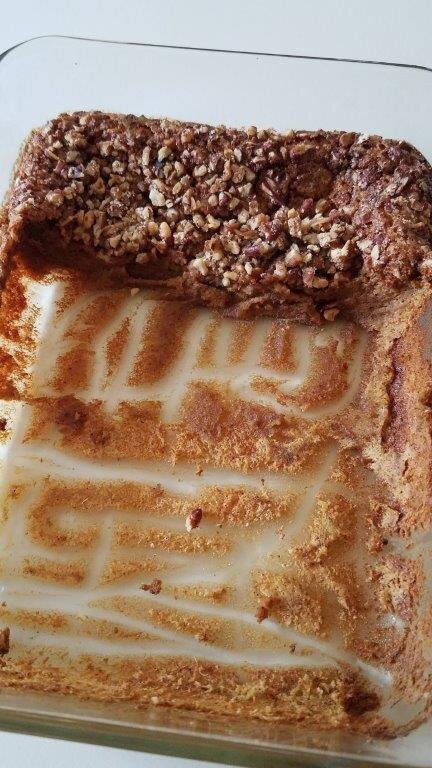
Making sweet potato custard. Probably my favorite food creation during our ‘stay at home as much as possible’ time has been sweet potato custard. This is the second time I’ve made it. I cook the sweet potato in the oven when we are baking something else…then peel it and save it in the refrigerator until I’m ready to make the custard. The sweet potato goes into the Ninja food processor with 4 eggs, 1 teaspoon cinnamon, 1/2 teaspoon ginger, 1/4 teaspoon cloves and 1/2 to 3/4 cup sugar (this time I was trying to use up some powdered sugar so I used the higher amount). After processing and scrapping down the sides, I add in enough almond milk to make the consistency about right….processing again to get it thoroughly blended. After pouring it into the backing dish, I cover the top with chopped pecans. It cooks for 15 minutes at 425 degrees and 30 minutes at 350 degrees.

20200428_122612.jpg

It never lasts long since both my husband and I like it a lot.

Links to my previous “filling a day of social distance” posts  here.

And now for the monthly post about 10 little celebrations. Again – the overwhelming celebration (the same as in March) is that in April 2020

Everyone in my family (in Maryland, Missouri, and Texas) is well…and taking all the recommended precautions to stay that way.

Now for 9 other celebrations….all from home (or easy walking distance):

Talking to family far away. It’s such a boost to talk with family – know that they are doing fine – that we all have pleasant homes and a few people with us. It’s good to let whatever anxiety has accumulated to melt away and celebrate family.

Grocery delivery. At first the idea of grocery delivery made me anxious. Now I find that the arrival of another delivery to our front porch is a cause for celebration. We have good food at low health risk.

Fashion as Design Coursera course. The whole course was interesting. I learned a lot more – and maybe differently – that I anticipated. I celebrated the whole course.

My history in wardrobe terms. The Fashion as Design prompted a whole project - thinking about my wardrobe from the 1960s to today. It was a fun project and I celebrated the memory of my favorite clothes.

Life in the Universe Pandemic Series. I’m a fan of Charles Cockell’s mini-lectures on astrobiology and I enjoyed his book (Bruntsfield Brook) as well. I watch/listen to the videos in clumps…glad I became aware of them shortly after he started.

Hiking into the forest. The whole hike was one big celebration. I am already looking at the forecast and planning another hike.

And then there are three birds I am highlighting as April celebrations: rose-breasted grosbeak, piliated woodpecker, and goldfinch. I celebrate the view from my office window each and every day. It is becoming a wall of green now that the trees are leafing out.

--

The Zentangle® Method is an easy-to-learn, relaxing, and fun way to create beautiful images by drawing structured patterns. It was created by Rick Roberts and Maria Thomas. "Zentangle" is a registered trademark of Zentangle, Inc. Learn more at zentangle.com.

Filling a Day of Social Distance – 4/16/2020 - Digiscope

Continuing the blog post series prompted by COVID-19….

Here are the unique activities for yesterday:

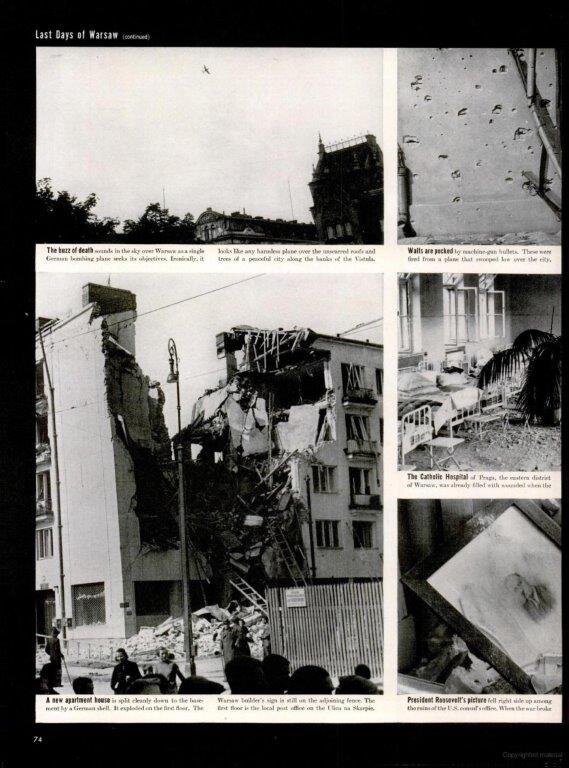
Browsing Life Magazines from 1939. I’ve been working my way through the scanned issues of Life Magazine available on Internet Archive. 1939 was before the US entered the World War II but the pages of the magazine are full of pictures of Europe…of the wreckage in Warsaw and Hermann Göring….along with ads for Studebakers. The pictures are snippets of history – what people were seeing as ‘news’ at the time.

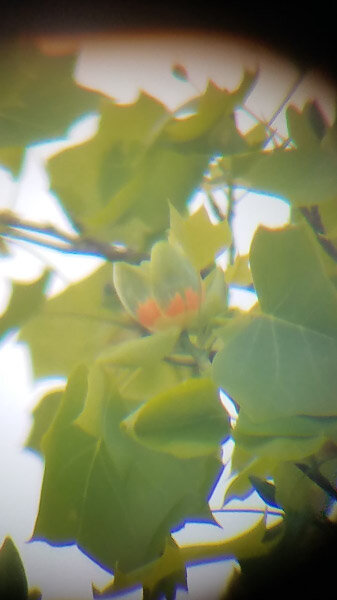
Digiscoping. My husband bought a gizmo to hold a cell phone to the eye piece of our birding scope….allowing a capture of images through the optics of the scope. I did a test on a cold, breezy morning – through the window (a French door in our breakfast area).

20200416_100127.jpg

The maples were looking very golden…with samaras and new leaves.

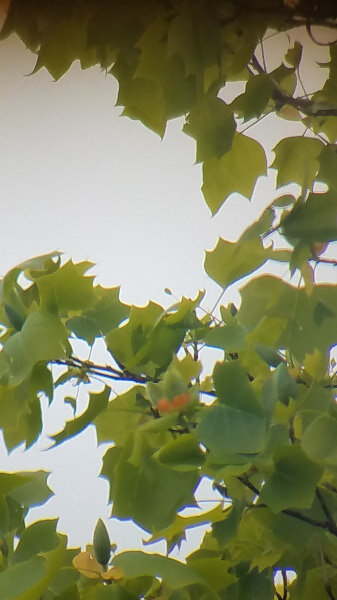
We reconfigured the tripod a bit…took the carrying case off the spotting scope…before I tried some pictures of the tulip poplar. The flowers (tulip like!) are beginning to open. The leaves are large enough to see their distinctive shape.

Overall, it was a good experiment. My husband thinks another mount will work better for us…and trying again on a day that isn’t so breezy would be easier too. Eventually we might even get good enough to photograph some birds back in our woods.

Making chili. We got a large package of ground beef in our last grocery delivery, so I suggested that we make chili to use 2 pounds of it…and then freeze the rest of it in 1-pound packages. I had beans that I had cooked early in the ‘stay at home as much as possible’ regime in the freezer. My husband orders a supply of our preferred chili mix – so we had that on hand. The only thing we were missing was a can of tomato sauce. We substituted spaghetti sauce! When the chili was done, he had his in tortillas (i.e. a chili soft taco) and I had mine over bulgur wheat. We have a lot of leftovers!

Finding a forgotten pair of jeans. I reorganized my closet about a month ago to work my way though all my pairs of jeans/slacks while I am at home…and discovered a pair of jeans I had completely forgotten about. And they fit! My plan had been to discover things that needed to go in the ‘give away’ pile. So far – I haven’t found anything in that category.

Seeing a goldfinch ‘sheltering’ on the screen near the birdfeeder. I noticed a goldfinch under the eve on the screen of our covered deck in the morning. It seemed very intent on whatever it was doing. Then it flew to the feeder to get some seed and look around a bit…then went back to the screen. It appeared to be eating the seed it had gotten from the feeder. I wonder if there was some kind of drama earlier that made the finch leery of our feeder.

Links to my previous “filling a day of social distance” posts  here.

Macro Photography - Textiles

I am finally experimenting with my 60x macro lens that I got for my phone. Textiles around the house were an easy project. The lens has a light and I found it handy. With this lens, I use the zoom on the phone to avoid clipping the image to take out the vignetting around the edges. I’d rather compose the image in the camera.

2019 01 IMG_1253.jpg
20190308_082610.jpg

I liked the simple weave and colors of the worn dishcloth.

20190314_114644.jpg

A crocheted hat had brilliant color but was not flat enough to focus well.

20190314_114655.jpg

The washcloth had more fuzzy fibers than I expected but

20190314_114829.jpg

Not nearly as many as the wool sock.

I got stuck on a tapestry jacket…had a challenge to choose just 3 to include in this post. The last one was from the inside of the jacket.

20190314_114948.jpg

The machine embroidery of a silk jacket looked very different than I anticipated.

20190314_115026.jpg

The weave of a light-weight jacket was more complex.

I realized that the patterns on t-shirts were painted – but hadn’t thought about what they would look like with the macro lens. The blobs of color stand out on the surface of the cotton knit.

20190314_115243.jpg

The most non-fuzzy fabric was microfiber underwear!

20190314_115315.jpg

The yarn in the bulky cardigan was almost too big to look interesting at this magnification.

20190314_115443.jpg

Machine-made borders look more orderly than the fabric sometimes (the black is thread).

20190314_115534.jpg

The eye detects tiny holes in the fabric of the bag for delicate fabrics to go in the washer; with macro lens, it looks like a Zentangle.

After I got back to my office, I looked at two mouse pads with the macro lens. One is a woven surface…the other looks like a paint.

3 Free eBooks – February 2019

As usual – I tried to select some different kinds of books that are available for free to peruse online. This month they are from three different sources too: Hathi Trust, Internet Archive, and Project Gutenberg. Maybe one of these is something you would enjoy too…so take your pick - history or art or children’s literature!

Country Life in America. New York: Doubleday, Page, & Co. 1901-1917. Hathi Trust has 31 volumes of the periodical available here. Most of the magazine is black and white but there is some color like these three pictures from the December 1904 issue. The advertising is as interesting as the pictures with articles…it is a snapshot of the time: technology, food, special occasions, travel.

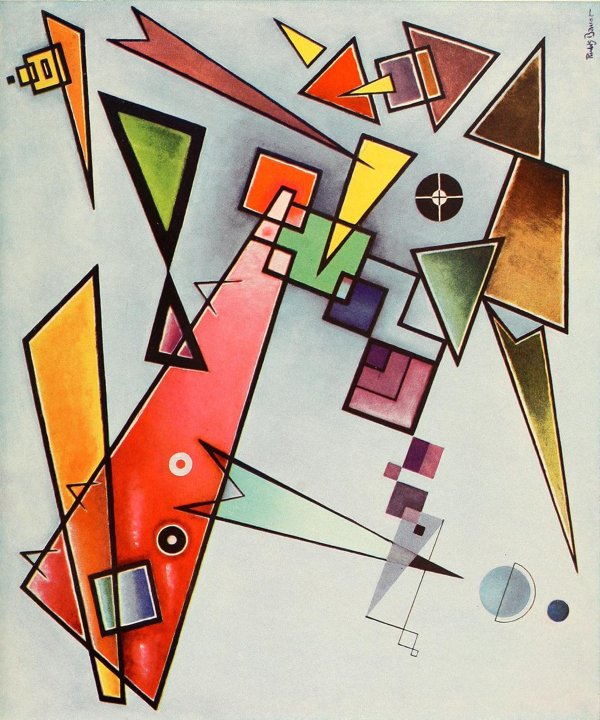
Rebay, HIlla. Third enlarged catalogue of the Solomon R. Guggeneheim collection of non-objective paintings: March 7th until April 17th, 1938, Gibbes memorial art gallery, Charleston, South Carolina. New York: Bradford Press. 1938. Available from Internet Archive here. Lots of colored images in this book since it was from an exhibition of ‘modern’ art of the 1920s and 1930s. The two below are by Rudolf Bauer.

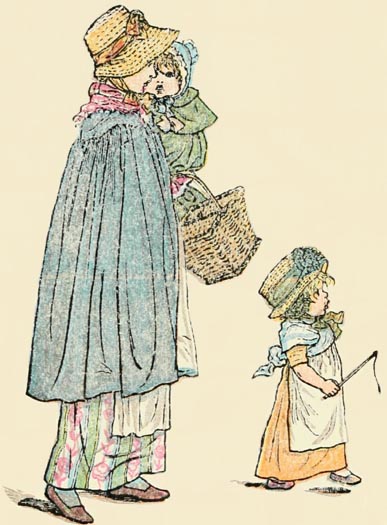
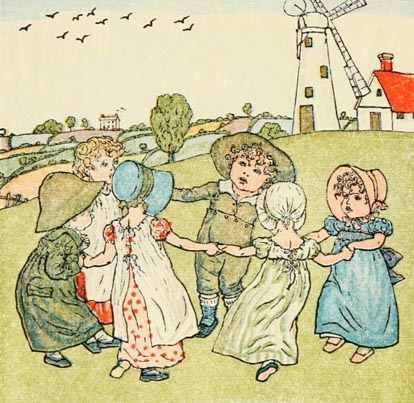
Greenaway, Kate. Mother Goose or the Old Nursery Rhymes. London: Frederick Warne and Co. 1881. Available from Project Gutenberg here. Familiar Rhymes…fun illustrations. This author created imaginary 18th-century clothes for children that became a style for actual clothes for children!