Gleanings of the Week Ending May 16, 2026

The items below were ‘the cream’ of the articles and websites I found this past week. Click on the light green text to look at the article.

5/1/2026 Science Daily A hidden brain “cleaning” effect triggered by movement - Every time you tighten your abdominal muscles—even slightly—your brain may gently sway inside your skull. This subtle motion, triggered by pressure changes in connected blood vessels, appears to help circulate cerebrospinal fluid around the brain, potentially flushing out harmful waste.

4/30/2026 NWF Blog Fighting Toxic “Forever Chemicals” on Our Farms - The Department of Defense has identified over 4,000 high-risk or already-contaminated agricultural sites across the U.S.  The PFAS contamination often came from ‘biosludge’ from local wastewater treatment plants that was spread of field as cheap fertilizer before the PFAS danger was understood. But we know how to fix this: ban PFAS at the source, regulate what’s left, and clean up what’s left without leaving the people who have already suffered to pay.

4/30/2026 Clean Technica The Petroleum System Is Entering Its Volatile Decline Phase - he UAE’s decision to leave OPEC+ is not just another Gulf oil story. It is an early signal of what happens when a producer with low-cost barrels, spare capacity ambitions, and a long view of electrification decides that flexibility may be worth more than cartel discipline. Oil demand is beginning to bend under the weight of EVs, electric trucks, efficiency, remote work, substitution, and changing logistics. The petroleum system is more likely to become less stable as it declines, because the institutions, companies, states, supply chains, and fiscal bargains built around oil were built for growth. A declining oil market does not just reduce demand. It changes incentives.

4/29/2026 NPR Baby teeth hold clues to the harms of toxic metals for infants — and older kids – A study of the baby teeth shed by 500 children in Mexico City…. s the children reached adolescence, the researchers also took detailed behavior assessments for some of the kids and MRI scans of their brains. The researchers looked at exposures to nine metals common in the environment. It's not just how much of these metals babies are exposed to that matters, but when that exposure happens. Exposure to this metal mixture during this critical period of around 6 to 9 months of development was strongly associated with negative changes in behavior in these adolescents including inattention and hyperactivity. They also found a strong link to changes in the brain, including a decrease in overall brain volume and changes in the way different areas of the brain connect with each other. They also found abnormalities in the brain's white matter, which is important to the speed and efficiency of thought.

4/30/2026 Archaeology Magazine Skeleton Study Reveals Life on the Frontier After the Fall of Rome – 250 sets of human remains in Southern Germany from between AD 400-700. After the Roman Empire fell in A.D. 476, the study suggests that life expectancy rose to 43.3 years for men and 39.8 years for women. Women are thought to have had a lower life expectancy due to the risks of childbirth, but the overall rise in life expectancy may have been due to fewer violent conflicts in the region. The study also determined that in the late fifth century, after the collapse of the Roman Empire, northern Europeans mixed with diverse Roman provincial groups as people migrated north into southern Germany and away from Roman territory. By the seventh century A.D., the population living in the area had become genetically similar to today’s Central Europeans.

5/1/2026 National Parks Traveler Climate Change Is Altering When Water Is Available - In the Upper Midwest and New England, streamflow has already become more evenly spread throughout the year due to climate change. In contrast, patterns in the western United States are more complex. I n snow-dominated regions of the U.S. West, warmer years tend to produce a wider distribution of streamflow across the year—conditions that may benefit senior water users while disadvantaging junior users. In non-snowy parts of the region, the opposite pattern emerges: warmer years are associated with more concentrated flows, potentially offering a relative advantage to junior water users.

4/29/2026 Yale Environment 360 How the Next El Niño Could Lock in a Hotter Climate - In a world already superheated by greenhouse gases, a strong El Niño during the next 12 to 18 months could permanently push the planet’s average annual temperature past the 1.5 degrees Celsius warming threshold. The potential for more destructive physical impacts raises deeper concerns about how societies that developed under relatively stable climate conditions will function in a world with shifting baselines and sharper swings between droughts and floods, more intense tropical storms, expanded fire seasons, and long-lasting unseasonal extreme heat.

4/29/2026 Smithsonian Magazine Video of a Sumatran Orangutan Crossing a Human-Made Wildlife Bridge in the Treetops - The human-made treetop overpass stretches across the Pakpak Bharat district’s Lagan-Pagindar road, which runs through the habitat of about 350 wild orangutans and separates the Siranggas Wildlife Reserve from the Sikulaping Protection Forest.

4/28/2026 The Conversation A probe into ‘forever chemicals’ in activewear lays bare fashion’s greenwashing problem - While most major brands promised to phase out PFAS by 2020, follow-up testing shows they still appear in leggings and sports bras across the sector. The transition has been slow because finding safer alternatives that perform just as well is both expensive and technically complex. Until we move from a system of voluntary promises to one of legal requirements, “sustainable” will remain a marketing choice rather than a guarantee.

4/29/2026 Science Daily Earth is splitting open beneath the Pacific Northwest - Scientists have, for the first time, clearly captured a subduction zone in the act of breaking apart. These zones form where one tectonic plate sinks beneath another, and they are responsible for some of the most powerful geological events on Earth.

Gleanings of the Week Ending December 6, 2025

The items below were ‘the cream’ of the articles and websites I found this past week. Click on the light green text to look at the article.

Vitamin C Rejuvenates Aging Ovaries in Primates - A long-term primate study suggests vitamin C may slow ovarian aging by reactivating antioxidant defenses—though fertility effects remain untested. Oxidative damage contributes to aging not only in ovaries but also in the brain, heart, and kidneys—raising the possibility that similar interventions might benefit other organs.

Rings of Rock in the Sahara - In northeastern Africa, within the driest part of the Sahara, dark rocky outcrops rise above pale desert sands. They are thought to have formed as magma rose toward the surface and intruded into the surrounding rock. Repeated intrusion events produced a series of overlapping rings, their centers roughly aligned toward the southwest. The resulting ring complex—composed of igneous basalt and granite—is bordered to the north by a hat-shaped formation made of sandstone, limestone, and quartz layers. Photo taken from International Space Station.

How your hormones might be controlling your mind - Hormones are chemical messengers released by certain glands, organs, and tissues. They enter the bloodstream and travel around the body, before binding to receptors in a specific place. The binding acts as a kind of biological "handshake" which tells the body to do something. For example, the hormone insulin tells liver and muscle cells to suck up excess glucose from the blood and store it as glycogen. We still don't understand exactly why some people are so sensitive to hormonal fluctuations, while others aren't. We know that hormones impact mood and mental health, but we need to figure out how they do so before we can come up with the proper treatments.

Texas Voters Approve $1 Billion per Year for 'Critical' Water Infrastructure – Wise move by Texas voters; hopefully it will be enough to keep up with the state’s growing population and resulting demand for water. More details here.

How Does Sugar Affect Our Oral Microbiome and Teeth? - Less processed foods, especially those high in fiber, are often less sticky, which decreases bacteria’s ability to adhere and overgrow at a surface. Additionally, the fiber acts like miniature brushes. “These fibers constantly remove plaque from your tooth surfaces. The additional chewing of these types of foods also increases saliva production, which washes out the oral cavity, removing excess bacteria from the mouth surface to limit the formation of biofilms. Meanwhile, additional sugar from candy and other sweet products disrupts this whole community. Not only are these processed foods stickier, giving the bacteria a place to latch onto, but they also form biofilms.

How Satellite Imagery Reveals Plastic Pollution Hotspots in the Ocean - Plastic pollution isn’t just a sad environmental story we scroll past on the news anymore; it has become a personal health emergency. It is a genuinely scary reality that microplastics, those tiny, unseen fragments, have made their way into our lungs and bloodstreams. To grasp the sheer scale of this threat, researchers are turning to Sentinel satellite imagery, utilizing it as an essential “eye in the sky” to track exactly where these hazardous accumulation zones are growing. However, mapping is just the diagnostic tool; the ultimate cure lies in fixing land-based waste management.

The photos showing why pink dolphins are the Amazon's 'great thieves' - As fishermen cast their nets into the river, suddenly a sleek pink shape emerged from the depths, swimming toward the trapped fish. Moving quickly, the creature – an Amazonian pink river dolphin – poked holes in the net and stole a catfish. Known locally as boto in Portuguese and bufeo in Spanish, the pink river dolphin is a funny sight. With its melon-shaped head, rose-colored skin, and slender, hundred-toothed snout, it is the largest freshwater dolphin in the world, growing up to 2.5m (8.2ft) long and weighing as much as 200kg (440lbs). Four types of pink river dolphins live in the Amazon River basin. All of them are endangered, facing significant population declines in recent decades due to hunting, entanglement in fishing nets, pollution and droughts.
Half of heart attacks strike people told they’re low risk - A new study led by Mount Sinai researchers reports that commonly used cardiac screening methods fail to identify almost half of the people who are actually at risk of having a heart attack. People who appear healthy according to standard assessments may already have significant and silent atherosclerosis. Because of this, depending solely on symptoms and risk calculators can delay detection until meaningful prevention is no longer possible. Doctors should shift their focus from detecting symptomatic heart disease to detecting the plaque itself for earlier treatment, which could save lives.

Clogged Glymphatic System Linked to Dementia Risk - The brain’s built-in clearance system, called the glymphatic system, removes toxins from the brain through the flow of cerebrospinal fluid (CSF) via minuscule channels that trace blood vessels. Scientists have suspected that the glymphatic system may play a role in processes such as sleep and recovery from traumatic brain injury. MRI scans from nearly 40,000 people revealed biomarkers linked to defective toxin clearance in the brain predicted the susceptibility to dementia later in life.

Ansel Adams Photos Capture Daily Life Inside Japanese Internment Camps During WWII - The establishment of Japanese internment camps is arguably one of the darkest moments in American history. Between 1942 and 1946, about 120,000 people of Japanese descent were forcibly relocated into these concentration camps. This was done out of unfounded suspicions that Japanese Americans might act as saboteurs or spies following the attack on Pearl Harbor in 1941. In 1943, celebrated American photographer Ansel Adams visited the Manzanar War Relocation Center in California, creating a timeless document of the daily life on this site. The 244 photo collection can be browsed on the Library of Congress website.

George Catlin eBooks

George Catlin is well-known for his portrayals of Native American customs and individuals in the mid-1800s – at a time they were already being impacted by European cultures but were still living in much the same way as they had in the past. I have featuring 4 Catlin books available on Internet Archive; there are more than these four…all worth browsing. The books blend history and art!

O-Kee-pa : a religious ceremony; and other customs of the Mandans (1867)

Illustrations of the manners, customs, & condition of the North American Indians V1 (1876)

Last rambles amongst the Indians of the Rocky mountains and the Andes (1868)

Adventures of the Ojibbeway and Ioway Indians in England, France, and Belgium (1852)

George Catlin also published Shut your Mouth (also available from Internet Achive) based on his observations of Native American practice of encouraging nose breathing over mouth breathing…and that their teeth were always straight. He is quoted: “there is no person in society but who will find... improvement in health and enjoyment..." from keeping his or her mouth shut.

Gleanings of the Week Ending February 4, 2023

The items below were ‘the cream’ of the articles and websites I found this past week. Click on the light green text to look at the article.

Milk packaging influences its flavor – Light blocking containers are best….and plastic/glass is better than paperboard. So why aren’t paperboard cartons being phased out (they are also harder to recycle than plastic milk cartons).

Clean Energy Saw as Much Investment as Fossil Fuels for the First Time in 2022 – Good! And hopefully this will continue to be the case…and we don’t allow any fossil fuels to be counted as ‘clean.’

What Secrets Lie Beneath This 17th-Century French Aristocrat’s Smile? – Decaying teeth and an ivory prosthesis (in front) held in place with gold wire….and a woman kept her smile and place in society.

A curious Colorado bear strikes a pose for 400 selfies on a wildlife camera – A bear that noticed the camera!

Leprosy: the ancient disease scientists can’t solve – There is treatment…but diagnosis is complicated and there is no cure. And we still don’t know how it is transmitted.

Researchers find rare 17-pound meteorite in Antarctic ice – A team spent a week and half in the Antarctic summer (14 degrees Fahrenheit…so still very cold) sleeping in tents and riding snowmobiles to search for meteorites. They found small ones….and a big one!

New mosquito repellents that work better than DEET – Maybe the next generation mosquito repellent?

In 2021, 20% of electricity in the US was generated from renewable sources – And wind surpassed hydroelectric in 2019 as the predominant renewable source. Hopefully, the percentage of electricity from renewables will go up quickly in the coming years.

Three grizzly bears tested positive for avian flu in Montana - The animals were euthanized in the fall; suspected to have rabies, they tested negative. But they were positive for avian flu. The bears were ‘in poor condition and exhibited disorientation and partial blindness, among other neurological issues.’ So – the current outbreak of avian flu that has impacted wild and domestic birds (more the 52 million have been killed or culled to contain the virus) is impacting more than birds.

Drone video of moose shedding its antlers – Wow – it happened so quickly; the video is only 16 seconds! The moose just shakes its body, and the antlers fall off. It seems to want to leave the scene quickly once they are off too.

Gleanings of the Week Ending July 30, 2022

The items below were ‘the cream’ of the articles and websites I found this past week. Click on the light green text to look at the article.

Furs from Danish Viking Burials Analyzed – Proteins extracted from animal furs found in 6 burials. The accessories/furnishings were domesticated animals. The items of clothing were wild beaver, squirrels, and weasels. The beaver furs were not native to the area so were probably luxury furs obtained by trade.

More Energy on Less Land: The Drive to Shrink Solar’s Footprint – Good ideas…if we must use agriculturally productive land for solar panels. I’d like to see cities with high density solar panels that generate electricity close to where it is needed (i.e., short distance between generation and use). Hopefully that is happening in parallel with the solar development described in this article.

Moths are unsung heroes of pollination – The study was done with red clover…but probably applies to a broader range of plants. Moths are active during the night so have not been as easily observed as pollinators that are active during the day. The work was done with time lapse cameras.

Electric School Buses! – A blog post about the US Department of Energy’s ‘Flipping the Switch on Electric School Buses’ series. There are lots of communities that have been exploring making the transition and I am hopeful that it will be an escalating trend. I always cringed at the fumes that were so obvious when the buses arrived/departed from schools as I was growing up and when my daughter was in school. It would be good for the planet and good for children’s lungs to eliminate the school bus as a source of air pollution!

The habits that help prevent allergies – Studies that are improving our understanding of why allergies are increasing in the children….and strategies for addressing the problem. Evidently the time between 4 and 11 months is very important.

Harm from blue light exposure increases with age, research in flies suggests – Not good news. Maybe the default setting on our ‘screens’ (phones, computers, television) need to reduce blue light rather than it being a setting that everyone must intentionally set. And why don’t LED manufactures offer bulbs that are not so blue shifted?

Giant Snails take over Florida’s Gulf Coast - It is not the first time…probably won’t be the last. These snails are native to Africa and this the third time Florida has battled an invasion.

Water resources to become less predictable with climate change – The study focused primarily on areas that rely on snow for all or part of their water supply. Some of those areas are already relatively dry…and the populations are large enough that the unpredictability of water resources will be very problematic.

The best way to brush your teeth – This is going to take some practice to break old habits. I learned to brush my teeth a long time ago and probably am too sloppy even doing it the way I was taught!

New thought on Cahokia’s ancient wetlands – A large flat rectangular area that was previously thought to have been used as open, communal space might have been under water most of the year!

Gleanings of the Week Ending July 16, 2022

The items below were ‘the cream’ of the articles and websites I found this past week. Click on the light green text to look at the article.

Tallgrass Prairie National Preserve: A windo into the past – A prompt for an early fall road trip? It is about 4 hours from where we live now.

Psoriasis: Study lays foundation for new treatment strategy – Hope more targeted treatment can be developed….avoiding the drugs used currently that suppress the immune system overall.

Winners of the 2022 Audubon Photography Awards Celebrate the Beauty of Our Feathered Friends – Images of birds in action.

The silent danger of gum disease – More reasons to sustain regular dental checkups….and for dentists to be vigilant.

The Milkweed Gang – Milkweed attracts quite a few insects…even if it is an island surrounded by invasive plants!

New species of giant waterlily is the largest in the world – It has been growing in Kew Gardens in 177 years and in a herbarium in Bolivia for 34 years….always assumed to be the well-known species of giant waterlily named after Queen Victoria. The leaves can grow up to 10 feet wide…and support at least 176 pounds!

Toads surprise scientists by climbing trees in UK woodlands – Even when we think we know a species well…there are still surprises!

This New Species of Carnivorous Pitcher Plant Traps Its Prey Underground – In the rainforest of Borneo at elevations of 3,600 – 4,265 feet.

Ozone Hole — New, Large, Constant Ozone Hole — Appears Over Tropics – 7x larger than then Antarctic ozone hole!

Unlocking the secrets of the ancient coastal Maya – More than a decade of interdisciplinary work increasing the understanding of how these people lived and responded to rising sea levels and changing political/economic systems. And still more to be learned.

Gleanings of the Week Ending July 24, 2021

The items below were ‘the cream’ of the articles and websites I found this past week. Click on the light green text to look at the article.

Night Sky Celebrations Across the National Park System – We’re not doing this kind of traveling this summer….but maybe we’ll do several of these ‘star parties’ in summer 2022.

Tooth loss associated with increased cognitive impairment – Another reason to not neglect going to the dentist! It’s not just about preserving cognitive impairment either….quality of life is a big motivation as well.

Top 25 birds of the week: Seabirds – From around the world…a few I’ve seen in North America.

Mucus and mucins may become the medicine of the future – There is still a lot to learn about how this might work….but it appears that this is an opportunity to treat disease by enhancing the mechanisms already used by the body. Maybe one of the first uses will be for eye drops to treat eye infections rather than the antibiotics used today.

Protect Pollinators – reform pesticide regulations – Hopefully the action requested by these scientist from around the world will happen…our ecosystems are having enough challenge dealing with climate change. Many pollinator species won’t survive the continued threat of status quo pesticide use.

Keeping your composure: Creative Ways to Compose Your Photographs (part 1, part 2, part 3) – Always good to browse through these kinds of tutorials…pick up some new ideas, celebrate the things you are already doing.

What to do with food waste? – It doesn’t appear than there is any one strategy that will work broadly. I’m glad I have already dramatically reduced food waste and then have a large enough yard to have a compost bin.

Waterfalls of North Carolina – A few years ago, my husband and I made a waterfall themed trip to New York. It seems that North Carolina would be another state that has a lot of opportunities for waterfall photography. Maybe next spring?

Creativity Myths – A recent ‘letter’ on The Painter’s Keys website.  I enjoy the twice-weekly blurbs that appear in my inbox (free subscription) and often follow the ‘click here to read more’ link.

Exposure to light with less blue before sleep is better for energy metabolism – I already change the color balance on my PC screens to ‘nightlight’ between sundown and sunrise. Maybe we will do more eventually based on this and subsequent research. It is probably true that no one should be watching a television screen just before going to bed!

Venturing Out and Weekly Gleanings

Continuing the blog post series prompted by COVID-19….

A Zentangle Prompt

20190401_140347.jpg

Inspiration for a pattern can come from our environment. Sometimes creating a pattern is relatively straightforward. The prompt for today is to create your own pattern based on the picture of tiles to the right. Hint: start with a grid of squares. Use your pattern in a tile. Other patterns in the tile are tangler’s choice (i.e. whatever you want).

Here are some tiles I made based on yesterdays prompt: Make a tile using the gingo pattern.

19 09 zent (17).jpg

It is one of my favorite patterns for mono-tangle tiles.

Venturing away from Home

I went to Howard Country Conservancy’s Mt Pleasant to record a Facebook Live Zentangle session. It was the first time I had driven my car in May! It was also my first volunteer gig since early March – and a good experience – but I realized how out of practice I have become with getting out and about. There was a ‘newness’ to my car even though I’ve had it for a few years. Mt Pleasant is a place I know very well but hadn’t been there since January; it felt unfamiliar.

I was glad the flip chart pad and gallery board were wrapped in plastic trash bags because it was raining heavily when I got there. It took two trips to get into the building and I was glad I had worn a windbreaker and waterproof boots.

The mask that I wore during set up did not stay in place as well as I wanted. I need more experience with securing it and being certain that I can breathe well enough through the layers of fabric. It’s a good ‘lesson learned’ before I venture out to try doing my own grocery shopping in June.

The materials I had prepared ahead of time worked well…minimizing the amount I had to create while I was talking.

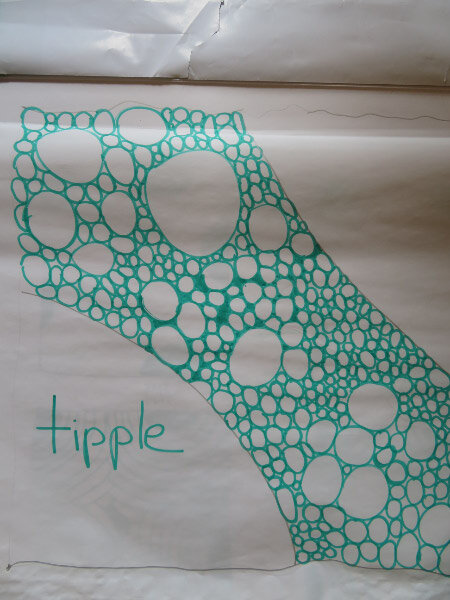
The Facebook Live session lasted about 20 minutes and made a three-part tile using TIPPLE, CRESCENT MOON, and either MEER or POKEROOT. I missed not being able to create a mosaic of the student tiles at the end. Here are tiles I made with the patterns after the session.

I’m not sure how any of my volunteer gigs will be possible anytime soon but I’ll probably do some hiking at Mt. Pleasant…on a sunny day…another small ‘venturing away from home.’

Links to my previous “filling a day of social distance” posts  here.

Gleanings of the Week

The items below were ‘the cream’ of the articles and websites I found this past week. Click on the light green text to look at the article.

Soak in the Details of the Moon with this High-Definition Photo – A backyard astrophotographer with a lot patience.

Record conservation study of Tutankhamun's tomb solves mystery and raises new questions – Teasing out more history from a much-studied place.

Top 25 birds of the week: Bright Colours - Wild Bird Revolution – It’s a gray rainy day as I write this….I am appreciating the colors!

New Thoughts on Turkey’s Oldest Temple Complex - Archaeology Magazine – Gobekli Tepe…built by hunter gatherers over 11,000 years ago….requiring hundreds of people to construct. I first learned about it in a Coursera course a few years ago.

NASA's ICESat-2 measures Arctic Ocean's sea ice thickness, snow cover -- ScienceDaily – ICESAT-2 was launched in September 2018; I learned about it during visits to NASA Goddard during my HoLLIE class in spring 2018. It’s good to get an update on it now.

The ingredients for a longer life - BBC Future – Study of populations where many live to 100…focusing on eating habits, social connection, a few cups of tea or coffee, sweet potato and bittersweet melons, landscape…and moderation.

Saving energy and lives: How a solar chimney can boost fire safety -- ScienceDaily – If a building has a solar chimney, it will suck smoke out of a building during a fire…giving people more time to escape!

Risks of Clutter, Tips for Decluttering Your Home | Berkeley Wellness – I had intended to spend some of the ‘stay at home as much as possible’ time de-cluttering. But I moved on to other projects. Now I am returning to the idea just as I am beginning to tentatively venture out. The clutter in my house is not enough to make it unsafe…but I do have a lot of stuff that I no longer need.

Tracing the human genetic history: Every tooth tells a different story – Another data point for forensics when DNA is not available. Teeth often survive for longer than other parts of the body.

New evidence of watery plumes on Jupiter’s moon Europa - GeoSpace - AGU Blogosphere – I’m missing Charles Cockell’s Life in the Universe Pandemic Series. This article is about new analysis of data collected by the Galileo mission flyby of Europa in 2000.  The ESA Juice mission, which is scheduled to launch in 2022, will study the potential habitability and underground oceans of three of Jupiter’s moons: Ganymede, Calisto, and Europa.

--

The Zentangle® Method is an easy-to-learn, relaxing, and fun way to create beautiful images by drawing structured patterns. It was created by Rick Roberts and Maria Thomas. "Zentangle" is a registered trademark of Zentangle, Inc. Learn more at zentangle.com.

Gleanings of the Week Ending December 15, 2018

The items below were ‘the cream’ of the articles and websites I found this past week. Click on the light green text to look at the article.

Stunning Abstract Aerial Photos of Namibia's Desert Landscape – A part of the earth with almost no vegetation. There are parts of the US that would be just as stark.

Anopheles mosquitoes could spread Mayaro virus in US, other diverse regions -- ScienceDaily – Another mosquito born disease that may increase in North America as the climate warms. There are already mosquitoes capable of transmitting it here – Andopheles species.

Bad molars? The origins of wisdom teeth – I’ve always wondered why so many people must have their wisdom teeth out. All 4 of mine were pulled when I was 19 because they were impacted. It turns out that eating a crunch/chewy diet when we are young may help the jaw grow long enough to accommodate these late molars. Wish I would have known that; I might have fed my daughter a bit differently. Too late now.

Climate Smart Farming CSF Climate Change in Your County and Climate Smart Farming – Cornell Institute for Climate Smart Solutions – The first link is a county by county look at the history of temperature and precipitation in the Northeast. The second it about the research being done to help farmers plan for extreme weather events…that have become more common in recent years.

How tracking people moving together through time creates powerful data – A discussion of how cohort data is helping us understand health and disease. The example used in the article is the Framingham Heart Study.

Air Pollution from California Wildfires 60 Times Above Safe Limit - Yale E360 – Air quality is impacted by fires. In areas where the frequency of fires is increasing, fire may overtake all other kinds of air pollution for a time.

Can Tourism Save the Ocellated Turkey? – Cool Green Science – What an unusual looking bird! It’s a tropical turkey (Mexico, Belize and Guatemala) that behaves like the North American Wild Turkey.

Top 25 Wild Bird Photographs of the Week: November – National Geographic Blog – And more birds.

Forage Wild Nuts for Your Holiday Feast – Cool Green Science – Nuts native in our forests. Too bad the American Chestnuts are no longer plentiful…maybe some of the recent hybrids will survive to repopulate our forests.

BBC - Future - A 'samurai' swordsmith is designing a space probe – Creating corers to use for sampling an asteroid using metallurgy learned making samurai swords.