Gleanings of the Week Ending December 6, 2025

The items below were ‘the cream’ of the articles and websites I found this past week. Click on the light green text to look at the article.

Vitamin C Rejuvenates Aging Ovaries in Primates - A long-term primate study suggests vitamin C may slow ovarian aging by reactivating antioxidant defenses—though fertility effects remain untested. Oxidative damage contributes to aging not only in ovaries but also in the brain, heart, and kidneys—raising the possibility that similar interventions might benefit other organs.

Rings of Rock in the Sahara - In northeastern Africa, within the driest part of the Sahara, dark rocky outcrops rise above pale desert sands. They are thought to have formed as magma rose toward the surface and intruded into the surrounding rock. Repeated intrusion events produced a series of overlapping rings, their centers roughly aligned toward the southwest. The resulting ring complex—composed of igneous basalt and granite—is bordered to the north by a hat-shaped formation made of sandstone, limestone, and quartz layers. Photo taken from International Space Station.

How your hormones might be controlling your mind - Hormones are chemical messengers released by certain glands, organs, and tissues. They enter the bloodstream and travel around the body, before binding to receptors in a specific place. The binding acts as a kind of biological "handshake" which tells the body to do something. For example, the hormone insulin tells liver and muscle cells to suck up excess glucose from the blood and store it as glycogen. We still don't understand exactly why some people are so sensitive to hormonal fluctuations, while others aren't. We know that hormones impact mood and mental health, but we need to figure out how they do so before we can come up with the proper treatments.

Texas Voters Approve $1 Billion per Year for 'Critical' Water Infrastructure – Wise move by Texas voters; hopefully it will be enough to keep up with the state’s growing population and resulting demand for water. More details here.

How Does Sugar Affect Our Oral Microbiome and Teeth? - Less processed foods, especially those high in fiber, are often less sticky, which decreases bacteria’s ability to adhere and overgrow at a surface. Additionally, the fiber acts like miniature brushes. “These fibers constantly remove plaque from your tooth surfaces. The additional chewing of these types of foods also increases saliva production, which washes out the oral cavity, removing excess bacteria from the mouth surface to limit the formation of biofilms. Meanwhile, additional sugar from candy and other sweet products disrupts this whole community. Not only are these processed foods stickier, giving the bacteria a place to latch onto, but they also form biofilms.

How Satellite Imagery Reveals Plastic Pollution Hotspots in the Ocean - Plastic pollution isn’t just a sad environmental story we scroll past on the news anymore; it has become a personal health emergency. It is a genuinely scary reality that microplastics, those tiny, unseen fragments, have made their way into our lungs and bloodstreams. To grasp the sheer scale of this threat, researchers are turning to Sentinel satellite imagery, utilizing it as an essential “eye in the sky” to track exactly where these hazardous accumulation zones are growing. However, mapping is just the diagnostic tool; the ultimate cure lies in fixing land-based waste management.

The photos showing why pink dolphins are the Amazon's 'great thieves' - As fishermen cast their nets into the river, suddenly a sleek pink shape emerged from the depths, swimming toward the trapped fish. Moving quickly, the creature – an Amazonian pink river dolphin – poked holes in the net and stole a catfish. Known locally as boto in Portuguese and bufeo in Spanish, the pink river dolphin is a funny sight. With its melon-shaped head, rose-colored skin, and slender, hundred-toothed snout, it is the largest freshwater dolphin in the world, growing up to 2.5m (8.2ft) long and weighing as much as 200kg (440lbs). Four types of pink river dolphins live in the Amazon River basin. All of them are endangered, facing significant population declines in recent decades due to hunting, entanglement in fishing nets, pollution and droughts.

Half of heart attacks strike people told they’re low risk - A new study led by Mount Sinai researchers reports that commonly used cardiac screening methods fail to identify almost half of the people who are actually at risk of having a heart attack. People who appear healthy according to standard assessments may already have significant and silent atherosclerosis. Because of this, depending solely on symptoms and risk calculators can delay detection until meaningful prevention is no longer possible. Doctors should shift their focus from detecting symptomatic heart disease to detecting the plaque itself for earlier treatment, which could save lives.

Clogged Glymphatic System Linked to Dementia Risk - The brain’s built-in clearance system, called the glymphatic system, removes toxins from the brain through the flow of cerebrospinal fluid (CSF) via minuscule channels that trace blood vessels. Scientists have suspected that the glymphatic system may play a role in processes such as sleep and recovery from traumatic brain injury. MRI scans from nearly 40,000 people revealed biomarkers linked to defective toxin clearance in the brain predicted the susceptibility to dementia later in life.

Ansel Adams Photos Capture Daily Life Inside Japanese Internment Camps During WWII - The establishment of Japanese internment camps is arguably one of the darkest moments in American history. Between 1942 and 1946, about 120,000 people of Japanese descent were forcibly relocated into these concentration camps. This was done out of unfounded suspicions that Japanese Americans might act as saboteurs or spies following the attack on Pearl Harbor in 1941. In 1943, celebrated American photographer Ansel Adams visited the Manzanar War Relocation Center in California, creating a timeless document of the daily life on this site. The 244 photo collection can be browsed on the Library of Congress website.

Weekly Gleanings, Racoon Visits and Rearranging Office

Continuing the blog post series prompted by COVID-19….

(I’m still social distancing/staying at home as much as possible….but am changing the title of the blog posts to reflect the accumulation of topics in the posts. I’m tired of only the date changing in the title since March 15th, 2020)

Here are the unique activities for yesterday:

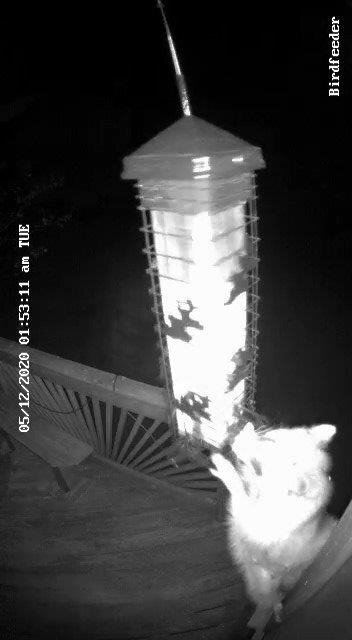
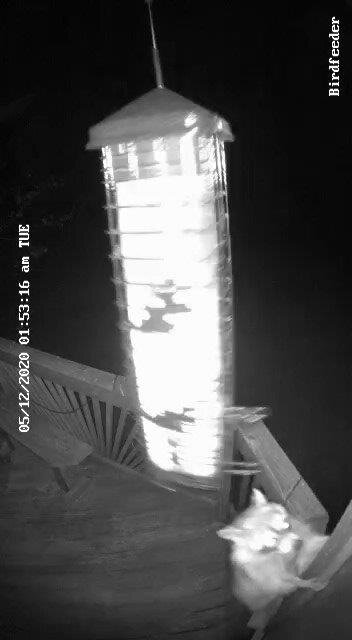
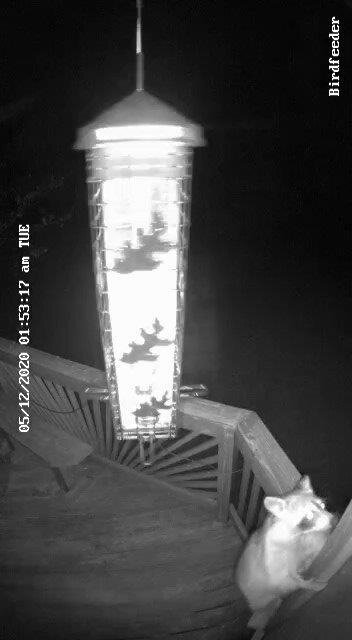
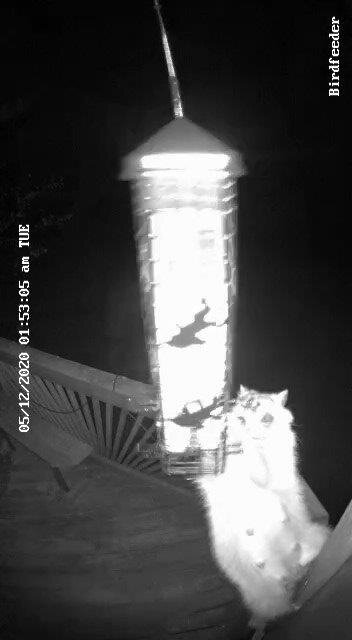
Racoon in early morning of 5/12…and then on 5/15! I was downloading the birdfeeder cam videos and noticed right away that there was an odd one just before 2 AM on 5/12….it was a racoon! It was a female probably hungry because she has babies still in the den – too young to eat on their own.  It didn’t appear that she got anything from our feeder.

Camera_01_20200515020539_20200515020720_Momentg.jpg

We had another racoon visit on the 15th just after 2 AM. I couldn’t tell if it was a female or not. It could have been another racoon or the same one giving it another try. The animal used a different strategy to get the seed coming at the feeder from above rather than below….but the strategy didn’t work. It looks longingly at the feeder from the bench on the deck before it leaves.

Rearranging my office.  It’s a work in progress.  The room has been my office since we moved into the house in November 1994 – and it’s the best room in the house for an office because it looks out to trees. I bought the three-piece computer office tables from IKEA as we moved in and had them connected in an L until about 9 years ago when I wanted better access to the windows. I detached the longer table from the corner piece at that point. Then I detached the shorter table about a year ago so I could use the whole surface area of the corner piece…and now I’ve moved the small table by the window but pulled out a bit. When I am sitting at the small table, I have a clear view of the bird feeder. We’ll see how it works. I might not like it in the afternoon when the sun shines in and I need to close the curtains to keep the room from heating up.

Links to my previous “filling a day of social distance” posts  here.

And now for the gleanings from my news feeds during this past week….

The items below were ‘the cream’ of the articles and websites I found this past week. Click on the light green text to look at the article.

Check Out the Beautiful Flowers in Bloom at the Keukenhof – I missed going to Brookside Gardens this spring. I’m glad there are beautiful photographs like these and that we have the forest behind our house.

Researchers Reexamine Ritual Sacrifices in Ancient Mesoamerica - Archaeology Magazine – Evidently there is skeletal evidence that there were 3 distinct methods used for heart extractions.

Researchers Uncover New Evidence That Warrior Women Inspired Legend of Mulan | Smart News | Smithsonian Magazine – Not specifically Mulan but there is physical evidence that female warriors road across the steppes of what is now Mongolia around the 4th or 5th century AD which is about the time the first historical mention of Mulan appears.

Dolphins, Surfers and Waves Sparkle in Bright Blue Bioluminescent Glow Off California Coast | Smart News | Smithsonian Magazine – Dinoflagellates. Watch the two videos.

Top 25 birds of the week: Birds of Prey - Wild Bird Revolution – This group includes a Snail Kite – which we saw in Florida a little over a year ago. (I posted about it too!)

Nearly half of US breathing unhealthy air; record-breaking air pollution in nine cities -- ScienceDaily – I was surprised at some of the cities listed on the top 10 most polluted cities (short term particle pollution)…and the comparison of that list with the year-round list was interesting.

Cool Facts About Common Backyard Wildlife – The list includes racoons. Evidently racoons are usually very clever about accessing urban/suburban food sources. So far – the design of our bird feeder is working…frustrating the racoon.

Infographic: Building Bacteria to Fight Cancer | The Scientist Magazine® - Work being done in mice at this point…goal is to target tumors specifically and minimize side effects of treatment.

Paleontologists reveal 'the most dangerous place in the history of planet Earth' -- ScienceDaily – 100 million years ago the Sahara had flying reptiles and crocodile-like hunters!

Great Lakes Without Winter Ice – A picture taken from the International Space Station in February.

Gleanings of the Week Ending August 17, 2019

The items below were ‘the cream’ of the articles and websites I found this past week. Click on the light green text to look at the article.

Well-Preserved Mosaic Floor Found in Roman Egypt - Archaeology Magazine – Lotus patterns!

Nations with strong women's rights likely to have better population health and faster growth-- ScienceDaily – A study analyzed databases which held information on health, human rights, and economic and social rights for 162 countries for the period 2004 to 2010.  The results suggest that gender equality is not just a women’s issue but a development issue.

More Climate Surprises Expected – THE DIRT – “Climate change together with environmental degradation and social and political instability is the threat multiplier.” It seems like more and more climate-linked surprises/disasters are happening every year. When do we reach a tipping point where everyone realizes that we cannot continue the status quo?

Liver transplants could be redundant with discovery of new liver cell -- ScienceDaily – From Kings’ College London. It would be a big step forward if this finding translates into standard treatment for liver failure.

Viking Woman Warrior May Have Been Slavic | Smart News | Smithsonian – Not all ‘Vikings’ were Nordic men…some were Slavic and some were women! It’s good to understand long ago cultures in more depth…particularly when it causes us to rethink our assumptions.

Top 25 Wild Bird Photographs of the Week: Birding – National Geographic Society Newsroom – Variety and beauty of birds…I always enjoy the ‘25’ collections.

How to keep buildings cool without air conditioning – according to an expert in sustainable design – We are going to need all the technology we know (and some new ones) to keep buildings and homes cool as the planet gets warmer.

America's packaged food supply is ultra-processed: Americans are overexposed to products that are high in calories, saturated fat, sugar and salt -- ScienceDaily – Unhealthy ‘food’ --- most of us have an inkling about this but it doesn’t keep us from indulging. The article mentions the Foodswitch app that allows consumers to scan packaged foods to determine their healthfulness; I loaded the app and scanned things in my pantry. The pasta I buy (whole wheat and green) rates a 5 of 5! Soymilk was 4.5. The canned tamales my husband likes are a 3 (salt and fat).

Thamugadi, a Roman outpost in Algeria, was saved by the Sahara – Buried in sand after it was abandoned around AD 700…and rediscovered in the 1700s but not explored. In the 1870s it was again rediscovered. It was excavated by the French from 1881 to 1960 in its entirety. It became a UNESCO World Heritage site in 1982.

100 days, 100 nights: Sensor network reveals telltale patterns in neighborhood air quality: Custom-built sensors deployed for 100 days and nights to track black carbon pollution -- ScienceDaily – A test was done in West Oakland with new technology to monitor air pollution with more specificity over the area and time of day(s) than has been done before now. The technology worked and demonstrated that the finer grain measurements provide deeper understanding of what impacts localized air quality…something we have to understand to make progress in improving city environments.

Gleanings of the Week Ending April 28, 2018

The items below were ‘the cream’ of the articles and websites I found this past week. Click on the light green text to look at the article.

Significant role for nitrate in the Arctic landscape -- ScienceDaily – There is much we need to learn about how the arctic ecosystems work today….and what will likely happen as they warm. The carbon and nitrogen cycles will speed up…but how does that translate to the types of plants that will grow there.

The Wild and Scenic Rivers Act at Fifty – Protection of some special places….rivers and the banks.

Artist Paints Imaginary Ecosystems Bursting with Colorful Flora and Fauna – Eye candy for the week! (The paintings are also inspiration for Zentangles.)

A is for Aerosol: Earth Matters – A little tutorial that includes satellite pictures of different kinds of aerosols like volcanic ash, sand/dust storms, fog/haze, smoke.

New NOAA Report Looks at National Coastal Flood Vulnerability – The whole report can be found here. Figure 6 (page 26 of the PDF…14 of the report) shows annual high tide floods days per year from 1950 onward. There is a color skew toward more days in the last decade for many areas. Another flood related article: Flood risk denial in US coastal communities -- ScienceDaily – research about how to move communities from denial to taking mitigation actions to reduce the risk to their community.

Without Birds, Lizards, and Other Vertebrate Pollinators, Plant Reproduction Could Decline by Two-Thirds - Yale E360 – Pollination drops an average of 63% when vertebrates (like lizards, birds, bats, mice) are kept away. Wow! Pollinators are not all insects.

When Going Gluten-Free Is Not Enough: New Tests Detect Hidden Exposure – It’s hard to live a gluten-free diet in the modern world…and that is what 3M people in America are trying to do. This article increased my awareness of how hard it it….and how many people are impacted by celiac disease.

The Sahara Desert Has Grown 10 Percent Since 1920 - Yale E360 – The expansion has happened mostly to the south…during the historically rainy summer months. This is one of the first studies to look at precipitation over the course of a century rather than a shorter time.

Influence of global warming on U.S. heat waves may be felt first in the West and Great Lakes regions | NOAA Climate.gov – Maryland is included in the ‘Great Lakes’ region based on the map; in this area more than half of all heat waves would be predominately due to global warming by the mid-2030s. In the west it happens even earlier (by the end of the 2020s). Lots of people live in those areas and the statistics currently tell us that more people in the US die each year of heat-related illness than any other weather disaster.

Sweet potato history casts doubt on early contact between Polynesia and the Americas -- ScienceDaily – DNA studies of sweet potatoes show something about history…and about its closest wild relative (good for the long-term viability of the domesticated crop).