Springfield Botanical Gardens – July 2025

We visited the Springfield Botanical Gardens in mid-June….on a cloudy morning. There was a breeze to help make the warm, humid air more comfortable. My husband was keen to photograph insects in flight. It was probably warm enough, but the insects were not as active because of the thick clouds and everything being so wet.

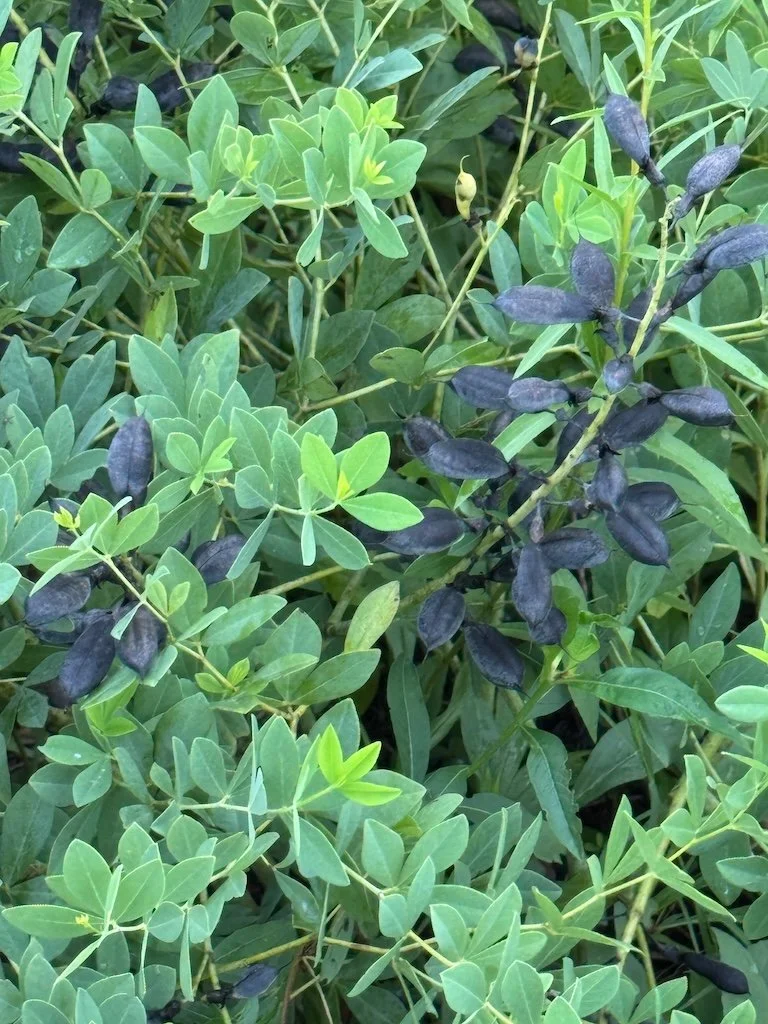
The Botanical Center was our first stop. Then we walked by the rain garden (indigo with pods and golden rod) and down the sidewalk past the Butterfly House and surrounding garden.

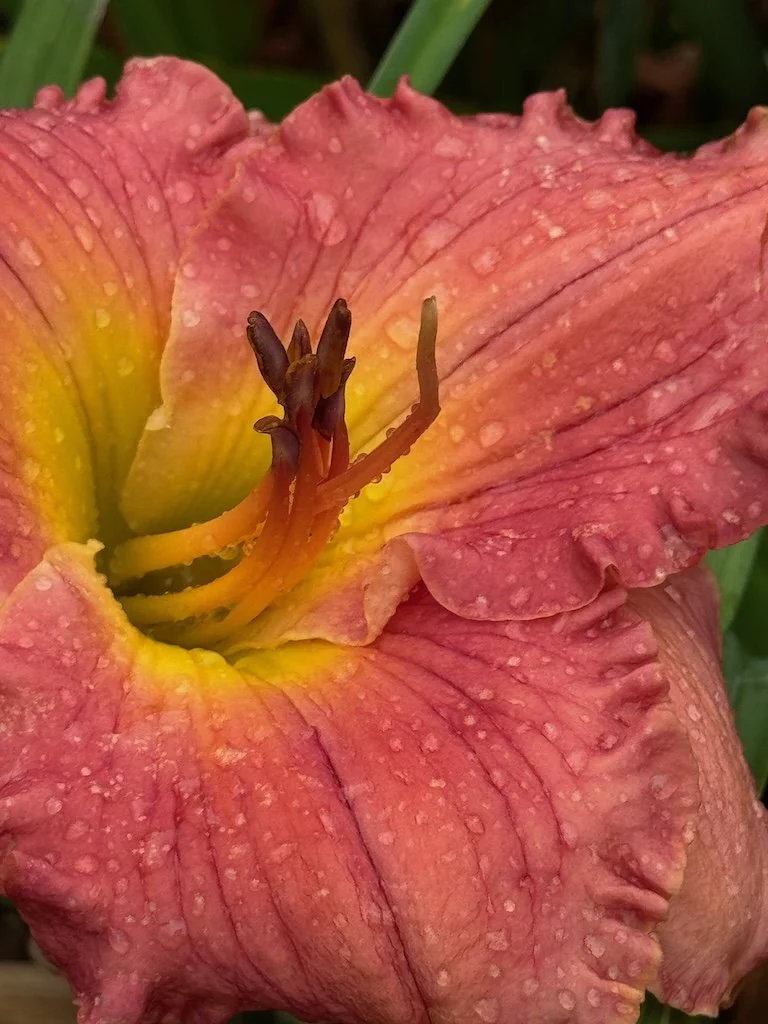
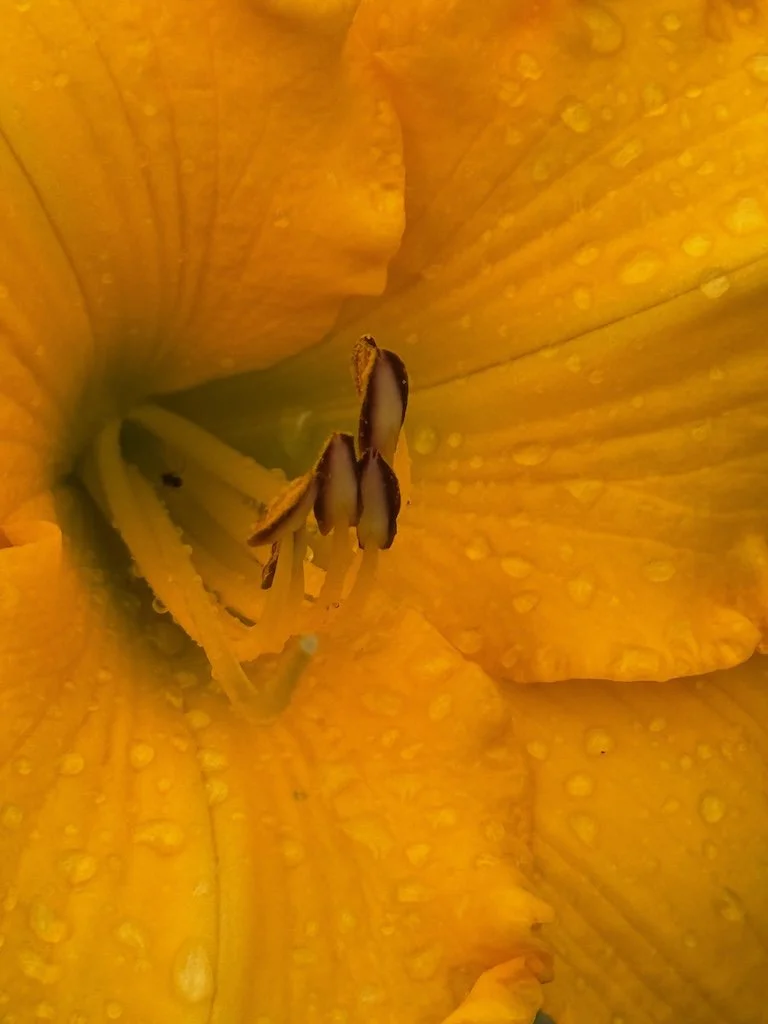
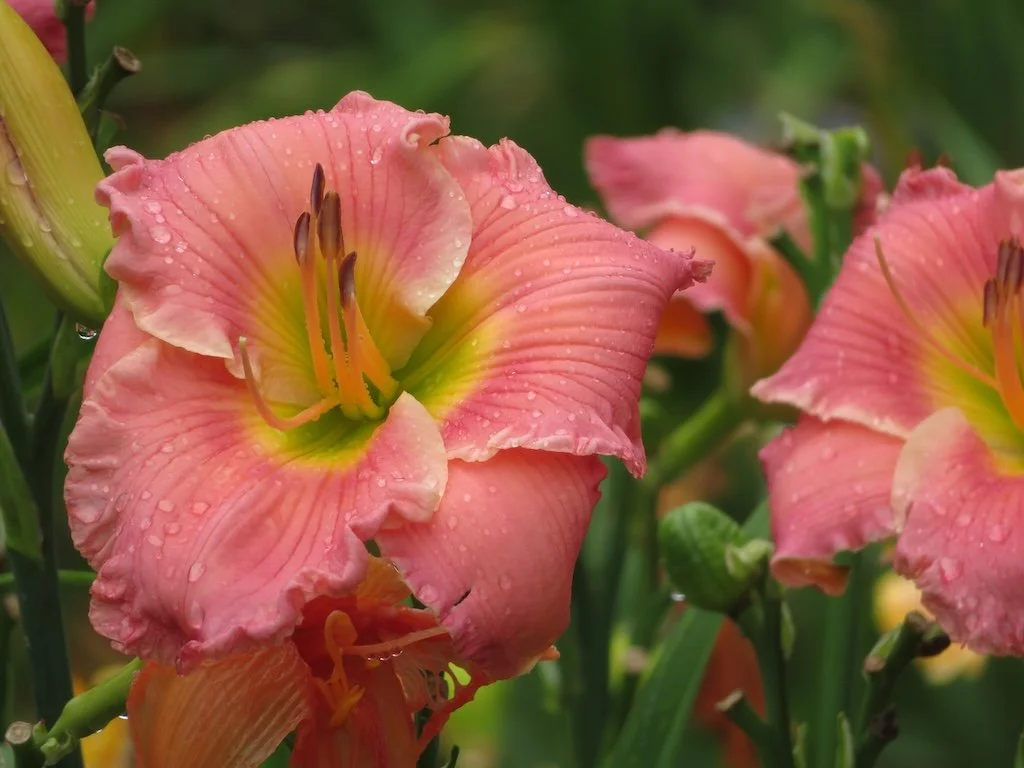
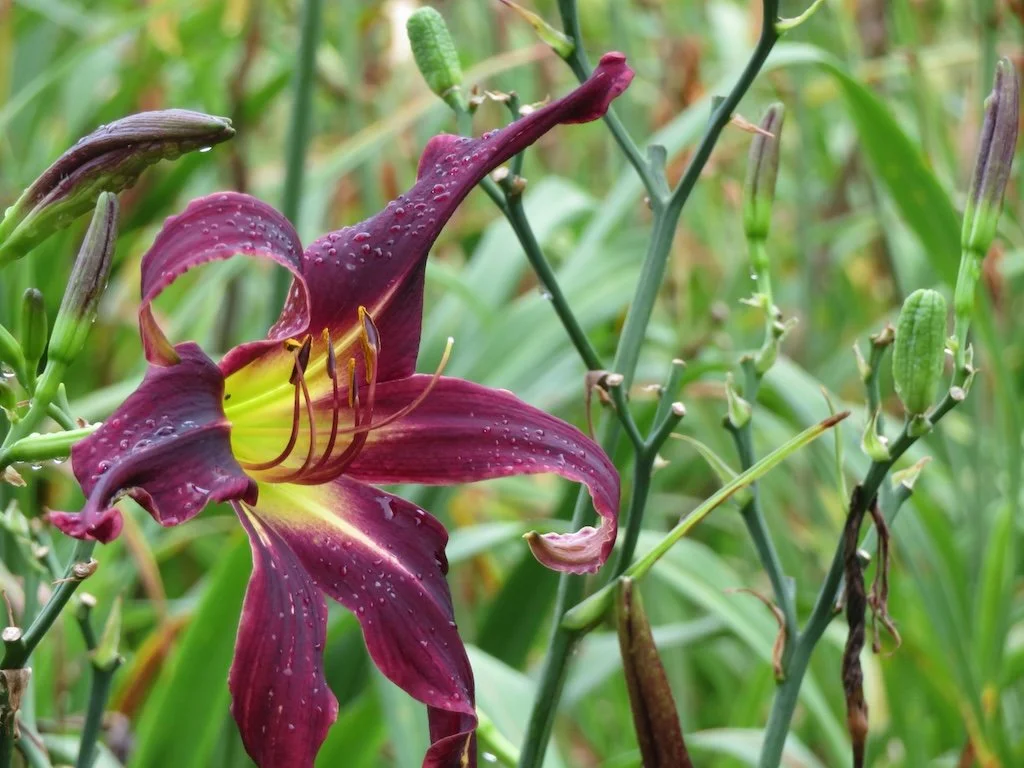
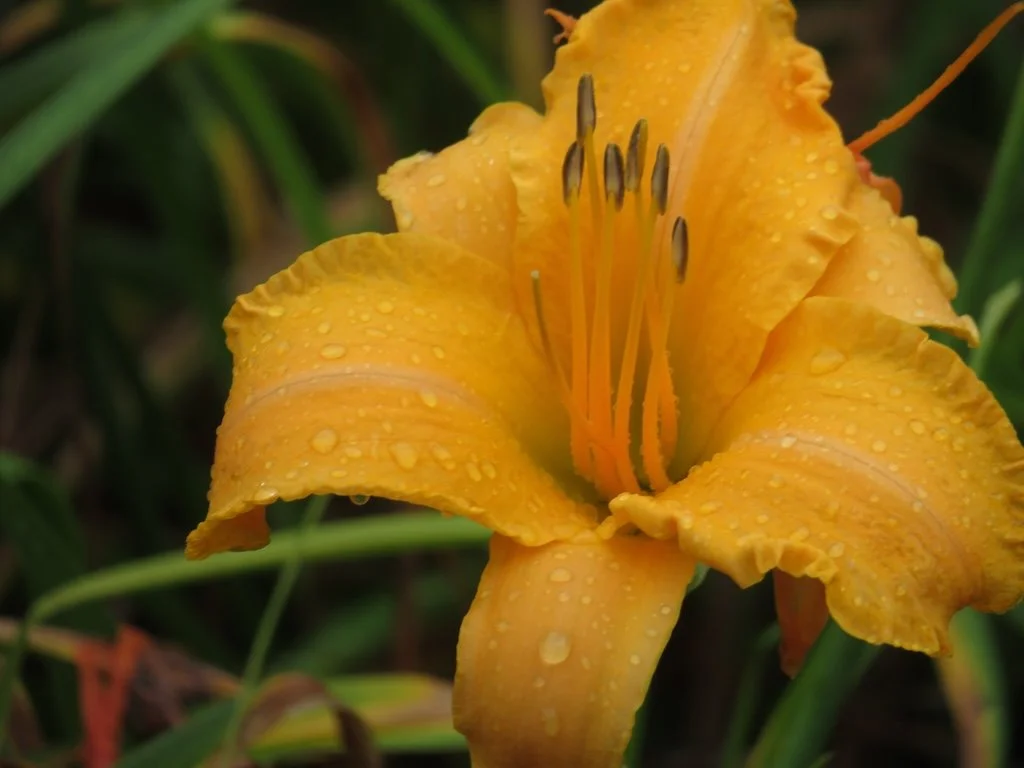
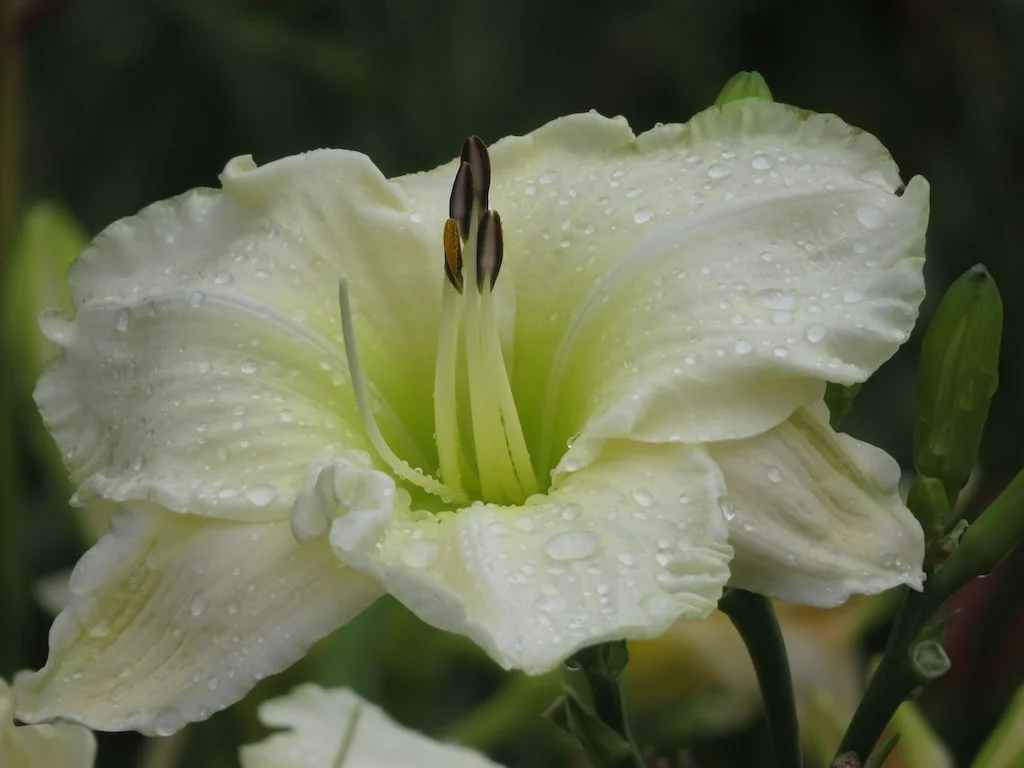
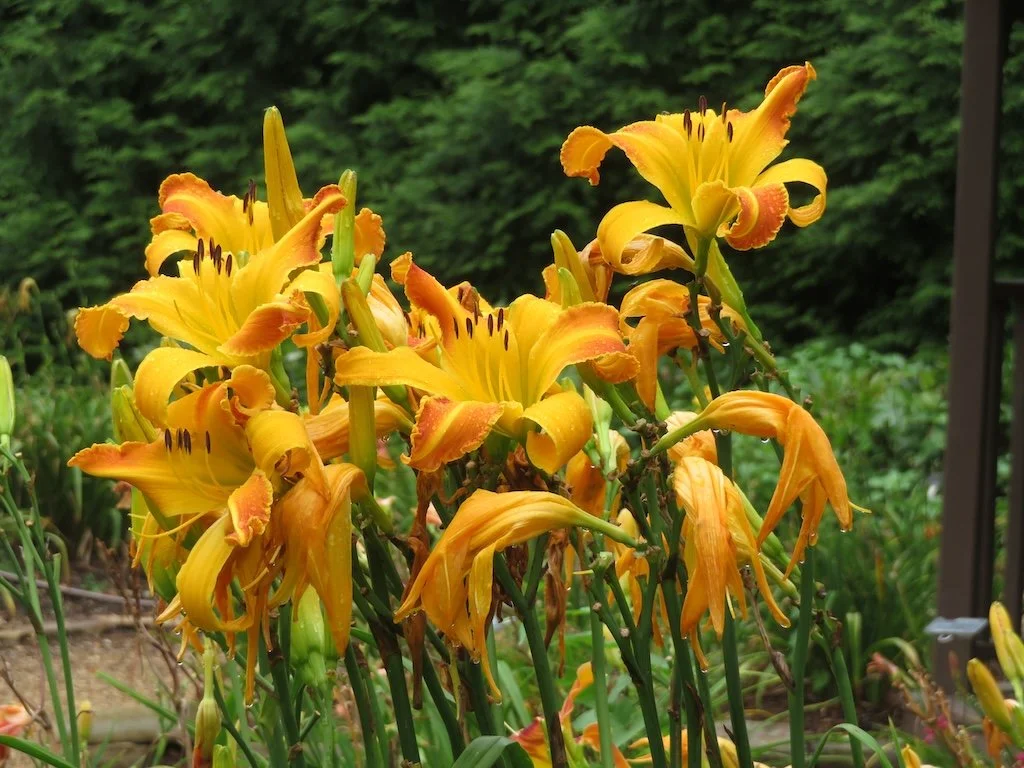
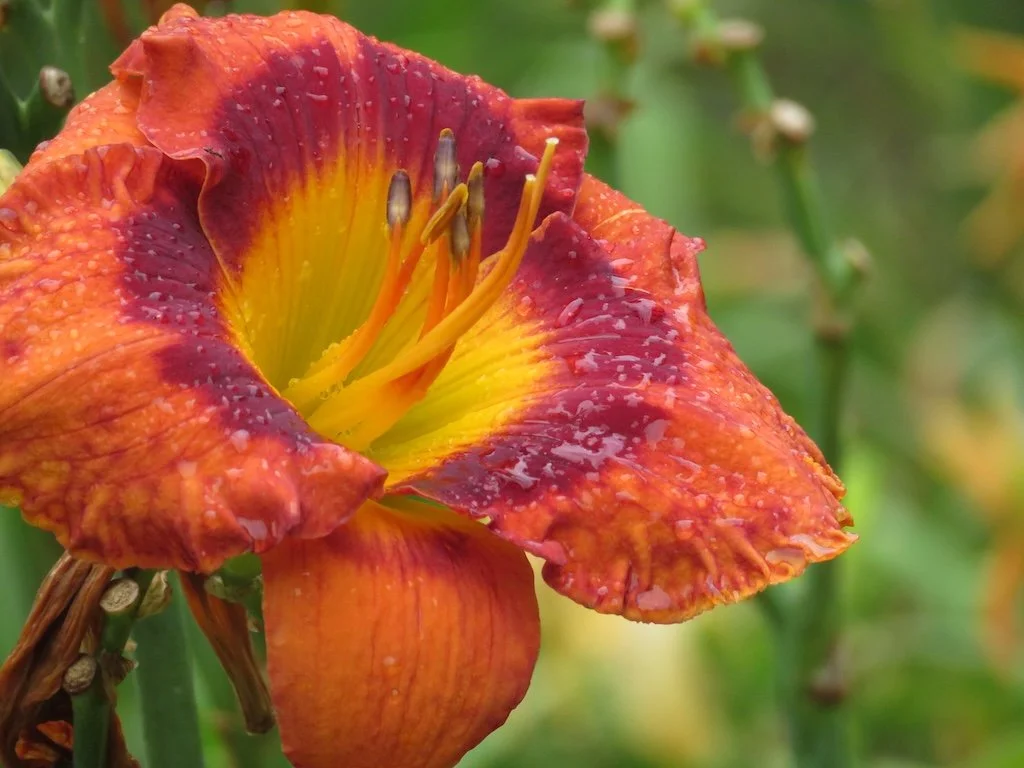
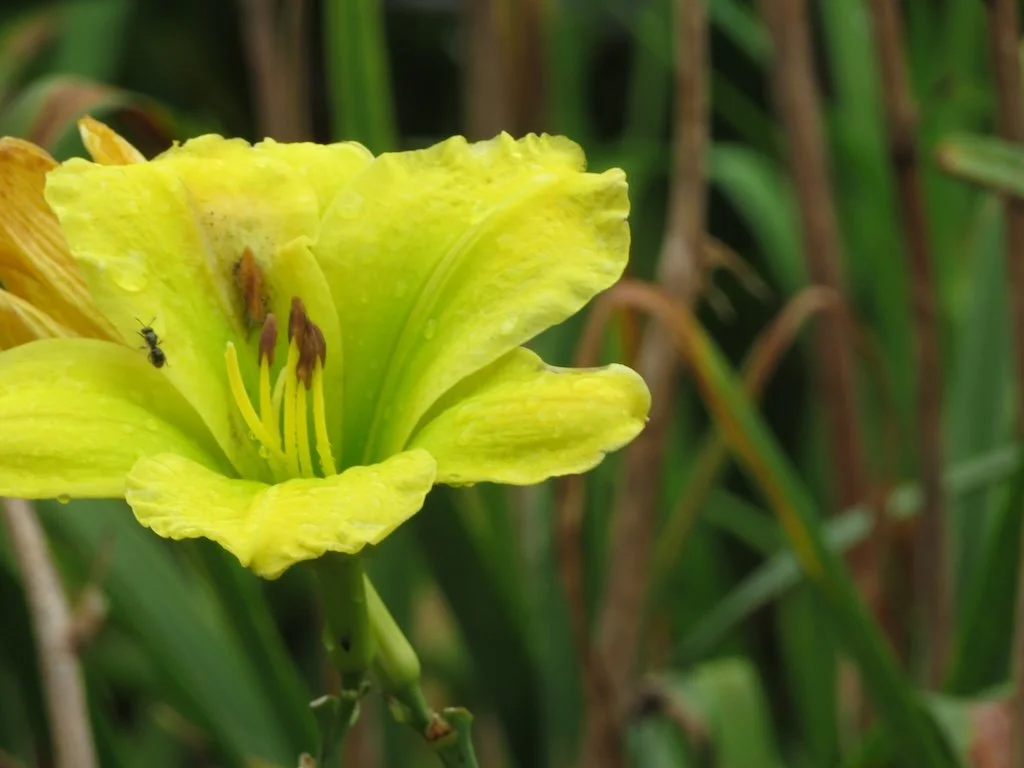
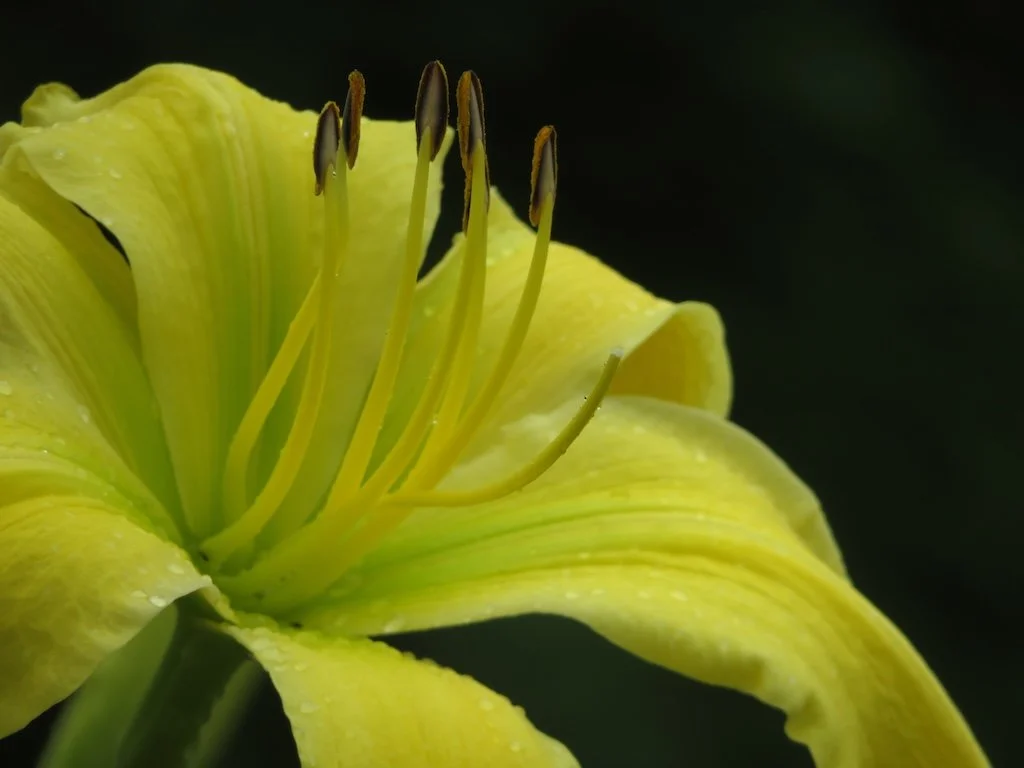
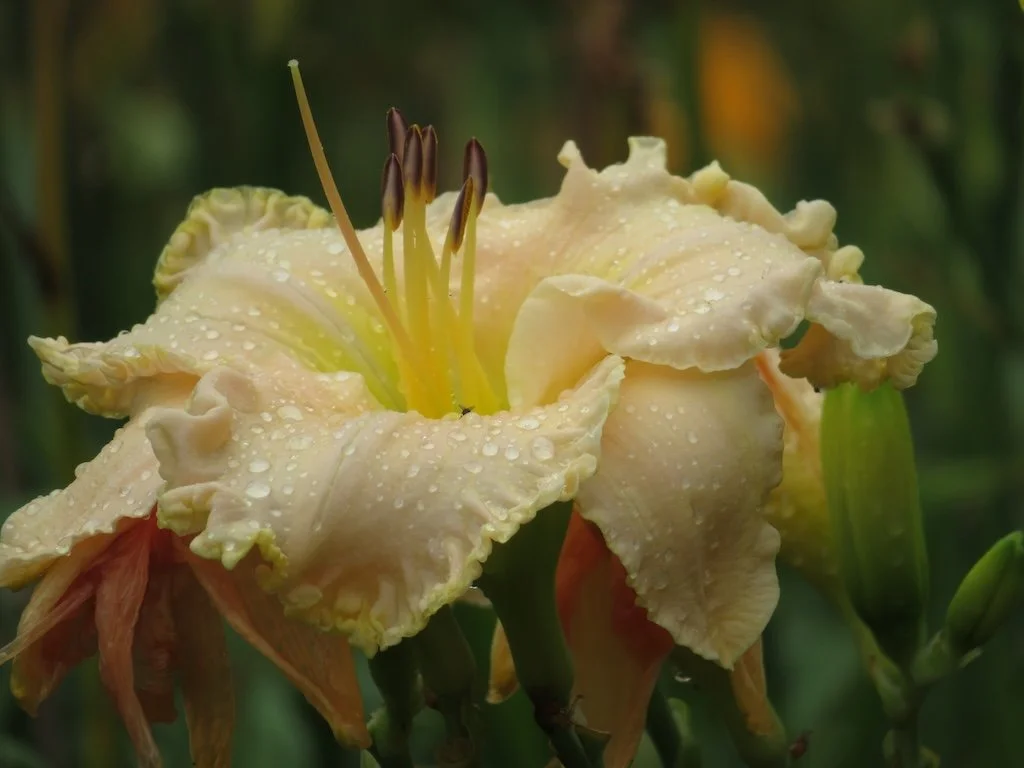
The daylilies were blooming profusely and were the main draw for my visit. I started out doing some macro shots with my phone (iPhone 15 Pro Max)
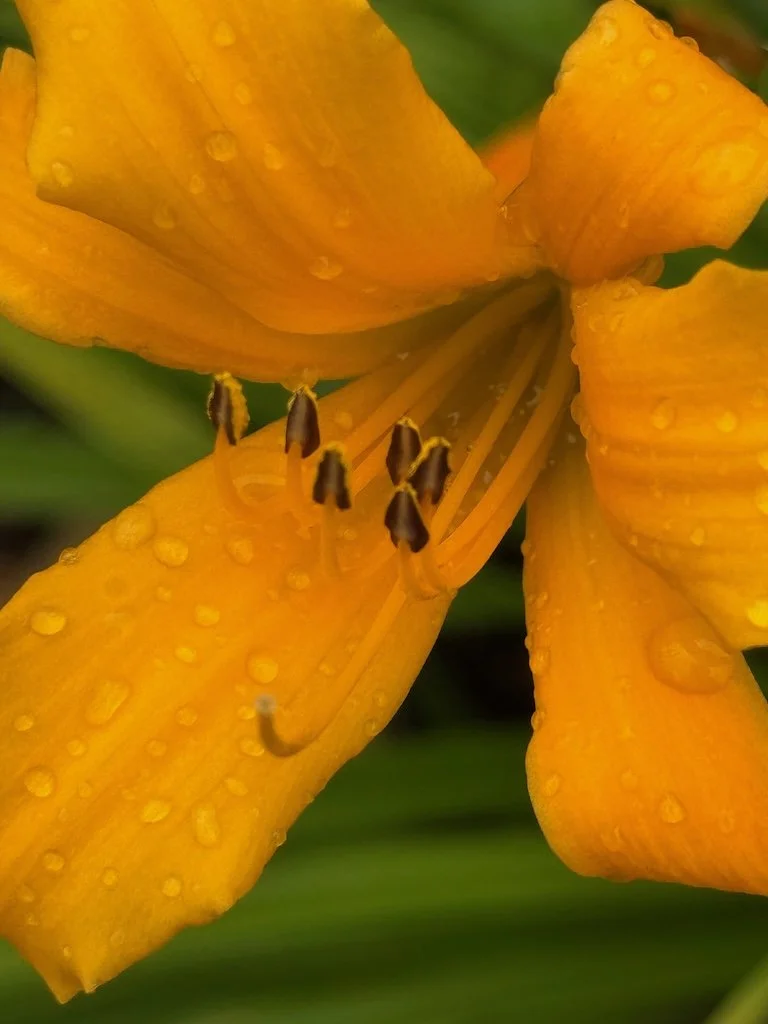
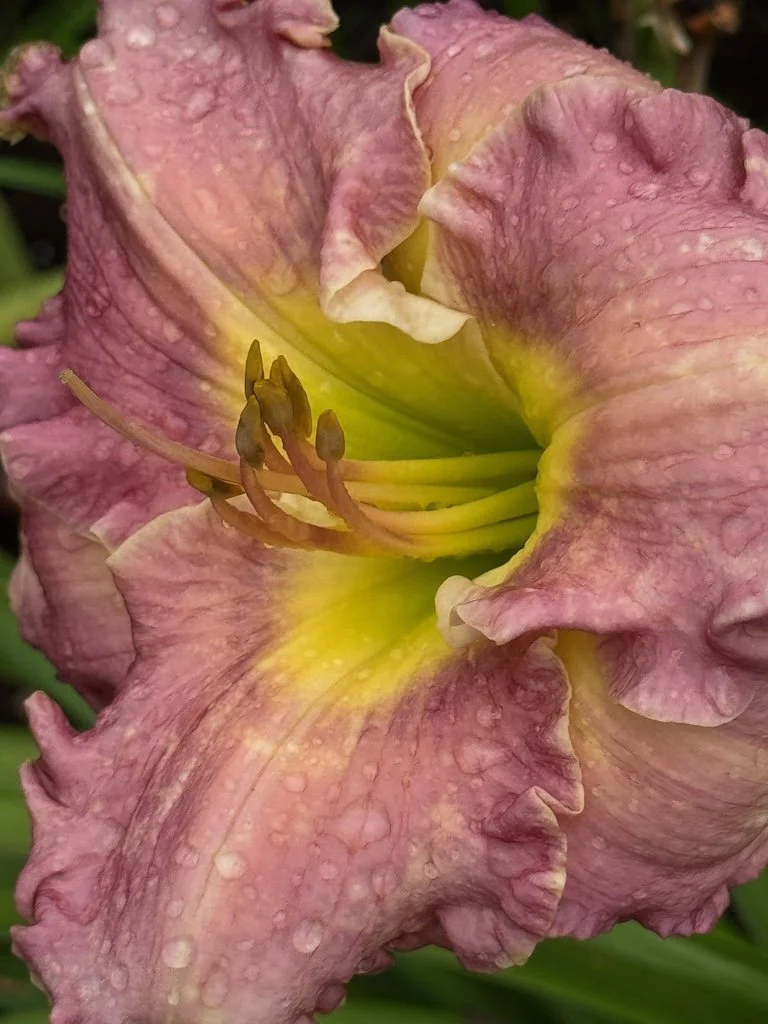
But changed to zoomed images with my small point and shoot (Canon Powershot SX730 HS). Both cameras captured the water droplets on the flowers.

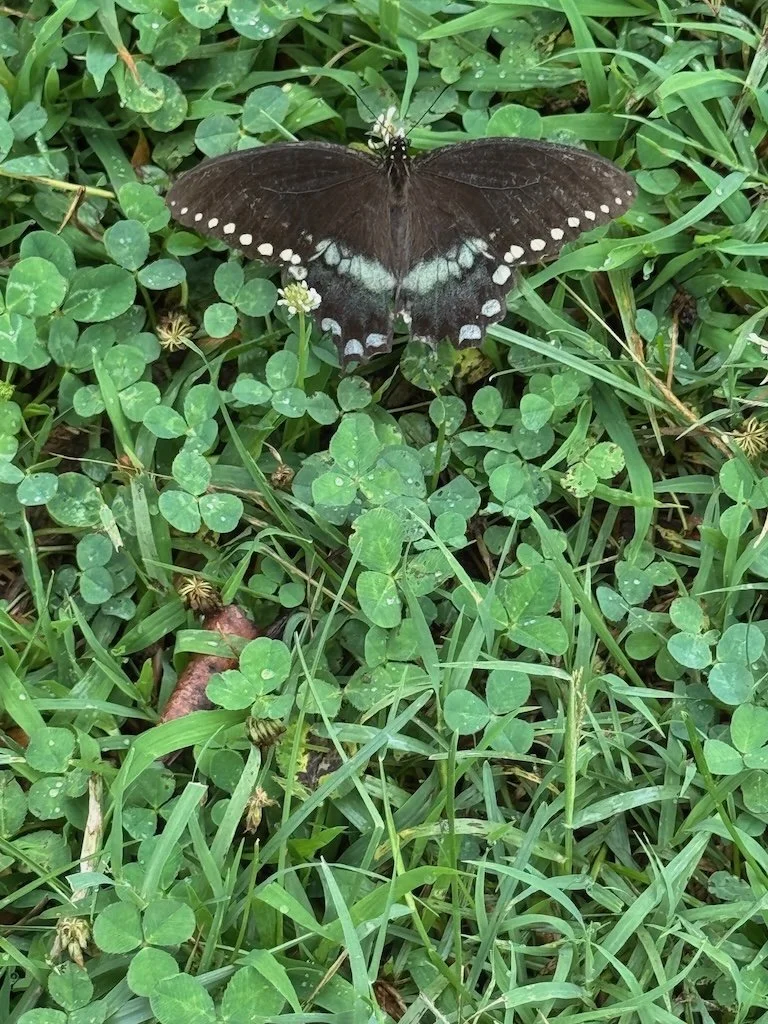
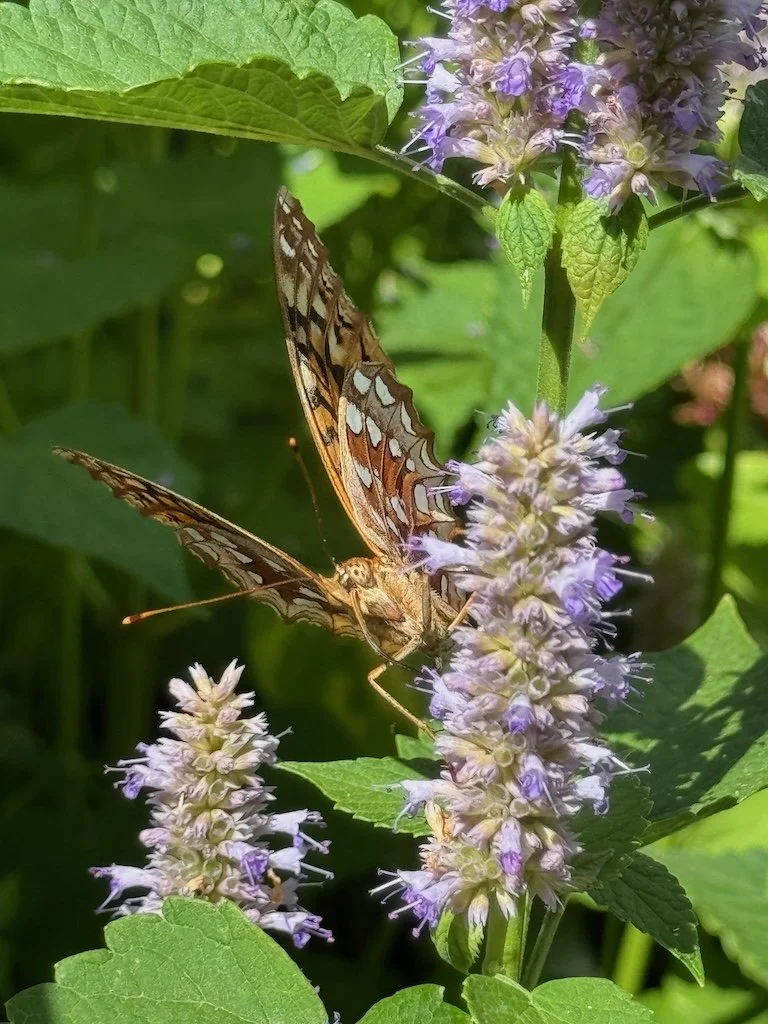
As we started back toward the car I saw something off the paved walk landing in the grass. It stayed put as I carefully walked over….and got a picture. It was the only large butterfly I saw all morning (other than in the Butterfly House).

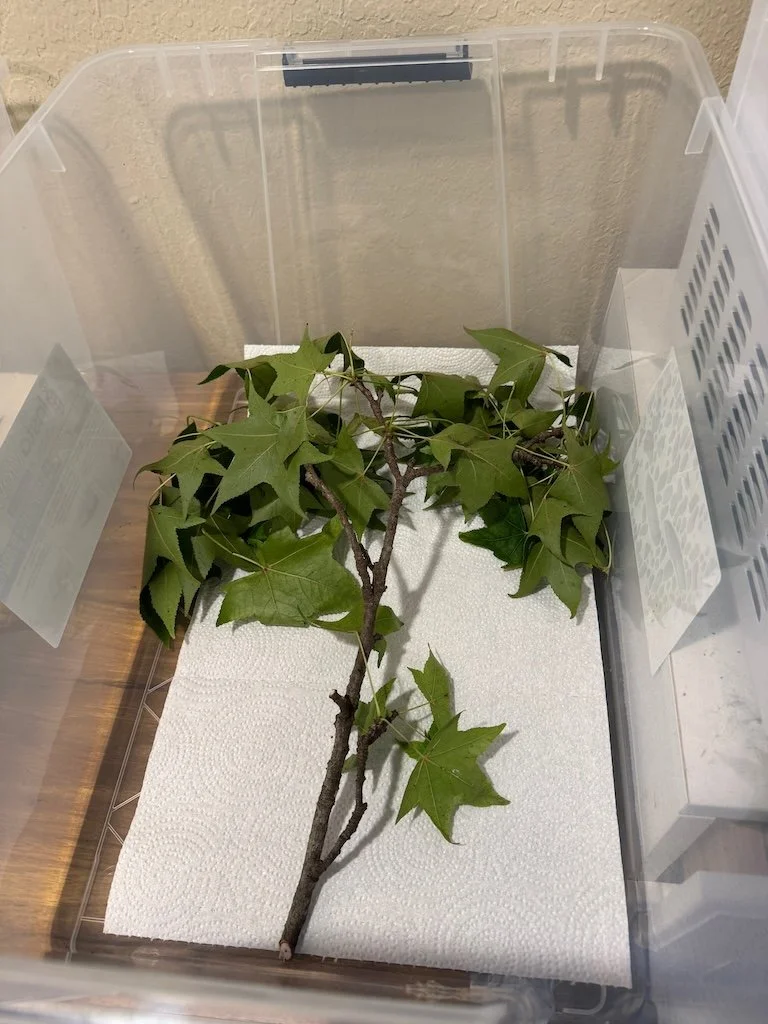
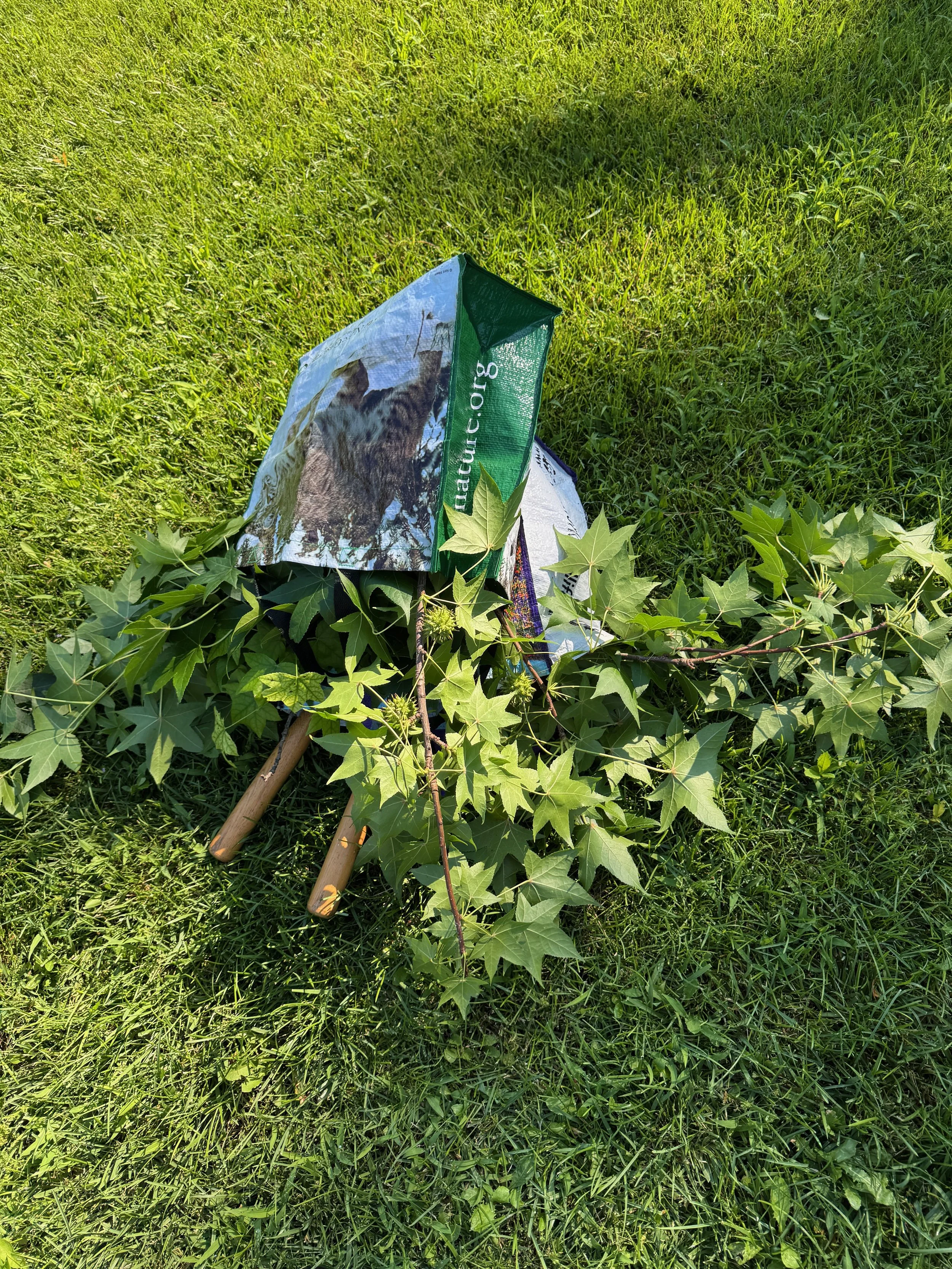
Before we left for home, I got a small branch of sweet gum leaves for my luna and cecropia moths.

Adventures in Caterpillar Care (5)

Continuing my caterpillar care experience…

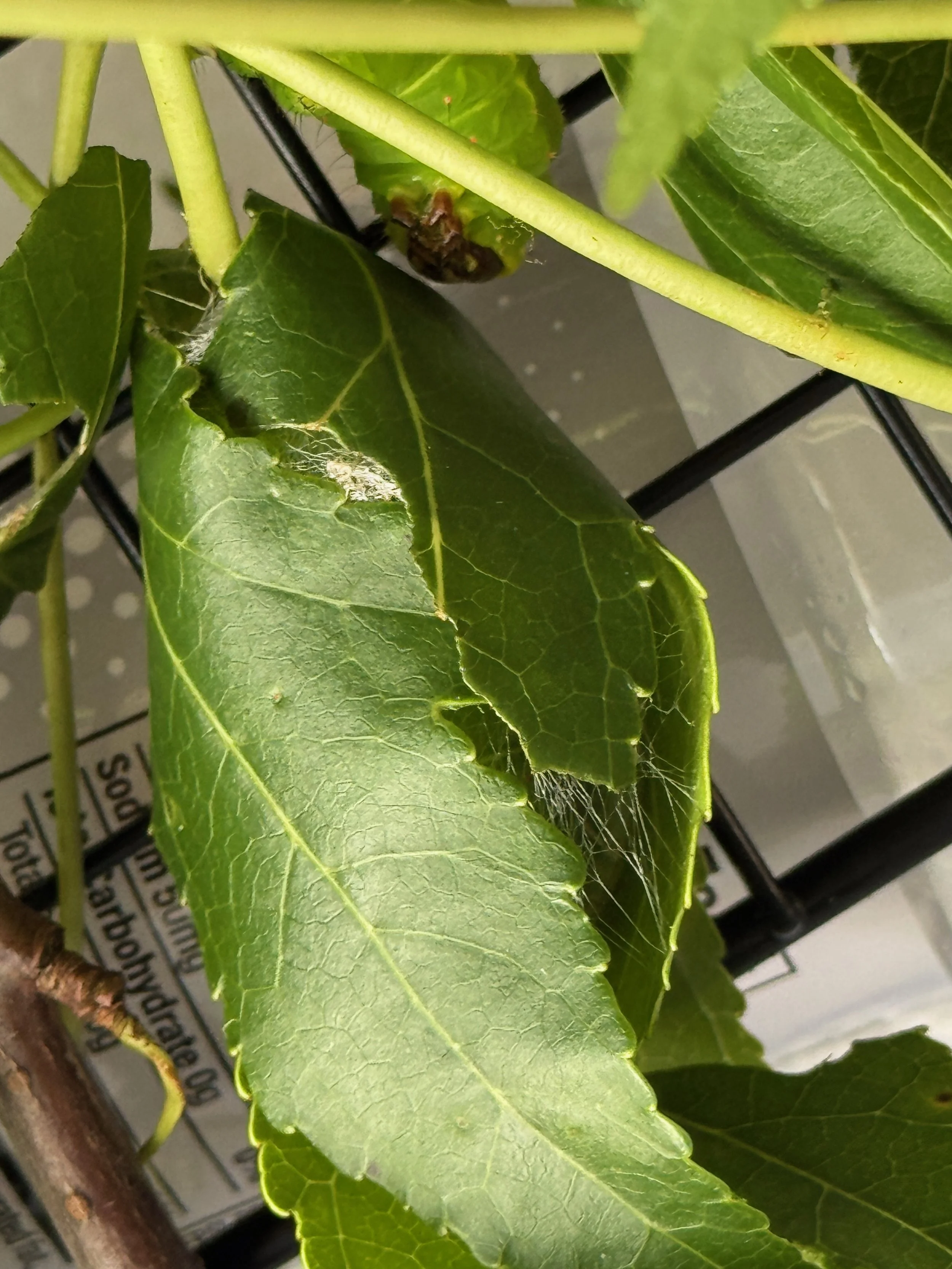
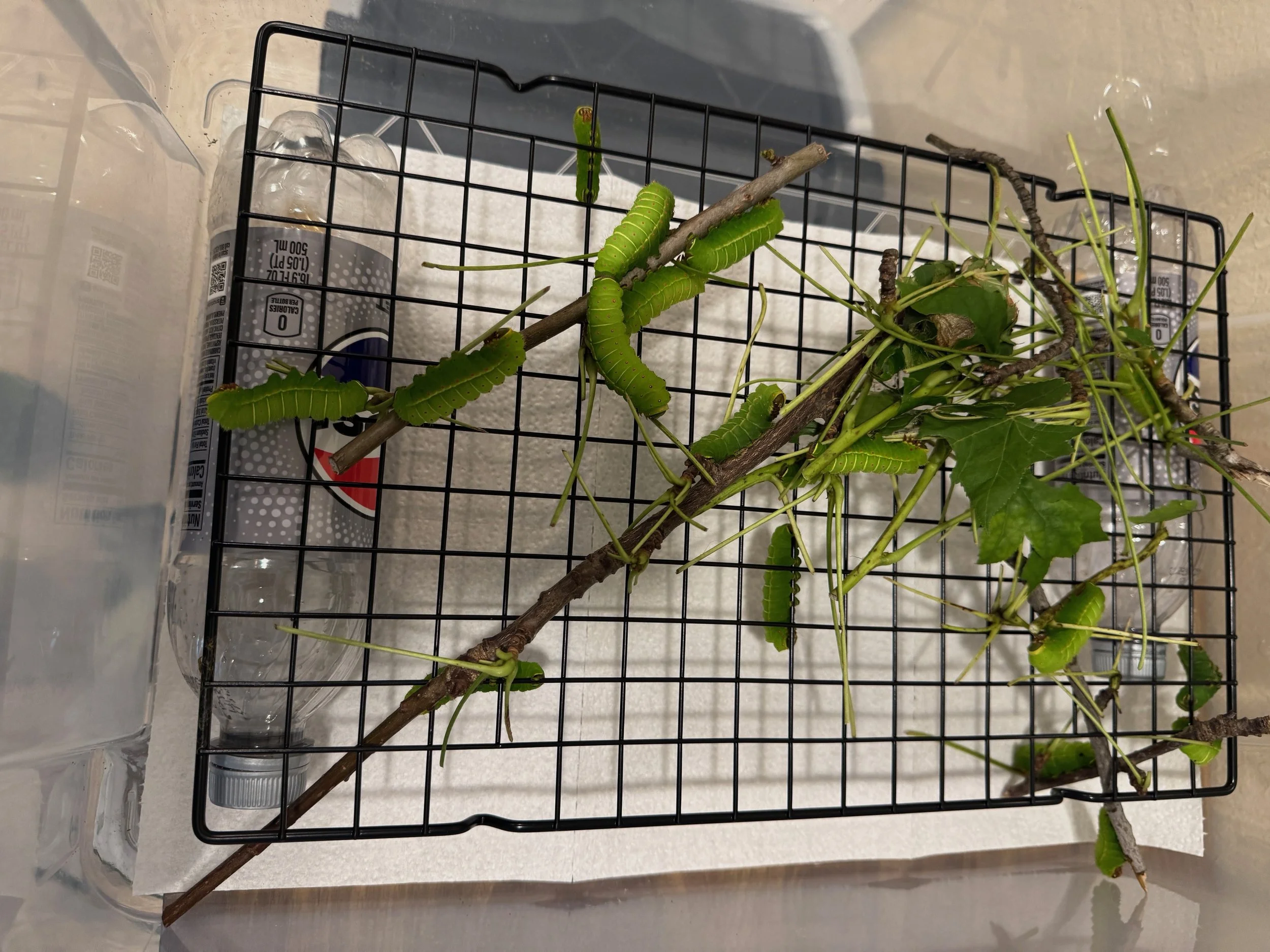
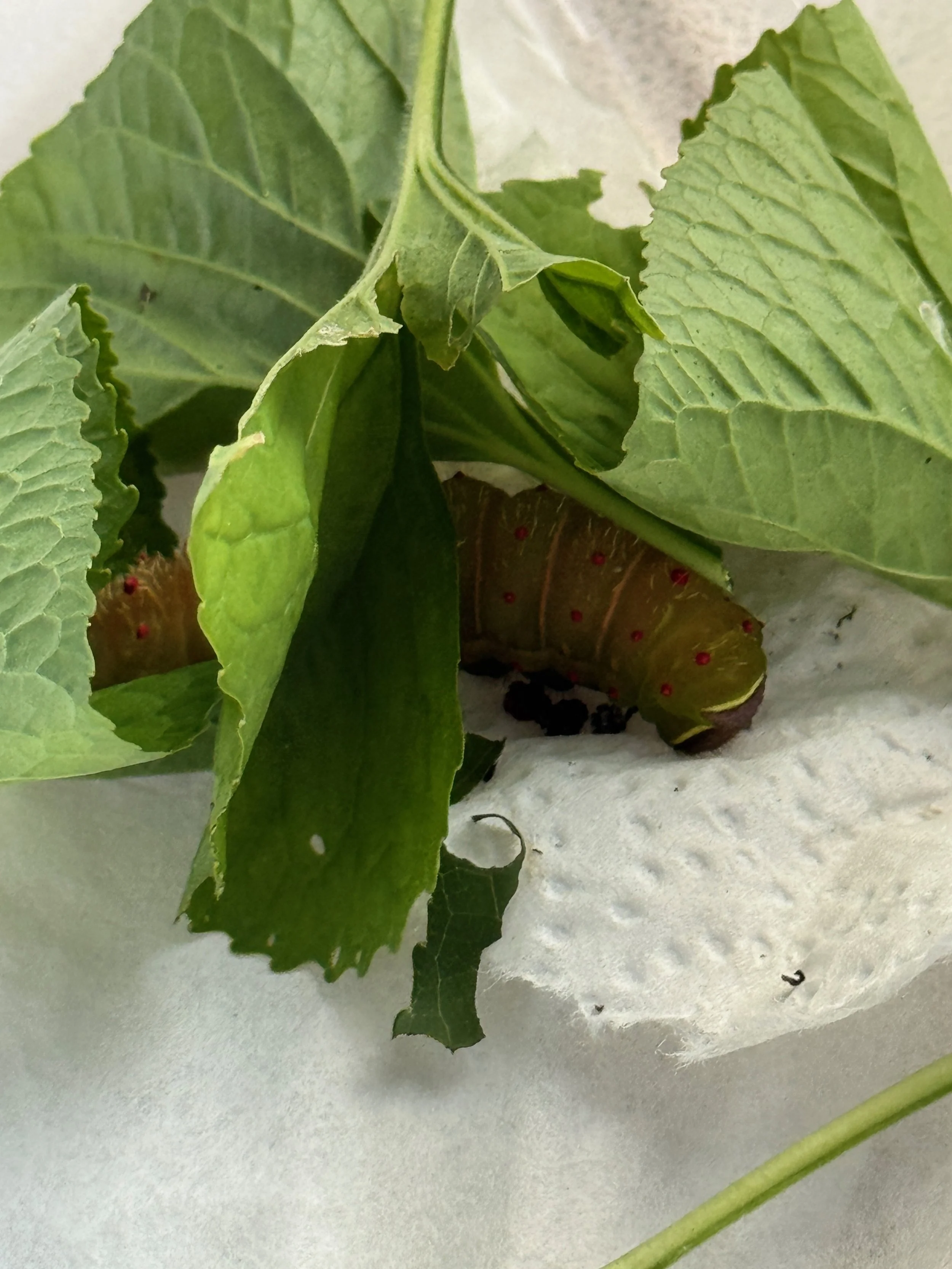
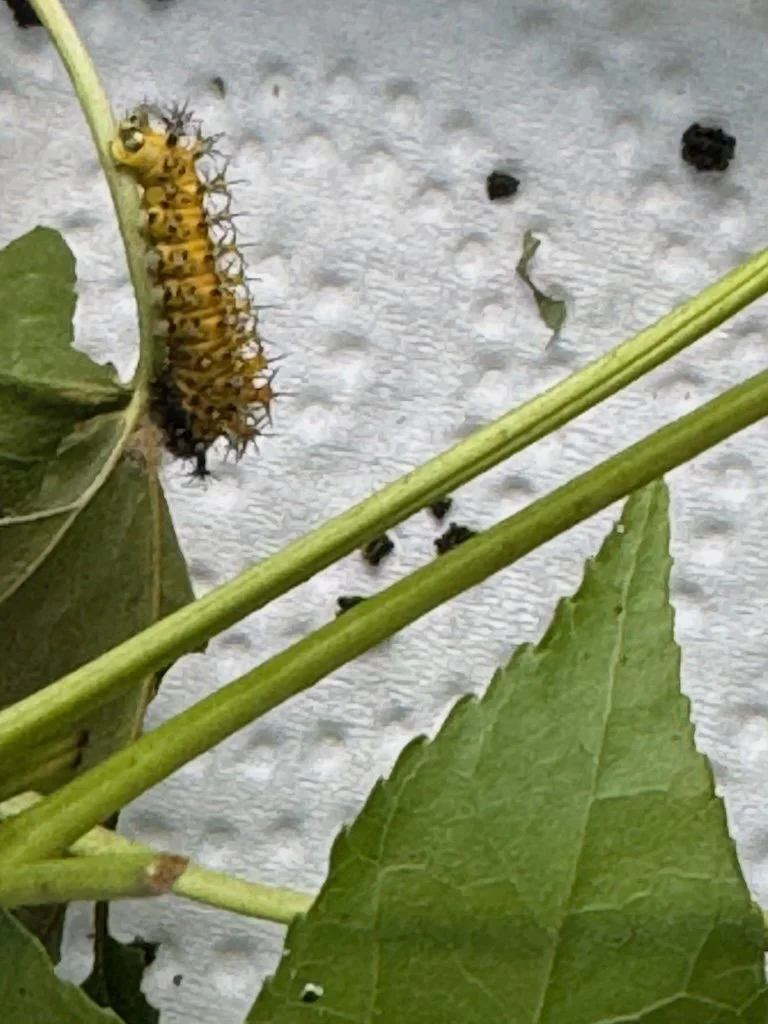
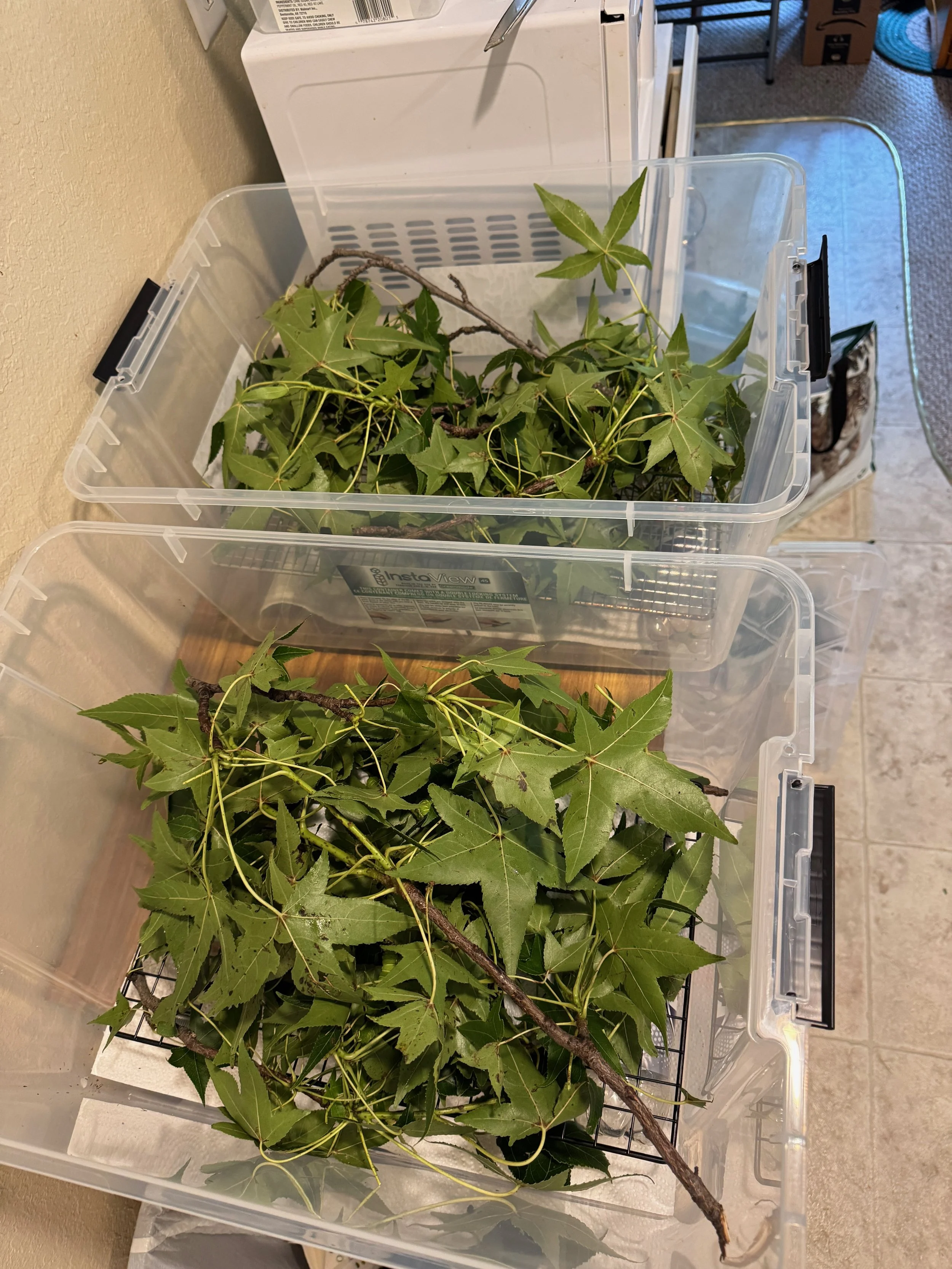
I never underestimated the amount of sweet gum leaves for the luna caterpillars again…but it got easier as the week progressed because more of the caterpillars were making cocoons so not as many leaves were required. The bin is very messy when a lot of caterpillars are beginning to make their cocoons since they expel waste and water before they begin the process. The paper towels in the bottom of the bin made clean up easier but it had to be done at least once a day. The cecropia caterpillars were finally all past instar 1.

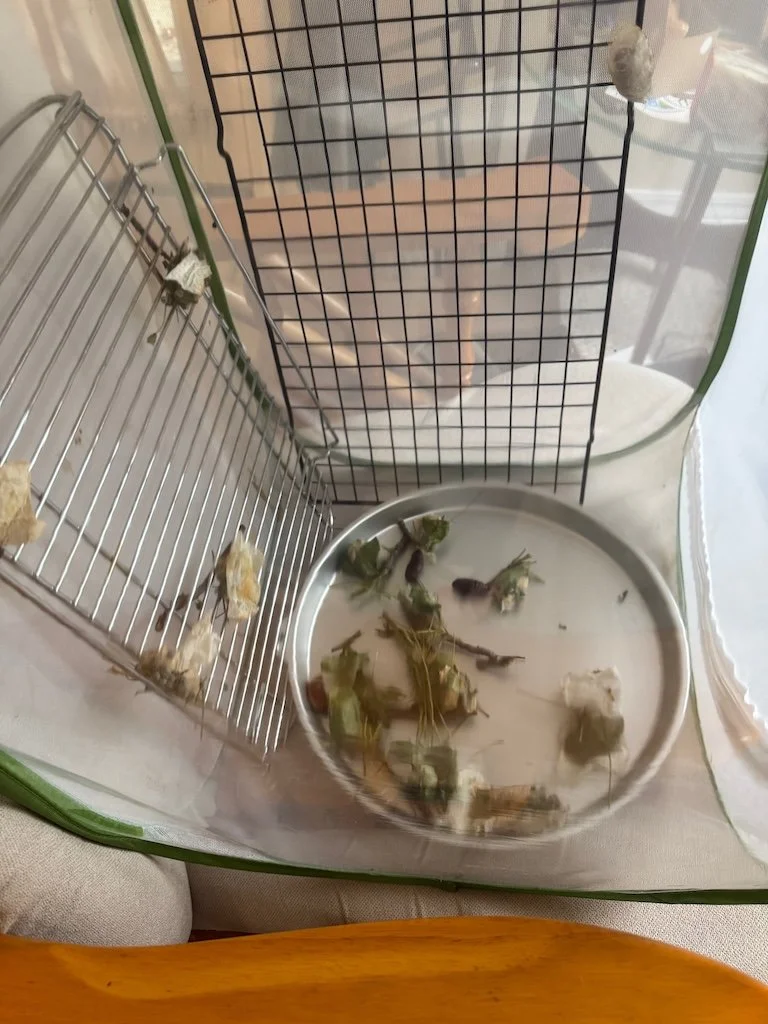
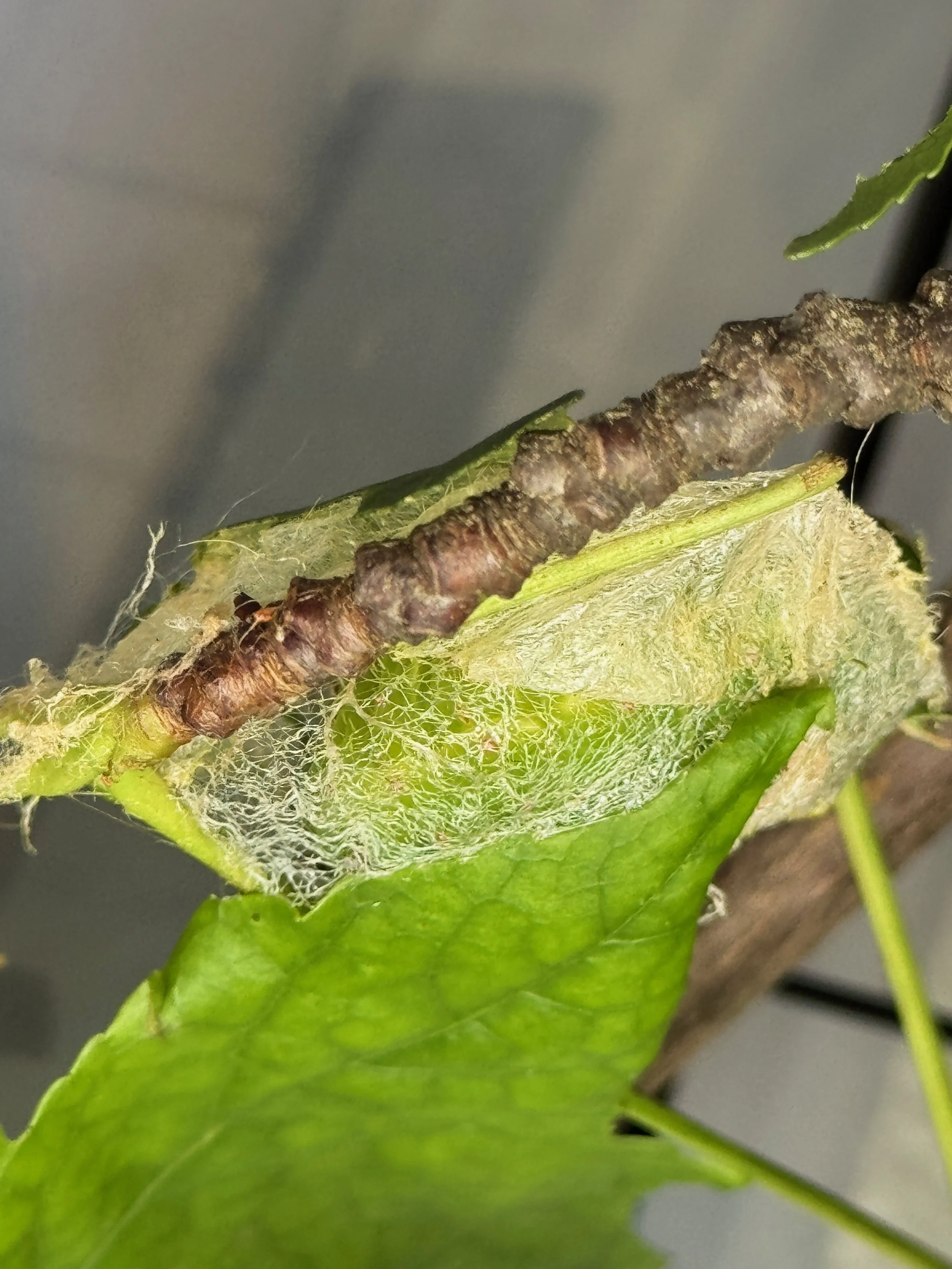
Some of the luna cocoons were attached to the racks I had used to support the leaves, so they are in my first group of cocoons – inside a mesh cage that will contain the luna moths when they emerge.

By the end of the week the luna cocoon production was waning. I purchased 2 more mesh cages and gave 5 cocoons to my daughter with one of them. The other cage and 3 cocoons went to the family that owns the sweet gum tree that provided a lot of the food for the caterpillars.

Finally – I had 4 remaining luna moth caterpillars (all instar 5) and 3 cecropia caterpillars (1 instar 2 and 2 instar 3). It took them to the Butterfly House to use on the caterpillar display table.

I have the mesh cage and 3 bins (each with cocoons that were made at roughly the same time). There are about 35 cocoons. Most of the caterpillars I had at the beginning made it to the cocoon stage – very different than would happen in the wild with birds and other predators around. The moths should emerge in 2-3 weeks…lots of luna moths. I will take some of them to the Butterfly House and release others near sweet gum trees…hoping to feed a few young birds and maybe establish a luna moth population too.
The luna cocoons emit sounds periodically…giving me confidence that the pupa inside is viable and developing. I am looking forward to the opportunity to see so many of them emerge! 

Previous Adventures in Caterpillar Care posts

Lake Springfield Boathouse – July 2025

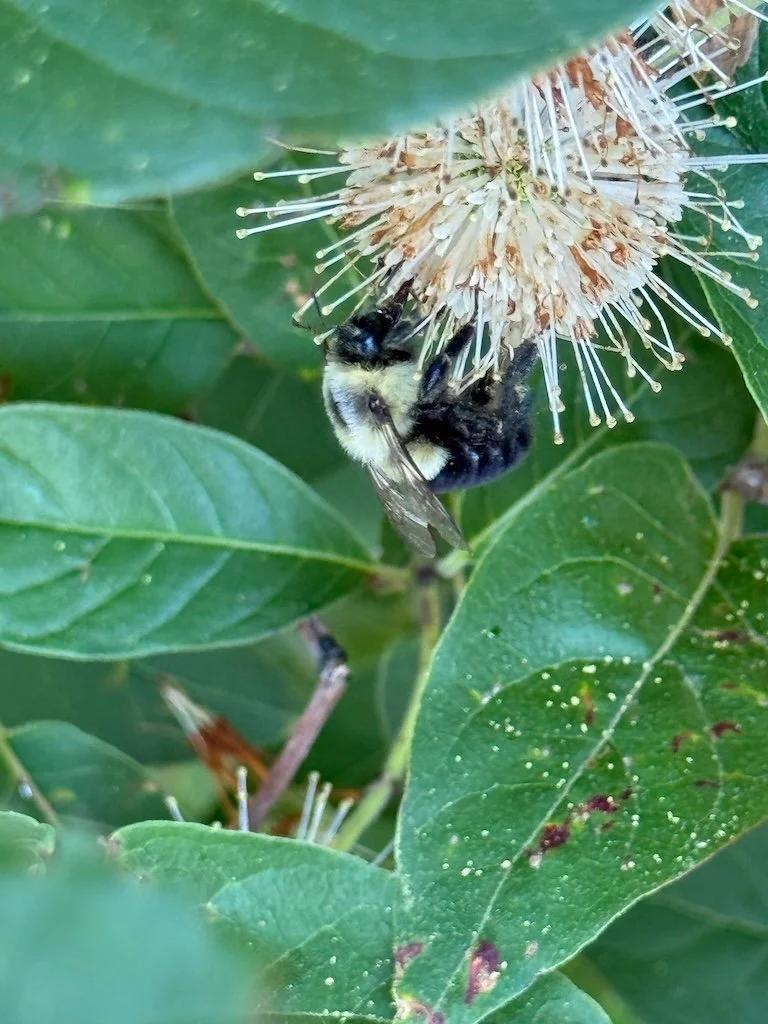
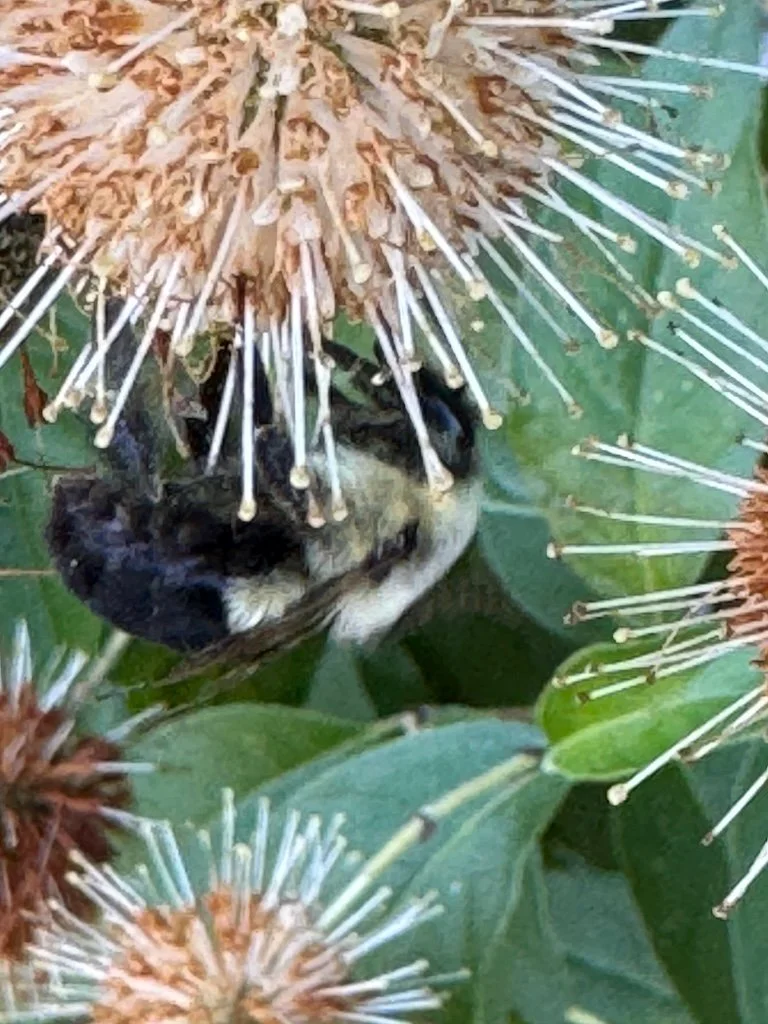
The garden around the Lake Springfield Boathouse is maintained by Springfield Plateau Chapter of the Missouri Master Naturalists. I’m not part of that team but I do enjoy their results. My husband was looking for a place to practice a technique for photographing bees and the first place I looked was a good starting location for him: the buttonbush near the front door of the building! I took a few pictures before he even got his gear unloaded!

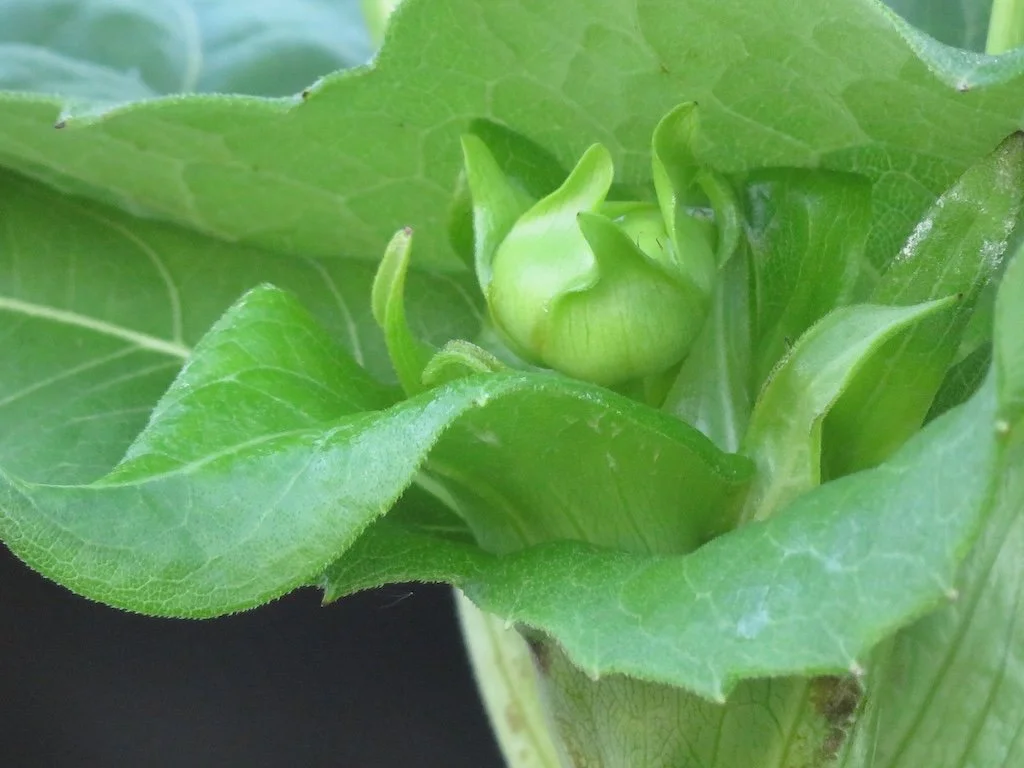
While he tried out his new technique, I photographed the other plantings. The second place I hoped to find insects/bees was the cup plant, but it wasn’t blooming yet. It did have buds…so should be a great place to check later in the season.

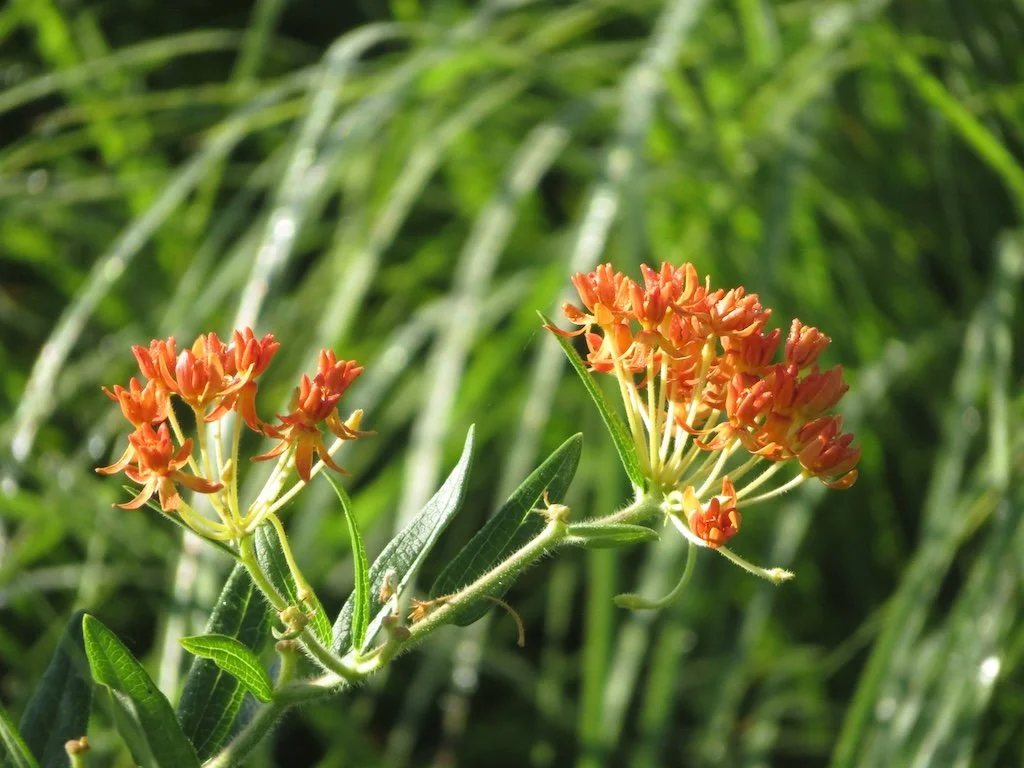
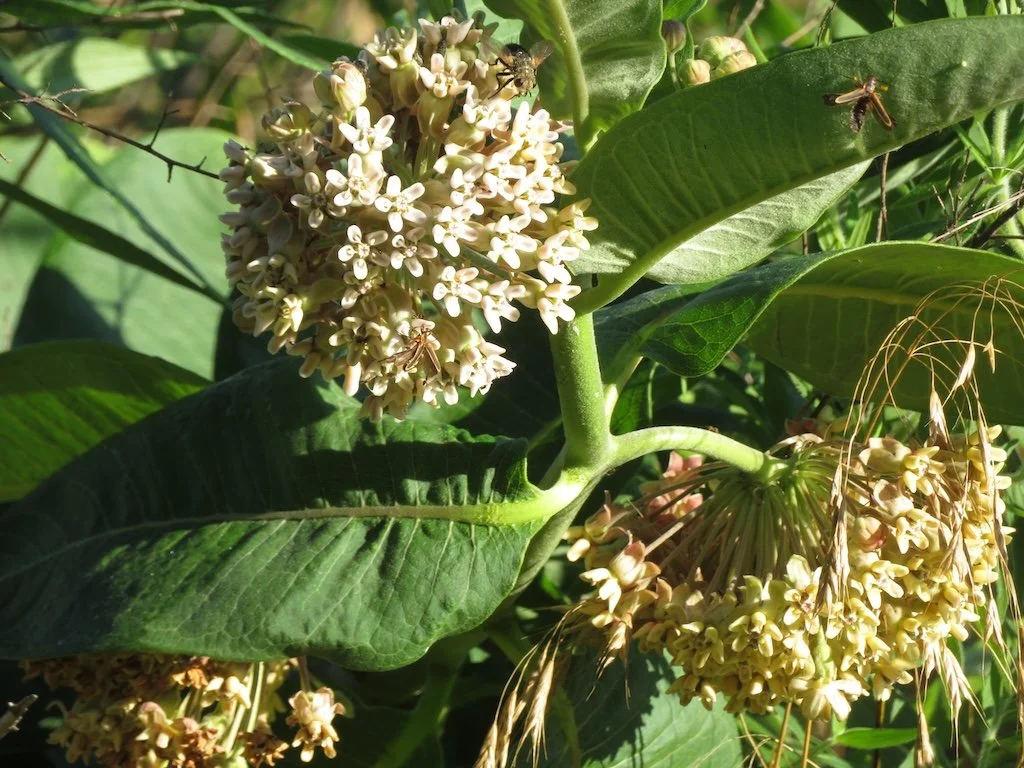
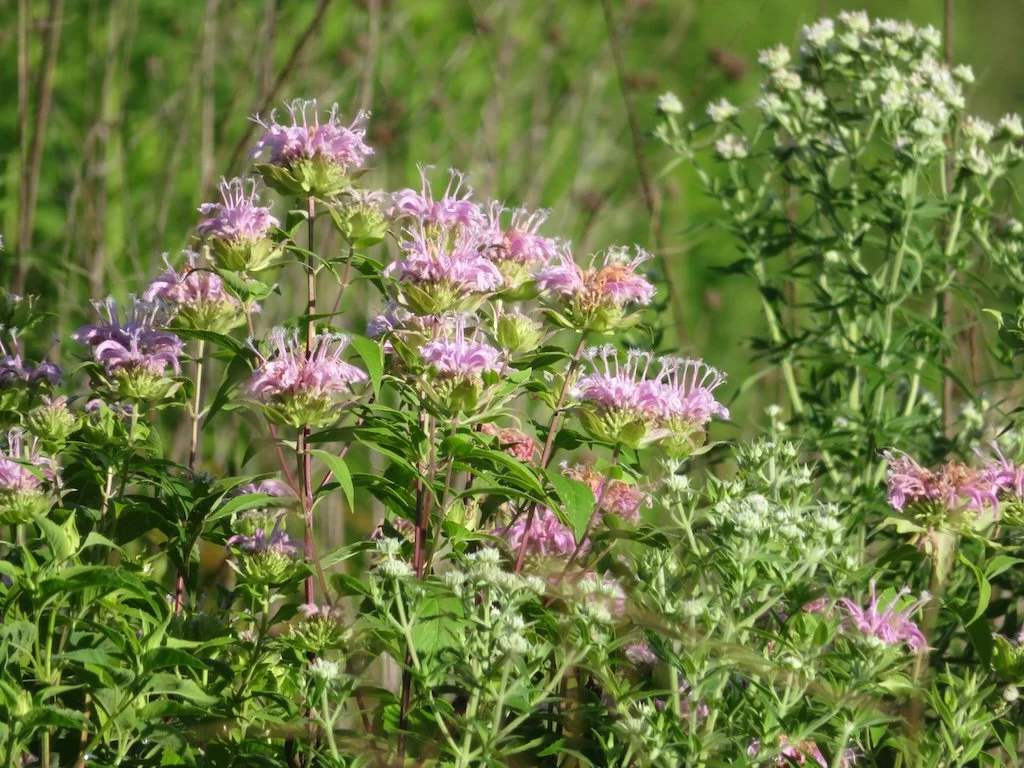
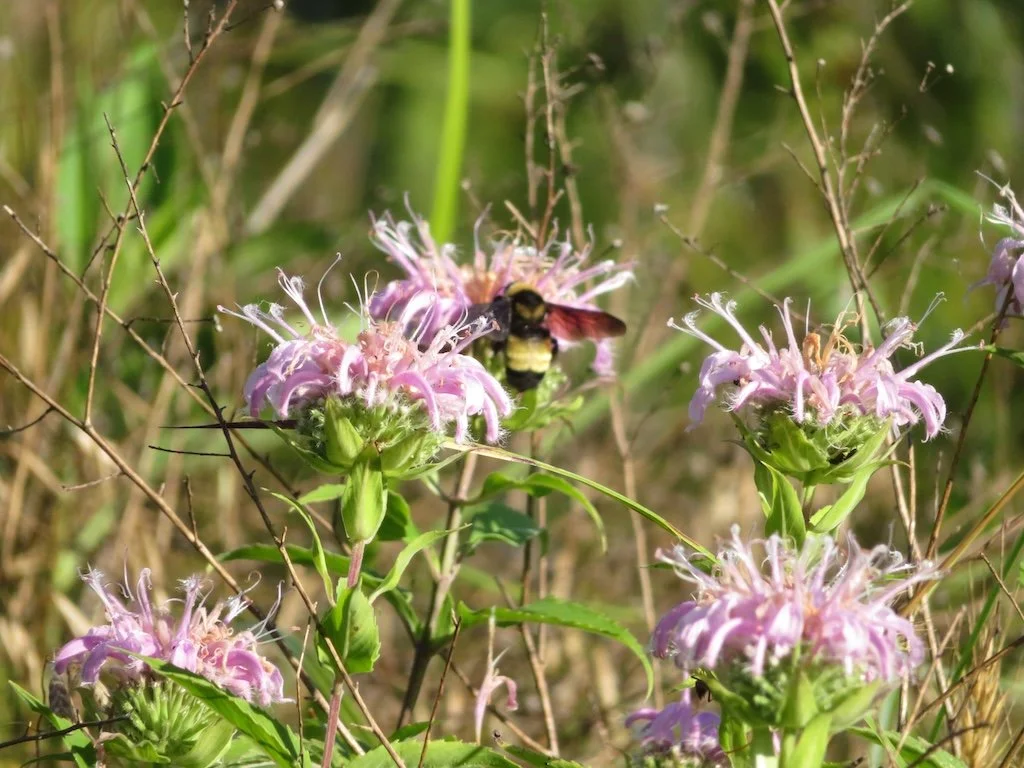
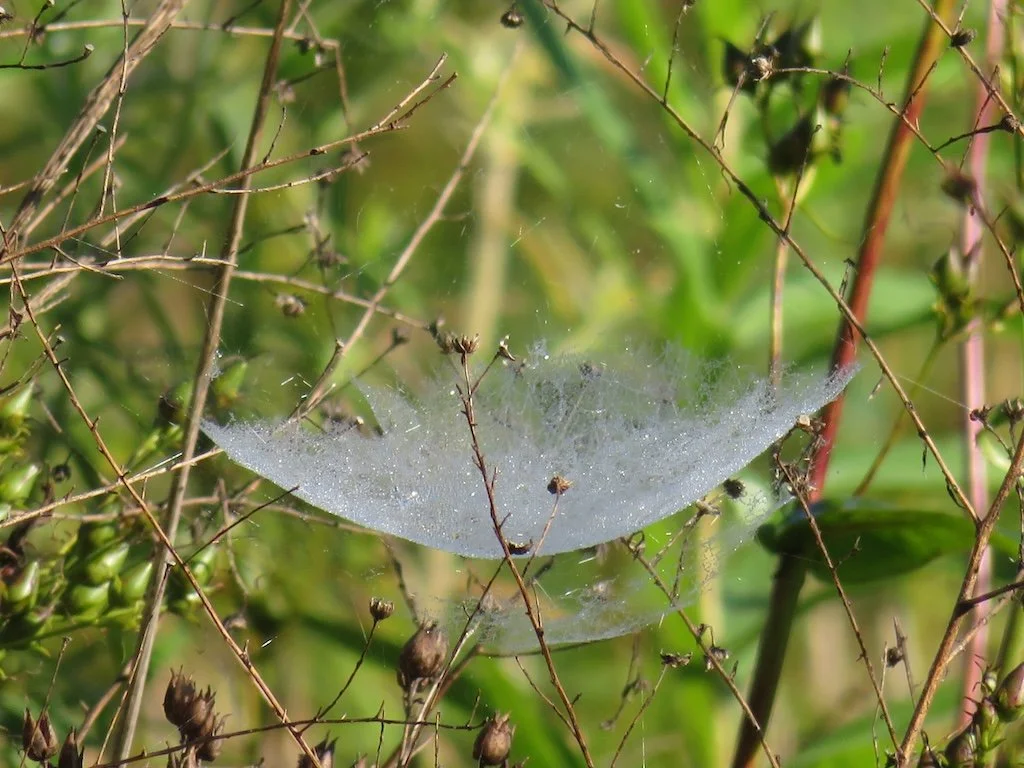
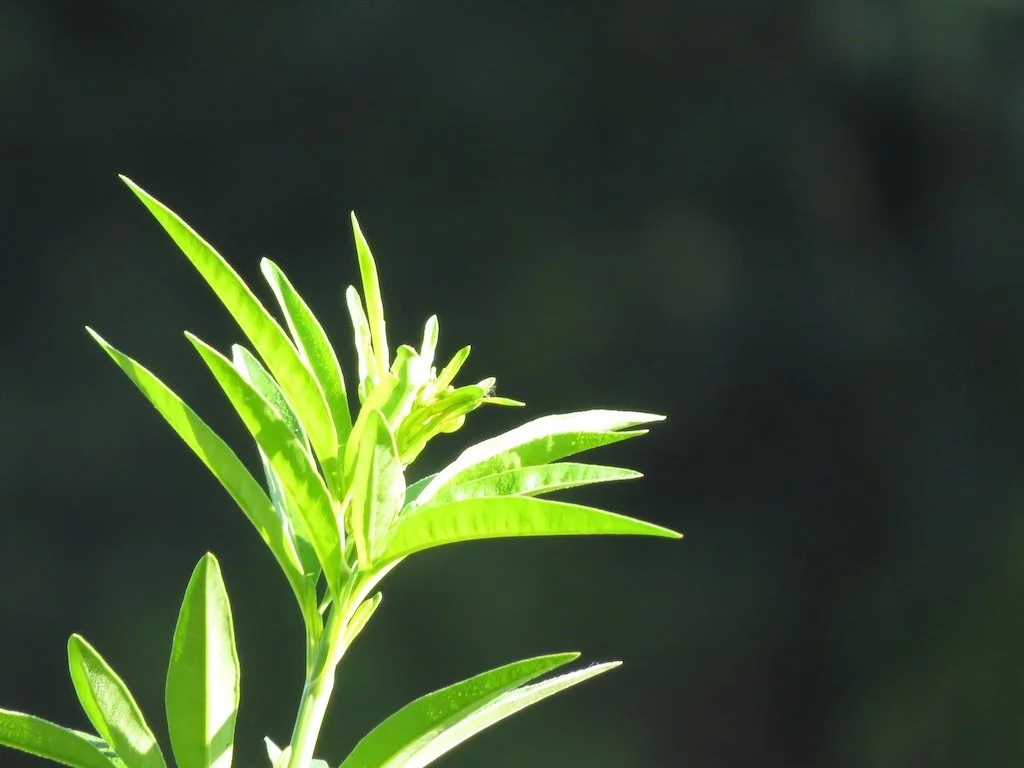
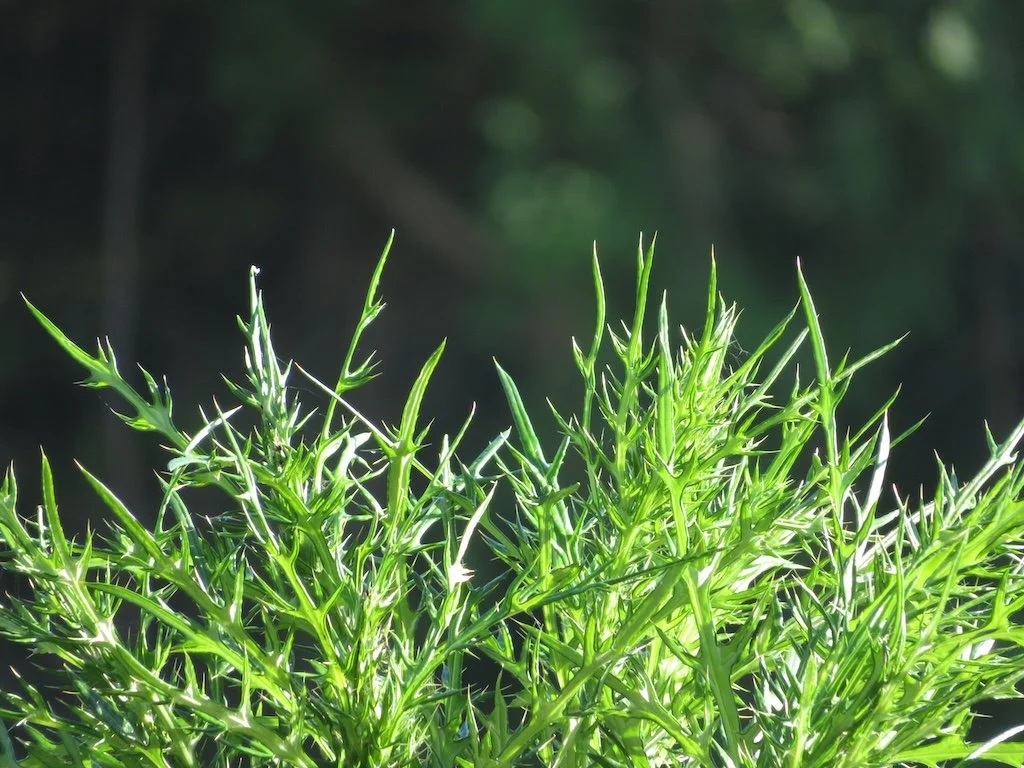
We headed past the purple martin houses (which were very busy) to the meadow area. The milkweed was blooming but the flowers looked less colorful than I expected, and they were not attracting large number of insects either. The bee balm was more attractive to bees than the milkweed. There was a spiderweb that looked a little like a hammock in some dried stems from last season; it was highlighted by the heavy dew. I took some backlit images of 2 plants that were not blooming but had interesting shapes.

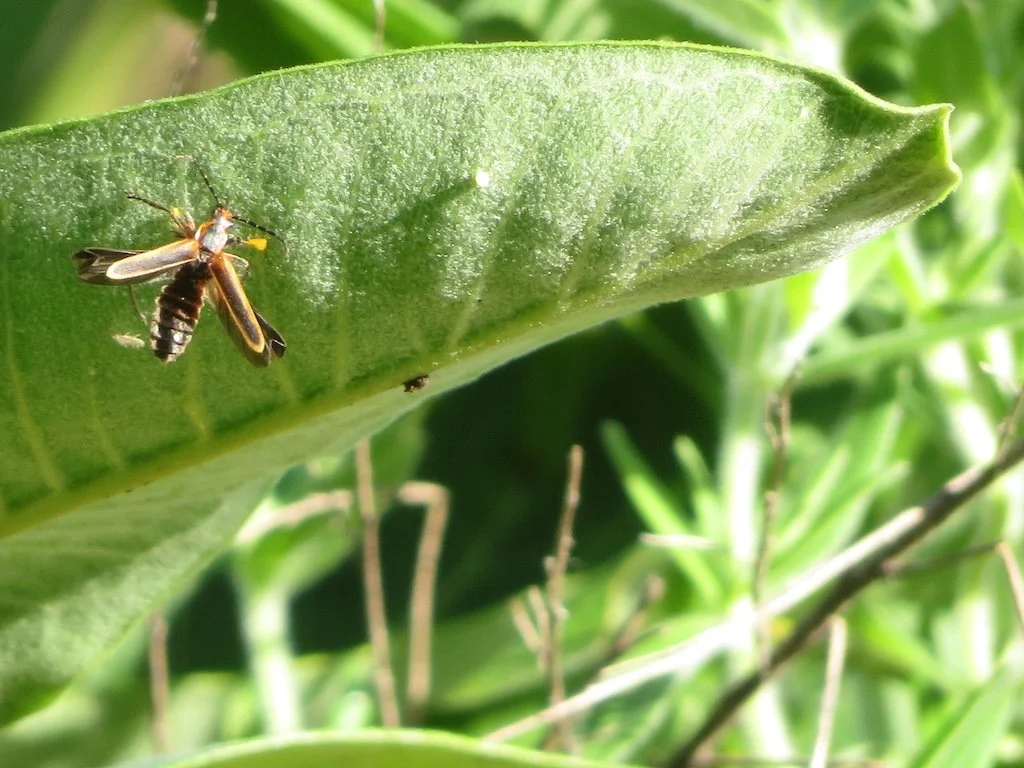
One of the pictures I took of an insect on a milkweed leaf had a surprise when I looked at it on my big monitor at home: a tiny egg (maybe a Monarch egg)!

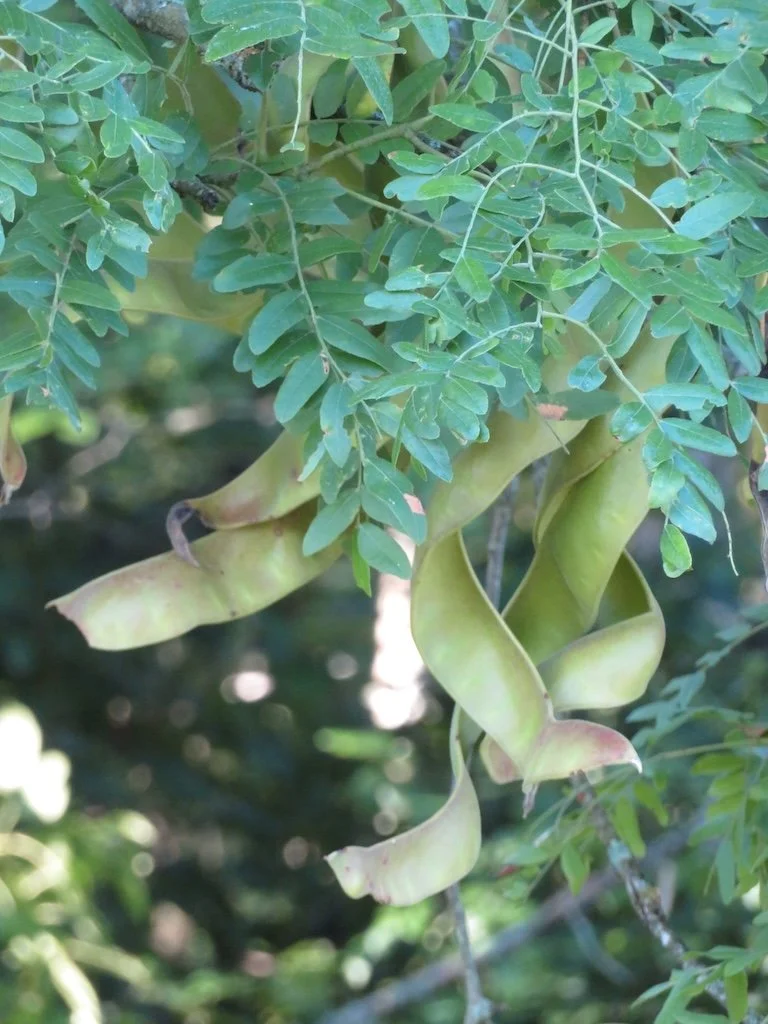
Across the walking trail there are brambles and trees. The locust was full of still-green pods and vetch was blooming in the undergrowth.

It was a productive morning activity. My husband thought maybe it was not warm enough for peak insect sightings; he might have been right but, with the humidity, it was the best time for us to be there!

Gleanings of the Week Ending July 12, 2025

The items below were ‘the cream’ of the articles and websites I found this past week. Click on the light green text to look at the article.

How Has U.S. Energy Use Changed Since 1776? – Historical perspective. Coal, petroleum and natural gas did not surpass renewables (i.e. wood) until 1885!

Is this the end for Easter Island's moai statues? – The moai are made from tuff, a volcanic rock largely composed of compressed ash. This type of stone is porous and unusually soft. The wind and rain do not treat it kindly. Weathering of the moai appears to have increased sharply during recent decades; drier weather followed by very heavy rains, more wildfires, rising sea level  and increased wave event have all contributed.

20 Incredible Nominees for the BigPicture Natural World People’s Choice Award – Some great photography.

In Yellowstone, Even Animals Sometimes Make Mistakes – A bison stumbled into Grand Prismatic Spring…and there was no happy ending.

London Inches Closer to Running Transit System Entirely on Renewable Power - London will source enough solar power to run its light railway and tram networks entirely on renewable energy. The deal brings Transport for London closer to its goal of running its entire transit system, including its sprawling underground railway network, on renewable energy by the end of this decade.

Time For Canada to Dump the Big Three & Go Electric with China – Something valid for Canada to consider…certainly more forward looking than subsidizing old technologies.

The end of tuberculosis that wasn’t - In the late 1980s, many thought the fight against tuberculosis (TB) had been won. A disease that had plagued humans for at least 9000 years was on the path to being eliminated. Three factors raised concerns about the resurgence of tuberculosis in the United States and rich countries in Europe in from mid-1980s and 1990s: HIV/AIDS epidemic, the rise in drug-resistant tuberculosis, and higher rates of TB in foreign-born populations.

The US’s asbestos U-turn: why the Environmental Protection Agency is reconsidering its ban - Each year, around 40,000 deaths in the US and about 5,000 in the UK are attributed to asbestos exposure. If the US ban is lifted, it’s possible that the number in the US could increase over the coming decades while those in the UK will continue to fall. While global consensus moves toward stricter regulation, the US now finds itself at a crossroads, between scientific evidence and pressure from industry.

Inside Egypt’s Enigmatic $1 Billion Grand Museum - During a press conference on June 14, Egyptian Prime Minister Mostafa Madbouly said the official opening was postponed due to “current regional developments”—loosely referring to the then-escalating conflict between Israel and Iran.

These Colorful Satellite Views Reveal Our Forests in Unprecedented Detail and Showcase the Potential of the New Biomass Mission - The European Space Agency’s satellite will measure trunks, branches and stems in forests to shed light on how much carbon is stored in trees across various continents. The example image of the Beni River in Bolivia shows a lot of oxbow lakes!

Adventures in Caterpillar Care (4)

July 2 – July 9 with a lot of bigger and bigger luna moth caterpillars and a few cecropia moth caterpillars… an ongoing adventure.

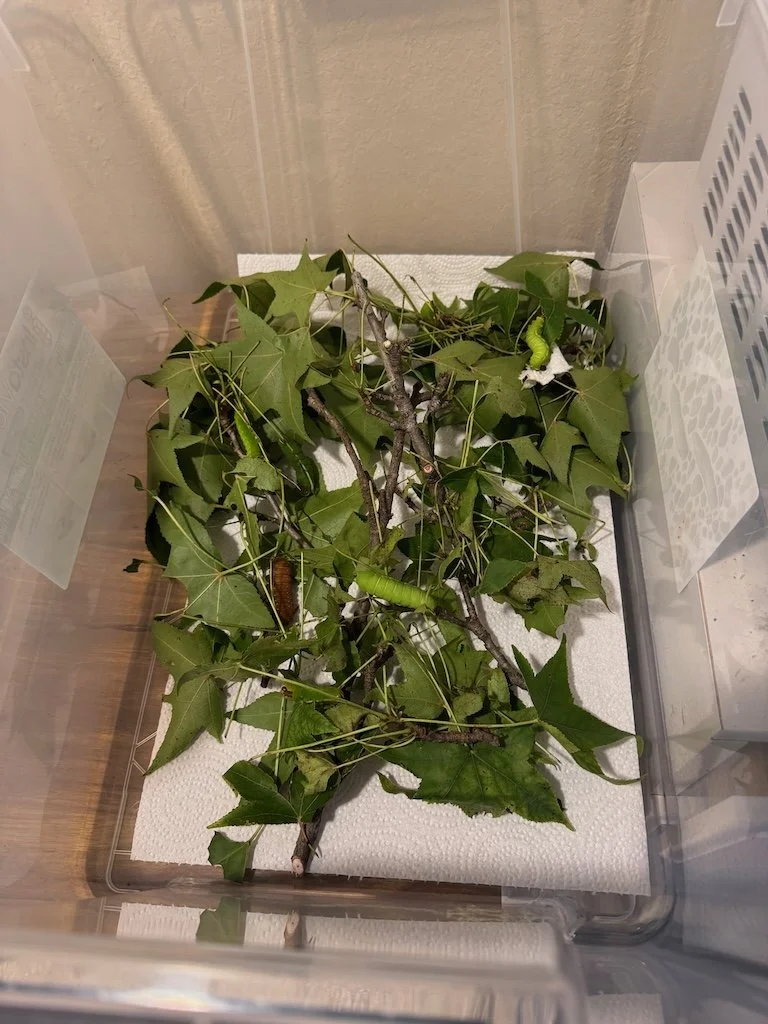
I graduated to two large bins for the 40 or so luna moth caterpillars on 7/2 because the caterpillars seemed too crowded in one.

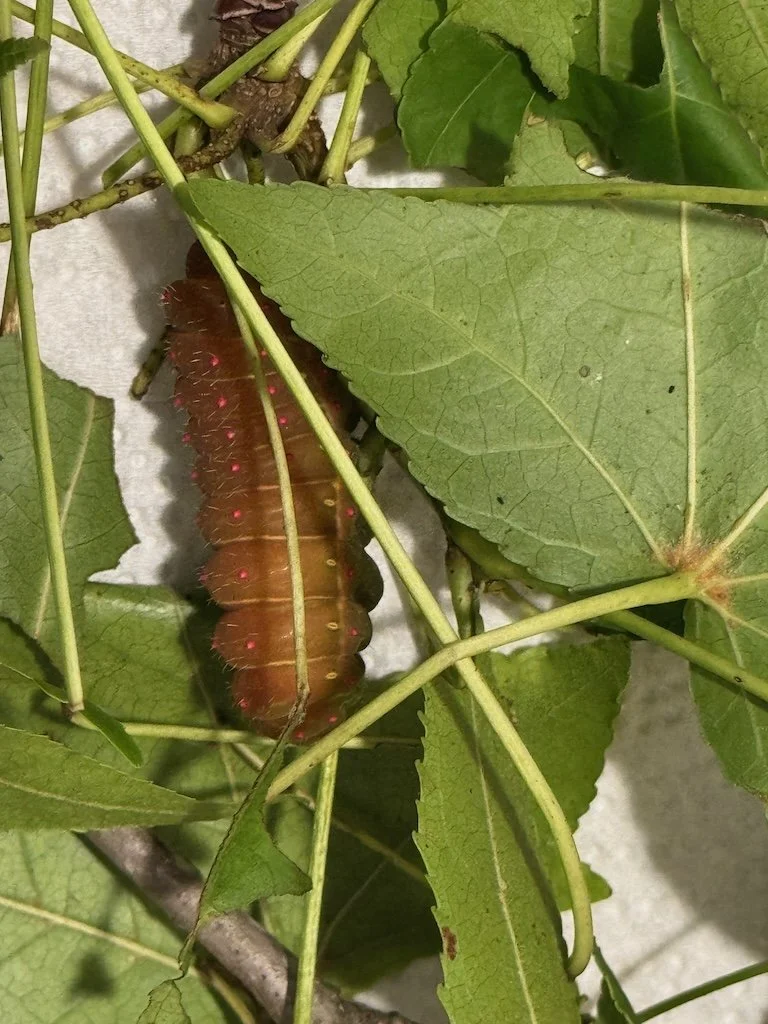
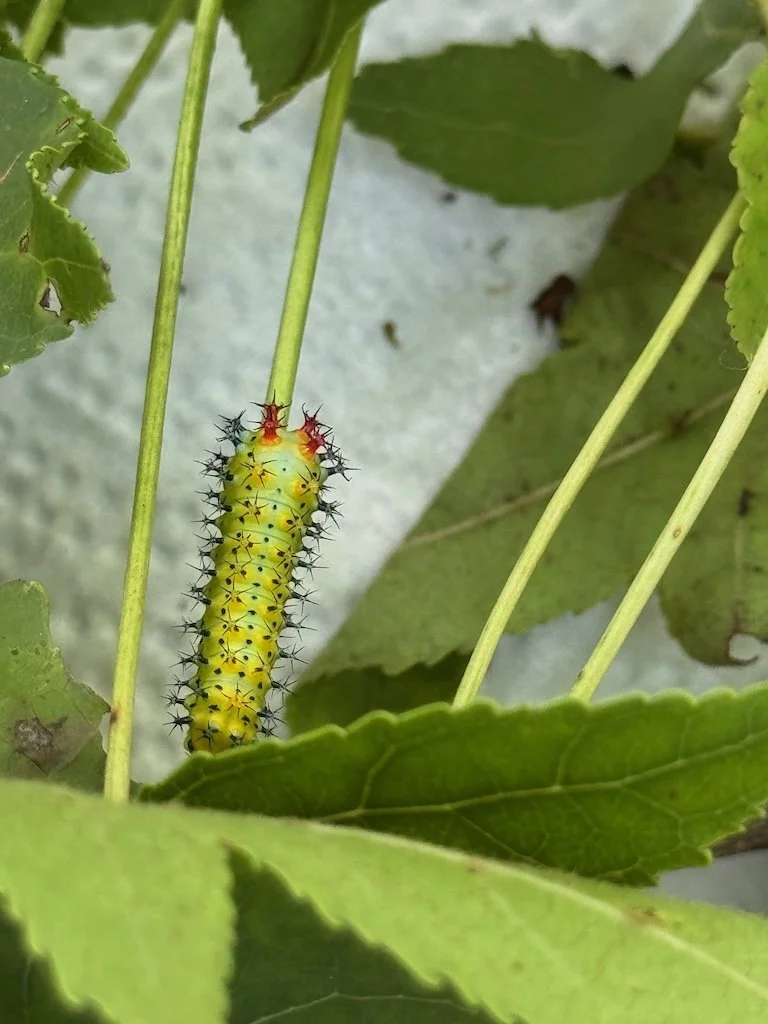
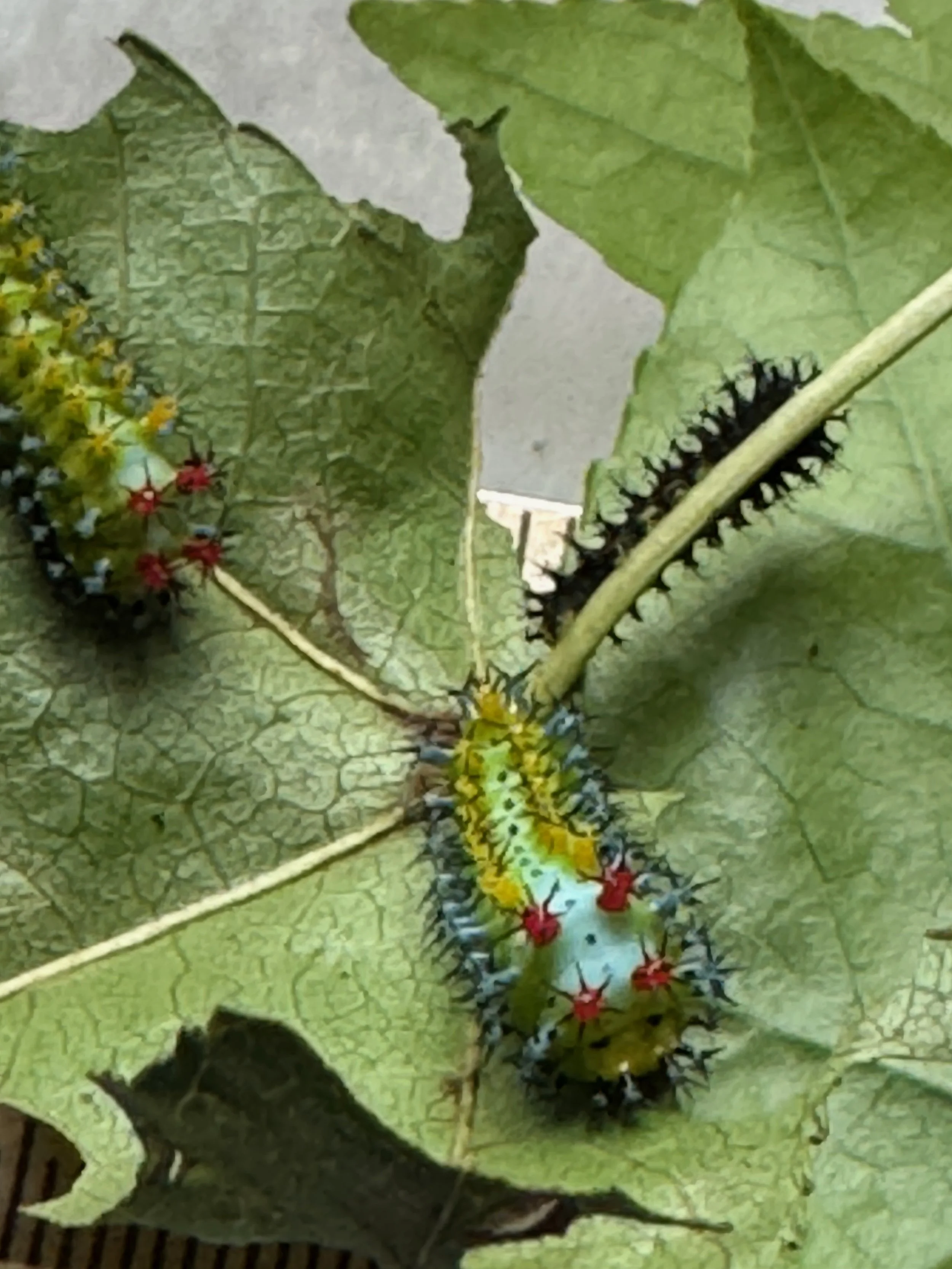
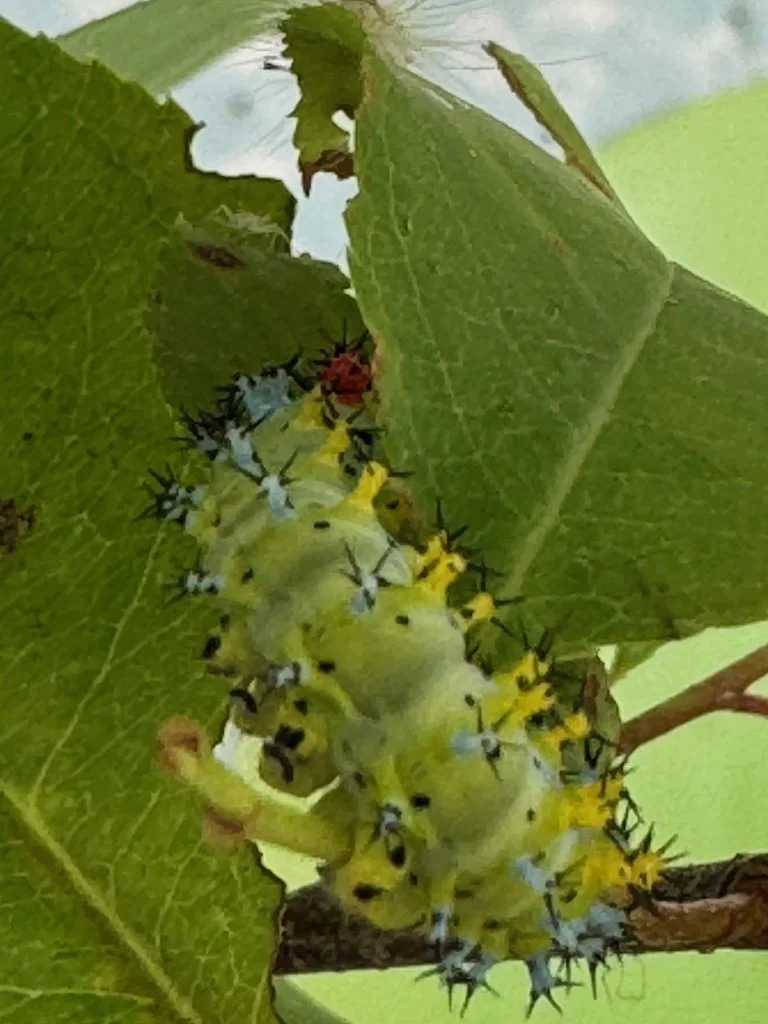
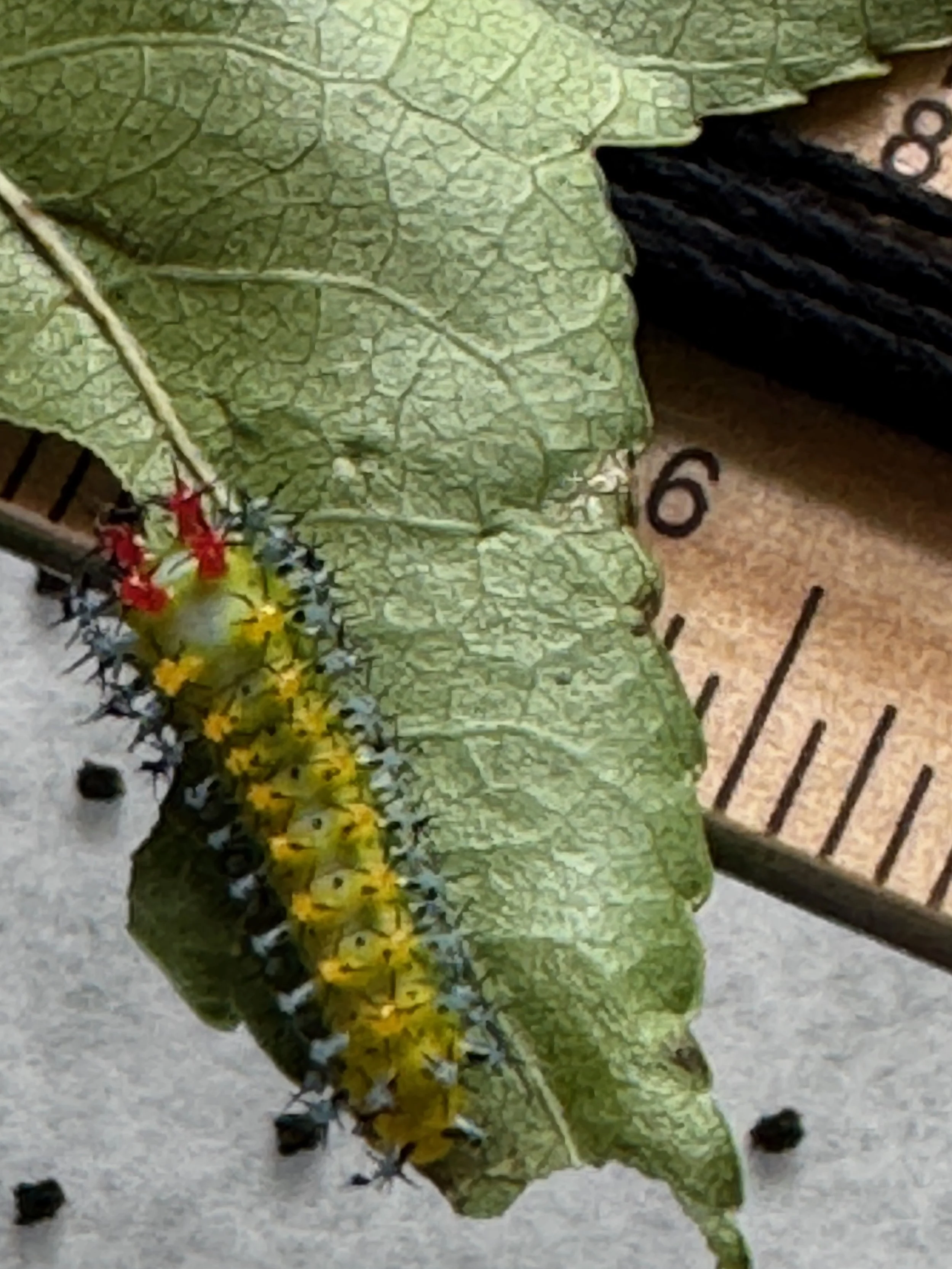
I moved the cecropia moth caterpillars to are larger bin too. They were still small but were beginning to look colorful…growing well on the sweet gum leaves.

I appreciated my neighbor with the sweet gum tree even more as the caterpillars got bigger. I made almost daily trips to get a bag of leaves! Pretty soon I graduated from my long-handled pruners to a pole saw because all the leaves were higher in the tree. The cecropias were eating well (I could find them more easily once they were in their own bin) and were still small enough to keep up with their food requirements.

One morning I thought I heard noises coming from one of the big luna bins. I made a movie to capture the sound of caterpillars eating (not loud….but I was pleased to capture the sound of caterpillars munching)!

The same day that I heard munching, I started to see some cocoons and noticing how big many of luna moth caterpillars had become.

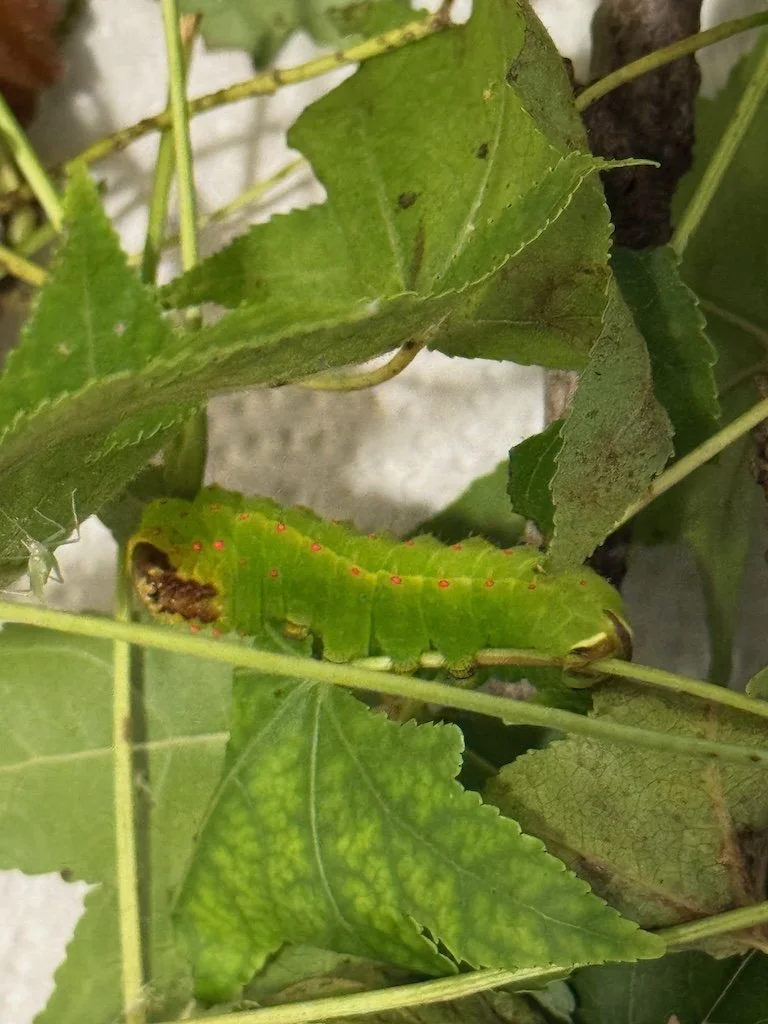
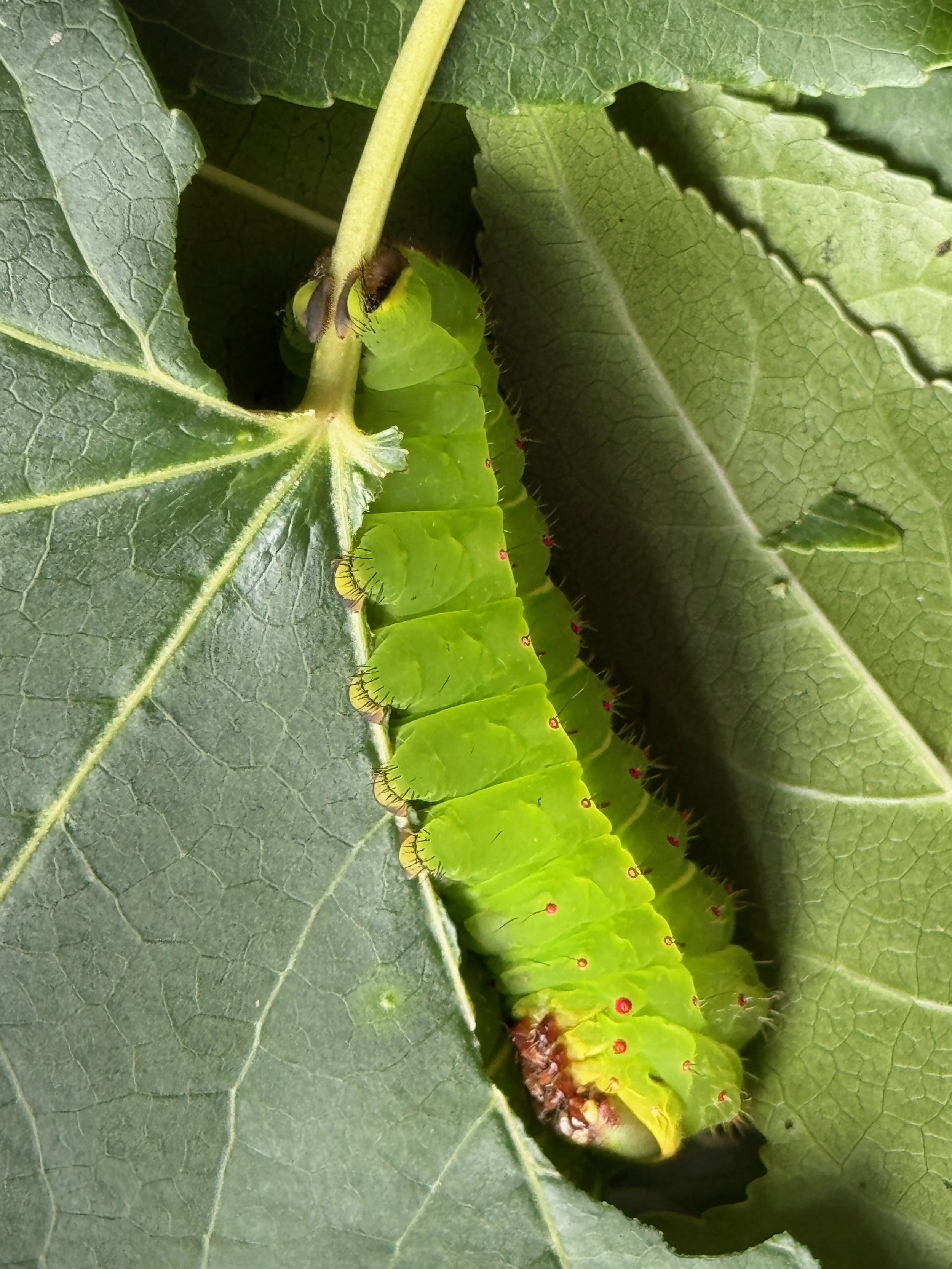
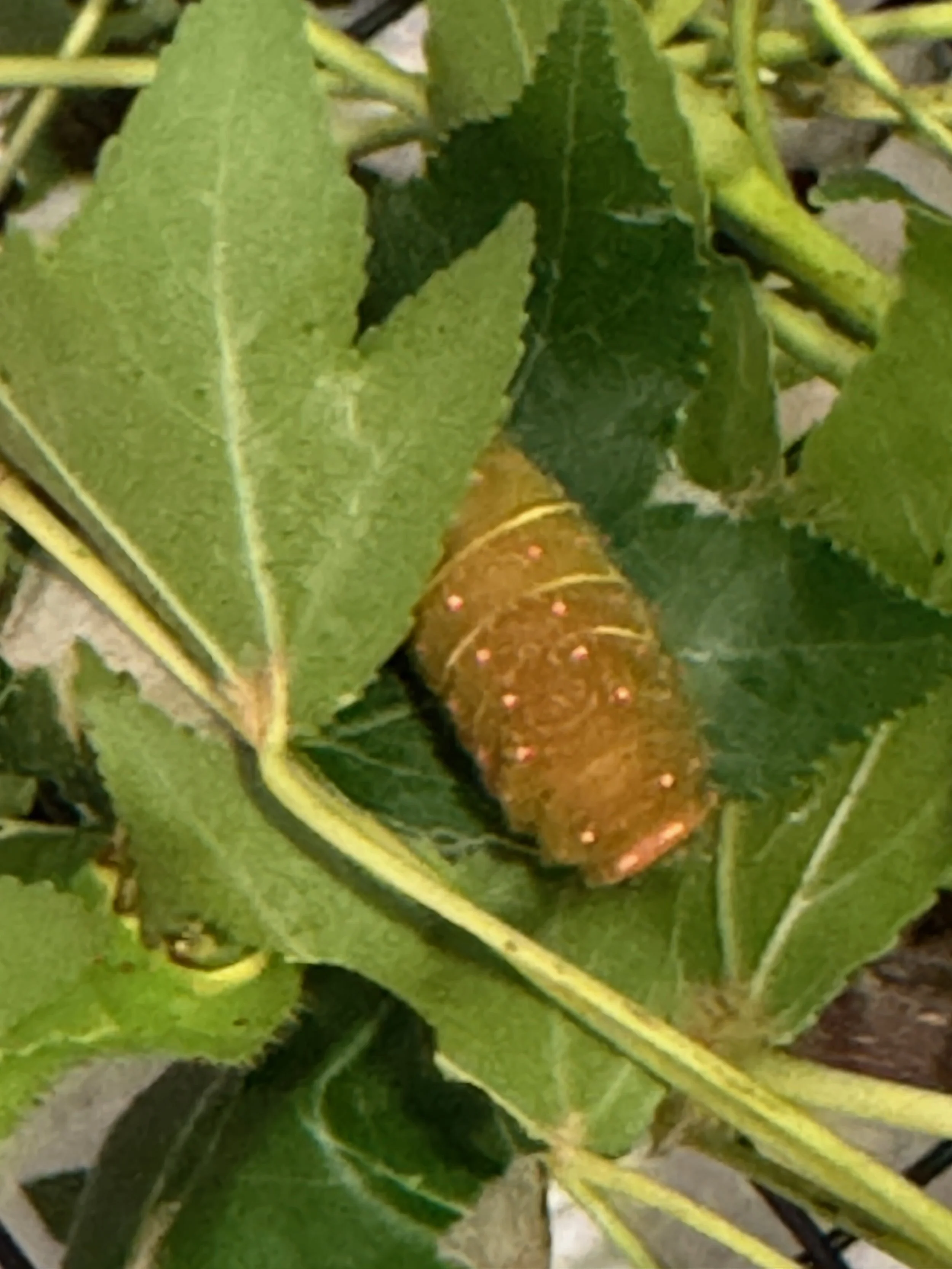
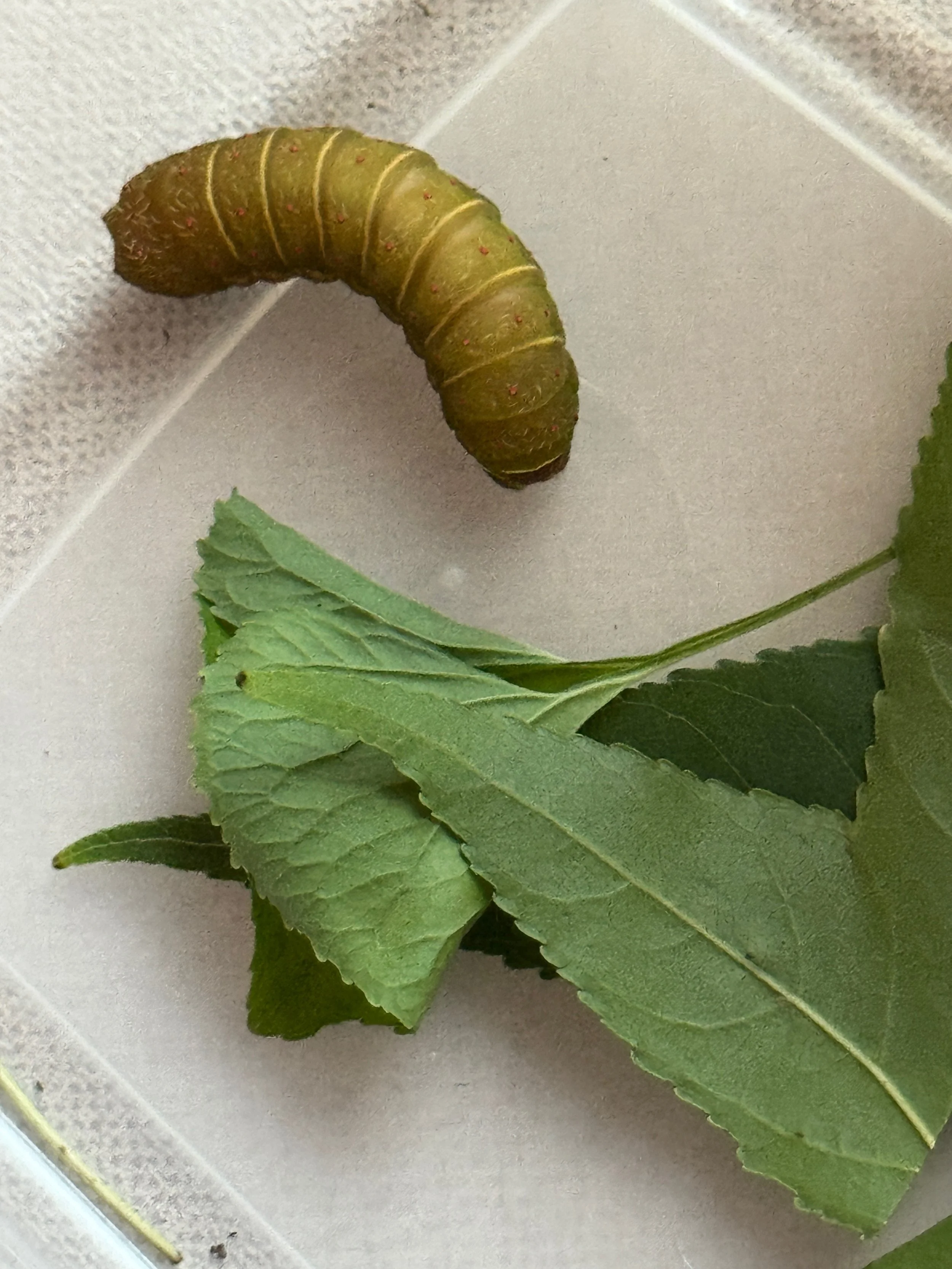
The next morning I saw one that had changed color…as they sometimes do before building their cocoon.

I thought I left plenty of leaves in the bins for overnight….but when I came downstairs the next morning there was not a leaf left in either bin. It was a caterpillar emergency. I texted my neighbor and cleaned out the bins (put cocoons in a separate bin) and then went to get leaves. Fortunately, most caterpillars survived.

As I was cleaning out the bins, I found another caterpillar that had changed colors and put it in a small bin with violet leaves, and it immediately made a cocoon!

After the caterpillar emergency was dealt with, I had a shift in the Butterfly House. I took two larger caterpillars for the caterpillar display table and 4 cocoons for the display case. The cocoons contrasted nicely with the older cocoons already in the case because the leaf part was still green!

I got a collapsible case to put my other cocoons in so I can watch them emerge….and hopefully share the experience with the family that provided the leaves for the caterpillars.

The cecropia caterpillars will probably go to the Butterfly House at some point and maybe some of the luna moths when they emerge.

It’s been an exciting week…probably the peak sweet gum consumption of this adventure.

Previous Adventures in Caterpillar Care posts

Roston Native Butterfly House – June 2025

Of course there are butterflies in the Roston Native Butterfly House…

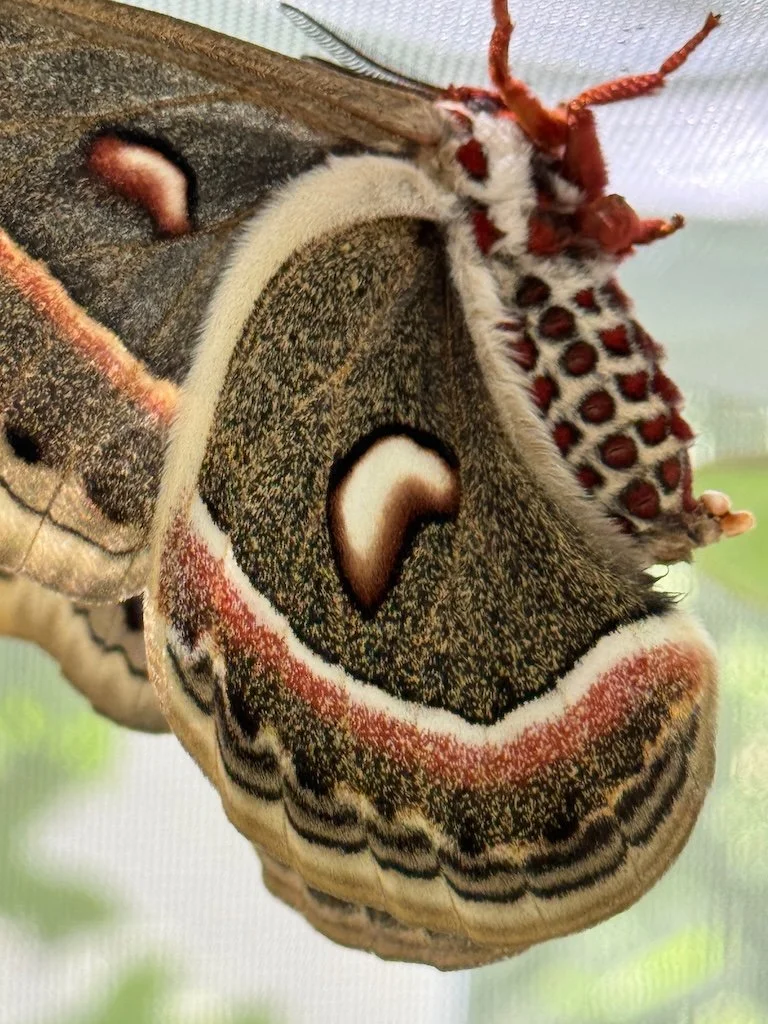
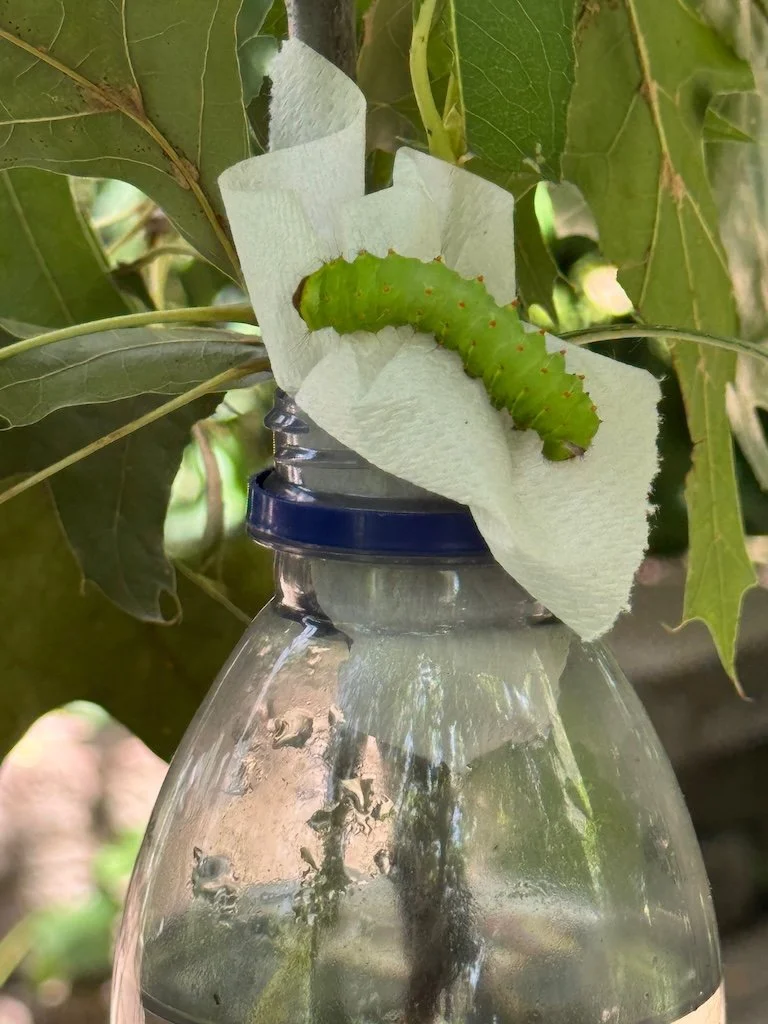
But this post is focused more on caterpillars. The cecropia moth

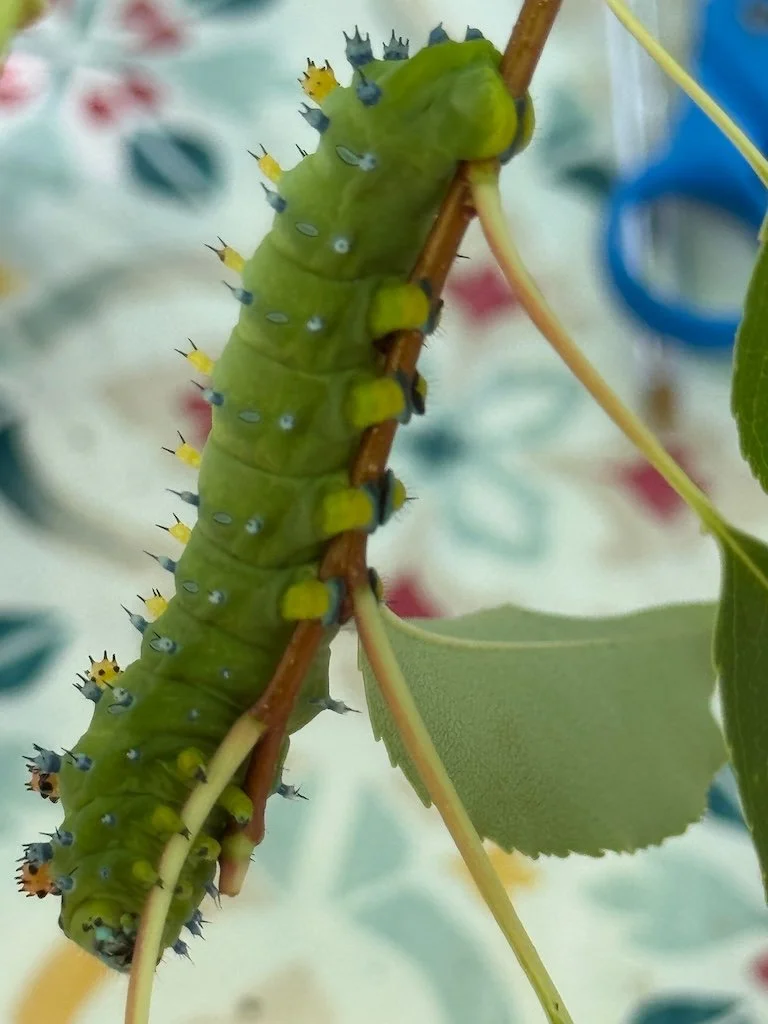
Has very large caterpillars which are the stars of the caterpillar table!

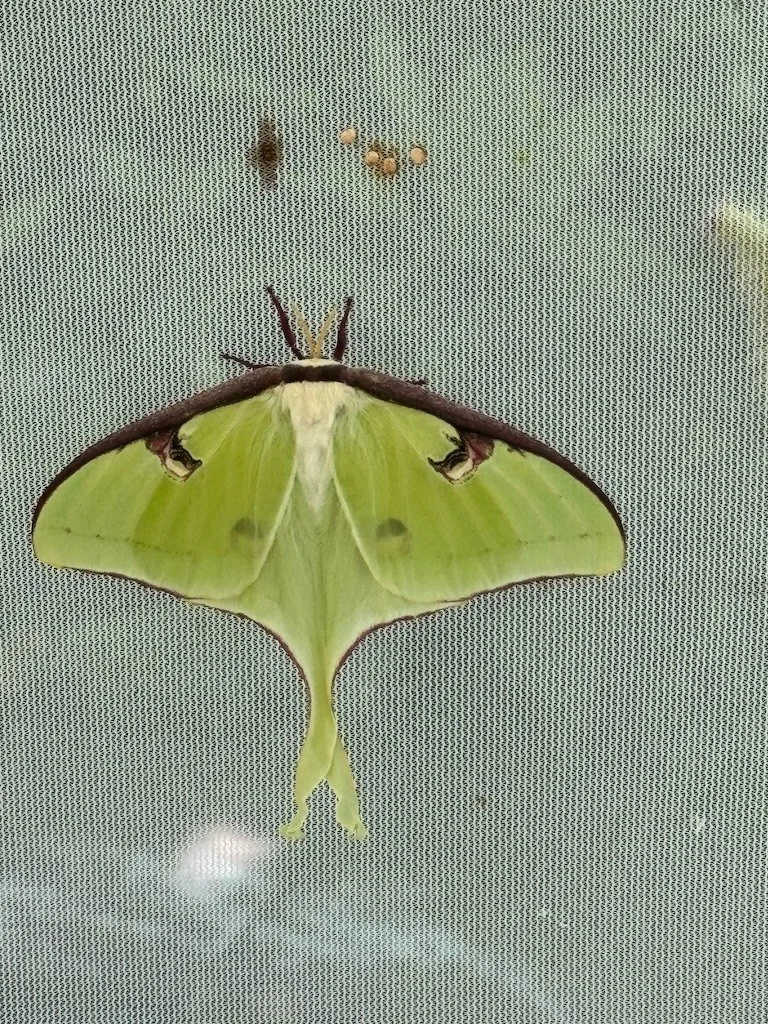
The luna moths (male with feathery antennae and the female with more thread like antennae)

Also have large caterpillars but they are not quite as large or colorful.

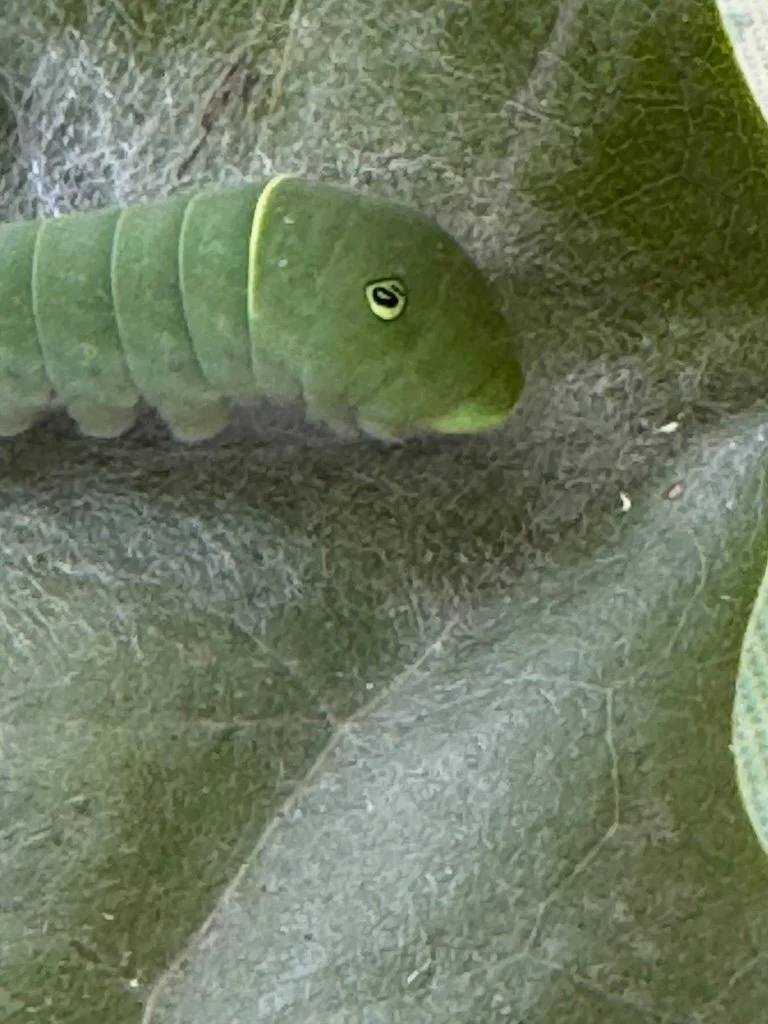
The tiger swallowtail caterpillars have fake eye spots. They are often on the tulip poplar tree in the butterfly house…at eye level with many adult visitors. We sometimes move a caterpillar on the table so that the children can see it more easily.

Learning about caterpillars – and their importance in the environment as food for other creatures (particularly young birds) - is part of the butterfly house experience.

Remains of a Bird

I found the remains of a bird on our patio. It must have been there for a while – through several recent rains. It has been picked clean except for the more substantial wing feathers. It is about the size of a barn swallow; they nested under our deck again this year. The cause of death is not obvious, and I was relieved that it was unlikely caused by the bird flying into the glass of a window since there is not one nearby.

 My first thought was about how fossils of archeopteryx look because of how flattened it is except for the skull. I didn’t try to move it because it is out of the way and appeared to be glued to the pavement. The most nutritious part of the bird is already gone and I will let nature complete the process.

Fantastic Caverns

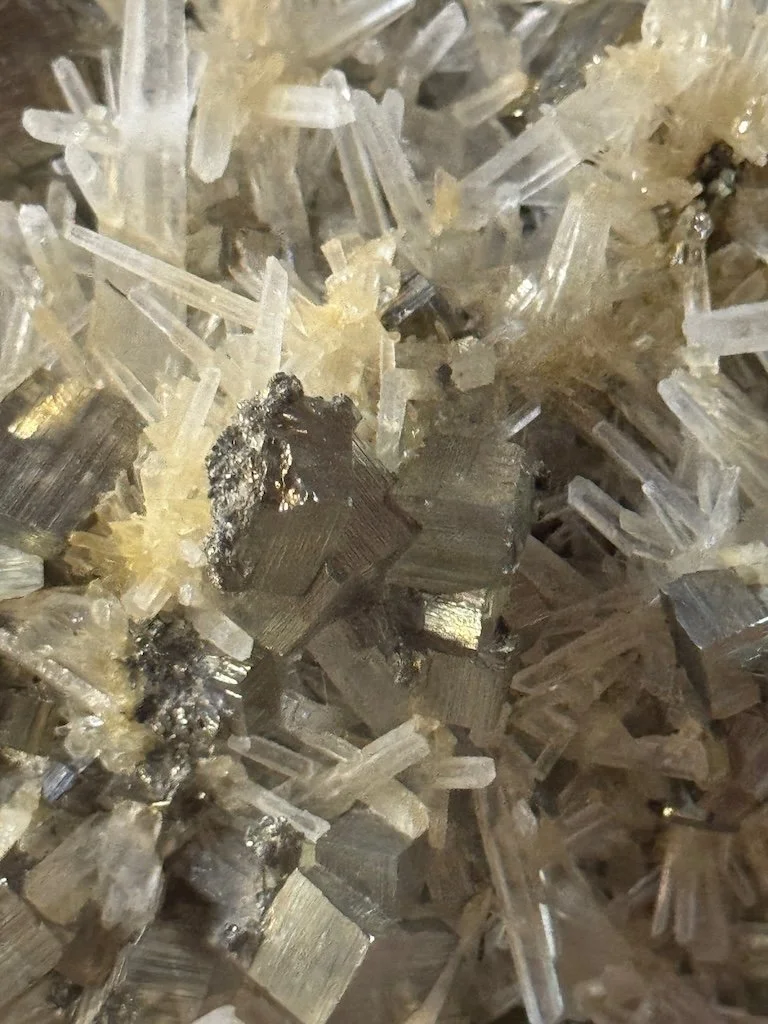
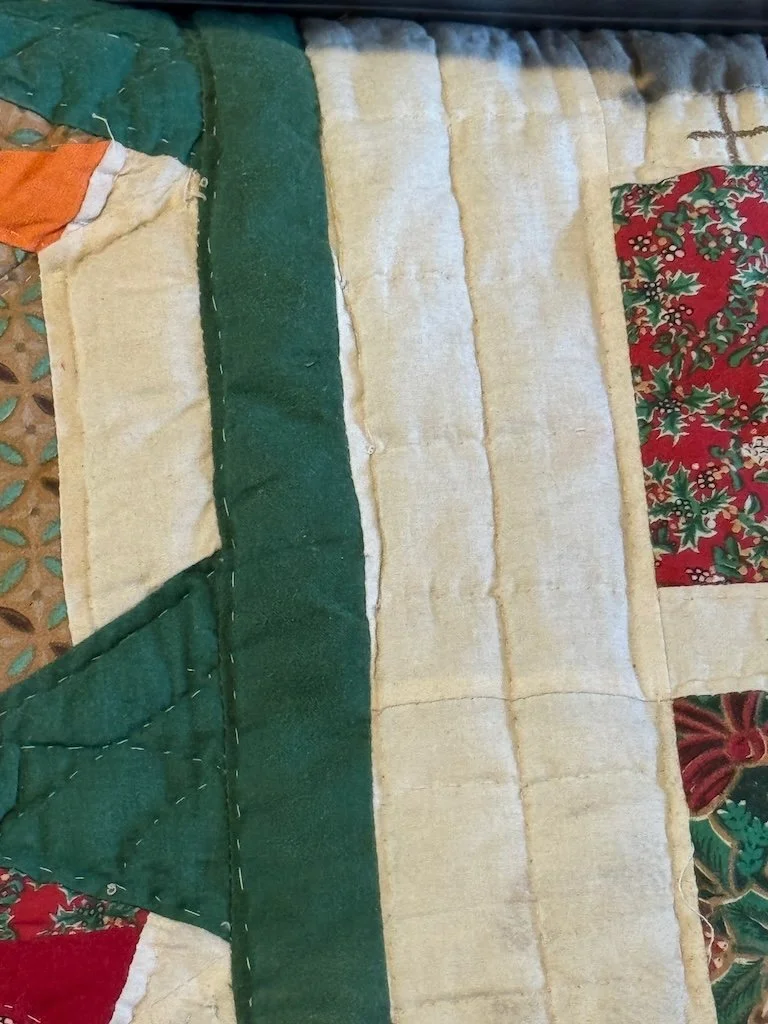
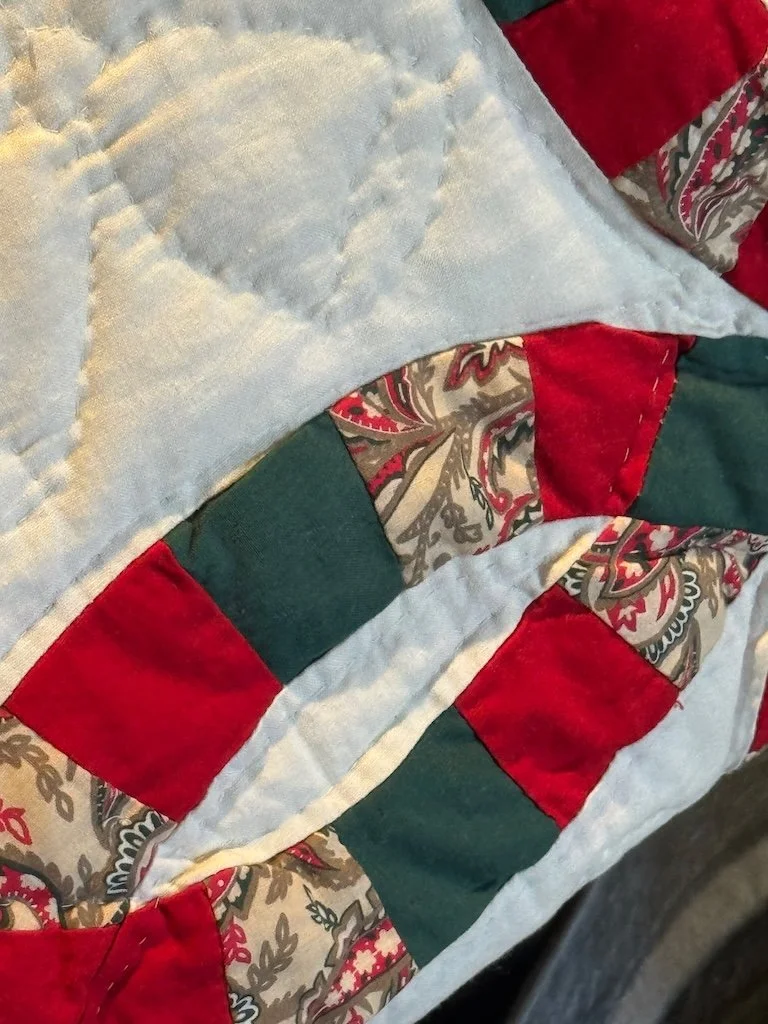
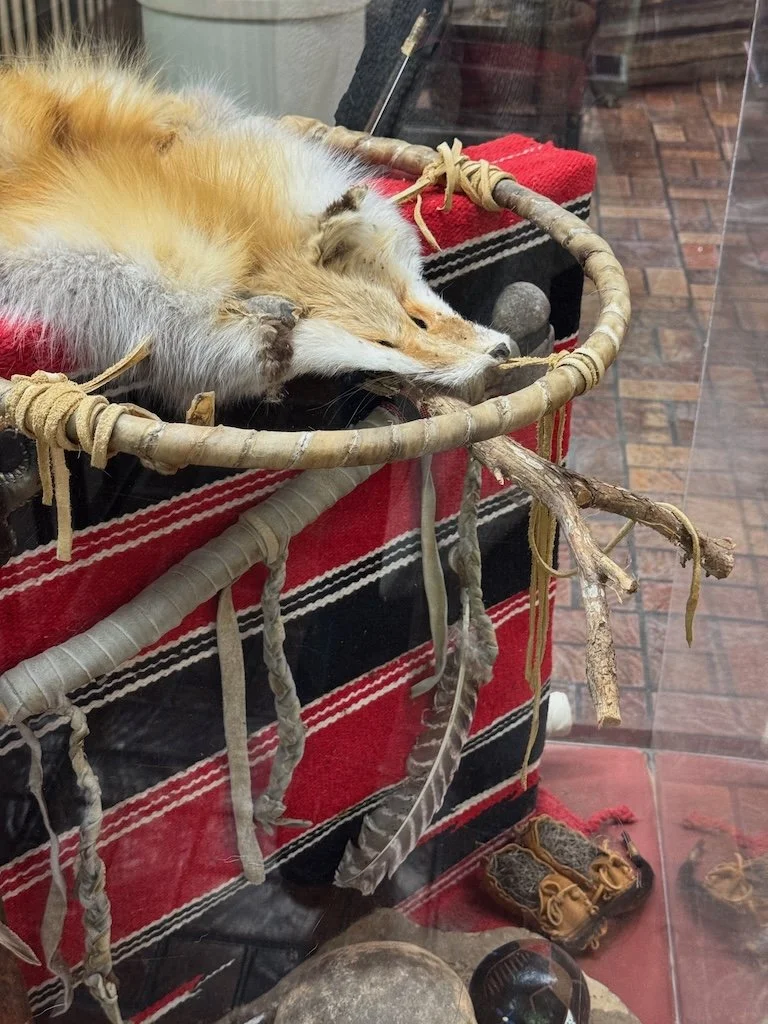
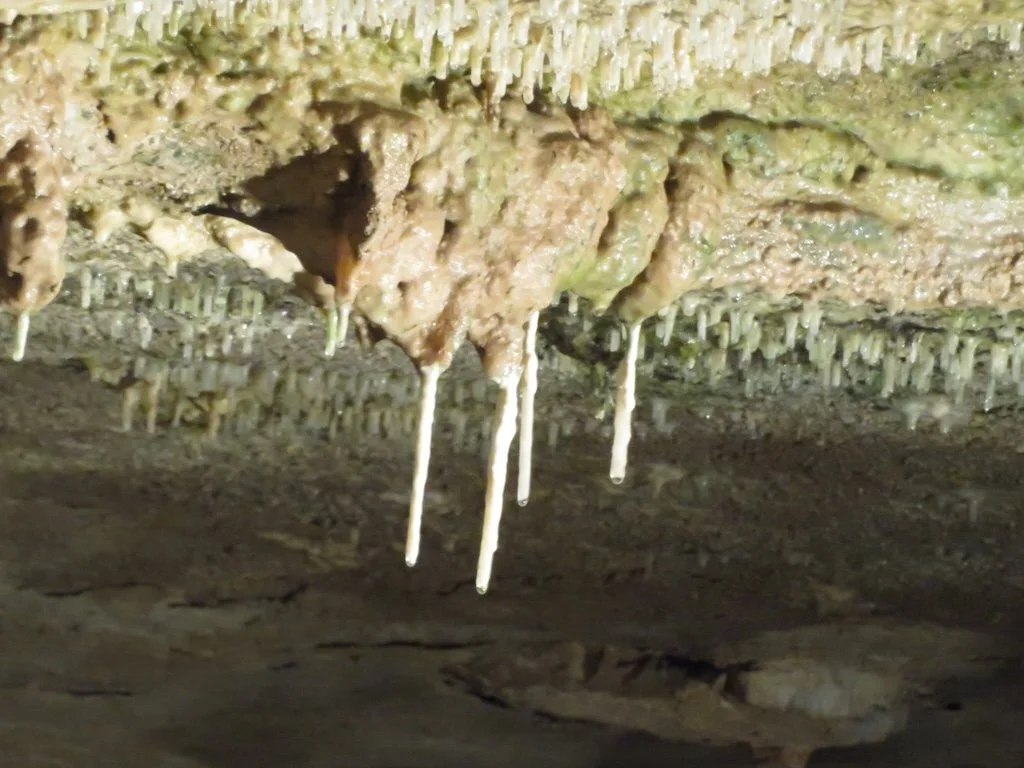
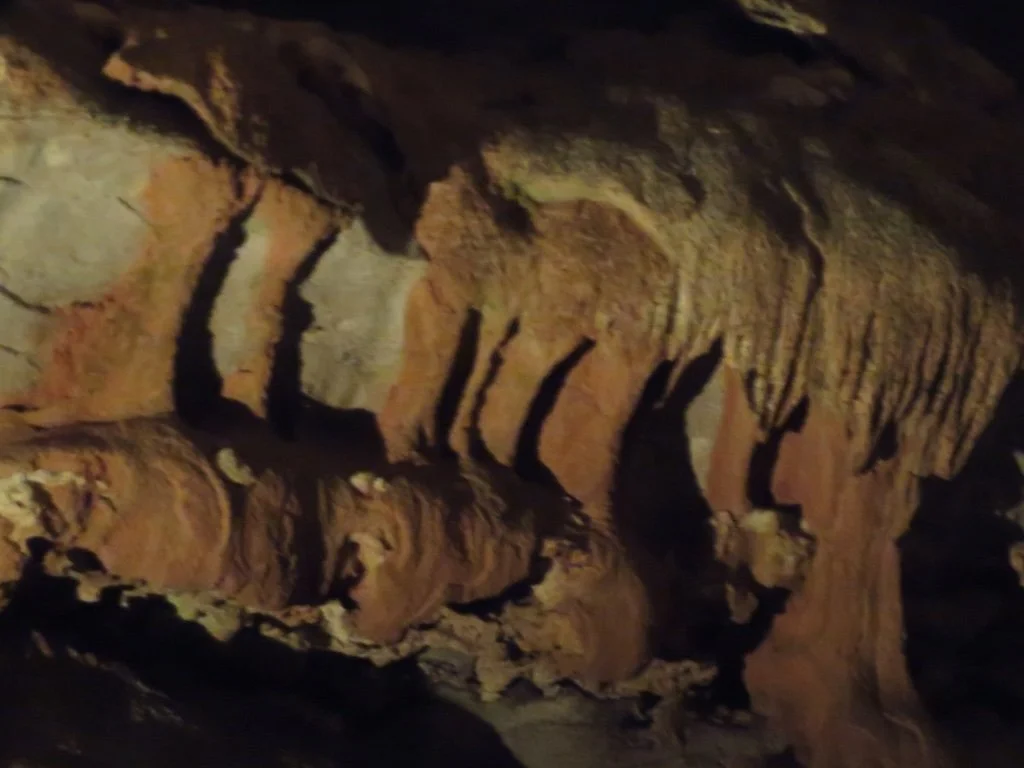
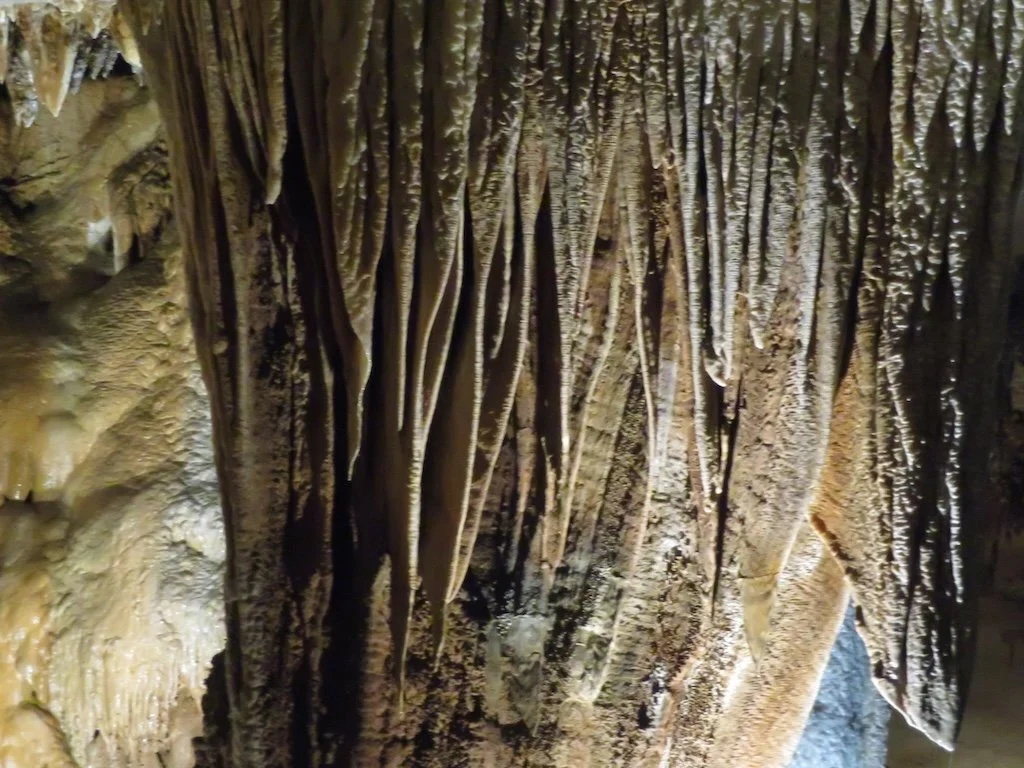
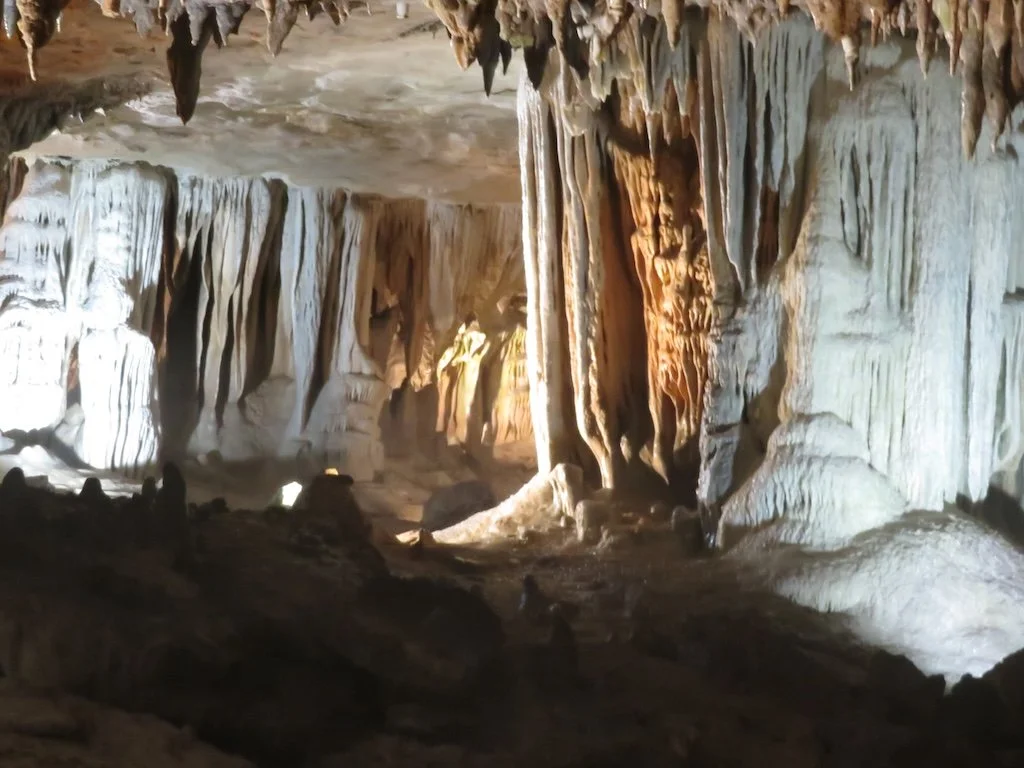
Fantastic Caverns is a great place to visit in the summer since the cave is 60 degrees all year long. We arrived a little before 10 AM and got tickets for 10:30 since there was a large school group at 10. During the wait, I bought some goat milk soap in the gift shop and looked at the mineral, quilt, and other artifact displays in the visitor center.

At 10:30 we walked out of the visitor center, down a ramp, and got on the tram that would take use through the cave.

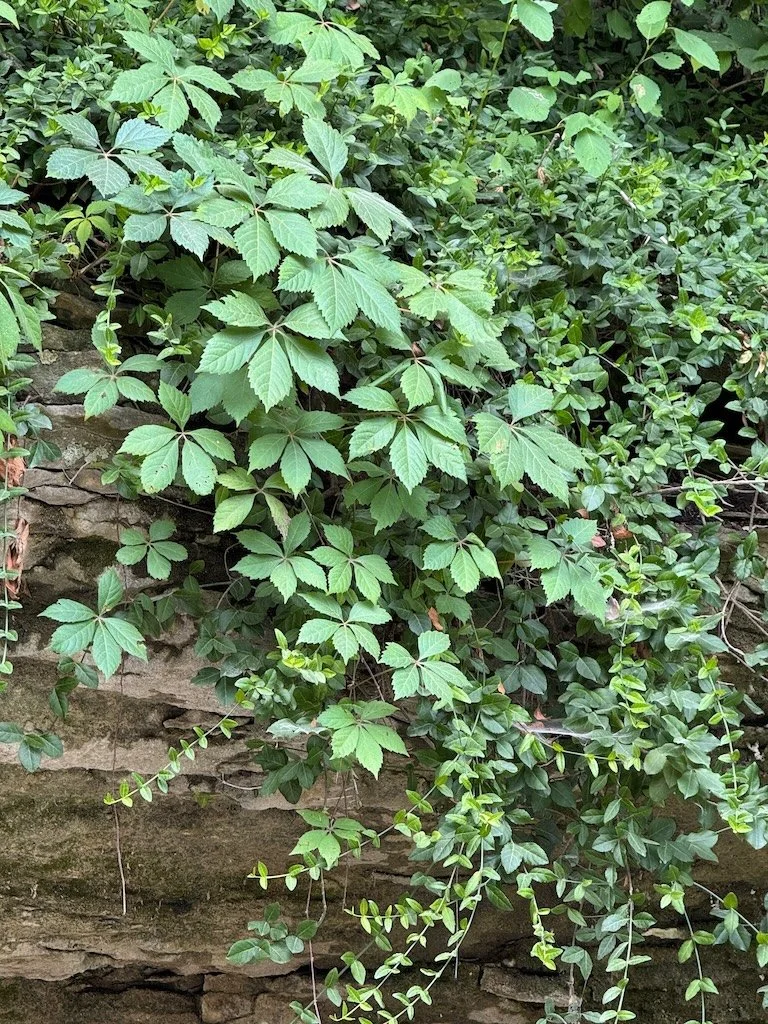
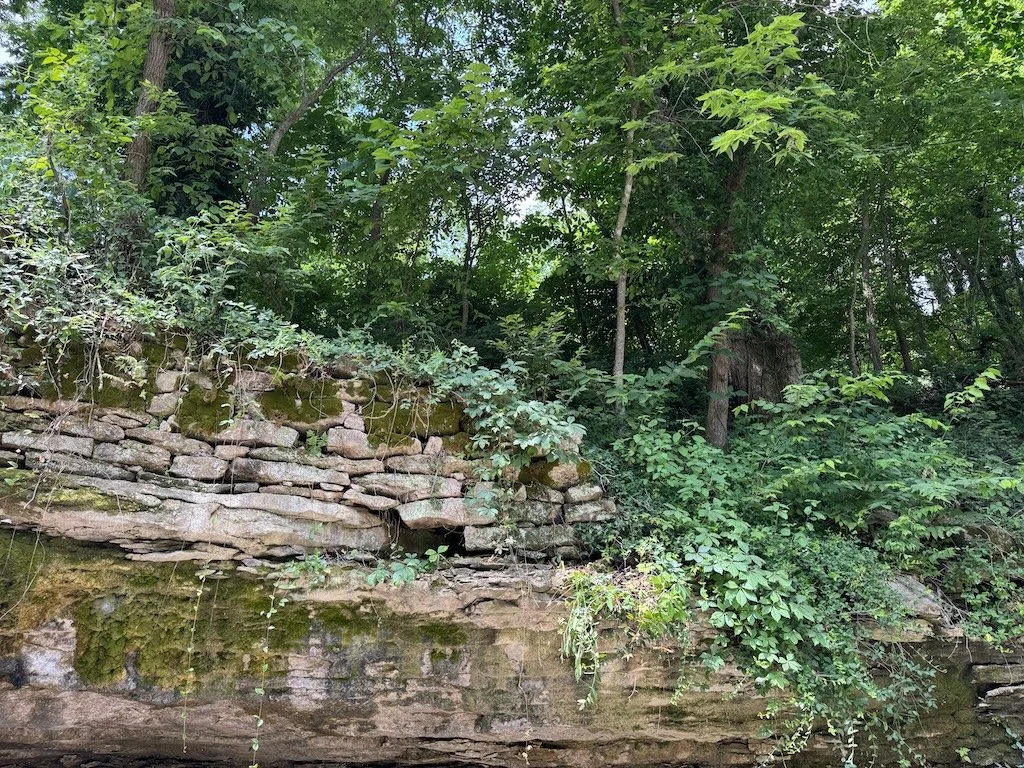
I managed to take more pictures of the entrance (man-made) as we started our tour than I did during my previous visits. There is a lot of Viriginia Creeper on the rock face.

I used the ‘night scene’ setting on my Canon Powershot SX730 HS (my oldest camera!) because it is easier to hold than my phone. The lighting in the cave is relatively good and the guide illustrated several ways lighting of the cave has changed over the years. This was my third visit, and this guide was probably less experienced that my previous visits. (click on any image below to see a larger version).

This was the first visit to the cave for my daughter and the second for my husband. We all agreed that it is an excellent option for visitors that are not physically able to do other caves. We are already planning a visit to a cave that offers ultraviolet light tours…but that requires being able to walk around on your own with a headlamp and googles!

Ten Little Celebrations – June 2025

Butterflies and birds…visiting a prairie and the place I spent some formative years….lot to celebrate in June.

Butterfly Festival. I volunteered at the Master Naturalist booth for the Butterfly Festival at the Springfield Botanical Garden. It was very well attended, and people seemed to be enjoying filling in the butterfly passport; I began to feel like a recording talking about the spicebush swallowtail as I handed out stickers…but kept going because the children’s excitement was contagious!

1st graders in the Caterpillar Café. 80 first graders and chaperones. I was glad the cabbages had caterpillars on them! The big message of the game I played with them was that most caterpillars don’t survive (i.e. they get eaten…baby birds need them!). I was glad I had prepared well enough that none of them cried!

Morning in the Butterfly House. I always choose the 10 AM to 12:30 PM shift in the butterfly house because it is the coolest time of the day…and, so far, every shift has been something to celebrate…and there are lots of aspects to celebrate: quiet time with butterflies/moths, watching caterpillars munching on leaves (or deciding to go walkabout), the development of fruit on the pawpaw trees, people (local and from around the world) enjoying the place.  

Luna moth caterpillars. This celebration is ongoing because the caterpillars are still growing. I celebrate every time I count and realize that the numbers munching is staying about the same (i.e. not much mortality). Every time they shed their skin and are noticeably bigger, I celebrate their survival and realize that I will have to ramp up the amount of leaves I provide.

Magnolia petals as seasoning. I celebrated my daughter’s introducing me to magnolia petals. I tried slivers in salad and a stir fry. I liked them best in the stir fry (a little strong raw). My son-in-law made kombucha with them…and I am looking forward to trying it.

Schuette prairie. My fourth prairie walk…and probably my last until it begins to cool down. I celebrated that I could identify some of the plants I’d seen on other prairies and saw bunchflower for the first time.

River Bend Nature Center. I visited Wichita Falls – where I attended grades K-10 in the 1960s - and celebrated the new-to-me River Bend Nature Center that is just the kind of place I would like to volunteer. There are aspects of our formative years that we seek to replicate in our lives….but this was an instance where I felt the place was still attuned to what I need now more than 50 years later.

Juvenile robins. I celebrated that the robins seem to spend more time in our yard…and the juvenile robins seemed to congregate in my shade garden. Maybe not using chemicals on the yard and leaving the leaves on the backyard through the winter has made a positive difference!

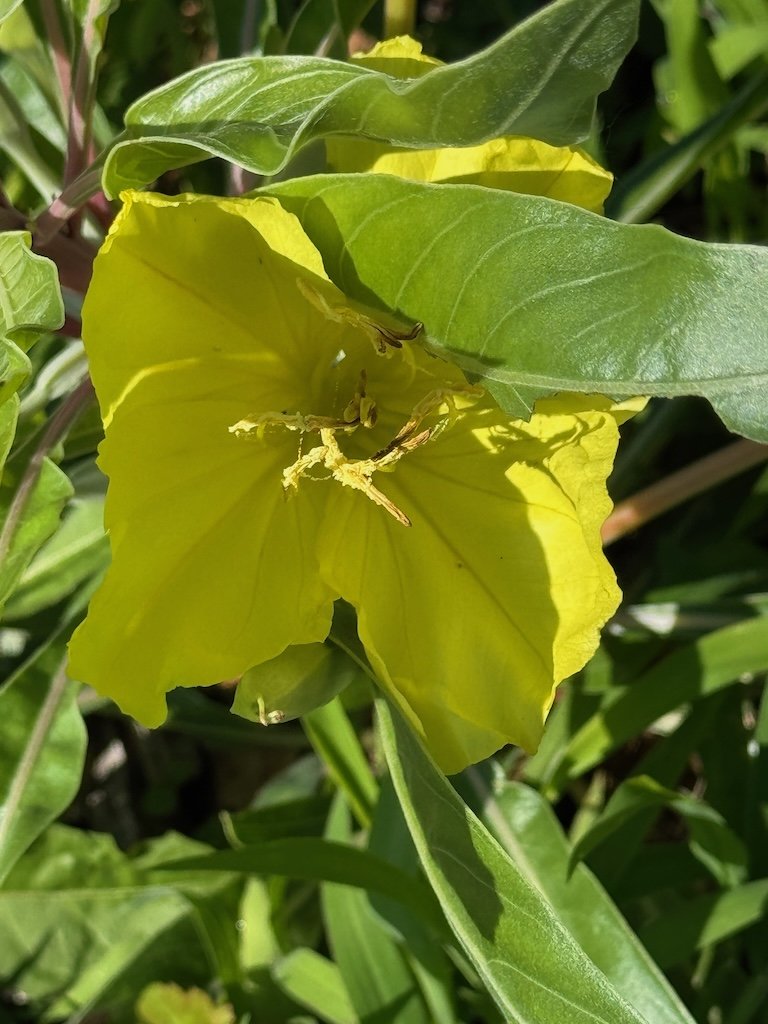
Missouri evening primrose. I celebrated the large yellow flowers of the native evening primrose I bought last month. It started blooming soon after I planted it and kept getting new buds.  

Hummingbird at our feeder. There is a female hummingbird that comes to the feeder on my office window multiple times a day. She gets a good long drink and seems to look at me before she flies way! I wonder if she is raising young birds nearby. Celebrating a relationship with a bird!

Zooming – June 2025

The images I selected for this month’s Zooming post reflect the places I have been recently: the Butterfly House as the Springfield Botanical Gardens, my neighborhood and my home, the Ed Clark Museum of Missouri Geology in Rolla, the Dickerson Park Zoo, the Schuette Prairie, and the River Bend Nature Center in Wichita Falls TX. That’s quite a lot of variety during a single month! Enjoy the June 2025 slideshow!

Wichita Falls, Texas

Instead of driving directly back home after visiting my dad in Dallas, I drove to a friend’s house near Decatur, TX. We’d been exchanging Christmas cards/notes for over 55 years but hadn’t seen each other since she moved away from Wichita Falls while we were in Junior High. We discovered there was a lot to share that hadn’t made it into the annual exchange! We had been communicating via text messages for more than a year and a half trying to find a time to meet in person…and we finally did. What a joy to reconnect like this! We are already planning a next visit…in Decatur again since she has family obligations that keep her at home.

After the visit, I continued to Wichita Falls. I spent some formative years there in the 1960s (grades K-10 for me) but had not been back for a long time. I opted to stay in a hotel near downtown. The blue clad building – the most distinctive of the skyline – was the bank where I had my first savings account (in elementary school); I was pleased that I could see it from my hotel room window. I was also impressed with the plantings around the hotel…lots of plants that thrive in higher heat and less water.

I drove by the house my parents built in the early 1960’s. It is well maintained except for some missing (decorative) shutters. The elementary school that I attended for grades 3-6 is still an elementary school. One difference that is noticeable from the outside is that the windows no longer open and some have been blocked rather than just covered with blinds; when I went to school there, it was not air conditioned, so the windows opened, and fans were in every classroom.  I’m glad that the students today have air conditioning!

I had done some research about Wichita Falls and opted to see the River Bend Nature Center – something that was built after I moved away. The conservatory was being renovated and not open…maybe I’ll have to visit again to see that.

Some of the animals normally in the conservatory were in the large classroom/store area of the nature center.

I decided to spend most of my time walking around the paved trail (there is also a rustic trail but I was wearing sandals and opted to stick to paved this time). What a wonderful place! Lots of trees, some benches (an Eagle Scout project), an area for outdoor gatherings (including a nature play space), native plantings. If I still lived in Wichita Falls, this would probably be the primary place I would volunteer!

It was good that I was at the nature center the first hour they were open since the day was going to be a hot one. I headed toward home – 6 hours….I-44 the whole way!

Adventures in Caterpillar Care (1)

On the Saturday of the Butterfly Festival at the Springfield Botanical Garden, I got a small bin of caterpillars: mostly luna moth…but a few cecropia in their too. The were tiny. The luna caterpillars had white tuffs of bristles and black stripes. The cecropia were all black and were a little bigger. They had hatched the Tuesday before. There were some sweet gum trees in the garden, so I left after adding a few fresh leaves to the bin.

I had found a sweet gum tree in my neighborhood and the family that owned it had agreed to provide leaves. The caterpillars needed more leaves the day after I got them (even though they were very small there were a lot of them and they were hungry)! I put the bin in my daughter’s old wagon (over 30 years old) and took the caterpillars with me to introduce them to the family with their favorite food tree. We moved them to a new bin with additional fresh leaves that the children of the family retrieved by climbing the sweet gum! The caterpillars began to move off the older leaves to the new ones almost immediately.

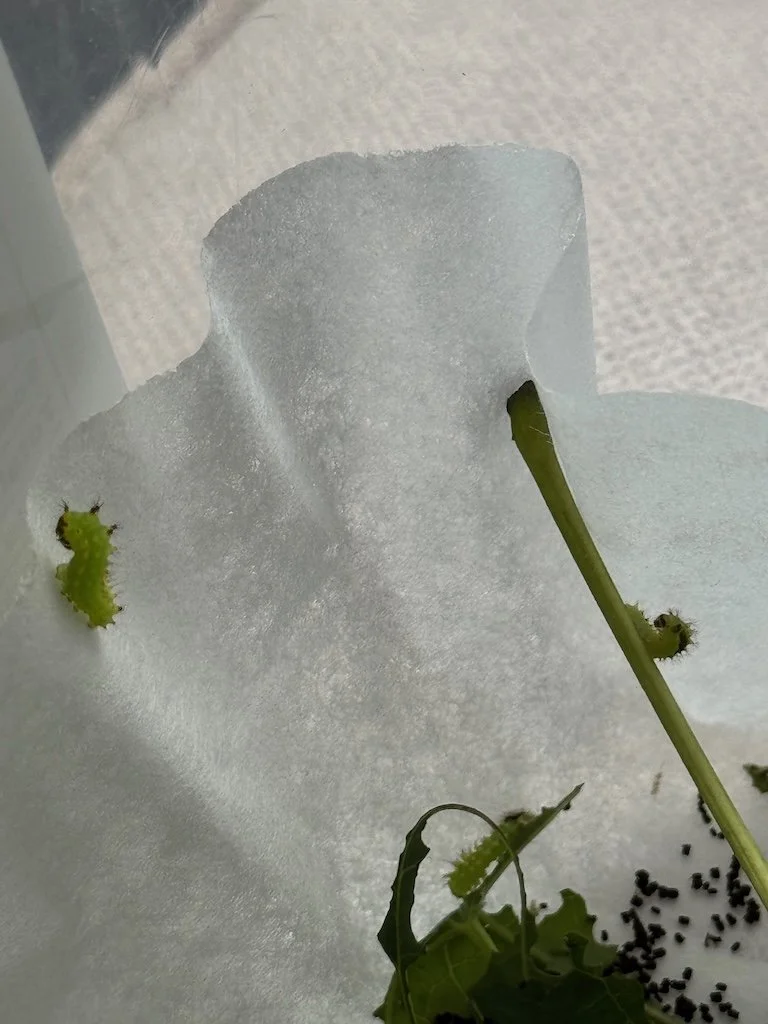
A few days later, the caterpillars were noticeably bigger. The luna caterpillars looked greener, less bristles. The cecropia caterpillars were still black. I was glad I had some extra leaves in water ready to feed them. I had gotten better at moving them to a clean bin (coffee filters in the bottom…leaves leaned again the sides to make them easier for the caterpillars to eat).

Stay tuned as the adventure continues in the coming weeks…

The Green Island

The book-of-the-week is a children’s book about the Botanical Garden in the middle of Moscow published in 1983. The story is about a visit to the garden by a six year old boy and his father. It is illustrated with colorful art and photographs. I’ve picked 4 sample images but there are many others to browse via Internet Archive. The author (and photographer) is Victor Datskevich and translated from Russian by Jan Butler.
The Green Island

This is one of the many books published in the waning days of the Soviet Union and part of the MIR-titles collection in Internet Archive.

Schuette Prairie

I visited my 4th prairie of the spring/early summer last week for a Missouri Prairie Foundation guided hike – Schuette Prairie. It was a late afternoon hike with occasional light rain and rainbows adding to the adventures. Some the of the prairie plants are beginning to look familiar to me! It’s good to see the progression of development over time and the differences in plant communities on each of the prairies.
Schuette’s Prairie has some woody plants that are kept at bay by periodic prescribed burns…but not actively eradicated. The woody plants we noticed were persimmon, winged sumac, button bush, and sassafras. The first two are pictured below. The button bush is an indicator that part of the prairie retains a lot of moisture.

There are also areas of the prairie that have very shallow soil over dolomite and there are stands of prairie dock that grow in those areas. The rest of the prairie has sandstone under the soil (and the soil layer is thicker).

Lead plant was a plant I remembered from precious prairie hikes. This time it was blooming and the contrasting colors popped in the late afternoon light.

I saw more bugs that I was able to photograph. While it was raining, they were not as noticeable, but we had enough times when it was not raining to see them more active.

The compass plants are not blooming yet but their sandpaper leaves are very recognizable. They are a reason to come back again later in the season.

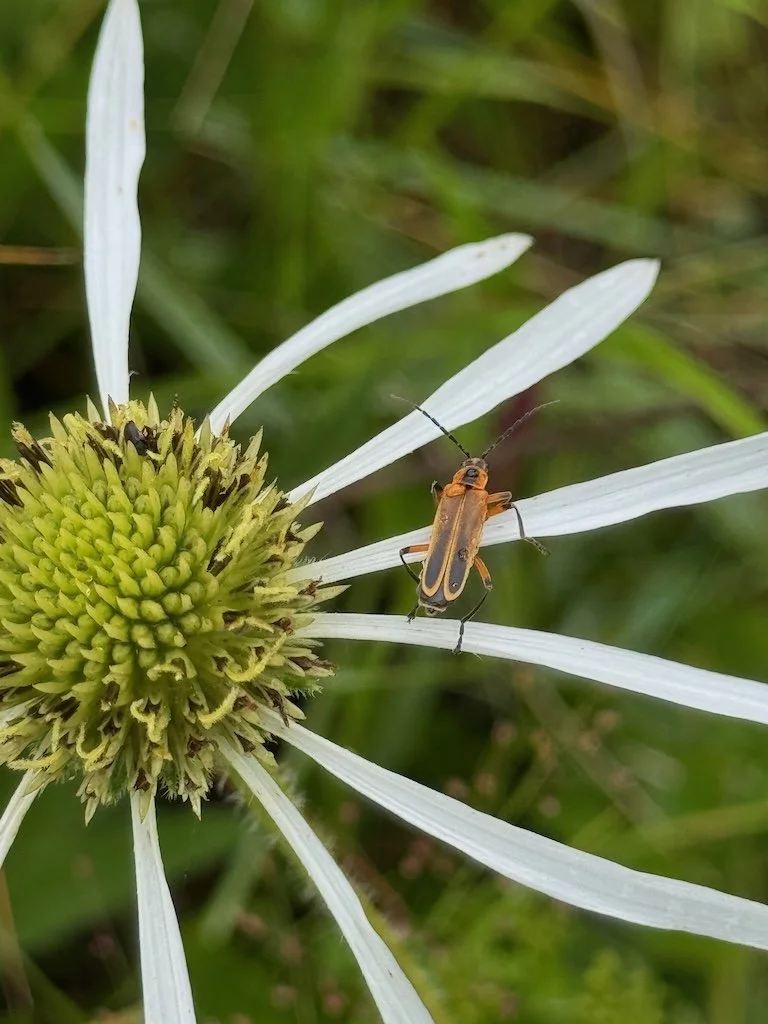
There were two types of coneflowers in bloom: Pale Purple Coneflower and Yellow Coneflower.

Goat Rue was a new-to-me plant. Maybe I had seen it elsewhere, but this was the first time I had seen them in bloom.

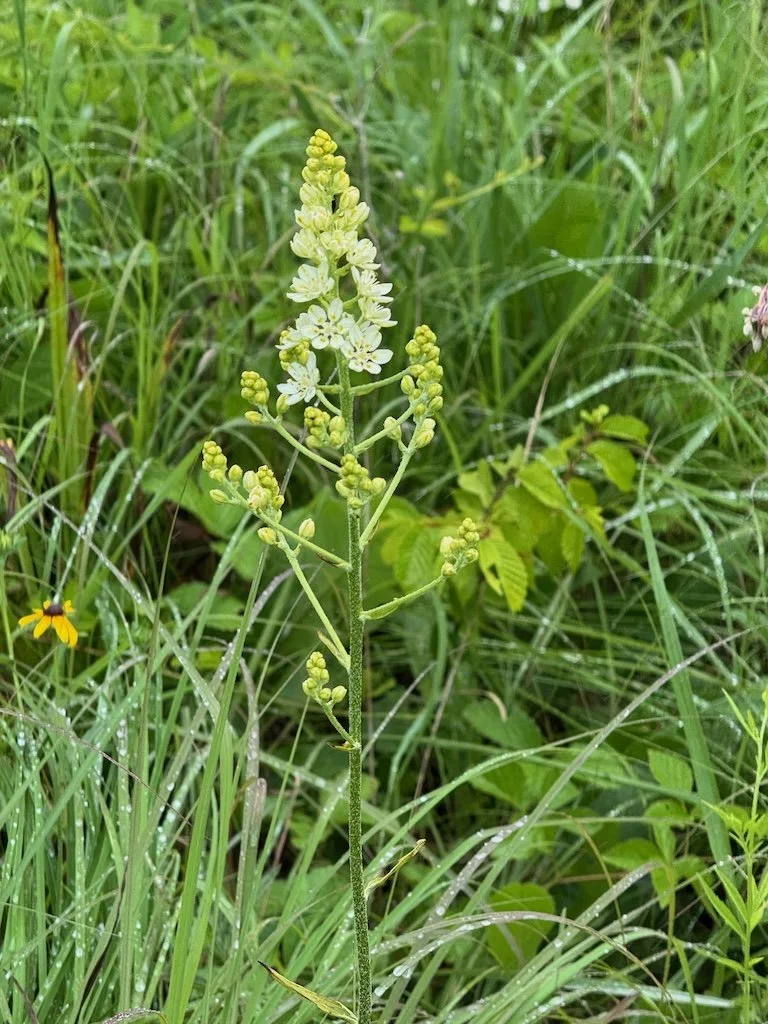
My favorite plant of the hike was the bunchflower. The flowers are showy and are above most of the other vegetation.

There were two kinds of milkweed. Neither one had any holes in their leaves….yet.

The orchids were blooming…small and down in the vegetation…worth noticing.

Quite a few of the prairie blazing star plants had galls in the very tip of the stalk…so they are not going to bloom normally…but the gall looked interesting at this stage.

Rattlesnake master is another plant I remembered from previous prairie walks.

The shooting stars that I saw blooming on other prairies…were seeds on this one.

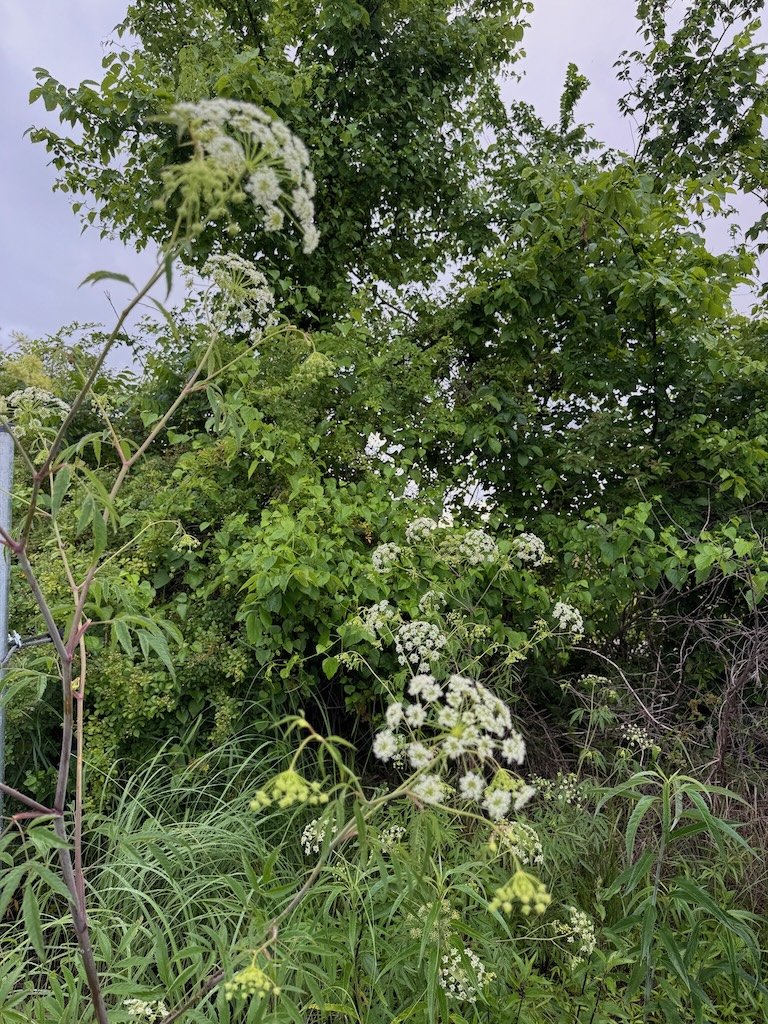
Near the parking area was a stand of poison hemlock….this is a plant I seem to be more aware of growing on roadsides this year.

And now for a slideshow of the rest of the pictures I took!

I even enjoyed the drive home after the hike was over; there were rainbows visible the whole way!

Previous blog posts about my recent prairie hikes:

Harold Prairie in late April

Noah Brown’s Prairie in early May

Linden’s Prairie in mid-May

Missouri Evening Primrose

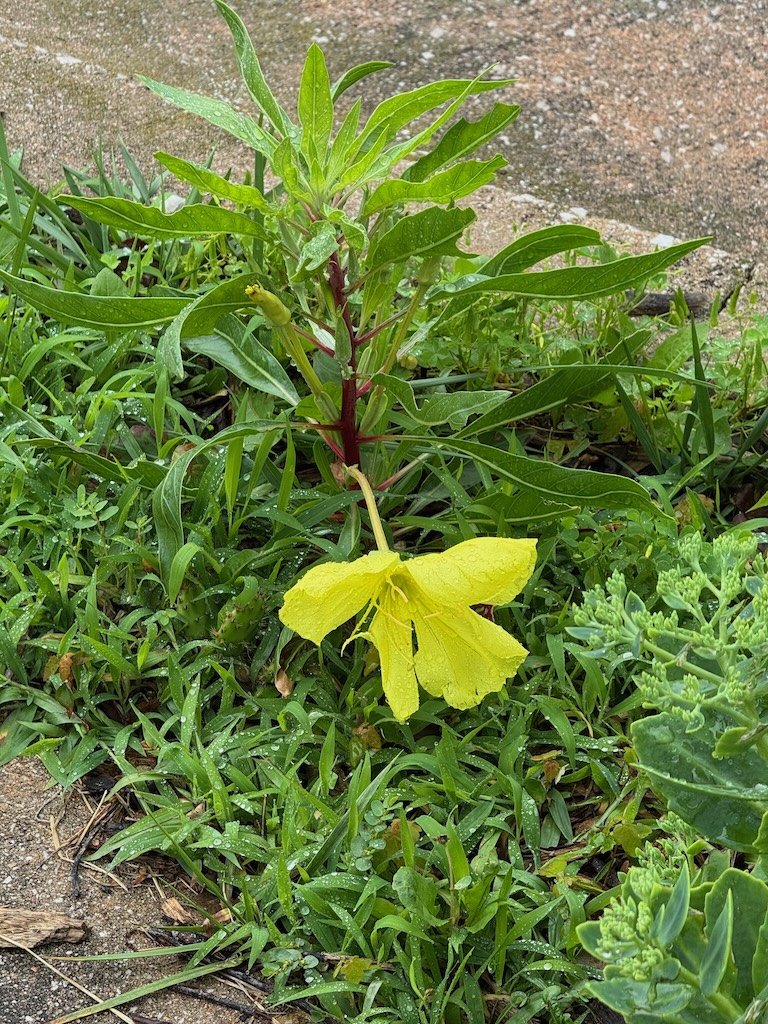
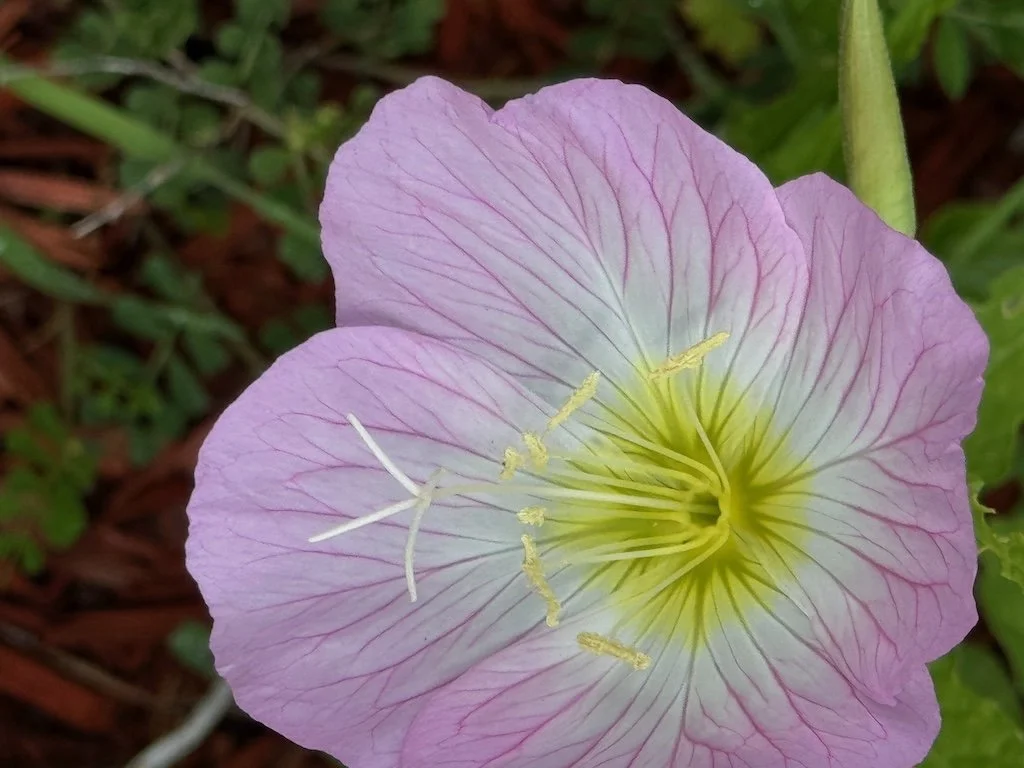
One of the native plants I added to my yard this past spring was Missouri Evening Primrose (Oenothera macrocarpa). It’s growing well near my mailbox – becoming established in an area that was mostly weeds previously.

The first flower opened after a lot of rain and looked a little bedraggled. The flowers are quite large and the petals not strong enough to hold a lot of water droplets.

The second flower was better – more the shape I expected. The plant probably is happier without quite as much rain as we’ve been getting recently. And the old flower had collapsed – added swirls and some orange along the veins…a beautiful last hurrah for the petals.

I hope that the plant produces seeds at some point because I have some other sunny places I would like to plant it!

Evening at the Dickerson Park Zoo

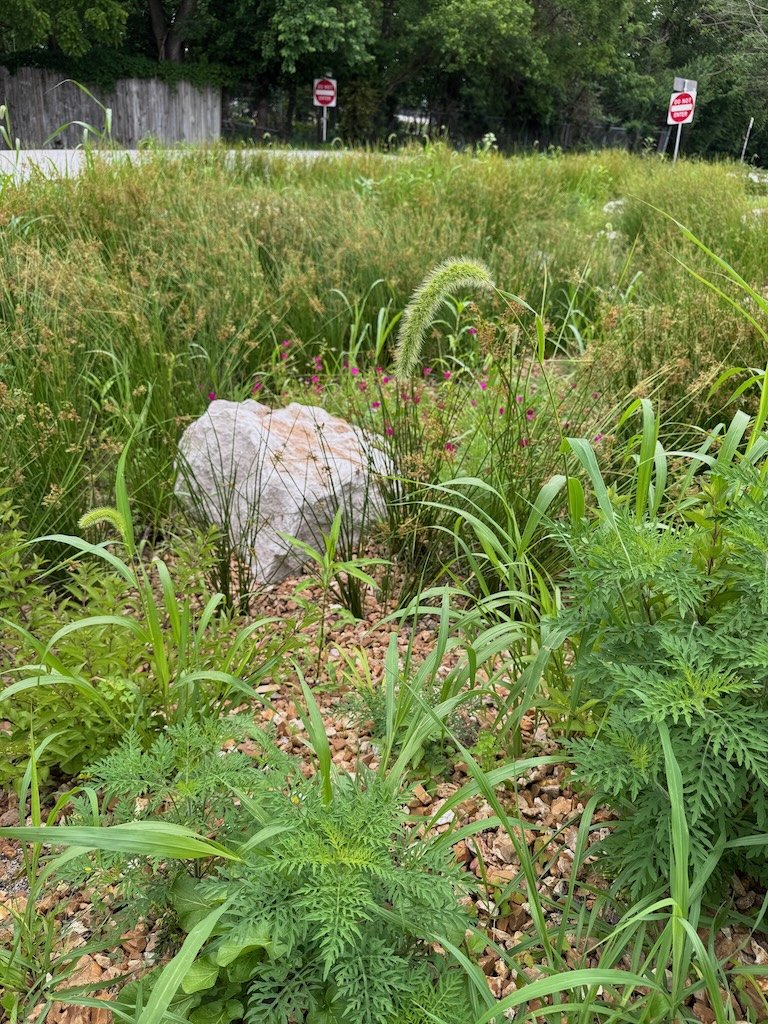
My daughter and I enjoyed a late-in-the day visit to the Dickerson Park Zoo last week – seeing the animals and enjoying a Molly Healey concert in the amphitheater. It was sprinkling when we got there. The rain gardens at the edges of the parking lot were looking particularly lush after a wet spring.

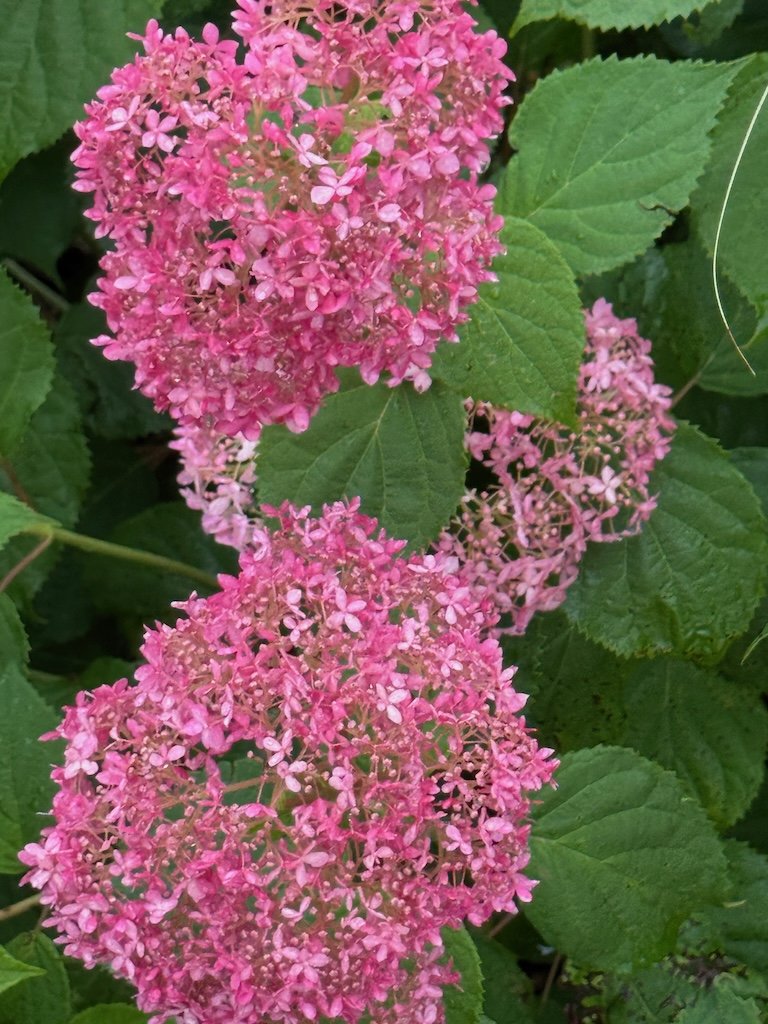
The vegetation in the zoo itself was as well. I noted the oak leaf hydrangea in near the entrance and the catalpa trees along the raised boardwalk that were mostly finished blooming – and saw a catalpa seed pod beginning to form. There was clematis growing on the supports of the deck around the café. I noticed a stand of yuccas in bloom too.

Some of the signs looked like they had been updated recently….were in better shape than I had ever seen them.

The peacocks were around as usual although I didn’t see as many out and about so maybe some had already retreated to their roosting area. I didn’t see any peachicks either.

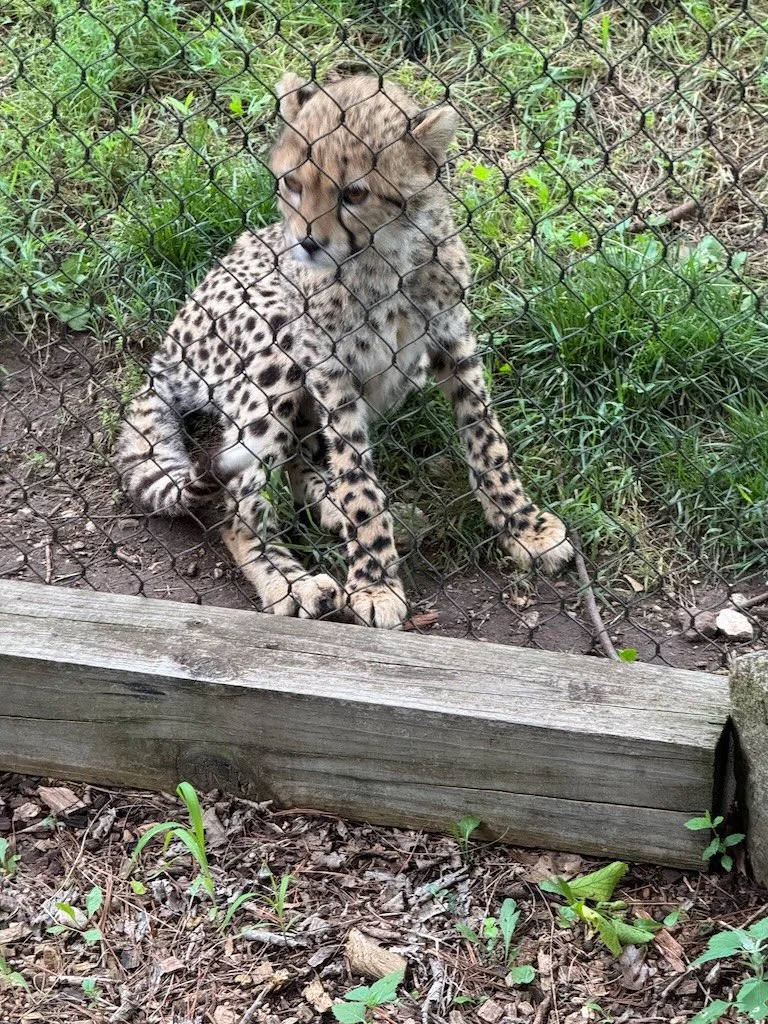
The high point of the animals were the 3 cheetah cubs that were out with their mom.

The baby giraffe is a bit older than the cubs. All the giraffes were reaching for lettuce and the shortest didn’t manage to get any!

The single lion was caroling as she moved around near the back of her enclosure – could be heard throughout the zoo as easily as the peacocks!

It was in interesting time – with the day winding down and light rain.

It didn’t rain during the concert but the humidly must have been very high. It was warm enough to feel sticky but not terrifically uncomfortable. The audience was probably a little less than expected because of the rain. We were glad we went and will consider going to other evening events at the zoo.

Springfield Botanical Garden – June 2025

I had a few minutes before I needed to head into a class at the Springfield Botanical Gardens last week; it had just rained, and the clouds were still thick. There was plenty of time to take a few pictures of plants on the way down to the Butterfly House…looping back to the Botanical Center where my class would be. I notice more when I am in ‘photo mode’ and am glad my iPhone 15 Pro Max does a reasonable job for this type of garden photography! The only challenge was the breeze moving the vegetation around.

There were water droplets on the new leaves of a redbud,

Clumps of spiderworts,

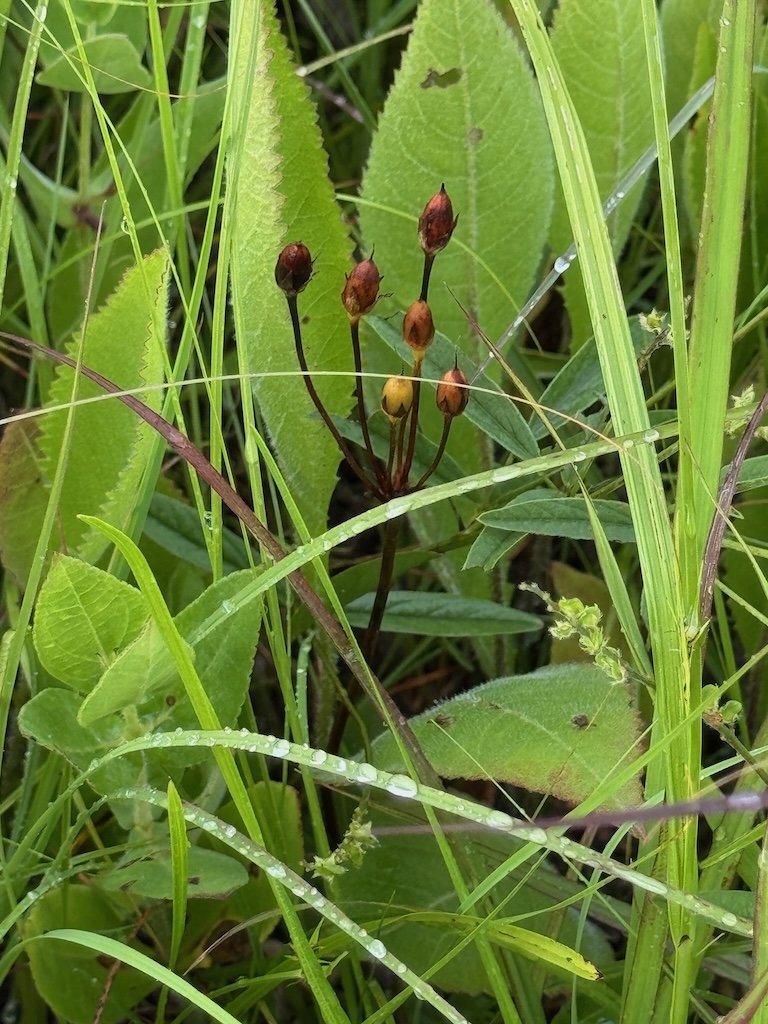
Seed pods on wild indigo,

Clusters of milkweed buds, and

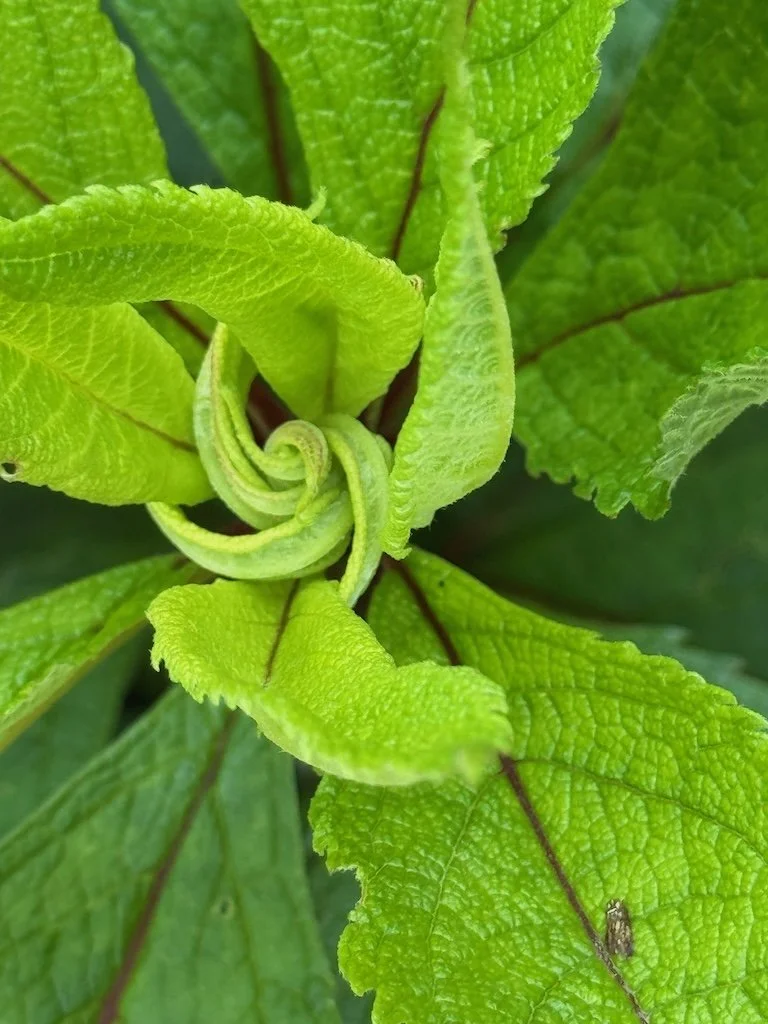
Spirals of unfurling leaves.

There is always something new to notice in the garden!

Goldfinches

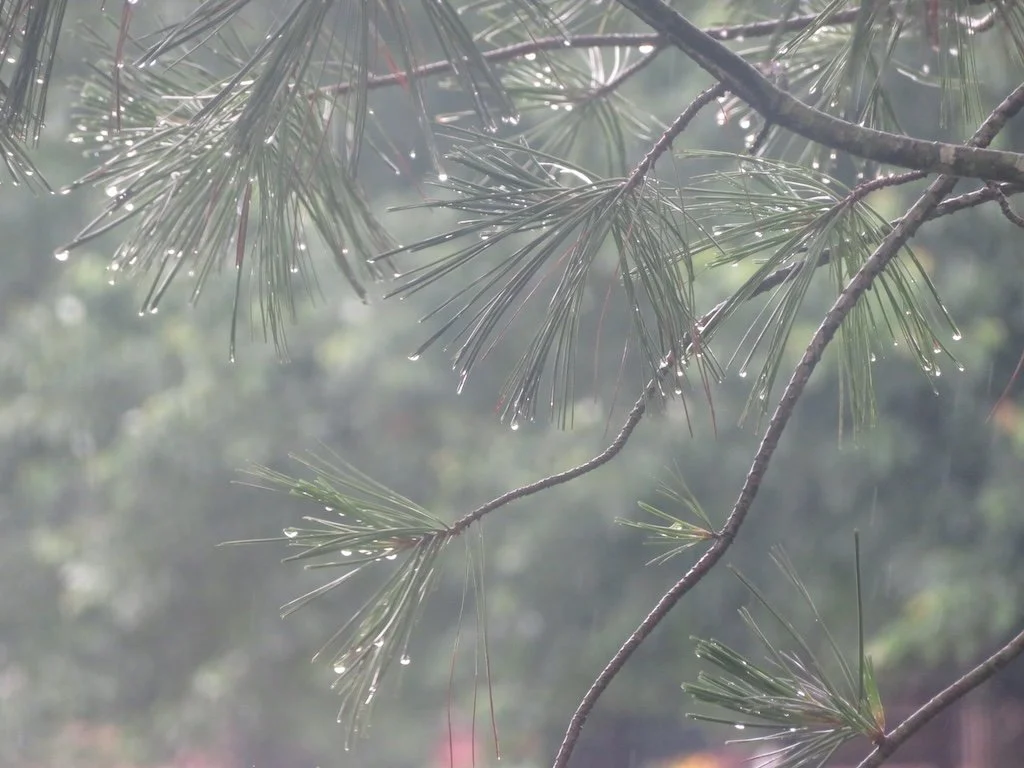
The shady space between the pine and the hollies has become a more welcoming place for birds and insects since I replaced the grass with pine needles, hostas, lamb’s ear, violets and American Spikenard. The insects active on the flower stalks of the lamb’s ear are big enough to see from my office window. I know there are critters in the pine needles because I see the juvenile robins find them.

I had been considering trimming the low branches from the pine since there are so many plants growing under it. The juvenile robins I saw a few weeks ago tended be in the higher branches before they dropped to the pine needles.

I changed my mind after I observed some American goldfinches using the lowest branches to survey the shade garden. One of them perched long enough for me to get pictures through my office window.

My small Canon Powershot SX730 HS is going to stay near my mousepad….ready to photograph birds enjoying the shade garden!

Clover Cushions

One of the experiments in my backyard is not mowing areas that seem to have more clover growing in them. They look like ‘cushions’ in the otherwise mowed yard….an artsy look that doesn’t challenge the neighborhood yard police (as long as it is in the backyard…I’m not trying it in the front).

The idea is to let the plants grow, bloom, and produce seed…only mowing them infrequently…or maybe not at all.

Clover is a nitrogen fixing plant and its roots are generally deeper than grasses in the lawn – both positives from my perspective. It is a good way to improve the soil and stabilize the slope. Maybe eventually the whole west side of the backyard will be clover with some prairie plants mixed in.

Moths at Busiek (vicarious)

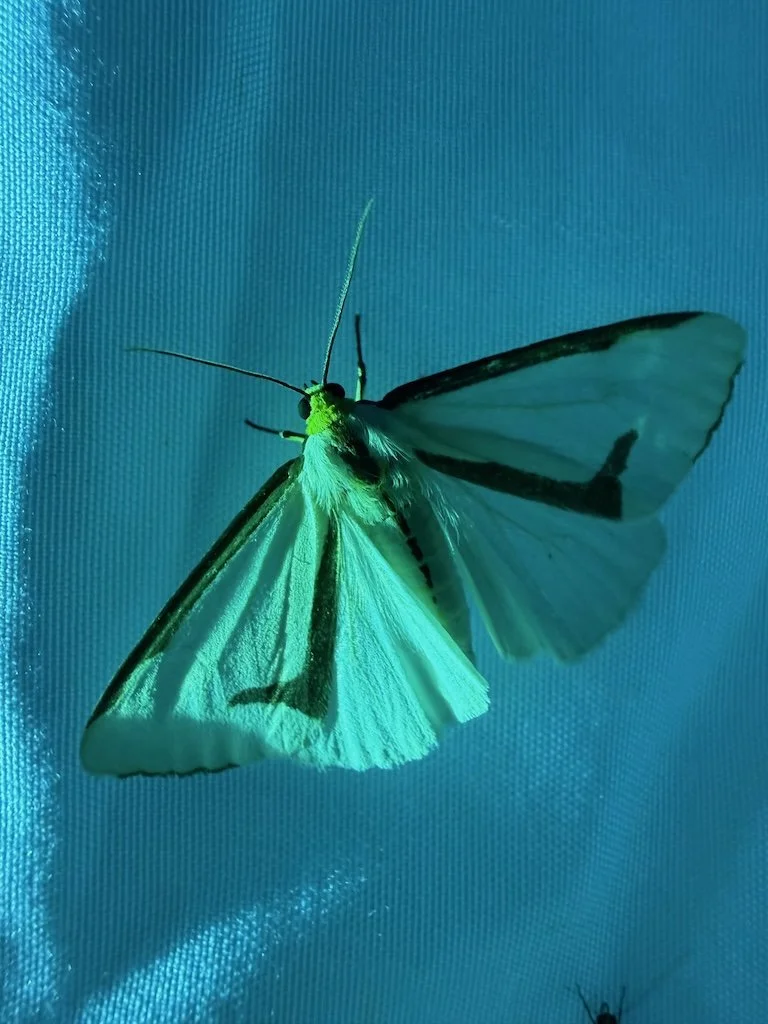
My son-in-law took some of his students to Busiek State Fores and Wildlife Area after dark earlier this month and sent pictures of moths (and other insects) they found there. It was a great vicarious experience!

It was an opportunity for me to check the bug identification powers of my iPhone Photos app as well. It provided an id for most of them: Waved Sphinx, Elephant Beetle (obviously not correct…it should have left this one as ‘bug’, the app might have been confused with having two insects in close proximity in the image), Darapsa Myron (Virginia creeper sphinx or Green grapevine sphinx).

Prionoxystus robinae (Carpenterworm moth or Locust borer), Haploa, Cicindela (tiger beetle).

Conchylodes ovulalis (zebra conchylodes moth), Hypagyrtis unipunctata, mating Malacosoma americana (eastern tent caterpillar).

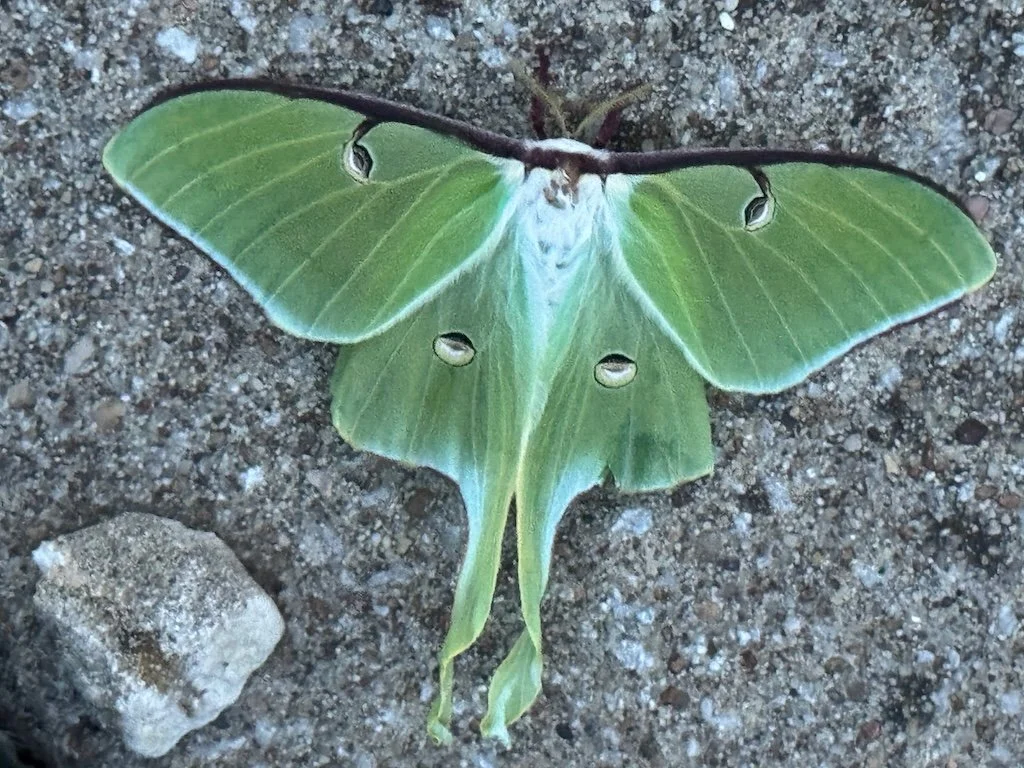
There were a couple of Luna Moths – these are ones I am familiar with and can identify without help!

The comments in parentheses above are from my attempt to verify the id made by my iPhone Photos app. It made a reasonable id except for the one image where there were two insects which the app couldn’t separate well.

There were three that the app identified as ‘bug.’ I used the SEEK app and a little more research to tentatively identify: grape leaffholder moth and two Anna tiger moths.