Maria Martinez (potter) in 1925

The first picture in Carl E. Guthe’s  Pueblo Pottery Making - a study at the village of San Ildefonso published in 1925 is one of Maria Montoya Martinez that is widely used elsewhere (including in the Wikipedia entry for her). 1925 was before she started making her black ware pottery that survives in many museums. I recognized her name when I first started browsing the book; it was one of those times I appreciated Wikipedia and Google search to learn more about her before I continued browsing. I celebrated finding Guthe’s books on Internet Archive and the myriad pictures that documented the situation in 1925…the state of the art then, before she was producing black ware pottery.

1925 was during the time when much of the culture of the Pueblos was fading….the challenges of people trying to survive in the world. Fortunately, Maria learned pottery skills from her aunt… a “learning by seeing” beginning in her pre-teens. She, with the collaboration of her family members, continued to experiment and produce pottery throughout her long life (she lived until 1980) and taught others the same way she had learned. She helped establish pottery of the Southwest as an art form we recognize today.

Surprisingly, Guthe’s biography (archived from the University of Michigan Museum of Anthropological Archaeology) does not mention this book at all. His work establishing collections and institutions overshadows this book!

The Whole Orange

I’ve enjoyed oranges all my life….sometimes cutting them in slices…sometimes in wedges. In recent years, I cut them in wedges so that after I eat the pulp, the peels fit nicely into the food processor.

Once the peel is chopped up, I let it dry on a plate to be used in cooking…or in hot tea.

It feels good to use the whole orange….getting all the nutrition from the fruit! I have some recipes that use the whole fruit as well; my favorite is cranberry orange relish that I make any time I see fresh cranberries in the produce section (usually November and December).

My mother reminisced that oranges were special treats of the holidays when she was child, and her mother often candied the peel. Every time I use the whole orange, I feel an affinity with my maternal grandmother…good vibes through the years!

A Patient Perspective of Medical Care in the US

Part of the aftermath of making a long distance move is establishing new doctors. I’ve completed the process at this point – 8 months after the move. It’s been a learning experience. I started out with the intention to find a primary care physician and specialists in the same system so that I would only have one portal for all my medical information – unlike my legacy situation that involved at least 4 different portals. The portal for my new doctors is well organized and has become the primary way I get results and send questions/messages to my doctors. In general, the lab work is done very quickly and posted on the portal; I see it about the same time that the doctor sees it. The system of doctors – specialists – labs – hospital also includes several urgent care facilities that I appreciate; their availability can help avoid a busy ER; I’ve already used an Urgent Care facility prior to my first appointment with my new primary care doctor when I got a very painful bite that looked infected. On the downside -

  • Vision and dental care are not general part of ‘medical care’ from an insurance perspective or systems with MDs; vision and dental are still separate. The initial dental practice I selected wanted to do very different (and expensive) kinds of cleaning for my teeth and I’ve opted to go to a new one that is more like the dental practices I’ve used in the past. It’s hard to know how to evaluate dental recommendations since they are outside of the primary medical system. I like the vision care practice I chose but may have similar misgivings as I get closer to needing cataract surgery.

  • The various specialist doctors and non-blood labs/radiology are in separate buildings; they are relatively close together, but I am careful to record the building address  in my appointment calendar; it’s a high traffic area and it could be challenging to get to the appointment on time if I went to the wrong building first.

Thinking about the big picture of medical care in the US - It is not achieving ‘best in world’ results based on healthy lifespan stats. Why is that?

  • Insurance is expensive and confusing. I’ve had health insurance since the late 1970s and the trend has been increasing cost and complexity over the duration. Checking that doctors are in-network and drugs are ones that are on the formulary is a required skill to get insurance to cover costs….and even then, sometimes surprise charges occur. What happens when your doctor prescribes a drug that is not on the insurance company’s formulary? I am very aware that I have been fortunate to always be insured….understand that the cost of good medical insurance is prohibitive to many and that often means not getting medical care until there is a health crisis…and going to an emergency room.

  • Cultural reluctance/aversion to embrace public health measures. Over the past decade, there has been increased resistance to public health measures (for example, not getting vaccinations for children, older adults declining vaccines, flying when sick (coughing, sneezing),  and aggressively against mask wearing at any time) and demands on health professionals for treatment that is not appropriate for their condition (for example, demanding an antibiotic for a viral infection or are an ineffective drug for COVID or a drug advertised on television that is for a condition the patient does not have). I am mentioning the demands for inappropriate treatment under public health because it impacts the costs for medical care overall, increases resistance of microbes to antibiotics making them less effective when they are needed, and makes the workplace for doctors/nurses more stressful (and some decide to leave the profession resulting in shortages of skilled personnel).

  • Dominate lifestyle. We live in a world of fast food and ultra-processed foods…people are more sedentary because of their jobs or the type of entertainment they choose. It is harder to “eat healthy” now that when I was growing up and as a young adult. Many people in the country are obese and/or in poor physical condition. However – there are a lot healthier foods available now if we educate ourselves. For example – kale was not something I ate as child, now it is my ‘super green’; other foods that I’ve only know in the past 20 or so years include: pomegranates, edamame, beet greens, red cabbage, butternut squash, ground turkey. There are also a lot of ways to measure physical activity…and some have leveraged those metrics to become more physically fit. Still – healthy lifestyles are not as prevalent now. The bump in life expectancy that was achieved after many people managed to stop (or not start) smoking is being eroded.

  • Aggressive intervention with drugs. The medical system tends to treat with drugs rather than recommending lifestyle changes. Part of this skew is the way doctors are trained (often nutrition is not included in their education) and part is probably based on their experience that most patients will not follow through and make a change. If a drug can change the measure the doctor is seeing (like blood pressure or cholesterol levels), then the doctor tends to immediately medicate. Any unwanted side effects from the drugs are resolved through changing to a different drug or adding a drug to reduce the side effect or telling the patient that the benefit of the drug is greater than the impact of the side effect. But – if people can change their lifestyle, they are probably addressing the root cause of the problem rather than artificially doing something that changes the measure but leaves what is causing the problem the same. Long term maybe we’ll know if the drugs really do very much for increasing healthy lifespan.

  • Specialists with blinders to anything outside their specialty. The notion that a primary care physician can integrate care is overly optimistic.

    • Many times, the specialists are proceeding with their focus; if treatment is meeting the measures they want, side effects or over medication are not a priority for them.  For example – an endocrinologist adjusting medication to get the levels of hormones to a precise level is often unconcerned or dismissive of a patient reporting heart palpitations, hot flashes, and eyebrows falling out.

    • Emergency room doctors are focused on resolving the primary cause of the emergency visit and sending the patient home as soon as possible; this leads to quick fixes that often do not prevent the same issue occurring repeatedly. A good example is cellulitis in older patients; the ER gives them antibiotics and they go home…often returning with cellulitis again in a month or so. If the ER is not overwhelmed and there is an alert attending in the ER or in the hospital, more proactive measures can be taken…perhaps re-evaluating the dosage levels and complexity of existing medications, adding a prophylactic antibiotic, etc. that can prevent rapidly recurring ER visits for cellulitis.

  • Lack of trust. Patients believe doctors may have alternative incentives than patient health when recommending treatment/drugs and doctors believing patients may not be doing as they say and/or taking meds as prescribed. Not sure how this can be bridged other than encouraging more transparency on both sides.

The bottom line – I want to believe that I am proactively maintaining my health and being a knowledgeable patient that asks relevant questions to understand my doctors’ logic….thus making the best of the medical care available…but there are certainly times that I have some doubts. So far, I have been able to resolve those doubts and am satisfied that I am on a healthy path. However - I am increasingly concerned about individuals with fewer financial resources, less healthy or not as knowledgeable. The trend is toward more challenges within the US healthcare system!

Josey Ranch – January 2023

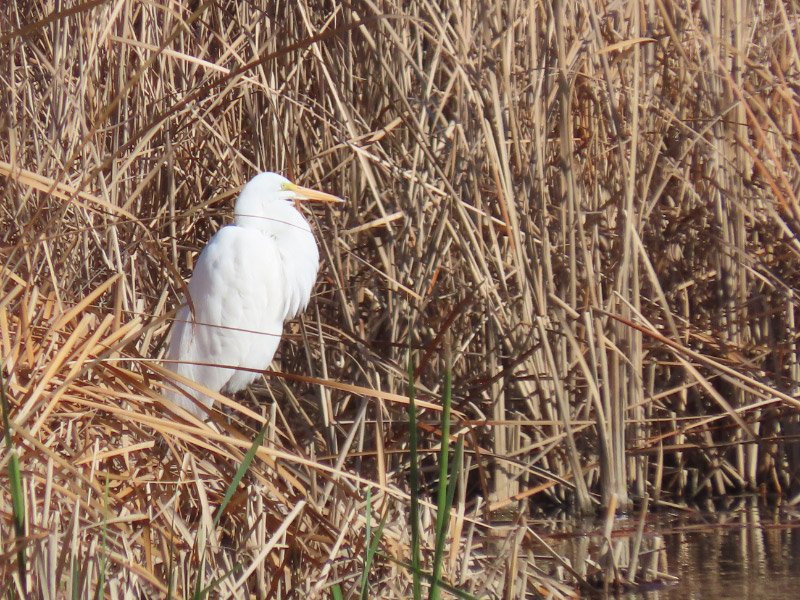
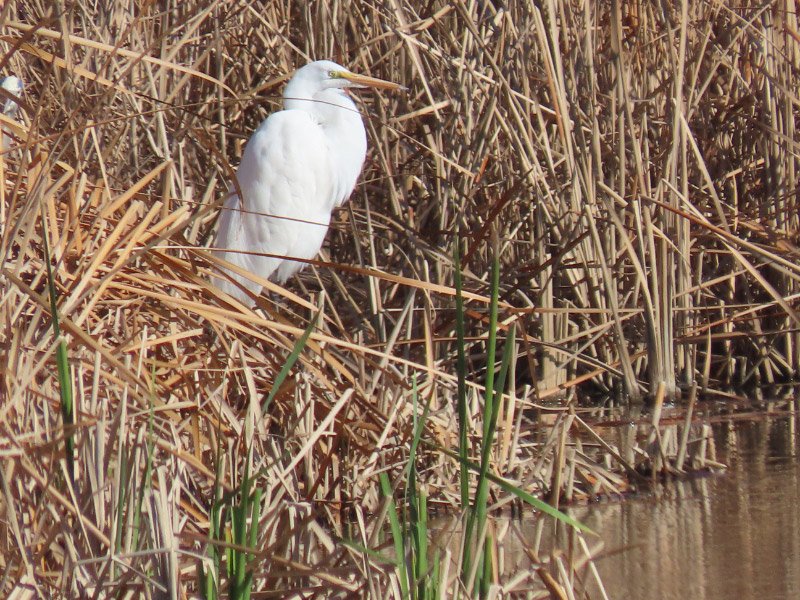
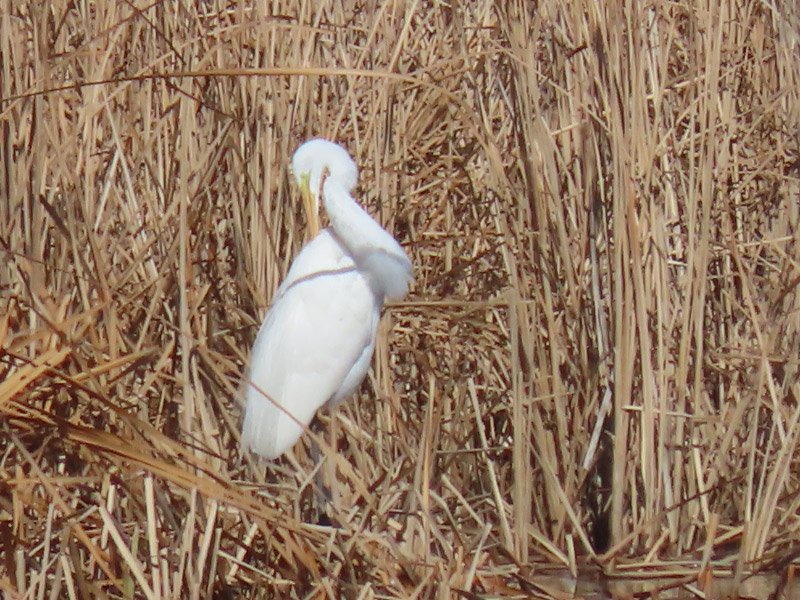
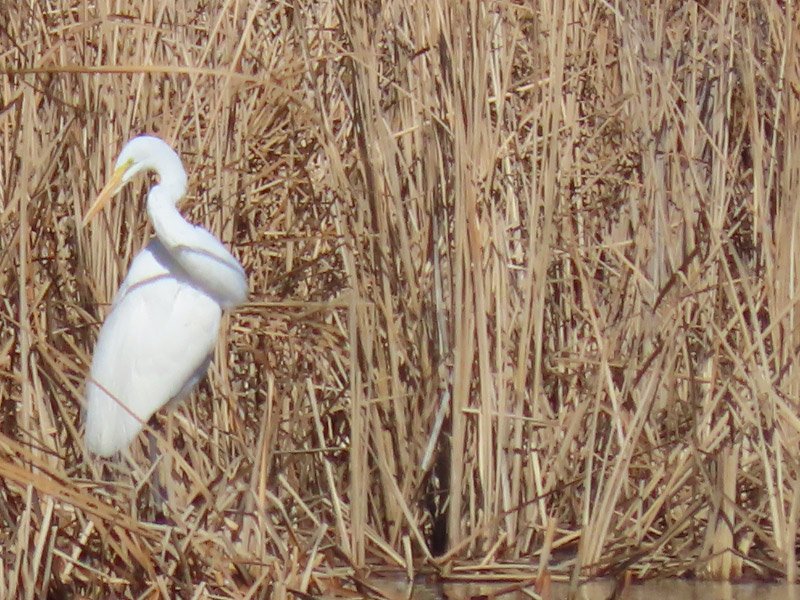
The birds on the water at Josey Ranch in Carrollton, TX changed from when I was there in December. The Northern Shovelers were not there in January! The American Wigeon were there the first day I went in January but not on the second. It seems a little early for them to be migrating; maybe they have moved to a bigger pond. On my first visit – I saw American Wigeon, Lesser Scaup, American Coot, Great Egret, Ruddy Ducks, and gulls.

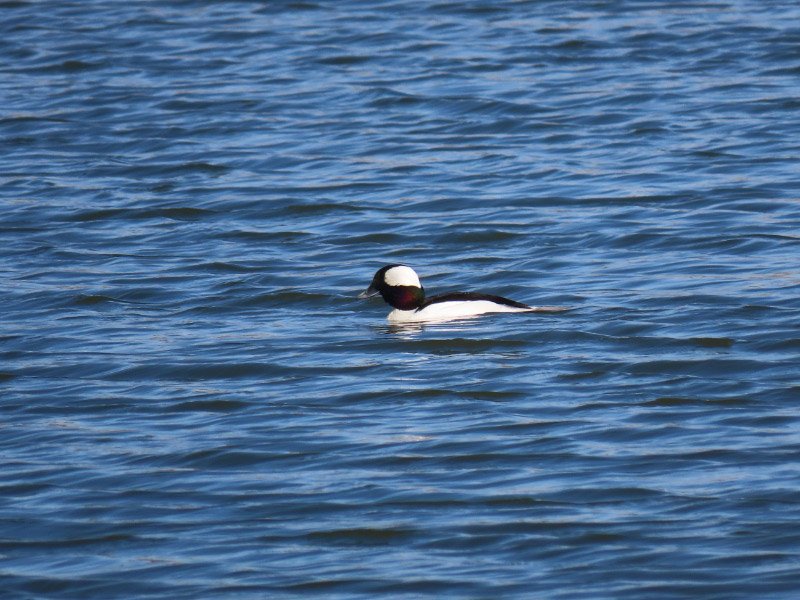
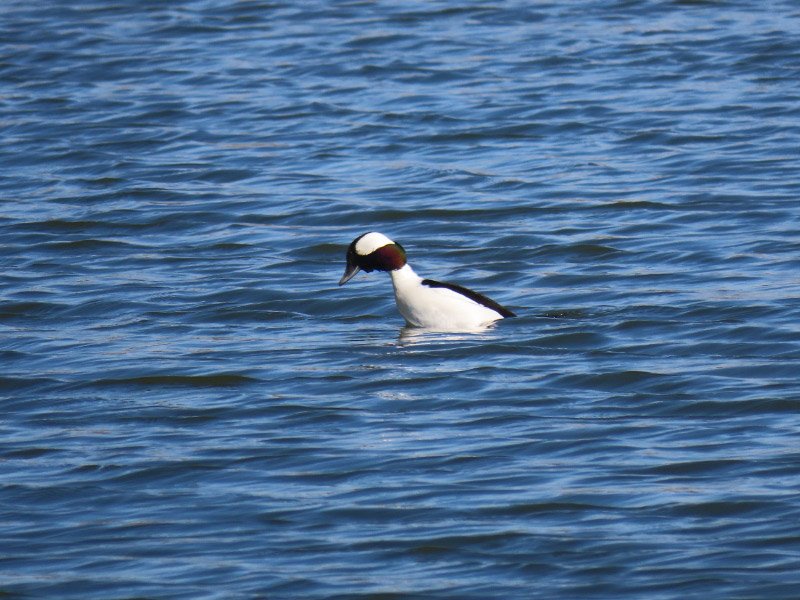
The surprise birds of the day were a pair of Buffleheads. They were busy diving for food! I’ve seen them occasionally at Josey Ranch before but they are not in the ‘regular’ birds there.

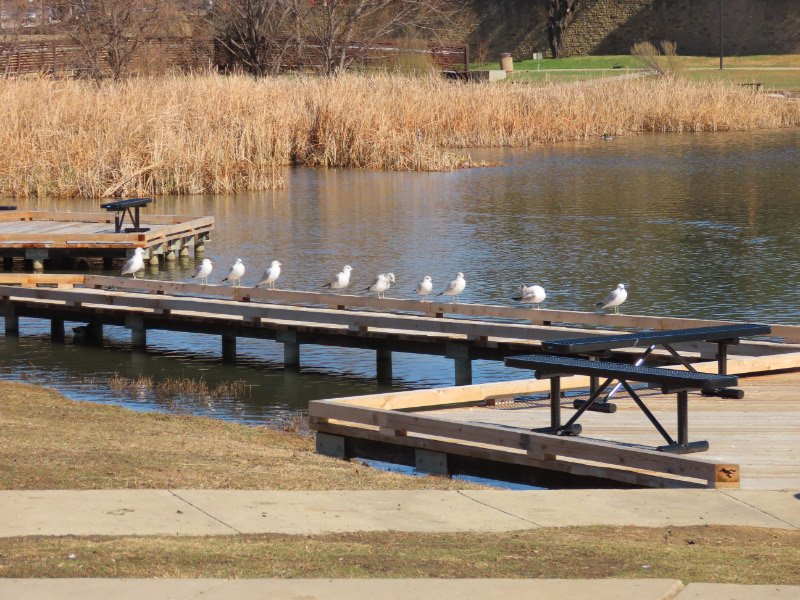
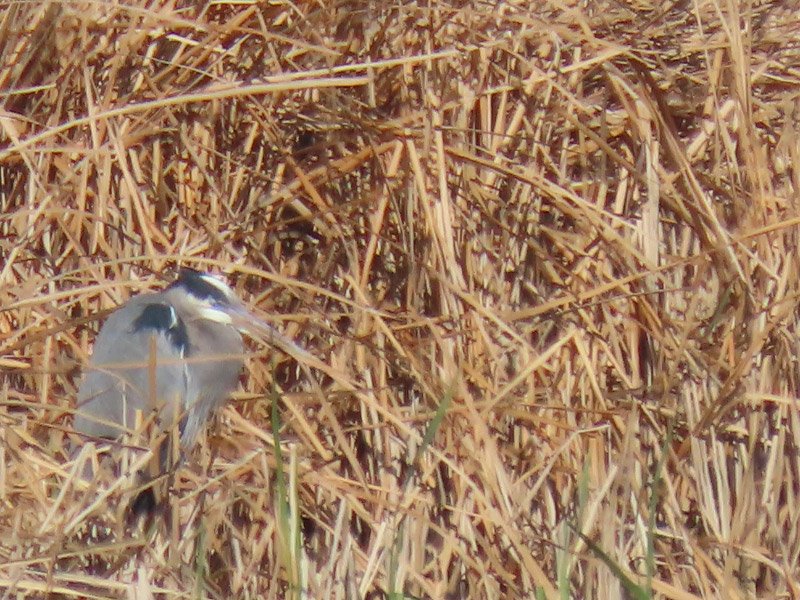
On the second day I visited, there were gulls lined up on the walkway near the parking lot. The Lesser Scaup, American Coot, and Great Egret were still around. The mallards seemed more numerous than on the first day (seemingly skewed toward males). There was a Great Blue Heron almost hidden in the reeds. The Ruddy Ducks were still there but sleeping just as they were on the first day.

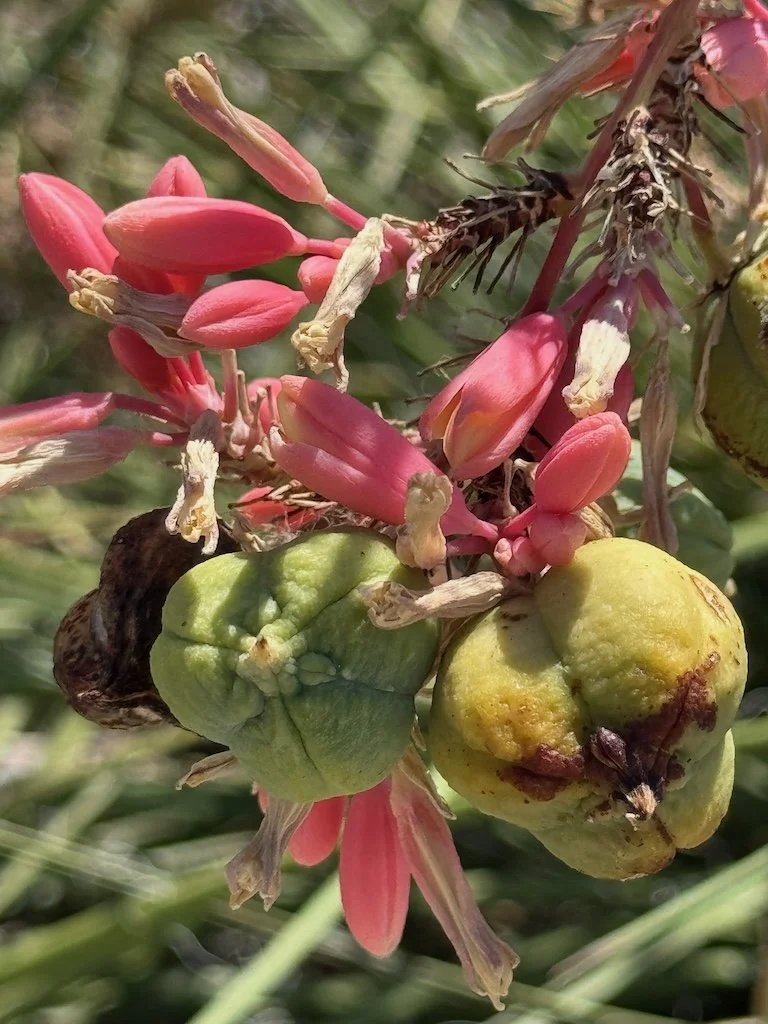
I walked around to the native plants in a terraced area between the Library and Senior Center. It was almost too windy for macro pictures…but I tried anyway. Some berries were the only color….but the shapes of the dried remains of the plants from last summer are interesting enough.

Gleanings of the Week Ending February 4, 2023

The items below were ‘the cream’ of the articles and websites I found this past week. Click on the light green text to look at the article.

Milk packaging influences its flavor – Light blocking containers are best….and plastic/glass is better than paperboard. So why aren’t paperboard cartons being phased out (they are also harder to recycle than plastic milk cartons).

Clean Energy Saw as Much Investment as Fossil Fuels for the First Time in 2022 – Good! And hopefully this will continue to be the case…and we don’t allow any fossil fuels to be counted as ‘clean.’

What Secrets Lie Beneath This 17th-Century French Aristocrat’s Smile? – Decaying teeth and an ivory prosthesis (in front) held in place with gold wire….and a woman kept her smile and place in society.

A curious Colorado bear strikes a pose for 400 selfies on a wildlife camera – A bear that noticed the camera!

Leprosy: the ancient disease scientists can’t solve – There is treatment…but diagnosis is complicated and there is no cure. And we still don’t know how it is transmitted.

Researchers find rare 17-pound meteorite in Antarctic ice – A team spent a week and half in the Antarctic summer (14 degrees Fahrenheit…so still very cold) sleeping in tents and riding snowmobiles to search for meteorites. They found small ones….and a big one!

New mosquito repellents that work better than DEET – Maybe the next generation mosquito repellent?

In 2021, 20% of electricity in the US was generated from renewable sources – And wind surpassed hydroelectric in 2019 as the predominant renewable source. Hopefully, the percentage of electricity from renewables will go up quickly in the coming years.

Three grizzly bears tested positive for avian flu in Montana - The animals were euthanized in the fall; suspected to have rabies, they tested negative. But they were positive for avian flu. The bears were ‘in poor condition and exhibited disorientation and partial blindness, among other neurological issues.’ So – the current outbreak of avian flu that has impacted wild and domestic birds (more the 52 million have been killed or culled to contain the virus) is impacting more than birds.

Drone video of moose shedding its antlers – Wow – it happened so quickly; the video is only 16 seconds! The moose just shakes its body, and the antlers fall off. It seems to want to leave the scene quickly once they are off too.

eBotanical Prints – January 2023

Twenty more books were added to the botanical print collection this month. Two series were from Australia: 8 volumes of A Critical Revision of the Genus Eucalyptus and 3 volumes of the Australian Orchid Review (there are many more volumes of the orchid review that I will browse in February). And there were two additional books about Australian plants: A manual of the grasses of New South Wales and How to know western Australian wildflowers.

The whole list of 2,552 botanical eBooks can be accessed here. The list for the January 2023 books with links to the volumes and sample images is at the bottom of this post.

Click on any sample images in the mosaic below to get an enlarged version. Enjoy the January 2023 eBotanical Prints!

The Algorithmic Beauty of Plants * Prusinkiewicz, Przemyslaw; Lindenmayer, Aristid * sample image * 1990

A Critical Revision of the genus Eucalyptus V1 * Maiden, Joseph Henry * sample image * 1909

A Critical Revision of the genus Eucalyptus V2 * Maiden, Joseph Henry * sample image * 1914

A Critical Revision of the genus Eucalyptus V3 * Maiden, Joseph Henry * sample image * 1917

A Critical Revision of the genus Eucalyptus V4 * Maiden, Joseph Henry * sample image * 1920

A Critical Revision of the genus Eucalyptus V5 * Maiden, Joseph Henry * sample image * 1922

A Critical Revision of the genus Eucalyptus V6 * Maiden, Joseph Henry * sample image * 1924

A Critical Revision of the genus Eucalyptus V7 * Maiden, Joseph Henry * sample image * 1929

A Critical Revision of the genus Eucalyptus V8 * Maiden, Joseph Henry * sample image * 1929

A Manual of the grasses in New South Wales * Maiden, Joseph Henry * sample image * 1898

Trees Of Northeastern United States Native And Naturalized * Brown, Harold Philip * sample image * 1938

Cotton in India * Sikka, S.M.; Singh, Arjan et al * sample image * 1962

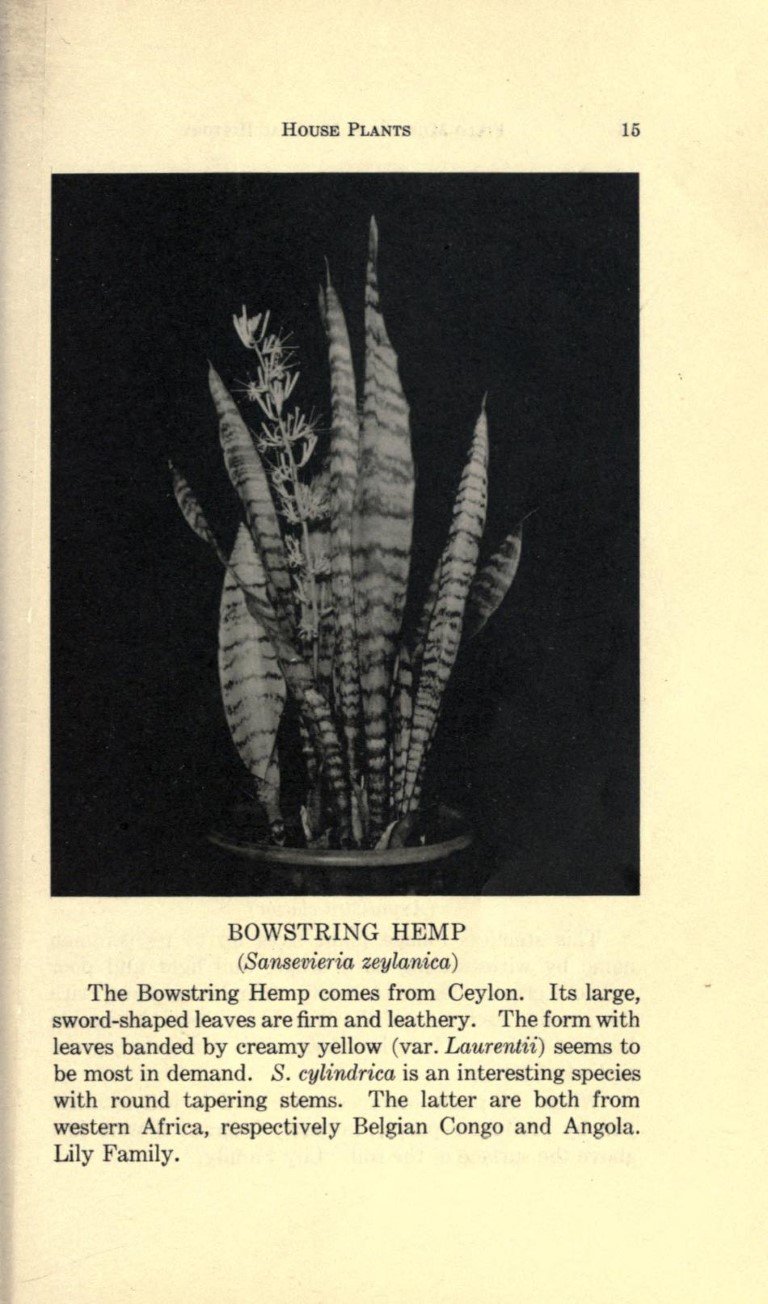
House Plants * Van Tress, Robert * sample image * 1937

A description of the genus Pinus V1 * Bauer, Ferdinand; Lambert, Alymer Bourke * sample image * 1803

A description of the genus Pinus V2 * Bauer, Ferdinand; Lambert, Alymer Bourke * sample image * 1803

Malcolm Howie Watercolors * Howie, Malcolm * sample image * 1935

How to know Western Australian wildflowers : a key to the flora of the extratropical regions of Western Australia  * Blackall, William Edward * sample image * 1900

Australian Orchid Review 2019 (February - March) * Orchid Society of New South Wales * sample image * 2019

Australian Orchid Review 2019 (April - May) * Orchid Society of New South Wales * sample image * 2019

Australian Orchid Review 2019 (June July) * Orchid Society of New South Wales * sample image * 2019

Ten Little Celebrations – January 2023

January is usually the calm after the flurry of holidays and other big celebrations in November and December. Still - there are plenty of little celebrations to choose from; these are the top 10 for January 2023.

50th wedding anniversary. My husband and I celebrated our 50th anniversary….a delivered lunch with our daughter. Our anniversary celebrations have always been relatively low key; this year I thought more about my parents’ 70th anniversary back in December…savoring enduring relationships with my family.

A new low weight for the year. I put on some weight in November and December. I put myself on a “healthy food” diet (logging my food into the Cronometer app) and celebrated that it worked…slowly but surely taking off pounds!

Lake Springfield. A winter meadow…and black vultures. Celebrating being outdoors in winter.

Another frost data point. I celebrated getting a second frosty morning to add to my project…noting temperature and humidit and photographing the crystals.

Hurray – bone density results still in the ‘normal’ range. Every time I get new bone density check, I am always a little anxious. I am leery of medications to treat bone density issues so I’m glad my preventative exercise - calcium – magnesium – Vitamin D regime seems to be maintaining my bones.

A sunny day in Carrollton (and seeing a downy woodpecker). After clouds and rain, a sunny day is always welcome and seeing a small woodpecker getting breakfast in a tree near a window adds to the celebration.

Coursera anatomy course. Starting a new course…celebrating filling in gaps in what I already know. Its always fun to slip back into the student role.

Pumpkin custard with peanut powder. I celebrated the success of my culinary experiment of the month: adding a cup of peanut powder to pumpkin custard (and rounding up on the spices). Yummy…and high in protein.

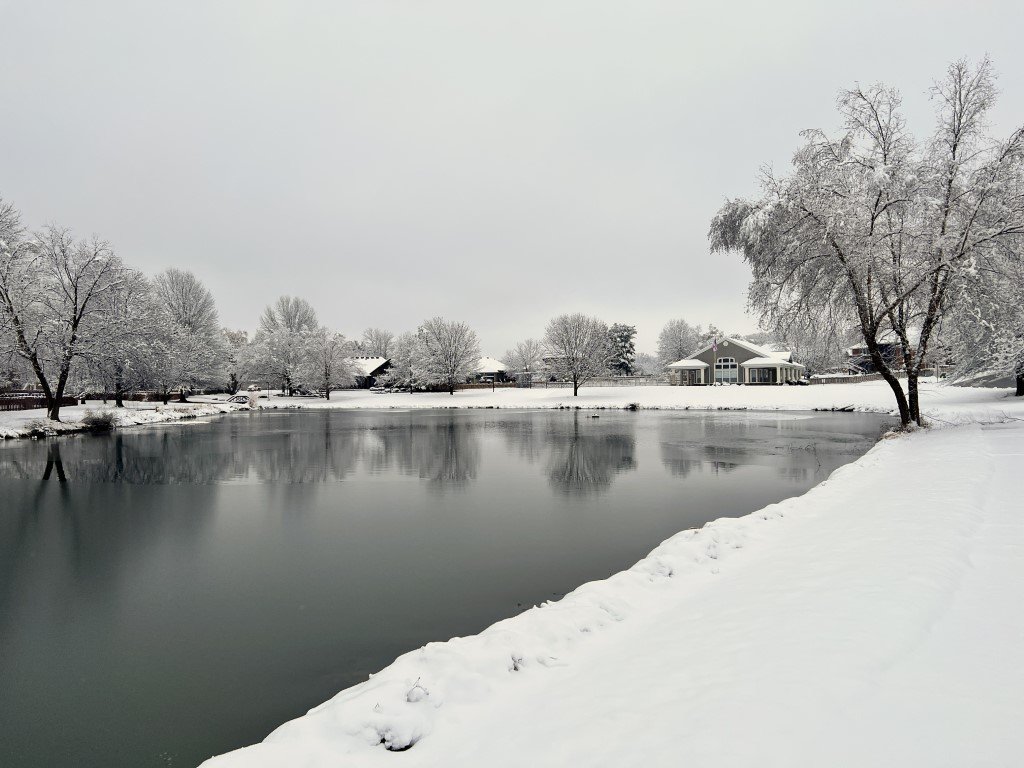
Snow (pictures) from Nixa/Springfield. I celebrated the event while I was in Texas.

Frosty morning in Carrollton. I added 2 frost events into my project while I was in Texas…celebrated that the conditions were cold enough…humidity high enough too.

Missed the Snow at Home - Again

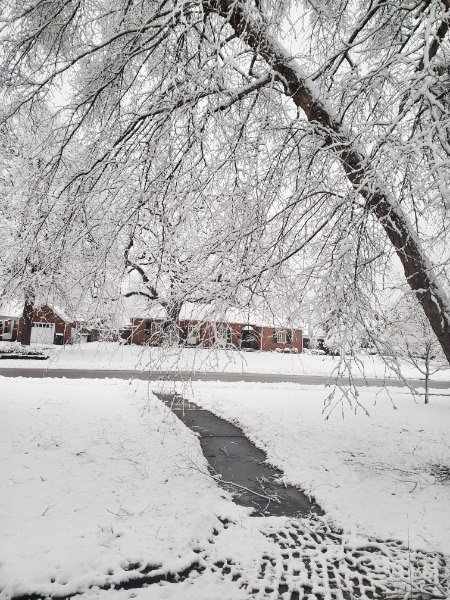
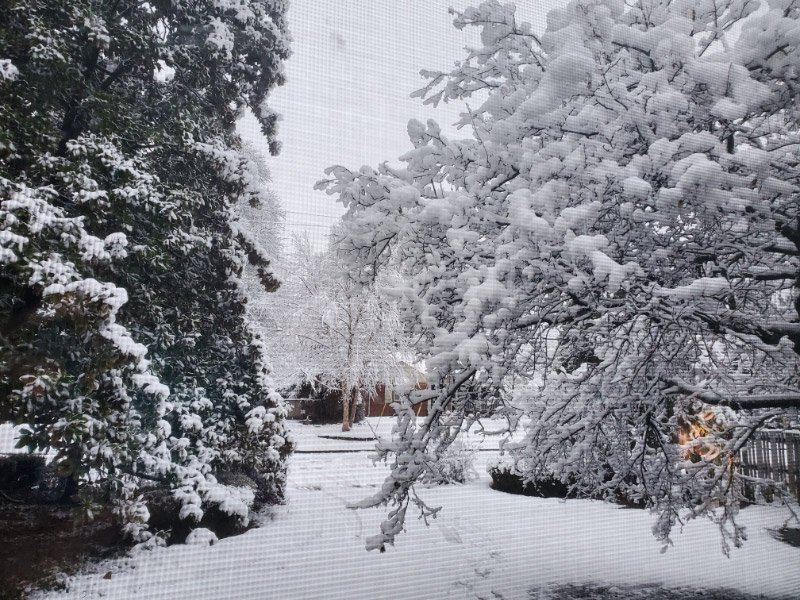
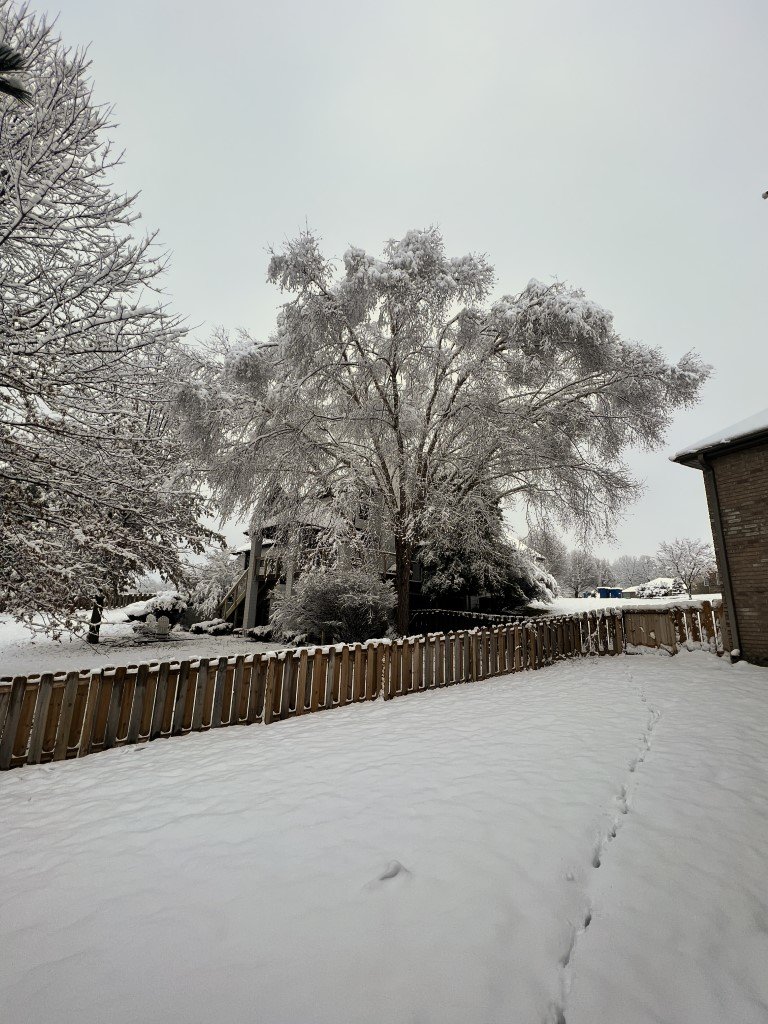
I was in Texas last week when I snowed at home in Nixa, Missouri – this is the third snow in Missouri that I’ve missed entirely! This time there was about 5 inches of snow overnight. I enjoyed the event vicariously through pictures.

My daughter sent pictures of the snowy scenes from her windows in Springfield first thing in the morning; she has big plans to enjoy her Snow Day. Her house is on a corner; one street was plowed but it wasn’t the one her driveway is on! The magnolia – with its big leaves – held clumps of snow. Even the maple, that doesn’t have any leaves at all, looked flocked.

My husband sent pictures a bit later. Around our house, the pines and hollies held a lot of snow. There were tracks in the snow from an animal – not sure what it could have been; the area we live in now is not at all like our Maryland yard that seemed to be a highway for deer heading back to the forest.  

I was surprised that the Japanese dogwood (a deciduous tree) held so much snow. I checked it when I got home and was glad that none of the branches seemed damaged.

My husband walked out our back gate and then around the pond. It was a winter wonderland!

Maybe eventually – I’ll be at home when a big snow event happens!

Gleanings of the Week Ending January 28, 2023

The items below were ‘the cream’ of the articles and websites I found this past week. Click on the light green text to look at the article.

What links litmus paper and lichens? – How did I not know that litmus dye was made from lichens? I remember using red cabbage to tint paper for an elementary school science project with my daughter. We tested everything in the house…discovered that even the fumes from toilet bowl cleaner turned the strips we made bright pink!

How donkeys changed the course of human history – The beast of burden. During Roman times the subspecies used was larger than modern donkeys…specifically bred for the expanding empire.

Jungle realm of the Snake Queens – A 5-part article about 2 Mayan queens: Lady K’abel and Lady Six Sky.

Marriage in Minoan Crete – A surprise – it was very common to marry one’s first cousin!

Kenya’s Rift Valley lakes are rising, putting thousands at risk – A study reveals that there have been increases in rainfall since 2010…an increase of only 0.4-2% of mean annual rainfall leads to the observed rising lakes/flooding.

EPA requirement keeps electric buses out of low-income schools – Low-income school districts often don’t own their school buses; they rely on contractors or subsidized lease deals. So --- they can’t meet the requirement to scrap the old diesel buses.

Ten-minute scan enables detection and cure of the commonest cause of high blood pressure – The hormone aldosterone causes 1 in 15 cases of high blood pressure. This new technology/treatment is a big improvement for the way those cases can be treated.

Dead Humpback Whale Washes Ashore at Assateague Island – This is the second one recently. I am familiar with the place this time…Assateague Island was a place my husband and enjoyed for birding when we lived in Maryland.

China’s population declines for the first time in six decades – Changing demographics in China.

Bees exposed to common weedkiller via wildflower nectar – Evidently the flowers can be contaminated even if they are not sprayed directly!

Nutting’s ‘Beautiful’ eBooks

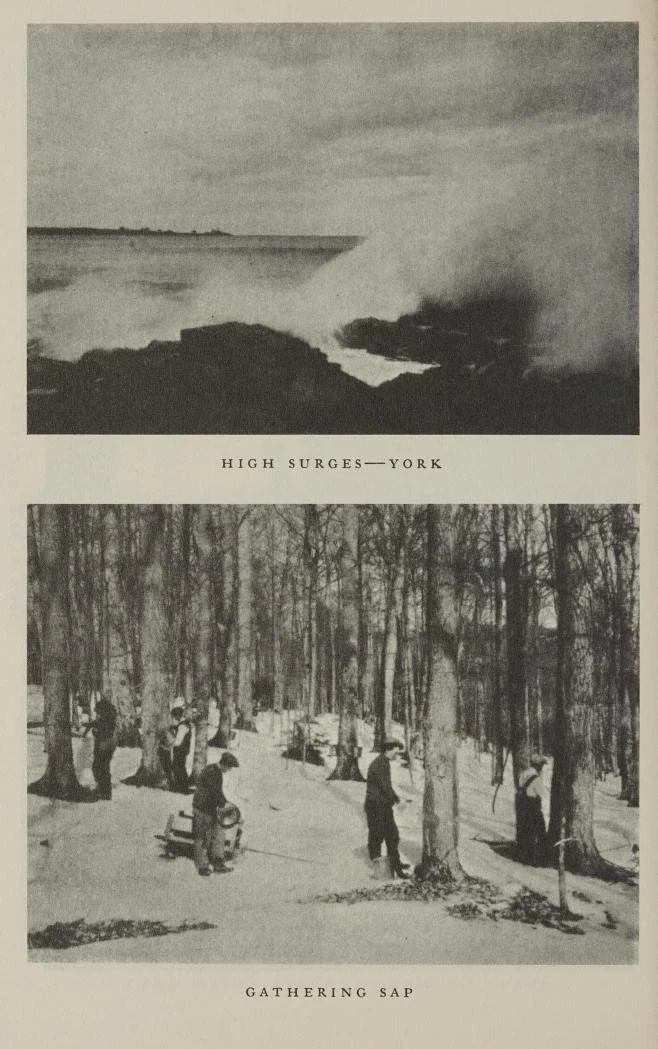
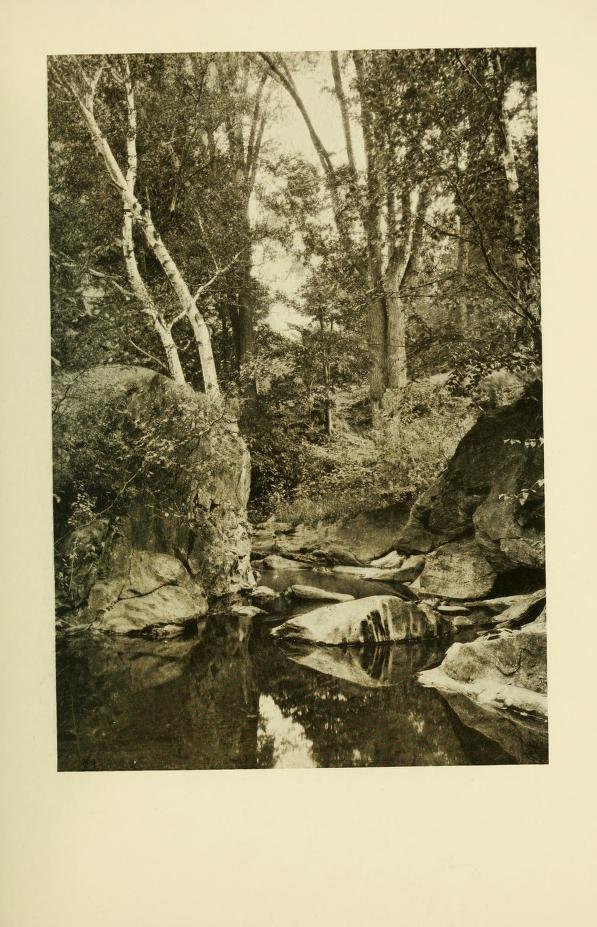
Wallace Nutting started out his adult life as a Congregational minister but retired at 43 because of ill health. His ‘second act’ (he lived to be 79 years old!) included photography and colonial furniture collecting and reproduction; his reproductions and photographs are still widely collected today. Both aspects are represented in books he published and are available on Internet Archive. The ‘Beautiful’ books reflect his travels; he was evidently an avid bicyclist and took up photography to document what he was seeing. Nutting’s pictures capture places as they existed in the 1920s; since he tended to photograph landscapes, some of the places might look very similar today. The only one not in the northeastern US is Ireland!

The Internet Archive also has Nutting’s book documenting Windsor chairs – which he collected and reproduced. I selected a child’s highchair as the sample image…remembering my daughter sitting in a similar chair for lunch the first time she visited Mount Vernon (Washington’s home) and we stopped for lunch at the restaurant there (back in 1990).

 He’s a great role model of redirecting your life in a positive direction after encountering a roadblock (like ill-health) on the path you thought would be yours.

Frost Ferns

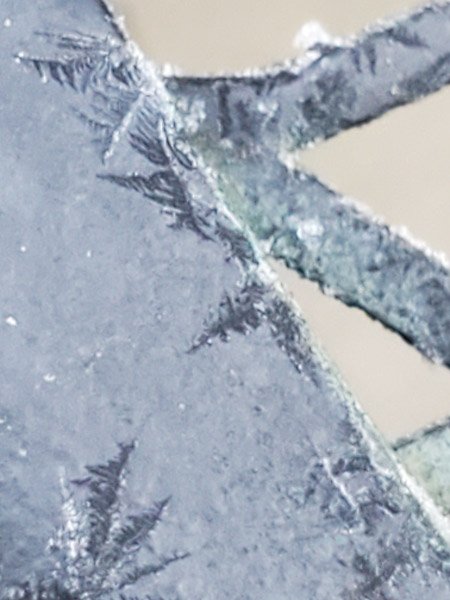
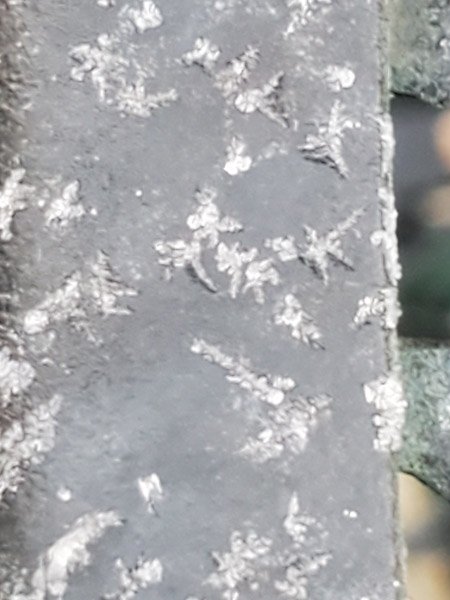
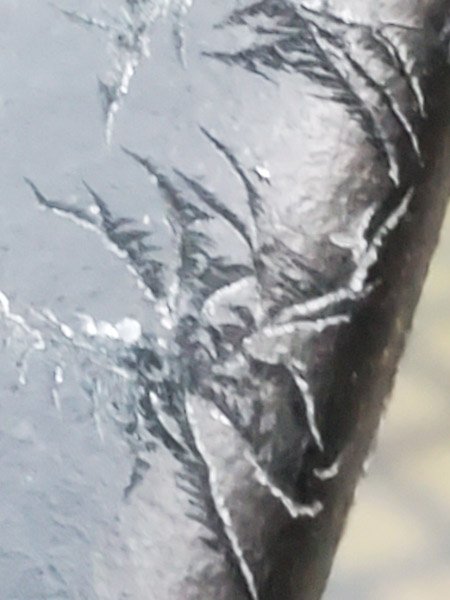
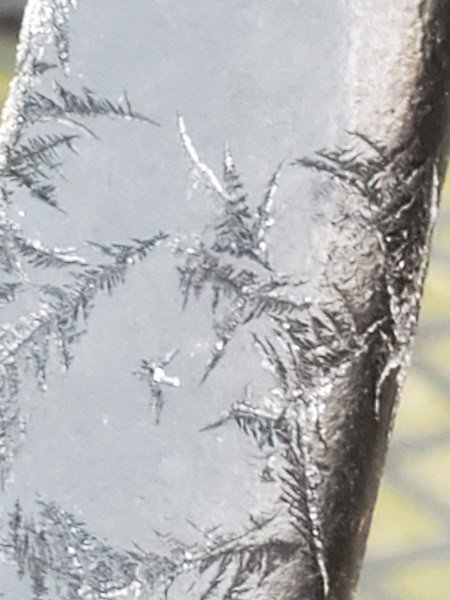
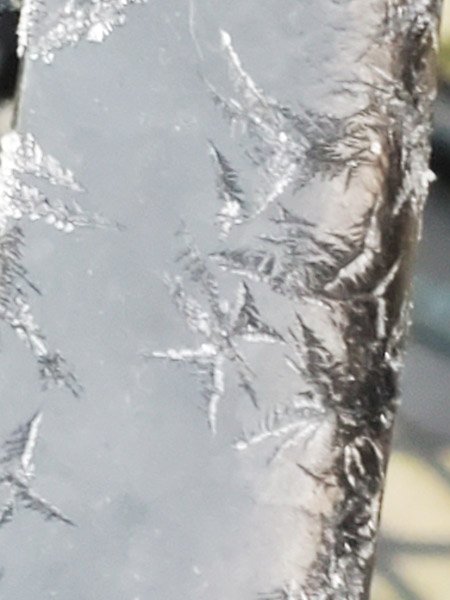
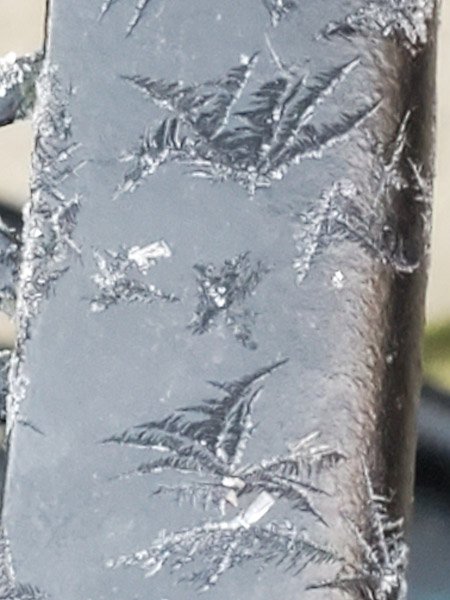
18 degrees Fahrenheit and humidity at 98% in the sunshine shortly after sunrise. Those were the conditions shortly after sunrise a few days after we got some snow. I went outside on the patio for some macro photography.

My first stop was where there was some residual snow (and maybe some fresh frost) on the deck stair railing. There has been too much freeze thaw…maybe a little interesting, but not worth standing out in the cold to fully capture.

I looked around for another surface where frost crystals might have formed…took a closer look at the wrought iron table and charts. There were small crystals around the edge of the table! I set my phone (Samsung Galaxy S10e) magnification to 8x and walked around the table. Most of the crystals looked like ferns to me! I am going to check the table rim on upcoming cold mornings…and document how the forms of frost change with temperature and humidity. Enjoy the sideshow below to see the results of 18 degrees and 98% humidity!

Morning Fog and Moon

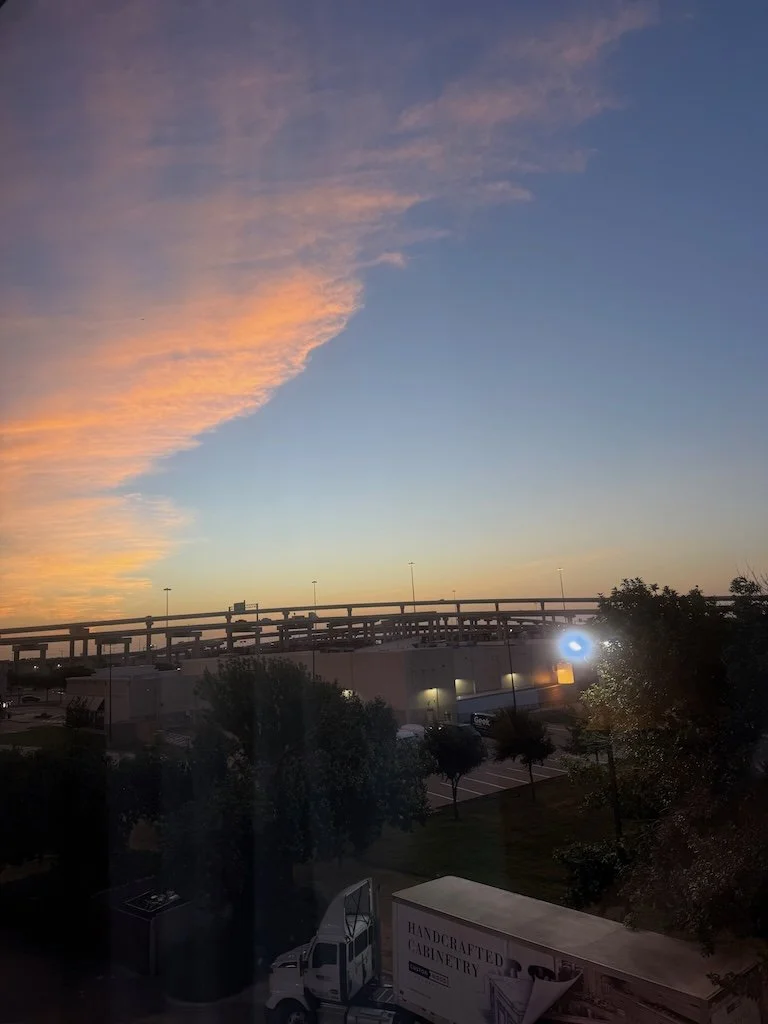
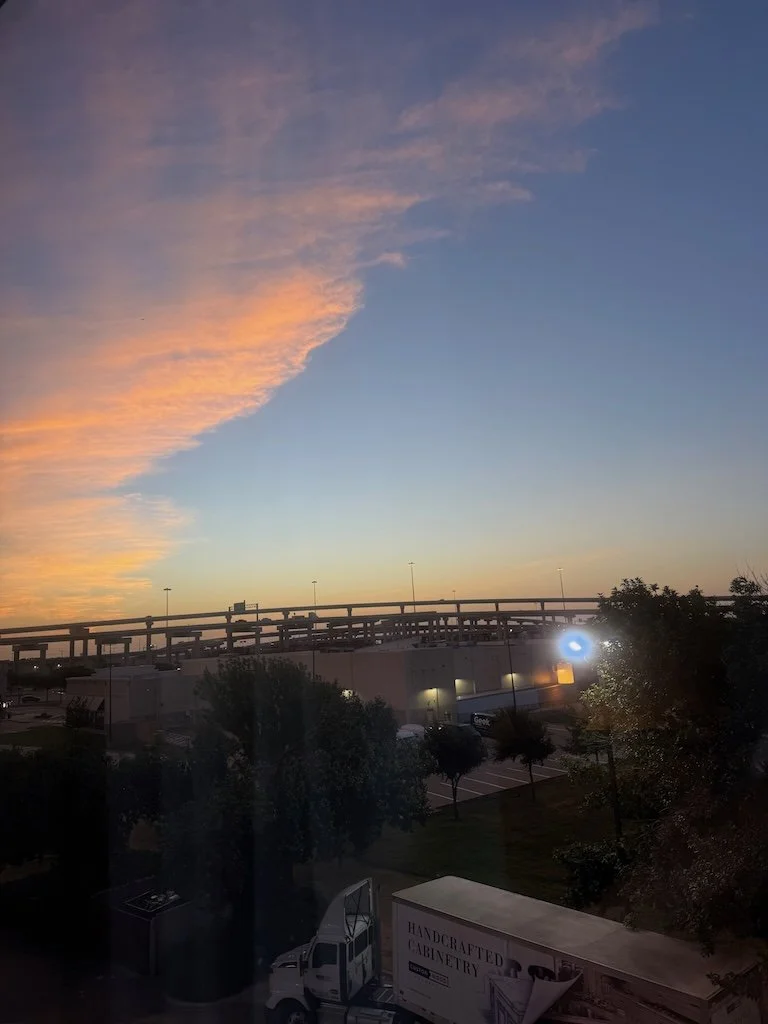
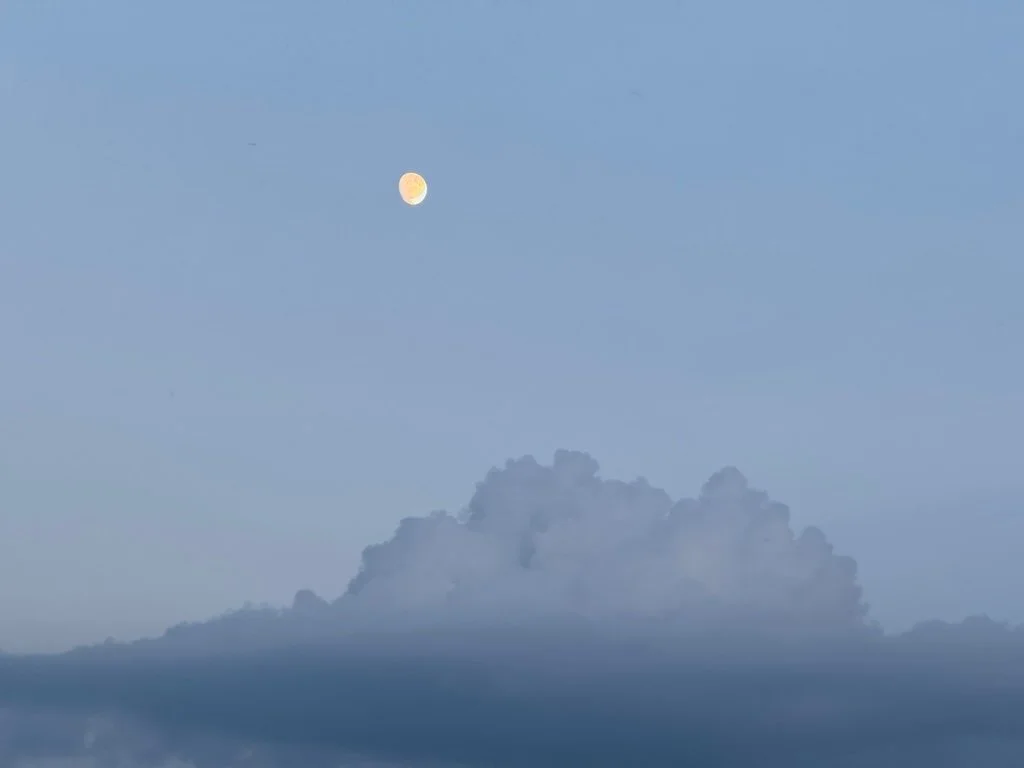
I went outside just after sunrise to photograph the fog; there had been no color with the sunrise because the fog was so dense. There was an advisory for the morning commute and I was glad I didn’t have to leave the house. Then I looked up and saw that the sky was quite blue and the moon distinct! The blanket of fog was clearly thin and close to the ground!

I am a morning person. This time of year, I am always up before the sunrise and ready to welcome the light of the new day. A colorful sunrise is always welcome but sometimes clouds and fog can be just as interesting because they alter the perception of surroundings. Noticing the beginning of the day…however the increase of light happens…is the best way to start my day.

Gleanings of the Week Ending January 21, 2023

The items below were ‘the cream’ of the articles and websites I found this past week. Click on the light green text to look at the article.

How do snowflakes form? Is each snowflake really unique? Why is some snow light and fluffy or heavy? The amazing science of snow – A good topic to explore in the winter! The article includes a video of snow and ice crystal growth.

Falling birth rate in US not due to less desire to have children – People are not having as many children as they say they want, especially at earlier ages. There is some evidence that people reduce the number of children they intend to have as they get older. They may realize how hard it is to have and raise kids in the US…and decide to only have one child rather than two. They may have more challenges conceiving as they get older too. Larger economic and social forces are also impacting birth rates.

Meditation and mindfulness offer an abundance of health benefits and may be as effective as medication for treating certain conditions – An overview of the strengths/weaknesses of studies about mediation/mindfulness…a good introduction.

Drone Photography Celebrates the Beauty of Historic High-Rise Buildings in the U.S. – Wonderful views of the highest parts of tall buildings.

9 in 10 drivers in the US would save money on fuel by going electric – Good! Hopefully the cost of the electric cars will come down a bit…and we’ll have more models to choose from…and the places to charge them during road trips will be convenient.

Why obesity is more dangerous for men – Evidently men have a lot more inflammation associated processes and don’t grow as many new blood vessels in their fatty tissue.

See the Lavish Pompeii Home Owned by Two Men Freed from Slavery – Reopened after 20 years of restoration work. It was originally excavated in 1894-1895.

Broccoli looks more like cauliflower in a warmer world – Looking at the chemistry behind the changed growth of broccoli at higher temperatures…avoiding the change in the lab…but will it enable us to still produce broccoli that looks like broccoli as the planet warms?

Another step toward an insulin tablet - A lot of diabetics would appreciate ‘no more injections’!

Why Electrifying Everything Is a Critical Pathway to Decarbonize The World & Our Lives – I like these articles that get specific about the options that individuals/families can take. It gives me more hope for my future and the future of the planet to take the actions I can to 1) decarbonize the electricity used by my home, 2) move toward an all-electric home and transportation, 3) improve efficiency/reduce waste, and 4) sequester carbon. Focusing on the ‘all electric’ concept this week. I have natural gas powered heating and hot water heater…will probably replace the heating/cooling first. The gas fireplaces are turned off already – removing them is not a high priority.

Travels of Sven Hedin

The week’s book post includes 13 books…travel books written and illustrated by Sven Hedin from the late 1800s to the 1930s…available from Internet Archive. As usual – my interest was primarily in the illustrations which include drawings, watercolors, and photographs. The author was Swedish geographer, topographer, and explorer…and the books are his documentation of his work. His sketches of people and places…as well as a picture of himself outfitted for very cold weather in Tibet…make these books good windows into the places as they were.

Adventures in Tibet  (1904)

Bagdad, Babylon, Ninive   (1918)

Durch Asiens Wüsten : drei Jahre auf neuen Wegen in Pamir, Lop-nor, Tibet and China  (1919)

 Through Asia V1  (1898)

Through Asia V2  (1922)

 Southern Tibet  (1913)

Snow Day

Finally – I was not in Texas when it snowed last week in Nixa, MO; so… I have experienced my first snow at my new home. Unfortunately – I had an appointment and had to drive in it! When I first backed out of my garage, it was still dark, and sleet was falling (it seemed large enough to be small hail!); I almost decided to cancel my appointment. The data that kept me from doing that was the temperature: it was 38 degrees F. I continued to my appointment; the sleet was just rain by the time I was halfway there and then the rain paused just as I finished parking.

A little over an hour later my appointment was done. It was snowing but still above freezing. I had to clean snow off my car. The side mirror heaters worked very quickly! The roads were wet with the temperature at 34 degrees; I still was careful to keep plenty of distance between my car and the next. There was a snowplow on one road….not plowing but probably deploying to be in position if the roads started to be too slushy. I was glad to get home…and that I didn’t need to get out again

I decided to take a few snow pictures before I took off my coat: snow caught in dried vegetation,

The evergreens (holly, rhododendron, pine) flocked with snow, and

The snow dust on yard furniture and stones leading to yard.

Plant of the month – Pine

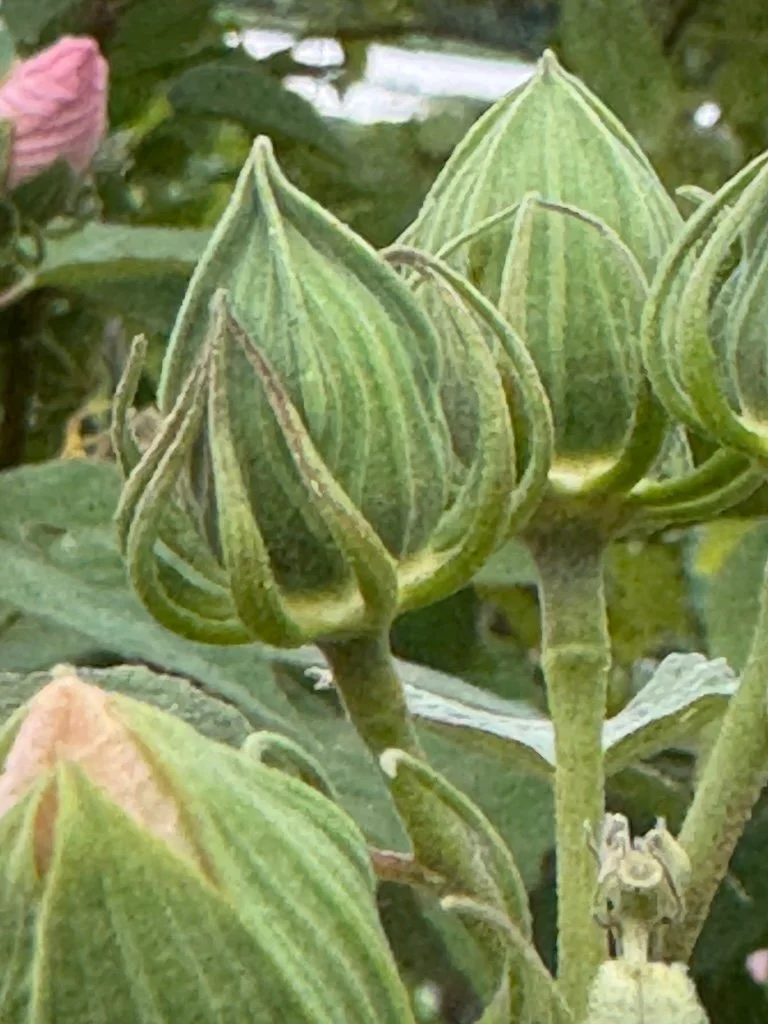
We have three pines in our new yard, and I appreciate them as big contributors to the greens of January. Only one of them appears to have cones…and it has a lot of them in all stages of development. It has shorter needles than the other two.

I enjoyed taking some macro images of the cones close to the ground. As the cones get very old, I will probably harvest some of them to add to the pinecone wreath that was made years ago from cones from my sister’s house. It will be a good way to fill in thin places as the wired cones (that are larger) shift a little…and add even more of my heritage to the wreath.

I read an article recently about pine needle tea and have started cutting a small handful of pine needles from the two longer needle pines to add to the black tea bag and home-dried orange peel in my tea maker (a coffee maker that has never-ever been used for coffee!). I like the flavor of the result…no sweetener required…and it smells good too.

2023 Diet (Strategy)

I am thinking about my diet strategy for 2023. It’s a mix of things that have worked before to keep my focus on nutrition and moving toward a sustained ‘normal’ weight…skewed toward lowering my carbon footprint.

  • Use the Cronometer app to watch nutrition and calories until I am at the ‘normal’ weight for my height. This worked for me 5+ years ago so I am going to do it again now that I have gained a few pounds. It is important to sustain a healthy weight rather than yo-yoing. Using the app I know I am getting enough protein; if I need to reduce something to get the calories low enough, it is usually a fat…and I want all the calories to go toward meeting nutritional goals.

  • Reduce ultra-processed foods (those foods that have a long list of ingredients…some of them unrecognizable). The hardest might be soft drinks. I also notice that when I travel, there are more instances of ultra-processed foods in my diet.

  • Eat less red meat. In 2022 it was about half my protein. In 2023, I want to reduce it to 25%. I’ll ramp up eggs, chicken, turkey, and vegetarian sources of protein (although I am not keen on the vegetarian sources of protein with ingredient lists that indicate they are ‘ultra-processed’).

  • Become vigilant about avoiding lactose. The Lactaid does not seem to totally solve the problem anymore, so it is better to avoid the foods. The big change is moving away from Lactaid Milk to Soymilk. Deciding what to eat when I travel will be a bit more challenging as well.

The theme for my 2023 diet is:

‘Good for me…and for the planet.’

Our Nixa, MO Yard – January 2023

The January yard is full of plants surviving the cold – a cedar damaged by last summer’s drought, the hollies that are very green all 12 months, and bushes with growth damaged by the abrupt frost from last November.

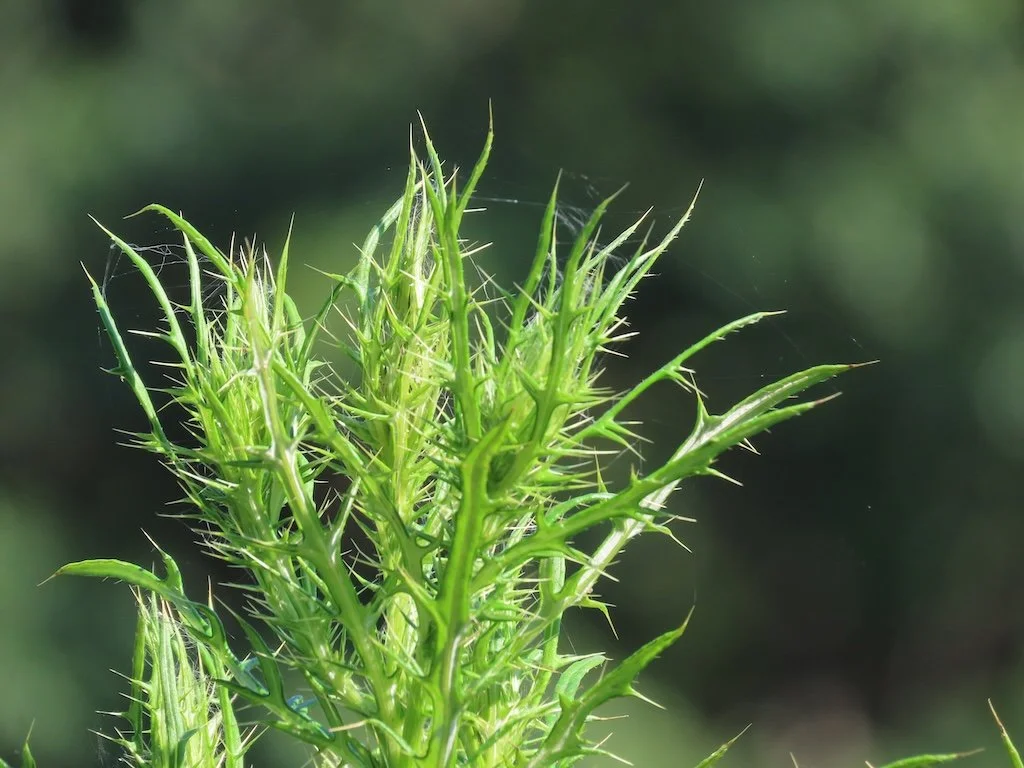
There are pokeweed fruits that never ripened (because of that abrupt frost) and seeds on ornamental grasses.

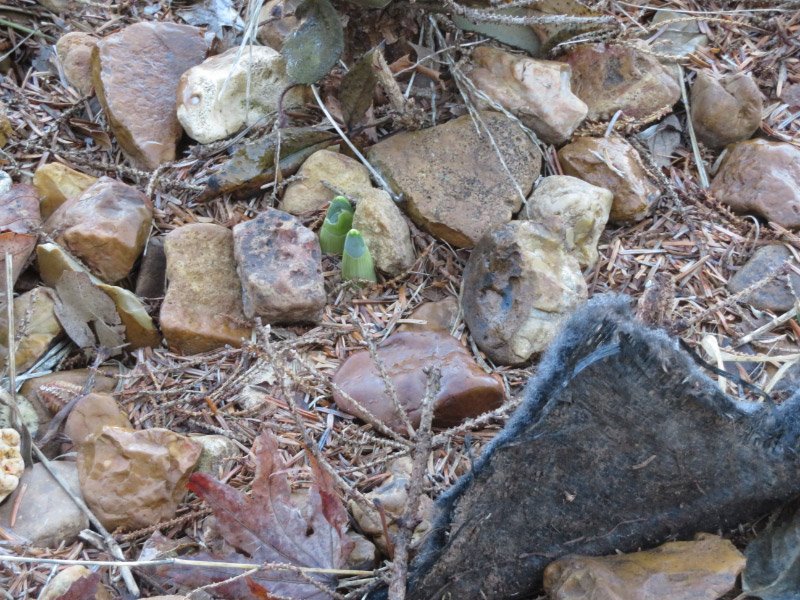
I was surprised by the irises already coming up in one bed that must have been planted by the previous owner and a few of the bulbs I planted in November sprouting through the stones in another location.

The rhododendron is full of buds. The first time I looked at the house was just after it bloomed last spring, so I am looking forward to seeing it thise season. The leaves are not universally green and I am wondering if it too was damaged by the November frost or if this is just the way rhododendron leaves look when they are old. This is the first time I’ve had a rhododendron at my house.

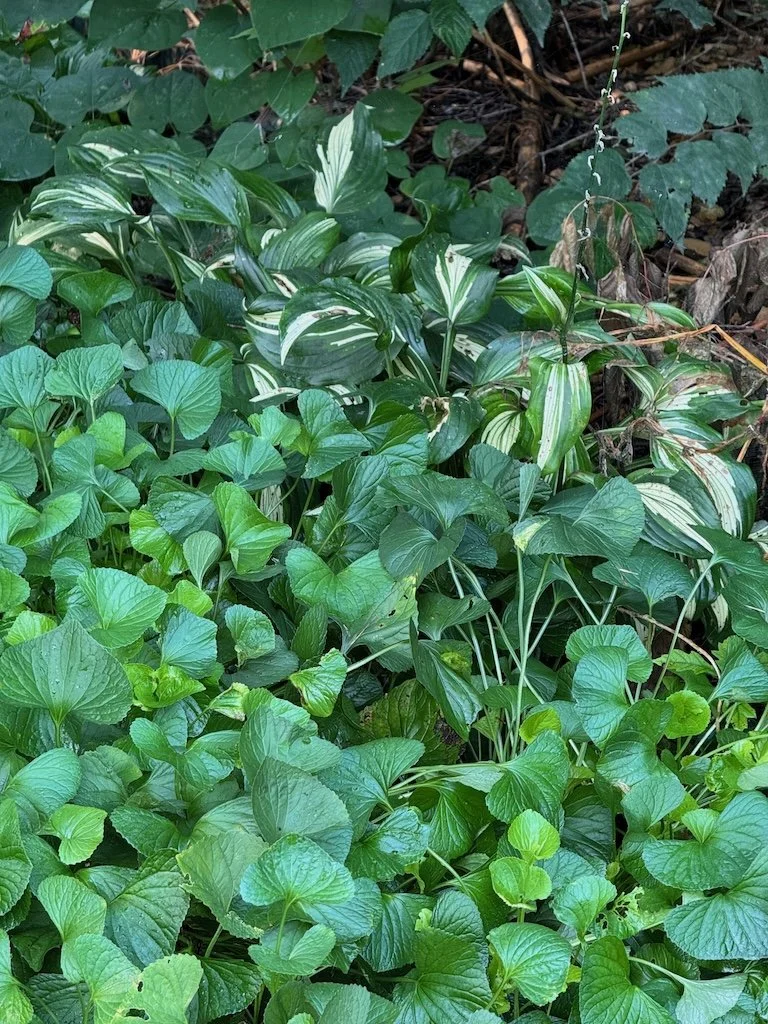
The lamb’s ear is surviving the winter. There are small plants coming up in other locations. I’ll need to decide about whether to put mulch around the ones in the yard to curtail the growth of grass around them!

A 50th Anniversary

I posted about my parents’ 70th anniversary back in December; now I am celebrating my own 50th wedding anniversary with my husband. The anniversary prompts me to think about those 50 years of shared life from different perspectives.

Our external focus shifted through the years:

  • For the first 10 years, we were completing our education – a PhD for him, a masters for me. I was working full time during those years…not thinking about computer science as a career for the first 5 years but gradually realizing that I liked the work too much to switch fields. From the beginning he seemed to have a clearer idea of what he wanted to do. We were the first in both our families to go beyond an undergraduate degree.

  • We moved to the east coast for my husband’s work; it was a great career move for me too. We were both focused on our careers for about 5 years.

  • Then we decided to have a child and took the precautions needed for a successful pregnancy in our mid-30s. We thought we were prepared when our daughter was born but quickly realized that there was a learning curve that was just beginning. Between the two of us we successfully juggled parenting and careers…until she went off to college 20 years later.

  • There were 5 years of career focus with occasional bursts of activity to help my daughter move out of the dorm into an apartment, get to an internship, or move for graduate school. The internship and graduate school were more than halfway across the US!

  • 10 years ago - I retired and my husband started a ramp down from his career that continued for several years.

We’ve lived in several states over the 50 years: Texas for 10, Virginia for 3, Maryland for 36.5, Missouri for .5 years. The two long haul moves (from Texas to Virginia and from Maryland to Missouri) were quite different. We had a lot more household items to move the second time, the technology of finding a new house/selling our old one had improved dramatically, and we were able to buy our current house rather than get a mortgage.

Our shared interests have evolved over the years.

  • Photography. My husband was the one that enjoyed photography from the beginning….doing his own black/white and color developing (and printing too). I remember in our first house when one of the developing chemicals was not diluted enough when he poured it down the kitchen sink and it dissolved the disposal flaps! We have a lot of negatives and slides from those pre-digital years. The transition to digital happened about the time our daughter was old enough to start taking pictures. My interest in photography picked up a little when my daughter was born but ramped up dramatically once I retired.

  • Travel. From the very beginning we’ve both enjoyed day trips and vacations to outdoor destinations: gardens, state parks, and national parks. In the beginning, we economized by car/tent camping and not eating out. By the time we moved to Virginia we could afford flying, staying in hotels, and eating out although the road trip still dominated our vacations. When my daughter was born, we shifted our accommodations to ones that had a small kitchen to accommodate her food requirements/preferences. Some of our travel was associated with either my career or my husband’s…so that part of the travel was paid for as part of our work. After she got older and as we travelled more on our own, we enjoyed short term house rentals. For a few years before the COVID-19 pandemic, my husband and I used birding festivals as a focus for our travels.

  • Astronomy. My husband was interested in astronomy before I knew him. One of our early dates included a lunar eclipse at the local astronomy club’s observatory. In the early years of our marriage, we participated in grazing occultations (stars and the mountains of the moon); my role was to help him get the telescope set up as quickly as possible in the assigned location so he could take the measurements. Later I used the cast iron telescope mount to add weight in the back of my rear-wheel drive car – to give it more traction on snowy days in Virginia. His astronomy activity ebbed although he did replace his telescope; we (daughter included) observed the sunrise in 2000…our celebration of the new millennium. Once he retired, he became active the local astronomy club in Maryland and we both camped on the field for a star party at a dark sky site in Virginia several times; he liked the dark sky (and being able to call it a night whenever he got tired) and I enjoyed being outdoors, hiking during the day.

A lot has happened in 50 years and we’re both realizing how fortunate we are that the big decision we made all those years ago was a good one for both of us!

Gleanings of the Week Ending January 14, 2023

The items below were ‘the cream’ of the articles and websites I found this past week. Click on the light green text to look at the article.

Study investigates source of Amazon’s “Dark Earth” – Created intentionally? It is less acidic than surrounding soils…probably from the addition of ash.

New York City Greenery Absorbing All Traffic Emissions on Many Summer Days – There is a lot more greenery that previously thought…looking beyond parks to modest backyards, shrubbery growing in vacant lots, and trees dotting city sidewalks. That’s good for the summer when everything is green and growing….but it also implies that winter air quality is problematic.

‘Stomp’ Performers Hang Up their Garbage Lids – After 3 decades off-Broadway. Watch the video!

Riddle solved: why is Roman concrete so durable? – It wasn’t just volcanic ash that made Roman concrete better…lime clasts play a self-healing role!

Why is every parking lot covered with solar panels? – Evidently Michigan State has done it…hopefully other universities and big box stores do similar projects. 

How the war in Ukraine is killing marine mammals – The dolphins that were washing up on the shore of the Black Sea prior to the war were few and usually had markings suggesting entanglement in fishing gear.  The theory about the increased number appearing now, without marks, is that the dolphins are experiencing acoustic trauma from the increased use of sonar by Russian submarines.

Climate impact labels on sample food menu had strong effect on food selection – A study done by Johns Hopkins. The result indicate that this kind of labelling could promote more sustainable choices….and have positive health benefits as well!

Aerial Photos Capture the Abstract Beauty of Salt Ponds – From a new book….with images and background about these man-made landscapes.

Great Salt Lake will disappear in 5 years without a massive ‘emergency rescue’ – My husband and I visited the lake back in 2008. The pictures in the article are so different that I needed the captions to recognize the place. The lake was already shrinking in 2008 but the shrinking has increased with long term drought and increased population diverting more water that would otherwise flow into the lake. Aside from the ecological collapse if the lake goes dry, the dust from the dry lakebed is kicked up by winds and can damage lungs/exacerbate other respiratory illness. This does not bode well for public health in Salt Lake City.

Painted skulls from Peru’s Chincha Valley analyzed – The red paint on the skulls was not all the same on all the skulls: some have iron-based ochres and others have mercury-based cinnabar….the red paint on one of the skulls was a combination of the two!