Gleanings of the Week Ending May 9, 2026

The items below were ‘the cream’ of the articles and websites I found this past week. Click on the light green text to look at the article.

4/14/2026 SR+ An Ingenious Vortext Nanoplastics, Human Health & Investigative Science - Investigating here the relationship of microplastic and nanoplastic particles in the human body and the impact these Microplastics (MPs) and Nanoplastics (NPs) and their associated piggybacking chemical additives have as potent endocrine disruptors and other ways they impact human health. Before reading the full text of this report please listen to the Podcast of Dr. Aviva Romm, MD: “a Yale-trained board-certified family physician, midwife, and herbalist specializing in integrative medicine for women and children.

4/27/2026 The Conversation Global supply chains cause environmental harm, but they can help repair it too - When supply chains move beyond traditional markers of performance — efficiency, flexibility and responsiveness — to consider the benefits and harms of their activities, they can become environmentally just. Such supply chains distribute environmental benefits (such as clean air, water or access to land) more fairly while ensuring all stakeholders are included in decision-making.

4/27/2026 Science Daily Pesticide exposure linked to 150% higher cancer risk in major study - To better understand the link between pesticides and cancer, researchers created detailed models showing how agricultural chemicals spread across Peru. The analysis included 31 widely used pesticides. None of these are classified as known human carcinogens by the World Health Organization (WHO), yet their combined presence in the environment was carefully tracked. he team then compared these exposure maps with health data from more than 150,000 cancer patients recorded between 2007 and 2020. This comparison revealed a clear pattern. Regions with higher environmental pesticide exposure also had higher rates of certain cancers. In these areas, the likelihood of developing cancer was about 150% greater on average.

4/25/2026 Clean Technica Drought Could Be Making Antibiotic Resistance Worse - A recent study published in the journal Nature Microbiology found that when soil dries out, it can speed up the natural processes that create and spread antibiotic resistance. In normal, moist soil, bacteria live in a relatively stable environment. But when soil dries out, water gets squeezed into tiny, isolated pockets. Bacteria get crowded together, nutrients become scarce and competition turns brutal. In these conditions, bacteria produce more antibiotics to attack each other, and more resistance genes emerge to help them survive. It’s an arms race fueled by drought.

4/26/2026 BBC Surviving in a poisoned land: Chernobyl's wildlife is different, but not in the ways you might think - Four decades have now past since Chernobyl's reactor number four exploded on 26 April 1986, sending radioactive material far and wide. Tree Frogs inside the exclusion zone were, on average, darker than those outside the zone. Many pine trees, which are especially sensitive to radiation, died after exposure to fallout. Birch trees took over in some locations creating a completely different kind of forest. In areas once frequented by people, wolves, bears and bison now roam. Populations of deer, wild boar and elk have flourished. Species including the Eurasian lynx have also returned to the area after vanishing long before the accident. groups of dogs apparently descended from pets abandoned after the 1986 disaster, are also plentiful in this area.

4/25/2026 Planetizen Finland opens world's longest multimodal, car-free bridge - A new 0.74-mile bridge in Finland is likely the world's longest car-free bridge.  The Kruunuvuori Bridge, which opened last week, serves pedestrians, cyclists and, starting next year, trams. It connects Helsinki's eastern island suburbs with the city center.

4/27/2026 Smithsonian Magazine See the 1-in-50-Million Split-Color Lobster Caught Off the Coast of Massachusetts - The unusual-looking lobster is two-toned, with a line dividing its body into an orange side and a brown side. This can happen when two fertilized, unlaid lobster eggs touch—causing one to absorb the other

4/23/2026 Smithsonian Magazine A Rare ‘Cloud Jaguar’ Was Spotted in Honduran Mountains for the First Time in a Decade- The hefty felines can grow to eight feet long from nose to tail tip and weigh up to about 350 pounds. Jaguars have stocky, heavy bodies with short—but massive—limbs, as well as big heads and teeth that make for a powerful bite. They’re the third-largest cats in the world and the largest in the Americas.

4/22/2026 Yale Environment 360 Sustainable Wood Schemes Failing to Slow Deforestation - Schemes that certify wood or paper as sustainable are doing little to stem the loss of forests globally. The schemes are voluntary, run not by governments but by independent groups. Between 2013 and 2023, the world lost at least 50 million acres of forest each year, an area roughly the size of Nebraska, according to an analysis of satellite imagery. What is striking is that countries with more certified acres saw no less clearing of forest overall.

4/26/2026 The Conversation Soil monitoring: what the new EU‑wide ‘ground rules’ have in store for Europe - The European soil monitoring directive, adopted by the European Union at the end of 2025, aims to achieve healthy soils by 2050. It calls for soil microbial diversity analysis (bacteria and fungi) at six-year intervals based on environmental DNA or “eDNA”. Yet, while eDNA is a powerful tool for detecting biodiversity at scale, it is not enough on its own for interpreting observed changes and identifying their causes.

Gleanings of the Week Ending February 21, 2026

The items below were ‘the cream’ of the articles and websites I found this past week. Click on the light green text to look at the article.

2/2/2026 York Daily Record Mountains of plastic turf in limbo after Pa. recycling project falters - A Danish company's plan to build an artificial turf recycling plant in Pennsylvania has failed due to bankruptcy. The state is now responsible for cleaning up thousands of tons of abandoned turf stockpiled across three counties. The abandoned turf, which may contain "forever chemicals," will now be sent to a landfill instead of being recycled.

2/8/2026 Clean Technica Why China’s Aluminum Industry May Have Reached Peak CO2 - Relocation to hydro regions is largely complete. Secondary aluminum is rising into double digit millions of tons. Coal heavy output has already peaked and begun to edge down. Renewable penetration in coal regions continues to rise. Reversing this trend would require renewed growth in coal-based smelting or a collapse in recycling, neither of which fits China’s industrial or energy trajectory.

2/9/2026 BBC Fungi mining and giant waste piles: How to get rare earths without mining rock -Gigantic heaps of coal ash, mine tailings and red mud are traditionally expensive and difficult to deal with. But if new processes allow rare earth harvesters to engage in remediation while hoovering up rare earths, then industry and environmentalists might no longer be at odds over what to do about all that waste.

2/8/2026 Science Daily Scientists finally solve a 100-year-old mystery in the air we breathe - The new model offers a stronger foundation for understanding how airborne irregularly shaped nanoparticles (like soot, microplastics, viruses) move across a wide range of scientific fields. These include air quality monitoring, climate modeling, nanotechnology, and medicine. The approach could improve predictions of how pollution spreads through cities, how wildfire smoke or volcanic ash travels through the atmosphere, and how engineered nanoparticles behave in industrial and medical applications.

2/6/2026 Archaeology Magazine Aqueduct at Early Italian Villa Explored - Based on the construction method of this hydraulic system, it might have been originally created to serve a rural village predating the construction of the villa, during a period before the Romans had fully solidified their control over this region of Italy.

2/4/2026 Yale Environment 360 Seas to Rise Around the World — but Not in Greenland - The reasons are twofold. 1)  the massive Greenland ice sheet, which at its center is roughly a mile thick, compresses the land underneath. As the ice melts, the land rebounds, rising above the sea. 2) the Greenland ice sheet is so large that it exerts a gravitational pull on surrounding waters, drawing them higher. But in a warming Arctic, Greenland is shedding some 200 billion tons of ice a year. As its gravitational pull wanes, waters recede.

2/5/2026 Smithsonian Magazine Air Pollution Can Cause Some Ants to Turn on One Another—and Neglect Their Young - As insect populations decline around the world, the findings further point to air pollutants as a possible cause, in addition to pesticides, light pollution and other factors. The work is especially important given the crucial role ants play in maintaining healthy habitats, such as dispersing seeds, controlling pests and aerating soil.

2/4/2025 Cool Green Science Reading the Tree Rings – Great photographs by Greg Kahn for this article. One of the labs visited for the article was the Laboratory of Tree-Ring Research at the University of Arizona that I visited when my daughter was a graduate student in Tucson in 2015 (my blog post about it here).

2/4/2026 Compound Interest World Cancer Day: How antibody–drug conjugates for cancer work - Our ability to use medicines to target more effectively is improving, and antibody–drug conjugates are an increasingly effective tool in combating cancers. This graphic explains what they are, how they work, and how they might improve in the future.

2/4/2026 National Parks Traveler Florida’s Ailing Reef - The reef is fighting for its very survival, beset by the trauma of climate change and warming water, commercial and recreational fishing, and drainage pollution coming from Florida’s canal system.

Plastics Crisis: Show-Me Less Plastic Workshop

The Show-me Less Plastic workshop that I attended was provided by a partnership of Missouri River Bird Observatory and Stream Teams United. It is specific to Missouri but part of a nationwide effort from Beyond Plastics. The parts of the workshop that were local to the Springfield, Missouri area were provided by James River Basin Partnership.

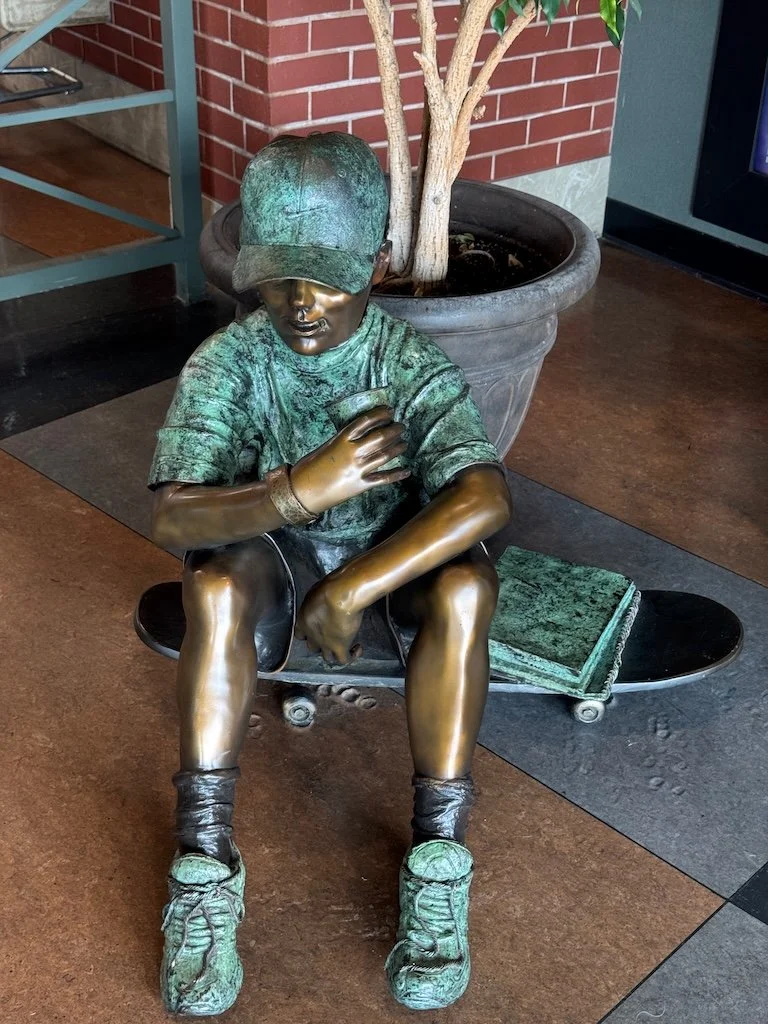
It was held in a Springfield library (the photo is of a sculpture in the library) with a Panera Bread that catered the plastic-free lunch.

There was an overview of why plastic pollution is a crisis (health of everything on the planet including us is at increasing risk)…but the audience was already onboard with that. We were also aware of the long-term message from the plastics industry that the convenience of single-use plastic is so fabulous that we simply need to be more successful at recycling to resolve any problems…but recycling hasn’t worked and it is unlikely to ever be sufficient. The industry is assuming that recycling will not work since they are projecting a huge demand for new single use plastic production to take the place of their revenue stream from fossil fuels trending down as more renewable energy becomes available. The problem is huge and may very well be a more imminent threat to lives that climate change.

The bulk of the workshop was focused on going beyond what an individual can do: community education and outreach, influencing business and policy makers….first steps.

I am writing this the day after the workshop. There will be a follow-up email from the workshop coordinators.  There are still some things I am working on as an individual to reduce my family’s risk (but it is not possible to eliminate exposure micro and nano plastics…and it will get harder as there are more plastics in the environment). I have a tentative list of actions, but I want to work with a local Beyond Plastics Affiliate to be with others that are taking similar actions.

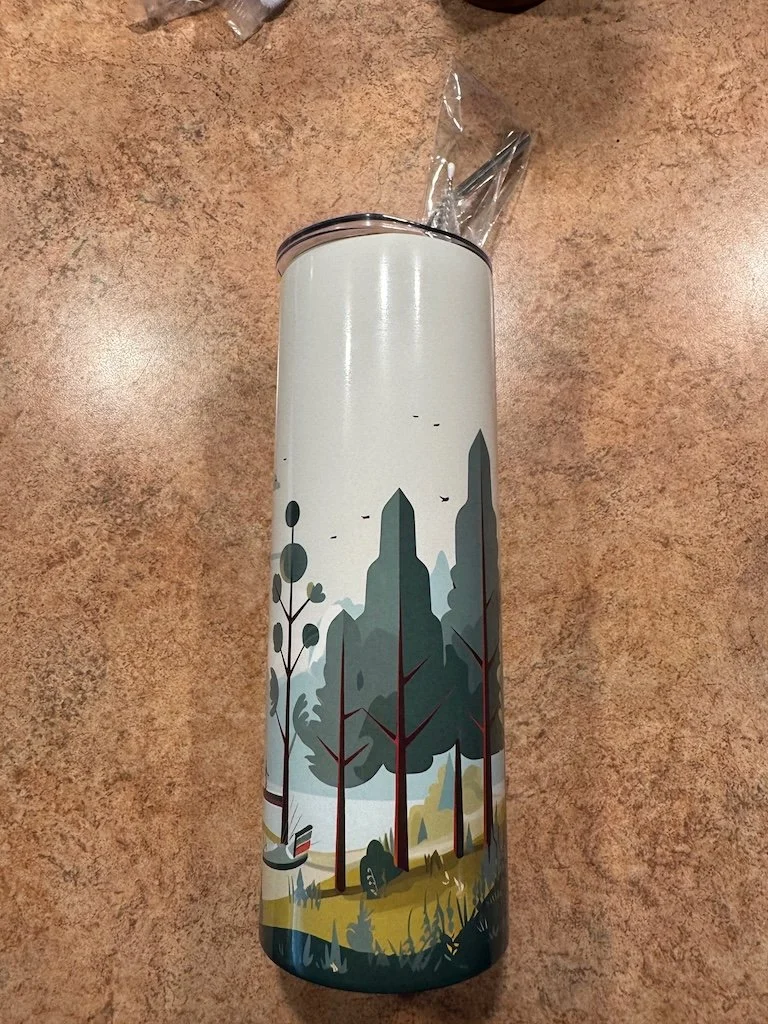
I came away from the workshop with one of the ‘door prizes’ – a stainless-steel container (with a straw!)…different than my other water bottles. This one will work well in  the car!