Missouri Institute of Natural Science

My daughter and I visited the Missouri Institute of Natural Science on Black Friday! Neither of us had been there before even though both of us had heard about it and were interested. We got there just after 11 and spent about 45 minutes looking at their exhibits and shop.

Their triceratops (name Henry) dominates the center of the largest space they have. It is part fossilized bones and part 3-D printed ‘bones’ to make a complete skeleton. Awesome!

There were some 3D printers to the side of the displays…it probably takes considerable time to create the pieces of a complete skeleton; there are pieces of a second dinosaur that they are printing and collecting under Henry.

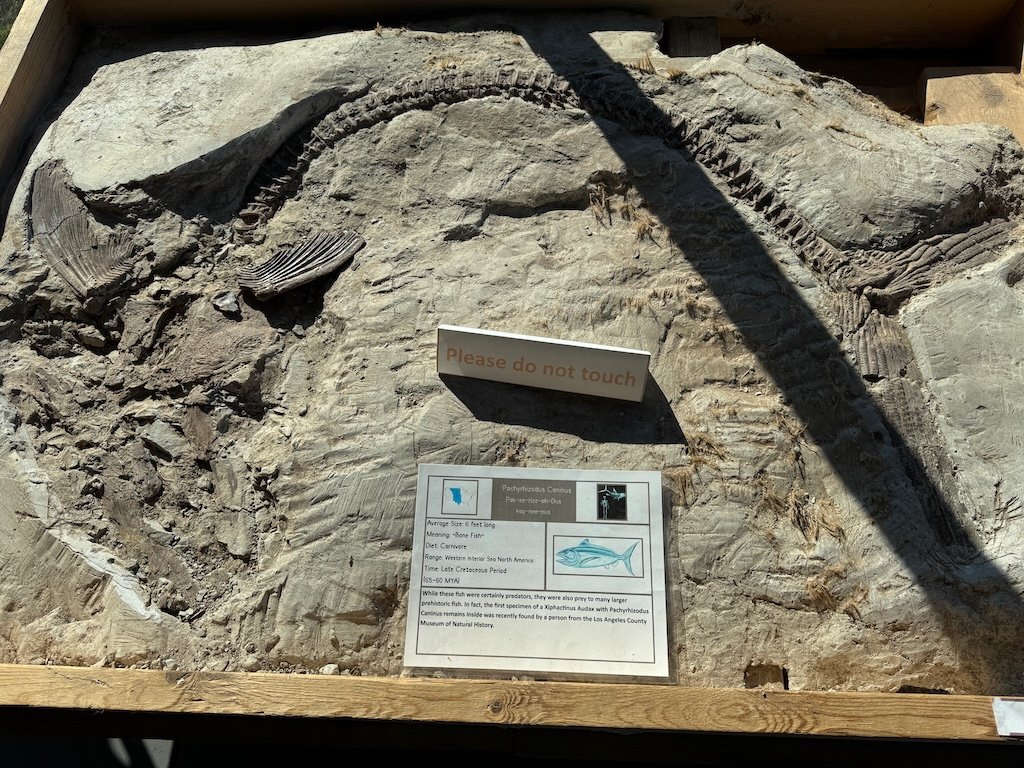
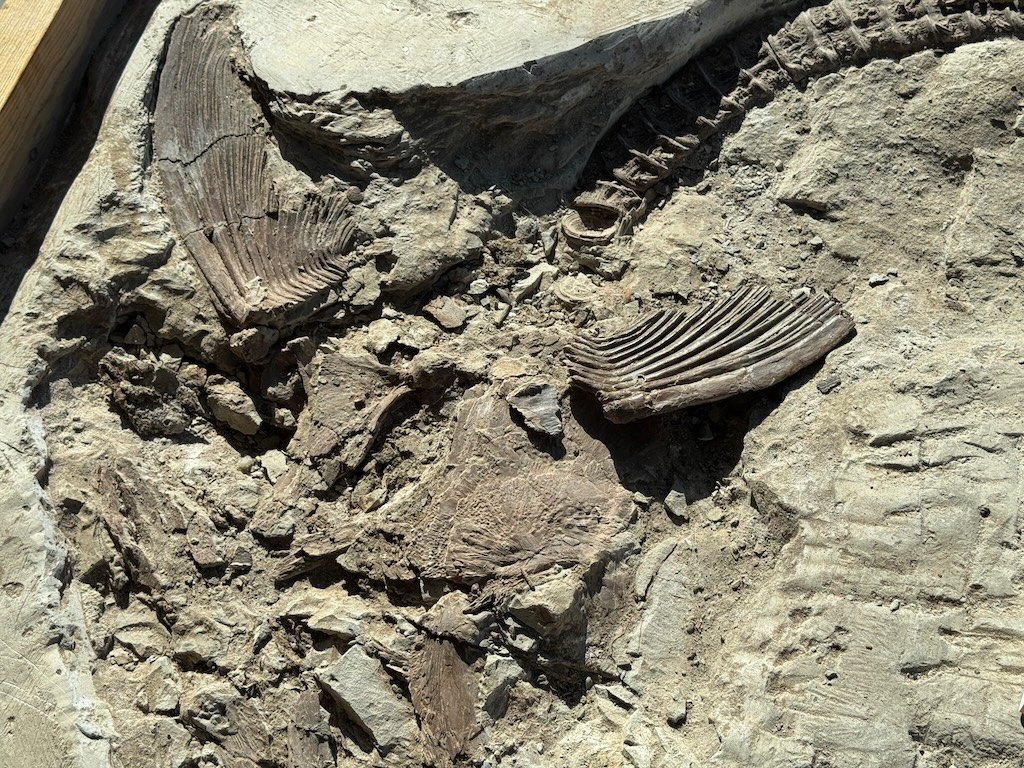
A prehistoric fish was still in rock. I zoomed in for a closer view of the front fins.

Evidence of past eras of plants were also on display. Pinecones and dawn redwood!

A raptor (dinosaur…not modern bird) egg nest was in one of the cases.

And, of course, there were shark teeth…and modern shark jaws to compare. There were obviously sharks in the past that were much larger than any we have today!

Ammonites….the rock was donated and there no indication where it was found.

The display case of coprolites (dung that has been fossilized) was in a corner of one the museum bathrooms!

There was a case of trilobite fossils. I remember one of my teenage friends being keen to find them!

There is a display of lead mining equipment – part of the history of this part of Missouri.

It was worth the visit and I might take guests from out of town to the place (a good choice on a rainy day!).

There were more people arriving as we were leaving…we headed to lunch. The timing was great since by the time we finished our lunch there was a line out the door of the restaurant (the Black Friday shoppers had worked up an appetite).

Gleanings of the Week Ending December 7, 2024

The items below were ‘the cream’ of the articles and websites I found this past week. Click on the light green text to look at the article.

No need to overload your cranberry sauce with sugar this holiday season − a food scientist explains how to cook with fewer added sweeteners – Cranberries are one of my favorite seasonal foods. I like them so much that I buy enough to freeze and use well into spring – even summer. During the cold months I use them for relishes, adding to stir fry veggies, and in muffins. I’ll make the relishes more savory than sweet from now on!

Researchers Investigate Sustainable Ancient Construction Techniques – Studying the best-preserved earthen building in the Mediterranean. It was built between the eighth and sixth centuries BCE.

Floating Wetlands Bring Nature Back to Baltimore’s Inner Harbor – Built as part of the National Aquarium. The article interested me since we lived near Baltimore for so many years.

Check Out the Highest-Resolution Images Ever Captured of the Sun’s Entire Surface – Images from European Space Agency’s (ESA) Solar Orbiter.

Climate change and air pollution could risk 30 million lives annually by 2100 - Under the most probable projection, annual mortality rates linked to air pollution and extreme temperatures could reach 30 million/year by the end of the century. In 2000, around 1.6 million people died each year due to extreme temperatures, both cold and heat. By the end of the century, in the most probable scenario, this figure climbs to 10.8 million, roughly a seven-fold increase. For air pollution, annual deaths in 2000 were about 4.1 million. By the century's close, this number rises to 19.5 million, a five-fold increase. And yet – there is not the political will to change the scenario.

Vincent van Gogh’s Brilliant Blue ‘Irises’ Were Originally Purple – The paint faded since the painting was created in 1889. It’s still beautiful – either way.

Bee alert: Pesticides pose a real threat to over 70% of wild bees - Alarming risks that pesticides pose to ground-nesting bees (i.e. bumblebees, squash bees), which are crucial for pollination and food production.

The Chilling Sound of the Aztec Death Whistle - Creating 3D digital reconstructions of original Aztec death whistles…then recording sounds from originals and the reconstructions. Both produced sounds like a human voice or scream. There is a link to recording samples at the bottom of the post.

Overwhelmed by ever more clothing donations, charities are exporting the problem. Local governments must step up - There are more and more clothes in circulation, and they are getting cheaper and lower quality. That means the clothes you give away are worth less and less. Worldwide, we now dump 92 million tons of clothes and textiles a year, double the figure of 20 years earlier. Local governments usually handle other waste streams. But on clothes and textiles, they often leave it to charitable organizations and commercial resellers. This system is inherited from a time when used clothing was a more valuable resource, but the rising quantity of clothing has pushed this system towards collapse.

Oysters as large as cheese plates: How New Yorkers are reclaiming their harbor’s heritage – Perhaps the main accomplishment of the project, even more than increasing oyster population, is reminding New Yorkers that they are islanders. It's hard to care about something that is only abstract, something you don't have experience with. Ultimately, people have a much greater ability to improve water quality than the oysters ever will.

eBotanical Prints – November 2024

Twenty more books were added to my botanical print eBook collection in November - available for browsing on Internet Archive, New York Public Library Digital Collections, or Botanicus. They cover a range of botanical topics: medicinal plants, botanical link in literature (Milton), particular taxonomic groups, and fruit as well as plants of places (Italy, Russia, and Korea (7 volumes!)). Three volumes (1 by Cornut and 2 by Presl) were about North American plants from preserved plants collected by others – the authors never visit the New World. Overall - the 20 books were published over almost 300 years (1635-1933).

My list of eBotanical Prints books past the 3,000 volumes milestone in November – now totaling 3,003 botanical eBooks I’ve browsed over the years. The whole list can be accessed here. Click on any sample image below to get an enlarged version…and the title hyperlink in the list below the image mosaic to view the entire volume.

Enjoy the November 2024 eBotanical Prints!

Picturesque botanical plates * Thornton, Robert John * sample image * 1807

American medical botany * Bigelow, Jacob (artist) * sample image * 1820

Sorimachi 409 * Spencer collection * sample image * 1746

The Flowers of Milton * Giraud, Jane Elizabeth (Lithographer) * sample image * 1846

Pomona Italiana * Gallesio, Giorgia (illustrator); Capurro, Niccolo (pubisher) * sample image * 1839

Iac. Cornvti ... Canadensivm planatarvm, aliarumque nondum editarum historia.  * Cornut, Jacques Philippe * sample image * 1635

Eidodendron: views of the general character and appearance of trees foreign and indigenous connected with picturesque scenery * Burgess, Henry William (artist); Hullmandel, Charles Joseph (printer) * sample image * 1827

Flora Rossica * Pallas, Peter Simon * sample image * 1788

Reliquiae Haenkeanae V1 * Presl, Karel Borivoj; Haenke, Thaddaus * sample image * 1833

Reliquiae Haenkeanae V2 * Presl, Karel Borivoj; Haenke, Thaddaus * sample image * 1835

Hymenophyllaceae :eine botanische Abhandlung  * Presl, Karel Borivoj * sample image * 1843

Tentamen Pteridographiae * Presl, Karel Borivoj * sample image * 1836

The Hardy Catalpa * Record, Samuel James * sample image * 1906

Flora Sylvatica Koreana Pt 11 Caprifoliaceae * Nakai, Takenoshin * sample image * 1921

Flora Sylvatica Koreana Pt 16 Araliaceae and Cornaceae * Nakai, Takenoshin * sample image * 1927

Flora Sylvatica Koreana Pt 17 Elæagnaceæ, Alangiaceæ, Daphnaceæ, Flacourtiaceæ et Ternstrœmiaceæ  * Nakai, Takenoshin * sample image * 1928

Flora Sylvatica Koreana Pt 18 Piperaceæ, Chloranthaceæ et Salicaceæ * Nakai, Takenoshin * sample image * 1930

Flora Sylvatica Koreana Pt 19 Ulmaceæ et Moraceæ * Nakai, Takenoshin * sample image * 1932

Flora Sylvatica Koreana Pt 20 Bambusaceæ, Myricaceæ, Juglandaceæ, Magnoliaceæ * Nakai, Takenoshin * sample image * 1933

Flora Sylvatica Koreana pt. 21 Aristolochiaceæ, Lardizabalaceæ, Berberidaceæ, Pittosporaceæ, Malvaceæ, Empetraceæ, Urticaceæ * Nakai, Takenoshin * sample image * 1933

2024 in Review – Life Events

This is the first post reviewing what happened to me in 2024; I’m starting with the big events.

2024 included a bigger-than-usual event…perhaps even a pivot point in my life: my mother died. We had shared our lives for over 70 years; no one else can fill the gap completely. The months leading up to her death (hospitalization, moving to assisted living, rallying, COVID-19) and the immediate aftermath (the funeral, selling my parents’ house, finalizing her financial affairs, comforting my father) are still fresh in my memory. I’m not completely sure that the pivot is complete even now. My relationship with my siblings (3 sisters) is still changing.

All the other events of 2024 are not as life changing:

Taking the Identifying Wood Plants class at Missouri State University and the Missouri Master Naturalist training were an important step back to pre-COVID times. Both have prompted an uptick in volunteering and discovering ‘favorite places’ close to home.

Attending a funeral for my cousin. She was more than a decade younger than me, and we had not seen each other frequently in recent years. It happened not that long after my mother’s death and the sadness was quite different…for a life that ended early.

I made many short trips (day trips, one or two nights away from home) with my daughter. Sometimes with my husband along too. There are so many new places to explore when one moves to a new part of the country. We have been here in Missouri for 2.5 years and there still seems a lot to see for the first time within the ‘short trip’ range.

Physical therapy (1)

My first session of physical therapy for lower back pain was just before Thanksgiving. I have 2 appointments per week through December – with a week off while I am out of town. It will be fabulous if this round can be as successful as the one about 20 years ago when I had a shoulder problem.

It has started out with very simple exercises for me to do twice a day. I’m sure it will ramp up to more challenging ones soon since the first ones are very easy for me. I am optimistic that it is going to help because of my previous experience and because the therapist has already made some suggestions that are helping me move without hurting!

It feels great to be ending the year with this type of activity…doing something that has the potential to enable me to start 2025 in better physical condition than I’ve been in 2024!

Gardens Aglow 2024 (1)

We walked through the Mizumoto Japanese Stroll Garden’s Gardens Aglow the Monday before Thanksgiving. It was the member’s only night and we arrived just at it opened at 5. They were handing out mugs of hot chocolate! We were bundled up but feeling the chill of the first really cold days so the hot chocolate was appreciated.

There was still light in the sky but as we walked around the light displays it got fully dark. I missed last year’s show because I was in Dallas the whole time…so it was a treat to see it again. Every year it is a bit different.

I always enjoy the Japanese lanterns even though they are not draped in lights. My favorite this year was the one with newly fallen ginkgo leaves around its base.

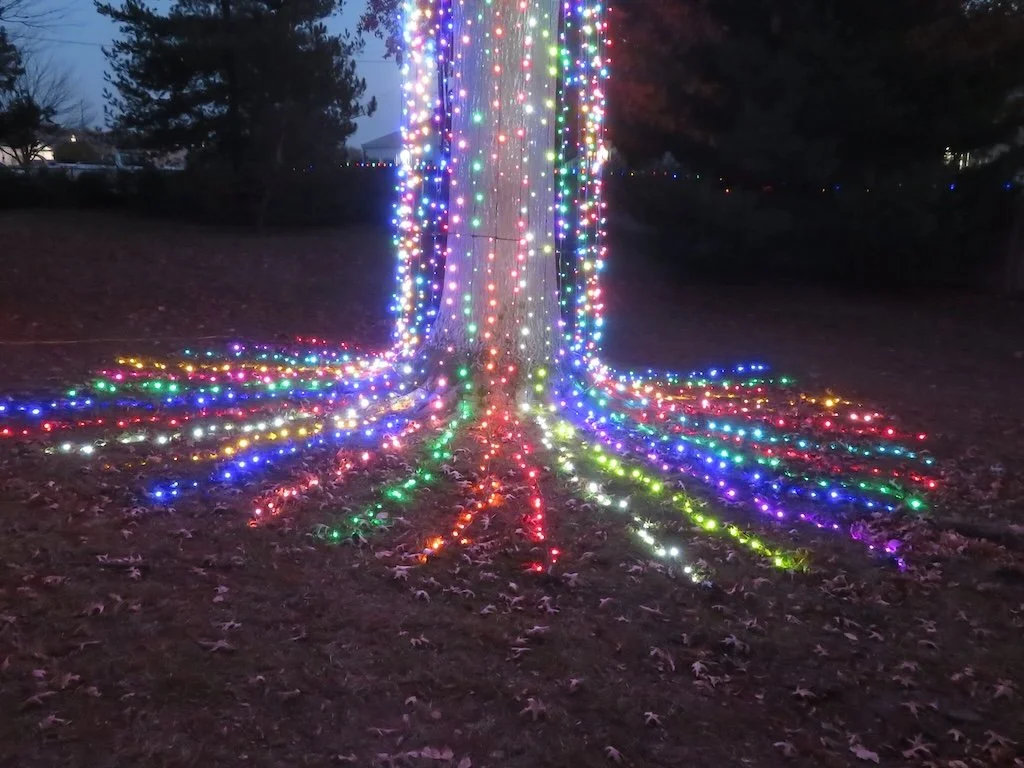
Two big trees were probably my favorites: a rainbow tree and a bald cypress with spots shining upward into its branches.

It really is a great place to spend on hour of our evening. I will be volunteering on 2 nights in December…and we’ll probably go again to see it on another evening.

Gleanings of the Week Ending November 30, 2024

The items below were ‘the cream’ of the articles and websites I found this past week. Click on the light green text to look at the article.

How the Groundbreaking Suez Canal Forever Transformed the World’s Shipping Routes – The official opening ceremony was on November 17, 1869. It had taken 10 years to build on the path of an ancient canal and was called “the greatest service to the commerce of the world since the discovery of America.” The project was funded mostly by Western Europe.

'Jekyll and Hyde' leaders do lasting damage - When supervisors swing between good and bad behavior, they do even more damage to their employees than ones that are abusive all the time. And there are some indications that this kind of leadership could be contagious, with a leader's volatility fostering volatility in others

Scientists find a 35,000-year-old saber-toothed kitten in the Siberian permafrost - The cat was just three weeks old when it died, but its cause of death is unknown. The kitten still had its whiskers and claws attached when it was pulled out of the permafrost, and was covered in a coat of short, thick, soft, dark brown fur. Its hair was about 20 to 30 millimeters long. When looking at the mummified cub, scientists found some interesting differences between the kitten and a modern lion cub, particularly, in their paws: the saber-toothed kitten had wider paws, but no carpal pads — that's the wrist joint that's help modern day felines absorb shock.

Hatchling Alligators at the Fort Worth Nature Center – The Dallas/Fort Worth area is at the edge of American Alligator range…but the Nature Center has confirmed that it has a breeding population there. The Fort Worth Nature Center is 3,650 acres of mixed habitat, owned and operated by the City of Forth Worth; it is one of the largest city-owned nature centers in the US. There is an alligator research project ongoing there now that the breeding population has been discovered.

Sitting too long can harm heart health, even for active people - 10 hours or more of sedentary behavior per day is associated with heightened risk of heart failure and cardiovascular death. I am so glad that I decided years ago to use a Swopper chair (without a back…bouncing) at my computer desk….so I am moving most of the time that I am there!

Bone marrow in the skull plays a surprisingly important role in ageing - Studies in mice and humans showed that ageing results in skull bone-marrow expanding, and in mice this marrow was more resistant to inflammation and other hallmarks of ageing.

Glaciers Reveal When Volcanoes Are on Brink of Eruption - New research shows that glaciers near active volcanoes flow faster than other glaciers. The findings suggest it would be possible to predict volcanic eruptions by tracking the speed of glaciers.

Can we live on our planet without destroying it? - With eight billion people, we currently use a lot of the Earth's resources in ways that are likely unsustainable. Research shows that humanity can stay within the planetary boundaries. But it seems that there is little political will to do so. A depressing commentary on humanity.

Memories are not only in the brain - In the future, we will need to treat our body more like the brain -- for example, consider what our pancreas remembers about the pattern of our past meals to maintain healthy levels of blood glucose or consider what a cancer cell remembers about the pattern of chemotherapy.

Astronauts of the underworld: The scientists venturing into the deep, dark Earth - Hundreds of cave entrances are known on Earth, the Moon, even Mars. Many have never been explored.

Nevin Otto Winter Travel Books

This week’s books are 9 well-illustrated travel books by Nevin Otto Winter published between 1910 and 1918. I was most interested in the illustrations – mostly photographs – although the narrative would serve to understand the perspective of an American traveler of that time period encountering foreign customs. I picked two sample images from each book to include with this post but follow the link to Internet Archive to experience the whole book. Enjoy!

 Brazil and her people of to-day

Thanksgiving

I am thinking of Thanksgiving ahead of time – planning a quite holiday with family with activities planned before and after:

  • The holiday light display is open for Friends of the Garden the Monday before Thanksgiving…so we will enjoy our first walk through of the season unless the weather is wet. I missed seeing them at all in 2023 because I was in Dallas for the later part of the year.

  • I am not a black Friday shopper…but enjoy being outdoors (maybe working off some of the calories from the day before). Our November has been relatively mild…good hiking weather.

There is also plenty in my life to be thankful for right now:

  • My dad is comfortable at his assisted living home; my sisters and I are able to visit him frequently.

  • I have finished my Missouri Master Naturalist training, and the volunteering opportunities seem to be coming along as I expected. There is much to learn and do even during the winter.

  • The Identifying Woody Plants class at Missouri State is about over…and I thoroughly enjoyed the field trips – learned a lot about great outdoor places close to where I live.

  • Our home is snug – ready for winter…the sprinkler system winterized and the heating system checked.

  • Both cars are performing well. Both have been used for road trips recently. My husband and I both appreciate the driver’s aids on modern cars when we make longer drives.

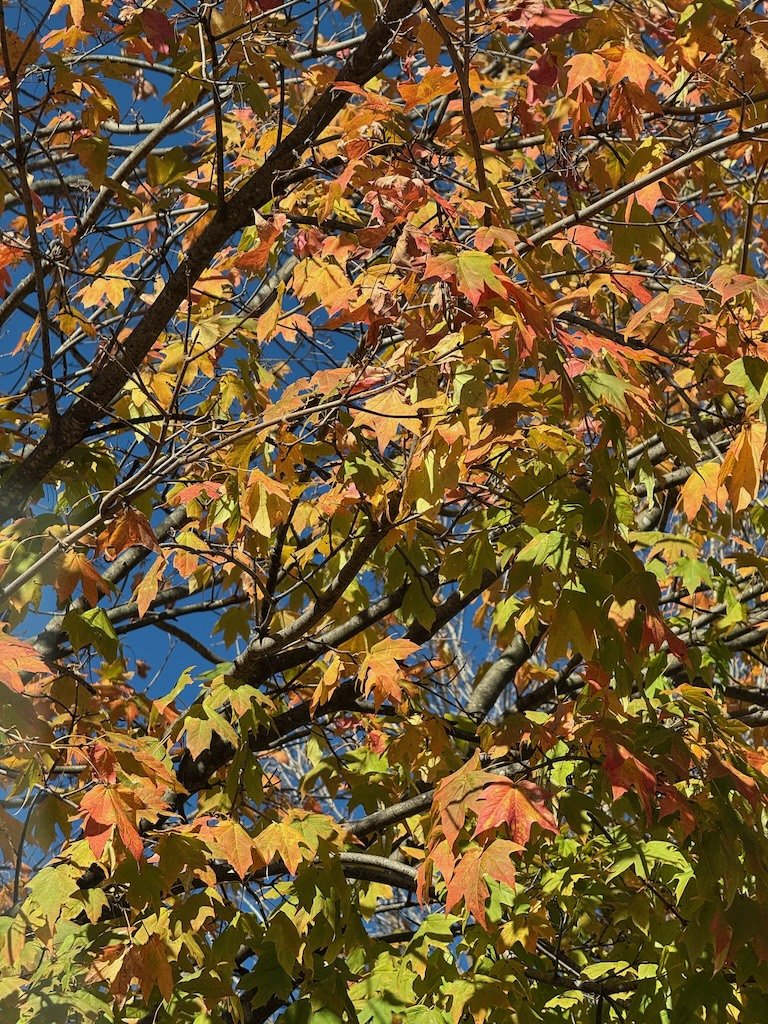
  • The fall has been prolonged by the milder temperatures. The color might have been muted from less rain in the summer, but the length of the display made up for that.

  • Internet Archive is back online. I missed it a lot while it was down and realize how much I savor browsing through its digitized old books; many of them are not available otherwise.

Life is good….

Identifying Woody Plants – Month 3

The Identifying Woody Plants field class I am taking at Missouri State University is winding down. The field trips are done, and we’ve had a class looking at twigs and fruit in the lab. The fruit is not too hard…but twigs are a challenge. I did some photographs of fruit.

Hickory nuts/husks, pods (trumpet creeper, catalpa, honey locust)

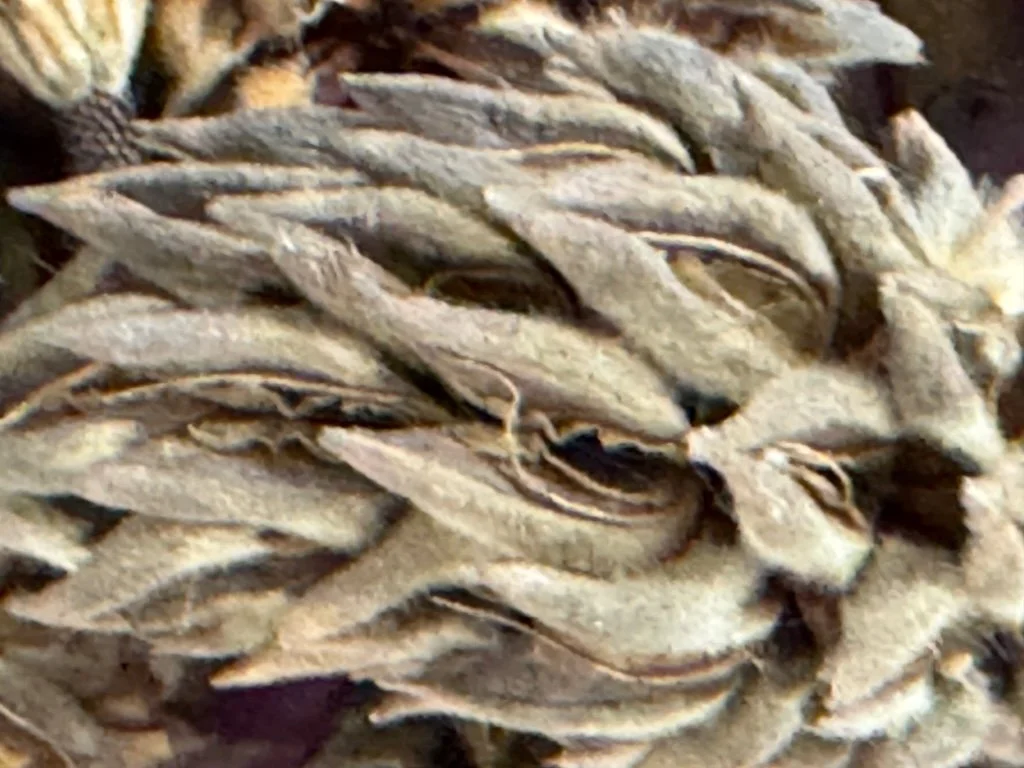
Colorful bittersweet (I hope the native), acorns, chestnut burs, magnolia (the grouping looked very artsy to me), rose hips, tree of heaven winged seeds, pods of Rose of Sharon.

The ginkgo outside the building our classroom is in finally turned yellow. There were others on campus that had already turned yellow and dropped their leaves. This one was delayed.

In another class, we looked at pressed specimens from prior classes (some of them more than 10 years old) with the assignment to be able to ID them in the next class! I realized how much I look at many aspects of the tree and only having the small part that can fit on a page is sometimes very challenging.  The Nyssa sylvatica specimen has no fruit – just leaves and twig.

There is one more class after Thanksgiving that includes the mounting of our own pressed specimens. Then I will be done since I am auditing the class and can forego the final!

Previous posts about Identifying Woody Plants field class

Gleanings of the Week Ending November 23, 2024

The items below were ‘the cream’ of the articles and websites I found this past week. Click on the light green text to look at the article.

How a Soviet swamp rat scheme for Azerbaijan went horribly wrong – Nutria introduced in the 1930s…..destroying every wetland in Azerbaijan today.

Light Pollution May Be Keeping Honey Bees Up at Night - On hot nights honey bees will sleep outside and slept less/more fitfully if there is artificial light…which could undermine the health of the colony.

The next massive volcano eruption will cause climate chaos — and we are unprepared – The history of large eruptions and what we can determine about the aftermath…though provoking on what it would be like if a massive eruption happened in the modern world.

Carbon recycling instead of plastic trash – Using iron electrocatalysis and producing green hydrogen as a biproduct…can be powered by solar panels. I hope this can be commercialized near term. We are overwhelming our world with plastic trash!

CT Scans Unlock Secrets of Mummified Individuals at Field Museum – Respect for the ancient dead…but still studying their bodies.

How do countries measure immigration, and how accurate is this data? - Three types of migrants who don’t have a legal immigration status. First, those who cross borders without the right legal permissions. Second, those who enter a country legally but stay after their visa or permission expires. Third, some migrants have legal permission to stay but work in violation of employment restrictions. Most high-income nations have a small minority of irregular immigrants in their immigrant population; the exception is the United States which estimates 22% of their immigrants are irregular.

Riding The Rails on Amtrak's Cardinal Line Through New River Gorge – Maybe a relaxing way to see the National Park and Preserve…thinking about next fall.

Mother Tiger Teaching Cub How to Fight Wins Nature’s Best Photo Awards – Great pictures….but Patricia Homonylo’s video is the most thought provoking….the one that is a call to action.

Geologists rewrite textbooks with new insights from the bottom of the Grand Canyon - From the Tonto Group's 500-meter-thick strata, we're learning about sea-level rise and the effects of catastrophic tropical storms -- probably more powerful than today's devastating hurricanes -- during a period of very hot temperatures when the Earth was ice-free.

Quantifying How Urban Trees Cool Cities - The authors of a new study estimate that the city of Baltimore could reduce land surface temperatures by 0.23°C if they increased tree canopy by 1%. To achieve 1.5°C of cooling, they would need to increase tree canopy cover by 6.39%.

Robert Edwin Peary’s Arctic

Robert Edwin Peary’s Arctic explorations in the later 19th and early 20th centuries are documented in 6 books he published between 1898 and 1917. They are available on Internet Archive and worth browsing. They are all well-illustrated…attempting to show every aspect of Arctic exploration and Inuit life too. I’ve selected 2 sample images from each book…hopefully enough to encourage browsing the books for yourself!

Northward over the "great ice" : a narrative of life and work along the shores and upon the interior ice-cap of northern Greenland in the years 1886 and 1891-1897

Milestones

Last week marked two ‘milestones’ in my Missouri Master Naturalist (MMN) volunteering:

My tree educational trunk capstone project (part of the MMN training) is finished (or at least at a good stopping place). I had intended to leave it at the Springfield Missouri Department of Conservation for storage…and I savored the fall foliage from my car when I got there. The fall has lingered this year without a hard frost to hurry the end. By the end of the morning, I was taking the trunk home along with some additional educational materials since there is a plan to use the trunk for outreach sessions in January and maybe the Osage orange would be dry enough to add to it by then. I’m still thinking about it as ‘finished.’

I also started a new project: creating a collection of soft pith stems in a bucket (suggestion from Wild Bee Lab Facebook Page). I’ll check it periodically to see if any bees use the stems for nests. My initial collection includes pokeweed, forsythia, bush honeysuckle, and goldenrod. Yes – some are non-native but if the bees use them, I’ll be even more vigorous in getting rid of the non-natives around my yard and doing this with the stems rather than burning them in my chiminea.

Gleanings of the Week Ending November 16, 2024

The items below were ‘the cream’ of the articles and websites I found this past week. Click on the light green text to look at the article.

Drought Expands Across the U.S. – We are finally getting some rain…but we are in the ‘extreme drought’ area of southwestern Missouri; it is going to take a lot to get back to ‘normal.’ On October 29, abnormal dryness and drought affected over 78 percent of the American population—the highest percentage in the U.S. Drought Monitor’s 25-year-long record.

Cholera, Zika and West Nile: The deadly diseases that sweep in after hurricanes – Damage to infrastructure has been the big focus of reporting in the US, but diseases are ramping up.

  • Florida health authorities released a warning in early October of a likely spike in Vibrio vulnificus infections, urging residents to avoid wading in floodwaters.  Vibrio vulnificus is a bacteria which can cause the breakdown of skin and soft tissue, sometimes leading to amputations.

  • West Nile cases rose in Louisiana and Mississippi following Hurricane Katrina.

  • Studies found that flooding in Louisiana following hurricanes Rita and Katrina led to an increase in the airborne fungi Penicillium and Aspergillus, which can cause allergies, respiratory infections and pneumonia.

  • Research into the aftermath of hurricanes Maria, Irma and Michael, shows that a significant number of people in Florida developed new chronic health conditions such as asthma and allergies in the six months following the disasters.

Satellite Imagery Shows Breadth of Flooding in Spain - Valencia saw a year’s worth of rainfall in just eight hours, with floods destroying buildings, disrupting trains, and leaving more than 100,000 homes without power.

What animal societies can teach us about aging - Humans are not the only animals to change our social behavior as we age. Red deer may become less sociable as they grow old to reduce the risk of picking up diseases, while older house sparrows seem to have fewer social interactions as their peers die off.

The world’s oldest tree? Genetic analysis traces evolution of iconic Pando forest - By sequencing hundreds of samples from the tree, researchers confirmed that Pando, a quaking aspen tree (Populus tremuloides) in Utah, is between 16,000 and 80,000 years old. Pando consists of some 47,000 stems that cover an area of 42.6 hectares in Utah’s Fishlake National Forest. Because of the way the plant reproduces, this collection of aspens is technically all one tree, supported by a single, vast root system. Pando is triploid, meaning that its cells contain three copies of each chromosome, rather than two. As a result, Pando cannot reproduce sexually and mix its DNA with that of other trees, and instead creates clones of itself.

Have we found all the major Maya cities? Not even close – Using lidar to survey 50 square miles revealed evidence of more than 6,500 pre-Hispanic structures, including a previously unknown large city complete with iconic stone pyramids.

Stunning Shortlisted Photos From the 2024 Close-Up Photographer of the Year Contest – My favorite was “Chicory” for the color…and that I knew what it was!

Low-level lead poisoning is still pervasive in the US and globally - Chronic, low-level lead poisoning is a major risk factor for cardiovascular disease in adults and cognitive deficits in children. Factors such as menopause and hyperthyroidism release lead sequestered in the skeleton, which causes a spike in blood lead concentrations. The solution to protecting people from lead poisoning is to identify and eliminate environmental sources of lead: eliminating lead acid batteries, replacing lead service lines, banning leaded aviation fuel, reducing lead in foods, abating lead paint in older housing, and further reducing lead-contaminated soil and other legacy sources.

Ghost Forests Creep Into North Carolina - Large swaths of cypress and pine forests along the southeast Atlantic coast have died, shed their bark, and become pale, leafless snags that line the waterways like gravestones. In the period before winds topple the snags over and shrubs cover them up, researchers call the eerie ecosystems “ghost forests.” One place that is it happening is Alligator River National Wildlife Refuge…and I realized I have been there! We visited in April of 2015. It was the first place I saw river otters and two vultures (different species) sharing a meal. There probably were bald cypress dying in 2015, but it is even more evident now.

Trees cool better than reflective roofs in vulnerable Houston neighborhoods - Heat islands occur in cities where structures such as buildings and roads absorb the sun's heat more than natural landscapes such as trees and grass. The researchers considered three different heat island mitigation strategies: painting roofs white to increase solar reflectance; planting vegetation on roofs to increase evaporation through the plants; and planting more trees, which increases evaporation and provides shade.

Sustaining Elder Care – November 2024

I have two book/puzzle sorting days at my community library before I go off to Dallas again…I am hoping to find some more 300-piece puzzles to take for my Dad. I think he is probably running a bit low and maybe my sister is bringing some older ones back that he hasn’t done recently. We don’t have as many 300-piece as we do 500…and those 500-piece ones are getting too hard for him.

The past month has been more stressful in terms of elder care than I anticipated. There is a disagreement between us daughters about whether he is having pain when he eats and he needs his food ground up. Observations of him eating are not consistent. We have asked the dentist he saw last to make an assessment….since to make the change in mealtime routine for the assisted living staff will require a doctor’s order.  On the plus side – I don’t think my dad is aware of the turmoil. Most of the interaction among my sisters and I is via text; I’ve stopped looking at the messages about an hour before bedtime to try to reduce the impact on my sleep. It’s also caused me to start thinking more about what I want my relationship with my sisters to be separate from our shared interest in our father’s well-being.

13th Anniversary of my Blog

This is the 13th anniversary of this blog space. It all started when I made the firm decision to retire and started a daily blog…a few months before my career formally ended. It was a way for me to guarantee a little bit of structure in what loomed as a time of my life without many external requirements on my time.

Work had dominated so much of my time – way more than my college education during the first decade of my career…more than my daughter’s 1st 20 years in decades 1.5-3.5 of my career. My husband has been a constant through it all  - both of us putting considerable time into our careers. Mine ended without a glide path (intentional on my part)….his was a glide that finally ended a few years after my retirement. We both were aware of developing new ways to fill our days with a mix of activities that we chose – sometimes very different from things we did while our careers were active.

Writing a daily blog has had a positive impact on furthering my artistic side…and sometimes spurring me to action.

Previous anniversary posts: 12th anniversary, 11th anniversary, 10th anniversary, 9th anniversary

Gleanings of the Week Ending November 09, 2024

The items below were ‘the cream’ of the articles and websites I found this past week. Click on the light green text to look at the article.

Old Growth – Mitch Epstein photographs of very old trees.

The true story of a famed librarian and the secret she guarded closely – Belle da Costa Greene, the first director of New York's historic Morgan Library and Museum.

Inside Turkey’s Mysterious Ancient City That Once Sheltered Thousands—Underground - The Derinkuyu underground city is a sort of gargantuan anthill, except made by and for humans—up to 20,000 of them at a time, in fact. The city descends 280 feet into the earth, divided into eight levels. Upper levels were primarily used for living and sleeping, while lower levels were used for storage, even housing a dungeon. The far-stretched system of interconnected rooms was carved out of the Cappadocia region’s tuff rock. People didn’t live in these underground quarters year-round, however, as they were mainly used for shelter during times of conflict or extreme weather.

Climate change will affect food production, but here are the things we can do to adapt - Farmers can pick crop varieties best suited to different climate condition...production can shift to places with more optimal temperatures…planting and harvest times can shift as the seasons shift…focusing on the right irrigation, fertilizer, pesticides synchronized to climate change. We have the chance to build a more productive and resilient food system, but it’s not guaranteed that we will. It depends on whether the seeds, irrigation, and adaptation practices will be available. That will require real and sustained investment from governments, donors, and private companies.

Toothbrushes and showerheads covered in viruses ‘unlike anything we’ve seen before’ - We live in a richly microbial world. Interactions with bacteria and other microbes in our homes are an integral part of our human biology.

The monarch butterfly may not be endangered, but its migration is - Migrating monarchs don't fly at night, so they spend their evenings in bunches on trees or shrubs, known as roosts. The study relied on 17 years of data from more than 2,600 citizen scientist observations of monarch roosts along the butterfly's migration route. The researchers found that roost sizes have declined by as much as 80%, with these losses increasing from north to south along the migration route. The evidence shows that when monarchs are reared in a captive environment, either indoors or outdoors, they're not as good at migrating.

World’s Rivers Are Driest They - In 2023, the hottest year on record, the Mississippi River and Amazon River basins were at all-time lows, while the Ganges, Brahmaputra, and Mekong rivers, which all have their headwaters in the Himalayas, were also unusually dry. Across nearly half the globe, rivers were drier than normal.

The worrying puzzle behind the rise in early-onset cancer - Over the past 10 years, rates of colorectal cancer among 25- to 49-year-olds have increased in 24 different countries, including the UK, US, France, Australia, Canada, Norway and Argentina. Perhaps the most obvious explanation points to the role of obesity and metabolic syndrome, conditions which have been associated with driving cancer risk through increasing inflammation throughout the body and causing the dysregulation of key hormonal pathways. Or maybe changes in sleep patterns is part of the explanation. Combined with shifts in lifestyle, many cancer scientists believe that a key driving force for these illnesses is the consequences of various toxic changes within the gut (from microplastics). Antibiotics might be involved too. The bottom line…it’s a looming public health crisis.

New research reveals how large-scale adoption of electric vehicles can improve air quality and human health - Computer simulations show that aggressive electrification of the U.S. vehicle fleet, coupled with an ambitious rollout of renewable electricity generation, could result in health benefits worth between US$84 billion and 188 billion by 2050. Even scenarios with less aggressive grid decarbonization mostly predicted health benefits running into the tens of billions of dollars.

New study explores how universities can improve student well-being - Six guiding principles for improving student well-being:

  • Embedding well-being into curricula for broader, more accessible adoption.

  • Having each initiative only focus on one or two aspects of well-being, making it easier to create instruction that can also be more immersive.

  • Tailoring initiatives to the student body and university culture.

  • Securing buy-in from faculty.

  • Ensuring new offerings are accessible and don't create additional financial burden for students.

  • Employing an iterative assessment framework at the beginning to make it easier to change or scale up a program.

A Hand-book to the Order Lepidoptera

William Forsell Kirby was an English Entomologist that authored a 5-volume Handbook to the Order Lepidoptera in 1896 and 1897. I am featuring the 1st volume as this week’s ‘book of the week’ because I was so pleased to find it. I had somehow browsed the other 4 volumes back in 2016! Enjoy the 4 sample images….and follow the link to see many more.

A hand-book to the order Lepidoptera - volume 1

The links to the other 4 volumes are: two, three, four, five.

Valley Water Mill Park

The MSU Identifying Woody Plants class went to Valley Water Mill Park last week. It is northeast of Springfield MO and includes a variety of habitats: upland forest, bottomland forest, wetland, glade, prairie, savanna, and lake/stream. It’s a place I will want to visit again.

We saw a lot of trees we had seen before and some new ones too. The fall is changing the way we go about identifying the woody plants we’d seen before.

The bald cypresses are losing their needles…and there were trees at this park with knees (the previous ones were growing in locations where they did not produce knees). The knees make them easy to ID.

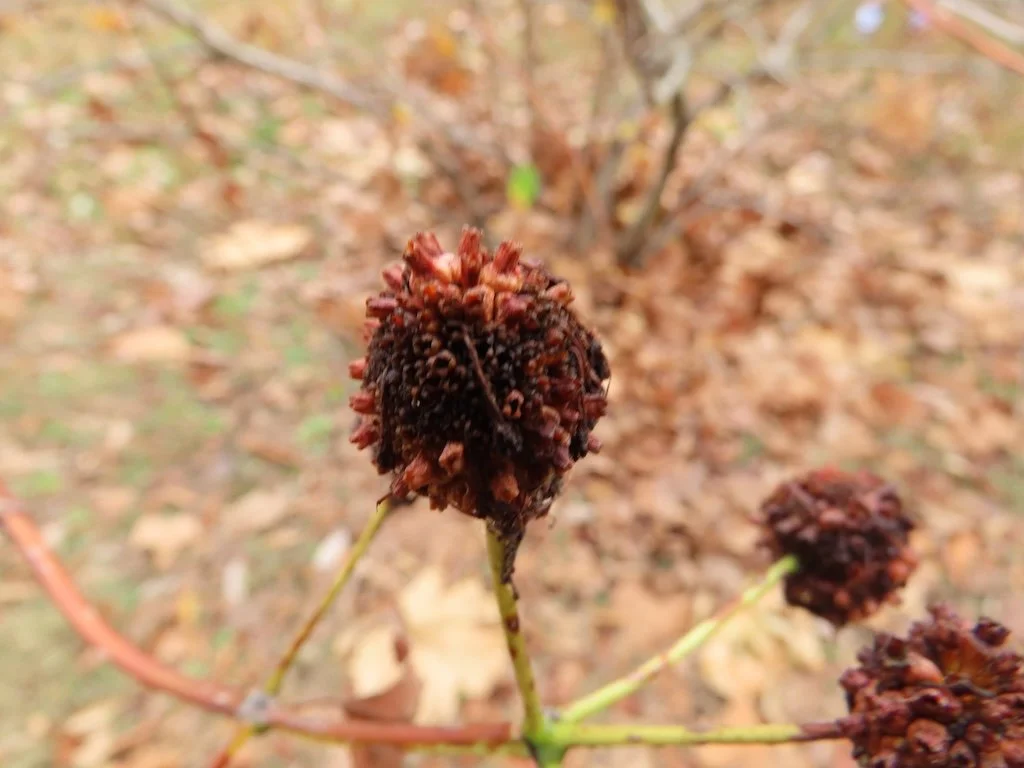
The buttonbush had lost its leaves, but the round seed heads make it easy enough to ID.

There were lots of sycamore leaves on the ground…many were huge and, sometimes, still green.

A Wahoo was obvious but our teacher said there was aphid damage too which is frustrating.

Poison ivy berries…new-to-me…good to know.

Black cherry bark – of a young tree and an older tree.

Some new species:

A bittersweet – no leaves but lots of fruit.

A chestnut – ID from the bur alone down to genus.

Japanese honeysuckle. This is one I recognize easily but I hadn’t noticed the seeds before.

Coralberry. This might be one I add to my yard someday – although I don’t know where yet.

Black haw or cherry-leafed viburnum is even more likely to find its way into my yard. It might make a good planting in the bowl left from a tree in my front yard that was removed before we bought the house.  It is a shrub that does well in shade so it might work to fill in between the two maples and provide flowers in the spring and fall/winter food for wildlife.

The lake was low even though there had been about an inch of rain the previous night. The area has been in drought for so long that it is going to take time to replenish the water level. There was evidence of beaver (many of the trees have wire cages around their base for protection.

Valley Water Mill Park might become one of my favorite places in the Springfield area.  My husband and I will probably make a ‘field trip’ there and walk the whole loop around the lake. I also filled out the form to volunteer for their education/outreach programs.

Missouri Master Naturalist Training – Week 9

The last session of the Missouri Master Naturalist Training was one lecture followed by graduation and ice cream cake!

The lecture was on invasives. Most of the invasive plants I was familiar with (from Maryland)…except for Sericea Lespedeza which is a warm-season, perennial legume. It is something that was introduced intentionally then escaped and is now widespread – outcompeting native plants. Frustratingly – its seeds are still being sold and attempts to stop that at the state level have failed.

There were some trunk sections of young ash trees killed by Emerald Ash Borer. The widespread death of ashes in Missouri is happening now…just as it did in Maryland several years ago.

The good (so far) news on the invasive insect front is that Missouri does not have Spotted Lanternfly…although it is probably only a matter of time since the insect is in Illinois and Kentucky.

Graduation included a magnetic name badge and a certificate (and some goodies that included milkweed seeds). I splurged and had 2 pieces of ice cream cake!

I am going to miss the rigor of the class but am relaxing a bit – savoring my Identifying Woody Plants class at the university that continues into December!