Gleanings of the Week Ending May 31, 2025

The items below were ‘the cream’ of the articles and websites I found this past week. Click on the light green text to look at the article.

10 Ways Vincent Van Gogh Continues to Make News, Even Today – An artist that has been ‘newsworthy’ for a very long time. This post about recent instances of ‘Van Gogh mania.’

Measles vaccines save millions of lives each year – Statistics about measles and the impact of the vaccine…history and how the choices we make will have impacts on the future trajectory of the disease.

New River Gorge National Park and Preserve – It became a national park in 2020. I’ve driven through it…stopped at a visitor center…but haven’t experienced it the way I have other national parks.

Forty Years of Change in Louisiana’s Wetlands – Images from Landsat 9 from 1985 and 2024 show that much of the wetland has transitioned to open water….reshaped by storms and sea level rise.

In healthy aging, carb quality counts - The researchers analyzed data from Nurses' Health Study questionnaires collected every four years between 1984 and 2016 to examine the midlife diets and eventual health outcomes of more than 47,000 women who were between the ages of 70 and 93 in 2016. The analysis showed intakes of total carbohydrates, high-quality carbohydrates from whole grains, fruits, vegetables, and legumes, and total dietary fiber in midlife were linked to 6 to 37% greater likelihood of healthy aging and several areas of positive mental and physical health.

Wildlife Photographer Captures Mid-Air Battle of Two Birds Fighting for Dinner – The battle over a vole between a Northern Harrier and Short-eared Owl in British Columbia, Canada. Dramatic photos. Both birds are over Missouri Prairies in the winter too!

How the humble chestnut traced the rise and fall of the Roman Empire - According to researchers in Switzerland, the Romans had something of a penchant for sweet chestnut trees, spreading them across Europe. But it wasn't so much the delicate, earthy chestnuts they craved – instead, it was the fast-regrowing timber they prized most, as raw material for their empire's expansion. And this led to them exporting tree cultivation techniques such as coppicing too, which have helped the chestnut flourish across the continent.

China’s Mega Dam Project Poses Big Risks for Asia’s Grand Canyon - China’s plans to build a massive hydro project in Tibet have sparked fears about the environmental impacts on the world’s longest and deepest canyon. It has also alarmed neighboring India, which fears that China could hold back or even weaponize river water it depends on.

Step Into a Painstakingly Recreated 3D Model of the Parthenon, Now Restored to Its Ancient Glory - By combining archaeology and technology, a researcher has shed light on a longstanding architectural mystery: how the ancient Greeks experienced the inside of the Parthenon, the Athenian Acropolis’ largest temple, built and dedicated to the goddess Athena in the fifth century B.C.E.

How Tikal Became One of the Greatest Mayan Cities—and Then Vanished - Nowadays, the ruins of Tikal, an ancient Maya city in northern Guatemala, have been largely reclaimed by the jungle. Howler monkeys jump from pyramid to pyramid. Bats hide in the crevices of abandoned homes. Bullet ants and tarantulas crawl along the forest floor while coatis—racoon-like animals with long, upright tails—search for fallen fruit. Many of the city’s structures remain unexcavated to ensure their preservation. Tikal began life as a series of small, unassuming hamlets. Across centuries, it grew into one of the largest and mightiest cities in the loosely affiliated network of municipalities that made up the Maya civilization. At its peak, which approximately lasted from 600 to 900 C.E., Tikal comprised an area of roughly 50 square miles, 3,000 stone structures, and a population that may at one point have exceeded 60,000 people. While other Maya settlements like Chichen Itza remained inhabited well into the 12th century C.E., Tikal is thought to have collapsed around the year 900.

Ten Little Celebrations - May 2025

So many places close to home to visit…flowers everywhere. Also a new volunteering activity…with butterflies.

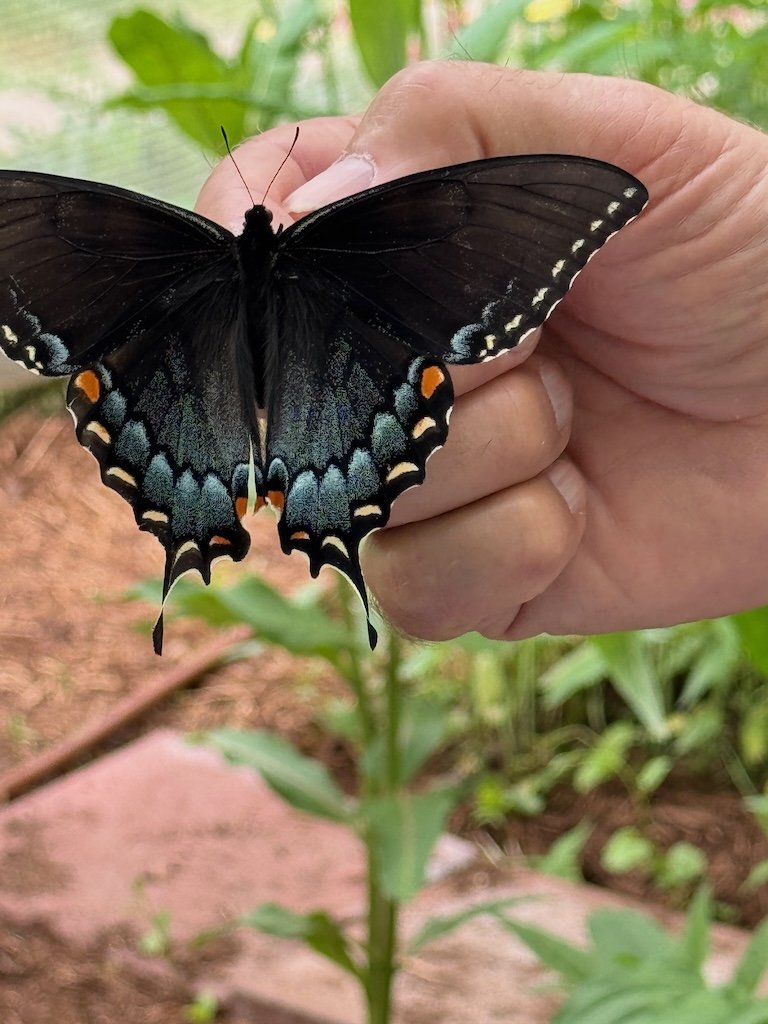
Roston Butterfly House. The native butterfly house at Springfield Botanical Gardens opened in May…and I had my first volunteer shift there…celebrating the butterflies and the people that come to visit them!

Butterfly tour for first graders. There are so many little celebrations to observe and participate in on field trips with first graders: their exuberance at being outdoors, their awe of butterflies in general and joy when on alights on their shoulder or finger…celebration frequently rippling through the whole group.

Harold Prairie. I celebrated  visting a narrow swath of never plowed prairie in need of restoration…the flowers beginning to bloom after the recent mowing and the prospect of volunteer hours in the future.

Noah Brown’s Prairie. Getting to see 3 different prairie situations in a short walk is worth celebrating: a never plowed prairie recently burned, a never plowed prairie that is due to be burned in the fall, and a prairie restoration project. There was plenty to see in all three areas!

Linden’s Prairie. Another never plowed area…celebrating seeing some new species and some ones I had seen in the previous prairies.

Ag Academy. I celebrated the 5th grade Ag Academy students that were selling seedlings as a fund raiser….and getting some milkweed, zinnias, and coneflowers to plant in a big pot for my patio.

Irises. Big beautiful flowers…one of the big celebrations in my yard in May.

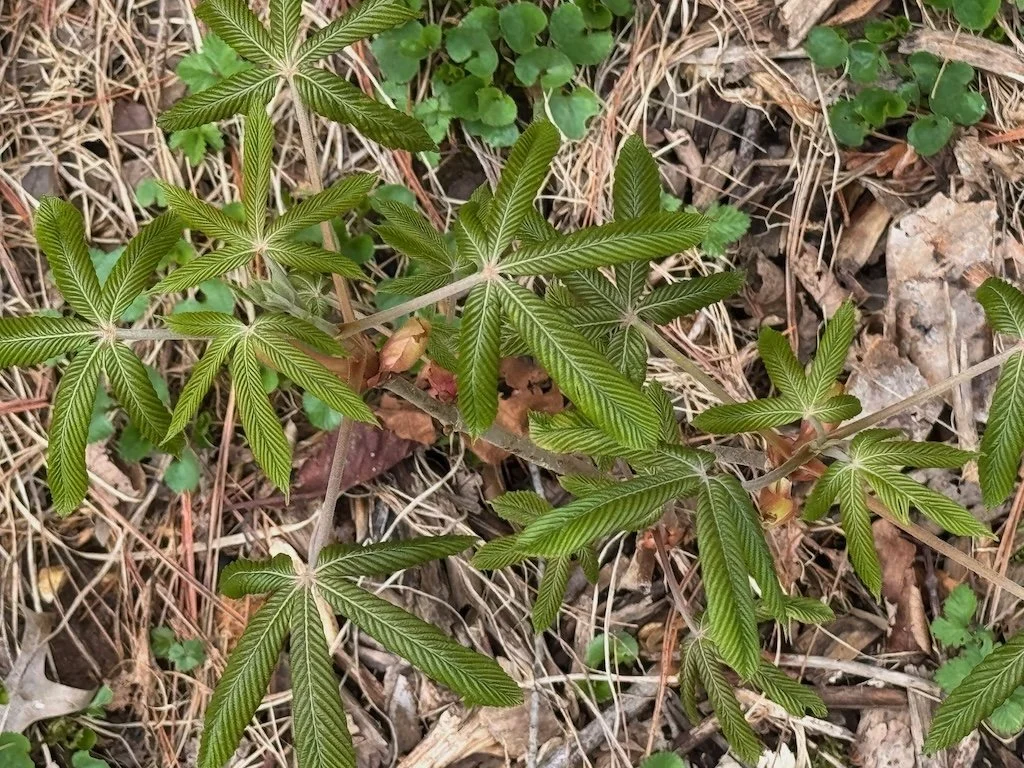
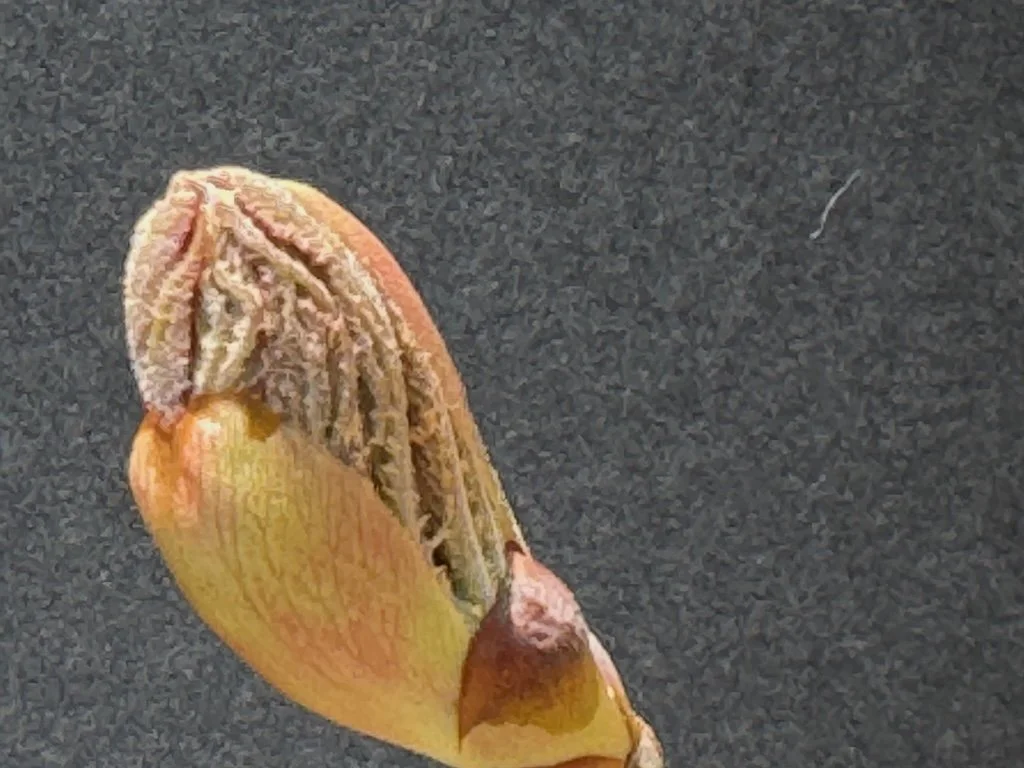
More native plants. I added an American Spikenard, red buckeye, and native columbines to my yard in May…celebrating that they were easy to find at a local native plant sale and that I got them planted the day after I bought them.

Successful surgery. Often times things that cause a lot of anxiety (like pending surgery) result in a celebration when the best happens…rather than the worst. That happened for my husband this month.

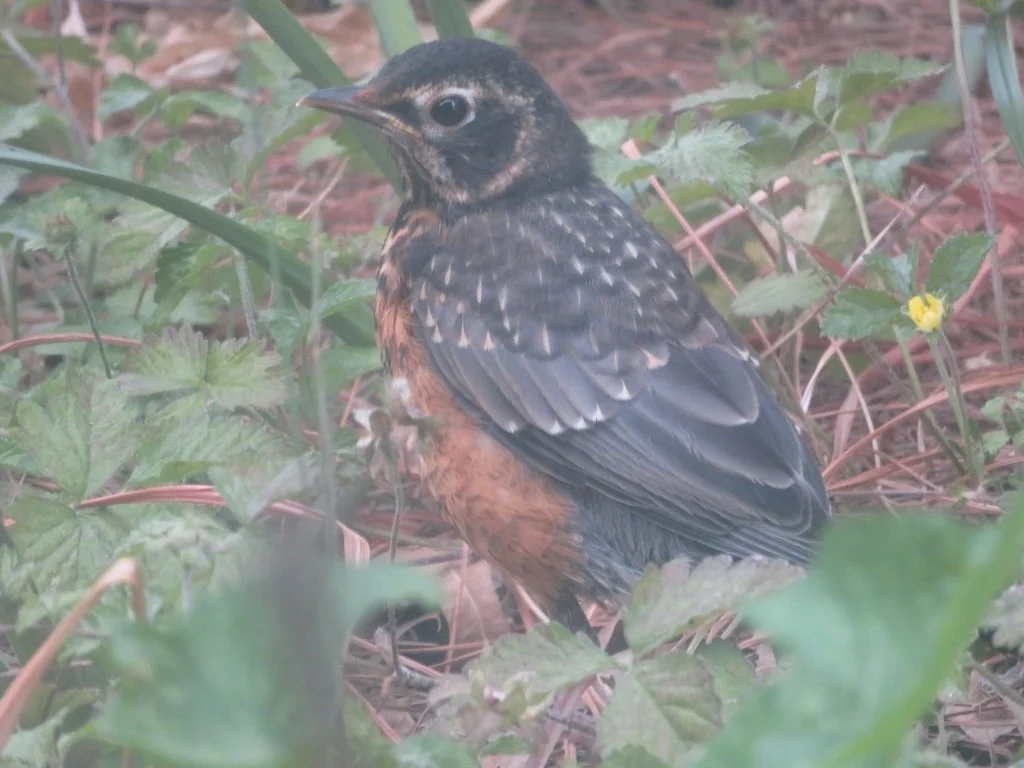
Young robins. I celebrated seeing fledgling/juvenile robins…and realizing what they were…in my newly creating spikenard/hosta garden. They seem to be finding things to eat in the pine needle mulch!

Zooming – May 2025

May was full of blooms both in my yard and places I visited close to home: Springfield Botanical Garden, Springfield Nature Conservation Center, road cuts along US 65, Harold Prairie, Noah Brown’s Prairie, and Linden’s Prairie. I am realizing that the work I did to create a new shade garden (with American Spikenard and hostas growing in pine needle mulch) is a magnate for fledgling/juvenile robins….such a joy to see them from my office window. The month was a great one for being outdoors – even if it meant dodging thunderstorms!

Roston Butterfly House

The seasonal Roston Native Butterfly House at the Springfield MO Botanical Gardens opened in mid-May and I have enjoyed my initial shifts. It will be my primary volunteer activity until September! The mornings are still cool enough that sometimes the butterflies are not as active when my shift starts at 10…. they warm up and are more active before the shift ends at 12:30 PM. I signed up for mornings-only from the beginning but have already learned that in May, the temperature for any of the shifts would not be problematic!

It is easy to get pictures with my phone!

I find myself enjoying being in the butterfly house just as I did in Brookside Gardens Wings of Fancy in Maryland (pre-Covid). There is something magical about so many butterflies in a confined space. The Roston Butterfly House is only native species so there no biological containment requirement…which makes it less stressful for volunteers!

Linden’s Prairie

Linden’s Prairie was my 4th field trip this spring and 3rd prairie (post about the first three: Harold Prairie, Geology field trip nature center and road cuts, Noah Brown’s Prairie). The prairie walk was sponsored by the Missouri Prairie Foundation. We had been cautioned about ticks, so I wore my bug repellent gators and shirt…sprayed my jeans with OFF! above the gators. I decided to use my point and shoot camera (Canon Powershot SX730 HS) rather than my phone (iPhone 15 Pro Max) for most of the photos. The first picture I took was of the sign near the mowed area where some of us were able to park.

The hike was in the late afternoon – sunny, warm but not too hot, a little breeze. There was a lot more grass on Linden’s Prairie than Noah Brown’s prairie last week. There might have been some armadillo holes, but they were harder to see!

Our guide talked about two things that are not around anymore on the prairie: passenger pigeons and elk. There is good documentation that both were plentiful originally. There were enough passenger pigeons that there were market hunters for them; it’s hard to imagine that pigeons were food…until they were hunted to extinction.

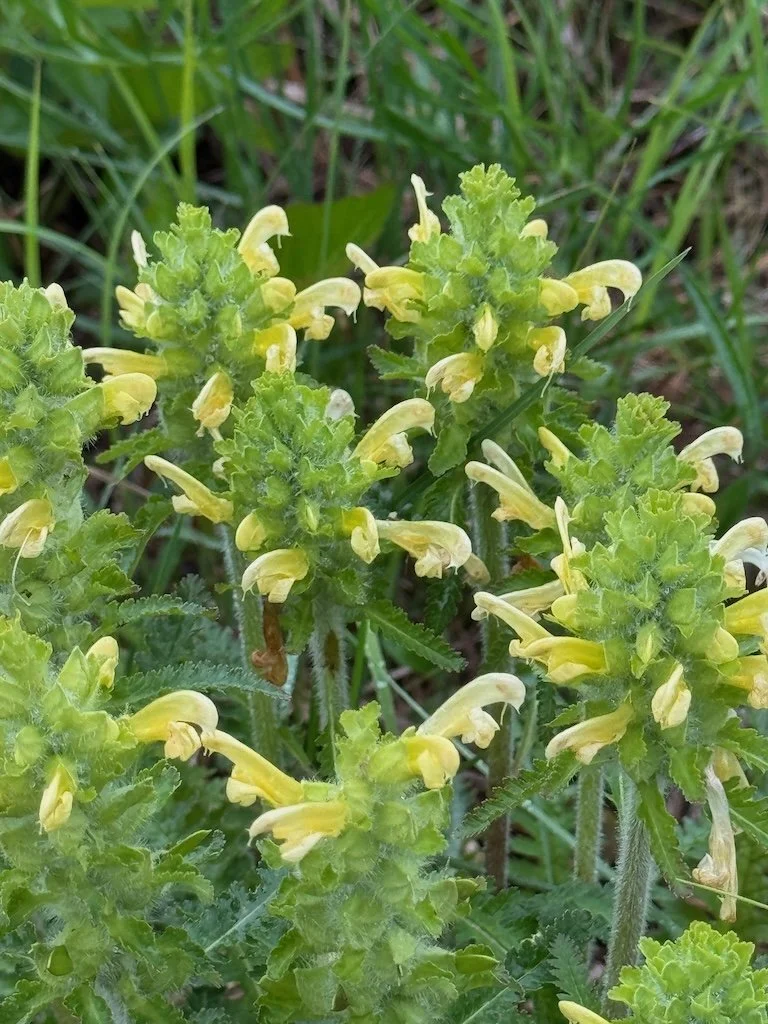
The swaths of red color from the Royal catchfly won’t be for a few more weeks across this prairie but there were plenty of flowers to see among the grasses…some almost hidden until they were close at hand. We saw corn salad, yarrow, delphiniums/lockspur, coreopsis, golden alexander, phlox, hoary puccoon, wood betony/lousewort, goat’s rue/hoary pea, lead plant, and wild indigo. The grasses were too hard to photograph…I concentrated on the flowers.

There was some prairie vocabulary too: mima mounds (small mounds in an otherwise gently rolling prairie landscape) and motts (clumps of woody plants in a prairie).

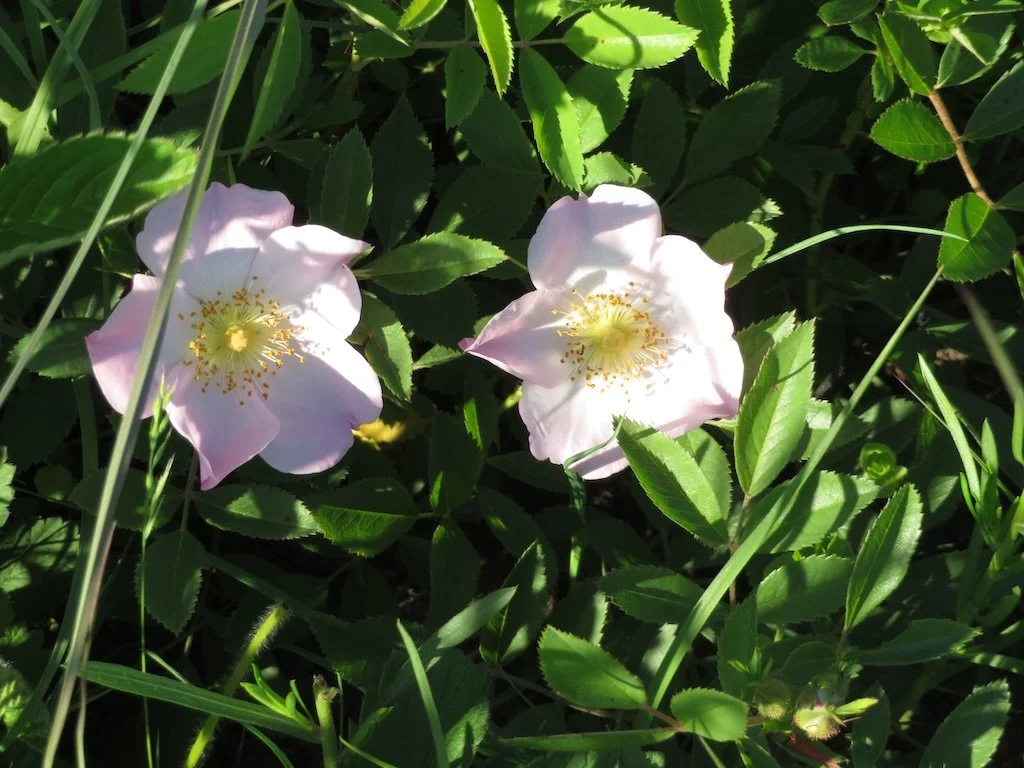
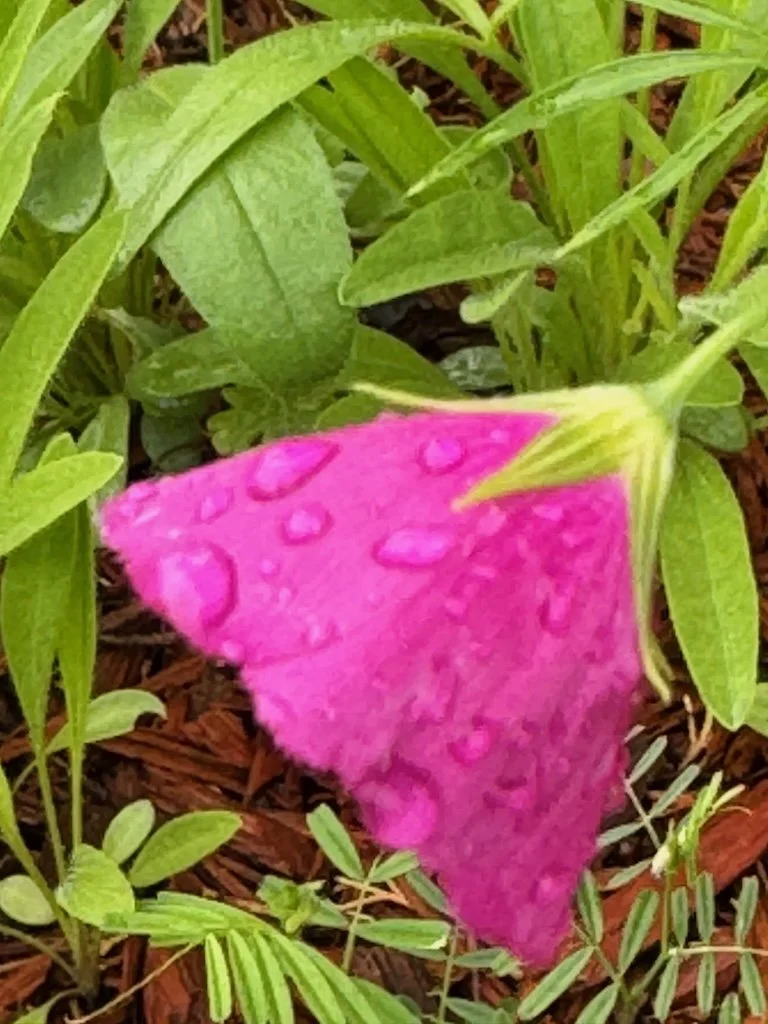
My favorite flowers on this walk were the prairie roses…small plants, lots of buds, grasses waving higher over the pink flowers. One had to be almost stepping on them to see them!

Road Trip to Dallas in May 2025

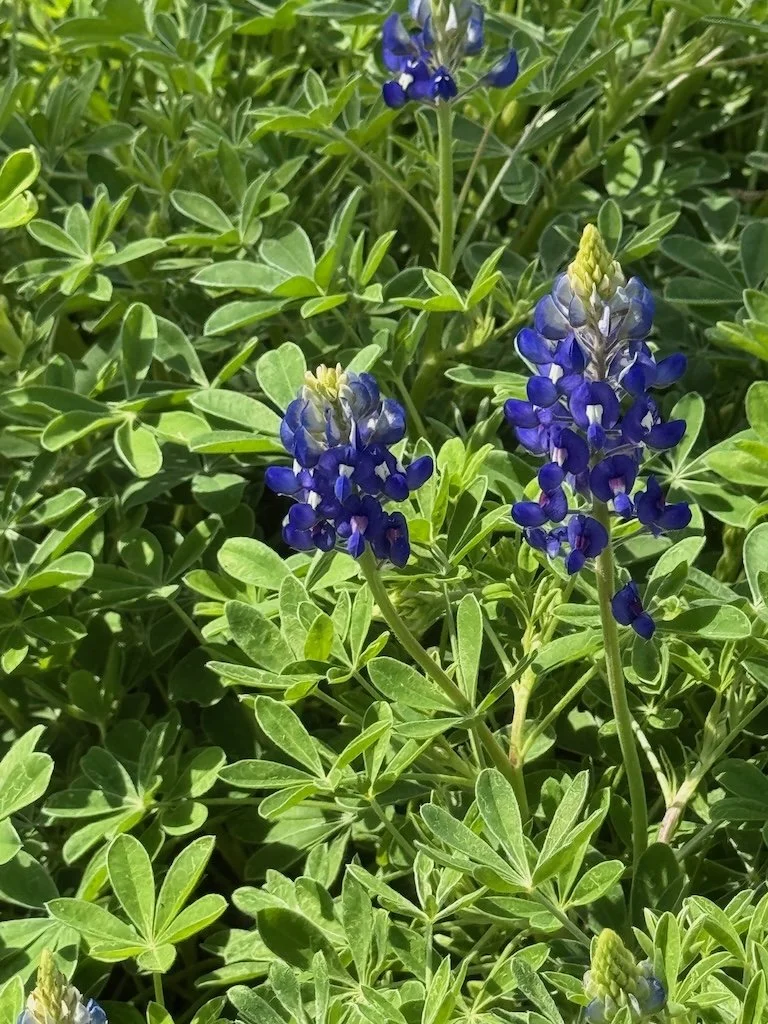
The drive was easier than expected – no heavy rain or high winds. I made such good time that I was able to stop at the Texas welcome center on US 75 to photograph their wildflowers before meeting my sister for lunch in Sherman. The bluebonnets are waning but other flowers are blooming profusely.

I had an odd experience with my hotel. My reservation was canceled a couple of hours before I arrived because they had overbooked! They wanted me to make a reservation at a hotel next door, but I was already visiting my dad…so I told them to arrange to have a room held for me….and they did. They didn’t apologize at all for their overbooking. When I checked into the other hotel, I told them that it didn’t seem fair that I would have had to pay for the night if I had cancelled a few hours before my arrival…but the hotel could do it for apparently no penalty at all. That is still the way I feel. I am looking at other hotels in the area rather than continue to patronize a place that chose to not honor my reservation shortly before I was arriving.  The experience was made worse by the second hotel having a lot of noise during the night…and a mattress so lacking in support that my back hurt.

Now that I am home again…I have decided to try another hotel for my June trip to Dallas.

Springfield Botanical Garden – May 2025

My daughter and I got to the gardens well before the native plant sale started so that we could walk around beforehand. Once we bought plants, we would have to leave so they would not get overheated in the car. We were very glad we did.

The peonies were the standout flower. I took lots of pictures and noticed the different shape and texture of the flower centers. Many of the plants had wire frames under/around them to support the flowers that are sometimes too heavy for the plant!

Of course there were other plants in bloom: alliums, passionflower, tulip poplar, and wild indigo were the ones I photographed.

The water feature in the hosta garden is one of my favorite places; the benches and chairs were not wet this time…we sat for a few minutes to enjoy the sights and sounds of the garden.

The varieties of hens and chicks near the Botanical Center are also a favorite place in the garden.

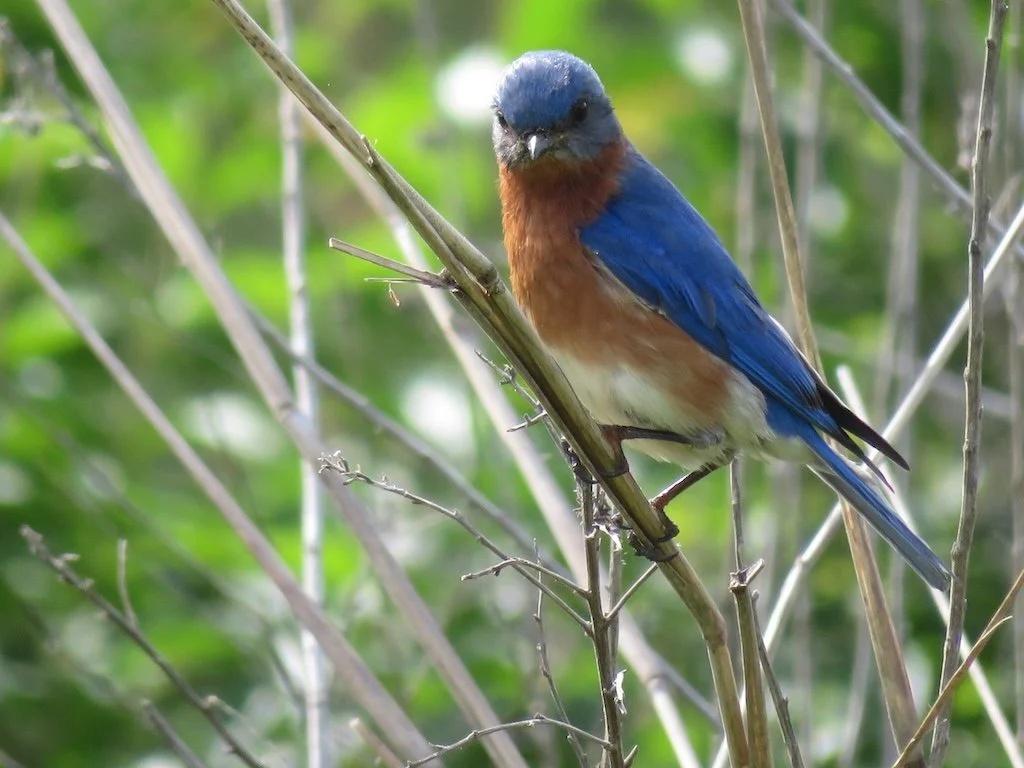
A blue bird eyed us as we made the final part of our walk…to the plant sale. I bought an American Spikenard, 2 columbines, and a red buckeye. More about them later.

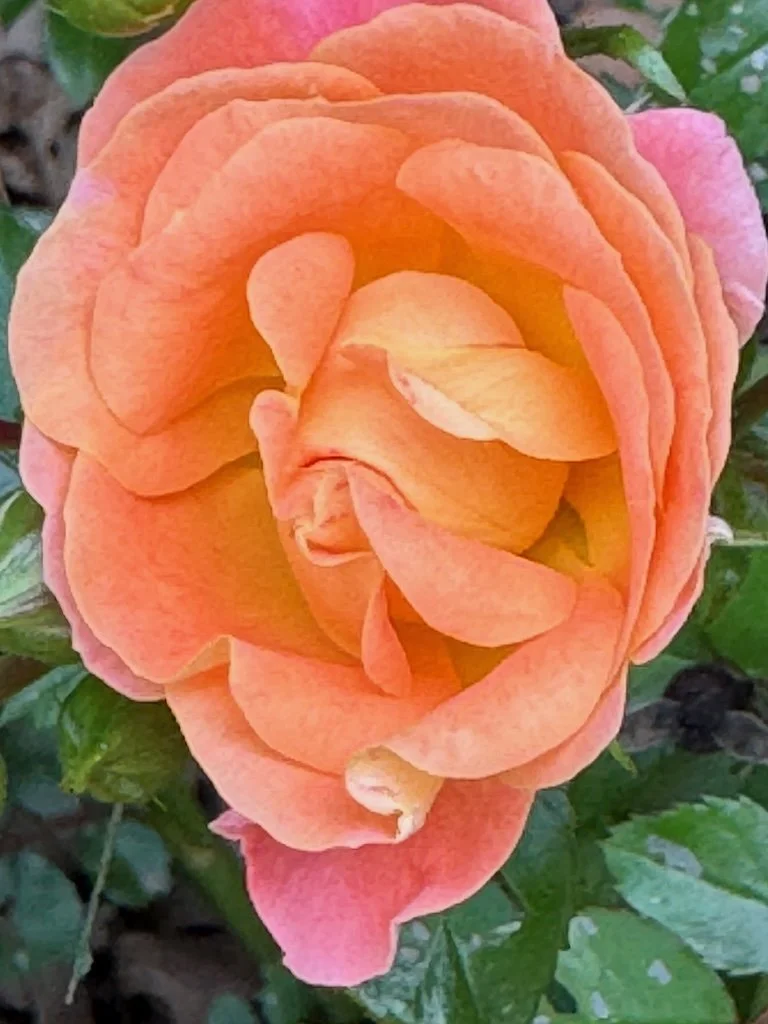
At my daughters, she called my attention to the tiny roses near her driveway; I like their colors; they seem to get pinker as they age!

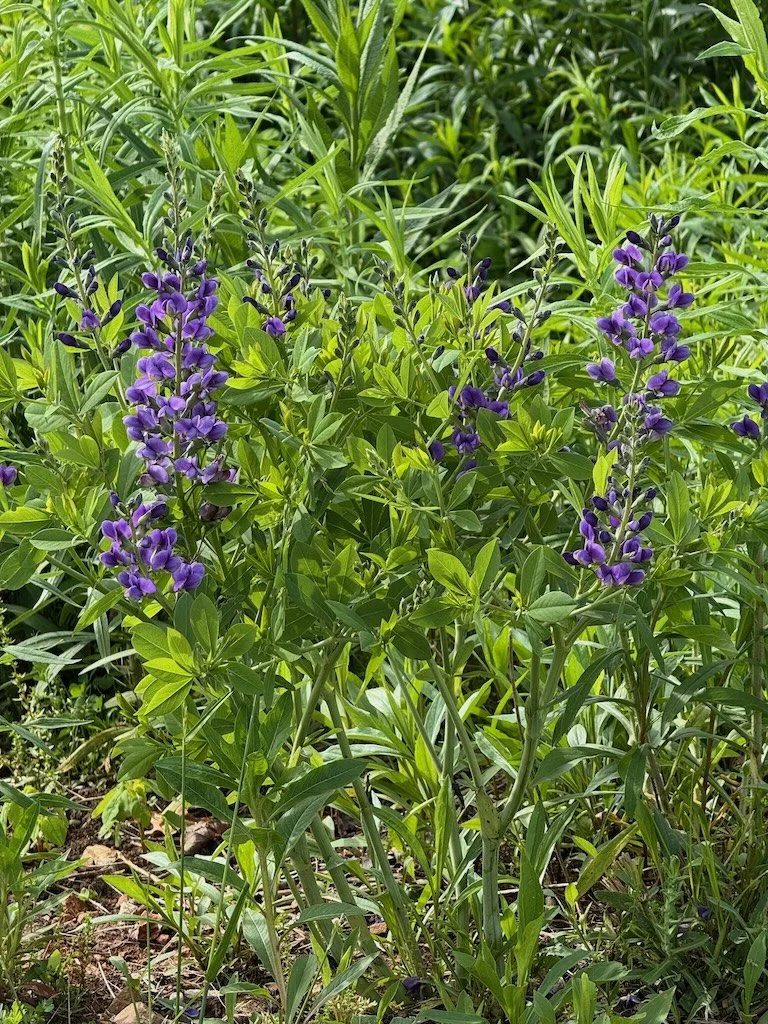
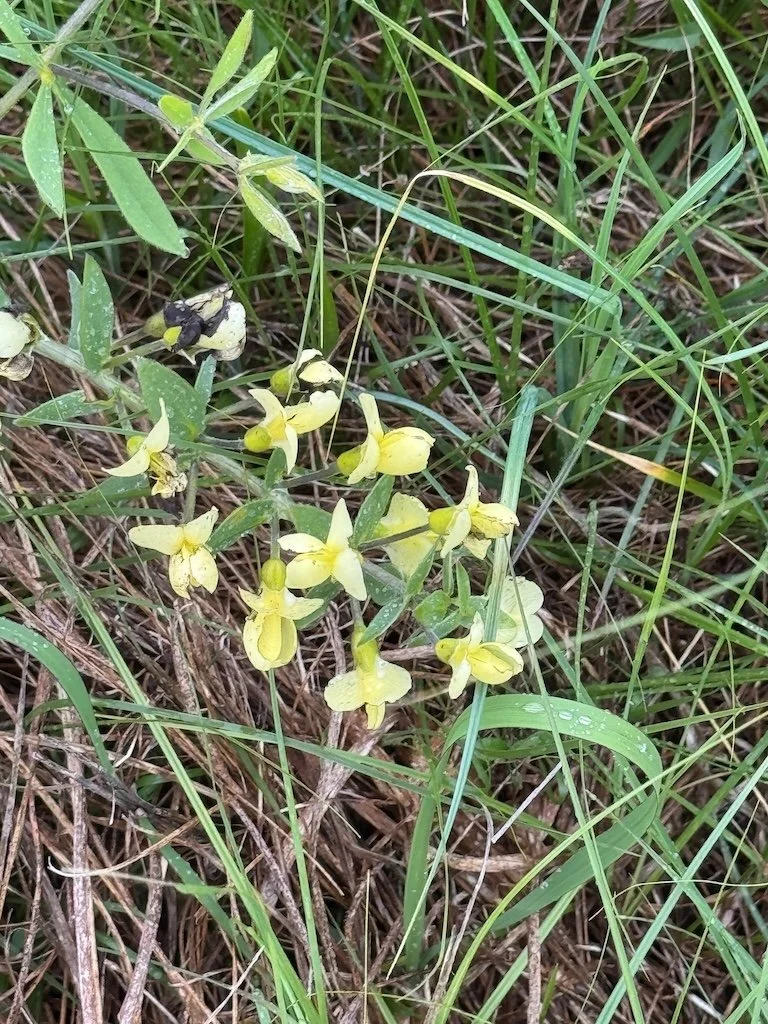
She had another plant that was blooming; we’d decided that it was a legume in previous years; this year we used the plant look up feature on our iPhones and realized that it was a yellow wild indigo. She will be adding an American Spikenard to her yard under a crabapple tree.

It was a good spring morning to be out and about!

Noah Brown’s Prairie

I signed up for a guided tour offered by the Missouri Prairie Foundation of Noah Brown’s Prairie which is just to the east of Joplin MO. It is a prairie remnant with a reconstructed prairie adjacent to it. There were plenty of wildflowers to see in the hour and half we were there. Everything was wet from showers before we got there and for the first 15 minutes we were walking. Originally, I thought about writing this post as a wildflower id post…but when I looked at all my pictures I changed my mind….decided to just do a slideshow to give an idea of the ambiance of the prairie in May.

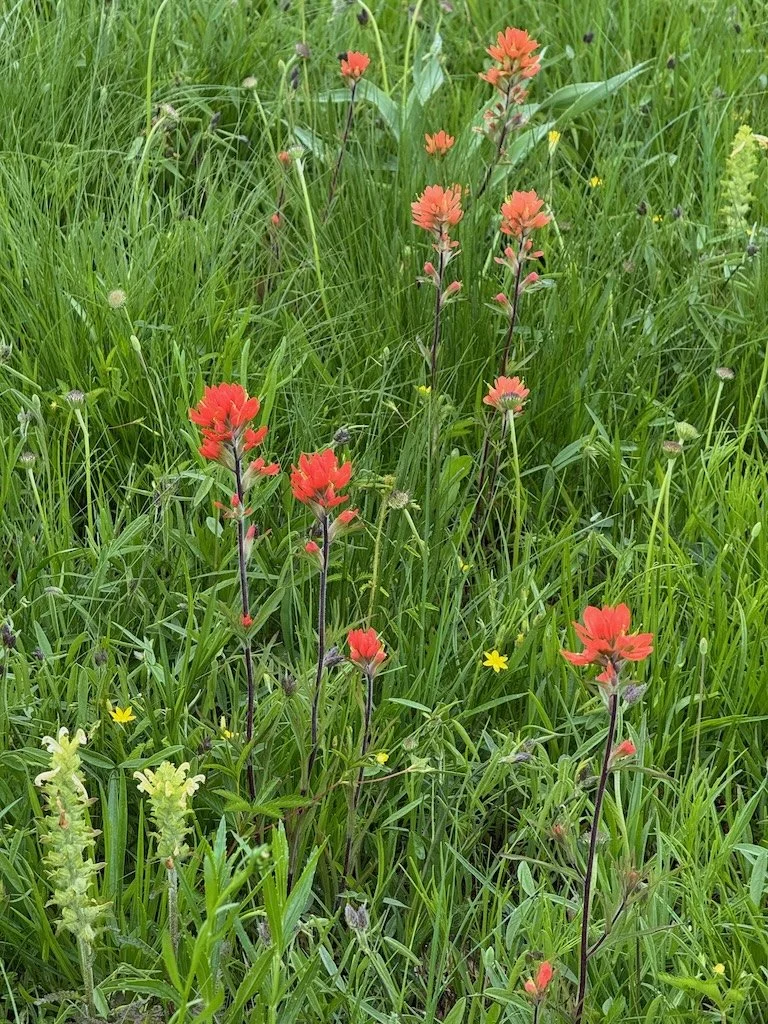
Of course, you can use the slideshow as an id challenge. Look for spiderwort, false dandelion, wood betony, Indian paintbrush (red, orange, and yellow), wild indigo (blue and yellow), prairie phlox, wild parsley, bastard toadflax, violets, rose, milkweed, shooting start (white and pink/purple), red sorrel….and of course lots of different kinds of grass.

There were 3 distinct areas that we walked through: the recently (last fall) burned area of the remnant prairie, the area that is due to be burned next fall, and the reconstructed area. The recently burned area was the easiest to walk through and had the most wildflowers. The area due to be burned next fall had a lot of thatch which made walking more challenging and not as many flowers. The reconstructed area is a work in progress. It had some non-native grasses and the only thing blooming was the red sorrel (non-native); it was somewhat difficult to walk through because it had dense clumps and then almost bare areas. The remnant prairie had micro-communities: some low areas that had standing water (vernal pools) and some mounds that had different plants than the surrounding areas.

I was very pleased to see the Indian paintbrushes up close since I noticed them blooming as I drove through Oklahoma last month….but didn’t find a convenient place to stop to see them better while I was driving.

Geology Field Trip (2)

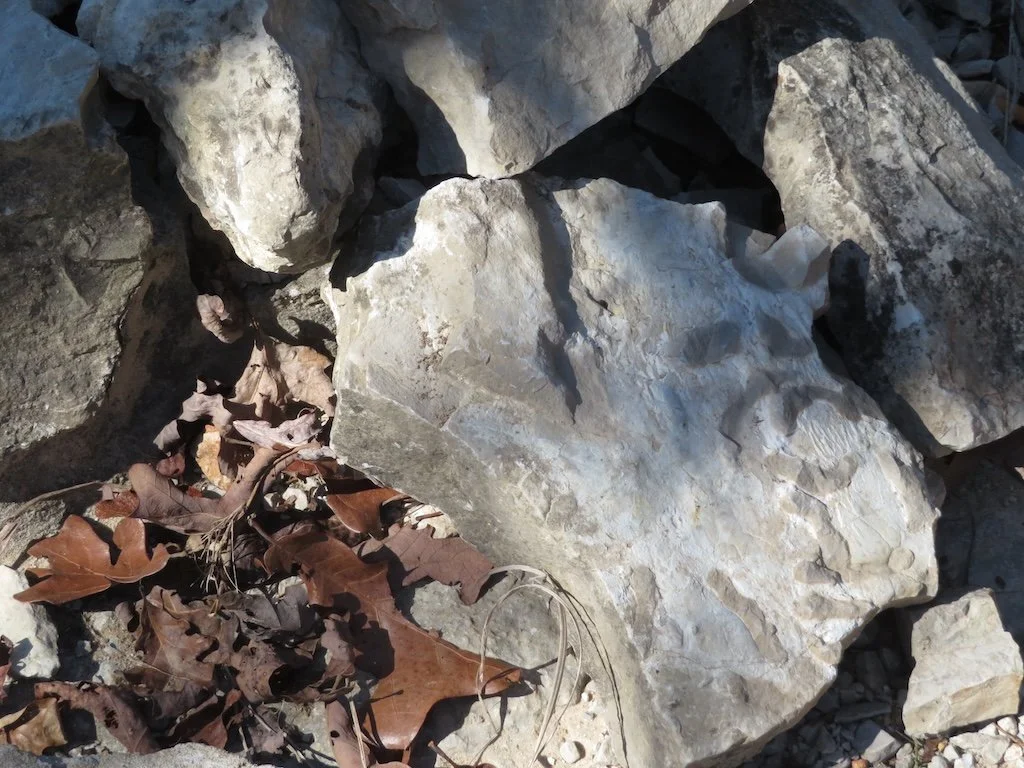
After eating our picnic lunch at the Springfield Conservation Nature Center, we headed out to stops along US 65 headed toward Branson. Our second stop (the nature center was the first) was at the MoDOT parking lot on East River Bluff Blvd. We walked across River Bluff and down onto the triangular shaped parcel of land between the southbound entrance ramp and US 65. There are outcropping there with fossils….including crinoids which are the state fossil of Missouri. There were flowers blooming along the roadside on our way to and from the fossils.

Here are the small fossils I picked up

We were in the Burlington part of the rock column. Most of us took pictures of the reference page our guide showed us to help us understand what we were seeing.

The third stop was the Ozark Post Office which is not far from US 65 and is across the street from a road cut that shows the boundary between the Burlington and Elsey layers.

The fourth stop was at the Branson (Saddlebrook) Welcome Center. We walked north on the west side of US 65 until we could see the roadcut on the east side of the highway. The rocks are all in the Cotter layer. The black weathering is from manganese in the rock. The area was an ancient tidal flat; the V shaped structures in the rock are channels where the water flowed in and out.

The fifth stop was also in the Cotter layer…and was an area to see fossilized stromatolites! We pulled into a wider shoulder area off US 65 just north of Saddlebrook Dr. There were layers of shale where water was trickling out and plants were beginning to grow.

My knee was hurting enough that I did not climb to the top of the road cut (via a drainage channel) to see the stromatolites from the top, but I did observe them from the base of the roadcut. They look a bit like a funnel.

I also picked up rocks: patterns of ancient ripples and a sandwich (thin layers of bluish chert with sandstone between them).

The sixth stop was a bit further north on US 65 to see the Highlandville Fault…where there is a crack in the face of the roadcut clearly visible.

So much to see…we ran over our allotted time by more than an hour!

Geology Field Trip (1)

The geology field trip associated with the university class I took this spring was cancelled because of weather, but the one that was a follow-up to a Missouri Master Naturalist lecture happened on a beautiful spring day in early May! We started out at the Springfield Conservation Nature Center…the longest hike of the trip with stops along the way to see examples of

  • (Chert nodules)

  • Sedimentation – erosion and deposition

  • Soil creep

  • Bluffs and rock fall

  • Spring

  • Sinkhole

  • River meandering

Most of my pictures were not about geology! I noticed the turtle and water plants in the sedimentation area. It is easier to take pictures of landscapes than geologic features. The hike was over boardwalk and forest trails. The only place the trail was muddy/wet/slippery was where the spring water ran over it. Overall, it was a great hike…and I was ready for lunch afterward. If I do the hike again on my own, I will take it a bit slower; I’ve learned that my knees get sore with a lot of walking on uneven surfaces.

The botanical highpoint of the day was wild ginger in bloom!

A jack-in-the-pulpit was a close second.

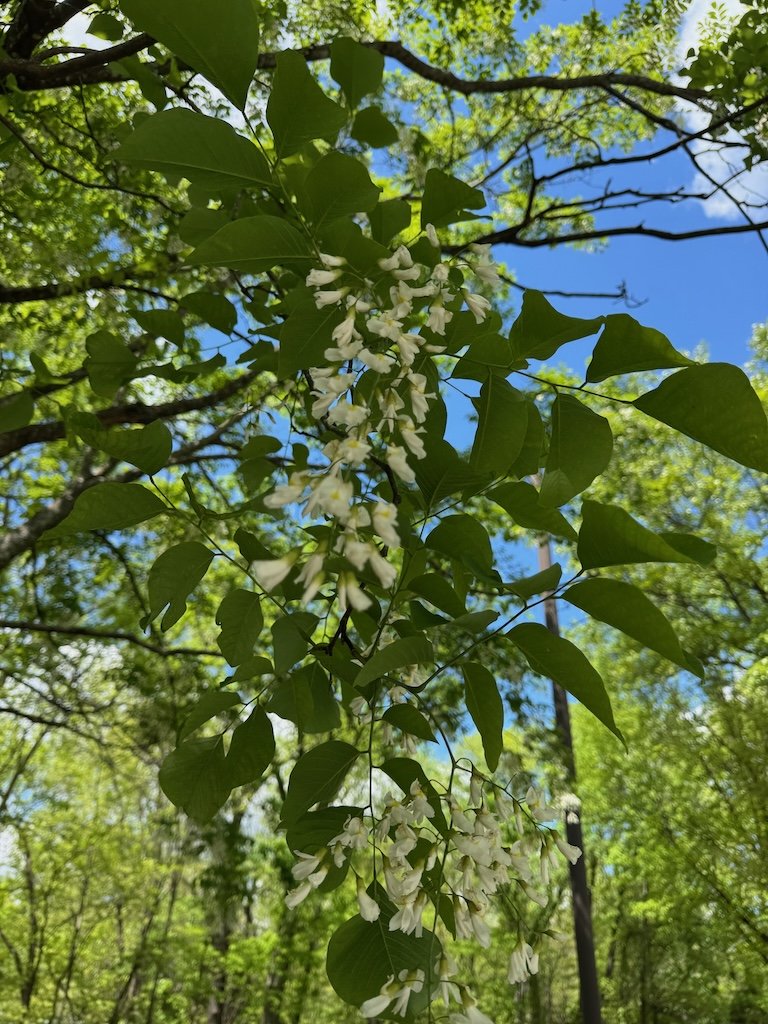
From a tree perspective, seeing a young sassafras and a black locust in bloom was great too.

Near the nature center – there are plantings of native wildflowers. They had a cage around the lady slipper orchid that was blooming.

More tomorrow on the rest of the Geology Field Trip…

Harold Prairie

One of the topics that came up in the last Missouri Master Naturalist chapter meeting was the need for some maintenance for Harold Prairie - the last native remnant in Greene County, Missouri. Shortly after the meeting, an email was sent out offering a tour and about 8 of us walked around the prairie the next Sunday between Highway 123 and the Frisco Highline Trail northeast of Willard, MO.

We caravaned from one of the trailhead in Willard. The long and narrow prairie had been recently mowed (road to the right in the picture….trail to the left behind the brush that had not been mowed). The prairie plants were coming up in the thatch.

We saw wildlife right away in the fringe of brush at the side of the trail:

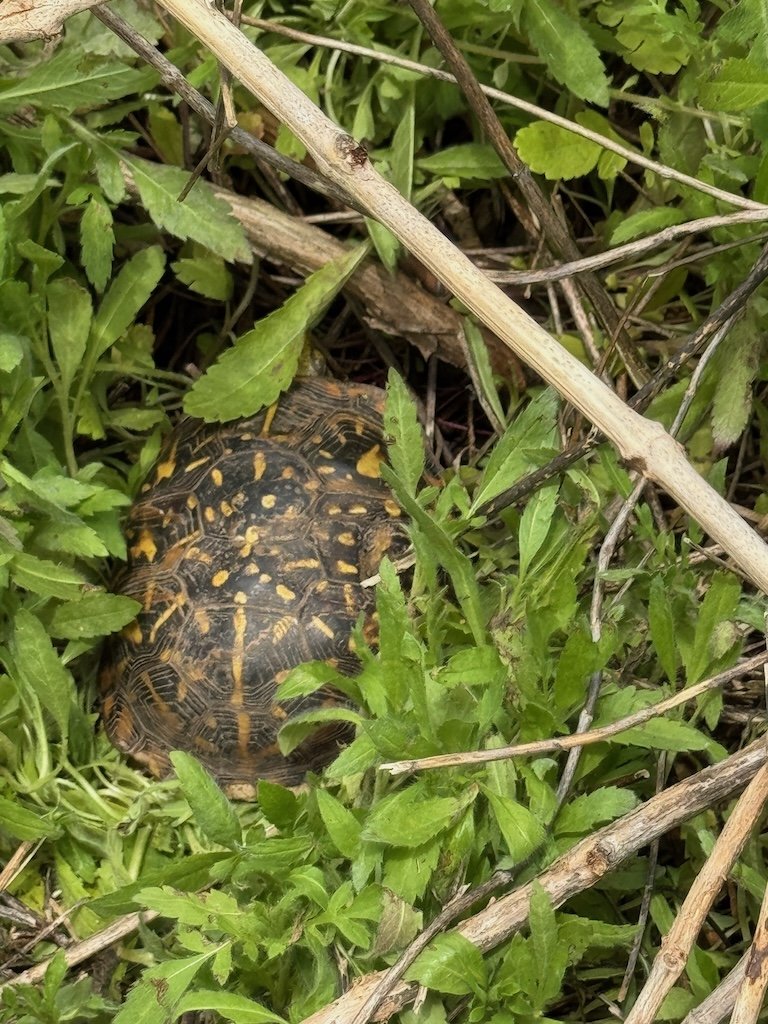
Ornate box turtle

Gray tree frog – Missouri’s most common species of tree frog

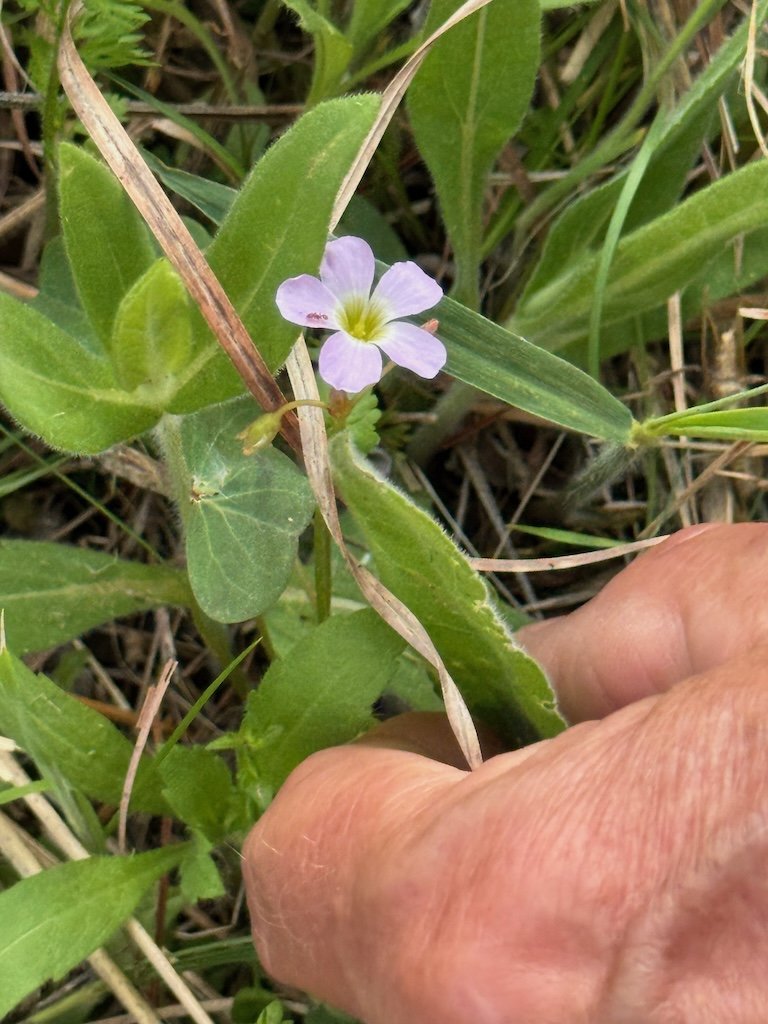
A few things were blooming!

Most of the plants were just green...emerging and growing rapidly with the warmer spring days.

We talked about a plant survey in June and burning in the fall. There could be some manual woody plant removal required too.

One such woody plant that I was pleased to photograph: a black cherry. It was on the other side of the trail from the prairie but maybe the goal will be to extend the prairie to be both sides of the trail in some areas. We’ll see.

I am looking forward to what will likely be the next activity – the plant survey in June. Hopefully I won’t have a conflict…and the weather will cooperate!

Ten Little Celebrations – April 2025

April was a busy month….lots of little celebrations to choose from. My top ten are included in this post.

Lots of 300-piece puzzles. I found 23 300-piece puzzles at the used book sale and while I was sorting new donations. I’ll take a few of them each month when I go to Dallas to visit my dad so this will be a prolonged celebration.

Buying and planted spicebush. I celebrated finding spicebush at a native plant sale and bought two of them for my daughter’s yard. We got them planted the day after I bought them.

Another garden room. I savored my daughter’s garden room while ‘house sitting’ while she was at work and arborists were working in her yard.

Cherry cobbler. Cherry cobbler was one of my dad’s favorite desserts…and I celebrated that memory while realizing that it is one of mine too!

Hosta garden. I celebrated that the clumps of hostas in my flower beds were robust enough to divide and create a hosta garden between a pine tree and my patio that is too shady for other plants to grow well.

Clean windows. There was burst of spring cleaning at my house that involved windows! I haven’t done all of them yet but am celebrating the clear views from the ones that are clean.

Onondaga Cave. This is my favorite cave in Missouri (so far). I celebrated the day trip for the destination and that I did it with my daughter.

Tea Bar lunch. My daughter and I had one off-campus lunch after my geology class….to a place we had been to before. It was even better than our first lunch almost a year ago!

Edible violets. I celebrated learning that violets are edible. It is great to have native salad greens from my yard!

Car repair. I had an undercarriage cover that cracked near the front of my car. After thinking it was an easy fix (but it wasn’t) and the dealership ordering the wrong part, I celebrated finally getting it fixed.

Zooming – April 2025

Springtime photography….is April the best month? It seems like that might be true this year. The photographs were taken at the Springfield Botanical Gardens, my yard, the Missouri State University Campus, my daughter’s yard, Onondaga Cave, and 2 volunteer activities. There were so many images to choose from; I selected 23. I used three different cameras – iPhone 15 Pro Max, Canon Powershot SX730 HS, and Nikon Coolpix P950. Enjoy the slideshow!

Road Trip to Dallas in April 2025

I was braced to make the whole drive between my home in Missouri to Dallas in the rain last week….but the rain didn’t materialize until I got more than halfway there. The scissortail flycatchers are back for the summer and I saw quite a few flying over or beside the road; the silhouette is very distinctive. There also seemed to be more egrets too. I didn’t see quite as many hawks because the leaves are out on most of the trees and that makes the birds harder to spot. There was an interesting mural on a truck at one of the truck stops.

It rained heavily as I got to McAllister OK but then was only sprinkling when I got to the Texas Welcome Center on US 75. The bluebonnets were in bloom!

It had evidently done more that sprinkle at the place just before I got there…the water droplets were still clinging to the flowers. Most of the plantings are native…but there are a few yellow roses too.

Training and Volunteering in Lebanon MO

I had responded to a request from a fellow Missouri Master Naturalist for a program last weekend – a little bit of training and volunteering about an hour from where I live. There was heavy rain for the drive there – but it was weekend and the traffic was not as heavy as usual on the interstate. Fortunately, the first part was training so I could destress after the drive. I wandered around the Route 66 museum that is housed in the same building with the library. It was interesting – lots of items specific to Lebanon and then more broadly to Route 66. Much was before my memories began so I would have appreciated a few more dates for the pictures and newspaper articles. I enjoyed seeing the displays….glad I don’t have to drive over any ‘bone-jarring Ozark rock roads’!

I do vaguely remember one of my grandmothers having a wringer washing machine in the barn in the early 60s so that was something in the museum that looked familiar.

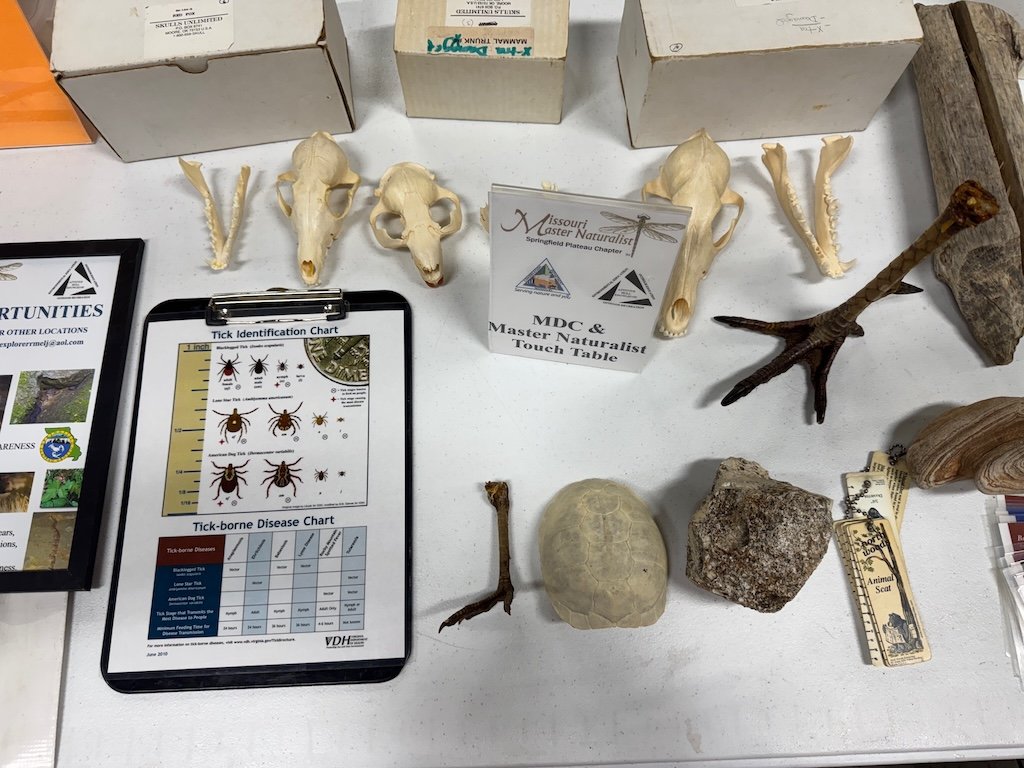
Then I had a brief training on the nature touch tables set up in the foyer of the library/museum. There were skulls and rocks and pelts and snake models/skins/id puzzles and pictures of caves and wildlife there – a bat preserved in acrylic. Handouts for each topic from Missouri Department of Conservation were available and many people took at least one. The snake booklets were probably the most popular.

I’m learning a lot about different parts of Missouri through Missouri Master Naturalist volunteering…I like feeling more familiar with the state where I now live and interacting with people!

Onondaga Cave (2)

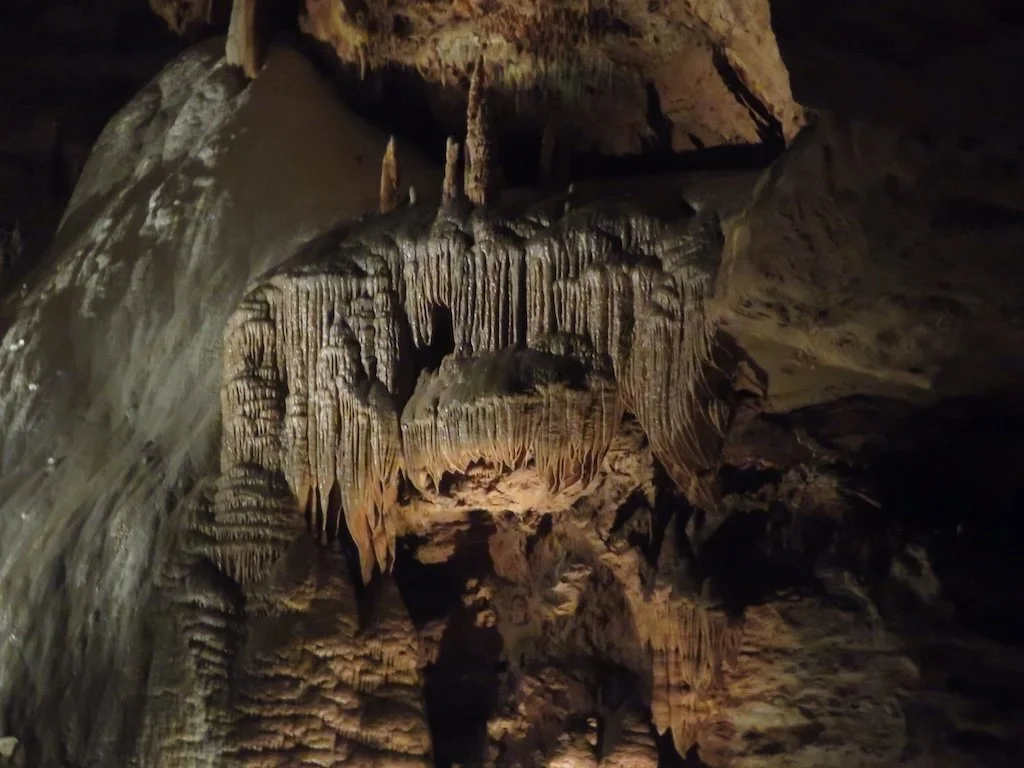
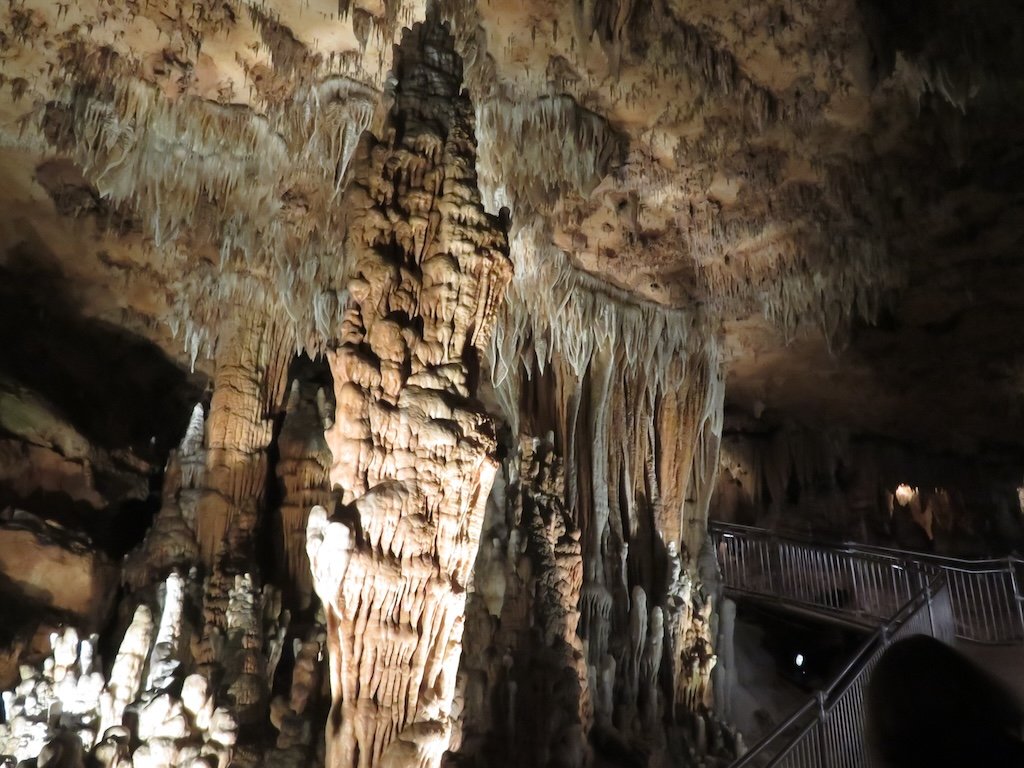
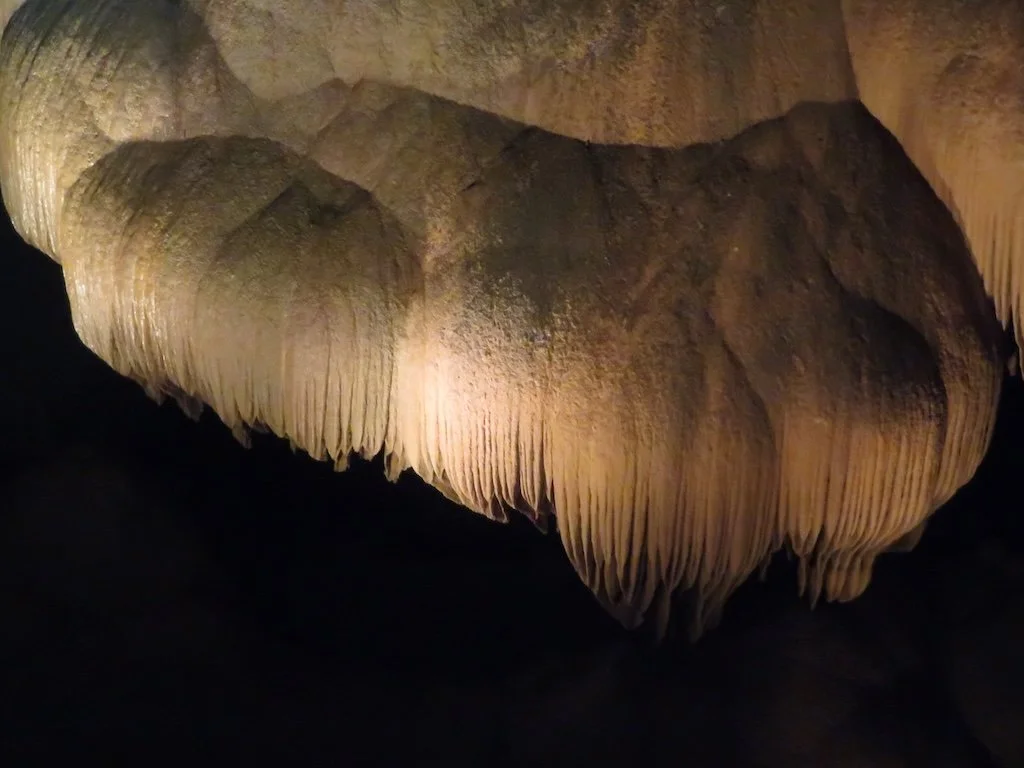
Onondaga Cave is a wet cave. That means many of the formations are still active and the air in the cave is very moist. There is an airlock where the tour begins and ends. There are salamanders in the cave, but their numbers have declined with the bats (White Nose Syndrome); the salamanders eat the bat droppings and there are not enough to sustain as many salamanders and before. We didn’t manage to see any.

There is a river that runs through the cave. At one point you can hear the water moving but when you look at it from above it seems very still! They know where the water goes but not where it comes from!

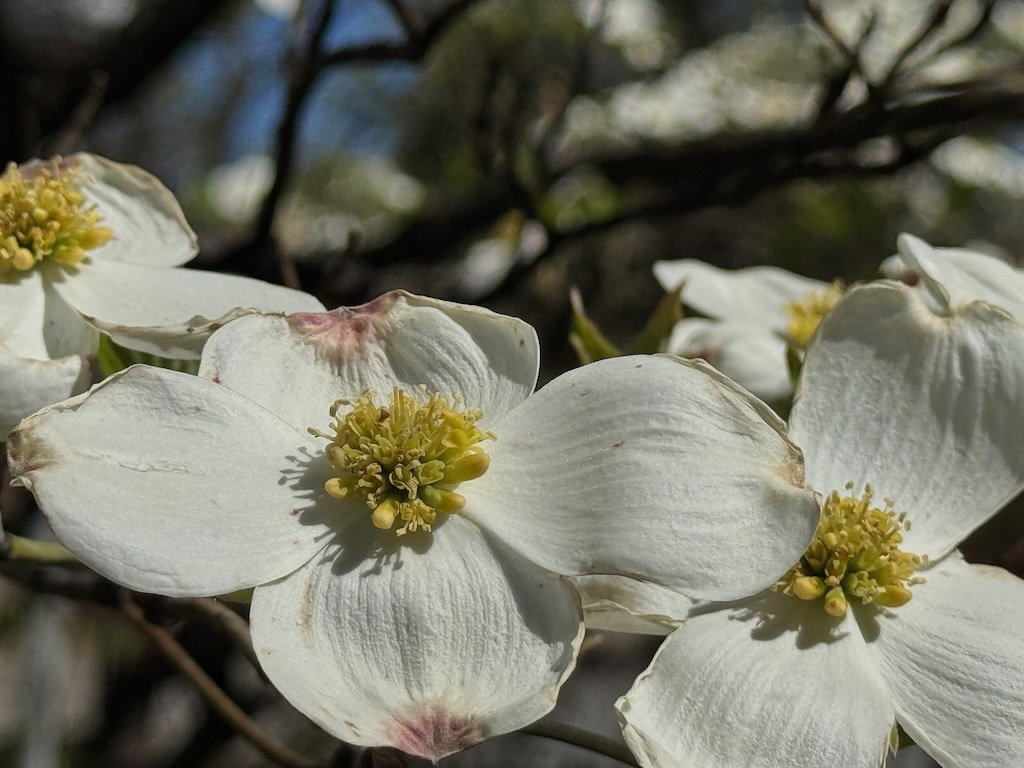
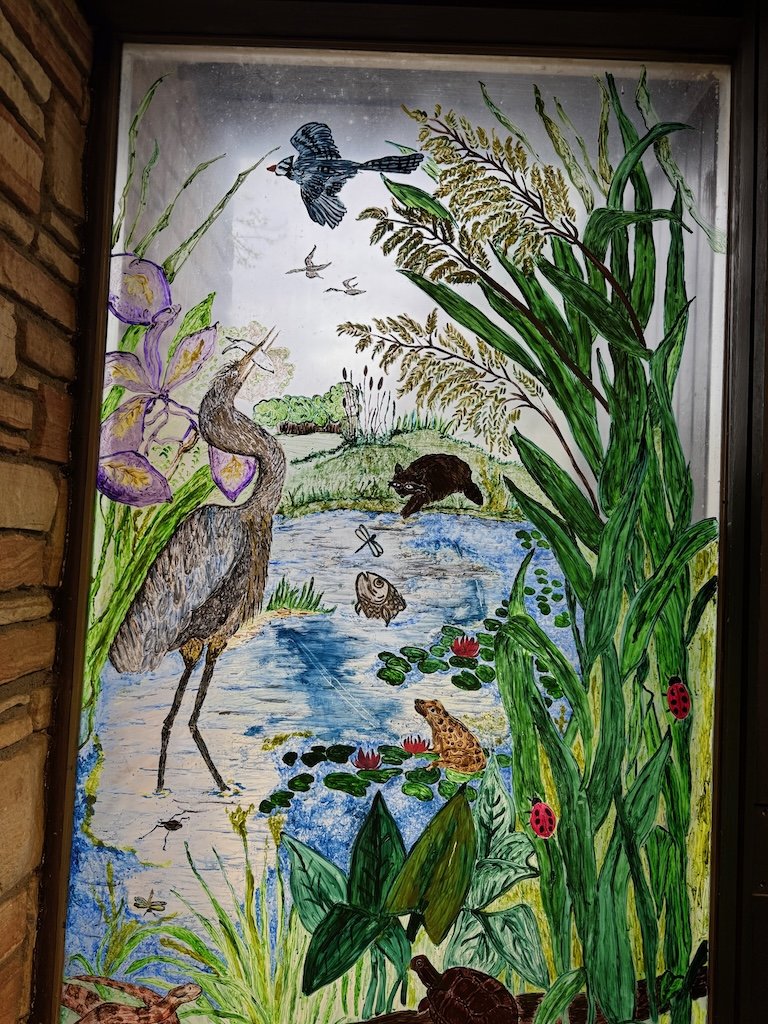
On the way home we stopped at Bennett Spring State Park near Lebanon MO. It was raining so the only picture I took was of a painted glass window! We drove down to where the spring emerges and then back to I-44 along a road through the forest….lots of dogwoods in bloom in the understory. It was a grand finale to the day trip even with the rain!

Onondaga Cave (1)

My daughter and I visited Onondaga Cave State Park last week. I had made reservations for the 10 AM cave tour. The park is a bit over 2 hours from Springfield – almost all on I-44. We made good time and had time to look around outside before going in to join the tour. There were emerging plants in the pollinator garden (I only spotted one milkweed…hope there are more nearby) and a display about the Gemstone and Fossil Panning activity (we were focused on the cave but it would be a fun activity with children).

I used my small Canon PowerShot SX730 HS on the ‘night scene’ setting. It worked relatively well although the guide was using as flashlight and sometimes the light from the flashlight was needed!

The walk is about a mile….made easier by ramped walkways (i.e. no stairs). It is slippery in some places but there are handrails. There are a few low ceilings that could be hazardous for tall people, but the guide is very proactive about pointing them out.

Learning about Missouri Geology – April 2025

In late March – after the monthly Missouri Geology post, my daughter and I visited Cedar Gap Conservation Area. I posted about the vegetation (spring wildflowers) and the tail itself here and saved the ‘rock’ pictures for this post. Most of the pictures are from along the trail.

The most interesting rock of the trip was found down near the stream by my daughter; I’m not sure how she found it in the jumble of rocks!

The geology lab for Missouri Master Naturalists that was a follow up to the geology program I’d arranged for last February focused on minerals. There were 8 sets of trays with a total of 24 minerals and we practiced the process to identify them! It was a learning experience. I realized that there might have been a better class for learning to id rocks and minerals than the geology course I am taking….and it is for educators (not sure that non-degree seeking students can take it).

Last week my daughter and I visited Onondaga Cave and Bennett Springs State Park….I’ll be posting about that trip soon. Both had a geology component too.

Springfield Botanical Gardens – March 2025

There were signs of spring at the Springfield Botanical Gardens last week when I made a short visit.

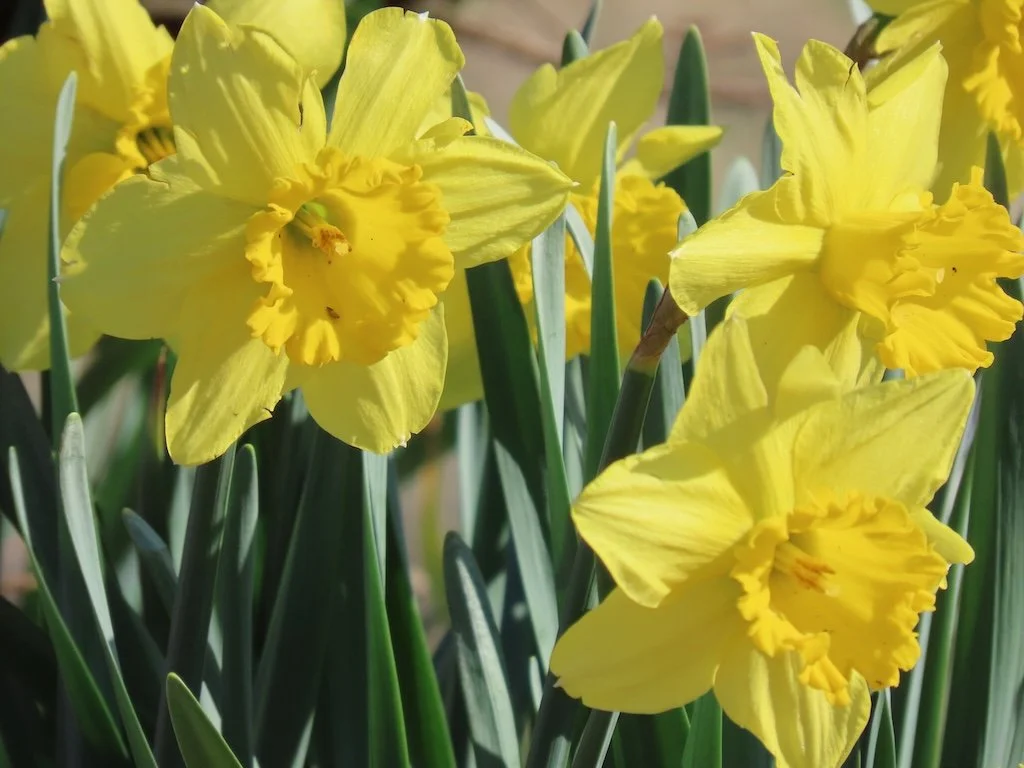
The daffodils were beginning to wane.

The grape hyacinths filled some niches in beds otherwise still bracing for winter.

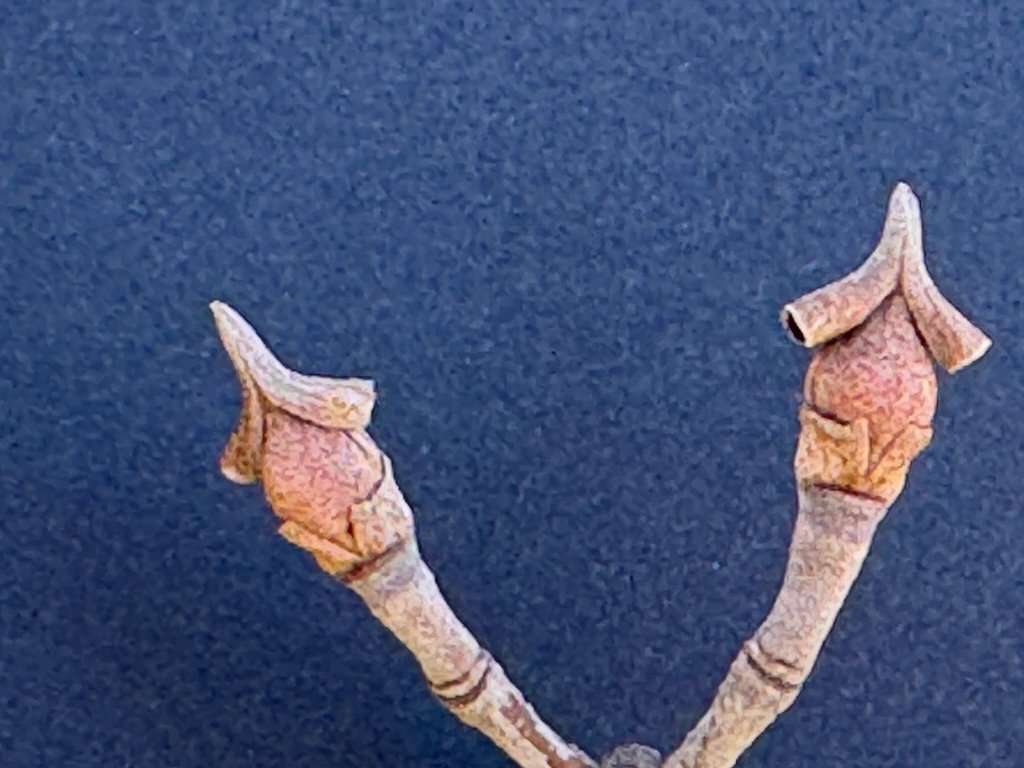
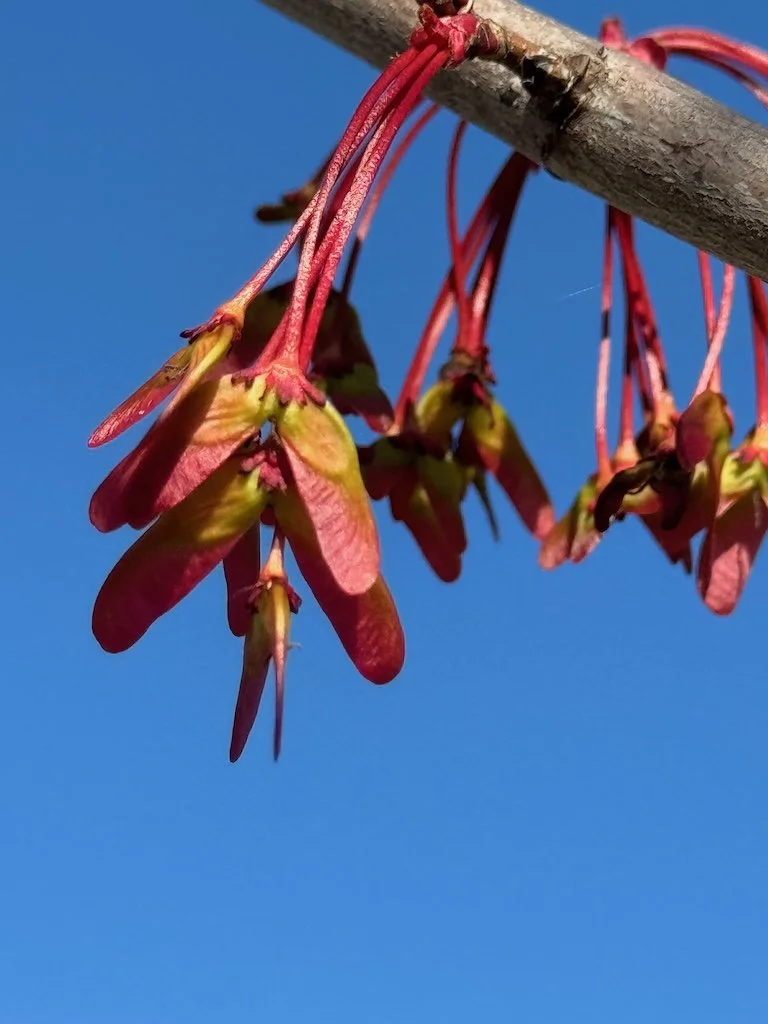
The maple trees had new samaras – still colorful. There must be several different kinds of maples based on the different structure and color of the samara clumps.

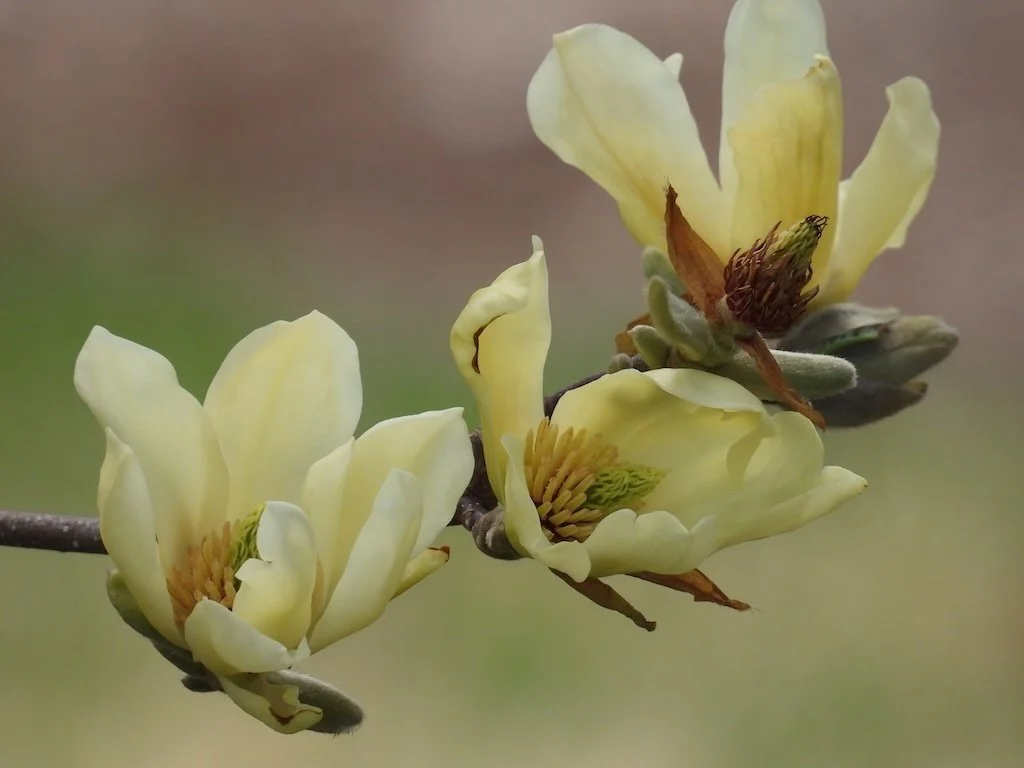
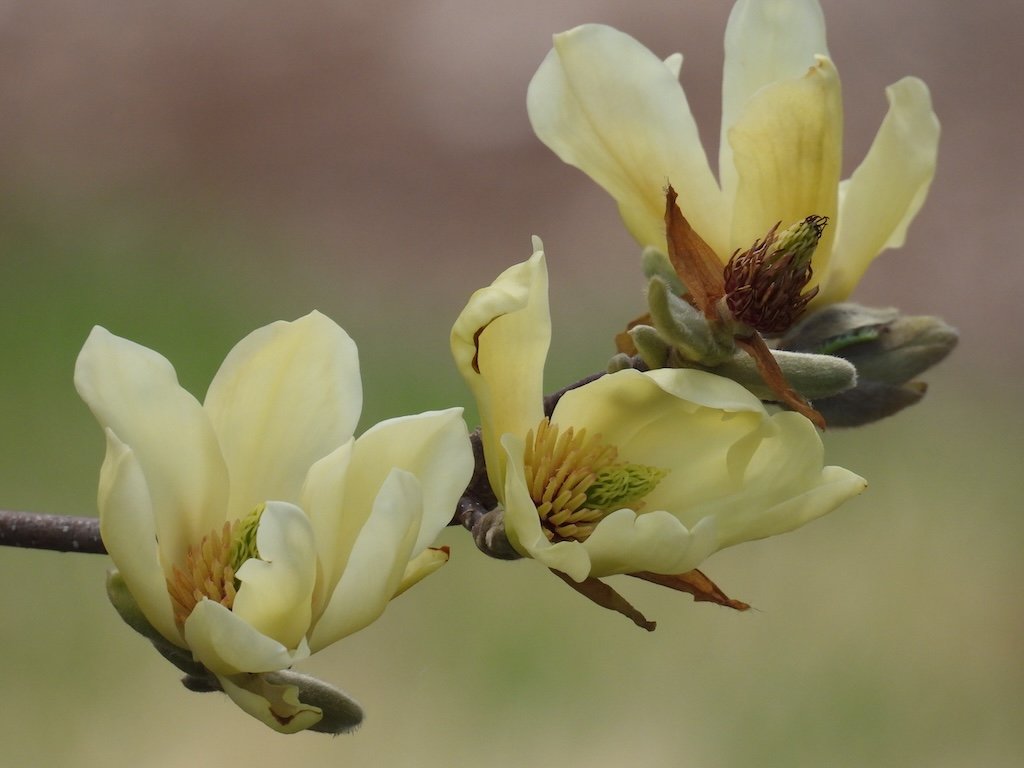
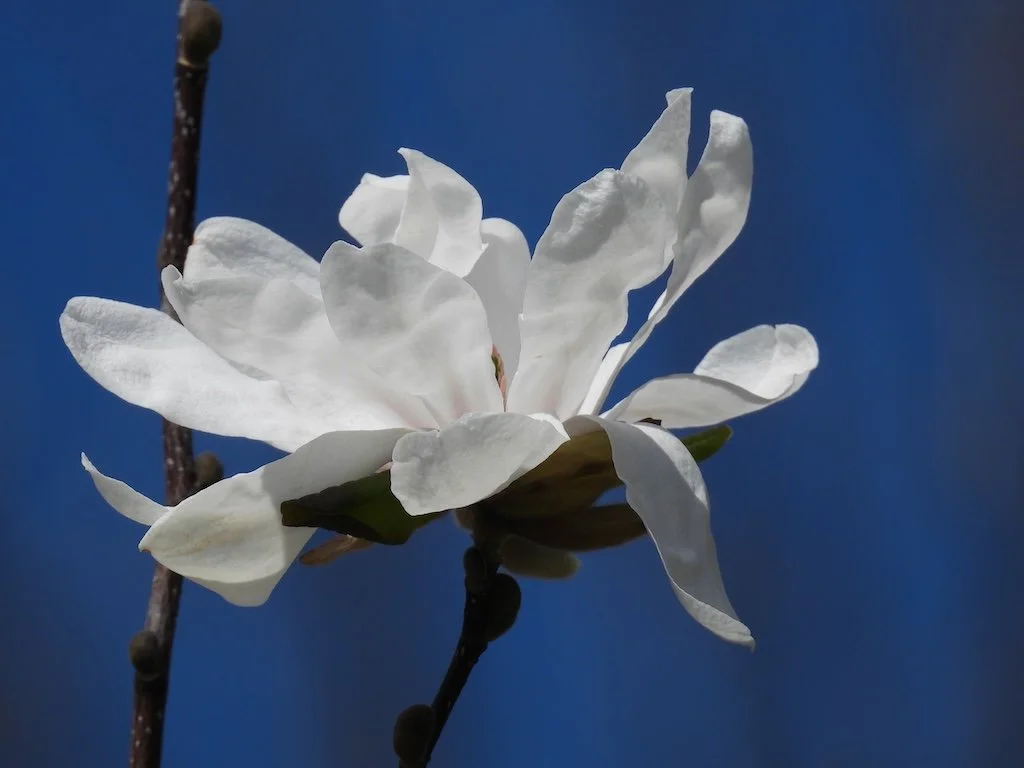
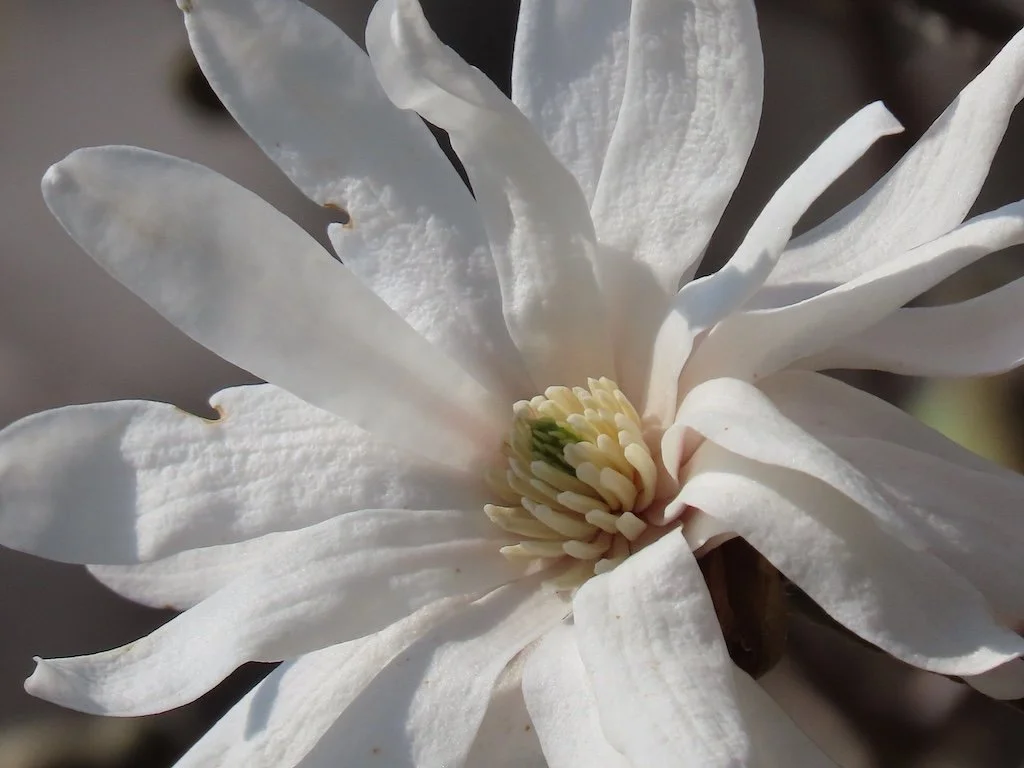
The most dramatic were probably the deciduous magnolias. I always like photographing them. The most of trees that I found were very young.

I found some tulips as I headed back to my car. It was a little disappointing to not see more of them. They did not appear to be as densely planted as in previous years – or maybe a lot of them just didn’t produce for some reason.

The redbuds were blooming….making a haze of color in the gardens! This is a great time of year to visit botanical gardens frequently to see the transition from winter to spring to summer.

Ten Little Celebrations – March 2025

Lots of early spring celebrations in March!

Trout Lilies. One of the high points of our hike at Cedar Gap Conservation area was seeing trout lilies blooming down by the stream…as celebration of the new season.

Bald Eagles. The serendipity of seeing two bald eagles soaring over Springfield was another celebration of our Cedar Gap field trip. They seemed to be heading north so might have been migrating through as eagles do in the spring.

Tenure. My son-in-law was granted tenure at Missouri State University. It’s a major milestone to celebrate.

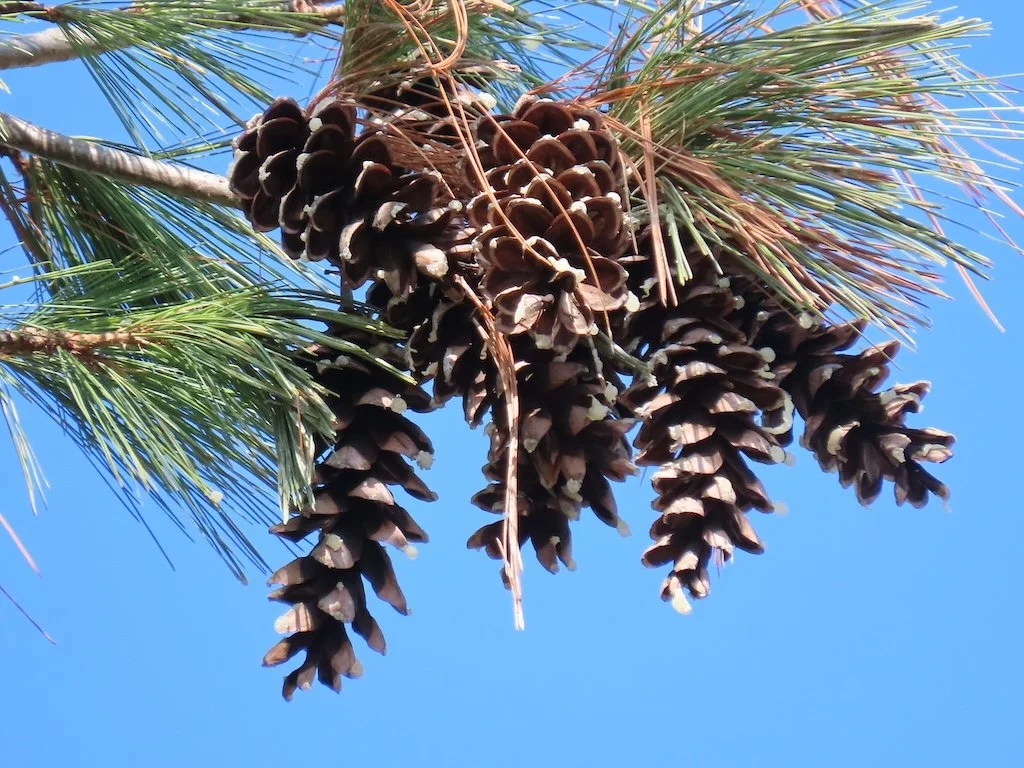
Pinecones. The wind caused pinecones to fall from our shortleaf pine and I picked up a bag of them for my sister. We both celebrated in anticipation of the fun projects she’ll do with her grandson.

Redcedar. I transplanted a small eastern redcedar that came up in my flowerbed to the place in my yard that I want it grow….and celebrated that it stayed upright even with the high winds that came along in March. It will make a great addition to the bird habitat near our patio!

Physical therapy. I celebrated that the physical therapy my dad is doing seem to be helping him recover his mobility after an illness in February.

Covid booster. My husband and I both got a booster in March…celebrated how easy it is to do at our pharmacy. We both have managed to never have Covid.

Loess Bluffs National Wildlife Refuge. Celebrating snow geese and swans…and all the other birds at the refuge.

Orchids. The Missouri Botanical Gardens (St. Louis) Orchid Show is quite a celebration of flowers. It will probably become an early spring tradition for us from now on!

Volunteer opportunities. I am celebrating that there are so many great volunteer opportunities…lots of variety which I will continue to explore this year.