Gleanings of the Week Ending November 18, 2023

The items below were ‘the cream’ of the articles and websites I found this past week. Click on the light green text to look at the article.

Are pumpkins a future superfood? – Maybe. The plants are high heat and drought tolerant….. and tolerate salinity. Nutritionally they have essential vitamins, minerals, and fats.

Do or dye: Synthetic colors in wastewater pose a threat to food chains worldwide - Dyes create several problems when they reach water systems, from stopping light reaching the microorganisms that are the bedrock of our food chains, preventing their reproduction and growth, to more direct consequences like the toxic effects on plants, soils, animals and humans. Remediation technologies for dye-containing wastewater, including chemical, biological, physical and emerging advanced membrane-based techniques.

Billions Of Snow Crabs Have Died in Alaska. Will Billions of People Be Next? – Starvation….but linked to marine heatwaves that affected snow crab metabolism.

Even treated wood prevents bacterial transmission by hand – Maybe we should be using wood more frequently for surfaces where keeping bacteria at bay is important (countertops, for example).

Staring at the Sun — close-up images from space rewrite solar science – Results from Parker Solar Probe and Solar Orbiter…and the ground-based Daniel K. Inouye Solar Telescope.

Higher levels of triglycerides linked to lower risk of dementia – A correlation…not necessarily a causal relationship.

Jupiter's volcanic moon Io looks stunning in new Juno probe photos – From an October 15th flyby.

The Rio Grande isn’t just a border – it’s a river in crisis – So many rivers are in trouble. The Rio Grande drought story is complicated by international treaty…and contentious relations at the border.

These Rare Daguerreotypes Are the Earliest Surviving Photos of Iran in the 1850s – It would be interesting to see what these same places look like today.

Why are bed bugs so difficult to deal with? – They are increasingly resistant to pesticides that previously were effective. Creating policies that require reporting and resident notification by landlords…and requiring the landlords to treat infestations within 30 days has been effective in New York. Infestations can be managed, but probably not eliminated.


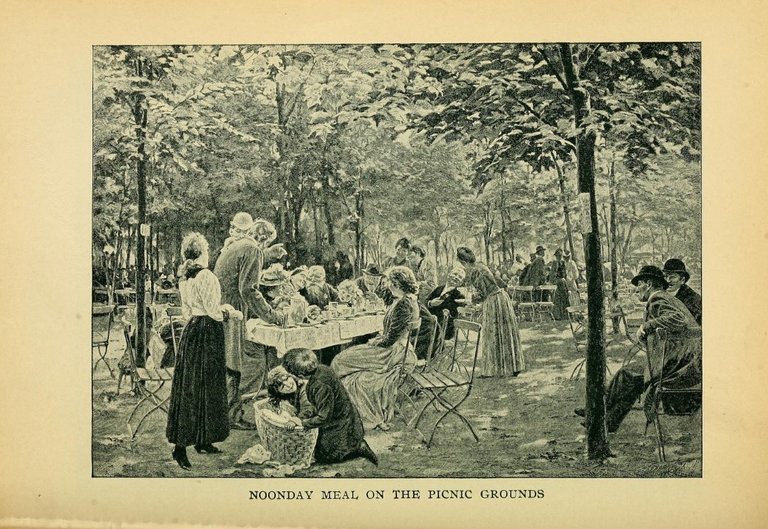
1897 Montgomery Ward’s Common Sense Cookery

In 1897, Montgomery Ward & Co. was a world-pioneering mail-order business. Its first serious competition (Sears) had opened the year before.

They also published a book about cooking in 1897 that is available via Internet Archive. The title page indicates it is about more than just recipes: what to eat and how to prepare it, hygienic and scientific cooking!

They also published a book about cooking in 1897 that is available via Internet Archive. The title page indicates it is about more than just recipes: what to eat and how to prepare it, hygienic and scientific cooking!

The illustrations try to show the ideal of food preparation and enjoyment in the late 1800s.

Montgomery Ward & co.'s Common Sense Cookery

My mother remembers her parents ordering from Montgomery Ward in the 1930s for Christmas presents. I remember looking at their catalogs in the 1960s although I also looked at Sears catalogs.

I remember two other books from Wards.

One was the Wendy Ward Charm Book from the 1960s. It was full of somewhat dated information for teenaged girls; much of it we absorbed then jettisoned the parts that didn’t work for us as we entered the work force in the 1970s (the “I am Woman” era).

The other was the book written by Robert L. May on assignment to Montgomery Ward 1939 – the creation of Rudolph, the Red-nosed Reindeer. I bought a copy for my daughter in the early 1990s from Wards! It can be checked out from Internet Archive here.

12 years of Blog Anniversary

This blog started in November 2011…just after I made the decision to retire. 12 years have certainly been full of new adventures…a satisfying mix of days that were challenging and full of activity … also plenty to savor and enjoy. The blog helped me document much of what happened.

Last year I documented the changes within the blog over the first 11 years so I won’t repeat that. The main change over the past year has been my more regular visits to Carrollton, TX that resulted in a monthly visits to Hagerman National Wildlife Refuge (near Sherman TX), observations in my parents’ yard, and the birds at a park in Carrollton….and subsequent blog posts. There were also 1st visits to many places close to where we moved in Missouri that became fodder for blog posts as well.

I am anticipating that the 13th year of the blog will document our return to attending birding festivals and include more posts about elder care…documenting the journey my sisters and I have with our parents.

Previous anniversary posts: 11th anniversary, 10th anniversary

Gleanings of the Week Ending November 11, 2023

The items below were ‘the cream’ of the articles and websites I found this past week. Click on the light green text to look at the article.

In search of the Old Ones: Where to find the world's longest-lived trees – 25-30 woody plants can, without human assistance, produce specimens that reach the age of 1,000 years or older. Of those, only about 10 can reach 2,000 years and those are all conifers. 3 can produce trimillenials and 1 can produce quadrilmillenials. The longest-lived trees of eastern North America, bald cypress, grow in swamps and blackwater rivers. The eldest occur in backwater sections of North Carolina's Black River, just miles from industrial hog farms and fields cleared long ago for tobacco….these bald cypresses reach ages of 2,600+ years. Conifers achieve maximum longevity when conditions are cold and dry, or hot and dry, or steep and exposed, or high altitude, or nutrient poor. In the case of Great Basin bristlecone pine, the longest-living plant on the planet, it is all of the above, with some of these plants reaching up to 4,900 years old.

Conservation of Monumental Mexica Snake Sculpture Continues - Discovered last year in the heart of Mexico City at the site of the Templo Mayor, the main temple in the Mexica city of Tenochtitlan. The 500-year-old sculpture, which measures about six feet long and three feet tall, was painted with yellow, blue, red, black, and white colors made from minerals and plants employed by the Mexica on cult images and temples.

Fungal infection in the brain produces changes like those seen in Alzheimer's disease - When the fungus Candida albicans enters the brain, the body’s response generates amyloid beta (Ab)-like peptides, toxic protein fragments from the amyloid precursor protein that is considered to be at the center of the development of Alzheimer's disease.

Wildlife Photographer of the Year winners show the beauty — and precarity — of nature – My favorite is the Plants and Fungus winner (Last Breathe of Autumn) taken on Mount Olympus.

Scientists says identifying some foods as addictive could shift attitudes, stimulate research - Most foods that we think of as natural, or minimally processed, provide energy in the form of carbohydrate or fat -- but not both. Many ultra-processed foods have higher levels of both. That combination has a different effect on the brain. In a review of 281 studies from 36 different countries, researchers found ultra-processed food addiction is estimated to occur in 14 percent of adults and 12 percent of children. Viewing some foods as addictive could lead to novel approaches in the realm of social justice, clinical care, and public policy.

Flood Resilience Through Green Infrastructure - Green spaces don’t just mitigate flooding. They beautify the urban landscape and improve residents’ mental health. They filter out microplastics and other pollutants, keeping them from reaching sensitive water bodies like rivers. And when the weather is hot, they cool neighborhoods, because plants ‘sweat.’

15th-Century Theater Floorboards Uncovered in Norfolk - A combination of tree-ring dating and study of the building's construction dated the floorboards to between 1417 and 1430. This suggests that William Shakespeare may have performed on the boards!

Second report on the status of global water resources published - Large parts of the world experienced drier conditions in 2022 than those recorded on average for the equivalent periods over the last 30 years. The report results from the expertise provided by 11 international modeling groups to extrapolate from the data/statistics available. There is a particular lack of data on the situation regarding groundwater.  

More Mammals Can Glow in the Dark Than Previously Thought - By examining museum specimens, researchers documented the glowing property across 125 mammal species. Humans, for example, have fluorescent teeth, like all mammals do. In 1911, researchers reported fluorescence in European rabbits, marking the first documented case of the glowing ability in a non-human mammal.

21 species have been declared extinct, the U.S. Fish and Wildlife Service says – 10 birds, a bat, 2 fish and 8 freshwater mussels. There are now 650 species that have gone extinct in the U.S., according to the Center for Biological Diversity, which says factors such as climate change, pollution and invasive species contribute to species loss.

Victor Tissot ebooks

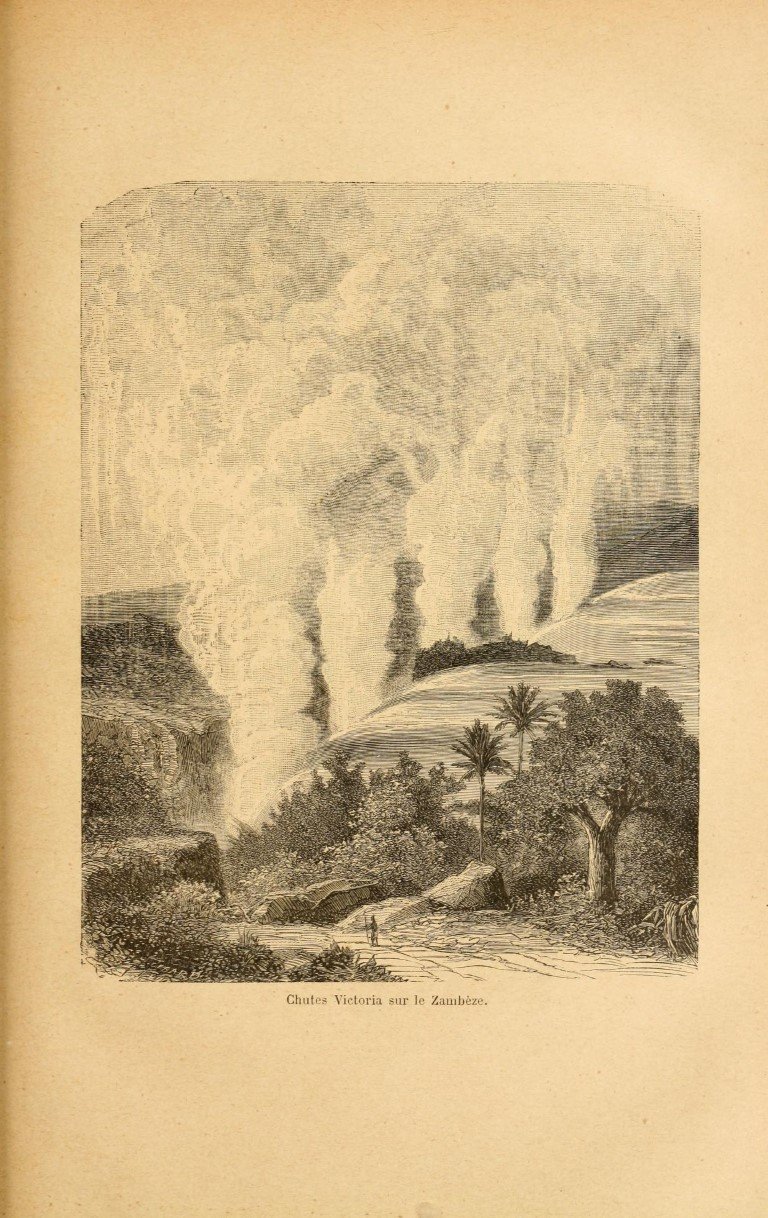
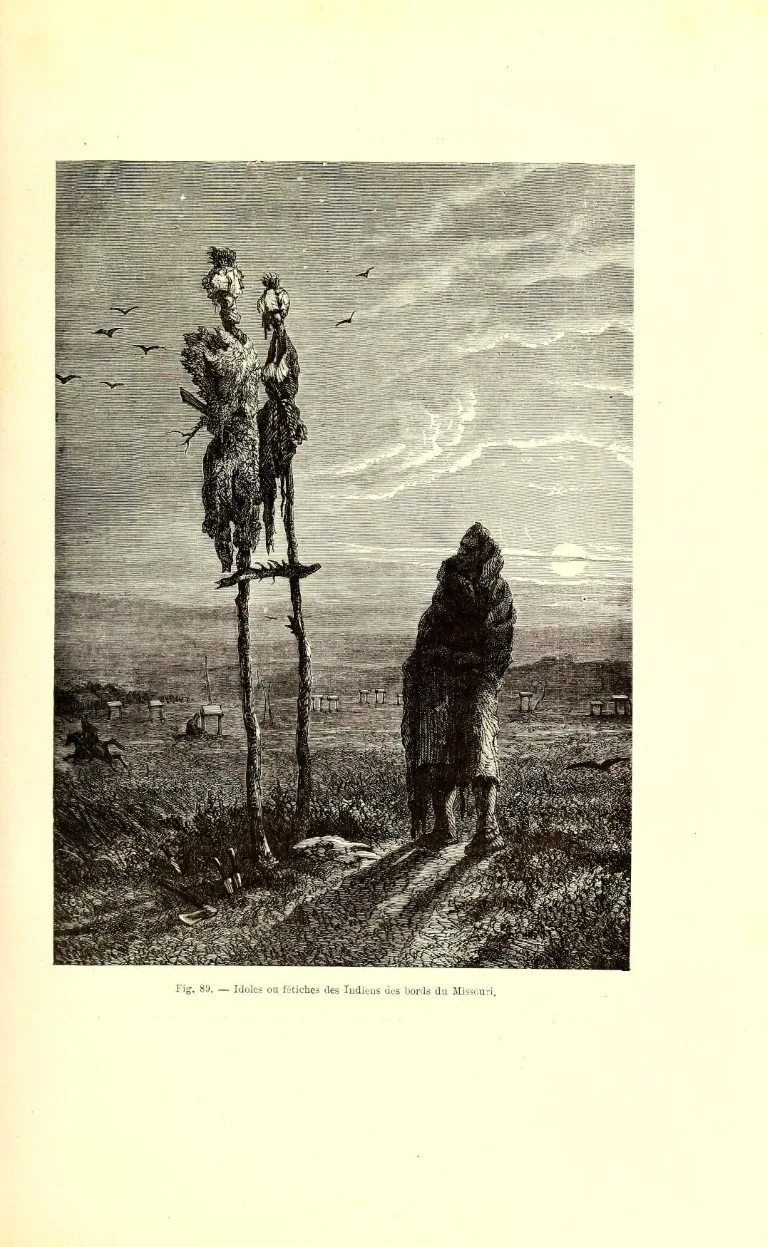
Victor Tissot was a French journalist and writer. Two of his books from the later 1800s for the as ‘books of the week.’ They are both available on Internet Archive with illustrations worth browsing.

These books reflect the knowledge and perceptions of the time --- so remember ‘late 1800s’ when viewing the depictions of places and people. More people were interested in and traveling to remote places…hence more travel books being written. The authors sometimes combined the travels of others into their works…used multiple illustrators (some illustrators also relying on information from others rather than observing in-person). There was plenty of opportunity for incorporation of ‘not quite right’ information!

(click on small sample images to see a larger version).

L'Afrique pittoresque (Picturesque Africa)

Les contrées mystérieuses et les peuples inconnus (Mysterious countries and unknown peoples)

(Note the caption of the last picture mentions Missouri!)

Carrollton Yard – November 2023

At the beginning of the month – the yard in Carrollton, Texas was still needing to be mowed almost weekly and the leaves were mostly green on the trees. The metal iris I bought last spring was still surrounded my growing vegetation – not the only focal point of the garden as it will be in the winter.

There are still some things blooming.

The pecan tree is shedding groups of leaves that are still green onto the pavers.

I cut the three millet seed heads that grew under the bird feeder. I’ll put them in the sunniest corner of my yard in Missouri. Maybe the seeds will come up next spring, grow as ornamentals, round the corners of the yard that I mow, and feed birds by the fall.

Carrollton is renovating the infrastructure in my parents’ neighborhood. The alley already has flags to mark where the gas line is located. The alley will be removed/replaced and plantings about 8 inches from the existing concrete will be destroyed.

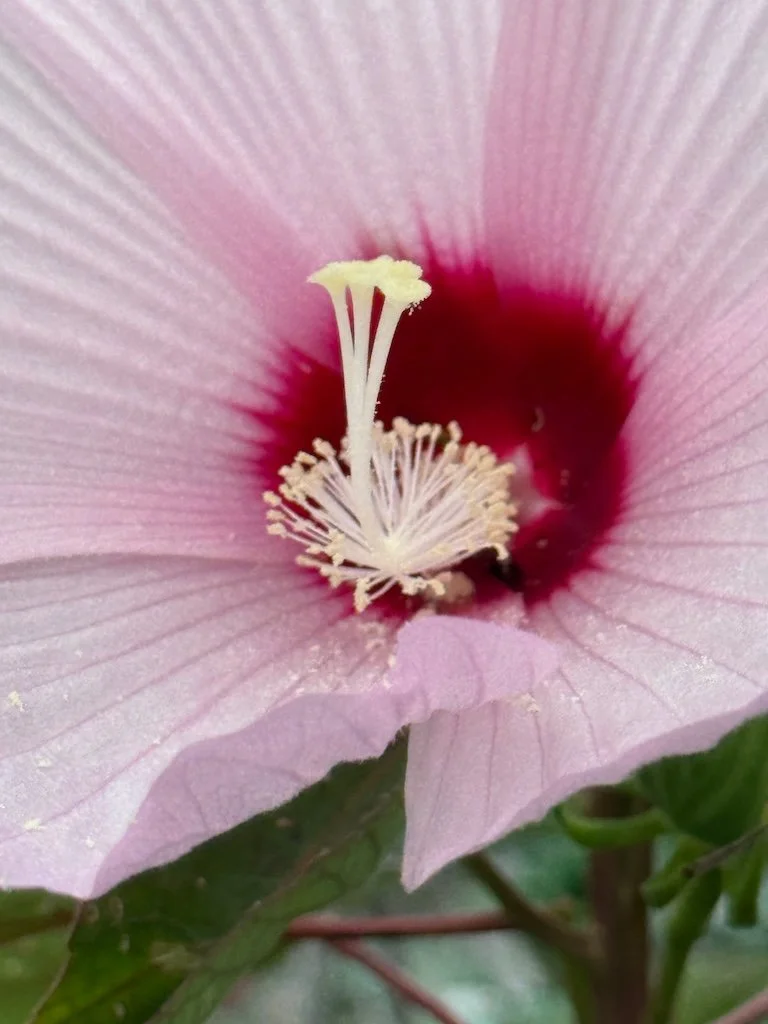
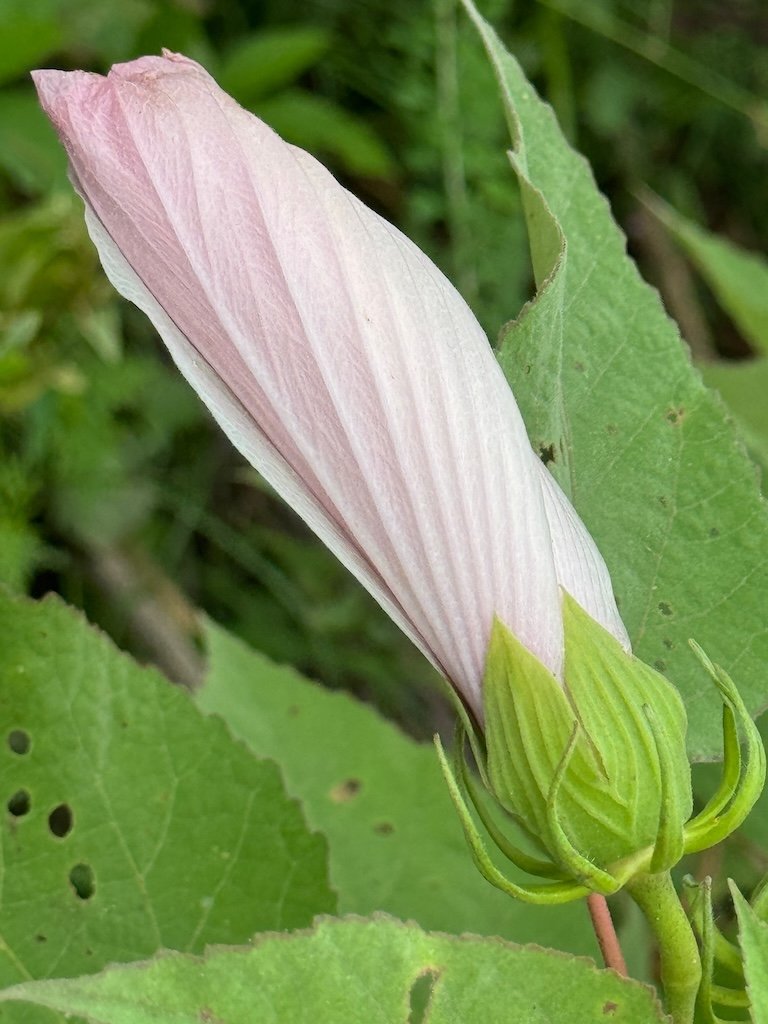
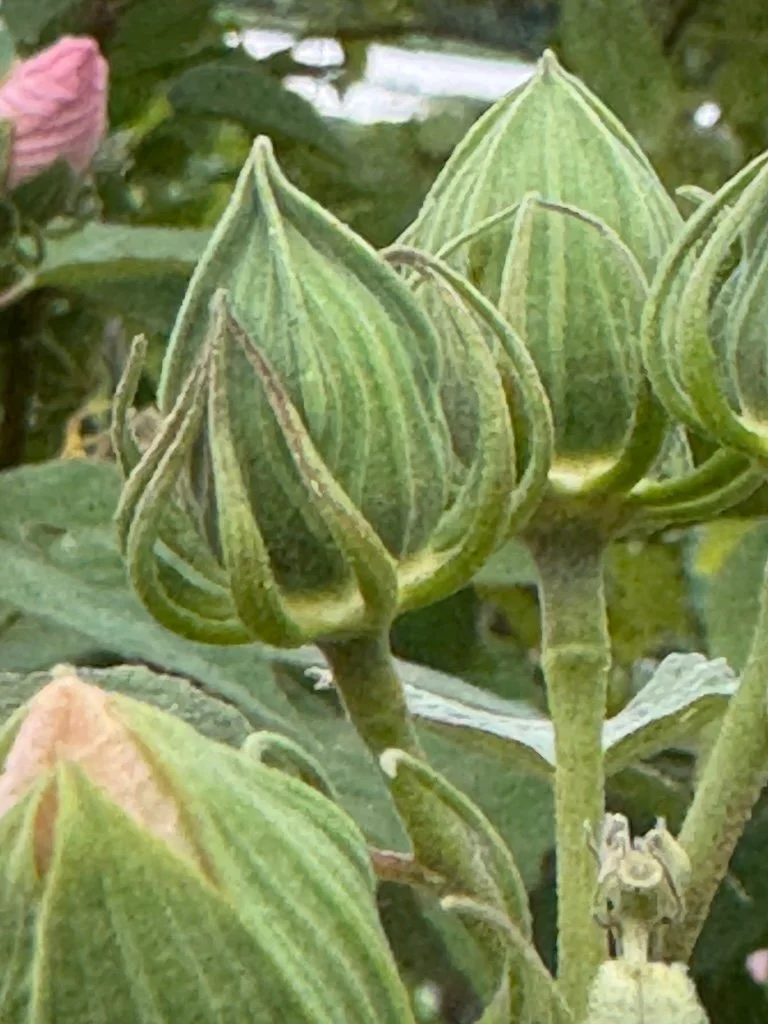
That 8 inches includes some tiger lily and iris bulbs, sunflowers that have come back year after year from my niece’s kindergarten sunflower-in-a-cup planted there over 20 years ago, native hibiscus, and lots of chives. My sister cut the sunflowers and put the stalks further back in the bed (hoping the seeds will continue to mature there), dug up the lily and iris bulbs to plant elsewhere, and dug up/moved the native hibiscus plants.

In the front yard, there were mums planted in open spaces in ground cover…the red oak in that area is beginning to shed a few leaves.

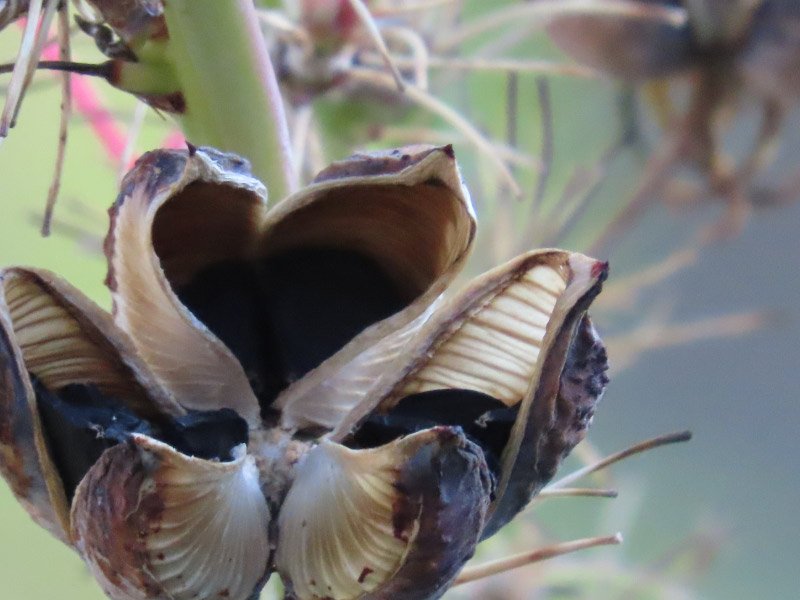
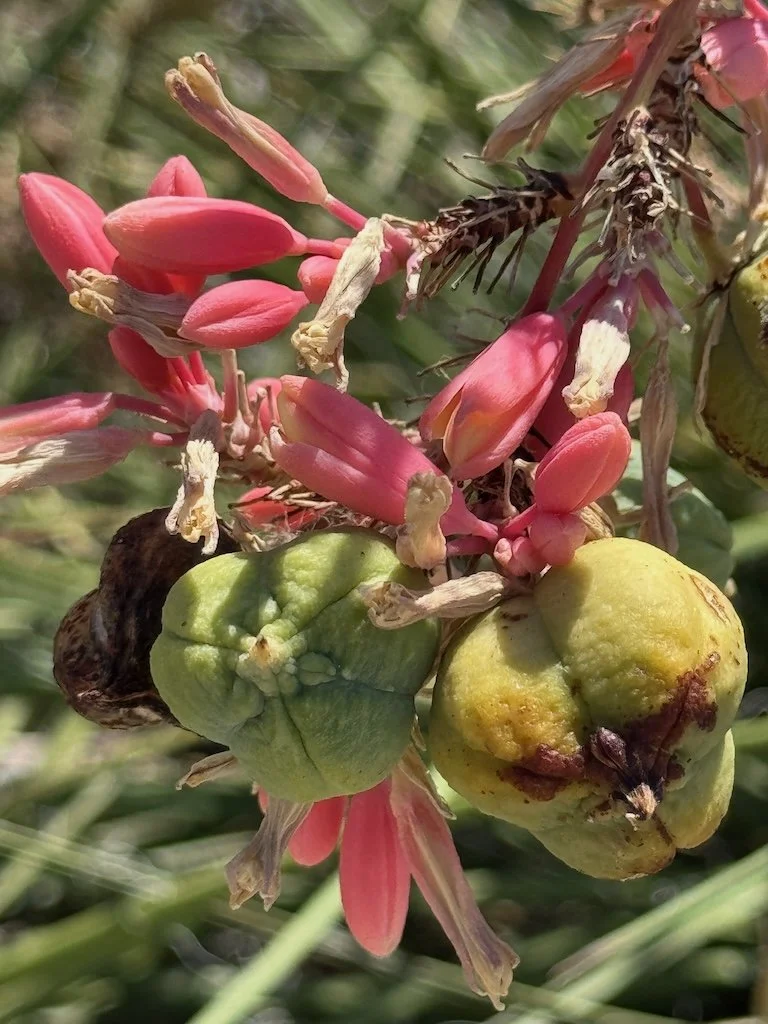
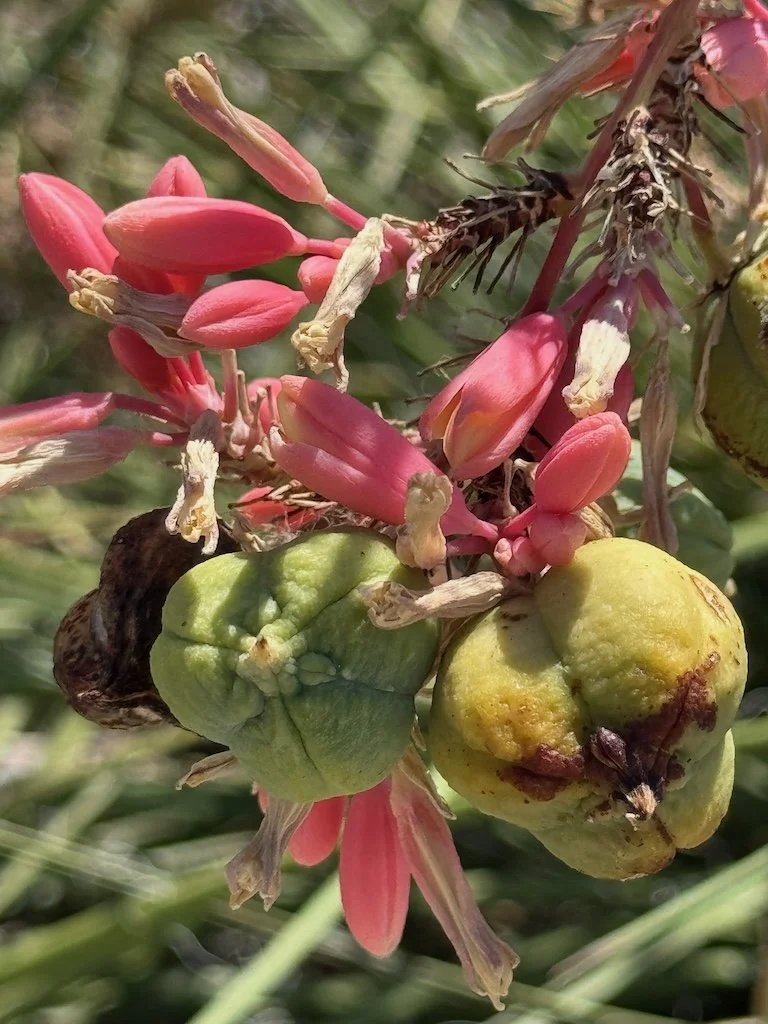
Across the sidewalk, the red yucca has mature seed pods full of black seeds…but is still blooming as well.

Overall – a yard beginning a slow slide to fall.

Pumpkins!

My son-in-law held his annual pumpkin carving event the weekend before Halloween. My daughter doesn’t carve but she does help with buying the carload of pumpkins - one for each person in his research group (almost filling the back of the car).

This year it was raining on the evening the carving was done so the party was moved from outside into their garden room – with a big tarp on the floor to help with clean up later. The students picked the seeds out of the pumpkin guts and roasted them while they carved. The finished carvings were, as usual, spectacular. My son-in-law did the spider one which he later entered in a pumpkin carving contest at the local climbing gym and won a $50 prize!

The student that carved the Yoda pumpkin didn’t have a place to display it, so it stayed with the spider pumpkin through Halloween. A day or so after Halloween, the squirrels started eating the carved pumpkins; the first part to be eaten was one of the Yoda ears.

Meanwhile, there were two uncarved pumpkins left after the carving night. I took one to Carrollton and cooked it the Sunday before Halloween; it was so big I had to cut the top off to fit it into the oven! I made pumpkin soup (topped with pumpkin seeds that I roasted) and then pumpkin cake (made in muffin pans). The pumpkin soup was easy and yummy: pumpkin, picante, canned chicken, arugula…topped with pumpkin seeds and a sprinkle of Everything Bagel seasoning.

I still have a lot of pumpkin puree to use; most of it is in the freezer. The second pumpkin will be cooked in a few days – also will be processed and headed for the freezer. I am enjoying that we have a second refrigerator in our house to store the winter’s supply of pumpkin puree!

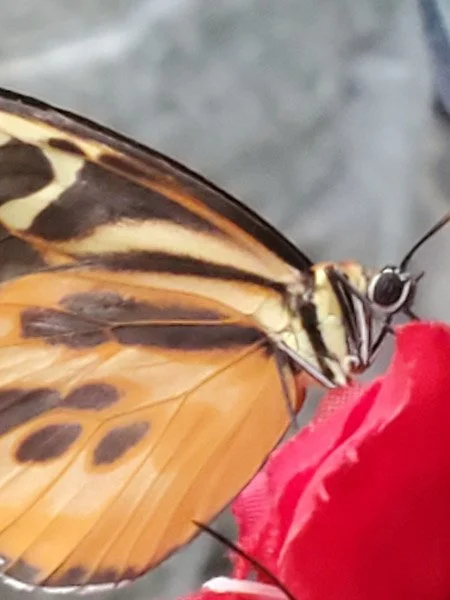
Branson’s Butterfly Palace

Last week, my husband and I visited the Butterfly Palace in Branson MO – less than an hour from where we live. My daughter had visited several days before and recommended it.

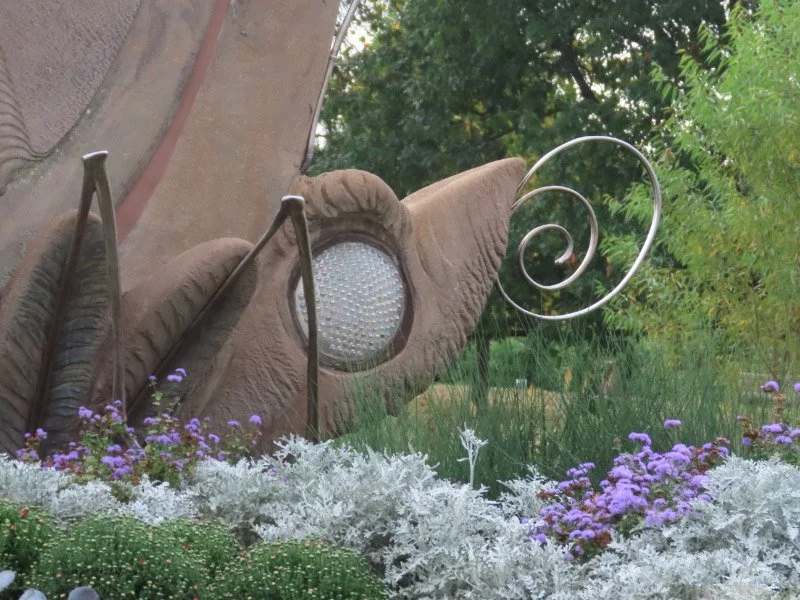
There were butterfly sculptures and stakes along the short walk to the building.

We walked around the Living Rainforest Science Center first…then the Emerald Forest Mirror Maze. The maze was a bit more challenging than we anticipated…more fun too. But the big draw is, of course, the Butterfly Aviary.

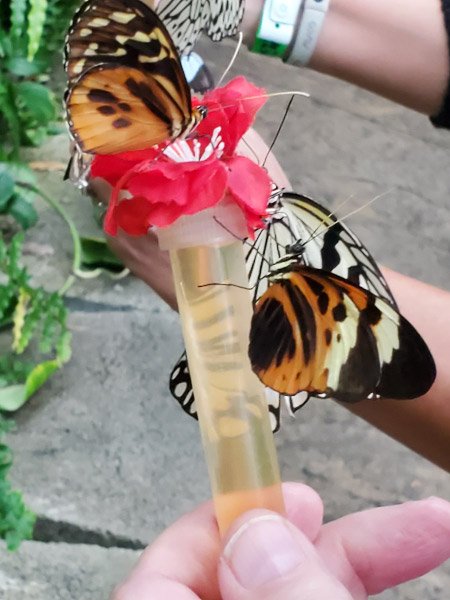
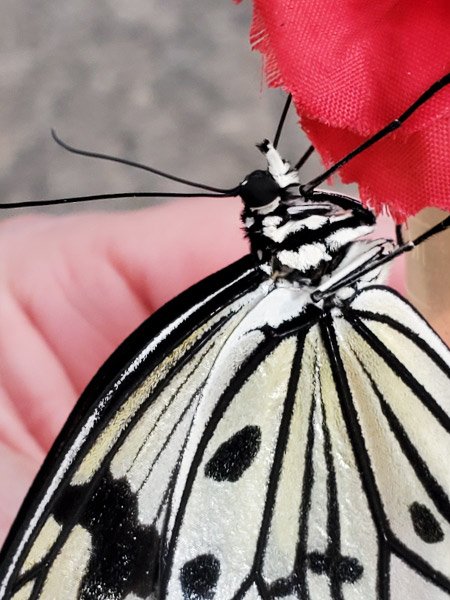
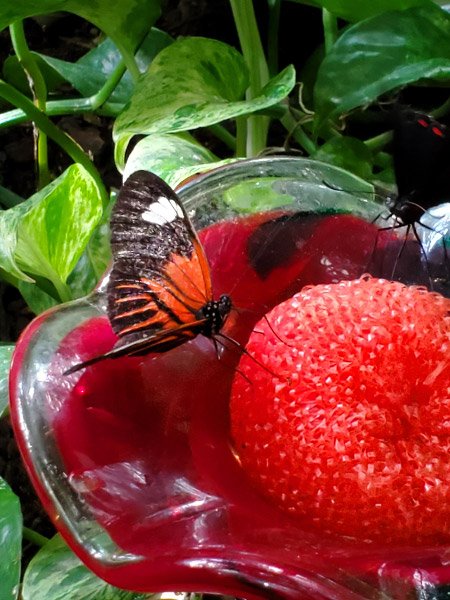
Visitors are given a vial with a ‘flower’ on top that attracts butterflies. They sip the liquid (diluted orange Gatorade) while people walk around the aviary.

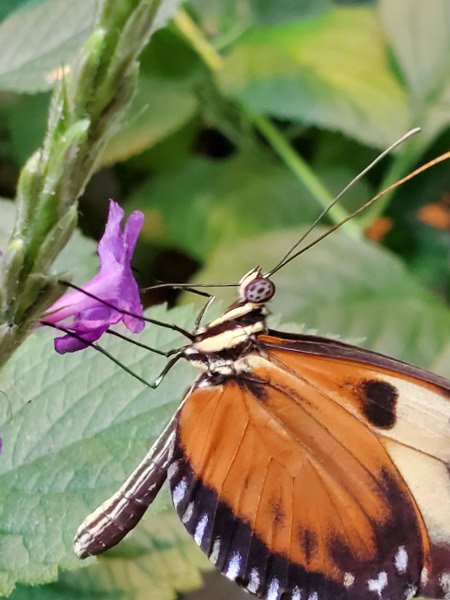
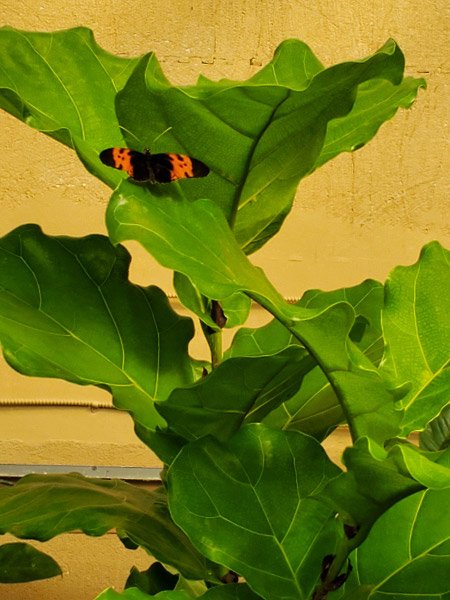
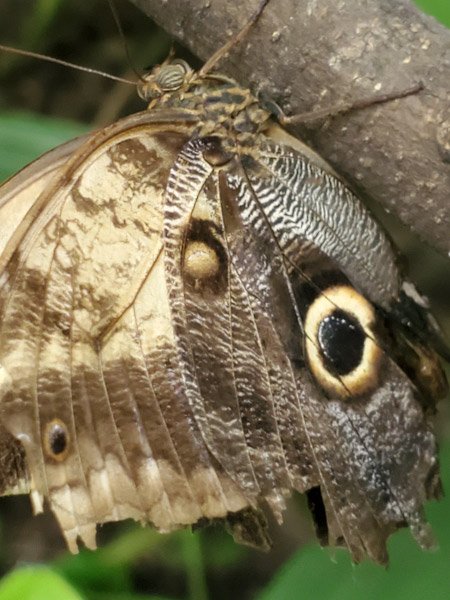
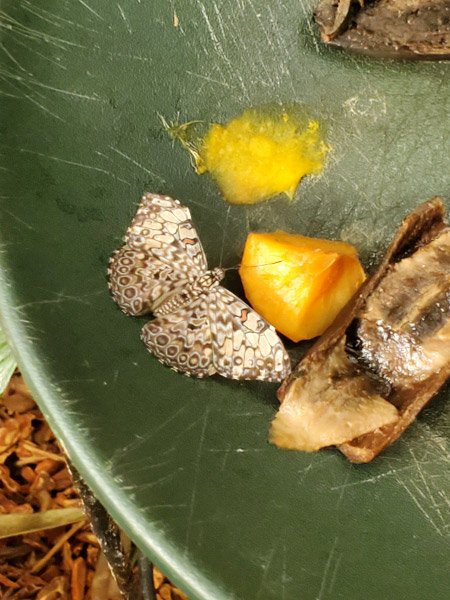
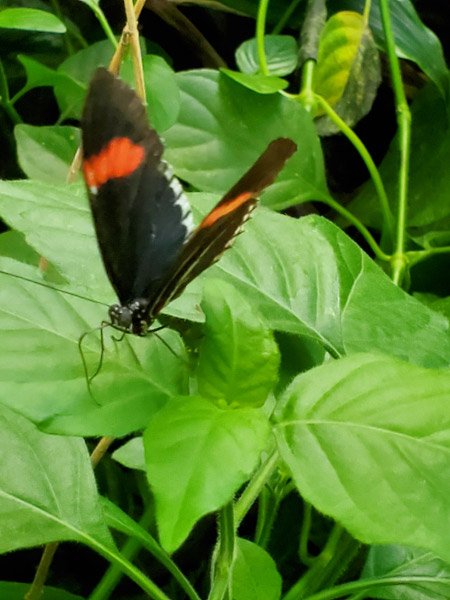
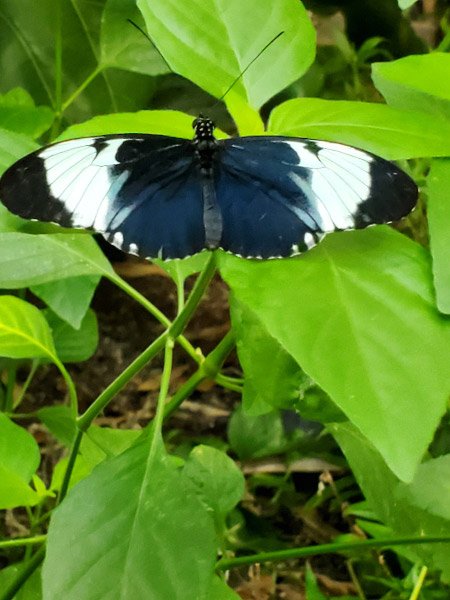
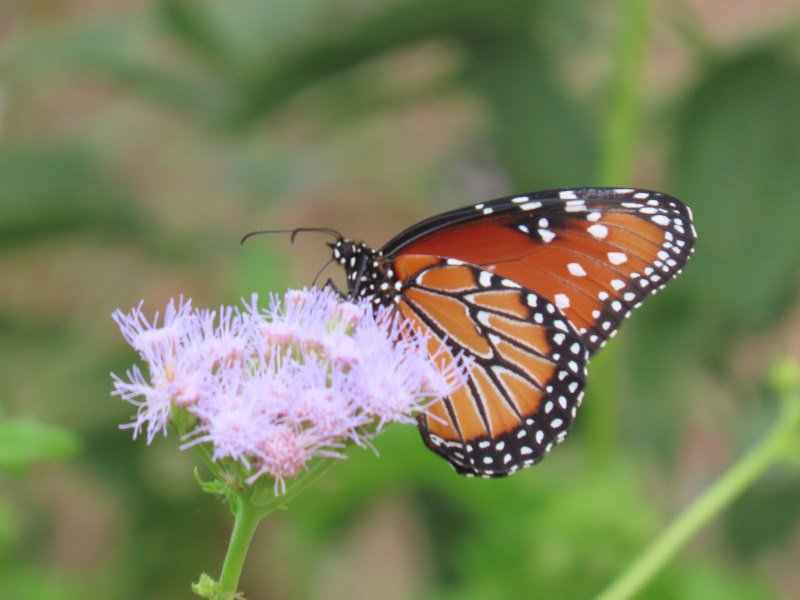
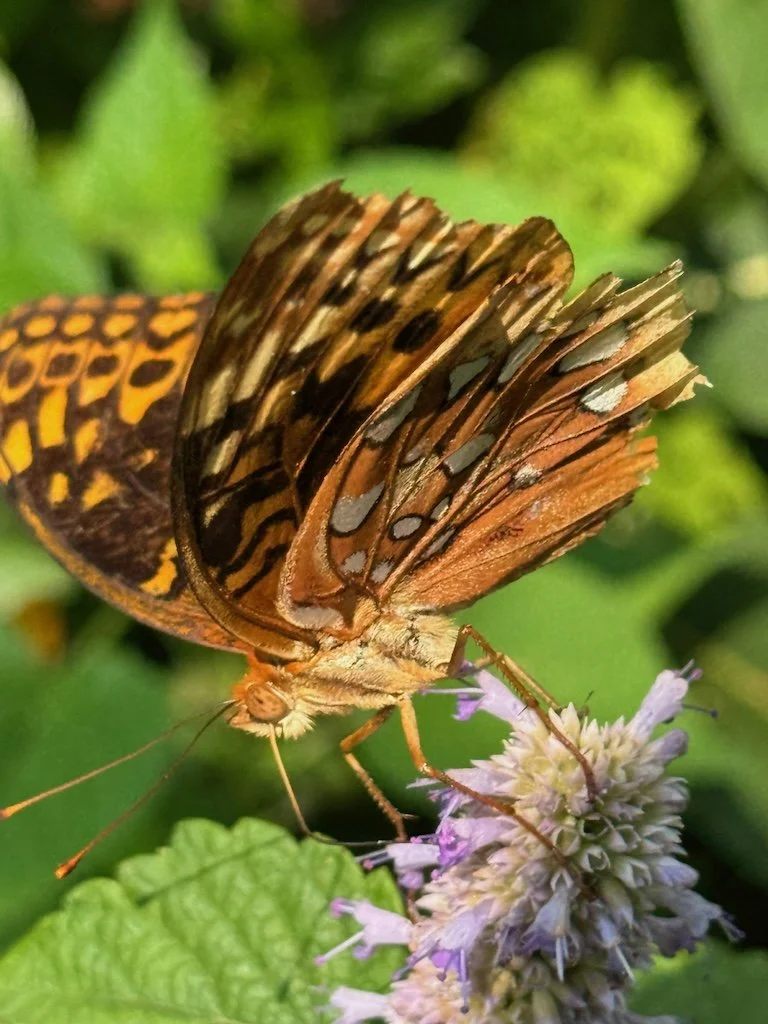
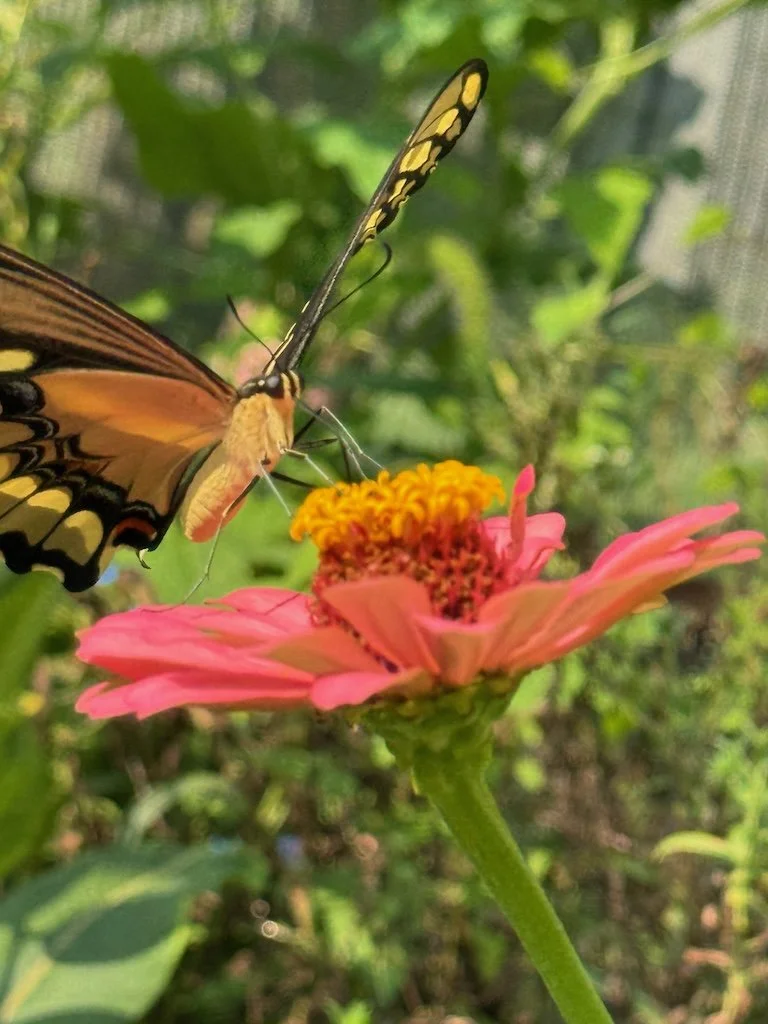
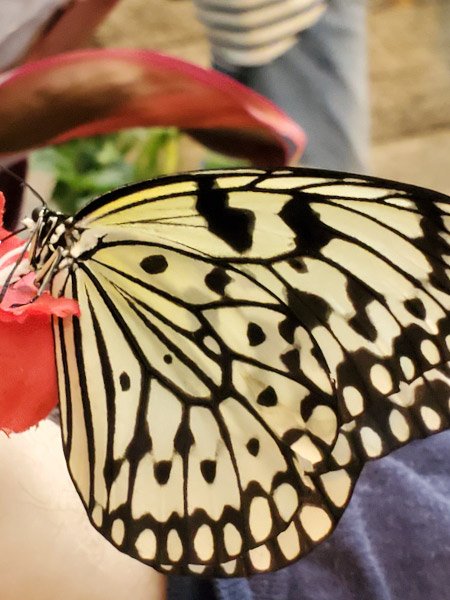
The paper kites seem to settle in on the ‘flowers’ and stay for the duration! It was very easy to take close pictures of them with my phone (one handed since the vial was in the other one!). My husband had more butterflies on his flower than I did on mine.

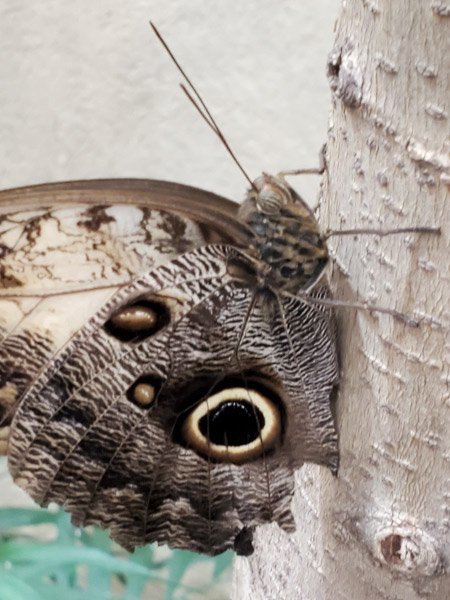
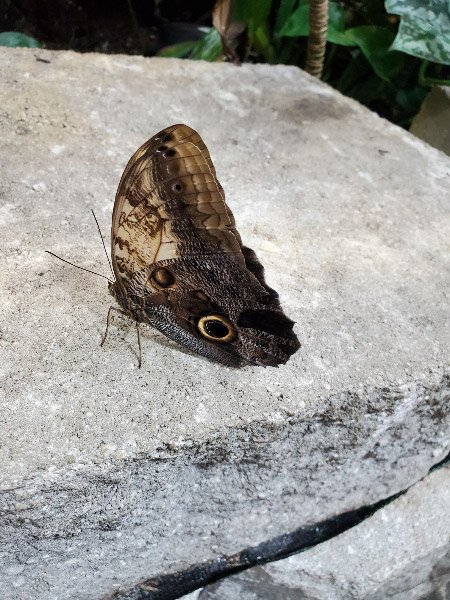
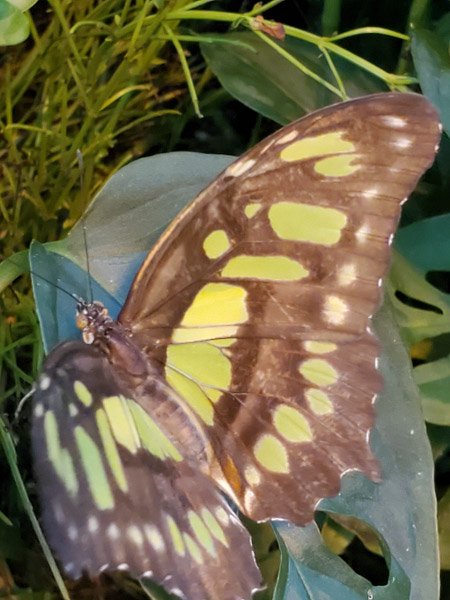
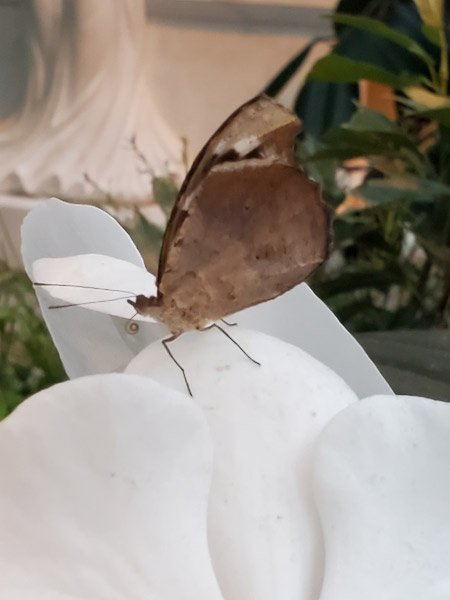
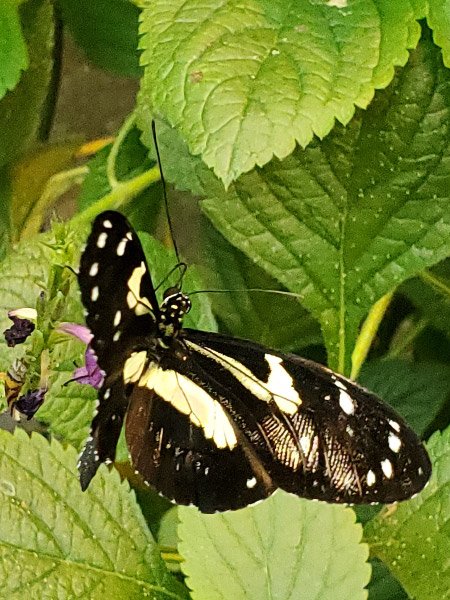
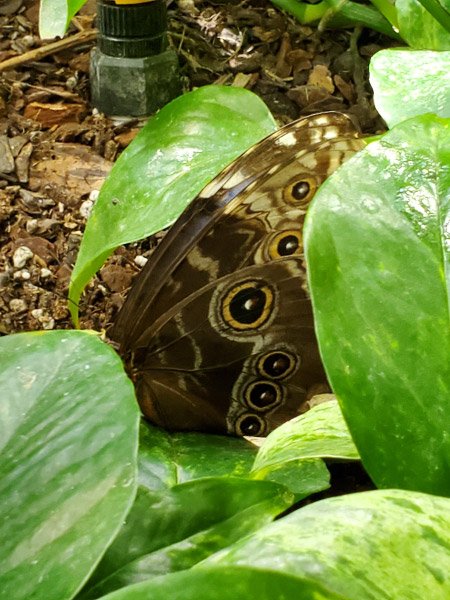
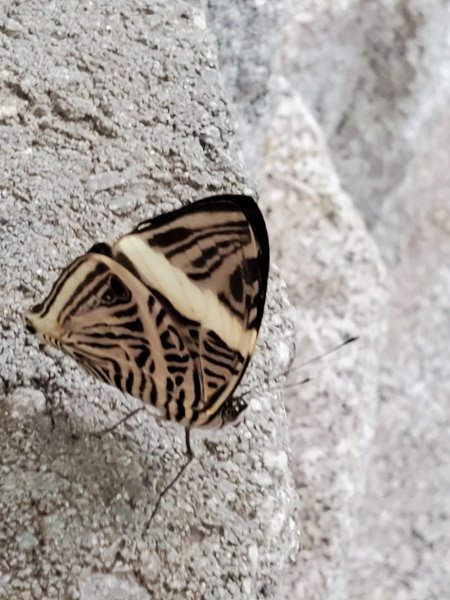
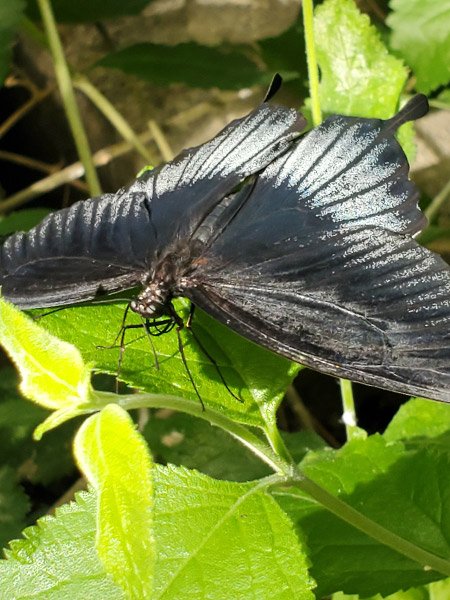
The butterflies in the exhibit were the same species as I’d seen previously at Brookside Gardens’ Wings of Fancy in Maryland. There were some butterflies with iridescent blue wings (blue morphos?) but I wasn’t able to photograph them. I like the malachite butterflies a lot but, in this exhibit, the paper kites were the stars on the day we visited. There were fruit trays and sponges in sugar water for the butterflies….very few blooming plants. The paths were too narrow to allow for photography with other than phones…but many of the butterflies were stationery enough to get close with the phone!

There were some small rainforest birds that stayed in the trees around where their food was placed. They were as iridescent as some of the butterflies.

Outside the aviary the butterfly theme continued everywhere – chairs, artwork, on the walls. The butterfly chairs are surprisingly comfortable; I sat in one until the 3D movie about Monarch Butterflies opened for the next showing.

The store is large and had a good selection. I was surprised to find a new, sturdier stand for my large glass birdbath (I didn’t use it last summer because I was too worried that the stand was not stable enough)!

Gleanings of the Week Ending November 4, 2023

The items below were ‘the cream’ of the articles and websites I found this past week. Click on the light green text to look at the article.

Oldest fossil human footprints in North America confirmed – New research that supports the dating of the footprints found in White Sands National Park to between 21,000 and 23,000 years old.

Downtown Dallas Gets a New Park – Harwood Park. It reminded me of a field trip with my parents – taking the light rail train from Carrollton to downtown Dallas to visit Klyde Warren Park and have lunch in 2014. I’m glad there is another park added to the downtown area.
BLM Releases New Plan for Moab Area - The plan limits motorized recreation to protect natural and cultural resources. I hope the BLM can succeed in reducing the impact of off road vehicles….requiring ORV users/organizations to take precautions to protect the environment for themselves and everyone else to enjoy in this area.

Active children are more resilient – Interesting….I’ve assumed this but the way the researches went about confirming the idea was worth knowing and reassuring.

A Road Trip Along the Northern Shore of Lake Superior – The Trans-Canada Highway from Thunder Bay to Marathon in June. Maybe a place we’ll go one summer?

What your hands say about your health – I wish the article had better pictures!

Trouble in the Amazon - In the southeastern Amazon, the forest has become a source of CO2….and maybe more will cease to be a carbon sink as well. Large-scale deforestation… plus even intact forest is no longer as healthy as it once was, because of forces such as climate change and the impacts of agriculture that spill beyond farm borders. Data has been collected every two weeks for 10 years! The selective logging permitted by the Forest Code in Brazil is often not sustainable. That’s because the trees that are removed are generally slow-growing species with dense wood, whereas the species that grow back have less-dense wood, so they absorb less carbon in the same space.

A Summer Light Show Dims: Why Are Fireflies Disappearing? – Habitat destruction (clear cutting, fragmentation of forests), water pollution (in Asia many firefly larvae are aquatic), pesticides and yard chemicals, light pollution (it blinds males so that they can’t find females). On a positive note: firefly ecotourism is increasing in Mexico and Malaysia….and around Great Smokey Mountains National Park in the US.

Large herbivores keep invasive plants at bay - Native plants have evolved such that they can withstand brutal treatment from species of herbivores they have co-existed with for millennia, while invasive plants usually cannot.

The Amazon May Be Hiding More Than 10,000 Pre-Columbian Structures - Based on a new aerial survey and modeling study, archaeologists suggest at least 90 percent of sites known as earthworks remain undetected. Also found - high concentrations of 53 domesticated tree species near earthwork sites. These include cacao, Brazil nut, breadnut and Pará rubber trees, plus dozens of others. This demonstrates how the region’s inhabitants altered the natural landscape, likely so they would have a steady supply of food and useful materials.

eBotanical Prints – October 2023

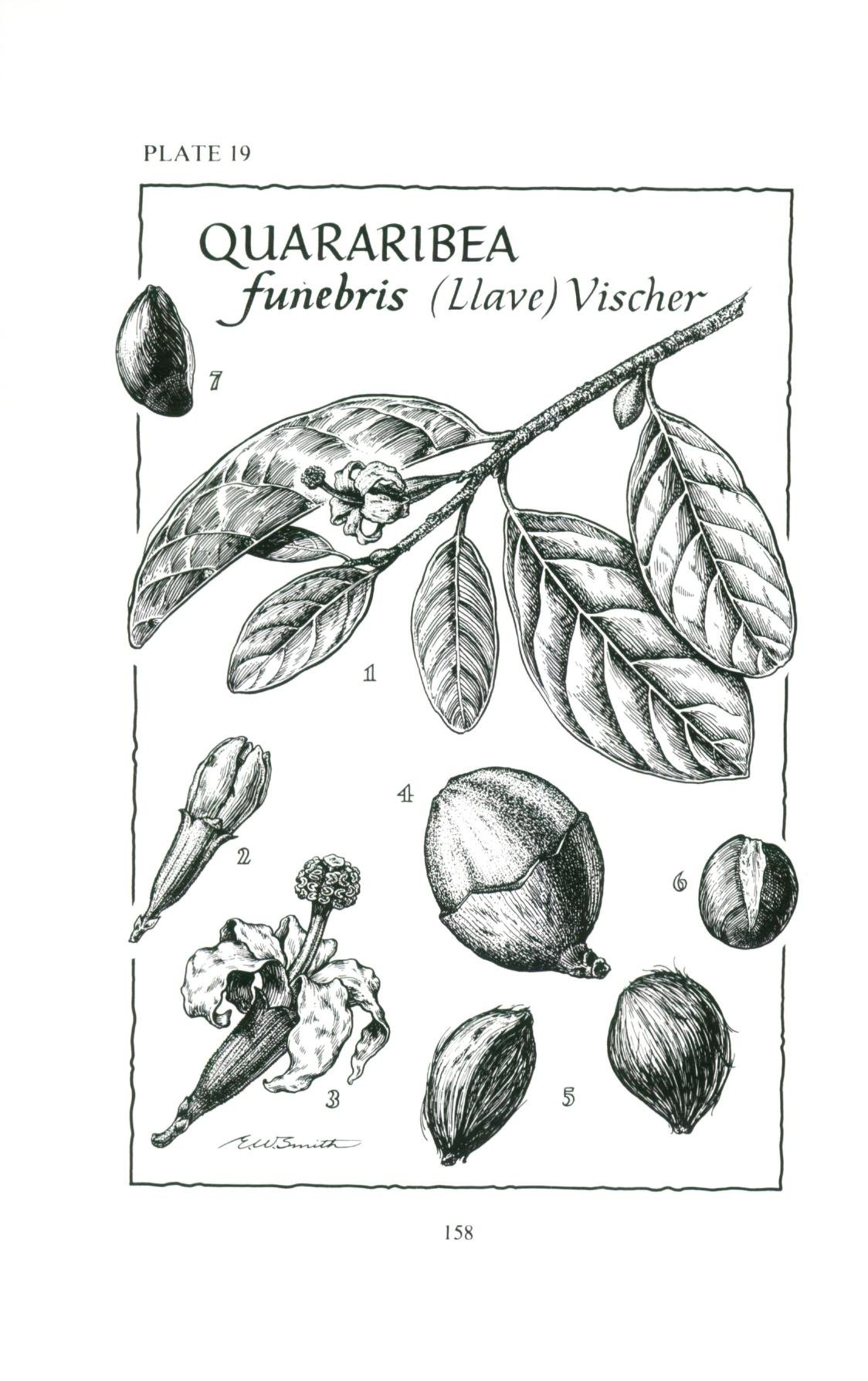
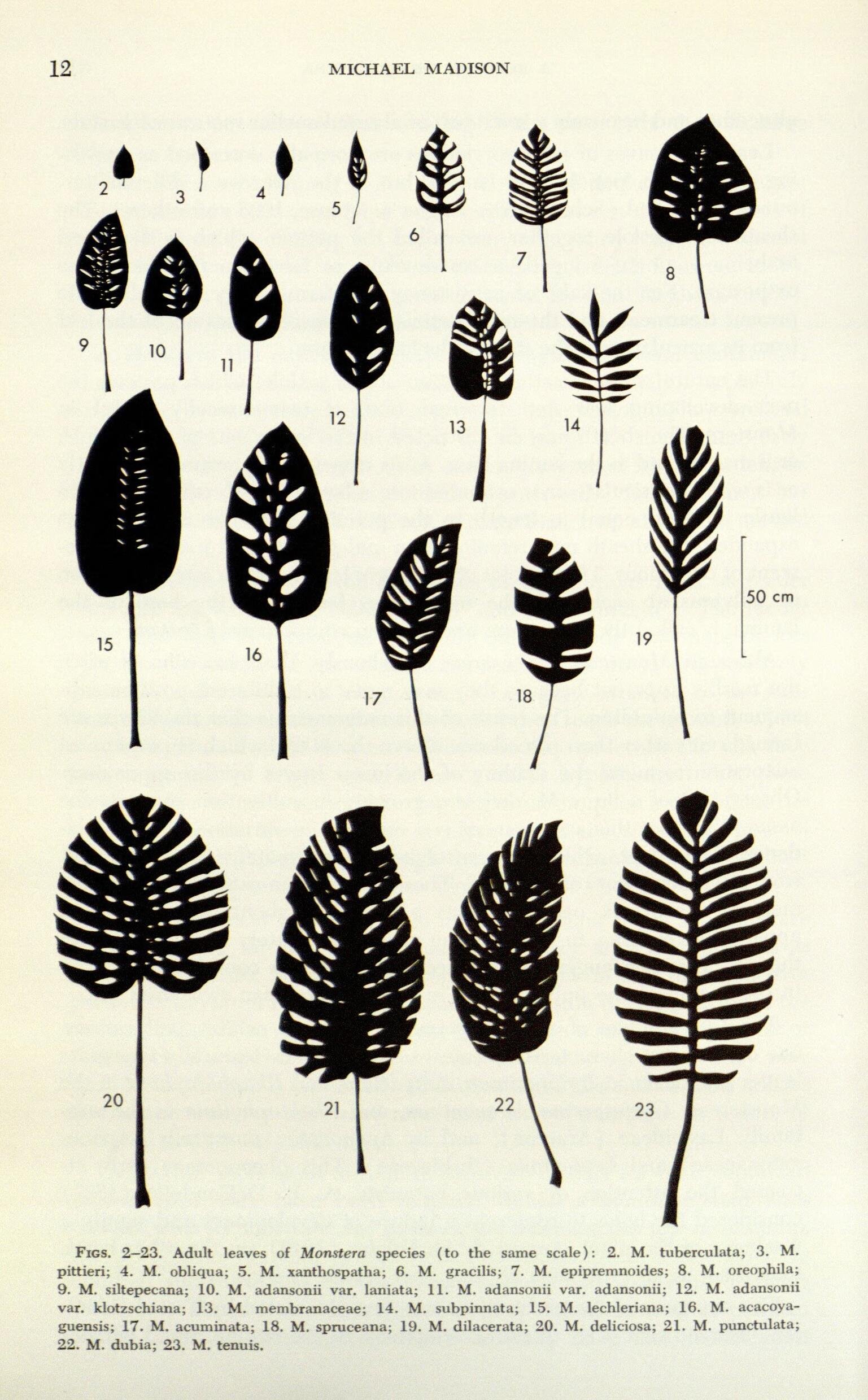
Twenty more books were added to the botanical print collection this month – available for browsing on Internet Archive. More than half of the books are Harvard’s Botanical Museum Leaflets from 1957 to 1982. These are relatively modern botanical prints! The rest of the volumes for October are “Contributions from the Gray Herbarium.” My favorite image is the next to last: silhouettes of Monstera leaves.

The whole list of 2,737 botanical eBooks can be accessed here. The list for the October 2023 books with links to the volumes and sample images is at the bottom of this post.

Click on any sample images in the mosaic below to get an enlarged version. Enjoy the October 2023 eBotanical Prints!

Botanical Museum leaflets V17 * 1957 * Harvard University * sample image

Botanical Museum leaflets V18 * 1959 * Harvard University * sample image

Botanical Museum leaflets V19 * 1962 * Harvard University * sample image

Botanical Museum leaflets V20 * 1964 * Harvard University * sample image

Botanical Museum leaflets V21 * 1967 * Harvard University * sample image

Botanical Museum leaflets V22 * 1967 * Harvard University * sample image

Botanical Museum leaflets V23 * 1974 * Harvard University * sample image

Botanical Museum leaflets V24 * 1976 * Harvard University * sample image

Botanical Museum leaflets V25 * 1977 * Harvard University * sample image

Botanical Museum leaflets V26 * 1978 * Harvard University * sample image

Botanical Museum leaflets V27 * 1979 * Harvard University * sample image

Botanical Museum leaflets V28 * 1982 * Harvard University * sample image

Botanical Museum leaflets V29 * 1982 * Harvard University * sample image

Botanical Museum leaflets V30 * 1982 * Harvard University * sample image

Contributions from the Gray Herbarium of Harvard University no. 40-50 * 1917 * Harvard University, Gray Herbarium * sample image

Contributions from the Gray Herbarium of Harvard University no. 101-105 * 1934 * Harvard University, Gray Herbarium * sample image

Contributions from the Gray Herbarium of Harvard University no. 179-184 * 1956 * Harvard University, Gray Herbarium * sample image

Contributions from the Gray Herbarium of Harvard University no. 185-191 * 1956 * Harvard University, Gray Herbarium * sample image

Contributions from the Gray Herbarium of Harvard University no. 206-208 * 1976 * Harvard University, Gray Herbarium * sample image

Contributions from the Gray Herbarium of Harvard University no. 209-212 * 1982 * Harvard University, Gray Herbarium * sample image

Zooming – October 2023

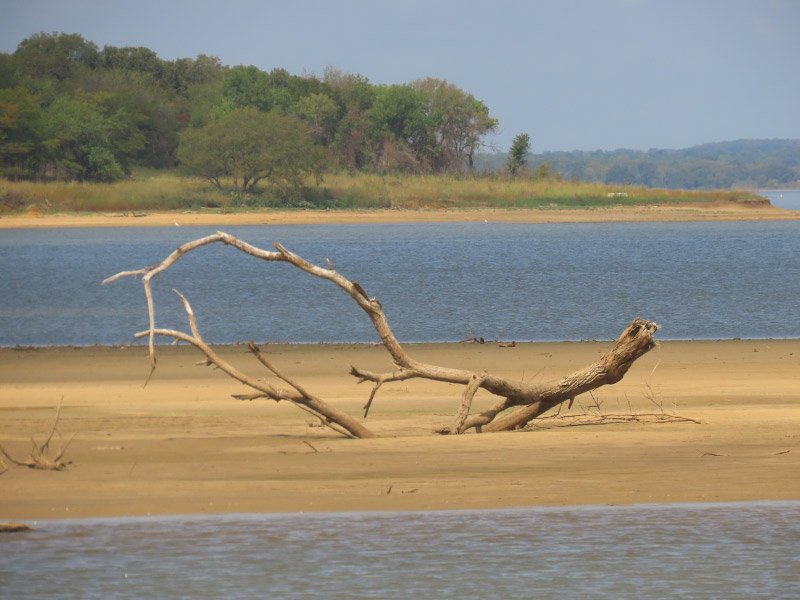
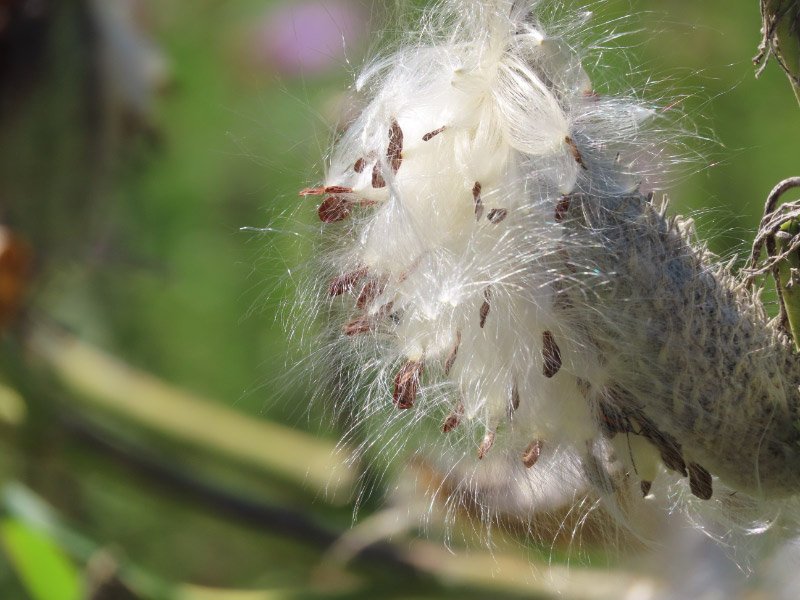
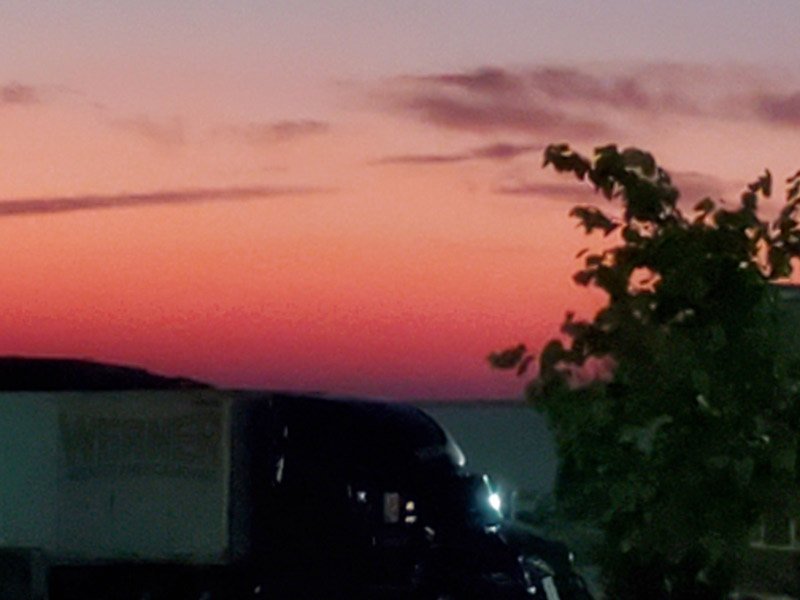
The optics of my camera allow me to capture images that are better than I can see with my eyes – flowers, insects, birds, cave formations and seed pods that fill the frame…driftwood isolated from the noise of other things around it….sculpture, glass, and fall gourds specially arranged….sunrises and a sunset….the beauty of a fall morning. Every picture is a memory moment – a visual that also serves as a reminder of a place and mood and relationship with the people that experienced it with me. The places were mostly close to home in southwest Missouri (art museum, meadow, caverns) but also St. Louis and along the route between home and Carrollton TX.

Gleanings of the Week Ending October 28, 2023

The items below were ‘the cream’ of the articles and websites I found this past week. Click on the light green text to look at the article.

Water Worker Stumbles Upon 2,500-Year-Old Gold Necklaces in Spain – Celtic gold….from before the Roman Empire ruled the Iberian Peninsula.

Canopy gaps help eastern hemlock outlast invasive insect – Hemlock wooly adelgid killed most of the hemlocks in the part of Maryland where I lived previously. Perhaps part of the reason so many died was that they were in forests where there were too few gaps in the canopy around them.

Germany to Surpass 50 Percent Renewable Power This Year – Good milestone but evidently Germany is still not on pace to reach its goal of 80 percent renewable power by 2030.

The surprising origin of a deadly hospital infection - The burden of C. diff infection may be less a matter of hospital transmission and more a result of characteristics associated with the patients themselves (i.e. patients that are already colonized with C. diff were at greater risk to transition to infection). However, it is still unknown what triggers the transition from C. diff hanging out in the gut to the organism causing diarrhea and the other complications resulting from infection.

Meet the Bison: North America’s Most Famous Mammal – Lots of info on bison…their history of almost being hunted to extinction.

The secret world of rhododendrons: a plant more ancient than the Himalayas that inspired fables and stories around the world - There are around 1000 species in total, and modern DNA-based work confirms that all “azaleas” are in fact species of rhododendron.

A Sign of Things to Come? After Last Ice Age, Europe Cooled as the Planet Warmed - More than 8,000 years ago, as the planet thawed following the end of the last ice age, Northern Europe abruptly cooled. New research reveals that Arctic ice melt weakened a critical ocean current, leaving Europe in the cold, a finding with important implications for future climate change.

Fiber from crustaceans, insects, mushrooms promotes digestion – Chitin (from insect exoskeletons and mushrooms) activates the immune system and benefits metabolism. Insects are not on my menu….but I could eat mushrooms more frequently. The researchers plan to follow up to determine whether chitin could be added to human diets to help control obesity.

Review of over 70 years of menopause science highlights research gaps and calls for individualized treatment - Less than 15% of women receive effective treatment for their symptoms. Socio-economic factors such as lower quality of life and the potential negative impact of menopausal symptoms on a woman's work performance aren't often acknowledged. Therapy should be individualized depending on age and health risks, recognizing that health risks may increase with age.
California and Florida grew quickly on the promise of perfect climates in the 1900s – today, they lead the country in climate change risks - In California, home owners now face dangerous heat waves, extended droughts that threaten the water supply, and uncontrollable wildfires. In Florida, sea level rise is worsening the risks of high-tide flooding and storm surge from hurricanes, in addition to turning up the thermostat on already humid heat. Global warming has put both Florida and California at the top of the list of states most at risk from climate change. These futures bring into question how historic visions of economic growth and the sun-kissed good life that California and Florida have promised can be reconciled with climates that are no longer always genial or sustainable.

Portland, Maine in 1940

The US Work Projects Administration sponsored Writers’ Projects in many states – putting people to work as a step out of the Great Depression of the 1930s. The project in Maine produced a well-illustrated city guide for Portland in 1940. The illustrations are a mix of photographs, painting, and drawings. The book is available on Internet Archive. The images are worth a look as a snapshot of the city at that time (i.e. history) and for the artistry of the illustrations.

Portland City Guide

I selected 6 sample images from the book. A quick search revealed that the Portland Head Light and Portland Observatory still exist. The Wikipedia article for the city includes a picture of the waterfront that looks quite different from ‘The Twentieth Century City’ image!

Fantastic Caverns – October 2023

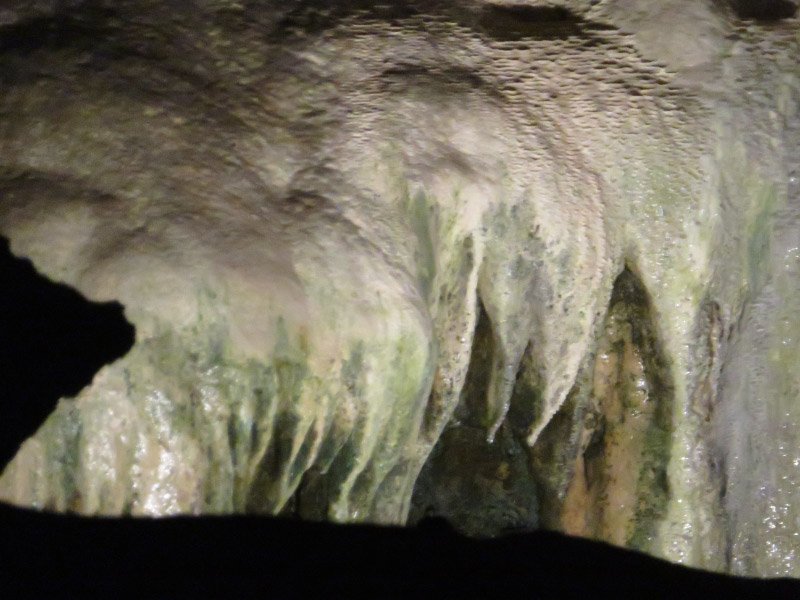
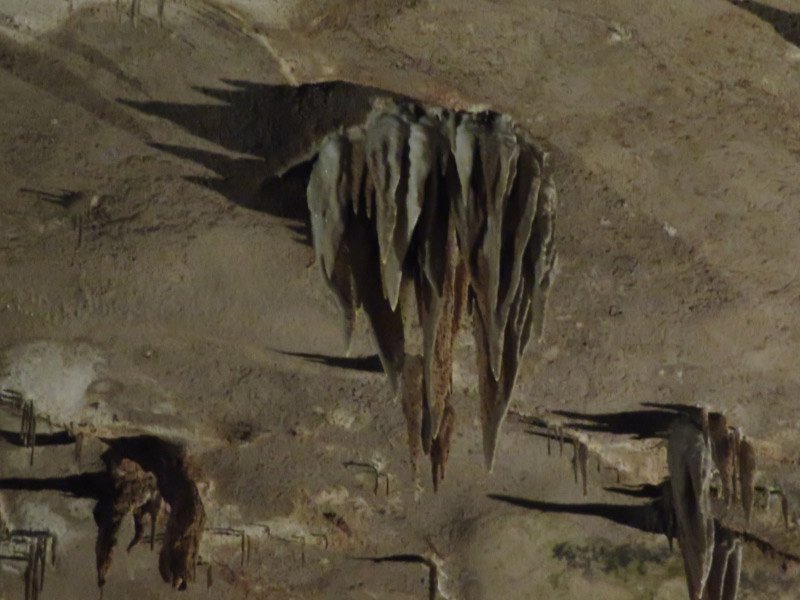
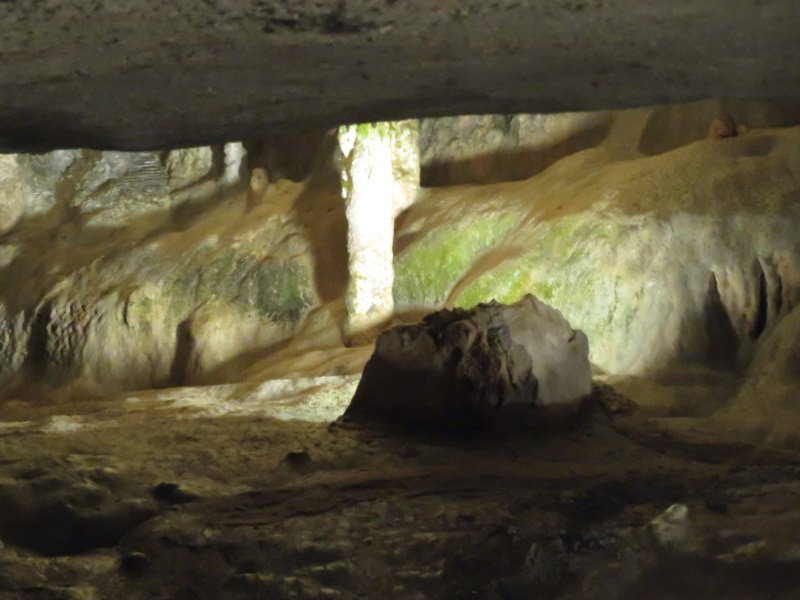
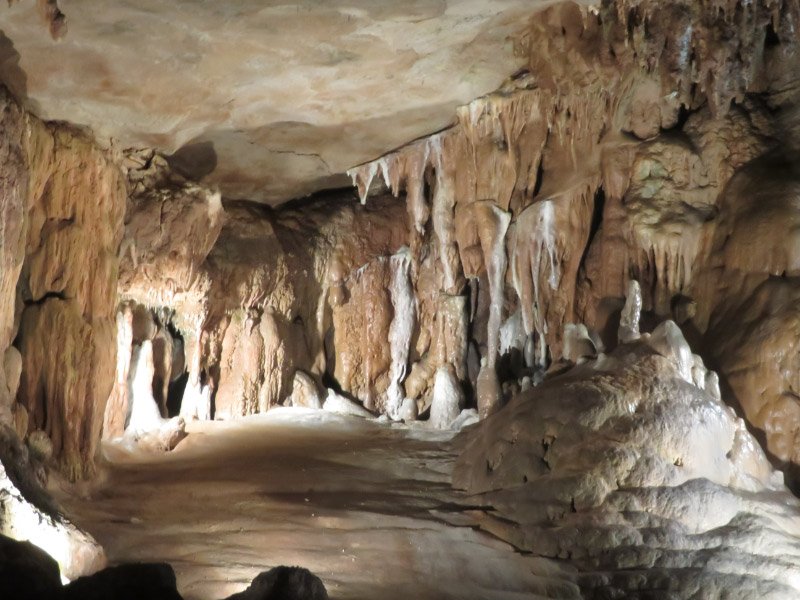
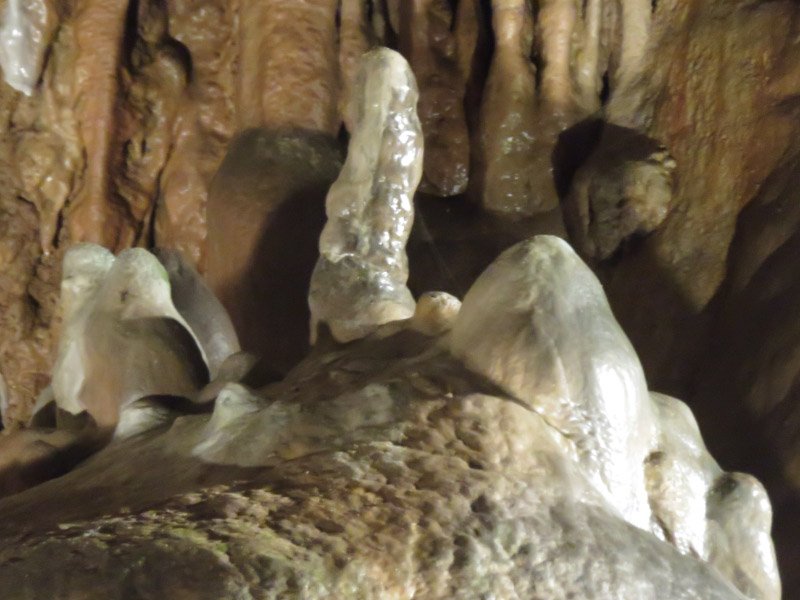
A cold fall day – the 60 degrees F. tour inside Fantastic Caverns was warmer than outside! We arrived shortly before 10 AM and had almost no wait before our tour (via Jeep-drawn tram) began. I used the ‘night scene’ setting (causing the camera to stack multiple images for each image) to capture the cave scenes. My favorite is a zoomed image of ‘soda straw’ structures on the ceiling – with water droplets visible!

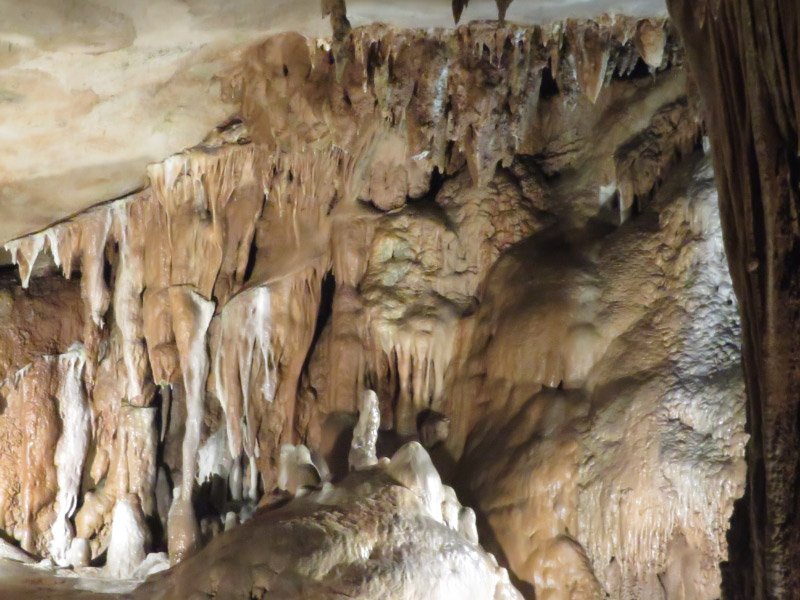
There are plenty of drapery and column formations to photograph. The lighting in the cave does a good job of enhancing the structures. Unfortunately, it also encourages the greening tinge (algae) to some of the formations.

This was my second visit to Fantastic Caverns, and I quickly realized that different guides emphasize different things. For example – I am pretty sure the guide for my first visit did not share that the darker gray color in the formation below is from manganese!

The reddish color in many of the formations is from iron….and the white is calcium carbonate without anything else to provide color.

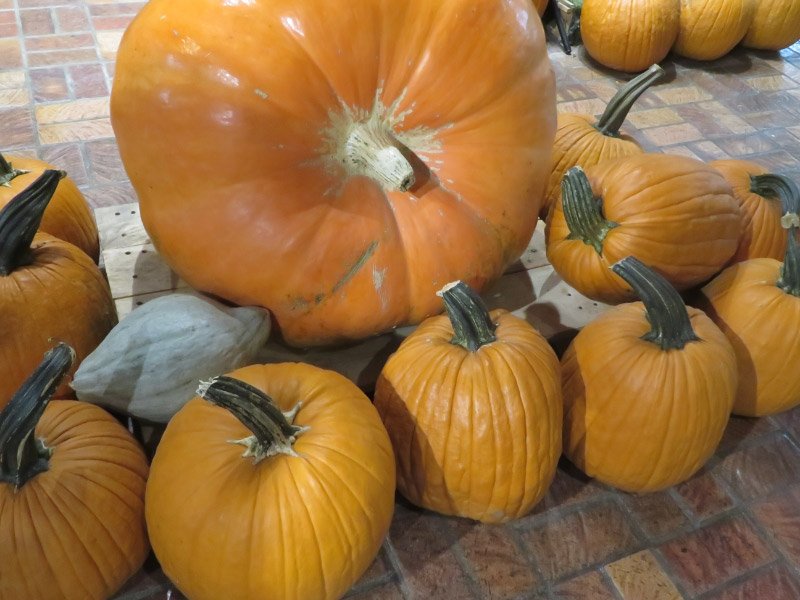
Back at the visitor center – I enjoyed a display of pumpkins and other squashes/gourds.

Another successful outing…and afterward on the way back to my house we enjoyed a huge BBQ lunch!

Springfield Art Museum – October 2023

One of my favorite places to enjoy with family that visits me is the Springfield (Missouri) Art Museum. This time it was the backup plan; we had originally planned a visit to the botanical garden, but the day was cold and wet.

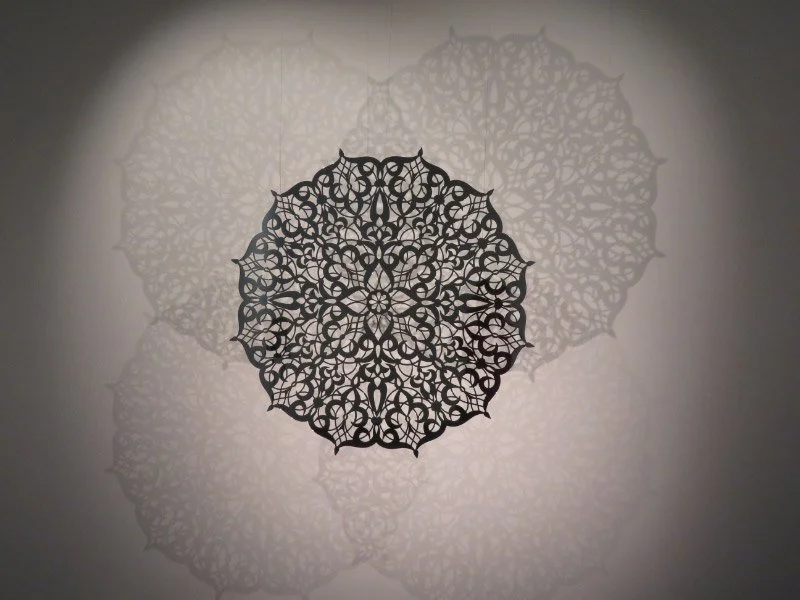
The museum was not busy, but we weren’t the only people there. We wandered through the Tradition Interrupted exhibit (August 19-November 12). I enjoyed the pieces….recognizing many of the traditions and enjoying the descriptions about the way they were interrupted. Trying to capture the pieces photographically is always part of a museum visit for me; I keep a small camera that fits easily in my purse rather than lugging my bridge camera; it provided optical zoom giving me more options than my phone does. My favorite piece in this gallery is one called Teardrop (middle image below)…a metal piece that imitates embroidery or lacework. The lighting is part of the work and I was only able to capture the shadows immediately behind it; there were also shadows on the ceiling and floor!

The museum is also hosting a series of exhibits in collaboration with Missouri State University. The one showing now is titled Blue on White (July 22 – December 3) – featuring Chinese ware (with connections to Persia)…appropriated through imitation and export to Japan, Europe, and the Americas. Curated by MSU students.

The Creating an American Identity exhibit is a semi-permanent rotating exhibition from the museum’s collection of over 10,000 objects. The middle one below is an early Jackson Pollock – created in the 1930s before he became famous for ‘drip’ paintings!

There is a copper sculpture that I’ve seen every time I have visited the museum. It is difficult to photograph because the background is always so cluttered. This view is about as good as it gets!

The Survey of Ceramic Art is also a semi-permanent exhibit. Even if many of the pieces are ones I’ve seen before, I like ceramics so much that it is probably my favorite exhibit/gallery in the museum. This visit, I thought about how lighting of objects makes a big difference….but often reflections from glass cases is problematic; it’s more apparent in photographs but it distracts even when simply viewing the pieces.

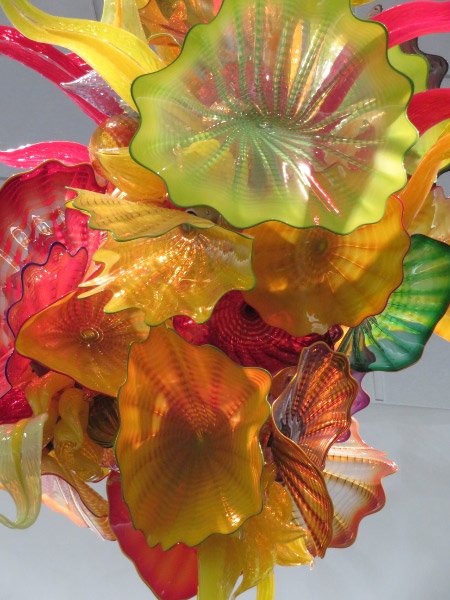
I waited until the end to photograph the Chihuly chandelier in the foyer of the museum. It’s titled Autumn Persians and Feather Chandelier. I zoomed in to eliminate a spotlight; the lighting of the piece is required…but it can also be a distraction.

Most of the plantings around the museum were fading fast…and it was too wet to walk around for botanical photography.

The museum was a great way to spend a wet fall afternoon!

Gleanings of the Week Ending October 21, 2023

The items below were ‘the cream’ of the articles and websites I found this past week. Click on the light green text to look at the article.

Intact Roman-Era Sarcophagus Discovered in France – From the 2nd century AD, sealed with iron clasps, weighs about 1,700 pounds. It hasn’t been opened yet, but x-rays and an endoscope camera have revealed the contents.

Selective removal of aging cells opens new possibilities for treating age-related diseases - Aging cells, known as senescent cells, contribute to various inflammatory conditions and age-related ailments as humans age. The researchers created technology that specifically targets organelles within aging cells to initiate the cell’s self-destruction. There is still a lot of work to be done (and preclinical and clinical trials).

Cloud Rings Around a Volcano Takes Top Prize in ‘Weather Photographer of the Year’ Contest – Capturing dramatic weather moments…

Brainless Jellyfish Are Capable of Learning - Experiments that provide evidence that box jellyfish are capable of associative learning, or the process of linking two unrelated stimuli together.

How maps can protect children from extreme heat - Heat is becoming increasingly dangerous and it's a threat that is not going away. Community heat maps may not solve the long-term problem, but they are a step in the right direction, by providing awareness and empowering vulnerable children and their families.

Stunning 16th-Century Turkish Bath Reopens in Istanbul - Called the Çinili Hamam, the revitalized site won’t offer traditional bathing until 2024. In the meantime, however, it will feature private gardens and contemporary art in the newly discovered Byzantine cisterns that originally fed the baths. Nearby, a new accompanying museum will display objects associated with traditional bathing rituals—including towels, bowls and ornately decorated wooden shoes—and explain the baths’ original water and heating systems. It will also showcase artifacts from the Byzantine, Roman and Ottoman periods uncovered during the restoration.

The Resiliency of Urban Wildlife - Four distinct sets of traits that help urban wildlife adapt and survive in environments that seem hostile to animals: diet, body size, mobility, and reproductive strategy. Important to know since if you look at the traits animals are adopting to survive in urban environments, you can see how cities could be modified to become more habitable to a wider variety of species.

See the Trove of Ancient Treasures, including a Shrine to Aphrodite, Just Discovered in an Underwater City Off the Coast of Egypt - Thonis-Heracleion was Egypt’s biggest port for centuries, before being surpassed by Alexandria. The city was eventually lost thanks to a combination of rising sea levels, earthquakes, and tsunamis, disappearing beneath the waves along with a large section of the Nile delta. It was largely forgotten for centuries, until 21st-century archaeologists began investigating.

New Patch Inspired by Octopus Suckers Could Deliver Drugs Without Needles - A tiny, drug-filled cup that sticks to the inside of the cheek like an octopus sucker. The device is easily accessible, can be removed at any time and prevents saliva from dissolving the drug, which gets absorbed through the lining of the inner cheek.

Buried ancient Roman glass formed substance with modern applications - Photonic crystals were created by corrosion and crystallization over centuries. If we could significantly accelerate the process in the laboratory, we might find a way to grow optical materials (i.e. materials for communications, lasers, solar cells) rather than manufacture them.

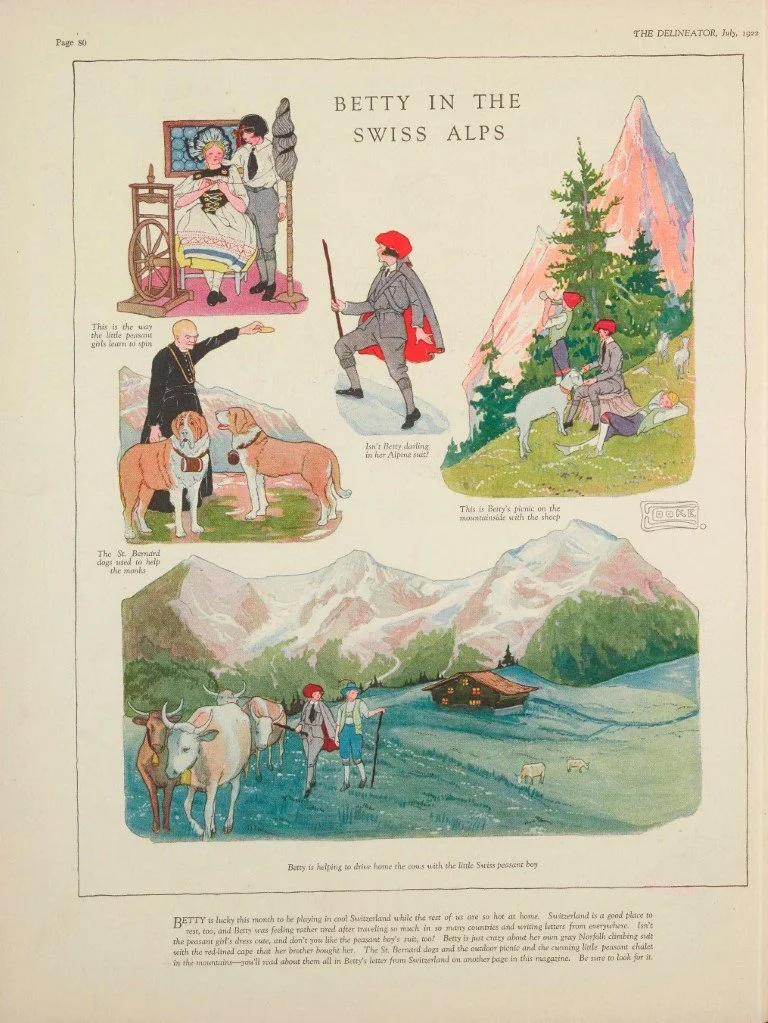
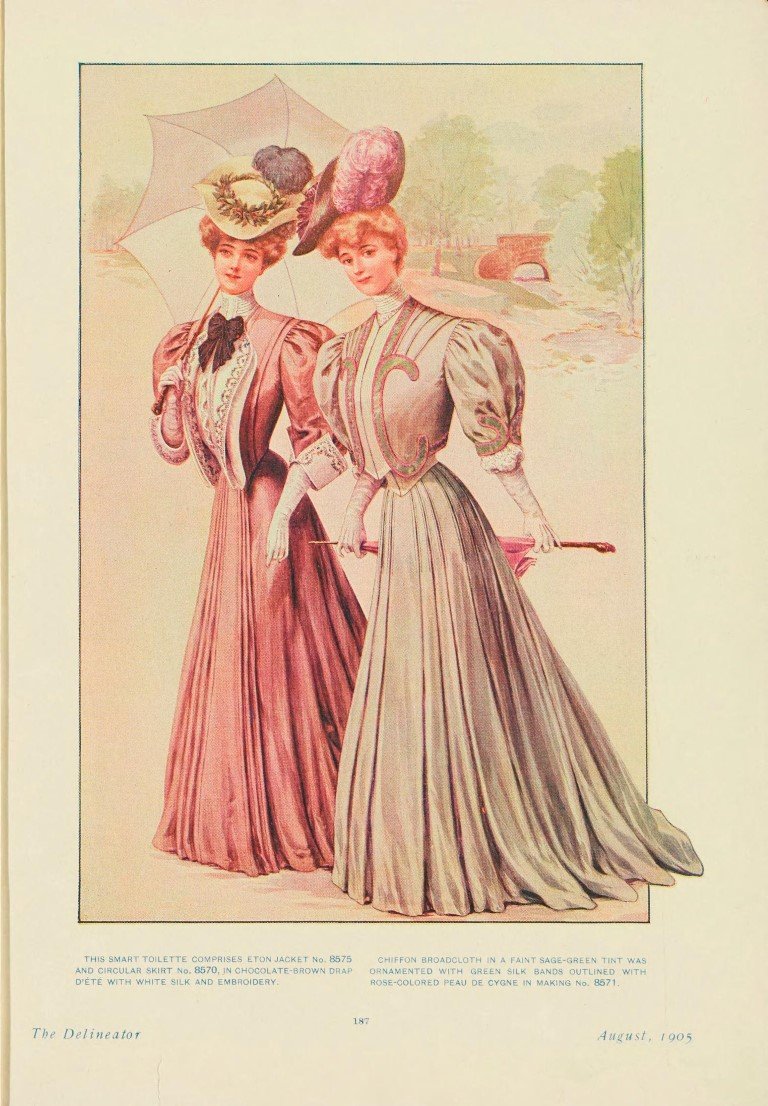
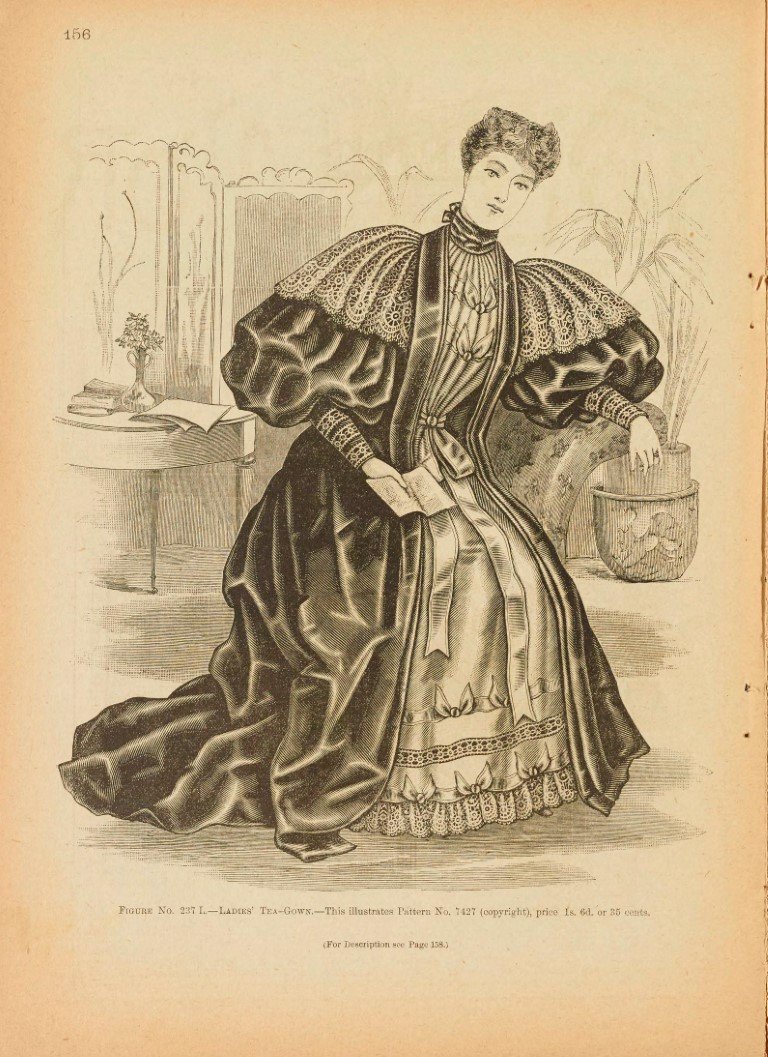
The Delineator from 1890 – 1932

Internet Archive has 39 volumes of The Delineator magazine from 1890 to 1932. It was published by Butterick Publishing Company – the same company that I remember from the 1960s and 1970s for patterns; I was making most of my own clothes at that time. The magazine always included patterns for clothes but as I gleaned images for this post – I also included advertisements, covers, educational displays. Click on any part of the mosaics below to see a larger version. Links to each volume are included…the historical perspective from browsing these volumes is worth it!

The first mosaic contains images from the magazines published in the 1900s. Some of my favorites are the ad for FAB flakes (Babes in the wools), the October 1922 cover full of fall foliage, covers showing active women (golfing and skiing), aquarium fish and Christmas trees. The most thought provoking was the one with a woman and, presumably, her two sons in miliary uniforms from the January 1919 issue; I wondered if the one on the left looking less serious was the younger brother. A peace conference was being held in Paris that month…but waves of the 1918 flu were happening around the world…and the US.  

The second mosaic contains images from the 1800s. The last color images were in 1897. The magazine was also more skewed to fashion/patterns than in the 1900s. Huge sleeves, corsets, and elaborate hats were in vogue (note that this was also the time when some birds were almost wiped out to get feathers for hats!). How did anyone really swim in those bathing costumes from 1894?

Ring of Fire (vicariously)

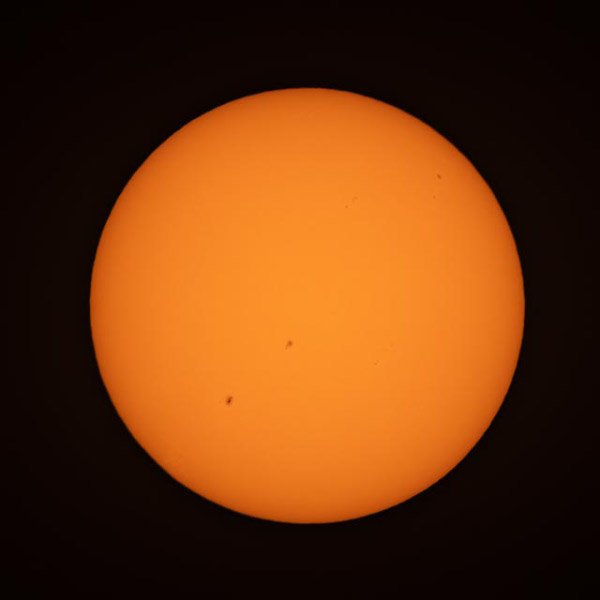
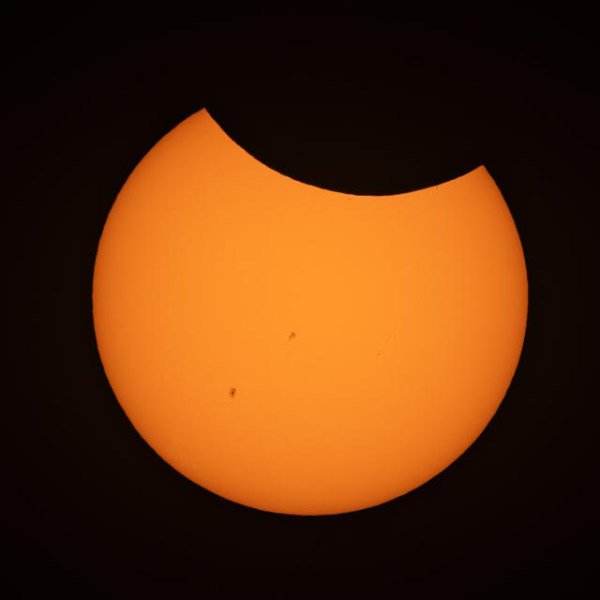
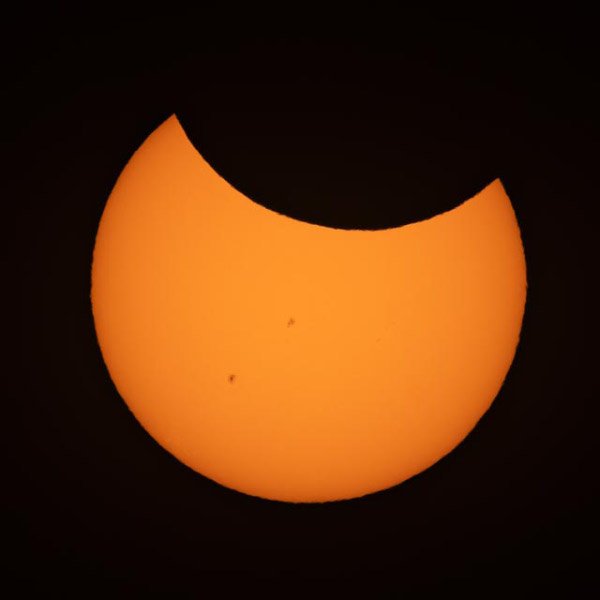
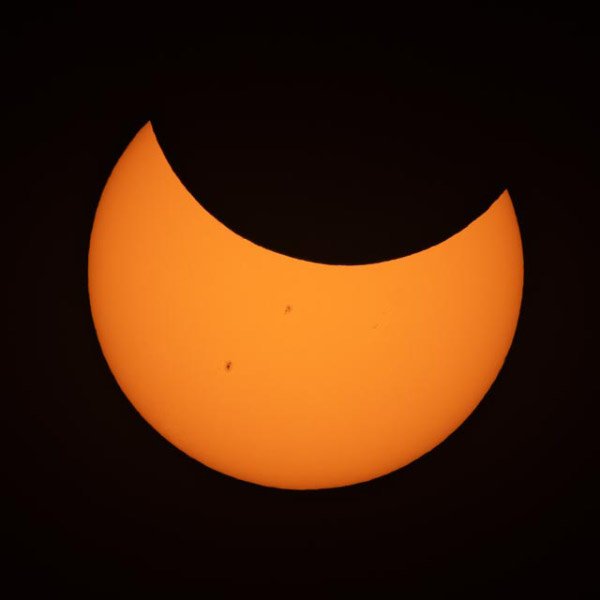
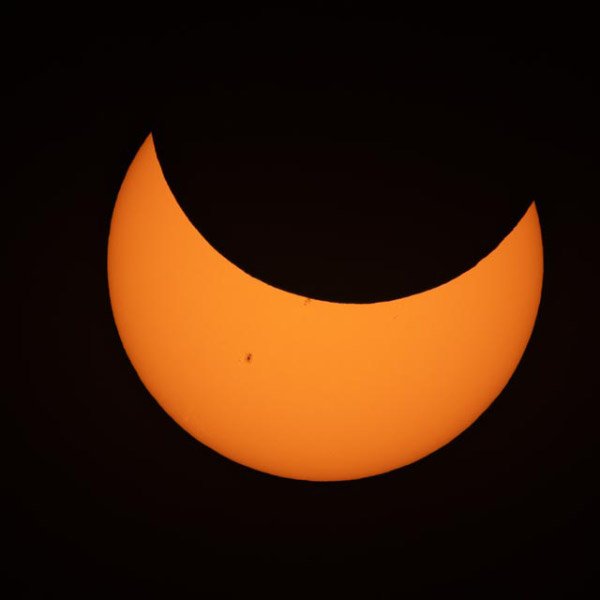
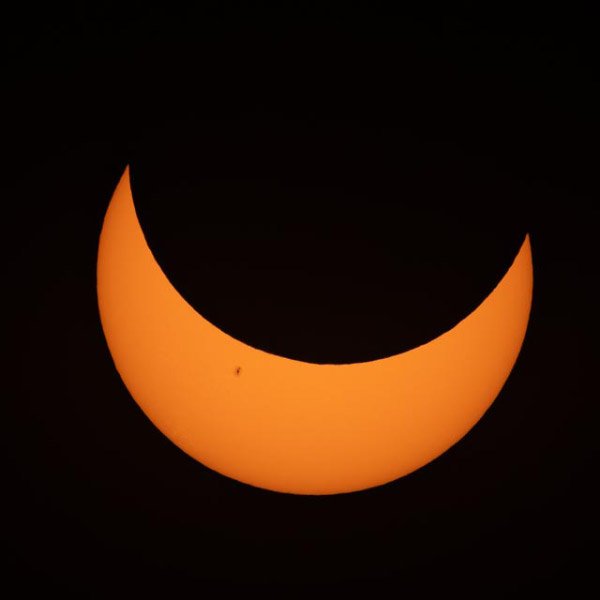
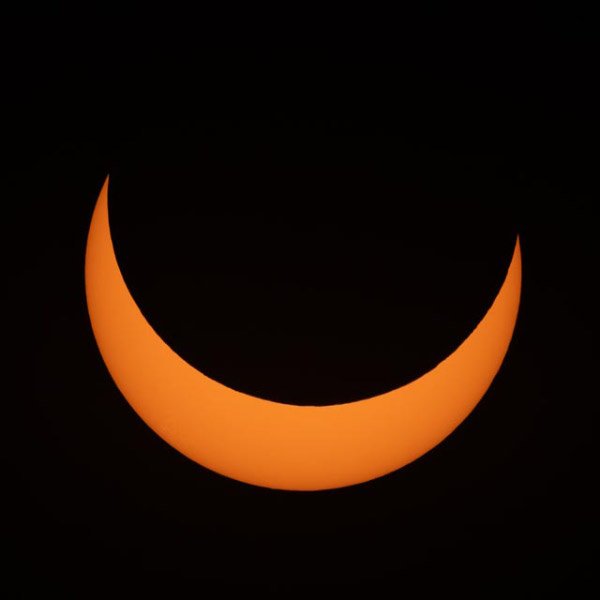
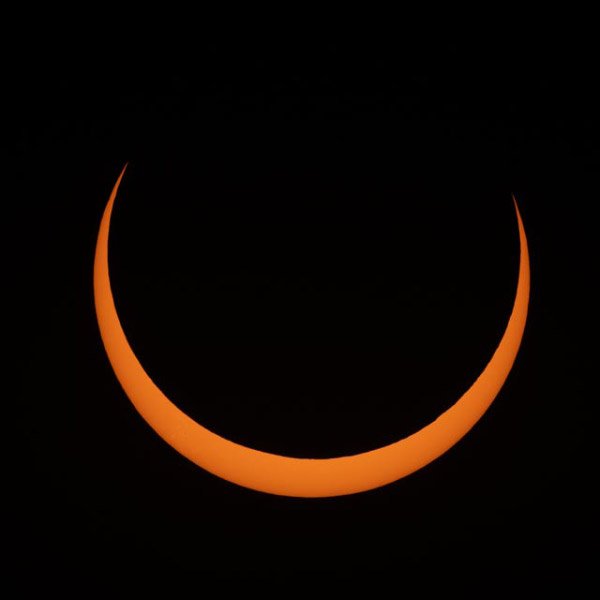
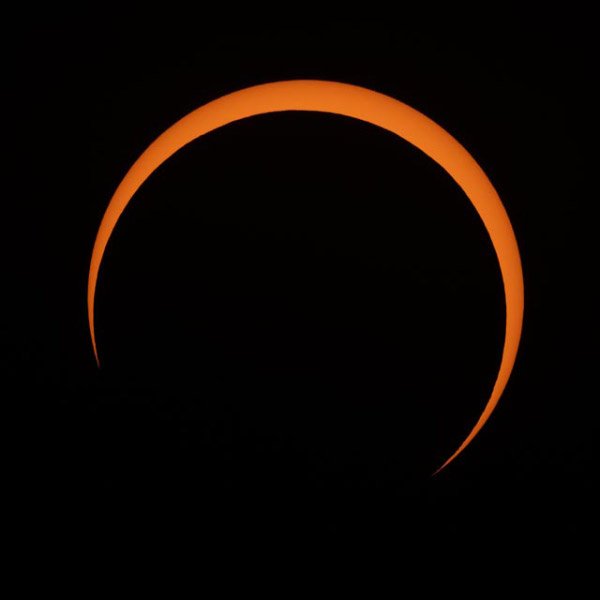
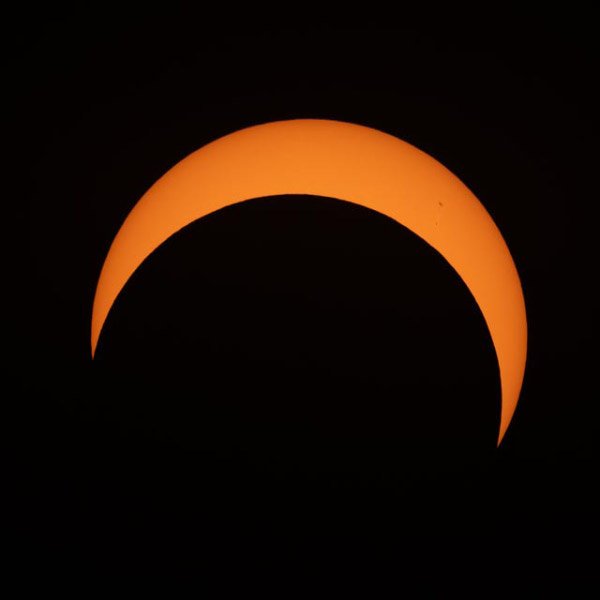
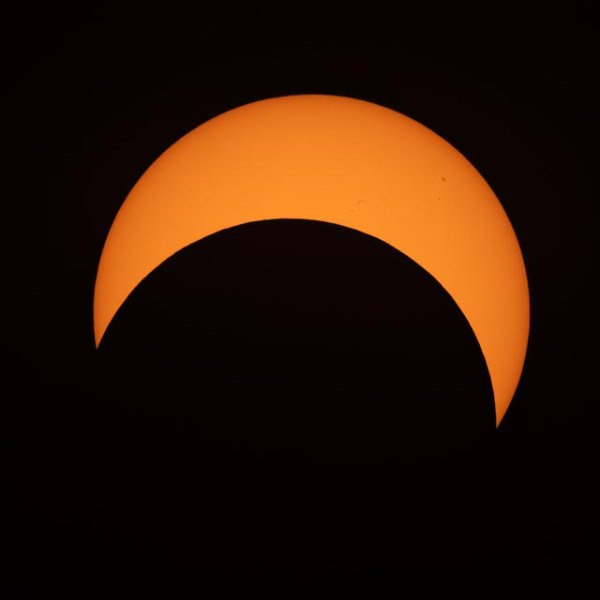
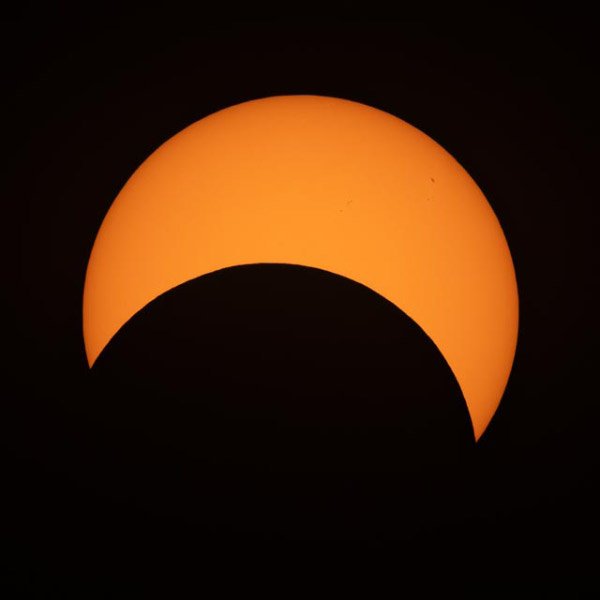
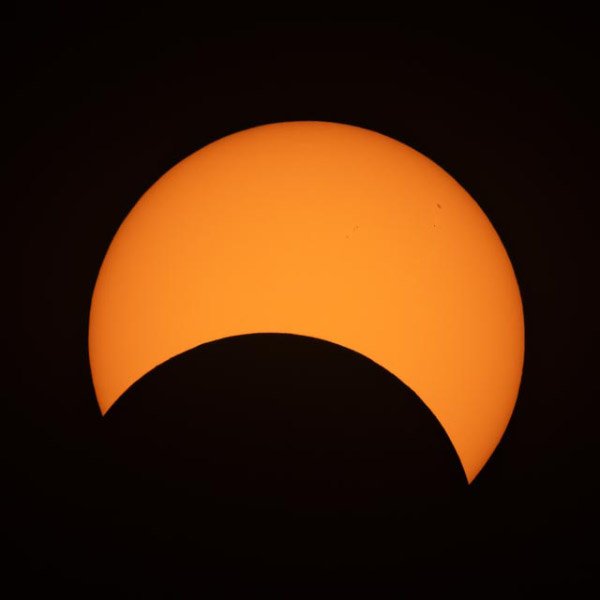
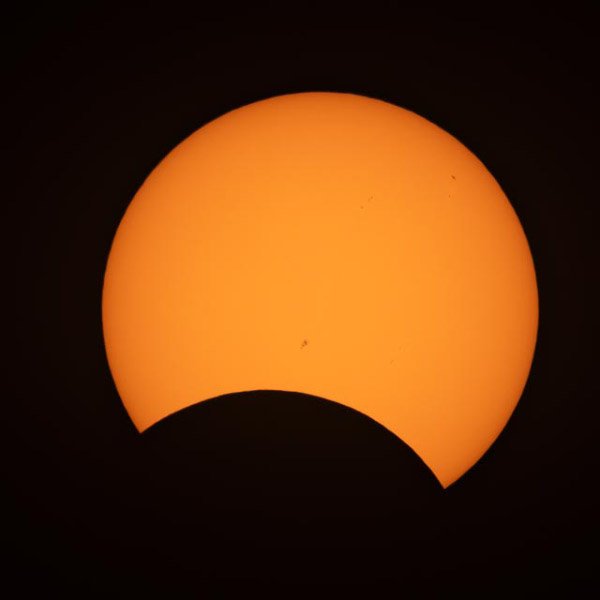
My husband and daughter decided months ago that they would make a road trip to view the 10/14 annular eclipse. The first-choice location was near Albuquerque NM…the backup location (in case of clouds) was San Antonio TX; both were one-day drive from where we live in Missouri. My daughter made hotel reservations in both locations. About a week before the eclipse, the forecast for Albuquerque was surprisingly cloudy so San Antonio become the preferred location. On the Wednesday before the Saturday eclipse, the forecast for San Antonio was looking cloudy too! So – we quickly searched for another location. The Midland-Odessa TX forecast was clear and the drive was about the same as it would have been to San Antonio…and there were places just off the Interstate with parks and hotels….good eclipse viewing amenities. My daughter made reservations in Odessa and cancelled the ones in Albuquerque and San Antonio. They left early Friday morning to drive to Odessa; I stayed at home to take care of the cats and be home for my sister’s weekend visit. When they got to the hotel, everyone checking in was there for the eclipse the next day.

On Saturday, they set up easily. It was clear but windy enough that my husband opted to just use his cameras rather than his solar telescope. He got his classic ‘ring of fire’ picture.

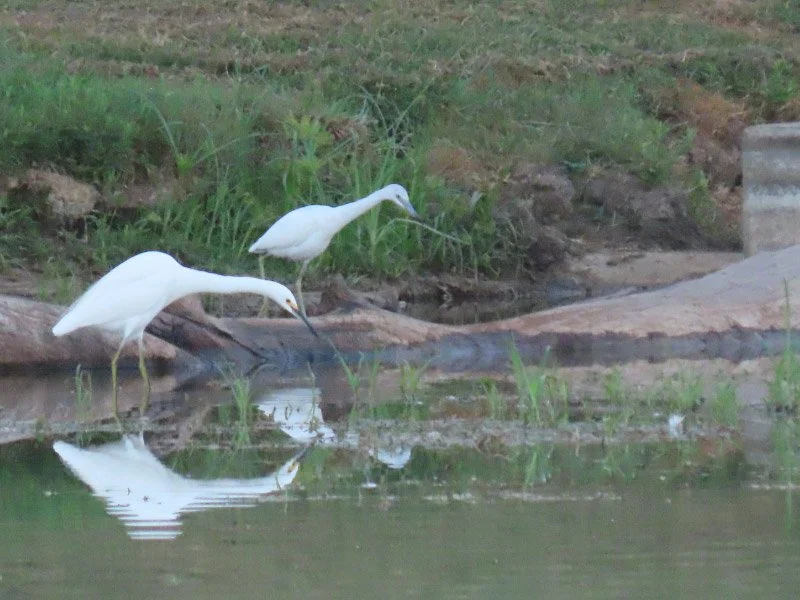
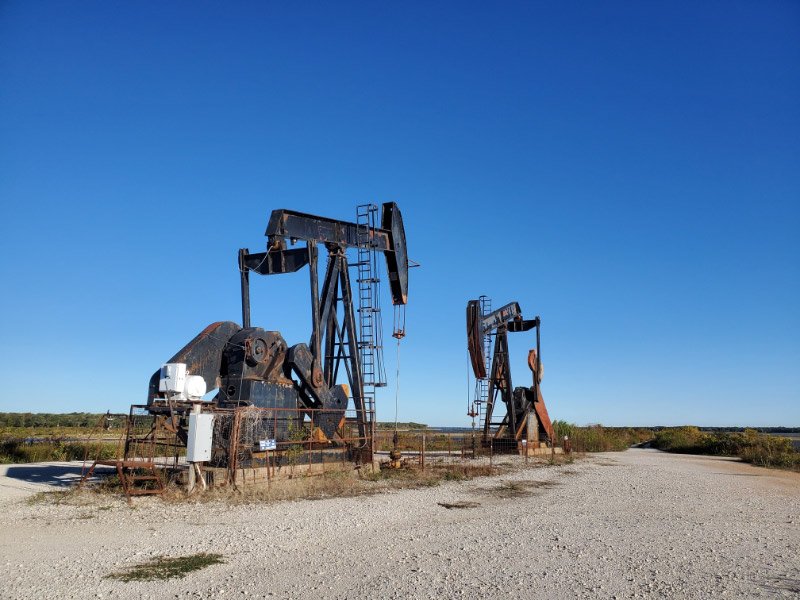
After the eclipse they drove to Carrollton TX and got food delivered as they visited with my parents. They headed home the next day and stopped at Hagerman National Wildlife Refuge along the way. They haven’t shown me any wildlife pictures…just  one of “grasshopper” oil pumps that are on refuge.

It was a busy 3 days for them and for me. We’re planning to all travel to be in the path of the total eclipse on 4/8/2024. We could view it from my parents’ house in Carrollton TX…or maybe in the southeastern corner of Missouri which would be even closer!

Hydrangea Flowers and Magnolia Pods

It won’t be long before we have afternoons blowing/raking/mulching leaves in my daughter’s yard…but until then I am enjoying the end of her summer yard when I visit there. The seed pods of the Southern Magnolia are full of red seeds right now. They always remind me of red M&Ms! The pods will eventually become a nuisance on the ground…but on the tree they are interesting – colorful, splitting to allow the seeds to escape- these are prehistoric flowering trees with seed pods that look very much like cones.

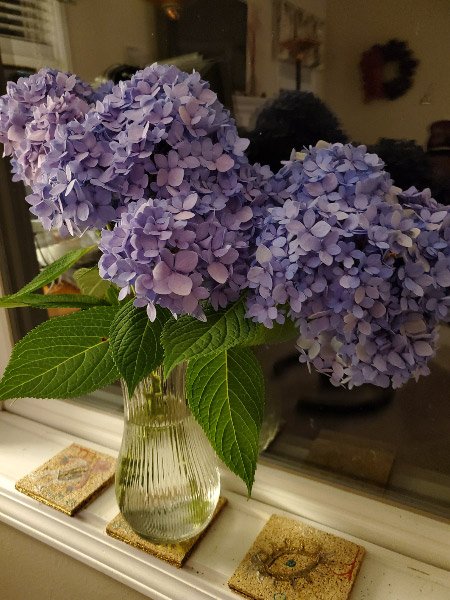
She encouraged me to cut the flowers from her Asian hydrangea since temperatures into the 30s were being forecast. There were 3 flower clusters (others too…but they were not mature enough to open if cut). I trimmed the lower leaves off right after I cut them and put the flowers in a large vase as soon as I got home. They’ve been on my office windowsill within line of sight from where I sit at my computer since then.

The flowers last for a long time – which gave me several opportunities to do some artsy photography with them over the past few days. What’s not to like with the gentle pink and blue…bright green! I managed some almost high key images….with smudges of color and screen grid in the background.  It was a good ‘rainy day’ activity.

Gleanings of the Week Ending October 14, 2023

The items below were ‘the cream’ of the articles and websites I found this past week. Click on the light green text to look at the article.

Abandoned Lands: A Hidden Resource for Restoring Biodiversity – Nature colonizing abandoned land…maybe we need to learn to help it along. The amount of land under agriculture globally has been in decline since 2001. Sometimes the abandonment is not driven by economic, demographic, or social factors, but by pollution or industrial disasters. Hundreds of square miles of radioactive former farmland around the stricken nuclear reactors at Chernobyl in Ukraine and Fukushima in Japan are now within exclusion zones and could be without human occupation for centuries to come.

How to build for aging in place - Aging-ready homes address two core needs—single-floor living and bathroom accessibility—by providing a zero-step entry, a first-floor bedroom, and a full first-floor bathroom with at least one accessibility feature. Today only 10% of American homes are ‘age ready.’ When my husband and I bought our current home, we were conscious of buying something that would help us age-in-place. Everything is on one floor except for the laundry room….so we might have to eventually add an elevator to the house.

The Mississippi is Mighty Parched – The river south of Memphis has narrowed considerably in the past 2 years. Barge companies reduced the weight carried in many shipments in September because the river was not deep enough to accommodate their normal weight. Much of U.S. grain exports are transported down the Mississippi; the cost of these shipments from St. Louis southward has risen 77% above the three-year average. The lack of freshwater flowing into the Gulf of Mexico has also allowed saltwater to make its way up the river and into some water treatment plants in southern Louisiana.

Electric Cars Are Transforming America’s Truck Stops – I’ve been noticing the changes described in this article as I travel. More of truck stops have banks of chargers…and the Pilot just north of Denison has better food and a larger shopping/eating area… Adding charging equipment for electric cars is a major transformation for truck stops and travel centers but represents a new business opportunity.

The seed guardians in the Andes trying to save the potato – Climate change/disease are risks that all species are facing. There are 1,300 varieties of potato growing in the Andes. Potato Park, located near the Peruvian town of Pisac, was founded by six indigenous communities in 2002 to preserve the genetic diversity of potatoes grown in the region, as well as the cultural heritage of the people that grow them.

Chemical Analysis of Viking Combs Hints at Long-Distance Trade – 85-90% of the combs found in a Viking settlement in Germany, came from northern Scandinavia – made of the antlers of reindeer. So large scale trading between the two sites was happening as early as AD 800.

See Ten Stunning Images from the Bird Photographer of the Year Awards – Birds and photography…images to enjoy.

Japanese Scientists Find Microplastics in the Clouds Above Mount Fuji – Maybe we should be more surprised if we looked and didn’t find microplastics!

Why Flamingos are Showing Up in the U.S. this Fall – The short answer is hurricanes…specifically Hurricane Idalia. Flamingos are strong fliers and will simply return south eventually.

A Sample of Ancient Asteroid Dust Has Landed Safely on Earth – We were at the launch of OSIRIS Rex in September 2016…so I continue to follow news about the mission.