Plastics Crisis: A continuing journey

The past few weeks have been very busy, and I haven’t had time report on my continuing journey.

I attended my first ‘show me less plastics’ bimonthly zoom meeting. Everyone on the call seemed to be in the same initial mode…trying to figure out how to move forward. The largest group was from St. Louis…some from Kansas City and Columbia. There was one other person from Springfield. I will continue to dial into the zoom meetings and use them as a forcing function for myself to have something to report!

CNN did an experiment with three of its reporters (in New York, London, and Hong Kong) wearing chemical-tracking wristbands to find out what kind of chemicals they are exposed to. The video report can be found online - https://www.cnn.com/2025/10/08/climate/video/chemical-monitoring-wristbands-climate-digvid although there is not a lot of detail…it does indicate that people in big cities are probably exposed to a lot of chemicals as they go about their daily lives.

Living near a smaller city (Springfield MO), I do track the air quality. I know that when it is not green, the PM2.5 pollutants are usually the pollutant that is high…and that is made of microplastics and associated chemicals. The air quality where I lived in Maryland (between Baltimore and DC) prior to moving to Springfield was yellow more frequently and, sometimes, even made it to the red level.  So – moving to Springfield probably has reduced my exposure somewhat.

When I had my annual checkup with my doctor, I brought up microplastic exposure and she acknowledged the issue…but didn’t have any specific recommendations about what to do aside from avoiding bottled water and looking hard at getting plastics out of the kitchen, particularly anything that is heated and contacts food.

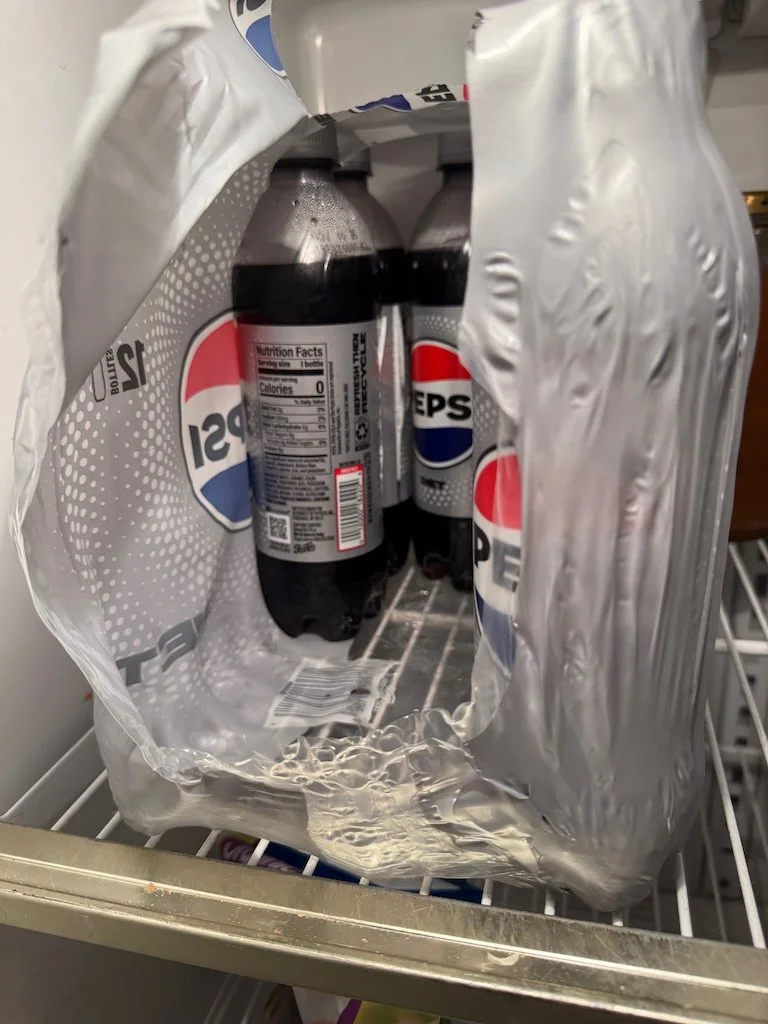
I have reduced my soft drink consumption to almost zero (avoid plastic bottles) and am drinking more iced tea. But wait….coffee makers (that I was using to make tea) have a lot of plastics and there are plastic fibers in many filters (so they will hold up better) and some tea bags are glued together (a plastic). Obviously there is heat involved in making tea so I changed my process:

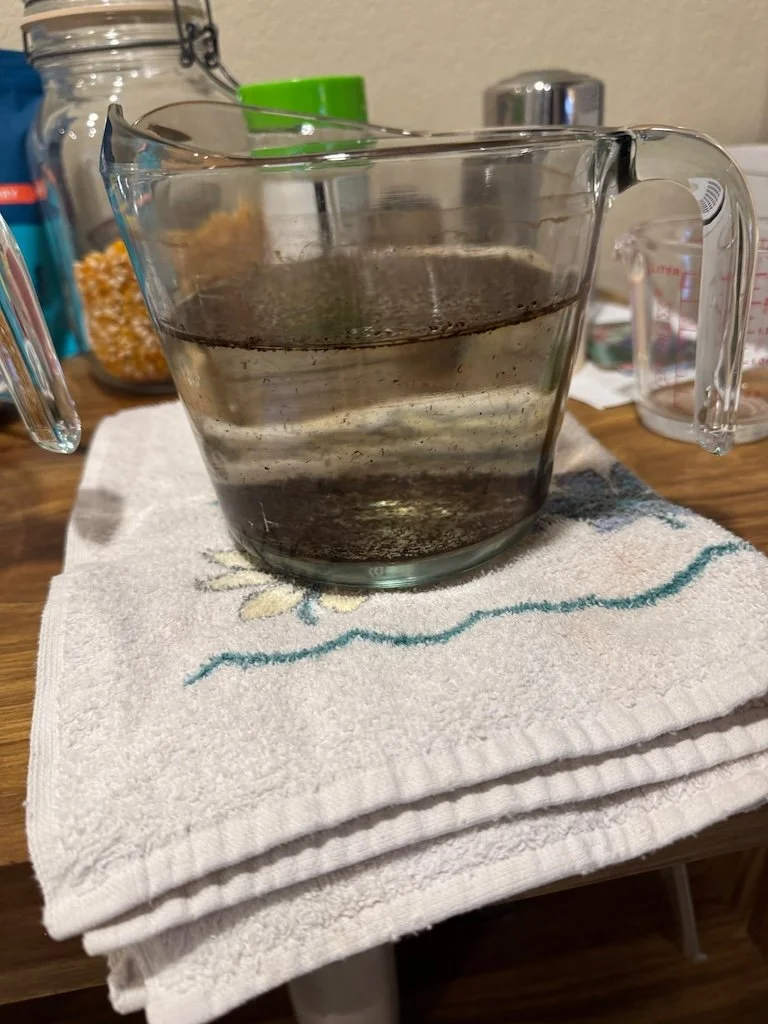
  • Old Pyrex measuring cup (it was my mother’s and the markings are almost worn off)

  • Cut open the tea bag and empty the contents into the water

  • Heat in the microwave

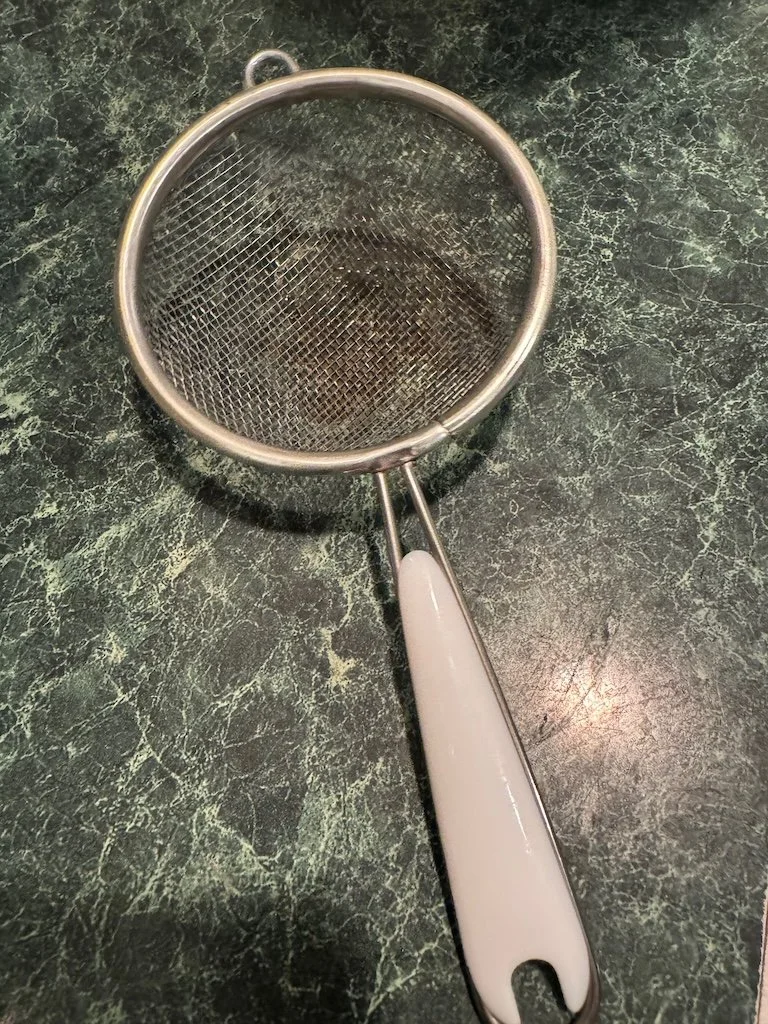
  • Strain the tea leaves with a metal strainer

It’s becoming a good routine….and I am aware that making tea is becoming a ritual rather than just a routine because of the old Pyrex. It could be almost as old as I am!

One thing I am noticing…my trash and recycle are trending downward…not as much in the bins. That’s a good thing!

Previous Plastic Crisis posts

Gleanings of the Week Ending October 11, 2025

The items below were ‘the cream’ of the articles and websites I found this past week. Click on the light green text to look at the article.

What Makes Bruises Change Color Over Time? - What appears as a red or purplish skin contusion in the beginning, slowly transitions to green, yellow, and finally brown, before disappearing entirely. What are the mechanisms that produce this bouquet of bruise colors?

Scientists finally explain the real reason pregnant women get morning sickness - According to the National Institutes of Health, up to 80% of early-stage pregnant mothers experience some nausea, vomiting and aversions to certain foods and smells. A unique mix of inflammatory responses function to prevent the mother's body from rejecting the fetus, alongside adaptive behavioral mechanisms, like nausea, that encourage the mother to avoid foods that are potentially harmful, especially in the first and second trimesters when the fetus is most vulnerable.

This company is turning empty offices across America into farms - Area 2 Farms is a three-year-old company based in Arlington, Virginia, that’s taking the concept of indoor farming to unusual spaces. Its first farm, in Arlington, grows dozens of varieties of crops (including lettuce, spinach, carrots, potatoes, tomatoes, and mushrooms, as well as more niche items like amaranth microgreens and purple shamrock) in a low-slung brick building tucked between a dog day care and a car repair shop. The goal is to eventually build indoor farms within 10 miles of 90% of the U.S. population.

Bird Soaring Below a Total Solar Eclipse Wins 2025 Bird Photographer of the Year – Some beautiful…some thought provoking.

In Her Final Interview, Jane Goodall Issued Urgent Call to Protect the Planet - “We need to protect this planet and think about the future,” she told The Wall Street Journal. “Because if we don’t, that’s the end of our species. Humans are not exempt from extinction.”

Leaf Layer Safari: How to Spot Hidden Moth Cocoons in Your Backyard - This autumn, instead of raking, try exploring. Step carefully, look closely, and you may discover a miniature safari happening right under your feet.

Scientists Studied the Genes of a Woman Who Lived 117 Years - The findings point to a combination of genetic luck and lifestyle choices.

The Secret Apartment Atop the Eiffel Tower - Around 1,000 feet above Paris’ streets perches Gustave Eiffel’s apartment, complete with a bathroom, a kitchen, and wax sculptures of Eiffel, his daughter, and Thomas Edison. At the very top of the tower, Eiffel allotted himself a 1,075 square foot private office, and with it the best view in Paris. After all, he had footed three-quarters of the bill.

Winter Transforms the Mississippi River Delta - The Mississippi River’s watershed drains 41 percent of the United States (spanning all or part of 31 states) and reaches into two Canadian provinces. Its nutrient-rich waters support fertile agricultural lands along its shores and throughout the deltaic basin. The river also plays a role in the U.S. economy by providing transportation shipping routes. To maintain these functions, engineers have implemented channelization to help maintain navigable shipping lanes and, in recent decades, launched sediment diversion projects aimed at returning vital sediments to the wetlands.

How to future-proof your knees - After back pain, throbbing aches in the knees are the most cited musculoskeletal ailment in older adults. The post shows five quick, home-based exercises which will all help.

Runge Conservation Nature Center

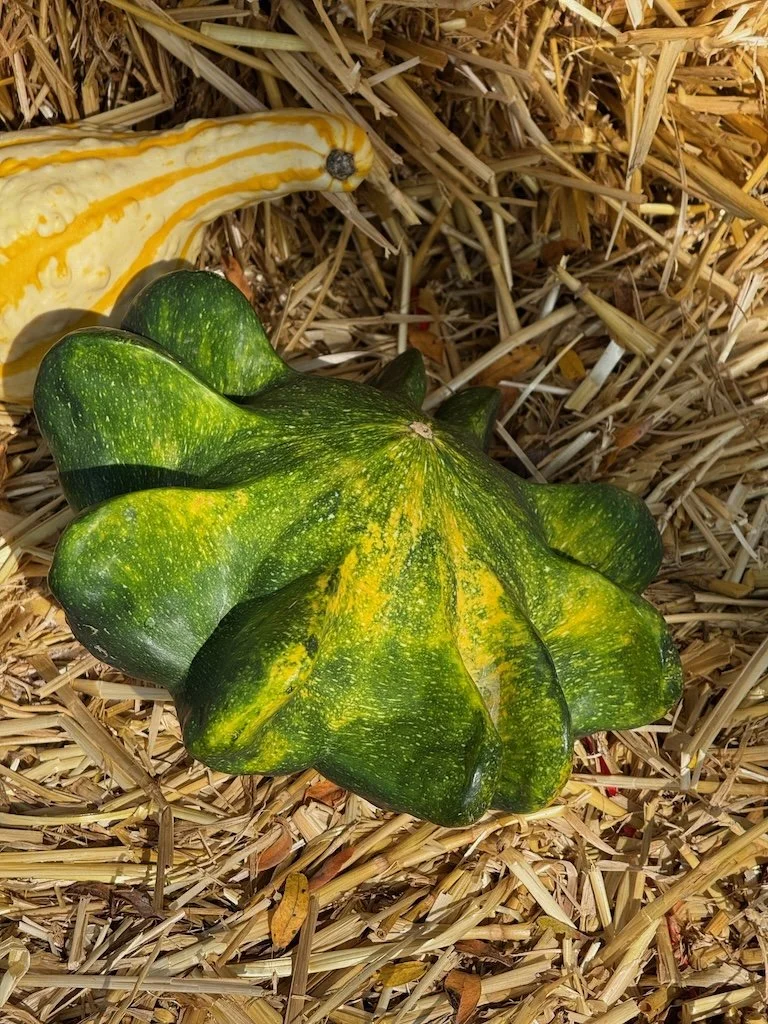
My second stop on my way to the Missouri Department of Conservation Partners Roundtable was at the Runge Conservation Nature Center in Jefferson City. They had a great display of fall squashes near their entrance!

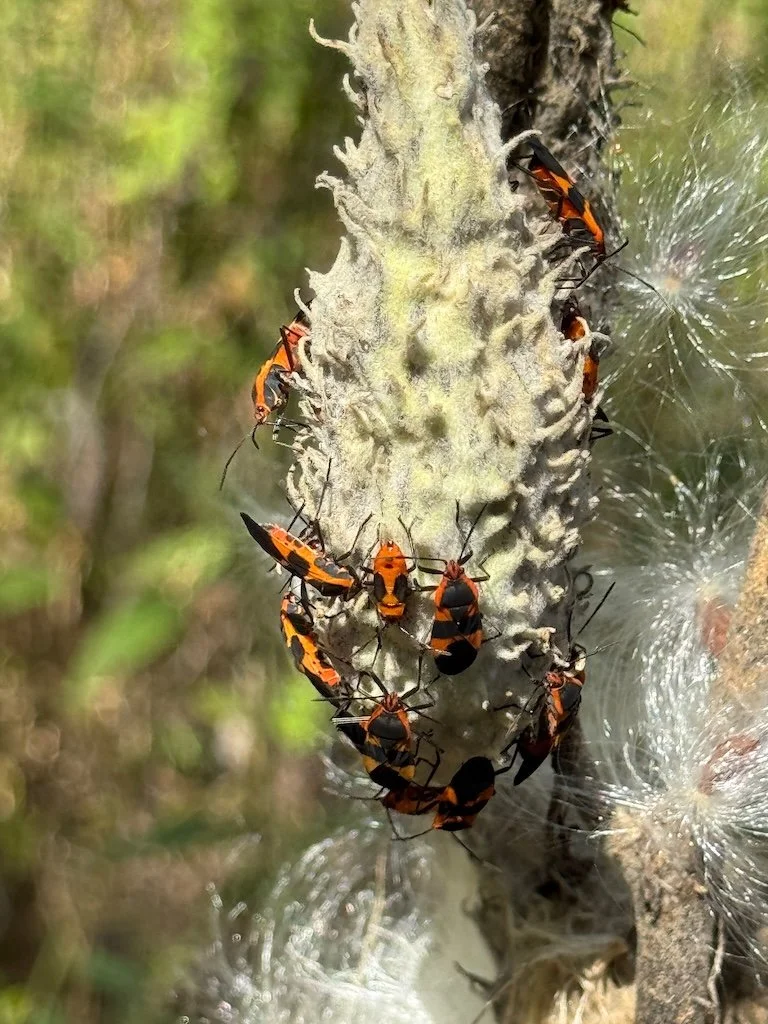
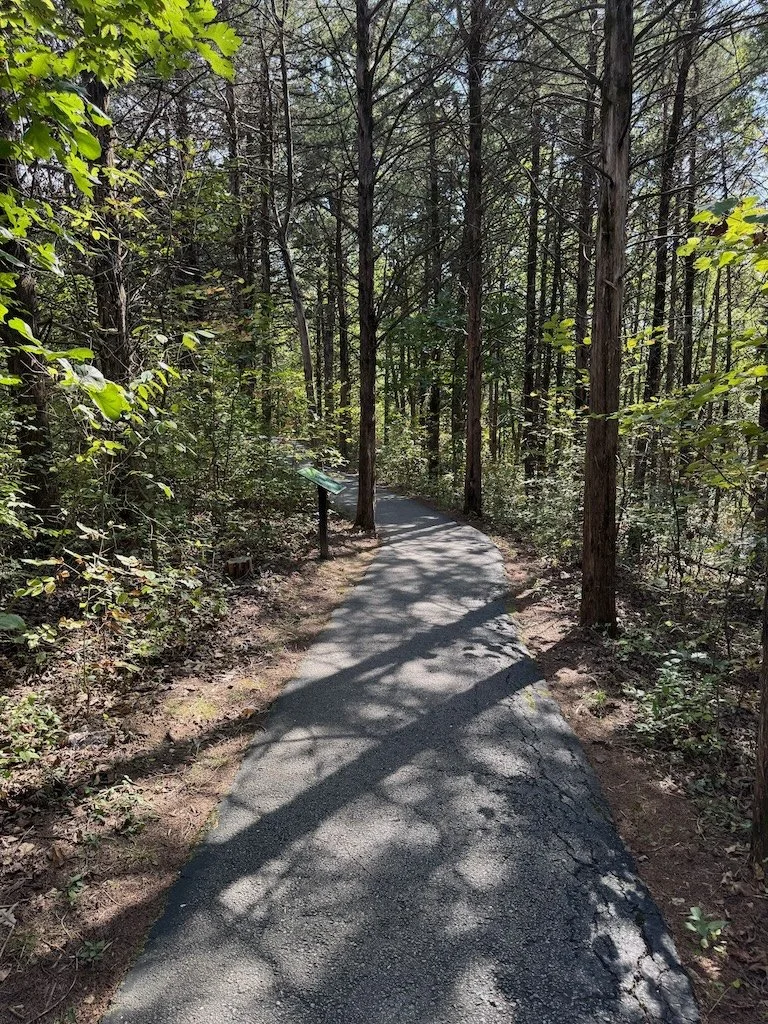
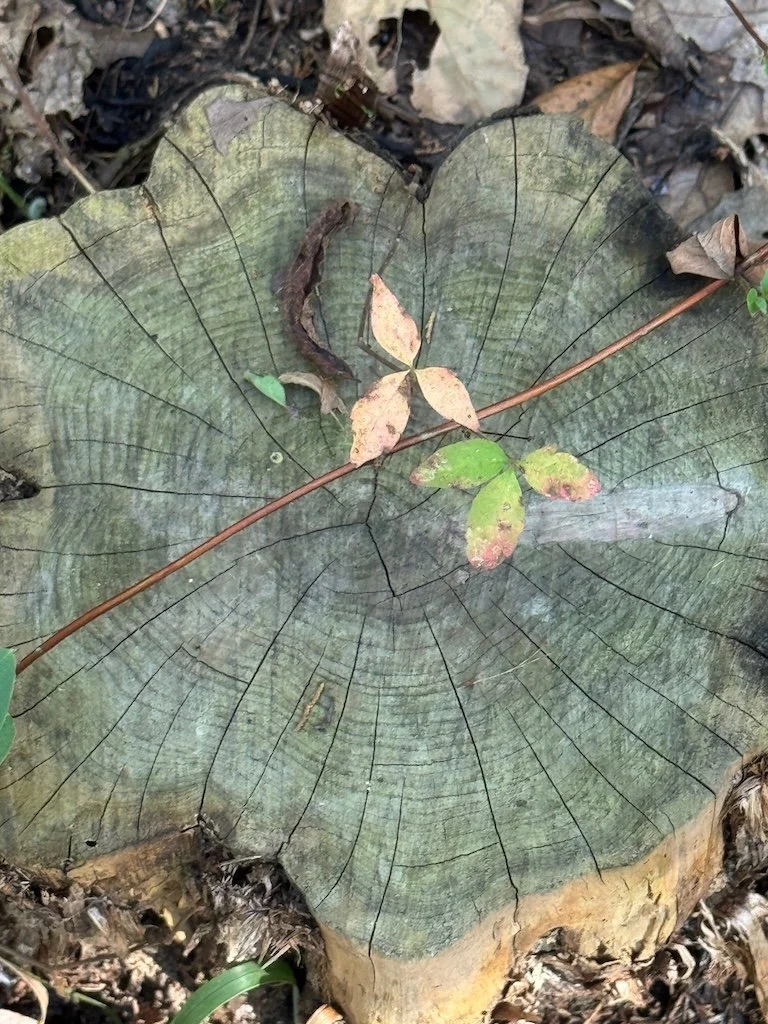
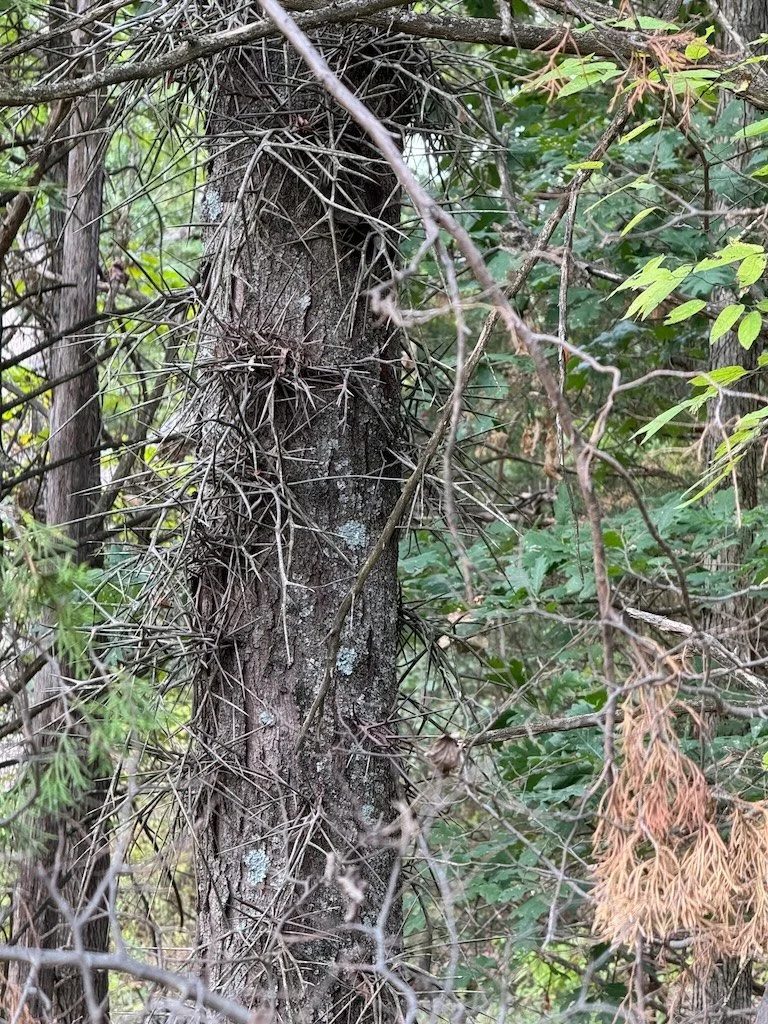
I chose to hike first…before I went into the building. I noticed a fall dogwood, milkweed pods with milkweed bugs, the path lined with trees (many redcedars), a stump with well-defined rings, and a honey locust (big thorns all along the trunk).

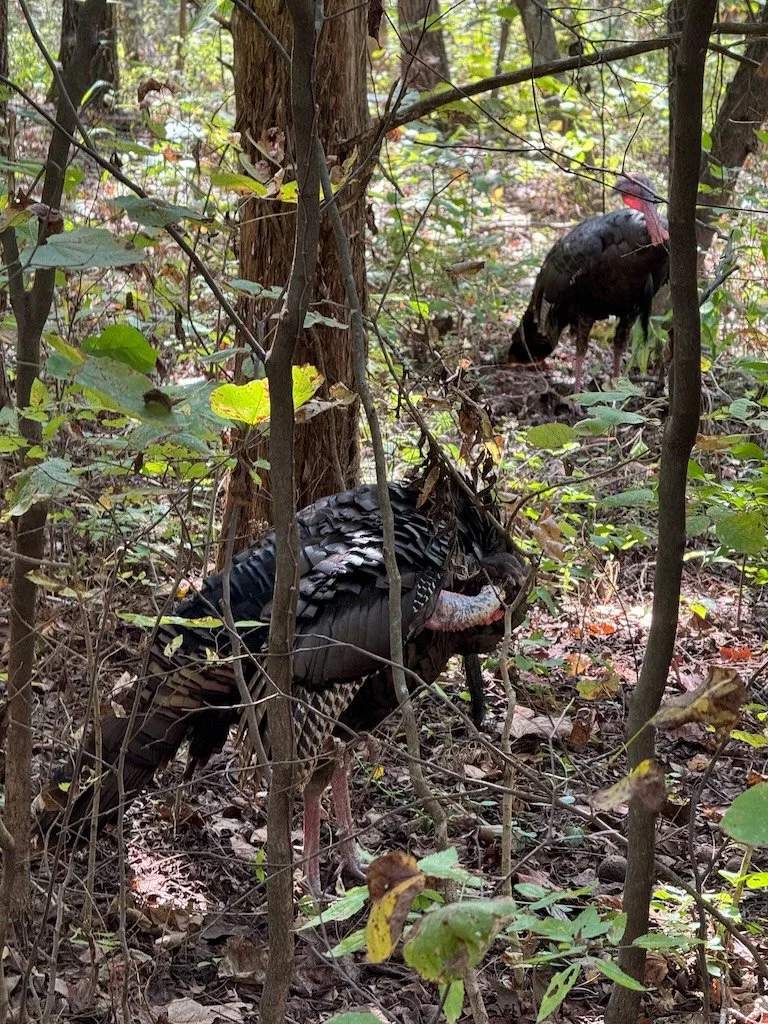
Best of all were two turkeys that crossed the path and didn’t run away as I got closer. They must be accustomed to people being around.

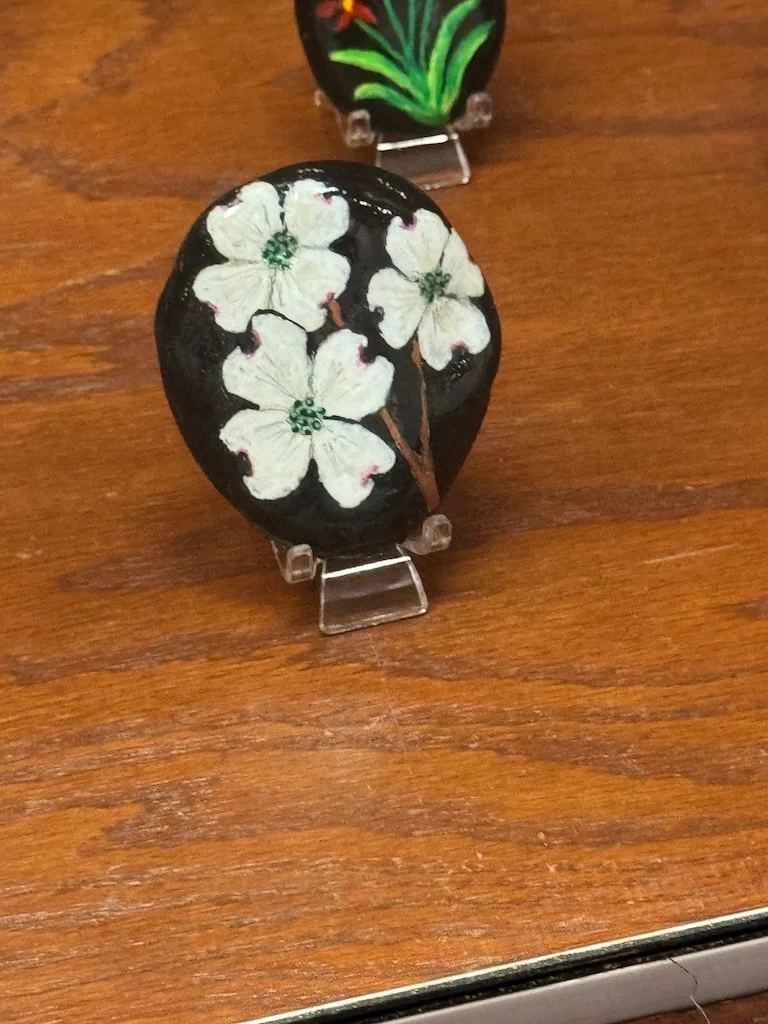
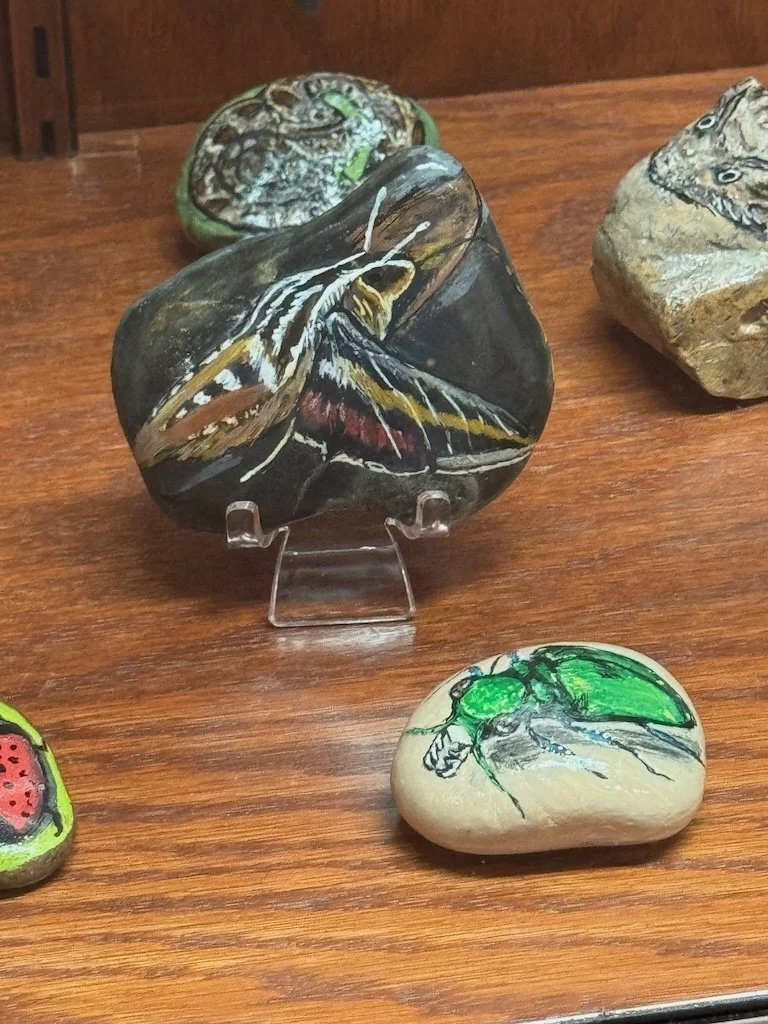
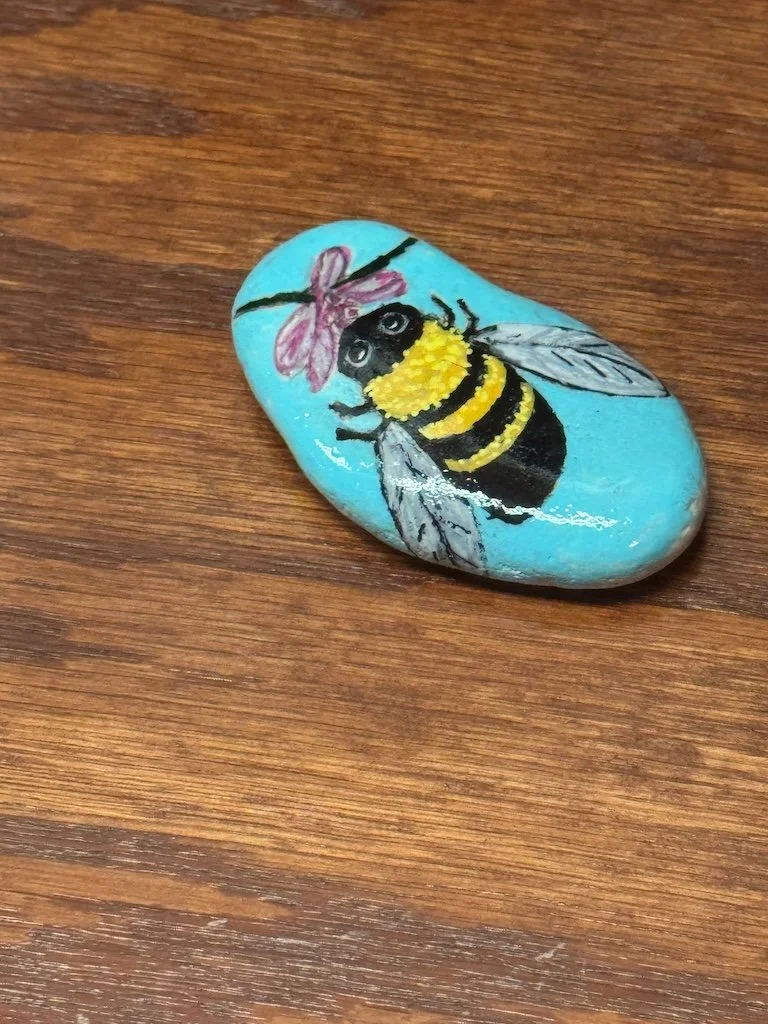
Inside the building there was a display of painted rocks that I enjoyed.

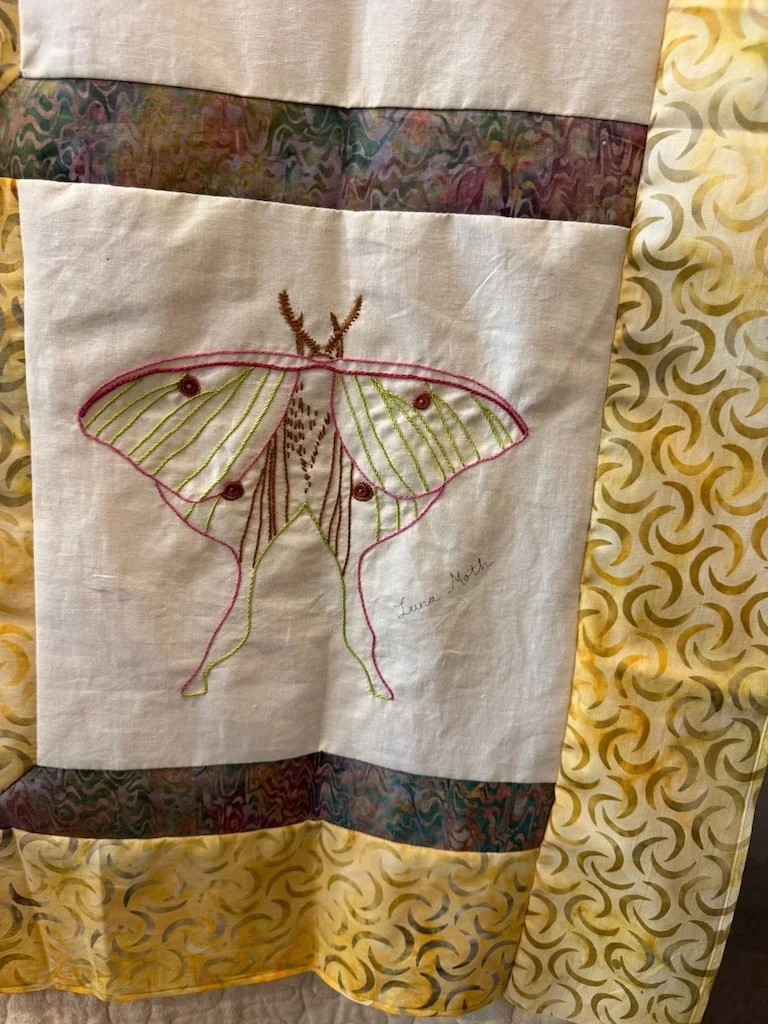
Several quilts were hanging and one featured butterflies and moths. I chose the depiction of the Luna Moth to include in this post.

I bought a puzzle for my dad and a Missouri wildflower book for myself from the gift shop.

I headed to the hotel and enjoyed a quite evening getting prepared for the conference.

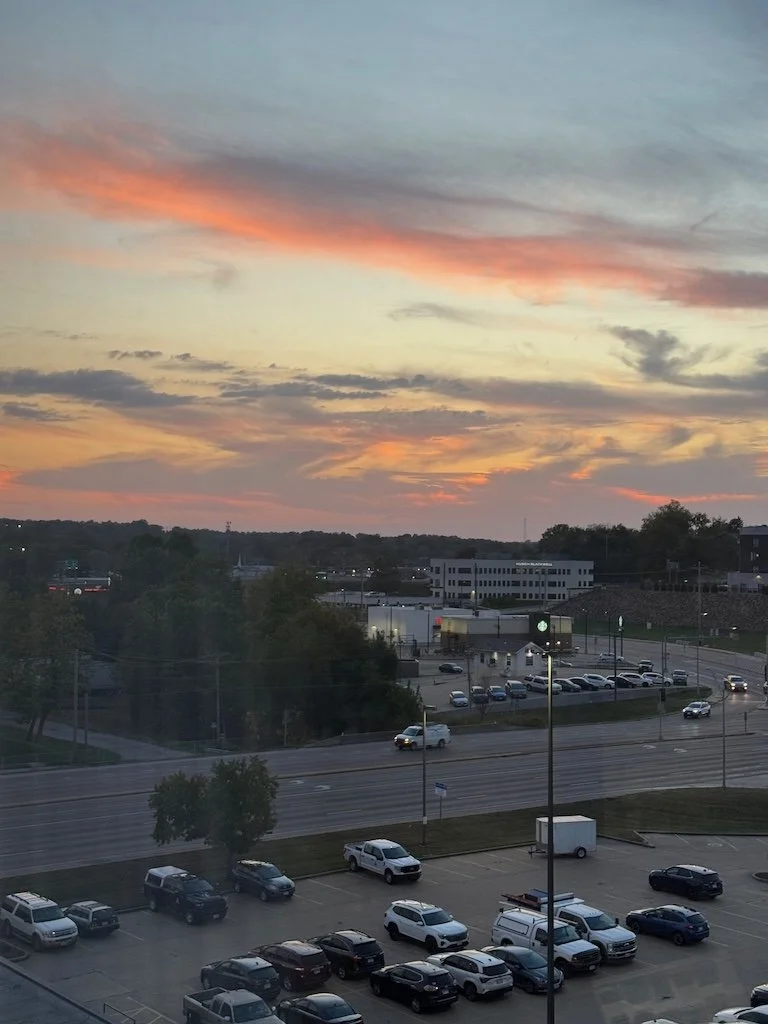
The sunset from the hotel window was a good view for the end of the day.

Gleanings of the Week Ending October 4, 2025

The items below were ‘the cream’ of the articles and websites I found this past week. Click on the light green text to look at the article.

Why Does the Immune System Struggle When the Weather Changes? - Warmer environments promote better immune responses because less energy is diverted to regulating the body’s temperature. At colder temperatures, more resources are shuttled toward homeostasis, leaving less fuel available for immune cells. The cold temperatures are anti-inflammatory. The immune response just doesn't work as well and, molecularly, the adhesive interactions don't really bind as well. Seasonal shifts also bring changes in humidity and wind, which can affect the skin and mucosal barriers, and in turn, the immune response. Drier conditions can lead to more pathogens or other irritants entering the body, driving inflammatory responses. In contrast, excessive humidity can reduce the evaporation of sweat, thus preventing the body from being able to cool itself. Cold temperatures drive people indoors, where pathogens spread more easily. Meanwhile, warm days draw individuals outside, where people can be exposed to pollutants and allergens, which can render immune responses less prepared to fight actual infections.

Toxic-Free Future 2024 Report Card – How does your grocery store rank?

Your kitchen is full of microplastics. Here's how to eat less of them – Now that I am aware of the microplastic issues…there seem to be a lot of articles on the topic. I liked this one because it pointed to some real research and there were actions one could take to reduce microplastic exposure.

What Are Microplastics Doing to Our Bodies? This Lab Is Racing to Find Out. – This article is from last April, but it provides some information about the type of research that is being conducted…trying to understand the impact of microplastics on our bodies.

Why Alaska’s salmon streams are suddenly bleeding orange - Warming Arctic permafrost is unlocking toxic metals, turning Alaska’s once-clear rivers into orange, acid-laced streams. The shift, eerily like mine pollution but entirely natural, threatens fish, ecosystems, and communities that depend on them—with no way to stop the process once it starts. (Climate change…the US denial of its existence does not stop it.)

Inouye Solar Telescope Captures Most Detailed Images Ever of Powerful Solar Flares - Scientists hope that this new imaging can lead to improvements in solar flare modeling and a better understanding of the magnetic field in the sun’s corona. But even the most casual viewer will find much to enjoy in these photos: deep-red ribbons arch and swirl across a fiery plain, with bright flares peppered throughout.

This EV Sales Chart Really Embarrasses The USA – The US has become the laggard of the world in EV sales. It does not bode well for the future of our country.

Three-Minute Take-Home Test May Identify Symptoms Linked to Alzheimer’s Disease Years Before a Traditional Diagnosis - In 2021, 57 million people across the planet were living with dementia. This class of memory-related diseases is the world’s seventh greatest killer, and Alzheimer’s disease is its most common form. In a study published this month in the journal Brain Communications, researchers say the experimental test, called the Fastball EEG, can detect Alzheimer’s significantly earlier than a traditional clinical diagnosis would. In the study, each participant put on a cap that monitored the brain’s electrical activity as they viewed a series of images on a tablet. Some of the images belonged to a set that participants were shown before the start of the test, while others were entirely new. The Fastball test is just three minutes long and passive, meaning all that is required of the patient is to watch the images—they don’t have to follow instructions or actively remember anything. The results of the at-home test are sent directly to a patient’s doctor. Hopefully - Fastball EEG can one day be used as a screening tool for patients over 55 years old, though more research is needed to identify the best time to take the test.

Harnessing the superpowers of the most resilient life form on Earth - While water bears often must cope with drying out, it's less clear why they would need to survive baking hot temperatures, being cooled to just above absolute zero, or radiation only found in outer space.

The Secrets Behind the Roman Colosseum’s Enduring Engineering - Measuring roughly 615 feet in length, 510 feet in width, and 157 feet in height, the Colosseum was the largest amphitheater anywhere in the Roman Empire. Its capacity rivals that of modern stadiums; it can seat as many as 90,000, on par with London’s Wembley Stadium. Ancient texts and archeological studies both indicate that the construction of the Colosseum, which lasted from 72 to 80 C.E., was a meticulously planned and highly coordinated affair. The Colosseum hosted not only gladiatorial games, but also animal hunts, mock naval battles, public execution of criminals, and theatrical performances. Inside, seating was divided by social class, with the emperor and senators seated in the front rows and the plebeians, or common people, farther back. Although the structure survived the test of time, the Colosseum we know today is but a shadow of its former self. During the Early Middle Ages, following the fall of the Western Empire, almost all its moveable interior furnishings, including statues, wooden scaffolding, and marble seats, were removed and sold—an unceremonious end to a monumental history.

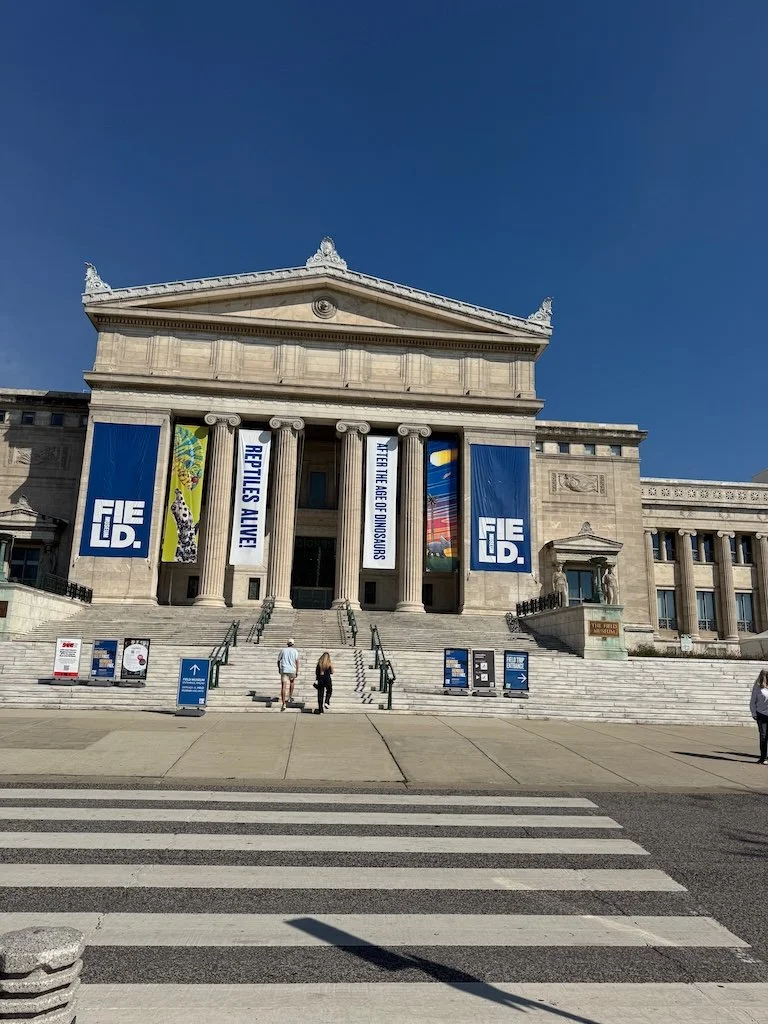
Chicago Field Museum

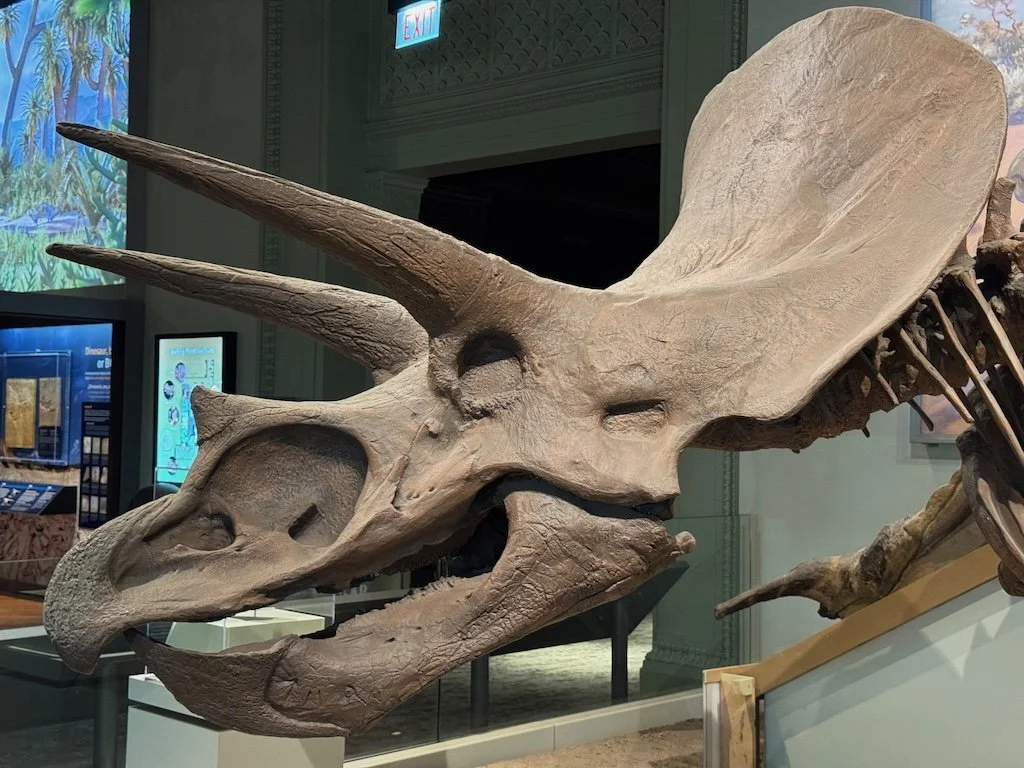
We had a free afternoon at the Urban Birding Festival in Chicago last month and opted to visit the Field Museum.

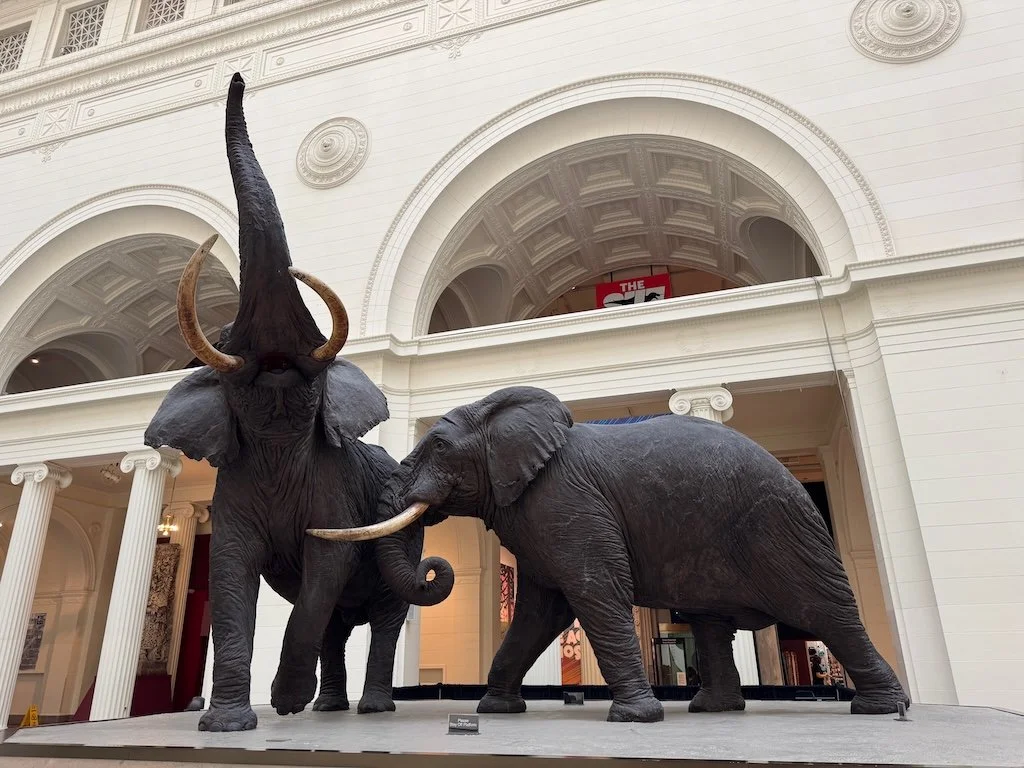
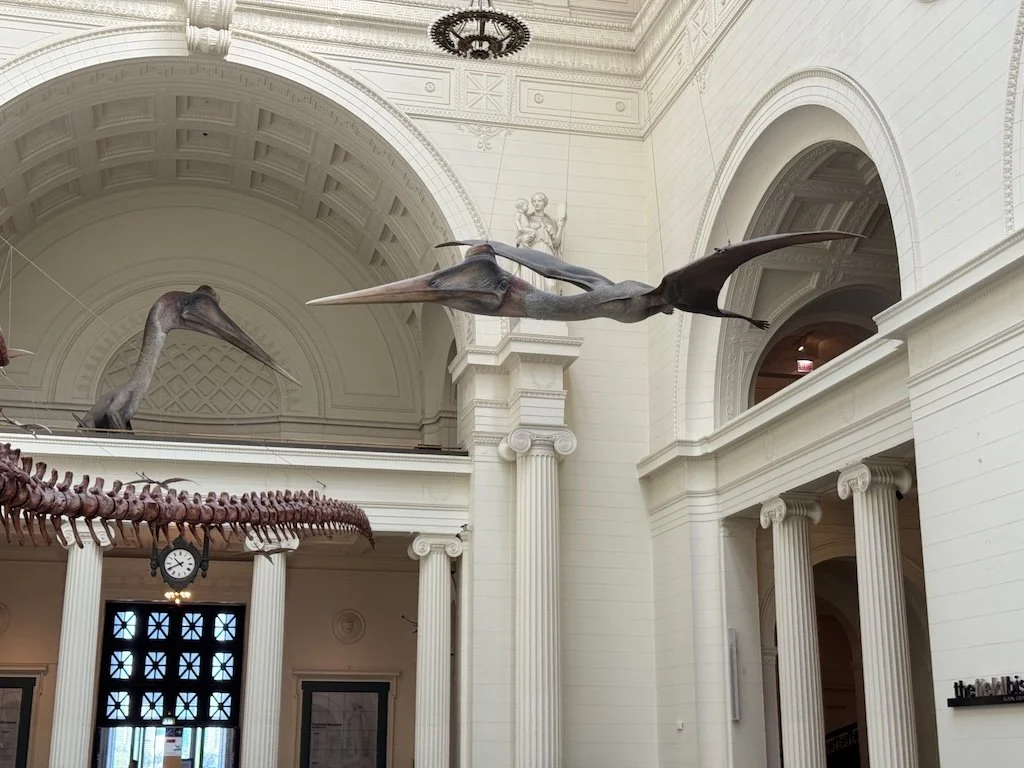
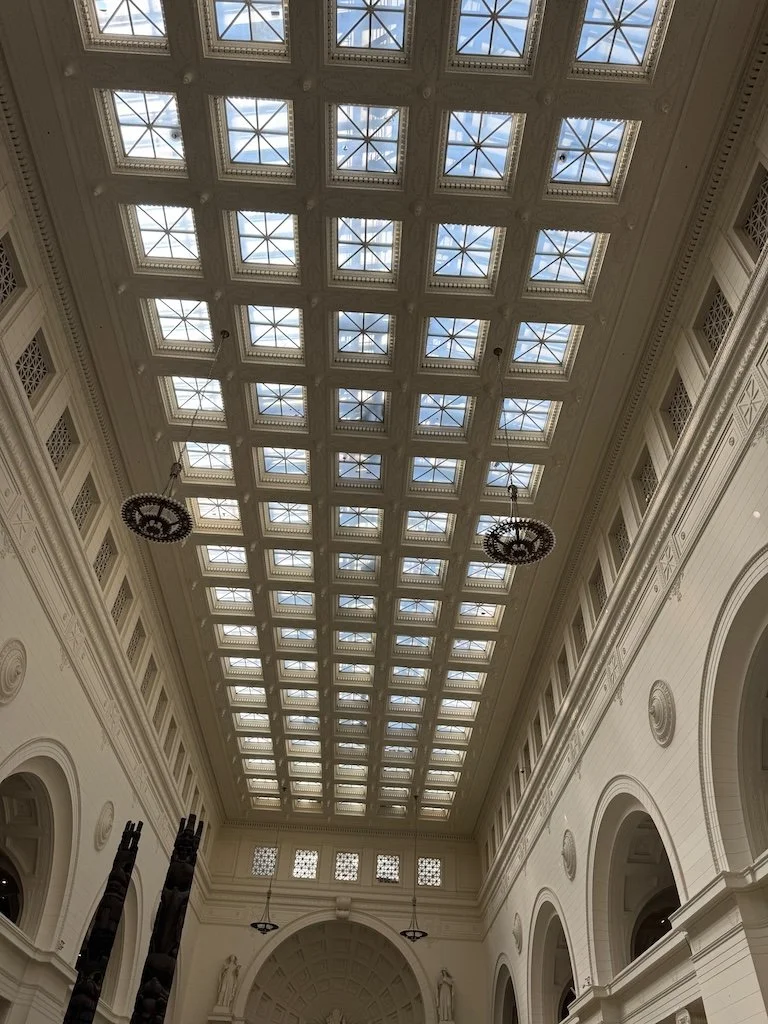
It is huge – enough to be overwhelming! The  main hall is the beginning of the exhibits….and is grand architecture too.

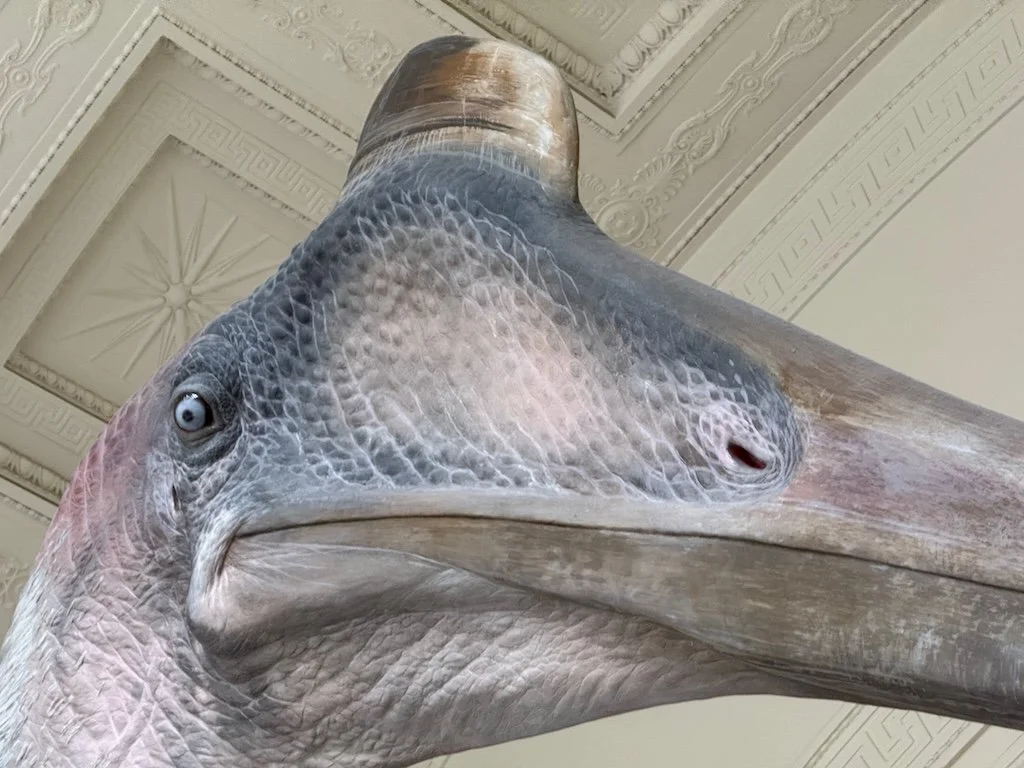
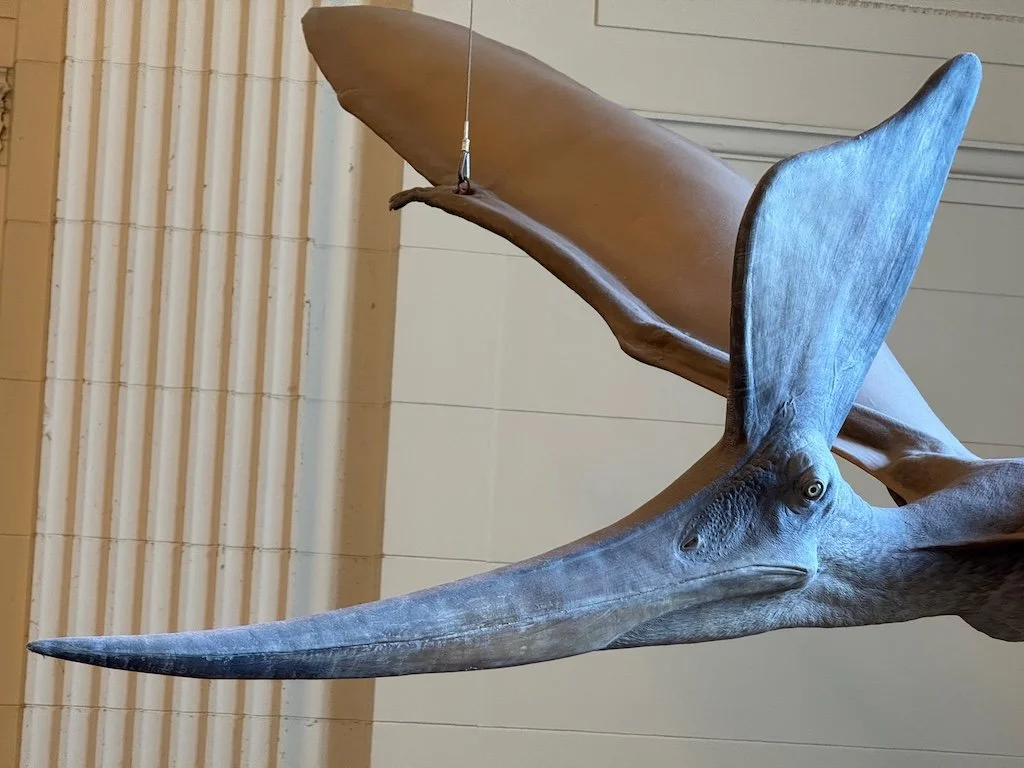
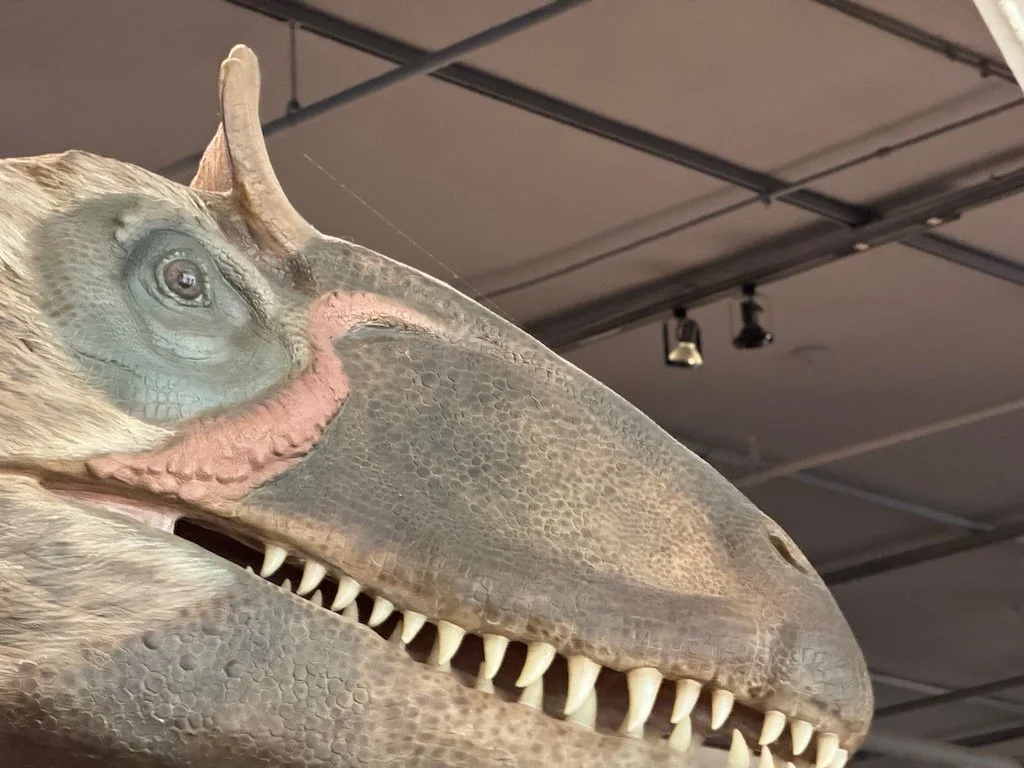
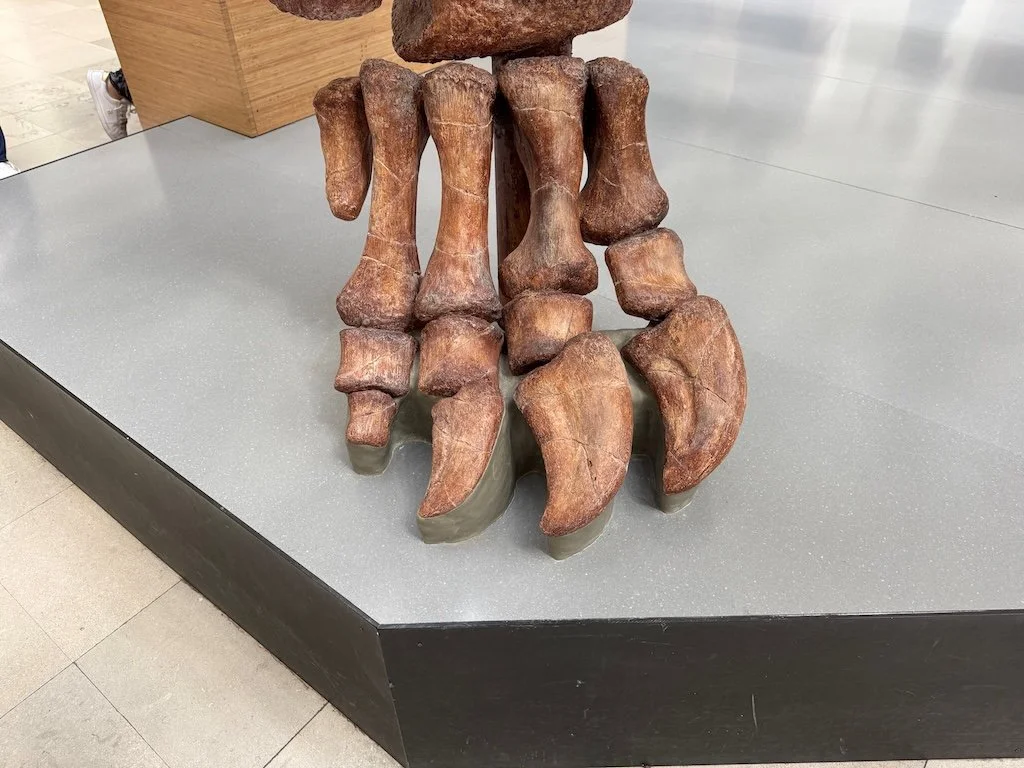
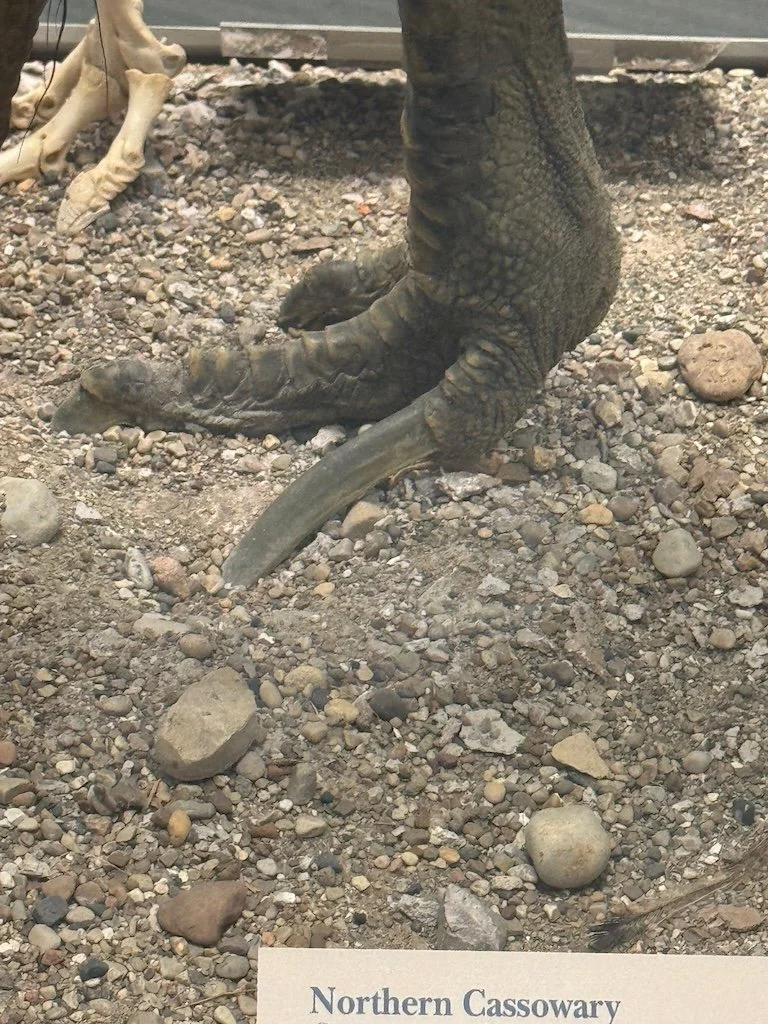
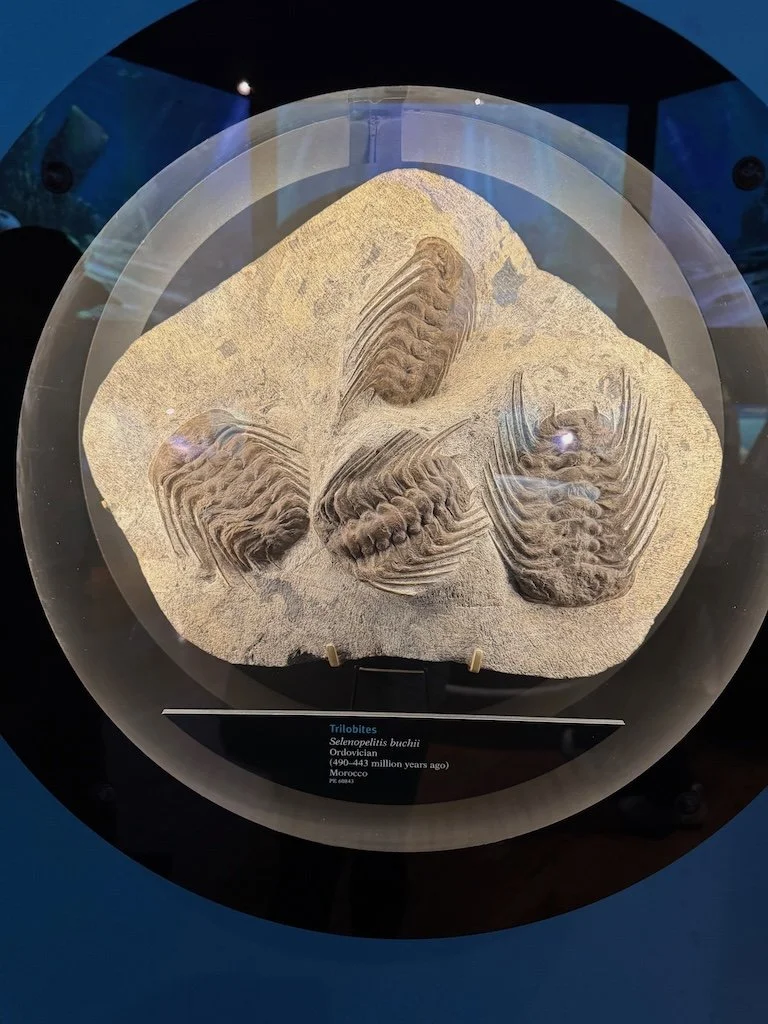
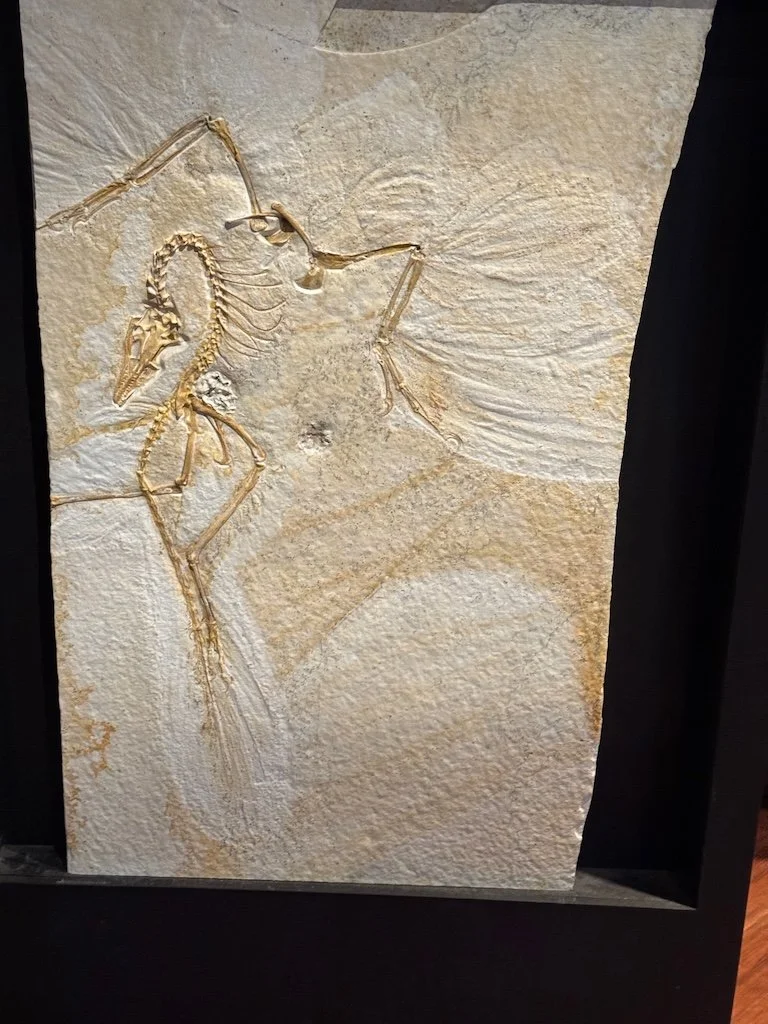
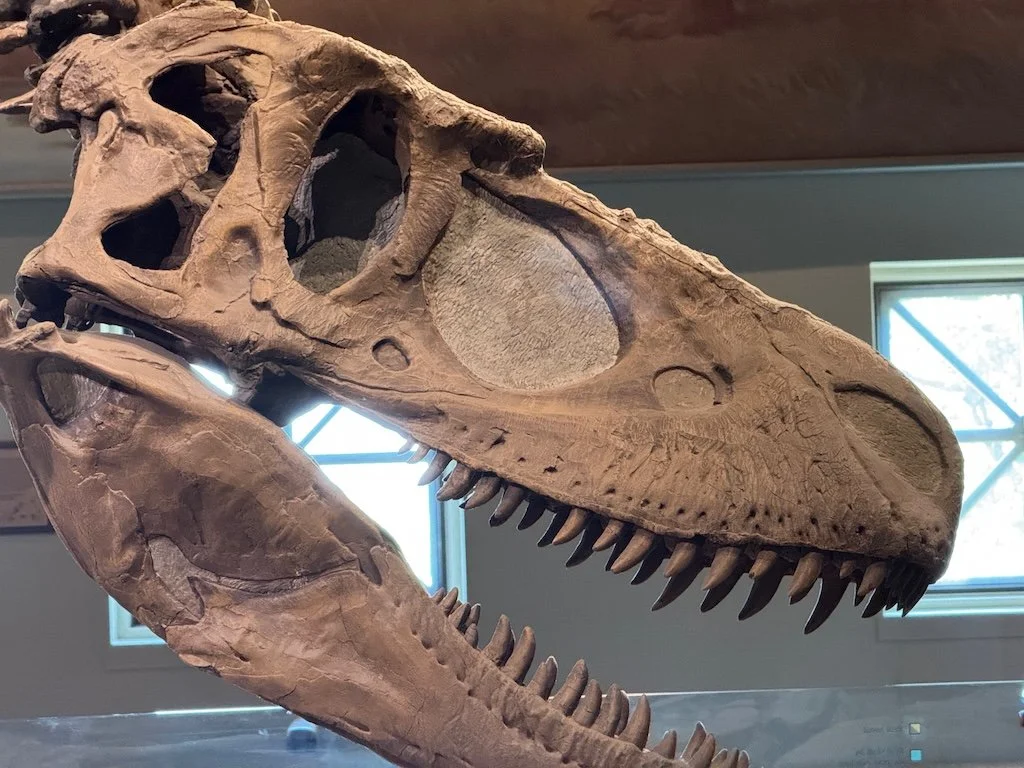
Many of my pictures were of fossils….and that was before lunch.

After lunch we walked through the 3-story replica of an Ancient Egyptian mastaba. It was very different from other Ancient Egypt museum exhibits I’ve seen…and I appreciated the physical presentation…like touring a ruin in Egypt….but with the comfort of air conditioning.

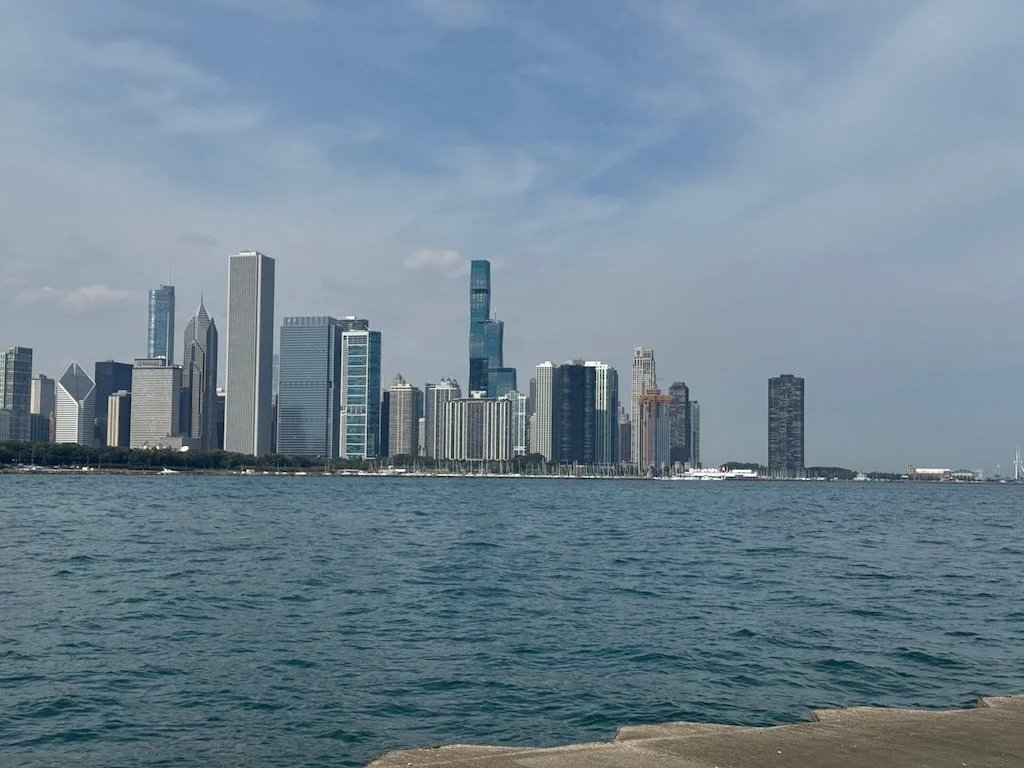
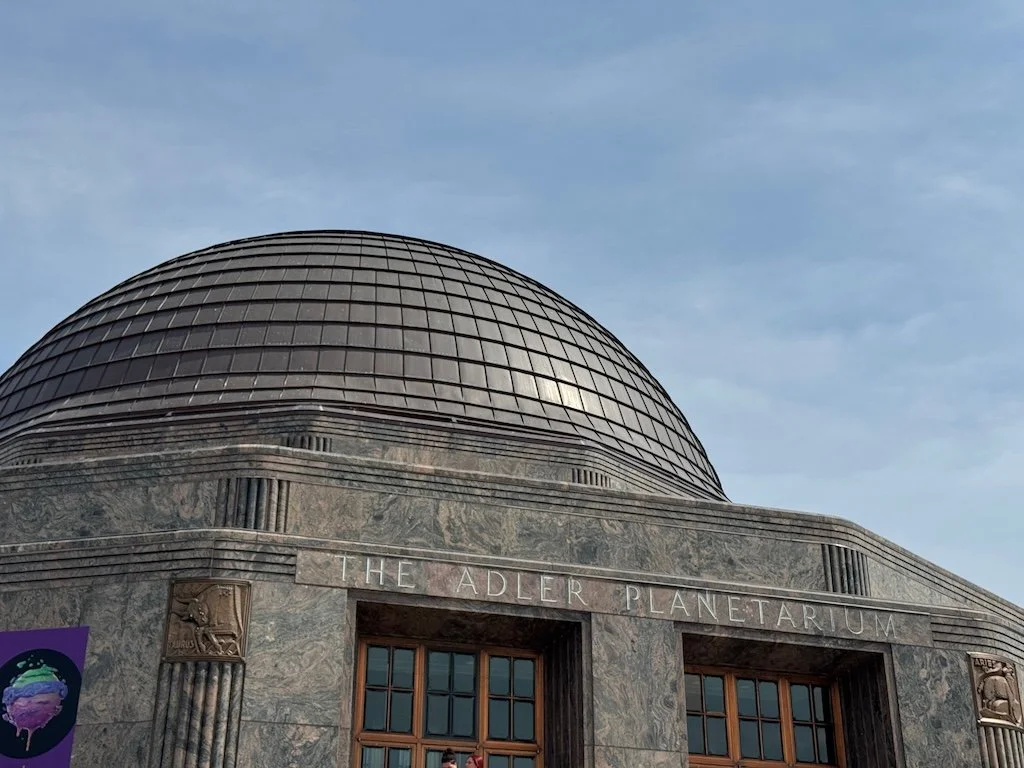
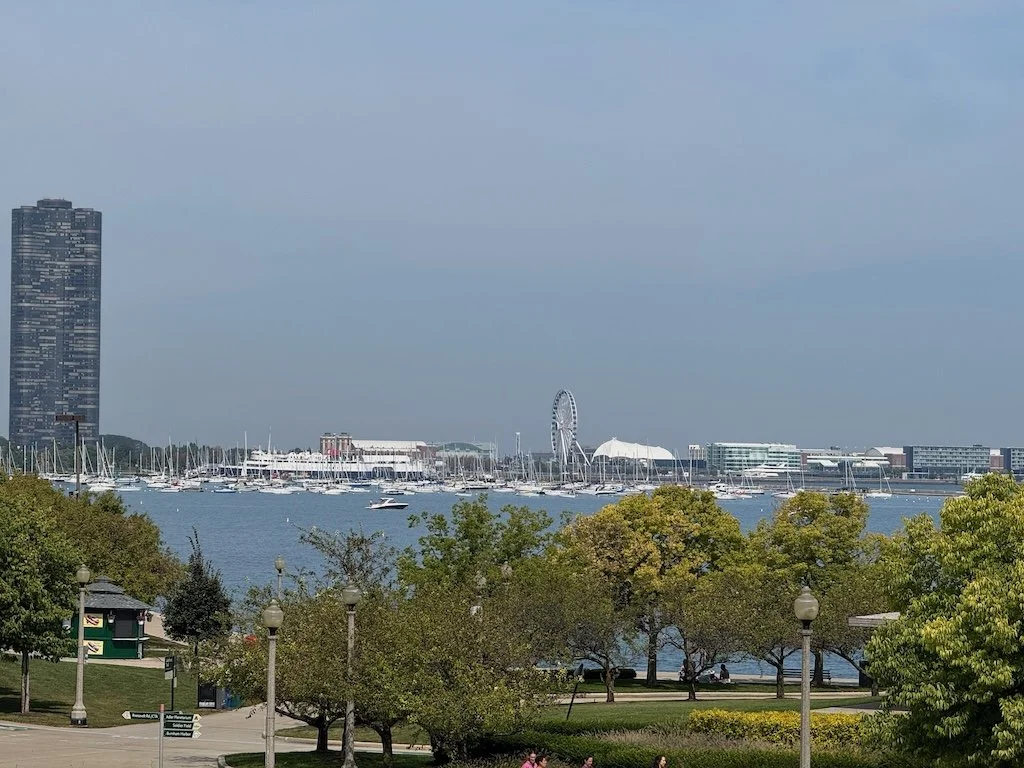
Once we left the museum, we walked toward the Adler Planetarium and took pictures of the Chicago skyline.

I experimented with my iPhone’s pano capability.

We didn’t go into the planetarium, but I appreciated the architecture before we headed back toward where our car was parked.

We were both feeling the early start to the day, the 2 hours of mostly standing at the Bill Jarvis Bird Sanctuary, and the walking in and around the Field Museum. We checked into our hotel and rested a bit before the evening reception for the festival.

Sustaining Elder Care – September 2025

My September trip to Texas to see my dad was at the time of year that the sun rises about the time I make my first rest stop. There were enough clouds to make it worth photographing.

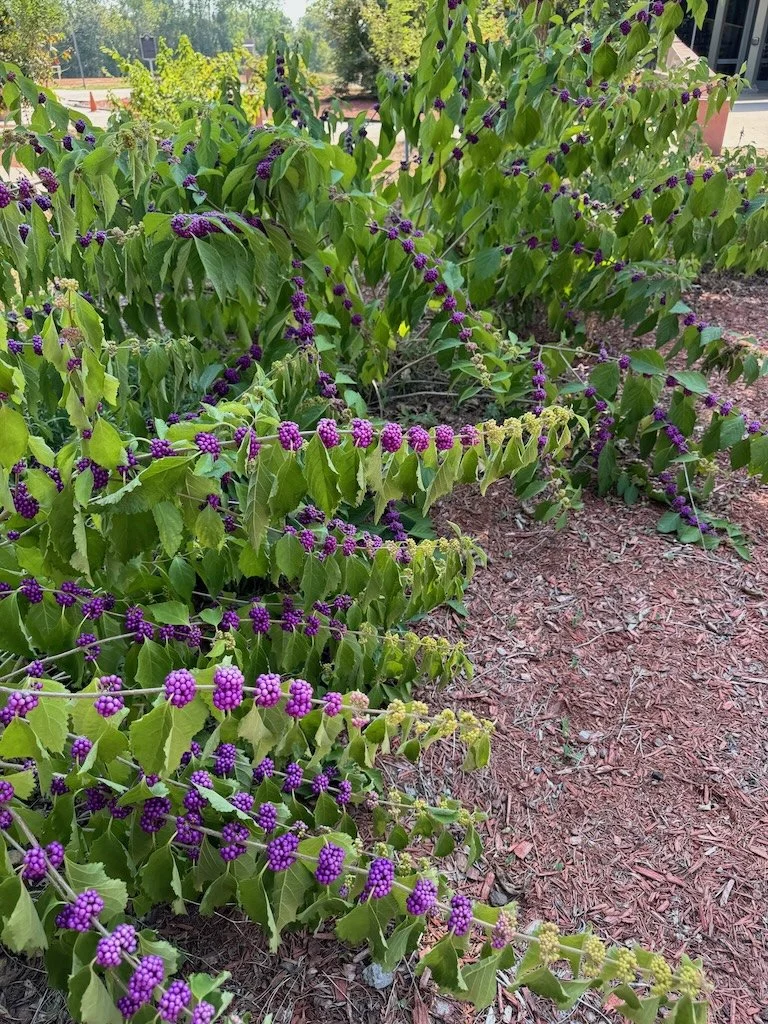
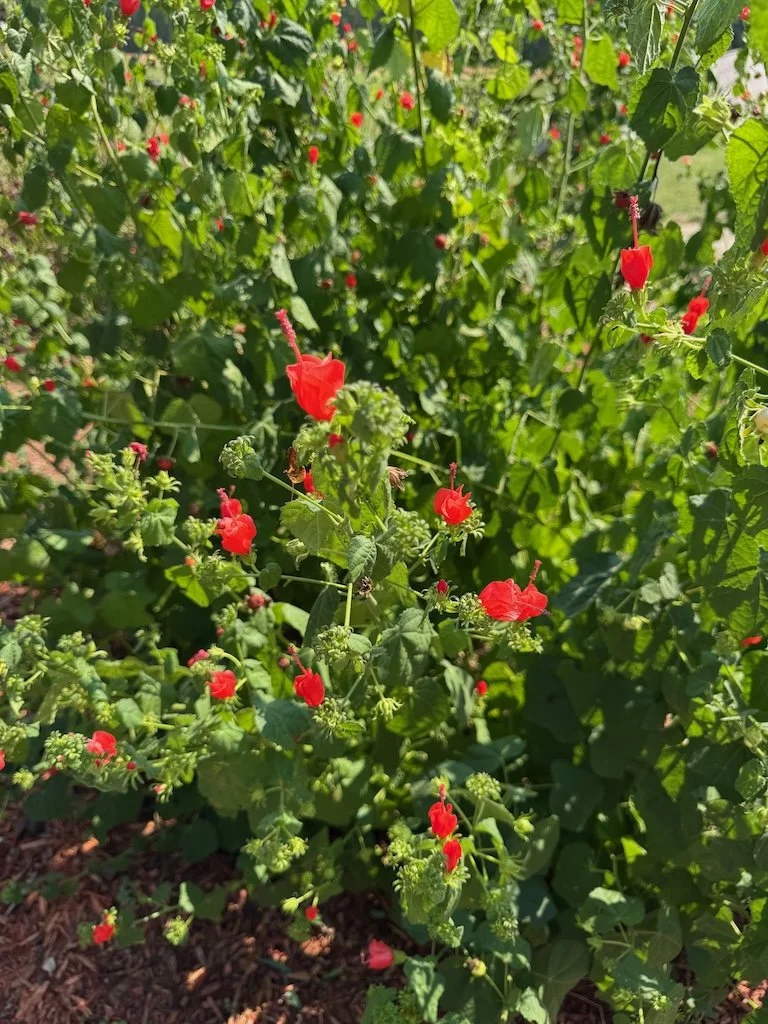
At the Texas welcome center about 4 hours later, the beautyberry and turk’s cap were looking good.

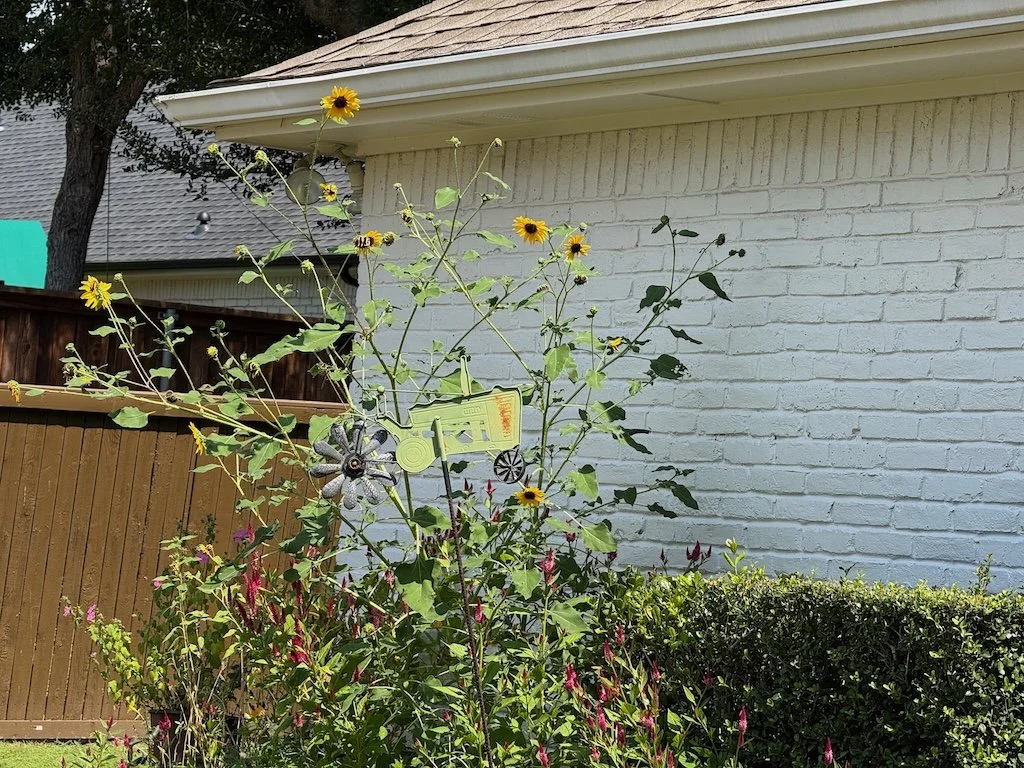
The temperature was about 90 degrees by the time I got to my dad’s assisted living residence in Dallas. We went outside to water plants (the sunflowers are looking good) but we opted to go back indoors to do his physical therapy exercises. He is managing them relatively well, but they seem to wear him out more quickly than just a few months ago. My sisters and I are staying focused on the exercises with him so that he can maintain is mobility as long as possible.

The next morning, I was there before breakfast, and the temperature was pleasant outside. We did the physical therapy exercises on the patio and talked about the plants that we had brought from his house and the tomatoes that aren’t doing so well this year. Sometimes he seems to remember…sometimes he just shrugs. But he still seems to enjoy the time outside listening to planes coming and going to Addison Airport.

We didn’t work on a puzzle. The last few times we’ve tried, he complained that he couldn’t see. His eyesight is problematic so it could be the new reality.

My strategy is to simply accept him the way he is, encourage him to do the things he can (maybe stretching a bit beyond on some of the physical therapy exercises), and enjoy our time together.

Ten Little Celebrations – September 2025

September still had some hot days…but there were some cooler mornings that were very pleasant. Our trip to Chicago offered some very different scenery! Lots to celebrate.

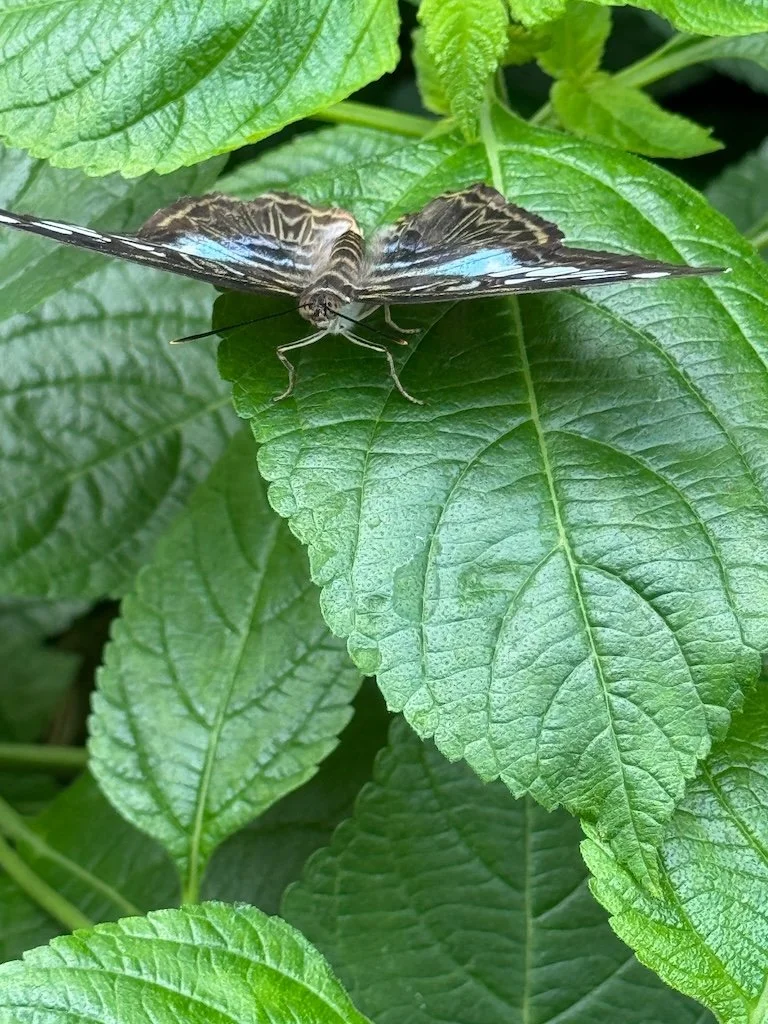
A cooler morning in the Butterfly House. It was good to finally get a break in the temperatures. I celebrated being more comfortable…and that there were more people that came to enjoy the butterflies too.

The end of busy morning in the Butterfly House. I celebrated the end of my shift in the Butterfly House when I was the lone docent – a bit frazzled but knowing I had done a good job.  A school group came through (45 students plus parents!). And 3 caterpillars had gone walkabout during the shift but I had managed to get them contained before they were stepped on!

Bill Jarvis Migratory Bird Sanctuary. I celebrated that Chicago has managed to have a wild area in the big city.

Botany at Lincoln Park Zoo. I celebrated that the Zoo had areas that are mostly native plants…and I recognized most of them since they skew toward prairie plants which are the same as the ones we have in my area of Missouri.

Monarch Butterfly over Lake Michigan. I celebrated the surprise of seeing a Monarch butterfly flying over the lake a long ways from shore…hope it made it to the south shore.

Field Museum. I celebrated that I finally got to see the museum. I had missed it when I went to Chicago back in the early 1980s for a class…had always wanted to go back.

Crystalized Ginger. I bought crystalized ginger for our trip on Lake Michigan (it controls nausea for me). I celebrated that it worked and that it is a good treat when I travel too.

A new grandnephew.  I celebrated that my niece and her new baby are healthy and home from the hospital…was in Dallas so I was able to share pictures with my father; the new baby is his third great-grandchild.

My Missouri yard. I love the subtle changes happening right now – mostly still green but more seed pods forming. Soon the leaves will change to their fall colors.

Brunch with by daughter. My daughter and I tried a place near where I live … and both celebrated an excellent brunch that had a triple berry tart at the end.

Zooming – September 2025

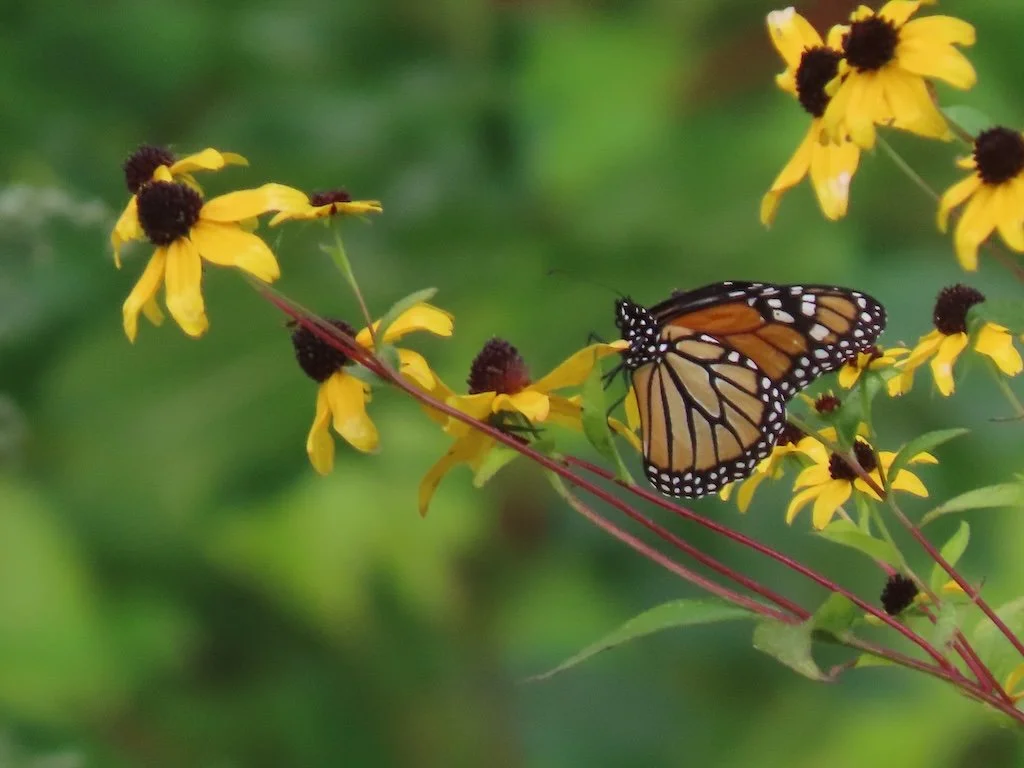
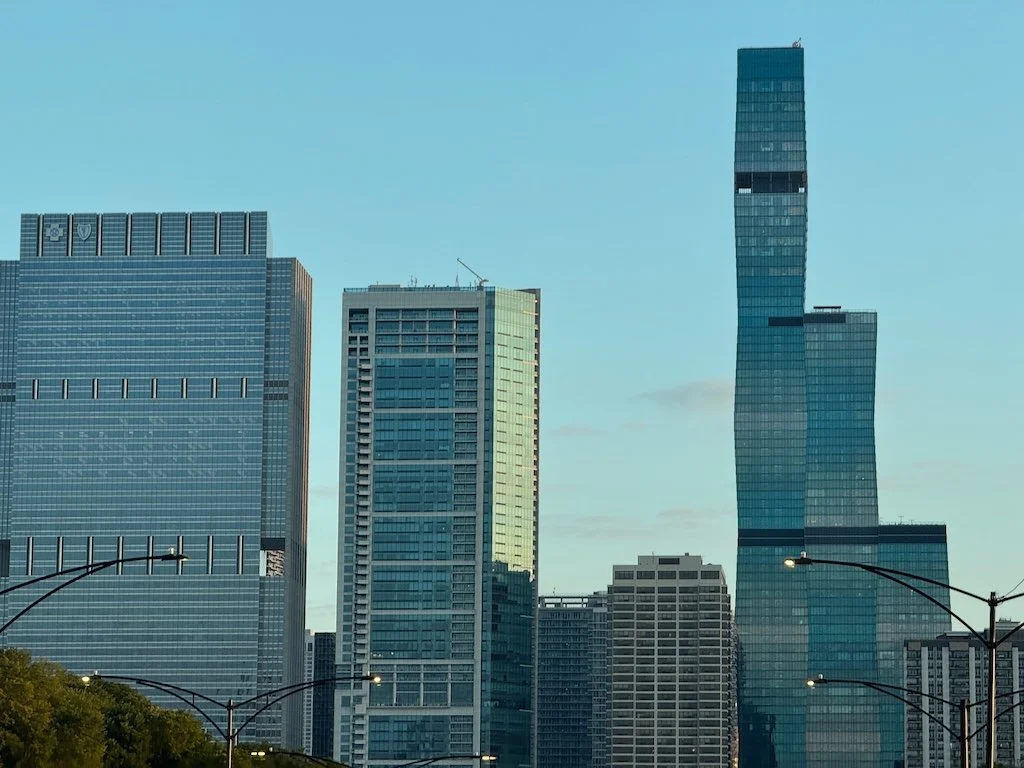
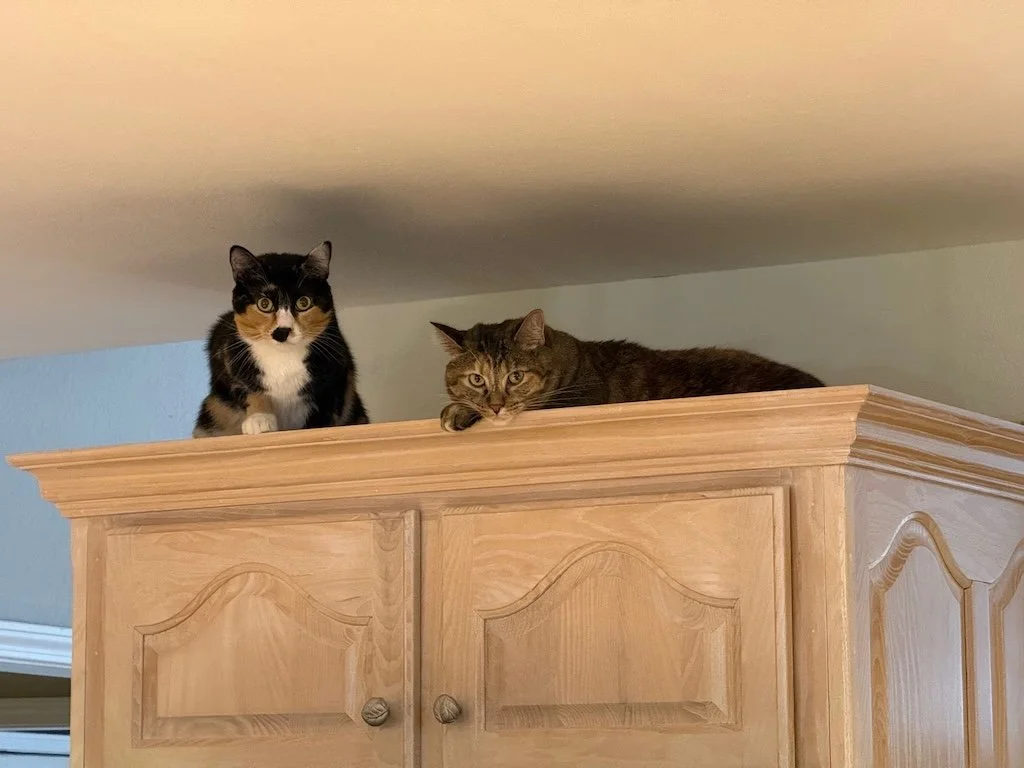
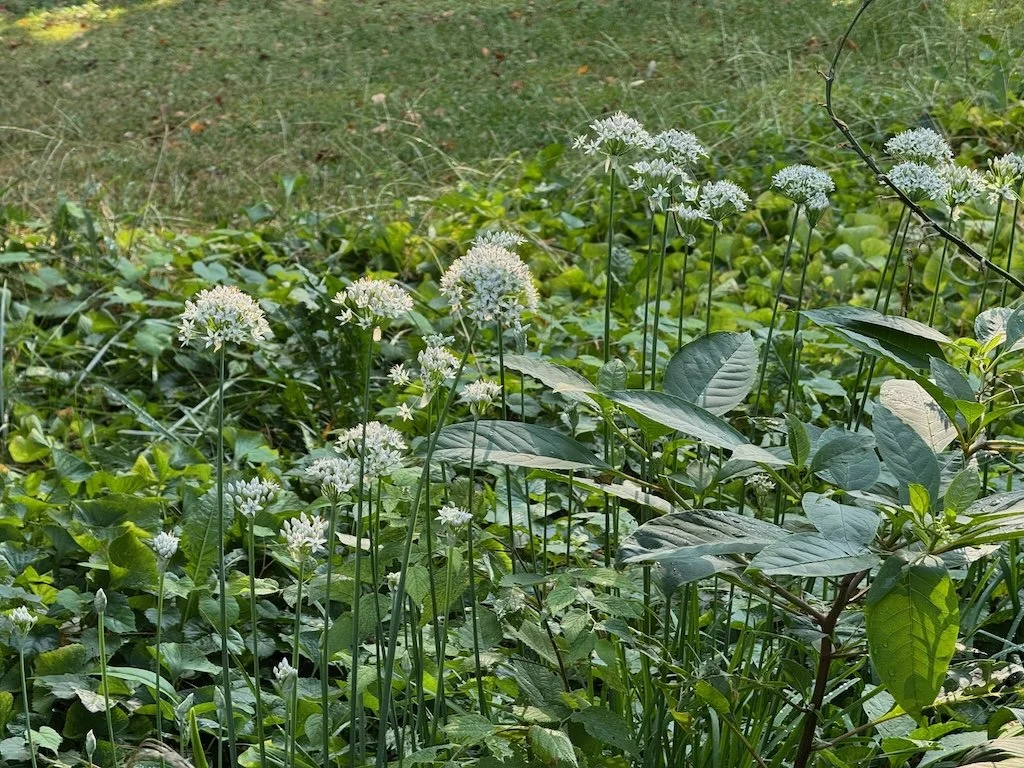
Lots of locations for the September zooming pictures: Josey Ranch Park in Carrollton TX, scenes from Chicago, Illinois interstate, home, and the Butterfly House in the Springfield (MO) Botanical Garden.

There are the usual flowers…butterflies, birds, cats…and a Chicago skyline.

Enjoy the September 2025 slide show!

Gleanings of the Week Ending September 27, 2025

The items below were ‘the cream’ of the articles and websites I found this past week. Click on the light green text to look at the article.

Flamingos reveal their secret to staying young - A decades-long study in France reveals that resident flamingos, which stay put, enjoy early-life advantages but pay later with accelerated aging, while migratory flamingos endure early hardships yet age more slowly. This surprising link between movement and longevity challenges old assumptions and offers new insights into the science of aging.

‘Montana Miracle:’ The State Actually Succeeding at Housing Reform - In 2023, Montana passed a series of state laws aimed at increasing housing construction that included allowing ADUs and legalizing multifamily housing in commercial zones. This year, the legislature doubled down, expanding on the 2023 law and eliminating parking requirements for most units in the state’s 10 largest cities. A new law also eases permitting for manufactured home parks to eliminate the need for a subdivision review when these parks are not subdivided into private lots. Another allows single-staircase buildings up to six stories, making it easier to build denser buildings on smaller lots.

Photographers Capture Underground Pools and Passages of Lechuguilla Cave in New Mexico - So far, 150 miles of Lechuguilla Cave have been explored. With every new survey, the cave offers new insights as to how underground chambers like these are formed and the microbial beings found there. Its beauty earned the entire Carlsbad Cavern National Park the title of a UNESCO World Heritage Site in 1995. But due to its complexity, entrance is limited, with the NPS restricting explorations to highly trained speleologists with pre-approved plans.

Plastic Free Water Filters: Can We Find Water Purifiers without Plastic? – My daughter and I are looking to upgrade our water filters. I hope the water filter technology improves with emphasis on reducing microplastics in water.

Inside Ukrainian Artist Dmitry Oleyn’s Sculptural Approach to Landscape Painting - Rather than use the traditional approach that embraces the flatness of the canvas, the artist instead builds his pigments so there is an element of bas-relief, leaving the surface rugged and with a marked sense of tactility from the artist’s hand. When they are displayed, the irregular surface casts shadows, which when viewed against the painted shadows, is especially intriguing; it also creates a degree of mutability, as depending on the time of day and where the paintings are hung, the lighting of the space dialogues with the work both physically and compositionally.

Photography In the National Parks: Mesa Verde Revisited – I’ve been to Mesa Verde once….back in the 1970s. This article reminded me that I want to go again.

Map Reveals Toxic Pollution Leaking from U.S. Drilling Sites - Scientists have shown that U.S. oil and gas drilling sites are not just leaking methane but also a host of toxic chemicals that pose an urgent threat to the health of those living nearby. A new interactive map details the impact of hundreds of major leaks. At nearly every oil and gas site, leaks also produced benzene, a known carcinogen, as well as other chemicals that have been shown to harm bone marrow, weaken the immune system, impair the nervous system, as well as cause headaches, dizziness, vomiting, and fatigue. Is the fossil fuel industry so arrogant that they don’t care that they are spewing poison (some of which could be used for fuels and other industrial purposes if captured) that negatively impact the health of people and other life?

World’s Tallest Douglas Fir Tree Damaged in Mysterious, Multi-Day Blaze, but It’s Alive After Firefighters Extinguish Flames – It burned from August 16 to August 21. The tree is estimated to be around 450 years old and has a diameter of 11.5 feet. It no longer holds the title of the tallest Douglas fir in the world. However, officials are hopeful the old tree will rebound from the damage wrought by the fire. It’s possible the fir will even grow a new crown.

Six tips from the Middle Ages on how to beat the summer heat – Save the ideas for next summer: work flexibly, wear the right hat, eat to lower body temperature, try wild swimming, use aftersun, or flee.

8 Hints to Reduce Your Food Footprint - You can make food decisions today that change your food footprint. Eight ways you can reduce your food footprint so it’s more environmentally food-friendly: limit ultra-processed foods, curb waste, eat a primarily plant based diet, buy local, compost your food scraps, avoid plastic food packaging (sometimes difficult to do), lose the gas stove, call out Big Ag for its polluting practices.

Out on Lake Michigan

We had signed up for birding out on Lake Michigan on the last day of the Urban Birding Festival in Chicago. We had to be at the dock by 5 AM so we were leaving our hotel about 4:30…checking out and loading everything into our car. Both of us were feeling a bit sleep deprived.

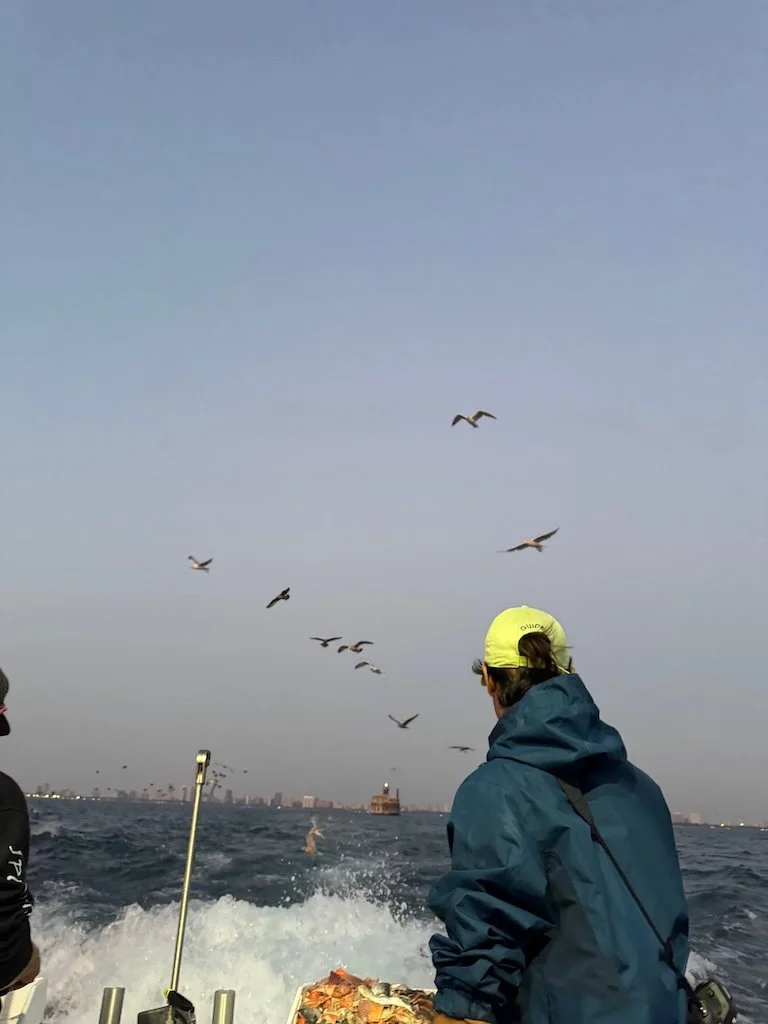
Everyone that had signed up for the trip appeared and we were heading out of the harbor by 5:30 AM. The boat was a fishing boat. It wasn’t a windy morning, but I appreciated the extra handholds that the rod holders provided when I tried to move around. I sat most of the time!

Everyone that had signed up for the trip appeared and we were heading out of the harbor by 5:30 AM. The boat was a fishing boat. It wasn’t a windy morning, but I appreciated the extra handholds that the rod holders provided when I tried to move around. I sat most of the time!

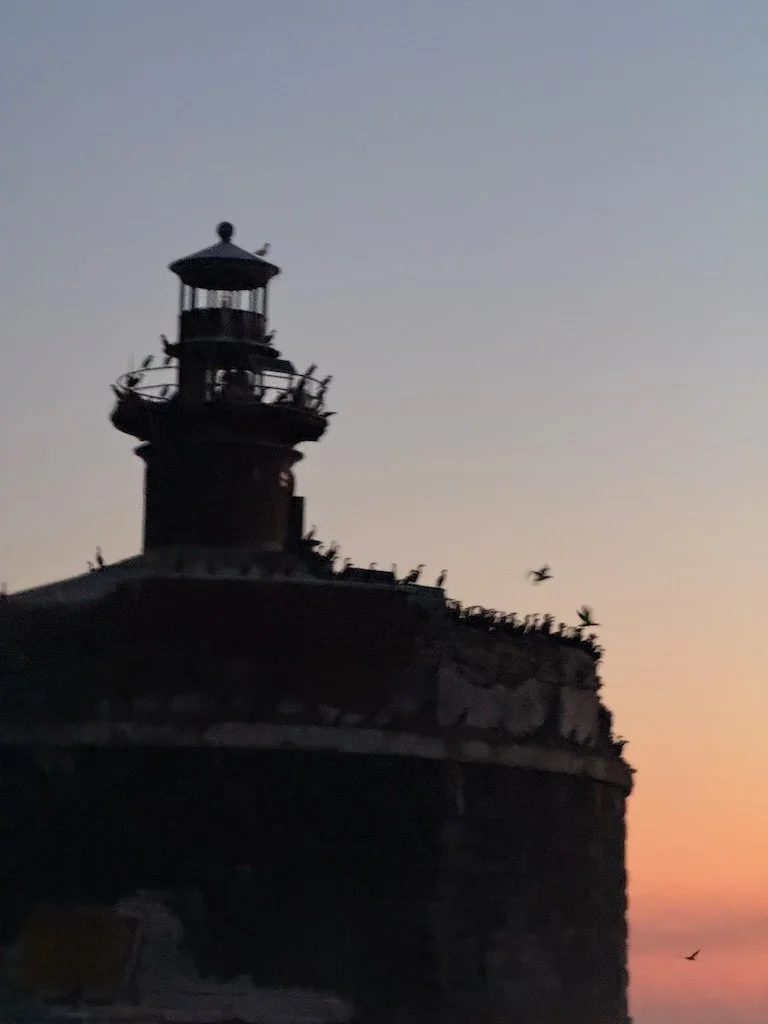
We saw the sunrise on the lake. We passed several of the water intakes for the city that are a ways out into the lake and often host colonies of cormorants.

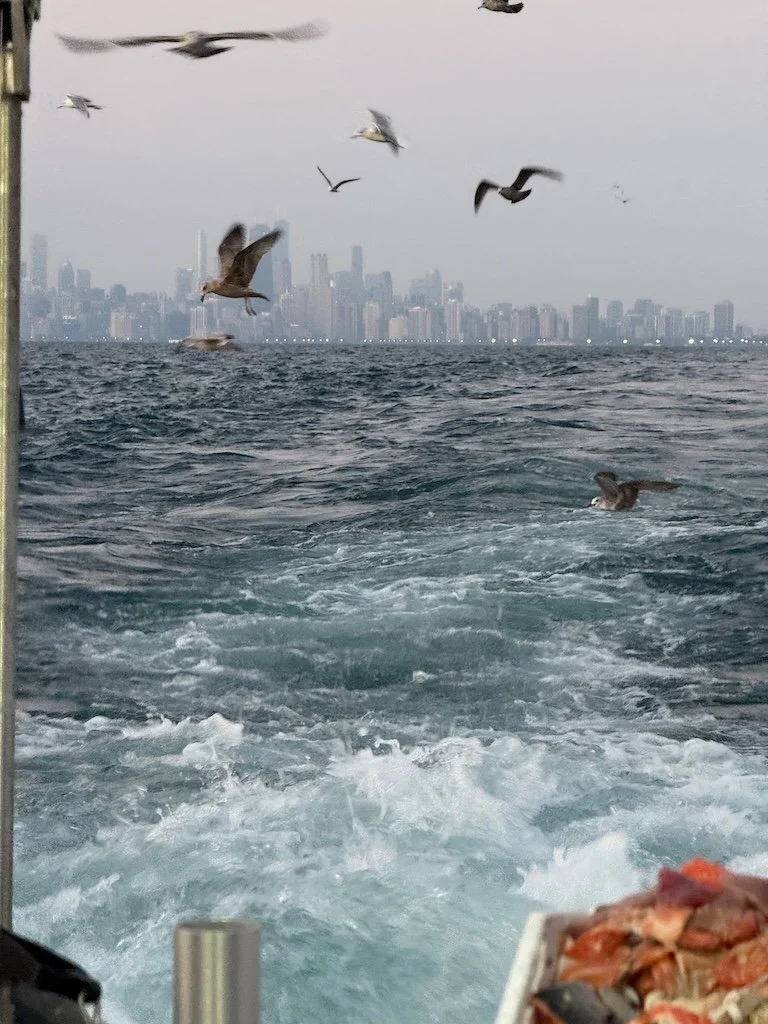
The guides were throwing chum (fish, bread, popcorn) to the birds from the back of the boat. There were more Herring Gulls than Ring-billed Gulls already. We saw a few terns. The hope was for some rarer birds – like a Parasitic Jaeger. That didn’t show up so I focused on observing gulls at various stages of development and how they used their tail feathers to control their flight/landing behind the boat.

The rocking of the boat was calming…at least while I was sitting…not so much when I was moving around.

The skyline of Chicago was always present…although we were at least 15 miles out on the lake. The air around the city was hazy. The air in the city and on the lake was humid and the air quality was yellow (small particulates). It is a big city and there are a lot of cars.

The surprise of the trip was seeing a Monarch butterfly – flying south – when we were between 10 and 15 miles from shore. I had assumed that they took the land route south from Canada…but some of them obviously don’t.

Peggy Notebaert Nature Museum and Lincoln Park Zoo

The headquarters and registration for the Urban Birding Festival in Chicago was at the Peggy Notebaert Nature Museum. We were in and out of the building during all three days of the festival. They have a small butterfly house with some exotics…some natives.

I managed to make a short video of a butterfly feeding.

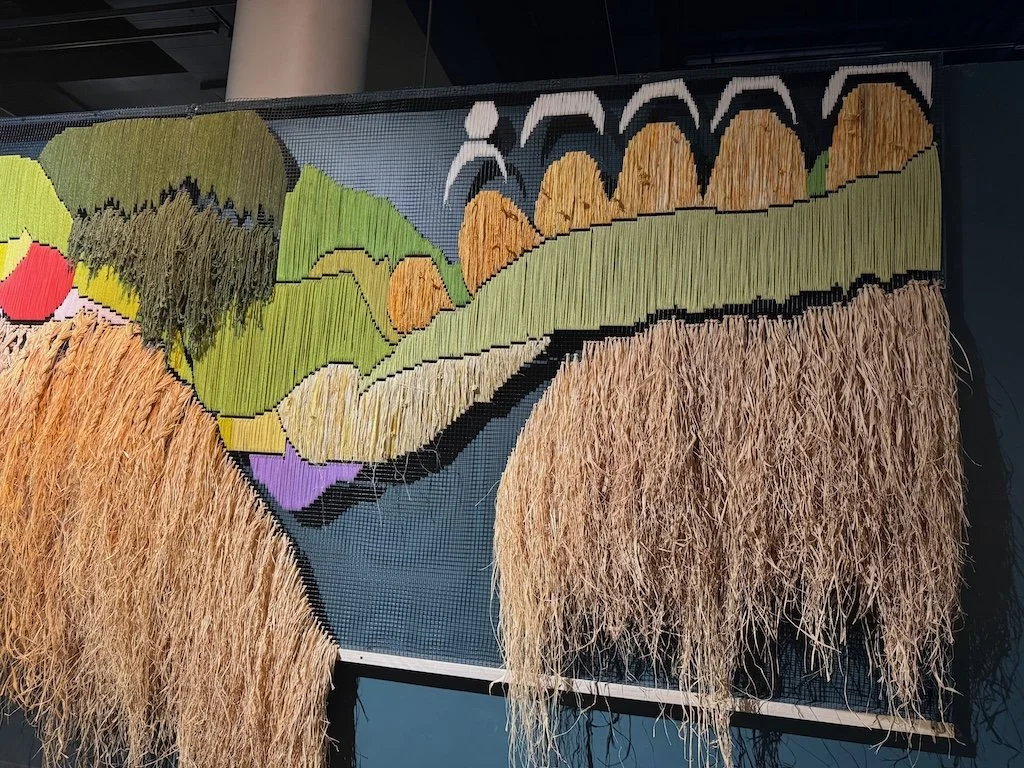
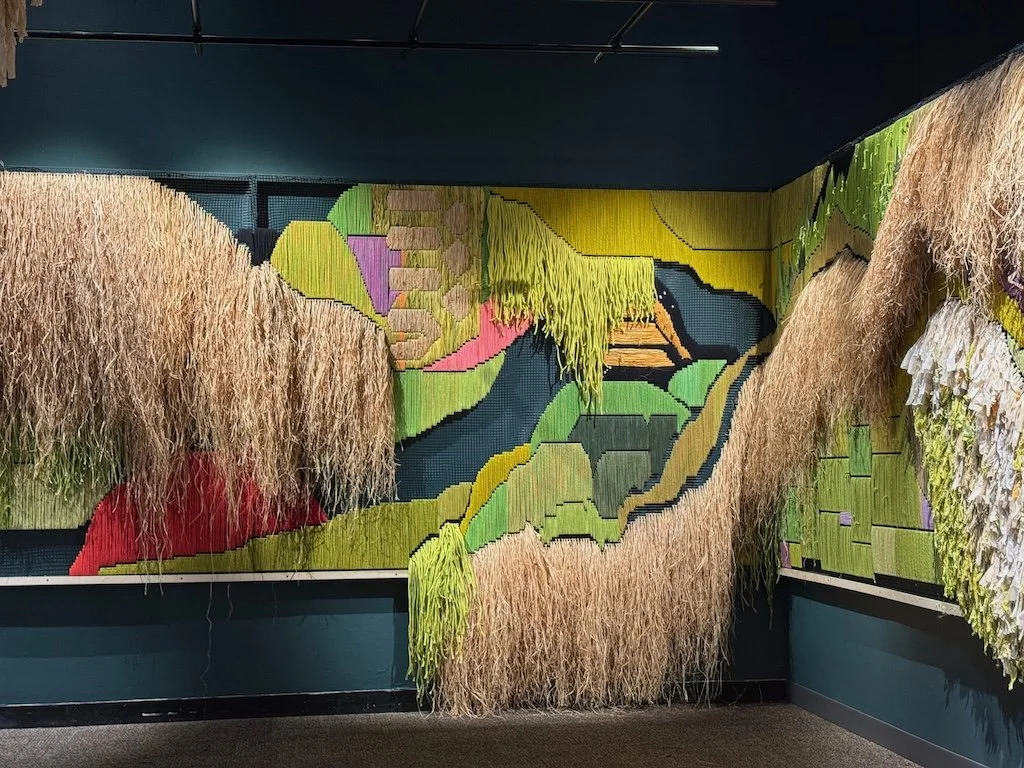
There were lots of activities for young children. It was fun watching them explore. A fiber mural appealed to me too.

We signed up for a walk at Lincoln Park Zoo – birds and botany – skewed toward botany.

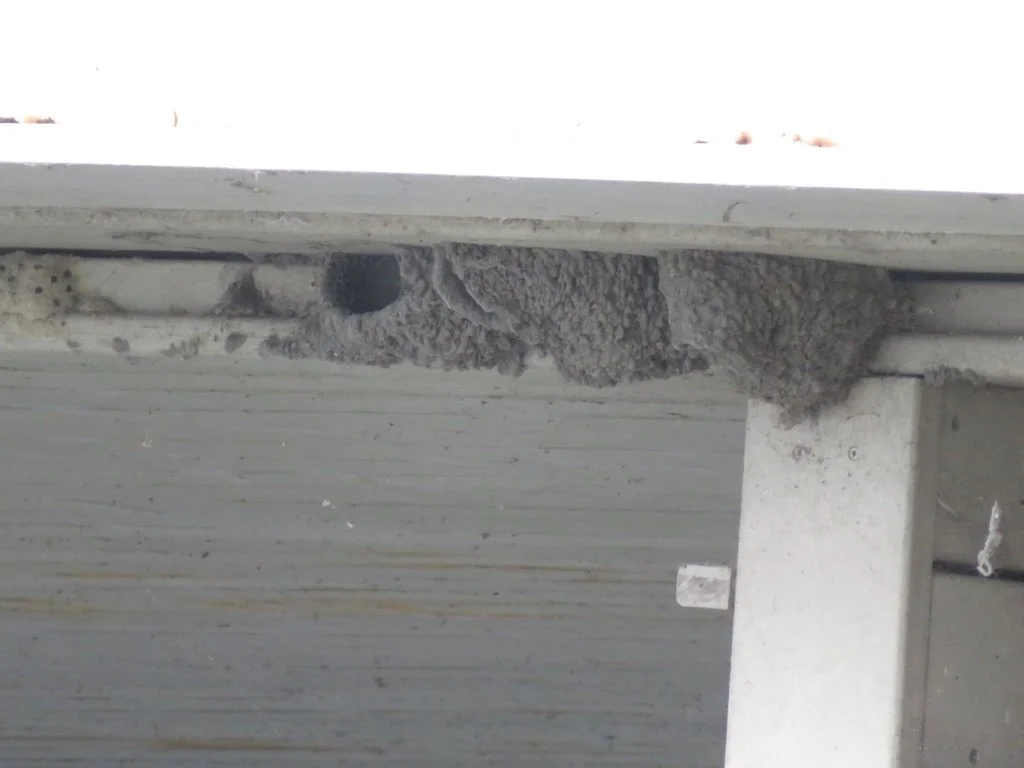
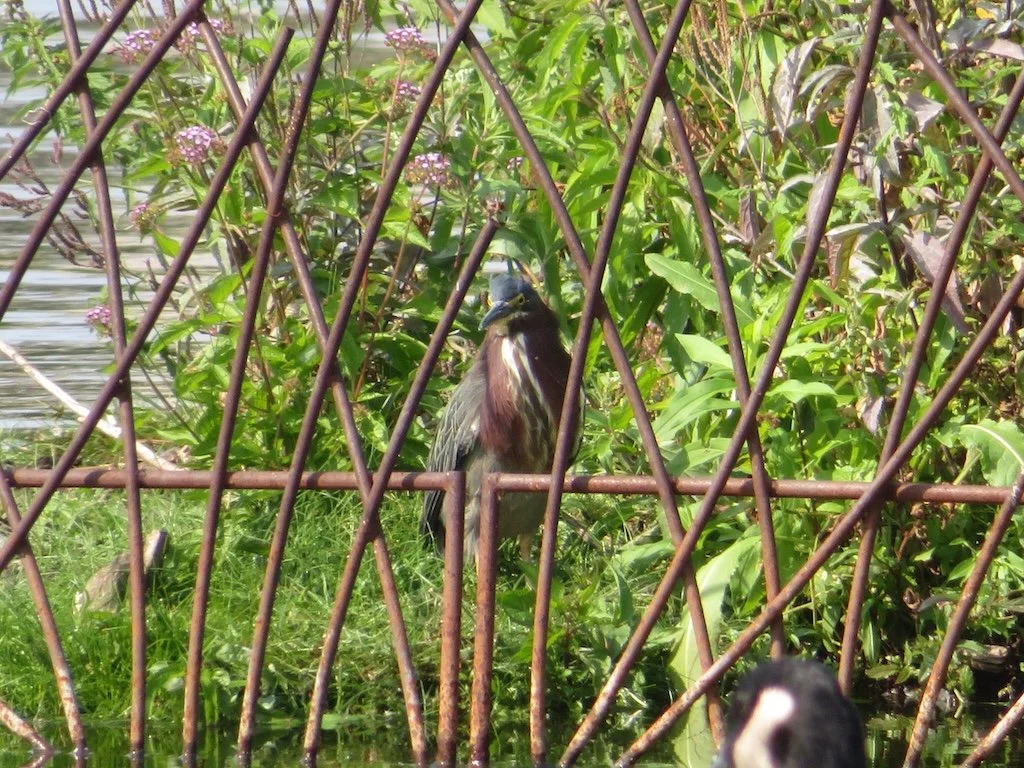
The two birds that I photographed were in a wilder area of the zoo…where wild birds sometimes drop in…sometimes decide to stay. The wood duck was relatively close and preening. The green heron was further way and harder to see through the vegetation. On the underside of a bridge were some barn swallow nests; the birds had already left for the season.

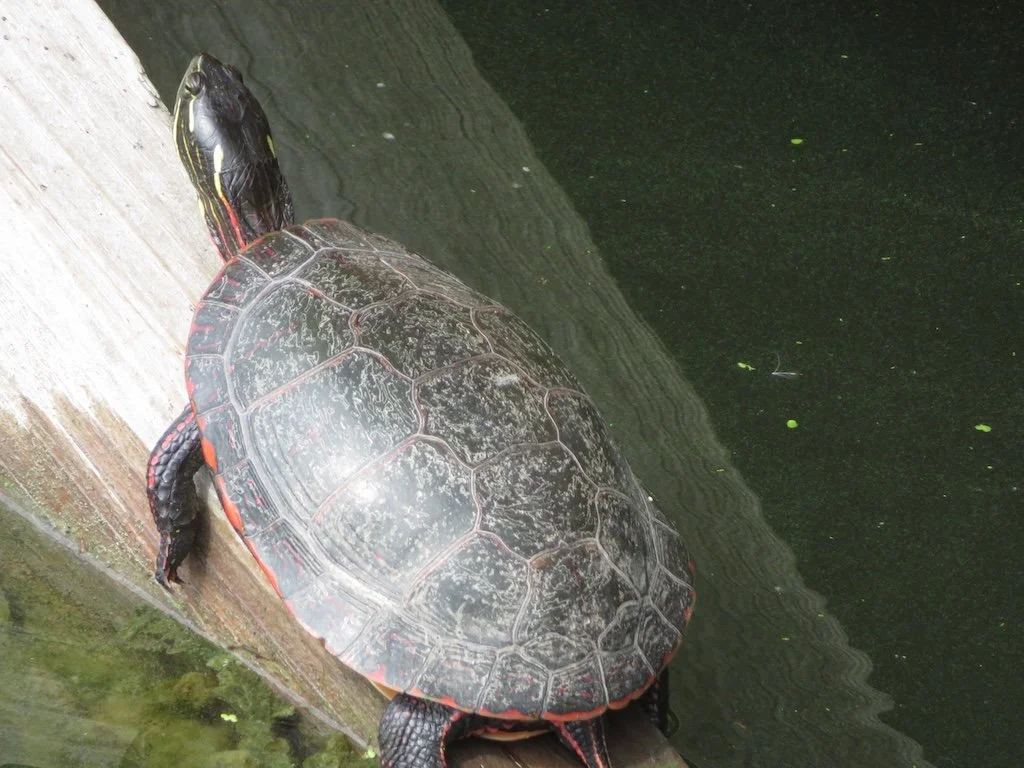
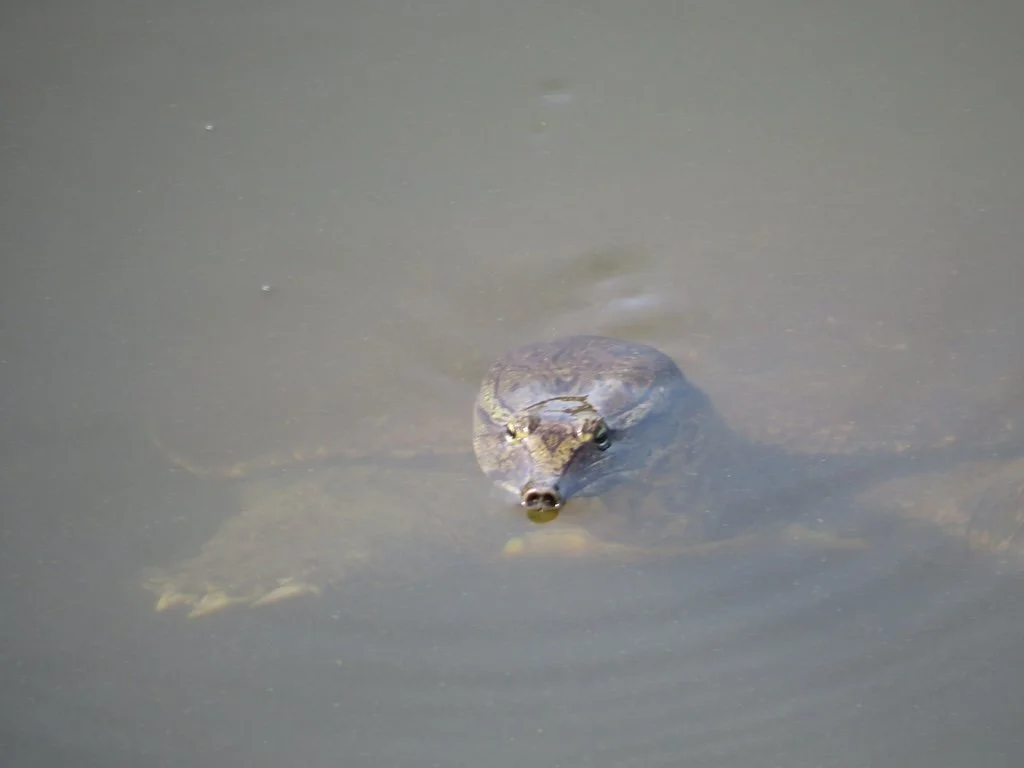
There were turtles out and about – including a soft shelled one.

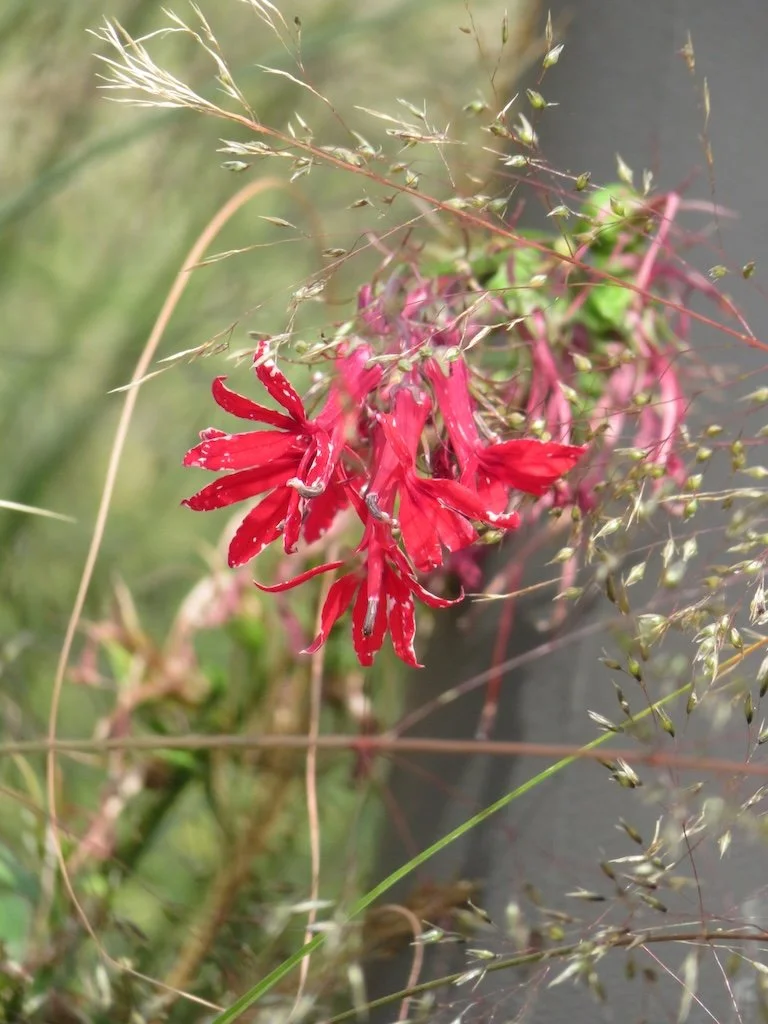
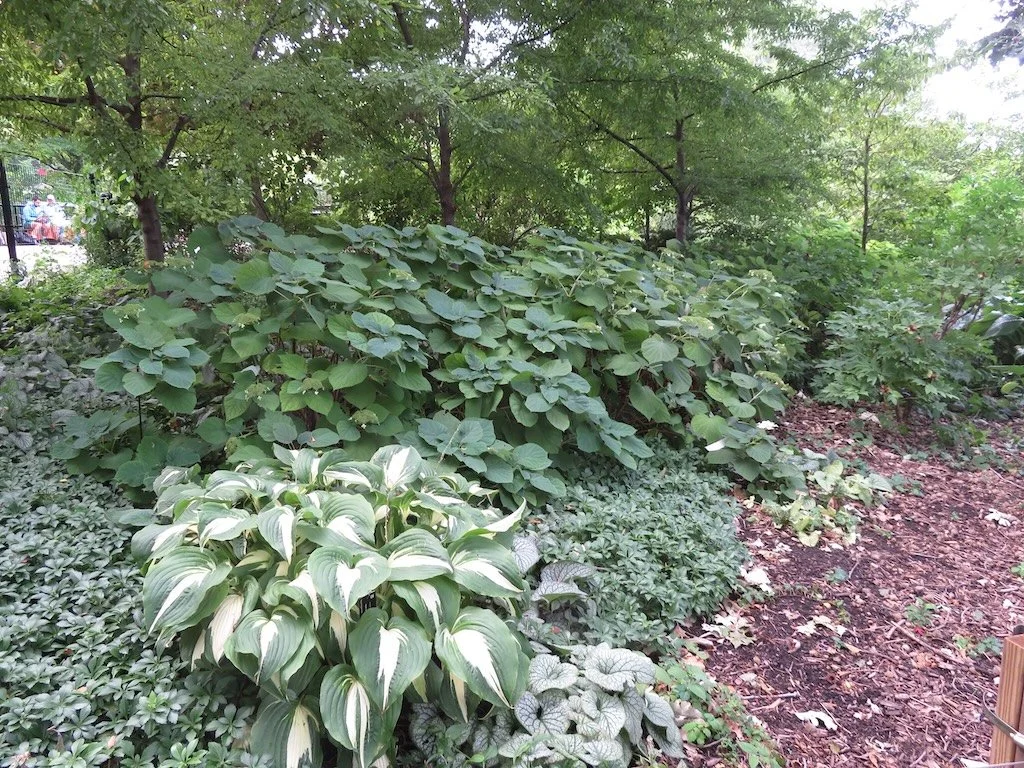
The plantings in the main part of the zoo are a mix of formal landscaping plants (non-natives) with some natives like coneflowers and turtlehead and sunflowers mixed in.

The zoo has a very old elm that is treated to keep it from succumbing to Dutch Elm Disease. They have started planting elms resistant to the disease.

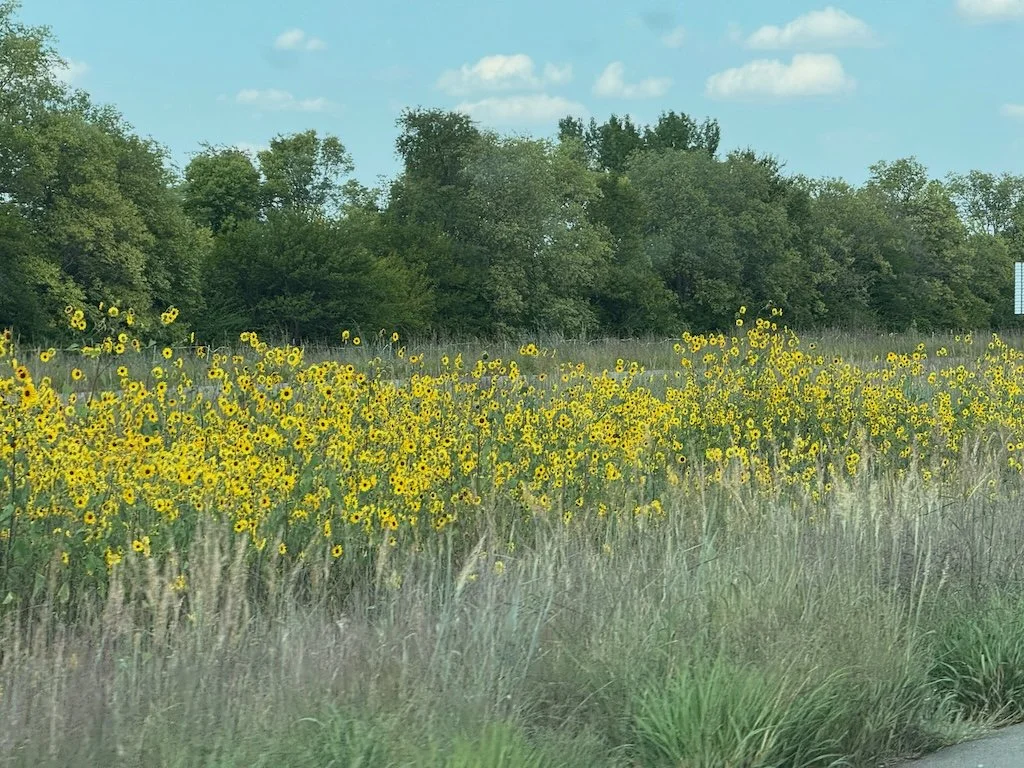
The walk around South Pond is landscaped with all natives….as close as the horticulturalist can to get prairie…with a few woody plants mixed in on the outer edges. I was surprised at how many plants I recognized! There were lots of yellows and seed pods this time of year!

We made the mistake of using Google Maps to show us the shortest route back to our car; it had exits from the zoo that didn’t exist! We circled back to find an exit….had a much longer walk than we would have had without technology!

Bill Jarvis Migratory Bird Sanctuary

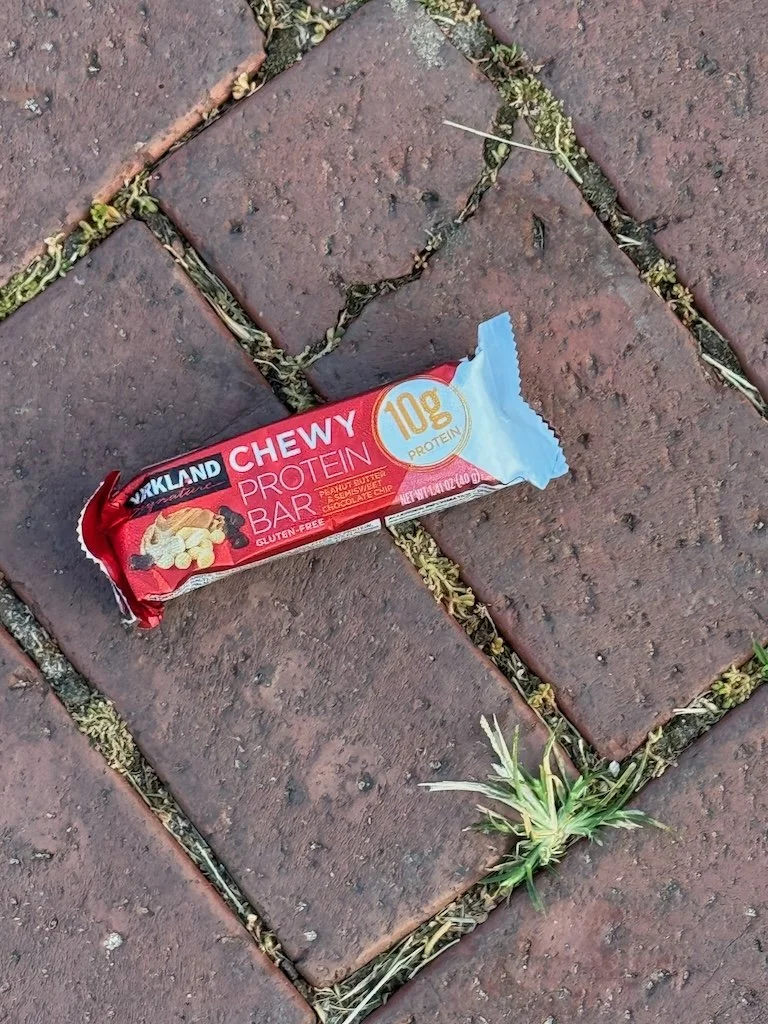
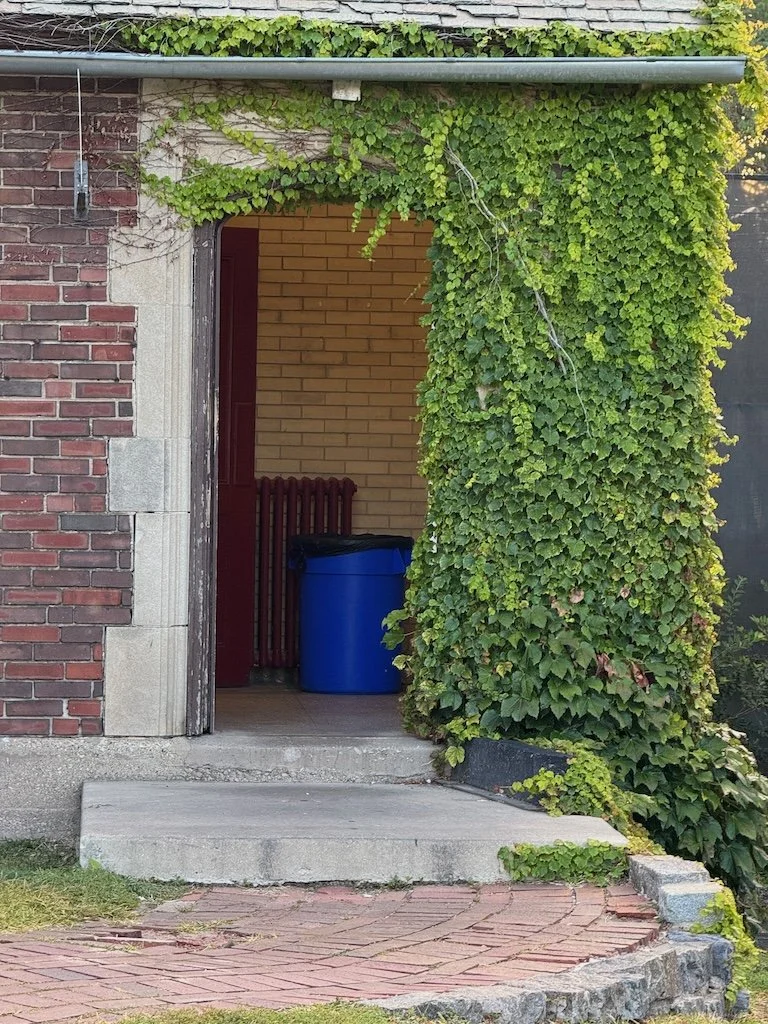
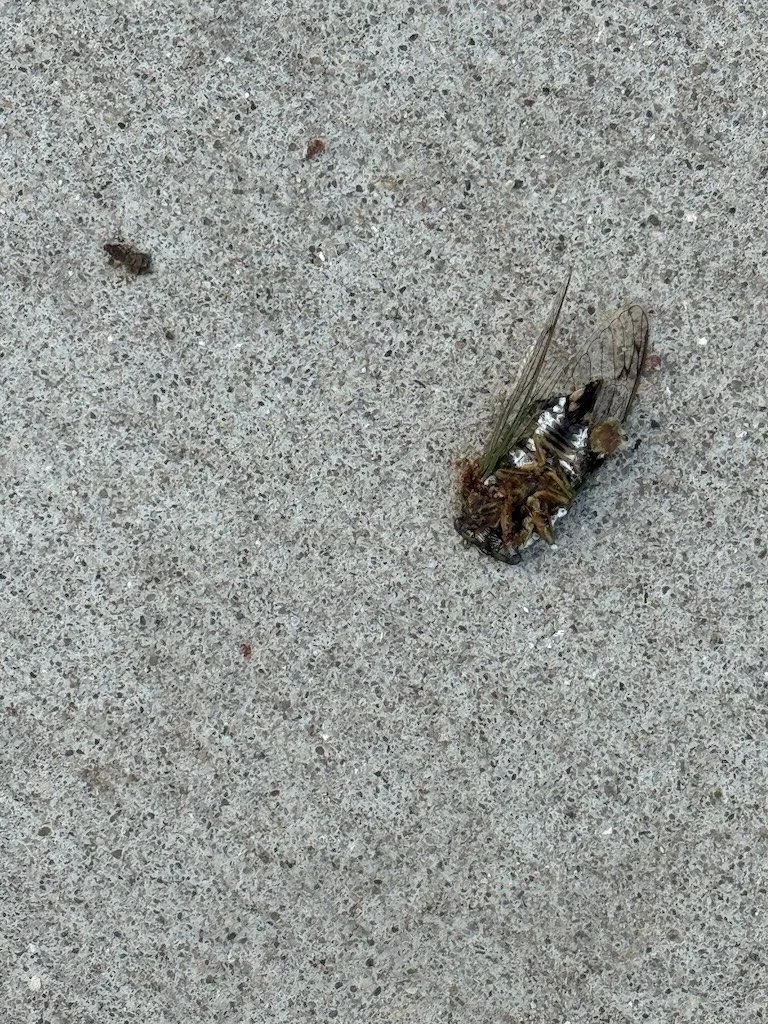
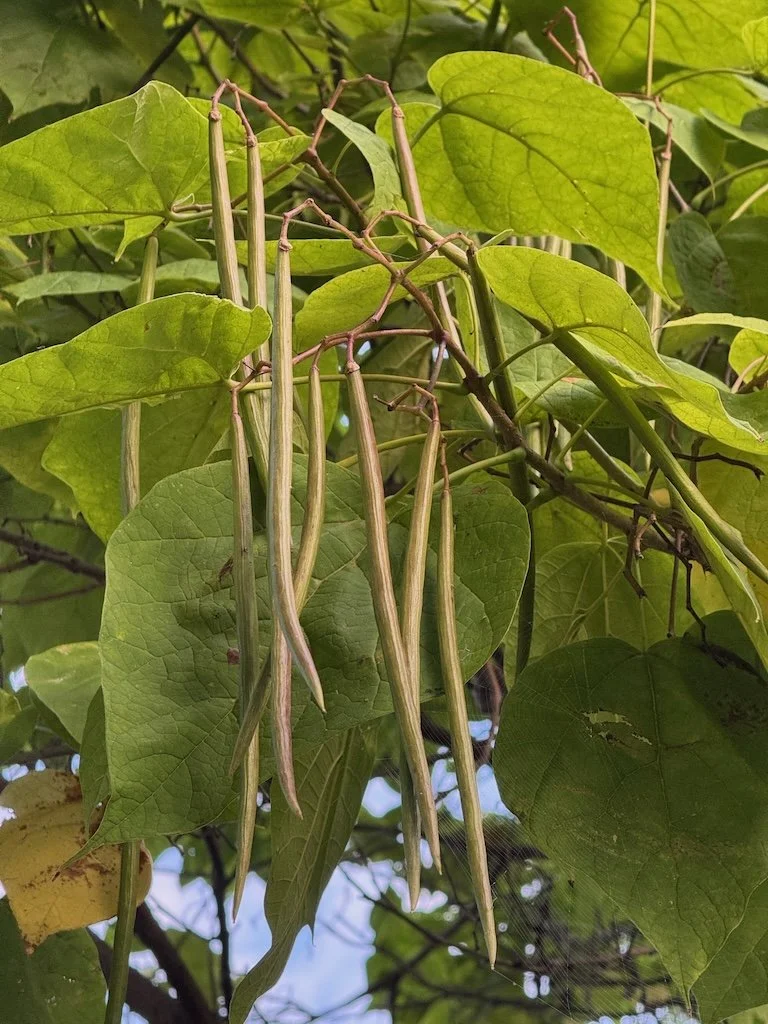
Our first field trip at the Urban Birding Festival in Chicago was at the Bill Jarvis Migratory Bird Sanctuary. We sought out the rest room facilities in the clock tower beforehand. The doorway there was half covered in ivy. There was an unopened protein bar that someone had dropped on the walk nearby…and cicadas and leaves/small branches. Not trash. There were trash/recycle bins…and evidently, they are used. I noticed a young catalpa with seed pods as we walked back toward the sanctuary.

The core of the sanctuary is protected by a fence; visitors have a good view from a platform that is high enough to look over the fence and vegetation….the platform is where our group spent a couple of hours. There was plenty to see!

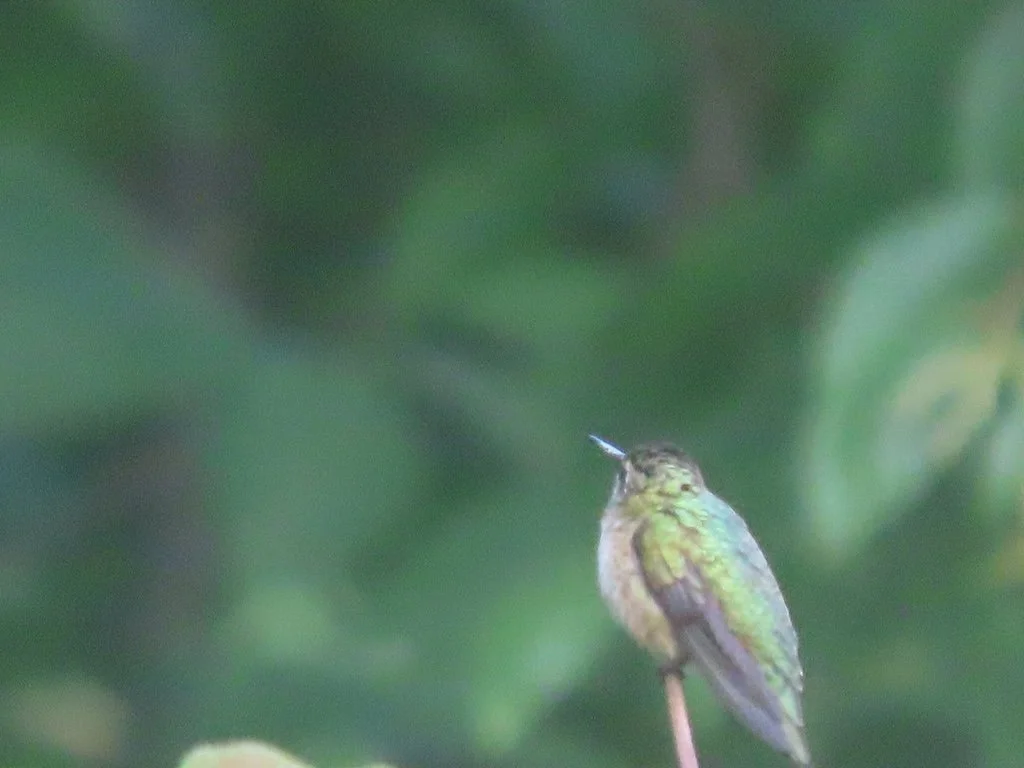
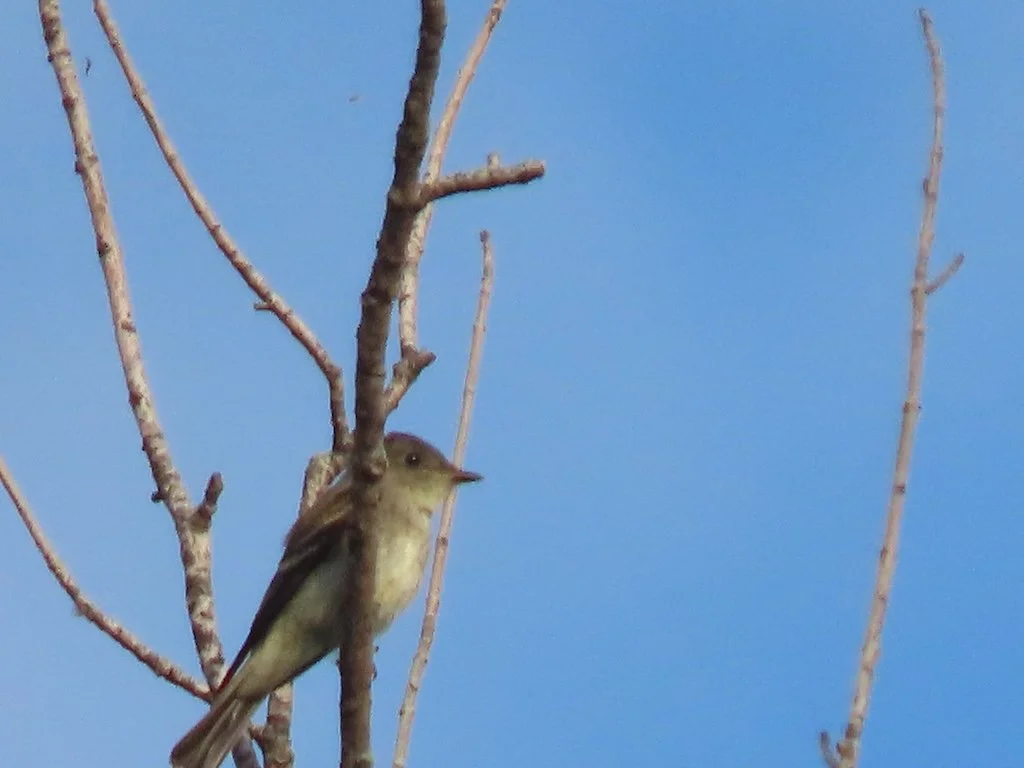
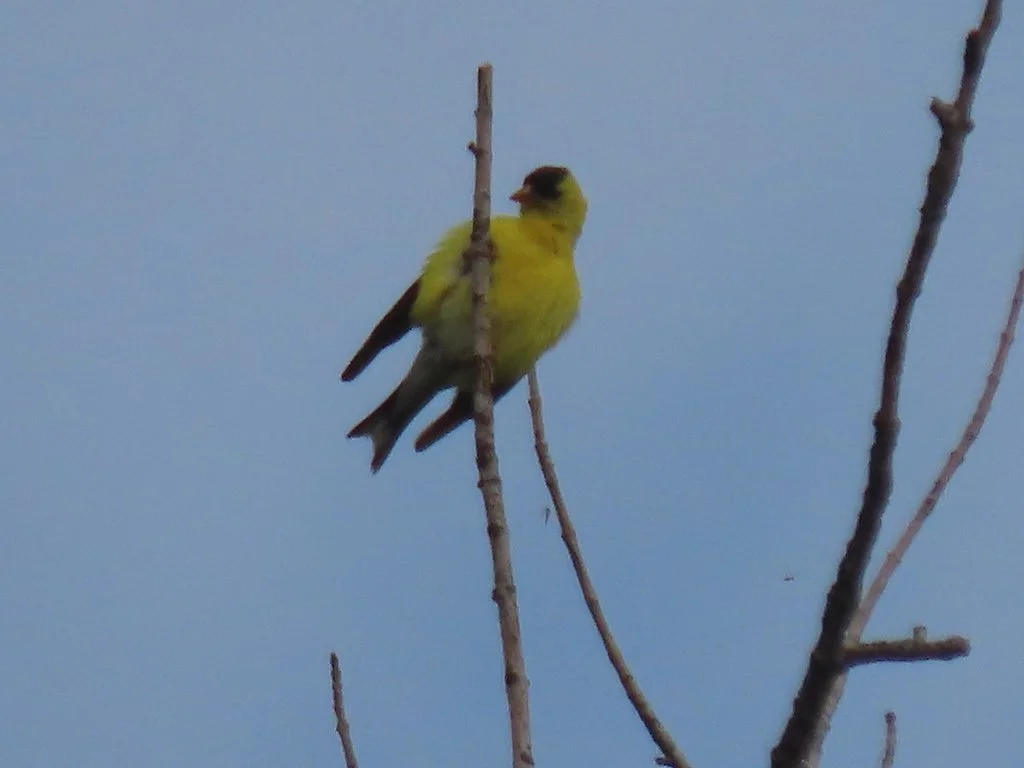
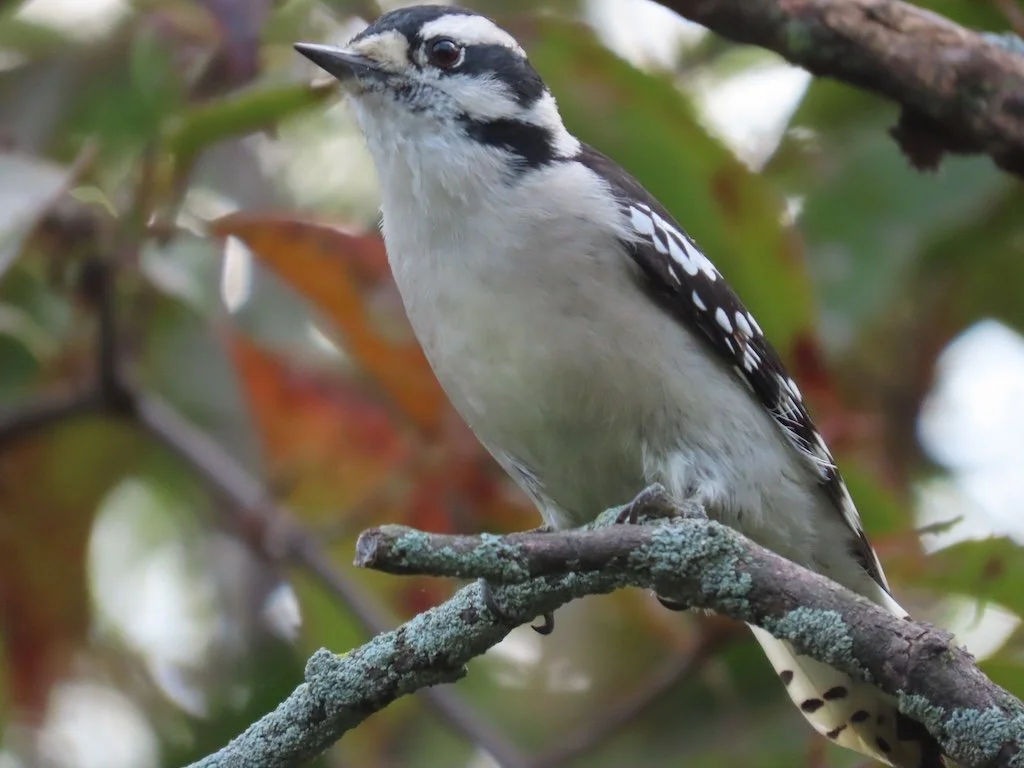
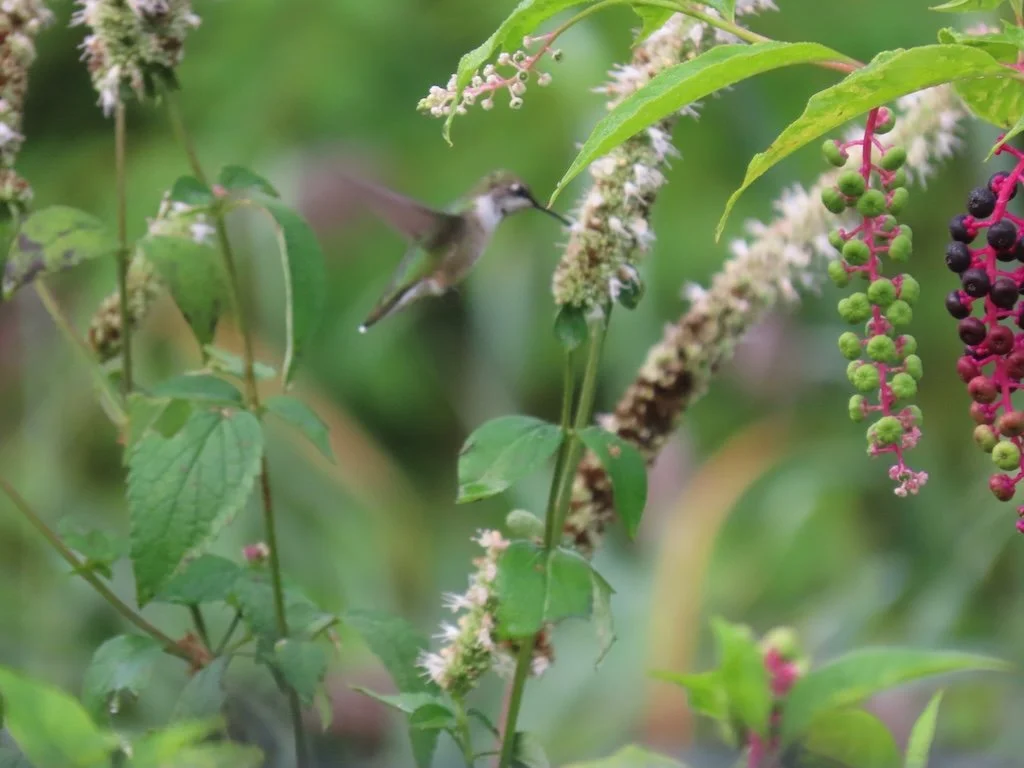
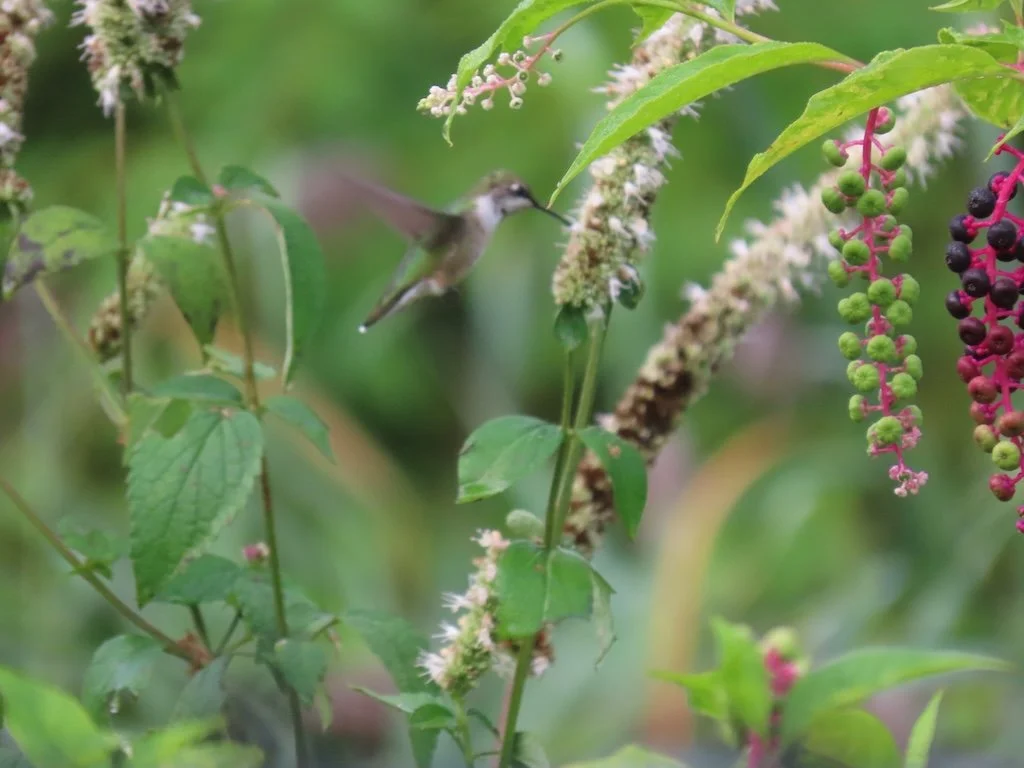
There were plenty of birds – including flickers, red-headed woodpeckers, Copper’s hawks (which scattered all the other birds when they were about), downy woodpecker, hummingbirds, and goldfinches.

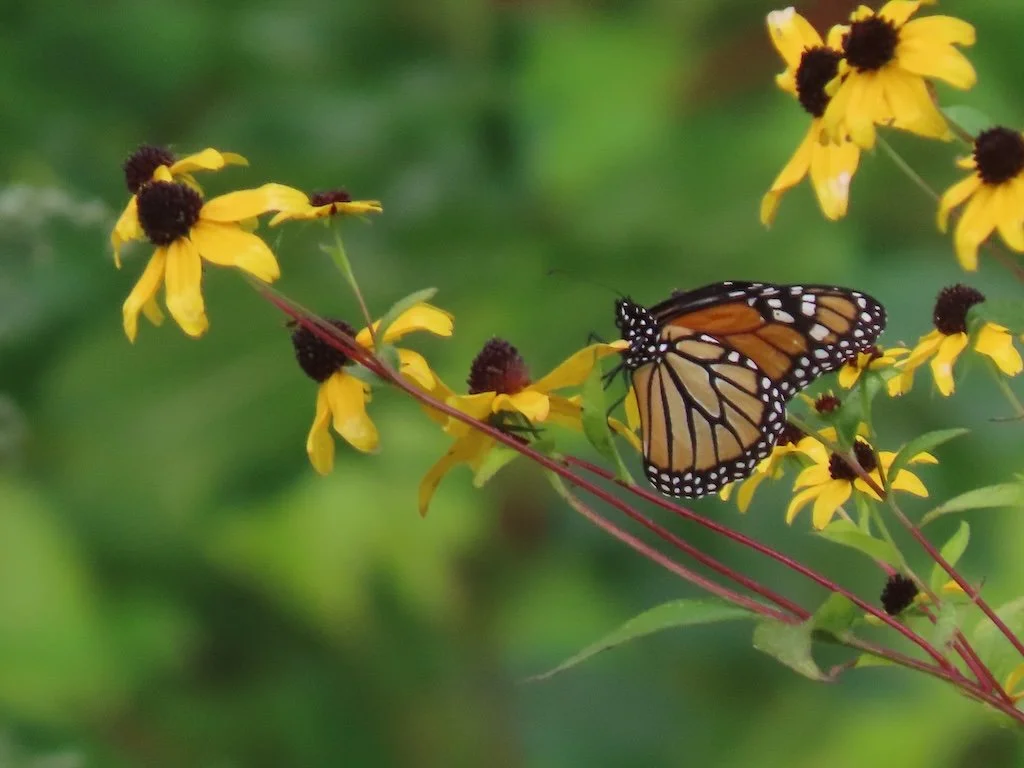
There were monarch butterflies feeding and resting…before they continued their migration south.

A racoon made an appearance…climbing a tree then coming back down and disappearing into what must have been a hole on the other side of the trunk!

Of course, there was a lot of vegetation to look at when the birds were not active enough. The humidity was high so there was moisture on a lot of the leaves. The usual fall color was there – golden rod and pokeweed included!

Gleanings of the Week Ending September 20, 2025

The items below were ‘the cream’ of the articles and websites I found this past week. Click on the light green text to look at the article.

Fewer than half the calories grown on farms now reach our plates - The world produced enough calories in 2020 to feed 15 billion people – but only 50 per cent of those calories ended up reaching people’s plates. This proportion is now very likely to have fallen even lower because of the declining efficiency of the global food system. (This article is behind a paywall…but even the headline and first paragraphs that are freely available are thought provoking.)

Humans inhale as much as 68,000 microplastic particles daily - Every breath people take in their homes or car probably contains significant amounts of microplastics small enough to burrow deep into lungs. The smaller bits measure between 1 and 10 micrometers and present more of a health threat because they can more easily be distributed throughout the body. The concentrations indoors are higher because it is an enclosed environment with high levels of plastic in a small area, and there is generally poor ventilation. The concentration of plastic in the cars’ air was about four times higher than in homes. Researchers matched the microplastic material with that used on the dashboard, door handle, steering wheel and other components. (Makes the case for replacing plastic in home furnishings and air purifiers that remove small particles…the car is more challenging.)

The 25-Ton Stone Relic That Once Lay Hidden Beneath Mexico City - In the winter months of 1790, construction workers were busy repaving the Mexico City’s Plaza de Armas when their shovels struck upon a large, circular object buried in the ground. It was so heavy, they had to create a makeshift pulley system to remove it. Once they did, they were in for a surprise, as they had just discovered one of Aztec civilization’s most iconic artifacts: the Calendar Stone. It is a large sculpture carved into 25 ton, 4 feet-thick circular block of olivine volcanic basalt that measures 11.8 feet in diameter. It was removed from Tenochtitlan’s main square and buried face-down in the ground after the conquistadors conquered Tenochtitlan.

The Paradox of American Technological Leadership in Renewable Energy – From a journalist’s perspective, thriving in a developing nation, dependent on first-world technology.

Earliest Evidence of Indigo Processing Identified on Paleolithic Tools – From analysis of 34,000-year-old stone tools found in the Dzudzuana Cave in the foothills of Georgia’s Caucasus. The pebble grinding tools contained traces of plant matter and indigotin, the deep blue compound also known as indigo.

Global Solar Installations Up 64 Percent So Far This Year - Solar is the fastest-growing source of electricity worldwide, and the buildout continues to gain pace, year after year. In the first six months of 2025, countries installed 380 gigawatts of solar capacity, up from 232 gigawatts in 2024. China accounted for most of the growth, installing more than twice as much solar in the first half of this year as it did in early 2024. For the first time in China, solar isn’t just supplementing coal power, but replacing it. The U.S., by comparison, saw solar installations rise by just 4 percent. Through its exports of low-cost solar panels, China also drove growth in India and across much of Africa

Permitting Pollution Jeopardizes Clean Water - The PERMIT Act, will let large-scale polluters off the hook for trashing our waters, leaving the American people to pick up the tab. If it becomes law, this bill will pollute our drinking water, compromise our health, put more communities at risk of floods, and ruin many of the places we swim or fish.

How long can one RSV shot protect seniors? Study shows surprising two-year shield - A single RSV vaccine dose is proving to be a powerful shield for older adults, significantly reducing hospitalizations and severe illness over two consecutive RSV seasons. While protection is strongest in the first year and declines somewhat in the second, the findings highlight both the immediate benefits and the importance of ongoing monitoring.

84% of Chicago's Pipes Contain Lead — and They're Not Equally Distributed - Chicago has the highest number of lead water service lines in the nation, with an estimated 412,000 of about 491,000 lines at least partly made of lead or contaminated with the dangerous metal. The city’s Black and Latino communities are most impacted, but the issue is widespread across the city’s water distribution network.

How to Go Plastic Free for Beginners. Your First 10 Items! - Start with 10 items, step by step and then progress slowly to more once you feel more confident.

Cats at Eyelevel or Above

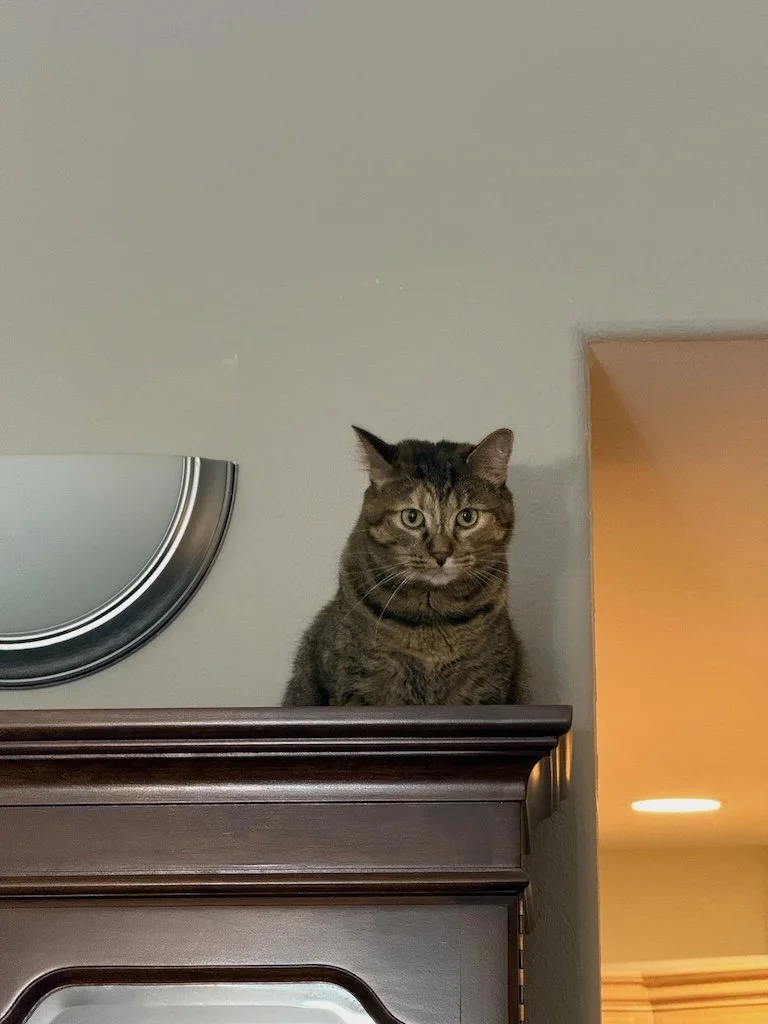
We have the three cats. The least athletic of the three (Puma) has suddenly decided that she likes to be high. We discovered her on the top of our glass display cabinet…well above our eye level. She didn’t want help getting down either. Maybe she had been getting up there periodically and we just hadn’t noticed…but she seemed very pleased with herself so maybe we noticed the first time she did it.

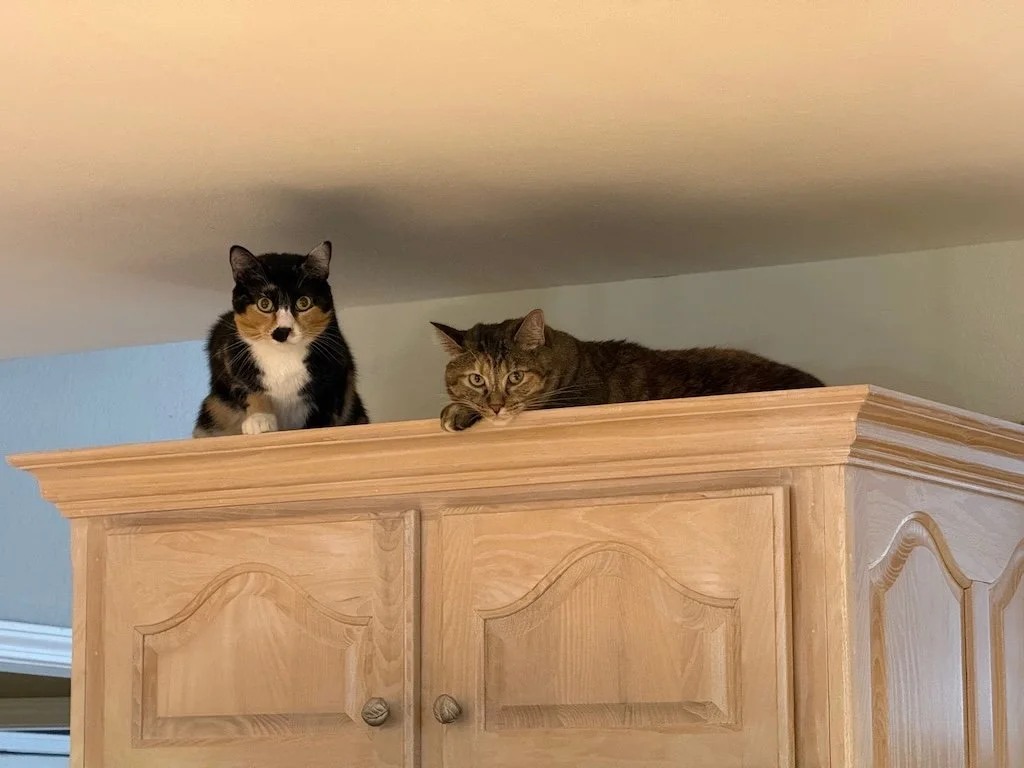
Later we noticed her on the cabinet above the refrigerator. She was taking a nap but woke up as her sister (Pooky) jumped up there as well.

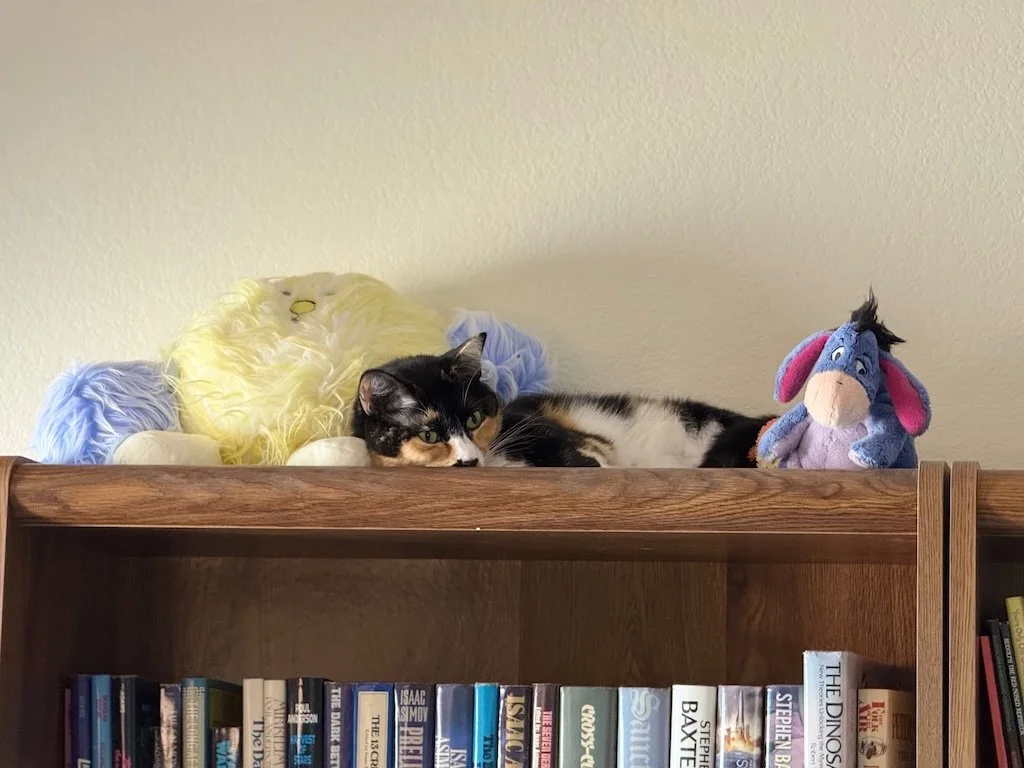
Pooky likes to hide in plain sight on top of our bookcases with some stuffed animals…blending in very well. She naps up there; now we know to look up there if we can’t find her.

Our male cat (Sooty) was the first of the three to jump to the high places.  He still does occasionally but he not as frequently as he did at first; the novelty has worn off for him.

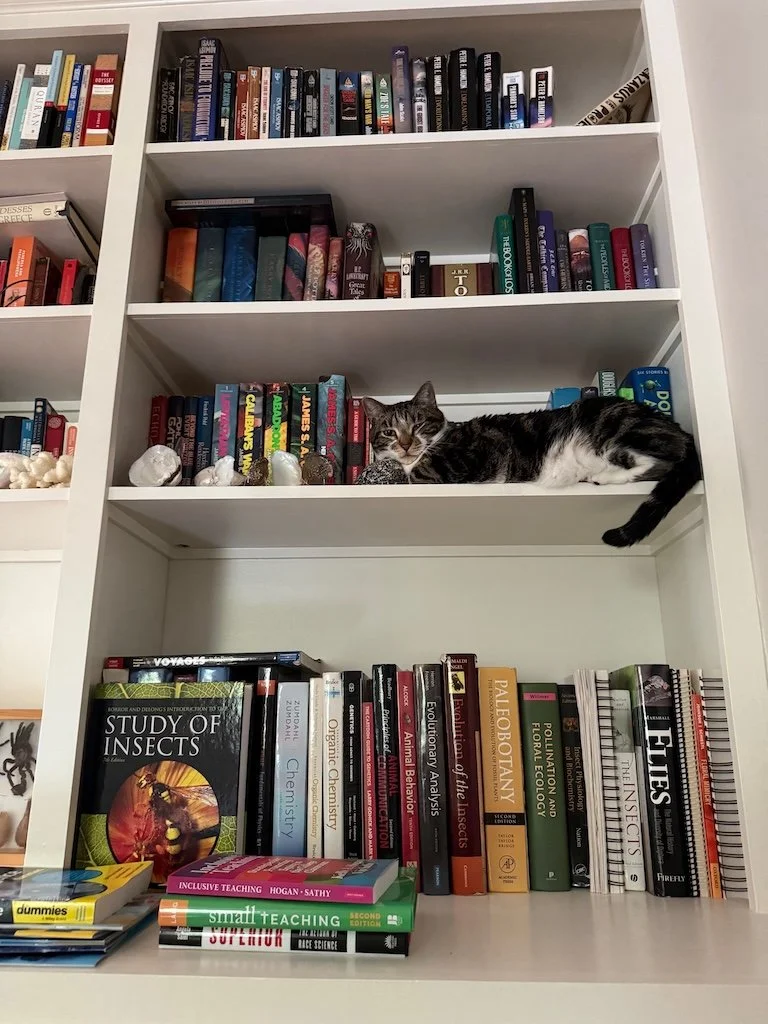
My daughter’s cat (Audi) likes the bookshelves at her house. He seems to prefer the shelf that is about eye level!

Plastics crisis: Interactions with Food Manufacturers

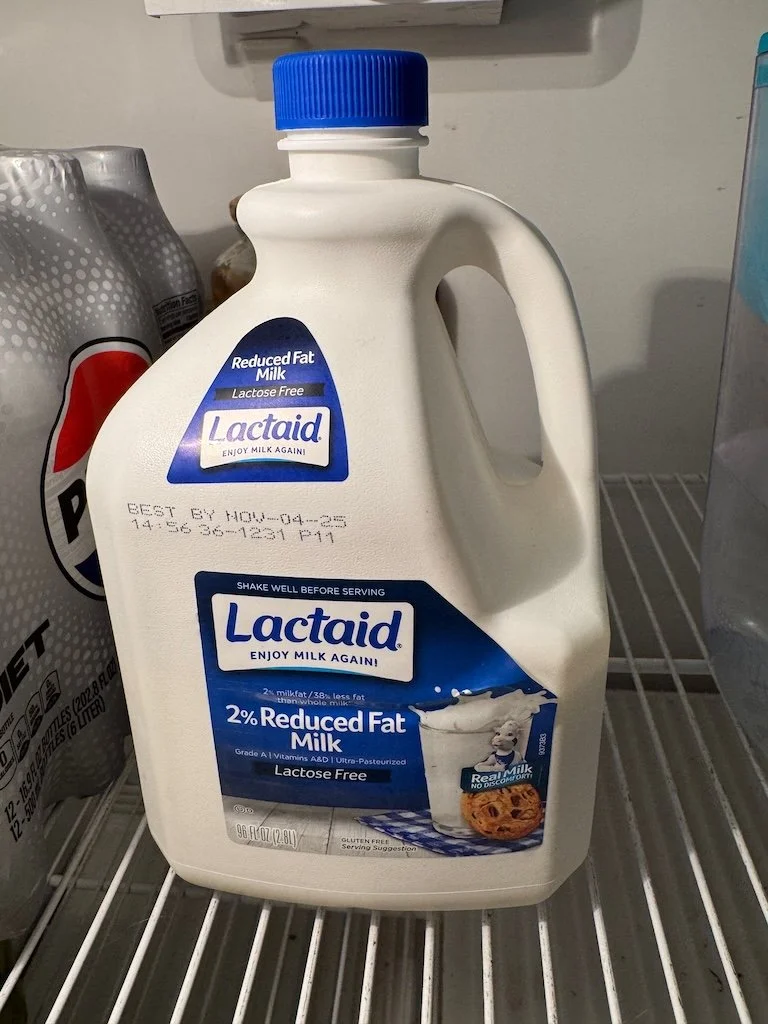
I chose a product that I buy frequently – Lactaid 2% milk – and went through the process of figuring out how to contact the manufacturer to stress my concern about microplastics in food from plastic packaging.

I found their ‘contact us’ web page and used the ‘email us’ option intended for comments, questions, and feedback. They responded in less than 24 hours with a response pointing to what they were doing to increase the recycled plastic content in their packaging. I sent a second ‘email us’ that included their reference number for my previous comment emphasizing that I was interested in net reduction in plastic packaging because of the microplastics it adds to food…I wanted to buy their product in non-plastic packaging. I got the same response. I became uncertain that there was a person behind the response or simply an AI selected canned message that didn’t answer the question/comment. I got two survey forms (one for each use of the ‘email us’) and filled them out the same….that I was unsatisfied with the response.

(Update: I got a call based on the ‘unsatisfied’ feedback on the survey! Now I am more confident that my concern has been heard. I am not confident that they will move to non-plastic packaging for at least some of their produces…but I have given then a heads-up that there may begin to be a lot more people concerned about microplastics in our food. I’ll see if there is anything new on their packaging on their website in a month or so.)

I am not going to buy their product again and I’m not sure I want to buy any other milk either. I am considering returning to a calcium supplement as I did years ago and getting protein from other sources.

Taking another route:

Beyond Plastics has a letter from members for consolidation into a package for Coco-Cola, PepsiCo, and Nestle about their contribution to plastic pollution around the world. They sent a draft which I personalized and returned.

A second call came out from Beyond Plastics to contribute a letter to Coca-Cola specifically urging them to expand their successful El Paso refillable beverage system to every community rather than continuing to use plastic bottles.

The experience has been eye opening in the sense that it appears that food manufacturers are still relatively clueless about the growing awareness of microplastics in our environment and the news of the micro and nano plastics found in many parts of our body. It is no longer about forging ahead with plastic packaging…..it is about net reducing the plastics packaging for foods.

Previous Plastic Crisis posts

Gleanings of the Week Ending September 13, 2025

The items below were ‘the cream’ of the articles and websites I found this past week. Click on the light green text to look at the article.

Can Italy Protect Its Cultural Heritage from Naughty Tourists? - Each summer, as millions of tourists swarm into historic towns full of monuments and museums, a predictable kind of headline is sure to follow about badly behaved tourists putting cultural heritage at risk.

Bans on highly toxic pesticides could be a simple way to save lives from suicide - Pesticide poisoning is a common method of suicide in many low- to middle-income countries. Substituting highly toxic pesticides for less fatal ones can save lives. A cast study from Sri Lanka.

Federal Hurricane Forecasting Saves Lives & Money - A 5-day forecast in 2025 is roughly equivalent to a 2-day forecast in 2005, meaning lead times and path estimates have significantly improved, to the tune of 50% in the past 20 years. This helps save lives and has also led to an estimated 2 billion dollars in savings per storm. NOAA’s research arm, the Office of Oceanic and Atmospheric Research (OAR), houses not only the laboratories that help improve predictions, but much of the monitoring and observation infrastructure — like ocean buoys and gliders — that feed real time data into hurricane models, improving their accuracy and saving lives. The U.S. fully relies upon NOAA for our hurricane forecasts, including sea level rise and flooding. There is no other body ready or funded to pick up that work. The President’s budget proposed completely eliminating the research arm of NOAA.

Bison Benefits - A new study out this past week explains why bison are more beneficial for grasslands than traditional livestock, and the benefits increase as herd size does. A podcast from National Parks Traveler.

4 Reasons to Choose Plastic Free, All Natural Fibers Over Synthetic Fibers - Manufacturers give our fabrics trade names, so even when we look at the fiber content label inside our clothing, it isn’t clear that it is made from plastic. Buying clothing that is made from natural fibers is the fastest and safest way to save our planet.

An Explosive Beginning for Lake Bosumtwi - Bosumtwi’s exotic geology has drawn attention to the crater for economic reasons as well. When the asteroid struck, the shockwave fractured the crust around the crater, creating an extensive network of faults and cracks that allowed hot fluids to circulate. The event helped concentrate gold and other minerals from a gold-bearing rock layer called the Birimian Supergroup near the surface and primed the area around the crater to become a target of small-scale gold mining.

Common painkillers like Advil and Tylenol supercharge antibiotic resistance - Researchers discovered that these drugs not only fuel bacterial resistance on their own but make it far worse when combined with antibiotics. The findings are especially troubling for aged care settings, where residents commonly take multiple medications, creating perfect conditions for resistant bacteria to thrive.

See the Rare ‘Electric Blue’ Lobster Found Off the Coast of Massachusetts – A video showing a vibrantly colored shell that results from a genetic mutation affecting pigmentation.

New Jersey Cats Caught on Camera – Bobcats caught on camera traps…and other animals in the wilds of New Jersey.

Traveling Photographer Spends 17 Years (And Counting) Documenting Indigenous Cultures – Faces and clothes from around the world.

The surprising foods that lead to better sleep - It seems that a plant-rich diet is the most beneficial for sleep, for numerous reasons – and that eating at consistent times throughout the day – for those who can – may also help.

Meadowlark – A Journal of Illinois Birds

This week’s ‘book of the week’ is 22 issues of a journal from the Illinois Ornithological Society from 2012-2022(available on Internet Archive). I enjoyed the photography and drawings of birds that are seen in the Midwest…close enough to where I live that I see at least some of them in areas of Missouri. Click on any of the images in the mosaic to see a larger version. The links to the volumes are below the mosaic; they contain additional images and interesting articles about birds seen in the state.

As I write this post, I am planning a trip to Illinois in a week or so….hoping I will see some of these birds while I am there!

Fall Vaccinations

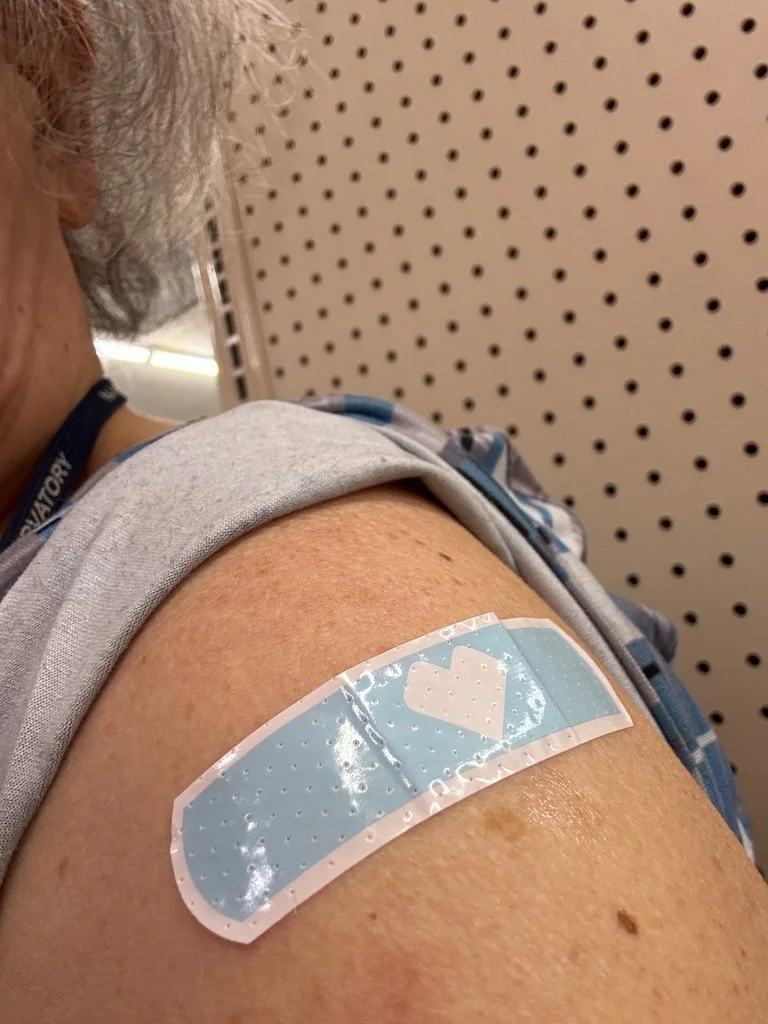
My husband and I were prompted by our pharmacy to get our flu and Covid shots…we made the appointment as soon as they had the updated Covid vaccine. We are doing some traveling this fall – being out more with other people - so we were glad to be able to get our appointment for last week.

After our appointments were made, there seemed to be a lot of stories in the media about vaccinations and how things are potentially changing in ways that might make the vaccines less available (either supply or insurance coverage or procedure to get the shots at pharmacies).

Fortunately, our appointments were almost identical to the process last fall. But I am a little anxious about the Covid booster I expect to get 6 months from now.

My sister is trying to get a COVID booster for my father. It appears that the assisted living residence is not offering them at the house with the confusion in guidance coming from the Federal level. She is going to take him to a pharmacy for the vaccination even though it will be challenging for him…as it is for many 90+ year old people.

Plastics Crisis – Trash Inventory

I wrote about plastics I recycle a few days ago. Today I am focused on the plastics that end up in my trash.

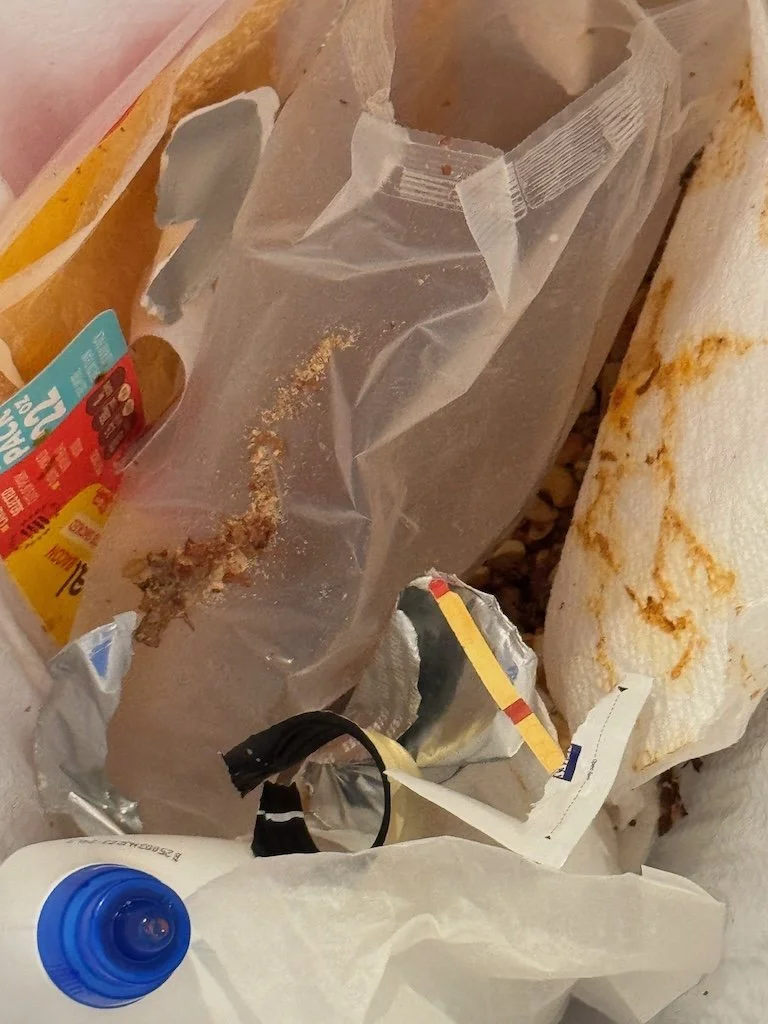
There are little bits of plastic packaging - mostly wrappers from lens/screen wipes, single serving electrolyte powder, and protein bars. There are probably alternatives to a lot of these little bits of plastic packaging: Could we go back to small spray bottles and cloth/tissue wipes for our glasses, phones, and screens? Probably we should. Perhaps I can buy a cardboard container of powdered electrolytes rather than single serving packages; there is still a plastic lid and does not work that well for travel. Maybe I should start thinking about protein bars as ultra processed food and develop a homemade version that isn’t…or eat nuts rather than protein bars.

There is plastic packaging from raw meats like bacon and hamburgers and chicken. It seems like all meat is packed in plastic these days. And it is plastic that is messy…and not in a form that can be recycled. It is touching the food and could easily be adding microplastics. There are not a lot of good alternatives although sometimes buying frozen meat means that the plastic is not clinging to it (for example: Bubba burgers and bags of frozen boneless chicken breasts). There is not an alternative to bacon plastic packaging that can think of. Before plastic – meat was often wrapped in white paper – still messy trash but not plastic.

Bottles that are too messy to recycle easily. I tend to not recycle toilet bowl cleaner bottles; they are too difficult to get clean. I am going to experiment with homemade toilet bowl cleaner (soda, cleaning vinegar, lemon essential oil). Peanut butter is another plastic container that is difficult; I put dish detergent and water in it and after some soaking it will be clean enough…but glass come clean more easily so my preferred solution is to buy peanut butter in glass; it is better that food does not touch plastic!

I don’t use straws often but when I do, I try to use paper ones, so I have eliminated that form of plastic trash – at least when I am at home.

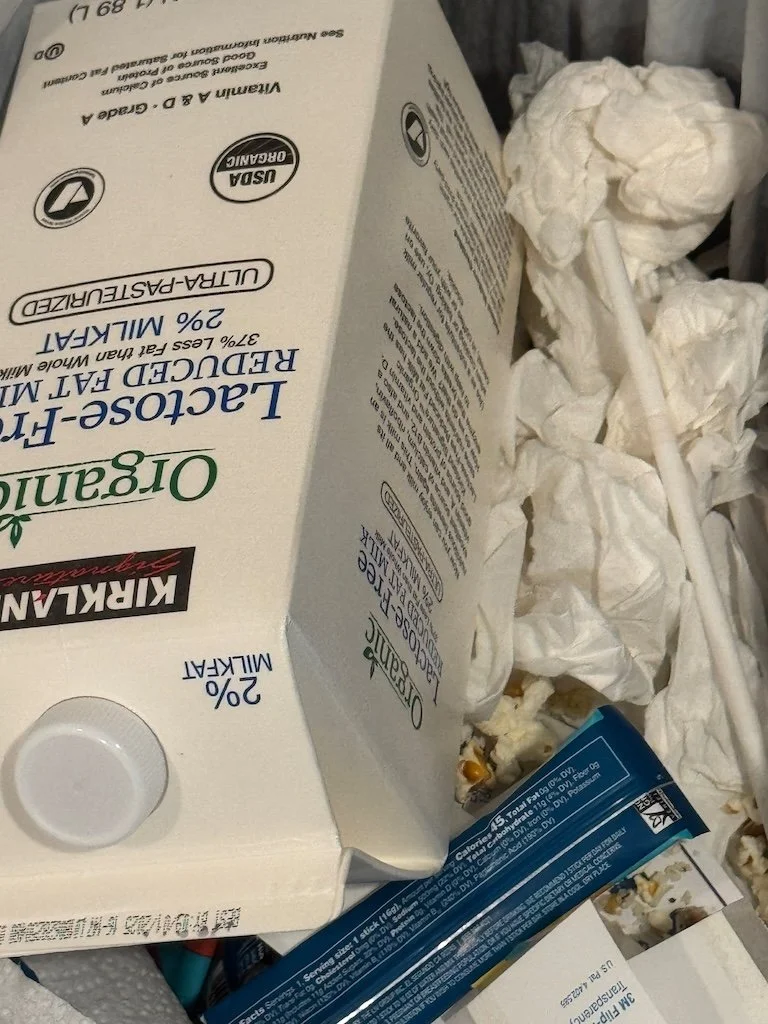
Plastic-coated paper cartons are another form of plastic in my trash. They are not recyclable like the cartons of the 60s would have been. It is unfortunate that in many markets it is hard to buy milk in anything but plastic (jug or plastic-coated carton). I am close to just deciding to pay a lot more to get milk in glass containers…..and to start writing letters to companies about packaging their product in a more healthy and sustainable way. Or – I might decide to not drink milk…somehow make up the nutritional value in other ways.

Bottom line – there is a significant amount of plastic in my trash…not as much as in the recycle bin but still a far amount. It will be in the landfill for a long time and contributing microplastics to the leachate that is, in the best case, sent to a sewage treatment plant that will pass at least some of those microplastics (maybe the smaller ones) through to the river after treatment. Eventually the microplastics can find their way into our water supply (the water treatment plants do not currently take out microplastics) or into our food if the water from the river is used for irrigation of crops.

Previous Plastic Crisis posts

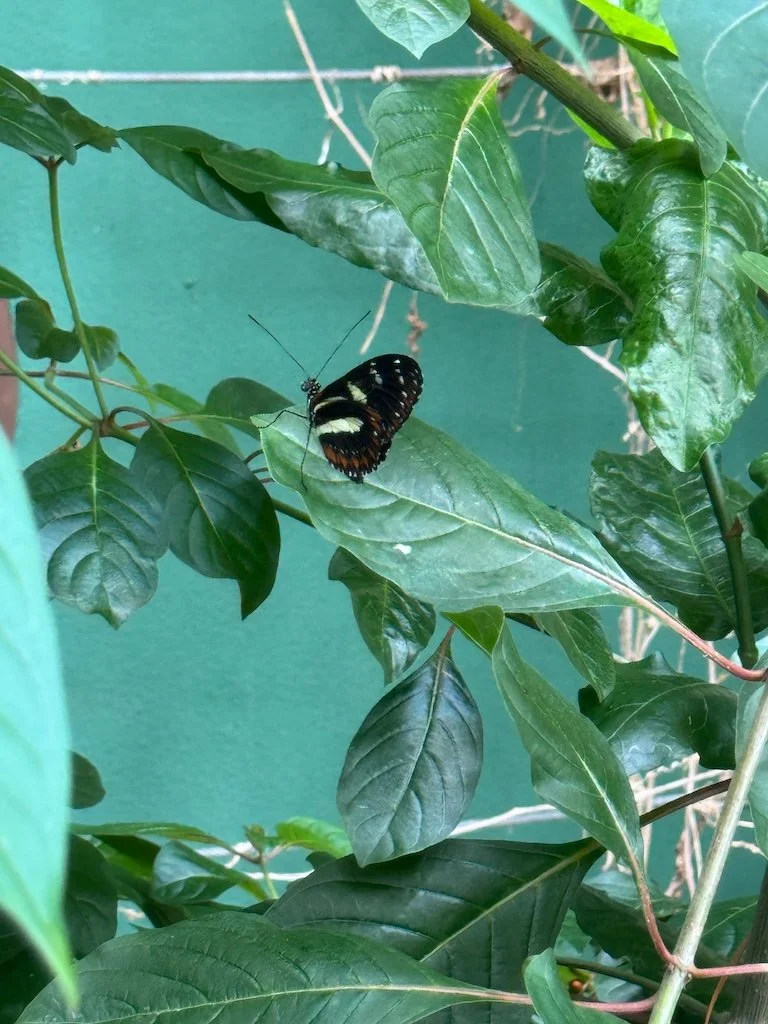
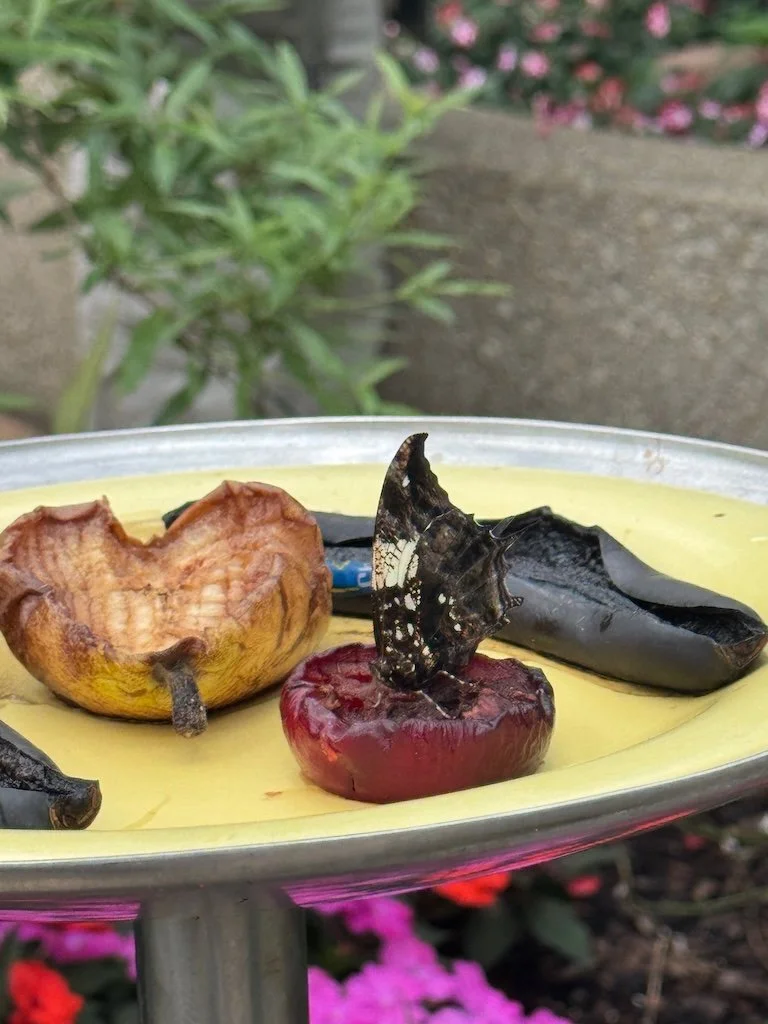
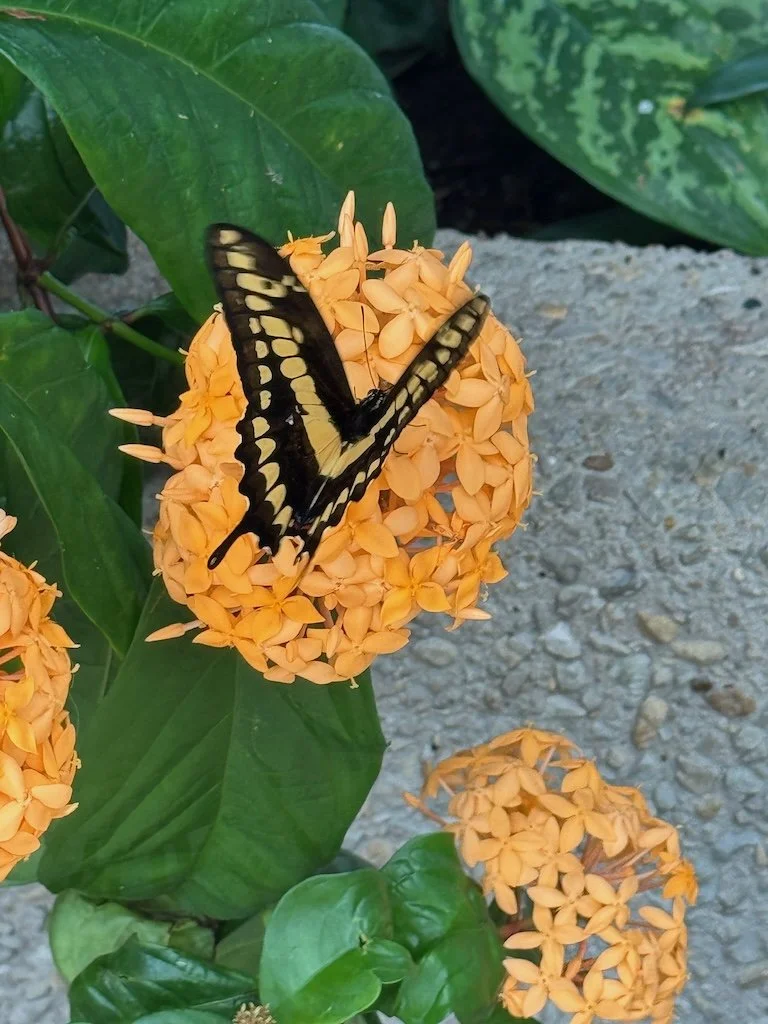
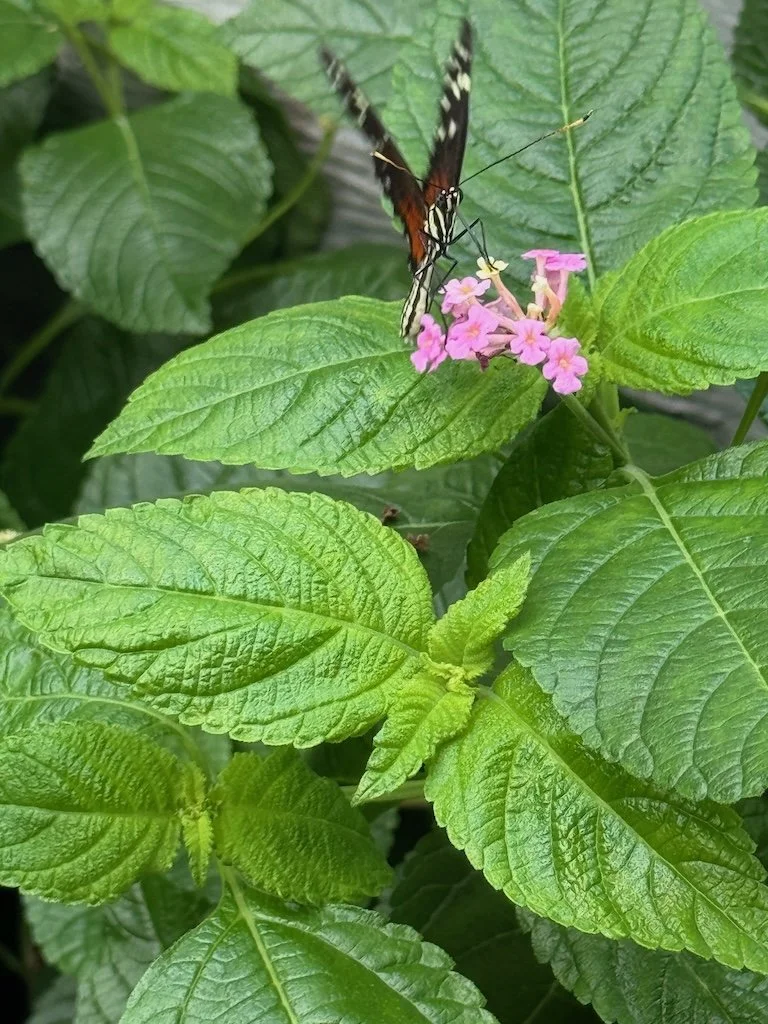
Butterfly House – September 2025

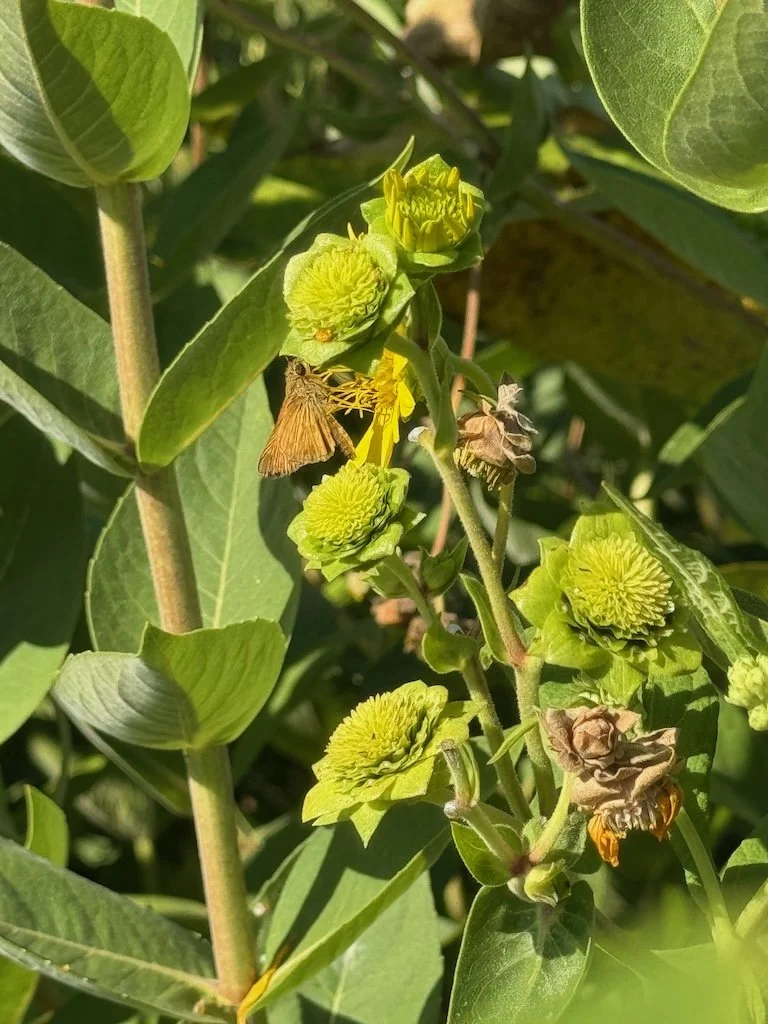
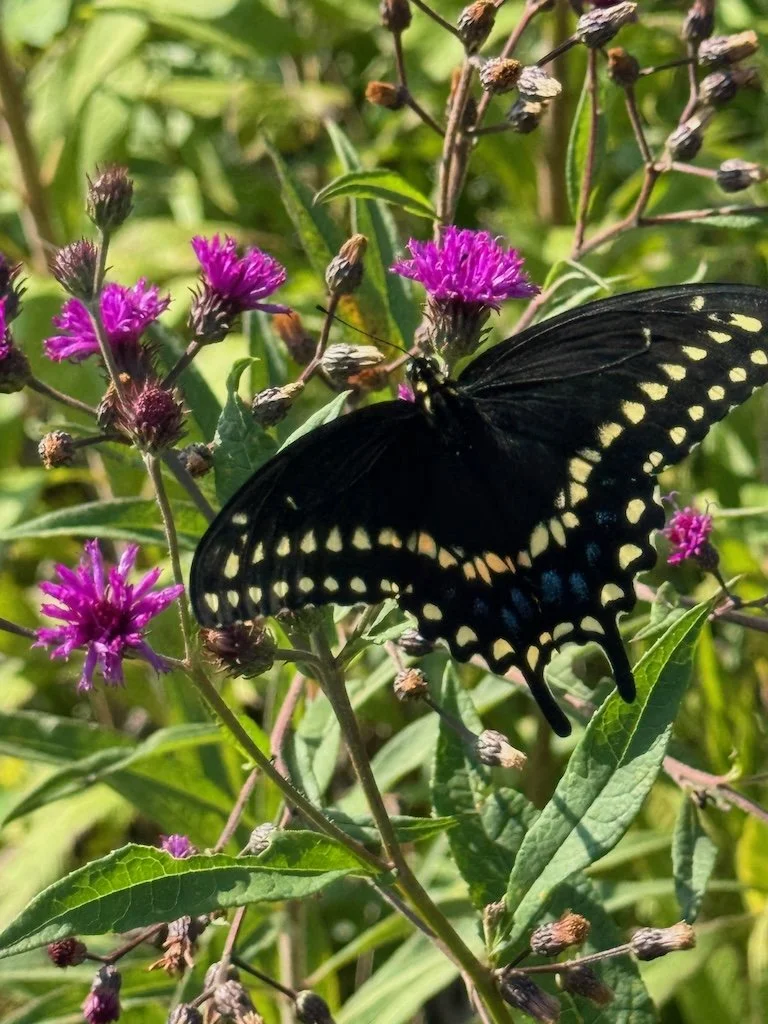
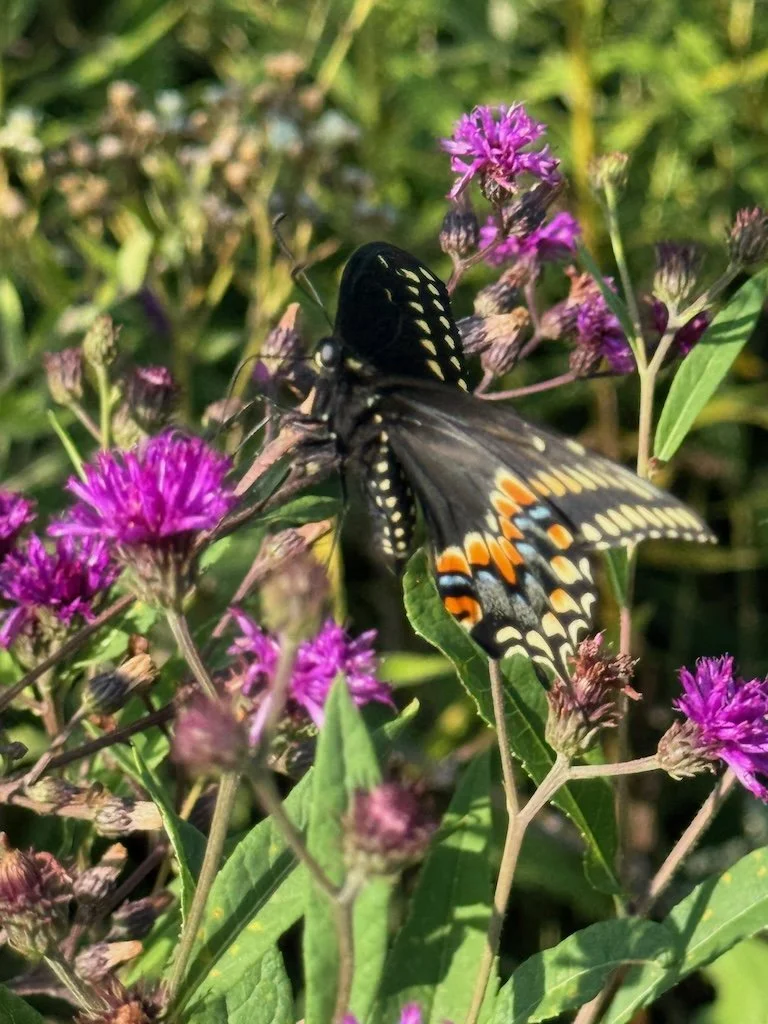
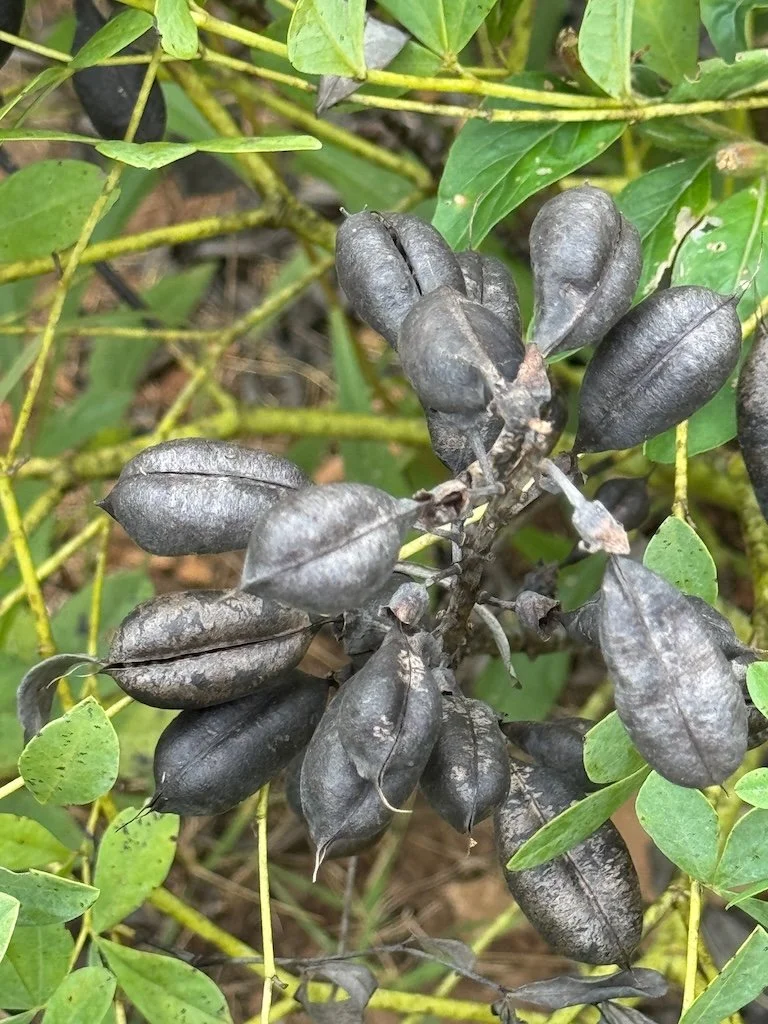
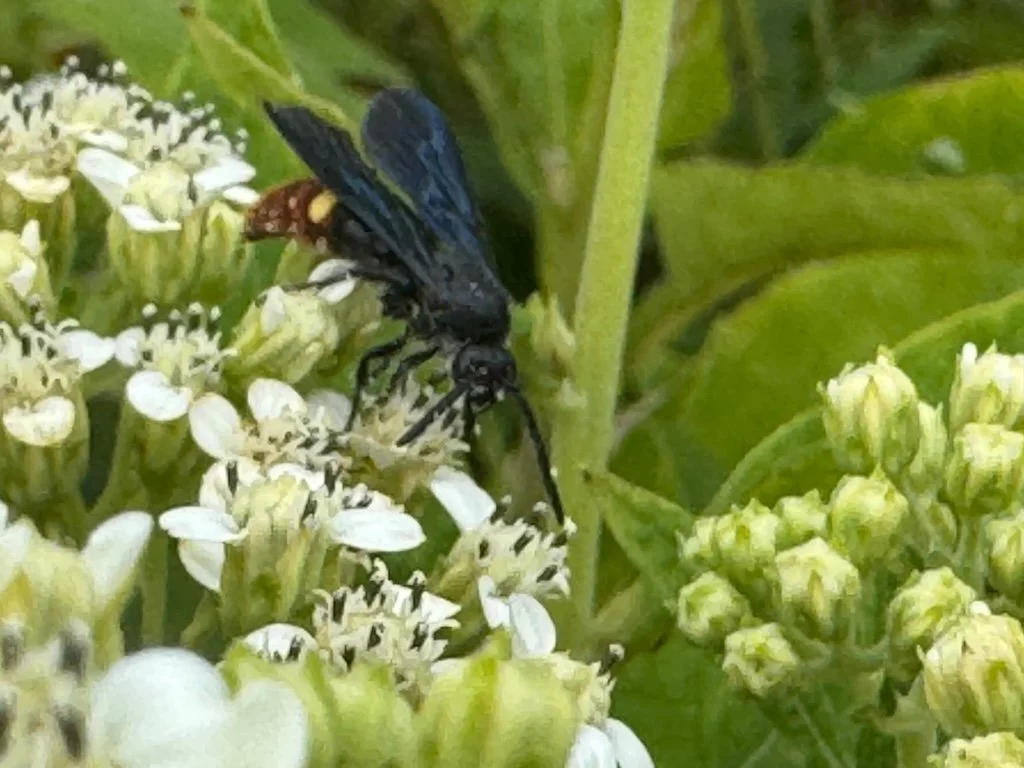
I have a shift per week in the Roston Native Butterfly House…and try to take some pictures each time. I generally stop at the beds and rain garden near the Botanical Center before I go to the house.  There are always flowering plants there…and sometimes critters too. I always check the wild indigo in the rain garden….and am waiting for the black seed pods to burst open. There are asters and goldenrod blooming now to feed the late season pollinators.

I unlock the butterfly house, clean the caterpillar frass off the table and sweep the floor before openng at 10. Sometimes it is quiet at first but other days there are people waiting to get in.

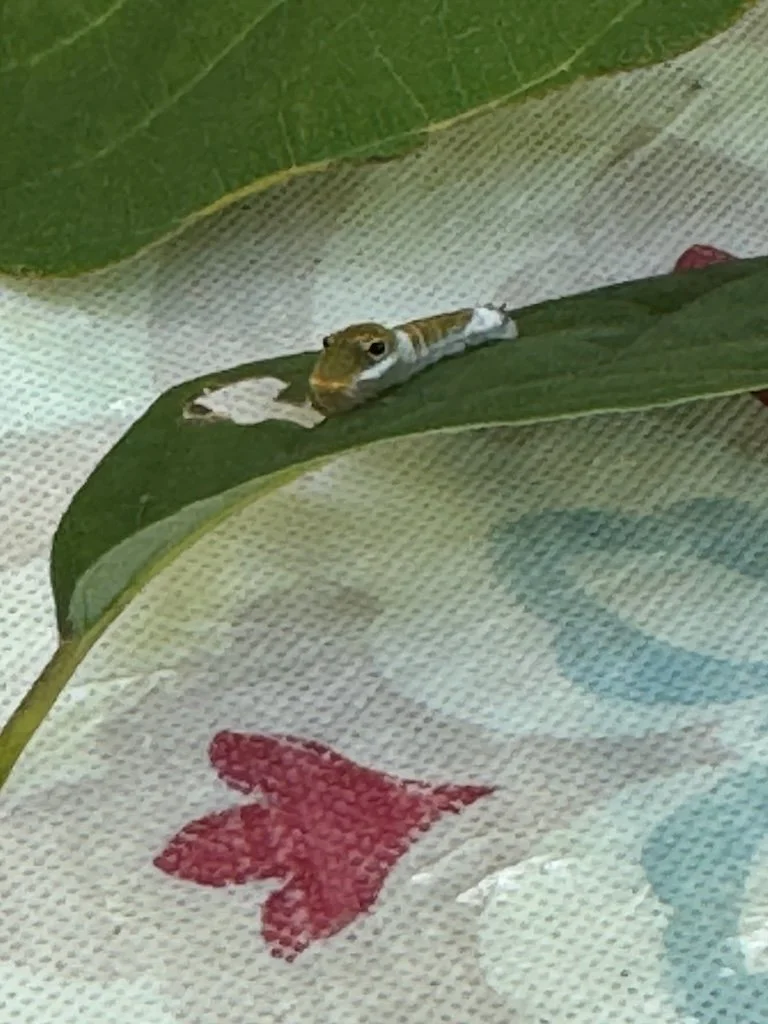
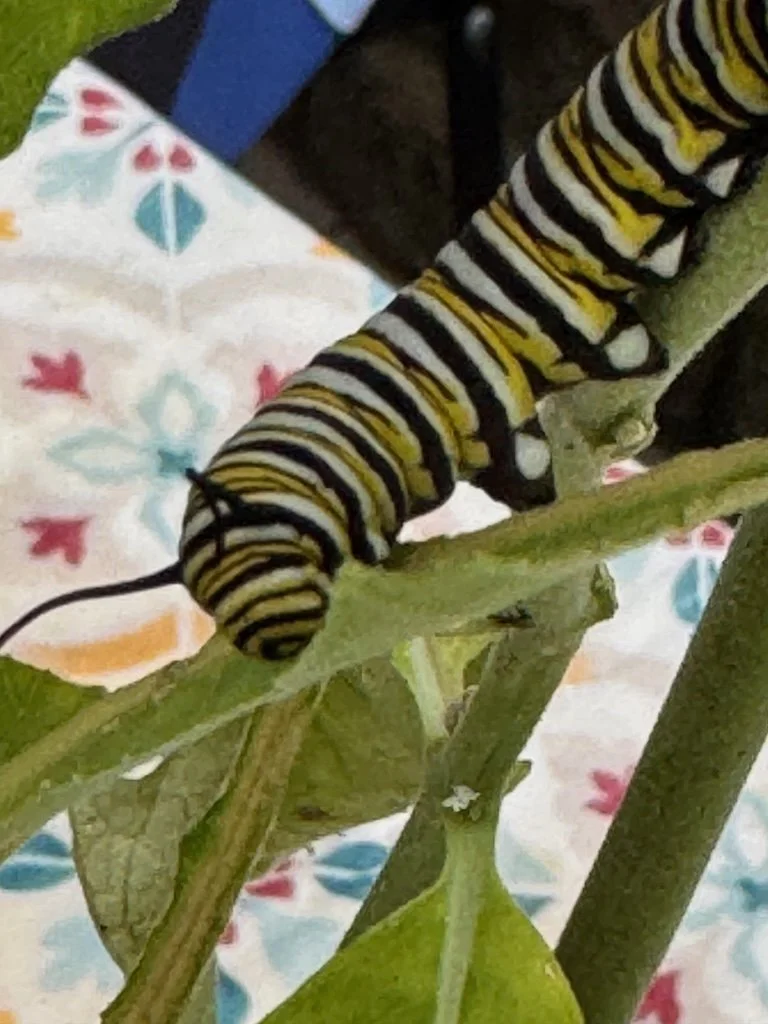
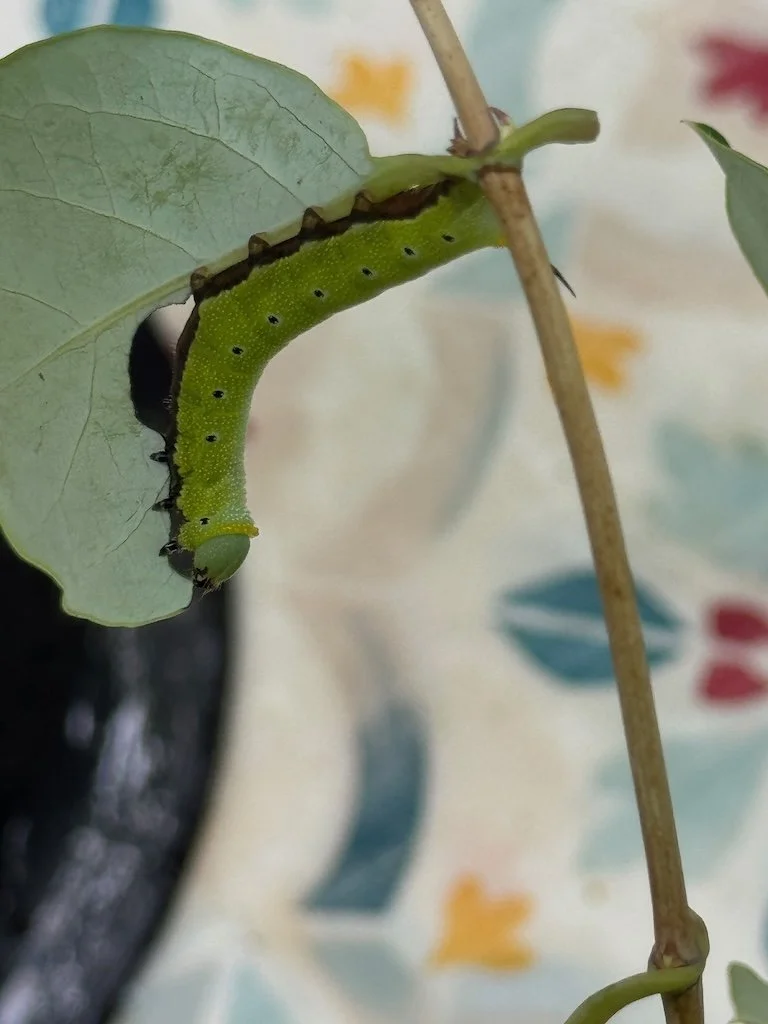
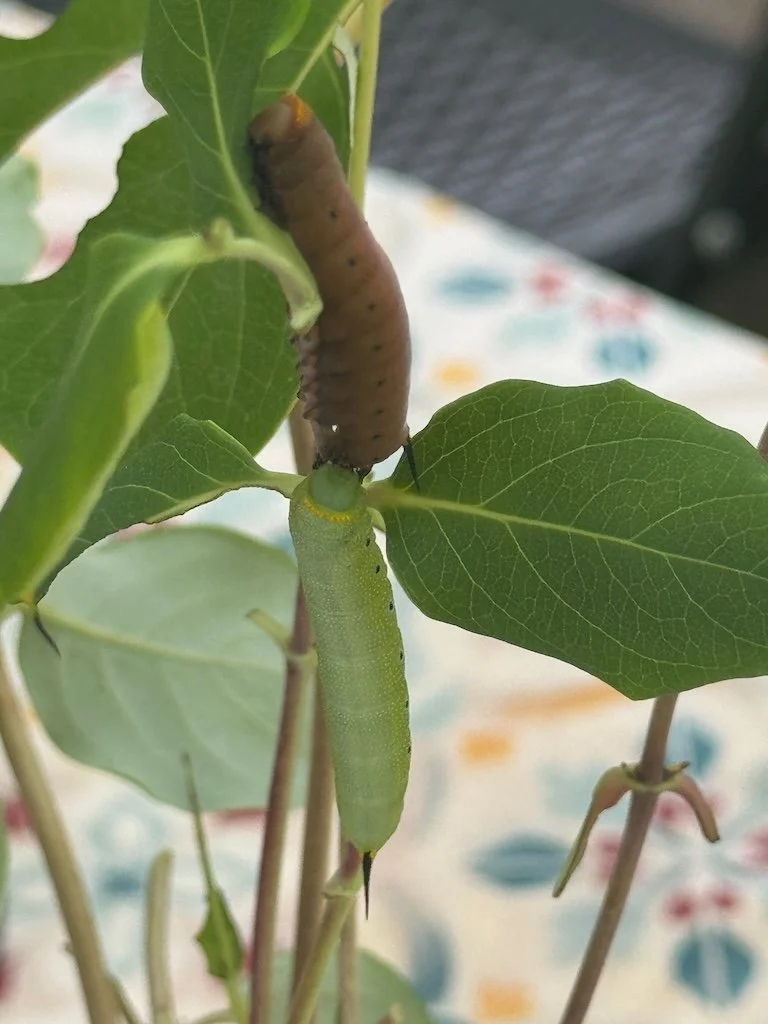
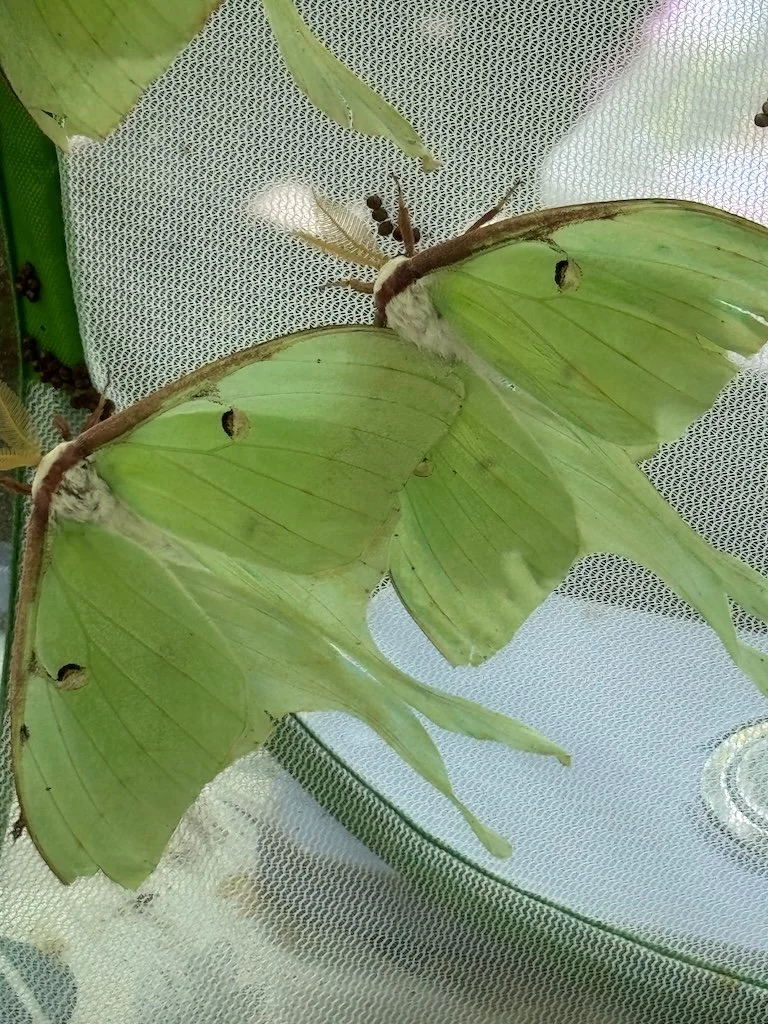
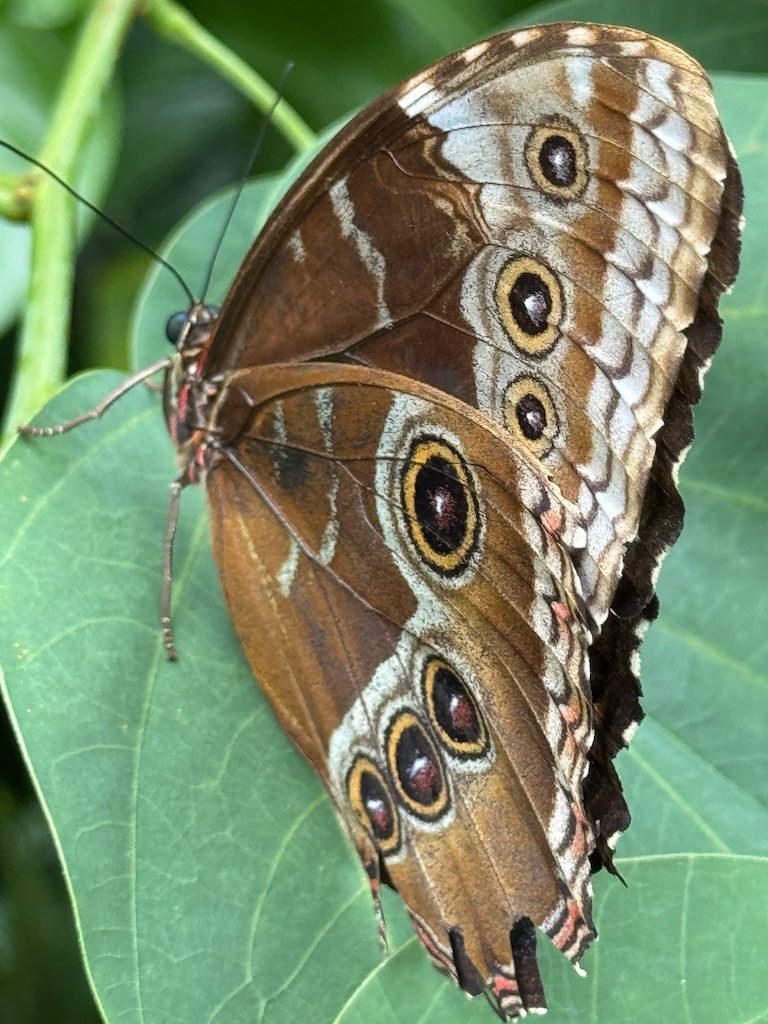
During August, the last of the luna and cecropia caterpillars made their cocoons and the Monarch, spicebush and snowberry clearwing caterpillars became the stars of the caterpillar display.

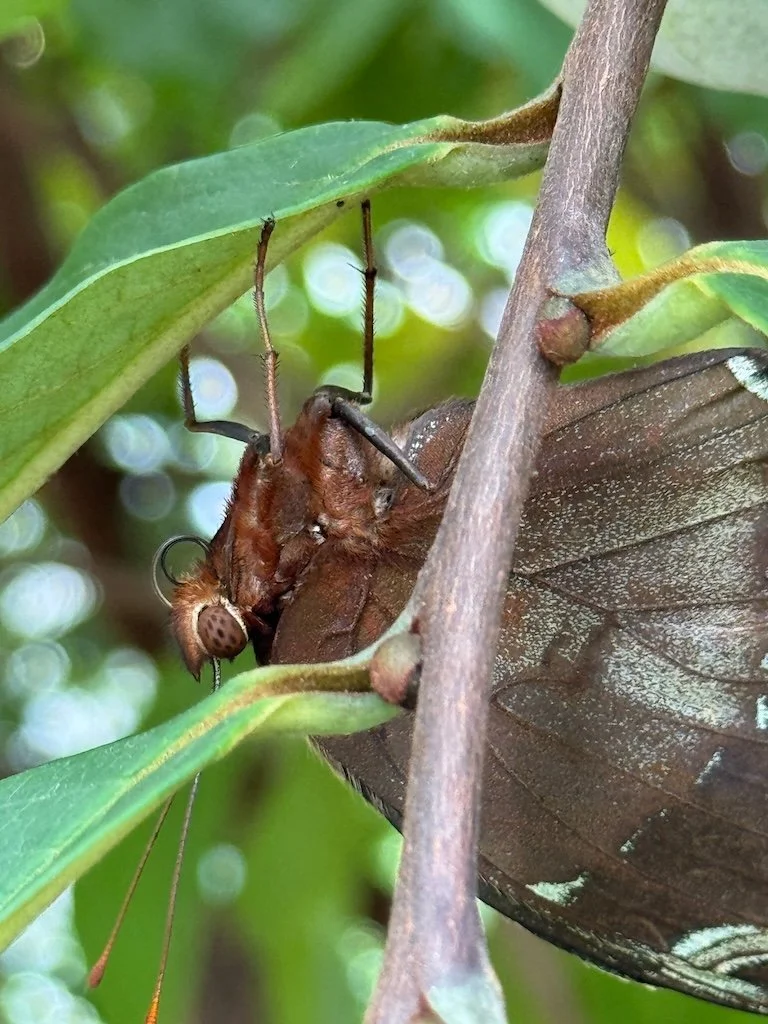
The big moths (luna, cecropia, and polyphemus) were still on display but their eggs are collected/stored until next spring because there is not enough time for the caterpillars to develop and make cocoons before winter.

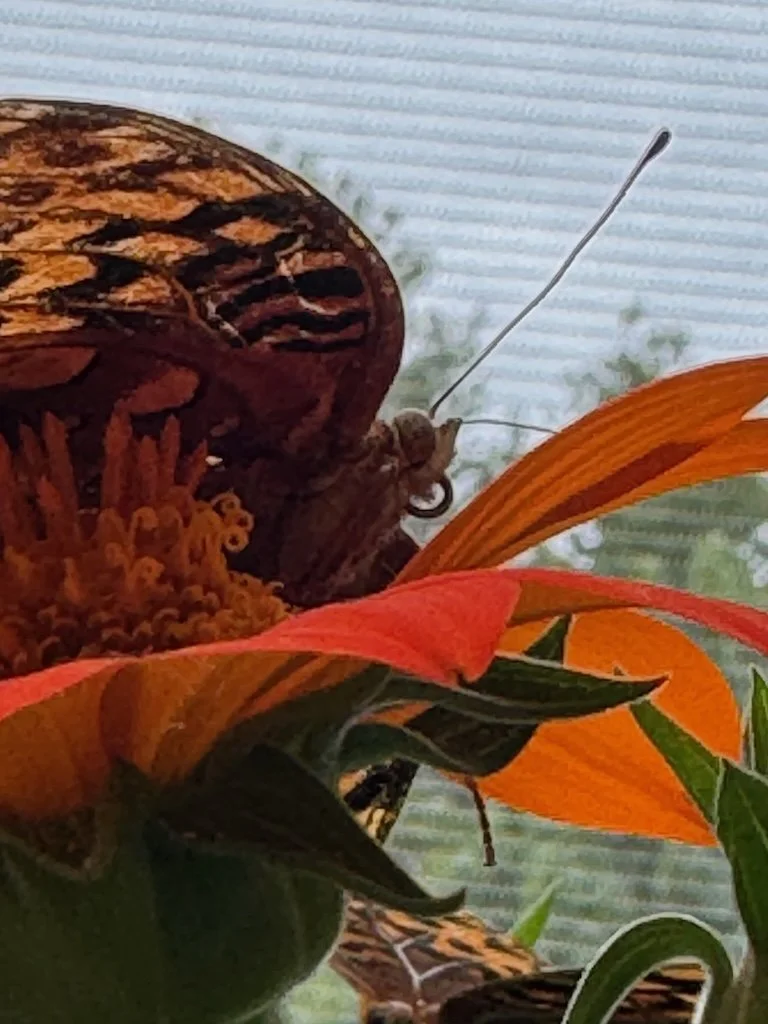
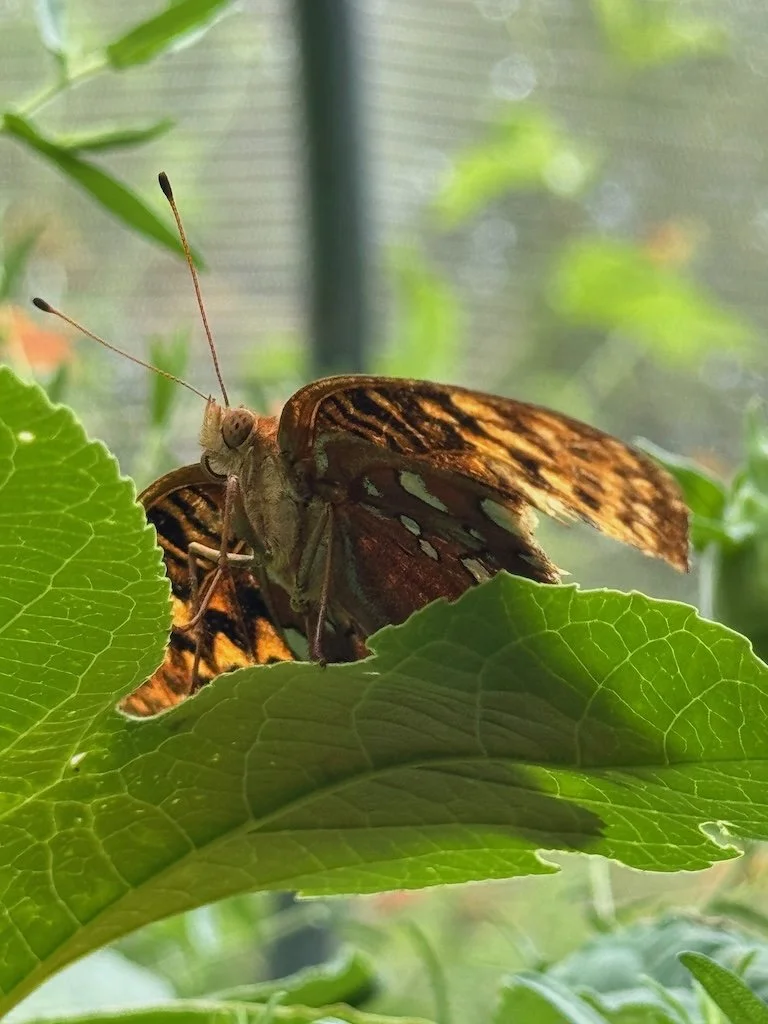
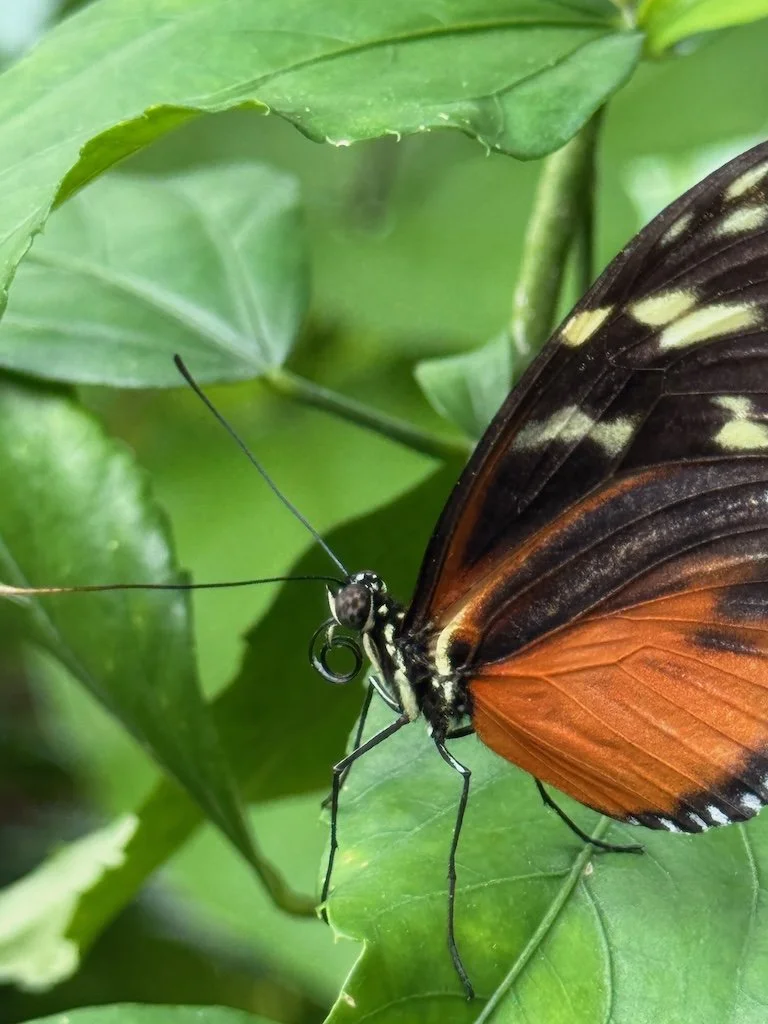
The shifts in the house seemed busier  this past month so I haven’t taken as many pictures of butterflies and flowers in the house…although I did get a few good macro pictures.

The next post about the butterfly house will be about the end of the season…in early October.