Road Trip to Lewisville – November 2025

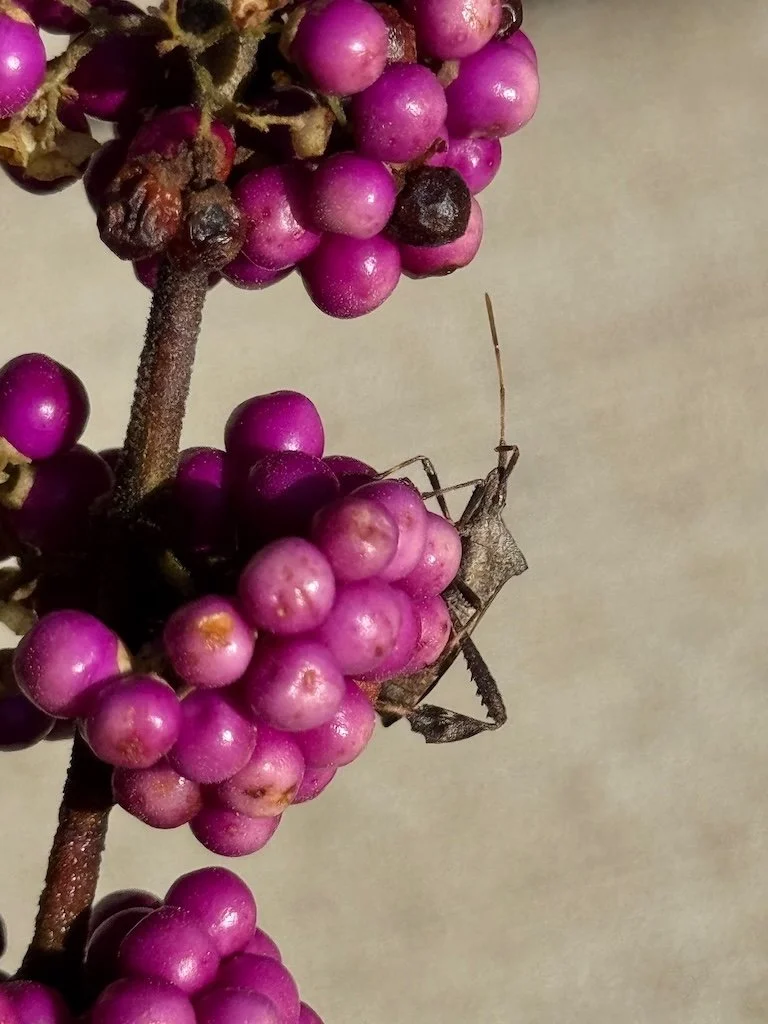
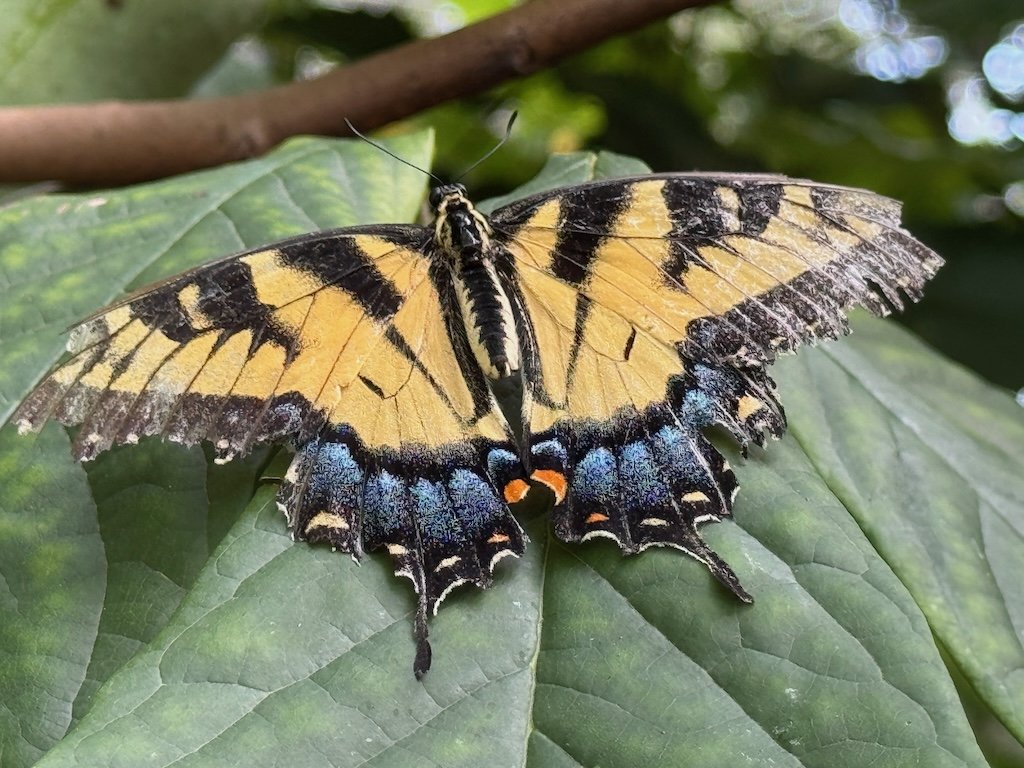
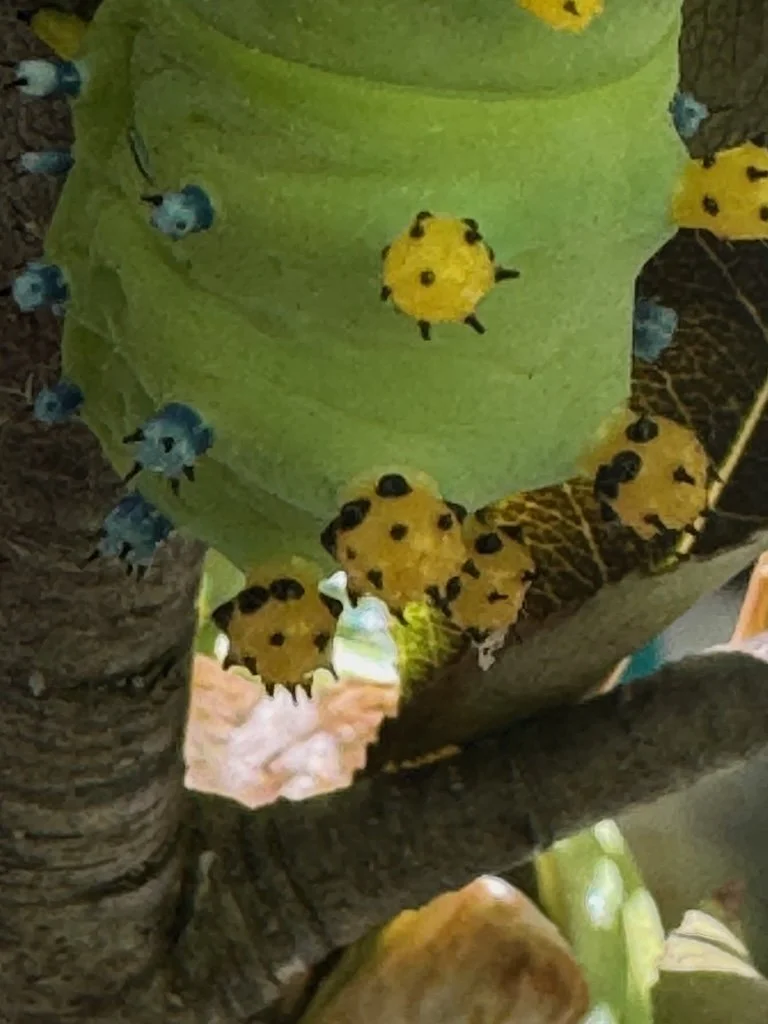
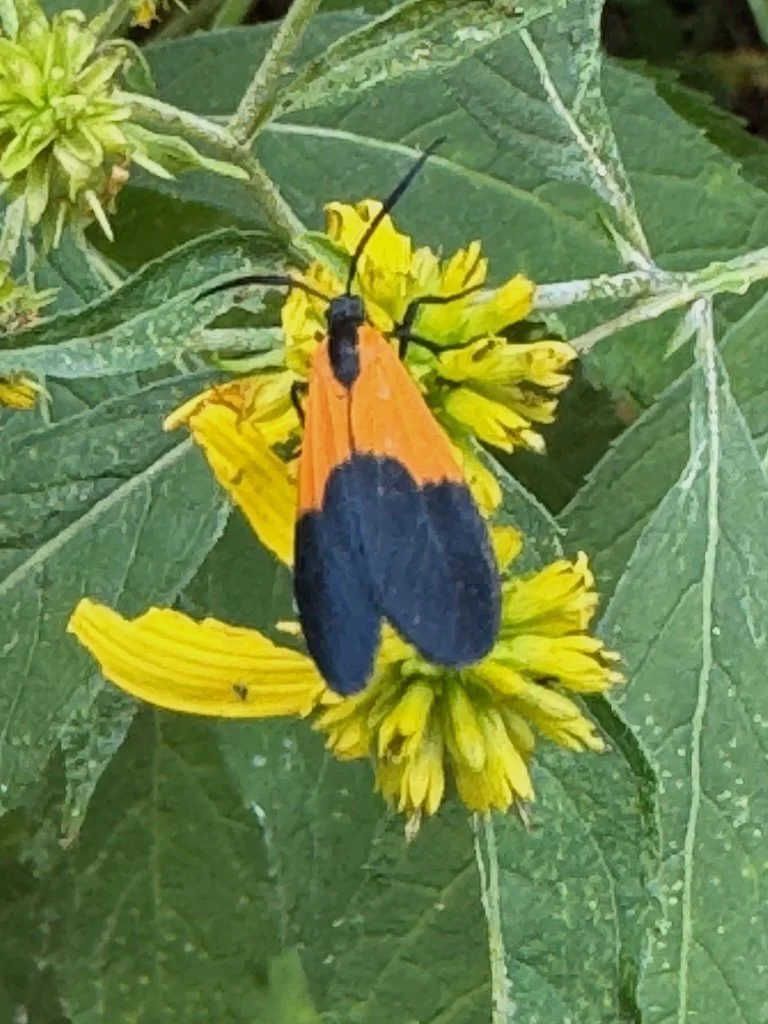
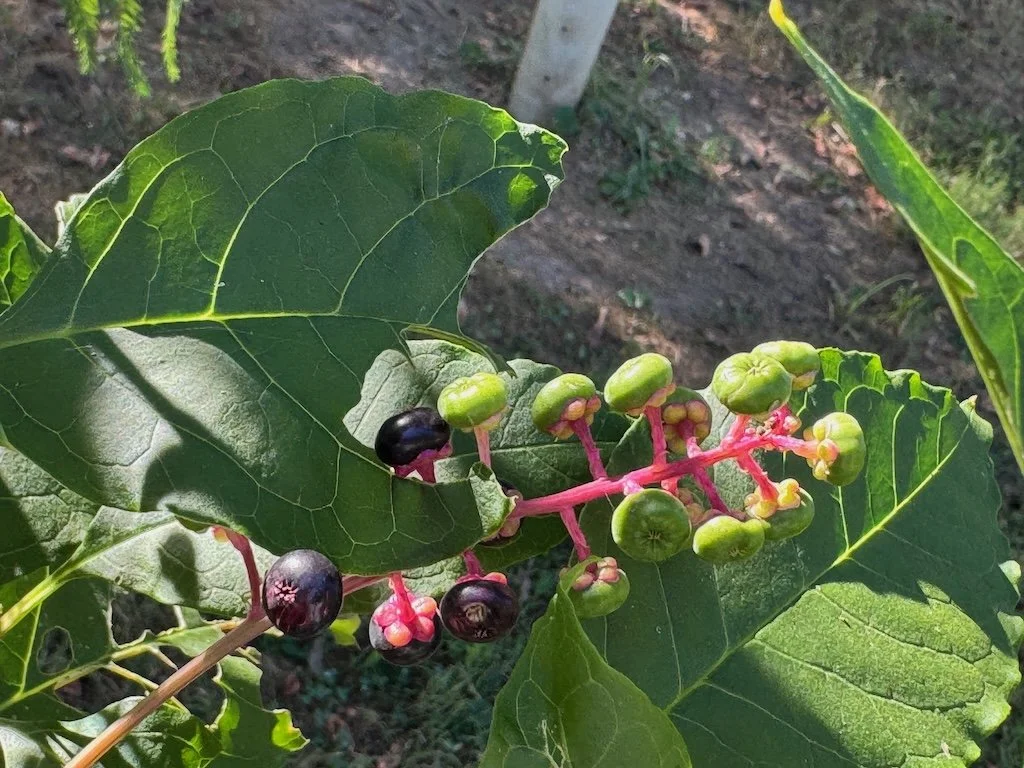
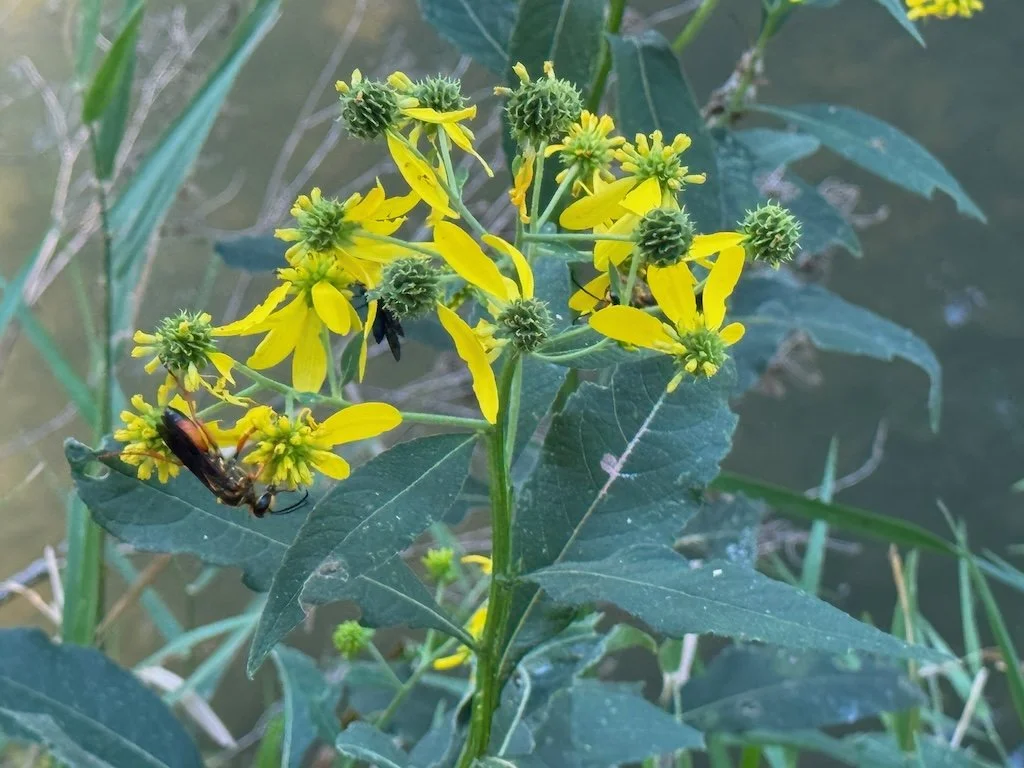
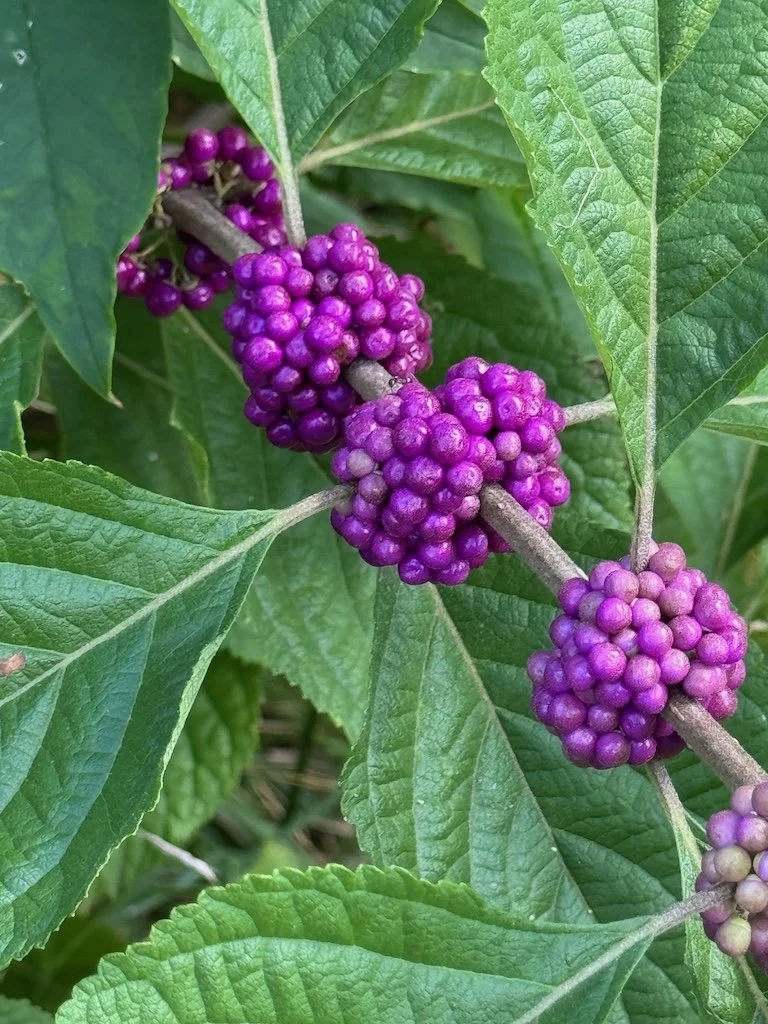
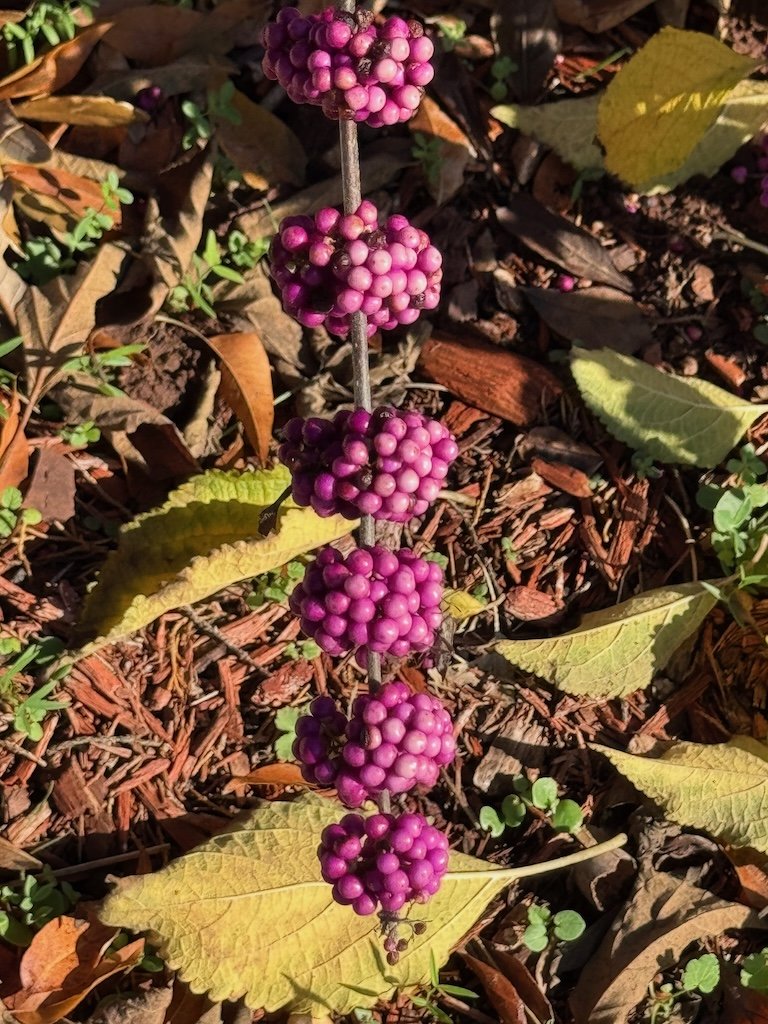
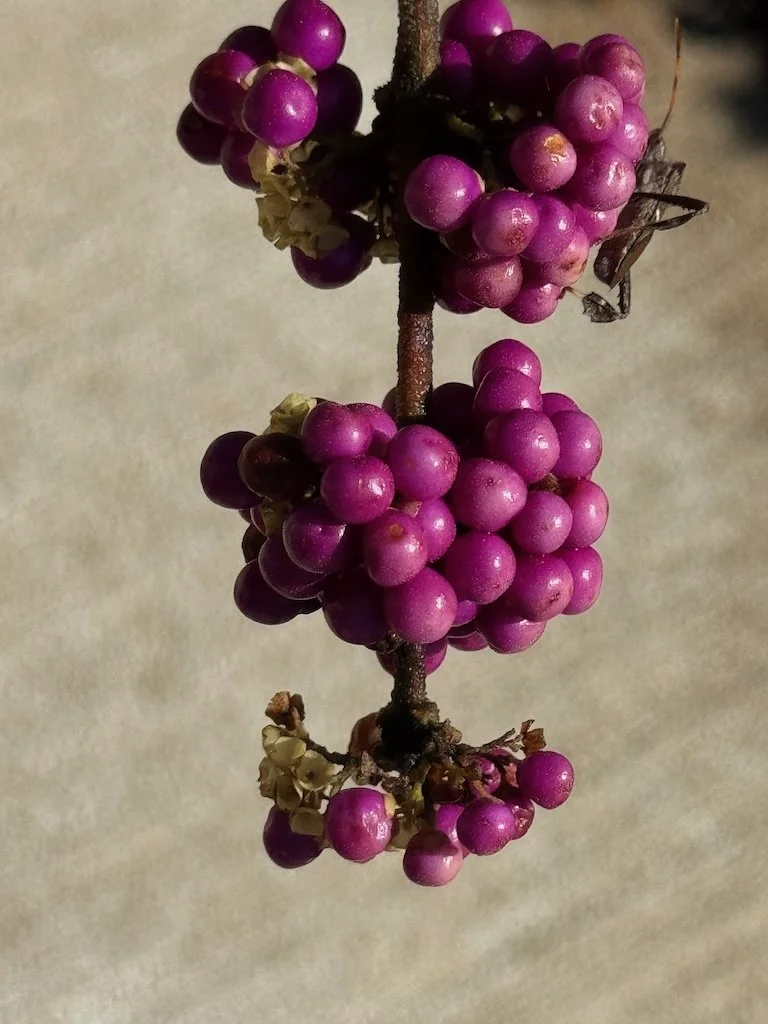
My dad moved from Dallas to Lewisville TX, so my monthly road trips have shifted to visit the him at his memory care place in Lewisville. I made my usual stop at the Texas Welcome Center pm US75 along the way – noticing that the leaves have fallen from the beautyberry. I noticed an insect on the berries; it was a cold day so the insect did not move….easy to photograph.
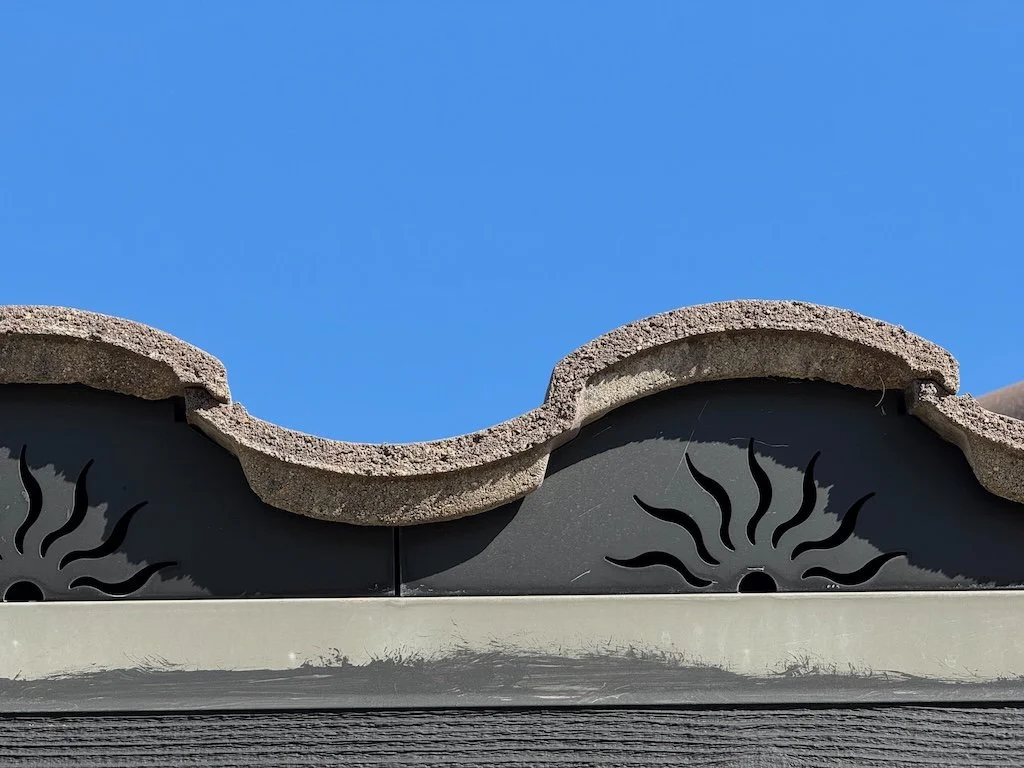
It was the first time for me to visit the memory care facility since my dad moved there. They were holding their Thanksgiving dinner that afternoon – the Friday before Thanksgiving. The day was warm enough that Dad and I walked outside in the enclosed courtyard beforehand. I noticed the decorative patterns on the roof of one of the pavilions.

The dinner itself was tasty, and Dad enjoyed it thoroughly because everything was cut up already – easy for him to eat; there was ice cream for dessert. A live band provided country music – a little loud for me but great for him and the other residents. He stayed for the whole show!

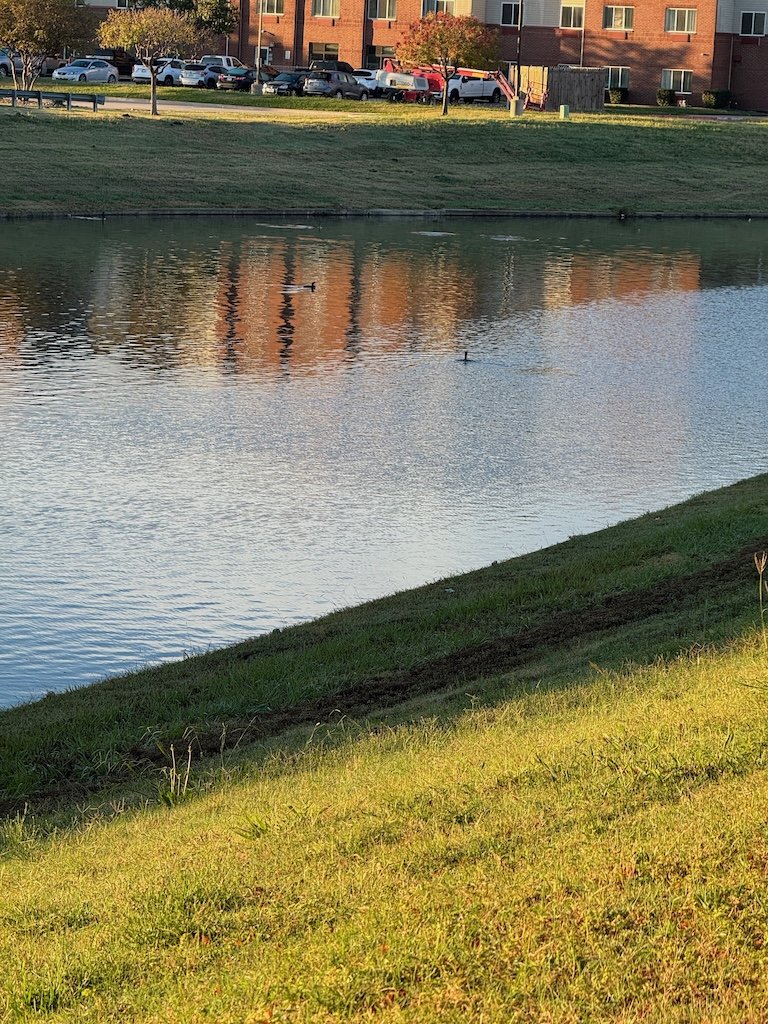
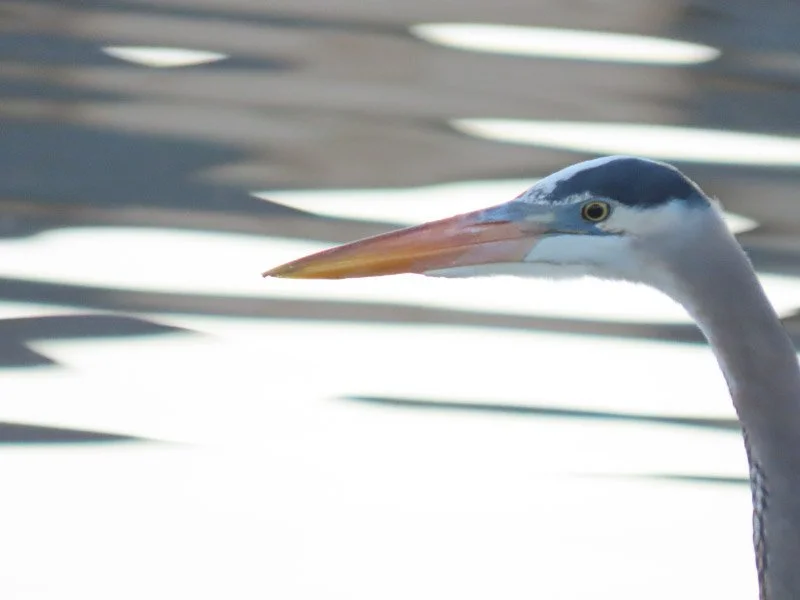
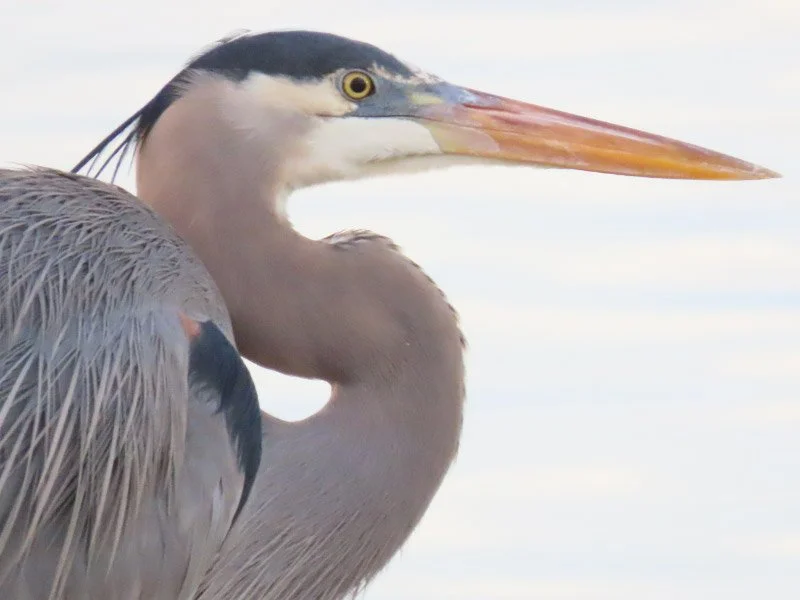
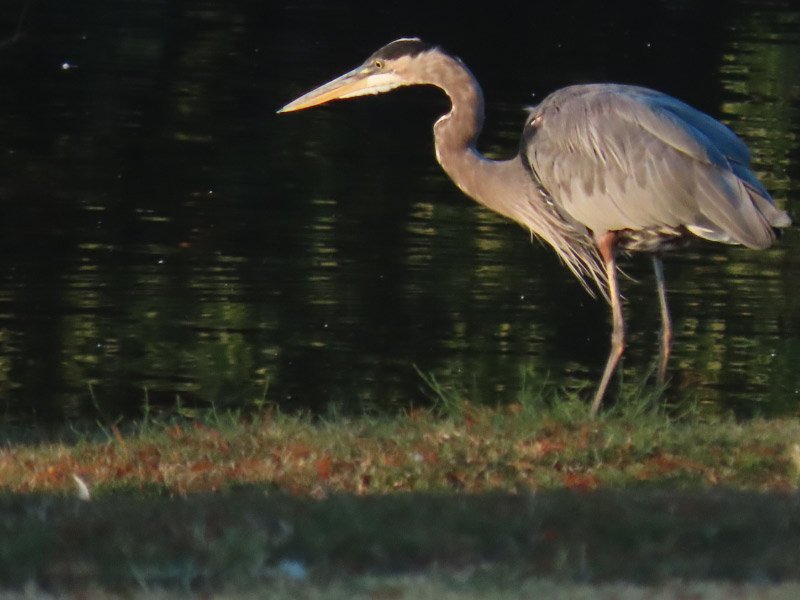
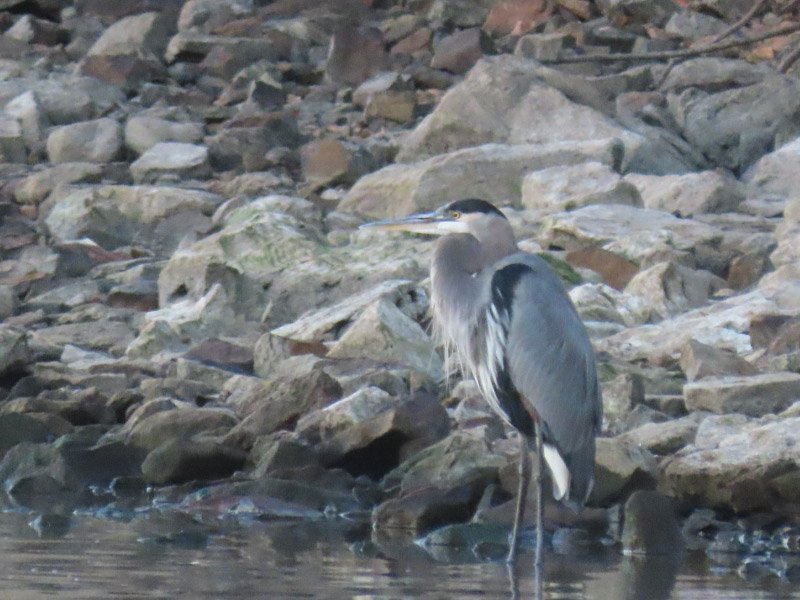
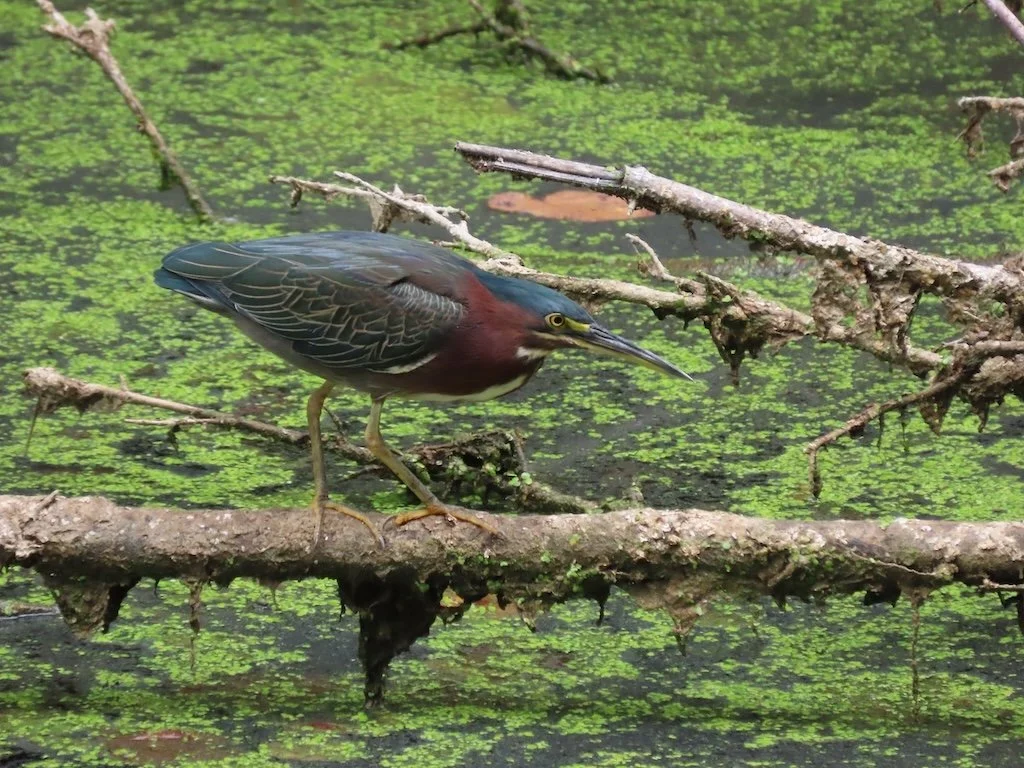
The next morning, I was up and looked out the window a little after sunrise. My hotel window overlooked a storm water pond; on the other side of the pond was a Costco…and then a cluster of overpasses – an intersection of big highways. I was just far enough away that the highway noise did not overwhelm the white noise of the heating/air conditioning fan. A great blue heron was at the edge of the pond. Next time I will bring a better camera and maybe walk around the pond.
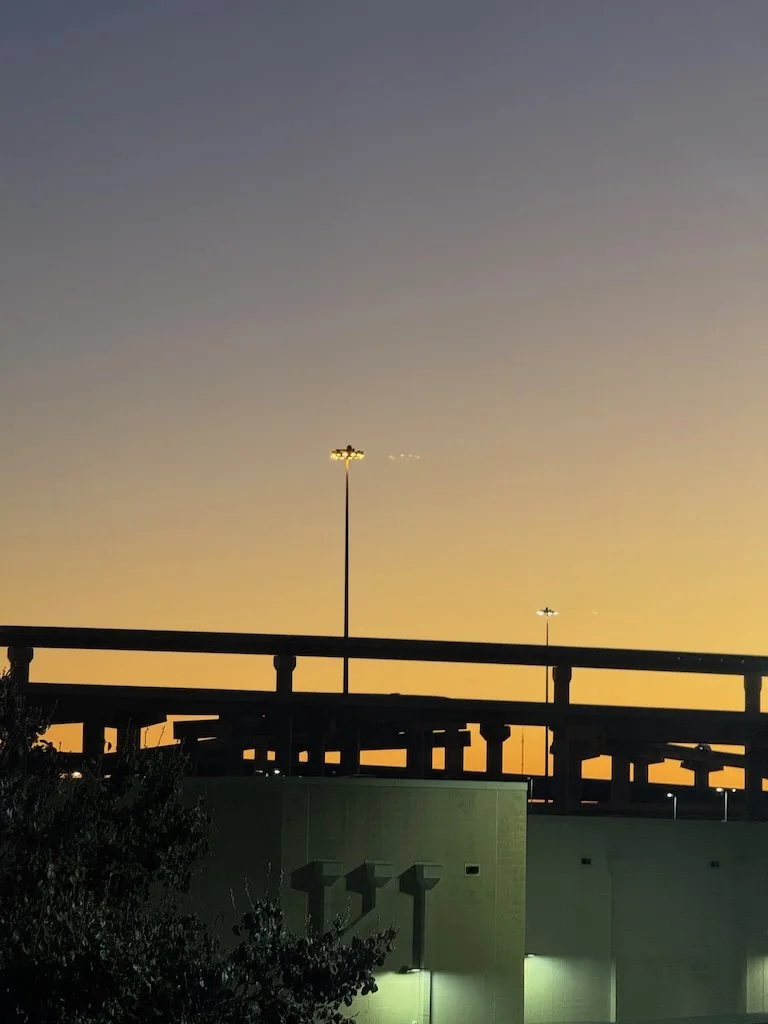
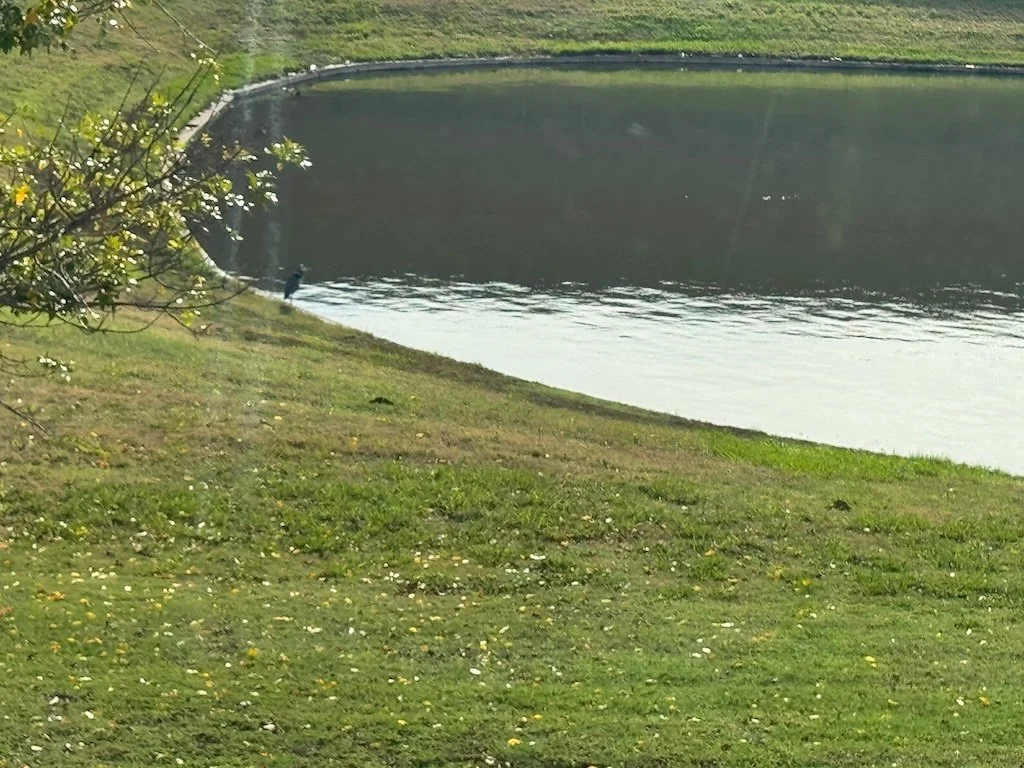
I was with my dad for a second Thanksgiving meal on that Saturday – with the assisted living side of the facility. It was similar but my sister had to cut up his turkey and ham. The music was a little different and he wanted to leave before the end. The loudness of the music made it impossible to have a conversation with our 6-person family group…but I did enjoy the pecan pie at the end.

Afterwards I enjoyed several hours with my sister and her daughters/grandchildren. It was a treat to see them!

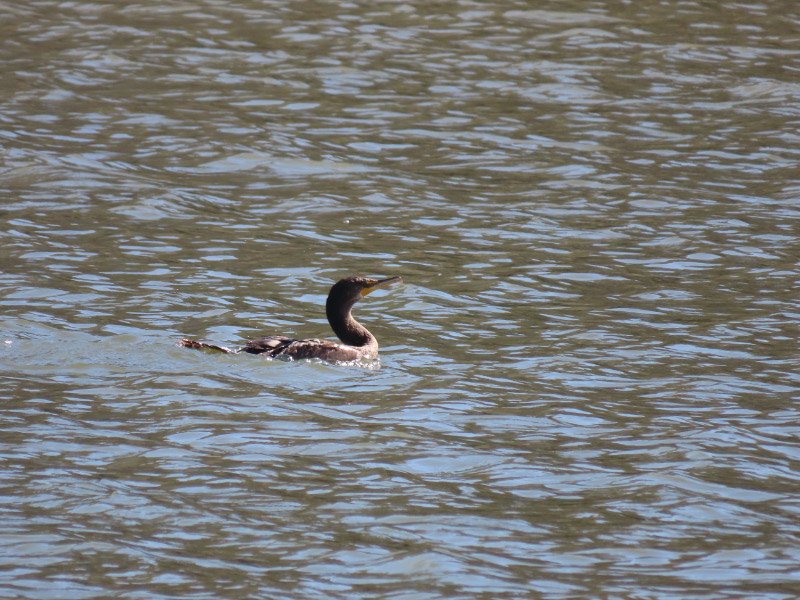
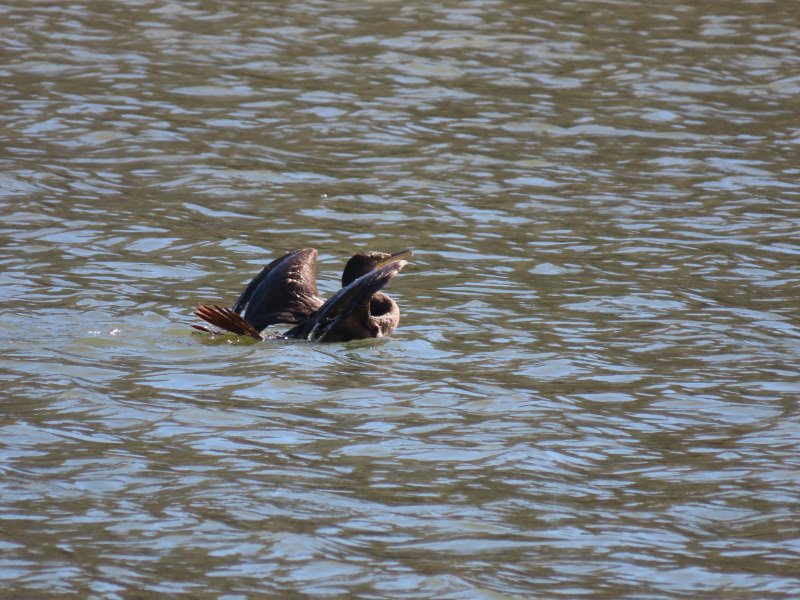
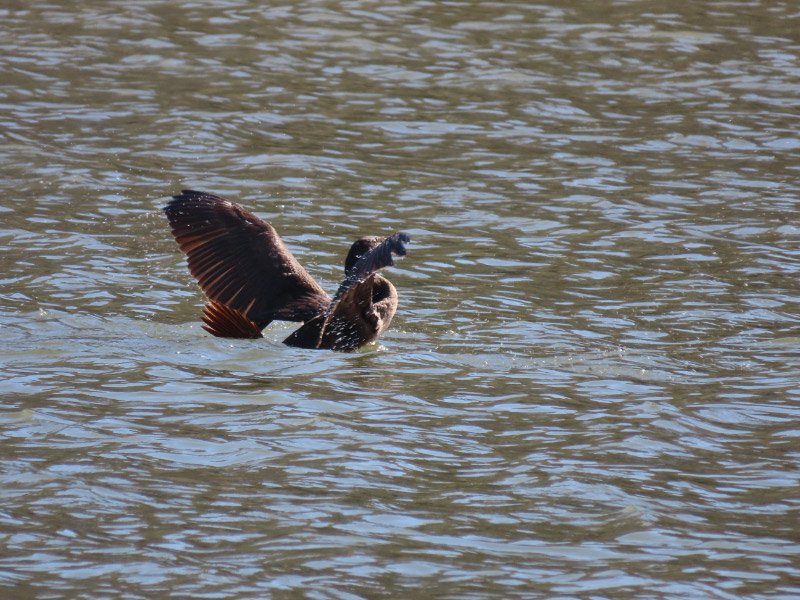
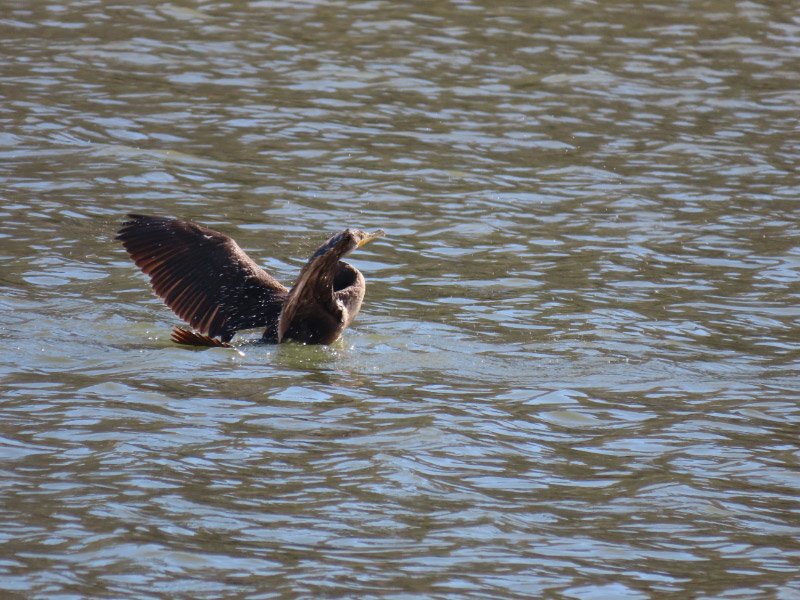
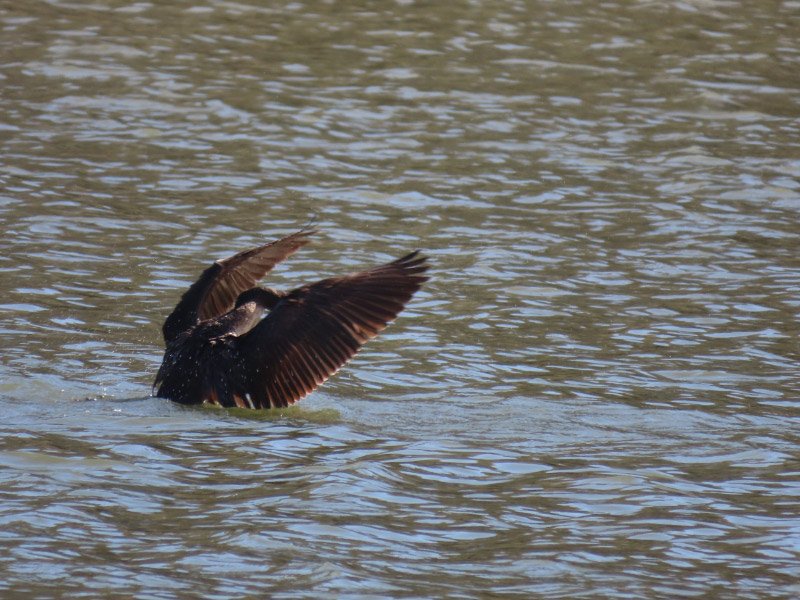
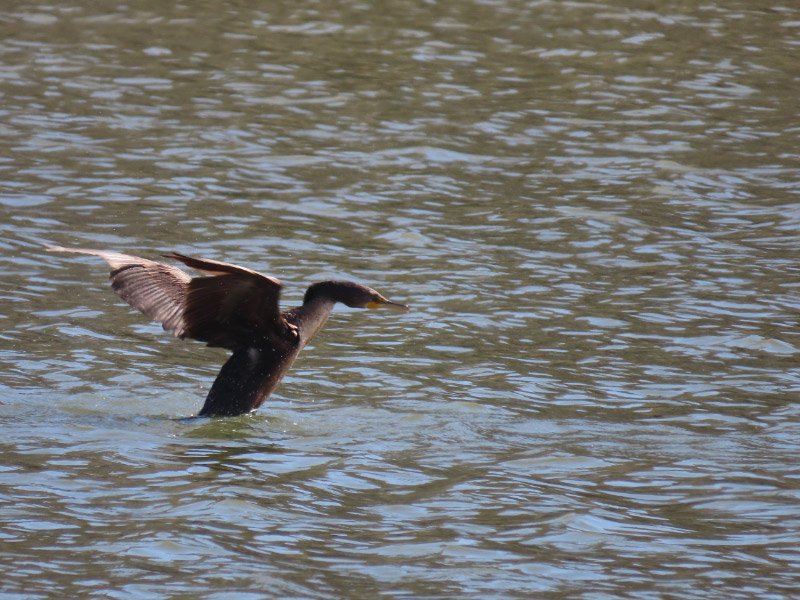
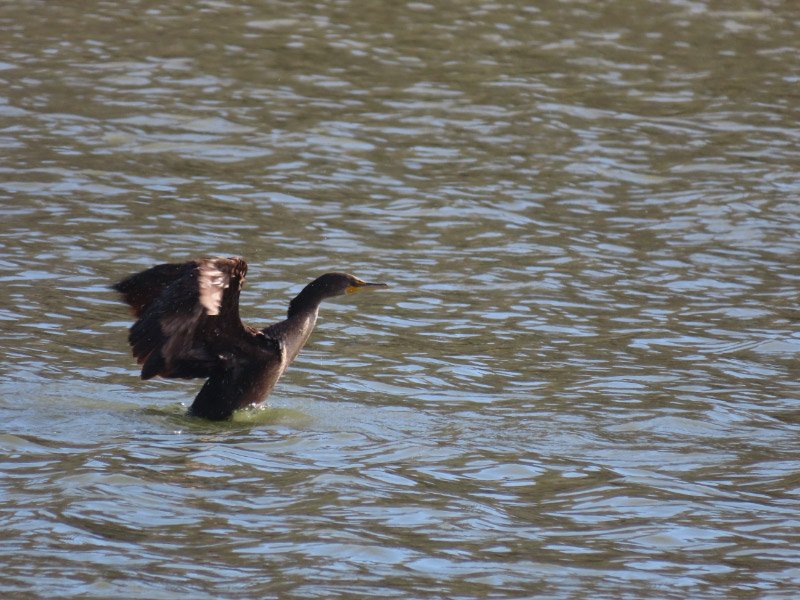
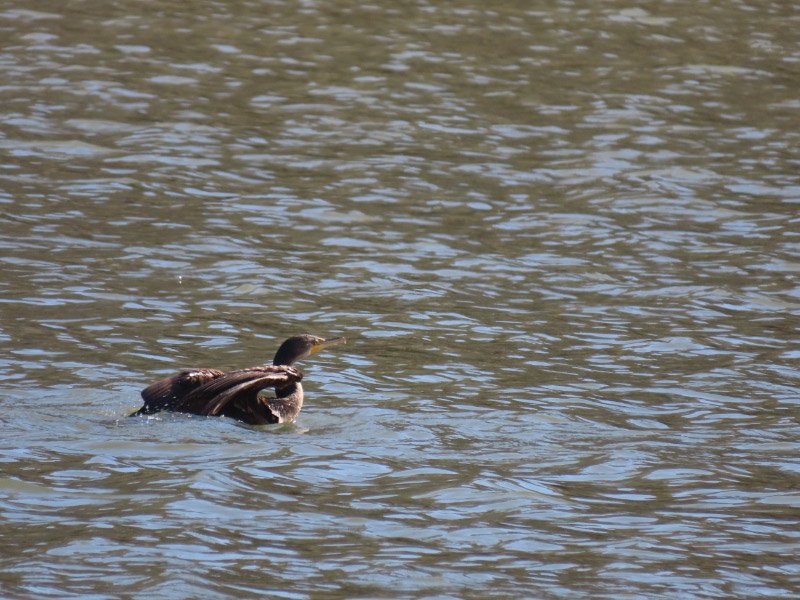
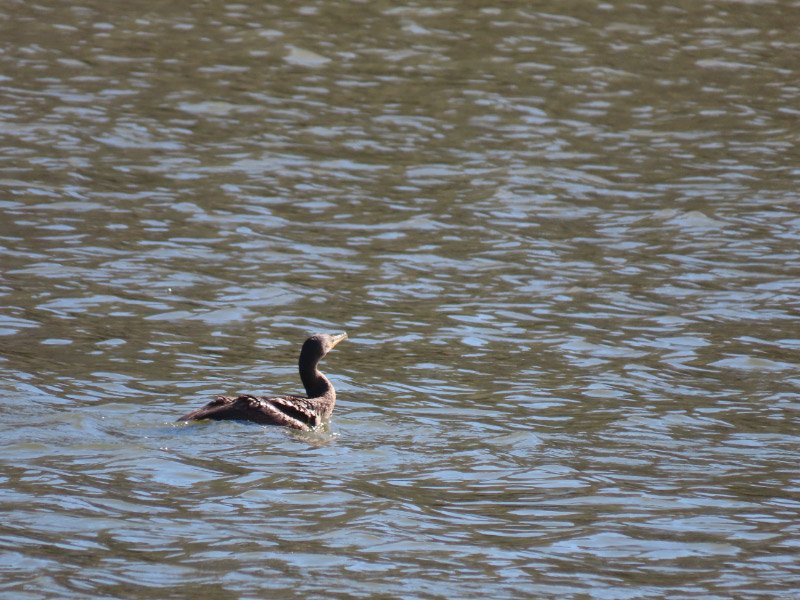
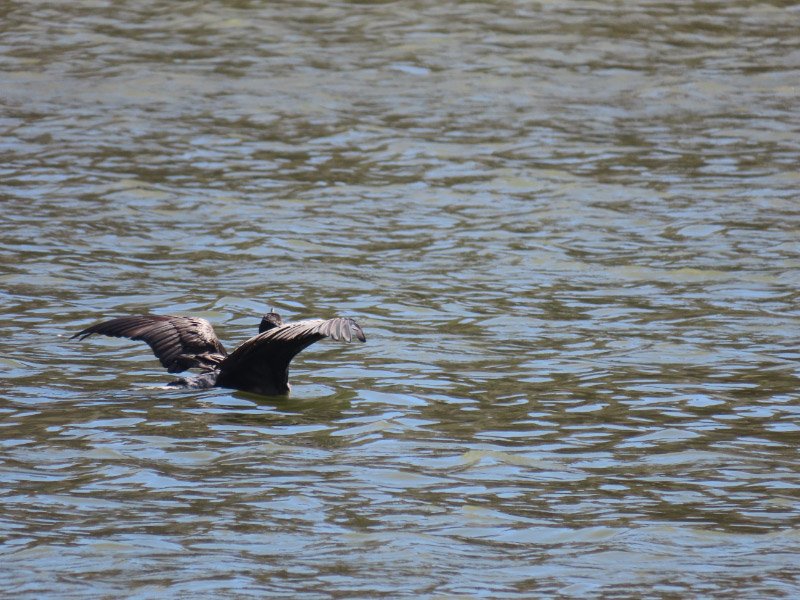
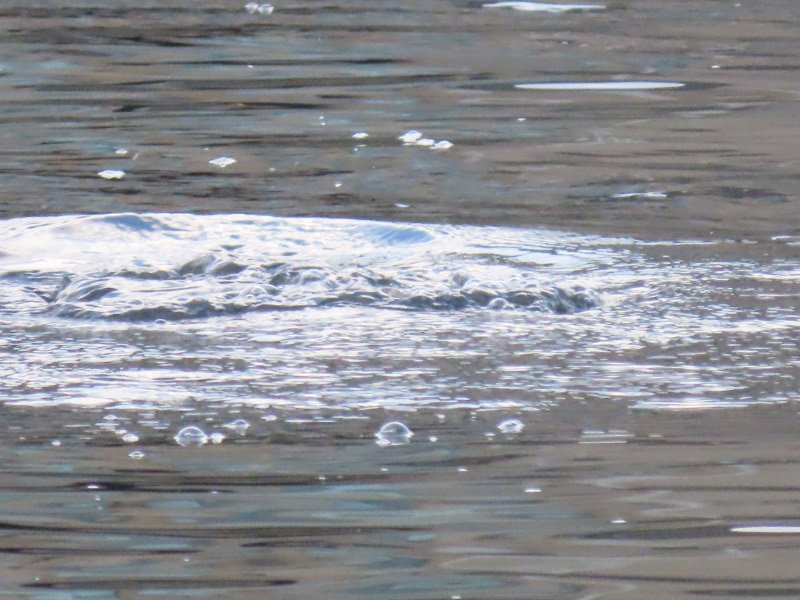
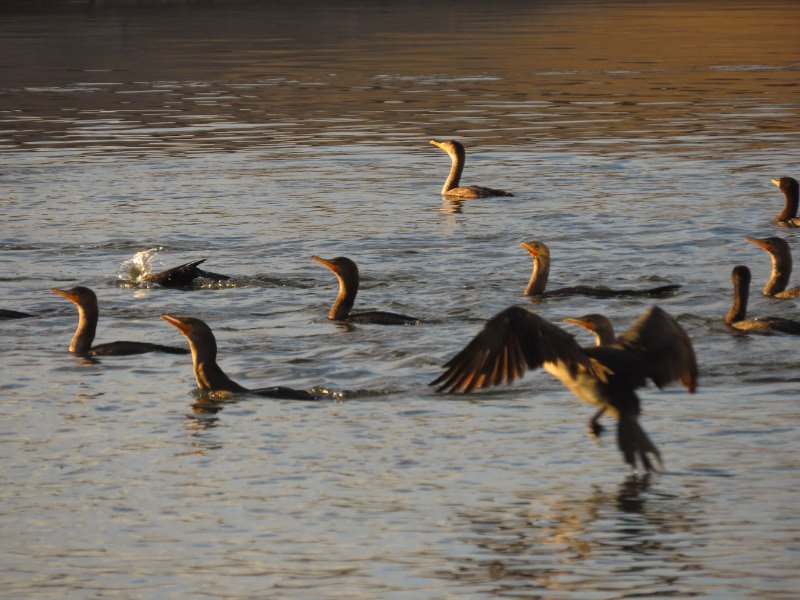
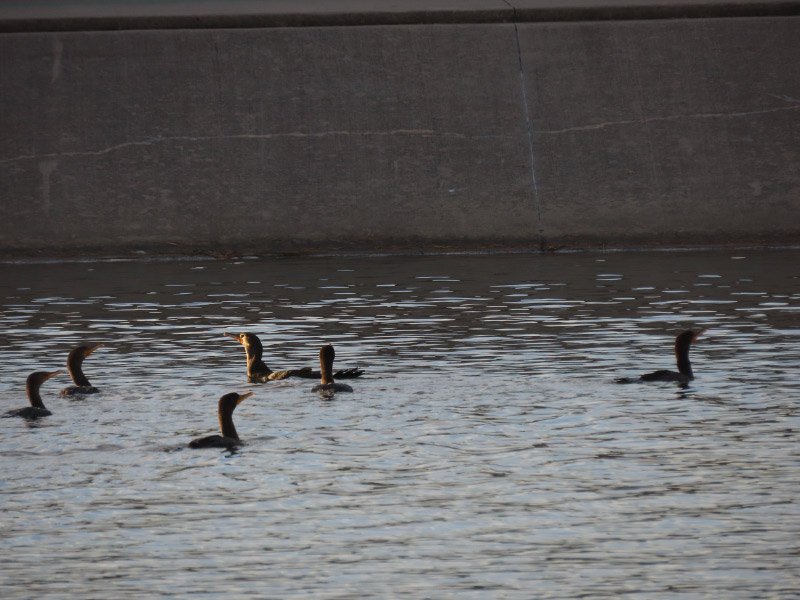
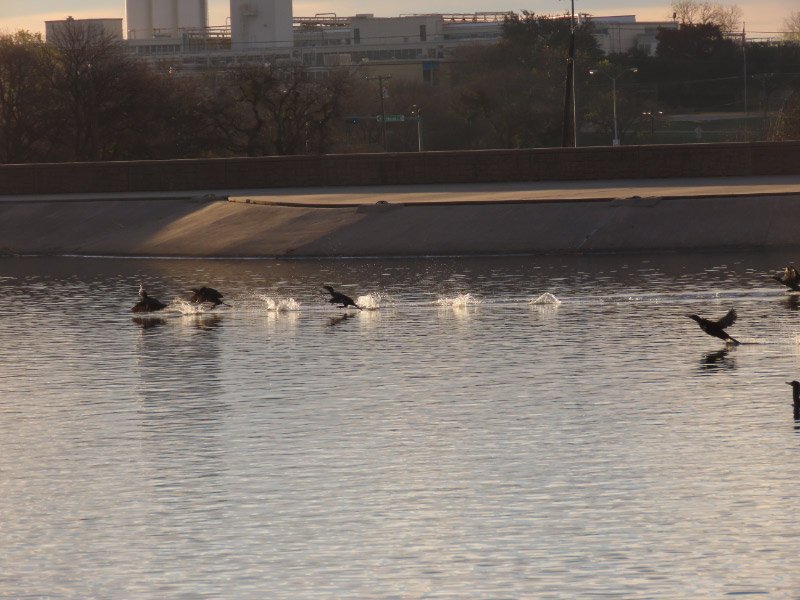
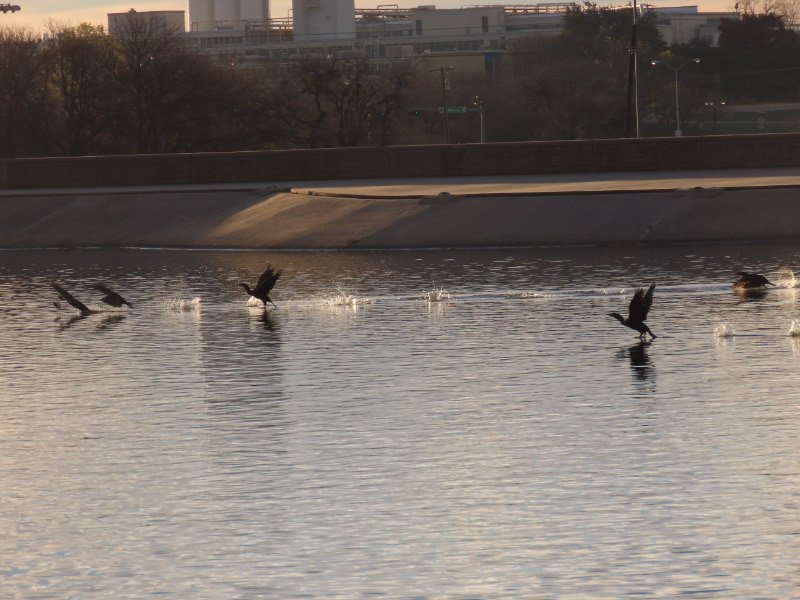
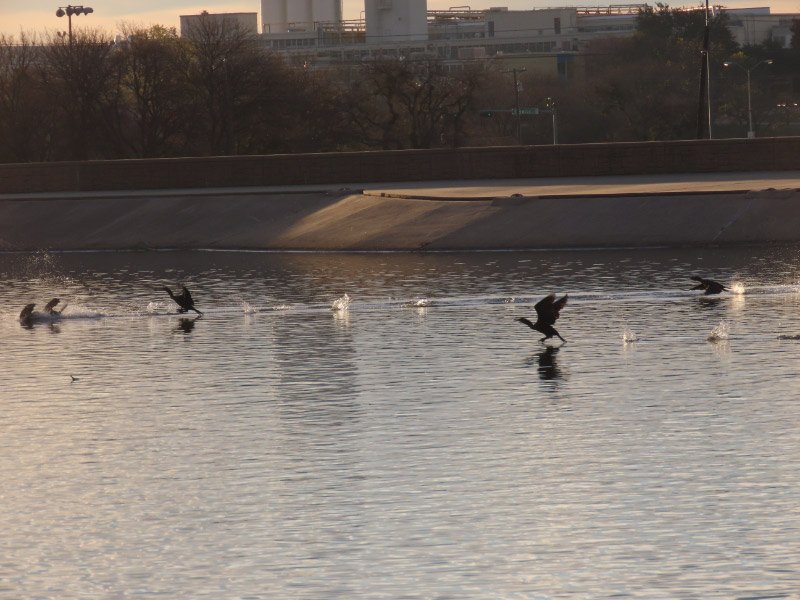
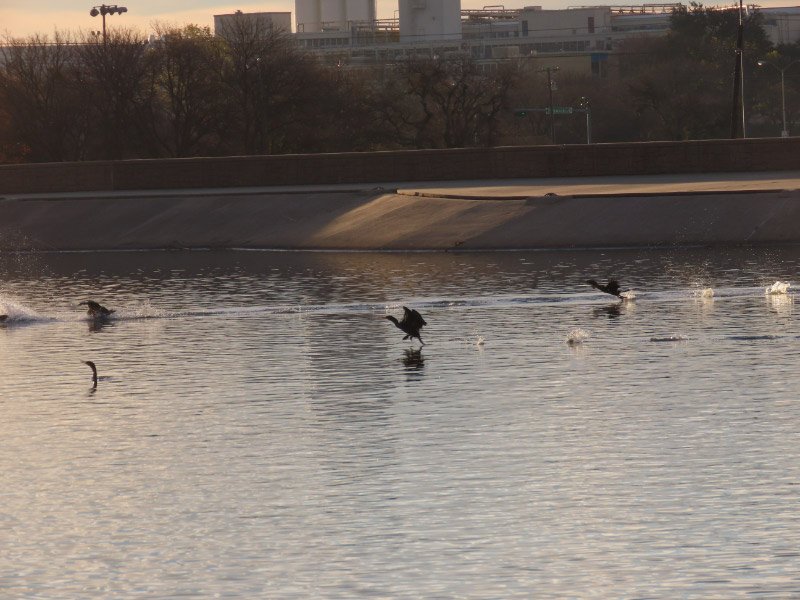
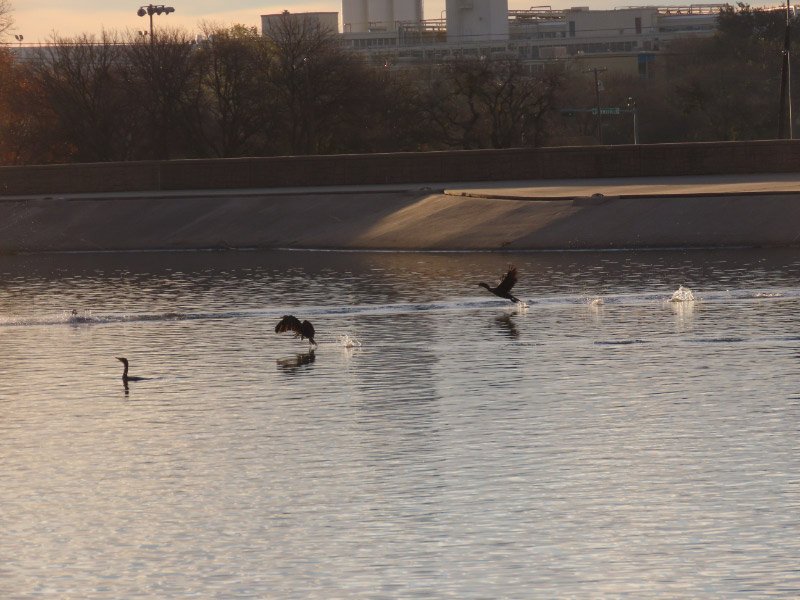
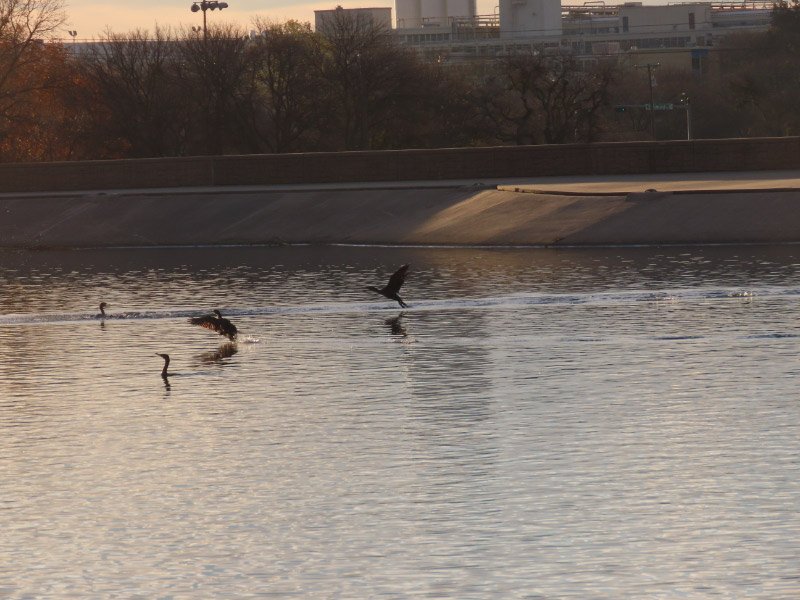
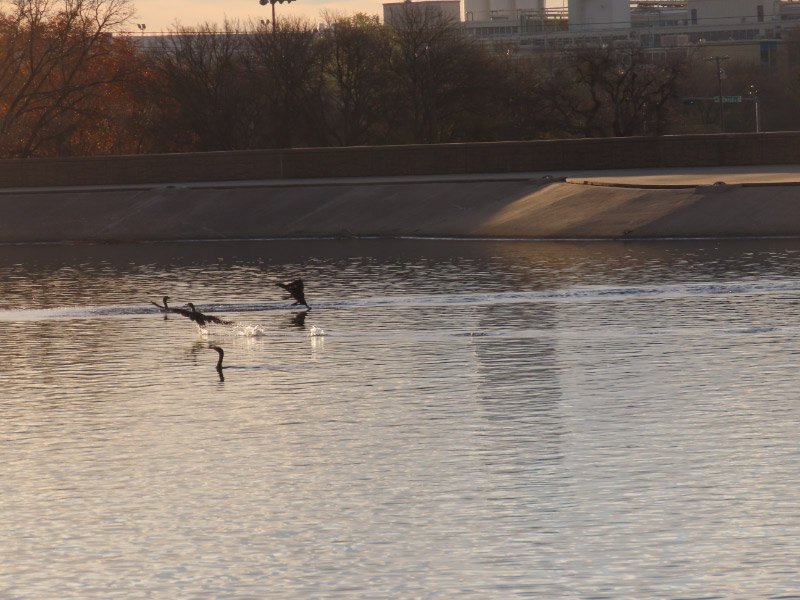
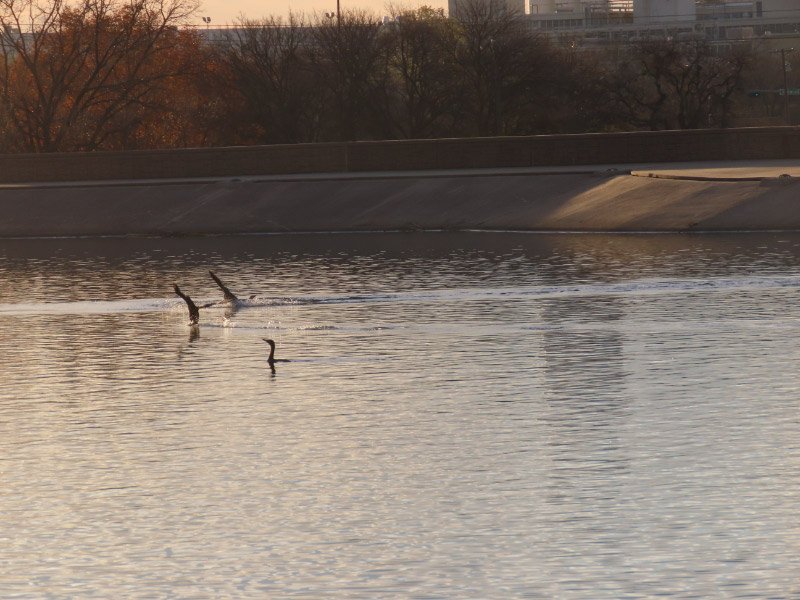
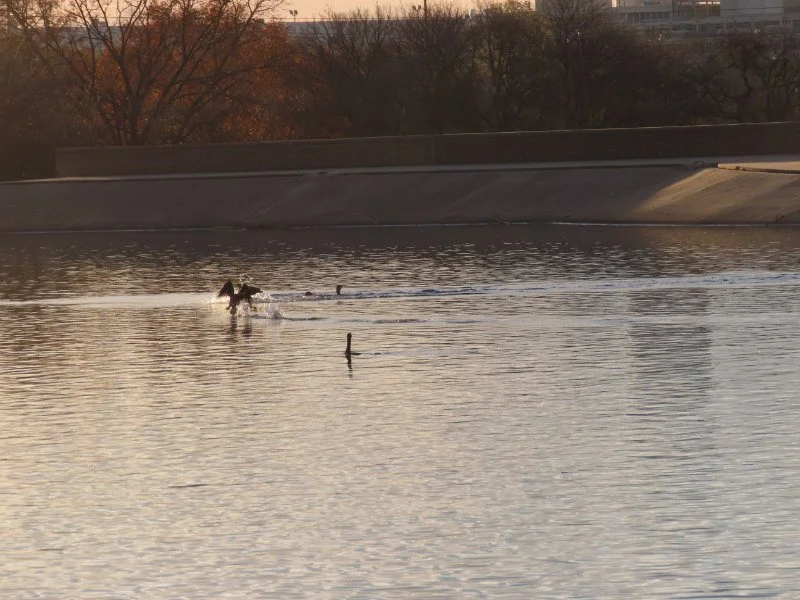
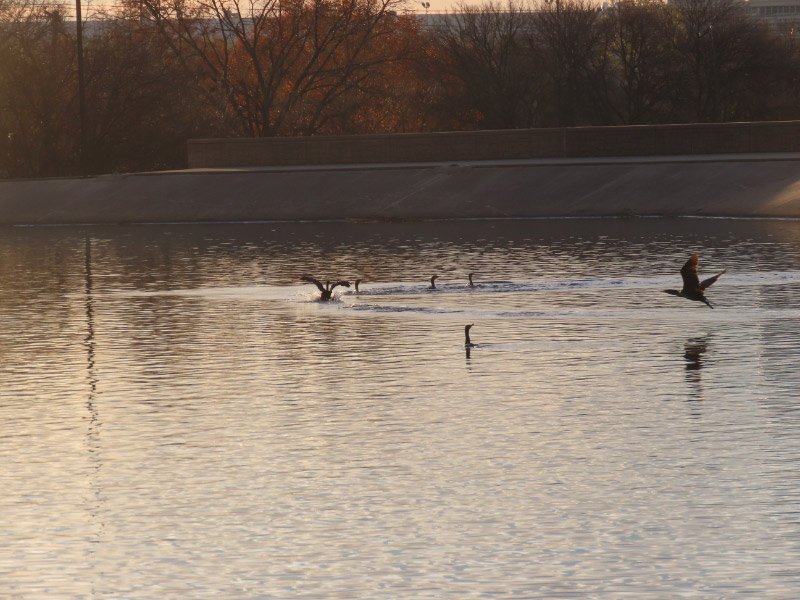
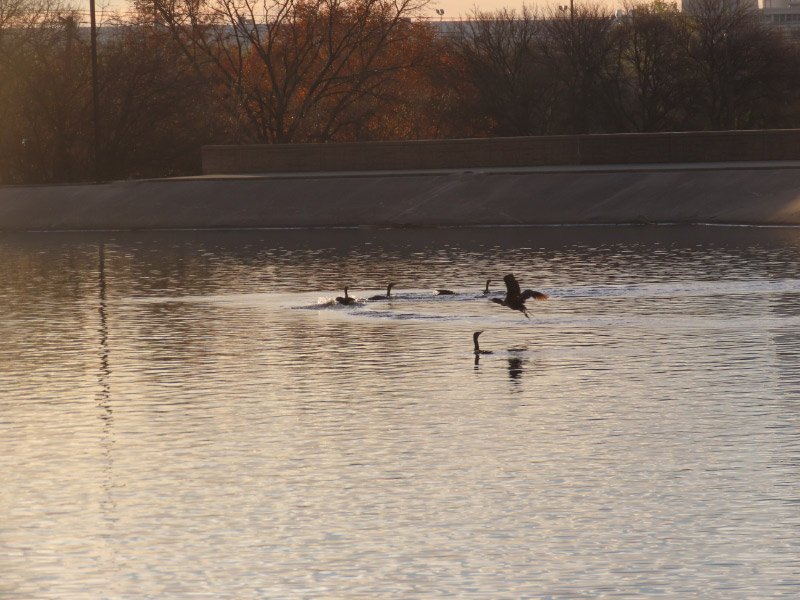
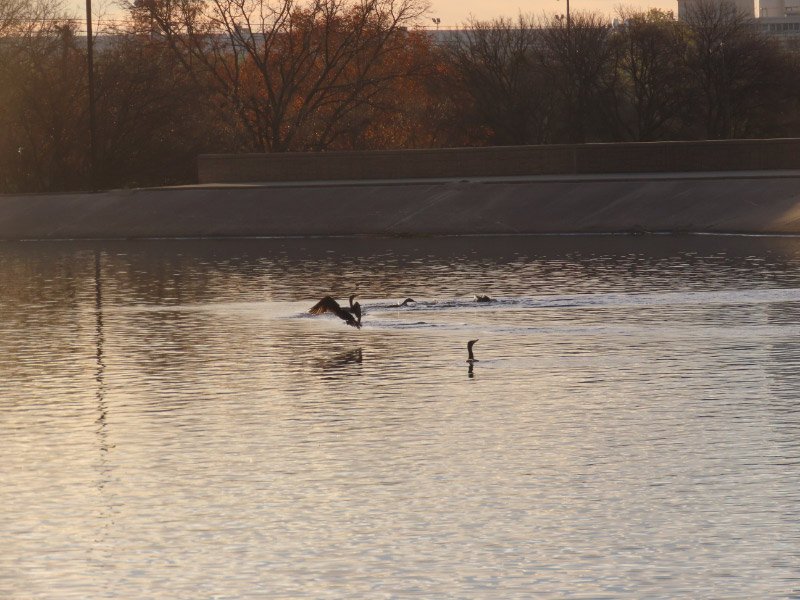
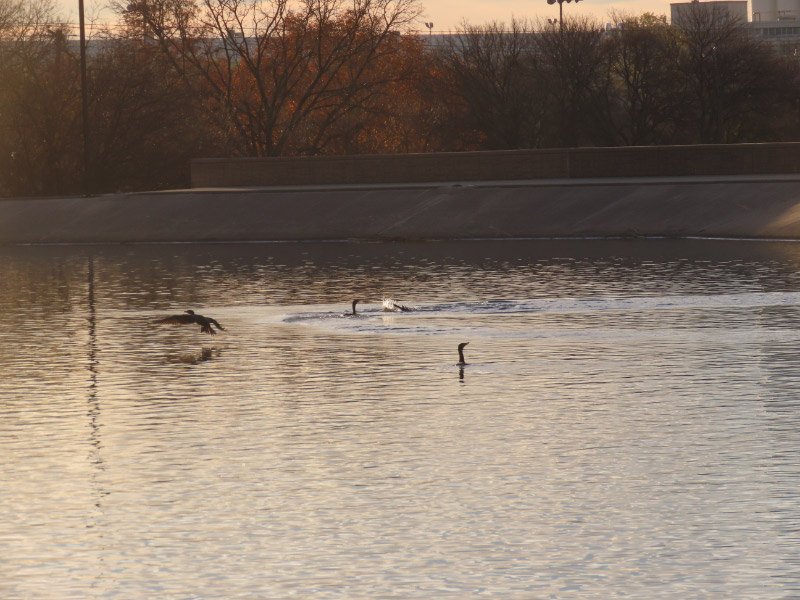
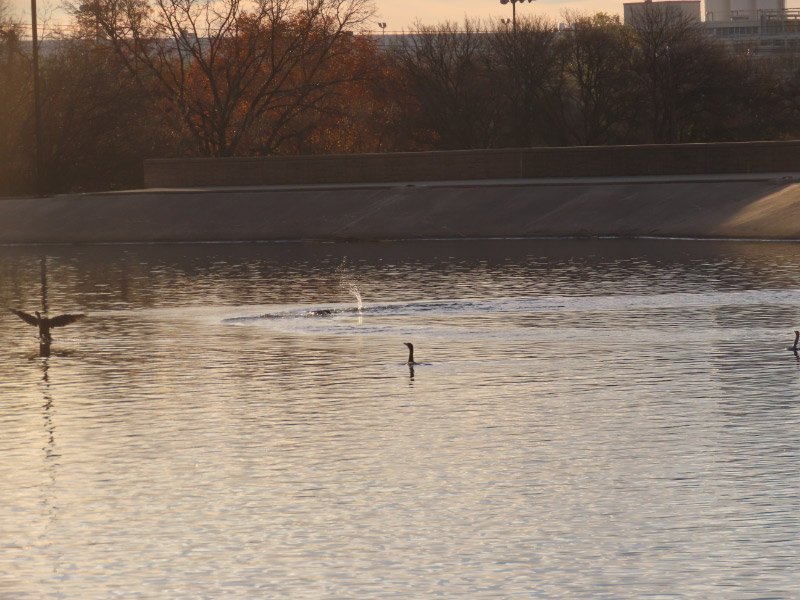
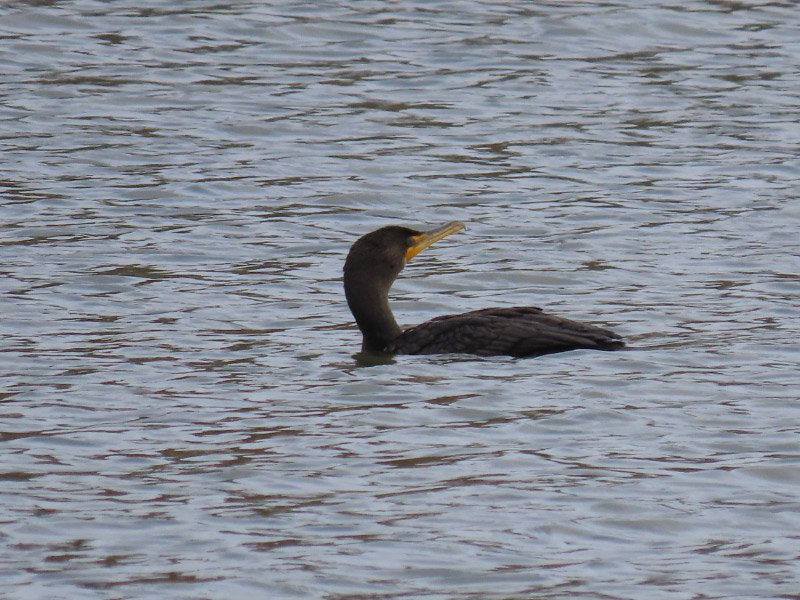
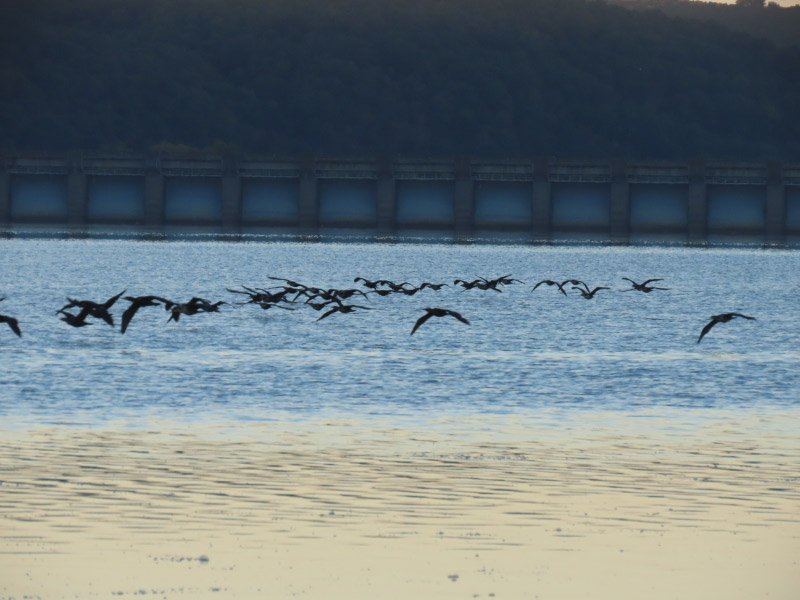
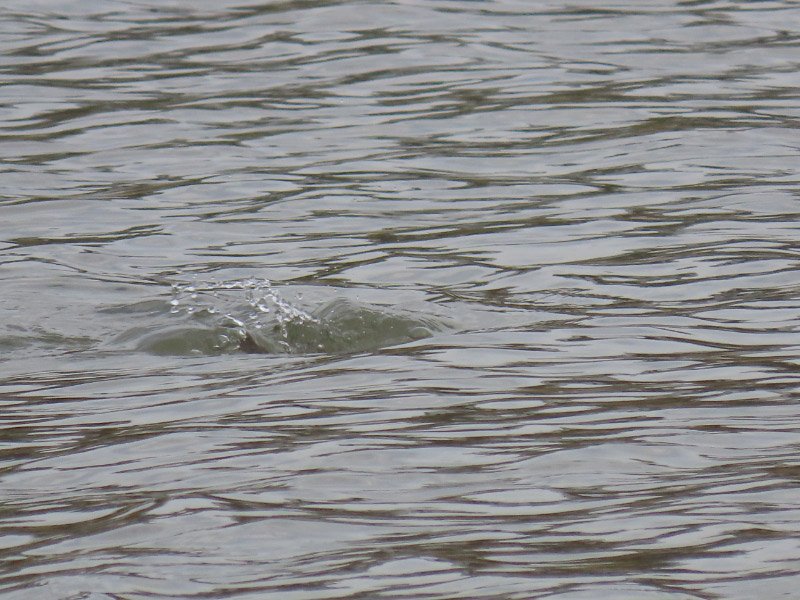
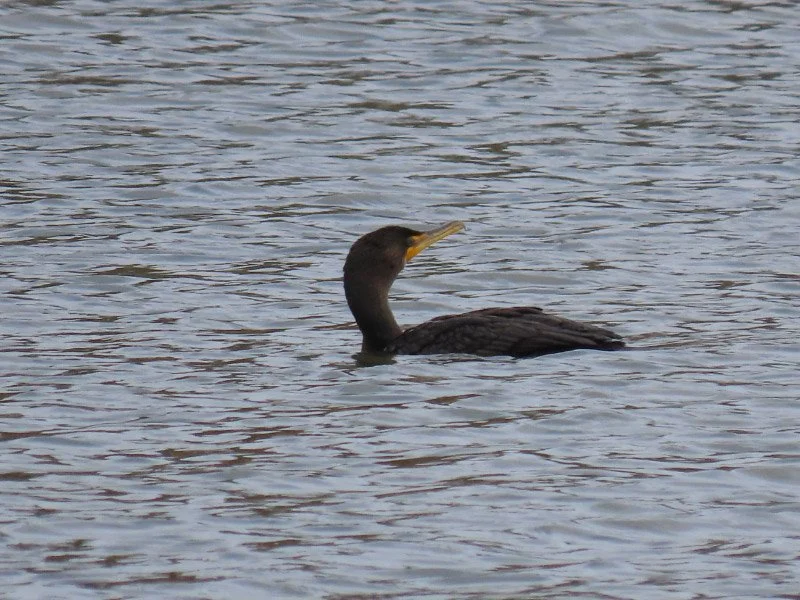
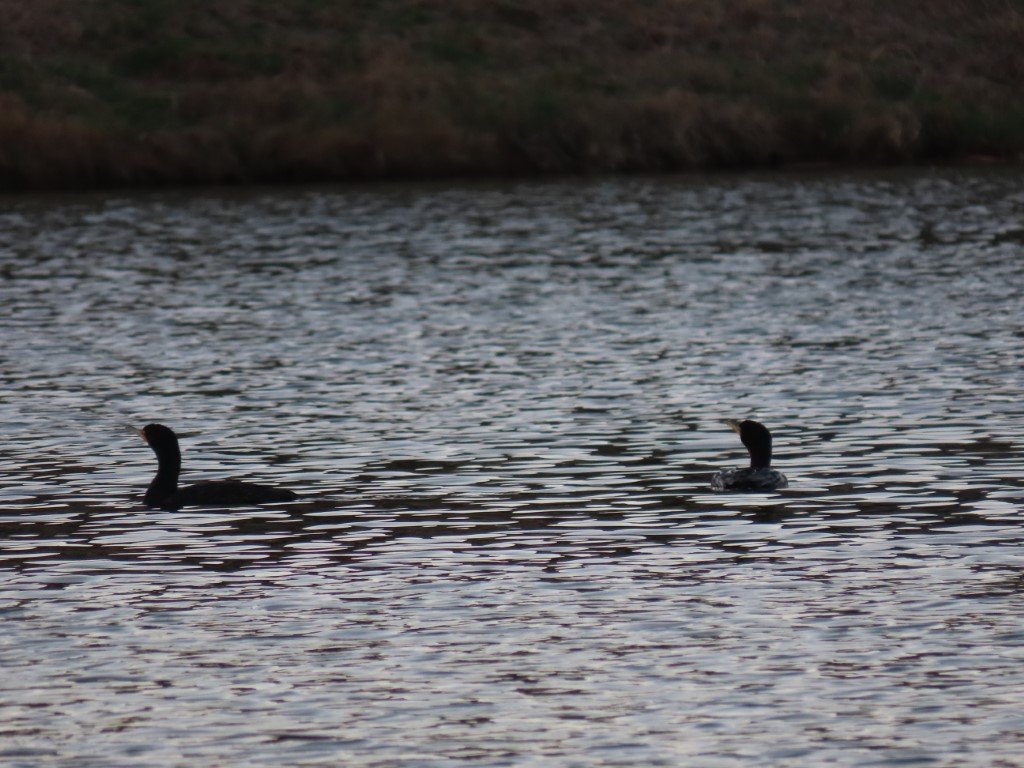
The next morning, I looked out the window a bit earlier – before sunrise. I left the hotel about 7:30 AM and drove around to the closest parking lot to the storm water pond. There were two cormorants there.

The memory care facility had decorated with a lot of pumpkins for the holiday. I photographed one of the displays on my way in to see my dad. At 8 AM he had finished his breakfast and was working on his cup of coffee! I’m glad I ate at the hotel rather than planning to eat with him!

I opted to go back via I35 going north. It was an adventure and about 15 minutes longer than the other route – but a lot less stressful. For the next few months, I am planning to continue that alternate route to get home. I already identified a café I want to try in Prague OK (along the route); my paternal grandmother grew up on a farm near Prague.

Josey Ranch – February 2025

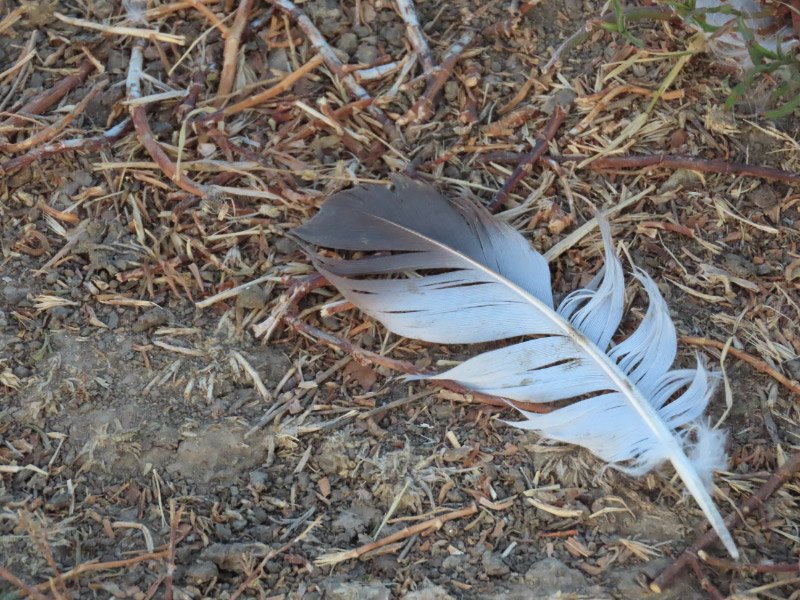
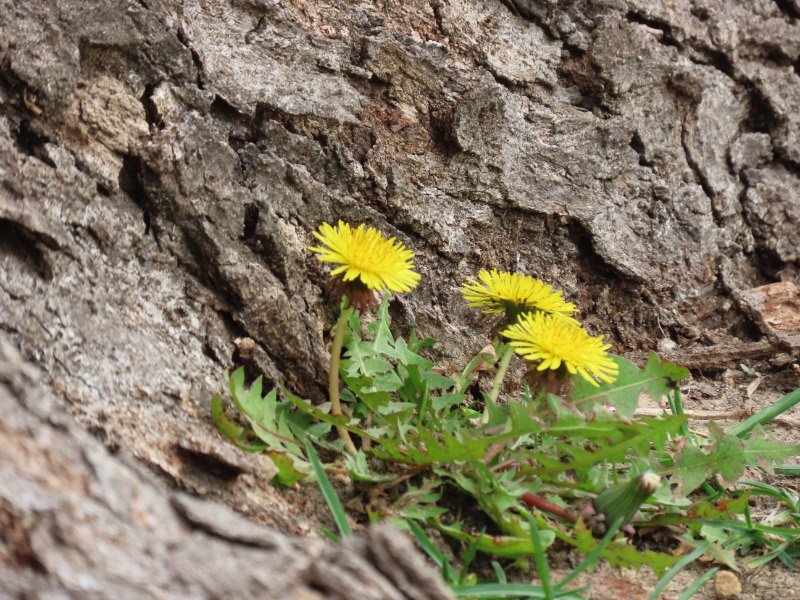
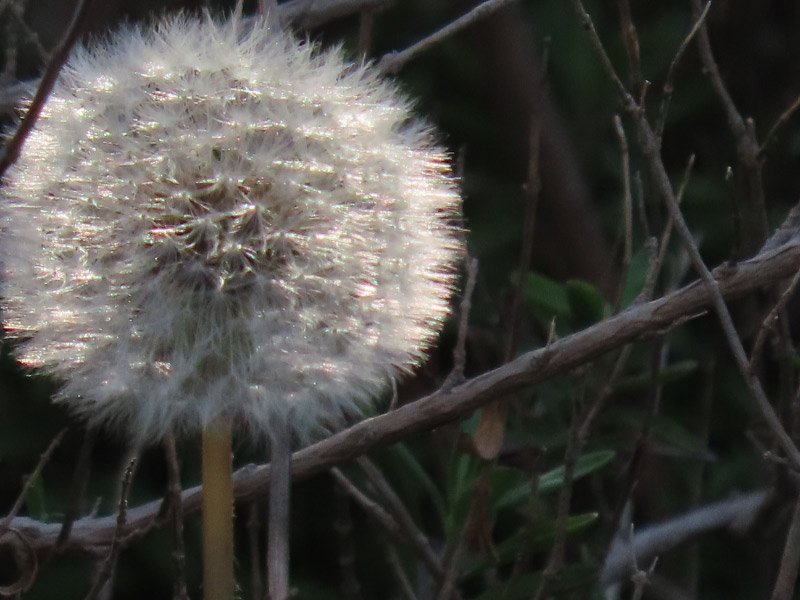
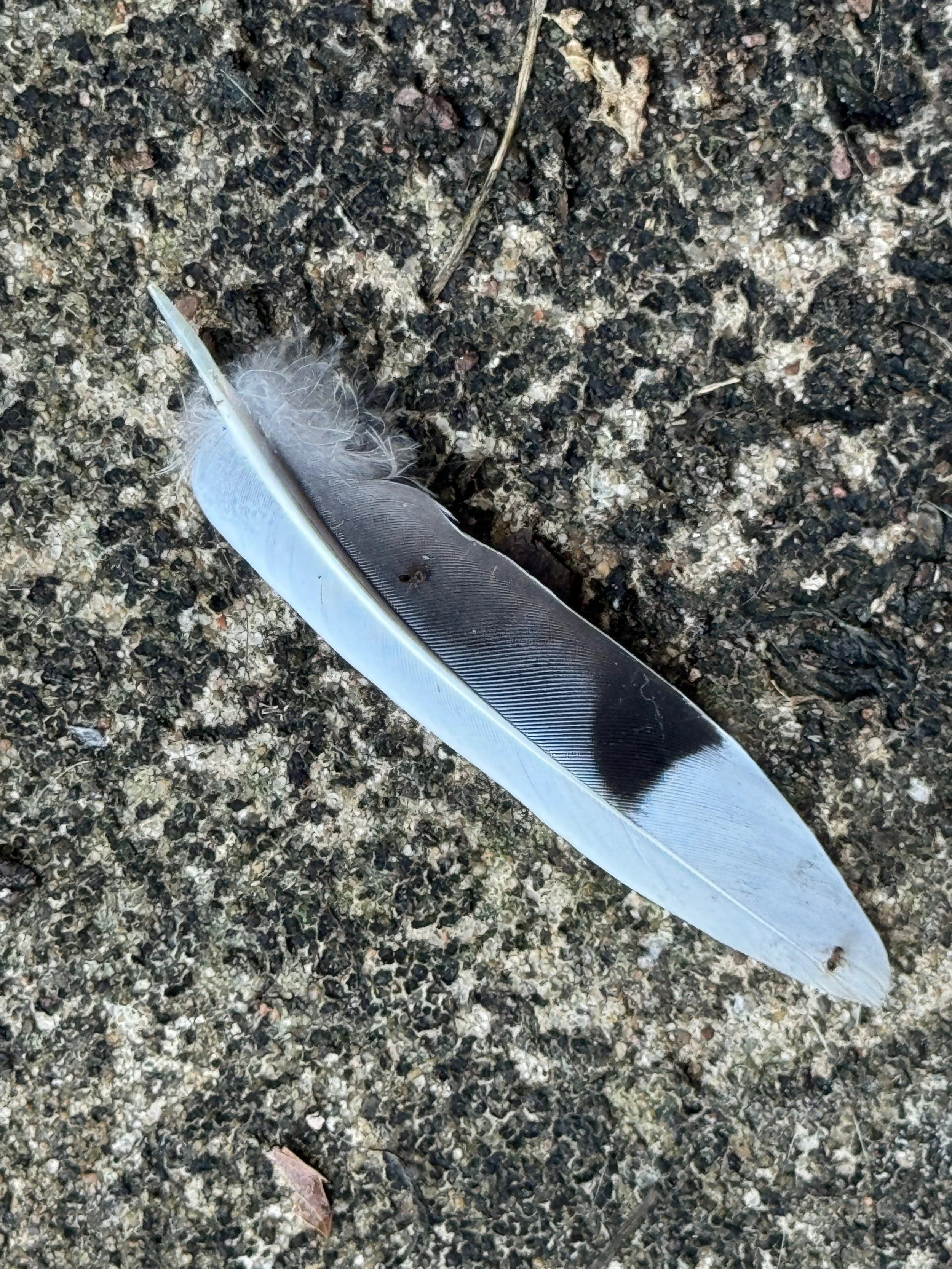
The weather was cold and mostly cloudy…but I headed to Josey Ranch for a nature fix – and to gain more experience with my new camera (Nikon Coolpix P950). The last time I visited was back in September, but I expected to see a lot of birds that are in Texas during for the winter. The pond between the library and the senior living complex was almost empty. I photographed a feather and a dandelion almost ready to bloom before I headed over to the other pond.

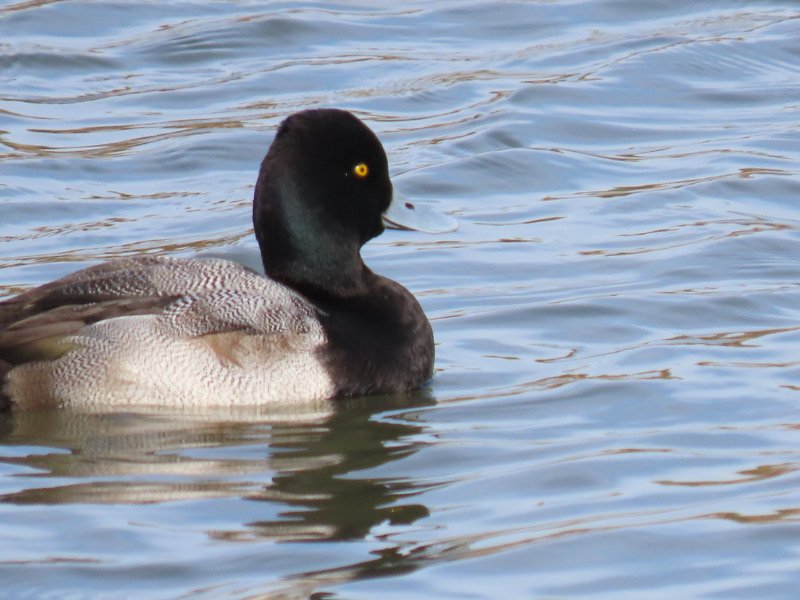
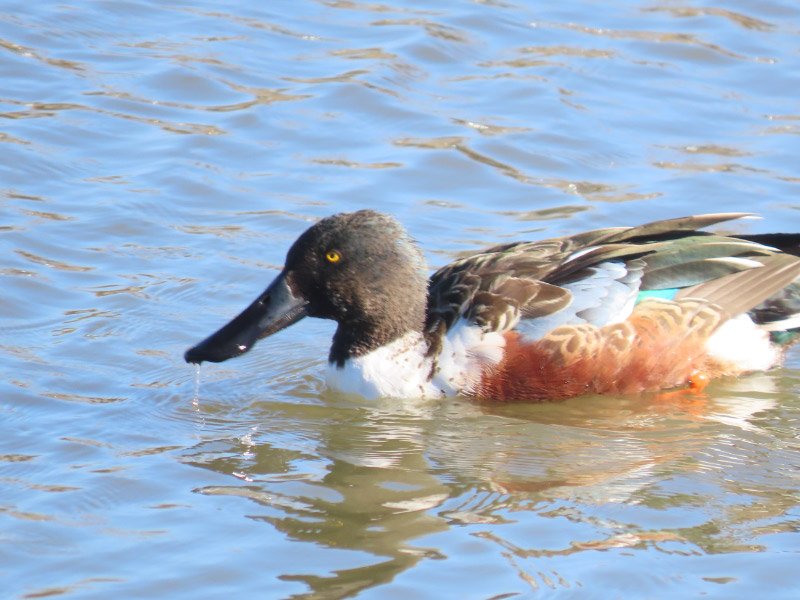
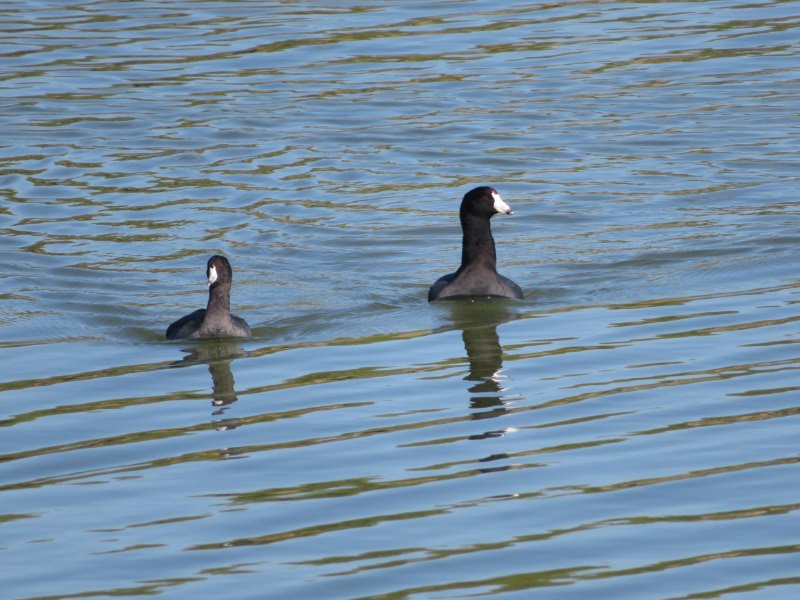
There were a lot of birds: American Wigeon, Northern Shoveler, Canada Geese, Greater Scaup, American Coot, and Ring-billed Gull (many immature).

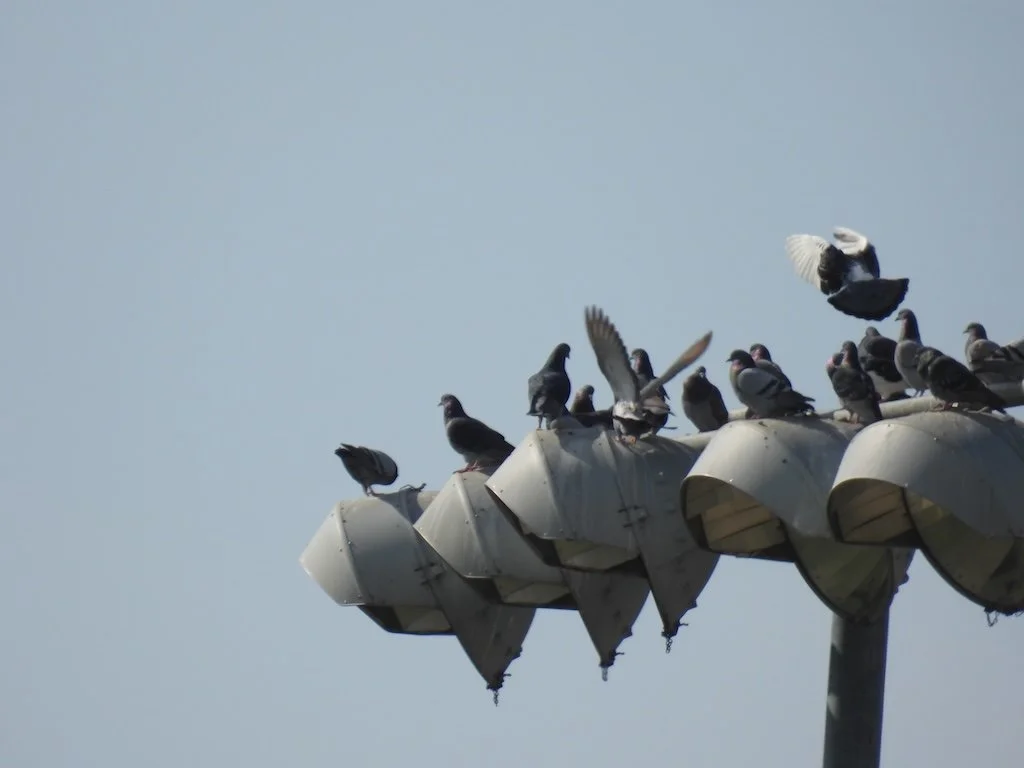
There were pigeons and crows on the tall lights over the ball fields.

Surprisingly there were cormorants on the poles as well!

I headed back toward the larger pond and my car…noticing some mistletoe in a tree along the way.

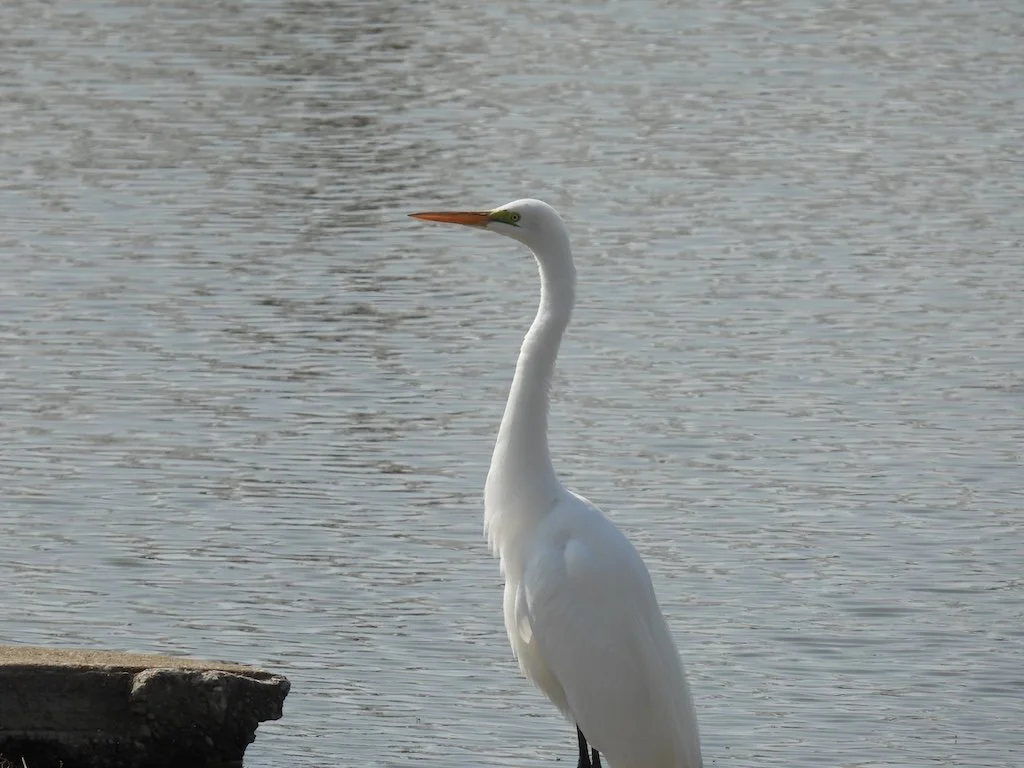
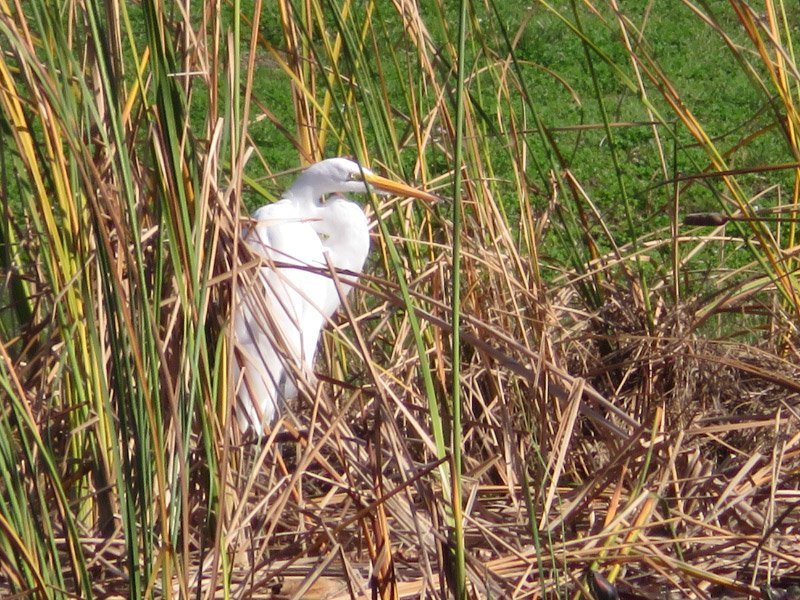
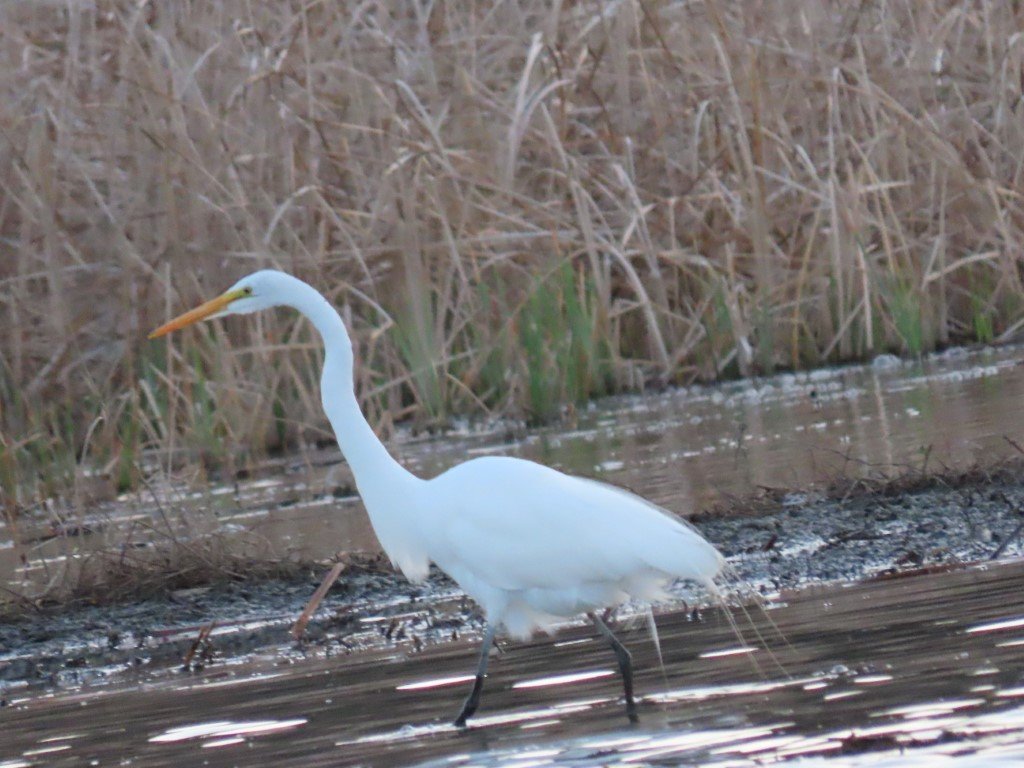
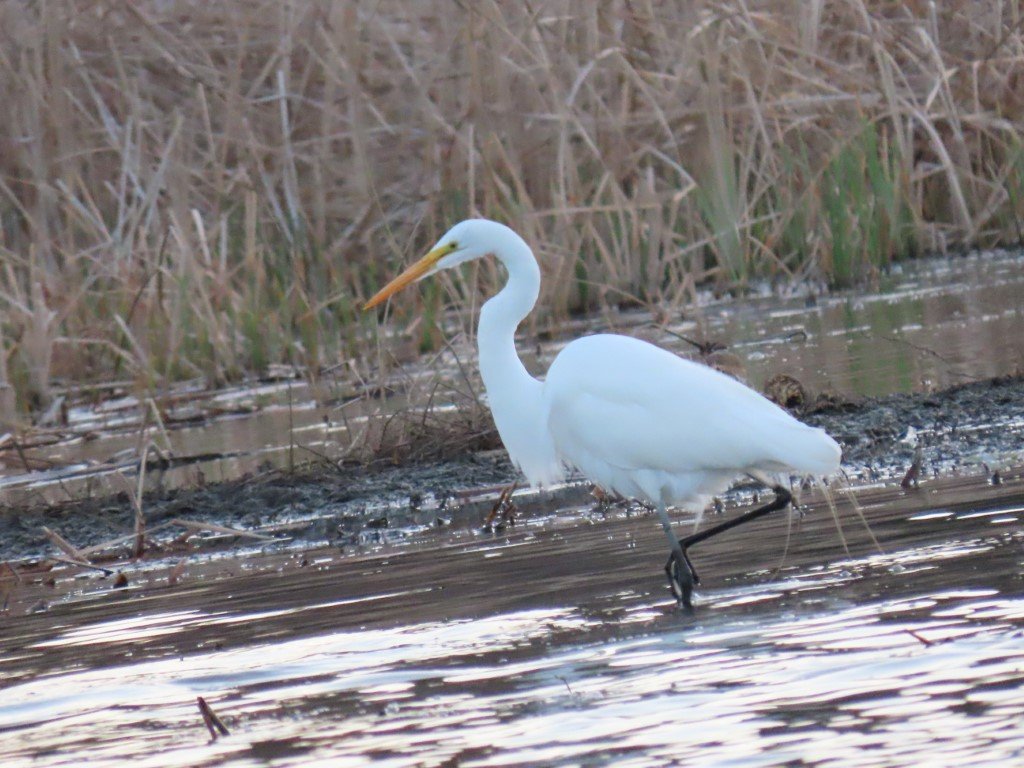
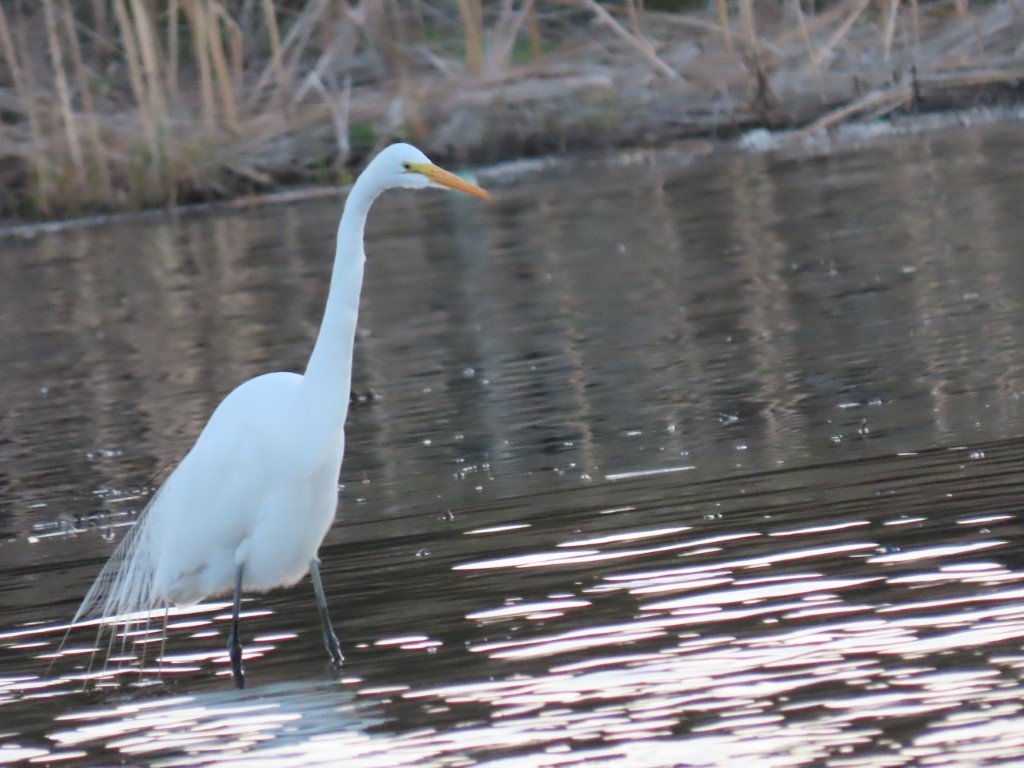
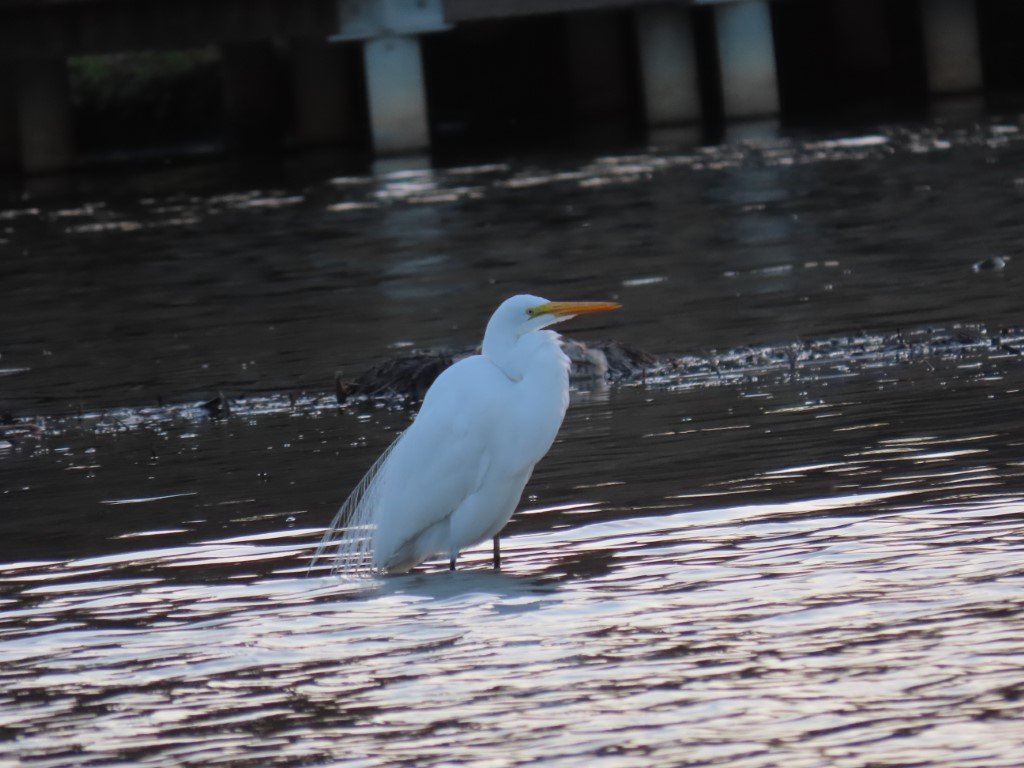
There were a pair of Great Egrets that interacted and then flew away from each other. The breeding plumage is beginning to be obvious.

A group of mallards and domestic duck hybrids were on a small pond. One hybrid was mostly black but had a green head!

Back at the larger pond I saw sleeping Ruddy Ducks.

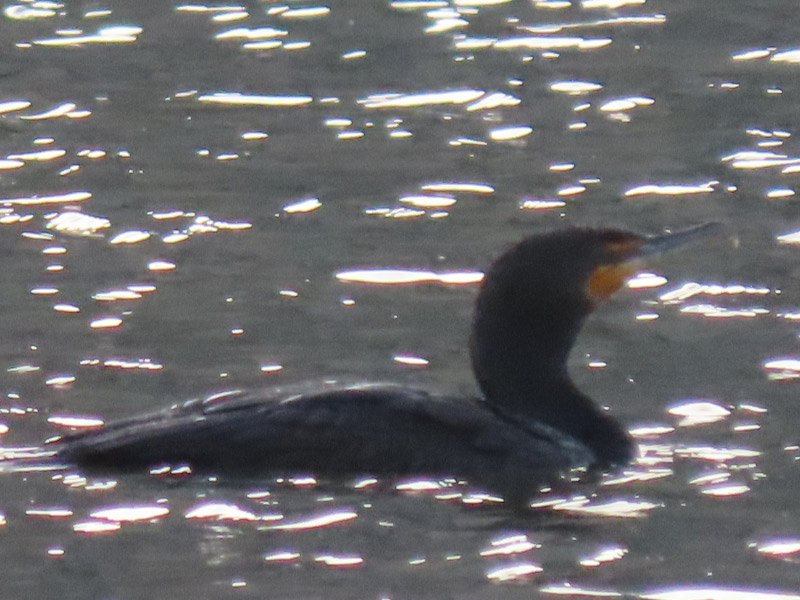
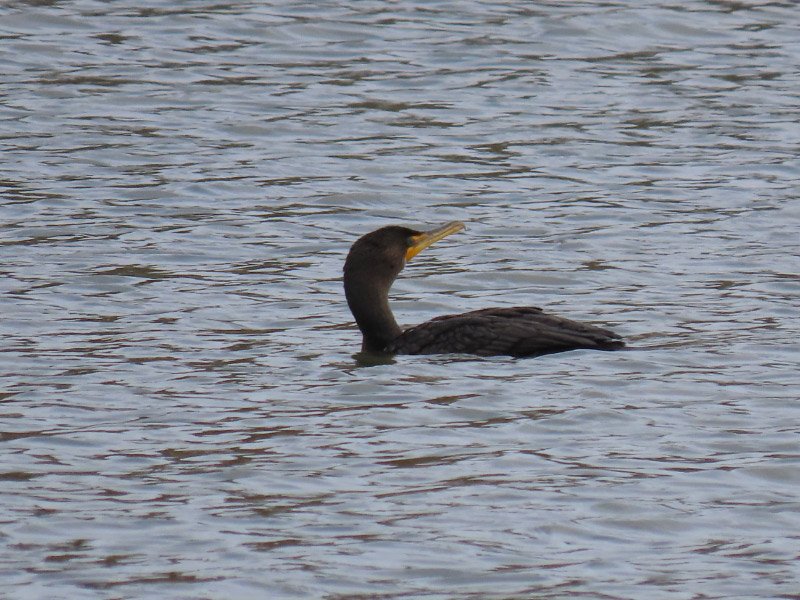
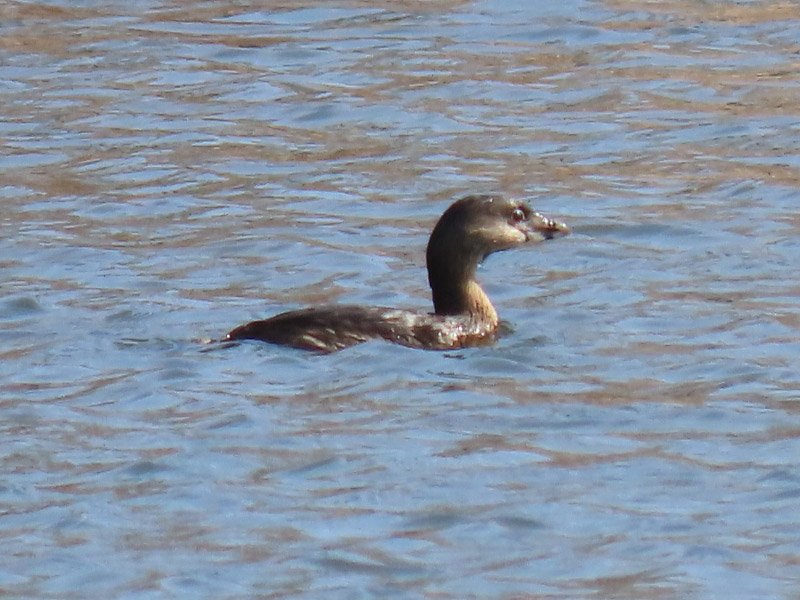
I got a better view of a cormorant on the pond. It seems to have some characteristics of a Double-Crested (bare skin in front of the eye) and the white line of the Neotropic. I read that there are instances of hybrids in the areas where the two species interact….and north Texas might be one of those places!

The cold and wind had me regretting wearing leggings rather than jeans….it was time to head back to the car.

Whooping Crane Boat Tour

We were at the dock for the 7 AM departure of our boat on the third day of the Whooping Crane Festival.

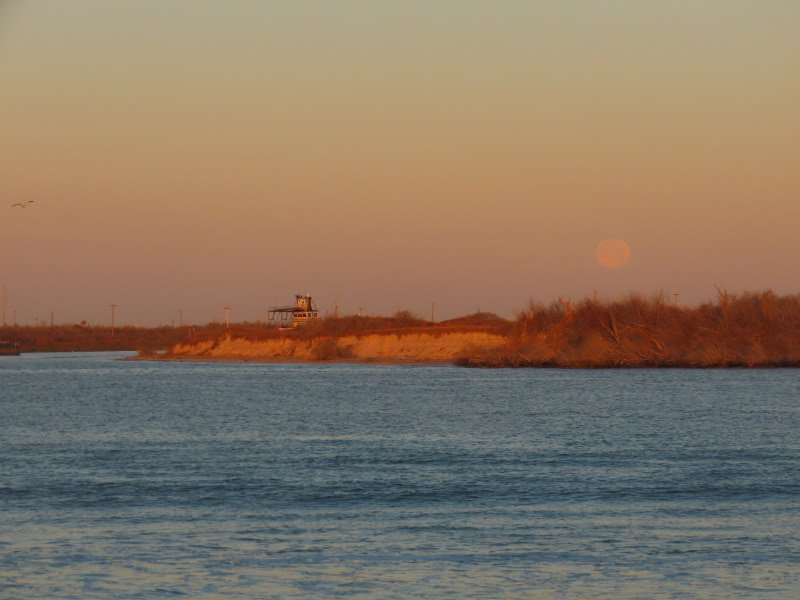
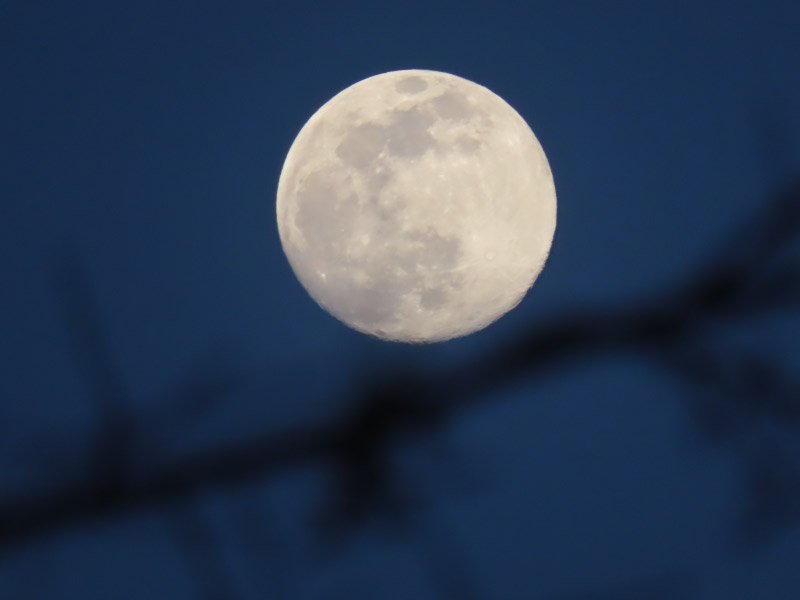
I took a few pictures before we boarded – the moon over the harbor area.

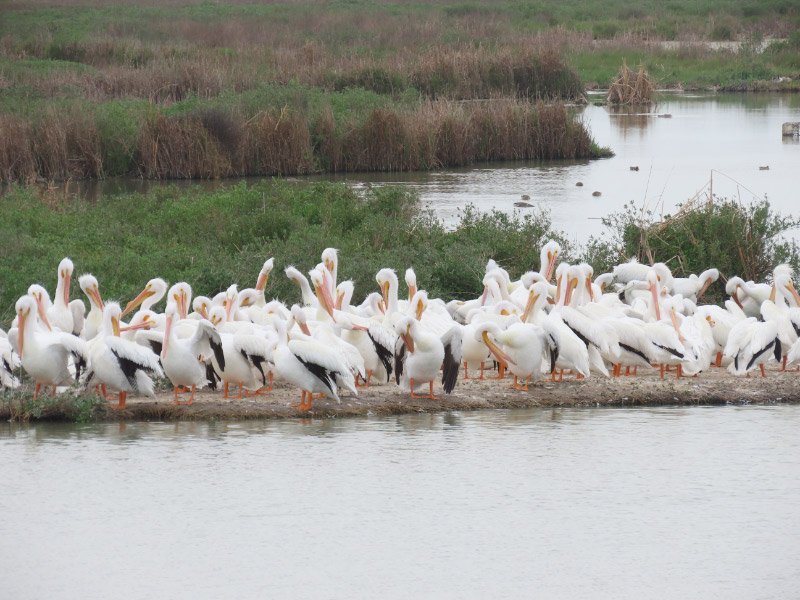
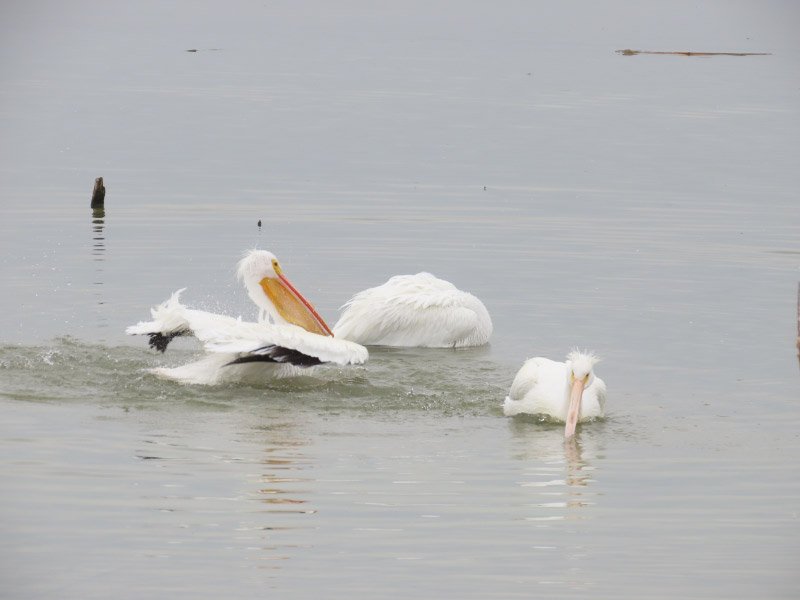
Our destination was the Aransas National Wildlife Refuge where Whooping Cranes feed in the marshy/shallow areas…only visible via boat and it took over an hour to get there from Port Aransas. We passed familiar areas early on and saw a group of American white pelicans, morning light with moon setting over the shore, roseate spoonbills and white ibis in the distance, and the Aransas Pass Lydia Ann Lighthouse.
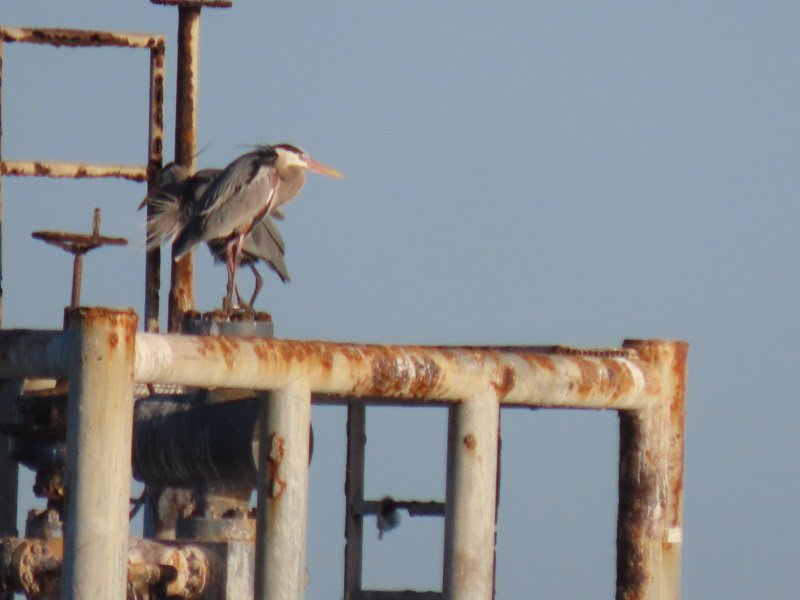
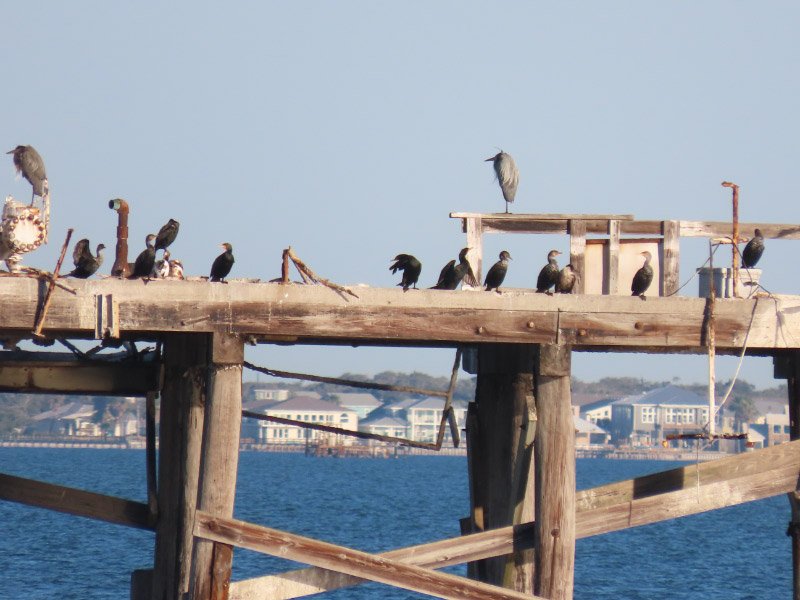
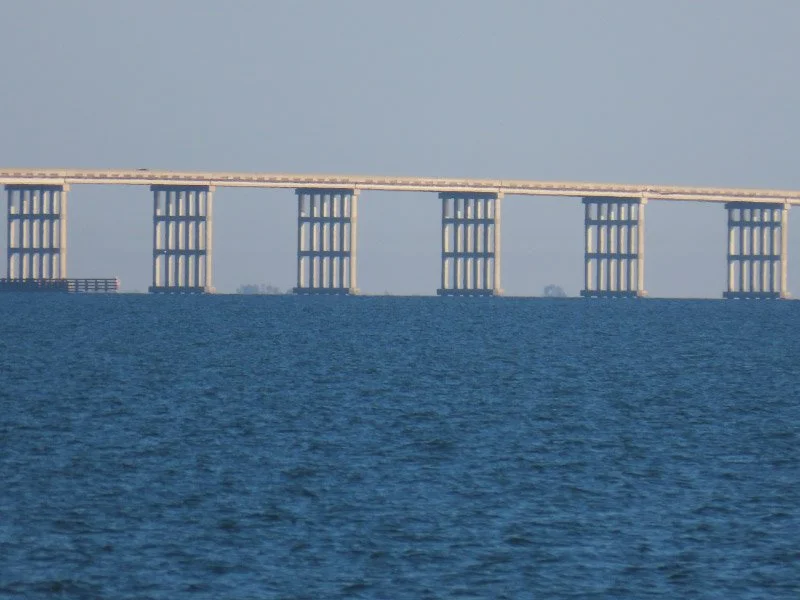
Then we entered an area that was different than our previous tours and more open water…with occasional platforms with cormorants and great blue herons hunkered in the chilly morning wind. There was a tall bridge as well.

Then there started to be a lot of small islands full of birds: Cormorants, great blue herons and brown pelicans. One area seemed to have a lot of great blue herons and I wondered if the island was their roost.  There were also groups of laughing gulls. (Click on the small images to see a larger version.)

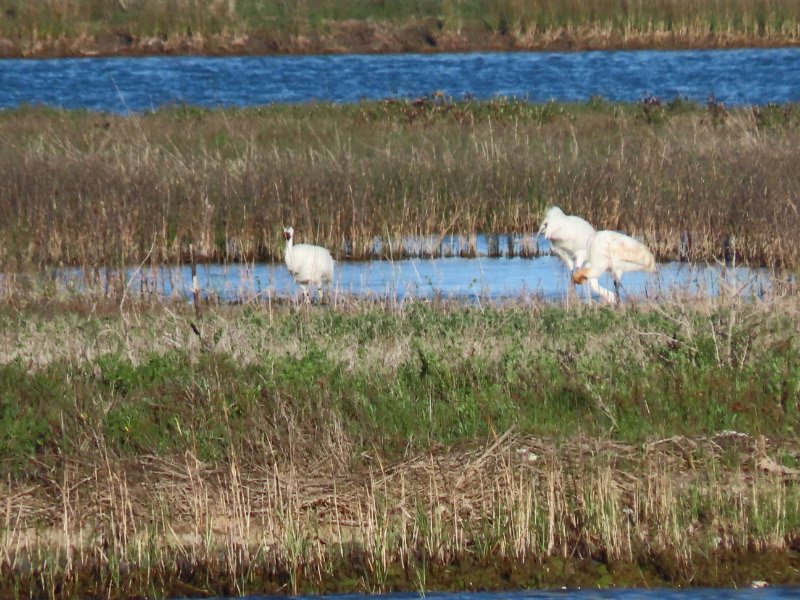
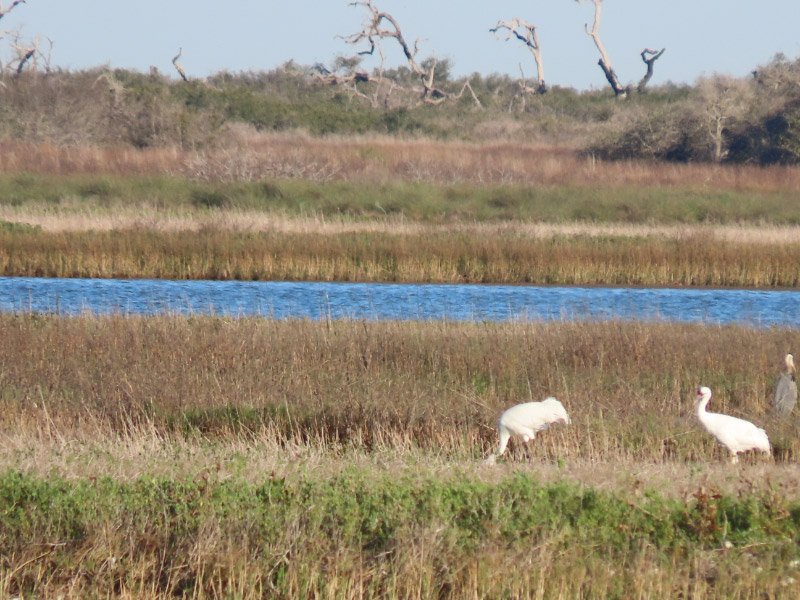
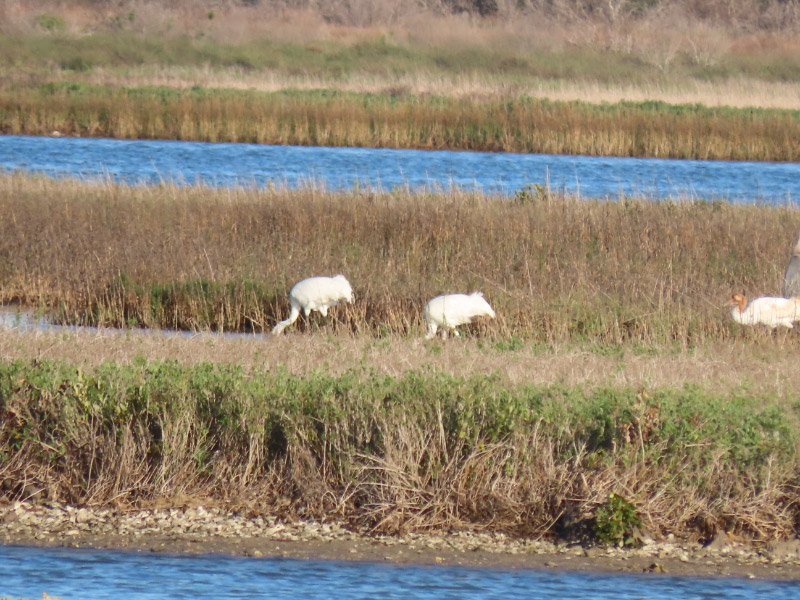
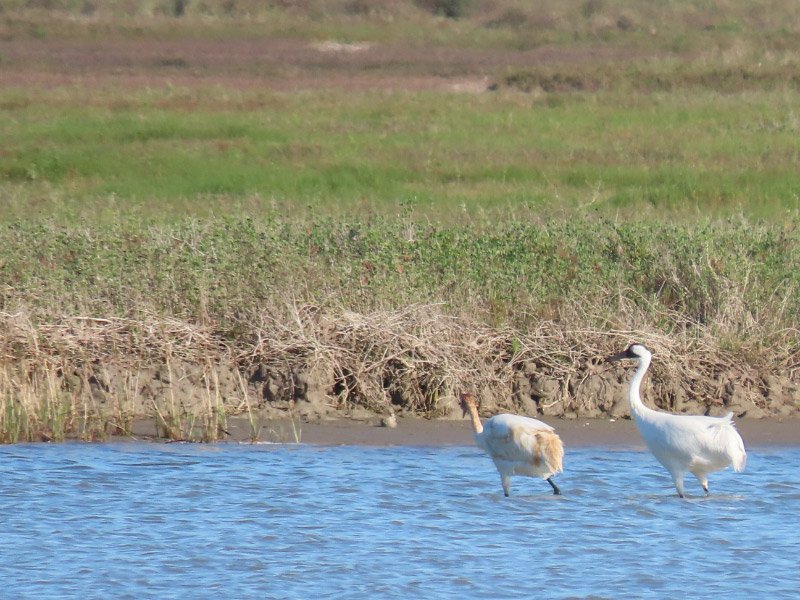
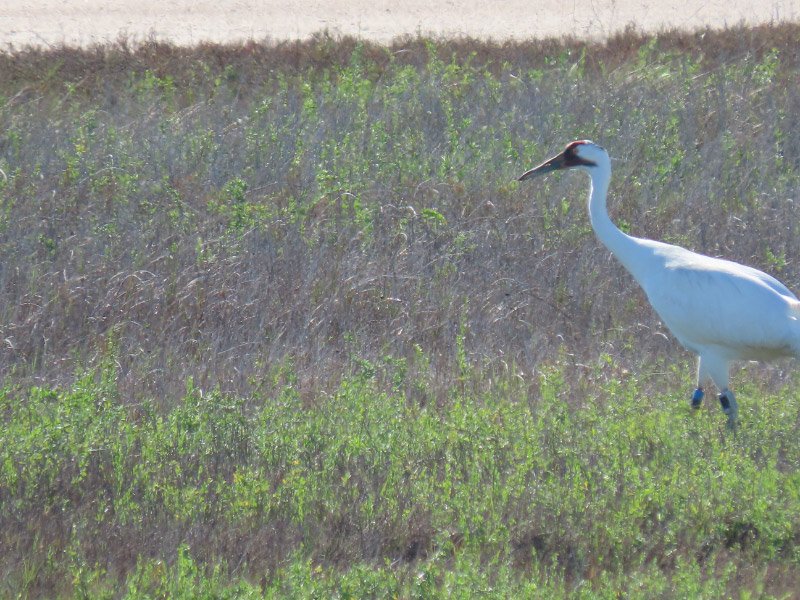
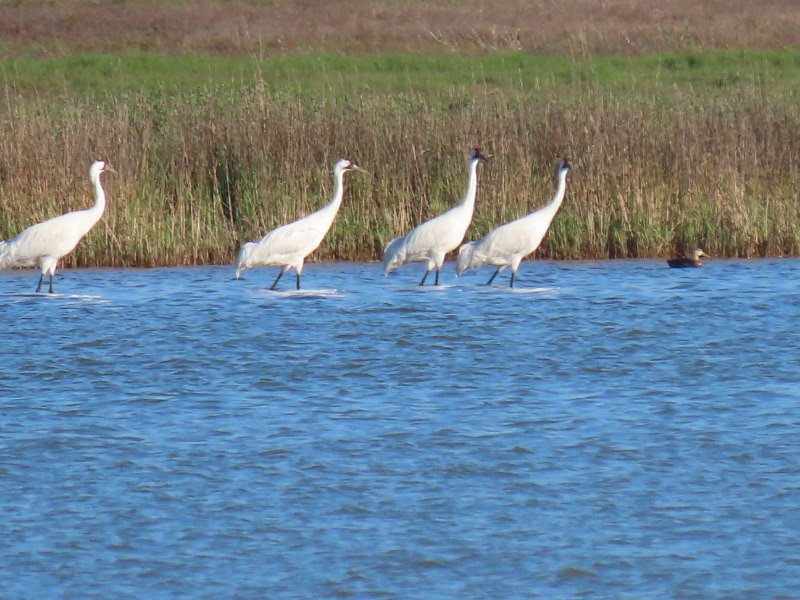
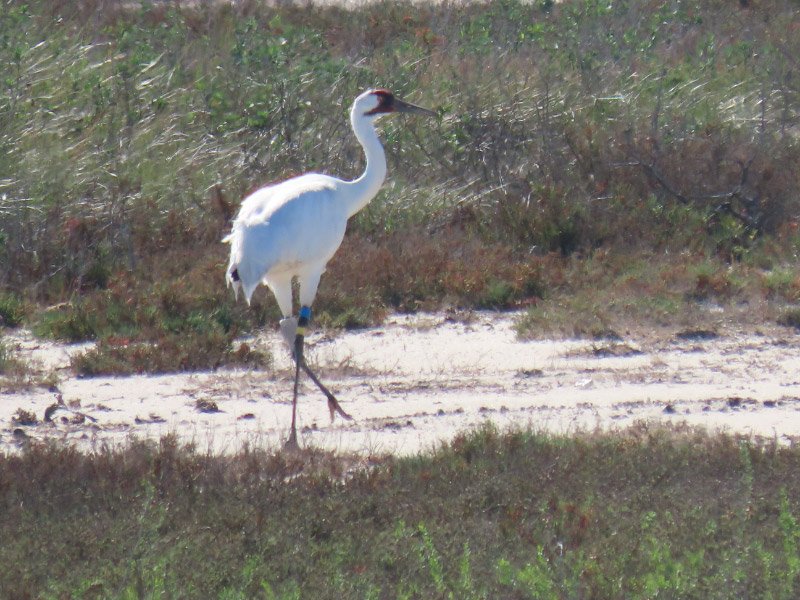
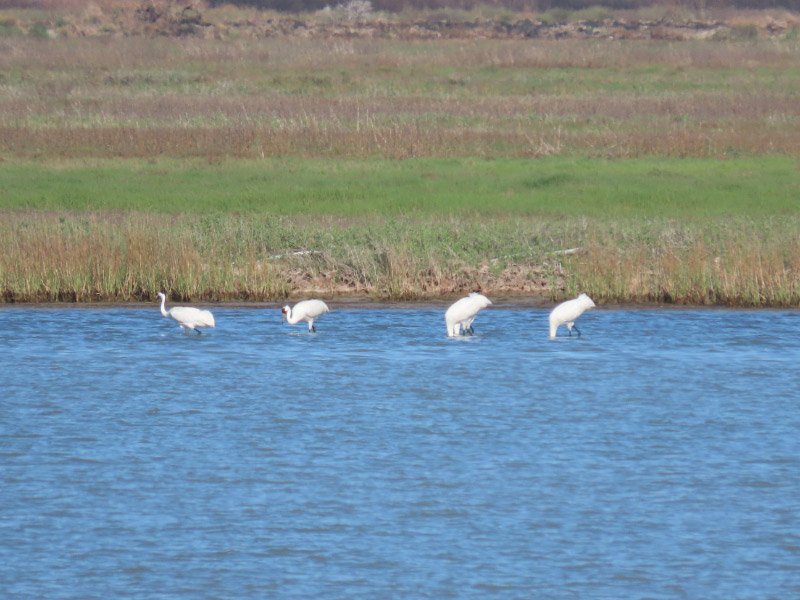
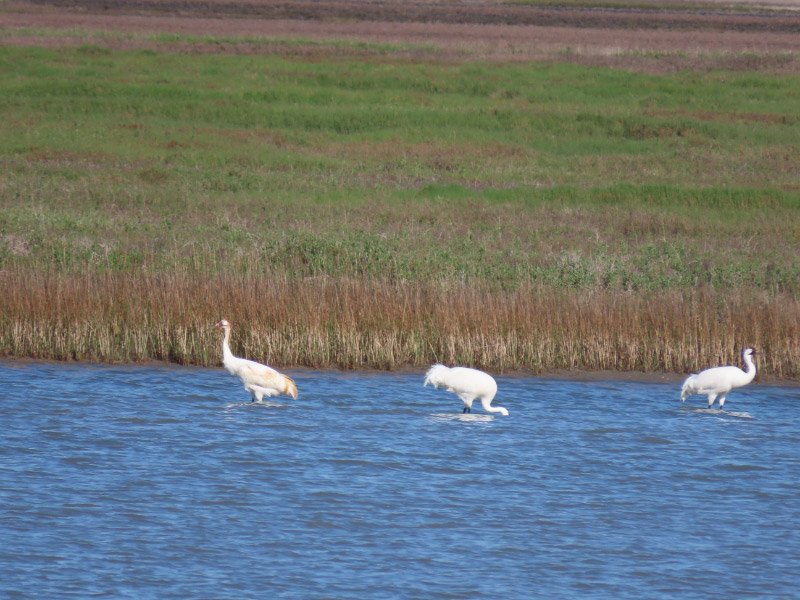
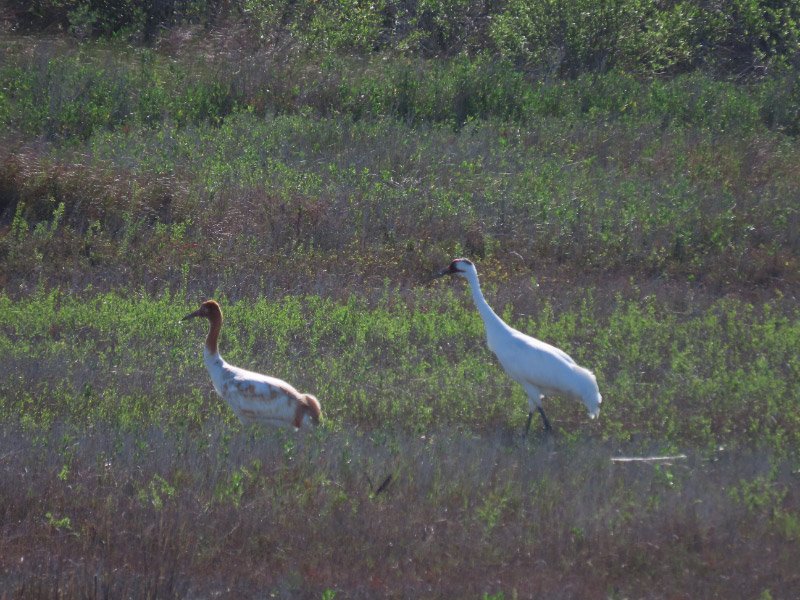
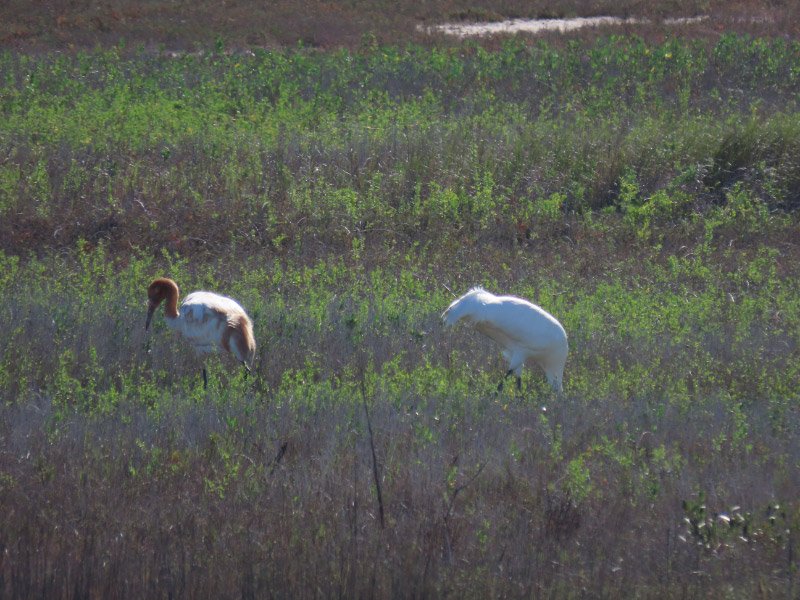
And then we started seeing Whooping Cranes. Even at a distance – they are easy to identify because they are so large…and so white. The young are rusty looking – particularly their heads. Many sightings were of 3 birds: 2 adult birds and a colt; it must have been a good year for increasing the whooping crane population!
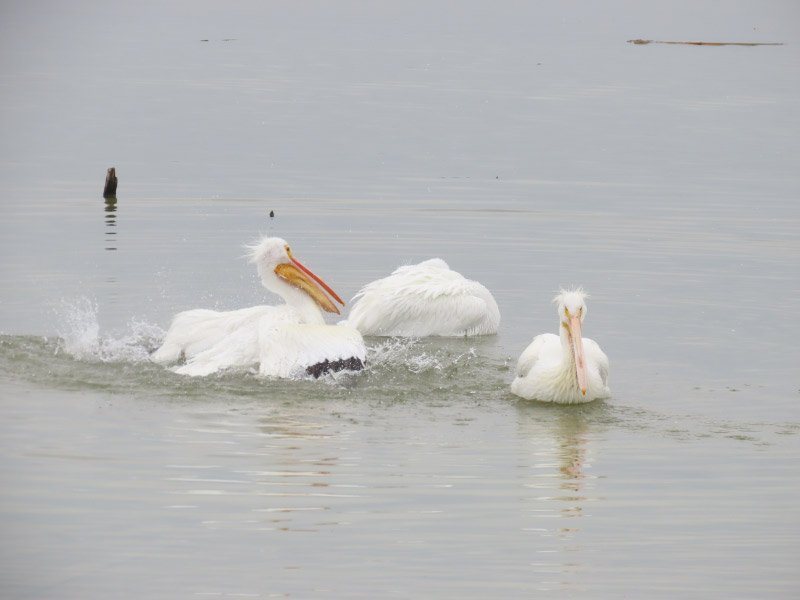
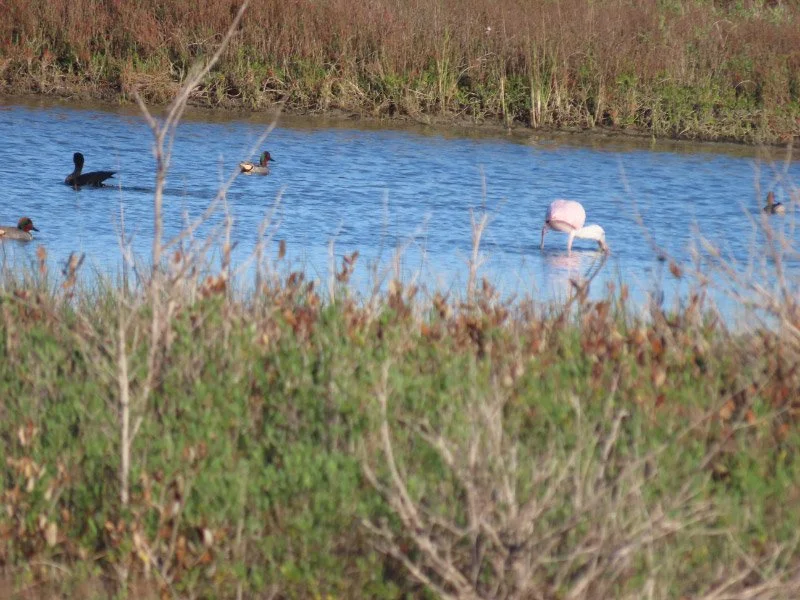
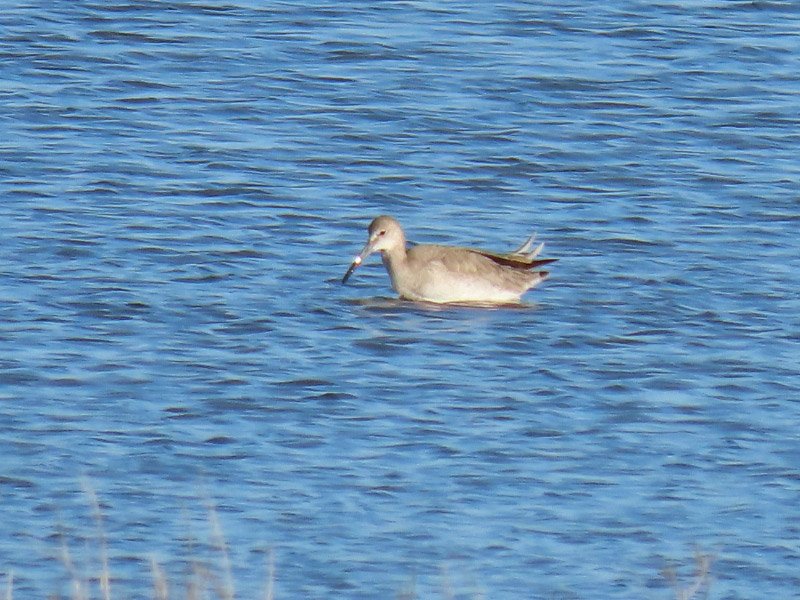
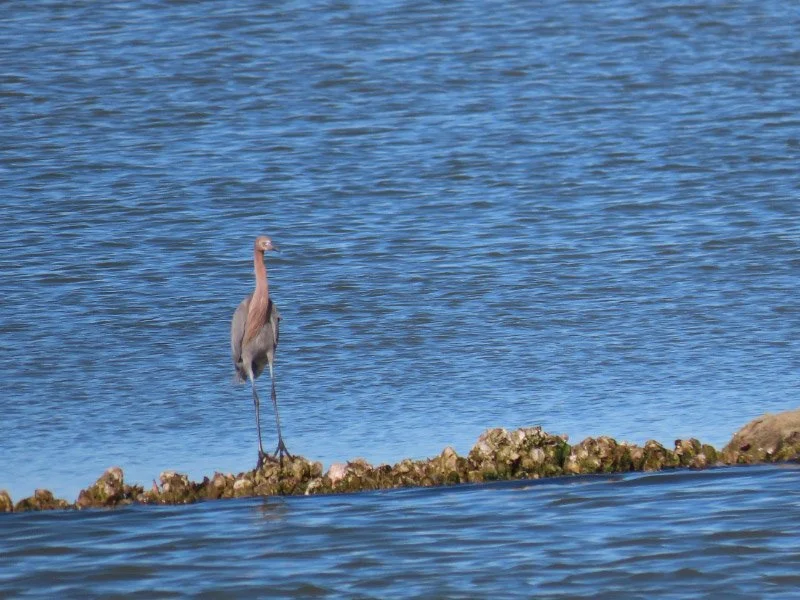
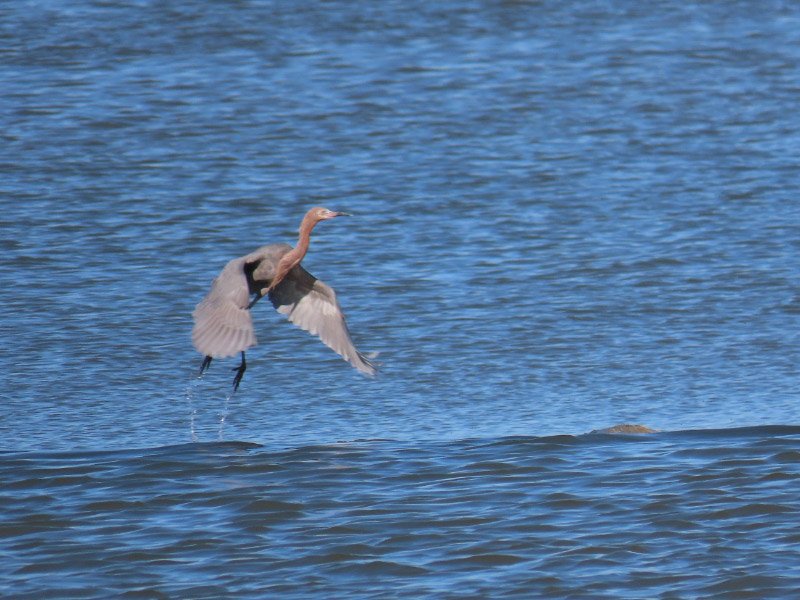
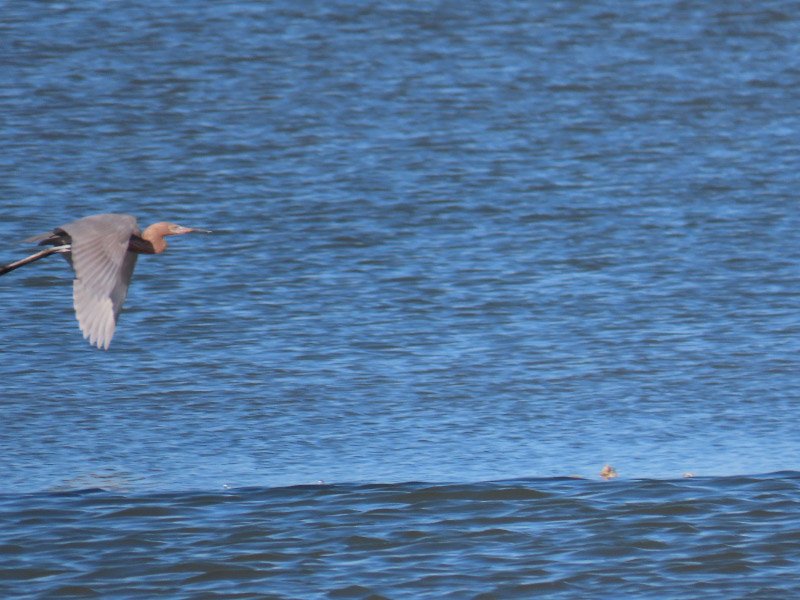
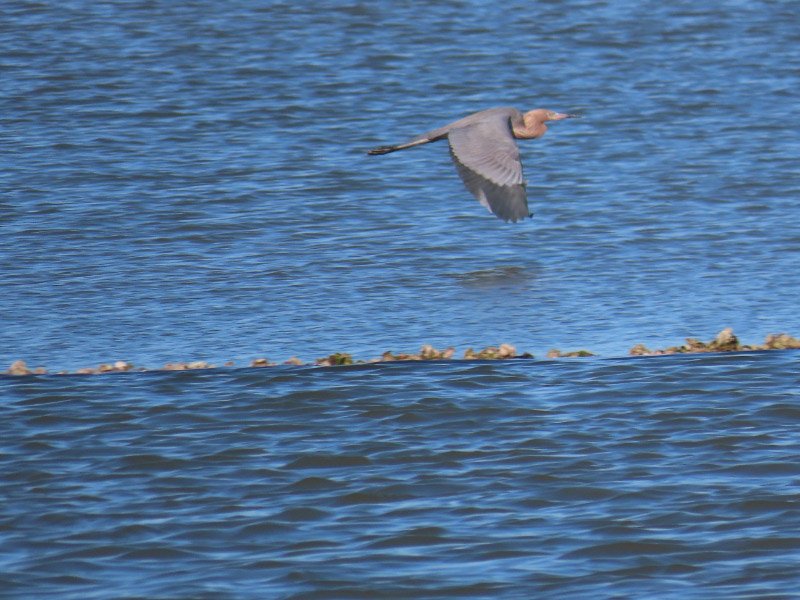
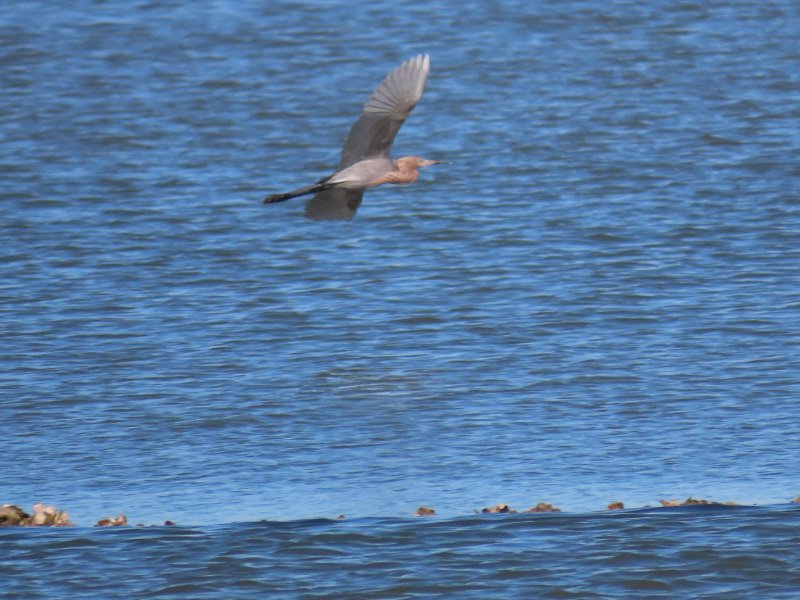
There were other birds to see too between whooping crane sightings – roseate spoonbills, green-winged teals, willets, American avocets, more great blue herons, buffleheads, cormorants, an osprey, and reddish egret (that took off as a wave covered the spit of shells the bird was standing on).

I took some closeups of some shells…out of the water at low tide.

I also realized how wakes of boats impact the shoreline…why there are often blocks on the shore to reduce the erosion wakes can cause. It doesn’t take a big or fast-moving boat to cause damaging wakes in smaller channels.

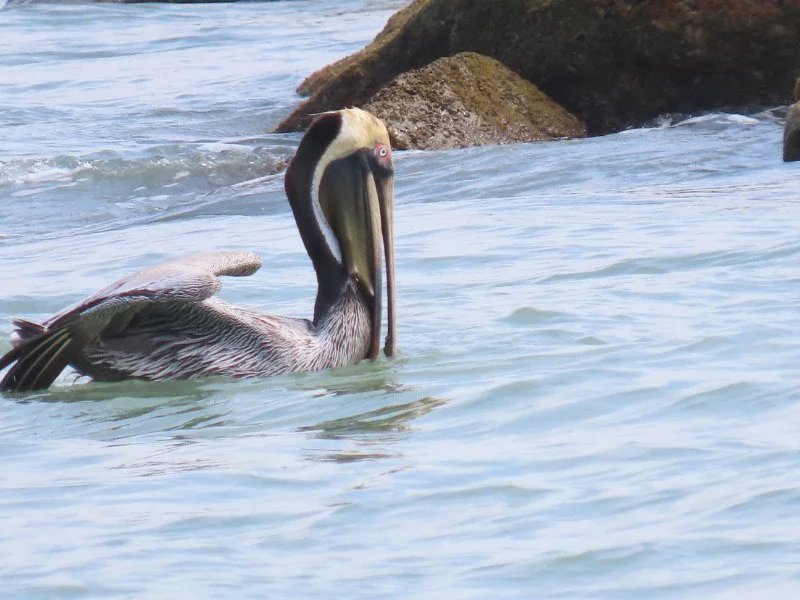
And then we took a break as we headed back to Port Aransas – no more photos until the jetty with the usual brown pelicans.

We got back to the dock with plenty of time before our afternoon field trip for lunch; we then headed back to the Leonabelle Turnbull Birding Center.

Road Trip to the Texas Gulf Coast

We had registered for the Whooping Crane Festival months ago…and managed to attend it between my mother’s death and her funeral. Being out in nature at a birding festival was a healing activity. It helped that my husband did all the driving. We made the drive from our home in Missouri to Port Aransas TX over 2 days. We started out before sunrise…

The clouds gradually dissipated into whisps before the sky cleared entirely.

I enjoyed trying to take pictures as we went through Dallas…not something I get to do very often because I am usually driving.

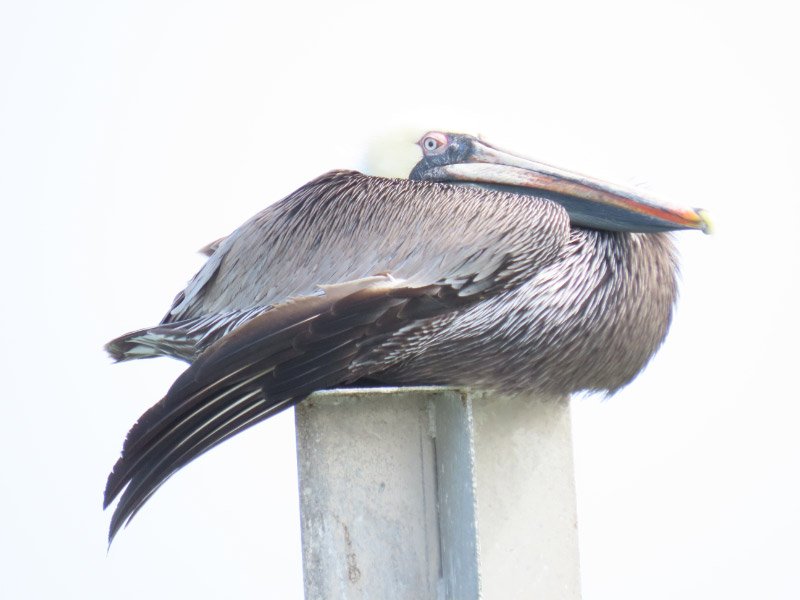
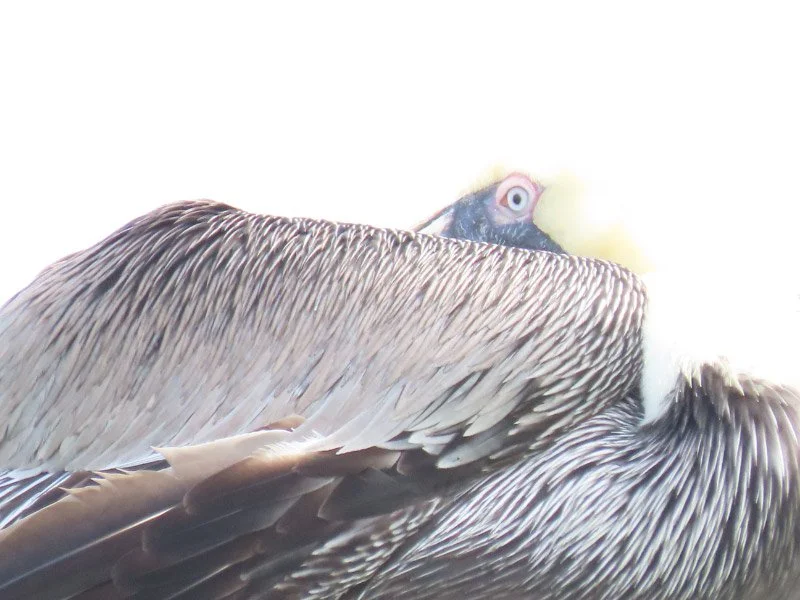
We stopped near Austin for the night. We got to Port Aransas early enough for lunch and to visit Roberts Point Park. There were groups of brown pelicans and cormorants easily viewed from the park.  I liked the pelicans at rest…images in high key.

There was a snowy egret on the rocks showing off his yellow socks. When I looked at my pictures on my larger monitor, I noticed that there are yellow strips on the back of the legs!

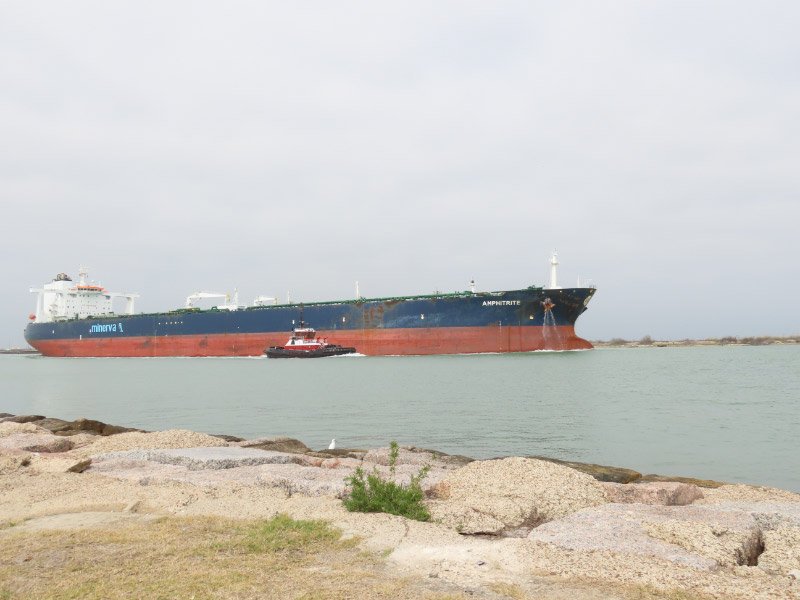
There were large ships visible in the channel.

We also visited the Leonabelle Turnbull Birding Center…quickly realizing that we’d have to return when we had more time.

There were black-necked stilts – with their striking black and white bodies, straight black bill, and pink legs.

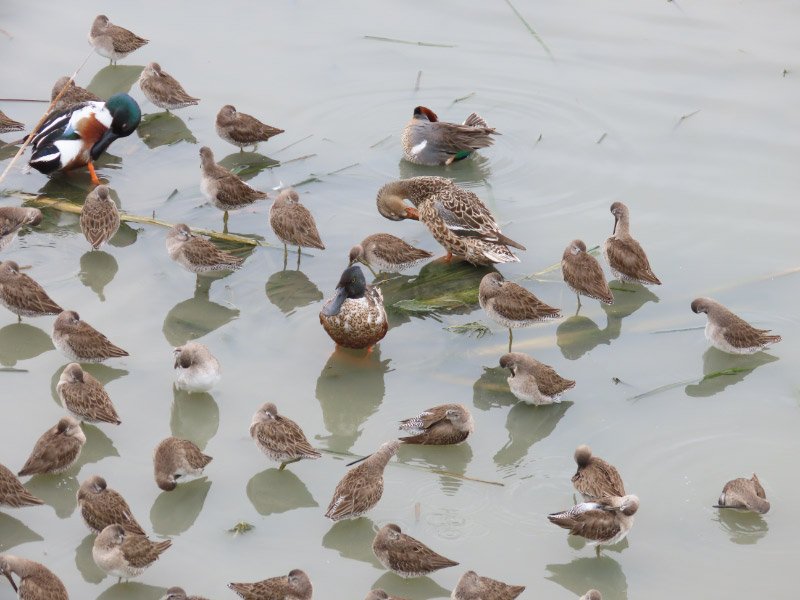
Blue winged teals flashing iridescent color as they preened.

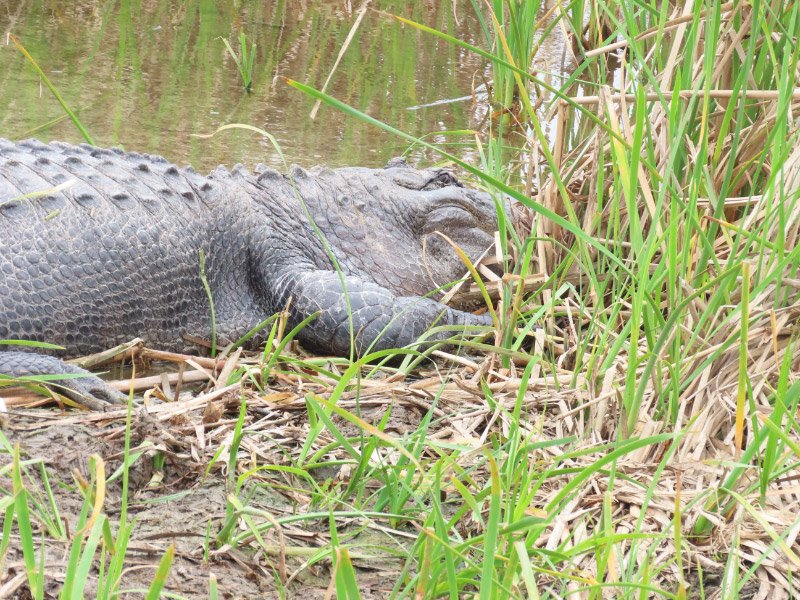
A very sedentary alligator was lolling below the  boardwalk (although with its eye open).

A common gallinule was feeding nearby.

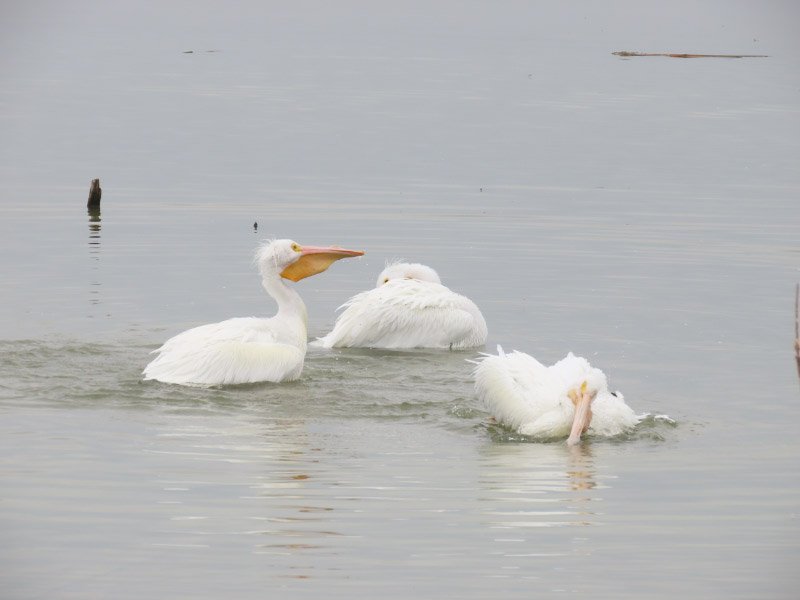
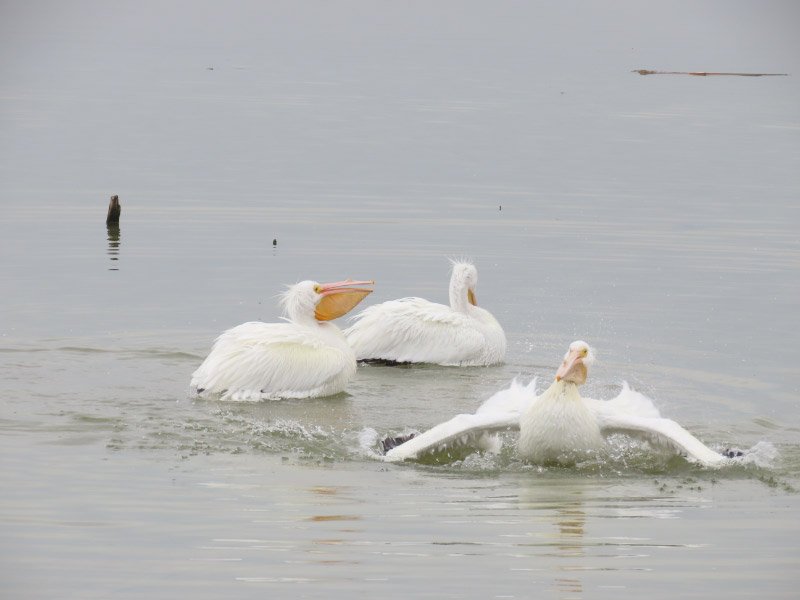
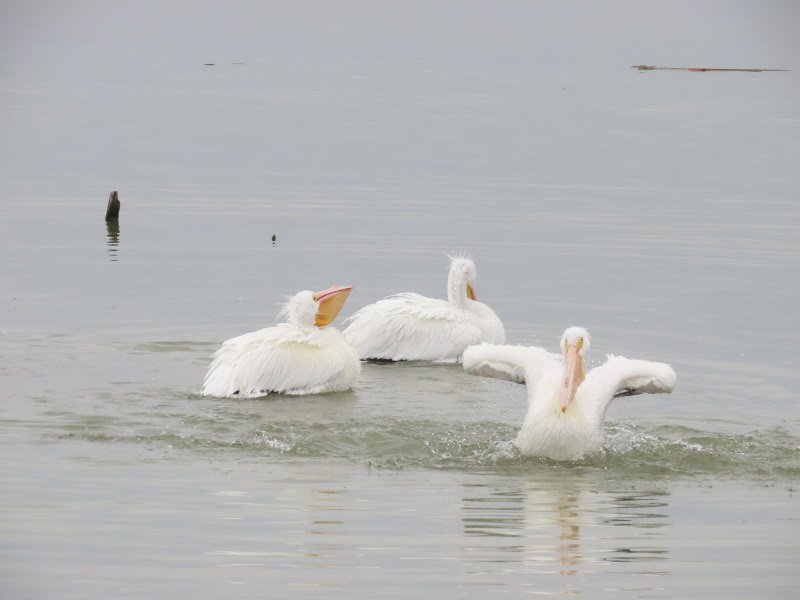
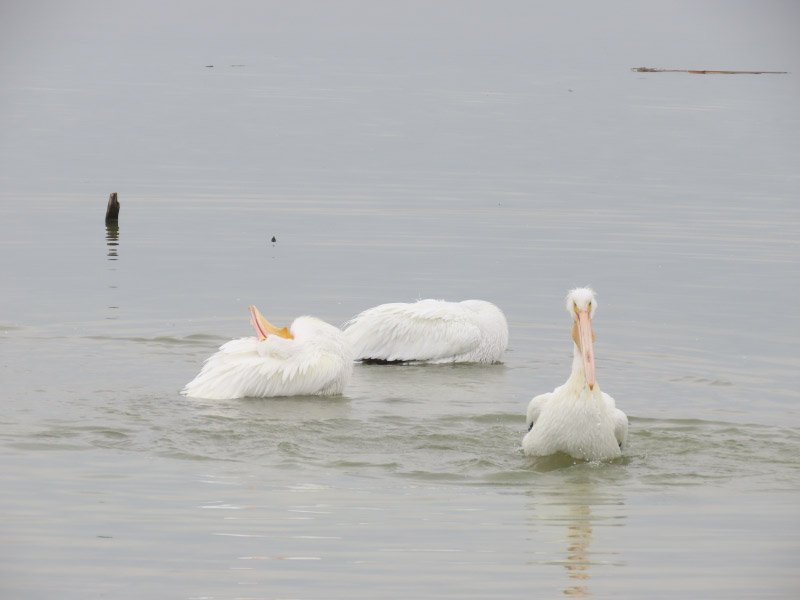
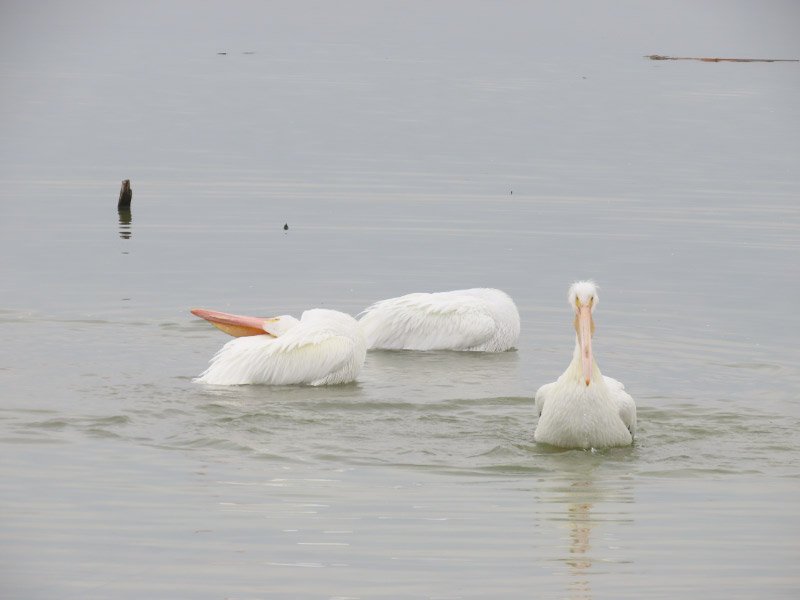
A group of American white pelicans were preening in the shallows.

A larger group was on the shore.

Green winged teals preening in the shallow water…or lazing on the shore.

White ibis were in the area…sometimes feeding together and sometimes in small groups.

We were there in the early afternoon, and it surprised me that the light made the water color and shadows so artsy for this grouping for birds – snoozing and preening. At this moment they must have all felt very secure.

Just before we left, I tried to get a picture of the whooping cranes that were feeding in the distance  – an adult and colt (with brownish feathers on the head and parts of the body). These are the birds we came to the area to see. All the other birds are a big bonus!

We headed for our first field trip…a Mustang Island boat tour (the topic of tomorrow’s post).

Josey Ranch – February 2024

When I first arrived at Josey Ranch, I didn’t think I was going to see very many birds. Then I started to notice more. Ring-billed gulls on the boardwalk and shore.

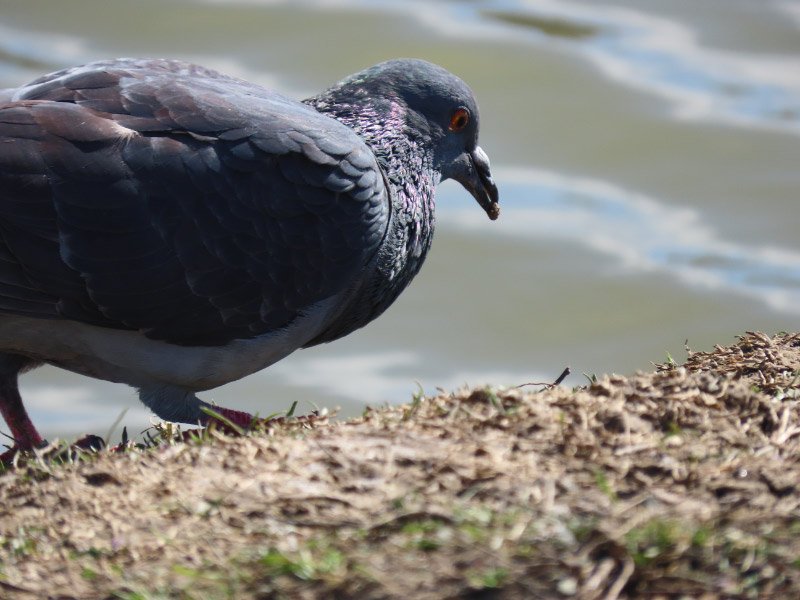
Pigeons strutting – the iridescent color of their feathers changing as they moved.

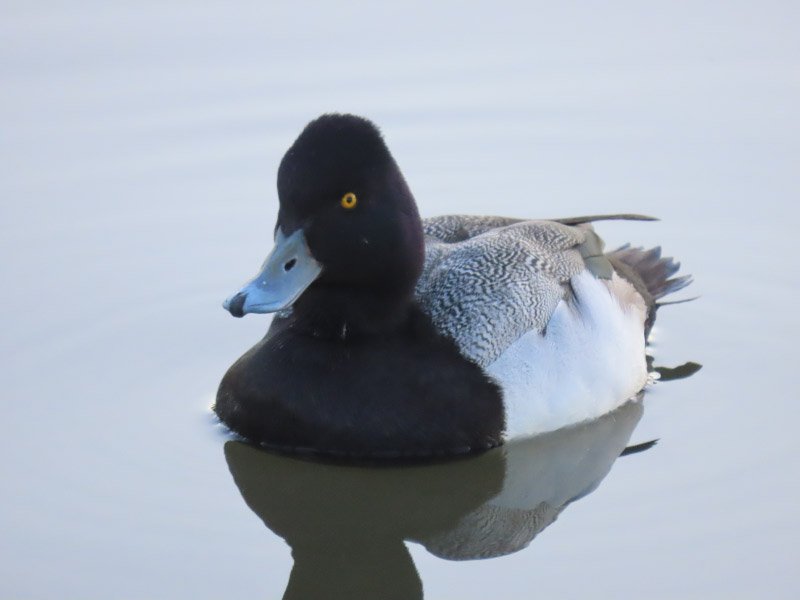
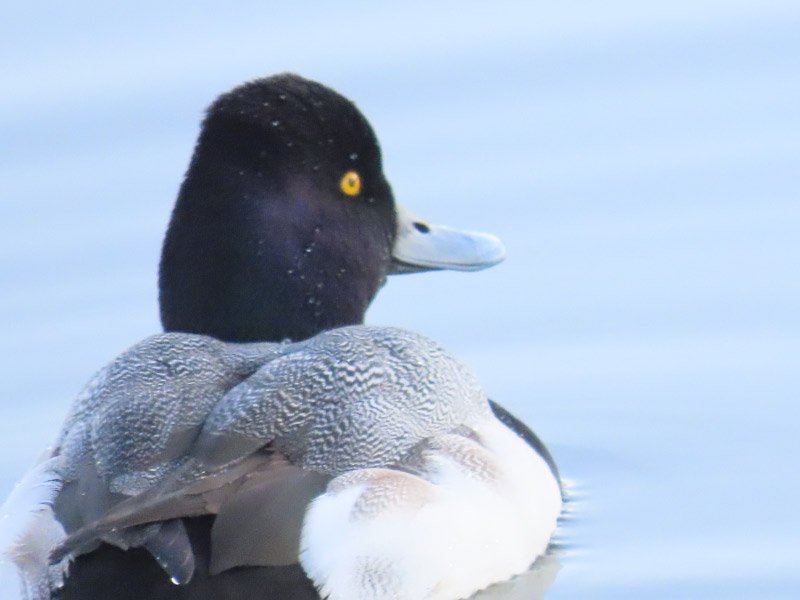
I excepted the flotilla of scaups. They seem to be the bird I see most this winter.

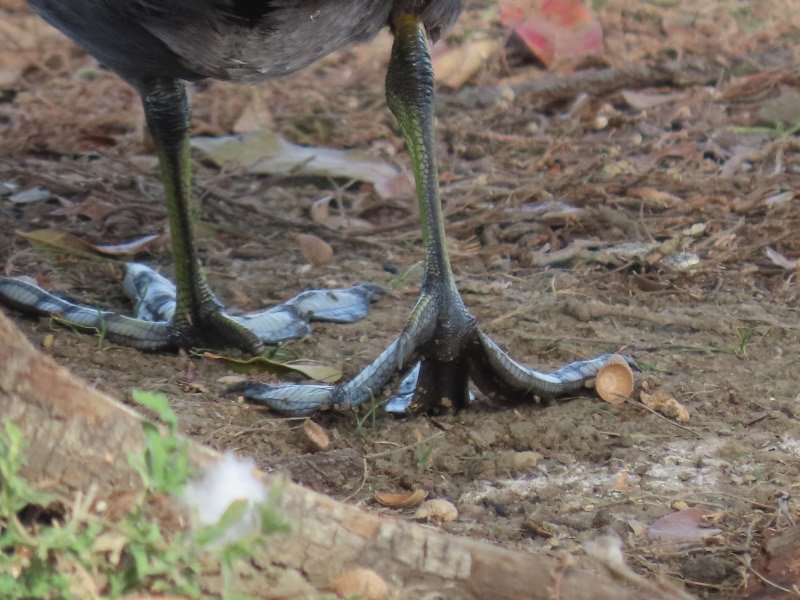
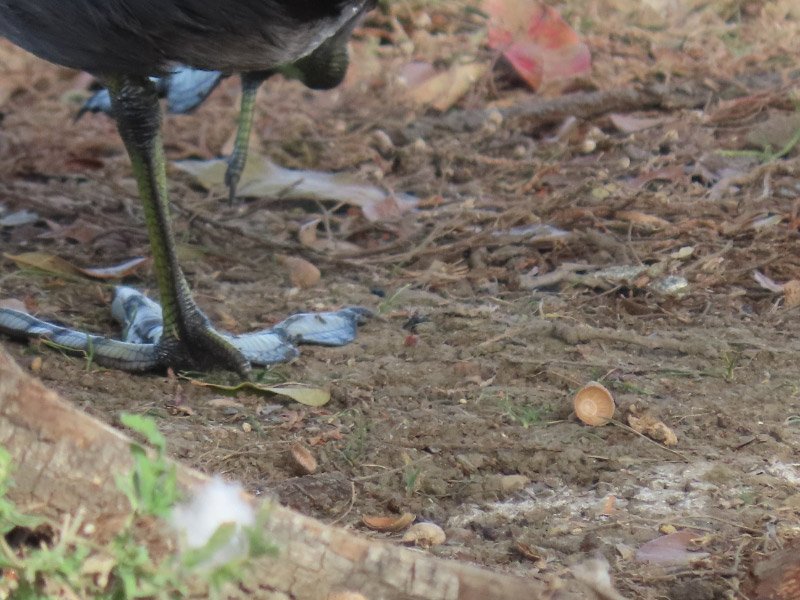
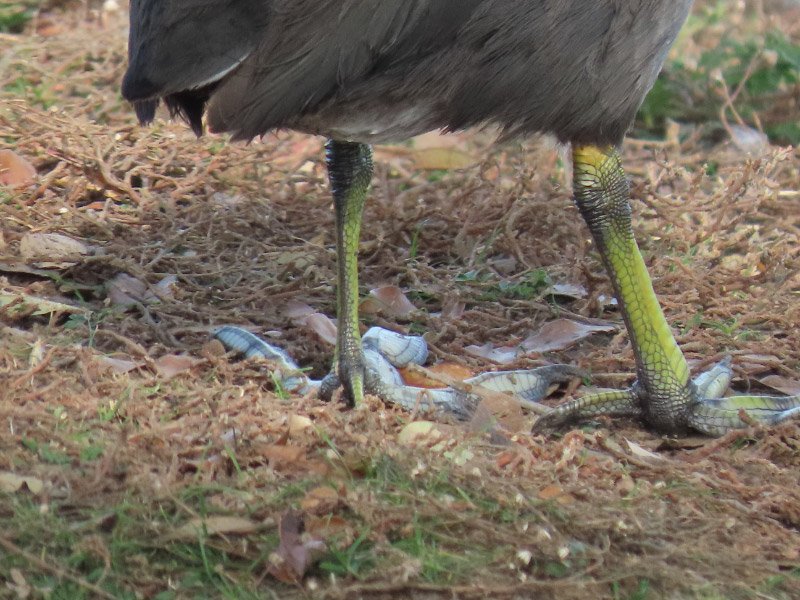
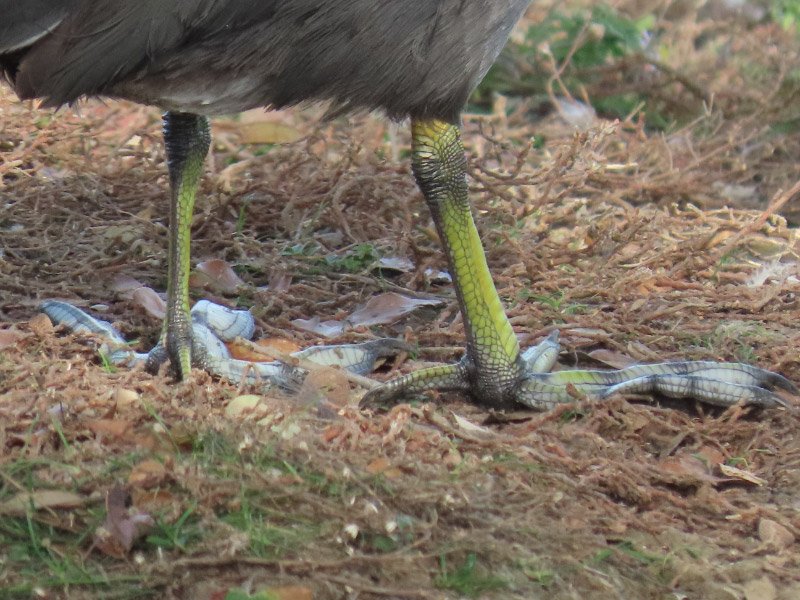
A coot came out of the water, and I got pictures of its feet (so different…they look a little dangerous) and next to a Canada goose for a size comparison.

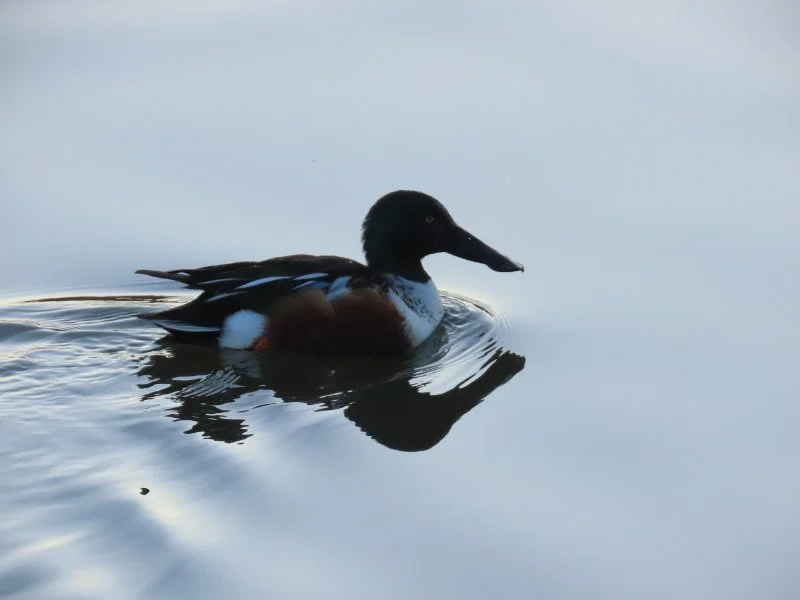
There were a few shovelers.

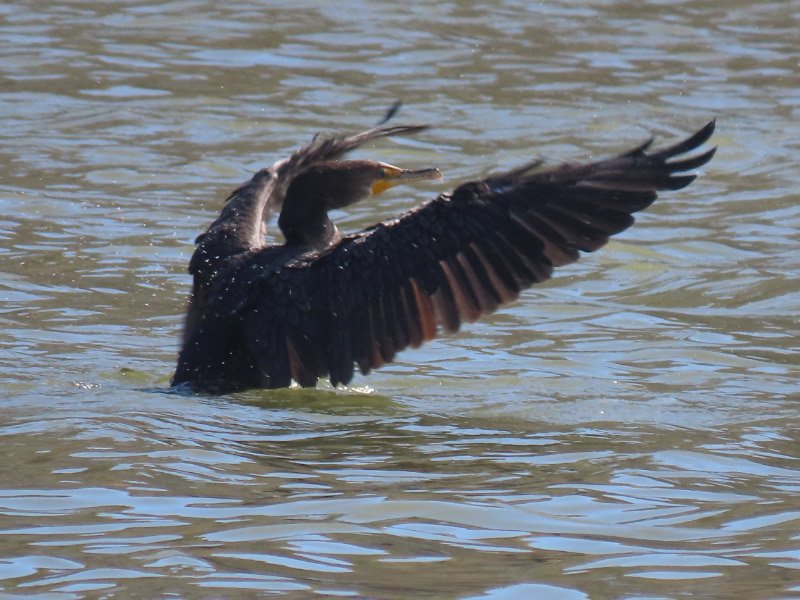
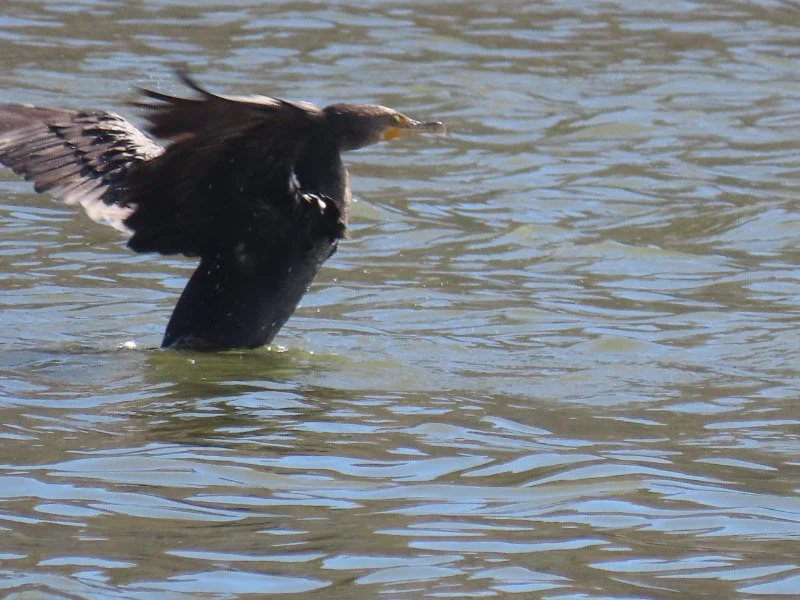
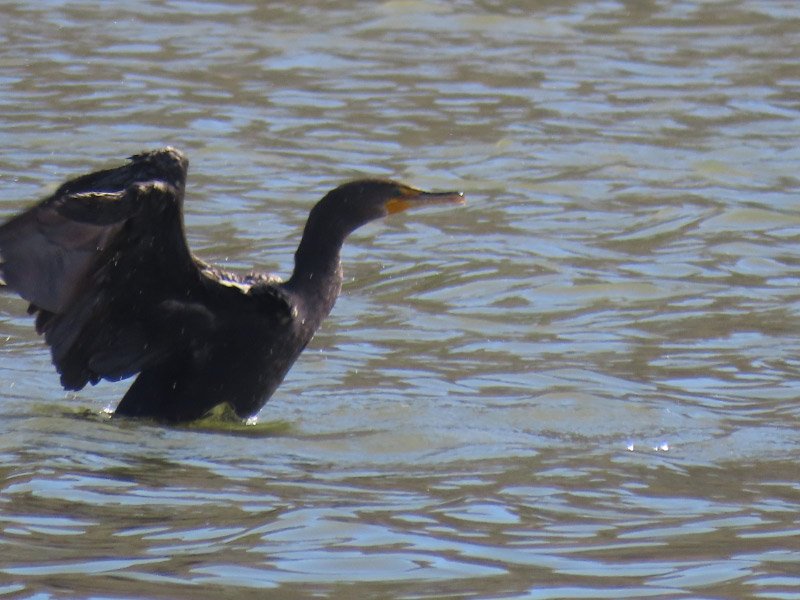
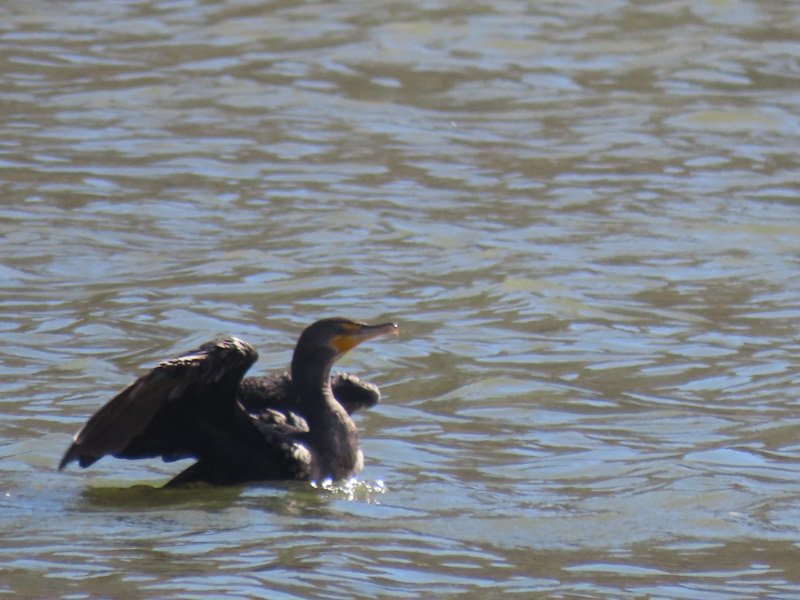
But the treat were cormorants on the water….I took several sequences because there seemed to be so many cormorants making the maneuver.

One bird swam around with wings arched for a long time. Was it to dry the feathers….or show off for a lady?

Josey Ranch Birds – January 2023

There was not a lot of extra time during my work trip to Carrollton TX in late January…but I did manage a morning to check the birds at Josey Ranch. I was a little early; the sun was up but the large building to the east was still blocking much of the sunshine. There were quite a few birds to see.

The scaups

The Northern Shovelers (the first time I had seen them this season at Josey Ranch)

The coots

The Canada Geese

A Great Blue Heron…A Great Egret

The Double-crested Cormorants (although not in as large numbers as previous visits)

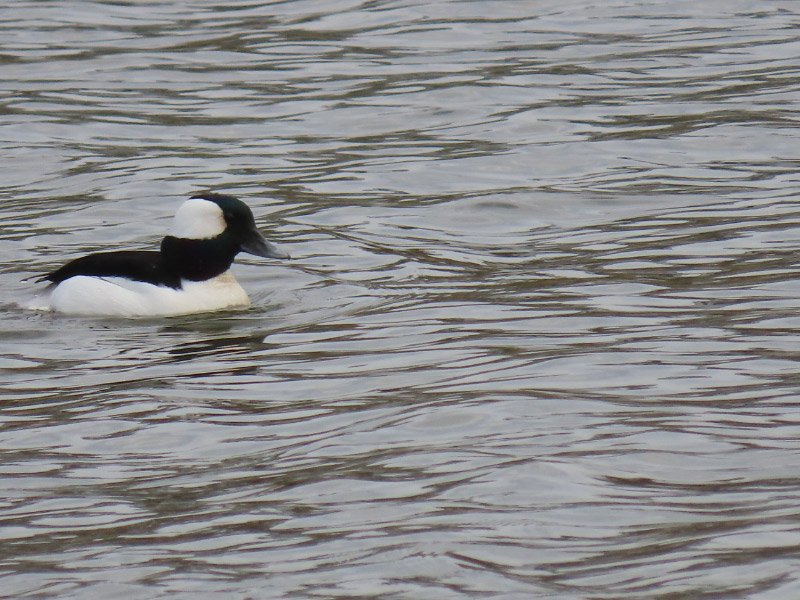
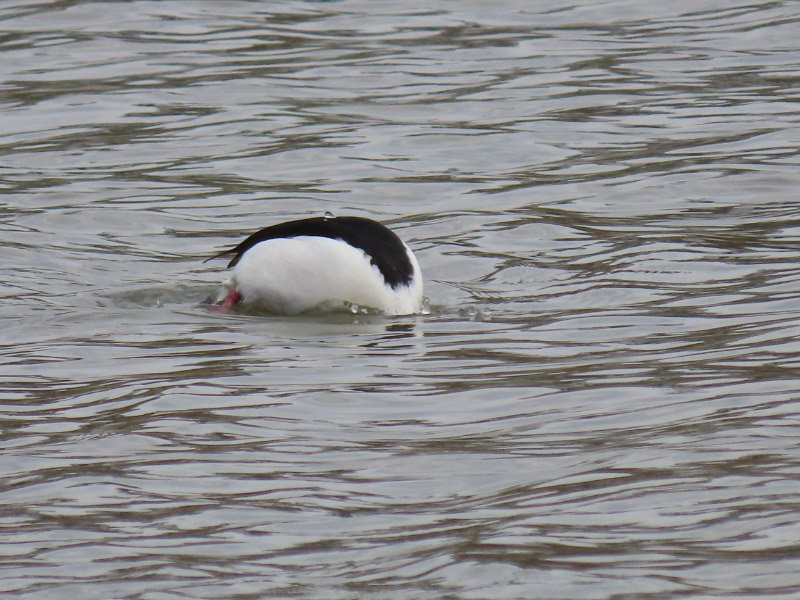
A male bufflehead (looking for breakfast so difficult to catch on the surface!)

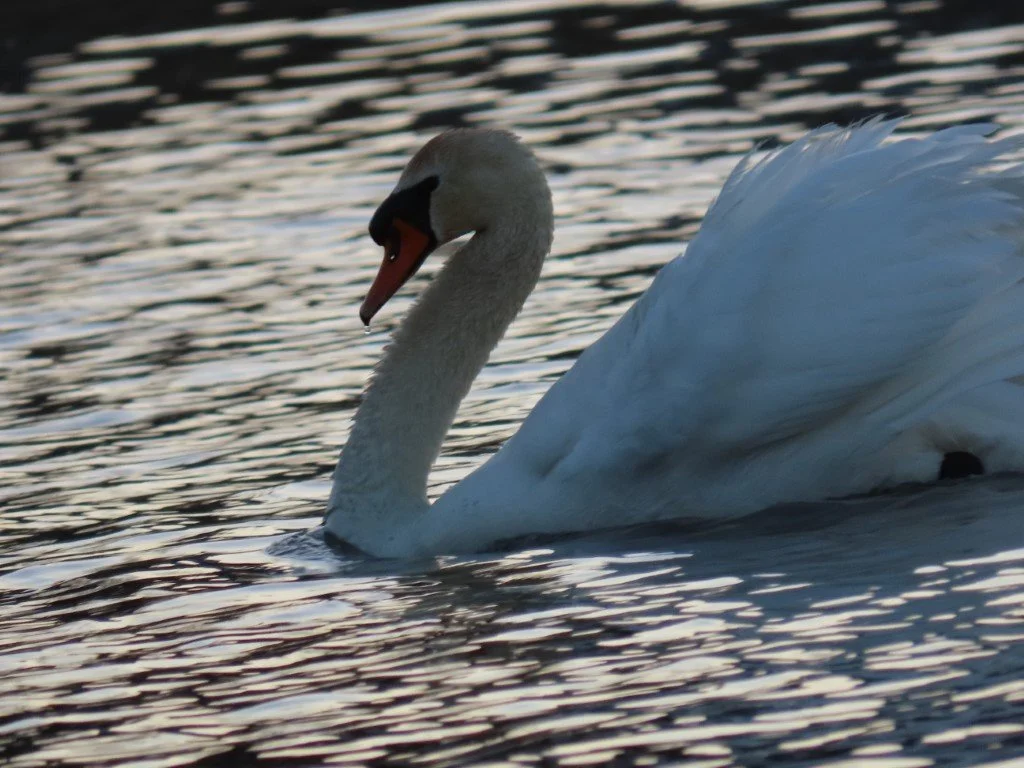
The resident swans

It seemed that many of the birds were in motion….leaving wakes as they moved through the water. I enjoyed the few minutes I spent…getting my nature fix for the day before I started packing up items to be donated from my parents’ house.

Birds at Josey Ranch the last day of 2023

I got to the large pond at Josey Ranch (Carrollton TX) just after sunrise on the last day of 2023. The birds were in feeding mode. The ring-necked duck diving for fish…

The swans swimming up to a high bank to nibble the grass while staying in the water….

A flock of double-crested cormorants landing just as I arrived than quickly finding good places to feed on the pond.

They were more numerous than I had ever seen at the pond before…I was probably lucky to catch some that were migrating.

A great blue heron was statue-like – standing on the grassy shore.

When I looked at my images on a large sceen, I discovered that I had managed a photo of a scaup with its mouth open!

The sunrise was not spectacular; the clouds were thickening as the sun came up. It was spectacular to see the cormorants so active in the minutes of brilliant sunshine at one end of the pond. I headed back to work on tasks I needed to complete before I left for Missouri (going home) the following day.

Josey Ranch – December 2023

I took a walk around the larger pond and small garden at Josey Ranch a week ago.

The first birds I noticed were cormorants – very active on the water (finding fish) and in the air.

Most of the ruddy ducks were snoozing…bobbing in the water.

A group of buffleheads were fishing….then spent a lot of time preening.

There were several coots

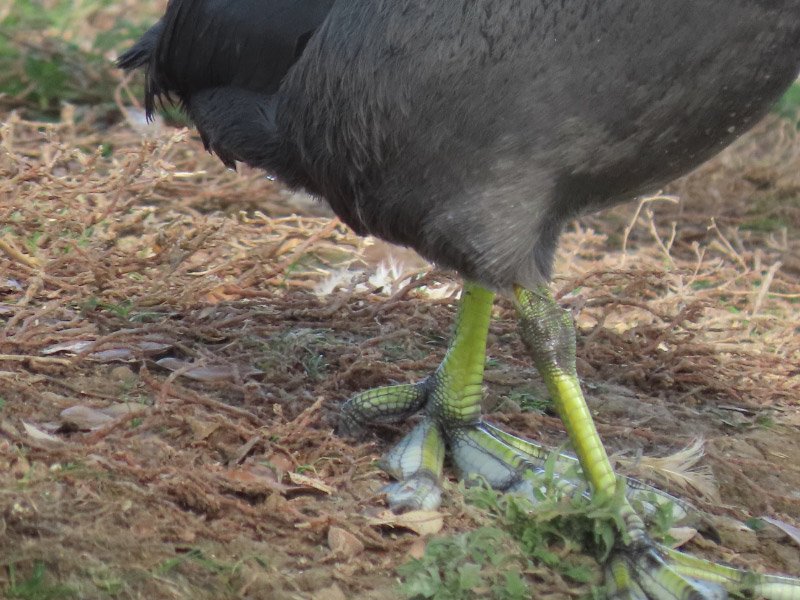
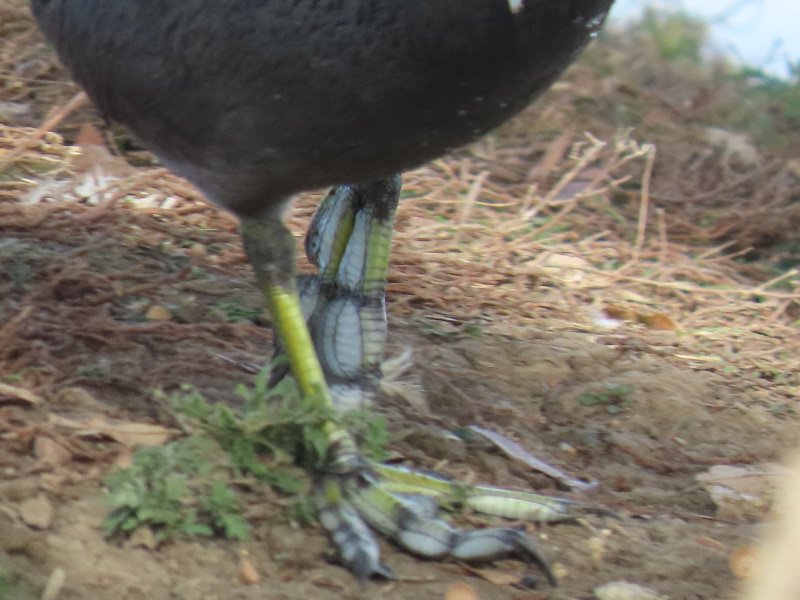
And I was thrilled when one of them came up onto the bank and I was close enough get good images of their feet! They are so unusual.

The scaups are around but not in as large numbers as last year.

The resident swans were asleep on the back as they have been every time I have visited recently. Are they elderly swans?

There were a few late flowers in the small garden; there has not been a hard frost in Carrollton yet.

Where are the northern shovelers? Maybe they are still further north? Usually they are present at Josey Ranch by November…but not this year.

2023 at Josey Ranch

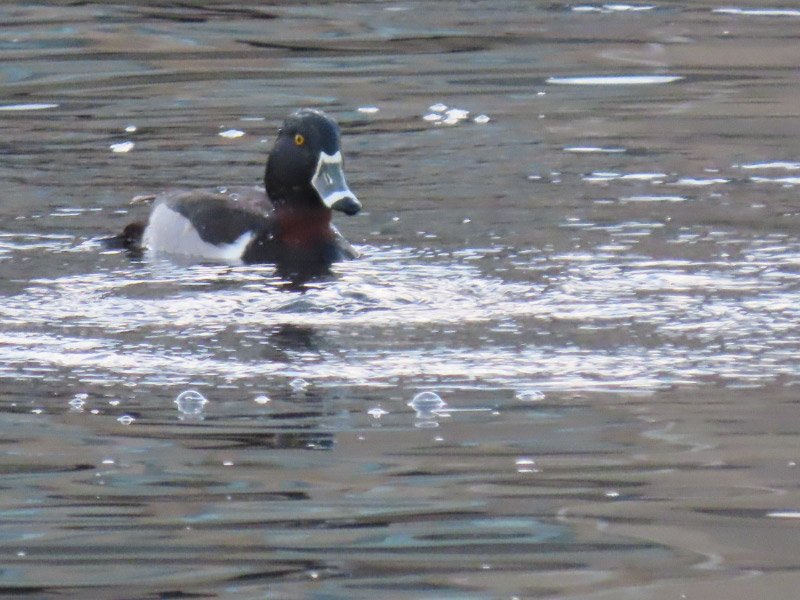
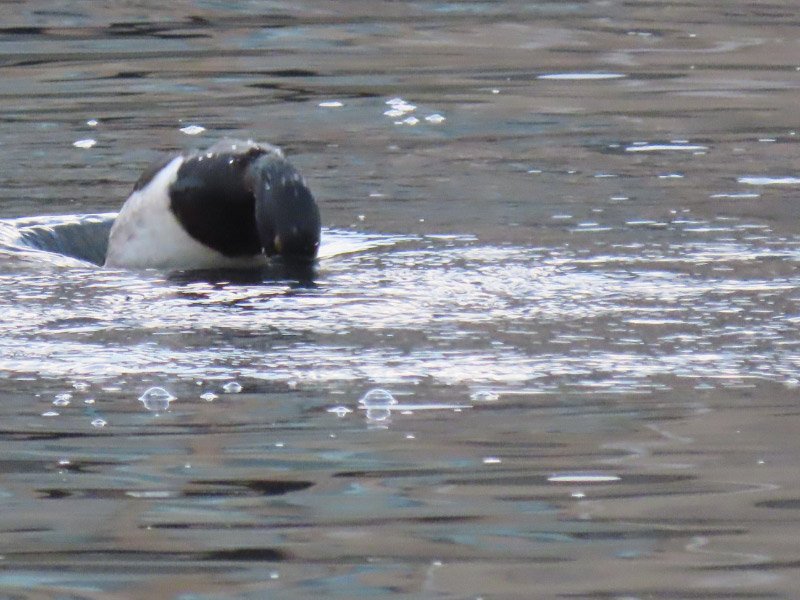
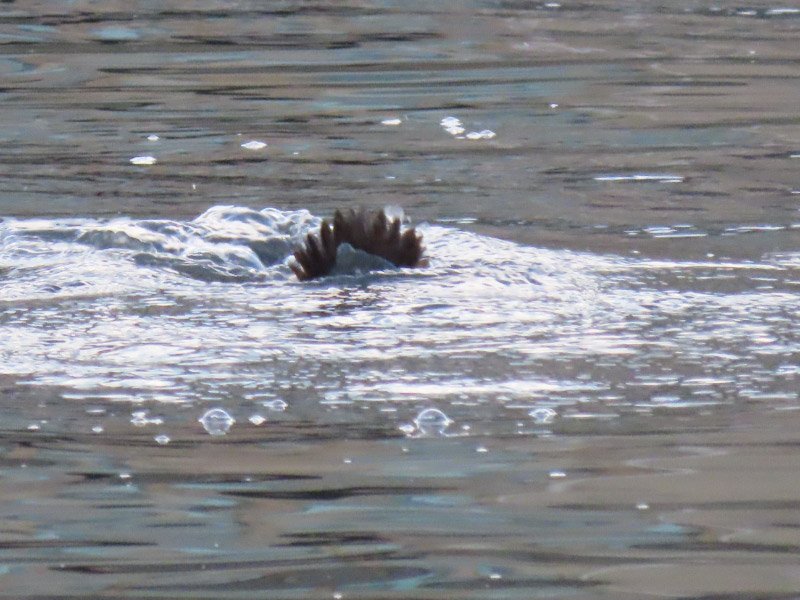
I am starting a series of posts that feature slideshows of pictures accumulated during 2023 of some favorite places that I visit almost every month. This post about the ponds and Pocket Prairie at Josey Ranch in Carrollton is the first in the series.

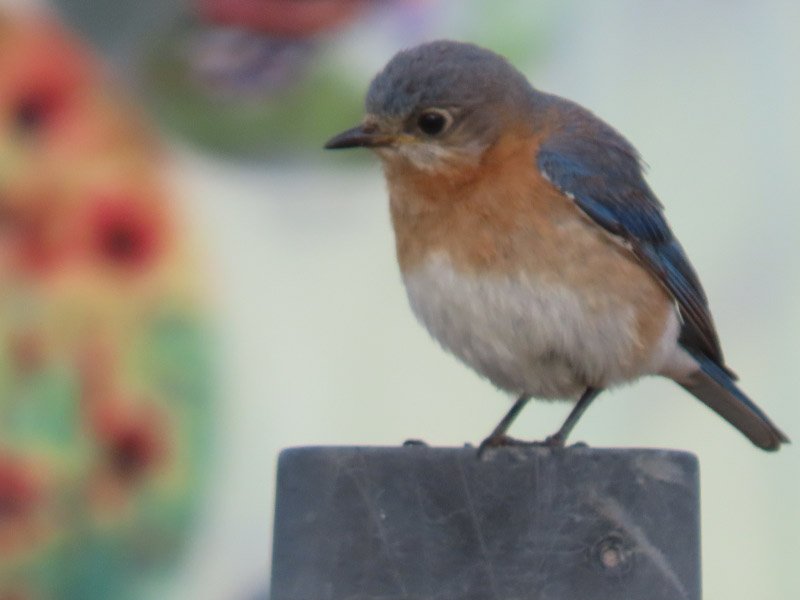
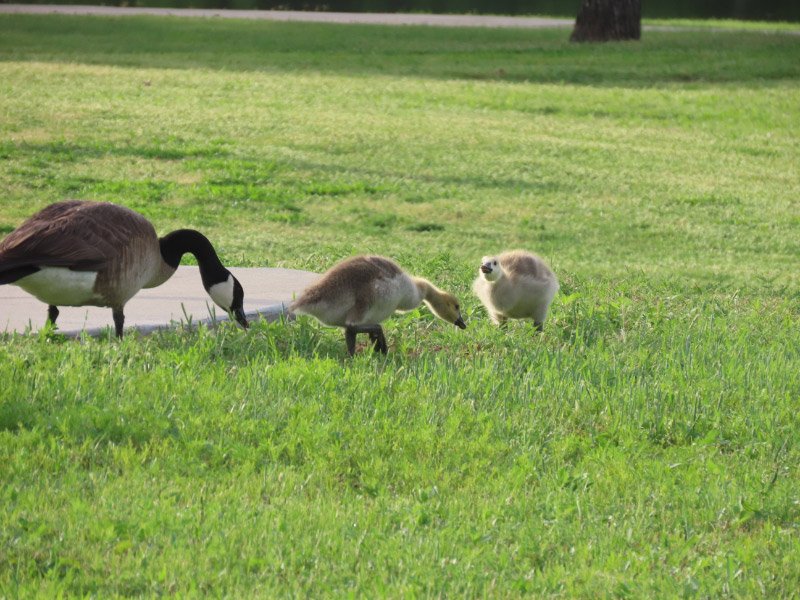
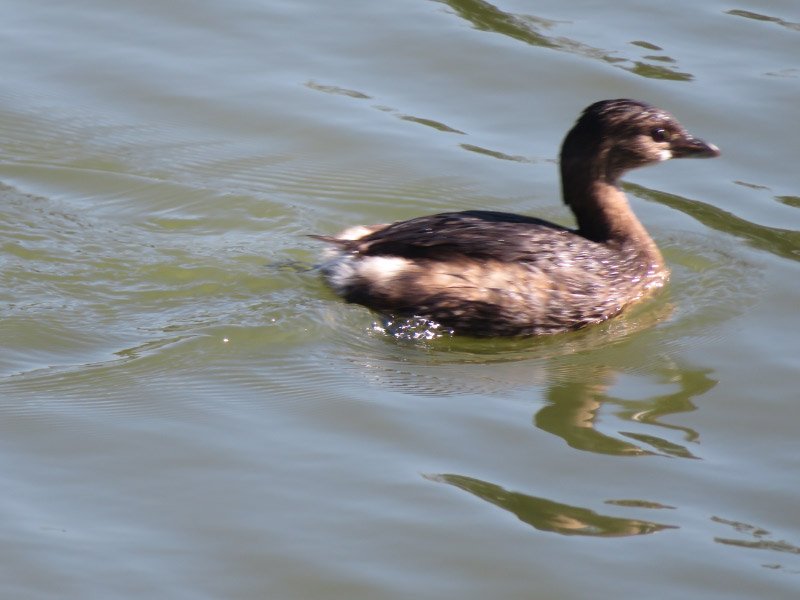
The changing of the birds over the course of the seasons: northern shovelers, scaups, widgeons, and coots in the cold months…baby birds (like geese) in the spring and juvenile birds (grackles and little blue heron) later in the warm months. The birds around all the time are swans, great egrets, mallards, and great blue herons. Bluebirds, grebes and cormorants are not seen frequently….are a pleasant surprise when they are around.

Josey Ranch is an easy place for me to get a nature fix….and enjoy some photography too. Some of my favorite photos are from an early morning jaunt in the summer…the light around a great blue heron and a swan sleeping on the water…a special moment that created a different sort of image.

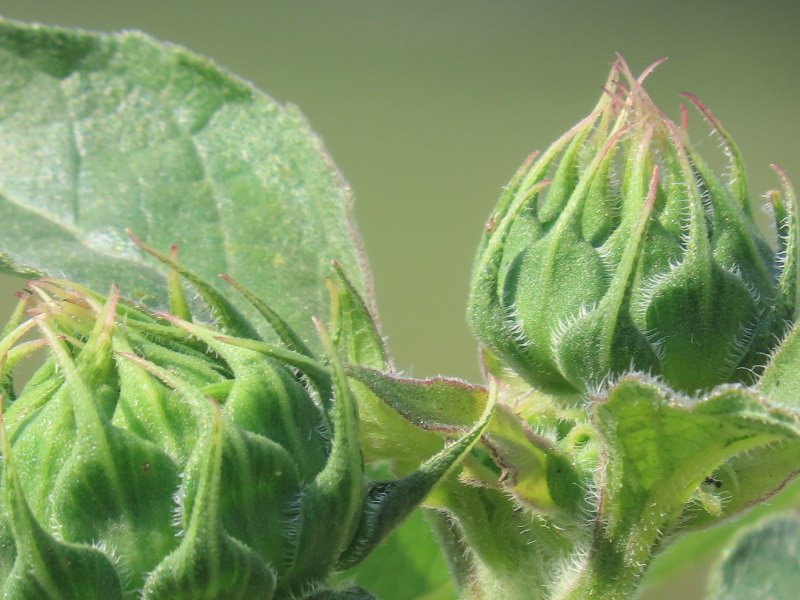
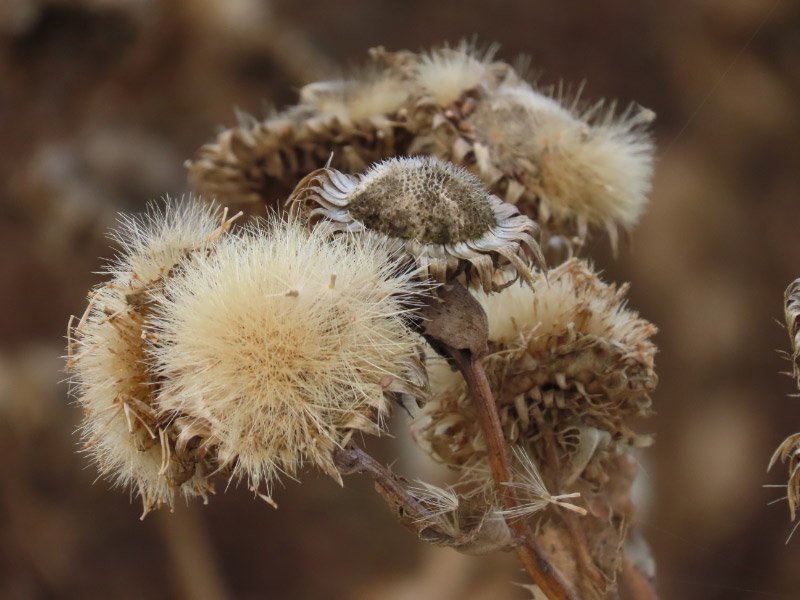
The flowers bloom in the warmer months although last summer many flowers cooked in the long period of very hot weather without any rain. In the fall – the dried husks of seeds/stems is often photogenic too.

Hagerman National Wildlife Refuge – November 2023

I left Carrollton on the day the shift was made from daylight to standard time; it was easy to reach Hagerman National Wildlife Refuge just after sunrise; it was a hazy morning. There were already other birders driving the wildlife loop – some with the same strategy I use: photography through a car window!

One of the first birds I saw was a great blue heron that flew into a large pond and was immediately on the move – probably looking for breakfast.

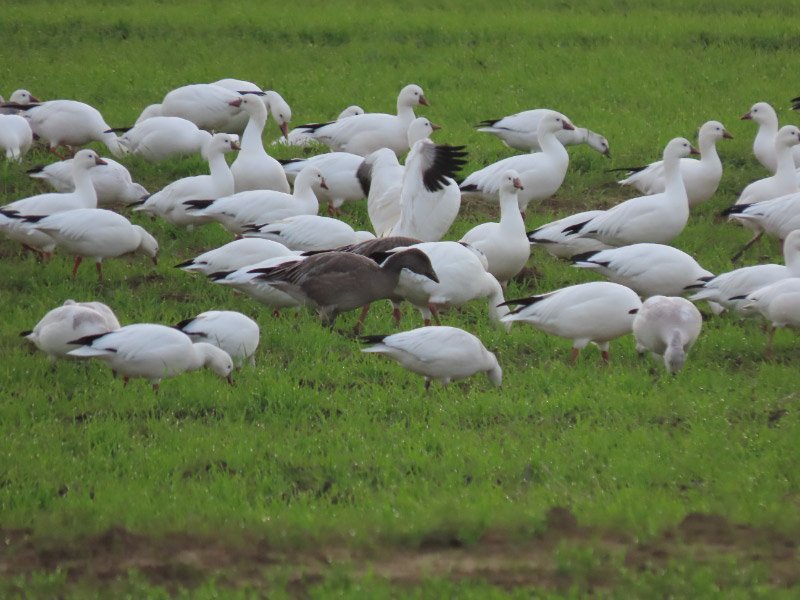
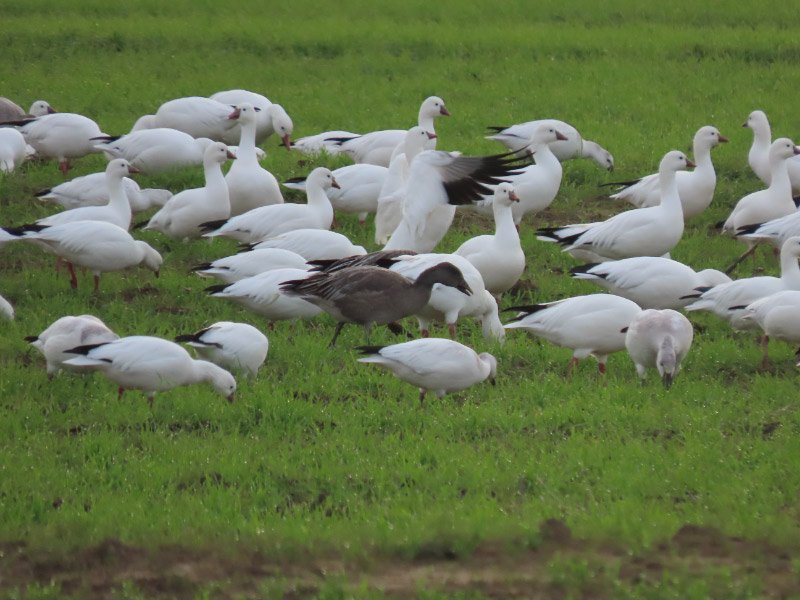
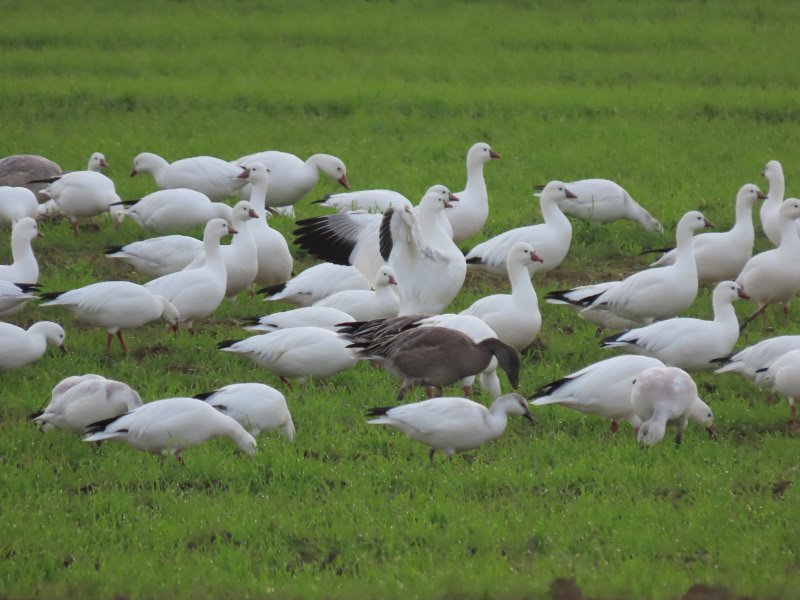
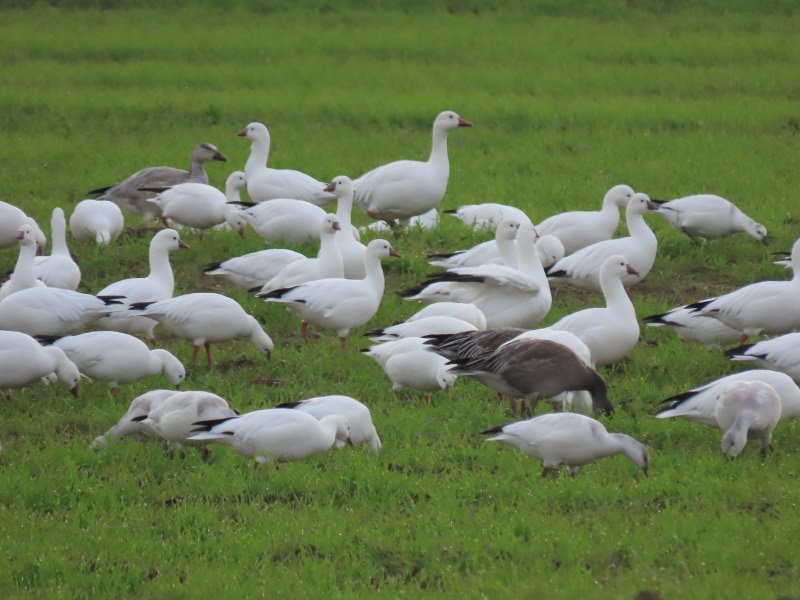
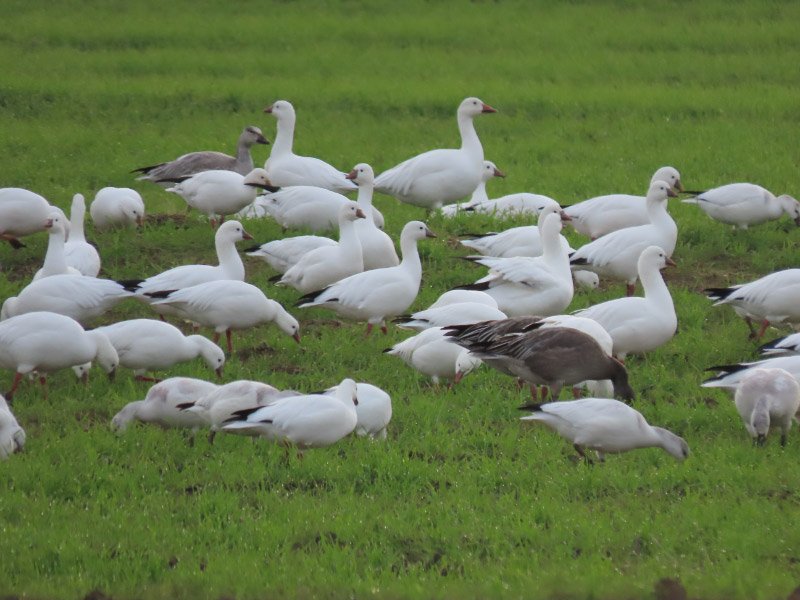
I saw a group of snow geese at the edge of the pond with water reflecting the sunrise colors behind them. Note that some of the geese are smaller (i.e. Ross’s Goose). There were blue morphs of the snow geese mixed in as well.

A grebe appeared with some pintails.

Mallards are always around. The trees and shoreline vegetation were definitely showing their fall colors. And then the sun popped above the horizon.

American coots are back at the refuge.

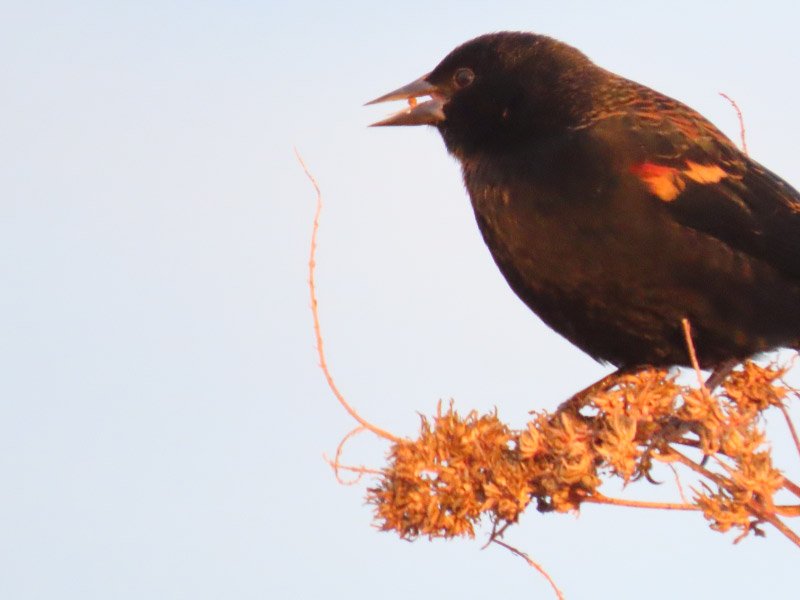
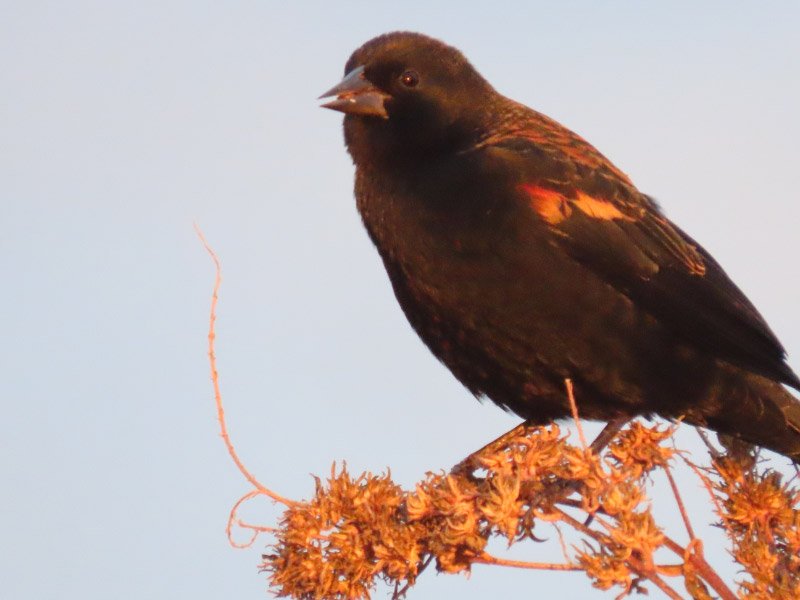
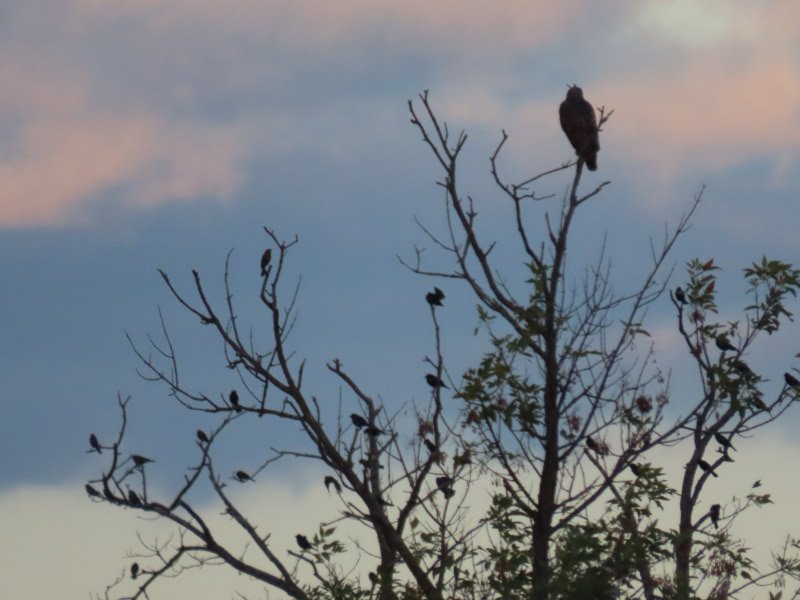
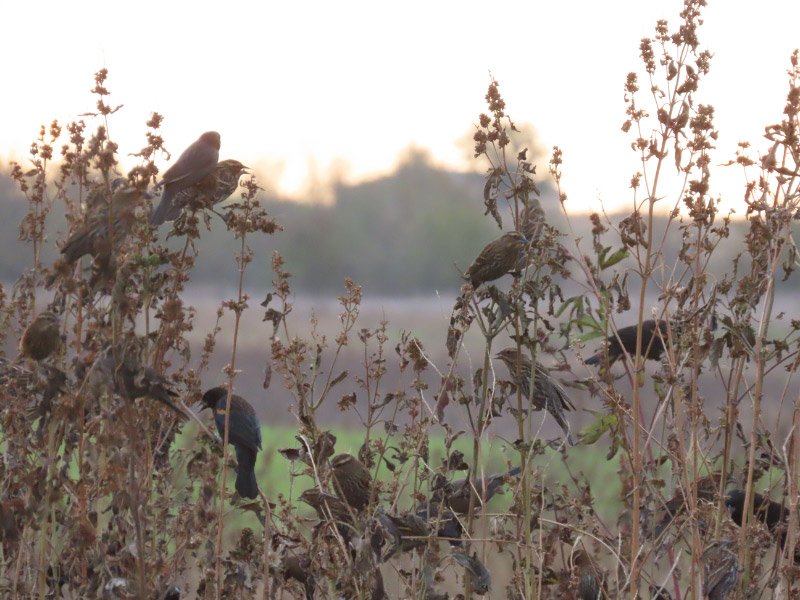
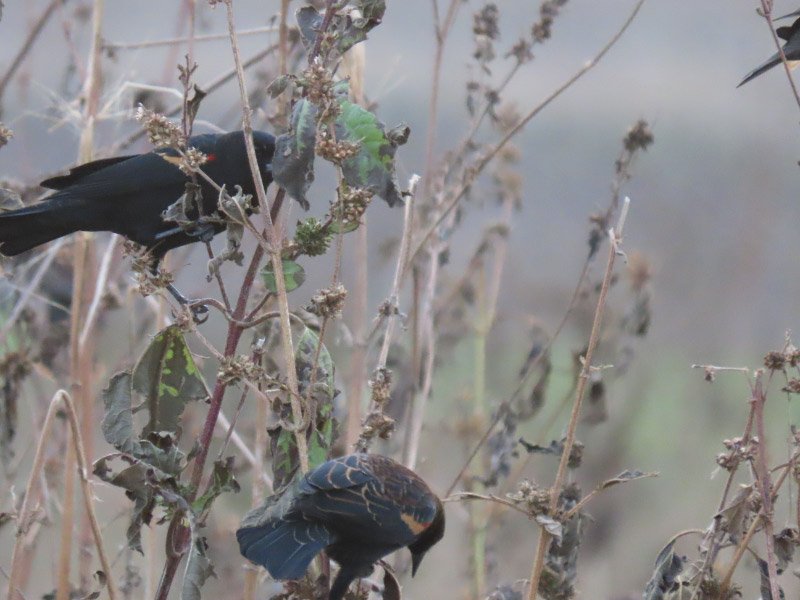
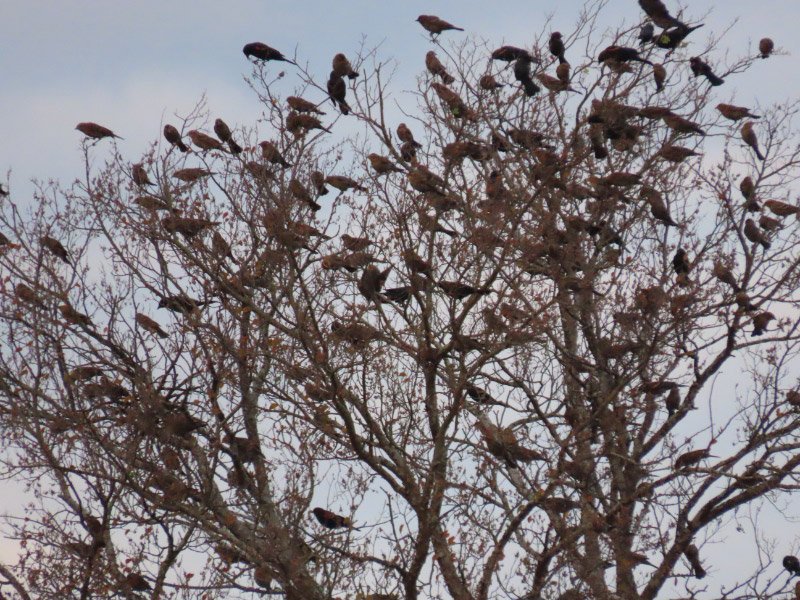
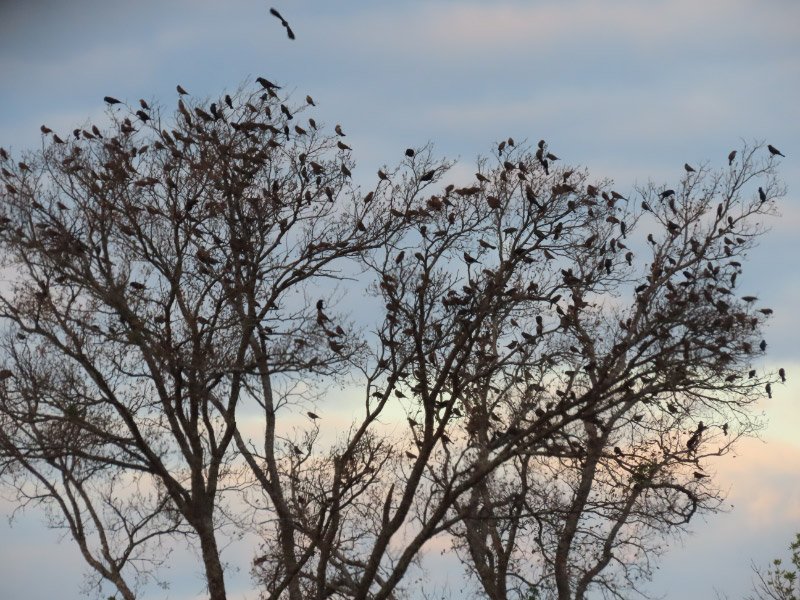
The most numerous birds were red winged blackbirds. They were enjoying the abundant seeds (sunflowers mostly) and rose up in murmuration at any little disturbance. Sometimes the group landed on the road for a few seconds but then quickly flew away to another stand of vegetation with seeds or to trees. They seemed oblivious to a hawk in one tree they picked. The group was a mixture of males and females.

A disorderly V of cormorants (I think) flew by.

I got out of my car once to look over the shoreline vegetation to see if I could spot a group of pelicans in one of the larger ponds but didn’t see any…the vegetation was worth a few photographs.

Another group of snow geese/Ross’s geese was grazing in a grassy area. I did a series of images…with one of the geese stretching its wings. The geese were vocalizing…gentle noises that probably reassure all of them that things are OK with the world.

In summary – some of the birds that will overwinter at Hagerman have arrived but there should be even more arriving.

Sequoyah State Park (2)

There was a hill on the other side of the lake – darkening the horizon. We were on a boat dock that jutted out into the lake a short distance (identified on our walk the previous day as the ‘sunrise spot’). There were two pelicans on the water when we arrived! They flew off to start their day elsewhere before the sun was up.

The park is a mix of developed and natural; there is a golf course and communication towers along with the cabins and lodge.

But the forest and native plants seem to be holding their own.

A fisherman was also enjoying the morning on a neighboring dock.

A heron was still (or preening) in the shallows of a nearby cove.

The sun lit a nearby hilltop…

And waves of cormorants (and maybe some gulls too) began coming around the point flying northward.

The vegetation lit up with morning light.

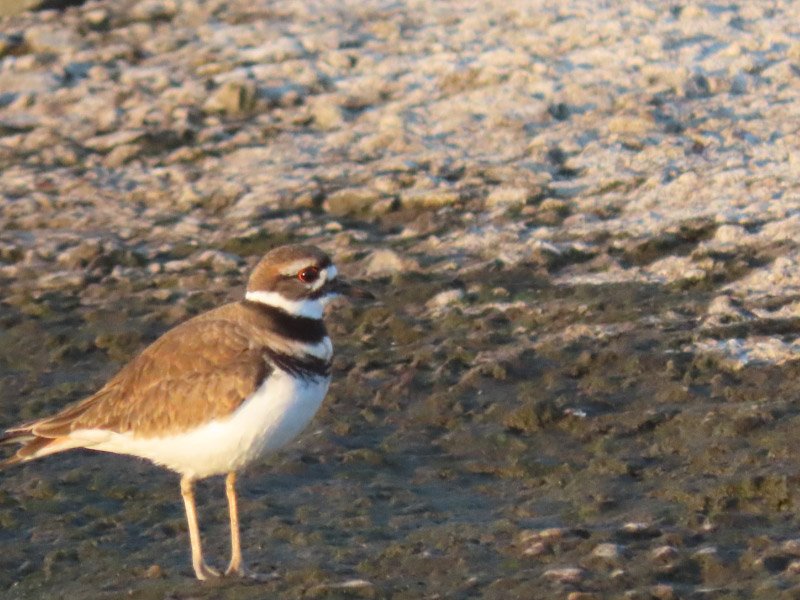
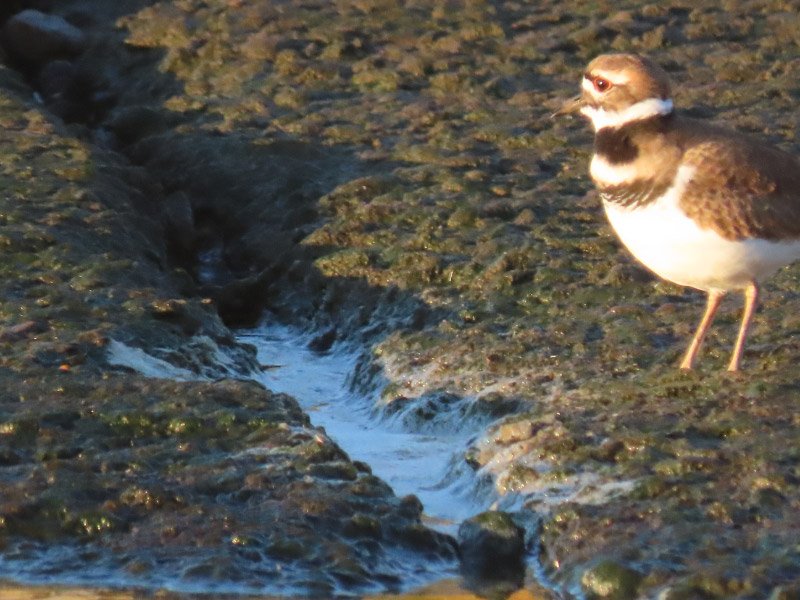
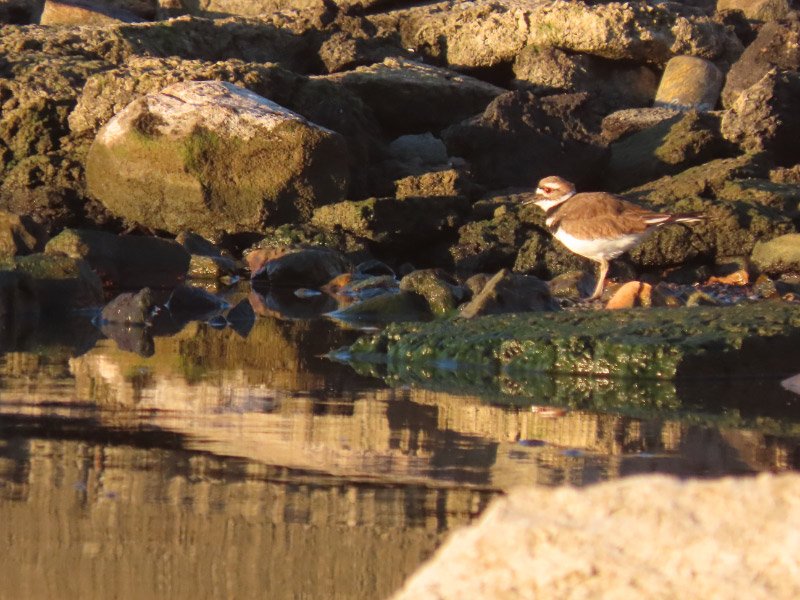
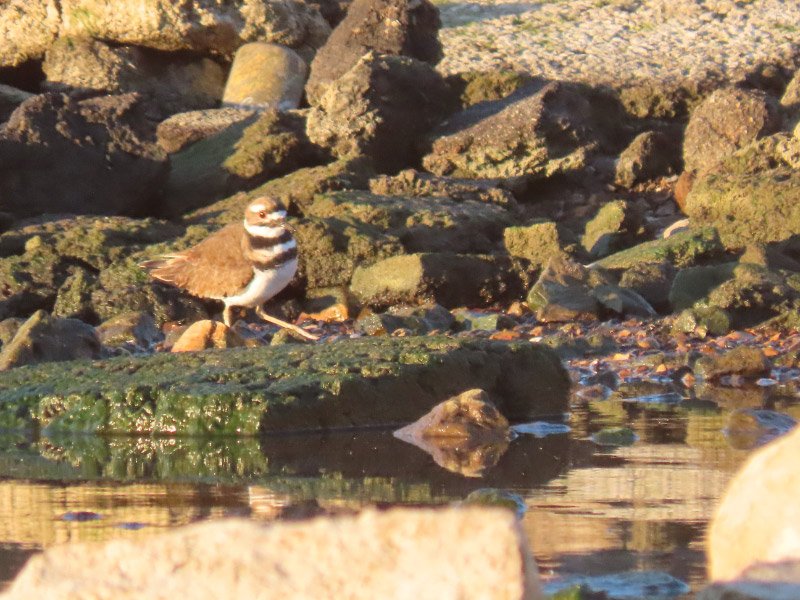
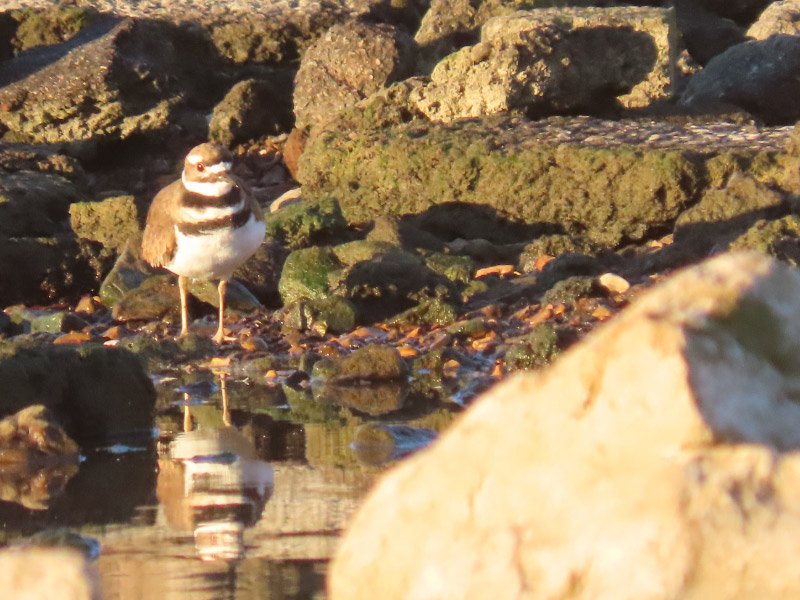
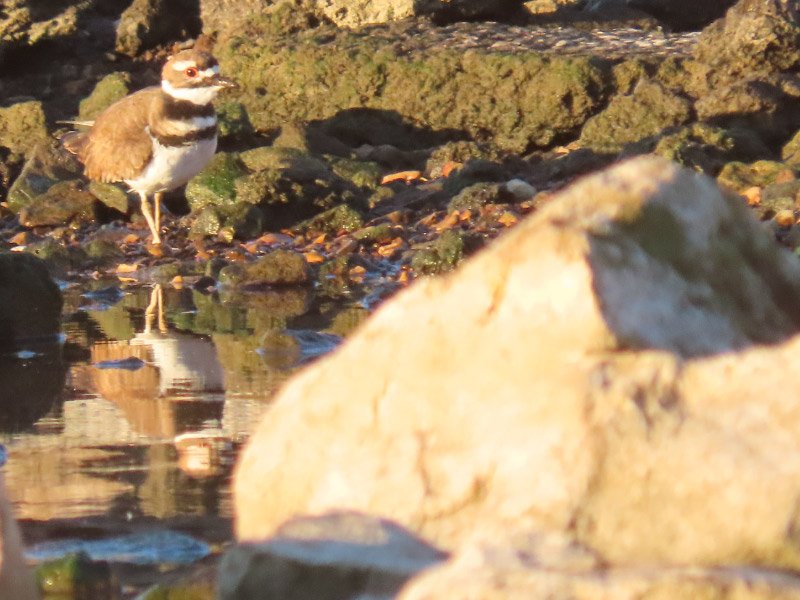
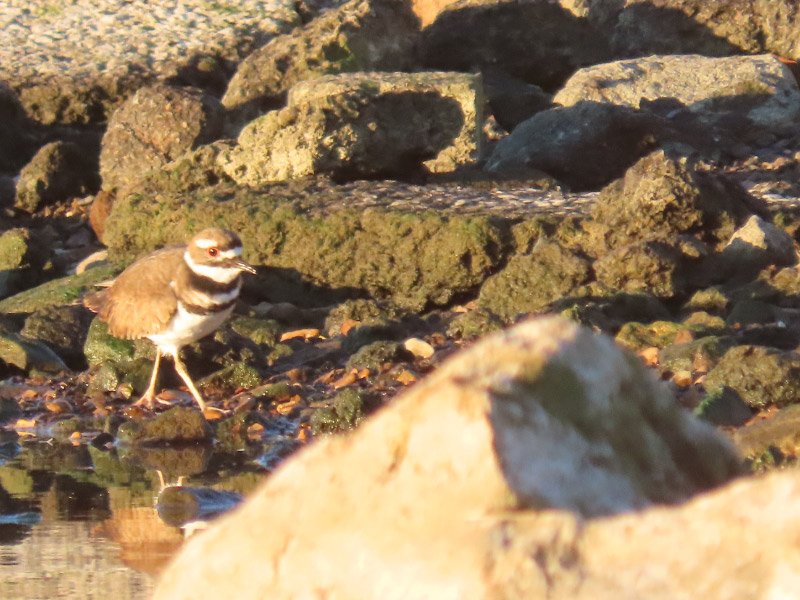
Two killdeer flew into the nearby shore. They continued their conversation with each other while we took pictures.

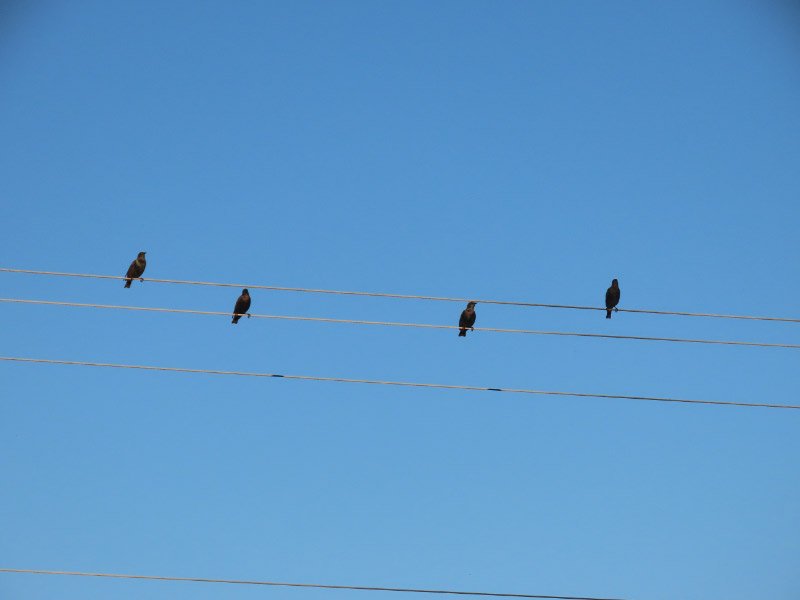
As we packed up the car – the last picture of our visit: starlings on the wire.

Josey Ranch – March 2023

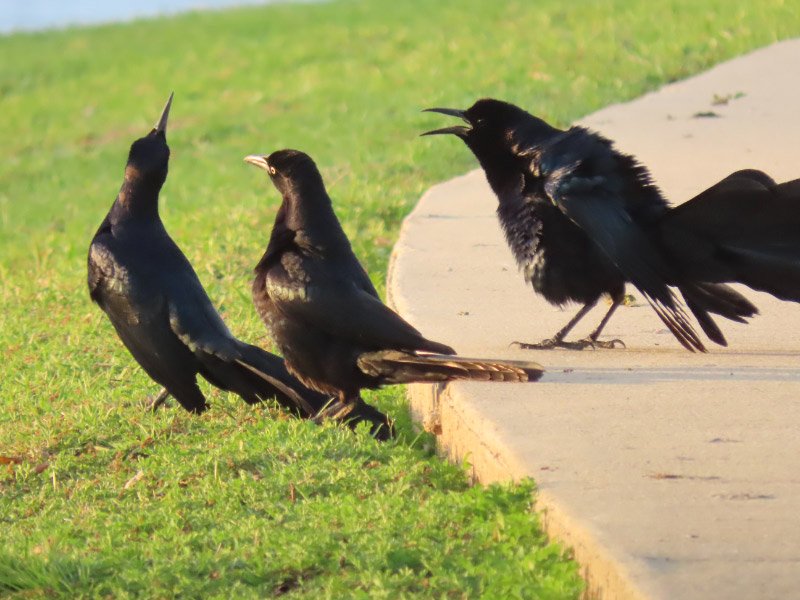
I went to Josey Ranch (Carrollton, TX) in the early morning. The male grackles were posturing. The females seemed to be mostly ignoring them.

There were two Great Egrets in breeding plumage staying together as they looked for breakfast.

There seemed to be more cormorants than usual. They are probably moving northward since their breeding grounds are in the norther part of the US and into Canada.

There were a few scaups and ruddy ducks left. They too are moving northward. I don’t expect to see them in April.

I walked to the garden area between the water and the two buildings. The trees are beginning to leaf out and roses are blooming. The area was impacted by the harsher (hotter and drier) summer and it will be interesting to observe how many of the plants will regain their vigor in the upcoming months.

March is a transition month. It will be interesting to see if more of the summer birds show up when I visit in April. I always check the pond (or is it a lake?); it’s an short, easy outing and their always seems to be something new to observe.

Zooming – March 2023

The optical (and then digital) zoom on my bridge camera (Canon Powershot SX70 HS) is used on almost every picture:

  • To do composition in the field rather than cropping later

  • To get close without physically being close

  • To see better than I can with my eyes (using the camera like binoculars)

My favorite image this month is the backlit dandelion puff. Enjoy the March zoomed images!

Elm Fork Nature Preserve – February 2023

I arrived at the Elm Fork Nature Preserve at the same time as a Texas Master Naturalist (I could tell by his hat!) which turned out to make the walk through the circuit into a guided hike. I didn’t take as many pictures as usual. The day was brisk and sunny…pleasant in a zipped-up jacket.

Toward the back of the loop are several areas of wetlands/open water. At least one of them was an oxbow of the Elm Fork of the Trinity River – now disconnected. There were ducks, grebes, and coots…and a cormorant in a tree. They were far enough away to be almost out of range of my camera, and I didn’t take the time to get better images stabilized with my monopod.

The area was owned by the same family from 1861 until it became the preserve and was always used for household wood (shelter, cooking, eating) until it became the preserve. It is a rare parcel in this part of Texas that has always been timbered. The trees are all different sizes and I found myself taking pictures of ones that were snags or pieces of trees. When the trees leaf out it will be a good place for canopy pictures --- looking up through the trees.

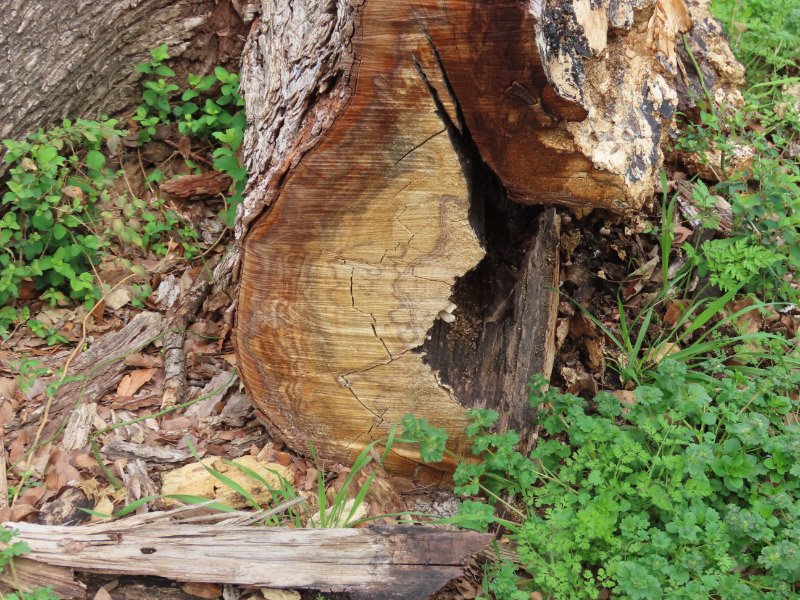
A tree that had fallen across the path and been cut was particularly interesting. It had wavy markings…like meandering rivers taken from above.

There is a structure, but it doesn’t appear to have been used recently; it is beginning to deteriorate. The place does not appear to get a lot of visitors (and the Master Naturalist told me that he’d been there a few times when he thought some of the people there were not nature lovers or fishing). So – I’d like to go again but it might not be a place to go on my own.

Josey Ranch - February 2023

It was a breezy and cloudy day when I went to Josey Ranch in Carrollton last month. There were fewer Northern Shovelers and American Widgeon around and they seemed to be resting or grooming rather than feeding.

The American Coots were still around in about the same numbers as in January.

There was one Bufflehead…feeding. It was in the middle of the small lake and only spending seconds on the surface of the water.

There was one cormorant – looking around more than feeding. I am beginning to wonder if there are many fish in the lake.

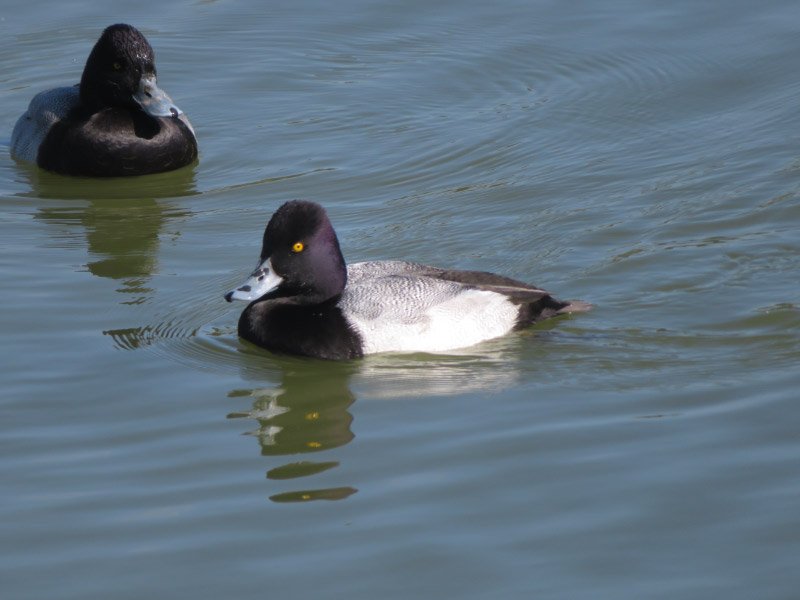
The Lesser Scaups were around and coming to the shore thinking the people were going to feed them – although that didn’t happen while I was there. In the 14 second video, most birds are male Lesser Scaups. There is one female and a coot (or two).

By the time I go in March, many of the wintering birds will probably be gone…but maybe there will be Mallard ducklings…or maybe a cygnet.

Morris’ A History of British Birds

The 8 volumes of A History of British Birds by Francis Orpen Morris are available on Internet Archive. I enjoyed browsing the images this past spring. I’ve selected an image from each book to share in this post.

(vol 1, 2, 3, 4, 5)

Volume 6 included two birds seen frequently in North America: the coot and the Canada goose.

Volume 7 included the Great Auk which was probably extinct – or near extinct – by the time the books were published in 1862. There were some birds – such as the swallow (volume 2) and the cormorant (volume 8)– that had generic entries.

Morris was an Irish clergyman – a ‘parson-naturalist’ of the 1800s; his professional role accommodated his natural history interests. According to the Wikipedia entry about him, he was a pioneer of the movement to protect birds from the plume trade…refused to accept the theory of evolution.

Ocean City Inlet & Heron Park Field Trip

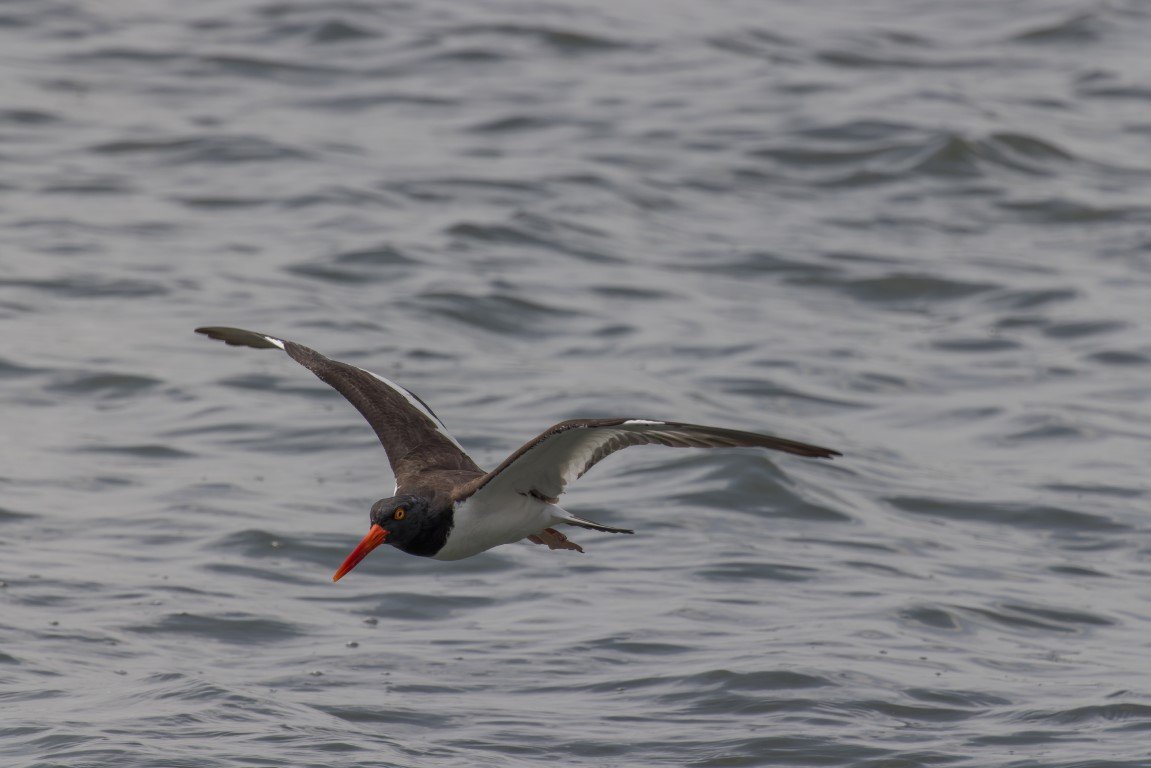
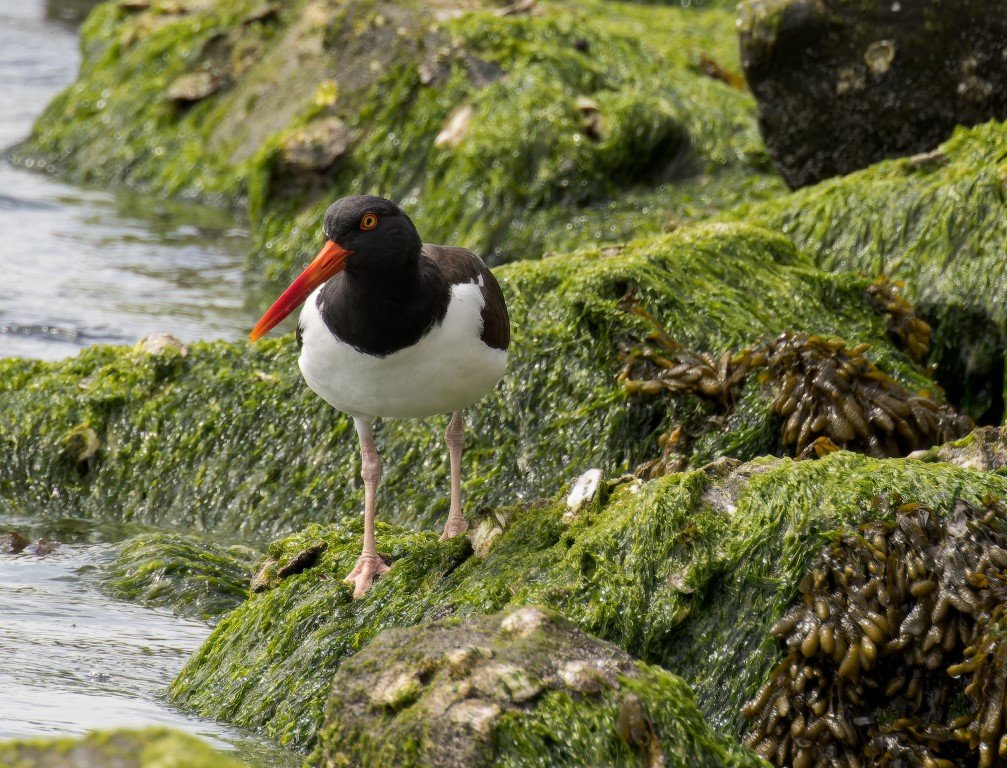
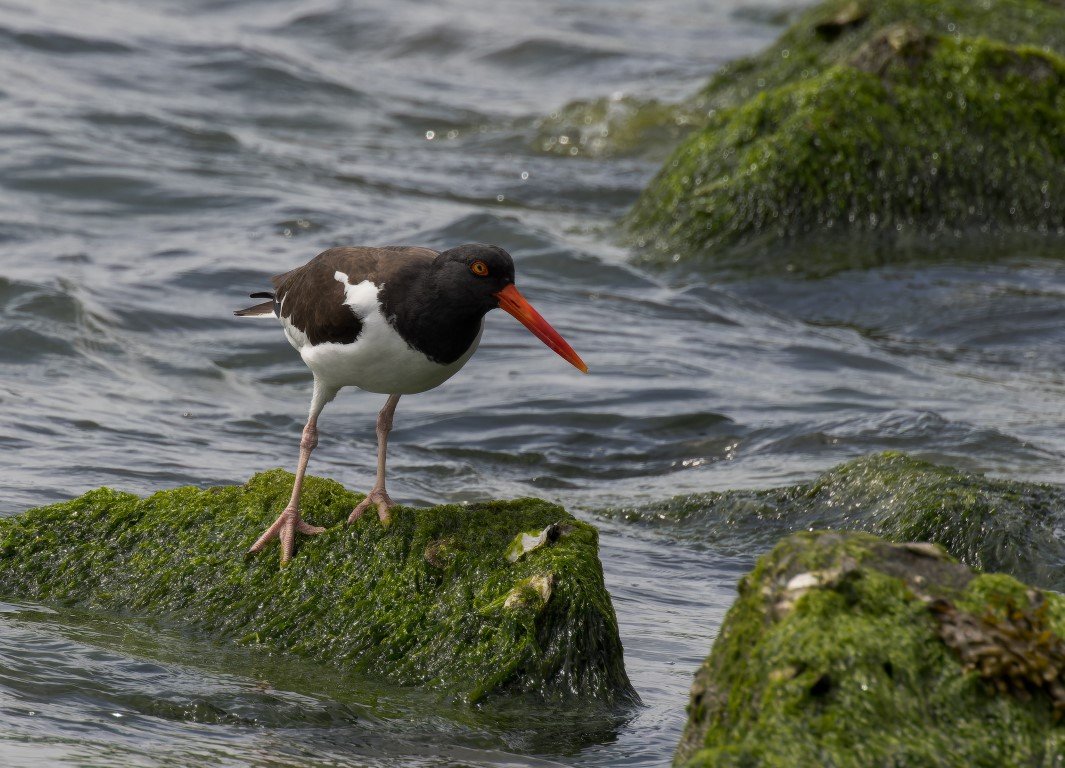
The last of our Delmarva Birding field trips started at the Ocean City Inlet…where the high point was seeing an American Oystercatcher fly in and land on the rocks for a short walk.

The next stop was Heron Pond – an area in Berlin, MD that is in an industrial area and on the site of an old chicken processing plant. There are a series of ponds that clean water and provide habitat for water birds. The highway is nearby but there is a screen of vegetation…and there are birds on all the ponds. Some of the first birds we saw were cormorants.

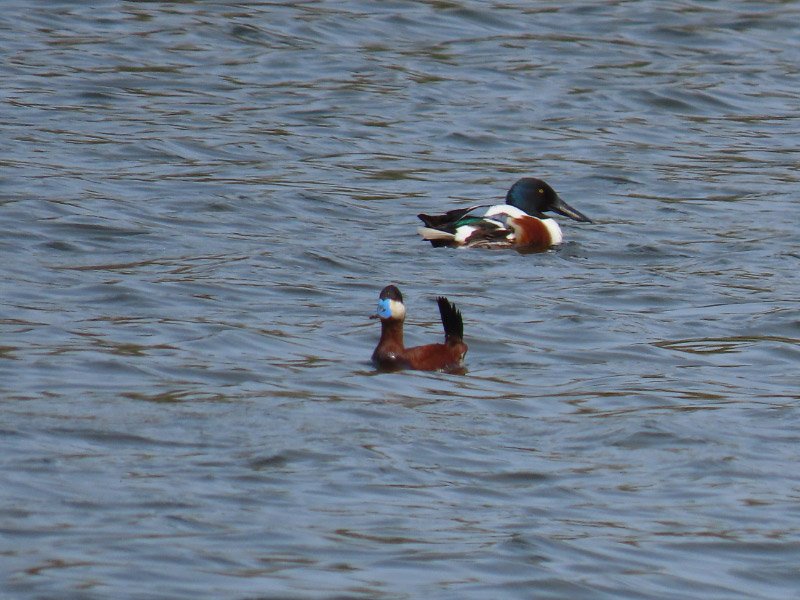
Followed in close succession by ruddy ducks (the males have blue bills!) and northern shovelers.

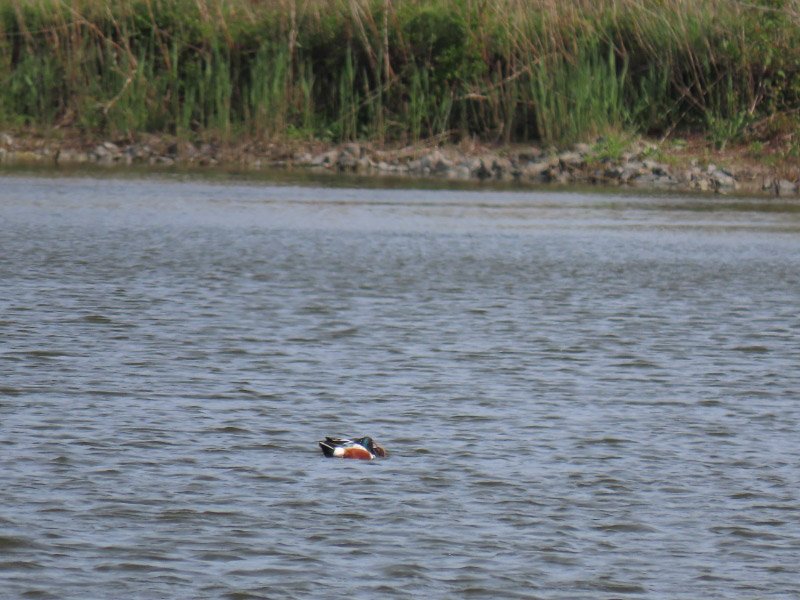
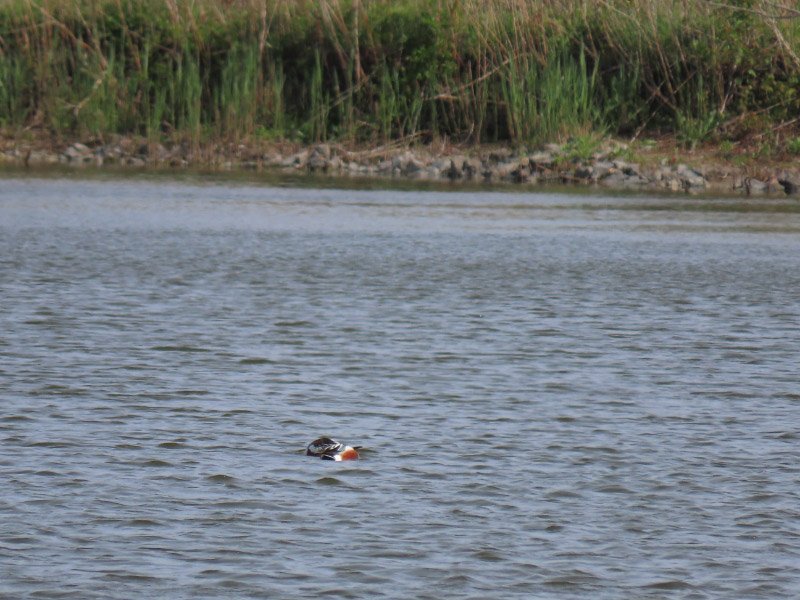
Two northern shovelers were feeding together…swimming in a tight circle.

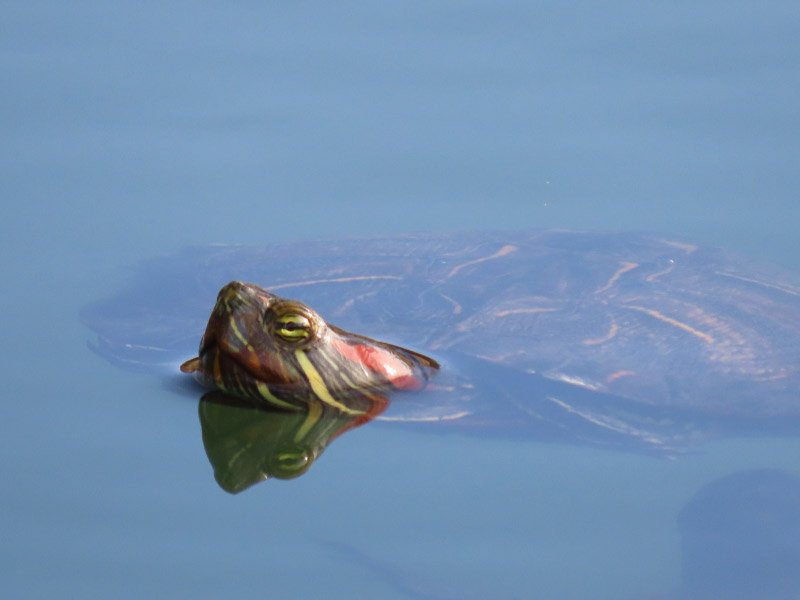
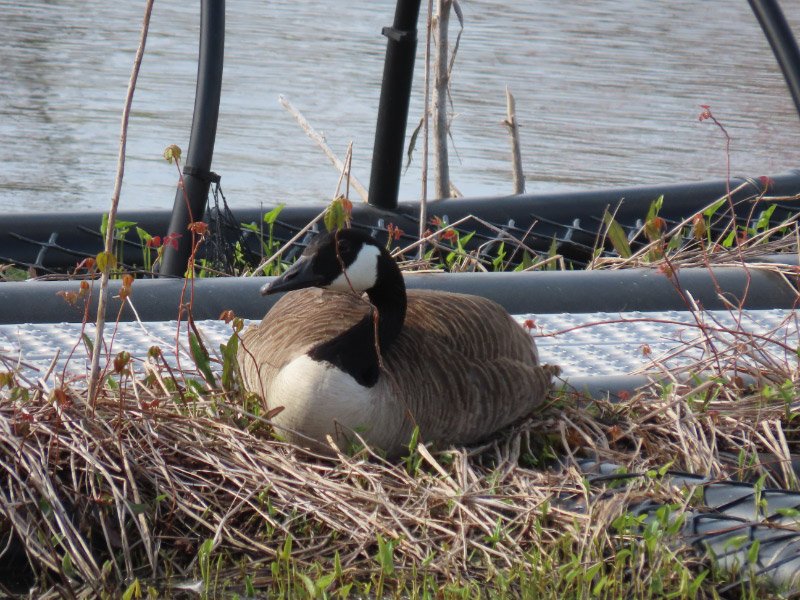
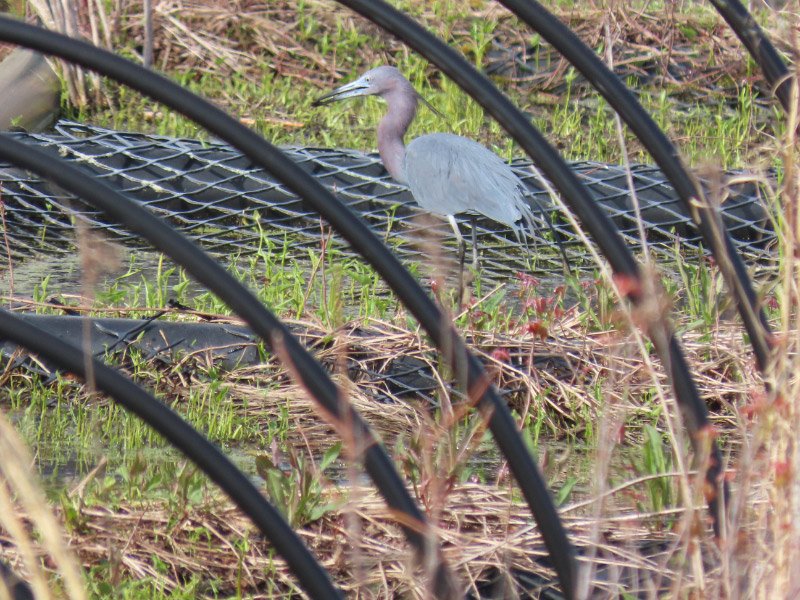
The last pond has structures on its surface to filter water and those structures provide a haven for turtles and birds. There were several Canada geese on nests and a little blue heron finding a snack!

And that was the finale for our 4 field trips with Delmarva Birding.

Josey Ranch

The winter birds have already left Josey Ranch Lake (no shovelers or scaups or buffleheads or ruddy ducks). The normal residents were going about their morning routine when I ventured out at sunrise. The Coots were noisy.

I only saw one Swan. I wondered if there was a nest in the reeds (with the other swan on it); it would be great to have cygnets this year. The nest was flooded last year.

There was a Great Egret walking around the shallowed. Maybe the bird had already caught breakfast because it seemed to be moving about rather than actively fishing.

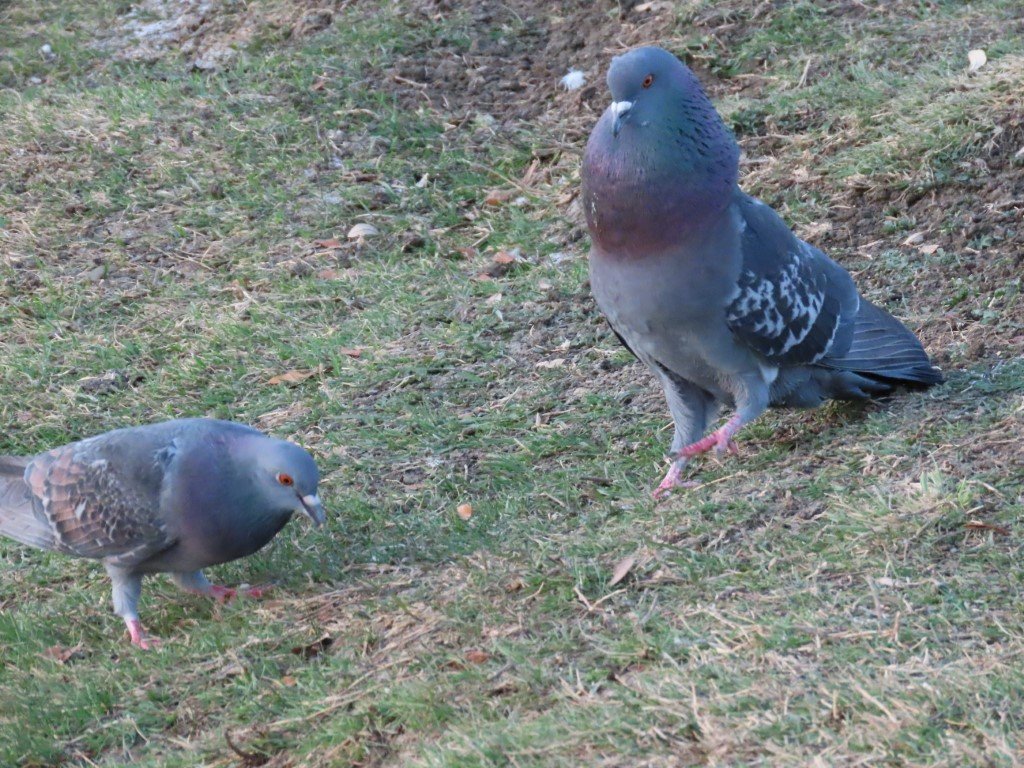
There was a pair of Pigeons interacting. I assumed the larger one strutting around was the male.

There were Cormorants that were staying on the lake but occasionally flying to another part of the lake. They too seemed to have already gotten breakfast; there were not diving.

Even Mallards are worth photographing in morning light!

I didn’t photograph the Canada Geese or the Grackles….they were a big part of the morning soundscape around the lake.

I’ll be in Carrollton again soon…can track the progress of the birds using the lake in late Spring and into Summer.

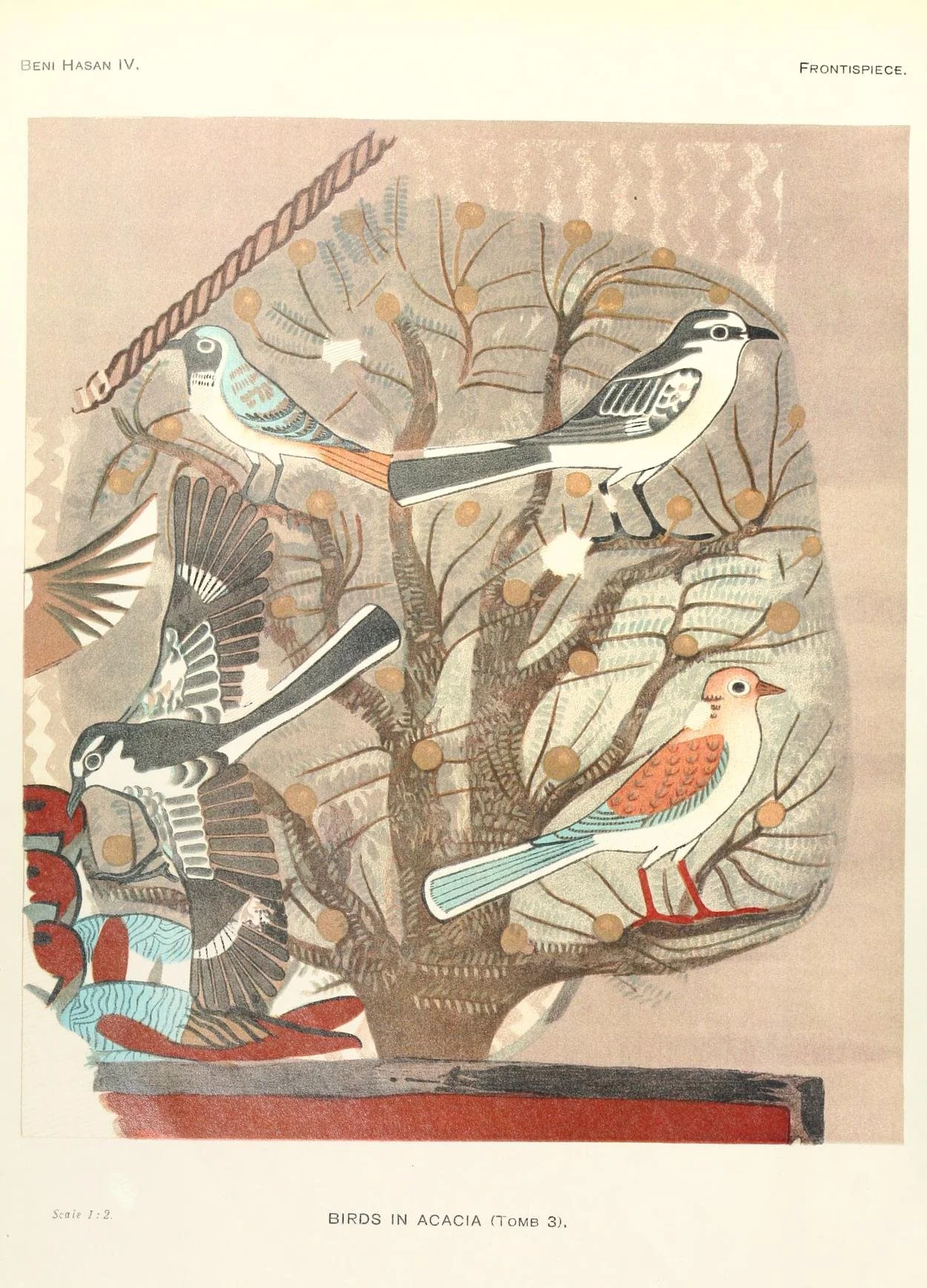
Bani Hasan Part IV from the Egypt Exploration Fund

Bani Hasan Part IV was published in 1893 by the Egypt Exploration Fund. It is a small volume (82 pages) available on Internet Archive as are some of the other volumes in the series…but this one was my favorite. It includes ancient Egyptian depictions of birds and animals as well as activities of daily life. I’ve selected 4 sample images from the volume.

I learned from the Wikipedia entry that:

  • Beni Hasan is an ancient Egyptian cemetery that spans the 21st and 17th centuries BCE…primarily the Middle Kingdom of ancient Egypt. The tombs are famous for the quality of their paintings.

  • Howard Carter (famous for discovering Tutankhamun’s tomb) spent a season there in 1891 as a teenager – producing watercolors of the tomb paintings. (He is listed on the title page of this book along with others.)

  • The paintings are now in poor condition.

Conowingo on a Fall Morning – Part 1

My husband and I took a ‘field trip’ to Conowingo dam this week – the first such trip since last February; we did it in a low risk way and will probably enjoy the fall a bit over the next few weeks with similar outings. We were gone for a little over 3 hours…with 2 of the hours on the road. At Conowingo we made a short stop at the Visitor Center for a ‘rest stop’ with masks…hand washing…and then hand sanitizer once we were back in the car. I took some pictures of the Bald Eagle carving and some of the plantings in front of the visitor center.

When we got to the fishing/bird viewing area – we noticed the low water right away. The dam was not generating so the fish were not being churned up. Note how calm the water is toward the dam. Do you see the Great Blue Heron in the lower left? Part 2 of this post will be about that bird.

2020 10 IMG_5918 (10).jpg

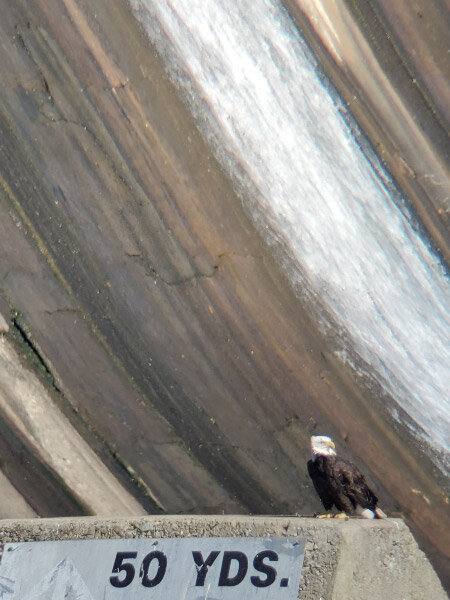
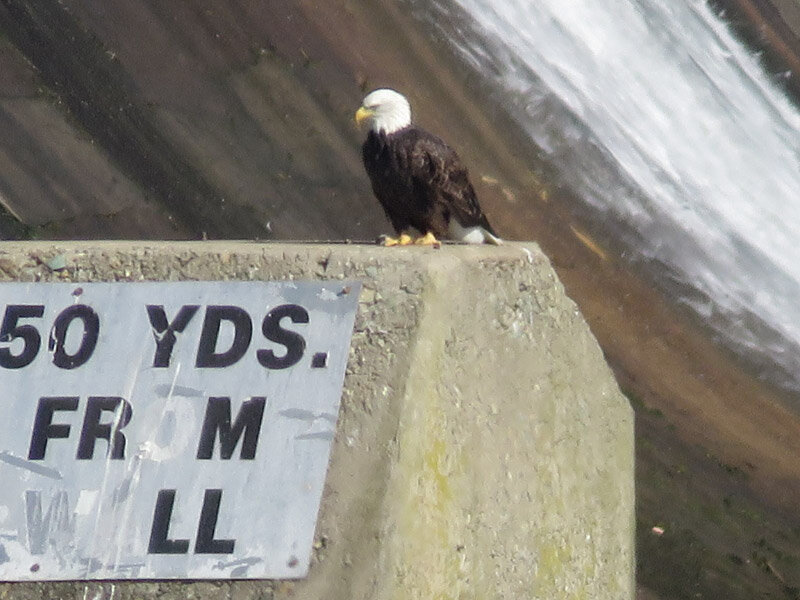
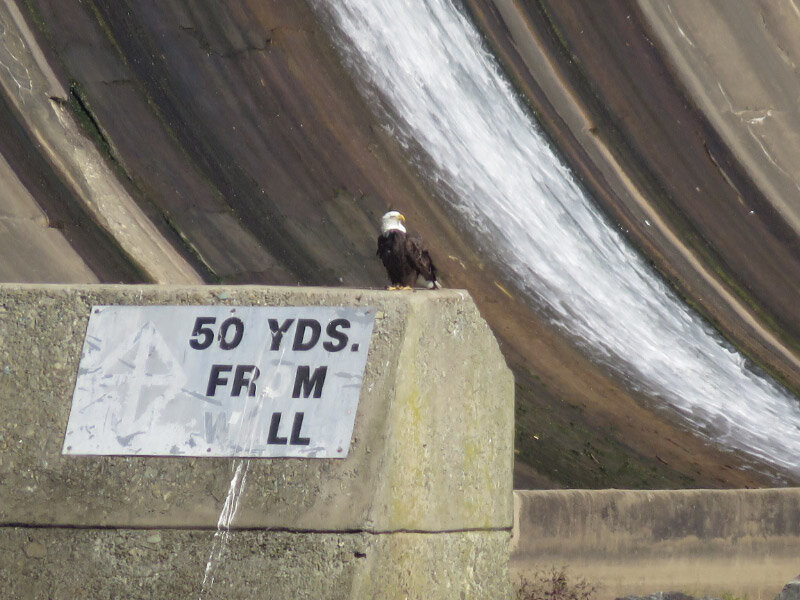
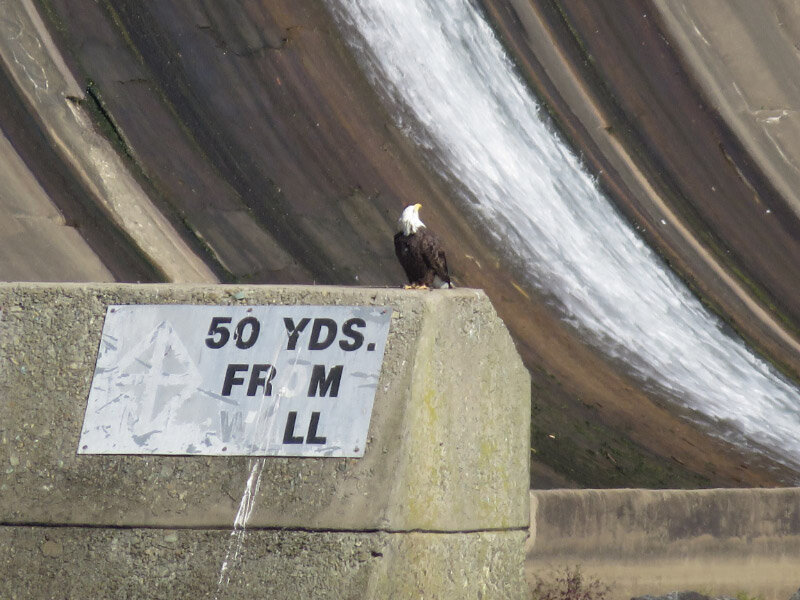
There was an adult Bald Eagle on the ’50 yds’ abutment that stayed for the entire time we were there. I took digiscope pictures (i.e. phone attached to spotting scope on a tripod) first. The bird is looking around and the breeze is ruffling feathers on the head.

Then I took some pictures with by Canon Powershot SX 60 HS (bridge camera) on a monopod….which is my usual birding camera. The bird was moving its head more….it seemed intent on not moving any other part of its body though! I’m still more comfortable using the camera rather than the digiscope.

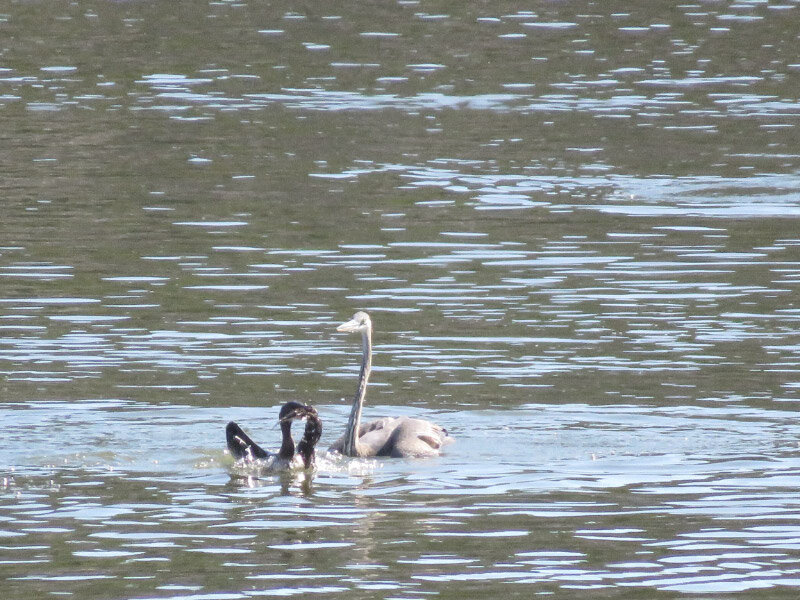
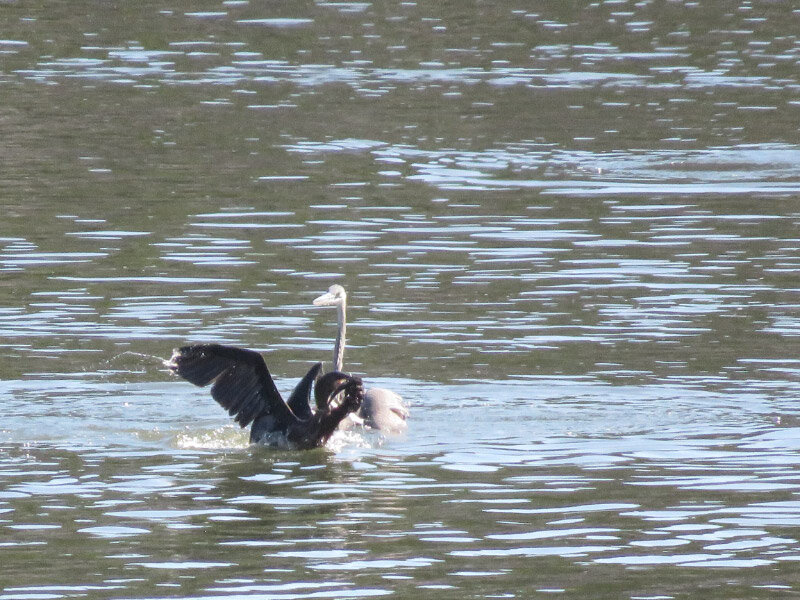
The birds on the water today were Double Crested Cormorants. They were sometimes in groups….usually on their own diving quickly to go after fish.

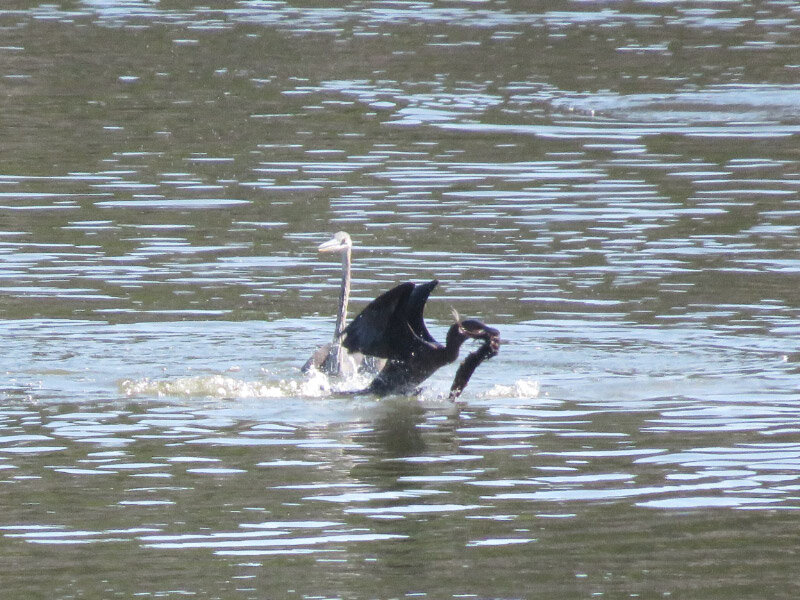
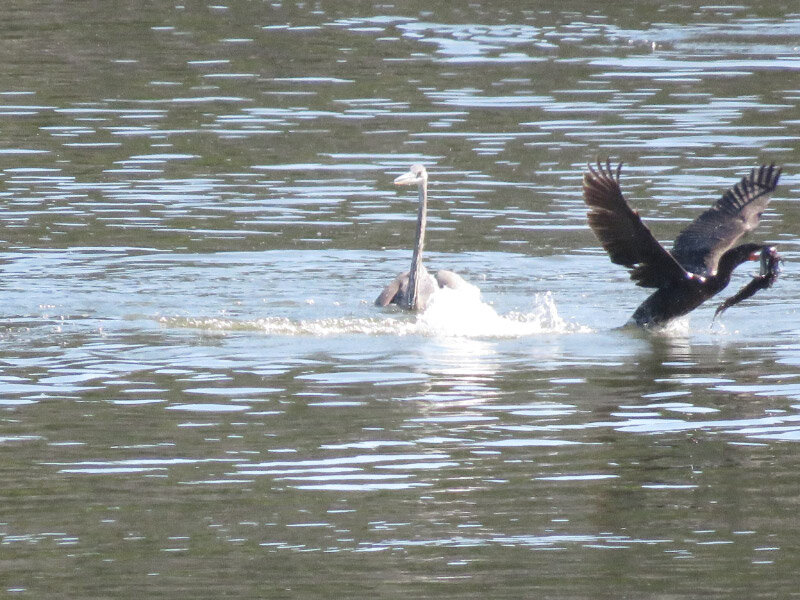
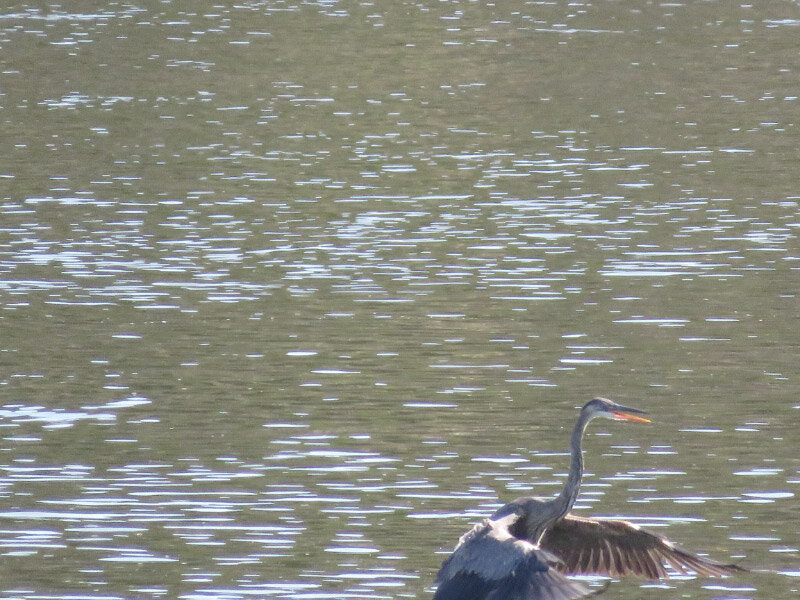
I saw one come up with a fish and then noticed a Great Blue Heron (not the heron in the earlier picture) flying toward it. By the time I started taking pictures the heron had plopped down right next to the cormorant….but the cormorant made a quick get away with his prize leaving a surprised heron behind. Use the arrows to move through the 5 images.

I always try to look at the Paulownia (princess tree) growing on the cliff next to the parking area. The seed pods are maturing. It’s an invasive tree but one that it tolerated – sometimes – because it is pretty.

2020 10 IMG_5918 (13).jpg

Unique Activities for Yesterday:

Notification that ballot was received. I got an email from my state acknowledging that the ballot I put in the drop box has been received! I great to get that confirmation. The email included a link to the Maryland site where I can find out when it is accepted/counted too. There was a local news story saying that my county would start counting on the 12th so I’ll start checking every day after that.

Last CSA flowers? The cutting garden at the CSA is winding down. The zinnias are about done for the year. I got one sunflower and then some smaller purple ones (don’t know what they are) to make a small bouquet to sit in the kitchen window along with the green tomatoes I hope will turn red. I’ve already enjoyed 2 that turned red recently.

20201007_144630.jpg