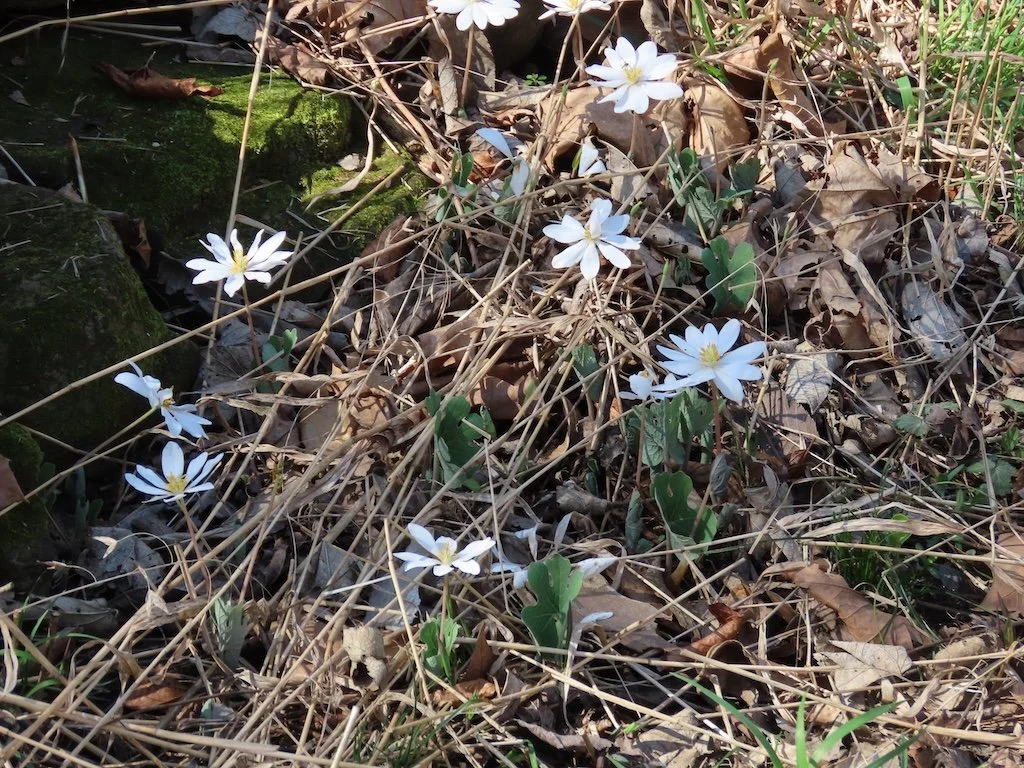
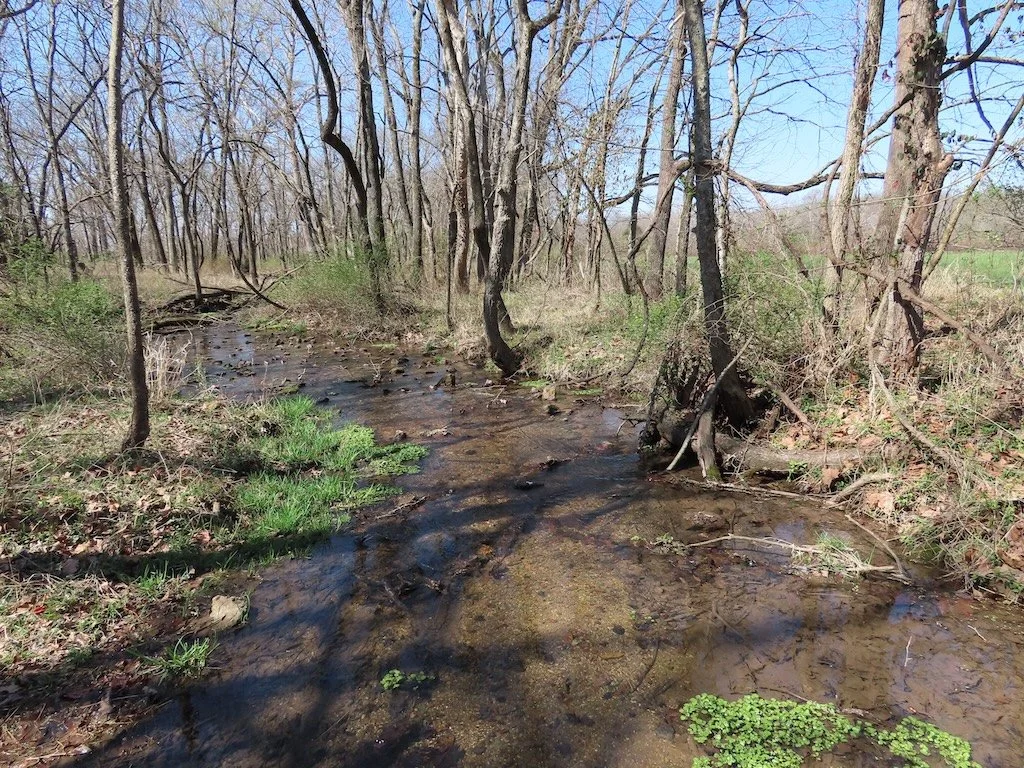
Filling a Day of Social Distance – 4/24/2020 - Gleanings

Continuing the blog post series prompted by COVID-19….

Here are the unique activities for yesterday:

Finishing Fashion as Design Coursera course. The theme for the last module was Expression. It was a good way to end the course. I have enjoyed both courses I’ve done from MoMA and will probably start a third one – What is Contemporary Art – early next week.

20200424_182855.jpg

Hearing a piano practice. My husband opted to start up piano practice…not sure why he hadn’t thought to play it weeks ago. What’s not to like about a grand piano? It was tuned last winter just before the coronavirus pandemic, so it is in excellent condition. His playing didn’t last for long, because the cat demanded attention…and has decided that the best place to sleep is under the piano.

Hearing a piano practice. My husband opted to start up piano practice…not sure why he hadn’t thought to play it weeks ago. What’s not to like about a grand piano? It was tuned last winter just before the coronavirus pandemic, so it is in excellent condition. His playing didn’t last for long, because the cat demanded attention…and has decided that the best place to sleep is under the piano.

Links to my previous “filling a day of social distance” posts  here.

And then there are the gleanings for the past week:

The items below were ‘the cream’ of the articles and websites I found this past week. Click on the light green text to look at the article.

How Rain Evolved Its Distinct Scent—and Why Animals and Humans Love It | Smart News | Smithsonian Magazine – The chemical that is the scent of newly moistened soil, geosmin, has been known to scientists since the 1960s….but now we are figuring out its purpose. It is made by 120 of 122 species of bacteria in the genus Streptomyces that have been studied. The scent attracts springtails (tiny arthropods) that eat the bacteria and spread the bacteria’s spores via their excrement or the spores that attach to their body and then fall off. Many other insects, fungi and nematodes are killed by chemicals produced by the bacteria. So – the scent after rain is connected to the lifecycle of bacteria that are one of the most important sources of antibiotics known to science!

Top 25 birds of the week: Terrestrial Birds - Wild Bird Revolution – Enjoying images of birds from around the world.

Long-living tropical trees play outsized role in carbon storage -- ScienceDaily – They used ‘hindcasting’ to validate their model: seeded the model with forest composition data collected at their site in Panama during the 1980s and then ran the model forward to see that it adequately represents the changes that occurred from then until now.  Once that was done…they can use the model to predict what will happen to the forest with climate change. Will the forest continue absorbing some of the excess carbon – or not?

Flamingos in Captivity Pick Favorite Friends Among the Flock | Smart News | Smithsonian Magazine – 2-4 birds…not limited to mated pairs. Some were together for the whole 5 years of the study! The study found no loners but some bounded between groups.

What do soap bubbles and butterflies have in common? Butterfly breeding gives insight into evolution of iridescence -- ScienceDaily – A 75% increase thickness in the chitin lamina of wing scales turned iridescent gold to shiny blue….the same way a soap bubble iridescence works! And now there is a whole new genetic approach to investigate structural color in butterflies – and may lead to new ways to produce photonic nanostructures for solar panels, paints, clothing, and cosmetics.

How to mine precious metals in your home - BBC Future – Theoretically - the “urban mine” is far richer in high value materials per ton than traditional metal ore mines….but we don’t quite have the way to collect the ‘ore’ or effectively extract the metals.  

Springfield Plateau: Cowbird Eggs – Cowbirds….I’m trying not to be too judgmental. (I’ve included a picture of cowbirds at our bird feeder below. The female is a more frequent visitor than the male.)

2020 04 IMG_8702.jpg

Colorful Image Lights Up Microscopic Guts of 'Water Bear' | Smart News | Smithsonian Magazine – Enhancing our view of a tardigrade with fluorescent stain….and done close to where I live at University of Maryland Baltimore County!

Take a Free Virtual Tour of Five Egyptian Heritage Sites | Smart News | Smithsonian Magazine – These are best viewed on your largest monitor!

Common protein in skin can 'turn on' allergic itch -- ScienceDaily – Turning off the production of the protein periostin in the skin can reduce the itch from atopic dermatitis (in mice). More research needed to see if it works for humans too.

Filling a Day of Social Distance – 4/17/2020 - Gleanings

Continuing the blog post series prompted by COVID-19….

Here are the unique activities for yesterday:

Browsing through some issues of Vogue. The Internet Archive has some issues of Vogue online. I particularly enjoyed the one labeled Vol 138: Vogue which includes issues from October - December 1961 (a bound reference volume); you’ll have to create a free-sign on to check it out – browse through. I was in 2nd grade when these issues were originally published and the designs appealing; maybe we all have a subconscious affinity for clothes that were worn as we were growing up. It was a time when natural fiber fabrics were being replaced with synthetic fibers. I can remember learning to iron my cotton shorts and tops during the summertime when I was in the later grades of elementary school!

Noticing filaments algae in the sycamore branch vase. How did it get here? Were there spores on the branch when I brought it in? The picture on the left below is looking down into the vase, the branch being the diagonal shape in the lower left corner. I pulled some algae out and put it on the top of my iPad (using the iPad as a light table) and took a picture through the jeweler’s loupe (picture on the right)…not enough magnification to see any internal detail, unfortunately.

Links to my previous “filling a day of social distance” posts  here.

The items below were ‘the cream’ of the articles and websites I found this past week. Click on the light green text to look at the article.

These Colored Micrographs Show the Incredible Intricacies of Plants – A different botanical perspective.

Can fashion ever be sustainable? - BBC Future – This article fit right in with the Fashion as Design Coursera course I am working my way through right now. I already buy more than half my wardrobe from thrift stores and don’t buy very often. My closet is still too full; one indication is recently finding a pair of jeans I had forgotten about! This article has prompted me to think about how often I wash my clothes. Maybe I don’t need to launder some of them as frequently.

Why This Rare, Huge Ozone Hole Over the Arctic Is Troubling Scientists | Smart News | Smithsonian Magazine – It probably will close soon – but it’s an interesting phenomenon that probably would have gotten more press if coronavirus wasn’t overwhelming all other news.

Blood test detects over 50 types of cancer, some before symptoms appear -- ScienceDaily – This type of test has been a goal for years. Are we getting closer to reality?

Covid-19: The history of pandemics - BBC Future – The impact of coronavirus on our day to day lives is a unique experience for most of the world’s population. This article is a short history of  other pandemics: Justinian plague (6th century…killed as many as 50 million which was half the global population), the Black Death (14th century…killed up to 200 million), smallpox killed as many as 300 million people in the 20th century alone even though there was an effective vaccine available since 1796, 1918 influenza (50-100 million died), and HIV (killed 32 million and infected 75 million with more added every day). Since 1980, the number of outbreaks of new infectious diseases per year has tripled.

19 Incredible Winning Photos from Nature Photography Contest – Lots of interesting nature photos.

Wearable device lets patients with type 2 diabetes safely use affordable insulin option -- ScienceDaily – Maybe technology can deliver less expensive drugs in news ways….making the drugs more effective.

Bioprospecting for Industrial Enzymes and Drug Compounds in an Ancient Submarine Forest: NOAA Office of Ocean Exploration and Research: NOAA Office of Ocean Exploration and Research - An unusually large, biodiverse, and temporally stable wood-associated marine habitat off the coast of Alabama. Within 100-200 prepared culture plates, the team identified approximately 100 strains of bacteria, many of which are novel and 12 of which are already undergoing DNA sequencing for further study of their identity and their biosynthetic potential to make new drugs.

Photographer Immortalizes the Ice Waves of Picturesque Lake in Colorado – It must have been cold work capturing these images!

6 Creative Ways Wildlife Find Shelter • The National Wildlife Federation - A fun article…with some great photographs too.
Filling a Day of Social Distance – 4/16/2020 - Digiscope

Continuing the blog post series prompted by COVID-19….

Here are the unique activities for yesterday:

Browsing Life Magazines from 1939. I’ve been working my way through the scanned issues of Life Magazine available on Internet Archive. 1939 was before the US entered the World War II but the pages of the magazine are full of pictures of Europe…of the wreckage in Warsaw and Hermann Göring….along with ads for Studebakers. The pictures are snippets of history – what people were seeing as ‘news’ at the time.

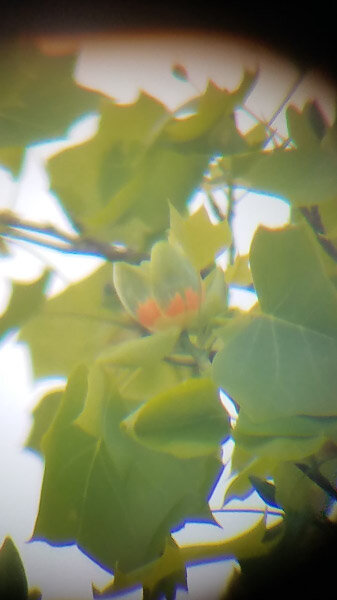
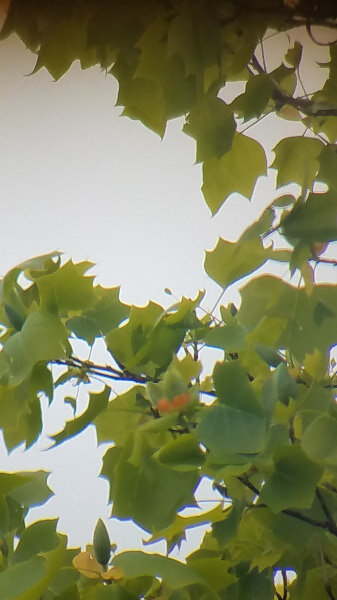
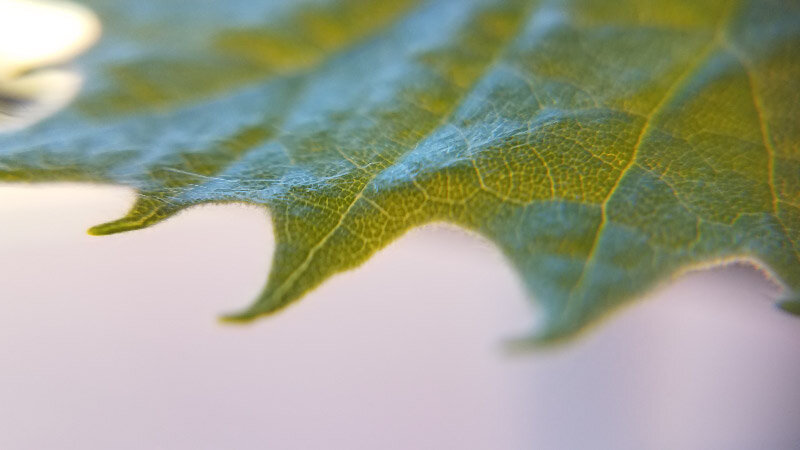
Digiscoping. My husband bought a gizmo to hold a cell phone to the eye piece of our birding scope….allowing a capture of images through the optics of the scope. I did a test on a cold, breezy morning – through the window (a French door in our breakfast area).

20200416_100127.jpg

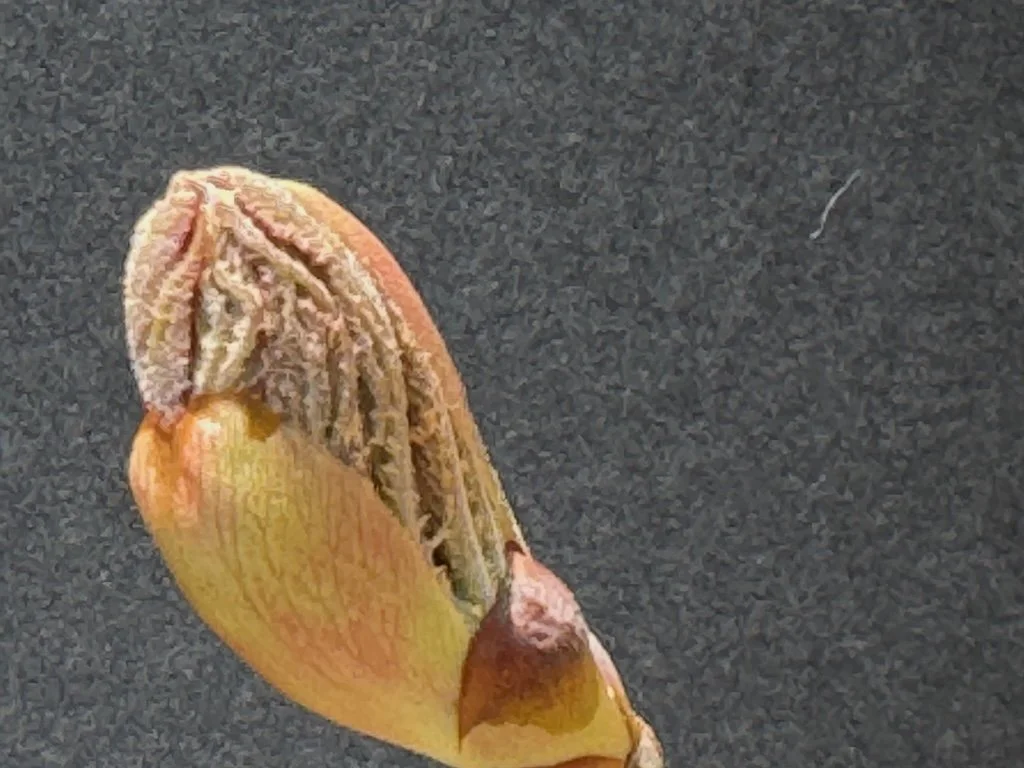
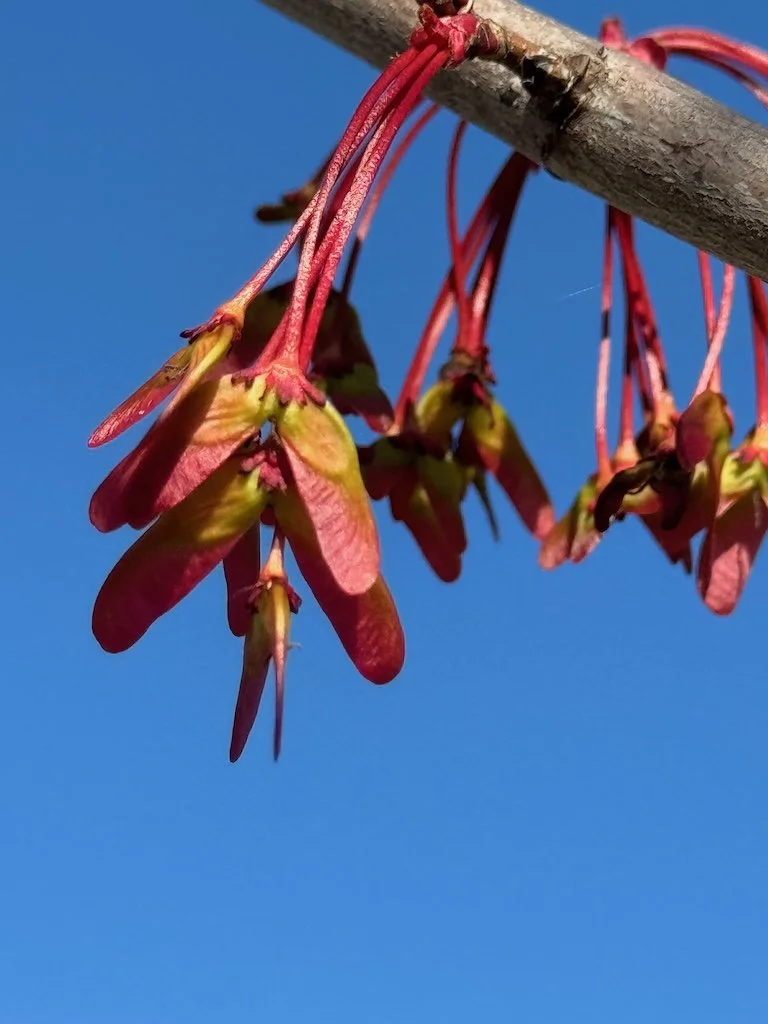
The maples were looking very golden…with samaras and new leaves.

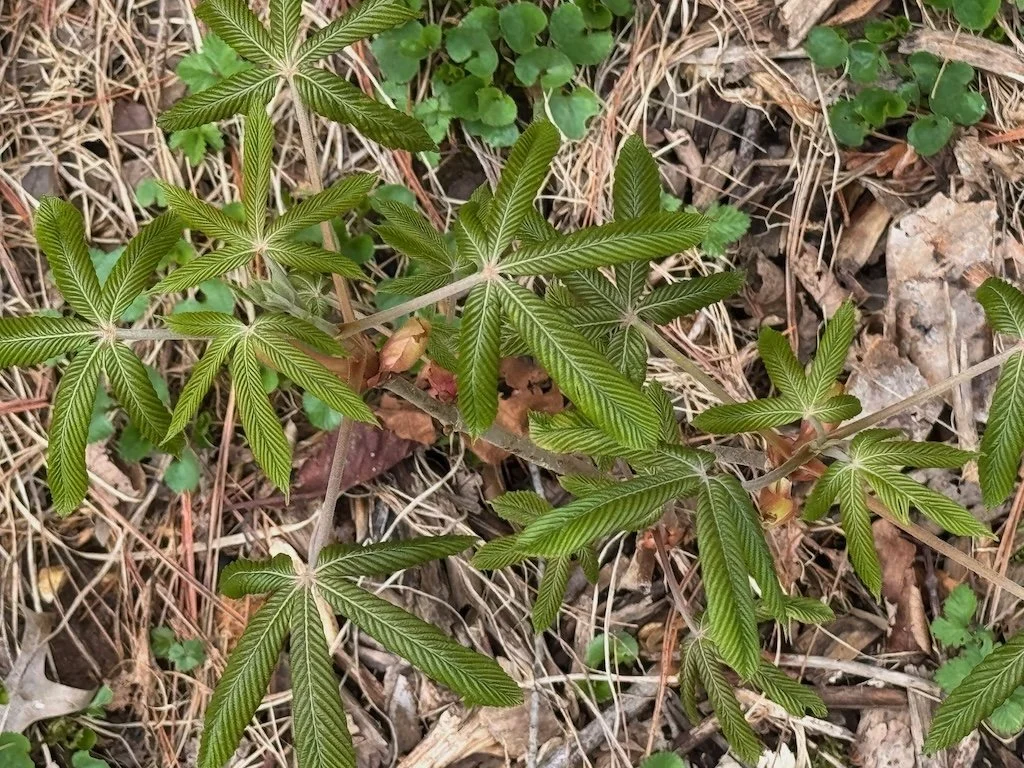
We reconfigured the tripod a bit…took the carrying case off the spotting scope…before I tried some pictures of the tulip poplar. The flowers (tulip like!) are beginning to open. The leaves are large enough to see their distinctive shape.

Overall, it was a good experiment. My husband thinks another mount will work better for us…and trying again on a day that isn’t so breezy would be easier too. Eventually we might even get good enough to photograph some birds back in our woods.

Making chili. We got a large package of ground beef in our last grocery delivery, so I suggested that we make chili to use 2 pounds of it…and then freeze the rest of it in 1-pound packages. I had beans that I had cooked early in the ‘stay at home as much as possible’ regime in the freezer. My husband orders a supply of our preferred chili mix – so we had that on hand. The only thing we were missing was a can of tomato sauce. We substituted spaghetti sauce! When the chili was done, he had his in tortillas (i.e. a chili soft taco) and I had mine over bulgur wheat. We have a lot of leftovers!

Finding a forgotten pair of jeans. I reorganized my closet about a month ago to work my way though all my pairs of jeans/slacks while I am at home…and discovered a pair of jeans I had completely forgotten about. And they fit! My plan had been to discover things that needed to go in the ‘give away’ pile. So far – I haven’t found anything in that category.

Seeing a goldfinch ‘sheltering’ on the screen near the birdfeeder. I noticed a goldfinch under the eve on the screen of our covered deck in the morning. It seemed very intent on whatever it was doing. Then it flew to the feeder to get some seed and look around a bit…then went back to the screen. It appeared to be eating the seed it had gotten from the feeder. I wonder if there was some kind of drama earlier that made the finch leery of our feeder.

Links to my previous “filling a day of social distance” posts  here.

Filling a Day of Social Distance – 4/12/2020

Continuing the blog post series prompted by COVID-19….

Here are the unique activities for yesterday:

Aargh! Brown-headed cowbirds. This is the first year I’ve noticed cowbirds coming regularly to our feeder. There is a pair that seems to be hanging around and I’m concerned that we’ll have baby cowbirds demanding food from the robins and sparrows and cardinals and maybe even the finches.

Making a new plan – then changing it. I had big plans for my front flower beds yesterday afternoon because it was so warm – mixing soil with compost and planting some seeds, placing the glass bird bath on its stand and filling it with water. Then I looked more carefully at the 10-day forecast and remembered that there had been ice in the birdbath cantilevered from our deck for the past 2 mornings. Planting seeds needs to wait until after danger cold temperatures…and I wasn’t keen on the glass bird bath having frozen water in it either. So - I picked up sticks that had fallen from several trees. The oak and sycamore always have small twigs around them after gusty days. But this spring I noticed our cherry does too. There are a couple of larger branches that aren’t getting leaves this year. I told my husband that he’d have to help me when I cut them – although I want to wait a little while to make sure they aren’t going to leaf out.
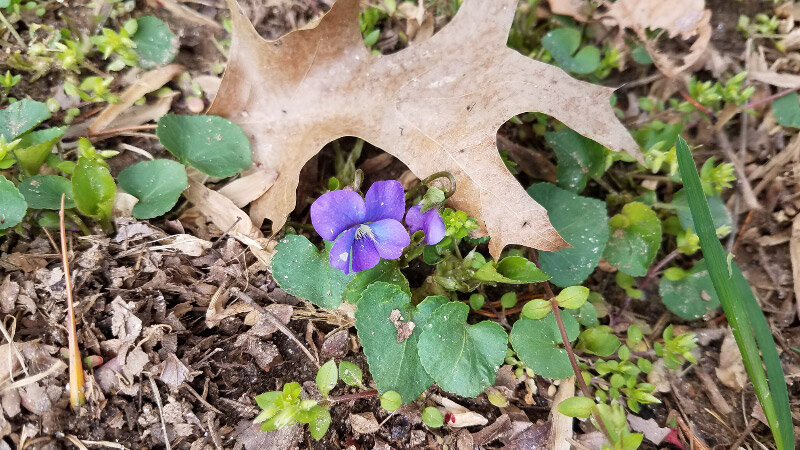
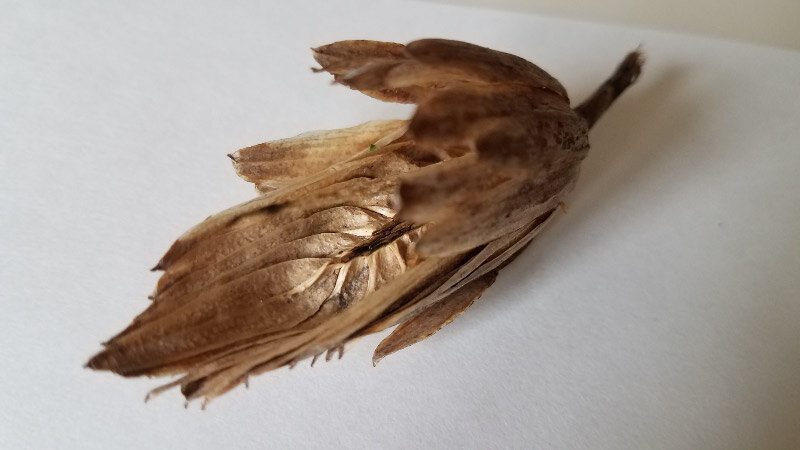
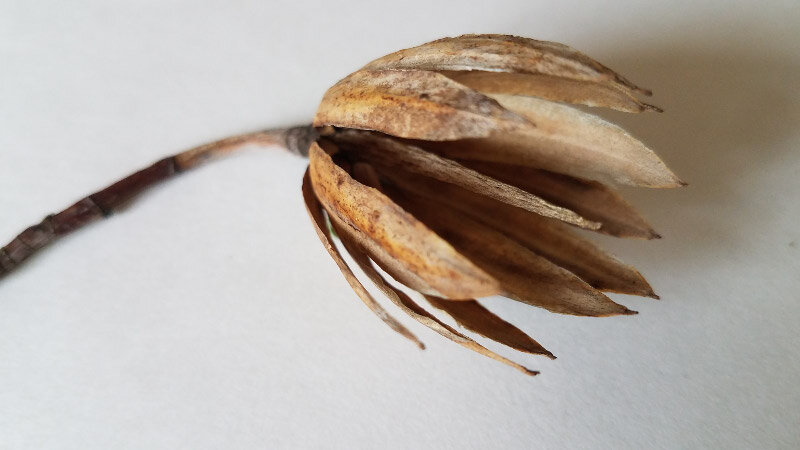
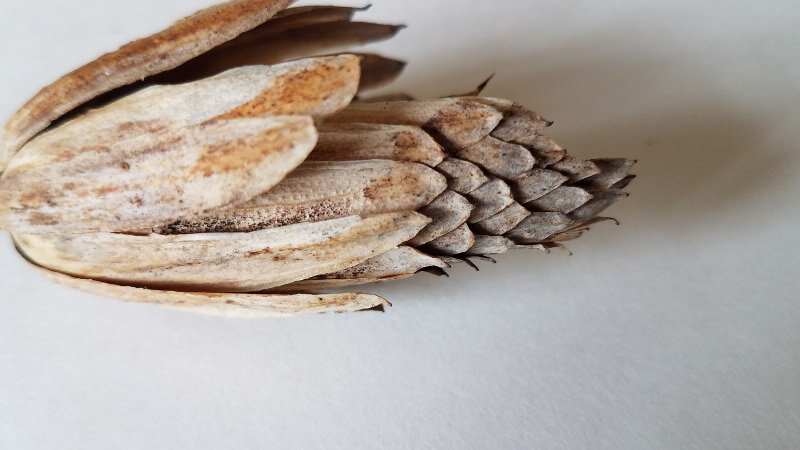
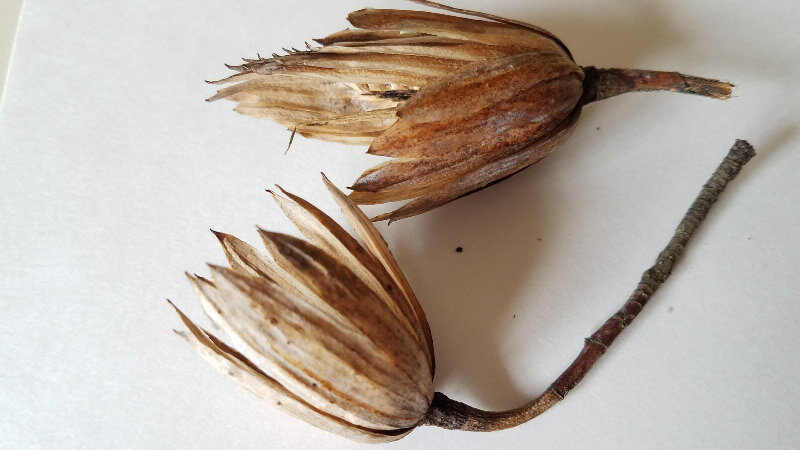
Photographing windfall. While I was making multiple trips to the brush pile with loads of twigs, I noted small bits of trees that had blown to the ground: a twig from a pine with very green needles still attached, groups of samaras blown from the red maple before they could fully ripen, and some seed pods formed last fall on the tulip poplar. I gathered up my treasures before going inside. Just after I put them on the kitchen table, I noticed that one of them had a hitchhiker.

20200412_140914(0).jpg

A tiny spider crawled around. I quickly tried to get a picture, but it was moving too fast and was very small. I decided to use the jeweler’s loupe to contain it…and get the picture with my cell phone The jewelers loupe is 22x magnification…it was a very small spider!

20200412_141511.jpg

I took a close look at the junction between the pine needles and the twig with the clip-on macro lens on my cell phone. The twig has wrinkles at the junction!

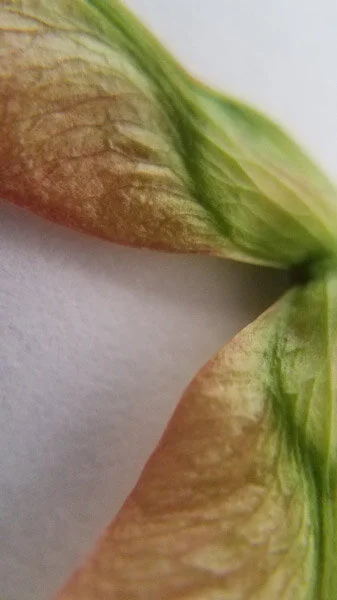
The samaras from the red maple have been a topic previously. They are drying out and losing their color…but still are quite beautiful with the green and muted pink.

20200412_141616.jpg

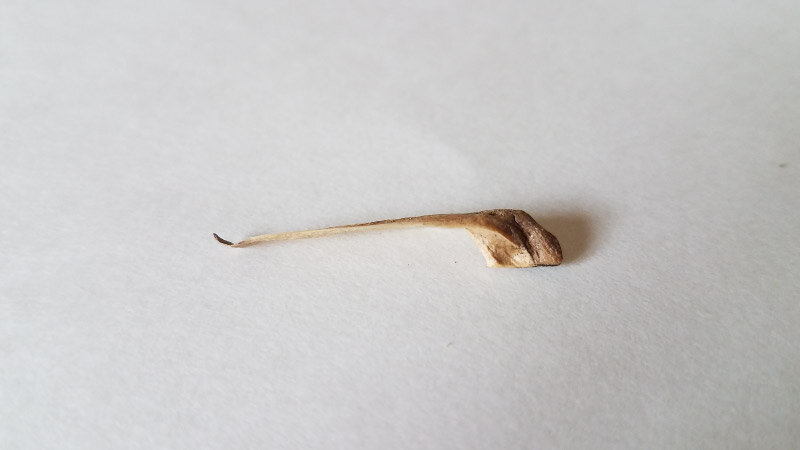
The pods from the tulip poplar are thoroughly dry. One still contained some seeds. I pulled a seed out to photograph. I’m always in awe that such a tiny seed grows to be such a big tree!

Links to my previous “filling a day of social distance” posts  here.  

I am opting to continue this series of blog post to emphasis how different this time is. This is the longest time I’ve stayed home that I can remember. While I am here, I am choosing things I enjoy doing and documenting some of them in this series….and following recommendations to keep myself and others healthy. Overall – the emotional roller coaster from the early days has become more subdued. Every day I become more confident that the way I am living now is sustainable for as long as it takes. My wish for everyone is to

Stay well and help others to be well too.
Filling a Day of Social Distance – 4/3/2020 - Gleanings

Continuing the blog post series prompted by COVID-19….

Here are the unique activities for yesterday:

2020 04 IMG_8728.jpg

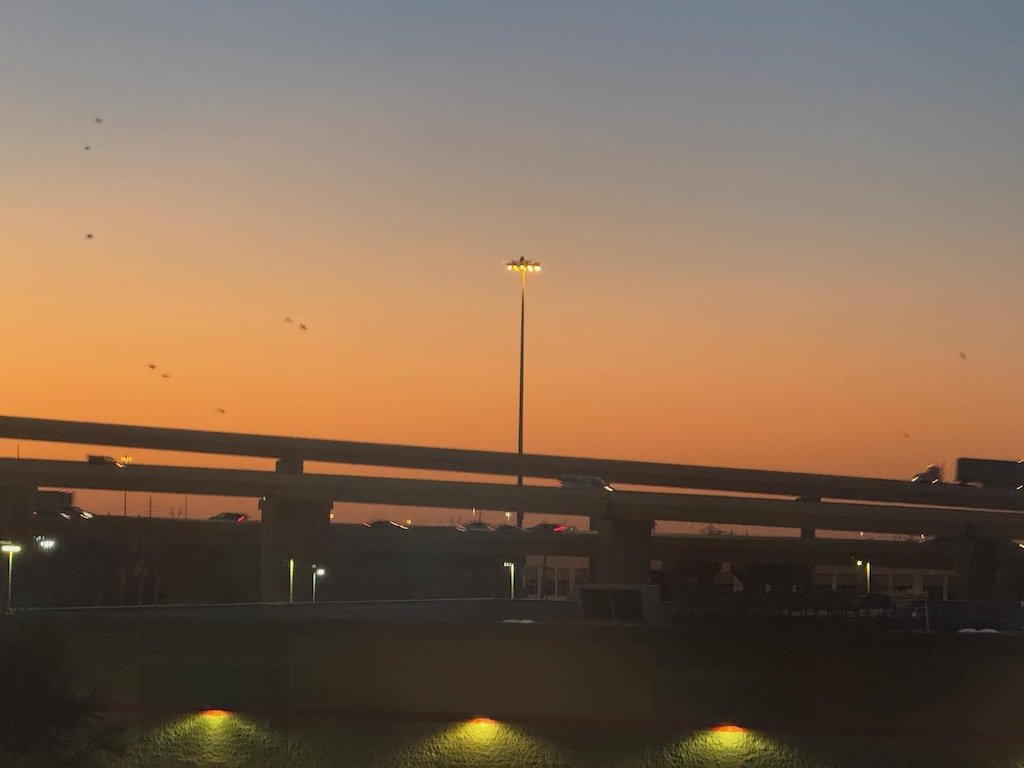
Photographing the sunrise. I seem to get busy and miss the sunrise most mornings…but not yesterday!

Catching up on Charles Cockell’s Life in the Universe Pandemic Series:

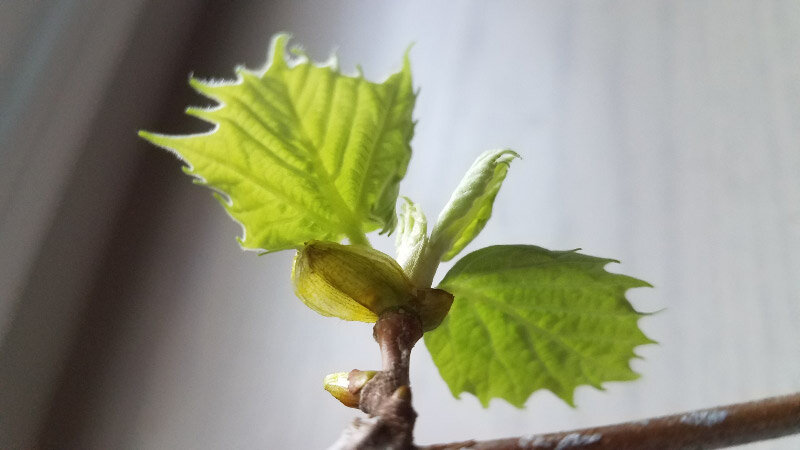
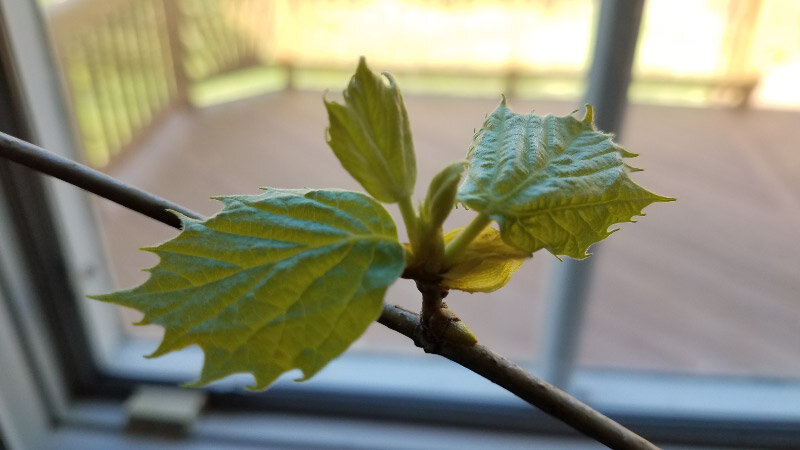
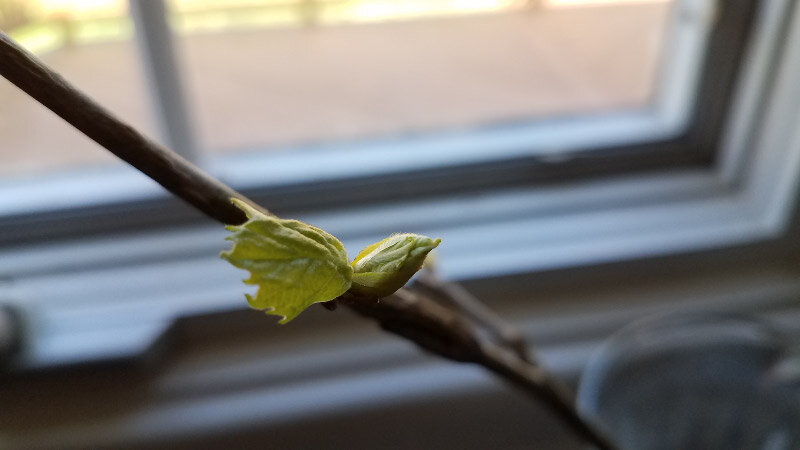
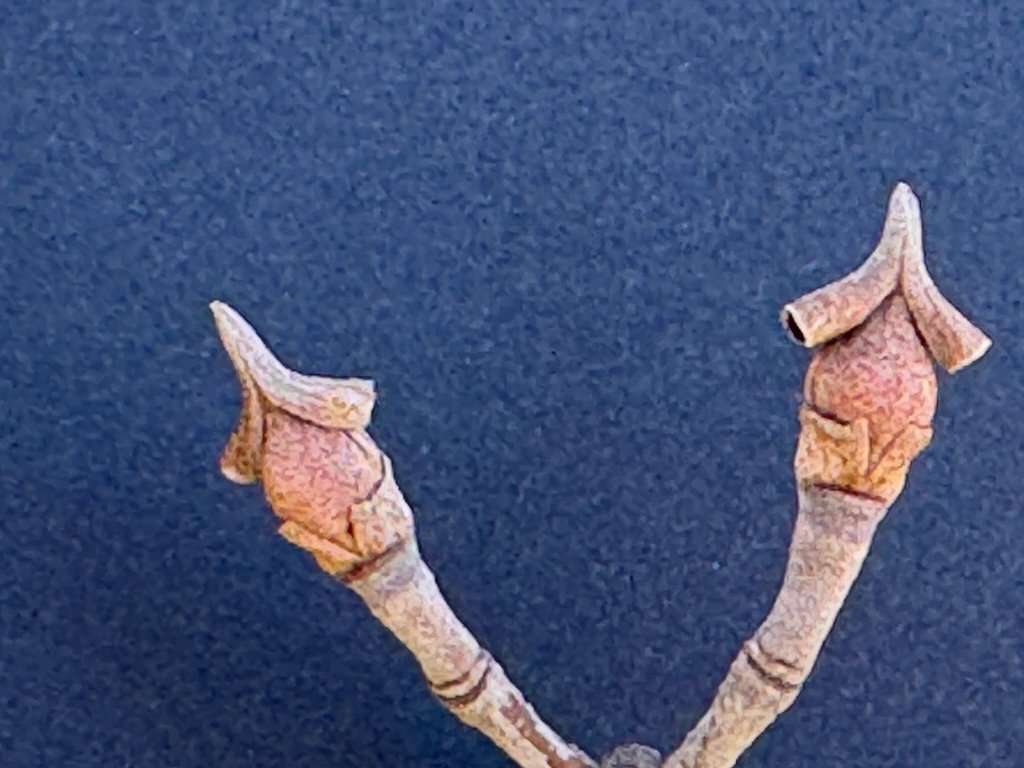
Noticing more sycamore leaves emerging. There are now three buds that have popped…lots of tiny leaves.

Making experimental face masks from materials I have at home….for when/if we need to go out. I made a mask with a paper napkin, small binder clips, the cut off top of a small gift bag (for the loops). The napkin would be replaced after each use…the rest sprayed with Lysol. It would probably fit better over the nose if I made some pleats. Even better using a scarf (or paper towels) and two hair ties/covered bands. (How to videos I watched). This is all about protecting others; I don’t want anyone to get sick if I happen to be an asymptomatic carrier.

20200403_114554.jpg

Started Fashion as Design course on Coursera. The week 1 optional 2-hour video of 4 speakers and then Q&A (Under Review and then Reading) on the topic was well worth it.

Links to my previous “filling a day of social distance” posts  here.

And now for the normal weekly gleanings post….

The items below were ‘the cream’ of the articles and websites I found this past week. Click on the light green text to look at the article. 

25 Photos of Madeira's Dreamy Fanal Forest by Albert Dros – Calming nature. It is a quite different forest than the one I see from my office window. Both views are much appreciated.

Tips for how to stay happy in troubling times - BBC Future – Hopefully, some of these work for you. I find that limiting the time I spend catching up on ‘news’ is the one I need to keep reminding myself about; it’s so easy to get absorbed in all the pandemic news (none of it good). I want to be informed but not 24/7.

Monarchs Covered 53 Percent Less Area in Mexico this Winter | The Scientist Magazine® - The last paragraph of the article was the worst news: “The butterflies have already begun their journey north but there is not enough milkweed in Texas to support the butterflies’ reproductive cycle this spring.”

How your personality changes as you age - BBC Future – It seems like there are a lot of positive general trends in personality as we age: more altruistic and trusting individuals, willpower increases, a better sense of humor, more control over emotions. They’re calling it ‘personality maturation’ and it continues until at least the 8th decade of life! And its observed across all human cultures.

Top 25 birds of the week: Eagles - Wild Bird Revolution – Never can resist the birds….

On This Scorching-Hot Exoplanet, a Forecast of Molten Iron Rain | Smart News | Smithsonian Magazine – 640 light-years outside our solar system

Tour A National Park from The Comfort of Your Couch -  Hmmm….I’m going to start working my way through the virtual tours….Maybe one a day?

Unprecedented preservation of fossil feces from the La Brea Tar Pits: A 50,000-year-old Snapshot of Los Angeles trapped in asphalt -- ScienceDaily – The La Brea Tar Pits have been studied for more than a century….but apparently there are still things to learn from them. Fossilized rodent pellets found in context (so definitely not modern, they also were radiocarbon dated to ~50,000 years ago). They are preserved along with twigs, leaves and seeds….an intact woodrat nest!

Massive Mammoth-Bone Structure Found in Kostenki, Russia - Archaeology Magazine – A circular structure about 41 feet in diameter…made with bones from at least 60 mammoths.

Tree Tapping Isn’t Just for Maples – The 2020 season is over for getting sap from trees – this is still an interesting article about how it is done…and other trees that also have sweet sap. I was surprised to see sycamore on the list.

Filling a Day of Social Distance – 3/27/2020

Continuing the blog post series prompted by COVID-19….

Here are the unique activities for yesterday:

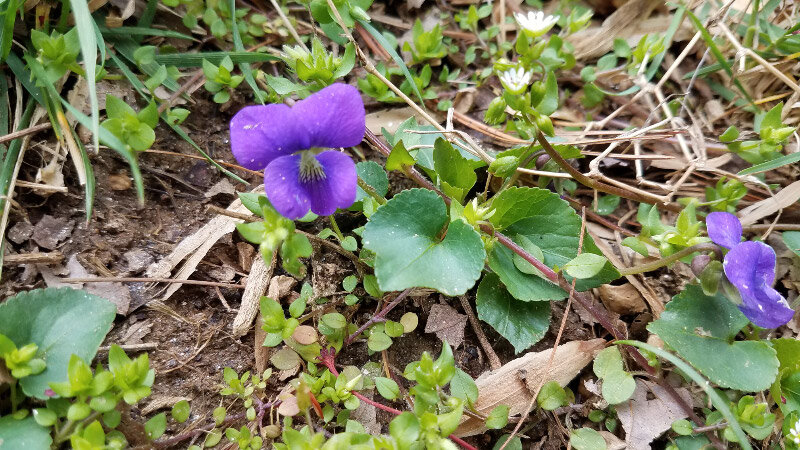
Blooming violets. As I was getting ready to do some yard work, I noticed that the violets were beginning to bloom in our yard. I couldn’t resist taking some pictures. I appreciate their deep color…and that they grow in the area of the yard that doesn’t get enough sun for the grass to grow well. They help to fill in some of the holes…keep those parts of the yard from becoming bare soil.

20200327_123617.jpg

Spreading out compost from bin. The bin was getting a little full and most of the kitchen scraps and dried leaves were decomposed…time to put it someplace else and start again. I decided to put in in an area of the front flower bed where I will plant some flower seeds. I got the wheelbarrow and loaded it up.

Aargh! The tire was a little flat on the wheelbarrow. I could feel my back not responding well as I pushed it up the slight hill to the front yard. I dumped out the load, spread it out a bit and decided my back was complaining enough to just stop; I managed to put my tools away. I’ll mix the compost with soil another day.

20200327_123612.jpg

Popping buds on the Ninebark shrub. Next to the area spread with compost, I noticed the Ninebark leaves were emerging. They are still so tiny it’s hard to see them when looking at the whole bush; looking more closely, they have a lot of sunrise/sunset colors…and texture. The picture also shows another outdoor task for another day…weeding the area around the shrub.

20200327_181950.jpg

Hearing more sounds from outdoors – an open window. The temperature was in the 60s with very little breeze so I opened the window in my office and enjoyed hearing more birds nearby…and back in the forest. There was a lot of activity. The smells of spring came in too. It was supposedly a high tree pollen day; I didn’t seem to have any allergy problems. The fresh air felt and smelled good.

Receiving a grocery delivery. This was our first experience with a grocery delivery; it was a good one. The shopper was interacting with me while she was in the store filling my order which allowed me to participate in selecting substitutions. And then it all arrived at my front porch about 15 minutes after she finished. The only downside is getting a lot of plastic bags; I will return them to be recycled at the store at some point.

20200327_140530.jpg

Previous “filling a day of social distance” posts: 3/15, 3/16, 3/17, 3/18, 3/19, 3/20, 3/21, 3/22, 3/23, 3/24, 3/25, 3/26

Gleanings of the Week Ending March 28, 2020

The items below were ‘the cream’ of the articles and websites I found this past week. Click on the light green text to look at the article.  

Tree Rings, Wildfires, and Climate | The Scientist Magazine® - Evidently the linkage between winter precipitation and fires in the spring in California – long documented in tree ring studies – has disappeared. Wildfires now are as likely to happen after a wet winter as they are after a dry one.

New Research Shows Healthy Agriculture Means Healthier Birds – Honing our understanding of healthy agricultural schemes that promote healthy farmland birds.

How cutting your food waste can help the climate - BBC Future – Over the past few years, I have started composting and reduced my food waste by eating food – never forgetting what I have in the refrigerator. Keeping a mental inventory of fresh fruits and veggies…freezing anything that I might not use before it goes bad….has been key. I enjoy frozen bananas in smoothies more than the unfrozen! This time at home (social distancing) gives me an opportunity for another round of reducing food waste….although it’s harder now since I’ve done all the easy actions.

'Grand Challenge' review stresses global impact of microplastics -- ScienceDaily  - Where major research and discovery are needed re microplastics impact on the environment and health. Recognizing that all plastic is not the same and new tools will be needed.

20+ Photos of a Snow-Covered Winter Wonderland in the Forest and 15 Incredible Finalists of the Smithsonian Magazine Photo Contest – So many beautiful pictures. I needed the boost of natural images this week.

Dragonflies are efficient predators: They consume hundreds of thousands of insects in a small area -- ScienceDaily – Exploring predation in the insect world…its impact on prey species and the community.

A Naturalist’s Guide to the South African Cape – Some unique species.

Top 25 birds of the week: Migratory birds - Wild Bird Revolution – I always enjoy the 25 bird pictures each week.

Sinking ships to stop erosion - The Landslide Blog - AGU Blogosphere – The example shows ships sunk after World War I to stop erosion…and now more than 100 years later – it’s obvious that it worked!

Staying in? Keep learning with science activities that kids and families can do at home | National Oceanic and Atmospheric Administration – Some resources from NOAA….ocean and atmosphere topics to explore without leaving the house!

Filling a Day of Social Distance – 3/25/2020

Continuing the blog post series prompted by COVID-19….

Here are the unique activities for yesterday:

20200325_141357.jpg

Relaxing with an at-home facial. I found a pomegranate mask packet that I’d had for months…enjoyed it while I listened to a video that was about 15 minutes long…the time in the directions for the mask.

Catching up on the Life in the Universe Pandemic Series from Charles Cockell:

Scheduling a grocery delivery. I placed an order for delivery with my grocery store on 3/25 (morning) and it going to be delivered on 3/27 (afternoon) to my front porch. This is a first for me and I have all the usual concerns – will the bananas be bruised and produce wilted? Will they have everything on my list? Will they make good substitutions if what I requested is not in stock? I guess I’ll find out on Friday afternoon.

Noticing that the tulip poplar is leaving out. The little leaves have the tulip poplar shape almost immediately. The flower buds are still just enlarging.  

2020 03 IMG_8502 (5).jpg

Receiving most of our orders. We wash ours hands with soap and water after we bring boxes or envelopes into the house then let them sit around unopened for a few days to give any coronavirus on them plenty of time to die. The most critical outstanding one came on 3/25 – the last of our over-the-counter medications supply that would help us with symptoms should we get sick. The only package we are still waiting for is the bugs we ordered back on 3/19; it’s good to have a project ‘on the way.’

20200325_153824.jpg

Catching up on shredding. I collect items to shred around the shredder….doing the job when I need ‘browns’ for my compost pile. Toilet paper rolls are my favorite because they are an easy size for my shredder, and they are unbleached cardboard; they deteriorate very rapidly in the compost pile with my kitchen scraps and other ‘greens.’ I plan to empty out finished compost on the next nice day and restart the pile….so the shreds will be outdoors and fodder for decomposers within the next few days.

Trying some macro shots of spicebush leaves. The leaf buds on the small spicebush plant that I brought inside have popped. The leaves have not quite unfurled yet. The flowers are done for the year….but maybe some of them will make seeds if they were fertilized before the branch was brought inside.

Previous “filling a day of social distance” posts: 3/15, 3/16, 3/17, 3/18, 3/19, 3/20, 3/21, 3/22, 3/23, 3/24

Gleanings of the Week Ending March 21, 2020

The items below were ‘the cream’ of the articles and websites I found this past week. Click on the light green text to look at the article.  

Can Destroying Senescent Cells Treat Age-Related Disease? | The Scientist Magazine® - Lots of trials going on…this may be a way to extended years of healthy life (not elongate life).

This 'Blood-Red' Snow Is Taking Over Parts of Antarctica | Smart News | Smithsonian Magazine – I remember seeing snow that was the color of watermelon in Colorado…it’s algae Chlamydomonas nivalis, which is the most common type of snow algae around the world. It hasn’t been as common in Antarctica until this year.

Spotted Zebras, Yellow Cardinals, and Three-Antlered Deer: What Causes these Animal Oddities? • The National Wildlife Federation Blog – Some uncommon forms of animals we all recognize.

What Makes a Venus Flytrap Snap | The Scientist Magazine® - It’s complicated…and nuanced so that the plant only invests in digestion efforts when there is food!

Just a Tiny Fraction of America’s Plastic Can Actually Be Recycled, Report Finds - Yale E360 – We can’t send it to China any more…so it’s all on us to clean up our own mess. Unless and until we can get recycling working well…it’s important for all of us to reduce our use of plastics as much as possible. It’s hard to do.

States with highest rates of melanoma due to ultraviolet radiation identified: Several landlocked states among those with highest rates -- ScienceDaily – It’s not all about being out in the sun either. The prevalence was higher in younger females due to tanning bed usage by teen girls in the late 1990s contributing.

Interactive Infographic: How Salt Transforms Coastal Forests | The Scientist Magazine® - We noticed this process as we’ve visited Blackwater National Wildlife Refuge over the years. There are some areas that used to be marsh with some trees that are now open water.

Top 25 birds of the week: March 2020 - Wild Bird Revolution – No birding festivals in our future near term….but still enjoying pictures taken by others.

Why your internet habits are not as clean as you think - BBC Future – A good compilation of studies about energy consumption for various aspects of our online activities….maybe we can skew toward the lower energy use ones more frequently. Some of the energy, we pay for in terms of our electricity use….others are embedded in products or services we use where the energy usage is not something we see directly.

Coronavirus: How hand sanitizers protect against infections – Compound Interest – Some timely chemistry.

Filling a Day of Social Distance – 3/19/2020

Continuing the blog post series prompted by COVID-19….

Here are the unique activities for yesterday…a cloudy day that started out very wet:

  • Trying another grocery store – first thing in the morning again. We found meat! It wasn’t our usual organic…but we bought it anyway. We also found some spray Lysol but not disinfecting counter cleaner…we are using our backup plan which will involve gloves, open windows and fans on (fortunately we are going to have some warm days). We got the medicines we would need if we got sick and my husband’s favorite protein shakes. Still no toilet paper or cat food. We ordered the cat food online when we got home.

20200319_103045.jpg

Reducing toilet paper consumption dramatically. We have water in spray bottles beside our toilets now. We haven’t eliminated toilet paper entirely…but we are building up our skills with the water. It should enable us to manage with the toilet paper we have in the house for a few weeks even though we have not been able to find any in stores recently. Maybe this strategy will last beyond this crisis….it would make sewage treatment easier and reduce the number of trees felled to make toilet paper.

  • Noticing that I am sleeping as well as ever (according to my Fitbit…and not feeling tired). It’s an indicator that I am still handling the stress of the pandemic and changing habits very well. Another indicator from my Fitbit: my resting heart rate has stayed below 65 (normal for me) the whole time.

  • Cooking sweet potato hash browns. We cook and eat at home most of the time. But I have more time now, so I am beginning to experiment. I got the idea for hash browns from my husband requesting the frozen variety of hash browns when I went to the grocery store…but I changed the potato from russet/white to sweet for my dinner! I scrubbed the sweet potato and cut off the ends…chunked it so it would fit in the food processor with the shredder attachment…cooked them in a little olive oil seasoned with onion flakes and no-salt seasoning. It made a good meal with scrambled eggs…pretty orange and yellow colors on the plate.

  • Filling the bird feeder. We let the bird feeder hang empty for the past week to discourage a hawk that has become too interested in our backyard. Now we get to observe how long it takes for the little birds to find the seed again. Are the juncos still around?

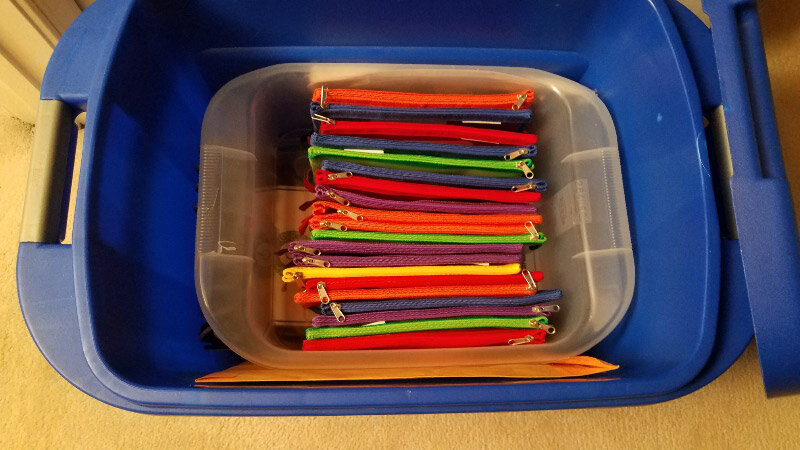
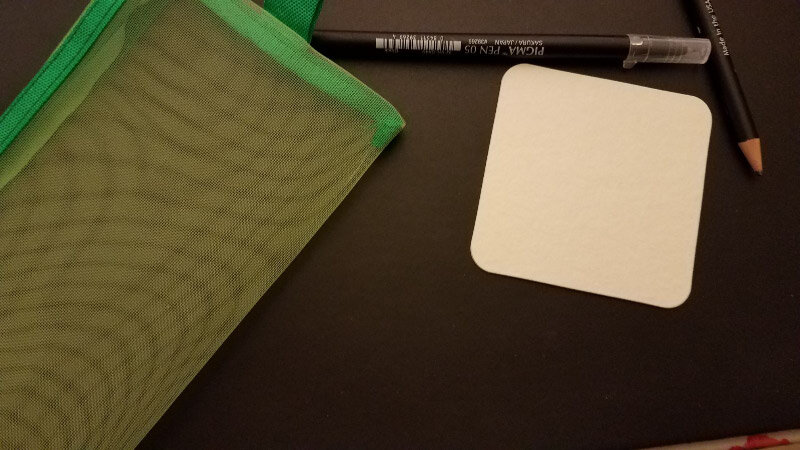
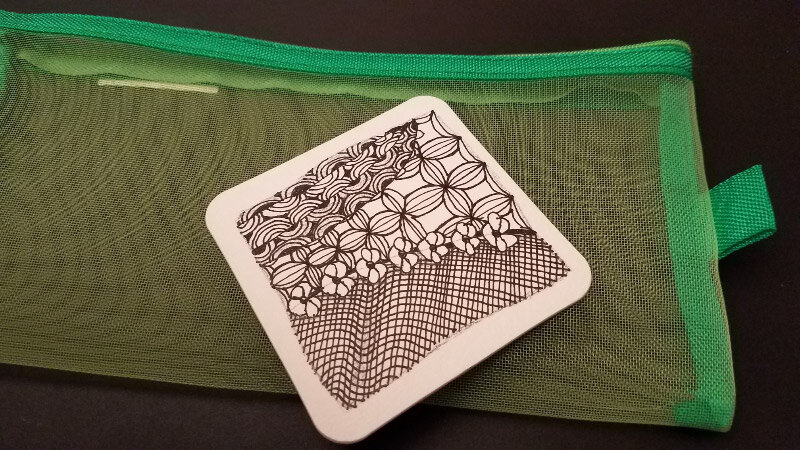
  • Unpacking the bin prepped for a Zentangle® class. My plan for 3/19 from back in January was to lead a Zentangle session for my fellow volunteers after a training session for spring field trips. That has all be cancelled – of course. I am unpacking the bin I had already prepped: color zipper pouches with square paper coaster tiles, Pigma Pen 05, and pencils. I am going to use the bin to put all the photos I found in decades-old boxes in our basement…put the smaller bin of pouches on a shelf in my office. I couldn’t resist opening one pouch and tangling!

  • Browsing through emails and feeds with suggestions from others re navigating through the upheaval coronavirus is causing. An email from Coursera (lots for free online courses) had several interesting links that I want to pass along:

    • If you or someone you know is learning online for the first time: You can share these 8 tips from our Teaching & Learning team.

    • If you’re looking for ways to keep learning with your kids: Talk with parents around the world and share your favorite resources.

    • If you’re looking for advice about moving in-person learning online: You can reference these best practices from our Teaching & Learning team.

    • If, like Coursera, you and your team are shifting to remote work: You can join others in our community to discuss strategies and share advice.

Previous “filling a day of social distance” posts: 3/15, 3/16, 3/17, 3/18

Filling a Day of Social Distance – 3/17/2020

Continuing the blog post series prompted by COVID-19….

Here are the unique activities for yesterday:

  • Picking earrings to wear that I haven’t worn in a long time. Yesterday I wore some from Orlando FL and today they are from Watkins Glen NY. Earrings are my favorite item to purchase when I travel…small keepsakes that I can wear! Both are over 10 years old, but I still remember where I got them.

  • Maintaining the compost pile and walking around the yard. I’m trying to get out of the house at least once a day….enjoy that it is springtime here!

  • Watching the second installment of the Cincinnati Zoo’s Home Safari (about Rico the Porcupine). They have established a website where all the videos will be available after they air live. I am watching the recorded version, so I don’t have to pay attention to the time to be online at 3 PM EDT!

  • Calling family far away, I had planned to be in Texas this past week…but I was already ‘staying at home as much as possible’ a few days before I was going to get on the airplane. Talking on the telephone is the next best thing for keeping in touch until it is not as risky to be out and about in larger groups of people.

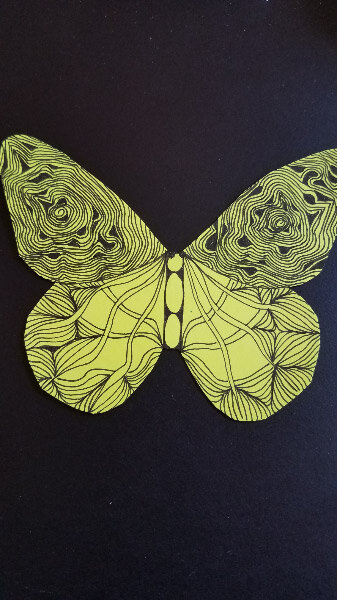
  • Making a Zentangle® butterfly. I was straightening up my office and found a few extra butterfly tiles left from last summer’s experience with summer campers. I couldn’t resist using the tile…thinking that this would be a good activity for anyone needing a quiet calm time. If you want to learn a new pattern, checkout out https://tanglepatterns.com/ . Later in the afternoon. it was warm enough that I saw a real butterfly - a cabbage white.

Previous “filling a day of social distance” posts: 3/15, 3/16

--

The Zentangle® Method is an easy-to-learn, relaxing, and fun way to create beautiful images by drawing structured patterns. It was created by Rick Roberts and Maria Thomas. "Zentangle" is a registered trademark of Zentangle, Inc. Learn more at zentangle.com.

Gleanings of the Week Ending March 14, 2020

The items below were ‘the cream’ of the articles and websites I found this past week. Click on the light green text to look at the article.  

Shrikes: Meet the Bird That Impales Prey on Spikes – The bird creates its “pantry” on barbed wire…other spikey objects. Gruesome…but it’s an adaptation that works for the bird.

The color of your clothing can impact wildlife - ScienceDaily – For water anoles – orange is better than green if you want to see the lizards!

We're Destroying Virgin Forests for Toilet Paper -- What Are the Alternatives? | CleanTechnica – Not good! We in the US are the biggest users…change is hard.

Why Clouds Are the Key to New Troubling Projections on Warming - Yale E360 – Fewer clouds as the planet warms? If so, we’ll heat up more because more solar energy will strike the planet. That’s what the most recent models are predicting and real-world data from satellites suggests that the modelers’ predictions may already be coming true. We’ll have less snow and ice around too to reflect solar energy back into space. It seems like we should make all sky facing manmade surfaces (like roofs) white or lighter colored (unless they are generating energy)…and look for other opportunities to reflect like clouds.

New Research Rewrites the Demise of Easter Island | Smart News | Smithsonian Magazine – There is mounting evidence that Easter Island people created the statues until at least 1750 – after contact with Europeans. And their population has been relatively stable since the 1400s. By the time the British explorer James Cook arrived in 1774 the statues were in ruins. By 1877, just over 100 people remained on Easter Island.

How do woodpeckers avoid brain injury? – Woodpeckers avoid concussions with some adaptions: 1) specialized skull bones, neck muscles, beaks and tongue bones 2) less internal fluid surrounding their brain to limit the motion of the brain during pecking. Interesting…and maybe can help devise ways to protect and heal human brain injuries.

Anti-solar cells: A photovoltaic cell that works at night -- ScienceDaily – Some research…potentially a way to balance solar power over the day-night cycle.

How did the last Neanderthals live? - BBC Future – From caves in Gibraltar….the insight that they were much more like us than we once believed: they exploited seafood and marine mammals (they could swim…hunted dolphins), wooly mammoths, woolly rhinos, ibex, birds (maybe used their feathers…particularly the black ones); they decorated walls and shells; their hyoid bone was like ours (which means they might have had speech like ours); they made tools of bone that were copied by modern humans.

Florida scientists study health effects from exposure to toxic algae - UPI.com – Blue-green algae toxins make people sick (liver damage/disease, skin rashes, headaches, trouble breathing) but does it cause disease when it is absorbed via breathing (i.e. airborne particles) during algae blooms? Fish kills are bad too. It’s good to research the topic but shouldn’t we do everything we can to prevent the blooms in the first place?

Researchers Find Cell-Free Mitochondria Floating in Human Blood | The Scientist Magazine® - Surprise! Now to figure out their function….

Gleanings of the Week Ending March 7, 2020

The items below were ‘the cream’ of the articles and websites I found this past week. Click on the light green text to look at the article.  

Chasing Little Frost Trees in a Prairie Wetland | The Prairie Ecologist – We haven’t have many days for me to look for frost trees here in Maryland this year. This is always a matter of taking advantage of a frosty sunny day when it’s fun to look for interesting frost formations on exposed surfaces – grass – windshields, etc.

Stoneflies and mayflies, canaries of our streams – It’s great to see an article about the adult forms of the insects we collect as macroinvertebrates (larval form) when we do water quality monitoring either quarterly or with high school students on a field trip to a river.

Earthquakes in and around Yellowstone: How Often Do They Occur? – There are lots of them! About 5 that are strong enough to be felt have happened each year over the past decade.

Top strategies for successful weight loss maintenance-- ScienceDaily - Choosing healthy food, tracking what you eat and using positive self-talk….seems like common sense, but it is not ‘easy’ and so we struggle on. It comes down to making changes for the long term rather than just for a little while. New habits are always tough but, once truly habitual, become just the way be live our lives.  

Eero Järnefelt, painter of Finnish nature | Europeana Blog – Images of the natural world in the late 1800s. Koli National Park in eastern Finland was visited by the painter frequently.

Sustainable Farming Comes to America's Heartland | CleanTechnica – Iowa farmers…leading with their actions…responding to climate and environmental changes to farm better.

Can we heat buildings without burning fossil fuels? - BBC Future – Capturing heat from nearby places…using it for heating. It’s geothermal in the cities!

Bloom in McMurdo Sound – Green swirls in the water off Antarctica (some of the green color might be on the ice as well.

Camera Trap Chronicles: Cool Critters of New Hampshire – Maybe sometime  we’ll put our camera, currently pointed at the birdfeeder, in another location….see what comes into our backyard. I know we have deer but there could be other things as well. Our camera already picked up what looked like a racoon on our deck.

Top 25 birds of the week: groups of birds – Beautiful birds…a good ‘last addition’ to the gleanings list this week.

Gleanings of the Week Ending February 22, 2020

The items below were ‘the cream’ of the articles and websites I found this past week. Click on the light green text to look at the article.

Top 25 Wild Bird Photographs of the Week: February 2020 – Note the new website for these weekly posts: https://wildbirdrevolution.org/ ---The posts are still the beautiful bird pictures collected into a group for a weekly visual celebration of birds.

100% Wind, Water, & Solar Energy Can & Should Be the Goal, Costs Less | CleanTechnica – A short summary of a report with specifics for 143 countries…getting to 80% renewable energy by 2030 and completing the transition by 2050. Now to vote with that goal in mind for a livable future for ourselves, our children, our grandchildren….and onward.

LEDs, Downward Lights Changing the Night in Chicago - News | Planetizen – Chicago will complete the transition to energy efficient LED streetlights in 2021. They’ve calculated that it will save the city $100 million over 10 years. At the same time, they have made an effort to focus the new lights downward to cut light pollution. It’s too early to tell if that aspect of the project will be a success.

Vegetation Filters Harmful Particulates from Air--But How Much? | The Scientist Magazine® - It’s probably better to push for the transition to renewable energy (in school buses, for example) but where that is not happening fast enough – planting a green wall of vegetation can block pollution from school yards…which could reduce the impact of vehicle exhaust on children’s lungs.

Decline in Coal-Fired Power Reduces U.S. Carbon Emissions in 2019 - News | Planetizen – Good news…but it could decline more quickly. The 2019 results are from market forces alone. If there were political will, things would happen even faster.

Archaeologists Excavate 200 More Chinese Terracotta Warriors | Smart News | Smithsonian Magazine – The first terracotta warriors were found in China’s Shaanxi province in 1974. Now there is more excavation and more soldiers from the same tomb. All the warriors have unique expressions, hairstyle and physical features.

Organic crop practices affect long-term soil health -- ScienceDaily – This study looked closely at organisms in the soils…along with the impact of prior soil disturbance.

Recovery: A Plague of Bullfrogs – The Eastern part of the US is the native range for Bullfrogs…but they are invaders in the West. They are clearing native frogs and eating other animals too (ducklings are an example cited). So various municipalities and conservation groups are acting.

What We Can Learn From Ötzi the Iceman's Hunting Pack | Smart News | Smithsonian Magazine – Ötzi was preserved for 5,300 years in a glacier until he was discovered in 1991. A lot has been studied since that time. He’s a window into Copper Age Europe.

Photography in the National Parks – More favorite spots for photography from Rebecca Larson. This collection included three National Parks I have not visited: Glacier, Olympic and Mount Rainier. Now I want to plan a trip to see them!

Gleanings of the Week Ending February 15, 2020

The items below were ‘the cream’ of the articles and websites I found this past week. Click on the light green text to look at the article.

All About Feathers – A tutorial on feathers…lots of great visuals (stills, videos, drawings, photos) from The Cornell Lab Bird Academy.

NOAA Research’ top 5 stories from 2019 – Catching up on some reading…the stories featured were the most popular on their site in 2019.

Capturing CO2 from trucks and reducing their emissions by 90% -- ScienceDaily – Research applicable to making transportation friendlier to the environment…retrofitting of existing trucks.

Rising Temperatures Are Stressing the U.S. Corn Belt - Yale E360 – It’s not just rising temperatures…it’s the shift in rainfall causing hydrologic stress during the summer months. Maybe the ‘corn belt’ could shift northward?

Traveler Special Report: Threatened and Endangered National Parks – In Alaska and beyond…we are losing the natural treasures we sought to protect.

The history of candy canes and why they taste so cool – I am late getting around to including this in the gleanings list. I like peppermint candy year round…even if it’s not in the candy cane shape! I have peppermint candy chips to use in snow ice cream…if it will ever snow enough this winter here in Maryland!

Largest Electric School Bus Program in United States Launching in Virginia | CleanTechnica – Dominion Energy partnering with Virginia School districts…to achieve a 50% electric school bus fleet by 2025 and 100% by 2030. Good for the environment and the lungs of Virginia’s school children. I hope other states will move in the same direction.

These infrared images show just how alive butterflies’ wings are – Surprise! Butterfly wings have living cells not just membranes and scales! The living cells can sense heat and the butterfly responds behaviorally.

 Flame retardants and pesticides overtake heavy metals as biggest contributors to IQ loss - ScienceDaily – There are a lot of things that are toxic in our environment these days…and children are the ones that are hurt the most…and the hurt lasts their lifetime. This study looked specifically at lead, mercury, poly-bromated diphenyl ethers (PDBE…flame retardants) and organophosphate pesticides.

Top 25 Wild Bird Photographs of the Week: Bird Photography – A little eye candy to end the list of gleanings for this week.

Gleanings of the Week Ending February 8, 2020

The items below were ‘the cream’ of the articles and websites I found this past week. Click on the light green text to look at the article.

Abstract Aerial Photos of Iceland's Rivers Look Like Watercolor Paintings – A little art photography to start out the gleanings this week.

Tomb Containing Three Generations of Warrior Women Unearthed in Russia | Smart News | Smithsonian Magazine – Evidently research is revealing that warrior women were the norm, not the exception, in Scythian culture. Scythians lived in small tribes, wore trousers (practical since they were on horseback much of the time) and fought with bows and arrows.

Protecting the Sonoran Pronghorn from Extinction – It’s complicated….lots of agencies involved….an international border that is becoming a migration barrier.

Is Notre-Dame Too Fragile to Be Saved? | Smart News | Smithsonian Magazine – Removing the scaffolding that was melted by the fire is evidently going to be a big challenge.

Whooping cough evolving into a superbug -- ScienceDaily – The research was done in Australia…but it probably applies to the US as well. Bottom line: we need to be developing an improved whooping cough vaccine.

One Reason Colorado Playgrounds Are Looking Way More ‘Natural’ | Colorado Public Radio – I like the new types of playgrounds….more than swing sets and slides…bringing in some natural elements.

White Sands National Monument Redesignated As A "National Park" – A beautiful and unique place. I’ve only been there once…but it was very memorable. The biggest surprise for me was that even on a hot day in June, the sand was not hot! Being white really does reflect the heat up and away.

2019 Year In Review: Some Great Photo Tips – So many beautiful places to photograph….take some time in a natural place (National Parks are awesome…but there are other places that are great too).

Striking Portraits of Rare and Endangered Birds by Tim Flach – I tend to like bird pictures from the wild…but these are amazing portraits. Virginia Cardinal – I was surprised to see it in this grouping…as far as I know they are not different than the Northern Cardinal. Cornell’s Allaboutbirds doesn’t have a listing for them.

Mealworms safely consume toxic additive-containing plastic -- ScienceDaily – Not an answer to the plastic problem…more like basic research that could be incorporated into a partial solution. The biggest gain comes from dramatically reducing single use plastics.

3 Free eBooks – January 2020

Starting out the new year…I selected 3 books with an art and history skew from my accumulation of reading this month.

14d 20 01.jpg

Dillon, Edward. Glass. New York: G. P. Putnam’s Sons. London: Methuen and Co. 1907. Available from Project Gutenberg here. The book is a history of glass (up until the early 1900s) with illustrations of pieces in museum collections. I paid more attention to the illustrations than the text. I’ve always been interested in ancient glass because it points to the step beyond basketry and pottery in our manufacturing expertise. It a material we think about as being ‘breakable’ but is often very enduring.

21l 20 01.jpg

Whitney, Frederick. Blackboard Sketching. Springfield, Massachusetts: Milton Bradley Company. 1909. Available from Internet Archive here. Written at a time when many students were learning to write and draw with blackboard slates and slate pencils…it provides an idea of how students were taught. Early classrooms used a lot less paper!

LaFontaine, Bruce. Bridges of the World Coloring Book. Dover Publication. 1994. Available from Internet Archive here. The bridges are organized chronologically. The sample image I show below is the colored version (as the end page of the book) of page 10…a bridge from China built about 1100. The book includes short descriptions the design features and technologies the bridge builders utilized. Obviously, these bridges have proven to be very durable.

78y8 20 01.jpg

Enjoy these 3 online books!

Gleanings of the Week Ending January 25, 2020

The items below were ‘the cream’ of the articles and websites I found this past week. Click on the light green text to look at the article.

Top 25 Wild Bird Photographs of the Week: January 2020 – Starting out with wild and wonderful birds this week.

Infographic: How does nature influence human health? – Most people intuitively know that nature has a positive impact…but now there is more and more research to quantify that impact.

The Plastics Pipeline: A Surge of New Production Is on the Way - Yale E360 – Just when I really want manufacturers to find ways to package products in something other than plastic….the industry has plans to ramp up production of plastic. Consumers can still make a difference with our purchases (or lack of purchase). I’m slowly but surely reducing the items I buy that come in plastic….always looking for alternatives.

New aqueous lithium-ion battery improves safety without sacrificing performance: Non-flammable, cost-efficient, and effective battery -- ScienceDaily – Hurray for all the battery research going on right now….hopefully there will be more and better options near term. It would certainly boost the speed we can transition away from fossil fuels.

Pylos Tomb Artifacts Suggest Trade Links - Archaeology Magazine – Amber from the Baltics, imported carnelian, pendant depicting an Egyptian goddess….the Greek site might have been a stop on a trade route.

Happy New Year from Amundsen-Scott South Pole Station – Kelly Brunt posted this on January 3rd….and I just got around to looking at it. She was one of our hosts at NASA for my HoLLIE class and then the keynote for our graduation. It was good to read about her recent activities!

Super Resilient Protein Structures Preserved a Chunk of Brain for 2,600 Years – Wow – what an amazing and surprising find! And there is has been some research to figure out how it managed to be preserved.

Towards Ecophilia: Being hopeful in spite of it all -I enjoyed the pictures and activity descriptions about children in nature.

How US sewage plants can remove medications from waste-water – Using granular activated carbon and ozonation….more than 95% of certain antidepressants and antibiotics can be removed. This is important to help reduce the development of antibiotic resistant bacteria and maybe other environmental harms as well. But it can be expensive.

The oldest person in the world turns 117 – I liked the last paragraph of the story the best: Last year, when Tanaka received her record for the world’s oldest person, she was asked about the happiest moment in her long life. Her reply was simple: “Now.” Wouldn’t it be great if we all could feel like that no matter how old we are!

Gleanings of the Week Ending January 18, 2020

The items below were ‘the cream’ of the articles and websites I found this past week. Click on the light green text to look at the article.

Earth at Night – This is an eBook from NASA that was last updated in December 2019….lots of pictures of the earth at night, analysis, and the technology behind the images.

Genomes Sequenced for Every US and Canada Butterfly | The Scientist Magazine® - Work by an evolutionary biologist at University of Texas Southwestern Medical Center. 845 butterfly species were studied.

Adding copper strengthens 3D-printed titanium -- ScienceDaily – Current titanium alloys used in 3D printing were prone to cracking and distortion. The copper alloy seems to overcome that problem.

When the best way to take notes is by hand - BBC Future – I like to take notes by hand….it always seemed easier to me than using a laptop (although I tried using a laptop to take notes in meetings during my career). Now it seems that it is better for internalizing concepts too. No need for me to try to change to anything else!

Blue Whales’ Hearts Can Beat Exceptionally Slowly | The Scientist Magazine® - As low as 2 times per minute! The high was 37 beats per minute.

Image of the Day: Ochre Paint | The Scientist Magazine® - Evidently ancient people heated aquatic bacteria mats growing in iron rich water to make a bright red paint which was used for rock art. The paint contains microfossils of the bacteria (Leptothrix ochracea). The red color is highly thermo-stable…something that has applicability to manufacturing.

Crows could be the smartest animal other than primates - BBC Future – Clever crows. Not so long ago we thought humans were the only ones to make and use tools.

Incredible Winners of the 2019 EPSON International PANO Awards – Panoramic photographs…a little eye candy for the week.

Trashed farmland could be a conservation treasure -- ScienceDaily – Interesting idea…but how much land is in this category and what happens to the people that are still trying to eke out an existence on that land.

Future For Silversword Plants At Halaeakalā National Park Dark – Rare plants…have not recovered as well as the Nene (Hawaiian goose) – for several reasons. Plants around the world are having to adjust to changing climate and some will not be able to change fast enough to continue to exist in the same places…some may become extinct. I hope the Silversword survives.

Gleanings of the Week Ending January 11, 2020

The items below were ‘the cream’ of the articles and websites I found this past week. Click on the light green text to look at the article.

Top 25 Wild Bird Photographs of the Week: Seabirds – Starting with the birds this week. I’m thinking about the Delmarva birding sessions later this month…they’ll be sea birds and more to see.

Clearing damaged cells out of the body helps heal diabetics' blood vessels -- ScienceDaily – Interesting….but still a lot of research needed before it could potentialy be used in treatment.

The toxic killers in our air too small to see - BBC Future – Nanoparticles – 90% of particles by busy roads are nanoparticles below 100nm. The smaller the particles, the greater potential toxicity. Anything smaller than 30 nm can make it to through the lungs and into the blood stream (larger than that doesn’t gets past the lungs). The Global Burden of Diseases study estimates that air pollution could account for 21% of all deaths due to stroke and 24% of deaths from ischaemic heart disease.

A little prairie can rescue honey bees from famine on the farm -- ScienceDaily – Food crops can provide good food for honey bees…but maybe not for the whole season.

Adult Humans Can Regenerate Cartilage: Study | The Scientist Magazine® - microRNA may have potential in human regeneration of tissue.

Agar Art Contest 2019: See this year’s winners – Art made with live bacteria.

Infrared Reveals Egyptian Mummies' Hidden Tattoos | Smart News | Smithsonian – 7 mummies – 3,000 years old. All the mummies with tattoos at the site were women.

Gabapentin: A Risky Answer to the Opioid Epidemic - The Atlantic Gabapentin has become the 10th most-commonly-prescribed medication in the US. It is viewed as a safer alternative to opioids for chronic pain….but it is problematic in combination with other sedating medication and it doesn’t work as well as hoped….particularly for back pain. It appears that looking for a quick fix for chronic pain is – again – not working as advertised.

Photography In The National Parks: My Favorite Spots For Great Photos – From Arches, Bryce Canyon, Big Bend, Acadia, and Padre Island.

Scientists Don't Know Why Freshwater Mussels Are Dying Across North America | Smart News | Smithsonian – It’s not just in one place….and may have multiple causes. But this just highlights that some mussel species that have already gone extinct…and our rivers are very different than their ‘natural’ state.