Gleanings of the Week Ending March 27, 2021

The items below were ‘the cream’ of the articles and websites I found this past week. Click on the light green text to look at the article.

Alexander Calder – Modern from the Start – An exhibit at The Museum of Modern Art (MoMA). There are pictures and a videos of the exhibit on the site. I watched the webinar on the 25th  when it was live and am in the process of looking at the rest of the site now.

Doug Tallamy’s List of Best Plant Genera for Supporting Moths and Butterflies | pollinator-pathway – Arbor Day is coming up in most areas (it varies by state depending on the best tree planting time. If you are thinking about planting a tree (or trees), think native and ones that support moths and butterflies!

Top 25 birds of the week: Bird Colours! - Wild Bird Revolution and Top 25 birds of the week: Bird Communication! - Wild Bird Revolution – Enjoy a double dose of bird photographs this week.

New skin patch brings us closer to wearable, all-in-one health monitor -- ScienceDaily – Still in the research phase…but a step forward. I like the idea of a blood pressure measurement that can be linked with other data throughout the day.

Is the Western way of raising kids weird? - BBC Future – We tend to think that the cultural norms we grow up in are the ‘best’ – but that may not always be true.

On U.S. East Coast, Has Offshore Wind’s Moment Finally Arrived? - Yale E360 – Reliable source of wind and proximity to populous markets….maybe the false starts are finally in the past for this renewal source of energy.

10 virtual tours of spectacular buildings around the world | Top 10s | The Guardian – More places to visit virtually!

Slideshow: Watch Insects in Motion | The Scientist Magazine® - Some technologies researchers are applying to better understand how insects have become such successful fliers.

How the Loss of Soil Is Sacrificing America’s Natural Heritage - Yale E360 – At best 24% of Corn Belt topsoil is gone…at worst 46%....and topsoil is still being lost. The study found that the main source of erosion is not water runoff but tillage…and right now only 15% of acreage in the heart of the Corn Belt is ‘no-till.’

Oldest Known Wild Bird Hatches Chick at Age 70 | Smart News | Smithsonian Magazine – Wisdom, an Laysan albatross, returns to Midway Atoll again. Her chick for this year hatched on February 1. She has outlived the person that originally banded her!

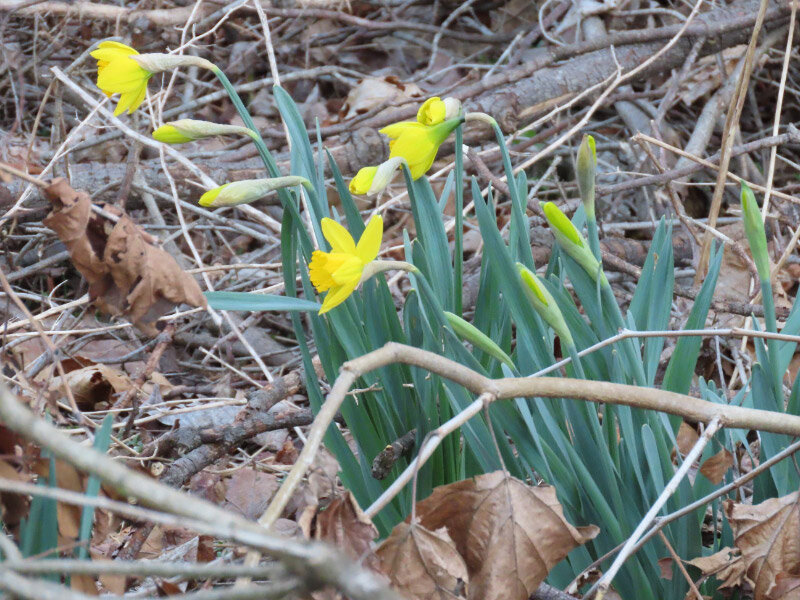
Daffodils in the Brush Pile

Looking out my office window - I noticed a clump of daffodils was blooming in the brush pile at the back of our yard and went downstairs (inside and then from the deck) to get some pictures. Our neighbors have always had daffodils around the base of one of their trees and I had planted some bulbs slightly in front of the tree line in our yard several years ago to establish a similar stand in our yard. The plants come up and bloom well before the leaves are on the trees. My subsequent project to gradually extend the ‘forest’ into our yard by putting small brush piles over the areas where the grass does not well (too much shade) covered the place where I planted the bulbs…but they are hardy enough to come up and bloom anyway! And they provide a marker for how much I have extended the forest leaf mulch area into our yard….probably at least 6 feet. It’s much better than having thin grass/soil showing in that area.

I also noticed that one of the larger branches in the brush pile had some shelf fungus growing --- decomposition and nature recycling itself in action!

2021 03 IMG_7131 (3).jpg

As I walked back up the incline toward the deck stairs, I notice a leaf from last year with some neatly drilled holes. I wondered if the holes were already made before the leaf fell.

2021 03 IMG_7131 (4).jpg

Overall – a very satisfying short photo shoot in our yard!

Gleanings of the Week Ending March 20, 2021

The items below were ‘the cream’ of the articles and websites I found this past week. Click on the light green text to look at the article.

The greatest security threat of the post-truth age - BBC Future – The chilling observation that we might be in a period when “Although information is easily available, people cannot tell whether anything they see, read or hear is reliable or not.”

Top 25 birds of the week: Waterbirds! – From around the world…and the first one is a bird I’ve seen/photographed too in Texas, New Mexico, Delaware and Florida: the American White Pelican!

Diets high in fructose could cause immune system damage, study suggests -- ScienceDaily – Another reason to avoid processed foods….

Easy Nature Adventures to Enjoy Near You – Enjoying the place where you are…outdoors! This time of year, there is a lot of things to see close to where I live and I can choose the places/times to avoid any crowds (still a good thing in this pandemic time until the vaccination rates get much higher and infections begin to plummet).

Stealth Chemicals: A call to action on a threat to human fertility – Evidence has been accumulating…and there are a lot more observable problems at this point. I was glad that near the end of the article, there were recommendations for people trying to have children and/or for young children. And we need to move forward on top-down approaches if manufacturers don’t take near term action.

Helping Birds Adapt to Climate Change in the Nevada Desert – Replacing lost riparian areas after removal of invasive tamarisk.

Earth Matters - What in the World Are Moon Trees? – Trees grown from seeds that were taken into lunar orbit 50 years ago!

Climate Change, Deforestation Hurting Monarch Butterfly Migration : NPR – So many problems for the migrating populations of these butterflies. Soon we might only see this butterfly in areas where they don’t need to migrate to survive the winter.

Remnants of Iron Age Settlement, Roman Villa Found in England | Smart News | Smithsonian Magazine – 15 cone shaped roundhouses dating from 400 BC and 100 BC and then a Roman villa from the 3rd to early 4th century AD. It must have be a good place to call home over a long time period!

Ice Age Carolinas – Carolina Bays….indicators that permafrost extended for several hundred kilometers south of the ice sheet during the last ice age.

Gleanings of the Week Ending March 13, 2021

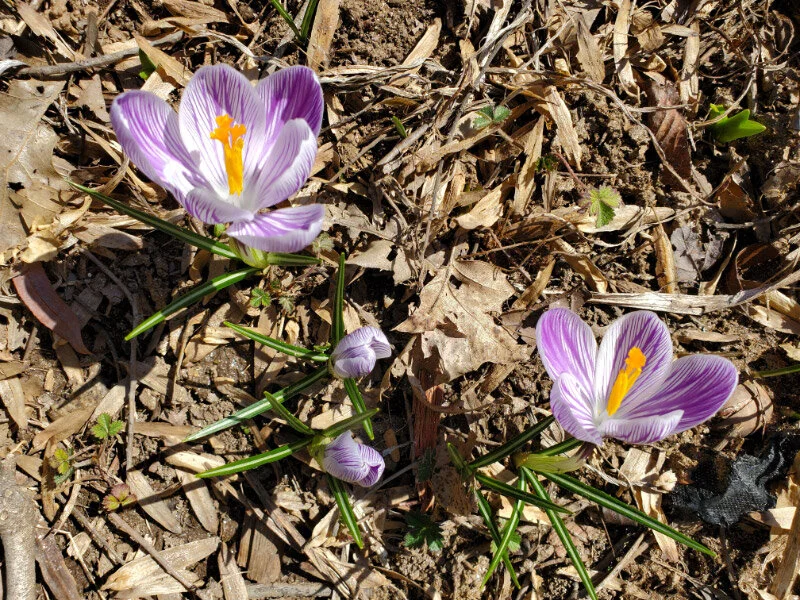
Spring is starting here in Maryland…we have a clump of crocus up and blooming in our front flower bed!

The items below were ‘the cream’ of the articles and websites I found this past week. Click on the light green text to look at the article.

Top 25 birds of the week: March 2021 – Starting off the gleanings for this with bird photographs. I found myself looking at eye color as I enjoyed this group of 25.

Satellite imagery shows northern California kelp forests have collapsed – I had read a story about this previously….but this article include visuals: satellite image and underwater images of what it look like before…and the urchin barrens that are there today.

Kauri trees mark magnetic flip 42,000 years ago | Science – Analysis of a tree preserved in a bog. It lived during the Laschamp Excursion (the last time the poles flipped) The climate instability lasted about 500 years.

Giving Wildlife Room to Roam in the Face of Climate Change – The importance on microhabitats in wildlife conservation particularly as climate changes.

Small Particulates From Burning Fossil Fuels Kills 8.7 Million People Each Year – And this is a form of pollution no one escapes….unless you choose to live in an enclosed and continuously filtered environment (like on an planet that does not support life as we know it). Right now, there are areas outside cities that have lower levels of the small particles in their air but eventually the continued increase in particles and circulation within the atmosphere will spread the ever increasing particles over the entire planet.

Even for Solitary Squirrels, It’s Better to Know the Neighbors – Red squirrels that have the same neighbors year after year…live longer! The study was done in a remote area of Canada over 22 years.

Thanks to Etsy, You Can Now Purchase a Gee's Bend Quilt Online for the First Time | Smart News | Smithsonian Magazine – Folk art…museums…and a modern outlet to improve the artists’ ability to sell their work.

There’s a Koala in the Backyard – A description of what it’s like to have a koala in a tree near homes – serenading.

Geologists Share Their Concerns With Drilling For Oil In Big Cypress – Hopefully the project will not move forward….a national preserve should prioritize the natural environment, not the degradation or destruction of it.  

Eight ways chemical pollutant harm the body – From Columbia University’s Mailman School of Public Health: oxidative stress and inflammation, genomic alterations and mutations, epigenetic alterations, mitochondrial dysfunction, endocrine disruption, altered intercellular communication, altered microbiome communities, and impaired nervous system function.

Gleanings of the Week Ending March 6, 2021

The items below were ‘the cream’ of the articles and websites I found this past week. Click on the light green text to look at the article.

America’s First National Wildlife Refuge – Pelican Island National Wildlife Refuge….I’m including it in our plans for the next time we go to Florida; it’s about 1.5 hours to the south of Merritt Island National Wildlife Refuge which is always one of the places we visit in Florida.

Highly functional membrane developed for producing freshwater from seawater: A desalination membrane laminated with nanosheets featuring 2D nanochannels -- ScienceDaily – Still in the research stage. Maybe this is one of the technologies that will enable low-energy desalination - something we will need to avoid water shortages in many areas of the world.

A mild way to upcycle plastics used in bottles into fuel and other high-value products -- ScienceDaily and How Paving with Plastic Could Make a Dent in the Global Waste Problem - Yale E360 – Two articles about uses for the plastic waste that is overwhelming the planet right now. There still needs to be significant testing on plastic for paving: will it withstanding heavy traffic…will it shed microplastic particles, etc.

Pompeii's Museum Reopens With Dazzling Display of Archaeological Treasures | Smart News | Smithsonian Magazine – I enjoyed the article…and the website for the new museum.

A large number of gray whales are starving and dying in the eastern North Pacific -- ScienceDaily – Ongoing research but one explanation being explored in a decline in prey (i.e. amphipods) availability in their Arctic feeding grounds – maybe caused by warming there due to climate change.

For the Birds: Why Designing for Birds is Good for Everyone - News | Planetizen – Fast Company interviewed Tim Beatley about his book; he was one of the speakers at the Birds on the Niagara conference.

Wombats Poop Cubes, and Scientists Finally Got to the Bottom of It | Smart News | Smithsonian Magazine – Over 40,000 contractions as the feces moves down the intestine to shape a very dry cube. Evidently the cube shape is an indicator of wombat health!

Water Warning: The Looming Threat of the World’s Aging Dams - Yale E360 – Lots of people live downstream from big dams. Yikes! Decommission of dams is not easy…arguably it could be harder than the building of the dam originally.

Thousands of Wild Bee Species Haven't Been Seen Since 1990 | Smart News | Smithsonian Magazine – Most of the data came from Europe and North America….with some from the rest of the world. All of it sums up to a grim picture when it comes to bees.

Yellowstone's Hotspot Has Been Simmering For About 17 Million Years – An example of how continued data collection and study…can shift our understanding of geologic history even in areas like Yellowstone that have been studied for a long time.

Gleanings of the Week Ending February 27, 2021

The items below were ‘the cream’ of the articles and websites I found this past week. Click on the light green text to look at the article.

Top 25 birds of the week: Bird Interactions! - Wild Bird Revolution and Top 25 birds of the week: Raptors!  and Top 25 birds of the week: Feathers!  – A treat this week – 75 bird photographs – enjoy!

The unseen 'slow violence' that affects millions - BBC Future – The harms that happen so slowly that we don’t notice in the moment. It happens over months and years and decades (maybe even centuries). We notice as we use our ‘big data’ to see hot spots of ill-health, where the environmental degradation is at it’s worst, and populations that can’t seem to escape their dire situation. And the issue very quickly becomes – how does our culture respond to the awareness of that ‘slow violence.’

Carbon: Getting to net zero -- and even net negative -- is surprisingly feasible, and affordable -- ScienceDaily – A detailed model of the entire US energy and industrial system….showing how to achieve carbon neutrality by 2050…with particular emphasis on what needs to happen in the next 10 years.

The country rejecting throwaway culture - BBC Future – France has introduced an index of ‘repairability’ rating for appliances…hoping to increase the electronics repair rate to 60% within 5 years. I’m glad I opted to repair my clothes drier rather than replace it….although the repair (replacing of the failed heating element) produced some trash it was a lot less than the whole appliance! Things like phones and laptops and monitors are harder.

Carolina Wrens Will Nest in Just About Anything and Why Carolina Wrens Have Moved into Your Neighborhood – We had a Carolina Wren make a nest in a gas grill we hadn’t used in along time. It surprised me when I opened the lid and the bird – startled and then panicked – flew out onto the deck railing. There is usually a pair nesting somewhere around our yard; we see them when they come to the feeder and hear them even more frequently. The forest behind our house and the brush pile at the edge of the forest are good places for them.

Federal Funding Obtained to Replace Zion National Park's Shuttle Fleet – And they’ll be electric! What a great way to keep the air smelling like nature rather than combustion fumes!

Rare Yellow Penguin Photographed for the First Time | Smart News Science | Smithsonian Magazine – What an unusual looking bird! It’s a king penguin on South Georgia Island with leucism, a condition where melanin is only partially lost and some parts of the body retain color. In this case…the ability to produce the usual black pigment is missing.

New River Gorge is America's Newest National Park - News | Planetizen – This park is within ‘road trip’ distance from where we live….maybe a destination post-pandemic.

How we turned a golf course into a haven for rare newts, frogs and toads – Hopefully US golf courses are doing things like this too. I usually think of them as using a lot of chemicals and would not want to live near a golf course….but if they consciously made places for amphibians….it would mean that other creatures could survive in the space too. There is an Audubon International Certification program for golf courses but they don’t publish a list of course that are certified.

The Arctic Ocean might have been filled with freshwater during ice ages – Based on a geochemical study of sediments.

New Swopper Chair

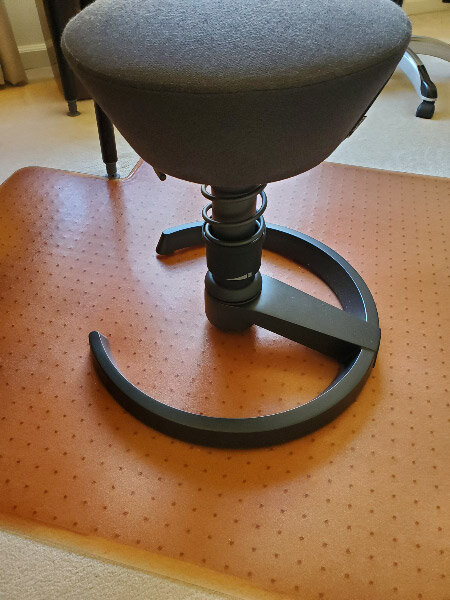
My Swopper chair, that was more than a decade old, broke back in December; the base separated from the pedestal and seat. It could function as a stool that could tilt but had lost connection to the mechanism that enabled the bouncing motion. The new limitation impacted my goal to keep my activity level up all during the day (i.e. minimize completely sedentary time). I tried to shift to a new activity pattern; moving was more clumped than before because it included getting up from my computer to move every hour then having some times that were completely sedentary except some side to side moving on the broken Swopper. I found that I sometimes felt achy even after 30 or 40 minutes of not moving! The Swopper chair had allowed me to move more frequently without breaking my activity at the computer without me even being conscious I was moving…and I opted to buy a new Swopper.

20210223_133707.jpg

Now my office is back to the old ‘normal’ with the new chair and my aches are dramatically reduced.

The chair comes in 3 pieces in a big box: the base, the pedestal with spring, and the seat. Once they are put together…they don’t come apart. Its are expensive but will last a long time. I figure I bounced more than a million times on the old one before it broke, and I hope this new one is a durable.

Staying active every day is a lifestyle choice….one that helps me sustain the ability to do things I want to do for as long as possible.

Ice Shelf

The skylight in the roof of our cover deck slopes enough that the snow and ice it accumulates acts like a mini-glacier as it melts. Over the past few days, our part of Maryland stayed cold with melting occurring with the sunshine even as the temperature stayed below freezing. And then everything re-froze overnight. The snow was icy and dense rather than fluffy because the majority fell as sleet….and as it began to slide down the slippery slope of the skylight, an ice sheet formed.

Did the icicles that formed at its edge provide any support?

2021 02 IMG_3777 (3).jpg

It lasted for more than 24 hours with the re-freezing overnight although there was a noticeable erosion of the ice closest to the skylight housing during the first exposure to sunshine.

2021 02 IMG_3812.jpg

I watched it all morning the second day as the sun came up and the skylight began to get full sun as the morning progressed. About noon – the shelf cracked (I heard it rather than saw it)…slid down the rest of the roof and gutter and crashed to the deck below….shattering on impact.

It was awesome to watch this small model of glacier and ice shelf behavior --- think about how the process would translate to a larger scale and longer duration in the Antarctic.

Gleanings of the Week Ending February 20, 2021

The items below were ‘the cream’ of the articles and websites I found this past week. Click on the light green text to look at the article.

Top 10 things we learned about climate change in 2020 – I’m thinking about this more this week with the extreme cold in Texas…and lack of preparedness of utility companies and state governments. It drives home the overarching message now: doing nothing will cost more than doing something.

Top 25 birds of the week: Seabids! – Birds and water…from around the world.

Size, Shape, and diversity in phytoplankton – The tiny organisms that could be changing in warming, more acidic oceans….do we have enough of a baseline to know if these communities are changing in ways that will impact the food networks of our oceans?

Fairy Shrimp – A video from a vernal pool in Pony Pasture Rapids Park in Richmond, Virginia.

Wintering bird communities track climate change faster than breeding communities in Europe and North America – Weather impacts birds in the short term (my family has commented that they have seen flocks of robins in their neighborhood recently….having not seen them in the past 30 years they’ve lived in the area) but the longer term impacts of climate changes are only observable with large data bases built since the 1980s. This study looked at over 1,200 species of birds!

How to see the red fox in winter – We occasional see red fox in our neighborhood but I haven’t seen any (so far) this winter. Maybe after the snow/sleet is over I’ll take a walk and look for tracks.

Age provides a buffer to pandemic's mental health impact, researchers say -- ScienceDaily – It may not be ‘age’ as much as older people being more able to stay at home and avoid other people (stress reduction through conscientious steps to avoid COVID-19 exposure)….whereas young people are more likely to have to get out and about for work or other obligations. It could be difficult for older people living along…but maybe we have quite a few older people that are not alone in their ‘bubble.’

Sunset Crater's Explosive Past – The youngest of the volcanoes in the 1,800 square mile San Francisco Volcanic Field near Flagstaff, AZ. It’s a place I visited (and posted about) back in February 2015.

Immune driver of brain aging identified -- ScienceDaily – It seems to be a change in how myeloid cells handle glucose….tending to hoard it rather than using it for energy. I wondered if that is why people with diabetes are at increased risk for cognitive decline.

Magnetic fields detected in Venus Flytraps – A small magnetic field is produced when the trap closes!

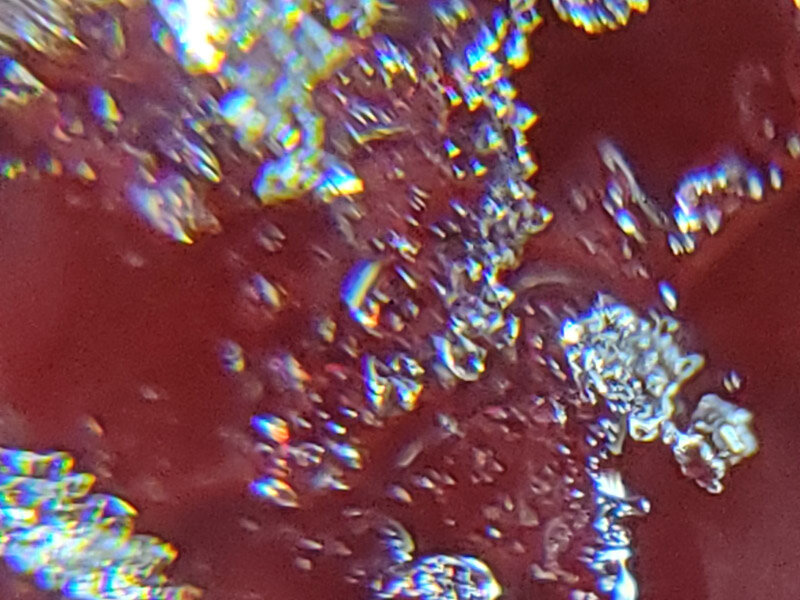
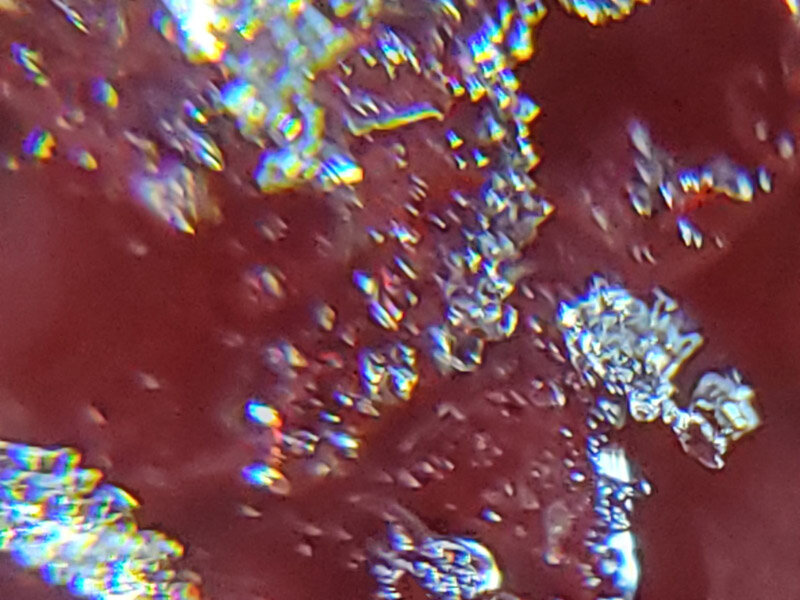
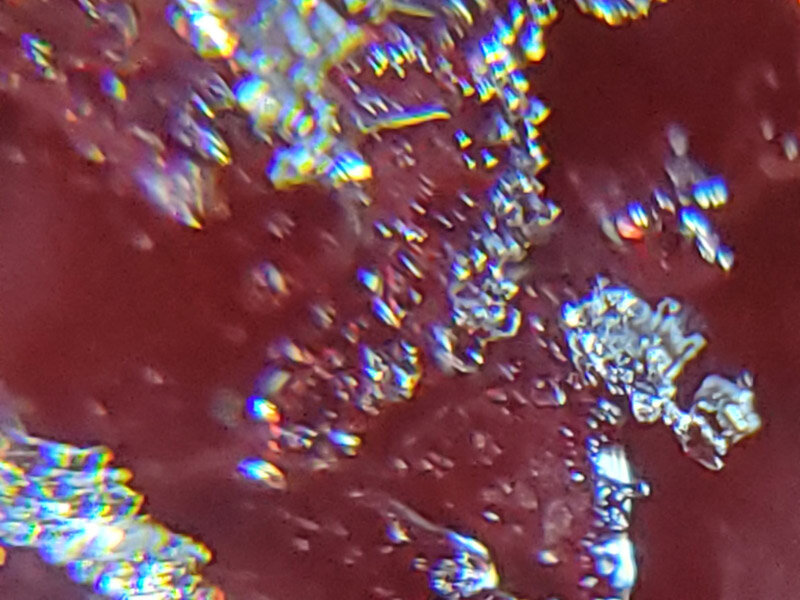
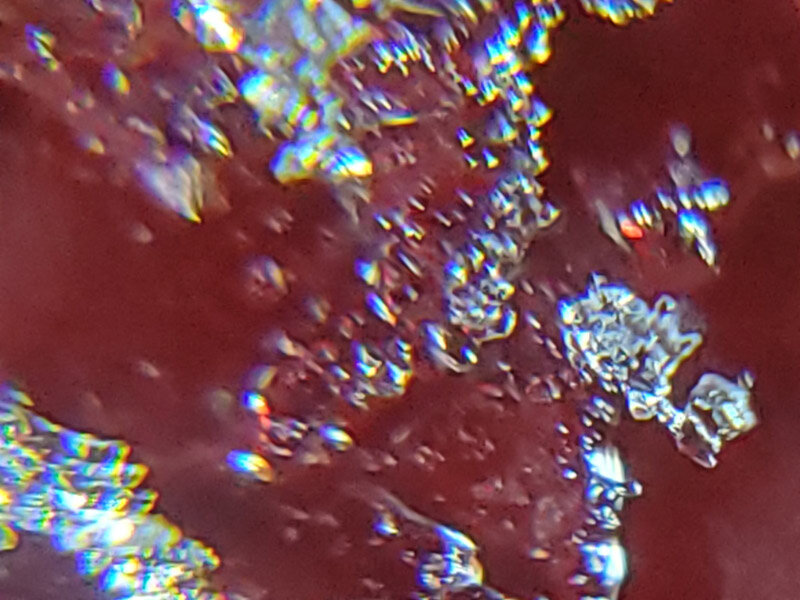
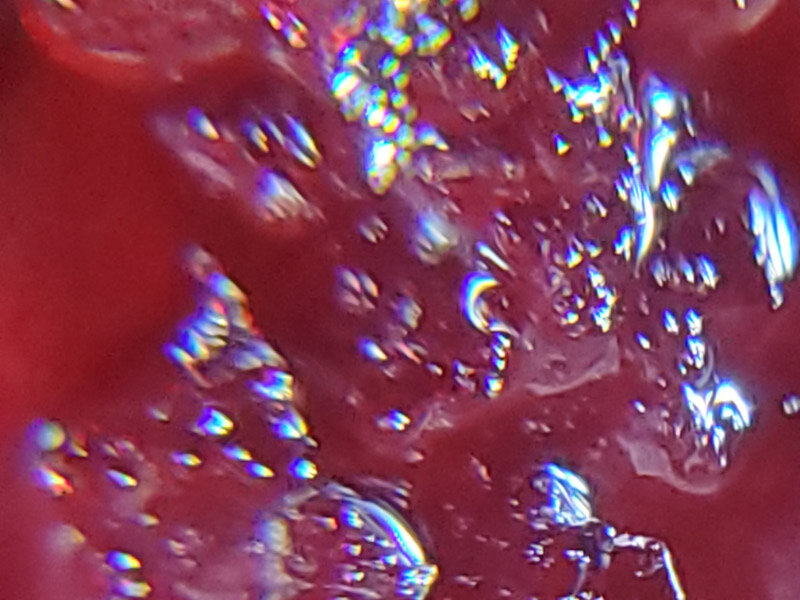
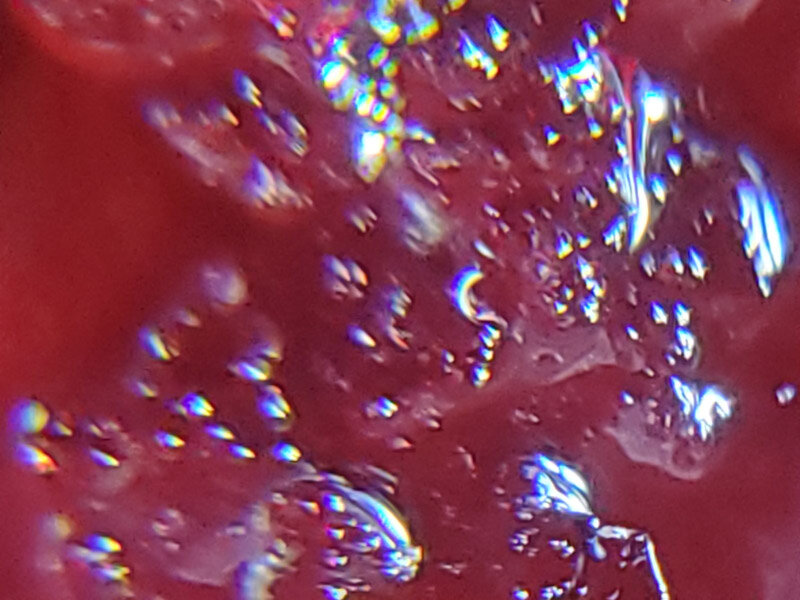
Snowflakes (melting)

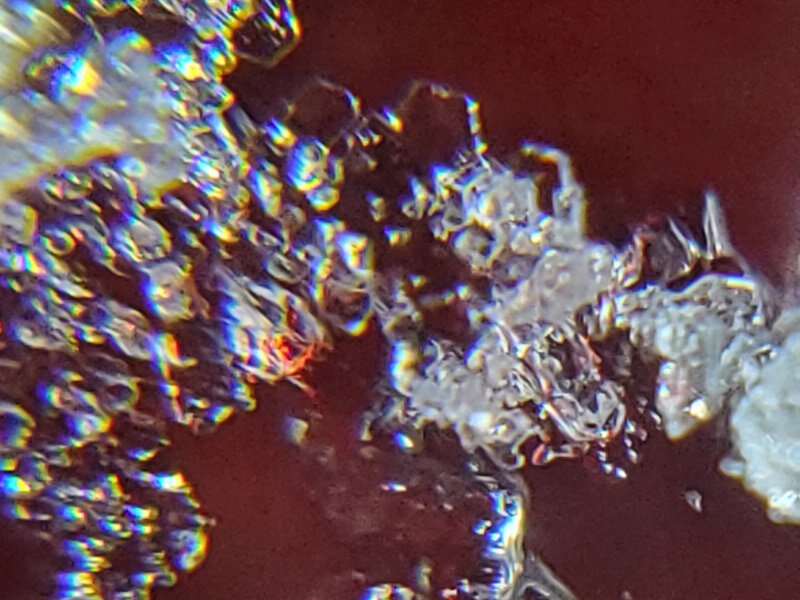
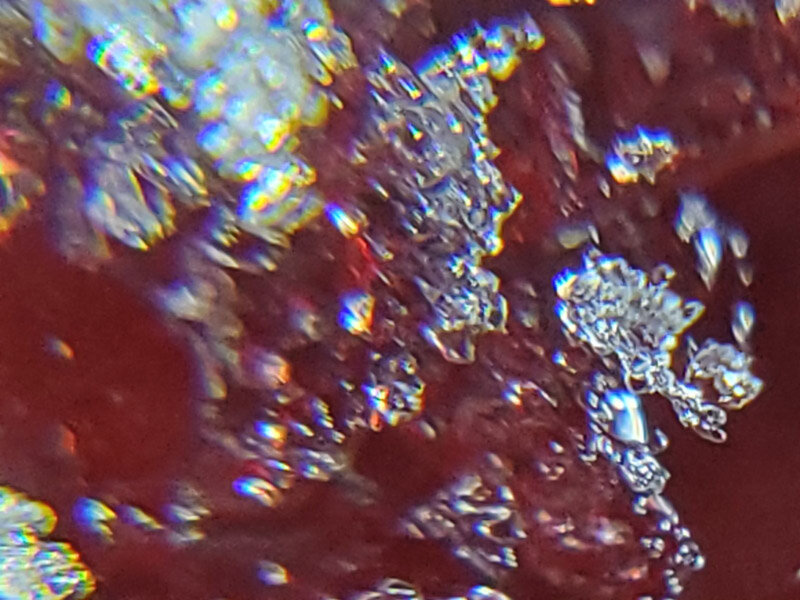
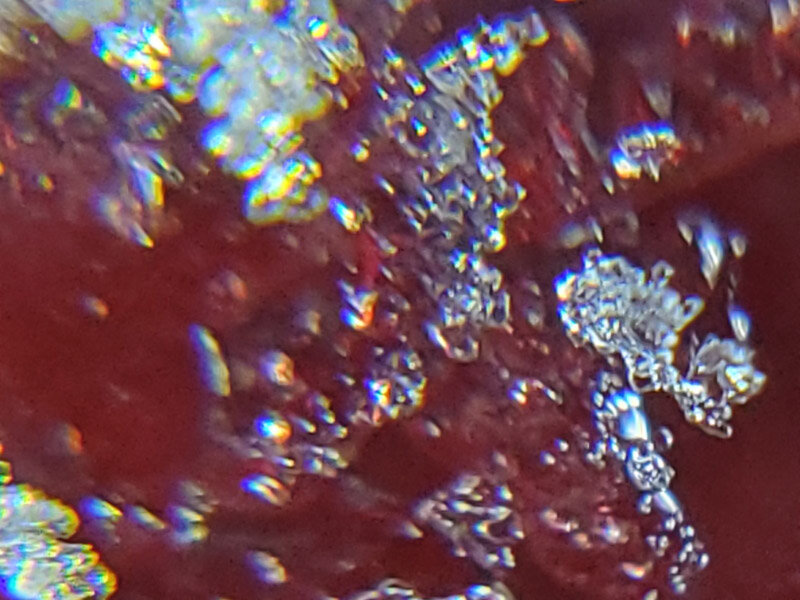
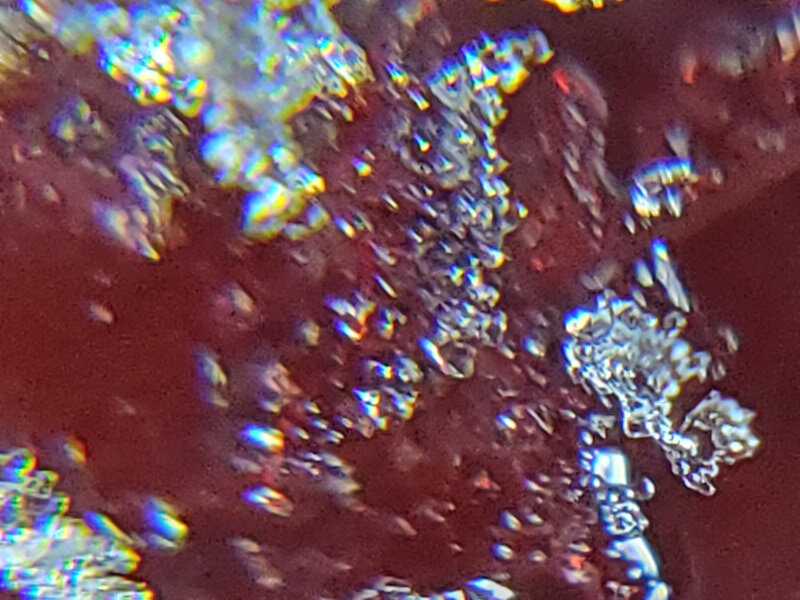
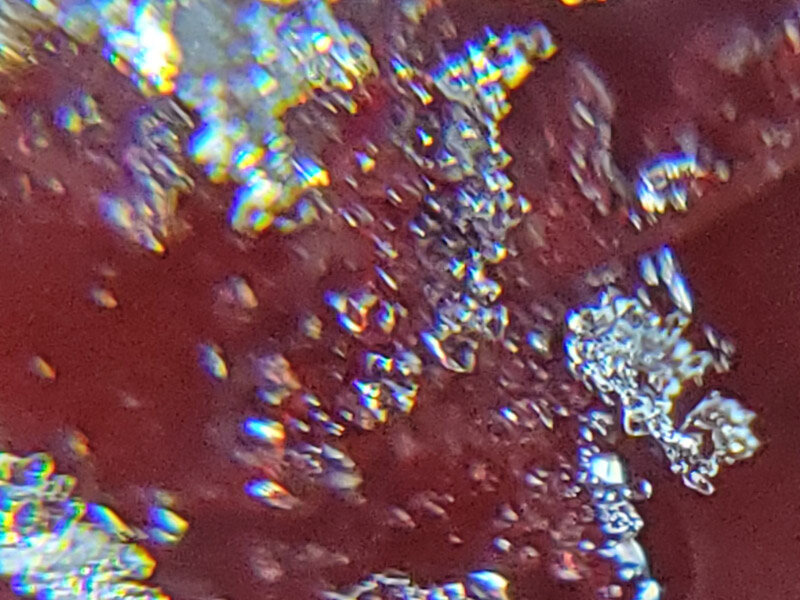
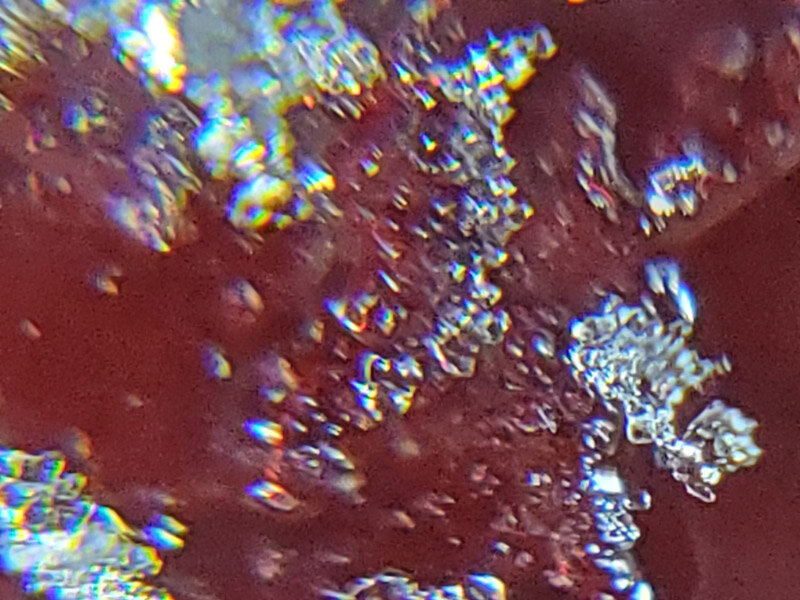
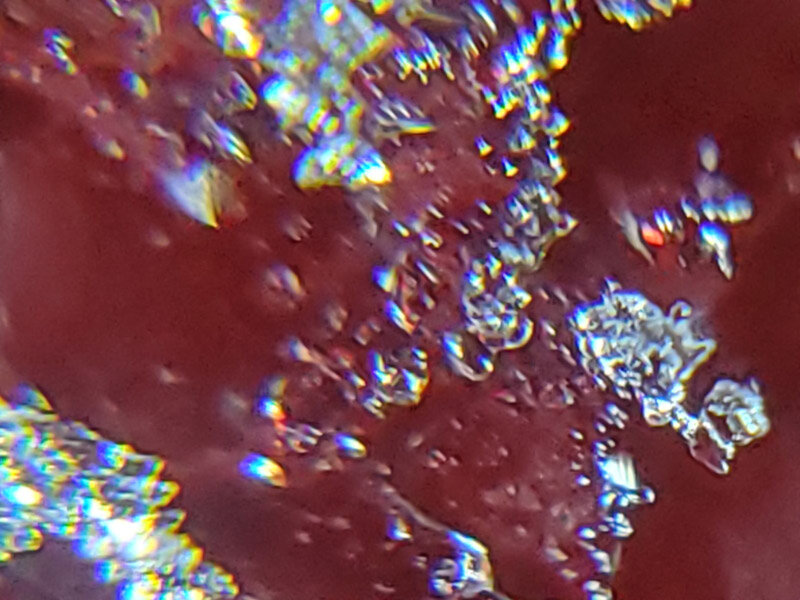
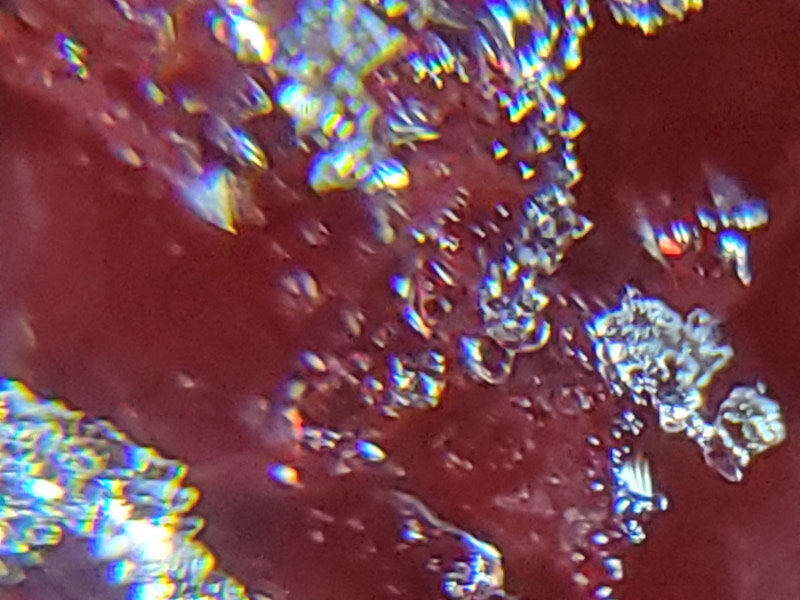
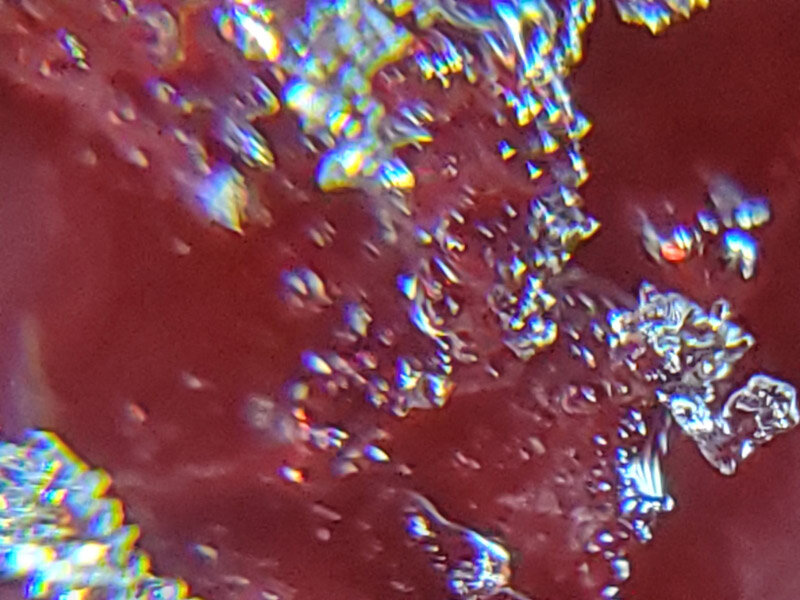
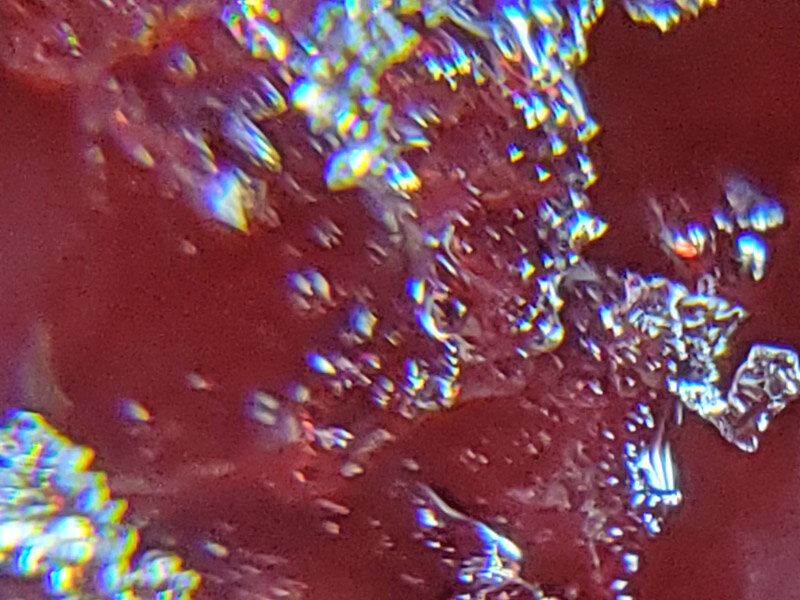
Trying to photograph snowflakes when the temperatures is in the low 30s is hard. The snowflakes clump as they fall with the temperature that high…and then the melt very easily even if the surfaces and equipment is cooled to ambient temperatures. I’d gathered all my usual equipment: phone (with a clicker to control the shutter on a lanyard) and clip on 65x magnifying lens (with light)…and was quickly frustrated with not very satisfying images toward my goal of photographing individual flakes.

So – I changed the goal and opted to create a series of a clump melting. I did several series and the one below is my favorite. It takes place over only 34 seconds!

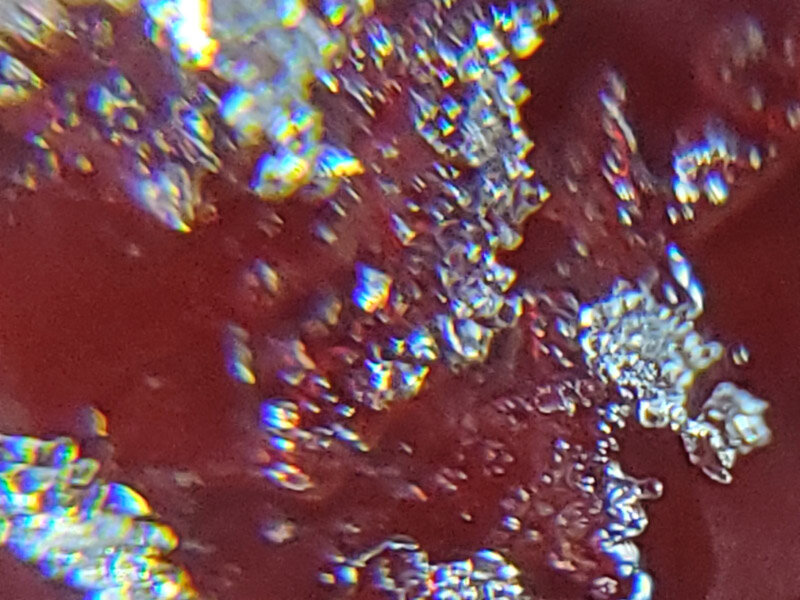
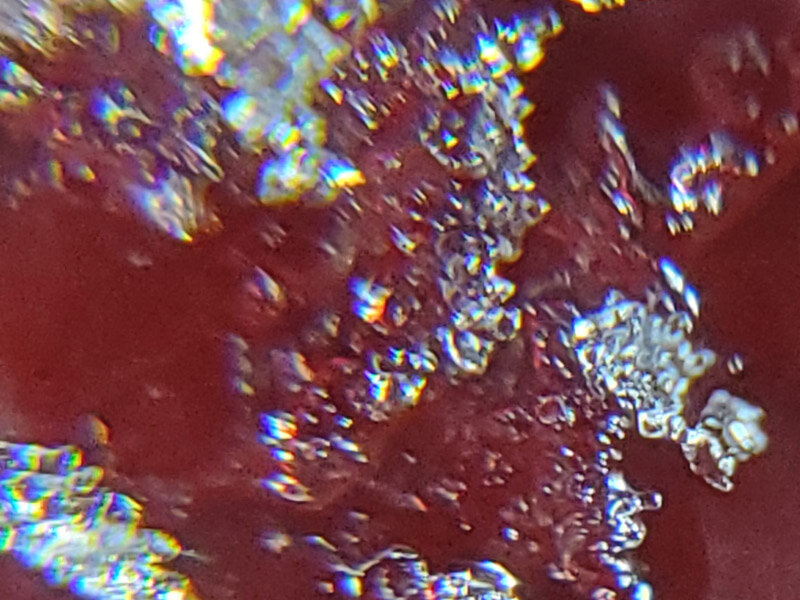
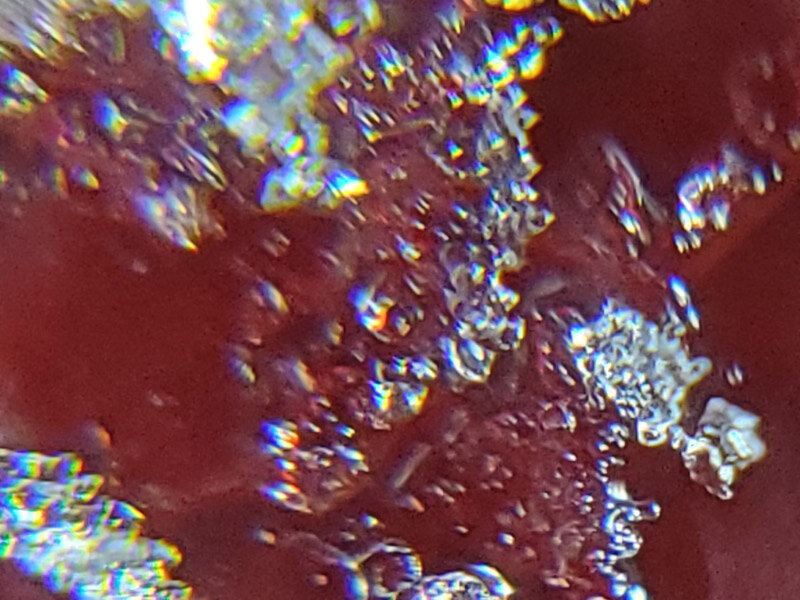
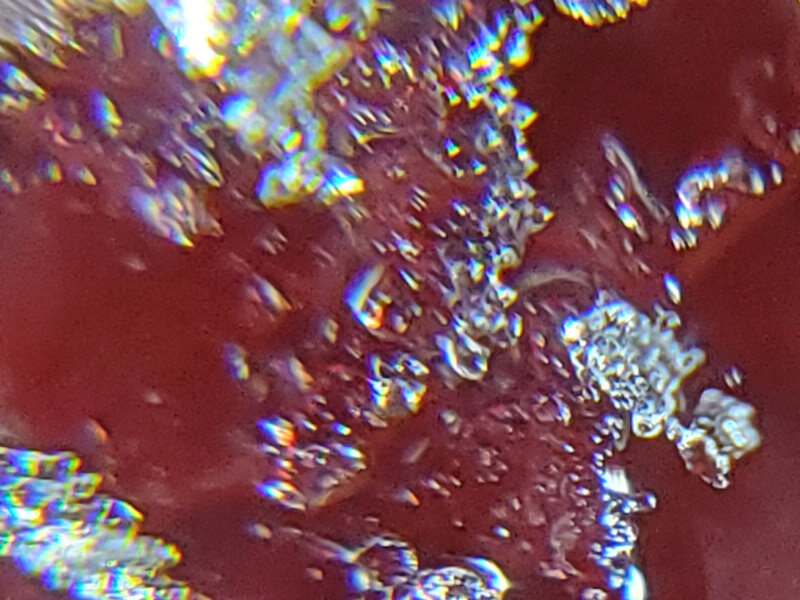
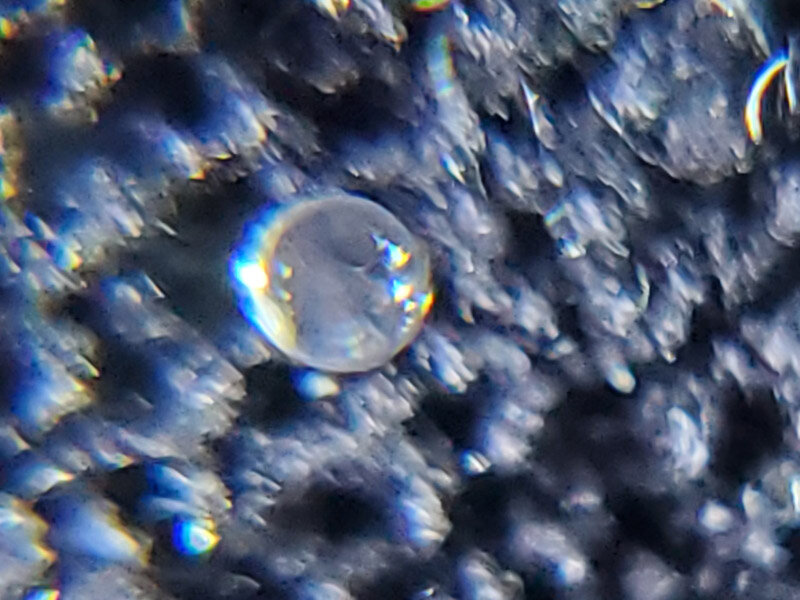
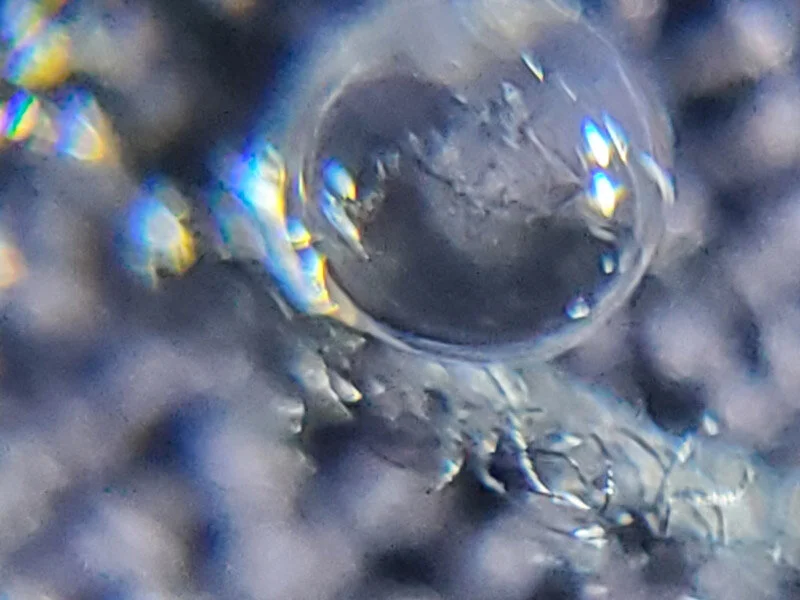
Just before I went inside, managed to photograph some spheres on the sleeve if my coat. The magnification shows the black fibers of the coat. I think the spheres were ice (micro hail stones!) and the second one appears to have some crystalline structure inside…maybe a fracture.

Using frustration over a goal that has become impossible to prompt innovation/creativity is probably one of the best resilience strategies of all.

Gleanings of the Week Ending February 13, 2021

The items below were ‘the cream’ of the articles and websites I found this past week. Click on the light green text to look at the article.

Self-controlled children tend to be healthier middle-aged adults -- ScienceDaily – Benefits include younger brains and bodies, better outlook in the years ahead. This finding is from a study done in New Zealand with 1,000 people tracked from age 3 to 45 (i.e. they were born in 1972 and 1973). Hopefully they will continue to be tracked as they get older….to determine if they remain healthier as they age. The finding makes sense to me based on my observations of my own life and people I have known over many years.

An Invasive Wild Edible Winter Rose – Natural History Society of Maryland – Multiflora rose…it’s a plant that takes over – climbing over everything around it…and it is prickly. One redeeming quality might be the RoseHips that can be used to make tea. Birds eat them too and that propagates the plant – so maybe more harvesting by humans would reduce this invasive!

College campuses are COVID-19 superspreaders, new study suggests -- ScienceDaily – My daughter and son-in-law are very aware that this could happen at the university where they teach and have research teams. They are offering blended classes so that students can be in person or virtual…and providing higher quality masks for their themselves and their research teams.

The 'megascale' structures that humans could one day build - BBC Future – Some history and observations…the realization that there are existing ‘megascale’ structures: terracing of parts of Southeast Asia, land reclamation from the sea by the Netherlands, the internet, the US Interstate Highway system.

SolarEV City concept: Building the next urban power and mobility systems: Unlocking the potentials of EV batteries with roof-top PVs for urban decarbonization -- ScienceDaily – Calculations done for 9 Japanese urban areas…CO2 emissions in these urban areas could be reduced by 53-95%!

The state of the climate in 2021 - BBC Future – Looking at CO2, record heat, Arctic ice, permafrost, and forests. We need to make progress toward drawdown rather than continuing actions that cause the upward ramp of planetary warming.

Are monarchs in trouble? | Science – In my area of Maryland…the decline has been dramatic.

A Tweak to Immune Cells Reverses Aging in Mice | The Scientist Magazine® - Interesting but so far has not be translated into humans. Evidently a drug to specifically block the EP2 receptor is not easily developed.

Tiny hard drives that are alive — and multiplying : Research Highlights – Experiments with data encoding in the E. coli genome. Evidently the data is protected from degradation in the presence of dirt and other contaminants…but what about changes that would occur over many replications?

Top 25 birds of the week: February 2021 – A grand finale to the gleanings….bird photographs!

Gleanings of the Week Ending February 6, 2021

The items below were ‘the cream’ of the articles and websites I found this past week. Click on the light green text to look at the article.

Human egg cells are imperfect surprisingly often -- ScienceDaily – More than 7% of human oocytes contain at least one exchangeless chromosome pair…and the frequency is not affected by maternal age. Our species is hardwired to have significant numbers of miscarriages and babies with extra or missing chromosomes. The finding is interesting, but I immediately thought of some questions…has this changed over the past 100 years (i.e. have we changed our environment enough that we are impacting our reproductive success) and how does this frequency compare to other mammals?

Why our pursuit of happiness may be flawed - BBC Future – A thought provoking piece about how seeking ‘happiness’ often sets the stage for disappointment…rather than contentment.

Pollution from cooking remains in atmosphere for longer -- ScienceDaily – Eating deep-fat fried foods is not just unhealthy…the cooking of foods that way contributes to air pollution. In London, 10% of the PM2.5 particles are from deep fat frying….in Hong Kong 39%!

2nd Annual Threatened And Endangered Parks: Natural Darkness And Sounds – My husband and I are looking forward to more dark sky opportunities in national parks. So far – the ‘star parties’ we’ve been to have been at state parks and hosted by amateur astronomy clubs in the area. The dark sky venue requires a bit of infrastructure to support a field full of camping amateur astronomers with their telescopes (electricity for telescopes/computers and bath rooms with red tented windows).

Top 25 birds of the week: Colouration! - Wild Bird Revolution – Lots of color in this post to break up mostly brown and white winter color outside my window! 

U.S. Breaks Record for Billion-Dollar Climate Disasters in 2020 | Smart News | Smithsonian Magazine – Not a good record to be breaking…and they happened during a pandemic year too. There were 22 disasters that caused at least $1 billion in damages across America in 2020.

Q&A: Global Insect Declines Due to "Death by a Thousand Cuts" | The Scientist Magazine® - In every case researched….it’s not just one thing that caused the decline…it a cluster of primary factors (6 or more) and then other factors that are difficult to quantify.

Texas Wind Power Dominates Coal In Crossover Year – Hurray! Hopefully, the coal plants will begin to phase out in Texas and across the country as they become less and less competitive with renewable sources of power.

On the road to invisible solar panels: How tomorrow's windows will generate electricity -- ScienceDaily – I am always reluctant to consider replacement windows….but if they were cost effective solar panels…that would tip the decision toward ‘buy’!

Caligula's Gardens, Long Hidden Beneath Italian Apartment Building, to Go on View | Smart News | Smithsonian Magazine – A subterranean museum beneath the streets of Rome to open this spring.

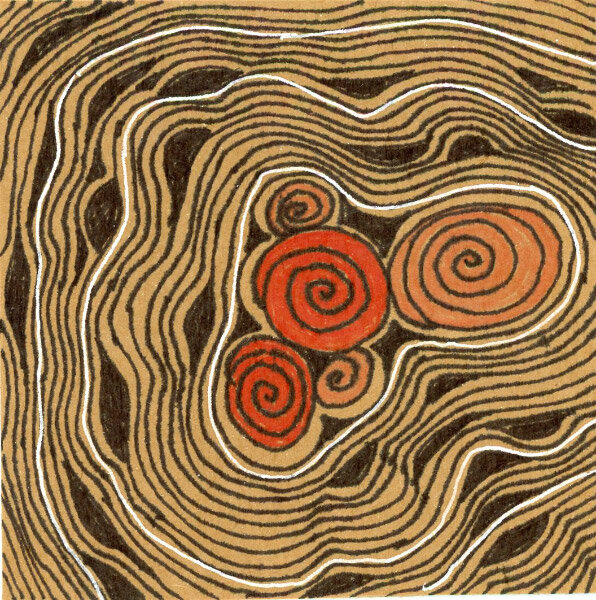
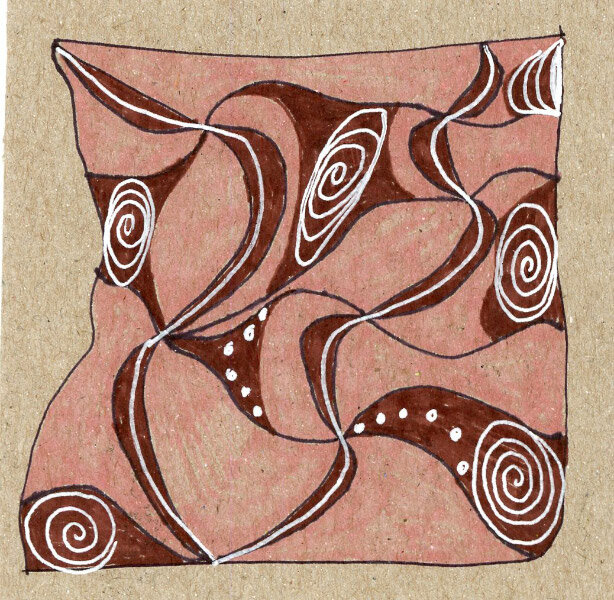
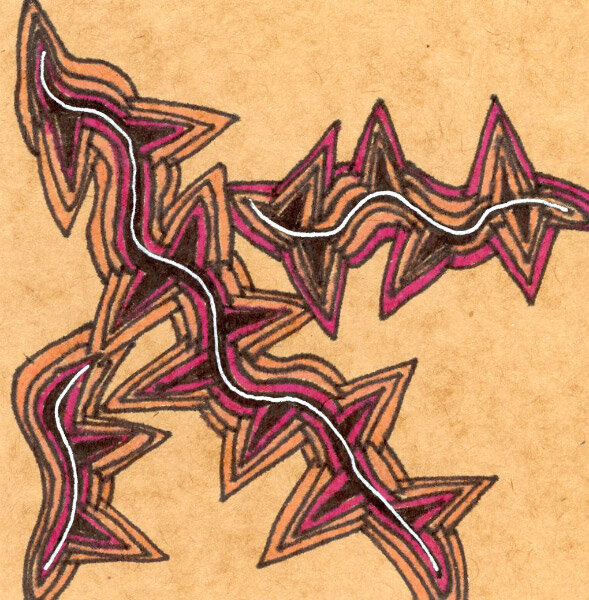
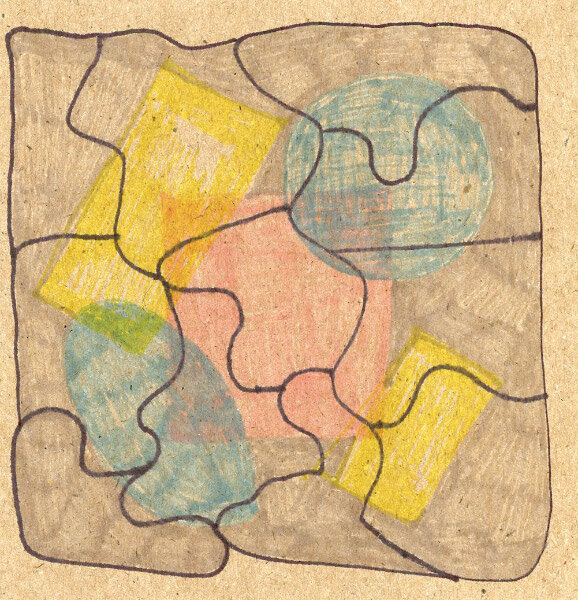
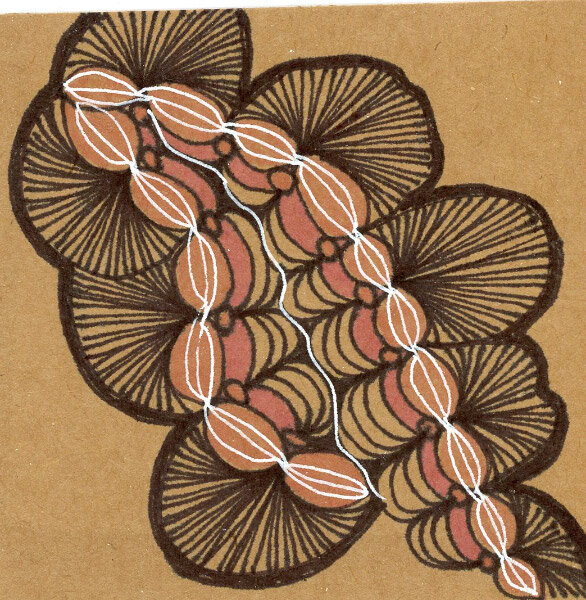
Zentangle® – January 2021

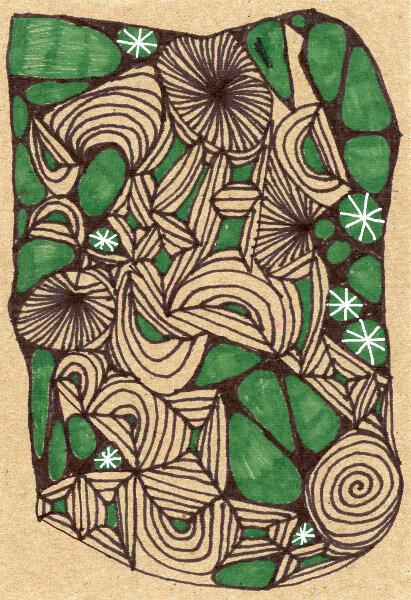
One of the outcomes of the pandemic is my increased production of Zentangle tiles. There are so many that picking per day is quite a challenge! I decided to count the Large Zentangle Tile as a project and posted about it separately back on the 17th. That still left 66 other tiles to choose the 31 to show in this post.

2021 01 f img243 (7).jpg

My favorite is one I didn’t like as much until I colored and highlighted the pattern. That seems to happen to me a lot.

The square tiles had a variety of light weight cardboard made into 3.5 inch tiles with a paper cutter – the white boxes that tend to be slicker, the brown light weight cardboard, the green file folder. I’ve included the triangular tiles at the end of this group; they are the only ones that are not recycled materials! I tried to pick tiles that had a uniqueness about them – pattern, color, or highlighting. Some of these are old tiles that I colored/highlighted this month.

The rectangular tiles are all produced on cat foot box dividers – the smaller side is 3.5 inches. This is my favorite tile size. The cardboard absorbs the ink very well and has a slight texture. The size provides more room for the ‘magic’ of the patterns to emerge. It is thick enough use on both sizes – maybe that will be something to start doing in February.

--

The Zentangle® Method is an easy-to-learn, relaxing, and fun way to create beautiful images by drawing structured patterns. It was created by Rick Roberts and Maria Thomas. “Zentangle” is a registered trademark of Zentangle, Inc. Learn more at zentangle.com.

Ten Little Celebrations – January 2021

And 2021 is off to a roaring start. Even with the jarring events of Jan. 6 and the pandemic still raging, there were plenty of reasons to celebrate in January 2021.

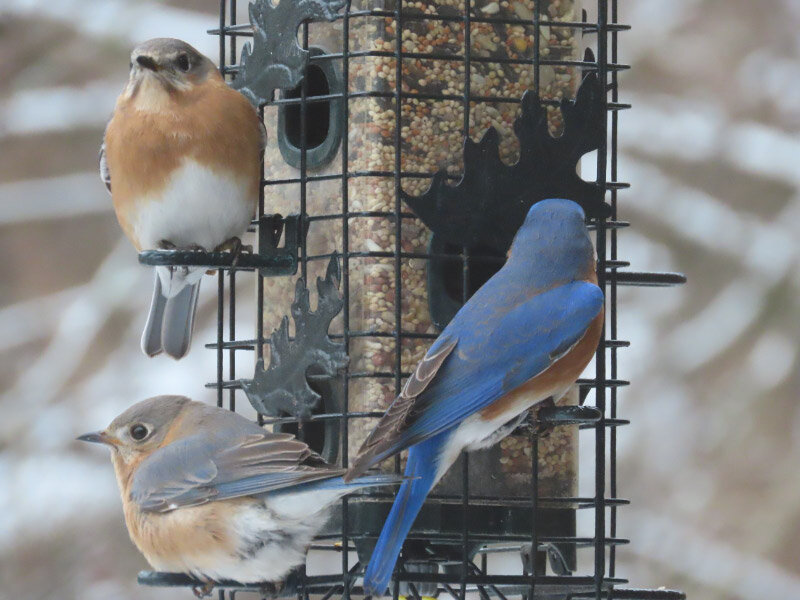
Bluebirds at our bird feeder –I celebrate when a bluebird group comes to our deck since it doesn’t happen very often. They seem to show up most frequently when there is snow and ice!

Piliated woodpecker in our forest – They don’t come to our deck…but are in our forest. I see them a few times each the winter when the leaves aren’t in the way. Their red heads are like flames. I think I saw a bald eagle a few times too this January. Even the fleeting sight of these birds is a celebration.

Amanda Gordan and the transition to a new President – A young poet and a shift toward hope for our troubled country toward a ‘forming a more perfect union’

Tennessee Crane Festival (virtual) – Lots of good webinars….dreaming about going to the place in January 2022. Celebrating learning about the place this year…and anticipating a visit.

Space Coast Birding and Wildlife Festival (virtual) – We went in 2019…hope to go to Florida again in January 2022. Celebrating the virtual version this year.

Success making a cheese omelet – I tend to make scrambled eggs but have omelet pans to cook them.  This month I opted to try making an omelet – perfect on the first try…celebrated the accomplishment (and the meal)!

Steak lunch – Our January days have been pretty cold, but my husband grilled on one of the warmer sunny days. A special lunch.

Carrot – coconut – chicken salad – I’ve discovered that if I layer a spoonful of orange marmalade, carrots, canned chicken, and coconut in a bowl….microwave it for a minute…stir…it makes a warm version of a favorite salad to enjoy in winter. Celebrating warm salads!

Howard County Sustainability Legislative Breakfast – Getting an update of what is happening locally re sustainability. I celebrated that good things are being worked at both the county and state level!

Tree trunk macros – It was a short project that I enjoyed a lot. The color and texture of winter tree trunks in our yard were celebration worthy!

Gleanings of the Week Ending January 23, 2021

The items below were ‘the cream’ of the articles and websites I found this past week. Click on the light green text to look at the article.

Ice sheet uncertainties could mean sea level will rise more than predicted -- ScienceDaily – There are warning signs that the current models aren’t accurately predicting ice sheet dynamics.

How mail-order frogs could save Colombia's amphibians - BBC Future – Carefully breeding frogs to keep them from going extinct in the wild.

Meet Amanda Gorman, the U.S.' Youngest Inaugural Poet | Smart News | Smithsonian Magazine – Leading with eloquence and hope for the future….pushing us to strive for a country that is a ‘more perfect union.’

House Agrees Saguaro National Park Should Grow By 1,200 Acres – Hope this happens…when my daughter was in Tucson we enjoyed this park many times.

Diet and lifestyle guidelines can greatly reduce gastroesophageal reflux disease symptoms -- ScienceDaily – Exercise seems to be important – perhaps because it helps clear stomach acid that causes heartburn symptoms.

Top 25 birds of the week: Wild birds Photos! - Wild Bird Revolution – Birds – always great to look at in the wild and in photos.

How Codebreaker Elizebeth Friedman Broke Up a Nazi Spy Ring | Smart News | Smithsonian Magazine – Some history…about how a woman did work she wanted to do…made significant contributions…didn’t get credit or pay that she should have. It happens again and again. We can’t assume that it isn’t still happening just because we have some very visible examples of women with power, recognition, and pay.

Are sleep trackers accurate? Here's what researchers currently know – It’s not always good to track sleep….particularly if it causes anxiety. I am in the group that generally has good sleep, so the tracker data doesn’t cause me anxiety, but it probably doesn’t improve anything either!  I might get a much simpler tracker next time that doesn’t provide sleep metrics.
The Wintertime Wonder of Unusual Ice | Smart News | Smithsonian Magazine – The short video of hair ice forming is interesting.

How Africa's largest city is staying afloat - BBC Future – Lagos, Nigeria. Part of the city is known as the ‘Venice of Africa.’ And there is a ‘Great Wall of Lagos’ to reinforce the coast.  The claim is that Africa’s largest city is leveraging its ingenuity to stay afloat….but whether it succeeds in the coming decades will be the real test.

Gleanings of the Week Ending January 16, 2021

The items below were ‘the cream’ of the articles and websites I found this past week. Click on the light green text to look at the article.

Wingspan and Other Tabletop Games for Naturalists – A new indoor activity for during the winter?

Square Structure Detected Under Monte Albán’s Main Plaza - Archaeology Magazine – The plaza was in use for 1,000 years….and evidently the structure detected with ground penetrating radar, electrical resistance and gradiometery is 60x60 feet…and about 3 feet thick. More study of the data might reveal if the building had stairs, tunnels, and columns.

Leaf microbiomes are a neighborhood affair in northern forests -- ScienceDaily – The microbes associated with trees have been an active research area in recent years. This study looked at Sugar Maples and discovered that their microbiome was similar to the trees around them…whether it was other sugar maples or conifers….other species entirely.

A warm pool in the Indo-Pacific Ocean has almost doubled in size, changing global rainfall patterns | NOAA Climate.gov – The impacts on large-scale atmospheric circulation and rainfall are expected to intensify in the future.

Top 25 birds of the week: January 2021 – This collection includes a photo of a red-breasted nuthatch…a bird we’ve seen at our feeder this year!

Photographer Nathan Myhrvold Captures Snowflakes in High Resolution – I enjoy trying to photograph snowflakes…but I do it close to home where the challenge is higher temperatures. That tends to cause them to clump rather than be easily separated into single flakes. It’s still a fun activity for snow days.

New mammogram measures of breast cancer risk could revolutionize screening -- ScienceDaily – Improving the way mammograms are analyzed…giving results at the time of screening instead of later then moving toward personalized screening thereafter rather than ‘one size fits all.’ I wonder how long it will take for this to trickle through the industry.

Flapper style | Europeana – Our family has a picture of one of my grandmothers in a flapper dress. She probably made it herself – as the article indicated…they were easy to make and patterns were available. The dresses have a timelessness to them even though they are associated with the 1920s. They look great as party dresses even 100 years later!
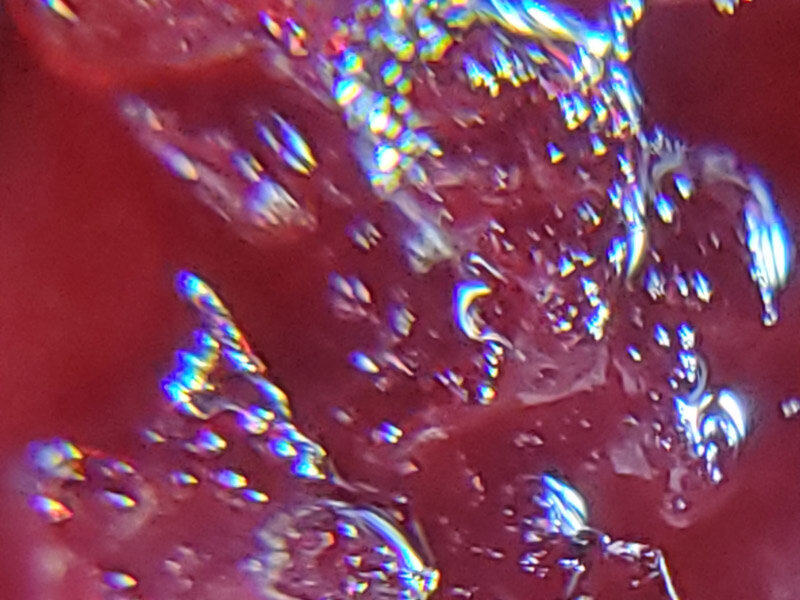
'Sparkling' clean water from nanodiamond-embedded membrane filters -- ScienceDaily – The problem the researchers are addressing is filtering of the hot water from oil recovery and other industrial processes. We’ll need more technologies like this to clean up water we can’t afford to leave polluted forever….but we should concurrently move toward technologies that don’t leave toxins in water. Technologies should be designed with the goal in mind of 0 waste.

Researchers Catch Oldest Tropical Reef Fish Known to Science | Smart News | Smithsonian Magazine – An 81-year-old midnight snapper! They also caught a 79-year-old red snapper in the same area. Climate change is already warmed the reef enough that the life-span of the fishes there is expected to be shorter in the future. The record for oldest known vertebrate in the world is also a sea creature – a 400 year old Greenland shark.
Gleanings of the Week Ending January 9, 2021

The items below were ‘the cream’ of the articles and websites I found this past week. Click on the light green text to look at the article.

Coronavirus FAQ: How Do I Protect Myself From The U.K. Variant? - I added this one at the last minute…it’s scary…a good prompt to evaluate the precautions you are taking to not get COVID-19 with this more contagious variant circulating in the US. We are so close to having vaccinations broadly available!
When Only a Hippopotamus Will Do – Learn a bit about hippos. Did you know that there is a ‘wild’ population of hippos in Columbia’s Magdalena River, escaped from Pablo Escobar’s menagerie after his death?

Plastics pose threat to human health, report shows -- ScienceDaily – Awful….and there is relatively little being done to control this source of toxins in our environment.

Top 25 birds of the week: Terrestrial Birds! - Wild Bird Revolution – Most of the birds are relatively drab – lots of browns and off-white feathers….but interesting patterns. - the better to blend in with their environment. But there are a few surprises that are quite different from the rest.
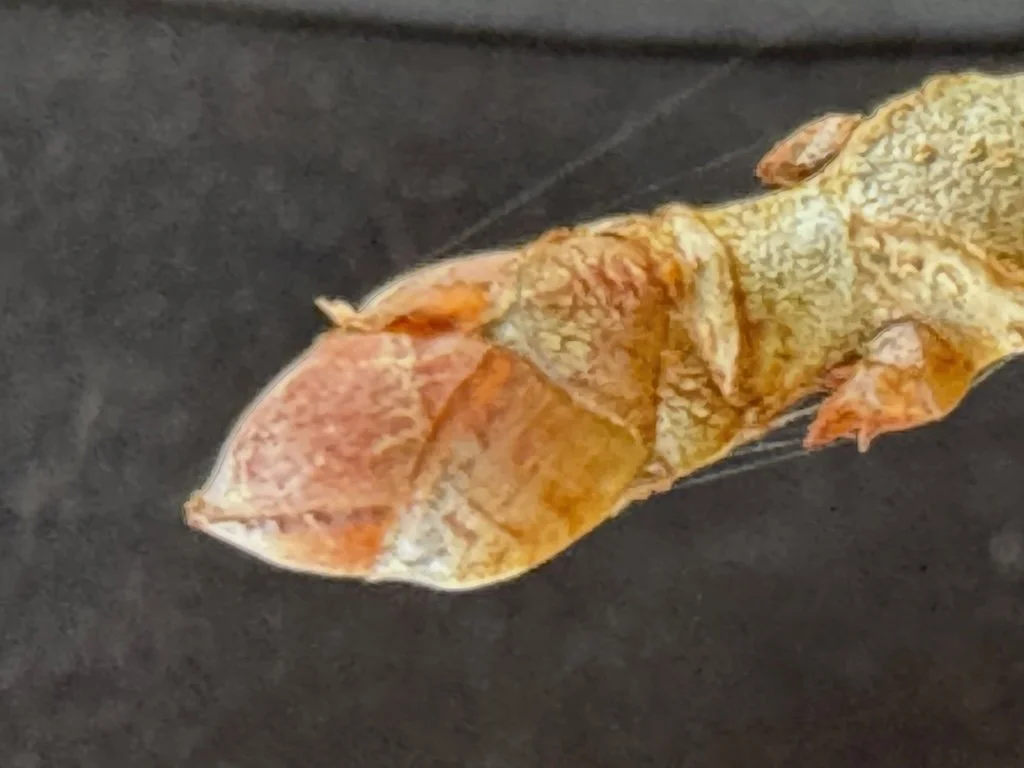
From Ancient Rome to Contemporary Singapore: The Evolution of Conservatories – THE DIRT – I like conservatories….this article includes some history that I hadn’t thought about before…a bit more from the perspective of how conservatories fit into the cultures that created them.

Operation Ponderosa: Saving a Forest, Pandemic Edition – Several reasons this article caught my attention: it’s about 1) the Davis Mountains in Texas…a location I’ve driven through on road trips between Dallas and Tucson, 2) fieldwork and also done by a woman during this pandemic year, 3) the Ponderosa pine’s importance as ‘sky islands’ in this arid part of the country, 4) the impact of fire, and 5) how genetic testing informs forest restoration efforts.

Trees are out of equilibrium with climate -- ScienceDaily – I might have gotten a bit stuck on trees for this gleanings collection. This study found that factors other than climate often limit where trees grow...that few trees grow everywhere the climate would appear to support their growth.

Ancestral Puebloans Survived Droughts by Collecting Water from Icy Lava Tubes | Smart News | Smithsonian Magazine – New Mexico’s El Malpais….a place I’ve visited several times.

Migration and disease in the Iron Age - Current Archaeology – A skeleton of a man with tuberculosis that died between 400 BC and 230 BC in Britain but was born elsewhere based on analysis of his molars that developed in early childhood. Did he contract the disease early in his life or after he arrived in Britain?

Canyon De Chelly, Walnut Canyon Park Pages Added to Traveler – I’ve been to both these places so was glad they were added list of Essential Park Guides on this site. The guides are collections of articles about each park…and good references when planning a visit or to see some pictures of the park!

Bowerbirds: Meet the bird world’s kleptomaniac love architects – Elaborate structures of sticks and often colorful found objects…to attract a mate.

Lots of Groceries

It was 3 weeks and a day since I had shopped last and the list was long…my first adventure with that 3 weeks between shopping trips. We could have gotten by for a few more days but I was out of Almond Milk (the backup plan is to take a calcium supplement and use protein powder to make my smoothies) and green veggies (I still had beets and yellow squash puree…just nothing green). We’ve developed some resilience from earlier in the pandemic when it comes to food in the house.

I left the house at 6:15 AM as the recycle truck was chugging through the neighborhood. Traffic was light and it was dark…no sunrise glow on the horizon.

I found almost everything on my list; there were 3 items that I couldn’t find but they can be ordered for curbside pickup from Target. Two desserts were on the list from the bakery (a slice of red velvet cake and 2 servings of pumpkin roll) but they didn’t have either one; maybe that is not such a bad thing for our January diet.

When I walked out of the grocery story, I had 8 reusable bags (some overflowing) plus three boxes of Atkins shakes. It was a very full cart with 2 of the bags hung off to the sides and the boxes underneath.

20210106_073240.jpg

The back of the car held it all except for the bag with the cut flowers which I always put on the front floorboard.  

I was back home with everything put away by shortly after 8.

One of the downsides for the 3-week interval is that the cut flowers don’t quite last long. Even so the falling alstroemeria petals on the table have an appeal.

20210102_064147.jpg

In the last bouquet I bought there was one rose included with the other flowers. It only lasted for 2 weeks…and it had glitter on it which makes it non-compostable (those little pieces of plastic become microplastics in the environment almost immediately)! I checked the bouquet I bought during this round at the grocery store – no glitter or paint. I’ll be able to put the spent flowers in the compost bin rather than the trash before I shop again 3 weeks from now.

Gleanings of the Week Ending January 2, 2021

The items below were ‘the cream’ of the articles and websites I found this past week. Click on the light green text to look at the article.

2020 Year In Review: Top Stories From Around The National Park System – Issues discussed in the post: COVID-19, Great American Outdoors Act, border wall, invasive species, wildlife issues, climate change, crowding in the parks, wildfires.

New Discoveries in Human Anatomy | The Scientist Magazine® - So much study of human anatomy over the years….and there are still new discoveries.

50 Satellite Images from 50 Years of NOAA | NOAA National Environmental Satellite, Data, and Information Service (NESDIS) – Visuals from NOAA – beauty, science, education….so much has happened over the 50 years of NOAA’s existence.

2020 Year In Review: Parks, A Pandemic, And Photography – Lots to see in the National Parks…I hope to be able to get out and see some in-person before the end of 2021.

Top 25 birds of the week: Birding! – Wild Bird Revolution  - And I want to travel to some birding festivals too!

Recycled concrete could be a sustainable way to keep rubble out of landfill: Can even outperform traditional construction, says researcher – ScienceDaily – A Canadian study…seems like the results should be pertinent to the US too. The research indicates that “recycled concrete can be a 100% substitute for non-structural applications”….and might also be a substitute within more structural applications as well if innovations in the composition of recycled concrete continue.

Top 10 States For Renewable Energy, & Their Renewable Energy Splits  - Interesting mix of states on the list with quite a difference in the amount of hydro, wind, solar, geothermal, and biomass among the top 10. California is the only one with all 5. But there are 5 states that have 4 of the 5.

Scientists reverse age-related vision loss, eye damage from glaucoma in mice – ScienceDaily – Hopefully this research will translate into treatment for people.

Take a Virtual Tour of the World’s Largest Circular Tomb, Augustus’ Mausoleum | Smart News | Smithsonian Magazine – The virtual tour takes a little bit to load….but is worth it. Note that the ‘chapters’ are along the bottom of the screen.

Desalination breakthrough could lead to cheaper water filtration – ScienceDaily – Increasing efficiency of reverse osmosis filters by beginning to better understand how they work. This is something that will be more important as climate change and our own production of pollutants makes obtaining clean water more challenging.

--

IMG_3315.jpg

The sunrise on the 1st day of 2021 was blocked by clouds but the one on the 31st was good. I took a picture of it that included a large electrical transmission tower and some birds making some morning moves!

Most Memorable of 2020

Looking back on 2020 – there is so much that was different than prior years. There has not been a year of my life with so many significant types of upheaval: COVID-19 pandemic, environmental disasters (fires, hurricanes), racial strife, and strident politics. Today I am writing about the way this year was different for me as an individual with those upheavals as the broader situation.

Early year travel…then no travel. In prior years, I enjoyed travel throughout the year – being away from home a week or less at a time and daytrips. My original plan for 2020 was to spend a week of each month in Texas with my family. The early part of the year started out on that plan – a visit with family and a birding festival in Laredo, TX in late January and early February. We talked with an HHS person in the San Antonio airport; she was headed to the base where some of the first cruise ship passengers were arriving for their quarantine period. Once we got home, we hoped the virus was going to be limited to the few groups from cruise ships that were talked about in the news….and we started paying more attention. It quickly became apparent that telephone calls and Zoom meetings would have to take the place of the trips to Texas. We did some 2-3 hour outings for some outdoor time in the fall; we wore masks even outdoors and distanced from others; now that the infection rate is higher in our area and it’s often too cold to be outdoors for very long, we are not attempting more than walks around our neighborhood.

2020 02 IMG_7905 (3).jpg

The Pandemic. By March, we had an inkling that COVID-19 was not going way and that there was more around in the community that anticipated. The grocery stories started having shortages of toilet paper and disinfecting products and hand sanitizer. Fortunately, we had an adequate supply of those to last until the stores had them again (although maybe not the brands we bought previously – what happened to Formula 409?). I went to an ‘over 65’ shopping hour at a local grocery in March and it was crowded enough that it scarred me into switching to grocery delivery for 2 months. I tried to keep 2-3 weeks of food in the house at all times. We bought over the counter medications that might help symptoms if we got sick. By the summer I was comfortable going to the grocery store again – masked and going at 6:30 AM every other week and, now, extending to every three weeks. We do curbside pickup at some local stores and restaurants. My husband has virtual and in-person appointments with his doctors, but we both delayed routine optometrist and dental checkups that started to be due; those appointments and my annual physical can wait until after we are vaccinated.

Cultural, environmental, and political drama. The pandemic would have made this a challenging year but with the cultural, environmental, and political drama happening as well – the news was overwhelmingly bad…traumatically bad. The trauma of seeing the murder of George Floyd by a policeman brought to the consciousness of the country that racial equality before the law is not something the US has achieved…and the varied response to the event showed us more about how deep the challenge runs in our culture…and highlighted other manifestations of inequality in our country. Because of our ‘stay at home’ strategy during the pandemic, we didn’t witness any unrest – but the news prompted some donations and solidified our votes in November. There were environmental disasters – fires in the west, hurricanes on the Gulf Coast; neither impacted us directly in Maryland, but it was very easy to be traumatized imaging how awful it must be for people trying to take precautions to not get COVID-19 but having to evacuate and then returning to find their home gone or damaged. The political drama – much of it seemingly intentionally done to sustain a level of chaos – continued through the end of the year; I became more angry as time went on that the leadership of the country – in a year of extreme national stress – seemed to be acting to increase the trauma.

Virtual birding festivals and conferences. I saved some positive things to write about for the last of this post….we all need something positive to sustain ourselves. My husband and I both enjoyed virtual birding festivals and conferences in 2020. They added variety to our weeks; we appreciated the work of the teams that made the transition to virtual because they took us away from our immediate environment (not quite as good as travel but the best we were going to do during the pandemic). We hope to be back to some in-person events in the second half of 2021. The ones we did virtually in 2020 were:

20201030_115626.jpg
  • May – Cape May Spring Festival (New Jersey)

  • June – Mid-Atlantic Climate Change Education Conference

  • July – Get into your sanctuary (NOAA)

  • July and August – Sara Via Climate and Sustainability Webinars

  • September – Yampa Valley Crane Festival (Colorado)

  • September – Puget Sound Bird Fest (Washington)

  • October – Cape May Fall Festival (New Jersey)

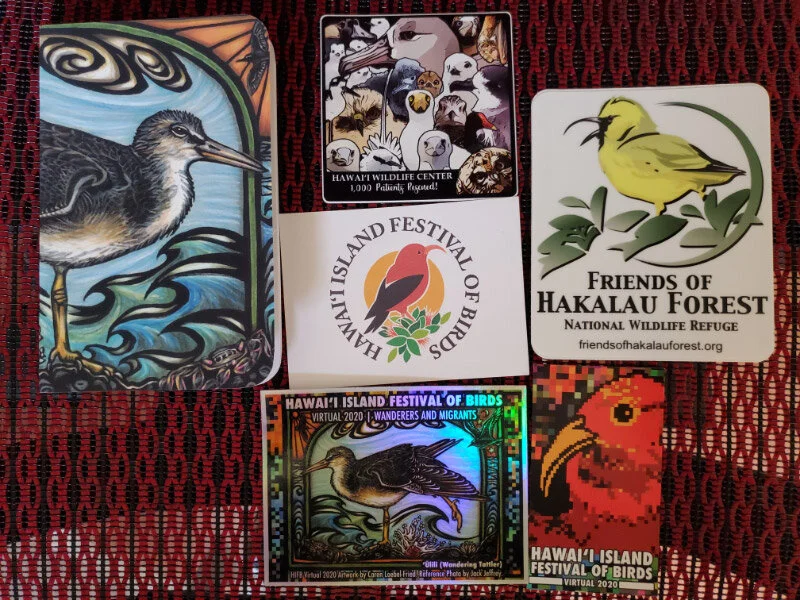
  • October – Hawaii Island Festival of Birds

  • November – Crane Fiesta (New Mexico)

  • November – Patuxent River Conference Reflections

  • December – Maryland Water Monitoring Conference

  • December - AGU

At home. I spent more time at home this year than every before in my life (that I can remember…maybe I spent more time at home from birth to 4 years old). It’s been different but not hard. The house is well situated with forest to the back and a 30-year-old neighborhood street to the front with lots of trees as old as the houses; the views from the windows are all good – and there is wild life (birds (including an occasional wild turkey!), squirrels, deer, chipmunks, and racoons (seen only on the bird feeder cam in the wee hours of the morning)). Individuals and couples take walks…the neighborhood does not feel vacant or isolated. Inside - my husband and I have plenty of room to enjoy our individual projects/activities then be together for meals and shared activities…settling into a comfortable way of living in the house together and probably becoming more synchronized emotionally than we have since early in our marriage – simply because we are around each other more.

Conscious efforts to sustain healthy mental and physical health. As we’ve gotten older, we have become more intentional about our lifestyle – making sure we get enough exercise…eat healthy…assess our feeling and act to keep them positive. During this year – we have increased our focus. I had time to process the bounty of the CSA season (June-October) and am just now beginning to see that we have space in the freezer again. We eat well but keep our portion sizes reasonable; we haven’t gained weight…maybe we’ve lost a few pounds. We both try to get some outdoor time as frequently as we can – walks, yard work, reading on the deck, photography (stars/planets, sun, plants, animals, and snowflakes) etc. It was easier before it got cold. More of our exercise has shifted indoors at this point. We do things to brighten our mood – flowers, purchases to use for projects (mounted insects, clickers and magnifiers for cell phone photography), special pens, special food – things to make each day a little different.

Overall – at the end of 2020, I am feeling optimistic about 2021 and pleased that my husband and I have responded with resilience to the changes in our lives during the past year. We had ups and downs but on the whole managed to sustain ourselves and to enjoy parts of every day (for me it was easier when the television was off, and I wasn’t reading my news feeds).