Skunk Cabbage – Take 2

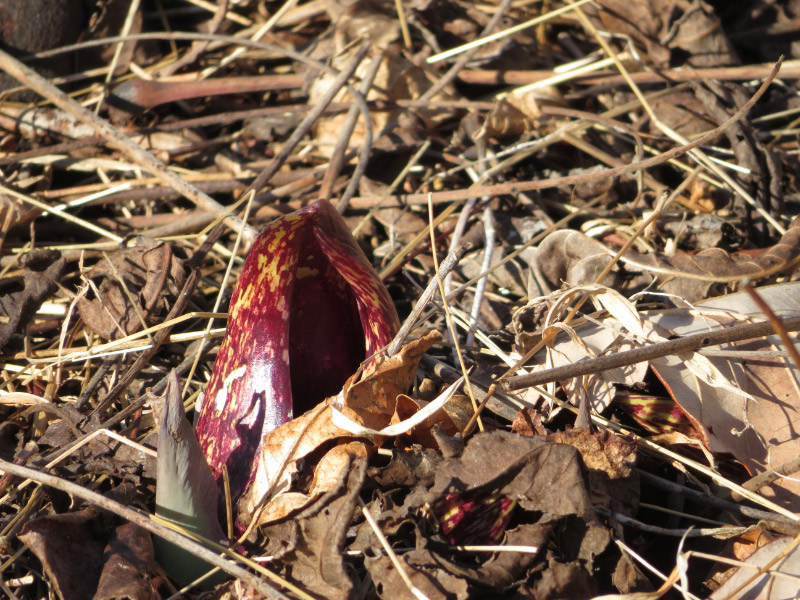
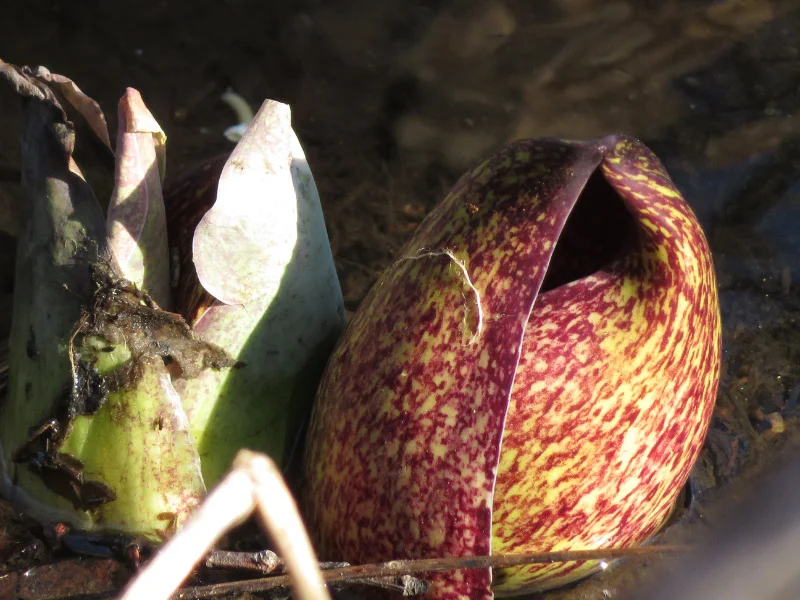
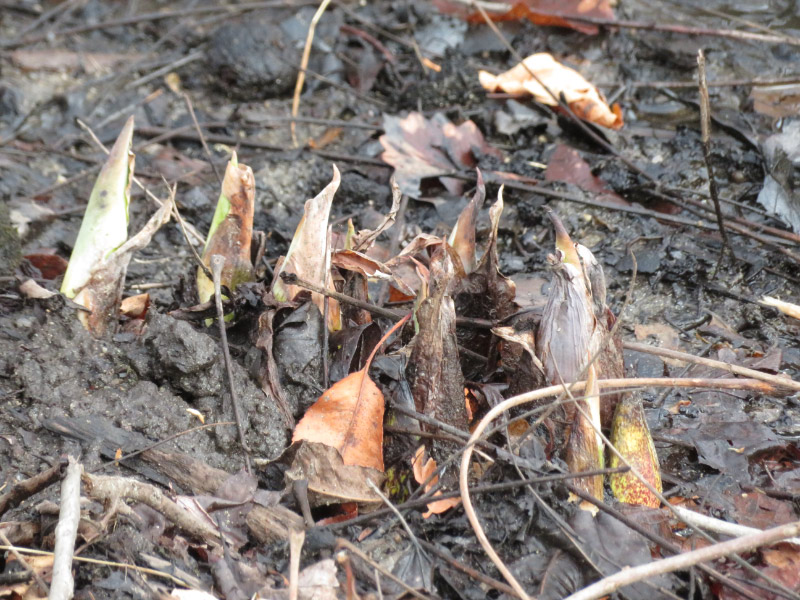
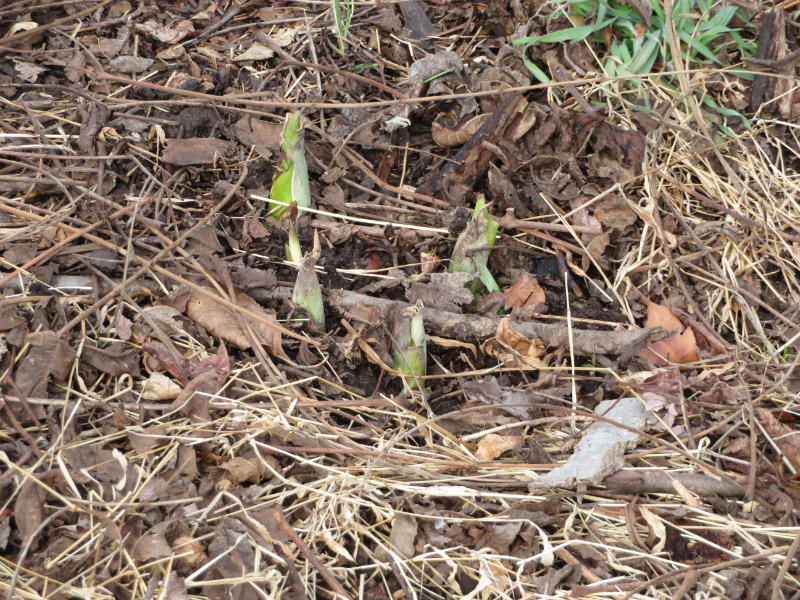
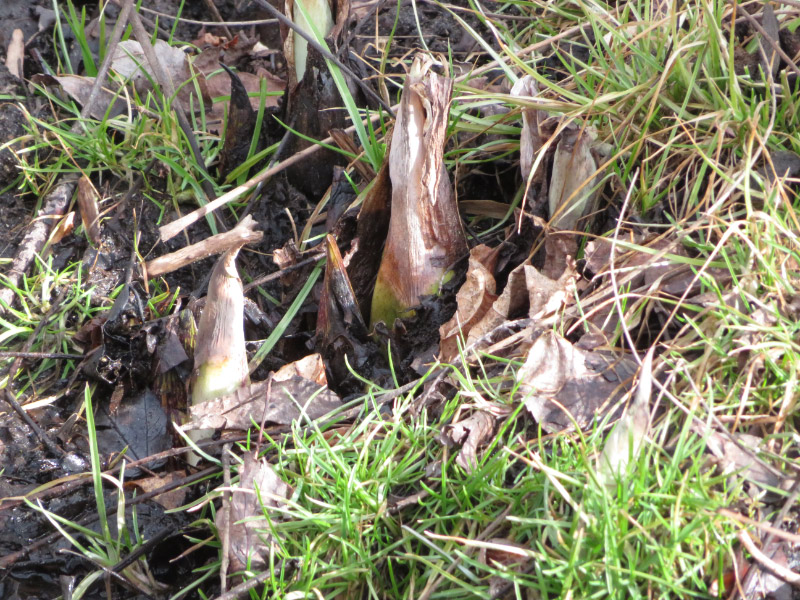
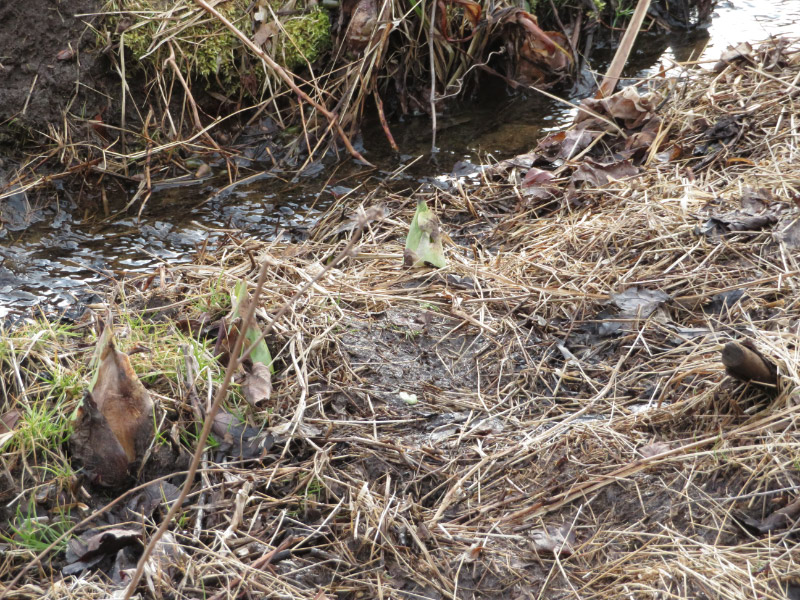
Yesterday I was at Howard County Conservancy’s Mt. Pleasant Farm and hiked down to take another look at the skunk cabbage. It had progressed a little since I saw it three weeks ago (post with pictures here) but it wasn’t a far along as it was on February 11th last year (post here). There were spathes (hood structure, wine with vertical lighter speckles) but I didn’t see any with visible spadix (looks like a golf ball inside the spathe).
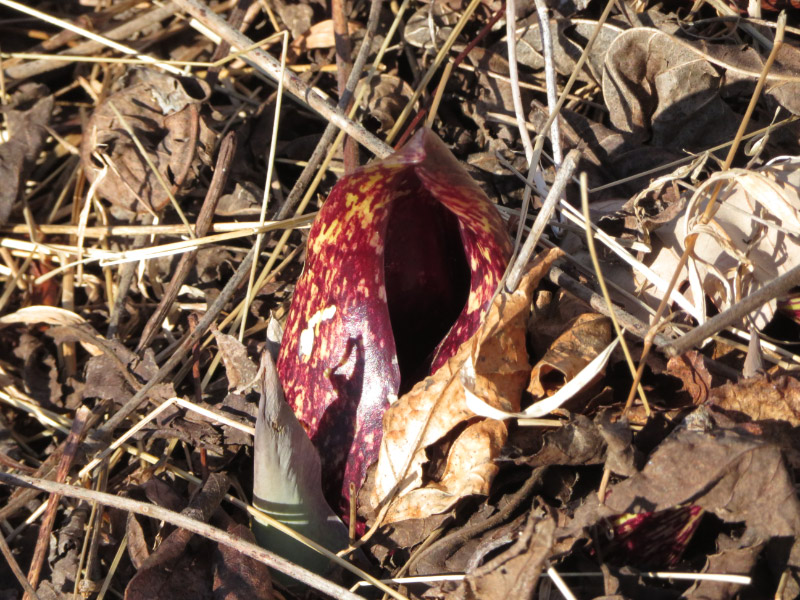
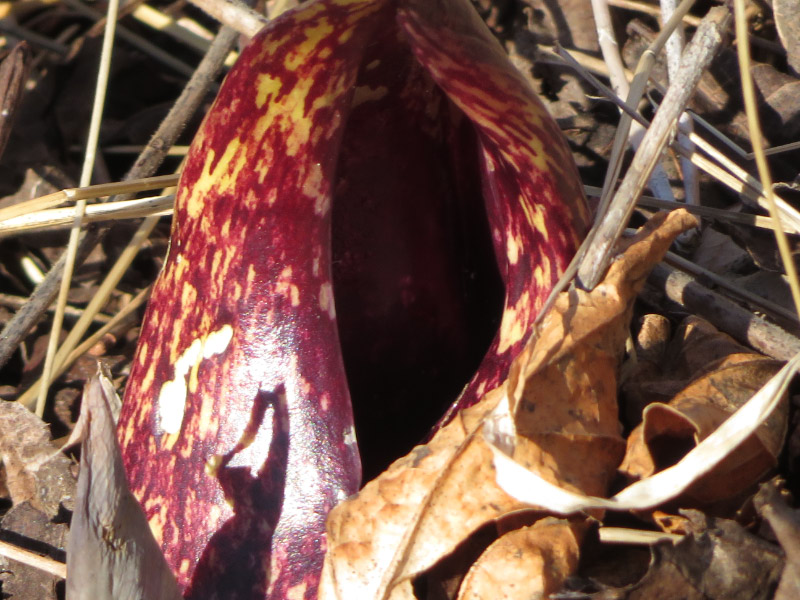
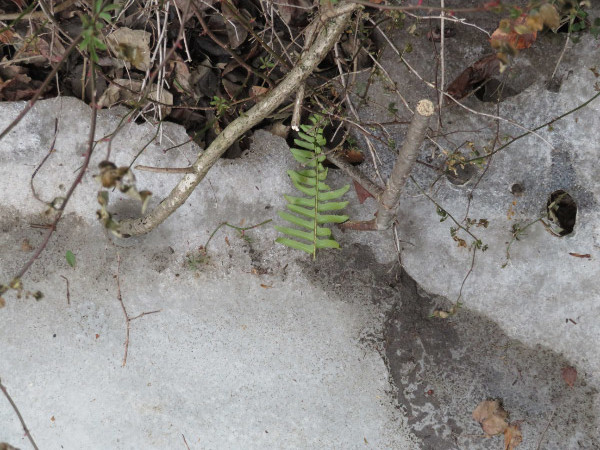
When I first got to the location where I always see the skunk cabbage, I had a hard time spotting it at first. They like to grow near the water and this time a year, they can be some of the more colorful things around although one ‘color’ I spotted turned out to be a wet rock and oak leaf with the sun shining through – glowing. Then I started seeing them everywhere!

Sunk cabbage is one of the earliest ‘wild flowers’ and in some cases will pull itself deeper in the muck if the weather becomes really cold. With the amount of muck around some of them – I think our weather recently might have been slowing down their development – they had to deal with cold rather than bloom!

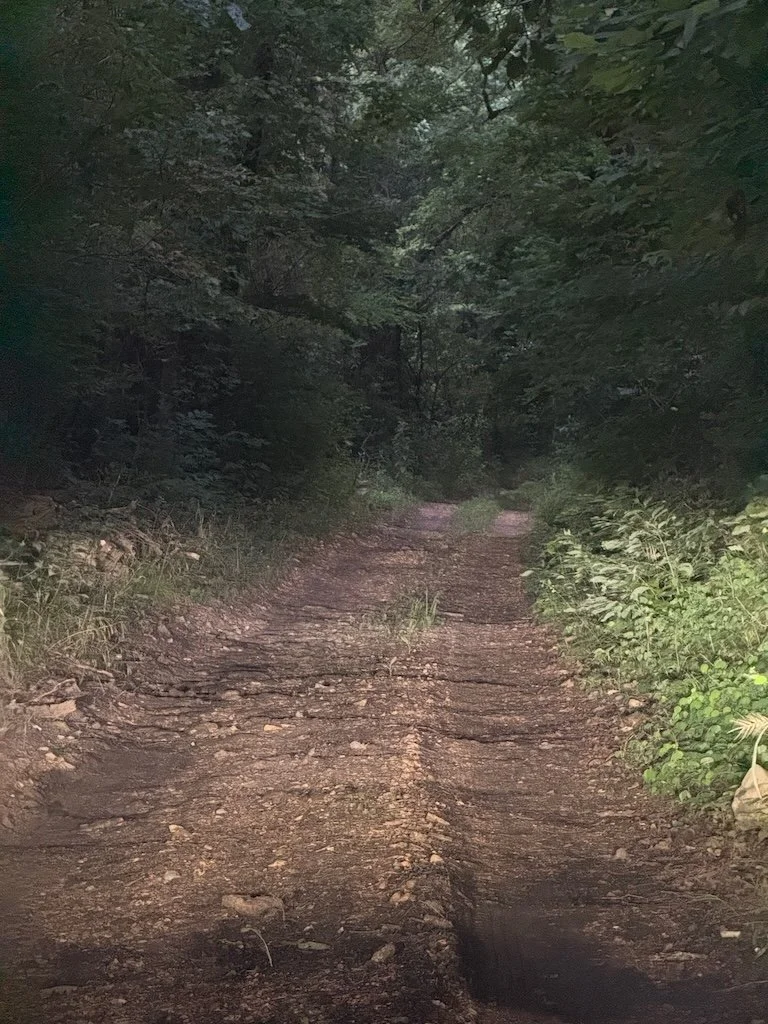
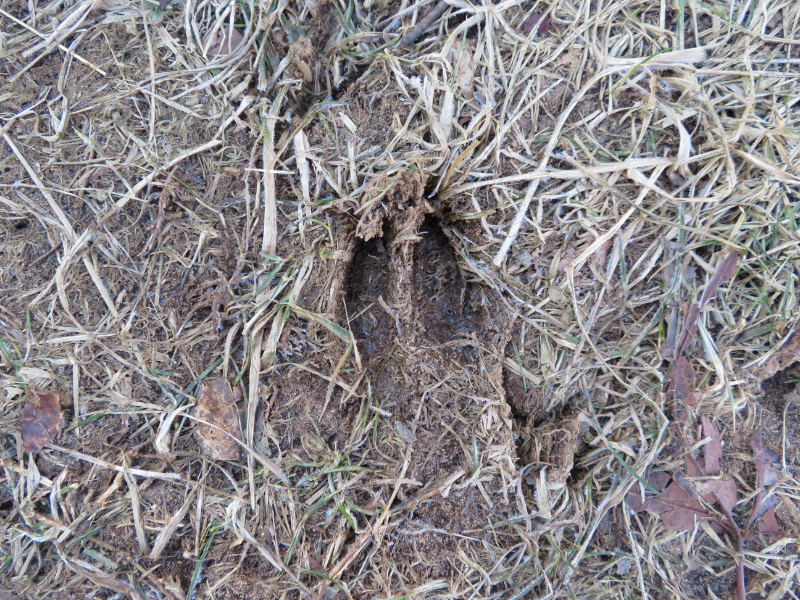
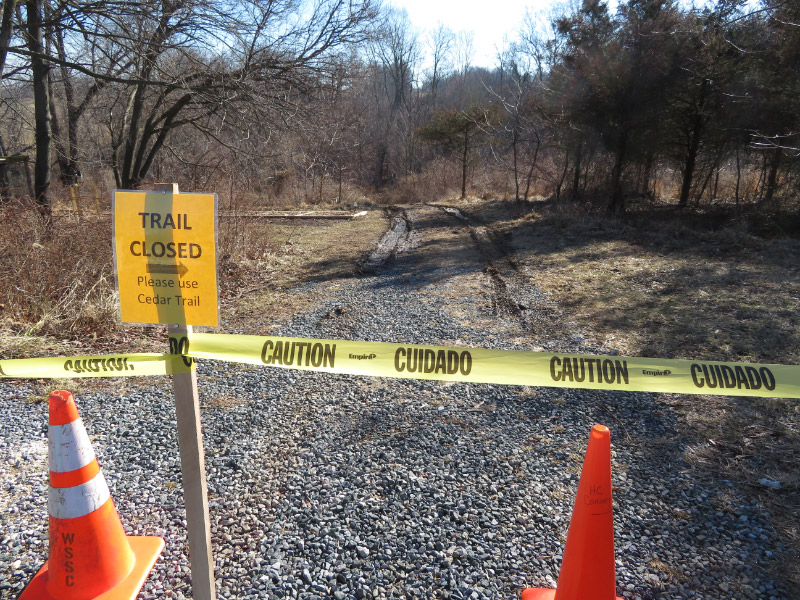
Earlier this week, it rained a lot and there were plenty of deer tracks on part of trail where it had been very muddy. Unfortunately, there were some deep ruts made by a vehicle that closed one of the trails…very sad that someone was so thoughtless, and it is not the first time it has happened. Hope the person is caught and prevented from doing it again.
HoLLIE – week 2

The second HoLLIE (Howard County Legacy Leadership for the Environment) class day was last week and it was held at NASA Goddard. I was worried about hitting rush hour traffic so left very early since we were to meet in the Goddard Visitor Center parking lot to catch the bus into the facility. The day was sunny and clear…but very cold and breezy. I managed to take this picture of the visitor center (not yet open) without getting out of my car!

20180208_073546.jpg

The theme for the day was “what informed citizens need to know about earth systems science.” It was the first of two days that our classes will be at Goddard; last week we started with lectures on “understanding the tools and the state of the art in earth science” from the Project Scientist for the AQUA satellite and then got a tour of mission control for several earth science satellites from the Aqua Mission Director. They did a good job of demonstrating the types of data that can be collected, the methods used to collect it, and the ways it has been analyzed. I was surprised to see the LRO (Lunar Reconnaissance Orbiter) mission control in the same building. That brought back the memory of my daughter being on the team to do image calibration shortly after it launched during her undergraduate days!

20180208_121831.jpg

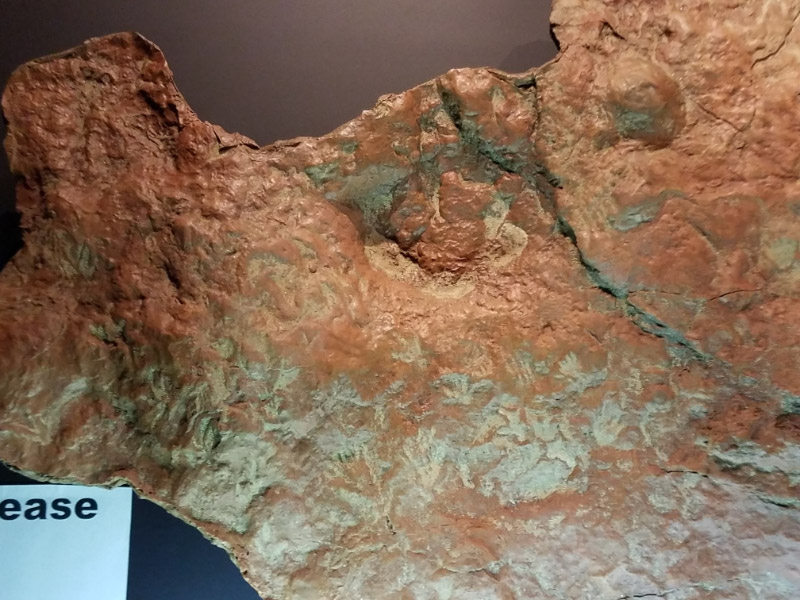
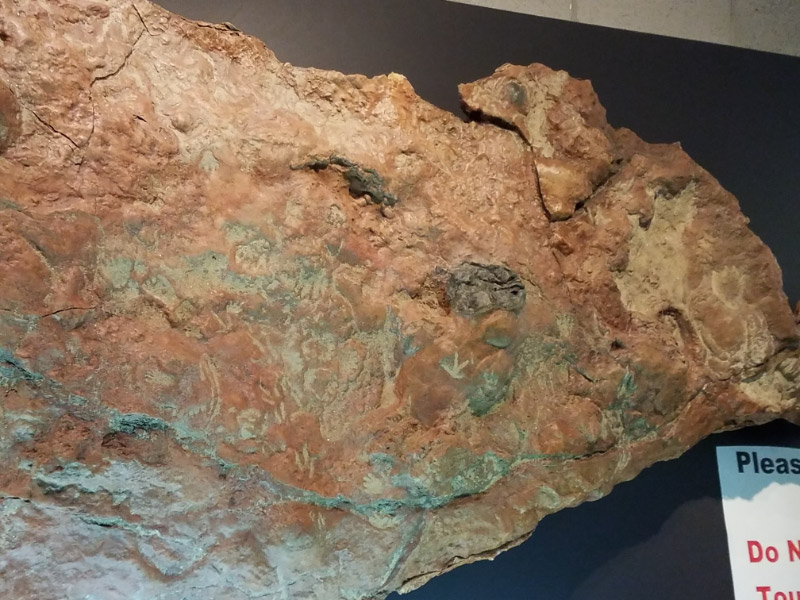
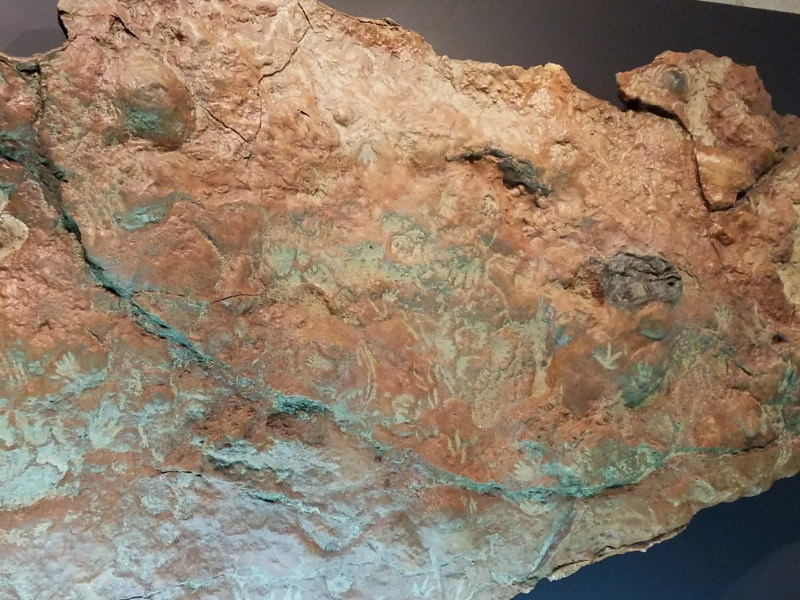
On the way back to our classroom, we stopped by the replica of the big rock found at Goddard that has mammal and dinosaur and mammal tracks. This was not on our agenda originally but was a wonderful serendipity aspect to the day even if it took part of our lunch time. I’d read about it in one of my news feeds and followed the link to the paper…but it was such a thrill to see the exhibit and hear the short lecture. I managed to take a few pictures.

We started the lectures on ‘understanding the science of earth’s cycles’ that will continue in this week’s class. We talked about the oceans and the carbon system in this second class. One of the interesting videos in the lectures is available online: twenty years of global biosphere data mapped on a slowly spinning globe; it easy to see the annual cycles. With the massive amounts of data, visualization becomes an important component.

20180208_120511.jpg

When I got home an article in one of my newsfeeds talked about climate models that are developing that explain why there might be a linkage between melting of Arctic sea ice (one of the topics for the HoLLIE lectures this week) and droughts in California (How nuclear weapons research revealed new climate threats). It was easier to understand since I had the background of the lectures!

Previous HoLLIE posts: Week 1

Gleanings of the Week Ending February 10, 2018

The items below were ‘the cream’ of the articles and websites I found this past week. Click on the light green text to look at the article.

BBC - Future - The world’s most nutritious foods – A short video and a list. I found that I ate quite a few from the list!

Bumper-Crop Birds: Pop-Up Wetlands Are a Success in California – Cool Green Science – Creating habitat for birds where and when they migrate…through the California Central Valley.

Interview with Photomicrographer Justin Zoll About His Microscopy Series – I was surprised to get ideas from Zentangle from crystals!

A search for insomnia genes involving 1.3 million people is the largest genetic study ever - MIT Technology Review – Lots of people in the study…956 different genes linked to insomnia but genes explain less that 10% of the overall chance that a person has insomnia.

Amazon, JPMorgan, Berkshire creating new health care company – Hopefully these big companies will be able to find ways to make health care better and more affordable for their employees…and then be the model for everyone else.

Frogs Through Time, Modern Portraits of Species Discovered Two Centuries Ago – National Geographic Blog – Looking at frog species documented by the Spix and Martius expedition to Brazil…using their drawings and modern photographs.

This is your brain: This is your brain outdoors: Neuroscientists find differences in brain activity depending whether people are outdoors or in a lab -- ScienceDaily – Most studies have been done indoors … until this one. Until relatively recently in our history, we spent a lot more time outside so I wondered if the warping our brain activity by spending long stretches of time indoors is changing us in more ways that we realize.

Researchers create digital map, cultural history of Carlsbad Caverns  and A day in the park: Carlsbad Caverns National Park – Using LiDAR to create a very detailed map of the cave. The article reminded me that tt’s been a lot of years since I visited the park…maybe it’s time to plan a repeat.

Magnesium makes chromosomes: A new chemical tool, MARIO, shows how free Mg2+ ions regulate chromosome shape -- ScienceDaily – It appears that a mineral we know we need … is key in ways we had not anticipated!

The Prairie Ecologist – Photo of the Week – Pictures of dragonfly larvae that frozen near the surface of a pond! We find dragonfly larvae frequently when we do stream surveys – when things are not frozen. Next time we get many days of very cold weather I’ll take a walk to a local stream (or pond) to see if I find any larvae on the surface.
Winter Flowers

My husband bought roses for our January wedding anniversary…and the baby’s breath and greenery that lasted longer than then the roses prompted me to buy a general bouquet of flowers last week at the grocery store. I’ll probably buy another two or three before some of the spring emergence begins with the trees and bulbs in our yard.

2018 02 IMG_8341.jpg

Adding color to the breakfast area table is something to savor in the winter when the dominate color outside is brown…and the days here are mostly cloudy. Color lightens my mood – whether it comes from flowers on the table or birds seen through the window!

2018 02 IMG_8345.jpg

We have so much growing around the outside of our house that I’ve never grown houseplants. They would fill the gap in color I am feeling right now….but I’d also have to care for them for the rest of the year. I’m sticking with the purchased cut flowers for January through mid-March!

Icy Day

Earlier this week we had about 24 hours of icy coated trees (and streets were impacted enough that schools closed for the whole day). I was glad I had no reason I had to be out and about; I could enjoy the ice through the windows of the house – or open doors to get a clearer picture. I noticed how different the types of trees looked with the ice. The pines droop over very quickly from the added weight of ice coating their needles. The tulip poplars develop little icicles on their more horizontal branches, but the seed pods didn’t seem to accumulate any ice.

2018 02 IMG_8379.jpg

When I first looked at the maple, I thought it hadn’t accumulated ice as much as the other trees. When I zoomed in with my camera I saw that it did have ice accumulation and the buds were already dark red. I don’t think the buds will be damaged by the ice since they are still closed.

2018 02 IMG_8383.jpg

The sycamore had a thin coating of ice and longer icicles. I was surprised that the lone seed ball from last summer does not appear to have ice on it!

2018 02 IMG_8398.jpg

I worried the most about the plum tree in our front yard. It has a lot of small branches that are almost horizontal and tends to be coated with ice rather than icicles forming. It glistened in the morning sun (that didn’t cause very much melting because it was so cold).  Fortunately, there was very little breeze so I don’t see any breakage.

2018 02 IMG_8388.jpg
2018 02 IMG_8400.jpg

Bluebirds Bathing

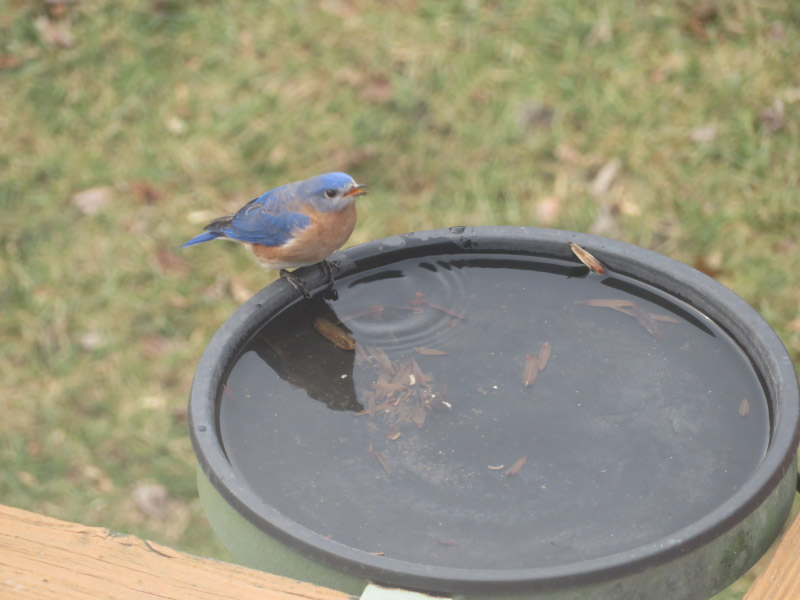
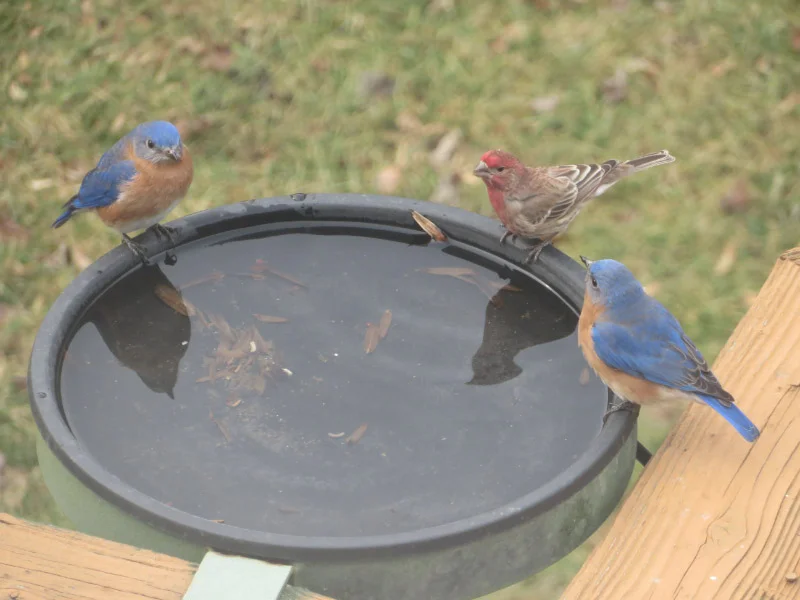
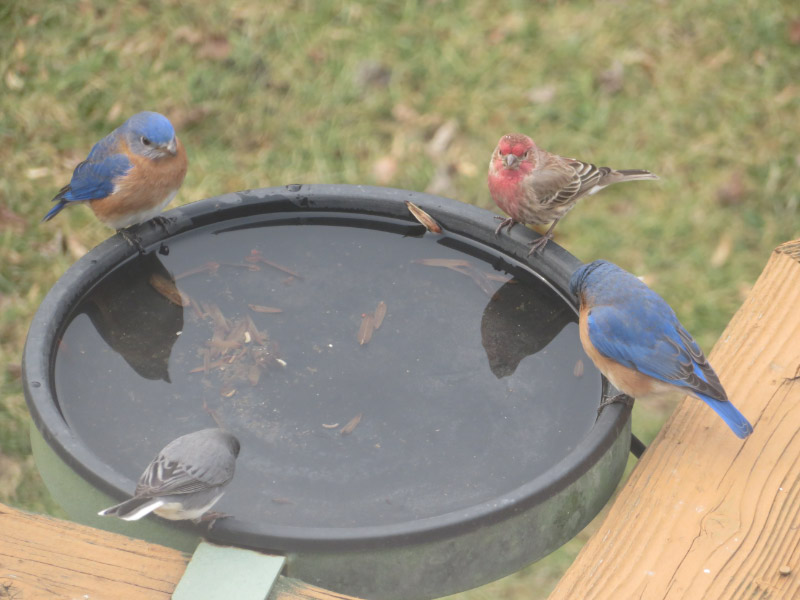
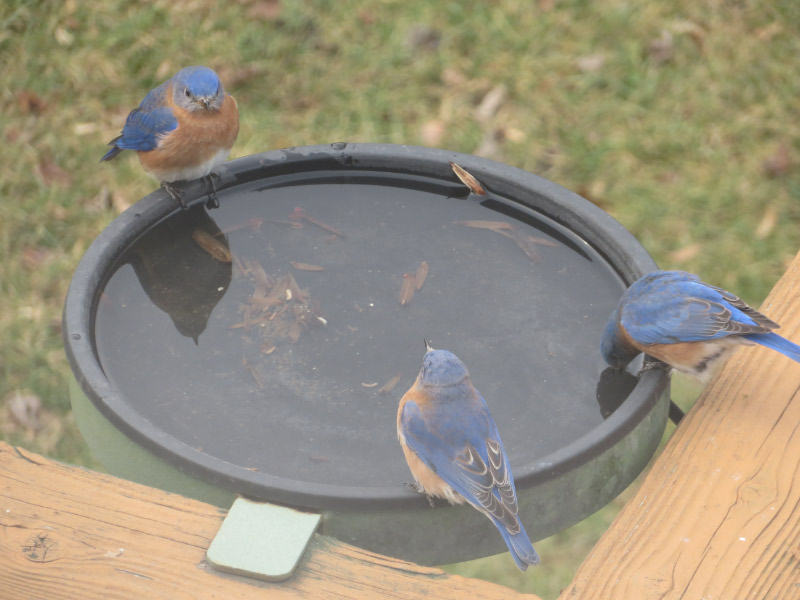
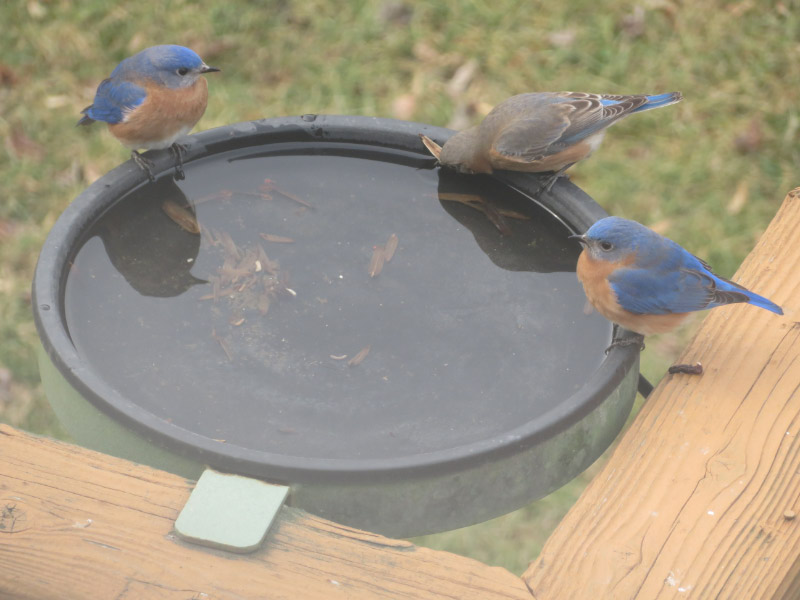
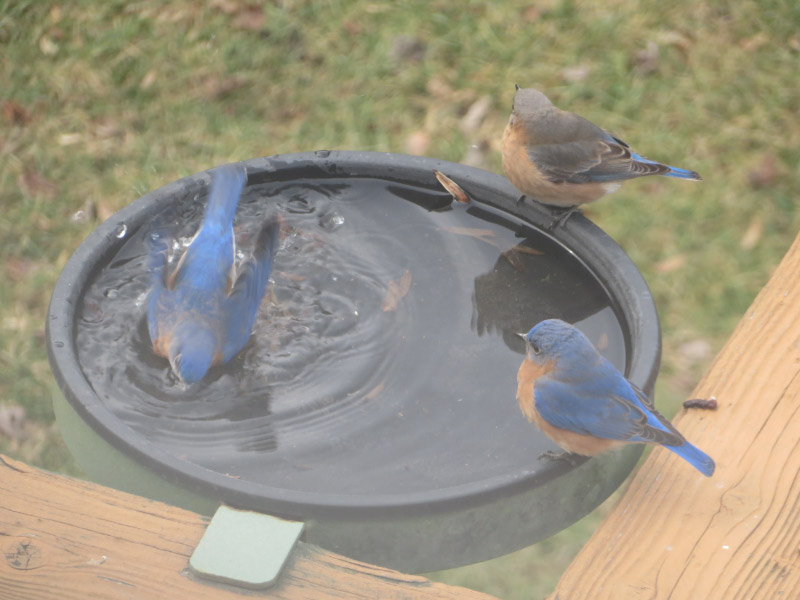
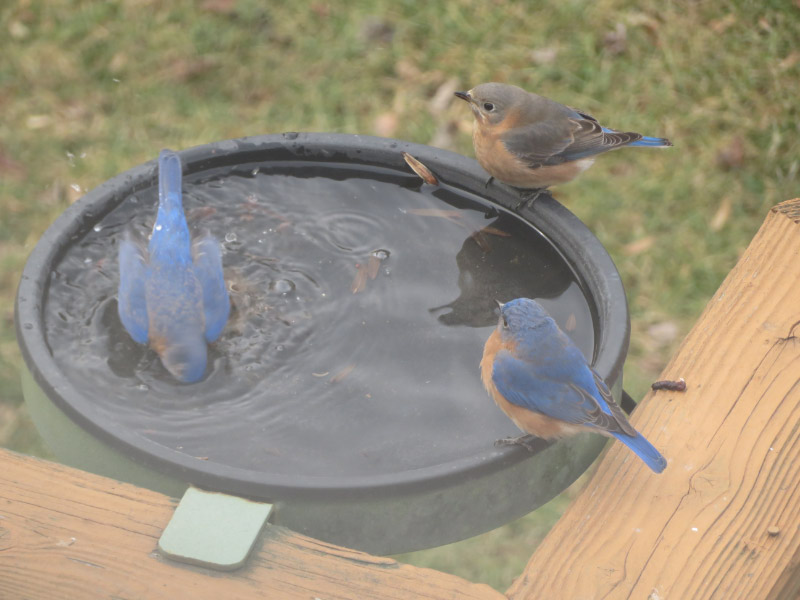
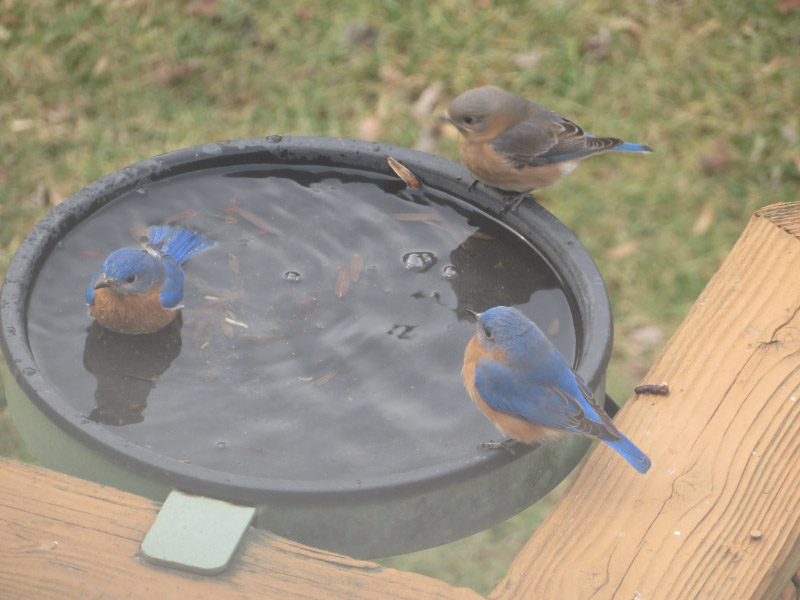
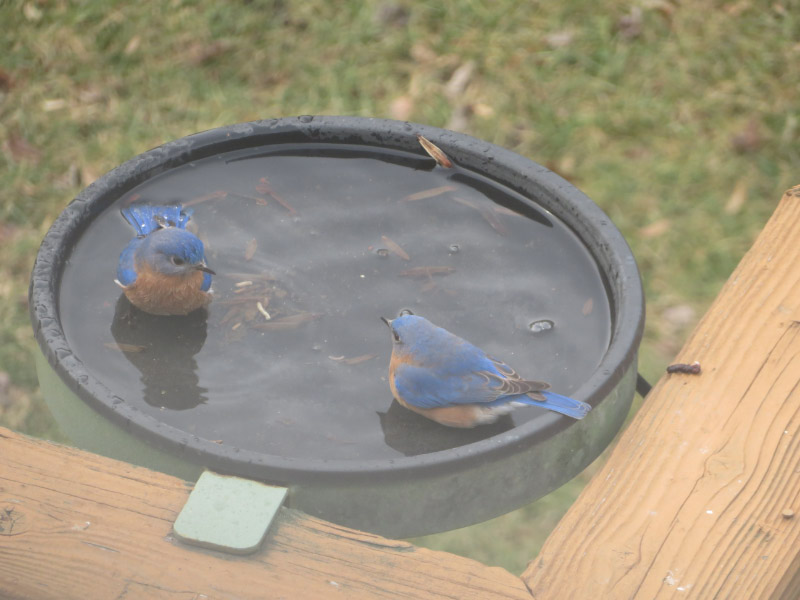
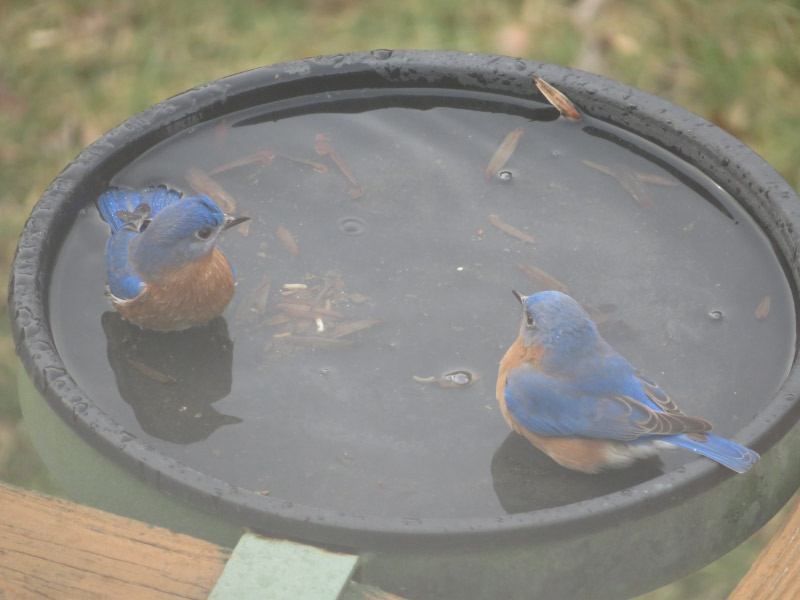
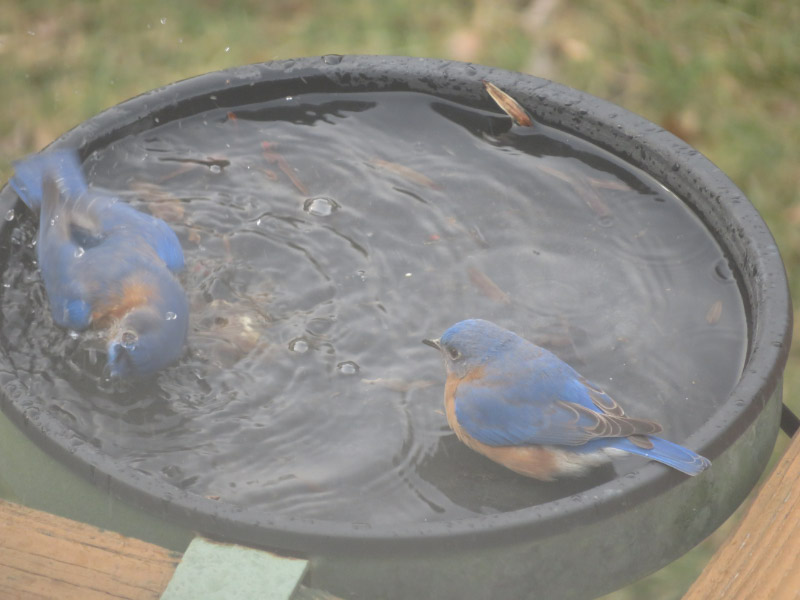
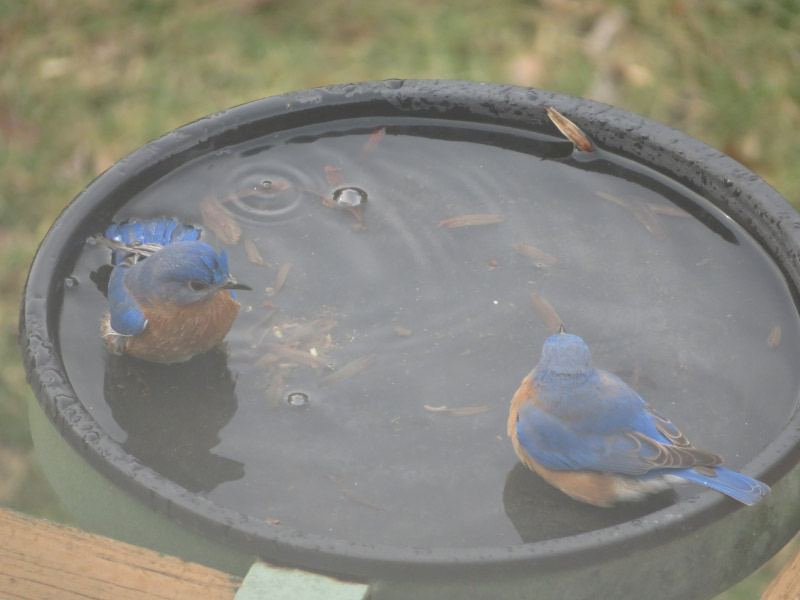
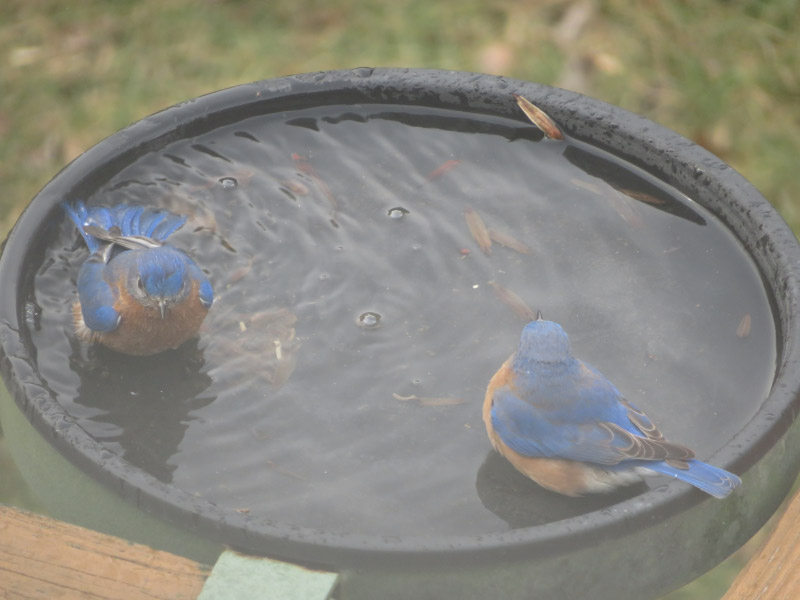
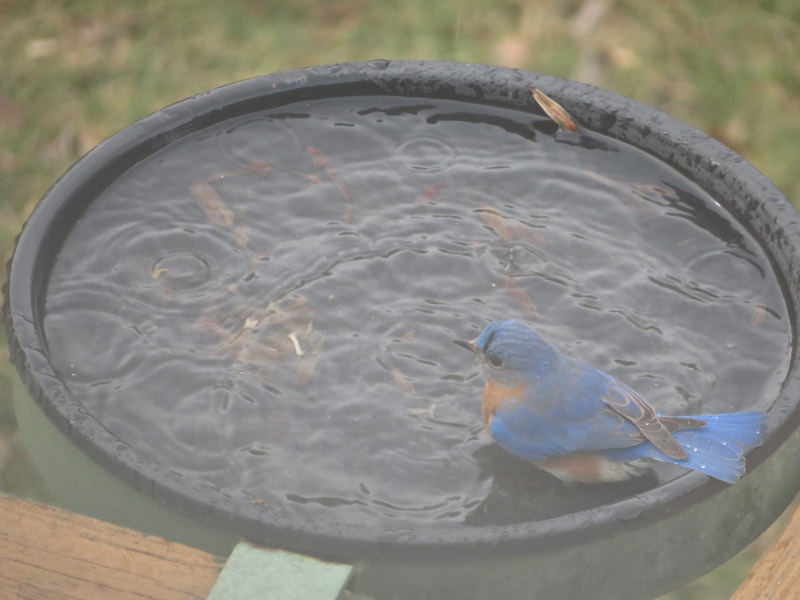
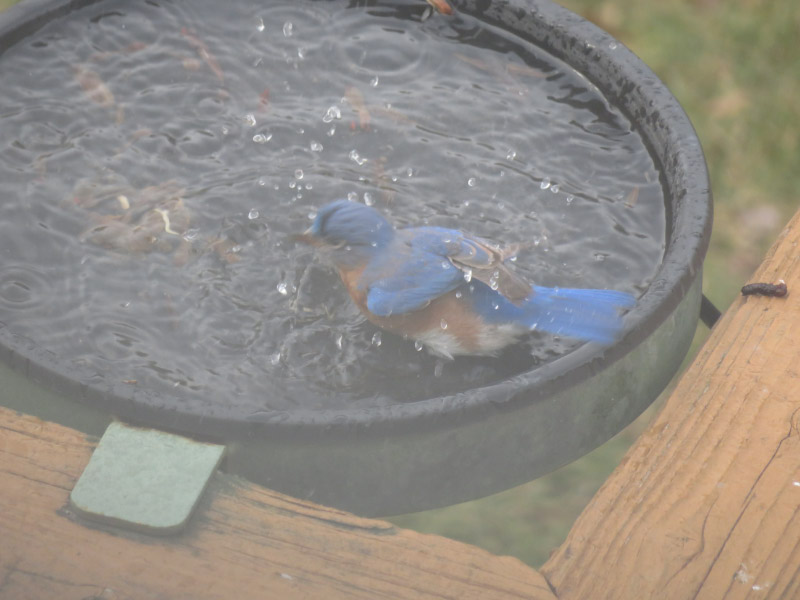
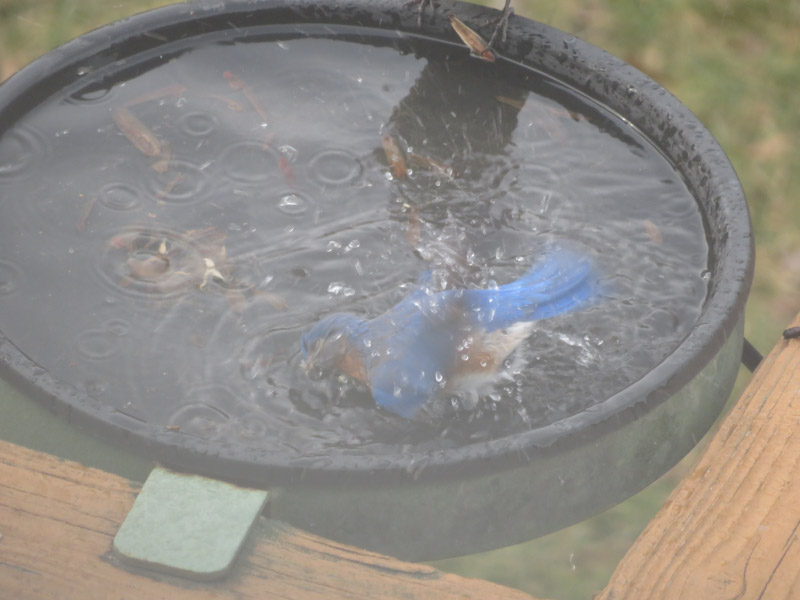
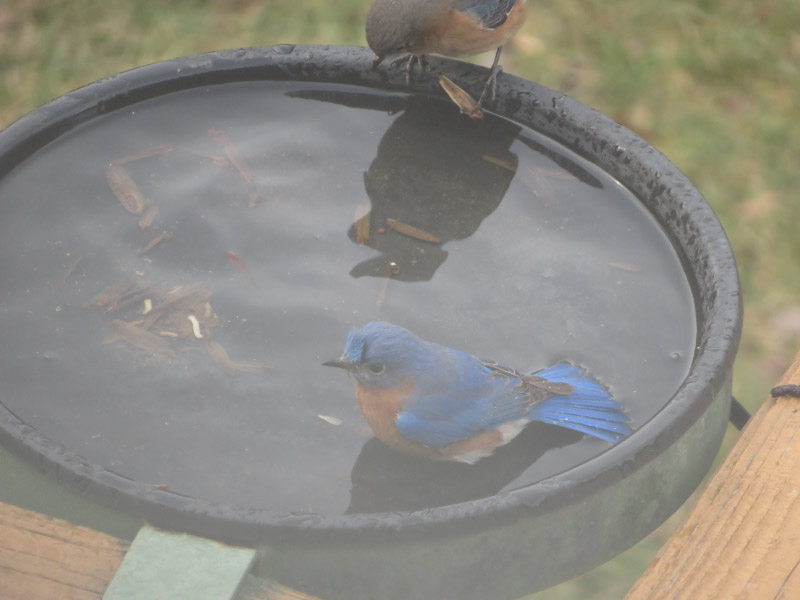
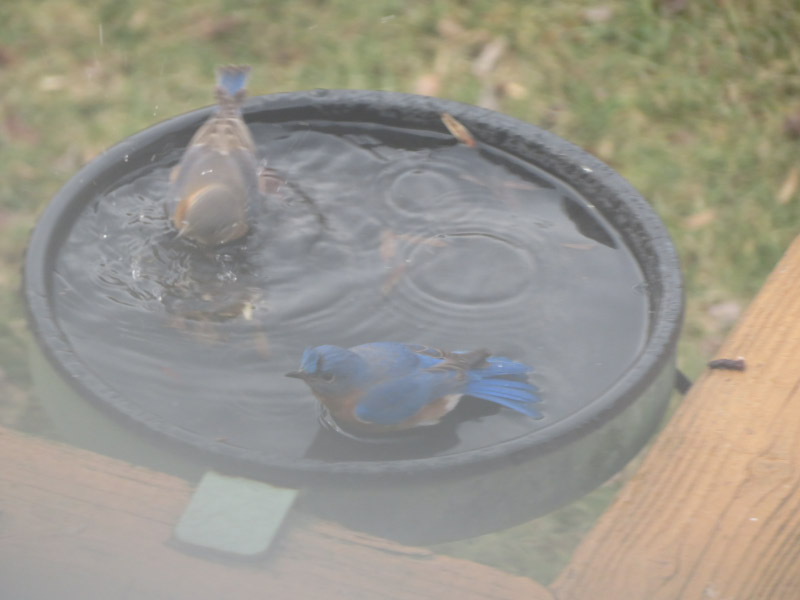
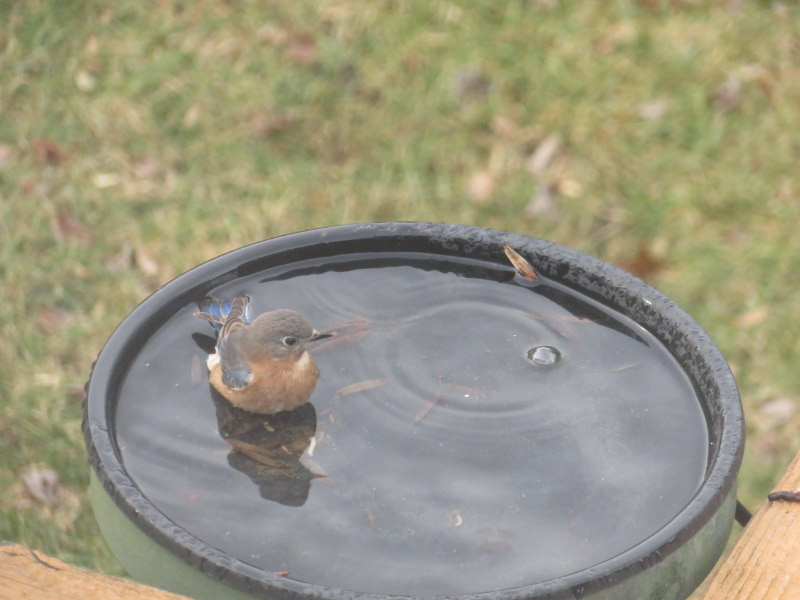
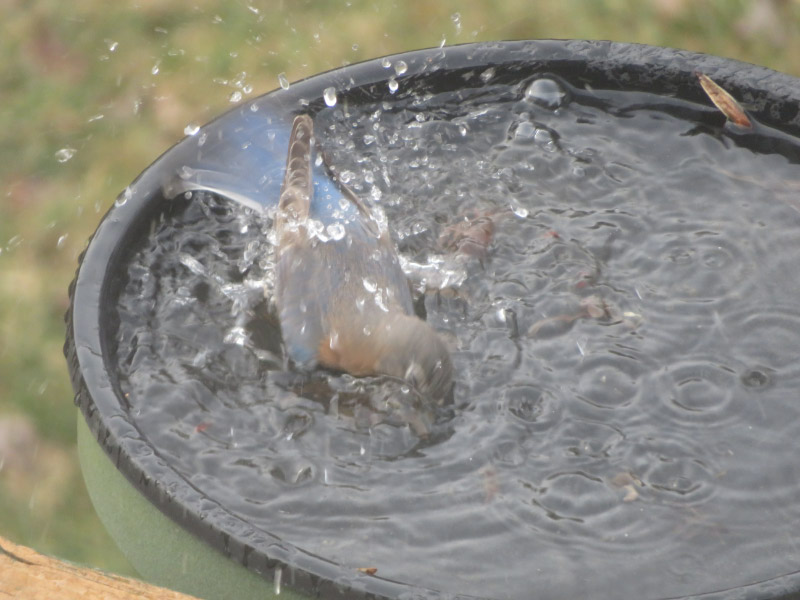
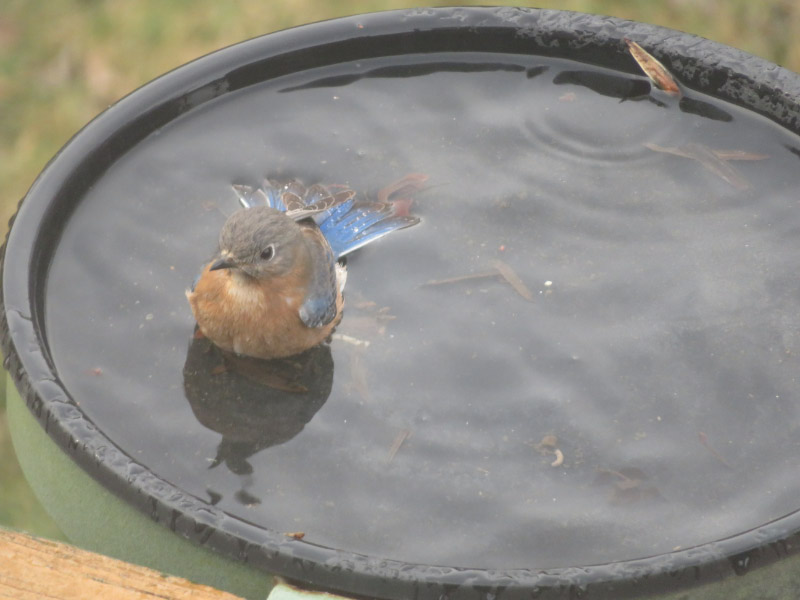
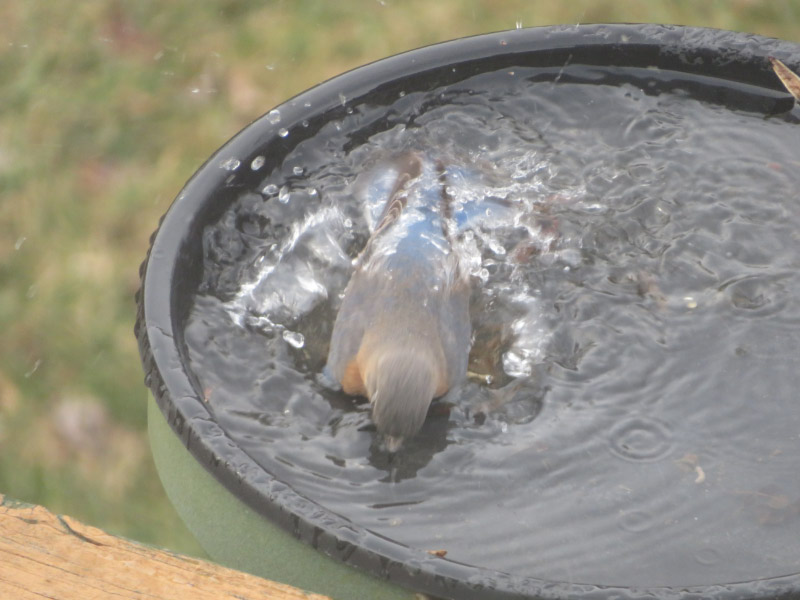
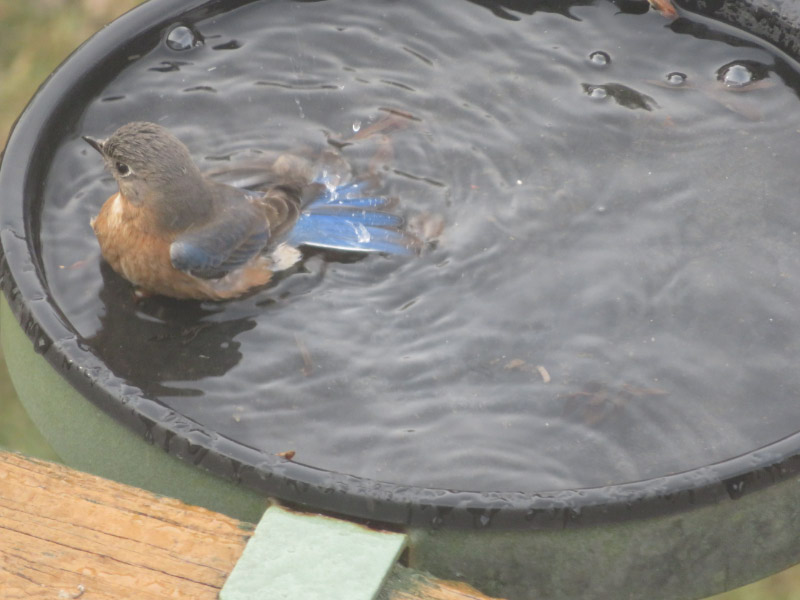
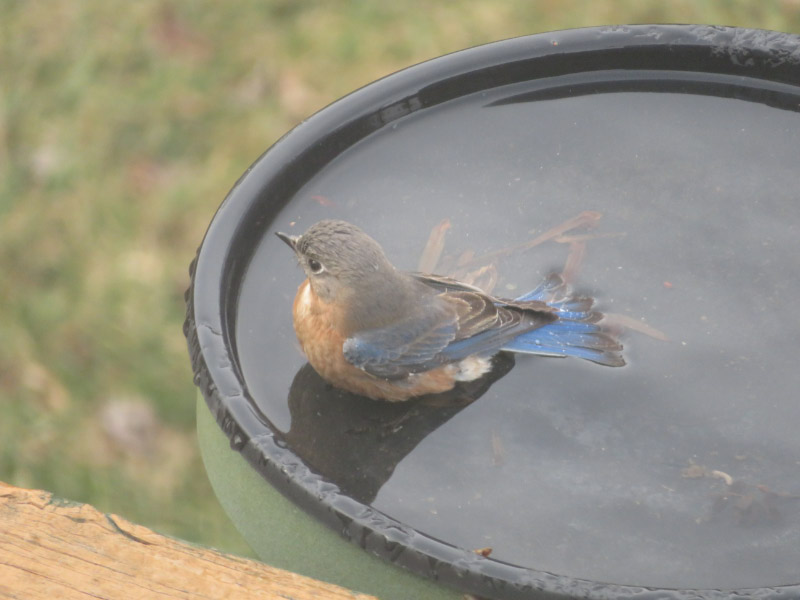
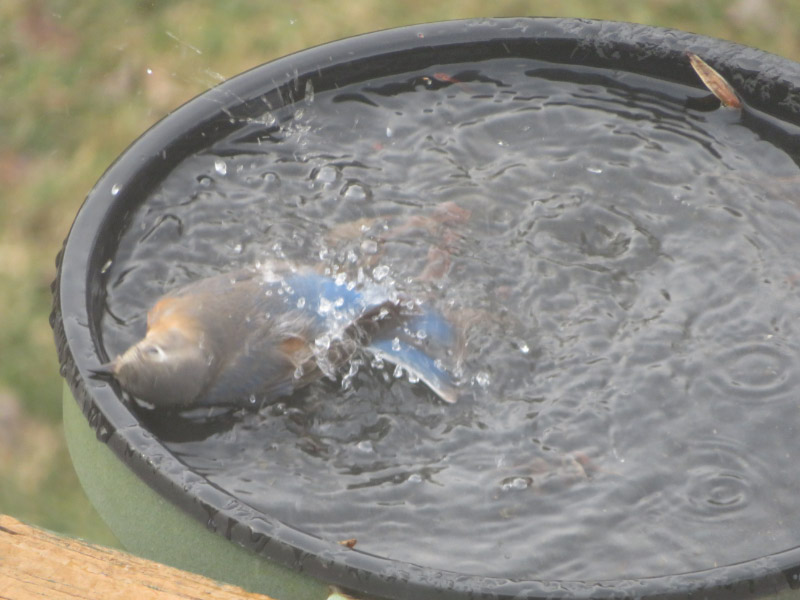
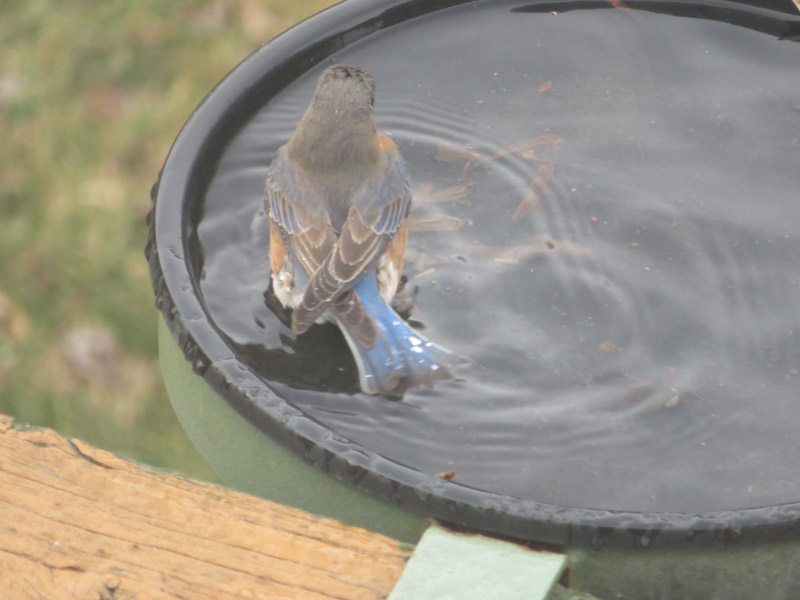
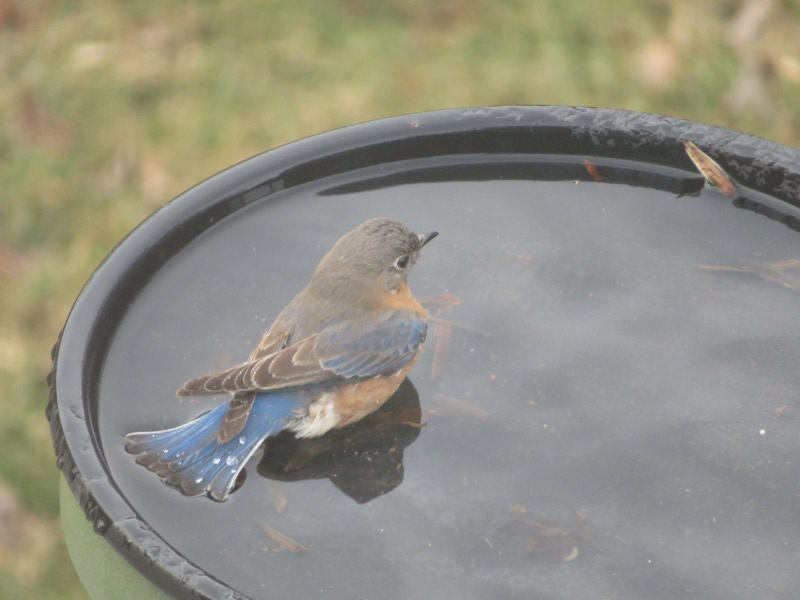
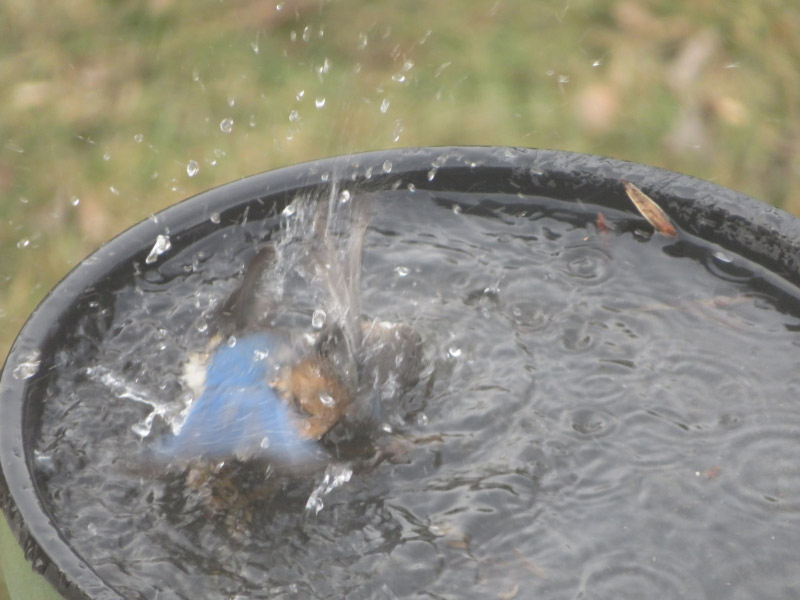
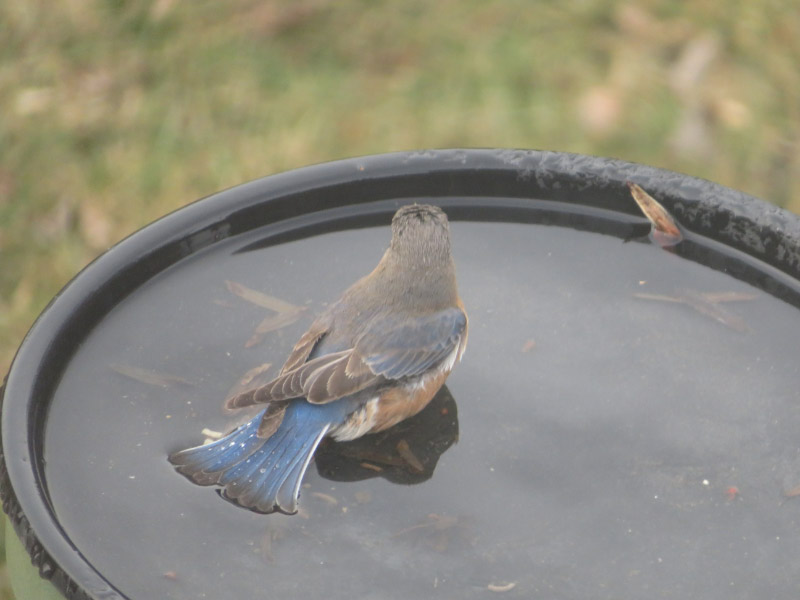
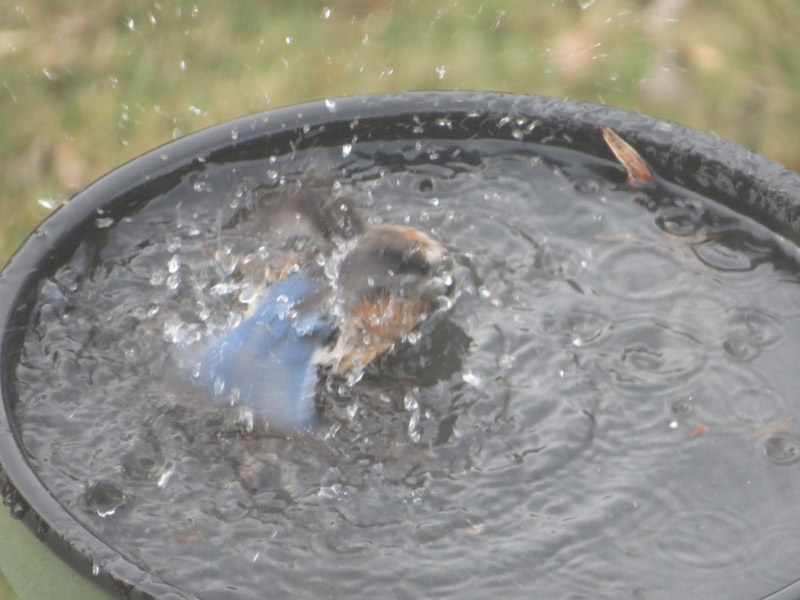
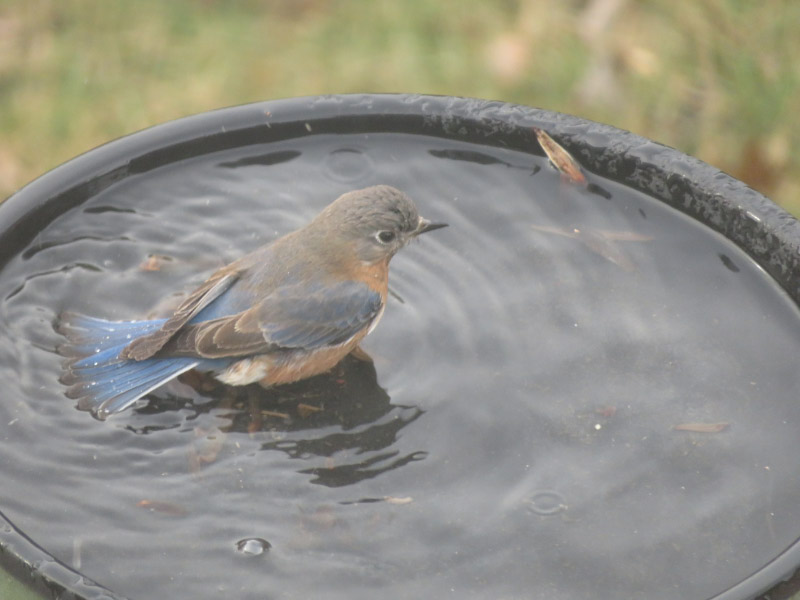
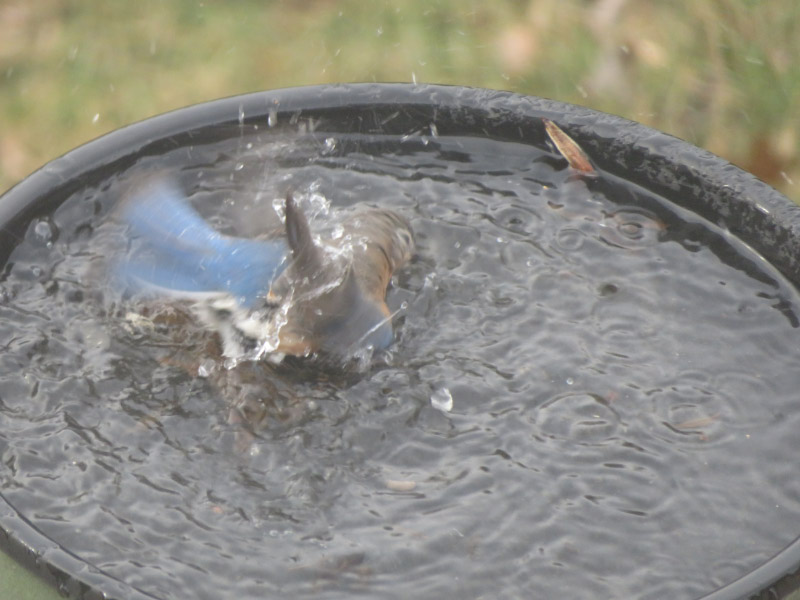
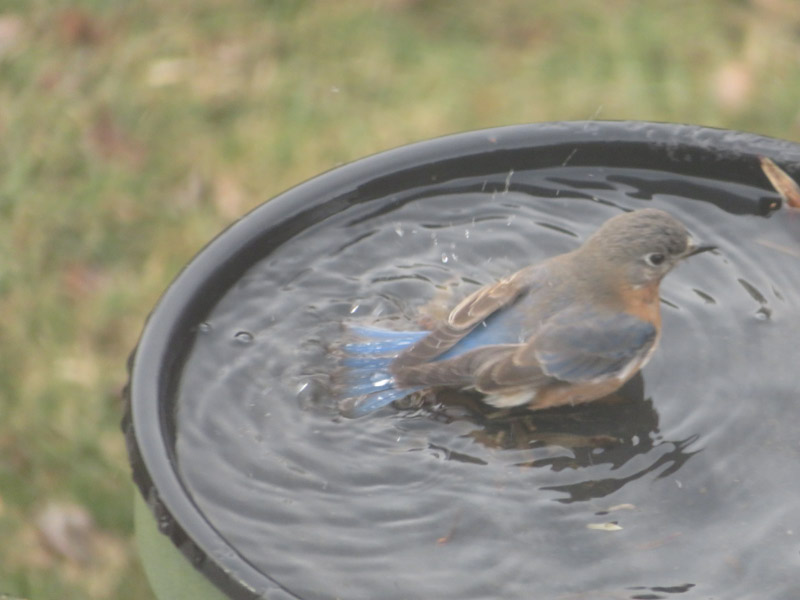
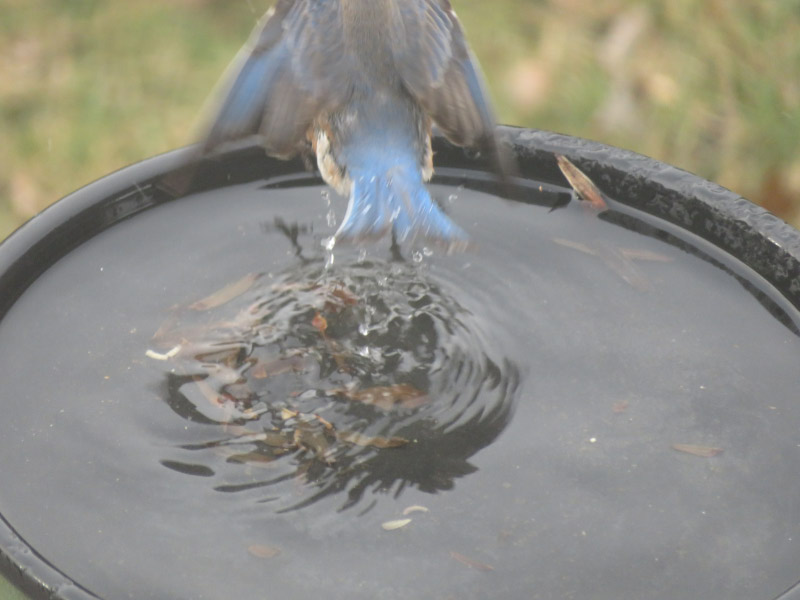
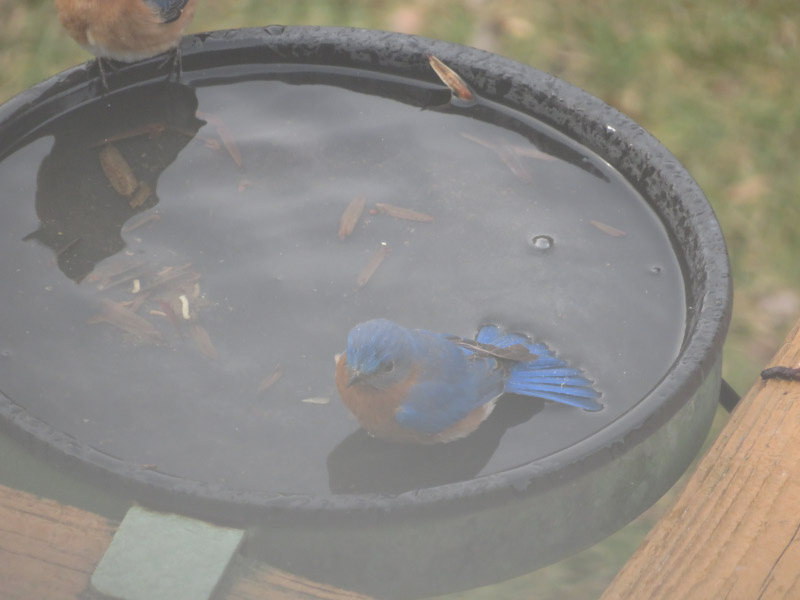
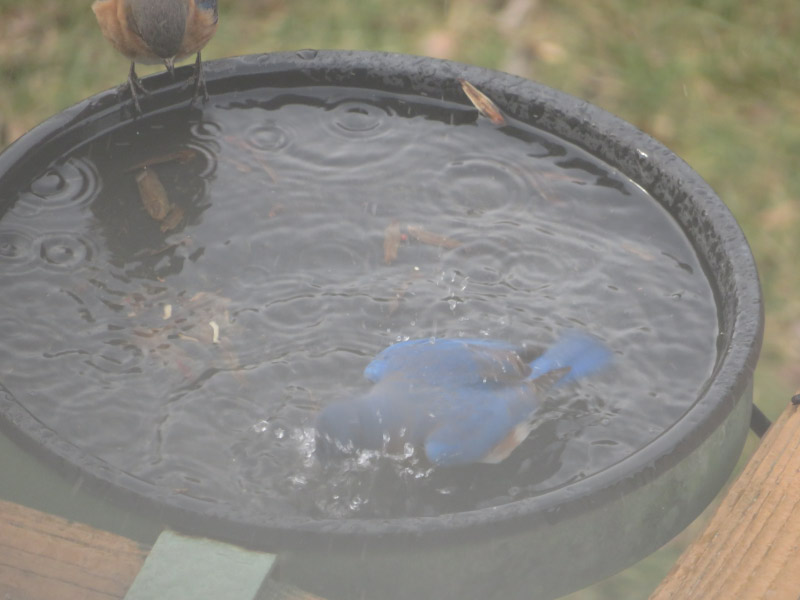
Last week, we had extra drama at our birdbath. It started out with some bluebirds coming for a drink – not unusual. A finch and junco joined in but left after a sip. There were three bluebirds around the birdbath – with the female appearing to eye the water rather than getting a drink while the males watched. Then one of the male bluebirds jumped into the water…and splashed around. It was interesting to see how the bird seemed to put its head down and maybe used it beak as a third ‘leg’ while it bathed. The female bluebird flew away while this was happening. Just as the first bird seemed to finish up, the second male bluebird stepped in but waited until the first one flew away to get serious about his bath. Meanwhile the female bluebird came back and was waiting. She got into the water as the second male finished but waited until he flew away before starting. She took the most time with her bath – completely turning around in the ‘tub’ before she flew away. All this action happened in about 2 minutes!

Ten Little Celebrations – January 2018

This month was mostly cold…mostly spent at home…but I easily found lot of little celebrations!

I celebrated the model trains at Brookside…on the very last day of the exhibit – January 1. I enjoyed volunteering to help the exhibit run smoothly…and experiencing the trains through the eyes of the children.
20180101_095231.jpg

I made a lot of progress on the collection of botanical prints eBooks area of my website. I am adding to the list of links as I work back through the annual lists of books I read/browsed…picking out the ones that contained botanical prints. So far, the books I found from 2013-2017 are listed – each with a link to the free eBook and a sample image. I celebrated the beauty of the botanical prints the whole time I worked on the collection…and may have the ones from 2012 ready later today.

We had some very cold days early in January and I celebrated my well-stocked pantry, freezer and refrigerator – as I stayed warm at home!

The were three Winter Wellness sessions this January hosted by Howard County Conservancy for their volunteers. Each included a lecture and hike…worth celebrating.

2018 01 IMG_7577.jpg

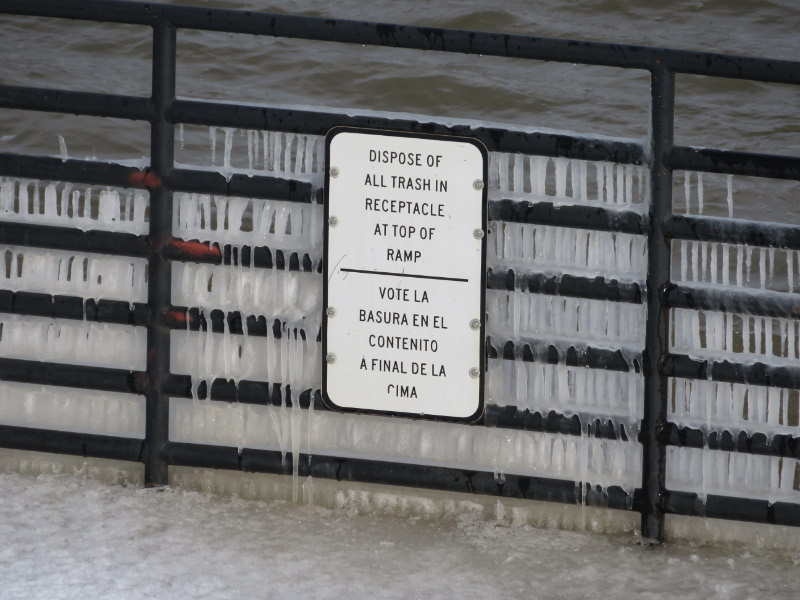
Conowingo was not as scenic for birds as it has been at times in the past…but the ice on the rocks and railings was worth seeing. I enjoyed being out and about….maybe that was more what I was celebrating.

I had a cold earlier in the month – so of course I celebrated as soon as a started feeling better.

In November I got my box of Foldscopes and was so busy I didn’t put one together until recently. I was pleased to finally do it…celebrated my origami-type success with the pieces and my initial results.

20180122_103459.jpg

My area of Maryland has been very dry. We’ve only had dustings of snow…but we had a day recently that is rained gently for most of the day. We needed the moisture….and I celebrated that it came in an easy-to-handle form.

I had a dental appointment as was pleased that I had no cavities! It’s been a long time since I’ve had a new one and I celebrate after each appointment.

I started out on my weekly grocery shopping drive and notice the sunrise over our CSA buildings. I pulled off the road to take a picture. It was a good way to celebrate the day’s beginning.

20180125_071014.jpg

Zooming – January 2018

I’ve been at home observing birds a lot during January and my camera works as well as binoculars for me…so why not go ahead and take the picture too! My favorite is probably of the flicker – savoring the drink of water from our birdbath.

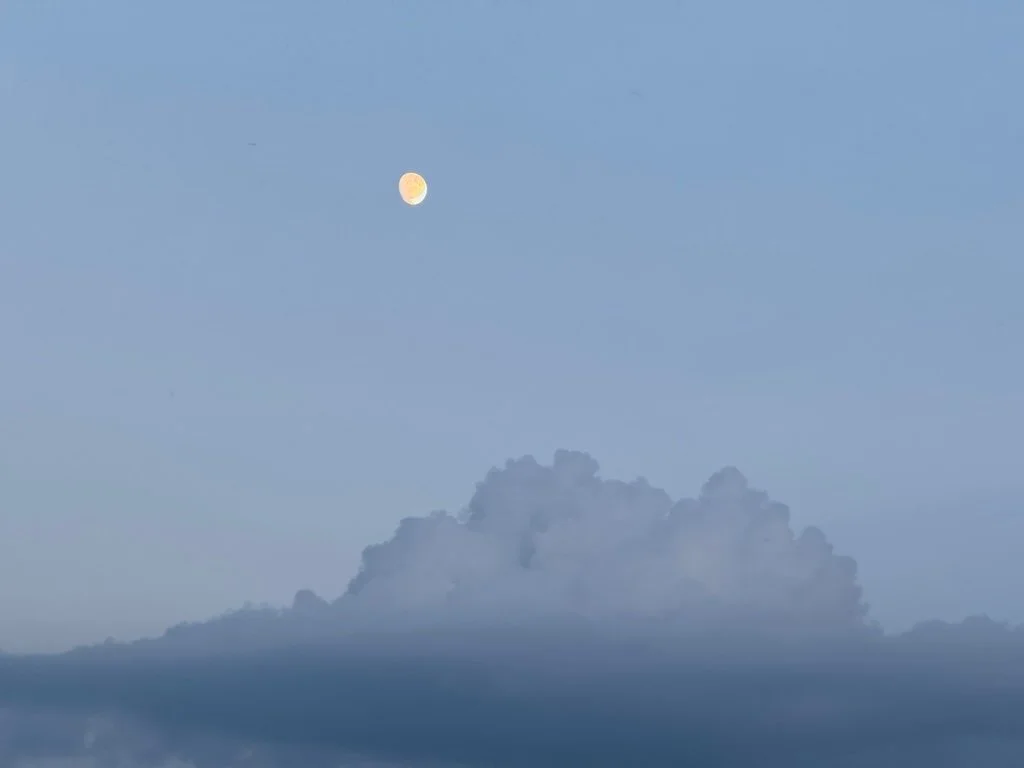
There were some other reasons to use the camera’s zoom – the full moon in early January (there will be another one the last day of the month),

2018 01 IMG_7425.jpg

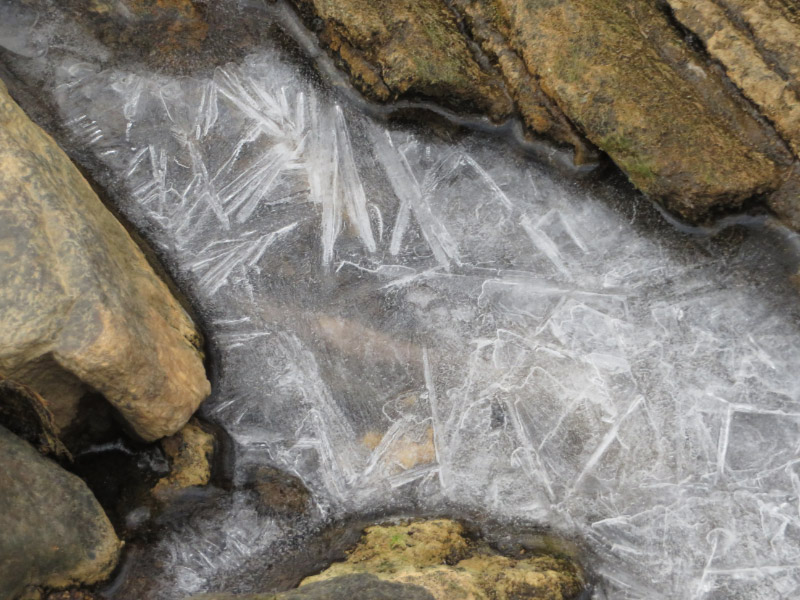
Ice crystals in a stream (better to use the zoom than making a mistake – taking a very cold step),

2018 01 IMG_7590.jpg

A stump that was on a slope of boulders (to hard to get close), and

2018 01 IMG_7930.jpg

In camera cropping of the morning light on the trees behind our house.

2018 01 IMG_8041.jpg

It was a good month with my Canon Powershot SX730 HS with 40x Optical Zoom!

Skunk Cabbage

Last week I hiked down to the marshy area where the skunk cabbage usually grows at Howard County Conservancy’s Mt. Pleasant Farm – and it was already coming up out of the muck. There were no blooms yet; those will be left for February. I used the zoom to get pictures since the area was muddy both from rain the previous day and the usual water from the small spring. It was warm enough that there was no ice in the area where the skunk cabbage was sprouting.

2018 01 IMG_8069.jpg

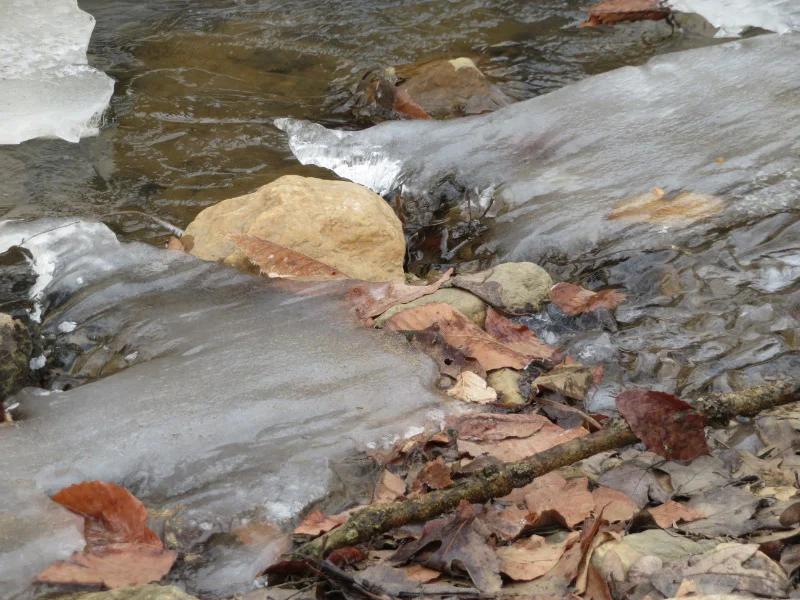
In other areas there was more ice – further from the spring (the water that emerges from the ground must be a little warmer) or where ice got thicker when the temperature was very low and it takes longer to thaw. It wasn’t freezing on the day I was hiking so part of the stream that has accumulated more water and the flowing more rapidly was entirely melted.

Other highlights from the leisurely hike: the stump for the elementary school hiking groups to climb and count tree rings is surviving the winter…will still be good for the spring field trips,

2018 01 IMG_8042.jpg

Shelf fungus group just about everywhere – even on stumps of invasive trees (these were probably Callery pear).

2018 01 IMG_8074.jpg

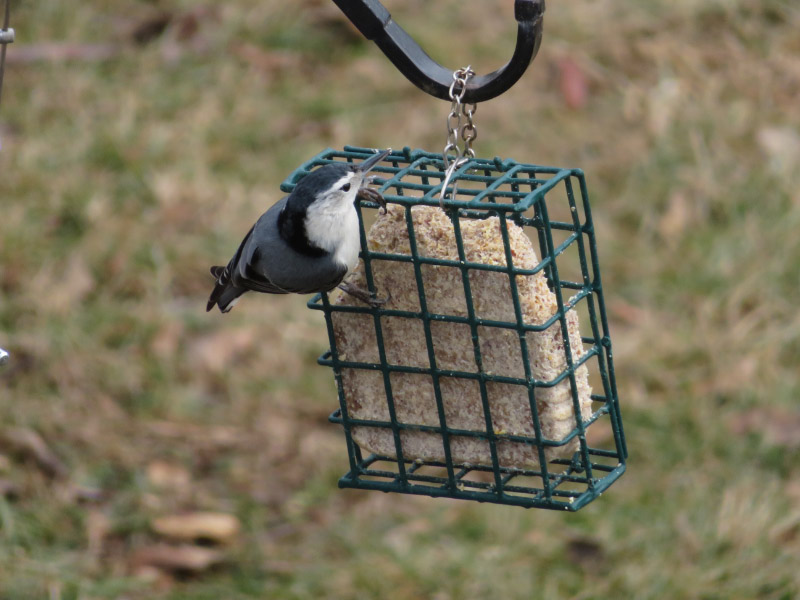
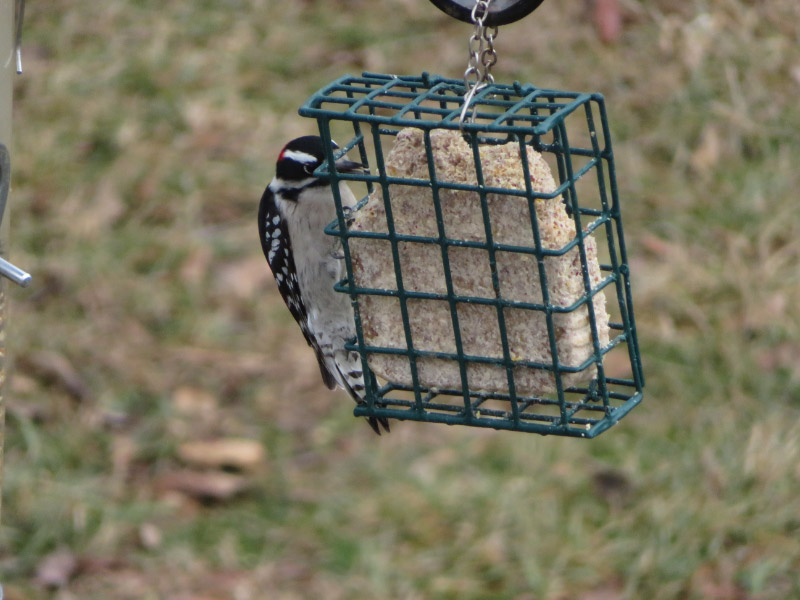
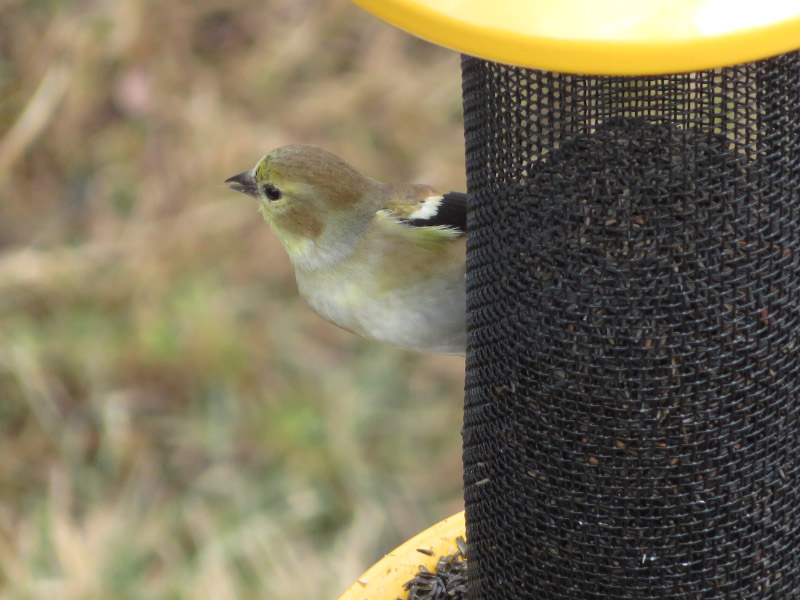
The bird feeders in the Honors Garden were active: nuthatches, downy woodpeckers, and goldfinches beginning to get their spring plumage were the ones I managed to photograph.

Birding through a Window January 2018 (2)

Continuing from yesterday….

The goldfinches come to our bird bath frequently. They are still drab in their winter plumage. Maybe it is wishful thinking but sometimes think they are looking a little more yellow.

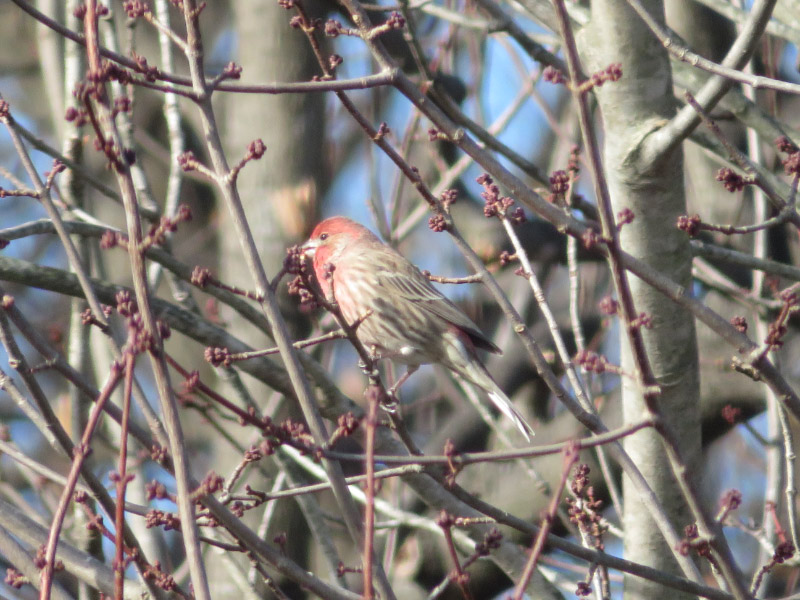
The house finches keep their color even in winter. They seem to like the sycamore and the maple more than the bird bath.

Northern Flickers visit our yard during this time of year. They are hard to see with a back drop of pine needles or fallen leaves….but stand out at the bird bath. The amount of yellow in their wing and tail feathers can be seen sometimes.

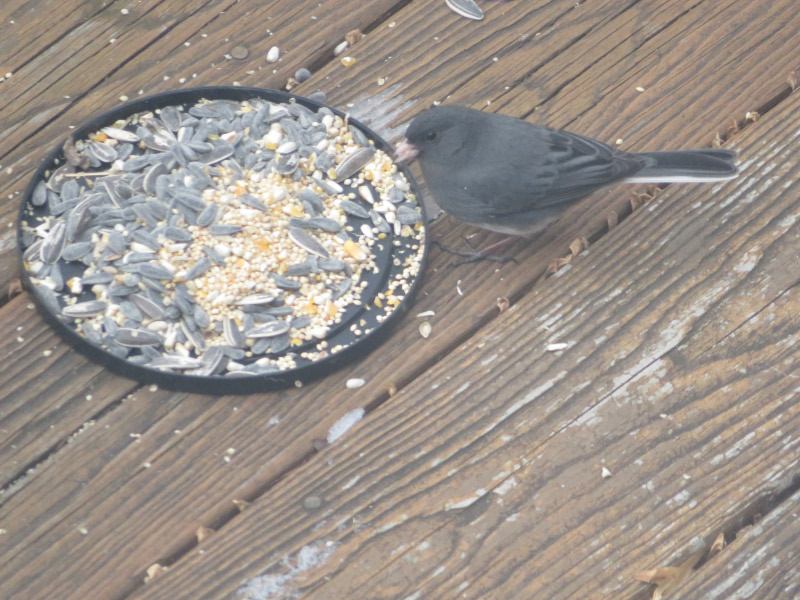
The dark-eyed juncos are winter visitors to Maryland…and come in groups to our feeder and bird bather. They explore the gutters too.

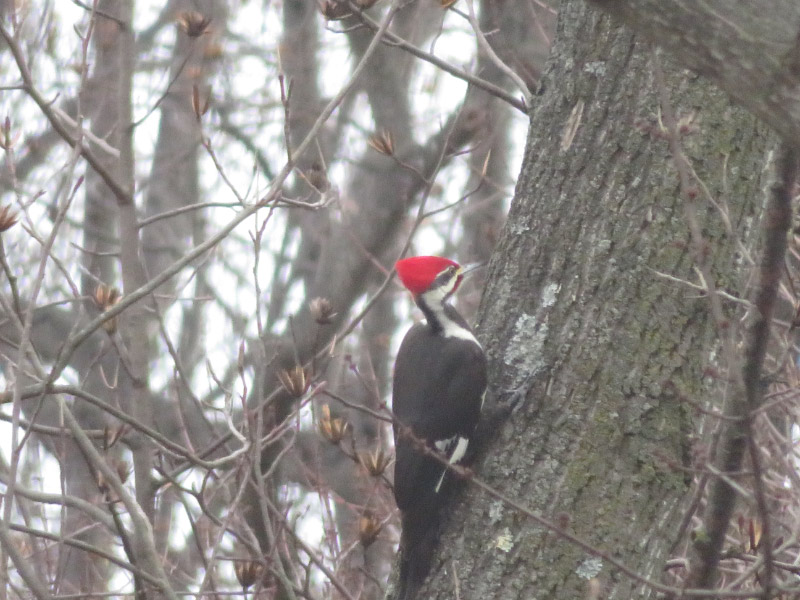
The pileated woodpeckers are infrequent visitors to the woods behind our house. If I added a suet feeder maybe they would come….but I’m content to see them in the forest. I got a fleeting glimpse of a red-bellied woodpecker this month as well….but was not fast enough to get a picture.

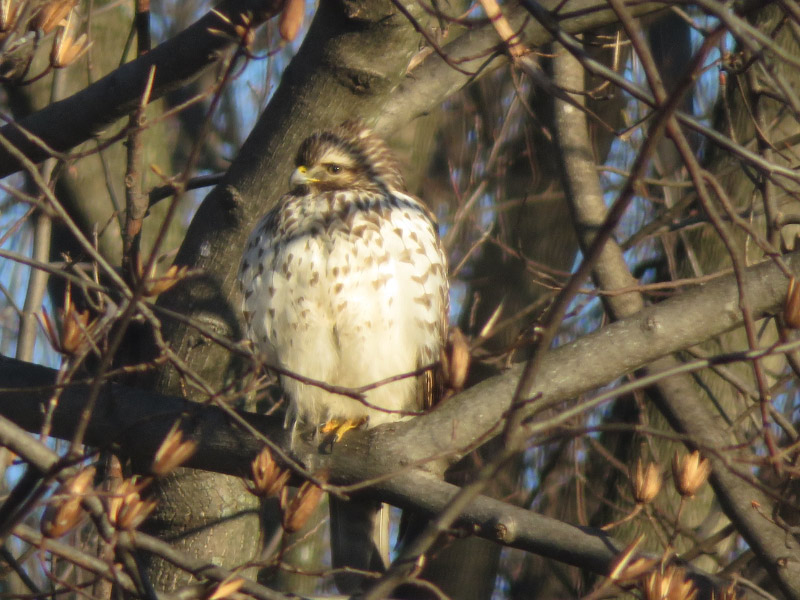
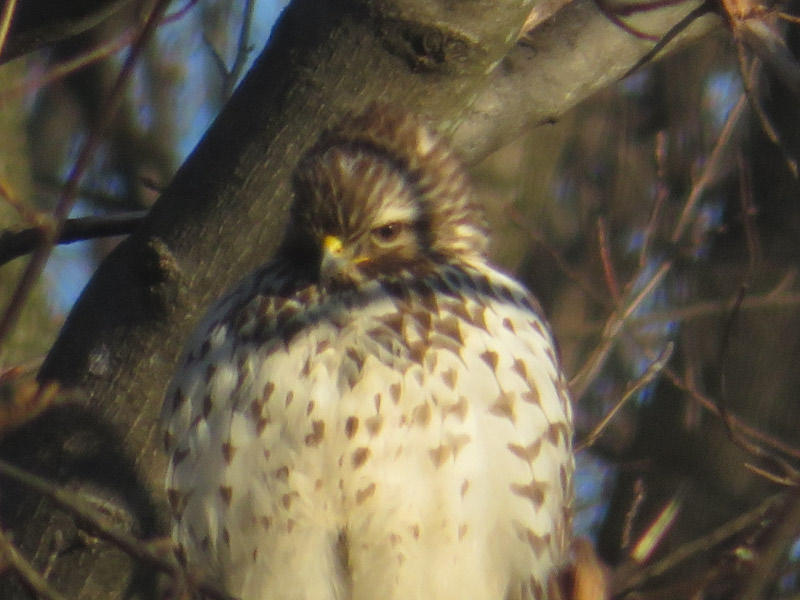
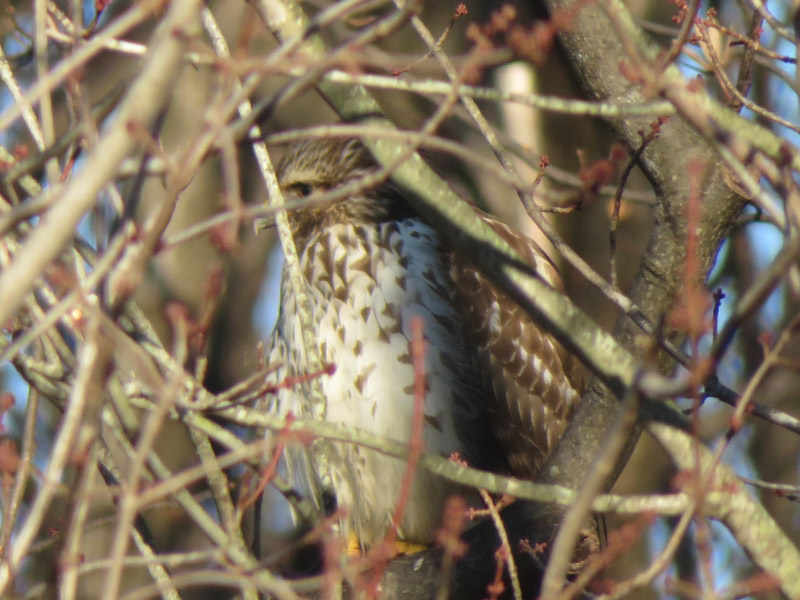
There is a red-tailed hawk that visits the edge of the forest – watching the open area between the trees and our house. Typically, the small birds leave the vicinity when the hawk is around.

The Titmouse always seems to have bigger eyes than other birds of its size.

2018 01 IMG_7969.jpg

Birding through a Window – January 2018 (1)

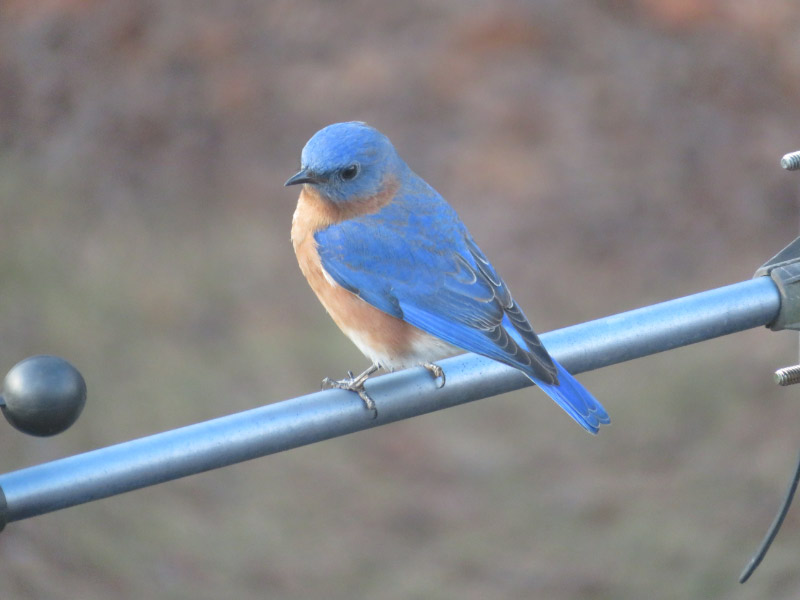
I was at home more in January than December…and saw a lot more birds through the window. I posted about the bluebirds back on the 16th but they have continued to visit our bird bath and deck; most of the time I don’t have my camera but I did manage to photograph one just yesterday – perched on the old weather station pole.

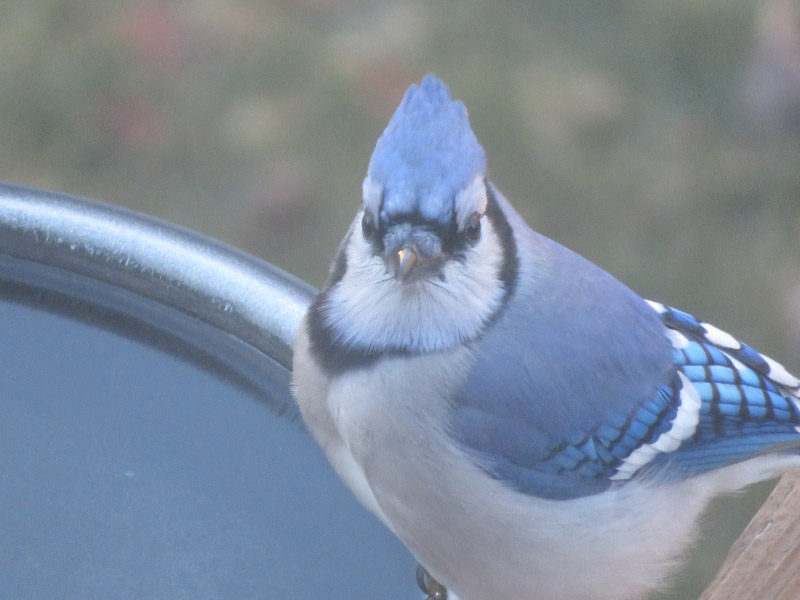
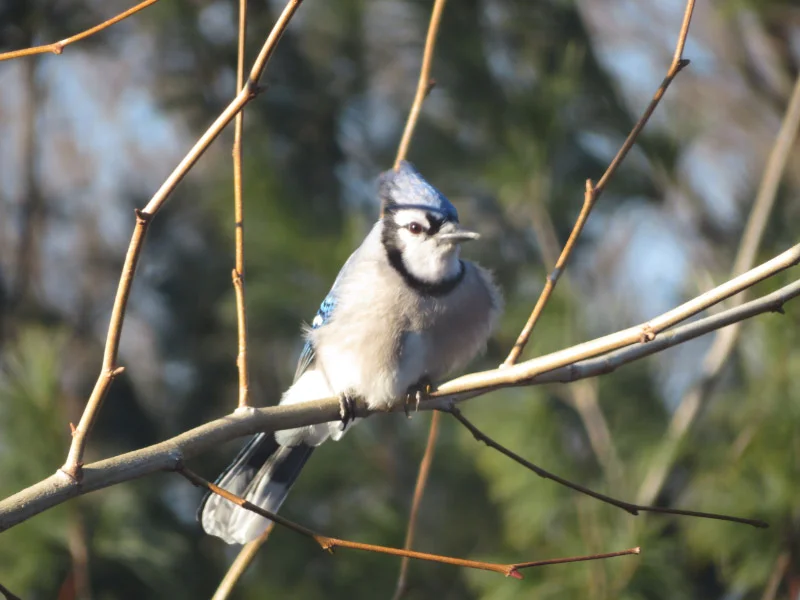
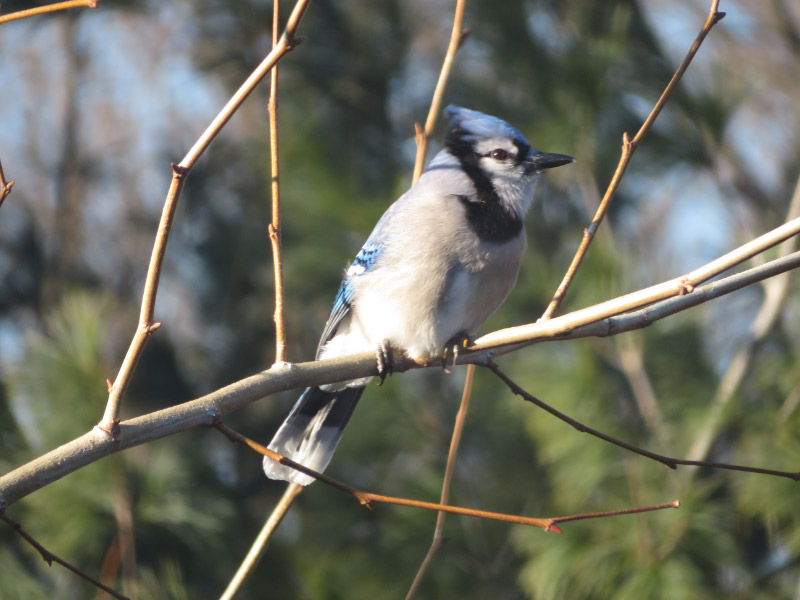
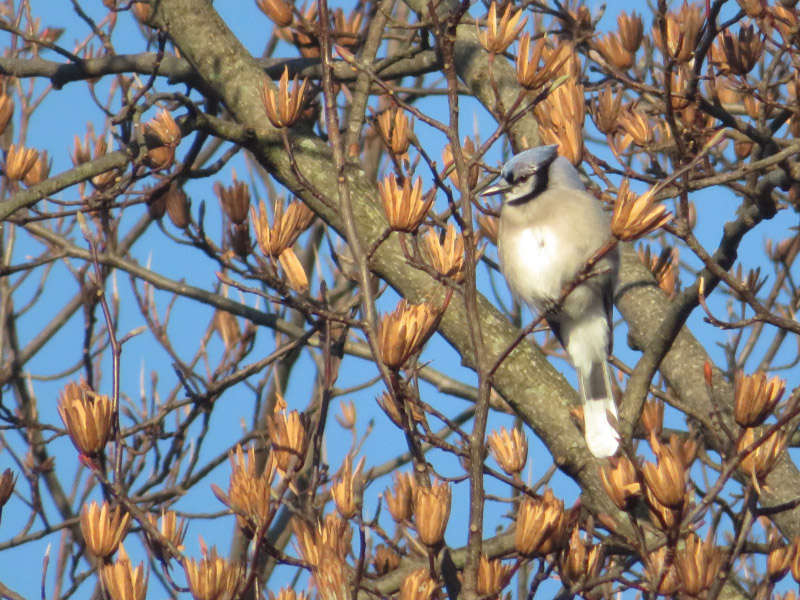
The blue jays are regular visitors too. They come to the bird path, the maple, the sycamore and the tulip poplar…staying still long enough for good pictures.

The cardinals alert me to their presence with their chirps. Both the male and female come to the deck for seed and I often see them in the trees around the yard and into the forest.

When we had the very cold days, the Carolina Wrens were entirely missing; I didn’t see them or hear them. But they have returned now that it is a little warmer. They are heard more often than seen.

2018 01 IMG_8023.jpg

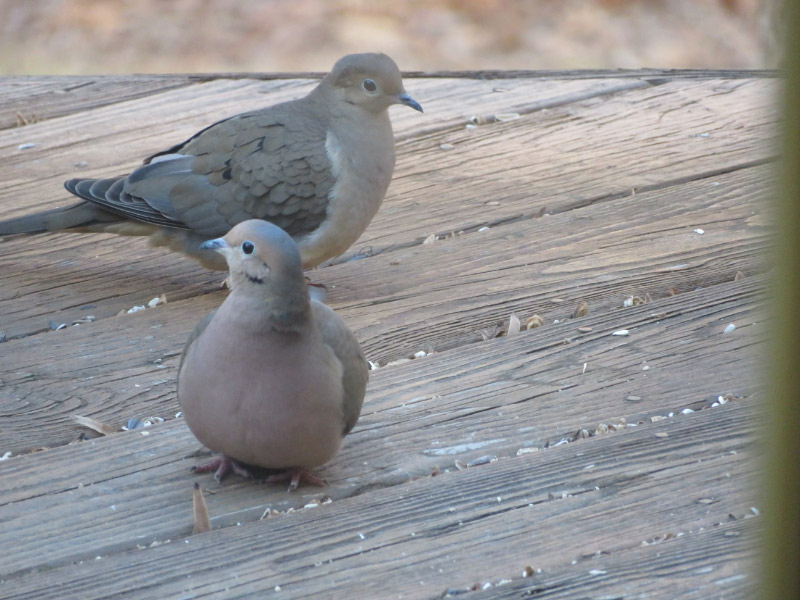
The doves were missing during the cold days as well but now they are back and frequent visitors to our deck.

More birding through the window from this month in tomorrow’s post.

Downy Woodpecker

We have a pair of downy woodpeckers in the forest behind out house – at least, I think that is where they come from. I’ve seen then closer than the forest and photographed them over the past month: At our heated bird bath where they stop for sips of water on very cold days (frost forms on the rim when it is very cold),

On the deck railing where they seem to pay attention the knots. There is one know that is now a hole…must have been some goodie that the bird was keen to eat there, and

At the bird feeder where the bird managed to extract a sunflower seed.

2018 01 IMG_8007.jpg

I like these little birds. The little patch of red always is eye catching.

Conowingo in January – part 2

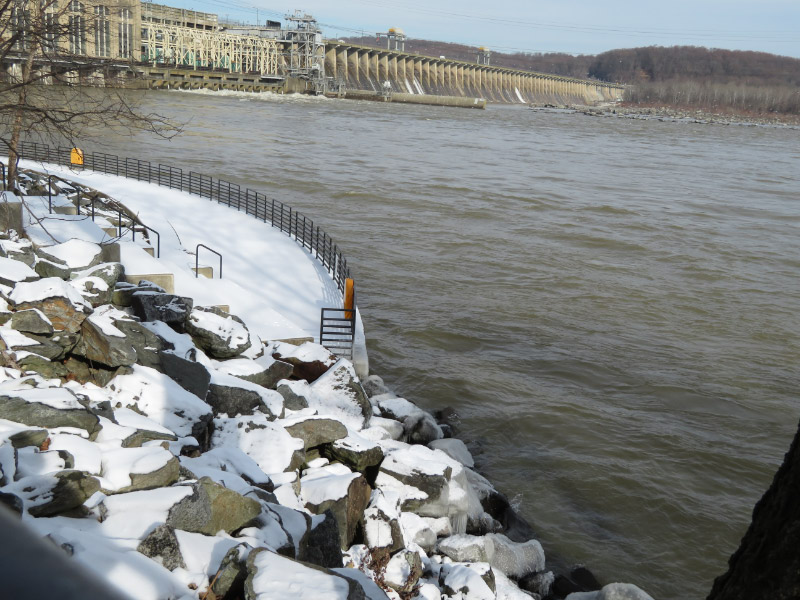
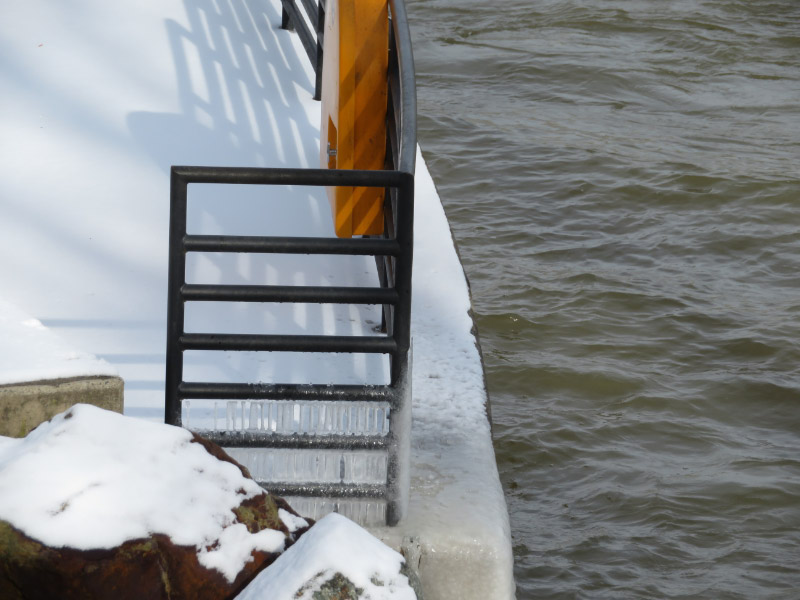
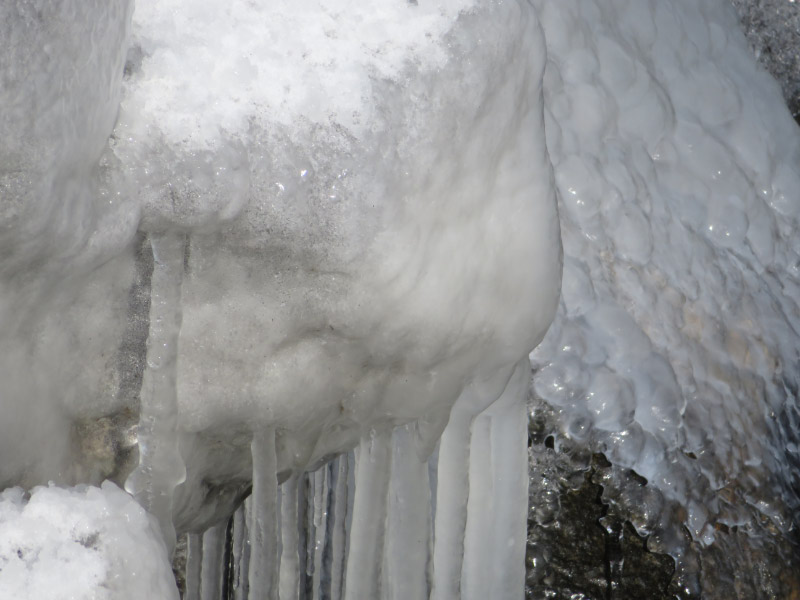
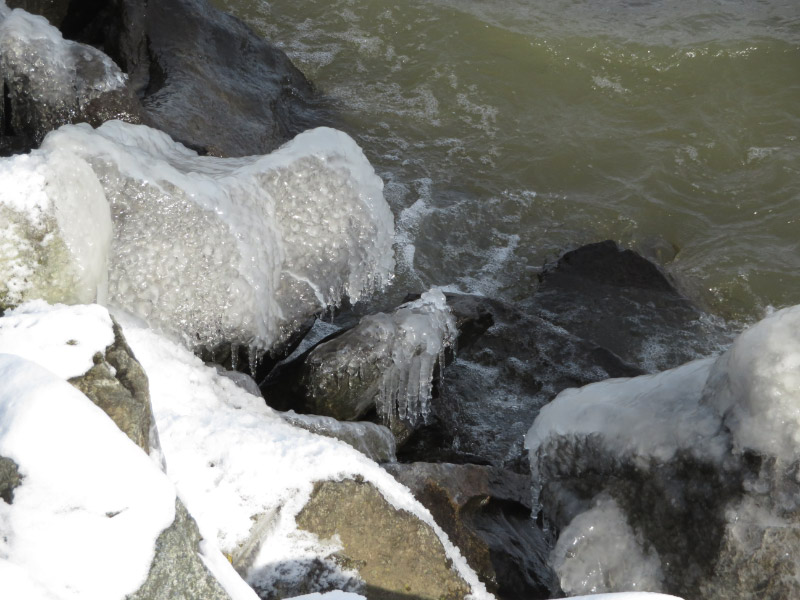
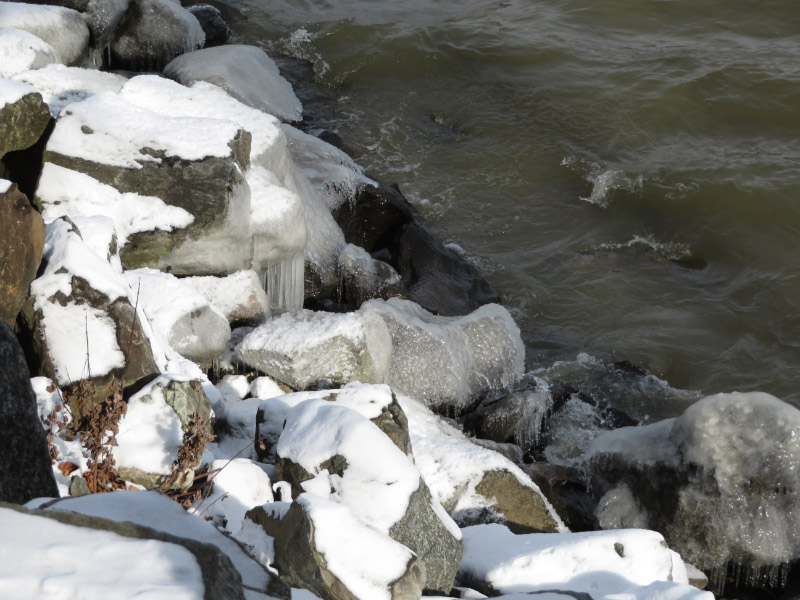
The day we went to Conowingo was part of a warming trend – but it was still cold enough that ice coated any wet surfaces. The fishing pier was gated off and there were signs saying there would be no fishing because of a toxic spill…so the ice forming from the spray on the railings was undisturbed.

Further out in the water – any rocks or small trees near or in the water because a framework for ice formation.

2018 01 IMG_7783.jpg

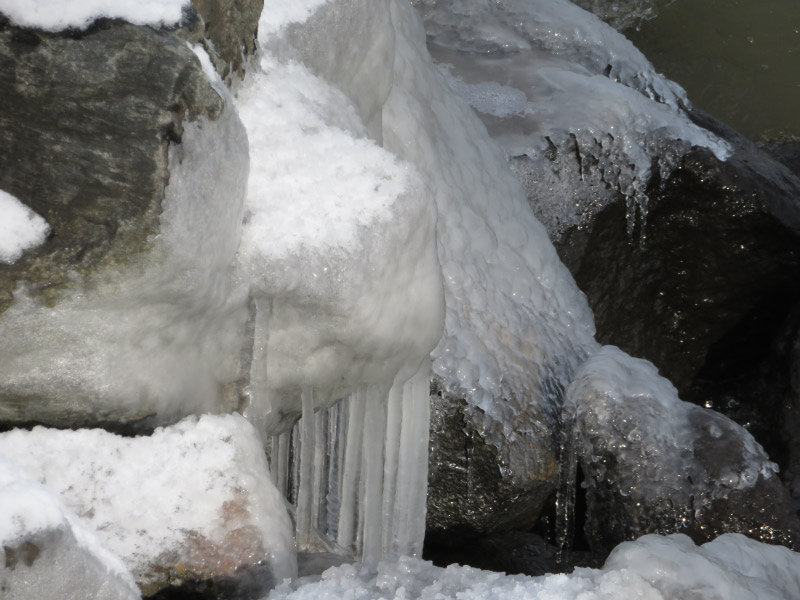
The rocks along the back were coated. Very little of the ice was totally smooth. It hung in icicles and knotted into pebbly textures that looked a little like bubble wrap!

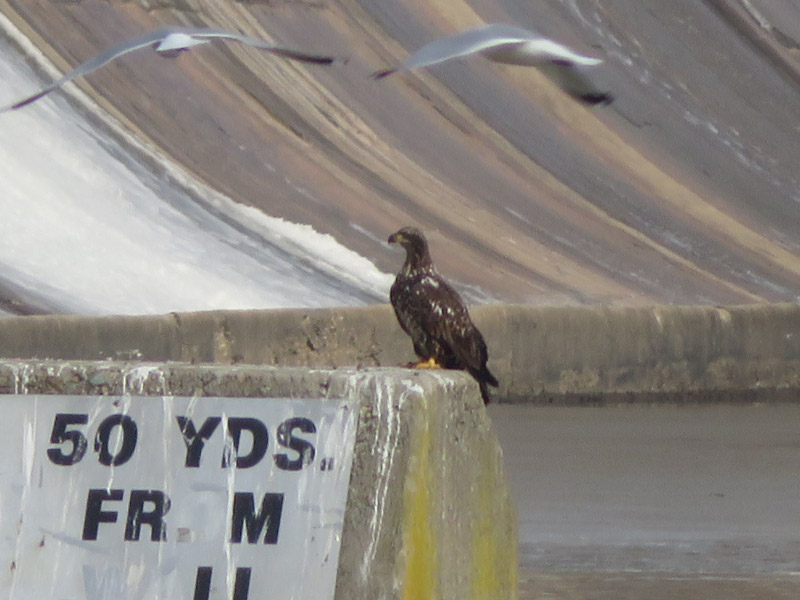
I was glad that the day was sunny and relatively calm; my winter gear did a good job of keeping me comfortably warm. We stopped for lunch on the way home. Next time we’ll go earlier to (hopefully) see more of the eagles while they are still hungry for breakfast! I wondered where the Great Blue Herons were since we usually see a few of them. Both the herons and eagles will start their nesting cycle soon.

Conowingo in January – part 1

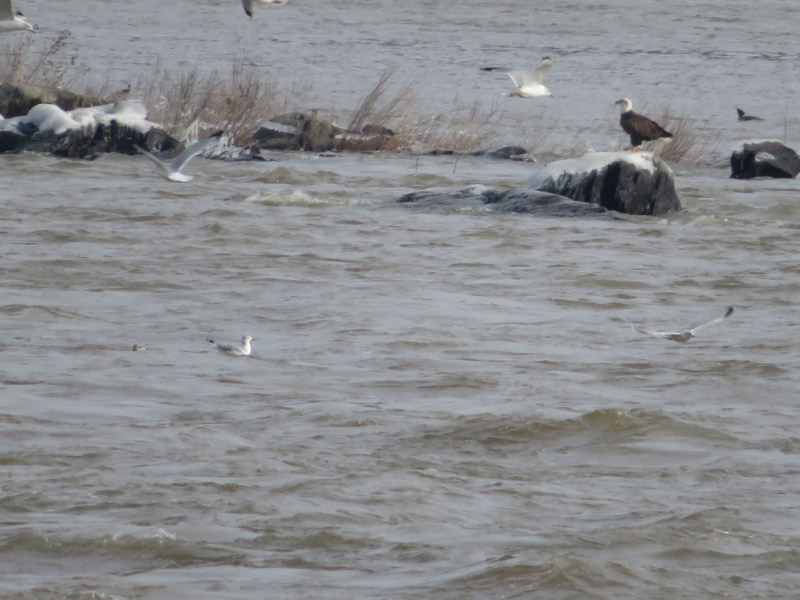
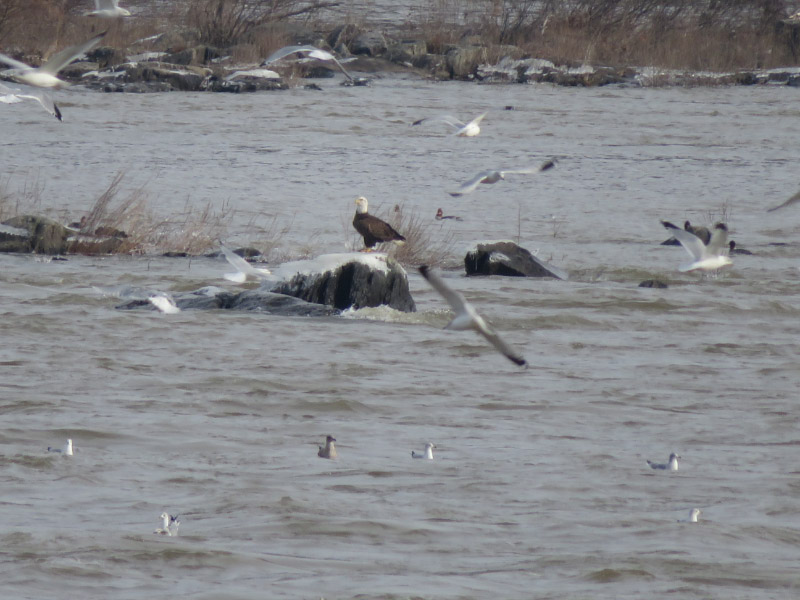
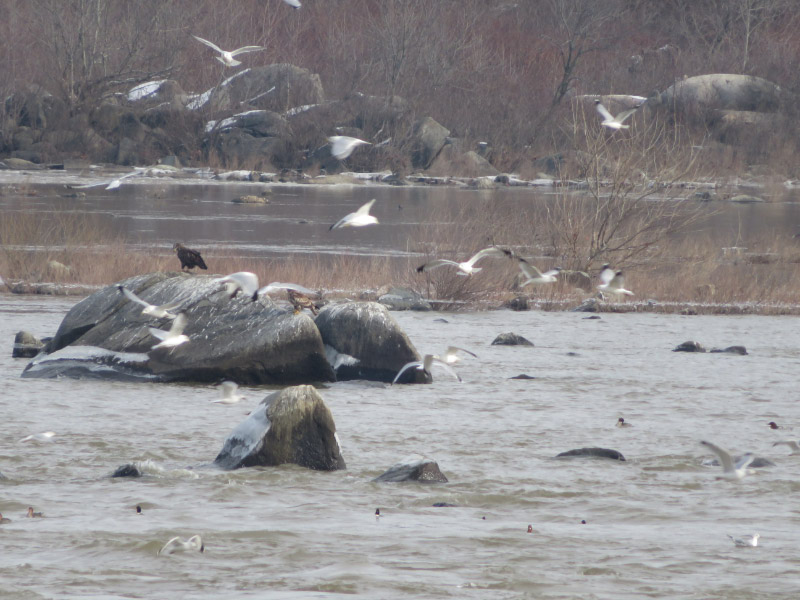
My husband and I chose and sunny day …. Headed north to Conowingo Dam one morning last week. We hoped the day would be good for seeing the bald eagles. It was a bit of a disappointment: the birds all stayed on the far side of the river – seemingly even further away than usual, there were not very many of them, and the sky was hazy rather than blue. The gulls and cormorants (and maybe some ducks) were too far away as well.

I turned my camera to other things. The Princess Tree had velvety buds.

2018 01 IMG_7855.jpg

There was a small stand of trees near the edge of water that had quite a load of ice; I wondered if it would survive.

An old stump was deteriorating near the fishing pier. I thought part of it looked like a one-eyed owl looking out of the decaying wood.

2018 01 IMG_7930.jpg

There was an oak leaf covered with salt that had been liberally scattered on the sidewalk.

2018 01 IMG_7942.jpg

There were not many sycamore balls…last spring was not conducive to seed production in our area. This one does not look like it has been discovered by seed loving birds either.

2018 01 IMG_7946.jpg

Tomorrow – I’ll write about the ice at Conowingo.

Neighborhood Walk

A few days ago, I took a walk down to the storm water retention pond in our neighborhood. It was my first time out of the house after some exceedingly cold days and a head cold/ear ache. It felt good to be bundled up and crunching through the light coating of snow on the sidewalk. The pond is still rather barren looking after it’s refurbishment but there were a few dried cattails at the edge that were surrounded by ice. They had caught some of the snow. It was the ‘artsy’ image of the walk.

2018 01 IMG_7746.jpg

Across the street, the gutter is labeled…whatever goes down, is on its way to the bay. I was surprised at how rusted and cracked the cover for the gutter looked. It’s probably the age of the neighborhood – about 25 years.

2018 01 IMG_7756.jpg

I noticed some of the limbs that had been cut off our street crews by the county to reduce the possibility of equipment damage if fire trucks had to come down our street. The tees have healed in most cases, but I noticed at least two trees where the wound resulted in part of the tree rotting; that’s not good. I’m glad our oak was not one of them.

Gleanings of the Week Ending January 20, 2018

The items below were ‘the cream’ of the articles and websites I found this past week. Click on the light green text to look at the article.

Water-based, eco-friendly and energy-saving air-conditioner: All-weather friendly cooling technology works without mechanical compressors or chemical refrigerants, and generates drinking water -- ScienceDaily – This is one of those technologies I hear about…and hope it lives up to the potential talked about.

New Website Explores the Women in Architecture Your History Books Didn’t Teach You About | Smart News | Smithsonian – A little history.

The Ultimate Winter Wildlife Guide: Enjoy and Understand Creatures in the Cold – Cool Green Science and How Does Extreme Winter Weather Affect Wildlife? – Cool Green Science – It has been a cold January for us. The second article mentions that Carolina Wrens often don’t handle very cold temperatures; I did notice that I didn’t see or hear any on the extremely cold days and have only seen one since it has warmed up a little.

If Birds Left Tracks in the Sky, They’d Look Like This – Another instance where photography allows us to see our world in a way that we can’t do with our eyes.

Archaeologist debunking myth that most people died young prior to modern medicine - ABC News (Australian Broadcasting Corporation) – Looking at teeth of 300 people buried in Anglo Saxon English cemeteries between 375 and 625 AD…and finding some that were older than 75! It is probably true that average life expectancy was short…but there were some that lived to reach old age.

Frozen Bubble Photos Capture the Amazing Beauty of Ice Crystals – I don’t think I am patient enough for this type of photography – but I can enjoy someone else’s work!

Revelations in the Way Poison Frogs Care for Their Young – National Geographic – There is a video of a parent frog getting tadpoles on its back…taking them to a new pool of water!

Face of Ancient South American Queen Reconstructed – Pictures and short video of the facial reconstruction from the woman’s skull. She was at least 60 years old when she died….and died some 1,200 years ago.

Bones of the victims at Roman Herculaneum - HeritageDaily - Heritage & Archaeology News – Skeletons were found in ‘boat houses’ where they were buried under thin mud….preserving the bones. There are enough of them to understand more about the population of the town…like the frequency of pleural inflammation causing rib lesions, skull depressions from excess irritation and scratching attributed to head lice and age demographics.

DNA confirms the Two Brothers’ relationship | Egypt at the Manchester Museum – I remember the Two Brothers from a course on Ancient Egypt and was interested in the DNA analysis that showed they were half-brothers (same mother, different fathers).

Bluebirds at our Birdbath

We have a group of Eastern Bluebirds frequenting our birdbath on these very cold days. The first time I saw them there were 6 birds gathers around the rim. By the time I managed to get my camera there were only 3 left.

2018 01 IMG_7531.jpg

I was taking pictures through a window, but one seems to know exactly where I was!

2018 01 IMG_7533.jpg

The bird’s attention was a little diverted by another bird flying away.

2018 01 IMG_7534.jpg

Then it returned to me.

2018 01 IMG_7535.jpg

The last bird seemed very comfortable at the birdbath. Its feathers were fluffed and it was savoring the bit of warmth from the heated rim. Its colors were muted – a female. It was the last to leave.

2018 01 IMG_7536.jpg
2018 01 IMG_7538.jpg

I’ve seen groups of bluebirds at the bath several times since on very cold days. I’m glad we can provide a source of water for them. Bluebirds are in our area year-round. Their numbers are the result of an aggressive nest box program … dedicated people that help maintain the boxes.

What a joy to see these little birds on a cold day!

Winter Tracks

We are getting another round of very cold weather now and I’m remembering some tracks I saw from my front door during the cold just at the year began. I took pictures through the narrow windows from either side of the door – it was too cold to open the door. The tracks stayed for days until the snow sublimated rather than melted! The ones on the front sidewalk include deer…not sure what the rounds ones were.

2017 12 IMG_7410.jpg

The ones on the front porch were smaller but came right up to the front door! Maybe a squirrel? I thought of a chipmunk at first but haven’t seen any recently. We have lots of squirrels.

2017 12 IMG_7415.jpg
2017 12 IMG_7414.jpg

We are well supplied with food and have no appointments for the next few days…so we are staying warm inside and recovering from colds until it warms up. Our forecasted high for today is 30 degrees and cloudy. A good indoor day!

Moon in the Treetops

Earlier this month, I noticed the moon shining through my office window like a spotlight from the sky first thing in the morning. The first time – on January 2 – I didn’t wait around for it to sink into the treetops.

IMG_7429.jpg
IMG_7476.jpg

But on the 3rd I was more patient. The tall tulip poplars behind our house were catching the moon before the sky brightened.

IMG_7479.jpg

By the 6th the morning was already well underway before I took my picture.

IMG_7500.jpg

Catching the moon is a great way to start the morning.

Gleanings of the Week Ending January 13, 2018

The items below were ‘the cream’ of the articles and websites I found this past week. Click on the light green text to look at the article.

Cache of Newly Digitized Travel Photographs Will Transport You to 1900s California | Smart News | Smithsonian – A little California history. I couldn’t figure out how to browse photographs almost like a slideshow. The interface seems to only provide one-at-a-time viewing.

With wrist-worn gadget, researchers capture real-life sleep for the first time -- ScienceDaily – I wondered how this differed from my Fitbit Alta HR tracker. I assume it has more detail and that raw data is processed with more sophisticated algorithms.

The National Gallery of Art Releases Over 45,000 Digitized Works of Art – Wow! Follow the link to the NGA images and enjoy!

BBC - Future - The labs that protect against online warfare – Even with the labs….is seems like we are not doing enough. Governments are serious about the problem from a military standpoint…not necessarily about infrastructure or healthcare.

Habitat on the Edges: Making Room for Wildlife in an Urbanized World - Yale E360 – A good summary of some things that appear to be working to increase and/or preserve wild life habitat even as human populations increase. The habitat is gerrymandered…and different that the original, but may be almost the only path forward.

A Floating House to Resist the Floods of Climate Change | The New Yorker – It seems far fetched that whole neighborhoods would be built like this – but it is appealing to think about non-traditional approaches now when extreme storms seem to be more common.

Deep learning sharpens views of cells and genes – Using a neural network to look at retinal images and determine the likelihood of heart attack…and other applications of high end computer algorithms for improving understanding of medical images.

Badlands National Park – It’s been 20 years since I visited the park. I enjoyed it…think I would appreciate it more now.

National Park Service Begins Roof Replacement, Masonry Repair at Lincoln Memorial – Something going on in DC. The memorial will be partially open during the work.

US childhood mortality rates have lagged behind other wealthy nations for the past 50 years: Leading causes of death are prematurity and injuries -- ScienceDaily – Very sad. We have a system that is expensive and not very effective. Infants in the US were 76% more likely to die than in other economically similar countries.