Gleanings of the Week Ending October 20, 2018

The items below were ‘the cream’ of the articles and websites I found this past week. Click on the light green text to look at the article.

Tracking exploding ice cracks on Himalayan glaciers - GeoSpace - AGU Blogosphere – Research about the seismic noise of glaciers.

Researchers have discovered how to slow aging: Natural product found to reduce the level of damaged cells in the body, caused by aging -- ScienceDaily – I never know what to think of these early findings…but the logical take away from this one is eat fruits and veggies since that is the source for Fisetin. But – that’s been dietary guidance for a long time.

Belly Fat Has a Role to Play in Fighting Infections | The Scientist Magazine® - Research is yielding some functions of the omentum…but there is still a lot to discover about the role this organ plays in the body.

Recovery: Prairies Under the Sea – Cool Green Science – Eel grass recovery…a success story close to where I live. The success with sea grass restoration in Tampa Bay faced a setback with this year’s red-tide blooms.

Keep your salad greens safe | Berkeley Wellness – I agree with everything except the ‘bag them’ since I am trying not to get any plastic bags at all. I take a bin with me to the grocery store for wet items and use mesh or paper bags for the dry items. And make sure the meats are in a separate bag from my produce at the checkout.

Voyager 2 Detects Hints That Interstellar Space Is Nearby – Launched in 1977, Voyager 2 is getting closer and closer to leaving the solar system.

The Mystery of the Dying Mesquites – Cool Green Science – Unappreciated trees – dying away – and finally noticed. Too late to be saved?

Decades of Trash Burst Out of Yellowstone Geyser | Smart News | Smithsonian – Yuck! Hopefully we are better now at keeping trash out of the geysers.

Top 25 Wild Bird Photographs of the Week: Birds Feeding – National Geographic Blog – So much to like about birds….in every aspect of their lives.

Hurricane Michael Flooding Damage Assessment Images – From NOAA. Use the sliders on the images to look images before and after the Hurricane.
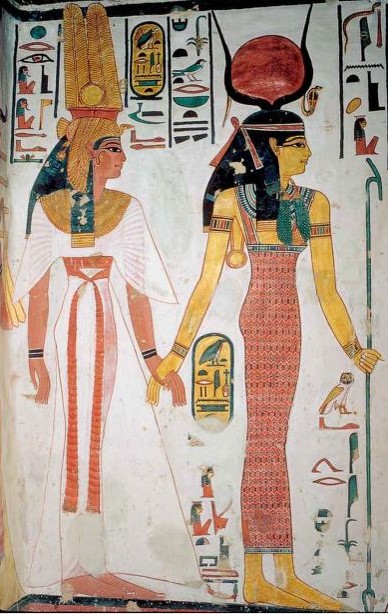
3 Free eBooks – October 2018

There are so many good eBooks available free of charge. All three are from the Internet Archive this month.

Paglia, Camille. Glittering Images – A Journey through Art from Egypt to Star Wars. New York: Pantheon Books. 2012. Available from Internet Archive here. It’s a good book to browse through online – like a digital ‘coffee table’ book – reading only the captions.

2018 10 ebook2a.jpg

Brock, Alan St. Hill. Pyrotechnics: the history and art of firework making. London: Daniel O’Connor. 1922. Available from Internet Archive here. The depiction of fireworks is quite different between the Chinese and Western Europe/America.

The author was from the 8th generation of the Brock family to made fireworks in England.

2018 10 ebook2b.jpg

The Diani Beach Art Gallery. Affordable Art Selection September October 2018. Kenya: Diani Beach Contemporary African Art. Available from Internet Archive here. Sometimes catalogs can be worth looking at as a book. I enjoyed the vibrant colors and depictions of African people/scenes.

2018 10 ebook3a.jpg

Composting at Home – October 2018

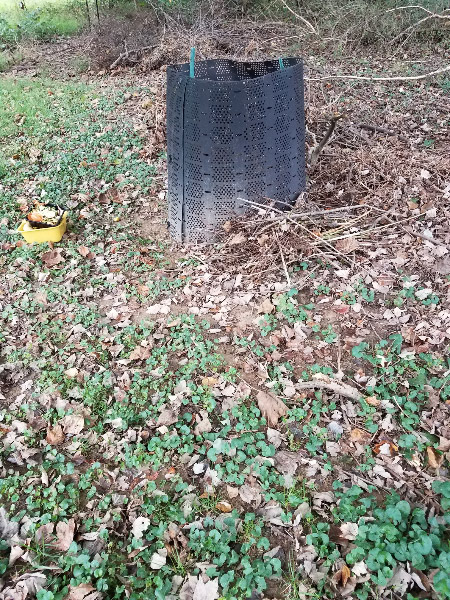
20181014_105142.jpg

After 3+ months of use my compost bin no longer looks pristine.
I have started piling small sticks around it to cut down on the rain drop splatter from the bare soil under the red maple. The maple roots are very dense and close to the surface…the shade very deep…nothing grows very well there and the soil is eroding down to the maple roots. It has been a good place to put the bin and I’ll leave some of the compost in place with sticks to hold it ---- and hopefully encourage more vegetation to grow. The brush pile is having that effect further down the slope.

20181014_105131.jpg

We are just beginning to have leaves on the ground – oak and sycamore mostly.

I’ve been using the leaf blower in reverse with a bag attached to catch the lightly shredded leaves. The process works best when the leaves are dry (a challenge recently with all the rain we’ve been getting) and on hard services like the driveway, street gutters, and deck. I’ve discovered that a little shredding goes a long way speeding decomposition.

20181014_105120.jpg

I typically add the veggie scraps from the kitchen on top then turn some leaves over it. Recently I’ve had more because fall veggies tend to have seeds and skins compost. I’ve also admitted to myself that I don’t eat nearly as many potatoes as I used to.

Even though we’ve been getting rain, the compost probably needs to be watered to ‘cook’ as quickly as possible. The shredded leaves can absorb a lot of moisture, so my plan is to add water with every bag of leaves. The hose barely reaches from the faucet to the compost’s bin location. I’ll have to think about where else I might put it that would be easier to reach and not too close to the house.

Ferns under the Deck

20181003_100337(0).jpg

Our deck is over a story off the ground and it always in deep shade. I planted some Christmas fern a few years ago and it is almost overwhelmed with the splash from between the decking above. I think this is the first place I will put compost (as mulch) when it is ‘done’.

I thought he shade would be ideal for the fern and that it would propagate itself. But the muddy mess is not good for anything growing there unless I can find a way to improve the situation. Having mulch instead of mud should be an improvement.

IMG_4685.jpg

On the other end of the space under the deck there is some moss growing and maybe some little ferns. I’m not sure. I’ll spread some around them when I disperse my compost. The deer don’t seem to be bothering them so far.

A Few Minutes Observing…a female cardinal

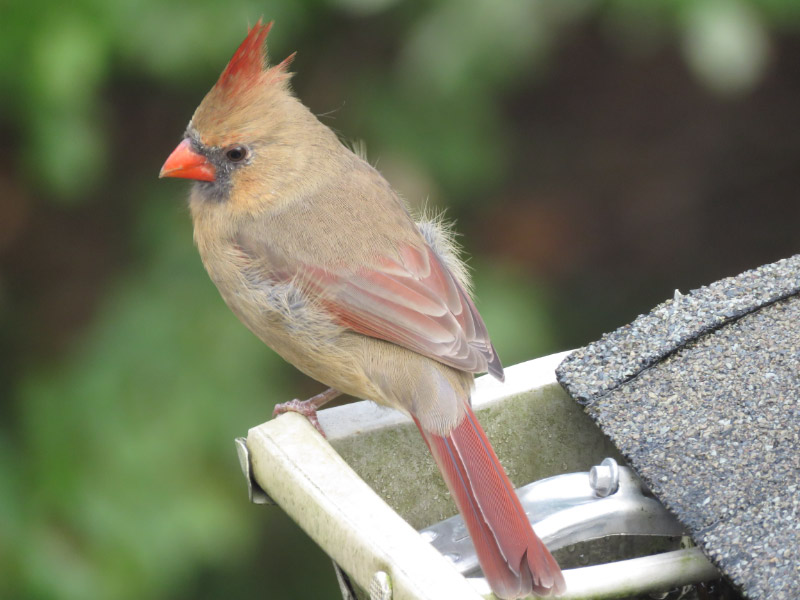
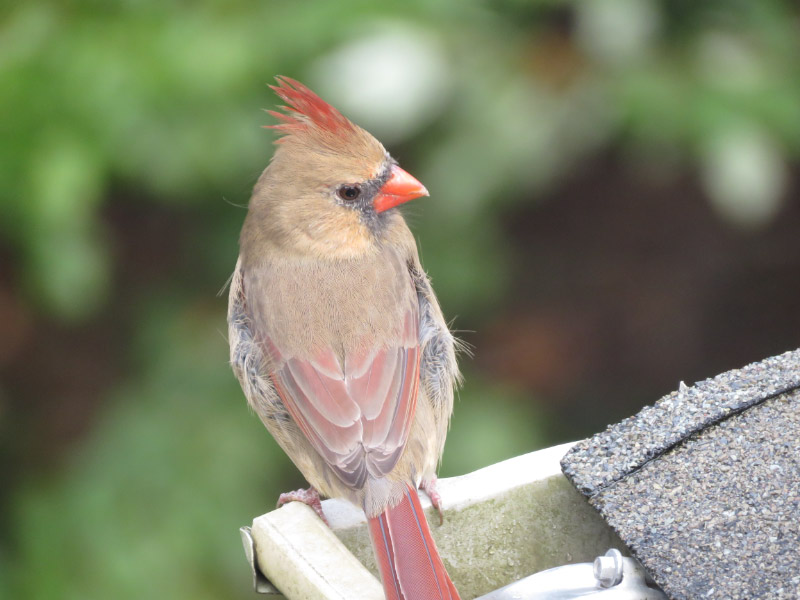
Taking pictures through my office window with my new camera is a bit more challenging than it was with the old camera; getting the lens camp off takes too much time. But there was a female cardinal that stayed perched on the gutter long enough for me to get a portrait.

It was a cool breezy day and the bird’s feathers are fluffed…the crest is a little rumpled too (a bad crest day?).

I noticed some leaves in the gutter; it’s not clogged yet but it could get that way with more leaves flying in the next few weeks.

2018 10 IMG_4694.jpg

Right now – most of the leaves visible from my window are still green…with a few patches of color. The tulip poplar leaves go to yellow and

2018 10 IMG_4695.jpg

The maple will go to red. Eventually.

2018 10 IMG_4697.jpg

And that was my few minutes observing through the window!

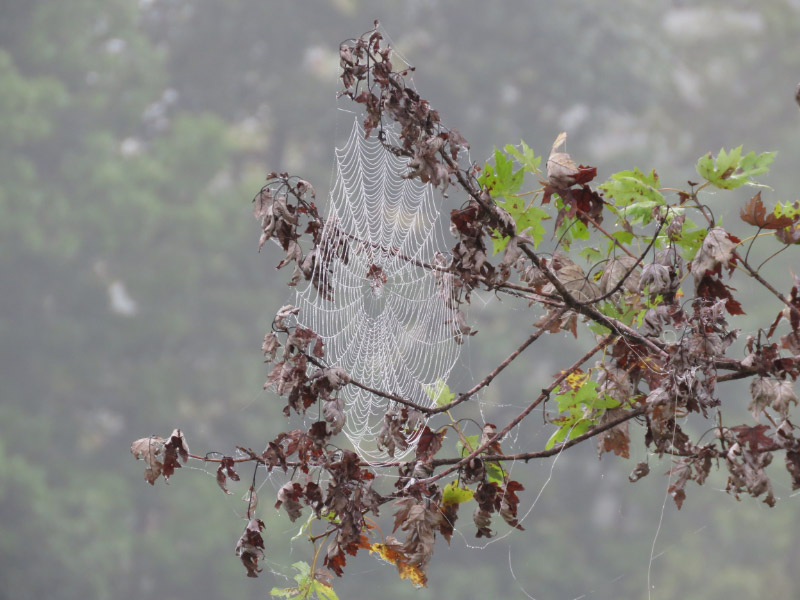
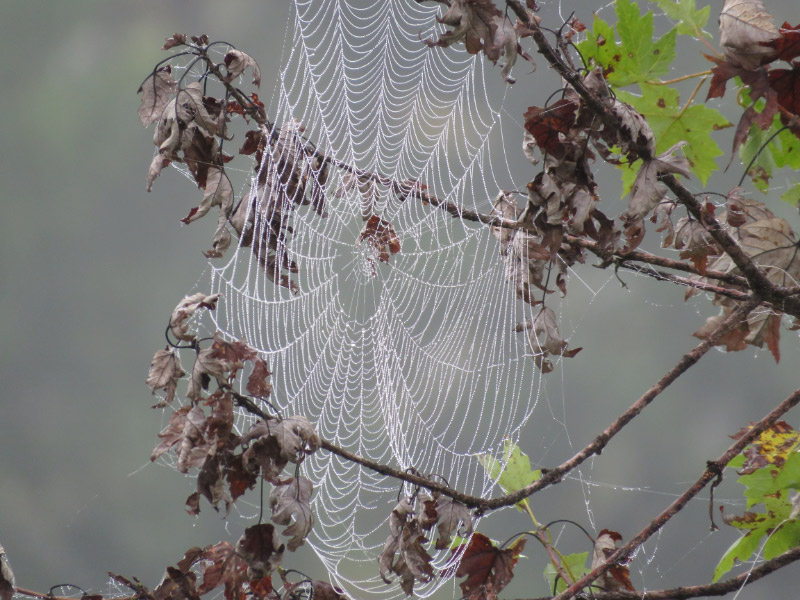
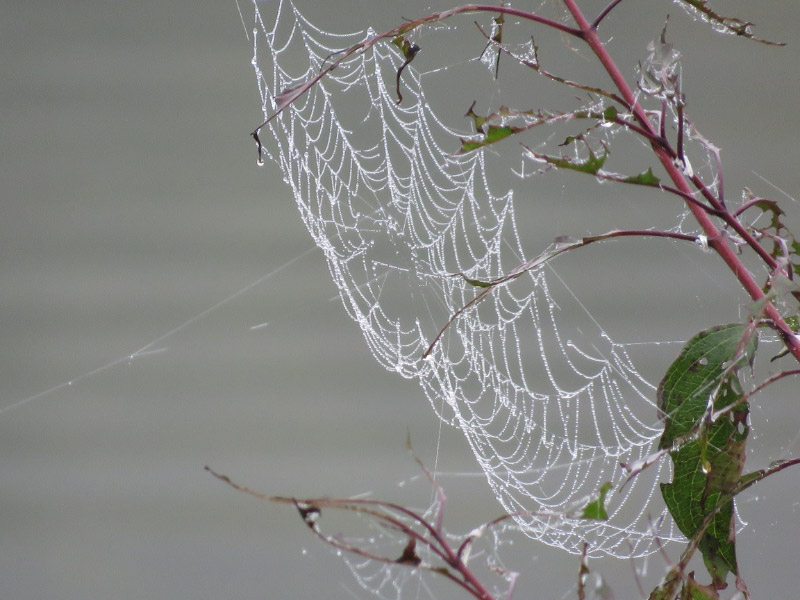
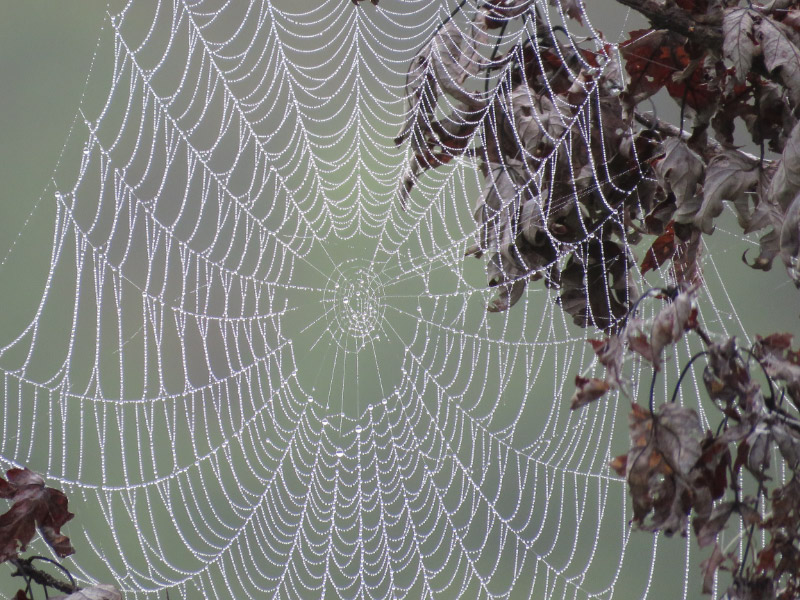
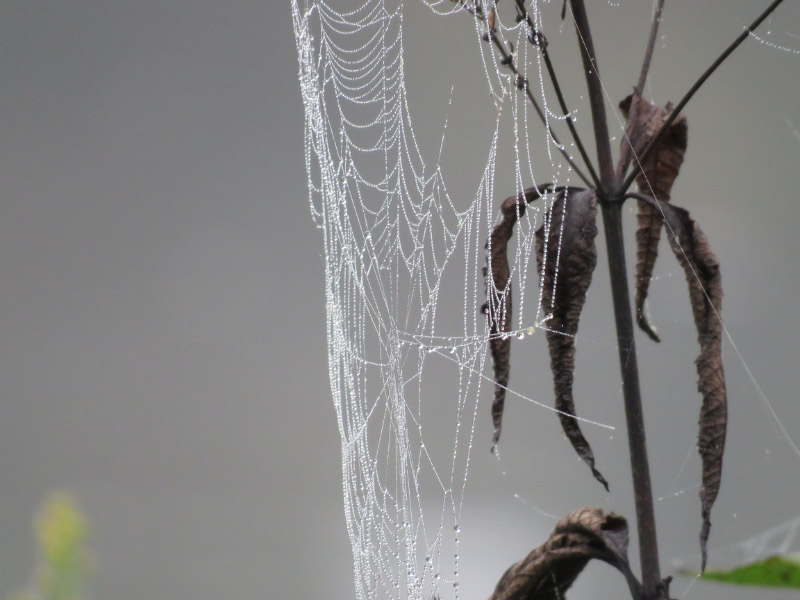
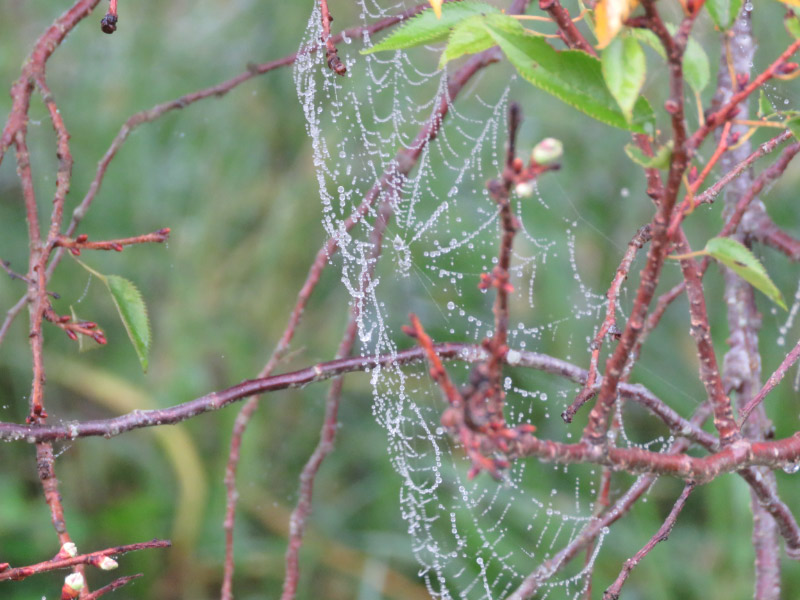
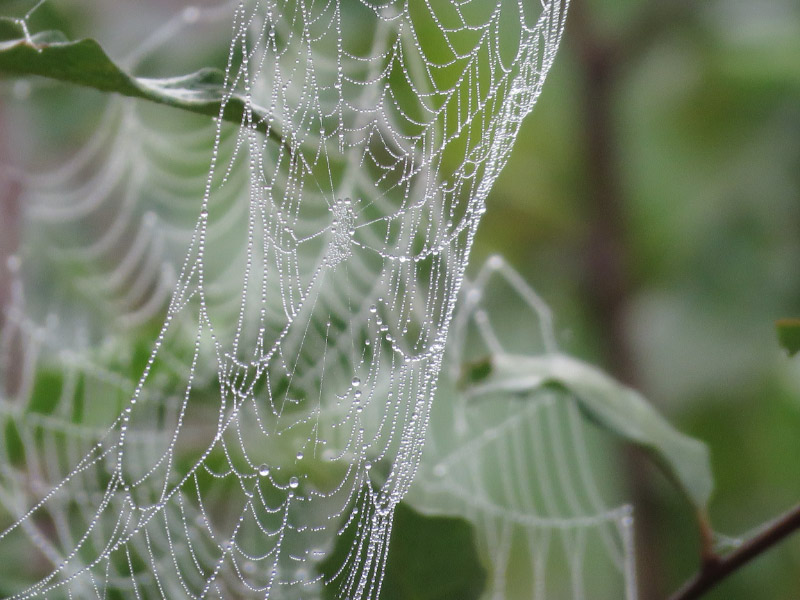
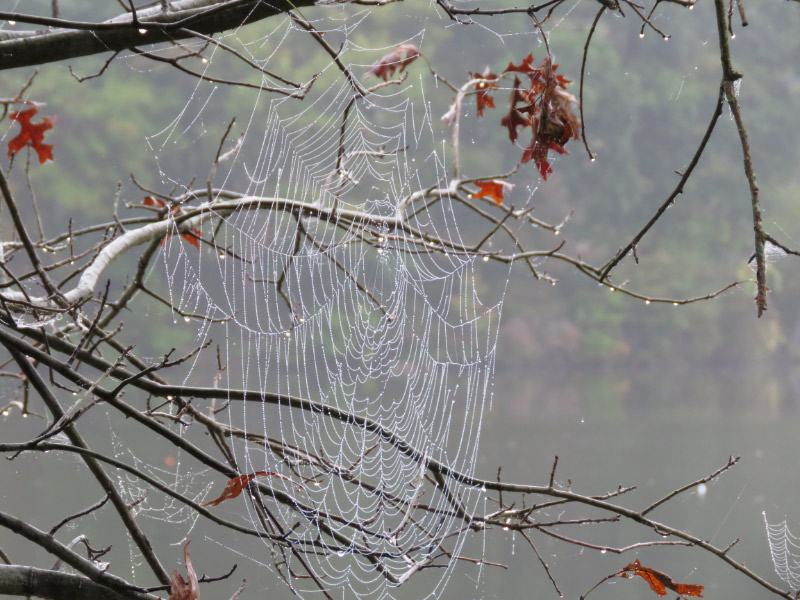
Spider Webs at Centennial Lake

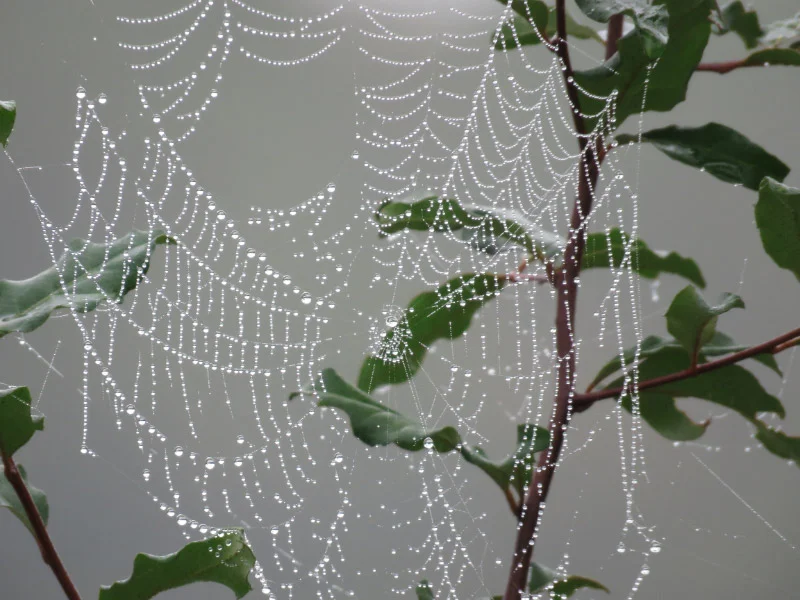
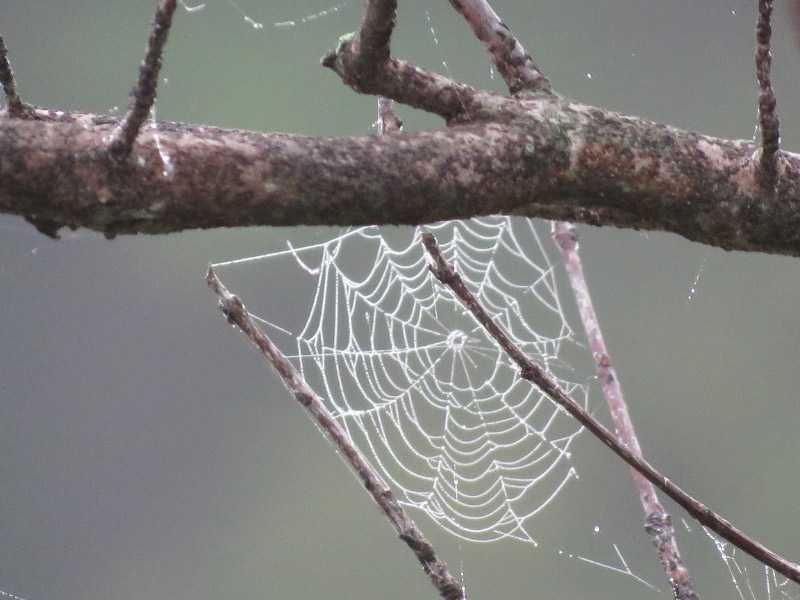
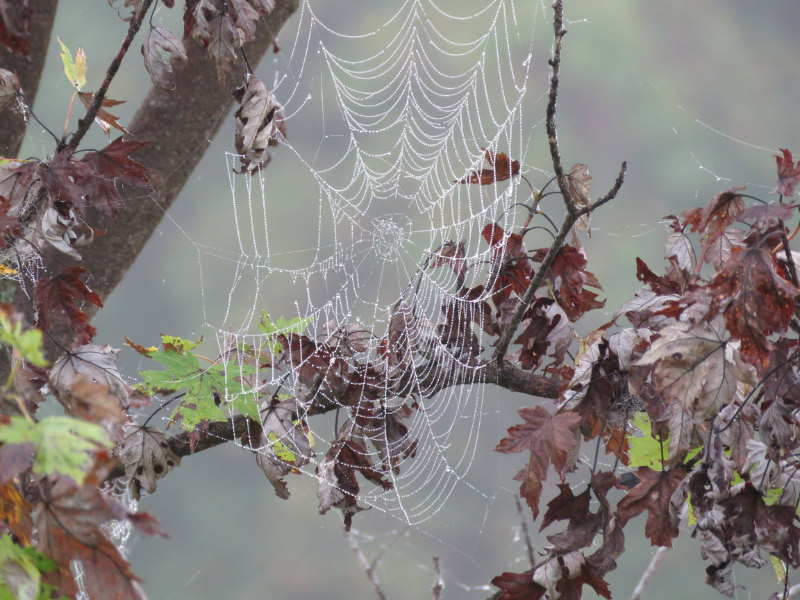
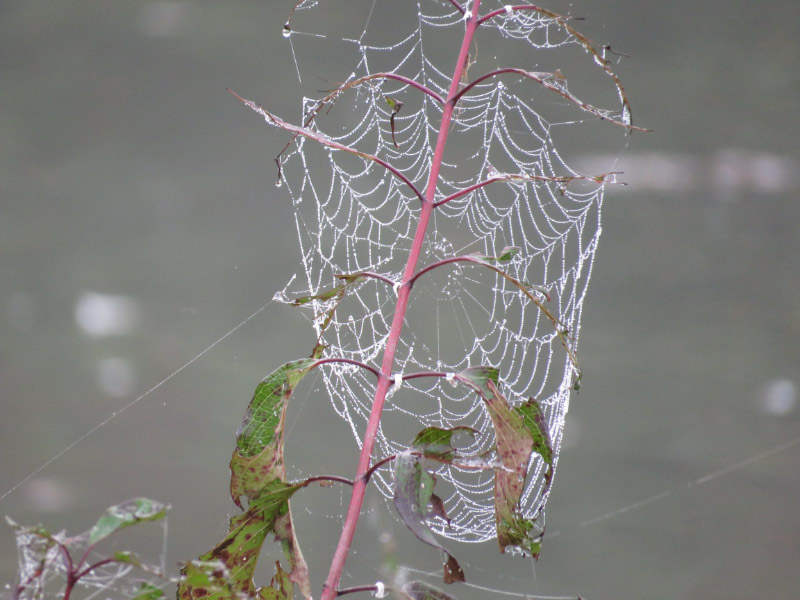
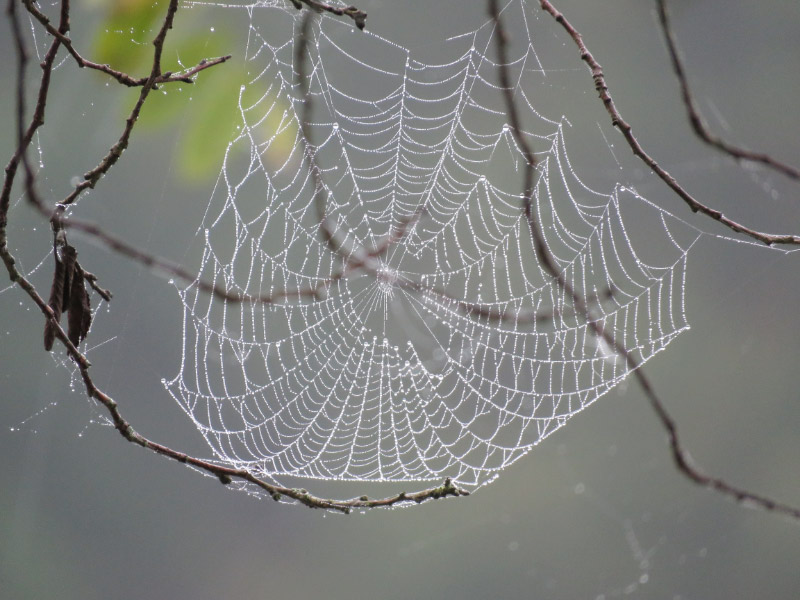
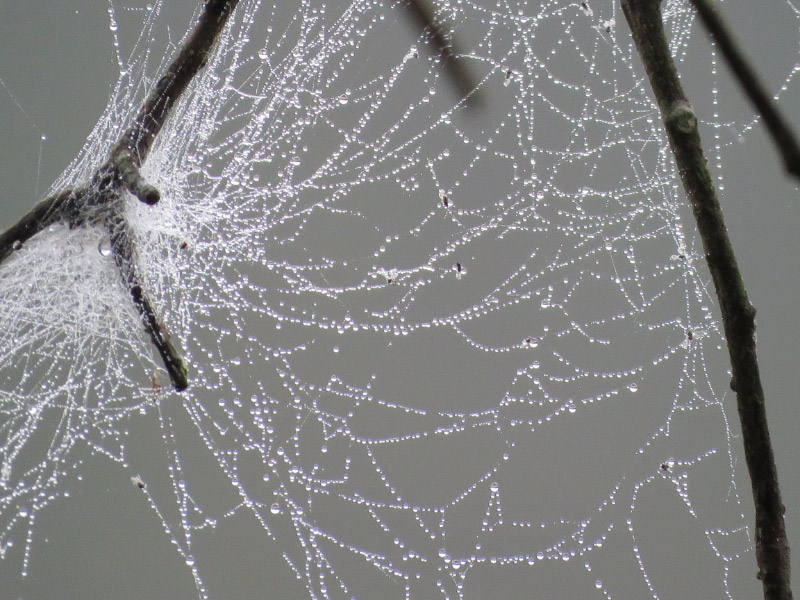
Spider webs stand out when they have water droplets on the silk – either from dew or fog (or water sprayed by a photographer keen to photograph them). Last week at Centennial Park the water droplets were from fog. I was surprised at how many spider webs I saw along the path…. realizing that there are a lot more spiders around than we usually notice.

Some of the webs had probably caught something since they had gaping holes.

Others were more intact or maybe partially repaired.

As I was getting ready to leave the park I notice a large funnel web near the trunk of a pine. It too was more visible because of the fog. I didn’t see the spider, but it was probably there somewhere. I was so focused on the webs in the trees that I wasn’t looking for the funnels on the ground!

f 2018 10 IMG_4681.jpg

Mushrooms at Centennial Park

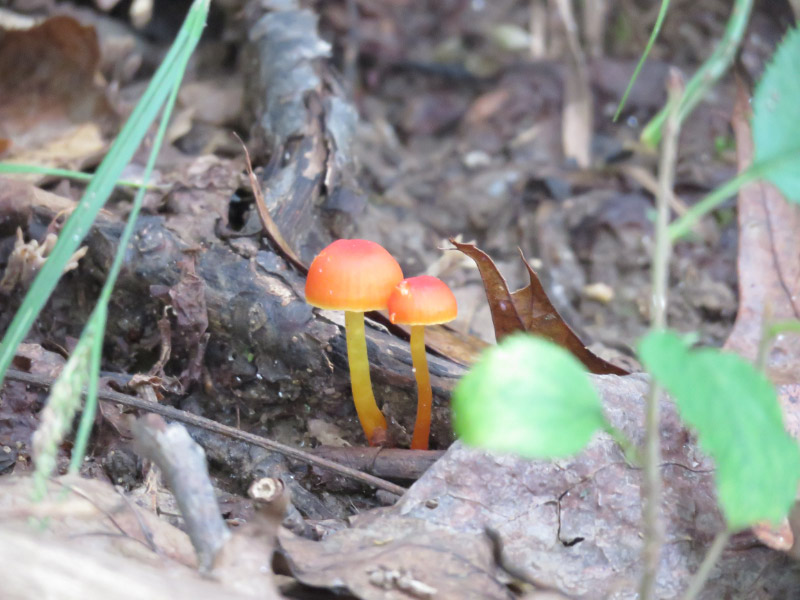
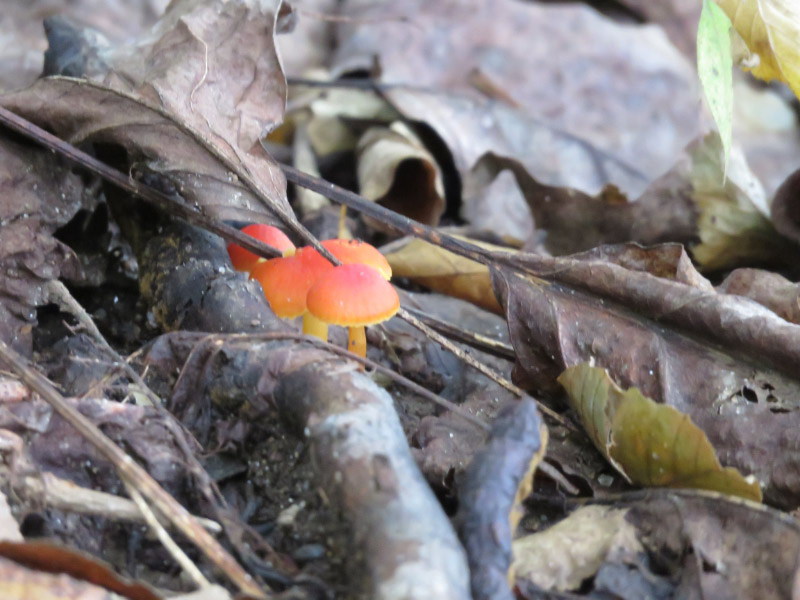
On the foggy morning I spent at Centennial Park last week, I found some tiny mushrooms in the raised bed across the pathway from the boat rentals. They were growing in the mulch and were ‘fruiting’ because of the very wet conditions we’ve had recently. Some were very hard to spot because their color’s were not that different form the mulch – and they were small. I stood far enough back so that I could use the zoom to photograph them without climbing into the mulch.
2018 10 IMG_4606.jpg

There were some birds nest fungi that were mostly empty nests although a  few of the ‘eggs’ were still nearby.

2018 10 IMG_4608.jpg

My favorites were brightly colored like these very small red mushrooms (note there is a centipede just to the left of the mushrooms).

2018 10 IMG_4595.jpg

My favorites were some tiny orange mushrooms with yellow stalks and edges. They seemed to be glowing – standing out in their drab surroundings.

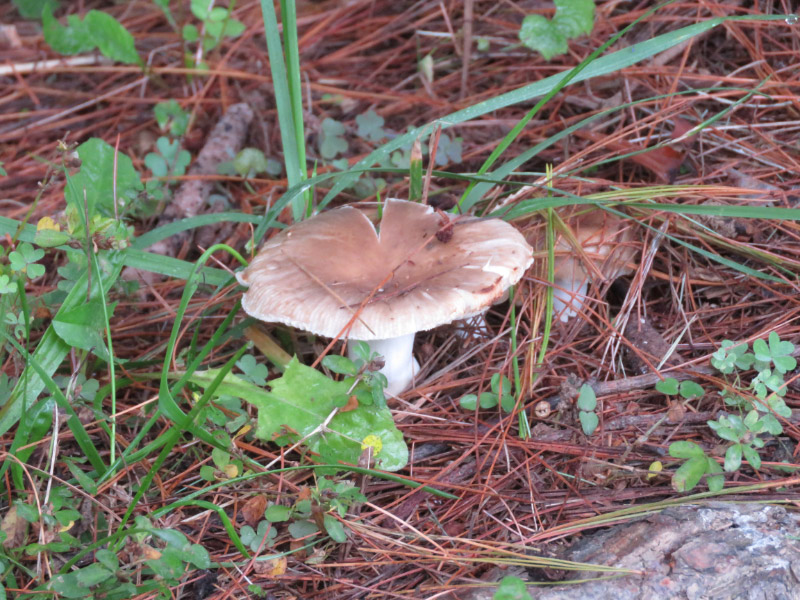
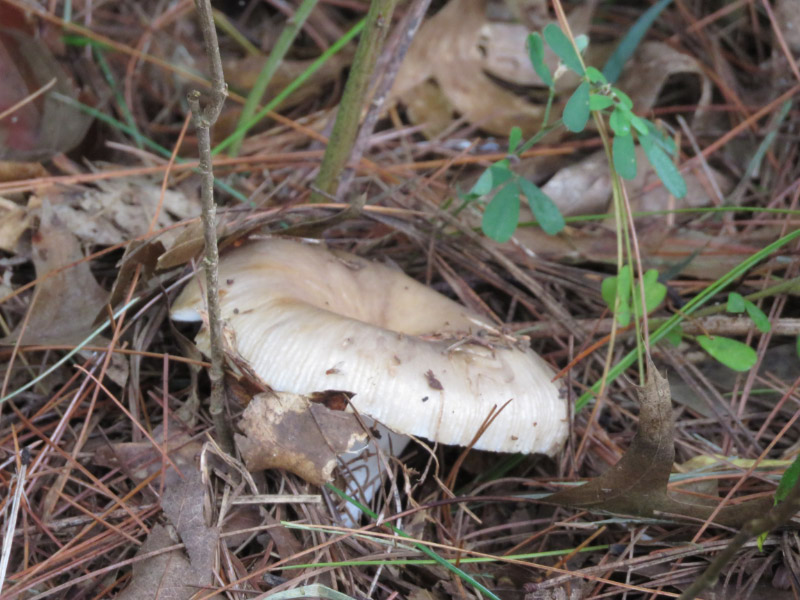
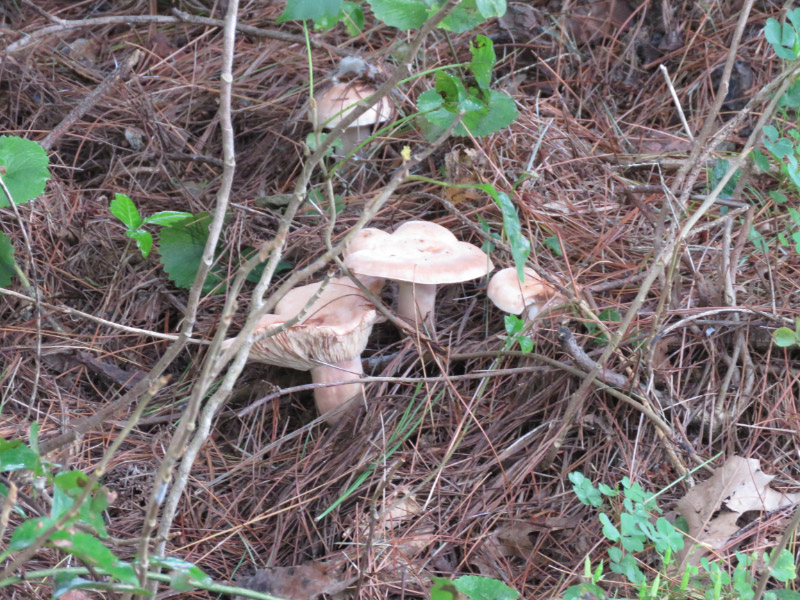
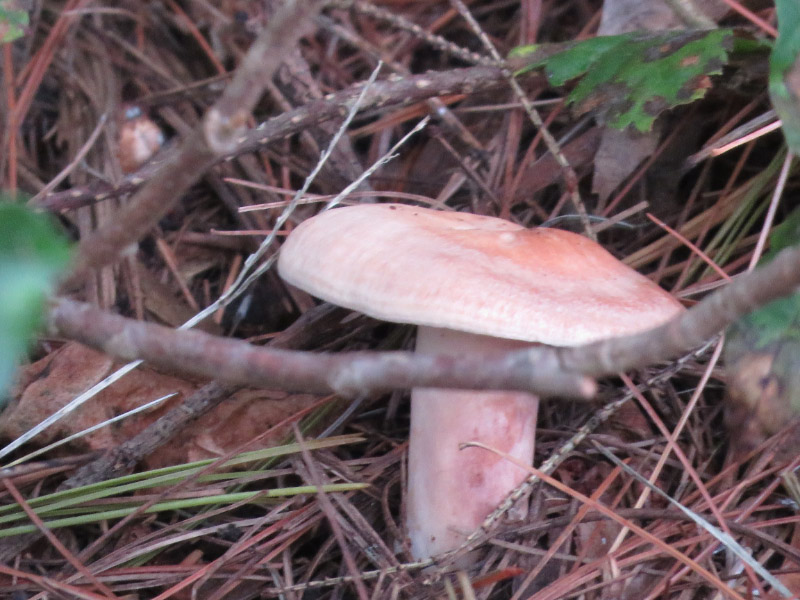
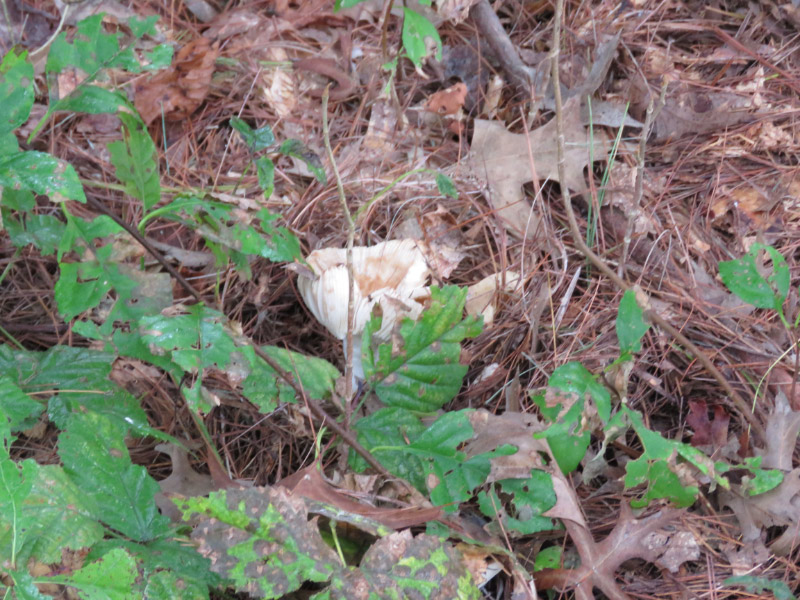
I walked over to some pine trees near the parking lot while I waited for my husband to finish his brisk walk around the lake. There were some larger mushrooms coming up through the pine needles.

Gleanings of the Week Ending October 13, 2018

The items below were ‘the cream’ of the articles and websites I found this past week. Click on the light green text to look at the article.

Free Technology for Teachers: Frostbite Theater - 87 Science Experiment Video Lessons – Short videos…fun for more than just students!

Sunflower pollen has medicinal, protective effects on bees -- ScienceDaily – Sunflowers – a nice addition to pollinator gardens.

Research forecasts US among top nations to suffer economic damage from climate change -- ScienceDaily – The study found that the top 3 countries with the most to lose from climate change are the US, India and Saudi Arabia. China is in the top 5.

Do MoCA and Other Cognitive Screening Tests Work? | Berkeley Wellness – A short article that introduces some terminology….but not very satisfying. This is not an area where medical intervention has made great strides – unfortunately for an aging population.

Top 25 Wild Bird Photographs of the Week: Birds in Flight – National Geographic Blog – Birds in motion…a photographic challenge.

BBC - Future - Do we really live longer than our ancestors? – Life expectancy has increased because more of our species are making it to old age; life span has not changed much at all through history. The emperor Augustus lived to be 75 in the 1st century (his wife live to 86 or 87 years) and Japan’s Empress Suiko lived to be 74 in the 6th century. Cicero’s wife lived to be 103.

Prehistoric art hints at lost Indian civilisation - BBC News and An Unknown Ancient Civilization in India Carved This Rock Art | Smart News | Smithsonian – The same story from two sources. The first one is more detailed.

The Seven Cs of Education | What's Next: Top Trends – 2 items: the 7 Cs and the nature of creative thinking.

Secondary forests have short lifespans: Most don't last long enough to provide habitat for many forest species -- ScienceDaily – Making large scale commitment on reforestation requires long-term vision….and that appears to be lacking. The study was done in Costa Rica.

Infographic: Light Pollution Threatens Species | The Scientist Magazine® - It not just birds and bats….light pollution impacts a lot of organisms…including us (not the last item on the list ‘desynchronization’).

CSA Share

20181003_145810.jpg

The Gorman Farms CSA season is about done but I am enjoying everything in the shares we are getting. A recent share filled the ceramic top of my stove. There are carrots with more top that carrot – but I like the tops in salads and soups; as soon as I got them home I cut the tops off, cleaned them and put them in a plastic bin with the parsley. I’ll eat the carrot tops first since they won’t last as long as the parsley. The carrots themselves will be eaten with hummus for snacks. They were very muddy. Heavy rain and mud has made harvesting more challenging than usual in our area.

I haven’t tried the watermelon radishes yet but I have enjoyed them in seasons past. We’re still getting a couple of onions every week which fits well with the way I cook. I’m a little behind on the winter squash; at some point I’ll cook them all and freeze the pulp to use like pumpkin. There were three tiny versions of butternut squash in this share; supposedly they are even sweeter and cook faster because they are small. The purple cabbages are small – struggling in the soggy fields probably. The peppers are holding strong; there were bell, banana, and roasting peppers in the share. And then there are sweet potatoes…several pounds every week; I’m saving the ones that are cured to eat after the CSA is over for the year. There was quite a selection at the overage table and I picked the fennel; I’ve developed a taste of it…since joining the CSA several years ago; I’d never tried it before that.

Good eating in October!

Foggy Morning at Centennial Park

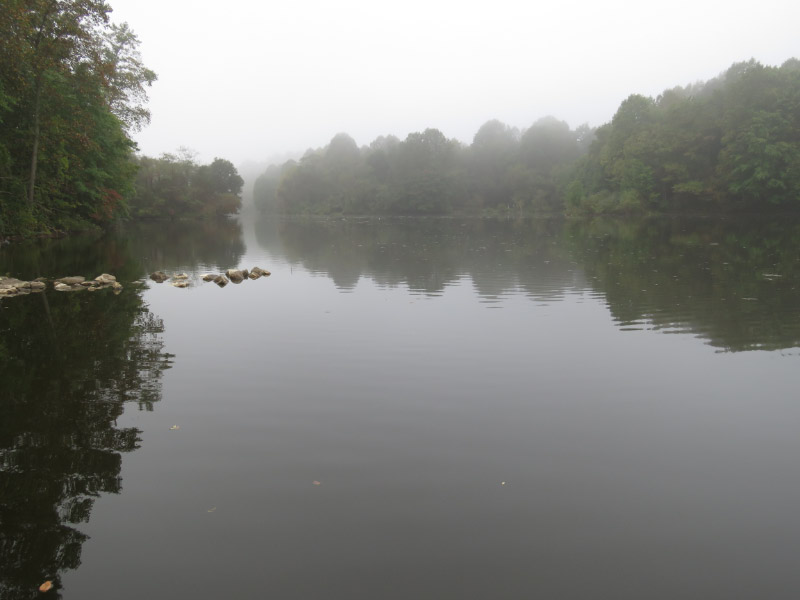
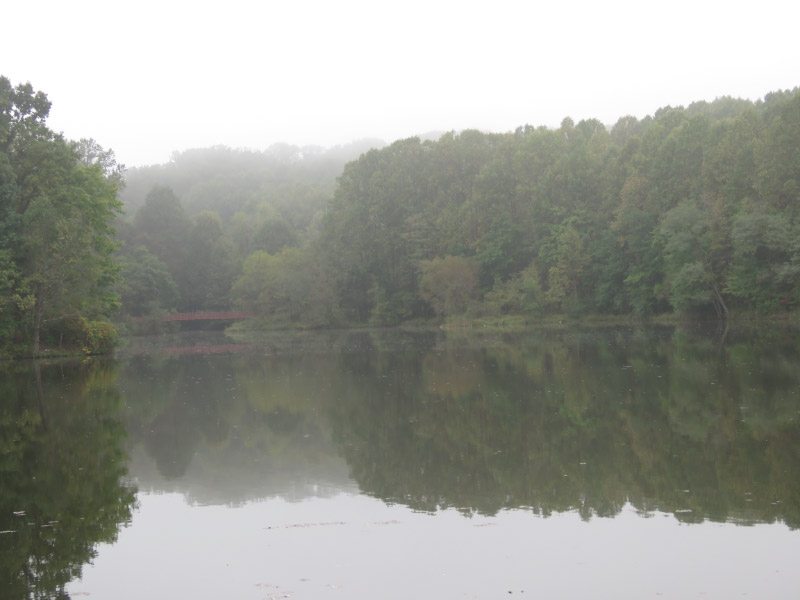
Earlier this week, I enjoyed doing some photography at Centennial Park on a foggy morning. The lake was a little high from the recent rains and the fog muted the colors of the trees (still mostly green).

I stopped at a dogwood tree to capture the buds for next season and the seeds from this year.

There were some colorful leaves that showed up better at close range.

2018 10 IMG_4612.jpg

There were some fall flowers at the edge of the lake – somewhat protected from the water run off by a large rock.

2018 10 IMG_4622.jpg

There were not very many birds around:  a few Canadian geese on the lake

2018 10 IMG_4618.jpg

And a mockingbird. Note the small spider web in the picture with the mockingbird.

2018 10 IMG_4651.jpg

The spider webs and small mushroom growing on rotting mulch were the photographic high points of the walk. I post more about them next week.

Shelf Fungus

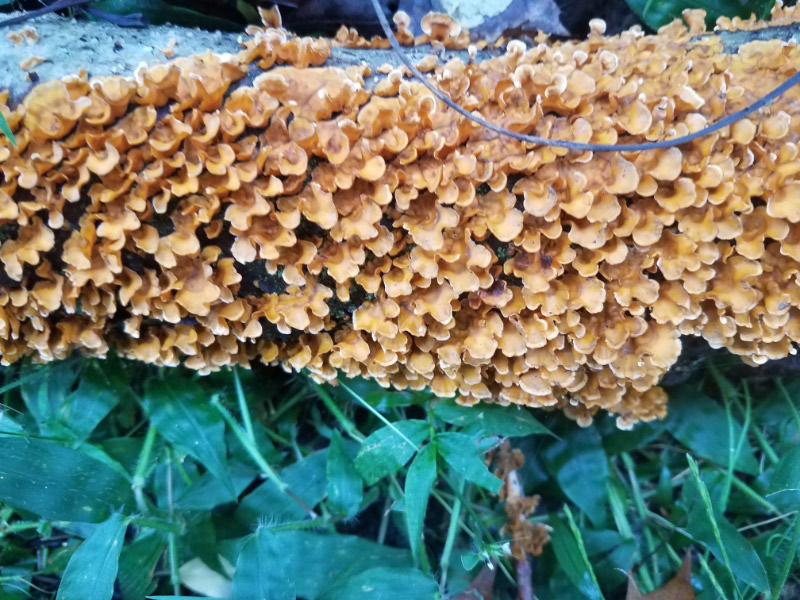
There were several tree trunks/branches thick with shelf fungus that I photographed last Friday during my muddy hike in the Middle Patuxent Environmental Area). The first was a tree standing by the river – exposed roots holding it right on the edge. There were at least three different kinds of fungus on the trunk.

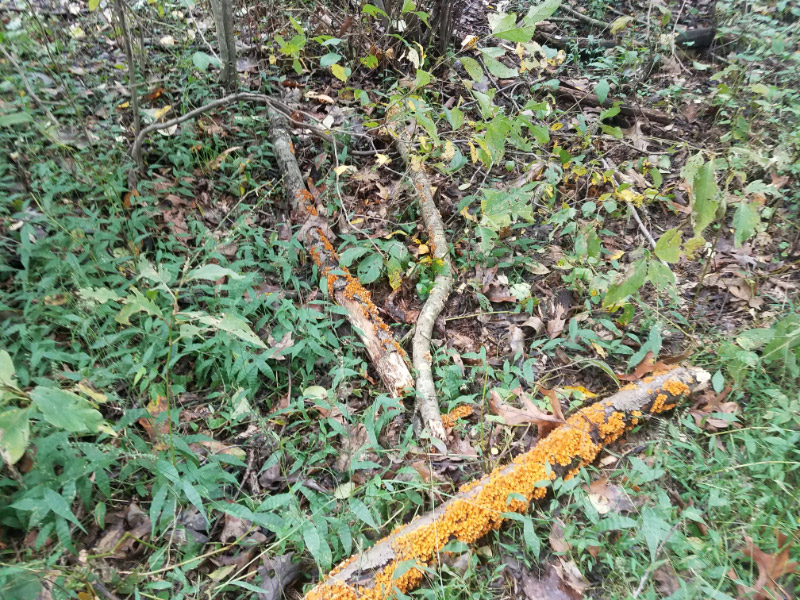
Perhaps seeing that tree made me more observant as we hiked further along the along the loom of the South Wind Trail. I spotted some bright orange fungus on some fallen branches beside the path. The color jumped out – a contrast with the greens and browns on the forest floor.

With all the rain we’ve been getting – there are quite a few fungi around…and they are fresh enough to be brightly colored. They are fun to find and photograph. Exact identification is frustrating for most of them, so I am lumping these as ‘shelf fungus’!

Rain and the Middle Patuxent

Last Friday, I had all my gear prepped and was almost walking out the door when I got the word that the field trip for high schoolers to assess stream health in the upper part of the Middle Patuxent River (in the Middle Patuxent Environmental Area) was cancelled. There was a line of heavy thunderstorms come through the night before and crossing the river on rocks was impossible. It’s been a rough fall for stream surveys with all the heavy rain we’ve gotten. I waited until mid-morning then headed out to see the high water myself – recruiting my husband to go along. It is about 15 minutes from our house.

Like a lot of forested areas in our county, there are scheduled deer management hunts posted on bright red signs. There is a similar one in our neighborhood for the forest behind many of our houses (and down to the Middle Patuxent River).

20181005_093214.jpg

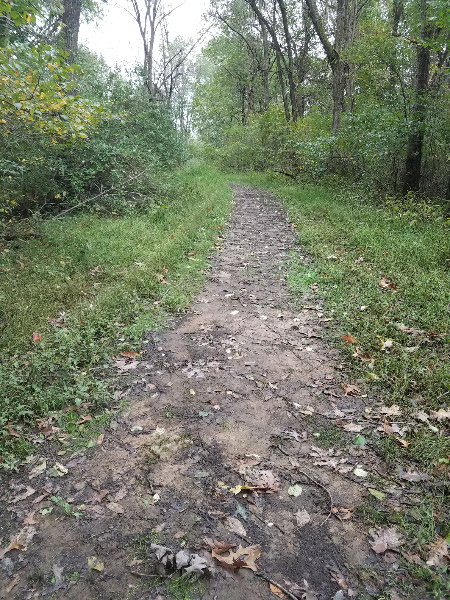
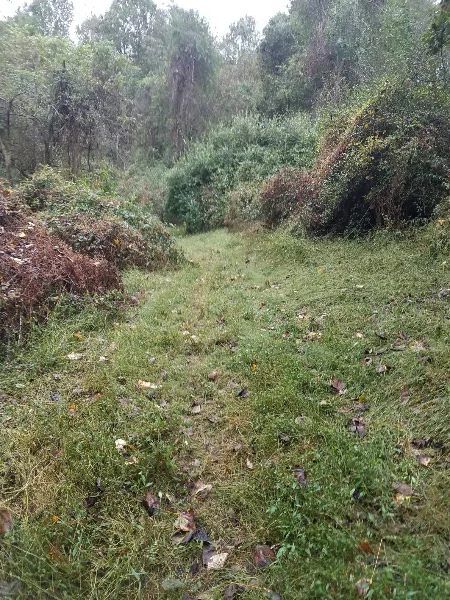
The South Wind Trail started out as older asphalt then became grass with some muddy places.

I saw some Christmas ferns under a low growing tree just off the path.

20181005_095239.jpg

The closer we got to the river the muddier the trail got. The ground was clearly saturated. It would have become quite a quagmire with 60+ students, teachers, and volunteers hiking down to the river.

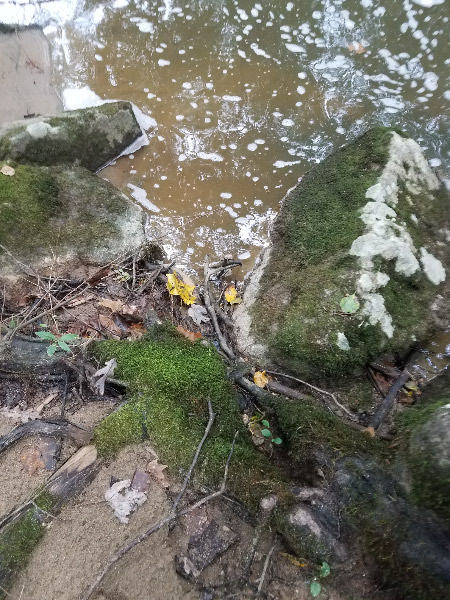
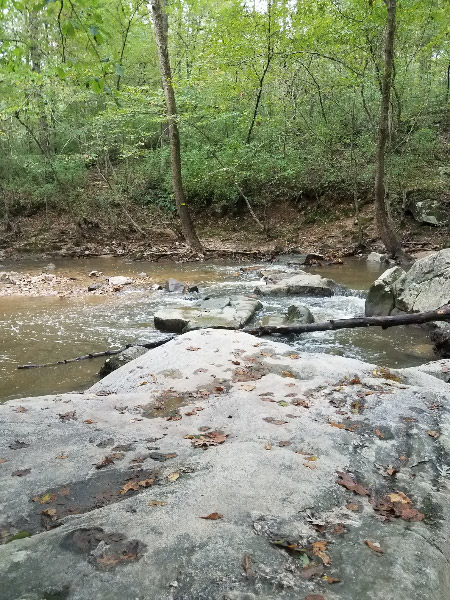
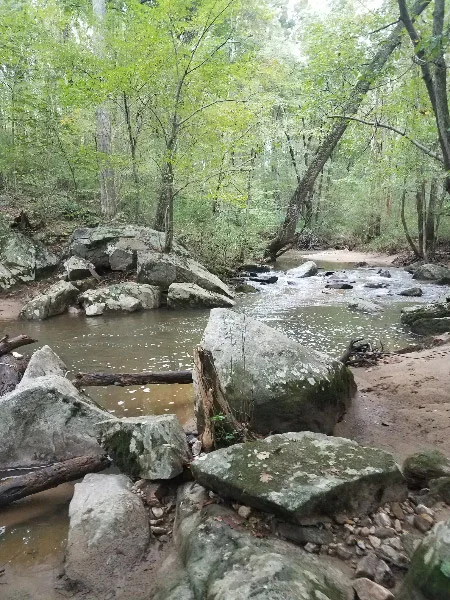
At the river the water was higher than I’d see it and foam was floating on the surface. The rocks we used to get across the river where we did most of the sampling were partially submerged…to dangerous to cross the river. The amount of sediment and rapid flow of the water would have made it had to find macroinvertebrates as well.

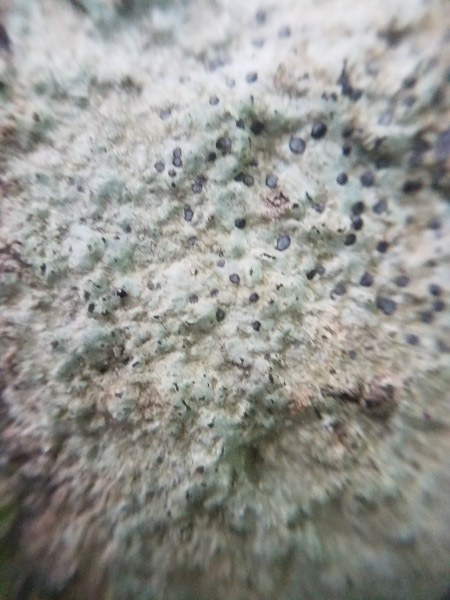
At first, I thought the gray areas of the rocks close to the river were lichen, but when I looked more closely, the areas looked more like they had been scoured and the lichen might be starting to grow again – very slowly.

20181005_100138.jpg

As we continued around the loop to get back to our car, a part of the trail looked like it was becoming a rivulet into the river. Since the water had not made a ditch yet, it might be something that has just happened this fall.

HCC Fall Festival

Yesterday was the Howard County Conservancy’s annual Fall Festival at Mt. Pleasant Farm. The day started out cloudy and cool, but it cleared and was sunny in the afternoon. It was a good day to be out and after a lot of rainy days. It was still muddy enough that the hayride was cancelled for the year and there weren’t as many pumpkins, but all the other parts of the festival were ready for the event by 11…and there were a lot of people that came to enjoy the day at Mt. Pleasant.

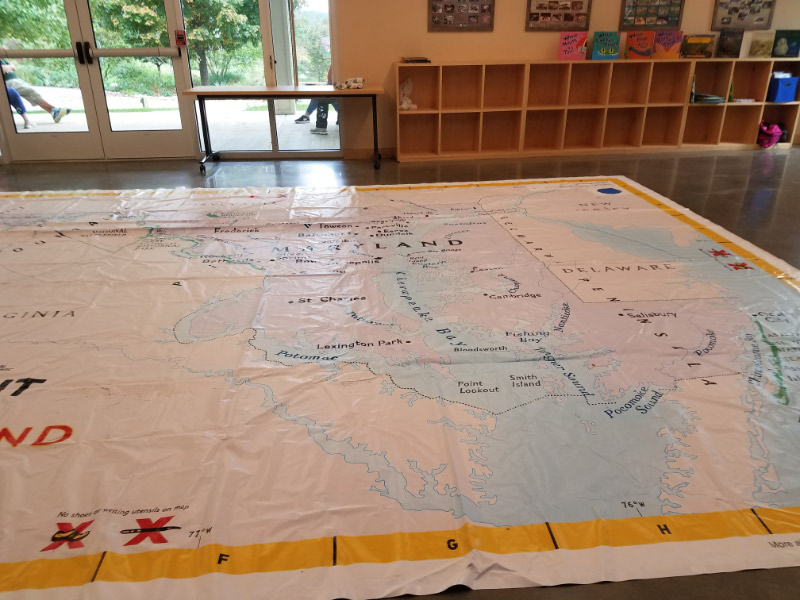
I volunteered to help with the big map spread on the floor of the natures center. It was a big hit – just as it had been last year. The challenge once a lot of people started showing up was to remind children (and parents) to take off their shoes if they wanted to walk on the map. Nearly all the children wanted to walk on the map.

20181007_103658.jpg

I prompted them to find where they lived…and encouraged their parents to help find where they had got to the beach or where friends lived. We figure out how to get from Columbia (where many of them lived) to Ocean City (they they’d gone to the beach) – pointing out the bay bridge that is along the route. Many lived in Ellicott City which was more challenging to find because it is not on the map and the Patapsco River is not labeled. Some children walked the Potomac River or the Appalachian trail…or stood with one foot in Maryland and another in one on of the neighboring states. One boy was able to put one foot in Maryland, DC, and Virginia! It was fun for all ages and many of the adults got into the action as well.

20181007_104700.jpg

The permanent map on the nature center floor of the Howard County watersheds was popular too. The Patapsco River (light and dark green watersheds on this map) is often in the news because of the Ellicott City flooding but the Patuxent River drains more of the county.

20181007_104729.jpg

After two hours of interacting with the crowds on the map…I was ready to walk around the Festival a little. I headed over to see pumpkin that had been painted. Some had already dried and been picked up, but the ones that were still on the plastic were fantastic.

And a good time was had by all.

Mushrooms

Mushrooms are coming up all over. The moisture we got in September evidently provided optimal conditions for the fungi to put up fruiting bodies.

20181002_124500.jpg

On the way home from Belmont last week, I stopped along the road to photograph an embankment with visible mushrooms.

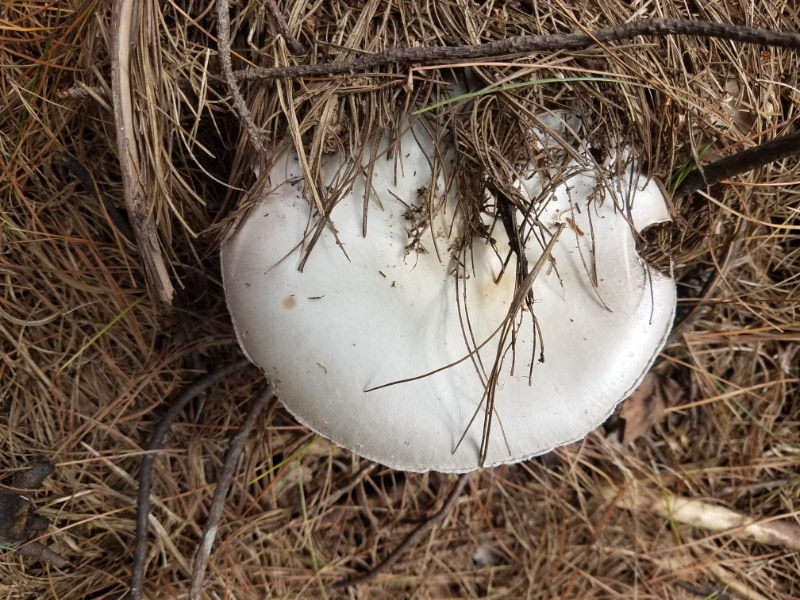
As I got closer I discovered some that were not quite as visible. There were at least three different kinds. The largest ones, that were in all stages of development, were what I saw first. The started out as white then began to darken and crack like meringue. Finally, the cap splits. There were some that were still just pushing up – still almost concealed by pine needles.

20181002_124510.jpg

There was one that was almost the same color as pine needles.

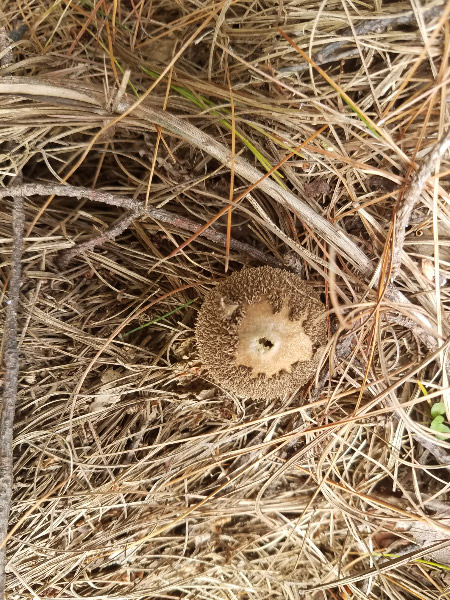
And puffballs that were in all stages of development.

When I got home, I noticed a large one at the base of a neighbor’s tree. I put my macro lens beside it to show the size and then took a picture of the surface with the lens; it looked like a topography map with rifts between the brown patches!

Gleanings of the Week Ending October 6, 2018

The items below were ‘the cream’ of the articles and websites I found this past week. Click on the light green text to look at the article.

BBC - Future - The recipes born from hardship – A little history…and food chemistry.

Fall Foliage: When, Why & How Vibrant Will Maple Leaves Be? – Cool Green Science – A little about the season. Unfortunately our September weather was just opposite of what it takes to get great leaf color from maples.

A mechanism of color pattern formation in ladybird beetles -- ScienceDaily – The Asian ladybird beetle… more that 200 color patterns…from a single gene.

Each Pigeon Painting by Adele Renault Shows the Bird's Overlooked Beauty – Some eye candy of a very common urban bird. Pigeons might be worth a closer look through a birding scope or camera with a big lens.

Praying Mantis Seen Hunting Fish for the First Time | Smart News | Smithsonian – In India…a large praying mantis ate a guppy.

A one-way street for salt -- ScienceDaily – How quinoa gets rid of the extra salt that it absorbs from saline soils.

My Penn’s Woods, Ever Changing – Cool Green Science – A little history about the forest in Pennsylvania (and Maryland too).

Life Thrives Within the Earth’s Crust – We know that there are a lot of living things in soils…but now we are discovering that deeper still – in rocks – there is life where previously we thought there was none. It’s a whole new area of biological research.

The surprising truth about loneliness – Some results from the BBC Loneliness Experiment.

The American Dream is Harder to Find in Some Neighborhoods – Look at the overall US map and read the article…then look at the Interactive: Explore the Opportunity Atlas to look at more detailed map locations.

Belmont BioBlitz Field Trip

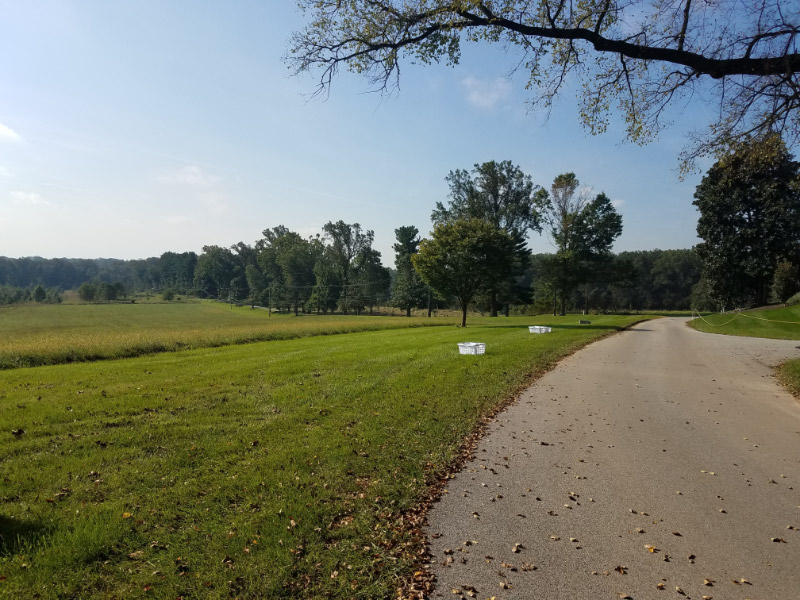
I went early to help set up for the first Belmont BioBlitz for 5th graders this fall at Howard County Conservancy’s Belmont location. I arranged the discovery tables with pelts, skulls, insects in jars/acrylic, and leaves/seeds of common trees neatly framed in cases backed with cotton. Another table held reference books. The volunteers arrived and we all went out to wait for the buses. The new item for this year is a rugged tablet! Otherwise we had the usual BioBlitz backpack: ruler, tape measure, magnifiers, clip boards, some id books…things we would need in the field.

20181002_100703.jpg

It’s good to feel that we are ready – and enjoy the morning calm as we wait for the buses.

20181002_100711.jpg

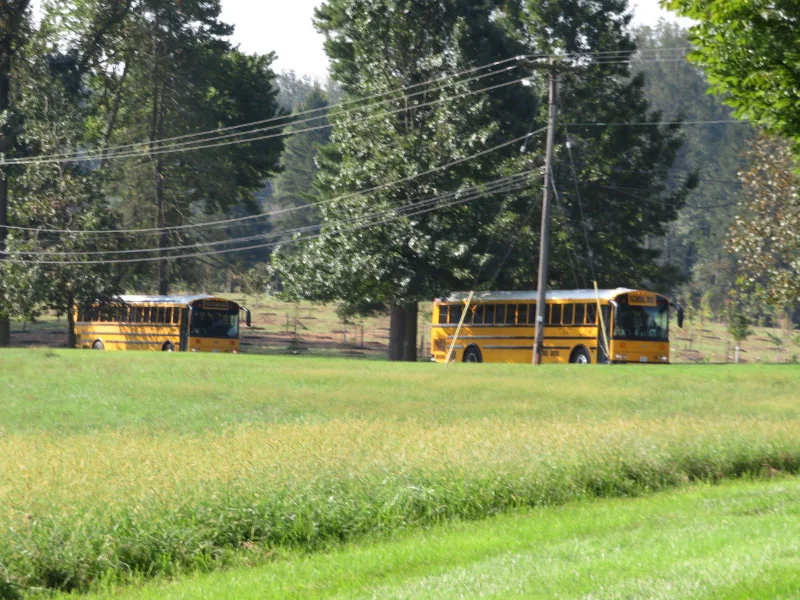
And then the buses arrive and it all begins.

2018 10 IMG_2945.jpg

With my first group we stayed on pavement since we had one student with a cast and were using a wheel chair for her to help with the distance. We documented some trees along the entrance road and some insects on the trunks. Some geese flew to the pond as we watched, and I used the zoom on my camera to take some pictures to include with their documentation. It was the only time I got my camera out during the field trip. Otherwise the students did all the picture taking and documenting of what they found. The big find for the first group was a wolf spider.

The second group went in a different direction and said – at the beginning – that they wanted to look at plants and fungi. They documented an oak and the ivy growing on it. Then they found several kinds of mushroom type fungi. And there were some insects along the way…they were more interested than they thought they would be in insects. They were looking around for acorns and discovered a different kind of nut….and then the tree. A hickory. They got some good pictures of the nuts and leaves, and the way the leaves are on the branch…so they should be able to determine the type of hickory it is!

It was a good field trip. All the students had already done a BioBlitz on their schoolyard so were well versed with the mechanics of what to do. Belmont is a very different place than a schoolyard!

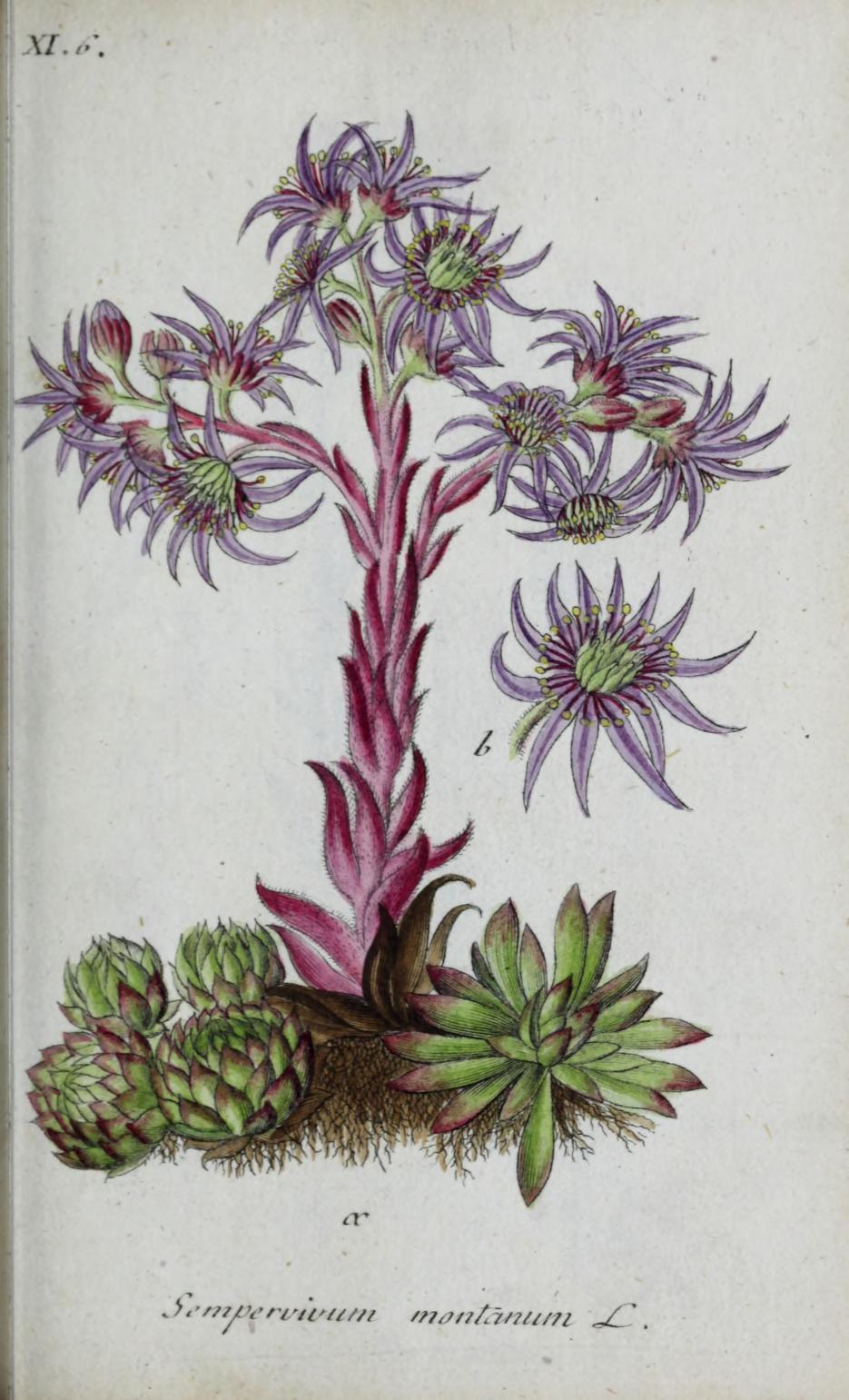
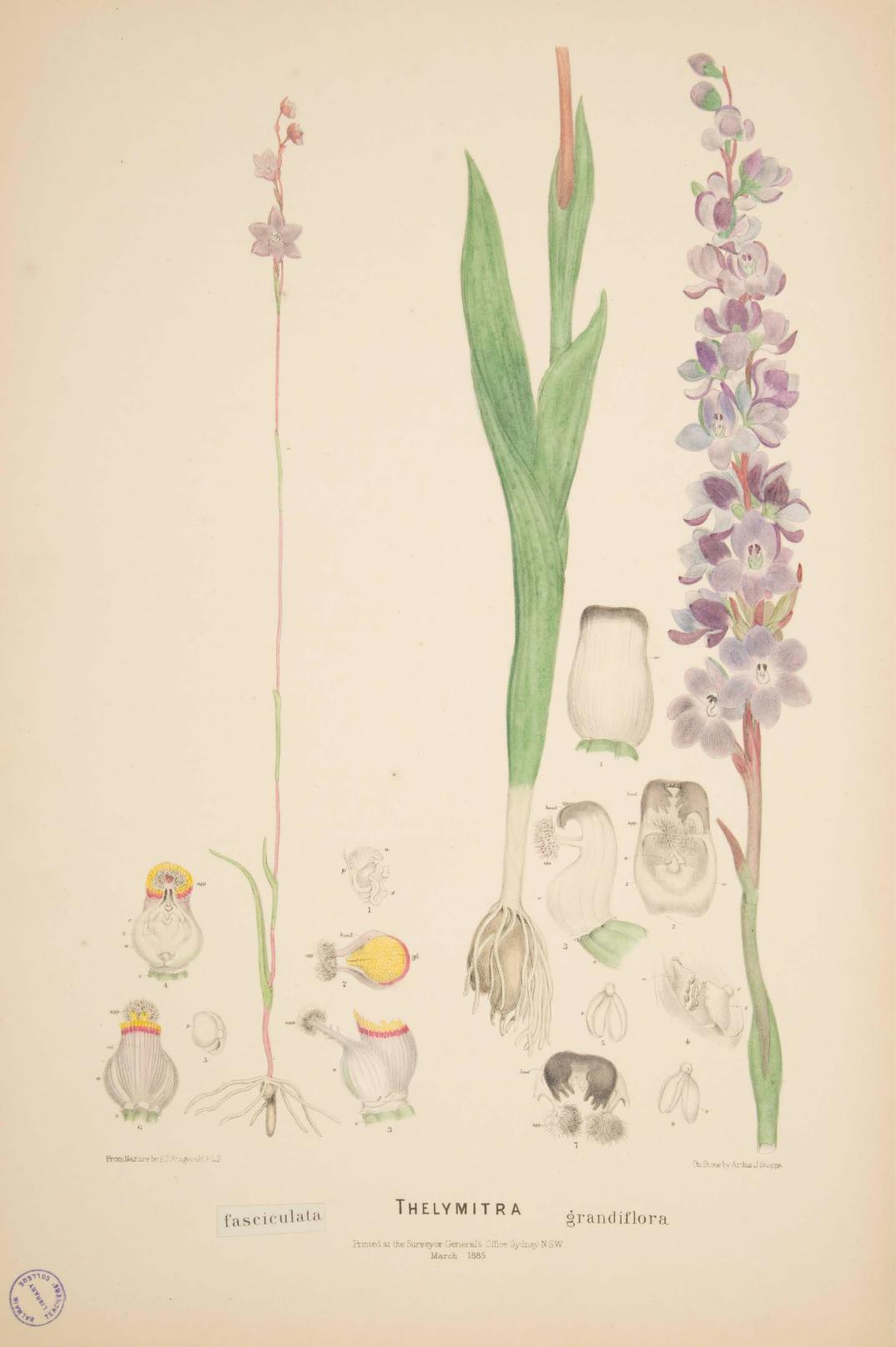
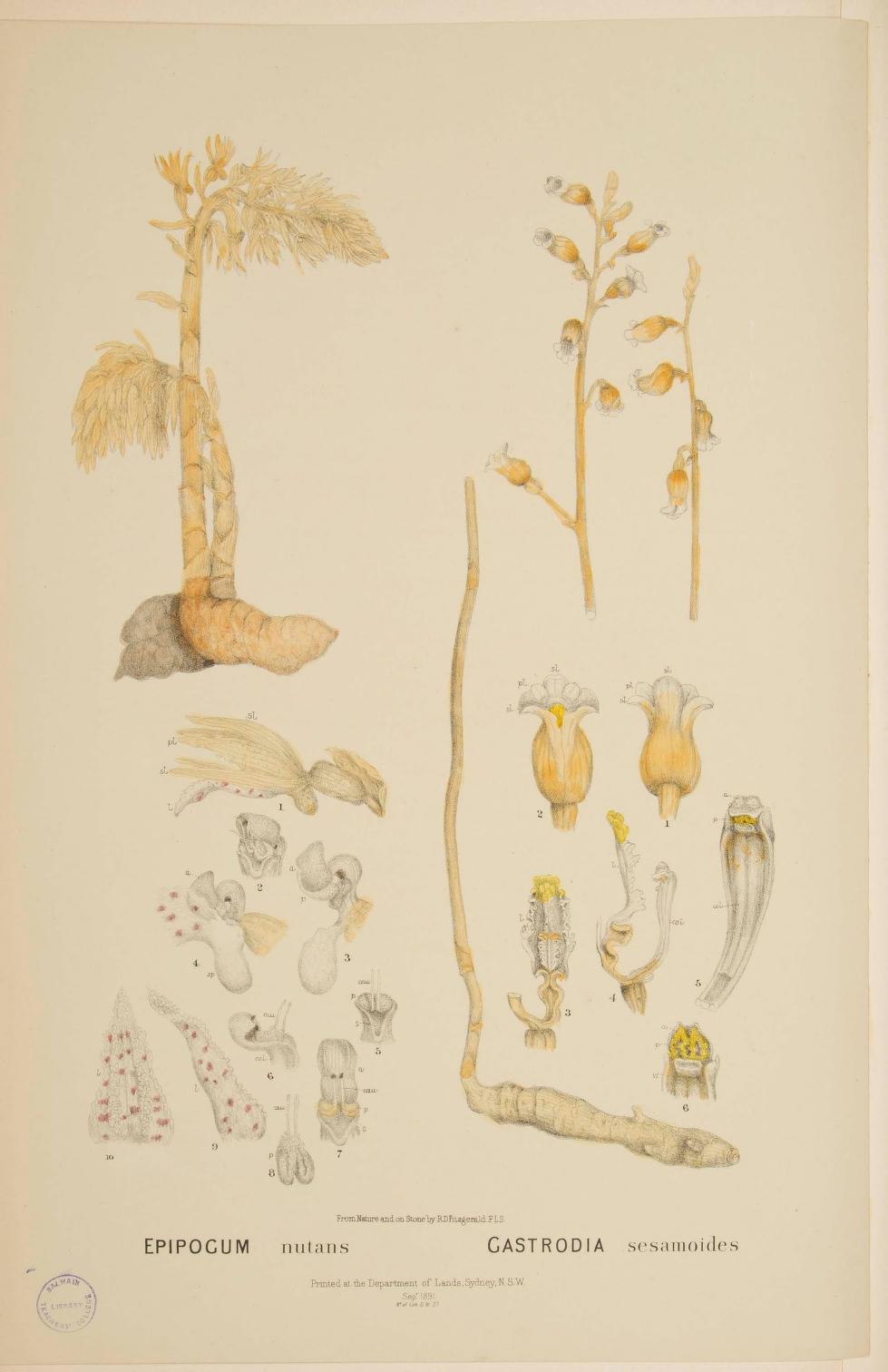
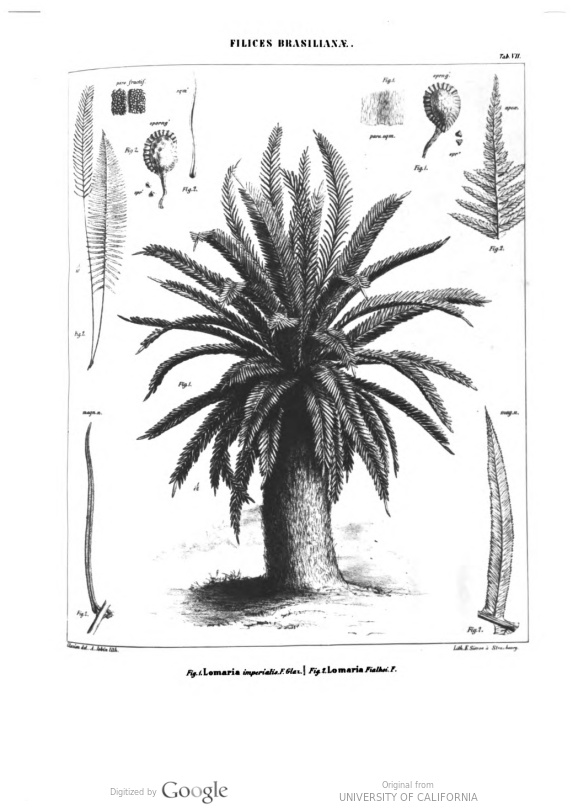
eBotanical Prints – September 2018

It was a light month for botanical books because I was busy with some volumes of insect prints.

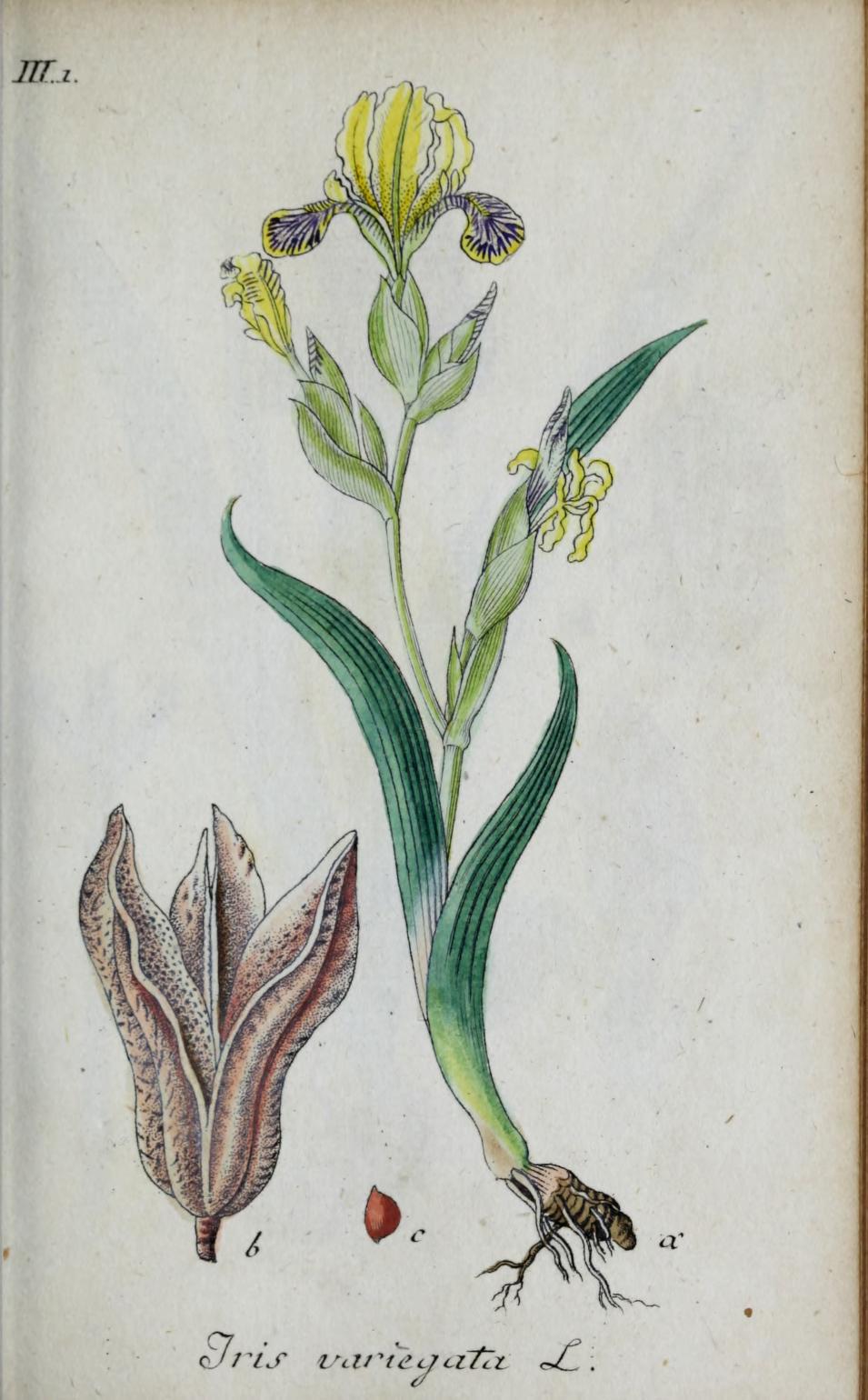
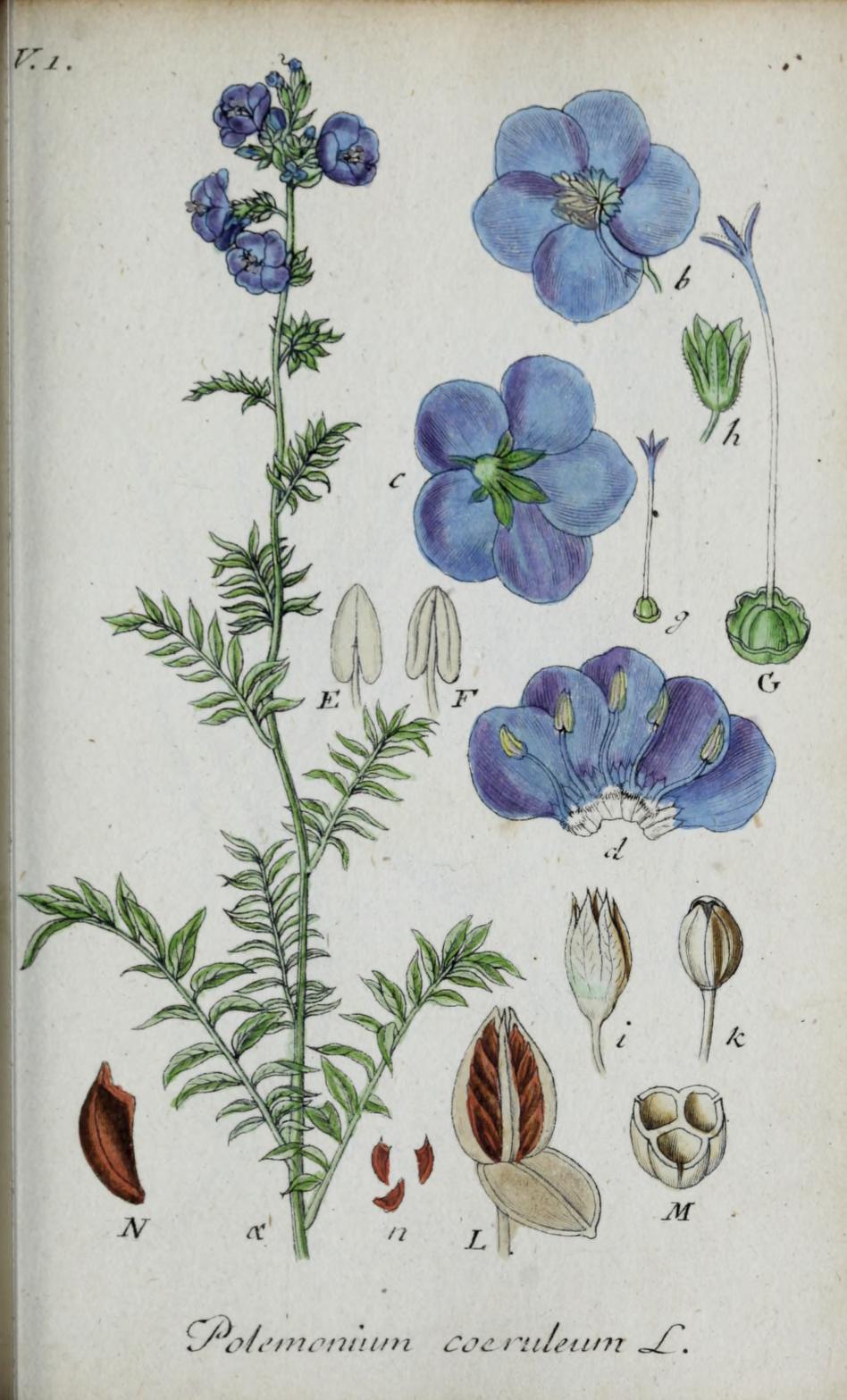
October is set up to be a big month for botanical print books because of the many volumes of Louis van Houtte words that are available on Internet Archive. I found the first volume toward the end of September and am savoring them all through October. There are at least 20 volumes!

Enjoy the September Botanical print slide carousel. Check out some of the eBooks using the links below the pictures.

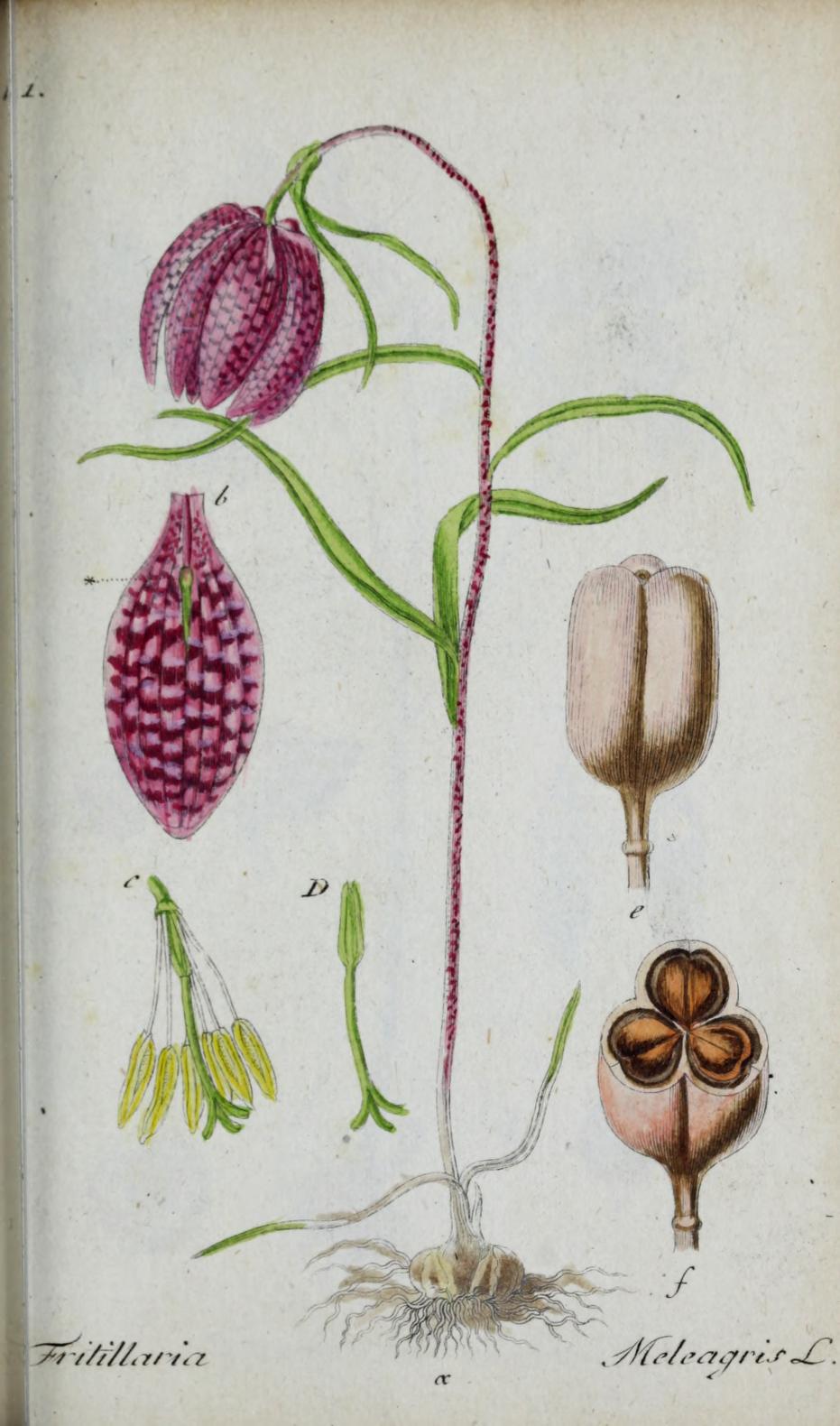
Sturm's Figures of plants V2 * Sturm, Jakob and Johann * sample image * 1798

Sturm's Figures of plants V3 * Sturm, Jakob and Johann * sample image * 1798

Sturm's Figures of plants V4 * Sturm, Jakob and Johann * sample image * 1798

Sturm's Figures of plants V5 * Sturm, Jakob and Johann * sample image * 1798

Deutschlands flora in Abbildungen nach der Natur mit Beschreibungen Abt. 1 Bd. 7-8 * Strum, Jakob * sample image * 1809

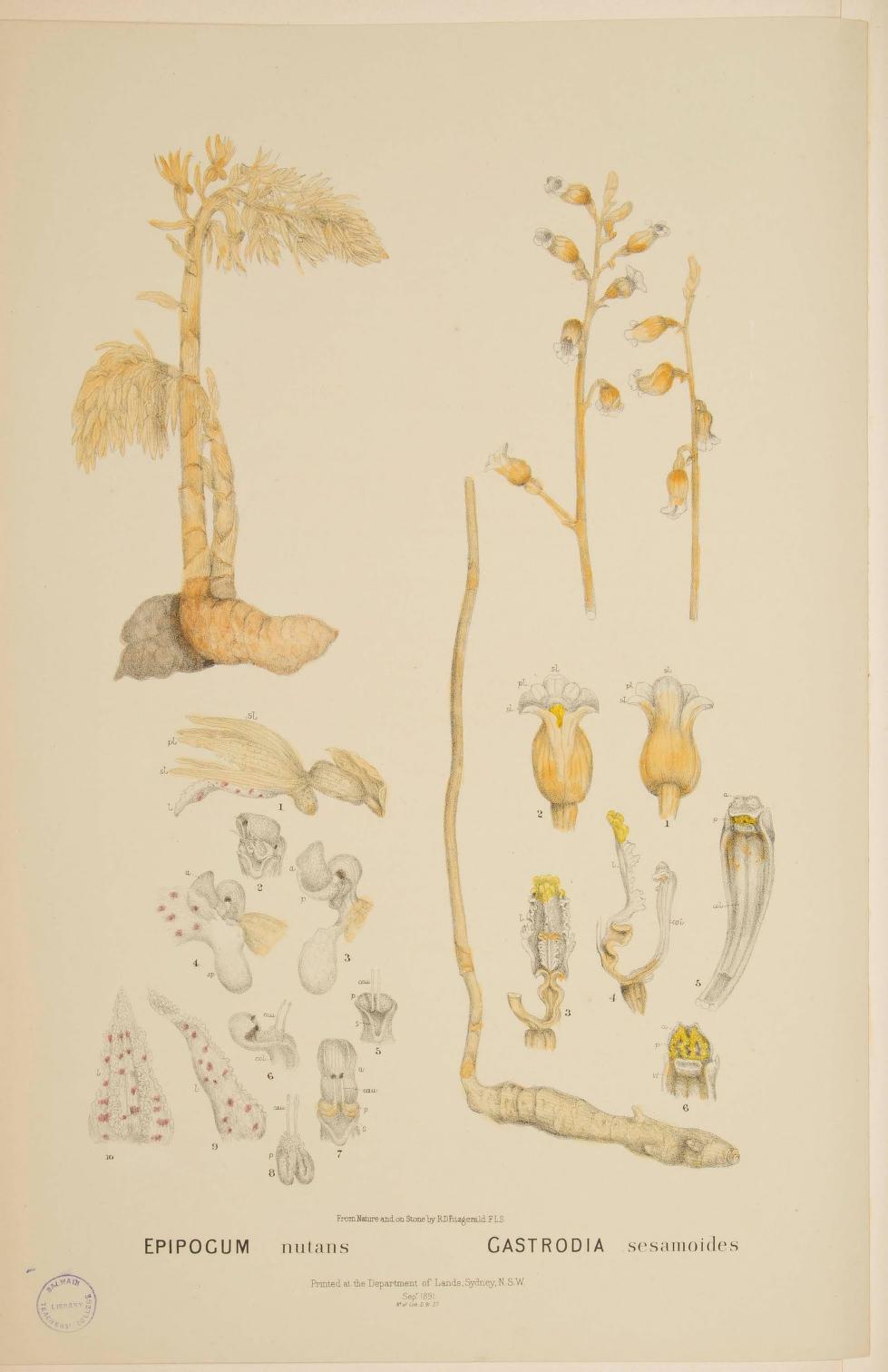
Australian Orchids V2 Pt 3 * Fitgerald, Robert David * sample image * 1882

Australian Orchids V2 Pt 4 * Fitgerald, Robert David * sample image * 1882

Australian Orchids V2 Pt 5 * Fitgerald, Robert David * sample image * 1882

Australian Orchids V2 Pt 7 * Fitgerald, Robert David * sample image * 1882

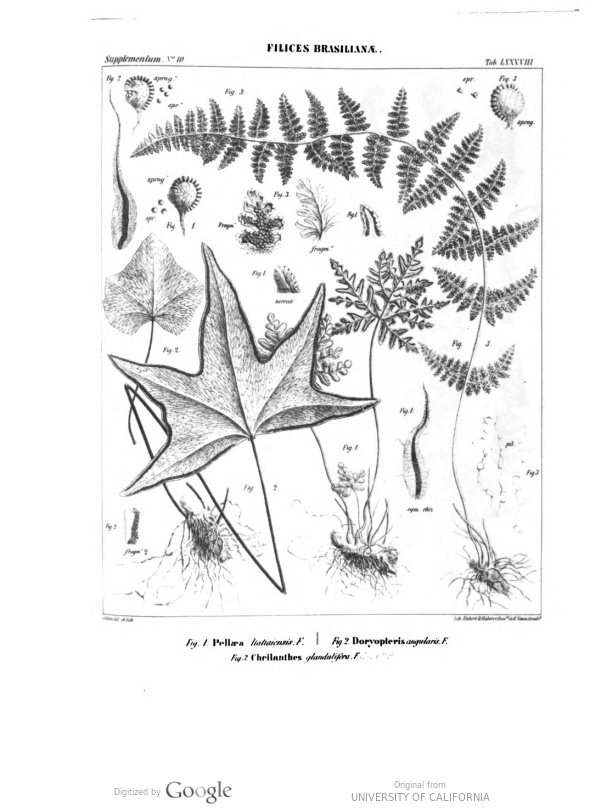
Cryptogames vasculaires V1 * Fee, Antoine Apollinaire * sample image * 1873

Cryptogames vasculaires V2 * Fee, Antoine Apollinaire * sample image * 1873

Flore des serres et des jardins de l'Europe V1 (1845) * van Houtte, Louis * sample image * 1845


Here is a list of all 1400+ books containing botanical books that I’ve found online – freely available. Enjoy!

Brookside Gardens at end of September – part II

Yesterday I posted about plants…today is about birds and butterflies. We’d gone to Brookside Gardens to photograph hummingbirds – realizing that it was near the end of the season for them. The garden area full of salvias was still full of flowers.

2010 09 IMG_4541.jpg

There were a few birds, but they did not stay long. The only image I managed was a hummingbird in a tree….using the zoom to advantage. The bird looked very rounded and in good shape to continue south.

2010 09 IMG_4548.jpg

I also photographed a male and female monarch (the male has a black node on each hind wing). They too were probably heading south and stopping at the garden to refuel.

Brookside Gardens at end of September – part I

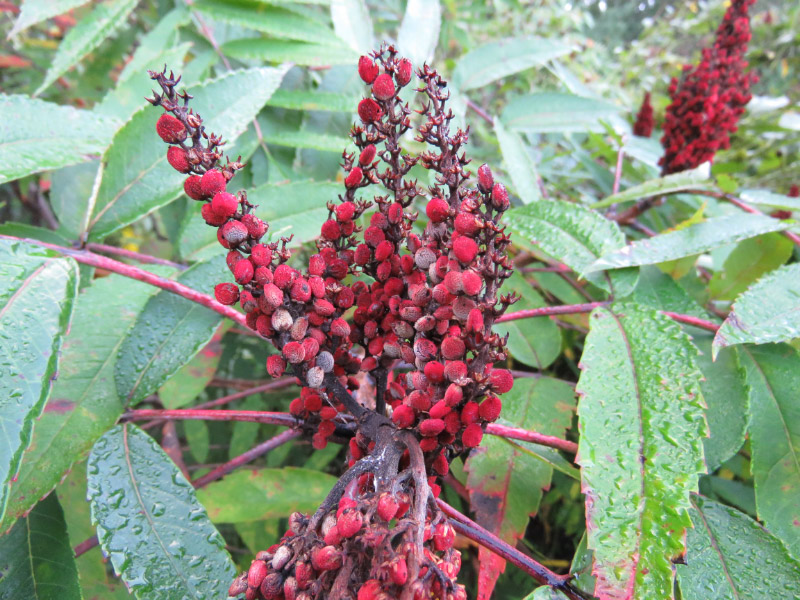
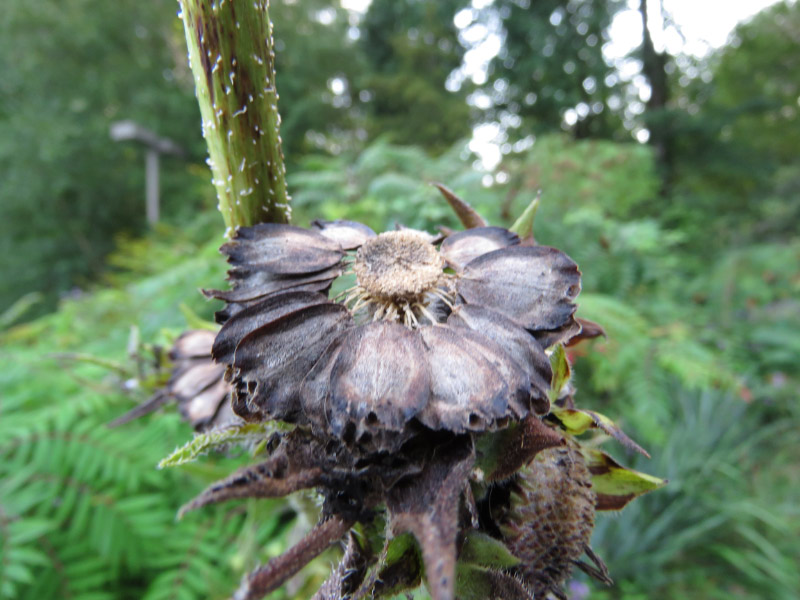
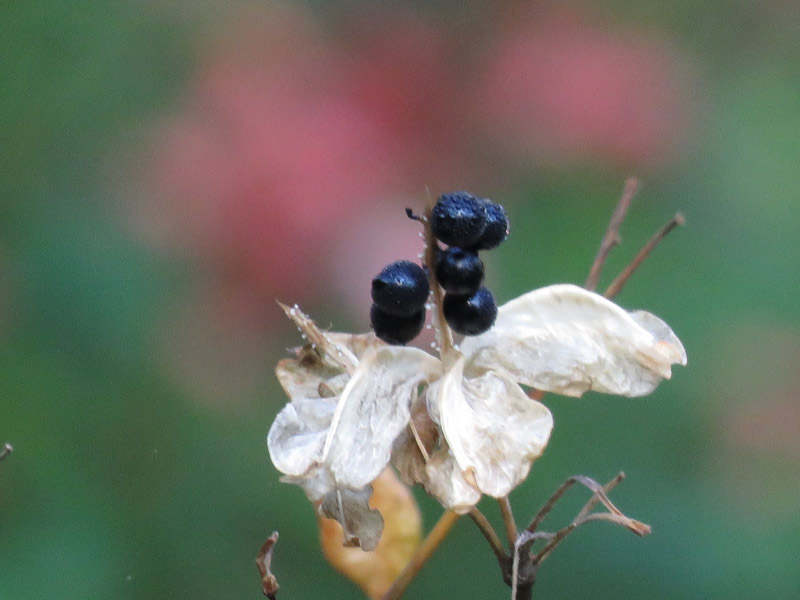
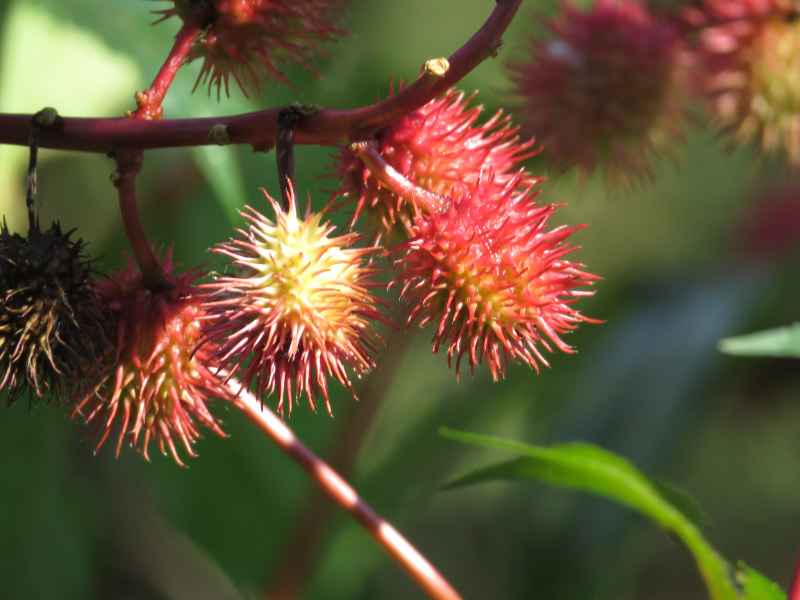
The growing season is waning, but there is still plenty to see at Brookside Gardens when we went last weekend. Some plants have already produced their seeds – the sumac and sunflowers and castor beans among them.

The magnolia pods are as colorful as the seeds. Some of the seeds have already been eaten by birds or squirrels.

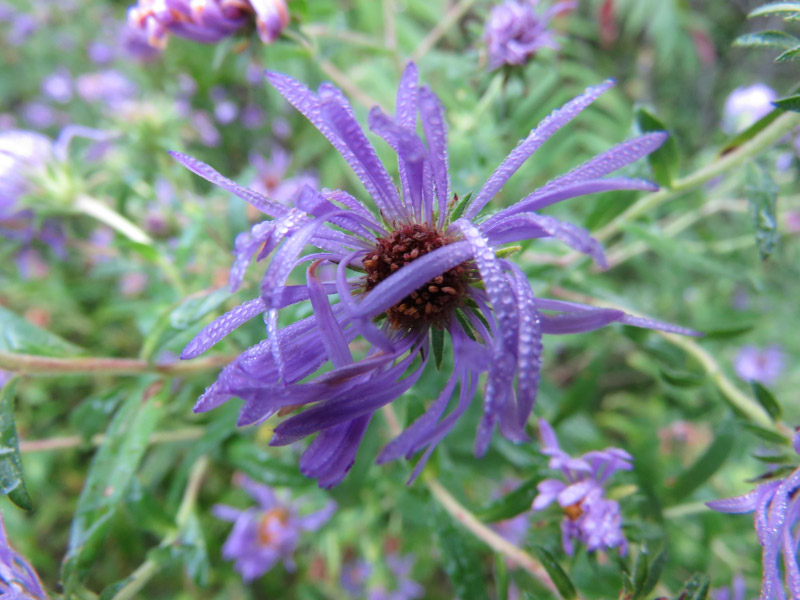
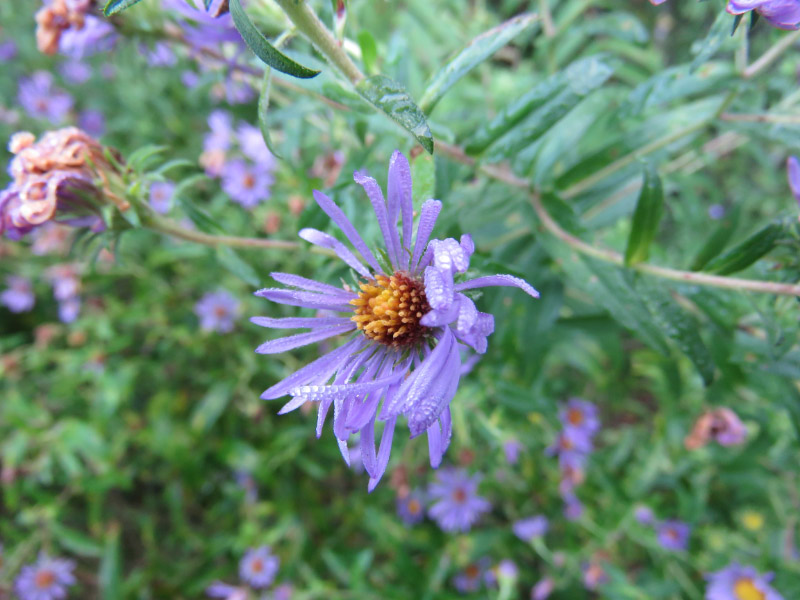
But there are still flowers to see too. I spent time photographing asters with tiny water droplets still coating them from the morning dew.

2010 09 IMG_4539.jpg

But there are other things still blooming as well.

There were some lights that were turned on covering the trunks and lower branches of trees around one of the court yards – evidence that the crew putting up lights for the holiday light show has already started.

2010 09 IMG_4524.jpg

Zentangle® - September 2018

…”30 days has September”…  so I’ve selected 30 Zentangle tiles to feature from the ones I made during last month.

20180828_171130505_iOS.jpg

I’m presenting then in the order they were created – Starting with the blue that was part of the series at the end of August.

20180829_205546931_iOS.jpg

Then there were yellow ones. I think I chose yellow to help brighten all the rainy days we were having.

Then it was pink and purple. I was thinking about the very short time in my daughter’s life when that color combination was her favorite. It did not survive early elementary school. I made a new template to go back to square tiles. I prefer them to the rectangle.

20180921_223423856_iOS.jpg

I changed to orange thinking ahead to the fall.

20180929_145254916_iOS.jpg

And then found my way back to yellow when we finally got sunny hours for several days in a row.

--

The Zentangle® Method is an easy-to-learn, relaxing, and fun way to create beautiful images by drawing structured patterns. It was created by Rick Roberts and Maria Thomas. "Zentangle" is a registered trademark of Zentangle, Inc. Learn more at zentangle.com.