CSA Share

20181003_145810.jpg

The Gorman Farms CSA season is about done but I am enjoying everything in the shares we are getting. A recent share filled the ceramic top of my stove. There are carrots with more top that carrot – but I like the tops in salads and soups; as soon as I got them home I cut the tops off, cleaned them and put them in a plastic bin with the parsley. I’ll eat the carrot tops first since they won’t last as long as the parsley. The carrots themselves will be eaten with hummus for snacks. They were very muddy. Heavy rain and mud has made harvesting more challenging than usual in our area.

I haven’t tried the watermelon radishes yet but I have enjoyed them in seasons past. We’re still getting a couple of onions every week which fits well with the way I cook. I’m a little behind on the winter squash; at some point I’ll cook them all and freeze the pulp to use like pumpkin. There were three tiny versions of butternut squash in this share; supposedly they are even sweeter and cook faster because they are small. The purple cabbages are small – struggling in the soggy fields probably. The peppers are holding strong; there were bell, banana, and roasting peppers in the share. And then there are sweet potatoes…several pounds every week; I’m saving the ones that are cured to eat after the CSA is over for the year. There was quite a selection at the overage table and I picked the fennel; I’ve developed a taste of it…since joining the CSA several years ago; I’d never tried it before that.

Good eating in October!

Gleanings of the Week Ending October 6, 2018

The items below were ‘the cream’ of the articles and websites I found this past week. Click on the light green text to look at the article.

BBC - Future - The recipes born from hardship – A little history…and food chemistry.

Fall Foliage: When, Why & How Vibrant Will Maple Leaves Be? – Cool Green Science – A little about the season. Unfortunately our September weather was just opposite of what it takes to get great leaf color from maples.

A mechanism of color pattern formation in ladybird beetles -- ScienceDaily – The Asian ladybird beetle… more that 200 color patterns…from a single gene.

Each Pigeon Painting by Adele Renault Shows the Bird's Overlooked Beauty – Some eye candy of a very common urban bird. Pigeons might be worth a closer look through a birding scope or camera with a big lens.

Praying Mantis Seen Hunting Fish for the First Time | Smart News | Smithsonian – In India…a large praying mantis ate a guppy.

A one-way street for salt -- ScienceDaily – How quinoa gets rid of the extra salt that it absorbs from saline soils.

My Penn’s Woods, Ever Changing – Cool Green Science – A little history about the forest in Pennsylvania (and Maryland too).

Life Thrives Within the Earth’s Crust – We know that there are a lot of living things in soils…but now we are discovering that deeper still – in rocks – there is life where previously we thought there was none. It’s a whole new area of biological research.

The surprising truth about loneliness – Some results from the BBC Loneliness Experiment.

The American Dream is Harder to Find in Some Neighborhoods – Look at the overall US map and read the article…then look at the Interactive: Explore the Opportunity Atlas to look at more detailed map locations.

Gleanings of the Week Ending September 29, 2018

The Amazing Ancient Fishes of Africa – Cool Green Science – Lungfish, butterfly fish, bichir, bonytongue…most of them are air breathers!

Thinking beyond yourself can make you more open to healthy lifestyle choices -- ScienceDaily – Maybe we need to psyche ourselves to make better choices!

Japan's Hayabusa2 Spacecraft Successfully Deploys Landers to Asteroid Ryugu's Surface and Bouncing robots land on asteroid 180m miles away amid mission to fetch sample for Earth • The Register  – Exciting stuff from a rover on an asteroid! And the return mission in 2020 will be exciting too.

Molecule with anti-aging effects on vascular system identified -- ScienceDaily – A ketone body was identified that is produced during fasting or calorie restriction. It appears to delay vascular aging.

Free Technology for Teachers: A Good Resource for Learning About the Science of Food – 14 short videos about food research.

Scientists investigate how DEET confuses countless critters -- ScienceDaily – Evidently DEET interferes with organisms’ response to odors thus confusing the organism rather than repelling it!

Top 25 Wild Bird Photographs of the Week: Birds with Yellow Plumage – National Geographic Blog – I always enjoy the bird photographs

BBC - Future - How to use seawater to grow food – in the desert - An experiment in Jordan to farm with solar powered desalination of Red Sea water for greenhouses cooled as part of the desalination process. Jordan currently imports a high percentage of its food…if this type of farming can be cost effective the country might be able to feed itself and even export some foods.

How leaves talk to roots -- ScienceDaily – When I was in college taking biology courses in the 1970s – micro RNA was not in our vocabulary!

Well-Preserved Roman Road Uncovered in the Netherlands - Archaeology Magazine (more details at https://www.dutchnews.nl/news/2018/09/roman-road-artifacts-found-during-digging-for-a-new-motorway/ ) – New finds like this are always a little surprising…things that were there for a very long time but covered over by a few feet of soil.

Gleanings of the Week Ending September 22, 2018

The items below were ‘the cream’ of the articles and websites I found this past week. Click on the light green text to look at the article.

Curiosity rover surveys a mystery under dusty Martian skies -- ScienceDaily – What makes Vera Rubin Ridge so hard?

The Environment's New Clothes: Biodegradable Textiles Grown from Live Organisms - Scientific American – ‘Growing clothes’ that are sustainable – very different form the current fashion industry.

Change your diet to save both water and your health -- ScienceDaily – Research that looked at the water footprint (the volume of freshwater to produce goods) relative to types of diets. It turns out that many of the foods that take a lot of water to produce also are overconsumed – in the EU where the study was done and maybe even mores o in the US.

How the People of Pompeii Really Died - The Atlantic – New technology looked at bones and teeth of the 19th century plaster casts from Pompeii. Two surprises: they had good teeth, and many died of head injures rather than suffocation.

A Great Brown Storm Is Raging on Jupiter – It’s not like the red spot. They come and go and Jupiter. This time NASA’s Juno spacecraft is there to monitor its progress and show more of its structure.

One big reason why women drop out of doctoral STEM programs: The fewer women in entering class, the less likely they'll stay -- ScienceDaily – This study ruled out grades and funding as the main reason….the academic climate for women is not only harder to measure, it’s also harder to change.

First evidence that soot from polluted air is reaching placenta -- ScienceDaily – There is a health cost for burning fossil fuels…and it begins to impact us before we are born. Previous research had linked air pollution with premature birth, low birth weight, infant mortality, and childhood respiratory problems. This research was focused on determining if the particles in the lung – breathed by the mother -  can circulate through the blood to the placenta.

Top 25 Wild Bird Photographs of the Week: Gamebirds – National Geographic – Peacocks are considered game birds!

Total of 21 new parasitoid wasps following the first ever revision of their genus -- ScienceDaily – The first revision since 1893…and using specimens from 20 natural history museums.

Something Blue | The Prairie Ecologist – Blue sage…insect magnet.

Fall Yard Work – Part I

Yesterday I got a head start on fall yard work. My first target was the front flowerbed with common milkweed (no caterpillars left) and lots of day lily leaves. I took a before and after picture. It’s not entirely cleared yet but the bird bath near the porch is more visible. I tried to leave the black eyed susans to finish seed production for next year. I pulled tulip poplar sprouts and a largish poke weed that has grown low enough that it wasn’t obvious how big it was until I started looking for its main stalk.

I took some rocks and shells out of the flower bed and put them on the corners of the porch to get cleaned by rains.

20180919_085723.jpg

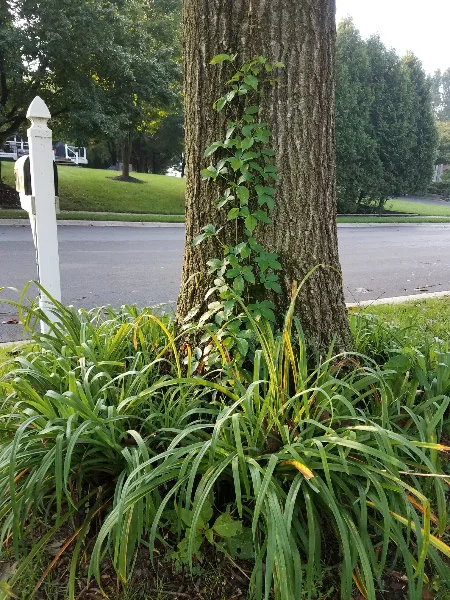
My second target was the day lily foliage around the oak tree. I took a before and after picture again. That filled up the trash can with greens for the compost bin.

I stripped the larger stems of leaves since I’ve learned that the stems don’t decompose very rapidly…better for them to go in a brush pile than in the compost bin where the leaves were going.

I carried the arm load of stems (some of them milky with milkweed sap) to put just outside the the compost bin with the pitch fork in the other hand. The compost bin has been decomposing. I turned it – stirred it. Decided a lot had decomposed but I could still just add more on top since there is still plenty of room in the bin.

20180919_075523.jpg

I put the kitchen scraps on top and carried it around to the compost bin located the back of the back yard. It was a little heavier than I expected…but I managed.

I put the ‘greens’ in to the bin followed by some brown sycamore leaves cleaned from the stairs up to the deck (reducing the hazard on the stairs) and the paper shreds from house.

I didn’t water the compost pile yet since everything was so wet from recent big rains. The paper and leaves were dry, but I used the pitch fork to some holes through the layers and reduce the height of the additions to the pile. If it doesn’t rain again in the next few days I might check to make sure it is moist enough to ‘cook.’ There is still a lot of fall yard work to do…but I felt good about the progress I made in two hours.

Gleanings of the Week Ending September 15, 2018

The items below were ‘the cream’ of the articles and websites I found this past week. Click on the light green text to look at the article.

BBC - Future - How China’s giant solar farms are transforming world energy – Giant solar farms that, when viewed from the air form Giant Pandas. All over the world…but in China particularly…there are more and more enormous solar farms. It’s good for the immediate future but there are still issues with what happens when the solar panels need to be recycled (i.e. in 30 or so years).

New research shows how children want their food served -- ScienceDaily – I didn’t find this a challenge…my daughter always enjoyed her food. It seems more likely to be challenging in places like school cafeterias or other institutional settings.

Photos Show the Icy Glacier Landscape of Northeast Greenland – Life lurking in the ice waters. It’s a difficult place to dive.

Landscape Plants Rated by Deer Resistance (Rutgers NJAES) – Maryland is not that far from New Jersey so this list works for us – although I wish they would mark the plants native to North America. I’d rather plant natives.

How This Popular Garden Plant May Spread Parasites That Harm Monarchs | Smart News | Smithsonian – Aargh!!!! We need to be sure we are not planting tropical milkweed in areas where it is not native….the orange butterfly weed – which is also a milkweed – is native across most of North America and a good plant to have in the garden for Monarch butterfly caterpillars.

New color-generation mechanism discovered in ‘rainbow’ weevil -- ScienceDaily – The researches from Yale propose that this mechanism might be useful for screen displays to enable the same true image from any angle and to reduce signal loss in optical fibers.

What Ötzi the Iceman’s Tattoos Reveal About Copper Age Medical Practices | Smart News | Smithsonian – There have been papers coming out about additional discoveries from the remains found in the Alps in 1991 over the years --- there was a lot we could learn and new technologies have come along to enable more than anyone thought about at first.

Night-time habits of captive flamingos -- ScienceDaily – The forage and roam! Evidently, they are more active at night in the wild as well. During the day they tend to rest and preen…that’s when courtship displays happen as well.

Muscle Clocks Play a Role in Regulating Metabolism | The Scientist Magazine® - Circadian rhythms are not just from the brain! There are timekeepers throughout the body. The peripheral clock in muscles was confirmed in 2007 and it turns out that it is important to glucose metabolism. There is still a lot to learn about all the body’s timekeepers!

BBC - Future - Are hot springs the future of farming? – Maybe there is not one strategy that is the ‘future of farming’ – but this is an interesting idea that we may see in places where it can be done effectively.

Gleanings of the Week Ending September 8, 2018

The items below were ‘the cream’ of the articles and websites I found this past week. Click on the light green text to look at the article.

Top 25 Wild Bird Photographs of the Week: The LBJs and Top 25 Wild Birds Photographs of the Week: The Cranes and Top 25 Wild Birds Photographs of the Week: Birds in Flowers – Birds and more birds…starting the gleanings off with images of fast moving wildlife!

Natural refrigerant replacements could reduce energy costs and conserve the environment: Implementing replacements of CFCs and HCFCs could help UN signatories to uphold international agreements on carbon emissions. -- ScienceDaily – One of the ways new technology could help sustain the planet.

BBC - Future - How to drink from the enormous lakes in the air – I was intrigued by the variety of ways to collect water from the air coming out of labs and into production. Some are for very poor and rural areas…but others might be popular for home owners that currently buy bottled water because they don’t trust their municipal water supply.

Cake Art Features Realistic Flowers Made from Buttercream Frosting – The decadence of it all….I’m not a big cake eater, but if I was this type of cake would be what I wanted for my birthday!

Ancient farmers spared us from glaciers but profoundly changed Earth’s climate -- ScienceDaily – The advent of farming altered the climate enough to avoid the beginning of an ice age as the Industrial Revolution when the burning of fossil fuels caused the further uptick we are today.  A quote from the article: “we have maybe stopped the major cycle of Earth’s climate and we are stuck in a warmer and warmer and warmer interglacial.”

Two studies that suggest that some common medical practices may not be as worthwhile as previously thought: Widespread use of statins in healthy older people to prevent heart disease not recommended in new study: Any protective effect was limited to those with type 2 diabetes aged between 75 and 84 -- ScienceDaily and Experts advise against routine testing for prostate cancer: But for those men who seek counsel from their physicians, shared decision making is essential -- ScienceDaily

Photo of the Week – September 6 | The Prairie Ecologist – The August installment of the author’s square meter photography project. The two praying mantis shots (Aargh…non-natives European and Asian).

BBC - Future - Five memory hacks to make you smarter – A post well-timed for the start of school!

Roman Basin Recovered from Germanic Grave in Holland - Archaeology Magazine – It is made of bronze and was found in pieces that were put back together. It’s an appealing shape…which the article would have given more information about its size.

Today’s College Students Aren’t Who You Think They Are: NPR – It’s good to see this. I’ve been hearing anecdotal reports from my daughter about college students at the universities where she has been/is. It’s good to see that her observations are wide-spread…that it’s the ‘new normal’ and services provided by institutes need to evolve to support these students.

Gleanings of the Week Ending September 1, 2018

The items below were ‘the cream’ of the articles and websites I found this past week. Click on the light green text to look at the article.

Poor sleep triggers viral loneliness and social rejection: Lack of sleep generates social anxiety that infects those around us -- ScienceDaily – Yet another reason that getting enough sleep is important to us as individuals and society at large.

The Armchair Photography Guide to Canyonlands National Park – Island in The Sky | National Parks Traveler – So many of the pictures had snow! It would be good to go when it was not terrifically hot….so any time but summer and even better close to the beginning or end of winter (a little now…not enough to be hazardous).

Stunning Underwater Photos of Microscopic Plankton by Ryo Minemizu – Beautiful, small life.

In Eastern US, adult trees adapt and acclimate to local climate: Tree cores reveal flexibility, more work needed to understand mechanisms -- ScienceDaily – 14 species of trees were analyzed using tree cores from 1940-1980….shouldn’t we look at more recent tree cores too?

Bed Bugs: When Biodiversity Bites – Cool Green Science – Informative….maybe I should check for bedbugs more consistently when I travel. I shouldn’t keep relying on ‘luck’ to avoid a very bad experience.

A Record Year for Measles Cases in Europe | The Scientist Magazine® - When I was a child, the measles vaccines didn’t exist yet. It was awful. Everyone got sick with them and, for some, there were lasting consequences. I was fortunate and survived without lasting damage except for missing enough school that I never quite understood certain volumetric measurements because I completely missed when it was taught.

Which country has the most expensive education? - Are the comparisons really apples and apples…or are there some pears and oranges thrown in? It is about educations but there are a lot of variables beside cost. All countries and parents and teachers struggle with how to make education relevant to students for now and into the future.

Air Pollution Linked to Decline in Cognitive Performance – The study was done in China but I wondered if it was true in other areas of the world with high levels of air pollution (like India). The US could be vulnerable if we relax our clean air standards.

NASA’s OSIRIS-REx begins asteroid operations campaign – We were in Florida in September 2016 for the launch…so I always notice the updates about its progress.

50% of Industrial Climate Change Emissions Tied to Fossil Fuel Companies – An interview with the two authors of a recently released report: Decarbonization Pathways for Mines.

Gleanings of the Week Ending August 25, 2018

The items below were ‘the cream’ of the articles and websites I found this past week. Click on the light green text to look at the article.

Top 25 Birds that Scavenge – National Geographic and Top 25 Grassland Birds – National Geographic – There have been a couple of ’25 birds’ posts since I last included them in the gleanings list…I am catching up.

Image of the Day: Slimy Business | The Scientist Magazine® - Corn species in Mexico that can trap nitrogen…maybe it can be incorporated into the corn that dominates agriculture; that would reduce the amount of fertilizer required for the crop.

BBC - Future - The simple change that can save patients’ lives – Finally – there is more attention being paid to reducing noise (so many beeps and alarms) in hospitals. I’ve always wondered how they thought anyone could rest enough to recover in the hospital environment. Hopefully lighting will get some attention too….move away from the current dominance of blue tinged light for all times of the day and night.

Maple leaf extract could nip skin wrinkles in the bud -- ScienceDaily – The article contained relatively little information maybe because there is a patent pending on the formulation. There will probably be I have a red maple in my back yard and may try making a strong tea from the leaves…seeing how it feels on my skin.

Stirrings in the Muck: Fiddler Crabs, Yellow-Crowned Night Herons Locked in Climate Change Dance – National Geographic – The picture at the top of the article of the yellow-crowed night heron (which I saw for the first time in Carrollton TX earlier this summer) caught my attention…and I read the rest of the article.

Highly effective natural plant-based food preservative discovered -- ScienceDaily – Hope this lives up to its promise and becomes the food preservative of choice. The preservatives currently in use have side effects that are troubling at best.

BBC - Future - Are forgotten crops the future of food? – I have enjoyed the increase varieties of veggies I get from the CSA…and hope that we can further expand the food crops we utilize – for our health and to build more resilience into our food system which now is vulnerable because of the small number of plants and animals that we rely on.

Reverse Power Flow: How Solar + Batteries Shift Electric Grid Decision Making from Utilities to Consumers (In Depth) | CleanTechnica – I’ve started to wonder when the tipping point will occur – when there will be a mass economic defection by consumers away from big electric utilities. With small-scale solar ramping up to 20% of the new power plant capacity in the last 4 quarters and more people added energy storage to their solar arrays – maybe it is starting. It’s a fundamental shift for everyone. Maybe now is not the time to invest in utility companies unless they are buying in to that shift.

See Shells of Sea Spuds on the Seashore | Smart News | Smithsonian – I’d never heard of sea potatoes before…they are a kind of sea urchin. I had hoped the article would say something about how sea urchins respond to increasing ocean acidity. An article from last April said that purple sea urchins were already adapting. Are sea potatoes adapting too?

First biomarker evidence of DDT-autism link: National birth cohort study finds DDT metabolites in the blood of pregnant women are associated with elevated odds of autism in offspring -- ScienceDaily – A study of more than 1 million pregnancies in Finland between 1987 to 2005. The study found that autism correlated to maternal DDT…but not PCB…exposure.

Yard Work - August 2018

I did some weeding in the front flower bed (pulling up weeds and cutting vines that were opportunistically growing into the bushes or climbing the brick façade of the house) earlier this week.

20180820_084210.jpg

I filled a trash can full of ‘greens’ to take to the compost pile; I also had some paper shreds and veggie scraps from the kitchen to add. I took the pitchfork to punch the material down and turn it over. The compost in the bottom is already looking ‘done.’

The next job was to cut some horizontal branches in the cherry tree – trying to reduce the risk of the tree splitting if we get an ice storm this winter. I noticed a spider in a web between the house and the cherry trees…some long silk lines that I tried to avoid. It was an interesting spider although I haven’t been able to identify it yet. I’ll have to take better pictures next time.

20180820_085758.jpg

As I walked around the house dragging the branches to the brush pile – I noticed that the sycamore had several collections of fall webworms. At least they were the native webworms and not the exotic ailanthus webworms (I saw the moth a few weeks ago at Mt. Pleasant).

Most of the branches with web worms were low enough for me to cut with the long-handled pruners. There was one higher branch that my husband cut using a ladder and saw…with me pulling the branch downward to stabilize it.

On the way back from the brush pile with the sycamore branches – I noticed a blue jay feather…a little the worse for wear but worth photographing. I left it on the stairs to the deck so I could photography it late. I picked up handfuls of sycamore leaves to put in the compost bin.

20180820_102137.jpg

I carried my tools up to the covered deck after I was finished and awakened the cat that was enjoying a morning nap there. He seemed more curious than grumpy!

Gleanings of the Week Ending August 18, 2018

The items below were ‘the cream’ of the articles and websites I found this past week. Click on the light green text to look at the article.

Top 25 Birds with Red Plumage – National Geographic Blog – Starting out this weeks gleanings selections with some eye candy…..bird photographs. I was disappointed that the pileated woodpecker was not one of the 25.

Going Quietly into the Night: The Unseen Plight of Africa’s Giraffes – National Geographic Blog – Did you know that there are 4 species of giraffes? And most of them are in trouble.

10 Questions About Nut Butters | Berkeley Wellness – There is a segment near the end of the article that expands to show a table of “What’s in your ‘Nut Butter’?” – worth taking a look. I use almond butter more than peanut butter these days….but may explore some of the other options (not the high sugar ones).

Chemists discover how blue light from digital devices speeds blindness -- ScienceDaily – If this research is confirmed by other labs is seems like we should be demanding screens that are ‘less blue.’

A Tough Plant, Not A Weed | The Prairie Ecologist – Ironweed in the prairie…and the insects that it attracts.

Life Scientists Cut Down on Plastic Waste | The Scientist Magazine® - Hopefully every field/business is consciously reducing plastic waste. We are being overwhelming by single use plastics! The same type of thinking needs to happen at the individual level in our homes as well.

Sharpen your science skills with NOAA’s webinars for educators | National Oceanic and Atmospheric Administration – Webinars created for teachers….but open to everyone. They’re archived too.

Archaeologists identify ancient North American mounds using new image analysis technique -- ScienceDaily -Analyzing new satellite and aerial sensor data with Object Based Image Analysis (OBIA) more than 160 mound features have been identified in Beaufort County SC….and there could be many more along the east coast of the US. This analysis pinpoints areas for archaeologists to look at on the ground.

BBC - Future - How do you treat someone who doesn’t accept they’re ill? – A thoughtful article about how communities are responding to people suffering psychoactive disorders…and refuse treatment.

Owl Underground: A Summer Encounter with Burrowing Owls – Cool Green Science – A short video from the side of an interstate highway in Idaho….and an article about burrowing owls.

Gleanings of the Week Ending August 11, 2018

The items below were ‘the cream’ of the articles and websites I found this past week. Click on the light green text to look at the article.

Chemists characterize the fatal fungus among us -- ScienceDailyAspergillus fumigatus is deadly to people with compromised immune systems. It affects more than 200,000 people annually including 25% of all leukemia patients – killing half of them. Understanding more about the organism may enable better screening and treatment.

 Learning from ‘little monsters’ -- ScienceDaily – Research on macroinvertabrates. Since I volunteer for field trips with schools to streams and rivers to sample these critters – I read anything that comes up in ScienceDaily about them.

How Rising Seas Could Threaten the Internet - Yale E360 – Within the next 15 years, 4,67 miles of fiber conduit and 1,101 notes in the US are expected to be underwater. New York, Miami and Seattle will be the most effected.

Earthtime.org -- Visualizing the Impact of Humanity | CleanTechnica – Three very short videos…about earth’s temperature over the past 137 years, the more recent time sequence of wind turbine installation in Europe and solar installations in the US.

Pic for Today – Point and Shoot Photographer -  Nature photography with a point and shoot camera. I subscribed so I get the picture and short description with my news feeds every day.

Allergy clinic finds large percentage of anaphylaxis cases from tick bite meat allergy: Increased awareness, more available testing led to 33 percent of cases identified as alpha gal allergy -- ScienceDaily – Wow! This is not good. Lyme Disease is serious but not anaphylaxis serious. We’re going to have get even better at avoiding tick bites.

AGU and AAS: Working Together to Expand the Understanding of Exoplanets - From the Prow - AGU Blogosphere – There seem to be more areas where we are acknowledging that interdisciplinary approaches are needed. The old lines of specialty can be limiting.

Hollow trees host massive moth slumber parties -- ScienceDaily –black idia moths in Florida are found in roosting in hollow trees during the day (they are active at night like most moths). The post didn’t identify the species but there are black idia moths in Maryland. I am going to start looking more carefully in hollow trees when I’m hiking although it’s already close to the end of the season.

Great Fall-Blooming Plants for Pollinators - The National Wildlife Federation Blog – The fall-blooming plants are not just for bees…they help the butterflies too!

Free Technology for Teachers: Take a Look at Microsoft’s Free Hands-on STEM Lesson Plans and Projects – I am going to take a look at these…see if there are any that could be easily incorporated into field trip conversations this fall.

Gleanings of the Week Ending August 4, 2018

The items below were ‘the cream’ of the articles and websites I found this past week. Click on the light green text to look at the article.

Babcock Ranch in Florida Is to Sustainable Living What Tesla Is to Sustainable Transportation | CleanTechnica – This is how new development meshes with sustainability. We need to figure out how to retrofit existing communities toward sustainability too.

Interview: Adventurous Photographer Shares His Experiences Shooting Lava – I don’t have a desire to photograph active volcanoes with flowing lava….but I enjoy photographs taken by others.

US opioid prescribing rates by congressional district -- ScienceDaily – Opioid addiction is such a sad outcome in the US medical system…and it doesn’t seem like we are making progress even with the recognition that we have a problem.

Think everyone died young in ancient societies? Think again | Aeon Ideas – Even before the advent of modern medicine – there were people that lived to be very old. One of my great grandmothers lived into her 90s and all my grandparents survived their childhoods before vaccines. But many people didn’t. Epidemics like flu, typhoid, yellow fever and bubonic plague killed many people in the areas where they struck….but some people survived.

New battery could store wind and solar electricity affordably and at room temperature -- ScienceDaily – Lots of research on batteries and other forms of energy storage now….required if wind and solar power can supply 100% of our energy needs. I almost brought of ‘the grid’ but I’m not sure that a grid is going to dominate the future of our energy needs…it might…or might not.

Truth, Disrupted – An article from Harvard Business Review about false (not fake) news.

Researchers are one step closer to developing eye drops to treat common sight loss condition -- ScienceDaily – Good news…if this development lives up to the early results.

Top 25 birds with a sugar rush – Have to include some eye candy….and birds…in every gleanings post!

Unique Assemblage of Stone Tools Unearthed in Texas - Archaeology Magazine – The age of the assemblage is older that Clovis-style tools. The variety of colors and shapes of the stone (picture) is appealing too.

Researchers explore popular food trends in nutritional review: Evidence suggests beneficial outcomes from legumes, mushrooms, coffee and tea -- ScienceDaily – The most surprising result from this research: “The verdict on dairy as part of a heart-healthy diet is still out, and if consumed, full-fat dairy should be avoided.”

Gleanings of the Week Ending July 28, 2018

The items below were ‘the cream’ of the articles and websites I found this past week. Click on the light green text to look at the article.

Go Orchids: North American Orchid Conservation Center – A great site for learning about orchids…mentioned in my second post about the class I attended at the Smithsonian Environmental Research Center.

In praise of drawing - The Painters Keys – This is post originally written in 2006 but still very applicable today. I looked more at Internet Archive for some of the ‘how to draw’ books that were mentioned in the article; it’s amazing that in a 40-year period in the 1800s so many were published. A more recent post – from a science education perspective – was published in 2015: Rediscovering the forgotten benefits of drawing. I am contemplating taking a ‘next step’ from Zentangles to realistic drawings.

Time-Lapse Videos Capture Echinopsis Cacti in Bloom – Eye candy videos…beautiful.

Free Technology for Teachers: 7 TED-Ed Food Science Lessons – We could all learn a little more about the food we consume….educate ourselves to eat wisely.

Research Dollars Go Farther at Less-Prestigious Institutions: Study | The Scientist Magazine® - Interesting finding. I wonder if it will change how some organizations that award research dollars make decisions in the future.

Material formed from crab shells and trees could replace flexible plastic packaging -- ScienceDaily – This type of technology gives me hope. Recycling can’t do everything. We have to reduce the non-compostable materials in our packaging…have a net decrease in what has to be (expensively) recycled and/or go to the landfill.

Recovery: America’s Giant Squirrel Back from the Brink – Cool Green Science – I’ve seen signs about the Delmarva Fox Squirrel when we have gone to Blackwater National Wildlife Refuge but have never seen one. It’s good to hear a environmental improvement story!

As usual – I can’t resist the ’25 birds’ posts from National Geographic. Here are two that have come out recently: Top 25 Bird Interactions and Top 25: Wild Birds with Spectacular Catches

BBC - Future - The complicated truth about a cat’s purr – We all like to think that when our cat purrs that it is a sound of happiness…but is it?

Compound Interest - Volcanic eruptions: the chemistry of lava and volcanic gases and Compound Interest - The chemistry of spinach: the iron myth and ‘spinach teeth’ – Two posts from Andy Brunning. In the first one – click on the graphic and the larger version of the infographic will appear....a timely post with the volcanic event in Hawaii this summer.

Gleanings of the Week Ending July 21, 2018

The items below were ‘the cream’ of the articles and websites I found this past week. Click on the light green text to look at the article.

Some visual feasts: Peep the Stunning Winners of the Audubon Society’s Photo Contest | Smart News | Smithsonian and National Park Service Releases Iconic Paintings of Parks and Stunning Drone Photos of Venice Show Unique View of the City  and Winners of the 2018 National Geographic Travel Photographer of the Year  – Starting out the gleanings list this week with images!

Fossil Fuels Account for Lowest Share of U.S. Energy Consumption in More than a Century - Yale E360 – Hurray for some positive news about trends and the environment…but there is still a tremendous effort needed to shift toward a sustainable future for our planet.

Air pollution contributes significantly to diabetes globally: Even low pollution levels can pose health risk -- ScienceDaily – Clean air is something every living thing needs for a healthy life – even humans.

New Website Unearths Amsterdam’s History Via 700,000 Artifacts Spanning 5,000 Years | Smart News | Smithsonian – If you can’t travel…there are lots of ways to look artifacts via the web. This is one of them and includes bits and pieces of just about everything.

Rivers and Streams Compose Much More of Earth’s Surface Than Thought | The Scientist Magazine® - The results of a study using NASA’s Landsat images.

BBC - Future - How your age affects your appetite – Food is fuel…and a social/cultural experience. How well does your experience of food link with your age?

Net-zero emissions energy systems | Science – A scholarly article about what it will take to achieve net-zero emissions…what existing technologies can do and what still needs a lot of development.

Germany’s "Stonehenge" Reveals Evidence of Human Sacrifice | Smart News | Smithsonian – Maybe Neolithic circles were more common that originally thought and they weren’t always made of stone. This one was wood and was torn down about 2050 BCE.

Opinion: Rise of the Robot Radiologists | The Scientist Magazine® - A white color job that might give way to artificial intelligence…soon. If it does – will it help slow the rise of medical costs?

Mummification Workshop Excavated in Egypt - Archaeology Magazine and Mummification Workshop and Trove of Burial Relics Found in Egypt | Smart News | Smithsonian – Two sources for the same story…different perspectives/details.

Gleanings of the Week Ending July 14, 2018

The items below were ‘the cream’ of the articles and websites I found this past week. Click on the light green text to look at the article.

Top 25 Birds of Protected Areas  and Top 25 Birds of Asia – Several collections of ’25 birds’ were in my news feeds as I was catching up after returning from Texas.

BBC - Future - Thai cave: How life in darkness could affect trapped boys and BBC - Future - Cave rescue: The dangerous diseases lurking underground – I wondered why the sensationalism of the mainstream media coverage did not include more of these aspects of the story.

Feeling young could mean your brain is aging more slowly: The first study to link subjective age to biological age shows that elderly people who feel younger have less signs of brain aging -- ScienceDaily – Feeling young is a big plus!

Minimizing Your Exposure to Pesticides in Produce: Help from the Environmental Working Group (EWG) Dirty Dozen List | Berkeley Wellness – The ranking comes out every year…I use it to prioritize which veggies/fruits I buy ‘organic.’ Of course – during the summer I am eating veggies from the local Community Support Agriculture which is all organic.

Scientists capture breaking of glacier in Greenland: Event points to forces behind global sea-level rise -- ScienceDaily – There is a link to the video at the bottom of the post….well worth watching. Awesome ice.

The Ultimate Guide to Yellowstone Wildlife Viewing – Cool Green Science – I reminder of a place I want to visit again.

Beaded Necklaces: Complex Restringing | In the Artifact Lab – It took 25 meters of string to do the work!

Take a VR Tour of an Egyptian Queen’s Elaborate Tomb | Smart News | Smithsonian -  Another attempt to create ways to experience a place without actually being there…and potentially damaging it.

Poison Ivy: Busting 6 Myths to Avoid the Itch – Cool Green Science – It’s that time of year. In Maryland there is a lot of poison ivy but I’ve managed to avoid it in recent years….or maybe it is the gardening gloves with gauntlets that cover most of my arm and tucking my pants into my socks (for ticks…but also means there is no skin exposed to poison ivy either.

Gene therapy shown to cure type 2 diabetes and obesity in mice, researchers report -- ScienceDaily – Early days…but wouldn’t it be wonderful if something like this would work form humans?

Composting at Home – June 2018

I got a free composting bin when I volunteered with the Fishmobile; the Fishmobile was part of a larger event at a local nature center that included a composting demo. The county gives bins away as part of the demo (GEOBIN Composting System) to encourage backyard composting by residents. A Master Gardener talked about what was required to successfully compost (mixing ‘browns’ and ‘greens’ – mixing) and I felt confident enough to give it a try. The bin was packaged rolled up in a cardboard box although the Mater Gardener recommended that stakes be used to provide some structure to the bin; I remembered that I had some at home…so no barrier. The hardest part of putting it together was the tightness of the roll; the material wanted to stay rolled! It might have been easier for two people but I managed on my own. The plastic has slots and the kit came with plastic keys to fit into the slots and turn to lock the two ends together. I made it a little smaller than the maximum size. I put it under the maple tree in our back yard….positioned to the hose from the house can reach it in case it needs to be moistened during a dry period.

20180709_085722.jpg

I had two longer metal stakes and a flag pole that had broken into two pieces to use as stakes. There were dried leaves from last fall that were already on the ground and I simply left them for the first layer of material in the bin (the area is so shady that no grass grows under the tree so I started leaving the leaves to provide some protection to the soil). Then I added some veggie and fruit scraps from the kitchen, shredded paper and cardboard. Later I added some soil from a pot that had broken.

20180709_085733.jpg

The bin looks very large right now. It will be a challenge to keep the greens (veggie and fruit scraps, grass clippings, bush clippings) and browns (paper, fall leaves, small twigs) balanced. I might feel the need to get a shredder for the yard waste since smaller materials will decay more quickly. I’m going to get through the rest of this year without one…just to see how the well the minimalist approach to composting will work.

Fishmobile – Take 2

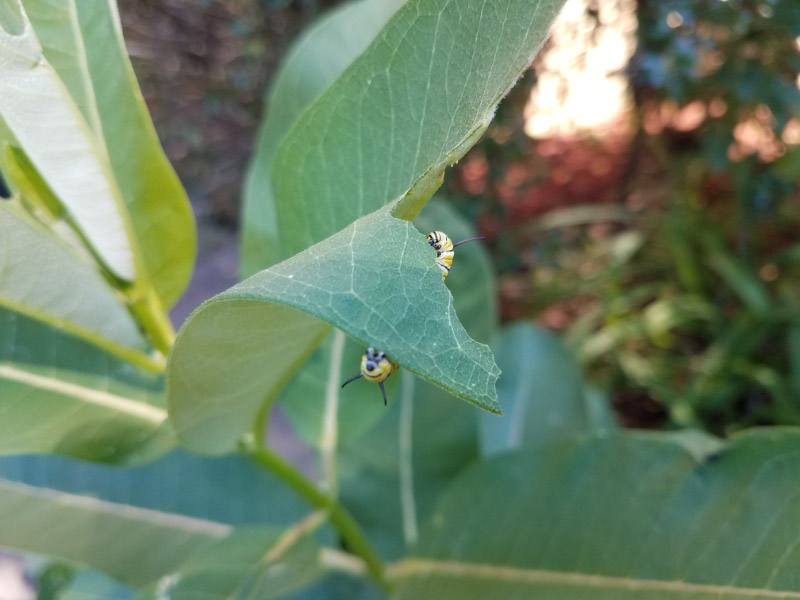
My first experience with the Fishmobile was back in April at an elementary school in Carroll County (posted about it here). I got an email just after I returned from Texas asking if I could help with the Fishmobile’s visit to a nature center near where I life for a weekend event. I still had committed to anything else so I accepted. The day started out well when I checked the milkweed in my front flower bed and found a good-sized Monarch caterpillar!

20180708_093523.jpg

The day was not too hot and my ‘shift’ was from 10-12 when the temperature was in the mid-70s. Most of the animals that were there for the school were in the tanks again: horseshoe crabs, Larry the diamond backed terrapin, a blue crab, and a box turtle.

The American eel was silvery and was more active this time. The only thing I missed from last time were sea horses but there were some preserved ones to talk about with the families that came through. In the two hours I was there, almost 200 people came through. Some of the children came through the exhibit several times (after they built up their courage to experience the two touch tanks).

During one lull I stepped off the Fishmobile bus and photographed some bees on the plants just outside. The bees were very active and focused on the flowers…not flying amongst the people coming to the Fishmobile.

After my shift was over, I walked over to the compost demo and filled out the form to get a free compost bin. After the tour yesterday and further education today, I am going to do my own compost. My plan it to put the bin back near the forest and start it off with some shredded paper and veggie/fruit scraps from the kitchen. This time of year taking the watermelon rinds to the compost bin will be a lot easier than lugging them to the curb in a trash bag that might leak! Stay tuned for posts about my compost adventure.

Howard County Composting Facility

I attended a public tour of the composting facility in the county where I life yesterday morning. There is an expansion of the facility being built now but the pilot program has been going on for several years – lots of ‘lessons learned’ being applied to the expansion that will allow more of the county – hopefully the area where I live – to have curbside compost pickup.

The part of the facility that is currently in operation starts with piles of compostables collected from homes and some farm waste (like horse manure).


After being chopped up, it is made into piles. The material is processed for about 45 days in the piles – moved around with bulldozers to get air to all the material so that the decomposers can work. The temperatures in the piles are high enough to kill seeds which is important to the users of compost as a soil enhancer.

2018 07 IMG_1713.jpg

The piles are made over two pipes that pull air from through the pile and then

2018 07 IMG_1715.jpg

Through wood chips and finished compost (the large pipe in the foreground has pipes that push air under the wood chips/finished compost on the other side) – an effective strategy to reduce odors. The only period when odors come through that filter – so far – has been after Christmas when the discarded trees are in the piles; the pine smell is not one that people are likely to complain about so kudos to the design!

2018 07 IMG_1717.jpg

While we were there, there was a pile that was ready to be moved to the area where the compost cures; the work was done with a bulldozer…making multiple trips.

2018 07 IMG_1705.jpg

The piles are covered with tarps during rains; the compost does need water, but the amount must be controlled. Run off from the piles and the area around them is controlled.

2018 07 IMG_1719.jpg

The new facility under construction will have bunkers rather than piles which will increase the capacity per area over the design in use now. The design capacity must be sufficient to handle the large volume of leaves in the fall. In my case – I wouldn’t send most of my leaves to the compost facility since I have forest behind my house that has absorbed the leaves from my yard quite well. If my area is one of the lucky ones to be included in the expanded service, I’ll decide if sending the front yard leaves to composting is easier than raking them to the forest!

2018 07 IMG_1722.jpg

Gleanings of the Week Ending July 7, 2018

The items below were ‘the cream’ of the articles and websites I found this past week. Click on the light green text to look at the article.

BBC - Future - How we could survive on an asteroid – Harder than colonizing a planet…but mining asteroids from a colony on the moon or mars might be more feasible. Interesting to think about; it’s not full out science fiction at this point.

Stunning Data From The Bottom of the World: Antarctic Ice Loss Triples - Dan's Wild Wild Science Journal - AGU Blogosphere – The melting is mostly from warmer ocean waters melting submerged glaciers that have moved into the ocean.

Take a 3D Tour Through Frank Lloyd Wright's Taliesin West | Smart News | Smithsonian – I always like to see an article a place that I have visited…savor the memory. This post includes the link to the 3dlab site…lots of room to explore in a way that is the next best think to being there.

Illnesses from Mosquitoes and Ticks on the Rise | Berkeley Wellness – In our area Lyme disease (from ticks) is the one we worry about the most but there might be others that are going to become more problematic. Maryland has more mosquitos that usual right now…unpleasant and maybe unhealthy.

Red Meat Allergies Caused by Tick Bites are on the Rise – Aargh! I hadn’t heard of this one before.

Feeding the gods: Hundreds of skulls reveal massive scale of human sacrifice in Aztec capital | Science | AAAS – A short video and article about structures recently excavated that include skulls of human sacrifice victims as described by Spanish conquistadors.

China’s Plastic Ban Will Flood Us with Trash | Smart News | Smithsonian – Now that China isn’t accepting the plastic we throw in recycling – where is it going? Are our landfills going to be even more massive? Ideally recycling would get better (and done closer to where the material entered the system) rather than worse.

Petrified Forest National Park Becomes World’s Newest International Dark Sky Park – I’ve visited this park several times…and now it’s a dark sky site. It’s a long way from Maryland but maybe we’ll eventually get there for a star party!

Why Europe’s astronauts are learning Chinese – China is taking the steps to be the third big player in space….and Europe is planning to cooperate with them just as it does with the US and Russia.