eBotanical Prints – July 2025

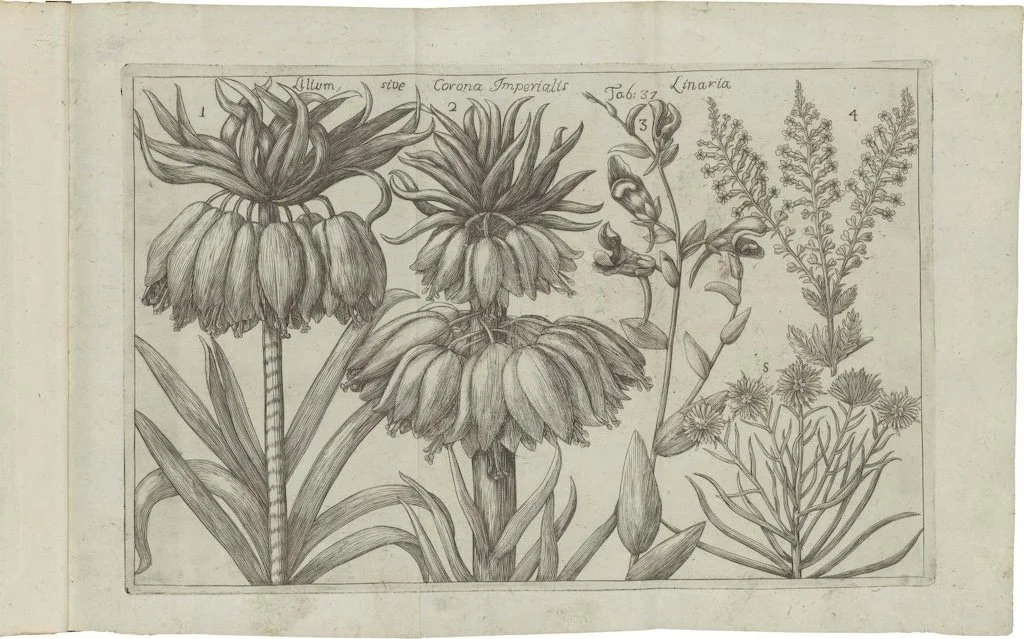
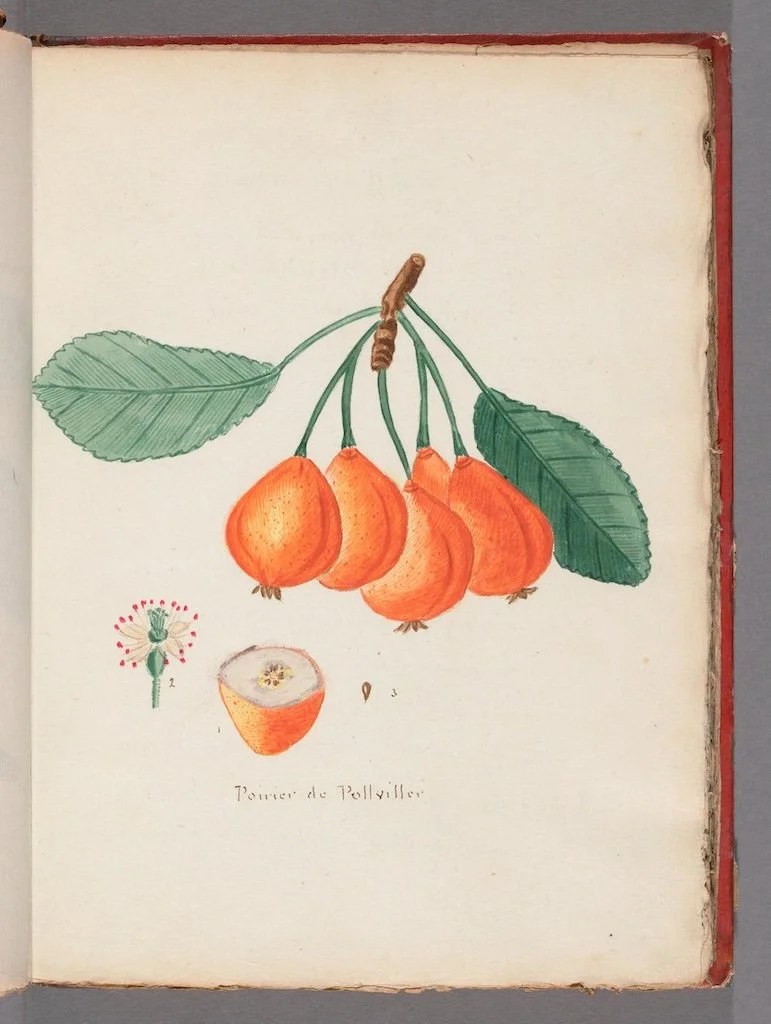
Twenty more books were added to my botanical print eBook collection in July - available for browsing on Internet Archive. Nine of the books were published in the 1800s, 4 in the 1700s, and 5 in the 1600s. All had colorful illustrations of plants.

My list of eBotanical Prints books now totals 3,163 eBooks I’ve browsed over the years. The whole list can be accessed here.

Click on any sample image from July’s 20 books below to get an enlarged version…and the title hyperlink in the list below the image mosaic to view the entire volume where there are a lot more botanical illustrations to browse.

Enjoy the July 2025 eBotanical Prints!

162 Drawings of Plants * Hamilton, Dame Ann * sample image * 1752

Collection of botanical studies * French School * sample image * 1820

Classe onzieme suite des plantes a fleur irreguliere composee de plusieurs feuilles ou nomme fleurs irregulieres polipetales * French School * sample image * 1700

An Album of Flowers * French School * sample image * 1790

Mongewell Flora * Bishop of Durham * sample image * 1807

Album de botanique V1 * Prevost-Hersant, Constant Amable * sample image * 1856

Album de botanique V2 * Prevost-Hersant, Constant Amable * sample image * 1856

Album of English plants * Pettman, M.  * sample image * 1841

Drawings for Mordant de Launay's Herbier général de l'amateur * Bessa, Pancrace * sample image * 1827

Delectus florae et faunae Brasiliensis jussu et auspiciis francisci i. austriae imperatoris investigatae * Mikan, Johann Christian * sample image * 1825

Getekende planten van rupelmonde V1 * Toulon, Martine Adriane Marie Van * sample image * 1823

Getekende planten van rupelmonde V2 * Toulon, Martine Adriane Marie Van * sample image * 1823

Getekende planten van rupelmonde V3 * Toulon, Martine Adriane Marie Van * sample image * 1823

An album of garden flowers and manuscript record book detailing plant purchases * Dutch school * sample image * 1680

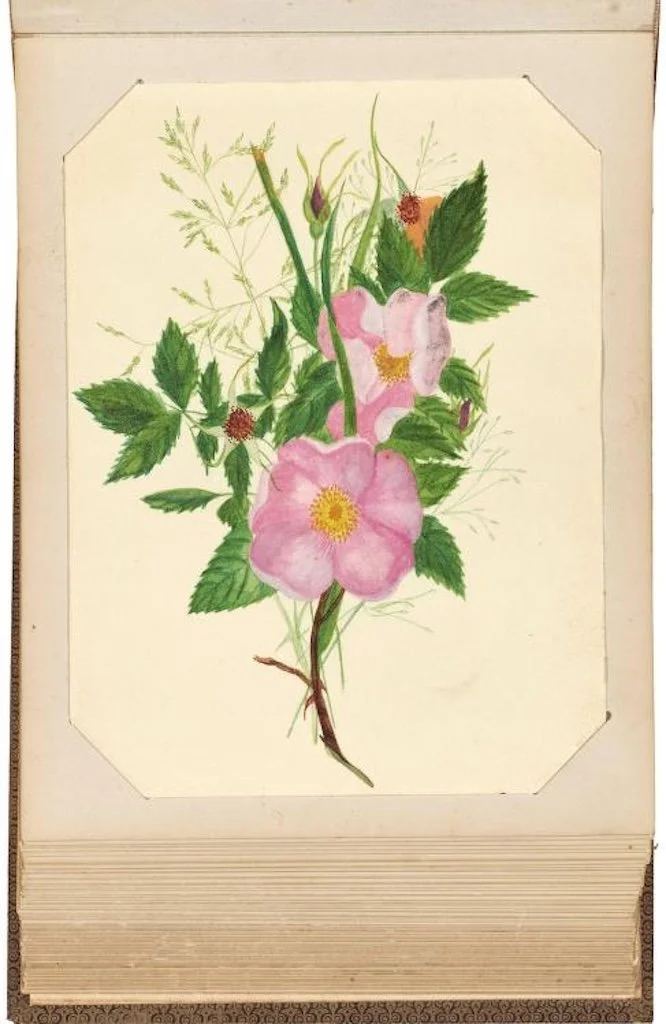
Wild flowers of America * M, A.C. * sample image * 1879

Pharmacopoeus Insuleinsis 1789 * Decroix, Stanislaus * sample image * 1789

Botanical manuscript with 265 drawings of plants * Schmitz, Elizabeth Pieth * sample image * 1678

Dutch florilegium V1 * Withoos, Jan * sample image * 1670

Dutch florilegium V2 * Withoos, Jan * sample image * 1670

Dutch florilegium V3 * Withoos, Jan * sample image * 1670

Ten Little Celebrations – July 2025

July was a great month to be outdoors – even though it was very hot…plenty to celebrate.

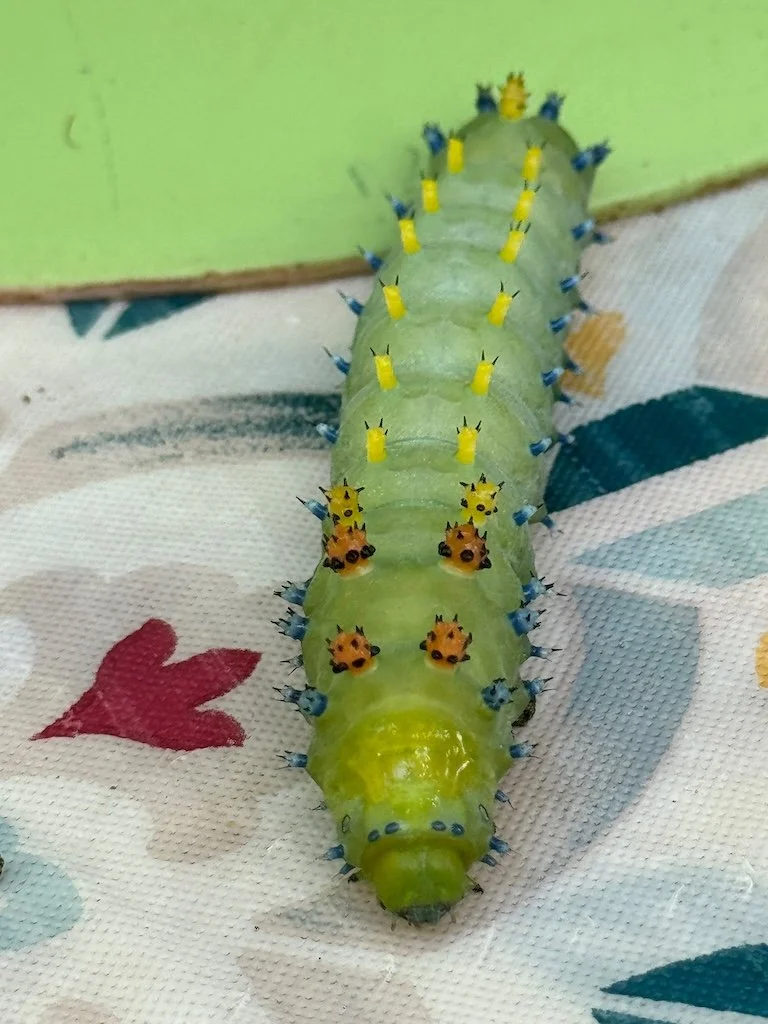
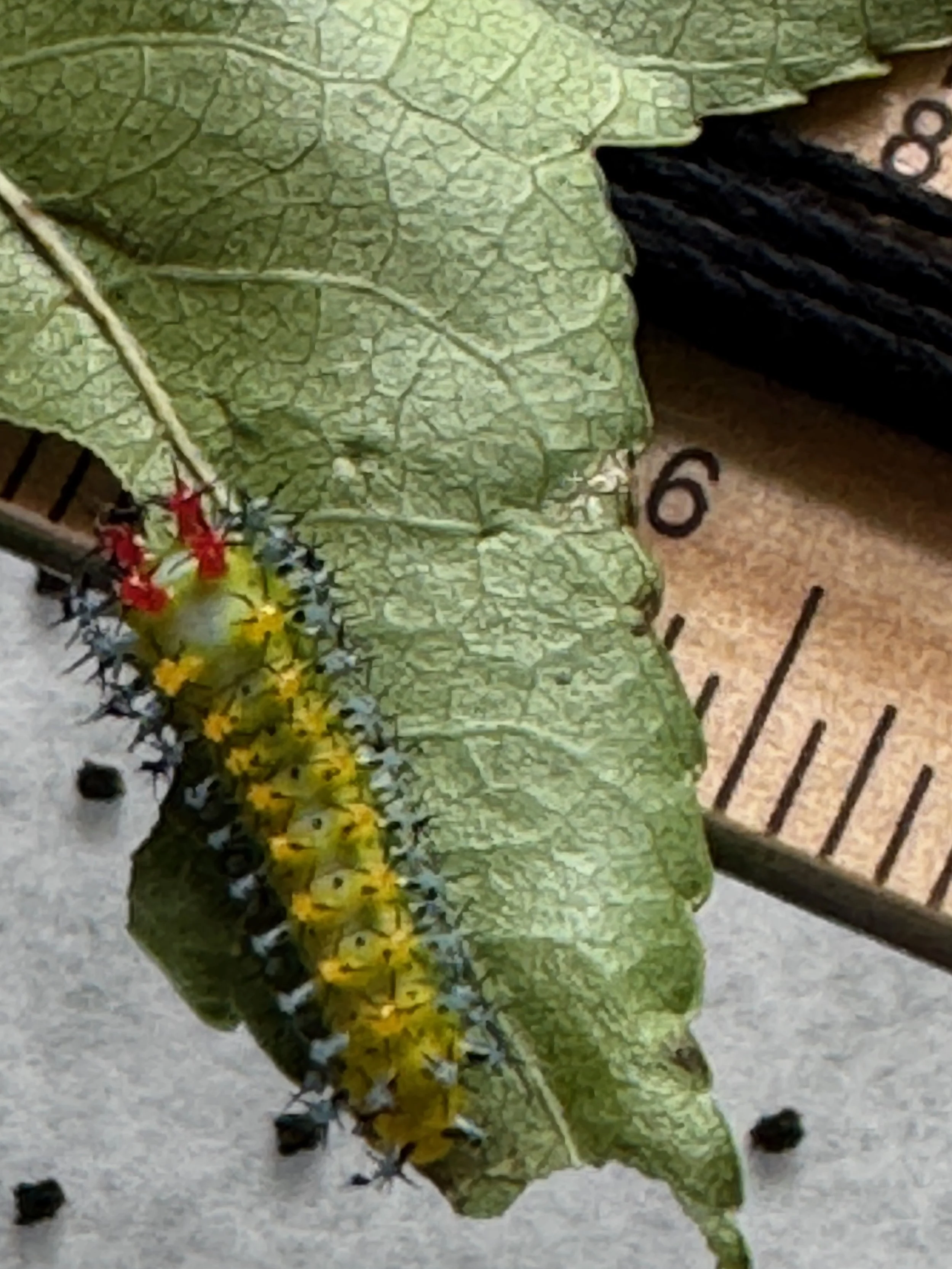
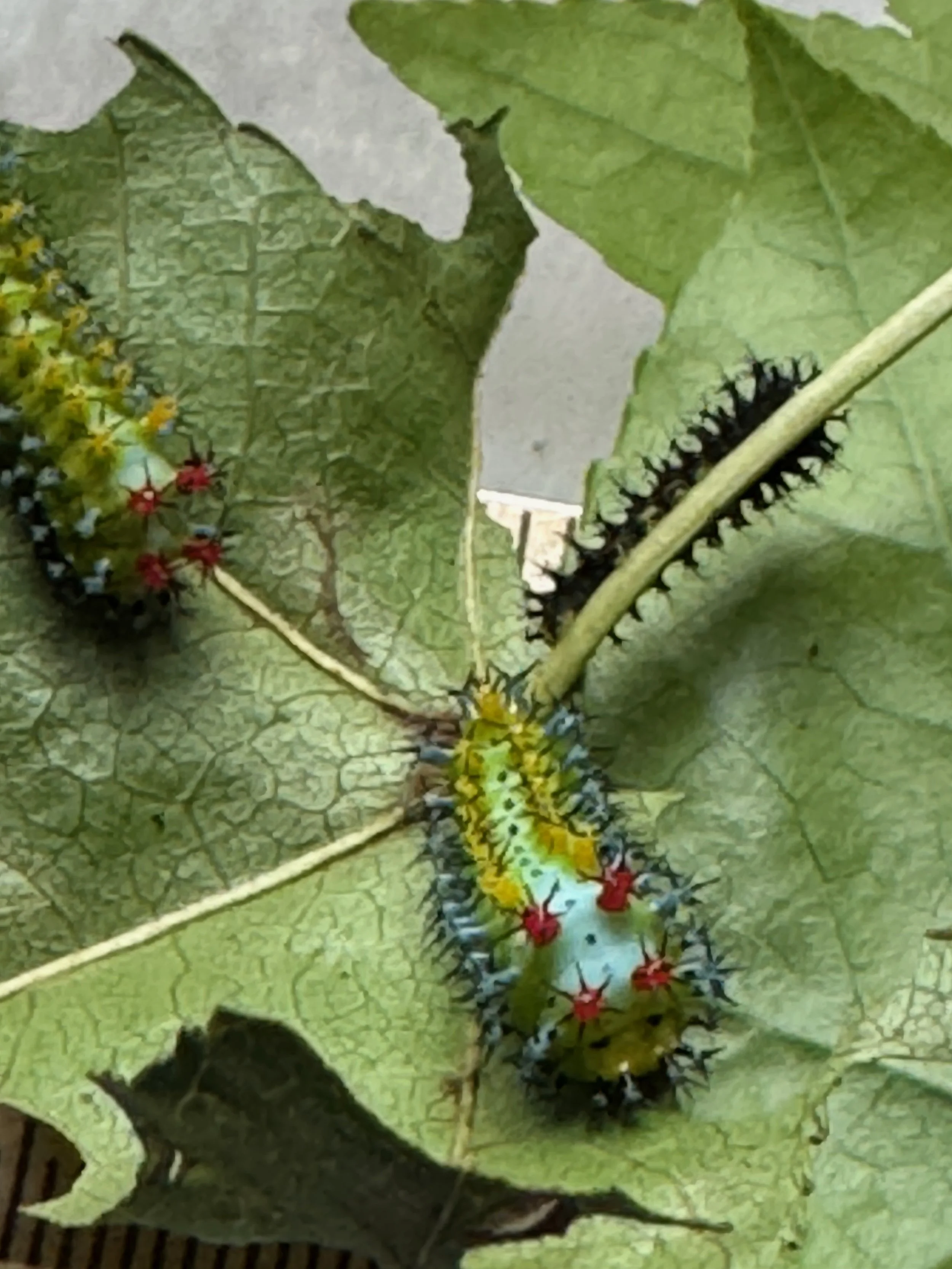
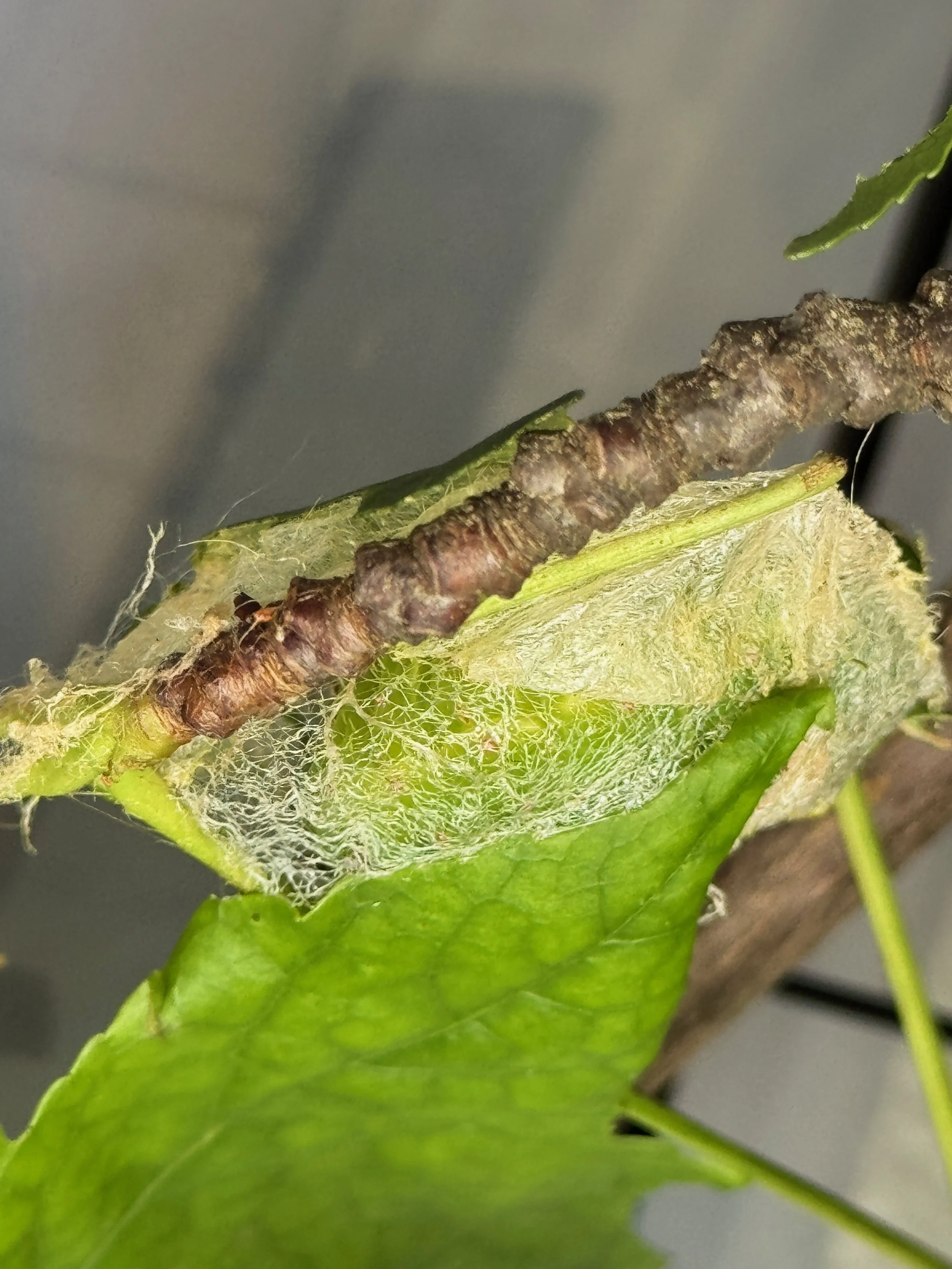
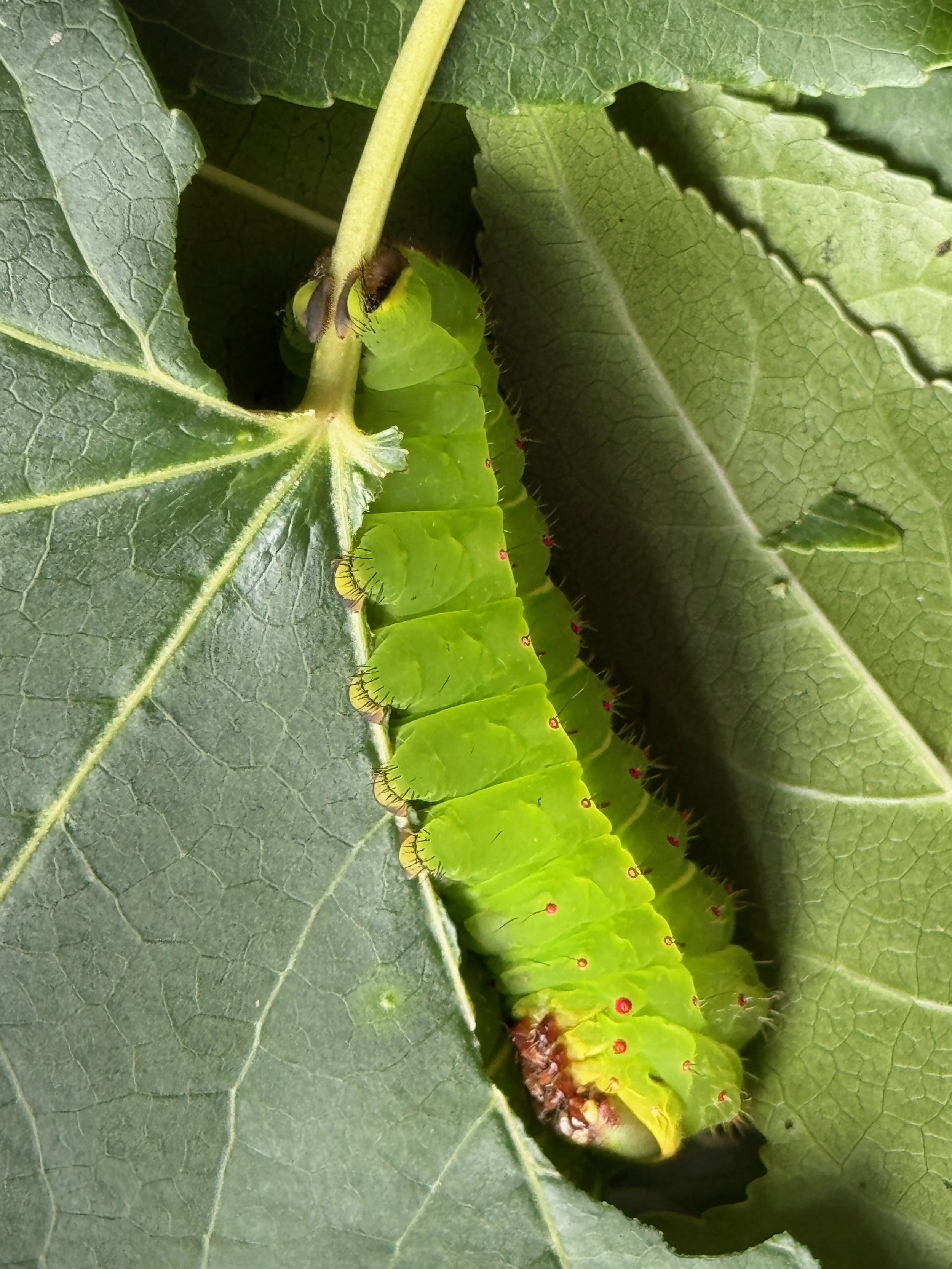
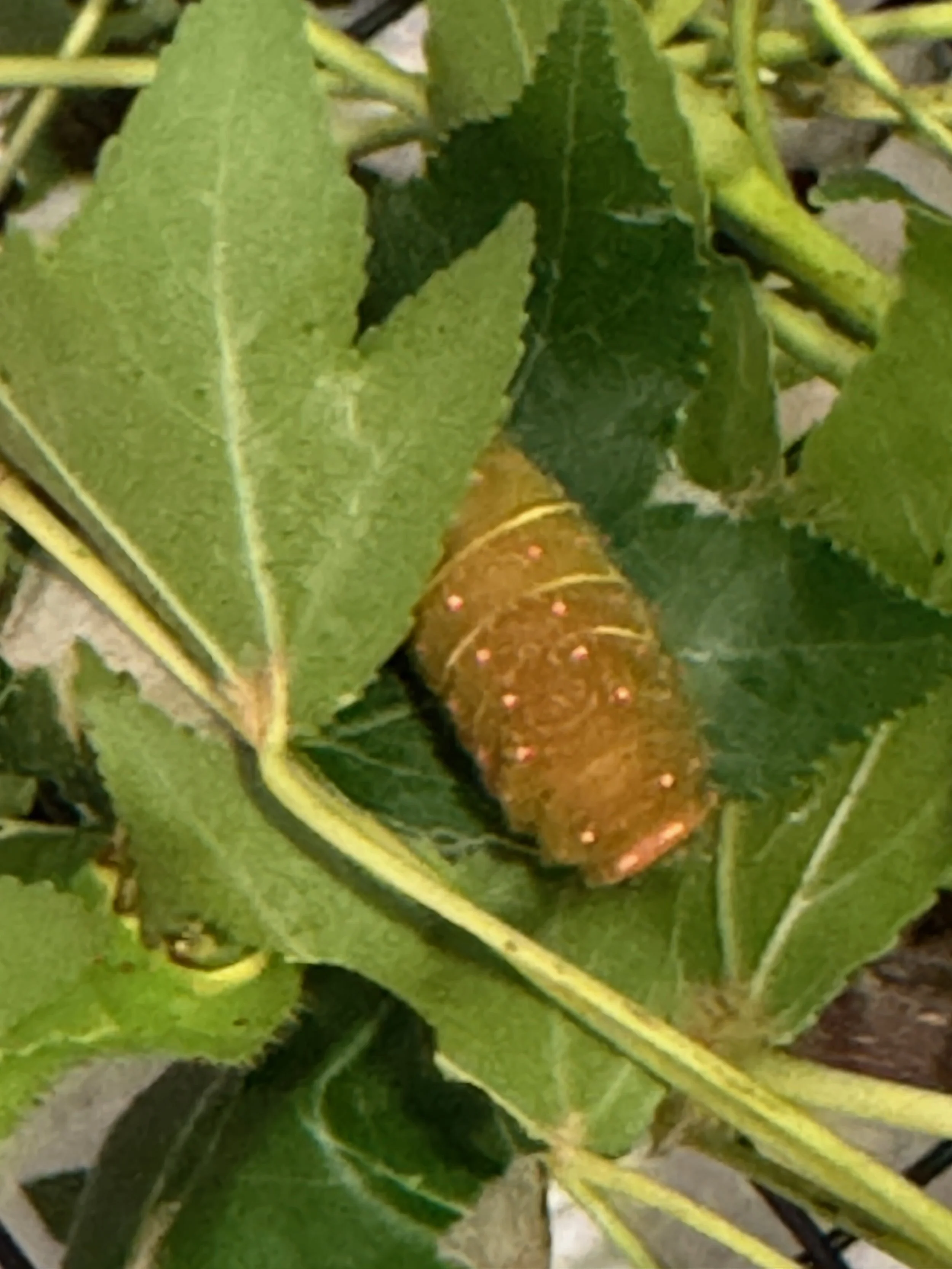
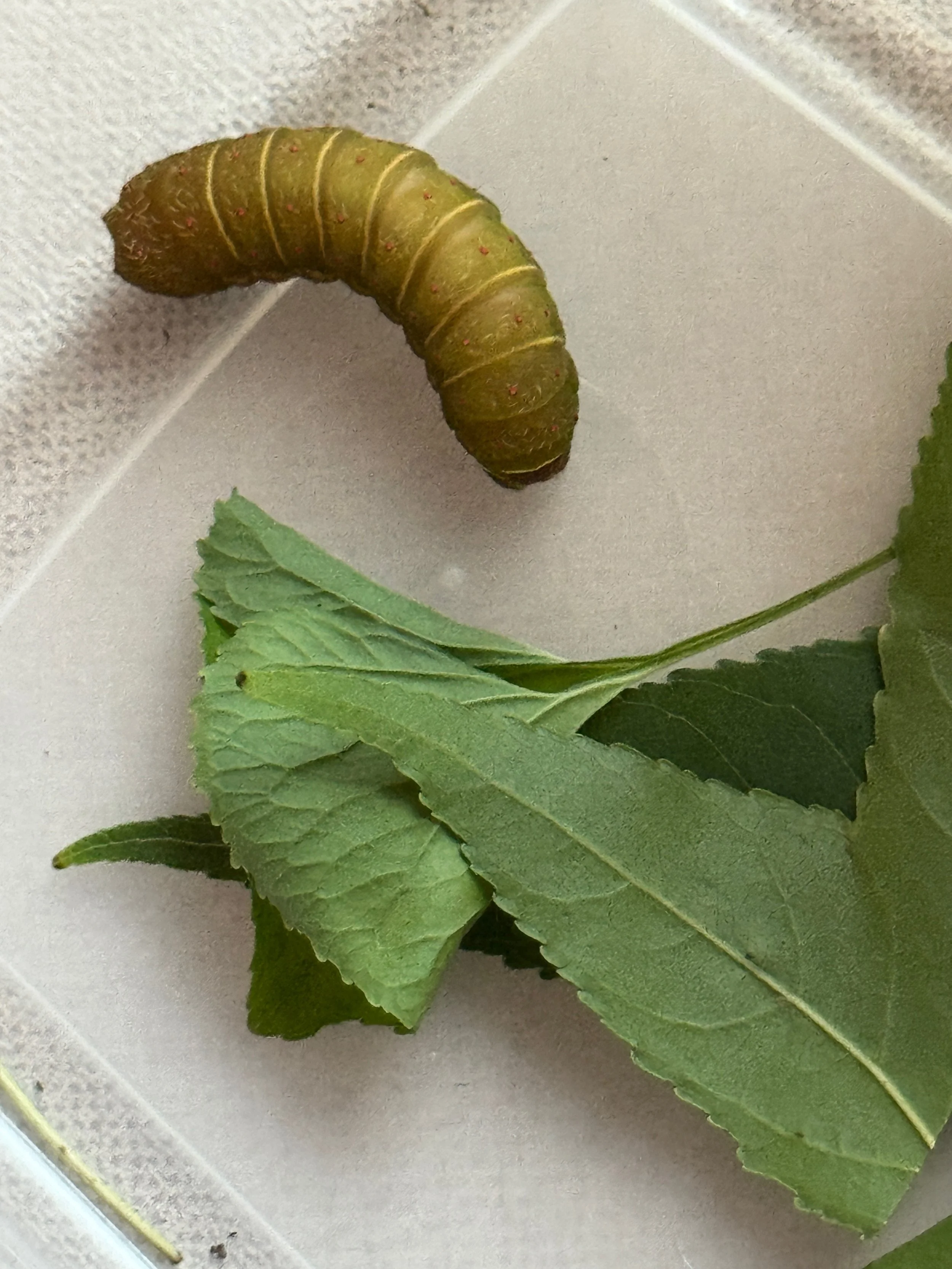
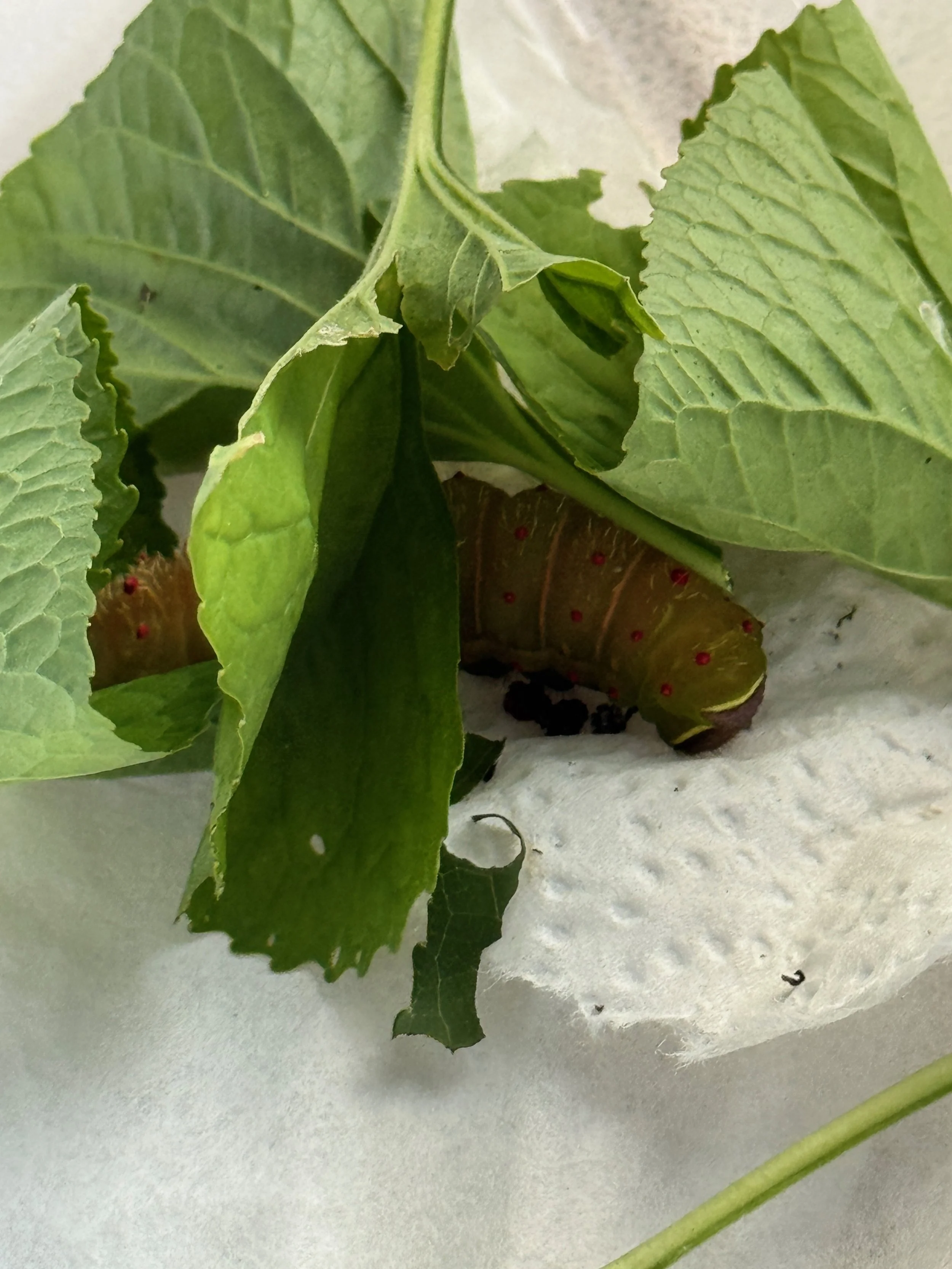
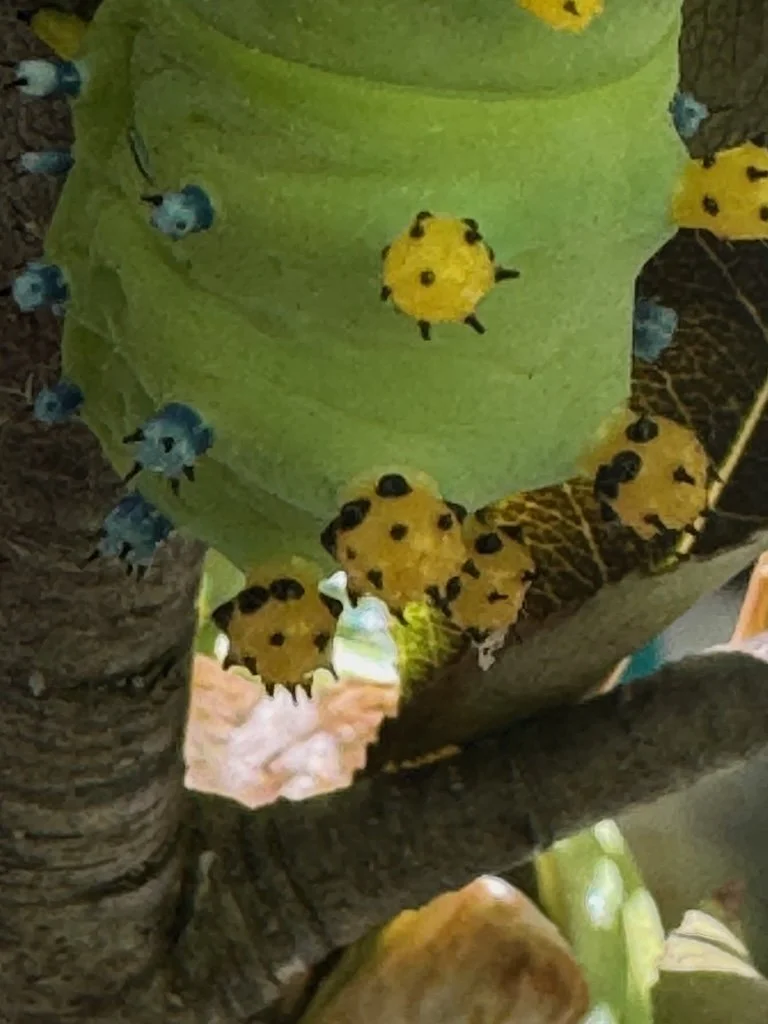
Rescuing a large cecropia caterpillar from the trash. One of my morning shifts at the Butterfly House started with quite a surprise….finding a cecropia caterpillar in the trash while I was cleaning up before opening. I celebrated that I happened to look down before I threw in the messy paper towel…and could easily return the caterpillar to the table display.

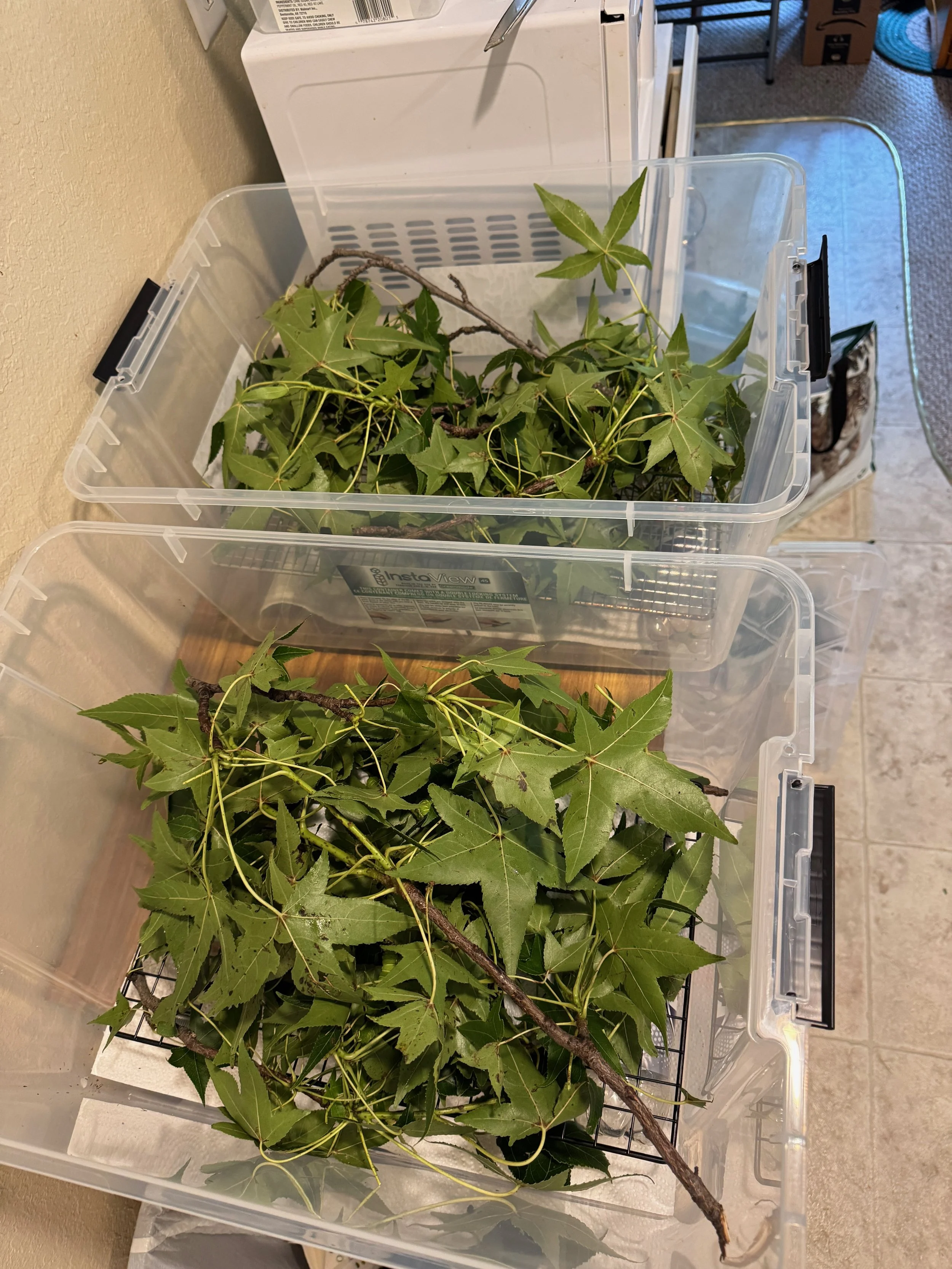
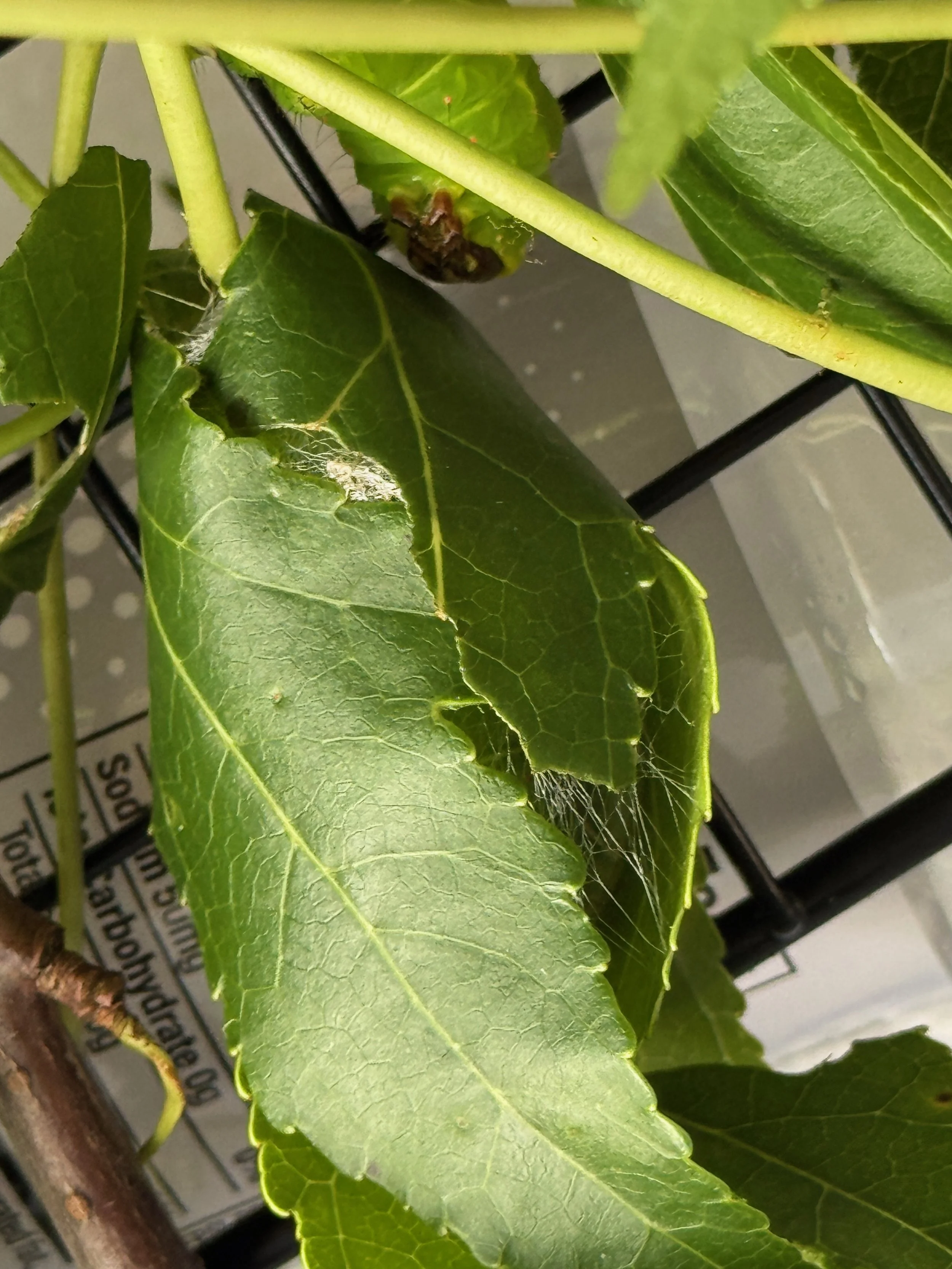
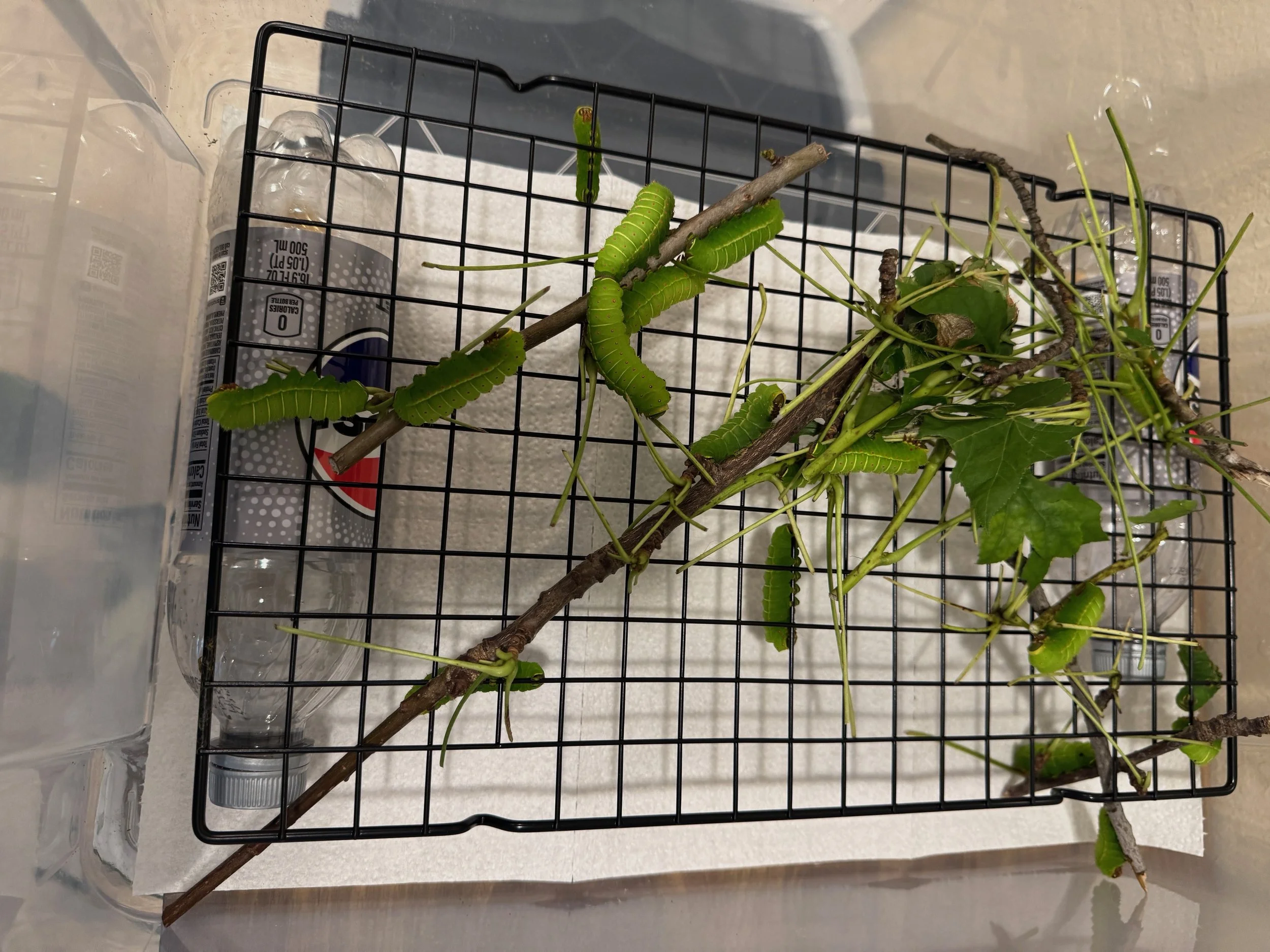
Luna caterpillars making cocoons. I celebrated when my 40 or so Luna Moth caterpillars started making their cocoons. When they were all large caterpillars, it was challenging to keep them sufficiently supplied with sweet gum leaves.

More and more cocoons…and then I took the last 4 Luna caterpillars to the Butterfly House. I celebrated some quite days with only rustlings from the pupa inside the cocoons.

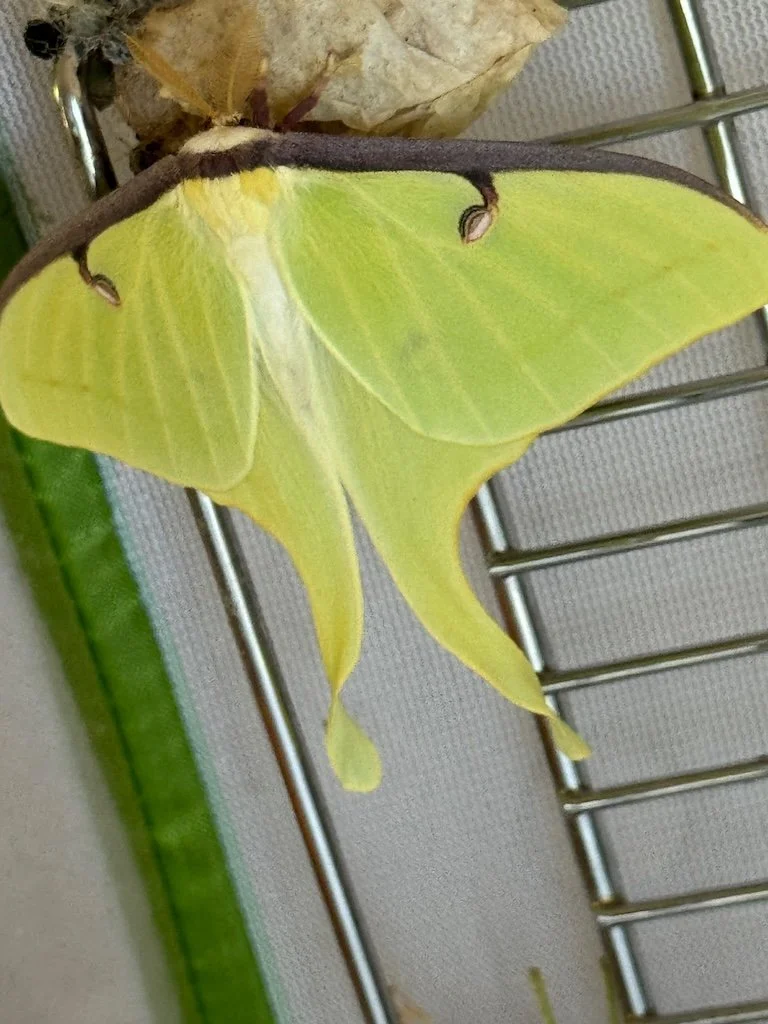
The first Luna Moths emerging. The first moths started to emerge…3 males in one day! I celebrated that so many of the cocoons seem viable too…so many more of these beautiful moths will be emerging soon.

A late afternoon barbeque picnic and evening mothing. I celebrated with a great meal with fellow Butterfly House docents…and then seeing how lights and sheets in the evening attract moths.

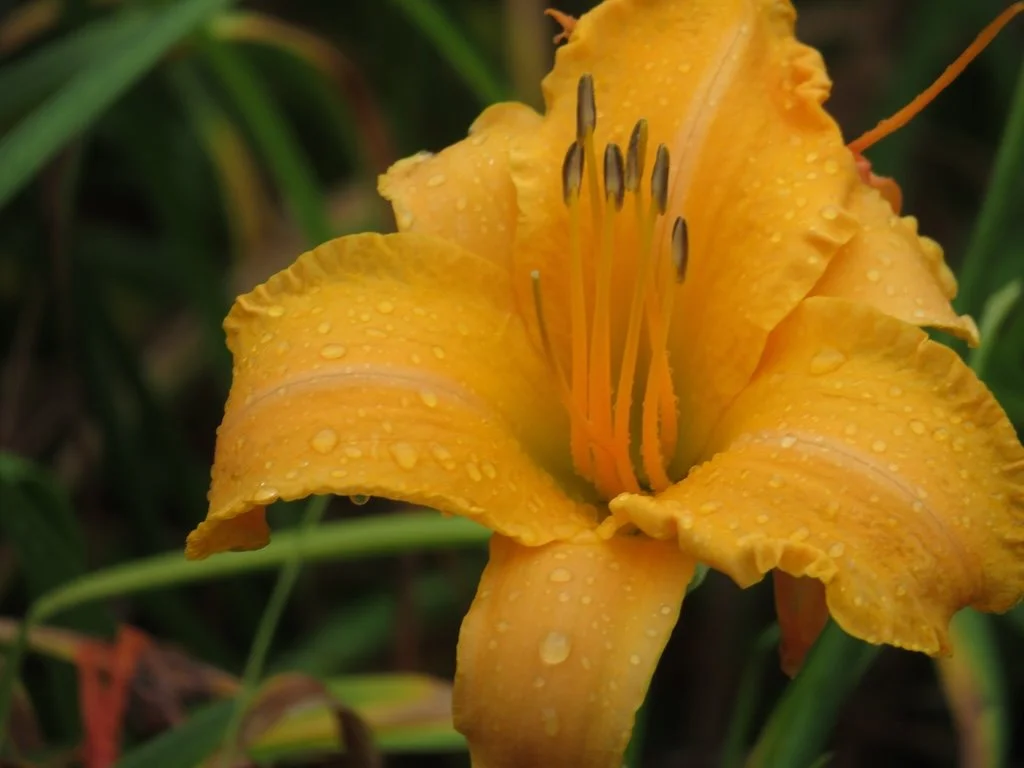
Dayl ilies at the Botanical. I celebrate the profusion of color and form of the day lilies every year about this time.

Finding S. Fred Prince’s The rainbow in the grass; wildflowers of the Marvel Cave Ozark. I was doing my usual look at botanical books for next month and happened upon this beautiful one from the early 1900s about the wildflowers in the Branson MO area….close to where I live!

Seeing cattle egrets. As I drove north from Dallas, I saw a flock of cattle egrets flying over the highway. It must be a good year for producing young.

Lake Springfield Boathouse Garden. My husband and I always enjoy the plantings around the building…and the walk down toward the field of wildflowers. We went early enough in the day that it wasn’t too hot.

Sunflowers at the assisted living home. My sister planted sunflowers in a big pot (and some of the seeds must have spilled because several plants are growing in the soil next to the pot). I celebrated that they are thriving and the memory that my niece brought a sunflower seedling in a cup home from kindergarten, and my mother propagated them along the alley for years. That niece is getting ready to have her second child soon.

eBotanical Prints – June 2025 - updated

Twenty more books were added to my botanical print eBook collection in June - available for browsing on Internet Archive. Most books were published in the 1800s (14 of the 20) although there were 5 from the 1700s. The first book on the list - The Illustrated Garden: Books from the Missouri Botanical Garden, 1485–1855: An Exhibition at the Saint Louis Art Museum – was published in 2004 and is going to be a great reference and I continue to explore eBotantical Prints!

My list of eBotanical Prints books now totals 3,143 eBooks I’ve browsed over the years. The whole list can be accessed here.

Click on any sample image from June’s 20 books below to get an enlarged version…and the title hyperlink in the list below the image mosaic to view the entire volume where there are a lot more botanical illustrations to browse.

Enjoy the June 2025 eBotanical Prints!

The Illustrated Garden: Books from the Missouri Botanical Garden, 1485–1855: An Exhibition at the Saint Louis Art Museum * Herndon-sonsagra, Francesca * sample image * 2004

Album containing watercolors of plants * American School * sample image * 1881

Curiosites de la nature. des fleurs * French School * sample image * 1756

Four albums of flowers by an amateur artist and botanist V1 * English School * sample image * 1828

Four albums of flowers by an amateur artist and botanist V2 * English School * sample image * 1828

Four albums of flowers by an amateur artist and botanist V3 * English School * sample image * 1828

Four albums of flowers by an amateur artist and botanist V5 * English School * sample image * 1828

La natura, e coltura de' fiori fisicamente esposta in due trattati con nuove ragioni, osservazioni, e sperienze * Arena, Filippo * sample image * 1768

Roberti Icones Platarum V1 * Robert, Nicolas; Bosse, Abraham; Chastillon, Louis de * sample image * 1701

Roberti Icones Platarum V2 * Robert, Nicolas; Bosse, Abraham; Chastillon, Louis de * sample image * 1701

Nouveau Duhamel, ou, Traite des arbres et arbustes que l'on cultive en France V1 * Loiseleur-Deslongchamps, M. * sample image * 1812

Nouveau Duhamel, ou, Traite des arbres et arbustes que l'on cultive en France V2 * Loiseleur-Deslongchamps, M. * sample image * 1812

Nouveau Duhamel, ou, Traite des arbres et arbustes que l'on cultive en France V3 * Loiseleur-Deslongchamps, M. * sample image * 1812

Nouveau Duhamel, ou, Traite des arbres et arbustes que l'on cultive en France V4 * Loiseleur-Deslongchamps, M. * sample image * 1812

Nouveau Duhamel, ou, Traite des arbres et arbustes que l'on cultive en France V5 * Loiseleur-Deslongchamps, M. * sample image * 1812

Nouveau Duhamel, ou, Traite des arbres et arbustes que l'on cultive en France V6 * Loiseleur-Deslongchamps, M. * sample image * 1812

Nouveau Duhamel, ou, Traite des arbres et arbustes que l'on cultive en France V7 * Loiseleur-Deslongchamps, M. * sample image * 1812

Nouveau Duhamel, ou, Traite des arbres et arbustes que l'on cultive en France V8 * Loiseleur-Deslongchamps, M. * sample image * 1812

Collection du regne vegetal, arbres, forestiers et fruitiers, leurs fruits * Ledoulx, Pierre Francois; Verbrugge, Jean Charles; Ducq, Joseph Francois * sample image * 1831

A catalogue of English plants drawn after nature by Lady Frances Howard  * Howard, Lady Frances * sample image * 1766


Gleanings of the Week Ending July 26, 2025

The items below were ‘the cream’ of the articles and websites I found this past week. Click on the light green text to look at the article.

Greenland Sled Dog DNA Reveals a Story of Human Migration and Ancestry of the Unique Breed - The ancestors of the Inuit arrived in Greenland earlier than previously thought—potentially even before the arrival of the Vikings.

A Bird’s Eye View: Drones Search for Grassland Birds in Colorado - Drones have been used to survey animals from afar for years; this project borrows from those learnings for the novel —and challenging—task of detecting small-bodied, ground-nesting birds (Bobolinks) amid thick, tall grass, without disturbing the species of interest.

Hungary's oldest library is fighting to save 100,000 books from a beetle infestation - Tens of thousands of centuries-old books are being pulled from the shelves of a medieval abbey in Hungary to save them from a beetle infestation that could wipe out centuries of history. I wondered how many of the books have been scanned.

'Wobbly-tooth puberty': How children's brains change at six-years-old – A stage in which a child is constructing their identity, and they're trying to figure out who they are in relation to other people. The transformation includes a greater capacity to reflect on their feelings and modify them when needed, along with an "advanced theory of mind" that allows them to think more sophisticatedly about others' behaviors and respond appropriately. They also begin master the basics of rational enquiry and logical deduction, so that they can take more responsibility for their actions

How a hidden brain circuit fuels fibromyalgia, migraines, and PTSD - Scientists at the Salk Institute have discovered a hidden brain circuit that gives pain its emotional punch—essentially transforming ordinary discomfort into lasting misery. This breakthrough sheds light on why some people suffer more intensely than others from conditions like fibromyalgia, migraines, and PTSD. By identifying the exact group of neurons that link physical pain to emotional suffering, the researchers may have found a new target for treating chronic pain—without relying on addictive medications.

Greenland’s Bejeweled Ice Sheet - In spring 2025, jewel-toned points of blue began to appear on the white surface of the Greenland Ice Sheet. As summer arrived, they grew larger and more numerous, taking on unique shapes and occasionally forming connections. The colorful seasonal phenomenon is due to meltwater from snow and ice, which pools atop the ice sheet in places each melt season. An image from the Operational Land Imager-2 on NASA’s Landsat9.

Easter Island Was Far Less Isolated Than Previously Believed, Study Reveals - Earlier genetic studies in the 2010s laid the ground for the most recent investigation, showing that Easter Island was reached at least two times by the 14th century. Further influence arrived from pre-European South Americans, an interaction evidenced by the presence of sweet potatoes and the Birdman concept. This post is about the idea that after language, plants, animals, and material culture arrived on Easter Island from the west, monumental ritual architecture began traveling in the opposite direction.

In a First, Solar Was Europe’s Biggest Source of Power Last Month - Solar was the largest source of electricity in the EU in June, supplying a record 22 percent of the bloc’s power. Solar amounted to more than 40 percent of generation in the Netherlands and 35 percent in Greece. Analysts say that the June surge in solar power helped Europe weather a brutal heat wave, which saw temperatures soar upwards of 110 degrees F (43 degrees C). Last month was the warmest June on record in Europe, and scientists say that climate change played a key role in the heat wave, pushing temperatures to dangerous extremes.

Inequality has risen from 1970 to Trump − that has 3 hidden costs that undermine democracy – A thought provoking post. The author described 3 ways that the increase in inequality undermines democracy: 1. Fraying social bonds and livelihoods, 2. Increasing corruption in politics, 3. Undermining belief in the common good.

Honeybees remove 80% of pollen—leaving native bees with nothing - Our modern agricultural industry is so reliant on honeybees that humans have introduced them worldwide, and in many cases, they have escaped human management and risen to prominence in natural ecosystems as non-native, feral populations. And, like any other non-native organism, feral honeybees may perturb native ecosystems when they become sufficiently abundant.

Life Magazine in 1939

Internet Archive has digitized versions of many Life Magazines. I have been browsing through them – slowly since there was an issue for each week. As I looked at the issues from 1939, I thought about my parents in elementary school then. War was becoming more serious over the course of the year but Pearl Harbor was not until December 1941; the US was providing supplies but was not actually engaged in the war effort.

Life Magazine 1939-01-02 – Japanese Navy holds the Yangtze

Life Magazine 1939-01-09 – Very cold in Europe

Life Magazine 1939-01-16 – US Capitol building

Life Magazine 1939-01-23 – Scenes from Mexico

Life Magazine 1939-01-30 – Tourist trailers in Tampa municipal park

Life Magazine 1939-02-06 – American plane breaks speed records

Life Magazine 1939-02-13 – Fort Wayne house goes up in 1 hour 4 minutes

Life Magazine 1939-02-20 – Birthplaces of presidents

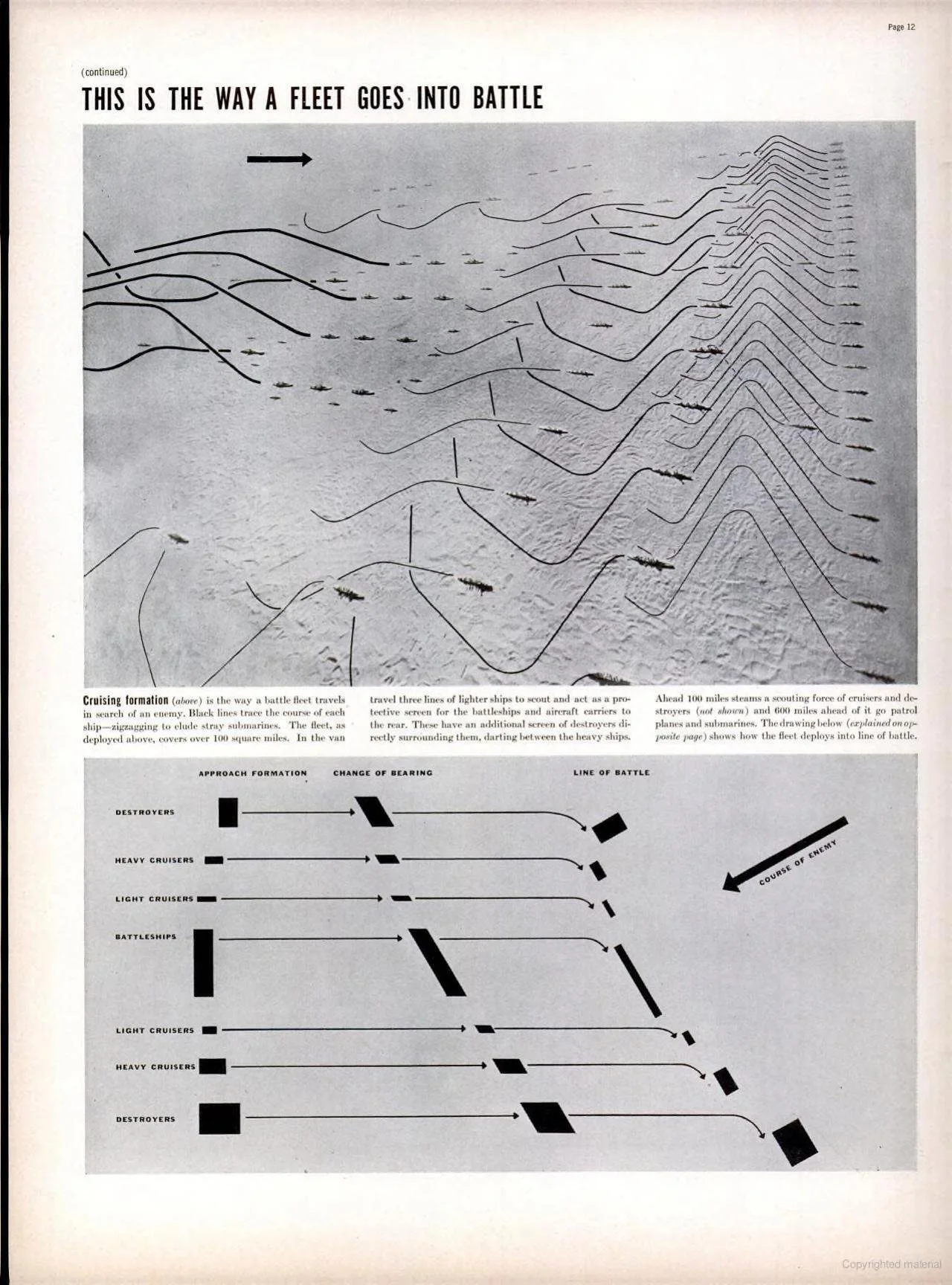
Life Magazine 1939-02-27 – This is the way the fleet goes to battle

Life Magazine 1939-03-06 – German battleship launched

Life Magazine 1939-03-13 – World’s Fair

Life Magazine 1939-03-20 - Goebbels

Life Magazine 1939-03-27 – Construction of “America” at Newport News shipyard

Life Magazine 1939-04-03 - Coelacanth

Life Magazine 1939-04-10 – Madrid falls and General Franco’s Spain joins the European dictatorships

Life Magazine 1939-04-17 – Britain’s defense against planes from continent

Life Magazine 1939-04-24 – Marian Anderson

Life Magazine 1939-05-01 – Louis Raemaekers drawings from WWI

Life Magazine 1939-05-08 – Burning ship in Le Havre

Life Magazine 1939-05-15 – British royal women

Life Magazine 1939-05-22 – Chicago fire affects the price of wheat

Life Magazine 1939-05-29 – Hyde Park and the Roosevelts

Life Magazine 1939-06-05 – Grand Coulee Dam

Life Magazine 1939-06-12 – Albert Switzer

Life Magazine 1939-06-19 – British royalty in Washington

Life Magazine 1939-06-26 – WWI trenches

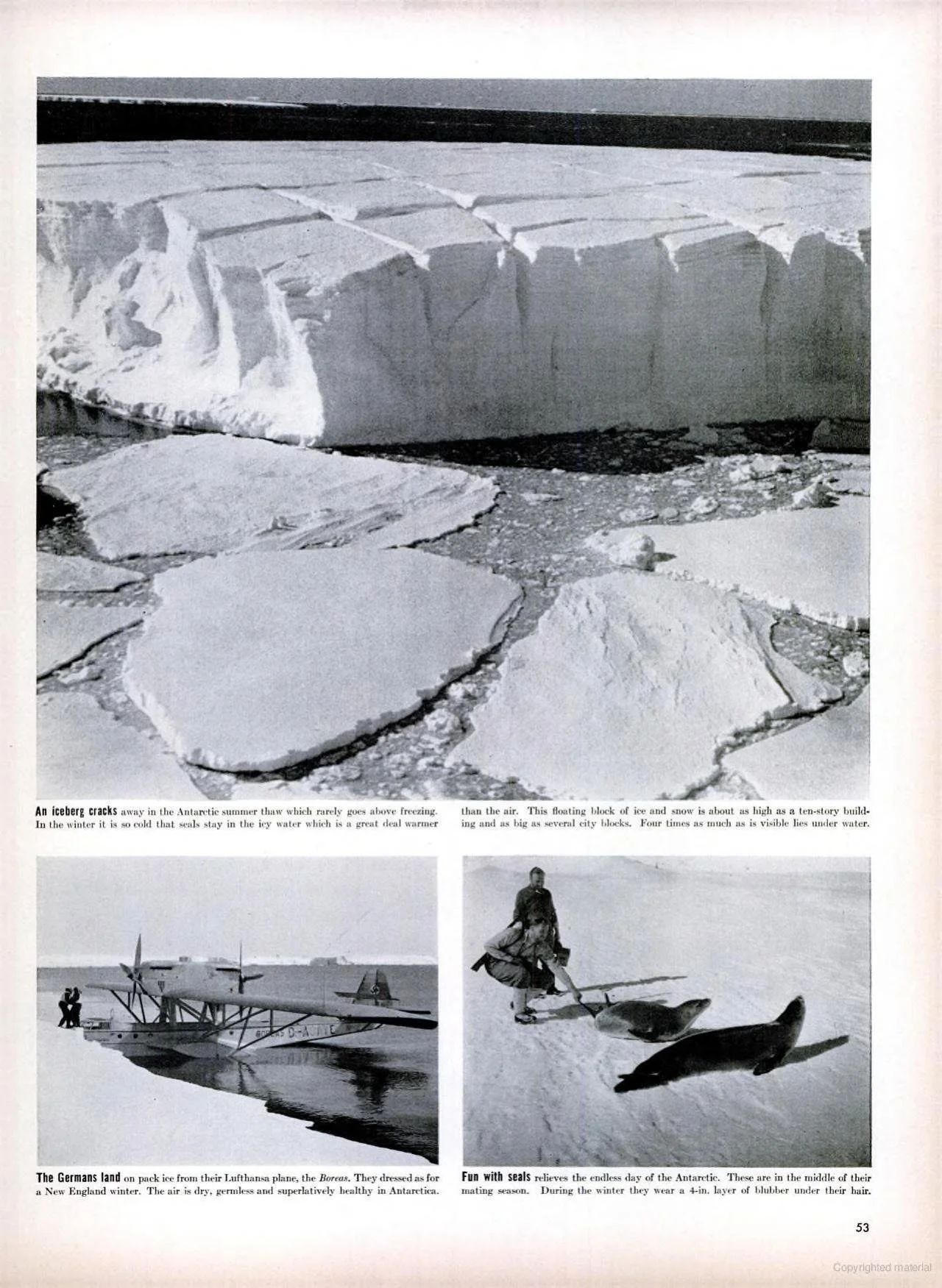
Life Magazine 1939-07-03 - Antarctica

Life Magazine 1939-07-10 – Emperor Hirohito

Life Magazine 1939-07-17 – Mount Rushmore and fireworks

Life Magazine 1939-07-24 – Coca-Cola ad

Life Magazine 1939-07-31 – Texaco Dealers (rest rooms registered)

Life Magazine 1939-08-07 – Japanese showing captured Russian tank and plane wreckage

Life Magazine 1939-08-14 – Bloody climax of U.A.W. Strike

Life Magazine 1939-08-21 – Concentration camps

Life Magazine 1939-08-28 – Wizard of Oz (technicolor)

Life Magazine 1939-09-04 – Madeline (children’s book)

Life Magazine 1939-09-11 – Salvaging the relics of WWI I France

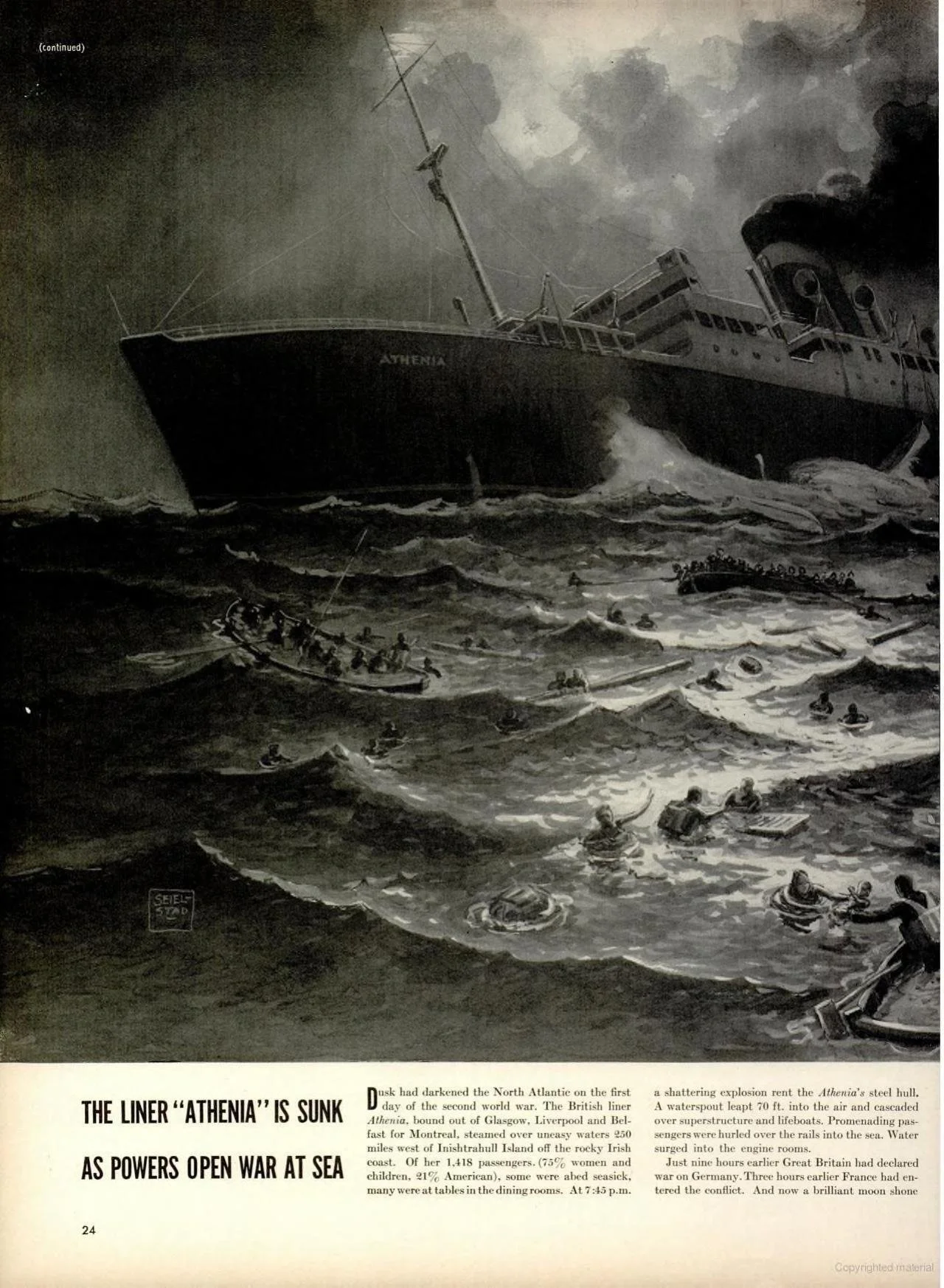
Life Magazine 1939-09-18 – Liner “Athenia” is sunk

Life Magazine 1939-09-25 – German leaves its mark

Life Magazine 1939-10-02 – The English take the war in their stride

Life Magazine 1939-10-09 – Queen Elizabeth looks over London’s air-raid precautions

Life Magazine 1939-10-16 – Hitler reviews German Army from plane

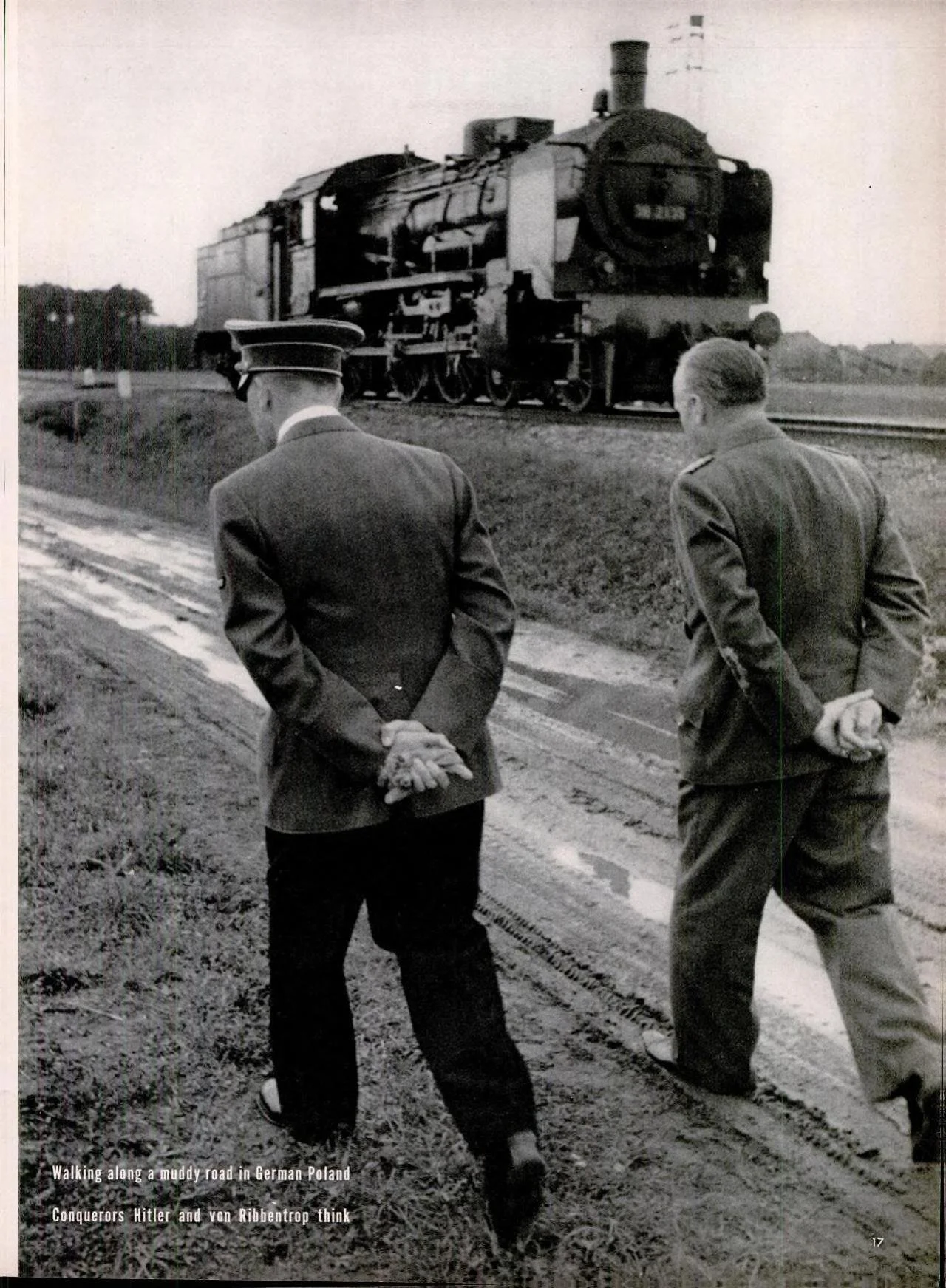
Life Magazine 1939-10-23 – Hitler and von Ribbentrop walking

Life Magazine 1939-10-30 – German submarines in the North Sea

Life Magazine 1939-11-06 – 3 Ocean liners in New York

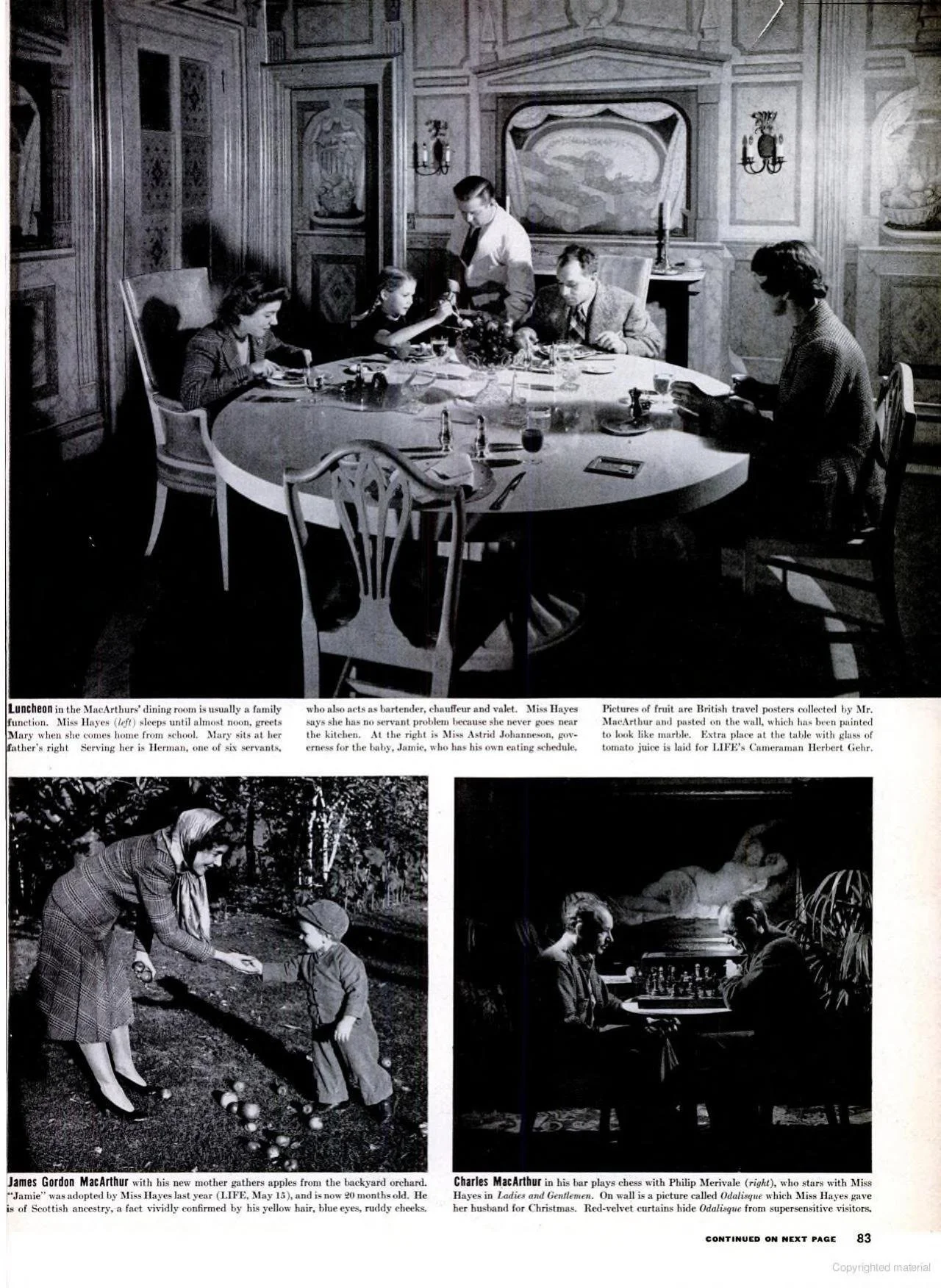
Life Magazine 1939-11-13 – Helen Hayes and family

Life Magazine 1939-11-20 – Nazi Bombers reach Scottish coast

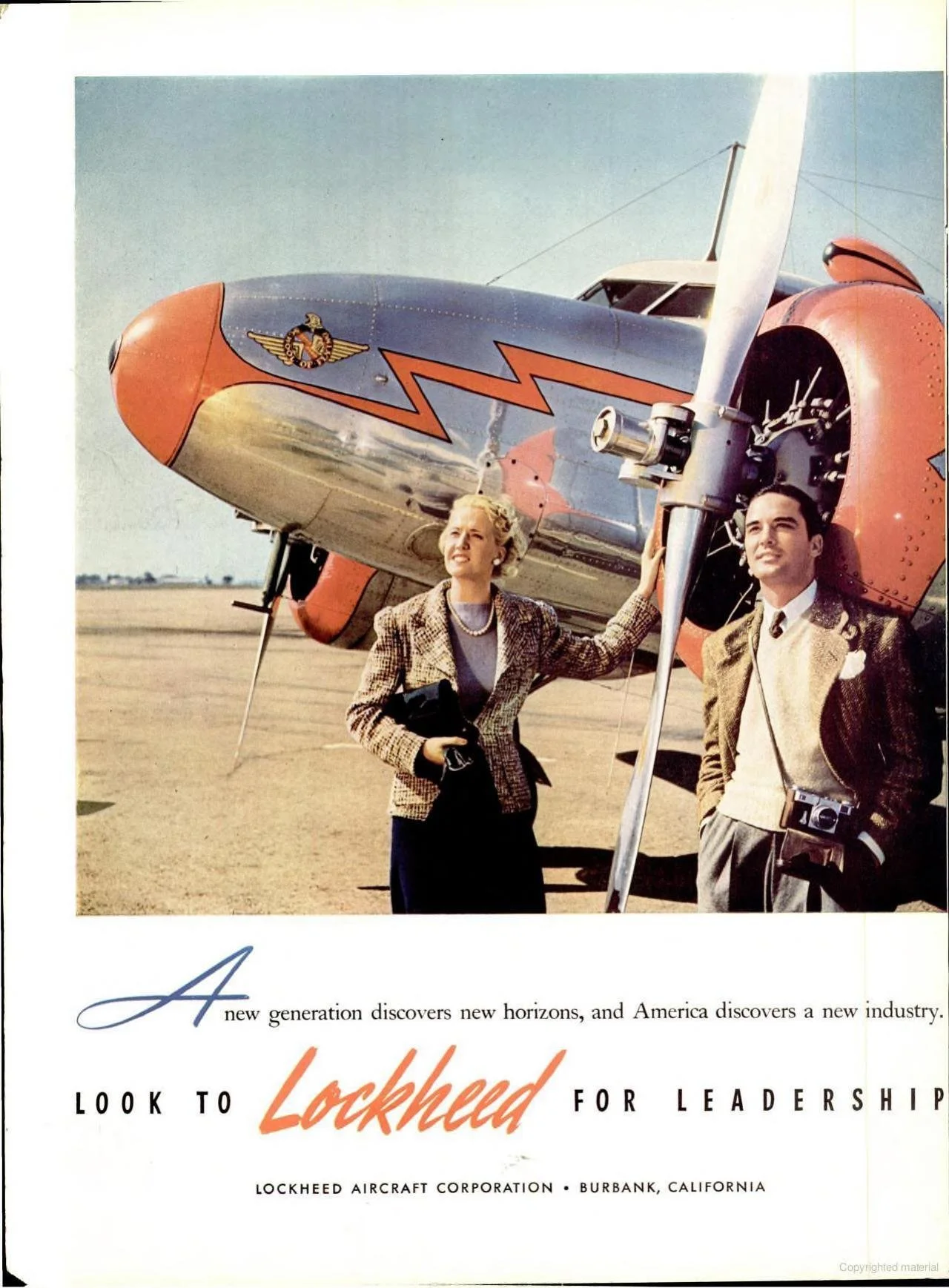
Life Magazine 1939-11-27 - Lockheed

Life Magazine 1939-12-04 – 6  of 140 Allied and neutral ships sunk in the war

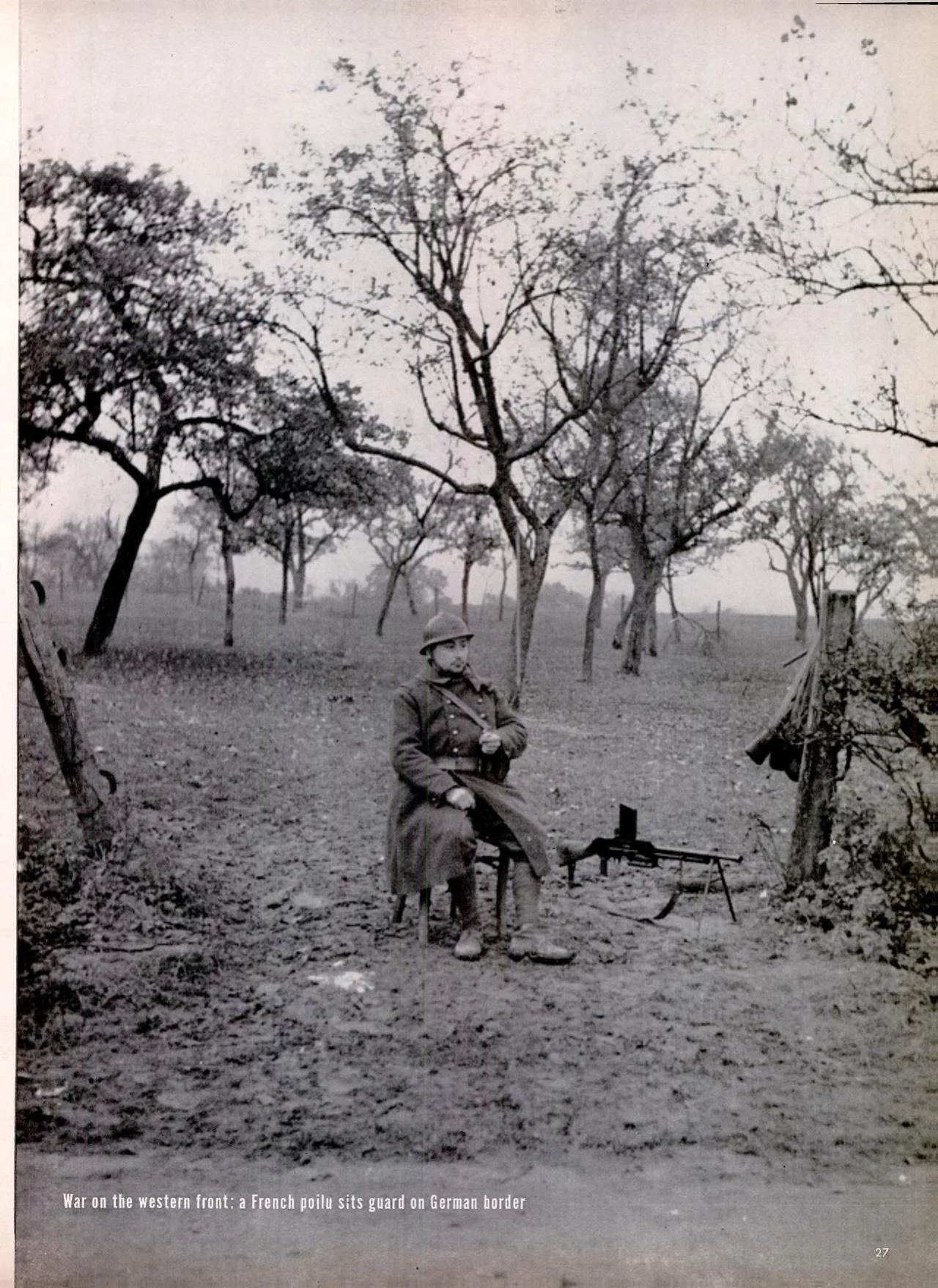
Life Magazine 1939-12-11 – French guard on German border

Life Magazine 1939-12-18 – Military inspired toys for Christmas

Life Magazine 1939-12-25 - High spots of “Gone with the Wind”

All or Mothing (1)

Last weekend, Friends of the (Springfield Botanical) Garden offered the docents for the Butterfly House a summer afternoon/evening treat - a potluck (with barbeque provided) and seeing what came to lights/sheets after dark. It was a place I had been for a field trip last fall during my Missouri Master Naturalist training (my posts about it: one, two) and I was excited to visit again. My husband came along this time, and I was glad that we were his car rather than mine (his has a higher clearance). The gravel rutted road that was the last leg seemed longer than I remembered!

There was an extreme heat warning for the day, so we didn’t do any hiking…sticking to the shady area around the cabin.

I photographed the moss on the shingles of the roof over the old well.

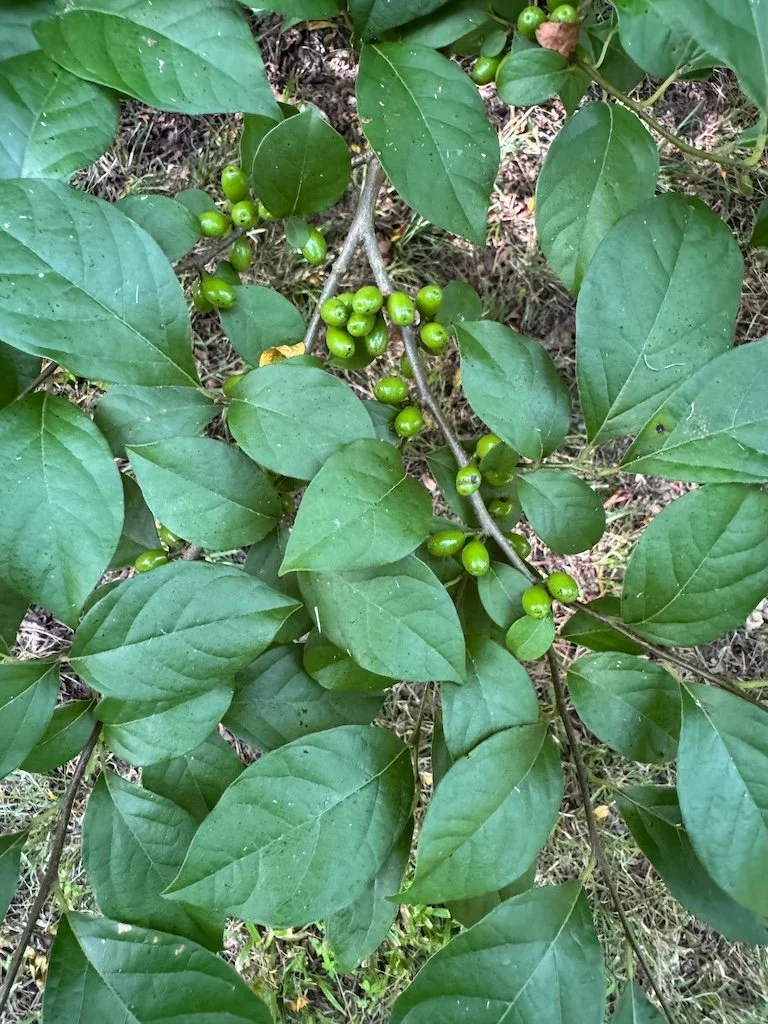
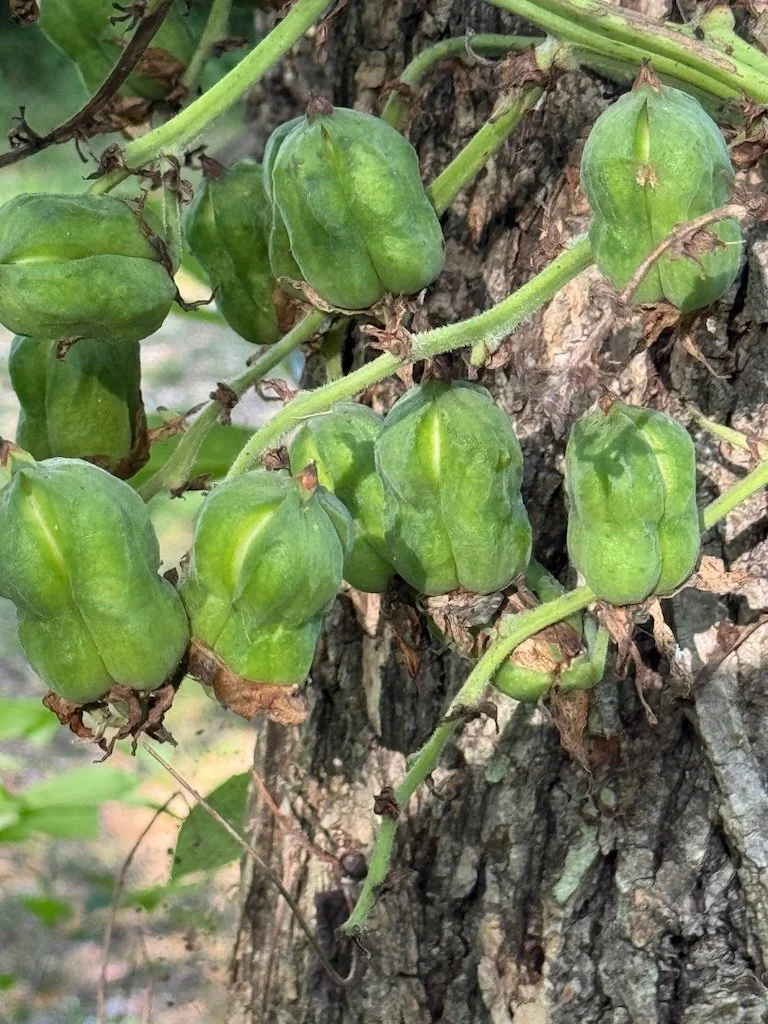
I remembered the spice bush from last fall; the fruit was red in the fall…still green now. The yucca pods were still green as well, but they are interesting shapes already.

To be continued…in a few days.

Road Trip to Dallas in July 2025

It was a very summery road trip to Dallas this month. The days started out warm and got very hot. I noticed that the temperature came down a few degrees after I exited from US75 in Dallas and drove into the neighborhood (went from 96 to 94). The 4 lanes of concrete in each direction….a wide concrete ribbon…created their own heat island. I was glad I could park in a shady place at the assisted living home and that I had packed my cosmetics in the ice chest along with the snacks!

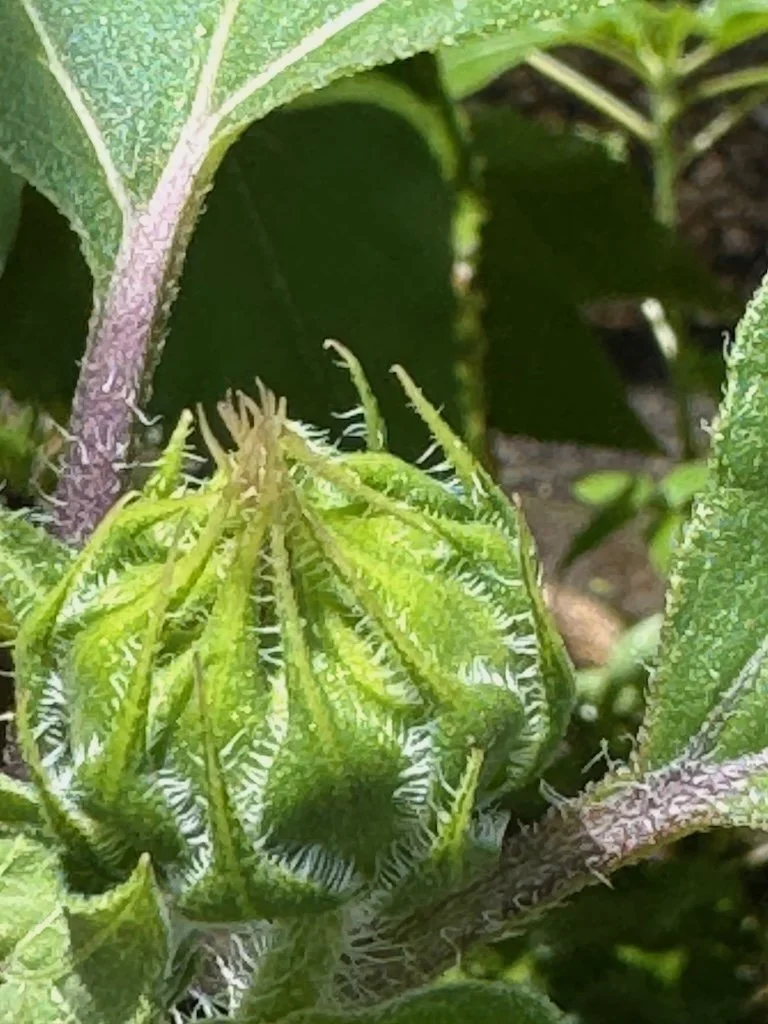
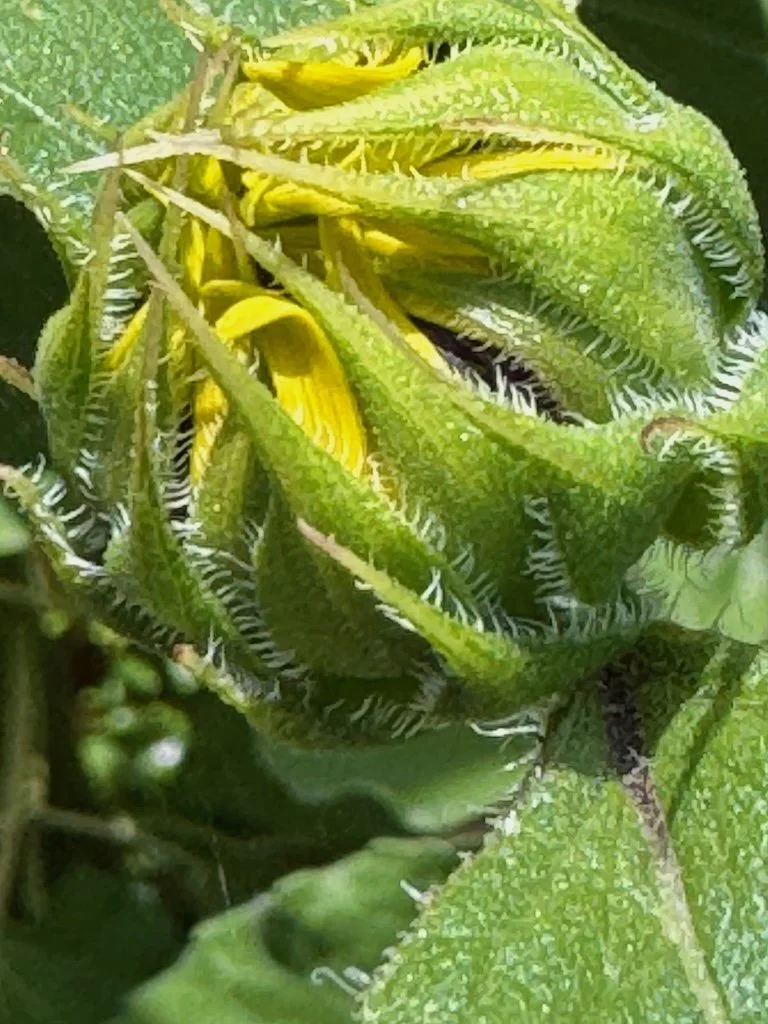
I watered the plants in the small garden that my sisters have kept going for my dad. He was too worn out from a round of physical therapy to go out with me in the afternoon (and maybe that was for the best since it was so hot), but he did the next morning when it was only in the low 80s. I took some pictures of the sunflowers after I watered and he enjoyed being outdoors while his breakfast was prepared. He was less talkative than usual and didn’t seem to be able to hear or see the planes that taking off from Addison airport.

The Texas sage was blooming but it was not as showy as I remembered; it appeared that the plants in the median on Preston Road in Plano had been neatly trimmed at exactly the wrong time!

On the plus side, I saw a flock of cattle egrets as I drove north….just before I got to the Oklahoma border. They were so showy I noticed them even with the challenges of navigating through a lot of road construction. I’m thinking about making a trek to Hagerman National Wildlife Refuge on my next road trip…maybe see even more of the young egrets there.

Gleanings of the Week Ending July 19, 2025

The items below were ‘the cream’ of the articles and websites I found this past week. Click on the light green text to look at the article.

Doctors say we’ve been misled about weight and health - Doctors' advice about healthy eating and physical activity is still relevant as it may result in better health. The main goal is to offer good care irrespective of weight, which means not caring less but rather discussing benefits, harms, and what is important to the patient.

Let’s Consider a Couple of Workable Solutions to the Plastic Crisis – The first is to reduce the reliance on plastic shopping bags. Research shows that plastic bags were much less frequently found in beach litter where communities had implemented plastic bag policies. The second is green roofs in cities. Green roofs were shown to be more than capable of intercepting microplastics — at the rate of 97.5% efficiency for trapping microplastics from atmospheric deposition…..and roof areas make up 40-50% of urban impermeable areas.

Melting Glaciers Will Lead to More Volcanic Eruptions – New research from the Chilean Patagonia. Glaciers tend to suppress the volume of eruptions from the volcanoes beneath them. But as glaciers retreat due to climate change, the findings suggest these volcanoes go on to erupt more frequently and more explosively. According to a 2020 study, 245 of the world’s active volcanoes are within three miles of ice. 

A Partnership for a Healthier Appalachian Forest - The story of the southern Appalachians – and many forests across the United States – is one of widespread logging between the early 1900s and 1940s. That was followed by the “Smokey Bear era” of fire suppression. Now active management is the strategy including thinning, herbicide application and controlled burns.

The Vienna cemetery where endangered species and biodiversity thrive – 2.4 sq km (0.9 sq miles). The cemetery is home to European hamsters, Europea green toad, Alpine longhorn beetle, European ground squirrel, and Eurasian hoopee….and many other species.

Photos: Before-and-after satellite images show extent of Texas flooding destruction – It’s hard to fathom the scope of the destruction...and how fast the water rose in the darkness.

Florida Seniors Face Rising Homelessness Risk - Florida seniors make up a growing portion of the state’s unhoused population as the housing crisis continues. Cost of housing is increasing with institutional investors buying up land and insurance costs skyrocketing.

Researchers Unearth 3,500-Year Old Peruvian City with an Illustrious History - Probably a market hub, and that once connected Pacific coast communities with those in the Andes and Amazon thriving around the same time as early Middle Eastern and Asian civilizations. The urban center is known as Peñico and was founded between 1,800 and 1,500 B.C., experts said. It is near the location where the Caral civilization, said to be the oldest in the Americas first appeared 5,000 years ago. Following eight years of research, the experts classified as many as 18 structures including ceremonial temples and residential housing complexes. Sculptural reliefs and works showing the pututu, a conch shell trumpet can also be seen on some of the walls. Researchers also found clay sculptures of human and animal figures, as well as necklaces created with beads and seashells.

Emily Sargent’s Long-Hidden Watercolors Debut at the Met – John Singer Sargent’s younger sister watercolor paintings. They were lost for decades, until some of her relatives found a forgotten trunk in storage containing hundreds of her paintings.

Blast From the Past: Arizona’s Meteor Crater - Meteor Crater (also called Barringer Meteor Crater) is located between Flagstaff and Winslow on the Colorado Plateau as seen by the Operation Land Imager (OLI) on Landsat 8. I’ve seen it from the ground!

Sustaining Elder Care – July 2026

It has become easier to keep my father in puzzles because they are worked more slowly now. He can’t see as well, so we have started lining up edge pieces for him snap together. He enjoys the tradition of working on the puzzle even if he is no longer able to do it the way he did in the past. He has such a smile on his face when he runs his hands over the surface of a finished puzzle!

My sisters and I have continued to guide his PT exercises, and his mobility is improving very slowly. It is enough that his doctor has scheduled another round of PT for him. Sometimes when he won’t do the PT exercises themselves, we walk around the big room of the residence several times; we’ve started guiding his walker since sometimes he does not see objects in his path.

His favorite food is still ice cream – as it has been for many years. It is one of the few things that has not changed for him – and that he is vocal about. He does like root beer floats for a change of pace.

Sometimes he is more talkative although he sometimes can’t remember the word he needs…other times he seems to not want to talk at all. He often shares that he ‘will be leaving soon.’ I wonder if it is the equivalent of my grandmother asking us in the last year of her life, ‘why am I still here?’

At 94 he is probably the oldest person in the assisted living residence. All the other residents are usually dressed in lounge wear…but my dad has stayed with jeans and button front shirts like he has for the decades since he retired! My sister bought him some sweatpants during the winter – but he didn’t like them at all.

My sisters and I realize that he is declining, and we strive to find ways to preserve activities that he seems to enjoy…to focus on doing things with him that will sustain his quality of life even though our success is usually only partial.

Gleanings of the Week Ending July 12, 2025

The items below were ‘the cream’ of the articles and websites I found this past week. Click on the light green text to look at the article.

How Has U.S. Energy Use Changed Since 1776? – Historical perspective. Coal, petroleum and natural gas did not surpass renewables (i.e. wood) until 1885!

Is this the end for Easter Island's moai statues? – The moai are made from tuff, a volcanic rock largely composed of compressed ash. This type of stone is porous and unusually soft. The wind and rain do not treat it kindly. Weathering of the moai appears to have increased sharply during recent decades; drier weather followed by very heavy rains, more wildfires, rising sea level  and increased wave event have all contributed.

20 Incredible Nominees for the BigPicture Natural World People’s Choice Award – Some great photography.

In Yellowstone, Even Animals Sometimes Make Mistakes – A bison stumbled into Grand Prismatic Spring…and there was no happy ending.

London Inches Closer to Running Transit System Entirely on Renewable Power - London will source enough solar power to run its light railway and tram networks entirely on renewable energy. The deal brings Transport for London closer to its goal of running its entire transit system, including its sprawling underground railway network, on renewable energy by the end of this decade.

Time For Canada to Dump the Big Three & Go Electric with China – Something valid for Canada to consider…certainly more forward looking than subsidizing old technologies.

The end of tuberculosis that wasn’t - In the late 1980s, many thought the fight against tuberculosis (TB) had been won. A disease that had plagued humans for at least 9000 years was on the path to being eliminated. Three factors raised concerns about the resurgence of tuberculosis in the United States and rich countries in Europe in from mid-1980s and 1990s: HIV/AIDS epidemic, the rise in drug-resistant tuberculosis, and higher rates of TB in foreign-born populations.

The US’s asbestos U-turn: why the Environmental Protection Agency is reconsidering its ban - Each year, around 40,000 deaths in the US and about 5,000 in the UK are attributed to asbestos exposure. If the US ban is lifted, it’s possible that the number in the US could increase over the coming decades while those in the UK will continue to fall. While global consensus moves toward stricter regulation, the US now finds itself at a crossroads, between scientific evidence and pressure from industry.

Inside Egypt’s Enigmatic $1 Billion Grand Museum - During a press conference on June 14, Egyptian Prime Minister Mostafa Madbouly said the official opening was postponed due to “current regional developments”—loosely referring to the then-escalating conflict between Israel and Iran.

These Colorful Satellite Views Reveal Our Forests in Unprecedented Detail and Showcase the Potential of the New Biomass Mission - The European Space Agency’s satellite will measure trunks, branches and stems in forests to shed light on how much carbon is stored in trees across various continents. The example image of the Beni River in Bolivia shows a lot of oxbow lakes!

Silver and Gold of the Viking Age

My pick for the week’s eBook is from the British Museum and was published in 2011. It is available on Internet Archive. Many of the artifacts are jewelry. They showcase the design and metallurgy skills of the period. Many times we focus on the violence of the Viking Age…their ships and weapons and raiding of coastal settlements. Looking at jewelry provides a different perspective. I wondered how many of the designs were from the Vikings themselves or were looted (or copied) from the peoples they encountered.

The Cuerdale Hoard and Related Viking Age Silver and Gold from Britain and Ireland in the British Museum

Adventures in Caterpillar Care (4)

July 2 – July 9 with a lot of bigger and bigger luna moth caterpillars and a few cecropia moth caterpillars… an ongoing adventure.

I graduated to two large bins for the 40 or so luna moth caterpillars on 7/2 because the caterpillars seemed too crowded in one.

I moved the cecropia moth caterpillars to are larger bin too. They were still small but were beginning to look colorful…growing well on the sweet gum leaves.

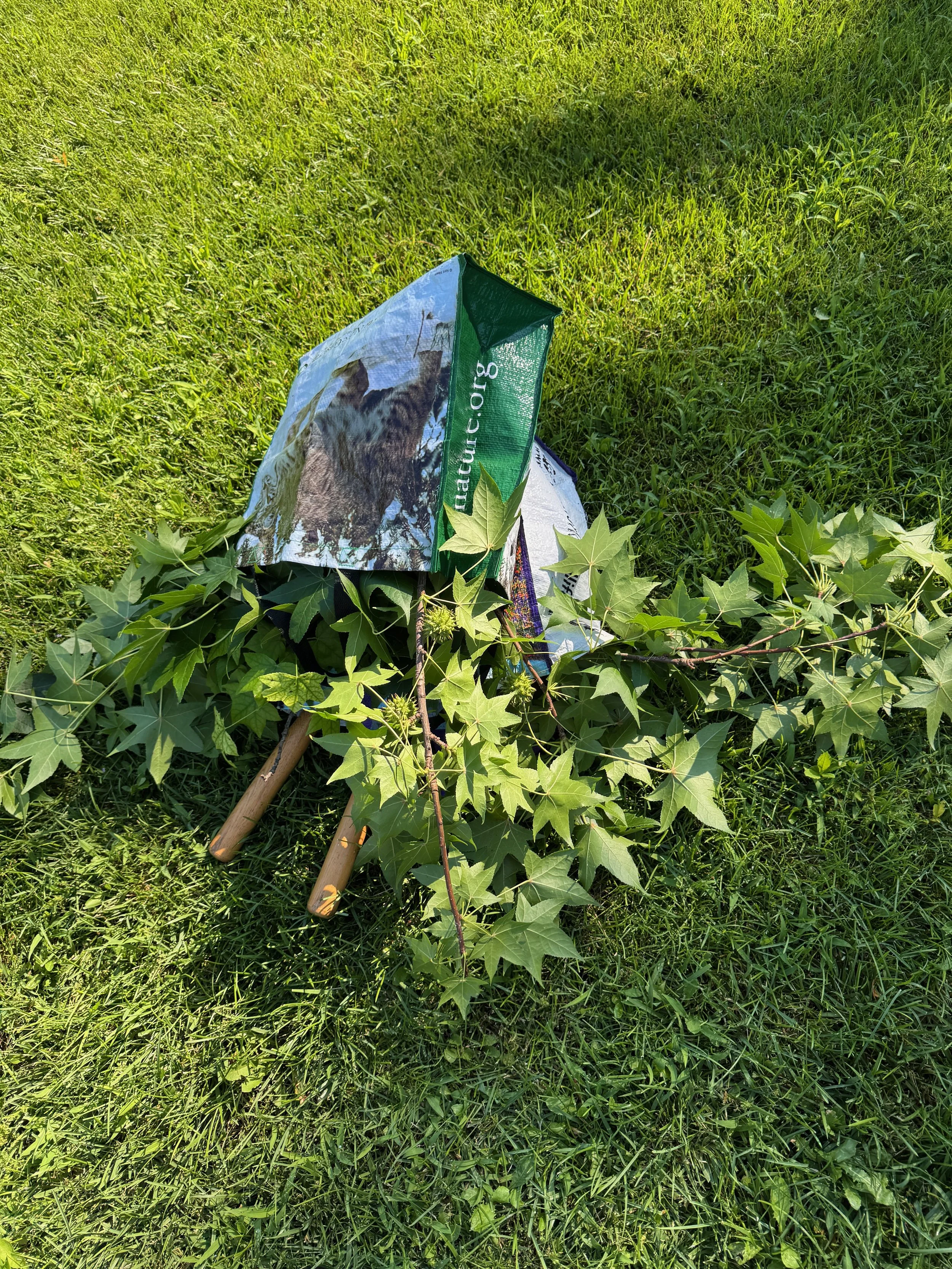
I appreciated my neighbor with the sweet gum tree even more as the caterpillars got bigger. I made almost daily trips to get a bag of leaves! Pretty soon I graduated from my long-handled pruners to a pole saw because all the leaves were higher in the tree. The cecropias were eating well (I could find them more easily once they were in their own bin) and were still small enough to keep up with their food requirements.

One morning I thought I heard noises coming from one of the big luna bins. I made a movie to capture the sound of caterpillars eating (not loud….but I was pleased to capture the sound of caterpillars munching)!

The same day that I heard munching, I started to see some cocoons and noticing how big many of luna moth caterpillars had become.

The next morning I saw one that had changed color…as they sometimes do before building their cocoon.

I thought I left plenty of leaves in the bins for overnight….but when I came downstairs the next morning there was not a leaf left in either bin. It was a caterpillar emergency. I texted my neighbor and cleaned out the bins (put cocoons in a separate bin) and then went to get leaves. Fortunately, most caterpillars survived.

As I was cleaning out the bins, I found another caterpillar that had changed colors and put it in a small bin with violet leaves, and it immediately made a cocoon!

After the caterpillar emergency was dealt with, I had a shift in the Butterfly House. I took two larger caterpillars for the caterpillar display table and 4 cocoons for the display case. The cocoons contrasted nicely with the older cocoons already in the case because the leaf part was still green!

I got a collapsible case to put my other cocoons in so I can watch them emerge….and hopefully share the experience with the family that provided the leaves for the caterpillars.

The cecropia caterpillars will probably go to the Butterfly House at some point and maybe some of the luna moths when they emerge.

It’s been an exciting week…probably the peak sweet gum consumption of this adventure.

Previous Adventures in Caterpillar Care posts

Fantastic Caverns

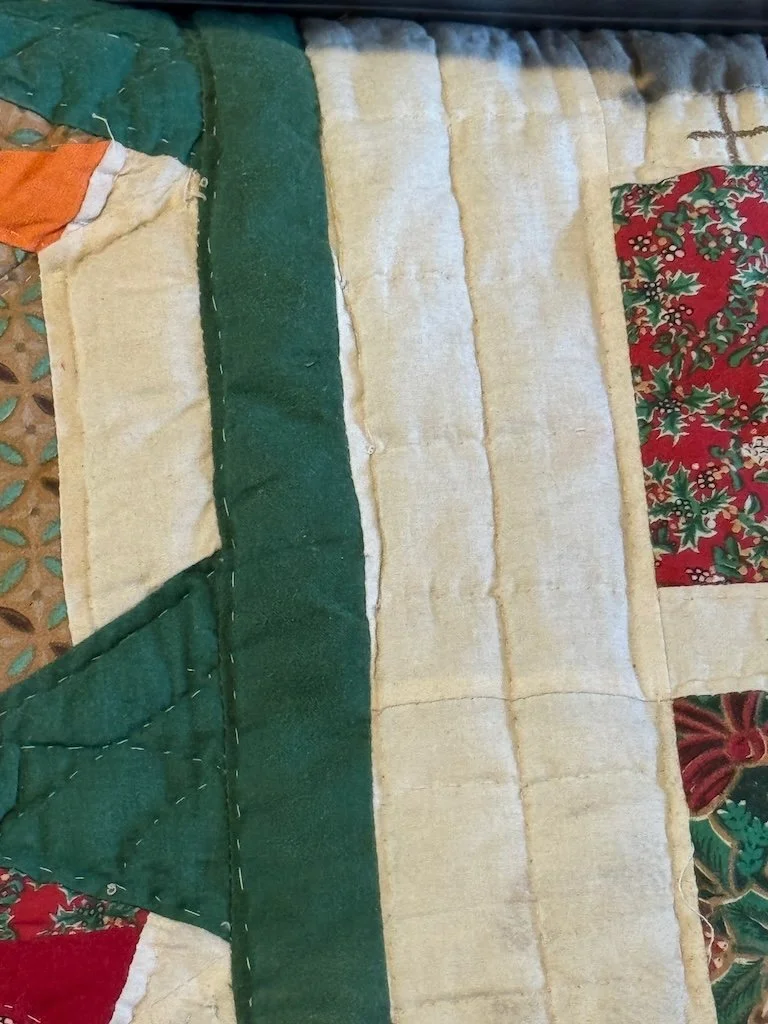
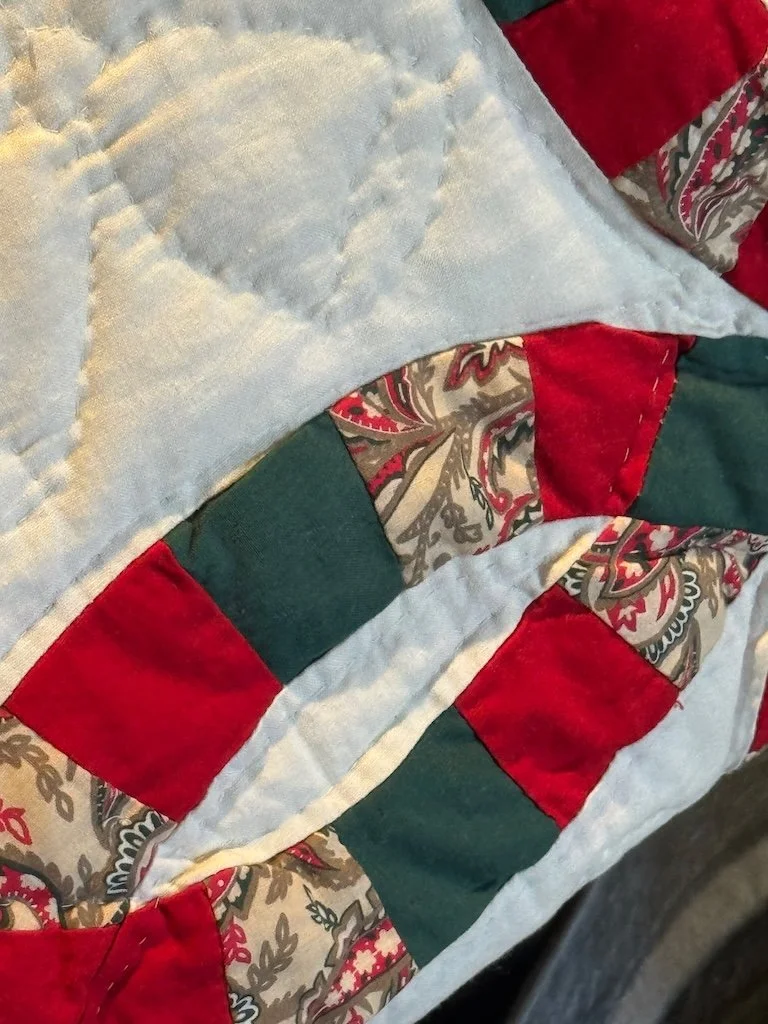
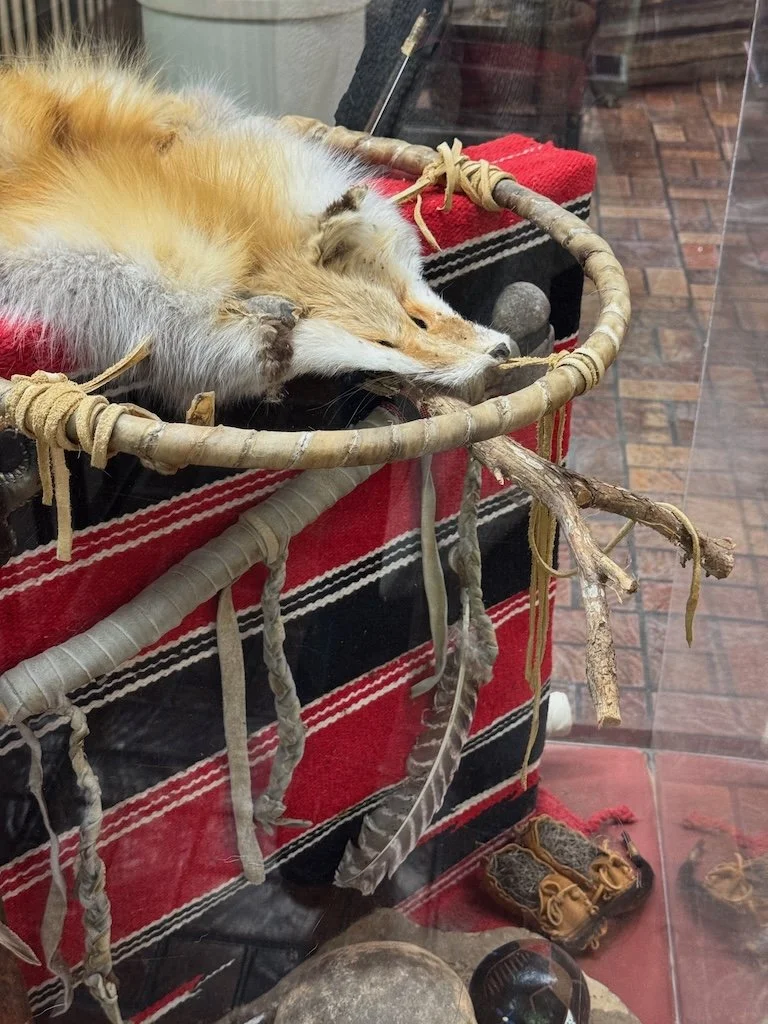
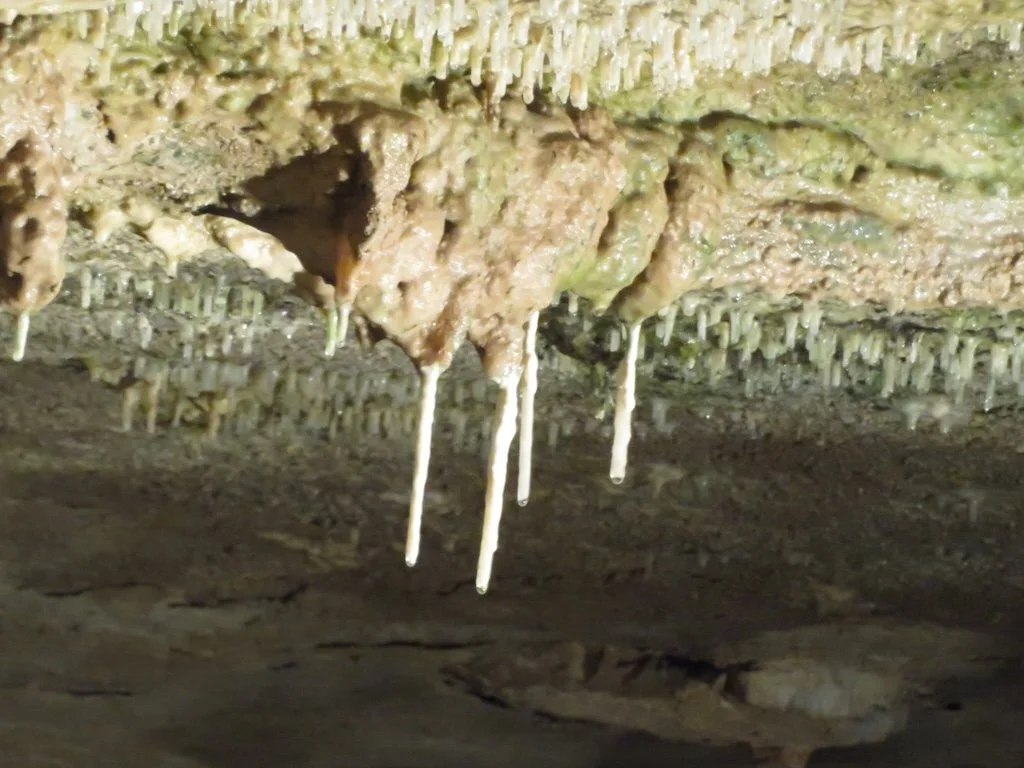
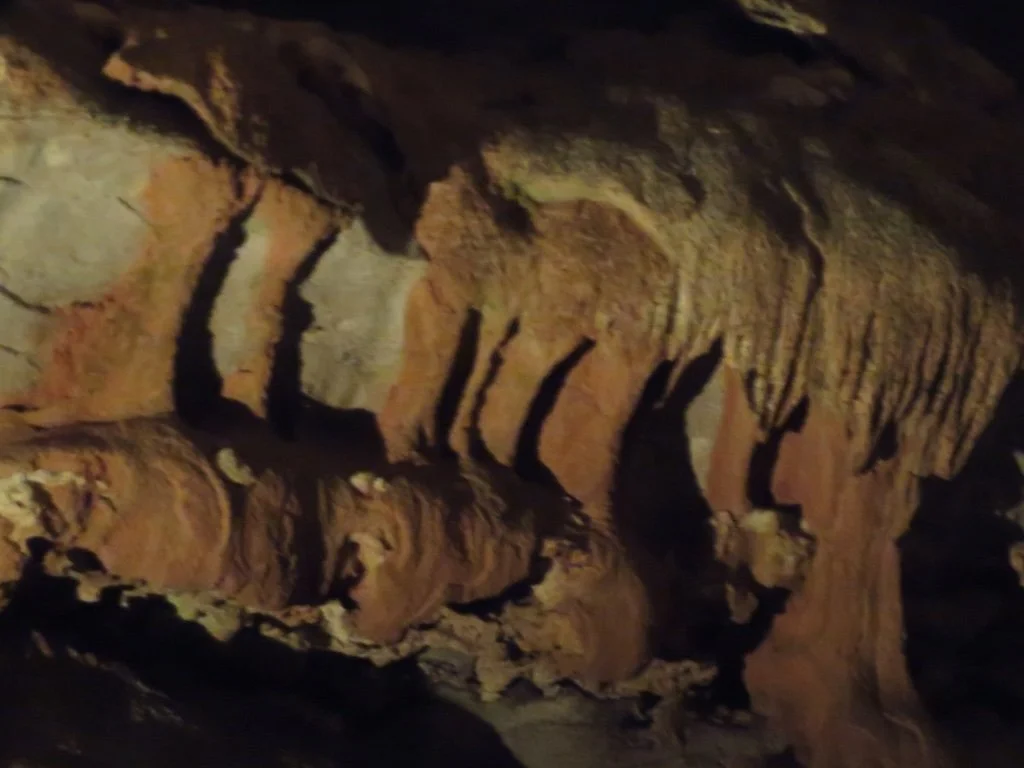
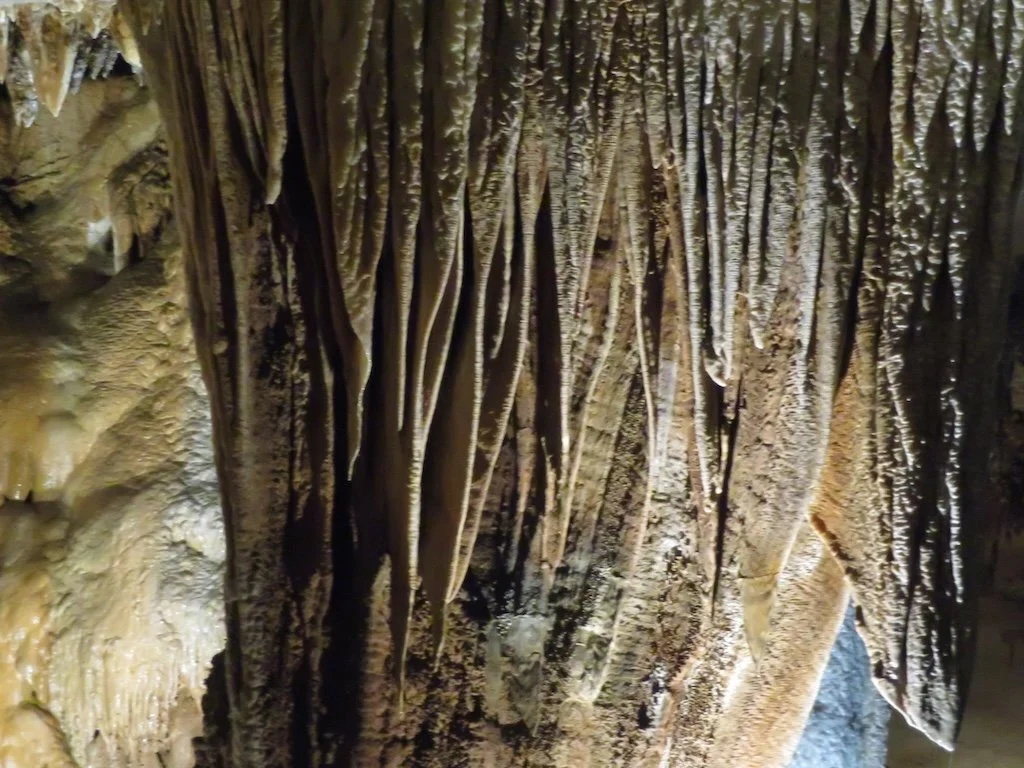
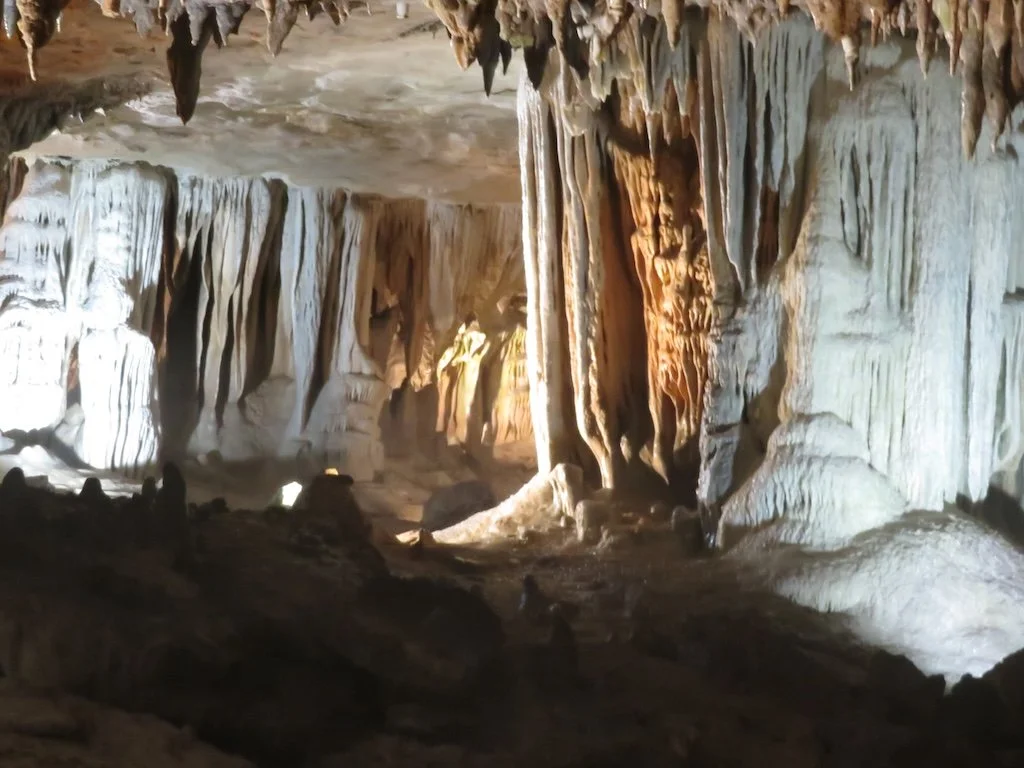
Fantastic Caverns is a great place to visit in the summer since the cave is 60 degrees all year long. We arrived a little before 10 AM and got tickets for 10:30 since there was a large school group at 10. During the wait, I bought some goat milk soap in the gift shop and looked at the mineral, quilt, and other artifact displays in the visitor center.

At 10:30 we walked out of the visitor center, down a ramp, and got on the tram that would take use through the cave.

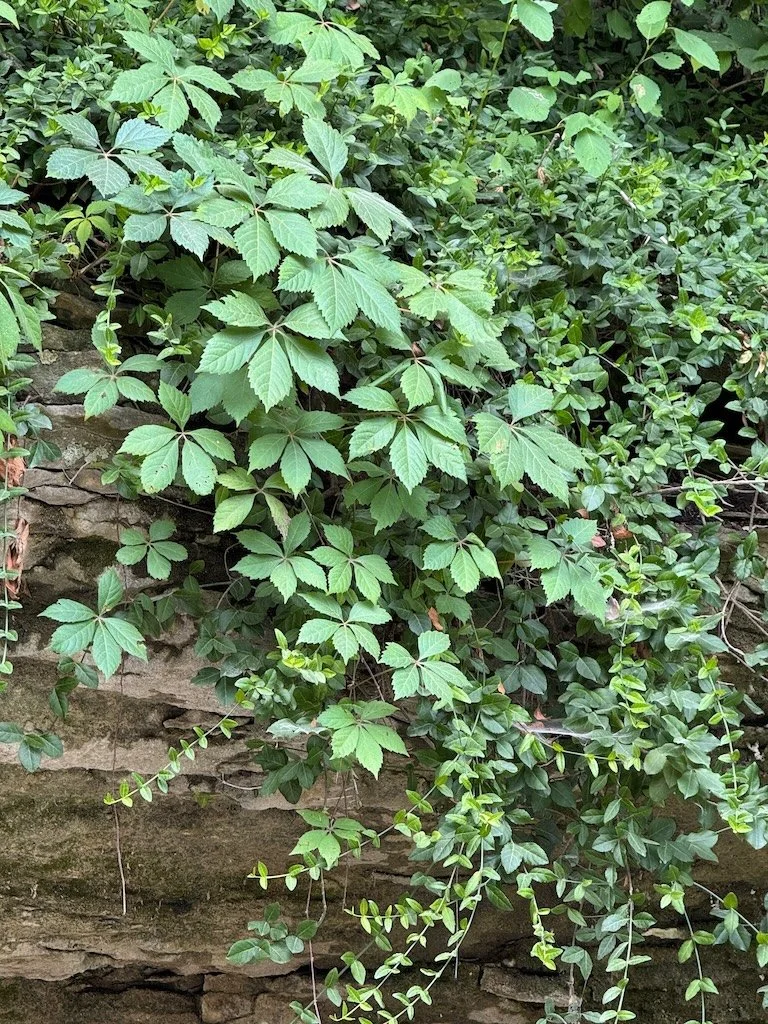
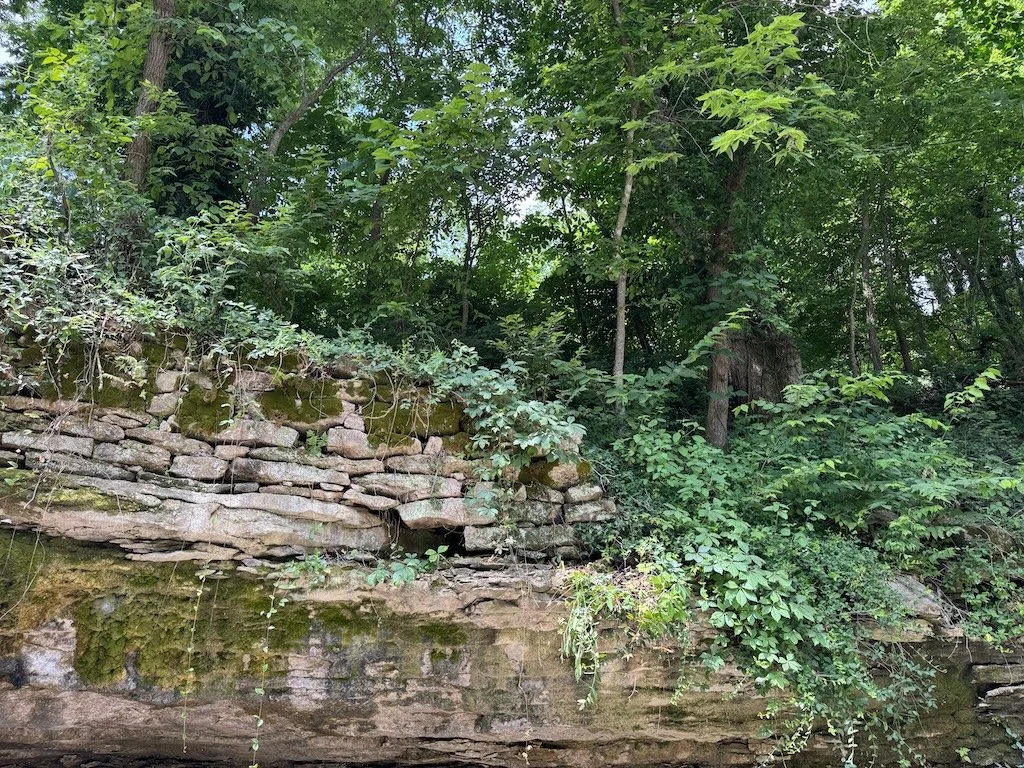
I managed to take more pictures of the entrance (man-made) as we started our tour than I did during my previous visits. There is a lot of Viriginia Creeper on the rock face.

I used the ‘night scene’ setting on my Canon Powershot SX730 HS (my oldest camera!) because it is easier to hold than my phone. The lighting in the cave is relatively good and the guide illustrated several ways lighting of the cave has changed over the years. This was my third visit, and this guide was probably less experienced that my previous visits. (click on any image below to see a larger version).

This was the first visit to the cave for my daughter and the second for my husband. We all agreed that it is an excellent option for visitors that are not physically able to do other caves. We are already planning a visit to a cave that offers ultraviolet light tours…but that requires being able to walk around on your own with a headlamp and googles!

Gleanings of the Week Ending July 5, 2025

The items below were ‘the cream’ of the articles and websites I found this past week. Click on the light green text to look at the article.

See the Face of a 10,500-Year-Old Woman, Reconstructed by Archaeologists and Artists – Based on well-preserved ancient DNA.

Rare, Mind-Bending M.C. Escher Works Are Up for Auction - Escher was a skilled artist who seamlessly bridged the worlds of art, mathematics, and science in the mid-20th century. Today, his influence remains as important as ever, with a fascinating body of work that continues to mesmerize and inspire minds across the world.

As Wind and Solar Grow, China Ships More Coal Overseas - Analysts say the era of “more renewables, more coal” in China is over, with solar and wind now set to displace coal, rather than supplement it. Even under conservative assumptions coal generation in China could soon peak and enter structural decline.

Work, wages and apprenticeships: sifting for clues about the lives of girls in ancient Egypt - Elephantine, a town at Egypt’s southern frontier near modern-day Aswan, provides a unique window into the urban life of some girls who worked in textile workshops during the ancient Egyptian Middle Kingdom, which dates approximately 2030–1650 BCE. Girls received payment for their labor. It also suggests a structured apprenticeship system where young girls (and boys) worked alongside experienced craftswomen. Historians must always look beyond elite contexts to incorporate diverse evidence types – administrative documents, archaeological remains, and artistic representations – to construct a more complete picture of ancient lives.

Earth’s Clouds on the Move - Clouds are common on Earth, but they are ephemeral and challenging to study. Remote sensing has helped scientists tremendously by enabling consistent, global tracking of the elusive features, even over inaccessible areas like the poles and open ocean. Two published studies: 1) Where storm clouds form has changed. The implications for the climate are significant: This has added a large amount of warming to the system. 2) The shift in storm clouds increased the amount of energy absorbed by the oceans by about 0.37 watts per square meter per decade—a substantial amount on a planetary scale. Big question: What has caused the reduction in reflective storm clouds and whether the trend will continue.

Sinkhole Exposes Remnants of Medieval English Hospital - Walls hidden just beneath the city streets that once belonged to the twelfth- or thirteenth-century St. Leonard’s Hospital. The institution was built just after the Norman conquest and replaced the earlier St. Peter’s Hospital, which was founded by the Anglo-Saxon King Aethelstan. It was a place for caring for the unwell, elderly, and the condemned, but also served as an orphanage, helped feed the poor, and provided meals for the prisoners in York Castle. The hospital was destroyed during the Reformation under the reign of Henry VIII.

Lightning Strikes the Arctic: What Will It Mean for the Far North - A warmer world is expected to bring more thunderstorms, especially at higher latitudes. Scientists are now reporting a dramatic surge in lightning in the Far North and are scrambling to parse how this could affect wildfires, the chemistry of the atmosphere, and Arctic ecosystems.

Scavenger Animals Are in Trouble, and That Could Spell Bad News for Human Health - Scavengers are in trouble—and their decline could be harmful to human health. Half of the 17 obligate scavenger species included in the study are considered “vulnerable” or “critically endangered” by the IUCN. When they are reduced in numbers or disappear, some smaller, occasional scavengers are proliferating. These creatures, such as rodents and feral dogs, tend to transmit diseases to humans.

How do sleep trackers work, and are they worth it? A sleep scientist breaks it down - Most modern sleep trackers do a decent job of estimating your total sleep each night. Some are more accurate for sleep staging, but this level of detail isn’t essential for improving the basics of your sleep. Focus on improving your healthy sleep strategies and pay attention to how you feel during the day.

Is an apple a day really good for your health? - Eating an apple a day is great– but only if that is part of a diet rich in various other plant-based foods, since that is a key driver of good health.

eBotanical Prints – June 2025

Twenty more books were added to my botanical print eBook collection in June - available for browsing on Internet Archive. Most books were published in the 1800s (14 of the 20) although there were 5 from the 1700s. The first book on the list - The Illustrated Garden: Books from the Missouri Botanical Garden, 1485–1855: An Exhibition at the Saint Louis Art Museum – was published in 2004 and is going to be a great reference and I continue to explore eBotantical Prints!

My list of eBotanical Prints books now totals 3,143 eBooks I’ve browsed over the years. The whole list can be accessed here.

Click on any sample image from June’s 20 books below to get an enlarged version…and the title hyperlink in the list below the image mosaic to view the entire volume where there are a lot more botanical illustrations to browse.

Enjoy the June 2025 eBotanical Prints!

The Illustrated Garden: Books from the Missouri Botanical Garden, 1485–1855: An Exhibition at the Saint Louis Art Museum * Herndon-sonsagra, Francesca * sample image * 2004

Album containing watercolors of plants * American School * sample image * 1881

Curiosites de la nature. des fleurs * French School * sample image * 1756

Four albums of flowers by an amateur artist and botanist V1 * English School * sample image * 1828

Four albums of flowers by an amateur artist and botanist V2 * English School * sample image * 1828

Four albums of flowers by an amateur artist and botanist V3 * English School * sample image * 1828

Four albums of flowers by an amateur artist and botanist V5 * English School * sample image * 1828

La natura, e coltura de' fiori fisicamente esposta in due trattati con nuove ragioni, osservazioni, e sperienze * Arena, Filippo * sample image * 1768

Roberti Icones Platarum V1 * Robert, Nicolas; Bosse, Abraham; Chastillon, Louis de * sample image * 1701

Roberti Icones Platarum V2 * Robert, Nicolas; Bosse, Abraham; Chastillon, Louis de * sample image * 1701

Nouveau Duhamel, ou, Traite des arbres et arbustes que l'on cultive en France V1 * Loiseleur-Deslongchamps, M. * sample image * 1812

Nouveau Duhamel, ou, Traite des arbres et arbustes que l'on cultive en France V2 * Loiseleur-Deslongchamps, M. * sample image * 1812

Nouveau Duhamel, ou, Traite des arbres et arbustes que l'on cultive en France V3 * Loiseleur-Deslongchamps, M. * sample image * 1812

Nouveau Duhamel, ou, Traite des arbres et arbustes que l'on cultive en France V4 * Loiseleur-Deslongchamps, M. * sample image * 1812

Nouveau Duhamel, ou, Traite des arbres et arbustes que l'on cultive en France V5 * Loiseleur-Deslongchamps, M. * sample image * 1812

Nouveau Duhamel, ou, Traite des arbres et arbustes que l'on cultive en France V6 * Loiseleur-Deslongchamps, M. * sample image * 1812

Nouveau Duhamel, ou, Traite des arbres et arbustes que l'on cultive en France V7 * Loiseleur-Deslongchamps, M. * sample image * 1812

Nouveau Duhamel, ou, Traite des arbres et arbustes que l'on cultive en France V8 * Loiseleur-Deslongchamps, M. * sample image * 1812

Collection du regne vegetal, arbres, forestiers et fruitiers, leurs fruits * Ledoulx, Pierre Francois; Verbrugge, Jean Charles; Ducq, Joseph Francois * sample image * 1831

A catalogue of English plants drawn after nature by Lady Frances Howard  * Howard, Lady Frances * sample image * 1766

Ten Little Celebrations – June 2025

Butterflies and birds…visiting a prairie and the place I spent some formative years….lot to celebrate in June.

Butterfly Festival. I volunteered at the Master Naturalist booth for the Butterfly Festival at the Springfield Botanical Garden. It was very well attended, and people seemed to be enjoying filling in the butterfly passport; I began to feel like a recording talking about the spicebush swallowtail as I handed out stickers…but kept going because the children’s excitement was contagious!

1st graders in the Caterpillar Café. 80 first graders and chaperones. I was glad the cabbages had caterpillars on them! The big message of the game I played with them was that most caterpillars don’t survive (i.e. they get eaten…baby birds need them!). I was glad I had prepared well enough that none of them cried!

Morning in the Butterfly House. I always choose the 10 AM to 12:30 PM shift in the butterfly house because it is the coolest time of the day…and, so far, every shift has been something to celebrate…and there are lots of aspects to celebrate: quiet time with butterflies/moths, watching caterpillars munching on leaves (or deciding to go walkabout), the development of fruit on the pawpaw trees, people (local and from around the world) enjoying the place.  

Luna moth caterpillars. This celebration is ongoing because the caterpillars are still growing. I celebrate every time I count and realize that the numbers munching is staying about the same (i.e. not much mortality). Every time they shed their skin and are noticeably bigger, I celebrate their survival and realize that I will have to ramp up the amount of leaves I provide.

Magnolia petals as seasoning. I celebrated my daughter’s introducing me to magnolia petals. I tried slivers in salad and a stir fry. I liked them best in the stir fry (a little strong raw). My son-in-law made kombucha with them…and I am looking forward to trying it.

Schuette prairie. My fourth prairie walk…and probably my last until it begins to cool down. I celebrated that I could identify some of the plants I’d seen on other prairies and saw bunchflower for the first time.

River Bend Nature Center. I visited Wichita Falls – where I attended grades K-10 in the 1960s - and celebrated the new-to-me River Bend Nature Center that is just the kind of place I would like to volunteer. There are aspects of our formative years that we seek to replicate in our lives….but this was an instance where I felt the place was still attuned to what I need now more than 50 years later.

Juvenile robins. I celebrated that the robins seem to spend more time in our yard…and the juvenile robins seemed to congregate in my shade garden. Maybe not using chemicals on the yard and leaving the leaves on the backyard through the winter has made a positive difference!

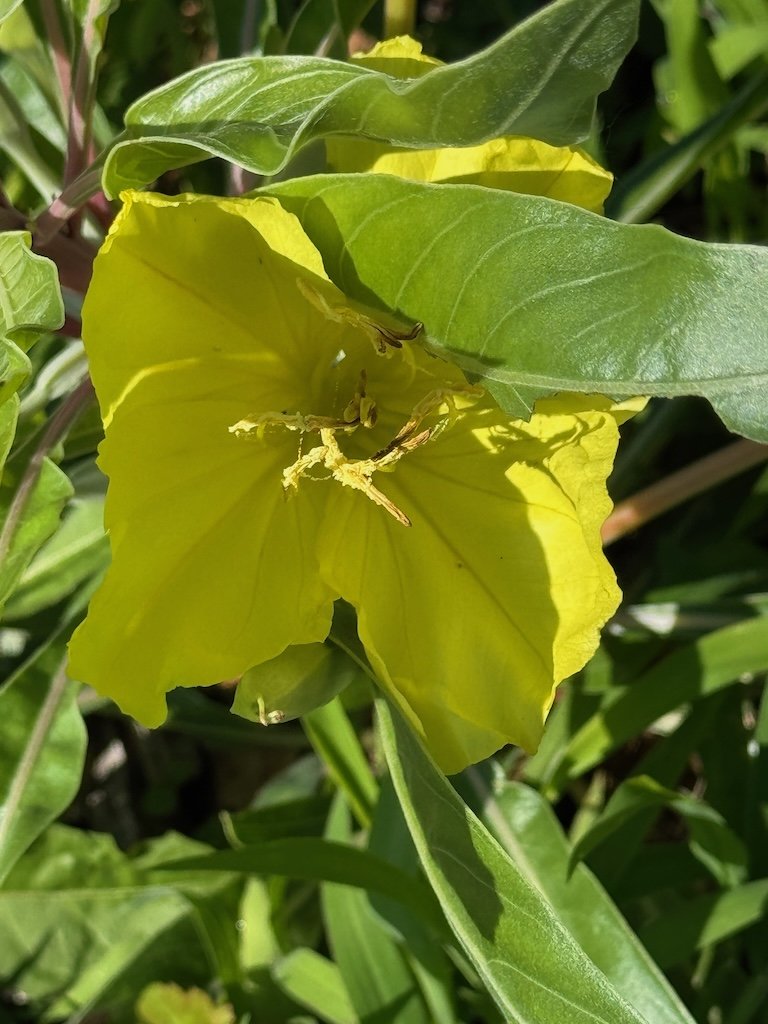
Missouri evening primrose. I celebrated the large yellow flowers of the native evening primrose I bought last month. It started blooming soon after I planted it and kept getting new buds.  

Hummingbird at our feeder. There is a female hummingbird that comes to the feeder on my office window multiple times a day. She gets a good long drink and seems to look at me before she flies way! I wonder if she is raising young birds nearby. Celebrating a relationship with a bird!

Zooming – June 2025

The images I selected for this month’s Zooming post reflect the places I have been recently: the Butterfly House as the Springfield Botanical Gardens, my neighborhood and my home, the Ed Clark Museum of Missouri Geology in Rolla, the Dickerson Park Zoo, the Schuette Prairie, and the River Bend Nature Center in Wichita Falls TX. That’s quite a lot of variety during a single month! Enjoy the June 2025 slideshow!

Gleanings of the Week Ending June 28, 2025

The items below were ‘the cream’ of the articles and websites I found this past week. Click on the light green text to look at the article.

Meet the Kangaroos That Live in Trees - Filling an evolutionary niche akin to monkeys, they’re keystone species in the rainforests of New Guinea and Australia.

Manet Cut This Painting in Half 150 Years Ago. Now, the Two Sides Are Back Together for a Rare Reunion - In 1874, Manet began to paint a scene of the Brasserie Reichshoffen on a large canvas. Unlike his paintings of military scenes or upper-class life of the 1860s, the new piece captured the dramas of everyday life. But Manet became dissatisfied with the composition of the large work and opted to cut the canvas in two. Over the next few years, he refined each half into more concise, if slightly less ambitious, depictions of the same café: At the Café and Corner of a Café-Concert. While both paintings are well regarded, Manet’s contemporaries struggled to understand his decision to separate them. But Manet’s conviction that the two should be kept apart remained strong. When the two paintings of the same café were exhibited at the Triennial Salon in Antwerp in 1879, they were shown in separate rooms.

Deconstructing Buildings: The Quest for New Life for Old Wood - A growing number of cities have launched initiatives to reuse the wood waste from construction and demolition that now ends up in landfills. The challenge, proponents say, is to deploy new techniques for disassembling old buildings and markets for repurposing the salvaged wood. Using reclaimed wood in buildings stores carbon and helps reduce emissions by avoiding the need to cut new trees. Going forward, some architects say, buildings should be designed for disassembly — meaning every structure is built not only to last but also for easy dismantling and repurposing when its time is up.

Why the appendix is much more important than we once thought - The appendix has been shown to be an important component of immune function, especially in early life. In addition, the appendix itself contains a very diverse and varied microbiota distinct from other parts of the gastrointestinal tract, suggesting a specialized role. Removal of the appendix has been associated with a reduction in gut bacterial diversity which can lead to intestinal dysbiosis and potentially increase susceptibility to various diseases. Appendectomy has also been linked to an increase in fungal diversity in the gut; the appendix may play a role in the balance between bacterial and fungal populations, potentially acting as a store of commensal gut microbiota that repopulate the colon after exposure to pathogens or antibiotic treatment. The appendix may play a further role in protecting the gastrointestinal system from invading pathogens.

How Extreme Heat Impacts Children - Infants and young children sweat less and are unable to regulate their core body temperature as well as adults. Playgrounds are not always built with materials designed to withstand heat and prevent burns. Older children such as high school athletes face increased risk of heatstroke and other illnesses during practices and games. 

Weather makers: How microbes living in the clouds affect our lives - Trillions of bacteria, fungi, viruses and single-celled organisms travel the globe high in the atmosphere. Current aerobiologists deploy sophisticated air-samplers on drones and use DNA-sequencing technology to identify airborne life by its genes. The aerobiome, researchers now recognize, is an enormous habitat filled only with visitors. By one estimate about a trillion trillion bacterial cells rise each year from the land and sea into the sky. By another estimate, 50 million tons of fungal spores become airborne in that same time. Untold numbers of viruses, lichen, algae and other microscopic life forms also rise into the air. It's common for them to travel for days before landing, in which time they can soar for hundreds or thousands of miles. The aerobiome is a force to be reckoned with – one that exerts a powerful influence on the chemistry of the atmosphere. It even alters the weather. It turns out that biological molecules and cell walls are exceptionally good at triggering rain. More sobering… In a 2023 survey of clouds, bacteria carrying 29 different kinds of resistance genes were found.  A single airborne bacterium may carry as many as nine resistance genes, each providing a different defense against drugs. Every cubic meter of cloud could hold up to 10,000 resistance genes. A typical cloud floating overhead may hold more than a trillion of them.

The New Normal Is Already a Loss: How Shifting Baselines Skew Our View of Nature - Think back on the bird song you woke up to this morning. You might have pulled out a few recognizable threads, perhaps the robin, the crow, the sparrow. Now imagine what morning might have sounded like to your grandparents. Major scientific studies indicate that it was likely a cacophony of song by comparison—many kinds of birds and more of them. The difference, the shift in normal, is gradual over time and the loss, without memory or data, is hard to define. With each generation, our perception of the natural world changes, and with it, our understanding of what accounts for abundance and loss of biodiversity. A term bandied about is the “new normal.” In ecology, it’s called the shifting baseline syndrome. 

Fungi to the Rescue: How Mushrooms Are Helping Clean Up Toxic Lands - Mycoremediation, the use of fungi to break down pollutants and absorb heavy metals from contaminated soil. Certain species can transform petrochemicals, pesticides, and heavy metals into harmless compounds or concentrate them for safer removal. This nature-based method offers an affordable, less disruptive alternative to traditional “dig and dump” remediation approaches.

A History of Some National Park Roads – The only roads mentioned in the article I haven’t experienced is Generals Highway in California and Going-to-the-Sun Road in Montana!

The Famous, Feathered Dinosaur Archaeopteryx Could Fly, Suggests New Study of a ‘Beautifully Preserved’ Fossil - A fossil collector discovered the Chicago Archaeopteryx sometime before 1990 in limestone deposits near Solnhofen, Germany, where all known Archaeopteryx fossils originate. As the Field Museum’s preparators worked on the pigeon-sized Chicago Archaeopteryx, they realized that the fossil included more soft tissues and delicate skeletal details than any other known Archaeopteryx specimen. From previous fossils, they already knew the dinosaur had asymmetric feathers, which are vital to creating thrust in modern, flying birds. But the hard slab of limestone around this specimen had also preserved a key layer of feathers called tertials that had never been documented before in Archaeopteryx.

The Craftsman (magazine)

I browsed 50 months of The Craftsman magazine from the early 1900s back in February. They are available from The University of Wisconsin-Madison digital library.

They are a way to understand the way people were living at the time – a time when my grandparents were born. Click on any of the sample images below to see a larger version…and use the links to browse the whole magazine.

The craftsman Vol. XIII, Number 4 January 1908

The craftsman Vol. XIII, Number 5 February 1908

The craftsman Vol. XIII, Number 6 March 1908

The craftsman Vol. XIV, Number 1 April 1908

The craftsman Vol. XIV, Number 2 May 1908

Wichita Falls, Texas

Instead of driving directly back home after visiting my dad in Dallas, I drove to a friend’s house near Decatur, TX. We’d been exchanging Christmas cards/notes for over 55 years but hadn’t seen each other since she moved away from Wichita Falls while we were in Junior High. We discovered there was a lot to share that hadn’t made it into the annual exchange! We had been communicating via text messages for more than a year and a half trying to find a time to meet in person…and we finally did. What a joy to reconnect like this! We are already planning a next visit…in Decatur again since she has family obligations that keep her at home.

After the visit, I continued to Wichita Falls. I spent some formative years there in the 1960s (grades K-10 for me) but had not been back for a long time. I opted to stay in a hotel near downtown. The blue clad building – the most distinctive of the skyline – was the bank where I had my first savings account (in elementary school); I was pleased that I could see it from my hotel room window. I was also impressed with the plantings around the hotel…lots of plants that thrive in higher heat and less water.

I drove by the house my parents built in the early 1960’s. It is well maintained except for some missing (decorative) shutters. The elementary school that I attended for grades 3-6 is still an elementary school. One difference that is noticeable from the outside is that the windows no longer open and some have been blocked rather than just covered with blinds; when I went to school there, it was not air conditioned, so the windows opened, and fans were in every classroom.  I’m glad that the students today have air conditioning!

I had done some research about Wichita Falls and opted to see the River Bend Nature Center – something that was built after I moved away. The conservatory was being renovated and not open…maybe I’ll have to visit again to see that.

Some of the animals normally in the conservatory were in the large classroom/store area of the nature center.

I decided to spend most of my time walking around the paved trail (there is also a rustic trail but I was wearing sandals and opted to stick to paved this time). What a wonderful place! Lots of trees, some benches (an Eagle Scout project), an area for outdoor gatherings (including a nature play space), native plantings. If I still lived in Wichita Falls, this would probably be the primary place I would volunteer!

It was good that I was at the nature center the first hour they were open since the day was going to be a hot one. I headed toward home – 6 hours….I-44 the whole way!