Gleanings of the Week Ending June 14, 2019

The items below were ‘the cream’ of the articles and websites I found this past week. Click on the light green text to look at the article.

Antibiotics found in some of the world's rivers exceed 'safe' levels, global study finds -- ScienceDaily and Hundreds of world's rivers contain dangerous levels of antibiotics – Same story from different news feeds. Antibiotics we take are not broken down in our bodies and are excreted. Wastewater treatment does not take them out of the water so the rivers are – over time – building up more antibiotics.

Ancient Fingerprints Show Men and Women Both Made Pottery in the American Southwest | Smart News | Smithsonian – The breadth of men’s finger print ridges are 9% wider than those of women…so pots that are made via pinching layers of coiled clay together using the thumb and forefinger (leaving fingerprints) can be analyzed to determine the gender of the person that made them. It turns out at Chaco Canyon that men and women made pottery…unlike the more modern tradition of the skill passing from grandmothers to mothers to younger women.

Route 66 Considered for National Historic Trail in The Park System – On a recent road trip, the Pacific, MO hotel we stayed in (west of St. Louis) was near Route 66. They had a map to continue the journey through Missouri on stretches of the old road. We needed to reach our destination quickly so stayed on I-44…but maybe sometime when we can take our time…we’ll take Route 66 where we can.

CITY SPROUTS: The Budding Movement to Integrate Garden-Based Learning in Public School Education | Children & Nature Network – A laudable goal…but it takes work. With teachers that already have a lot to do….organizing garden-based learning might be a tough addition to their job jar.

Most of the World’s Macadamias May Have Originated from a Single Australian Tree | Smart News | Smithsonian – The majority of macadamias are grown in Hawaii…so the lack of diversity within the trees in Hawaii leaves the crop open to species-level risk. This article talks about the research and search for wild plants in Australia to increase the diversity within the macadamia gene pool.

Seven US Species Invading Other Countries – Cool Green Science – We talk a lot about non-native species invading the US. Here are some that have gone the other way.

A Sea of Sagebrush Disappears, Making Way for Fire-Prone Cheatgrass: NPR – Nearly 75% of the acres burned by wildfires in the west are range lands rather the forest. And what burns is sage and cheatgrass. The problem is that cheatgrass, an invasive grass, grows faster than sage and is taking over land where sage once dominated…and cheatgrass is more flammable. Put that together with climate change and the look of the west is changing.

Megacities Like Paris and London Can Produce Their Own Clouds | Smart News | Smithsonian – The urban heat island phenomenon has been known for a long time. Now studies are looking at cloud cover over cities and it appears they are 10% cloudier than rural areas.

Still snarling after 40,000 years, a giant Pleistocene wolf discovered in Yakutia – Found in Siberia. The discovery was announced as the opening of a Woolly Mammoth exhibition in Tokyo organized by Yakutian and Japanese scientists. The same team also presented a well-preserved cave lion cub.

Six fingers per hand – People with 6 fingers on a hand (a form of polydactyly) can perform movements with one hand where people with 5 fingers would require 2 hands. The brain of polydactyly subjects controls the additional degrees of freedom the additional finger provides without sacrificing any other brain functions.

Gleanings of the Week Ending June 8, 2019

The items below were ‘the cream’ of the articles and websites I found this past week. Click on the light green text to look at the article.

5 Unusual Species Found in and Around the Everglades - The National Wildlife Federation Blog – I’ve seen two of the 4: the snail kite and wood stork!

Want to reduce single-use plastic in your life? Try these tips from National Geographic Explorer and #ExpeditionPlastic team member Lillygol Sedaghat. – National Geographic Society Newsroom – It’s hard to avoid single use plastics completely….but easy to cut back.

How big data can be used for personal health -- ScienceDaily – Yes – doing a lot of tracking of personal health information and having a baseline might be useful – but it’s not clear (from this article) that it didn’t result in overtreatment. It will be a challenge to match treatments in asymptomatic situations…that may never develop into a health problem. How well do we really understand risks?

BBC - Future - How weeds help fight climate change – And experiment in Australia showing how weeds might help in the process toward sustainable agriculture

Fracking: Earthquakes are triggered well beyond fluid injection zones: Computer model and field experiment data suggest a new link between subsurface injections and earthquake swarms -- ScienceDaily – Oklahoma….in the hot center of man-made earthquakes.

Do additives help the soil? Scientist suggests nature knows what's best -- ScienceDaily – Wow – a whole industry (bio-fertilizers) that is not having the positive effect on crops anticipated….and could have long-term effects on soil that are not positive. Why is the industry surviving?

Blood-squirting insects and more tiny creatures flourish in African park – Gorongosa National Park in Mozambique.

Exploring the origins of the apple -- ScienceDaily – Large fruits developed to attract large animals like wild horses and large deer…..and probably other animals that are now extinct. The modern apple is a hybrid of at least 4 wild apple populations….along the Silk Road.

A Better Route Planner & Other Open Source Projects Need Our Help | CleanTechnica – Technology that needs to mature before Electronic Vehicles become more numerous.

Excessive rainfall as damaging to corn yield as extreme heat, drought -- ScienceDaily – This year there has been too much rain in the corn belt. This story is over a month old but there are still areas of high water. What percentage of the corn fields haven’t been planted yet because they are still flooded?

Gleanings of the Week Ending June 1, 2019

The items below were ‘the cream’ of the articles and websites I found this past week. Click on the light green text to look at the article.

Flu virus' best friend: Low humidity -- ScienceDaily – Yet another reason to have a good humidifier in our homes during the winter.

Top 25 Wild Bird Photographs of the Week: Seabirds – National Geographic Society Newsroom – I saw a few of these during the Cape May trip in May: American Oystercatcher, Northern Gannett, Laughing Gull, and Forster’s Tern.

Novel 5-minute workout improves blood pressure, may boost brain function -- ScienceDaily – Preliminary results….have to wait to see if it holds up. It would be great to have another option than medication (that often has side effects).

More Megalithic Jars Mapped in Laos and A Singular Landscape - Archaeology Magazine – Plain of Jars in Laos. The jars were created 1,500 to 2,500 years ago. Excavations are revealing a bit more about the people that created them.

Common food additive found to affect gut microbiota: Titanium dioxide nanoparticles E171 may impact human health -- ScienceDaily – It’s a whitening agent used in foods and medicines in high quantities. I checked the jar of mayonnaise in my refrigerator and it didn’t list it on the ingredients list but evidently some brands do contain titanium dioxide. Maybe I will cut back on the mayo.

Solar System and Beyond Poster Set | NASA Solar System Exploration - Beautiful posters suitable for printing in 11x17 format.

Ancient Egyptians Enjoyed Sweet Watermelons - Archaeology Magazine – All melons in ancient Africa were not the bitter cucurbitacins found wild in Africa today!

Walnuts may help lower blood pressure for those at risk of heart disease -- ScienceDaily – Walnuts are tasty too.

The Bird Conservation Program You’ve Never Heard Of (And the Birds It Saves) – Cool Green Science – Going beyond the Migratory Bird Treaty Act to improve neotropical habitat the birds require during their annual migrations.

Escaped pet parrots are now naturalized in 23 US states, study finds -- ScienceDaily – 25 species! They are not native to North America, but many are thriving, and those populations become critical to the survival of their species.

3 Free eBooks – May 2019

There are so many books to browse through – or read – online. I am always fascinated with the perspective of history from books of a time period. It’s the closest we come to talking to the people that lived the events before our time.

2019 05 ebook1.jpg

Newell, Peter. The Rocket Book. New York: Harper & Brothers. 1912. Available from the Library of Congress: intro to the collection here and the book in slideshow mode here. The upward course of a rocket from the basement up 20 floors of apartments! Yes – it’s dated (keep in mind the copyright date) but it is fascinating to notice what the author thought people would be doing in their apartments…and that he was thinking about rockets!

2019 05 ebook2.jpg

Menpes, Mortimer (with text by Dorothy Menpes). World’s Children. London: A & C Black. 1903. Available from Hathi Trust here. Menpes was an Australian born British painter, author, printmaker and illustrator. He was a developer of techniques to produce colored art works in book form. His daughter, Dorothy, wrote the text for some of those books. The sleeping baby was one of my favorites from this book.

Sunset (magazine). San Francisco: Southern Pacific Company. Issues from May 1898 – 1923 from Hathi Trust here. I pointed to this magazine last month as well. I am still working my way through the magazines up to 1923. The one to look at this month is V31 from 1913. There are lots of colorful pictures – like this one of Mt. Hood in Oregon. Soon the years of World War I would cause the magazine to be produced with only the cover and a few ads in color.

Gleanings of the Week Ending May 25, 2019

Eye's vulnerability to macular degeneration revealed -- ScienceDaily – All cells of the macula are not the same. The ones in the central part (Muller cells) are smaller and shaped differently than the cells around the edges…and they are the ones involved in macular degeneration. Knowing more about the central cells may lead to more focused treatment.

Dangerously High Air Pollution Levels Found in Most U.S. National Parks - Yale E360 – Our national parks are places to enjoy natural beauty…be outdoors. Its very sad to know that air pollution is a problem.

Banana disease boosted by climate change -- ScienceDaily – Black Sigatoka – a fungal disease impacting bananas – is not virtually worldwide. It’s surprising that bananas are still such a bargain in our grocery stores.

Ten Tips for Being a Good Partner - On the Job - AGU Blogosphere – Good tips…and I liked the illustrative examples from real projects.

Oldest known trees in eastern North America documented -- ScienceDaily – In North Carolina there is a Bald Cypress that it at least 2,624 years old!

Does insulin resistance cause fibromyalgia? A newly confirmed link with insulin resistance may radically change the way fibromyalgia and related forms of chronic pain are identified and managed -- ScienceDaily – Researchers dramatically reduced pain of fibromyalgia patients with medication that targeted Insulin resistance.

Dogs Sniff Out Invasive Mussels at Chickasaw National Recreation Area – In the early 1970s, my husband and I often visited this area of Oklahoma (also visiting what was then Platt National Park). Kudos to the people trying it keep Zebra Mussels out of the Lake of the Arbuckles!

Soaking up pharmaceuticals and personal care products from water -- ScienceDaily – A new acronym (PPCPs = Pharmaceuticals and Personal Care Products). These are being detected in water everywhere usually in low concentrations but increasing…so it’s good that research is underway to develop ways to remove them from water.

A New View of Bird Vision – Cool Green Science – The article describes ways bird vision is being studied and provides examples of specific UV sensitivities in turkeys and red-winged black birds.

Top 25 Wild Bird Photographs of the Week: May – National Geographic Society – Last but not least for this week --- enjoy some bird pictures.

Gleanings of the Week Ending May 18, 2019

The items below were ‘the cream’ of the articles and websites I found this past week. Click on the light green text to look at the article.

Beautiful Photos by Manuelo Bececco Captures the Essence of the Forest – Awesome views of the forest…mostly looking upward.

IYPT 2019 Elements 023: Vanadium: Hardened steel and yellow blood | Compound Interest – Vanabins are vanadium-binding proteins that make sea cucumber blood yellow!

Titanium: Sunscreens and space stations | Compound Interest – Lots of makeup and other cosmetics have titanium (for its sunscreen properties) and fighter jets do too!

Marine Viruses Detailed from Pole to Pole | Technology Networks – There are a lot more viruses than previous cataloged in the ocean. The are in roughly 5 groups based on location and depth. The Arctic Ocean has high viral diversity…higher than at the equator.

NASA's Cassini reveals surprises with Titan's lakes -- ScienceDaily – The data from Cassini’s final flyby of Titan in 2017 has revealed that the lakes in its northern hemisphere are more then 300 feet deep and are methane. Lots more science still to come as more analysis of the Cassini data is done.

Could high-flying drones power your home one day? - BBC News – How could this not cause problems with aircraft if it was widespread? Both the drone and the tether could cause problems.

Top 25 Wild Bird Photographs of the Week: Passerines – Always room on the gleanings list for bird photographs!

Four ways to attract birds and butterflies – Native plants, bird bath, brush pile in my yard….3 of 4 is not bad!

Black, Hot Ice May Be Nature’s Most Common Form of Water – Superionic ice – a new kind of ice crystal with the oxygen atoms forming a cubic lattice and the hydrogen atoms flowing like liquid through the rigid cage of oxygens.

We’ll soon know the exact air pollution from every power plant in the world. That’s huge. –It won’t just be regulators and politicians that can see the data…it will be accessible by the public too. It will become a lot clearer to everyone which power plants are negatively impacting air quality.

Gleanings of the Week Ending May 11, 2019

The items below were ‘the cream’ of the articles and websites I found this past week. Click on the light green text to look at the article.

Epic Proportions - Archaeology Magazine – Standard measures of Stonehenge and other Neolithic monuments?

Potassium: Soaps and radioactive bananas | Compound Interest – Potassium regulates blood pressure and transmission of nerve impulses in our bodies!

Colorful Birds  and Terrestrial birds – From the National Geographic Society. Still catching up on the backlog. I enjoy birding – and seeing birds in action…and photographs of birds taken by others. That’s why these photographic collections show up on my gleanings list.

BBC - Future - The princess who transformed war medicine – A little medical history not widely known from the early 1900s.

Ancient secrets of medicinal mint -- ScienceDaily – There are so many members of the mint family. This article is about the DNA sequencing from a plant…learning how to more rapidly tap the therapeutic benefits of that plant and the mint family at large.

Four Out of 10 Americans Breathe Unhealthy Air - Yale E360 – That’s 141 million people…up 7 million since last year….partly due to impacts of climate change on air quality. So – we need to find ways to clean up air better than we do now either by reducing emissions or cleaning them out once they are produced.

Aging gracefully: Study identifies factors for healthy memory at any age -- ScienceDaily – The good news is that some of the factors are things we can control - engaging in more social activities, more novel cognitive activities, losing excess weight, and living with others.

What is a Naturalized Outdoor Learning Environment? -The National Wildlife Federation Blog – Early Childhood Health Outdoors (ECHO) program….daily access to the outdoors for young children. When I was growing up, we were outdoors most days but that is not happening consistently these days. I applaud the initiatives that are honing ways to get children outdoors more.

Your Questions About Food and Climate Change, Answered - The New York Times – A hefty article on the topic…with pull down details.

Medical guidelines may be biased, overly aggressive in US -- ScienceDaily – Thought provoking. How is a patient to know when a doctor recommends a test or procedure that it is truly in the best interest of the patient when the doctor has a financial interest in the recommendation, or the doctor is so specialized that they always think their specialty is the best solution?

Lunch in Sherman TX

While I was Texas, we made a trip to Sherman to visit my sister and lunched in downtown Sherman. We parked on Courthouse Square and then walked about a block to the restaurant – past some wall art on one of the old buildings. I liked the colors and curves.

20190423_115156(0).jpg
20190423_133107.jpg

The building the restaurant was in (Fulbelli’s) was in from the 1870s and has been restored for use by small shops and eateries. The light wells bring light from above down through the building – as intended when the building was initially built before electric lighting. The restaurant is on the second floor and we were taken up (and back down) on the antique elevator by an attendant – an adventure in elevator history!

20190423_133117.jpg

After lunch we browsed through the hallways (Sherman history pictures on the walls) and small shops.

I found some interesting earrings made by a local artist from leather and metallic paint. I’m going to try wearing them to my next Wings of Fancy shift…see if the blue morphos are attracted to them. The blue looks the same in certain light, but it tends to shift toward green in certain light and the blue morphos shift toward pink; they are both a structural color probably but not the same.

20190503_074214.jpg

Gleanings of the Week Ending May 4, 2019

The items below were ‘the cream’ of the articles and websites I found this past week. Click on the light green text to look at the article.

Exploring the Parks: White Sands National Monument – Another place I want to return to and spend a bit more time. I’ve been once when we were on the way from Dallas to Tucson. I posted about it back in 2013. We stayed long enough to have a picnic, walk along the boardwalk trail, and photograph cliff swallows at the visitor center.

New Analysis of Depression-Era Fossil Hunt Shows Texas Coast Was Once a 'Serengeti' | Smart News | Smithsonian – Research on collections made by the Works Progress Administration and mostly just stored since the 1940s….Other states than Texas probably have research projects on these collections as well.

IYPT 2019 Elements 020: Calcium: Teeth, bones and cheese | Compound Interest – Another article in the International Year of the Periodic Table series. Did you know that the human body contains about 1 kilogram of calcium?

Image of the Day: High Contrast | The Scientist Magazine® - The milkweed bug! The milkweed is just beginning to come up so I haven’t seen any of these bugs yet this year…but they’ll come out soon enough. I’ll try to remember some of this article next time I see the bug with a group of field trip hikers!

12 Famous Flower Paintings, from Monet to Mondrian – A little eye candy. Notice that there are insects with the flowers in the Ambrosius Bosschaert painting.

An invasive, thorny tree is taking over Africa – can it be stopped? – It’s not just the US that has problems with invasive plants and animals brought from elsewhere in the world. The Mesquite tree that is problematic in Africa came from South America.

Top 25 Wild Bird Photographs of the week: April and Waterbirds – Catching up a little on the series…two this week and there are still some left for the next gleanings collection.

‘Exquisitely Preserved’ Skin Impressions Found in Dinosaur Footprints | Smart News | Smithsonian – The prints are from a small theropod. Not only do they show the impression left by skin…they also indicate the dinosaur was in Korea earlier than previously thought (10-20 million years earlier).

Electric Cars Could Be as Affordable as Conventional Vehicles in Just Three Years - Yale E360 – EV technologies are developing rapidly. In 2015, batteries made up 57% of the EV total cost; today it’s down to 33% and by 2025 the projection is 2025. I know that I have enjoyed my plug-in-hybrid and that my next car will probably be an EV.

Clean Tech Jobs Lead Employment Statistics in Many US States | CleanTechnica – The map is worth the look. Solar panel installer or wind turbine service technician is the fastest growing type of job in 11 states!

Gleanings of the Gleanings of the Week Ending April 27, 2019

The items below were ‘the cream’ of the articles and websites I found this past week. Click on the light green text to look at the article.

Berkeley Soda Tax, 3 Years In: What New Research Shows About Its Effectiveness | Berkeley Wellness - Consumption of sugary drinks has fallen by half in low-income areas of Berkeley, California.

The Real Reason You See Earthworms After Rain – Cool Green Science – There could be multiple reasons. Maybe they are moving to new territory while the surface is wet, and they won’t become dehydrated. Or maybe they want the extra oxygen that is at the surface.

Exploring The Parks: Great Sand Dunes National Park And Preserve – It’s been a long time since I have been to this park…and we didn’t explore it thoroughly when we were there. Maybe time to plan another trip.

Image of the Day: Pretty Jellies | The Scientist Magazine® - Genetic comparisons of jellyfish types

These Cities Are the Most Dangerous for Migrating Birds | Smart News | Smithsonian – Chicago, Dallas, and Houston….an area that Texas would probably prefer to not be at the top. Maybe the “Lights Out” trend with help.

Washington Monument Opening Pushed Back To August Due To Contaminated Soil – I was surprised when I saw this headline because I didn’t even know is was closed! The soil is below the surface and probably from the 1880s.

Allergy Season Is Getting Longer and Nastier Each Year | Smart News | Smithsonian – It’s happened gradually but the length of allergy season and the amount of pollen has been increasing over the past 20 years. There are new treatments for those suffering enough to go to allergists - many allergists are prescribing immunotherapy tablets for people suffering from grass pollen, dust mite or ragweed allergies.

Scientists Say They Have Found a Viable Replacement for Petroleum-Based Plastic - Yale E360 – Plant based material that has the strength and aesthetics…suitable for food packaging. The research described in the article is from Ohio State but there are probably others working on the problem too. If a replacement for petroleum-based plastic can be found it would make it much easier to ‘go green.’

BBC - Future - How air pollution is doing more than killing us and Air Pollution Increases ER Visits — Largest US Study On The Topic Confirms It | CleanTechnica – Lots of public health issues being studied in light of air pollution….and the findings are concerning. The linkage to things like asthma has long been discussed but now there are more details and more negative impacts of air pollution on health being identified.  Emerging studies show that air pollution is linked to impaired judgement, mental health problems, poorer performance in school and most worryingly perhaps, higher levels of crime.

#IYPT2019 – What elements do you need to live? – in C&EN | Compound Interest – An infographic to answer the question.

3 Free eBooks – April 2019

All three picks for this month are groups of items rather than just one – two magazines and the last one a series of volumes from the late 1700s of plants and animals. So many freely available books…so little time!

52a 19 04.jpg

Shadowland (magazine). New York City: M. P. Publishing Company from 1919 – 1923. Most issues available from Internet Archive here. Shadowland was an American monthly magazine about art, dance, and film. I particularly enjoyed the covers by A. M. Hopfmuller. The sample image I choose to include with this post was one that reminded me of a Zentangle pattern….a very stylized ‘tree.’

Sunset (magazine). San Francisco: Southern Pacific Company. Issues from May 1898 – 1923 from Hathi Trust here. The magazine has morphed many times and continued to be published after these fully available online issues (expired copyright); check the Wikipedia info here for the history. I have perused the issues to 1904 so far. I was intrigued by the picture of oil production in Los Angeles from the year one of my grandfathers was born.

54y2 19 04.jpg

Shaw, George. The naturalists' miscellany : or Coloured figures of natural objects. London: Nodder & Co. 1789. 24 volumes available from Internet Archive here. The sample image I am including for these books is a cecropia moth; I’ll be starting my volunteering at the Wings of Fancy exhibit at Brookside Gardens soon and hope we have cecropia caterpillars again this year!

71y 19 04.jpg

A Carrollton Garden – Part II

It’s been more than 8 years since my grandmother died – but there are still many plants in the garden at my parents’ house that she started. The pink preference sage all came from a plant from her sister’s garden.

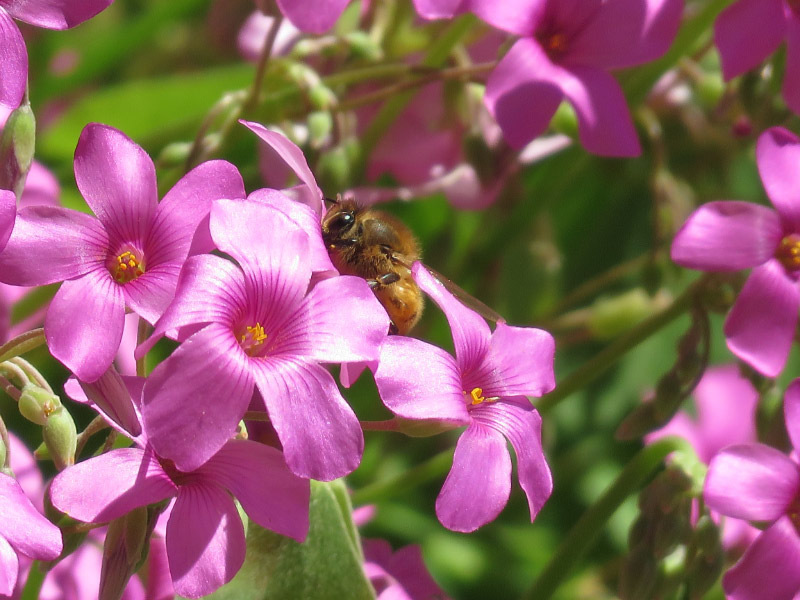
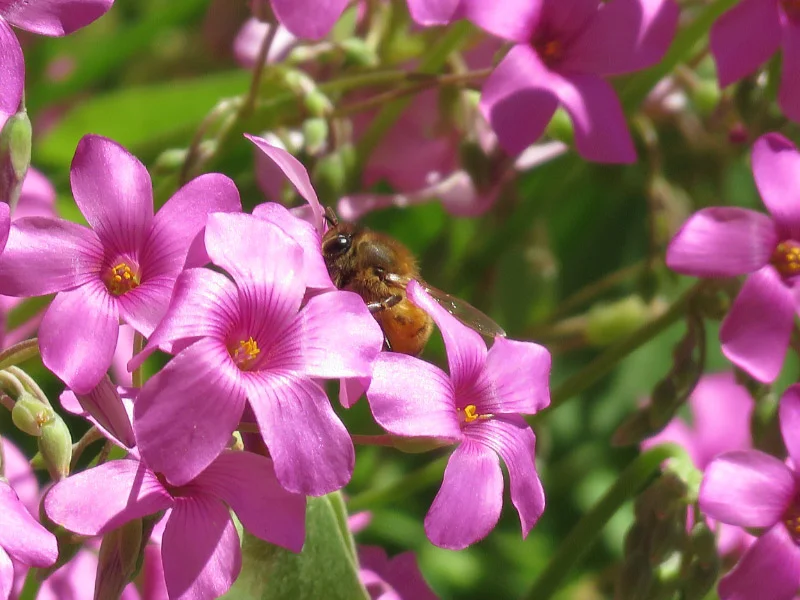
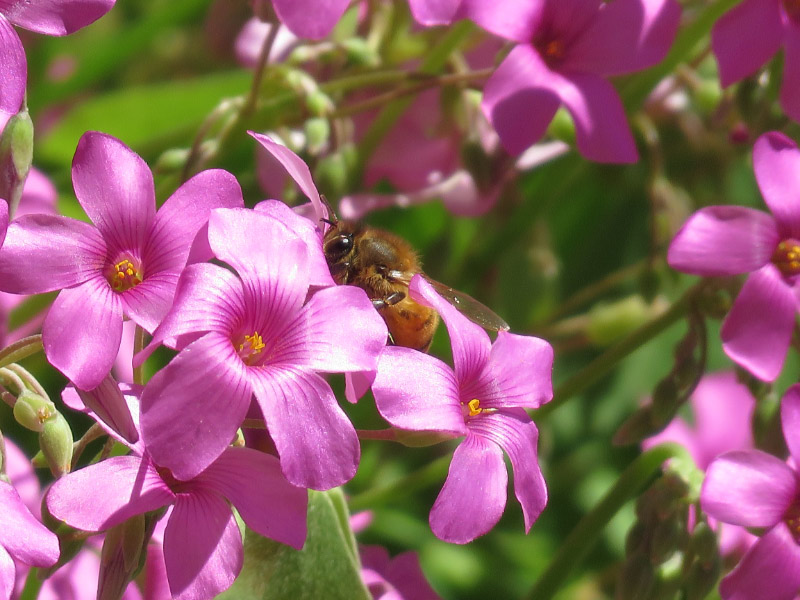
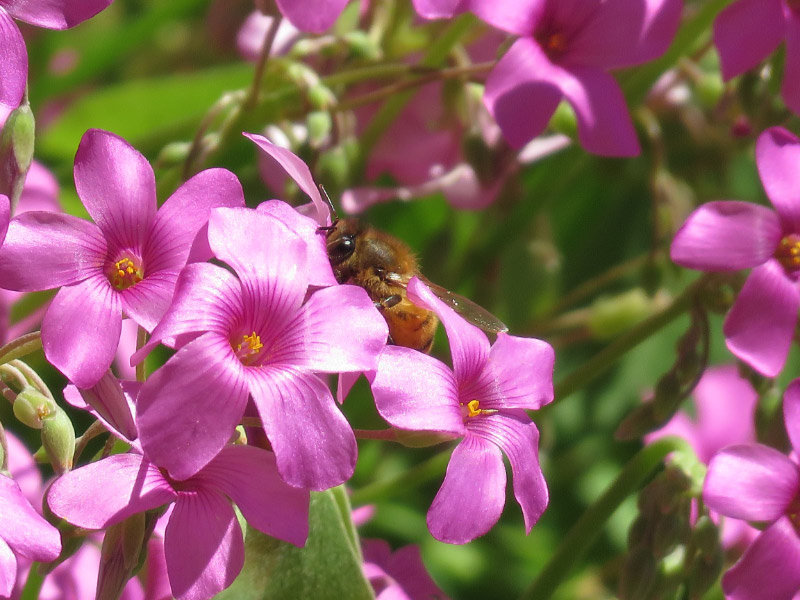
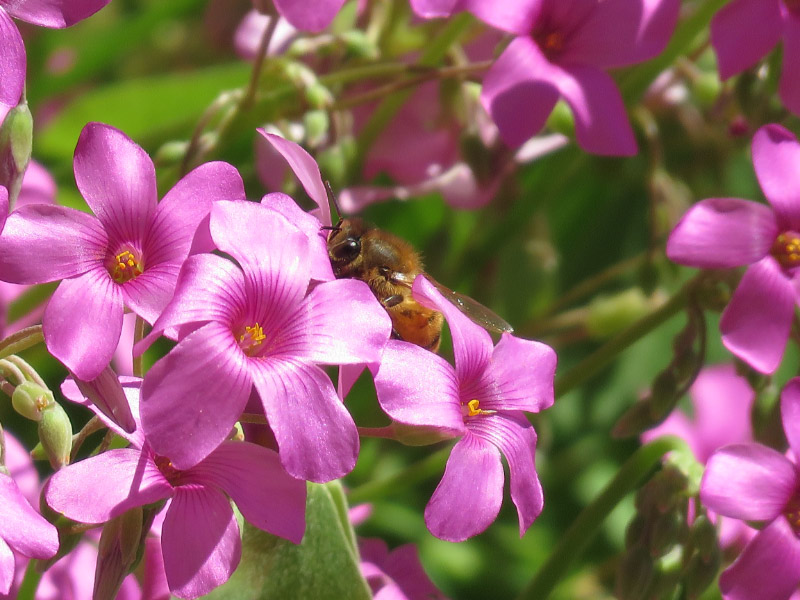
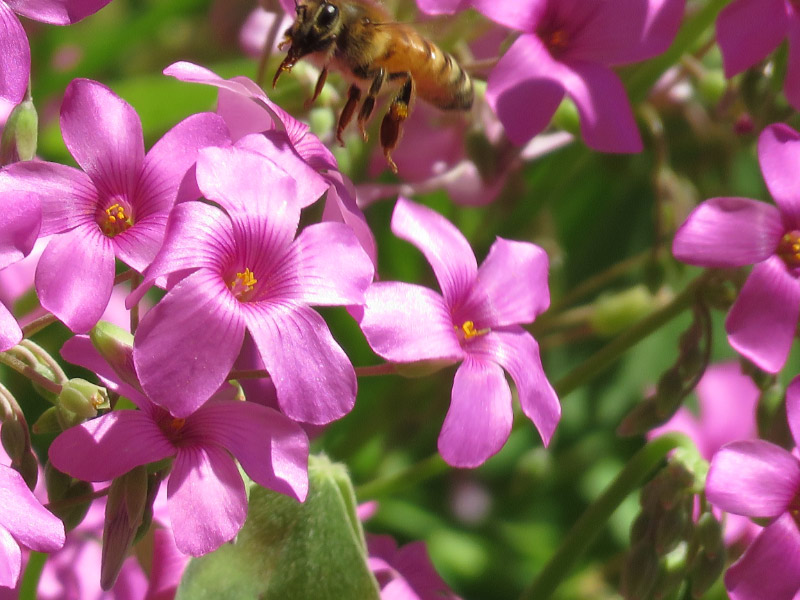
The oxalis was something she saw first in her sister’s garden then ordered some from a catalog (we think). It is growing so profusely these days that some of the plants are being potted to be part of the floral decorations for my niece’s wedding.

The bees like the flowers too.

The evening primrose is self-propagating around a rose bush my grandmother got as a birthday present (the rose bush must be over 20 years old now) and she planted the primrose seeds at its base.

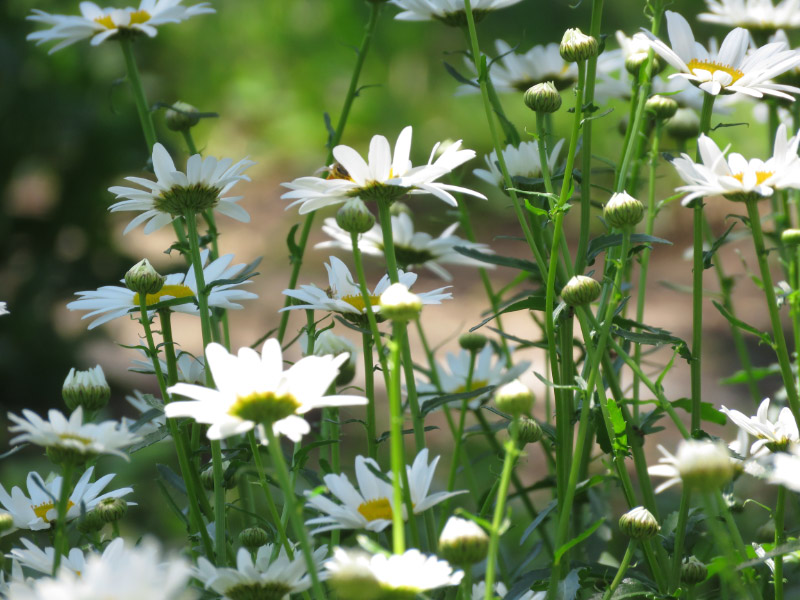
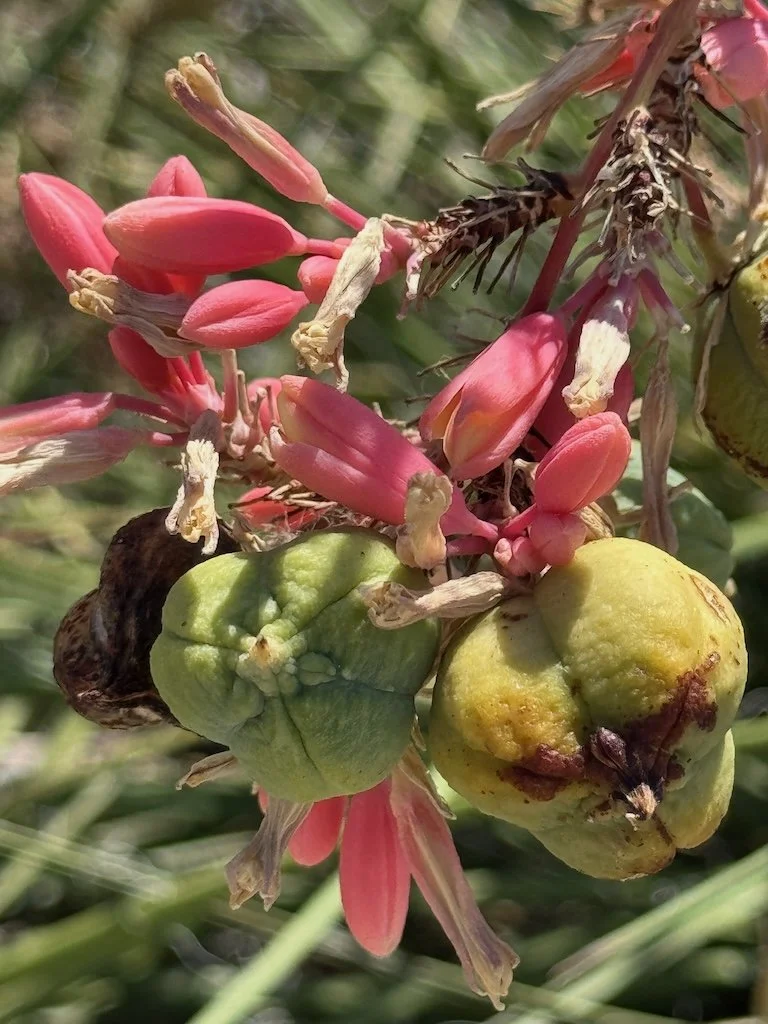
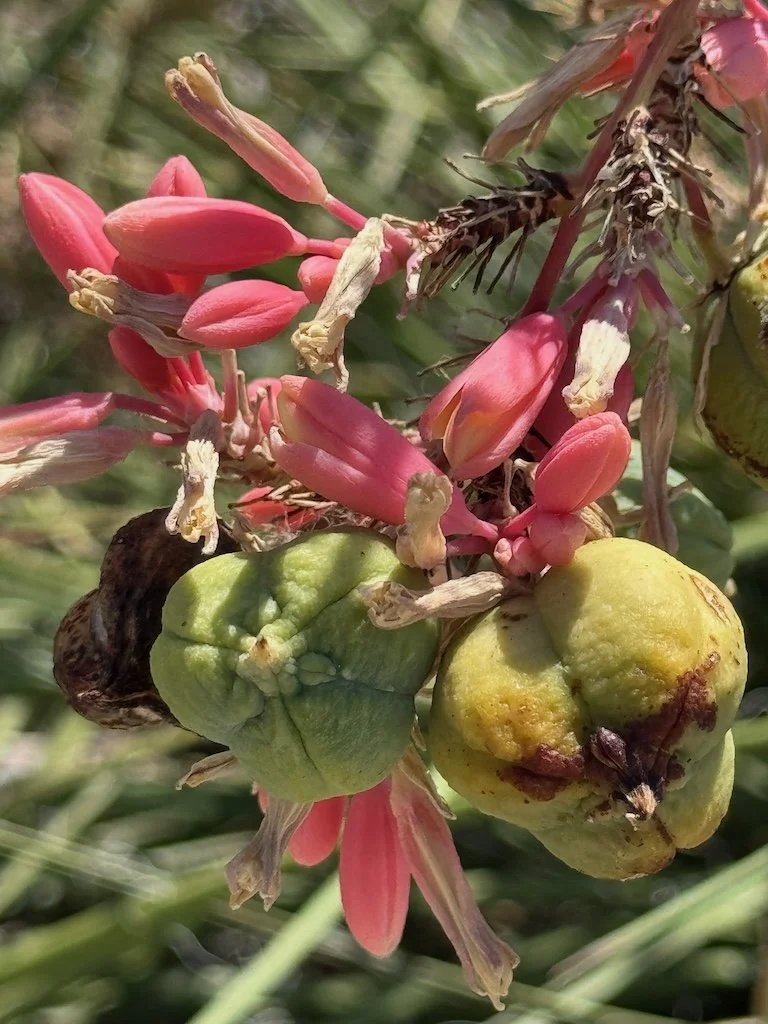
I’m not sure where the daisy-like flowers came from, but they’ve been in the garden for a long time. These days they bloom in enlarging clumps in the front yard garden under the big mulberry and beside the red yucca.

The continuity of plants – passed between family members and through generations. Remembering her…in her garden.

Gleanings of the Week Ending April 20, 2019

The items below were ‘the cream’ of the articles and websites I found this past week. Click on the light green text to look at the article.

People who feed birds impact conservation -- ScienceDaily – A study of the impact people have on birds….and the impact feeding birds has on the people!

Bird Species Impacted By Cutthroat Declines At Yellowstone – Colonial water birds have declined as the lake trout have increased (and cutthroat trout had decreased) in Yellowstone Lake. There could be other reasons for the decline of the pelicans, Caspian terns, and cormorants….more study needed.

Medicinal Uses of Mint: IBS, Itching, Nausea, and More | Berkeley Wellness - Human studies of peppermint in enteric-coated capsule form….confirming some of the benefits of peppermint oil. I like the peppermint flavor…so like fresh mint in salads and hot/cold water…the smell and the flavor are wonderful, so the other positive actions mint may have are just ‘icing’ on an already appreciated cake.

In ancient oceans that resembled our own, oxygen loss triggered mass extinction -- ScienceDaily – Oceans are big but they have reached tipping points in the past. This study looks closely at the Silurian Period…the conditions then and what happened with those conditions…making comparisons to the oceans of today.

What An Aging Population Means For The Future Of The Internet – The average age in many countries is trending older…how does that trend ripple into how the internet is used/misused?

Deciphering the walnut genome: Findings could lead to new walnut varieties -- ScienceDaily – Creating hybrids of English walnuts (the most widely sold form of walnuts sold in the US for human consumption) with native Texas Black Walnuts that have better resistance to soil borne pathogens currently impacting the crop.

Why Is Cancer More Common in Men Than in Women? | The Scientist Magazine® - Studying cancer-linked cellular differences between males and females.

Çatalhöyük, Turkey's Stone Age settlement that took the first steps toward city life – Only 4% of the site has been excavated….still a lot to learn.

To build the cities of the future, we must get out of our cars – Letting nature into the core of the city.

A Colonial-Era Cemetery Resurfaces in Philadelphia - The New York Times – Teasing out the history from remains of a cemetery that was supposed to have be moved years ago…but maybe wasn’t entirely.

Gleanings of the Week Ending April 6, 2019

The items below were ‘the cream’ of the articles and websites I found this past week. Click on the light green text to look at the article.

BBC - Future - What happens when we run out of food? – Even in the US, nearly 12% of households re classed as being food insecure; more than 6.5 million children go without adequate food. And the whole food system can be disrupted very easily by war and very bad government all around the world.

Refugee women have healthier pregnancies than US women -- why? An unhealthy US culture: For African refugee women, acculturation may negatively impact health -- ScienceDaily – I was surprised that the researchers did not explore the idea that maybe the value of early pre-natal care is overrated for people that are generally healthy when they get pregnant since the refugee women tended to not start pre-natal care until their 2nd trimester.

Top 25 Wild Bird Photographs of the Week: Migration – National Geographic Society  - Birds are migrating through our area…we’re seeing more robins…and the juncos will leave soon to go further north. These pictures feature birds from around the world…that are migrating.

Hospital disinfectants should be regulated like antibiotics new study suggests – It’s not just antibiotics that drive antimicrobial resistance…it’s disinfectants (particularly in hospitals) too.

BBC - Future - The unexpected magic of mushrooms – New items made from fungus...replacing some kinds of plastics. It’s good that fungi are so plentiful on the planet – exceeding the biomass of all animals.

An Island Apart – Acadia National Park’s Isle ad Haut. A very different experience from Mount Desert Island

Beautiful cherry blossoms photos – Our cherry tree is in bloom right now. I guess cherry trees are enjoyed around the world very year about this time. There is a picture of the cherry trees around the tidal basin in Washington DC included in the pictures.

Green tea cuts obesity, health risks in mice: Follow-up study in people underway -- ScienceDaily – More research needed…. but I am enjoying green tea already (my favorite is a blend with mint).

Make A Home for Wildlife – Cool Green Science – Some ideas for creating an oasis for wildlife --- it doesn’t take much to help pollinators or birds!

Why did Flamingos flock to Mumbai in record numbers this winter? – 120,000 flamingoes…that’s a lot of birds!

Patuxent Research Refuge

I attended the Patuxent River Conference last week. The conference was informative – lots of up-to-date information about the river. One of the branches of the river (the Middle Patuxent) is through the forest – downhill – from my house. The conference venue was the Patuxent Research Refuge and there was opportunity to look around the visitor center and onto a nearby trail. It has been awhile since I had visited the place and the visitor center was in better condition that I remembered.

IMG_3793.jpg

The displays in the visitor center had been updated. The one I found most poignant was the whopping crane display. The Patuxent Research Refuge tried for years to raise whooping cranes to establish a new migratory flock but this year the effort was stopped. The whopping crane we saw down in Florida during the Space Coast Birding and Wildlife Festival (see my post here) began its life at this refuge.

IMG_3782.jpg
IMG_3788.jpg

During the morning break – a mockingbird sat in a nearby tree. It had quite a repertoire of songs.

I remember the timber wolf sculpture in front of the visitor center but the colorful screening on the front windows of the visitor center was new to me.

The refuge biologist let a hike during the last session of the day. A prescribed burn had been done on some of the areas around the visitor center to clear out biomass…keep the area grassland habitat rather than forest.

IMG_3799.jpg

We hiked over the causeway and into the forest. The Refuge is doing an inventory of the forest trees and taking core samples to determine the age. One of the corers got stuck in an oak and they are still trying to get it out!

IMG_3801.jpg

The trees are not leafed out…but some are easy to identify. Beech trees are easy any time of year.

IMG_3808.jpg

A lot of the pines at the refuge were planted about the same time and are dying off together too. There are quite a few that have fallen over. But there are still a lot of trees that fill in the canopy. This will be a very shady area when the trees leaf out.

IMG_3810.jpg

It was a good day for a conference and a visit to the refuge!

100 Desert Wildflowers in Natural Color

Dodge, Natt N. 100 Desert Wildflowers in Natural Color. Southwest Monuments Association. 1963. Available from the Project Gutenberg here.

Natt Noyes Dodge (1900-1982) was the regional naturalist for the Southwest Region of the National Park Service from 1935 to 1963. He was also an author and photographer – both of which are shown in this book along with his knowledge of the region. The version available from Project Gutenberg is from the third printing in 1967 which was a revision from the original in 1963.

I’m glad that the copyright holder has allowed this book to be available online....easy to enjoy the photos of desert wildflowers.

I had bought several of Dodge’s books is national parks when traveling to New Mexico, Arizona and Colorado from our home in Dallas in the 1970s, but I didn’t have this one.

Texas Wildflowers in Natural Colors

Whitehouse, Eula. Texas Wildflowers in Natural Colors. 1936. Available from Project Gutenberg here.

This was my favorite botanical book for March….and maybe beyond that too. Eula Whitehouse lived from 1892-1974 and spent the latter part of her career in Dallas – working at Southern Methodist University from 1946 until her retirement; her books and collections are the core of what became BRIT (Botanical Research Institute of Texas). She assisted in organizing the Dallas County Audubon Society in 1954.

The book was self-published first in 1936 and remains a favorite among many Texas botanists. It was published privately and distributed through the Texas Book Store in Austin and then, in 1948, through Cokesbury Bookstore in Dallas. The version available online at Project Gutenberg shows both dates. I’ve included a few sample images below.

I grew up in Texas and found myself wondering why the nature day camps I attended during my elementary and middle school summers didn’t use her book as a reference as we tried to learn about the wildflowers we saw around us.

Eula Whitehouse published a study on the evolution, or succession, of plant communities at Enchanted Rock (in Texas) as part of her doctoral research at the University of Texas in the 1930s. In the late 1970s, Lady Bird Johnson urged The Nature Conservancy to purchase Enchanted Rock to be set aside for posterity. I like that there is a linkage via Enchanted Rock between Eula Whitehouse and Lady Bird Johnson – two women that were deeply involved in preserving wildflowers of Texas.

For more information about Eula Whitehouse, see pages at BRIT and Texas State Historical Association.

Gleanings of the Week Ending March 30, 2019

The items below were ‘the cream’ of the articles and websites I found this past week. Click on the light green text to look at the article.

Spring Outlook: Historic, widespread flooding to continue through May | National Oceanic and Atmospheric Administration – Check out the map about 1/3 of the way through the article. It looks like quite a few areas along the Missouri and Mississippi Rivers are going to have moderate or major flooding through May. Almost the whole eastern part of the US is going to have some flooding during that period.

How Chromosomes X and Y Got Their Names, 1891 | The Scientist Magazine® - A little history. It all begins in the late 1800s.

C. R. PERCIVAL’S MICROSCOPE SLIDE COLLECTION | Ingenium – Browse through some of the images made of slides created in the early/mid 1900s. Click on the larger image to get a magnifier that can be moved over the image.

Food Trends 2019: Fermented Foods, Blueberries, Coconut Products, and More | Berkeley Wellness – How many of these are you already eating?

What oil leaves behind in 2.5 billion gallons of water every day in US -- ScienceDaily – Wouldn’t it be nice to not have oil polluted water injected underground…and sometimes into aquafers? Water is already in short supply in some areas of the country (mostly in the west). We need technologies to never contaminate water in a way that it cannot be consumed by plants and animals…and ourselves.

In Germany, Consumers Embrace a Shift to Home Batteries - Yale E360 – Half of the orders for rooftop solar panels are sold with a battery storage system too in Germany. I wonder when the US will catch up.

Butterfly numbers down by two thirds: High-intensity agriculture reduces number of butterfly species in adjacent areas -- ScienceDaily – It’s not just butterfly numbers that are down either. Agriculture research needs to hone practices that are productive in the short term…and the long term. In other words – all agriculture needs to become sustainable for humanity and the rest of the organisms that inhabit the Earth.

Nitrogen pollution's path to streams weaves through more forests (and faster) than suspected -- ScienceDaily – Nitrate is one of the abiotic tests we do for water quality assessment with high school students. This is a new finding to think about and incorporate in to the analysis of readings after heavy rains. The nitrogen might be moving so fast that the forest can’t absorb it!
Missouri Making Hyperloop Plans - News | Planetizen – A hyperloop between Kansas City and St. Louis! What a boon to the two cities and probably easier to build since there is not the heavy population between the two cities like the route that was originally talked about in California.

China Isn't Recycling Tons of U.S. Plastic Trash Anymore: Goats and Soda: NPR – We’re going to have to show some innovation in dealing with plastics – mostly single use – that we dutifully put in our recycle bins and assumed they would be recycled. Now a lot of them are going to landfills or polluting our waterways.  With a little thought, my family has reduced some….but the next step is tough. Some products we need are only available packaged in plastic.

Gleanings of the Week Ending March 23, 2019

The items below were ‘the cream’ of the articles and websites I found this past week. Click on the light green text to look at the article.

Salt Could Play a Role in Allergies | The Scientist Magazine® - Atopic dermatitis has increased more than 2-fold since the 1970s….and researchers do not attribute the increase to greater awareness or diagnosis. Now comes the observation that people with lesioned skin from atopic dermatitis (but not psoriasis) had a 30-fold higher salt level in their lesions than in their unlesioned skin or skin from healthy controls. The connection to diet is speculative at this point…but we do have higher salt in our diet now that most people had in the 1970s.
In Siberia, Toxic Black Snow Reveals the Toll of Coal Mining | Smart News | Smithsonian – Yuck! Pollutions from open-air coal pits…in the extreme. Another reason, I’m glad we’re moving away from coal powered electricity generation. I wondered if the people living in the area of black snow develop terrible lung problems.  

See the best pictures from Bill Ingalls, NASA's official photographer – 30 years of photography

What makes joints pop and crack and is it a sign of disease? – A little lesson in joint anatomy

Piling Up: How China’s Ban on Importing Waste Has Stalled Global Recycling - Yale E360 – China’s plastic imports have plummeted by 99%, mixed paper has dropped by a 33%. Recycled aluminum and glass are less affected by the ban. So now we are sending plastics to landfills, incinerators or littering the environment. Communities across the US have curtailed or halted their recycling programs. That hasn’t happened (yet) where I live in Maryland. We must learn to produce less recycle (waste) and process it more locally…not ship is someplace else in the world.

Meet the Bizarre American Bittern – Cool Green Science – It’s a type of heron that makes a strange sound (listen to the recording in this post). It is so well camouflaged that you are more likely to hear it than see it!

Photography in The National Parks: Capturing the Grandness of The Grand Tetons – Reminds me that this is a National Park I want to see again. Last time we went, I wasn’t doing any photography yet.

Top 25 Wild Bird Photographs of the Week: Interactions – National Geographic Society – Pictures that are more than just a bird.

Prehistoric Microbes Inhabit an Oasis in the Northern Mexican Desert | The Scientist Magazine® - Fish, diatoms, and bacteria in lagoons in the Chihuahua Desert and cannot be found anywhere else on Earth. More than 5,000 species of bacteria and archaea have been documented.

Owls against owls in a challenge for survival: Researchers forecast interactions between two owl species and the quality of their habitat in the Pacific Northwest -- ScienceDaily – I learned at the Festival of the Cranes (New Mexico) last fall about Barred Owls moving into Northern Spotted Owl (NSO) territory….and winning the competition. That further reduces the NSO populations which is already endangered because of over-logging of the old growth forests.

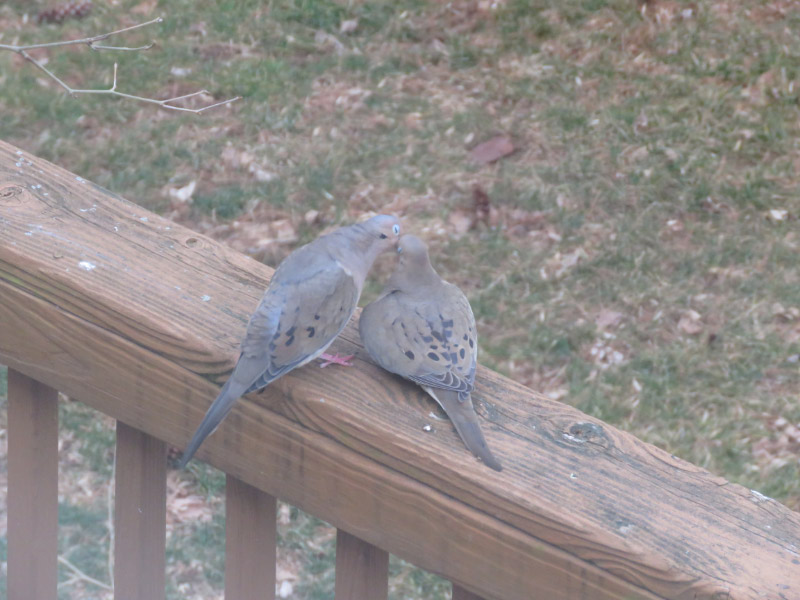
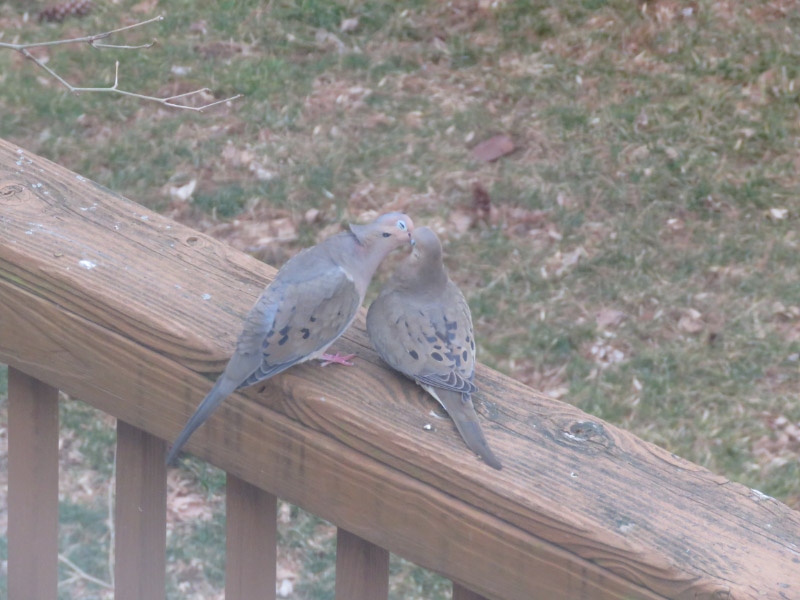
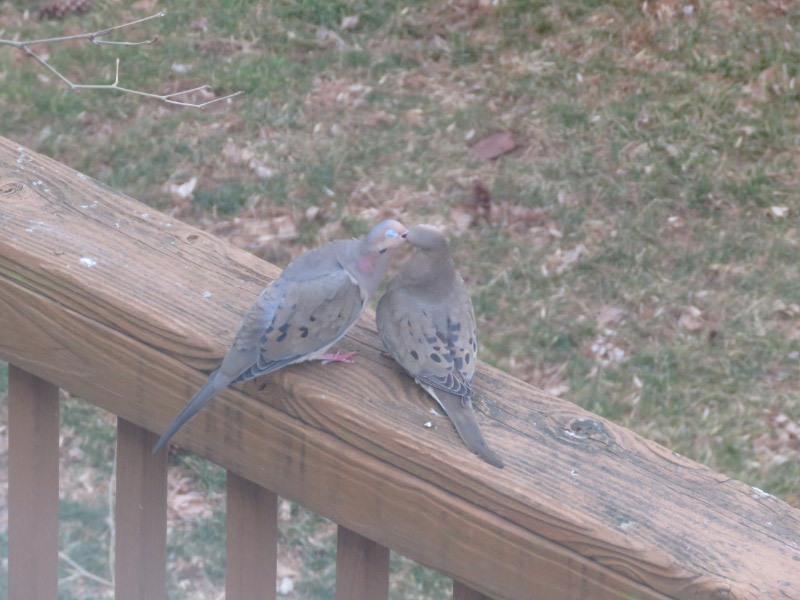
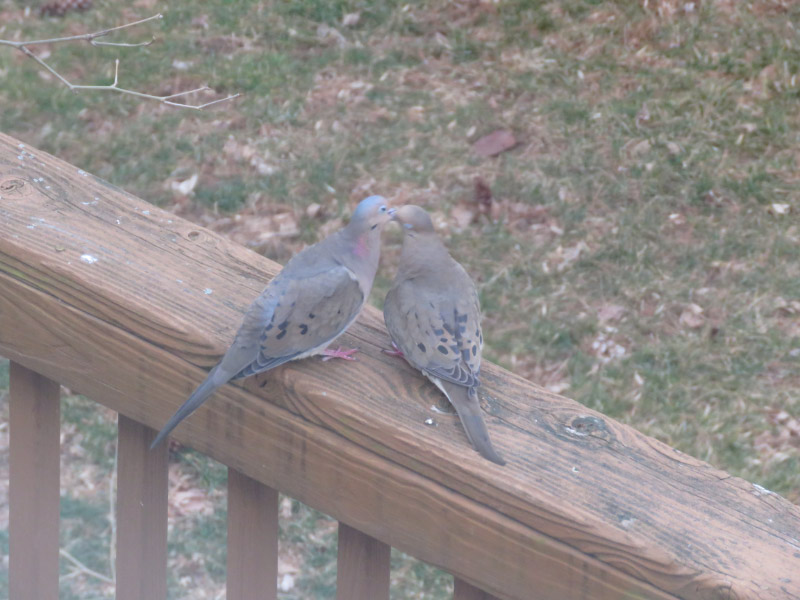
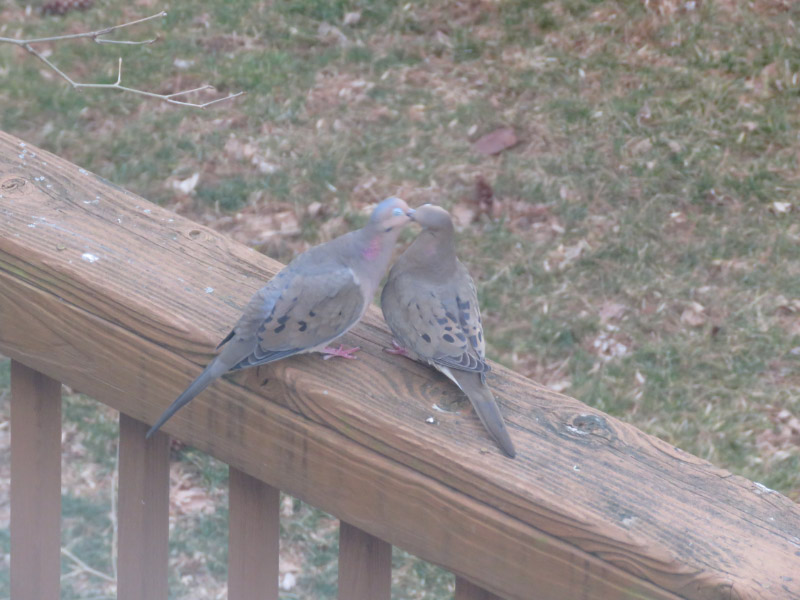
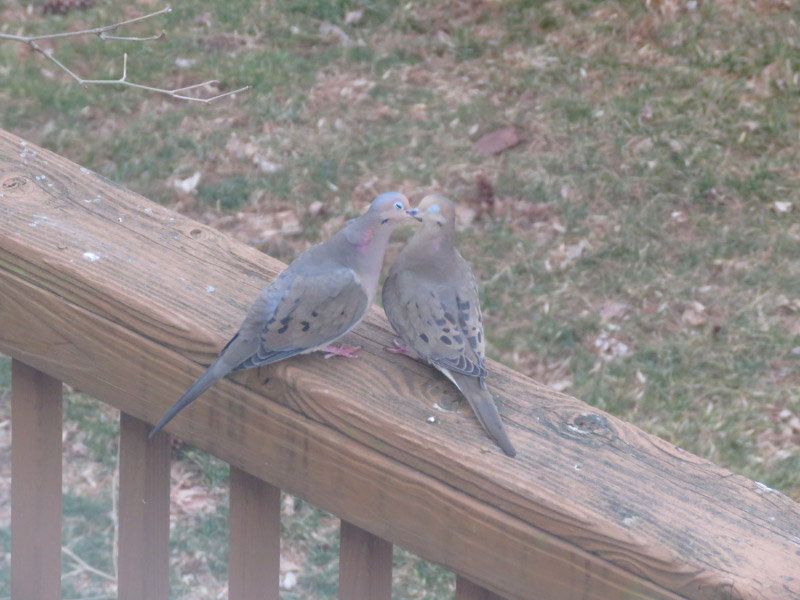
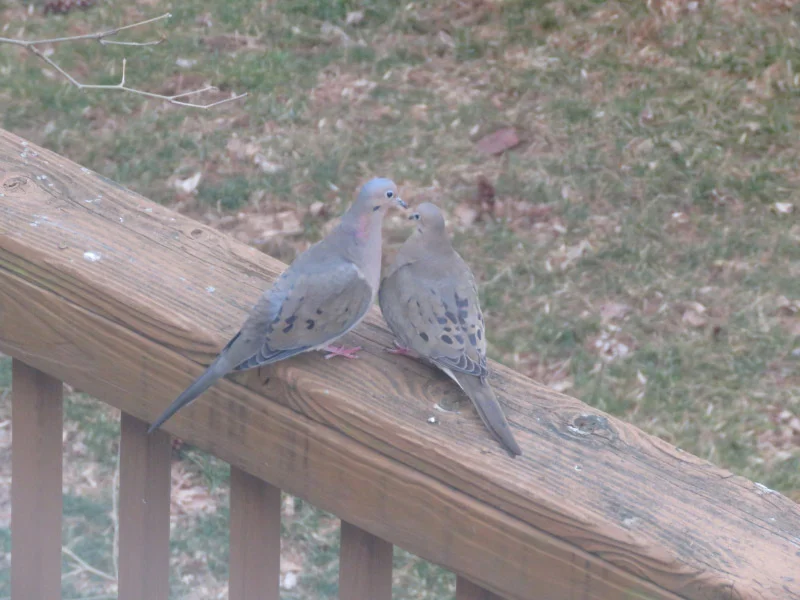
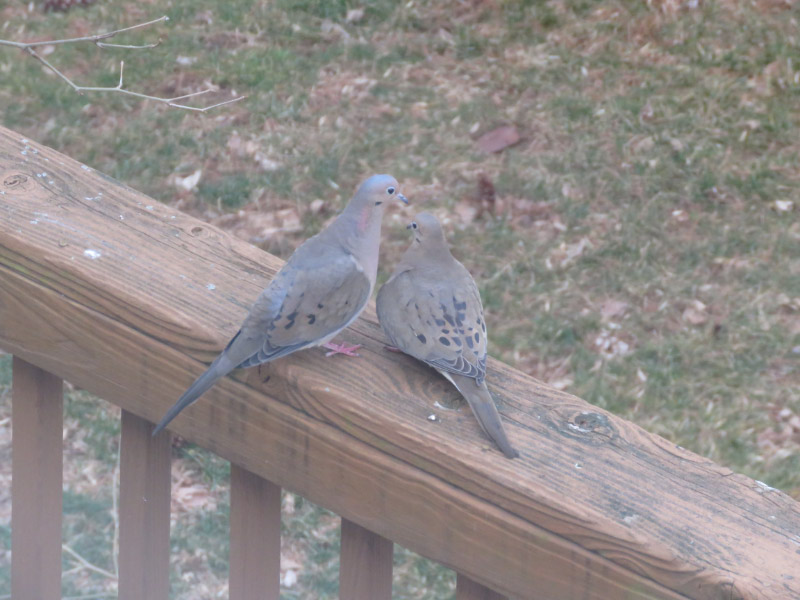
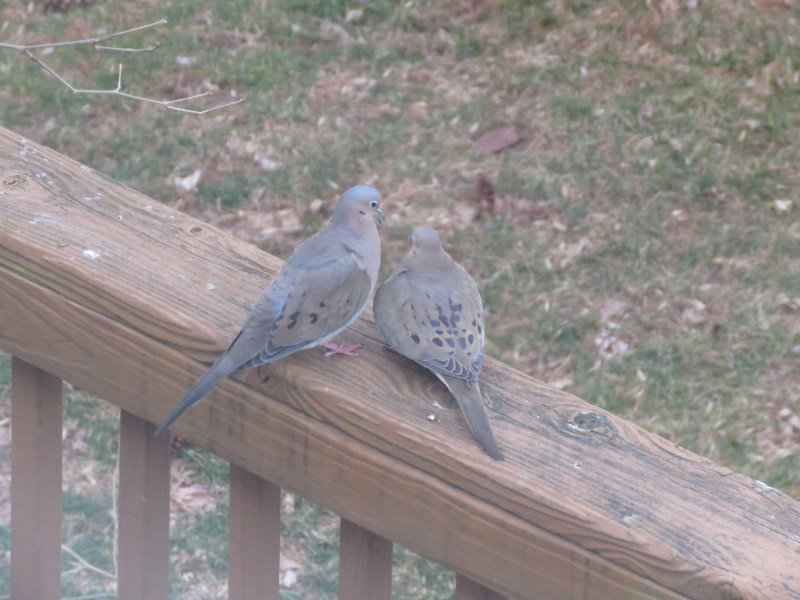
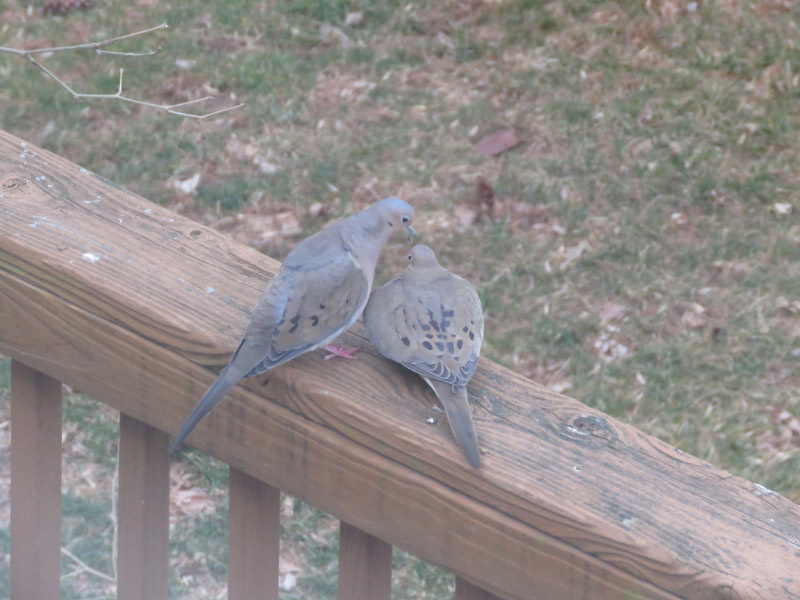
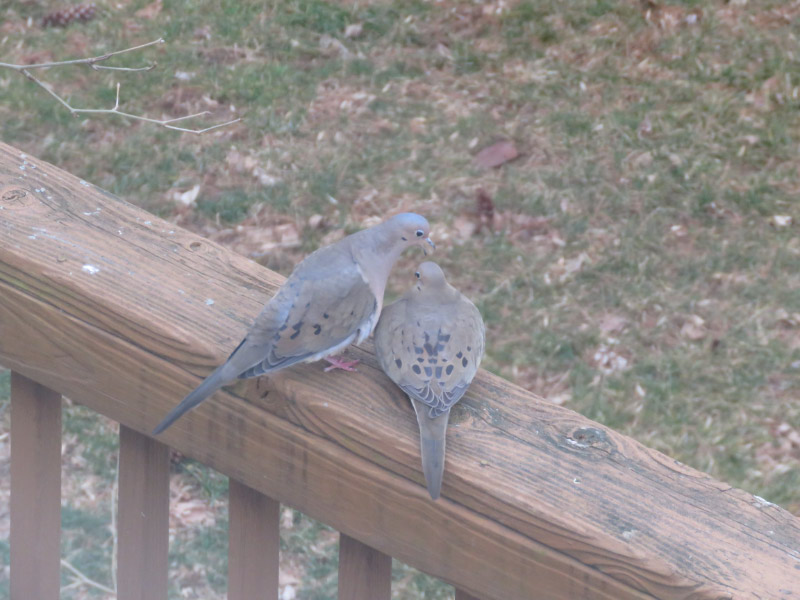
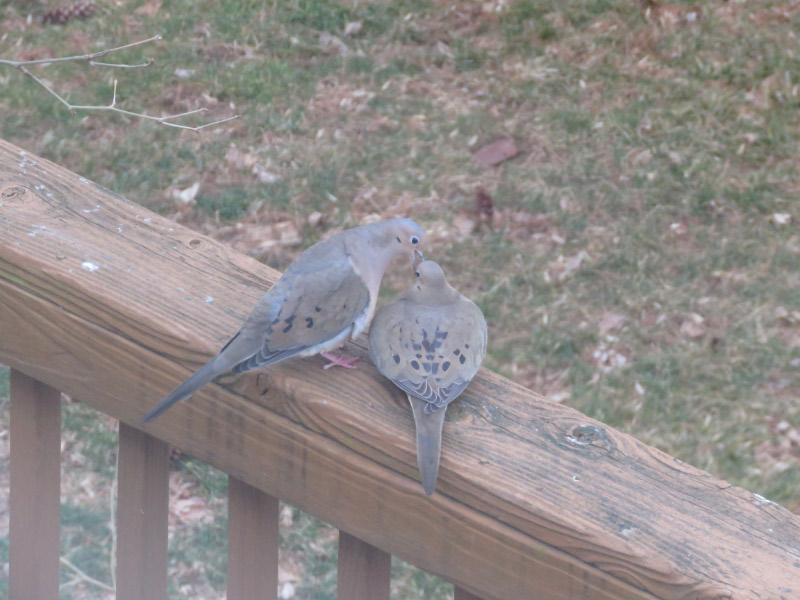
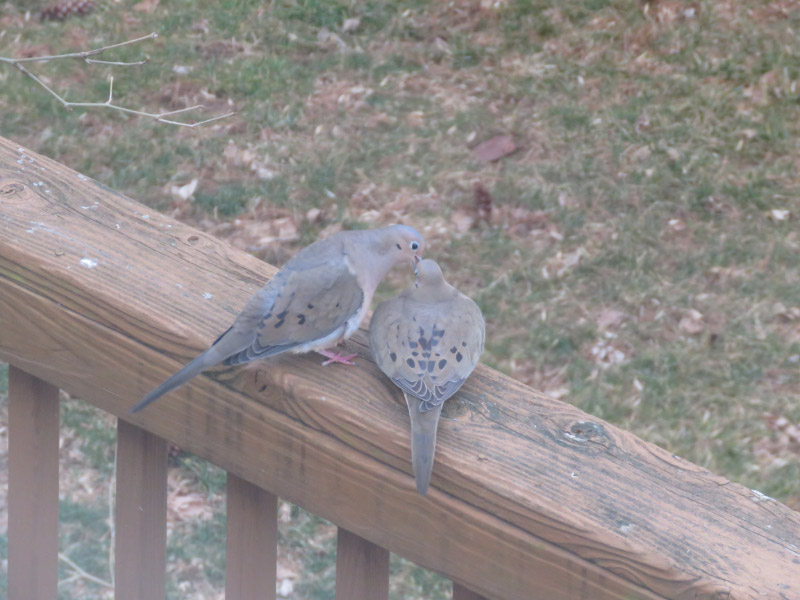
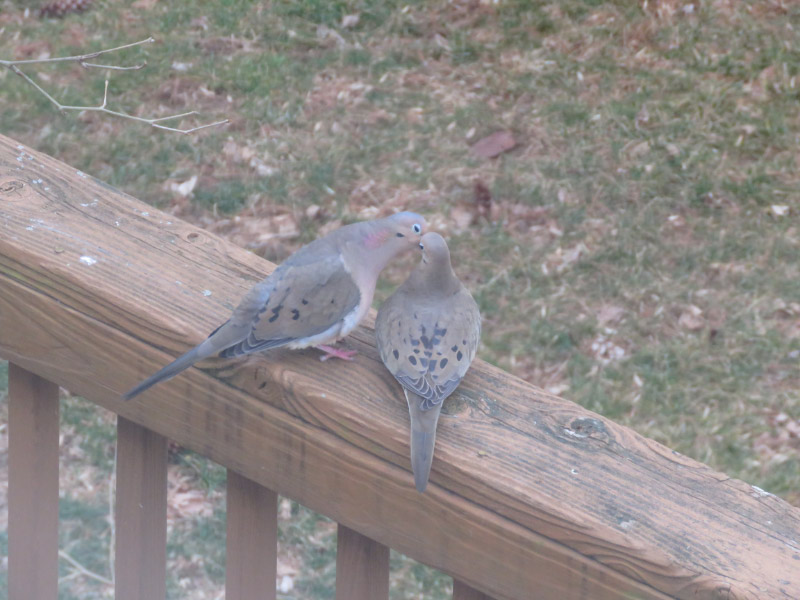
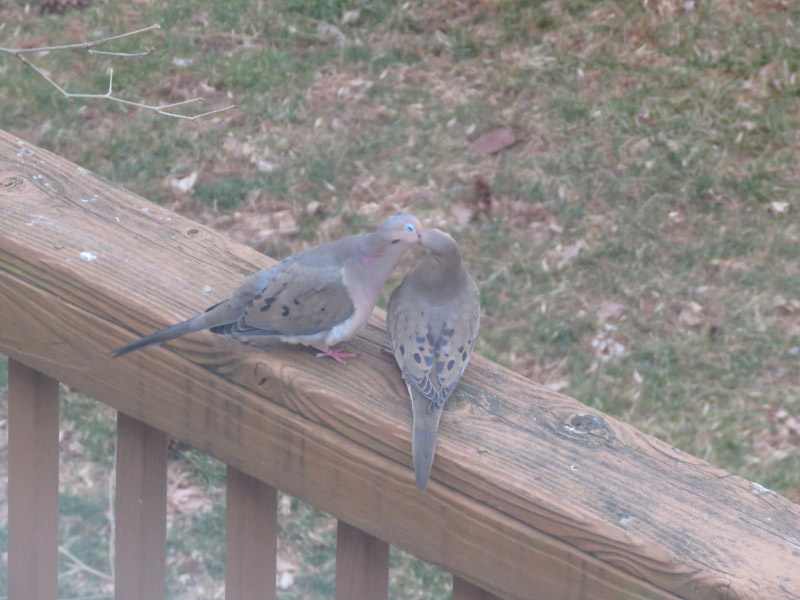
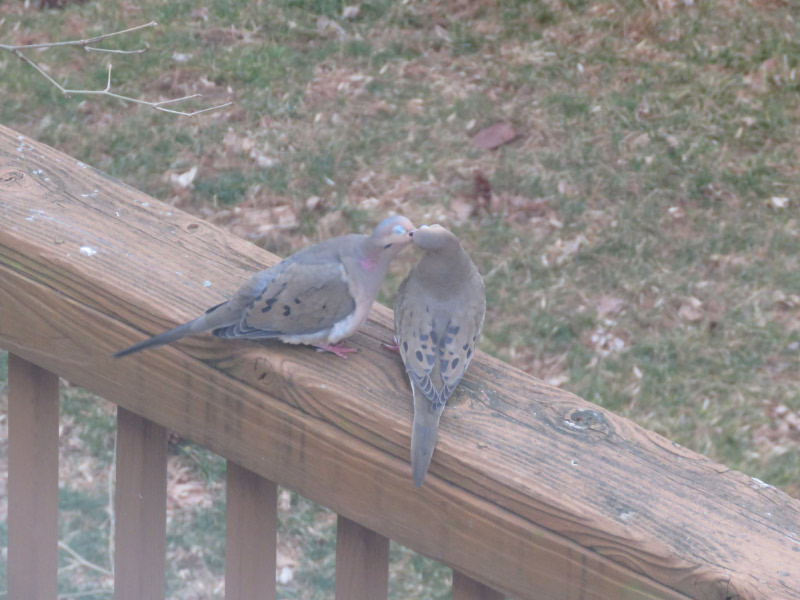
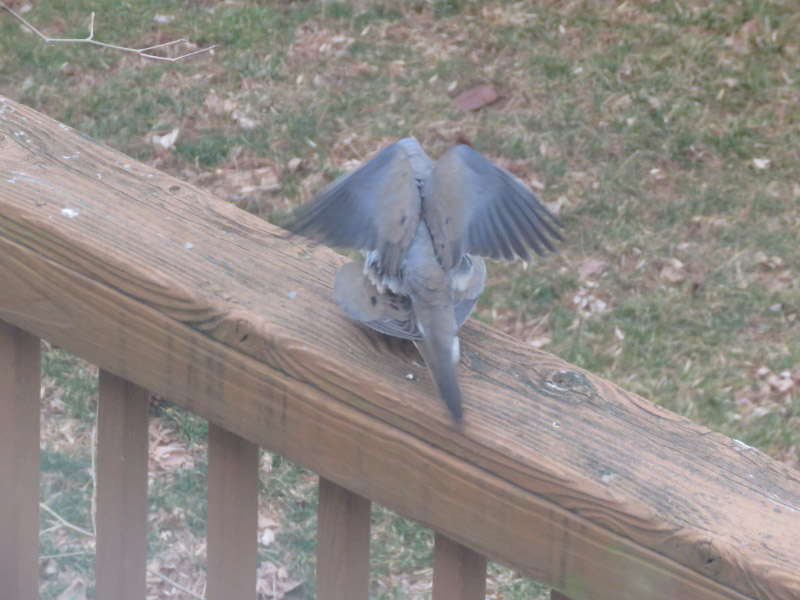
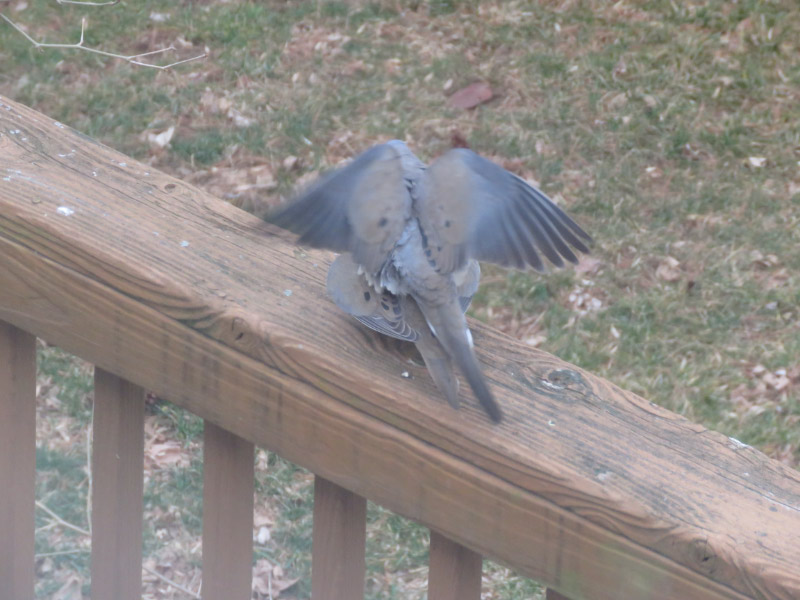
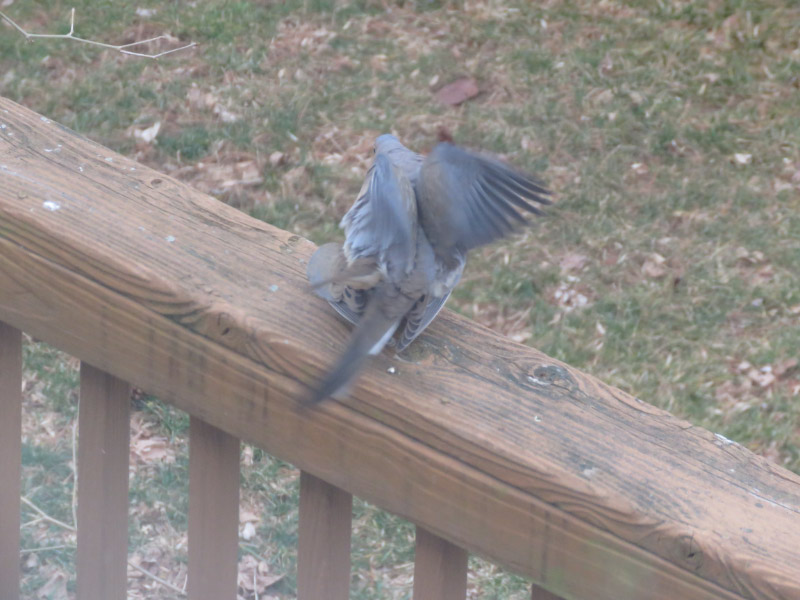
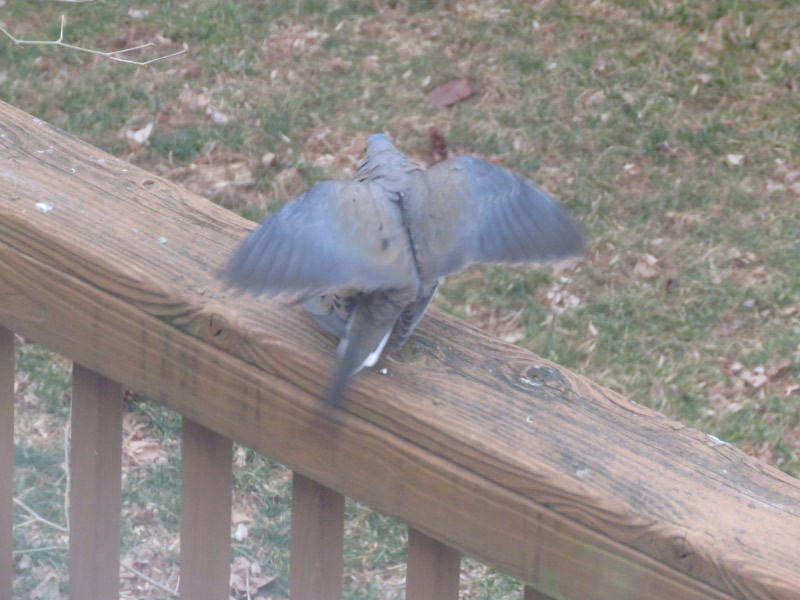
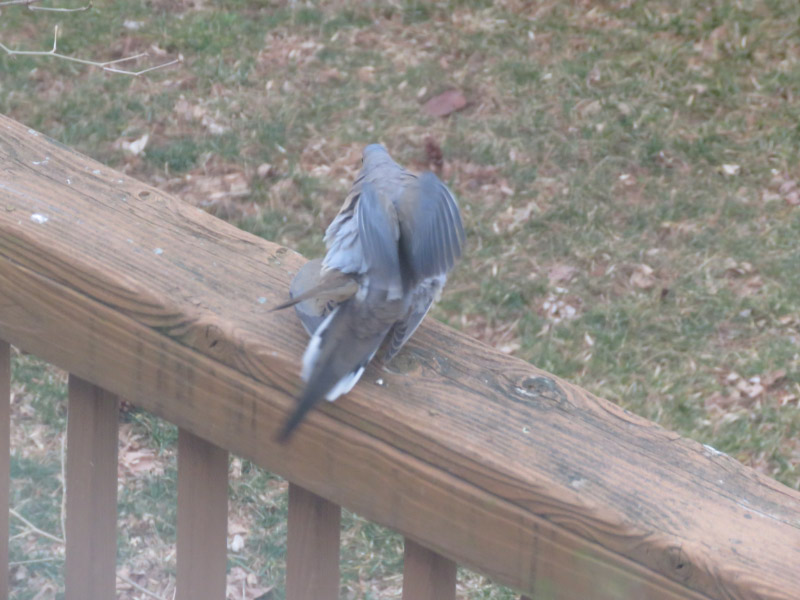
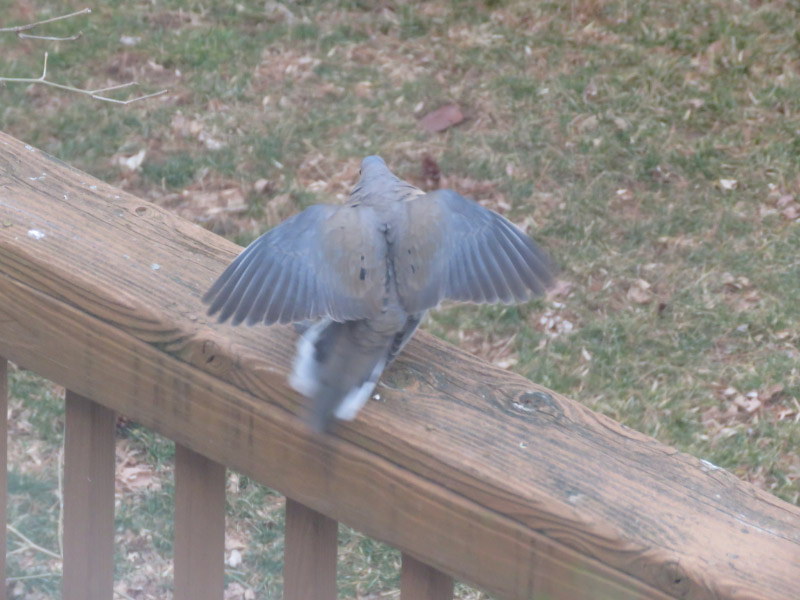
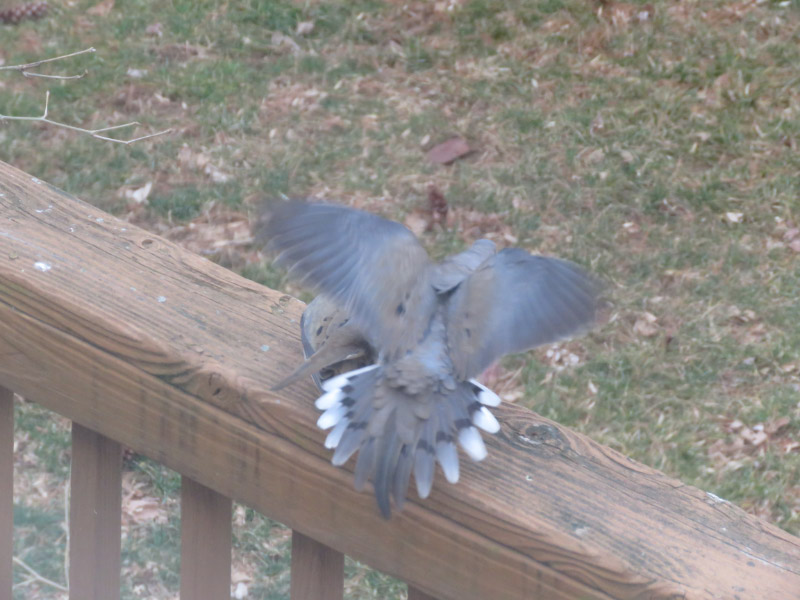
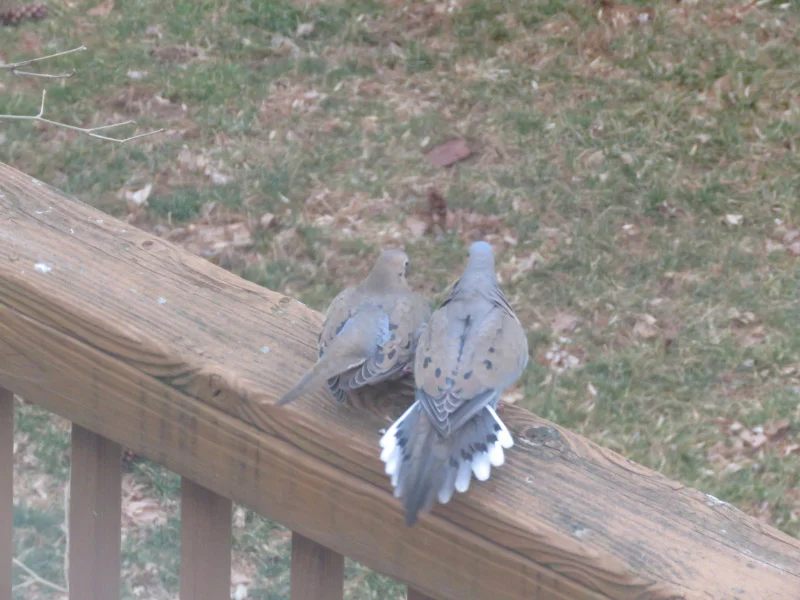
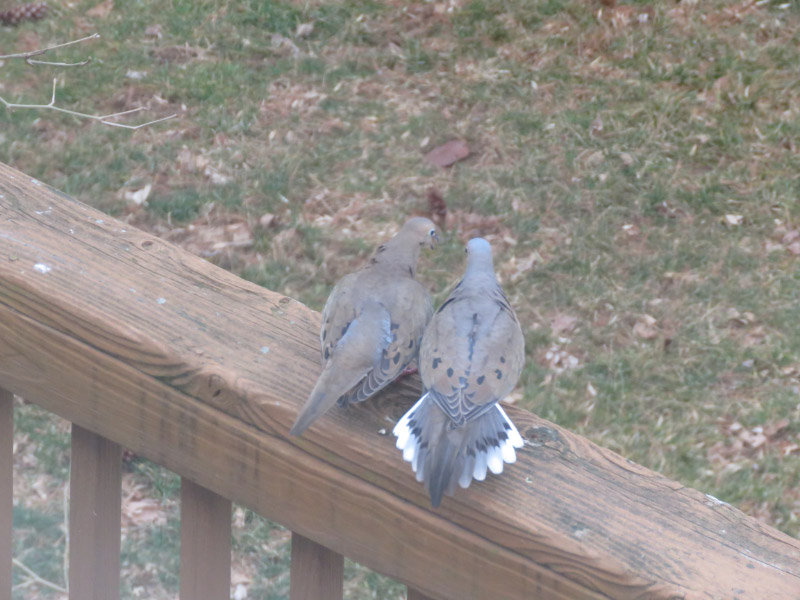
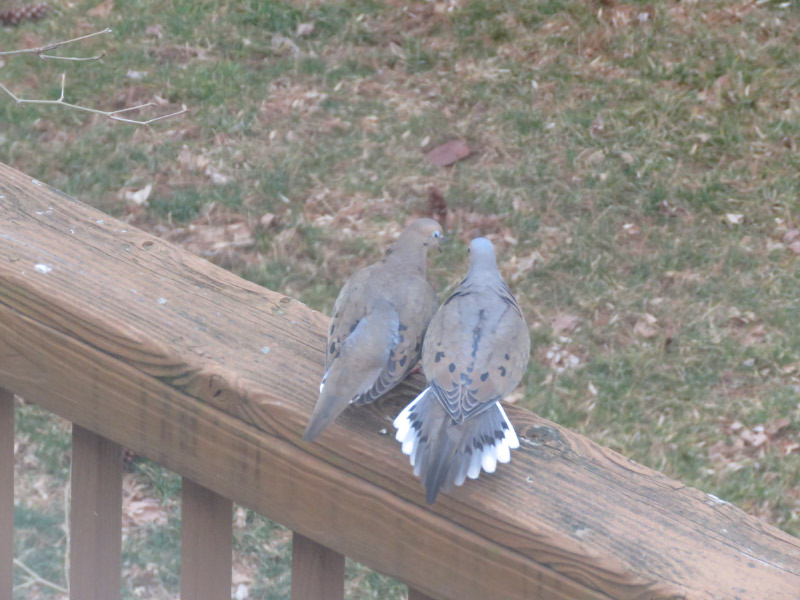
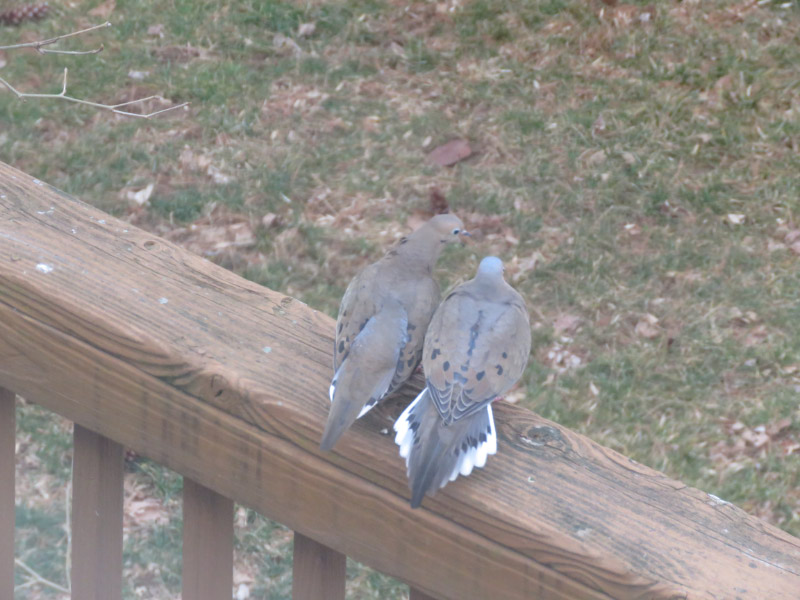
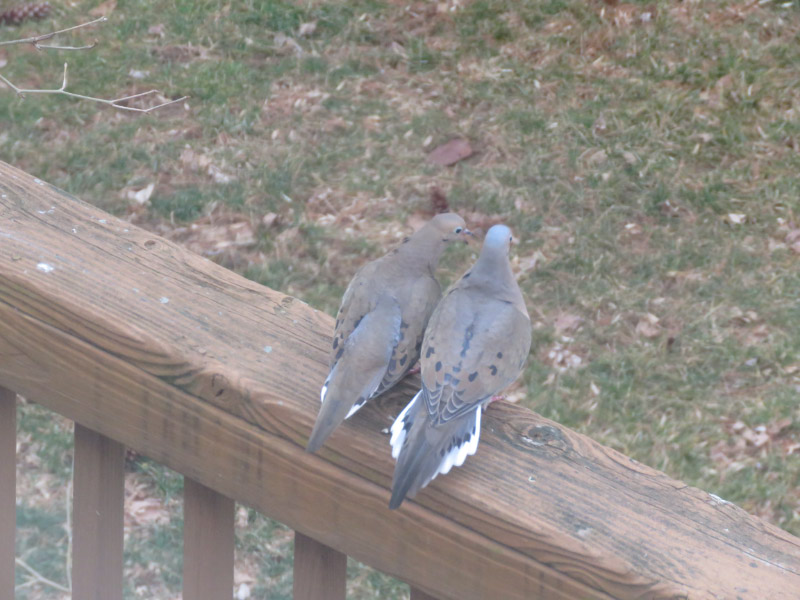
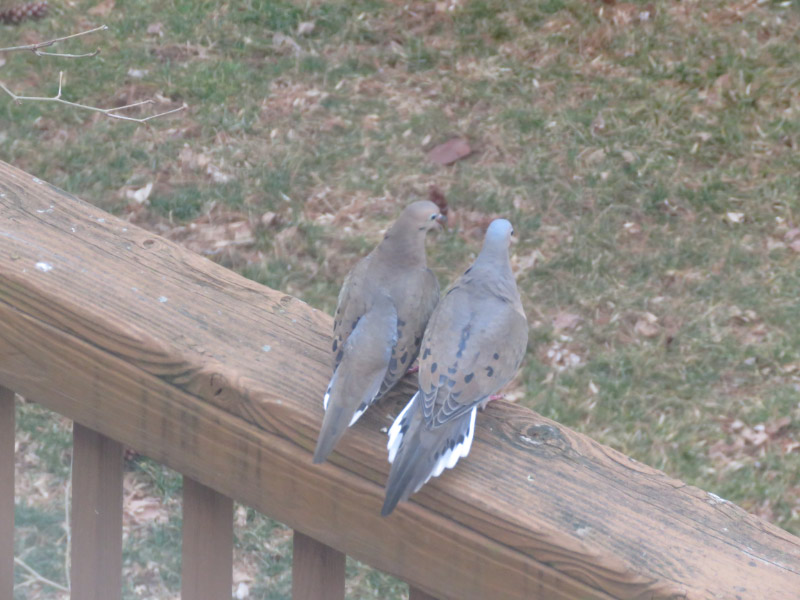
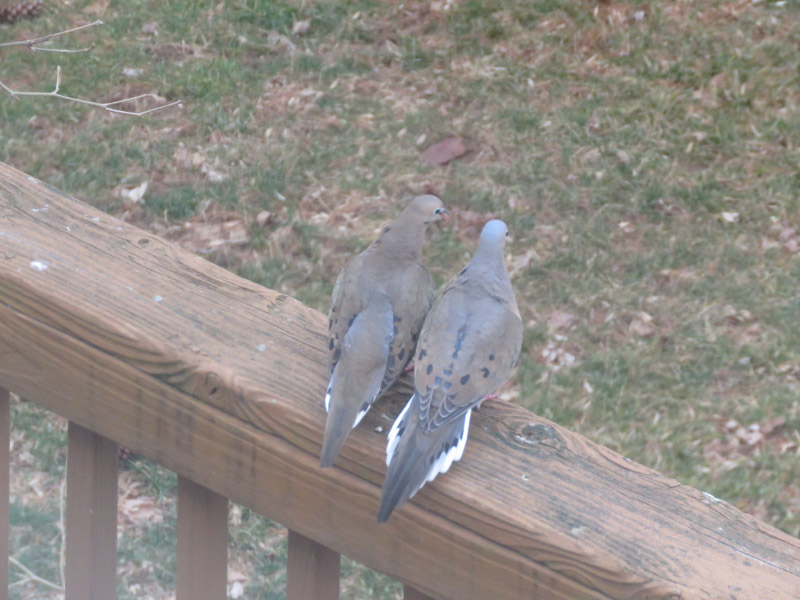
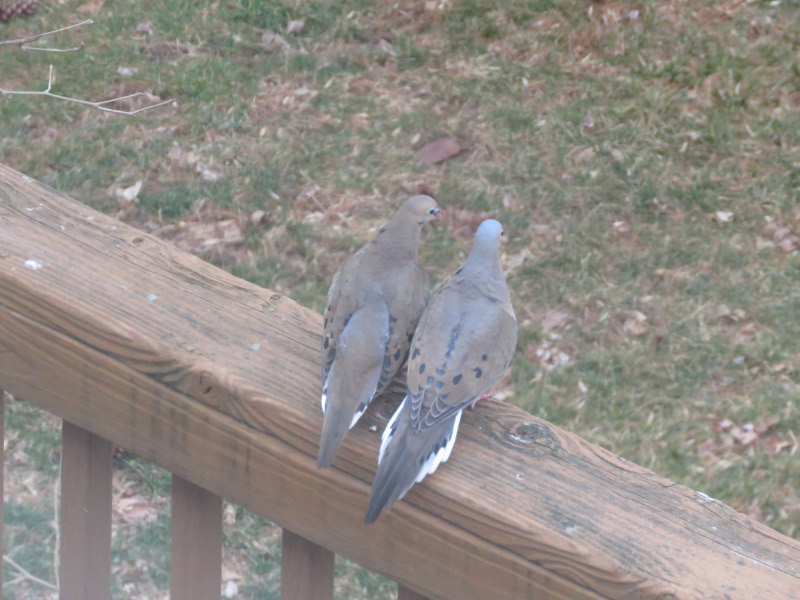
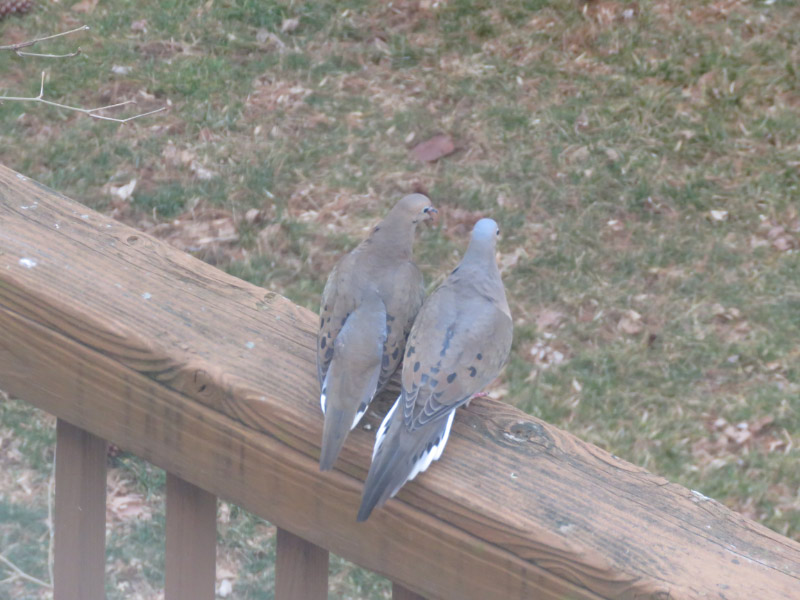
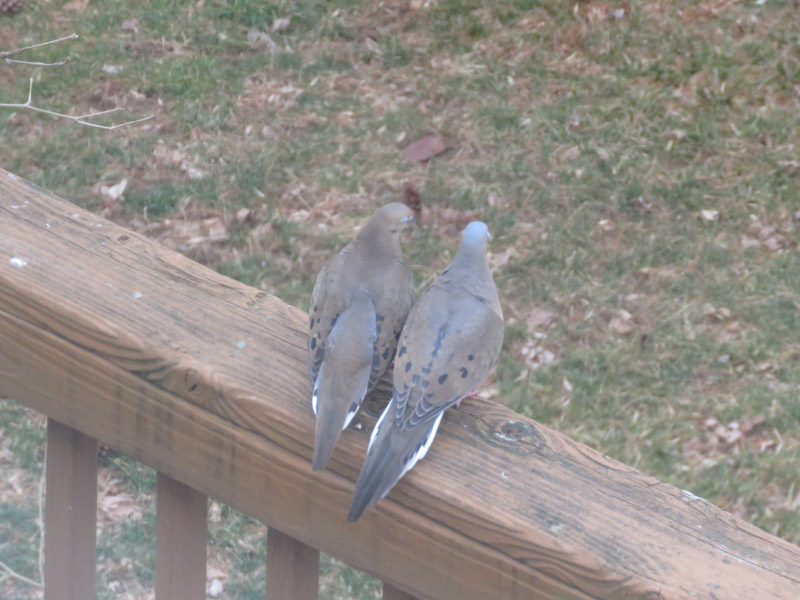
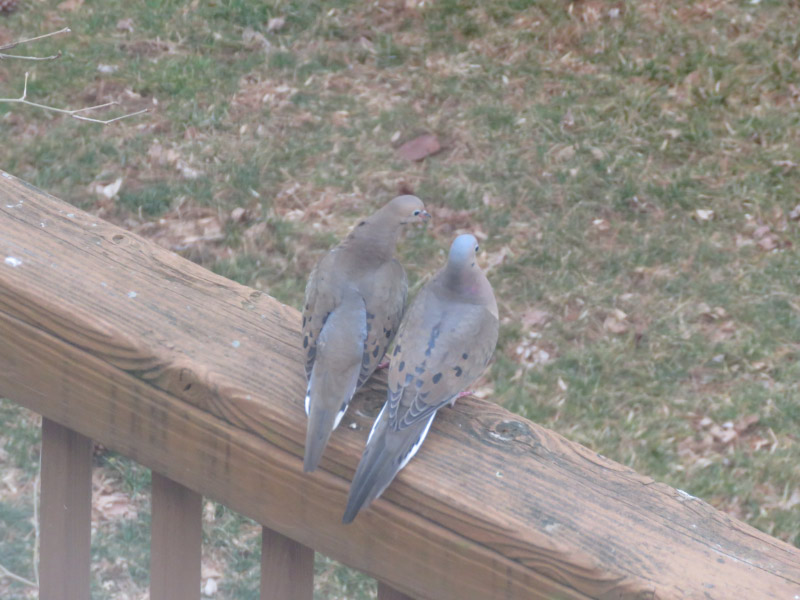
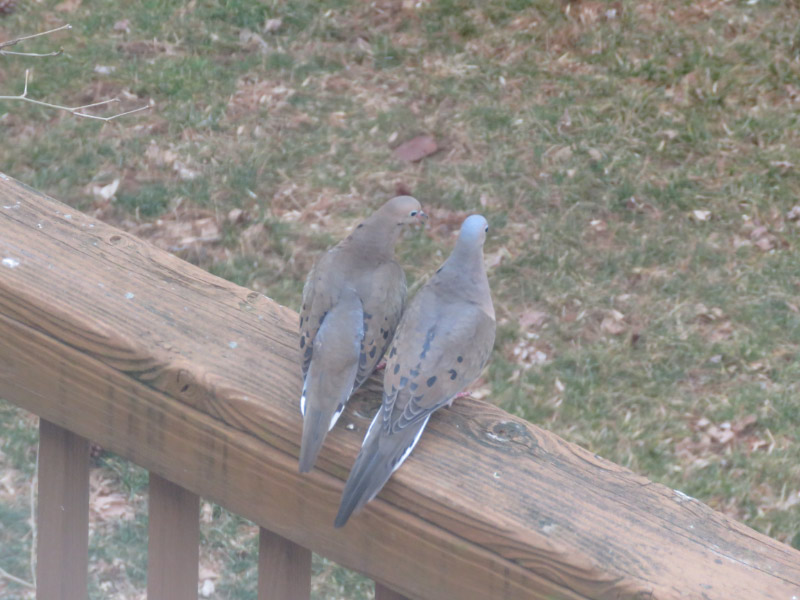
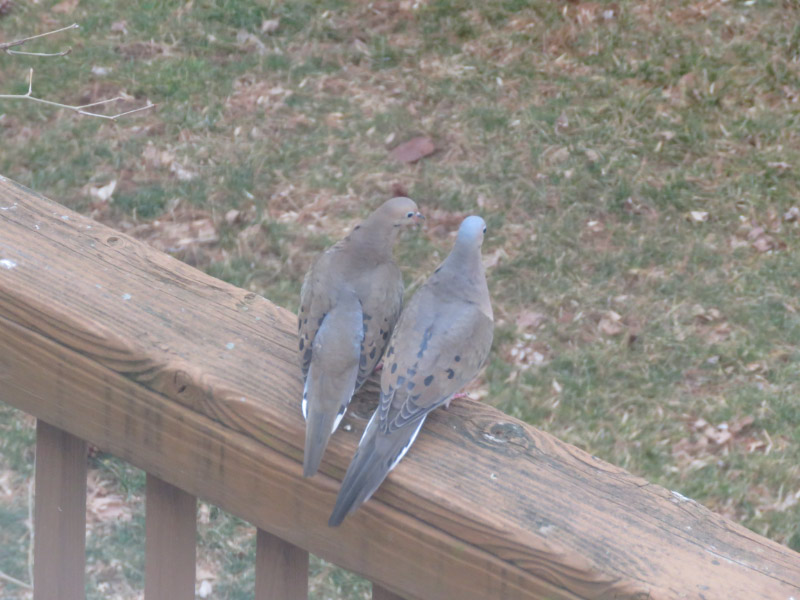
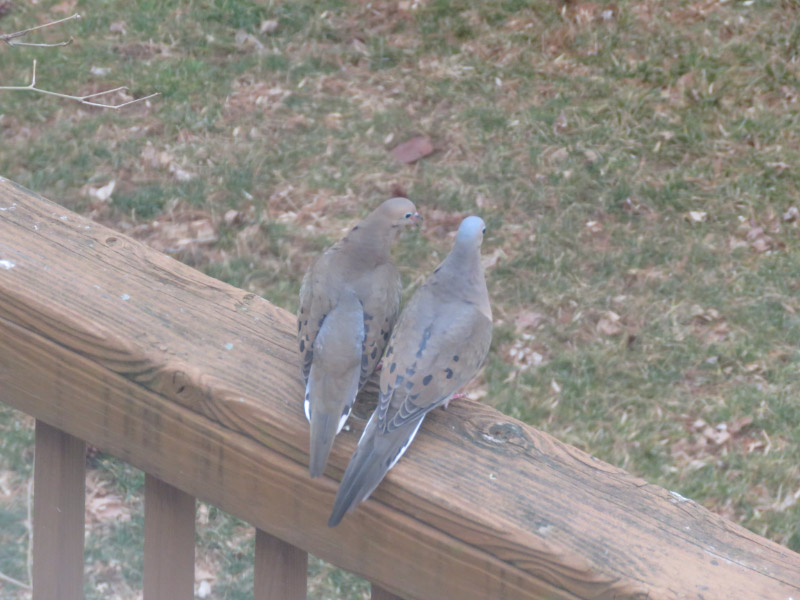
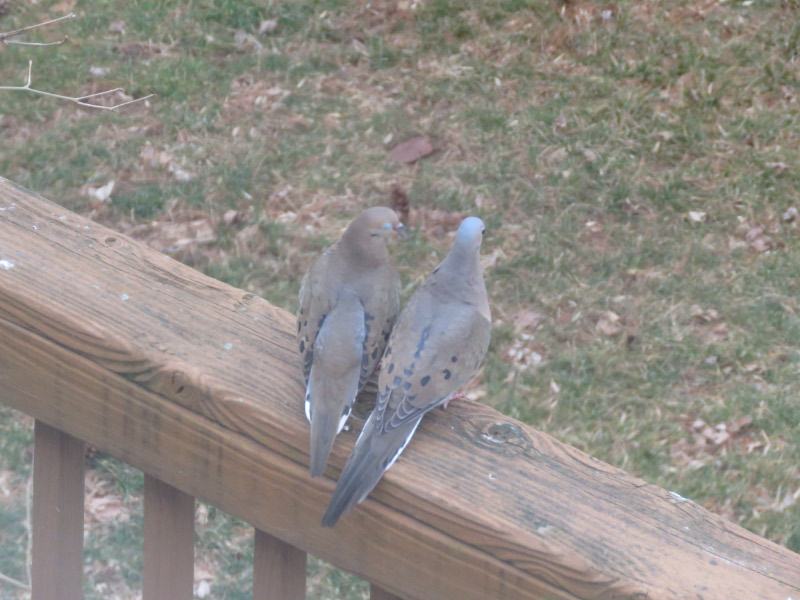
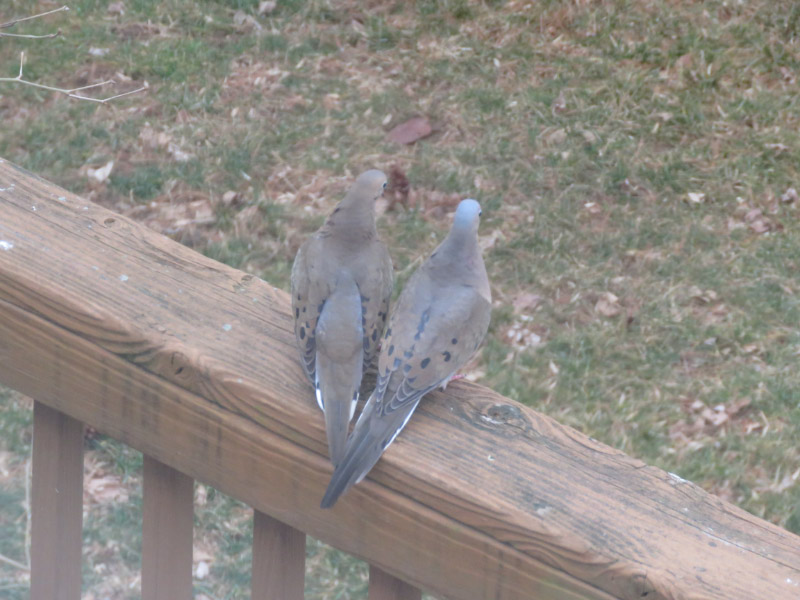
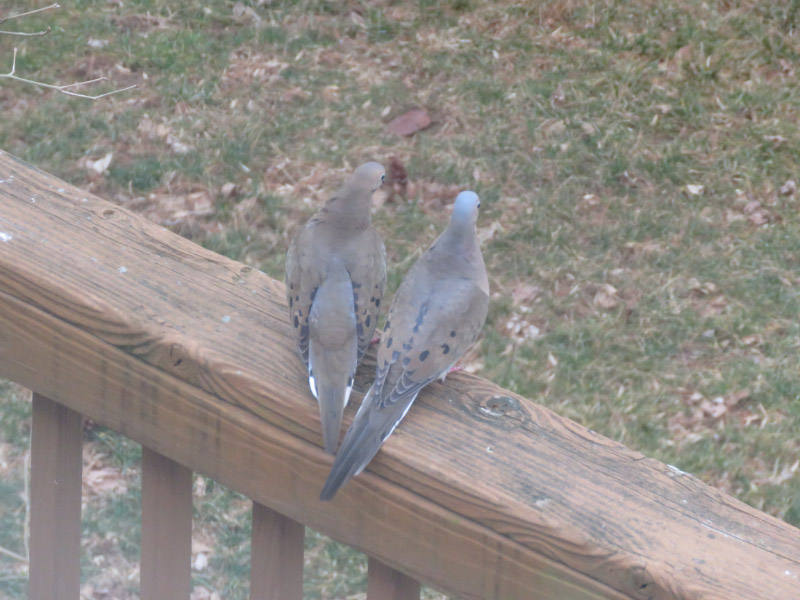
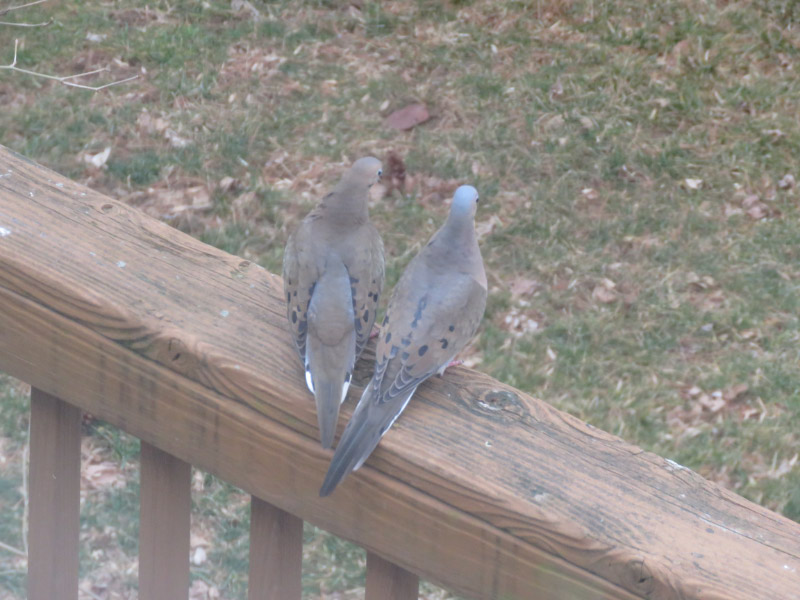
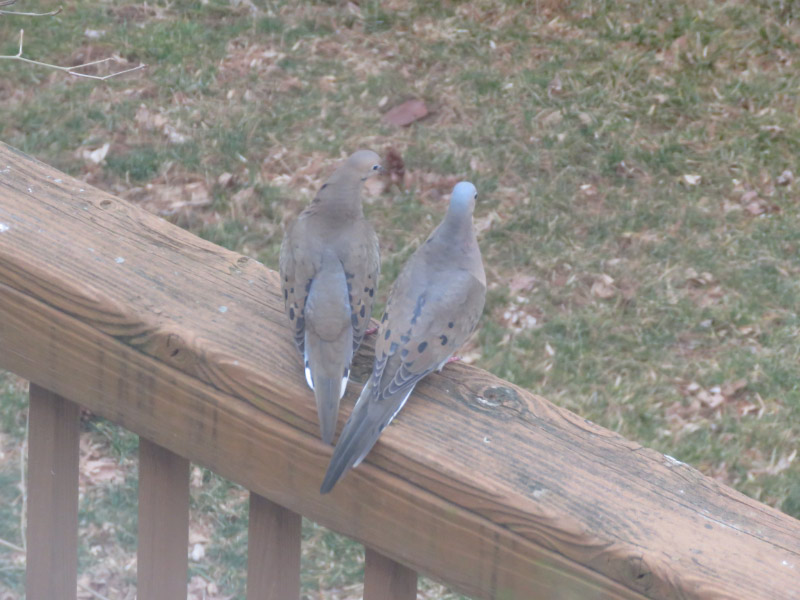
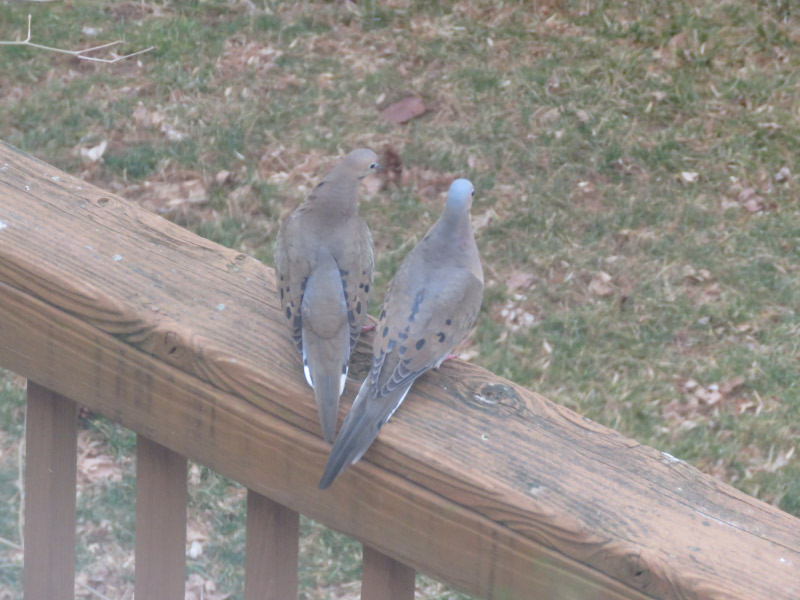
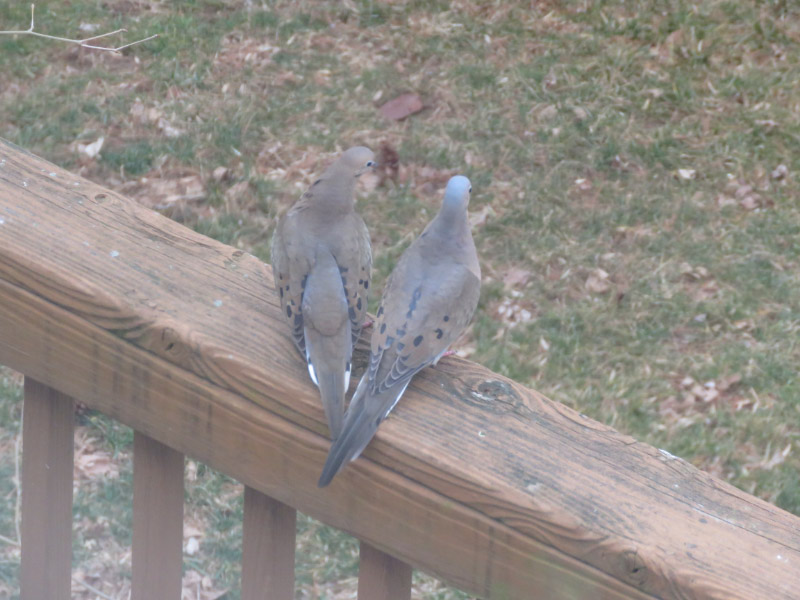
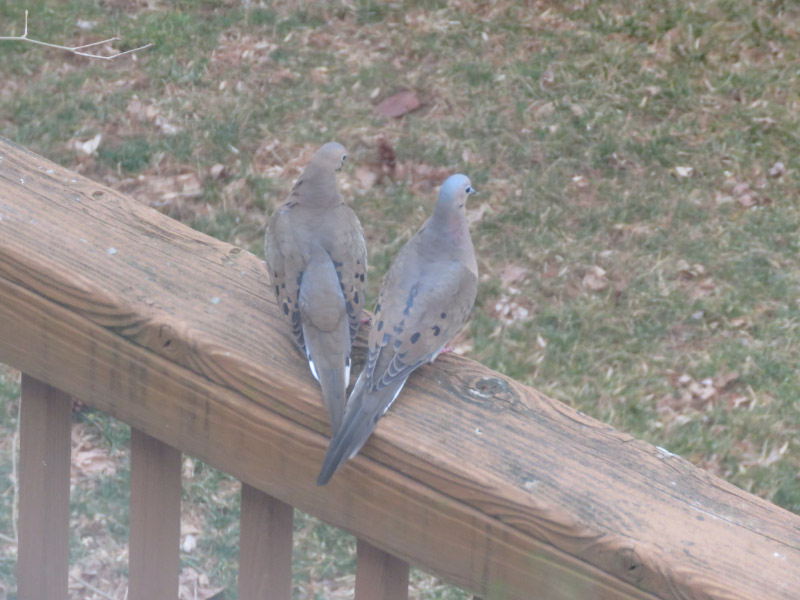
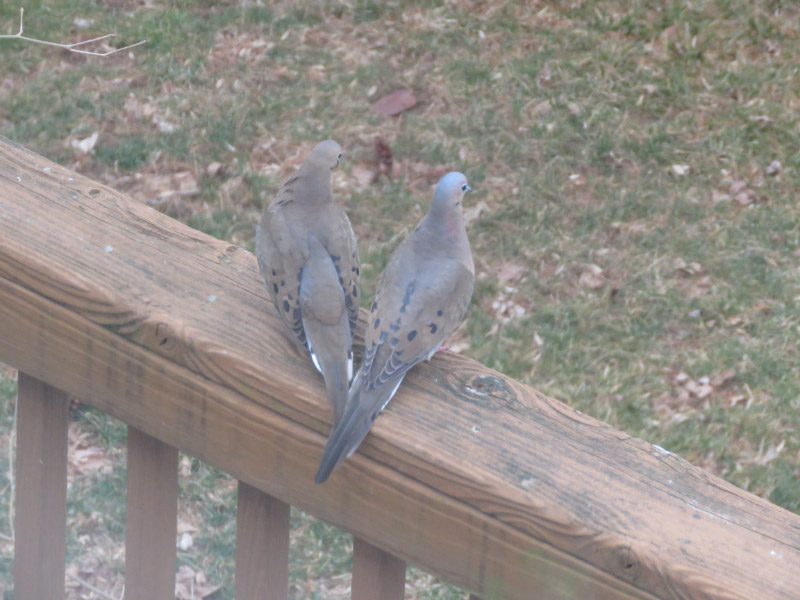
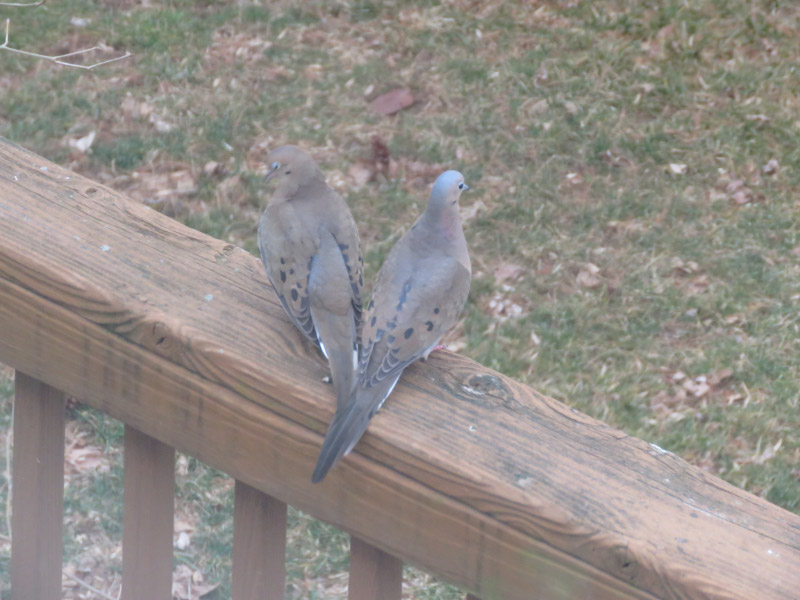
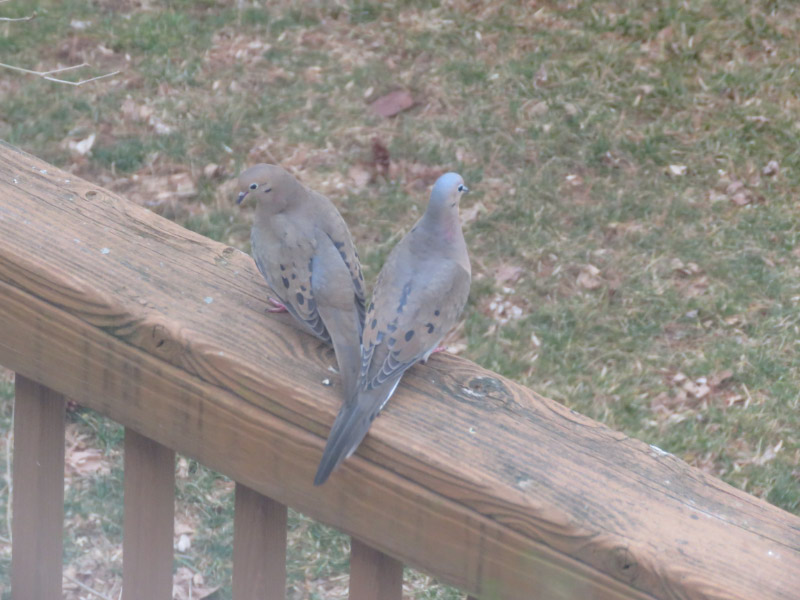
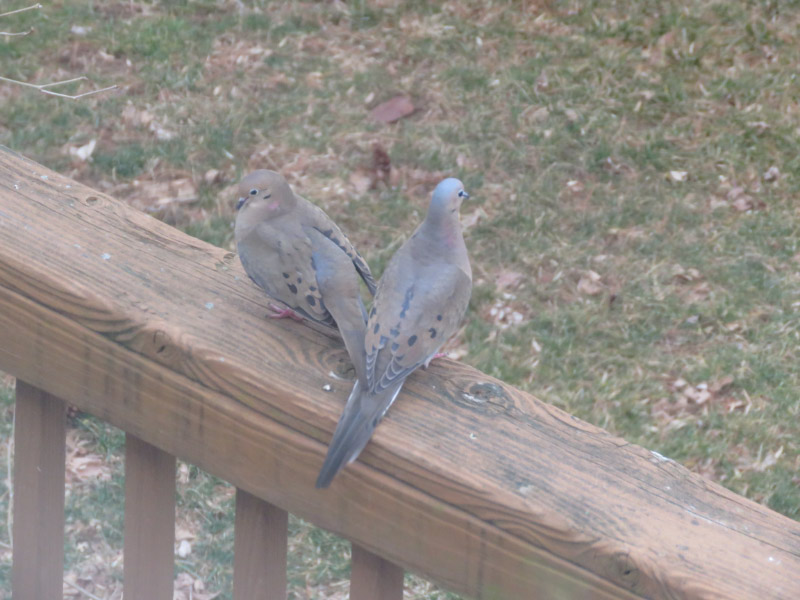
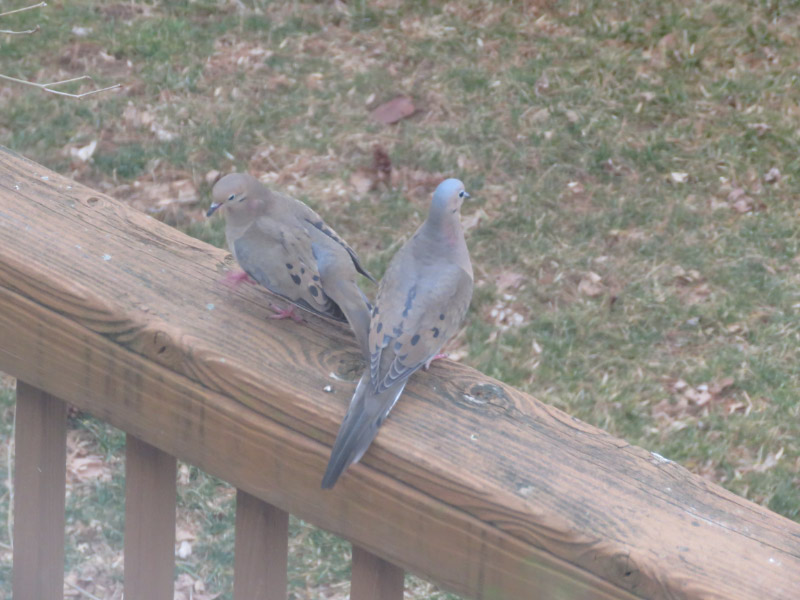
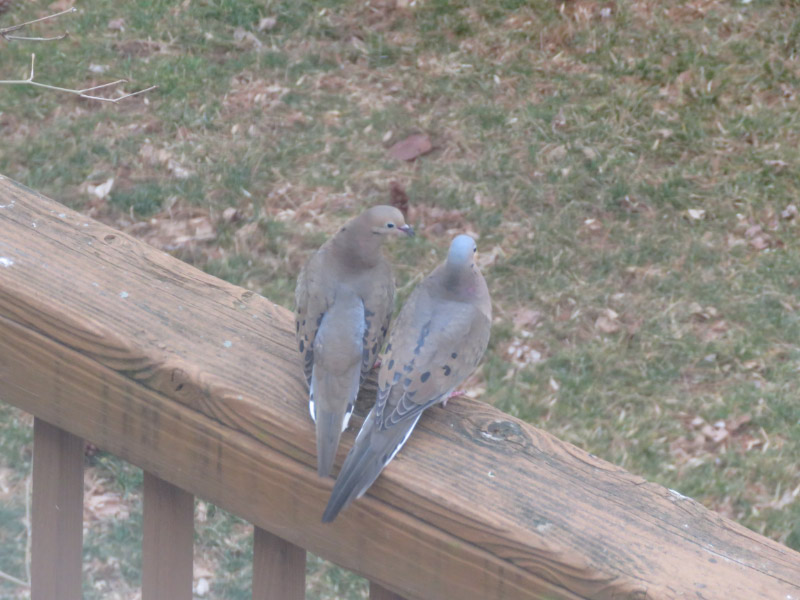
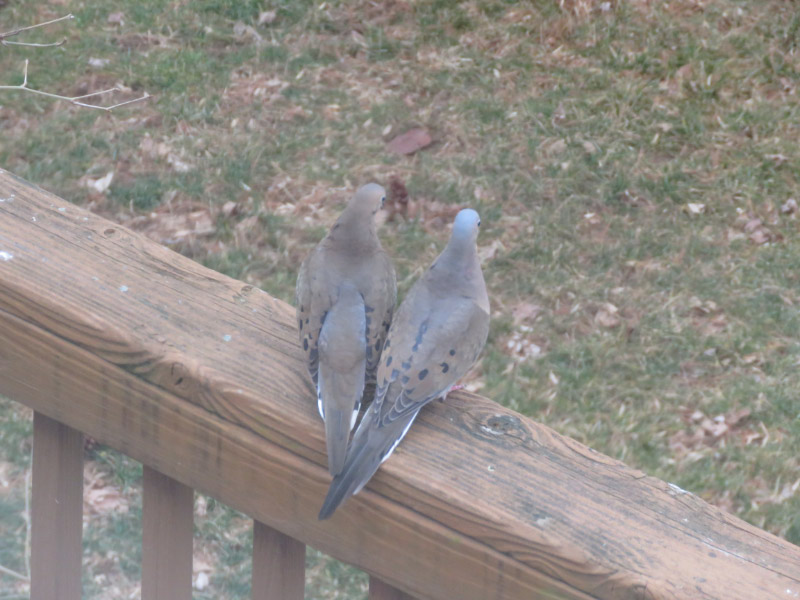
A few minutes observing Mourning Doves

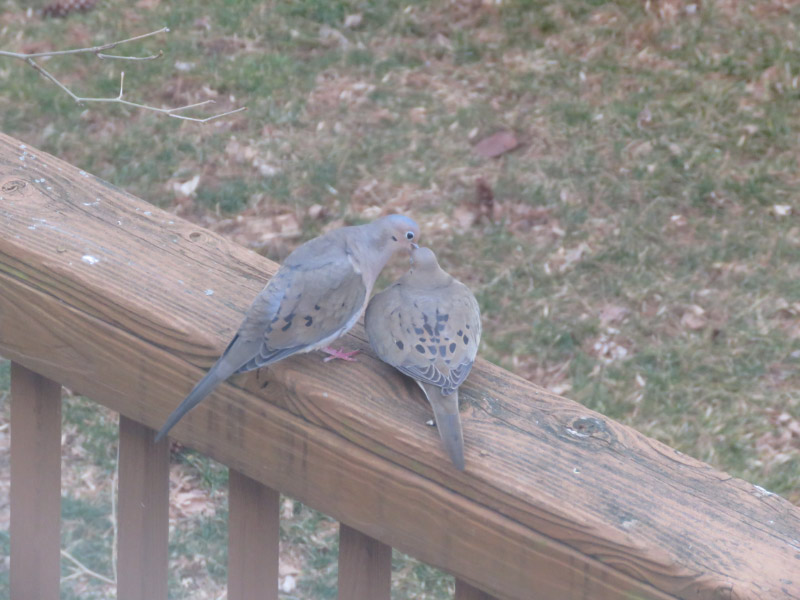
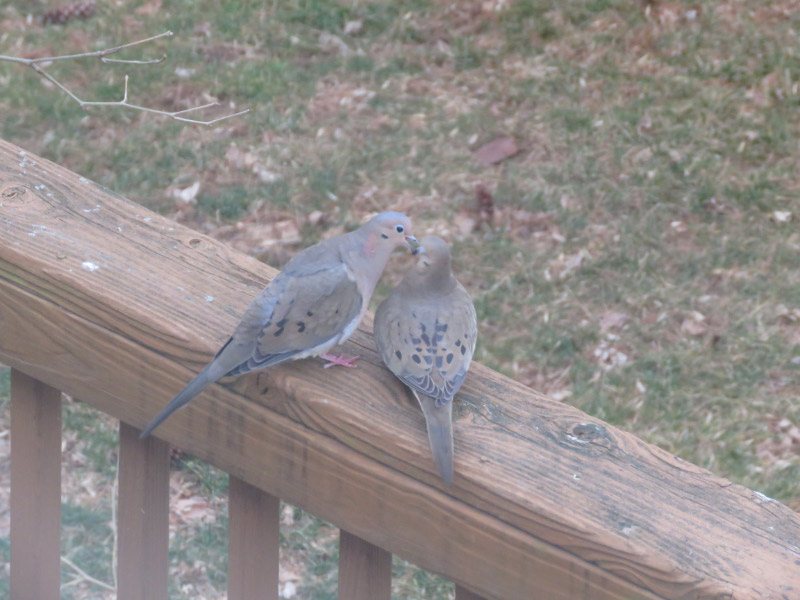
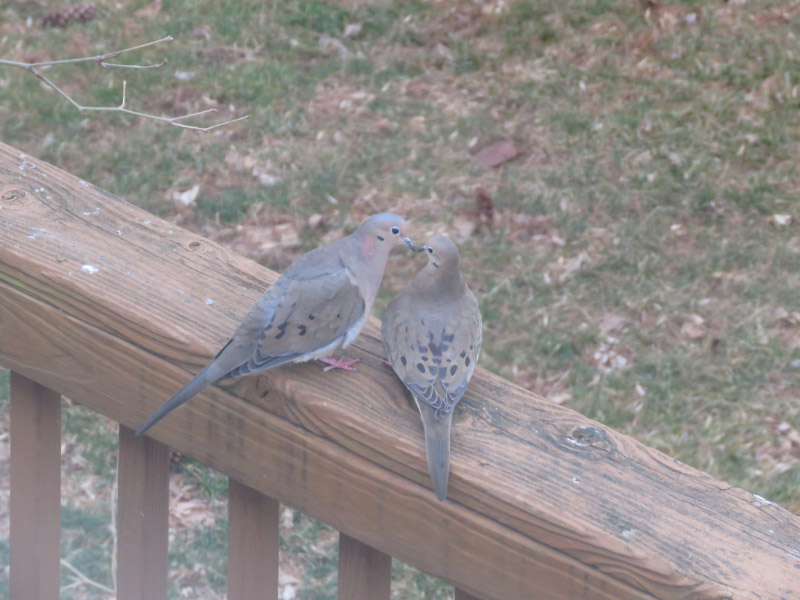
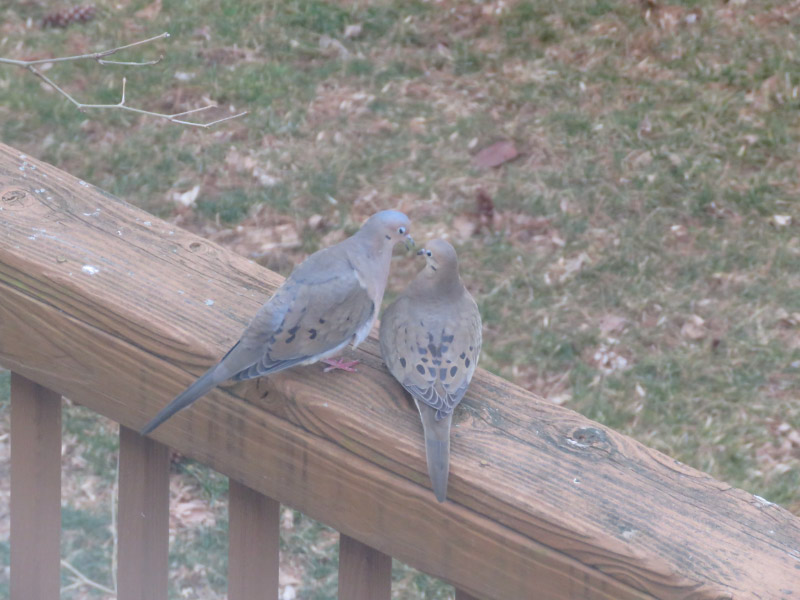
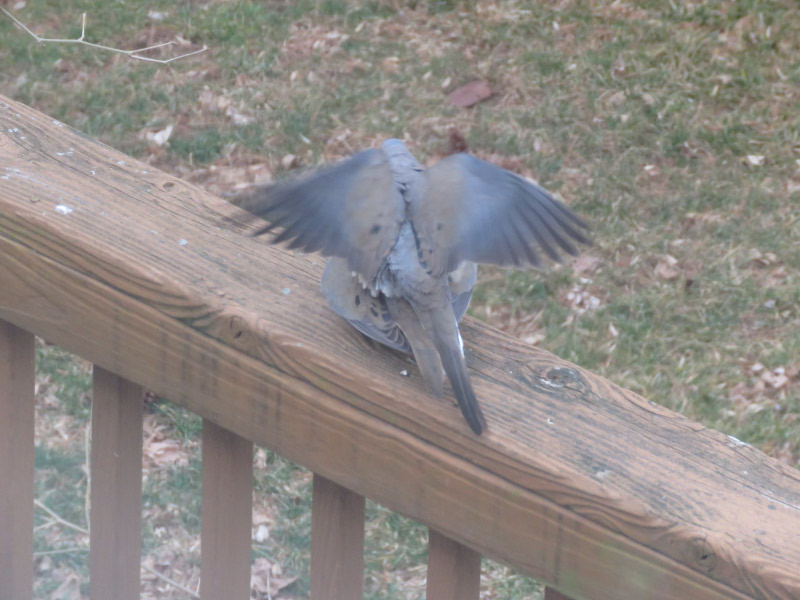
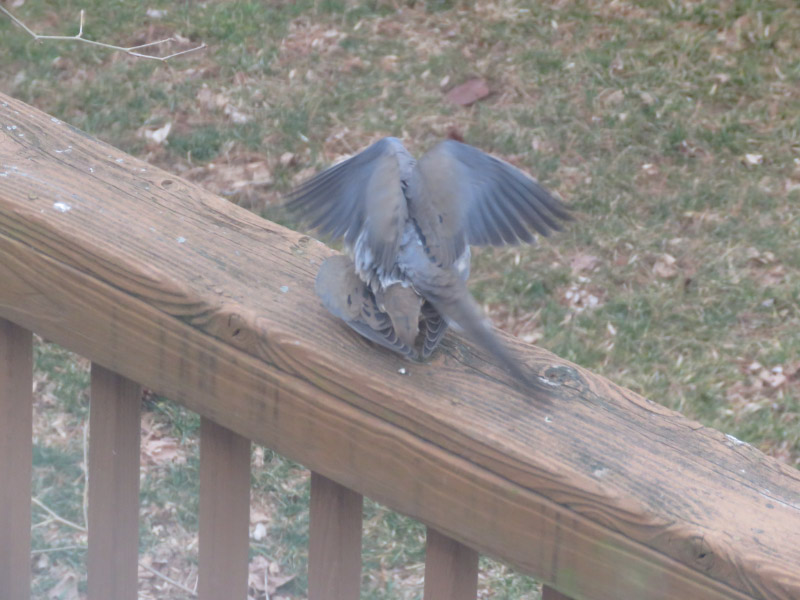
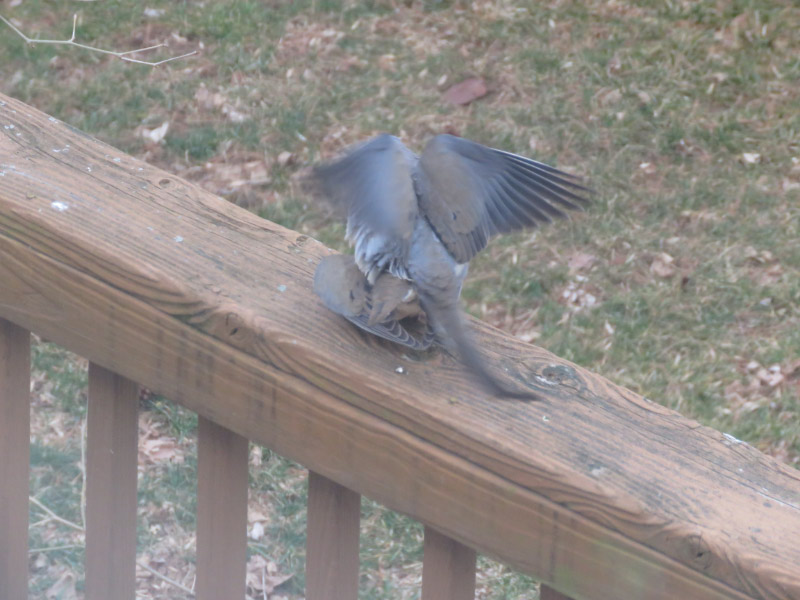
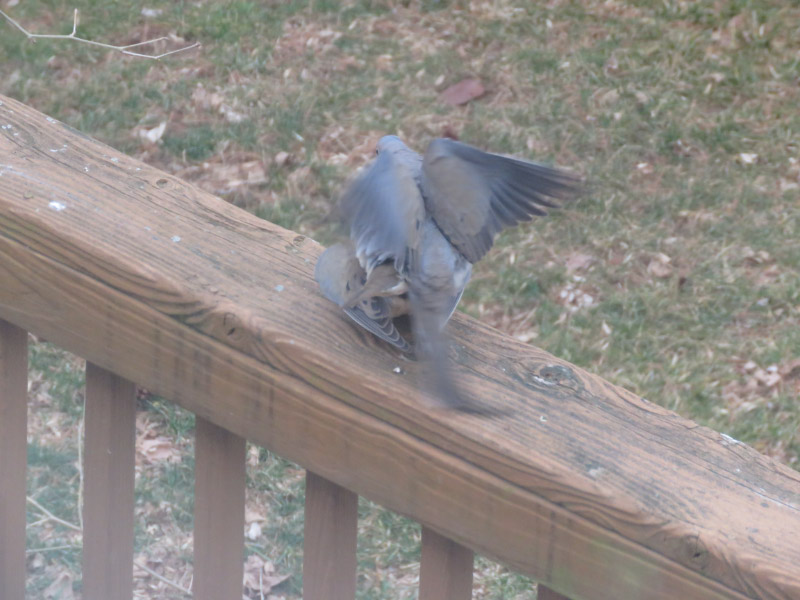
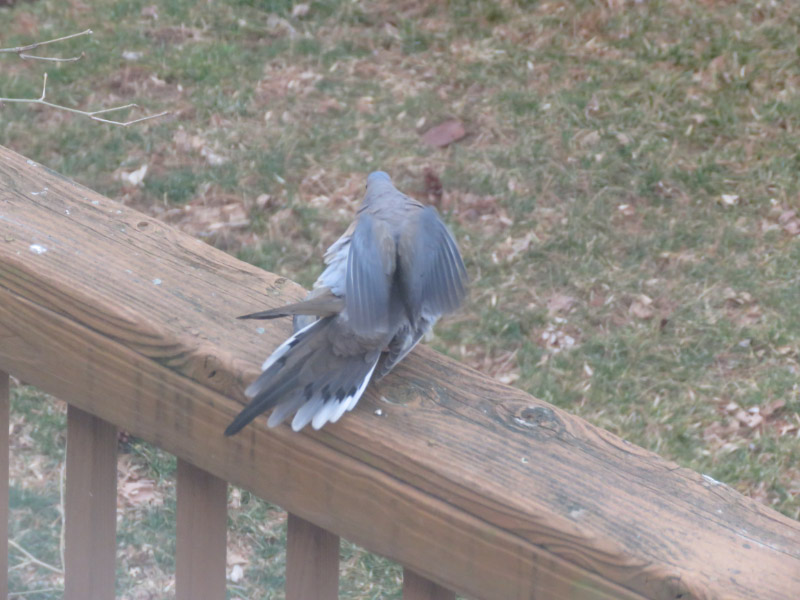
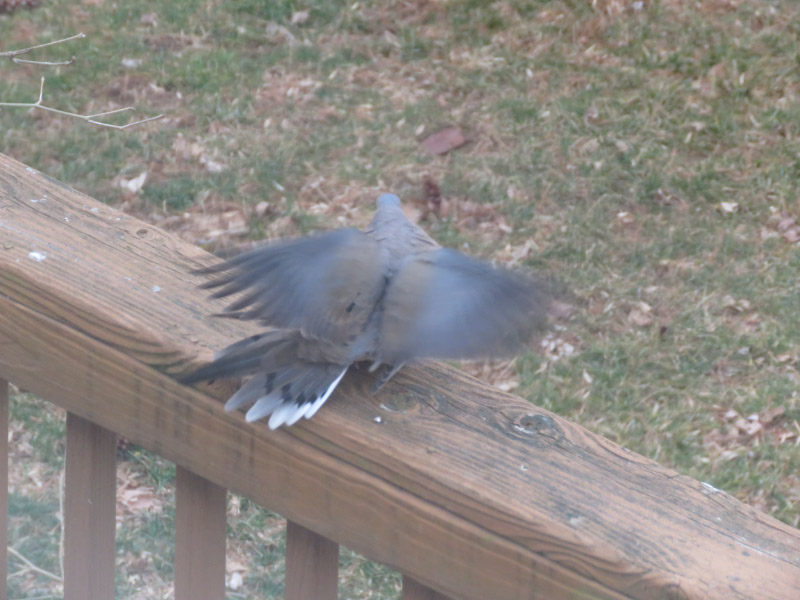
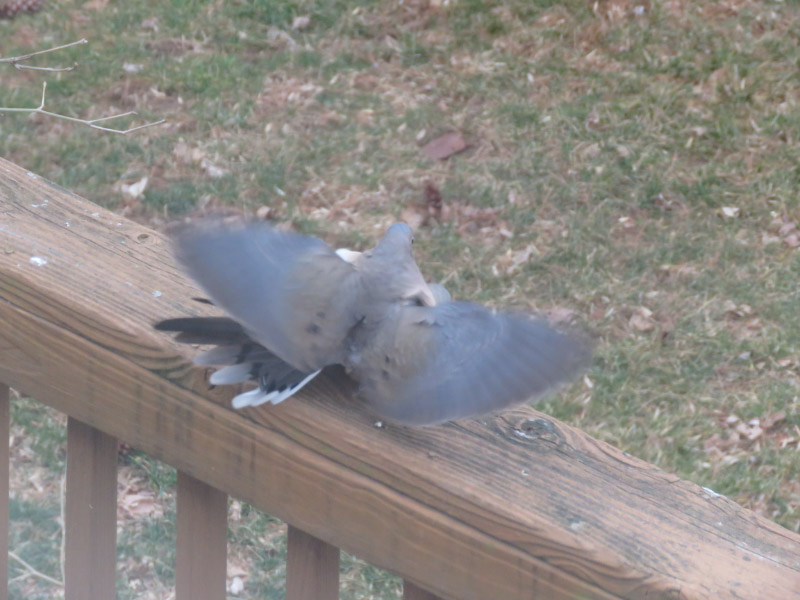
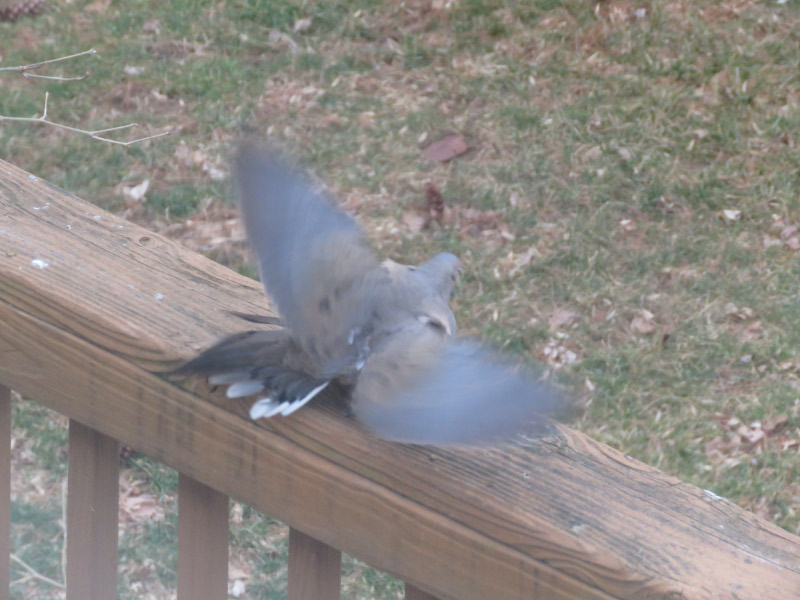
One morning last week – I looked out my kitchen window on a warm breezy march morning and noticed two mourning doves on the railing of our deck…just beginning the mating dance. I ran upstairs to get my camera and started shooting the sequence below through my office window. The action takes place in just over a minute. The male has iridescent feathers on his head and neck. In the beginning, he is on the left….at the end he is on the right.  Afterward the female flew off first and the male stayed put looking out over the yard.

This is not the first time the deck railing has been a favorite place for doves mating. In May 2018 and April 2016, I managed to photograph a mating pair as well. In our area, the doves are probably the most substantial and numerous prey for the red tailed hawks and other raptors.

It was easier with my new camera and its continuous shooting feature. I also now recognize the early stages of the courtship so have a few more seconds to prepare.