Rancho Lomitas

After Las Estellas, the field trip group headed to Rancho Lomitas where Benito Trevino shared his knowledge of plants of the Tamaulipan thorn scrub. We learned about how cochineal became a valued commodity to the Spaniards. It is an insect that grows on prickly pear cactus (white mounds) and is used to produce carmine dye. Until the advent of synthetic dyes and pigments it was the best ‘red.’

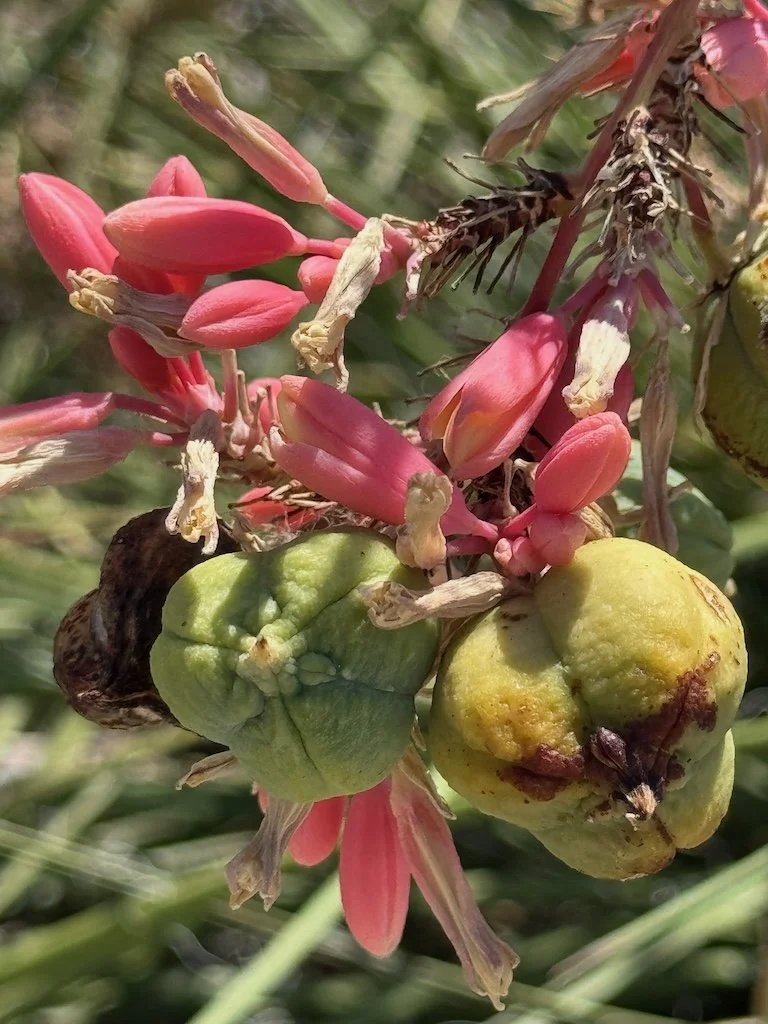
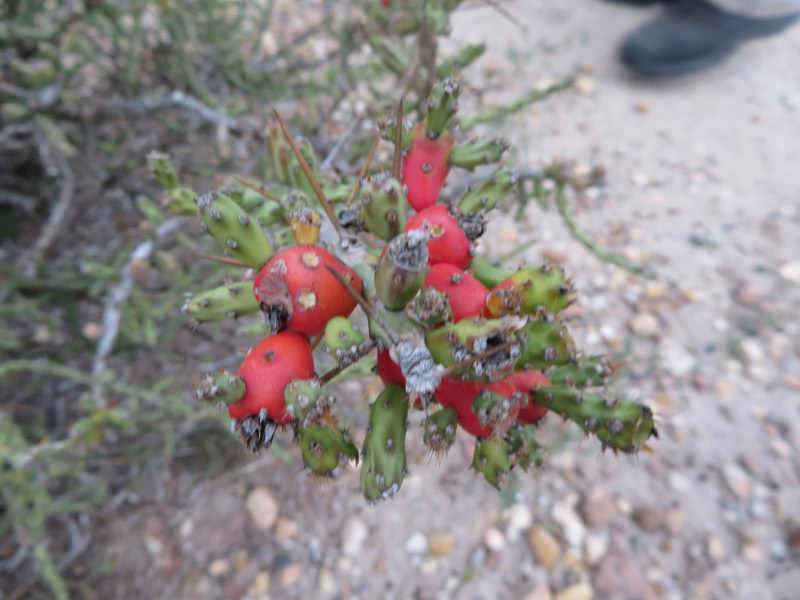
Also the desert Christmas cholla’s berries can be used to sooth a sore throat….if one knows the process to remove the small thorns. First, use a stick to know off berries. Use the stick to separate the berries from the green part of the plant. Use a bunch of grass to move the berries around in the pebbles and dust. When the thorns appear to be gone…do it some more. I tried some. It tastes a little citrusy and would sooth the throat similarly to honey.
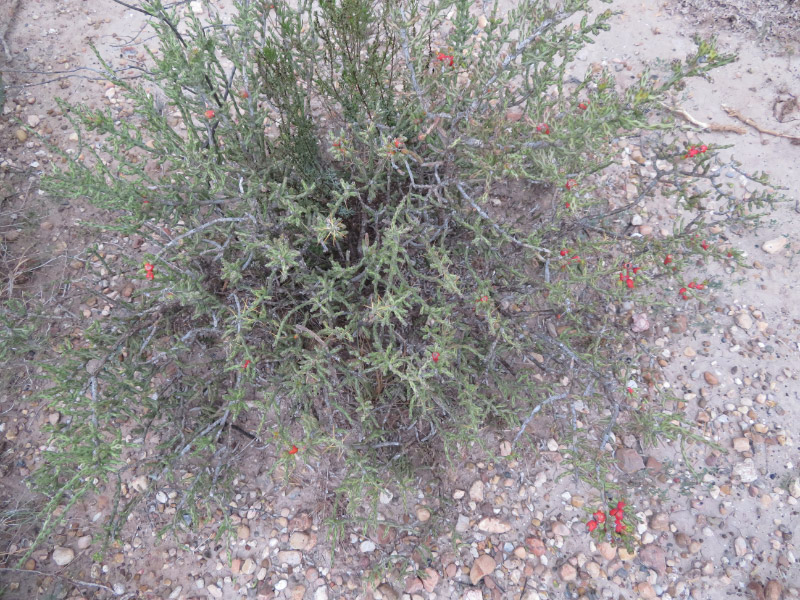
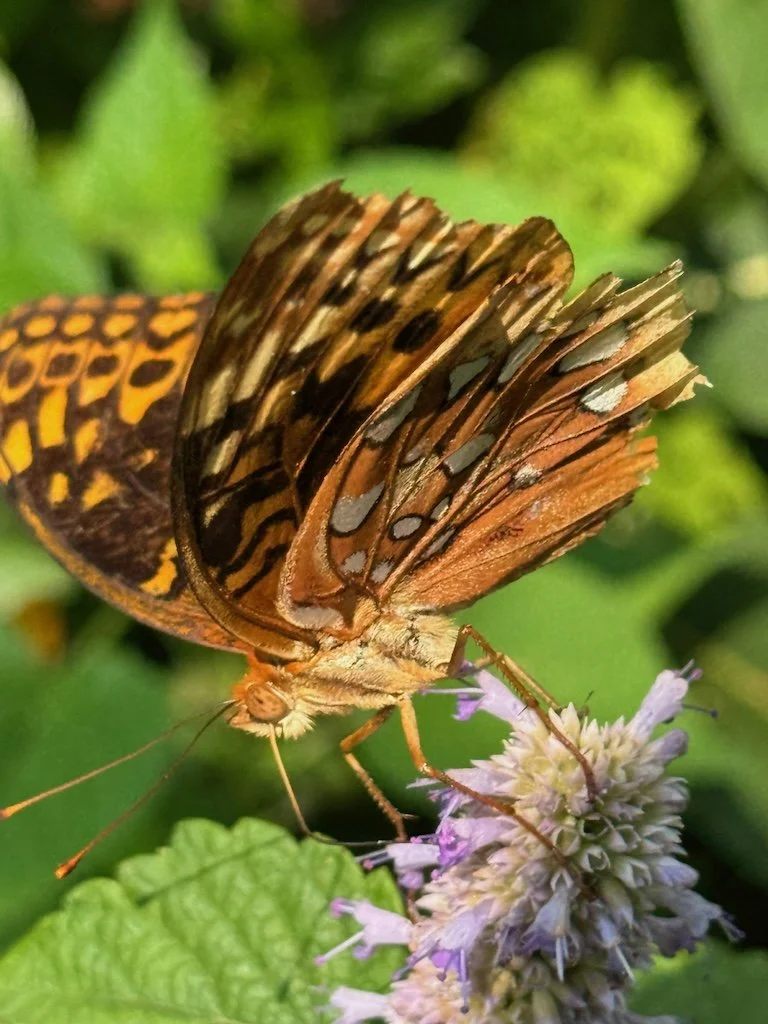
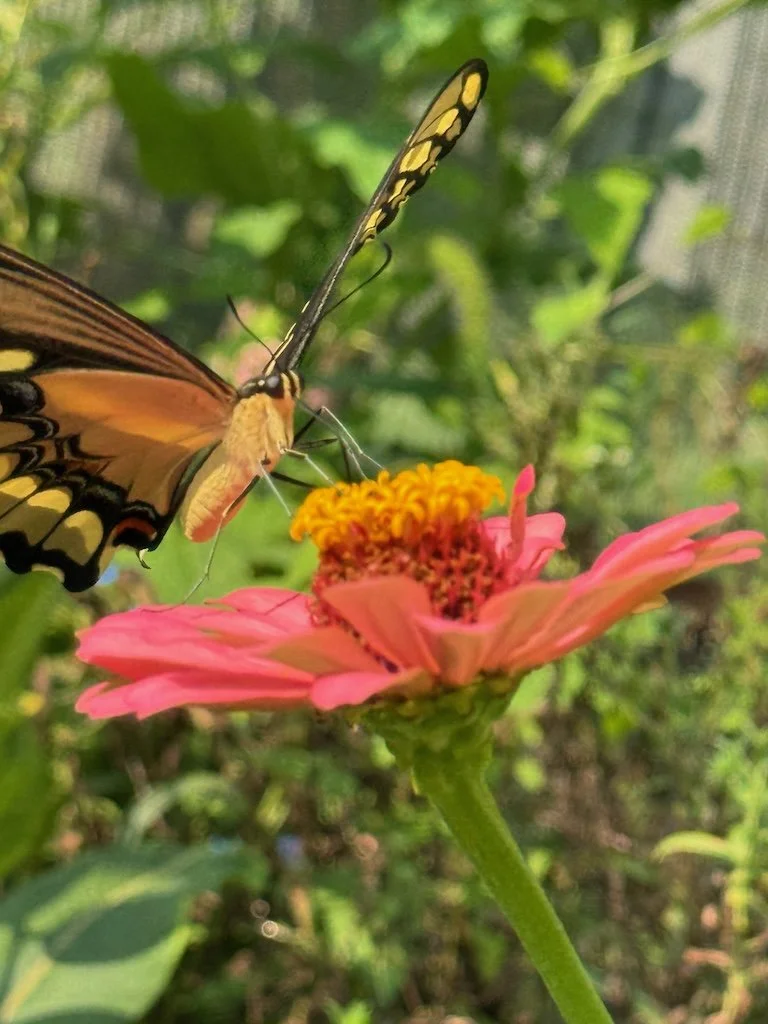
It was a mostly cloudy and cool day but the sun came out for a little while and we saw some butterflies.

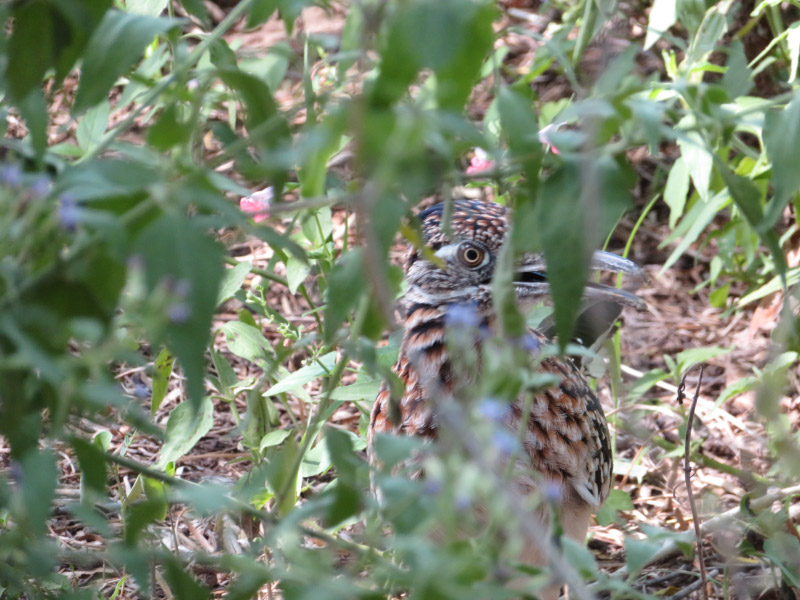
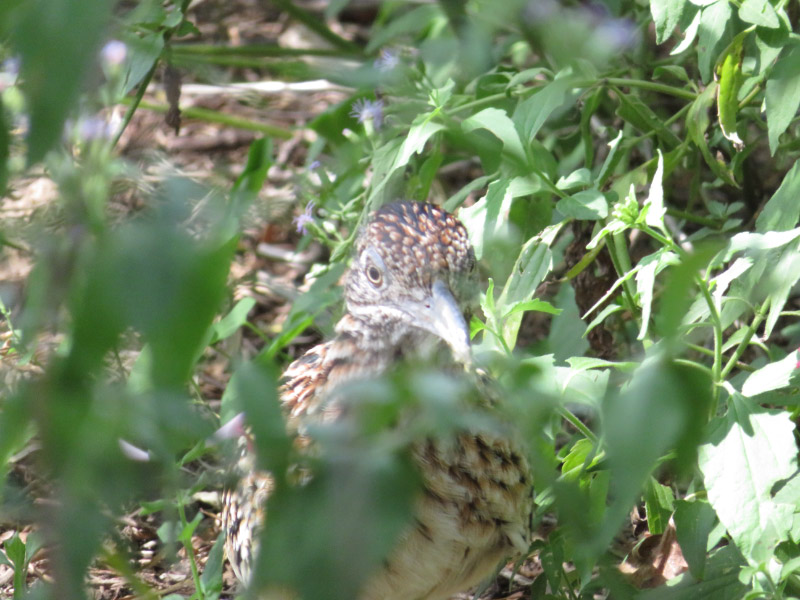
There is a road runner that patrols the gardens.
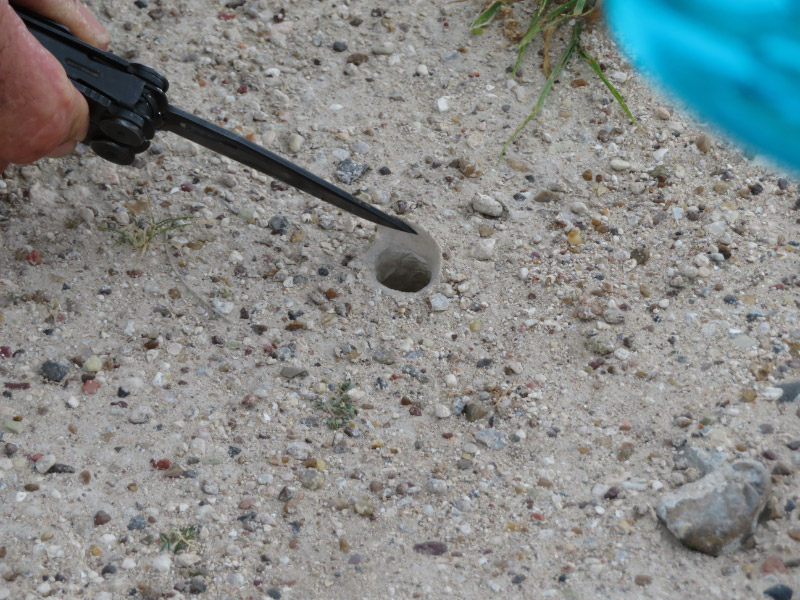
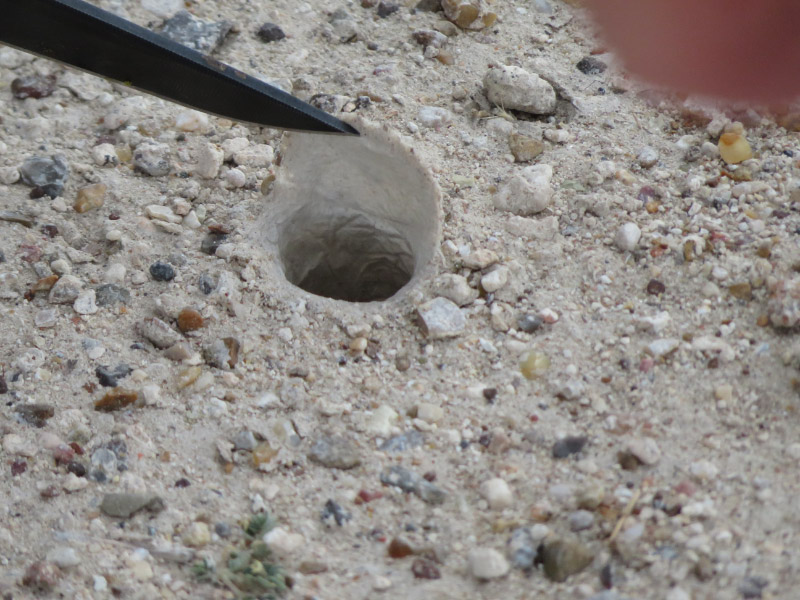
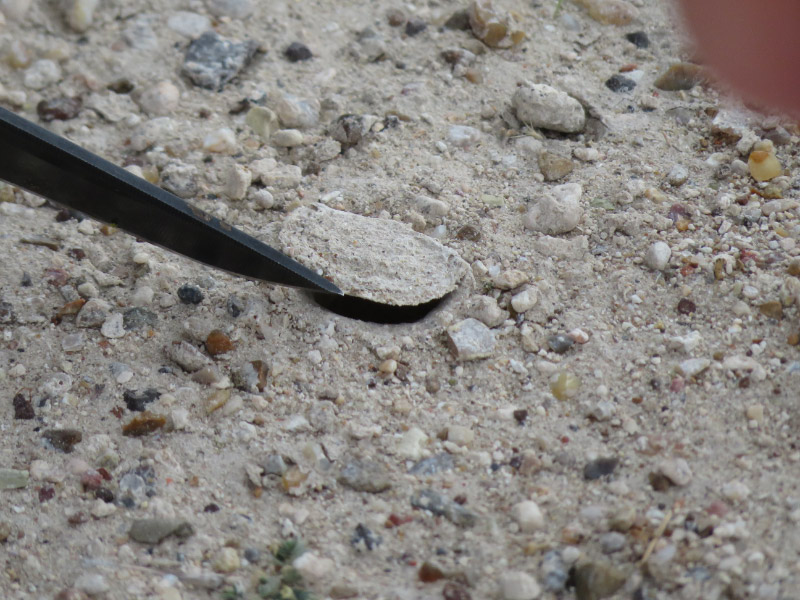
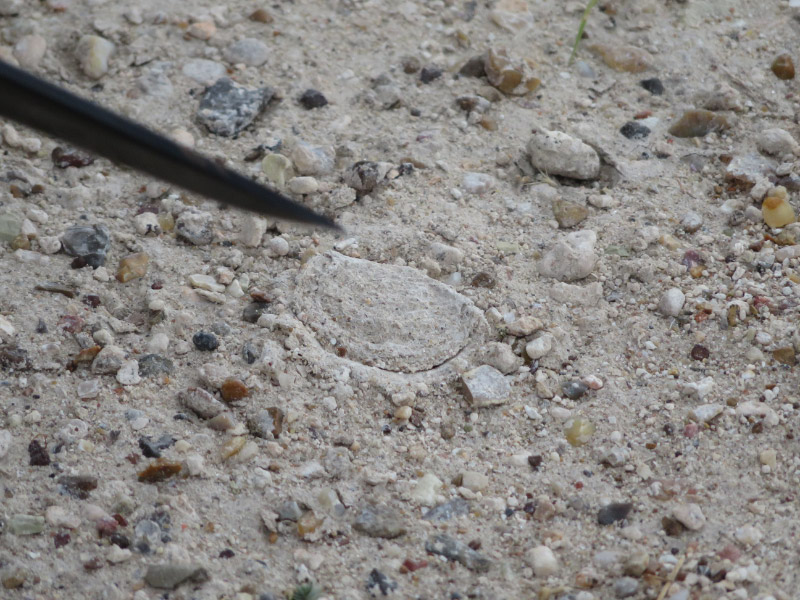
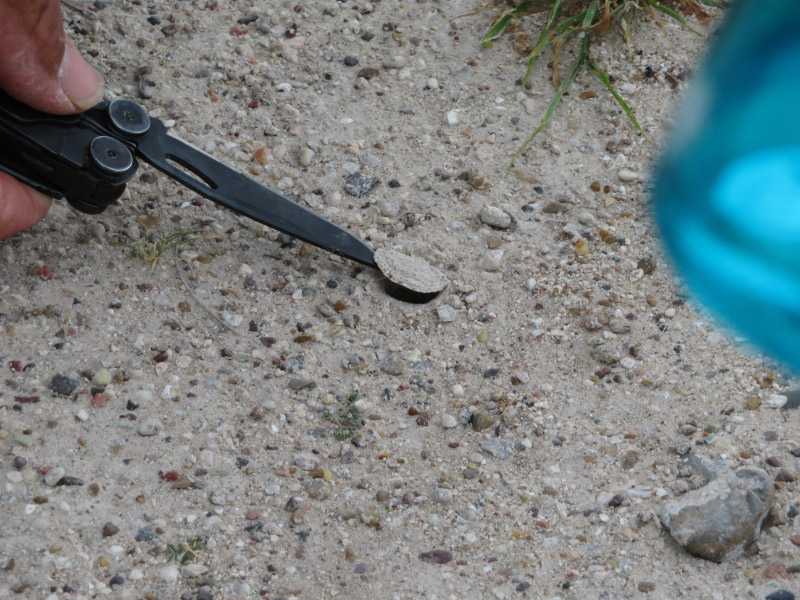
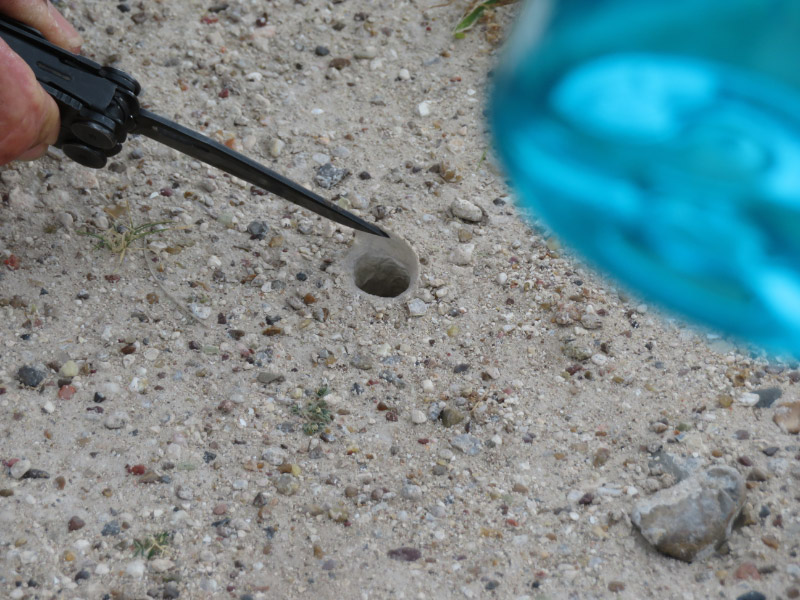
We were walking along the road back to our van when Benito spotted a trap door spider and gently opened it with his knife; I would not have spotted it on my own!
A culinary treat for dessert after our lunch – some cookies made with mesquite floor. Maryland does not have mesquite trees but maybe I can find some if I visit my family in Texas at the right time!

Gleanings of the Week Ending November 18, 2017

The items below were ‘the cream’ of the articles and websites I found this past week. Click on the light green text to look at the article.

The Acoustics of Ancient Greek Theaters Aren’t What They Used to Be | Smart News | Smithsonian – Legendary acoustics? Maybe not. But they are still very good even with the changes in the structures over time (pitting of smooth surfaces, no backdrops, etc.)

BBC - Future - The useless design features in modern products – copper rivets and watch pockets in jeans, cockpits with analog dials/leavers/knobs, and keyboard layout. The look of modern products has a lot to do with history!

Five Things to Know About the Yellowstone Supervolcano | Smart News | Smithsonian – I can remember my daughter being fascinated that Yellowstone is a Supervolcano when we visited. She was enthusiastic about finding a book about it and was puzzled when the person manning the bookstore seemed surprised that she wanted a book about super volcanoes!

Keeping Your Balance as You Age | Berkeley Wellness – Some reasons to do some balance exercises…and some easy ones that don’t need any equipment.

Some items about a favorite food around Thanksgiving: Pumpkin genomes sequenced, revealing uncommon evolutionary history -- ScienceDaily and 7 Pumpkin Recipe Ideas | Berkeley Wellness

Oldest recorded solar eclipse helps date the Egyptian pharaohs -- ScienceDaily – October 30, 1207 BC! A new calculation that, if accepted, could lead to an adjustment in the dates of the reigns of several pharaohs…enabling to date them precisely

Caribbean’s largest concentration of indigenous pre-Columbian rock art -- ScienceDaily - Artists before Columbus: New research on the Caribbean’s largest concentration of indigenous pre-Columbian rock art (how it was made, paint recipes). The pictographs are in very narrow spaces deep in caves. Follow the materials link at the bottom of the article to see some images. As I read the article, I realized that the research had probably been completed before the recent hurricanes.

Older Neandertal survived with a little help from his friends – Loss of a forearm, deaf…and he survived into his 40s…about 50,000 years ago.

The Weird Growth Strategy of Earth’s First Trees | The Scientist Magazine® - The first tree grew large very differently than modern trees!

4 Myths About Meditation and How to Overcome Them | Berkeley Wellness – For me – the ‘myths’ are no so important…the mediation is.

3 Free eBooks – November 2017

So many books….so little time!

Evans, Henry Herman. Botanical prints with excerpts from the artist's notebooks. San Francisco: Freeman. 1977. Borrow from Internet Archive here. This is a book available from Internet Archive that is loaned for 14 days. I loved the prints in this book…well work the look. I appreciate that a lot of books that were previous hard to access because they were still under copyright but out-of-print (and expensive if they were available on the used market) are being digitized and made available this way. Kudos to the Internet Archive and the people that are working to make it possible.

Godey, Louis A.; Hale, Sarah Josepha. Godey’s Lady’s Book. Published in Philadelphia. The Internet Archive has many volumes…particularly issues from 1864 available here. The illustrations are snippets of fashion history at the that the Civil War was ending; the magazine managed to stay surprisingly apolitical. What do you think about these bathing dresses from July 1864!

2017 11 ebook2.jpg

Wight, Robert. Icones plantarum Indiae Orientalis - or figures of Indian plants. Madras: Published by JB Pharoah for the author. 1840-1853. Six volumes (and other books by the same author) available from the Internet Archive here. I like the botanical drawings in these volumes as prompts for Zentangle patterns.

2017 11 ebook3.jpg

Gleanings of the Week Ending November 11, 2017

The items below were ‘the cream’ of the articles and websites I found this past week. Click on the light green text to look at the article.

Water striders illustrate evolutionary processes -- ScienceDaily – Water striders are one of the favorite of elementary school aged students on field trip hikes…next time I’ll have them look for ‘fans’ on the tips of their legs!

New Google Maps Feature Lets You Explore Planetary Maps – Google maps going outside of this world!

Virtual Library Card Gives Access to 2,000 Architecture Books Online – There are a lot of books on Internet Archive that are new enough to still be under copyright protection…but they are available for checkout modeled like physical libraries. This article points to the architecture books; there are other topics as well.

Why we still don’t understand sleep, and why it matters | Mosaic – Nacrolepsy…what has been discovered…but there is still happy ending for people with narcolepsy.

Photographer Captures the Beauty of Colorful Birds in a Series of Portraits – Pigeons, doves and cockatoos…what a trio!

(Some) Birds of the Pantanal – National Geographic Society – More birds. Couldn’t resist.

The History of Mincemeat Pies, from the Crusades to Christmas | Smart News | Smithsonian – A little history as we get closer to the winter holiday season.

Blood test can effectively rule out breast cancer, regardless of breast density: With over a 99 percent negative predictive value, a liquid biopsy test can help clinicians manage difficult-to-diagnose dense breast patients -- ScienceDaily – Hope this reduces the need for biopsies…and can be scheduled/processed more rapidly.

BBC - Future - An eco-friendly way to make smartphones – We have a long way to go to make smartphones in an eco-friendly way. The title of this article seemed hopeful but by the end, I was not sure that eco-friendly was motivating anything. Taking away China’s dominance of rare earth element production seemed the primary focus.

Transparent solar technology represents ‘wave of the future’ -- ScienceDaily – Wouldn’t it be nice?

All Day in a Symposium

Recently I spent a day at a symposium about the War of 1812. It was a learning experience for more than the topic!

I had not sat in an all-day meeting quite this dense with talks since I left my career about 5 years ago…and I was reminded how draining it can be. It is very difficult to be so sedentary for a day (and the chairs were more immediately uncomfortable).  Did I used to just accept this situation as ‘normal’?

I also have assumptions when it comes to food – that containers will be opened/unwrapped, that napkins will be available, that there are some ‘healthy’ choices. Those assumptions turned out to not be correct for the meeting and I realized that my history skews my views of how food is presented as well as the food itself. Maybe 20 years ago I would have accepted that there were no veggies offered…I am more particular now.

On the plus side – the talks were interesting and well presented. I lasted from 9-4 and then was too achy from the length of time in the unpadded chairs to stay for the last 2 hours. It was a day too long for me!

Nemours Mansion and Gardens – Part 2

2017 10 IMG_4824.jpg

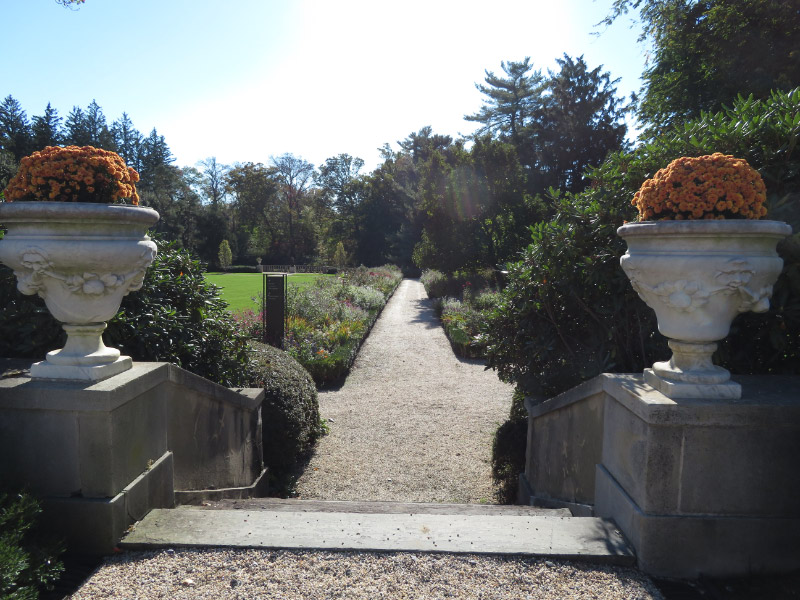
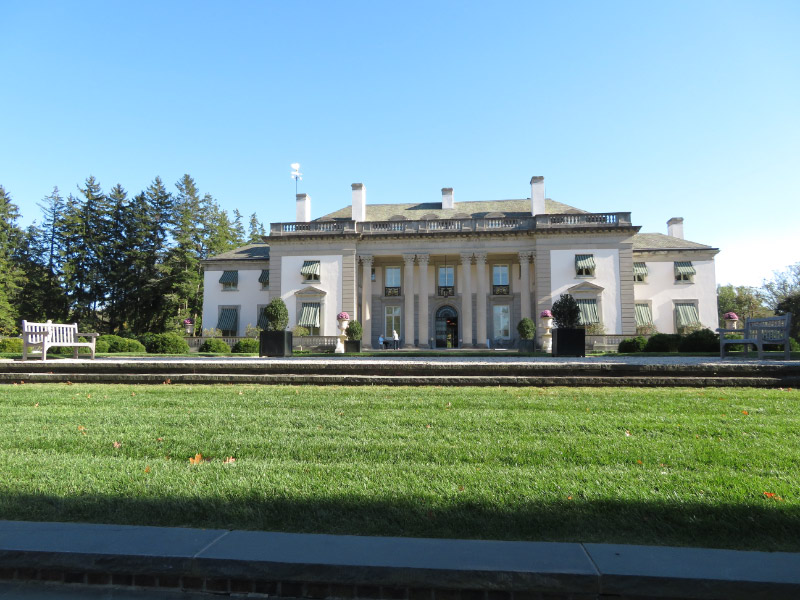
The gardens at Nemours are very well maintained. While we were there the big pool was being rebuilt; there was a lot of dirt! There are historical gates on the two sides of the house. The bus stops at the British one and across the front of the house is the heavier looking Russian gate.

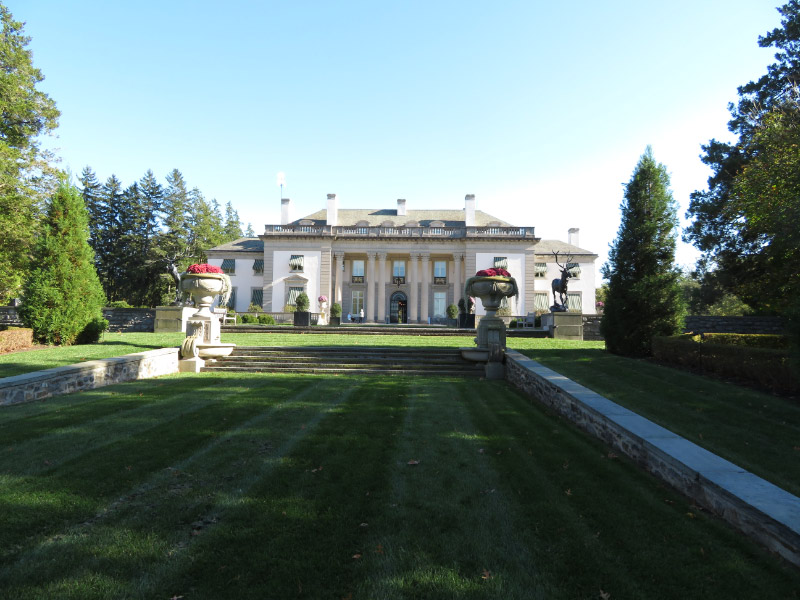
The view from the front of the house is down hill to the mid-garden structures…female sphinxes on both sides of the porch.

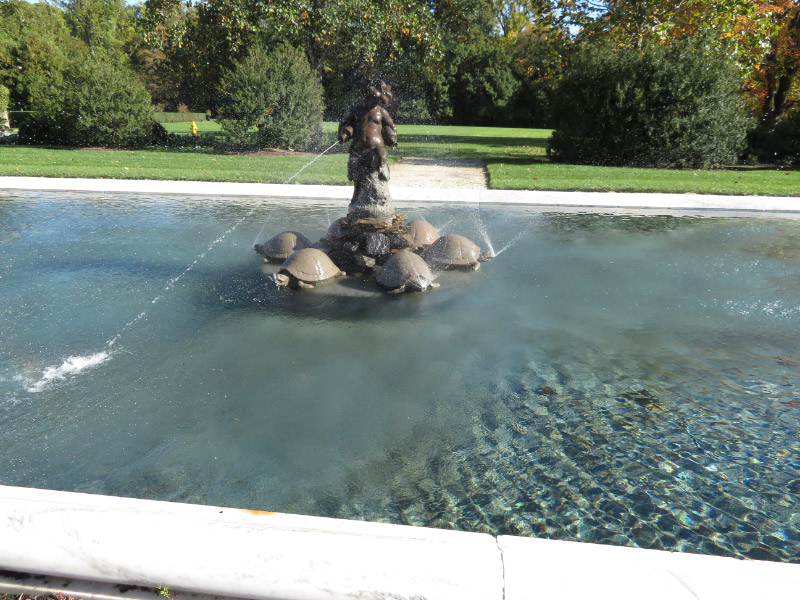
Walking around the house toward the Russian gate, the turtle pond garden can be viewed from ground level.

The weather vane glowed in the afternoon sun.

2017 10 IMG_4835.jpg

Looking back to the house walking down into the garden….

2017 10 IMG_4848.jpg

The maple tree lined drive used by the bus that carries everyone between the visitor center and the mansion (no pedestrian entrance or exit).

Many of the sculptures must be reproductions or otherwise very well maintained. The marble ones looked too good to be 1920s vintage.

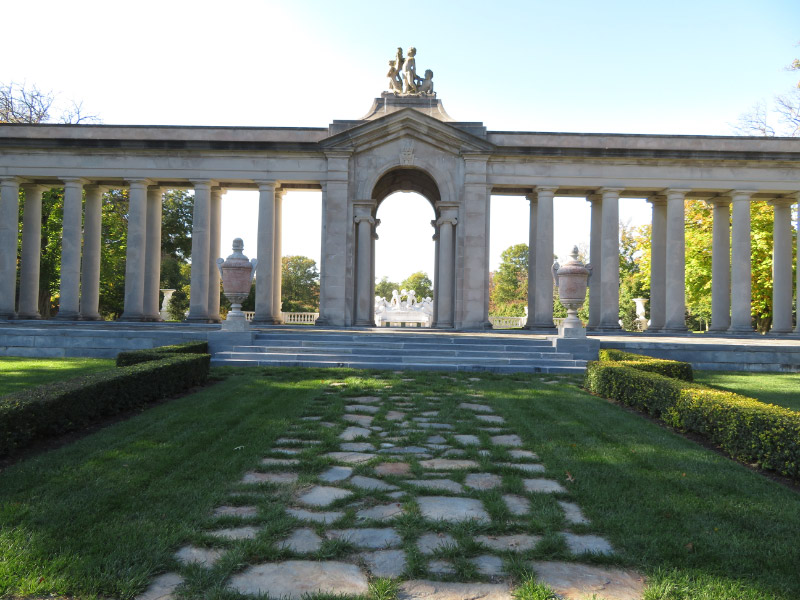
Structures divide the gardens into ‘rooms’ making the transition to less formality further from the house.

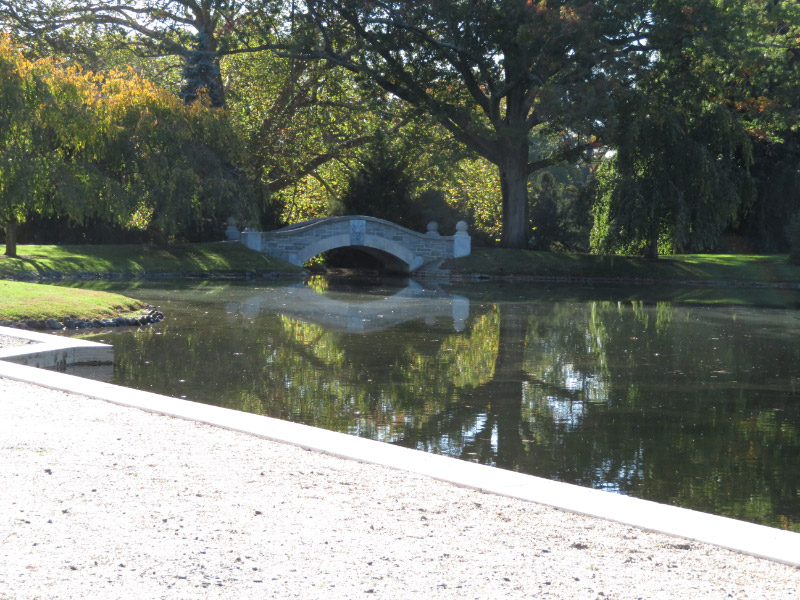
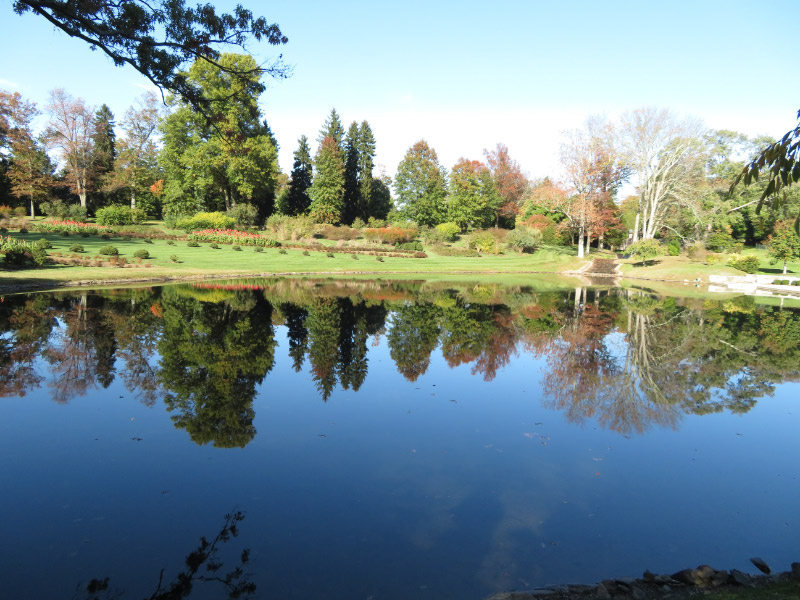
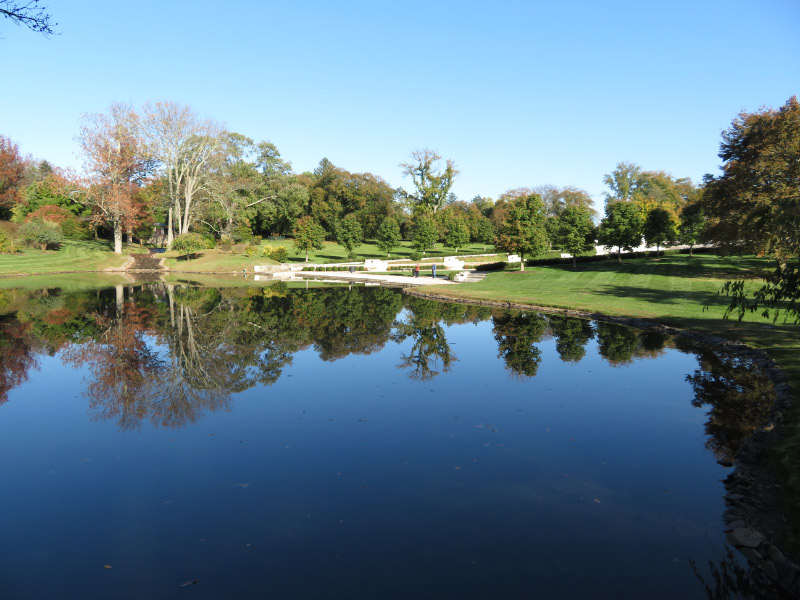
We noticed a bridge by one of the ponds and walked over. The reflections of trees in the pond viewed from the bridge was one of my favorite scenes of the garden.

2017 10 IMG_4882.jpg

There is a temple with a Houdon sculpture of Diana at the far end of garden. We walked toward the road and found the bus to take us back through the security fence to the visitor center.

2017 10 IMG_4866.jpg

Nemours Mansion and Gardens – Part 1

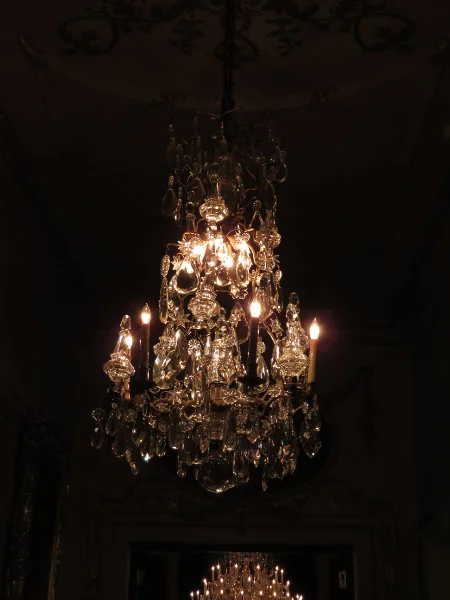
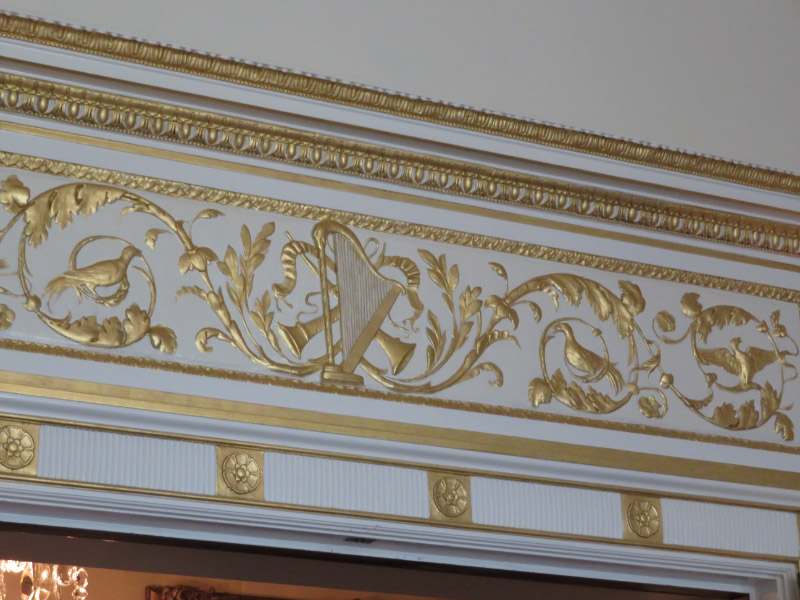
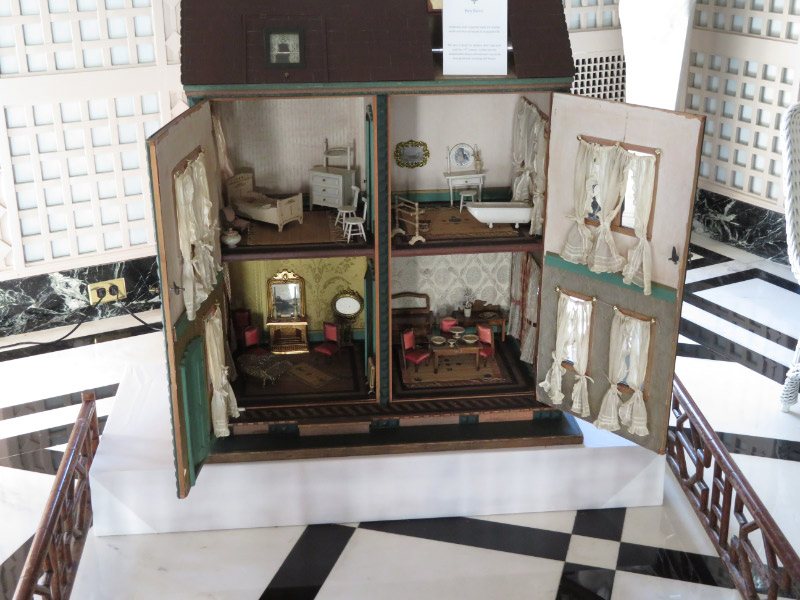
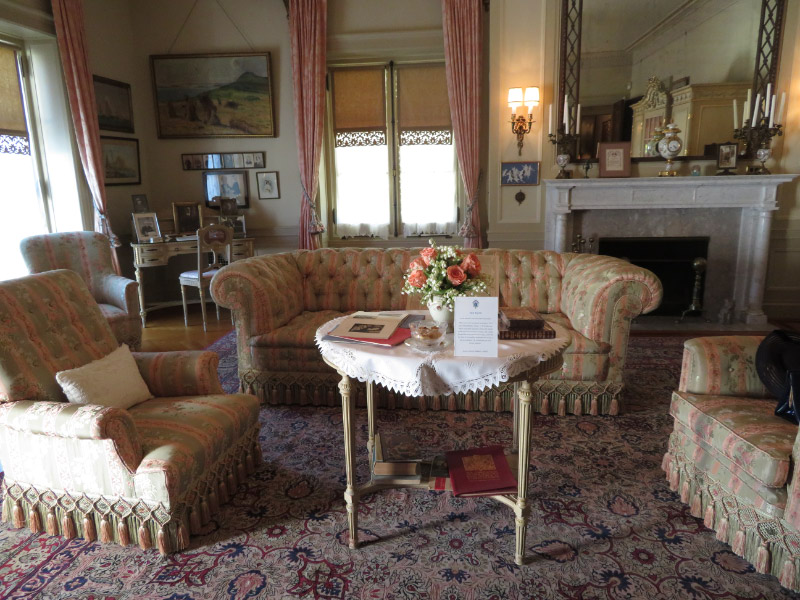
I had toured Nemours Mansion and Gardens (in Wilmington, Delaware) several times in the past but I had been more than 10 years since the last visit. A lot has changed. The tours are now self-guided and paced rather than guided…but the docents in the mansion are still very knowledgeable and welcome questions. One of the first questions I asked was about the chandeliers. The house used electricity from the beginning for lighting but many of the chandeliers were retrofitted – antiques by the time they were acquired for the house. One of the ones visible from the foyer has perfume bottles that diffused scent from the days it supported candles! There were chandeliers everywhere. Formal rooms, bedroom (my favorite is one with Murano Glass flowers) and handing in the curve of the grand stair case. Now the fixtures have LED bulbs (probably illuminating in a way that does the least damage to textiles and paintings).

The ceilings and upper walls are also worth noticing….lots of variation in plaster and gold leaf.

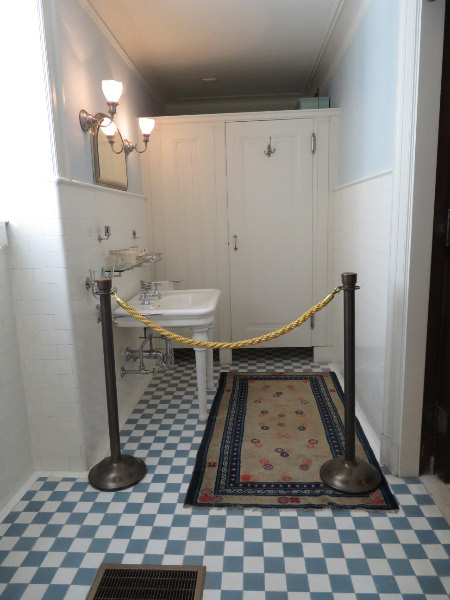
Everywhere one looks there are things to notice – cork on the kitchen and butler pantry floor, an elaborate leather screen and the powder room.

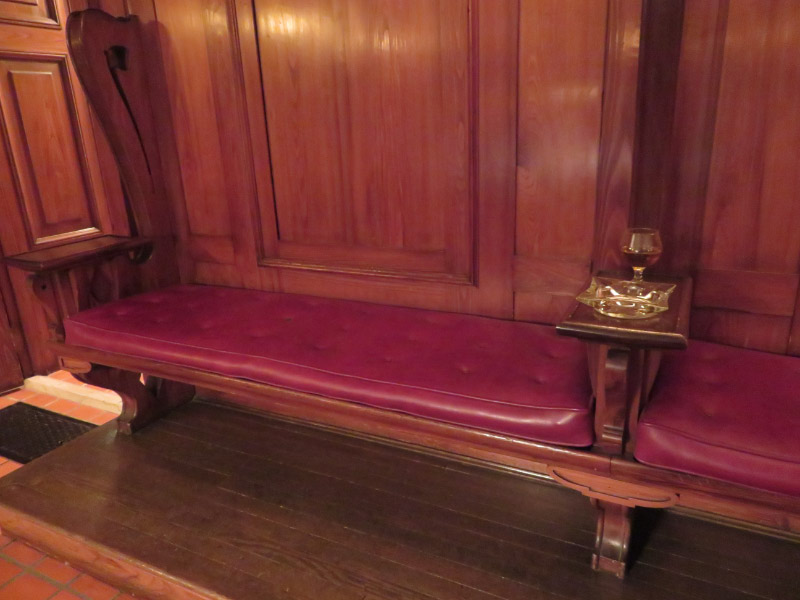
There is a basement with lots of dark woods with bowling alleys, built in benches around pool tables and A. I. duPont’s home office.

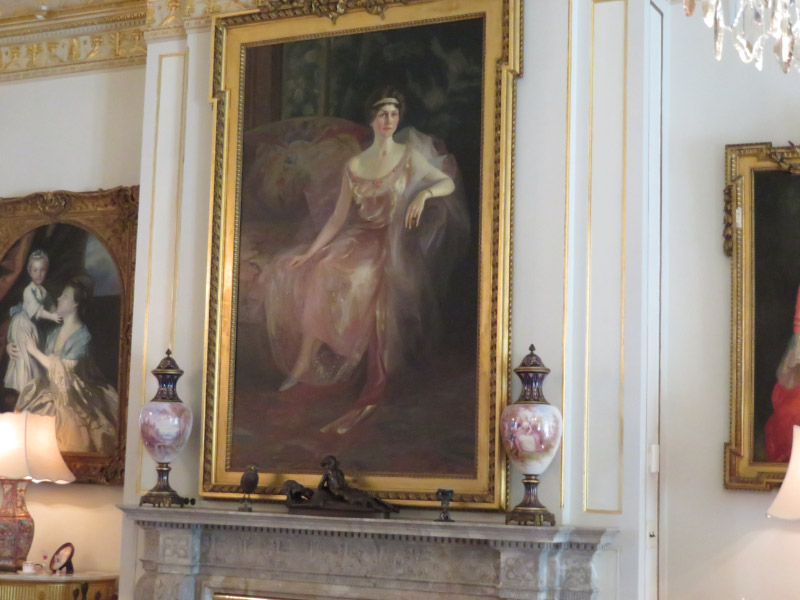
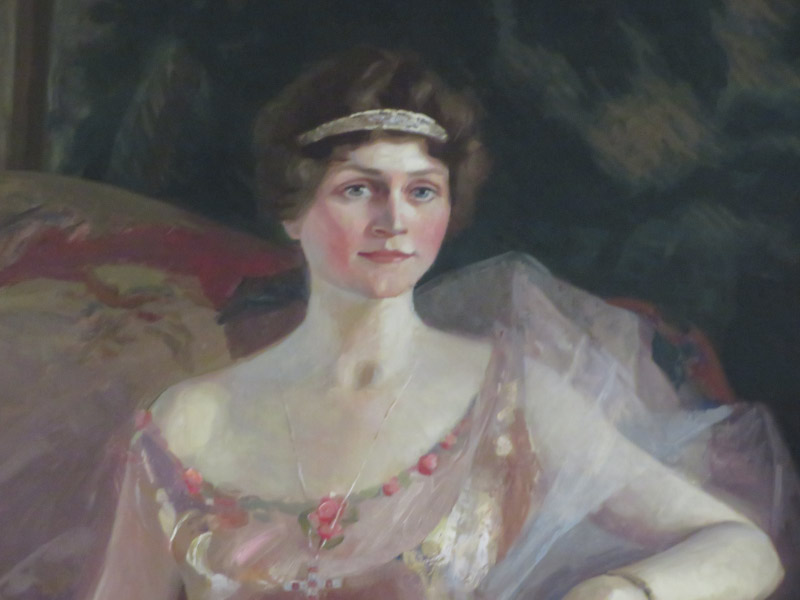
There are paintings of the inhabitants of the house: Jessie Ball duPont that lived in the house longer than anyone; she died in 1970 and the house was open to the house several years later.

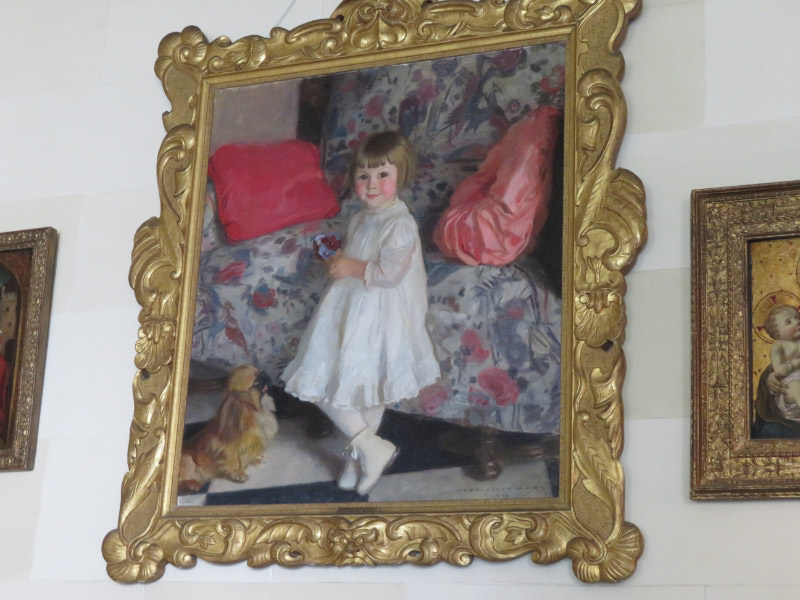
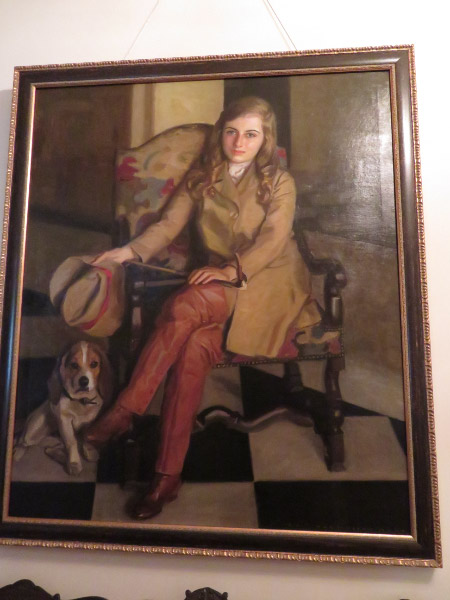
The little girl that grew up at Nemours has several portraits as well. The docent commented that the child came back to the house when she was very old and told them that the picture younger version was her favorite picture of herself….but she never liked that dog!

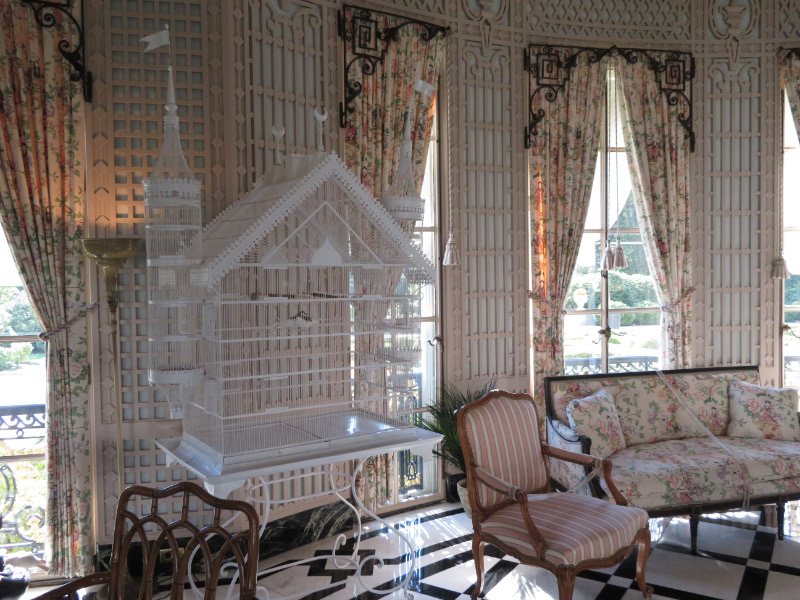
My favorite room in the house is the garden room – windows on 3 sides, black and white tile pattern on the floor, bird cages, and trellis on the walls.

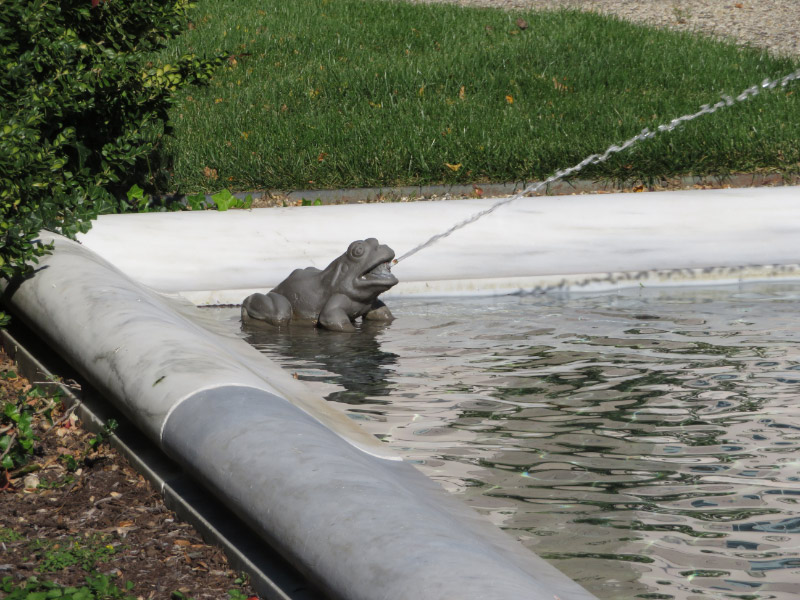
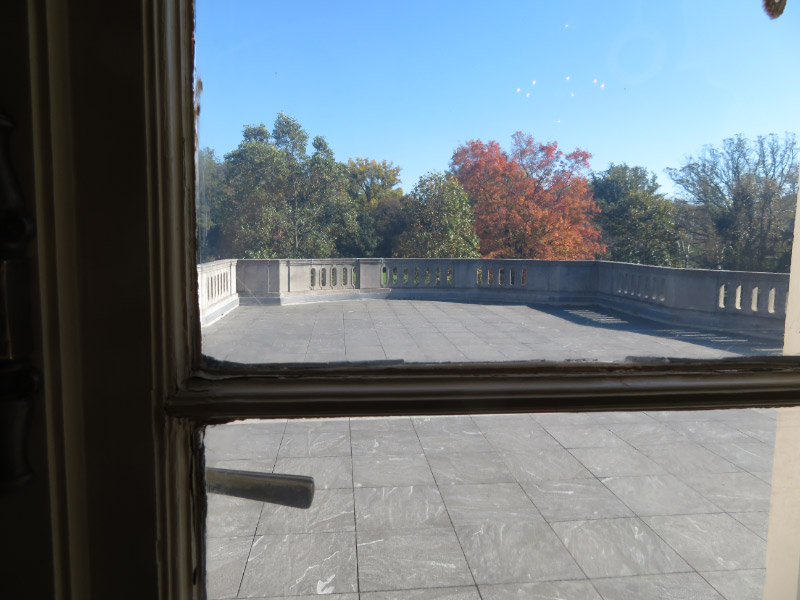
Above the garden room is a terrace entered from Jessie’s sitting room. The terrace is vacant now but had black wicker furniture when the house was occupied. It overlooks a garden with a turtle fountain.

Coming down stairs I noticed some laps with butterflies painted on the shades. Wish I was talented enough to paint a lampshade with butterflies!

2017 10 IMG_4792.jpg

After touring the house – the gardens beckoned. The gardens are the topic for tomorrow’s post.

Gleanings of the Week Ending November 4, 2017

The items below were ‘the cream’ of the articles and websites I found this past week. Click on the light green text to look at the article.

How to Access Your Medical Records | Berkeley Wellness – I like the patient portal idea…just wish that every provider seems to have their own separate one.

First floating wind farm, built by offshore oil company, delivers electricity | Ars Technica – Hywind Scotland began producing power in September…now delivering to the Scottish grid. The turbines don’t require a firm attachment to the seafloor…using suction anchors like offshore drilling.

Germany Sees Drastic Decrease in Insects | The Scientist Magazine® - This story was reported in several my the feeds I monitor. A 27 years study….insect biomass declined by about 75% in that time. And the sampling was done in nature preseves!

Symmetrical Eyes Indicate Dyslexia | The Scientist Magazine® - Interesting….but what next.

The Millipede That Protects Itself with Cyanide – Cool Green Science – We found millipedes at the Belmont BioBlitz…but not these cyanides producing ones. Still – fascinating critters of the forest.

Stone Age Britons Feasted While Building Stonehenge | Smart News | Smithsonian – Pigs – maybe fattened with something sweet, like honey – that came from all over Great Britain. Cattle to a lesser extent.

The Real-Life Whale That Gave Moby Dick His Name | Smart News | Smithsonian – A little history behind the novel.

Compound Interest - Broccoli colour changes and cancer-fighting compounds – I tend to eat broccoli raw but have noticed the color change when it is cooked – never thought about why it did.

Top 25 Wild Bird Photographs of the Week #110 and  #109 – Birds and more birds…I can’t resist including them.

Prozac in ocean water a possible threat to sea life -- ScienceDaily – Medications can have unintended consequences far beyond out intent.

Fall at Brookside Gardens

IMG_4658.jpg

Last week my sister and I walked around Brookside Gardens. As we parked I noticed a tall Bald Cypress that was dropping its needles – a good sign of fall. Up close the cones were still a little green compared to the needles.

IMG_4660.jpg

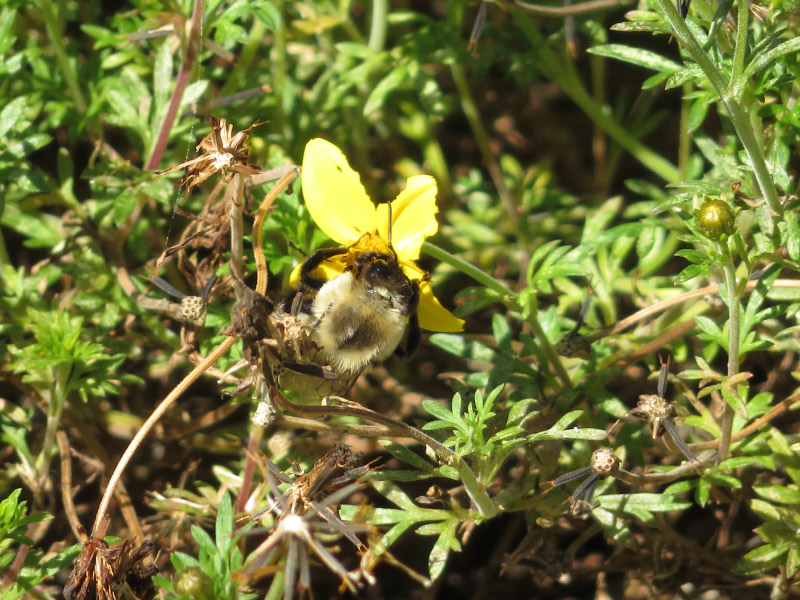
The gardens were full of plants that can survive the cooling temperatures for a little while. There was a new sculpture near the scent garden – a sphere of stones carefully pieced together without mortar. A few flowers were still blooming, and the bumble bees were active.

There was a monarch butterfly and I hoped that it would continue southward fast enough…not be caught here were we have our first frosts.

IMG_4679.jpg
IMG_4685.jpg

The area around the ponds and teahouse was partially closed (maybe some flood damage repair) but the bridge to the maze was a nice fall foliage scene. The maze itself has some sediment on one side – maybe washed there by recent rains.

IMG_4686.jpg

Inside the conservatory, it was warm and lush – as usual.

The part of the conservatory that will be used for model trains during the holiday light exhibit currently has mums. The plants were formed into saguaro cactus shapes this year! It was quite different than I expected…but pleasant. The plantings are in pots, so they can be repositioned when the trains to be installed just before Thanksgiving.

Fort McHenry

IMG_4587.jpg

Fort McHenry National Monument and Historic Shrine is only about 30 minutes from where I live. I spend a morning there last week – a great outing to do with out-of-town guests. We got there shortly after then opened and headed to the visitor center where we saw a film and started learning about the timeline of the Fort. It is best known for its role in the War of 1812 – and Francis Scott Key’s description of it at that time…”the rockets red glare…our flag was still there.”

IMG_4569.jpg

It’s an easy walk from the visitor center to the fort with signage along the way. The modern harbor is also on view.

IMG_4581.jpg

And then there are guns from 1814 when the fort protected Baltimore from the British.

The fort itself is brick, stone, and earthen mounds. It changed after 1812 and there were more forts built like it since it had proved effective. We were there to help with the morning flag change. It was a very breezy day so they weren’t putting up the largest flag. I helped take down the flag that had flown during the night (not a large flag) and was surprised how tired my arms got from holding the rope waiting for the daytime flag to be readied…and the lowering it into the arms of a partner. I’d forgotten the details of proper flag folding that I learned as a teenager (but managed to do my part with some prompting from the ranger).

As we were about finished with our visit, there was a small re-enactment with a boat on the water about the distance from the fort as the British ships….

And a group of men firing a canon!

Gleanings of the Week Ending October 28, 2017

The items below were ‘the cream’ of the articles and websites I found this past week. Click on the light green text to look at the article.

Get Stuck on Band-Aid History | Smart News | Smithsonian – Patented in 1926….and still basically the same!

Nikon Small World Photomicrography Competition 2017 Winners – The amazing natural world too small for us to see without technology…captured in photographs.

Beyond Biodiversity: A New Way of Looking at How Species Interconnect - Yale E360 – Going beyond simply counting species…understanding their role and importance to the ecosystem.

Pompeii vs. Herculaneum - Mountain Beltway - AGU Blogosphere – Both destroyed in AD 79 by an eruption of Vesuvius but excavated differently...body casts in Pompeii, skeletons in Herculaneum. Lots of pictures of both places.

Derinkuyu Underground City, the World’s Deepest Subterranean Metropolis – Discovered in 1963…an 18 story underground city that once houses up to 20,000 people in Turkey’s Cappadocia region. Started in the 8th to 7th centuries BCE….flourished in the Byzantine period from 780 to 1180….but there are alternative theories. There are over 200 other subterranean cities in the area!

BBC - Future - The great thaw of America’s north is coming – What happens when permafrost thaws? Infrastructure (houses, roads, airports, etc.) can crack or collapse. Whole villages will need to move…an expensive undertaking and it’s not clear that they would not have to move again when the new area became unstable.

Tower of human skulls found by archaeologists in Mexico, throwing Aztec history into doubt | The Independent – A tower of skulls was mentions in writings of the Spanish conquistadores. It was believed that the skulls belonged to male warriors killed in inter-tribal combat. Now that the structure is found and being examined with modern techniques – it is revealed that the skulls of women and children are included in the tower.

Do You Live in One of the Happiest American States? – I always enjoy looking at the graphics and trying to understand how the data was rolled up. However - I am always suspicious: summing up data about ‘well-being’ is not all that important because it is not something I would use to decide something for myself or my family.

Kitchen of the Future: Smart and Fast but Not Much Fun - The New York Times – I enjoy cooking….not sure I want or need something that prompts me for every step. Most of what I cook does not take very much time as long as the ingredients are in the house. I wonder how much of the technology mentioned in this article will become reality.

Guide to Greener Electronics 2017 - Greenpeace USA -My laptop manufacturer is a C+; smartphone manufacturer is a D-; and Amazon is an F. I have started keeping my laptops for a longer time but they are not built to last. My oldest laptop has a somewhat broken case so it no longer is no long moved from its place in my office.

A Stump at Staunton River State Park

2017 10 IMG_4543.jpg

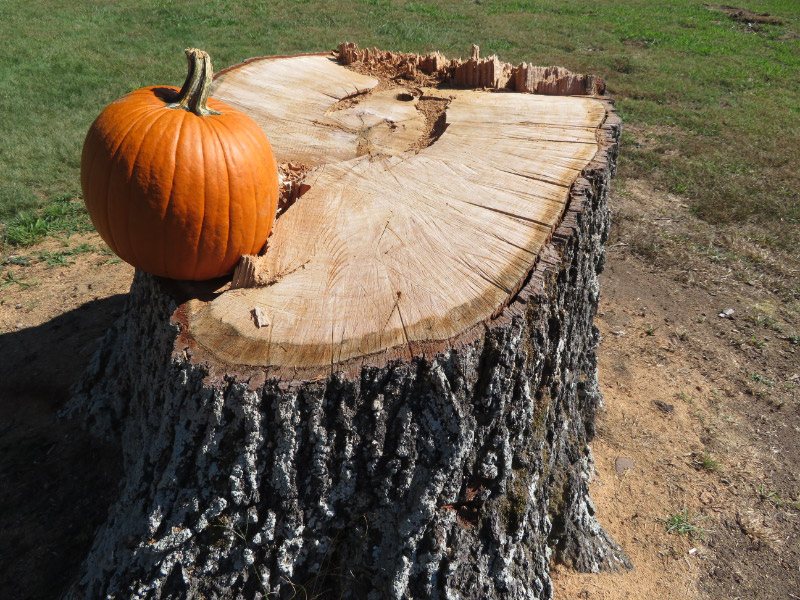
In a grassy area near the visitor center – I noticed a stump. Someone had left a pumpkin on top, probably while they were decorating for the Star Party. I walked over to get a closer look. It looked like it had been cut down recently.

2017 10 IMG_4544.jpg

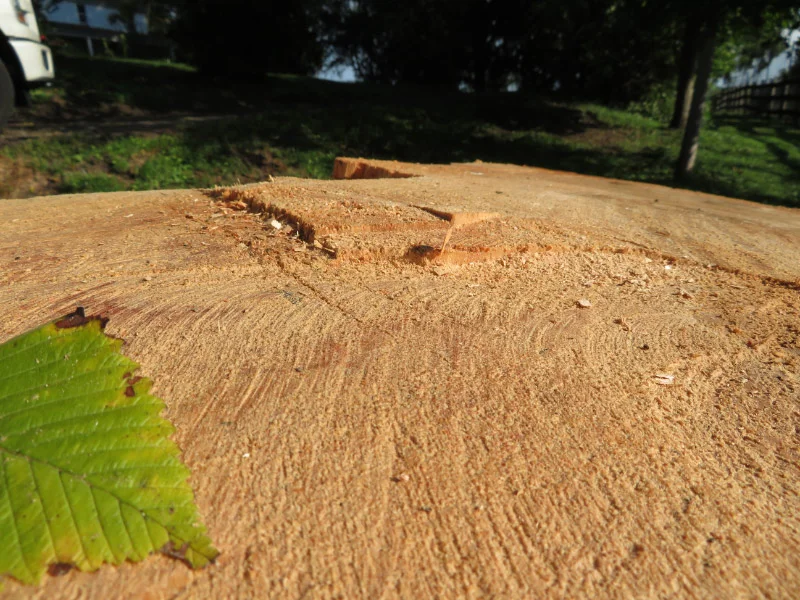
The rings stood out a lot more than the rings of the Silver Maple at Mt. Pleasant. This stump had not been sanded either. I counted 74 rings but there were some very narrow ones from recent years that were harder to count….so I estimated it was about 80 years old when it was cut down.

The people in the Visitor Center told me that it had been cut down recently and that they thought it had been planted near the time the park was created in 1936. But they didn’t know what kind of tree it was. The next morning, I talked with the park manager that was manning the outdoor grill at the Cantina for breakfast and found out that it was a Post Oak and he had counted 84 rings when it was first cut down. The CCC did most of the work when the park was created so it is likely, because of its location, that it was planted by them. The tree had leafed out last spring but then dropped all its leaves during the summer. It had been struggling for the past few years and looking at the stump shows the evidence of that struggle in the outermost rings.

Gleanings of the Week Ending October 21, 2017

The items below were ‘the cream’ of the articles and websites I found this past week. Click on the light green text to look at the article.

What’s With That Dam? : The National Wildlife Federation – We got to Conowingo to see bald eagles….so I was interested in learning more about it. Evidently - the dam’s current impact on the Chesapeake Bay is not a positive one.

On Bee-ing – Cool Green Science – About the Minnesota Bee Atlas.

Stunning Video Captures Humpback Whales Catching Fish with Nets of Bubbles | Smart News | Smithsonian – I’d heard of this phenomenon but the video is still thrilling! Well work the 40 seconds!

How honeybees read the waggle dance -- ScienceDaily – The field trip the Howard County Conservancy does for 3rd graders includes a segment on the waggle dance….so I read this article to find out more about it….both the history of its discovery and the current research on the neurons responding to the dance.

Bathtub Bloodbath, 1793 | The Scientist Magazine® - A famous painting of Jean-Paul Marat murdered in his bath…what he was before his revolutionary activities.

Adaptation as Acceptance: Toward a New Normal in the Northwoods – Cool Green Science – Forests are changing – with climate change and invasive insects like emerald ash borer and woolly adelgid culling some trees that were, until recently, common in our forests. There is a grief for those lost trees that will not make a comeback. This article is about finding hope via adaptation. The forest will be different…but still forest.

Meet the Transgenic Silkworms That Are Spinning out Spider Silk | The Scientist Magazine® - Spider silk combines elasticity and strength but has been difficult to produce. Now the fiber is produced by silkworms and the increased availability makes it viable for a host of applications. It will be interesting to observe how the market develops.

Treetop Walkway Provides an Elevated Path Through Danish Forest – What an awesome way to observe a forest!

National Mall and Memorial Parks – Hope the laser ablation of the biofilm on the Jefferson Memorial works as well as the test spot. The dome has gotten a lot grayer over the years from ‘biofilm.’

Seeing Big Changes in Baltimore: The National Wildlife Federation Blog – Hurray for the schools and students in Baltimore provided wildlife habitat!

Silver Maple Stump

Last month, two silver maples were cut down near the farmhouse at Howard County Conservancy’s Mt. Pleasant Farm because they were dropping large limbs and endangering nearby structures. One of them is conveniently located between the drive that loops around the farm house and the Honors Garden. When I first looked at it, I was thrilled that the stump could be used to talk about tree rings generally…and the history of Mt. Pleasant specifically. The first challenge was that the saw marks were so deep that it was difficult to see the tree rings.

2017 09 IMG_4064.jpg

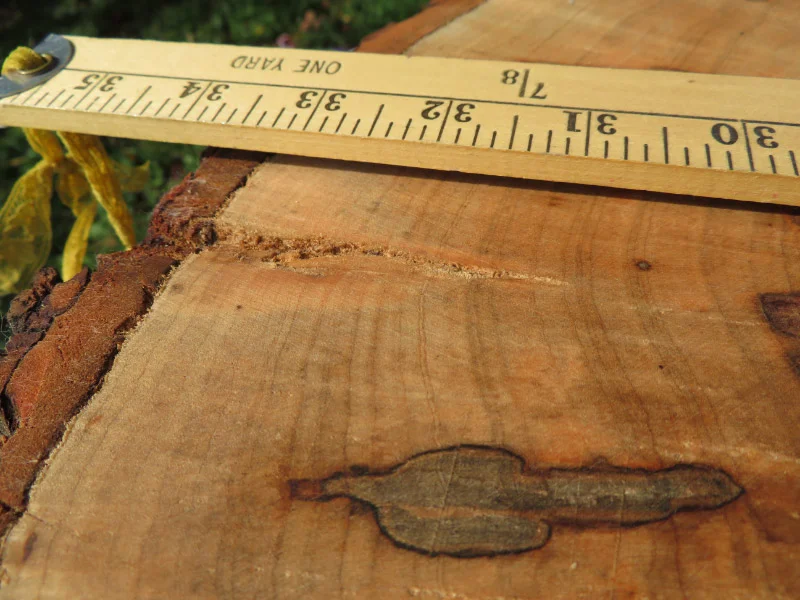
Fortunately, several volunteers stepped forward to sand the smoothest part of the stump so that the rings would be easier to see. It was still a little challenging. The stump includes rotting areas and splits near the center. The stump is still very much alive as well – with sap coming to the surface as the roots continue to collect water and nutrients from the soil. The first time I attempted to count the rings it was a cloudy day and the size of the stump was a bit daunting. I realized I needed a step stool to see the rings toward the center. I came back on a sunny day and climbed up to sit on the stump when I realized that the slope was not going to work with my step stool. I managed to count 124 rings!

20171009_151450.jpg

I made a strip of lightweight cardboard with years on it (counting from the outermost ring) and a page that talked about tree cookie parts. For kindergarten and 1st grade students that hike by the stump – we’ll talk about counting rings and then either count 5-6 rings from the outer edge (how much did the tree grow since you were born) or from the center (how big was the tree when it was as old as you). For adults, I have a time line for what was happening at the farmhouse and Mt. Pleasant over the past 124 years and plan to develop some discussion about the weather over the life of the tree. The 1940s and 1950s were the best years for the silver maple!

Gleanings of the Week Ending October 7, 2017

The items below were ‘the cream’ of the articles and websites I found this past week. Click on the light green text to look at the article.

Ancient Roman Mosaic in England Discovered by Amateur Archaeologists – A 4th CE Roman mosaic near the village of Boxford in Berkshire….discovered and then covered up to protect the mosaic until decisions are made about what to do next.

Fall Color In-Depth: Maple Trees Offer New Answers to Diabetes, Alzheimer’s – National Geographic Society  - I like maple syrup and often us it in cooking….it adds more than sweetness and – evidently – is better for you because of those other elements!

Electric Car S-Curve Adoption by Country (Fun Chart!) | CleanTechnica – Norway followed by Iceland and Sweden lead…The US is behind China.

Question: Can People Use Rooftop Solar Power During an Emergency? Answer: It Depends | CleanTechnica – As more battery storage becomes available…the problem of having solar panels but not being able to utilize them if the power grid is down may go away.

Spectacular Shots of Summer Fireworks Festivals in Japan - Hanabi Taikai – Wow! What a huge display.

Infographic: Brain Infection and Alzheimer’s Disease Pathology | The Scientist Magazine® - Evidence of infection (biofilms) in the hippocampus and temporal lobe in brains from people that have died with Alzheimer’s neurodegeneration….several theories about their relationship to Alzheimer’s.

These Breathtaking Natural Wonders No Longer Exist – 18 landscapes that no longer exist…including a beach in Hawaii…some sights in US National Parks.

Free Technology for Teachers: Historical Patterns Animated – A site from the University of Oregon…worth browsing even if you aren’t a teacher.

Interactives from NASA…Exoplanet Exploration – Create your own Earth-like planet….or a hostile world.

LED Lights, All-Electric School Buses, Hydroponic Gardens ... (Cleantech in Action Series) | CleanTechnica – A roundup of cleantech press releases that came out in September.

Five Years Post Career

It’s been a little over five years since my time shifted abruptly from being driven by paid career work to being driven by me alone. As I converted my 5 years of blog postings from Squarespace 5 to Squarespace 7, I thought about how things have changed for me over those years.

In the beginning, I felt very much like I did in my early 20s…that there were so many things I wanted to do and I just need to make some choices about what to do first. I was almost giddy with excitement but stressed by the newness of the choices I was making. The rhythm of writing the blog every day helped me overcome some of the discomfort of so many new things happening.

Coursera became available and I busied myself taking online courses. It was indulging the student in me that never grew up!

My husband and I did a little more travelling than before but that did not make as much impact on our lives as the aging of our family (hospitalizations, cross country moves, etc.). I was much more available to help as needed – and often that meant some traveling.

Volunteer work was always something I thought I would do but I did not anticipate 5 years ago that I would return so strongly to the focus of my (long ago) undergraduate degree: biology. Once I started being a volunteer naturalist for elementary school field trips with the Howard County Conservancy the ball just kept including more: Master Naturalist Training, Middle School BioBlitz, High School Stream and School Yard Assessments, pre-school nature programs, nature photography with summer campers and then, just this past summer, Brookside Gardens’ Wings of Fancy flight attendant. So far – once I’ve started doing something, I’ve kept doing it although I am probably close to capacity at this point. If I decide to start a new volunteer endeavor, I might have to stop something else.

I do more ‘art’ type activities that I did before – Zentangle and collecting of botanical/butterfly prints and photography. I still read quite a lot but I enjoy the pictorial books too. I spend more time with visual arts that I did earlier in my life.

Overall – I’ve noticed the change in myself…less feelings of stress…more joy. The pace of life has stabilized to be just right!

Gleanings of the Week Ending September 30, 2017

The items below were ‘the cream’ of the articles and websites I found this past week. Click on the light green text to look at the article.

What If the Oil Industry Leaves the Gulf Coast? - CityLab – After Hurricane Harvey – there is more recognition of the country’s energy infrastructure.

Clues to Africa’s Mysterious Past Found in Ancient Skeletons - NYTimes.com – 8,100 year old DNA recovered from bones….and other finds that are enlarging our understanding of ancient population movements within Africa via DNA analysis.

Ancient Gem-Studded Teeth Show Skill of Early Dentists – An elaborate example of dental bling from 2,500 years ago from Chiapas, Mexico.

Satellites that Measure Ice Loss to Go Dark - Yale E360 – The two satellites that collect detailed information about earth’s ice sheets will be decommissioned in the next month or so. The replacement satellite is scheduled to be launched in early 2018…but that will still leave a gap in the data.

BBC - Future - The ships that could change the seas forever – Monster ships, remotely piloted, built of futuristic materials and partially powered by renewable energy….so many possibilities.

How a Satellite Just Used Earth Like a Slingshot | Smart News | Smithsonian – OSIRIS-REx in the news. We were in Florida a year ago to see it launched!

Top 25 Wild Bird Photographs of the Week #106 – National Geographic Society -  There is a picture of a Peregrine Falcon at the very end of this set…one bird that has managed to take advantage of urbanized environments.

5 Things We Learned from The Newly Updated “Heat Maps” Developed By Sustainable Energy For All | CleanTechnica – Follow the ‘heat maps’ link to look at them directly or think about the 5 facts highlighted in the article about clean cooking, electrification, rural/urban divide, enabling policies and energy efficiency.

Five Fascinating Facts About the Amazing Cassowary | Smart News | Smithsonian – Big birds…that are fascinating but not very friendly.

This Tiny Country Feeds the World – Food production in The Netherlands. Is this the future of food production to feed the world’s increasing population?

Gleanings of the Week Ending September 23, 2017

The items below were ‘the cream’ of the articles and websites I found this past week. Click on the light green text to look at the article.

Celebrate Cassini’s Historic Voyage in Eight Incredible Images | Smart News | Smithsonian – Cassini has crashed into Saturn’s atmosphere (intentionally) and there have been quite a few retrospective articles about its long mission. I liked this one…so am including in the gleanings for this week.

Eighteenth century nautical charts reveal coral loss -- ScienceDaily – The study compared the coral documented in the Florida Keys in nautical charts from the 1770s to satellite data. More than half the coral reef has disappeared completely. Nearer to land, the loss is closer to 90%.

What We Still Don’t Know about the Health Benefits of Nature – THE DIRT – I noticed this article first because the picture under the heading is of Klyde Warren Park in Dallas (I visited there several years ago and enjoyed it) but thin the article was worth looking at too. It defines some priorities for research to understand the health benefits of nature better although most people already agree that is it beneficial…but how exactly does it happen. Some doctors are already prescribing time in the park!

North American Ash on Brink of Extinction | The Scientist Magazine® - In Maryland many of the Ash Trees are already dead or dying. Very sad.

Top 25 Wild Bird Photographs of the Week #105 – National Geographic Society – There’s an Eastern Bluebird toward the middle of this collection….perched a little differently than I usually see them.

A Monumental Road Trip in Northern Arizona - National Parks Traveler – I’ve been to most of these places…..and enjoyed them all.

BBC - Future - How we’re creating ‘super plants’ to help humanity – The article highlights 4 ideas: cross-breeding super plants, using plants as medicine, bananas on steroids, and fire-fighting plants.

Learn How to Create Zentangle Art, a Meditative Form of Drawing – This article is about doing Zentangles (drawing patterns) rather than buying an adult coloring book. I started doing doodles and graduated to Zentangles and never was tempted by the ‘coloring book’ craze.

Ruins of a Roman City Found Off the Coast of Tunisia | Smart News | Smithsonian – The area of ancient Neapolis is off the coast of Tunisia. It was destroyed by a tsunami in 365 AD.

Why are fossilized hairs so rare? -- ScienceDaily – Evidently, fossilized hair is 5 times rarer than feathers.  Chemistry? Environmental conditions? The research includes statistical analysis of where hair and feathers have been found in the fossil record and make some predictions about where and how to look for them going forward.

3 Free eBooks – September 2017

I picked three series this month – one magazine and two multi-volume books.

2017 09 ebook1.jpg

The Graphic Arts (The monthly magazine of the craftsmanship of advertising). Boston: The Graphic Arts Co. 1911-1915. Eight volumes are available from Hathi Trust here. A lot of technical advances were being made during this time to meet the demand for increasingly colorful print advertising. The clip I’ve picked was annotated “An achievement in two-color plate making.”

2017 09 ebook2.jpg

Duncan, James and Dunbar, William. Introduction to entomology. Edinburgh: W.H. Lizars. 1843. Seven volumes available from Internet Archive: one, two, three, four, five, six, seven. Some of the butterflies looked very familiar (like ones in Brookside Gardens Wings of Fancy exhibit). I wondered how many of the insects seen in 1843 are now extinct.

2017 09 ebook3.jpg

Harris, William T, Edward Everett Hale, Nelson A. Miles, O. P. Austin, George Cary Eggleston (editorial staff). The United States of America: A pictorial history of the American nation from the earliest discoveries and settlements to the present time. New York: Imperial Publishing Company. 1909. Five volumes available from Hathi Trust here. There are more drawings than color illustrations…and the telling is somewhat dated. History is subtly re-interpreted. This was the way history was presented prior to World War I…before we became a ‘superpower.’

Hiking to the Patapsco

2017 09 IIMG_4162.jpg

Last Saturday, I led a group from Belmont Manor and Historic Park to the Avalon area of Patapsco Valley State Park. It was a beautiful day for a hike – sunny and not too hot. I didn’t take any pictures going downhill since I needed to be in the front. I did stop to check some spicebush (understory trees) for caterpillars since I am more aware of spicebush swallowtail caterpillar behavior from the Brookside Gardens’ Wings of Fancy caterpillar house (see my post about them here) while we made a short stop to allow the group to come together.

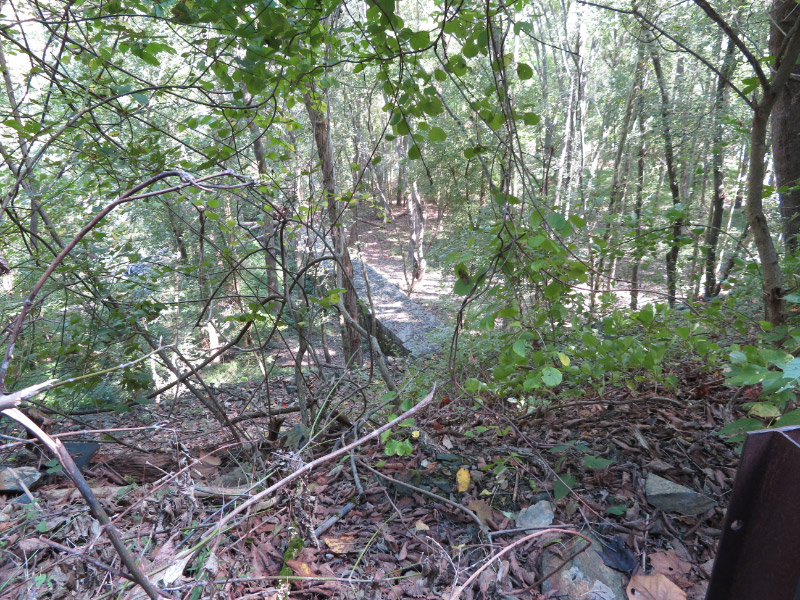
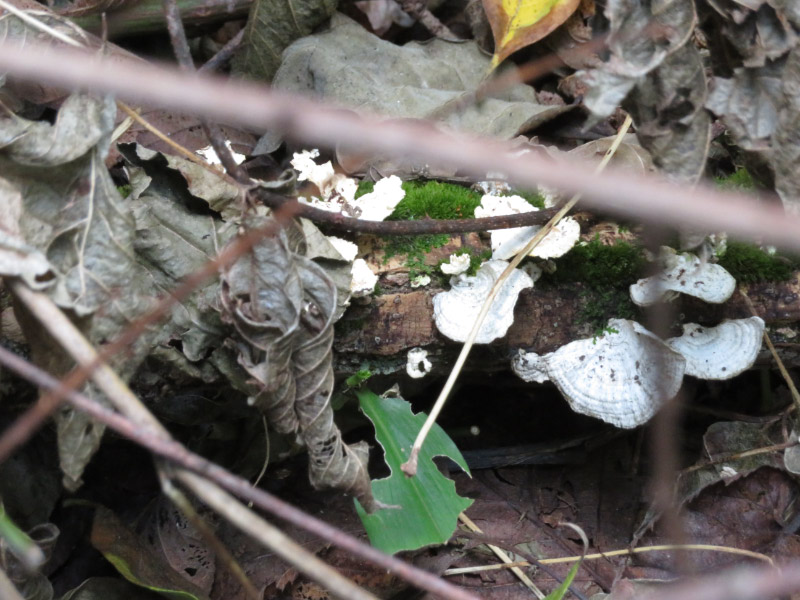
Once we got down near the river, a volunteer ranger met us to provide some park history. One stop was concrete Avalon Dam and I took a picture of it through the tangle of vegetation trees. The river bypasses the dam now! Looking down I noticed some self-fungus and very green moss among the accumulating leaves.

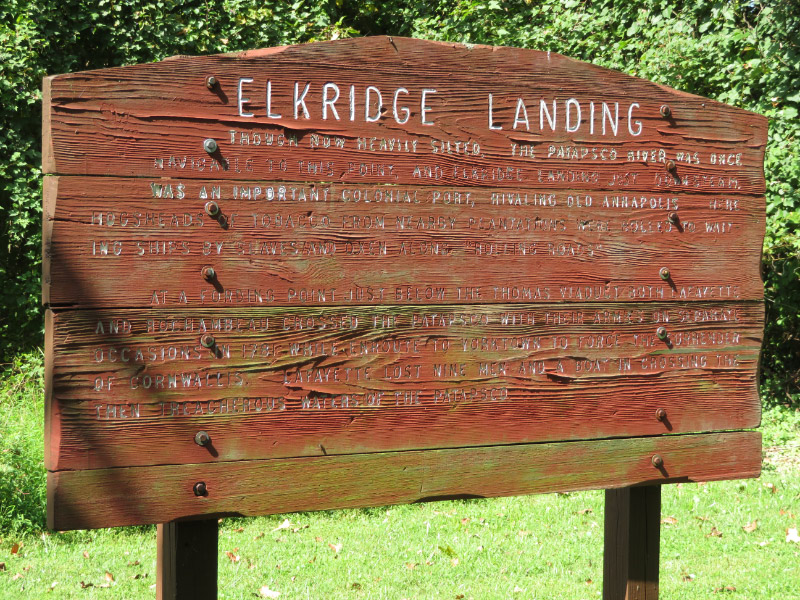
We stopped at the sign about Elkridge Landing. There is some controversy about exactly where the Landing was but it probably was not exactly where the sign I located. Another bit of history: the sign was made as an Eagle Scout project; it was very nice at the beginning - but has not weathered well. Maintenance in the park is always a challenge.

2017 09 IIMG_4153.jpg

This is a wall that remains near what was the mill race in colonial times for the Avalon Nail and Iron Works – mended many times. It could be used for a geology talk as easily as for history.

2017 09 IIMG_4156.jpg

While we were in the park we saw an ambulance come by with flashing lights and then leave again – lights still flashing. We heard that a hiker had gotten bitten by something. Later we learned the bit was from a copperhead and was on the ankle. It was a warm enough day that many people were in hiking sandals and shorts….scary that there was at least one snake not that far from where were hiking.

We started our hike back up the trail and noted the shelter along the trail that we hadn’t noticed on the way down because we stayed on the fire road rather than taking the trail.

2017 09 IIMG_4158.jpg
2017 09 IIMG_4161.jpg

The trail through the forest was up hill but shady and scenic.

2017 09 IIMG_4165.jpg

I stopped to enjoy the stand of bigleaf magnolia. I didn’t hike to see them in the spring this year…maybe something to plan to do in 2018. That’s when they would be blooming.

2017 09 IIMG_4168.jpg
2017 09 IIMG_4180.jpg

The path is at the edge of the meadow for some distance and took pictures of a spider and meadow plants going to seed.

The hike was over 4 miles --- a good prelude-to-fall hike.