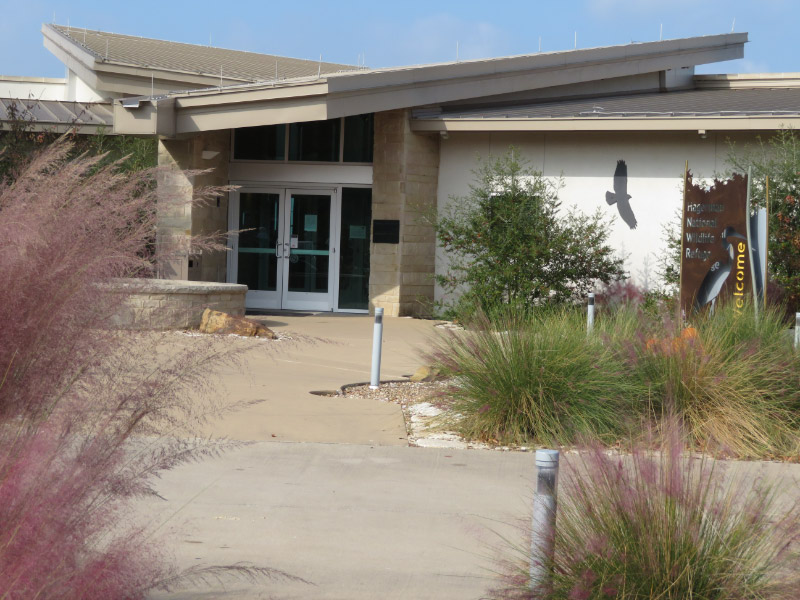
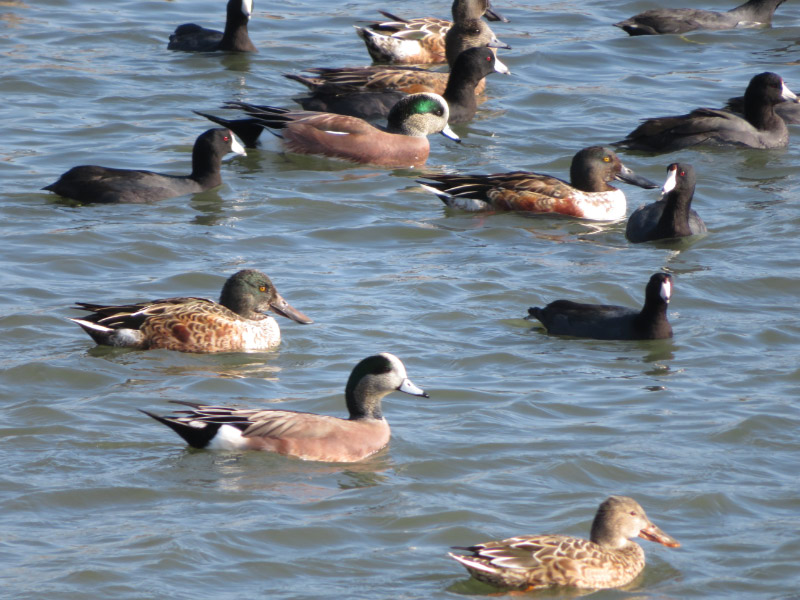
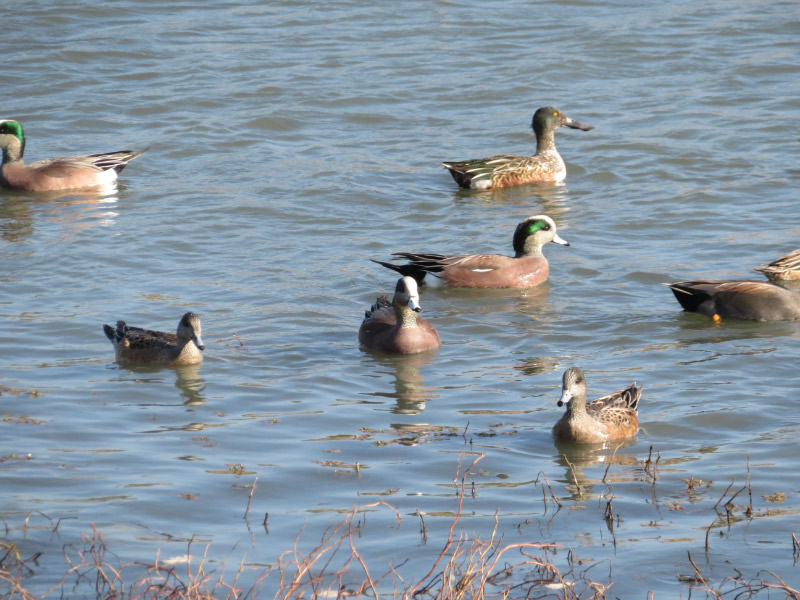
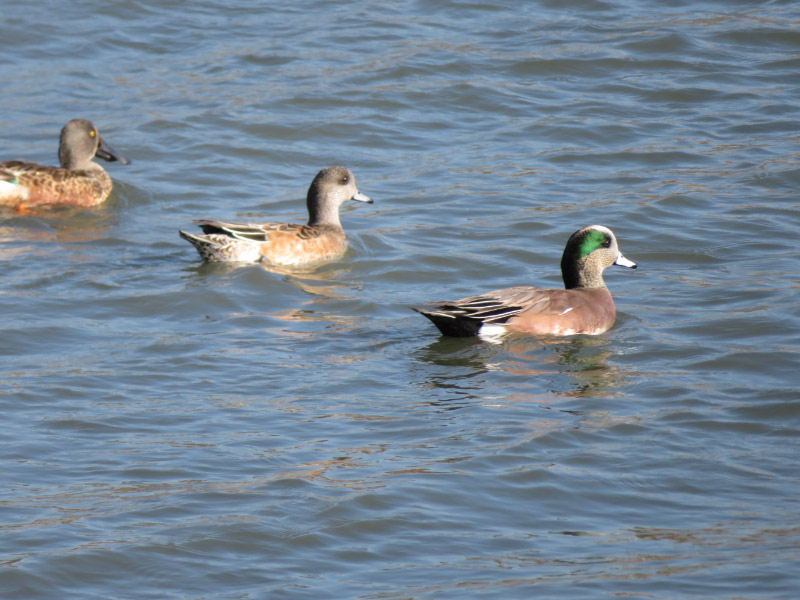
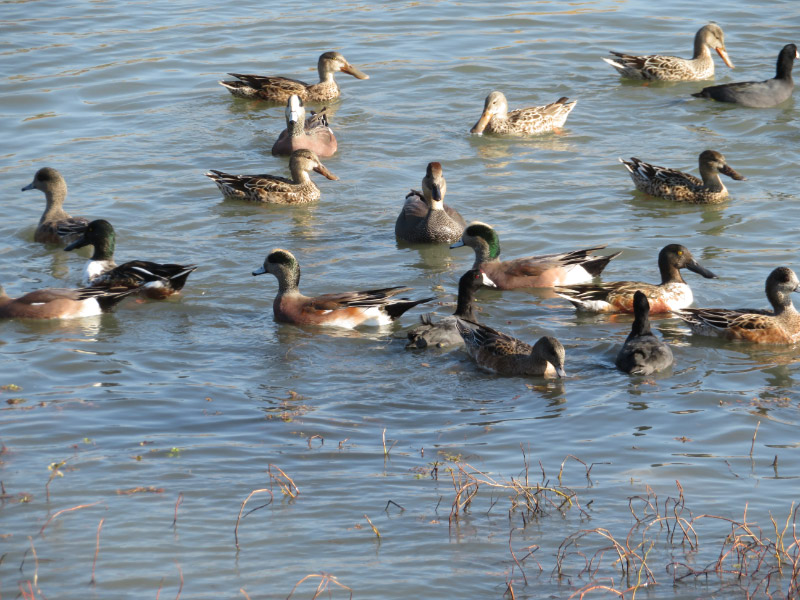
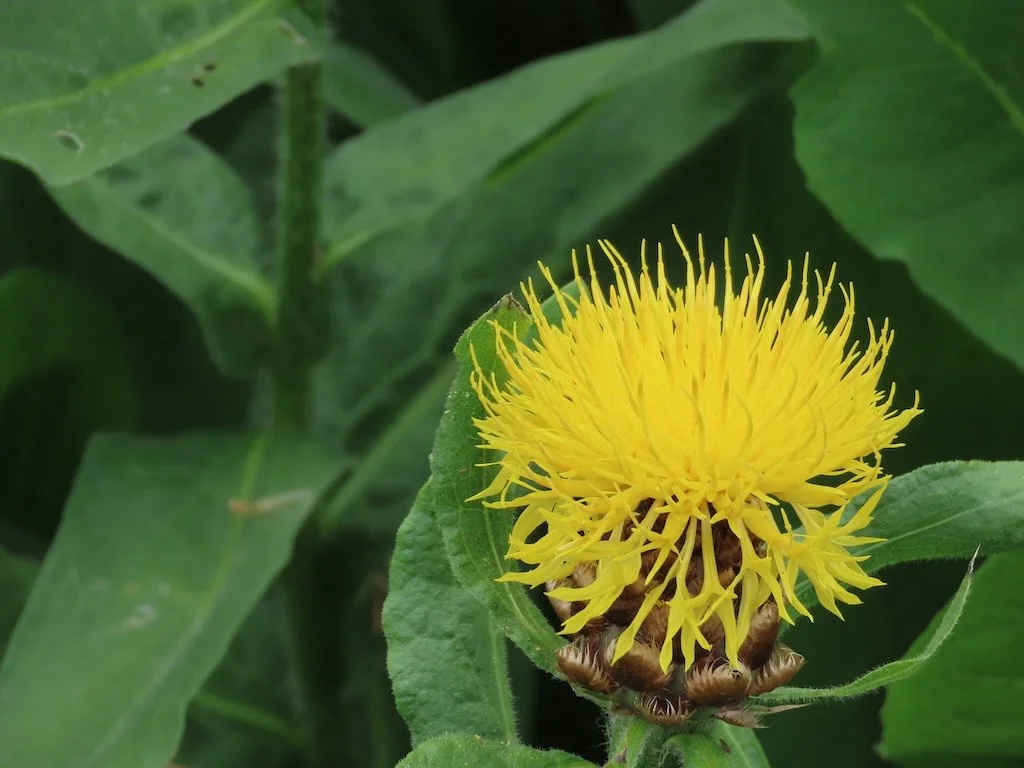
Hagerman National Wildlife Refuge – Part 1

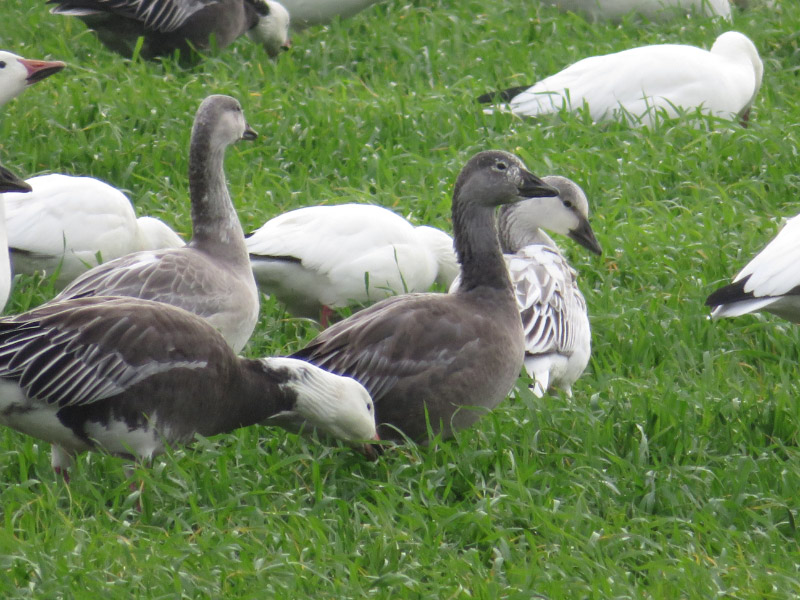
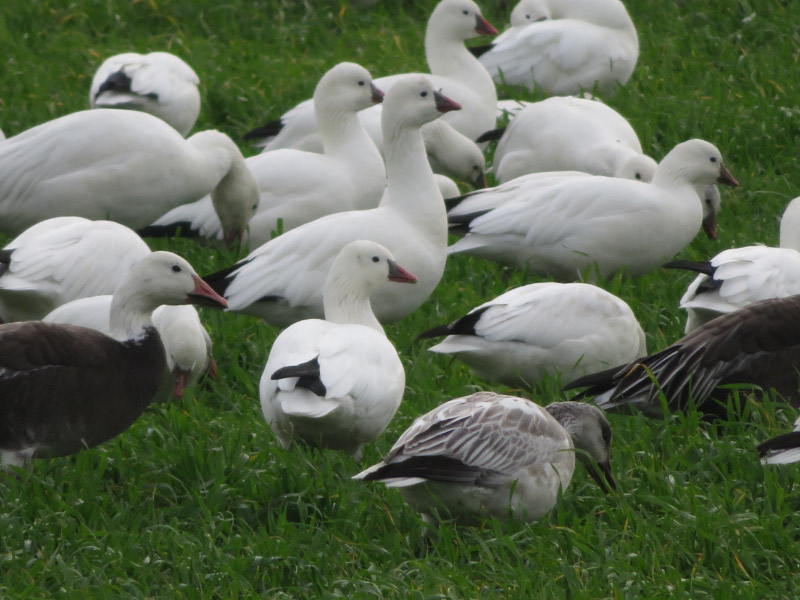
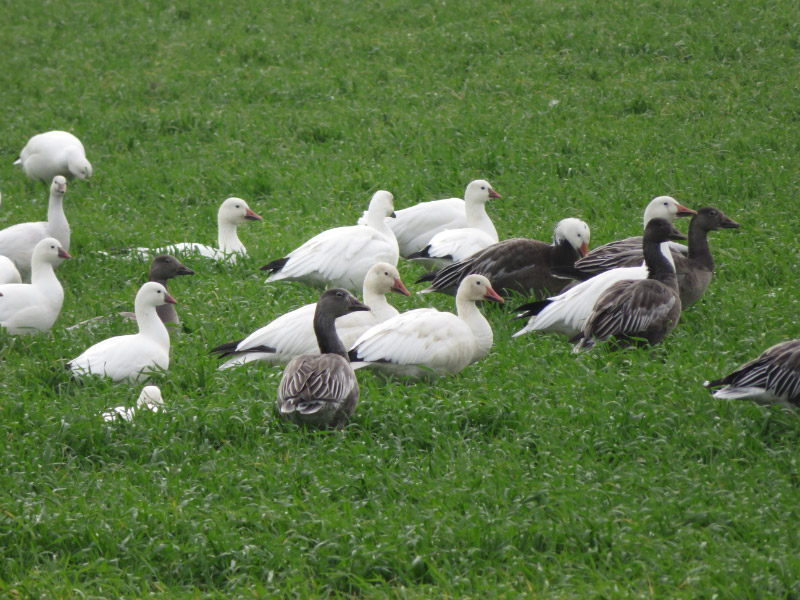
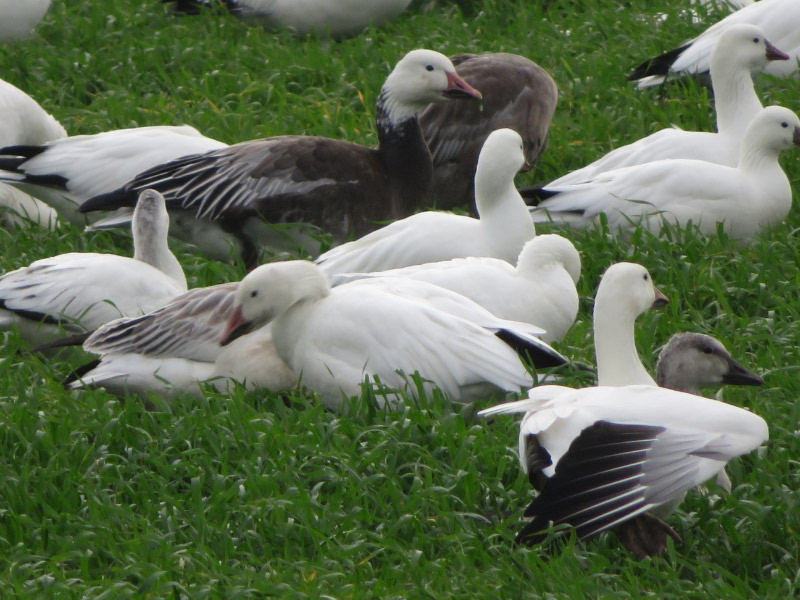
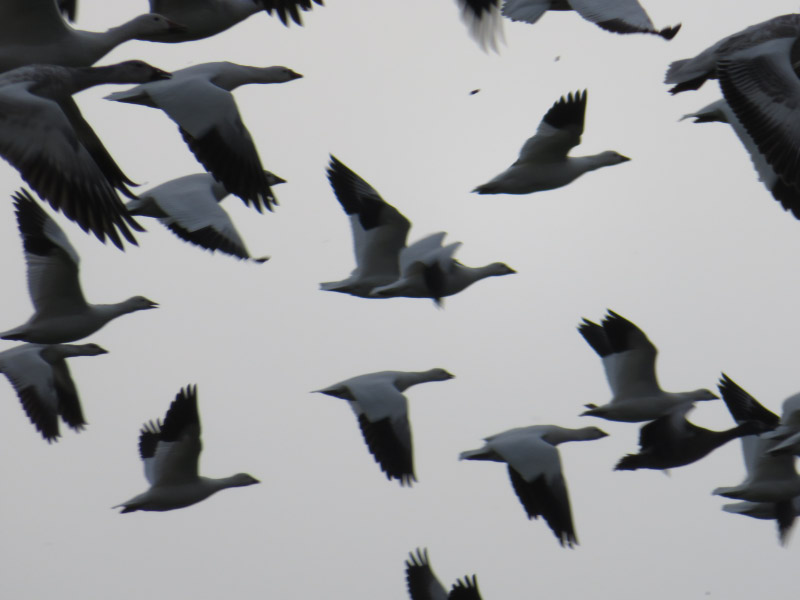
Hagerman National Wildlife Refuge is located on Lake Texoma (Texas side) and is a stop on the migration of many birds this time of year. My visit was a week ago and before the peak of the migration but here was still a lot to see. The refuge includes a visitor center and auto tour….hiking trails. For this visit, we had a limited amount of time, so we only did the visitor center and auto tour; I’m already planning to go again whenever I’m in the area in fall or spring.

The first birds we saw along the auto tour were some crows. I did not photogram them…but the next grouping I did: cormorants on some snags in the water. There are parts of the lake that are shallow and/or seasonally flooded water impoundment ponds. The snags are ideal perches for many birds.

2017 11 IMG_5059.jpg

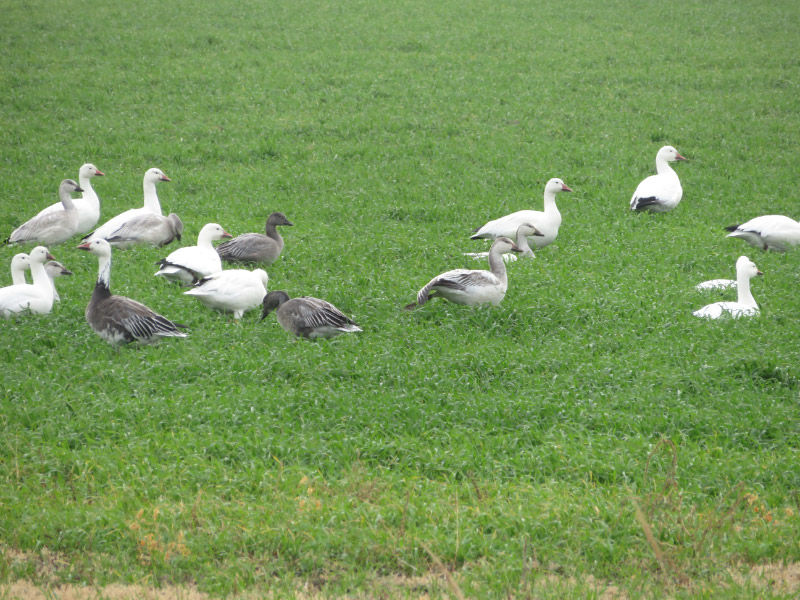
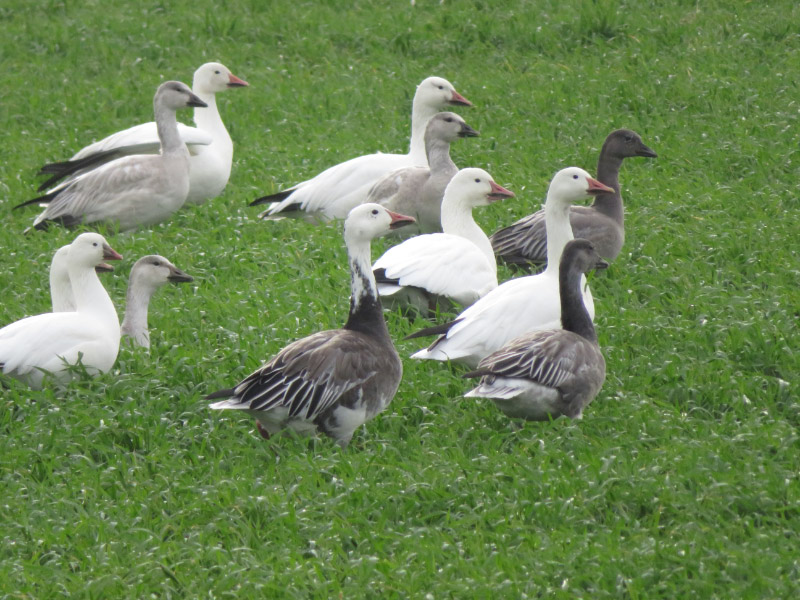
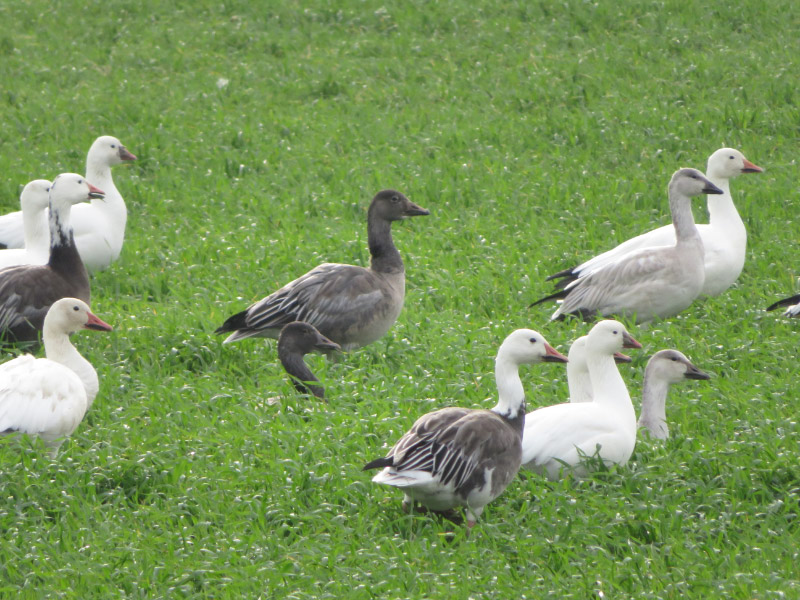
A little further along there were snow geese – lots of different morphs and maybe some Ross’s Geese mixed in as well. We used our cars as blinds and the geese continued to move around in the field…about 100 or so birds. Then something spooked them and they all flew up and circled; it didn’t take long before they came down in another patch of green.

More about Hagerman in my post for day after tomorrow.

A Walk to Josey Ranch

Last week I was in Carrollton, TX and decided to get my exercise by walking from my parents’ house to Josey Ranch Lake Park. It’s about a mile each way. I printed a Google map for the walking route since the route meanders through a neighborhood. It was an easy morning walk. And there were some winter-time birds newly arrived for the season at the lake. The first ones I spotted were Northern Shovelers. They are easy to recognize by the bill that looks too big for the head.

2017 11 w IMG_4942.jpg

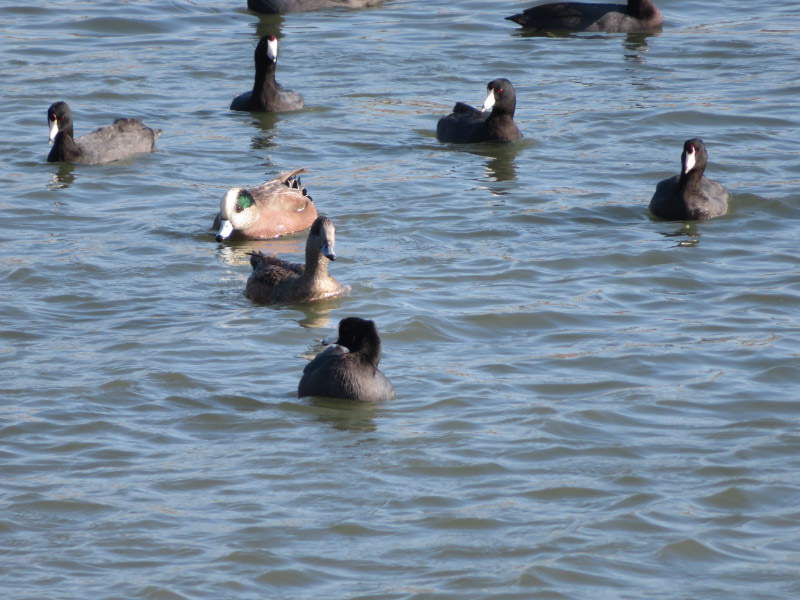
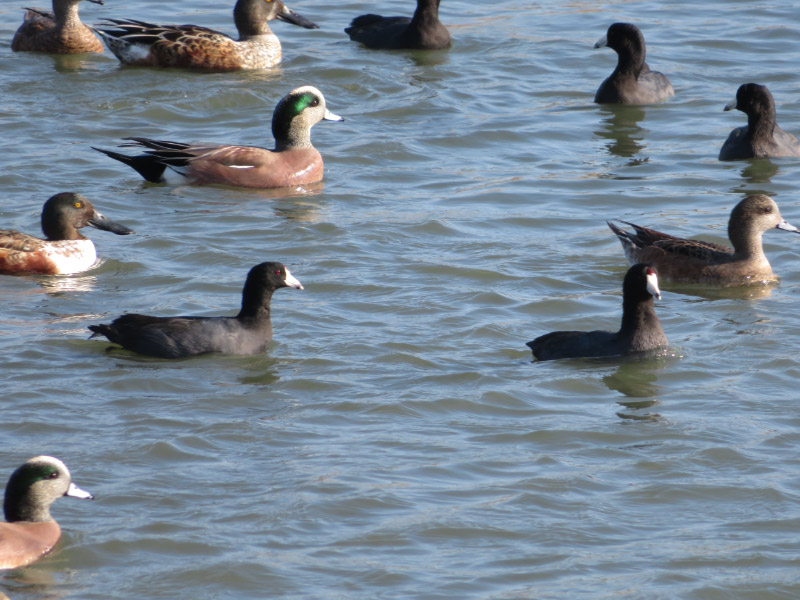
I’d seen American wigeons before…but not often enough that I remembered what they were. I took lots of pictures and then checked All About Birds to identify them when I got back from my walk.

The other bird that winters in this area that I saw at the lake was a cormorant. It was harder to spot because it was fishing (diving frequently) and it was seemingly alone.

2017 11 c IMG_4962.jpg

There were birds that are in the area all through the year too: Common grackles

2017 11 g IMG_4969.jpg

And American Coots (the two birds in the foreground below…with a Northern Shoveler behind them).

2017 11 coot IMG_4927.jpg

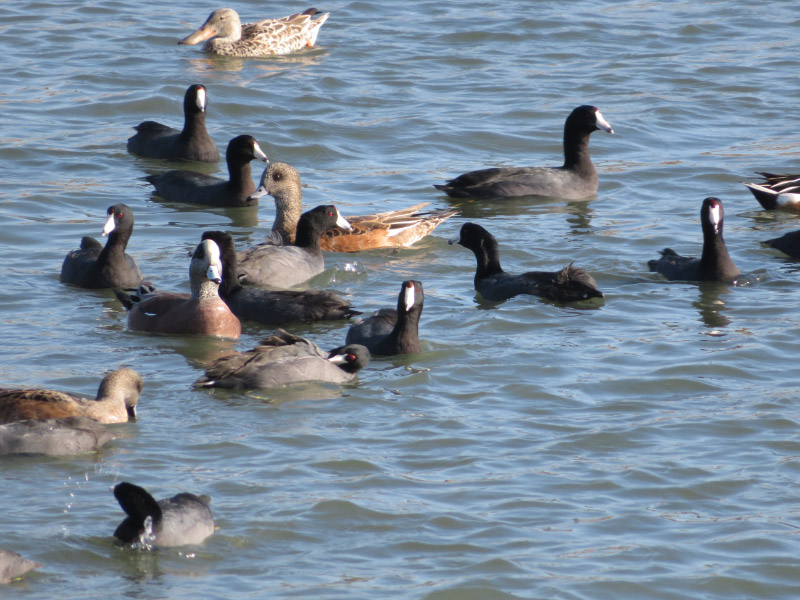
Now that I’ve identified the types of birds present…see how easily they can be recognized in these mixed group images. They were all feeding together at the lake.

I walked a little further around the lake and took pictures of turtles warming up for their day…I got a little too close and they plopped into the water.

I walked back to where I started the loop around the lake. I had just started taking more group pictures of the ducks when some American coots got into a tussle and startled the whole group….lots of splashing water as birds lifted off and moved to the center – safer – part of the lake.

2017 11 IMG_4967.jpg

As I walked hope I saw a very large katydid on a fence. It was turning brown with the season.

There was also a very dense group of weed flowers growing in a narrow band of dirt between the fence and concrete….a fall floral.

2017 11 IMG_5011.jpg

Gleanings of the Week Ending November 4, 2017

The items below were ‘the cream’ of the articles and websites I found this past week. Click on the light green text to look at the article.

How to Access Your Medical Records | Berkeley Wellness – I like the patient portal idea…just wish that every provider seems to have their own separate one.

First floating wind farm, built by offshore oil company, delivers electricity | Ars Technica – Hywind Scotland began producing power in September…now delivering to the Scottish grid. The turbines don’t require a firm attachment to the seafloor…using suction anchors like offshore drilling.

Germany Sees Drastic Decrease in Insects | The Scientist Magazine® - This story was reported in several my the feeds I monitor. A 27 years study….insect biomass declined by about 75% in that time. And the sampling was done in nature preseves!

Symmetrical Eyes Indicate Dyslexia | The Scientist Magazine® - Interesting….but what next.

The Millipede That Protects Itself with Cyanide – Cool Green Science – We found millipedes at the Belmont BioBlitz…but not these cyanides producing ones. Still – fascinating critters of the forest.

Stone Age Britons Feasted While Building Stonehenge | Smart News | Smithsonian – Pigs – maybe fattened with something sweet, like honey – that came from all over Great Britain. Cattle to a lesser extent.

The Real-Life Whale That Gave Moby Dick His Name | Smart News | Smithsonian – A little history behind the novel.

Compound Interest - Broccoli colour changes and cancer-fighting compounds – I tend to eat broccoli raw but have noticed the color change when it is cooked – never thought about why it did.

Top 25 Wild Bird Photographs of the Week #110 and  #109 – Birds and more birds…I can’t resist including them.

Prozac in ocean water a possible threat to sea life -- ScienceDaily – Medications can have unintended consequences far beyond out intent.

Fall at Brookside Gardens

IMG_4658.jpg

Last week my sister and I walked around Brookside Gardens. As we parked I noticed a tall Bald Cypress that was dropping its needles – a good sign of fall. Up close the cones were still a little green compared to the needles.

IMG_4660.jpg

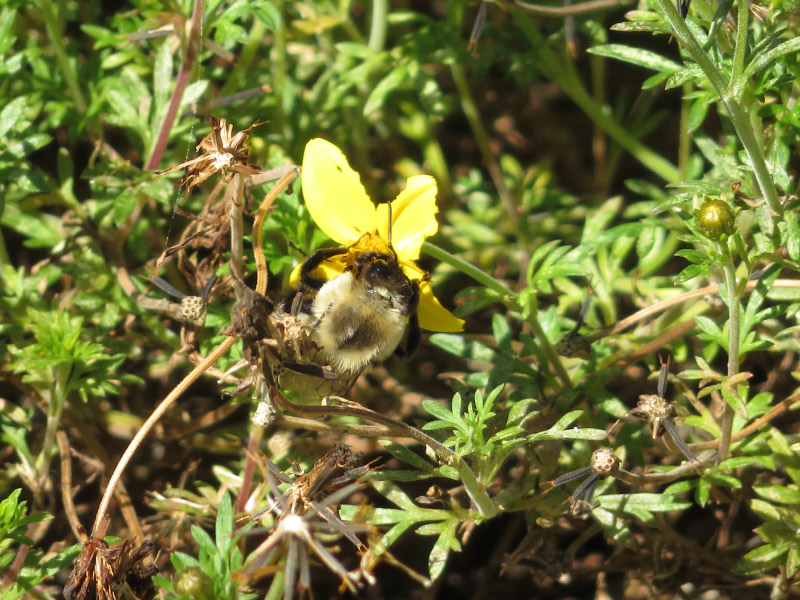
The gardens were full of plants that can survive the cooling temperatures for a little while. There was a new sculpture near the scent garden – a sphere of stones carefully pieced together without mortar. A few flowers were still blooming, and the bumble bees were active.

There was a monarch butterfly and I hoped that it would continue southward fast enough…not be caught here were we have our first frosts.

IMG_4679.jpg
IMG_4685.jpg

The area around the ponds and teahouse was partially closed (maybe some flood damage repair) but the bridge to the maze was a nice fall foliage scene. The maze itself has some sediment on one side – maybe washed there by recent rains.

IMG_4686.jpg

Inside the conservatory, it was warm and lush – as usual.

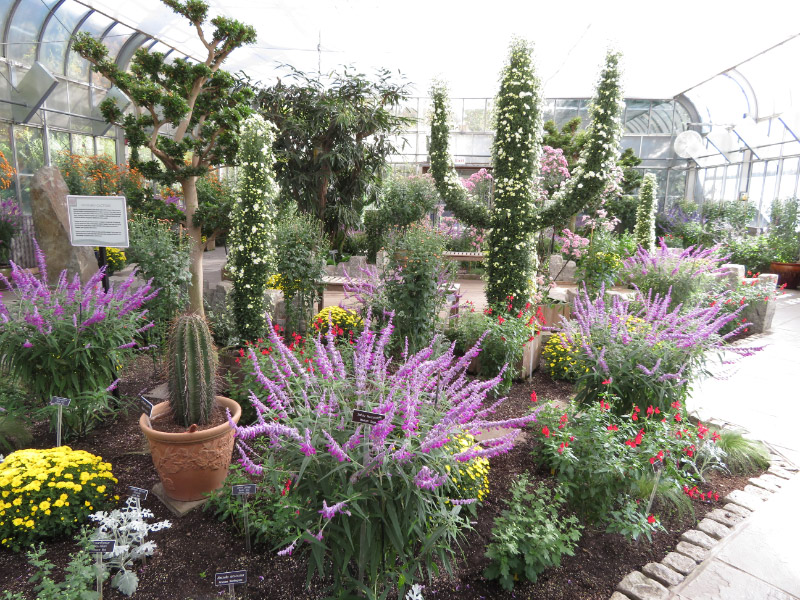
The part of the conservatory that will be used for model trains during the holiday light exhibit currently has mums. The plants were formed into saguaro cactus shapes this year! It was quite different than I expected…but pleasant. The plantings are in pots, so they can be repositioned when the trains to be installed just before Thanksgiving.

Ten Little Celebrations – October 2017

October 2017 has a myriad of little celebrations – just as every month – but there was a big one this month as well: my daughter was awarded a grant that will fund her post doc research for 2 years! My husband and I celebrated as much as she did…such a relief that she can continue her work.

2017 10 IMG_4540.jpg

There were several celebrations associated with the Staunton River Star Party:

  • Anticipating the trip…noting the improving weather forecast for sunny days and clear skies as we got closer.
  • The warmth of our mummy sleeping bags in the early morning when it dipped below 40 degrees.
  • Four clear nights for observing the stars and solar prominences observed on 2 days – what makes a star party worthwhile.
20171023_171718.jpg

I celebrated the finale of this year’s CSA – all the fabulous fall veggies in very generous portions. I’ll miss the CSA this winter and celebrate when it begins again next June.

The butternut squash soufflé I made with maple syrup rather than sugar – fabulous.

2017 10 IMG_4368.jpg

The butternut squash soufflé I made with maple syrup rather than sugar – fabulous.

The Fall Festival volunteering – big map and pumpkin painting – was a great way to celebrate the season too.

Bioblitz days with 5th graders are an annual celebration of nature through the eyes of students.

2017 10 IMG_4481 clip.jpg

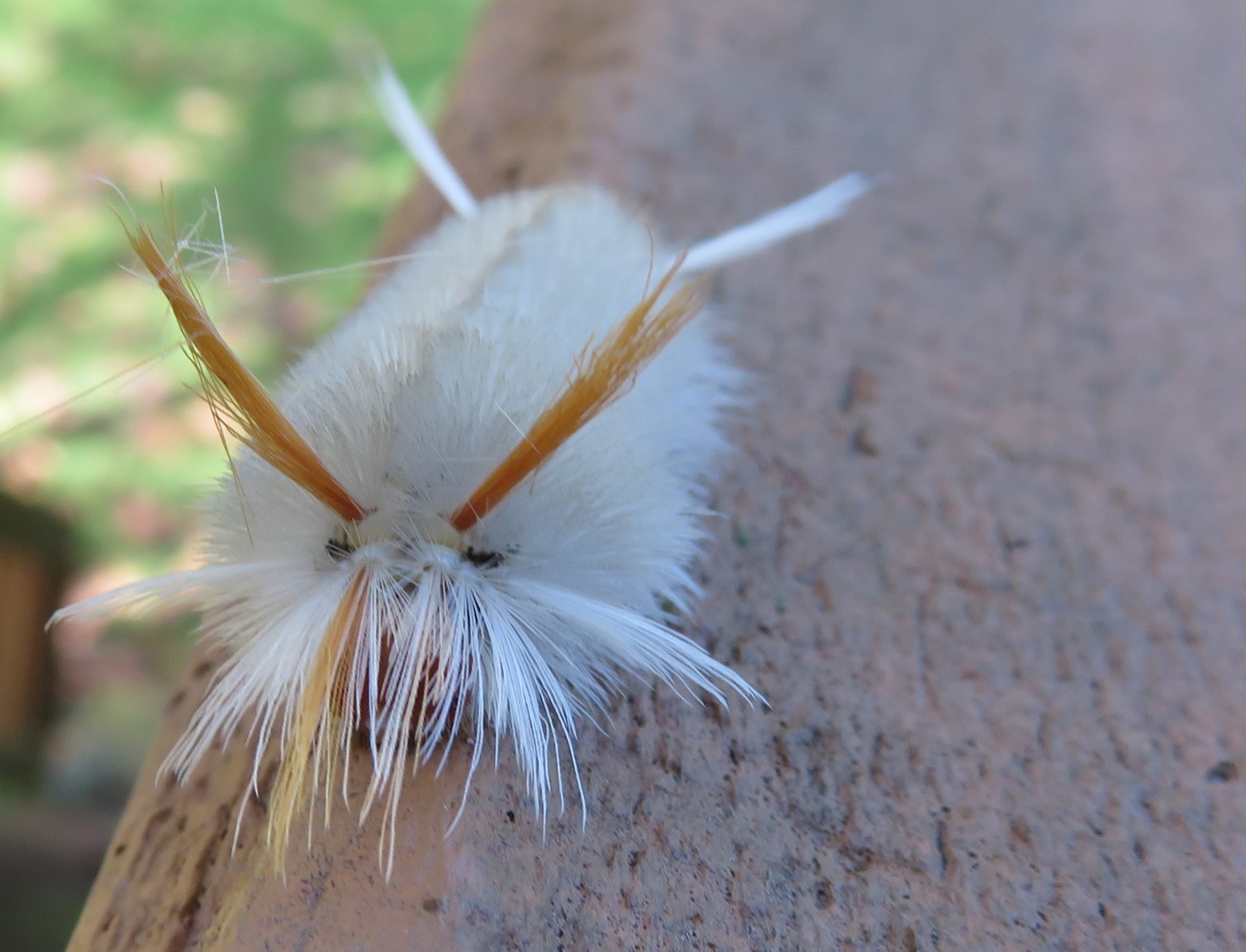
Finding a caterpillar new-to-me – a sycamore tussock moth caterpillar – was something to celebrate on another day.

Visiting Soldier’s Delight was a celebration of being outdoors on a sunny fall day.

Zooming – October 2017

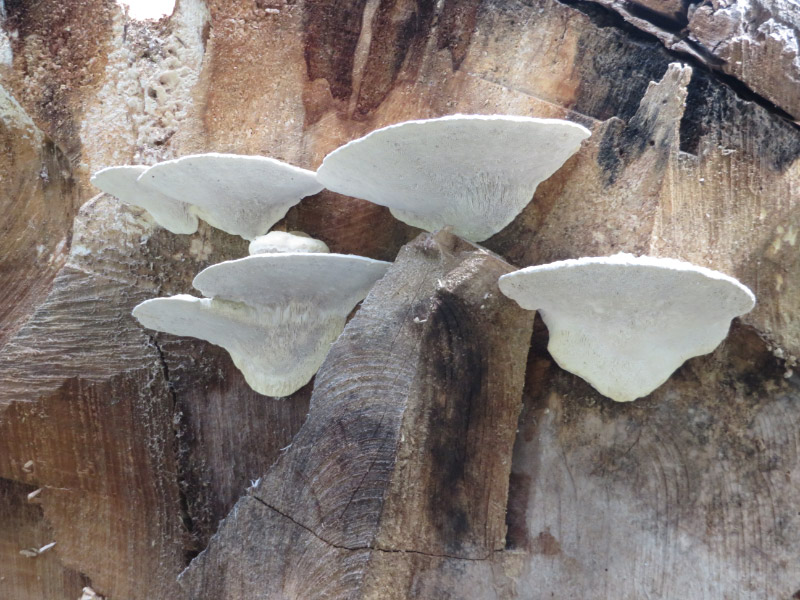
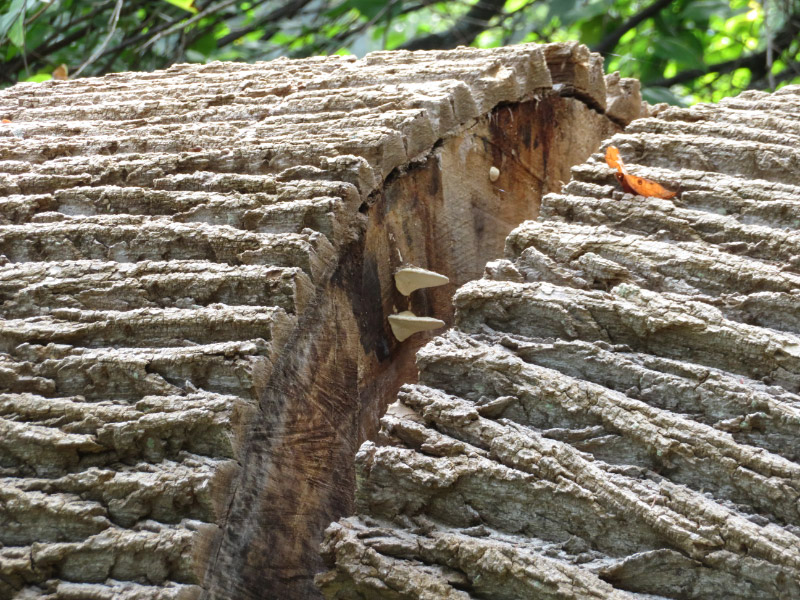
Using the zoom on my camera keeps be out of the tall grass (and away from the ticks and other biting insects). I spotted shelf fungus growing on stumps and trunks of trees cut down along the road to Belmont Manor and Historic Park on my way to an event…and stopped on my way out in one of the nearby pull off areas. The largest ones were growing on a large trunk facing the road but there were more in the space where a log was cut. Some of the pieces were removed but others were left to rot in place.

Another example of staying out of the tall grass, but getting the picture I wanted – milkweed seeds bursting from their pods at the Middle Patuxent Environmental Area

2017 10 IMG_4371.jpg

And some other fluffy seeds on a plant growing on the slope of our neighborhood’s storm water retention pond.

2017 10 IMG_4495.jpg

The zoom is almost always used for bird photography….but even with the zoom they still sometimes notice me and fly away. This house finch was busy getting breakfast from the feeder.

2017 10 IMG_4377.jpg
20171005_1056002041858987.jpg

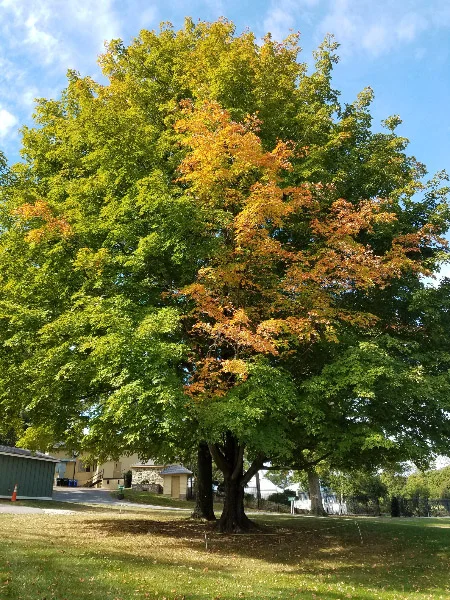
Sometimes zooming enables a better composition. The tree was mostly green but zooming – just a little – made the oranges and reds a more pronounced part of the picture.

20171013_091143.jpg

This is a ‘get close’ picture rather than a zoomed picture…of the edge of a rotting stump. I liked the curves and the colors.

Gleanings of the Week Ending October 28, 2017

The items below were ‘the cream’ of the articles and websites I found this past week. Click on the light green text to look at the article.

Get Stuck on Band-Aid History | Smart News | Smithsonian – Patented in 1926….and still basically the same!

Nikon Small World Photomicrography Competition 2017 Winners – The amazing natural world too small for us to see without technology…captured in photographs.

Beyond Biodiversity: A New Way of Looking at How Species Interconnect - Yale E360 – Going beyond simply counting species…understanding their role and importance to the ecosystem.

Pompeii vs. Herculaneum - Mountain Beltway - AGU Blogosphere – Both destroyed in AD 79 by an eruption of Vesuvius but excavated differently...body casts in Pompeii, skeletons in Herculaneum. Lots of pictures of both places.

Derinkuyu Underground City, the World’s Deepest Subterranean Metropolis – Discovered in 1963…an 18 story underground city that once houses up to 20,000 people in Turkey’s Cappadocia region. Started in the 8th to 7th centuries BCE….flourished in the Byzantine period from 780 to 1180….but there are alternative theories. There are over 200 other subterranean cities in the area!

BBC - Future - The great thaw of America’s north is coming – What happens when permafrost thaws? Infrastructure (houses, roads, airports, etc.) can crack or collapse. Whole villages will need to move…an expensive undertaking and it’s not clear that they would not have to move again when the new area became unstable.

Tower of human skulls found by archaeologists in Mexico, throwing Aztec history into doubt | The Independent – A tower of skulls was mentions in writings of the Spanish conquistadores. It was believed that the skulls belonged to male warriors killed in inter-tribal combat. Now that the structure is found and being examined with modern techniques – it is revealed that the skulls of women and children are included in the tower.

Do You Live in One of the Happiest American States? – I always enjoy looking at the graphics and trying to understand how the data was rolled up. However - I am always suspicious: summing up data about ‘well-being’ is not all that important because it is not something I would use to decide something for myself or my family.

Kitchen of the Future: Smart and Fast but Not Much Fun - The New York Times – I enjoy cooking….not sure I want or need something that prompts me for every step. Most of what I cook does not take very much time as long as the ingredients are in the house. I wonder how much of the technology mentioned in this article will become reality.

Guide to Greener Electronics 2017 - Greenpeace USA -My laptop manufacturer is a C+; smartphone manufacturer is a D-; and Amazon is an F. I have started keeping my laptops for a longer time but they are not built to last. My oldest laptop has a somewhat broken case so it no longer is no long moved from its place in my office.

Gleanings of the Week Ending October 21, 2017

The items below were ‘the cream’ of the articles and websites I found this past week. Click on the light green text to look at the article.

What’s With That Dam? : The National Wildlife Federation – We got to Conowingo to see bald eagles….so I was interested in learning more about it. Evidently - the dam’s current impact on the Chesapeake Bay is not a positive one.

On Bee-ing – Cool Green Science – About the Minnesota Bee Atlas.

Stunning Video Captures Humpback Whales Catching Fish with Nets of Bubbles | Smart News | Smithsonian – I’d heard of this phenomenon but the video is still thrilling! Well work the 40 seconds!

How honeybees read the waggle dance -- ScienceDaily – The field trip the Howard County Conservancy does for 3rd graders includes a segment on the waggle dance….so I read this article to find out more about it….both the history of its discovery and the current research on the neurons responding to the dance.

Bathtub Bloodbath, 1793 | The Scientist Magazine® - A famous painting of Jean-Paul Marat murdered in his bath…what he was before his revolutionary activities.

Adaptation as Acceptance: Toward a New Normal in the Northwoods – Cool Green Science – Forests are changing – with climate change and invasive insects like emerald ash borer and woolly adelgid culling some trees that were, until recently, common in our forests. There is a grief for those lost trees that will not make a comeback. This article is about finding hope via adaptation. The forest will be different…but still forest.

Meet the Transgenic Silkworms That Are Spinning out Spider Silk | The Scientist Magazine® - Spider silk combines elasticity and strength but has been difficult to produce. Now the fiber is produced by silkworms and the increased availability makes it viable for a host of applications. It will be interesting to observe how the market develops.

Treetop Walkway Provides an Elevated Path Through Danish Forest – What an awesome way to observe a forest!

National Mall and Memorial Parks – Hope the laser ablation of the biofilm on the Jefferson Memorial works as well as the test spot. The dome has gotten a lot grayer over the years from ‘biofilm.’

Seeing Big Changes in Baltimore: The National Wildlife Federation Blog – Hurray for the schools and students in Baltimore provided wildlife habitat!

3 Free eBooks – October 2017

I am always thrilled to find a new source of eBooks. This month it was the Smithsonian making 1,000 illustrated Japanese Texts available online. I’ve just started making my way through. Here are three eBooks I’ve enjoyed so far.
Kono, Bairei. Bairei gafu. Yamada Unsodo, Kyoto, Meiji 38 [1905]. Three volumes available from Smithsonian Libraries here. Birds!

2017 10 ebook1.jpg

Utagawa, Sadahide. Bansho shashin zafu. Sonoharaya Shosuke, Toto, Bunkyu 4 [1864]. Available from Smithsonian Libraries here. Nature and art…a great combo.

2017 10 ebook2.jpg
2017 10 ebook3.jpg

Kobayashi, Bunshici. Bansho zukan. Kobayashi Bunshici, Tokyo, Meiji 34 [1901]. Two volumes available from Smithsonian Libraries here. More plants and animals...the bamboo images would make an elegant wallpaper.

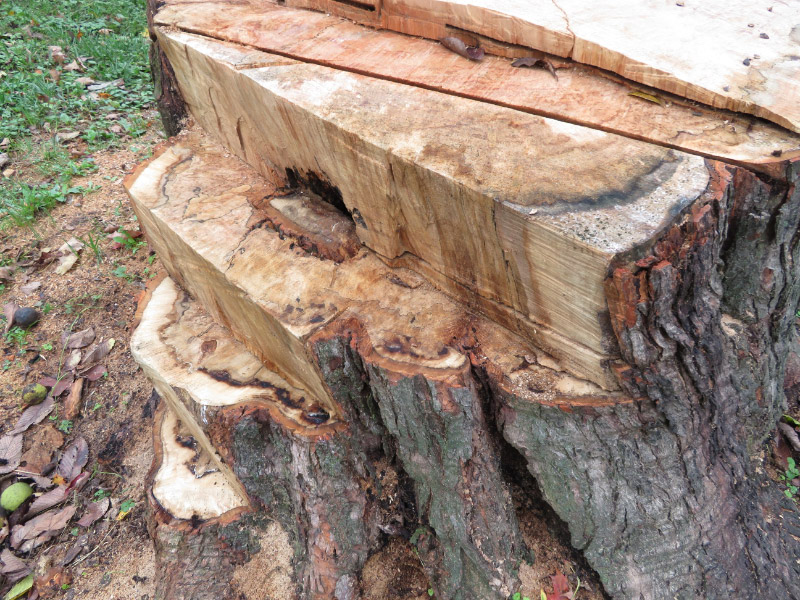
Steps in the Silver Maple Stump

The Silver Maple Stump that I wrote about a few days ago has been made accessible for shorter visitors! There are steps cut into the side that was not sanded to reveal the tree rings!

2017 10 IMG_4500.jpg

We looked at dogwood and Paulownia tree cookies to learn how to count tree rings and notice how the rings look different – the spacing, the shape, etc. The kindergarteners were thrilled to climb up onto the stump – three at a time – to gather around the center and count 5 rings from the center. The tree was not very big when it was 5 years old!

They were also surprised that the water on top of the stump was coming up from the roots…and that the stump was not perfectly round. They also noticed some ants that made their home near the outer edge of one of the steps…and a daddy longlegs spider climbing the steps too.

2017 10 IMG_4502.jpg

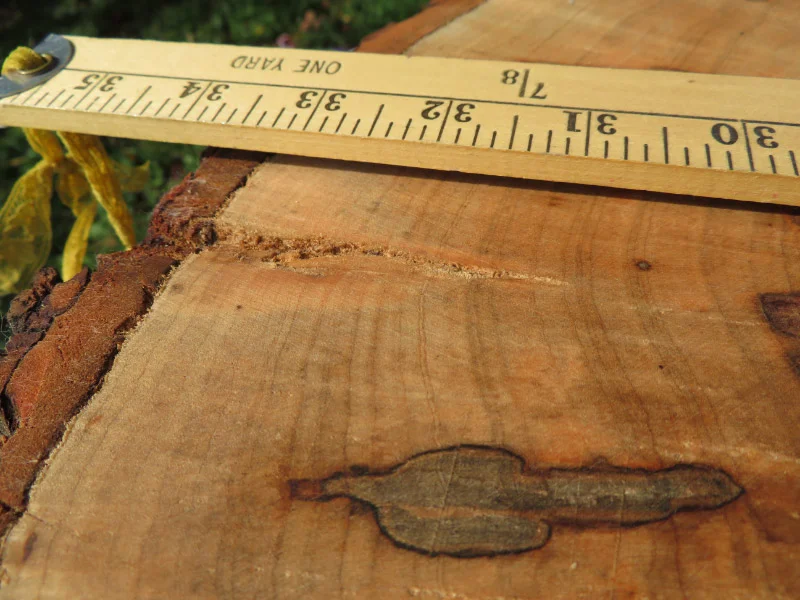
On the down side, when the steps were cut, additional rot was found so the stump may not last very long…I’ll just enjoy it as a field trip stop while it lasts.

Silver Maple Stump

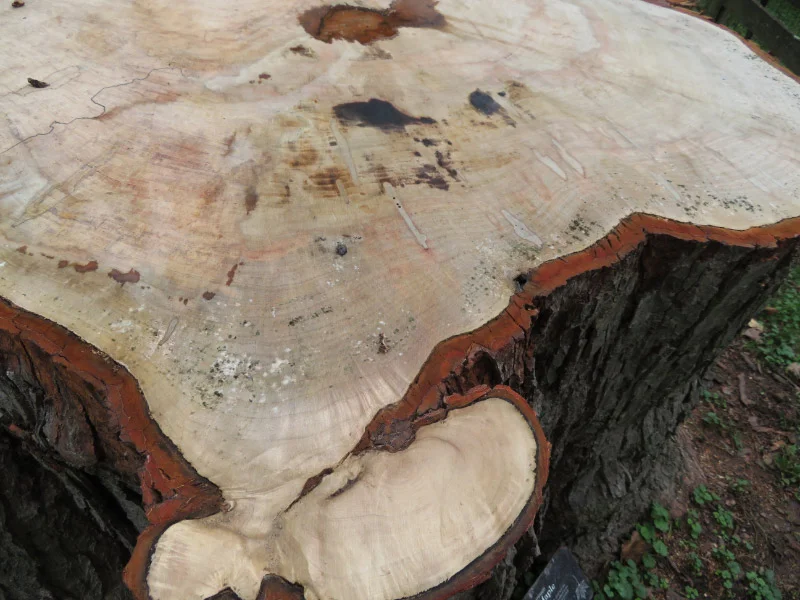
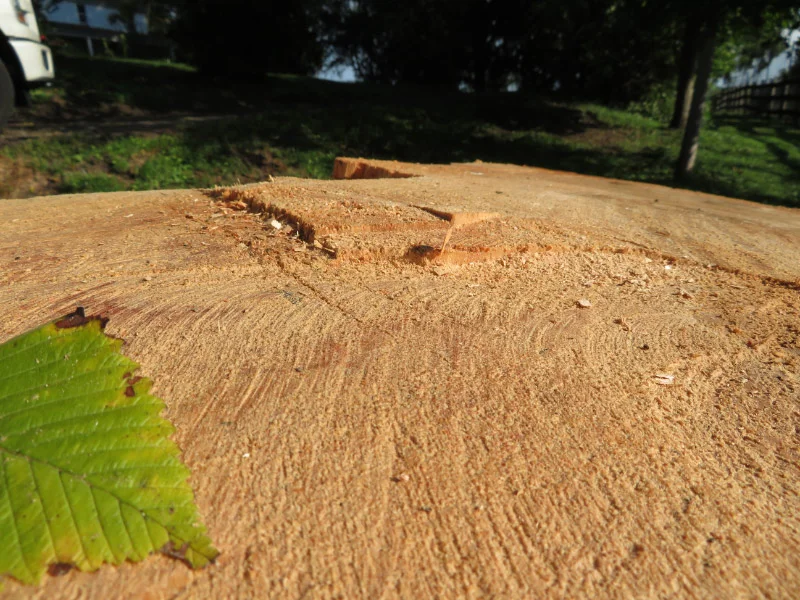
Last month, two silver maples were cut down near the farmhouse at Howard County Conservancy’s Mt. Pleasant Farm because they were dropping large limbs and endangering nearby structures. One of them is conveniently located between the drive that loops around the farm house and the Honors Garden. When I first looked at it, I was thrilled that the stump could be used to talk about tree rings generally…and the history of Mt. Pleasant specifically. The first challenge was that the saw marks were so deep that it was difficult to see the tree rings.

2017 09 IMG_4064.jpg

Fortunately, several volunteers stepped forward to sand the smoothest part of the stump so that the rings would be easier to see. It was still a little challenging. The stump includes rotting areas and splits near the center. The stump is still very much alive as well – with sap coming to the surface as the roots continue to collect water and nutrients from the soil. The first time I attempted to count the rings it was a cloudy day and the size of the stump was a bit daunting. I realized I needed a step stool to see the rings toward the center. I came back on a sunny day and climbed up to sit on the stump when I realized that the slope was not going to work with my step stool. I managed to count 124 rings!

20171009_151450.jpg

I made a strip of lightweight cardboard with years on it (counting from the outermost ring) and a page that talked about tree cookie parts. For kindergarten and 1st grade students that hike by the stump – we’ll talk about counting rings and then either count 5-6 rings from the outer edge (how much did the tree grow since you were born) or from the center (how big was the tree when it was as old as you). For adults, I have a time line for what was happening at the farmhouse and Mt. Pleasant over the past 124 years and plan to develop some discussion about the weather over the life of the tree. The 1940s and 1950s were the best years for the silver maple!

Stream Assessment – October 2017

20171002_085510.jpg

I had planned to volunteer at two stream assessments by 9th graders in October.  Both assessments were scheduled to be at the Middle Patuxent Environmental Area but one was cancelled after a heavy rain caused a dangerous situation at the stream – so I only have pictures from one stream assessment. The stream was smaller than the two other locations along the Middle Patuxent that were assessed in September. We crossed it on some rocks (the path came to the river  near where the big log is lying on top of the rocks).

20171002_085522.jpg

All the gear for the abiotic and biotic assessments was set up on the side of the stream across from the path. It was very calm and shady as we set up.

20171002_112434.jpg

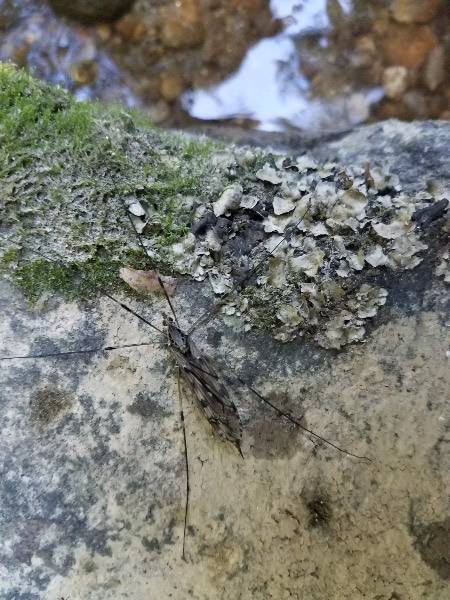
Then the students arrived…60 in the first group…a little break…and then another 60. I took a few pictures of critters during the break.

One last picture before the second group…what a great place to escape into nature. I’m not sure that the students experience the psychological rejuvenation I often feel in places like this when they come with the larger group (and they are teenagers) - although it was obvious that most of them enjoyed being outdoors and in the stream. When we finished the assessment, the students helped carry all the gear – including the boots – on the 15 minute hike back to the road where they got on their buses and we packed up everything into cars….another stream assessment day complete.

20171002_113225.jpg

Gleanings of the Week Ending October 14, 2017

The items below were ‘the cream’ of the articles and websites I found this past week. Click on the light green text to look at the article.

Top 25 Wild Bird Photographs of the Week #107 – National Geographic Society (blogs) and #108 – kestrels and hummingbirds and kingfishers…oh my!

What Skills Will You Need to Be Employable in 2030? – It’s hard to predict the direction of technology…but we know that some types of jobs are easier for machines to do than others. What is left that humans will need to do?

13 Ways to Cut Cancer Risk | Berkeley Wellness – Hopefully none of these are new…they have all be publicized before but maybe not in a consolidated list.

Century-old cactus used for target practice in Saguaro National Park – Very sad. I hope the culprit is cost. It seems like penalties should be higher for this kind of vandalism in a national park.

National Audubon Society Offers Great Educational Resources -  I find myself checking in on the puffins and hummingbirds!

Rome's Colosseum Is Reopening Its Upper Tiers to Visitors | Smart News | Smithsonian – The upper levels have been closed for 40 years due to structural concerns. Now restoration efforts have allowed then to be re-opened.

A Little Calm in a Noisy World | The Prairie Ecologist – The restorative power of spending a little time out in the natural world.

Incredible Macro Photography of Peacock Feathers by Can Tunçer – I am a fan of peacock feathers; one of my grandmothers raised peacocks and I have some feathers she sent to me from the 1980s.

"Living" Chandelier is a Green Lighting Piece Filled with Algae – I like items that are beautiful and serve another function at the same time. I hope eventually that light fixtures are available…and affordable.

BBC - Future - Anti-ageing: Is it possible, and would we want it? – An update on science…and prompting for thoughts of the domino changes that would occur if anti-ageing was reality.

Walking in the Neighborhood

Our neighborhood is not great for a long distance walk…still – there are photographic opportunities at every turn. Before I even left my house, I saw a sycamore tussock moth caterpillar (dense white hairs with butterscotch tuffs at the head end).

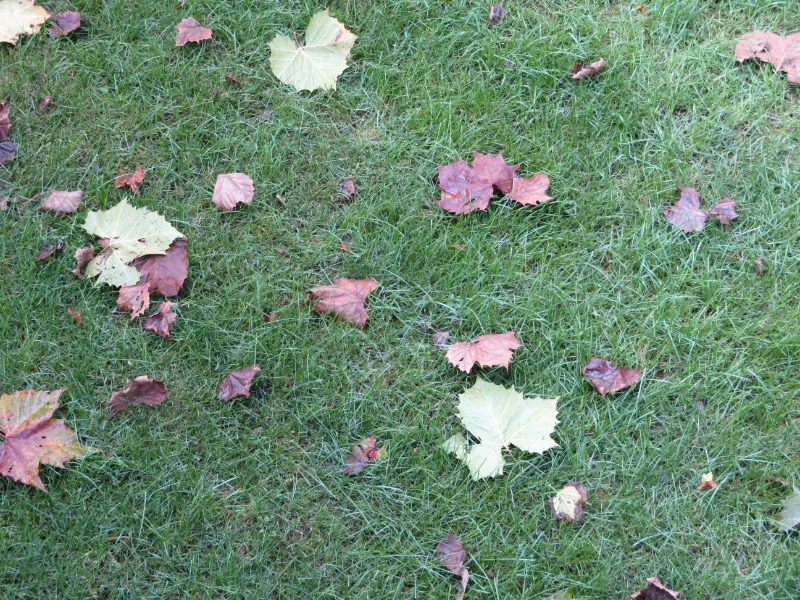
I also realized I needed to do another round of raking; the sycamore is beginning to shed is very large leaves – some more than a foot across.

2017 10 IMG_4483.jpg

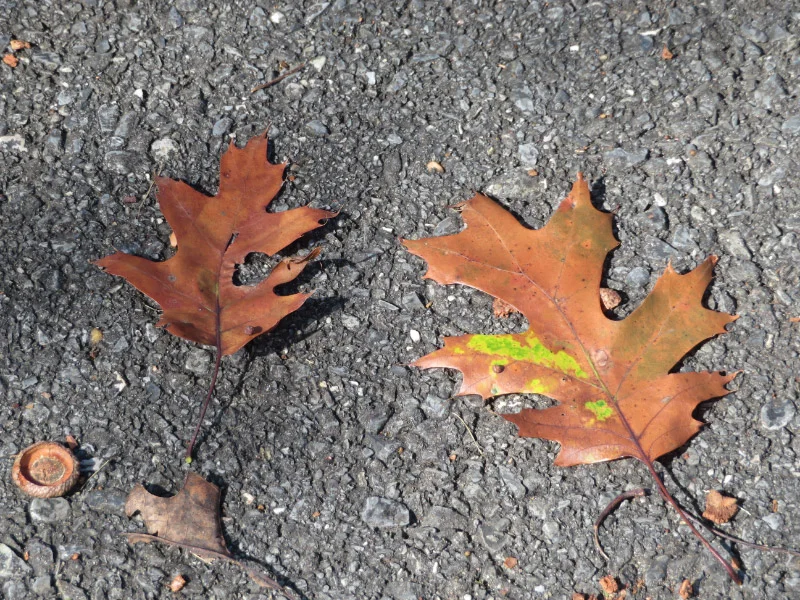
Along the walk I saw a few other leaves on the ground and photographed ones caught my attention. The oaks (not that there are two different kinds of oak leaves in our neighborhood) are shedding their leaves more than the other trees. Most of the maples – which provide the most colorful or our fall leaves – are still green.

The storm water retention pond is not appealing – still full of scum that is very visible without the vegetation that used to grow around the pond. On the plus side, the slopes have not been mowed so the erosion that happened right after the pond was cleaned out last spring has been stabilized.

2017 10 IMG_4489.jpg

I sat on the bench and took some zoomed pictures of some of the plants in the unmowed area.

I walked up to the entry of the neighborhood and took a picture of the cornfield across the street. It will be harvested soon. The only green left in the field itself area the weedy vines using the corn for support. There is some chicory growing in the area between the road and the field. Chicory seems to be resilient to just about everything – unlike milkweed which no longer grows in the margins around cornfield.

2017 10 IMG_4498.jpg

Belmont BioBlitz – Fall 2017 (Part II)

The second day of BioBlitz, the area my group was assigned had some native trees planted as landscaping (one was just beginning to display it fall colors) and long row of white pines. We found mushrooms under the pines; one of the chaperones used the clip on macro lens to photograph underneath the bright yellow mushroom (with the phone in selfie mode).

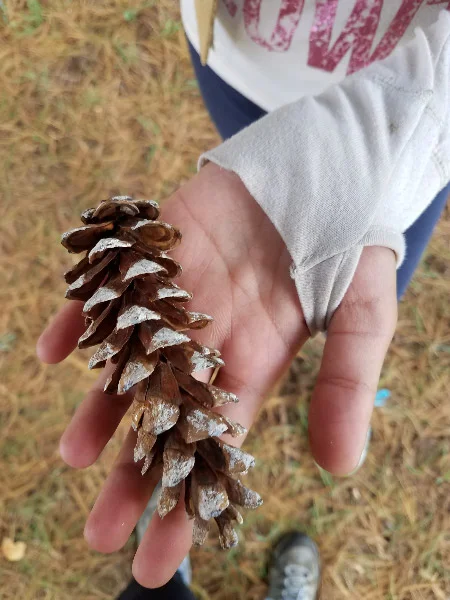
Of course there were insects and small flowers too….with pinecones to examine while we were enjoying the shade under the pines before heading to the front of the manor house for their picnic lunch.

20171006 bioblitz1.jpg

The third day of BioBlitz, my group was in the woods. We found several types of fungi growing on rotting wood.

20171006_1145171664075662.jpg

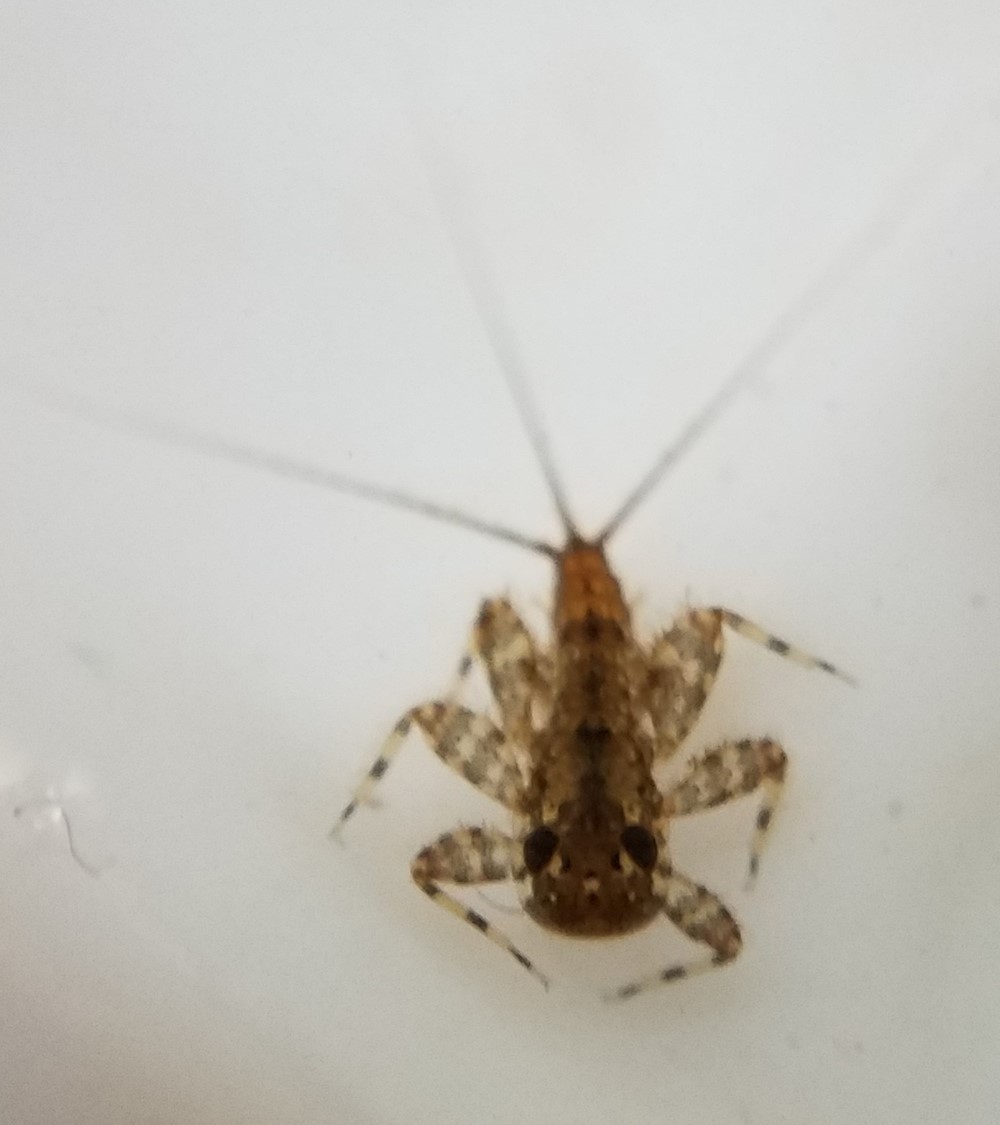
Millipedes seemed to be everywhere. We talked about taking a video as we watched how their legs moved in ‘waves’ to push them forward.

And then there were lots of small insects we tried to capture in the magnifiers so we could get good pictures!

This was probably the best Belmont Bioblitz I’ve participated in: the weather cooperated (dry and not too hot) and the 5th graders were enthusiastic observers!

Belmont BioBlitz – Fall 2017 (Part I)

Last week, 5th graders from 3 Howard County elementary schools participated in a BioBlitz organized by the Howard County Conservancy at Belmont Manor and Historic Park. The three mornings were quite busy. I enjoyed the calm before the buses arrived – watching the birds at the feeder and photographing the generally calm early morning scene. Then someone would spot a bus starting up the tree lined drive to the manor house – and all the volunteers would spread out and wait for their group of about 10 students and at least one chaperone to be assigned. Then we headed out into the field.

2017 10 IMG_4391.jpg

The area my group was assigned on the first day was meadow rimmed with trees. We used iNaturalist to record observations of what we found: horse nettle, pokeweed, worms, spiders, wooly bear caterpillars, and black walnuts. iNatualist helped us identify things better – particularly if the pictures were good. One of exciting things we found but couldn’t photograph well was tiny worms feeding on the black walnut! We also found a birds nest in the tall grasses of the meadow…and lots of multi-flora rose bushes with thorns that seemed to grab pant legs. In two hours…the students were ready for their picnic lunch in front of the manor house and the return to school – tired from a great BioBlitz day.

More on the other two BioBlitz days in tomorrow’s post….

Soldiers Delight Natural Environment Area

2017 10 IMG_4407.jpg

My husband and I visited Soldiers Delight Natural Environment Area yesterday – taking advantage of the dry fall day before a few days of forecasted rain. It’s located less than 45 minutes from our house and I’ve had it on my list of places to visit since I was in Master Naturalist training a few years ago; I’m a little surprised that we haven’t found the time before now.

2017 10 IMG_4406.jpg

The visitor center is open on Saturdays and sporadically on other days. We got there shortly after 11 and there was already quite a lot of activity. We got a map and headed out to hike. Rather than hiking from the visitor center, we drove a short distance to an overlook that doubles as parking from some of the trails. The overlook shows the area back toward the visitor center.

2017 10 IMG_4410.jpg

The loop trail we took started across the road – following red blazes then orange and rejoining the red to get back to the overlook. It past some remains of one of the mines – fenced off to prevent accidents.

2017 10 IMG_4409.jpg

There were leaves beginning to fall. Some of the oaks had a very large crop of acorns this year judging by the piles on the path. My favorite leaf was a red sassafras. There were some areas of invasive plants but not as many as places that have richer soils. There were swaths of ferns in a few areas. We walked down to a little stream. The water runs over bedrock in most places.

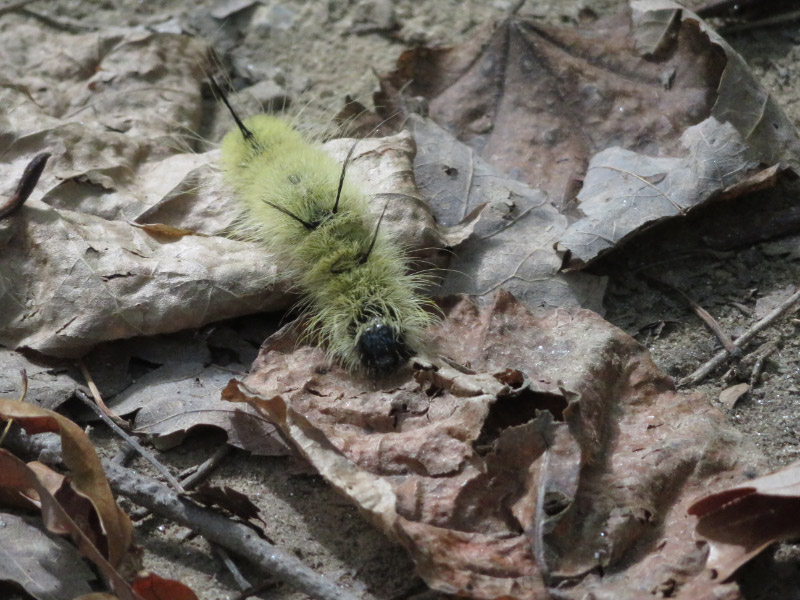
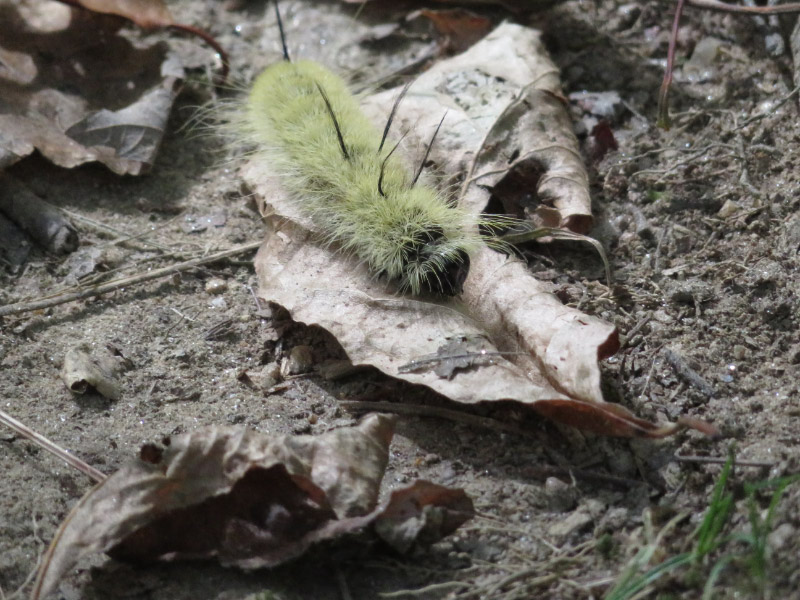
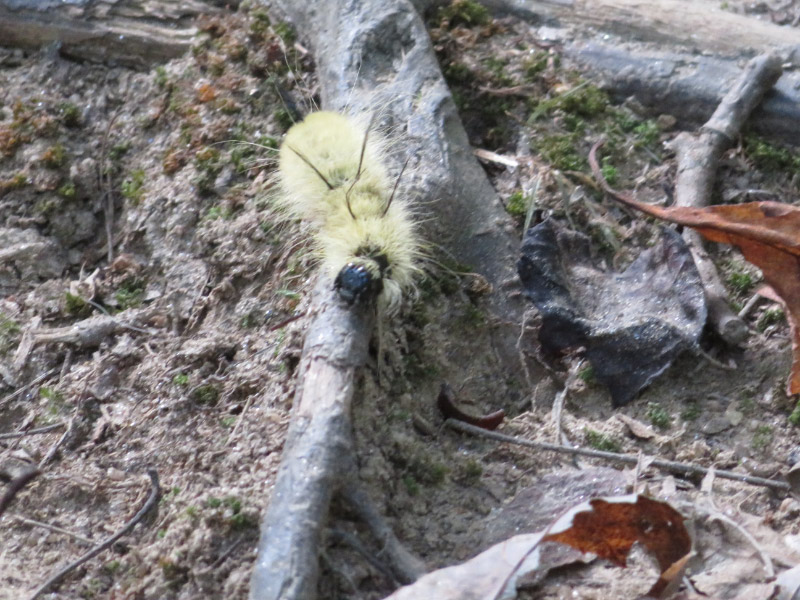
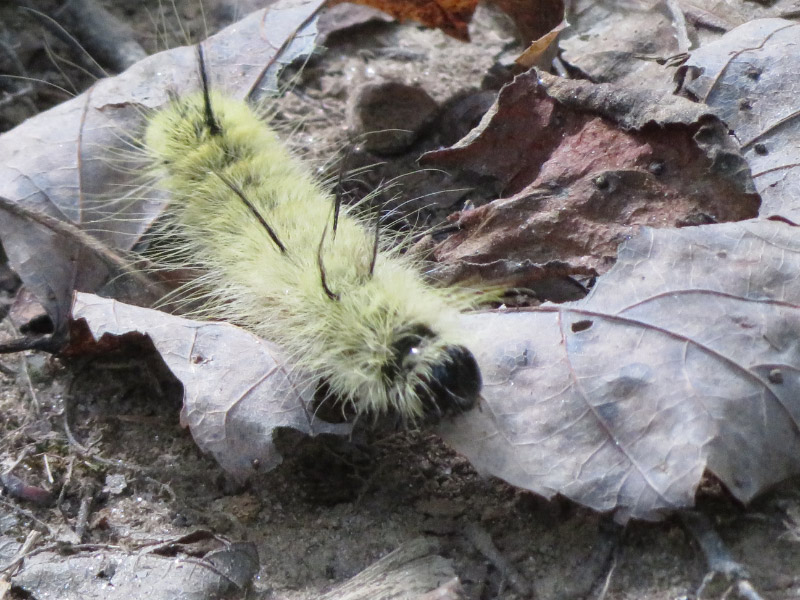
The critter-find for the hike as a fuzzy yellow caterpillar with some black tufts. I looked it up after I got home – an American Dagger Moth Caterpillar. It eats oak leaves – among other things.

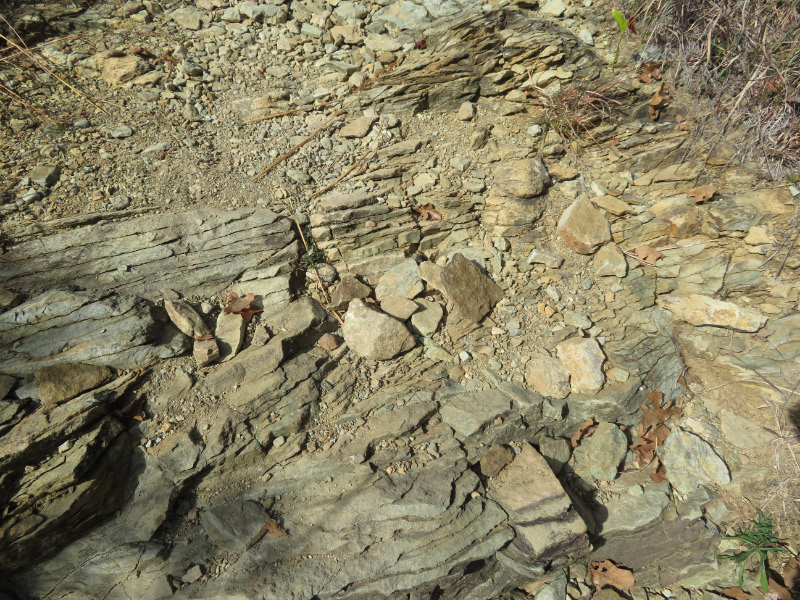
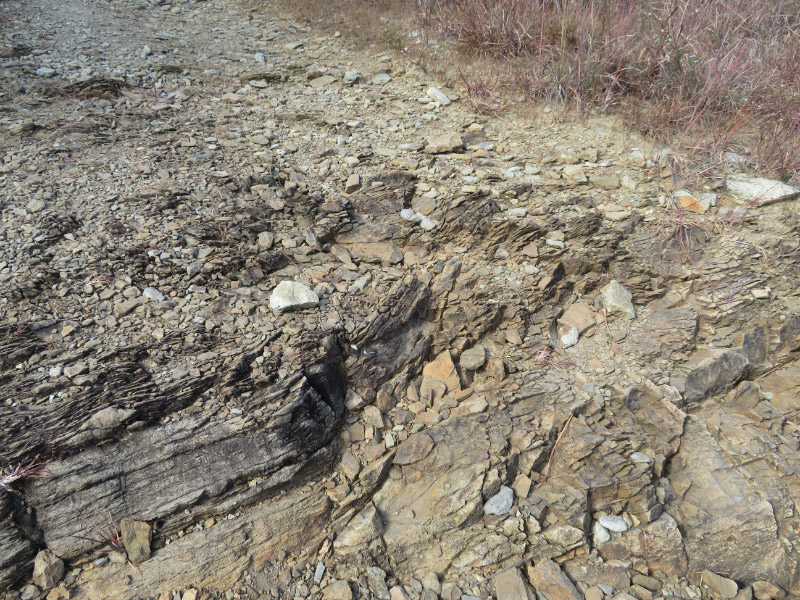
More than half the path was over rocky areas; Soldiers Delight is – after all – a serpentine barren.

Gleanings of the Week Ending October 7, 2017

The items below were ‘the cream’ of the articles and websites I found this past week. Click on the light green text to look at the article.

Ancient Roman Mosaic in England Discovered by Amateur Archaeologists – A 4th CE Roman mosaic near the village of Boxford in Berkshire….discovered and then covered up to protect the mosaic until decisions are made about what to do next.

Fall Color In-Depth: Maple Trees Offer New Answers to Diabetes, Alzheimer’s – National Geographic Society  - I like maple syrup and often us it in cooking….it adds more than sweetness and – evidently – is better for you because of those other elements!

Electric Car S-Curve Adoption by Country (Fun Chart!) | CleanTechnica – Norway followed by Iceland and Sweden lead…The US is behind China.

Question: Can People Use Rooftop Solar Power During an Emergency? Answer: It Depends | CleanTechnica – As more battery storage becomes available…the problem of having solar panels but not being able to utilize them if the power grid is down may go away.

Spectacular Shots of Summer Fireworks Festivals in Japan - Hanabi Taikai – Wow! What a huge display.

Infographic: Brain Infection and Alzheimer’s Disease Pathology | The Scientist Magazine® - Evidence of infection (biofilms) in the hippocampus and temporal lobe in brains from people that have died with Alzheimer’s neurodegeneration….several theories about their relationship to Alzheimer’s.

These Breathtaking Natural Wonders No Longer Exist – 18 landscapes that no longer exist…including a beach in Hawaii…some sights in US National Parks.

Free Technology for Teachers: Historical Patterns Animated – A site from the University of Oregon…worth browsing even if you aren’t a teacher.

Interactives from NASA…Exoplanet Exploration – Create your own Earth-like planet….or a hostile world.

LED Lights, All-Electric School Buses, Hydroponic Gardens ... (Cleantech in Action Series) | CleanTechnica – A roundup of cleantech press releases that came out in September.

Macro Lens on a Smartphone

2017 09 IMG_4351.jpg

I bought a clip-on macro lens for my smart phone – something to use when I want to photograph macroinvertebrates in the field (or river). The lens (a 15x macro and 0.63 wide angle combo) is attached to a clip that is easy to position on my phone…and then take off again when I don’t want it.

20170930_140149.jpg

I experimented a little this weekend – with an earring and a peacock feather. I discovered that it is easier to get the focus right without the case on the phone.

I am looking forward to trying it during the break between sessions in the river with students…hope they find a lot of macroinvertebrates that I can photograph!

Gleanings of the Week Ending September 30, 2017

The items below were ‘the cream’ of the articles and websites I found this past week. Click on the light green text to look at the article.

What If the Oil Industry Leaves the Gulf Coast? - CityLab – After Hurricane Harvey – there is more recognition of the country’s energy infrastructure.

Clues to Africa’s Mysterious Past Found in Ancient Skeletons - NYTimes.com – 8,100 year old DNA recovered from bones….and other finds that are enlarging our understanding of ancient population movements within Africa via DNA analysis.

Ancient Gem-Studded Teeth Show Skill of Early Dentists – An elaborate example of dental bling from 2,500 years ago from Chiapas, Mexico.

Satellites that Measure Ice Loss to Go Dark - Yale E360 – The two satellites that collect detailed information about earth’s ice sheets will be decommissioned in the next month or so. The replacement satellite is scheduled to be launched in early 2018…but that will still leave a gap in the data.

BBC - Future - The ships that could change the seas forever – Monster ships, remotely piloted, built of futuristic materials and partially powered by renewable energy….so many possibilities.

How a Satellite Just Used Earth Like a Slingshot | Smart News | Smithsonian – OSIRIS-REx in the news. We were in Florida a year ago to see it launched!

Top 25 Wild Bird Photographs of the Week #106 – National Geographic Society -  There is a picture of a Peregrine Falcon at the very end of this set…one bird that has managed to take advantage of urbanized environments.

5 Things We Learned from The Newly Updated “Heat Maps” Developed By Sustainable Energy For All | CleanTechnica – Follow the ‘heat maps’ link to look at them directly or think about the 5 facts highlighted in the article about clean cooking, electrification, rural/urban divide, enabling policies and energy efficiency.

Five Fascinating Facts About the Amazing Cassowary | Smart News | Smithsonian – Big birds…that are fascinating but not very friendly.

This Tiny Country Feeds the World – Food production in The Netherlands. Is this the future of food production to feed the world’s increasing population?