Woodland Management Field Trip
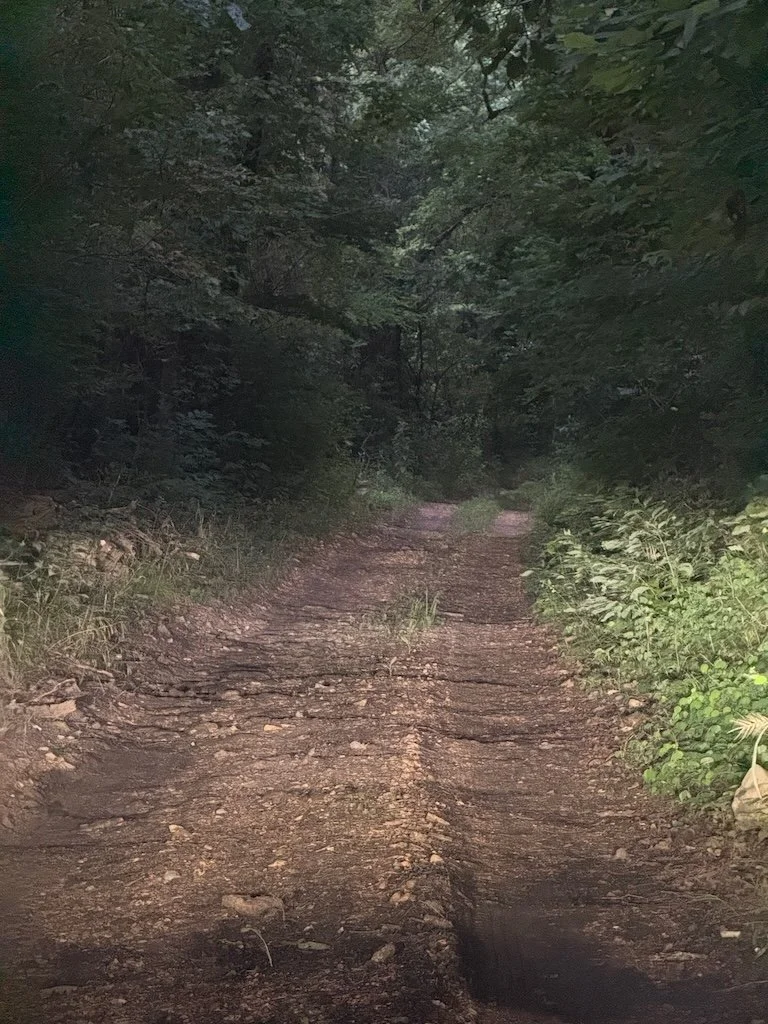
/I signed up for a morning in a managed woodland. It was far enough away and started early enough in the day that my husband and I drove up the day before (more on what we did along the way in tomorrow’s post). The management strategies had been varied across the property were –
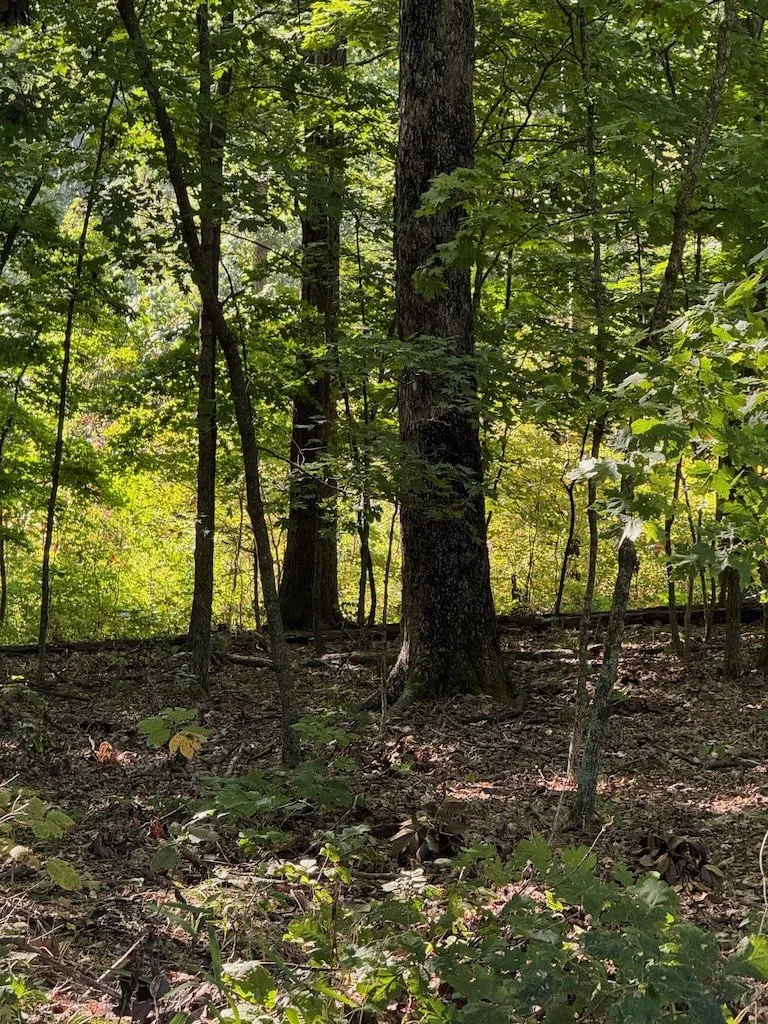
No management – Completely closed canopy (no sunlight hitting the ground), only maple and other shade tolerant fast-growing trees, no regeneration, no browse or food sources, no cover
Shelter wood cut – a clear cut with a few white oaks left for seed trees
Timber stand improvement – cutting all trees except the species that fit your personal goals and thinning the desired species to the best density
Forest opening – an island of fresh growth in an otherwise managed and maturing forest
Burn – plot was burned
There were signs indicating the type of management and when the action was taken. The goal of the landowner was to produce white oak for harvest and habitat for grouse and turkey.
It was interesting to see the impact of the various strategies that I had learned about in the Woodland Mentor zoom course I am taking…and a pleasant day to be out in the woods.
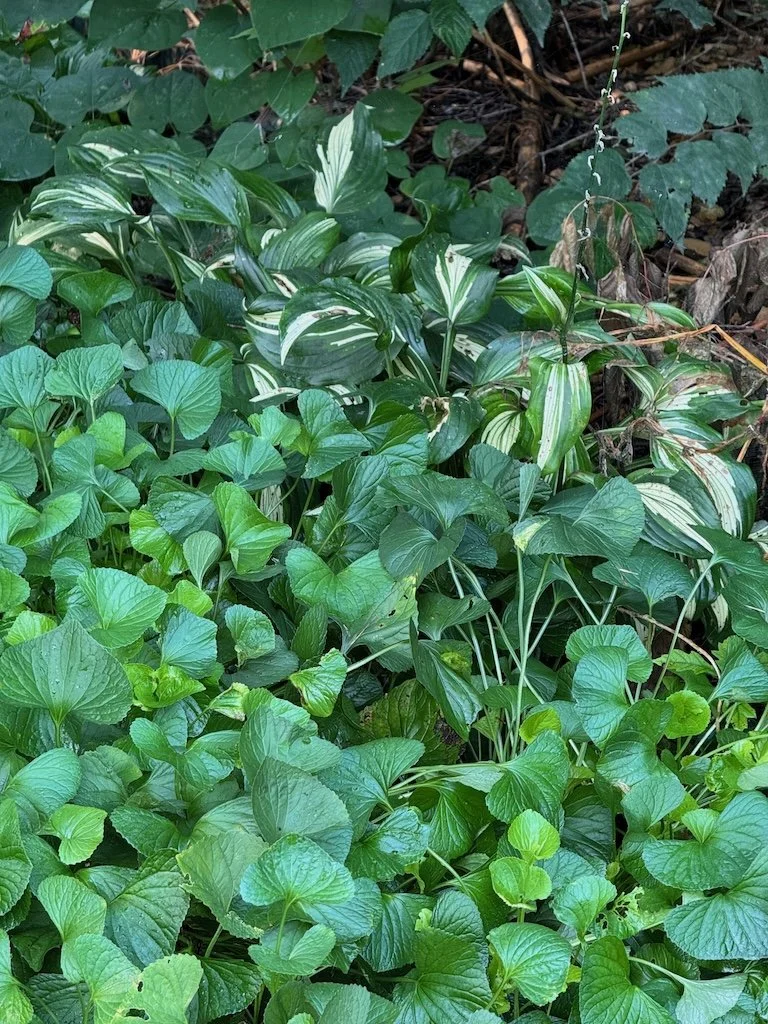
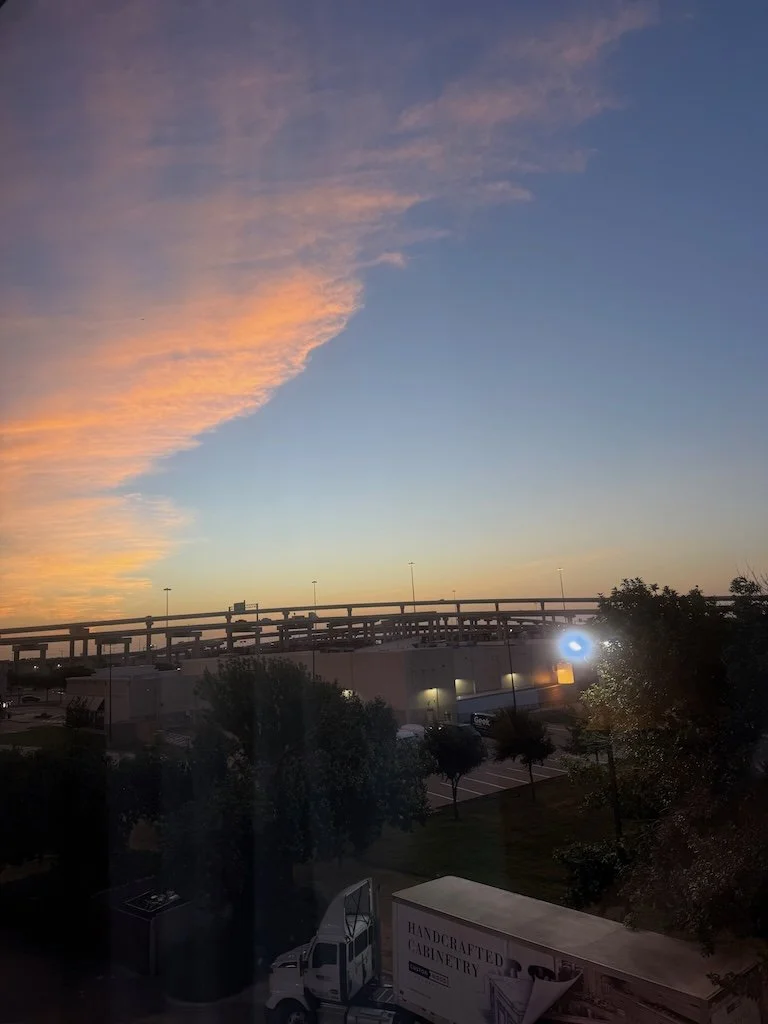
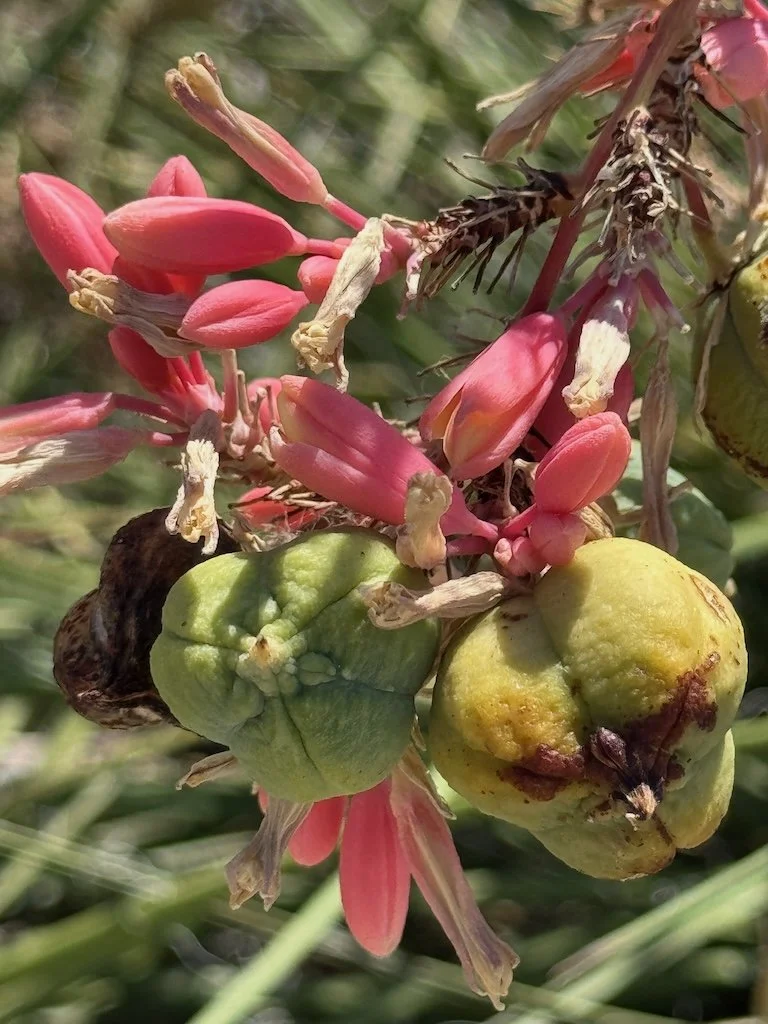
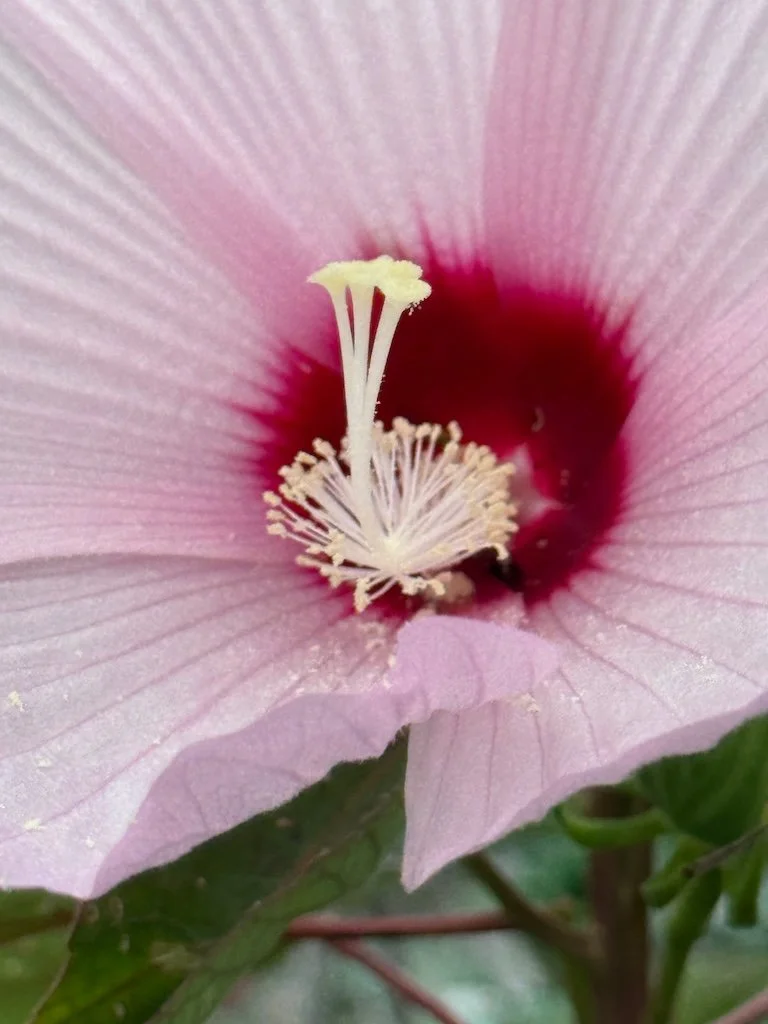
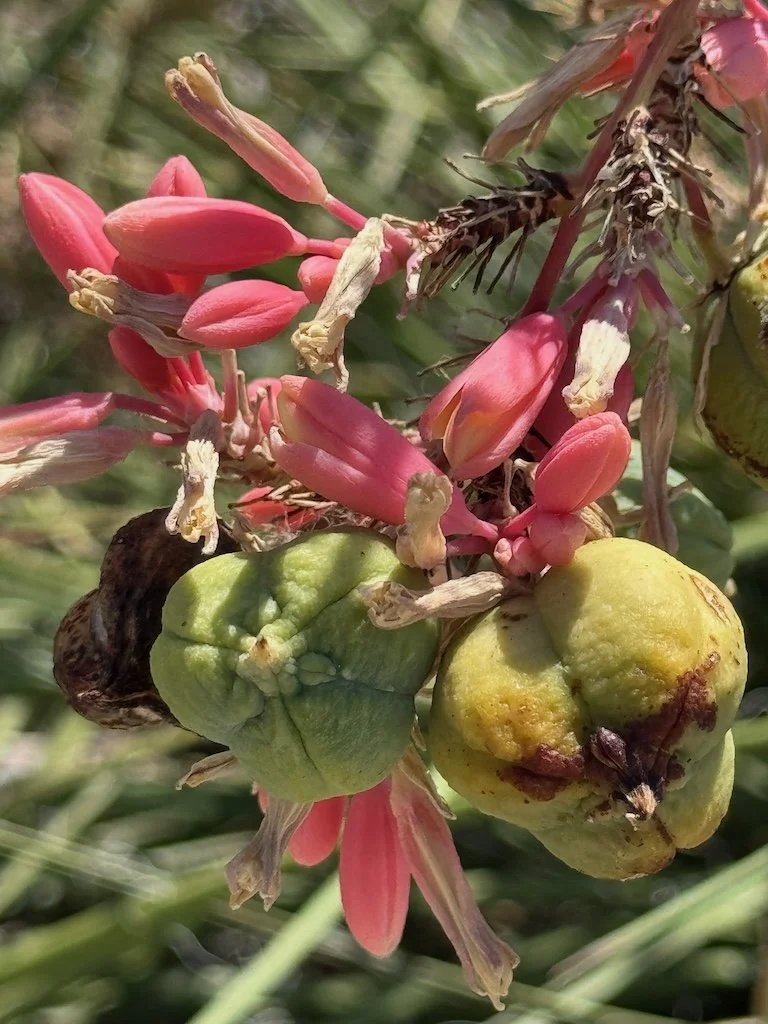
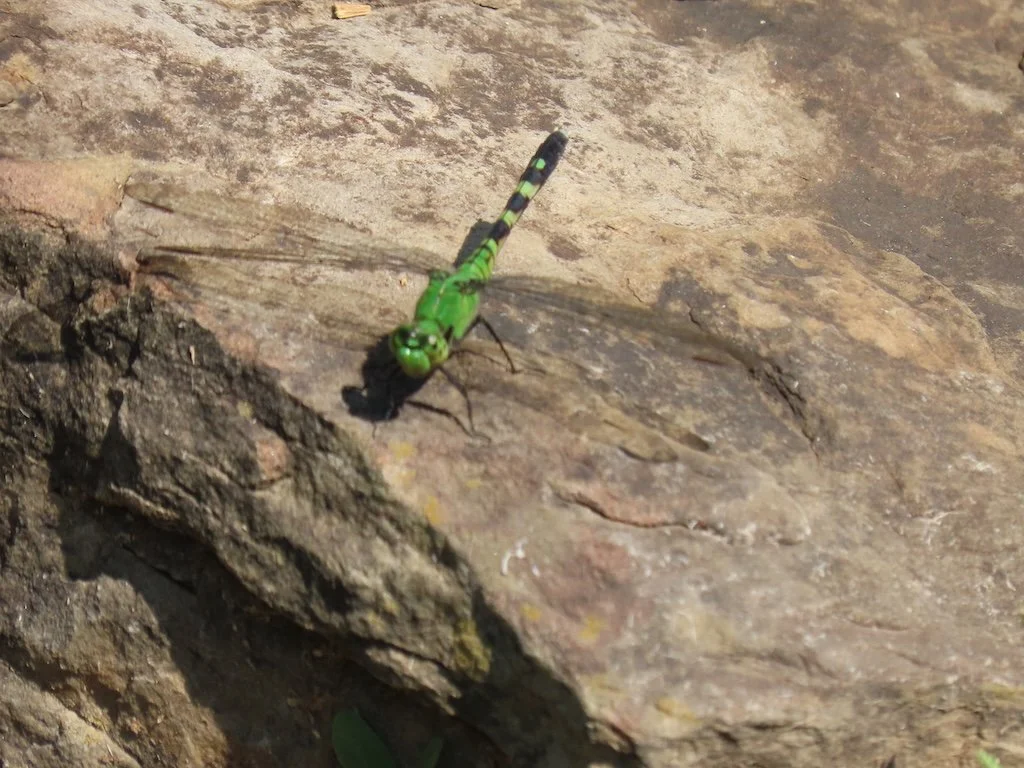
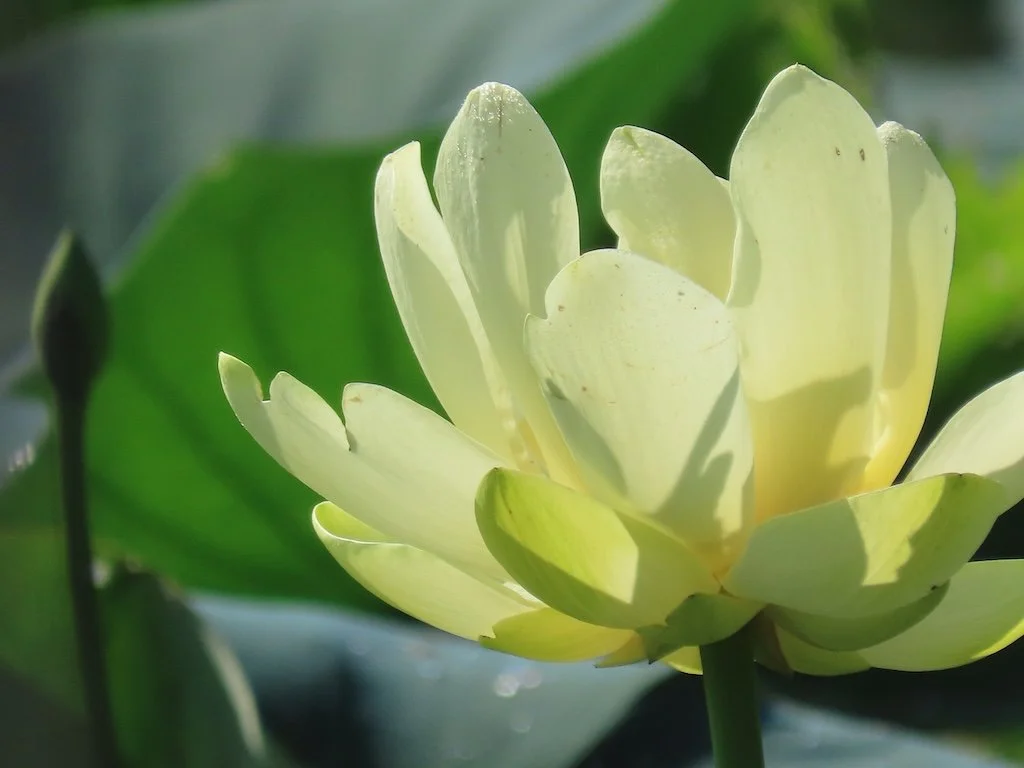
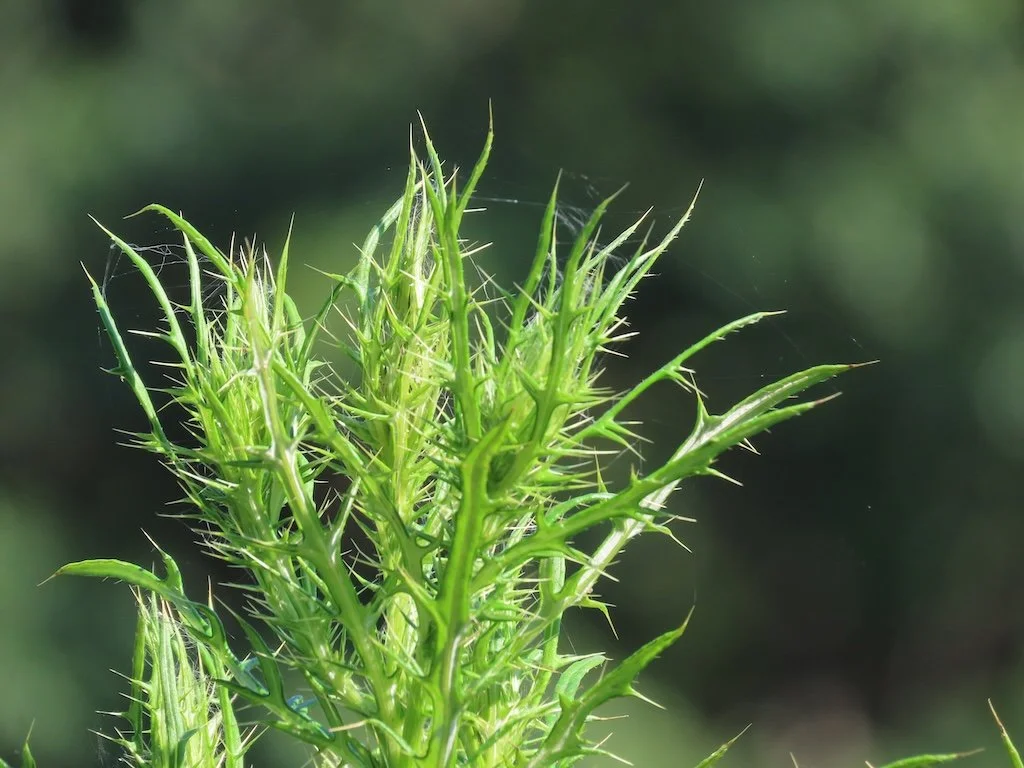
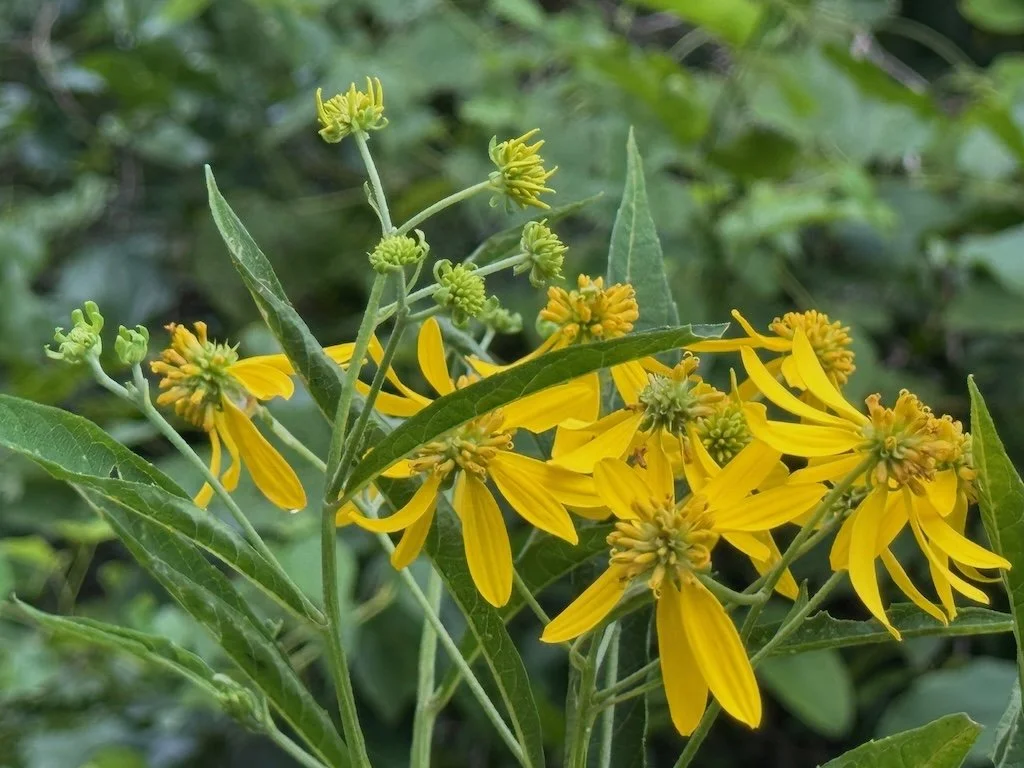
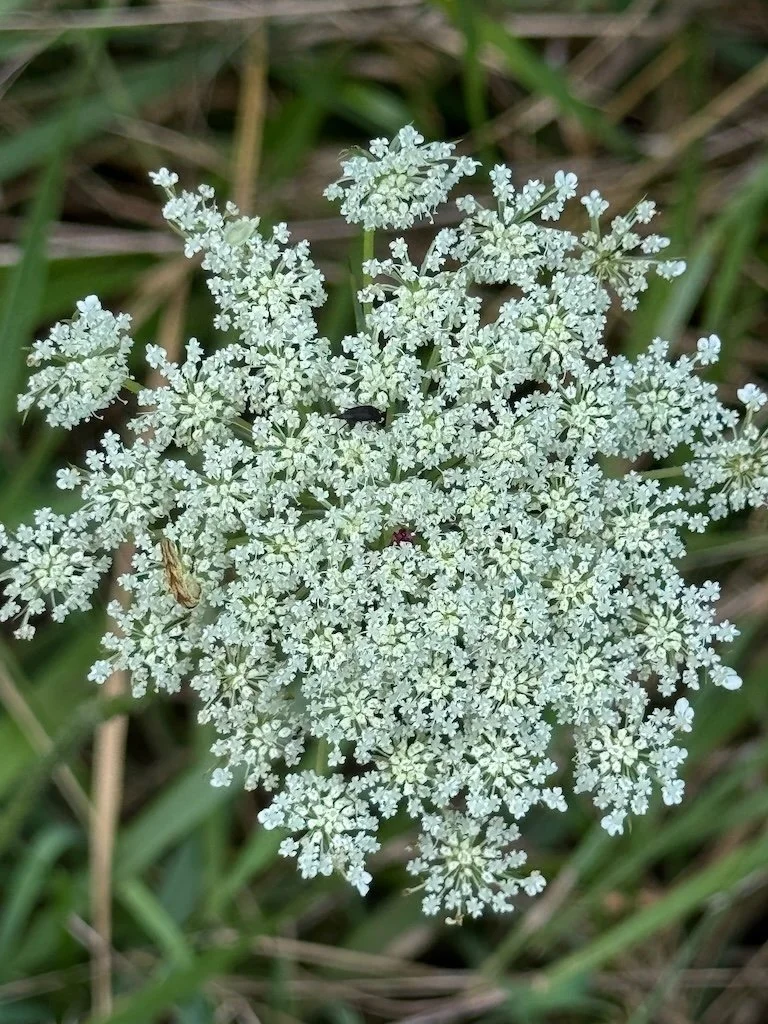
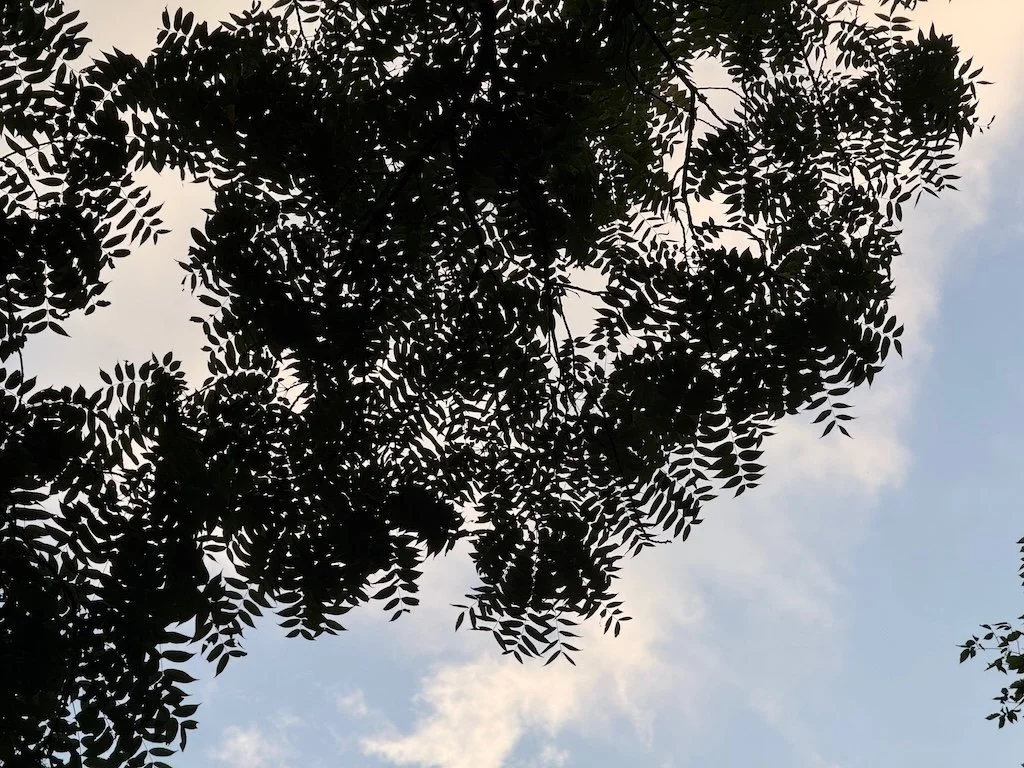
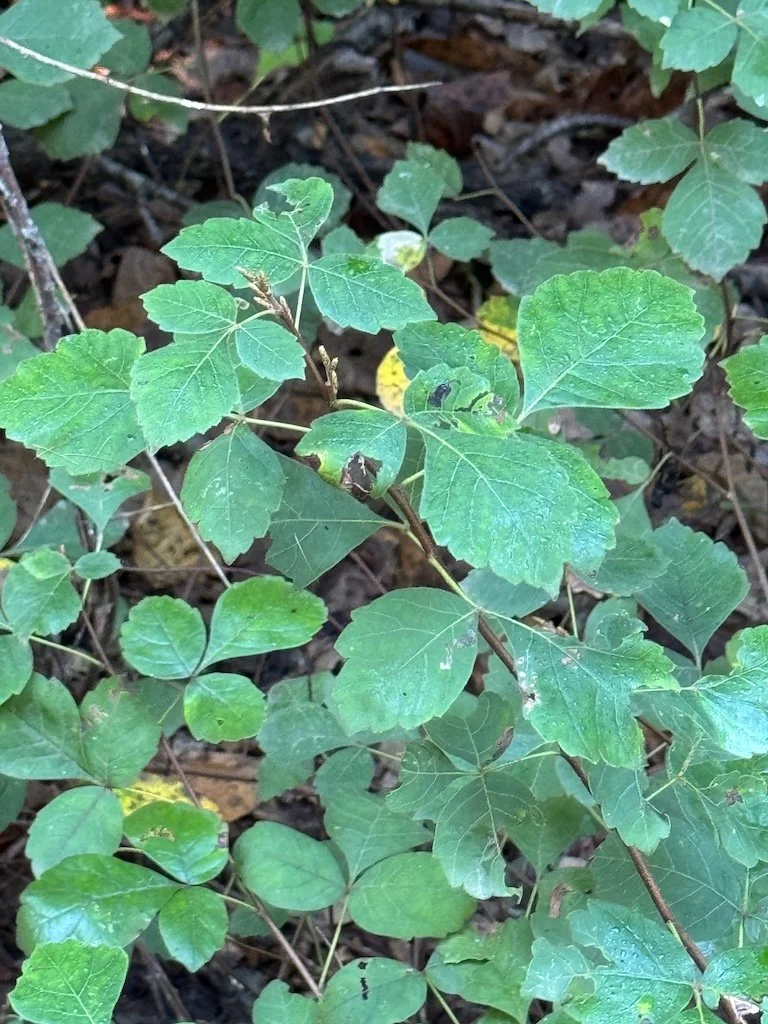
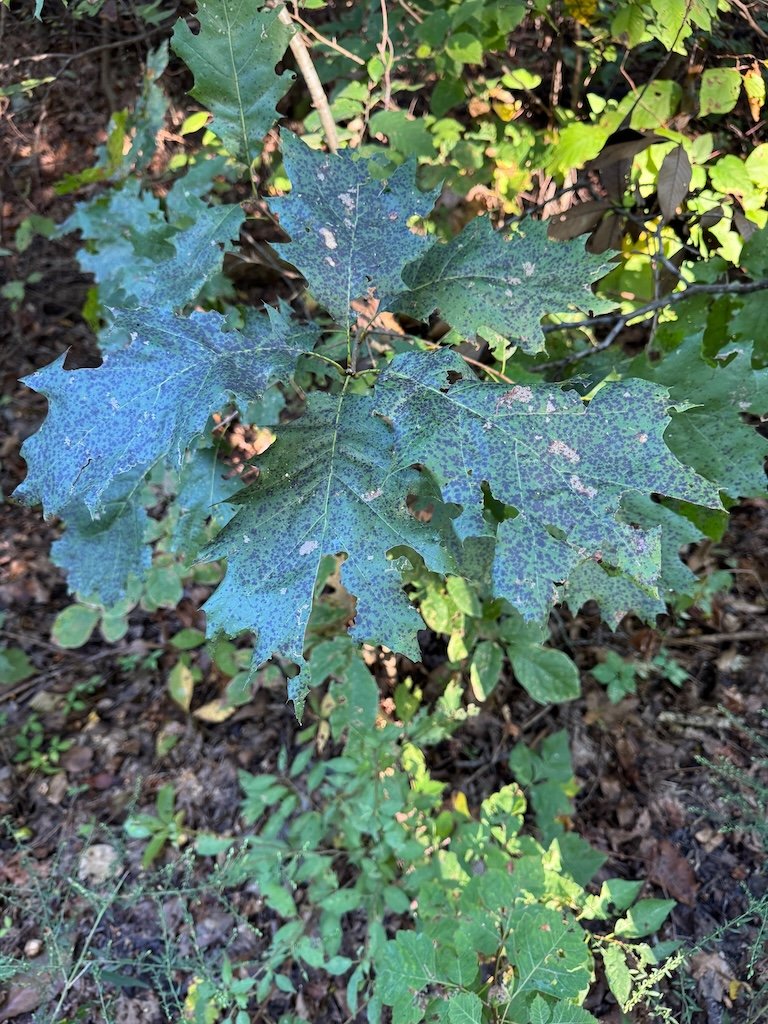
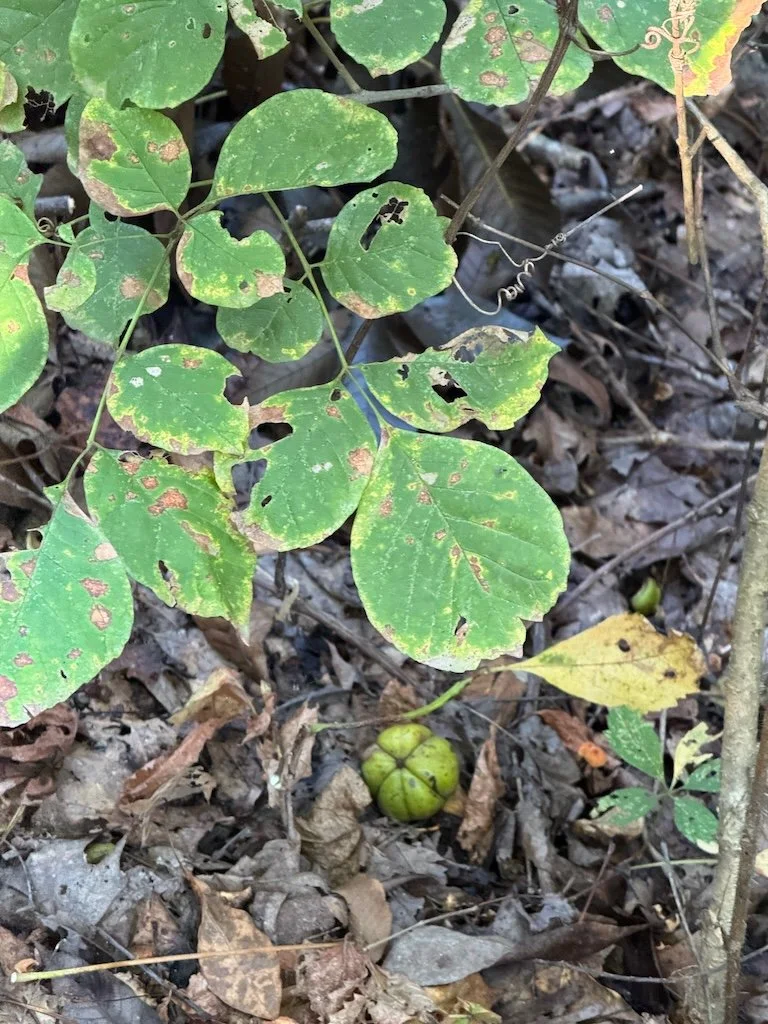
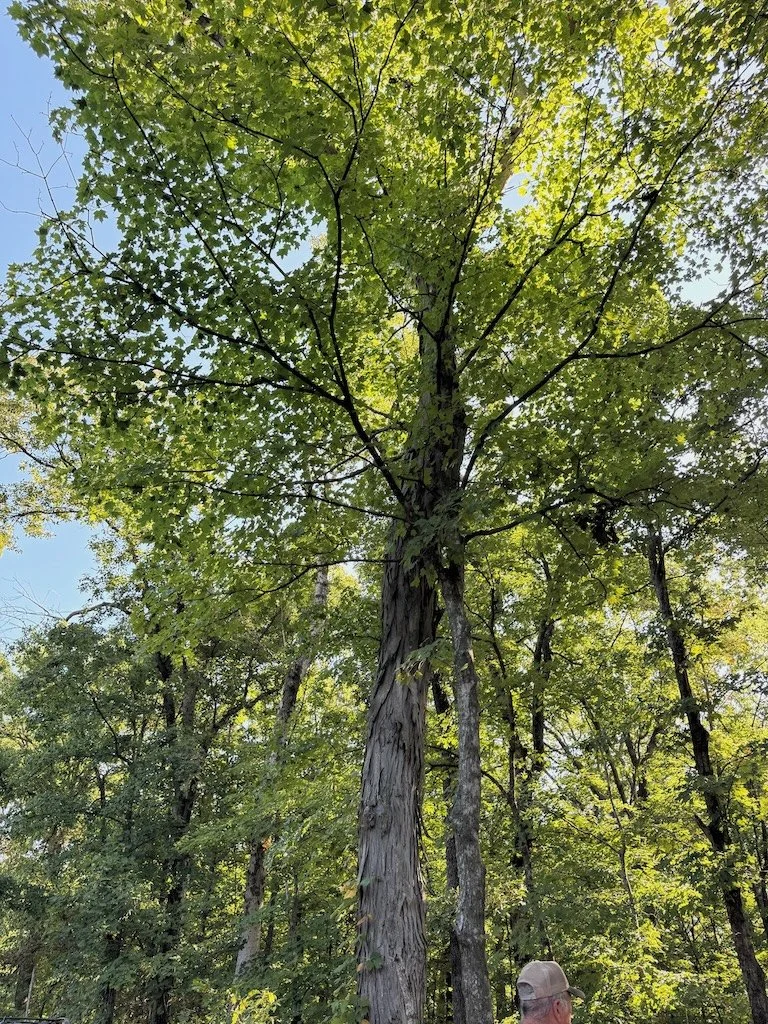
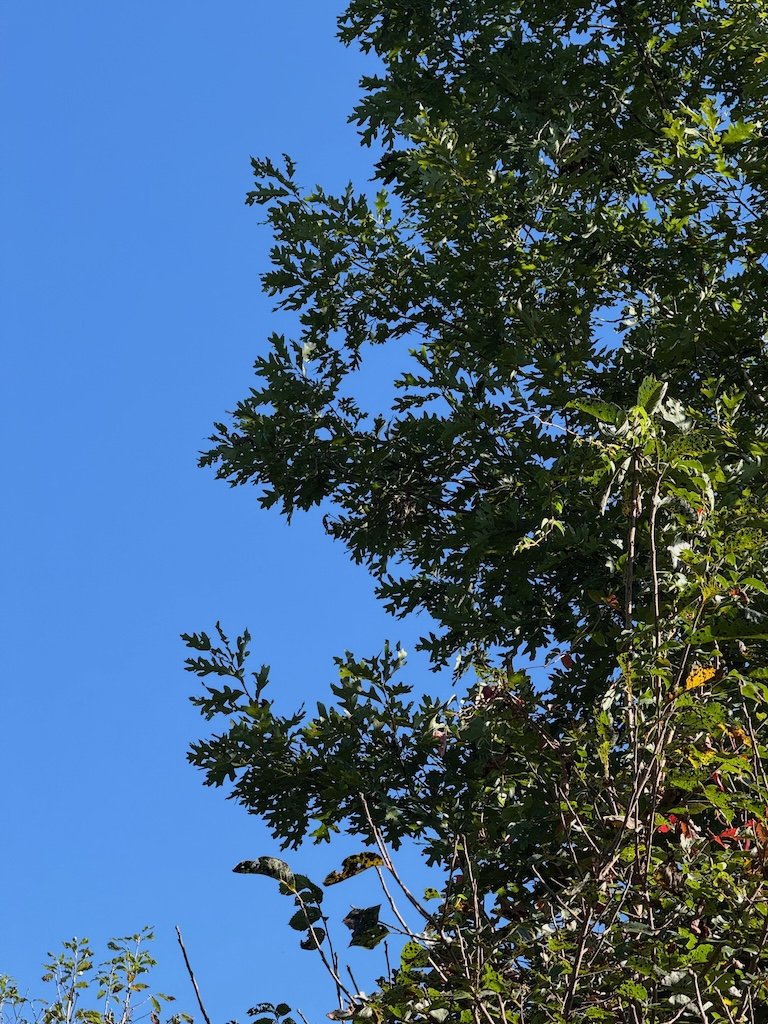
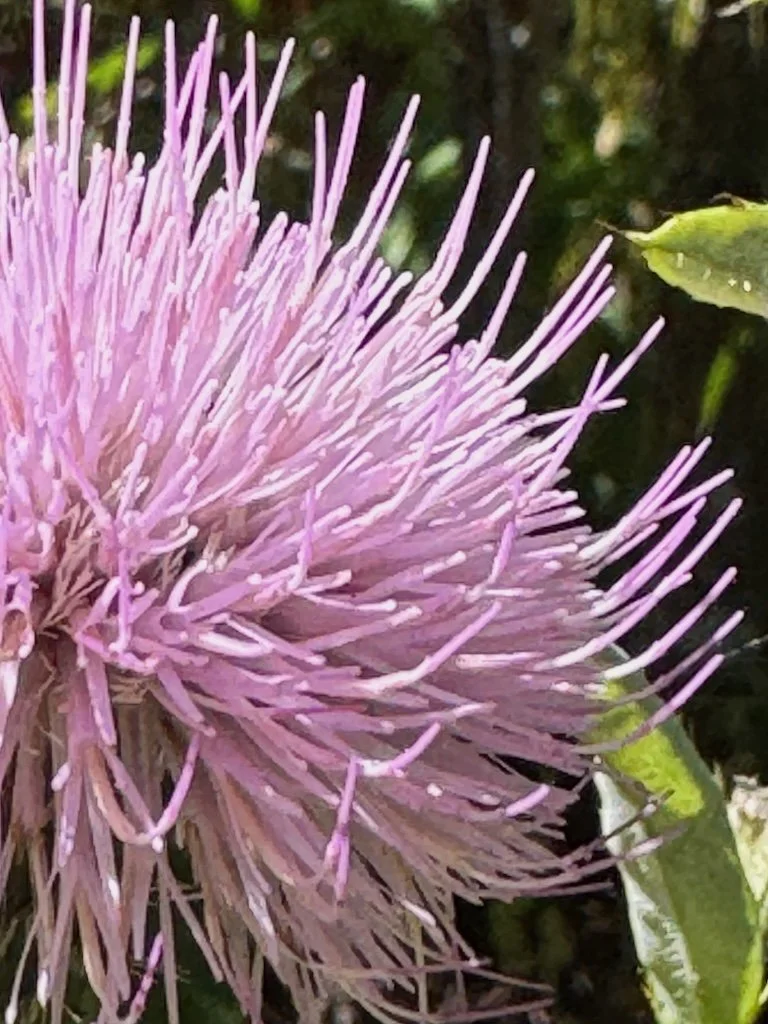
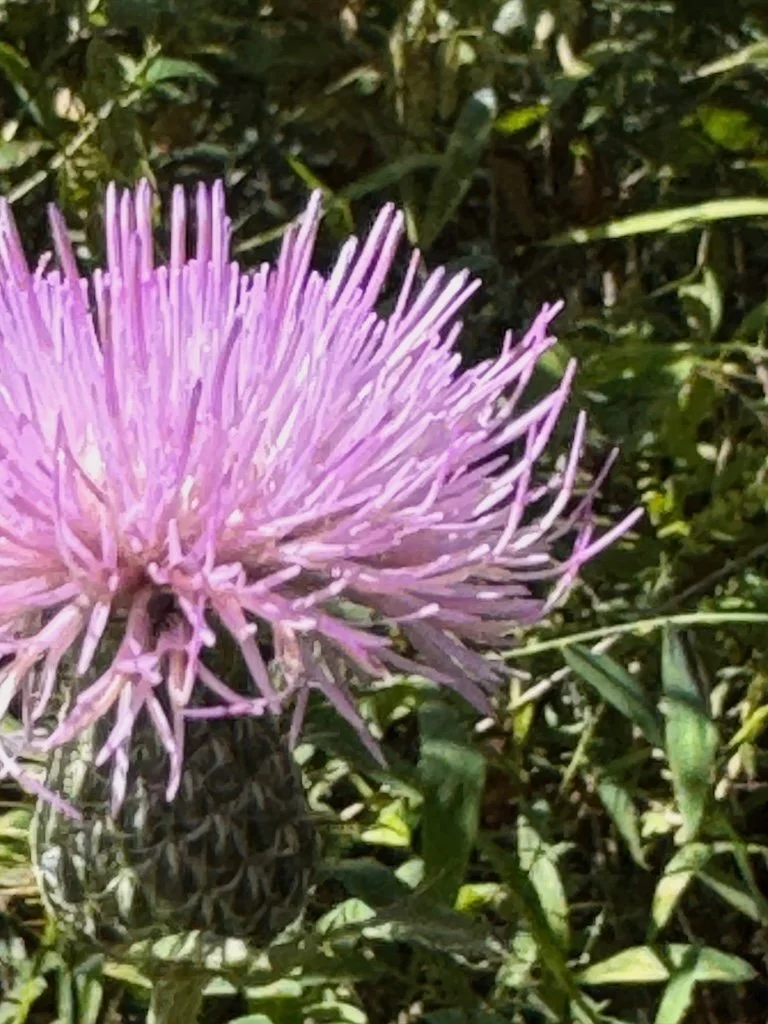
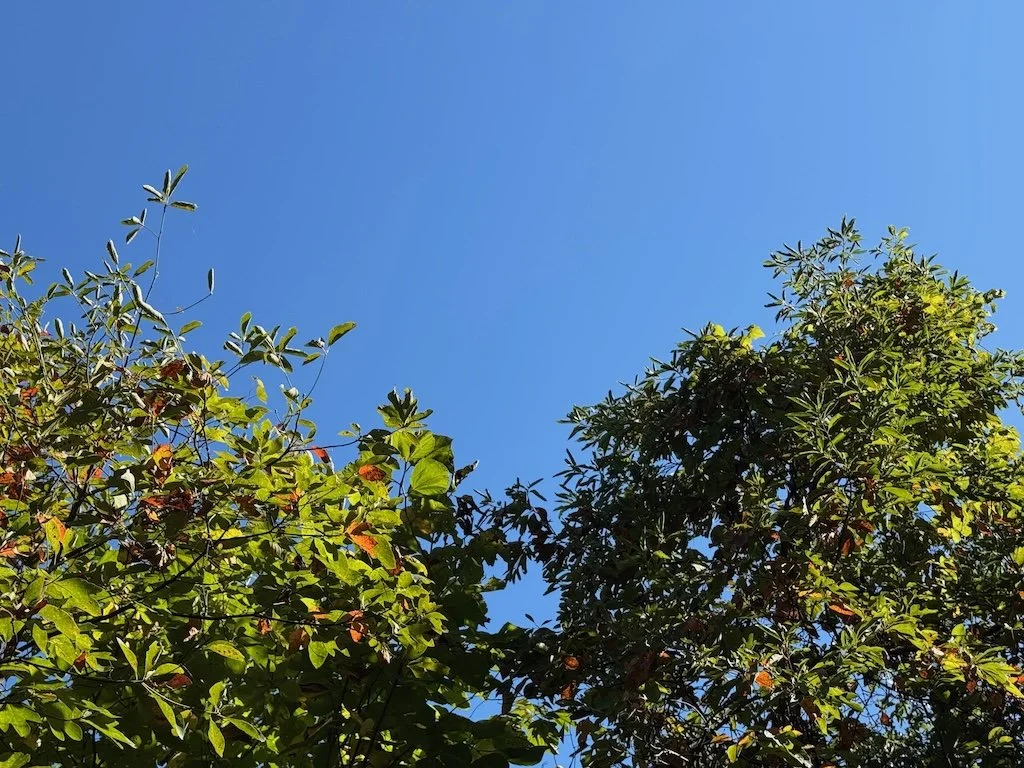
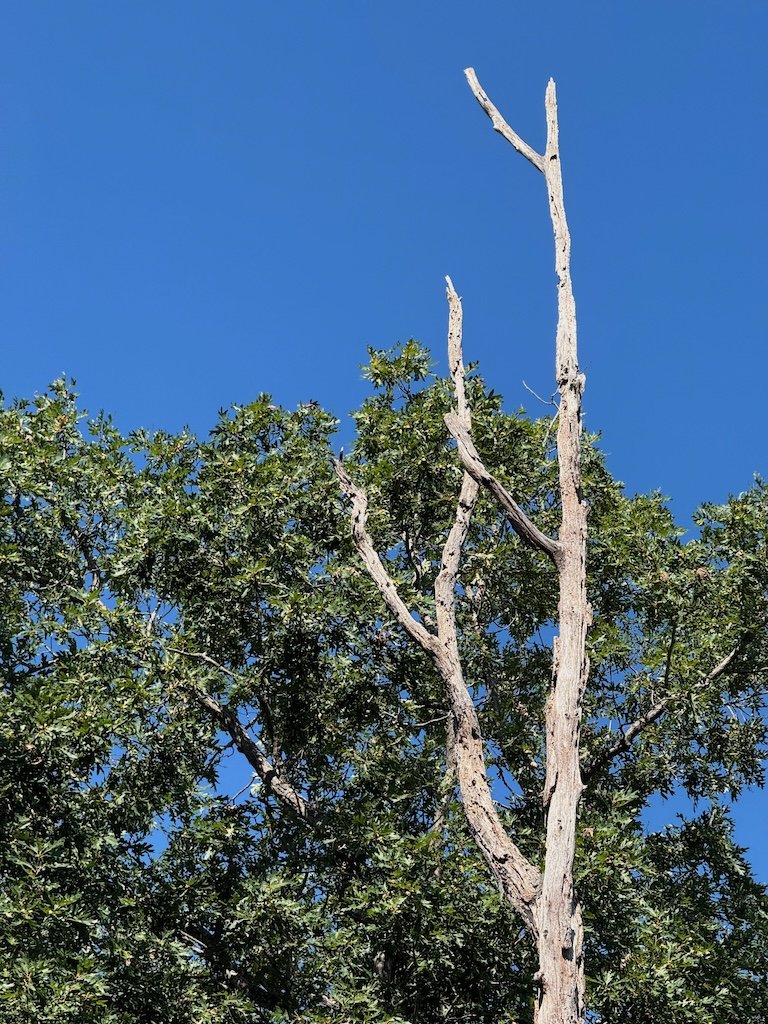
I did not do a good job of taking pictures of the varying situations just tried to listen….and got sidetracked with trees and sky and under story plants…and a thistle.
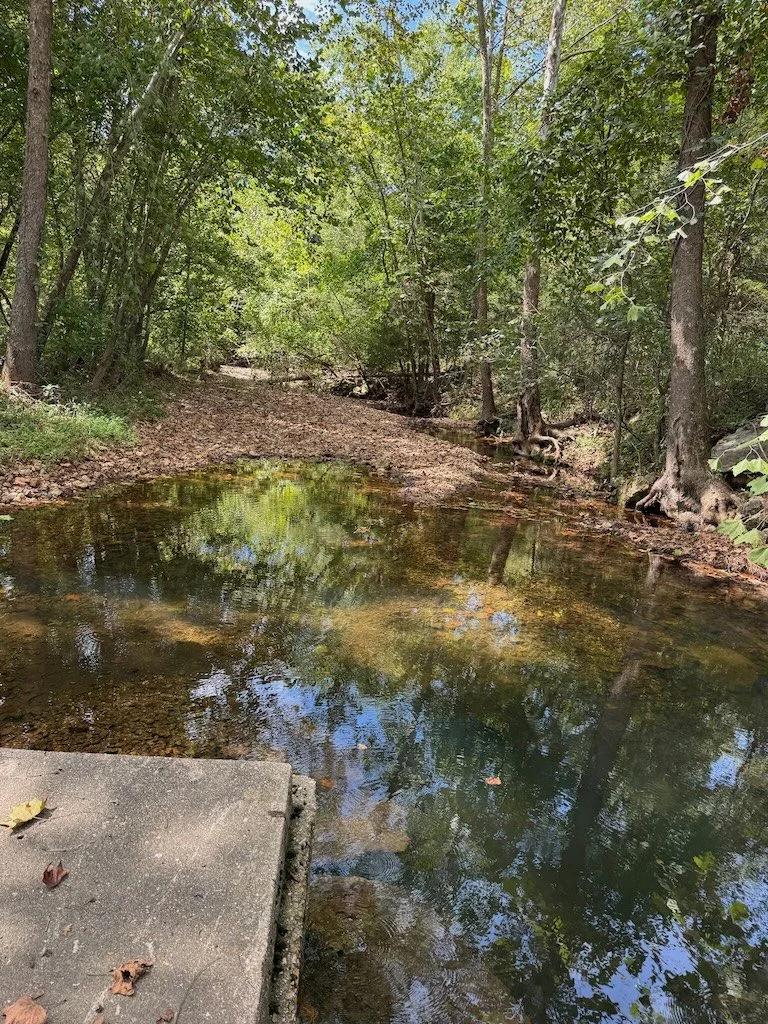
On the way our I had my husband stop so I could photograph the stream crossing. It has been a dry summer.
I am thinking more about how this applies in a Suburban Savannah situation than a woodland. There are some aspects of some of these techniques that might skew almost into the Savanna realm – particularly if one of the goals is to provide habitat for birds that like forest ‘edge’ conditions. However – fire is a strategy not available in a suburban situation….and tree harvest would probably not be a goal. My goals for my yard and my community skew toward providing habitat for birds and pollinators (their complete life cycle…not just the adult)…and maybe some less common native plants!