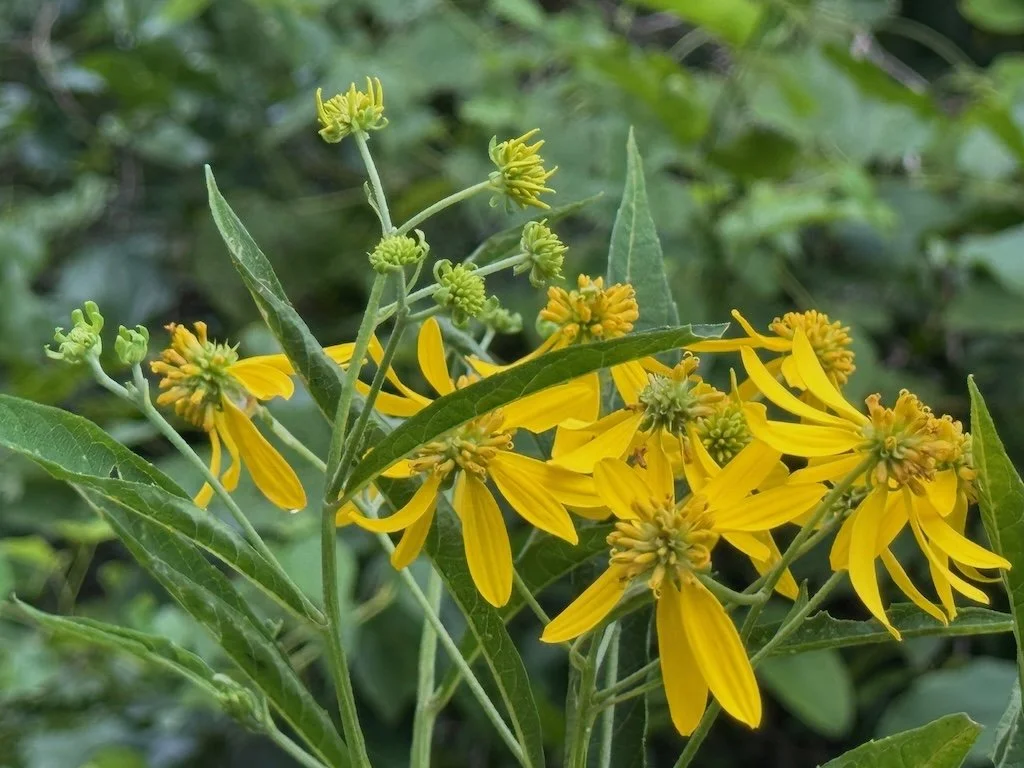
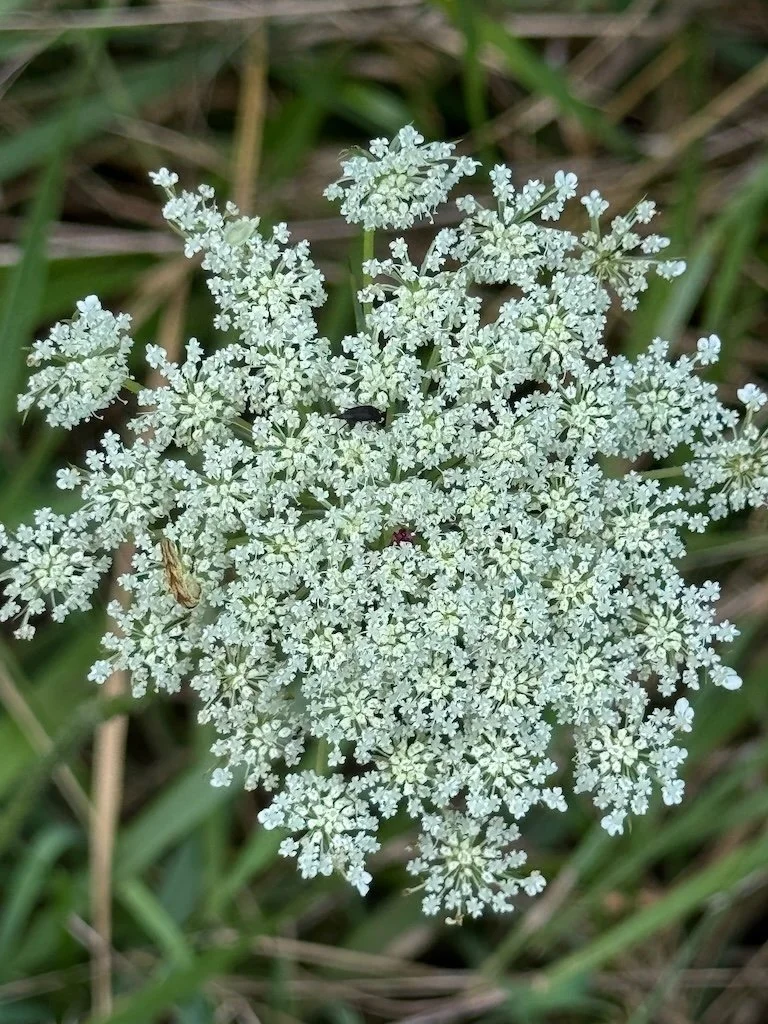
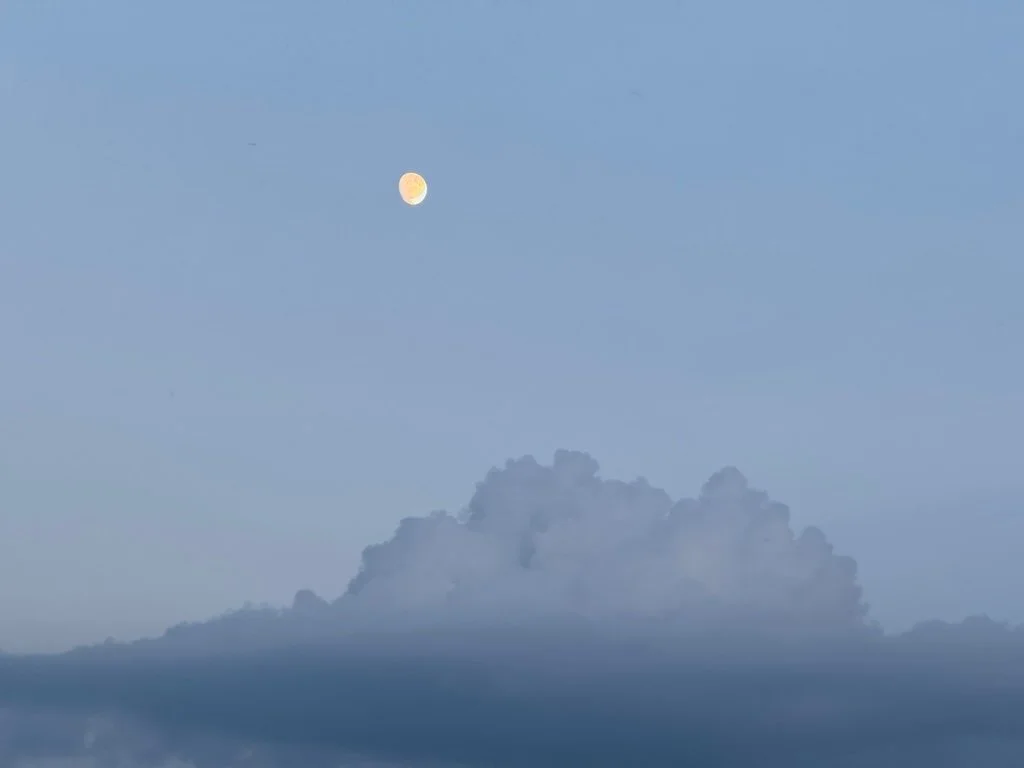
Savoring 2017 – Anticipating 2018

2017 was a busy year. Here are some highlights.

January

My daughter and I drove from Maryland down to Dallas to visit family and then spent a week in Grapevine TX for a AAS conference before driving on to Tucson. It was the trek between Tucson and the east coast for the year.

2017 01 IMG_5251.jpg

Not long after I returned – I bought a new car: a Prius Prime.

February

February was the trough of the year in terms of activity but we did buy another car – a Honda CR-V for my husband.

March

In March a flew round trip to Dallas to do the chauffeuring for a trip to Oklahoma for my parents to visit other family members.

When I got back, we made a short visit to Pittsburgh – and enjoyed the Phipps Conservatory and the Aviary.

2017 03 d IMG_7112.jpg

April

April was the start of field trips: Delmarva Birding with my husband and then the field trip volunteering I do with Howard County Conservancy.

2017 04 yellow IMG_8807.jpg

May

In May there was another family visit in Texas and then moving my daughter from Tucson to State College. The packing up was some of the hardest physical work I’ve ever done…and then driving cross country with very sore and stiff muscles. Now that time has passed, I can see it as quite an adventure.

2017 05 IMG_0023.jpg

June

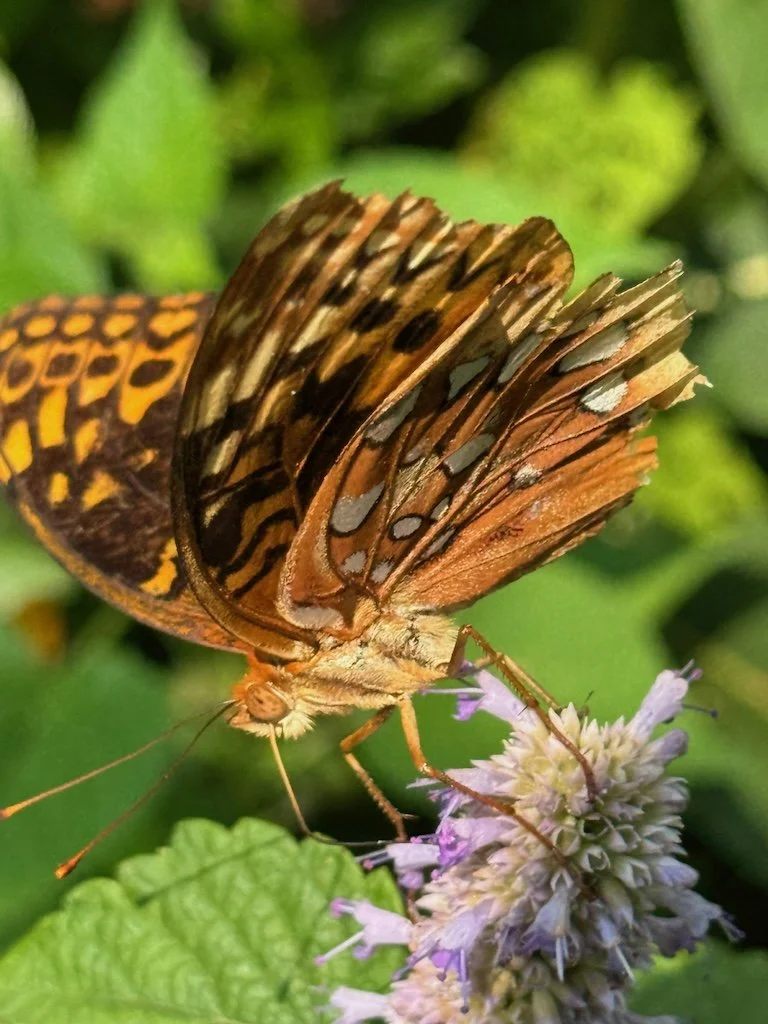
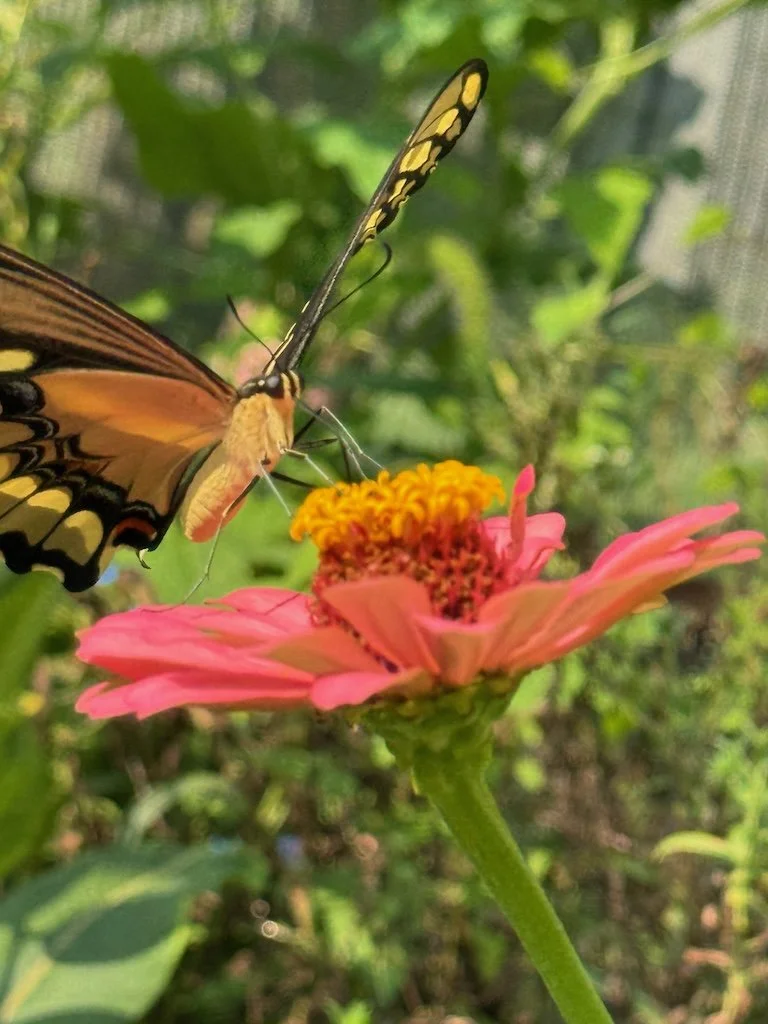
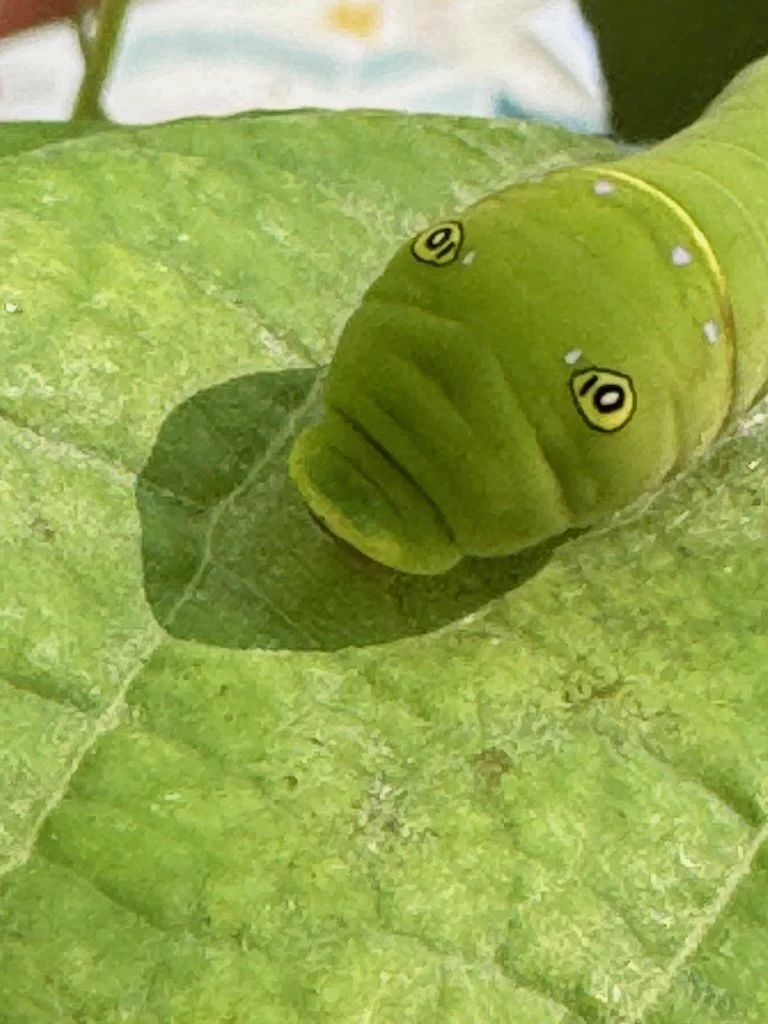
In June I started volunteering at the Brookside Gardens Wings of Fancy exhibit. That continued into early September.

20 17 06 IMG_0288.jpg

July

I made my first road trip in my Prius in July – to State College to help my daughter move into her apartment.

August

In August we drove to Nebraska for the Solar Eclipse.

2017 08 IMG_3177.jpg

September

September was full of Howard County Conservancy field trips. The stream and school yard assessments with the high schools were the more numerous for the season.

o 20170925_102421.jpg

October

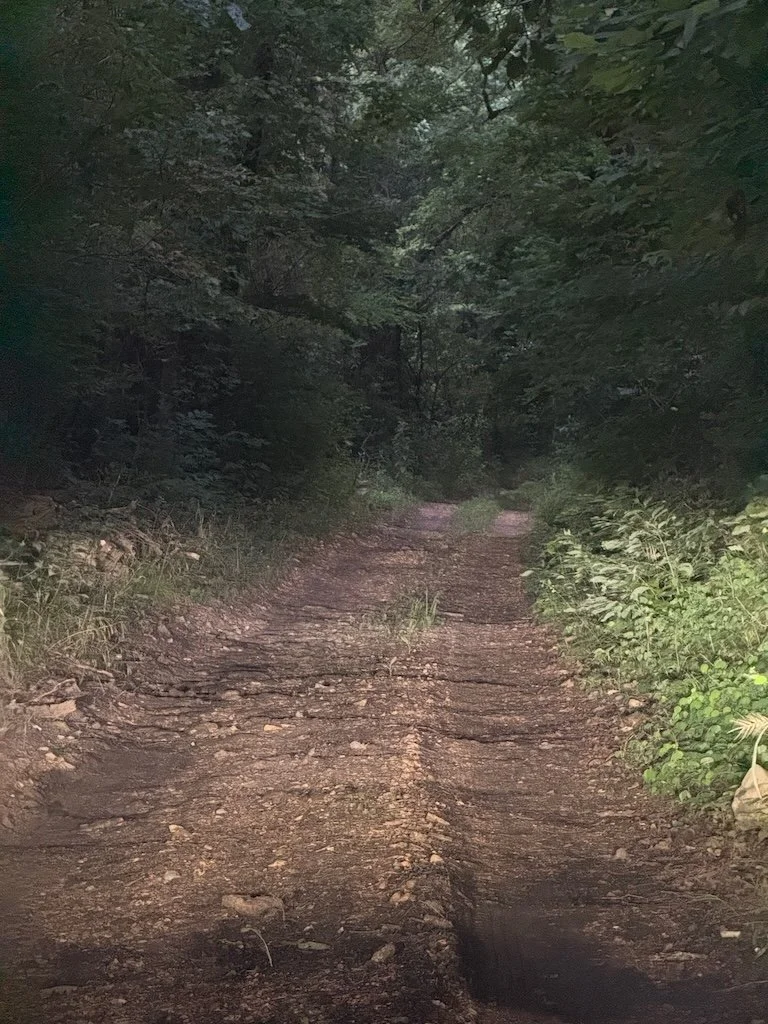
Staunton River Star Party is becoming an annual event or us. This was our third trek down to southern Virginia’s dark sky site.

2017 10 IMG_4560.jpg

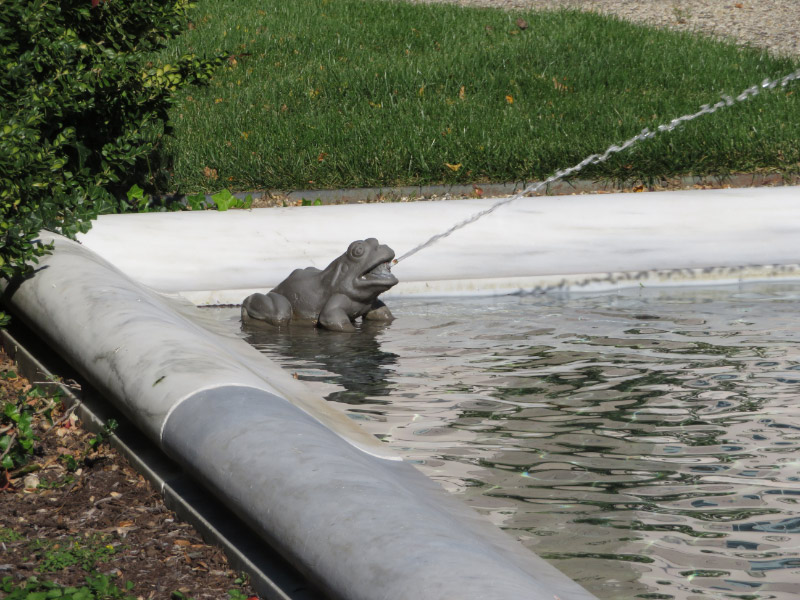
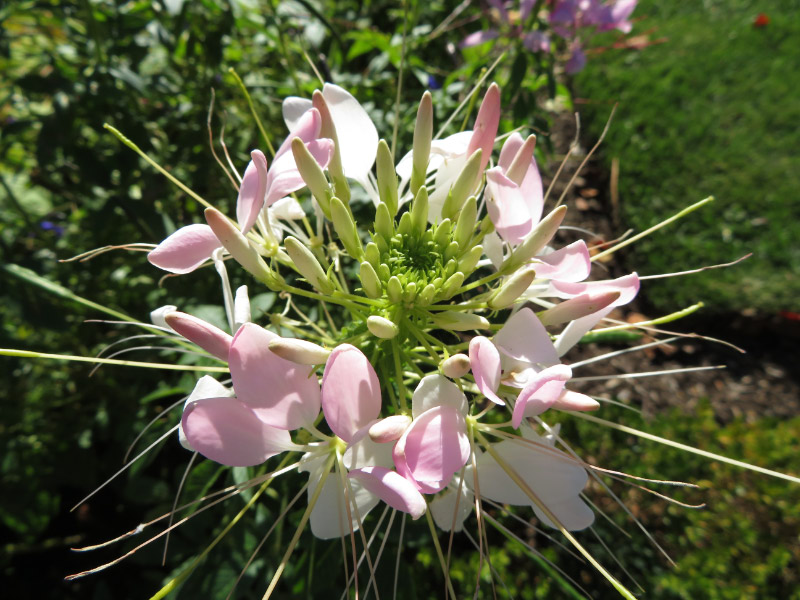
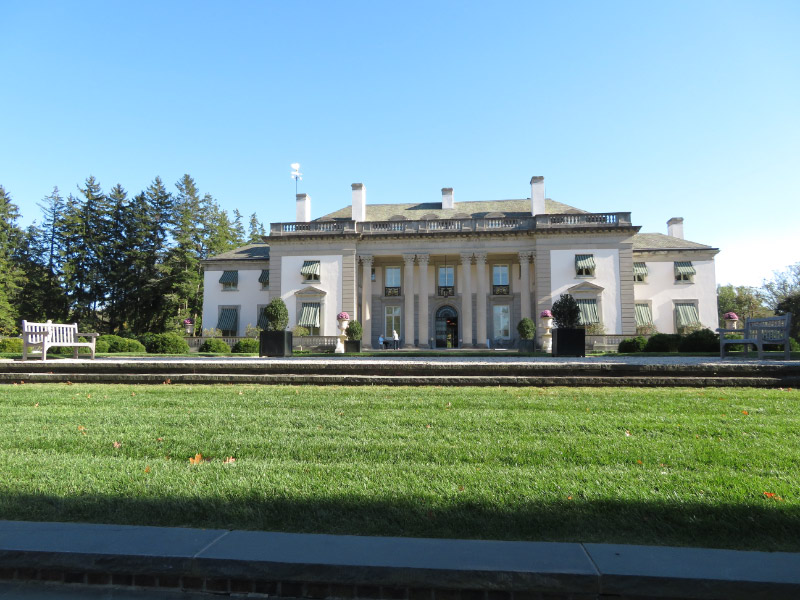
My sister visited later in the month and we toured two places I had not been in more than 5 years: Fort McHenry and Nemours Mansion and Gardens.

November

I was back in Texas in November for a family birthday celebration and then

Down to Harlingen for the Rio Grande Birding Festival.

2017 11 IMG_5623.jpg

December

This December was by first time to volunteer as a conservatory docent at the Brookside Gardens Model Trains Exhibit. What a joy!

20171201_122432.jpg

Then we went to Pittsburgh…I’ll post about that trip in the new year.

Anticipating 2018

There are already some things on my calendar for 2018: getting the eBotanicalPrints section of my website up and running in January, an 8-week class that will fill one day a week in February and March, a family visit in Texas for birthdays in April, Howard County Conservancy volunteering for school field trips in the spring and fall, and Brookside volunteering for the butterfly exhibit (April-September) and probably the model trains in December. I’m sure there will be a lot more that will fill the year.

Happy New Year to us all!

Gleanings of the Week Ending December 30, 2017

The items below were ‘the cream’ of the articles and websites I found this past week. Click on the light green text to look at the article.

Top 25 Wild Bird Photographs of the Week #118 – National Geographic Society – As usual – I can’t resist bird pictures. So many birds….all around the world.

Learning Center Classes and Field Excursions — North Cascades Institute – I’m adding this to my list of places to check out when I get round to planning a vacation in the US Pacific Northwest.

Ancient Maya Heritage Comes Alive...With Some Help from Google and the British Museum | Smart News | Smithsonian and the Preserving Maya Heritage Site – Be prepared to spend some time with the second link if you are interested in Mayan culture at all.

The Woman Who Shaped National Geographic – A short biography of Eliza Scidmore….writer and photographer.

Shutdown of coal-fired power plant results in significant fetal health improvement in downwind areas -- ScienceDaily – A study close to home…a power plan in Pennsylvania…the health impact happened down wind of the plant in New Jersey. An example of the need for multi-state studies (and Federal involvement) …and another reason to reduce generation of electricity using coal-fired plants.

NASA Unveils Finalists for Its Next New Frontiers Mission | Smart News | Smithsonian - A mission to Saturn’s moon Titan (from Applied Physics Lab) and a sample-return mission to a comet (from Cornell). Both projects will be funding through the end of 2018…then one will be chosen.

Bees use invisible heat patterns to choose flowers -- ScienceDaily – Heat pattern on such flowers as poppies and daisies can be 4-5 degrees warmer than the rest of the flower!

BBC - Future - Educationism: The hidden bias we often ignore – Some idea on how to improve: acknowledge that bias exists and use assessment as a tool for education (how to improve) rather than for selection. It turns out that many factors beyond an individual’s control can hinder potential.

Tiny red animals dart in the dark under the ice of a frozen Quebec lake -- ScienceDaily – A surprise for winter researchers – previously the assumption was that everything was on hold during the winter.

Five Surprising Ways Your Christmas Tree Can Give Back Long After the Holidays – Cool Green Science – Maybe there are other things to do with a ‘real’ Christmas tree after the holiday.

Gleanings of the Week Ending December 23, 2017

The items below were ‘the cream’ of the articles and websites I found this past week. Click on the light green text to look at the article.

Search for Microbial Life on Mars | The Scientist Magazine® - Life on Mars…challenges abound.

Using Data to Inspire: Share Science and Find Truth in the Stories - The Bridge: Connecting Science and Policy - AGU Blogosphere – Maria Merian studied butterflies…and discovered that instead of being ‘born of mud’ spontaneously, they grew as caterpillars that metamorphosed into butterflies. That was back in the 1600s. Communication of data can be very inspiring!

Will Squid Soon Rule the Oceans? | Zócalo Public Square – These creatures thrive on disruption in our oceans…benefiting from climate change, overfishing and pollution.

Suburban ponds are a septic buffet -- ScienceDaily – Suburban animals behave, look and function differently because of the fundamentally unique ecosystems of suburbia.

Cancer imaging aid developed from horse chestnuts -- ScienceDaily – Horse chestnuts are trees I recognize in our local gardens….so I took a second look at this article. Evidently an extract from the tree may have a medical use!

What is the Bauhaus Movement? The History of Bauhaus Art – A short history of  Bauhaus art, architecture and design….how it all comes together and its legacy.

Free Technology for Teachers: The Science of Snowflakes – Two short videos about snowflakes.

100,000 Digitized Art History Books Are Now Freely Available to Any Art Lover and the Getty Research Portal – Another source of eBooks…it is easy to spend a lot of time browsing this one.

Photographer Takes Stunning Portraits of Endangered Animals: Goats and Soda: NPR – Photography with a message.

Dinosaurs Were Around Before Saturn Had Rings | Smart News | Smithsonian – There are timelines relating events around the world. This is a link between our planet and the rings of Saturn.

3 Free eBooks – December 2017

This month I picked books with an Asian theme:

2017 12 ebook1.jpg

Bing, Siegfried. Artistic Japan: illustrations and essays. London: Sampson Low, Marston & Co. Six volumes available from the Internet Archive here; published in the late 1800s. Most of the illustrations are in color…and represent a broad range of Japanese art from the time. I picked an image of a textile but there is a lot of other types of art in these volumes.

2017 12 ebook2.jpg

Ando, Hiroshige. Ehon Edo miyage. Kikuya Kozaburo han. 1850 or after and before 1868. Six volumes available from Smithsonian Libraries here. Images in soft colors depicting Japan in the mid 1800s. I picked one from the fourth volume that looked like a road lined with cherry trees blooming in the spring. There were some other images of landscapes with snow that I liked almost as well.

2017 12 ebook3.jpg

Oriental Textile Samples. 1700. Available from the Internet Archive here. This book is a reminder of how rich the textile tradition is – particularly from China. I clipped a part of the cover – which must have also been textile. There is a note that the book is ‘fabric samples mounted in accordion-style, silk covered, volumes in brown cloth-covered folios’.

Gleanings of the Week Ending December 16, 2017

The items below were ‘the cream’ of the articles and websites I found this past week. Click on the light green text to look at the article.

Switching Jobs | FlowingData – How often do people change jobs and what kind of job to they move to. In the field I was in (computer mathematical), almost 70% stay in the field. I certainly did for the duration of my 40 year career.

You’ve Seen the Washington Monument. Now See the Other Washington Monuments | Smart News | Smithsonian – A little history.

Top 25 Wild Bird Photographs of the Week #117 – National Geographic Society – I always enjoy the weekly collection of bird pictures.

Autonomous Driving Levels 0–5 + Implications | CleanTechnica – A good reference re autonomous cars. Right now, I have a level 1 car (it has adaptive cruise control). I am hoping that by the time I am very old and want to stop driving that level 5 cars are easily available.

Cataloging Fungal Life in Antarctic Seas | The Scientist Magazine® - Fungi that thrive in extreme conditions…some surprises.

Water-loving cats: Unique Tiger facts – National Geographic Society – I like the last image the best: tigers in the snow.

3 Reasons Why California’s Fire Risk Won’t Dampen Anytime Soon - NPR – I was interested in this article but it didn’t answer the question that I thought it would: In areas where fires are burning now – are they reducing the ‘fuel’ enough that fires will not burn again for a long time…and could we develop techniques to maintain that reduction in ‘fuel’ (i.e. dead wood, brush) without damaging the ecosystem.

In Luxor, Two Tombs Dating Back 3,500 Years Unveil Their Secrets | Smart News | Smithsonian – There seem to be more finds in Egypt recently – but will they be enough to draw tourists back to the region?

The Secret in the Sand Dunes – Cool Green Science – Midway Beach survived Sandy…because they pay a lot of attention to maintaining their dunes --- including after-season Christmas trees to provide structure to dunes…catching sand.

Common psychological traits in group of Italians aged 90 to 101 -- ScienceDaily - Study finds group displays distinct optimism, stubbornness and bond with family, religion and land

Maryland Water Monitoring Council 23rd Annual Conference

Last Friday, I attended Maryland Water Monitoring Council conference. The theme was “Managing Water Quality in a Changing World.” This was the 23rd conference held by the council…but the first one for me. I’d signed up as soon as I found out about it – months ago – and looked at the agenda ahead of time. The agenda was packed with interesting topics from 8:30 -4:30. Except for the two keynote talks there were 7 concurrent talks for the rest of the day plus poster presentations and vendor booths. Based on my experience with the symposium I went to back in October about the War of 1812, I hoped that I would make it through the whole day.

It turned out to be an invigorating day all the way through to the last talk! It helped that the food was fabulous and easily available, the chairs were comfortable, and the venue was large enough to provide easy transitions between sessions for the 600 attendees. Those things provided the infrastructure for the high-quality talks.

I’d printed off the agenda before the conference and highlighted the ones I thought I would be most interested in attending. Of the 12 talks I’d selected, only 1 did not live up to my expectations. At the end of the day I was very glad that I’d attended and plan to go again next year.

Gleanings of the Week Ending December 9, 2017

The items below were ‘the cream’ of the articles and websites I found this past week. Click on the light green text to look at the article.

What is Impressionism? Impressionism Art and Impressionism Definition – Maybe your recognized Impressionism….but here is a definition!

United States Map from Over 1000 Million Acres of Forests – based on Landsat data. If you want to look at some maps online – try the Global Forest Change link in the article. I looked up the forest change for my home address (and hence the area immediately around where I live).

NASA’s Juno Spacecraft Completed its Eighth Flyby Over Jupiter – This is item is almost a month old now – images are too awesome to not include in the Gleanings this week.

Two NASA Science Planes Are Capturing Some Glorious Images of Antarctica – More images from NASA – this time looking back at our own planet.

Free Technology for Teachers: 6,500 Vintage Travel Photos - Free to Use – Refine the results to find some of your favorite places. I looked with the US collection at Yosemite and Yellowstone. There is an image of “Old Faithful” from 1898.

Infographic: Understanding Our Diverse Brain | The Scientist Magazine® - Surprise! The idea that all cells within and organism sharing an identical genome may be – at best – an oversimplification.

Can Exercise Prevent Knee Osteoarthritis? | Geriatrics | JAMA | The JAMA Network – Increasing age and obesity levels do not totally account for the increase in osteoarthritis! Maybe those other factors mean that it is more preventable that we think.

The National Parks in Winter – Keep warm…and enjoy the view of some special places:

Meet The Magnificently Weird Mola Mola – Cool Green Science – I’ve seen Mola Molas in aquariums….have always thought they were an unlikely fish.

Image of the Day: Butterfly Wing Scents | The Scientist Magazine® - The wings of some male butterflies are not just for flying; they also have special ‘scent’ scales that attract females!

Some last images of South Texas

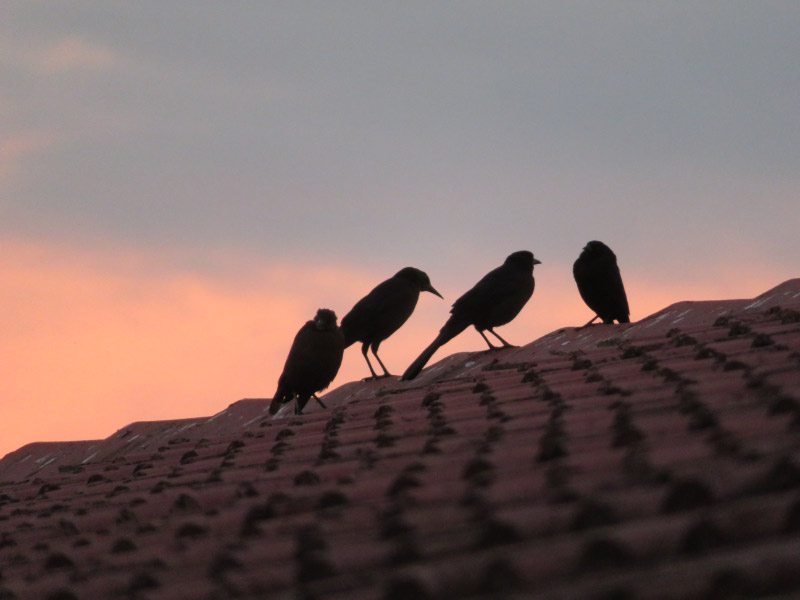
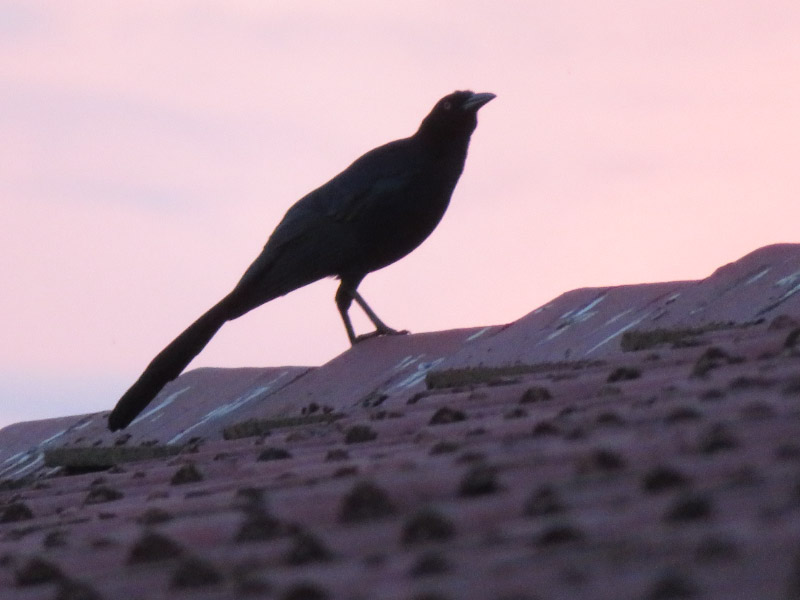
As I finished up the post yesterday about the San Antonio Botanical Garden – I realized there were a few more miscellaneous pictures I wanted to share from our South Texas adventure. Every day near sunset hundreds, maybe thousands of birds gathered on the roofs and electrical lines around our hotel in Harlingen. The last night I managed photograph some with some sunset color behind them. Many of them are grackles.

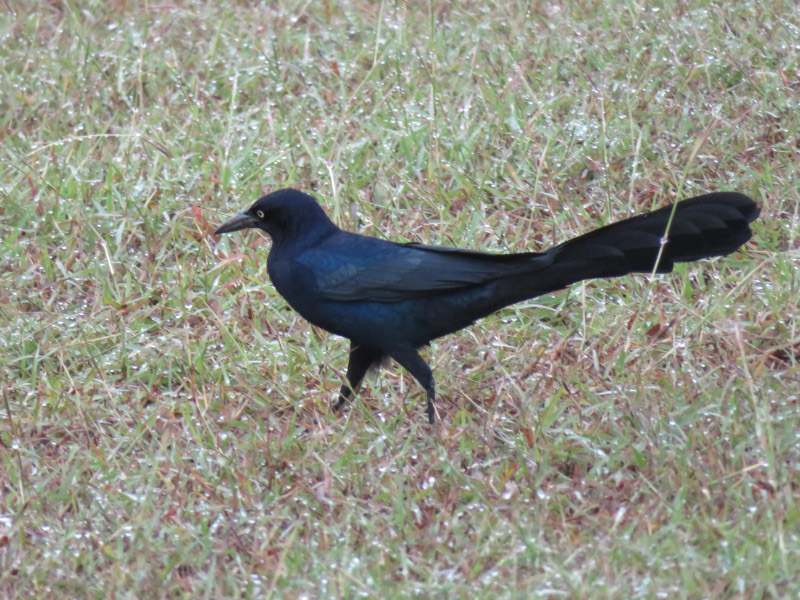
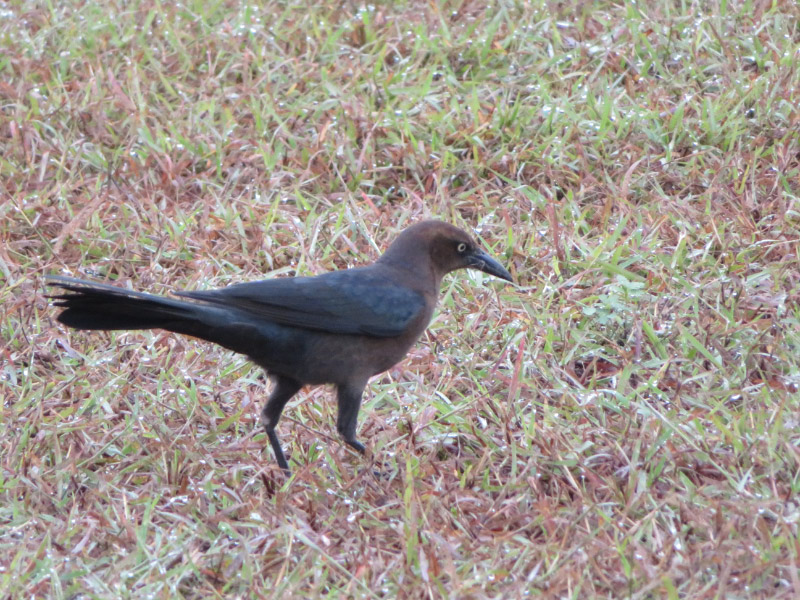
The next morning we headed to the National Butterfly Center first but decided it was too cold and wet for butterflies to be out and about when we got there. I photographed a male and female Boat-tailed grackle on the lawn and

The water lily in the little pool.

2017 11 IMG_6402.jpg

Then I noticed a red-eared slider in the water too. It is native in southern Texas…but invasive in Maryland. It’s included in the list of the world’s most invasive species!

2017 11 IMG_6405.jpg

We headed out for a state park in lieu of the Butterfly Center and then heading toward San Antonio. The one rest stop we made along the way had this forest mosaic.

2017 11 IMG_6493.jpg

As we drove into San Antonio, I managed a picture of the Tower of the Americas through the car window. It was built for the HemisFair in 1968 and I remember making the trip to the event with my Camp Fire Girls group; I was in the 8th grade.

2017 11 IMG_6498.jpg

One last bird picture: a cold White-winged Dove taken from our hotel window.

2017 11 IMG_6503.jpg

Gleanings of the Week Ending December 2, 2017

The items below were ‘the cream’ of the articles and websites I found this past week. Click on the light green text to look at the article.

Free Technology for Teachers: Resources to Learn About Outer Space – Good resources – for more than teaches!

When They Said They Wanted to Rethink Agriculture, They Meant It – Cool Green Science – Developing ways to feed more people with less water and without expanding the area we already use for agriculture….crop redistribution to maximize food production with rainfall rather than irrigation may be part of the solution.

Image of the Day: The Last Sloth | The Scientist Magazine® - Taking a closer look at the Caribbean Islands where then end of the ice age and the arrival of humans were 1,000s of years apart. There were two waves of extinction induced by human arrival: the first about 5,000 years ago when humans first arrived (ground sloth extinction) and the second around 1492 when Columbus arrived (smaller animals extinction).

Ah-Choo! 11 Fun Facts About Sneezing | Berkeley Wellness – No – your heart does not stop!

Large decrease in age-related macular degeneration in baby boomers compared to previous generations -- ScienceDaily – Positive news…but it was a small study and the participants were mostly non-Hispanic white individuals…and there is no information about why the decrease happened. Hope it holds for my family. My grandmother was blind by the time she died in her 90s…from macular degeneration.

New Science Shows Nature’s Potential to Fight Climate Change – Cool Green Science – Finding natural solutions to fight climate change. Reforestation has the highest potential!

Midwifery care at hospitals is associated with fewer medical interventions -- ScienceDaily – enhancing perinatal car and lowering costs for low-risk pregnancies…what’s not to like!

Top 25 Wild Bird Photographs of the Week #115 and #116 – Birds and more birds!

Making it easier to recycle plastics: Emerging technologies could greatly reduce plastic waste -- ScienceDaily – Only 9% of plastics are recycled in the US…not good.

How did Ammonite fossils form? – The chemistry of ammonite fossil formation

Gleanings of the Week Ending November 25, 2017

The items below were ‘the cream’ of the articles and websites I found this past week. Click on the light green text to look at the article.

Millions of Free Botanical Illustrations from the Biodiversity Heritage Library – I look at a lot of books digitized by the Biodiversity Heritage Library via Internet Archive – but their Flickr Account is a good way to see images – lots of them. And it isn’t just botanical. There are birds and insects and mammals and people that study them!

Gorging on Top 25 Wild Bird Photographs of the Week #112, #113, #114 - Three of them!

The Ultimate Guide to the Wild Turkey and The Fascinating Behavior of Wild Turkeys and Tracing the Wild Origins of the Domestic Turkey – Lots of articles about wild turkeys came out before Thanksgiving. These were my favorites.

BBC - Future - How popcorn became a much-loved snack – Learn a little fun history. Who doesn’t like popcorn?

A Short History of the Crosswalk | Smart News | Smithsonian – Another little history of something that is now quite common. Crosswalks didn’t exist until 1951!

Best National Parks – There are a lot of preferences! How many of the 10 ‘most visited’ have you seen. I’ve been to 7 of them. I’ve only been to 1 of the ‘least visited.’

Urban Refuge: How Cities Can Help Rebuild Declining Bee Populations - Yale E360 – Some examples of how urban gardens impact bee populations; it turns out they are measurably positive! 13% of New York State’s bees were found in New York City community gardens.

Paper Engineer Creates Magnificent Pop-Up Cards – Beautiful and fun to watch opening (i.e. the video).

Stunning 100-Megapixel Moon Photograph Created from NASA Images – From the Lunar Reconnaissance Orbiter…my daughter helped do the initial image calibration on LRO bak in 2009

See a Brilliant Blue Butterfly Take Flight for the First Time – A video of a blue morpho butterfly emerging from its chrysalis and tumbling to its first flight (it may take time to start…but it’s worth the wait!

Colonial Holiday Celebration

20171119_182043.jpg

Last Sunday, The Howard County Conservancy held its Colonial Holiday Celebration at Belmont Manor. I arrived for the last hour since I was volunteering to help with clean up. The house glowed with lights in the gloom – and the hum of conversations came from every direction as I entered. It was good to see so many people that I volunteer with out of the context of hiking with school groups!

We enjoyed luscious food and caught up with fall happenings and holiday plans. It was a good way to start the holiday season.

There were enough helpers that when the event ended it took us only about a half hour to clear the trash cans, collect glassware, and load everything up to go back to the Carriage House where the HCC Nature Center is located. The caterers were cleaned up to. I was surprised at how fast a group of people can get work done…everyone with a job.

Rancho Lomitas

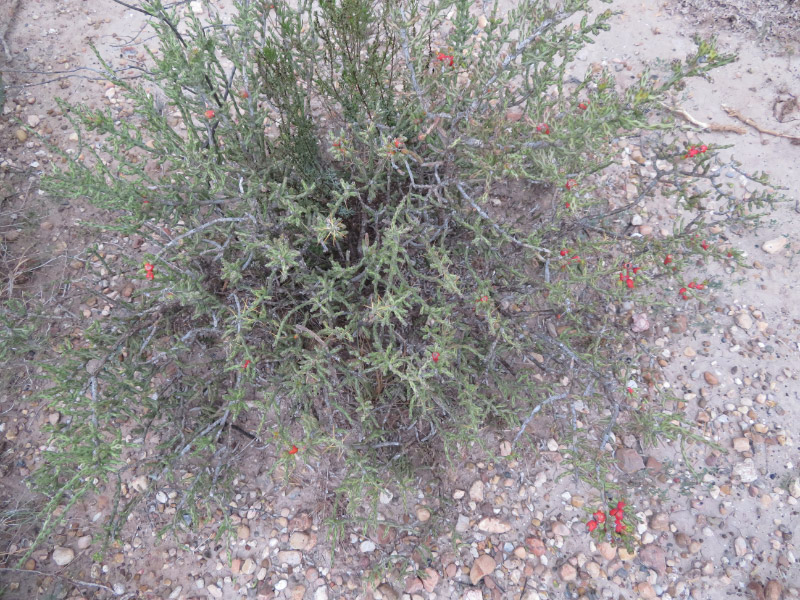
After Las Estellas, the field trip group headed to Rancho Lomitas where Benito Trevino shared his knowledge of plants of the Tamaulipan thorn scrub. We learned about how cochineal became a valued commodity to the Spaniards. It is an insect that grows on prickly pear cactus (white mounds) and is used to produce carmine dye. Until the advent of synthetic dyes and pigments it was the best ‘red.’

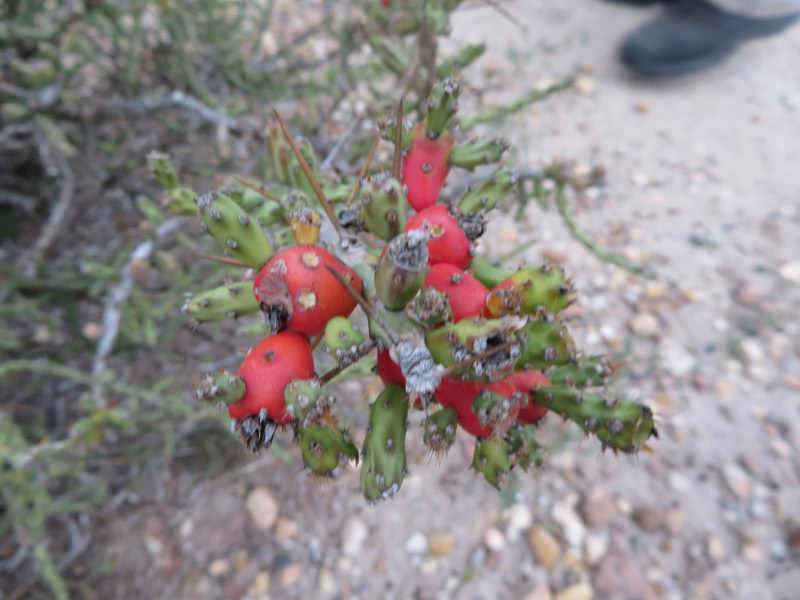
Also the desert Christmas cholla’s berries can be used to sooth a sore throat….if one knows the process to remove the small thorns. First, use a stick to know off berries. Use the stick to separate the berries from the green part of the plant. Use a bunch of grass to move the berries around in the pebbles and dust. When the thorns appear to be gone…do it some more. I tried some. It tastes a little citrusy and would sooth the throat similarly to honey.

It was a mostly cloudy and cool day but the sun came out for a little while and we saw some butterflies.

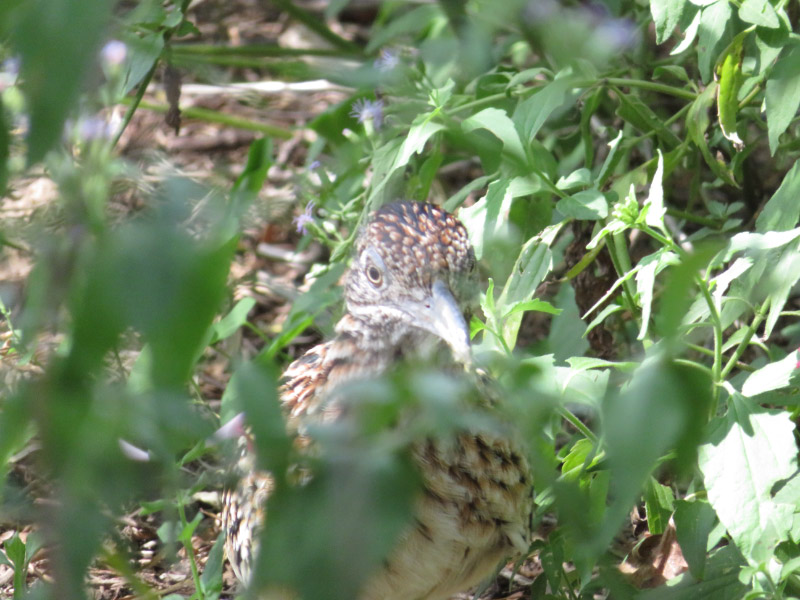
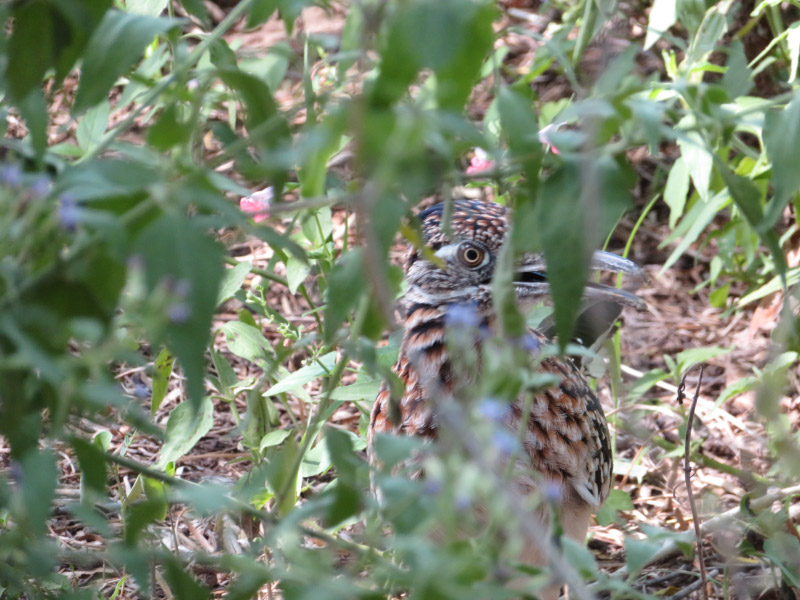
There is a road runner that patrols the gardens.

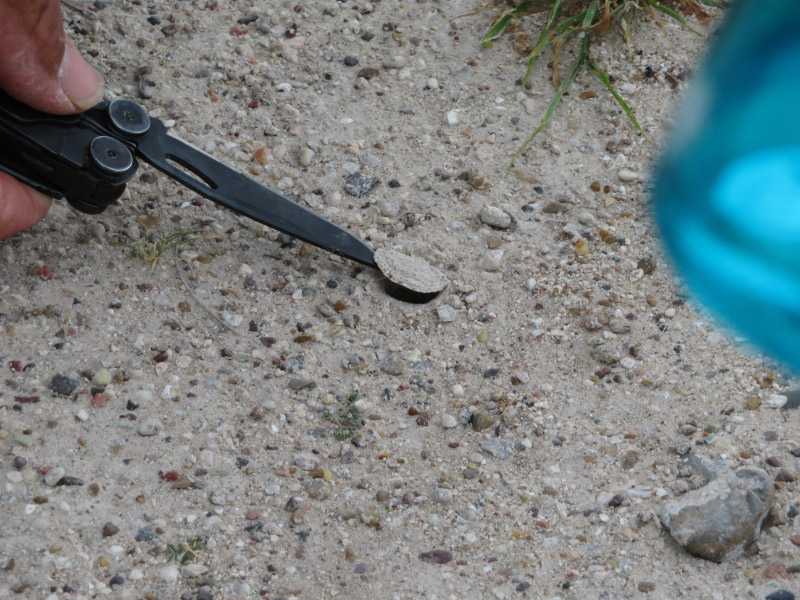
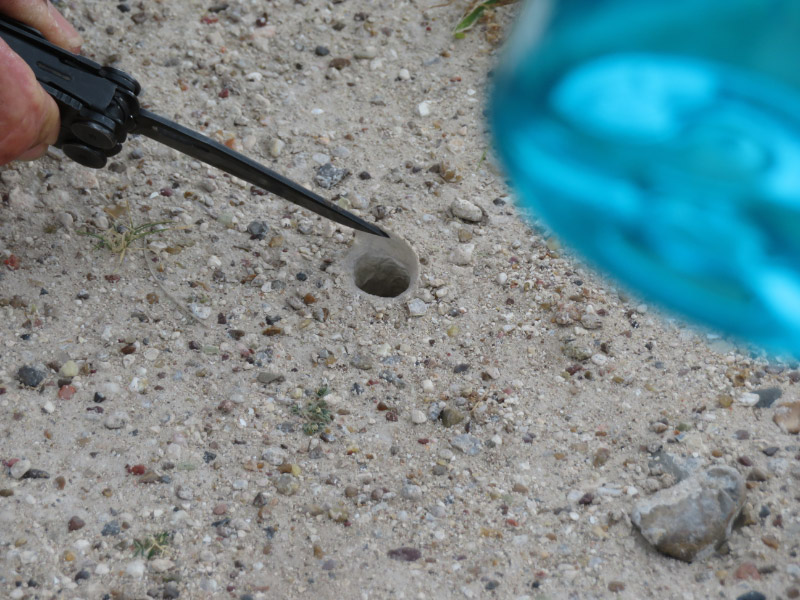
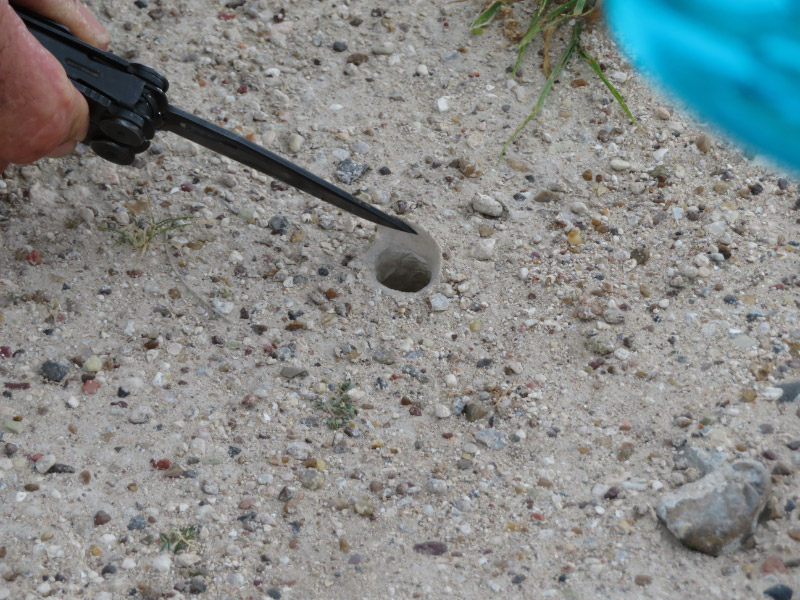
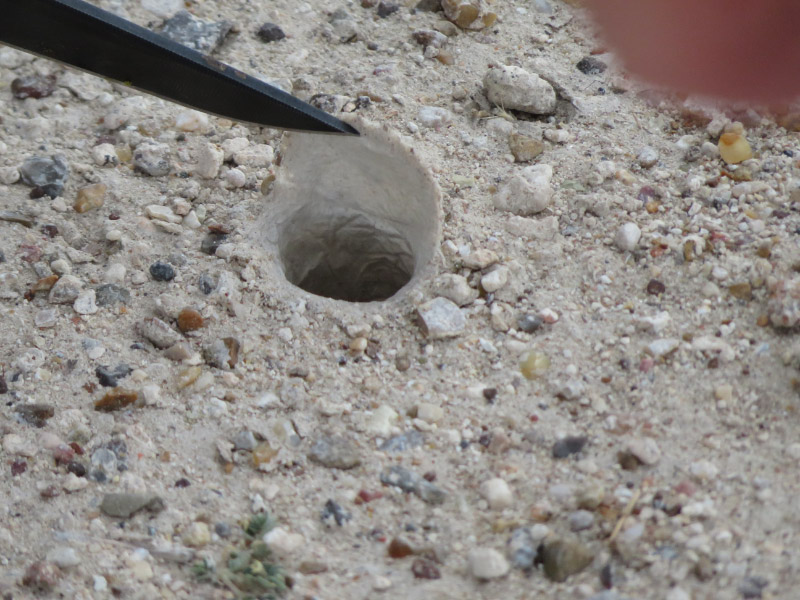
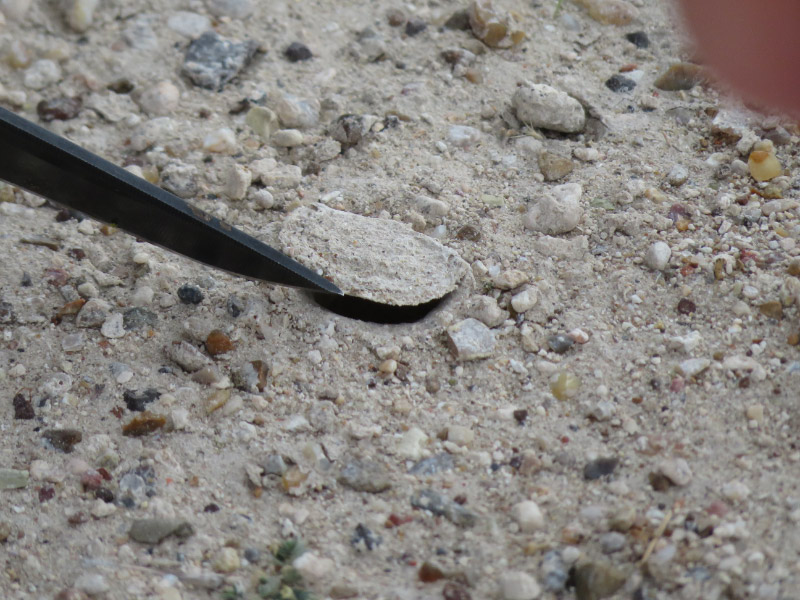
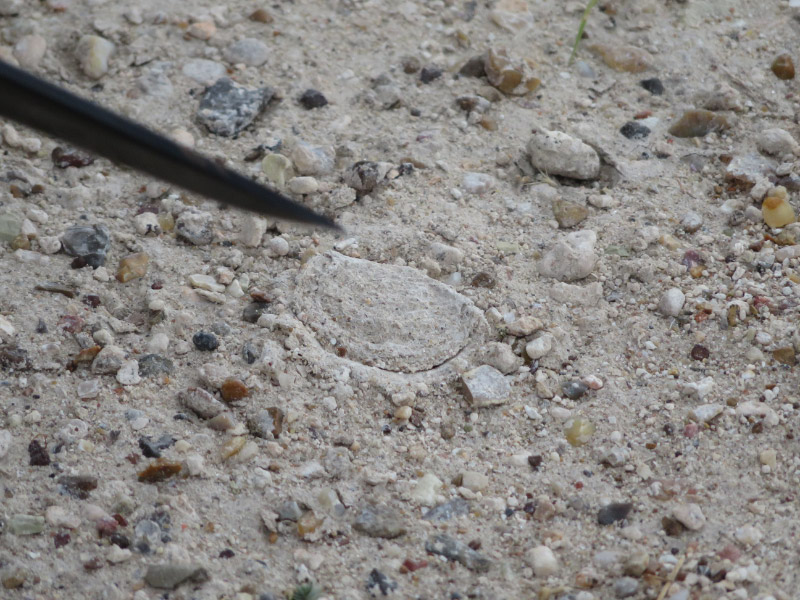
We were walking along the road back to our van when Benito spotted a trap door spider and gently opened it with his knife; I would not have spotted it on my own!

A culinary treat for dessert after our lunch – some cookies made with mesquite floor. Maryland does not have mesquite trees but maybe I can find some if I visit my family in Texas at the right time!

Gleanings of the Week Ending November 18, 2017

The items below were ‘the cream’ of the articles and websites I found this past week. Click on the light green text to look at the article.

The Acoustics of Ancient Greek Theaters Aren’t What They Used to Be | Smart News | Smithsonian – Legendary acoustics? Maybe not. But they are still very good even with the changes in the structures over time (pitting of smooth surfaces, no backdrops, etc.)

BBC - Future - The useless design features in modern products – copper rivets and watch pockets in jeans, cockpits with analog dials/leavers/knobs, and keyboard layout. The look of modern products has a lot to do with history!

Five Things to Know About the Yellowstone Supervolcano | Smart News | Smithsonian – I can remember my daughter being fascinated that Yellowstone is a Supervolcano when we visited. She was enthusiastic about finding a book about it and was puzzled when the person manning the bookstore seemed surprised that she wanted a book about super volcanoes!

Keeping Your Balance as You Age | Berkeley Wellness – Some reasons to do some balance exercises…and some easy ones that don’t need any equipment.

Some items about a favorite food around Thanksgiving: Pumpkin genomes sequenced, revealing uncommon evolutionary history -- ScienceDaily and 7 Pumpkin Recipe Ideas | Berkeley Wellness

Oldest recorded solar eclipse helps date the Egyptian pharaohs -- ScienceDaily – October 30, 1207 BC! A new calculation that, if accepted, could lead to an adjustment in the dates of the reigns of several pharaohs…enabling to date them precisely

Caribbean’s largest concentration of indigenous pre-Columbian rock art -- ScienceDaily - Artists before Columbus: New research on the Caribbean’s largest concentration of indigenous pre-Columbian rock art (how it was made, paint recipes). The pictographs are in very narrow spaces deep in caves. Follow the materials link at the bottom of the article to see some images. As I read the article, I realized that the research had probably been completed before the recent hurricanes.

Older Neandertal survived with a little help from his friends – Loss of a forearm, deaf…and he survived into his 40s…about 50,000 years ago.

The Weird Growth Strategy of Earth’s First Trees | The Scientist Magazine® - The first tree grew large very differently than modern trees!

4 Myths About Meditation and How to Overcome Them | Berkeley Wellness – For me – the ‘myths’ are no so important…the mediation is.

3 Free eBooks – November 2017

So many books….so little time!

Evans, Henry Herman. Botanical prints with excerpts from the artist's notebooks. San Francisco: Freeman. 1977. Borrow from Internet Archive here. This is a book available from Internet Archive that is loaned for 14 days. I loved the prints in this book…well work the look. I appreciate that a lot of books that were previous hard to access because they were still under copyright but out-of-print (and expensive if they were available on the used market) are being digitized and made available this way. Kudos to the Internet Archive and the people that are working to make it possible.

Godey, Louis A.; Hale, Sarah Josepha. Godey’s Lady’s Book. Published in Philadelphia. The Internet Archive has many volumes…particularly issues from 1864 available here. The illustrations are snippets of fashion history at the that the Civil War was ending; the magazine managed to stay surprisingly apolitical. What do you think about these bathing dresses from July 1864!

2017 11 ebook2.jpg

Wight, Robert. Icones plantarum Indiae Orientalis - or figures of Indian plants. Madras: Published by JB Pharoah for the author. 1840-1853. Six volumes (and other books by the same author) available from the Internet Archive here. I like the botanical drawings in these volumes as prompts for Zentangle patterns.

2017 11 ebook3.jpg

Gleanings of the Week Ending November 11, 2017

The items below were ‘the cream’ of the articles and websites I found this past week. Click on the light green text to look at the article.

Water striders illustrate evolutionary processes -- ScienceDaily – Water striders are one of the favorite of elementary school aged students on field trip hikes…next time I’ll have them look for ‘fans’ on the tips of their legs!

New Google Maps Feature Lets You Explore Planetary Maps – Google maps going outside of this world!

Virtual Library Card Gives Access to 2,000 Architecture Books Online – There are a lot of books on Internet Archive that are new enough to still be under copyright protection…but they are available for checkout modeled like physical libraries. This article points to the architecture books; there are other topics as well.

Why we still don’t understand sleep, and why it matters | Mosaic – Nacrolepsy…what has been discovered…but there is still happy ending for people with narcolepsy.

Photographer Captures the Beauty of Colorful Birds in a Series of Portraits – Pigeons, doves and cockatoos…what a trio!

(Some) Birds of the Pantanal – National Geographic Society – More birds. Couldn’t resist.

The History of Mincemeat Pies, from the Crusades to Christmas | Smart News | Smithsonian – A little history as we get closer to the winter holiday season.

Blood test can effectively rule out breast cancer, regardless of breast density: With over a 99 percent negative predictive value, a liquid biopsy test can help clinicians manage difficult-to-diagnose dense breast patients -- ScienceDaily – Hope this reduces the need for biopsies…and can be scheduled/processed more rapidly.

BBC - Future - An eco-friendly way to make smartphones – We have a long way to go to make smartphones in an eco-friendly way. The title of this article seemed hopeful but by the end, I was not sure that eco-friendly was motivating anything. Taking away China’s dominance of rare earth element production seemed the primary focus.

Transparent solar technology represents ‘wave of the future’ -- ScienceDaily – Wouldn’t it be nice?

All Day in a Symposium

Recently I spent a day at a symposium about the War of 1812. It was a learning experience for more than the topic!

I had not sat in an all-day meeting quite this dense with talks since I left my career about 5 years ago…and I was reminded how draining it can be. It is very difficult to be so sedentary for a day (and the chairs were more immediately uncomfortable).  Did I used to just accept this situation as ‘normal’?

I also have assumptions when it comes to food – that containers will be opened/unwrapped, that napkins will be available, that there are some ‘healthy’ choices. Those assumptions turned out to not be correct for the meeting and I realized that my history skews my views of how food is presented as well as the food itself. Maybe 20 years ago I would have accepted that there were no veggies offered…I am more particular now.

On the plus side – the talks were interesting and well presented. I lasted from 9-4 and then was too achy from the length of time in the unpadded chairs to stay for the last 2 hours. It was a day too long for me!

Nemours Mansion and Gardens – Part 2

2017 10 IMG_4824.jpg

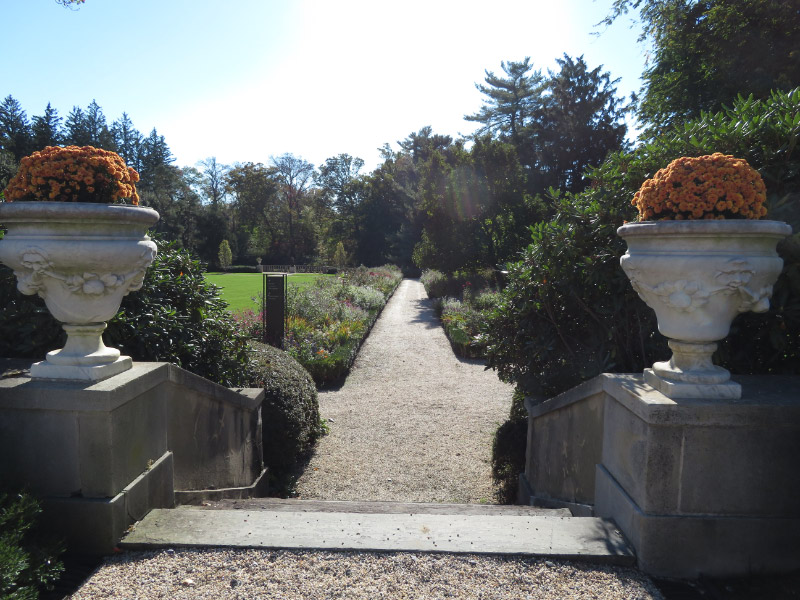
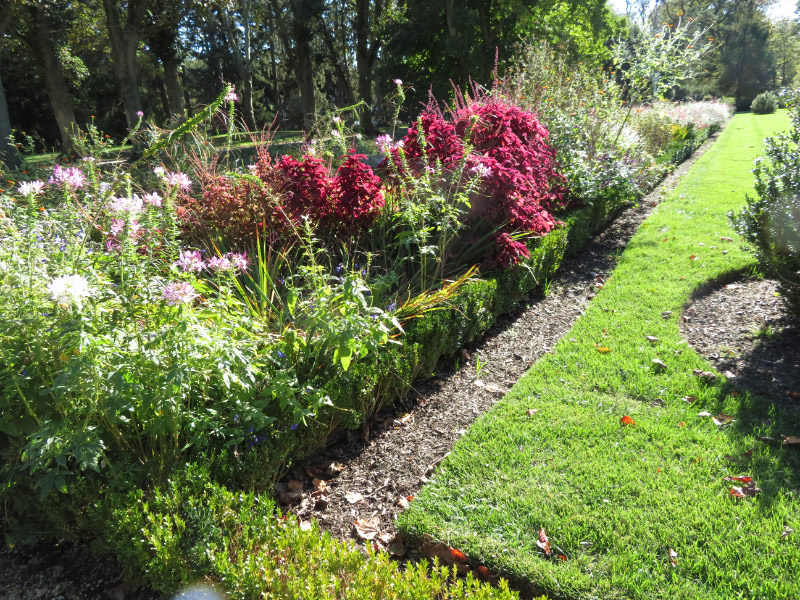
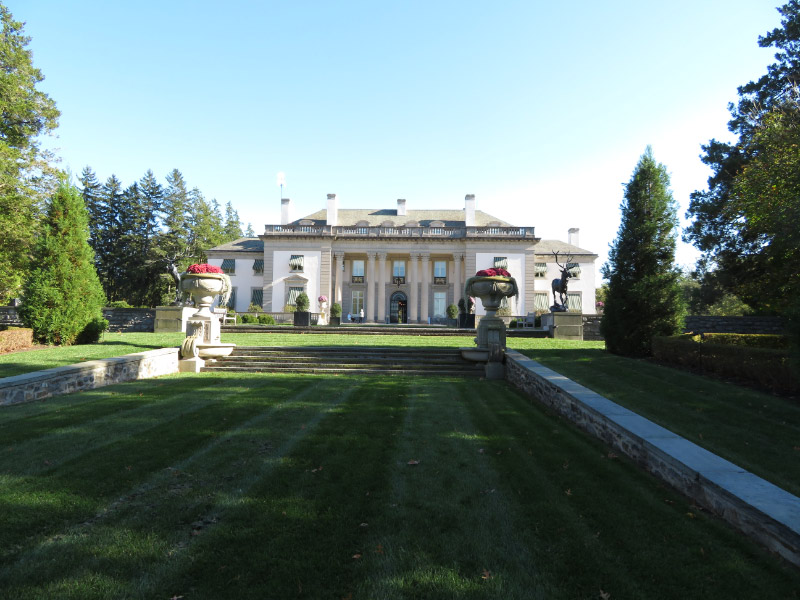
The gardens at Nemours are very well maintained. While we were there the big pool was being rebuilt; there was a lot of dirt! There are historical gates on the two sides of the house. The bus stops at the British one and across the front of the house is the heavier looking Russian gate.

The view from the front of the house is down hill to the mid-garden structures…female sphinxes on both sides of the porch.

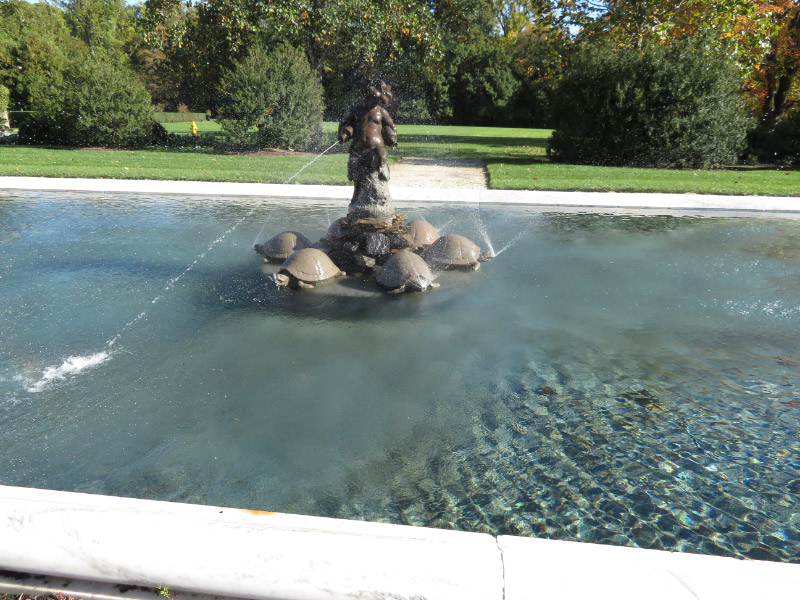
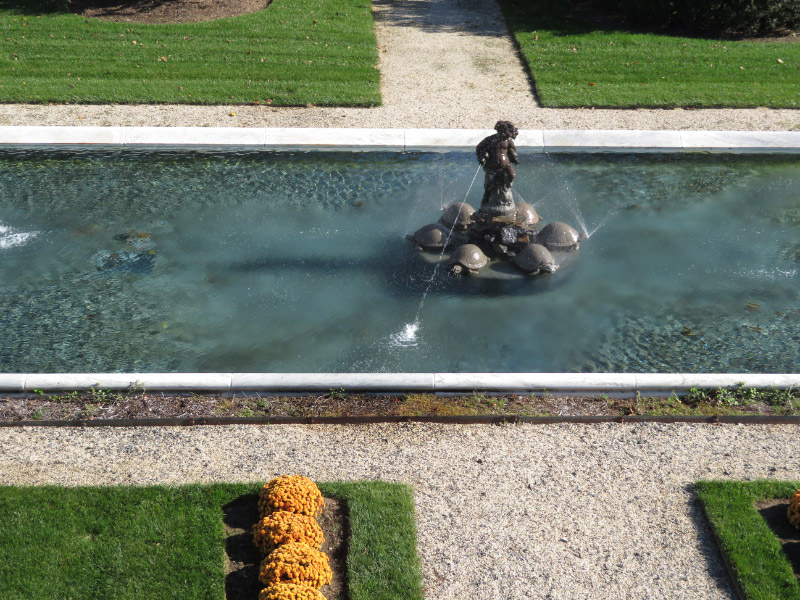
Walking around the house toward the Russian gate, the turtle pond garden can be viewed from ground level.

The weather vane glowed in the afternoon sun.

2017 10 IMG_4835.jpg

Looking back to the house walking down into the garden….

2017 10 IMG_4848.jpg

The maple tree lined drive used by the bus that carries everyone between the visitor center and the mansion (no pedestrian entrance or exit).

Many of the sculptures must be reproductions or otherwise very well maintained. The marble ones looked too good to be 1920s vintage.

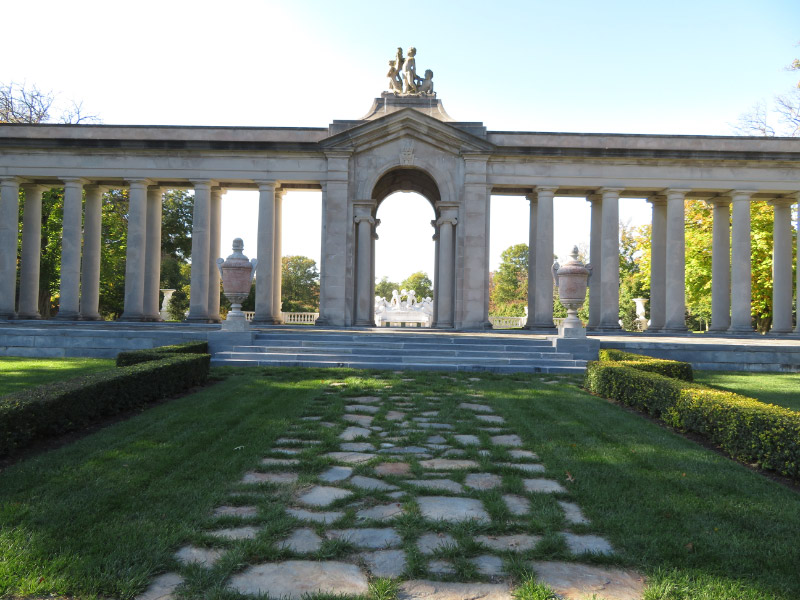
Structures divide the gardens into ‘rooms’ making the transition to less formality further from the house.

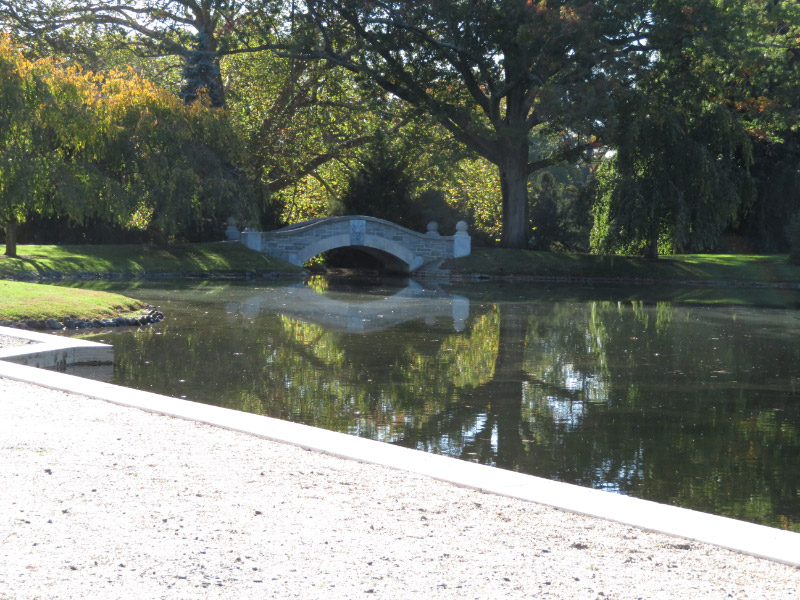
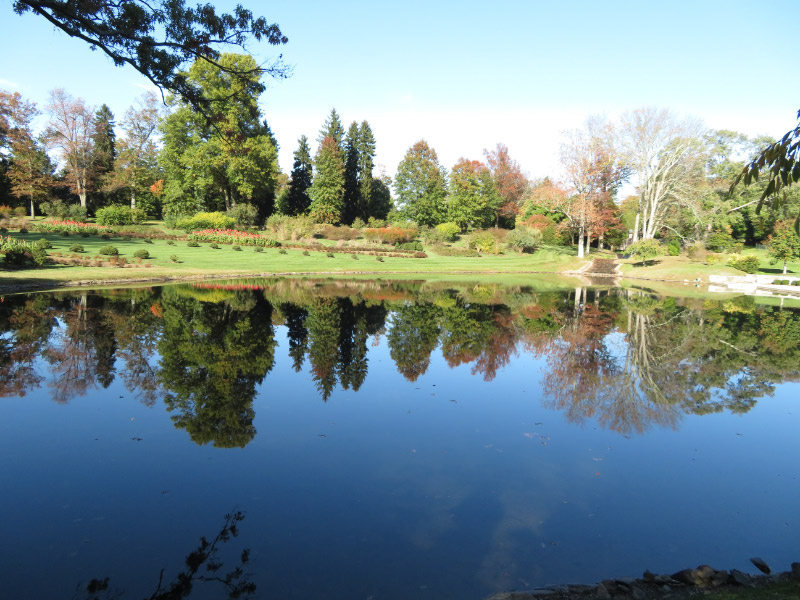
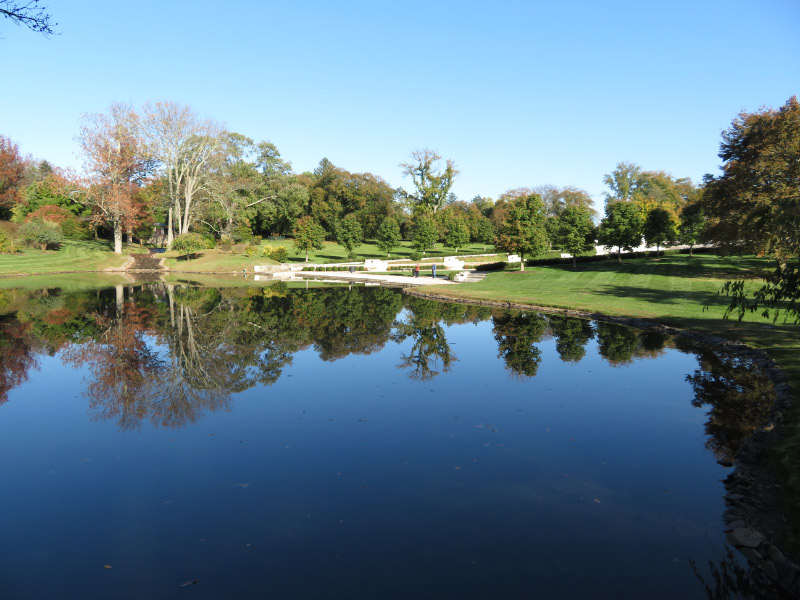
We noticed a bridge by one of the ponds and walked over. The reflections of trees in the pond viewed from the bridge was one of my favorite scenes of the garden.

2017 10 IMG_4882.jpg

There is a temple with a Houdon sculpture of Diana at the far end of garden. We walked toward the road and found the bus to take us back through the security fence to the visitor center.

2017 10 IMG_4866.jpg

Nemours Mansion and Gardens – Part 1

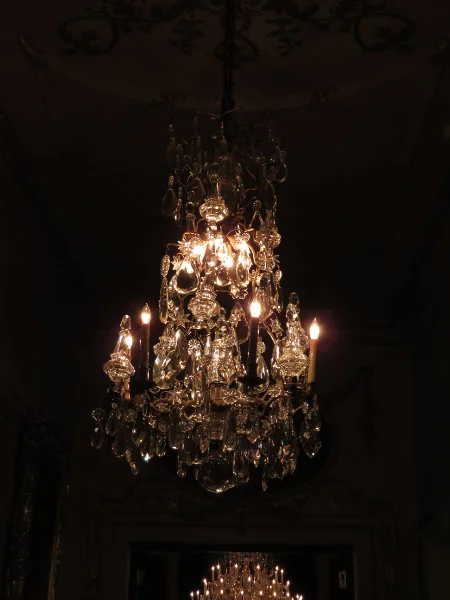
I had toured Nemours Mansion and Gardens (in Wilmington, Delaware) several times in the past but I had been more than 10 years since the last visit. A lot has changed. The tours are now self-guided and paced rather than guided…but the docents in the mansion are still very knowledgeable and welcome questions. One of the first questions I asked was about the chandeliers. The house used electricity from the beginning for lighting but many of the chandeliers were retrofitted – antiques by the time they were acquired for the house. One of the ones visible from the foyer has perfume bottles that diffused scent from the days it supported candles! There were chandeliers everywhere. Formal rooms, bedroom (my favorite is one with Murano Glass flowers) and handing in the curve of the grand stair case. Now the fixtures have LED bulbs (probably illuminating in a way that does the least damage to textiles and paintings).

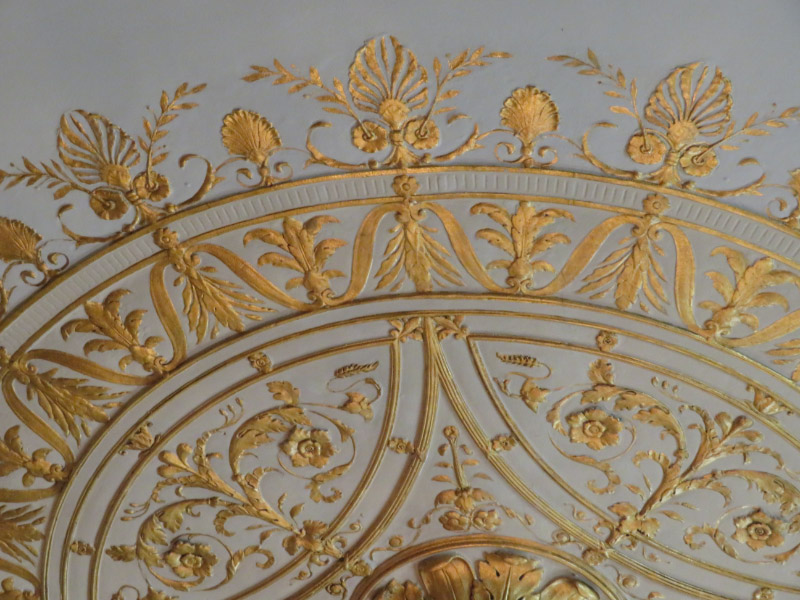
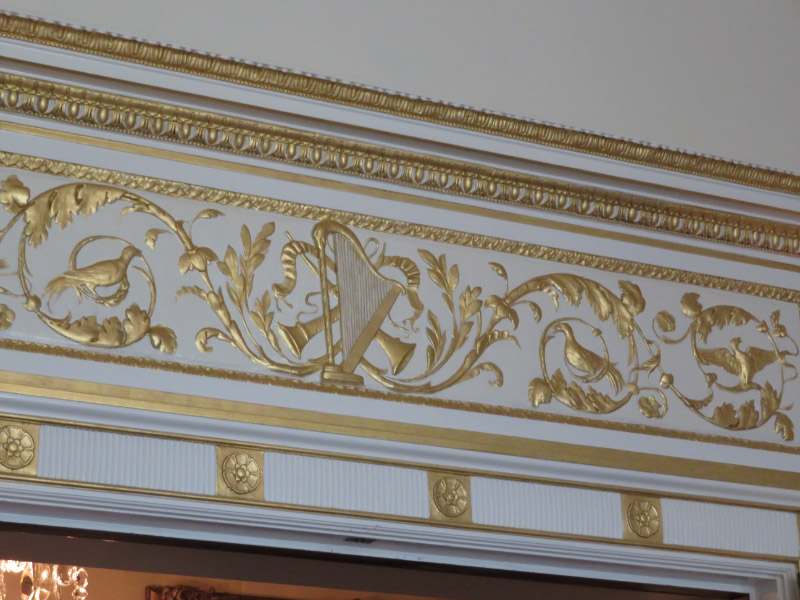
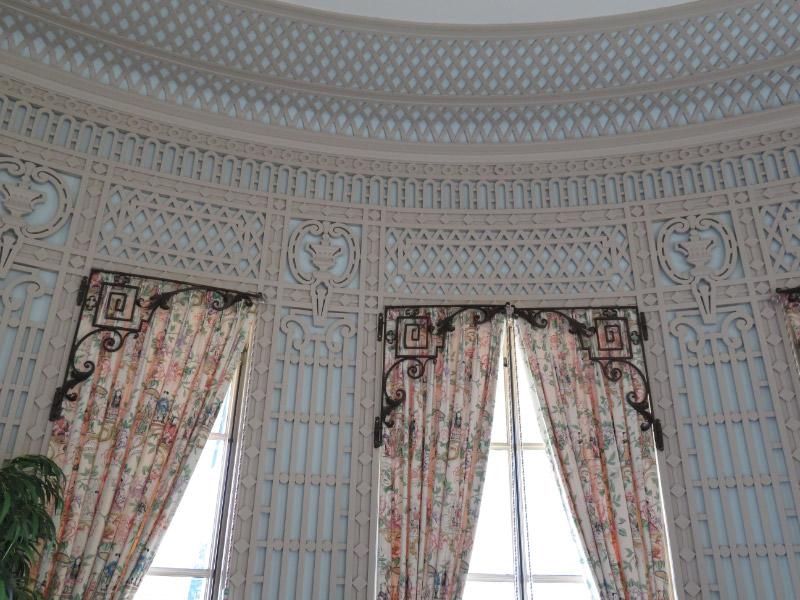
The ceilings and upper walls are also worth noticing….lots of variation in plaster and gold leaf.

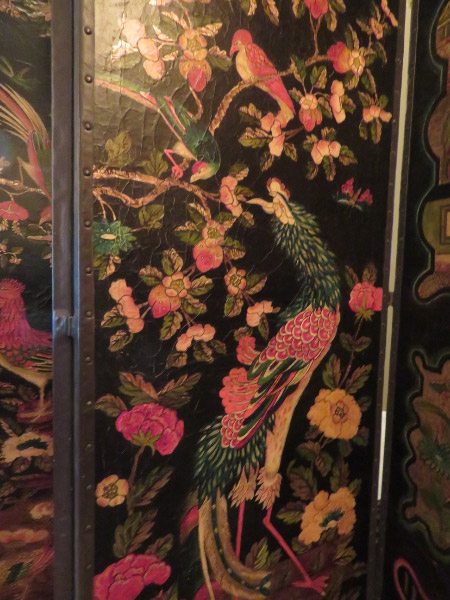
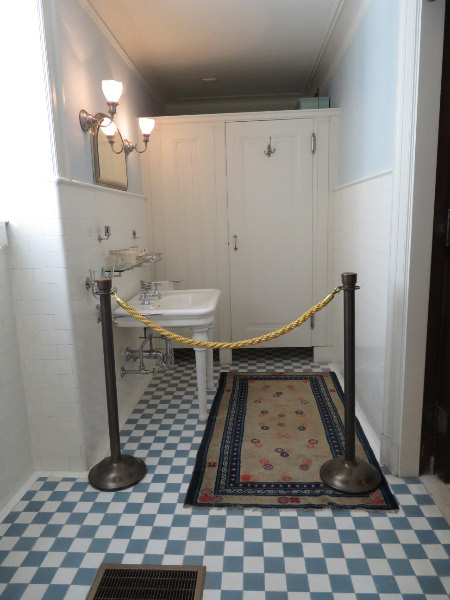
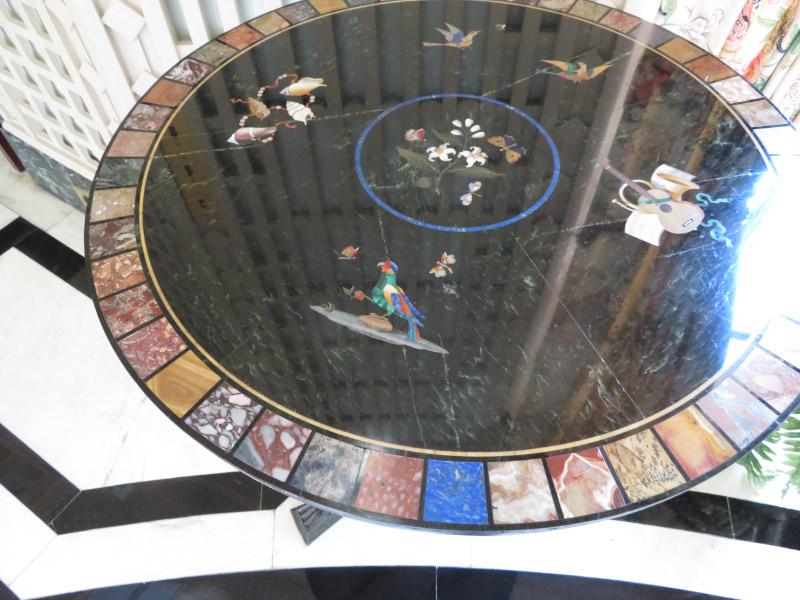
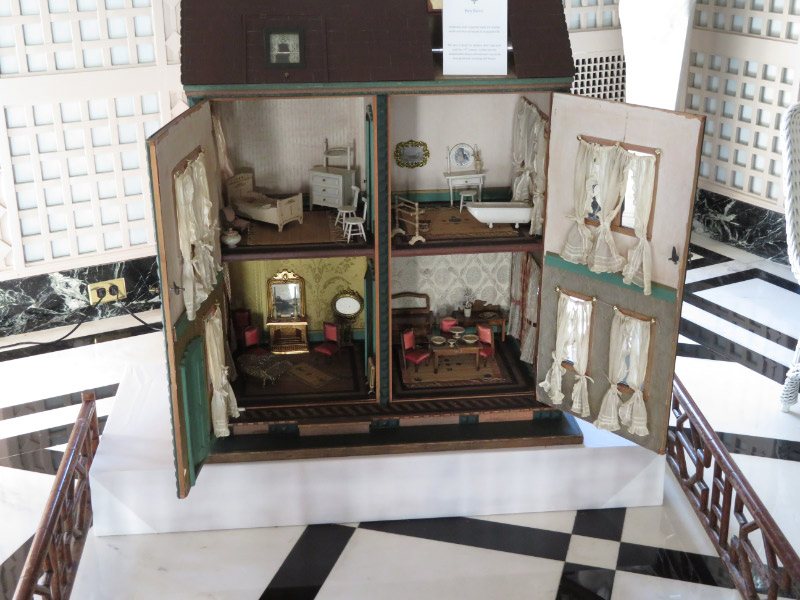
Everywhere one looks there are things to notice – cork on the kitchen and butler pantry floor, an elaborate leather screen and the powder room.

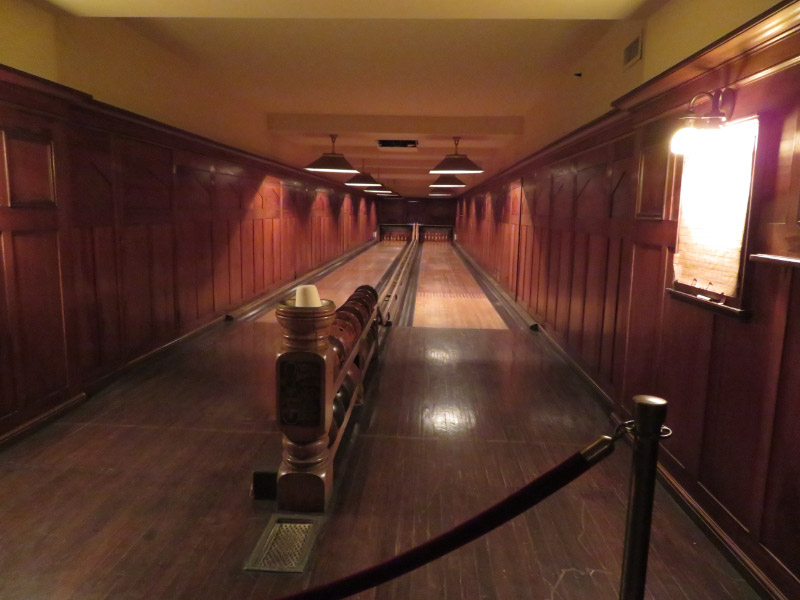
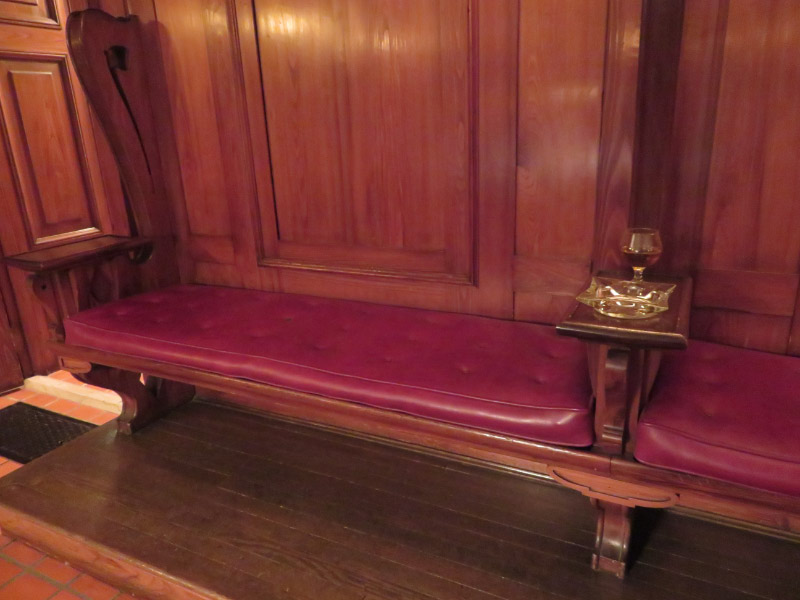
There is a basement with lots of dark woods with bowling alleys, built in benches around pool tables and A. I. duPont’s home office.

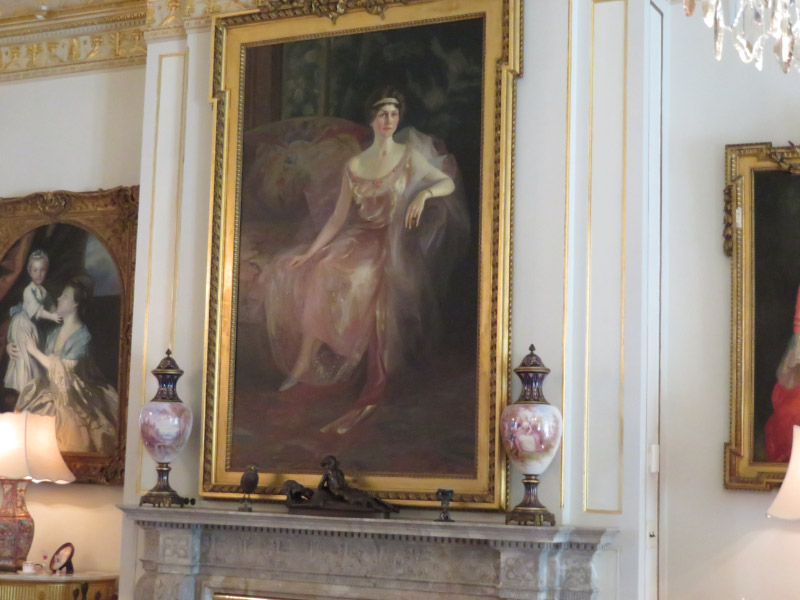
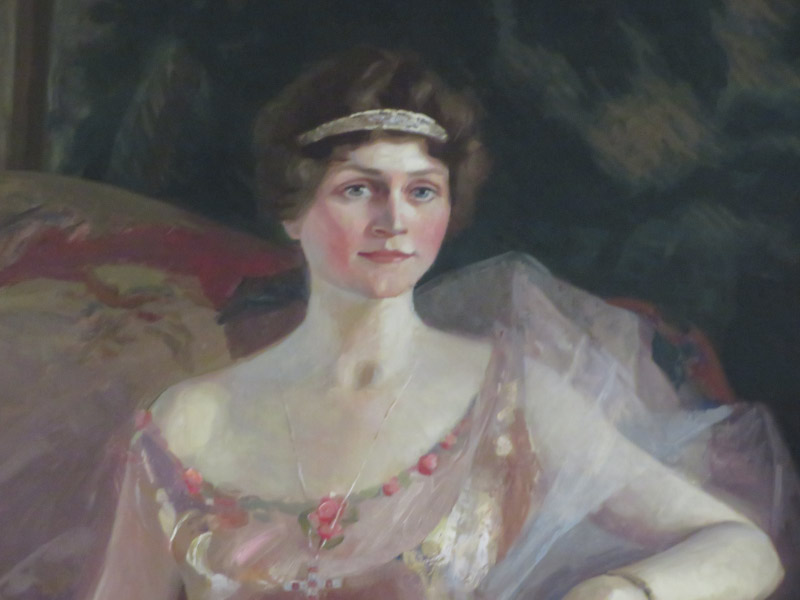
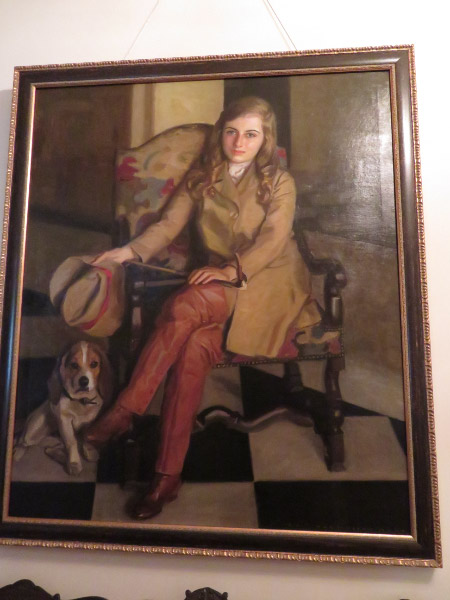
There are paintings of the inhabitants of the house: Jessie Ball duPont that lived in the house longer than anyone; she died in 1970 and the house was open to the house several years later.

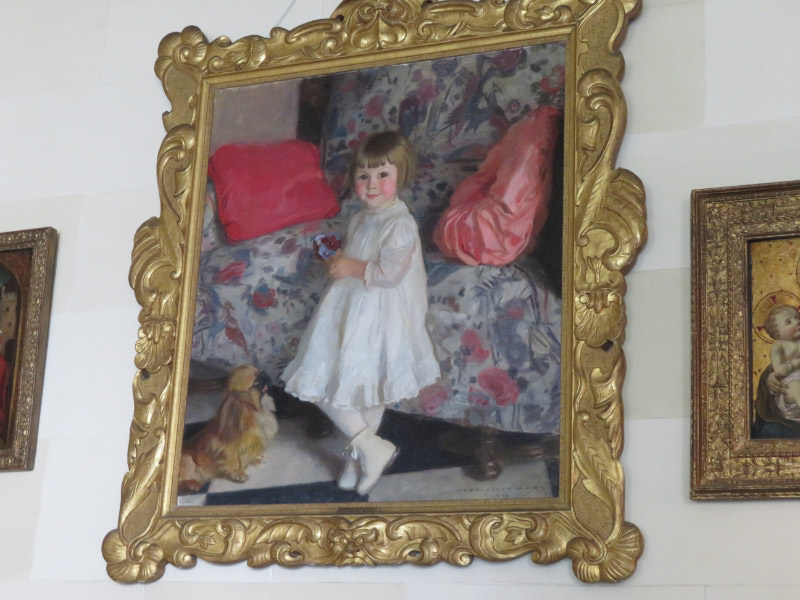
The little girl that grew up at Nemours has several portraits as well. The docent commented that the child came back to the house when she was very old and told them that the picture younger version was her favorite picture of herself….but she never liked that dog!

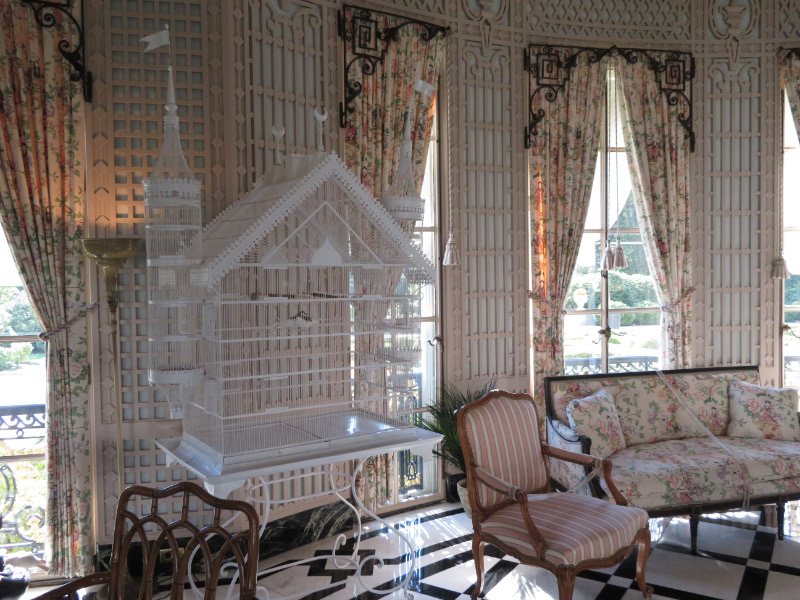
My favorite room in the house is the garden room – windows on 3 sides, black and white tile pattern on the floor, bird cages, and trellis on the walls.

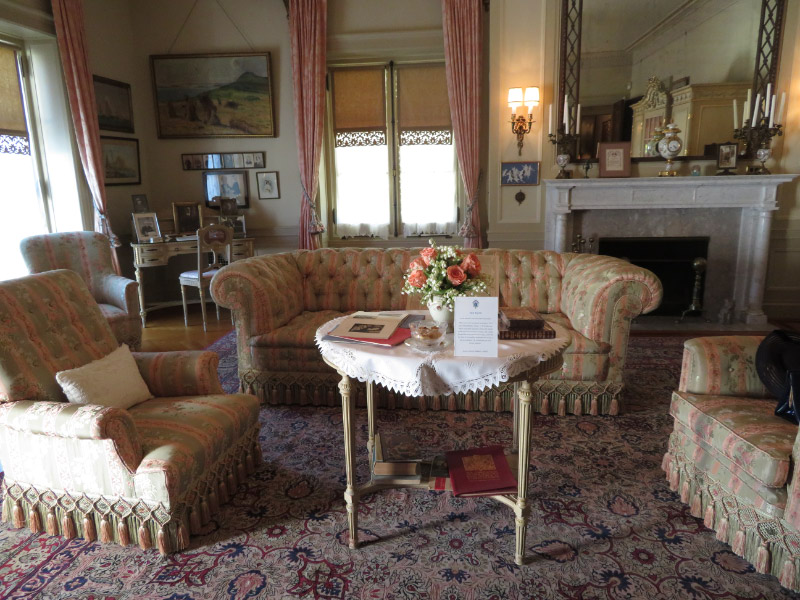
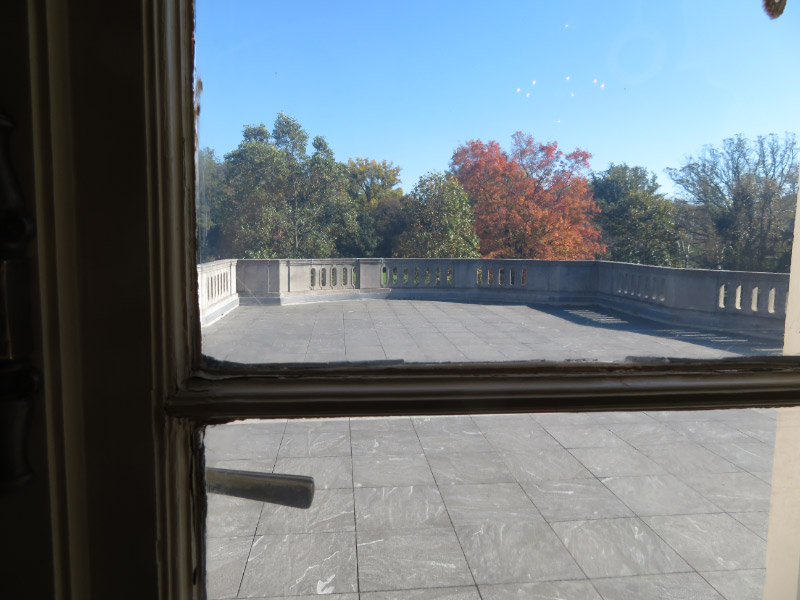
Above the garden room is a terrace entered from Jessie’s sitting room. The terrace is vacant now but had black wicker furniture when the house was occupied. It overlooks a garden with a turtle fountain.

Coming down stairs I noticed some laps with butterflies painted on the shades. Wish I was talented enough to paint a lampshade with butterflies!

2017 10 IMG_4792.jpg

After touring the house – the gardens beckoned. The gardens are the topic for tomorrow’s post.

Gleanings of the Week Ending November 4, 2017

The items below were ‘the cream’ of the articles and websites I found this past week. Click on the light green text to look at the article.

How to Access Your Medical Records | Berkeley Wellness – I like the patient portal idea…just wish that every provider seems to have their own separate one.

First floating wind farm, built by offshore oil company, delivers electricity | Ars Technica – Hywind Scotland began producing power in September…now delivering to the Scottish grid. The turbines don’t require a firm attachment to the seafloor…using suction anchors like offshore drilling.

Germany Sees Drastic Decrease in Insects | The Scientist Magazine® - This story was reported in several my the feeds I monitor. A 27 years study….insect biomass declined by about 75% in that time. And the sampling was done in nature preseves!

Symmetrical Eyes Indicate Dyslexia | The Scientist Magazine® - Interesting….but what next.

The Millipede That Protects Itself with Cyanide – Cool Green Science – We found millipedes at the Belmont BioBlitz…but not these cyanides producing ones. Still – fascinating critters of the forest.

Stone Age Britons Feasted While Building Stonehenge | Smart News | Smithsonian – Pigs – maybe fattened with something sweet, like honey – that came from all over Great Britain. Cattle to a lesser extent.

The Real-Life Whale That Gave Moby Dick His Name | Smart News | Smithsonian – A little history behind the novel.

Compound Interest - Broccoli colour changes and cancer-fighting compounds – I tend to eat broccoli raw but have noticed the color change when it is cooked – never thought about why it did.

Top 25 Wild Bird Photographs of the Week #110 and  #109 – Birds and more birds…I can’t resist including them.

Prozac in ocean water a possible threat to sea life -- ScienceDaily – Medications can have unintended consequences far beyond out intent.

Fall at Brookside Gardens

IMG_4658.jpg

Last week my sister and I walked around Brookside Gardens. As we parked I noticed a tall Bald Cypress that was dropping its needles – a good sign of fall. Up close the cones were still a little green compared to the needles.

IMG_4660.jpg

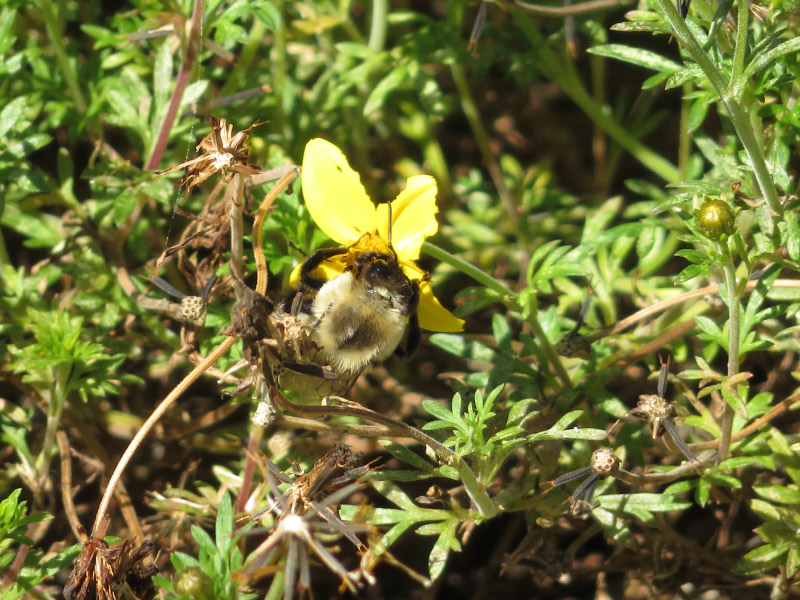
The gardens were full of plants that can survive the cooling temperatures for a little while. There was a new sculpture near the scent garden – a sphere of stones carefully pieced together without mortar. A few flowers were still blooming, and the bumble bees were active.

There was a monarch butterfly and I hoped that it would continue southward fast enough…not be caught here were we have our first frosts.

IMG_4679.jpg
IMG_4685.jpg

The area around the ponds and teahouse was partially closed (maybe some flood damage repair) but the bridge to the maze was a nice fall foliage scene. The maze itself has some sediment on one side – maybe washed there by recent rains.

IMG_4686.jpg

Inside the conservatory, it was warm and lush – as usual.

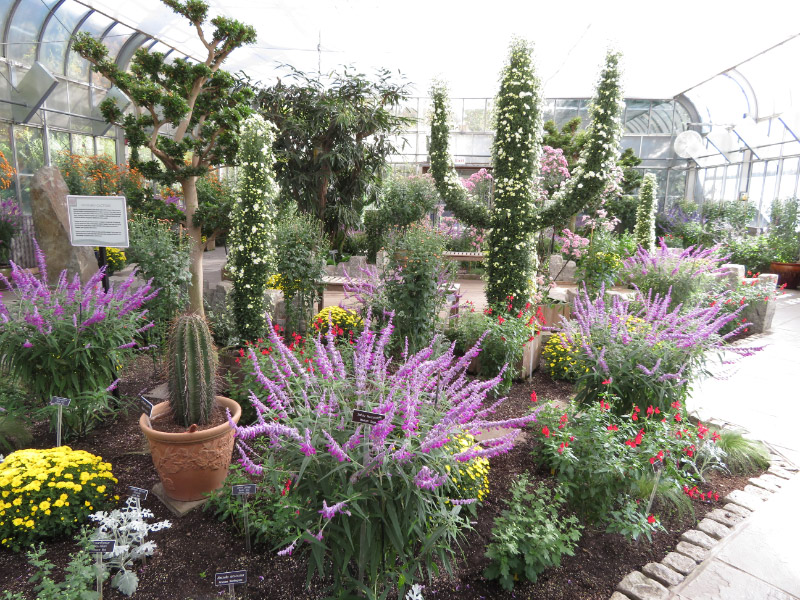
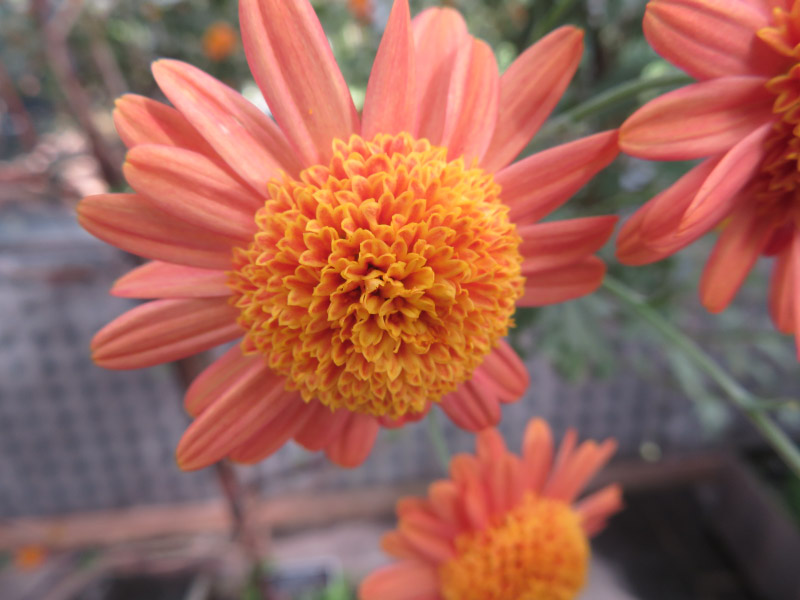
The part of the conservatory that will be used for model trains during the holiday light exhibit currently has mums. The plants were formed into saguaro cactus shapes this year! It was quite different than I expected…but pleasant. The plantings are in pots, so they can be repositioned when the trains to be installed just before Thanksgiving.