Laptop Trauma

My laptop is almost 4 years old…the warranty expires in mid-September. The only trauma I experienced with it up to this point was right after I got it and the Solid State Drive (SSD) turned out to not be compatible with Windows 10. A technician came to the house and installed a new drive. But now there are several things that have gone wrong.

The first was the machine not booting. It isn’t clear what happened overnight, but the upshot was the SSD was no longer bootable first thing Thursday morning. It was a horrible way to start a day. My husband had a thumb drive that we booted from and decided that the easiest way to recover was to do a Windows Reset. The positive aspect of that strategy is that it preserves the data files. The negative is that the applications are uninstalled. Aargh!

Another problem then became evident. While we were working directly with the laptop itself on the recovery process, we noticed that the mouse pad is bulging….a sign that the battery underneath is swelling – which is not a good thing at all.

20190809_152424.jpg

I’m not sure how long the problem has existed. For the past few months I’ve been using the laptop with a monitor and external keyboard (note the letters worn off the keys of the keyboard…it’s a good thing I am touch typist).

20190809_152601.jpg

I called Dell and will be sending it in for battery replacement and general hardware checkup and cleaning…the last (and only second) warranty work on the machine. It should be back by Wednesday. My husband has graciously said I can use his laptop until mine is returned and I have my external drive with everything I need ready to go. Still – I am a little discombobulated at being without my (up until now) very dependable laptop.

Sometime this fall, I’ll probably buy a new laptop…maybe the top of the Dell XPS 13 line. It’s what I did last time and they’ve gotten even better in the last 4 years.

Gleanings of the Week Ending August 10, 2019

The items below were ‘the cream’ of the articles and websites I found this past week. Click on the light green text to look at the article.

Top 25 Wild Bird Photographs of the Week: Green – National Geographic Society Newsroom – Starting off the gleanings list with birds this week – green ones.

Indigenous Maize: Who Owns the Rights to Mexico’s ‘Wonder’ Plant? - Yale E360 – The nitrogen fixing maize --- farmed in Mexico – but who will profit if the trait is replicated in corn to feed the rest of the world.

Vast majority of dietary supplements don't improve heart health or put off death, study finds -- ScienceDaily – Massive analysis…277 clinical trials. The supplement industry is large and advertises; how do studies like this counteract that even if the supplement in many cases is having only a placebo effect.

Brothers Use Drone to Reveal Beauty of Ordinary Objects – Art of objects seen from above.

Making HVAC heat exchangers five times better -- ScienceDaily – We’re going to need all the innovation we can muster to get air conditioning more efficient…and power it with renewable energy.

BBC - Future - Do we need to walk 10,000 steps a day? – Hint – 10,000 is not a magic number at all. I’ve had my goal set at 12,000 steps for quite some time. I make it when I am home but am usually challenged when traveling.

Toyota plans to launch its first full EVs, in a deal with China’s BYD - MIT Technology Review – I hope by the time I get ready to replace my Prius Prime there are a lot of EVs to choose from!

What it Means to Design with Nature in 2019 - News | Planetizen – Is this the thinking of all design going forward?

A Fungus Is Now Infecting Humans & Global Warming May Be to Blame | CleanTechnica – Candida auris started showing up in humans in 2009 and it is multiple drug resistant already. New research is indicating that the fungus might have adapted to warmer temperatures until it can now multiply in the human body…which it couldn’t before.

Water Cycle is Speeding Up Over Much of the U.S. – Lots of changes in the time period between 1945 and 2014.The article includes a color-coded map. It will be interesting to see if the trends continue over the next decade

Deborah Griscom Passmore

The Deborah Griscom Passmore watercolor album was made available on Internet Archive last May. She always meant to publish the album as “Wildflowers of America” but never got around to it before she died in 1911 at age 70. Enjoy a few more sample images from this album below and kudos to the USDA archivist that is making these available now.

Based on the biographical paragraph on the catalog page for the book on Internet Archive, the typed biography and  3 obituaries from 1911 taped into one of the early pages of the book and scanned, and the Wikipedia article about Passmore, I started looking for some more of her work. There are 1525 of her works in the USDA Pomological Watercolor Collection available online here. They are not as easily browsed as the books are within Internet Archive. Some of them are included in the “Promising New Fruits” articles of the Yearbook of Agriculture beginning in 1901; those volumes are available on Internet Archive but it’s a few pages out of almost 1000. I discovered that I had found her cactus illustrations in Botanicus back in 2010 (another female artist , Mary Eaton, was the primary artist) but they are more easily browsed on Internet Archive (here). I’m putting them on my list to look at again!

Jane Webb Loudon and Gardening

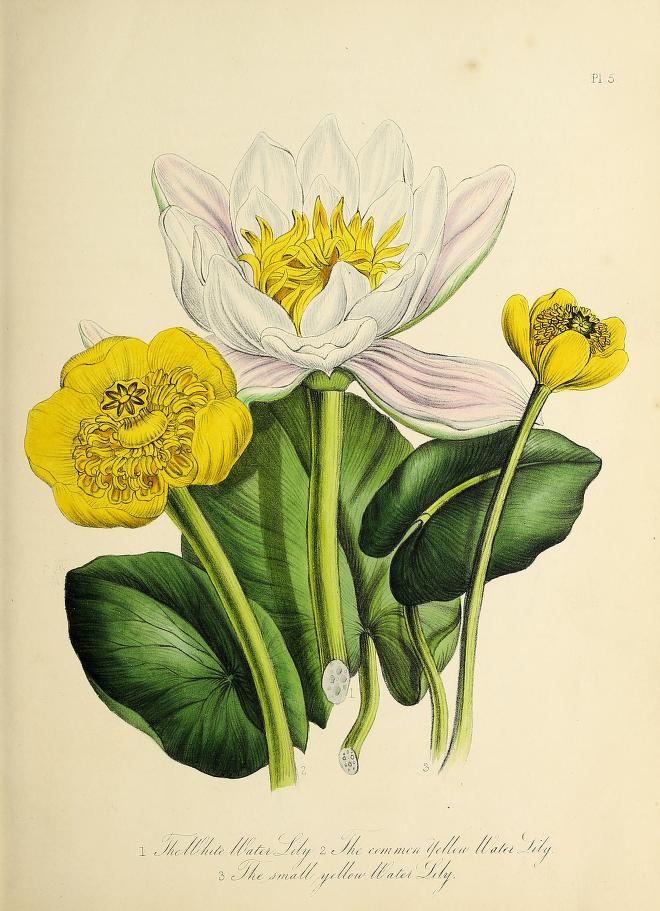
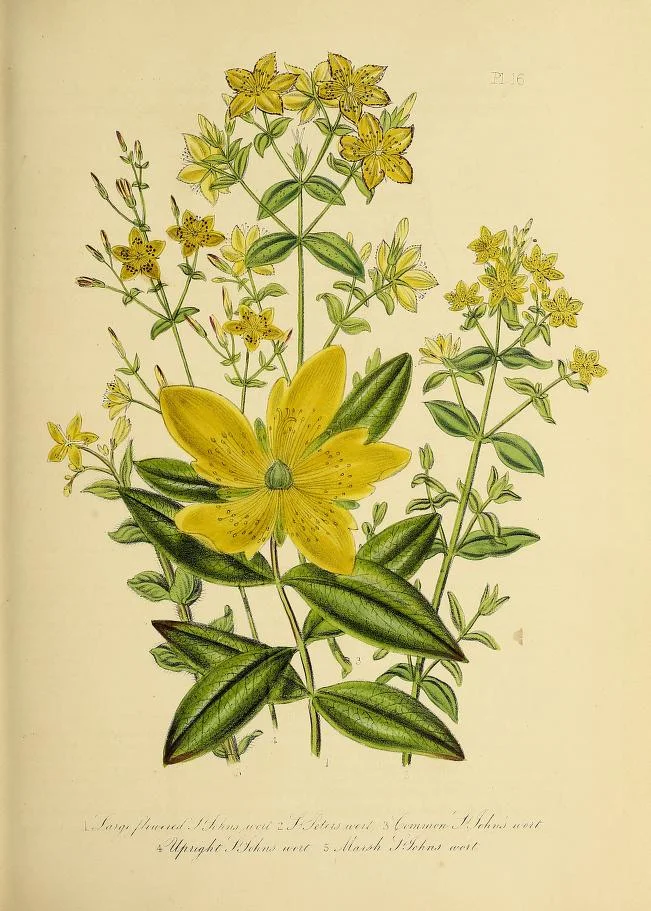
Jane Loudon started out her writing career in 1827 with a three-volume science fiction novel (before the genre was named) describing a future filled with advance technology…and featuring a reanimated mummy. By the 1830s she shifted the focus of her writing to making gardening more appealing to young women. I had read her gardening books available on Internet Archive previously but there was a new book from her that became available recently: British Wild Flowers published in 1846 (available on Internet Archive here). It is a great addition to my list of botanical eBooks (here). Enjoy 6 sample images from the book!

Summer Camp Volunteering – week 2

The theme for last week’s Howard Count Conservancy’s summer camps was ‘Fantastic Beasts.’ I spent a morning at Mt. Pleasant and the next morning at Belmont. At Mt. Pleasant there were three groups of campers….45 minutes for each. I used the dinosaur and mammal track rock found at NASA Goddard (saw it back when I was in the HOLLIE program) to initiate the conversation about extinct animals and fossils. There were some fossil shells from Calvert Cliffs and some of the campers had been there to explore themselves. I had on my ammonite shaped earrings too.

2019 07 IMG_5059.jpg

Then for some action: Two pans of water, a measuring tape and white board. A person put one foot into each pan (shoes on) and then stepped out and walked normally. The measurement team (usually two campers) measured heal print to heal print to determine the walking stride length. We measured the walking stride of the tallest and shortest in each group (and then everyone else because everyone wanted to know their stride length…or game it and take extra-long steps!). In the oldest group of campers, we measured the running stride (heel first and on toes). It was a great activity to further explore what information can be gleaned from tracks.

We transitioned into evidence of animals living today with some whelk shells and egg cases found on a beach. Some campers were surprised that the whelks were animals that still live in the ocean along the east coast of the US.

2019 07 IMG_5062.jpg

One of the junior counselors had participated in a dinosaur dig in Montana…and shared some pictures for her adventure with the campers.
It was a busy 45 minutes!

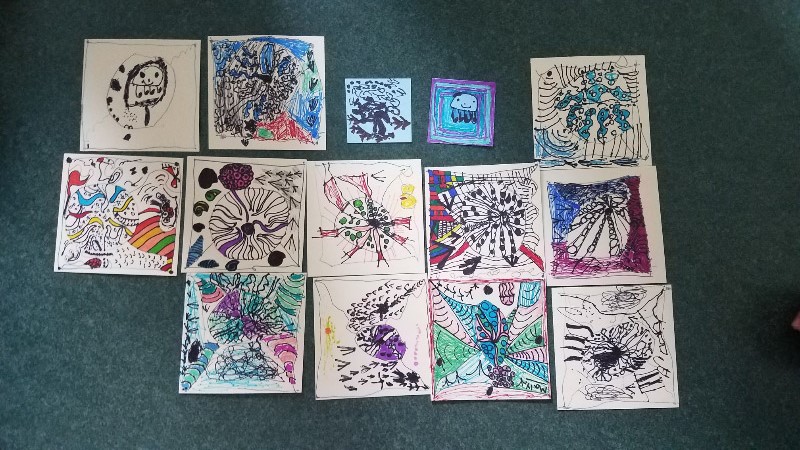
At Belmont, there were two groups of campers making Zentangle® tiles. I introduced the session using the NASA Goddard rock, the welk shells and my ammonite earrings….and then showed them patterns for beasts. The first group (younger) made octopus/jelly fish and tracks. The second group experimented with an ammonite type pattern, tracks and shells. The theropod tracks were the most popular. Many made some big therapod tracks and then some small ones (moms with babies). A variation from one camper: a therapod track….then a blank area where the therapod flew….then more tracks. One camper made mammal tracks. Both groups enjoyed adding colors after they made their patterns with the black Sharpie ultrafine pens.
--

The Zentangle® Method is an easy-to-learn, relaxing, and fun way to create beautiful images by drawing structured patterns. It was created by Rick Roberts and Maria Thomas. "Zentangle" is a registered trademark of Zentangle, Inc. Learn more at zentangle.com.

Gleanings of the Week Ending August 3, 2019

The items below were ‘the cream’ of the articles and websites I found this past week. Click on the light green text to look at the article.

Dive beneath the pyramids of Egypt’s black pharaohs – The challenge of excavating a 2,300-year-old tomb that is submerged in rising groundwater.

Another Fire in Greenland – There have been more reports of fires in the far north this year. Evidently warm dry air causes Arctic circle landscapes (that are not ice and snow) to be very flammable…fires start and burn quite easily.

Top 25 Wild Bird Photographs of the Week: Pigeons and Doves – National Geographic – I was surprised at the diversity of these birds.

Call for green burial corridors alongside roads, railways and country footpaths -- ScienceDaily – I wonder how many other countries have a similar problem. Space for burials is probably already a challenge for almost all large cities.

How the sound in your office effects your mood – Aural architecture….how we listen to buildings, the sound within buildings, and how we react. It isn’t considered very often in the current built environment except for things like concert halls and sound proofing. Maybe in the future it will be. One segment of the article talked about the need for quite and nature sounds in city soundscapes…much better than sirens and traffic noise.

Air pollution speeds up aging of the lungs and increases chronic lung disease risk -- ScienceDaily – A large study…another reason to do everything we can to improve air quality.

Banding Hummingbirds – Banding larger birds has it’s challenges but a hummingbird….I’d never heard someone describe it. Kudos for the people that have the touch to do it well.

Engineers develop chip that converts wasted heat to usable energy -- ScienceDaily – Interesting idea…I wonder how long it will take to get this type of technology into laptops and solar panels?

How a Pokémon-like Card Game Is Changing the Way People Learn About the Environment – What a good idea. I hope more teachers start introducing their students to the Phylo game!

Solar panels cast shade on agriculture in a good way – Research from the University of Arizona…how solar panels could shade plants to help them survive in a hotter environment…and the plants help cool the air under the solar panels as they produce electricity! The plants that might do best are the leafy greens that tend to wilt in the mid-day heat. The leaves grow bigger in the shade too! Production of nutritious food and renewable energy in the same system.

3 Free eBooks – July 2019

So many good books…so little time.

04g 19 07.jpg

International Museum of the Horse. A Gift from the Desert: The Art, History and Culture of the Arabian Horse. Lexington, Kentucky: International Museum of the Horse. 2010. Available from Internet Archive here. This is the illustrated catalog from an exhibition held in 2010; the presenting sponsor was the Saudi Arabian Equestrian Federation. The photographs of objects and locations included in the digital book tell the story more than the words.

Bing, Siegfried (editor). Le Japon artistique : documents d'art et d'industrie. Paris: Librairie Centrale des Beaux-arts. 1888. Available from Internet Archive here. The French version of a magazine that appeared simultaneously in English, French, and German. It helped introduce Japanese art and artworks to the West. I had previously looked at the English version but didn’t realize they were the same thing until I looked back at my master booklist. I still enjoyed the illustrations…again.

44c 19 07.jpg

Gould, John. The Birds of Australia. London: R and JE Taylor. Seven volumes originally published in the mid-1800s and available from Internet Archive here . The illustrations are probably the work of his wife – Elizabeth Gould. She died in 1841 shortly after giving birth to her 8th child. It wasn’t until 1938 that a collection of her letters from Australia were discovered and became the basis for a biography.

Gleanings of the Week Ending July 27, 2019

The items below were ‘the cream’ of the articles and websites I found this past week. Click on the light green text to look at the article.

Narwhals and belugas can interbreed -- ScienceDaily – It is a unique case….apparently not something that is common at all. It also utilized some relatively recent analytic tools to determine that the hybrid was a first-generation hybrid between a female narwhal and male beluga…and it was a bottom feeder rather than feeding like either of the parents.

Photography in The National Parks: Where Will That Trail Take You? Creating A Theme – For me - themes most often emerge from the experience rather than something I think about specifically in advance.

'Anthropocene Project' Artfully Captures How Humans Change Earth's Landscape: Goats and Soda: NPR – Some photographs from an exhibit currently in Bologna, Italy…depicting obvious, physical incursion on the Earth’s landscape created by humans.

Photographer Explores the Quiet Beauty of Venice at Night – A very different perspective on the city…sinking in its lagoon.

'Bathtub rings' around Titan's lakes might be made of alien crystals -- ScienceDaily – Rings made of solid acetylene and butane – maybe. It’s what happened in the lab. A spacecraft will need to visit Titan to know for sure.

Top 25 Wild Bird Photographs of the Week: July – National Geographic Society Newsroom – Birds!  There are so many different kinds out there.

Cholesterol medication could invite diabetes, study suggests: Patient data shows association between statins and type 2 diabetes -- ScienceDaily – A drug prescribed to reduce risk of heart attack and stroke…doubles the risk of diabetes diagnosis which would require other drugs to treat…for the rest of the person’s life. Not a good prospect.  

The Pomological Watercolors: A Collection of Watercolor Fruit Paintings – Watercolors of fruits and nuts created over 56 years beginning in 1886 by the US Department of Agriculture. They have recently been digitized and are available via the Pomological Watercolor Database. It’s not as easy to browse as a book in Internet Archive, unfortunately.

Ice Cores Preserved 1,500 Years of Industrial Lead Levels - Archaeology Magazine – I was surprised that lead levels in the atmosphere now are 60x higher than in the medieval period and that is an 80% decline since the enactment of the 1970 Clean Air act in the US. How is the lead in the air we breathe impacting our cognition – particularly for children?

Found: An ‘Undisturbed’ Roman Ship Near Cyprus | Smart News | Smithsonian – Lots of amphorae. Cyprus’ location would have made it a link on the trade route that spanned the Mediterranean but studying a wreck like this one could fill in more of the details.

Road Trips to Springfield, Missouri

I’ve now made 3 road trips from Maryland to Springfield, Missouri  (one in June and 2 in July) so I am getting familiar with the route. It’s a two-day trip which I prefer to do with one slightly longer day. On one of the trips to Springfield we drove from near Pittsburgh to Springfield in one day….and I won’t do that again. Springfield, Ohio is a good midway point that my daughter picked (she liked the idea of going from Springfield MO to Springfield OH); it is my preference too.

I’ve learned where there is hard driving (lots of curves and trucks going at high speed) and where the current construction is. Hopefully the construction will be mostly done by the next time I go and there might be a better route through the Alleghenies that we’ll try.

20190716_064523.jpg

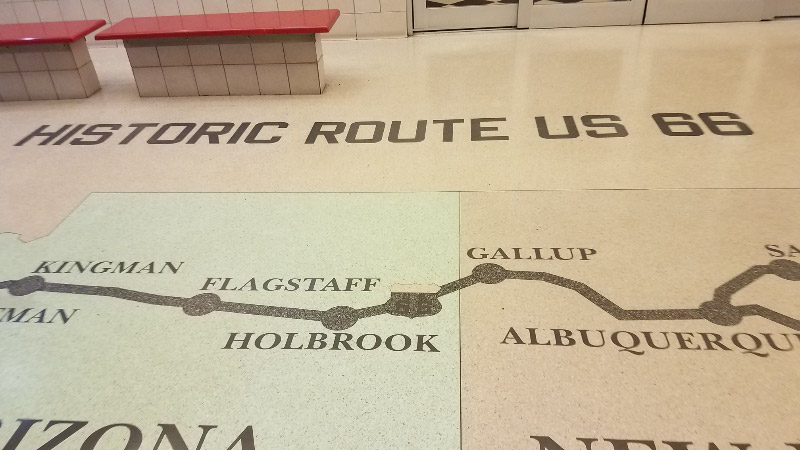
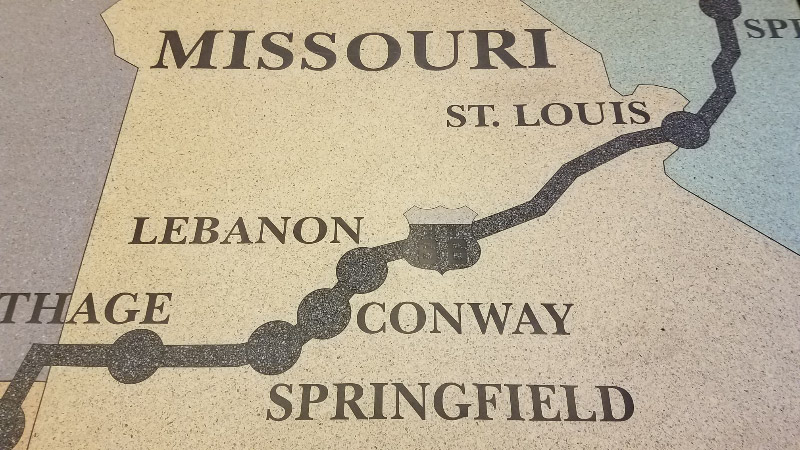
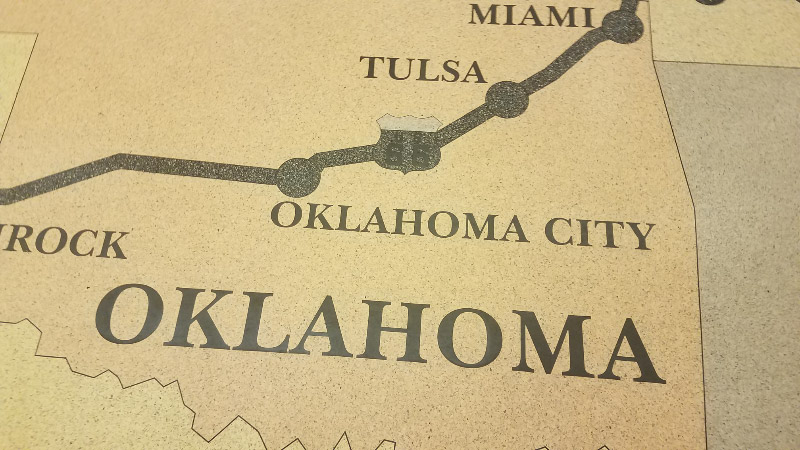
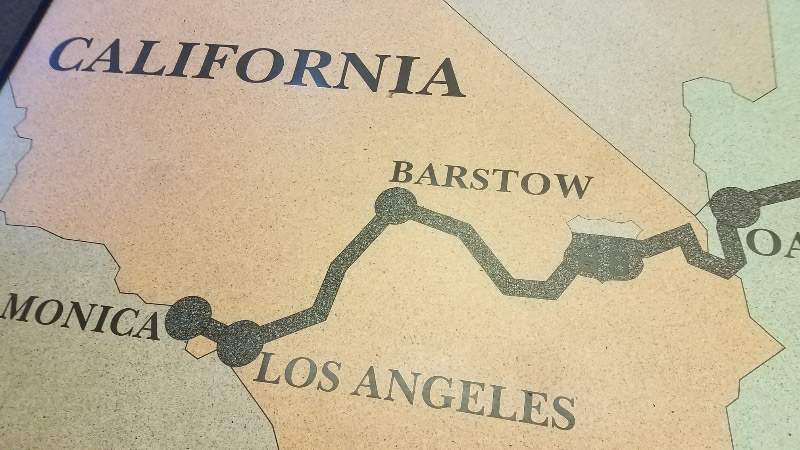
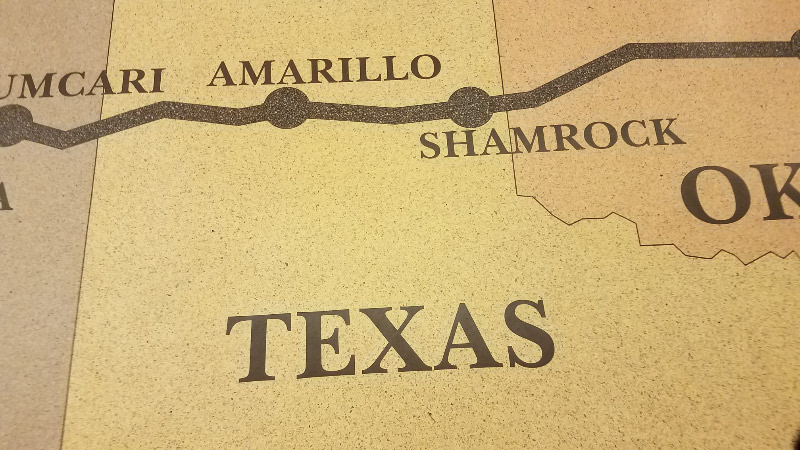
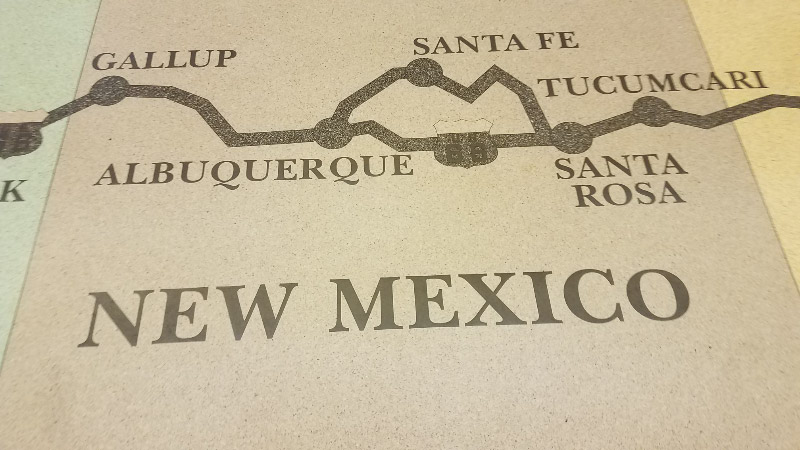
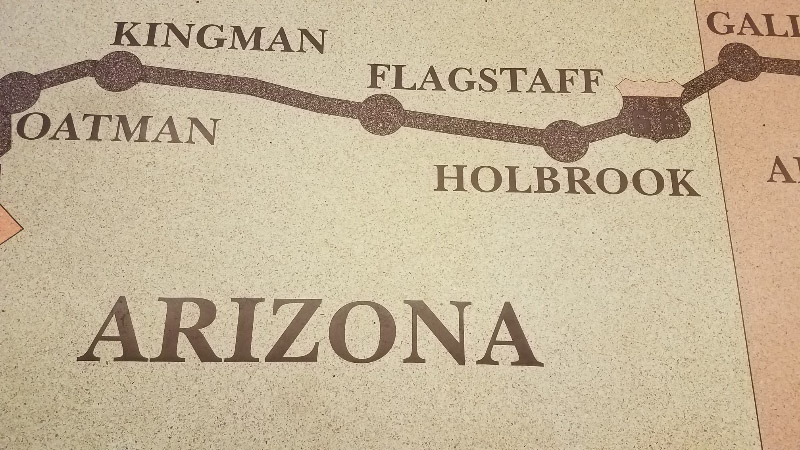
There are two favorite rest stops along the way. One is close to Springfield and focused on Route 66 which makes a diagonal path through Missouri from St. Louis angled toward Tulsa, Oklahoma. They have a map on the floor of the rest top.

20190716_152810.jpg

2)The other rest stop was in Indiana and I like it for two reasons: 1) It has plants that remind me of my grandparents in Oklahoma back in the 60s. They grew ‘rubber trees’ indoors in the winter then put them out in the flower beds near the house in the summer…almost burying the pots…then trimmed them back and brought them indoors for the next winter. This rest stop has the plants in the center planter inside the rest stop!

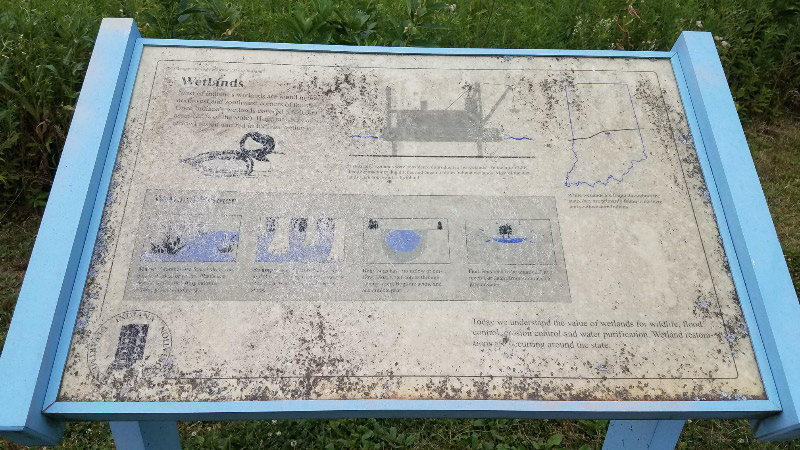
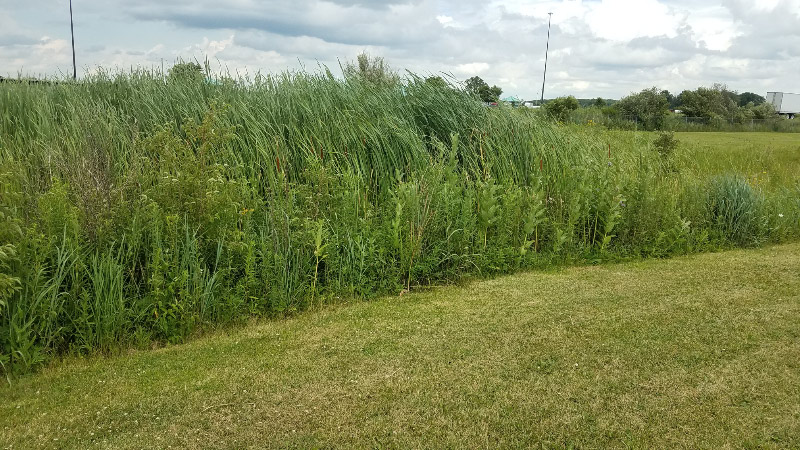
The rest stop also had ‘pocket wetlands’ on two sides. The red-winged blackbirds were numerous, and I heard frogs as well. The sky was threatening (thunderstorm imminent) and we were pushing to get to the hotel before the storm, so I didn’t have time to investigate more. Maybe next time. ..

Gleanings of the Week Ending July 20, 2019

The items below were ‘the cream’ of the articles and websites I found this past week. Click on the light green text to look at the article.

Top 25 Wild Bird Photographs of the Week: Conceal – National Geographic Society Newsroom – Starting out with bird images this week. The first picture in this series … a little owl … is my favorite.

Ghost orchid pollination revealed for first time in incredible photos – I heard about ghost orchids at the Space Coast Birding and Wildlife Festival…so enjoyed this article (includes a video)

Centennial E7 - Night of the Killer Smog - Third Pod from the Sun - AGU Blogosphere – A little history of air pollution events that spurred the Clean Air Act of 1970.

Biomedical bleeding may impact horseshoe crabs' spawning behavior and movement -- ScienceDaily – My interest in horseshoe crabs has increased since the Cape May Birding Spring (birding) Festival.

BBC - Future - The poisons released by melting Arctic ice – Observations of a warming Arctic….some surprising even to scientists that study the area.

When Will Renewable Energy Prices Stop Dropping? | CleanTechnica – The question becomes…where the tipping point is when almost everyone is using renewable energy for just about everything….at home…on the road…at work.

How Much Nature Is Enough? 120 Minutes a Week Doctors Say | Children & Nature Network – The study included data from 20,000 people in England and was conducted from 2014-2016. 120 minutes a week was the answer. I wonder what factors might make it different – age, culture, environment, etc.

Clouds and Rain Carry a Menagerie of Photosynthetic Microbes | The Scientist Magazine® - Life in the atmosphere.

Are doctors treating more thyroid cancer patients than necessary? -- ScienceDaily - New research may help change treatment practices for patients diagnosed with low risk thyroid cancer. Sometimes doctors opt for maximum treatment and the treatment ends up being worse than the disease would have been.

Monarch Butterflies Born in Captivity Have Trouble Migrating South Study Says: NPR – I like that the schools in my area are getting their Monarch caterpillars (or eggs) from the wild to raise in the classroom and then release. These Monarchs will migrate!

Gleanings of the Week Ending July 13, 2019

The items below were ‘the cream’ of the articles and websites I found this past week. Click on the light green text to look at the article.

We organized a conference for 570 people without using plastic. Here’s how it went – It’s hard to do anything without plastic….but we’ll find ways eventually. I am focused on the ‘single use’ items first but when I can I choose materials other than plastic even for more durable items.

Arches National Park Recognized As "Dark Sky" Park – Now for my husband to find a way to get there with his telescope….

Timber Rattlesnakes: Cool Facts and an Uncertain Future – This snake is found in western Maryland….not in the county where I live. But we always mention it to students interested in snakes. This article provided some additional ‘cool facts’ to pass along.

Macro Photos of Water Droplets Reveal the Overlooked Beauty of Nature – Beautiful images in water droplets - And the artist included some pictures of the set up he uses to get the pictures!

In an Era of Extreme Weather, Concerns Grow Over Dam Safety – There have been dams in the news in recent years (like the Oroville Dam spillway failure in 2017). In our area, some small dams have been removed. But there are 91,000 dams in the US that are aging and need repairs. It’s going to be expensive…and the extreme weather we’ve been having probably makes it more urgent…but the funding is just not forthcoming so far.

Chiggers are the worst – Agreed.

Photo of the Week – July 5, 2019 – Milkweed in bloom. This is a blog post from The Prairie Ecologist…showing some bugs too. No Monarch butterflies though.

8 ways wild animals beat the heat – The mucous that hippos secrete was new to me…it’s acts as sunscreen, antibiotic, moisturizer, and water repellant. Now that we’ve learned that the sunscreen we’ve been using may be toxic to corals (and maybe to us too), perhaps we could develop an alternative by learning more about the hippo mucous.

Winter Bee Declines Greatest in 13 Years: Survey – Habitat loss, pesticides, Varroa mites….it adds up. Evidently in recent years the strategies that beekeepers have been using to deter mites have not worked as well. Some crops rely more on commercial beekeepers than others. Almonds, cherries, and blueberries are mentioned as examples.

Top 25 Wild Bird Photographs of the Week: Flowers – Last but not least this week…..birds and flowers. Enjoy the photographs.

New South Wales and Joseph Henry Maiden

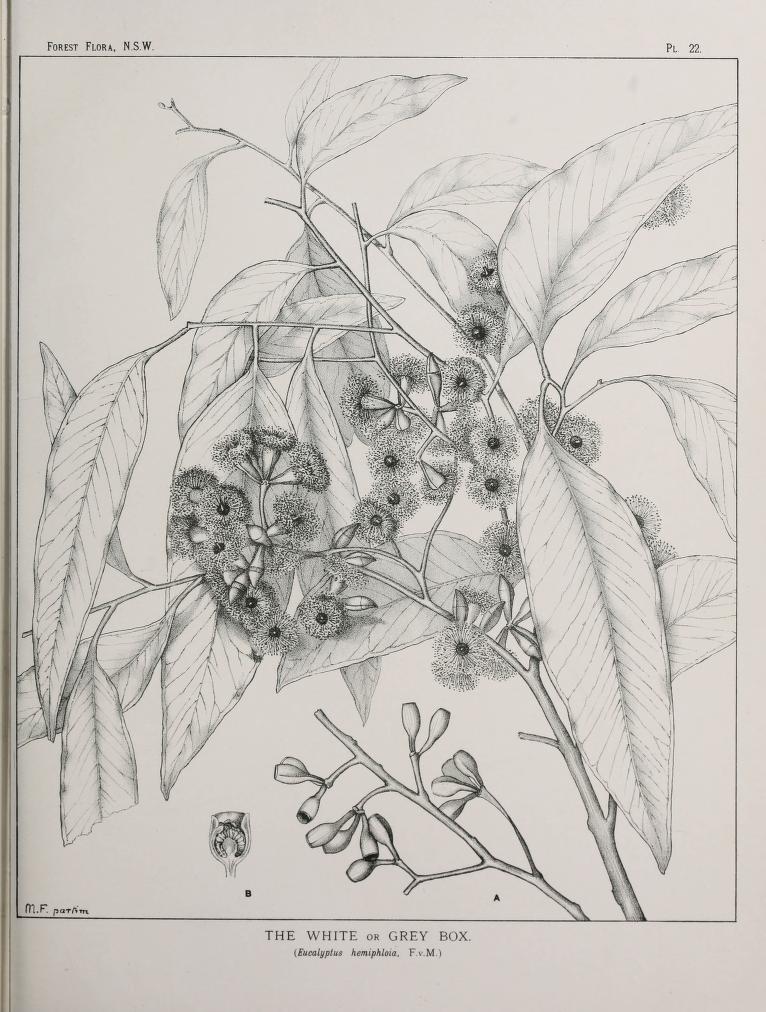
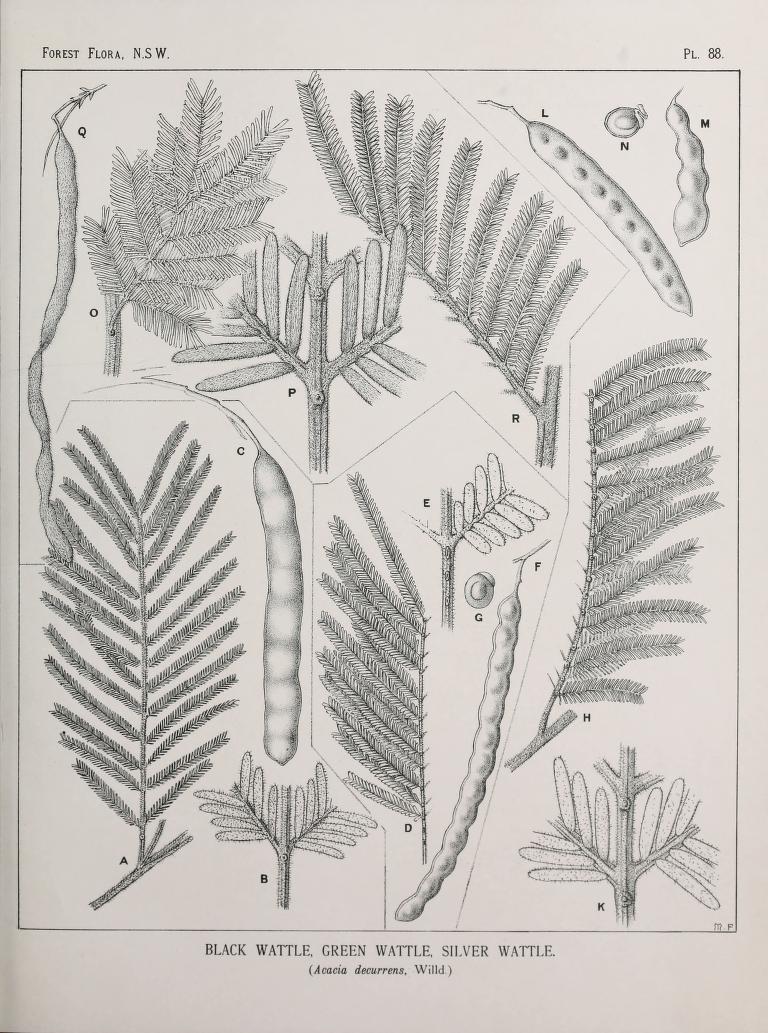
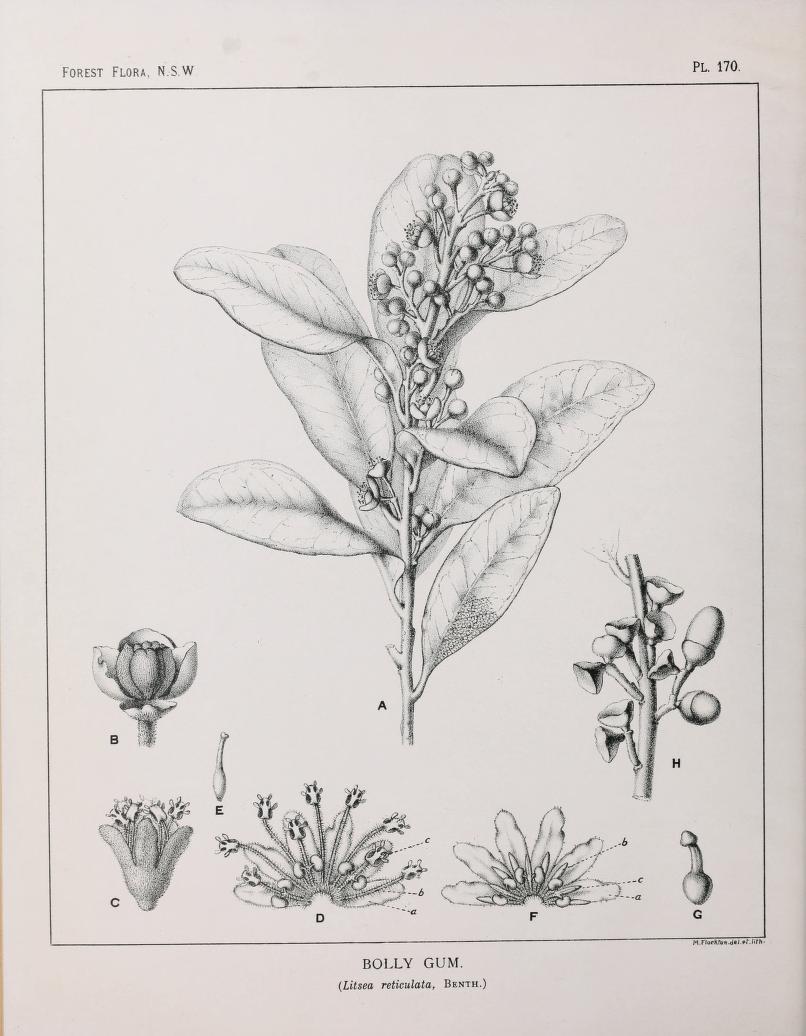
Joseph Henry Maiden was advised to take a long sea voyage for his health when he was 21 years old. He left London for New South Wales (on the east coast of Australia) and stayed there for the rest of his life making a career as a botanist studying Australian Floral; he died in 1925 at the age of 66. There are quite a few of his publications available on Internet Archive. I particularly enjoyed illustrations in The Forest Flora of New South Wales (available here). The forest plants of Australia are often very different from North America….even though there are some that have been brought to places in North America where they could thrive (eucalyptus, for example).

Shirley Hibberd

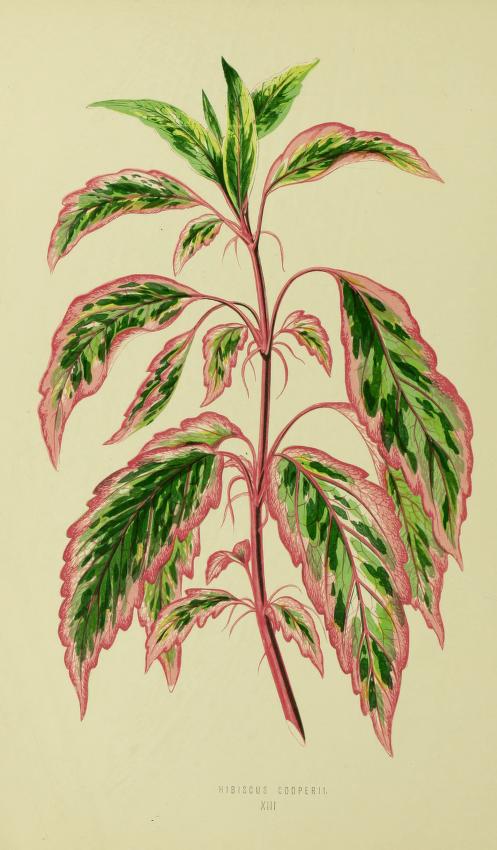
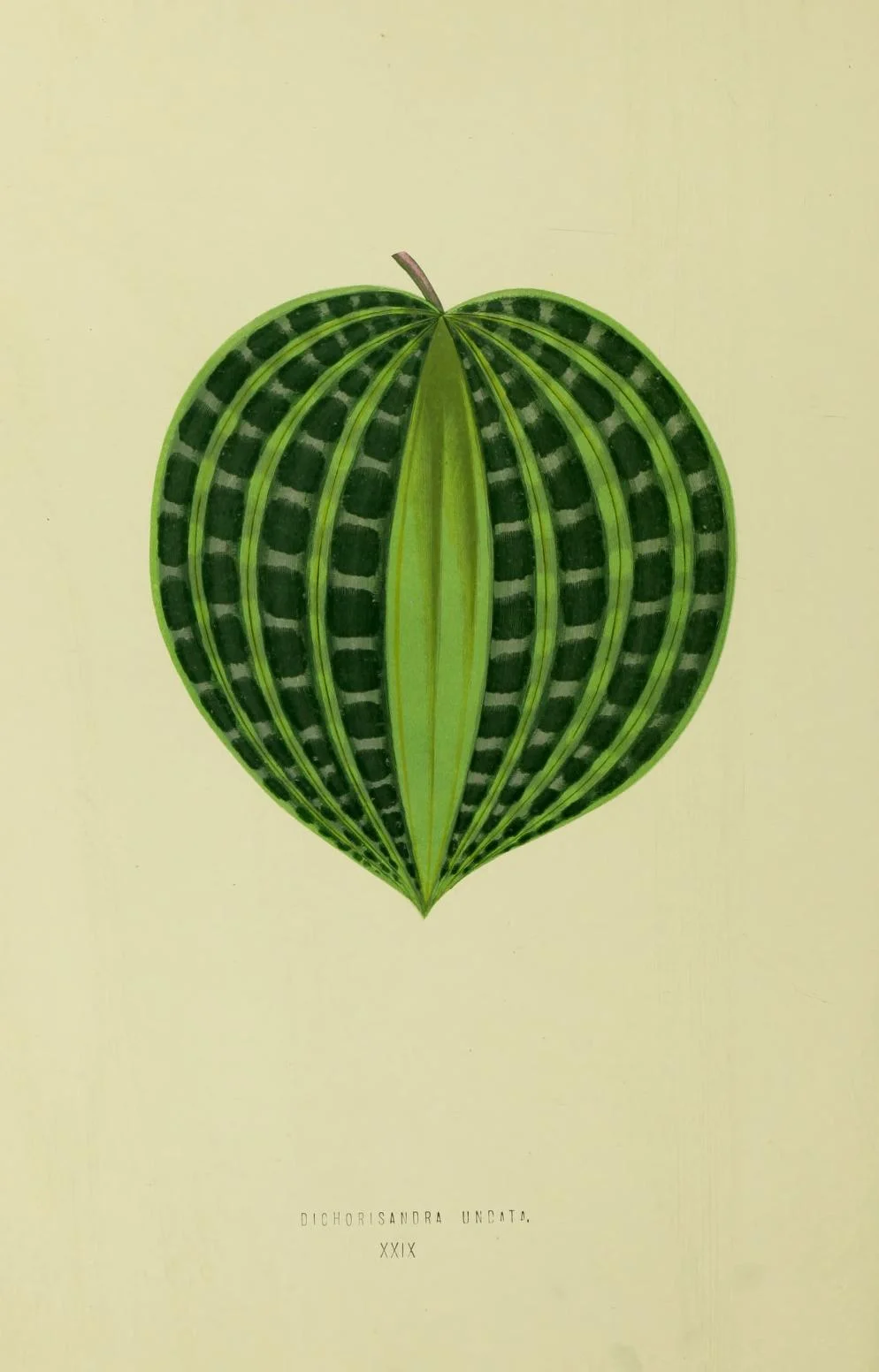
Shirley Hibberd was one of the most popular and successful gardening writers of the Victorian Era. The name caught my eye on a list of authors of botanical books from the 1800s that were supposedly ‘Women in Natural History.’ I quickly discovered (via Wikipedia) that the author was a man! It reminded me of a choir director I’d known in my teenage years – also a man named Shirley. Following the tangent thought about Shirley as a first name – I found that Charlotte Bronte is the one that transitioned the name from male to female with her novel (Shirley) published in 1849.

Back to Shirley Hibberd - there are quite a few books available by Hibberd on Internet Archive (list here); some I had looked at years ago and some I found in June. My favorite of the June books was New and rare beautiful leaved plants published in 1870 and available on Internet Archive here.

Lots of ideas of house plants in this book. I was impressed by the variety of shapes, textures and colors.

Journal of Botanical Research Institute of Texas

16 volumes (from 2007 to 2014) of the Journal of Botanical Research Institute of Texas (BRIT) are available from Internet Archive here. I browsed through all of them in late May and early June. It’s interesting to compare the botanical illustrations used for research papers today with those from the 1800s. There are still drawings that look very similar to botanical prints…but there are photographs too. The photographs have replaced the colored prints that were a cornerstone of the 1800s books (and made them collectable). I appreciated the drawings as I browsed these BRIT volumes. It is easier to see structures in the drawings than in the photographs (and it is easier to deconstruct drawings into Zentangle patterns)! The sample images from the volumes below show the wide range of illustration types. Click on an image to see an enlarged version.

I found this journal after I discovered Eula Whitehouse’s work back in March (see the blog post about her here). The organization she worked for eventually became BRIT.

Gleanings of the Week Ending July 6, 2019

The items below were ‘the cream’ of the articles and websites I found this past week. Click on the light green text to look at the article.

Older forests resist change, climate change, that is -- ScienceDaily  - A study from the University of Vermont. But there are a lot of other changes in the forest too – the advent of non-native diseases like emerald ash borer and the explosion of deer populations so that there is a lot less understory in the forest (and few young trees). Is the net still that old forests resist change more effectively than younger ones?

Top 25 Wild Bird Photographs of the Week: June – National Geographic Society Newsroom – The always beautiful series of bird pictures.

Expanding the temperature range of lithium-ion batteries ScienceDaily – I’ve noticed the battery in my Prius Prime does not last for as many miles in the winter as it does in the summer. It’s one of the issues I want improved before I buy my next EV.

Chattanooga Becomes First U.S. Airport to Run Entirely on Solar – YaleEnvironment360 – Congrats to Chattanooga on this milestone. Evidently the first airport to do it was Cochin International in Kerala, India which went 100% solar powered in 2015. I’ve noticed a lot of US airports have fields of solar arrays…but maybe they haven’t also installed batteries to make the airport 100% solar powered.

You Can Now Tour the Tunnels Beneath Rome’s Baths of Caracalla – Smithsonian – A little Roman history linked to a place where tons of wood were burned per day to keep the fires going so that the caldarium would have hot water…where 18.5 gallons of water per second were consumed…copper tanks and lead pipes.

Timed release of turmeric stops cancer cell growth – ScienceDaily – Part of the search for gentler treatments for children with osteosarcoma.

A Tale of Contrasting Rift Valley Lakes – NASA Earth Observatory – Lake Tanganyika and Lake Rukwa as viewed from NASA’s Aqua satellite.  Deep and shallow. Salty and fresh. Brown and Blue.

Alibates Flint Quarries National Monument: Holding History in Your Hand – National Parks Traveler – I had to look up where Alibates Flint Quarries National Monument is located. It’s in the panhandle of Texas, north of Amarillo. I might go someday…on the way to somewhere else. The route would probably pass through the small western Oklahoma town where I was born.

Grand Canyon will soon be a dark sky park – Smithsonian – The park service has retrofitted lights to make it happen. This could be a good reason to camp in this national park!

What does the dust in your home mean for your health? – The Conversation – Thought provoking post. About one third of the ‘dust’ is created inside by ourselves and our pets, food debris, fibers from carpet/fabrics, particles from cooking plus chemicals like flame retardants. Are they toxic? There is ongoing research. Re outdoor sources – lead is the one of most concern.

Gleanings of the Week Ending June 29, 2019

The items below were ‘the cream’ of the articles and websites I found this past week. Click on the light green text to look at the article.

Porcupines | National Geographic – I was disappointed that they didn’t include more pictures of the North American Porcupine. I’ve never seen one in the wild.

BBC - Future - How to build something that lasts 10,000 years – Specifically – this post is about building a clock that will last for 10,000 years…in West Texas!

Researchers uncover indoor pollution hazards -- ScienceDaily – Some surprises: pollutants change with temperature inside the house….and time of day makes a difference. Formaldehyde seems to be particularly prevalent. These studies are scary for existing homes. We need work on mitigations that homeowners can implement…and new construction that reduces the source of pollutants.

Infographic: Immunity Isn't the Body's Only Defense System | The Scientist Magazine® - Symbiotic bacteria, metabolism and pathogen mutation examples overlay the immunity strategy. As we learn more, we realize that the human body is more complex that we realized.

Top 25 Wild Bird Photographs of the Week: Blue – National Geographic Society Newsroom – So many blue birds!

Tortoises rule on Aldabra Atoll – Tortoises making their way through the huts where people bunked! The tortoises sleep with head and legs stretched out…no predators to fear on the inhospitable atoll.

Past climate change pushed birds from the northern hemisphere to the tropics -- ScienceDaily – Thought provoking. I wondered if some of the birds that now migrate from North America to Central or South America for the winter….will not go as far or will shift their range northward.  I suppose it would work if their food sources shifted and the birds followed the food. The synchrony of plants blooming and seeds ripening….of horseshoe crabs laying eggs…all while birds are migrating or getting ready to produce young; it’s not a simple system.

Making STEM Education More Welcoming to Underrepresented Minorities | The Scientist Magazine® - Education doesn’t happen in a vacuum that has well defined boundaries. We must do more than just academic support…I’m glad there is more research and conversation on how to move forward in tangible ways to make STEM education and careers more open to everyone.

An Ancient Asteroid Crater May Be Hiding Off Scotland’s Coast | Smart News | Smithsonian – Some recent work that points to a crater of a asteroid from 1.2 billion years ago.

Three Studies Track People's Microbiomes Through Health and Disease | The Scientist Magazine® - Interesting…but they could just be expensive association studies (a quote from the end of the paper). At some point, maybe the findings will lead to something that benefits the patient.

3 Free eBooks – June 2019

There was quite a variety of books to pick from in my book list for this month…difficult to pick just three. I realized that I have started gleaning from my book list for other posts beyond this monthly one. I feature the botanical books in a separate post and I’ve started collecting images to use for Zentangle pattern prompts (i.e. images that are easily decomposed into patterns and used to create Zentangle tiles) which I will probably become blog posts occasionally too!

Pennell, Joseph; Pennell, Elizabeth Robbins. Two pilgrims’ progress; from fair Florence to the eternal city of Rome. Boston: Little, Brown, and Company. 1899. Available on Internet Archive here. This husband and wife team travelled between Florence and Rome on an odd ‘bicycle built for two.’ He was the artist and she was the writer. I enjoyed their other books available online too.

54m 19 06.jpg
76d 19 06.jpg

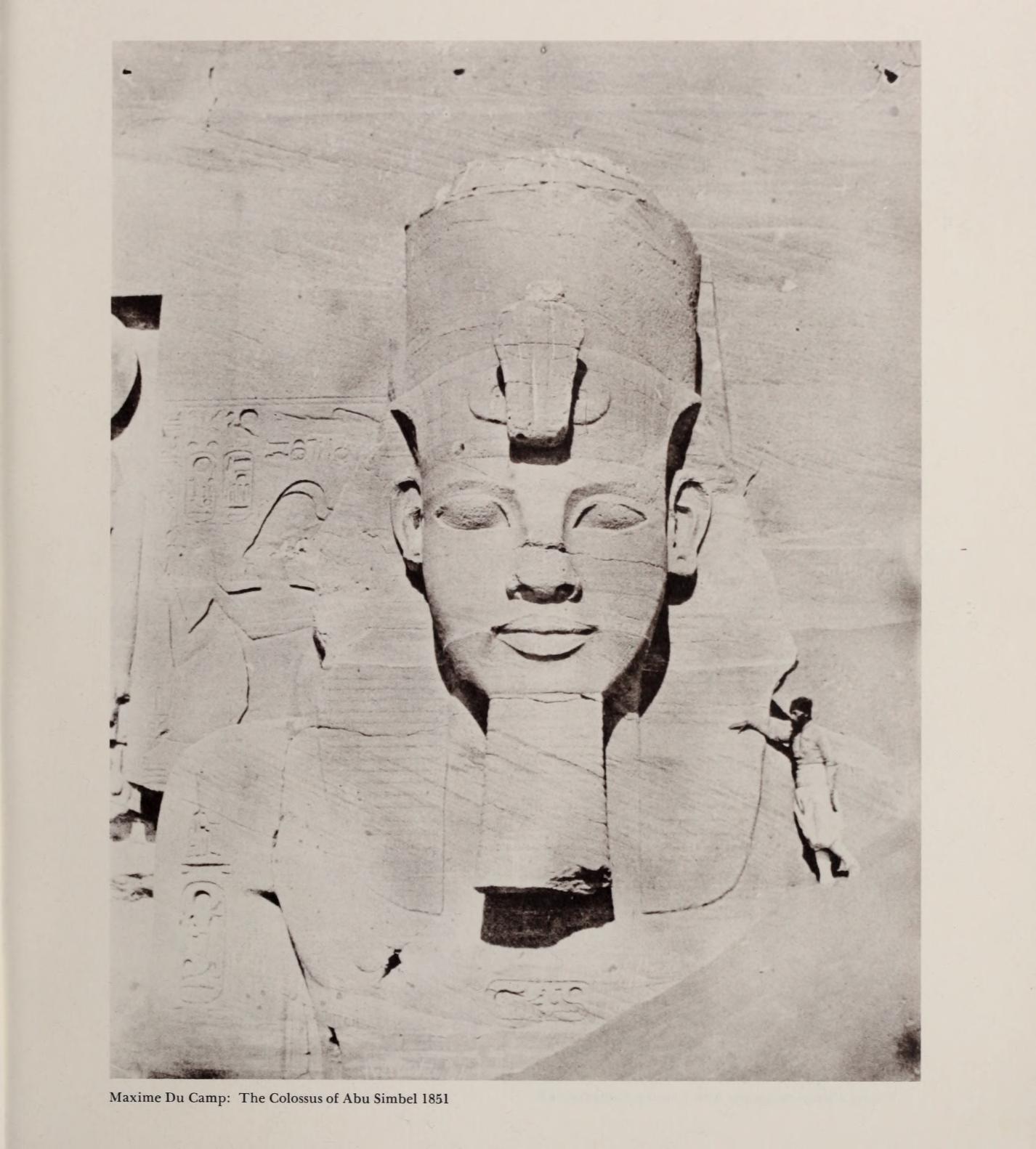
Jammes, Andre; Sobieszek, Robert A.; White, Minor. French Primitive Photography. Philadelphia: Philadelphia Museum of Art. 1969. Available on Internet Archive here. A little history not only of photography but for the subjects of the photographers as well. There are quite a few images from Egypt in the mid-1800s of famous monuments before the sand was moved from the lower portions…or had just been removed.

98k 19 06.jpg

Perkins, Lucy Fitch. The Belgian Twins. Boston: Houghton Mifflin Company. 1917. Available on Internet Archive here. The author wrote a whole series of books about twins from around the world between 1911 and 1934. Evidently, she interviewed someone that had grown up in each country to gain understanding of children’s lives there. She also incorporated aspects of history; World War I was woven into this book about Belgium published in 1917 and the book about French twins published in 1918. Many of the books are available on Internet Archive. The sketch type illustrations are the aspect of these books I enjoyed the most.

Gleanings of the Week Ending June 22, 2019

The items below were ‘the cream’ of the articles and websites I found this past week. Click on the light green text to look at the article.

The royal tombs of Ur reveal Mesopotamia's ancient splendor – From National Geographic - Leonard Woolley’s excavation of Ur in the 1920s.

Astronomers Worry New SpaceX Satellite Constellation Could Impact Research | Smart News | Smithsonian – Are telescopes on the surface of the earth doomed? Will we only be able to study the universe from space?

Americans May Be Ingesting Thousands of Microplastics Every Year | Smart News | Smithsonian and Hawaii’s newest black sand beach already contains plastic pollution – Plastics everywhere...and there is growing evidence that it is negatively impacting life on our planet. What are we doing about it?

Image of the Day: Hot Stripes | The Scientist Magazine® - Did you know that zebras can raise the black stripes separately from the white stripes!

Top 25 Wild Bird Photographs of the Week: Communication – National Geographic Society – Birds…never can resist including a wild bird photo collections.

BBC - Future - How modern life is transforming the human skeleton – The way we live – written in our bones.

New Jersey 100% Renewable Energy Plan -- More Fiber, Less Fluff | CleanTechnica – Hurray for New Jersey….having a tangible plan to use zero carbon energy by 2050.

Eliminating packaging is a good start – but here's what supermarkets should do to stop harming the planet – I’ve made it a point to reduce the amount of packaging when I shop; I am way past the easy things…and up against the way groceries operate in my area. I buy local produce through my CSA for 5 months of the year (a good way to eliminate packaging, eat seasonally, and reduce food transportation costs) but the other 7 months of the year, I’m back to the typical grocery store for produce.

How old are your organs?  -- ScienceDaily - To scientists' surprise, organs are a mix of young and old cells: Scientists discover cellular structures with extreme longevity, leading to insights for age-associated diseases.

Tropical Cyclones are Stalling More – Hurricane Harvey (Texas)….Tropical storm Fay (Florida)…Hurricane Florence (North Carolina) – All three storms caused a lot of damage to the coasts when they lingered over the coastal area becoming prolific rain producers. Is this the new normal for Atlantic Hurricanes?

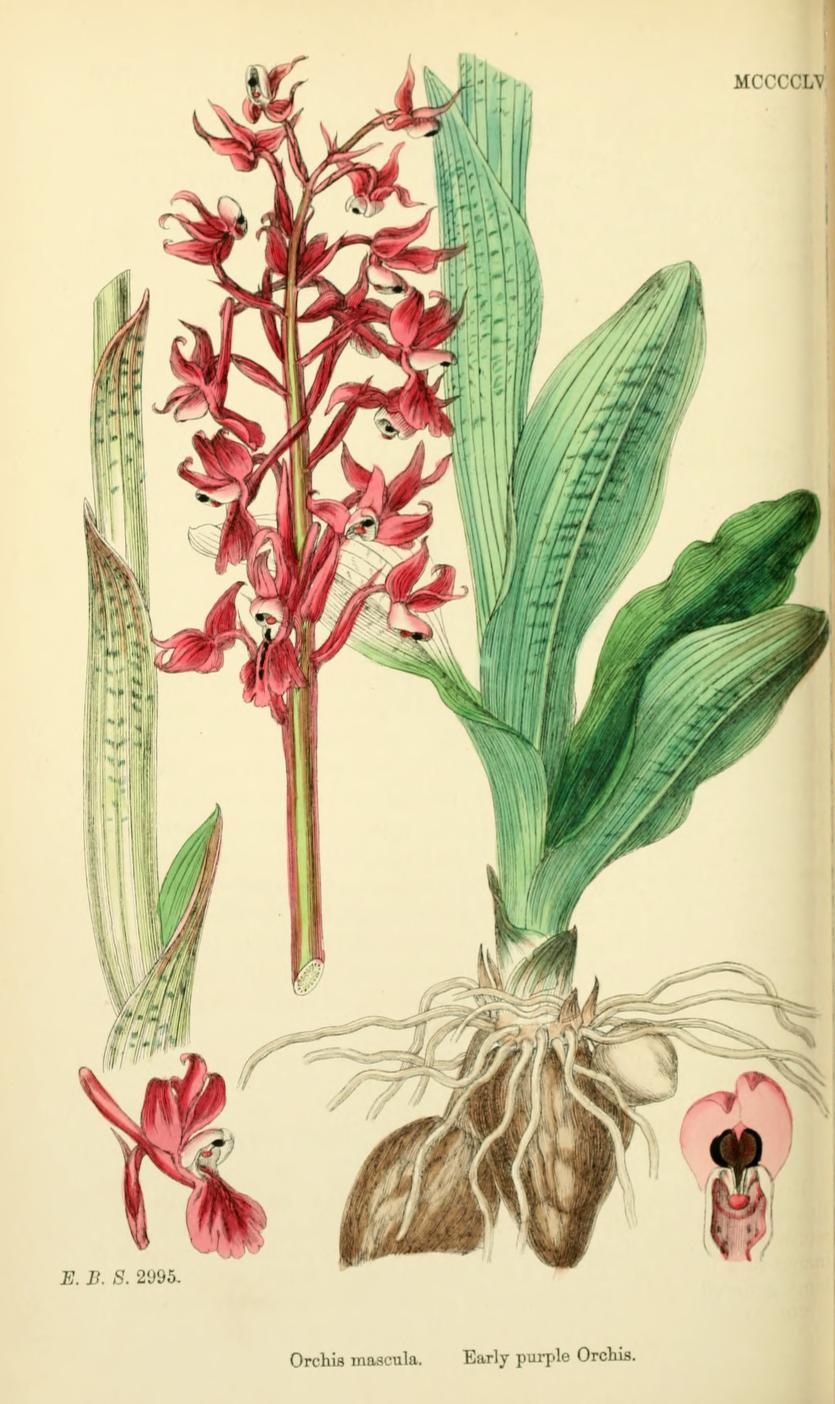
English Botany in 12 Volumes – Sowerby Illustrations

 Now I am looking for other ‘Sowerby’ works….probably will discover some more botanical print books that I haven’t seen previously.

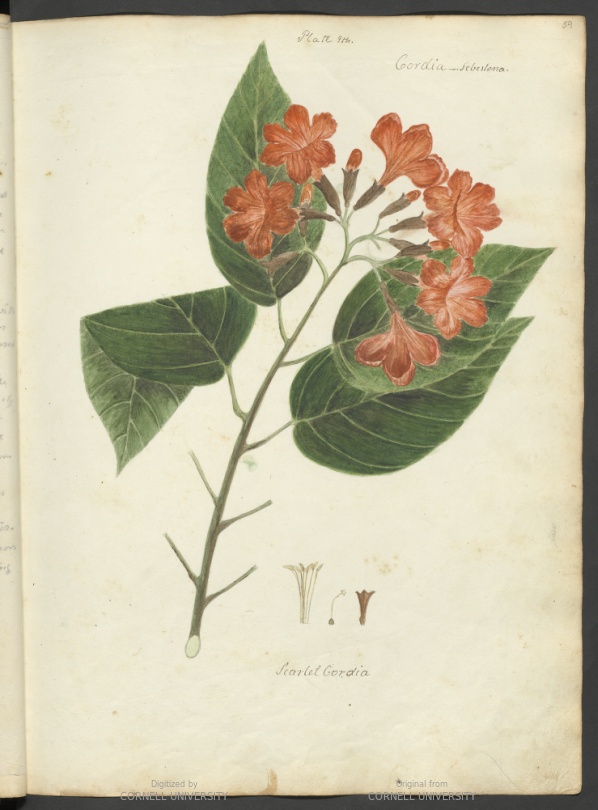
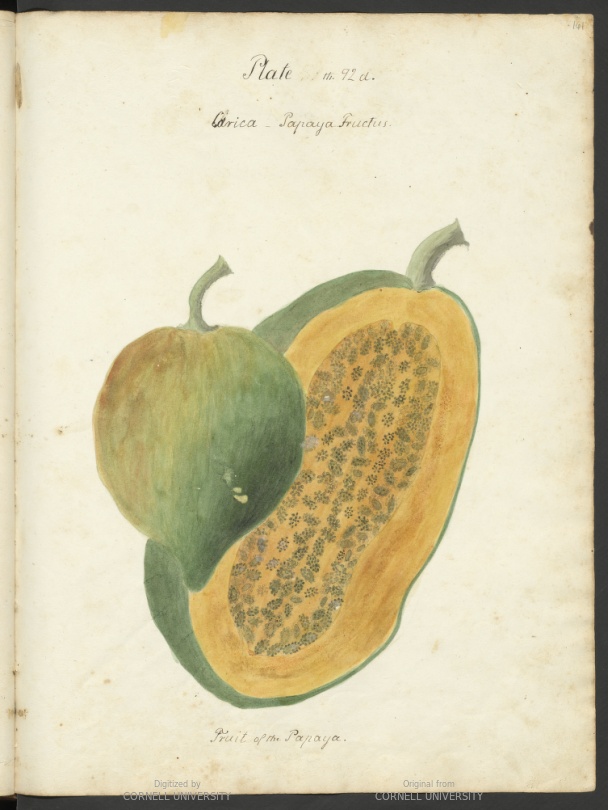
Anne Kingsbury Wollstonecraft and Cuba Botanicals

I found out about this author from a National Geographic Article: 'Lost' book of exquisite scientific drawings rediscovered after 190 years --- and the 3 volumes are available on Hathi Trust here. The author died young (46 years old) in 1828 and her work was not finished so it is in manuscript rather than published form. It had still been referenced a few times in the 1800s and those references are what started the search for it. Eventually, it was determined that the manuscript had been given to Cornell University in 1923 by a faculty member that was a descendant of the author. It had been in Cornell’s Rare and Manuscript Collection since! These volumes are well worth browsing. I’ve included sample images below…..but there are many more in the volumes to look at online.