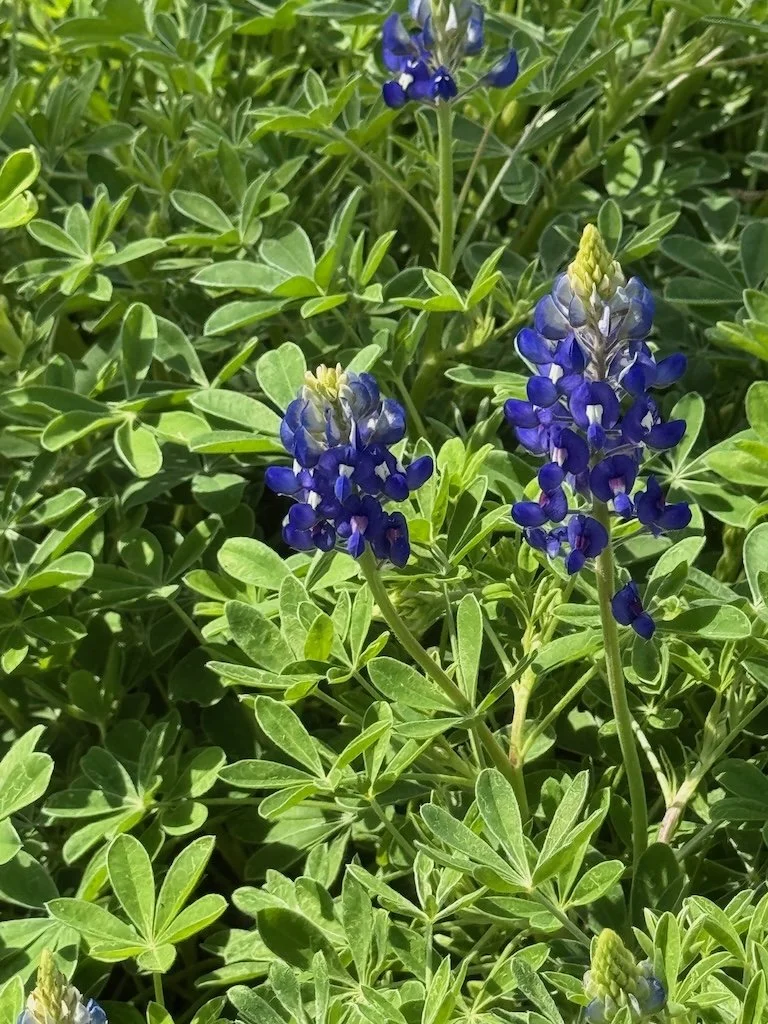
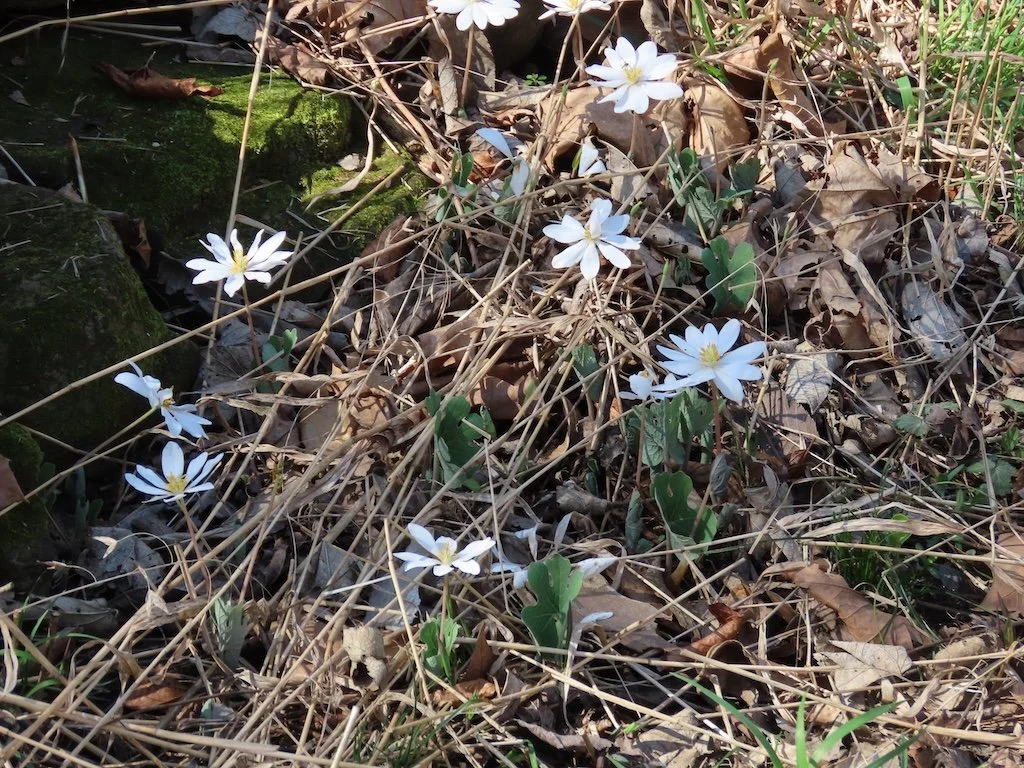
Texas Wildflowers in Natural Colors

Whitehouse, Eula. Texas Wildflowers in Natural Colors. 1936. Available from Project Gutenberg here.

This was my favorite botanical book for March….and maybe beyond that too. Eula Whitehouse lived from 1892-1974 and spent the latter part of her career in Dallas – working at Southern Methodist University from 1946 until her retirement; her books and collections are the core of what became BRIT (Botanical Research Institute of Texas). She assisted in organizing the Dallas County Audubon Society in 1954.

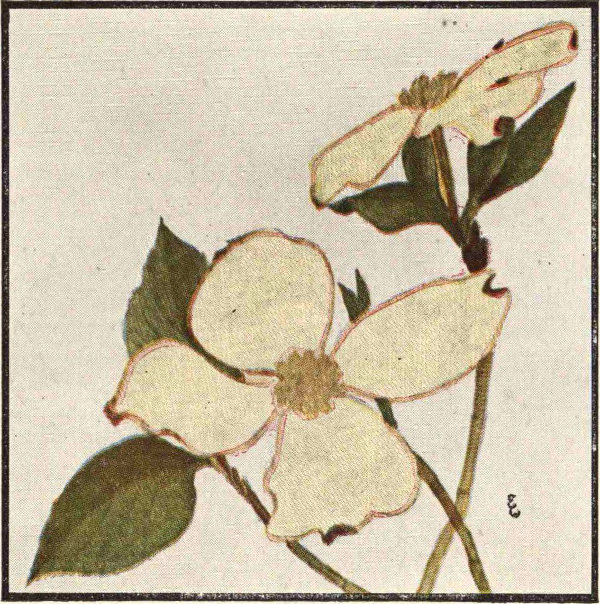
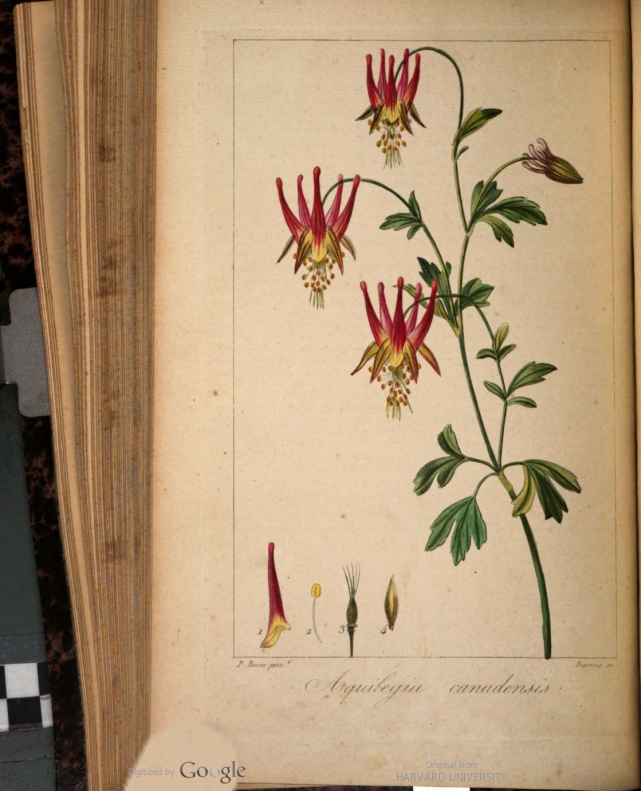
The book was self-published first in 1936 and remains a favorite among many Texas botanists. It was published privately and distributed through the Texas Book Store in Austin and then, in 1948, through Cokesbury Bookstore in Dallas. The version available online at Project Gutenberg shows both dates. I’ve included a few sample images below.

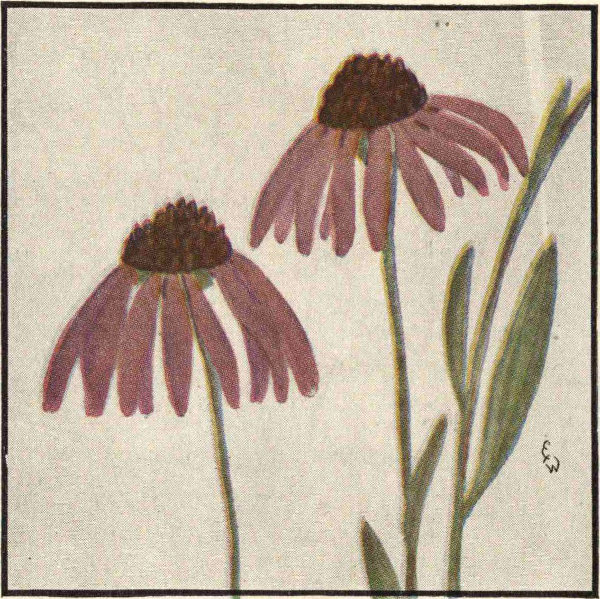
I grew up in Texas and found myself wondering why the nature day camps I attended during my elementary and middle school summers didn’t use her book as a reference as we tried to learn about the wildflowers we saw around us.

Eula Whitehouse published a study on the evolution, or succession, of plant communities at Enchanted Rock (in Texas) as part of her doctoral research at the University of Texas in the 1930s. In the late 1970s, Lady Bird Johnson urged The Nature Conservancy to purchase Enchanted Rock to be set aside for posterity. I like that there is a linkage via Enchanted Rock between Eula Whitehouse and Lady Bird Johnson – two women that were deeply involved in preserving wildflowers of Texas.

For more information about Eula Whitehouse, see pages at BRIT and Texas State Historical Association.
Gleanings of the Week Ending March 30, 2019

The items below were ‘the cream’ of the articles and websites I found this past week. Click on the light green text to look at the article.

Spring Outlook: Historic, widespread flooding to continue through May | National Oceanic and Atmospheric Administration – Check out the map about 1/3 of the way through the article. It looks like quite a few areas along the Missouri and Mississippi Rivers are going to have moderate or major flooding through May. Almost the whole eastern part of the US is going to have some flooding during that period.

How Chromosomes X and Y Got Their Names, 1891 | The Scientist Magazine® - A little history. It all begins in the late 1800s.

C. R. PERCIVAL’S MICROSCOPE SLIDE COLLECTION | Ingenium – Browse through some of the images made of slides created in the early/mid 1900s. Click on the larger image to get a magnifier that can be moved over the image.

Food Trends 2019: Fermented Foods, Blueberries, Coconut Products, and More | Berkeley Wellness – How many of these are you already eating?

What oil leaves behind in 2.5 billion gallons of water every day in US -- ScienceDaily – Wouldn’t it be nice to not have oil polluted water injected underground…and sometimes into aquafers? Water is already in short supply in some areas of the country (mostly in the west). We need technologies to never contaminate water in a way that it cannot be consumed by plants and animals…and ourselves.

In Germany, Consumers Embrace a Shift to Home Batteries - Yale E360 – Half of the orders for rooftop solar panels are sold with a battery storage system too in Germany. I wonder when the US will catch up.

Butterfly numbers down by two thirds: High-intensity agriculture reduces number of butterfly species in adjacent areas -- ScienceDaily – It’s not just butterfly numbers that are down either. Agriculture research needs to hone practices that are productive in the short term…and the long term. In other words – all agriculture needs to become sustainable for humanity and the rest of the organisms that inhabit the Earth.

Nitrogen pollution's path to streams weaves through more forests (and faster) than suspected -- ScienceDaily – Nitrate is one of the abiotic tests we do for water quality assessment with high school students. This is a new finding to think about and incorporate in to the analysis of readings after heavy rains. The nitrogen might be moving so fast that the forest can’t absorb it!

Missouri Making Hyperloop Plans - News | Planetizen – A hyperloop between Kansas City and St. Louis! What a boon to the two cities and probably easier to build since there is not the heavy population between the two cities like the route that was originally talked about in California.

China Isn't Recycling Tons of U.S. Plastic Trash Anymore: Goats and Soda: NPR – We’re going to have to show some innovation in dealing with plastics – mostly single use – that we dutifully put in our recycle bins and assumed they would be recycled. Now a lot of them are going to landfills or polluting our waterways.  With a little thought, my family has reduced some….but the next step is tough. Some products we need are only available packaged in plastic.

Gleanings of the Week Ending March 23, 2019

The items below were ‘the cream’ of the articles and websites I found this past week. Click on the light green text to look at the article.

Salt Could Play a Role in Allergies | The Scientist Magazine® - Atopic dermatitis has increased more than 2-fold since the 1970s….and researchers do not attribute the increase to greater awareness or diagnosis. Now comes the observation that people with lesioned skin from atopic dermatitis (but not psoriasis) had a 30-fold higher salt level in their lesions than in their unlesioned skin or skin from healthy controls. The connection to diet is speculative at this point…but we do have higher salt in our diet now that most people had in the 1970s.

In Siberia, Toxic Black Snow Reveals the Toll of Coal Mining | Smart News | Smithsonian – Yuck! Pollutions from open-air coal pits…in the extreme. Another reason, I’m glad we’re moving away from coal powered electricity generation. I wondered if the people living in the area of black snow develop terrible lung problems.  
See the best pictures from Bill Ingalls, NASA's official photographer – 30 years of photography

What makes joints pop and crack and is it a sign of disease? – A little lesson in joint anatomy

Piling Up: How China’s Ban on Importing Waste Has Stalled Global Recycling - Yale E360 – China’s plastic imports have plummeted by 99%, mixed paper has dropped by a 33%. Recycled aluminum and glass are less affected by the ban. So now we are sending plastics to landfills, incinerators or littering the environment. Communities across the US have curtailed or halted their recycling programs. That hasn’t happened (yet) where I live in Maryland. We must learn to produce less recycle (waste) and process it more locally…not ship is someplace else in the world.

Meet the Bizarre American Bittern – Cool Green Science – It’s a type of heron that makes a strange sound (listen to the recording in this post). It is so well camouflaged that you are more likely to hear it than see it!

Photography in The National Parks: Capturing the Grandness of The Grand Tetons – Reminds me that this is a National Park I want to see again. Last time we went, I wasn’t doing any photography yet.

Top 25 Wild Bird Photographs of the Week: Interactions – National Geographic Society – Pictures that are more than just a bird.

Prehistoric Microbes Inhabit an Oasis in the Northern Mexican Desert | The Scientist Magazine® - Fish, diatoms, and bacteria in lagoons in the Chihuahua Desert and cannot be found anywhere else on Earth. More than 5,000 species of bacteria and archaea have been documented.

Owls against owls in a challenge for survival: Researchers forecast interactions between two owl species and the quality of their habitat in the Pacific Northwest -- ScienceDaily – I learned at the Festival of the Cranes (New Mexico) last fall about Barred Owls moving into Northern Spotted Owl (NSO) territory….and winning the competition. That further reduces the NSO populations which is already endangered because of over-logging of the old growth forests.
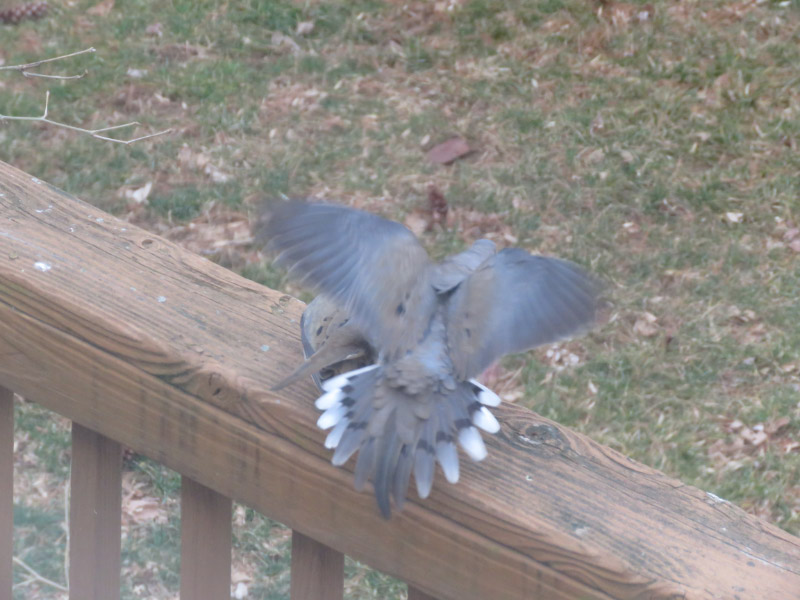
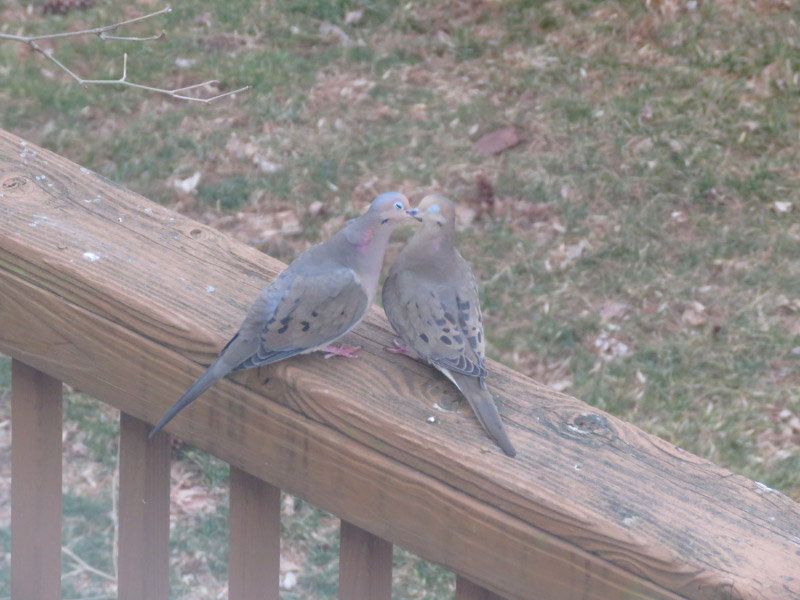
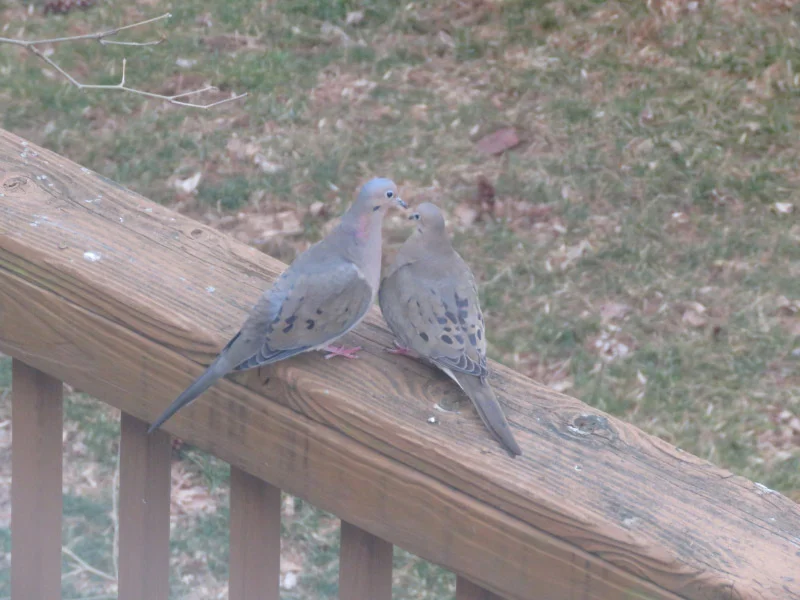
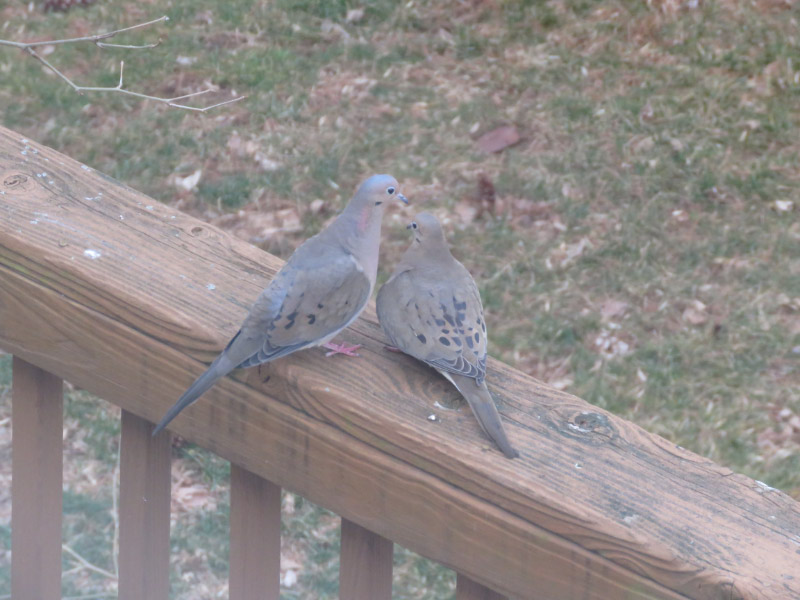
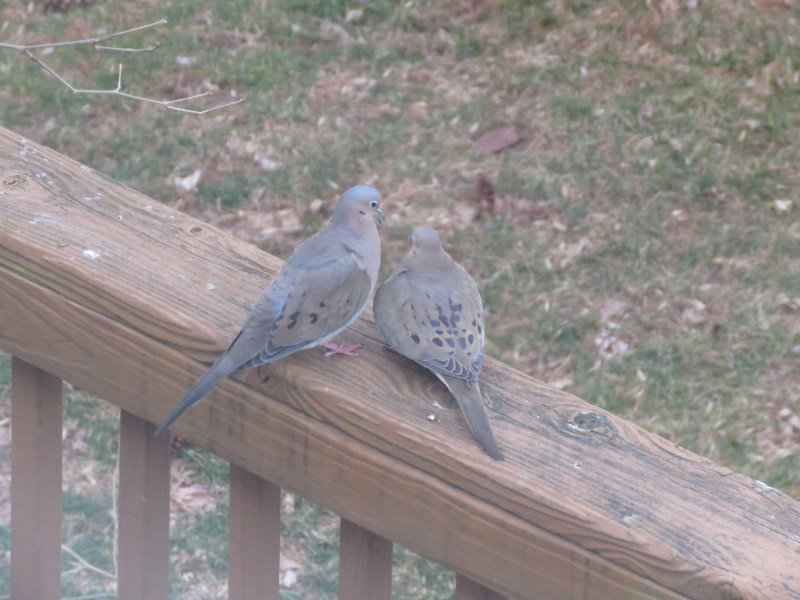
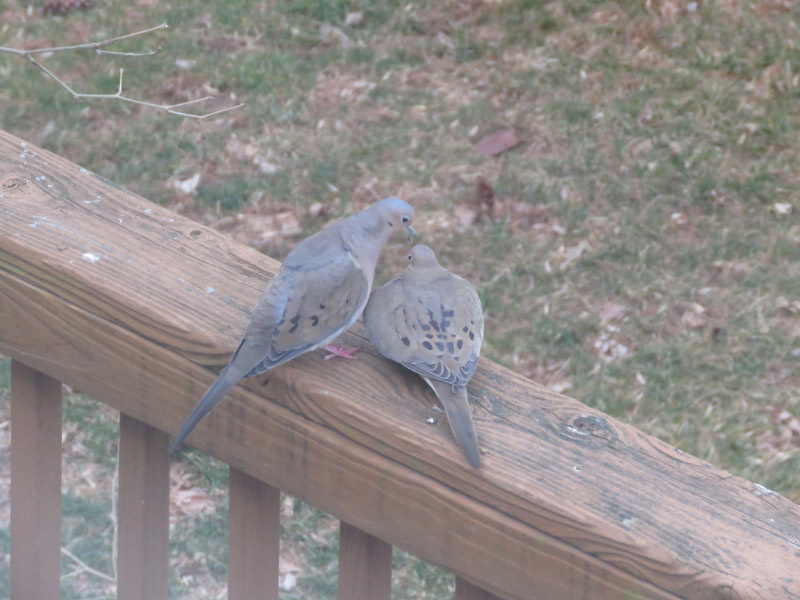
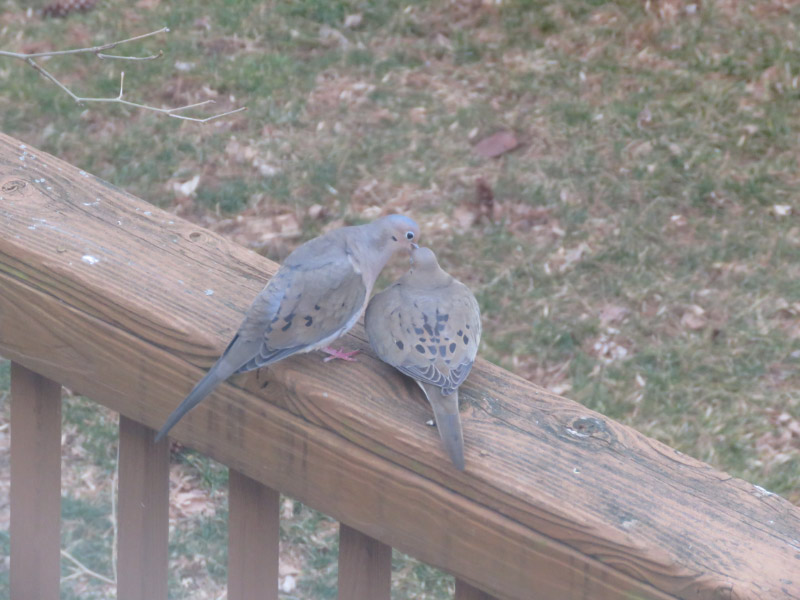
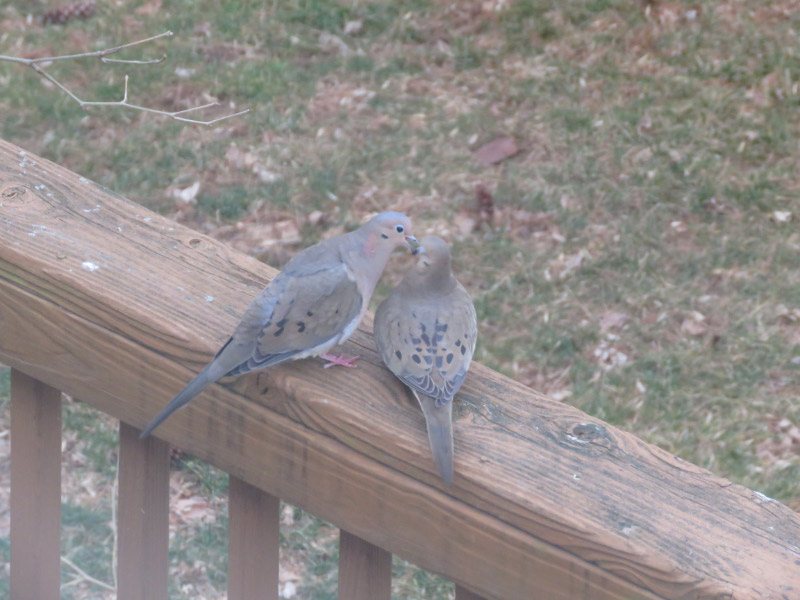
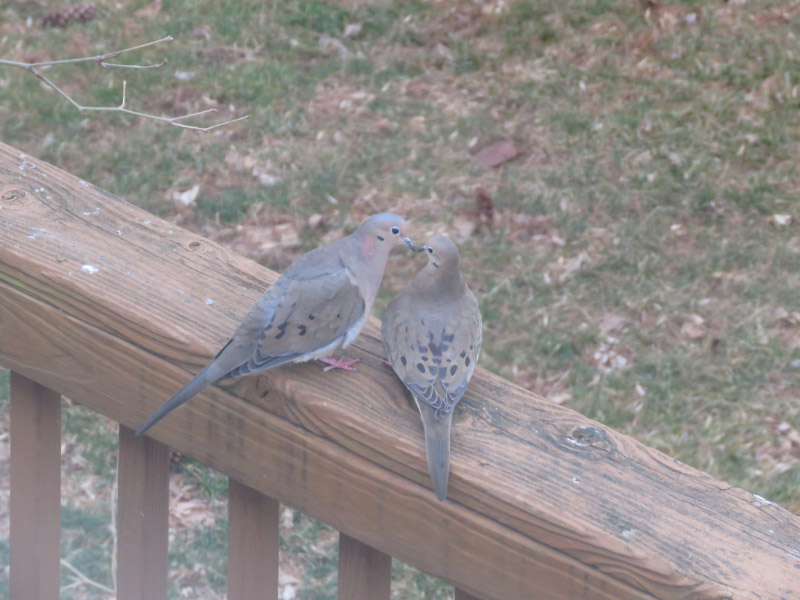
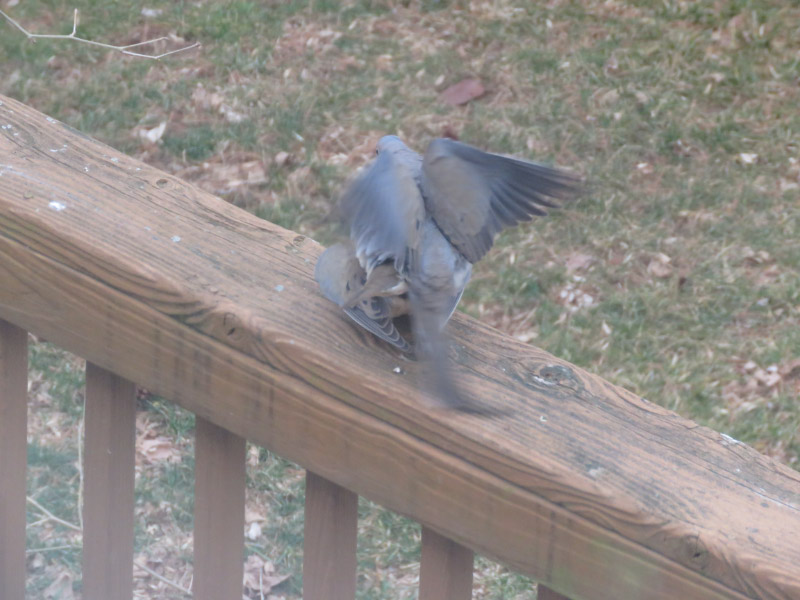
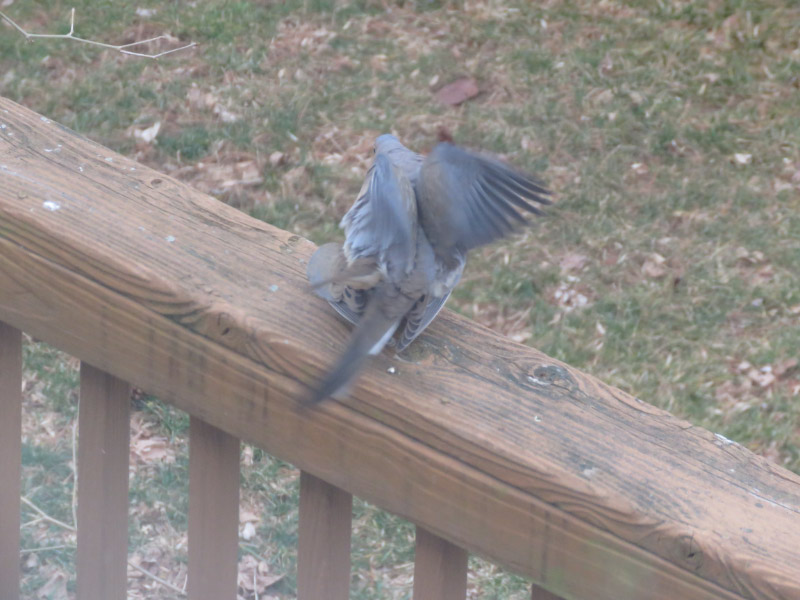
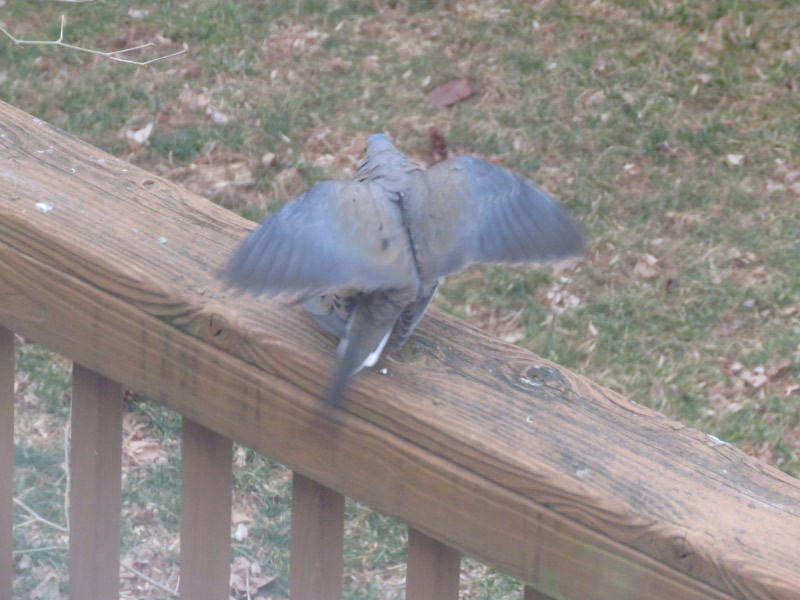
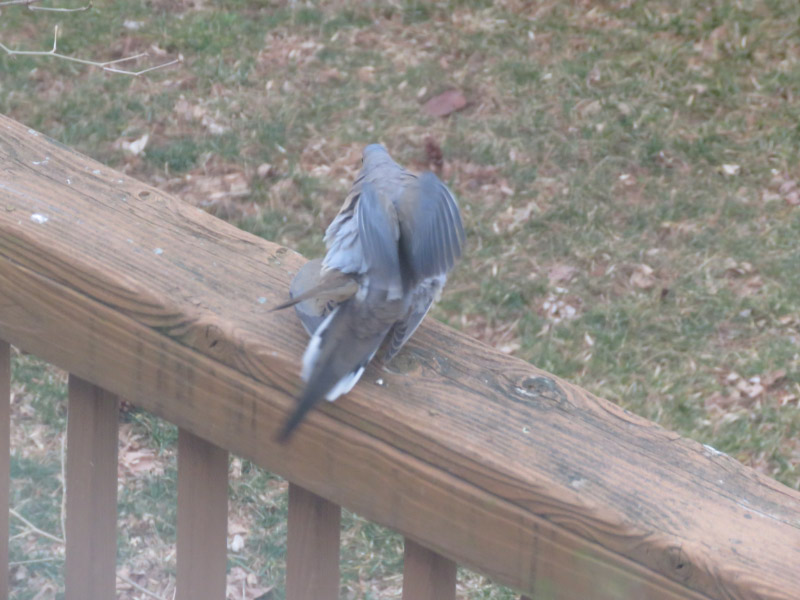
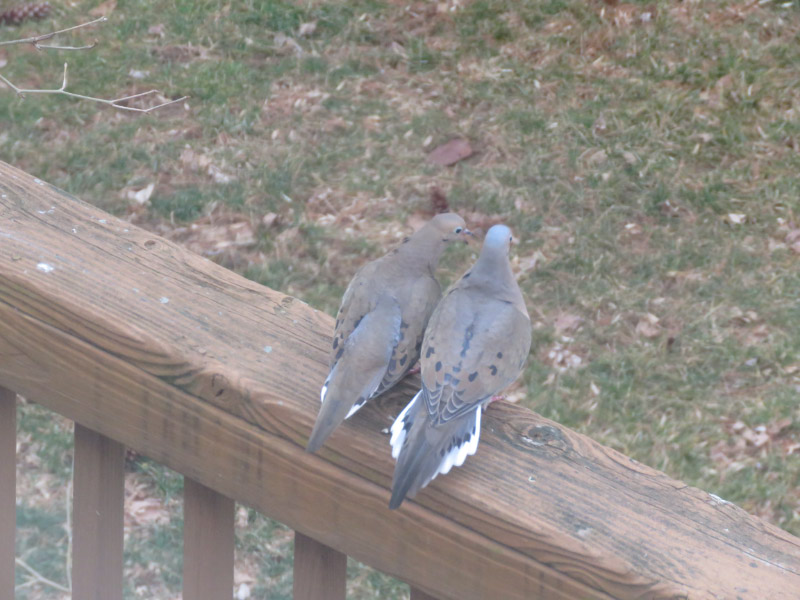
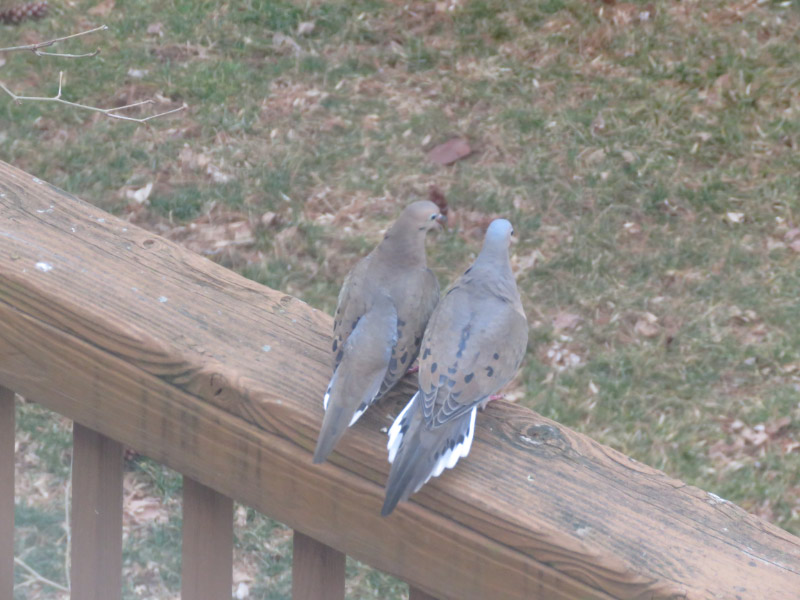
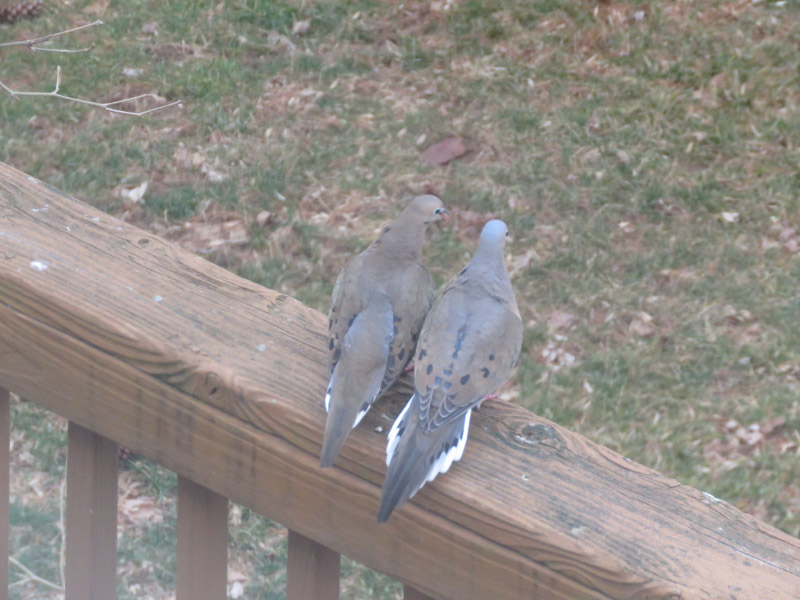
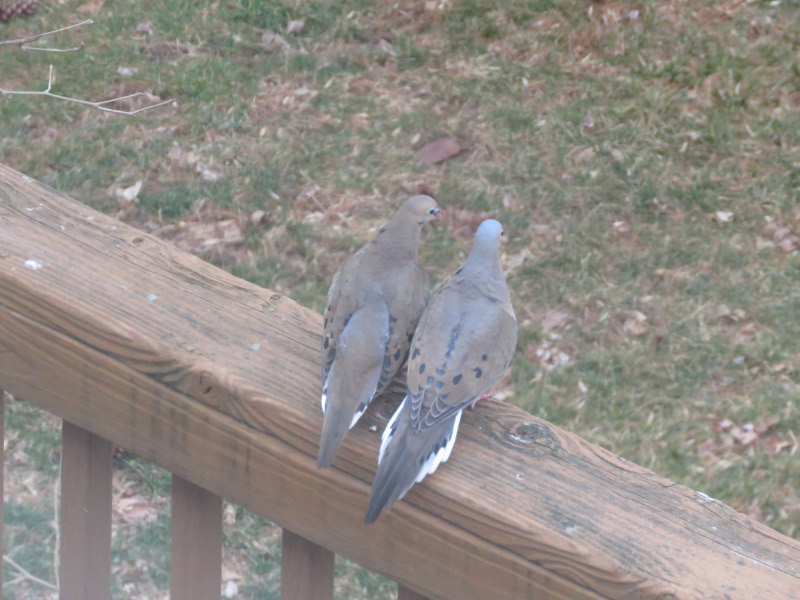
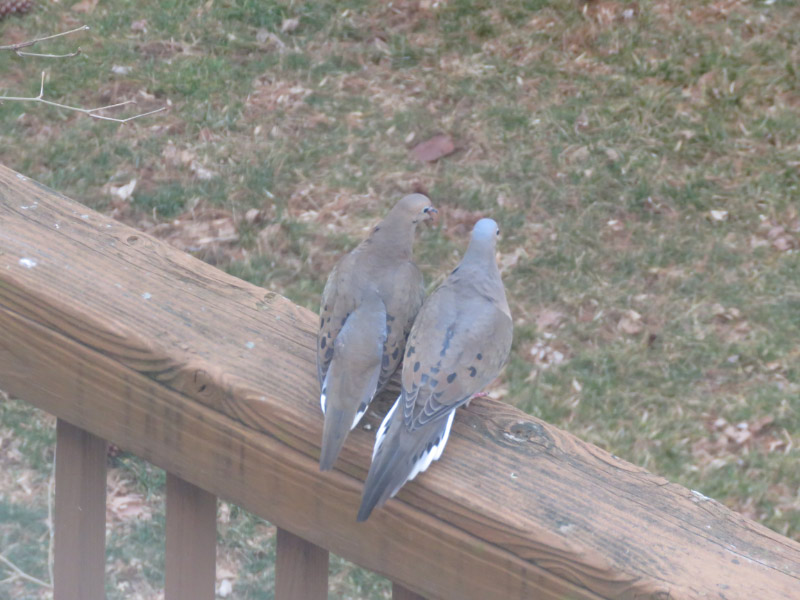
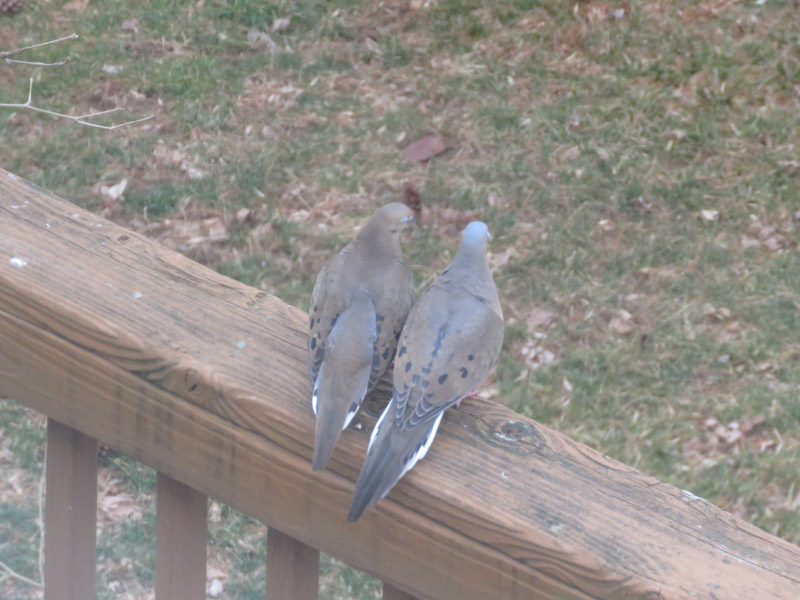
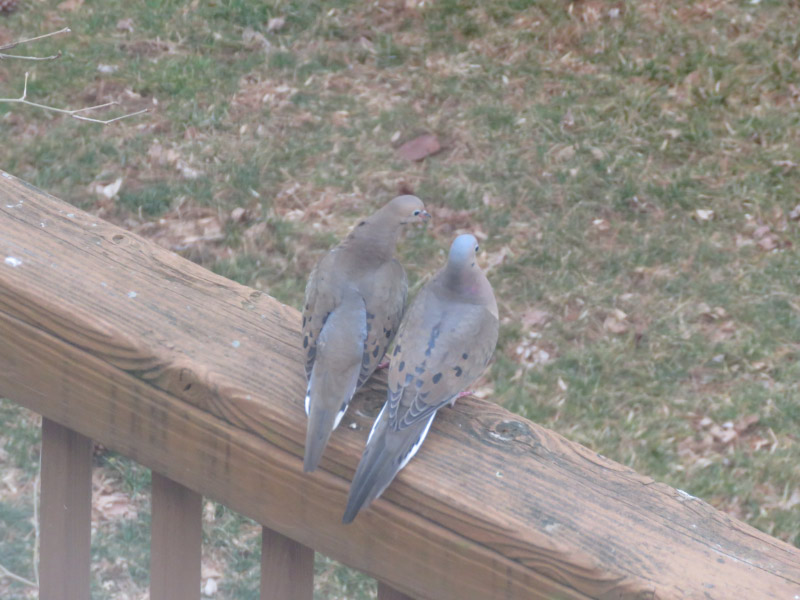
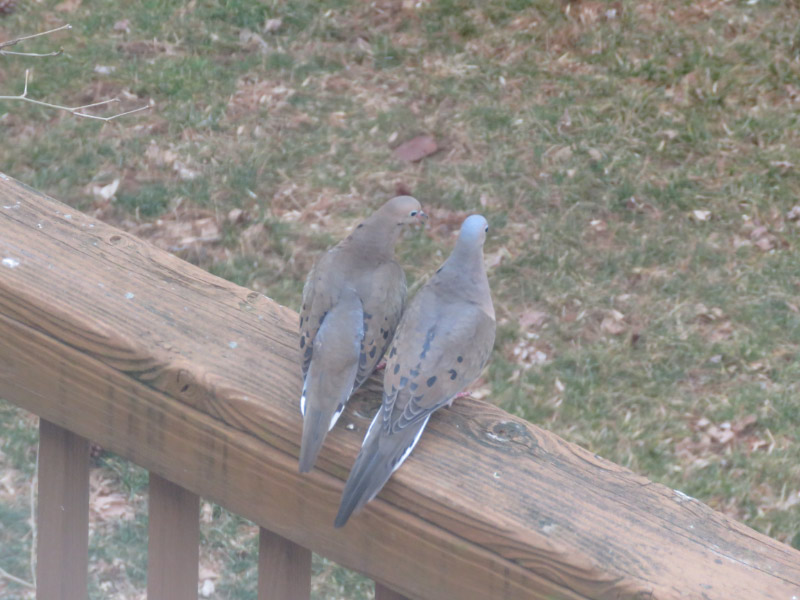
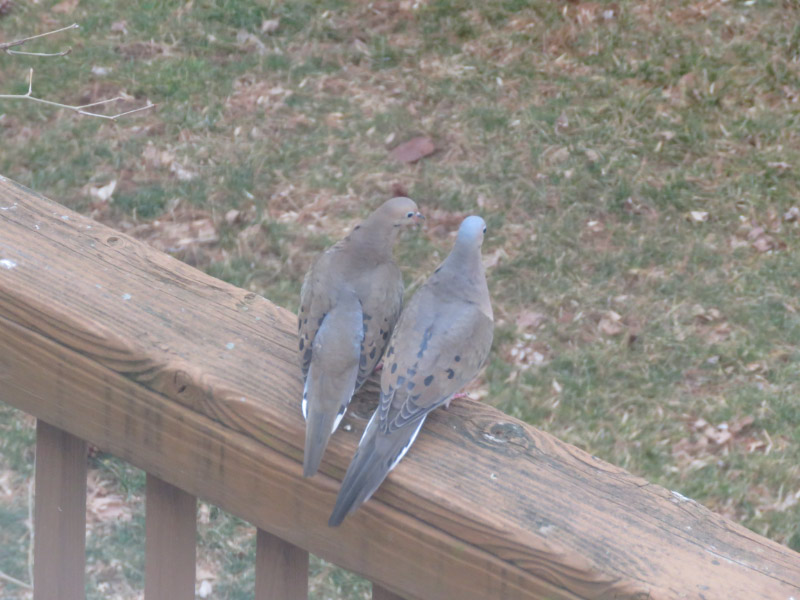
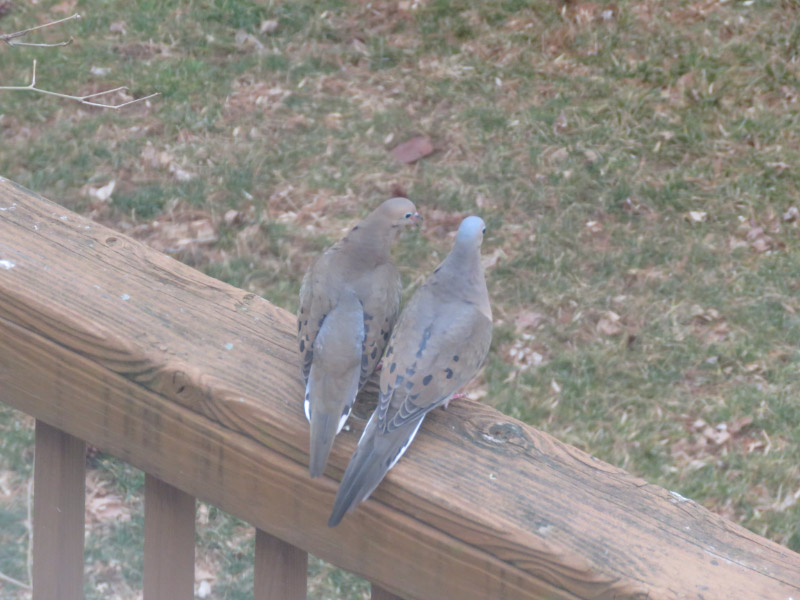
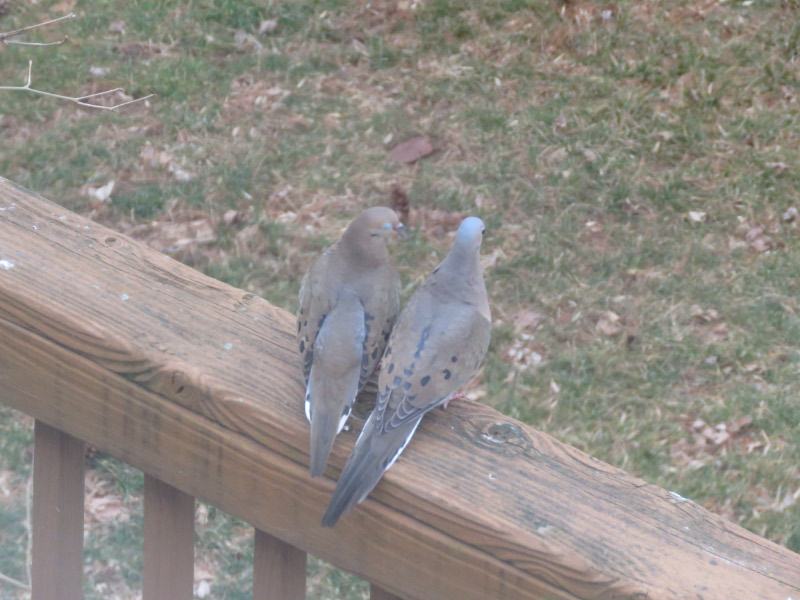
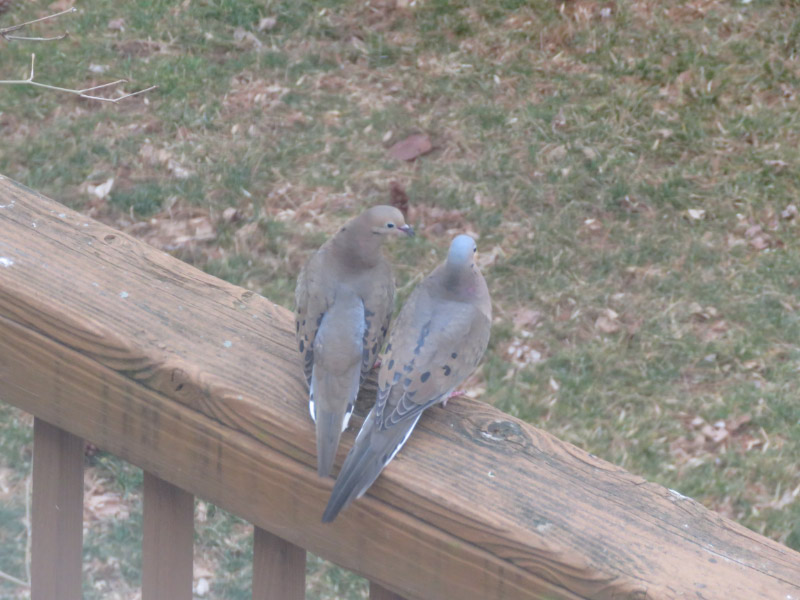
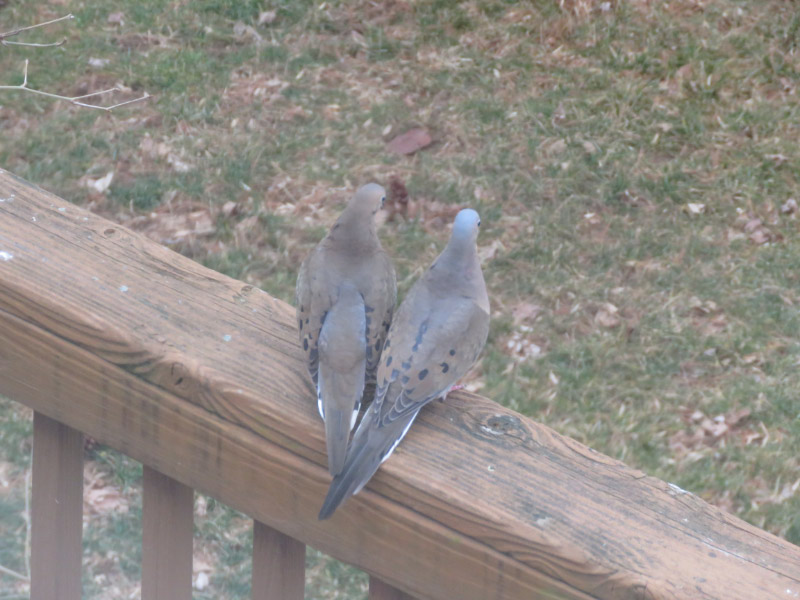
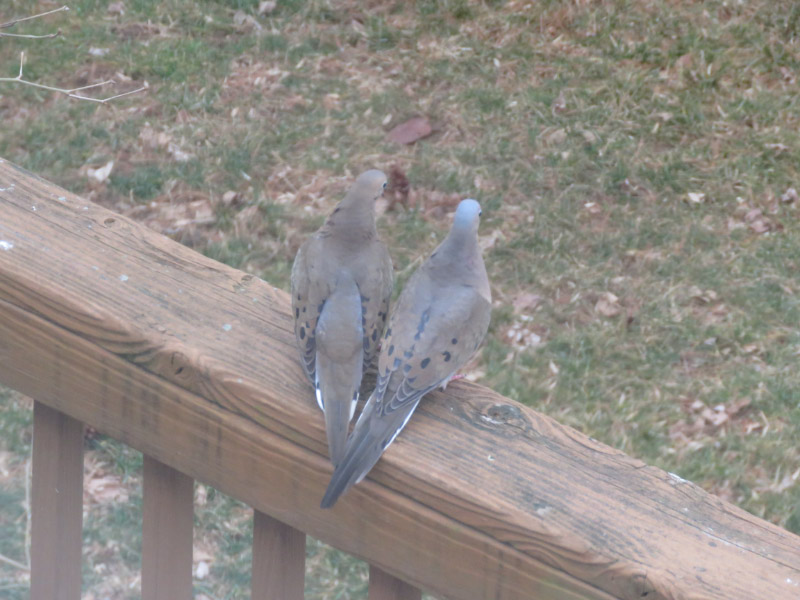
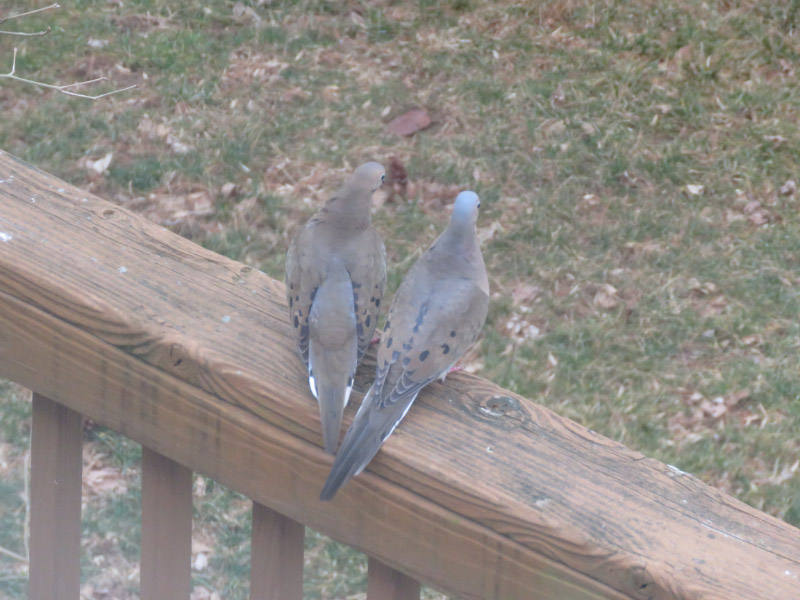
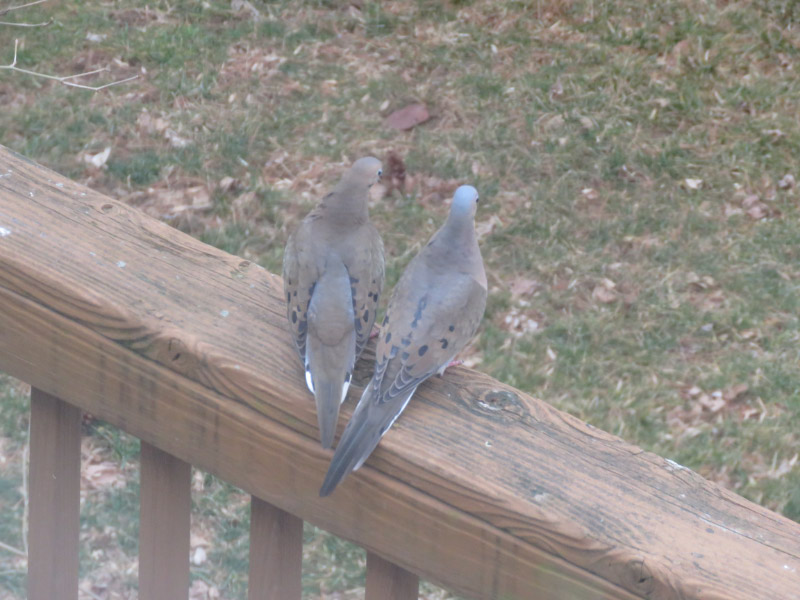
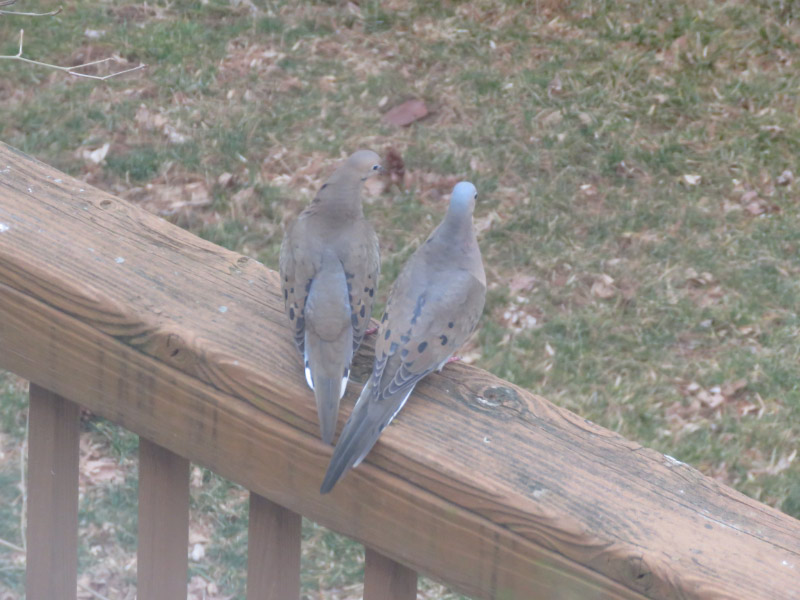
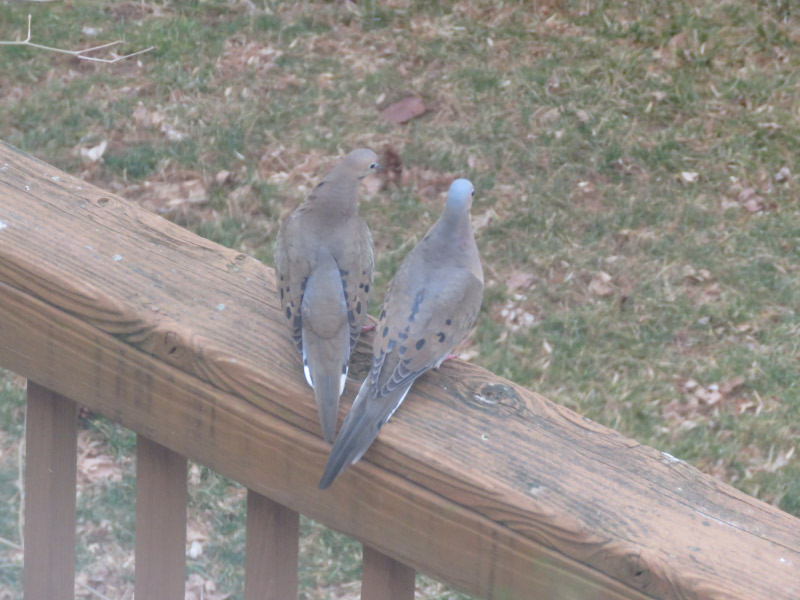
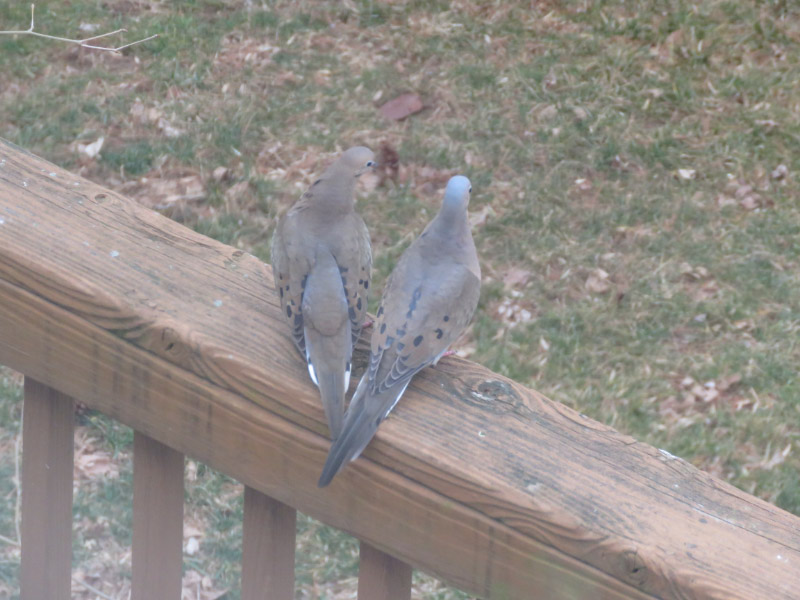
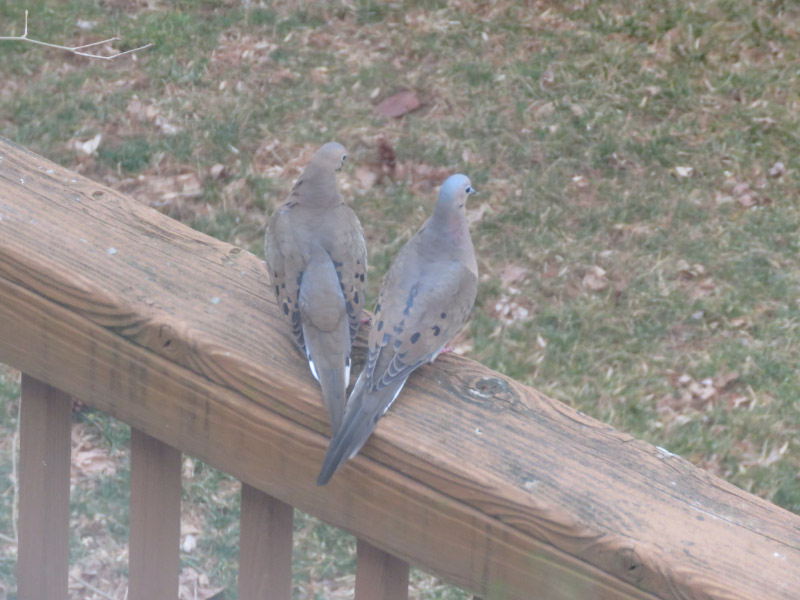
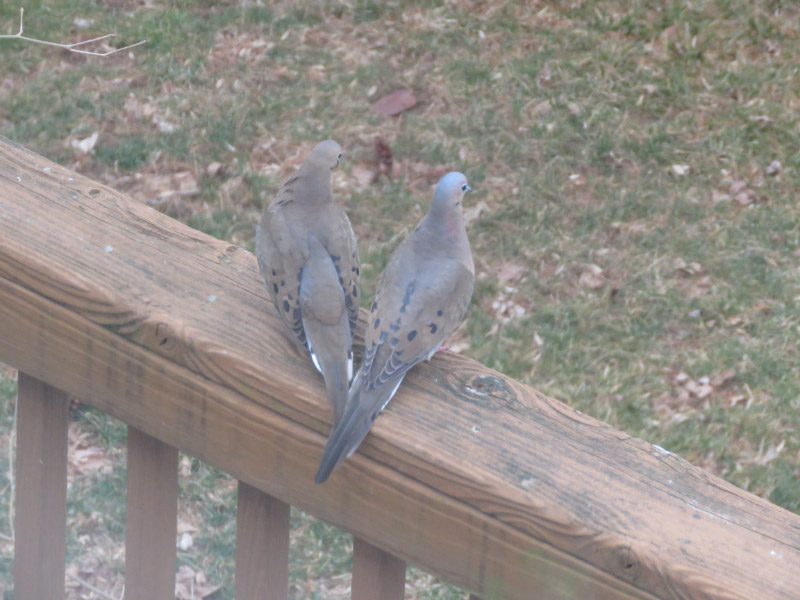
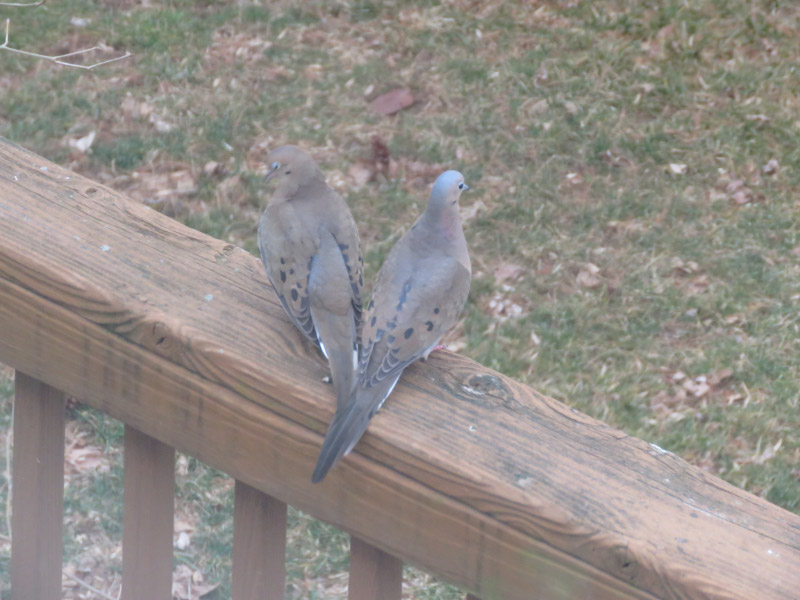
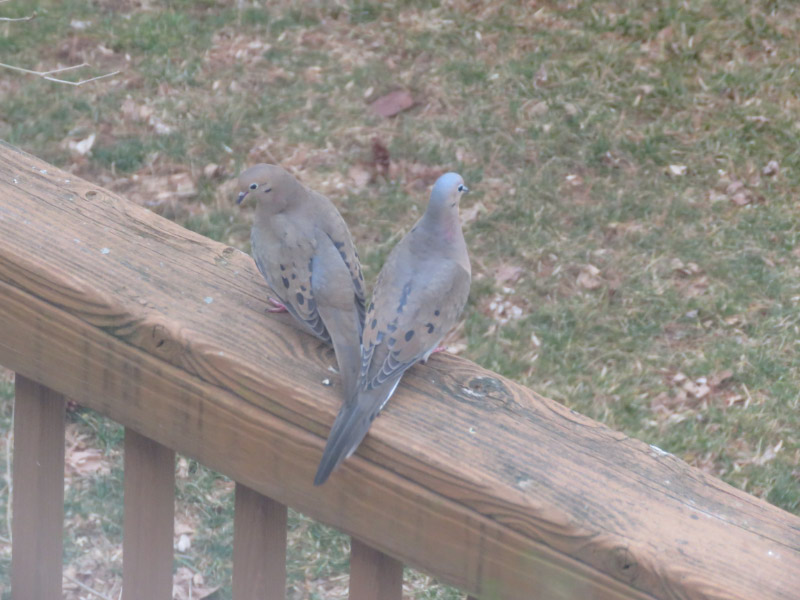
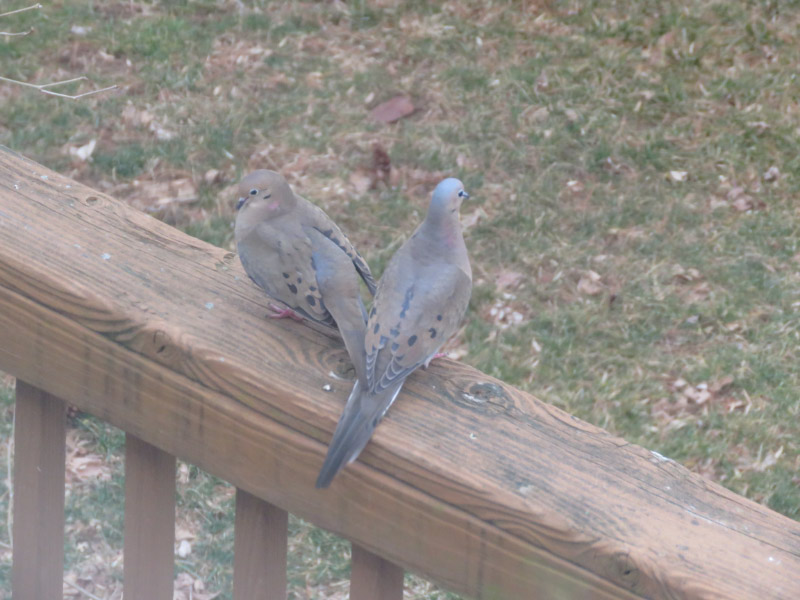
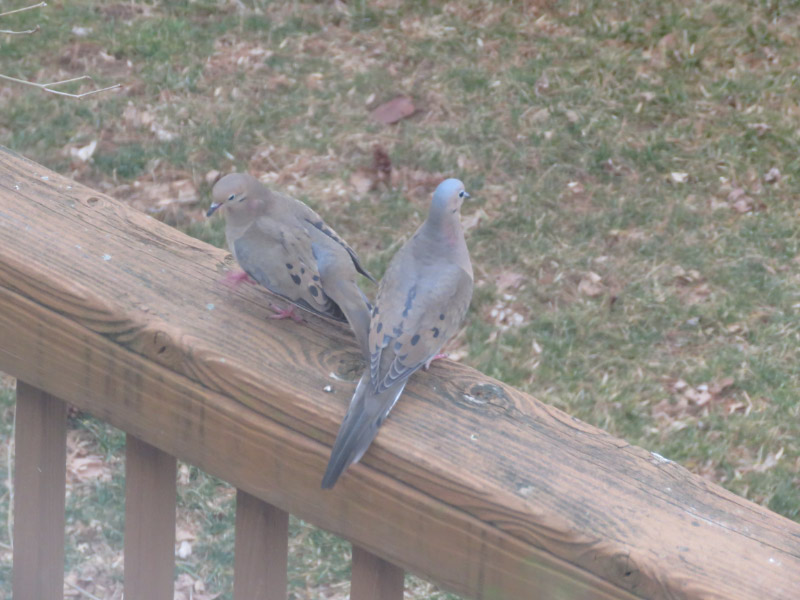
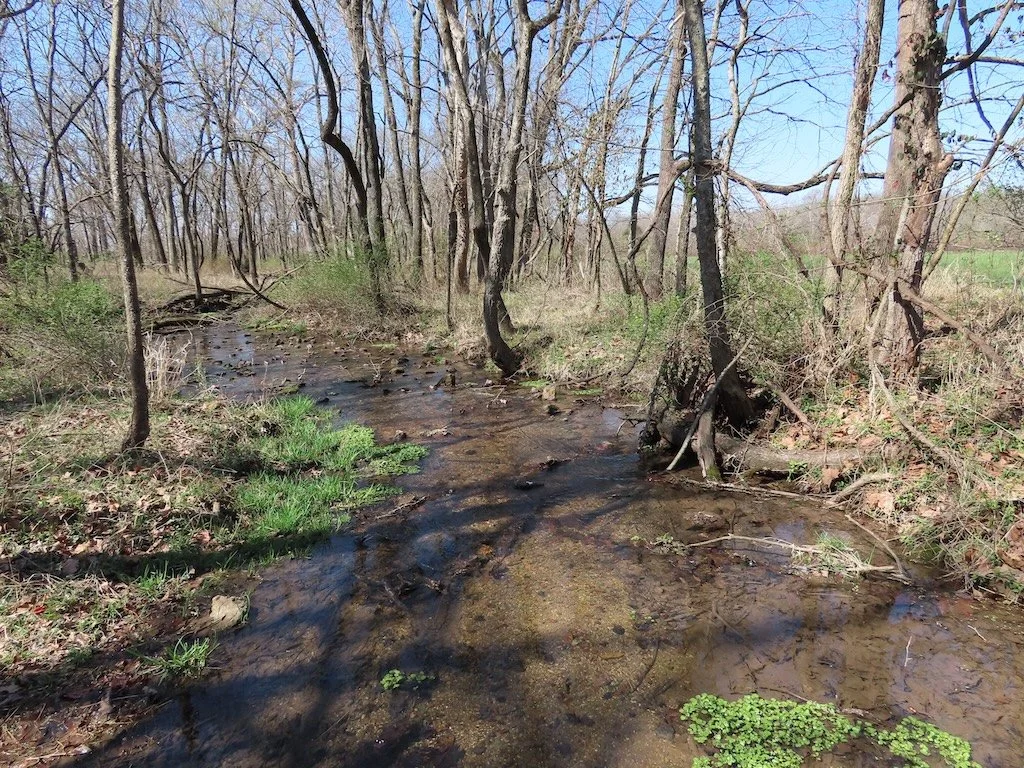
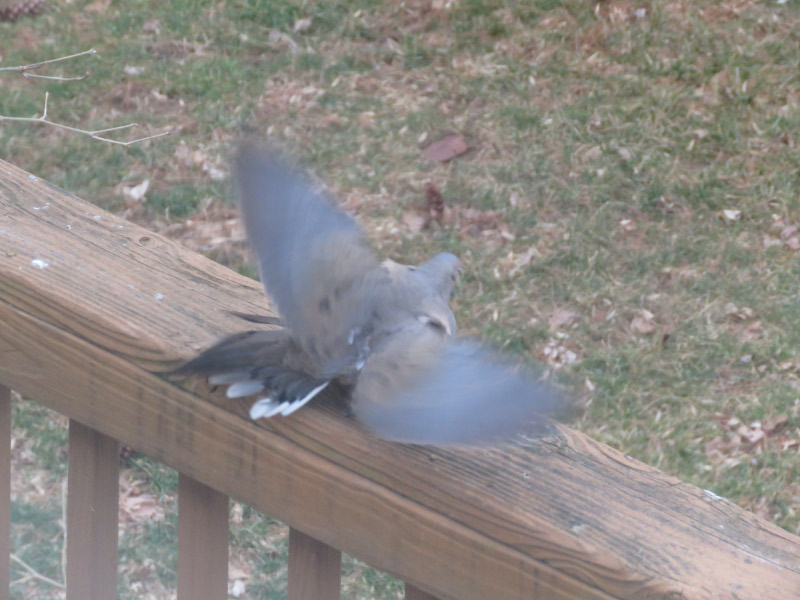
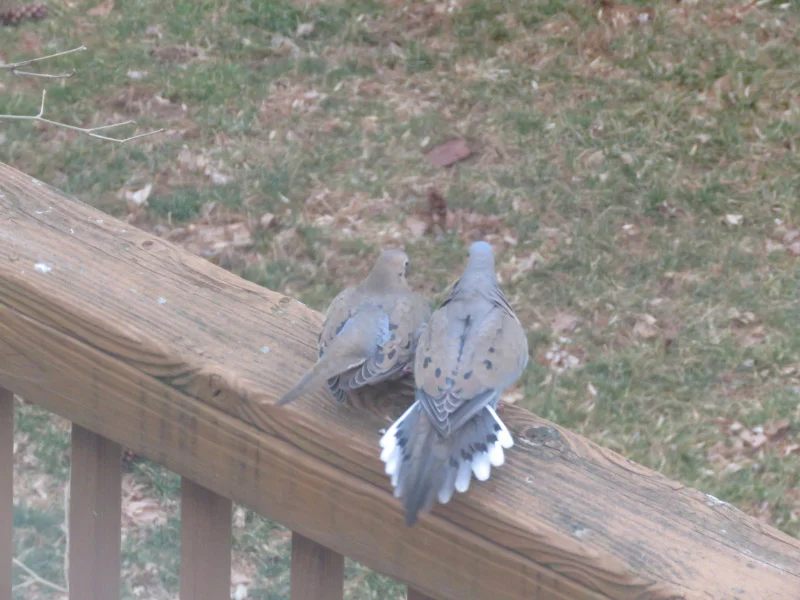
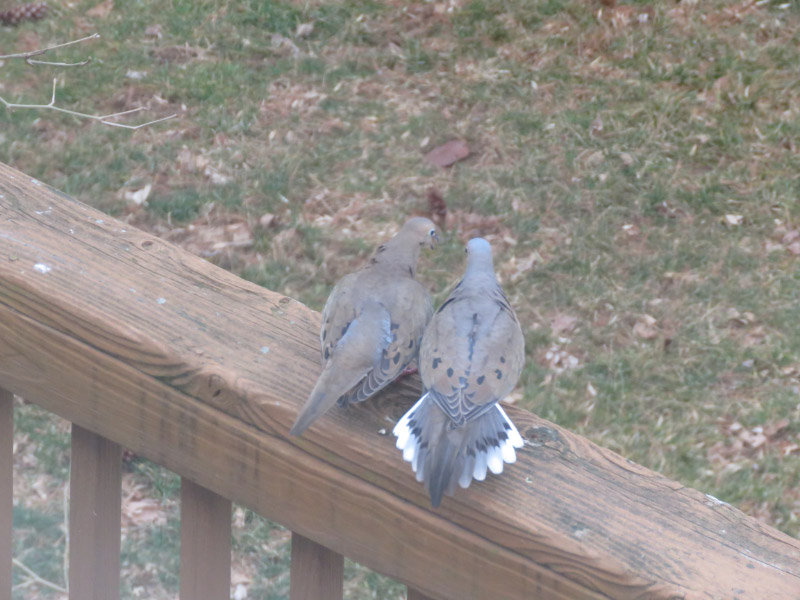
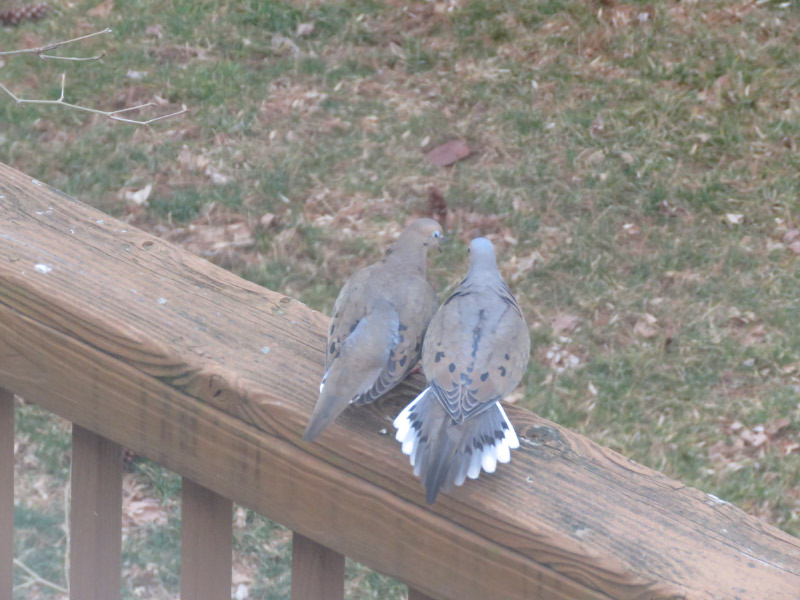
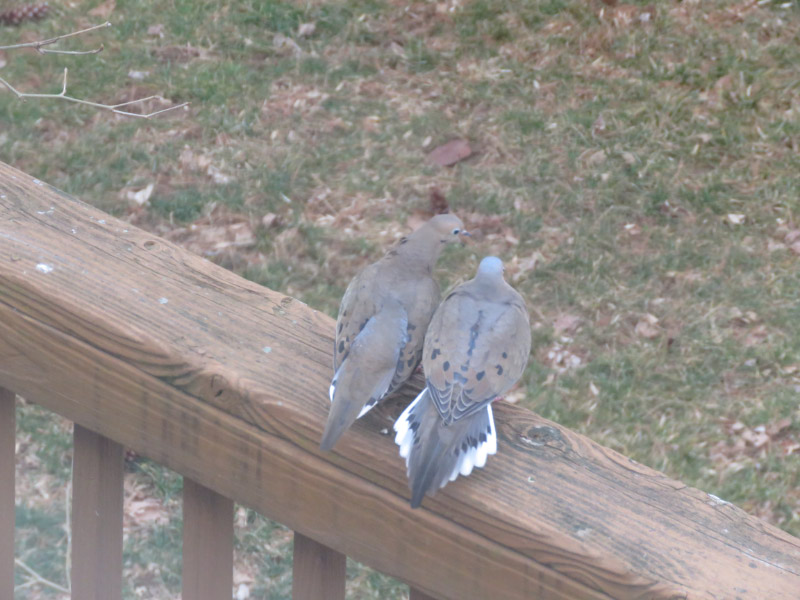
A few minutes observing Mourning Doves

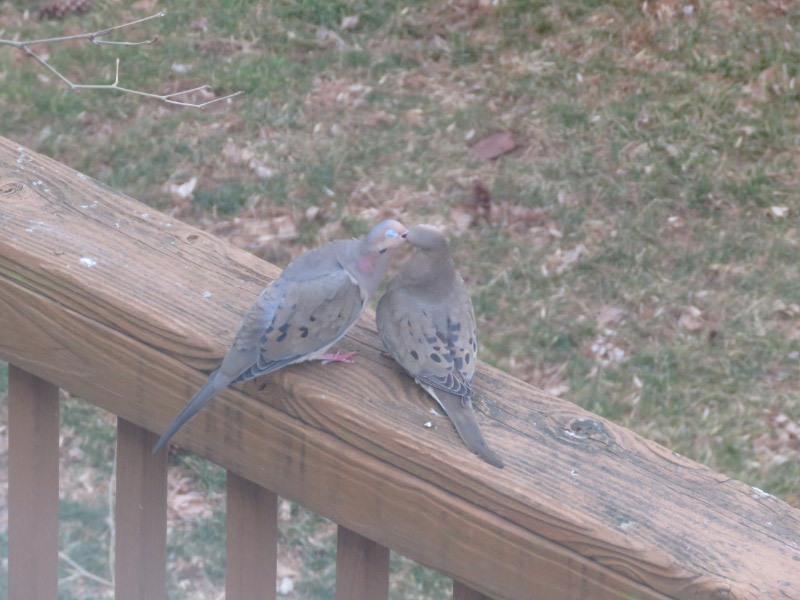
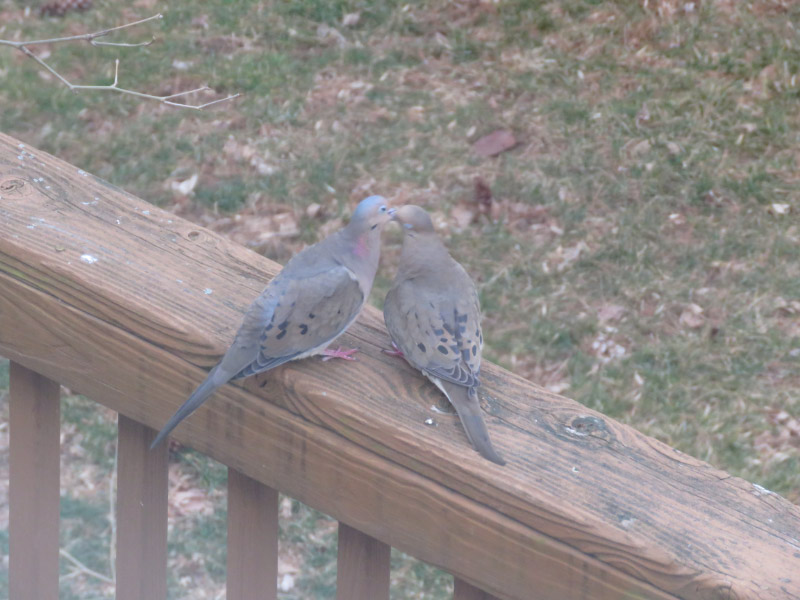
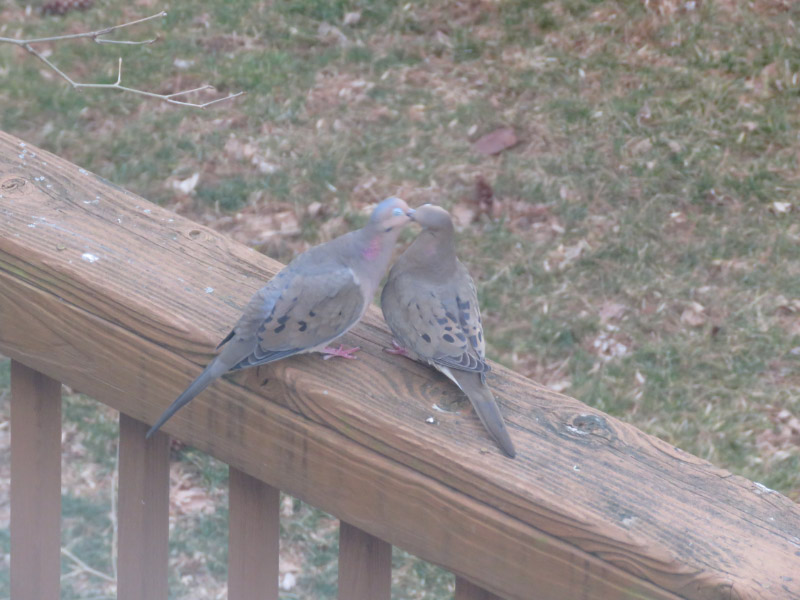
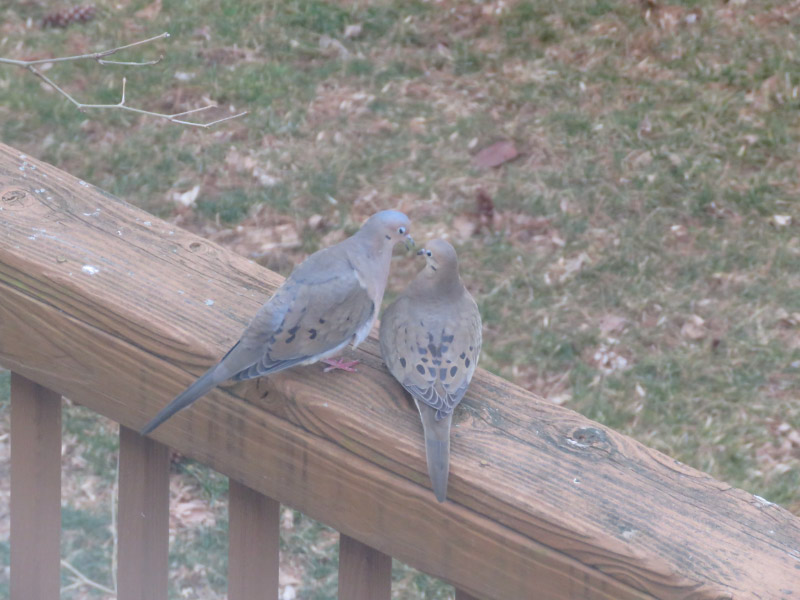
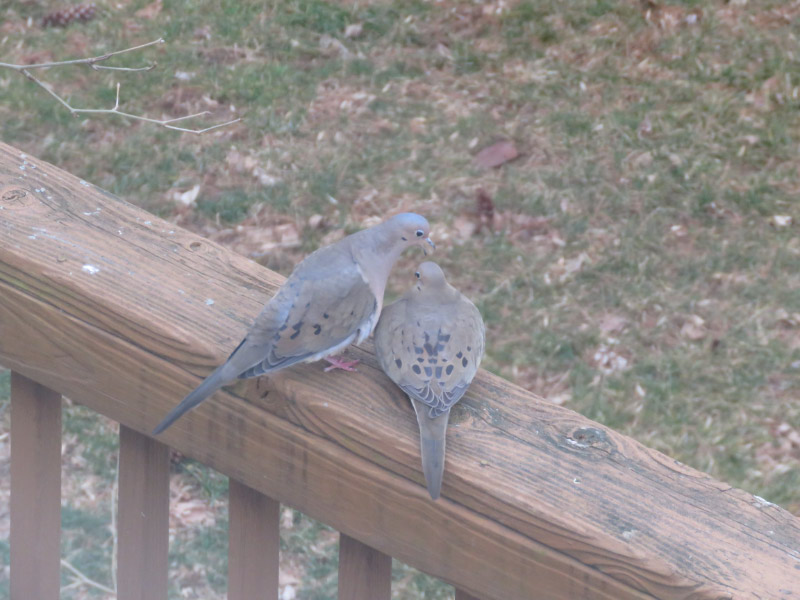
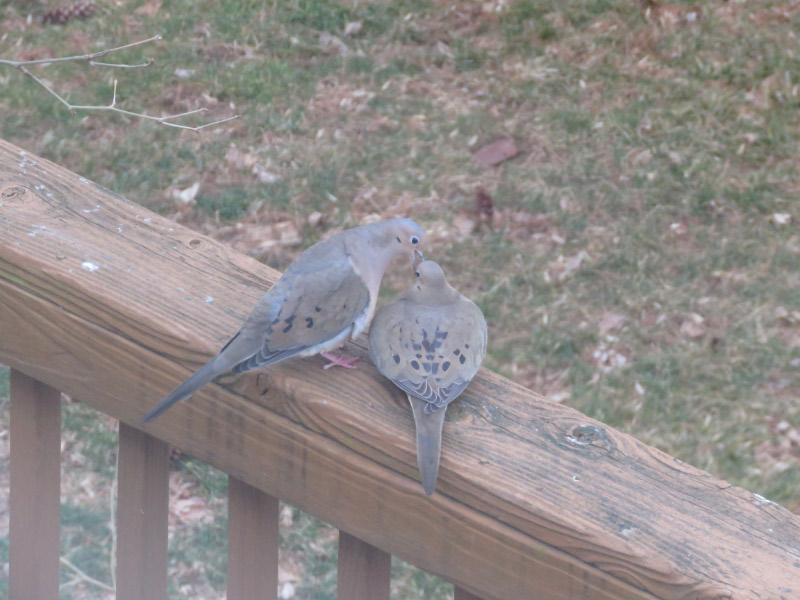
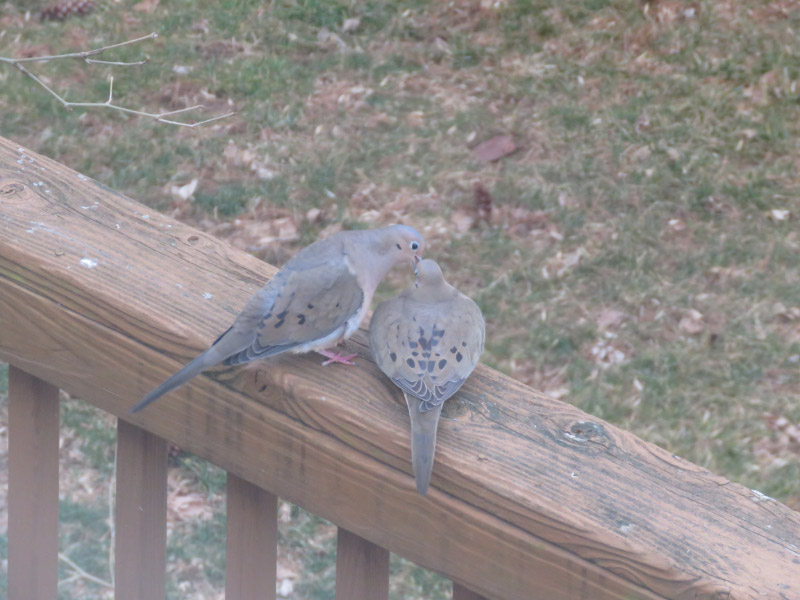
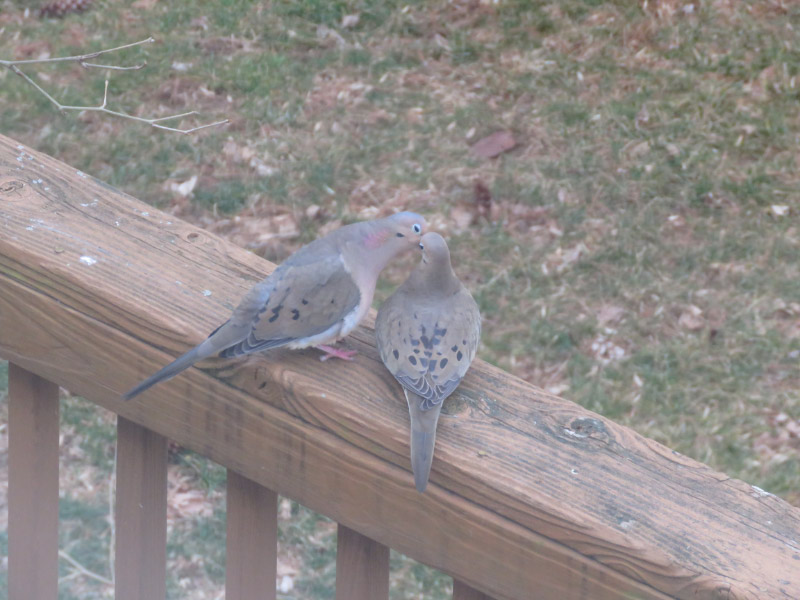
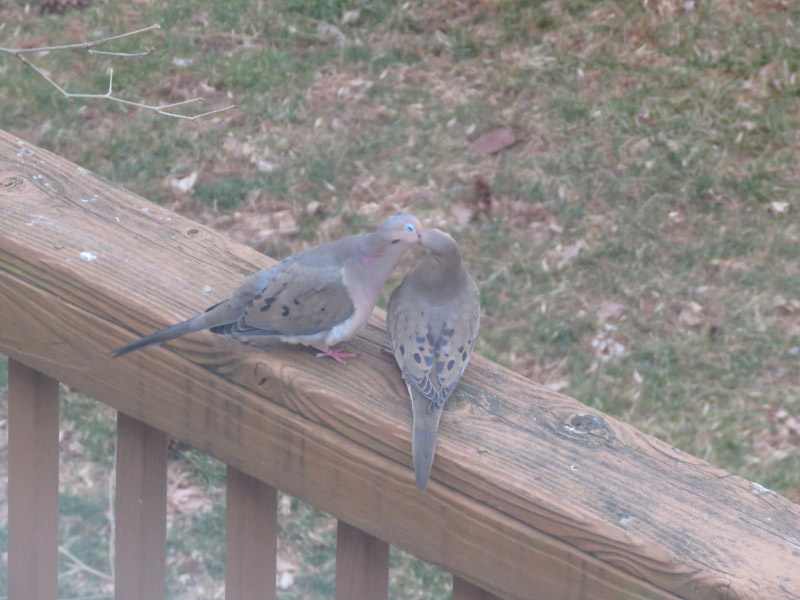
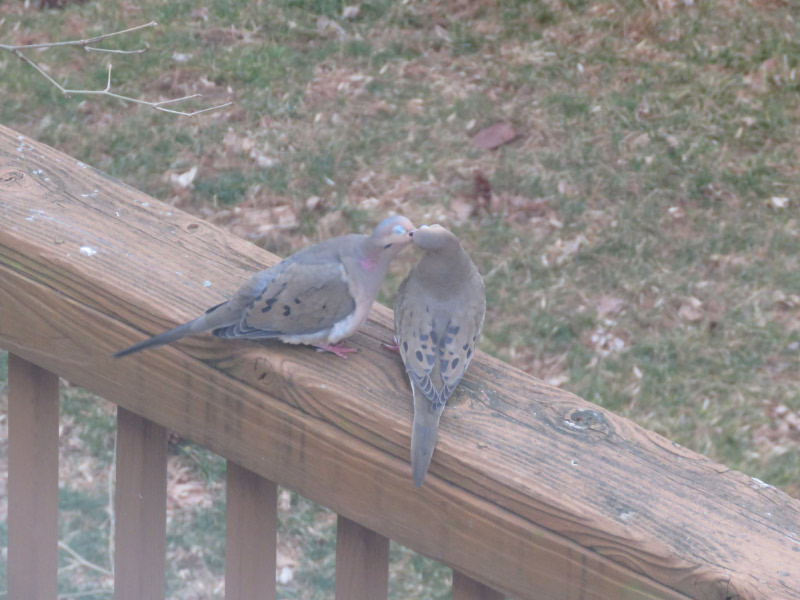
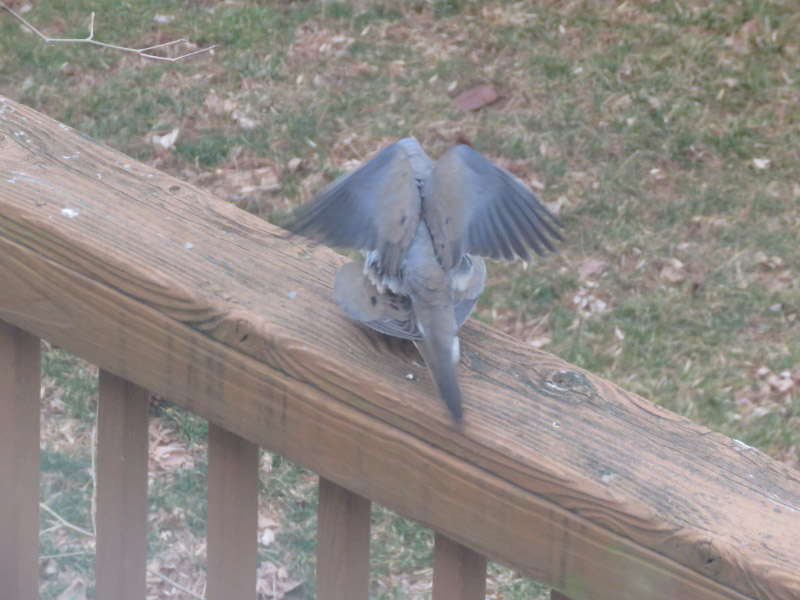
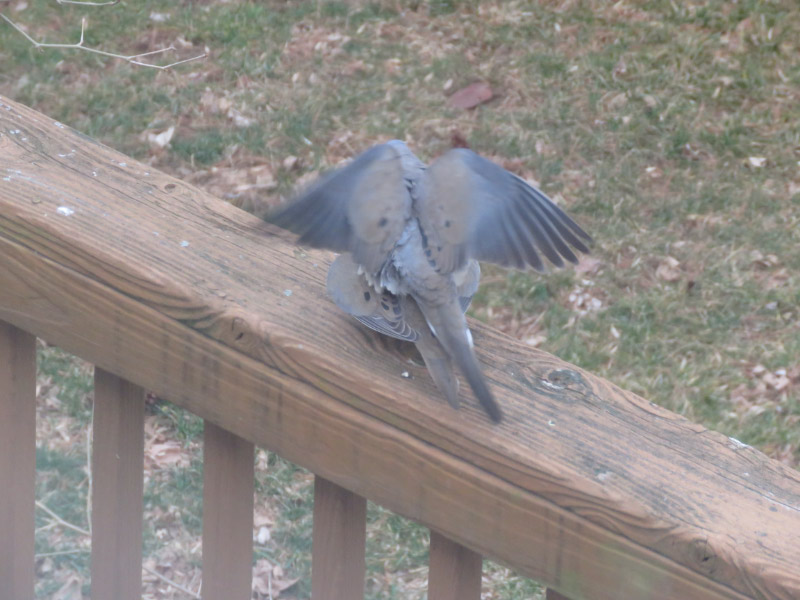
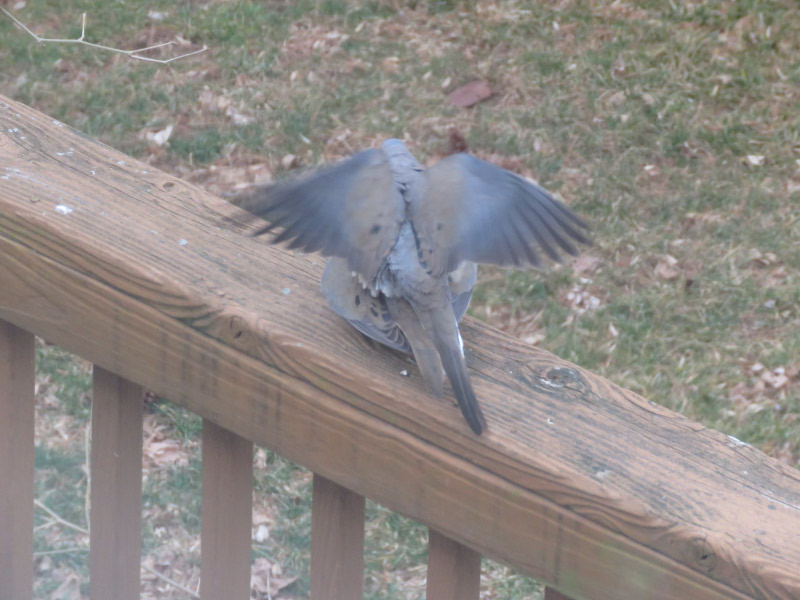
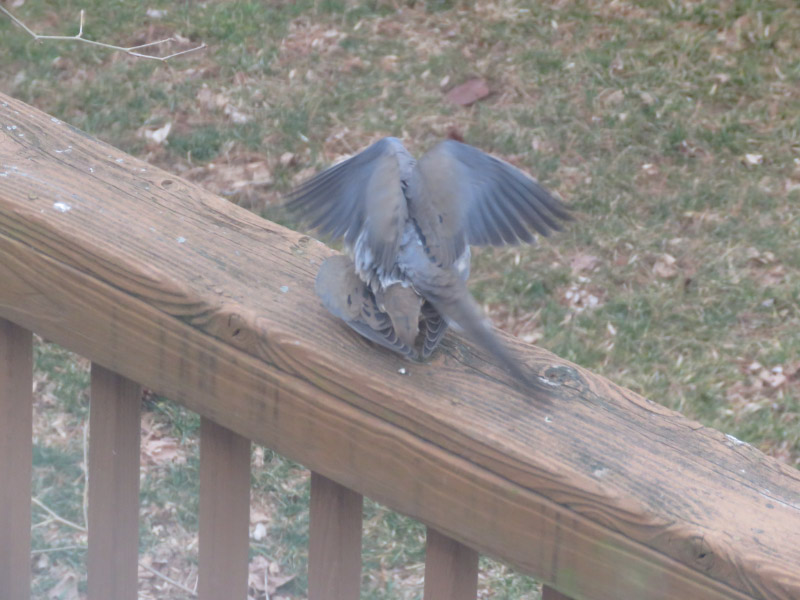
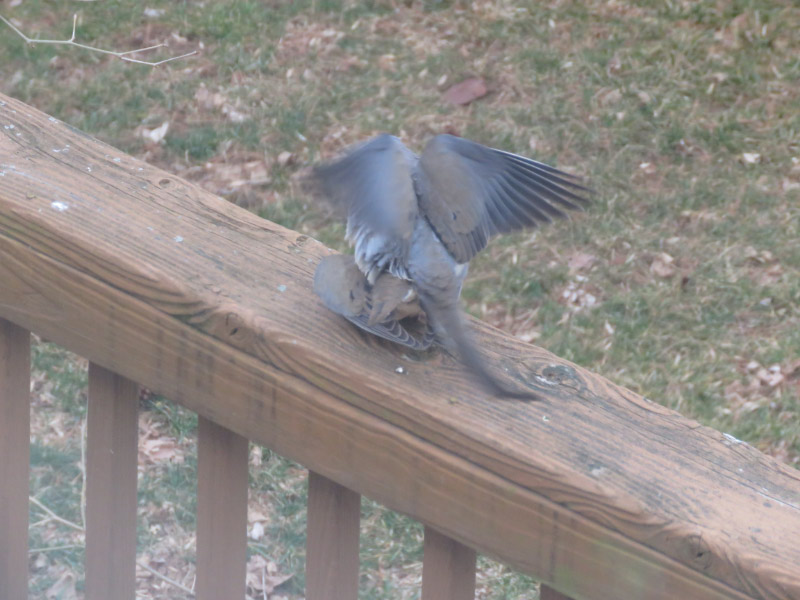
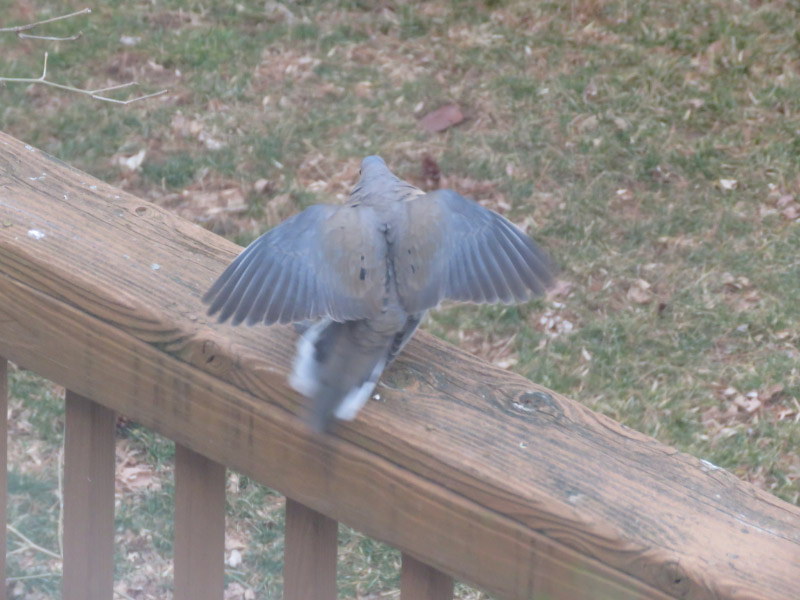
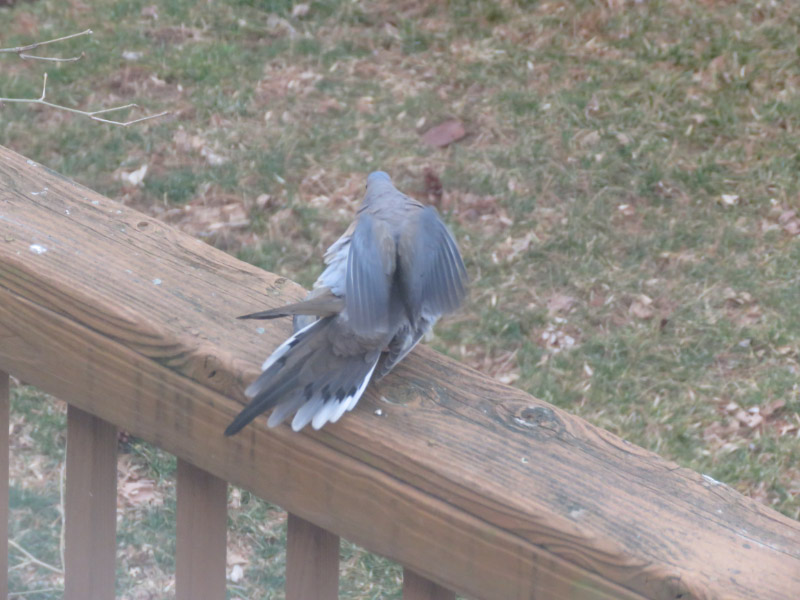
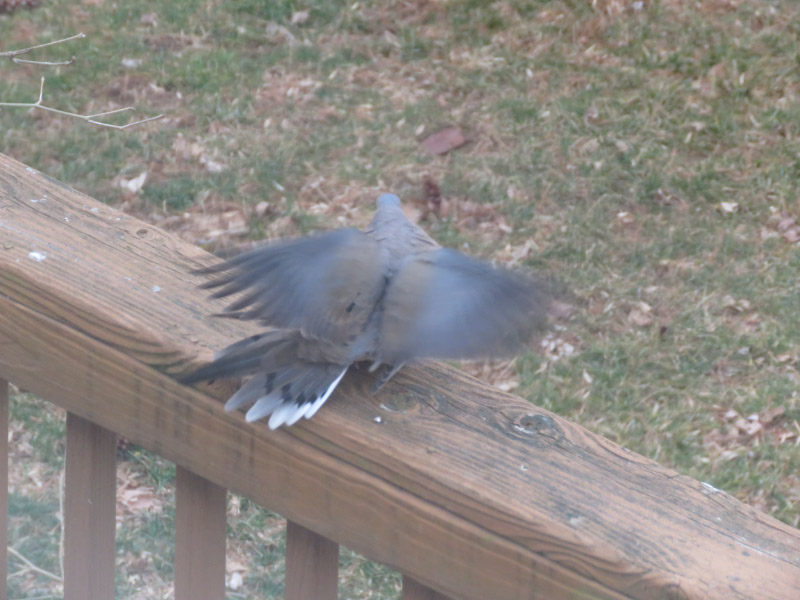
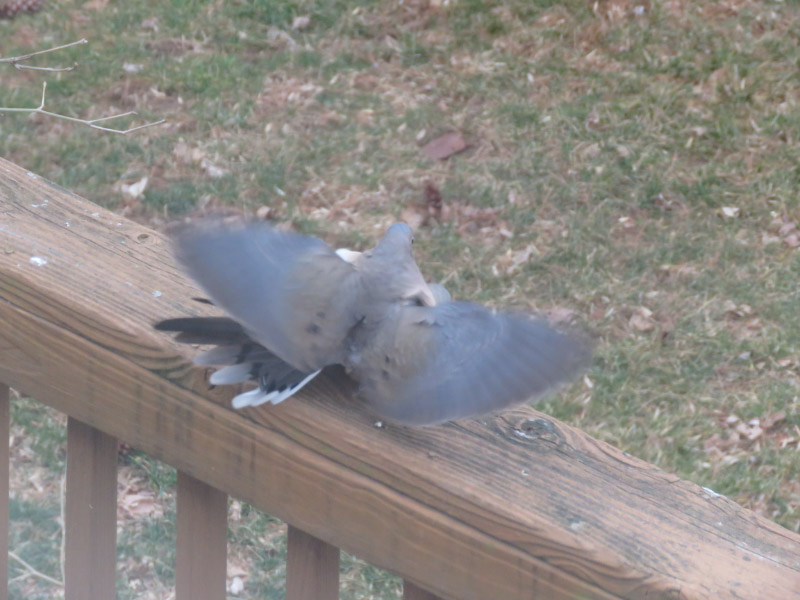
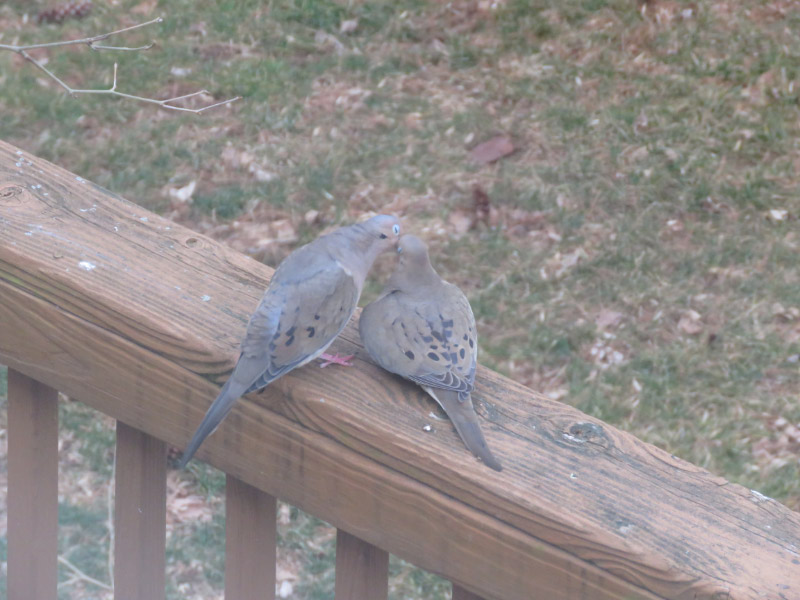
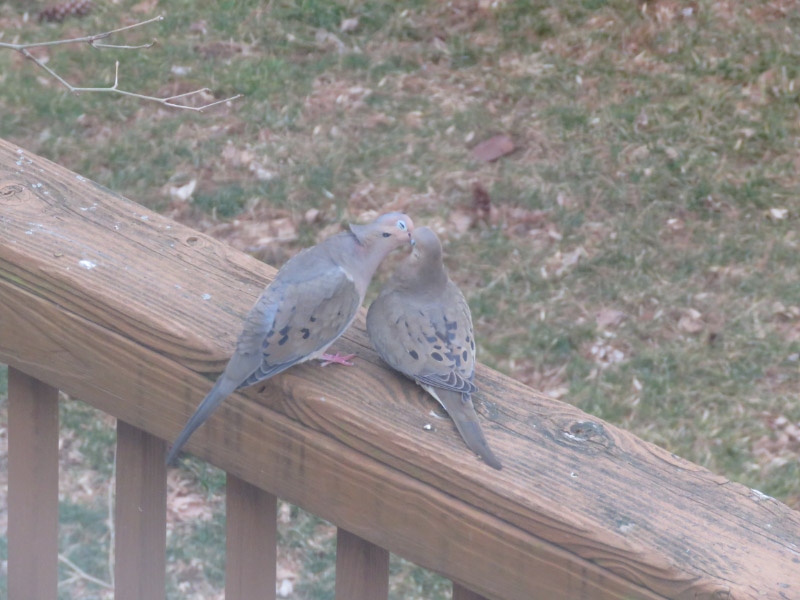
One morning last week – I looked out my kitchen window on a warm breezy march morning and noticed two mourning doves on the railing of our deck…just beginning the mating dance. I ran upstairs to get my camera and started shooting the sequence below through my office window. The action takes place in just over a minute. The male has iridescent feathers on his head and neck. In the beginning, he is on the left….at the end he is on the right.  Afterward the female flew off first and the male stayed put looking out over the yard.

This is not the first time the deck railing has been a favorite place for doves mating. In May 2018 and April 2016, I managed to photograph a mating pair as well. In our area, the doves are probably the most substantial and numerous prey for the red tailed hawks and other raptors.

It was easier with my new camera and its continuous shooting feature. I also now recognize the early stages of the courtship so have a few more seconds to prepare.

3 Free eBooks – March 2019

In some months it’s hard to pick just three books to feature for the monthly eBooks post. March 2019 was one of those. I cheated a little and picked a periodical…with lots of issues available online…for the first one.

Baer, Casimir Hermann. Moderne Bauformen. Stuttgart: J. Hoffman. 1902-1923. Hathi Trust has volumes for each year here. A German periodical about architecture and interior design with many illustrations – some in color. It’s a slice of history of the period. Many of the interiors look modern…others dated. I realized again how appealing I find glass bricks, window seats, alcoves with benches and sometimes a table or a wall of windows and comfy chairs for reading, and curtains to divide a large room into segments. There were quite a few ideas I’ll use in Zentangle tiles as well.

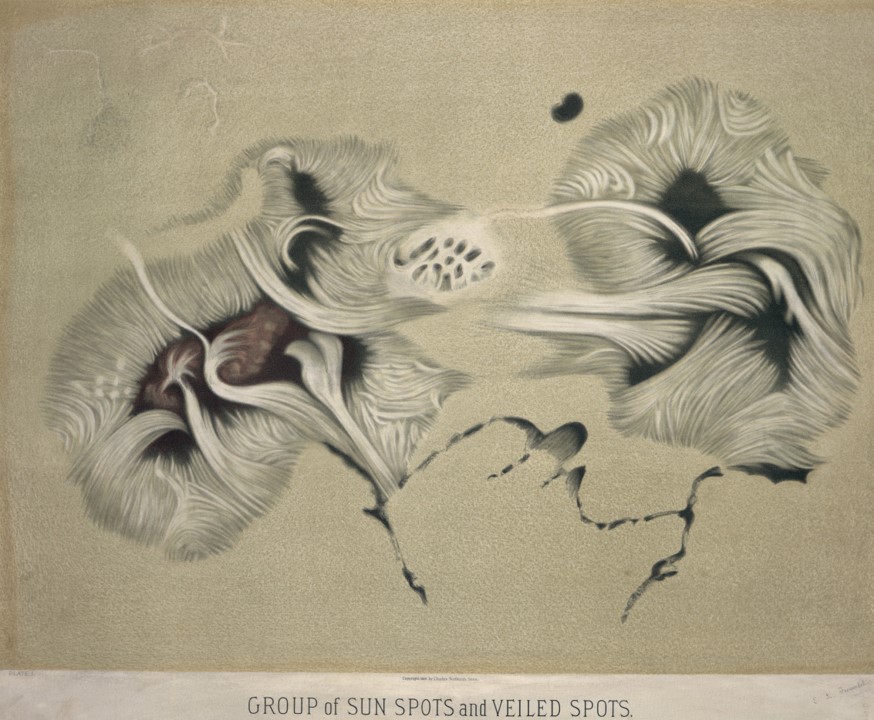
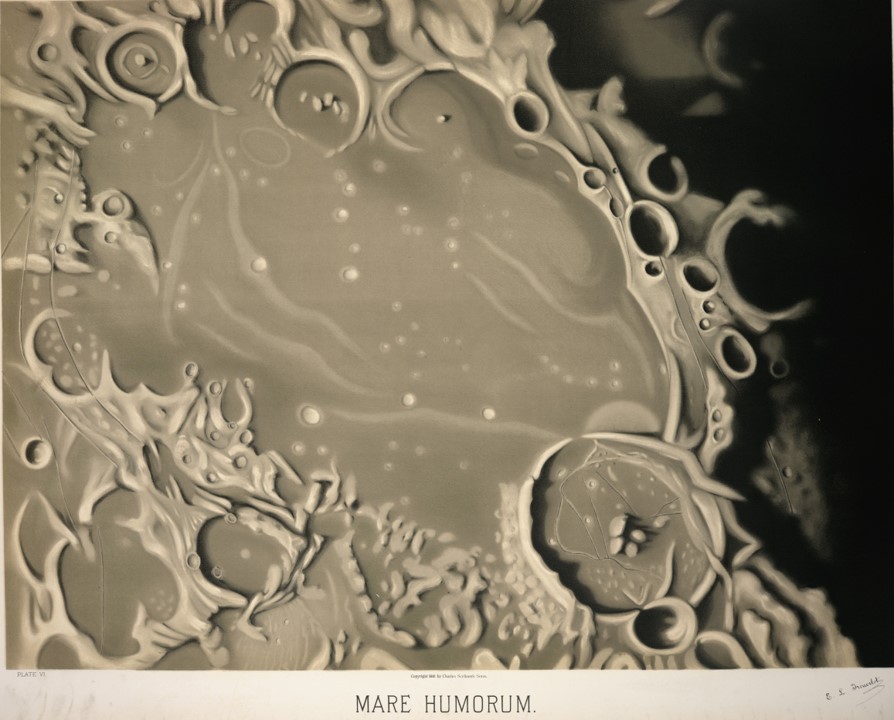
Trouvelot, Etienne Leopold. The Trouvelot Astronomical Drawings. 1882. A slide show of 15 drawings is available from Internet Archive here. Trouvelot was well-known for his astronomical drawings made from observations at the Harvard College Observatory and the US Naval Observatory. Unfortunately, he also is the person that introduced the European Gypsy Moth into North America.

2019 03 ebook3.jpg

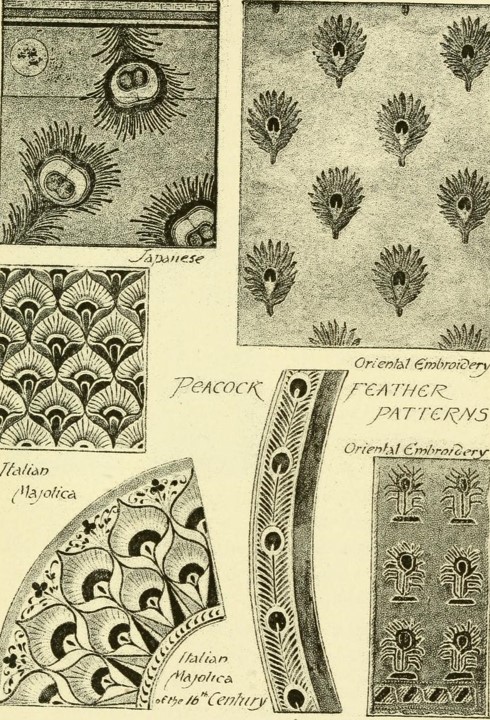
Day, Lewis Foreman. Nature in Ornament. New York: Charles Scribner’s sons. 1892. Available from Internet Archive here. Lots of ideas for Zentangle patterns in this book. I particularly liked the different stylized peacock feathers.

Gleanings of the Week Ending March 16, 2019

The items below were ‘the cream’ of the articles and websites I found this past week. Click on the light green text to look at the article.

Wind Cave, In the National Park, Is 150 Miles Long...And Counting – About 2 miles are surveyed annually and there are about 3,000 unexplored openings that haven’t been checked.

Climate of North American cities will shift hundreds of miles in one generation: New web application helps visualize climate changes in 540 North American cities -- ScienceDaily – The article includes a link to the interactive map. Baltimore Maryland will be like Cleveland, Mississippi in 60 years!

Southern California Will Soon See Another Booming Superbloom | Smart News | Smithsonian – Much better than burn scars and mud slides.

The Obelisks of Heliopolis - Archaeology Magazine – Obelisks taken from the city…a project to understand where they originally stood and the role they played.

In Era of Drought, Phoenix Prepares for a Future Without Colorado River Water - Yale E360 – Living on the edge when it comes to water supply. It’s not just South Africa that has the challenge.

BBC - Future - How Japan’s ancient trees could tell the future –Teasing out how much rain fell in Japan over the past two and half millennia by looking at the preserved wood of ancient forests.    

The soaring cost of US child care, in 5 charts  and Paid family leave is an investment in public health, not a handout – Thought provoking…families coping in the modern world.

Utilities are starting to invest in big batteries instead of building new power plants – Shifts in the way big utilities are structuring themselves for the future – it not all about new power plants.

New molecules reverse memory loss linked to depression, aging -- ScienceDaily – Maybe in the future we’ll be able to treat some types of cognitive decline better than we can now.

The Future of Universities | What's Next: Top Trends – 7 Cs: Critical thinking, Creativity, Collaboration, Communication, Curiosity, Character and Compassion

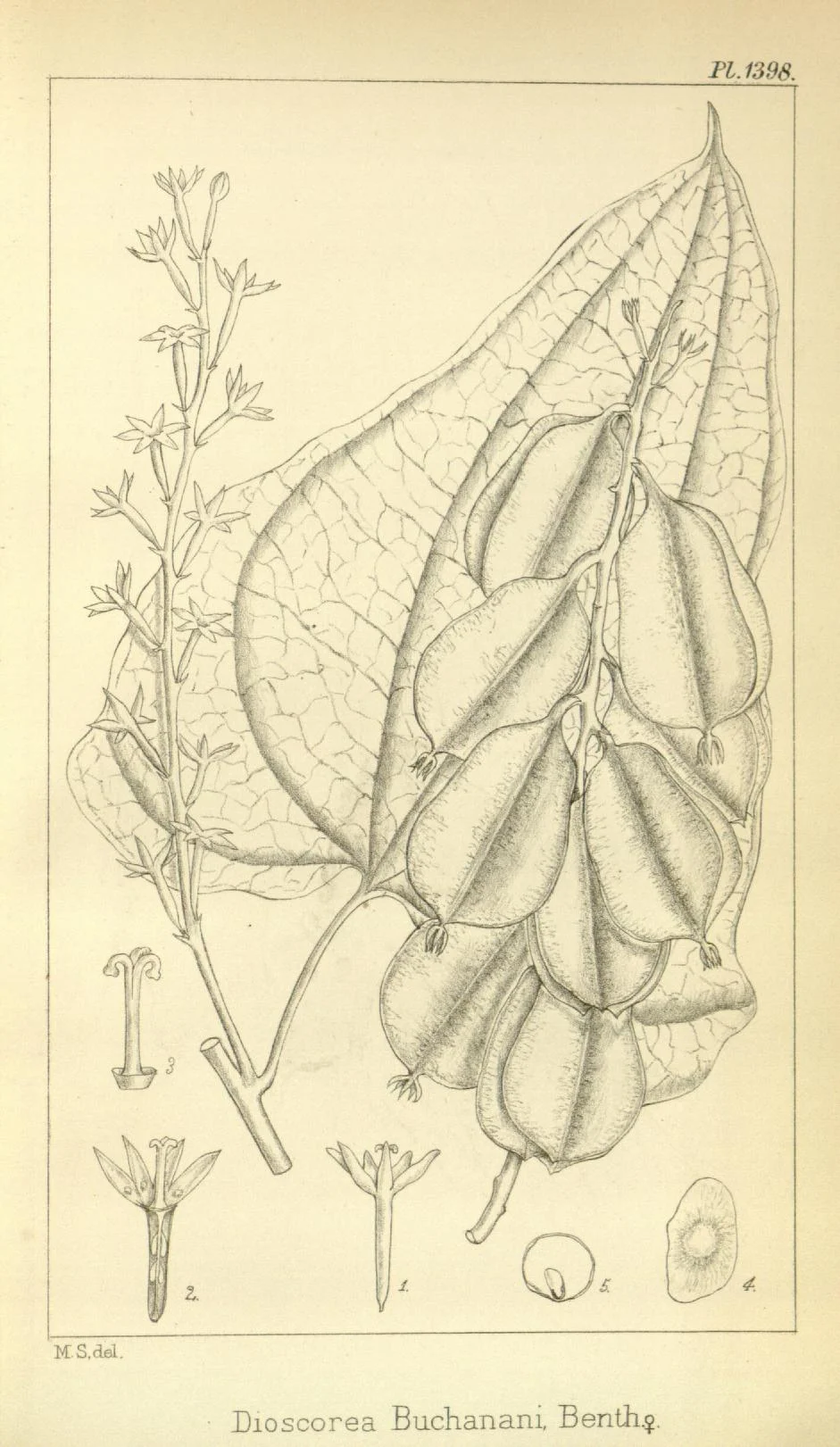
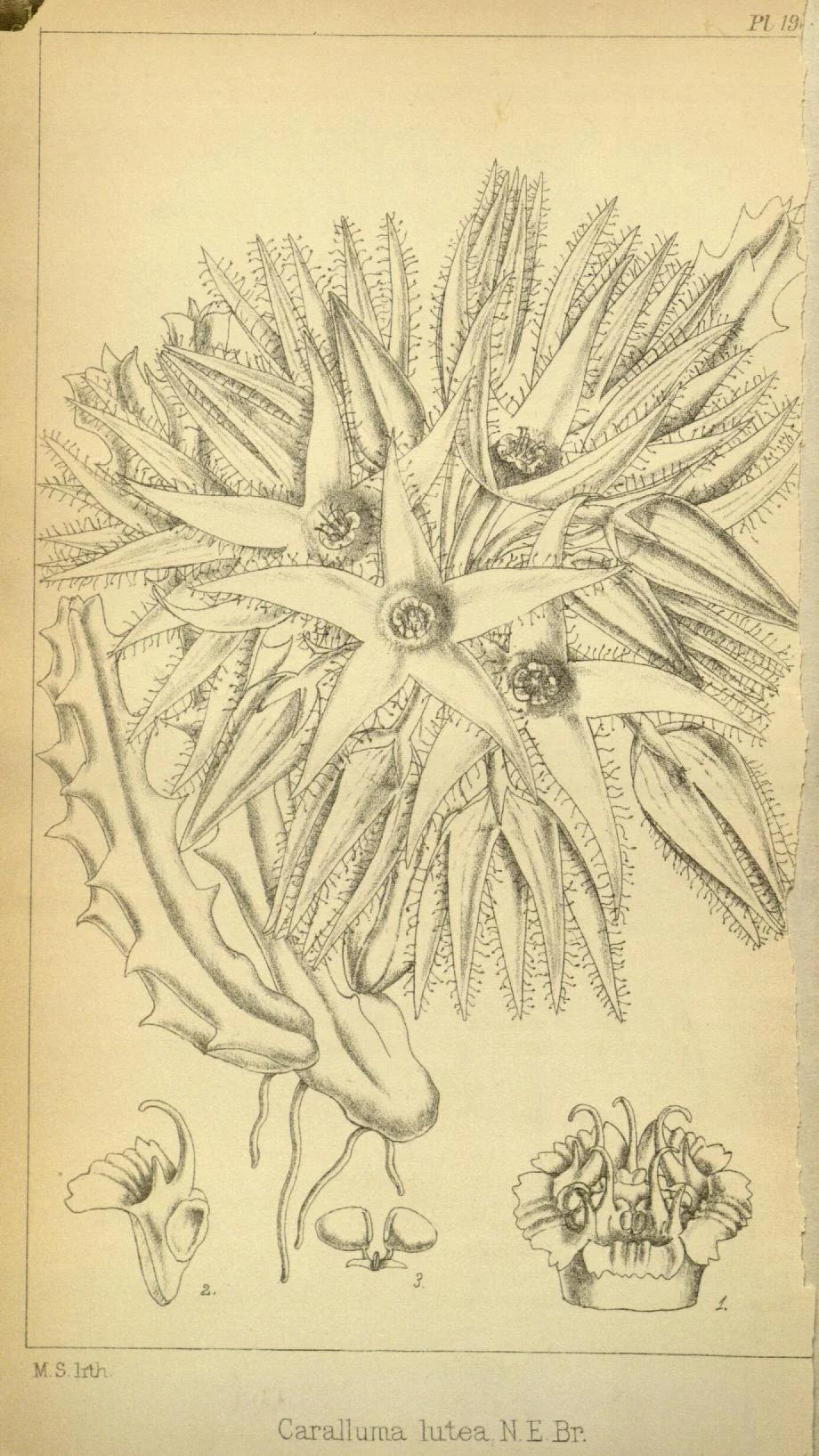
Hooker’s Icones plantarum

Icones plantarum (illustrations of plants - figures, with brief descriptive characters and remarks, of new or rare plants, selected from the Kew herbarium) was started by Sir William Jackson Hooker in 1837 and edited the first 10 volumes and continued by his son Joseph Dalton Hooker (9 volumes) and then others. Over 25 volumes are available on Internet Archive or Botanicus (same scan…simple different user interface so take your pick).

The Hookers (father and then son) were directors of the Royal Botanic Gardens, Kew from 1841-1865 - the time period that the gardens became world renowned. They published throughout their long lives (the father lived to be 80 and the son 94) on botanical subjects. One of Joseph Dalton Hooker’s daughters (Harriet Anne Hooker) was a botanical illustrator and married William Turner Thiselton-Dyer who was director of the gardens from 1885-1905.

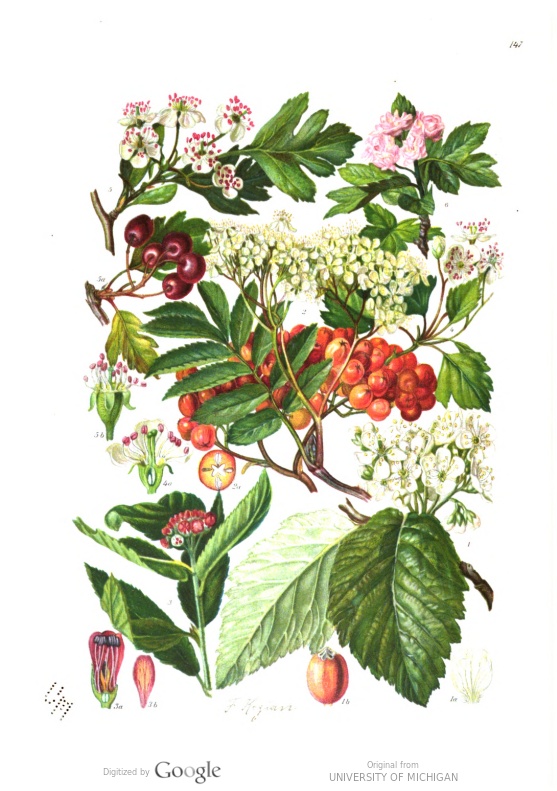
Gustav Hegi’s Illustrierte Flora von Mittel-Europa

Hathi Trust has multiple versions of the Illustrierte Flora von Mittel-Europa (Illustrated Flora of Central Europe) that Gustav Hegi edited between 1908 and 1931. There are editions published after his originals as well. I chose to peruse the volume made available by University of Michigan. The first 6 volumes (some of the volumes have multiple parts so there are more that 6 items in all) have colorful images – lots of plants on one page. The sample images from the 12 volumes I looked at – lots of color and variety on a winter day.

According to Wikipedia, the author, a Swiss botanist, wrote about a third of the content…and edited the whole. He obtained his PhD in 1905 and was had been a curator at the Botanic Garden of Munich from 1902-1908. The volumes were published in Munich. He died in 1932. The article contains very little information of his life outside of his publications although he had returned to Switzerland before he died at age 51.

Gleanings of the Week Ending March 9, 2019

The items below were ‘the cream’ of the articles and websites I found this past week. Click on the light green text to look at the article.

Top 25 Wild Bird Photographs of the Week: January and Top 25 Wild Bird Photographs of the Week: February and Top 25 Wild Bird Photographs of the Week: Feathers and Top 25 Wild Bird Photographs of the Week: Forest Birds – From National Geographic. There are multiples this week since I seemed to have a backlog in my gleanings holding area. Enjoy the colorful, graceful images.

'Upcycling' plastic bottles could give them a more useful second life -- ScienceDaily – Now that many countries that used to take our recycle waste have stopped accepting it, we are suddenly facing the problem of what to do with ‘recyclables’ closer to home. Making materials that have higher value is one way to keep more of it from ending up in landfills.

Soundscapes of Arizona’s Aravaipa Canyon – Cool Green Science – Listen to some nature audio…if it’s too cold to get outside and into the wild right now! These would make great backdrops to a meditation practice.

Image of the Day: Prickly Legs | The Scientist Magazine® - Froghoppers gain traction for jumping by piercing plant surfaces with their spiny legs! (Note: froghopper nymphs are spittlebugs!)

Photography in The National Parks: A Winter Shutdown Stay in Olympic National Park – I want to go! This is a national park I haven’t visited.

What kind of bug is a bug? | The Prairie Ecologist – A little entomology lesson.

Alaska in Flux: Slumping Coastlines – A comparison of a coastline between 1992 and 2018 …showing land slumping in to the Beaufort Sea. An airport is closer to the water now than in 1992.There is also a map showing that quite a bit of Alaska is wetter that is was in 1984. Lots of changes in the Alaska land.

Work Underway to Return the Shine to Thomas Jefferson Memorial – The Jefferson Memorial is probably my favorite in DC. I’m glad it’s getting the renovation it needs to look good into the future.

14 keys to a healthy diet | Berkeley Wellness – A little update based on most recent recommendations (for example, dietary cholesterol is not something to worry about since it has little effect on most people’s blood cholesterol).

Infographic: How Ginger Remodels the Microbiome | The Scientist Magazine® - I like ginger and am including it more consistently in my diet. It’s another food to boost gut health!

Gleanings of the Week Ending March 2, 2019

The items below were ‘the cream’ of the articles and websites I found this past week. Click on the light green text to look at the article.

Good News for Eastern Monarch Butterfly Population - The National Wildlife Federation Blog – Now to sustain the improvement into a trend….and stop the decline for the western population.  
Joshua Trees Could Take 200 to 300 Years to Recover from Shutdown Damage | Smart News | Smithsonian – A very sad result of the shutdown.

Physician-targeted marketing is associated with increase in opioid overdose deaths, study shows -- ScienceDaily – Hopefully with the opioid crisis getting more attention…the targeted marketing is reduced or eliminated. The study used data from before 2016. Things have gotten a lot worse since 2016 but maybe there is a lag between prescription opioid use and opioid overdoses.

Rocking Improves Sleep, Boosts Memory | The Scientist Magazine® - A research topic….and maybe a trend in new bed purchases.

America colonization ‘cooled Earth's climate’ - BBC News – More than 50 million people died and close to 56 million hectares (an area the size the France) they had been farming returned to forest. The drop in CO2 is evident in Antarctica ice cores and cooler weather.

The World’s ‘Third Pole’ Will Lose One-Third of Ice by 2100 - Yale E360 – The Himalayas and Hindu Kush mountains are the source of water for nearly 2 billion people. The region has lost 15% of it’s ice since the 1970s. The current estimate is the river flows will increase until 2060 (flooding) but then will decline. There will be more and more bare rock rather than snow covered rock.

Oregon Launches First Statewide Refillable Bottle System in U.S.: The Salt: NPR – It’s starting with beer bottles. Reuse is better than recycle is better than landfill. If given a choice between buying something in glass or plastic…I choose glass.

BBC - Future - The ‘miracle mineral’ the world needs – Phosphorous. Thermic compost piles rather than mineral fertilizers. It’s economical and environmentally a better way.

Top 25 Wild Bird Pictures of the Week – Raptors – As usual – great photographs of birds from around the world.

What happens to the natural world if all the insects disappear? – Big perturbations of food chains. The article ends with a question: If we dispossess them, can we manage the planet without them? It would be a very different planet.

3 Free eBooks – February 2019

As usual – I tried to select some different kinds of books that are available for free to peruse online. This month they are from three different sources too: Hathi Trust, Internet Archive, and Project Gutenberg. Maybe one of these is something you would enjoy too…so take your pick - history or art or children’s literature!

Country Life in America. New York: Doubleday, Page, & Co. 1901-1917. Hathi Trust has 31 volumes of the periodical available here. Most of the magazine is black and white but there is some color like these three pictures from the December 1904 issue. The advertising is as interesting as the pictures with articles…it is a snapshot of the time: technology, food, special occasions, travel.

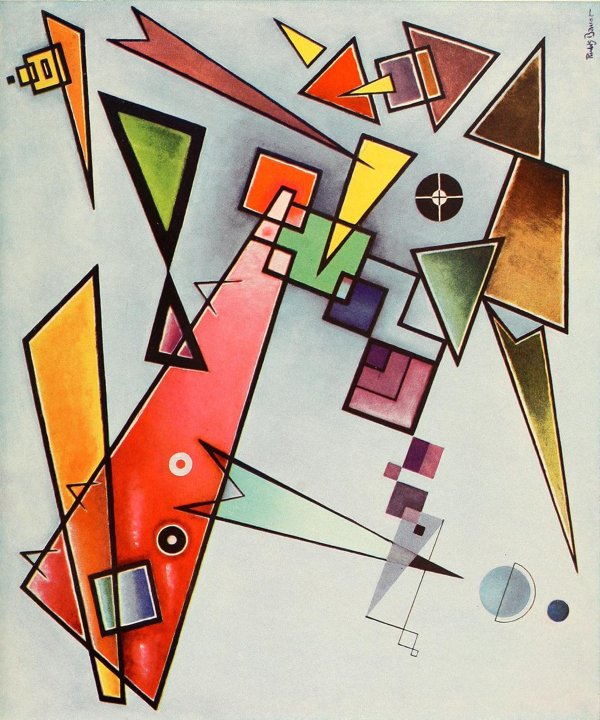
Rebay, HIlla. Third enlarged catalogue of the Solomon R. Guggeneheim collection of non-objective paintings: March 7th until April 17th, 1938, Gibbes memorial art gallery, Charleston, South Carolina. New York: Bradford Press. 1938. Available from Internet Archive here. Lots of colored images in this book since it was from an exhibition of ‘modern’ art of the 1920s and 1930s. The two below are by Rudolf Bauer.

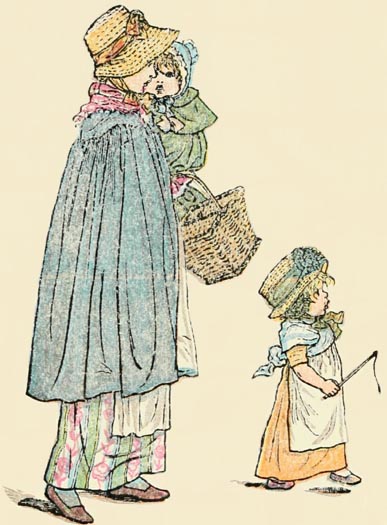
Greenaway, Kate. Mother Goose or the Old Nursery Rhymes. London: Frederick Warne and Co. 1881. Available from Project Gutenberg here. Familiar Rhymes…fun illustrations. This author created imaginary 18th-century clothes for children that became a style for actual clothes for children!

Gleanings of the Week Ending February 23, 2019

The items below were ‘the cream’ of the articles and websites I found this past week. Click on the light green text to look at the article.

BBC - Future - A high-carb diet may explain why Okinawans live so long – I was surprised that sweet potatoes played a significant role in their diet.

Photo of the Week – January 18, 2019 | The Prairie Ecologist – Ice crystals on plants and barbed wire….winter photography.

Top 25 Wild Bird Photographs of the Week: Birds Using Rivers and Lakes  and Top 25 Wild Bird Photographs of the Week: Parrots (both from the National Geographic Society Newsroom) – I’m doing a bit of catching up on the Top 25 bird posts. I always enjoy these photographic series.

A Mysterious Disease Is Killing Beech Trees | The Scientist Magazine® - Beech Leaf Disease…first spotted in Ohio in 2012 and expanding since then. It appears to be an infectious disease but the causal agent hasn’t been determined and there is no treatment yet. We have a lot of beech trees in Maryland’s forests. We lost the hemlocks and ashes….and years before the chestnuts. Each loss changes the forest.

The microbes that help make you and me and  BBC - What we do and don’t know about gut health and  Is it worth taking probiotics after antibiotics?  and How dirty air could be affecting our gut health and How to eat your way to a healthy gut – A series from BBC- Future. It seems like a lot of people could feel better if we knew more about how to keep (or regain) a healthy gut.

See the microscopic wonders of herbs – Scanning Electron Microscope images of herbs – the beauty of  plants with such distinct smells and flavors.

New wisdom about high cholesterol treatment for adults aged 80 and older -- ScienceDaily – So many of the medical guidelines were developed with trials including younger people…and the assumption was made that it would be the same for older people. But now more people are living past 80 and it’s becoming clearer that it is not always the case.

See what your ZIP code says about you using Esri's ZIP lookup tool - Business Insider – The link is at the bottom of the article. I looked at places I am familiar with and it seemed about right. This would be an interesting tool to use if you were moving to a new area…provide a different perspective to your home search.

The Hidden Environmental Toll of Mining the World’s Sand - Yale E360 – Sand is needed for concrete…and a lot of building going on in the world. The problem of extreme mining in rivers and estuaries is increasing.

BBC - Future - The natural products that could replace plastic – Can any of these happen fast enough to stop – or even reduce - the flow of plastics into our rivers and oceans and landfills?

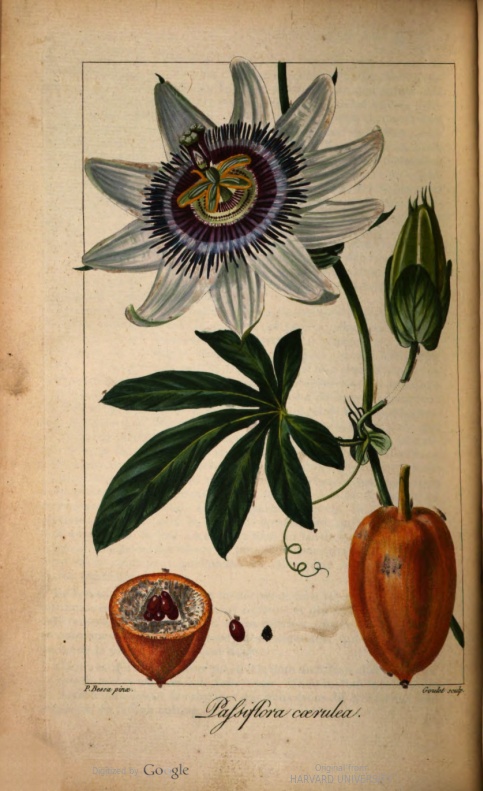
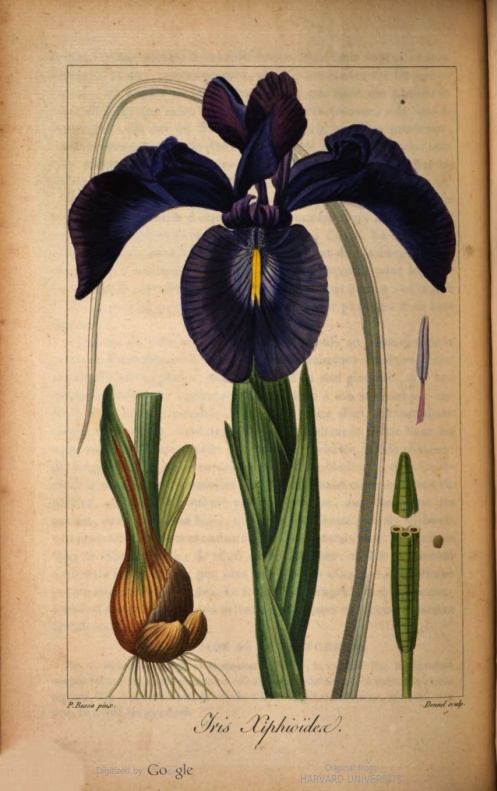
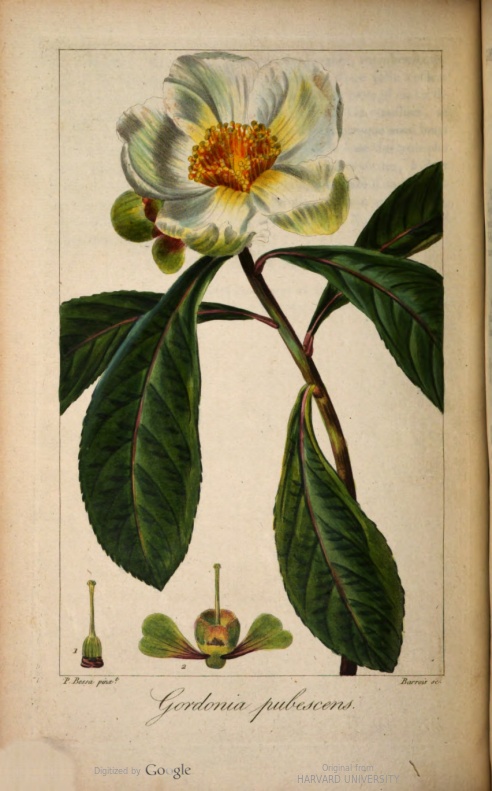
Loiseleur-Deslongchamps and Pancrace Bessa’s 8 volumes of Botanical Prints

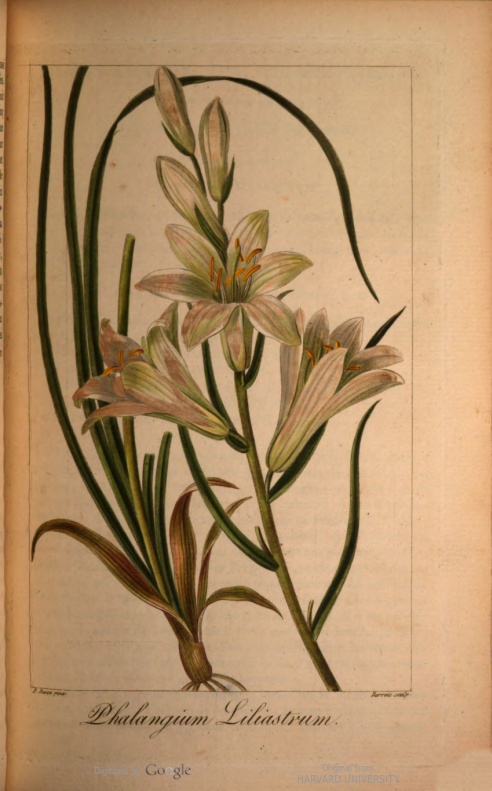
Hathi Trust has the 8 volumes of Herbier général de l'amateur published between 1816 and 1827 at this link. The text is in French but the illustrations (Bessa’s work) are the draw even if you read French. This is a colorful way to spend a few winter hours. I’ve made a slide show of some sample images from each volume.

The main author has a very short entry in Wikipedia; he was evidently a physician and botanist. He lived from 1774 to 1849 when there was a lot of botanical discovery and popularization going on. I was surprised that these volumes were not listed in the ‘selected works’ section of the Wikipedia entry. They were mentioned in the entry for Bessa and an article about a 2008 exhibition at the Hunt Institute for Botanical Documentation. The artist is better known than the author!
Another oddity – on the title page it references Mordant de Launay as ‘first author.’ I found a web page from a rare book seller that explained: The first 11 parts of volume 1 were by Mordant de Launay and the rest were the work of Loiseleur-Deslongchamps.  The book seller lists the 8 volumes for $16,250. What a value the institutions that are scanning and making the volumes available provide for us to enjoy online – with no worries of damaging a fragile book!
Botanical Prints to ‘Color’

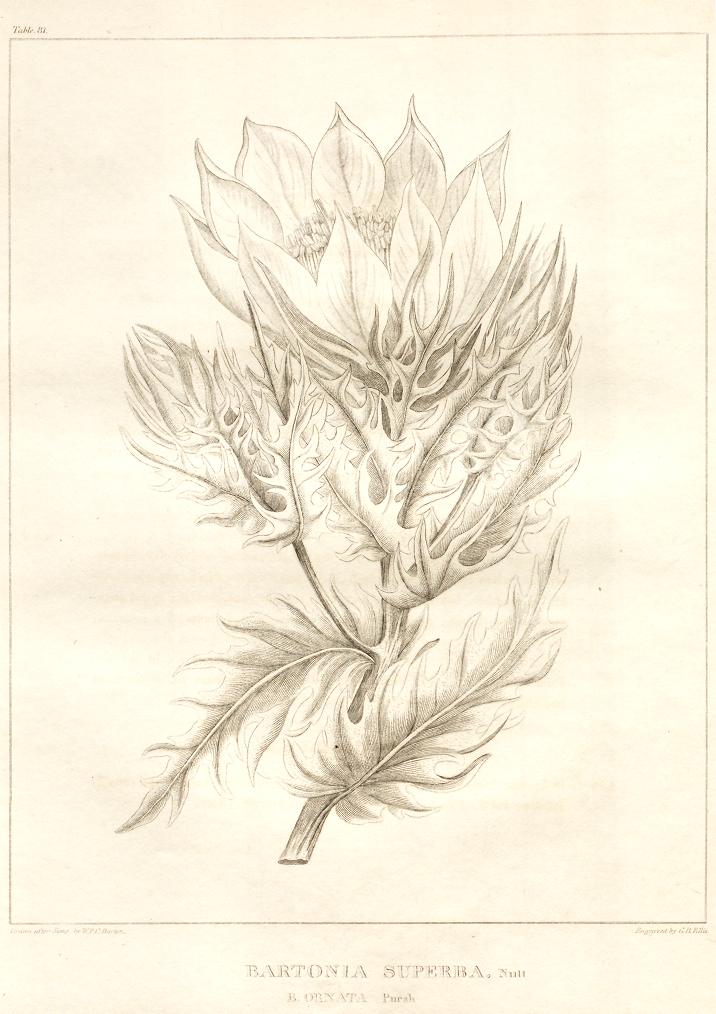
In January one of the botanical print books, turned out to be suitable as a coloring book. It was volume 3 of A Flora of North America by William P.C. Barton published in 1828 and available from the Internet Archive here. Below are my 4 favorites from the book. The title page of the book says that it has ‘coloured pictures drawn from nature’ so I suspect that some editions of the book was not like this one that was scanned. I like that this one lends itself to printing and coloring to create your own version of a botanical print.

According to Wikipedia, the author was born to an influential family in Philadelphia (father a lawyer, uncle a medical botanist). He became a doctor and had a Navy career as a surgeon then as commanding officer for hospitals. In 1815 upon his uncle’s death, he became professor of botany at the University of Pennsylvania…teaching medical botany.

Gleanings of the Week Ending February 16, 2019

The items below were ‘the cream’ of the articles and websites I found this past week. Click on the light green text to look at the article.

Top 25 Wild Bird Photographs of the Week: Mountain Birds – National Geographic Society Newsroom – Starting off the gleanings this week with bird pics!

BBC - Future - The perils of short-termism: Civilization’s greatest threat – It is very difficult for individuals and groups of humans to think strategically. And maybe since we are now quite capable of catastrophically destroying civilization (atomic bombs and climate change are the two most probable) – we need to make strategic thinking a higher priority.

Could Spider Silk Become a Natural Replacement for Plastic? – Cool Green Science – It is still very far from the goal – mass production cheaply. But it is hot material science topic.

Report: Americans Are Now More Likely to Die of An Opioid Overdose Than on The Road: NPR – Gives another take on the magnitude of the opioid deaths.

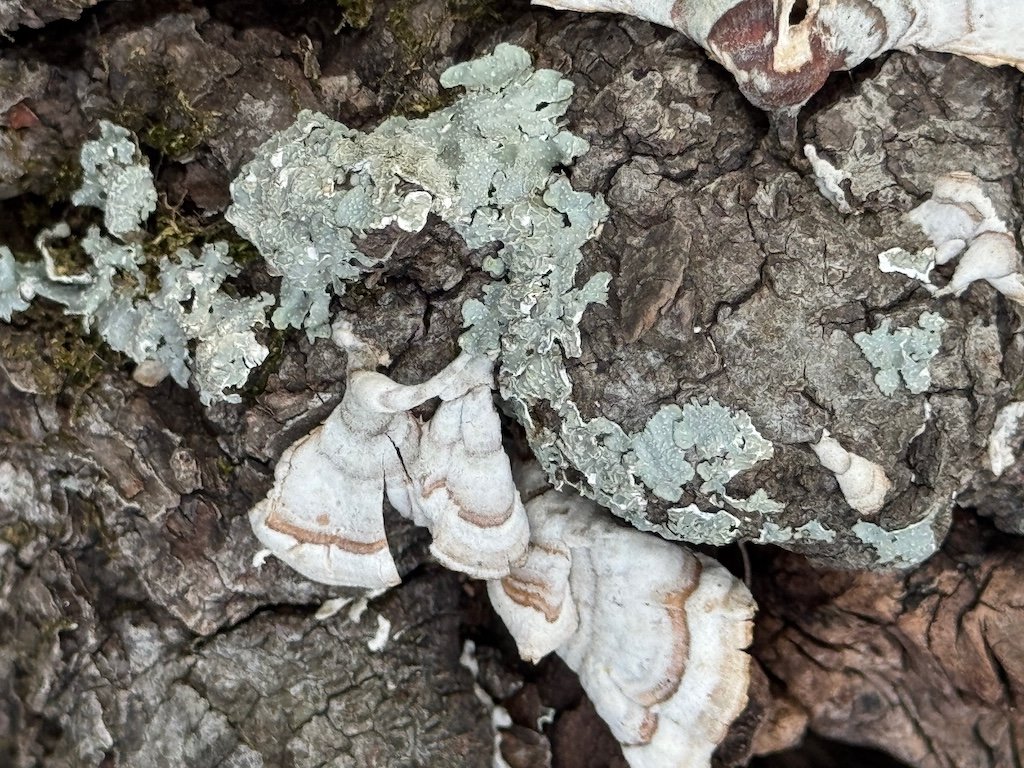
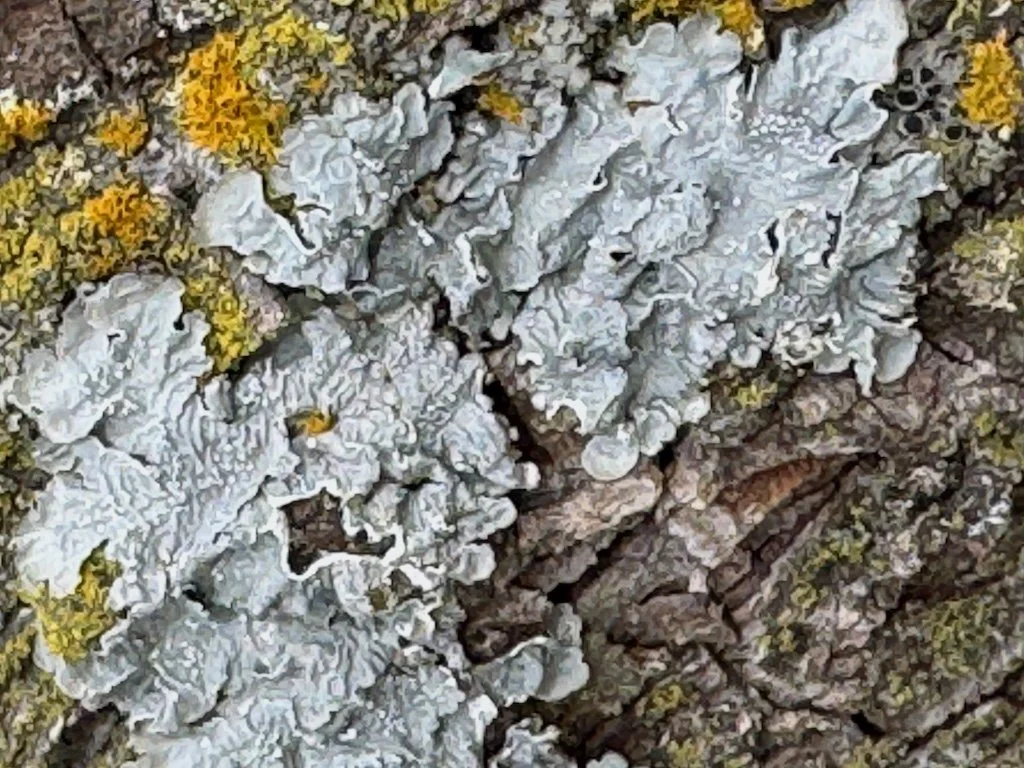
Not One, Not Two, But Three Fungi Present in Lichen | The Scientist Magazine® - For a long time the textbooks used lichen to exemplify symbiosis of a lichen and a fungus. It’s more complicated than that….and it’s a good example of how science is refined over time to improve our understanding.

BBC - Future - Why it pays to declutter your digital life – Getting rid of stuff needs to be about more than the physical junk we accumulate…we now have email and photos…all kinds of digital media stored and rarely – or never – used. It’s clutter. And it might need different strategies to declutter.

Central Texas salamanders, including newly identified species, at risk of extinction -- ScienceDaily – It seems like I’m seeing several stories like this recently – a newly identified species that is already almost gone. Depressing.

Elevated Nitrate Levels Found in Millions of Americans’ Drinking Water - Yale E360 – I don’t like articles like this because they point to a situation that has negative consequences…then doesn’t have anything that individuals can do to reduce the risk. It’s very frustrating.

Flowers Sweeten Up When They Sense Bees Buzzing | Smart News | Smithsonian – Flowers increase sugar content by 12-20% within 3 minutes of hearing a bee’s buzz.

Food is medicine: How US policy is shifting toward nutrition for better health – Glad this idea is getting more attention. We’ve been way to gullible to think that medications can overcome poor day-to-day dietary habits. I hope the 2018 Farm Bill and the “Food is Medicine” working group in the House are good ‘first steps’ to change the way we think about what we eat.  

Gleanings of the Week Ending February 09, 2019

The items below were ‘the cream’ of the articles and websites I found this past week. Click on the light green text to look at the article.

Neandertal slaughters · john hawks weblog – Analysis of 5 sites indicates that Neandertals were excellent tacticians, casual executioners, and discerning diners.

Rare Gemstone Hidden in Ancient Teeth Reveals a Surprising Truth About Medieval Women – Lapis Lazuli found in the remains of a middle aged woman’s teeth and jaw. She was buried in an all-female monastery in Germany sometime around 1000-1200 CE. The researchers concluded that she most likely was painting with the pigment (licking the end of the brush while painting) creating manuscripts.

More solutions needed for campus hunger – A new report states that 9-50% of America’s college students face food insecurity…and that does not include graduate students. There are some programs that could help but often the students are not aware of them…and there may be enough stigma attached to them that students shy away. These are young adults that need adequate nutrition to continue their schooling and growth into adulthood.

Image of the Day: What We've Dumped | The Scientist Magazine® - Yuck! Stuff that washed up on 12 shoreline sites on barrier island along the US Gulf Coast…and it’s all stuff that people put in the water.

Two billion birds migrate over Gulf Coast -- ScienceDaily – Combining eBird observational data helps translate radar data into estimates of bird numbers. The peak time was April 18-May 7. The highest activity is over the west Texas Gulf Coast (Corpus Christi to Brownsville).

US Cancer Death Rate Dropped for 25 Years Starting in 1991 | The Scientist Magazine® - Down 25% over 27 years…a positive trend.  But there are still issues of race and socioeconomic inequality when it comes to prevention and treatment. The trend is not good for obesity related cancers; they are on the rise.

Top 25 Wild Bird Photographs of the Week: December – National Geographic Society Newsroom – I always like bird pictures.

Natural Disasters Caused $160 Billion in Damage in 2018 - Yale E360 – It did seem like there were a lot of disasters last year: fires in California, Hurricanes Michael and Florence…and that’s just the ones in the US.

Medical marketing has skyrocketed in the past two decades, while oversight remains limited -- ScienceDaily – I have been suspicious of medical marketing (particularly ads on television) for some time. The study seems to show that state and federal regulators are overwhelmed.

Image of the Day: Geckos on the Run | The Scientist Magazine® - It must take a lot of energy for the gecko…but it can indeed run across the surface of the water.

3 Free eBooks – January 2019

The eBooks I am featuring in January are about topics that are well known today….but books from quite a few years ago.

Capart, Jean. Tout-Ankh-Amon. Bruxelles. 1943. Available from Internet Archive here. King Tut artifacts in a lavishly illustrated (photos) book from 1943 by a Belgian Egyptologist. I wondered how well the book sold or was it just like his other books. Internet Archive has some of his other books as well.

19 01 ebook2.jpg

Heyerdahl, Thor. The Art of Easter Island. New York: Doubleday & Company. 1975. Available from Internet Archive here. I remember when Heyerdahl was in the news about Easter Island…his investigation of how the stone heads were made and moved. I had never seen the book before, so it was a kind of closure. And about the same time, I was looking at this book, there was an item in my news feeds about Easter Island statues may have marked sources of fresh water.

19 01 ebook3.jpg

Lofting, Hugh. Doctor Dolittle’s Return. London: Jonathan Cape. 1933. Available from Project Gutenberg Canada here.

Most people are familiar with the movies but maybe not the books. Lofting illustrated his books himself too. The books started as letters to his children during World War I – the war being too horrible or boring to write about. There is a better biography for Hugh Lofting than Wikipedia’s here. If you are interested in more of his books, here’s the complete list of his books available from Project Gutenberg Canada:

The Story of Doctor Dolittle (1920) [Novel; with an introduction (1922) by novelist Hugh Walpole (1884-1941) Wikipedia] HTML HTML zipped Text Text zipped Wikipedia
The Voyages of Doctor Dolittle (1922) [Novel] HTML HTML zipped Text Text zipped Wikipedia
Doctor Dolittle's Post Office (1923) [Novel] HTML HTML zipped Text Text zipped Wikipedia
Dr. Dolittle's Circus (1924) [Novel] HTML HTML zipped Text Text zipped
Dr. Dolittle's Garden (1927) [Novel] HTML HTML zipped Text Text zipped
Dr. Dolittle in the Moon (1928) [Novel] HTML HTML zipped Text Text zipped
Dr. Dolittle's Return (1933) [Novel] HTML HTML zipped Text Text zipped

Gleanings of the Week Ending January 26, 2019

The items below were ‘the cream’ of the articles and websites I found this past week. Click on the light green text to look at the article.

Learning Rule: Quantity, then Quality | Scott H Young – Quantity as an initial strategy is probably what I do most of the time….but I throw in a healthy dash of variety of mediums as I go after quantity. And I push myself to actively apply while I am learning all along the way.

Serious loneliness spans the adult lifespan but there is a silver lining: Feeling alone linked to psychological and physical ills, but wisdom may be a protective factor -- ScienceDaily – Most of the time we hear only about the negative impacts of loneliness (the emotion….not necessarily the physical situation). But there are many people physically alone but who don’t feel lonely. This study had a broad age rage of participants and looked at loneliness from multiple perspectives.

Aerial photos of U.S. national parks from space – National treasures…hope that the damage during the government shutdown is not widespread. Joshua Tree has been in the news….very sad.

Nutrients in blood linked to better brain connectivity, cognition in older adults -- ScienceDaily – Reinforcement that we need to eat foods with omega-3 and omega-6 fatty acids, carotenoids, lycopene, riboflavin, folate, vitamin B12 and vitamin D. The fatty acids and carotenoids are particularly linked to better functional brain network efficiency.

The Biggest Science News of 2018 | The Scientist Magazine®  - Just catching up on some end-of-2018 interesting posts. I had heard about some of these during the year – but missed some too.

The immune system's fountain of youth: Helping the immune system clear away old cells in aging mice helped restore youthful characteristics -- ScienceDaily -Early days…a lot more research needed. But an interesting idea…helping the body clear out old cells.

There’s a huge and hidden migration in North America — of dragonflies - The Washington Post – It appears that dragonflies migrate. The Monarch is the ‘poster insect’ for migration but it seems like there are more and more articles coming out about other insects that migrate too.

Meeting the Challenge of Feeding 10 Billion People Sustainably in 2050 - News | Planetizen – Land and water to grow food for an expanding population. It’s going to be challenging.

I Dug a Green Grave and Learned the Truth About the Dirty Death Industry – There is a Green Death Movement…and an example is in the Adirondacks called Spirit Sanctuary. In this case the goal is to return bodies to the Earth and preserve a landscape. Interesting…and far more sustainable that the more common burial practices (that include preservatives and waterproof vaults, sealed caskets) and cremation.

The Surprising Evolution of 'The Great Wave of Kanagawa' by Hokusai – A little art history.

Gleanings of the Week Ending January 19, 2019

The items below were ‘the cream’ of the articles and websites I found this past week. Click on the light green text to look at the article.

After More Than 4,000 Years, Vibrant Egyptian Tomb Sees the Light of Day: NPR – Hopefully they will take steps to keep the colors vibrant now that the tomb is open to people and light.

The Bizarre and Disturbing Life of Sea Cucumbers – Cool Green Science – Way more complicated than they appear at first glance.

Norway's Energy-Positive Movement to Fight Climate Change - The Atlantic – Norway has some buildings that generate more energy than they use.

Life Deep Underground Is Twice the Volume of the Oceans: Study | The Scientist Magazine® - That’s a massive among of carbon in life that we know very little about….so many unexpected and unusual organisms.

Foods that lower blood pressure | Berkeley Wellness – And the list even includes dark chocolate!

Rising Waters Are Drowning Amtrak’s Northeast Corridor – This article includes time phased projections from 2018 to 2100…lots of track is going to need to be moved – or some other flood mitigation will need to be built.

Google Virtual Tour Preserves Collections Destroyed in Brazil Museum Fire | Smart News | Smithsonian – Some heartening recovery from the tragedy of the fire…Google’s virtual tour work, 1,500 pieces recovered from the debris, and a growing collection of photographs and video clips of the museum the way it was.

Soggy 2018 for the Eastern U.S. – An article from mid-December…showing just how wet we were in 2018. We live between Baltimore and Washington DC….soggy indeed.

New houseplant can clean your home's air -- ScienceDaily – Our houses have become so tightly sealed that concentrations of chemicals that are hard to filter out can accumulate. Maybe ‘engineered’ plants can be a solution.

Periodic graphics: How different light bulbs work – The trend is toward less cost/hour….more hours. Hurray for the LEDs that are not as blue as the compact fluorescents!

Gleanings of the Week Ending January 12, 2019

The items below were ‘the cream’ of the articles and websites I found this past week. Click on the light green text to look at the article.

I have a growing list of gleanings from sites that are not operational because of the partial government shutdown; they’ll come out in the list for the Saturday after the sites are operational again.

Climate, life and the movement of continents: New connections -- ScienceDaily – Sediment, which often includes pieces of dead organisms, may create a lubricating effect between plates, accelerating subduction and increasing plate velocity!

BBC - Future - Six reasons your memory is stranger than you think – Timelines are hard (many times inaccurate) from memory…I’m glad I keep a running list of important family travel and events.

Regenerative Cities: An Urban Concept Whose Time Has Come! | CleanTechnica – Re-thinking what cities of the future could be.

Scientists call for eight steps to increase soil carbon for climate action and food security: International coordination and financing essential -- ScienceDaily – Big benefits…but hard to come by the collective push to obtain them.

Earthquake Damage Detected in Machu Picchu - Archaeology Magazine – Evidence of an AD 1450 earthquake that damaged Machu Picchu is seen in cracks and stone damage of the buildings. The Inca’s modified their construction techniques after the event too.

Shrinking of Utah National Monument May Threaten Bee Biodiversity | Smart News | Smithsonian – Grand Staircase-Escalante is home to 660 bee species, 84 of which live outside of protected land under changes. At a time when we know pollinators are under stress…one more reason why our Federal lands are needed as refuges from human activities that damage the environment.

Scientists Don't Stay for Long in Their Jobs Anymore: Study | The Scientist Magazine® - About half of scientists who enter a scientific discipline drop out after 5 years; in the 1960s, it was 35 years. We are probably training more people in science fields but many don’t stay in academia. This study used publishing records to determine if a person stayed ‘in the discipline.’ I’d prefer to see numbers of people that had careers in a STEM related field rather than just the one they trained in and find another metric than published papers to make the determination. There are a lot more jobs today where people use their science training that do not use ‘publication’ as a measure of success.

BBC - Future - Can we cheat ageing? – Some areas of active research to help us stay healthy longer (may or may not help us live longer).

Corn Domestication May Have Taken Thousands of Years - Archaeology Magazine – It all started 9,000 years ago in southern Mexico. The process continued in Mexico and the southwestern Amazon for several thousand years. It was a slow process.

Ring in the New Year With Dazzling Total Lunar Eclipse of a Supermoon | Smart News | Smithsonian – Hope we have good weather on January 20-21….since it should be visible from our house!