Gleanings of the Week Ending July 18, 2026

The items below were ‘the cream’ of the articles and websites I found this past week. Click on the light green text to look at the article.

07/06/2026 Clean Technica Fixing Climate Communications Part 1 - Make consequences such as your insurance bill, your home, and your children’s health urgent and tangible; make the cause concrete by anchoring every message to pollution rather than climate change; and make the cure feel expansive rather than restrictive. Reaching enough people to sustain the transition will require a delivery infrastructure built around genuine community engagement, economically grounded wins, and a willingness to hold accountable the interests that have made this conversation harder than it needs to be.

07072026 Clean Technica Climate Communications — From Losing the Argument to Winning It Part 2 - Telling the climate story with the value proposition of cost, risk management, improved operational performance, supply chain resiliency, and long-term enterprise value is a winning one. It’s a strategy that appeals to the C-suite, is durable, and can be couched in shareholder returns.

07/06/2026 Smithsonian Magazine These 11 Wildlife Images from the Ocean Conservancy’s Photography Contest Showcase the Wonder of Earth’s Waters - The annual contest received more than 1,000 photographs of marine wildlife and habitats this year. The ones that rose to the top were portraits of ocean wildlife, and I think that’s because we crave to see and connect with animals on an interpersonal level.

07/07/2026 The Conversation 3.1 billion‑year‑old rocks in Australia reveal a forgotten chapter of Earth’s water cycle - We learn the water cycle in school as a story of evaporation and precipitation. But Earth runs a second, far slower one deep beneath our feet. On the ocean floor, seawater seeps into the oceanic crust and reacts with the rock, becoming chemically bound inside its minerals, locked into their crystal structures rather than sitting as free water. Over millions of years, sinking tectonic plates carry these water-bearing minerals down into the mantle, the hot rock layer beneath the crust. This sinking of one plate beneath another is called subduction, and volcanoes eventually breathe the water back out. The deep water cycle moderates Earth’s water budget. At the surface, it keeps the oceans from drying up or drowning the continents, while in the interior, it changes how the mantle melts and builds continents.

07/06/2026 NWF Blog Marine Animal Quiz: It’s Plastic Free July! - Take the time to learn more about how plastic pollution in the oceans of the world harms marine life and consider action steps you can take to reduce your plastic waste footprint.

07/04/2026 ScienceDaily The secret to healthy aging may be hidden in your blood - A new study found that centenarians have a unique chemical "fingerprint" in their blood that sets them apart from normal aging, including unusual patterns of bile acids and steroids linked to longer survival.

07/03/2026 Planetizen Lake Powell reaches lowest water level on record - Currently, Lake Powell is around 24 percent full. The last time it was completely full was in 1983. Since then, water levels have fluctuated, but in 2026, they have fallen to a critical point. And there are multiple concerns if the water levels continue to drop. One includes reaching "dead pool," the point at which water levels are so low that water can no longer move across the dam and into the Grand Canyon, which would cause significant ecological impacts and reduce the capacity for hydroelectricity. 

07/03/2026 Yale Environment 360 In Overfished Adriatic Sea, Dolphins Look to Trawlers for Food - Off the eastern coast of Italy, large numbers of bottlenose dolphins are looking to fishing trawlers as a source of food, a sign that dolphins may be struggling to feed themselves in waters depleted by overfishing. Dolphins may also suffer hearing damage that results from chronic exposure to the noise of trawlers. It is risky behavior. However, finding sufficient prey away from trawlers in an overfished sea may be too difficult. It appears that for these animals, taking the risks is better than going hungry.

7/2/2026 Smithsonian Magazine Earth Might Be Home to 20 Million Insect Species—More Than Three Times as Many as Previously Thought – Only about one million species have been named and described, meaning up to 95 percent of the planet’s insect diversity might remain a mystery…. With more than 40 percent of known insect species threatened with extinction. “The library is being burned before the books can be read.”

6/21/2025 YouTube Slicing and Dicing Onions – Learn some practical kitchen knife skills via a video from the American College of Culinary Medicine!

Gleanings of the Week Ending September 16, 2023

The items below were ‘the cream’ of the articles and websites I found this past week. Click on the light green text to look at the article.

Kitchen chemistry hacks explained – How many of these did you know before this article? I knew about lemon juice slowing browning of fruit…I’m going to try the ‘brown onions more quickly’ and ‘chop onions more comfortably.’

Top 10 Things You Didn’t Know About Distributed Wind Power – Interesting update….and map of annual average wind speed at 30 m. There is so much potential in the center of the country. It would be interesting to see the map extended offshore…but maybe that kind of wind power is only used for wholesale generation rather than distributed wind power.

Dust: how the pursuit of power and profit has turned the world to powder – A review of the book about ‘tiny particles doing terrible things’ created by detonation of nuclear weapons, burning coal, and drying of lakes via irrigation. These tiny particles influence our environment, our health, and our relationship with the world around us. They move around the planet through the air…no one is ‘safe’ from them.

More small airports are being cut off from the air travel network. This is why - A shortage of pilots is partially to blame for major airlines' departure from smaller airports. But changing airline economics means the challenge facing regional airports could become insurmountable. Williamsport PA is the example used in the article.

Health evidence against gas and oil is piling up, as governments turn a blind eye – An Australian perspective…but seems to be applicable to many developed countries, including the US. The methane leaks, water contamination, air pollution…why do we continue to push for gas and oil development rather that pivoting to cleaner (and renewable) sources?

Wyoming and Utah Borderlands – A picture from the International Space Station. I remembered a trip to Utah in 2008 where we drove in the area with a Roadside Geology of Utah book explaining the surface geologic features!

New research explains 'Atlantification' of the Arctic Ocean – Changes coming in the Arctic as a 15-year cycle is ending….and the next phase could result in a faster pace of sea-ice loss.

Stone Case Holding Precious Items Found at Templo Mayor – 15 stone figures found at the temple complex of Tenochtitlán, the capital of the Aztec empire. The figures may have already been 1,000 years old when the Aztecs conquered the Mezcala people that carved them. Also in the case: two rattlesnake-shaped earrings, more than 180 green stone beads, snails, shells, and marine corals.

Workers like it when their employers talk about diversity and inclusion - Research has shown that diversity, equity and inclusion (DEI) initiatives improve creativity, innovation, productivity and organizational performance. One of the reasons DEI initiatives have a positive impact is because workers appreciate them. It’s about making sure everyone feels valued and included.

What Does It Take to Photograph a Bat Cave? – Photographer Stephen Alvarez….lots of specialized photographs.

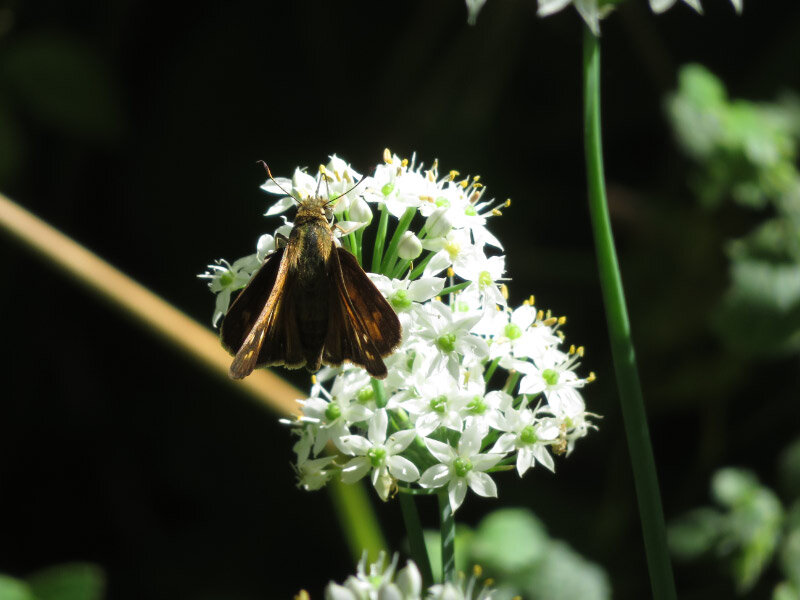
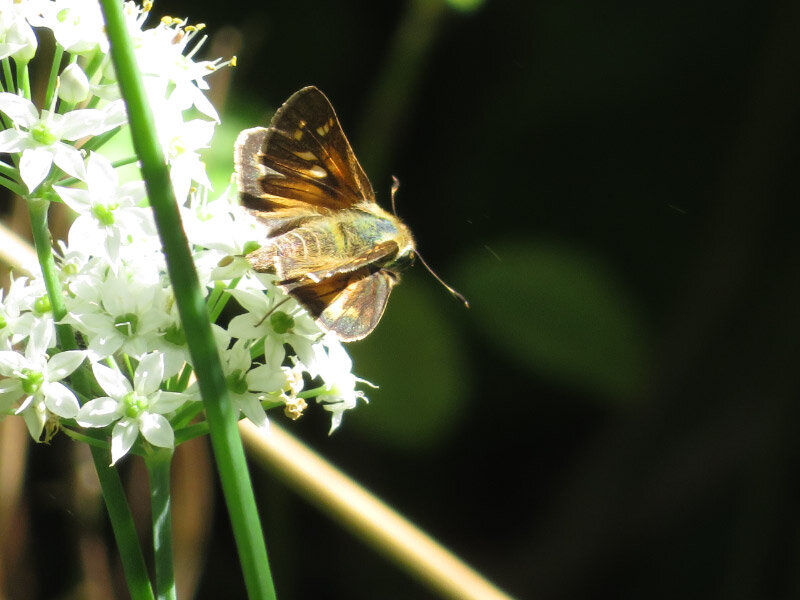
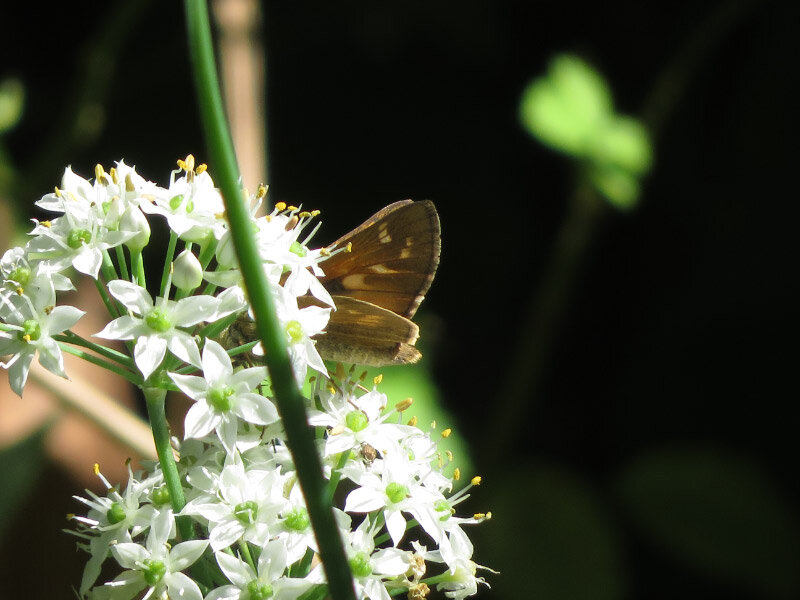
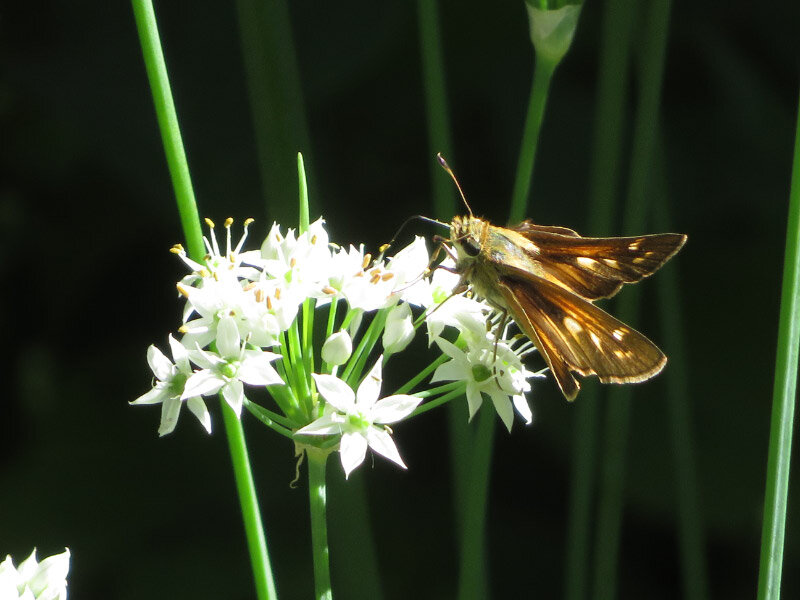
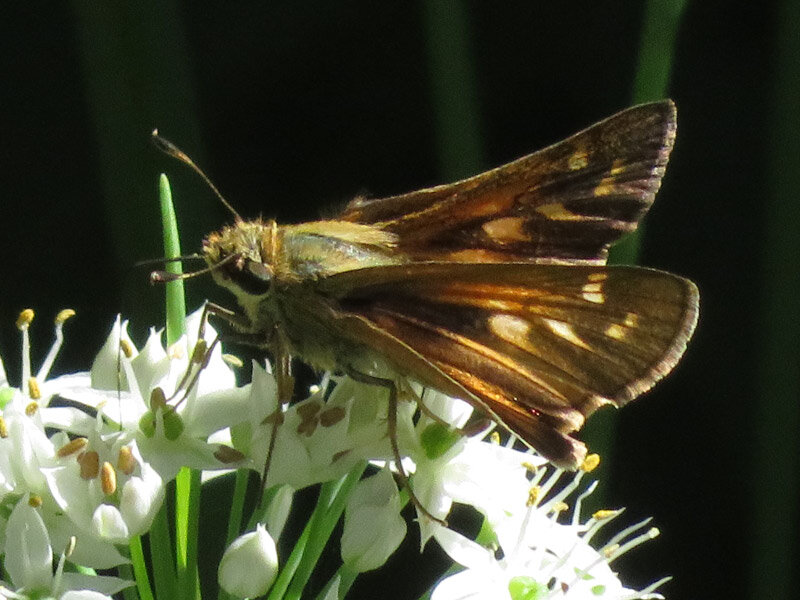
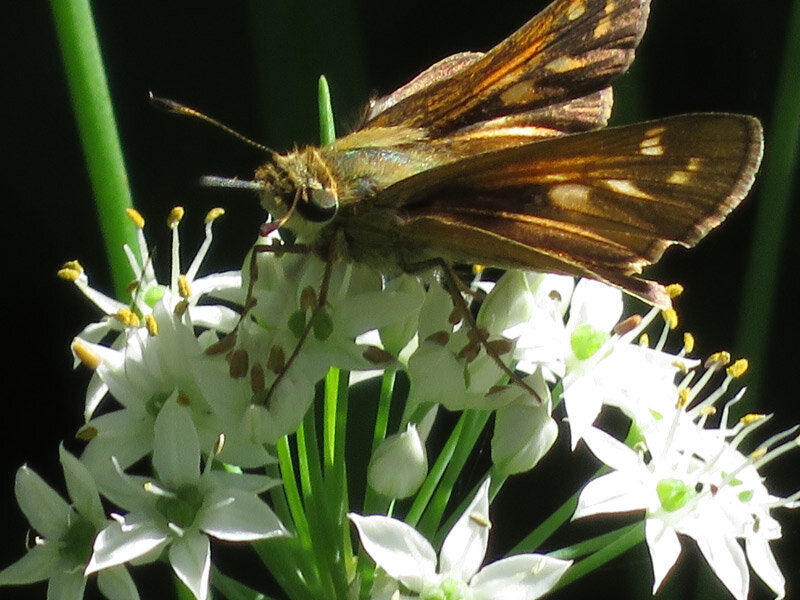
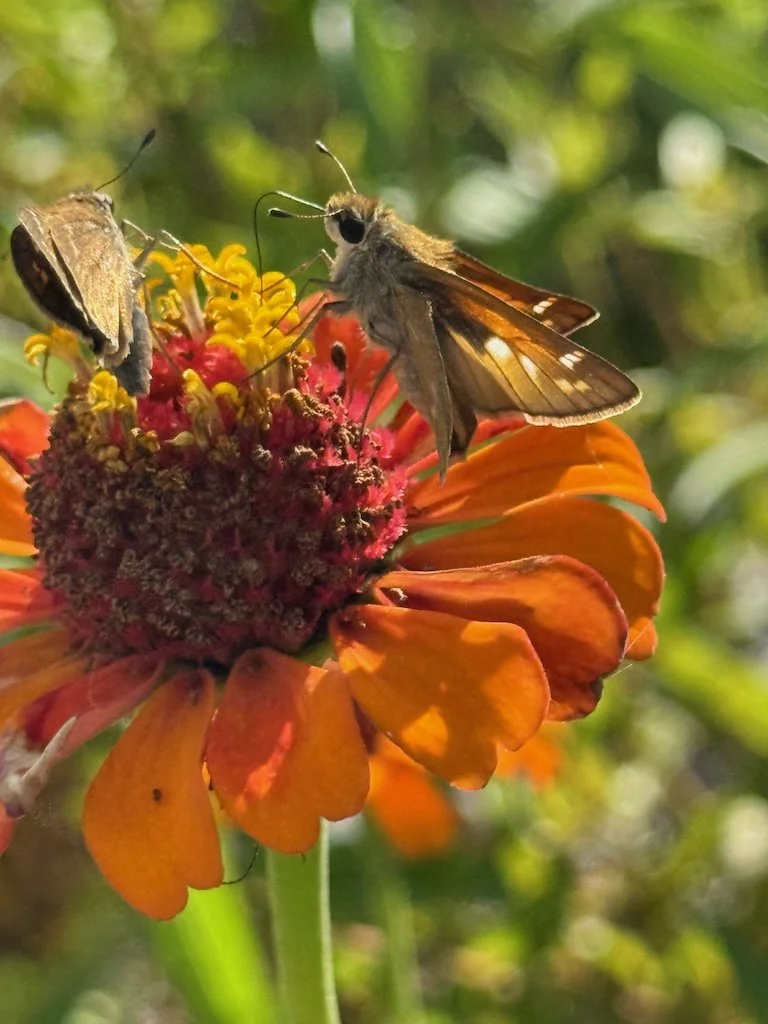
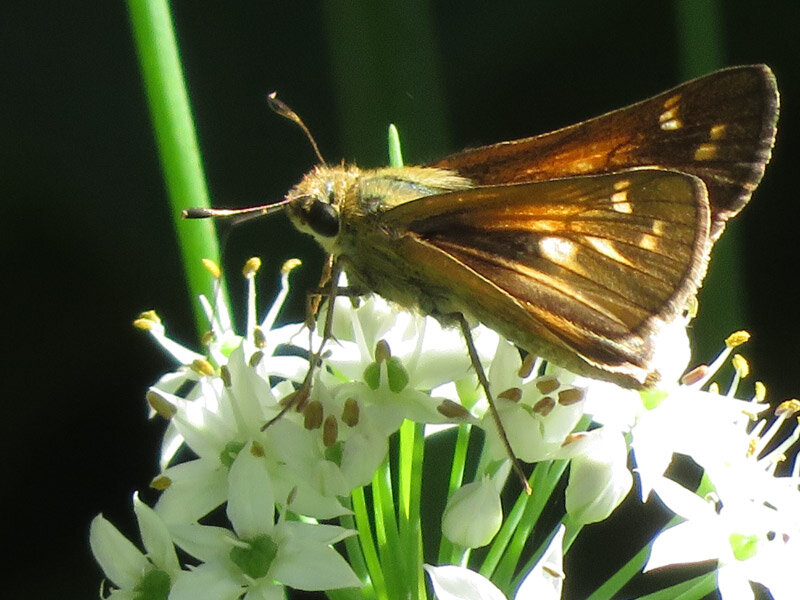
Onion Flowers and Skipper

The onions are blooming our chaos garden. They come back every year. I keep thinking I will harvest the tops for salads, but I am always overwhelmed with items from the CSA – never need to augment the crisper during the summer!

2020 09 IMG_1766.jpg

There was a Southern Cloudwing – a Spread-winged Skipper – getting nectar from the flowers…enjoying a last hurrah of summer. (Ref. Maryland Butterflies and Maryland Biodiversity Project). Use the arrow to the side of the image below to go through the slideshow. The proboscis is visible in some of the pictures. Note the shape of the eyes and the fuzziness of the body.

Unique Activities for Yesterday:

41a 20 09.jpg

Prototype Grinch? I was browsing through the 1914 edition of Tik-Tok of Oz (L. Frank Baum) on Internet Archive and one of the first illustrations in the book (John Rea Neill was the illustrator) looked like a prototype the Grinch! Do you see the resemblance too?

CSA Bounty – August 2020

We are certainly in the thick of summer bounty from our Community Supported Agriculture. This past week there were three kinds of tomatoes (cherry, heirloom, slicers) and two kinds of peppers (bell and hot…and there were 3 different kinds of hot ones to choose from).  I liked the choices for onions and cabbage too – I always get the more colorful ones. There is just enough leafy green for a salad or two. The zucchini squashes are still coming…and the carrots are large and wonderful. I got some huge beets as my choice from the ‘extra’ crates. I was glad that the bins of watermelons were near the parking since they were 30-35 pounds!

20200812_145145.jpg
20200812_144546.jpg

I got some snippets of basil from the cutting garden

20200812_150156.jpg

Along with some flowers. One of the vases I am using for flowers this week is a glass bottle from store-bought kombucha. The label peeled off easily enough and it is a great size for 1-3 flowers. I’m going to save the bottles from now on…line them up on windowsills or group then together on a table…filled with flowers.