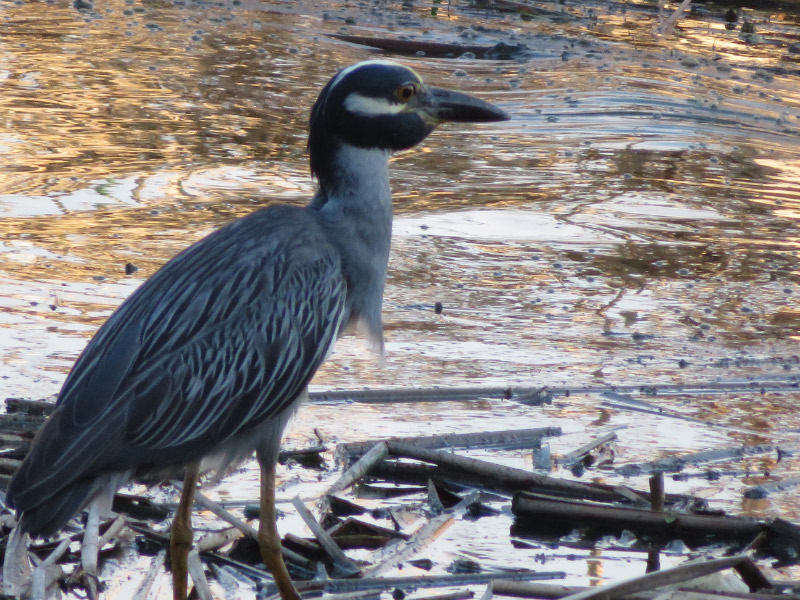
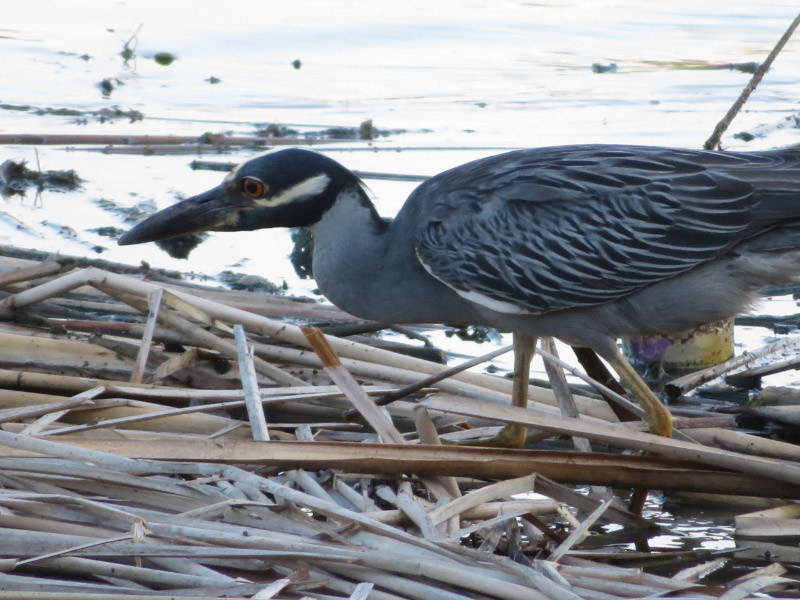
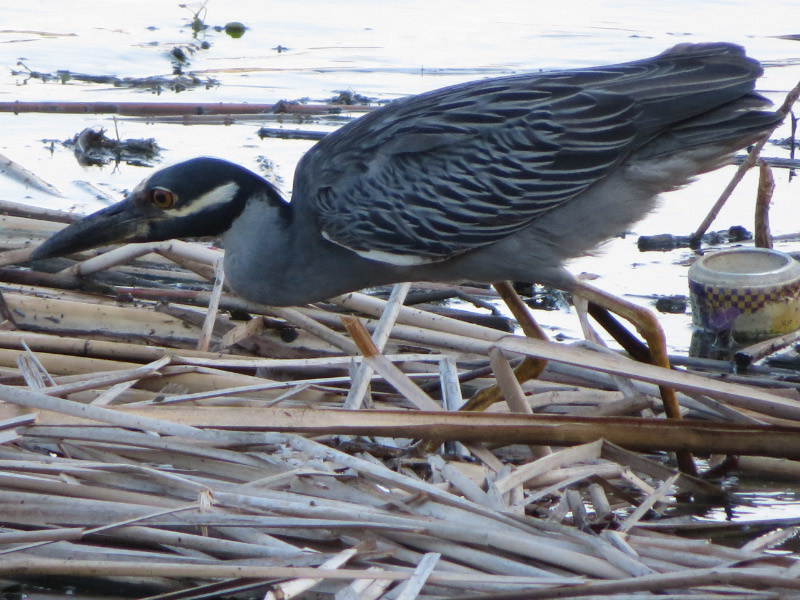
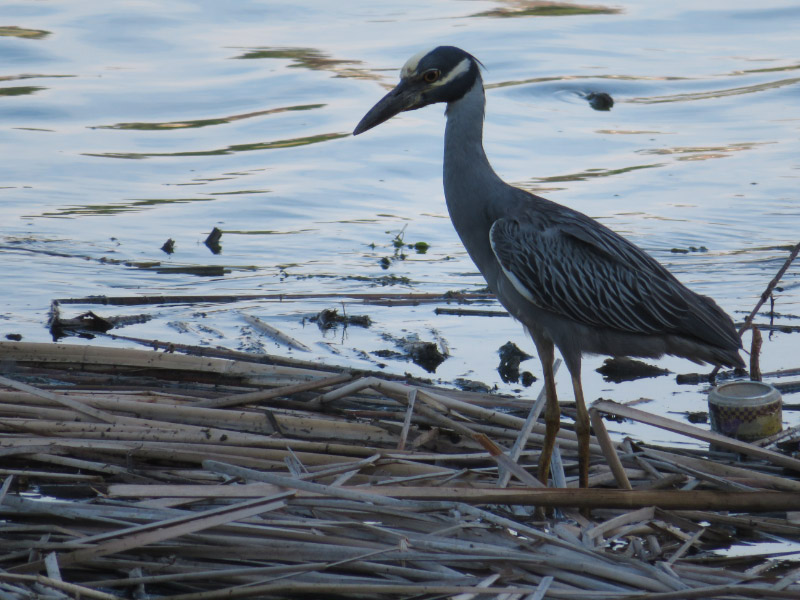
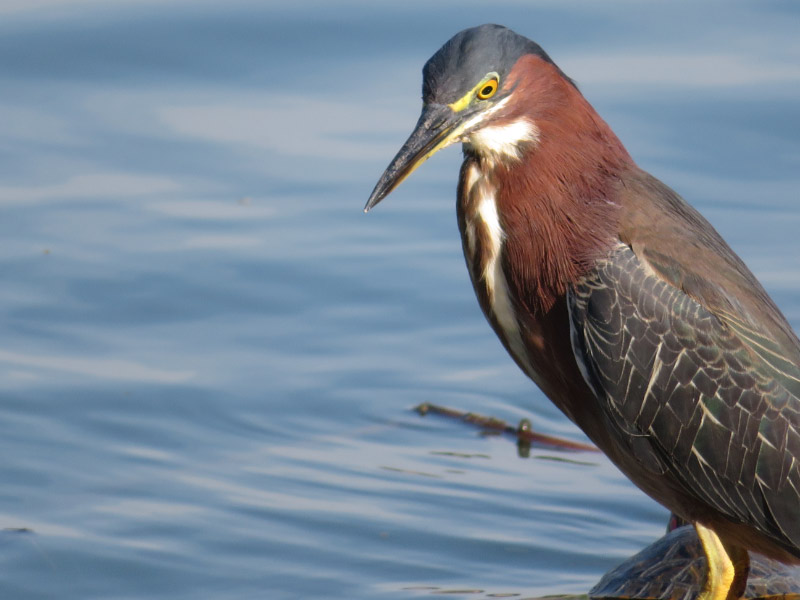
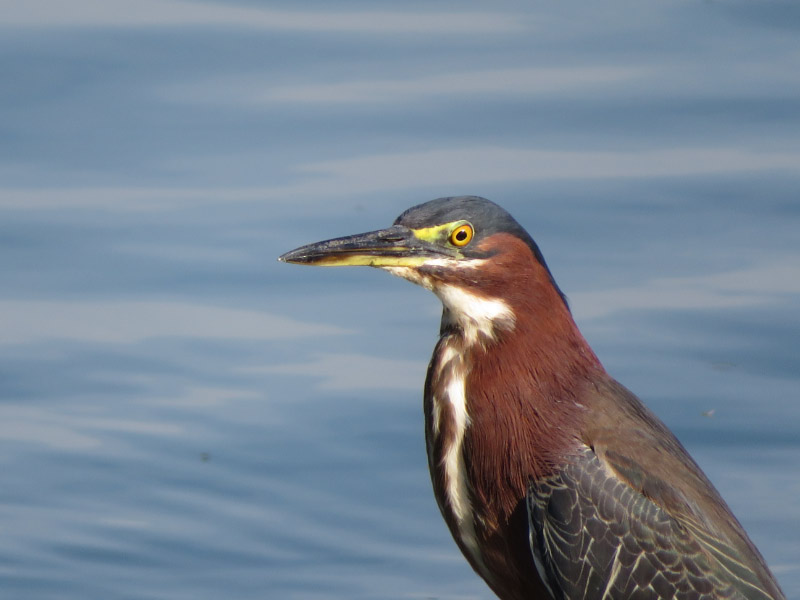
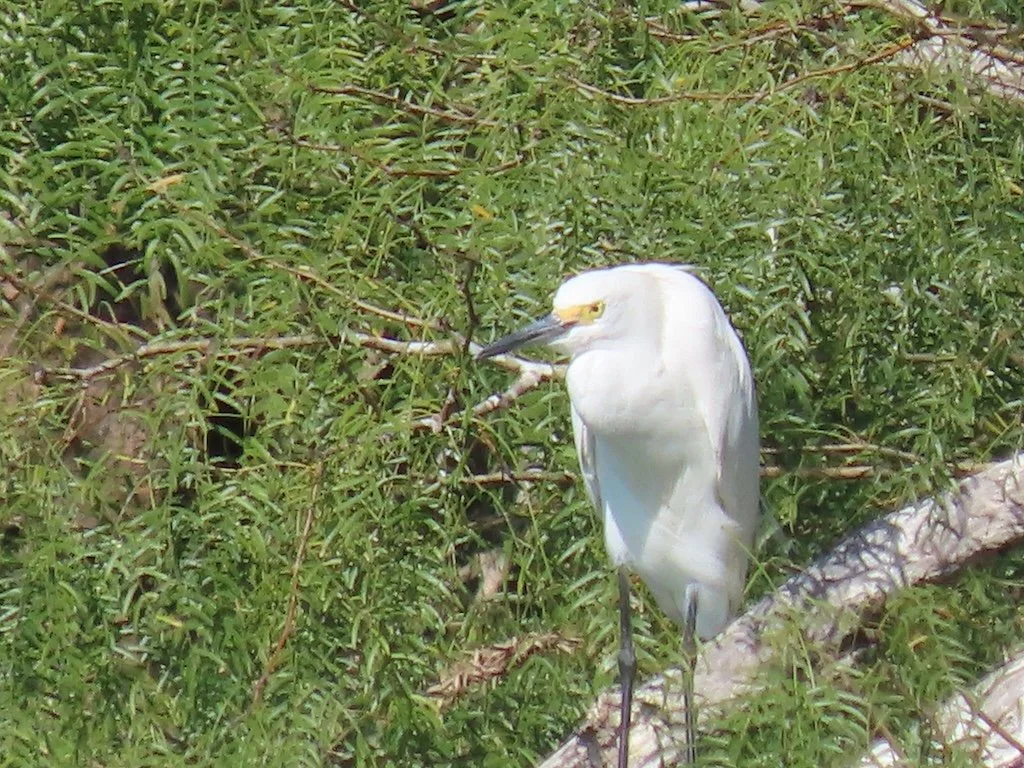
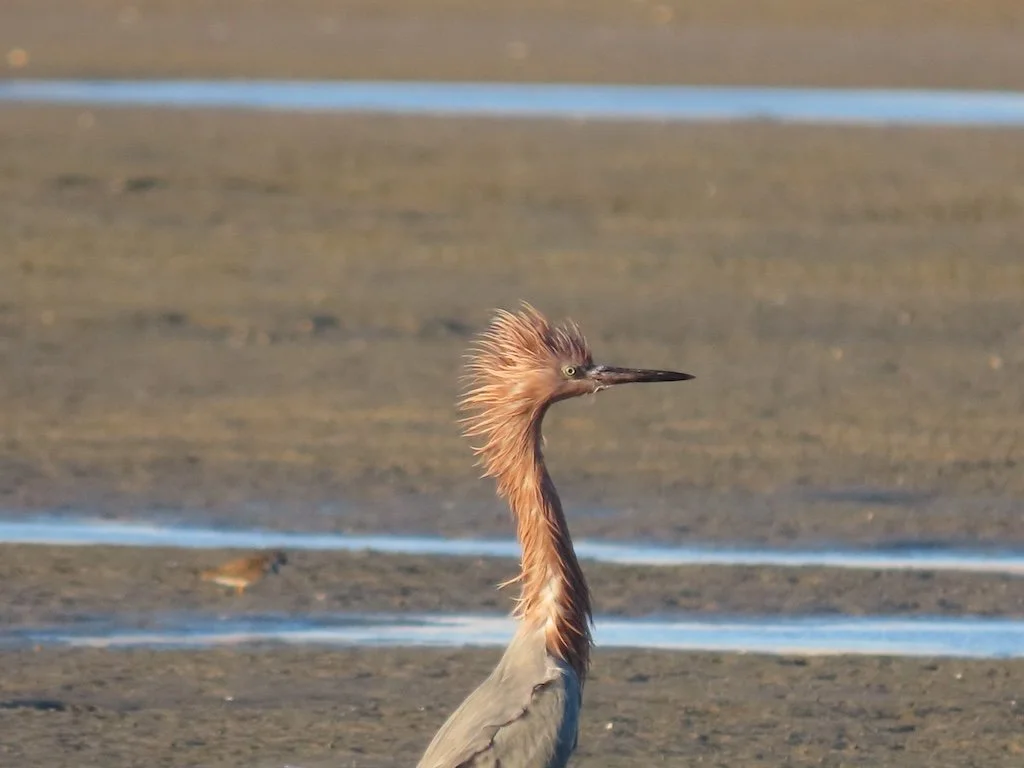
Josey Ranch Lake – Yellow Crowned Night Heron

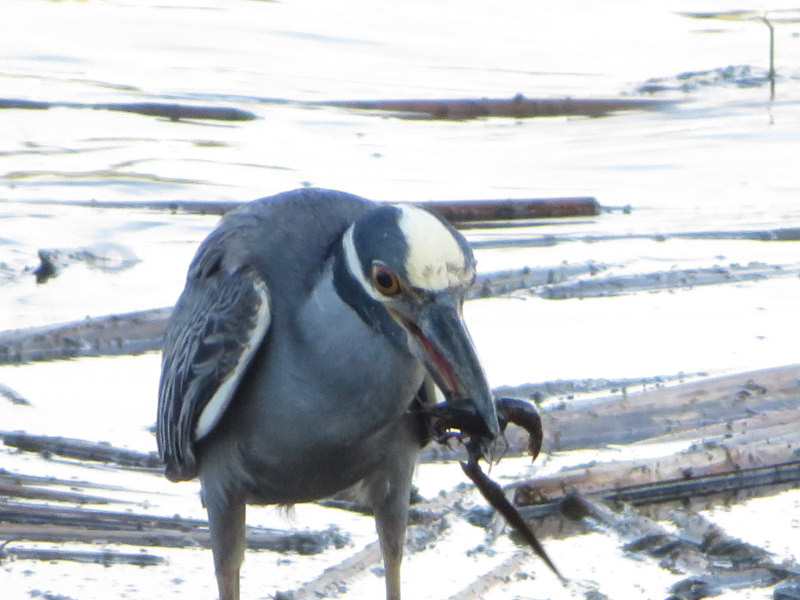
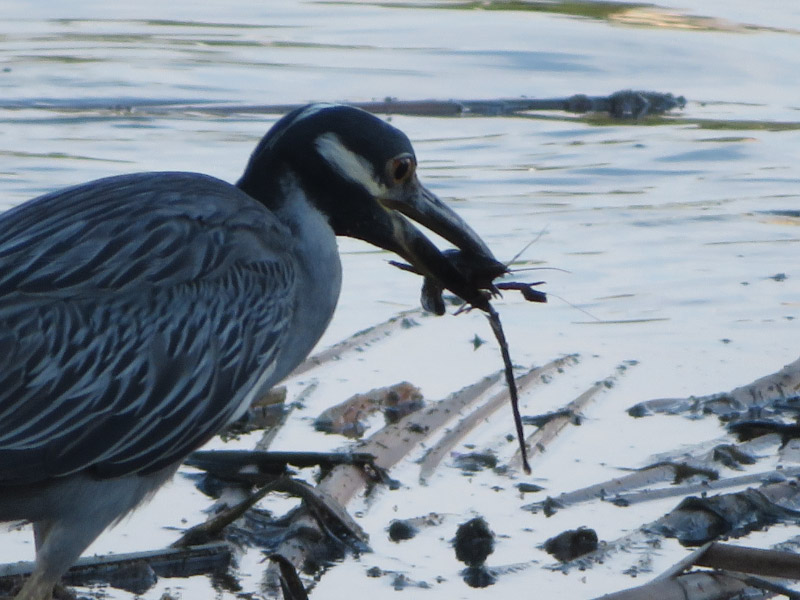
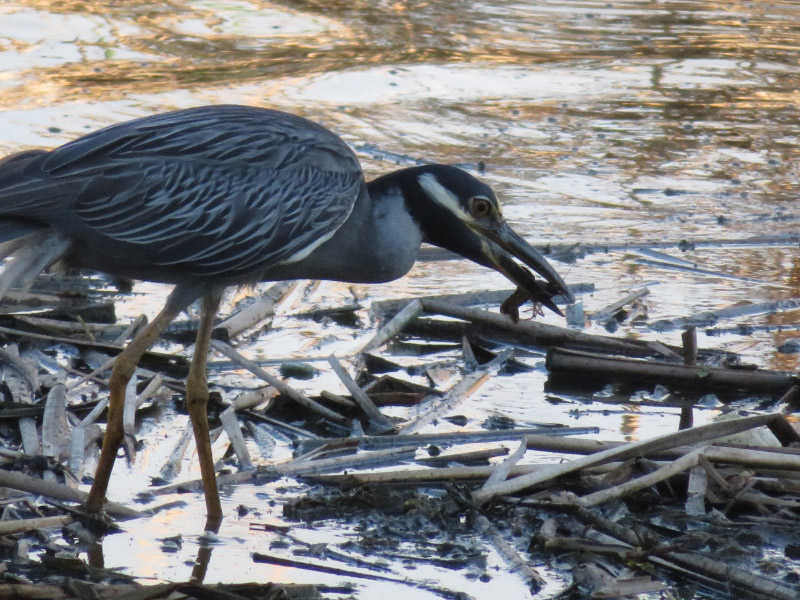
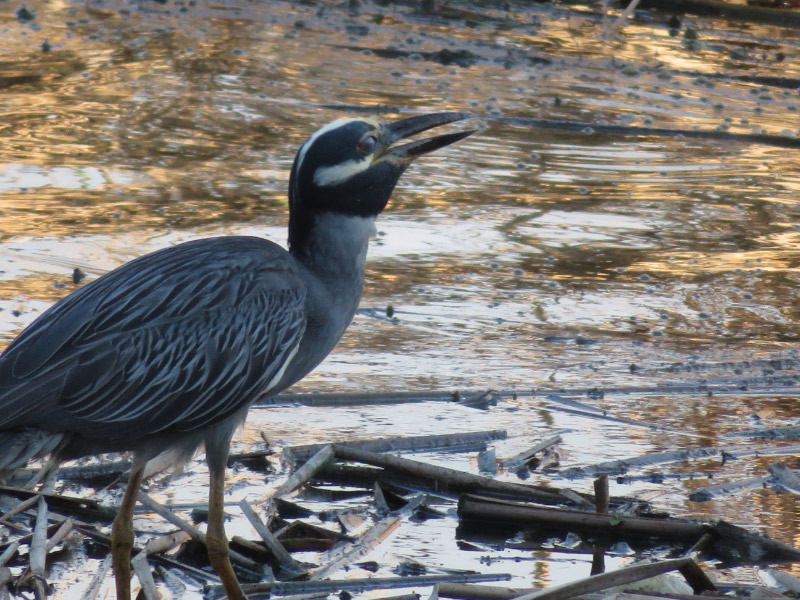
Another heron I saw at Josey Ranch Lank was  Yellow Crowned Night Heron. This heron is much larger than the green heron; in the image below the yellow crowned night heron is on the right and the green heron (adult) is on the left (a ball is in the center).

2018 06 a IMG_1492.jpg

Both herons were in the fallen reeds looking for breakfast and both found a crayfish. The pictures of the green heron catch were not clear enough to see the crayfish…but the shape and antennae or evident for the night heron’s catch.
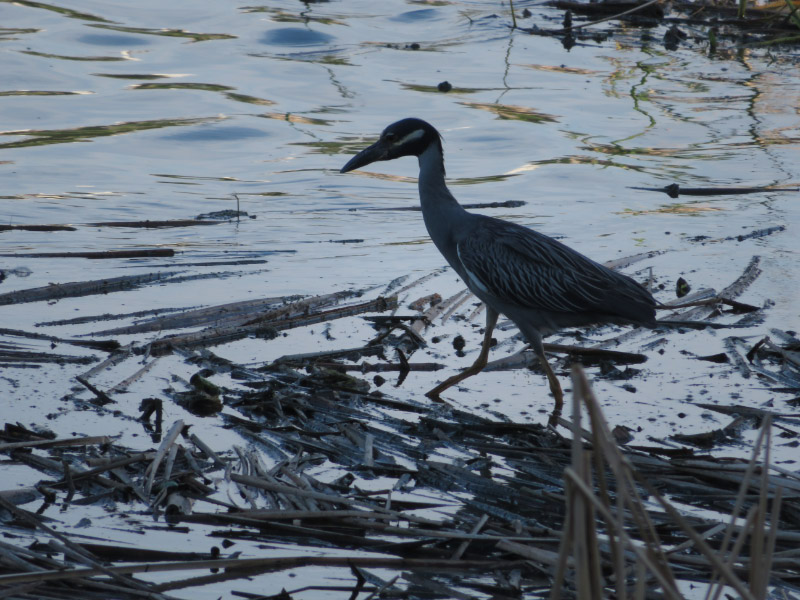
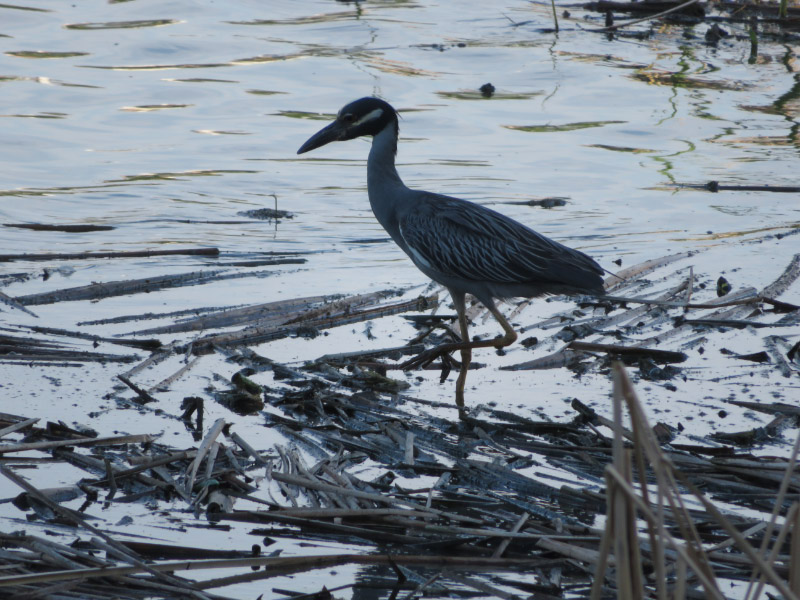
This was a bid I had to look up in AllAboutBirds when I got back from my walk. I’d taken enough pictures from various angles to make the identification. It looked like a heron although the head looked more rounded that some of the other herons. The markings give it a different ‘facial expression’ as well – our minds always jump to that thinking, assigning a ‘personality’ to the bird that overlays assumptions made for our species onto the bird.

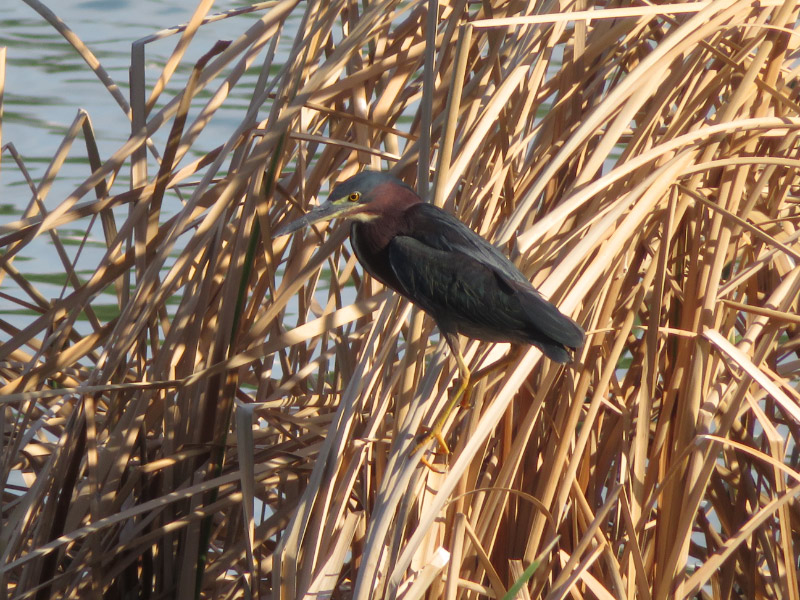
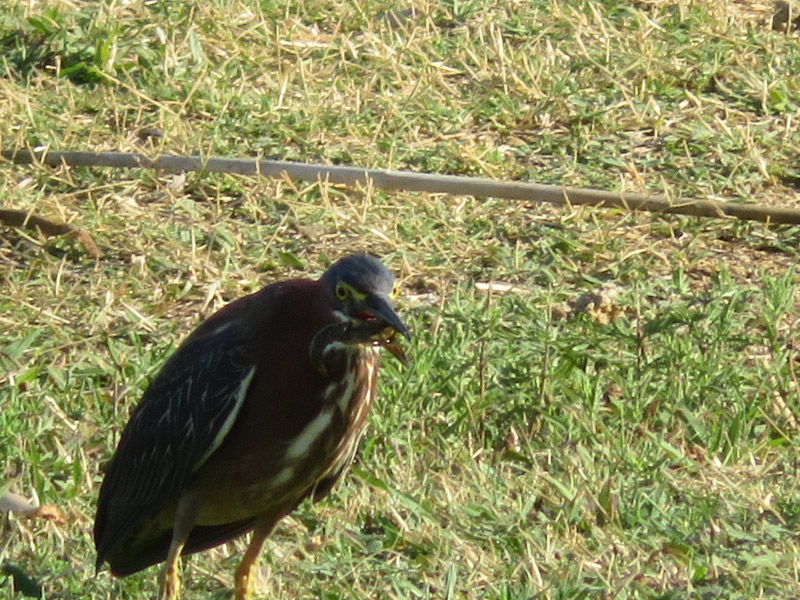
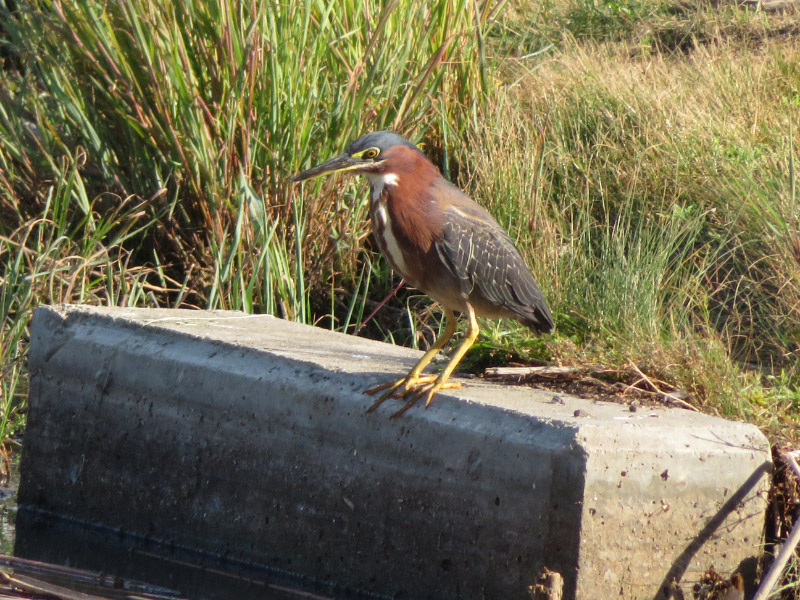
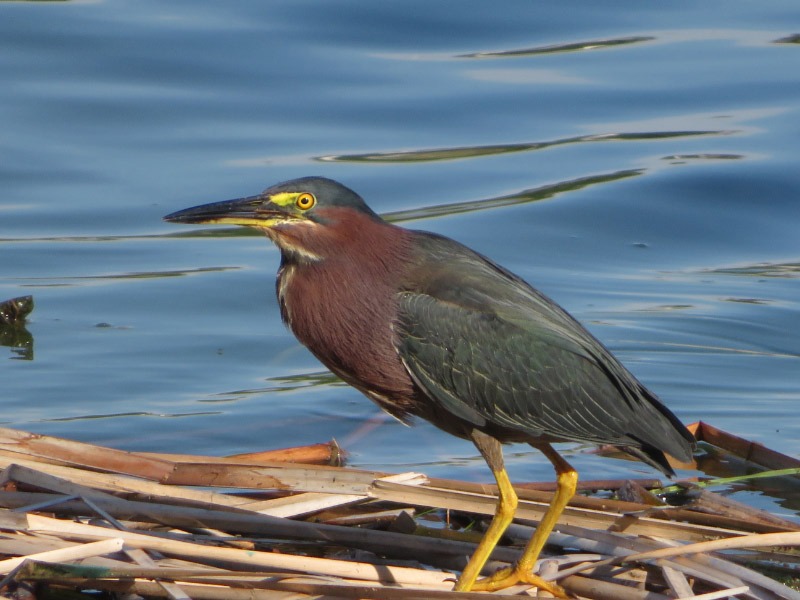
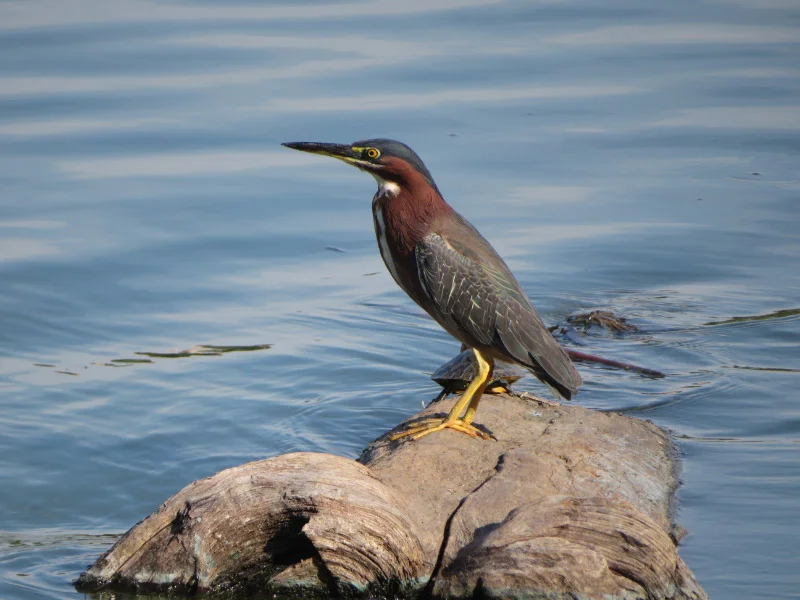
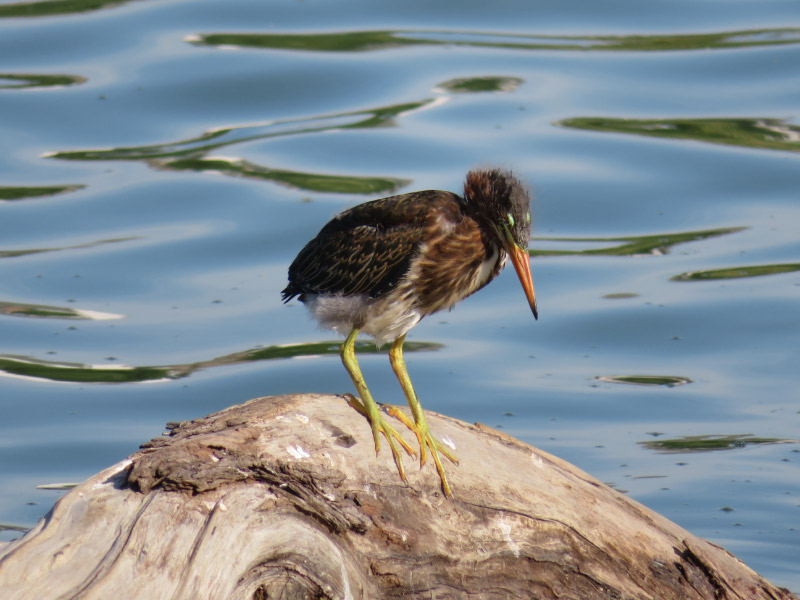
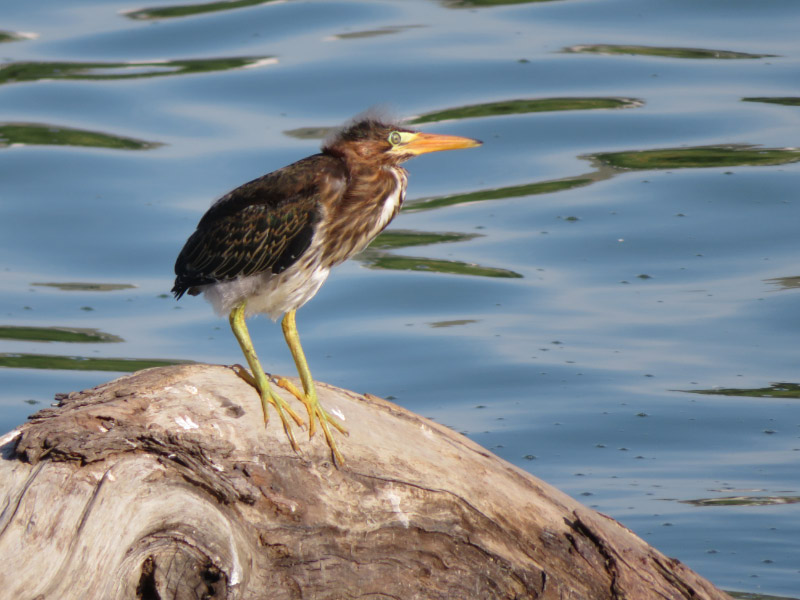
Josey Ranch Lake – Green Herons

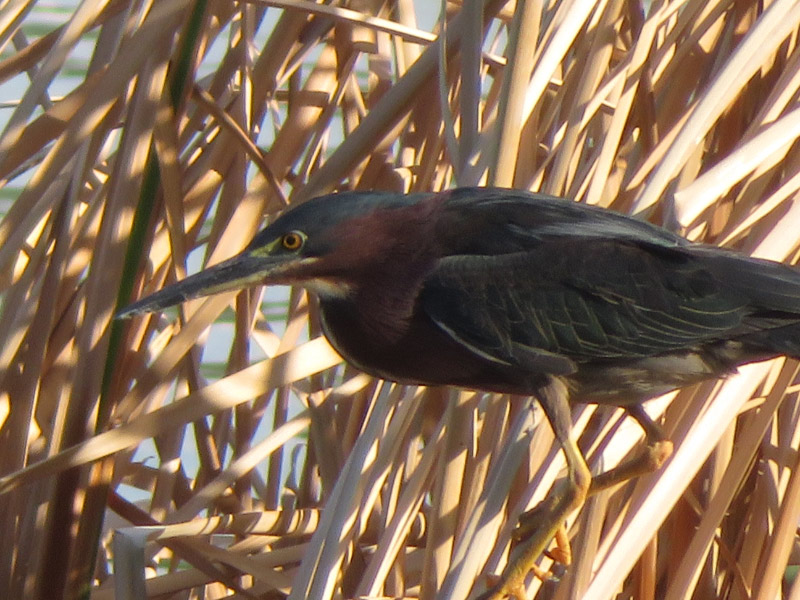
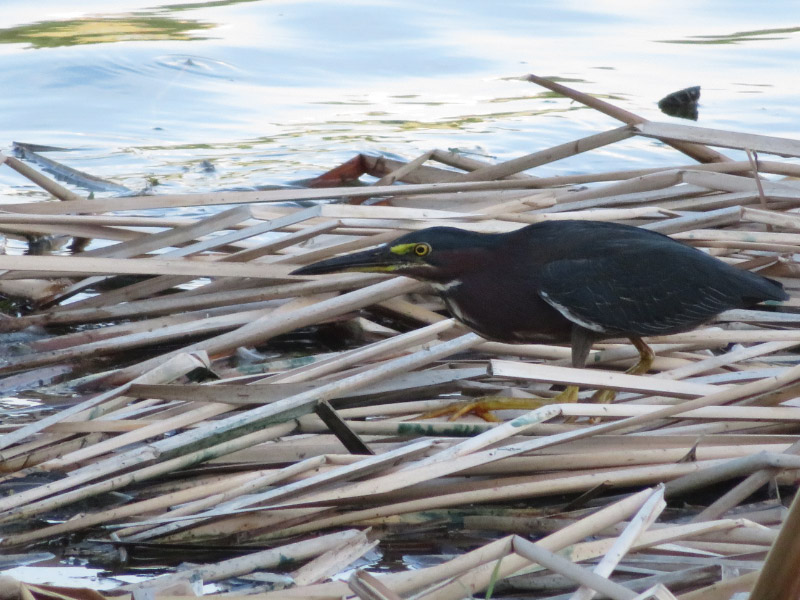
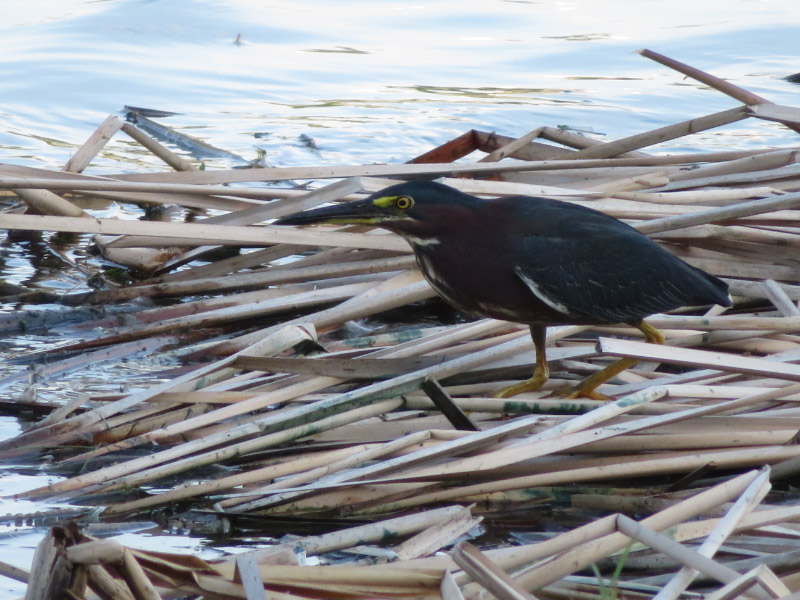
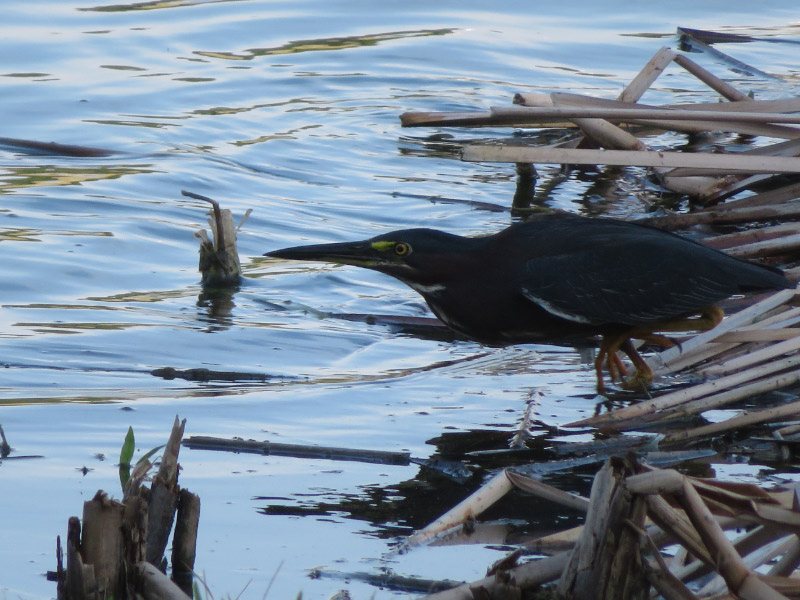
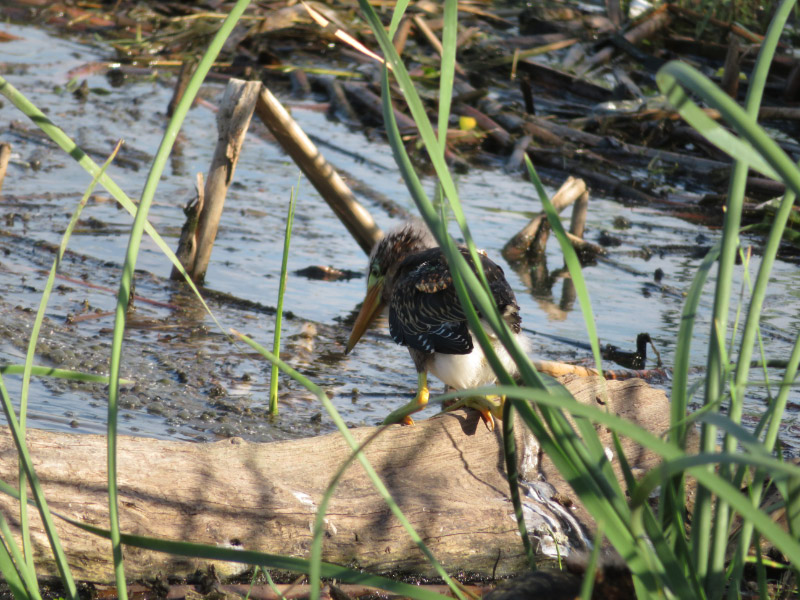
Josey Ranch Lake is near where my parents live in Carrollton, TX and I try to make a walk around it ever time I visit. This time I’ve been busy with other things but managed to get over one morning – and saw 4 kinds of heron in less than 30 minutes! The most numerous were the Green Herons. They are only slightly larger than a grackle….so hard to distinguish at a distance. I was thrilled when I zoomed in on some fallen reeds at the edge of the lake and spotted one that hunting. Another bird appeared in the standing reeds. One caught something a gobbled it down – not sure whether it was a small fish or crayfish.

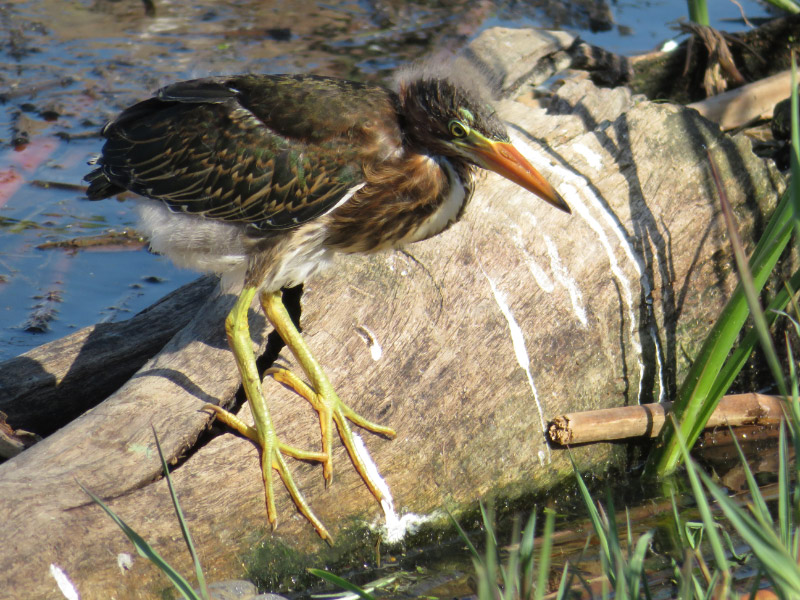
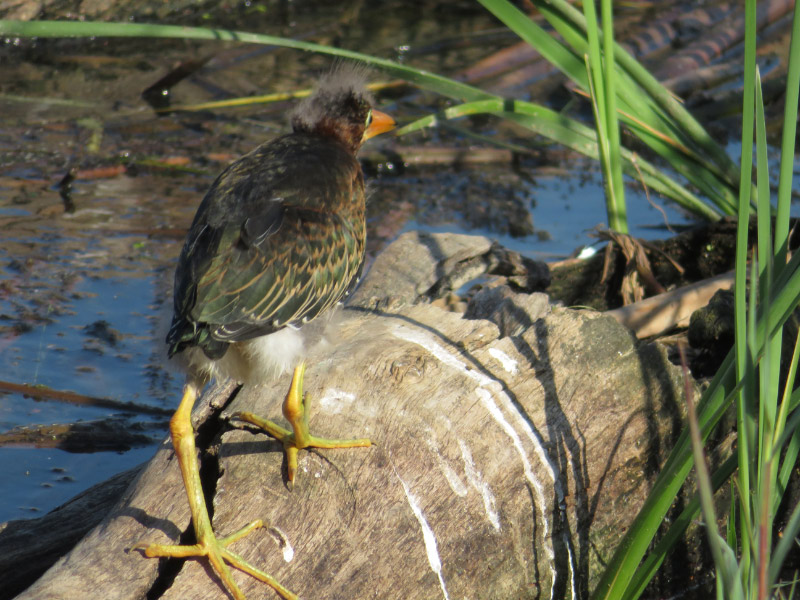
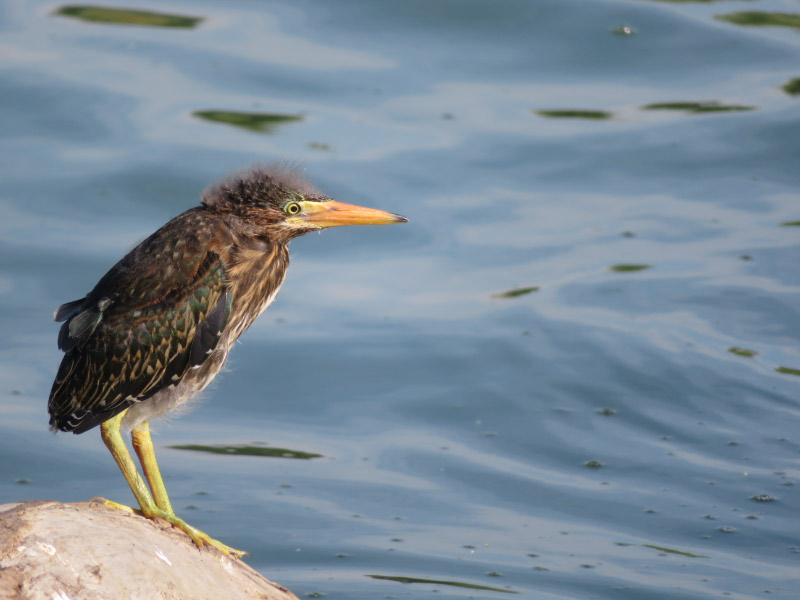
But the thrill of the day was few feet way at the edge of large stand of cattails….2 juvenile green herons! They were hunting on the logs and seemingly finding tidbits to eat. Their wings did not appear developed enough to allow then to fly; they still had a lot of down and coloring more like a starling than a green heron. But look at the legs!

Gleanings of the Week Ending June 23, 2018

The items below were ‘the cream’ of the articles and websites I found this past week. Click on the light green text to look at the article.

Civil War Battlefield ‘Limb Pit’ Reveals Work of Combat Surgeons – History from bones…a different perspective on the Civil War.

Seeing Through the Eyes of Your Camera | The Prairie Ecologist – A little photography tutorial….it’s great to understand your camera well enough to (sometimes) see more than you easily can with your eyes!

Forensic dentistry and how teeth are used to identify a person – Emerging technologies are making it realistic to identify a person from a single tooth.

What Americans Told Us About Online Shopping Says A Lot About Amazon : NPR – Shopping has changed so much….I like the change too.

Carbon Bubble About To Burst, Leaving Trillions In Stranded Assets Behind, Claims New Research | CleanTechnica – A thought provoking article about the inevitable transition from fossil fuels…and the value of these assets.

A new material capable of the adsorption of organic pollutants in water: The organomica C18-Mica-4 eliminates between 70 and 100 percent of these toxic compounds in less than 24 hours -- ScienceDaily – There are a lot of pollutants that the old style water treatment does not remove. I’m glad there is active research on increasing what can be removed from waste (industrial and sewage) water before it is released from the treatment facility.

 2017 set a new record for renewable power, but emissions are still rising — Quartz – I hope we can turn a corner soon – stabilize and then reduce emissions. Otherwise the future is a very different world. Many will not fare very well.

Age-related diseases may be a negative outcome of human evolution – In 1957, evolutionary biologist George Williams proposed a theory: adaptations that made species more fit in the early years of life likely made them more vulnerable to diseases in the post-reproductive years. This article is about some recent work investigating this theory in relation to brain development in humans.

Photography in the National Parks: Adding a Sunburst to your Sunshine – Getting up to photograph sunrise…some ideas to add pizzazz.

Top 25 Birds of Africa – I can’t resist including a ’25 birds’ post in the gleanings for the week.

Butterfly Heads

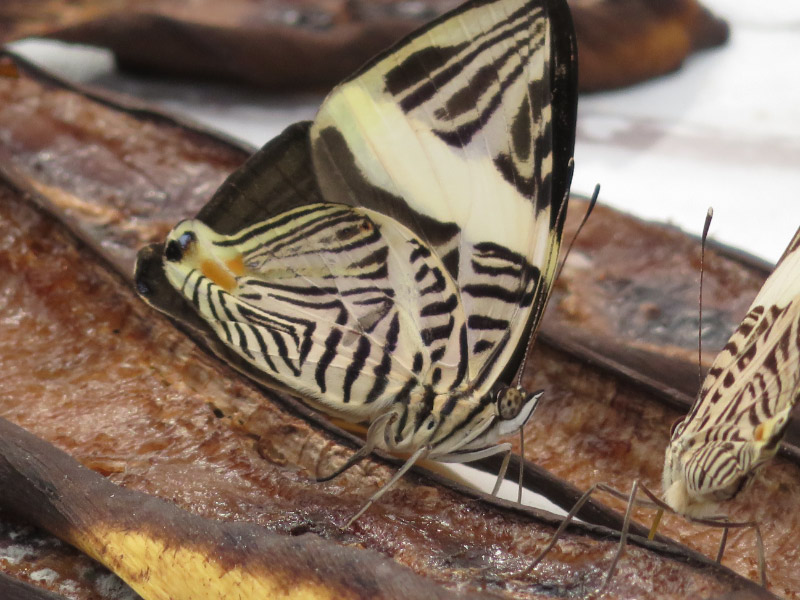
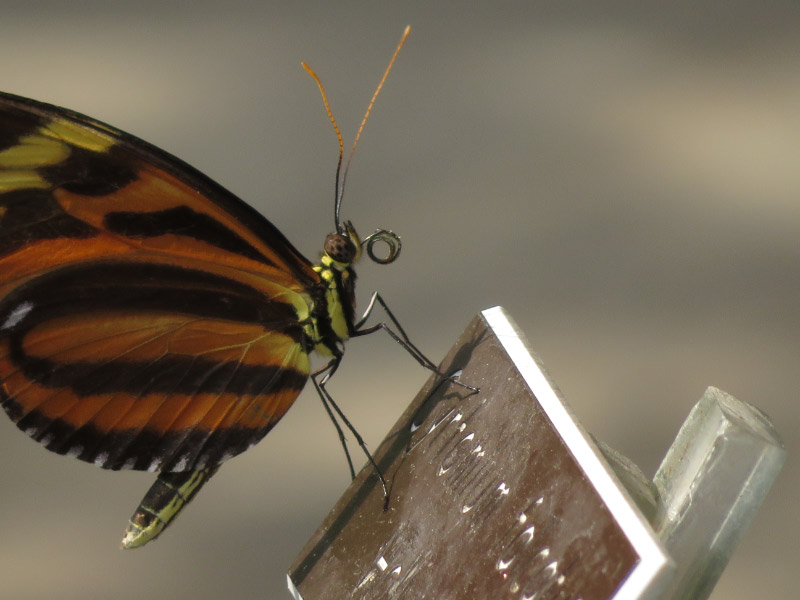
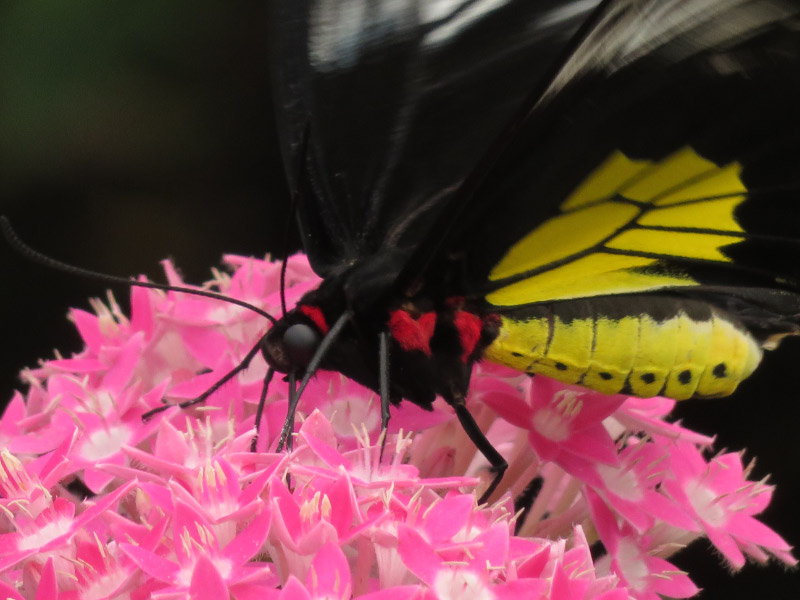
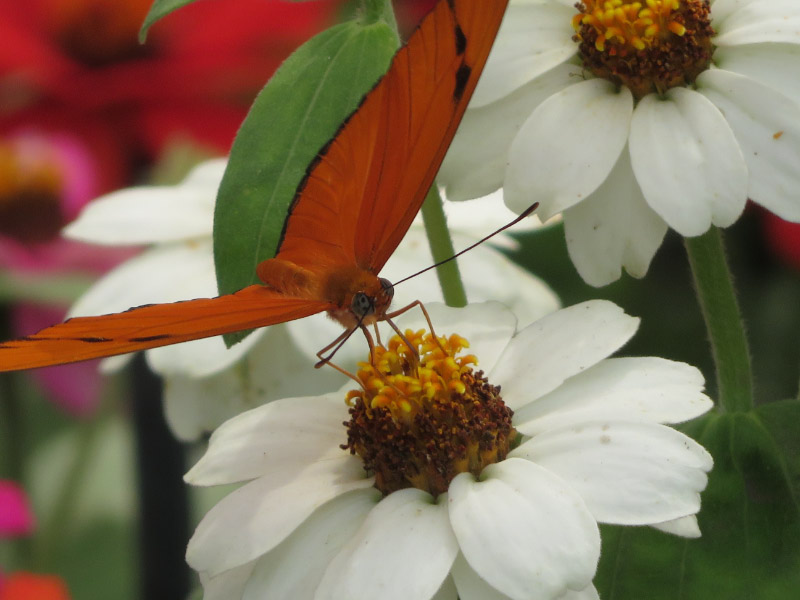
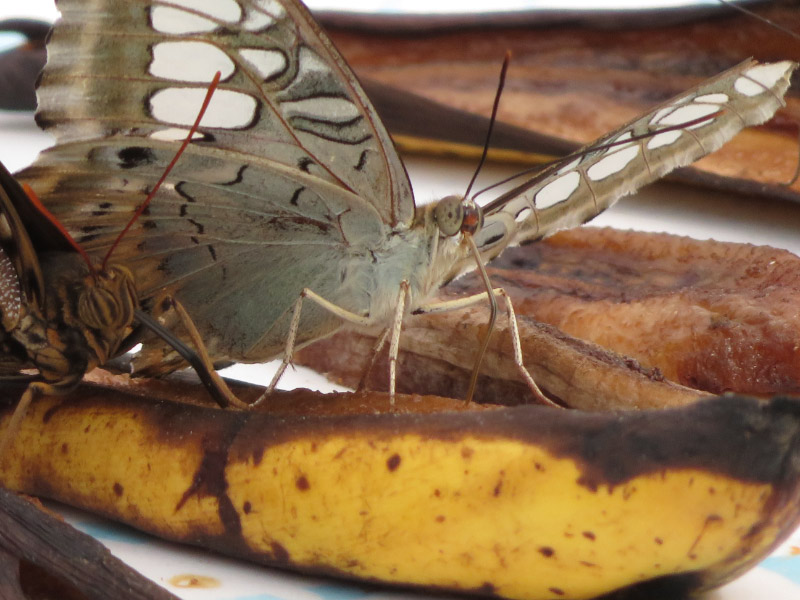
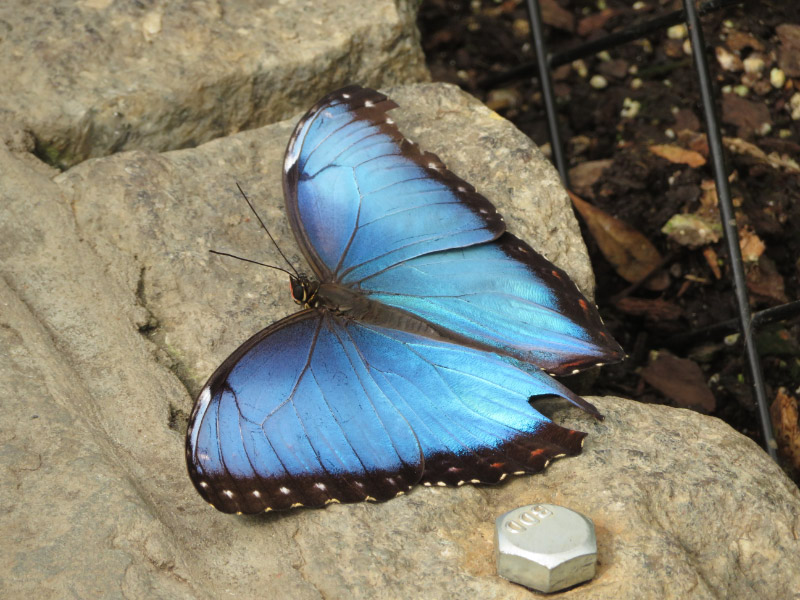
I am in Texas and missing my frequent visits to Brookside Gardens Wings of Fancy in Maryland. The pictures I took right before I left are something to savor. The theme of my photography inside the conservatory was ‘butterfly heads! The blue morphos have orange and white papillae --- nothing iridescent blue about their heads.

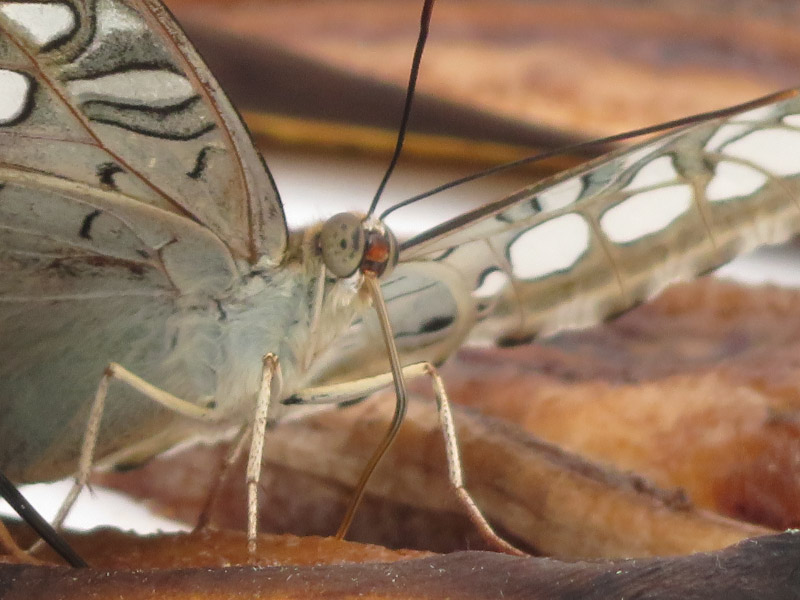
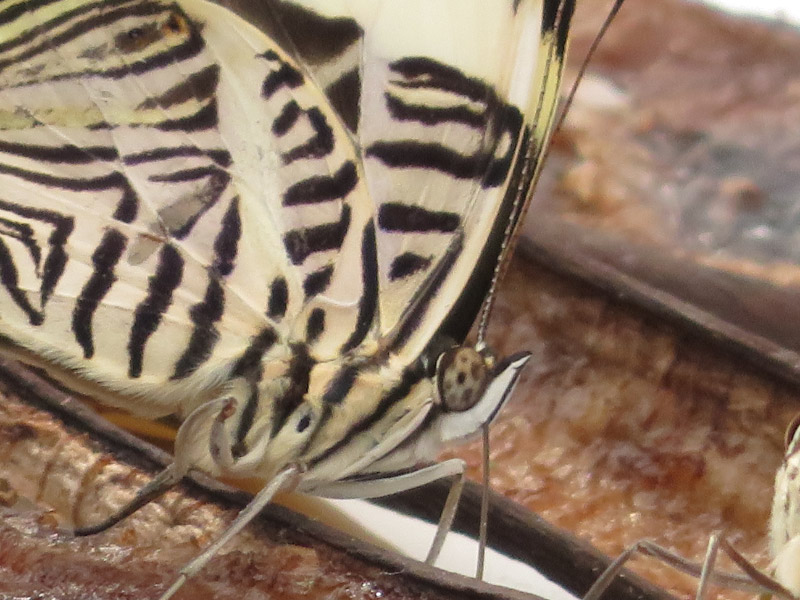
Some butterflies have papillae that are very large. The proboscis is between the papillae and extend for feeding on bananas or flowers.

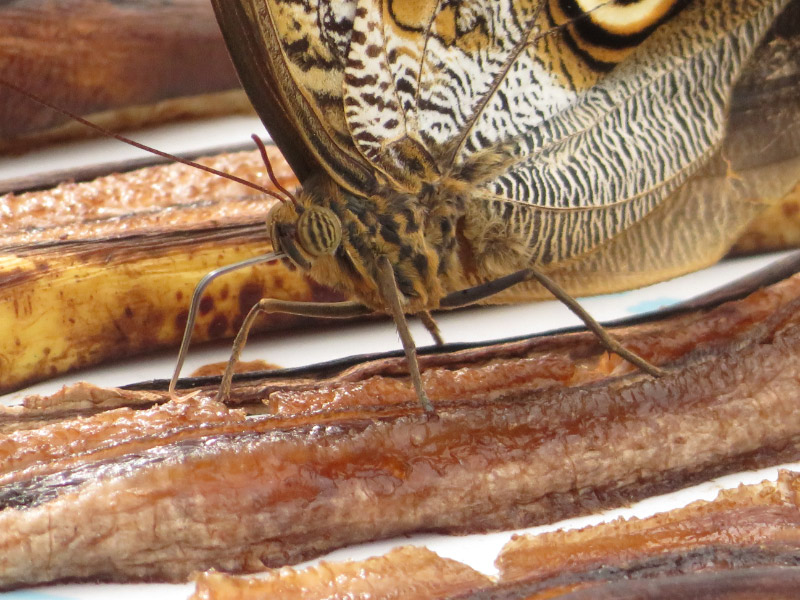
Sometimes the papillae are damaged. I notice the owls often have broken papillae. The brown and black stripes of the owl eyes are different than other butterfly eyes.

Some butterflies have antennae that seem to glow at the ends.

In the conservatory, butterflies are sometimes resting upside down under leaves. Its always a thrill to notice one in the foliage.

2018 06 IMG_1231.jpg

Some of the larger butterflies feed on multiple flowers in succession – wings almost always in motion. The last day I was at Brookside was sunny enough that the camera was fast enough to freeze the motion.

I tell children that the butterfly’s proboscis is like a straw…and they do seem to handle it like one…although the way they coil it under their head is different from straws we use!

Butterflies feeding on flowers are my favorites, but some prefer bananas (or other rotting fruit). I inevitability decide that all of them are worth trying to photograph.

Familiar Birds in Texas

Grackles and crows and blue jays….common birds in both Maryland and Texas.

2018 06 IMG_1370.jpg

The surprise for me during a recent walk around my parents’ backyard was a Carolina Wren! There must be a nest somewhere in the yard….maybe the woodpile that is inactive this time of year. When I saw them there were clearly two flitting around the yard. My mother said this was the first year she had seen them. Dallas is close to the western edge of the range map in AllAboutBirds.
They are fun birds to watch…if you can find them on the tree trunk or on the ground rustling through the foliage or on the gutter…staying in one place for a few seconds before flittering away. They aren’t showy birds but have lively personalities.

Hot in Texas

Coming from Maryland to Texas has been a shock in terms of temperature. It is hot. Most of the time I’ve been indoors – staying with my mom at the hospital and rehab and now home. Every time I venture outside, I move as fast as I can to get to the next air-conditioned place. And this is only June. It will be even hotter in Texas as the summer progresses. At this point the plants are still flourishing if they are watered regularly. I took a few pictures of the plants at the rehab facility when I walked around the place when my mother’s room overflowed with other visitors.

I wondered how well the fern would last as the summer progressed. In Maryland they seem to do best in shady moist places. This plant was in partial shade…and it would take a lot to keep it moist on a 100-degree day.
20180615_093241.jpg

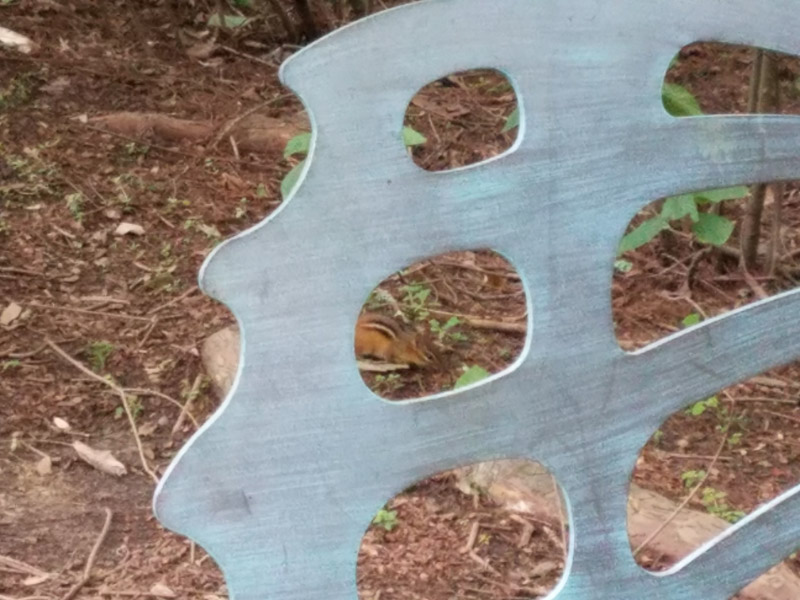
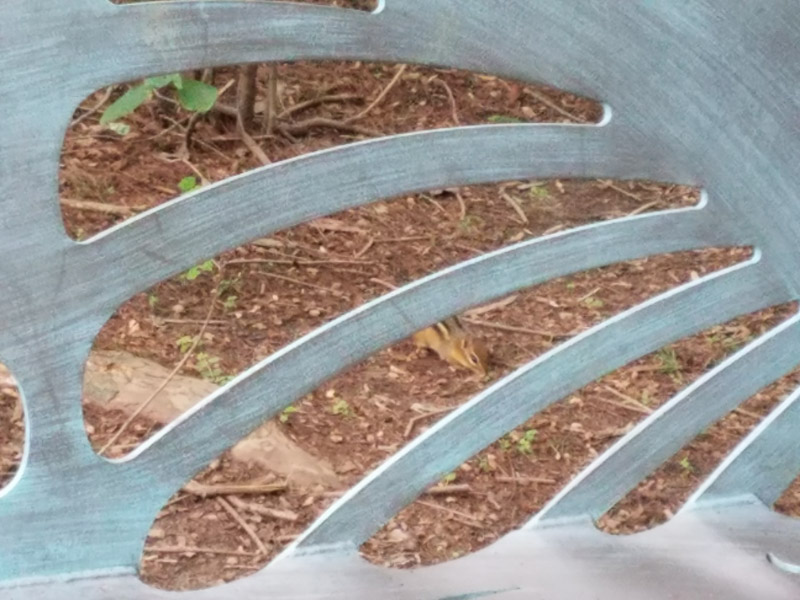
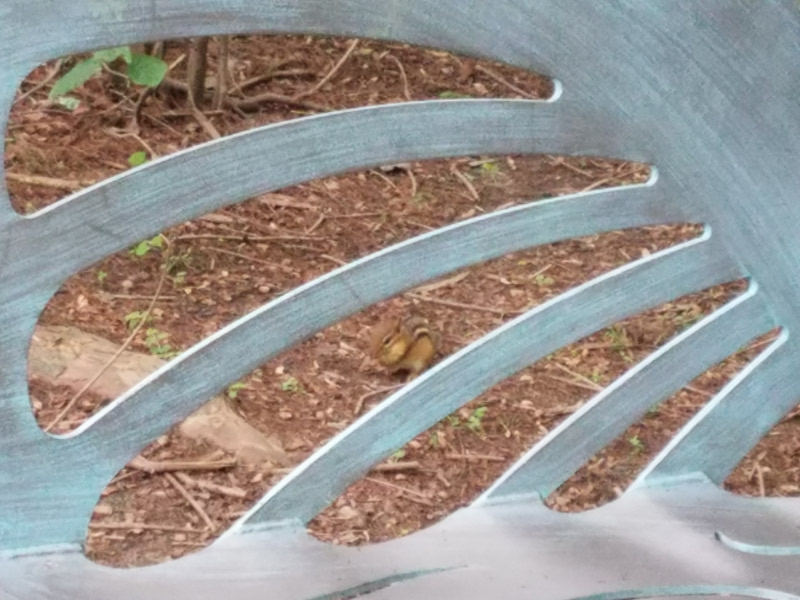
Chipmunk Hide and Seek

20180610_082311.jpg

Last time I was at Brookside Gardens, a butterfly was an effective blind to photograph a chipmunk. There are many chipmunks at Brookside this year (seemingly more than in previous years); they usually do not allow people to get close before scampering off under foliage and further down the path. With the bench between me and the chipmunk, this one seemed oblivious to me. I got several pictures before I made the mistake of taking a step and the chipmunk startled…scampered away…disappeared.

eBotanical Prints – May 2018

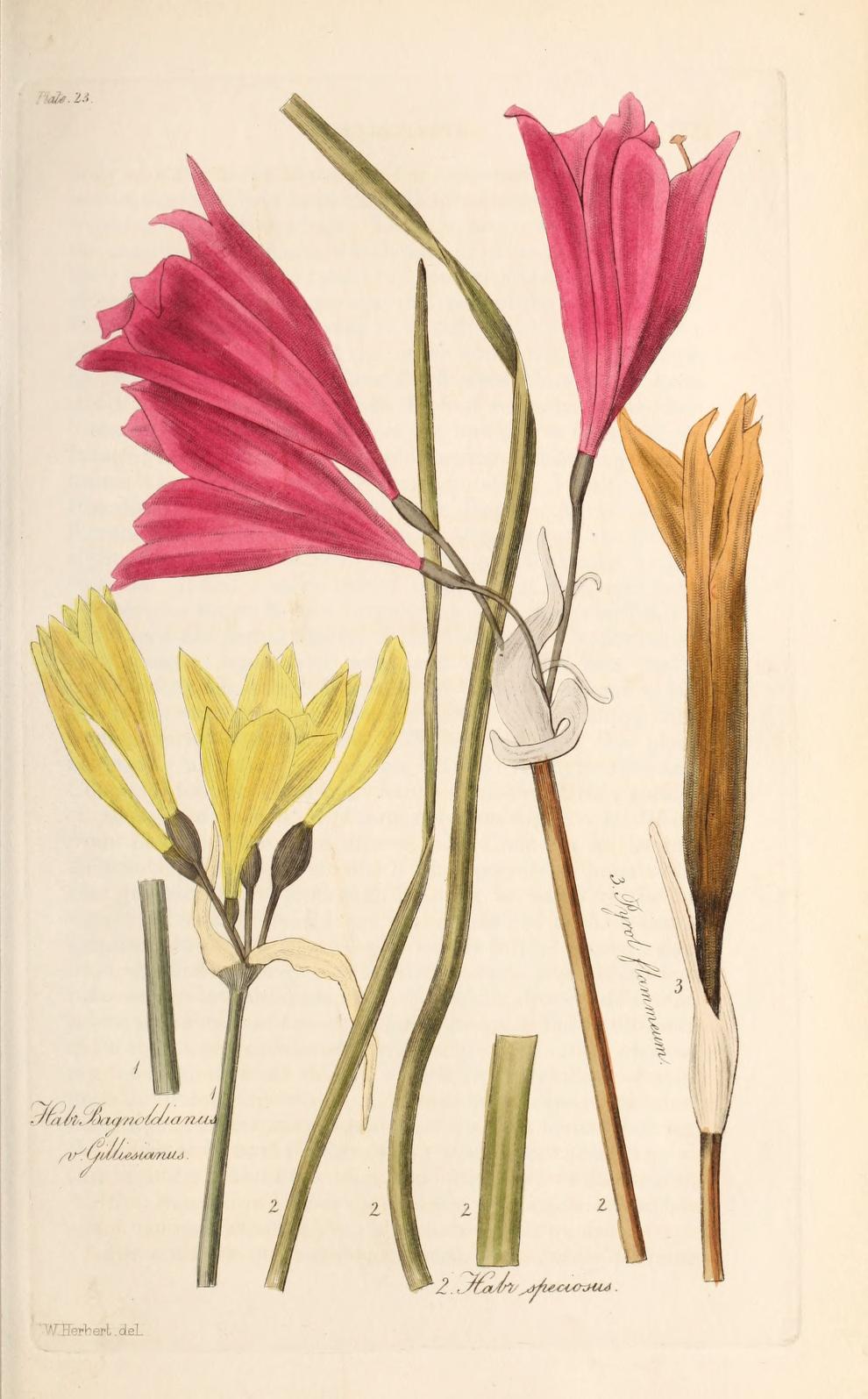
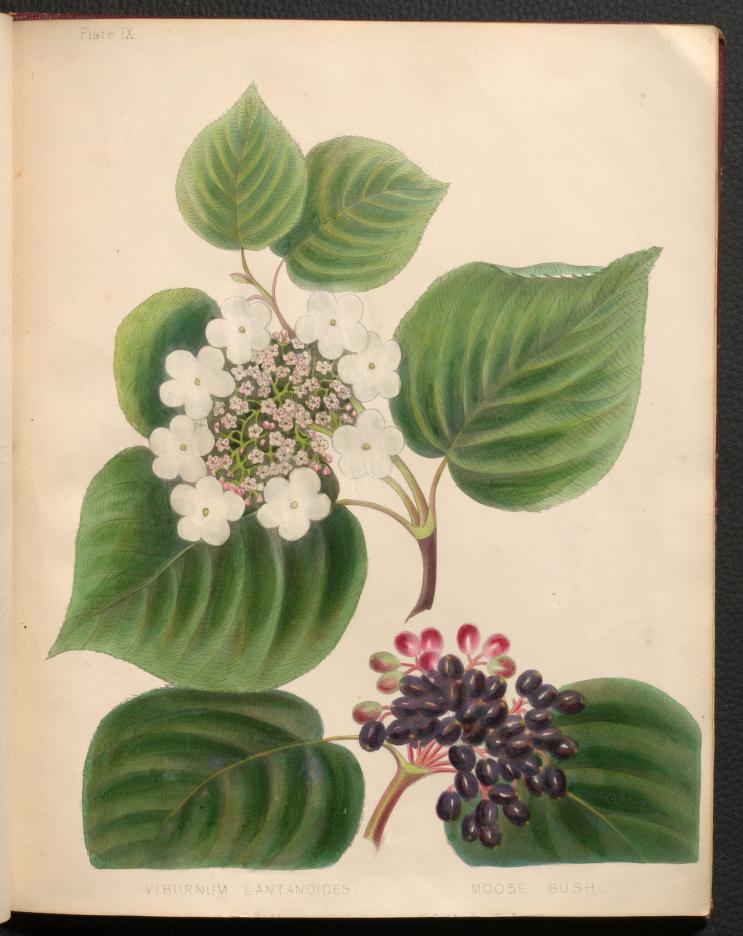
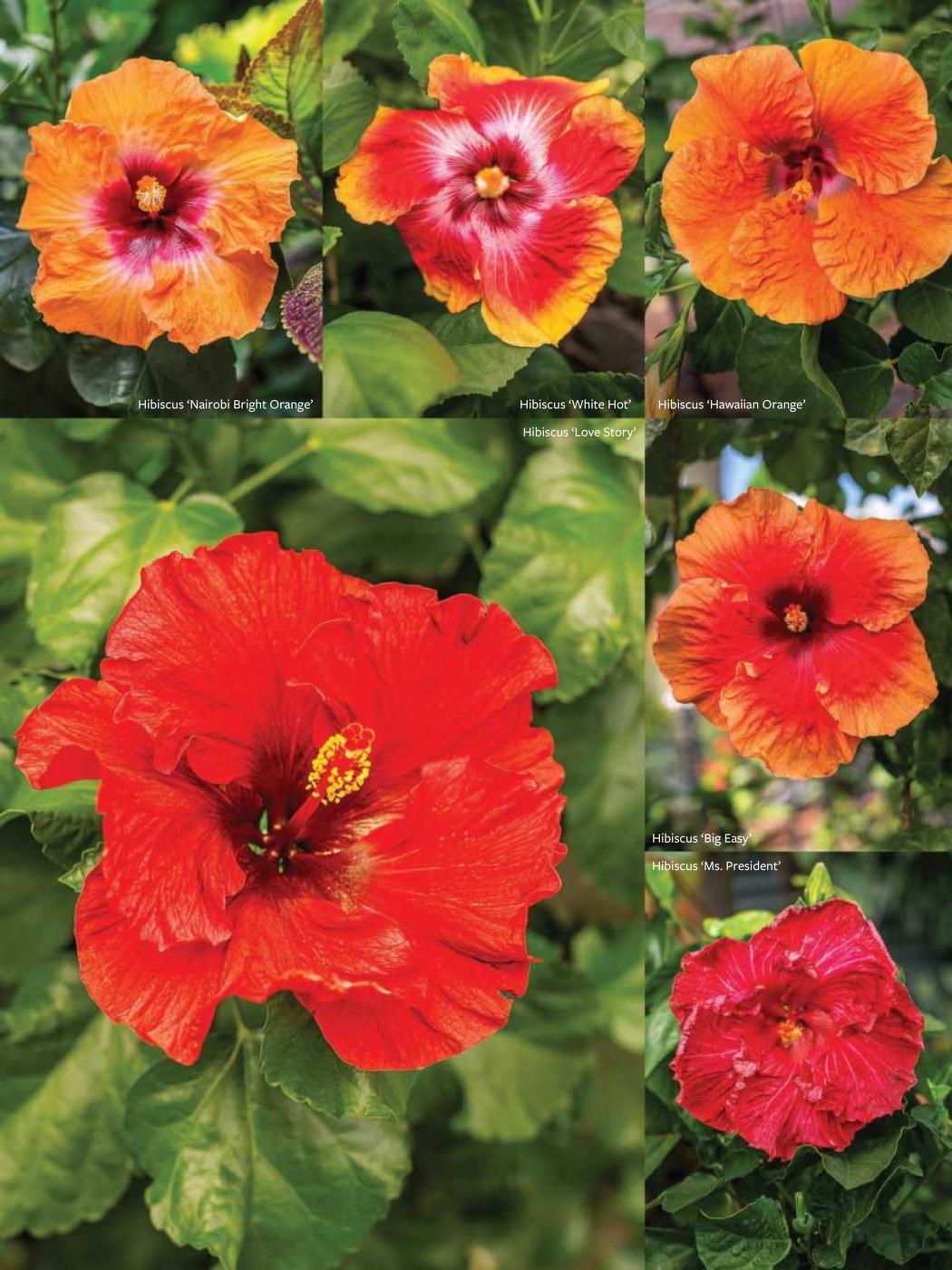
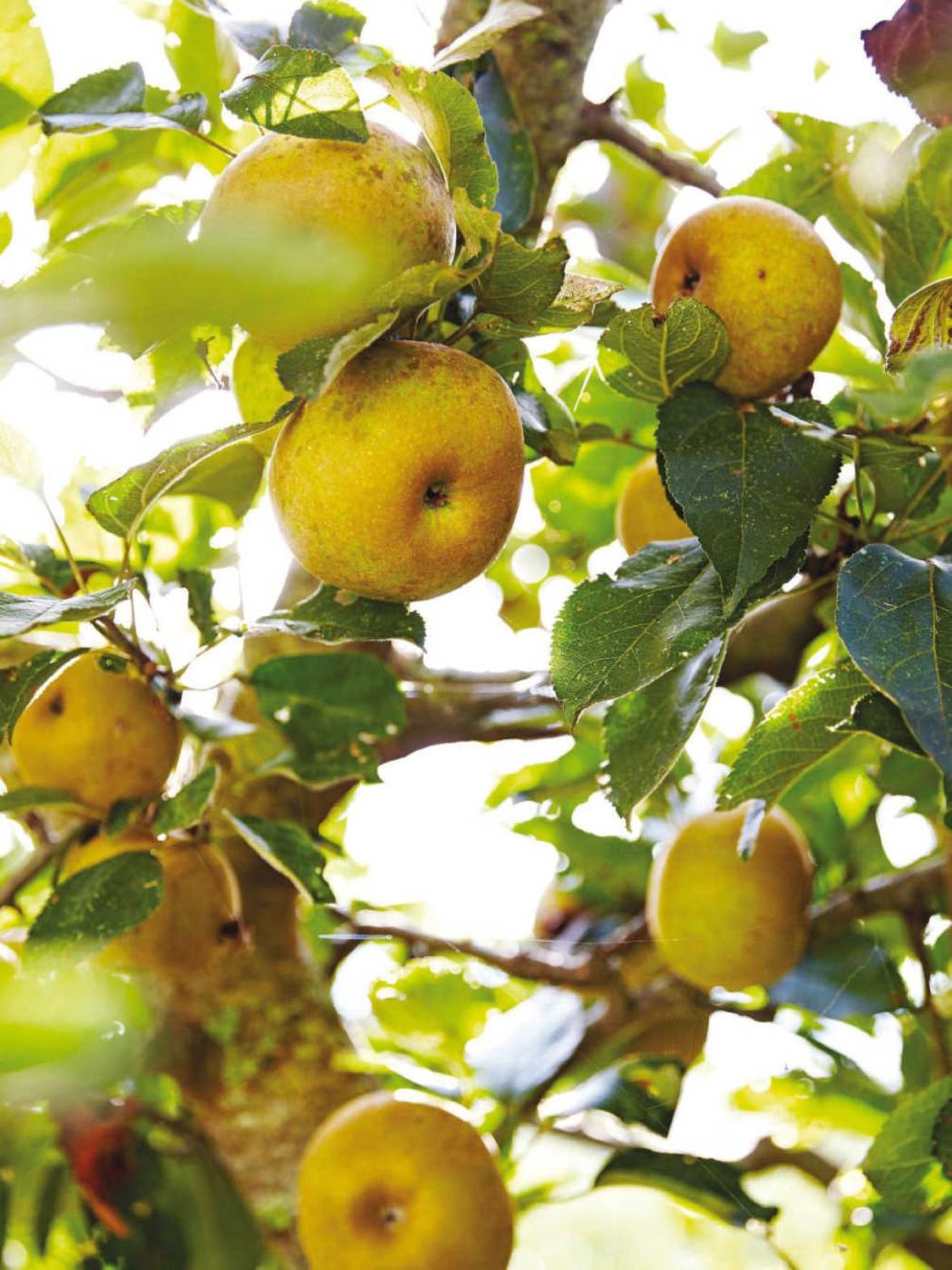
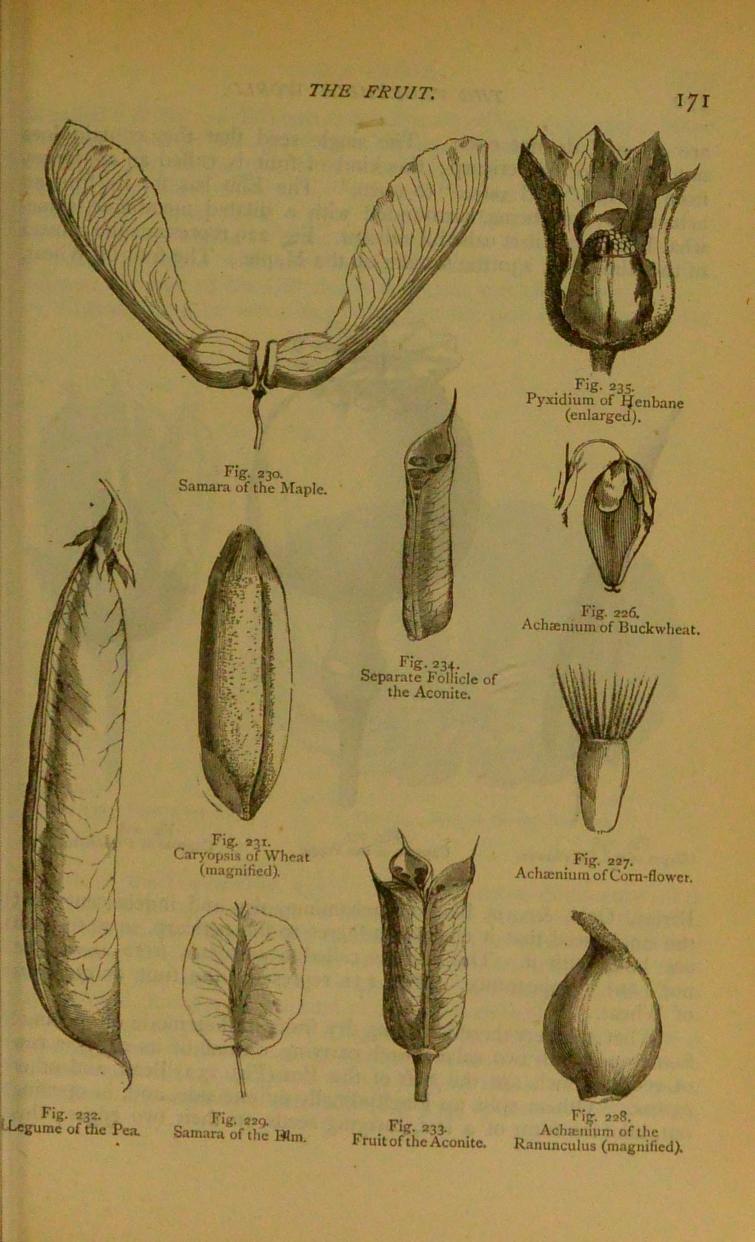
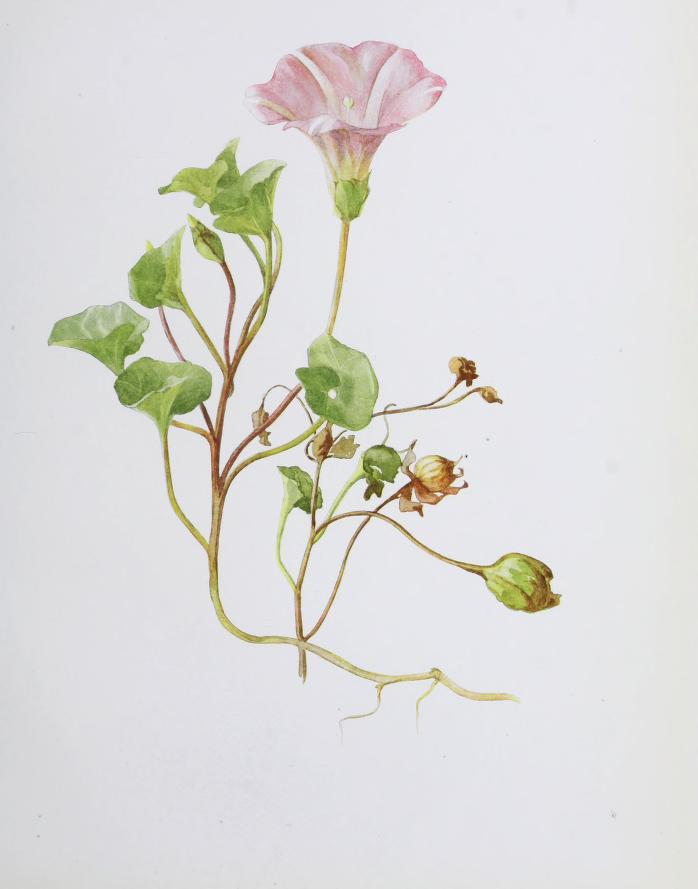
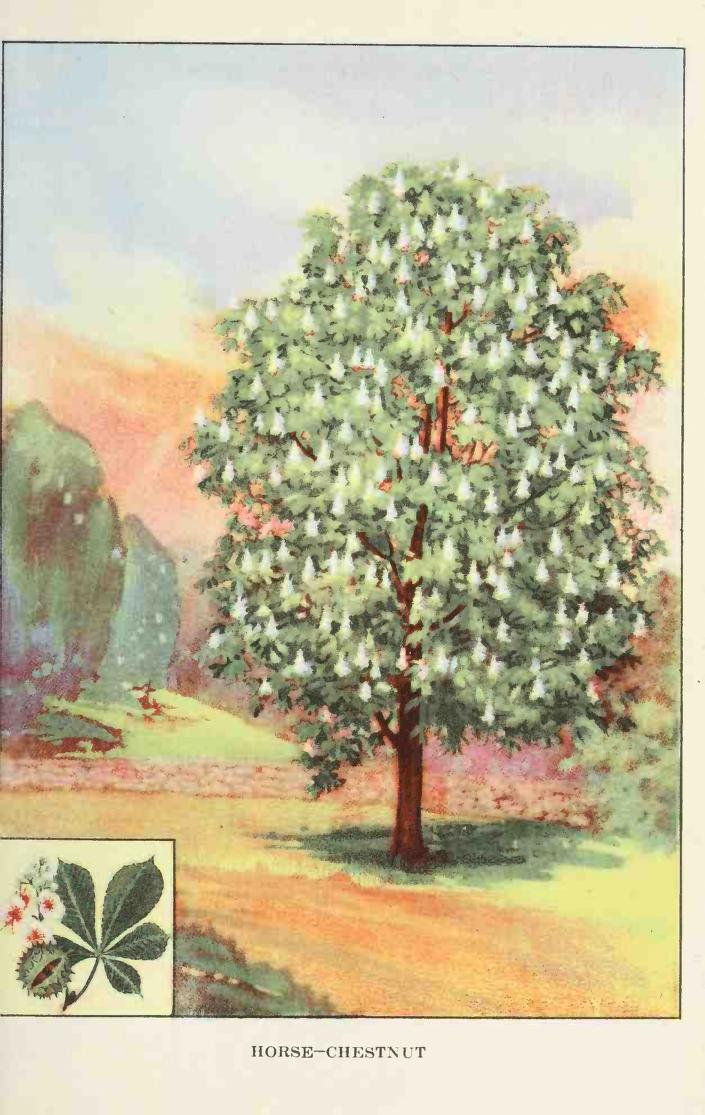
I am allowing myself one botanical print post in the main blog of this site each month. This is it for May – the books that contained botanical images that I read during the month. I’ll post about individual books in the eBotanicalPrints part of the site: Botanical blog. Also take a look at the Botanical eBooks list to find links to over 1,400 eBooks available free from various sources.

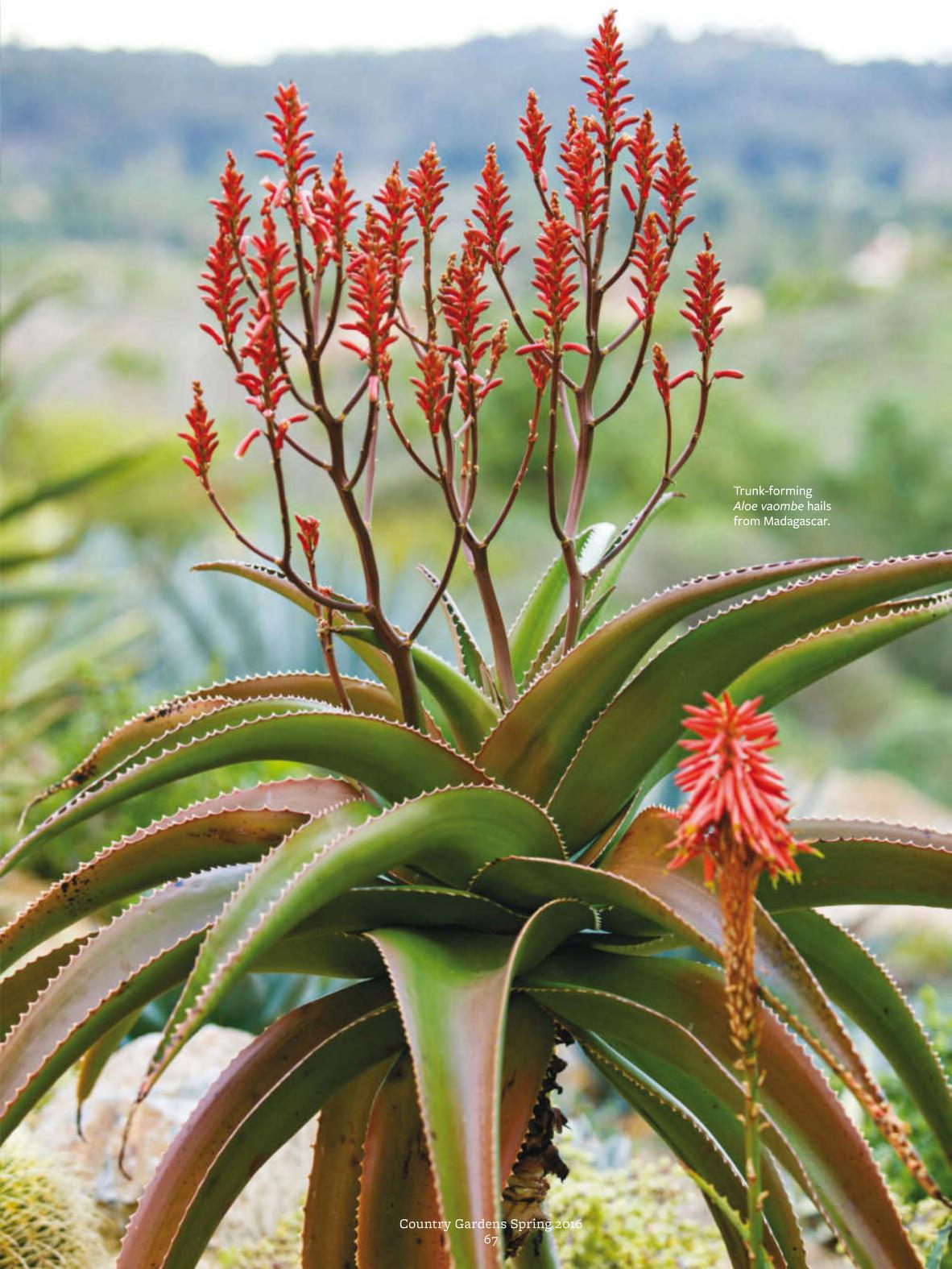
I read 24 botanical eBooks in May. It is always a little surprising that there are so many that I haven’t found before. In May I discovered some recent garden magazines that were made available via Internet Archive. They have great photography of cultivated plants and carry on the tradition of spreading the news about new varieties and planting designs as the books in the 1800s popularized plants from around the world.

The links to the books are below the sample image slide show.

Amaryllidaceae * Herbert, William * sample image * 1837

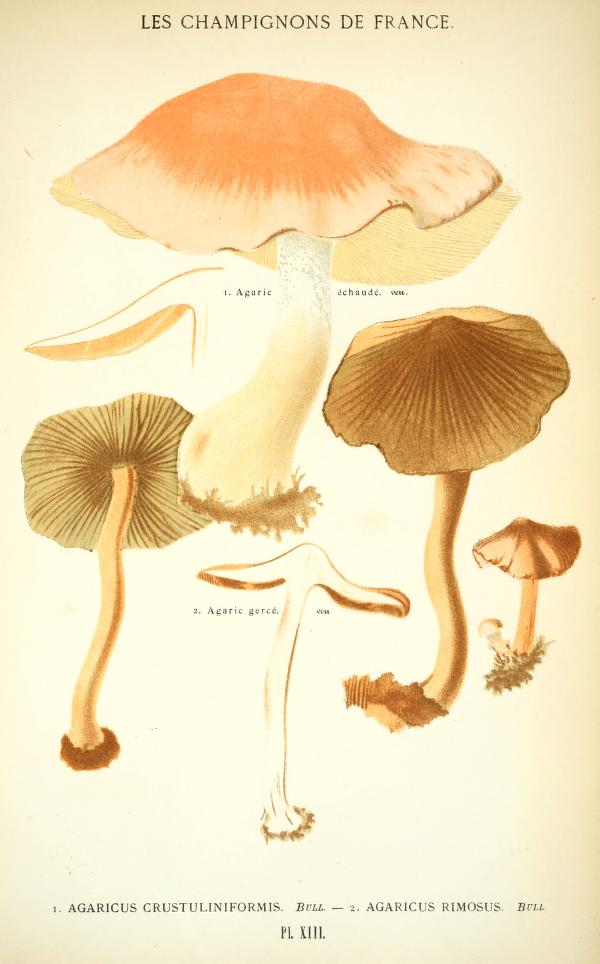
Les champignons de la France  * Cordier, Francois Simon * sample image * 1870

Flora Parisiensis Volume 5 * Bulliard, Pierre * sample image * 1893

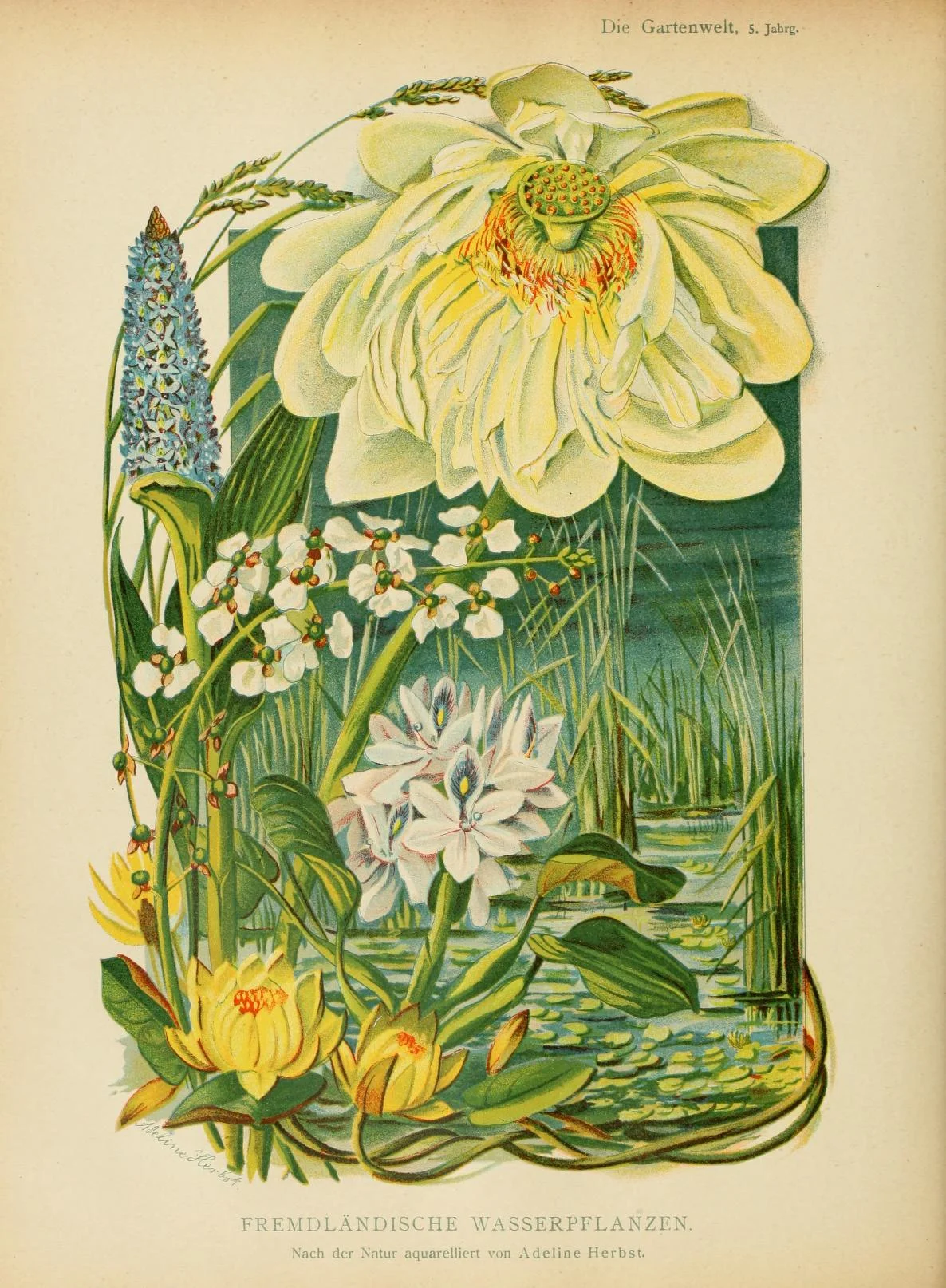
Die Gartenwelt, Vol 5, 1901  * Schmidt, G. (publisher) * sample image * 1901

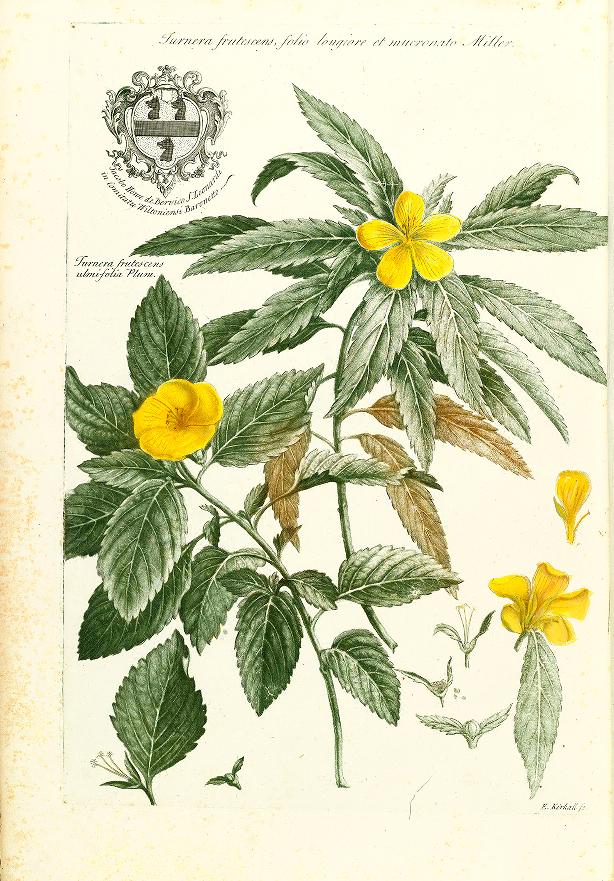
Historia plantarum rariorum * Martyn, John * sample image * 1728

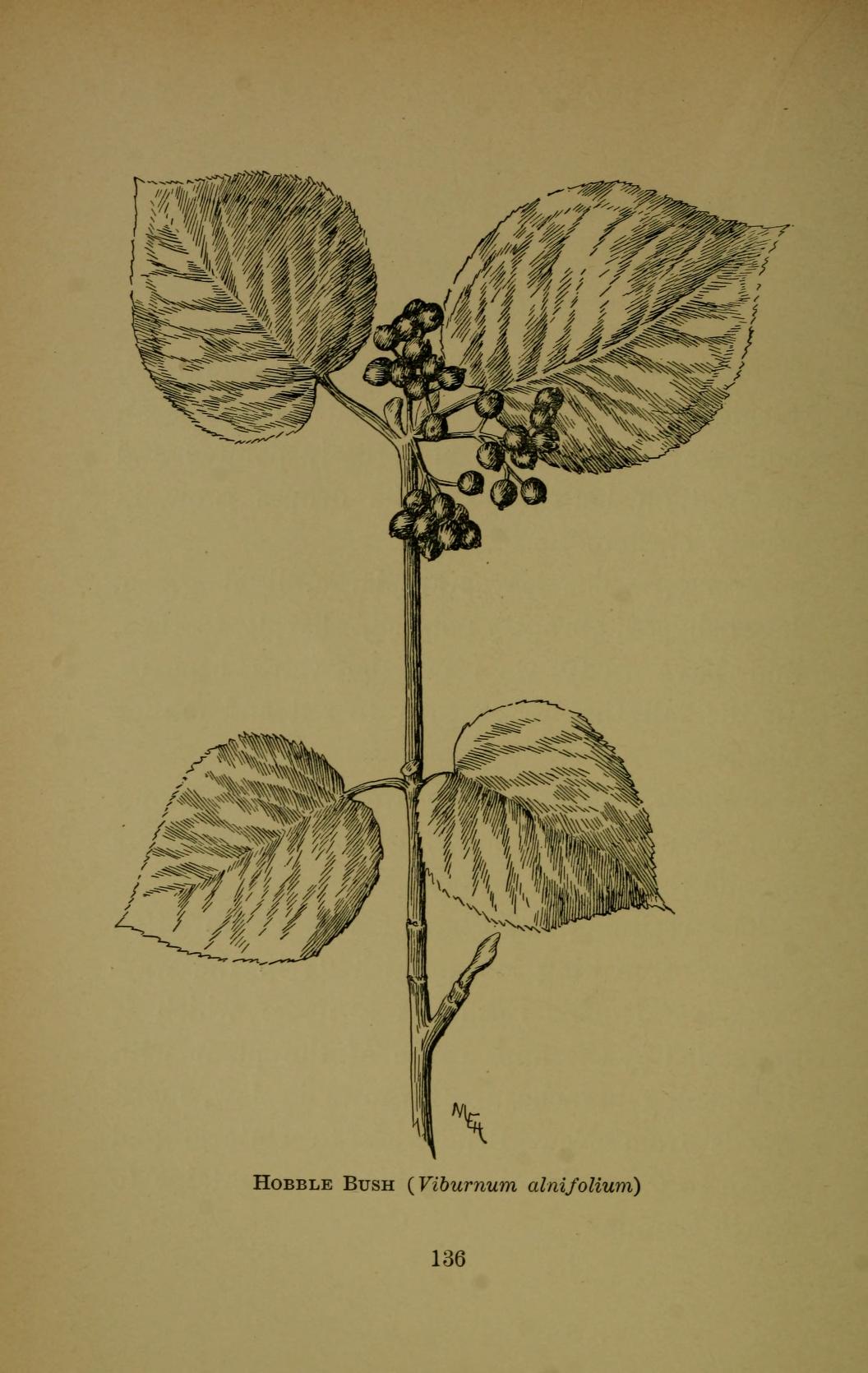
How to know the wild fruits * Peterson, Maude Gridley * sample image * 1905

Washington watchable wildflowers : a Columbia Basin guide * Camp, Pamela et al * sample image * 1997

Wild flowers of Nova Scotia * Smith, Titus; Miller, Maria * sample image * 1840

Flea Market Gardens 2015 * misc * sample image * 2015

Fine Gardening Jun 2016 * Aitken, Steve (editor) * sample image * 2016

Country Gardens Summer 2016 * Baggett, James Augustus (editor) * sample image * 2016

Country Gardens Fall 2016 * Baggett, James Augustus (editor) * sample image * 2016

Perennial Garden Ideas 2015 USA * Jimerson, Doug; Weir-Jimerson, Karen * sample image * 2015

The vegetable world : being a history of plants  * Figuier, Louis * sample image * 1869

British flowering plants V1 * Boulger, George Simonds; Mrs. Henry Perrin (illustrator) * sample image * 1914

Country Gardens Spring 2016 * Baggett, James Augustus (editor) * sample image * 2016

British flowering plants V2 * Boulger, George Simonds; Mrs. Henry Perrin (illustrator) * sample image * 1914

American country homes and their gardens * Baker, John Cordis * sample image * 1906

British flowering plants V3 * Boulger, George Simonds; Mrs. Henry Perrin (illustrator) * sample image * 1914

British flowering plants V4 * Boulger, George Simonds; Mrs. Henry Perrin (illustrator) * sample image * 1914

The Nature Library - Trees * Rogers, Julia Ellen * sample image * 1926

The New Flora Britannica - Vol 1 * Edwards, Sydenham; Sansom, Francis * sample image * 1812

The New Flora Britannica - Vol 2 * Edwards, Sydenham; Sansom, Francis * sample image * 1812

Fine Gardening May 2017 * Aitken, Steve (editor) * sample image * 2017

Father's Day

Thinking about father’s today…

So many good memories and anticipation of the future within my own family of my father and my husband as father to my daughter. There are only memories of my grandfathers at this point but those are good too. Over the years I’ve realized that there as many ways to be a good father as there are to be a good mother…good parents always seem able to sync with the needs of their children. I suppose having days to celebrate fathers and mothers are very much reminders to celebrate families too!

I enjoyed a blog post about Wildlife Fathers too.

Gleanings of the Week Ending June 16, 2018

The items below were ‘the cream’ of the articles and websites I found this past week. Click on the light green text to look at the article.

Reading habits in the past | Europeana Blog – When I travel, I tend to do most of my reading on my phone (light weight, easy to carry, and ambient light does not have to be good). It’s a recent development for me. This blog post goes back further in history.

Man against machine: AI is better than dermatologists at diagnosing skin cancer -- ScienceDaily – There are still limitations to the AI but it might be close to a tipping point to begin transitioning into system. It seems like it would be most in demand for screening where there were not highly trained dermatologists available….as long as the imaging technology was not tremendously expensive or hard to use.

BBC - Future - Is it really healthier to live in the countryside? – I thought it would be…but it’s complicated because so many factors contribute to ‘health.’

Mapping Modern Threats to Ancient Chacoan Sites : Image of the Day – Posts about places I’ve visited always get my attention. A study using satellite data and projections for population growth/oil and gas exploration in the area shows that 44 of the 123 known Chaco sites included in the study are threatened by development. Of those, 19 are already protected by the National Park Service.

Paper Art Details Similarities Between Human Microbiome and Coral Reef – Nature inspired art!

Researchers Grow Veggies in Space | The Scientist Magazine® - Progress in a technology required for longer space missions…and then colonies on other planets.

Schoolyard Habitats Provide Resiliency in Houston Independent School District : The National Wildlife Federation Blog – Schools in Maryland have similar projects. I hope the monarchs have shown up in Houston…I haven’t seen any in Maryland yet this year.

US Still Subsidizing Fossil Fuels To Tune Of $27 Billion | CleanTechnica – This post included more detail on what subsidies are…how the US compares to other developed countries.

Thank A Rare Fungus For The Sustainable Solar Cell Of The Future | CleanTechnica – It’s a beautiful color…if it really works, it won’t be ‘rare’ for long. It will be come a commercially grown fungus!

Bright warning colors on poison dart frogs also act as camouflage -- ScienceDaily – Learning a bit more about these little frogs.

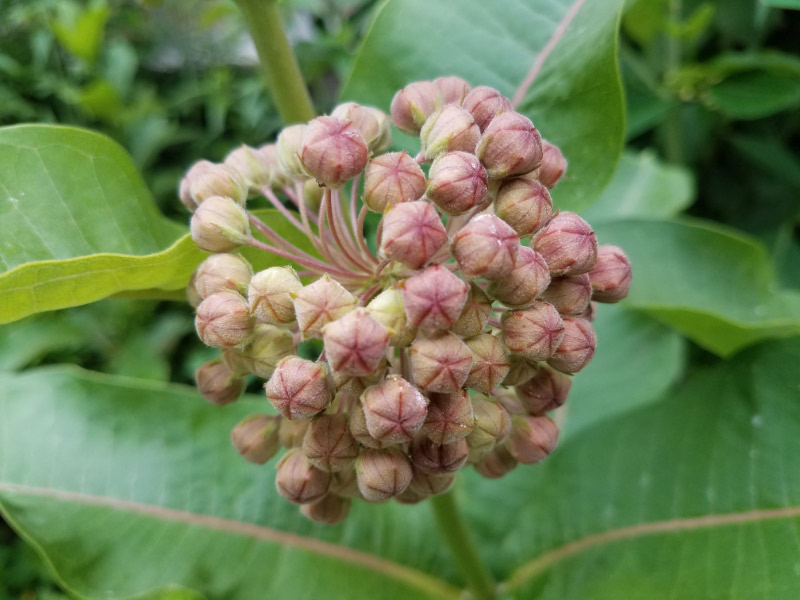
Milkweed Buds

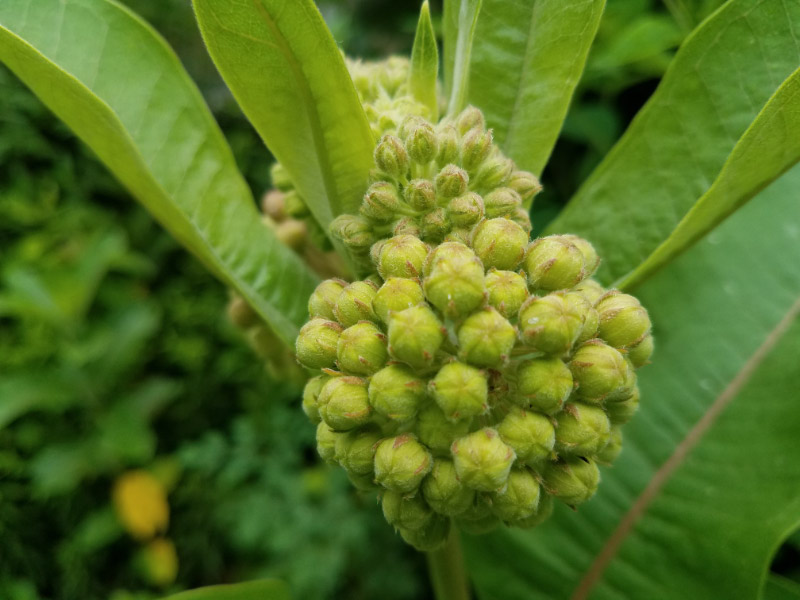
June is the time the milkweeds bloom. In our area the buds on the common milkweed are about ready to open in our area. They are turning from green to pink. There is a fragrance around the plants already.

There are no Monarch caterpillars that yet. I have seen any Monarch butterflies (i.e. no eggs either). Hopefully they will start appearing soon. There are plenty of plants in my yard and other places I’ve been recently. People are planting milkweed for the Monarchs, so I hope we have butterflies show up! Other insects depend on the plant as well but none of the others have the cachet of the Monarch.

There are other kinds of milkweed too. I’m not sure how well the butterflies like them – but they are getting ready to bloom as well. I did notice that some of the leaves looked like something was eating them but didn’t see any in action.

Back to the common milkweed – when they start blooming they should be full of bumble bees and butterflies….a great place to point a camera for insect pictures!

Packing for Texas

20180611_110217.jpg

I’m in Texas! I bought my ticket less than 48 hours before flying…so this was not a planned trip and I realized as I packed several differences from my usual trek to Texas. First, I don’t know how long I will need to stay so I decided almost immediately to check a bag rather than doing it all in a roll-aboard and a tote bag.

Second, I checked of the weather and realized that it is going to be a lot hotter than I’m used to (I’m remembering why I don’t like to go to Texas during the summer!); on the plus side, lighter weight clothes take less room in the suitcase. Third, since I will be staying for an indefinite time period, taking my regular sized toiletries rather than travel size makes sense (another reason to check the suitcase too).

20180611_130001.jpg

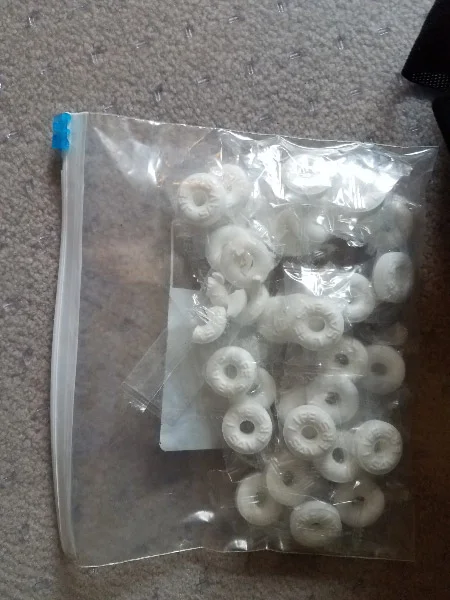
Some things are the same as my usual travel…taking peppermints for the travel days,

20180611_130051.jpg

Having the electronics (iPad and laptop) where I can get them out easily when I go through security….and an almost empty quart sized Ziploc – mostly hand sanitizer,

20180611_130058.jpg

And a zipper case to contain the charging cables – phone, iPad, Fitbit, toothbrush, laptop.

I did not pack the kitchen sink….just all the comforts of home!

Sycamore

2018 06 IMG_1355.jpg

Sycamores are common in our area near rivers and streams particularly. They tend to get their leaves late and loose them early in the fall. Right now – in June – they are about their best looking with their foliage still mostly intact. Later in the season, the many of the leaves will have holes or be partially eaten away. A lot of insects depend on those leaves for food. The leaves keep growing all during the season getting larger and larger…bigger than dinner plates…plenty to go around for the insect company.

Looking up int the tree, the whiteness where the outer bark has peeled way I a little noticeable – not the standout feature that it will be in winter.

This time of year, there are still some very tiny leaves. They are lighter in color than the bigger leaves and from far away look something completely different than a leaf…a little decoration at the ends of all the branches.

2018 06 IMG_1357.jpg

Sharing Wings of Fancy

I enjoy Brookside Gardens Wings of Fancy so much that it’s my favorite place to take guests. This past weekend, my daughter was visiting, and we headed to the exhibit just at it opened. The caterpillars are big enough to see easily – particularly the spicebush swallowtail caterpillars with their eye spots that make them appear more ferocious than they are.

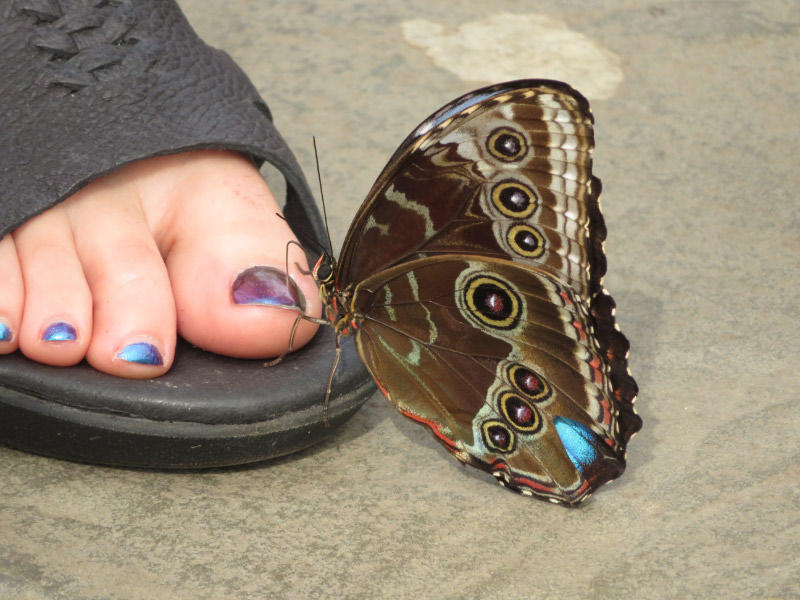
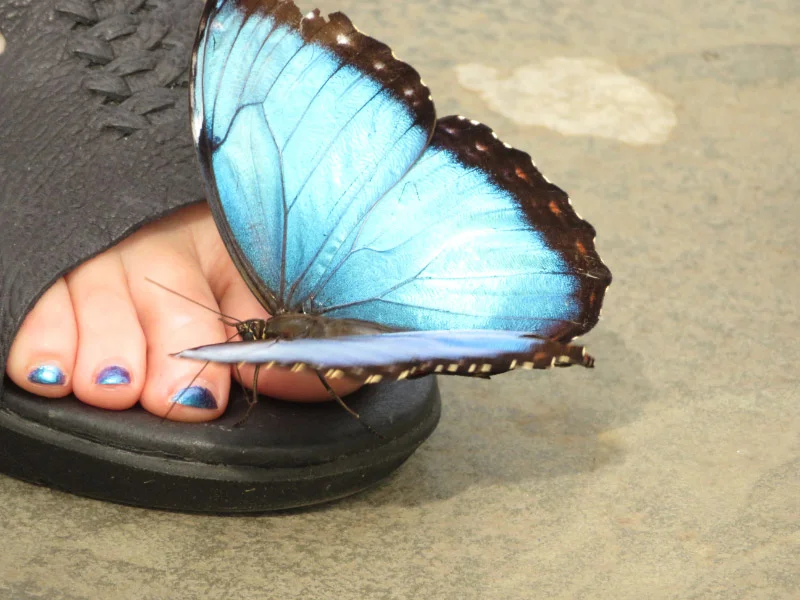
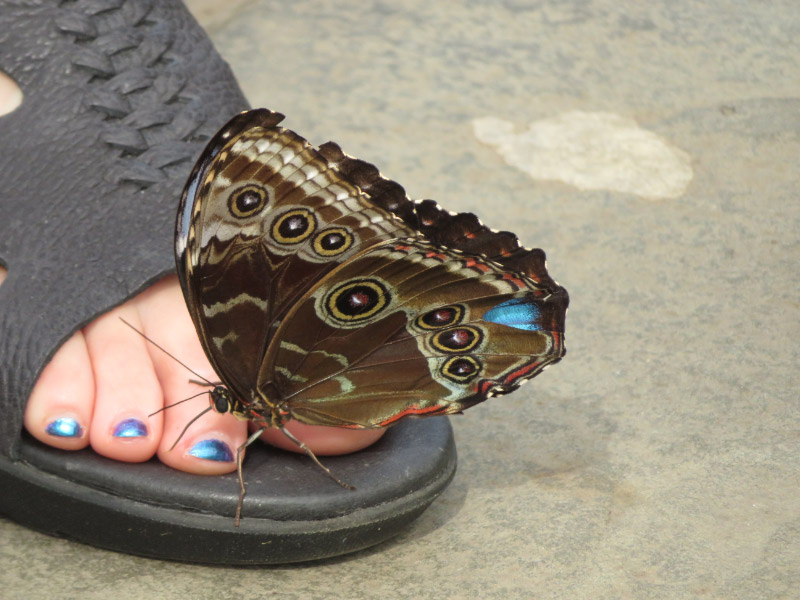
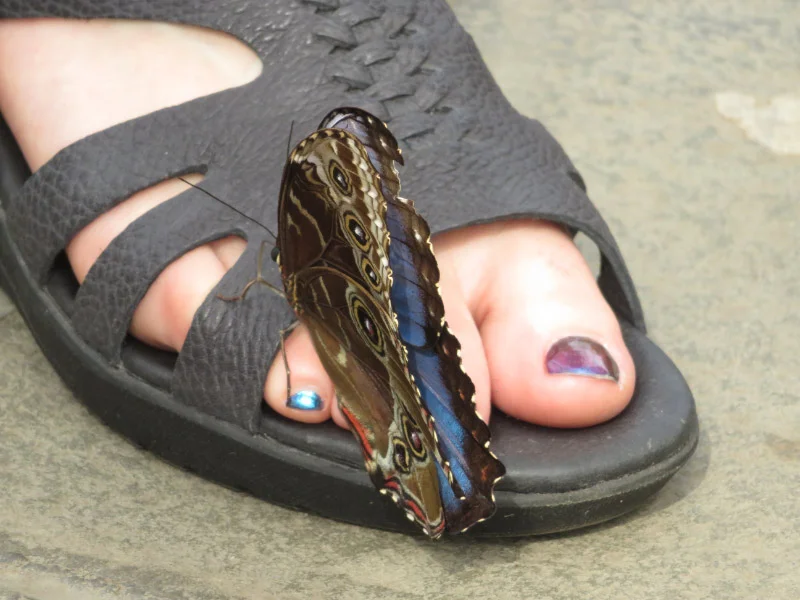
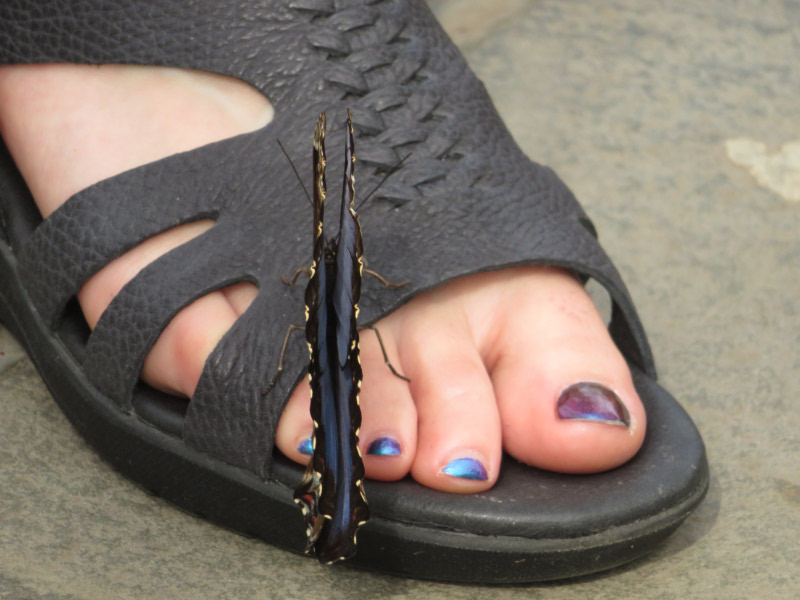
The high point of the morning was when a blue morpho butterfly decided that my daughter’s nail polish was like its own color. The blue (or pink/purple in different light) in both cases is a mechanical color rather than a pigment. The butterfly ‘tasted’ the color with its proboscis on each toenail then crawled up onto the sandal before flying way!

Patuxent Branch Trail

Sometimes volunteer activities help us find something new close to where we live. That happened to my husband and I recently. I had volunteered us to count pedestrian and bike traffic as a trail near where we live for a community organization. The location on the Patuxent Branch Trail was only about 3 miles from hour house….and I’d never been there before.

The trail crossed the Little Patuxent River on a re-purposed railroad bridge built in 1902 – the year after one of my grandfathers was born! It became a pedestrian bridge in 2002.

20180609_111937 resize.jpg

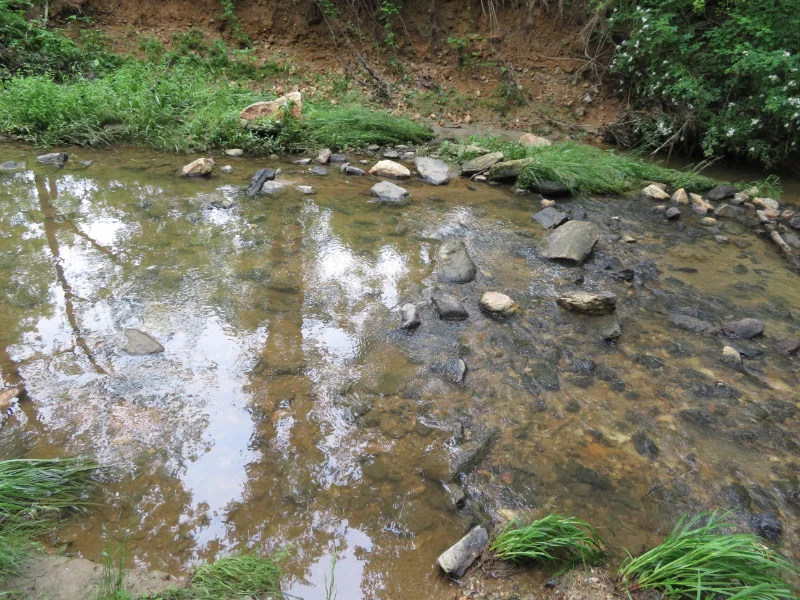
The bridge was still full of sediment from recent rain. Both pictures below taken from the bridge. I was not surprised at how many people (pedestrian and bicyclists) stopped on the bridge to enjoy the view.

My husband is already talking about biking the trail on the next day without rain in the forecast!

Last Spring Field Trips at Belmont

Last Wednesday was the last the Howard County Conservancy school field trips at Belmont….and it was a large group of 4th grade students. Fortunately, there were enough people around to lead the hiking portion of the field trips so I enjoy the calm before the students arrived –

2018 06 IMG_1172.jpg

The path down toward the pond along the line of blue bird boxes (the black dots in the picture are birds!),

A knot with branches sprouting on the side of a large English Elm near the Carriage house and a mocking bird miffed at the people activity beginning to occur.

There were muddy ruts in some places and a place on the lawn of the manor house was roped off to keep mowers out of the very soggy low place.

20180606_095417.jpg

Then the 4 buses arrived and there was a very solid 2 hours of hiking with two different groups for me. I got in most of the steps for the day! I took two different routes into the forest and both had some very muddy stretches. I was glad that no one slipped in the mud (including me)!

20180606_100451.jpg

Then the student were eating their lunches and I was done…I did my usual roll from the Manor House down to the bridge over Rockburn Branch; it part of the transition from the Piedmont down to the coastal plane. The last bit of Belmont Woods Road is not well maintained…muddy ruts on both sides…lots of pot holes. But the trees on both sides and overhead make the metropolitan area seem very far away.

Gleanings of the Week Ending June 9, 2018

The items below were ‘the cream’ of the articles and websites I found this past week. Click on the light green text to look at the article.

Monument Valley: An Icon of American West : Image of the Day – It’s interesting to see a place I’ve been (on the ground) from a different perspective.

How to Be Happy: A Cheat Sheet – A summary of a course on the topic from Yale.

Biologist advocates ecological approach to improving human health -- ScienceDaily – Thinking about the body (particularly the gut) as an ecosystem in need of restoration!

Compound Interest - Why is milk white? The chemistry of milk – The white is from the clusters of proteins and calcium that make up ‘micelles’!

Top 25: Birds of America – National Geographic Blog – How many of these birds do you recognize? I recognized almost all of them…and have seen at least 20 in the wild!

Colorful Architectural Watercolors of International Cities by Maja Wroń – Some are easier to recognize that others. I liked the vivid colors too.

Supermarket Buying Guide | Berkeley Wellness – A guide from 2013…but still good overall.

Lighting intervention improves sleep and mood for Alzheimer’s patients: Daytime light exposure decreases sleep disturbances, depression and agitation -- ScienceDaily – I wonder if this is not true for almost everyone…not just Alzheimer’s patients. Artificial light (and computer/tablet/phone screens) are disruptive to our circadian rhythm.

Majority of Americans Believe Space Exploration Remains Essential | Pew Research Center – Hurray! The result that surprised me the most in this survey, was that ‘monitor key parts of the Earth’s climate system’ was the top priority!

Photographer Captures the Enchanting Beauty of Mount Fuji at Dawn – I expected more sunrise color…but enjoyed the artistry behind these images more than I initially thought I would.

Last Spring Field Trips at Mt. Pleasant

2018 05 IMG_0944.jpg

The last of the Howard County Conservancy school field trips at Mt. Pleasant. The last three were between the heavy rains in our area the past couple of weeks. The first one was for 7th graders; my station was down at the Davis Branch helping them capture and identify macroinvertebrates to assess the water quality in the stream.

They put on boots and waded into the stream (and we didn’t have anyone step into a deep pool…fill their boots with water).

2018 05 IMG_0943.jpg

The water was surprising clear before they arrived. The upstream portion that was restored has slowed the flow enough to help the sediment carried by the recent rains.

The forest near the stream and the meadow was thick with late spring vegetation (some invasive plants too – like the multiflora rose).

20180601_090333.jpg

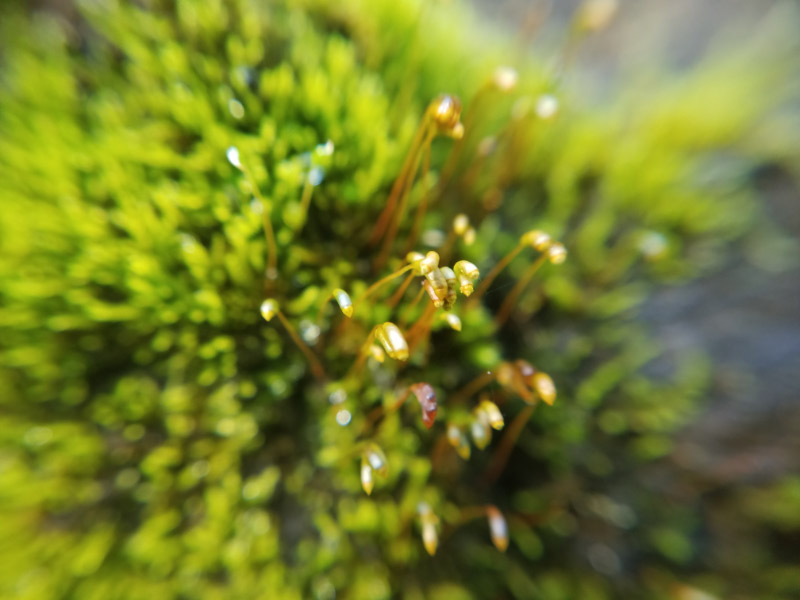
I stopped at the old foundation (now a retaining wall) on the next field trips…fascinated by the moss that was propagating, the different kinds of lichen, and what looked like a mold growing on the damp rock.

On the last field trip I checked the milkweed near the nature center for caterpillars; no luck. There was a fly that sat long enough for a picture and the buds of flowers that will open in the next few weeks.

20180604_092228.jpg

The butterfly weed was about ready to bloom as well.

The ferns were unfurling…and providing some different color to the shady scene on the way to the nature center.

20180604_092312.jpg

It was calm before the 3 buses arrived with about 120 kindergarteners! A good time was had by all…a good finale to the spring field trips at Mt. Pleasant.

First CSA Week for 2018

Yesterday was the beginning of the weekly shares from Gorman Farms CSA (Community Supported Agriculture). I picked strawberries last week and picked up a head of lettuce that seems to be in overwhelming supply right now….but this was the first really share. They enlarged the layout for the pickup so the ‘medium share’ subscribers have a whole side to themselves; it’s much easier to move around – weigh what needs to be weighed, find a place to perch the bags if things are too heavy. I was surprised that zucchini was already in the distribution this first week and have already found my favorite zucchini bread recipe to use the increasing amount that will probably come in the upcoming weeks; a pound seems easy enough to use over the next week or so.

20180606_141127.jpg

When I got home I piled it all on the top of the stove…it took most of the space. From left to right – the overage head of lettuce and garlic scapes in the plastic bin, kale and butter lettuce and tatsoi next, and then charge and pac choi last.

20180606_143109.jpg

I’m glad my daughter is coming to visit this weekend. I’m going to send home one head of lettuce with her and more. For once, I am not going to be overwhelmed by the first week of the CSA!

Frederick County MD Gardens Open Day – Part 3

The last garden we visited on The Garden Conservancy’s Open Day last Saturday was the Rausche Woodland Gardens…and it was my favorite. It was a wooded, sloped lot with a house roughly in the center….understory plantings everywhere. The most formal part of the garden was a small grassy area that had been a badminton court when the family was younger….and now held benches and beds of plants that needed a bit more sun that the heavy shade in the rest of the yard. Under the trees is lush and green broken by bits of color of things in bloom.
2018 06 IMG_1166.jpg

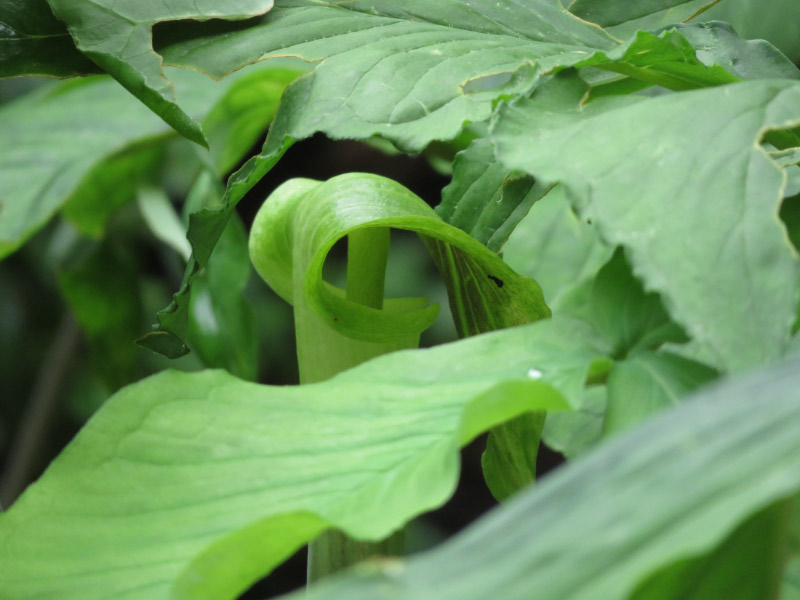
The Rausches propagate many of the plants themselves…including jack-in-the-pulpits. I saw the biggest jack-in-pulpit I’ve ever seen in this garden! I didn’t take many pictures in this garden because I was simply enjoying the ambiance of the place. If I ever own a property that has lots of woods like this…I might just become a woodland gardener too.

2018 06 IMG_1163.jpg

Stone pathways wandered through the plantings of hellebore (deer don’t like) surrounding hostas and other plants that deer eat enthusiastically. The rhododendron and azaleas were past blooms. The recent floods had done some damage (there was a new path that water flowed….where it had never flowed in the nearly 4 decades of garden development) but the garden was recovering.

When two of the big trees died, they had them cut into 6-foot-tall stumps and the carved! The results frame their woodpile! I liked the squirrels spiraling the stump. On the opposite side of the stump is a hollowed place – a secret place for something to hide.