Gleanings of the Week Ending August 26, 2017
/The items below were ‘the cream’ of the articles and websites I found this past week. Click on the light green text to look at the article.
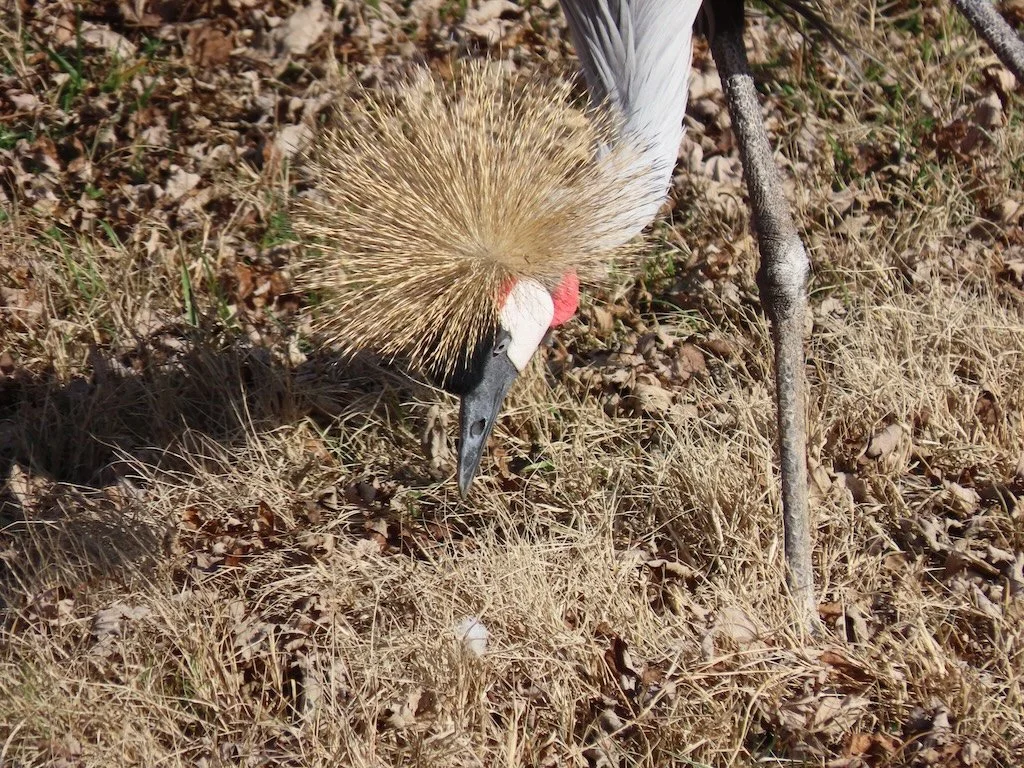
Top 25 Wild Bird Photographs of the Week #101 and #102 – 50 bird pictures this week! My favorite in the first group is the barn owl (and the other owls in this group). My favorite in the second group are the two pictures of spotted owlets! --- I am drawn to owls this week for some reason.
Voyager: Inside the world’s greatest space mission – The two Voyager space craft were launched in 1977…and are both sending back messages to earth.
Trees with ‘crown shyness’ mysteriously avoid touching each other – I haven’t observed this phenomenon in our Maryland forests…but now when I am in a forest, I’ll always look for it!
Time Spent – Who Americans spend their time with (from Richard Watson’s blog). It changes with age. The last chart shows that as we get older we spend more and more time alone.
Air pollutions ranking in 32 cities – LA ranks 24; Washington DC, San Francisco and New York are 26-28; Boston is 31. Delhi, Beijing, and Cairo are the top three.
Trees and shrubs offer new food crops to diversity the farm – Ongoing research from the University of Illinois trying to mimic the habitat features, carbon storage, and nutrient-holding capacities of a natural system with a farming method that incorporates berry and nut bearing shrubs/trees with alley cropping (hay or row crops)….to be economically and environmentally sound.
AWEA releases map of every wind farm and factory in America – There is a link to the interactive map. The red diamonds are manufactures and the blue dots are the wind farms themselves. It’s easy to see that manufactures happens a lot in areas other than where the wind farms are located….that the center of the country has a lot of installed wind turbines! We saw some of them in Iowa on our way to and from the solar eclipse last Monday.
Diversity Lacking in US Academia: Study – Under-representation of African Americans, Hispanics, and women in STEM faculties at public universities. There is a similar lack of diversity in PhD programs. On a positive note: the assistant professor is more diverse (more Asians, Hispanics and women) that the associate or full professor rank. Unfortunately, this positive finding is not true for African Americans. Overall – still a challenge….and it impacts the broader labor market as well.
More than 300,000 Atlantic Salmon Spill into Pacific – Oh no! Hopefully this is not catastrophic in the long run. But – Why are they growing Atlantic salmon in pens in Puget Sound anyway?
Thanks to Co-op, Small Iowa Town Goes Big on Solar – Kalona, Iowa – not far from our route to the eclipse! It comes down to local self-reliance and economic development that made sense for this small town. Somehow a pointer to this article (from last February) was in a blog post I looked at when I returned home and I noticed where the town was…small world.