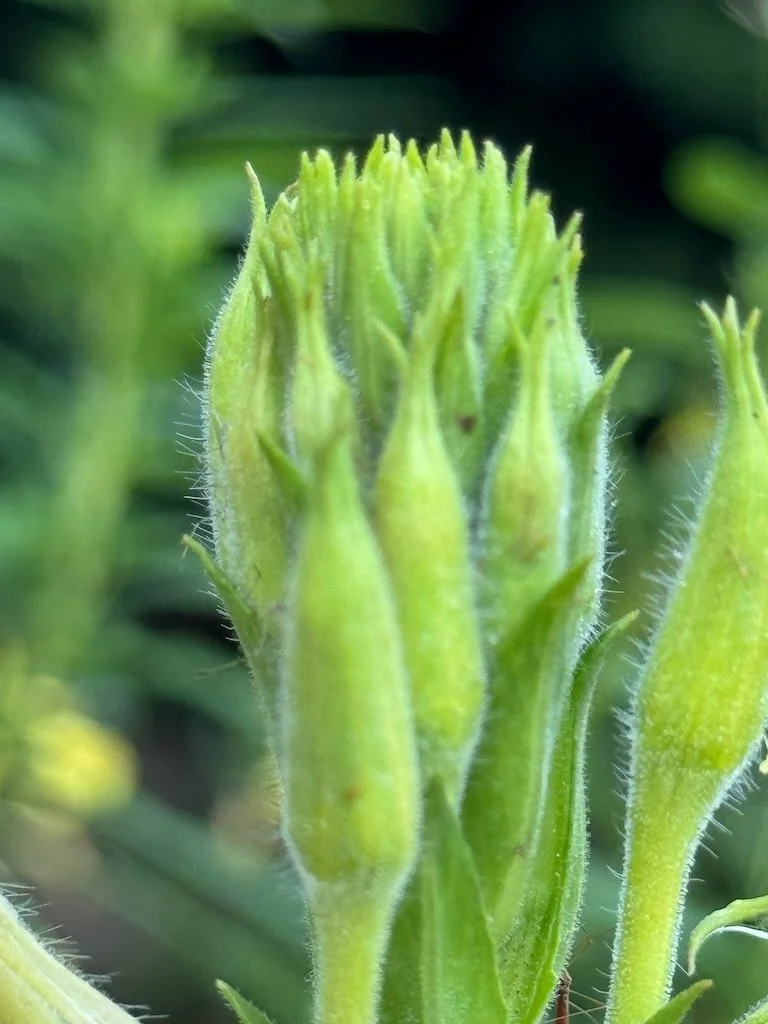
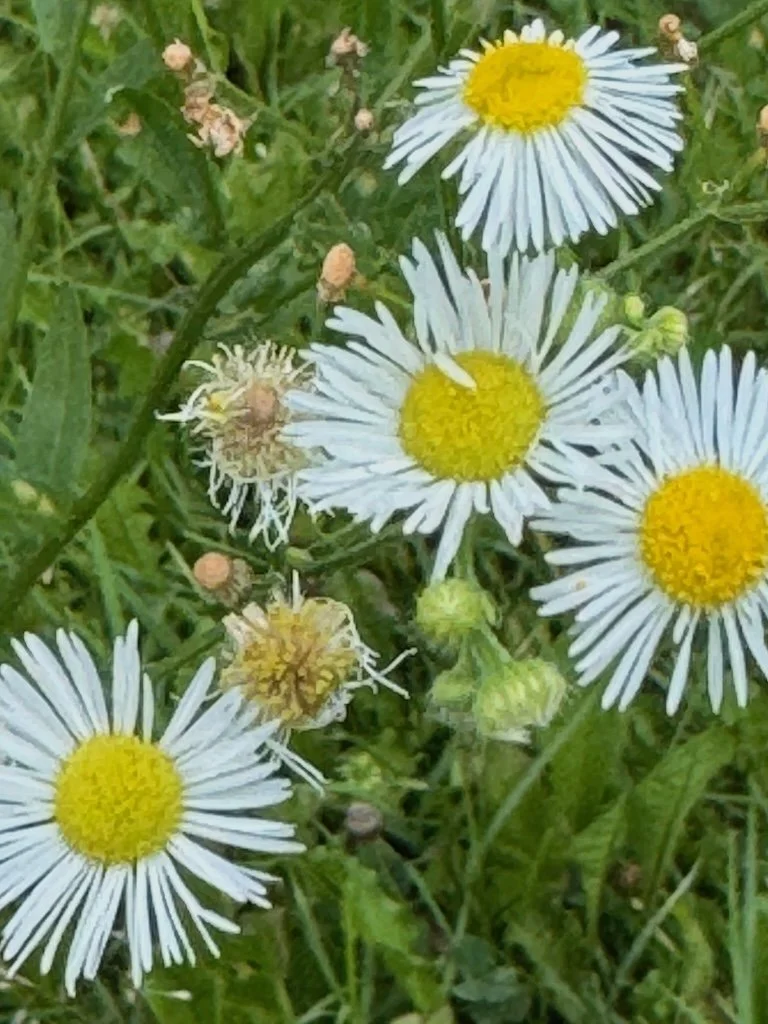
Gleanings of the Week Ending December 13, 2025

The items below were ‘the cream’ of the articles and websites I found this past week. Click on the light green text to look at the article.

How extreme weather is making plastic pollution more mobile, more persistent and more hazardous - Rising temperatures, humidity and sunlight break plastic down, making it brittle and cracked, accelerating its disintegration into tiny fragments. A 10-degree Celsius (18 Fahrenheit) rise in temperature during an extreme heat wave could double the rate at which plastic degrades. Extreme storms, flooding and wind also hasten the breakdown of plastic, mobilize it and spread it more widely. Flooding can also help forge “plastic rocks,” created when rocks and plastics form a chemical bond and merge together. These become hotspots for microplastic generation. Wildfires release microplastics and highly toxic compounds into the atmosphere. Global annual production of plastic increased 200-fold between 1950 and 2023 and is predicted to keep increasing as the world moves toward clean energy and oil companies shift investments to plastics.

YMCA: The Swan Song of SROs and the Birth of Modern Homelessness - Single room occupancy hotels played a central role in America’s affordable housing ecosystem for decades, providing cheap, flexible accommodations without government subsidy. They are effectively large-scale boarding houses, offering small private rooms or dorm-style quarters with shared bathrooms and minimal kitchen facilities. The YMCA was the nation’s largest SRO provider, with more than 100,000 units nationwide at its peak. SROs were far from ideal, but without this form of housing or any other low-cost option, homelessness was the inevitable result. It was just as Edith Elmer Wood feared back in 1919: Housing reform had created a housing famine.

Recycling Lead-Acid Batteries Has Significant Health Risks - What happens to the old ones when they are no longer serviceable? They get melted down to recover the lead in them, which can then be used to make new batteries. In the US, that work often gets outsourced to other countries. It’s a patchwork of shoddy factories in places like Ghana, Nigeria and Tanzania providing more lead for new car batteries….and where people die from lead poisoning. Car companies look the other way.

More Than 1,200 Marine Animal Species Eat Plastic. Ingesting Even a Tiny Amount Can Kill Them - Data from more than 10,000 marine animal autopsies. About half of the examined sea turtles, one-third of seabirds and one in eight marine mammals had plastics in their stomachs. The study didn’t examine other ways plastics can hurt wildlife, such as strangulation, malnutrition or toxic effects. It also didn’t look at the harms of tinier pieces of plastics—microplastics—which have been found in the deep ocean and can also affect marine life. Researchers say the best way to protect wildlife from plastic is to reduce the amount of it that enters the ocean, namely through local and national policy.

The Forgotten Roman Ruins of the ‘Pompeii of the Middle East’ – Jerash – ruins near Amman, the capital of Jordan and the country’s second most popular tourist destination after Petra. After spending more than a millennium covered by sand, Jerash has reclaimed its place as a cornerstone of both Western and Middle Eastern civilization.

Just ten species make up almost half the weight of all wild mammals on Earth – Deer and boars account for almost half the biomass of wild land animals.

New research reveals what’s really hiding in bottled water - Each sip may contain invisible microplastics that can slip through the body’s defenses and lodge in vital organs. These tiny pollutants are linked to inflammation, hormonal disruption, and even neurological damage, yet remain dangerously understudied. “People need to understand that the issue is not acute toxicity -- it is chronic toxicity.”

Beavers are Dam Good for Biodiversity, Bringing Bats, Butterflies and Other Critters to Their Neighborhoods - Beavers are famous for being ecosystem engineers, capable of transforming once-dry landscapes into lush, green wetlands that support many other land- and water-dwelling species. Now, two new studies suggest these benefits also extend to creatures who spend much of their time in the air like bats and pollinator insects.

This tiny pill could change how we diagnose gut health - Tiny ingestible spheres filled with engineered bacteria can detect intestinal bleeding by glowing when they encounter heme. Early tests in mice suggest they could become a quick, noninvasive way to monitor gut disease. The work was done by the NSF of China and other sources in China. Will China now dominate this type of research with the funding cuts in the US?

Meet the 7 Swans a-Swimming – There are 7 swan species in the world…which fits very well with The Twelve Days of Christmas.

Our Missouri Yard – December 2025

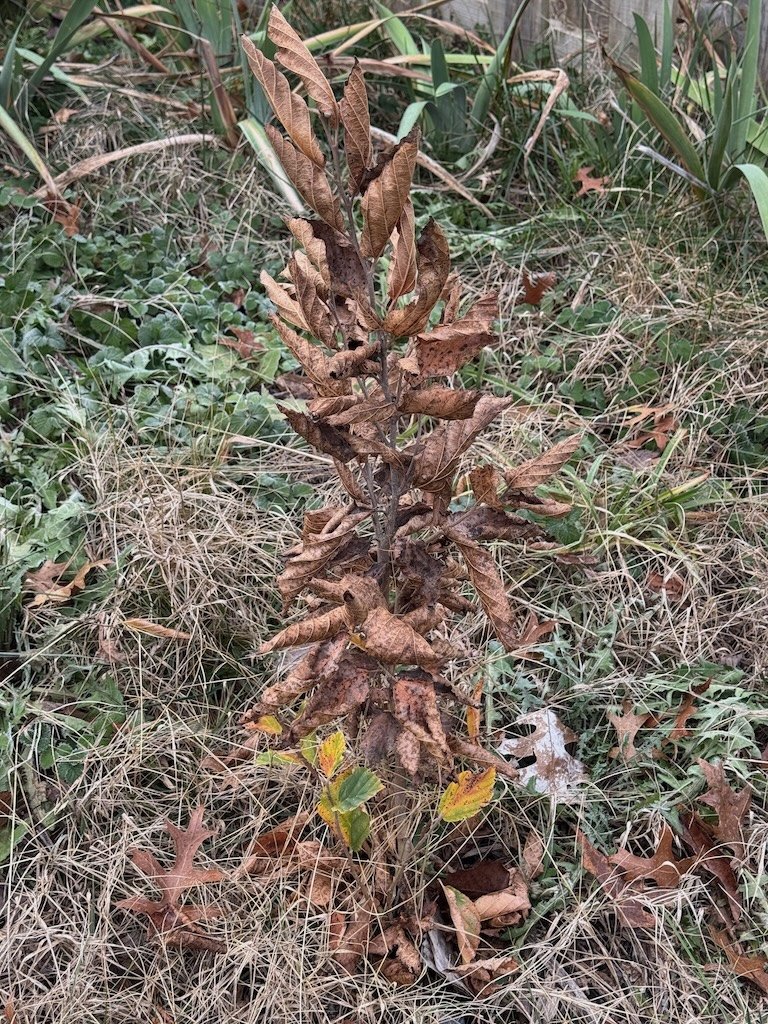
December had started off with some very cold days with low temperatures in the 20s or teens at night and barely getting above 50 on 3 days (other days the high was in the 40s). Almost all the trees had lost their leaves abruptly in November when we had some very cold days. As I walked around the yard taking pictures for this post, I found myself searching for color and interesting textures.

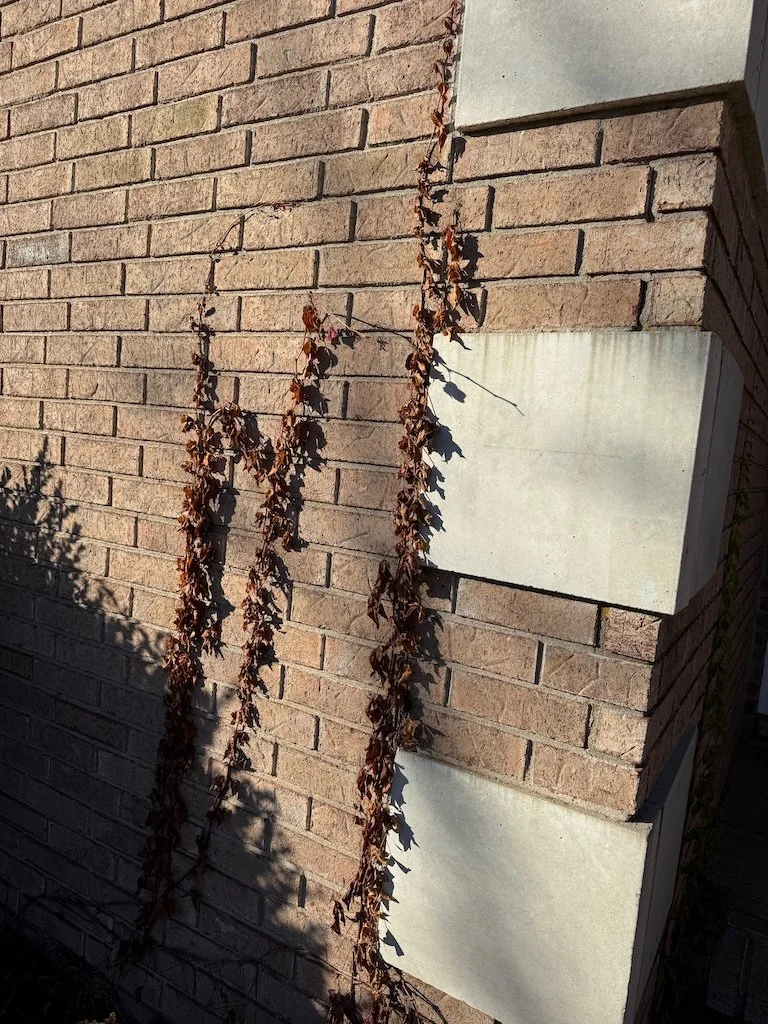
The Virginia Creeper that had been so beautiful in previous falls (red leaves) had either died back or retained the color for only a few days. Some of the vines retained their leaves – but they are brown rather than bright red.

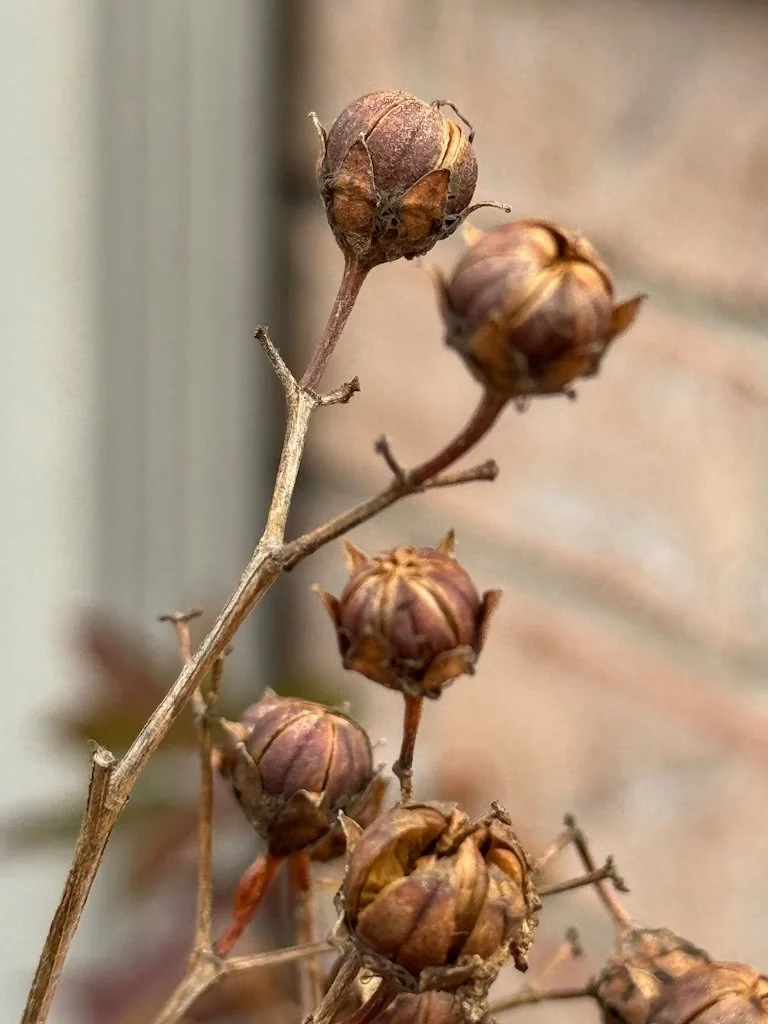
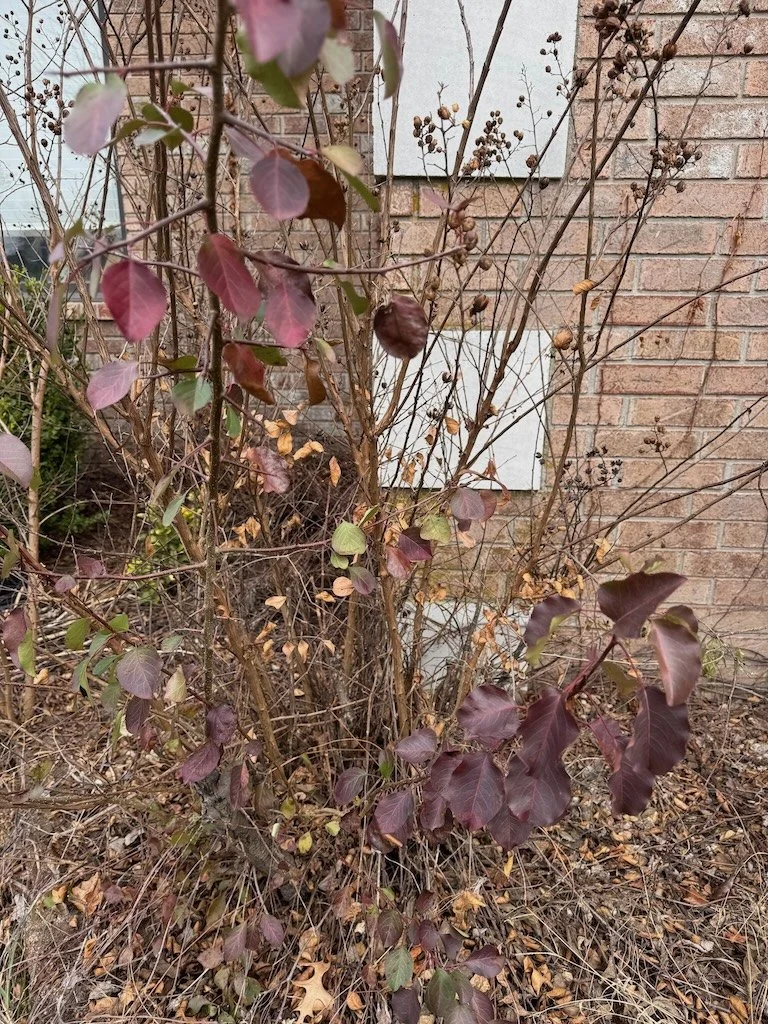
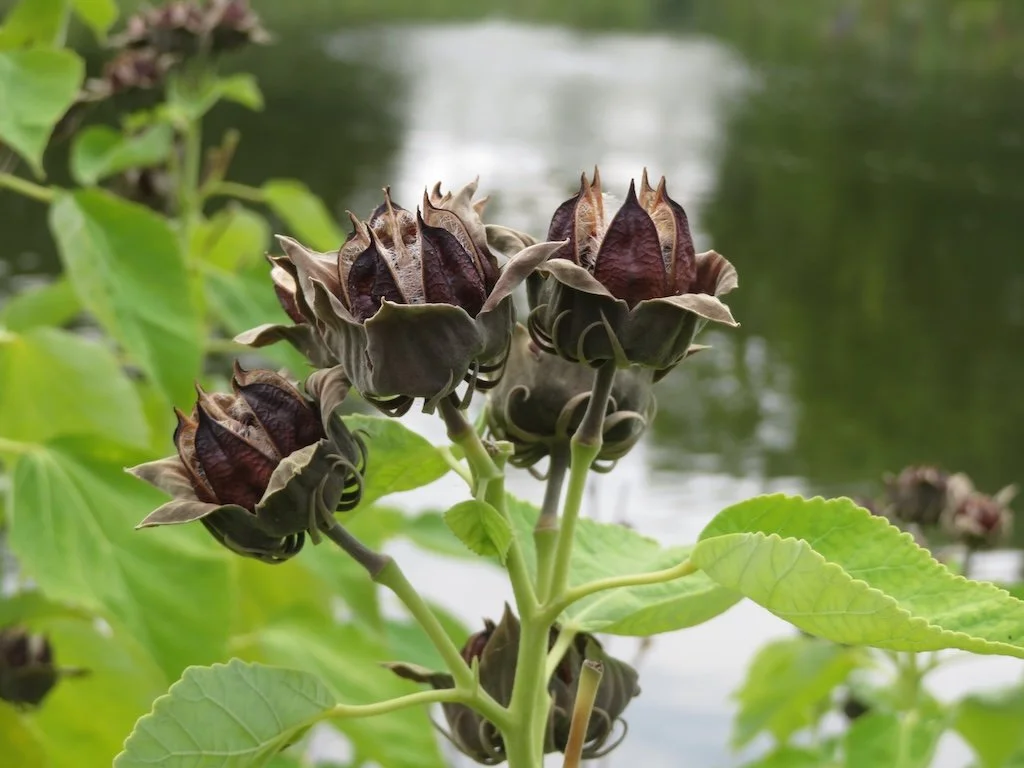
The crape myrtles have interesting seed pods. I am going to cut them all back when there is a day above 50….they will look better next year if I do. One of them is tall enough to brush against the eve of the house so that one is the priority to get cut. The other one to tackle is the one that has a Callery Pear (wild form of the Bradford Pear) growing with it. The red leaves are the pear so I can (hopefully) cut it very close to the ground.

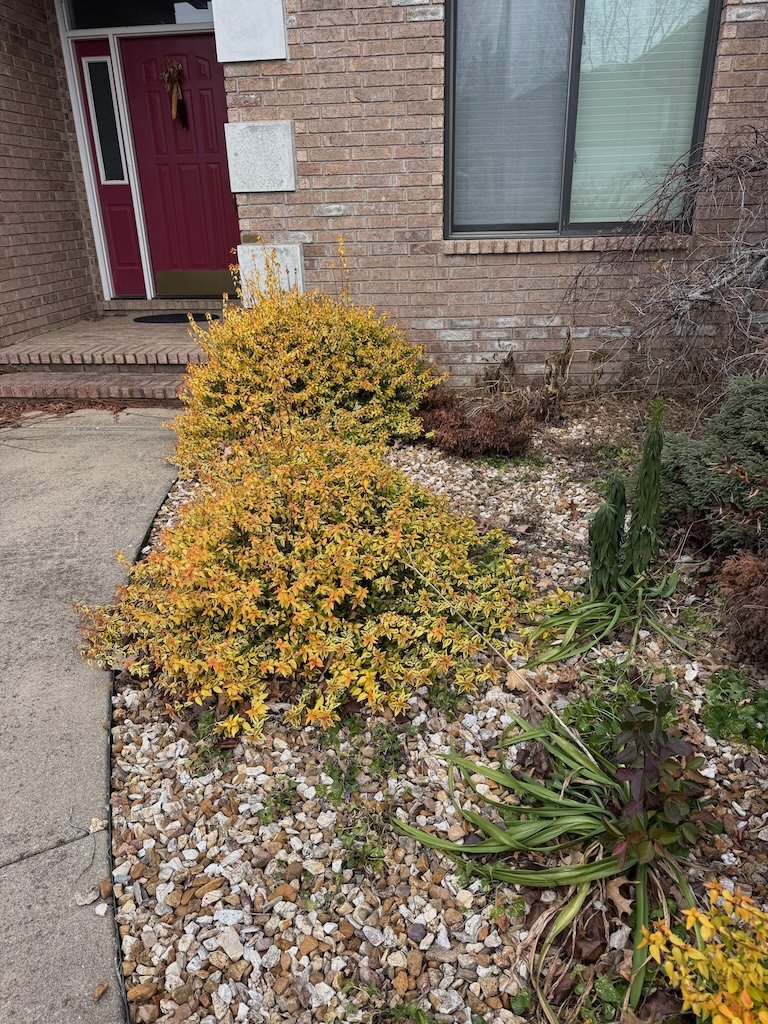
The bed near our front door has some color – bushes that are bright yellow (that need to be trimmed) and some plants that haven’t succumbed to cold temperatures yet because they are protected. The Japanese Maple in the corner has lost its leaves and may be dying; that corner has not worked well for that small tree.

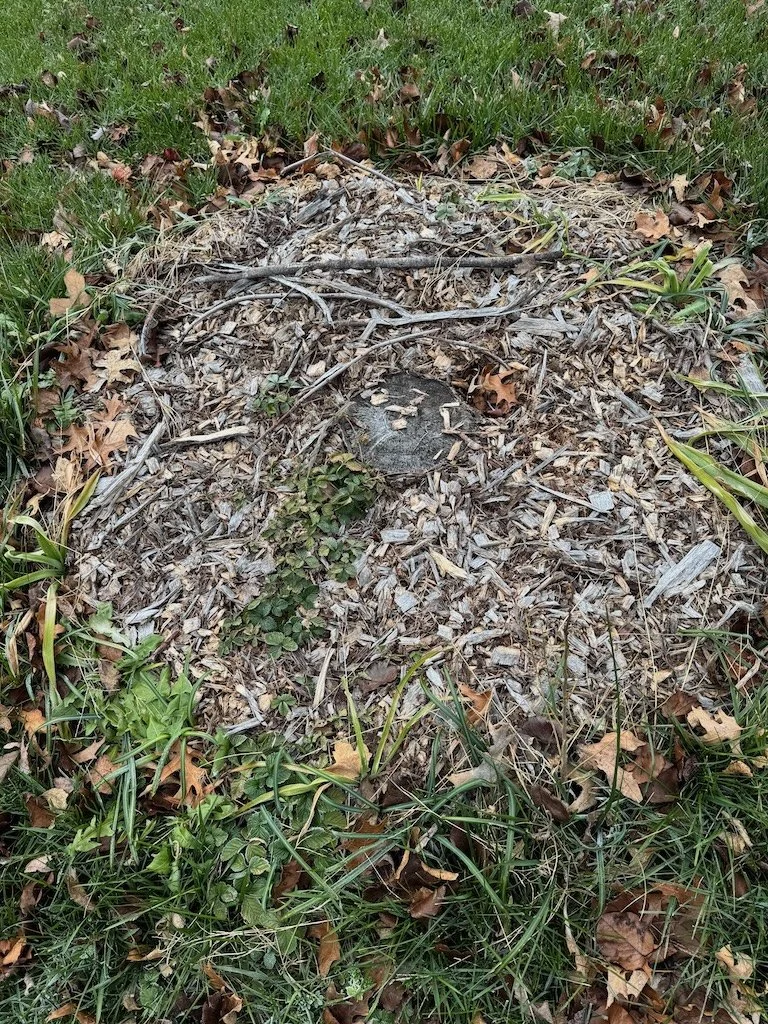
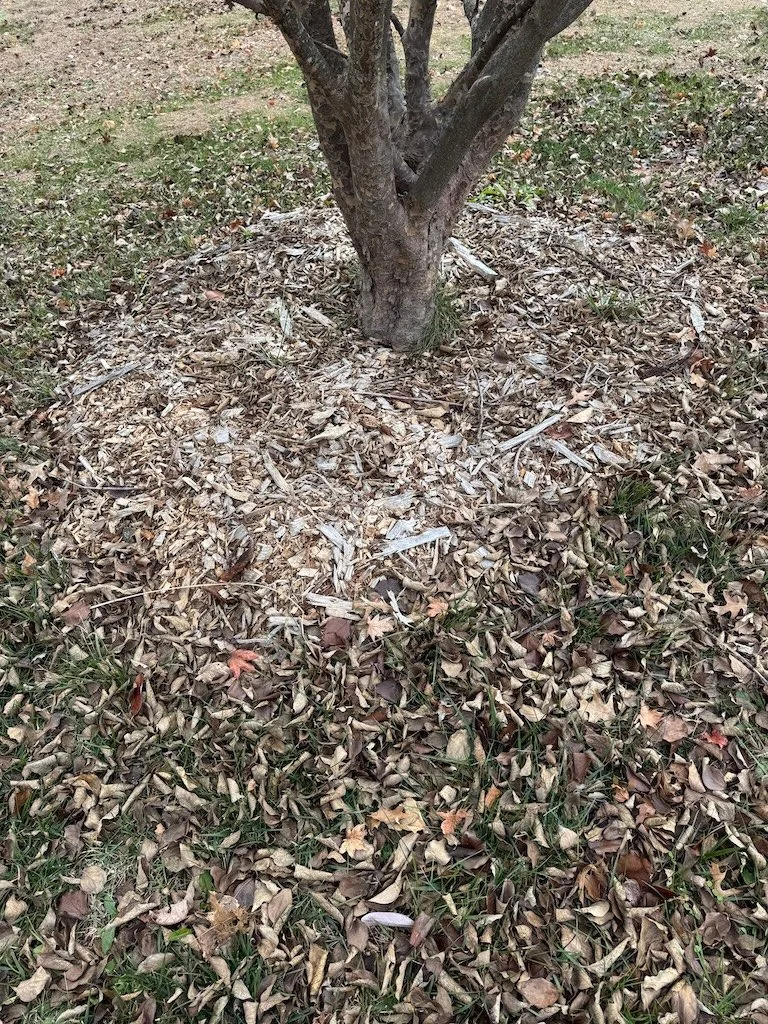
The places where I put the bark mulch from our last tree trimming are holding up well. I will pull weeds from them and plant new plants into some of them next spring. The one under the Kousa dogwood mulch needs some native ground cover planted there…and maybe some of the lower branches cut.

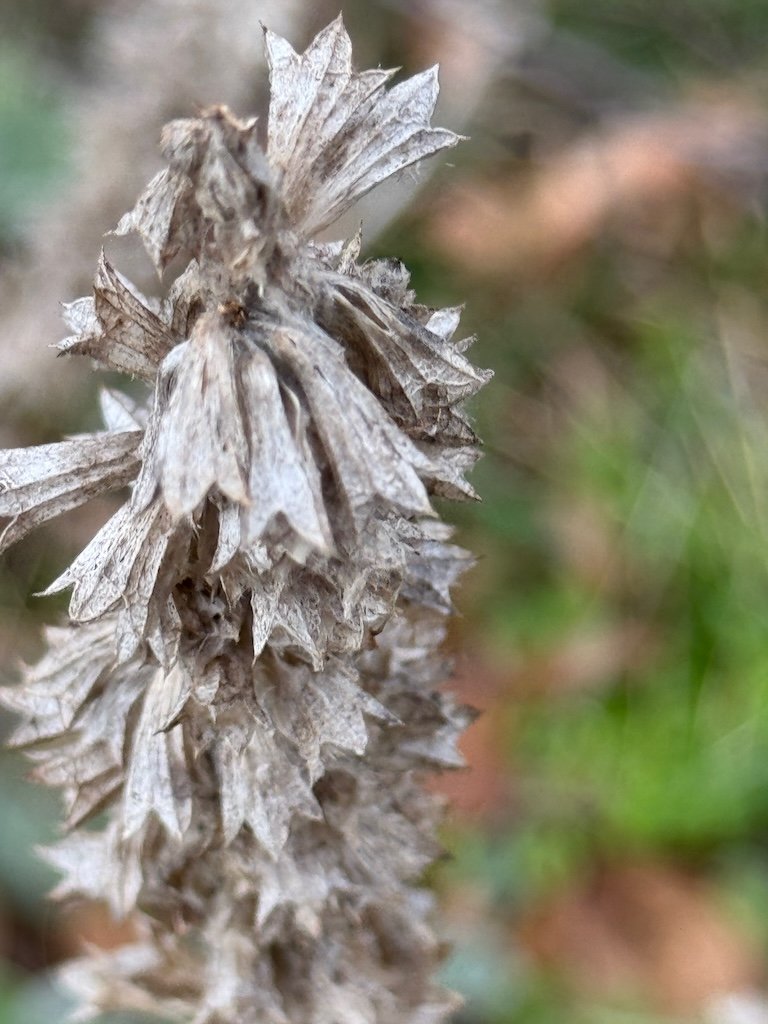
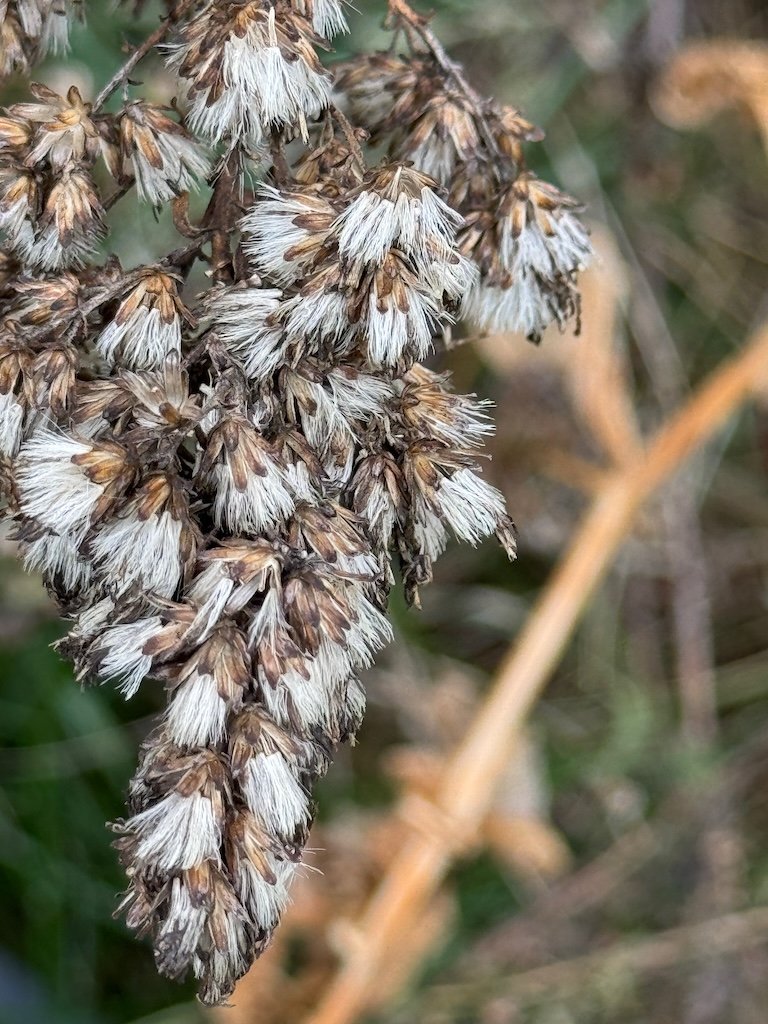
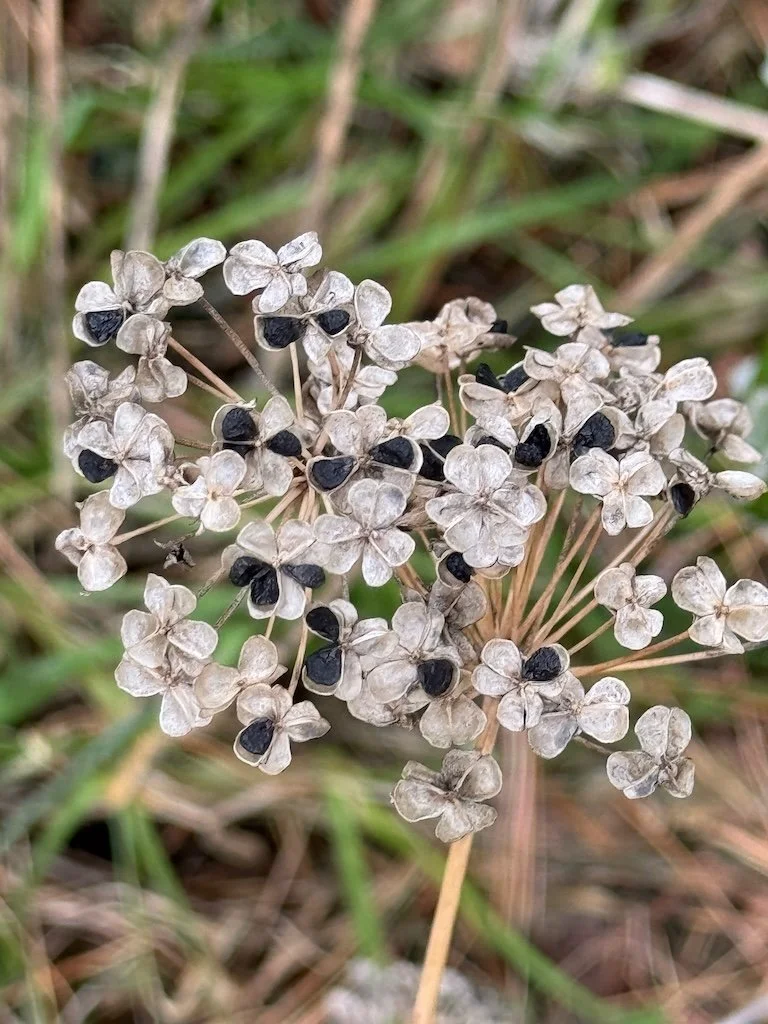
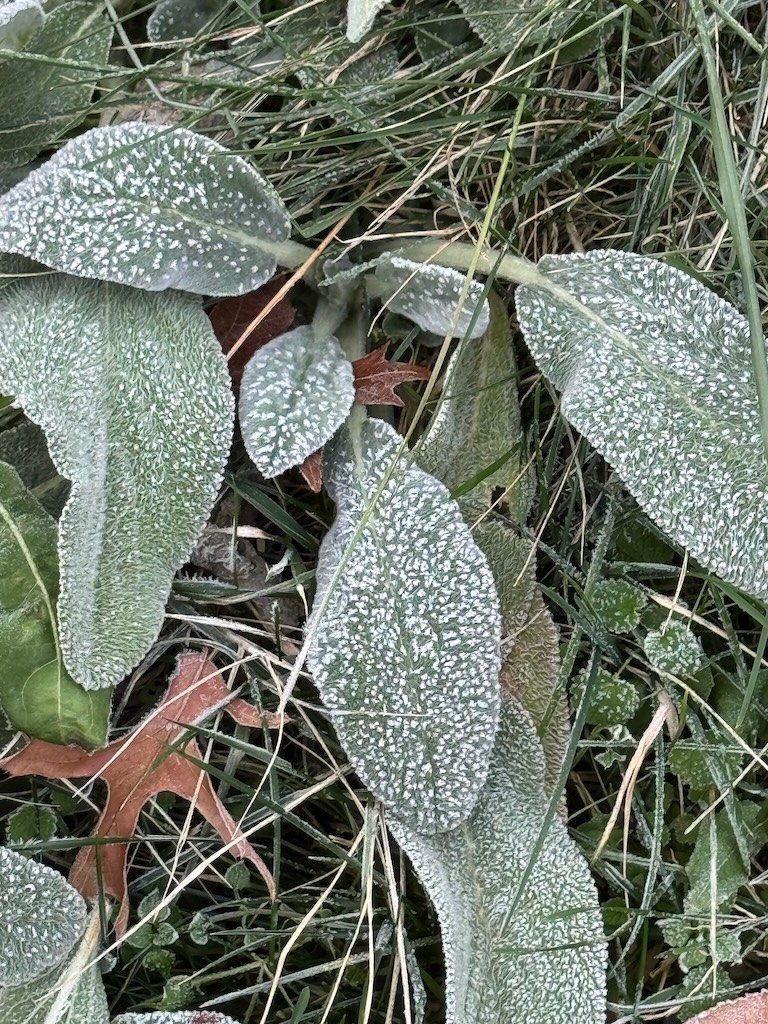
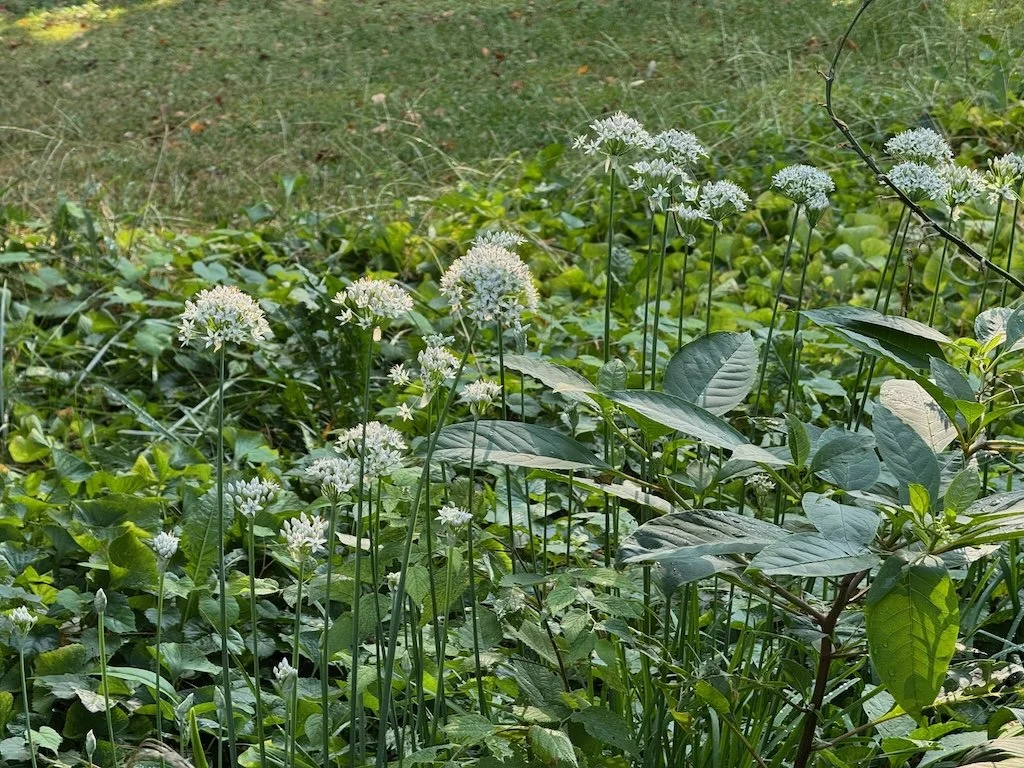
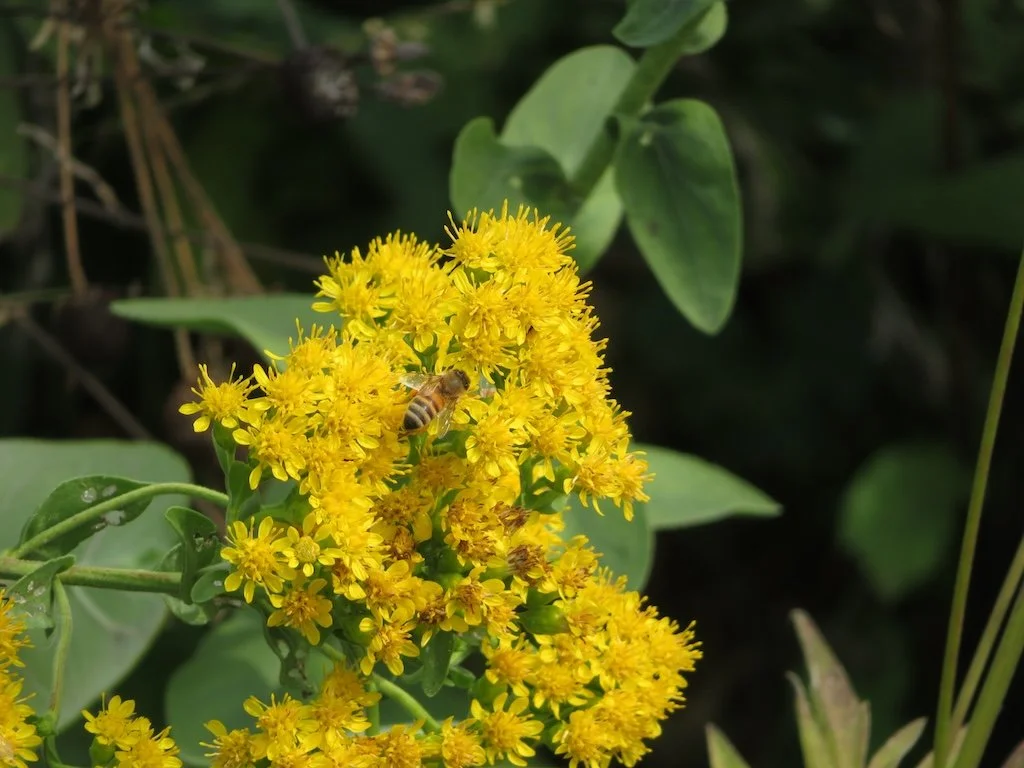
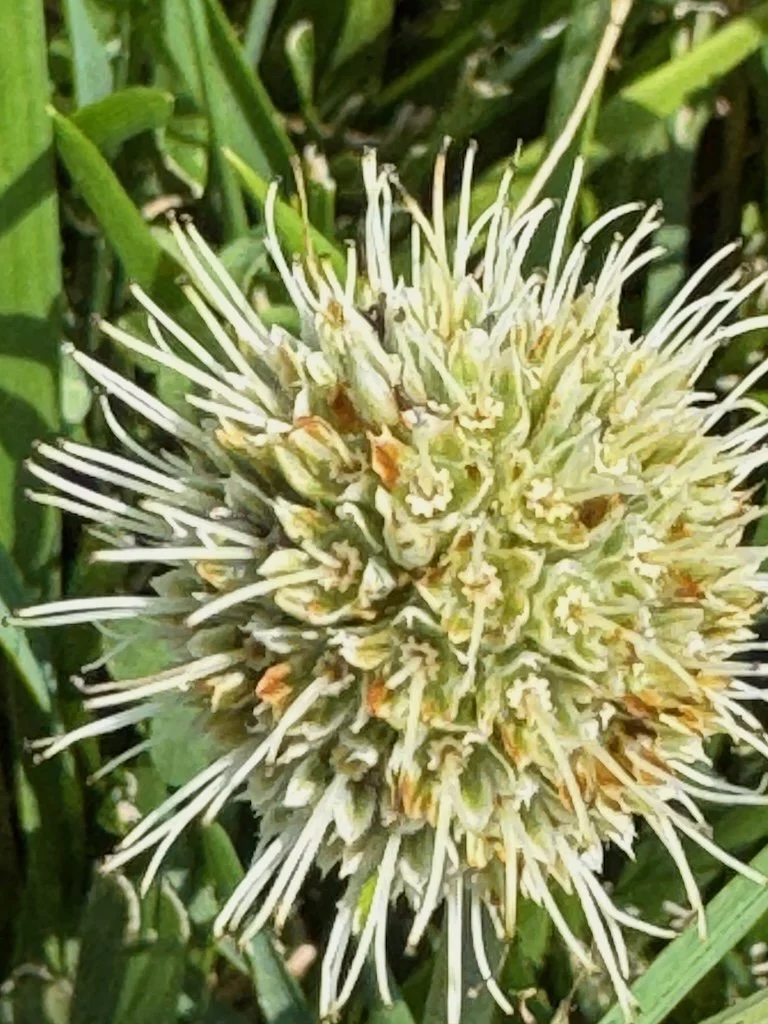
There are seed heads on the lambs ear and goldenrod and chives…hopefully I will have more of those plants next year.

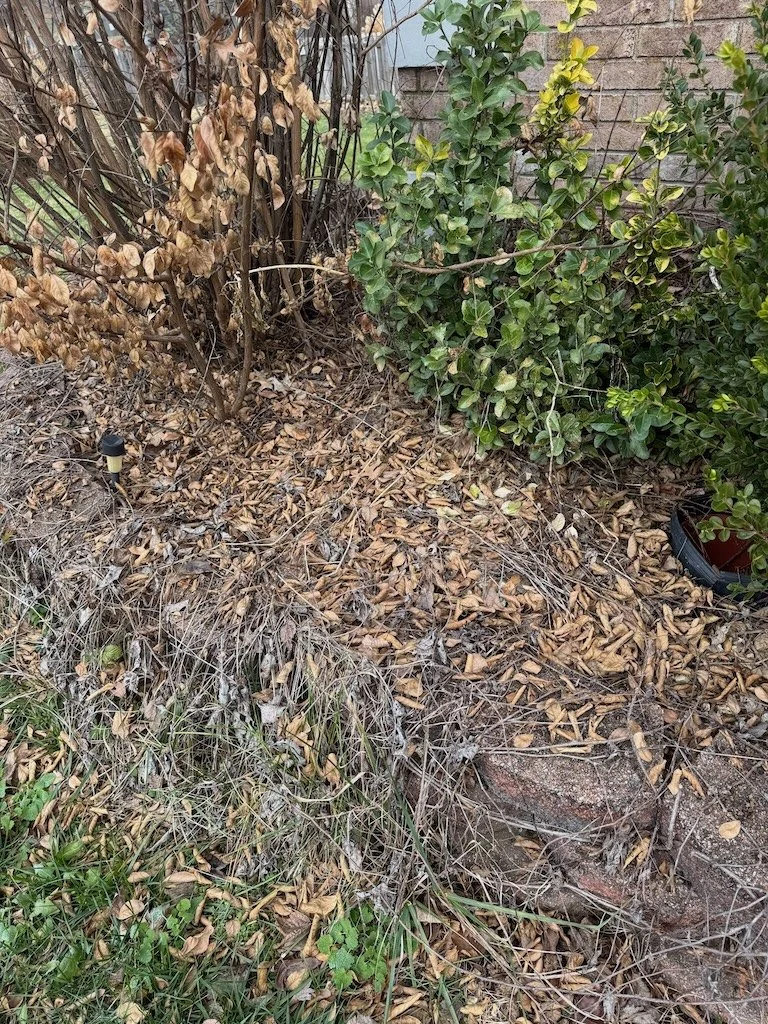
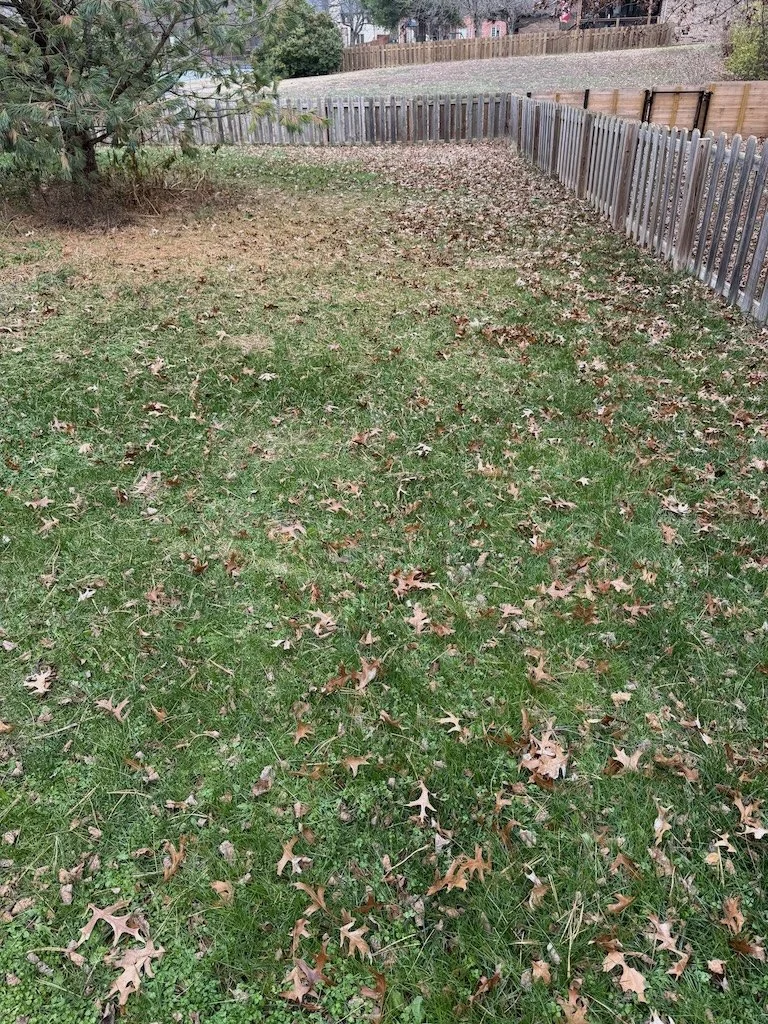
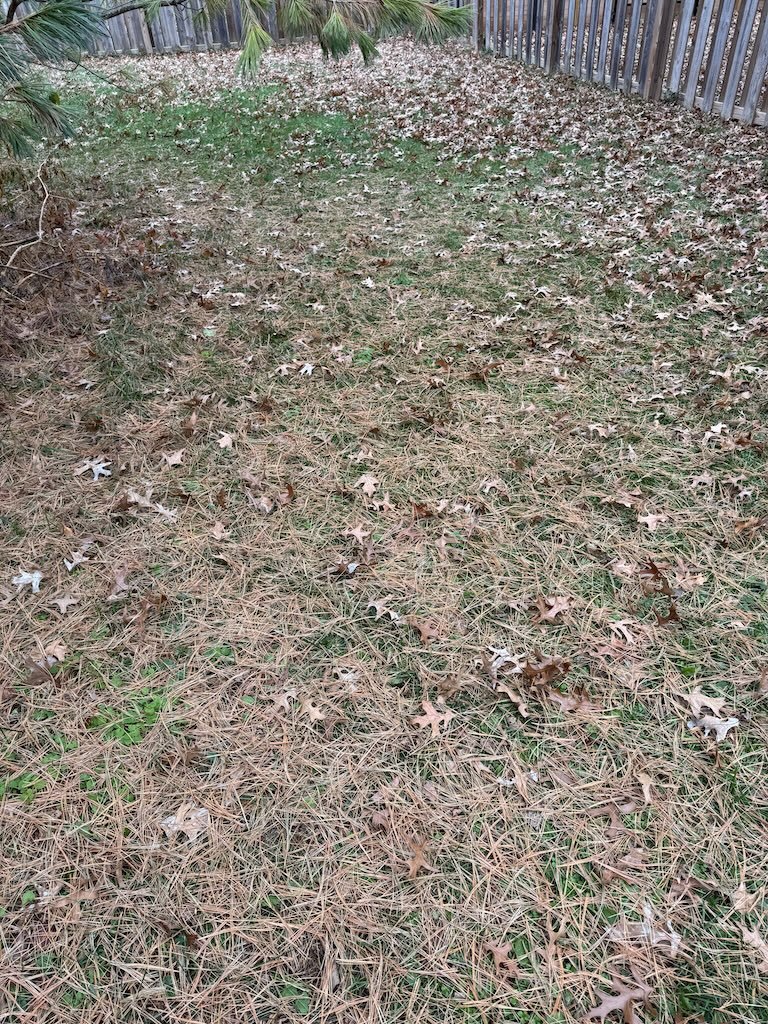
Our backyard is fenced and I am planting to not mow until early summer - leave the leaves. A lot of the leaves are from our neighbor’s oak and probably contain overwintering insects. The birds will appreciate the bounty – food for their chicks next spring. I am noticing that the circle where the pine needles are falling is enlarged than last year. I will be mowing less of the side yard next year! My long-term plan for the side yard a mowed path….not much grass at all…native plants filling in on both sides of the path (and maybe the path itself which might change from year to year.  

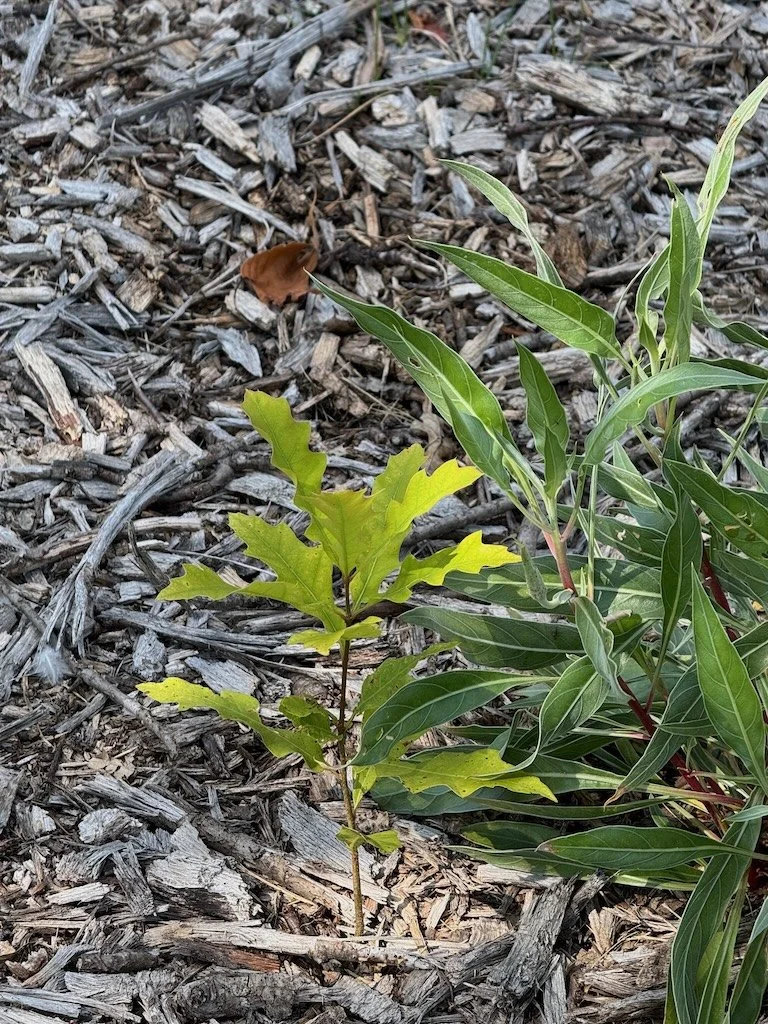
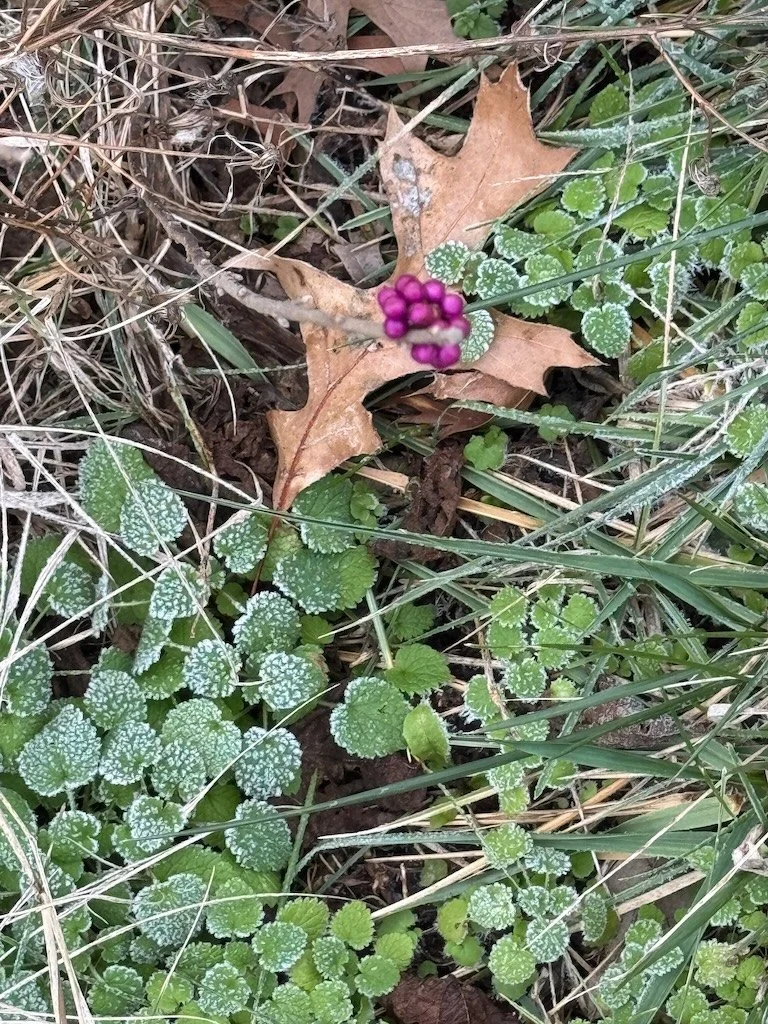
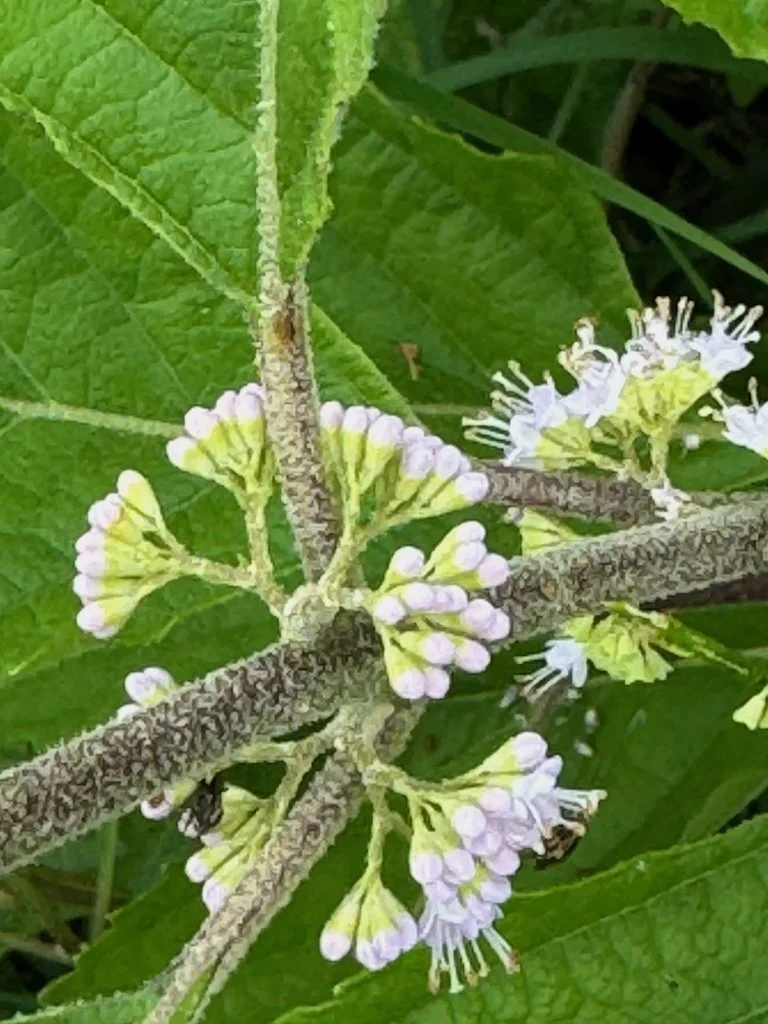
The bed where we removed a pine tree that fell over is more exposed that most of our beds. The plants there had frost. The small cluster of American beautyberry (Callicarpa americana) fruit is a pop of color. Hopefully next year the beautyberry will begin to grow more rapidly and become the dominate plant in the bed at some point. I will probably allow a native tree that comes up (bird or squirrel planted)…whichever one shows up first: oak, redbud, or hackberry.

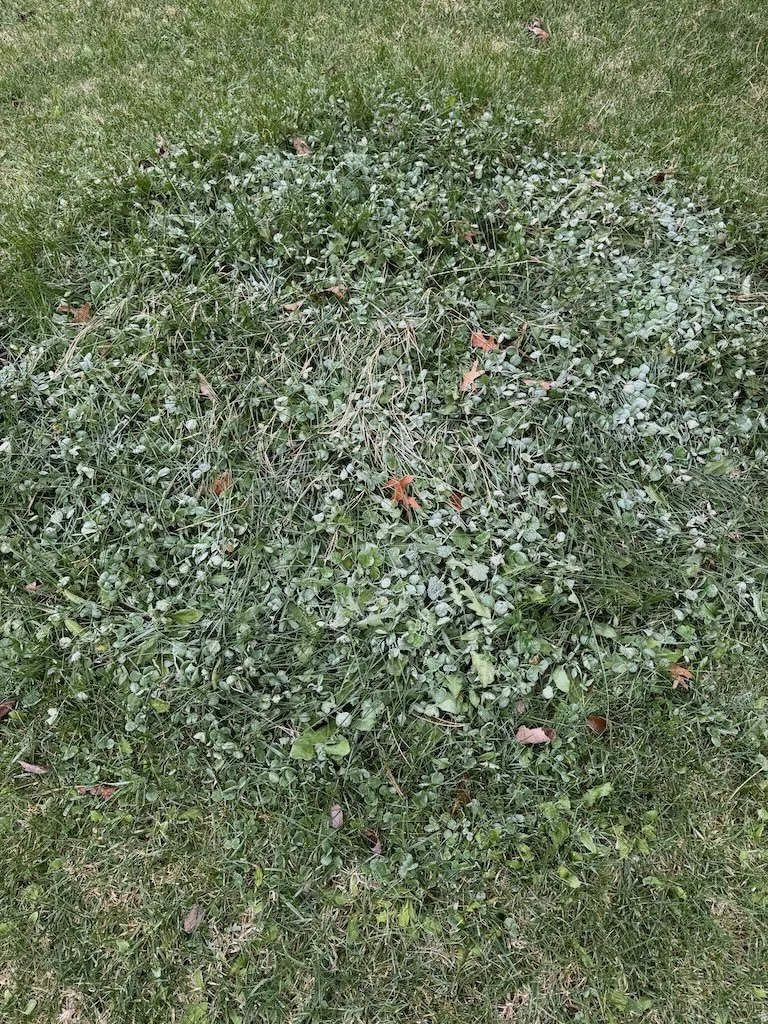
On the west side of the house there is a clover pillow that seems greener than the area around it. Maybe the grass growing there is greener with the extra nitrogen the clover provides in the soil! The witch hazel is still small but I am hopeful I might see a few blooms next year. It is a Missouri native – Ozark Witch Hazel (Hamamelis vernalis) which blooms in January/February.

I am watching the forecast for warmer day to get some cleanup done….and to put down a thick layer of mulch for my new bed that will be planting into next spring. My daughter will be getting more mulch when she has her oak trimmed.

Project FeederWatch – Another Season

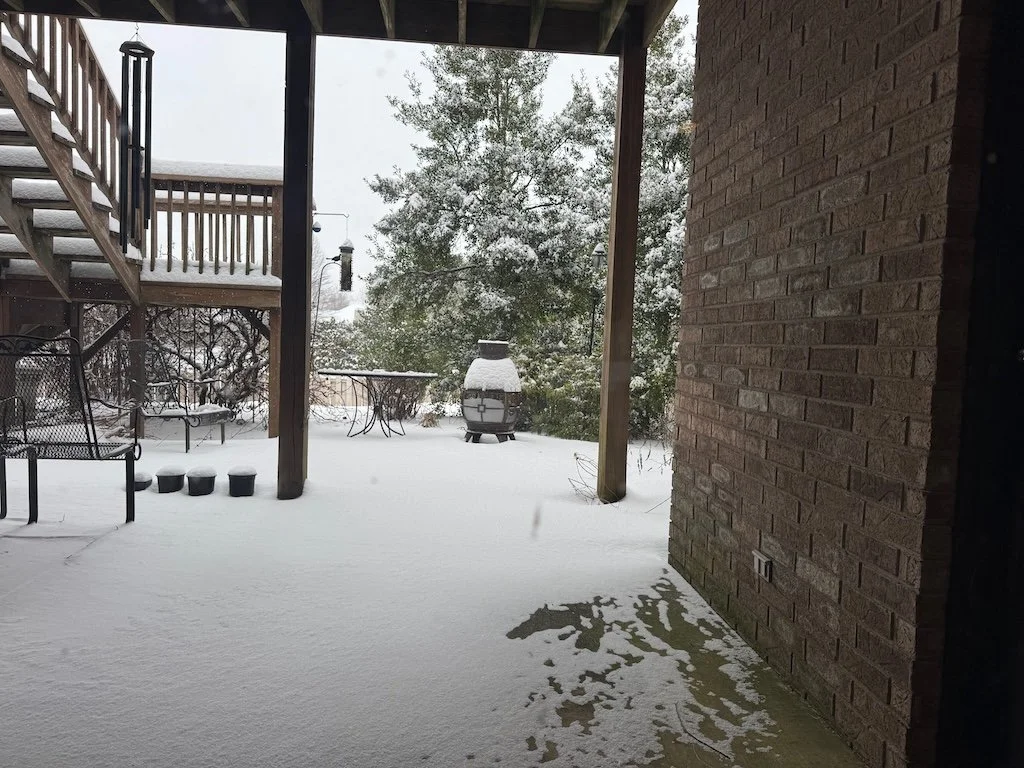
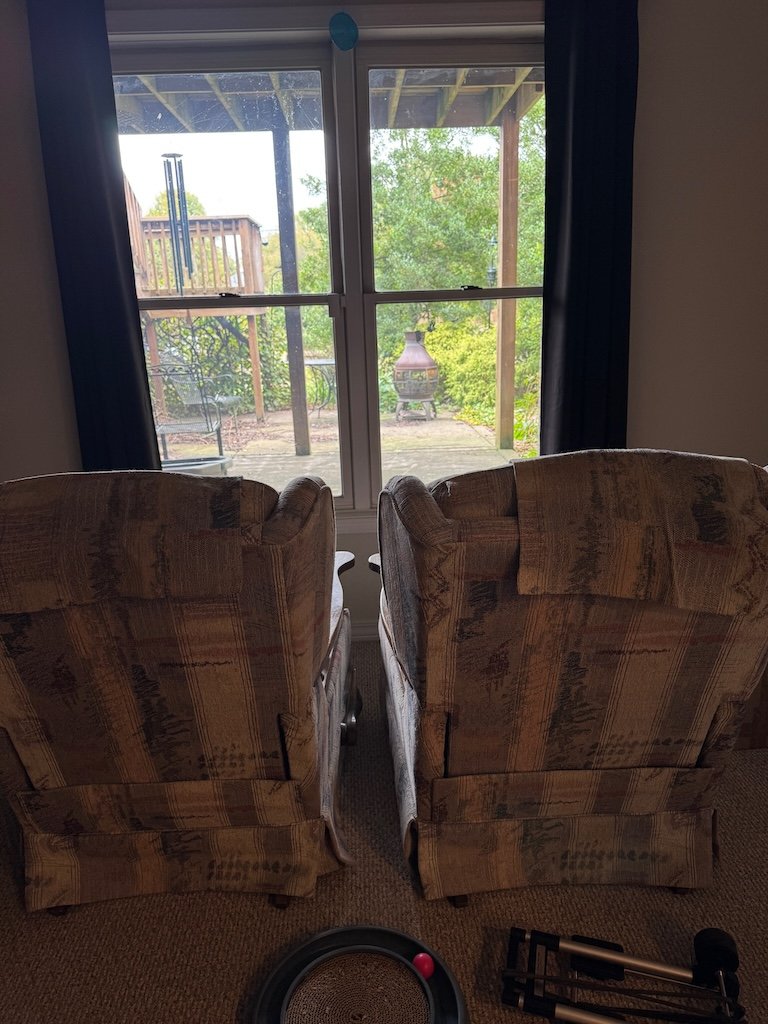
We started our second season recording observations of birds at our home feeders with Project FeederWatch. Our set up is the same as last year. We have two old rocker recliners in our basement that have a clear view of our feeders on the other side of the patio from our window that is under the deck.

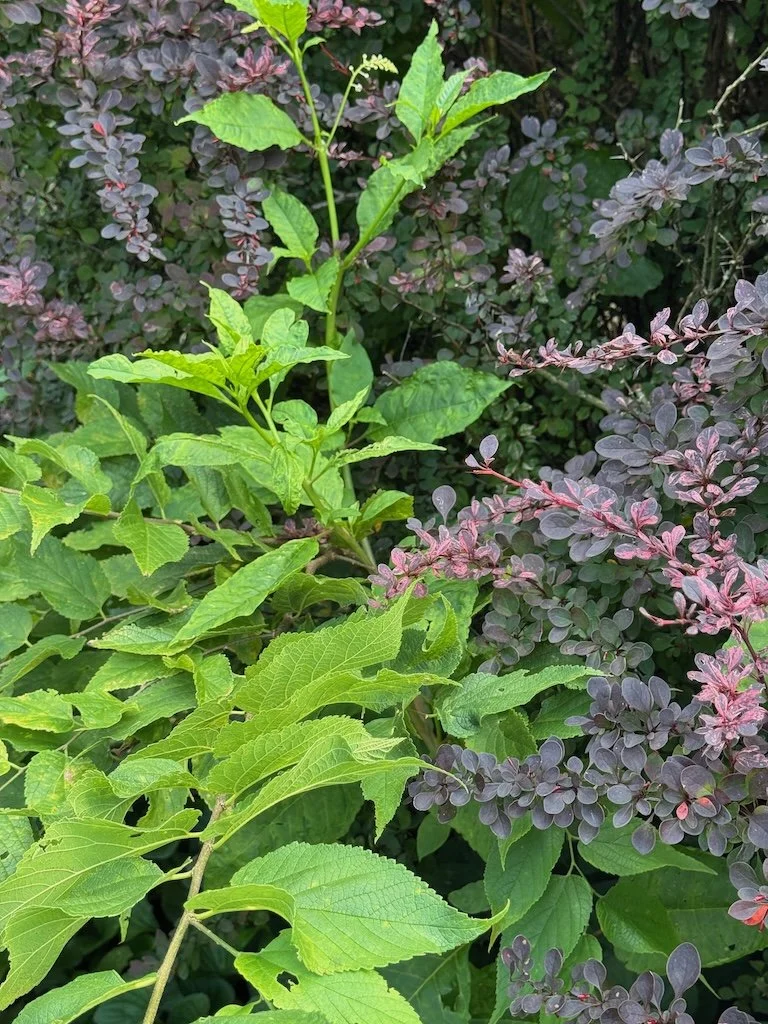
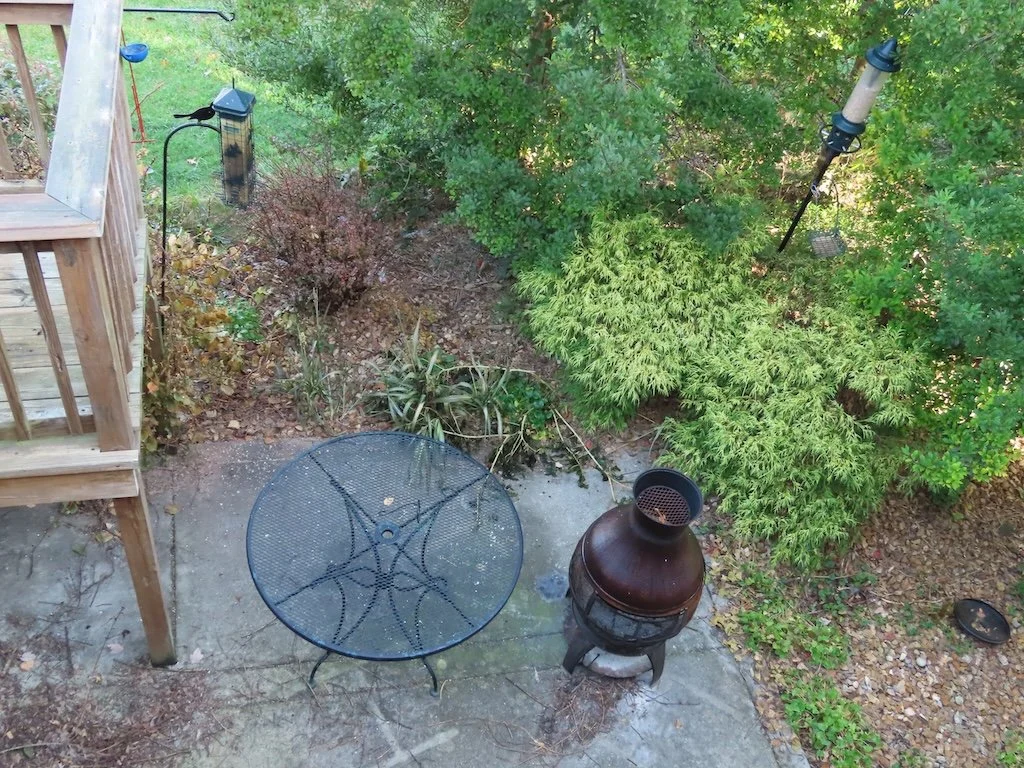
The Project FeederWatch season started on November 1 and there was still a lot of greenery. I cut back the Japanese Barberry (really want to take it out completely) but otherwise there is more vegetation than last year with the cedars, holly, and violets growing over the past year. The feeder nestled in the holly and cedars is a bit harder to reach. There is a brush pile in another part of the patio (in the lower left of the picture) that is my holding area for twigs I will burn in the chimenea eventually. The birds like that area too.

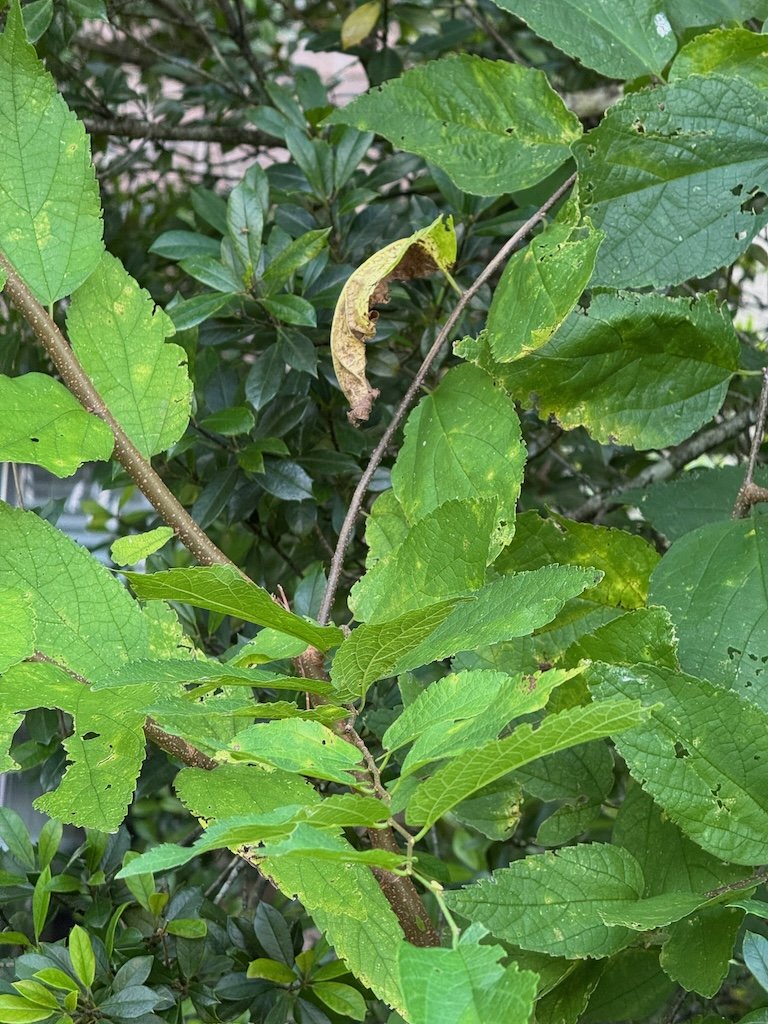
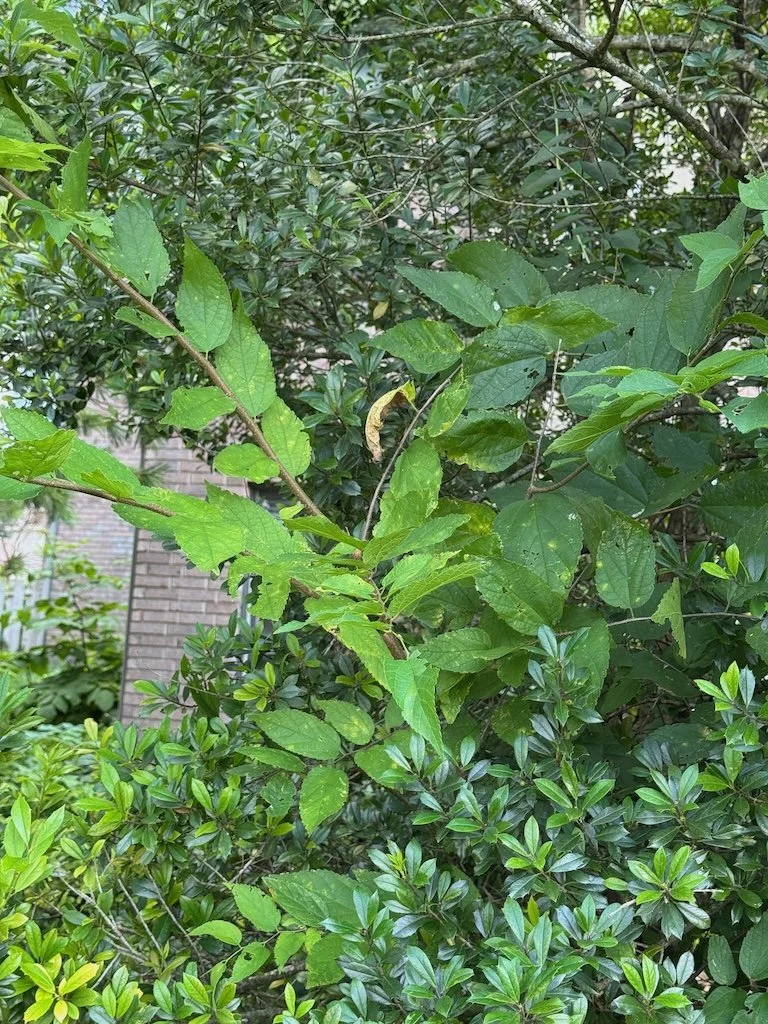
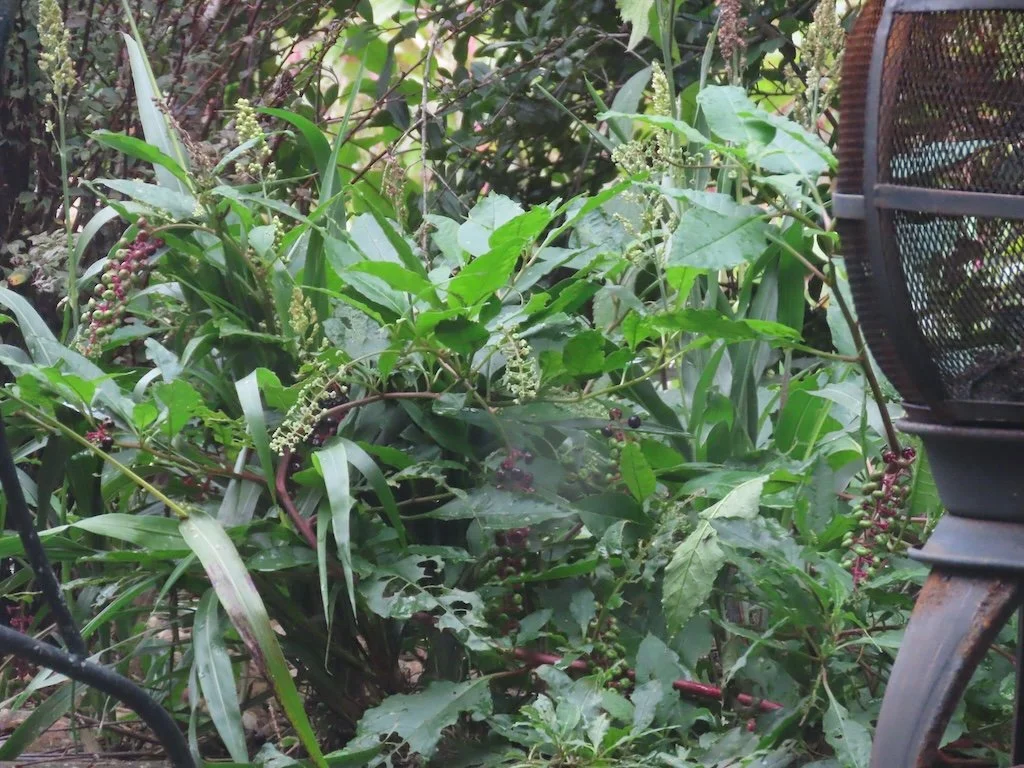
New this year is clump of vegetation at the edge of the patio between the two feeders: Pokeweed that seems to come up everywhere in our yard and grasses that had sprouted from birdseed from the feeders above. In general, the birds seem to like the extra vegetation and they eat the seeds from both plants occasionally.

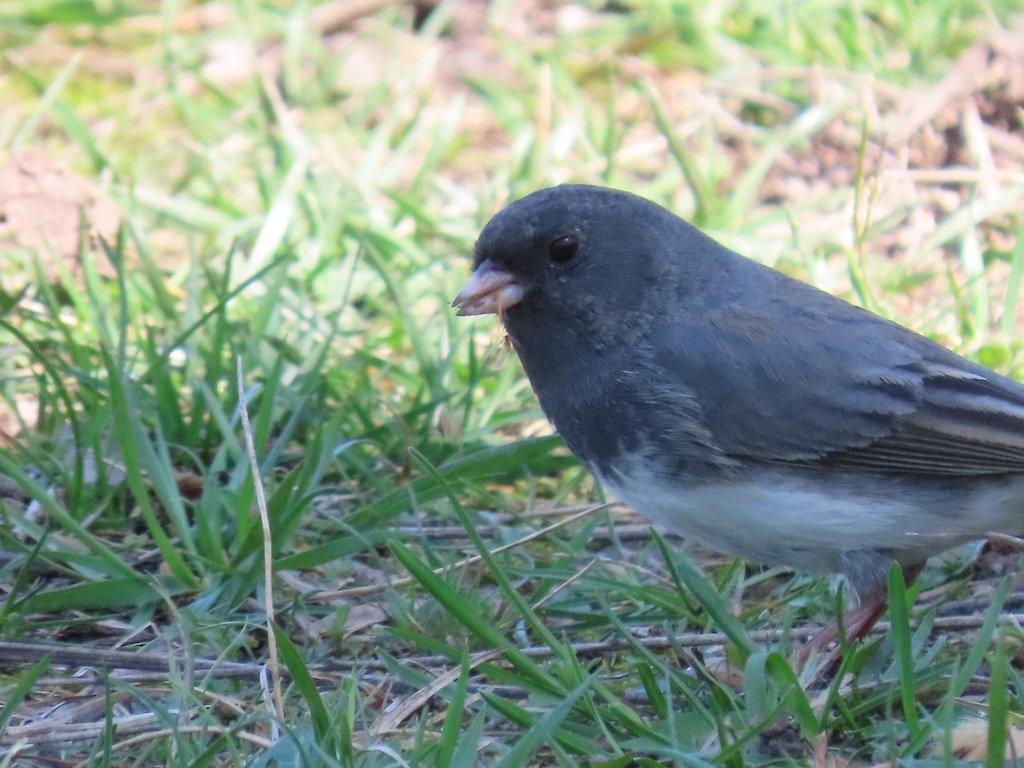
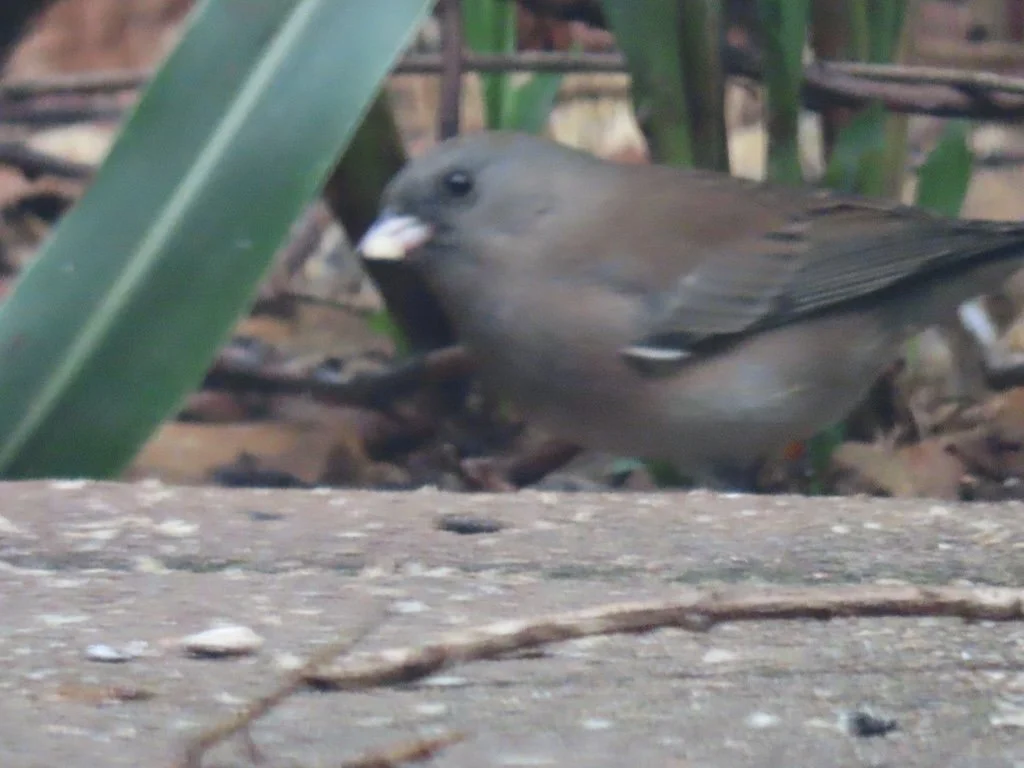
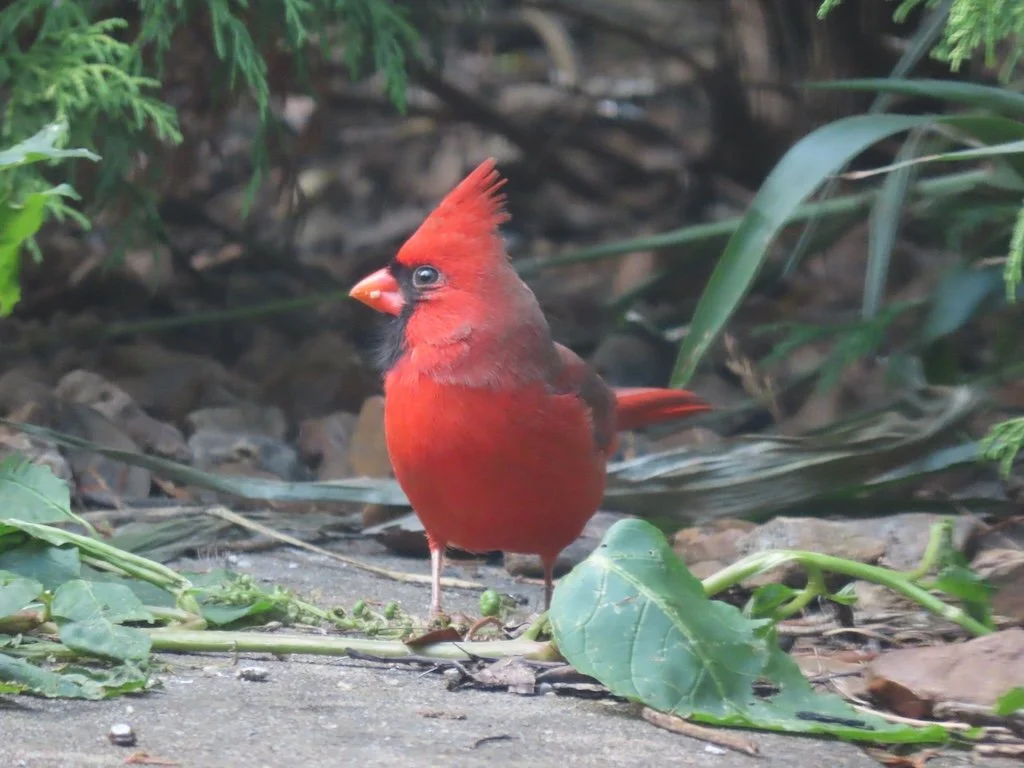
The window and the low light make photography more for id than art. Even at the being of the season we had dark-eyed junco (a winter bird for us), downy woodpeckers, and northern cardinals, tufted titmice, and at least 3 kinds of sparrows…to name few.

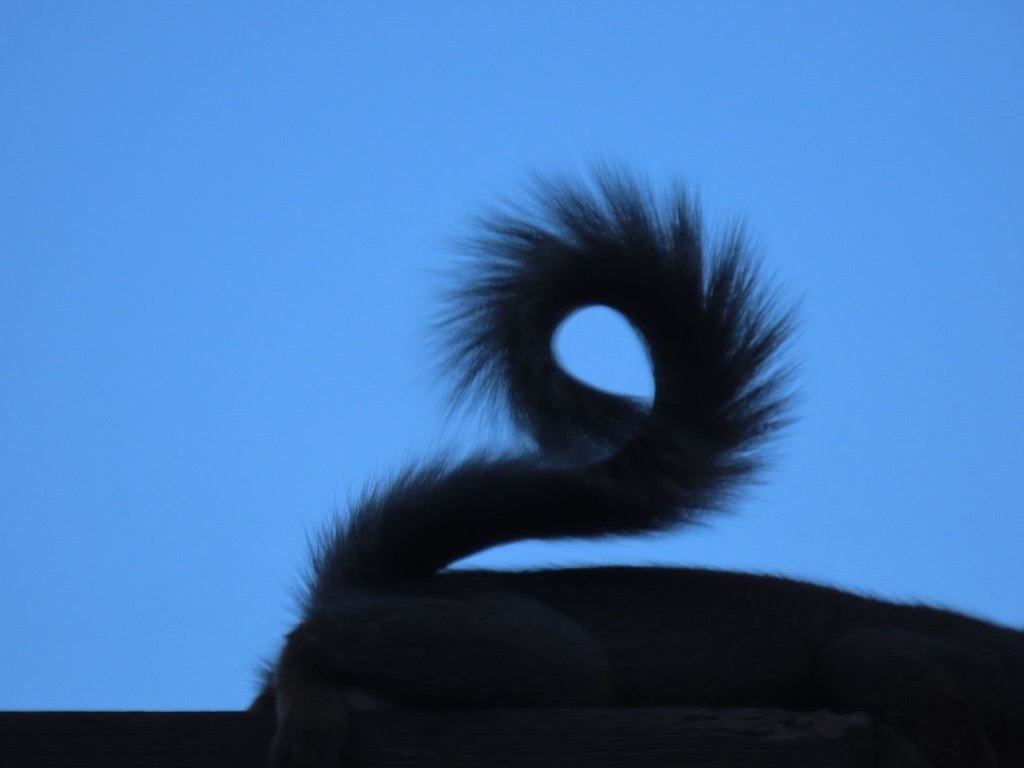
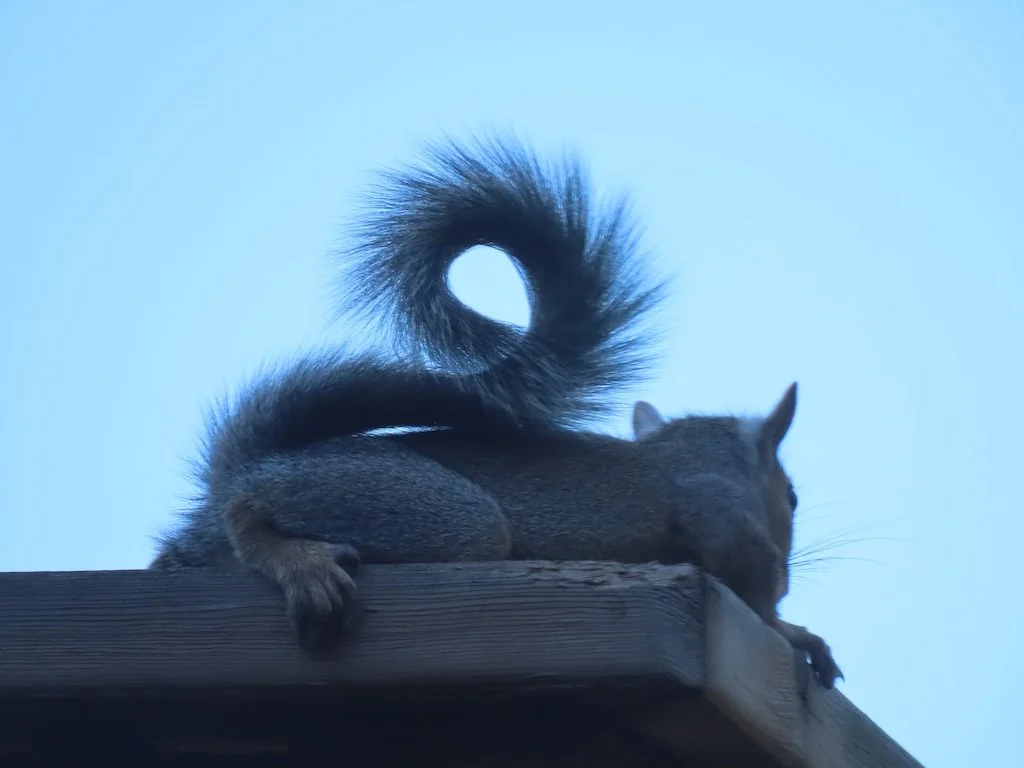
Of course we have squirrels that come through too. They sit on the deck railing and gaze longingly at the feeders – which have proved to be mostly squirrel-proof!

Zooming – November 2025

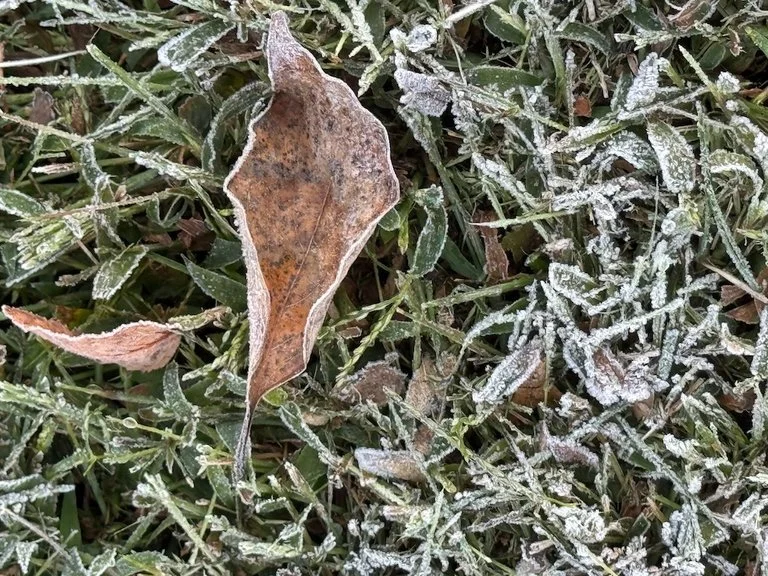
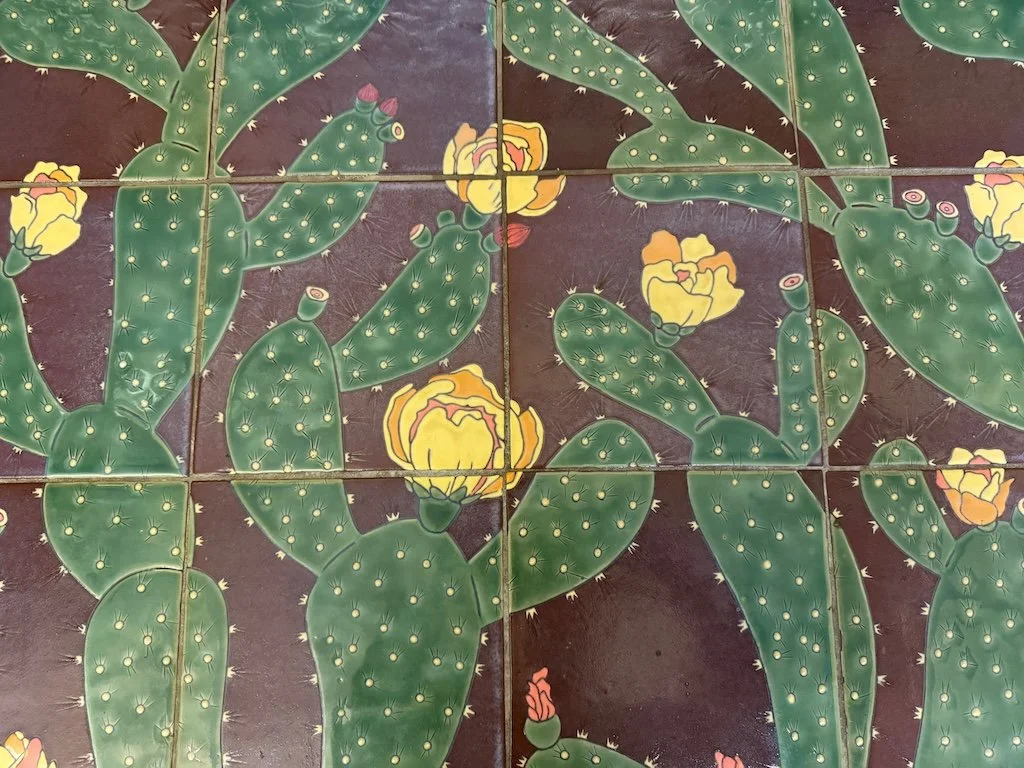
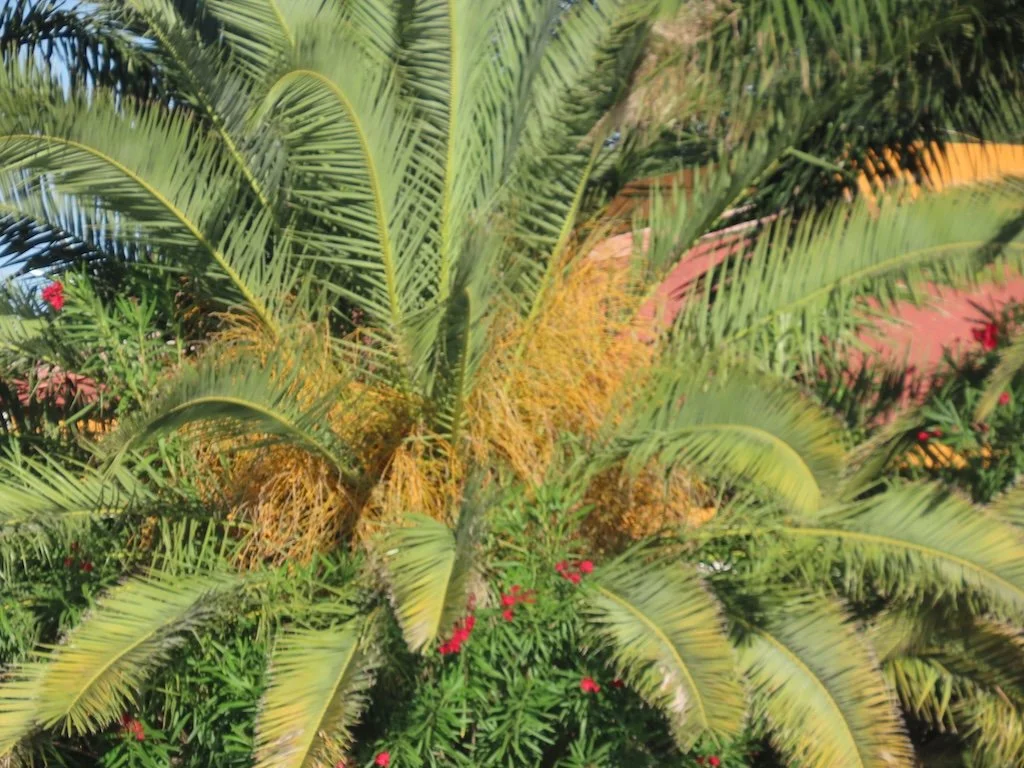
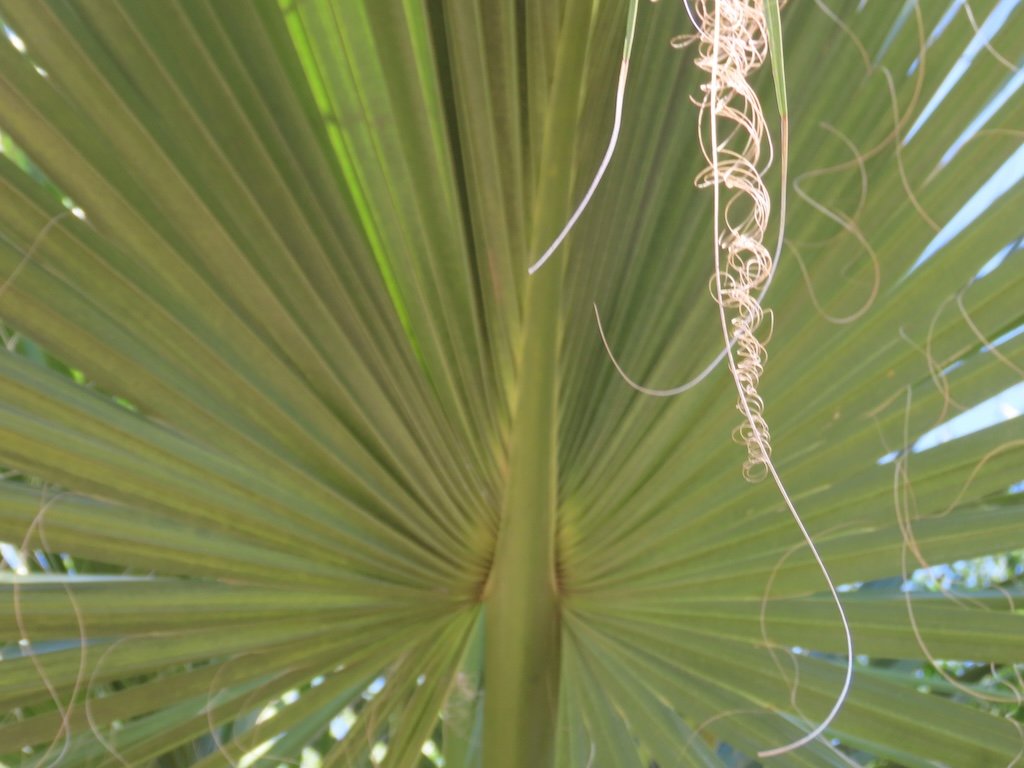
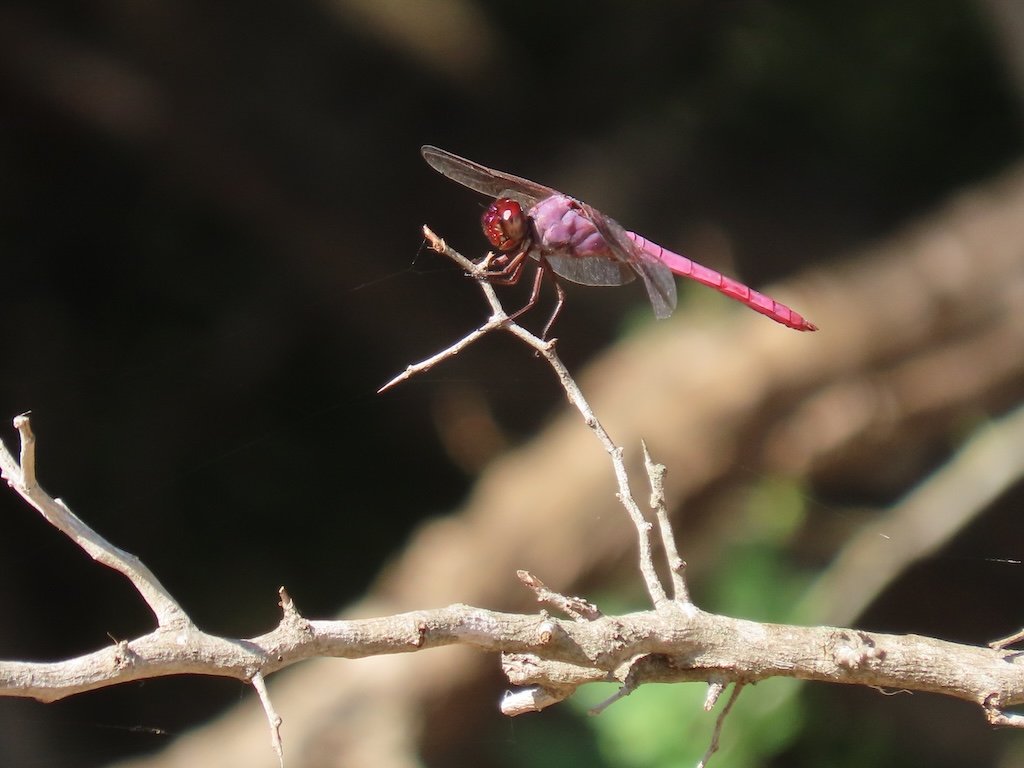
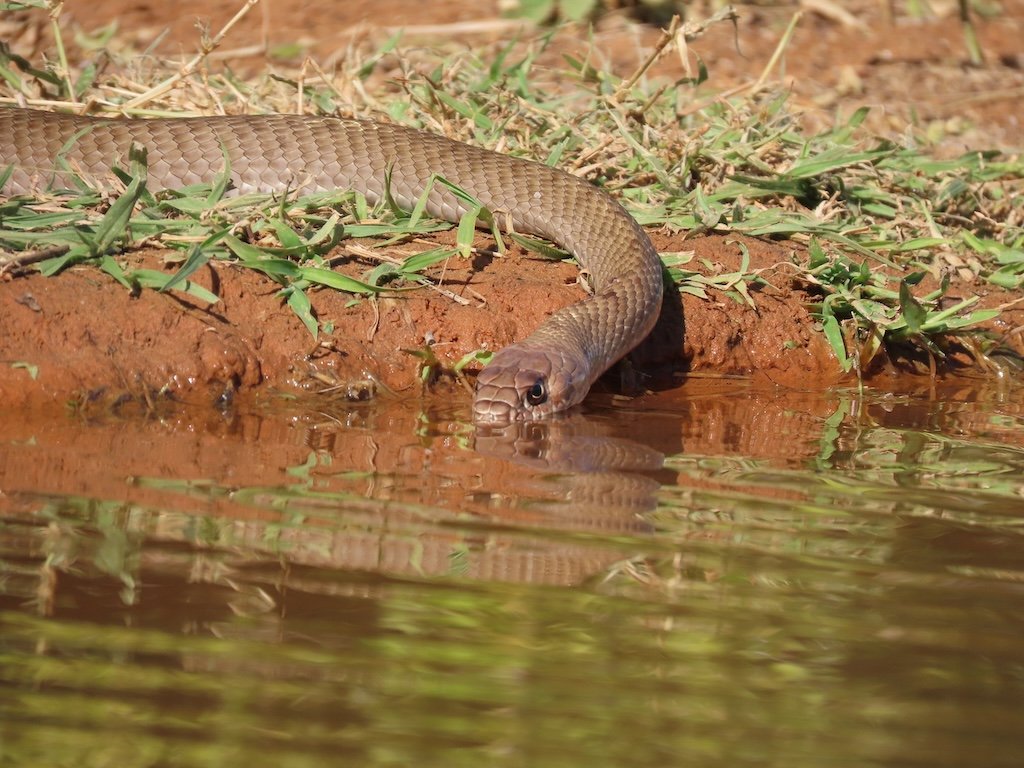
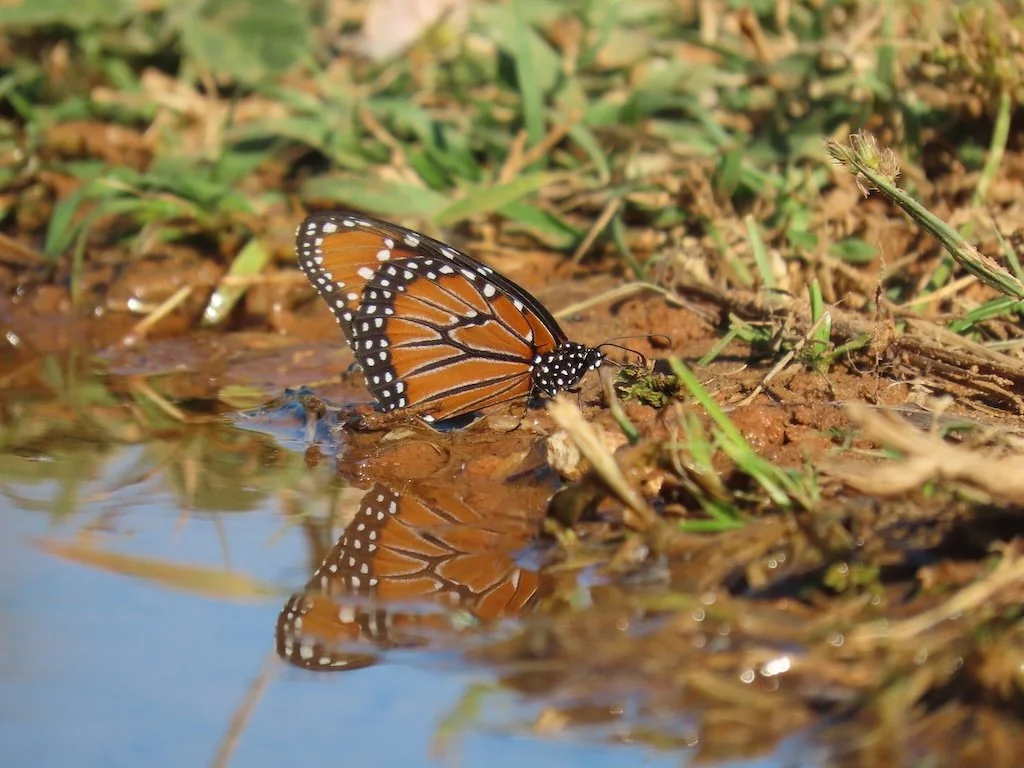
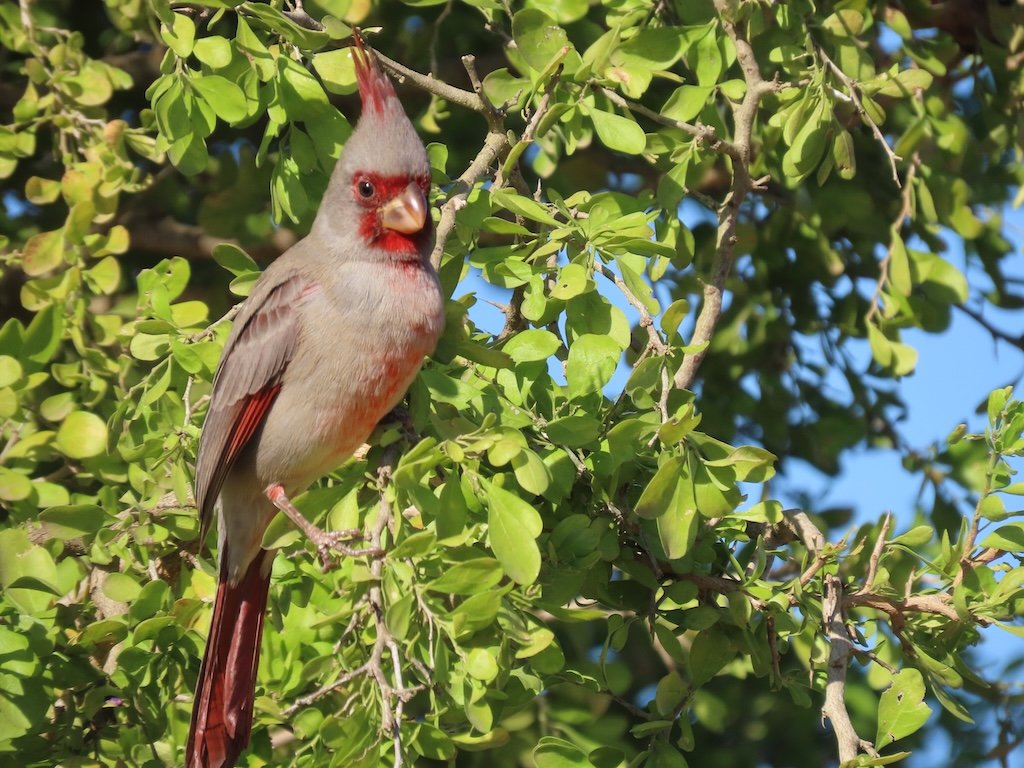
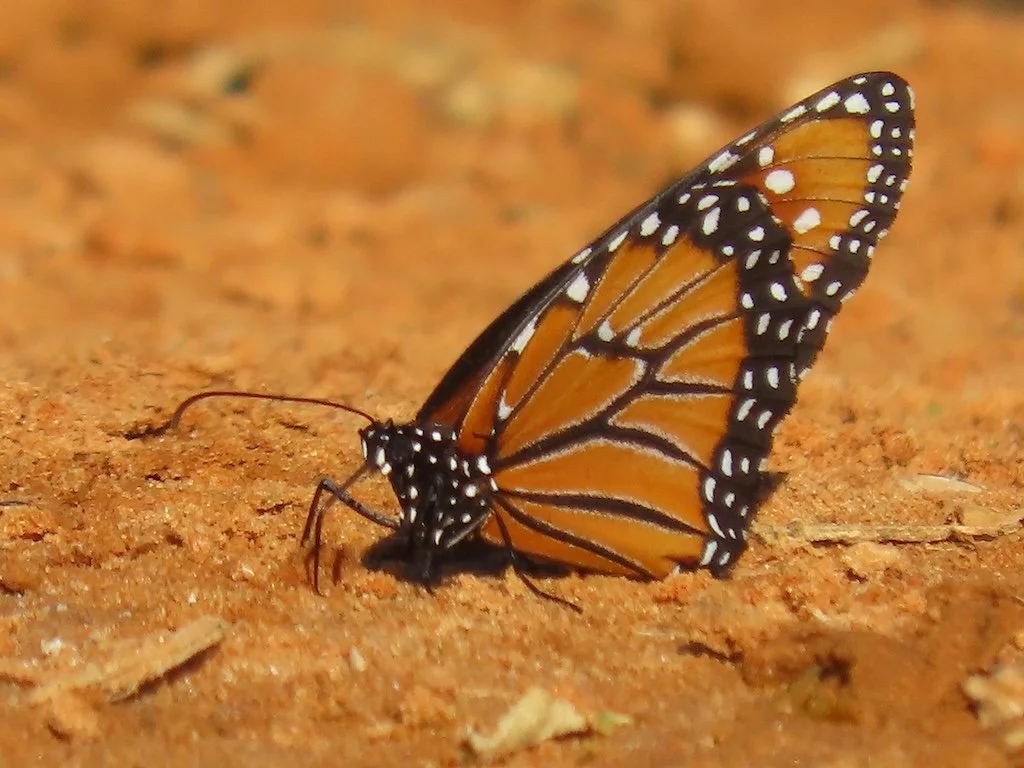
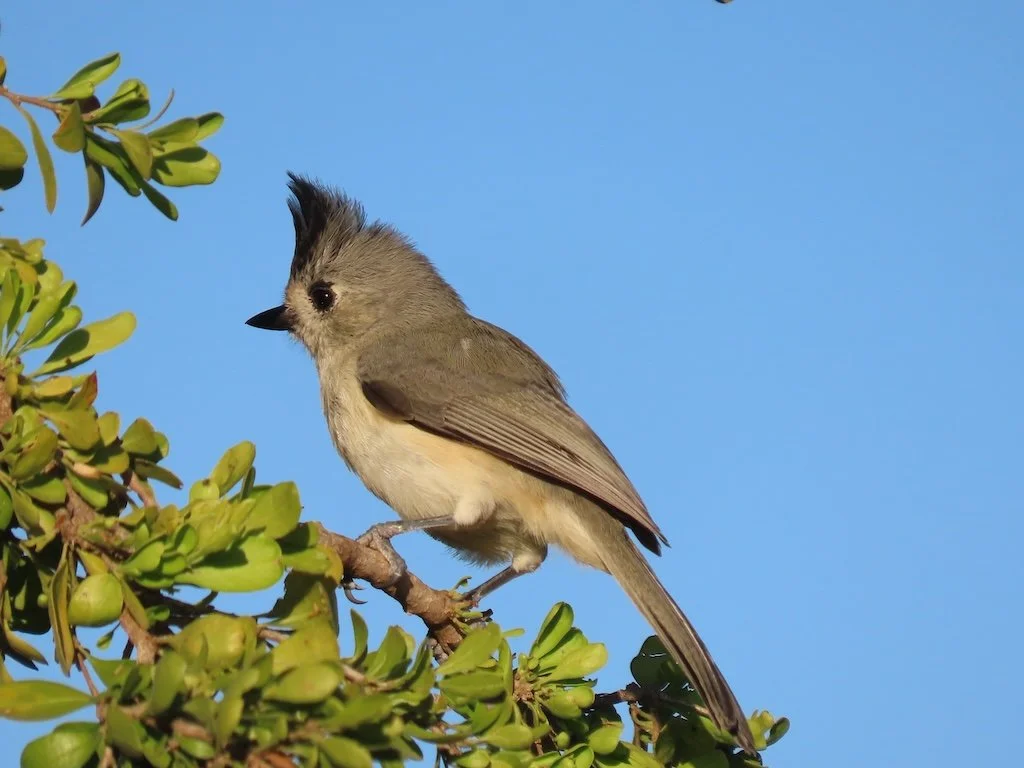
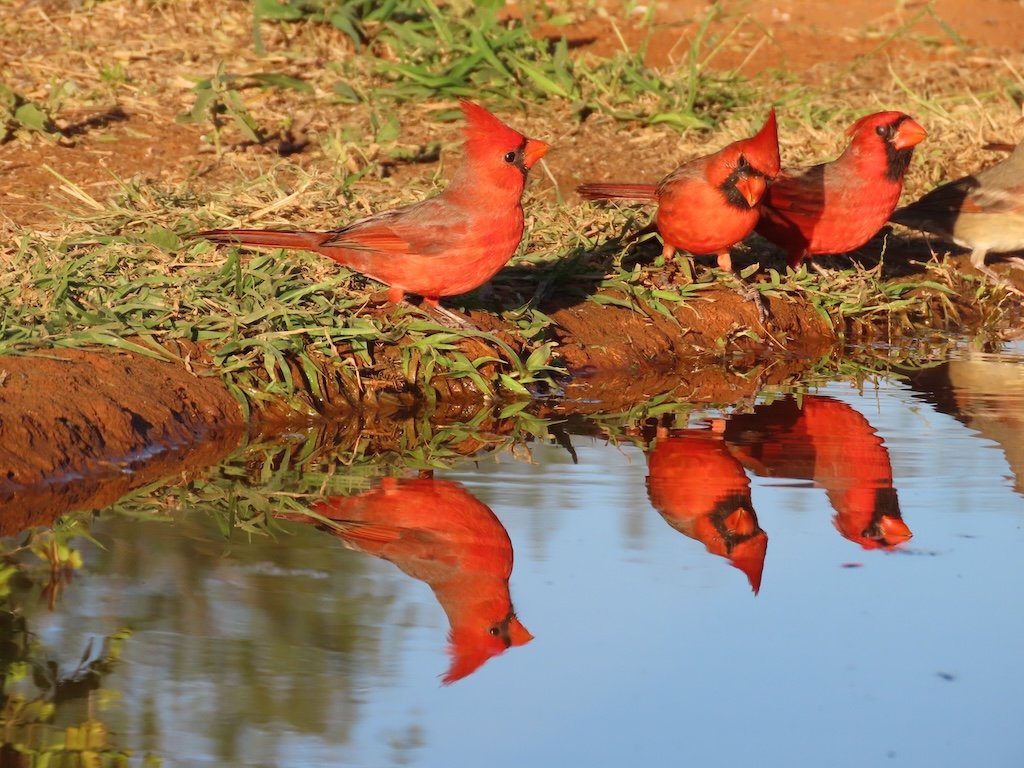
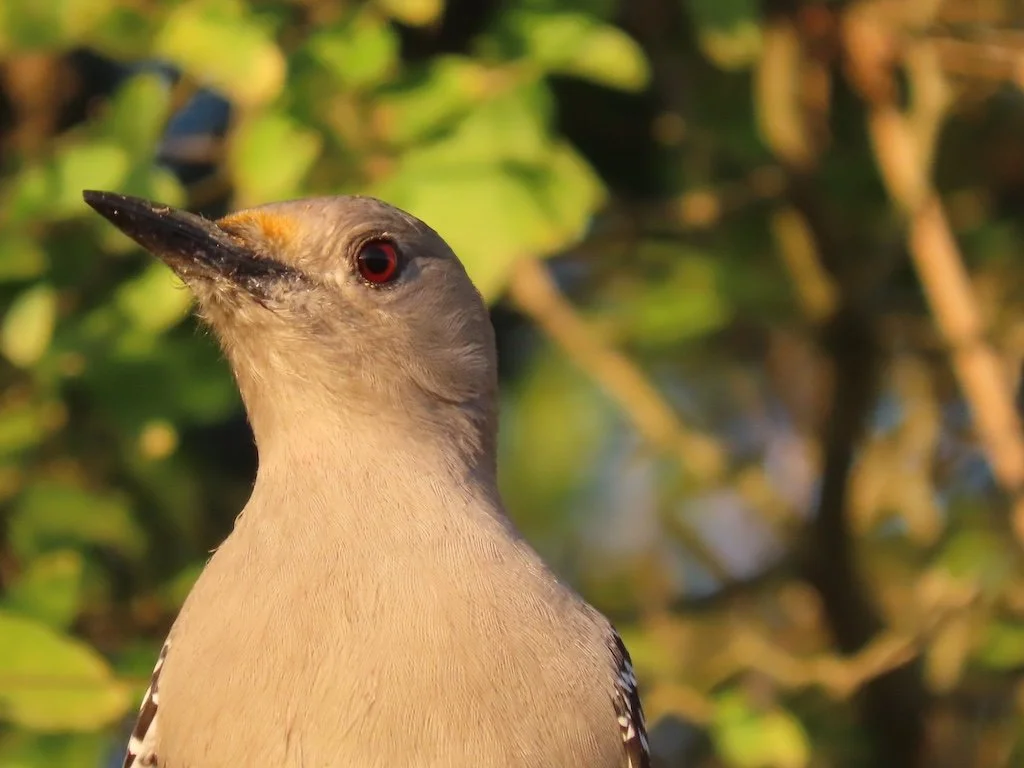
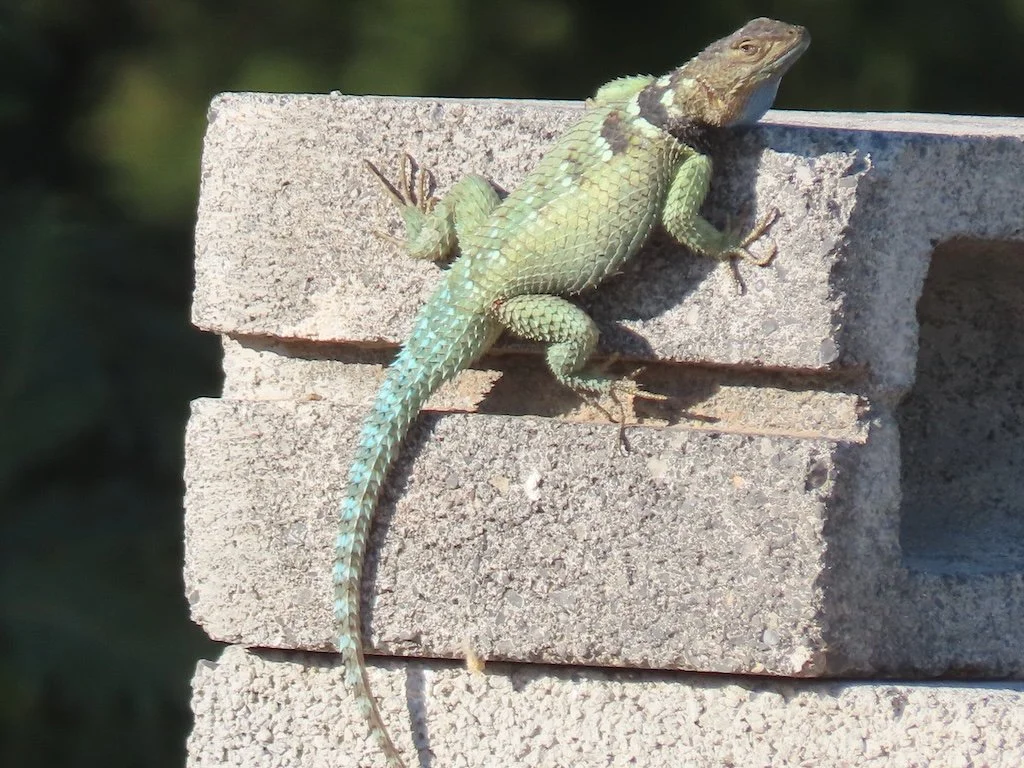
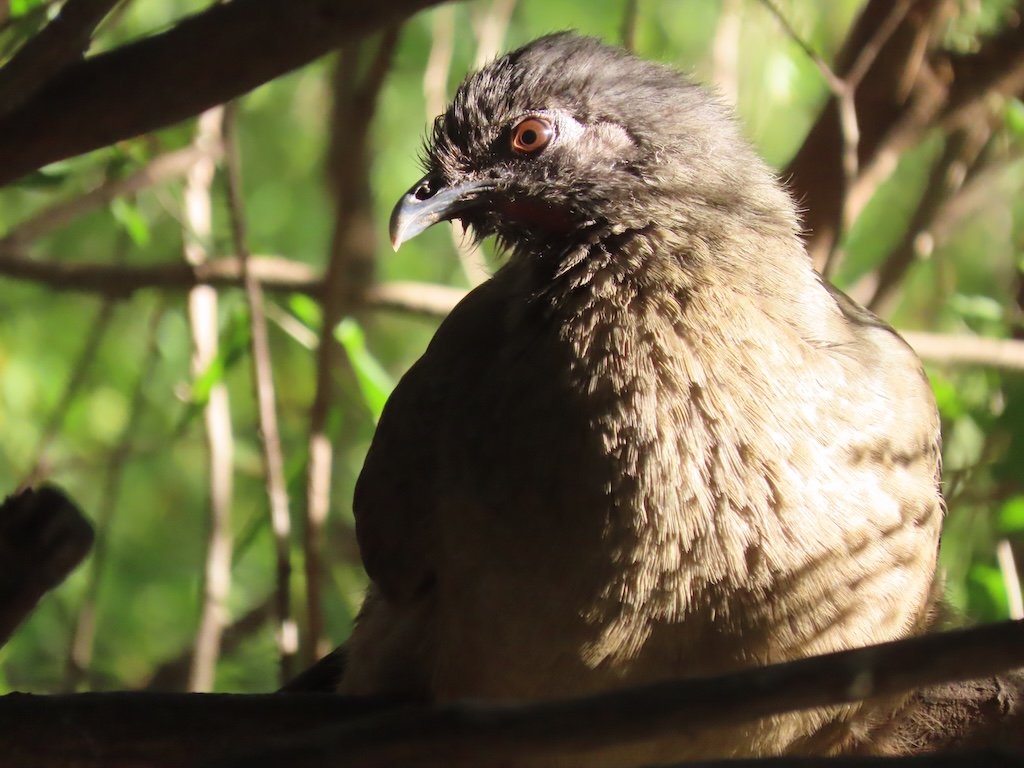
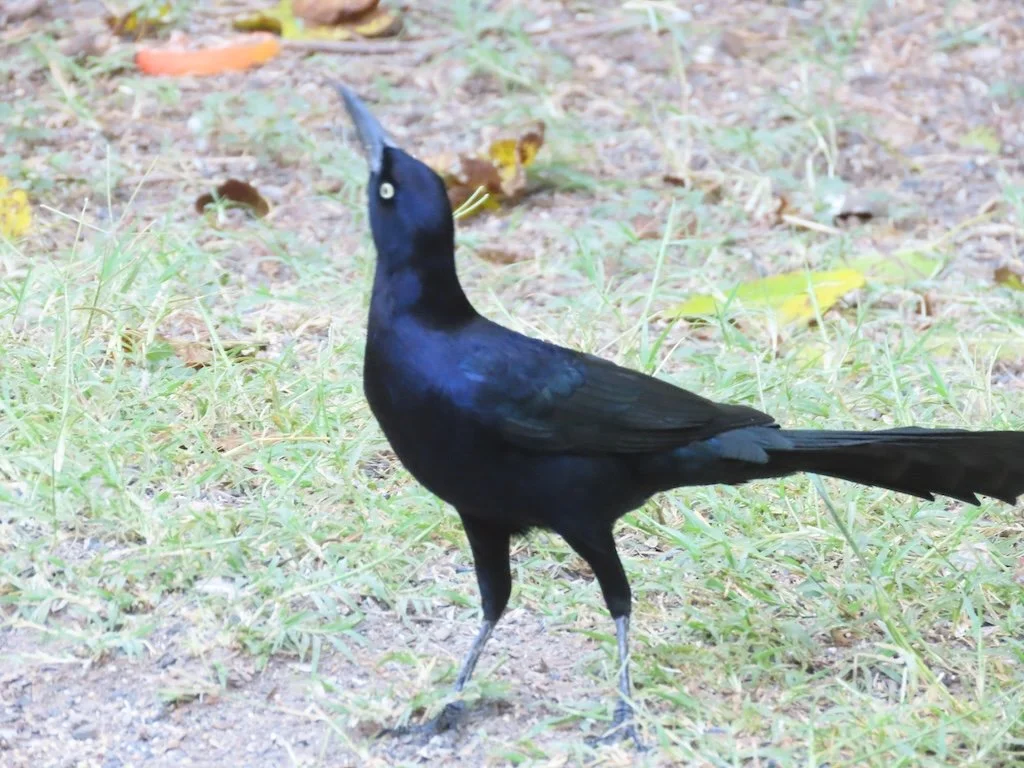
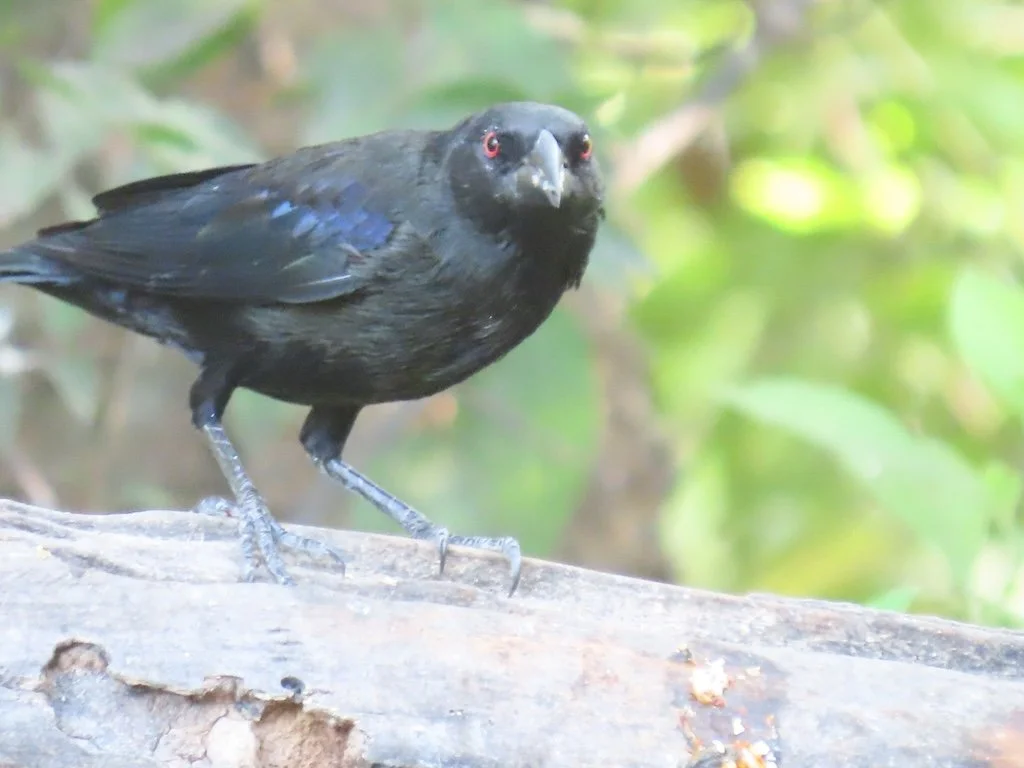
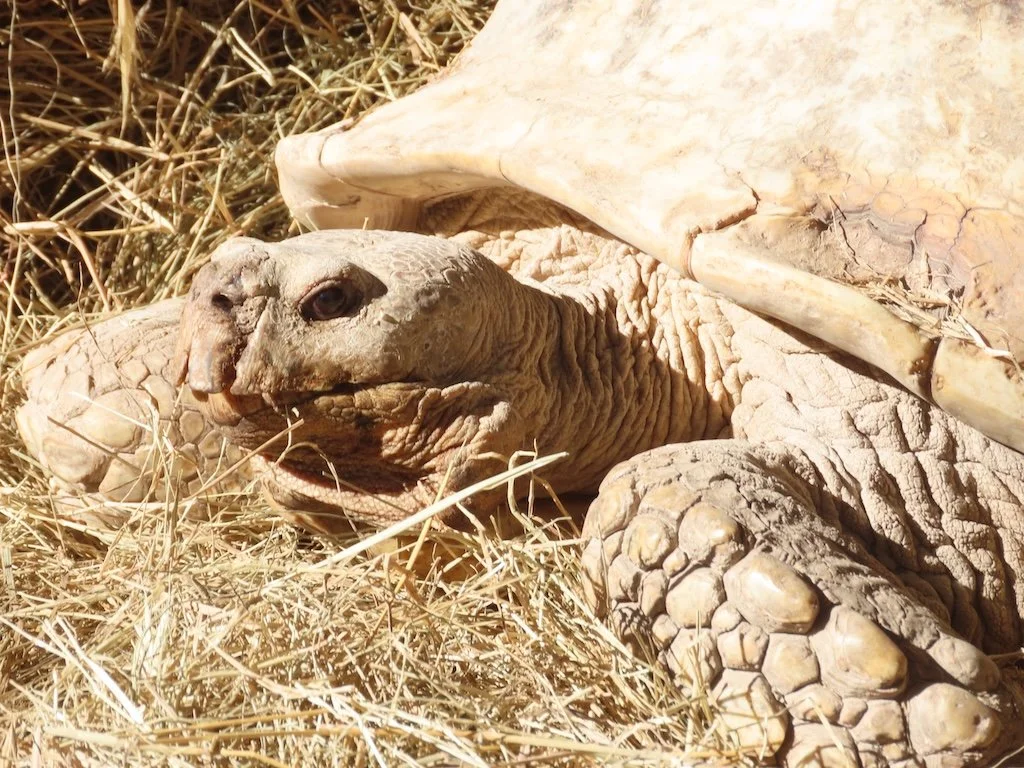
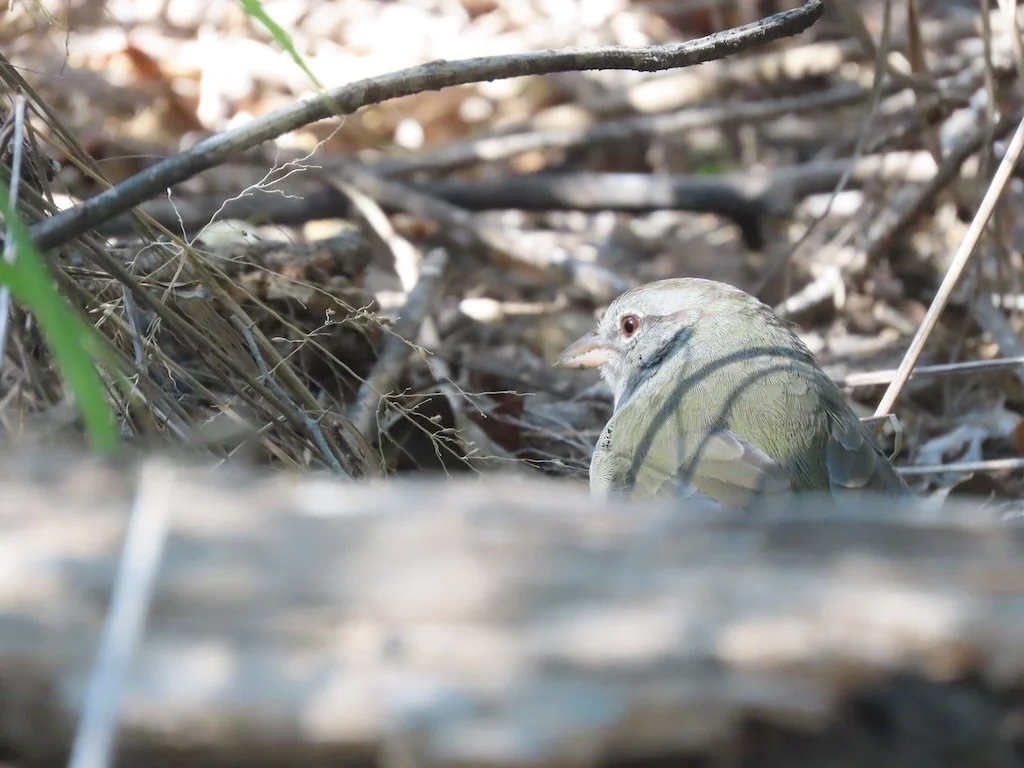
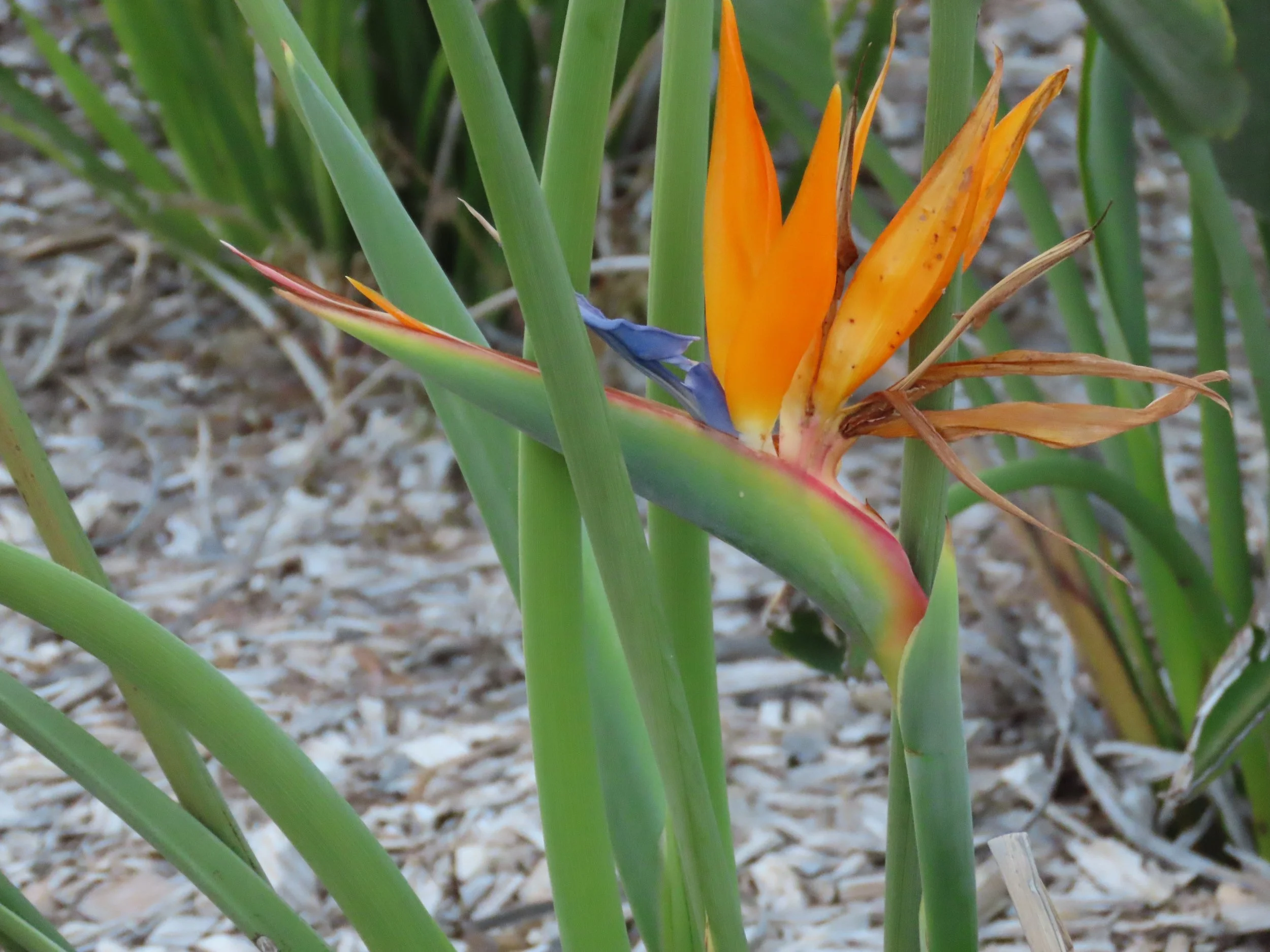
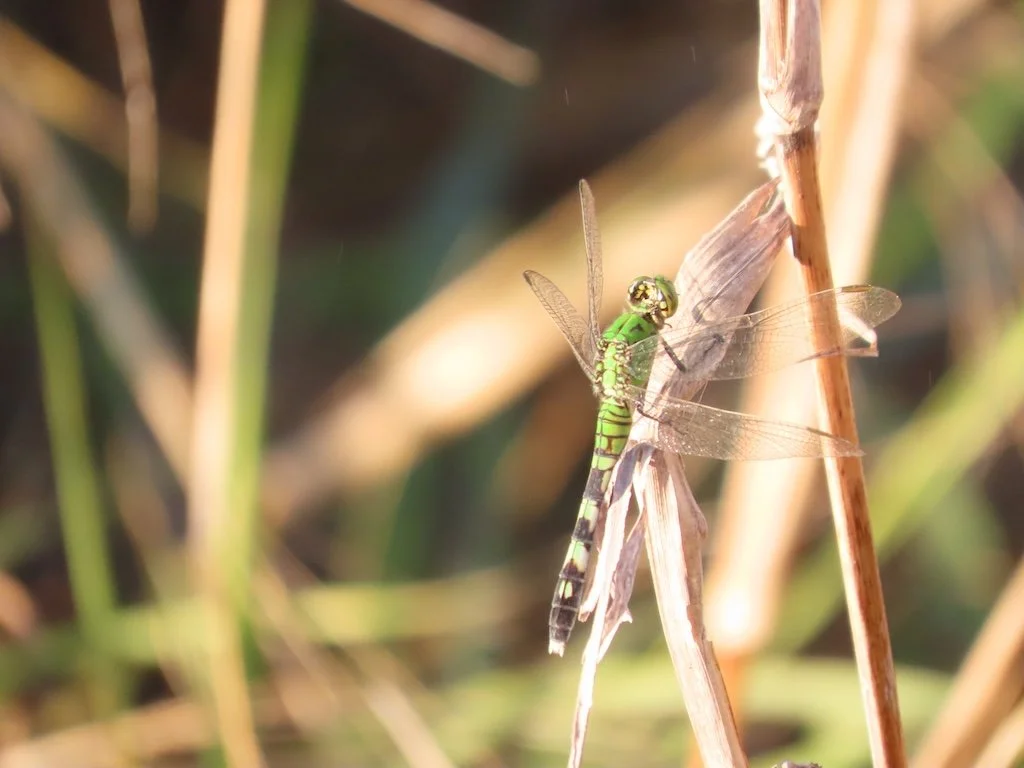
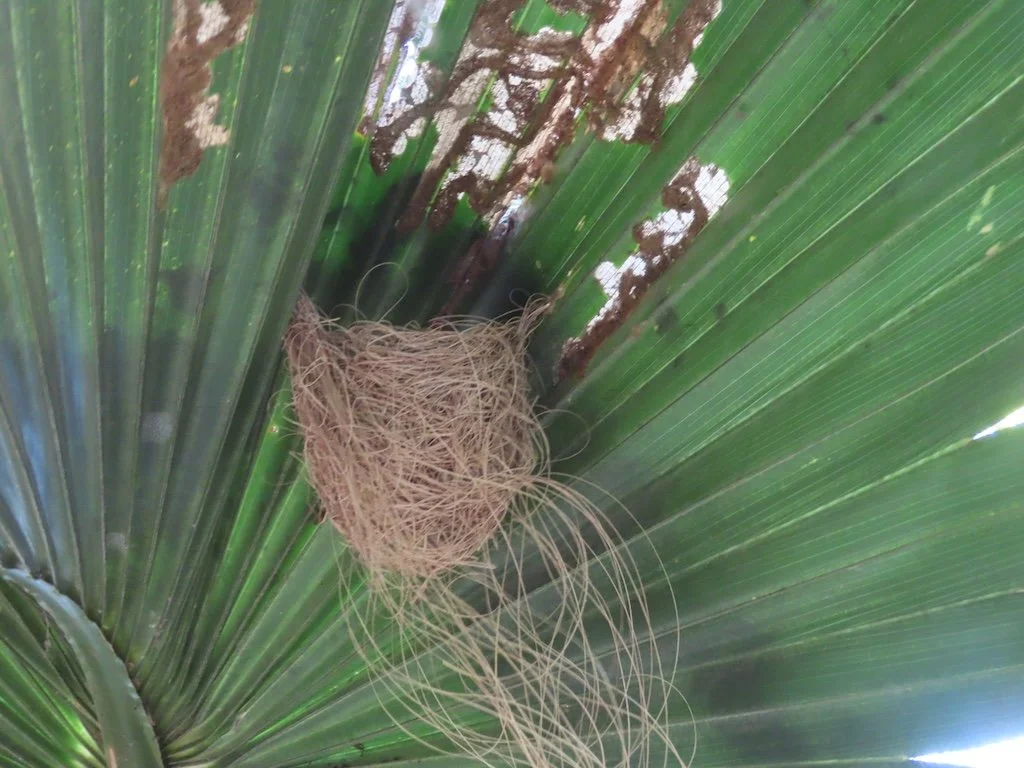
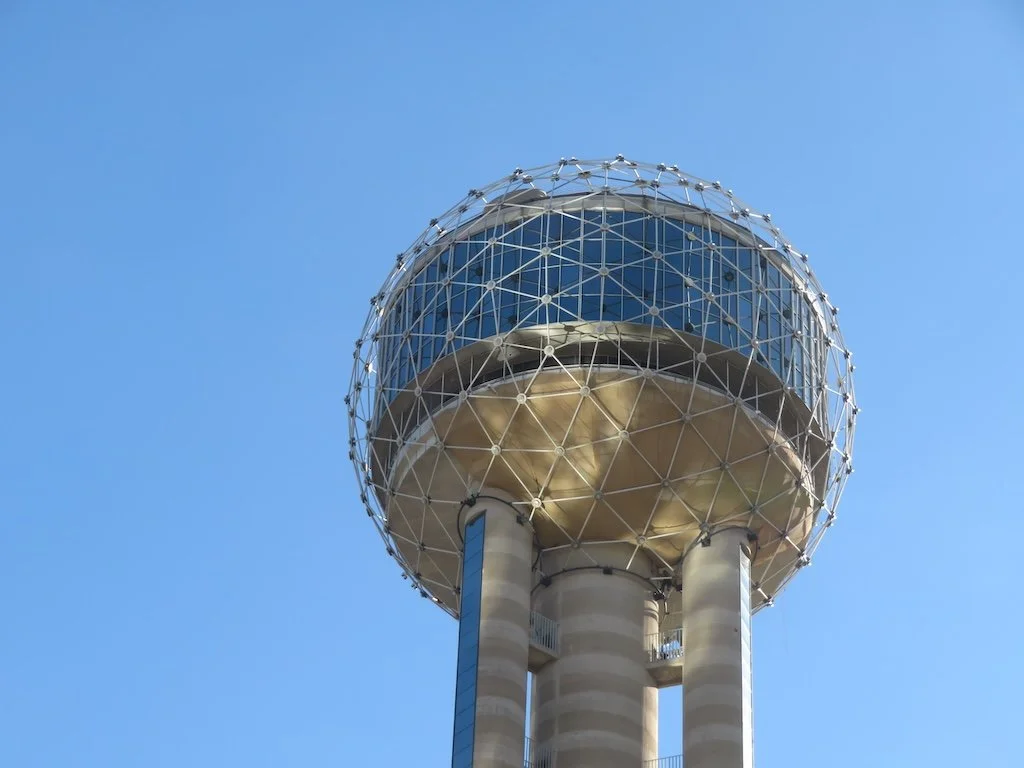
The week at the Rio Grande Valley Birding Festival was a big one for photography. It was hard to choose from almost 5000 images for the month. I finally managed to select 26 favorites…birds dominate but there are a couple of dragonflies and three reptiles (a lizard, a snake, and tortoise). I’ve included a picture of Reunion Tower in Dallas as my husband drove us through the city (I opened my window) and a tiled bench at one of the rest stops. We had our first frost at home.

Gleanings of the Week Ending October 11, 2025

The items below were ‘the cream’ of the articles and websites I found this past week. Click on the light green text to look at the article.

What Makes Bruises Change Color Over Time? - What appears as a red or purplish skin contusion in the beginning, slowly transitions to green, yellow, and finally brown, before disappearing entirely. What are the mechanisms that produce this bouquet of bruise colors?

Scientists finally explain the real reason pregnant women get morning sickness - According to the National Institutes of Health, up to 80% of early-stage pregnant mothers experience some nausea, vomiting and aversions to certain foods and smells. A unique mix of inflammatory responses function to prevent the mother's body from rejecting the fetus, alongside adaptive behavioral mechanisms, like nausea, that encourage the mother to avoid foods that are potentially harmful, especially in the first and second trimesters when the fetus is most vulnerable.

This company is turning empty offices across America into farms - Area 2 Farms is a three-year-old company based in Arlington, Virginia, that’s taking the concept of indoor farming to unusual spaces. Its first farm, in Arlington, grows dozens of varieties of crops (including lettuce, spinach, carrots, potatoes, tomatoes, and mushrooms, as well as more niche items like amaranth microgreens and purple shamrock) in a low-slung brick building tucked between a dog day care and a car repair shop. The goal is to eventually build indoor farms within 10 miles of 90% of the U.S. population.
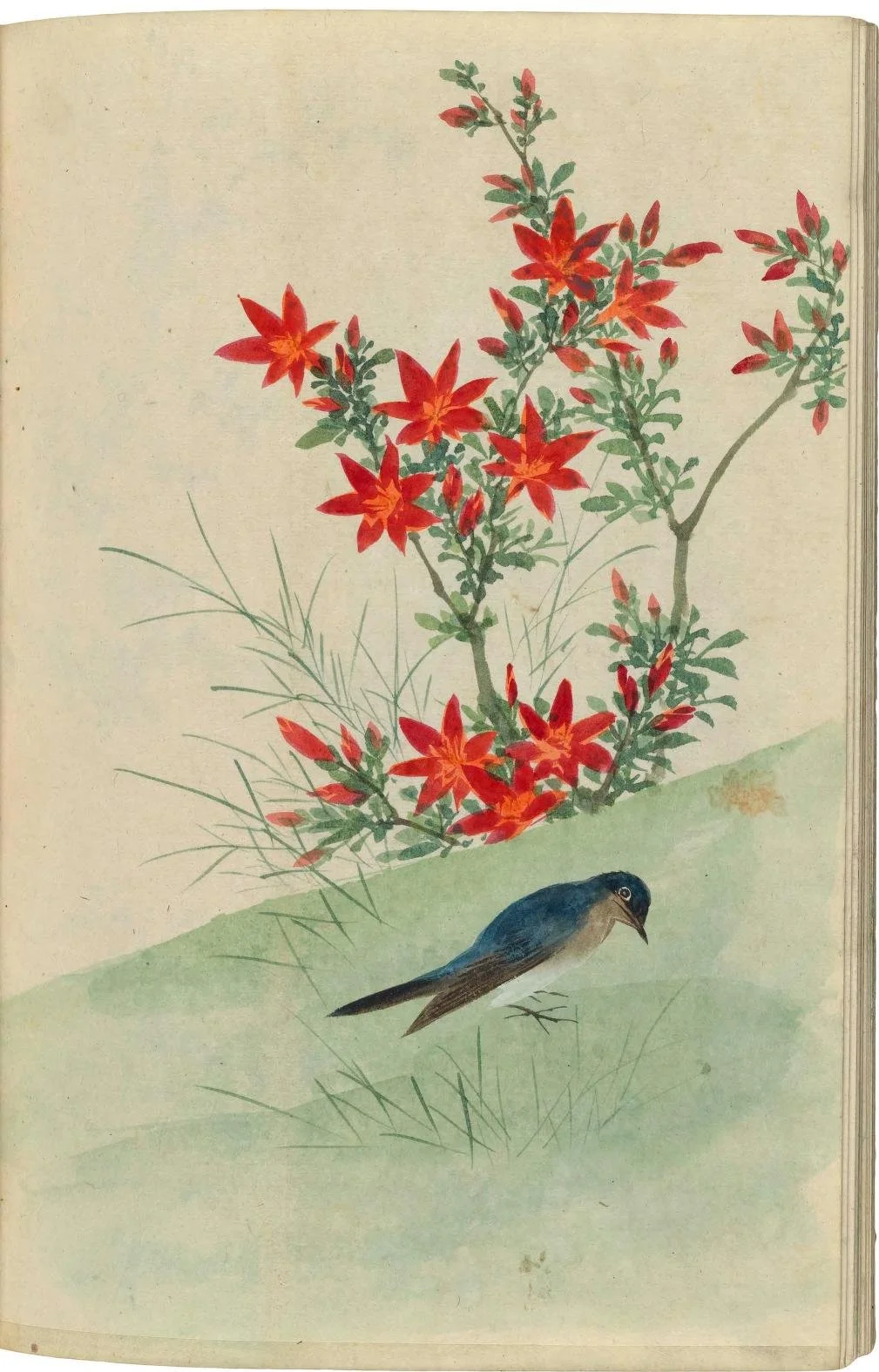
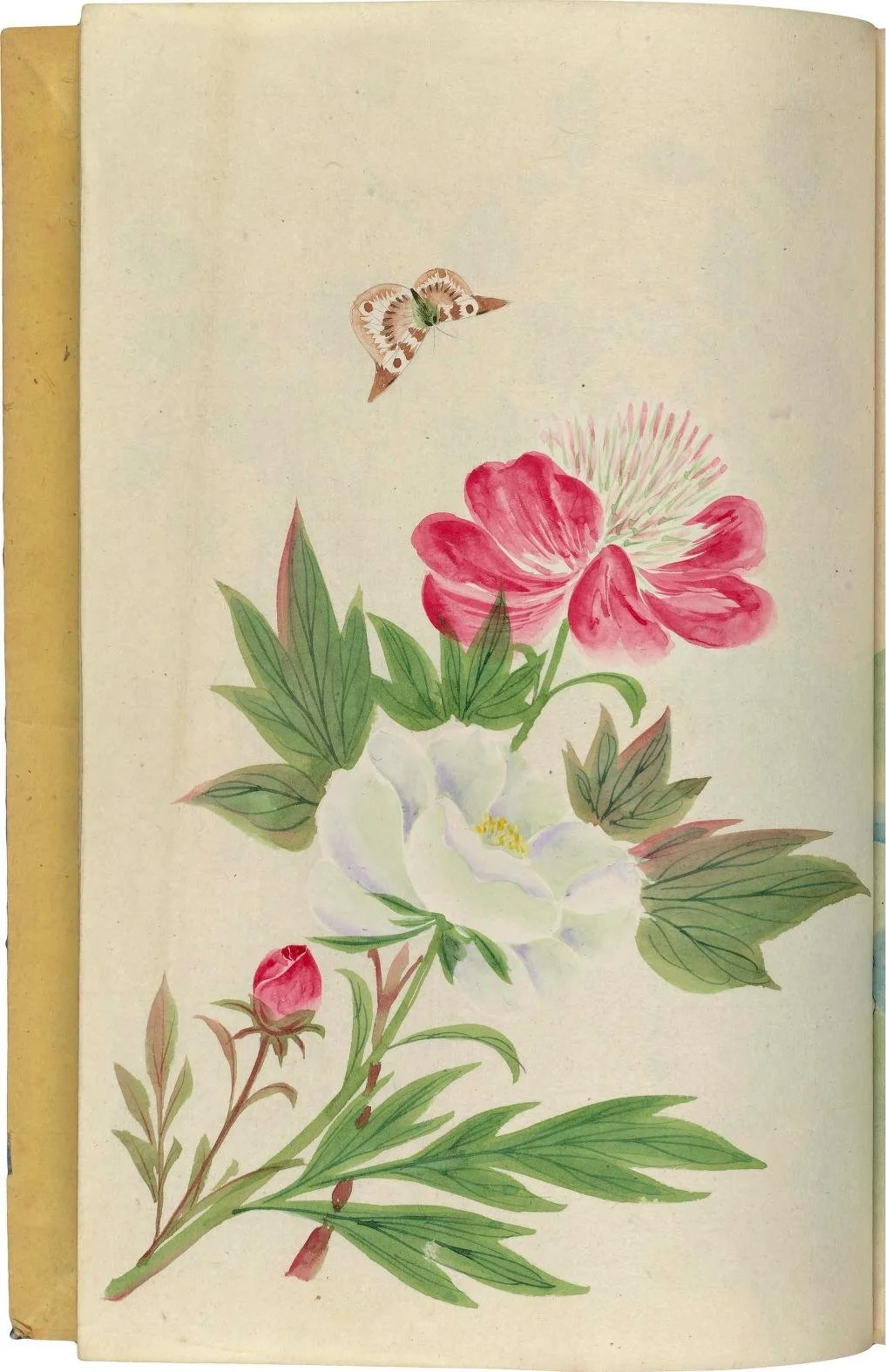
Bird Soaring Below a Total Solar Eclipse Wins 2025 Bird Photographer of the Year – Some beautiful…some thought provoking.

In Her Final Interview, Jane Goodall Issued Urgent Call to Protect the Planet - “We need to protect this planet and think about the future,” she told The Wall Street Journal. “Because if we don’t, that’s the end of our species. Humans are not exempt from extinction.”

Leaf Layer Safari: How to Spot Hidden Moth Cocoons in Your Backyard - This autumn, instead of raking, try exploring. Step carefully, look closely, and you may discover a miniature safari happening right under your feet.

Scientists Studied the Genes of a Woman Who Lived 117 Years - The findings point to a combination of genetic luck and lifestyle choices.

The Secret Apartment Atop the Eiffel Tower - Around 1,000 feet above Paris’ streets perches Gustave Eiffel’s apartment, complete with a bathroom, a kitchen, and wax sculptures of Eiffel, his daughter, and Thomas Edison. At the very top of the tower, Eiffel allotted himself a 1,075 square foot private office, and with it the best view in Paris. After all, he had footed three-quarters of the bill.

Winter Transforms the Mississippi River Delta - The Mississippi River’s watershed drains 41 percent of the United States (spanning all or part of 31 states) and reaches into two Canadian provinces. Its nutrient-rich waters support fertile agricultural lands along its shores and throughout the deltaic basin. The river also plays a role in the U.S. economy by providing transportation shipping routes. To maintain these functions, engineers have implemented channelization to help maintain navigable shipping lanes and, in recent decades, launched sediment diversion projects aimed at returning vital sediments to the wetlands.

How to future-proof your knees - After back pain, throbbing aches in the knees are the most cited musculoskeletal ailment in older adults. The post shows five quick, home-based exercises which will all help.
Zooming – September 2025

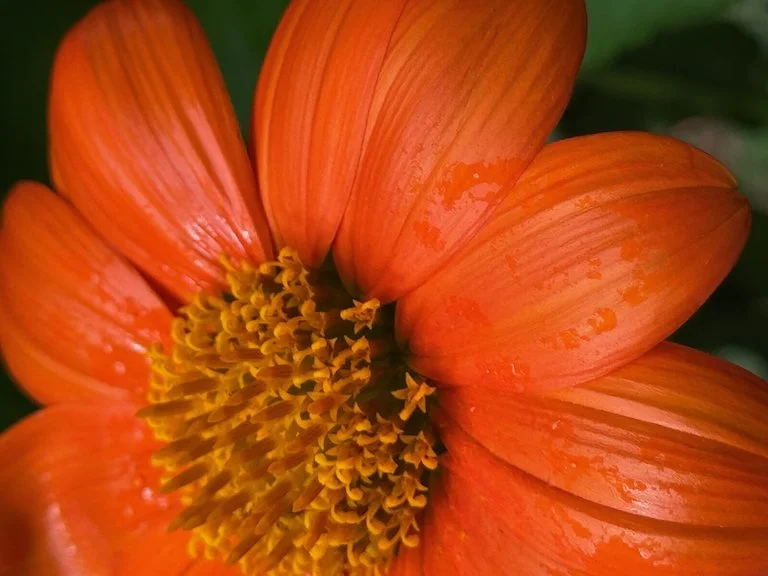
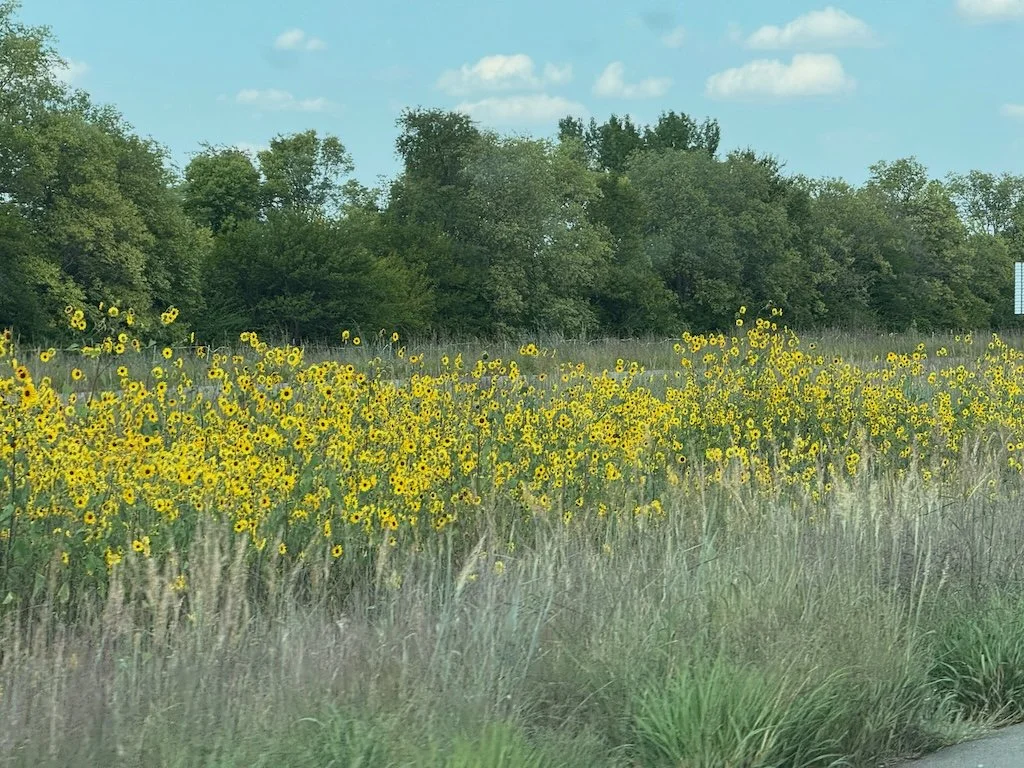
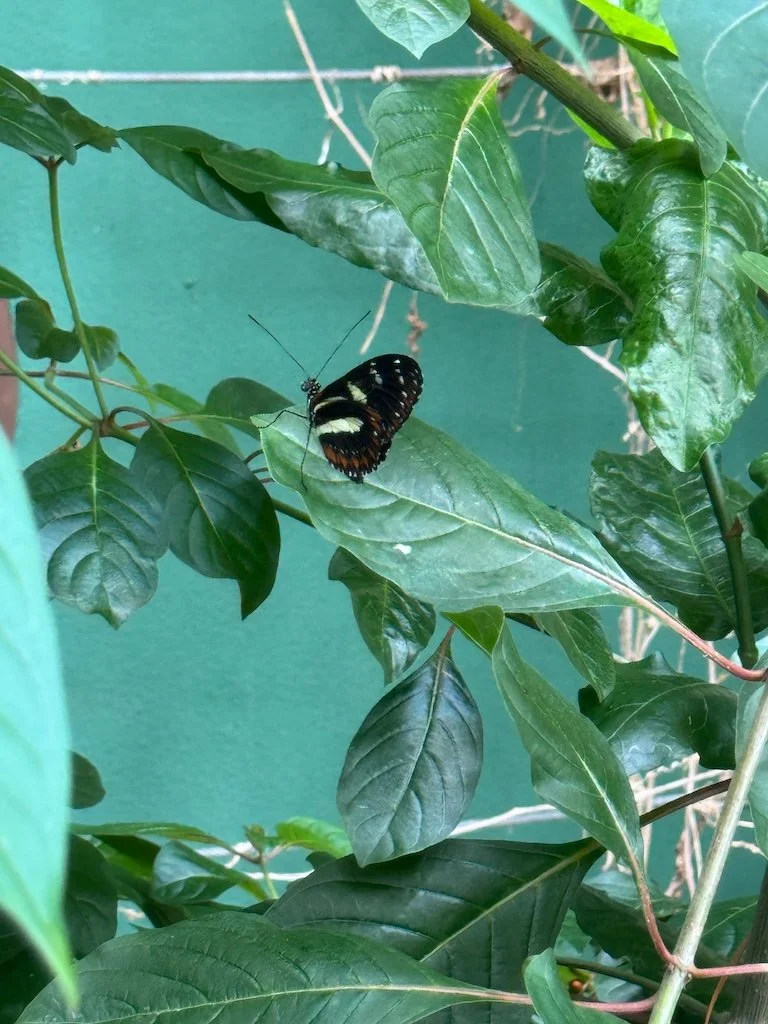
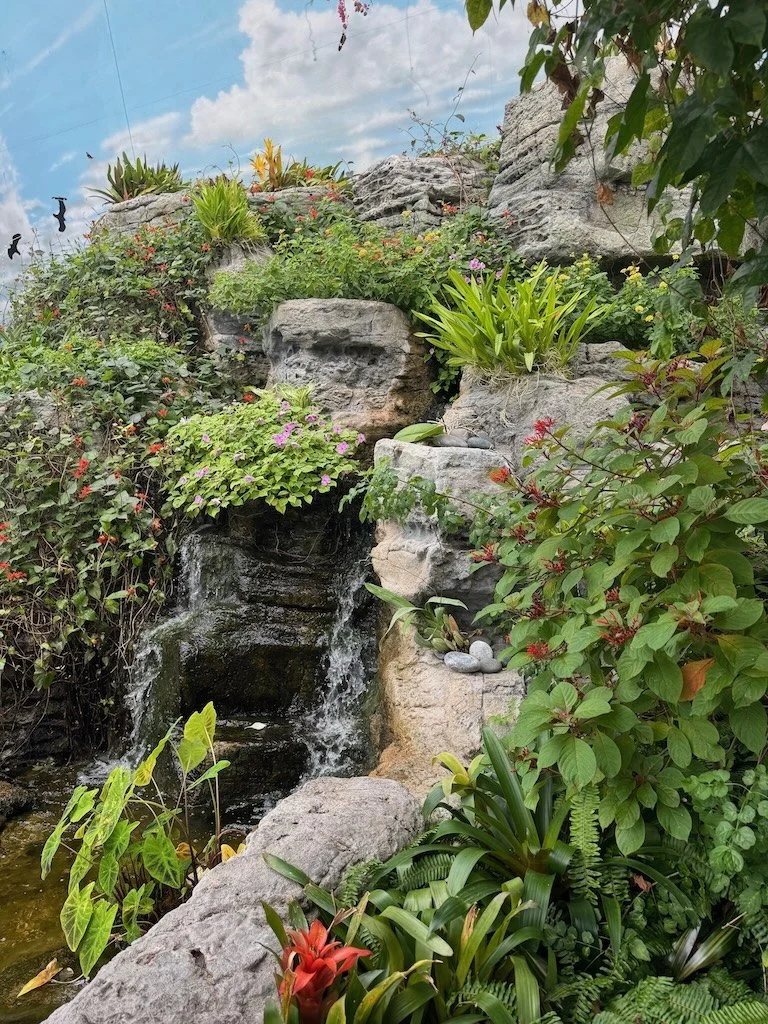
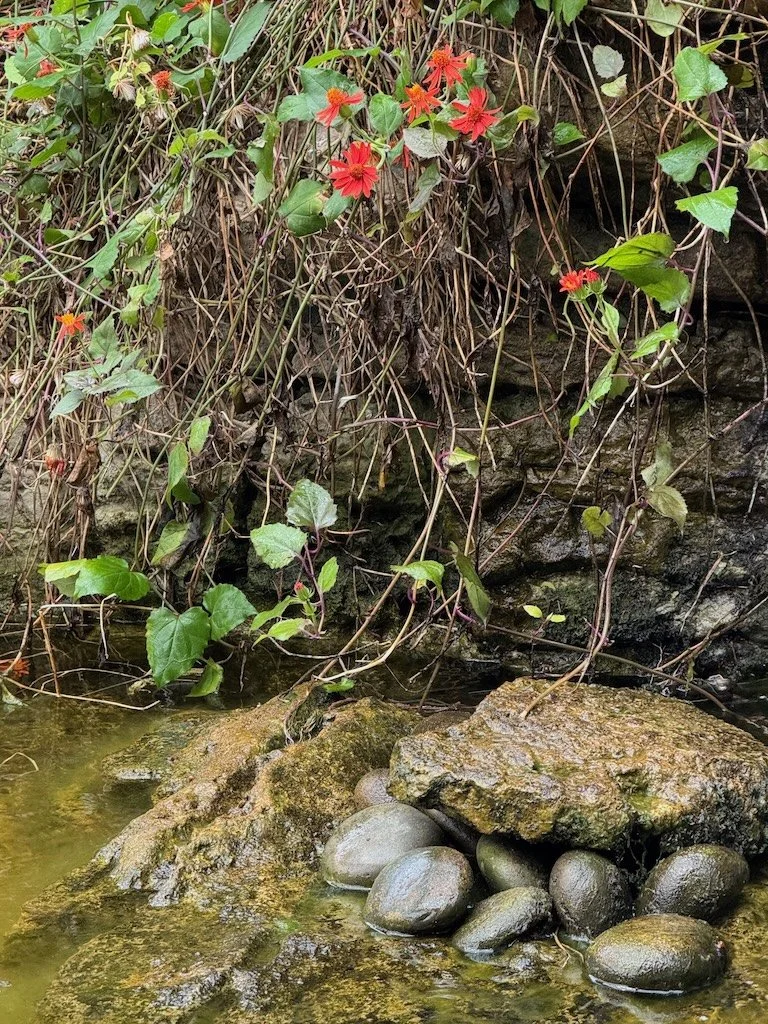
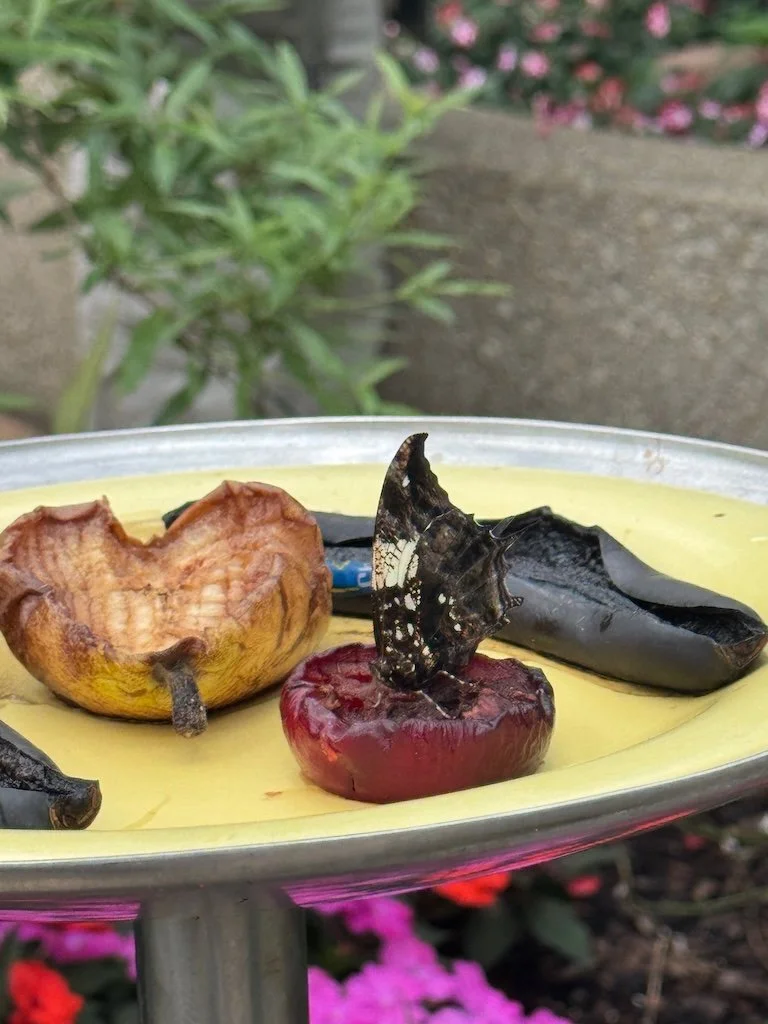
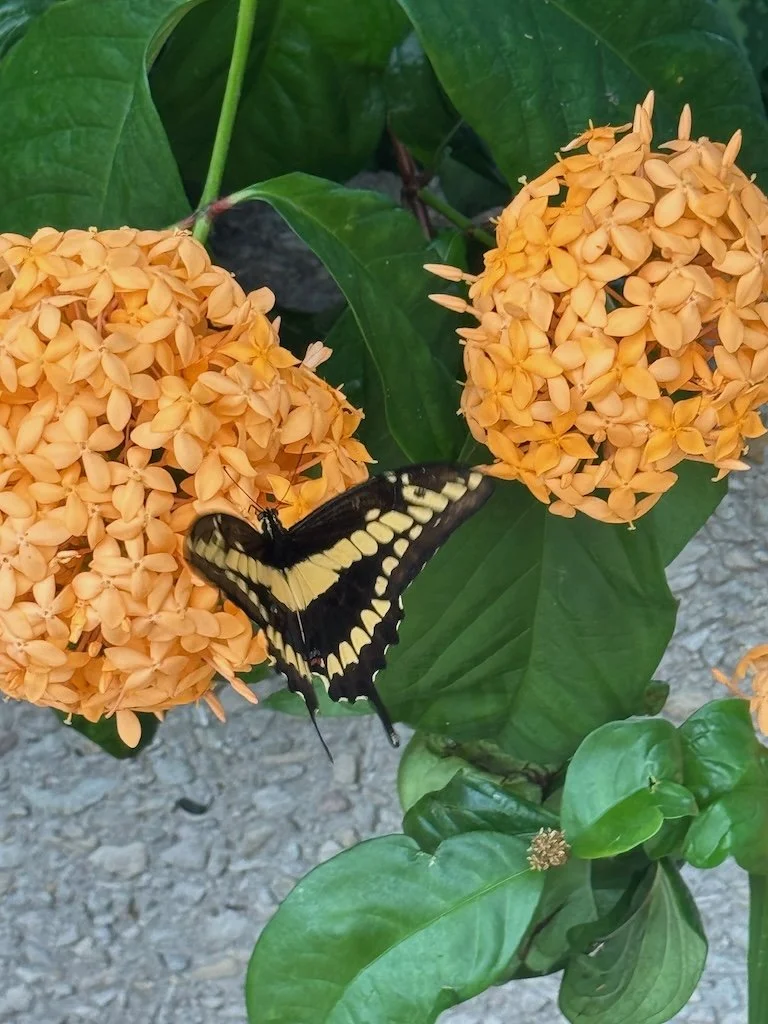
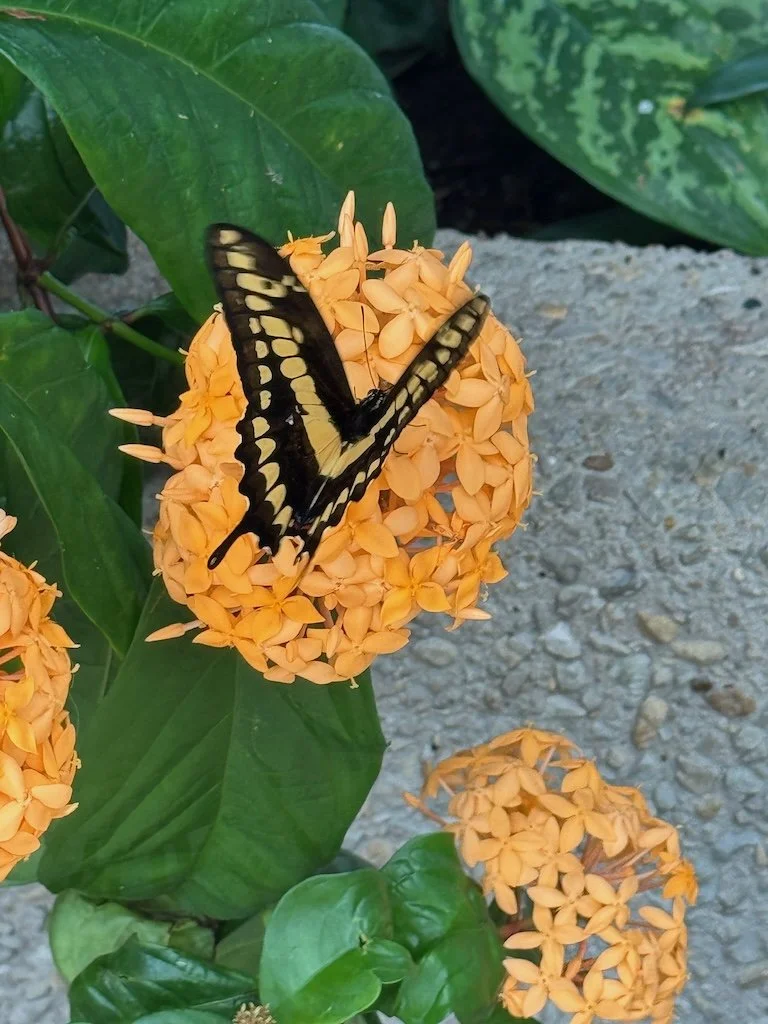
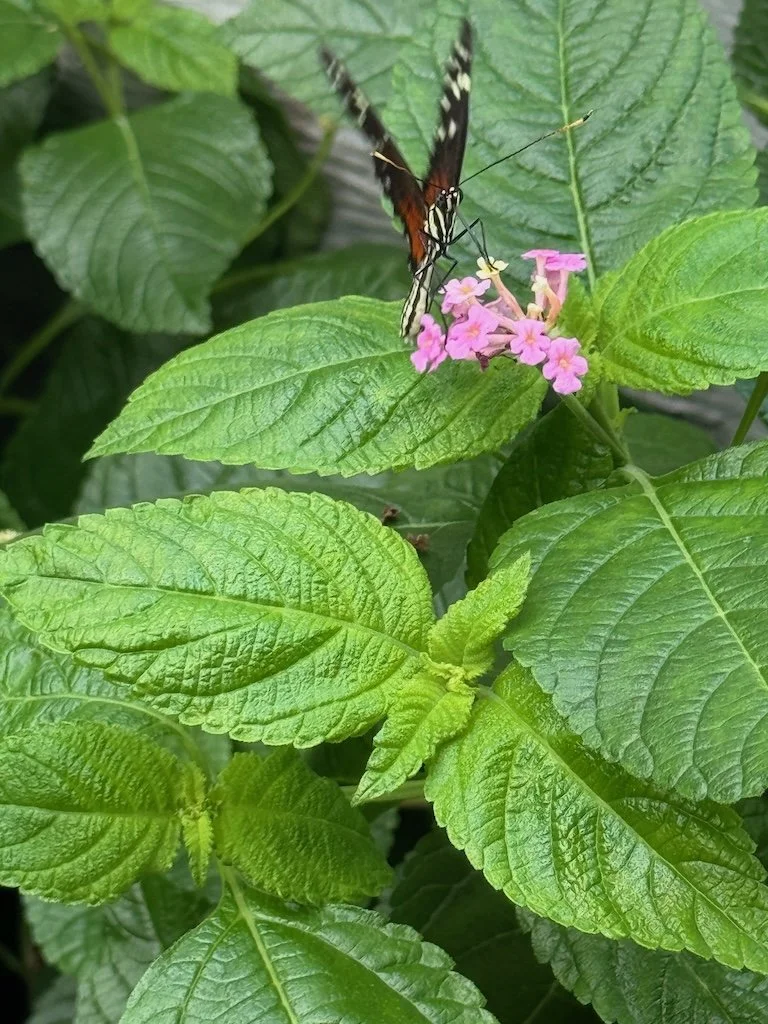
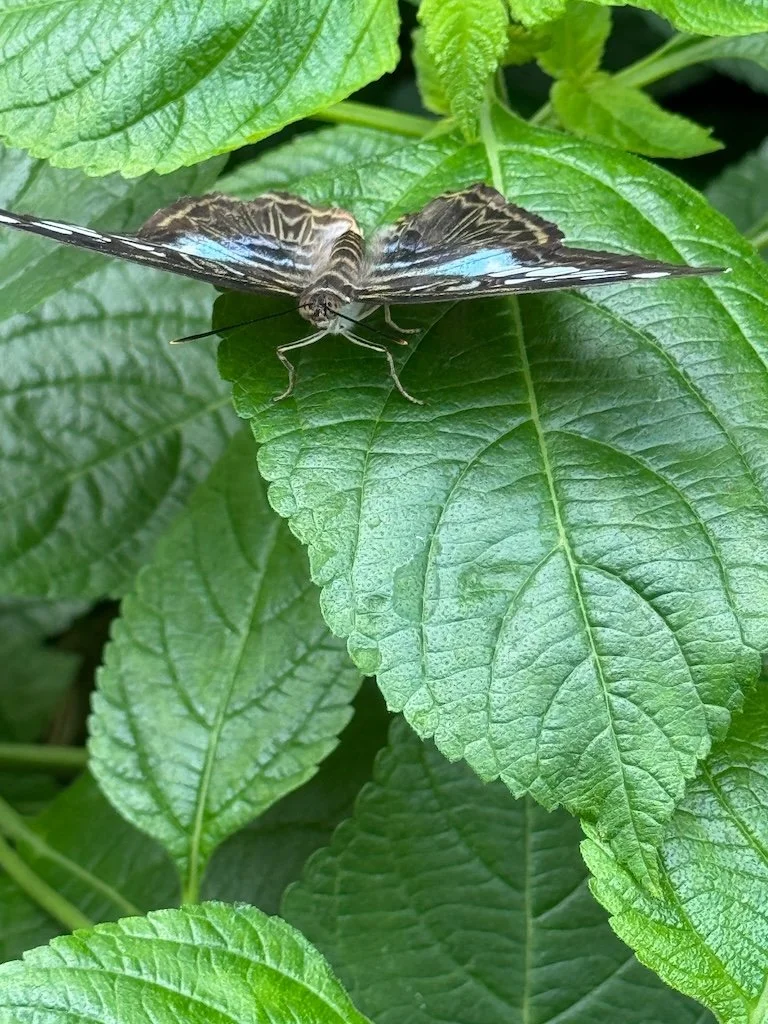
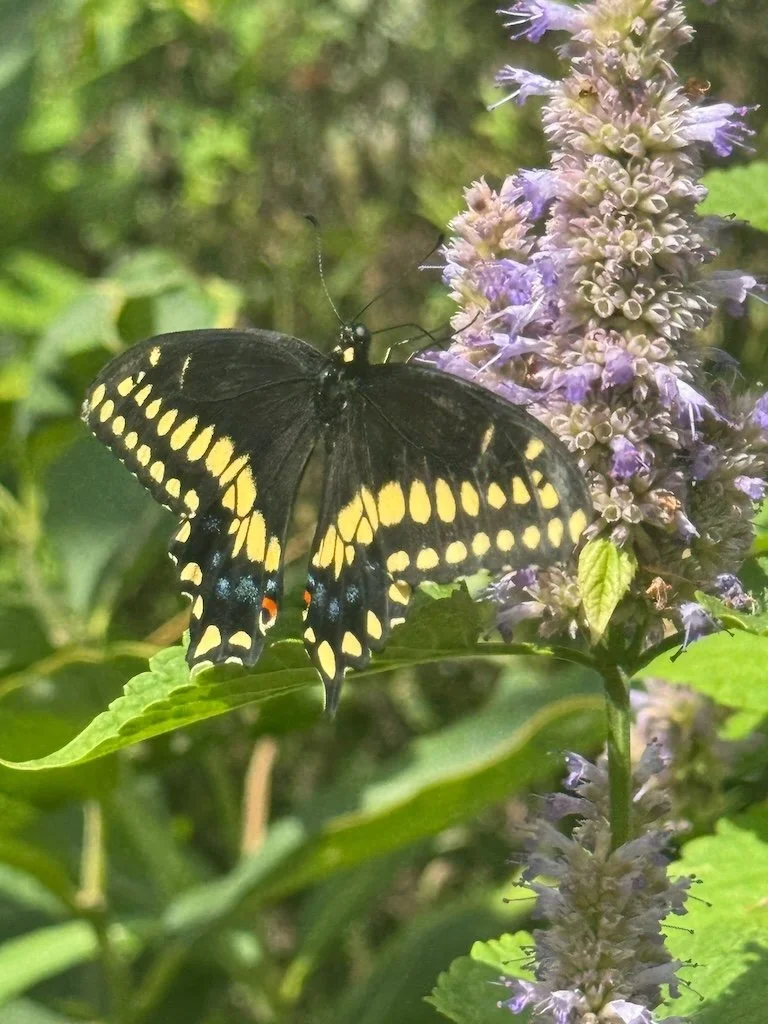
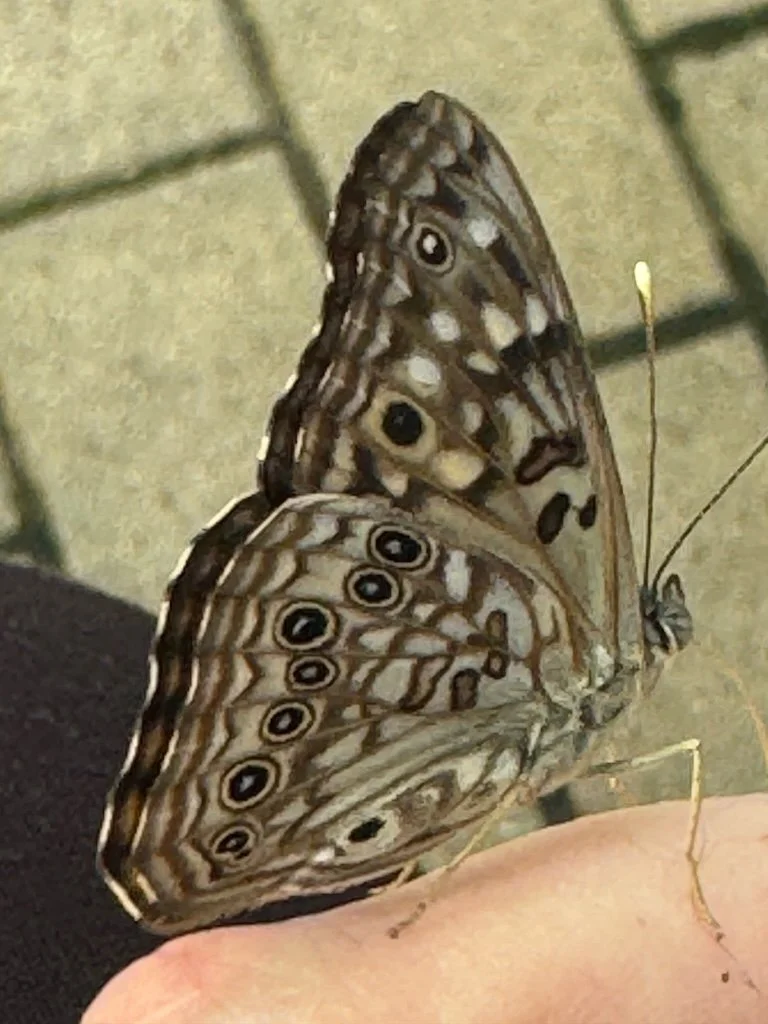
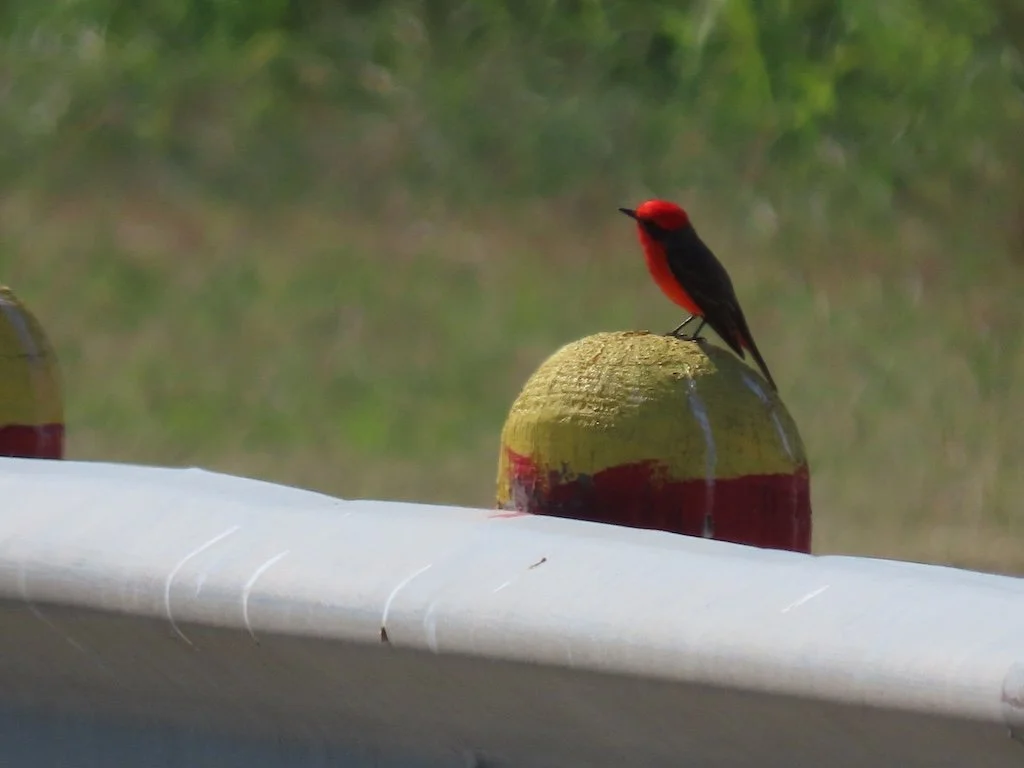
Lots of locations for the September zooming pictures: Josey Ranch Park in Carrollton TX, scenes from Chicago, Illinois interstate, home, and the Butterfly House in the Springfield (MO) Botanical Garden.
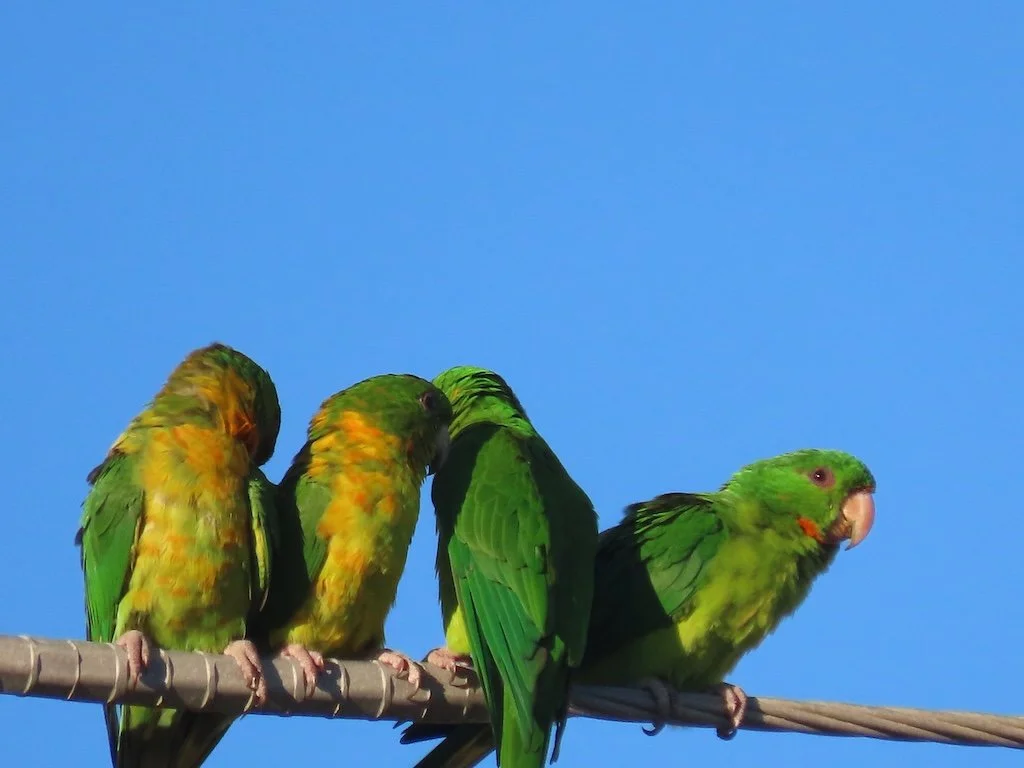
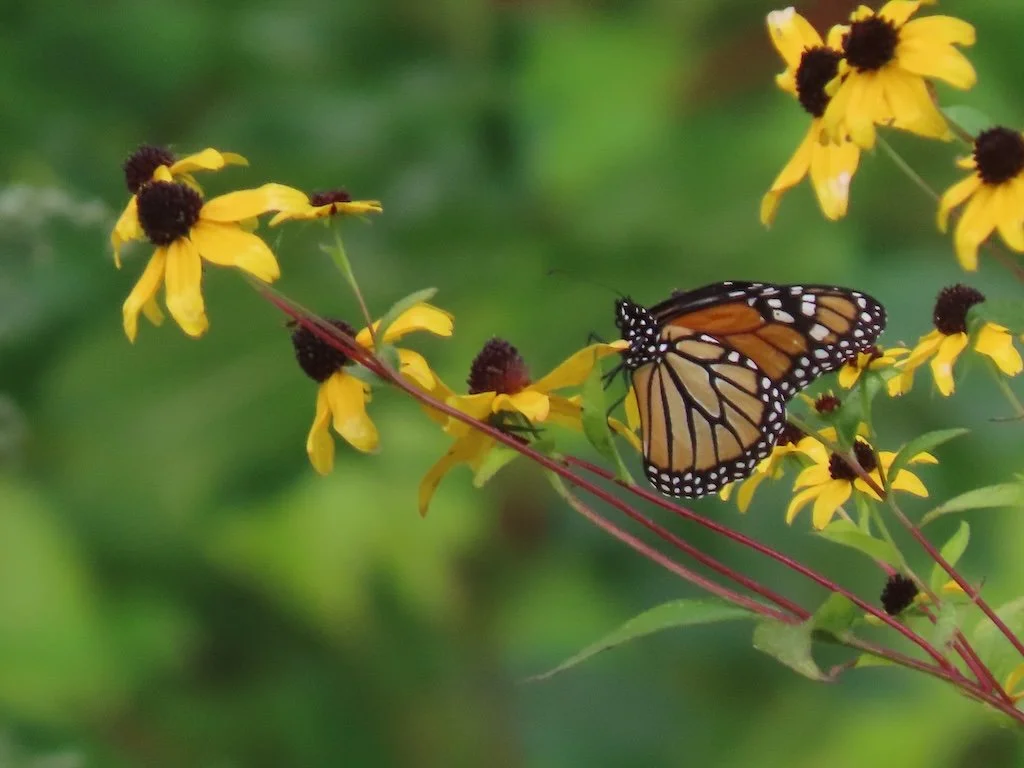
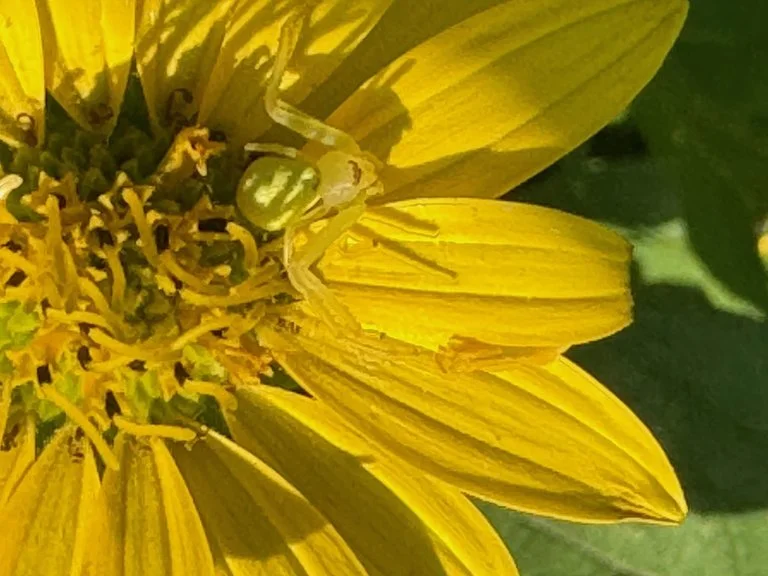
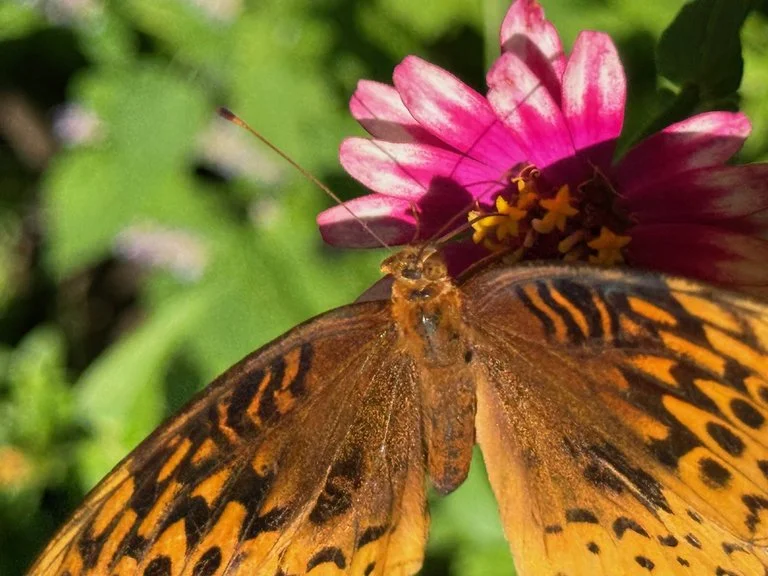
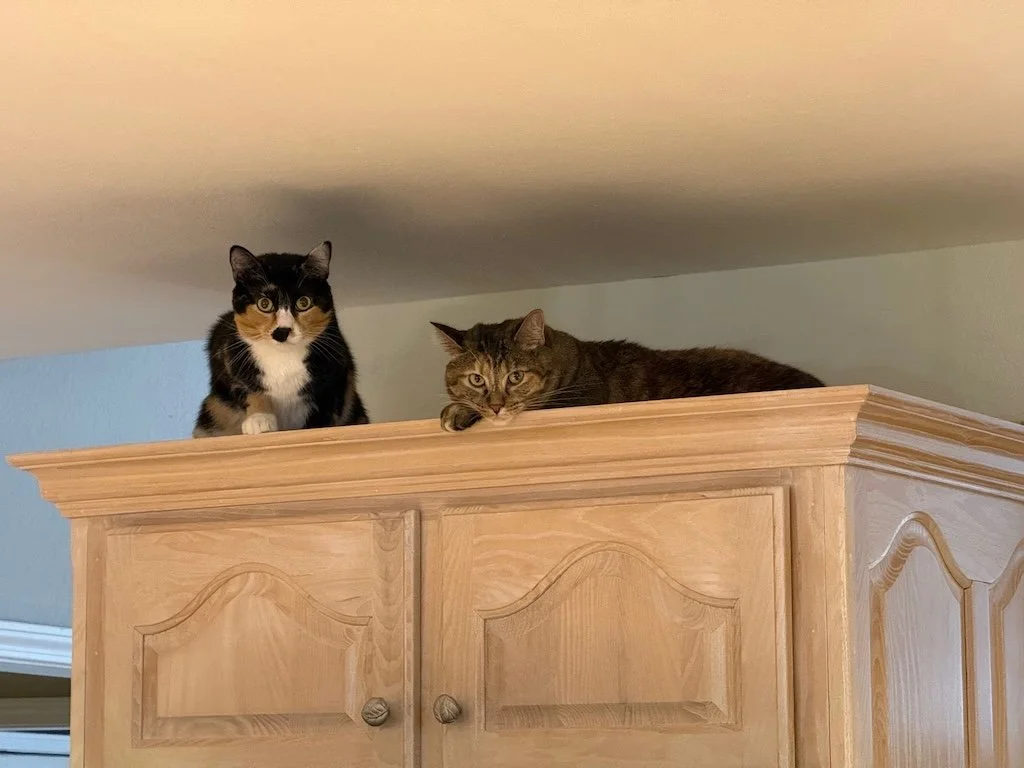
There are the usual flowers…butterflies, birds, cats…and a Chicago skyline.

Enjoy the September 2025 slide show!

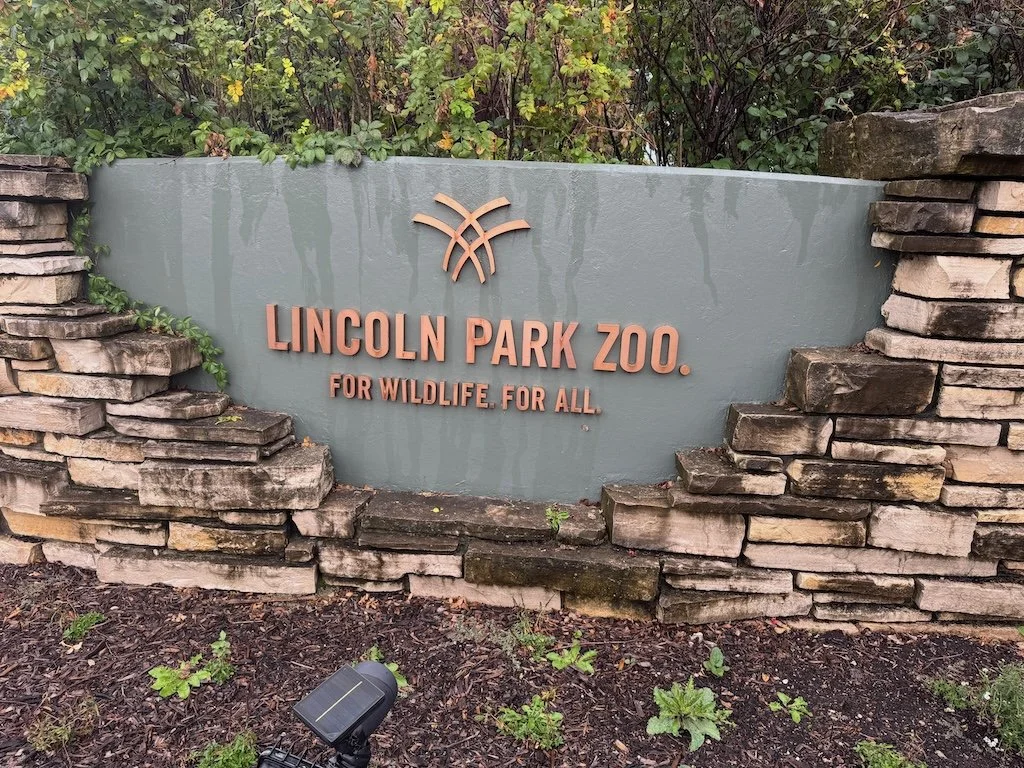
Peggy Notebaert Nature Museum and Lincoln Park Zoo

The headquarters and registration for the Urban Birding Festival in Chicago was at the Peggy Notebaert Nature Museum. We were in and out of the building during all three days of the festival. They have a small butterfly house with some exotics…some natives.

I managed to make a short video of a butterfly feeding.

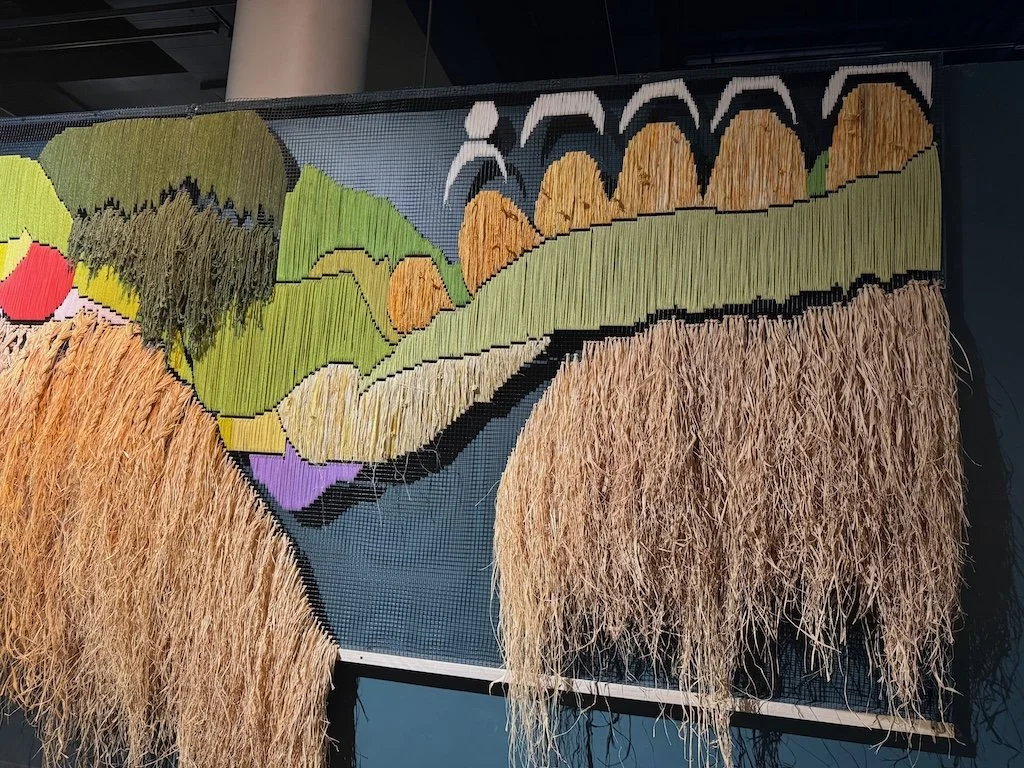
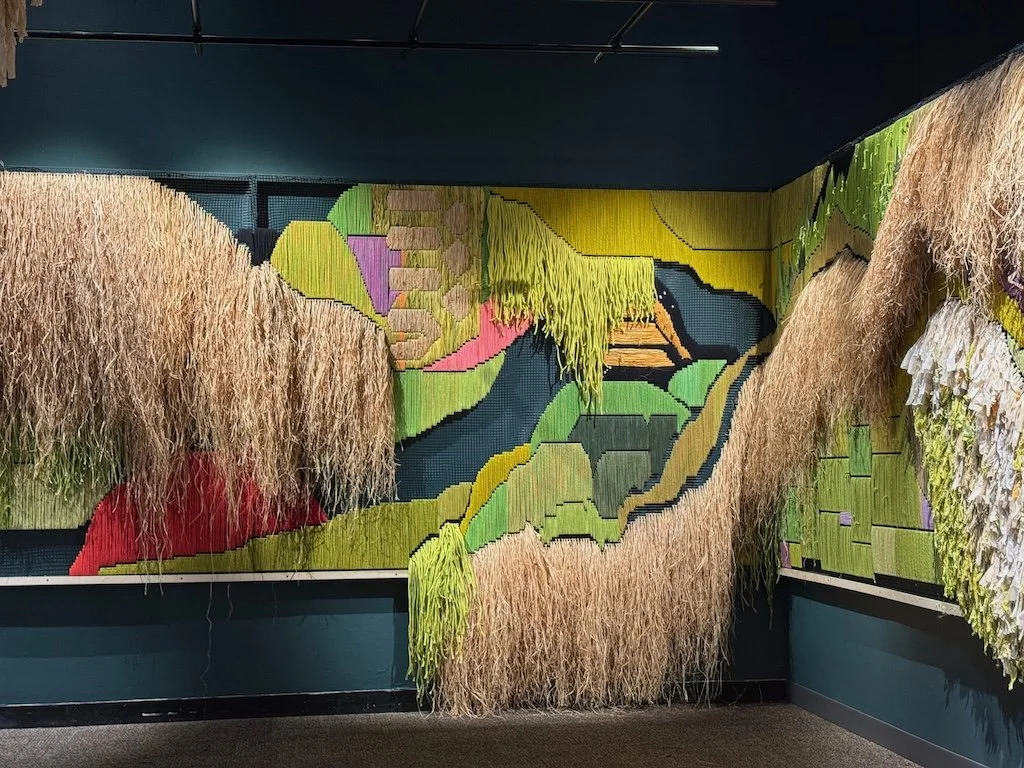
There were lots of activities for young children. It was fun watching them explore. A fiber mural appealed to me too.

We signed up for a walk at Lincoln Park Zoo – birds and botany – skewed toward botany.

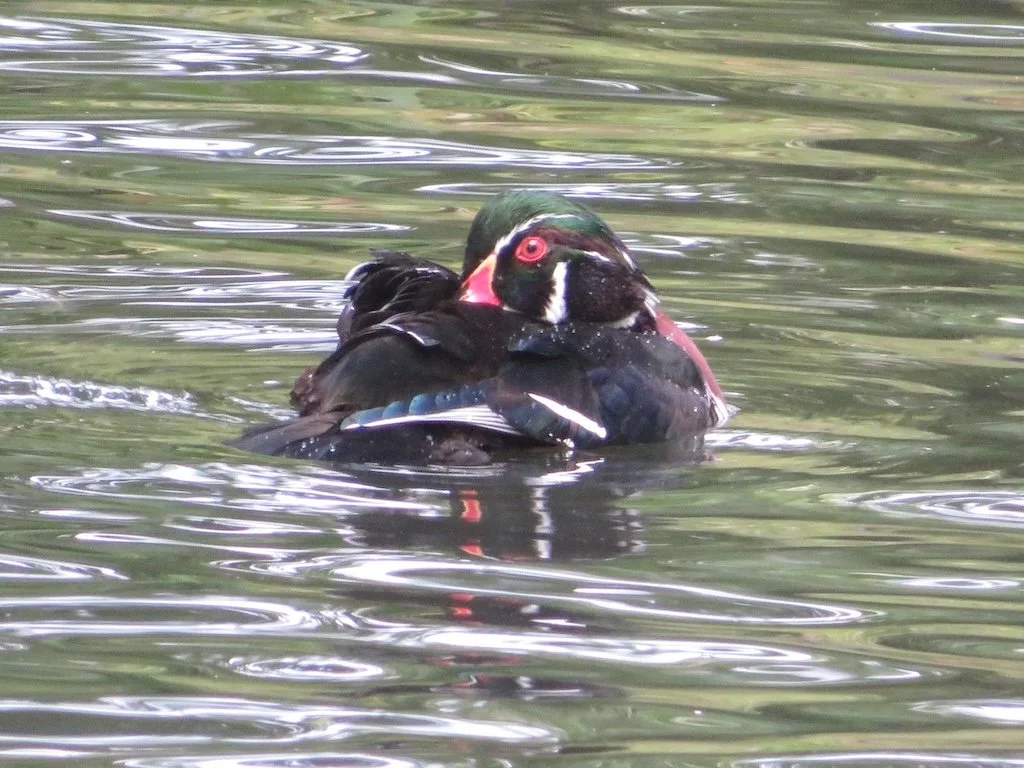
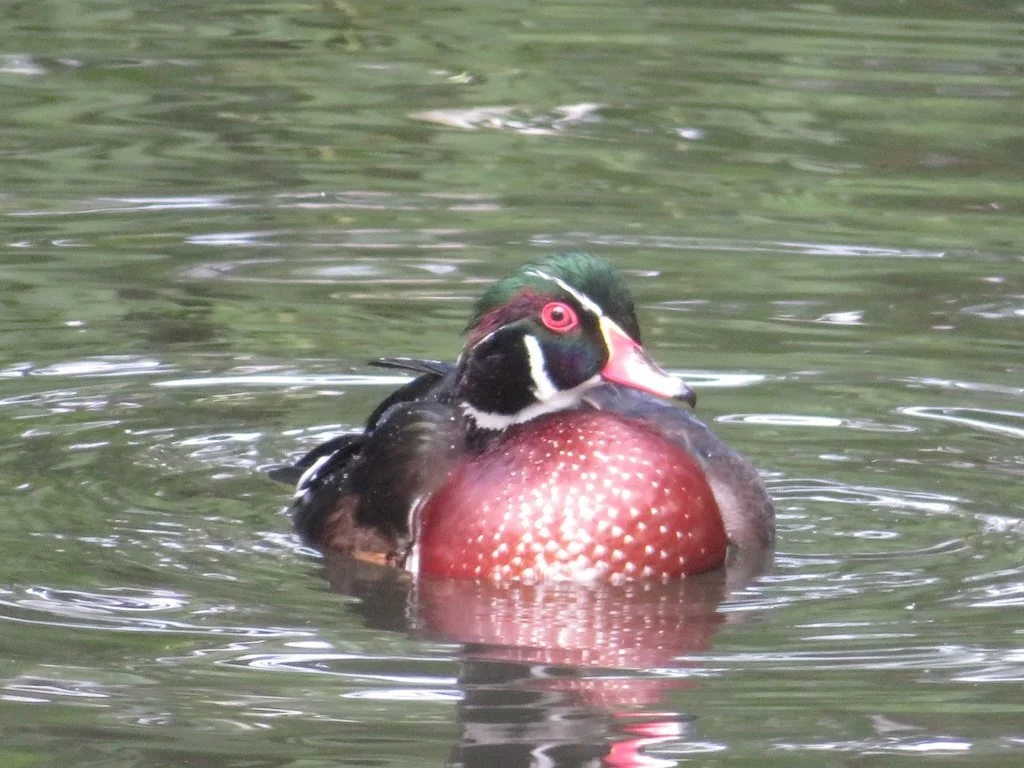
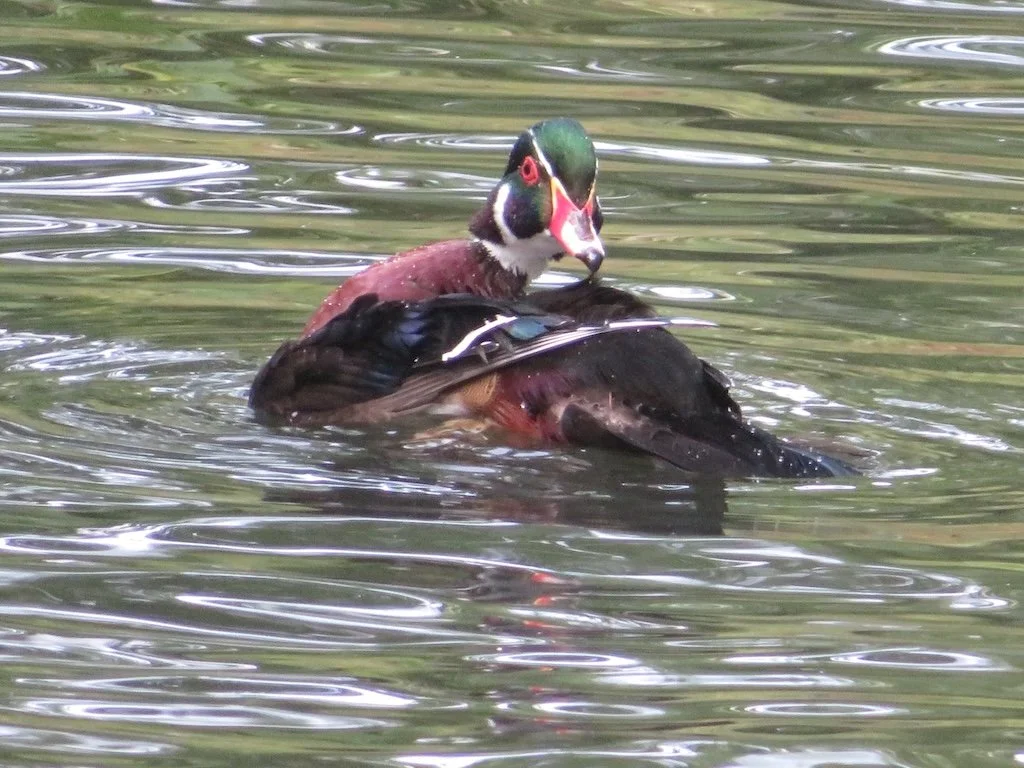
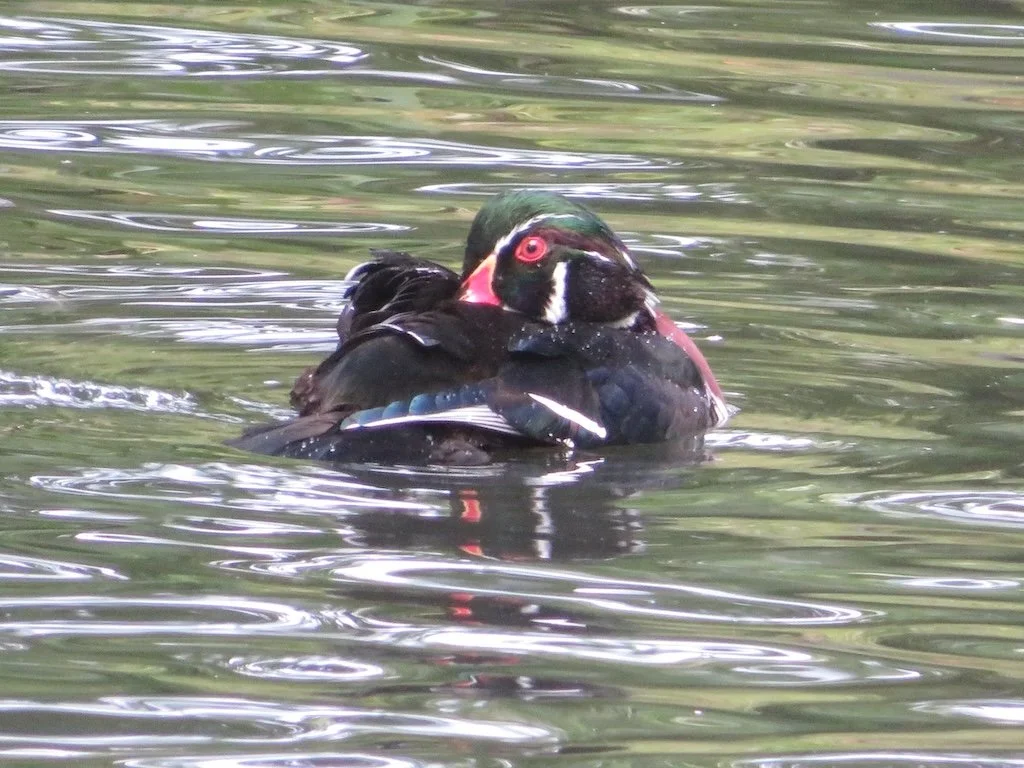
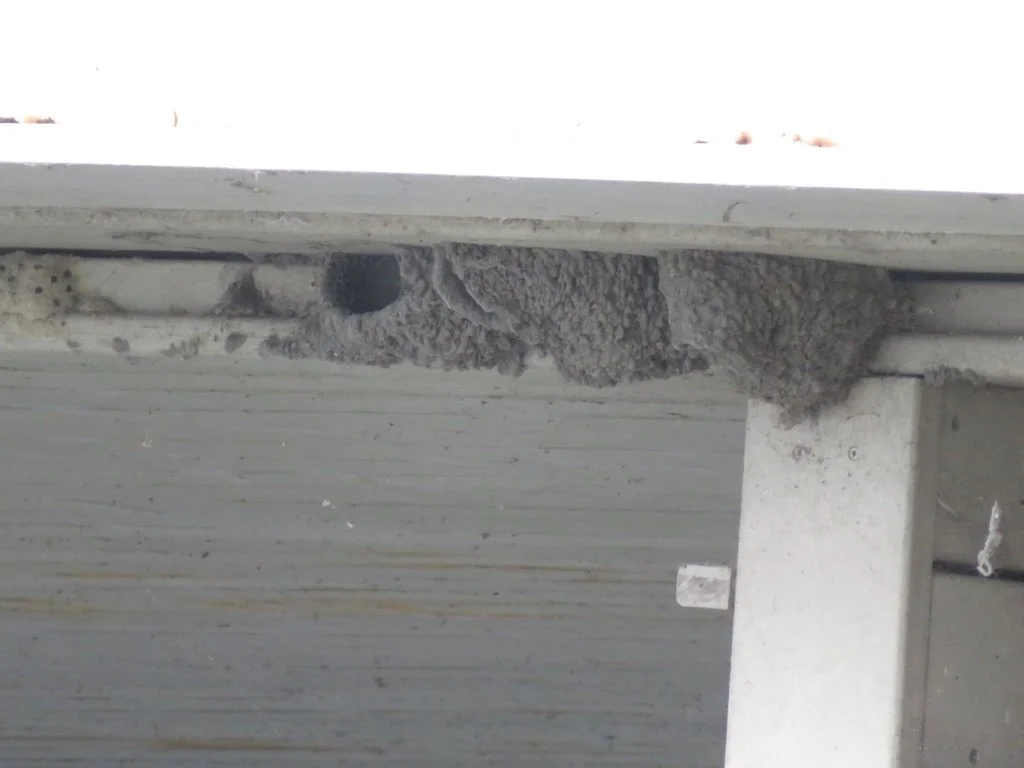
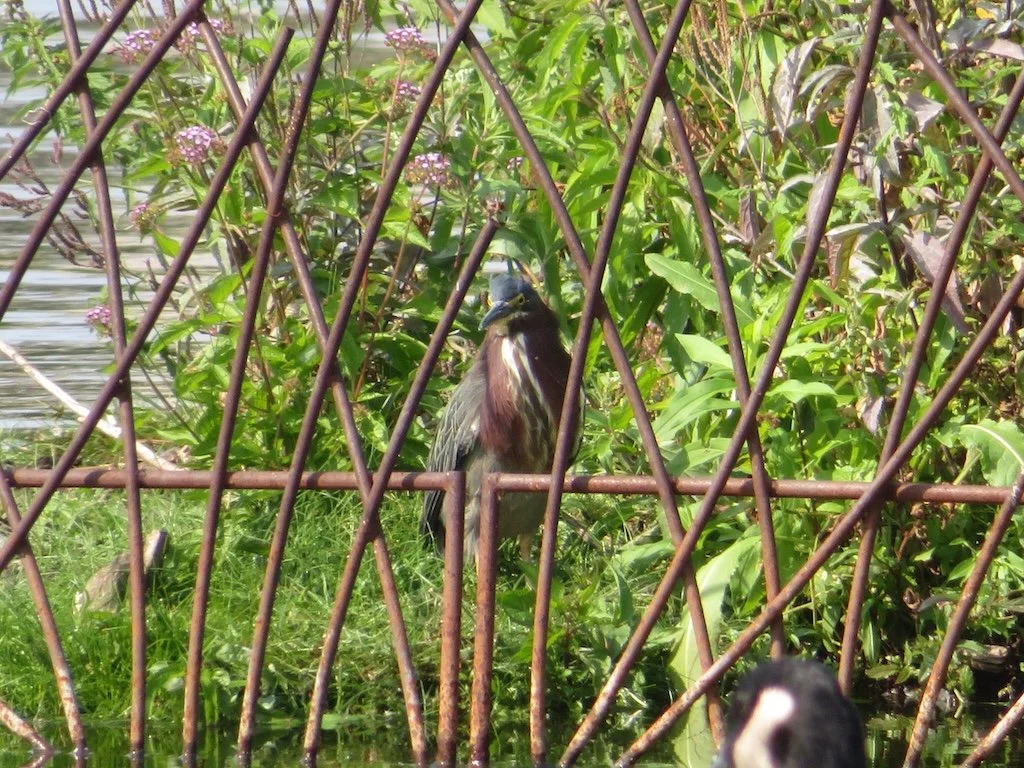
The two birds that I photographed were in a wilder area of the zoo…where wild birds sometimes drop in…sometimes decide to stay. The wood duck was relatively close and preening. The green heron was further way and harder to see through the vegetation. On the underside of a bridge were some barn swallow nests; the birds had already left for the season.

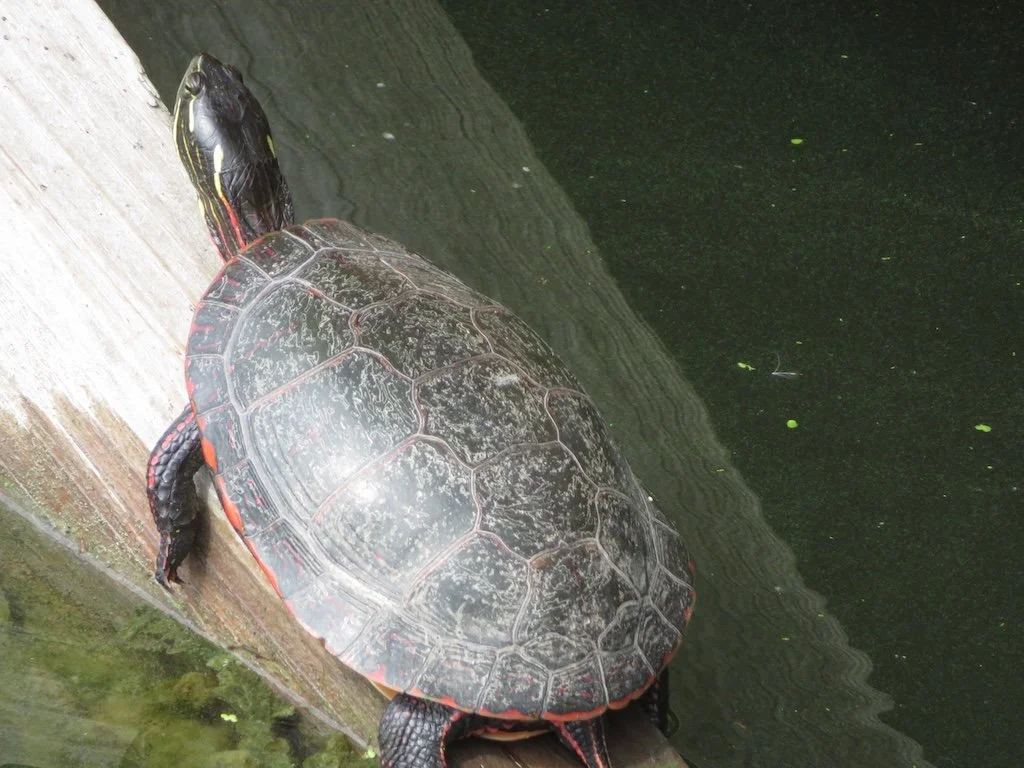
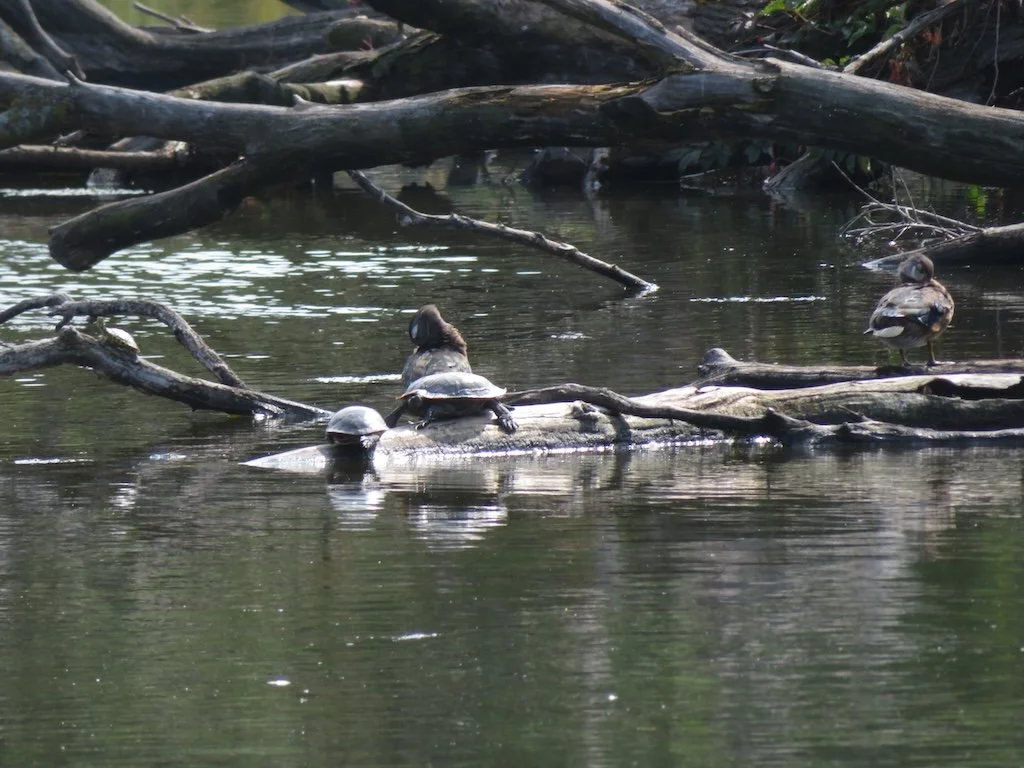
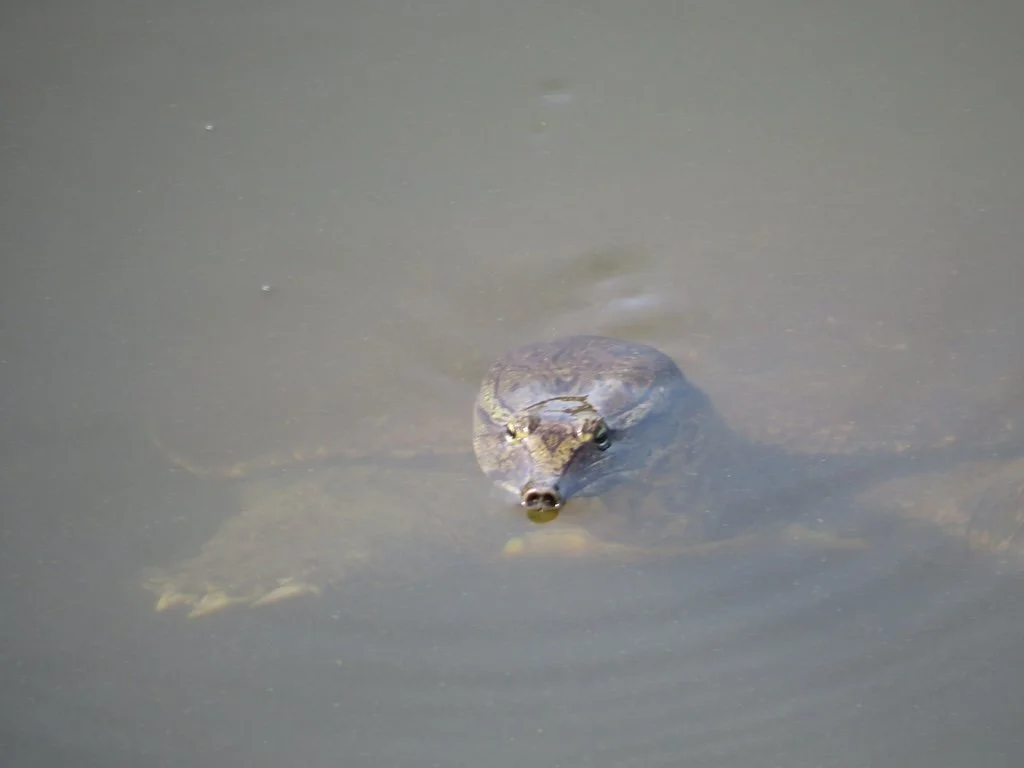
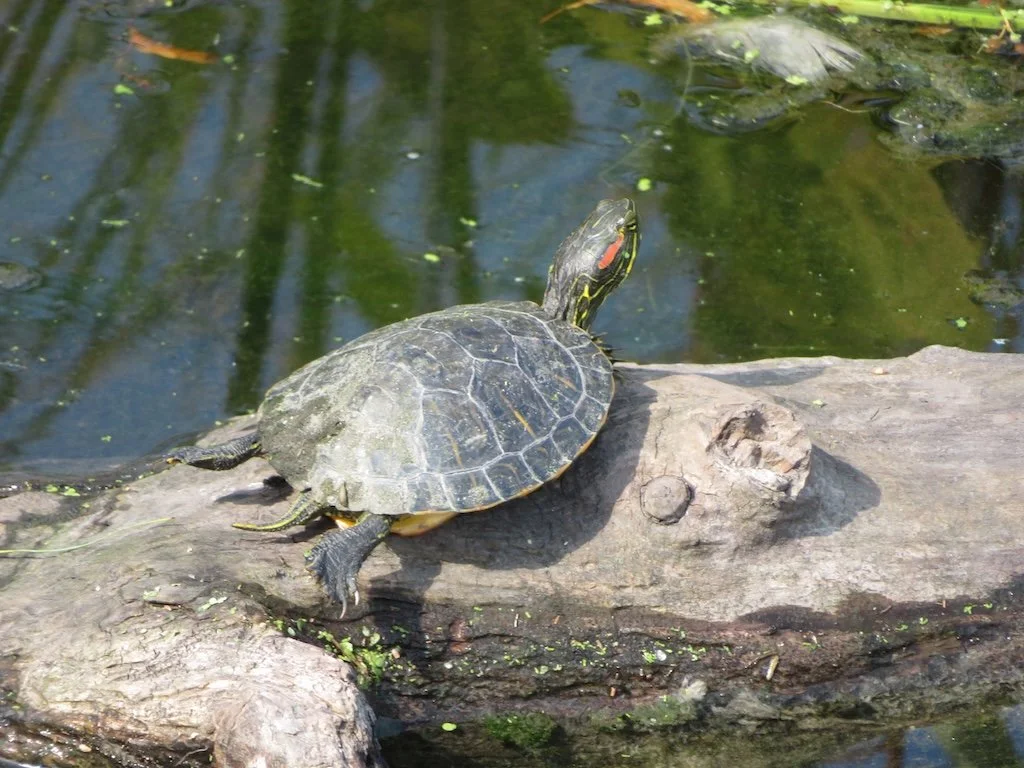
There were turtles out and about – including a soft shelled one.

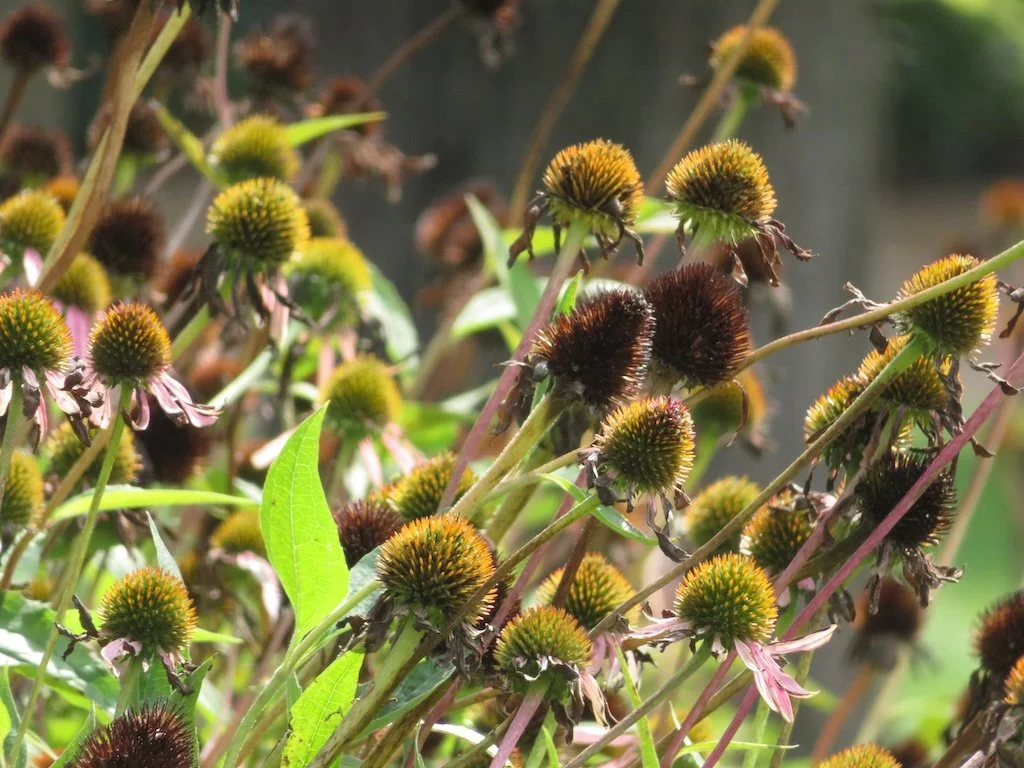
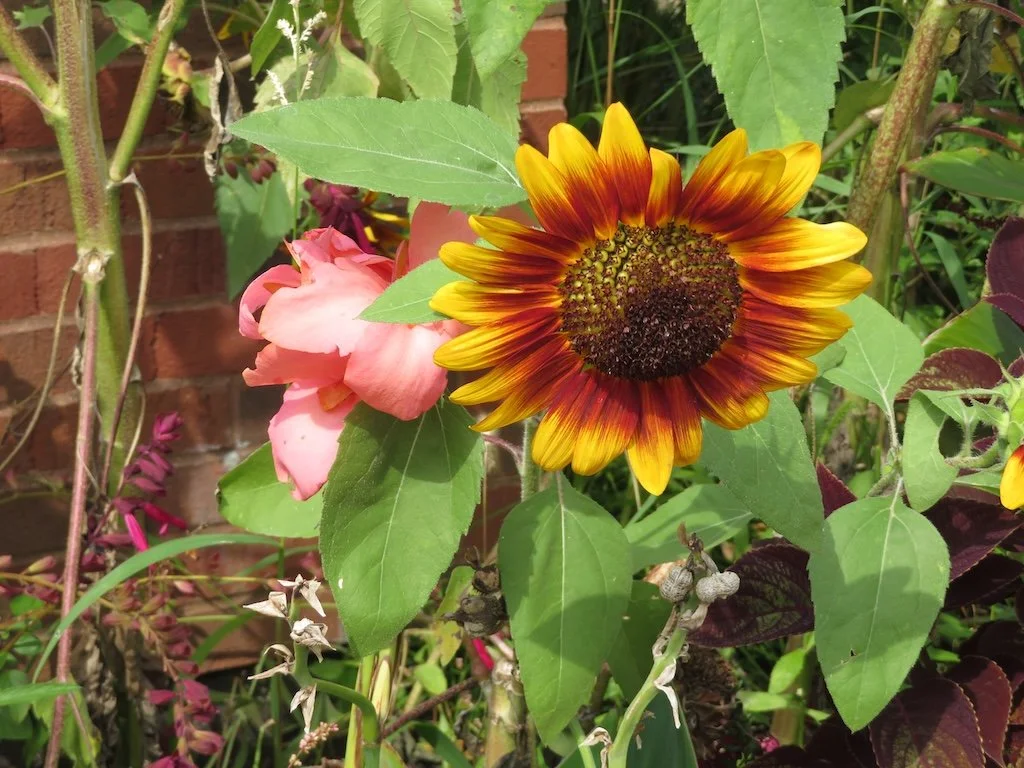
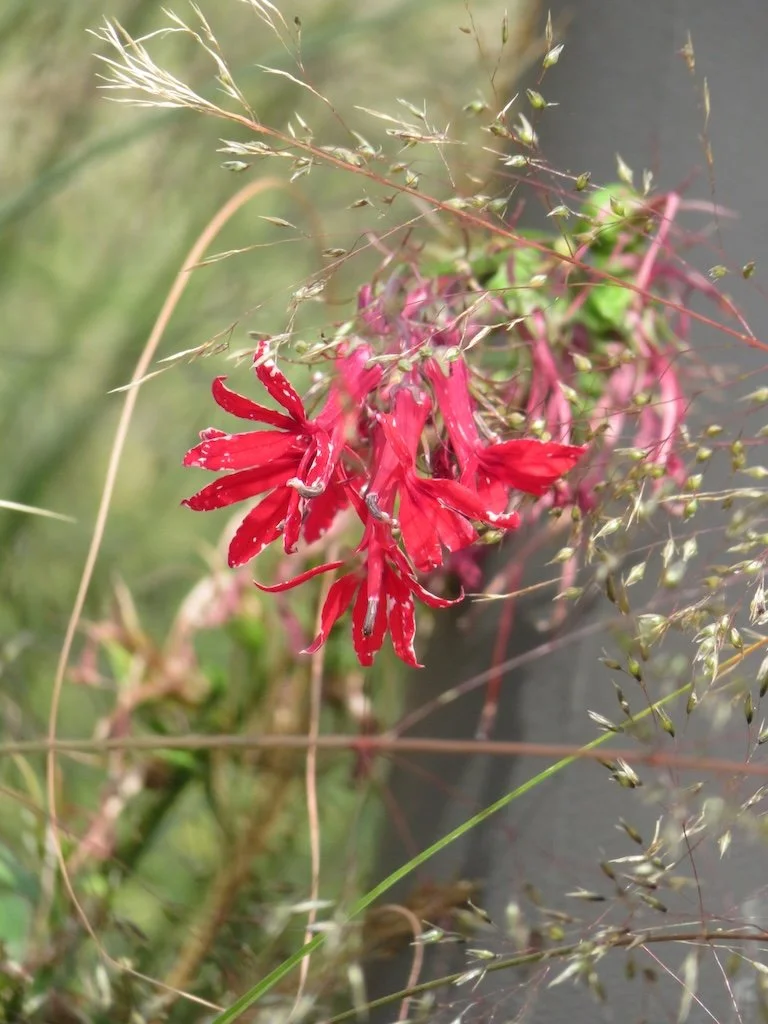
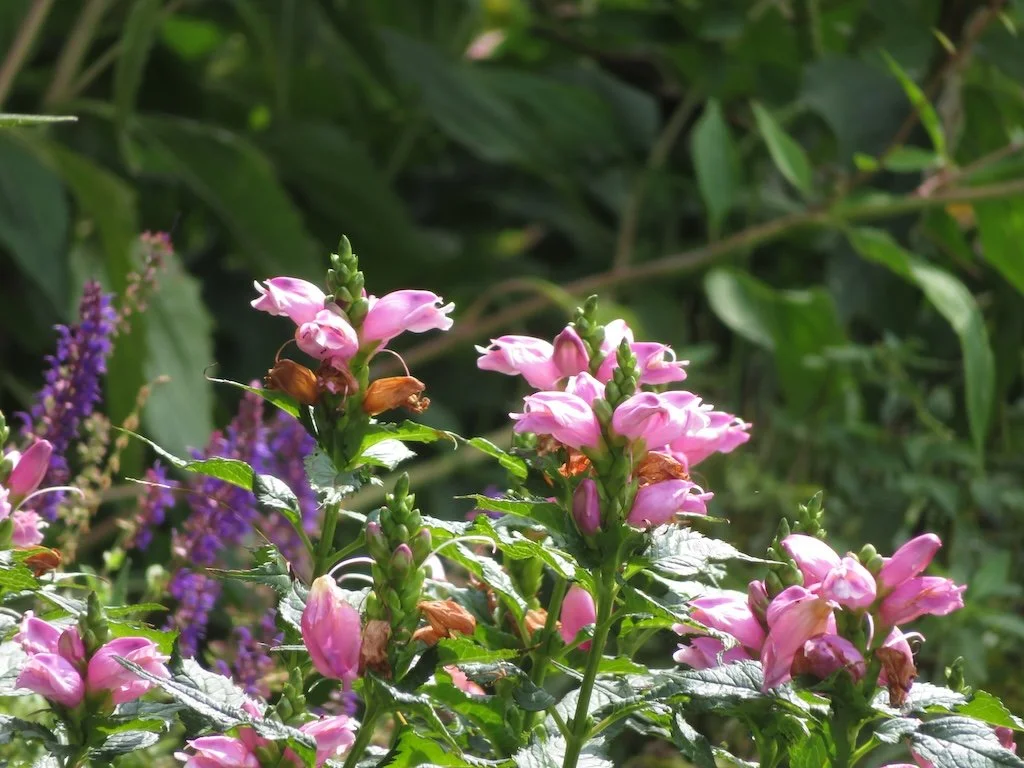
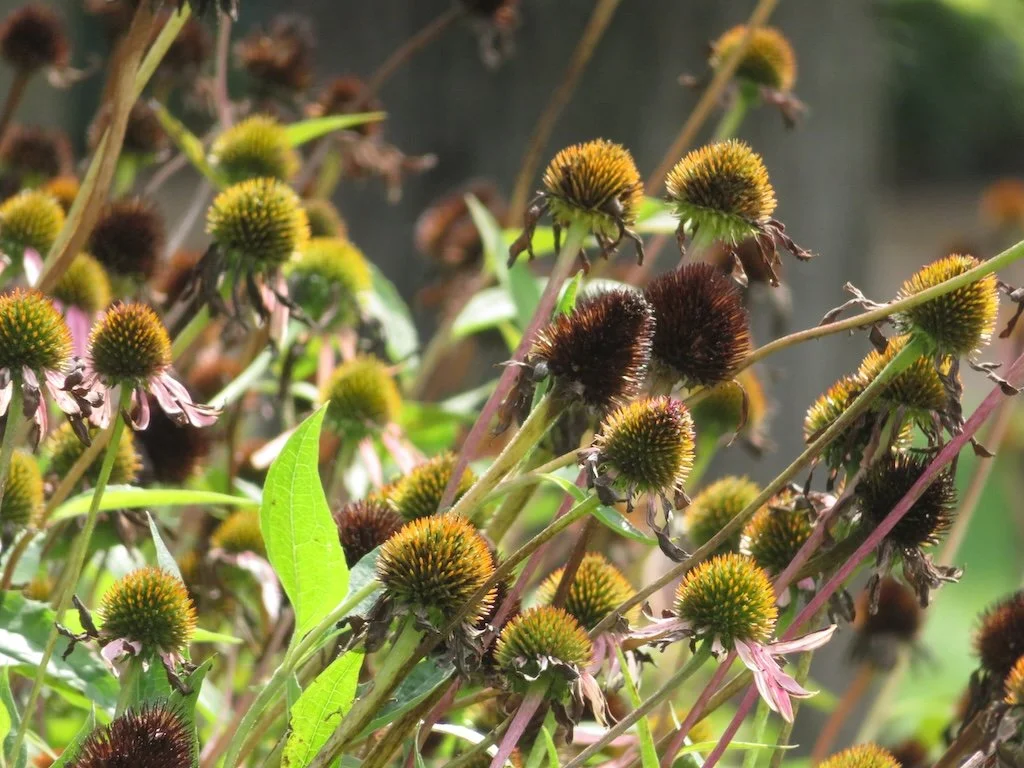
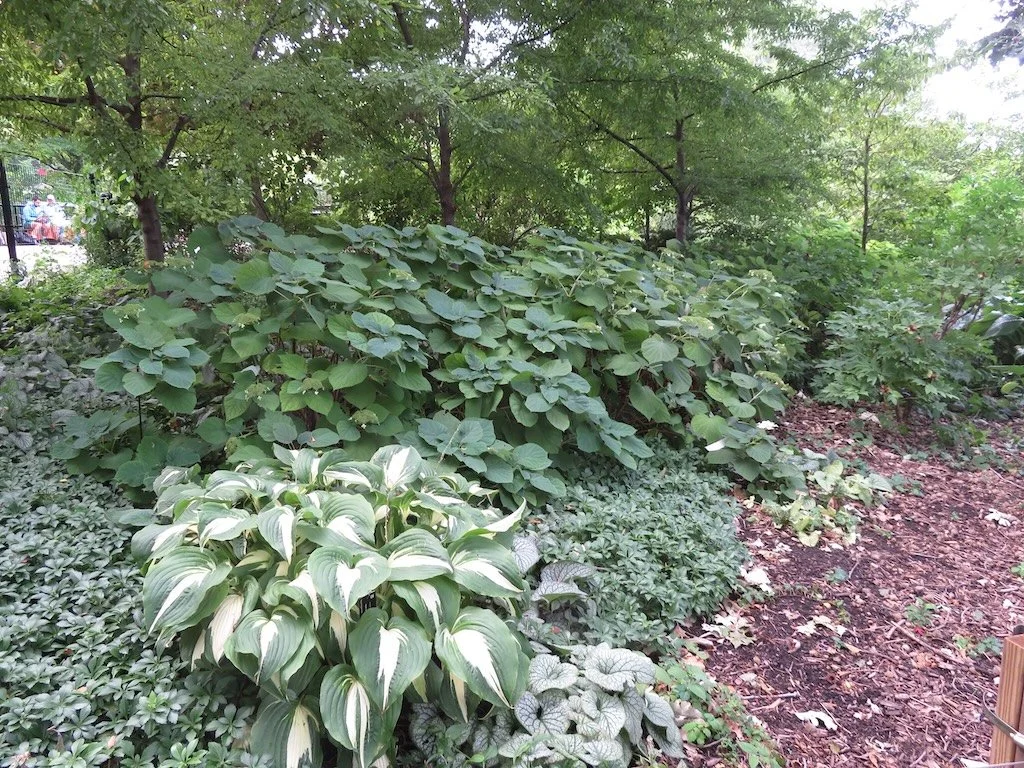
The plantings in the main part of the zoo are a mix of formal landscaping plants (non-natives) with some natives like coneflowers and turtlehead and sunflowers mixed in.

The zoo has a very old elm that is treated to keep it from succumbing to Dutch Elm Disease. They have started planting elms resistant to the disease.

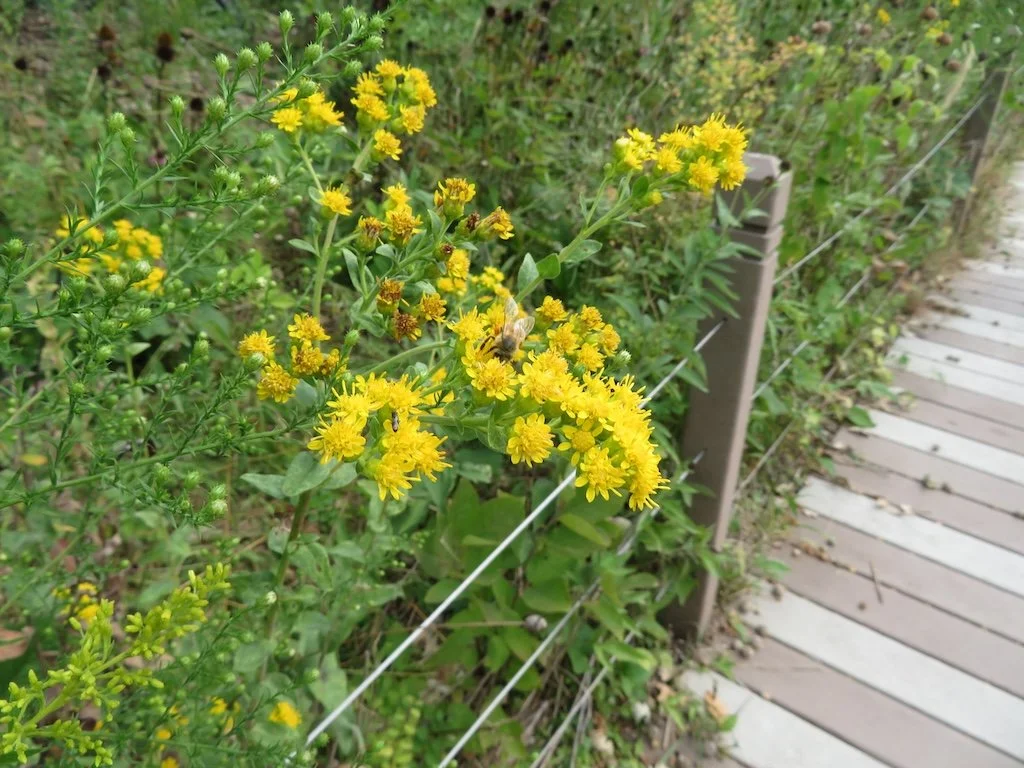
The walk around South Pond is landscaped with all natives….as close as the horticulturalist can to get prairie…with a few woody plants mixed in on the outer edges. I was surprised at how many plants I recognized! There were lots of yellows and seed pods this time of year!

We made the mistake of using Google Maps to show us the shortest route back to our car; it had exits from the zoo that didn’t exist! We circled back to find an exit….had a much longer walk than we would have had without technology!

Meadowlark – A Journal of Illinois Birds

This week’s ‘book of the week’ is 22 issues of a journal from the Illinois Ornithological Society from 2012-2022(available on Internet Archive). I enjoyed the photography and drawings of birds that are seen in the Midwest…close enough to where I live that I see at least some of them in areas of Missouri. Click on any of the images in the mosaic to see a larger version. The links to the volumes are below the mosaic; they contain additional images and interesting articles about birds seen in the state.

As I write this post, I am planning a trip to Illinois in a week or so….hoping I will see some of these birds while I am there!

Zooming – August 2025

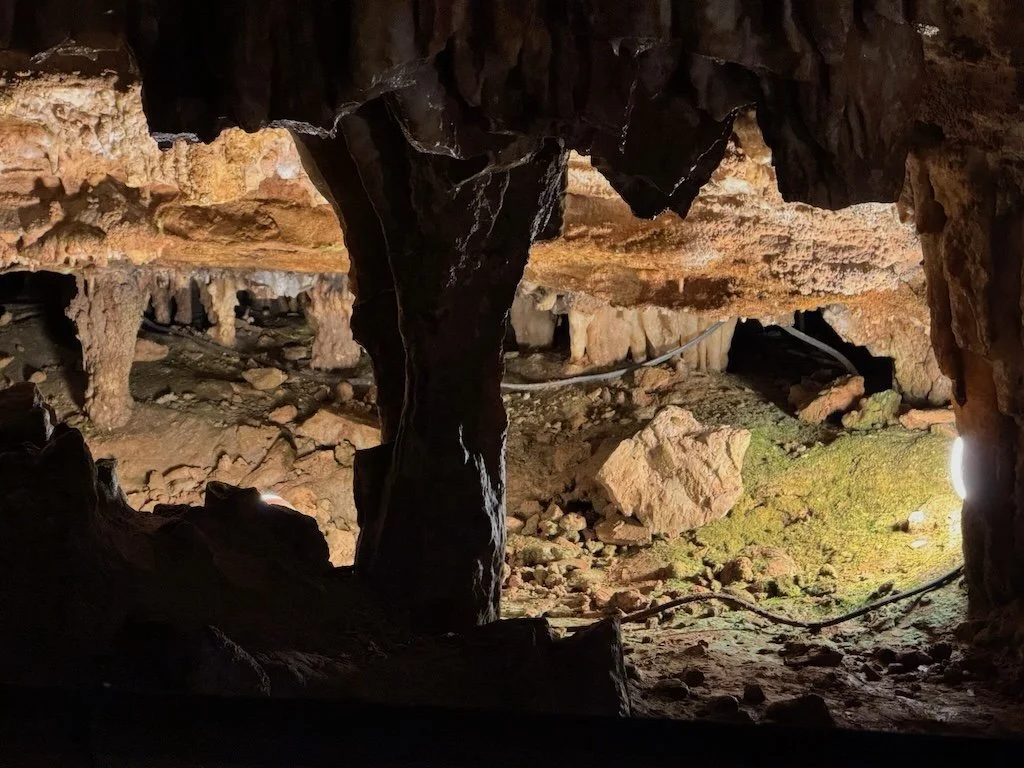
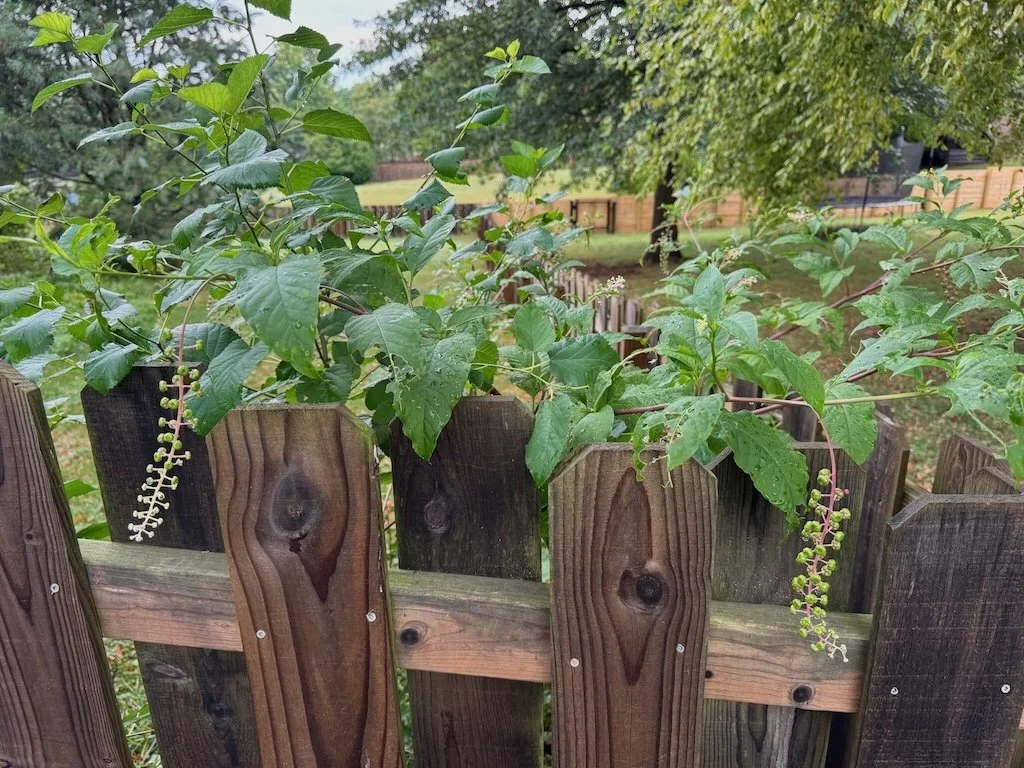
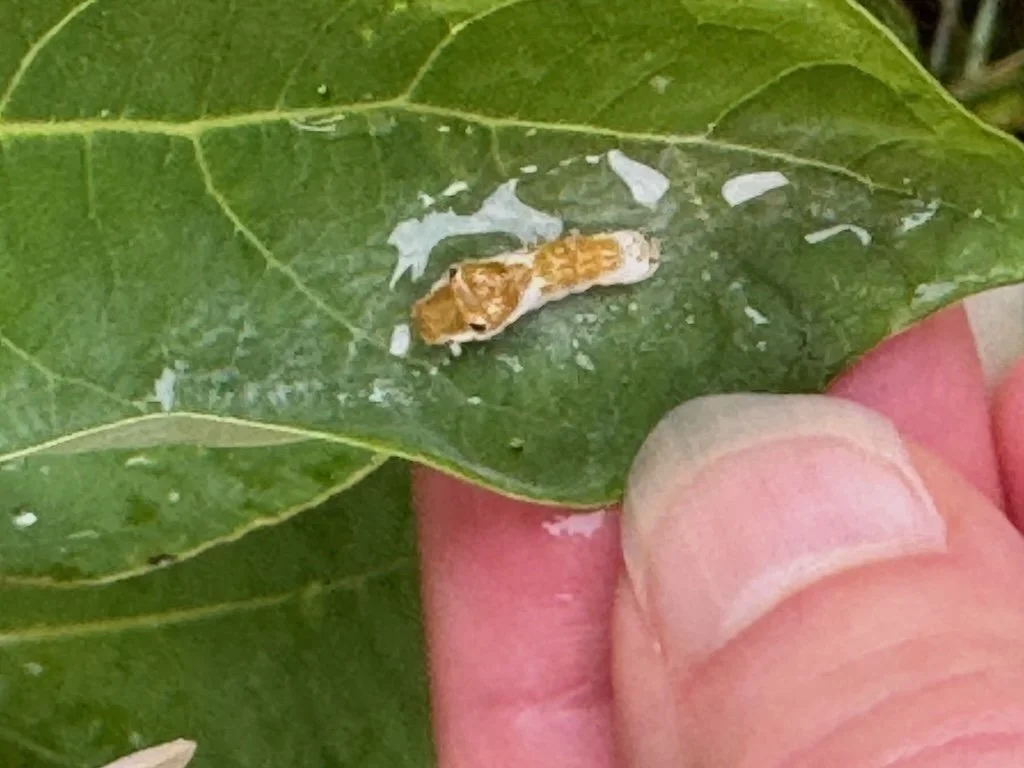
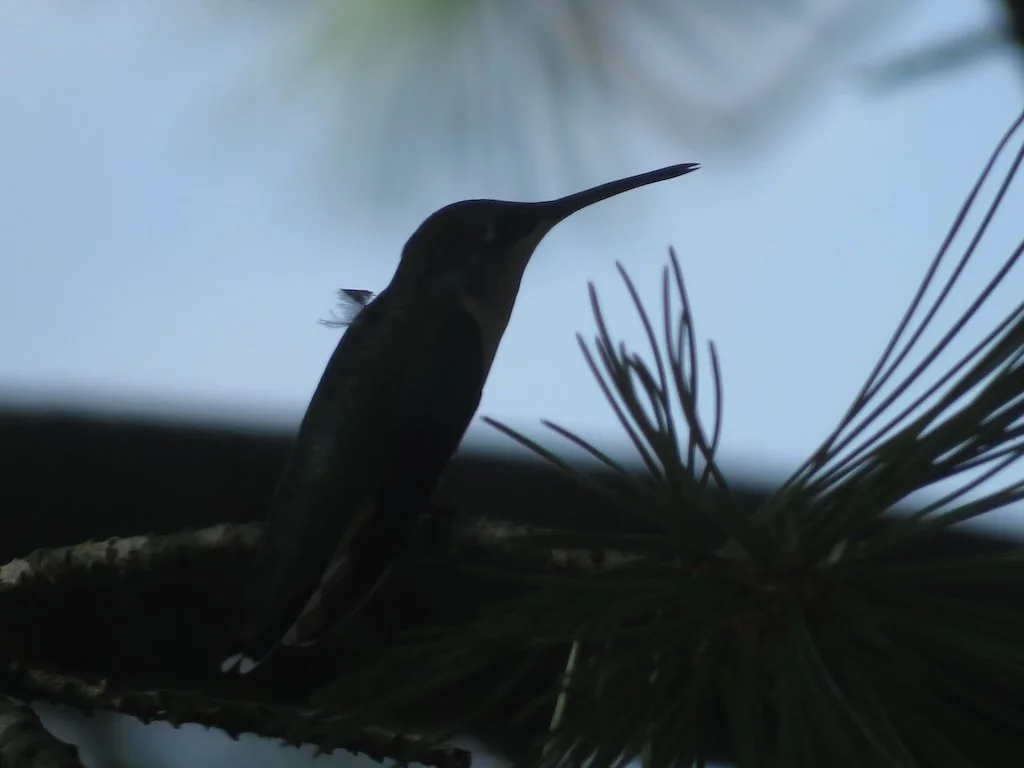
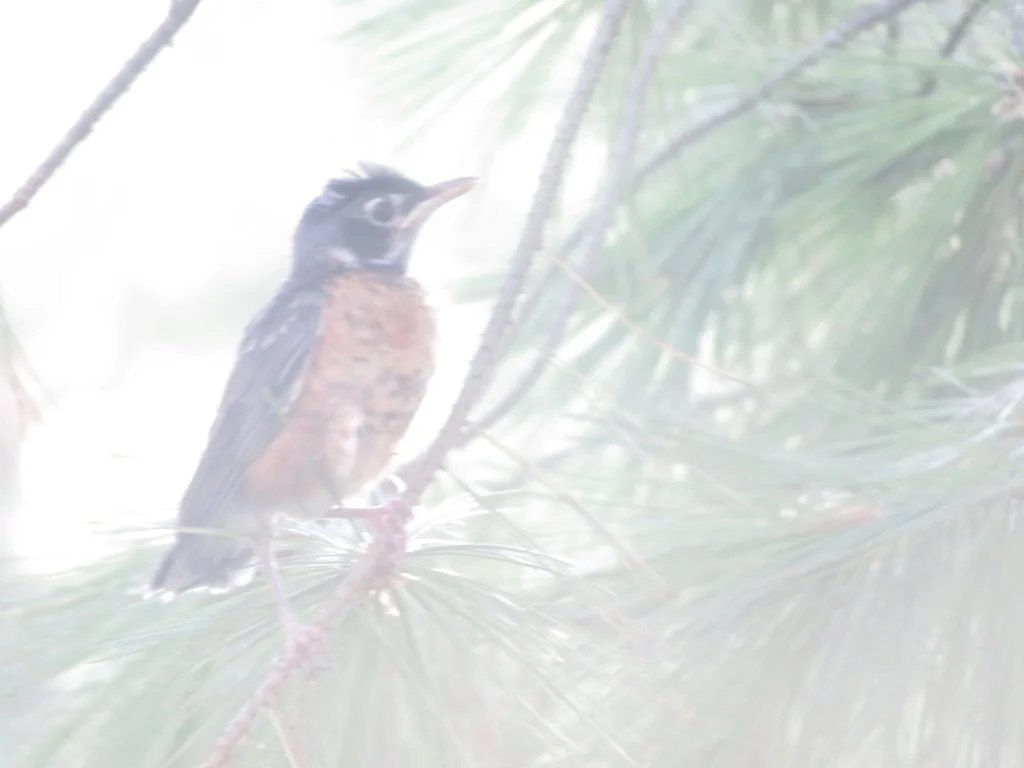
All the images I selected for this month’s zooming post were from places around Springfield MO and Berryville AR. The subjects were:

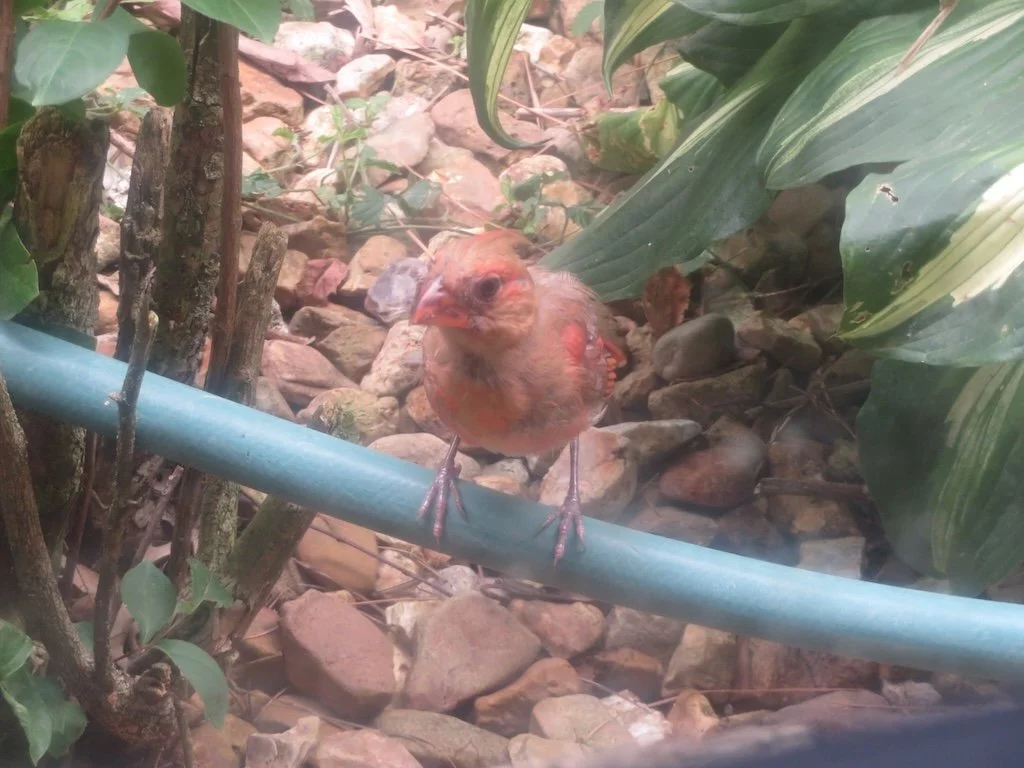
  • Juvenile birds (cardinal and robin) and an adult hummingbird

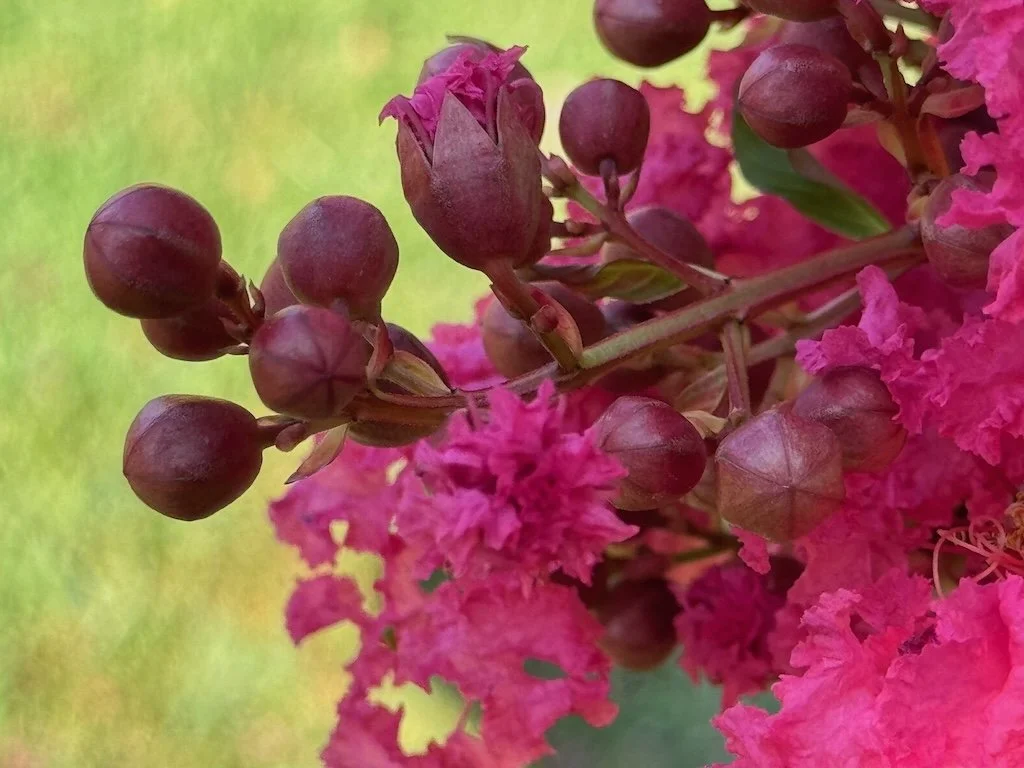
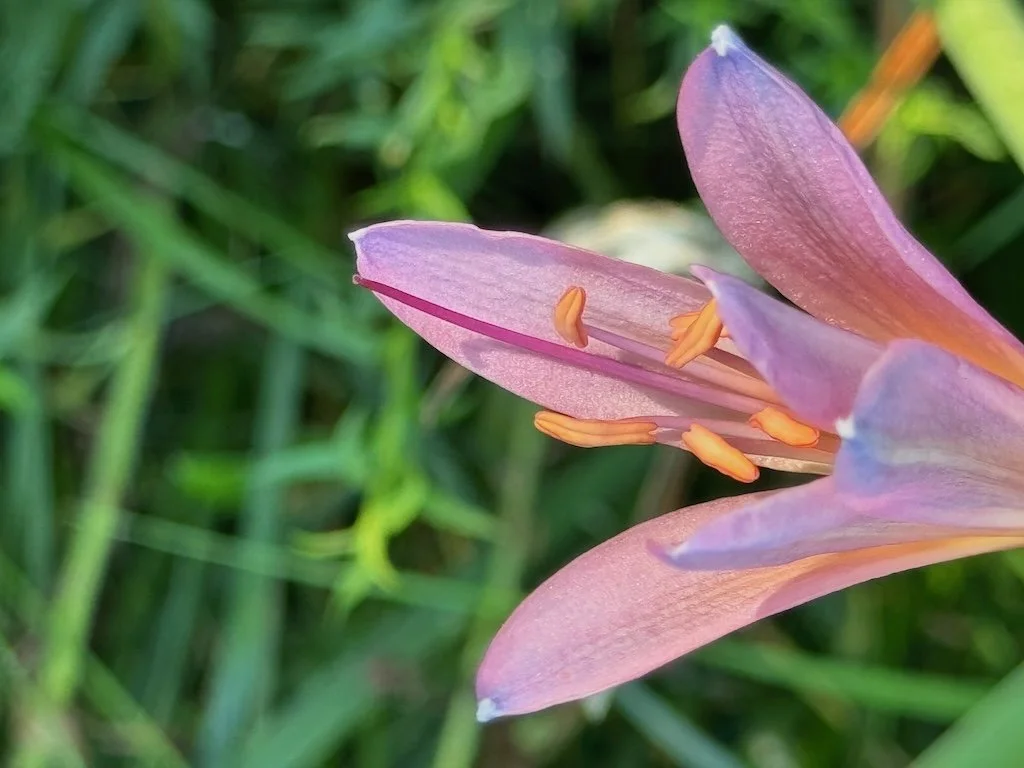
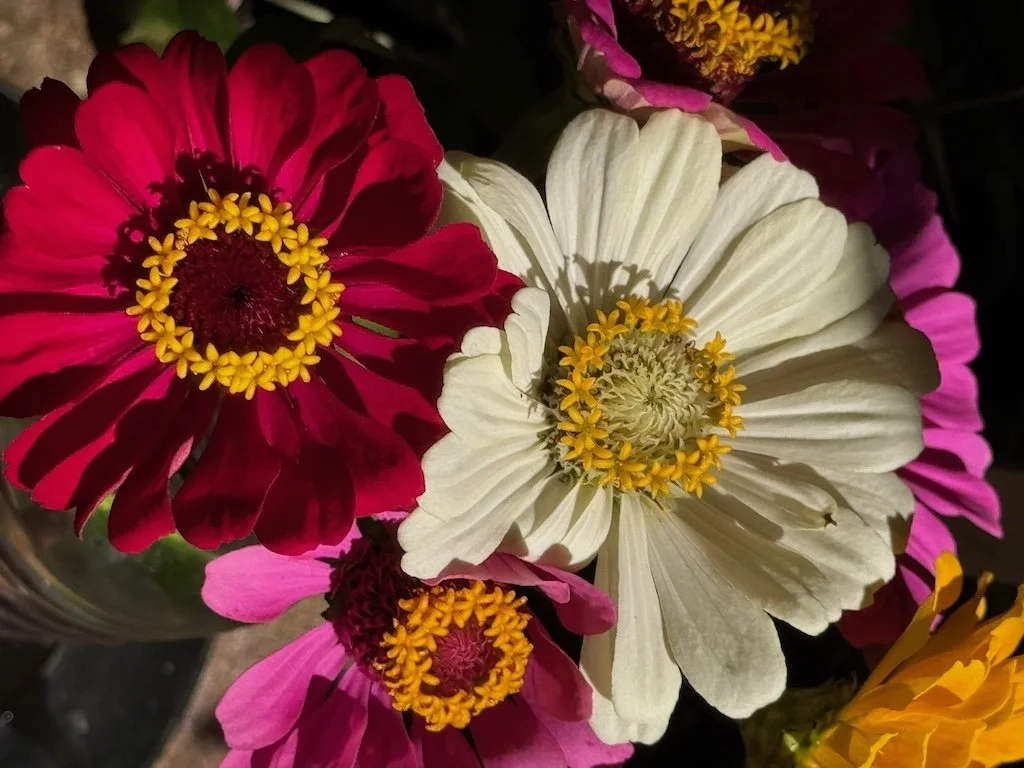
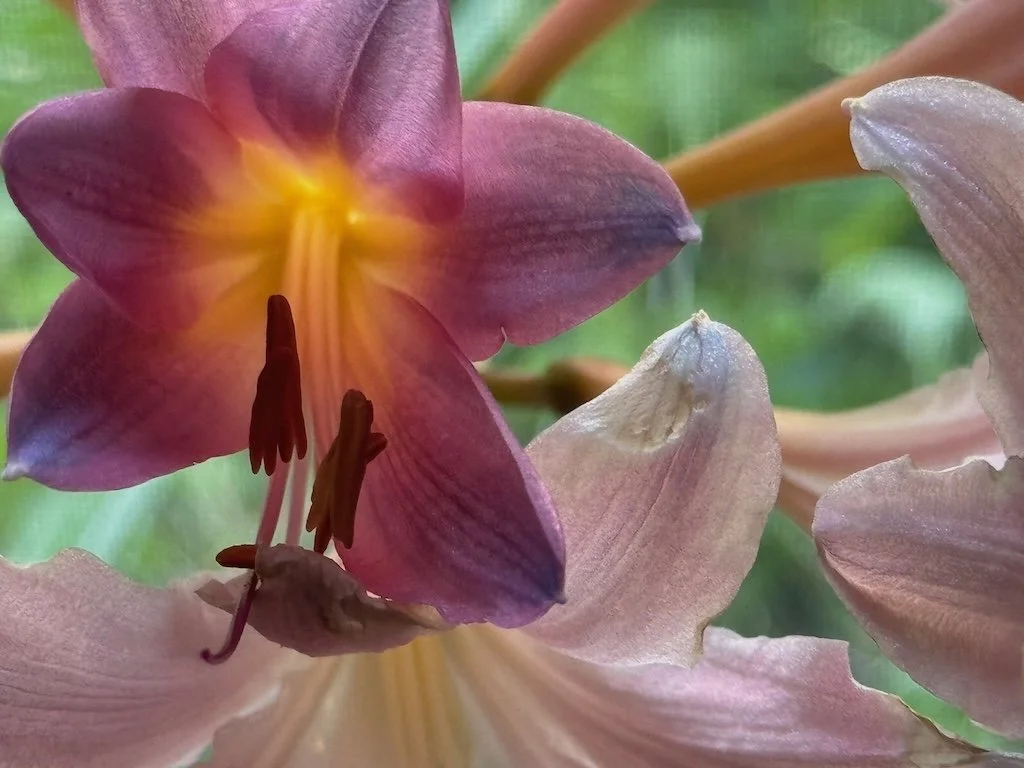
  • Flowers and plants (pokeweed, naked lady lilies, zinnias, crape myrtle, cone flowers, daylily)

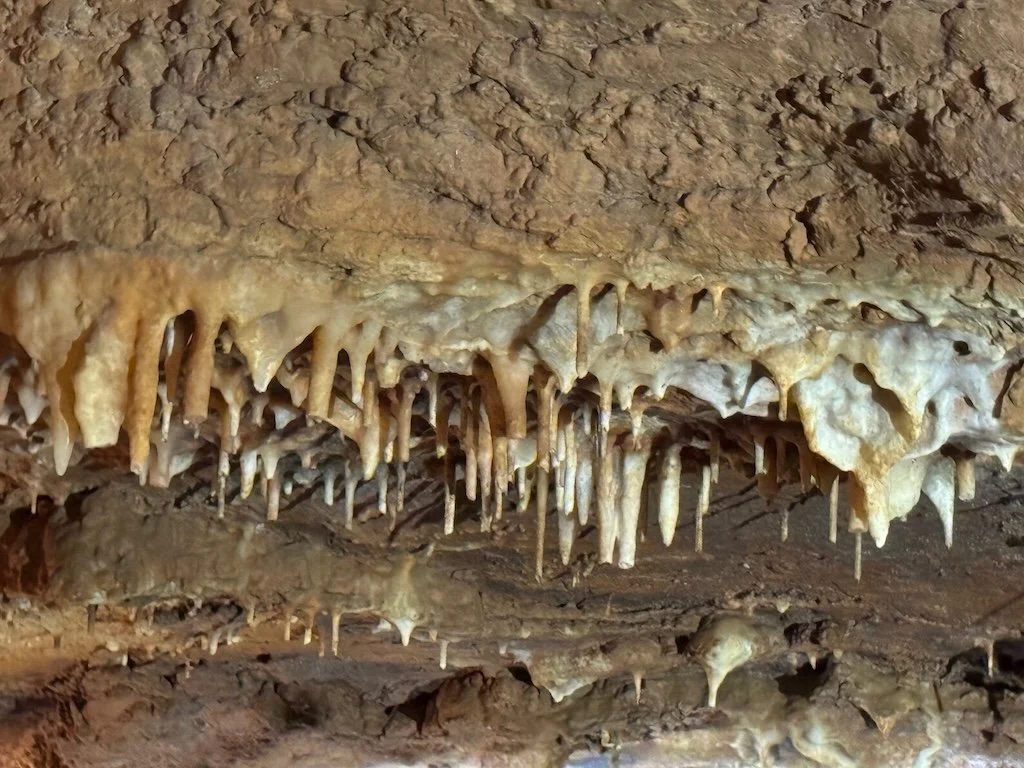
  • Caves (Cosmic and Onyx)

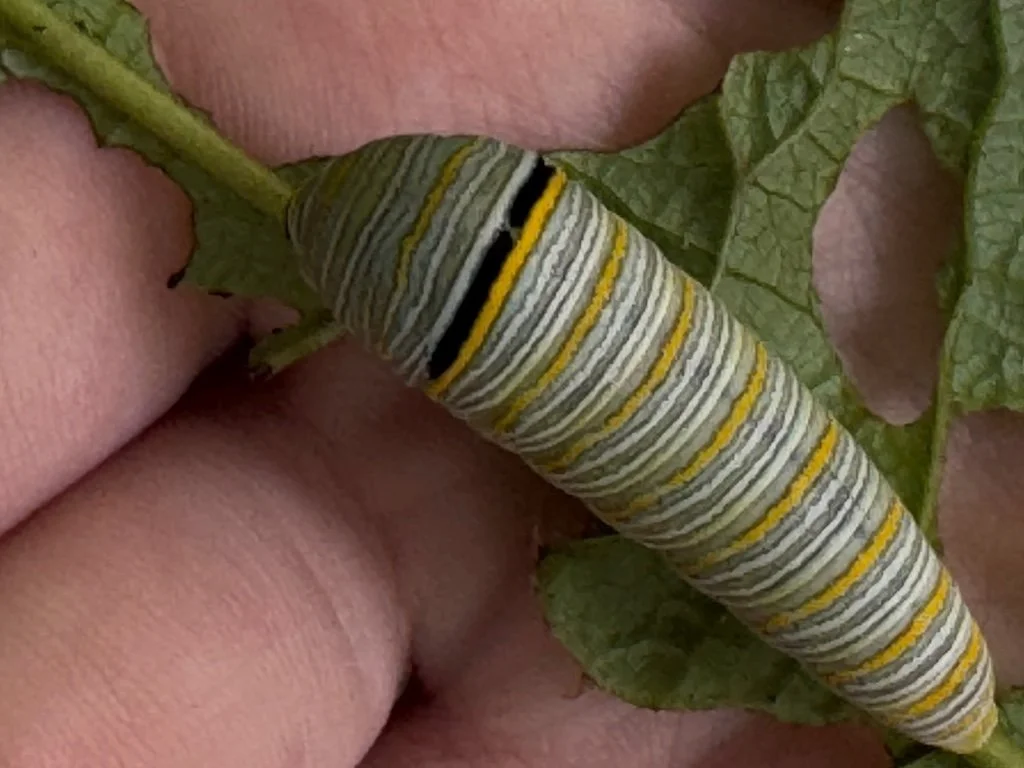
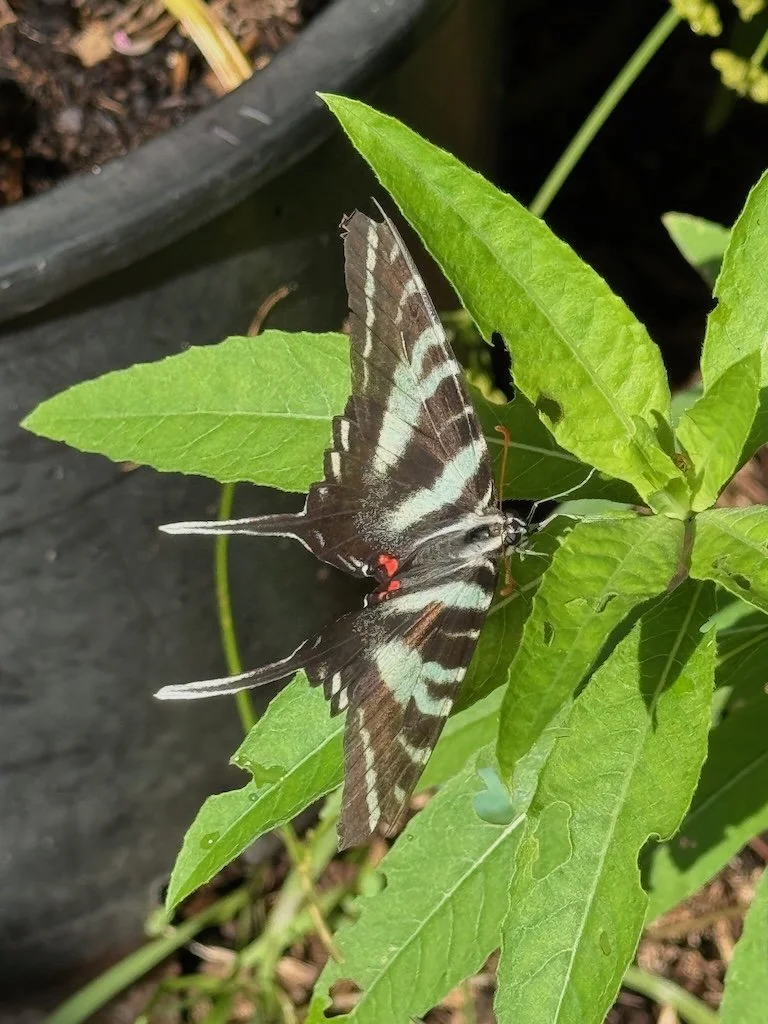
  • Caterpillars (spicebush swallowtail and zebra swallowtail)

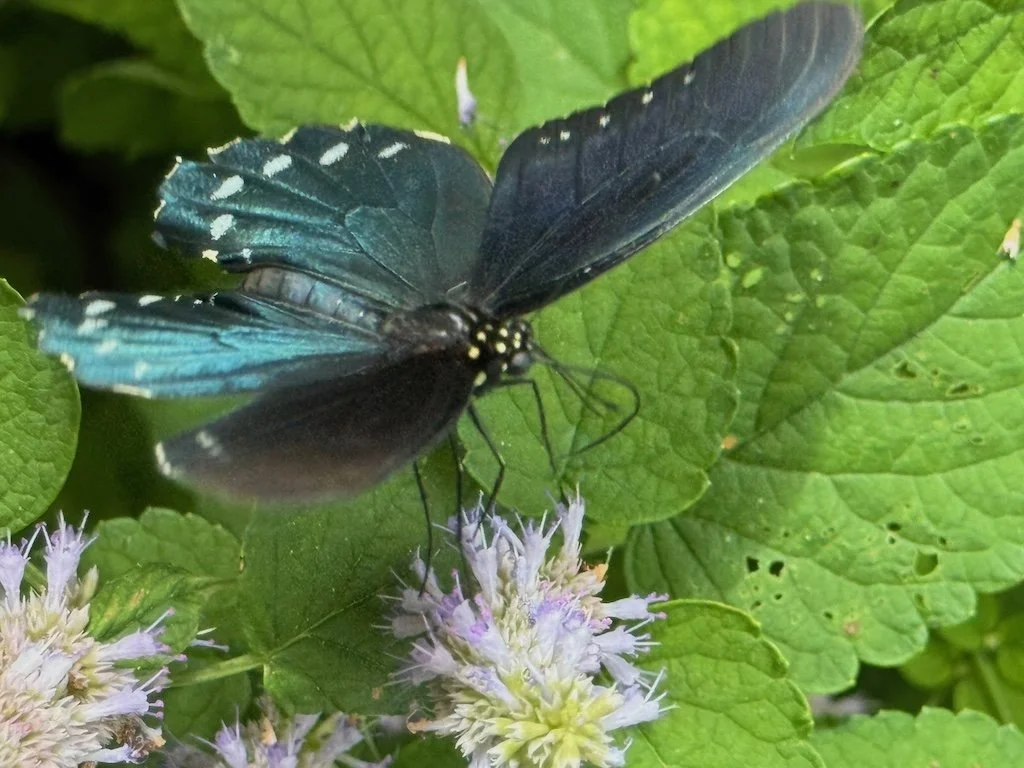
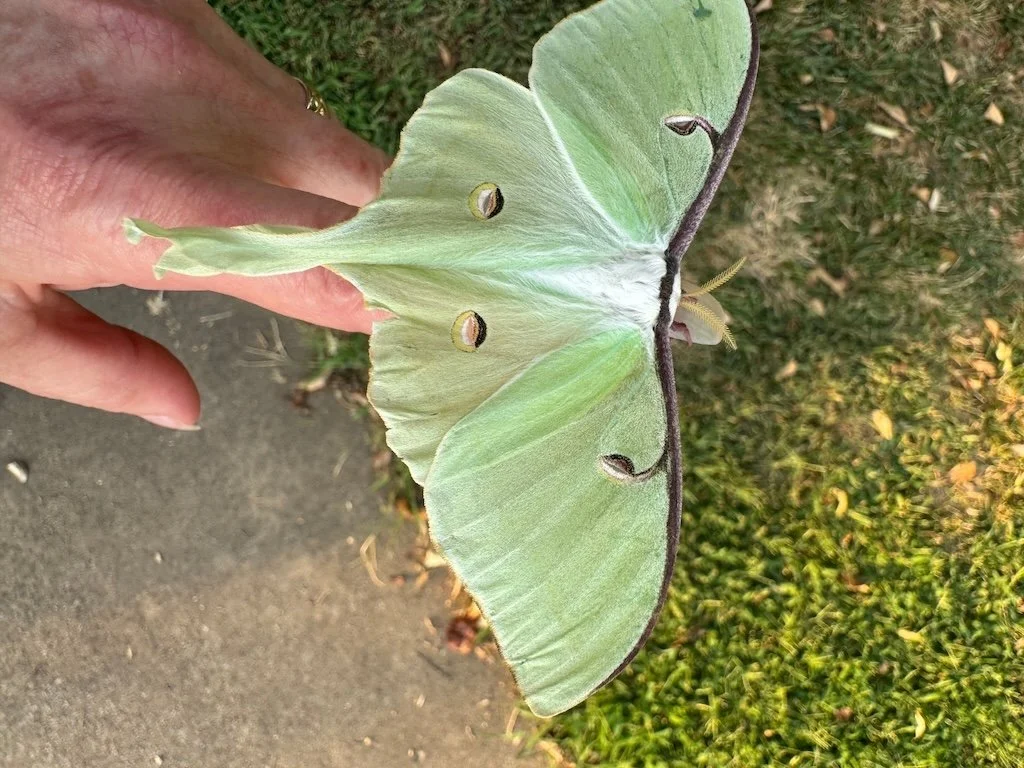
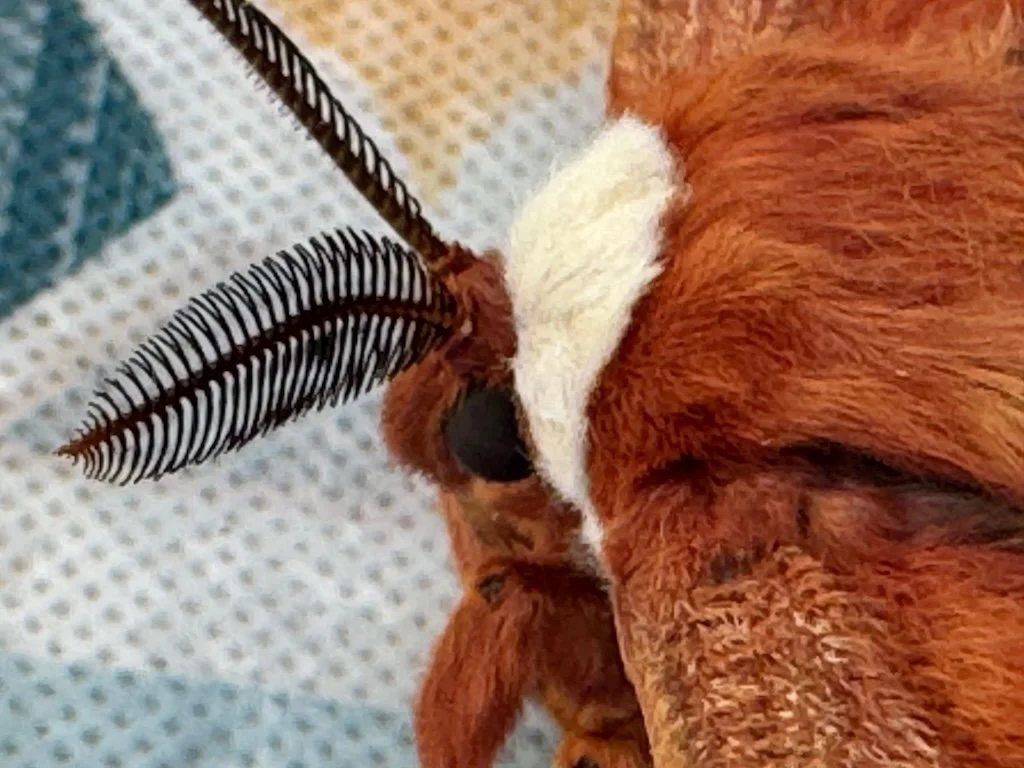
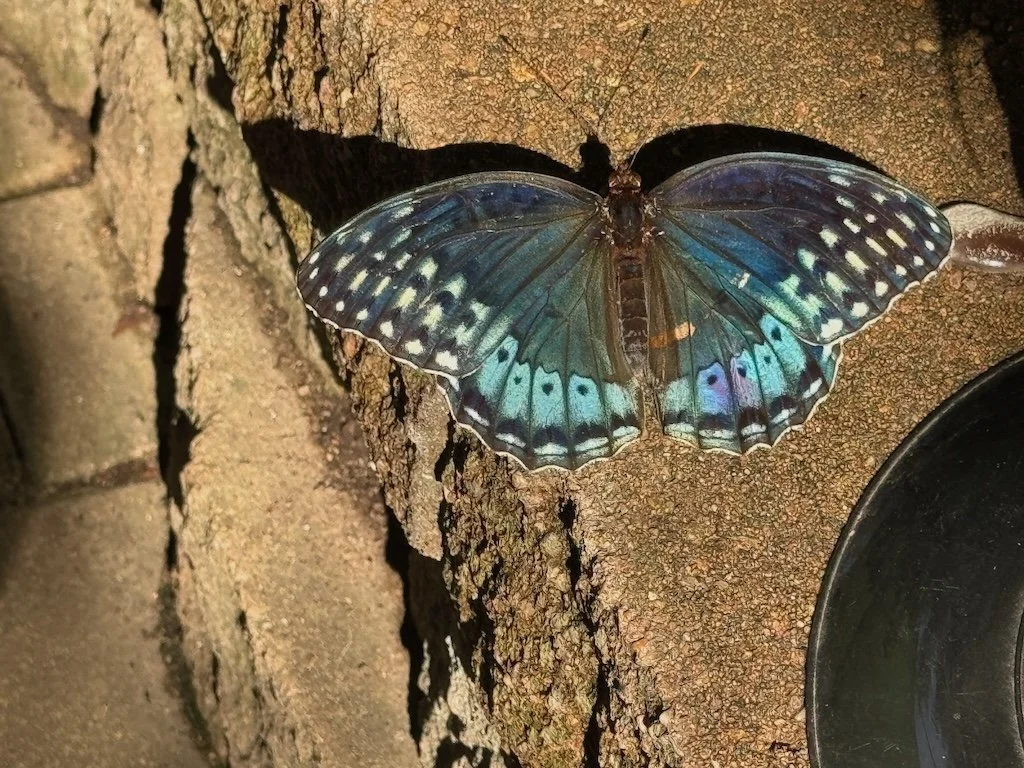
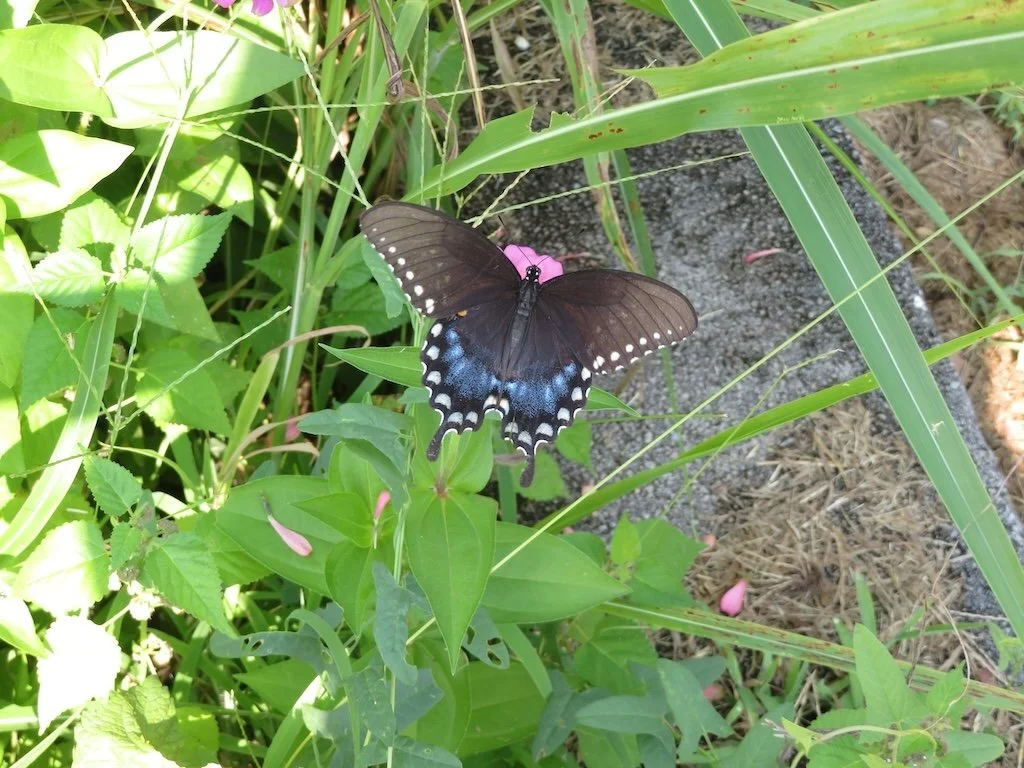
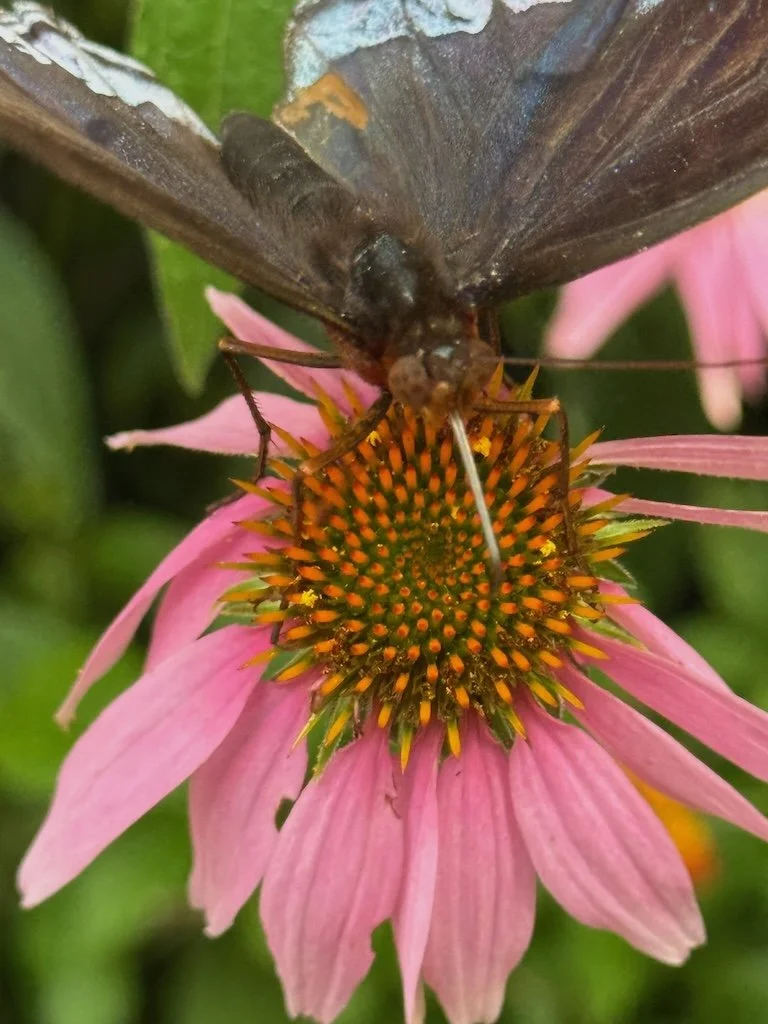
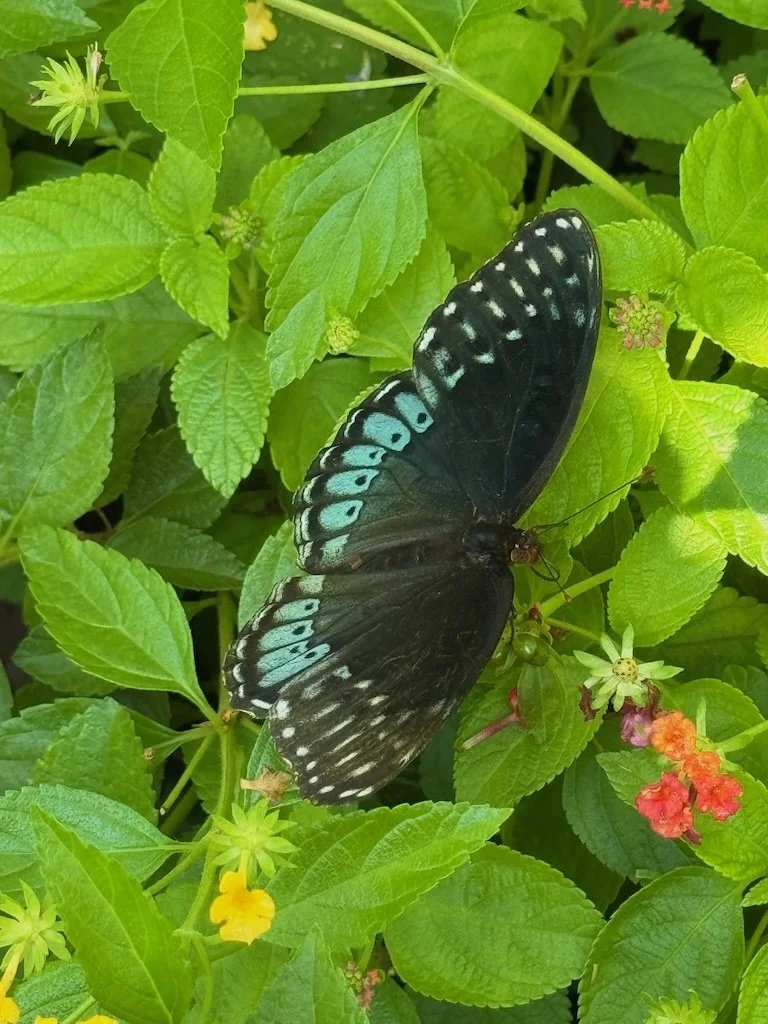
  • Butterflies and moths (spicebush swallowtail, red spotted purple, cecropia moth, luna moth

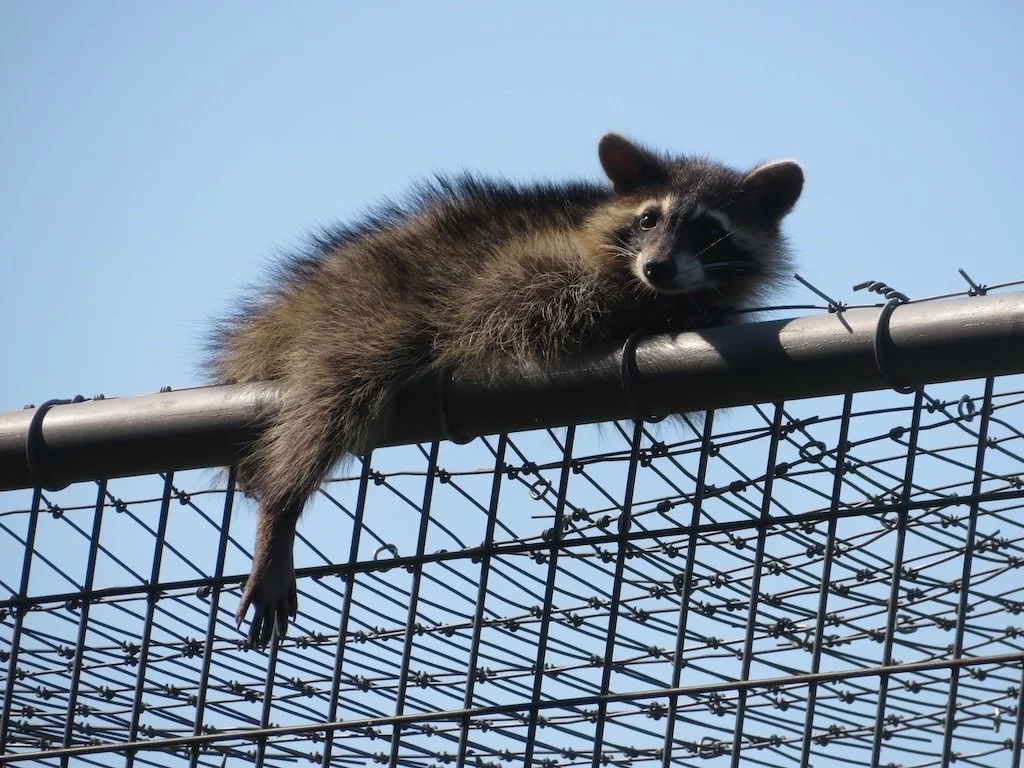
  • Juvenile racoon

  • Edge of a golf course scene

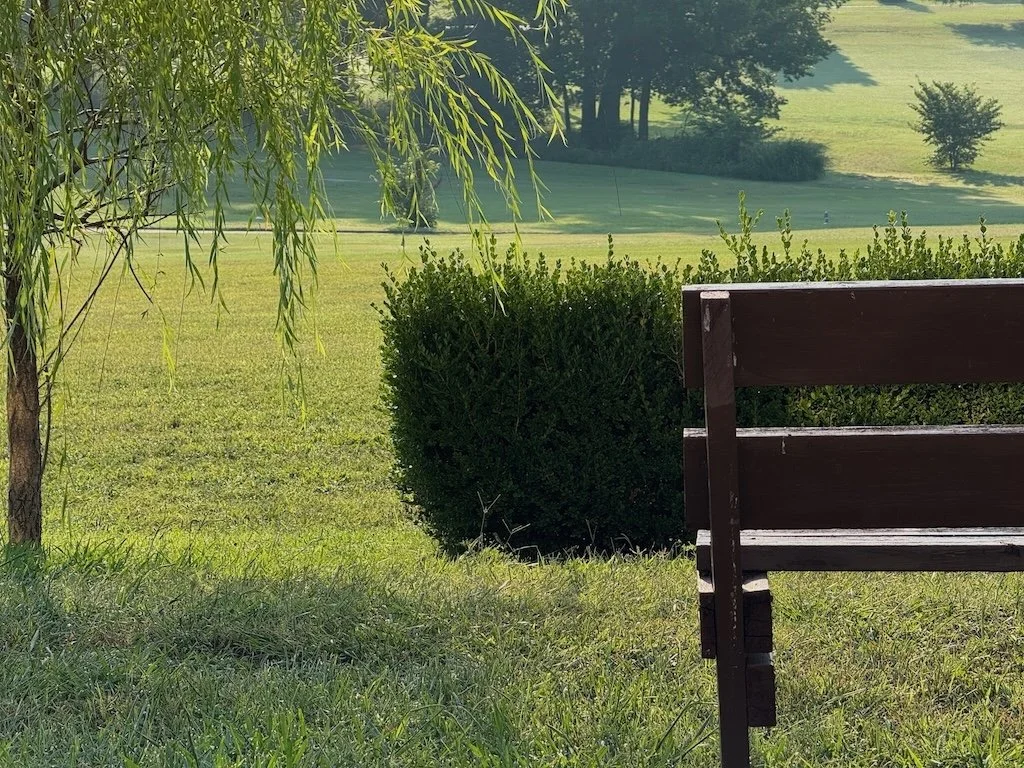
The picture of the juvenile robin was taken through a window and with camera settings that gave it a hazy look to capture the ‘feel’ of the day – it was a very humid August day! The one of a bench looking out onto a golf course was an attempt to capture the morning mood as we prepared to leave our Berryville hotel; it was a warm, sunny morning…full of bird songs…a good beginning of the day.

Enjoy the August 2021 slide show!

Pearson’s Birds of America

This week’s book is the Birds of America edited by Thomas Gilbert Pearson and published in 1917. Pearson was one of the co-founders of what became the National Audubon Society and was an American conservationist in the early decades of the 1900s…a time when egrets were killed for their plumes to be used in lady’s hats. The book includes 106 plates by Louis Agassiz Fuertes. It is available for browsing on Internet Archive.

Birds of America

Gleanings of the Week Ending July 5, 2025

The items below were ‘the cream’ of the articles and websites I found this past week. Click on the light green text to look at the article.

See the Face of a 10,500-Year-Old Woman, Reconstructed by Archaeologists and Artists – Based on well-preserved ancient DNA.

Rare, Mind-Bending M.C. Escher Works Are Up for Auction - Escher was a skilled artist who seamlessly bridged the worlds of art, mathematics, and science in the mid-20th century. Today, his influence remains as important as ever, with a fascinating body of work that continues to mesmerize and inspire minds across the world.

As Wind and Solar Grow, China Ships More Coal Overseas - Analysts say the era of “more renewables, more coal” in China is over, with solar and wind now set to displace coal, rather than supplement it. Even under conservative assumptions coal generation in China could soon peak and enter structural decline.

Work, wages and apprenticeships: sifting for clues about the lives of girls in ancient Egypt - Elephantine, a town at Egypt’s southern frontier near modern-day Aswan, provides a unique window into the urban life of some girls who worked in textile workshops during the ancient Egyptian Middle Kingdom, which dates approximately 2030–1650 BCE. Girls received payment for their labor. It also suggests a structured apprenticeship system where young girls (and boys) worked alongside experienced craftswomen. Historians must always look beyond elite contexts to incorporate diverse evidence types – administrative documents, archaeological remains, and artistic representations – to construct a more complete picture of ancient lives.

Earth’s Clouds on the Move - Clouds are common on Earth, but they are ephemeral and challenging to study. Remote sensing has helped scientists tremendously by enabling consistent, global tracking of the elusive features, even over inaccessible areas like the poles and open ocean. Two published studies: 1) Where storm clouds form has changed. The implications for the climate are significant: This has added a large amount of warming to the system. 2) The shift in storm clouds increased the amount of energy absorbed by the oceans by about 0.37 watts per square meter per decade—a substantial amount on a planetary scale. Big question: What has caused the reduction in reflective storm clouds and whether the trend will continue.

Sinkhole Exposes Remnants of Medieval English Hospital - Walls hidden just beneath the city streets that once belonged to the twelfth- or thirteenth-century St. Leonard’s Hospital. The institution was built just after the Norman conquest and replaced the earlier St. Peter’s Hospital, which was founded by the Anglo-Saxon King Aethelstan. It was a place for caring for the unwell, elderly, and the condemned, but also served as an orphanage, helped feed the poor, and provided meals for the prisoners in York Castle. The hospital was destroyed during the Reformation under the reign of Henry VIII.

Lightning Strikes the Arctic: What Will It Mean for the Far North - A warmer world is expected to bring more thunderstorms, especially at higher latitudes. Scientists are now reporting a dramatic surge in lightning in the Far North and are scrambling to parse how this could affect wildfires, the chemistry of the atmosphere, and Arctic ecosystems.

Scavenger Animals Are in Trouble, and That Could Spell Bad News for Human Health - Scavengers are in trouble—and their decline could be harmful to human health. Half of the 17 obligate scavenger species included in the study are considered “vulnerable” or “critically endangered” by the IUCN. When they are reduced in numbers or disappear, some smaller, occasional scavengers are proliferating. These creatures, such as rodents and feral dogs, tend to transmit diseases to humans.

How do sleep trackers work, and are they worth it? A sleep scientist breaks it down - Most modern sleep trackers do a decent job of estimating your total sleep each night. Some are more accurate for sleep staging, but this level of detail isn’t essential for improving the basics of your sleep. Focus on improving your healthy sleep strategies and pay attention to how you feel during the day.

Is an apple a day really good for your health? - Eating an apple a day is great– but only if that is part of a diet rich in various other plant-based foods, since that is a key driver of good health.

Zoologia typica

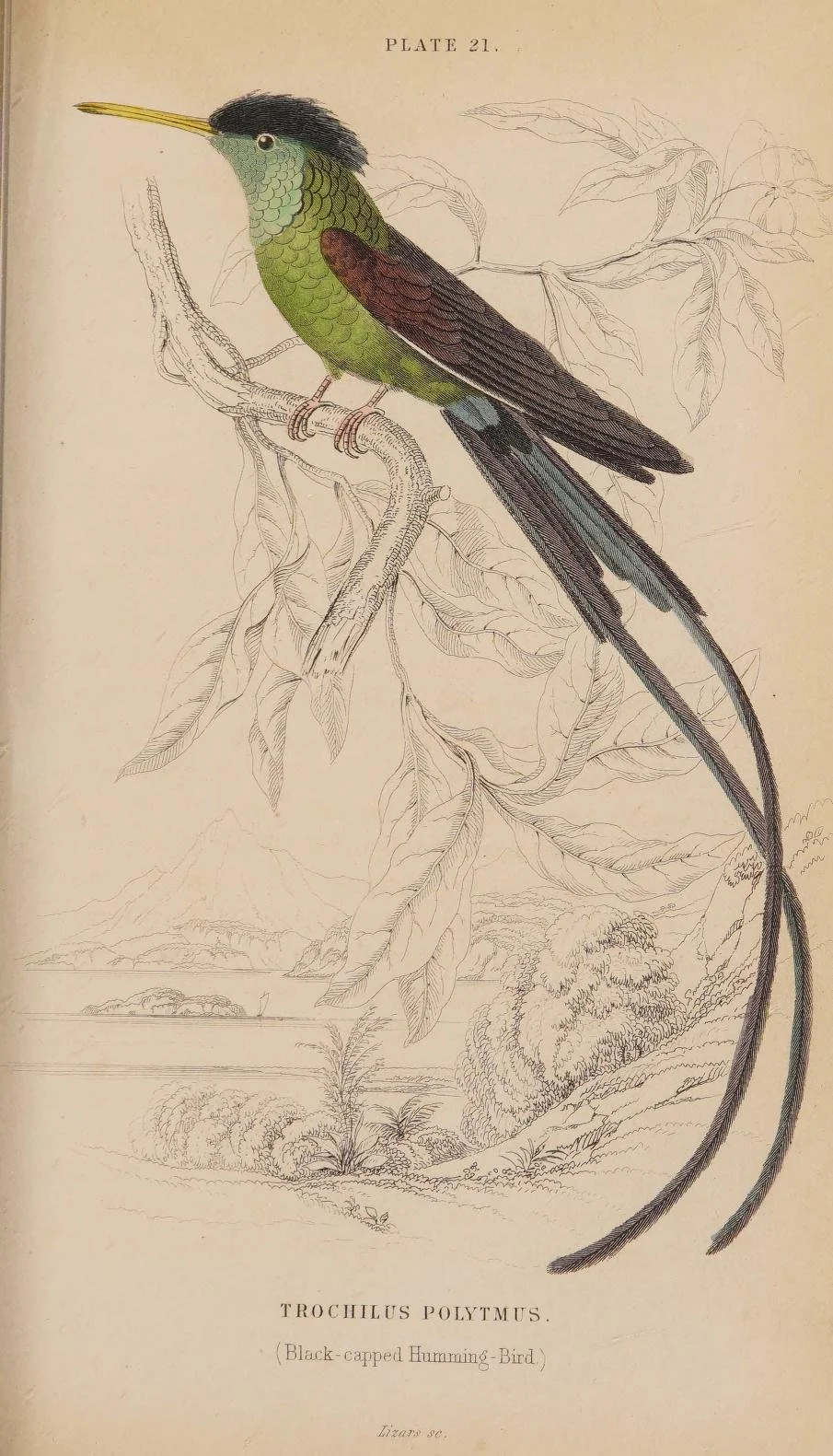
Louis Fraser was a British zoologist and collector active in the mid-1800s. He travel widely and spent his last years in America. His Zoologica Typica, or figures of the new and rare animals and birds in the collection of the Zoological Society of London, this week’s book of the week, was published in 1849. It is lavishly illustrated and now easily browsed on Internet Archive.

Zoologia typica

Fledging Robins

The first brood of robins in our yard has fledged! I’m not sure where the nest was but I have been seeing the fledglings looking and finding food in the area between our eastern white pine and hollies…among the pine needles, hostas, wild strawberries and violets.

They are smaller than the adults and transitioning to adult plumage. They still have a few white marks on their head and back…and their breast is not all red yet. At first, they are clumsy fliers too; one grabbed onto the screen of my office window and held on for a few seconds before fluttering down to the flower bed below.

I am celebrating that my work to transition the area from grass over the past two years (i.e. adding pine needles collected elsewhere in the yard to those already there from the white pine, transplanting hostas, letting the wild strawberries/violets/lambs ear encroach, and adding an American Spikenard) has resulted in a place the young robins found…and found food!

Zooming – April 2025

Springtime photography….is April the best month? It seems like that might be true this year. The photographs were taken at the Springfield Botanical Gardens, my yard, the Missouri State University Campus, my daughter’s yard, Onondaga Cave, and 2 volunteer activities. There were so many images to choose from; I selected 23. I used three different cameras – iPhone 15 Pro Max, Canon Powershot SX730 HS, and Nikon Coolpix P950. Enjoy the slideshow!

Gleanings of the Week Ending April 26, 2025

The items below were ‘the cream’ of the articles and websites I found this past week. Click on the light green text to look at the article.

Liberation of Bergen-Belsen: how a lack of protective clothing cost lives – Typhus was rampant when the Bergen-Belsen concentration camp was liberated by British troops on April 15, 1945. Anne Frank had died there just a few weeks before. What happened in the immediate aftermath of liberation is described.

How climate change is supercharging pollen allergies – Longer growing season….and extreme allergy events where trillions of pollen particles, sucked up into the clouds as the storm formed, splintered by rain, lightning and humidity into ever-smaller fragments – then cast back down to Earth for people to breathe them in. In one such event in Australia - emergency rooms saw eight times as many people turning up with breathing problems as they would normally expect. Nearly 10 times as many people with asthma were admitted to hospital. 10 people died. It’s been called ‘thunderstorm asthma.’ In the US, pollen levels are expected to be higher than average in 39 states…with worse symptoms.

Colorful city birds – Brown shades are more common in natural environments than in cities. Successful urban bird species have more elaborate colors in their plumage, which is especially true for females. Cities seem to favor more colorful birds -- probably because there are fewer predators in urban areas and 'being seen' poses a lower risk than in rural areas.

See the Titanic in Remarkable Detail With a 3D Scan – From National Geographic. …a digital reconstruction of the wreck.

Royal Meteorological Society Celebrates 10 Years of Incredible Weather Photography – Great photographs an interview with Kirsty McCabe, UK's Royal Meteorological Society’s senior broadcast meteorologist and editor of their MetMatters blog.

Odd-Looking Blue Creatures Are Washing Up in Large Groups on California’s Beaches Once Again –The jellyfish-like creatures in this post are Velella velella – thin, oval shaped blue or purple that usually are 3-4 inches long. They use their stinging blue tentacles to prey on plankton.

Meet Four Amazing Endemic Parrots from New Zealand – They are quite different from each other…and the parrots we see in zoos.

Why you should avoid lotions and creams that contain 'fragrance' – Avoiding fragrance is easy enough…but other things are harder to detect and avoid.

Six immersive experiences for more joy – The 6 seems reasonable to me…most of them I had derived for myself already!

Ten National Wildlife Refuges That Need Our Support Most – All the wildlife refigures I have visited over the past few years have unmet maintenance needs. Funding for materials, equipment and staff has been too low for some time. There are Friends organizations that try to address some of the needs…but it is never enough. Some of the places that became refuges because they are very special are suffering now…maybe being irrecoverably harmed.

Science of Terra Nova British Antarctic Expedition

The Terra Nove expedition took place between 1910 and 1913. It was led by Captain Robert Falcon Scott who died after making a last entry in his diary on March 29, 1912; his death along with the men in his party, overshadowed the scientific contributions at first.

The 12 scientists who participated—the largest Antarctic scientific team of its time—made important discoveries in zoology, botany, geology, glaciology, and meteorology. Volumes 4-8 of the Natural History Reports from the expedition were published between 1917 and 1924; they are my free eBooks selections for this week…freely available on Internet Archive.

 Natural History Reports / British Antarctic ("Terra Nova") Expedition, 1910-13 V4

Natural History Reports / British Antarctic ("Terra Nova") Expedition, 1910-13 V5

Natural History Reports / British Antarctic ("Terra Nova") Expedition, 1910-13 V6

Natural History Reports / British Antarctic ("Terra Nova") Expedition, 1910-13 V7

Natural History Reports / British Antarctic ("Terra Nova") Expedition, 1910-13 V8

Project FeederWatch – April 2025

The juncos seemed to have left a little earlier than I expected. We didn’t see any by the beginning of April. Our bird feeder area looks almost the same as it did in the winter since the hollies and cedar are evergreen. Now we have violets coming up (the small low clumps of green in the rocked areas); they seem to thrive in the rock with landscaping cloth underneath. I’ve noticed robins and doves collecting the fine stems from last season’s violets to build nests.

We were startled during the first few minutes of one of our Feeder Watch sessions by a Cooper’s Hawk flying in and landing on the patio table! I managed to get a picture before it took off. All the other birds had vacated before the hawk came – so it didn’t get a meal from our feeder area. They didn’t return until the later part of our 30-minute observation time.

The white-throated and white-crowned sparrows are still around. I didn’t take pictures of them. There are house finches and goldfinches. The goldfinches are sporadic visitors and the one we saw stayed at the feeder longer.

The light blue color when a dove blinks always surprises me. This one seemed to snoozing….making it easier to photograph. It was cold morning, so the feathers were fluffed.

The Carolina Wren is not a bird we see every single observation time…but we usually see it at least once during our 2-day Feeder Watch count. It likes the suet…and whatever is scatter on the ground….best.

There is a pair of downy woodpeckers. They like the suet and the seed….and our trees. I am hoping they nest nearby and produce young this year.

I saw a red-bellied woodpecker briefly, but the grackles came and it left quickly. On the plus side – the grackles are acting as a deterrent to the starlings.

This is the last month of the Project Feeder Watch season. I’ll do one last post in early May to close out what happens at our feeders (maybe we’ll see some migrants). We’ll start up again in the fall.

2 Months with my Nikon Coolpix P950

The most significant experience with my newish Nikon Coolpix P950 was our trip to Loess Bluff’s National Wildlife Refuge; there were three blog posts from that trip (one, two, three). My favorite image that the new camera captured was a video of trumpeter swans…trumpeting!

There were a few photos I took around my spring yard – crocus and a pinecone in the grass. I notice the slight increase in weight from my previous camera…not a positive for the new one.

The camera autofocus is not as good in lower light as my previous camera…or maybe it is the ‘through the window’ aspect of the photos I take while we are making Feeder Watch observations.

I am determined not to revert to my previous bridge camera (Canon Powershot SX70 HS) but I find myself using my small point and shot camera that I can slip in a pocket for times I don’t anticipate needing the additional zoom power of the heavier camera!

Project FeederWatch – March 2025

We are seeing more robins! They aren’t at our feeders but are not far away in our yard and trees. It is a welcome sign of spring. There are red-winged blackbirds at the feeders sometimes…and we always hear them. I hope there is enough vegetation around our stormwater pond to encourage their nesting. Our winter visitors are still around as well. Grackles are showing up more frequently. Of course, the squirrel appears to lap up any spilled seeds.

The doves seem to have increased in numbers but it may just be that they are pairing up, so we are seeing then in twos.

We left our suet feeder empty for a couple of weeks and are seeing a lot fewer starlings. Our other feeders (squirrel proof) almost close with the weight of the starlings so they don’t get much seed from them.

My husband and I have enjoyed our weekly sessions watching the feeder…will be sad when the program ends at the end of April…will sign up again to do it in the fall.

Previous FeederWatch posts

Francois Le Vaillant’s Birds

The week’s eBook pick is the six volumes of Francois Le Valllant’s Histoire naturelle des oiseaux d'Afrique published between 1796 and 1808 and available from Internet Archive. The illustrations of birds were created from his collection of skins preserved with arsenic soap that were stuffed and mounted in near lifelike positions. He was one of the first to use color plates in his books about birds and was a keen observer of bird behavior. Enjoy the sample images….and browsing the whole volumes!

Histoire naturelle des oiseaux d'Afrique T. 1

Histoire naturelle des oiseaux d'Afrique T. 2

Histoire naturelle des oiseaux d'Afrique T. 3

Histoire naturelle des oiseaux d'Afrique T. 4

Histoire naturelle des oiseaux d'Afrique T. 5

Histoire naturelle des oiseaux d'Afrique T. 6